Biodegradable Polymeric Core/Shell Nanoformulations Encapsulating Essential Oils: Physicochemical Design, Controlled Release, and Targeted Acne and Sebum Management

 , and
, and 
Abstract
1. Introduction
2. Essential Oils for Acne and Sebum Regulation
2.1. Antimicrobial Properties Against Acne-Causing Bacteria
2.1.1. Cutibacterium acnes and Staphylococcus epidermidis
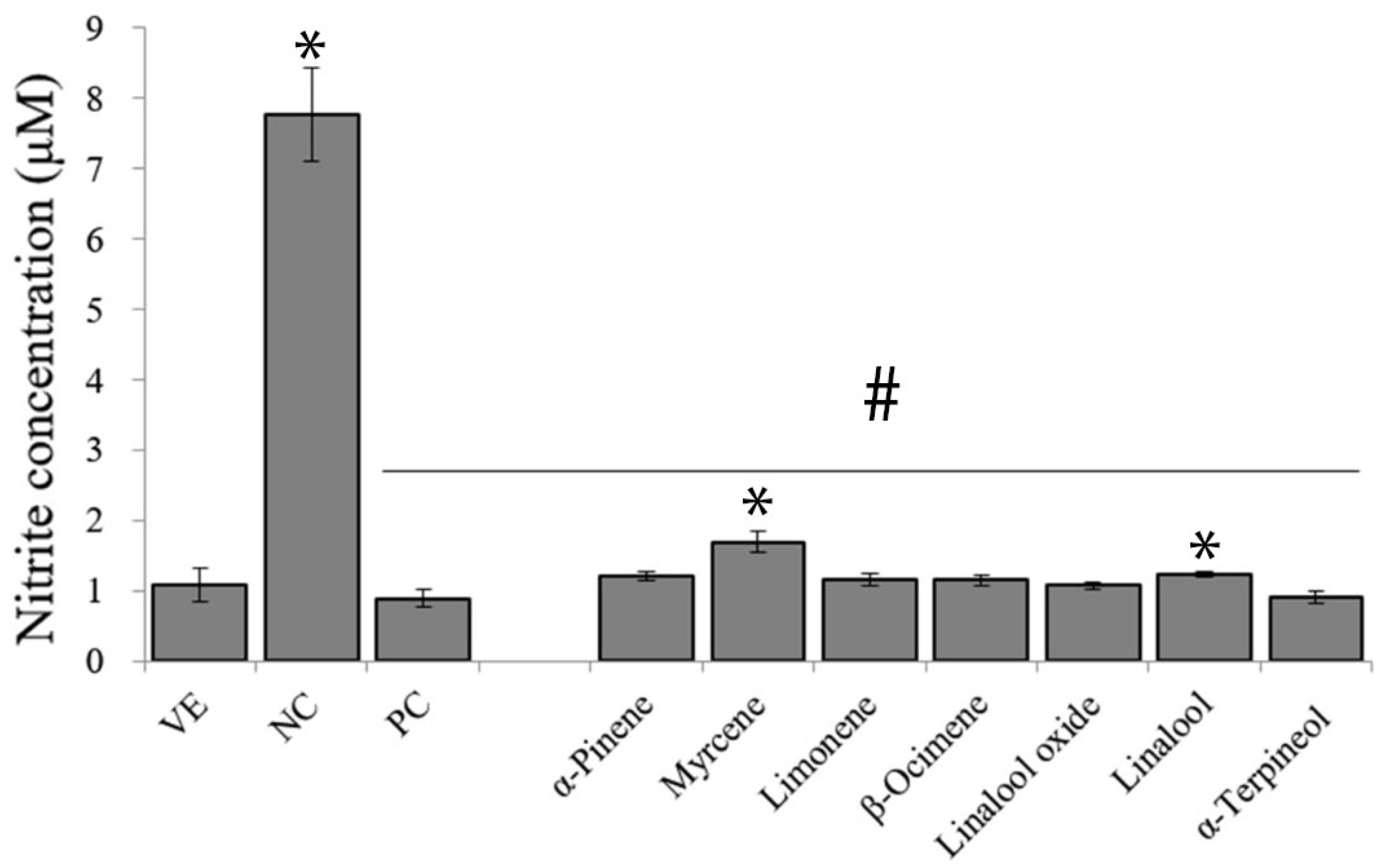
2.1.2. Evidence of Antibacterial, Anti-Inflammatory, and Antioxidant Effects
2.2. Sebum-Modulating and Anti-Inflammatory Effects
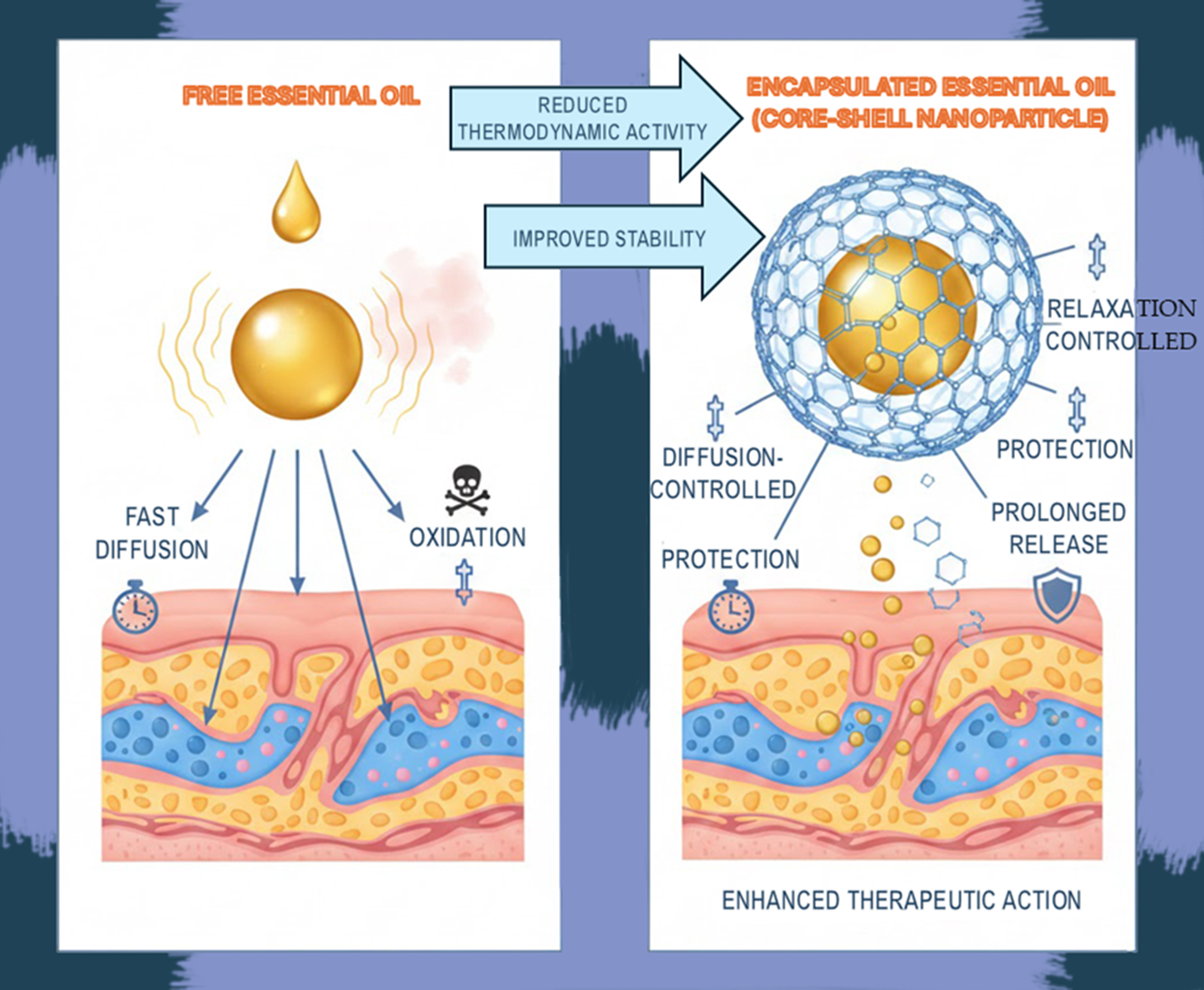
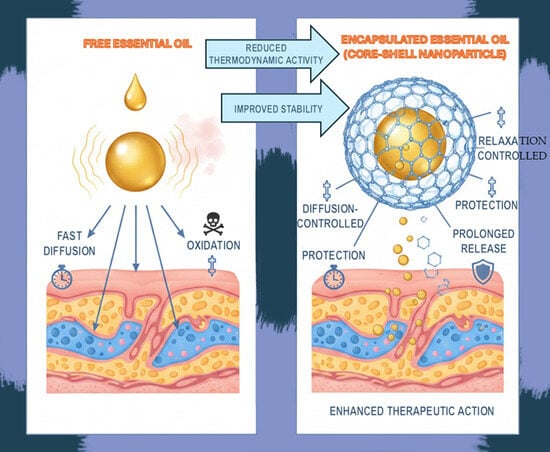
2.3. Challenges of Direct Essential Oils Application
3. Core–Shell Nanoformulations: Concepts and Advantages
3.1. Definition and Structural Features
3.2. Eco-Friendly and Biodegradable Components
3.2.1. Natural Polymers
3.2.2. Green Synthesis Approaches
3.3. Benefits for Essential Oil Delivery
3.3.1. Enhanced Stability and Sustained Release
3.3.2. Improved Skin Penetration and Reduced Irritation
4. Types of Eco-Friendly Core–Shell Nanoformulations
4.1. Polymeric Nanocapsules
4.2. Lipid-Based Nanocarriers
4.3. Polysaccharide-Based Nanocarriers
4.4. Hybrid and Bioinspired Nanostructures
5. Recent Advances and Applications in Acne Management
5.1. In Vitro Studies
5.1.1. Antimicrobial Activity
5.1.2. Effects on Sebum-Producing Cells
5.2. In Vivo and Clinical Findings
5.2.1. Skin Compatibility
5.2.2. Clinical Improvement in Acne Symptoms
5.3. Comparative Analysis of Essential Oil Nanoformulations and Conventional Treatments
6. Safety, Toxicity, and Regulatory Considerations
6.1. Biocompatibility of Eco-Friendly Shell Materials
6.2. Irritation Potential Reductions via Encapsulation
6.3. Regulatory Hurdles for Natural Nano-Dermatological Products
7. Sustainability and Environmental Impact
7.1. Biodegradability of Materials
7.2. Green Chemistry in Synthesis
7.3. Reduced Reliance on Synthetic Antimicrobials
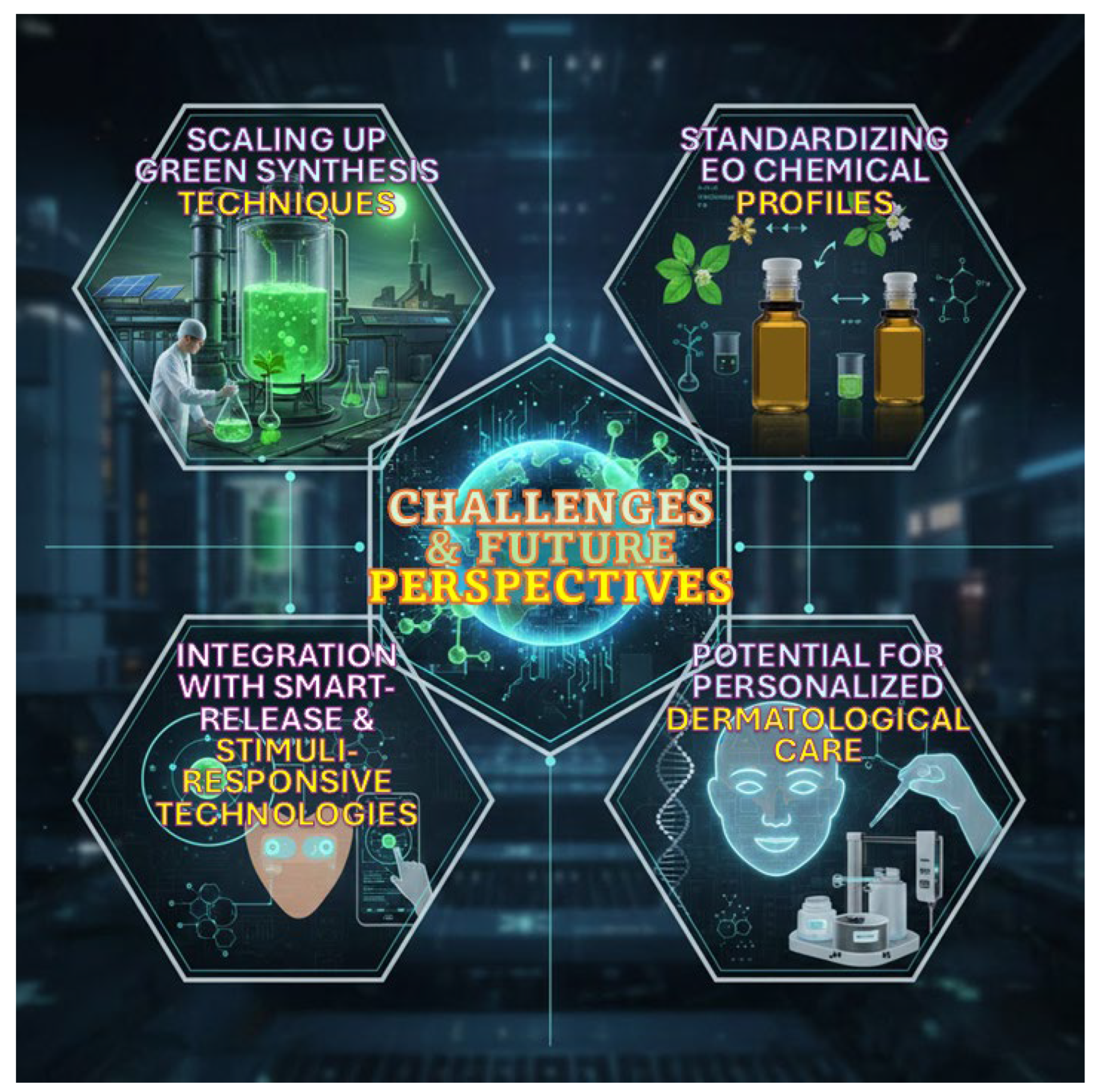
8. Challenges and Future Perspectives
8.1. Scaling up Green Synthesis Techniques
8.2. Standardizing Essential Oil Chemical Profiles
8.3. Integration with Smart-Release and Stimuli-Responsive Technologies
8.4. Potential for Personalized Dermatological Care
9. Conclusions
Author Contributions
Funding
Data Availability Statement
Acknowledgments
Conflicts of Interest
Abbreviations
| DLS | Dynamic light scattering |
| DSC | Differential scanning calorimetry |
| FTIR | Fourier transform infrared spectroscopy |
| GC | Gas Chromatography |
| MS | Mass Spectrometry |
| MBC | Minimum bactericidal concentration |
| MIC | Minimum inhibitory concentration |
| MTT | 3-(4,5-dimethylthiazol-2-yl)-2,5-diphenyltetrazolium bromide |
| NLC | Nanostructured lipid carriers |
| NPs | Nanoparticles |
| PLA | Polylactide acid |
| PLGA | Poly(lactide-co-glycolide) |
| PCL | Poly(ε-caprolactone) |
| PPAR | Peroxisome proliferator-activated receptor |
| SEM | Scanning electron microscopy |
| SLN | Solid lipid NPs |
| TEM | Transmission electron microscopy |
| TGA | Thermogravimetric Analysis |
| UV-Vis | Ultraviolet-visible spectroscopy |
| XRD | X-ray diffraction |
References
- Pappas, A.; Johnsen, S.; Liu, J.C.; Eisinger, M. Sebum analysis of individuals with and without acne. Derm. Endocrinol. 2009, 1, 157–161. [Google Scholar] [CrossRef]
- Zouboulis, C.C.; Eady, A.; Philpott, M.; Goldsmith, L.A.; Orfanos, C.; Cunliffe, W.C.; Rosenfield, R. What is the pathogenesis of acne? Exp. Dermatol. 2005, 14, 143. [Google Scholar] [CrossRef]
- Yaqoubi, W.; Touby, S.; Hossain, M.A. Laboratory investigations of liver function and lipid profiles tests before and after oral isotretinoin treatment among Acne valgaris clients at Ibri Polyclinic: A retrospective study. Toxicol. Rep. 2024, 13, 101799. [Google Scholar] [CrossRef] [PubMed]
- Abdelhamed, A.; Ezz El-Dawla, R.; Karadag, A.S.; Agamia, N.F.; Melnik, B.C. The impact of isotretinoin on the pituitary-ovarian axis: An interpretative review of the literature. Reprod. Toxicol. 2021, 104, 85–95. [Google Scholar] [CrossRef] [PubMed]
- Mangalagiri, N.P.; Panditi, S.K.; Jeevigunta, N.L.L. Antimicrobial activity of essential plant oils and their major components. Heliyon 2021, 7, e06835. [Google Scholar] [CrossRef] [PubMed]
- Szweda, P.; Kot, B. Bee Products and Essential Oils as Alternative Agents for Treatment of Infections Caused by S. aureus. In Frontiers in Staphylococcus aureus; IntechOpen: London, UK, 2017; Volume 10, pp. 203–223. [Google Scholar] [CrossRef]
- Ganosi, E.; Barda, C.; Grafakou, M.-E.; Rallis, M.C.; Skaltsa, H. An In-Depth Stability Study of the Essential Oils from Mentha × piperita, Mentha spicata, Origanum vulgare, and Thymus vulgaris: The Impact of Thermal and Storage Conditions. Separations 2023, 10, 488. [Google Scholar] [CrossRef]
- Fakhariha, M.; Rafati, A.A.; Garmakhany, A.D.; Asl, A.Z. Nanoencapsulation enhances stability, release behavior, and antimicrobial properties of Sage and Thyme essential oils. Sci. Rep. 2025, 15, 18373. [Google Scholar] [CrossRef]
- Silva-Flores, P.G.; Galindo-Rodriguez, S.A.; Perez-Lopez, L.A.; Alvarez-Roman, R. Development of Essential Oil-Loaded Polymeric Nanocapsules as Skin Delivery Systems: Biophysical Parameters and Dermatokinetics Ex Vivo Evaluation. Molecules 2023, 28, 7142. [Google Scholar] [CrossRef]
- Krzak, M.; Tabor, Z.; Nowak, P.; Warszyński, P.; Karatzas, A.; Kartsonakis, I.A.; Kordas, G.C. Water diffusion in polymer coatings containing water-trapping particles. Part 2. Experimental verification of the mathematical model. Prog. Org. Coat. 2012, 75, 207–214. [Google Scholar] [CrossRef]
- Hou, H.S.; Bonku, E.M.; Zhai, R.; Zeng, R.; Hou, Y.L.; Yang, Z.H.; Quan, C. Extraction of essential oil from Citrus reticulate Blanco peel and its antibacterial activity against Cutibacterium acnes (formerly Propionibacterium acnes). Heliyon 2019, 5, e02947. [Google Scholar] [CrossRef] [PubMed]
- Liao, S.; Yang, G.; Ou, Y.; Huang, S.; Li, B.; Li, A.; Kan, J. Inhibitory impacts of essential oil (Zanthoxylum schinifolium Sieb. et Zucc) on the growth of Staphylococcus epidermidis. Food Biosci. 2022, 49, 101906. [Google Scholar] [CrossRef]
- Pekacar, S.; Göçmen İlhan, I.E.; Kürkçüoğlu, M.; Özçelik, B.; Orhan, D.D. GC-MS based comparative phytochemical profiling with anti-acne and antidermatophytic activities of commercial and organic tea tree oils. J. Herb. Med. 2025, 54, 101064. [Google Scholar] [CrossRef]
- Yang, J.; Lee, S.Y.; Jang, S.K.; Kim, K.J.; Park, M.J. Anti-Inflammatory Effects of Essential Oils from the Peels of Citrus Cultivars. Pharmaceutics 2023, 15, 1595. [Google Scholar] [CrossRef]
- Sidiropoulou, E.; Marugan-Hernandez, V.; Skoufos, I.; Giannenas, I.; Bonos, E.; Aguiar-Martins, K.; Lazari, D.; Papagrigoriou, T.; Fotou, K.; Grigoriadou, K.; et al. In Vitro Antioxidant, Antimicrobial, Anticoccidial, and Anti-Inflammatory Study of Essential Oils of Oregano, Thyme, and Sage from Epirus, Greece. Life 2022, 12, 1783. [Google Scholar] [CrossRef]
- Abdelhamed, F.M.; Abdeltawab, N.F.; ElRakaiby, M.T.; Shamma, R.N.; Moneib, N.A. Antibacterial and Anti-Inflammatory Activities of Thymus vulgaris Essential Oil Nanoemulsion on Acne Vulgaris. Microorganisms 2022, 10, 1874. [Google Scholar] [CrossRef]
- Yang, S.X.; Xiao, W.L.; Zhang, X.J. Essential oil of Saposhnikovia divaricata mitigates Cutibacterium acnes-induced inflammatory acne via Nrf2 pathway activation and NF-kappaB pathway inhibition. J. Ethnopharmacol. 2026, 355, 120647. [Google Scholar] [CrossRef]
- Mohanta, O.; Das, P.K.; Panda, S.S.; Sahoo, A.; Jena, S.; Ray, A.; Nayak, S.; Panda, P.C. Anti-inflammatory activity of Leonotis nepetifolia leaf essential oil in LPS-stimulated RAW 264.7 cells and its molecular mechanism of action. Sci. Rep. 2025, 15, 32978. [Google Scholar] [CrossRef]
- Prashar, A.; Locke, I.C.; Evans, C.S. Cytotoxicity of lavender oil and its major components to human skin cells. Cell Prolif. 2004, 37, 221–229. [Google Scholar] [CrossRef]
- Ren, G.; Ke, G.; Huang, R.; Pu, Q.; Zhao, J.; Zheng, Q.; Yang, M. Study of the volatilization rules of volatile oil and the sustained-release effect of volatile oil solidified by porous starch. Sci. Rep. 2022, 12, 8153. [Google Scholar] [CrossRef]
- Peng, X.; Ren, W.; Jia, M.; Zhou, Q.; Li, B.; Li, G.; Xie, Y.; Dai, X.; Cao, H.; Shi, X. Multi-scale study on the volatility of essential oil and its modulation methods. J. Drug Deliv. Sci. Technol. 2025, 112, 107227. [Google Scholar] [CrossRef]
- Natrajan, D.; Srinivasan, S.; Sundar, K.; Ravindran, A. Formulation of essential oil-loaded chitosan-alginate nanocapsules. J. Food Drug Anal. 2015, 23, 560–568. [Google Scholar] [CrossRef] [PubMed]
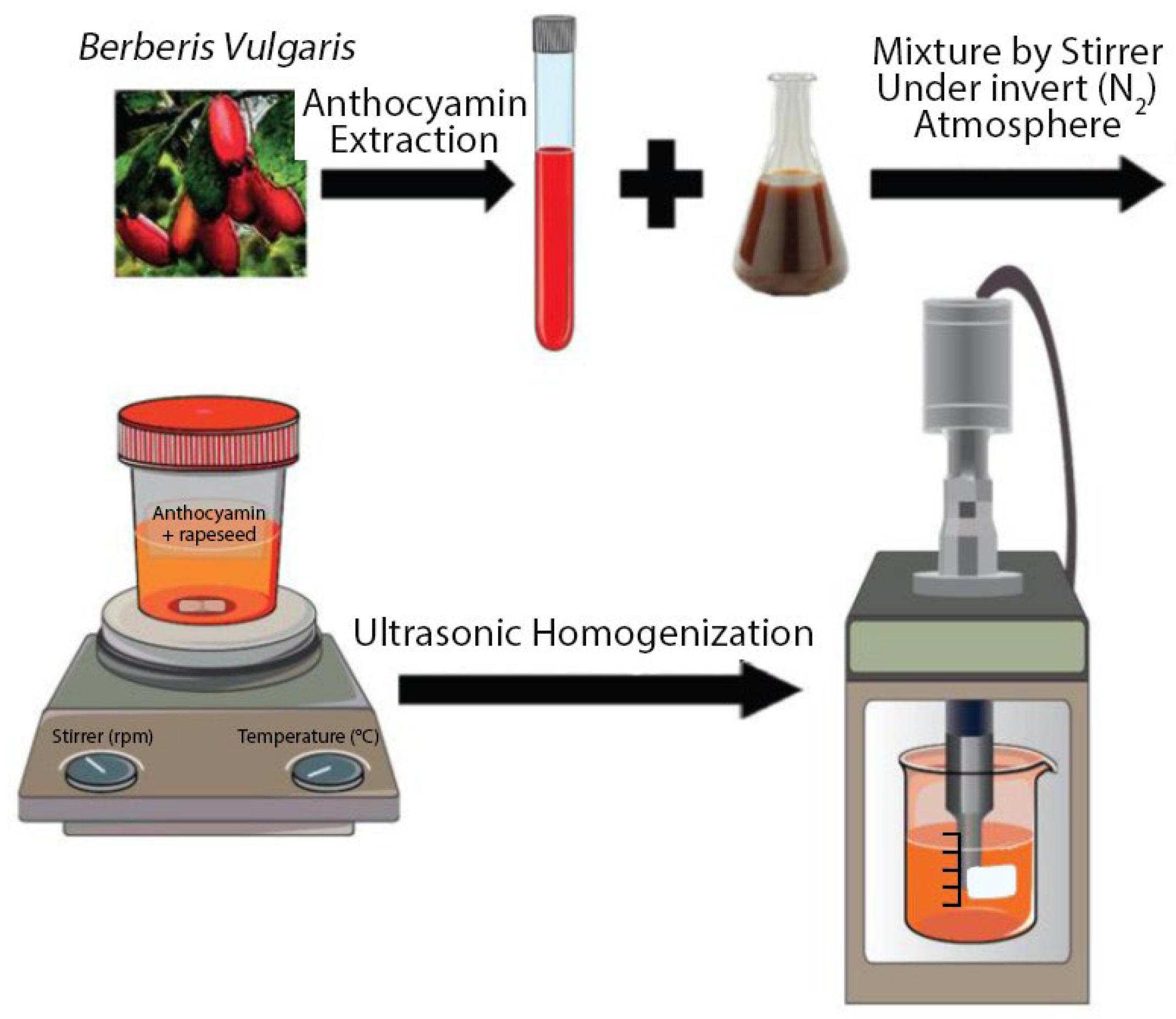
- Homayoonfal, M.; Mousavi, S.M.; Kiani, H.; Askari, G.; Desobry, S.; Arab-Tehrany, E. Encapsulation of Berberis vulgaris Anthocyanins into Nanoliposome Composed of Rapeseed Lecithin: A Comprehensive Study on Physicochemical Characteristics and Biocompatibility. Foods 2021, 10, 492. [Google Scholar] [CrossRef] [PubMed]
- Hasanin, M.S.; Ayoob, F.A.; Hashem, A.H.; Emam, M. Synthesis of Chitosan based nanoemulsions and their characterization and antifungal activity toward fungi causing mucormycosis. Sci. Rep. 2025, 15, 20326. [Google Scholar] [CrossRef]
- How, Y.-H.; Lim, E.M.-Y.; Kong, I.; Kee, P.-E.; Pui, L.-P. Development of carboxymethyl cellulose–chitosan based antibacterial films incorporating a Persicaria minor Huds. essential oil nanoemulsion. Sustain. Food Technol. 2024, 2, 400–414. [Google Scholar] [CrossRef]
- Pitterou, I.; Kalogeropoulou, F.; Tzani, A.; Tsiantas, K.; Gatou, M.A.; Pavlatou, E.; Batrinou, A.; Fountzoula, C.; Kriebardis, A.; Zoumpoulakis, P.; et al. Development of Alginate Hydrogels Incorporating Essential Oils Loaded in Chitosan NPs for Biomedical Applications. Molecules 2024, 29, 5318. [Google Scholar] [CrossRef]
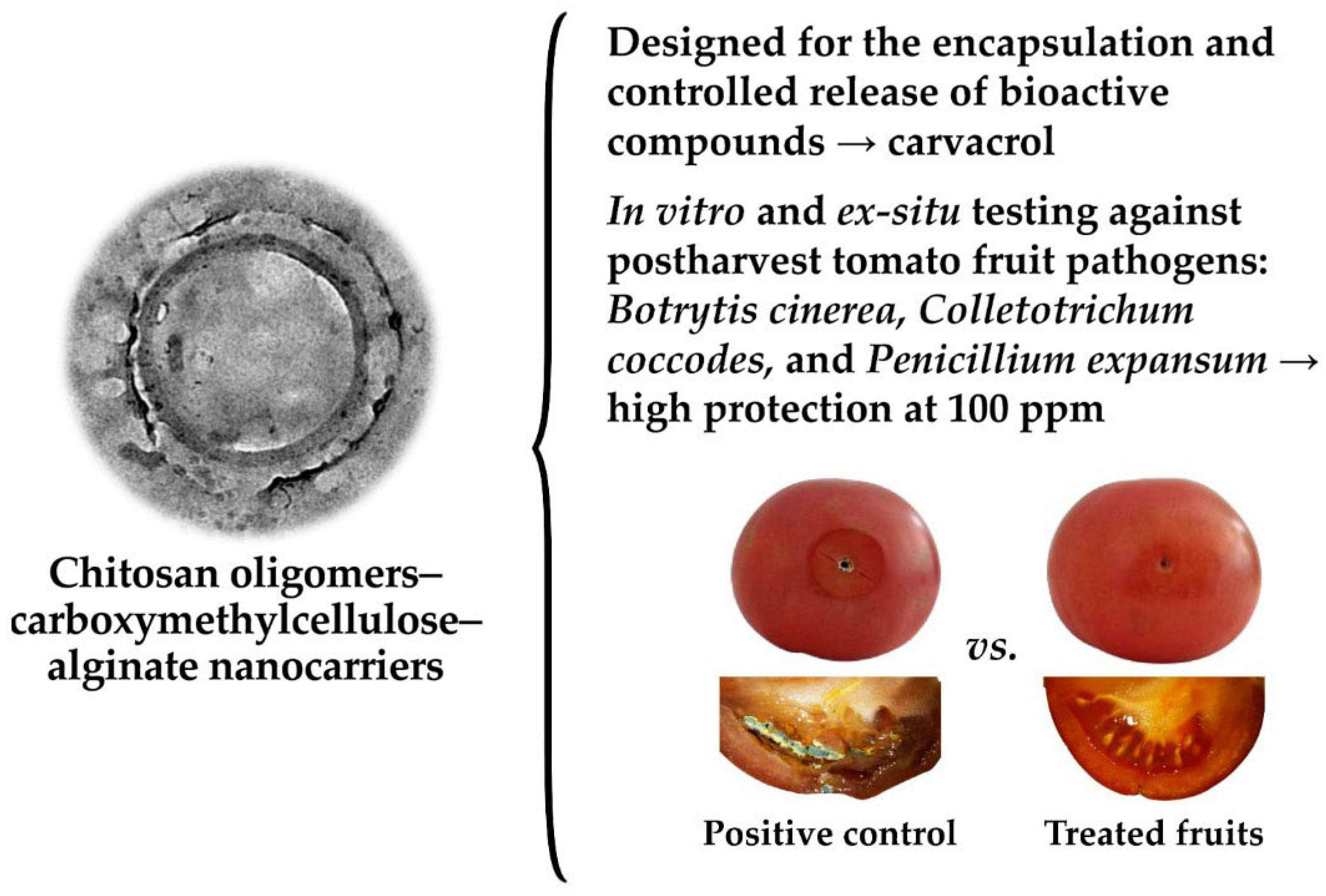
- Sanchez-Hernandez, E.; Santiago-Aliste, A.; Correa-Guimaraes, A.; Martin-Gil, J.; Gavara-Clemente, R.J.; Martin-Ramos, P. Carvacrol Encapsulation in Chitosan-Carboxymethylcellulose-Alginate Nanocarriers for Postharvest Tomato Protection. Int. J. Mol. Sci. 2024, 25, 1104. [Google Scholar] [CrossRef]
- Moosavy, M.H.; de la Guardia, M.; Mokhtarzadeh, A.; Khatibi, S.A.; Hosseinzadeh, N.; Hajipour, N. Green synthesis, characterization, and biological evaluation of gold and silver NPs using Mentha spicata essential oil. Sci. Rep. 2023, 13, 7230. [Google Scholar] [CrossRef]
- Vilas, V.; Philip, D.; Mathew, J. Essential oil mediated synthesis of silver nanocrystals for environmental, anti-microbial and antioxidant applications. Mater. Sci. Eng. C Mater. Biol. Appl. 2016, 61, 429–436. [Google Scholar] [CrossRef]
- Ahmadi, S.; Fazilati, M.; Nazem, H.; Mousavi, S.M. Green Synthesis of Magnetic NPs Using Satureja hortensis Essential Oil toward Superior Antibacterial/Fungal and Anticancer Performance. BioMed Res. Int. 2021, 2021, 8822645. [Google Scholar] [CrossRef]
- Zhang, M.; Li, M.; Zhang, D.; Yu, Y.; Zhu, K.; Zang, X.; Liu, D. Preparation and Investigation of Sustained-Release Nanocapsules Containing Cumin Essential Oil for Their Bacteriostatic Properties. Foods 2024, 13, 947. [Google Scholar] [CrossRef] [PubMed]
- Yang, J.; Kok, C.R.; Ciftci, D.; Hutkins, R.; Ciftci, O.N. Hollow solid lipid particles loaded with essential oils via supercritical carbon dioxide to develop novel antimicrobial lipids with controlled release for food applications. Innov. Food Sci. Emerg. Technol. 2025, 102, 103980. [Google Scholar] [CrossRef]
- Manzoor, A.; Asif, M.; Khalid, S.H.; Ullah Khan, I.; Asghar, S. Nanosizing of Lavender, Basil, and Clove Essential Oils into Microemulsions for Enhanced Antioxidant Potential and Antibacterial and Antibiofilm Activities. ACS Omega 2023, 8, 40600–40612. [Google Scholar] [CrossRef] [PubMed]
- Omidi, M.; Morteza-Semnani, K.; Saeedi, M.; Frahmand, M.; Kamali, M.; Mohammadian, E.; Hassan Hashemi, S.M. Lavender essential oil nanoemulsion gel as skin lightener: Green formulation, full characterization, anti-melanogenesis effect, and in-vitro/in-vivo safety profile assessment. Nanomed. J. 2025, 12, 404. [Google Scholar] [CrossRef]
- Drais, H.K. Development and Evaluation Essential Oils Nanoemulgel as Human Skin Sanitizer Using Novel Method. Turk. J. Pharm. Sci. 2024, 21, 456–462. [Google Scholar] [CrossRef]
- Aman, R.M.; Abu, H., II; Meshali, M.M. Novel Clove Essential Oil Nanoemulgel Tailored by Taguchi’s Model and Scaffold-Based Nanofibers: Phytopharmaceuticals with Promising Potential as Cyclooxygenase-2 Inhibitors in External Inflammation. Int. J. Nanomed. 2020, 15, 2171–2195. [Google Scholar] [CrossRef]
- Granata, G.; Stracquadanio, S.; Leonardi, M.; Napoli, E.; Consoli, G.M.L.; Cafiso, V.; Stefani, S.; Geraci, C. Essential oils encapsulated in polymer-based nanocapsules as potential candidates for application in food preservation. Food Chem. 2018, 269, 286–292. [Google Scholar] [CrossRef]
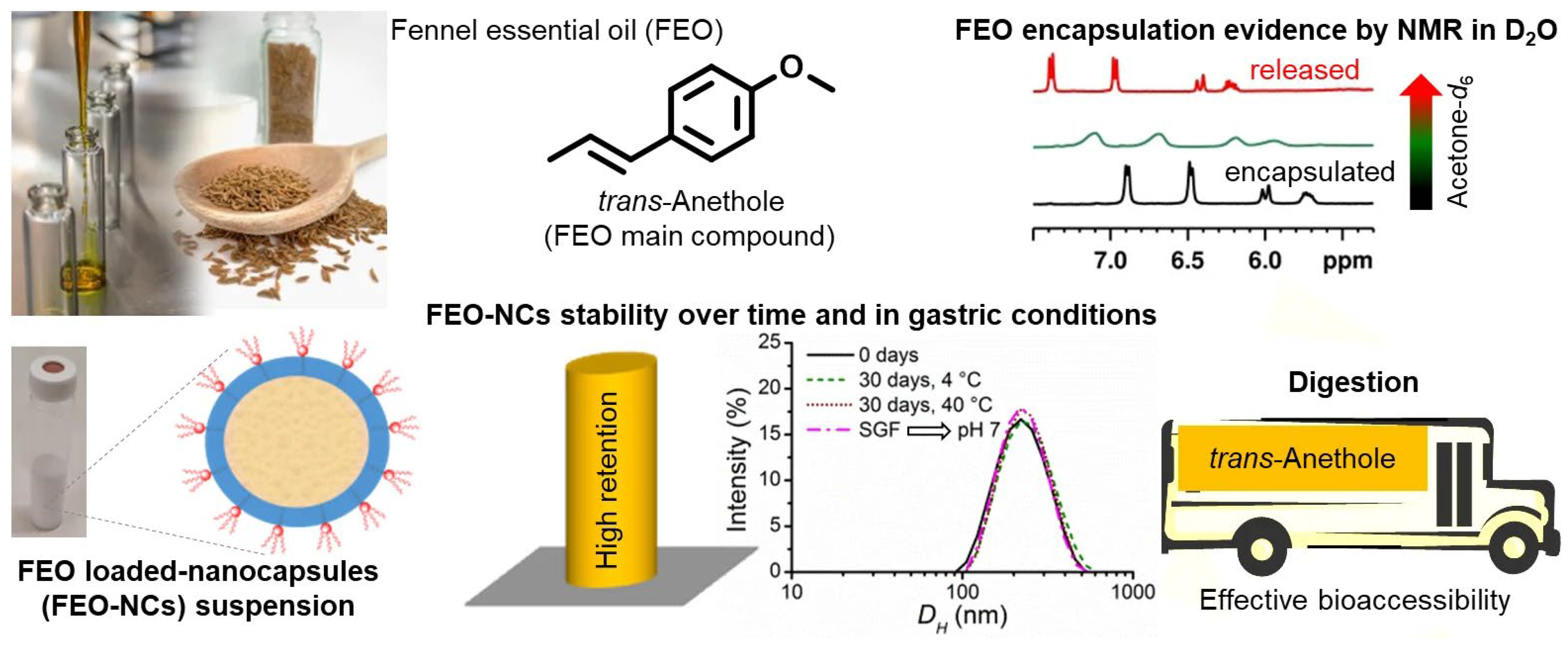
- Granata, G.; Riccobene, C.; Napoli, E.; Geraci, C. Polymeric Nanocapsules Containing Fennel Essential Oil: Their Preparation, Physicochemical Characterization, Stability over Time and in Simulated Gastrointestinal Conditions. Pharmaceutics 2022, 14, 873. [Google Scholar] [CrossRef]
- Pinto, E.P.; Menezes, R.P.; de S. Tavares, W.; Ferreira, A.M.; Sousa, F.F.O.; Araujo da Silva, G.; Zamora, R.R.M.; Araujo, R.S.; de Souza, T.M. Copaiba essential oil loaded-nanocapsules film as a potential candidate for treating skin disorders: Preparation, characterization, and antibacterial properties. Int. J. Pharm. 2023, 633, 122608. [Google Scholar] [CrossRef]
- Gonzalez-Reza, R.M.; Hernandez-Sanchez, H.; Zambrano-Zaragoza, M.L.; Gutierrez-Lopez, G.F.; Del Real, A.; Quintanar-Guerrero, D.; Velasco-Bejarano, B. Influence of Stabilizing and Encapsulating Polymers on Antioxidant Capacity, Stability, and Kinetic Release of Thyme Essential Oil Nanocapsules. Foods 2020, 9, 1884. [Google Scholar] [CrossRef]
- Negi, A.; Kesari, K.K. Chitosan Nanoparticle Encapsulation of Antibacterial Essential Oils. Micromachines 2022, 13, 1265. [Google Scholar] [CrossRef]
- Ahmad Nasrollahi, S.; Koohestani, F.; Naeimifar, A.; Samadi, A.; Vatanara, A.; Firooz, A. Preparation and evaluation of adapalene nanostructured lipid carriers for targeted drug delivery in acne. Dermatol. Ther. 2021, 34, e14777. [Google Scholar] [CrossRef] [PubMed]
- Raza, K.; Singh, B.; Singal, P.; Wadhwa, S.; Katare, O.P. Systematically optimized biocompatible isotretinoin-loaded solid lipid NPs (SLNs) for topical treatment of acne. Colloids Surf. B Biointerfaces 2013, 105, 67–74. [Google Scholar] [CrossRef]
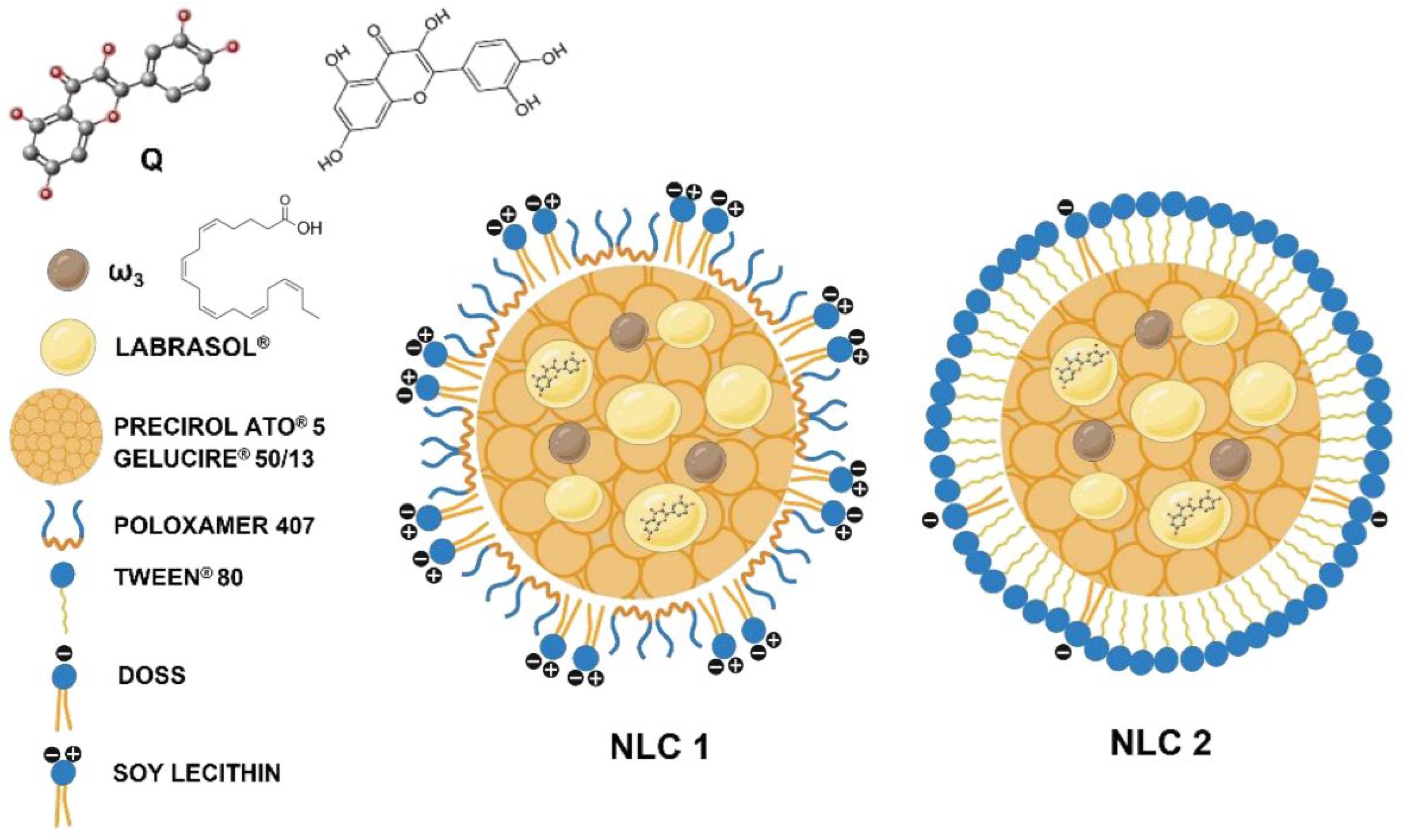
- Lucio, M.; Giannino, N.; Barreira, S.; Catita, J.; Goncalves, H.; Ribeiro, A.; Fernandes, E.; Carvalho, I.; Pinho, H.; Cerqueira, F.; et al. Nanostructured Lipid Carriers Enriched Hydrogels for Skin Topical Administration of Quercetin and Omega-3 Fatty Acid. Pharmaceutics 2023, 15, 2078. [Google Scholar] [CrossRef] [PubMed]
- Atapour-Mashhad, H.; Tayarani-Najaran, Z.; Golmohammadzadeh, S. Preparation and characterization of novel nanostructured lipid carriers (NLC) and solid lipid NPs (SLN) containing coenzyme Q10 as potent antioxidants and antityrosinase agents. Heliyon 2024, 10, e31429. [Google Scholar] [CrossRef] [PubMed]
- Nguyen, H.T.; Munnier, E.; Souce, M.; Perse, X.; David, S.; Bonnier, F.; Vial, F.; Yvergnaux, F.; Perrier, T.; Cohen-Jonathan, S.; et al. Novel alginate-based nanocarriers as a strategy to include high concentrations of hydrophobic compounds in hydrogels for topical application. Nanotechnology 2015, 26, 255101. [Google Scholar] [CrossRef]
- Friedman, A.J.; Phan, J.; Schairer, D.O.; Champer, J.; Qin, M.; Pirouz, A.; Blecher-Paz, K.; Oren, A.; Liu, P.T.; Modlin, R.L.; et al. Antimicrobial and anti-inflammatory activity of chitosan-alginate NPs: A targeted therapy for cutaneous pathogens. J. Investig. Dermatol. 2013, 133, 1231–1239. [Google Scholar] [CrossRef]
- Amante, C.; Andretto, V.; Rosso, A.; Augusti, G.; Marzocco, S.; Lollo, G.; Del Gaudio, P. Alginate-pectin microparticles loaded with nanoemulsions as nanocomposites for wound healing. Drug Deliv. Transl. Res. 2023, 13, 1343–1357. [Google Scholar] [CrossRef]
- Nguyen, T.T.T.; Tran, N.T.K.; Le, T.Q.; Nguyen, T.T.A.; Nguyen, L.T.M.; Tran, T.V. Passion fruit peel pectin/chitosan based antibacterial films incorporated with biosynthesized silver NPs for wound healing application. Alex. Eng. J. 2023, 69, 419–430. [Google Scholar] [CrossRef]
- Saini, A.; Verma, R.; Tiwari, R.; Jain, A.; Dandia, A.; Gour, V.S.; Lamba, N.P.; Srivastava, S.C.; Chauhan, M.S. Green synthesis of silver nanoparticle for catalytic applications and priming study by seed germination. Sci. Rep. 2024, 14, 20744. [Google Scholar] [CrossRef]
- Gul, F.; Ullah, Z.; Iqbal, J.; Abbasi, B.A.; Ali, S.; Kanwal, S.; Uddin, J.; Kazi, M.; Mahmood, T. Ecofriendly synthesis characterization and biological activities of Eruca sativa mediated silver oxide NPs. Sci. Rep. 2025, 15, 13466. [Google Scholar] [CrossRef] [PubMed]
- Mohammadi, A.; Hashemi, N.; Ghassabzadeh, M.; Sharafi, A.; Yazdinezhad, A.; Danafar, H. Green synthesis and toxicological evaluation of zinc oxide NPs utilizing Punica granatum fruit Peel extract: An eco-friendly approach. Sci. Rep. 2025, 15, 20853. [Google Scholar] [CrossRef] [PubMed]
- Naiel, B.; Fawzy, M.; Halmy, M.W.A.; Mahmoud, A.E.D. Green synthesis of zinc oxide NPs using Sea Lavender (Limonium pruinosum L. Chaz.) extract: Characterization, evaluation of anti-skin cancer, antimicrobial and antioxidant potentials. Sci. Rep. 2022, 12, 20370. [Google Scholar] [CrossRef] [PubMed]
- Kim, H.; Jang, J.H.; Kim, H.R.; Cho, J.H. Novel-designed antimicrobial peptides with dual antimicrobial and anti-inflammatory actions against Cutibacterium acnes for acne vulgaris therapy. Biochem. Pharmacol. 2025, 232, 116708. [Google Scholar] [CrossRef]
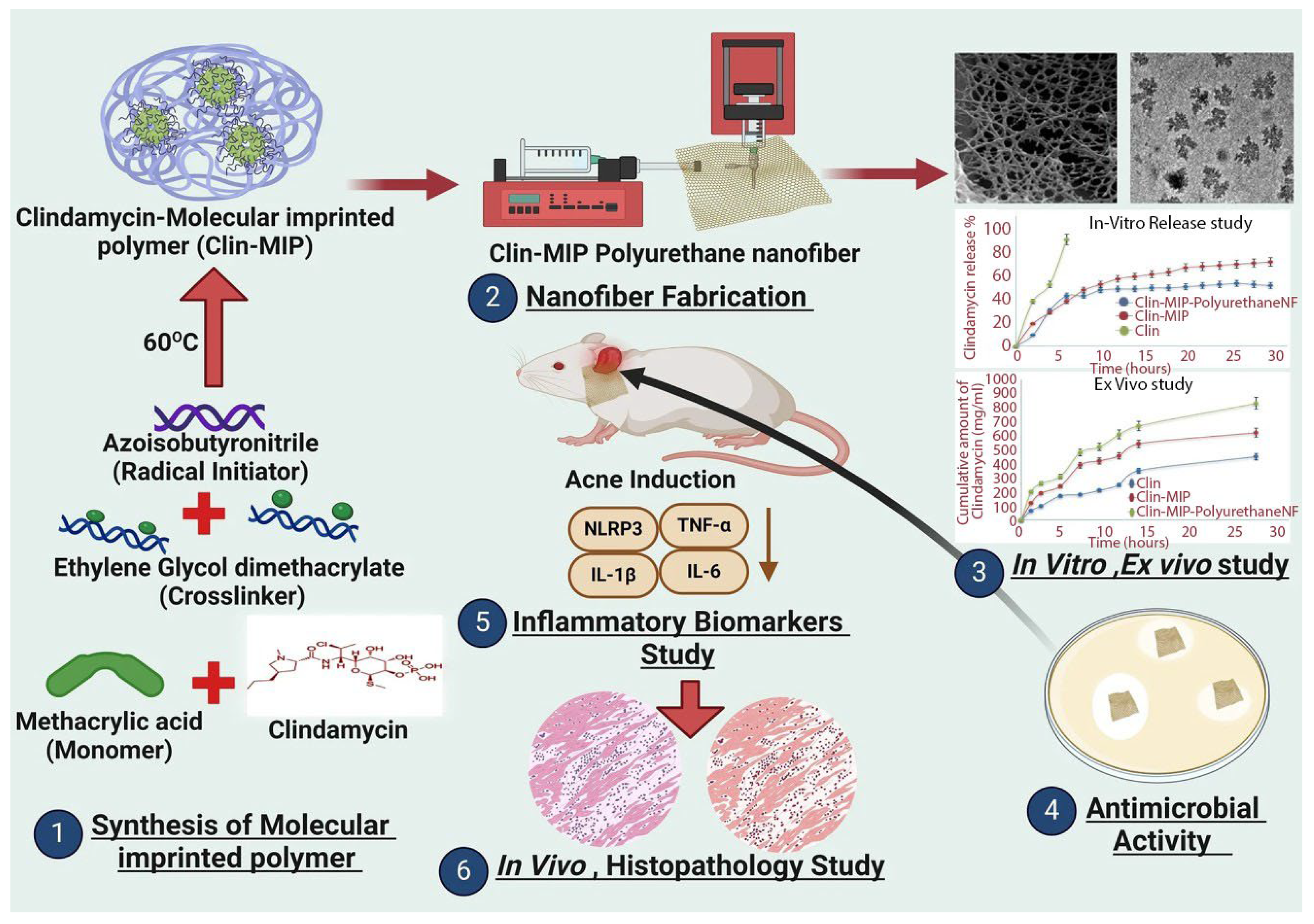
- Elhabal, S.F.; Abdelmonem, R.; El Nashar, R.M.; Elrefai, M.F.M.; Hamdan, A.M.E.; Safwat, N.A.; Shoela, M.S.; Hassan, F.E.; Rizk, A.; Kabil, S.L.; et al. Enhanced Antibacterial Activity of Clindamycin Using Molecularly Imprinted Polymer NPs Loaded with Polyurethane Nanofibrous Scaffolds for the Treatment of Acne Vulgaris. Pharmaceutics 2024, 16, 947. [Google Scholar] [CrossRef]
- Dong, Q.; Wang, S.; Miao, Y.; Luo, H.; Weng, Z.; Yu, L. Novel antimicrobial peptides against Cutibacterium acnes designed by deep learning. Sci. Rep. 2024, 14, 4529. [Google Scholar] [CrossRef]
- Cao, W.Y.; Zhao, H.Q.; Gu, X.; Shao, W.J.; Zheng, L.J.; Zeng, Q.Y.; Wang, Z.K.; Chen, M.L.; Ma, T.; Li, Y.Y.; et al. Light-responsive antibacterial dissolving microneedles loaded with 5-aminolevulinic acid and silver NPs for the treatment of acne. Int. J. Pharm. 2024, 667, 124961. [Google Scholar] [CrossRef]
- Liu, S.; Luo, X.H.; Liu, Y.F.; Zouboulis, C.C.; Shi, G. Emodin exhibits anti-acne potential by inhibiting cell growth, lipogenesis, and inflammation in human SZ95 sebocytes. Sci. Rep. 2023, 13, 21576. [Google Scholar] [CrossRef]
- Kitano, T.; Koiwai, T.; Fujikawa, K.; Mori, S.; Matsumoto, T.; Sato, T. Ozenoxacin suppresses sebum production by inhibiting mTORC1 activation in differentiated hamster sebocytes. J. Dermatol. 2024, 51, 1187–1198. [Google Scholar] [CrossRef]
- Zhang, J.; He, L.; Chen, X.; Tu, Y.; Kostov, B.; Cabedo, J.; Baykal, T.; Garcia Gil, E. Efficacy and Safety of Sarecycline in Chinese Patients with Moderate-to-Severe Acne Vulgaris: Randomized Phase 3 Clinical Trial with Open-Label Follow-Up. Dermatol. Ther. 2025, 15, 3285–3300. [Google Scholar] [CrossRef]
- Le, Y.; Yang, W.; Lu, J.; Jiang, X.; Guo, Q.; Huang, C.; Sun, Q.; Wang, H.; Bi, M.; Wang, H.; et al. Efficacy and safety of topical minocycline foam (FMX101 4%) in treatment of Chinese subjects with moderate-to-severe facial acne vulgaris: A phase 3, multi-centre, randomized, double-blind, vehicle-controlled study. J. Eur. Acad. Dermatol. Venereol. JEADV 2025, 39, 967–975. [Google Scholar] [CrossRef]
- Saki, N.; Mohammadi, F.; Parvizi, M.M.; Kamali, M.; Saleem, S. Efficacy of Intramuscular Pantothenic Acid in the Treatment of Acne Vulgaris: A Single Blind Randomized Clinical Trial. Dermatol. Ther. 2025, 2025, 6610699. [Google Scholar] [CrossRef]
- Rimon, A.; Rakov, C.; Lerer, V.; Sheffer-Levi, S.; Oren, S.A.; Shlomov, T.; Shasha, L.; Lubin, R.; Zubeidat, K.; Jaber, N.; et al. Topical phage therapy in a mouse model of Cutibacterium acnes-induced acne-like lesions. Nat. Commun. 2023, 14, 1005. [Google Scholar] [CrossRef]
- Uddin, M.K.; Yesmin, S. Evaluation of the effectiveness of the combination of doxycycline and trifarotene for managing acne vulgaris of moderate to severe severity: A study in a tertiary care hospital. Int. J. Res. Dermatol. 2024, 10, 66–70. [Google Scholar] [CrossRef]
- Hebert, A.; Thiboutot, D.; Stein Gold, L.; Cartwright, M.; Gerloni, M.; Fragasso, E.; Mazzetti, A. Efficacy and Safety of Topical Clascoterone Cream, 1%, for Treatment in Patients With Facial Acne: Two Phase 3 Randomized Clinical Trials. JAMA Dermatol. 2020, 156, 621–630. [Google Scholar] [CrossRef] [PubMed]
- Taleb, M.H.; Abdeltawab, N.F.; Shamma, R.N.; Abdelgayed, S.S.; Mohamed, S.S.; Farag, M.A.; Ramadan, M.A. Origanum vulgare L. Essential Oil as a Potential Anti-Acne Topical Nanoemulsion-In Vitro and In Vivo Study. Molecules 2018, 23, 2164. [Google Scholar] [CrossRef] [PubMed]
- Sasan, S.; Molavi, A.M.; Moqadam, K.H.; Farrokhi, N.; Oroojalian, F. Enhanced wound healing properties of biodegradable PCL/alginate core-shell nanofibers containing Salvia abrotanoides essential oil and ZnO NPs. Int. J. Biol. Macromol. 2024, 279, 135152. [Google Scholar] [CrossRef]
- Shamszadeh, S.; Akrami, M.; Asgary, S. Size-dependent bioactivity of electrosprayed core-shell chitosan-alginate particles for protein delivery. Sci. Rep. 2022, 12, 20097. [Google Scholar] [CrossRef]
- Flekka, K.; Dimaki, V.D.; Mourelatou, E.; Avgoustakis, K.; Lamari, F.N.; Hatziantoniou, S. Stability and Retention of Nanoemulsion Formulations Incorporating Lavender Essential Oil. Cosmetics 2024, 11, 65. [Google Scholar] [CrossRef]
- Fytianos, G.; Rahdar, A.; Kyzas, G.Z. Nanomaterials in Cosmetics: Recent Updates. Nanomaterials 2020, 10, 979. [Google Scholar] [CrossRef]
- Karamanidou, T.; Bourganis, V.; Gatzogianni, G.; Tsouknidas, A. A Review of the EU’s Regulatory Framework for the Production of Nano-Enhanced Cosmetics. Metals 2021, 11, 455. [Google Scholar] [CrossRef]
- Oliveira, C.; Coelho, C.; Teixeira, J.A.; Ferreira-Santos, P.; Botelho, C.M. Nanocarriers as Active Ingredients Enhancers in the Cosmetic Industry-The European and North America Regulation Challenges. Molecules 2022, 27, 1669. [Google Scholar] [CrossRef] [PubMed]
- Corrado, I.; Di Girolamo, R.; Regalado-Gonzalez, C.; Pezzella, C. Polyhydroxyalkanoates-Based NPs as Essential Oil Carriers. Polymers 2022, 14, 166. [Google Scholar] [CrossRef] [PubMed]
- Gheorghita Puscaselu, R.; Lobiuc, A.; Sirbu, I.O.; Covasa, M. The Use of Biopolymers as a Natural Matrix for Incorporation of Essential Oils of Medicinal Plants. Gels 2022, 8, 756. [Google Scholar] [CrossRef]
- Golzarnezhad, F.; Allahdou, M.; Mehravaran, L.; Naderi, S. Green synthesis of ZnO NPs from the extract of Cymbopogon olivieri and investigation of their antimicrobial and anticancer effects. Discov. Appl. Sci. 2025, 7, 196. [Google Scholar] [CrossRef]
- Al-Ogaidi, I.; Aguilar, Z.P.; Lay, J.O., Jr. Development of Biodegradable/Biocompatible Nanoliposome-Encapsulated Antimicrobial Essential Oils for Topical Creams and Gels. ACS Omega 2022, 7, 23875–23889. [Google Scholar] [CrossRef]
- Gacem, M.A.; Abd-Elsalam, K.A. Strategies for scaling up of green-synthesized nanomaterials: Challenges and future trends. In Green Synthesis of Silver Nanomaterials; Elsevier: Amsterdam, The Netherlands, 2022; pp. 669–698. [Google Scholar] [CrossRef]
- Gupta, D.; Boora, A.; Thakur, A.; Gupta, T.K. Green and sustainable synthesis of nanomaterials: Recent advancements and limitations. Environ. Res. 2023, 231, 116316. [Google Scholar] [CrossRef]
- Ayub, A.; Wani, A.K.; Malik, S.M.; Ayub, M.; Singh, R.; Chopra, C.; Malik, T. Green nanoscience for healthcare: Advancing biomedical innovation through eco-synthesized nanoparticle. Biotechnol. Rep. 2025, 47, e00913. [Google Scholar] [CrossRef]
- Bernal, F.A.; Matulevich, J.A.; Corredor, J.A.; Coy-Barrera, E. GC/MS-Based Fingerprinting Reveals Two Chemotypes in the Leaf Essential Oils from Magnolia grandiflora Trees within The Urban Forestry of a Colombian Andean Plateau. Chem. Biodivers. 2022, 19, e202200448. [Google Scholar] [CrossRef]
- Ratnasekhar, C.H.; Khan, S.; Rai, A.K.; Mishra, H.; Verma, A.K.; Lal, R.K.; Ananda Kumar, T.M.; Elliott, C.T. Rapid metabolic fingerprinting meets machine learning models to identify authenticity and detect adulteration of essential oils with vegetable oils: Mentha and Ocimum study. Food Chem. 2025, 471, 142709. [Google Scholar] [CrossRef]
- Deng, S.; Gigliobianco, M.R.; Mijit, E.; Minicucci, M.; Cortese, M.; Campisi, B.; Voinovich, D.; Battistelli, M.; Salucci, S.; Gobbi, P.; et al. Dually Cross-Linked Core-Shell Structure Nanohydrogel with Redox-Responsive Degradability for Intracellular Delivery. Pharmaceutics 2021, 13, 2048. [Google Scholar] [CrossRef]
- Ertugral-Samgar, E.G.; Ozmen, A.M.; Gok, O. Thermo-Responsive Hydrogels Encapsulating Targeted Core-Shell NPs as Injectable Drug Delivery Systems. Pharmaceutics 2023, 15, 2358. [Google Scholar] [CrossRef]
- Morais, R.P.; de Oliveira, C.C.; Riegel-Vidotti, I.C.; Marino, C.E.B. pH stimulus-responsive hybrid nanoparticles: A system designed for follicular delivery of brazilian plant-derived 5-alpha-reductase enzyme inhibitors. Int. J. Pharm. 2024, 650, 123689. [Google Scholar] [CrossRef]
- Tan, I.J.; Podwojniak, A.; Parikh, A.; Cohen, B.A. Precision Dermatology: A Review of Molecular Biomarkers and Personalized Therapies. Curr. Issues Mol. Biol. 2024, 46, 2975–2990. [Google Scholar] [CrossRef]
- Kim, J. Smart Nanocarriers in Cosmeceuticals Through Advanced Delivery Systems. Biomimetics 2025, 10, 217. [Google Scholar] [CrossRef]



| Time Point | Pretreatment | 100 μg mL−1 | 50 μg mL−1 | 20 μg mL−1 | 5 μg mL−1 |
|---|---|---|---|---|---|
| 2 hpi | OEO | 82.8 ± 6.95 | 15.5 ± 37.1 | 0 ± 0 | 0 ± 0 |
| TEO | 81.3 ± 14.1 | 62.8 ± 24.6 | 62.9 ± 20.3 | 24.1 ± 57.1 | |
| SEO | 72.2 ± 18.4 | 33.0 ± 44.8 | 11.6 ± 35.0 | 5.25 ± 14.6 | |
| 24 hpi | OEO | 92.9 ± 6.9 | 81.5 ± 25.6 | 38.1 ± 13.1 | 33.3 ± 66.7 |
| TEO | 90.8 ± 17.9 | 73.1 ± 1.6 | 49.6 ± 54.9 | 67.4 ± 18.5 | |
| SEO | 89.6 ± 9.4 | 32.5 ± 65.1 | 31.6 ± 63.3 | 38.5 ± 42.5 |
| Essential Oil | Reported Biological Activity |
|---|---|
| Citrus reticulata Blanco oil | Antimicrobial activity against Cutibacterium acne, Esterichia coli, Staphylococcus aureus, and Bacillus subtilis. |
| Zanthoxylum schnifolium Sieb. Et Zucc oil | Antimicrobial activity against Staphylococcus epidermidis. |
| Tea tree oil | Antimicrobial activity against Staphylococcus epidermidis, Cutibacterium acnes, and Lactobacillus plantarum. |
| Citrus oil | Anti-inflammatory activity. |
| Origanum vulgare (oregano) oil | Antioxidant and antimicrobial activity. |
| Salvia fructicosa (sage) oil | Antioxidant and antimicrobial activity. |
| Thymus vulgaris (thyme) oil | Antioxidant and antimicrobial activity against Cutibacterium acne and Staphylococcus epidermidis. |
| Saposhnikovia divaricata oil | Anti-inflammatory activity. |
| Leonotis nepetifolia oil | Anti-inflammatory activity. |
| Type of Polymeric Nanocapsule | Examples of Polymers | Main Advantages | Main Limitations |
|---|---|---|---|
| Natural polymer–based nanocapsules | Chitosan, alginate, starch derivatives, gelatin, zein | High biocompatibility and biodegradability | Batch-to-batch variability |
| Derived from renewable resources | Lower mechanical strength | ||
| Often possess intrinsic bioactivity (e.g., antimicrobial, mucoadhesive) | High swelling in aqueous media | ||
| Suitable for dermal and biomedical use | Sensitive to pH and ionic strength | ||
| Possible uncontrolled release without crosslinking | |||
| Synthetic biodegradable polymer nanocapsules | PLA, PCL, PLGA | High structural stability | Often hydrophobic (limited compatibility with some actives) |
| Tunable degradation rate | Possible use of organic solvents during fabrication | ||
| Controlled and predictable release kinetics | Slower biodegradation in some cases | ||
| Good storage stability |
| Criteria | Polymeric Nanocapsules | Lipid-Based Nanocarriers | Polysaccharide-Based Nanocarriers | Hybrid & Bioinspired Nanostructures |
|---|---|---|---|---|
| Raw Material Characteristics | Biodegradable polymers (e.g., PCL, ethylcellulose, chitosan) forming a polymeric matrix/shell | Natural lipids (solid + liquid) forming a lipid matrix core; biodegradable and inherently skin-compatible | Polysaccharides (alginate, chitosan, pectin) that self-assemble into shells via electrostatic or ionic crosslinking | Plant-derived phytochemicals used as reducing and capping agents to produce metal/metal oxide NPs (e.g., Ag, ZnO) with eco-friendly synthesis |
| May require organic solvents or surfactants | Often processed via high-pressure homogenization or sonication | Water-based processing | Bioinspired interfaces | |
| Encapsulation Efficiency | Moderate–High: | High: | Very High: | Not classic encapsulation |
| ~60–95% depending on polymer type and formulation method | Typically ~80–90% for lipophilic drugs and antioxidants due to good affinity with lipid matrix | ~90–95% reported for hydrophobic actives like curcumin (alginate) | Metal NPs do not encapsulate actives in the same way, instead provide capped/functionalized surfaces with high reactive payloads | |
| Effective for essential oils and lipophilic actives | Strong electrostatic capture in composite systems | |||
| Release Kinetics | Sustained, Diffusion-Controlled/Biphasic: | Sustained with Matrix Retention: | Controlled & Responsive: | Functional Release via Ion/Surface Activity: |
| Initial burst (surface-associated fraction) followed by slow polymer-controlled diffusion over hours to days | Gradual release from lipid matrix | Governed by polymer swelling, ionic exchange, and diffusion | Not diffusion through a polymer shell—biological action arises from surface ion release (Ag+, Zn2+) or ROS generation | |
| Matrix crystallinity and composition modulate rate | Sustained release over 24 h+ | |||
| Minimal burst | Responsive to pH/ionic strength | |||
| Skin Biocompatibility | Good–Very Good: | Very Good: | Excellent: | Variable Good: |
| Biodegradable polymers generally well tolerated | Lipid composition mimics skin lipids | Natural polysaccharides with strong cytocompatibility (HaCaT, fibroblasts) | High biocompatibility at safe concentrations | |
| Reduced irritation compared with free actives | Enhanced tolerability especially for irritant actives (e.g., retinoids) | Often anti-inflammatory | Green synthesis reduces toxic surface residues | |
| Chitosan adds mucoadhesion | Cytotoxicity must be validated per material | |||
| Interaction with Skin Barrier | Moderate penetration | Enhances stratum corneum lipid fluidization | Strong adhesion to skin surfaces | Functional effects often at or near surface |
| Appropriate for sustained topical action | Superior penetration into sebaceous layers | Effective accumulation in upper layers | Dependent on nanoparticle size and ion release dynamics | |
| Size can be tuned for follicular targeting | Variable penetration depth | |||
| Scalability | Nanoprecipitation, ionic gelation, interfacial polymer deposition (scalable) | High-pressure homogenization, probe sonication (well-established industrial methods) | Room temperature assembly | Green phytofabrication scalable |
| Spray-drying | Requires biological extract standardization | |||
| Simple electrostatic complexation |
Disclaimer/Publisher’s Note: The statements, opinions and data contained in all publications are solely those of the individual author(s) and contributor(s) and not of MDPI and/or the editor(s). MDPI and/or the editor(s) disclaim responsibility for any injury to people or property resulting from any ideas, methods, instructions or products referred to in the content. |
© 2026 by the authors. Licensee MDPI, Basel, Switzerland. This article is an open access article distributed under the terms and conditions of the Creative Commons Attribution (CC BY) license.
Share and Cite
Syryczyk, W.; Bedkowska, K.; Pastrafidou, M.; Avranas, A.; Kartsonakis, I.A. Biodegradable Polymeric Core/Shell Nanoformulations Encapsulating Essential Oils: Physicochemical Design, Controlled Release, and Targeted Acne and Sebum Management. Polymers 2026, 18, 621. https://doi.org/10.3390/polym18050621
Syryczyk W, Bedkowska K, Pastrafidou M, Avranas A, Kartsonakis IA. Biodegradable Polymeric Core/Shell Nanoformulations Encapsulating Essential Oils: Physicochemical Design, Controlled Release, and Targeted Acne and Sebum Management. Polymers. 2026; 18(5):621. https://doi.org/10.3390/polym18050621
Chicago/Turabian StyleSyryczyk, Weronika, Kamila Bedkowska, Maria Pastrafidou, Antonis Avranas, and Ioannis A. Kartsonakis. 2026. "Biodegradable Polymeric Core/Shell Nanoformulations Encapsulating Essential Oils: Physicochemical Design, Controlled Release, and Targeted Acne and Sebum Management" Polymers 18, no. 5: 621. https://doi.org/10.3390/polym18050621
APA StyleSyryczyk, W., Bedkowska, K., Pastrafidou, M., Avranas, A., & Kartsonakis, I. A. (2026). Biodegradable Polymeric Core/Shell Nanoformulations Encapsulating Essential Oils: Physicochemical Design, Controlled Release, and Targeted Acne and Sebum Management. Polymers, 18(5), 621. https://doi.org/10.3390/polym18050621