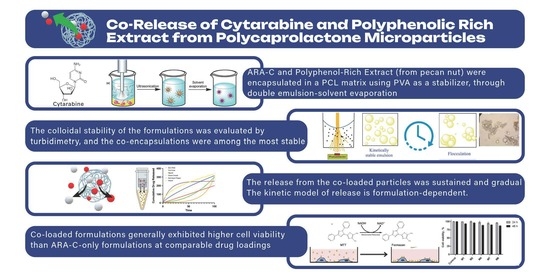
Co-Release of Cytarabine and Polyphenol-Rich Extract from Polycaprolactone Microparticles Towards Leukemia Therapy
 ,
,  , , and
Abstract
1. Introduction
2. Materials and Methods
2.1. Materials
2.2. Extraction of Polyphenol-Rich Extract (PRE)
2.3. Calibration Curves
2.4. Microparticle Preparation (Double Emulsion)
2.5. Microparticle Characterization
2.6. Encapsulation Efficiency (EE)
2.7. In Vitro Release Studies
2.8. Cell Viability Assay
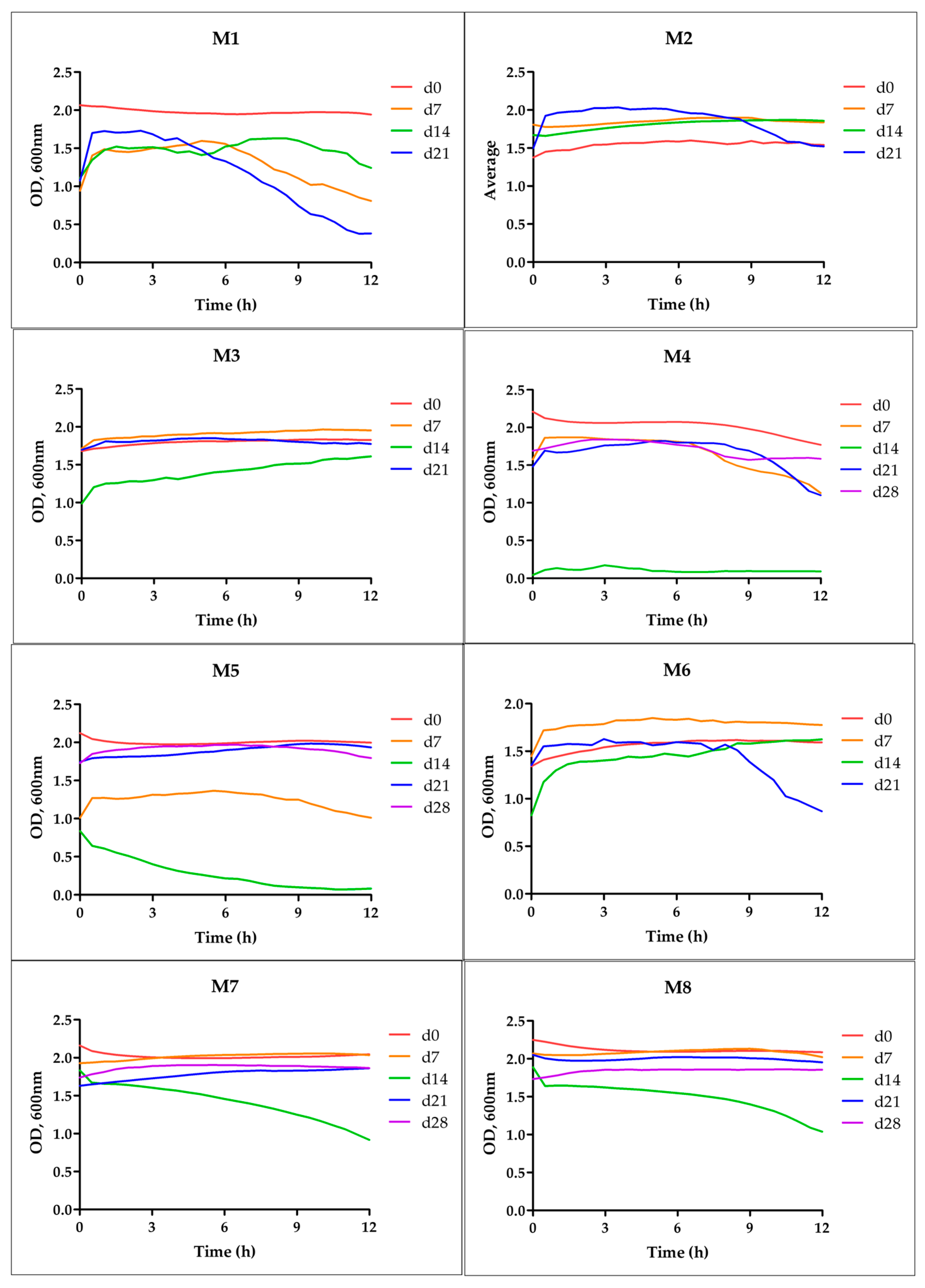
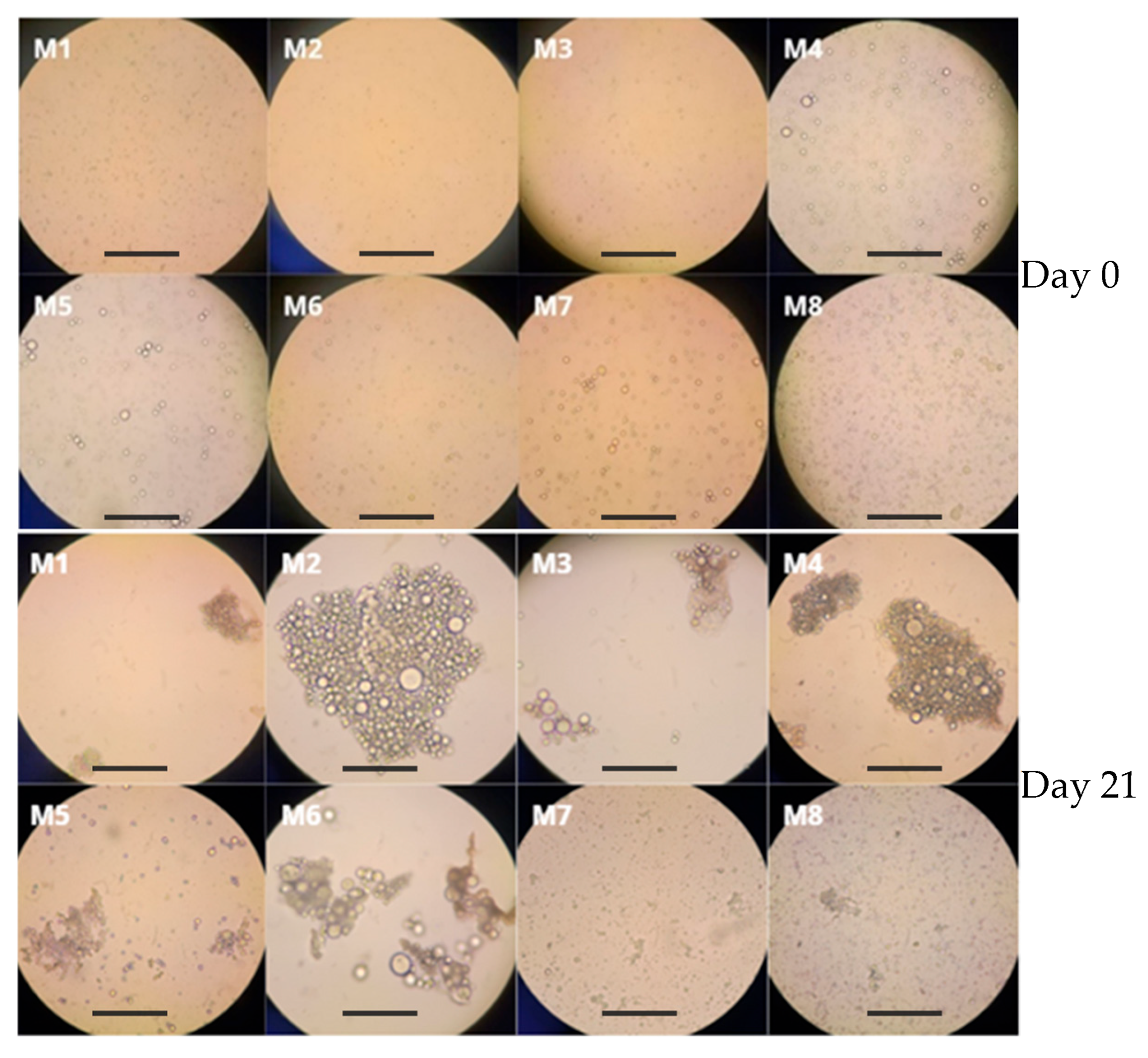
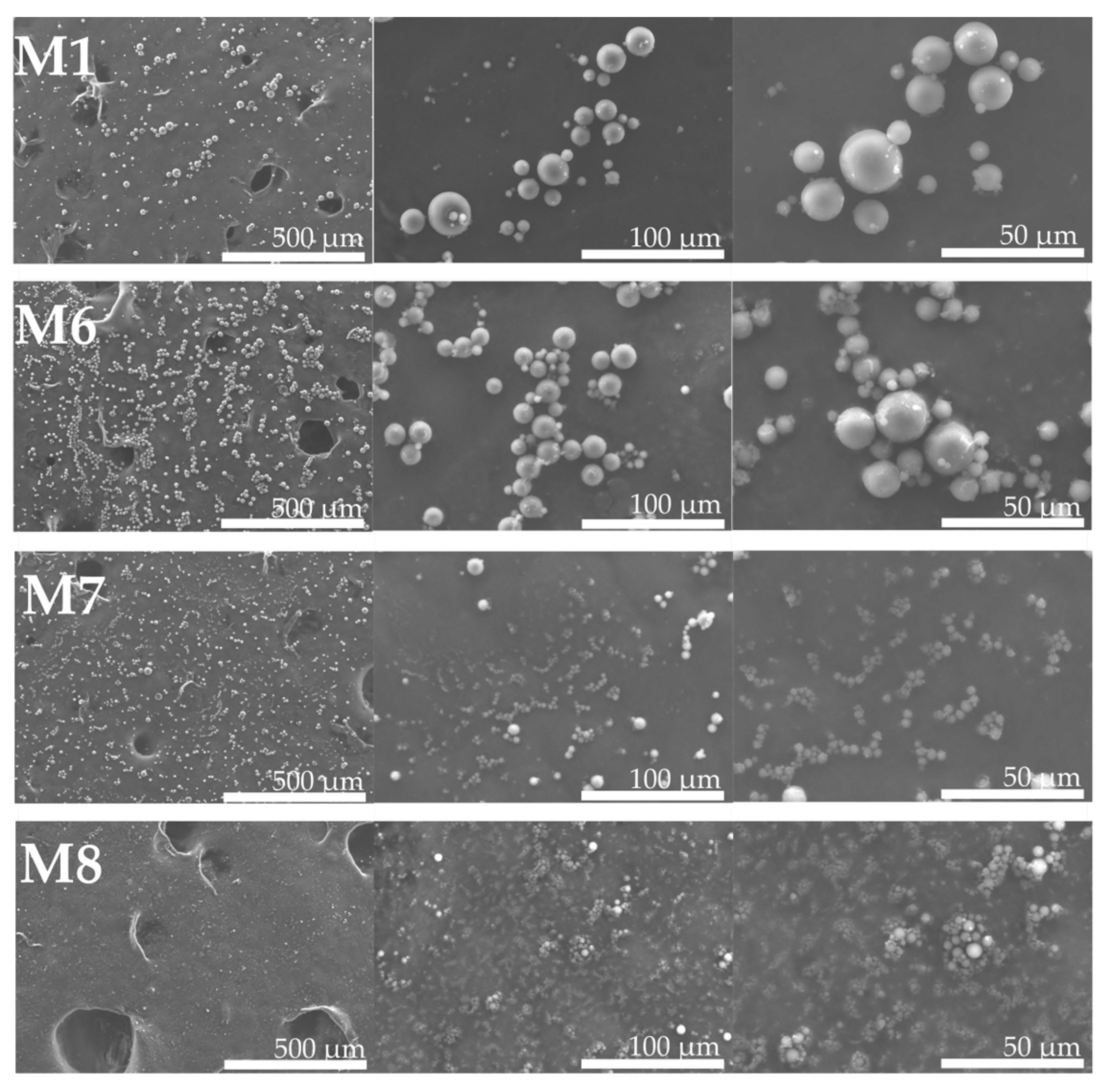
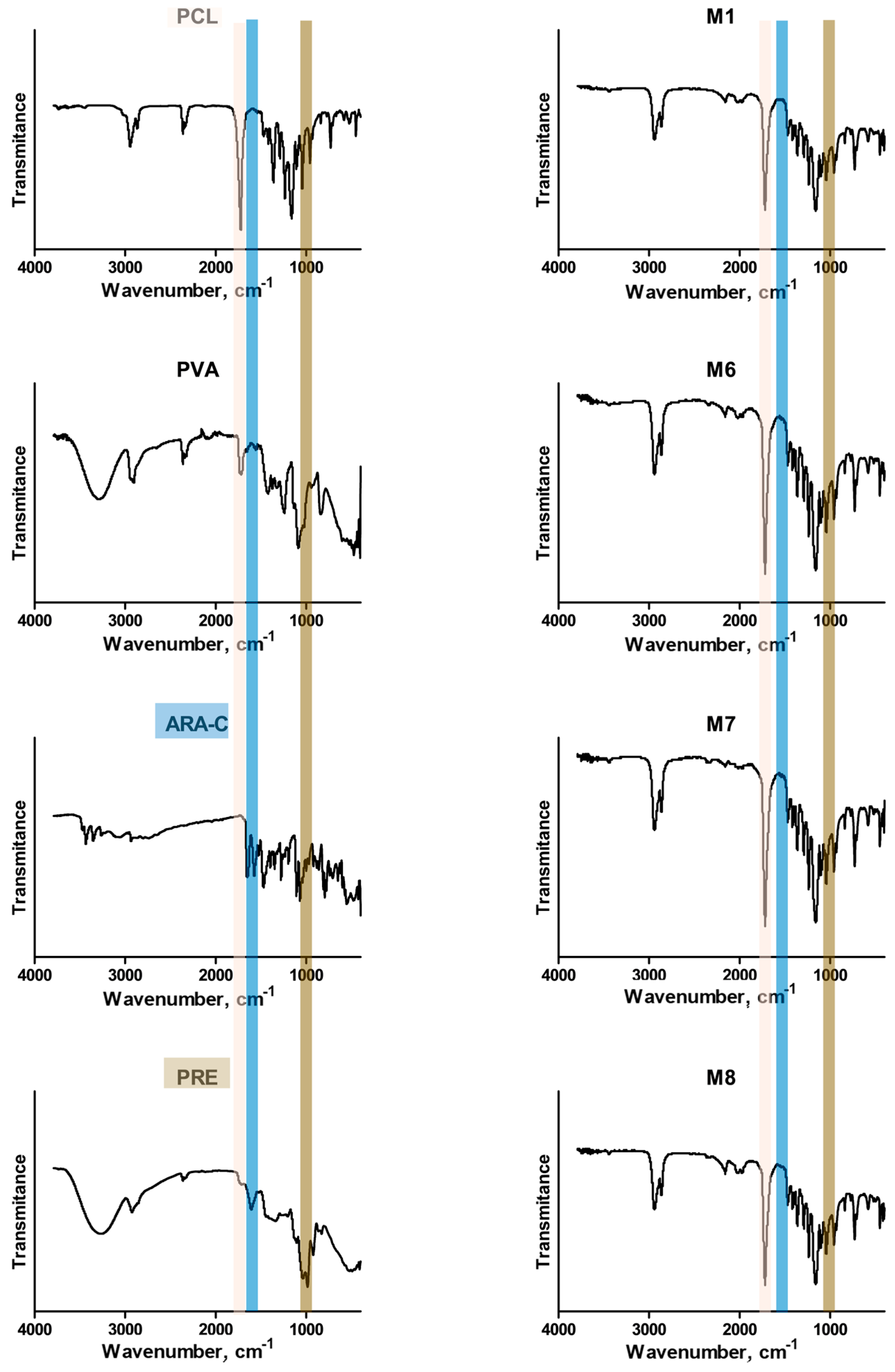
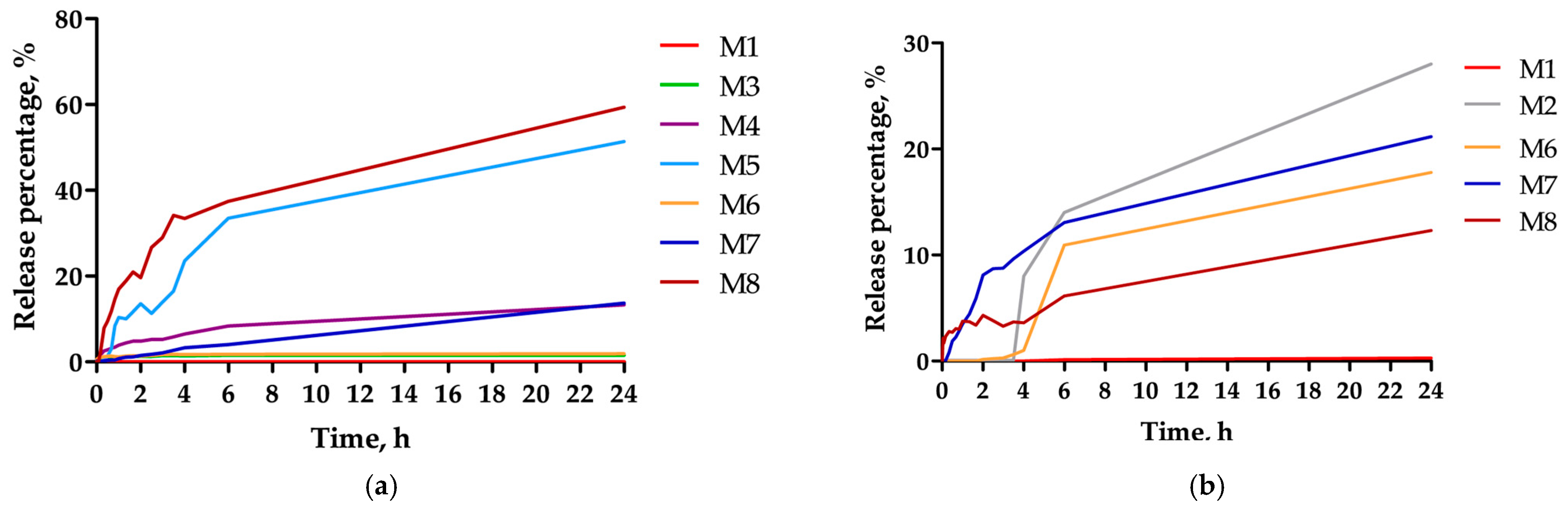
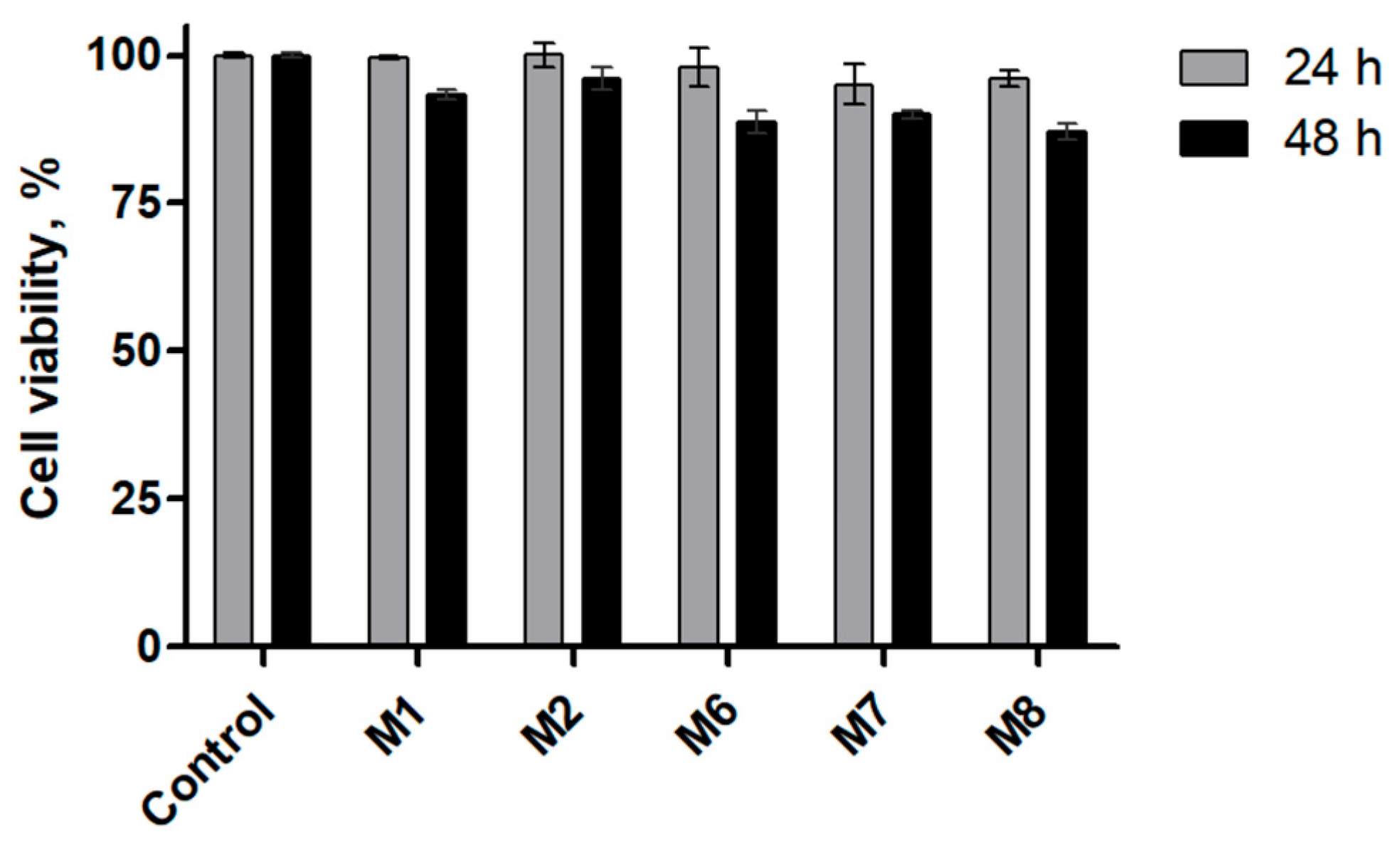
3. Results and Discussion
4. Conclusions
Author Contributions
Funding
Institutional Review Board Statement
Data Availability Statement
Acknowledgments
Conflicts of Interest
Abbreviations
| ALL | Acute lymphoblastic leukemia |
| ARA-C | Cytarabine |
| DLS | Dynamic light scattering |
| DMEM | Dulbecco’s Modified Eagle Medium |
| DMSO | Dimethyl sulfoxide |
| EE | Encapsulation efficiency |
| FTIR | Fourier transform infrared spectroscopy |
| MTT | 3-(4,5-dimethylthiazol-2-yl)-2,5-diphenyltetrazolium bromide |
| MWCO | Molecular weight cut-off |
| OD | Optical density |
| PBS | Phosphate-buffered saline |
| PCL | Poly(ε-caprolactone) |
| PRE | Polyphenol-rich extract (from pecan nut) |
| PVA | Poly(vinyl alcohol) |
| ROS | Reactive oxygen species |
| SD | Standard deviation |
| SEM | Scanning electron microscopy |
| UV–Vis | Ultraviolet–visible spectroscopy |
| W/O/W | Water-in-oil-in-water (double emulsion) |
References
- Liu, W.; Fang, J.; Zhu, M.; Zhou, J.; Yuan, C. Global, Regional, and National Burden of Childhood Leukemia from 1990 to 2021. BMC Pediatr. 2025, 25, 571. [Google Scholar] [CrossRef]
- Bhojwani, D.; Yang, J.J.; Pui, C.H. Biology of Childhood Acute Lymphoblastic Leukemia. Pediatr. Clin. N. Am. 2015, 62, 47. [Google Scholar] [CrossRef]
- Hayashi, H.; Makimoto, A.; Yuza, Y. Treatment of Pediatric Acute Lymphoblastic Leukemia: A Historical Perspective. Cancers 2024, 16, 723. [Google Scholar] [CrossRef]
- Cheng, T.; Peng, J.; Liu, Y.; Yang, S.; Chen, Y.; Xu, Y. Cladribine and Medium-Dose Cytarabine Intensified Busulfan plus Cyclophosphamide Conditioning Regimen for Adults High-Risk B-Cell Acute Lymphoblastic Leukemia. Ann. Hematol. 2025, 104, 3753. [Google Scholar] [CrossRef]
- Cheng, L.; Zeng, S.; Yan, D.; Tu, L.; Yang, Y.; Wang, X.; Zheng, X. Cytarabine and EIP Co-Administration Synergistically Reduces Viability of Acute Lymphoblastic Leukemia Cells with High ERG Expression. Leuk. Res. 2021, 109, 106649. [Google Scholar] [CrossRef]
- Di Francia, R.; Crisci, S.; De Monaco, A.; Cafiero, C.; Re, A.; Iaccarino, G.; De Filippi, R.; Frigeri, F.; Corazzelli, G.; Micera, A.; et al. Response and Toxicity to Cytarabine Therapy in Leukemia and Lymphoma: From Dose Puzzle to Pharmacogenomic Biomarkers. Cancers 2021, 13, 966. [Google Scholar] [CrossRef]
- Hubeek, I.; Stam, R.W.; Peters, G.J.; Broekhuizen, R.; Meijerink, J.P.P.; Van Wering, E.R.; Gibson, B.E.S.; Creutzig, U.; Zwaan, C.M.; Cloos, J.; et al. The Human Equilibrative Nucleoside Transporter 1 Mediates in vitro Cytarabine Sensitivity in Childhood Acute Myeloid Leukaemia. Br. J. Cancer 2005, 93, 1388–1394. [Google Scholar] [CrossRef]
- Wiley, J.S.; Taupin, J.; Jamieson, G.P.; Snook, M.; Sawyer, W.H.; Finch, L.R. Cytosine Arabinoside Transport and Metabolism in Acute Leukemias and T Cell Lymphoblastic Lymphoma. J. Clin. Investig. 1985, 75, 632–642. [Google Scholar] [CrossRef]
- Shen, Y.; Li, Y.; Yan, R. Structural Basis for the Inhibition Mechanism of the DNA Polymerase Holoenzyme from Mpox Virus. Structure 2024, 32, 654–661.e3. [Google Scholar] [CrossRef] [PubMed]
- Dalisay, D.S.; Tenebro, C.P.; Sabido, E.M.; Suarez, A.F.L.; Paderog, M.J.V.; Reyes-Salarda, R.; Saludes, J.P. Marine-Derived Anticancer Agents Targeting Apoptotic Pathways: Exploring the Depths for Novel Cancer Therapies. Mar. Drugs 2024, 22, 114. [Google Scholar] [CrossRef] [PubMed]
- Hamada, A.; Kawaguchi, T.; Nakano, M. Clinical Pharmacokinetics of Cytarabine Formulations. Clin. Pharmacokinet. 2002, 41, 705–718. [Google Scholar] [CrossRef]
- Martel, A.L.; Fraleigh, N.L.; Picard, E.; Lewicky, J.D.; Pawelec, G.; Lee, H.; Ma, G.W.; Mousavifar, L.; Roy, R.; Le, H.T. Novel Immunomodulatory Properties of Low Dose Cytarabine Entrapped in a Mannosylated Cationic Liposome. Int. J. Pharm. 2021, 606, 120849. [Google Scholar] [CrossRef]
- Yu, Y.M.; Bu, F.Z.; Meng, S.S.; Yan, C.W.; Wu, Z.Y.; Li, Y.T. The First Nano-Cocrystal Formulation of Marine Drug Cytarabine with Uracil Based on Cocrystal Nanonization Strategy for Long-Acting Injection Exhibiting Enhanced Antitumor Activity. Int. J. Pharm. 2023, 644, 123300. [Google Scholar] [CrossRef] [PubMed]
- Kegyes, D.; Moisoiu, V.; Constantinescu, C.; Tanase, A.; Ghiaur, G.; Einsele, H.; Tomuleasa, C.; Lazarus, H.M.; Gale, R.P. Neuro-Toxicities of Chemo- and Immune-Therapies in Haematologic Malignancies: From Mechanism to Management. Blood Rev. 2025, 69, 101254. [Google Scholar] [CrossRef] [PubMed]
- Jakobušić Brala, C.; Karković Marković, A.; Kugić, A.; Torić, J.; Barbarić, M. Combination Chemotherapy with Selected Polyphenols in Preclinical and Clinical Studies—An Update Overview. Molecules 2023, 28, 3746. [Google Scholar] [CrossRef]
- Chapa González, C.; Stevens Barrón, J.C. Los Beneficios Potenciales de Los Extractos de Frutos Secos En El Tratamiento Del Cáncer. Cienc. Vital 2024, 2, 1–8. [Google Scholar] [CrossRef]
- Oriol-Caballo, M.; Moreno-Murciano, M.P.; López-Blanch, R.; Estrela, J.M.; Obrador, E. Polyphenols: Potential Applications in Cancer Therapy. Mol. Nutr. Food Res. 2025, 69, e70011. [Google Scholar] [CrossRef] [PubMed]
- Islam, M.A.; Medha, M.M.; Nahar, A.U.; Al Fahad, M.A.; Siraj, M.A.; Seidel, V. Cancer Protective Role of Selected Dietary Polyphenols via Modulating Keap1/Nrf2/ARE and Interconnected Signaling Pathways. Nutr. Cancer 2023, 75, 1065–1102. [Google Scholar] [CrossRef]
- Guan, C.; Zhou, X.; Li, H.; Ma, X.; Zhuang, J. NF-ΚB Inhibitors Gifted by Nature: The Anticancer Promise of Polyphenol Compounds. Biomed. Pharmacother. 2022, 156, 113951. [Google Scholar] [CrossRef]
- Mileo, A.M.; Miccadei, S. Polyphenols as Modulator of Oxidative Stress in Cancer Disease: New Therapeutic Strategies. Oxid. Med. Cell. Longev. 2015, 2016, 6475624. [Google Scholar] [CrossRef]
- de La Rosa, L.A.; Alvarez-Parrilla, E.; Shahidi, F. Phenolic Compounds and Antioxidant Activity of Kernels and Shells of Mexican Pecan (Carya illinoinensis). J. Agric. Food Chem. 2011, 59, 152–162. [Google Scholar] [CrossRef]
- de la Rosa, L.A.; Álvarez-Parrilla, E.; García-Fajardo, J.A. Identificación de Compuestos Fenólicos En Extractos de Almendra (Prunus dulcis) y Nuez Pecana (Carya illinoinensis) Mediante Cromatografía Líquida Acoplada a Espectrometría de Masas En Tándem (HPLC-MS/MS). TIP Rev. Espec. Cienc. Químico-Biológicas 2019, 22, 1–13. [Google Scholar] [CrossRef]
- Álvarez-Parrilla, E.; Urrea-López, R.; de la Rosa, L.A. Bioactive Components and Health Effects of Pecan Nuts and Their By-Products: A Review. J. Food Bioact. 2018, 1, 56–92. [Google Scholar] [CrossRef]
- Reyes-Vázquez, N.; de la Rosa, L.A.; Morales-Landa, J.L.; García-Fajardo, J.A.; García-Cruz, M.Á. Phytochemical Content and Potential Health Applications of Pecan [Carya illinoinensis (Wangenh) K. Koch] Nutshell. Curr. Top. Med. Chem. 2022, 22, 150–167. [Google Scholar] [CrossRef] [PubMed]
- Sen, C.K.; Khanna, S.; Roy, S. Tocotrienols: Vitamin E Beyond Tocopherols. Life Sci. 2006, 78, 2088. [Google Scholar] [CrossRef]
- Abraham, A.; Kattoor, A.J.; Saldeen, T.; Mehta, J.L. Vitamin E and Its Anticancer Effects. Crit. Rev. Food Sci. Nutr. 2019, 59, 2831–2838. [Google Scholar] [CrossRef] [PubMed]
- Dasgupta, J.; Sanyal, U.; Das, S. Vitamin E--Its Status and Role in Leukemia and Lymphoma. Neoplasma 1993, 40, 235–240. [Google Scholar]
- Morgan, N.R.; Ramdas, P.; Bhuvanendran, S.; Radhakrishnan, A.K. Delineating the Immunotherapeutic Potential of Vitamin E and Its Analogues in Cancer: A Comprehensive Narrative Review. Biomed Res. Int. 2024, 28 2024, 5512422. [Google Scholar] [CrossRef]
- Mateș, L.; Banc, R.; Zaharie, F.A.; Rusu, M.E.; Popa, D.S. Mechanistic Insights into the Biological Effects and Antioxidant Activity of Walnut (Juglans regia L.) Ellagitannins: A Systematic Review. Antioxidants 2024, 13, 974. [Google Scholar] [CrossRef]
- Stevens-Barrón, J.C.; Wall-Medrano, A.; Álvarez-Parrilla, E.; Olivas-Armendáriz, I.; Astiazaran-García, H.; Robles-Zepeda, R.E.; De la Rosa, L.A. Synergistic Interactions between Tocol and Phenolic Extracts from Different Tree Nut Species against Human Cancer Cell Lines. Molecules 2022, 27, 3154. [Google Scholar] [CrossRef] [PubMed]
- Ribas, L.E.; Baravalle, M.E.; Gasser, F.B.; Renna, M.S.; Addona, S.; Ortega, H.H.; Savino, G.H.; Van de Velde, F.; Hein, G.J. Extraction of Phenolic Compounds from the Shells of Pecan Nuts with Cytotoxic Activity through Apoptosis against the Colon Cancer Cell Line HT-29. J. Food Sci. 2021, 86, 5409–5423. [Google Scholar] [CrossRef]
- Sahu, K.L.; Naeem, K.; Carson, M.R.; Nawaz, N.K.; Gulfam, N.; Zahoor, M. Advancements in Polycaprolactone Nanoparticles for Targeted Drug Delivery in Breast Cancer Treatment: Strategies and Challenges. Next Nanotechnol. 2025, 8, 100206. [Google Scholar] [CrossRef]
- Greatti, V.R.; Oda, F.; Sorrechia, R.; Kapp, B.R.; Seraphim, C.M.; Weckwerth, A.C.V.B.; Chorilli, M.; Da Silva, P.B.; Eloy, J.O.; Kogan, M.J.; et al. Poly-ε-Caprolactone Nanoparticles Loaded with 4-Nerolidylcatechol (4-NC) for Growth Inhibition of Microsporum Canis. Antibiotics 2020, 9, 894. [Google Scholar] [CrossRef]
- Aguiar, A.; Loureiro, M.V.; Pinho, I.; Marques, A.C. Efficient Encapsulation of Isocyanates in PCL/PLA Biodegradable Microcapsules for Adhesives. J. Mater. Sci. 2023, 58, 2249–2267. [Google Scholar] [CrossRef]
- Gurler, E.B.; Ergul, N.M.; Ozbek, B.; Ekren, N.; Oktar, F.N.; Haskoylu, M.E.; Oner, E.T.; Eroglu, M.S.; Ozbeyli, D.; Korkut, V.; et al. Encapsulated Melatonin in Polycaprolactone (PCL) Microparticles as a Promising Graft Material. Mater. Sci. Eng. C 2019, 100, 798–808. [Google Scholar] [CrossRef] [PubMed]
- Procopio, A.; Lagreca, E.; Jamaledin, R.; La Manna, S.; Corrado, B.; Di Natale, C.; Onesto, V. Recent Fabrication Methods to Produce Polymer-Based Drug Delivery Matrices (Experimental and In Silico Approaches). Pharmaceutics 2022, 14, 872. [Google Scholar] [CrossRef]
- Mashhadian, A.; Afjoul, H.; Shamloo, A. An Integrative Method to Increase the Reliability of Conventional Double Emulsion Method. Anal. Chim. Acta 2022, 1197, 339523. [Google Scholar] [CrossRef]
- Li, D.; Zhao, Y.; Zhang, Y.; An, J.; Huang, J.; Yang, J. Encapsulation of Hydrophobic-but-Not-Lipophilic Perfluoro Liquids Based on a Self-Assembled Double Emulsion Template via Solvent Evaporation Method. ACS Appl. Mater. Interfaces 2024, 16, 48428–48437. [Google Scholar] [CrossRef]
- Safari, H.; Felder, M.L.; Kaczorowski, N.; Eniola-Adefeso, O. Effect of the Emulsion Solvent Evaporation Technique Cosolvent Choice on the Loading Efficiency and Release Profile of Anti-CD47 from PLGA Nanospheres. J. Pharm. Sci. 2022, 111, 2525–2530. [Google Scholar] [CrossRef]
- de Almeida Campos, L.A.; de Souza, J.B.; de Queiroz Macêdo, H.L.R.; Borges, J.C.; de Oliveira, D.N.; Cavalcanti, I.M.F. Synthesis of Polymeric Nanoparticles by Double Emulsion and PH-Driven: Encapsulation of Antibiotics and Natural Products for Combating Escherichia coli Infections. Appl. Microbiol. Biotechnol. 2024, 108, 351. [Google Scholar] [CrossRef]
- Benavides Castillo, L.; Martinez, Y. The Concentration and Type of Emulsifier Rules the Oil/Water and Water/Oil/Water Emulsion Size Distribution. Chem. Eng. Commun. 2023, 210, 2064–2071. [Google Scholar] [CrossRef]
- Bakouei, M.; Kalantarifard, A.; Sundara Raju, I.; Avsievich, T.; Rannaste, L.; Kreivi, M.; Elbuken, C. Facile and Versatile PDMS-Glass Capillary Double Emulsion Formation Device Coupled with Rapid Purification toward Microfluidic Giant Liposome Generation. Microsyst. Nanoeng. 2024, 10, 183. [Google Scholar] [CrossRef] [PubMed]
- Vaida, C.; Mela, P.; Kunna, K.; Sternberg, K.; Keul, H.; Möller, M. Microparticles for Drug Delivery Based on Functional Polycaprolactones with Enhanced Degradability: Loading of Hydrophilic and Hydrophobic Active Compoundsa. Macromol. Biosci. 2010, 10, 925–933. [Google Scholar] [CrossRef]
- Bhadran, A.; Shah, T.; Babanyinah, G.K.; Polara, H.; Taslimy, S.; Biewer, M.C.; Stefan, M.C. Recent Advances in Polycaprolactones for Anticancer Drug Delivery. Pharmaceutics 2023, 15, 1977. [Google Scholar] [CrossRef] [PubMed]
- Sinha, V.R.; Bansal, K.; Kaushik, R.; Kumria, R.; Trehan, A. Poly-ϵ-Caprolactone Microspheres and Nanospheres: An Overview. Int. J. Pharm. 2004, 278, 1–23. [Google Scholar] [CrossRef]
- Terrazas García, D.F.; de la Rosa, L.A.; Vázquez Flores, A.A.; Muñoz Bernal, O.A.; Stevens Barrón, J.C.; Chapa González, C. Nanostructured Delivery Systems for Antioxidants: Comparative Release of Purified Ellagic Acid and Extracted Polyphenols. Nano-Struct. Nano-Objects 2025, 43, 101530. [Google Scholar] [CrossRef]
- Amini, Y.; Amel Jamehdar, S.; Sadri, K.; Zare, S.; Musavi, D.; Tafaghodi, M. Different Methods to Determine the Encapsulation Efficiency of Protein in PLGA Nanoparticles. Biomed. Mater. Eng. 2017, 28, 613–620. [Google Scholar] [CrossRef]
- Daneshmand, S.; Golmohammadzadeh, S.; Jaafari, M.R.; Movaffagh, J.; Rezaee, M.; Sahebkar, A.; Malaekeh-Nikouei, B. Encapsulation Challenges, the Substantial Issue in Solid Lipid Nanoparticles Characterization. J. Cell. Biochem. 2018, 119, 4251–4264. [Google Scholar] [CrossRef] [PubMed]
- Muso-Cachumba, J.J.; Ruiz-Lara, G.; Monteiro, G.; Rangel-Yagui, C.d.O. Challenges in Estimating the Encapsulation Efficiency of Proteins in Polymersomes—Which Is the Best Method? Braz. J. Pharm. Sci. 2023, 59, e23365. [Google Scholar] [CrossRef]
- Martinez-Osuna, D.; Olivas-Armendariz, I.; Estrada-Rojas, P.; Jimenez-Vega, F.; Mendoza-Duarte, M.E.; Vega-Rios, A.; Chapa-Gonzalez, C.; Martel-Estrada, S.-A.; Valencia-Gomez, L.E.; Salcedo, M.; et al. Silver Sulfide Quantum Dots Conjugated with Anti-PSG1 Monoclonal Antibodies: Optical, Photothermal, and Cytocompatibility Assessment. Processes 2025, 13, 3382. [Google Scholar] [CrossRef]
- do Prado, A.C.P.; da Silva, H.S.; da Silveira, S.M.; Barreto, P.L.M.; Vieira, C.R.W.; Maraschin, M.; Ferreira, S.R.S.; Block, J.M. Effect of the Extraction Process on the Phenolic Compounds Profile and the Antioxidant and Antimicrobial Activity of Extracts of Pecan Nut [Carya illinoinensis (Wangenh) C. Koch] Shell. Ind. Crops Prod. 2014, 52, 552–561. [Google Scholar] [CrossRef]
- Villarreal-Lozoya, J.E.; Lombardini, L.; Cisneros-Zevallos, L. Phytochemical Constituents and Antioxidant Capacity of Different Pecan [Carya illinoinensis (Wangenh.) K. Koch] Cultivars. Food Chem. 2007, 102, 1241–1249. [Google Scholar] [CrossRef]
- de la Rosa, L.A.; Vázquez-Flores, A.A.; Álvarez-Parrilla, E.; Rodrigo-García, J.; Medina-Campos, O.N.; Ávila-Nava, A.; González-Reyes, S.; Pedraza-Chaverri, J. Content of Major Classes of Polyphenolic Compounds, Antioxidant, Antiproliferative, and Cell Protective Activity of Pecan Crude Extracts and Their Fractions. J. Funct. Foods 2014, 7, 219–228. [Google Scholar] [CrossRef]
- Gatto, M.S.; Najahi-Missaoui, W. Lyophilization of Nanoparticles, Does It Really Work? Overview of the Current Status and Challenges. Int. J. Mol. Sci. 2023, 24, 14041. [Google Scholar] [CrossRef] [PubMed]
- Ojha, T.; Hu, Q.; Colombo, C.; Wit, J.; van Geijn, M.; van Steenbergen, M.J.; Bagheri, M.; Königs-Werner, H.; Buhl, E.M.; Bansal, R.; et al. Lyophilization Stabilizes Clinical-Stage Core-Crosslinked Polymeric Micelles to Overcome Cold Chain Supply Challenges. Biotechnol. J. 2021, 16, 2000212. [Google Scholar] [CrossRef] [PubMed]
- Fonte, P.; Reis, S.; Sarmento, B. Facts and Evidences on the Lyophilization of Polymeric Nanoparticles for Drug Delivery. J. Control. Release 2016, 225, 75–86. [Google Scholar] [CrossRef]
- Deepa, G.; Sivakumar, K.C.; Sajeevan, T.P. Molecular Simulation and in vitro Evaluation of Chitosan Nanoparticles as Drug Delivery Systems for the Controlled Release of Anticancer Drug Cytarabine against Solid Tumours. 3 Biotech 2018, 8, 493. [Google Scholar] [CrossRef]
- Jan, N.; Madni, A.; Rahim, M.A.; Khan, N.U.; Jamshaid, T.; Khan, A.; Jabar, A.; Khan, S.; Shah, H. In vitro Anti-Leukemic Assessment and Sustained Release Behaviour of Cytarabine Loaded Biodegradable Polymer Based Nanoparticles. Life Sci. 2021, 267, 118971. [Google Scholar] [CrossRef]
- Cytarabine: Uses, Interactions, Mechanism of Action|DrugBank. Available online: https://go.drugbank.com/drugs/DB00987 (accessed on 23 January 2026).
- Molski, M. Computation of the PKa Values of Gallic Acid and Its Anionic Forms in Aqueous Solution: A Self-Similar Transformation Approach for Accurate Proton Hydration Free Energy Estimation. Molecules 2025, 30, 742. [Google Scholar] [CrossRef]
- Wang, W.; Wang, S.; Liu, Y.; Wang, X.; Nie, J.; Meng, X.; Zhang, Y. Ellagic Acid: A Dietary-Derived Phenolic Compound for Drug Discovery in Mild Cognitive Impairment. Front. Aging Neurosci. 2022, 14, 925855. [Google Scholar] [CrossRef]
- Wallace, S.J.; Li, J.; Nation, R.L.; Boyd, B.J. Drug Release from Nanomedicines: Selection of Appropriate Encapsulation and Release Methodology. Drug Deliv. Transl. Res. 2012, 2, 284. [Google Scholar] [CrossRef]
- Baltz, N.; Scherließ, R. Entrapment Efficiency Methodology for Lipid Nanoparticles—A Literature Review. OpenNano 2025, 24, 100251. [Google Scholar] [CrossRef]
- Massella, D.; Celasco, E.; Salaün, F.; Ferri, A.; Barresi, A.A. Overcoming the Limits of Flash Nanoprecipitation: Effective Loading of Hydrophilic Drug into Polymeric Nanoparticles with Controlled Structure. Polymers 2018, 10, 1092. [Google Scholar] [CrossRef]
- Hadidi, M.; Liñán-Atero, R.; Tarahi, M.; Christodoulou, M.C.; Aghababaei, F. The Potential Health Benefits of Gallic Acid: Therapeutic and Food Applications. Antioxidants 2024, 13, 1001. [Google Scholar] [CrossRef] [PubMed]
- Golmei, P.; Kasna, S.; Roy, K.P.; Kumar, S. A Review on Pharmacological Advancement of Ellagic Acid. J. Pharmacol. Pharmacother. 2024, 15, 93–104. [Google Scholar] [CrossRef]
- Arwanih, E.Y.; Louisa, M.; Rinaldi, I.; Wanandi, S.I. Resistance Mechanism of Acute Myeloid Leukemia Cells Against Daunorubicin and Cytarabine: A Literature Review. Cureus 2022, 14, e33165. [Google Scholar] [CrossRef] [PubMed]
- Ezeanolue, I.R.; Ezeanolue, C.F.; Plastina, P.; Stefanello, F.M.; Giacomelli Tavares, R.; Spanevello, R.M. In vitro Anti-Inflammatory and Anticancer Potential of Pecan Nut (Carya illinoinensis) Kernel Extracts: Modulation of Cell Signaling Pathways—A Scoping Review. Molecules 2025, 30, 4310. [Google Scholar] [CrossRef]
- Hamdy, N.M.; Amin, A.; Abd-ellatef, G.E.F.; Abdalla, Y.; Abdalla, A.; Saqr, D.A.; Lu, Y.; Wu, W.; Gamal El-Din, M.I.; El-Shazly, M. An Overview of Targeting Some Cancer Hallmarks with Plant Polyphenols: A Step Toward Precision; Springer: Cham, Switzerland, 2026; pp. 423–477. [Google Scholar] [CrossRef]
- Bolaños-Cardet, J.; Pepió-Tárrega, B.; Saiz-Poseu, J.; López-Moral, A.; Ullah, F.; Yuste, V.J.; Ruiz-Molina, D.; Suárez-García, S. The Redox Properties of Polyphenols and Their Role in ROS Generation for Biomedical Applications. Angew. Chem.—Int. Ed. 2025, 65, e13698. [Google Scholar] [CrossRef]
- Vieira, I.R.S.; Tessaro, L.; Lima, A.K.O.; Velloso, I.P.S.; Conte-Junior, C.A. Recent Progress in Nanotechnology Improving the Therapeutic Potential of Polyphenols for Cancer. Nutrients 2023, 15, 3136. [Google Scholar] [CrossRef] [PubMed]
- Vladu, A.F.; Ficai, D.; Ene, A.G.; Ficai, A. Combination Therapy Using Polyphenols: An Efficient Way to Improve Antitumoral Activity and Reduce Resistance. Int. J. Mol. Sci. 2022, 23, 10244. [Google Scholar] [CrossRef]
- Adeyemi, S.A.; Ngema, L.M.; Choonara, Y.E. Advances in Targeted Therapies and Emerging Strategies for Blood Cancer Treatment. RSC Pharm. 2025, 2, 950–961. [Google Scholar] [CrossRef]
- Zhang, L.; Lin, Z.; Chen, Y.; Gao, D.; Wang, P.; Lin, Y.; Wang, Y.; Wang, F.; Han, Y.; Yuan, H. Co-Delivery of Docetaxel and Resveratrol by Liposomes Synergistically Boosts Antitumor Efficiency against Prostate Cancer. Eur. J. Pharm. Sci. 2022, 174, 106199. [Google Scholar] [CrossRef]
- Momparler, R.L. Optimization of Cytarabine (ARA-C) Therapy for Acute Myeloid Leukemia. Exp. Hematol. Oncol. 2013, 2, 20. [Google Scholar] [CrossRef]
- Boyuklieva, R.; Hristozova, A.; Pilicheva, B. Synthesis and Characterization of PCL-Idebenone Nanoparticles for Potential Nose-to-Brain Delivery. Biomedicines 2023, 11, 1491. [Google Scholar] [CrossRef]
- Rahmani, D.; Torbat, N.A.; Boddohi, S. Synthesis and Characterization of PH-Responsive PCL-PVA Polymersome for Dual Delivery to Breast Cancer Cells. Eur. Polym. J. 2023, 191, 112032. [Google Scholar] [CrossRef]
- Grossen, P.; Witzigmann, D.; Sieber, S.; Huwyler, J. PEG-PCL-Based Nanomedicines: A Biodegradable Drug Delivery System and Its Application. J. Control. Release 2017, 260, 46–60. [Google Scholar] [CrossRef] [PubMed]
- Valdez Medina, K.A.; Medina Salas, G.A.; Morales Jacquez, S.A.; Carrillo Castillo, A.; Chapa González, C. Development of PCL Nanofibers for Delivery of Pecan Bioactive Compounds in Adjunctive Leukemia Treatment. In Proceedings of the 32IMRC. E6. Polymers as Versatile Materials: Design, Preparation, Characterization, Properties, and Extended Applications, Cancún, México, 18–23 August 2024; Illescas Martínez, F.J., Pugh, C., Duhamel, J., González Méndez, I., Eds.; Materials Research Society: Cancun, Mexico, 2024; Available online: https://www.mrs-mexico.org.mx/imrc2024/abstracts-read.php?r=00755&id=21 (accessed on 31 January 2026).
- Maruszewska, A.; Tarasiuk, J. Antitumour Effects of Selected Plant Polyphenols, Gallic Acid and Ellagic Acid, on Sensitive and Multidrug-Resistant Leukaemia HL60 Cells. Phytother. Res. 2019, 33, 1208–1221. [Google Scholar] [CrossRef] [PubMed]
- Fakhar, F.; Mohammadian, K.; Keramat, S.; Stanek, A. The Potential Role of Dietary Polyphenols in the Prevention and Treatment of Acute Leukemia. Nutrients 2024, 16, 4100. [Google Scholar] [CrossRef]



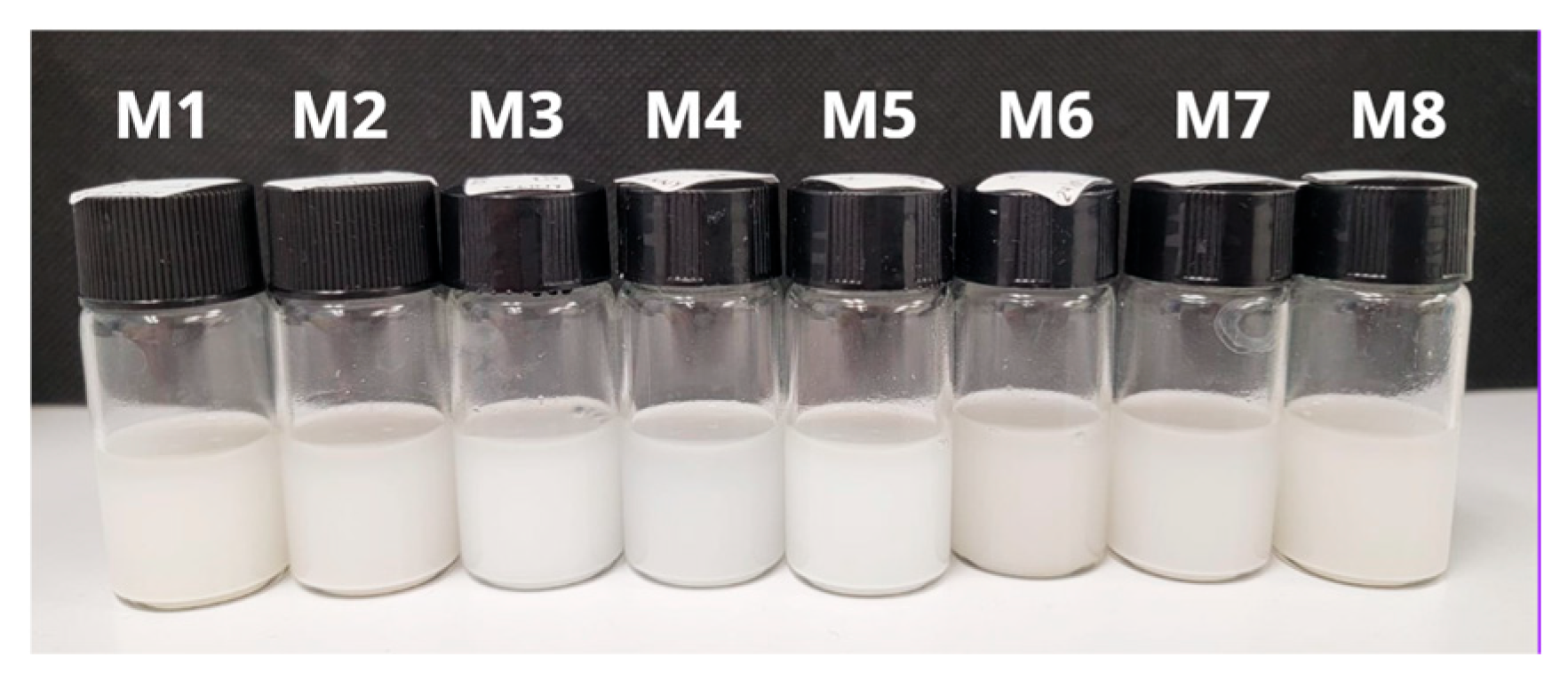
| Sample ID | PCL Solution (16 mg/mL) Volume (mL) | PVA Aqueous Phase (2 mg/mL) Volume (mL) | PRE Solution (2.5 mg/mL) Volume (mL) | 1.0 mL of ARA-C, Concentration (mg/mL) |
|---|---|---|---|---|
| M1 | 5 | 5 | – | – |
| M2 | 4 | 1 | – | |
| M3 | 4 | – | 50 | |
| M4 | 4 | – | 5 | |
| M5 | 4 | – | 0.5 | |
| M6 | 3 | 1 | 50 | |
| M7 | 3 | 1 | 5 | |
| M8 | 3 | 1 | 0.5 |
| Sample ID | DLS Hydrodynamic Diameter (µm) ± SD | Zeta Potential (mV) | EE ARA-C (%) ± SD | EE PRE (%) ± SD | Remarks |
|---|---|---|---|---|---|
| M1 | 0.324 ± 0.214 | +13.5 | - | - | Blank control |
| M2 | ND | ND | - | 100.00 ± 0.00 | PRE only |
| M3 | ND | ND | 97.90 ± 0.26 | - | ARA-C high |
| M4 | ND | ND | 79.56 ± 3.39 | - | ARA-C medium |
| M5 | ND | ND | 100.00 ± 0.00 | - | ARA-C low |
| M6 | 0.450 ± 0.293 | +18.0 | 98.10 ± 0.17 | 98.66 ± 1.89 | Co-loaded high |
| M7 | 0.324 ± 0.172 | −35.5 | 82.37 ± 0.97 | 96.94 ± 4.33 | Co-loaded medium |
| M8 | 0.286 ± 0.229 | −42.4 | 100.00 | 100.00 ± 0.00 | Co-loaded low |
| Model | Correlation Coefficient (R2) * | |||||
|---|---|---|---|---|---|---|
| M3 | M4 | M5 | M6 | M7 | M8 | |
| Zero-order | 0.2135 | 0.8139 | 0.8038 | 0.3598 | 0.9189 | 0.6974 |
| First-order | 0.2142 | 0.8331 | 0.7957 | 0.3611 | 0.9255 | 0.8447 |
| Higuchi | 0.4409 | 0.9668 | 0.7181 | 0.6179 | 0.5496 | 0.9133 |
| Hixson | 0.24 | 0.8268 | 0.7984 | 0.3607 | 0.9234 | 0.7986 |
| Korsmeyer–Peppas | 0.8445 | 0.7959 | 0.621 | 0.875 | 0.5056 | 0.8118 |
| Model | Correlation Coefficient (R2) | |||
|---|---|---|---|---|
| M2 | M6 | M7 | M8 | |
| Zero-order | 0.9953 | 0.9846 | 0.7663 | 0.862 |
| Fist-order | 0.9954 | 0.9877 | 0.7952 | 0.872 |
| Higuchi | 0.8833 | 0.9448 | 0.8771 | 0.8855 |
| Hixson | 0.9950 | 0.9868 | 0.7858 | 0.8688 |
| Korsmeyer–Peppas | 0.3513 | 0.6269 | 0.9167 | 0.6567 |
Disclaimer/Publisher’s Note: The statements, opinions and data contained in all publications are solely those of the individual author(s) and contributor(s) and not of MDPI and/or the editor(s). MDPI and/or the editor(s) disclaim responsibility for any injury to people or property resulting from any ideas, methods, instructions or products referred to in the content. |
© 2026 by the authors. Licensee MDPI, Basel, Switzerland. This article is an open access article distributed under the terms and conditions of the Creative Commons Attribution (CC BY) license.
Share and Cite
Leyva Castro, J.; de la Rosa, L.A.; Álvarez Parrilla, E.; Olivas Armendáriz, I.; Stevens Barrón, J.C.; Chapa González, C. Co-Release of Cytarabine and Polyphenol-Rich Extract from Polycaprolactone Microparticles Towards Leukemia Therapy. Polymers 2026, 18, 394. https://doi.org/10.3390/polym18030394
Leyva Castro J, de la Rosa LA, Álvarez Parrilla E, Olivas Armendáriz I, Stevens Barrón JC, Chapa González C. Co-Release of Cytarabine and Polyphenol-Rich Extract from Polycaprolactone Microparticles Towards Leukemia Therapy. Polymers. 2026; 18(3):394. https://doi.org/10.3390/polym18030394
Chicago/Turabian StyleLeyva Castro, Jenifer, Laura A. de la Rosa, Emilio Álvarez Parrilla, Imelda Olivas Armendáriz, Jazmín Cristina Stevens Barrón, and Christian Chapa González. 2026. "Co-Release of Cytarabine and Polyphenol-Rich Extract from Polycaprolactone Microparticles Towards Leukemia Therapy" Polymers 18, no. 3: 394. https://doi.org/10.3390/polym18030394
APA StyleLeyva Castro, J., de la Rosa, L. A., Álvarez Parrilla, E., Olivas Armendáriz, I., Stevens Barrón, J. C., & Chapa González, C. (2026). Co-Release of Cytarabine and Polyphenol-Rich Extract from Polycaprolactone Microparticles Towards Leukemia Therapy. Polymers, 18(3), 394. https://doi.org/10.3390/polym18030394