1. Introduction
Fiber reinforced polymer (FRP, fiber and polymer serve as reinforcing phase and matrix, respectively) composites have gained a large-scale application in civil engineering because of their advantages like high strength but low weight, corrosion-resistance and fatigue-resistance [
1]. Continuous and unidirectional FRP composites like rebars [
2,
3] and plates [
4] are preferred in civil engineering because their high strength can be fully utilized. According to the report regarding the global market for FRP composites by JEC Observer [
5], the construction contributed 33% in the global composite market, but only about 21.2% composites in the construction field are short fiber reinforced polymers.
The matrix of FRP composites mainly includes thermoset and thermoplastic polymers. Thermoset polymers based FRP composites are already widely used in civil engineering, such as epoxy, vinyl-ester and polyurethane [
6]. On the other hand, thermoplastic polymers based FRP (FRTP, thermoplastic polymer serves as the matrix of FRP) composites are less used in civil engineering, and according to the data of JEC Observer, FRTP composites are mainly used in automotive and aerospace areas [
5]. However, the linear molecular structure of thermoplastic polymers could grant FRTP composites with advantages like secondary-forming [
7,
8], easier recycling [
9,
10], welding [
11], good durability [
12] and better resistance to impacts [
13]. Moreover, through the thermal melt recycling method, FRTP composites could serve as a sustainable construction material, which meets the requirements of the development of a sustainable society [
14,
15]. With the development of manufacturing technologies for FRTP composites, like hot-press [
16], thermoplastic pultrusion [
17] and tape winding [
18], FRTP composites show a promising future in civil engineering fields.
Although FRTP composites have a series of advantages, the high melt viscosity of most thermoplastic polymers becomes a frontier in the perfect impregnation of fibers and, therefore, in producing high-quality FRTP composites. To achieve a better wetting of fibers, generally high temperatures and pressures are required when producing FRTP composites. For instance, Bodaghi et al. [
19] illustrated that thermoplastic polymers required much higher processing temperatures than common thermoset polymers. In addition, thermoplastic pultrusion was developed, where the prepreg production is often adopted as the first step, and then prepregs are treated as the feed materials for the final production formation [
20]. Moreover, the suitable selection of processing parameters should be determined.
Carbon fiber reinforced thermoplastic polypropylene (CF/PP, carbon fiber and polypropylene serve as the reinforcing fiber and matrix, and abbreviated as CF and PP, respectively) composites could utilize the excellent mechanical properties of carbon fiber [
21] and the advantages of polypropylene (PP) like extremely low water absorption and excellent resistance to chemicals [
22]. However, nowadays, CF/PP composites investigated in the literature were mostly reinforced by short fibers [
23]. Limited studies investigated the manufacturing and mechanical properties of continuous carbon fiber-based CF/PP composites. Sun et al. [
24] investigated the influence of stamping temperature (190, 220, 250 °C) on the crystallization behavior, fiber/matrix interface and mechanical properties of woven CF/PP composites. The results showed that higher temperature could improve the crystallinity degree, interface bonding and thermal stability of CF/PP composites. However, over-high temperature could weaken the property of the PP matrix and reduce the mechanical properties of CF/PP composites. Allen et al. [
25] found that the thermal processing conditions could change the structure of the crystallization layer along the interface, which affects the tensile properties. The mechanical properties of CF/PP composites not only depend on the fiber content, but also are controlled by the crystal morphology of the interface. Han et al. [
26] adopted a coupling agent together with plasma treatment to enhance the interfacial bond between the carbon fiber and the PP matrix. Tian et al. [
27] studied the mechanical and electromagnetic interference shielding properties of the PP/carbon fiber/carbon black composite foam bonded with continuous CF/PP prepregs samples. Gabr et al. [
28] found that the addition of nano-clay could dramatically enhance the interlaminar fracture toughness of woven CF/PP composites and increase their glass transition temperature. The creep study regarding the creep behavior of continuous CF/PP composites is also quite limited. As an example, Nakada et al. [
29] validated the statistical prediction model of the creep failure probability for unidirectional CF/PP composite tapes at different creep stress levels and temperatures. However, the influence of different processing parameters on the creep properties of CF/PP composites has not been investigated yet.
Given the research conditions mentioned above, the influence of processing parameters on the mechanical, thermo-mechanical and creep-recovery properties of continuously unidirectional CF/PP composites (produced from prepregs and the hot-press method) remains unclear. The present study aims to study the influence of molding temperature, pressure and holding time on the short beam strength, storage modulus, loss modulus, tan δ, creep strain, strain recovery rate and crystallinity degree through the Taguchi experiment design. The impregnation condition was observed by the scanning electron microscope test and correlated to the short beam strength of CF/PP composites.
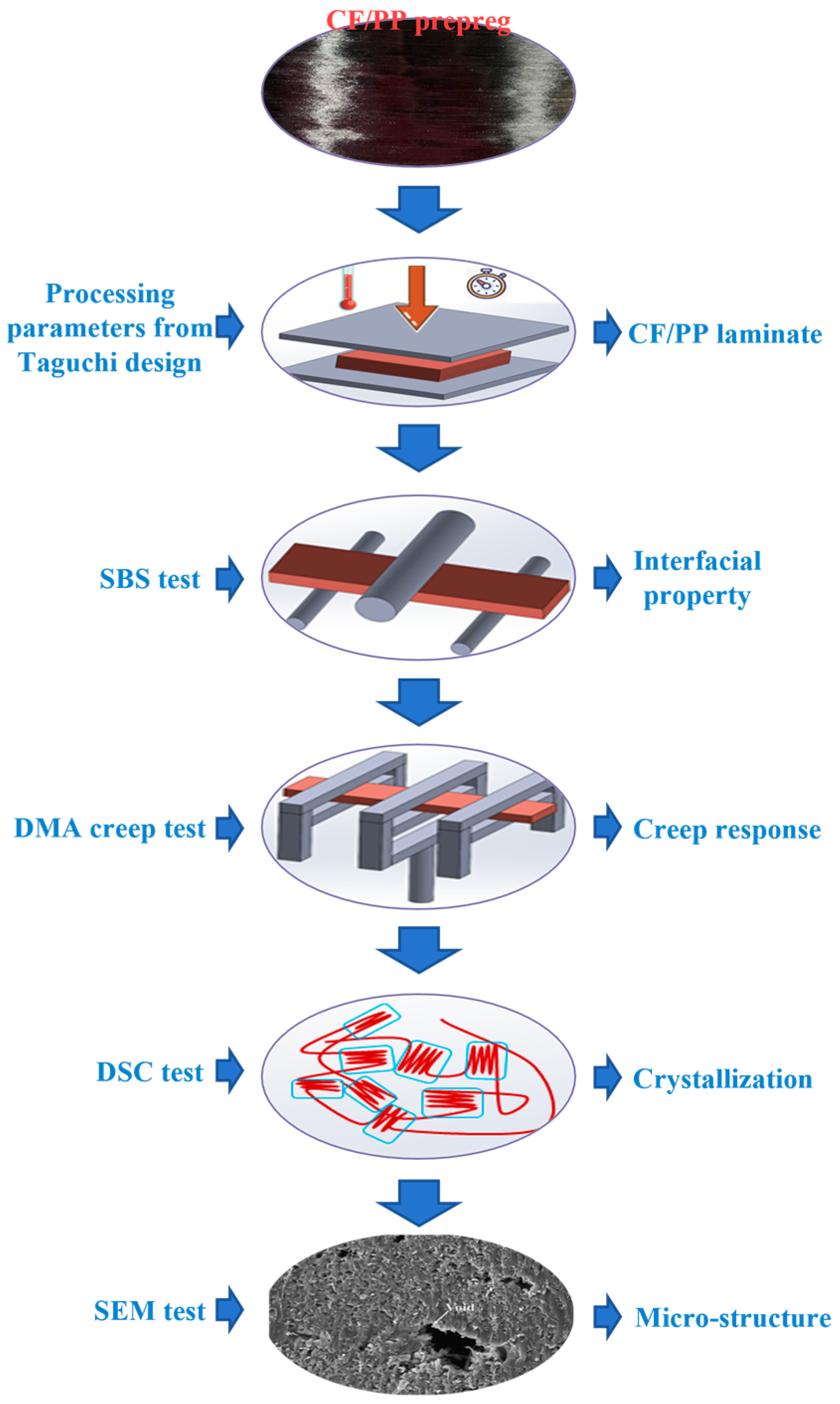
Figure 1 is the flow chart showing the main contents of the manuscript.
3. Results and Discussion
This section mainly presents the results and discussion related to the above experiment listed in
Section 2.
3.1. Fiber Volume Content of CF/PP Composites
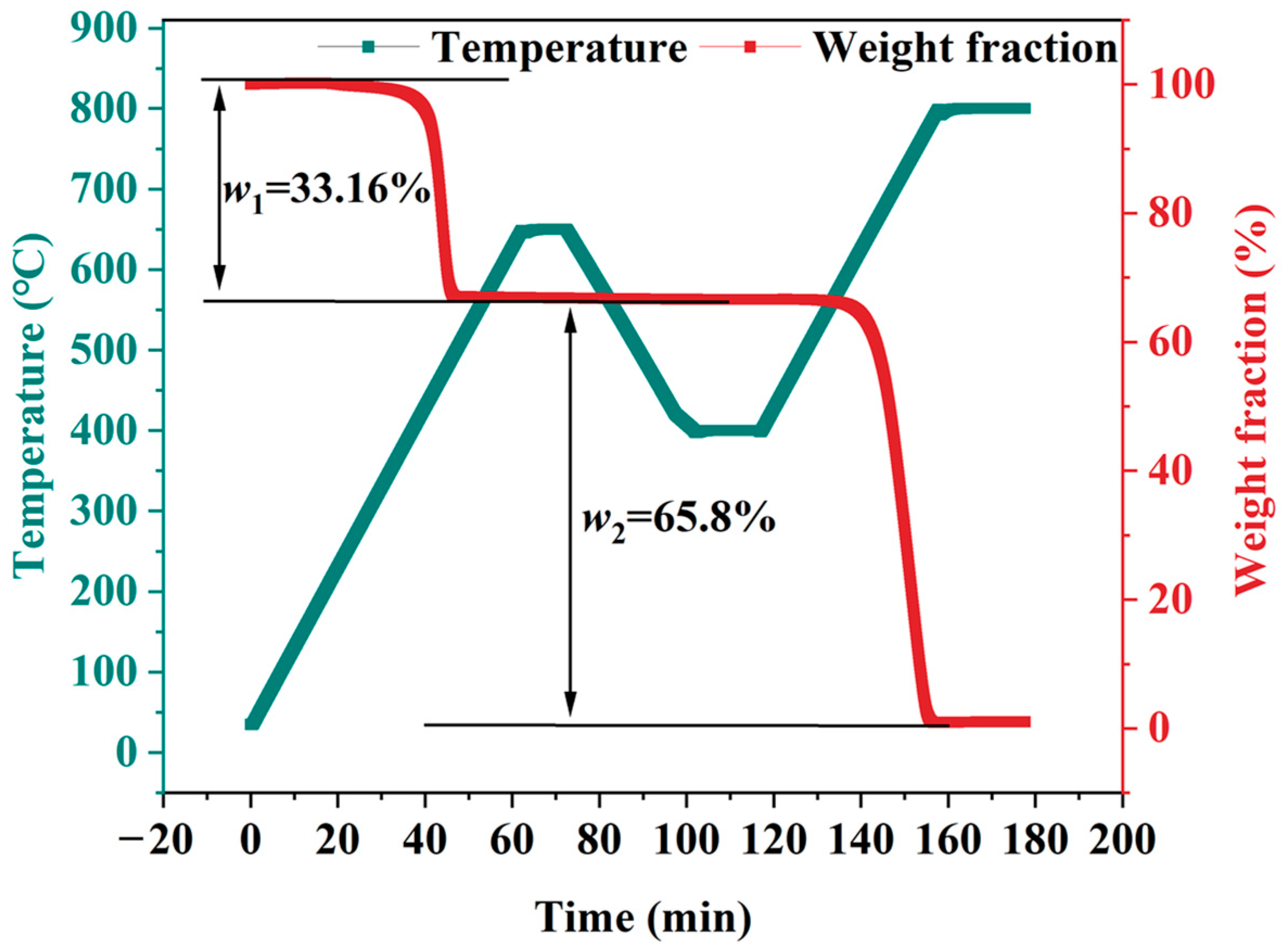
The TGA curve of CF/PP prepregs is listed in
Figure 3. As seen, the figure demonstrates a distinct two-step thermal degradation process under aerobic conditions. The first mass loss of CF/PP prepregs occurred between 400 and 550 °C, corresponding to the thermal decomposition and volatilization of the PP matrix [
43]. The subsequent mass loss in the range of 550 to 800 °C was attributed to the oxidative combustion of the carbon fiber, with nearly no residual mass at 800 °C. In summary, the mass lost due to PP pyrolysis
w1 and mass lost due to carbon fiber combustion
w2 are 33.16% and 65.8%. According to Equations (1) and (2), the fiber weight content and fiber volume content were calculated as 65.8% and 49.0% (density of carbon fiber and polypropylene matrix was set as 1.8 and 0.9 g/cm
3 [
44]).
The fiber content in this study was also compared with that in the literature. Kim and Lee [
45] manufactured carbon fabric reinforced thermoplastic polypropylene composites with a fiber volume fraction from 48.52% to 55.01%, depending on the thickness of the interleaved film. Ueda et al. [
46] achieved the 3D printing of a continuous carbon fiber reinforced blending polymer of PP and polyamide 6 with a fixed fiber volume fraction of 40%. These data indicate that the prepreg used in the present study has a reasonable fiber volume content.
3.2. SBS of CF/PP Composites
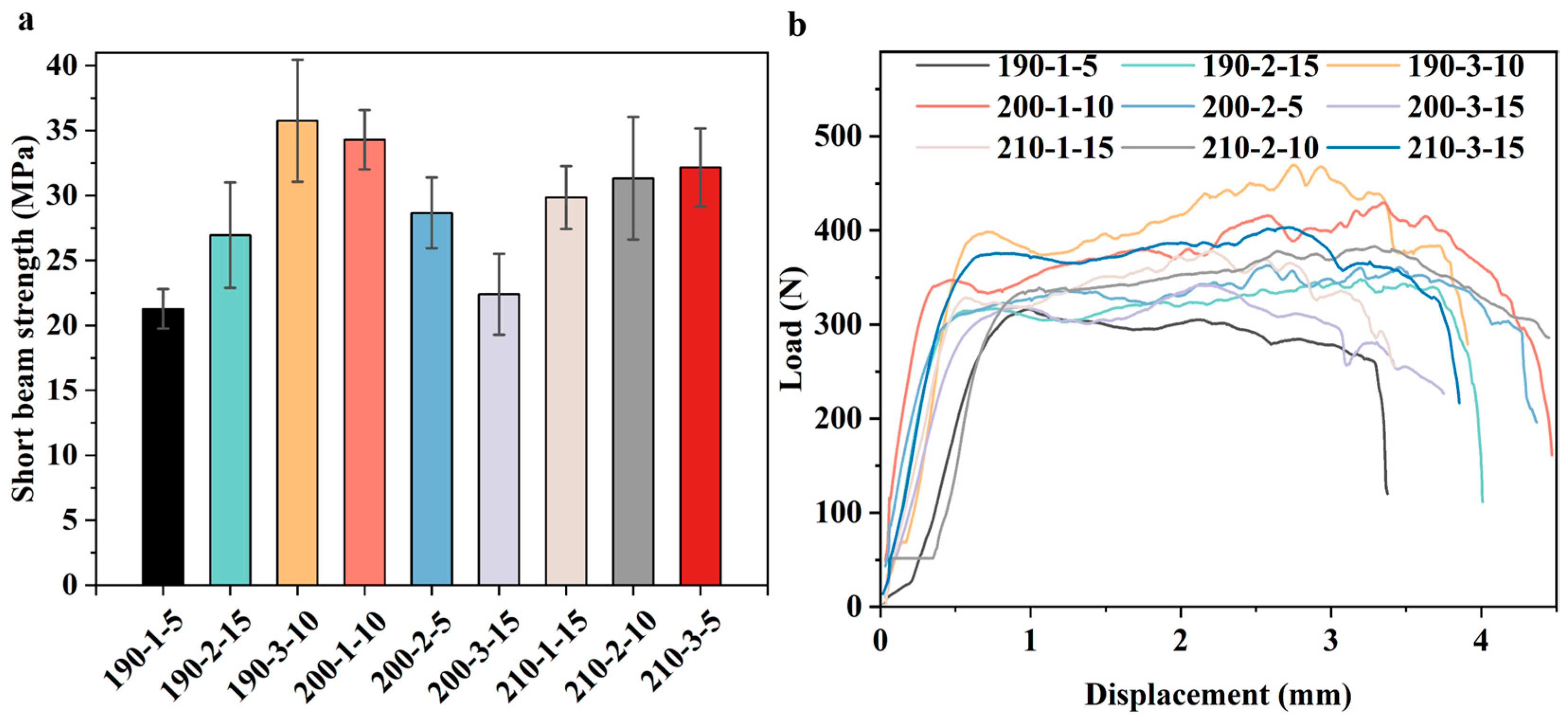
The SBS and load–displacement responses of unidirectional CF/PP composites systematically elucidate the effects of processing parameters on their interlaminar shear performance, as illustrated in the bar chart and load–displacement curves in
Figure 4. The detailed SBS values of CF/PP composites produced under different processing parameters are listed in the second column of
Table 4. As seen, the minimum and maximum SBS for CF/PP composites are 21.3 and 35.8 MPa (a variation rate of 68.1%), which clearly means that the processing parameters play a key role in the interfacial quality of CF/PP composites. Moreover, the SBS value of CF/PP composites obtained in this study is reasonable compared with that in other studies. As an example, the maximum SBS for CF/PP composites made from filament winding could reach 16.37 MPa [
47]. The maximum interlaminar shear strength of polyetherimide nanoparticles modified CF/PP composites could reach 27.66 MPa [
48]. The maximum shear strength of woven CF/PP composites was around 8.75 MPa, reported by Sun et al. [
24].
A cross-parameter correlation analysis revealed that the molding temperature interacted strongly with pressure and holding time. For instance, at low pressure (1 MPa), the influence of holding time was relatively limited, and SBS values remained at a moderate level regardless of temperature variation. However, under high pressure (3 MPa), the effect of holding time became pronounced, especially at elevated temperatures. For example, the combination of high pressure, high molding temperature, and long holding time led to severely decreased SBS of CF/PP composites, which implies a synergistically negative effect. Over-pressure tended to cause matrix depletion inside fiber tows, while prolonged heating accelerated thermal oxidation. Together, these factors aggravate interfacial defects and stress concentrations. In comparison, the combination of moderate temperature (190 °C), appropriate pressure, and medium holding time (10 min) yielded the highest SBS. This optimized condition ensured sufficient melt flow of polypropylene matrix and complete impregnation of carbon fibers. The error bars further confirmed that suitable parameter combinations improved the experimental stability and repeatability of the SBS test.
Figure 4b presents the load–displacement curves of all CF/PP composites. As seen, the load–displacement curves for CF/PP composites produced under different processing parameters have the same shapes. The initial section of the load–displacement curve was straight, and then there was a non-linear plateau, followed by a rapid drop, which is a typical load–displacement curve for 0° carbon fiber reinforced polymer composites [
49]. In addition, specimens with higher SBS exhibited a longer non-linear plateau and larger failure displacement, indicating ductile interface failure with effective energy absorption. In contrast, low-strength specimens showed abrupt failure after the elastic stage, typical of brittle interfacial debonding.
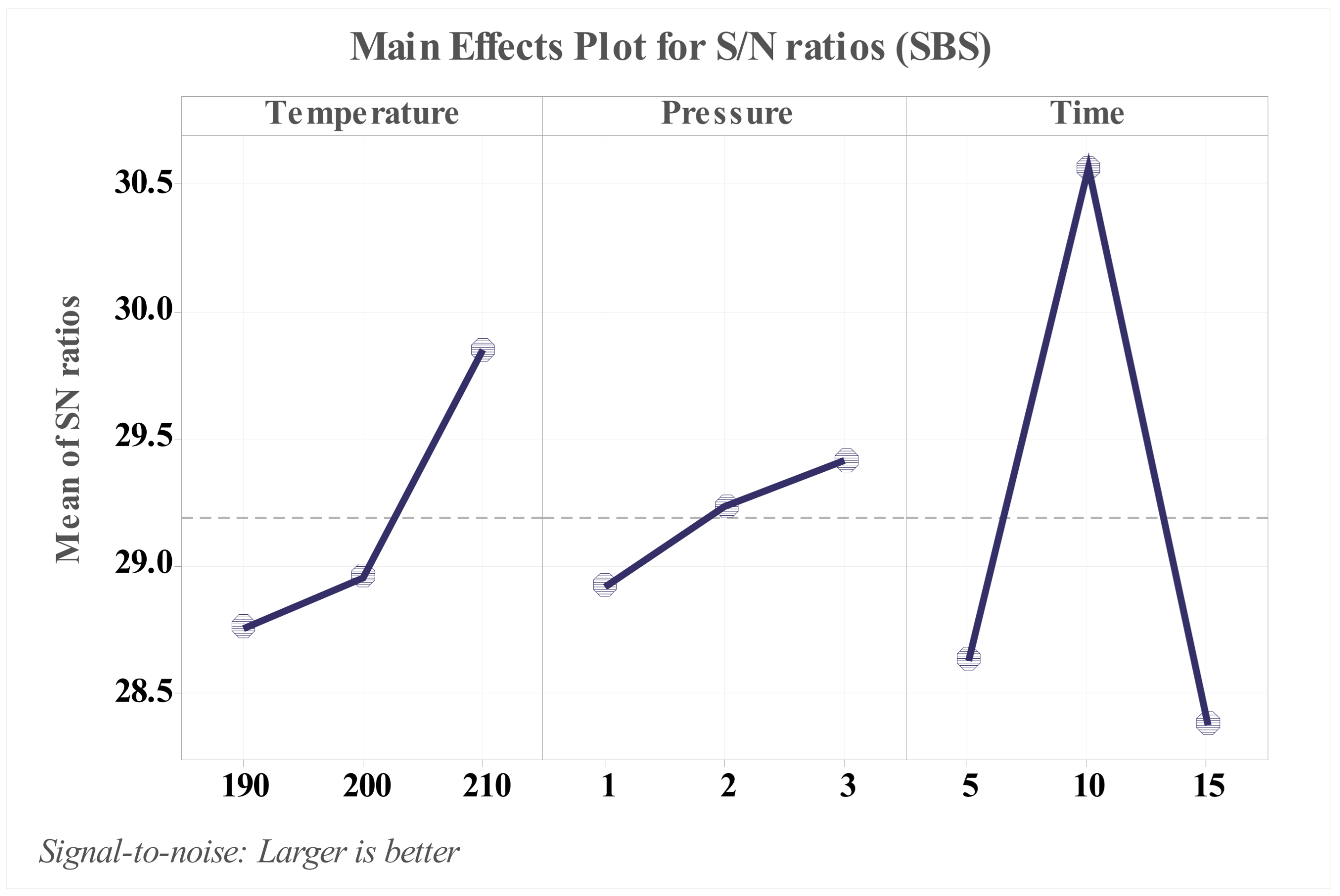
The S/N ratio main-effects plot quantifies the sensitivity of the CF/PP composite’s SBS to each processing parameter and enables cross-parameter correlation analysis, which is referred to in
Table 5 and
Figure 5. According to the biggest delta of the S/N ratio values, the holding time has the biggest influence on the SBS of CF/PP composites, followed by the temperature and finally the pressure.
The main-effects plot also reveals the strong cross-parameter correlations. The optimal combination derived from S/N analysis included a moderate temperature, relatively low pressure, and medium holding time. This optimal combination could achieve balanced matrix fluidity, sufficient impregnation, and structural stability. However, severe mismatch among parameters might induce defects like voids, unmelt matrix, and thermal decomposition of matrix and sizing agents of fibers. Therefore, the SBS of CF/PP composites is determined not only by one individual parameter but more importantly by their synergistic match, which could guide the performance improvement of manufactured CF/PP composites.
The ANOVA results for the SBS of CF/PP laminates were presented in
Table 6. As seen, the result indicated that the holding time is the most significant factor (
p value is much less than 0.05) and plays a key role in the SBS of CF/PP laminates, which is consistent with the result obtained by the main effect plot for the S/N ratios method. The main effects of temperature and pressure were not obvious in this experiment, indicating that their individual effects on SBS were relatively minor.
3.3. Thermo-Mechanical Property Results of CF/PP Composites
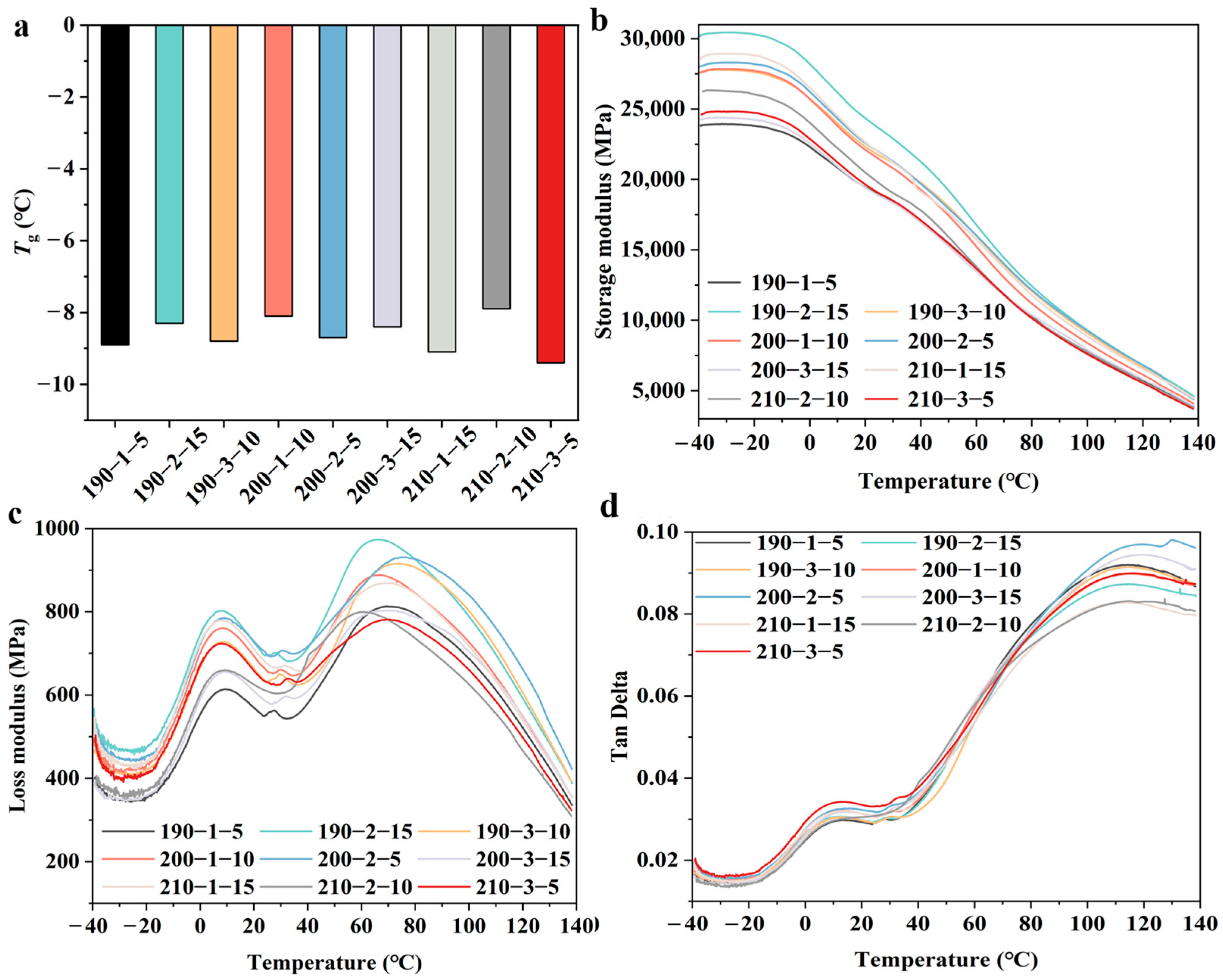
The thermo-mechanical results obtained by the DMA test of CF/PP composites are shown in
Figure 6, which are similar to the test results regarding CF/PP composites obtained from other studies [
50,
51]. The
Tg of CF/PP composites produced under different situations was listed in the third column of
Table 4 and
Figure 6a. As seen, the
Tg of all nine types of CF/PP composites is negative, which is in accordance with the
Tg of the PP matrix published by other studies, like −10 to 10 °C by Thomason and Yang [
52]. In addition, it is seen that the production situations have relatively limited influence on the
Tg of CF/PP composites, and the variation rate of
Tg for nine CF/PP composites is 16.0%.
As seen in
Figure 6b, processing parameters have an obvious influence on the storage modulus of CF/PP composites. Generally, a higher storage modulus means a better adhesion between carbon fiber and polypropylene matrix, which was reported by Luo et al. [
51]. Although the test results in this study were not entirely consistent with this conclusion, partial results followed this point. For instance, four lines with higher storage modulus values were CF/PP specimens 190-2-15, 210-1-15, 200-2-5, and 200-1-10, and they had an SBS of 27.0, 29.9, 28.7 and 34.3 MPa, respectively, while the CF/PP specimen with the lowest storage modulus had the lowest SBS of 21.3 MPa. The variation rate of the peak storage modulus is 27.2%. The temperature corresponding to the peak loss modulus ranged from −35.7 to −29.0 °C with a variation rate of 18.7%.
Processing parameters also sharply affect the loss modulus of CF/PP composites, as seen in
Figure 6c. The first peak between 0 and 20 °C was also observed by Luo et al. [
51], but the second peak did not appear in this study. The first peak corresponds to the
Tg of PP based on the temperature data, and the second peak indicates the ability of energy dissipation of CF/PP composites. The peak values of loss modulus curves ranged from 781.1 to 973.5 MPa for CF/PP composites produced under different manufacturing conditions. The variation rate of the peak loss modulus is 24.6%. The temperature corresponding to the peak loss modulus ranged from 60.6 to 75.1 °C with a variation rate of 23.9%. The biggest loss modulus of CF/PP composites was obtained under the manufacturing conditions of 190 °C, 2 MPa and 15 min.
Figure 6d presents that the processing parameters also play a key role in the variation in tan
δ value of CF/PP composites. A similar shape was also reported by Luo et al. [
51] and Yeole et al. [
53] and the first peak appeared between 0 and 20 °C. The second peak in
Figure 6d was not reported by Luo et al. [
51] and Yeole et al. [
53] because they ended the DMA experiment at 100 °C. The peak tan
δ value had a range from 0.083 to 0.098, and the temperature at the peak of tan
δ ranged from 110 to 130 °C. The biggest tan
δ value of CF/PP composites was obtained at the manufacturing conditions of 200 °C, 2 MPa and 5 min.
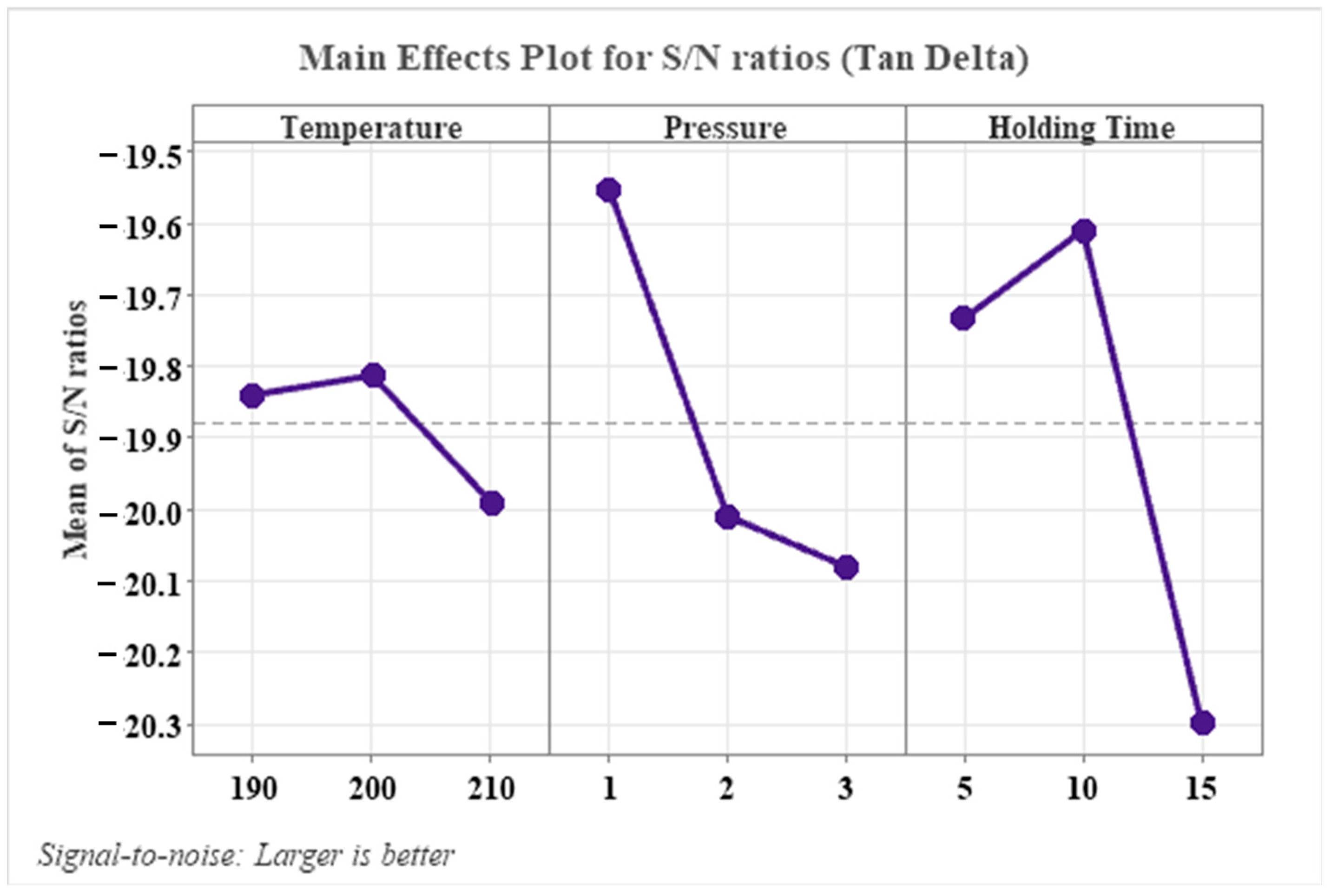
The main effects plot for the signal-to-noise (S/N) ratios of tan
δ for CF/PP composites illustrates the critical influence of processing parameters on their damping performance, referring to
Table 7 and
Figure 7. As seen in the table, the D-value between the maximum and minimum S/N ratio values was 0.18, 0.53 and 0.69 for parameters molding temperature, pressure, and holding time, which means the holding time was the most influential parameter, followed by pressure and temperature. Moreover, moderate molding temperature (200 °C), moderate pressure (1 MPa), and optimal holding time (10 min) yielded the highest tan
δ S/N ratios, reflecting balanced interfacial adhesion (SBS of 34.3 MPa at this condition) and structural integrity that maximizes the composite’s damping performance.
3.4. Creep-Recovery Results of CF/PP Composites
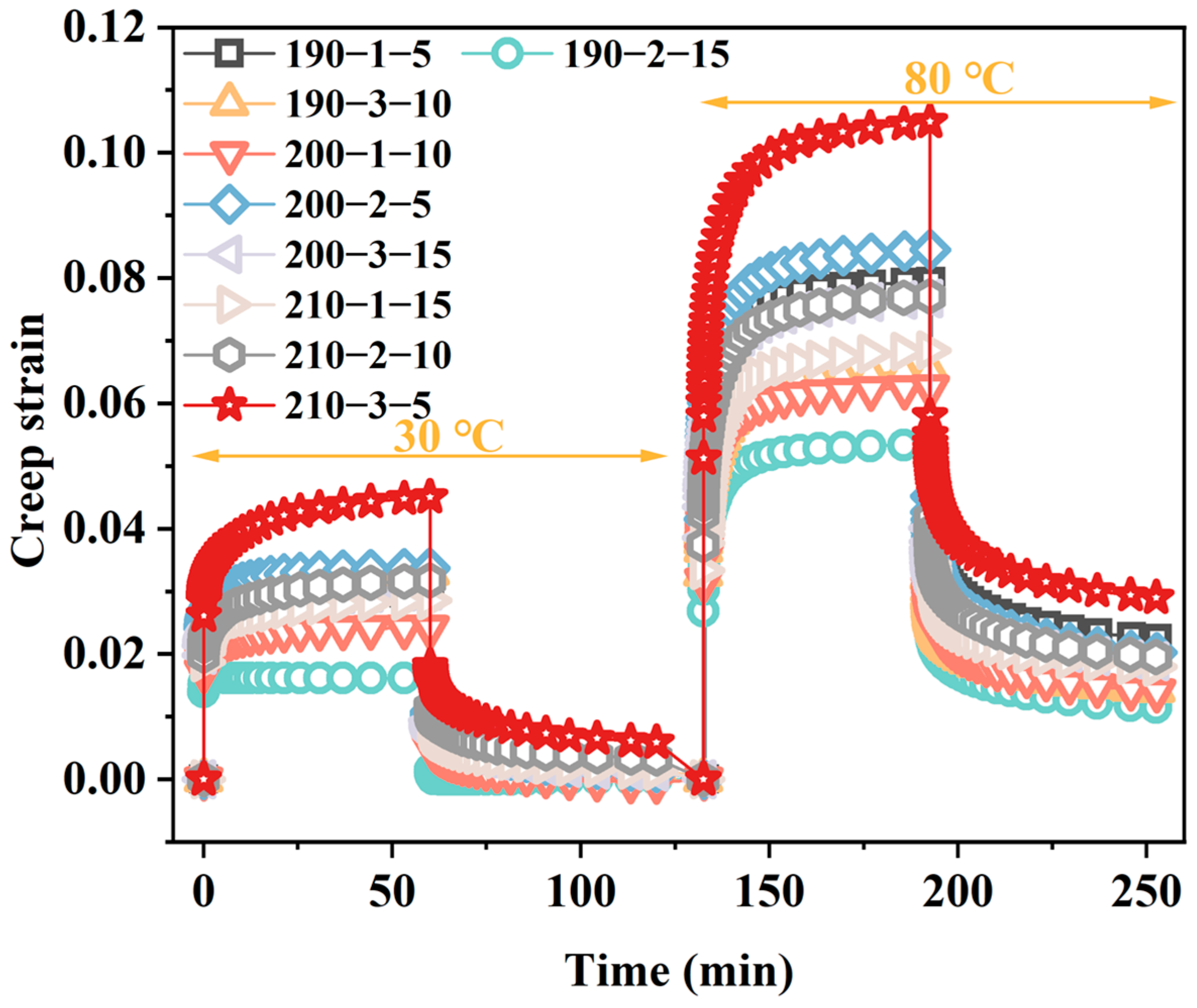
The creep-recovery curve for different CF/PP composites was plotted in
Figure 8. As illustrated in the creep strain curves, CF/PP composites under different conditions exhibited similarly typical viscoelastic behavior. In detail, at first, for the creep curve, the flexural strain increased instantly after loading and accumulated progressively under sustained loading at both temperatures, followed by partial strain recovery upon load removal. Notably, creep deformation was significantly amplified at 80 °C compared to 30 °C, but the creep recovery rate was obviously reduced, which means more molecular chain mobility occurred at elevated temperatures. The specimen 210-3-5 demonstrated the highest maximum creep strain (0.1% at 80 °C), while the CF/PP specimen 190-2-15 showed the lowest (0.053% at 80 °C). The detailed maximum creep strain and the creep-strain recovery rate at two temperatures are referred to in
Table 8.
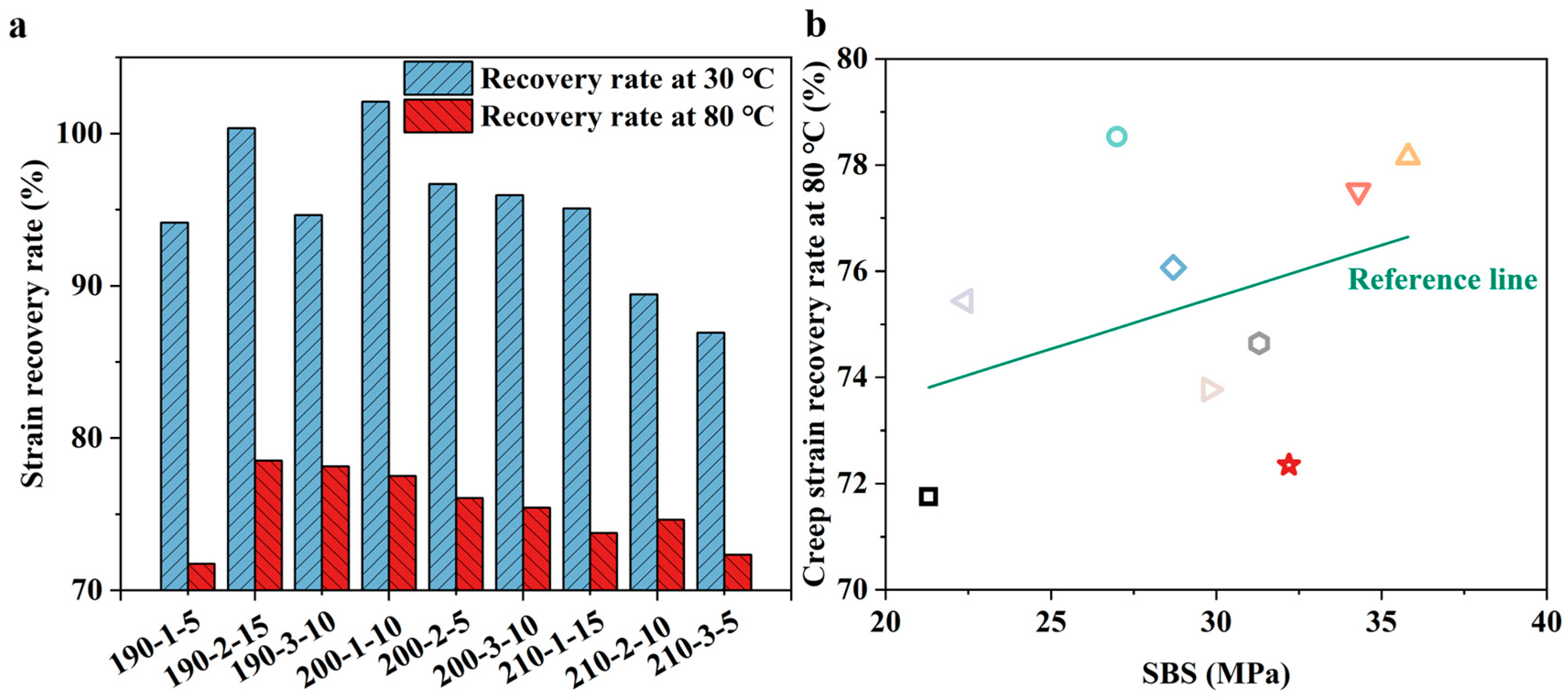
The histograms of strain recovery rate for CF/PP composites further quantify the viscoelastic recovery capacity, referring to
Figure 8. At 30 °C, all composites maintained high recovery rates (87–102%), with 190-2-15 and 200-1-10 achieving near-complete recovery (>100%), reflecting excellent elastic resilience. In contrast, recovery rates of CF/PP composites at 80 °C dropped sharply to 71–79%, attributed to enhanced matrix softening and irreversible viscous flow at elevated temperatures.
In general, a better fiber-matrix interface leads to a better creep resistance behavior [
54,
55] for FRTP composites because the good interfacial bond takes advantage of the low deformation ability of reinforcing fibers by load transferring. However, when comparing the maximum creep strain or the creep strain recovery rate with the SBS of the nine CF/PP composites (
Figure 9b), the mapping relationship between them is complex. Notably, there was a rough negative correlation between the SBS and the creep resistance, especially when considering the lowest and the largest SBS. For instance, specimen 190-1-5 had the lowest SBS of 21.3 MPa and the lowest creep strain recovery rate, while specimens 190-3-10 and 200-1-10 exhibited the highest SBS and the largest creep strain recovery rate, which could be explained by the fact that better adhesion could restrict the mobility of polymer chains.
3.5. Crystallinity Behavior of CF/PP Composites
DSC cooling curves of different CF/PP laminates after erasing the previous thermal history are shown in
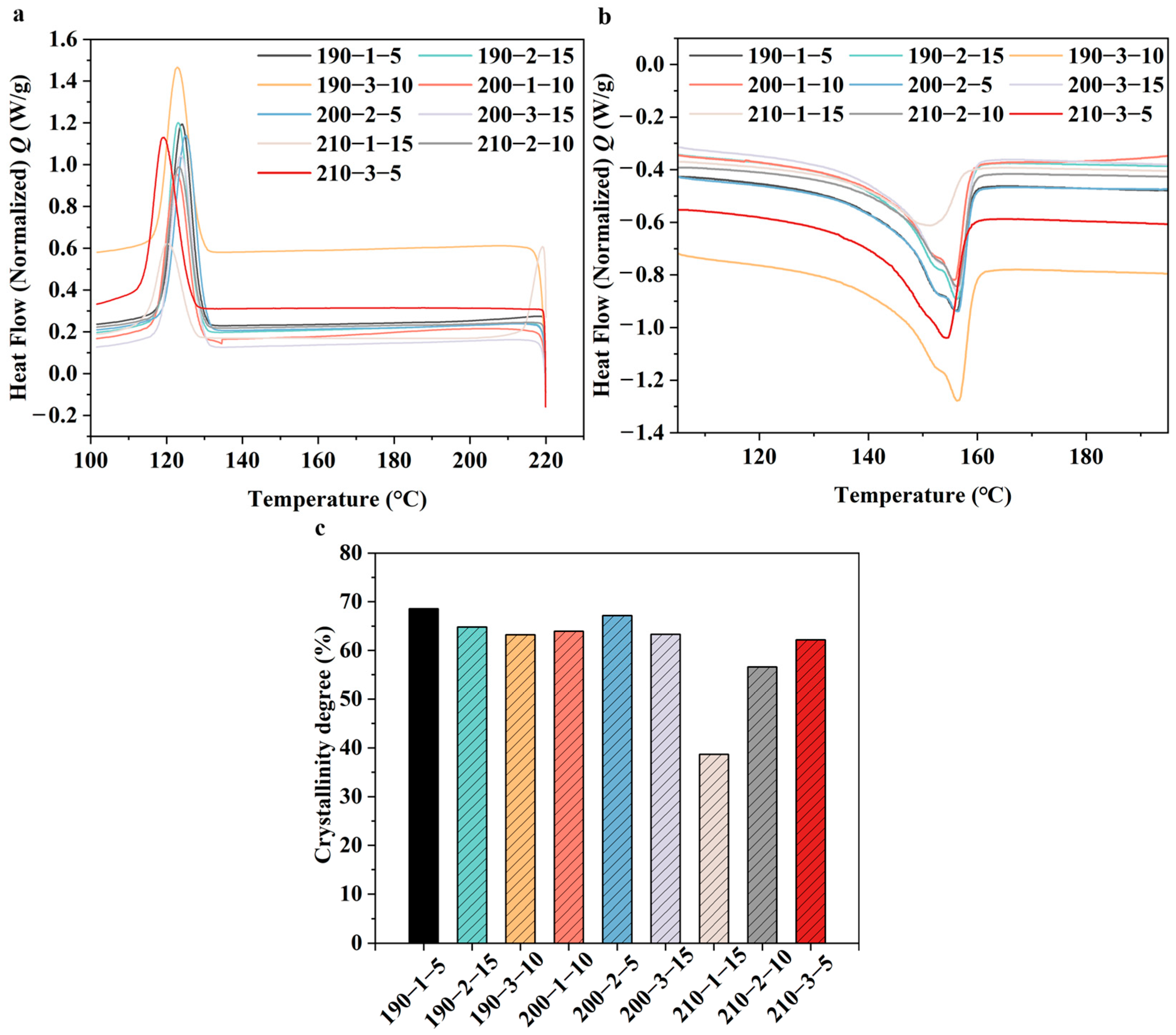
Figure 10a. All CF/PP laminates exhibited a single crystallization exotherm with peak temperatures ranging from 119.38 to 125.31 °C, corresponding to the non-isothermal melt crystallization of the PP matrix during cooling. No additional crystallization peak was observed, indicating that the hot-pressing parameters did not change the fundamental crystallization pathway of the PP matrix, but mainly affected its crystallization kinetics. The variation in crystallization peak temperature and peak shape suggests that the molding temperature, pressure, and holding time jointly influenced the chain rearrangement and heterogeneous nucleation behavior of the PP matrix when carbon fibers existed. Among the investigated specimens, 200-2-5 showed a relatively higher crystallization peak temperature, implying that crystallization occurred at a lower degree of supercooling. In contrast, specimens like 210-3-5 and 210-1-15 exhibited crystallization peaks at lower temperatures and/or broader peak profiles, suggesting delayed crystallization and slower crystallization kinetics.
The second heating process curves of the DSC test were illustrated in
Figure 10b because the first heating process was used to eliminate the thermal stress. As illustrated, the normalized DSC heating curves revealed distinct melting behaviors across CF/PP composites produced from different conditions, with variations in melting peak position, peak intensity, and endothermic enthalpy directly reflecting differences in crystallinity and crystal perfection. The corresponding crystallinity degree (quantified in
Figure 10c and the fourth column of
Table 4) of CF/PP composites demonstrated a wide range from 38.65% to 68.5%, highlighting the profound impact of processing parameters on the crystalline structure of the polypropylene matrix. Moreover, the crystallinity degrees of CF/PP composites used in the present study were also compared with the values reported in other studies. For instance, Liu et al. [
50] reported the crystallinity degrees of CF/PP composites during the second heating process were 51.2% to 59.5%, considering different modification methods. Sun et al. [
24] reported that the crystallinity degrees of CF/PP composites were 56.37%, 63.43% and 66.25%, considering different stamping temperatures, including 190, 220, and 250 °C. Tian et al. [
27] presented the crystallinity degrees of pure PP and PP reinforced with different contents of carbon fiber and carbon black, and their crystallinity degrees were above 50%. In more detail, the crystallinity degrees of CF/PP composites increased with the contents of carbon fiber. Huang et al. [
56] found the crystallinity degrees of CF/PP composites with a fiber weight content below 20% were around 40%, and fiber weight contents did not influence their crystallinity degrees. In conclusion, the crystallization degrees obtained in the present study were slightly higher than the reported values in the literature, which might be attributed to the higher fiber weight content in the CF/PP composites used by the authors.
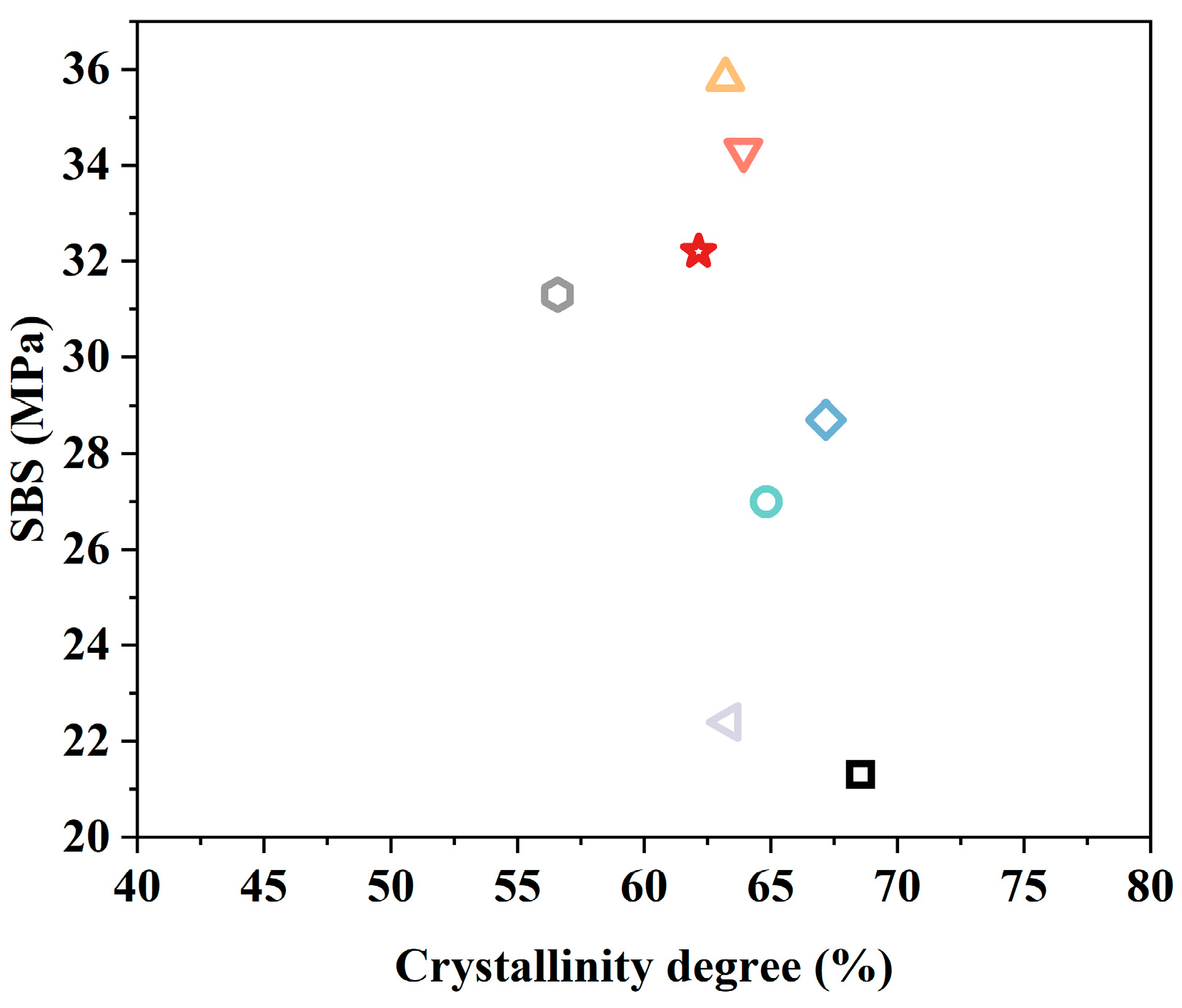
Notably, a clear negative correlation is observed between the crystallinity degree and SBS of CF/PP composites (
Figure 11), where specimens with lower crystallinity (e.g., 210-1-15, 38.65%) exhibited higher SBS values (29.9 MPa), while those with ultra-high crystallinity (e.g., 190-1-5, 68.5%) showed significantly reduced interfacial strength (21.3 MPa). This phenomenon originated from the competing effects of processing parameters on matrix crystallization and interfacial bonding within CF/PP composites. In detail, elevated molding temperature, prolonged holding time, and optimized pressure could promote the interfacial wetting of carbon fibers, but simultaneously might disrupt the regular packing of PP’s molecular chains, suppress heterogeneous nucleation at the fiber-matrix interface, and reduce the overall crystallinity degree of CF/PP composites.
Furthermore, the DSC curves of different CF/PP composites revealed that specimens with a higher crystallinity degree exhibited sharper and higher melting peaks, indicating the formation of more perfect crystalline structures, while those with lower crystallinity showed broader, lower-intensity peaks, characteristic of a more amorphous matrix with smaller, defective crystals. This microstructural difference in different CF/PP composites could correlate to their previous creep-recovery behaviors. For instance, low-crystallinity CF/PP specimens with a more amorphous matrix and strong interfacial bonding exhibit enhanced viscoelastic recovery rate while high-crystallinity specimens possess a rigid, glassy matrix at room temperature, leading to reduced elastic recovery, as the crystalline regions restrict molecular chain mobility.
3.6. SEM and Void Content Results of CF/PP Composites
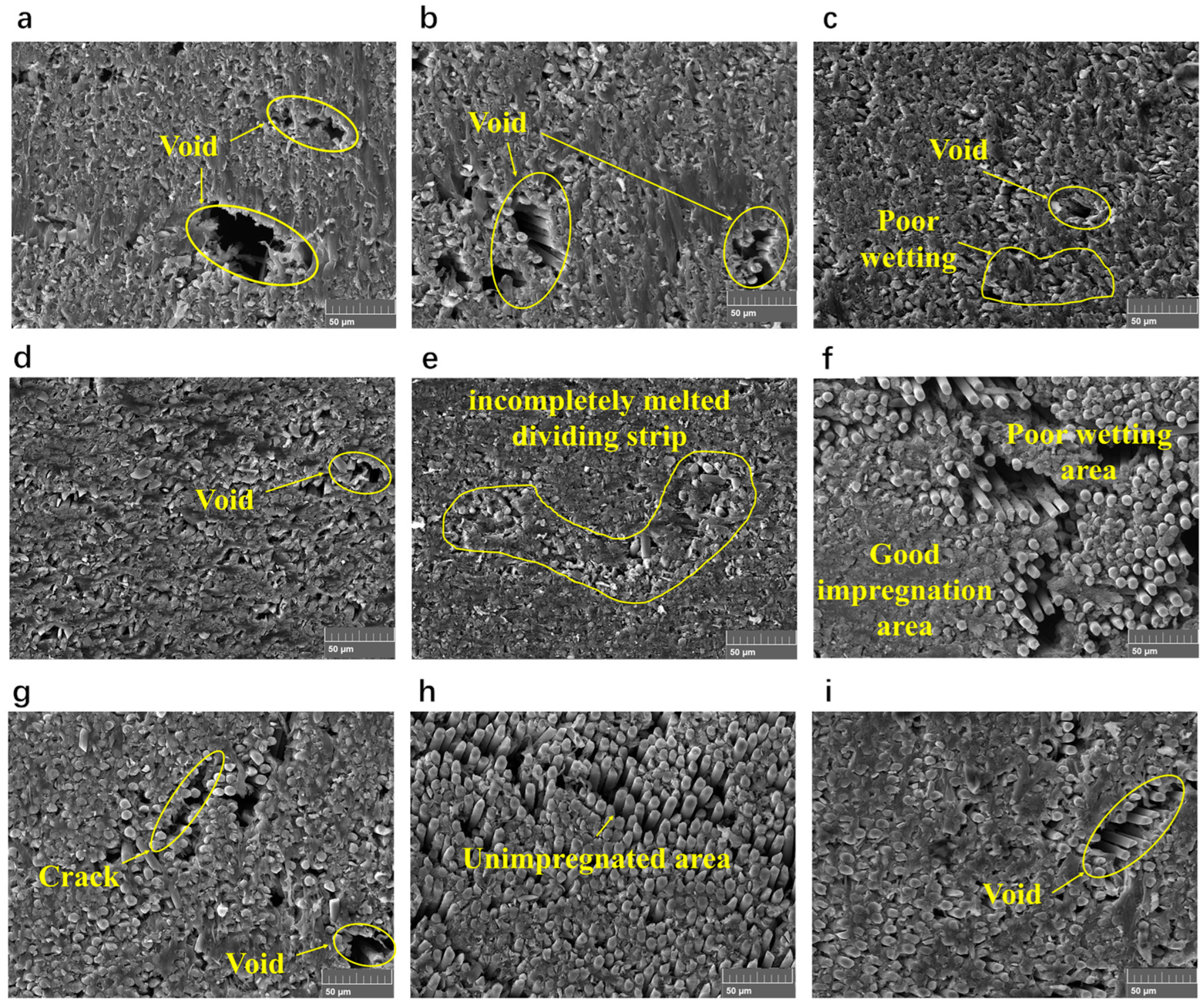
Figure 12 shows the cross-section of CF/PP composites from nine different manufacturing conditions. As illustrated, specimens with different SBS values exhibited relatively distinct microstructural characteristics. Generally, all nine CF/PP specimens have void defects, which could serve as stress concentration points to reduce their interfacial properties. Moreover, there were other defects, including incompletely melted dividing strip (
Figure 12e), poor wetting area (
Figure 12c,f) and unimpregnated area (
Figure 12h), and these defects could result in failures along these areas, influencing the internal stress transferring within the CF/PP laminates. These voids and poor wetting-related defects could both be attributed to the high viscosity of the PP matrix because the high viscosity could trap air during the hot-press and make the flow of resin within the fibers extremely difficult. The existence of all these defects within CF/PP laminates makes their SBS much lower than the unidirectional carbon fiber reinforced epoxy laminates (minimum value could range from 43.9 to 80.7 MPa) [
57,
58,
59].
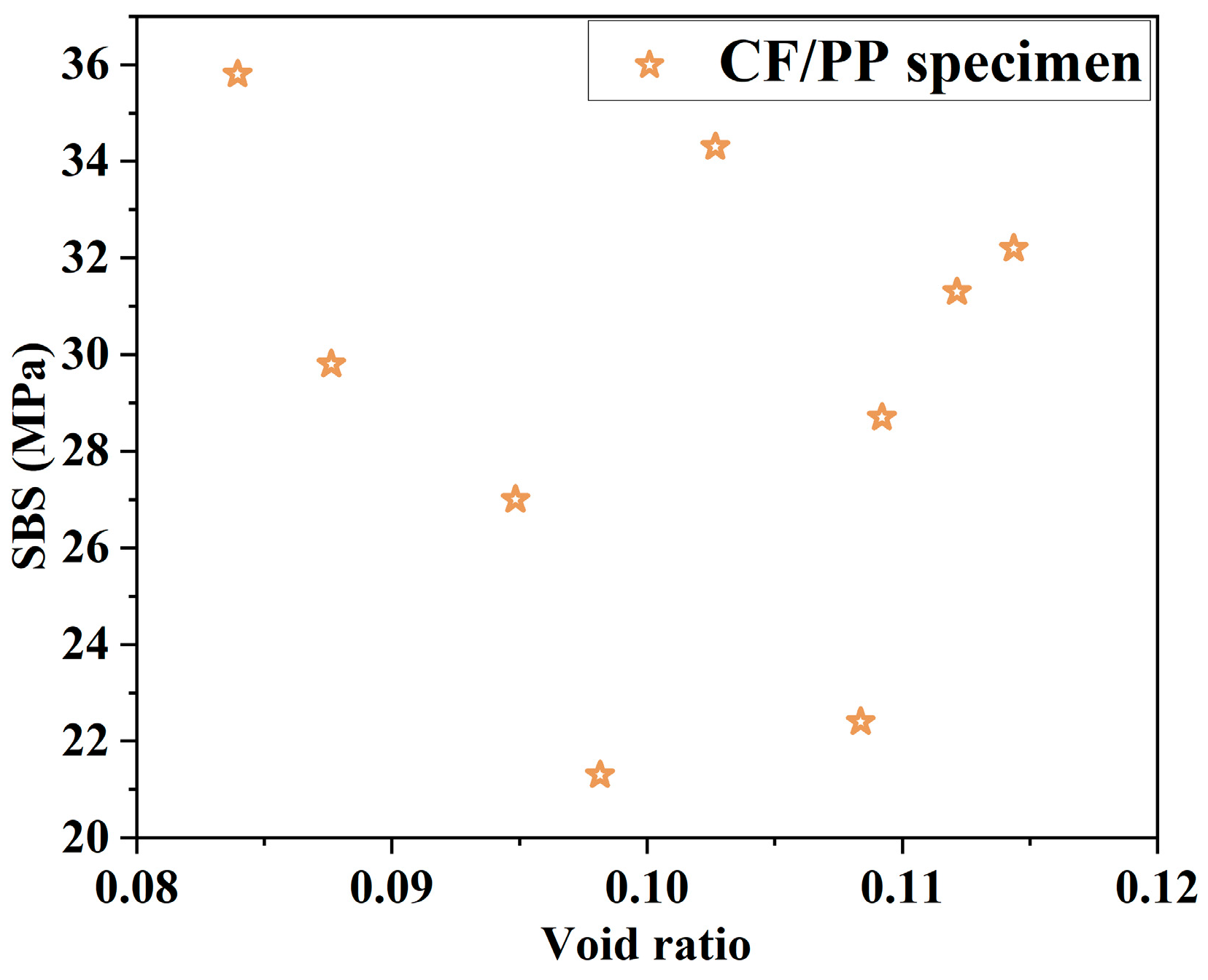
The void content versus SBS value curve of CF/PP laminates produced from different manufacturing conditions is shown in
Figure 13. The void content of the CF/PP laminates was relatively high, which might contribute to the high volume content of carbon fibers [
60]. As seen, although the largest CF/PP specimen had the lowest void content, no clear linear negative correlation is observed, indicating that void content (8.4%) alone cannot fully explain the variation in SBS. Instead, significant data scatter suggests that other factors, such as fiber-matrix interfacial bonding quality, crystallization degree and matrix property strongly influence the mechanical performance, even at similar void contents.
4. Conclusions
The present study investigated the influence of processing parameters on the short-beam strength (SBS), thermo-mechanical properties, creep-recovery behavior and crystallinity degrees of CF/PP composites based on the Taguchi experiment design. Moreover, the cross-section was observed by the SEM test. The following conclusions could be drawn.
Processing parameters, including molding temperature, pressure and holding time, have an obvious influence on the internal bonding of CF/PP composites. An appropriate combination of processing parameters could increase their SBS by 59.8% and reduce the void content by 2.4% (Specimens 190-3-10 and 200-3-15). The SEM analysis presented that the relatively low SBS of CF/PP composites comes from void and poor fiber impregnation problems, such as incomplete melted matrix.
In addition, processing parameters have relatively limited effects on the glass transition temperature of CF/PP composites (−7.9 to −9.4 °C) but have obvious impacts on their peak storage and loss modulus value (variation rate of 27.2% and 24.6%) during the DMA test. High service temperatures (up to 80 °C) reduced the creep recovery rate to 71–79%, suggesting careful consideration of operating conditions for long-term applications. Moreover, there was a rough positive correlation between the SBS and creep strain recovery rate at 80 °C of CF/PP composites.
Processing parameters could determine the crystalline behavior of CF/PP composites. Through a suitable choice of processing parameters, the variation in crystallinity degree could reach 77.36%. CF/PP composites with higher crystallinity degrees exhibited a sharper and higher melting peak, an index of a more perfect crystalline structure. There is a strong negative relationship between the SBS and crystallinity degrees of CF/PP composites.
The study provides quantitative guidance for manufacturing industrial CF/PP composite for structural applications. Future work could focus on scale-up effects and application-specific optimization of mechanical and thermo-mechanical properties of CF/PP composites.




 ,
,