Polymers and Chemical Composition of Hardwood and Softwood (Bark, Sapwood, and Heartwood) for Biofuel Production: A Comprehensive Review




Abstract
1. Introduction
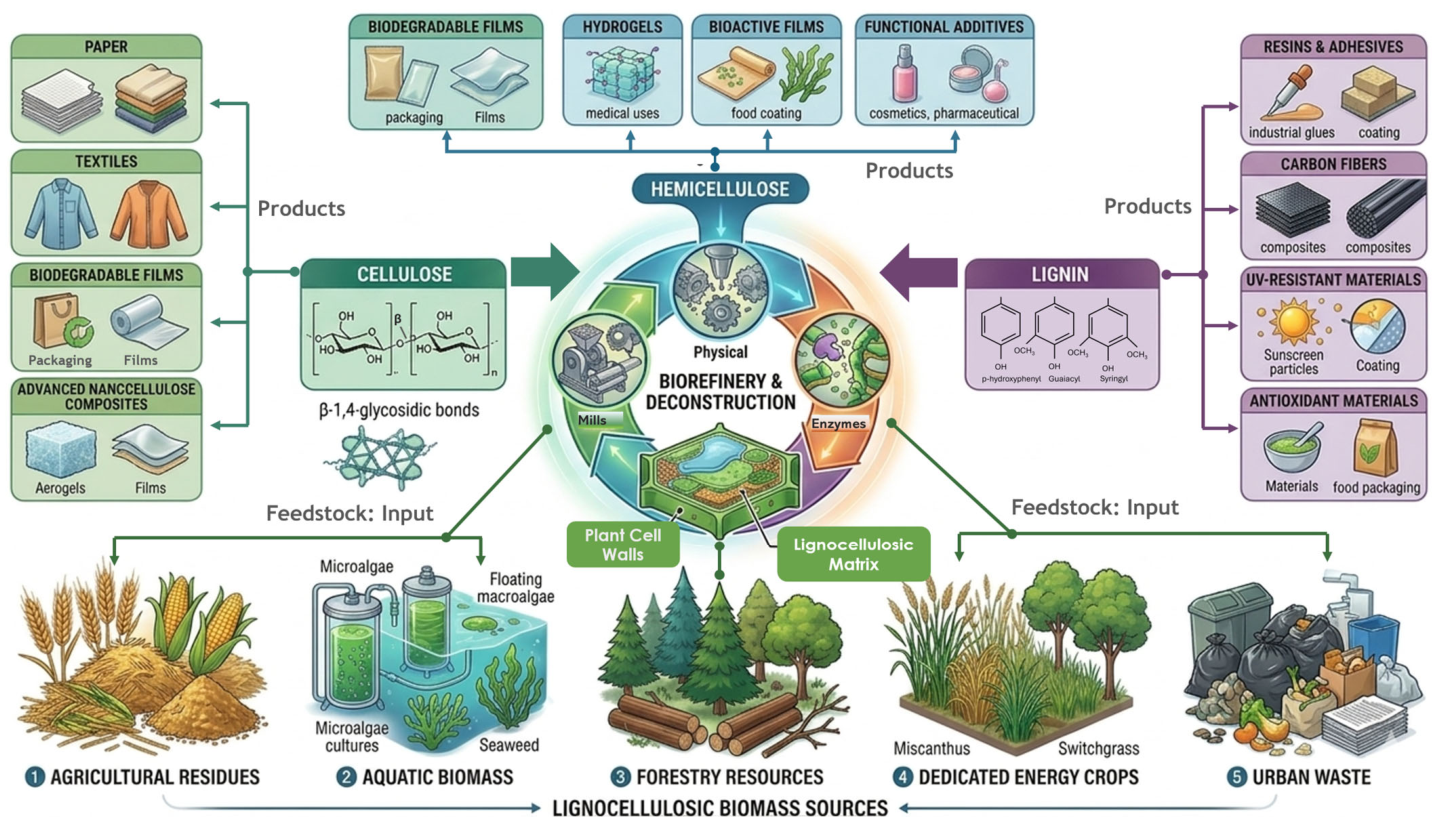
2. Woody Biomass and Lignocellulosic Polymer Composition
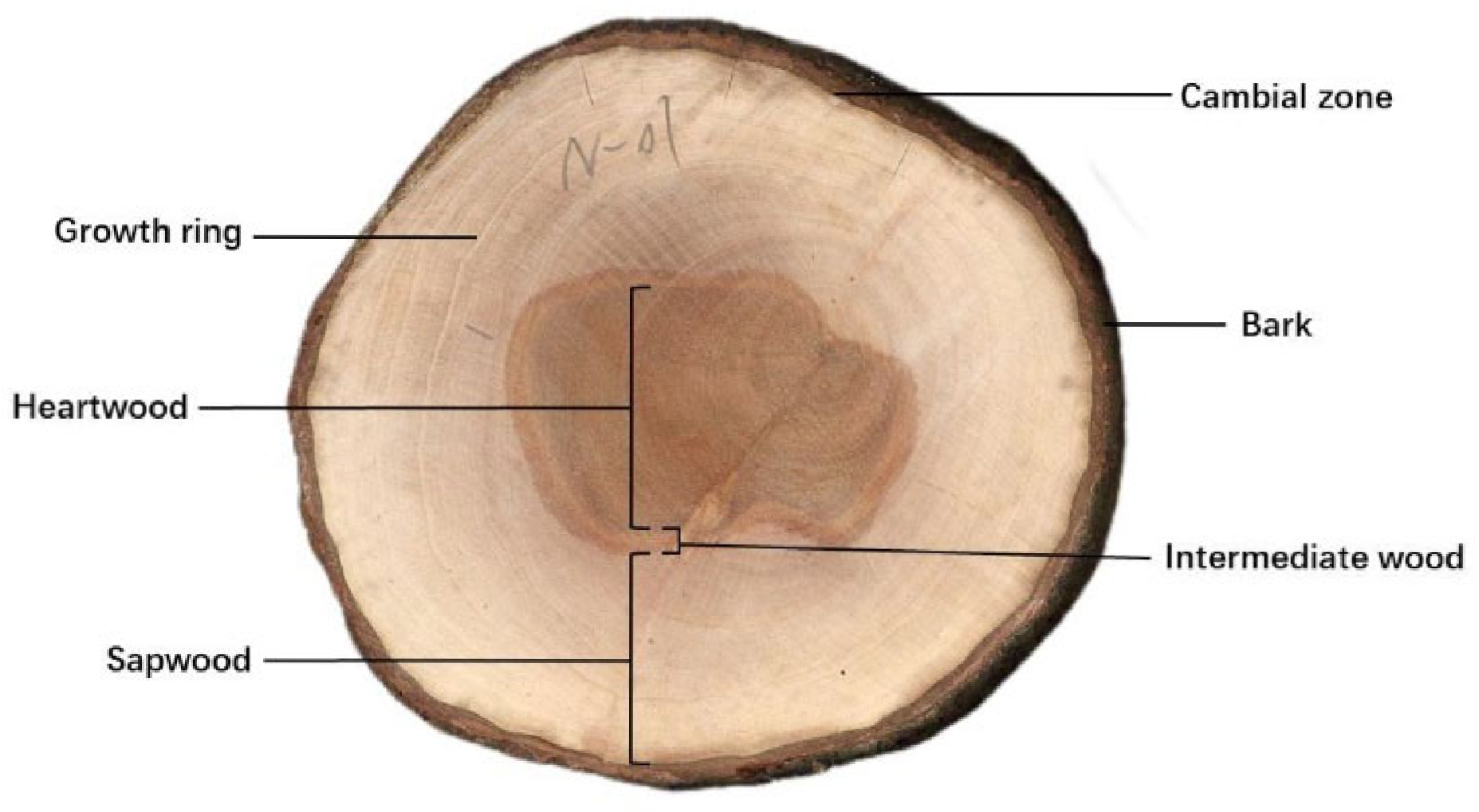
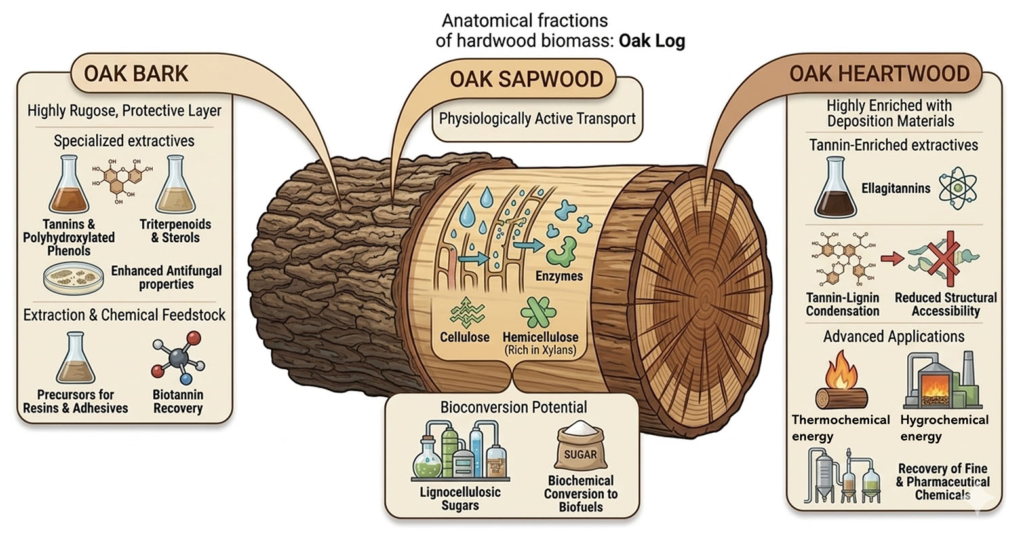
2.1. Hardwood: Bark, Sapwood, and Heartwood
2.1.1. Hardwood Bark
2.1.2. Hardwood Sapwood
2.1.3. Hardwood Heartwood
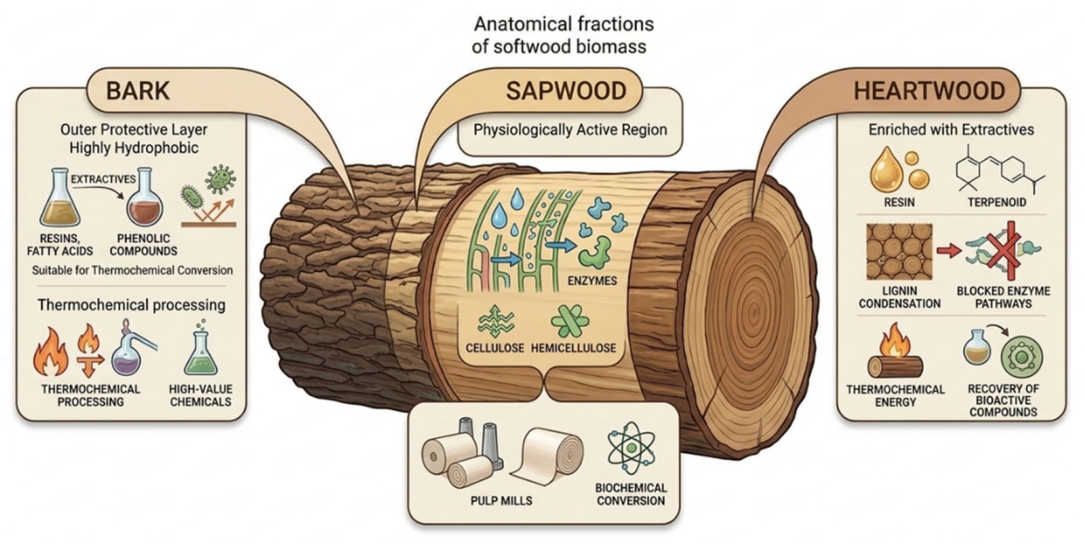
2.2. Softwood: Bark, Sapwood, and Heartwood
2.2.1. Softwood Bark
2.2.2. Softwood Sapwood
2.2.3. Softwood Heartwood
3. Extraction Strategies for Lignocellulosic Polymers
3.1. Hardwood Polymers Extraction
3.1.1. Hardwood Hemicellulose
3.1.2. Hardwood Cellulose
3.1.3. Hardwood Lignin
3.2. Softwood Polymers Extraction
3.2.1. Softwood Hemicellulose
3.2.2. Softwood Cellulose
3.2.3. Softwood Lignin
4. Applications of Lignocellulosic Polymers for Biofuel Production and Advanced Valorization
4.1. Hemicellulose
4.2. Cellulose
4.3. Lignin
5. Challenges and Future Directions
6. Conclusions
Author Contributions
Funding
Institutional Review Board Statement
Data Availability Statement
Acknowledgments
Conflicts of Interest
Abbreviations
| G | Guaiacyl (monolignol-G) |
| HHV | Higher heating value |
| HMF | Hydroxymethylfurfural |
| HTL | Hydrothermal liquefaction |
| HWE | Hot water extraction |
| LCCs | Lignin–carbohydrate complexes |
| S | Syringyl (monolignol-S) |
References
- Aniza, R.; Chen, W.-H.; Herrera, C.J.A.; Quirino, R.; Petrissans, M.; Petrissans, A. Bioenergy and bioexergy analyses with artificial intelligence application on combustion of recycled hardwood and softwood wastes. Renew. Energy 2024, 237, 121885. [Google Scholar] [CrossRef]
- Chen, W.-H.; Ho, K.-Y.; Aniza, R.; Sharma, A.K.; Saravanakumar, A.; Hoang, A.T. A review of noncatalytic and catalytic pyrolysis and co-pyrolysis products from lignocellulosic and algal biomass using Py-GC/MS. J. Ind. Eng. Chem. 2024, 134, 51–64. [Google Scholar] [CrossRef]
- Aniza, R.; Petrissans, A.; Petrissans, M. Life-Cycle Assessment of Nanoparticle in Wood Adhesive and Coating: The State-of-The Art. In Nanomaterials Additives in Bioadhesives for Wood Composites; Antov, P., Lubis, M.A.R., Lee, S.H., Taghiyari, H.R., Eds.; Springer Nature: Singapore, 2025; pp. 231–248. [Google Scholar]
- Aniza, R.; Petrissans, A.; Petrissans, M. Multifunctional Nanotechnology Application for Wood Properties Enhancement: Adhesive and Coating. In Nanomaterials Additives in Bioadhesives for Wood Composites; Antov, P., Lubis, M.A.R., Lee, S.H., Taghiyari, H.R., Eds.; Springer Nature: Singapore, 2025; pp. 135–149. [Google Scholar]
- Chen, W.-H.; Aniza, R. Specific chemical bioexergy and microwave-assisted torrefaction optimization via statistical and artificial intelligence approaches. Fuel 2023, 333, 126524. [Google Scholar] [CrossRef]
- Anindita, H.N.; Rosyadi, E.; Rini, T.P.; Rahmawati, N.; Dwiratna, B.; Nursa’adah, R.S.; Hastuti, Z.D.; Anggoro, T.; Prabowo, W.; Saputro, F.R.; et al. Hydrogen-Rich Bio-Syngas Production of Empty Fruit Bunch by Novel Limonite Catalytic Gasification. Chem. Eng. Technol. 2025, 48, e202400367. [Google Scholar] [CrossRef]
- Aniza, R.; Chen, W.-H.; Lin, Y.-Y.; Tran, K.-Q.; Chang, J.-S.; Lam, S.S.; Park, Y.-K.; Kwon, E.E.; Tabatabaei, M. Independent parallel pyrolysis kinetics of extracted proteins and lipids as well as model carbohydrates in microalgae. Appl. Energy 2021, 300, 117372. [Google Scholar] [CrossRef]
- Aniza, R.; Chen, W.-H.; Kwon, E.E.; Bach, Q.-V.; Hoang, A.T. Lignocellulosic biofuel properties and reactivity analyzed by thermogravimetric analysis (TGA) toward zero carbon scheme: A critical review. Energy Convers. Manag. X 2024, 22, 100538. [Google Scholar] [CrossRef]
- Aniza, R.; Chen, W.-H.; Petrissans, M.; Petrissans, A. Chemical bioexergy analysis in thermochemically converted biomass fuels: An introductory review. Fuel 2026, 405, 136652. [Google Scholar] [CrossRef]
- Chen, W.-H.; Lo, H.-J.; Aniza, R.; Lin, B.-J.; Park, Y.-K.; Kwon, E.E.; Sheen, H.-K.; Grafilo, L.A.D.R. Forecast of glucose production from biomass wet torrefaction using statistical approach along with multivariate adaptive regression splines, neural network and decision tree. Appl. Energy 2022, 324, 119775. [Google Scholar] [CrossRef]
- Aniza, R.; Chen, W.-H.; Pétrissans, A.; Hoang, A.T.; Ashokkumar, V.; Pétrissans, M. A review of biowaste remediation and valorization for environmental sustainability: Artificial intelligence approach. Environ. Pollut. 2023, 324, 121363. [Google Scholar] [CrossRef]
- Chen, W.-H.; Escalante, J.; Xuan, L.L.; Aniza, R.; Su, C.-Y.; Li, P.-H. Catalytic co-gasification optimization of biomass and polyethylene wastes in oxygen-rich environments. Fuel 2025, 381, 133214. [Google Scholar] [CrossRef]
- Lee, Y.-Y.; Lin, S.-L.; Aniza, R.; Yuan, C.-S. Reduction of Atmospheric PM2.5 Level by Restricting the Idling Operation of Buses in a Busy Station. Aerosol Air Qual. Res. 2017, 17, 2424–2437. [Google Scholar] [CrossRef]
- Lin, S.-L.; Aniza, R.; Lee, Y.-Y.; Wang, C.-L. Reduction of traditional pollutants and polychlorinated dibenzo-p-dioxins and dibenzofurans emitted from a diesel engine generator equipped with a catalytic ceramic fiber filter system. Clean. Technol. Environ. Policy 2018, 20, 1297–1309. [Google Scholar] [CrossRef]
- Golysheva, A.N.; Belousova, T.S.; Lantsova, E.A.; Arlyapov, V.A.; Karlinskii, B.Y.; Ananikov, V.P. Biodegradation of Furanic aldehydes by a bacterial consortium: Toward sustainable biofuel production and industrial wastewater detoxification. J. Hazard. Mater. Adv. 2026, 21, 101026. [Google Scholar] [CrossRef]
- Benemir Erkan, S.; Bugra Coban, H.; Turhan, I. Evaluation of the inhibitory effect of 5-hydroxymethylfurfural (HMF) on ethanol fermentation by using immobilized Saccharomyces cerevisiae in stirred-tank bioreactor and mathematical modeling. Fuel 2022, 317, 123499. [Google Scholar] [CrossRef]
- Deepika Bharathi, S.; Dilshani, A.; Khaitan, P.; Rishivanthi, S.; Jacob, S. 6-Perspectives and role of lignocellulosic biorefinery in strengthening a circular economy. In Production of Top 12 Biochemicals Selected by USDOE from Renewable Resources; Chandel, A.K., Segato, F., Eds.; Elsevier: Amsterdam, The Netherlands, 2022; pp. 175–202. [Google Scholar]
- Aniza, R.; Petrissans, A.; Petrissans, M.; Rosyadi, E.; Anindita, H.N.; Rini, T.P.; Hastuti, Z.D.; Rahmawati, N.; Dwiratna, B.; Marlina, E.; et al. Evaluation of Biomass Softwood Composites: Structural Features and Functional Properties of Advanced Engineered Wood. Forests 2025, 16, 1823. [Google Scholar] [CrossRef]
- Chen, W.-H.; Aniza, R.; Arpia, A.A.; Lo, H.-J.; Hoang, A.T.; Goodarzi, V.; Gao, J. A comparative analysis of biomass torrefaction severity index prediction from machine learning. Appl. Energy 2022, 324, 119689. [Google Scholar] [CrossRef]
- Aniza, R.; Chen, W.-H.; Yang, F.-C.; Pugazhendh, A.; Singh, Y. Integrating Taguchi method and artificial neural network for predicting and maximizing biofuel production via torrefaction and pyrolysis. Bioresour. Technol. 2022, 343, 126140. [Google Scholar] [CrossRef]
- Mensah, P.; Pimenta, A.S.; de Melo, R.R.; Amponsah, J.; Tuo, G.; Chakurah, I.; Ampadu, S.D.; Buckman, I.; Nikoi, M.; Minkah, E.; et al. The Global Supply Chain of Wood Products: A Literature Review. Forests 2025, 16, 1036. [Google Scholar] [CrossRef]
- Kaneda, M.; Rensing, K.H.; Wong, J.C.; Banno, B.; Mansfield, S.D.; Samuels, A.L. Tracking monolignols during wood development in lodgepole pine. Plant Physiol. 2008, 147, 1750–1760. [Google Scholar] [CrossRef]
- Maeda, N.; Aoki, D.; Fujiyasu, S.; Matsushita, Y.; Yoshida, M.; Hiraide, H.; Mitsuda, H.; Tobimatsu, Y.; Fukushima, K. The distribution of monolignol glucosides coincides with lignification during the formation of compression wood in Pinus thunbergii. Plant J. 2025, 121, e17209. [Google Scholar] [CrossRef] [PubMed]
- Smith, E.W.; Aniza, R.; Petrissans, A.; Quirino, R.L.; Colin, B.; Petrissans, M.; Chen, W.-H. Synergistic and Antagonistic Effects of Catalytic Torrefaction-Pyrolysis of Woody Biomass in a Carbon Dioxide Atmosphere for Biofuel Production. Green Energy Fuel Res. 2025, 2, 152–173. [Google Scholar] [CrossRef]
- Marlina, E.; Alhikami, A.F.; Siyamuddin, M.; Aniza, R.; Wang, W.C.; Tijani, A.S.; Mustapa, M.S.; Trismawati. Enhancing the combustion characteristics of plastic pyrolytic oils by doping nanocarbon additives for alternative energy. Energy 2025, 322, 135355. [Google Scholar] [CrossRef]
- Yoo, C.G.; Meng, X.; Pu, Y.; Ragauskas, A.J. The critical role of lignin in lignocellulosic biomass conversion and recent pretreatment strategies: A comprehensive review. Bioresour. Technol. 2020, 301, 122784. [Google Scholar] [CrossRef]
- Lorenci Woiciechowski, A.; Dalmas Neto, C.J.; Porto de Souza Vandenberghe, L.; de Carvalho Neto, D.P.; Novak Sydney, A.C.; Letti, L.A.J.; Karp, S.G.; Zevallos Torres, L.A.; Soccol, C.R. Lignocellulosic biomass: Acid and alkaline pretreatments and their effects on biomass recalcitrance—Conventional processing and recent advances. Bioresour. Technol. 2020, 304, 122848. [Google Scholar] [CrossRef]
- Rahmawati, S.; Alhikami, A.F.; Taufiq, A.; Aniza, R.; Ansori, M.; Yanuarta, A.A. Synthesis of waste-derived Fe3O4-CaO nanomagnetic catalysts for efficient biodiesel production under mild operating conditions. Next Mater. 2026, 11, 101985. [Google Scholar] [CrossRef]
- Chen, W.-H.; Biswas, P.P.; Felix, C.B.; Aniza, R.; Escalante, J.; Zhang, C.; Lam, S.S.; Pétrissans, A.; Ubando, A.T.; Pétrissans, M.; et al. Mechanistic insights into thermal degradation of lignocellulosic biomass components for bioenergy and biofuel: A review. Appl. Energy Combust. Sci. 2026, 26, 100496. [Google Scholar] [CrossRef]
- Najjoum, N.; Szydlowski, N.; Benali, M.; Grimi, N.; Castignolles, P. Separation and detection of hemicellulose and insights into chemical heterogeneity through capillary electrophoresis. Anal. Chim. Acta 2026, 1401, 345371. [Google Scholar] [CrossRef] [PubMed]
- Rasheed, M.; Jawaid, M.; Parveez, B.; Zuriyati, A.; Khan, A. Morphological, chemical and thermal analysis of cellulose nanocrystals extracted from bamboo fibre. Int. J. Biol. Macromol. 2020, 160, 183–191. [Google Scholar] [CrossRef]
- Madeira, J.V.; Contesini, F.J.; Calzado, F.; Rubio, M.V.; Zubieta, M.P.; Lopes, D.B.; de Melo, R.R. Chapter 18-Agro-Industrial Residues and Microbial Enzymes: An Overview on the Eco-Friendly Bioconversion into High Value-Added Products. In Biotechnology of Microbial Enzymes; Brahmachari, G., Ed.; Academic Press: Cambridge, MA, USA, 2017; pp. 475–511. [Google Scholar]
- Ye, M.; Zhao, S.; Li, W.; Shi, J. Three-Dimensional Visualization of Major Anatomical Structural Features in Softwood. Forests 2025, 16, 710. [Google Scholar] [CrossRef]
- Schmitt, U.; Singh, A.P.; Kim, Y.S. Chapter 2—Wood as an ecological niche for microorganisms: Wood formation, structure, and cell wall composition. In Forest Microbiology; Asiegbu, F.O., Kovalchuk, A., Eds.; Academic Press: Cambridge, MA, USA, 2021; Volume 1, pp. 17–34. [Google Scholar]
- Yang, S.; Qin, F.; Wang, S.; Li, X.; Zhou, Y.; Meng, S. Advances in the Study of Heartwood Formation in Trees. Life 2025, 15, 93. [Google Scholar] [CrossRef]
- Sandoval, M.L.; Certuche-Arenas, C.S.; Camerucci, M.A. Biomorphic porous ceramics obtained by infiltration of a Si-based preceramic polymer into poplar wood templates. J. Eur. Ceram. Soc. 2025, 45, 116921. [Google Scholar] [CrossRef]
- Supriyadi, D.; Bodner, S.; Keckes, J.; Gindl-Altmutter, W.; Veigel, S. Comparing the properties of cellulose nanofibrils from wood and bark of Norway spruce (Picea abies Karst.) and silver poplar (Populus alba L.). Carbohydr. Polym. Technol. Appl. 2024, 7, 100527. [Google Scholar] [CrossRef]
- Ram, S.; Vasudev, V.; Zhou, J.; Abdelrhman, F.; Zhang, Y. Alkali/acid treatment of willow tree leaves to improve gasification performance for syngas production. Energy 2026, 348, 140416. [Google Scholar] [CrossRef]
- Inkoua, S.; Jiang, Y.; Li, C.; Zhang, S.; Wang, S.; Wei, T.; Hu, X. Activation of willow wood with physical or chemical activation method: Influence of varied activating mechanisms on mass yields and pore characteristics of activated carbon. Mater. Today Chem. 2025, 50, 103116. [Google Scholar] [CrossRef]
- Ludvig, F.; Emmer, Å.; Lawoko, M. Linkage Progression Mapping: Precision Structure Analysis of Individual Oligomers in Birch Milled Wood Lignin. Biomacromolecules 2026, 27, 2839–2850. [Google Scholar] [CrossRef]
- Lyczywek, V.; Kaliaperumal, R.; Zuieva, V.; Titcombe, S.; Bierenstiel, M. Qualitative and quantitative analysis of cresols found in maskwio’mi (birch bark extract). Can. J. Chem. 2024, 102, 289–295. [Google Scholar] [CrossRef]
- Shi, T.; Wang, W.; Zhao, W.; Chen, Y.; Kong, Y.; Zhang, C.; Peng, H.; Lyu, J.; Zhan, T. Lignin-Rich Tyloses Regulate Competitive Water–Ethanol Codiffusion and Suppress Hyperswelling in Oak Wood. Biomacromolecules 2026, 27, 2723–2735. [Google Scholar] [CrossRef]
- Courregelongue, M.; Albertin, W.; Prida, A.; Pons, A. Molecular characterization of toasted oak wood (Quercus petraea) volatilome by untargeted GCxGC-ToFMS analysis. Appl. Food Res. 2025, 5, 101078. [Google Scholar] [CrossRef]
- Zhang, Y.; Yuan, T.; Li, L.; Nahar, P.; Slitt, A.; Seeram, N.P. Chemical compositional, biological, and safety studies of a novel maple syrup derived extract for nutraceutical applications. J. Agric. Food Chem. 2014, 62, 6687–6698. [Google Scholar] [CrossRef]
- Duarte, G.V.; Ramarao, B.V.; Amidon, T.E. Polymer induced flocculation and separation of particulates from extracts of lignocellulosic materials. Bioresour. Technol. 2010, 101, 8526–8534. [Google Scholar] [CrossRef]
- Takada, M.; Okazaki, Y.; Kajita, S.; Kawamoto, H.; Sagawa, T. Fractionation of beech wood cell walls into digestible cellulose-rich residues and photoluminescent lignin-rich precipitates via semi-flow hot-compressed water treatment with 2-naphthol. RSC Adv. 2024, 14, 20660–20667. [Google Scholar] [CrossRef]
- Sivan, P.; Heinonen, E.; Latha Gandla, M.; Jiménez-Quero, A.; Özeren, H.D.; Jönsson, L.J.; Mellerowicz, E.J.; Vilaplana, F. Sequential extraction of hemicelluloses by subcritical water improves saccharification of hybrid aspen wood grown in greenhouse and field conditions. Green Chem. 2023, 25, 5634–5646. [Google Scholar] [CrossRef]
- Shao, Z.; Fu, Y.; Wang, P.; Zhang, Y.; Qin, M.; Li, X.; Zhang, F. Modification of the aspen lignin structure during integrated fractionation process of autohydrolysis and formic acid delignification. Int. J. Biol. Macromol. 2020, 165, 1727–1737. [Google Scholar] [CrossRef] [PubMed]
- Dias, J.; Conceição, A.; Delatorre, F.M.; Siqueira, P. Production, Characterization Physical, Chemical, and Structural Analysis of Biochar Fines for Bio-Reinforcement in Composite Materials. Processes 2025, 13, 504. [Google Scholar] [CrossRef]
- Chen, X.; Cheng, Y.; Chan, A.; Holloway, D.; Nolan, G. Anisotropic Tensile Characterisation of Eucalyptus nitens Timber above Its Fibre Saturation Point, and Its Application. Polymers 2022, 14, 2390. [Google Scholar] [CrossRef]
- Stajcic, I.; Veljkovic, F.; Petrovic, M.; Veličkovic, S.; Radojevic, V.; Vlahović, B.; Stajcic, A. Impact- and Thermal-Resistant Epoxy Resin Toughened with Acacia Honey. Polymers 2023, 15, 2261. [Google Scholar] [CrossRef] [PubMed]
- Sheeba, K.R.; Priya, R.K.; Arunachalam, K.P.; Avudaiappan, S.; Maureira-Carsalade, N.; Roco-Videla, Á. Characterisation of Sodium Acetate Treatment on Acacia pennata Natural Fibres. Polymers 2023, 15, 1996. [Google Scholar] [CrossRef]
- Kačíková, D.; Kubovský, I.; Ulbriková, N.; Kačík, F. The Impact of Thermal Treatment on Structural Changes of Teak and Iroko Wood Lignins. Appl. Sci. 2020, 10, 5021. [Google Scholar] [CrossRef]
- Han, L.; Guo, J.; Wang, K.; Grönquist, P.; Li, R.; Tian, X.; Yin, Y. Hygroscopicity of Waterlogged Archaeological Wood from Xiaobaijiao No.1 Shipwreck Related to Its Deterioration State. Polymers 2020, 12, 834. [Google Scholar] [CrossRef]
- Yimtrakarn, T.; Kaveevivitchai, W.; Lee, W.-C.; Lerkkasemsan, N. Study of Lignin Extracted from Rubberwood Using Microwave Assisted Technology for Fuel Additive. Polymers 2022, 14, 814. [Google Scholar] [CrossRef]
- Huaxu, Z.; Hua, L.S.; Tahir, P.M.; Ashaari, Z.; Al-Edrus, S.S.; Ibrahim, N.A.; Abdullah, L.C.; Mohamad, S.F. Physico-Mechanical and Biological Durability of Citric Acid-Bonded Rubberwood Particleboard. Polymers 2021, 13, 98. [Google Scholar] [CrossRef]
- Poonia, P.K.; Khaiper, M.; Chouhan, R.; Kumari, S.; Singh, M.; Urmila; Nasir, M.; Gusain, H. Acacia nilotica Linn. bark extract as wood bio-preservative: GC-MS analysis and bioactive assessment. Next Res. 2026, 9, 101768. [Google Scholar] [CrossRef]
- Pizzi, A. Chapter 8-Tannins: Major Sources, Properties and Applications. In Monomers, Polymers and Composites from Renewable Resources; Belgacem, M.N., Gandini, A., Eds.; Elsevier: Amsterdam, The Netherlands, 2008; pp. 179–199. [Google Scholar]
- Demets, O.V.; Takibayeva, A.T.; Kassenov, R.Z.; Aliyeva, M.R. Methods of Betulin Extraction from Birch Bark. Molecules 2022, 27, 3621. [Google Scholar] [CrossRef]
- Rowell, R.M. Handbook of Wood Chemistry and Wood Composites; CRC Press: Boca Raton, FL, USA, 2005. [Google Scholar]
- Thurner, M.; Beer, C.; Crowther, T.; Falster, D.; Manzoni, S.; Prokushkin, A.; Schulze, E.-D. Sapwood biomass carbon in northern boreal and temperate forests. Glob. Ecol. Biogeogr. 2019, 28, 640–660. [Google Scholar] [CrossRef]
- Sannigrahi, P.; Ragauskas, A.J.; Tuskan, G.A. Poplar as a feedstock for biofuels: A review of compositional characteristics. Biofuels Bioprod. Biorefin. 2010, 4, 209–226. [Google Scholar] [CrossRef]
- Xiao, M.-Z.; Chen, W.-J.; Hong, S.; Pang, B.; Cao, X.-F.; Wang, Y.-Y.; Yuan, T.-Q.; Sun, R.-C. Structural characterization of lignin in heartwood, sapwood, and bark of eucalyptus. Int. J. Biol. Macromol. 2019, 138, 519–527. [Google Scholar] [CrossRef]
- Dzurenda, L.; Dudiak, M.; Kučerová, V. Differences in some physical and chemical properties of beechwood with false heartwood, mature wood and sapwood. Forests 2023, 14, 1123. [Google Scholar] [CrossRef]
- Vaidya, A.A.; Murton, K.D.; Smith, D.A.; Dedual, G. A review on organosolv pretreatment of softwood with a focus on enzymatic hydrolysis of cellulose. Biomass Convers. Biorefin. 2022, 12, 5427–5442. [Google Scholar] [CrossRef]
- Segers, B.; Nimmegeers, P.; Spiller, M.; Tofani, G.; Jasiukaitytė-Grojzdek, E.; Dace, E.; Kikas, T.; Marchetti, J.M.; Rajić, M.; Yildiz, G.; et al. Lignocellulosic biomass valorisation: A review of feedstocks, processes and potential value chains and their implications for the decision-making process. RSC Sustain. 2024, 2, 3730–3749. [Google Scholar] [CrossRef]
- Kurei, T.; Sakai, S.; Nakaba, S.; Funada, R.; Horikawa, Y. Structural and mechanical roles of wood polymer assemblies in softwood revealed by gradual removal of polysaccharides or lignin. Int. J. Biol. Macromol. 2024, 259, 129270. [Google Scholar] [CrossRef]
- Miranda, I.; Gominho, J.; Mirra, I.; Pereira, H. Chemical characterization of barks from Picea abies and Pinus sylvestris after fractioning into different particle sizes. Ind. Crops Prod. 2012, 36, 395–400. [Google Scholar] [CrossRef]
- Yang, X.; Li, L.; Yu, X.; Liu, Y.; Xie, S.; Zhu, G.; Xu, J.; Zhao, P. An untargeted metabolomics analysis of the components of heartwood and sapwood in 4 fast-growing Chinese fir (Cunninghamia lanceolata (Lamb.) Hook) clones. Trees 2024, 38, 339–356. [Google Scholar] [CrossRef]
- Karmanov, A.; Kocheva, L.; Borisenkov, M.; Belyi, V. Macromolecular Hydrodynamics and Fractal Structures of the Lignins of Fir Wood and Oat Husks. Polymers 2023, 15, 3624. [Google Scholar] [CrossRef]
- Sun, B.; Zhang, Y.; Su, Y.; Wang, X.; Chai, Y. Effect of Vacuum Heat Treatment on Larch Earlywood and Latewood Cell Wall Properties. Forests 2023, 14, 43. [Google Scholar] [CrossRef]
- Arosio, T.; Ziehmer-Wenz, M.M.; Nicolussi, K.; Schlüchter, C.; Leuenberger, M. Larch Cellulose Shows Significantly Depleted Hydrogen Isotope Values with Respect to Evergreen Conifers in Contrast to Oxygen and Carbon Isotopes. Front. Earth Sci. 2020, 8, 523073. [Google Scholar] [CrossRef]
- Onakpoma, I.; Schimleck, L.; Dahlen, J.; Presley, G. Mapping within-tree variation of Douglas-fir wood properties for trees grown at different planting densities. Wood Sci. Technol. 2025, 59, 111. [Google Scholar] [CrossRef]
- Barker-Rothschild, D.; Stoyanov, S.R.; Gieleciak, R.; Cruickshank, M.; Filipescu, C.N.; Dunn, D.; Choi, P. Assessing the impact of drought-induced abiotic stress on the content and composition of Douglas-fir lignin. ACS Sustain. Chem. Eng. 2023, 11, 13519–13526. [Google Scholar] [CrossRef]
- Schimleck, L.; Ayanleye, S.; Avramidis, S.; Nasir, V. A chemistry-based explainable machine learning model based on NIR spectra for predicting wood properties and understanding wavelength selection. Wood Mater. Sci. Eng. 2023, 18, 2116–2127. [Google Scholar] [CrossRef]
- Ono, Y.; Horikawa, Y.; Takeuchi, M.; Funada, R.; Isogai, A. Distribution of carboxy groups in TEMPO-oxidized cellulose nanofibrils prepared from never-dried Japanese cedar holocellulose, Japanese cedar-callus, and bacterial cellulose. Cellulose 2024, 31, 4231–4245. [Google Scholar] [CrossRef]
- Bouramdane, Y.; Haddad, M.; Mazar, A.; Aît Lyazidi, S.; Oudghiri Hassani, H.; Boukir, A. Aged lignocellulose fibers of cedar wood (9th and 12th century): Structural investigation using FTIR-deconvolution spectroscopy, X-ray diffraction (XRD), crystallinity indices, and morphological SEM analyses. Polymers 2024, 16, 3334. [Google Scholar] [CrossRef]
- Abe, M.; Yashima, Y.; Seki, M.; Miki, T.; Nishida, M. Instrumental analyses of constituent biopolymers in cypress after various chemical treatments for delignification. Ind. Crops Prod. 2024, 212, 118327. [Google Scholar] [CrossRef]
- Terzopoulou, P.; Kamperidou, V.; Lykidis, C. Cypress wood and bark residues chemical characterization and utilization as fuel pellets feedstock. Forests 2022, 13, 1303. [Google Scholar] [CrossRef]
- Hasan, K.F.; Horváth, P.G.; Kóczán, Z.; Bak, M.; Horváth, A.; Alpár, T. Coloration of flax woven fabrics using Taxus baccata heartwood-mediated nanosilver. Color. Technol. 2022, 138, 146–156. [Google Scholar] [CrossRef]
- Mertoğlu-Elmas, G. Chemical components of heartwood and sapwood of common Yew (Taxus baccata L.). J. Environ. Biol. 2003, 24, 489–492. [Google Scholar]
- Fedorov, V.S.; Ryazanova, T.V. Bark of Siberian conifers: Composition, use, and processing to extract tannin. Forests 2021, 12, 1043. [Google Scholar] [CrossRef]
- Oliferenko, G.L.; Ivankin, A.N.; Ustyugov, A.V. Evaluation of tannins in softwood bark extracts. For. Bull. 2026, 30, 89–101. [Google Scholar]
- Barbini, S.; Sriranganadane, D.; España Orozco, S.; Kabrelian, A.; Karlstrom, K.; Rosenau, T.; Potthast, A. Tools for bark biorefineries: Studies toward improved characterization of lipophilic lignocellulosic extractives by combining supercritical fluid and gas chromatography. ACS Sustain. Chem. Eng. 2020, 9, 1323–1332. [Google Scholar] [CrossRef]
- Himmel, M.E.; Ding, S.-Y.; Johnson, D.K.; Adney, W.S.; Nimlos, M.R.; Brady, J.W.; Foust, T.D. Biomass Recalcitrance: Engineering Plants and Enzymes for Biofuels Production. Science 2007, 315, 804–807. [Google Scholar] [CrossRef] [PubMed]
- Vincent, P.; Ham-Pichavant, F.; Michaud, C.; Mignani, G.; Mastroianni, S.; Cramail, H.; Grelier, S. Extraction and Characterization of Hemicelluloses from a Softwood Acid Sulfite Pulp. Polymers 2021, 13, 2044. [Google Scholar] [CrossRef]
- Gladysheva, E.K. Liquid Hot Water and Steam Explosion Pretreatment Methods for Cellulosic Raw Materials: A Review. Polymers 2025, 17, 1783. [Google Scholar] [CrossRef]
- Dietrich, K.; Dumont, M.-J.; Schwinghamer, T.; Orsat, V.; Del Rio, L.F. Model Study to Assess Softwood Hemicellulose Hydrolysates as the Carbon Source for PHB Production in Paraburkholderia sacchari IPT 101. Biomacromolecules 2018, 19, 188–200. [Google Scholar] [CrossRef]
- Obrzut, N.; Hickmott, R.; Shure, L.; Gray, K.A. The effects of lignin source and extraction on the composition and properties of biorefined depolymerization products. RSC Sustain. 2023, 1, 2328–2340. [Google Scholar] [CrossRef]
- Boucher, J.; Chirat, C.; Lachenal, D. Extraction of hemicelluloses from wood in a pulp biorefinery, and subsequent fermentation into ethanol. Energy Convers. Manag. 2014, 88, 1120–1126. [Google Scholar] [CrossRef]
- Plioni, I.; Kalogeropoulou, A.; Dimitrellou, D.; Kandylis, P.; Nigam, P.S.; Kanellaki, M.; Koutinas, A.A. Ethanol from cellulose and cellobiose of woody-substrates in a single stage of 3-combined-bioprocesses employing a non-GM yeast cell-factory. Biocatal. Agric. Biotechnol. 2023, 50, 102733. [Google Scholar] [CrossRef]
- Topaloğlu, A.; Esen, Ö.; Turanlı-Yıldız, B.; Arslan, M.; Çakar, Z.P. From Saccharomyces cerevisiae to Ethanol: Unlocking the Power of Evolutionary Engineering in Metabolic Engineering Applications. J. Fungi 2023, 9, 984. [Google Scholar] [CrossRef] [PubMed]
- Maksimuk, Y.; Antonava, Z.; Krouk, V.; Korsakova, A.; Kursevich, V. Prediction of higher heating value (HHV) based on the structural composition for biomass. Fuel 2021, 299, 120860. [Google Scholar] [CrossRef]
- Esteves, B.; Sen, U.; Pereira, H. Influence of Chemical Composition on Heating Value of Biomass: A Review and Bibliometric Analysis. Energies 2023, 16, 4226. [Google Scholar] [CrossRef]
- Bridgwater, A.V. Review of fast pyrolysis of biomass and product upgrading. Biomass Bioenergy 2012, 38, 68–94. [Google Scholar] [CrossRef]
- Gollakota, A.R.K.; Kishore, N.; Gu, S. A review on hydrothermal liquefaction of biomass. Renew. Sustain. Energy Rev. 2018, 81, 1378–1392. [Google Scholar] [CrossRef]
- Xu, T.; Zhou, L.; Huang, D.; Dong, L.; Chen, Z. Selective Production of Anilines by Reductive Amination of Lignin and Its Derivatives. ACS Catal. 2026, 16, 9369–9379. [Google Scholar] [CrossRef]
- Choi, J.-H.; Park, S.-Y.; Kim, J.-H.; Cho, S.-M.; Jang, S.-K.; Hong, C.; Choi, I.-G. Selective deconstruction of hemicellulose and lignin with producing derivatives by sequential pretreatment process for biorefining concept. Bioresour. Technol. 2019, 291, 121913. [Google Scholar] [CrossRef]
- K.N, Y.; T.M, M.U.; S, K.; Sachdeva, S.; Thakur, S.; S, A.K.; J, R.B. Lignocellulosic Biorefinery Technologies: A Perception into Recent Advances in Biomass Fractionation, Biorefineries, Economic Hurdles and Market Outlook. Fermentation 2023, 9, 238. [Google Scholar] [CrossRef]
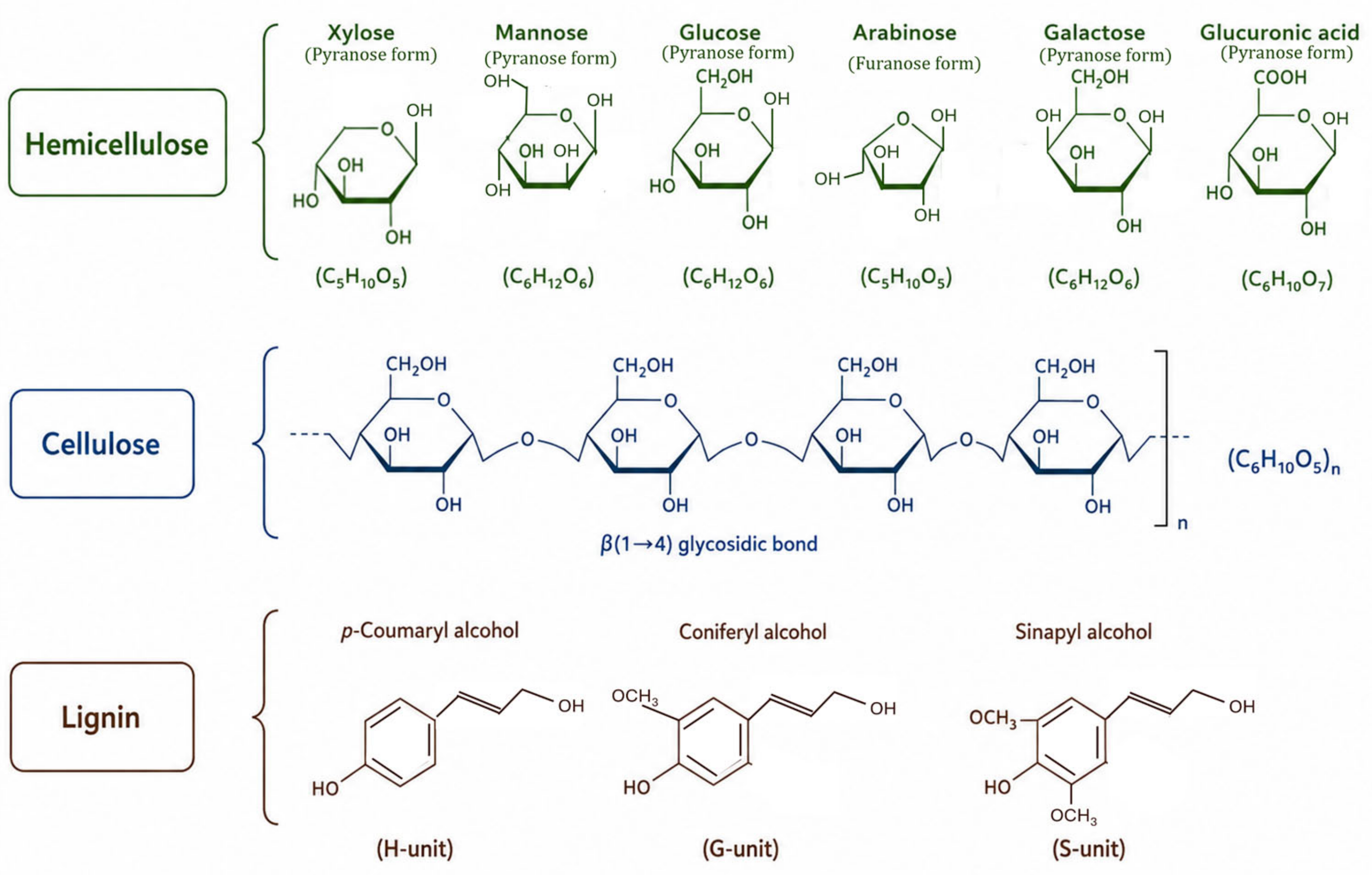



| Feature/Component | Hemicellulose | Cellulose | Lignin |
|---|---|---|---|
| General Classification | Heterogeneous, amorphous, branched polysaccharides. | Linear homopolysaccharide, (C6H10O5)n. | Complex, 3D phenylpropanoid polymer. |
| Structural Characteristics | Species-dependent. | Highly ordered microfibrils | Rigidity, hydrophobicity, resistance. |
| Monomeric/Repeating units | Xylose, mannose, glucose, arabinose, galactose, and uronic acids. | β-D-glucopyranose units (fundamental repeating unit: cellobiose). | Three monolignols: p-coumaryl alcohol (H-unit), coniferyl alcohol (G-unit), and sinapyl alcohol (S-unit). |
| Linkages/Bonding | Matrix-bound branching (varies by species). | β(1→4) glycosidic bonds, extensive hydrogen bonding. | Dominant: β-O-4 Others: β-β, β-5, 5-5 |
| Function in cell wall | Acts as a matrix polymer, binds cellulose, and provides structural flexibility and moisture regulation. | Forms microfibrils via hydrogen bonding to provide mechanical strength and rigidity. | Interlocks the polysaccharide network, provides structural support, waterproofing, and defense. |
| Hardwood Species | Climate Zone | Main Countries/Regions | Properties (Wood & Biomass Relevance) | References |
|---|---|---|---|---|
| Poplar (Populus spp.) | Temperate (non-tropical) | USA, Canada, China, Europe | Low–moderate lignin, high cellulose, fast-growing, high enzymatic digestibility, excellent biofuel feedstock | [1,36,37] |
| Willow (Salix spp.) | Temperate | Europe, UK, China, Canada | Short-rotation crop, balanced cellulose/hemicellulose, low ash, suitable for bioenergy plantations | [38,39] |
| Birch (Betula spp.) | Temperate | Northern Europe, Russia, Canada | High xylan hemicellulose, moderate lignin, good for sugar production after pretreatment | [40,41] |
| Oak (Quercus spp.) | Temperate | USA, Europe, Asia | High lignin and extractives, dense wood, durable, better for thermochemical biofuel routes | [42,43] |
| Maple (Acer spp.) | Temperate | North America, Europe, East Asia | Balanced lignocellulose composition, moderate density, good biorefinery potential | [44,45] |
| Beech (Fagus spp.) | Temperate | Europe, USA, Asia | Uniform structure, moderate lignin, consistent processing behavior | [24,46] |
| Aspen (Populus spp.) | Temperate (cold regions) | Scandinavia, Canada, Russia | Low lignin, high cellulose accessibility, model species for biofuel research | [47,48] |
| Eucalyptus (Eucalyptus spp.) | Tropical & subtropical | Brazil, India, Australia, Africa | Fast growth, high biomass yield, variable lignin, widely used in bioenergy plantations | [49,50] |
| Acacia (Acacia spp.) | Tropical | Africa, India, Australia, Southeast Asia | Nitrogen-fixing, variable chemistry, moderate lignin, good for degraded land biomass, fast-growing plantation species, good fiber yield | [51,52] |
| Teak (Tectona grandis) | Tropical | India, Myanmar, Thailand, Indonesia, Africa | High extractives and lignin, highly durable wood, low biodegradability | [53,54] |
| Rubberwood (Hevea brasiliensis) | Tropical | Thailand, Malaysia, Indonesia | Plantation residue wood, moderate lignin, widely used for secondary biomass | [55,56] |
| Category | Component/Feature | Characteristics of Hardwood Bark | Representative Hardwood Species (Examples) | Biofuel/Biorefinery Relevance |
|---|---|---|---|---|
| Structural polymers | Cellulose | Low content; poorly organized microfibrils; low accessibility | Poplar (Populus spp.), Oak (Quercus spp.), Birch (Betula spp.) | Limited fermentable sugar yield unless intensive pretreatment is applied |
| Structural polymers | Hemicellulose | Highly heterogeneous; rich in xylans, arabinose, galactose, and uronic acids | Birch (Betula spp.), Maple (Acer spp.), Poplar (Populus spp.) | Source of pentose sugars (xylose) for bioethanol and biochemicals |
| Structural polymers | Lignin | High content; condensed and irregular; often linked with suberin and phenolics | Oak (Quercus spp.), Eucalyptus (Eucalyptus spp.), Teak (Tectona grandis) | High energy density; suitable for pyrolysis, gasification, biochar |
| Non-structural compounds | Extractives | Very high: tannins, flavonoids, phenolics, resins, waxes, suberin derivatives | Oak (tannin-rich), Birch (betulin-rich), Eucalyptus (phenolic-rich) | Source of high-value chemicals; may inhibit fermentation |
| Inorganic fraction | Ash/minerals | Higher than wood; includes Ca, K, Si | Species-dependent; higher in fast-growing species like Poplar, Eucalyptus | Influences slagging, ash formation, and combustion efficiency |
| Physical properties | Structure | Highly heterogeneous, dense, irregular tissue organization | All hardwoods, pronounced in Oak and Eucalyptus | Reduces enzymatic accessibility; requires pretreatment |
| Biological resistance | Decay resistance | High due to lignin + extractives + suberin | Oak (very high), Teak (extremely durable), Birch (moderate) | Enhances durability but reduces biodegradability |
| Biofuel suitability | Thermochemical conversion | Highly suitable due to lignin richness | Eucalyptus, Oak, Teak | Produces bio-oil, syngas, biochar |
| Biofuel suitability | Biochemical conversion | Limited unless strong pretreatment is applied | Poplar, Birch, Maple (more favorable than Oak/Teak) | Fermentable sugars after hydrolysis |
| Softwood Species | Climate Zone | Main Countries/Regions | Properties (Wood & Biomass Relevance) | References |
|---|---|---|---|---|
| Pine (Pinus spp.) | Temperate & boreal | USA, Canada, Europe, China | High lignin (~26–32%), rich in resin acids, moderate cellulose (~40–45%), widely used for pulp and bioenergy; relatively high recalcitrance | [12,68] |
| Spruce (Picea spp.) | Boreal (cold temperate) | Scandinavia, Russia, Canada | Uniform tracheid structure, low extractives (~1–5%), high cellulose accessibility after pretreatment, major pulpwood species | [37,68] |
| Fir (Abies spp.) | Temperate & boreal | Europe, North America, Asia | Moderate lignin (~27–30%), low resin content, good pulping behavior, relatively uniform fiber structure | [69,70] |
| Larch (Larix spp.) | Cold temperate | Russia, Northern Europe, Canada | Higher extractives (~5–10%), dense wood, relatively high lignin, and more resistant to biochemical conversion | [71,72] |
| Douglas-fir (Pseudotsuga menziesii) | Temperate | North America, Europe (plantations) | High-strength wood, lignin-rich (~28–31%), good structural biomass, moderate-to-low enzymatic digestibility | [73,74] |
| Hemlock (Tsuga spp.) | Temperate | North America, East Asia | Lower density softwood, moderate lignin (~26–29%), used in pulp industry, relatively uniform tracheid structure | [75] |
| Cedar (Cedrus spp.) | Temperate & Mediterranean | Middle East, Mediterranean, Himalayas | High aromatic extractives, natural durability, lower biodegradability, and suitable for thermochemical conversion | [76,77] |
| Cypress (Cupressus spp.) | Temperate & subtropical | Mediterranean, USA, Asia | High durability, rich in oils and extractives (~5–12%), strong resistance to microbial degradation | [78,79] |
| Yew (Taxus spp.) | Temperate | Europe, Asia, North America | Very high extractives (alkaloids), slow growth, dense and highly durable wood | [80,81] |
| Metric/Parameter | Hemicellulose | Cellulose | Lignin |
|---|---|---|---|
| Composition in Dry Wood | 20–35% | 35–50% | 15–30% |
| Chemical Structure | Heterogeneous, amorphous branch polysaccharide (xylans/glucomannans) | Linear, highly crystalline homopolymer (β-1,4-glucose units) | Amorphous, highly cross-linked three-dimensional aromatic heteropolymer (G, S, H units) |
| Primary Conversion Pathway | Biochemical (Fractionation & Co-fermentation) | Biochemical (Saccharification & Fermentation) | Thermochemical & Catalytic (Pyrolysis, Gasification, HTL, Hydrogenolysis) |
| Primary Biofuel Product | C5-rich Bioethanol/Furfural | Second-generation (2G) Bioethanol | Bio-oil, Syngas, Biocrude, Aromatic Monomers |
| Pretreatment/Extraction | Preferential solubilization (Hydrothermal, dilute acid) | Thermochemical disruption (Steam explosion, dilute acid) | Commercial extraction protocols (LignoBoost, LignoForce) |
| Hydrolysis/Conversion Efficiency | 70–90% sugar conversion | 80–95% glucose conversion | Fast Pyrolysis: 60–75 wt% bio-oil Gasification: 60–80% syngas energy efficiency HTL: 40–65% biocrude |
| Downstream Fermentation Yield | 40–70% of theoretical yield (constrained by inhibitors and C5 metabolism) | 85–95% of theoretical yield (using S. cerevisiae) | Non-fermentable (Upgraded via hydrodeoxygenation to liquid fuels at 30–50% efficiency) |
| Industrial Advancements | Engineered strains for C5/C6 co-fermentation (yield boost of 10–25%) | Tailored cellulase cocktails; robust industrial yeast strains | Targeted catalytic cleavage of robust inter-unit linkages (20–40% aromatic monomers) |
| Commercial Benchmark Platforms | Clariant’s sunliquid® | Raízen | LignoBoost, LignoForce |
Disclaimer/Publisher’s Note: The statements, opinions and data contained in all publications are solely those of the individual author(s) and contributor(s) and not of MDPI and/or the editor(s). MDPI and/or the editor(s) disclaim responsibility for any injury to people or property resulting from any ideas, methods, instructions or products referred to in the content. |
© 2026 by the authors. Licensee MDPI, Basel, Switzerland. This article is an open access article distributed under the terms and conditions of the Creative Commons Attribution (CC BY) license.
Share and Cite
Aniza, R.; Petrissans, A.; Petrissans, M. Polymers and Chemical Composition of Hardwood and Softwood (Bark, Sapwood, and Heartwood) for Biofuel Production: A Comprehensive Review. Polymers 2026, 18, 1340. https://doi.org/10.3390/polym18111340
Aniza R, Petrissans A, Petrissans M. Polymers and Chemical Composition of Hardwood and Softwood (Bark, Sapwood, and Heartwood) for Biofuel Production: A Comprehensive Review. Polymers. 2026; 18(11):1340. https://doi.org/10.3390/polym18111340
Chicago/Turabian StyleAniza, Ria, Anelie Petrissans, and Mathieu Petrissans. 2026. "Polymers and Chemical Composition of Hardwood and Softwood (Bark, Sapwood, and Heartwood) for Biofuel Production: A Comprehensive Review" Polymers 18, no. 11: 1340. https://doi.org/10.3390/polym18111340
APA StyleAniza, R., Petrissans, A., & Petrissans, M. (2026). Polymers and Chemical Composition of Hardwood and Softwood (Bark, Sapwood, and Heartwood) for Biofuel Production: A Comprehensive Review. Polymers, 18(11), 1340. https://doi.org/10.3390/polym18111340