Eco-Friendly Production of Lignin-Containing Cellulose Nanofibers from Sugarcane Bagasse Fines via Sequential Thermal Hydrolysis–Deep Eutectic Solvents Pretreatment


Abstract
1. Introduction
2. Materials and Methods
2.1. Materials
2.2. Size Fractionation
Sample Nomenclature
- F45: <45 μm (ultra-fine fraction)
- F100: 45–100 μm (fine faction)
- F200: 100–200 μm (medium-fine fraction)
2.3. Preparation of Lignin-Containing Cellulose Nanofibers (LCNF)
2.3.1. Thermal Hydrolysis Treatment (THT)
2.3.2. DES Preparation and Treatment
2.3.3. Mechanical Defibrillation (Microfluidization)
2.4. Characterization of Cellulose and LCNF
2.4.1. Chemical Composition Analysis
2.4.2. Fourier Transform Infrared Spectroscopy (FTIR)
2.4.3. X-Ray Diffraction Analysis (XRD)
2.4.4. Thermal Gravimetric Analysis (TGA)
2.4.5. Zeta Potential Measurement
2.4.6. Field Emission Scanning Electron Microscopy (FE-SEM) and Transmission Electron Microscopy (TEM)
3. Results and Discussions
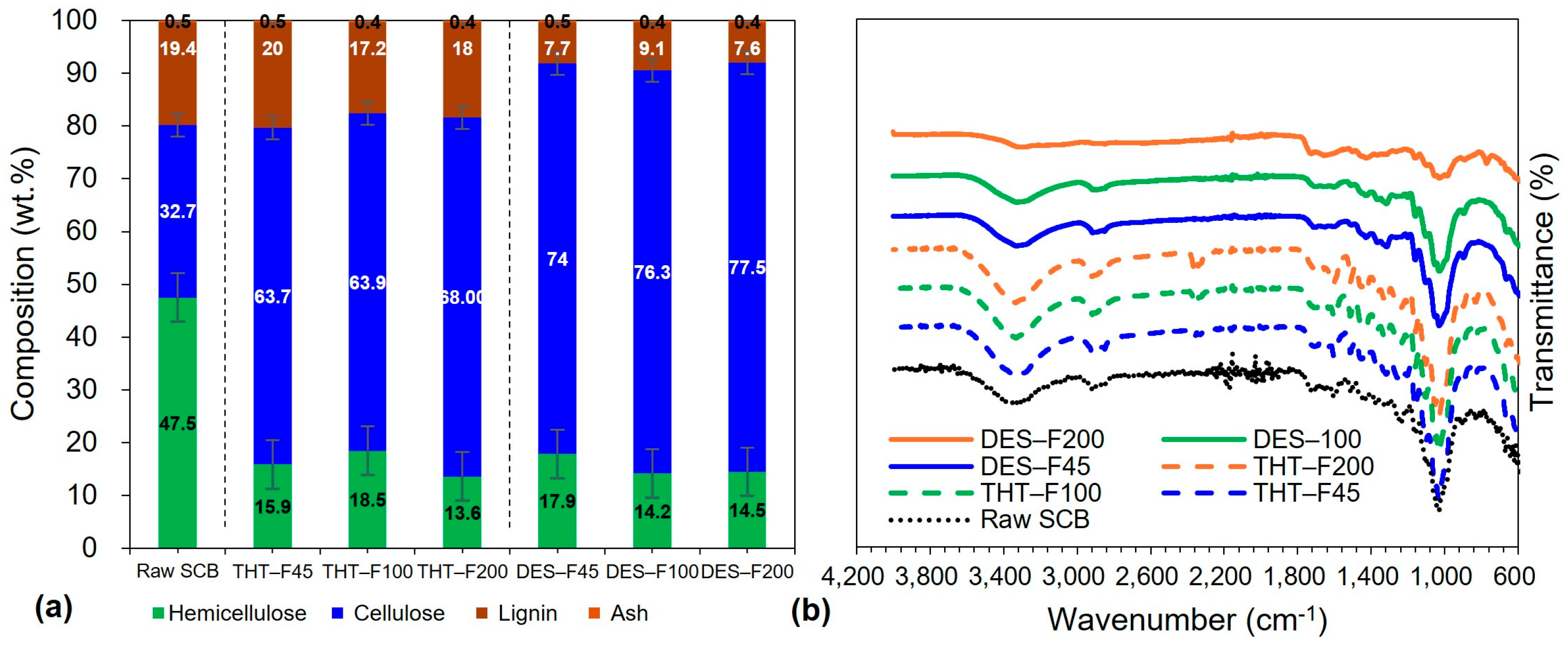
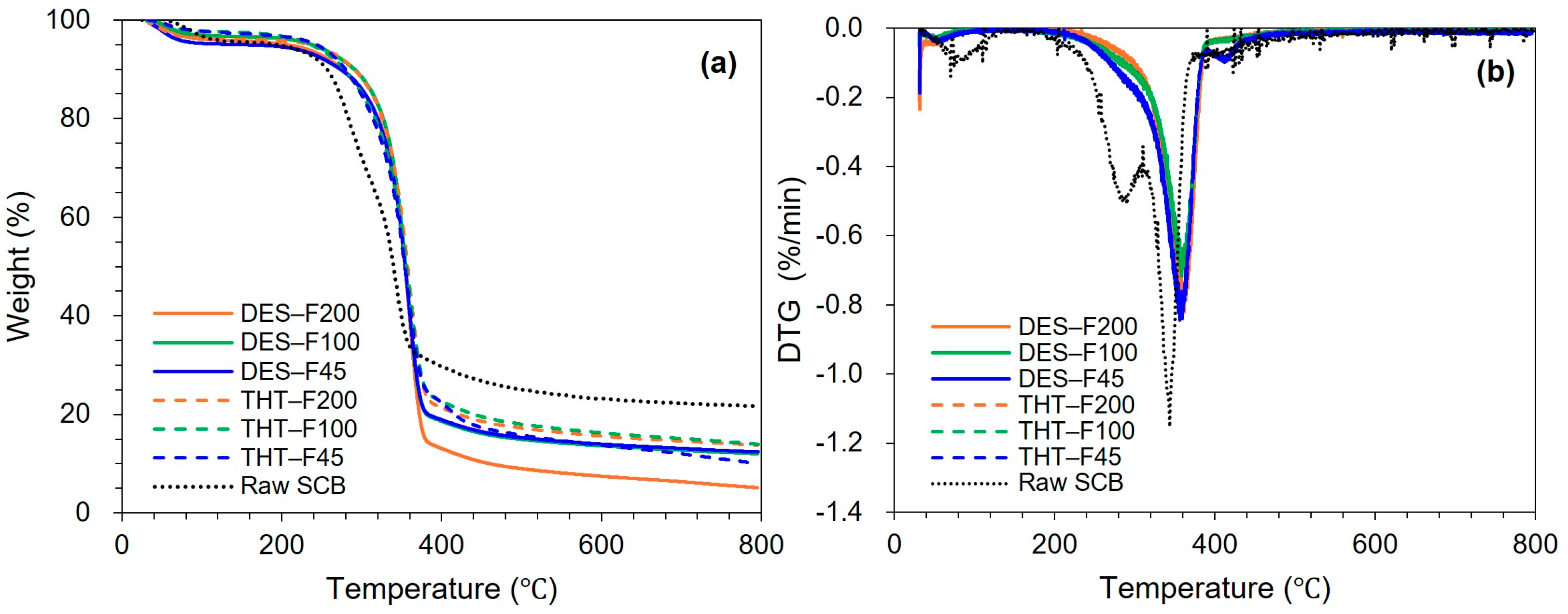
3.1. Chemical and Compositional Characterization
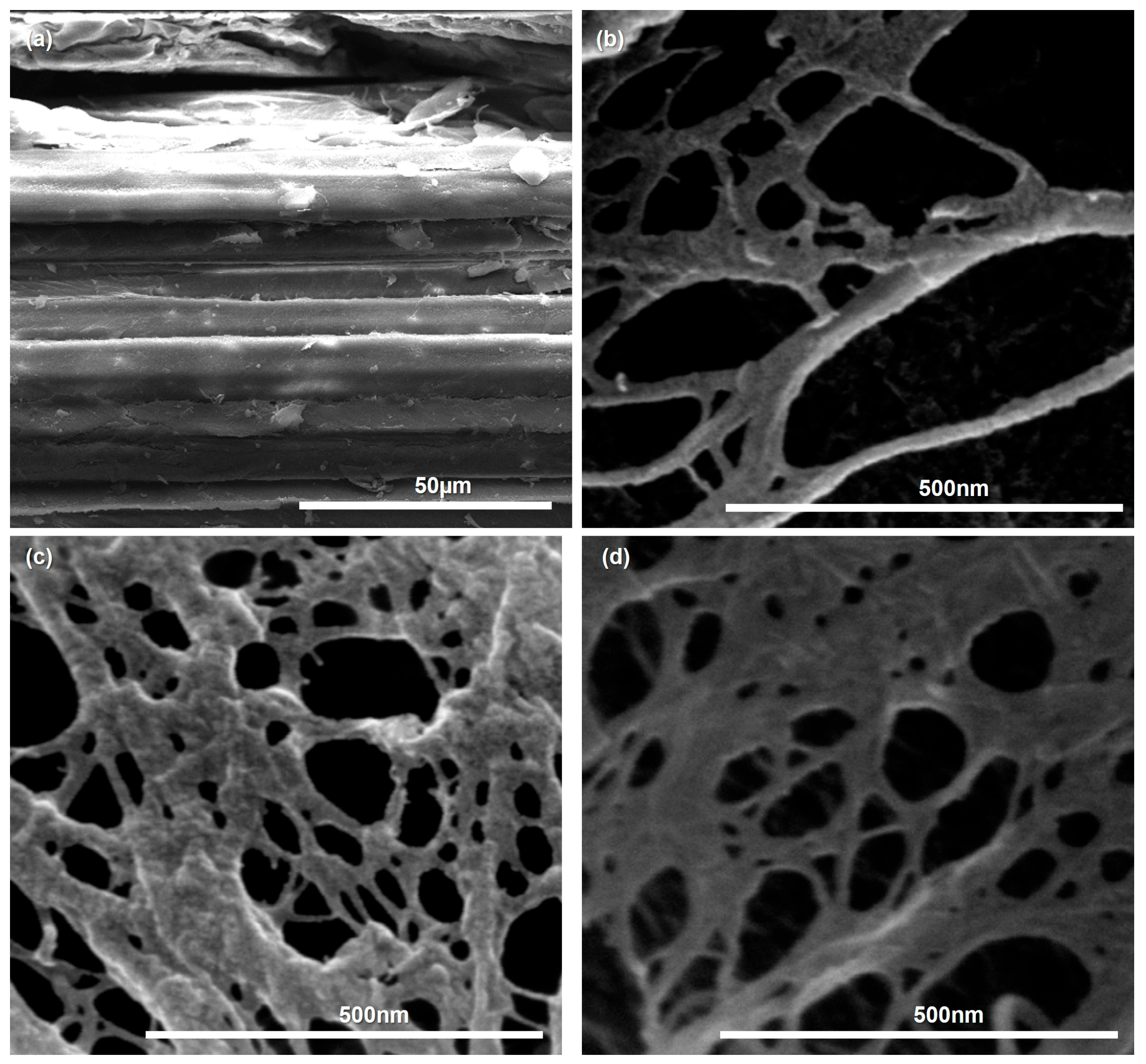
3.2. Morphological and Colloidal Properties of LCNF
4. Conclusions
Limitations and Future Perspectives
Author Contributions
Funding
Institutional Review Board Statement
Informed Consent Statement
Data Availability Statement
Conflicts of Interest
References
- Pandey, A.; Soccol, C.R.; Nigam, P.; Soccol, V.T. Biotechnological potential of agro-industrial residues. I: Sugarcane bagasse. Bioresour. Technol. 2000, 74, 69–80. [Google Scholar] [CrossRef]
- Mandal, A.; Chakrabarty, D. Isolation of nanocellulose from waste sugarcane bagasse (SCB) and its characterization. Carbohydr. Polym. 2011, 86, 1291–1299. [Google Scholar] [CrossRef]
- Hofsetz, K.; Silva, M.A. Brazilian sugarcane bagasse: Energy and non-energy consumption. Biomass Bioenergy 2012, 46, 564–573. [Google Scholar] [CrossRef]
- Mahmud, M.A.; Anannya, F.R. Sugarcane bagasse-A source of cellulosic fiber for diverse applications. Heliyon 2021, 7, e07771. [Google Scholar] [CrossRef] [PubMed]
- Jacobsen, S.E.; Wyman, C.E. Xylose monomer and oligomer yields for uncatalyzed hydrolysis of sugarcane bagasse hemicellulose at varying solids concentration. Ind. Eng. Chem. Res. 2002, 41, 1454–1461. [Google Scholar] [CrossRef]
- Karp, S.G.; Woiciechowski, A.L.; Soccol, V.T.; Soccol, C.R. Pretreatment strategies for delignification of sugarcane bagasse: A review. Braz. Arch. Biol. Technol. 2013, 56, 679–689. [Google Scholar] [CrossRef]
- Bezerra, T.L.; Ragauskas, A.J. A review of sugarcane bagasse for second-generation bioethanol and biopower production. Biofuels Bioprod. Biorefin. 2016, 10, 634–647. [Google Scholar] [CrossRef]
- Hiranobe, C.T.; Gomes, A.S.; Paiva, F.F.; Tolosa, G.R.; Paim, L.L.; Dognani, G.; Cabrera, F.C. Sugarcane bagasse: Challenges and opportunities for waste recycling. Clean Technol. 2024, 6, 662–699. [Google Scholar] [CrossRef]
- Matsueda, Y.; Antunes, E. A review of current technologies for the sustainable valorisation of sugarcane bagasse. J. Environ. Chem. Eng. 2024, 12, 114900. [Google Scholar] [CrossRef]
- Culaba, A.B.; Mayol, A.P.; San Juan, J.L.G.; Vinoya, C.L.; Concepcion, R.S., II; Bandala, A.A.; Chang, J.S. Smart sustainable biorefineries for lignocellulosic biomass. Bioresour. Technol. 2022, 344, 126215. [Google Scholar] [CrossRef]
- Meng, X.; Pu, Y.; Li, M.; Ragauskas, A.J. A biomass pretreatment using cellulose-derived solvent Cyrene. Green Chem. 2020, 22, 2862–2872. [Google Scholar] [CrossRef]
- Gupta, G.K.; Shukla, P. Lignocellulosic biomass for the synthesis of nanocellulose and its eco-friendly advanced applications. Front. Chem. 2020, 8, 601256. [Google Scholar] [CrossRef] [PubMed]
- Yu, S.; Sun, J.; Shi, Y.; Wang, Q.; Wu, J.; Liu, J. Nanocellulose from various biomass wastes: Its preparation and potential usages towards the high value-added products. Environ. Sci. Ecotechnol. 2021, 5, 100077. [Google Scholar] [CrossRef]
- Santucci, B.S.; Bras, J.; Belgacem, M.N.; da Silva Curvelo, A.A.; Pimenta, M.T.B. Evaluation of the effects of chemical composition and refining treatments on the properties of nanofibrillated cellulose films from sugarcane bagasse. Ind. Crops Prod. 2016, 91, 238–248. [Google Scholar] [CrossRef]
- Yang, M.; Zhang, X.; Guan, S.; Dou, Y.; Gao, X. Preparation of lignin containing cellulose nanofibers and its application in PVA nanocomposite films. Int. J. Biol. Macromol. 2020, 158, 1259–1267. [Google Scholar] [CrossRef]
- Wu, W.; Zhu, P.; Luo, L.; Lin, H.; Tao, Y.; Ruan, L.; Qing, Q. p-Toluenesulfonic acid enhanced neutral deep eutectic solvent pretreatment of soybean straw for efficient lignin removal and enzymatic hydrolysis. Bioresour. Technol. 2024, 395, 130338. [Google Scholar] [CrossRef]
- Sun, Y.; Zhang, H.; Li, Q.; Vardhanabhuti, B.; Wan, C. High lignin-containing nanocelluloses prepared via TEMPO-mediated oxidation and polyethylenimine functionalization for antioxidant and antibacterial applications. RSC Adv. 2022, 12, 30030–30040. [Google Scholar] [CrossRef]
- Berglund, L.A.; Peijs, T. Cellulose biocomposites—From bulk moldings to nanostructured systems. MRS Bull. 2010, 35, 201–207. [Google Scholar] [CrossRef]
- Liu, X.; Hao, M.; Chen, L.; Yang, G.; Liang, C.; He, Y.; Ma, P.; Pan, M.; Xie, W.; Jian, R. Lignin-containing cellulose nanomaterials: Preparation and applications. Green Chem. 2021, 23, 9723–9746. [Google Scholar] [CrossRef]
- Eichhorn, S.J.; Dufresne, A.; Aranguren, M.; Marcovich, N.E.; Capadona, J.R.; Rowan, S.J.; Weder, C.; Thielemans, W.; Roman, M.; Renneckar, S.; et al. Current international research into cellulose nanofibres and nanocomposites. J. Mater. Sci. 2010, 45, 1–33. [Google Scholar] [CrossRef]
- Nishino, T.; Matsuda, I.; Hirao, K. All-cellulose composite. Macromolecules 2004, 37, 7683–7687. [Google Scholar] [CrossRef]
- Chen, L.; Zhu, J.Y.; Baez, C.; Kitin, P.; Elder, T. Lignin-containing cellulose nanomaterials: Preparation, properties, and applications. Rare Met. 2024, 43, 1006–1016. [Google Scholar] [CrossRef]
- Chen, X.Y.; Gao, X.J.; Wu, H.Y.; Liu, Y.L.; Yang, X.F.; Sun, R.C. Lignin-reinforced PVDF electrolyte for dendrite-free quasi-solid-state Li metal battery. Rare Met. 2024, 43, 1006–1016. [Google Scholar] [CrossRef]
- Huang, Z.; Han, D.; Yi, G.; Lin, W.; Lin, X.; Sun, Y.; Wang, H. High-performance and multifunctional lignin-derived polyurethane elastomers for robotic flexible protective layers. Adv. Funct. Mater. 2025, 35, 2507845. [Google Scholar] [CrossRef]
- Henriksson, M.; Henriksson, G.; Berglund, L.A.; Lindström, T. An environmentally friendly method for enzyme-assisted preparation of microfibrillated cellulose (MFC) nanofibers. Eur. Polym. J. 2007, 43, 3434–3441. [Google Scholar] [CrossRef]
- Huang, C.; Lin, W.; Lai, C.; Li, X.; Jin, Y.; Yong, Q. Coupling the post-extraction process to remove residual lignin and alter the recalcitrant structures for improving the enzymatic digestibility of acid-pretreated bamboo residues. Bioresour. Technol. 2019, 285, 121355. [Google Scholar] [CrossRef]
- Yao, L.; Yang, H.; Yoo, C.G.; Meng, X.; Pu, Y.; Hao, N.; Ragauskas, A.J. Facile preparation of lignin-containing cellulose nanofibrils from sugarcane bagasse by mild soda-oxygen pulping. Cellulose 2022, 29, 7007–7022. [Google Scholar] [CrossRef]
- Scopel, E.; Mota, T.R.; Nunes, V.M.; Mazzaro, I.; Lacerda, T.M.; Pinto, P.C. Residual lignin affects production and properties of TEMPO-oxidized cellulose nanofibrils from partially delignified sugarcane bagasse. Cellulose 2025, 32, 9315–9331. [Google Scholar] [CrossRef]
- Fontes, A.M.; Iamamoto, Y.; Correa, A.C.; Bilatto, S.; Brienzo, M.; Cavali, M.; Moraes, M.L.; Mattoso, L.H.C. Micro/nanostructured lignonanocellulose obtained from steam-exploded sugarcane bagasse. Cellulose 2021, 28, 10855–10870. [Google Scholar] [CrossRef]
- Liu, X.; Li, Y.; Ewulonu, C.M.; Ralph, J.; Xu, F.; Zhang, Q.; Wu, M.; Huang, Y. Mild alkaline pretreatment for isolation of native-like lignin and lignin-containing cellulose nanofibers (LCNF) from crop waste. ACS Sustain. Chem. Eng. 2019, 7, 14135–14142. [Google Scholar] [CrossRef]
- Najahi, A.; Hamrouni, R.; Samaali, I.; Hentati, O.; Boufi, S. High-lignin-containing cellulose nanofibrils from date palm waste produced by hydrothermal treatment in the presence of maleic acid. Biomacromolecules 2023, 24, 3620–3631. [Google Scholar] [CrossRef] [PubMed]
- Abolore, R.S.; Jaiswal, S.; Jaiswal, A.K. Green and sustainable pretreatment methods for cellulose extraction from lignocellulosic biomass and its applications: A review. Carbohydr. Polym. Technol. Appl. 2024, 7, 100396. [Google Scholar] [CrossRef]
- Mankar, A.R.; Pandey, A.; Modak, A.; Pant, K.K. Pretreatment of lignocellulosic biomass: A review on recent advances. Bioresour. Technol. 2021, 334, 125235. [Google Scholar] [CrossRef]
- Yang, Y.; Zhang, M.; Zhao, J.; Wang, D. Effects of particle size on biomass pretreatment and hydrolysis performances in bioethanol conversion. Biomass Convers. Biorefin. 2023, 13, 13023–13036. [Google Scholar] [CrossRef]
- Heidarian, P.; Behzad, T.; Karimi, K. Isolation and characterization of bagasse cellulose nanofibrils by optimized sulfur-free chemical delignification. Wood Sci. Technol. 2016, 50, 1071–1088. [Google Scholar] [CrossRef]
- Andrade, M.F.; Colodette, J.L. Dissolving pulp production from sugar cane bagasse. Ind. Crops Prod. 2014, 52, 58–64. [Google Scholar] [CrossRef]
- Francisco, M.; Van Den Bruinhorst, A.; Kroon, M.C. New natural and renewable low transition temperature mixtures (LTTMs): Screening as solvents for lignocellulosic biomass processing. Green Chem. 2012, 14, 2153–2157. [Google Scholar] [CrossRef]
- Liu, W.; Du, H.; Liu, K.; Liu, H.; Xie, H.; Si, C.; Zhang, X. Sustainable preparation of cellulose nanofibrils via choline chloride-citric acid deep eutectic solvent pretreatment combined with high-pressure homogenization. Carbohydr. Polym. 2021, 267, 118220. [Google Scholar] [CrossRef]
- Li, M.; Cao, S.; Meng, X.; Studer, M.; Wyman, C.E.; Ragauskas, A.J.; Pu, Y. The effect of liquid hot water pretreatment on the chemical–structural alteration and the reduced recalcitrance in poplar. Biotechnol. Biofuels 2017, 10, 237. [Google Scholar] [CrossRef]
- Anastas, P.T.; Warner, J.C. Green Chemistry: Theory and Practice; Oxford University Press: Oxford, UK, 2000. [Google Scholar]
- Zhu, J.Y.; Pan, X.J. Woody biomass pretreatment for cellulosic ethanol production: Technology and energy consumption evaluation. Bioresour. Technol. 2010, 101, 4992–5002. [Google Scholar] [CrossRef] [PubMed]
- Auxenfans, T.; Crônier, D.; Chabbert, B.; Paës, G. Understanding the structural and chemical changes of plant biomass following steam explosion pretreatment. Biotechnol. Biofuels 2017, 10, 36. [Google Scholar] [CrossRef]
- Sluiter, A.; Hames, B.; Ruiz, R.; Scarlata, C.; Sluiter, J.; Templeton, D.; Crocker, D. Determination of structural carbohydrates and lignin in biomass. Lab. Anal. Proced. 2008, 1617, 1–16. [Google Scholar]
- Kumar, R.; Hu, F.; Sannigrahi, P.; Jung, S.; Ragauskas, A.J.; Wyman, C.E. Carbohydrate derived-pseudo-lignin can retard cellulose biological conversion. Biotechnol. Bioeng. 2013, 110, 737–753. [Google Scholar] [CrossRef]
- Sluiter, J.B.; Ruiz, R.O.; Scarlata, C.J.; Sluiter, A.D.; Templeton, D.W. Compositional analysis of lignocellulosic feedstocks. 1. Review and description of methods. J. Agric. Food Chem. 2010, 58, 9043–9053. [Google Scholar] [CrossRef]
- Sun, J.X.; Sun, X.F.; Zhao, H.; Sun, R.C. Isolation and characterization of cellulose from sugarcane bagasse. Polym. Degrad. Stab. 2004, 84, 331–339. [Google Scholar] [CrossRef]
- Sirviö, J.A.; Visanko, M.; Liimatainen, H. Deep eutectic solvent system based on choline chloride-urea as a pre-treatment for nanofibrillation of wood cellulose. Green Chem. 2015, 17, 3401–3406. [Google Scholar] [CrossRef]
- Zhou, Z.; Lei, F.; Li, P.; Jiang, J. Recyclable deep eutectic solvent coupling sodium hydroxide post-treatment for boosting woody and herbaceous biomass conversion at mild condition. Bioresour. Technol. 2021, 337, 125384. [Google Scholar] [CrossRef] [PubMed]
- Hong, S.; Yuan, Y.; Yang, Q.; Zhu, P.; Lian, H. Enhancement of the nanofibrillation of birch cellulose pretreated with natural deep eutectic solvent. Ind. Crops Prod. 2020, 154, 112677. [Google Scholar] [CrossRef]
- Yu, W.; Wang, C.; Yi, Y.; Zhou, W.; Wang, H.; Yang, Y.; Zeng, Z.; Guo, Z. Direct pretreatment of raw ramie fibers using an acidic deep eutectic solvent to produce cellulose nanofibrils in high purity. Cellulose 2021, 28, 175–188. [Google Scholar] [CrossRef]
- Kumar, A.K.; Parikh, B.S.; Pravakar, M. Natural deep eutectic solvent mediated pretreatment of rice straw: Bioanalytical characterization of lignin extract and enzymatic hydrolysis of pretreated biomass residue. Environ. Sci. Pollut. Res. 2016, 23, 9265–9275. [Google Scholar] [CrossRef]
- Varilla-Mazaba, C.A.; Morales-Contreras, B.E.; Rodríguez-González, F.; Wicker, L.; Rosas-Flores, W.; Rodríguez-Núñez, J.R.; Morales-Castro, J. Choline chloride-based deep eutectic solvents as biocompatible extractants to recover hemicellulosic sugars and phenolic compounds from sugarcane bagasse. ACS Omega 2022, 7, 20956–20964. [Google Scholar]
- Yang, H.; Yan, R.; Chen, H.; Zheng, C.; Lee, D.H.; Liang, D.T. In-depth investigation of biomass pyrolysis based on three major components: Hemicellulose, cellulose and lignin. Energy Fuels 2006, 20, 388–393. [Google Scholar] [CrossRef]
- Qing, Q.; Yang, B.; Wyman, C.E. Impact of surfactants on pretreatment of corn stover. Bioresour. Technol. 2010, 101, 5941–5951. [Google Scholar] [CrossRef]
- Da Silva, A.S.A.; Inoue, H.; Endo, T.; Yano, S.; Bon, E.P. Milling pretreatment of sugarcane bagasse and straw for enzymatic hydrolysis and ethanol fermentation. Bioresour. Technol. 2010, 101, 7402–7409. [Google Scholar] [CrossRef]
- ASTM E11-24; Standard Specification for Woven Wire Test Sieve Cloth and Test Sieves. ASTM International: West Conshohocken, PA, USA, 2024.
- ISO 3310-2:2013; Test Sieves—Technical Requirements and Testing—Part 2: Test Sieves of Perforated Metal Plate. International Organization for Standardization: Geneva, Switzerland, 2013.
- Yanak, S.; Buyukkileci, A.O. Delignification of corncob by choline chloride-urea deep eutectic solvent for enzymatic production of xylooligosaccharides. Ind. Crops Prod. 2024, 217, 118894. [Google Scholar] [CrossRef]
- Segal, L.; Creely, J.J.; Martin, A.E., Jr.; Conrad, C.M. An empirical method for estimating the degree of crystallinity of native cellulose using the X-ray diffractometer. Text. Res. J. 1959, 29, 786–794. [Google Scholar] [CrossRef]
- Schneider, C.A.; Rasband, W.S.; Eliceiri, K.W. NIH Image to ImageJ: 25 years of image analysis. Nat. Methods 2012, 9, 671–675. [Google Scholar] [CrossRef]
- Herrera, M.; Thitiwutthisakul, K.; Yang, X.; Rujitanaroj, P.-O.; Rojas, R.; Berglund, L. Preparation and evaluation of high-lignin content cellulose nanofibrils from eucalyptus pulp. Cellulose 2018, 25, 3121–3133. [Google Scholar] [CrossRef]
- Nitsos, C.K.; Matis, K.A.; Triantafyllidis, K.S. Optimization of hydrothermal pretreatment of lignocellulosic biomass in the bioethanol production process. ChemSusChem 2013, 6, 110–122. [Google Scholar] [CrossRef]
- Nair, S.S.; Yan, N. Effect of high residual lignin on the thermal stability of nanofibrils and its enhanced mechanical performance in aqueous environments. Cellulose 2015, 22, 3137–3150. [Google Scholar] [CrossRef]
- Sulaeman, A.P.; Gao, Y.; Dugmore, T.; Remón, J.; Matharu, A.S. From unavoidable food waste to advanced biomaterials: Microfibrilated lignocellulose production by microwave-assisted hydrothermal treatment of cassava peel and almond hull. Cellulose 2021, 28, 7687–7705. [Google Scholar] [CrossRef]
- Wang, Q.Q.; Zhu, J.Y.; Reiner, R.S.; Verrill, S.P.; Baxa, U.; McNeil, S.E. Approaching zero cellulose loss in cellulose nanocrystal (CNC) production: Recovery and characterization of cellulosic solid residues (CSR) and CNC. Cellulose 2012, 19, 2033–2047. [Google Scholar] [CrossRef]
- Espinosa, E.; Bascón-Villegas, I.; Rosal, A.; Pérez-Rodríguez, F.; Chinga-Carrasco, G.; Rodríguez, A. PVA/(ligno)nanocellulose biocomposite films. Effect of residual lignin content on structural, mechanical, barrier and antioxidant properties. Int. J. Biol. Macromol. 2019, 141, 197–206. [Google Scholar] [CrossRef]
- Klemm, D.; Kramer, F.; Moritz, S.; Lindström, T.; Ankerfors, M.; Gray, D.; Dorris, A. Nanocelluloses: A new family of nature-based materials. Angew. Chem. Int. Ed. 2011, 50, 5438–5466. [Google Scholar] [CrossRef]
- Stefanidis, S.D.; Kalogiannis, K.G.; Iliopoulou, E.F.; Lappas, A.A.; Pilavachi, P.A. A study of lignocellulosic biomass pyrolysis via the pyrolysis of cellulose, hemicellulose and lignin. J. Anal. Appl. Pyrolysis 2014, 105, 143–150. [Google Scholar] [CrossRef]
- Yang, H.; Yan, R.; Chen, H.; Lee, D.H.; Zheng, C. Characteristics of hemicellulose, cellulose and lignin pyrolysis. Fuel 2007, 86, 1781–1788. [Google Scholar] [CrossRef]
- Poletto, M.; Zattera, A.J.; Santana, R.M.C. Structural differences between wood species: Evidence from chemical composition, FTIR spectroscopy, and thermogravimetric analysis. J. Appl. Polym. Sci. 2012, 126, E337–E344. [Google Scholar] [CrossRef]
- Baraka, F.; Erdocia, X.; Velazco-Cabral, I.; Labidi, J. Impact of deep eutectic solvent pre-treatment on the extraction of cellulose nanofibers. Cellulose 2024, 31, 5711–5726. [Google Scholar] [CrossRef]
- Bhattacharjee, S. DLS and zeta potential–What they are and what they are not? J. Control. Release 2016, 235, 337–351. [Google Scholar] [CrossRef]
- Sukkathanyawat, H.; Bampenrat, A.; Jarunglumlert, T.; Prommuak, C. Modification of waste sugarcane bagasse fly ash for CO2 capture application. Mater. Renew. Sustain. Energy 2022, 11, 267–276. [Google Scholar] [CrossRef]
- French, A.D. Idealized powder diffraction patterns for cellulose polymorphs. Cellulose 2014, 21, 885–896. [Google Scholar] [CrossRef]
- Pereira, S.C.; Maehara, L.; Machado, C.M.M.; Farinas, C.S. Physical-chemical- morphological characterization of the whole sugarcane lignocellulosic biomass used for 2G ethanol production by spectroscopy and microscopy techniques. Renew. Energy 2016, 87, 607–617. [Google Scholar] [CrossRef]
- Nitsos, C.K.; Choli-Papadopoulou, T.; Matis, K.A.; Triantafyllidis, K.S. Optimization of hydrothermal pretreatment of hardwood and softwood lignocellulosic residues for selective hemicellulose recovery and improved cellulose enzymatic hydrolysis. ACS Sustain. Chem. Eng. 2016, 4, 4529–4544. [Google Scholar] [CrossRef]
- Nagarajan, K.J.; Ramanujam, N.R.; Sanjay, M.R.; Siengchin, S.; Ranjith, R.; Rajeshkumar, G.; Ramesh, M. A comprehensive review on cellulose nanocrystals and cellulose nanofibers: Pretreatment, preparation, and characterization. Polym. Compos. 2021, 42, 1588–1630. [Google Scholar] [CrossRef]
- Nair, S.S.; Zhu, J.Y.; Deng, Y.; Ragauskas, A.J. Characterization of cellulose nanofibrillation by micro grinding. J. Nanopart. Res. 2014, 16, 2349. [Google Scholar] [CrossRef]
- Jiang, F.; Hsieh, Y.L. Chemically and mechanically isolated nanocellulose and their self-assembled structures. Carbohydr. Polym. 2013, 95, 32–40. [Google Scholar] [CrossRef] [PubMed]
- Ferrer, A.; Quintana, E.; Filpponen, I.; Solala, I.; Vidal, T.; Rodríguez, A.; Laine, J.; Rojas, O.J. Effect of residual lignin and heteropolysaccharides in nanofibrillar cellulose and nanopaper from wood fibers. Cellulose 2012, 19, 2179–2193. [Google Scholar] [CrossRef]
- Saito, T.; Kimura, S.; Nishiyama, Y.; Isogai, A. Cellulose nanofibers prepared by TEMPO-mediated oxidation of native cellulose. Biomacromolecules 2007, 8, 2485–2491. [Google Scholar] [CrossRef]

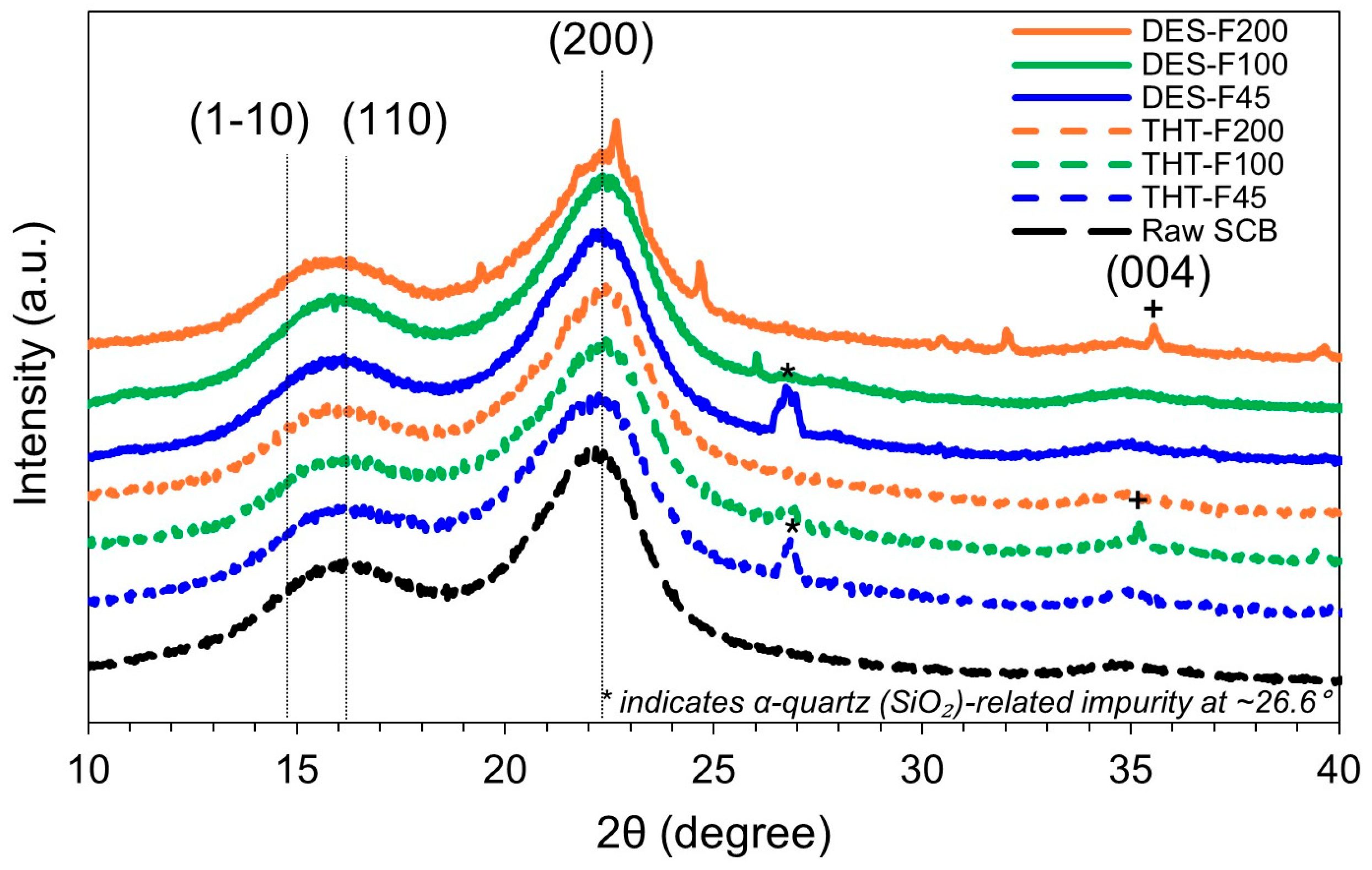

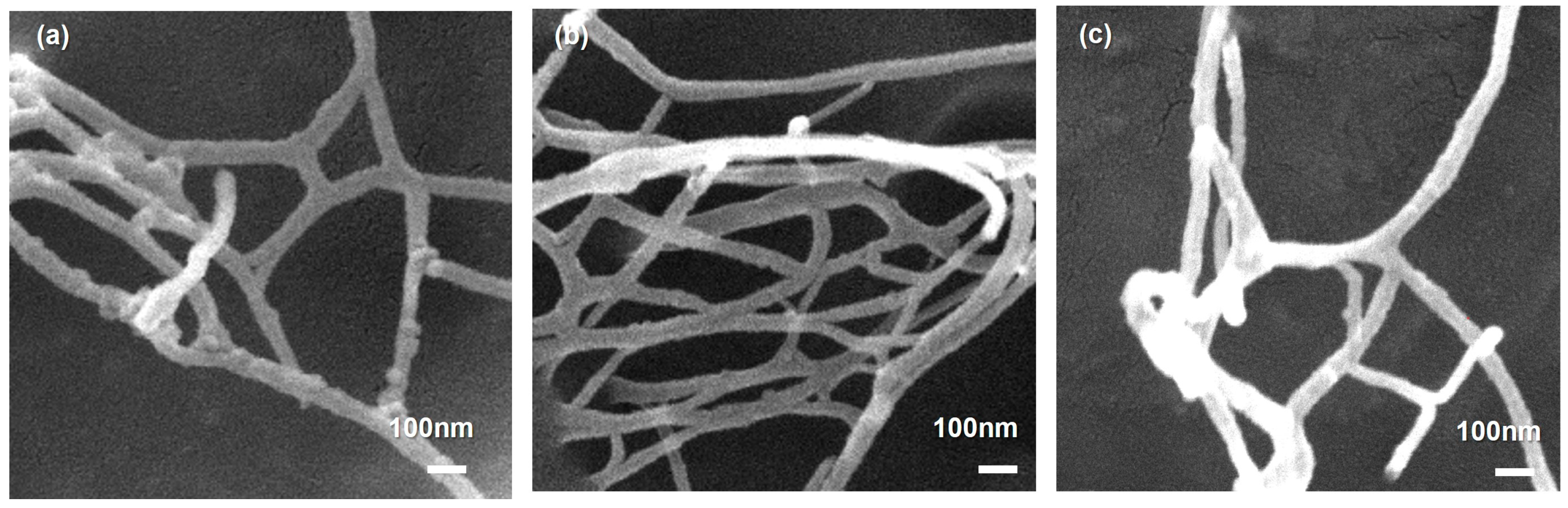
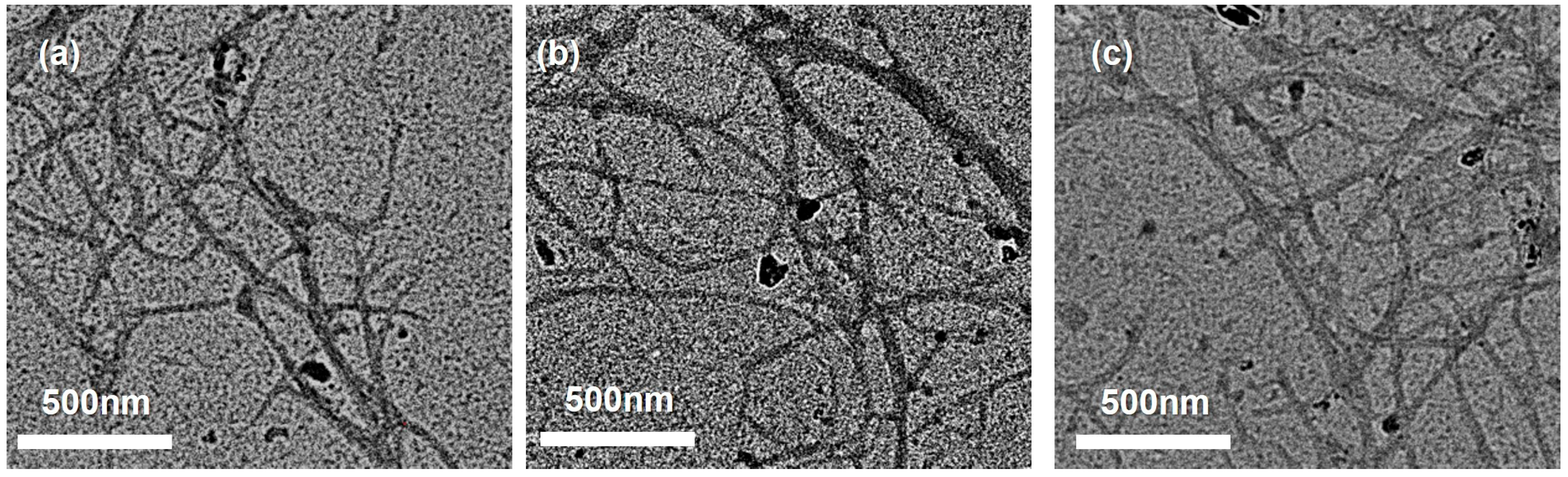

| Reference | Biomass | Particle Size | Pretreatment | DES Type | Key Outcome |
|---|---|---|---|---|---|
| [46] | Birch pulp | Not reported | DES pretreatment followed by microfluidization | ChCl:urea (1:2) | 90% yield; 2–5 nm CNF; CrI 66%; DP preserved |
| [47] | Poplar/Miscanthus | 40~60 mesh (0.25~0.425 mm) | p-TsOH/ChCl DES pretreatment followed by NaOH post-treatment | ChCl:p-TsOH | CrI 68% (PL), 68.1% (MC); >90% lignin removal; 100% cellulose conversion |
| [48] | Bleached birch pulp | 183–211 μm after DES | DES pretreatment followed by microfluidization | Betaine HCl:Glycerol | 72.5% yield; 17–20 nm CNF; CrI 67.7–74.4%; 80–110 MPa film |
| [49] | Raw ramie fibers | ~1 cm cut fibers | Acidic DES (ChCl:oxalic acid) pretreatment followed by ball milling | ChCl:oxalic acid (1:1) | 73% recovery; 90.31% glucan; 14.29 nm CNF; 98.071 MPa film |
| [50] | Rice straw | 2~10 mm cutting | Single-step DES | lactic acid: betaine and lactic acid:choline chloride | Extract >90% purity lignin; |
| [51] | SCB | Not reported | DES treatment followed by enzymatic hydrolysis | ChCl:Gly, ChCl:Urea | >80% lignin removal; 50~80% cellulose recovery |
| Reference | Biomass | Process Summary | Lignin Content | Main Results |
|---|---|---|---|---|
| [27] | SCB | Soda–oxygen pulping →disk refining →ultrasonication | ~25% →4.46–16.11% | 2–5 nm LCNF; improved thermal stability; lower temp than conventional |
| [28] | SCB | Organosolv pretreatment →TEMPO oxidation →ultrasonication /microfluidization | 15~24% →5–7.5% | 600–800 nm (length) LCNF; harsh NaClO oxidation |
| [29] | SCB | Steam explosion →alkaline delignification →enzymatic hydrolysis →high-pressure homogenization | ~25% →4.8~11.6% | 10~40 nm LCNF; micro/nanofibrils; high energy (steam); moderate lignin retention |
| [55] | Phragmites australis (reed) | Mild alkaline (NaOH) treatment →ball milling →ultrasonication | 16% →7.3~16.1% | 5~10 nm LCNF; ~87% LCNF yield; native-like lignin structure preserved |
| [30] | Date palm waste | Hydrothermal treatment →maleic acid (MA) treatment →high-pressure homogenization | 28% →17~26% | High yield (>70%); lignin preservation; MA-assisted treatment |
| [55] | Phragmites australis (reed) | Mild alkaline (NaOH) treatment →ball milling →ultrasonication | 16% →7.3~16.1% | 5~10 nm LCNF; ~87% LCNF yield; native-like lignin structure preserved |
| Sample | Crystallinity Index (%) |
|---|---|
| Raw SCB | 49.83 |
| THT-F45 | 46.49 |
| THT-F100 | 48.31 |
| THT-F200 | 52.66 |
| DES-F45 | 57.06 |
| DES-F100 | 56.69 |
| DES-F200 | 57.19 |
| Fibril Diameter (nm) a | Zeta Potential (mV) b | |
|---|---|---|
| LCNF-F45 | 26.16 | −86.3 ± 0.92 |
| LCNF-F100 | 24.62 | −92.5 ± 1.01 |
| LCNF-F200 | 25.84 | −95.0 ± 1.03 |
Disclaimer/Publisher’s Note: The statements, opinions and data contained in all publications are solely those of the individual author(s) and contributor(s) and not of MDPI and/or the editor(s). MDPI and/or the editor(s) disclaim responsibility for any injury to people or property resulting from any ideas, methods, instructions or products referred to in the content. |
© 2025 by the authors. Licensee MDPI, Basel, Switzerland. This article is an open access article distributed under the terms and conditions of the Creative Commons Attribution (CC BY) license.
Share and Cite
Yeo, C.-E.; Sung, H.-J. Eco-Friendly Production of Lignin-Containing Cellulose Nanofibers from Sugarcane Bagasse Fines via Sequential Thermal Hydrolysis–Deep Eutectic Solvents Pretreatment. Polymers 2026, 18, 85. https://doi.org/10.3390/polym18010085
Yeo C-E, Sung H-J. Eco-Friendly Production of Lignin-Containing Cellulose Nanofibers from Sugarcane Bagasse Fines via Sequential Thermal Hydrolysis–Deep Eutectic Solvents Pretreatment. Polymers. 2026; 18(1):85. https://doi.org/10.3390/polym18010085
Chicago/Turabian StyleYeo, Chae-Eun, and Ho-Jin Sung. 2026. "Eco-Friendly Production of Lignin-Containing Cellulose Nanofibers from Sugarcane Bagasse Fines via Sequential Thermal Hydrolysis–Deep Eutectic Solvents Pretreatment" Polymers 18, no. 1: 85. https://doi.org/10.3390/polym18010085
APA StyleYeo, C.-E., & Sung, H.-J. (2026). Eco-Friendly Production of Lignin-Containing Cellulose Nanofibers from Sugarcane Bagasse Fines via Sequential Thermal Hydrolysis–Deep Eutectic Solvents Pretreatment. Polymers, 18(1), 85. https://doi.org/10.3390/polym18010085