Review

High-Thermal-Conductivity Graphene/Epoxy Resin Composites: A Review of Reinforcement Mechanisms, Structural Regulation and Application Challenges

1
School of Materials Science and Engineering, Wuhan University of Technology, Wuhan 430070, China
2
Hubei Longzhong Laboratory, Xiangyang 441000, China
*
Author to whom correspondence should be addressed.
Polymers 2025, 17(17), 2342; https://doi.org/10.3390/polym17172342
Submission received: 15 July 2025 / Revised: 25 August 2025 / Accepted: 26 August 2025 / Published: 28 August 2025
(This article belongs to the Section Polymer Applications)

Abstract

As electronic devices advance toward higher power density, heat dissipation has emerged as a critical bottleneck limiting their reliability. Graphene oxide (GO)/epoxy resin (EP) composites, combining high-thermal-conductivity potential with polymer-matrix advantages, have become a key focus for overcoming the limitations of traditional metal heat-dissipation materials. This review systematically examines these composites, analyzing their thermal conductivity enhancement mechanisms, structural regulation strategies, and application challenges. We first elaborate on how GO’s intrinsic properties influence its enhancement capability, then explore the roles of physical dispersion strategies and interfacial modification techniques in optimizing filler dispersion and reducing interfacial thermal resistance, revealing the effects of preparation processes on thermal conduction network construction. Their remarkable potential is demonstrated in applications such as electronic packaging and electromagnetic shielding. However, challenges including cross-scale structural design and multi-physics collaborative regulation remain. This review aims to provide theoretical foundations and technical guidance for transitioning these composites from lab research to industrial application and advancing thermal management in high-performance electronics.

1. Introduction

Amid rapid technological advancement, high-thermal-conductivity materials are critical in electronics, aerospace, and new energy [1,2,3,4,5]. Advancing microelectronics toward high performance, miniaturization, and integration has intensified operational heat generation, making dissipation a key bottleneck for device reliability [2,6,7]. Traditional metal-based materials (e.g., copper, aluminum) increasingly fail to meet demands due to high density, mismatched thermal expansion, and limited processability [8,9,10]. Consequently, graphene oxide (GO)/epoxy resin (EP) composites, with their unique physicochemical structures and high-thermal-conductivity potential, have emerged as a research focus.
Polymer-matrix composites offer potential due to low density, processability, and corrosion resistance. EP, a key thermosetting matrix, is widely used for its excellent adhesion, electrical insulation, and mechanical properties [1,10]. However, EP’s inherently low thermal conductivity restricts its thermal management applications. Enhancing polymer conductivity relies on high-thermal-conductivity fillers [9,11,12]. Among nanofillers, GO stands out with its 2D honeycomb lattice, theoretical 5000 W·m−1·K−1 intrinsic thermal conductivity, and mechanical properties, making it ideal for high-thermal-conductivity composites [13,14]. Achieving performance leaps in GO/EP composites via structural design and process optimization remains a core challenge.
Web of Science analysis indicates significant growth in GO/EP research (Figure 1). Scholars have elucidated GO’s heat-transfer mechanisms in composites and proposed multi-scale enhancement theories (e.g., phonon coupling, interfacial dissipation, and network topology optimization) [15,16]. Efficient fabrication, however, faces critical challenges: van der Waals forces cause GO agglomeration, leading to uneven dispersion and poor thermal network connectivity [13,17]; poor GO-EP interfacial compatibility induces high Kapitza resistance, impairing heat transfer [1,6,18]; and composite conductivity depends on GO orientation, 3D-network topology, and filler-matrix interactions, requiring precise regulation [19]. Large-scale production further complicates these issues due to process costs, structural stability, and performance optimization [20]. Addressing these demands requires multidimensional, cross-scale research on filler control, interface engineering, and advanced preparation methods.
This review centers on the “structure-performance-application” framework, systematically analyzing the reinforcement mechanisms, structural regulation strategies, and application challenges of high-thermal-conductivity GO/EP composites to establish a scientific analysis framework. It examines graphene’s intrinsic properties, explores how dispersion methods and interface modification affect filler distribution and thermal resistance, and investigates thermal network construction via solution mixing and in situ polymerization. Application bottlenecks and optimization strategies in electronic packaging and electromagnetic shielding are highlighted. Through multidimensional analysis, it reveals microstructure-macroscopic performance relationships, clarifies current limitations, outlines future directions, and provides theoretical and technical support for high-performance composite design.

2. Basic Properties of Graphene

Wallace pioneered the electronic structure framework in 1947. In 2004, Geim’s team prepared and observed the quantum Hall effect via micromechanical exfoliation, overcoming Mermin-Wagner constraints and bridging the carbon dimensional hierarchy gap (0D fullerene to 3D diamond) [21,22]. Its distinctive carrier transport, mechanical strength, and optical properties render it ideal for novel composites, flexible electronics, and related fields.

2.1. Basic Structure of Graphene

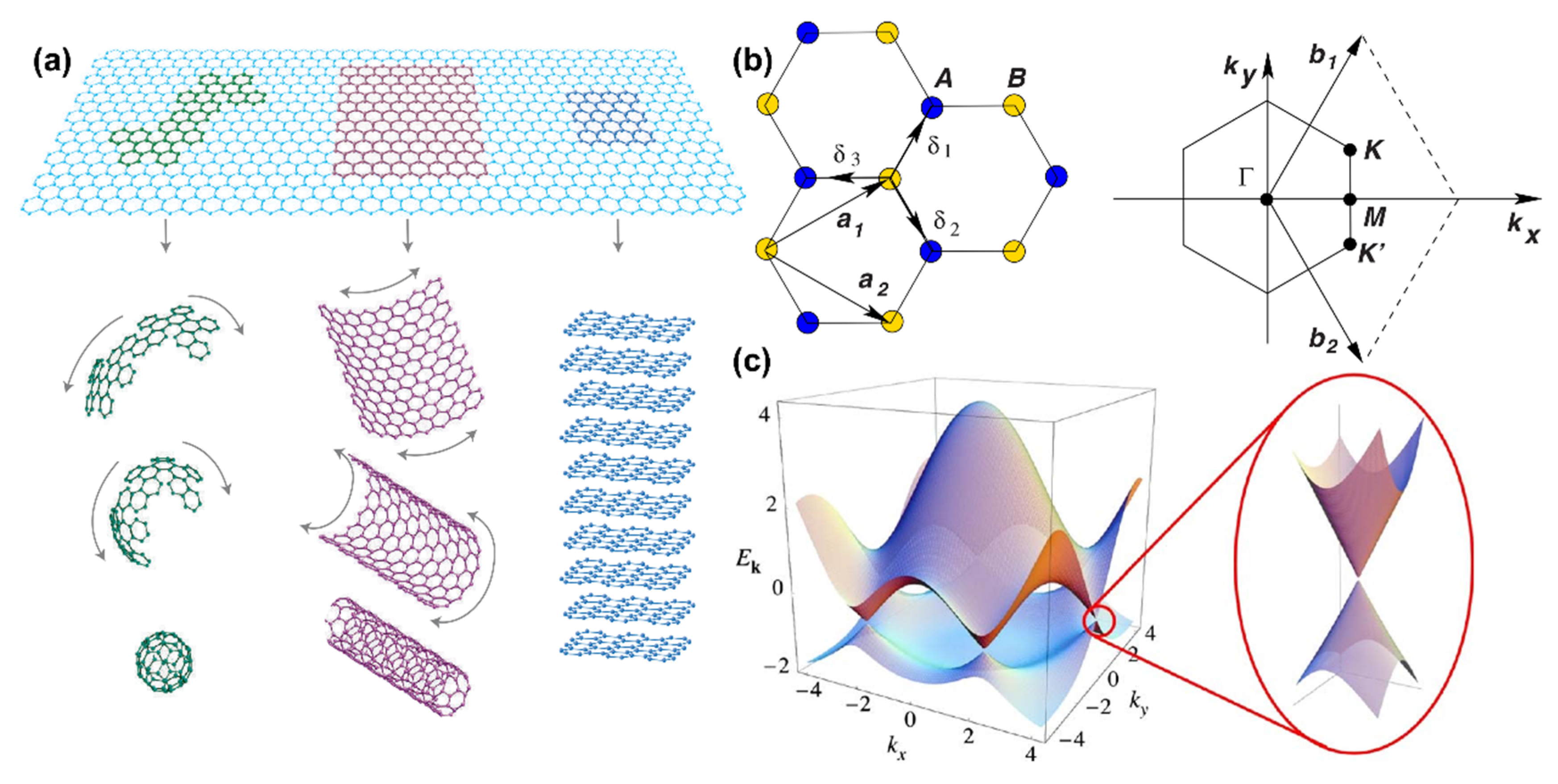
Figure 2a shows GO, which is a fundamental building block among carbon allotropes that include zero-dimensional fullerenes, one-dimensional carbon nanotubes, and three-dimensional graphite. This structure has a sub-nanometer thickness and demonstrates both Dirac-cone band characteristics and zero-bandgap semiconductor properties, providing the theoretical basis for its remarkable physical performance [21,22].
According to the tight-binding approximation theory, the honeycomb lattice of graphene consists of a unit cell composed of two atoms. The basis vectors in real space are denoted as a 1 = a 2 3 , 3 and a 2 = a 2 3 , 3 and the nearest neighbor atomic position vectors δ1,2,3 satisfy sixfold symmetry [23,24] (Figure 2b). The basis vectors of the reciprocal space are b 1 = 2 π 3 a 1 , 3 and b 2 = 2 π 3 a 1 , 3 and Dirac cones are present at the vertices K = 2 π 3 a , 2 π 3 3 a and K ʹ = 2 π 3 a , 2 π 3 3 a of the Brillouin zone [23,24,25]. Transitions between nearest neighbors (t ≈ 2.8 eV) and second-nearest neighbors (t′ ≈ 0.1 t) are taken into account by the tight-binding model Hamiltonian [24], which has the dispersion relation E ± k = ± t 3 + f k t f k , where f k = 2 c o s 3 k y a + 4 c o s 3 2 k y a c o s 3 2 k x a . As seen in Figure 2c, massless Dirac fermion behavior is revealed by the linear dispersion E ± q ± v F q + O q K 2 expanded at k = K + q ( q K ) and the Fermi velocity vF ≈ 106 m/s [26,27,28].
Given GO’s 2D quantum properties and heterostructure, comprehensive characterization requires complementary techniques. Scanning tunneling microscopy (STM) enables atomic-scale morphology analysis, revealing the graphene honeycomb lattice and electronic state distribution [29]. Transmission electron microscopy (TEM) directly visualizes hexagonal ring atomic arrangement via electron-scattering imaging; combined with selected-area diffraction, it verifies reciprocal-space structure [30]. Angle-resolved photoemission spectroscopy (ARPES) quantifies Dirac-cone energy band linear dispersion, validating massless Dirac fermion behavior [31,32].
Figure 2. (a) Relationship between GO and other carbon materials [33]. Copyright 2007, Springer Nature; (b) Honeycomb lattice of GO and its Brillouin zone; (c) Band structure of GO [23]. Copyright 2009, American Physical Society.
Polymers 17 02342 g002

2.2. Basic Performance Characteristics of Graphene

GO, a multifunctional material with a 2D honeycomb lattice (specific surface area: 2630 m2·g−1), exhibits exceptional mechanical strength (theoretical Young’s modulus: 1.0 TPa), electrical properties (room-temperature carrier mobility > 15,000 cm2·V−1·s−1), and thermal conductivity (single-layer: 5000 W·m−1·K−1) [13,17,34]. As shown in Table 1. However, its zero-bandgap nature limits electronic applications. Bandgap opening via lattice/chemical disruption (e.g., doping, hydrogenation) or non-destructive modulation (electric field, stress, substrate coupling) struggles to maintain high mobility and large-area preparation [35,36].
Electrical properties arise from its Dirac-cone band structure, where conduction and valence bands linearly cross at Brillouin zone K/K’ points, endowing carriers with relativistic transport and enabling the room-temperature quantum Hall effect; bandgapization requires symmetry breaking [23,27]. Optical features include broad-spectrum constant absorption, high transmittance, nonlinear response (adjustable third-order polarizability), low loss, and electrically programmable surface-isotropic excitations, suiting optoelectronics [25,37,38]. Mechanical properties originate from sp2 covalent networks but are influenced by interlayer van der Waals forces, defects, and temperature [39,40]. Thermal transport relies on low-dimensional phonon transport (acoustic branch dominated); practical applications require reducing interfacial thermal resistance via functionalization [17,41,42]. Its diverse applications include fuel cells and environmental adsorption (chemical stability/conductivity) [43,44], spintronics (ferromagnetic modification) [45], and medication delivery/biosensing (biocompatibility/antibacterial properties) [46,47].
Table 1. Properties of graphene [21,48,49]. Copyright 2021, Elsevier. Copyright 2024, Elsevier. Copyright 2021, Elsevier.
PropertyValue
Density/(g·cm−3)2.3
Thermal conductivity/(W·m−1·K−1)5000
Youngʹs modulus/TPa1.0
Fracture strength/GPa130
Tensile strength/GPa100
Shear modulus/GPa280
Longitudinal sound velocity/(km·s−1)20
Current density (A·cm−2)2 × 10⁹
Melting temperature/K4900
Specific surface area/(m2·g−1)2630
Light transmittance/%97.70
Carrier mobility/(cm2·v−1s−1)2.5 × 105
Interlayer spacing/nm0.335

2.3. Preparation of Graphene

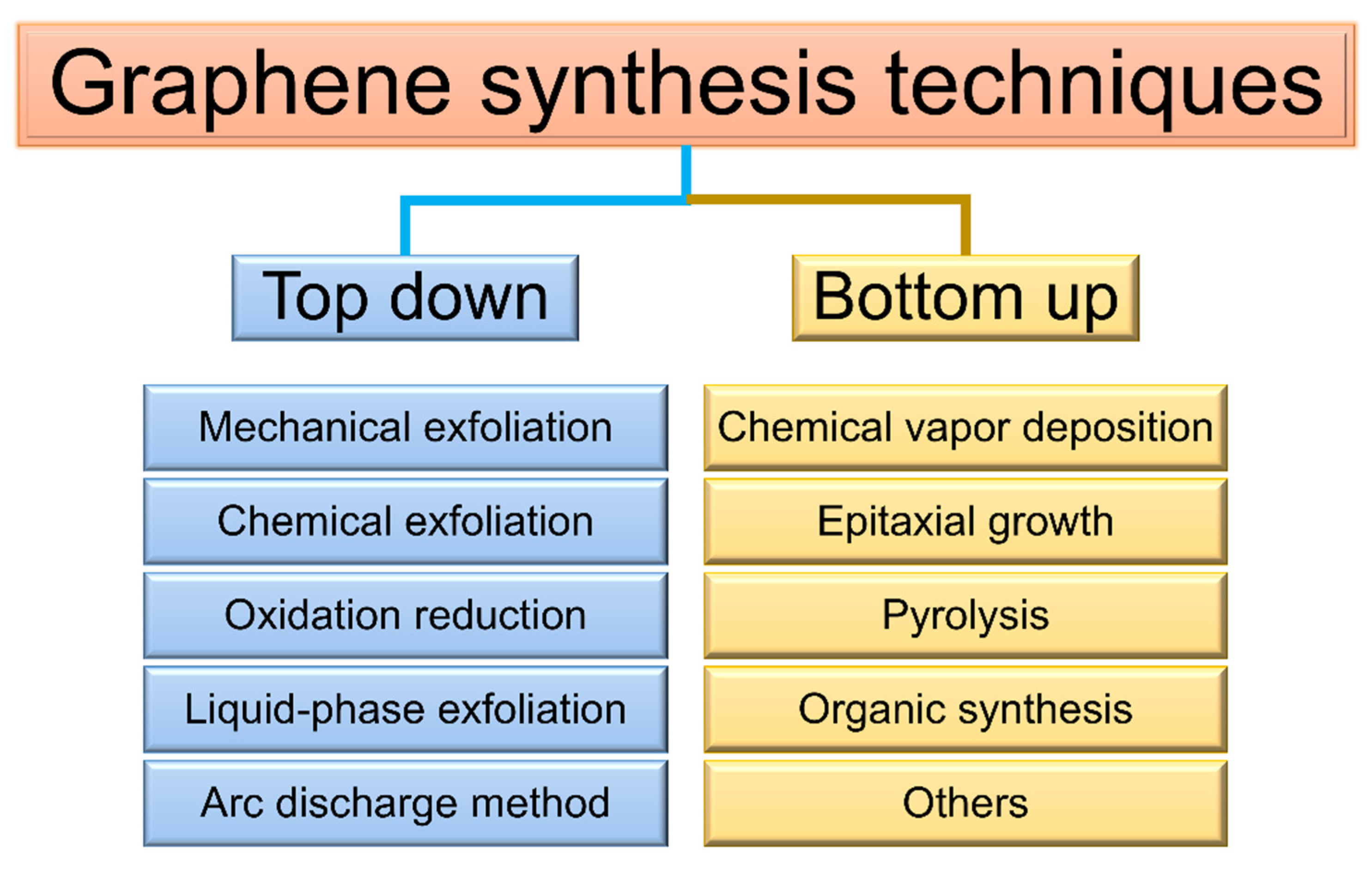
In 2004, Geim and Novoselov successfully prepared stable GO via tape exfoliation, inaugurating the era of two-dimensional material research [50]. Generally, GO preparation methods are classified into top-down and bottom-up approaches [22] (Figure 3). Mechanical exfoliation, redox methods, chemical vapor deposition (CVD), and other common techniques exhibit limitations in yield, defect control, and scalability. Mechanical exfoliation disrupts van der Waals interactions between graphite layers (bond energy: ~2 eV·nm−2, interlayer spacing: 3.34 Å), enabling precise fabrication of high-quality single- or few-layer graphene [33,50]. Despite low yield and small area, it remains a valuable method for van der Waals heterojunction and quantum transport research [22,34]. The redox method, based on Hummer’s process, uses strong oxidation to generate GO with oxygen-functional groups, followed by chemical or thermal reduction to restore the sp2 network and produce reduced graphene oxide (RGO) [22,51]. Chemical reduction enhances conductivity but generates hazardous residues, whereas thermal reduction enables kilogram-scale continuous production but induces structural damage. CVD, the most widely used industrial technique, enables epitaxial growth via catalytic decomposition of carbon sources. Copper substrates have emerged as the preferred choice for industrialization, attributed to their single-layer preparation capability and low cost. However, surface nanosteps on copper substrates promote lateral growth, and their flatness directly influences film quality [35,52]. To mitigate transfer damage, transfer-free technologies (e.g., PECVD), liquid metal substrates, and alloy substrates have been developed, while roll-to-roll process optimization has enhanced wafer compatibility and cost-effectiveness [53,54,55,56].

3. Improve the Dispersibility and Interface Compatibility of Graphene

Material macroscopic properties depend on surface characteristics, where atomic configuration, electronic structure, and chemical state differences dominate physical and chemical behavior. For polymer composites, the core challenge is optimizing filler dispersion and interface compatibility to construct efficient heat conduction networks. GO, with its sp2-bonded 2D structure and excellent properties, shows great potential, but its high specific surface area and strong van der Waals forces cause agglomeration, inducing defects and reducing enhancement effects. While existing dispersion strategies mitigate π-π stacking and high exfoliation energy barriers, inherent interface incompatibility between polymer matrices and graphene leads to weak chemical adhesion, resulting in strong phonon scattering and high Kapitza thermal resistance during heat transfer, severely limiting efficiency [15,34]. Thus, precise interface performance control is critical for high-performance graphene/polymer composites.

3.1. Physical Dispersion Method

The physical dispersion method disrupts van der Waals forces and π-π interactions between graphene layers via external forces, achieving uniform dispersion in polymer matrices. It has gained popularity due to its simplicity and rapidity.
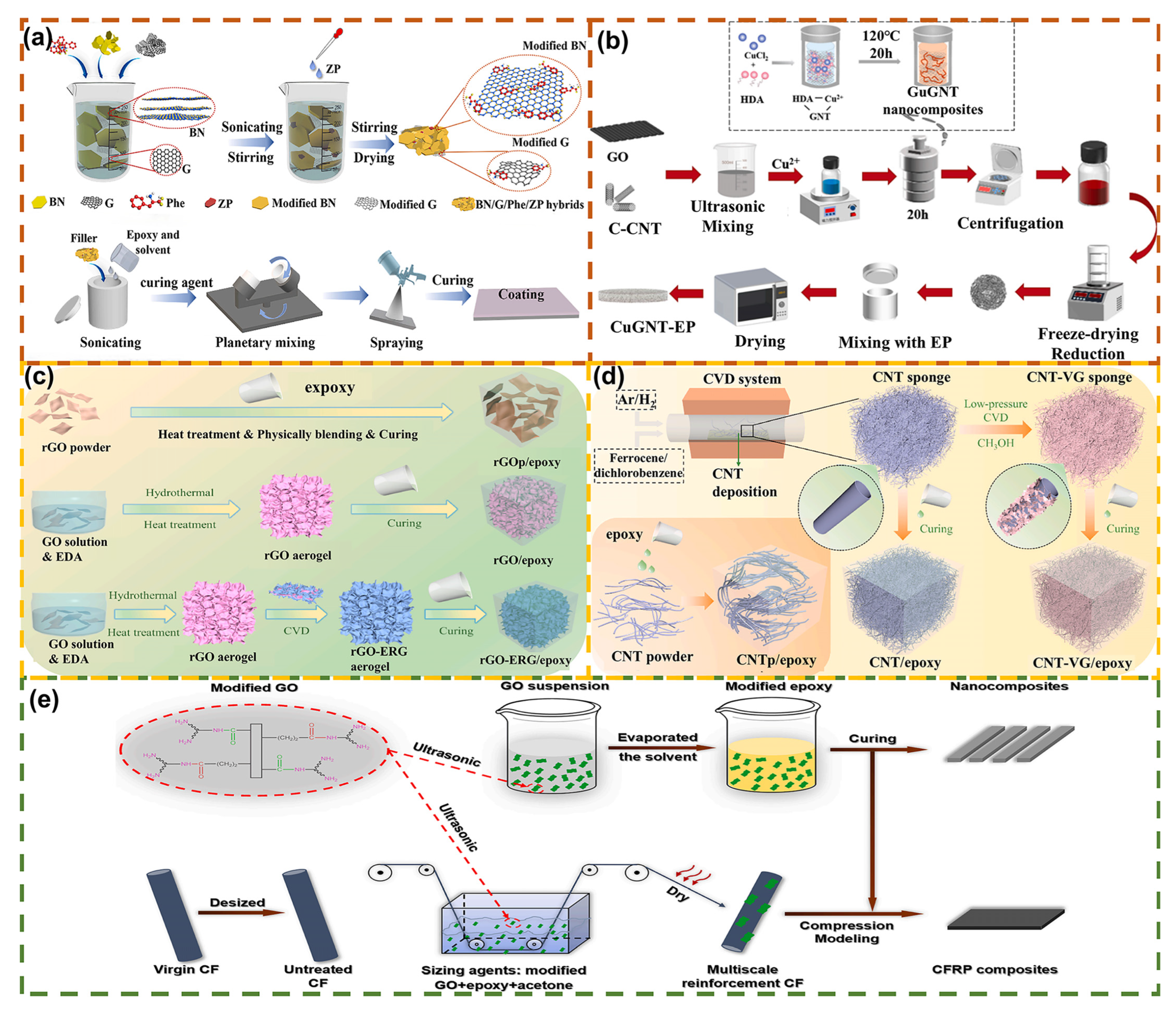
Ultrasonic processing exfoliates and disperses graphene through the cavitation effect, where efficiency depends on power, frequency, duration, and solvent [57]. High power enhances dispersion but may induce structural damage, while low frequency improves cavitation but elevates the risk of layer fracture [58]. Polar solvents (e.g., NMP, DMF) enhance cavitation, while aqueous/surfactant systems meet biocompatibility requirements [58,59]. Xu et al. [60] prepared a composite coating with a thermal conductivity of 1.63 W·m−1·K−1 (Figure 4a), reducing the heat-transfer coefficient loss of the heat exchanger to 1.39%. Lu et al. [61] produced GO nanosheets (lateral dimension: 1.8 μm, thickness: 1.5 nm) to fabricate a composite with 262 W·m−1·K−1 thermal conductivity, enhancing heat-dissipation efficiency by 68.2%. Ma et al. [62] developed GO/EP composites with high thermal conductivity (6.81 W·m−1·K−1) and excellent microwave absorption (minimum reflection loss: −24.15 dB). However, this method exhibits drawbacks: limited yield, challenges in layer size control, increased defects from prolonged ultrasonication, and uneven cavitation dispersion [63,64].
Ball milling exfoliates GO via shear/collision stress fields from grinding media, applicable in dry or wet modes [34]. The wet mode uses solvents and surfactants to regulate interfacial energy and prevent re-agglomeration [34,65]. Key parameters require coordinated tuning. Chen et al. [66] prepared a water-based dispersion via 12 h ball milling, yielding UL-94 V-0 rated EP composites (limiting oxygen index: 30.5%). Zhang et al. [67] fabricated Cu-MOF-coated graphene flame retardants, reducing EP’s PHRR by 55%. Meng et al. [68] ball-milled in situ modified GO, increasing EP’s elastic modulus by 889%. Ba et al. [69] constructed a 3D graphene network, yielding a composite (4.14 wt% loading) with 35.23 dB electromagnetic interference and 1.19 W·m−1·K−1 thermal conductivity.
Mechanical stirring achieves separation and dispersion by disrupting interlayer van der Waals forces through fluid dynamics, involving a three-way balance of reduced wetting energy, deagglomeration, and adsorption stability [49,70]. Stirring intensity must be maintained within the critical Reynolds number range: insufficient intensity reduces separation efficiency, while excessive intensity causes platelet contraction [71]. Paddle-type stirrers are optimal for low-viscosity fluids, whereas turbine-type stirrers enhance shear in high-viscosity fluids [72]. Yuan et al. [73] prepared a composite with 0.356 W·m−1·K−1 thermal conductivity (Figure 4b). Bandeira de Souza et al. [74] demonstrated that functionalized GO enhances EP cure efficacy. Li et al. [75] developed a composite coating with 5.65 W·m−1·K−1 thermal conductivity. However, this method exhibits poor dispersion, susceptibility to agglomeration, and rapid structural damage from high shear strength [76].

3.2. Chemical Modification Method

Chemical modification enhances GO dispersibility in solvents or matrices by modifying surface functional groups (hydrophilic/organophilic) [77,78]. GO is synthesized via graphite oxidation using Hummer’s process, yielding high-density oxygen-containing functional groups on its surface/edges [79]. Following ultrasonic/mechanical exfoliation, single-layer GO is obtained, then partially restored to an sp2 conjugated structure via chemical/thermal reduction (retaining functional groups to preserve dispersibility) [78]. Han et al. [80] fabricated 3D epoxy composites (Figure 4c) with 45.9 dB X-band electromagnetic shielding and 1.96 W·m−1·K−1 thermal conductivity. Hong et al. [81] utilized 3D-printed EP composites, where flake orientation enhanced thermal conductivity and accelerated the shape memory process. Xie et al. [82] developed 5G packaging materials (microwave absorption: −48.28 dB @ 5 GHz; thermal conductivity: 1.6 W·m−1·K−1). Cui et al. [83] treated 3D graphene aerogel with titanate, yielding a 1388% increase in EP thermal conductivity at 2.5 wt% loading. However, intense oxidation rapidly induces defects, leaving residual oxygen in RGO, and the oxidation process generates wastewater [84,85]. The inherent hydrophobicity of GO restricts its applications, with surface functionalization (covalent/non-covalent) serving as a critical enhancement strategy [52]. Han et al. [86] constructed a 3D hybrid carbon framework (Figure 4d) with 46.9 dB electromagnetic shielding, 2.23 W·m−1·K−1 thermal conductivity, and a 349.39% enhancement in EP composites’ bending strength. Yan et al. [87] loaded mesoporous SiO2 with MBT to enhance GO dispersion and achieve pH-responsive corrosion protection. Wang et al. [88] fabricated a functionalized graphene/SiCnw composite framework with 5 wt% SiCnw, yielding 1.58/6.20 W·m−1·K−1 thermal conductivity.
To optimize interfacial properties, GO necessitates dispersants (e.g., surfactants or graft polymers). Xu et al. [89] utilized Py-PEG-Py to disperse GO/rGO: 0.03 wt% GO combined with 3.0 wt% dispersant yielded an EP bending strength of 113.2 MPa (56.5% increase). Chen et al. [90] optimized the GO/EP method, yielding a 129% enhancement in thermal conductivity. Thieu et al. [91] utilized cryogenic casting to construct vertical GF scaffolds; 15 vol% GF achieved 0.96 W·m−1·K−1 through-plane thermal conductivity, representing a 465% increase.
In situ polymerization constructs a dispersed system by interacting monomers with GO surface functional groups, preventing agglomeration during polymerization and enhancing interfacial stress transfer [22,92]. Zhang et al. [93] achieved 30.3% and 32.6% enhancements in tensile strength and interlaminar shear strength, respectively, via carbonyl-grafted polyetheramine (Figure 4e). Zhou et al. [94] prepared a GO-based waterborne epoxy curing agent, enhancing the coating’s mechanical properties and corrosion resistance. Yang et al. [95] fabricated a solvent-free epoxy resin via in situ SiO2 deposition; 0.8 wt% nanoparticles increased flexural strength by 24.6% to 39.2 MPa.
In summary, physical dispersion disrupts van der Waals forces via mechanical exfoliation, preserving graphene’s essential structural features but suffering from drawbacks including low dispersion concentration and susceptibility to agglomeration. Chemical dispersion enhances solvent compatibility and stability via modification, yielding stronger interfacial interactions, yet may degrade the structure and introduce defects or impurities.
Figure 4. (a) Schematic diagram of the preparation of BN/G/Phe/ZP and BN/G/Phe/ZP/EP coatings [60]. Copyright 2022, Elsevier; (b) schematic diagram of the preparation of CuGNT-EP coatings [73]. Copyright 2025, Elsevier; (c) schematic diagram of the preparation of RGO-ERG/epoxy composites [80]. Copyright 2022, Elsevier; (d) Schematic diagram of the preparation of three types of epoxy resin composites (CNTp/epoxy, CNT/epoxy and CNT-VG/epoxy) [86]. Copyright 2023, Elsevier; (e) schematic diagram of the preparation of CFRP/EP composites [93]. Copyright 2021, Elsevier.
Polymers 17 02342 g004

4. Thermal Conductivity Mechanism and Preparation Process of Graphene/Epoxy Composite Materials

4.1. Mechanism of Enhanced Thermal Conductivity

4.1.1. Heat-Transfer Mechanism

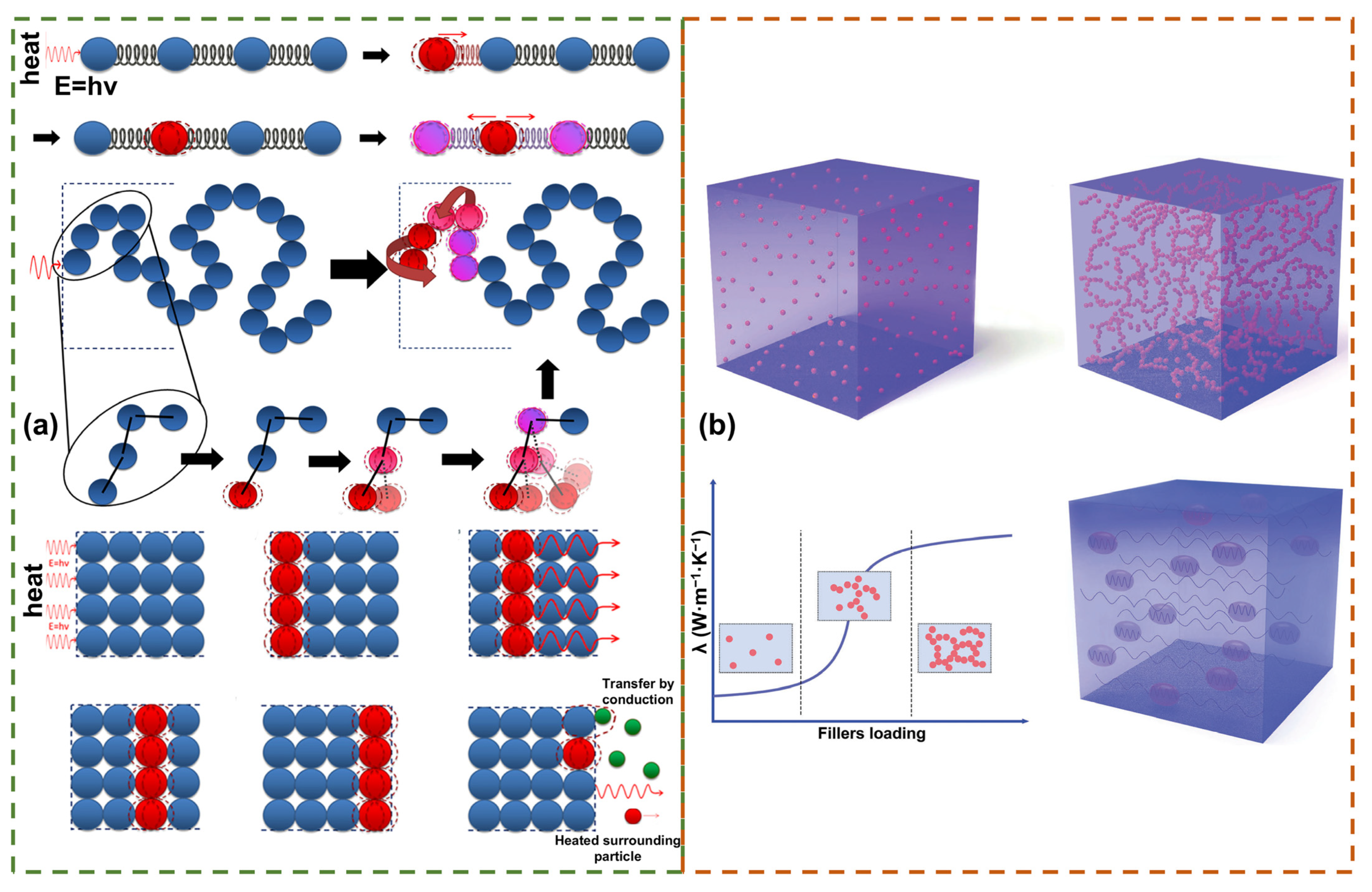
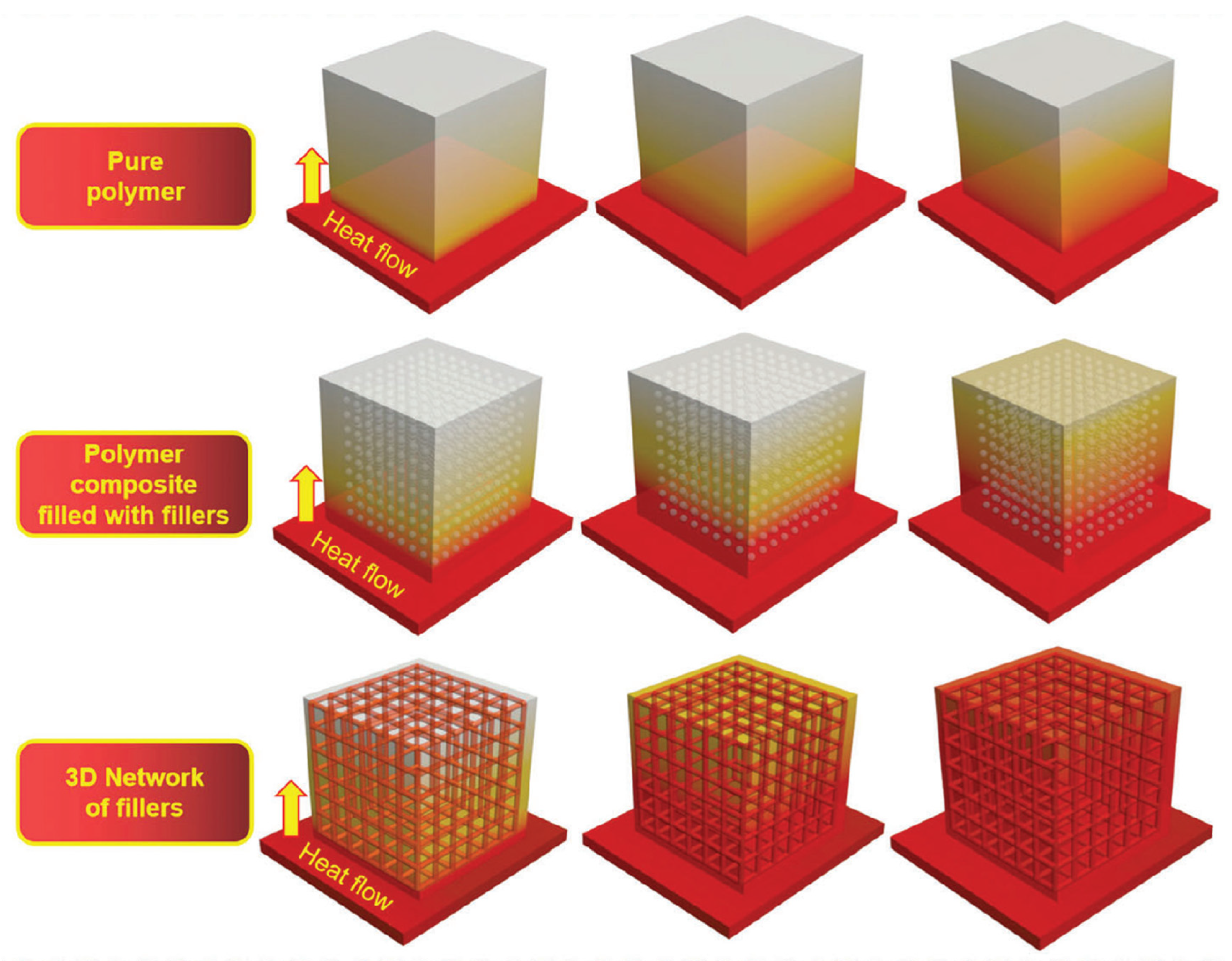
The second law of thermodynamics describes spontaneous heat transfer from high to low temperatures, rooted in temperature gradient-driven disordered motion and energy exchange in microscopic particles [96] (Figure 5a). Non-metallic solids (e.g., polymers, ceramics) transfer heat via lattice vibrations (phonons); however, lattice defects and disordered structures scatter phonons, reducing thermal conductivity [15,97]. Liquids and gases primarily transfer heat via molecular collisions, with lower thermal conductivity than solids. Natural heat transfer occurs via three modes—conduction, convection, and radiation—with conduction dominating in solids and strongly linked to material microscopic structure and particle dynamics [97]. Figure 5b shows the thermal conductivity mechanism of composite materials with low/high fillers.
Heat conduction is heat transfer independent of macroscopic material displacement, occurring within objects or at contact interfaces. Its microscopic mechanism arises from the thermal motion of molecules, atoms, and free electrons [15]. Building on prior work, Joseph Fourier formulated Equation (1) [96], stating that heat flux density is proportional to the temperature gradient perpendicular to the heat-transfer cross-section.
q = Φ A = λ t x
Here, Φ denotes heat flow—the total heat passing through area A. As the temperature gradient is a vector, heat flux density is also a vector, directed along the temperature decrease (opposite to the gradient). This derivation yields the mathematical expression of Fourier’s law, given by Equation (2) [15,96]:
q = λ g r a d t = λ t n n = λ t x i + t y j + n t z k
Thermal disturbances within an object induce temperature changes, altering the temperature distribution and heat flux density throughout the object. Under these conditions, Fourier’s law is modified to Equation (3) [15]:
a c 2 q τ + q = λ g r a d t
In the equation, α denotes the material’s thermal diffusivity, c the thermal propagation velocity, and α/c2 is defined as the relaxation time.
The proportionality constant λ in Fourier’s law, known as thermal conductivity, characterizes a material’s heat-transfer capability. A higher λ indicates a stronger heat-transfer ability [96]. A material’s heat-transfer mechanism involves collisions and energy transfer between its internal microscopic particles, essentially a process where high-amplitude atoms/molecules excite low-amplitude ones to vibrate [96,97].

4.1.2. Heat-Transfer Mechanism of Graphene

GO exhibits extremely high intrinsic thermal conductivity due to its two-dimensional honeycomb lattice, a property driven by phonon-dominated ballistic transport. Its continuous hexagonal conjugated structure suppresses grain boundary scattering, while strong covalent bonds between lightweight carbon atoms yield phonon group velocities near the speed of sound [24,97,98]. GO shows marked thermal anisotropy: in-plane λ is extremely high, but interlayer axial λ drops sharply due to van der Waals forces. Key factors include crystal defects (e.g., vacancies and Stone-Wales dislocations, which reduce phonon mean free path via enhanced scattering) and dimensional effects (increased layers or reduced lateral dimensions causing nonlinear λ decay) [15,99]. Thermal conductivity generally depends on filler dispersion, intrinsic λ, and network topology. While nanofillers form continuous thermal networks for low-scattering transport, amorphous polymer chains induce strong phonon-interface scattering, causing measured λ in graphene/polymer nanocomposites to be orders of magnitude lower than theoretical values, underscoring the phonon-interface transport bottleneck [96,100].

4.1.3. Heat-Transfer Mechanism of Epoxy Resin

EP’s intrinsic thermal conductivity is typically limited to 0.17–0.21 W·m−1·K−1, a bottleneck arising from triple molecular-scale confinement effects [15,16,19,97,101,102]. First, its saturated molecular structure lacks free electron heat pathways. Second, disordered molecular chains in amorphous EP restrict atomic thermal vibration freedom. Third, phonons (lattice vibration quanta), the primary thermal carriers, diffuse only via localized, stepwise atomic vibrations, causing significant energy dissipation. To address this, intrinsic thermally conductive liquid crystal EP forms ordered crystalline-like orientations in its cross-linked network. Regular intercrystalline lattices enable efficient phonon propagation along orientation directions, while covalently bonded intercrystalline frameworks suppress phonon scattering. Limited by polymer dynamics, it forms a “mesocrystalline-amorphous” two-phase structure, yet maintains macroscopic isotropy due to multi-directional mesocrystalline distribution [102,103]. This micro-nano ordering enhances the phonon mean free path, increasing λ.
However, polymer thermal conductivity remains fundamentally constrained at the molecular chain level. High molecular weight and broadly distributed chain segments restrict thermal vibrations to disordered atomic rotations, requiring phonon transport to transition across heat sources, surface atoms, and adjacent chains [104,105]. Additionally, four structural defects (point, surface, volume, and topological) synergistically induce phonon scattering, limiting λ to ~0.2 W·m−1·K−1 (Table 2). The interplay of restricted molecular motion and defect scattering defines the theoretical upper limit of polymer thermal conductivity.

4.1.4. Heat-Transfer Mechanism of Composite Materials

Enhancing thermal conductivity in polymer composites relies on constructing thermally conductive filler networks, explained by three synergistic theories [15,16,19,24,97]. (1) Thermal conduction path theory, the dominant framework, describes three network evolution stages: Below the percolation threshold (φ < φc), fillers form discrete “sea-island” distributions, with matrix-dominated phonon scattering limiting λ increase; at φ ≈ φc, fillers contact to form conduction chains; and above φc, a 3D continuous network enables efficient phonon transport via low-resistance pathways. (2) Thermal permeability theory predicts a λ jump at φc, but this occurs only in specific systems (e.g., high-aspect-ratio fillers), with universality constrained by filler morphology and dispersion. (3) Thermal elasticity coefficient theory, leveraging dynamical similarity between phonon propagation and mechanical vibration, analogizes λ to thermal vibration’s equivalent elasticity coefficient; high-λ fillers enhance performance via a “thermal enhancement effect.” Nonetheless, phonon scattering at heterogeneous interfaces remains a core bottleneck, requiring synergistic suppression of interface mismatch via surface modification and topological optimization.
Filler configuration regulation, benefiting from suppressed interface scattering, improved defect resistance, and network construction, yields anomalous λ patterns, with multi-layer GO outperforming single-layer. Optimization requires synergizing large low-defect fillers, oriented network construction, and surface modification to reduce intrinsic scattering and interface resistance, overcoming threshold limitations [15,19,106].

4.1.5. Interfacial Thermal Resistance of Composite Materials

The interface transition zone of polymer composites serves as a thermal barrier due to chemical composition and microstructural gradients. Core barrier Kapitza thermal resistance (Rk) arises from phonon vibration mismatch, microstructural defects, and weak interface coupling, constraining phonon transmission efficiency [16,19,34].
Interfacial thermal resistance suppresses heat conduction via two pathways. At matrix-filler interfaces, phonon transmission efficiency η is quantified by the acoustic mismatch model (AMM): η = 4Z1Z2/(Z1 + Z2)2. At filler-filler interfaces, contact thermal conductivity Gc follows a power law with contact pressure. This dual resistance causes effective thermal conductivity keff to deviate from the ideal mixing rule keff/km = 1 + βφ/(1 − γφ), where shape factor β and interfacial resistance coefficient γ determine system behavior [15,107].
The size effect is quantified by the Kapitza radius (ak) [15,108]: ak = Rk·km. When filler size a > ak, keff increases; otherwise, interfacial resistance dominates (keff < km), explaining multi-layer graphene’s advantage over single-layer at low loads.
Current research identifies three theoretical frameworks. First, lattice dynamics-based phonon transport models (AMM, DMM). AMM treats phonons as elastic plane waves with specular reflection/refraction at smooth interfaces (neglecting inelastic scattering). DMM assumes full diffusion scattering, with phonon transmittance proportional to DOSf/DOSm (detailed balance) [97,109]. Both models fail to quantify interface microstructure. Second, equivalent medium theory (EMT) models: Hashin-Shtrikman (H-S), Hamilton-Hasselman (H-H), Foygel. H-S provides variational bounds for interfacial thermal resistance ( R d * ), handling multiphase fillings but ignoring local contact (Equation (4)) [15,110,111].
λ c λ m = 1 + 2 13.3347 e 13.2701 R d * K i = 1 n E i V i 1 13.3347 e 13.2701 R d * i = 1 n E i V i
The H-H model enhances Maxwell’s theory by incorporating shape factor n to compute interfacial thermal resistance for irregular fillers (Equation (5)) [15,112,113].
λ c λ m = λ f 1 + n 1 R d λ m α + n 1 λ m + n 1 V f λ 2 1 R d λ m α λ m λ f 1 + n 1 R d λ m α + n 1 λ m + V 2 λ f 1 R d λ m α λ m
In comparison, the Foygel model focuses on the thermal resistance of the packing network, using predictions corrected by the overflow threshold and network connectivity. The third category, cross-scale simulation methods, employs MD (coupled with the Green-Kubo formula) to quantify interfacial phonon scattering and FEA to solve the heat diffusion equation for modeling microstructures with pores and grain boundaries [114,115]. Table 3 compares these models.

4.2. Preparation Process of High-Thermal-Conductivity Polymer Composite Materials

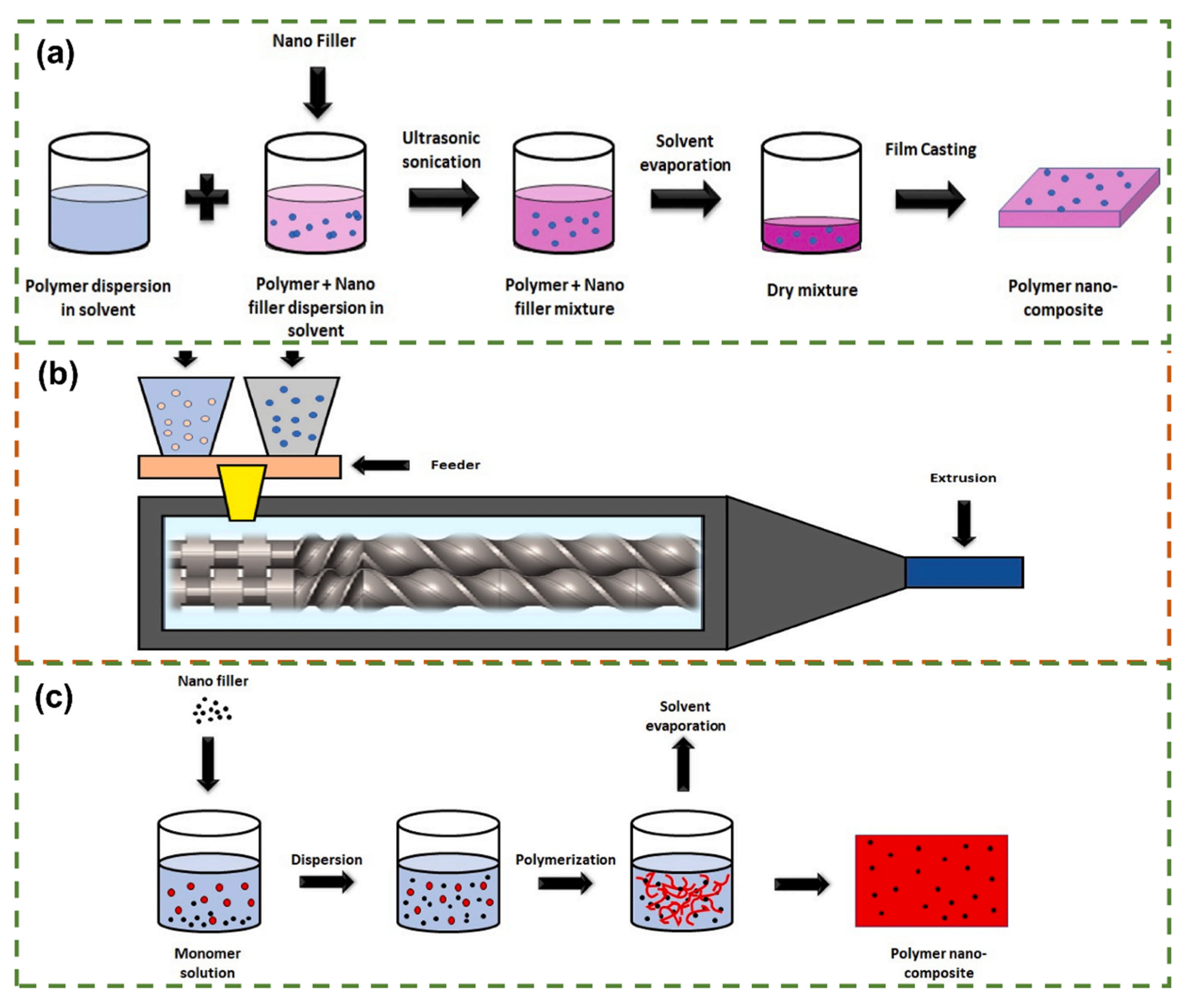
The performance of high-thermal-conductivity polymer composites depends on filler network topology, as preparation processes directly determine thermal conduction path continuity and interface thermal resistance suppression. This section briefly overviews solution mixing, melt mixing, and in situ polymerization methods, analyzing their characteristics and advantages. Figure 6 illustrates these three process flows.

4.2.1. Solution Mixing Method

Solution mixing, a liquid–phase dispersion strategy, is critical for nanoscale graphene dispersion in polymer matrices. Its core process involves three steps: precursor functionalization, co-solvent compounding, and in situ molding [19,34]. First, modified GO is dispersed in a polar solvent; chemical or thermal reduction yields single-layer-dominated RGO suspensions. Second, RGO and polymers are sheared in a common solvent, with π-π and van der Waals interactions driving uniform dispersion. Finally, 3D composites form via casting, spin-coating, or solvent evaporation [34]. Advantages include high dispersion efficiency, controlled component distribution, and short cycles, positioning it as a promising technique.
Ma et al. [14] combined solution mixing with chemical/thermal reduction to prepare GO/EP composites (Figure 7). By reconstructing graphene’s sp2 conjugation and forming efficient thermal networks, the composite achieved 69.74 W·m−1·K−1 at 11.22 wt.% filler, overcoming traditional filler loading limits and offering new pathways for high-performance electronic thermal management materials. Fan et al. [116] used an improved Hummers method to control GO oxygen-functional group density, enabling oxidation degree optimization. This strategy enhanced room- and low-temperature tensile properties, with a 31% strength increase. Moderate oxidation improved interfacial interactions, but excessive oxidation weakened graphene structure and reduced performance, revealing oxidation degree-structure-performance correlations to guide high-performance nanocomposite design. Sharif et al. [117] prepared chitosan-graphene oxide (CGO) hybrids and epoxy nanocomposites via solution mixing. CGO’s 3D structure and enhanced matrix interfacial interactions improved epoxy composites’ mechanical and thermal properties: 65% tensile modulus, 56% tensile strength, and 21 °C glass transition temperature increase. This clarified CGO’s synergistic enhancement mechanism, providing a new interface engineering strategy for high-performance polymer nanocomposites.

4.2.2. Melt Blending Method

The melt blending method, a key, widely adopted technique for preparing graphene-based high-thermal-conductivity polymer composites, is ideal for large-scale production. As a solvent-free solid-state dispersion technique, it achieves nanoscale GO dispersion in thermoplastic matrices via thermomechanical energy. At the polymer’s viscous flow temperature, the twin-screw extruder’s high shear field overcomes interlayer van der Waals forces, exfoliating and dispersing graphene [52,97]. Advantages include short process flow, controllable energy, environmental friendliness, and strong industrial adaptability. However, high temperatures may induce sp2 structural defects, flake fragmentation, and increased system viscosity, reducing dispersion uniformity and limiting thermal conductivity enhancement [22]. Inherent poor graphene-polymer interfacial compatibility increases thermal resistance, a critical limitation [97]. To address these, researchers use GO surface modification, multi-component synergism, and process parameter optimization to enhance thermal conductivity and interfacial interactions.

4.2.3. In Situ Polymerization Method

In situ polymerization is a key technique for preparing graphene-based high-thermal-conductivity polymer composites. It involves dispersing graphene derivatives in polymer monomers/prepolymers to form a premixed system, then using an initiator to catalyze in situ polymerization at the filler interface, embedding GO in the matrix during polymerization to yield nanocomposites with stronger interfacial bonding [15,52]. Compared to melt blending, it offers dual advantages [118,119]: covalent/non-covalent grafting between polymer chains and graphene layers enhances interfacial interactions via grafted structure compatibility. It also regulates filler dispersion and interfacial bonding, mitigating agglomeration from surface energy differences in traditional processes, providing a molecular-level strategy to enhance composite thermal conductivity.
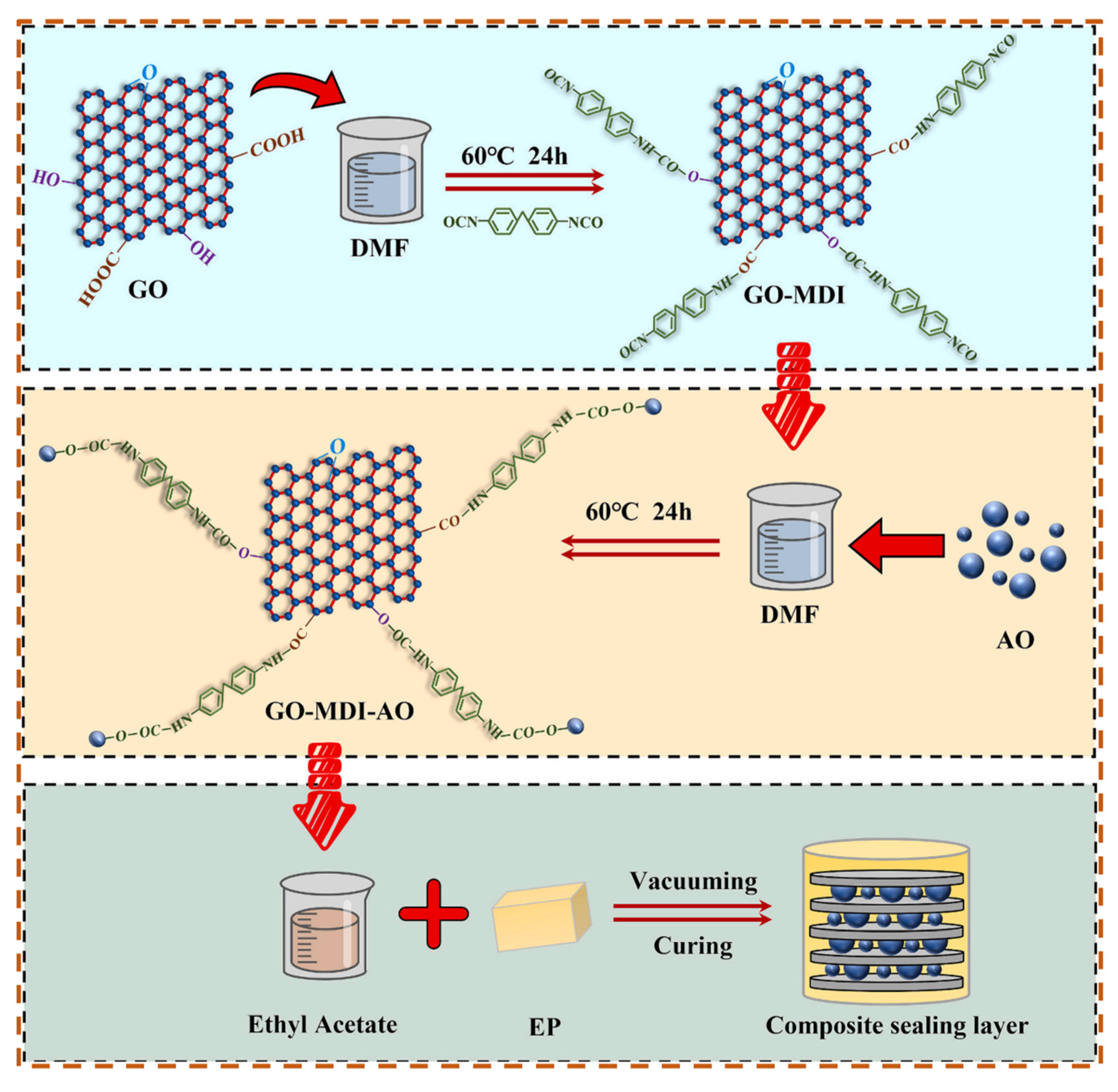
Luo et al. [120] prepared melamine resin/graphene hybrids via in situ polymerization, then combined them with EP using vacuum-assisted molding to produce anisotropic, thermally conductive, flame-retardant composites. The material showed anisotropic thermal conductivity (1.56 W·m−1·K−1 horizontal, 0.40 W·m−1·K−1 vertical), a 51% lower peak heat release rate, and synergistically improved flame retardancy. Qiu et al. [121] used 4,4′-diphenylmethane diisocyanate as a coupling agent to in situ construct a 3D binary filler network of GO and Al2O3, then gradient-cured it to form a thermally conductive EP composite (Figure 8). With 10% binary filler, the epoxy sealant’s thermal conductivity increased by 118.75%, gas barrier by 24.63% and ultimate displacement by 32.77%, due to a 2D-spherical structure synergistically forming thermal/barrier networks and inducing phase transformation toughening.
However, in situ polymerization has limitations: interface modification may obscure graphene’s conjugated structure, hindering electron transport. Sharp viscosity increases degrade rheological properties, requiring precise polymerization kinetics control to balance dispersibility and processability. Modifier side reactions also pose risks, necessitating real-time monitoring for performance control [22,122].

4.3. Effect of Different Preparation Methods on Composite Material Properties

GO/EP composites exhibit significant potential in electronic packaging and thermal management owing to their superior thermal conductivity. Preparation methods critically influence GO dispersion in the EP matrix, interfacial interactions, and final thermal conductivity. Below, we analyze the effects of the three aforementioned methods on preparing high-thermal-conductivity GO/EP composites, focusing on three aspects: GO dispersion, interfacial interactions, and thermal conductivity.

4.3.1. Graphene Dispersibility

Uniform GO dispersion in polymer matrices is critical for high-performance composites, as agglomeration—GO’s primary application challenge—severely degrades composite performance.
Solution mixing disperses GO in a solvent, mixes with EP, and controls evaporation/mixing to achieve good GO dispersion, enhancing composite thermal conductivity and mechanical properties [34,118]. Ultrasonication or dispersants mitigate GO agglomeration by overcoming van der Waals forces [123]. Yet, evaporation may induce re-agglomeration (notably at high GO loadings) [124], and residual solvents can compromise final performance.
Melt blending mixes GO and EP in a molten state via shear, avoiding solvents and aligning with industrial production needs. However, high polymer viscosity and strong interlayer graphene interactions hinder exfoliation and dispersion in the molten state. Poor graphene-polymer compatibility further induces micron- to macroscopic agglomerates [22,34], reducing GO utilization and limiting thermal conductivity enhancement. To address this, surface modification or process parameter adjustment enhances shear efficiency [125]. Yin et al. [126] used phase transition-assisted melt blending to exfoliate expanded graphite in situ, improving dispersion in low-density polyethylene and enhancing thermal conductivity.
In situ polymerization uses GO as a reaction/initiation site or template, achieving nanoscale uniform dispersion and enhancing composite performance [118,127]. In situ thermal reduction yields functionalized RGO with uniform dispersion in epoxy nanocomposites, significantly boosting performance [128].

4.3.2. Interface Interactions

Strong interfacial interactions are critical for efficient heat transfer from the polymer matrix to graphene fillers, maximizing composite thermal conductivity.
In solution-mixed composites, interfacial interactions primarily arise from physical adsorption and weak chemical bonding between GO and EP [15,22]. GO’s inherent chemical inertness limits solvent compatibility and dispersibility [13], complicating processing and composite preparation. Grafting amine-rich compounds onto GO enhances compatibility with epoxy groups, optimizing interfacial interactions and enabling high-performance composites [129]. Condensation reactions grafting methylphenyl silicone intermediates onto EP further improve compatibility, stabilizing uniform GO dispersion and enhancing thermal, mechanical, and adhesive properties [130].
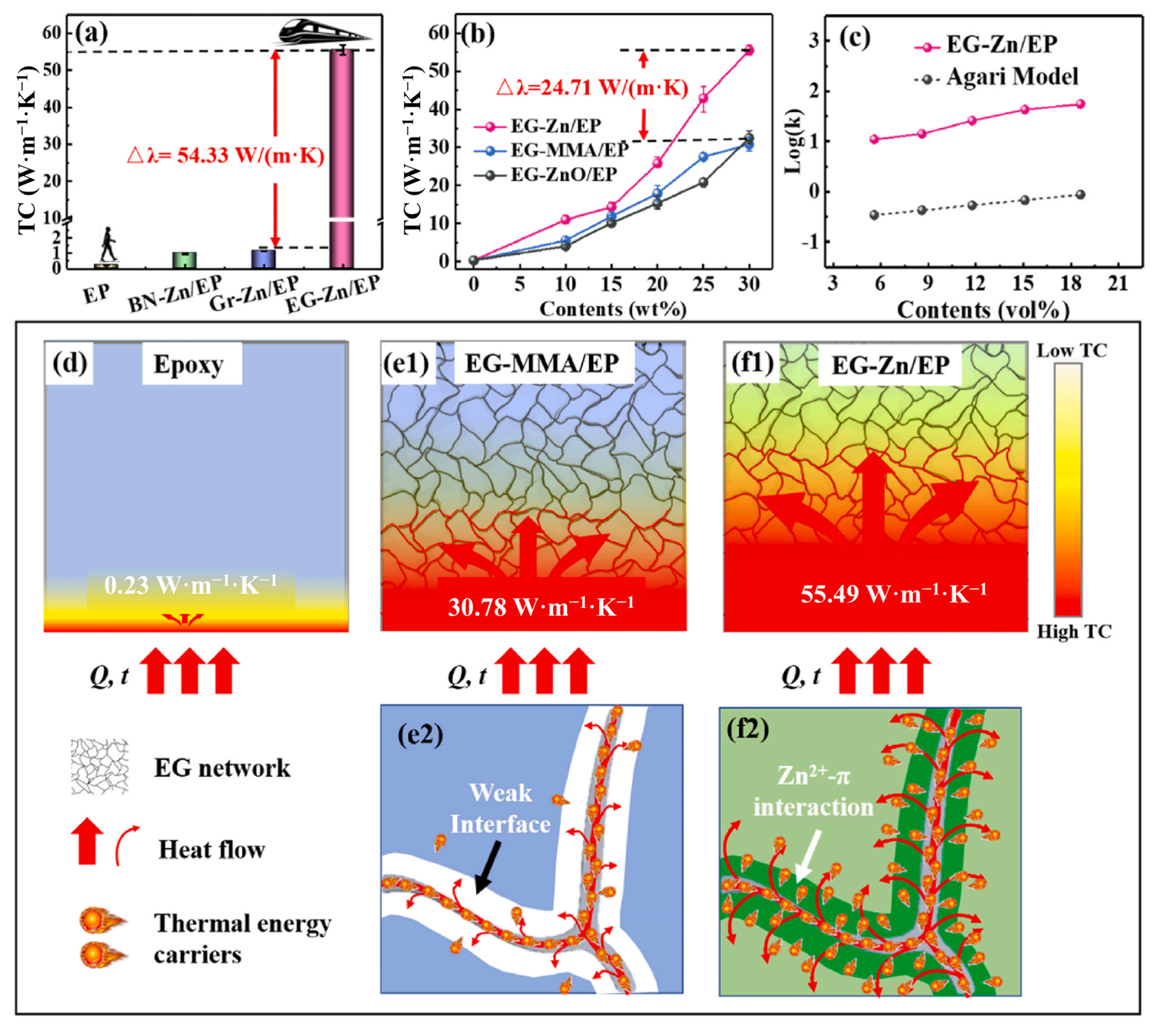
Melt blending relies on weaker forces (e.g., physical entanglement, van der Waals interactions) for GO-EP interfacial bonding. High mixing temperatures may break/rearrange GO surface bonds, reducing interfacial strength. Insufficient shear stress can create voids between GO and the matrix, increasing interfacial thermal resistance and limiting performance [131,132]. However, Zn2+ enhances π-bond interactions at expanded graphite-epoxy interfaces, boosting thermal conductivity to 55.49 W·m−1·K−1 [133], as shown in Figure 9.
In situ polymerization enables stronger interfacial interactions—even covalent bonding—by allowing polymer segments to grow on GO surfaces [134]. EP monomers polymerize on GO, forming tight chemical bonds or physical entanglements that enhance heat and force transfer efficiency, improving thermal conductivity and mechanical properties. Additionally, Diels-Alder-triggered self-healing EP nanocomposites, functionalized with graphene nanosheets, enhance flexibility and self-healing efficiency [135].

4.3.3. Thermal Conductivity

Composite thermal conductivity reflects graphene dispersion and interfacial interactions. Despite GO’s high intrinsic λ, transferring its properties to macroscopic composites remains challenging.
In solution-mixed GO-polymer composites, λ increases linearly with filler content at low loadings. Beyond the threshold, van der Waals-induced agglomeration and increased interfacial thermal resistance cause nonlinear decay in enhancement efficiency, potentially plateauing or degrading performance due to filler-matrix delamination [136].
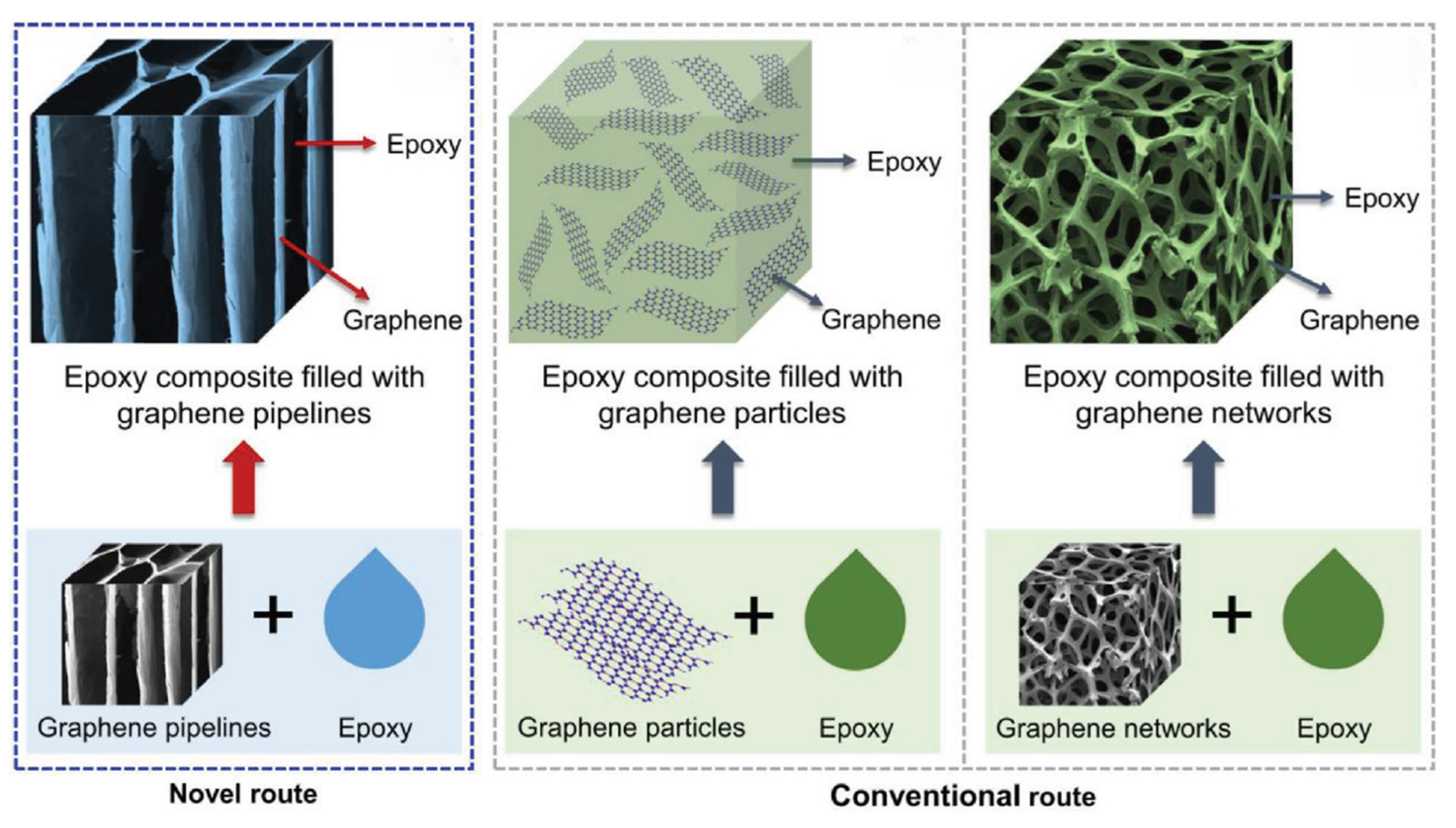
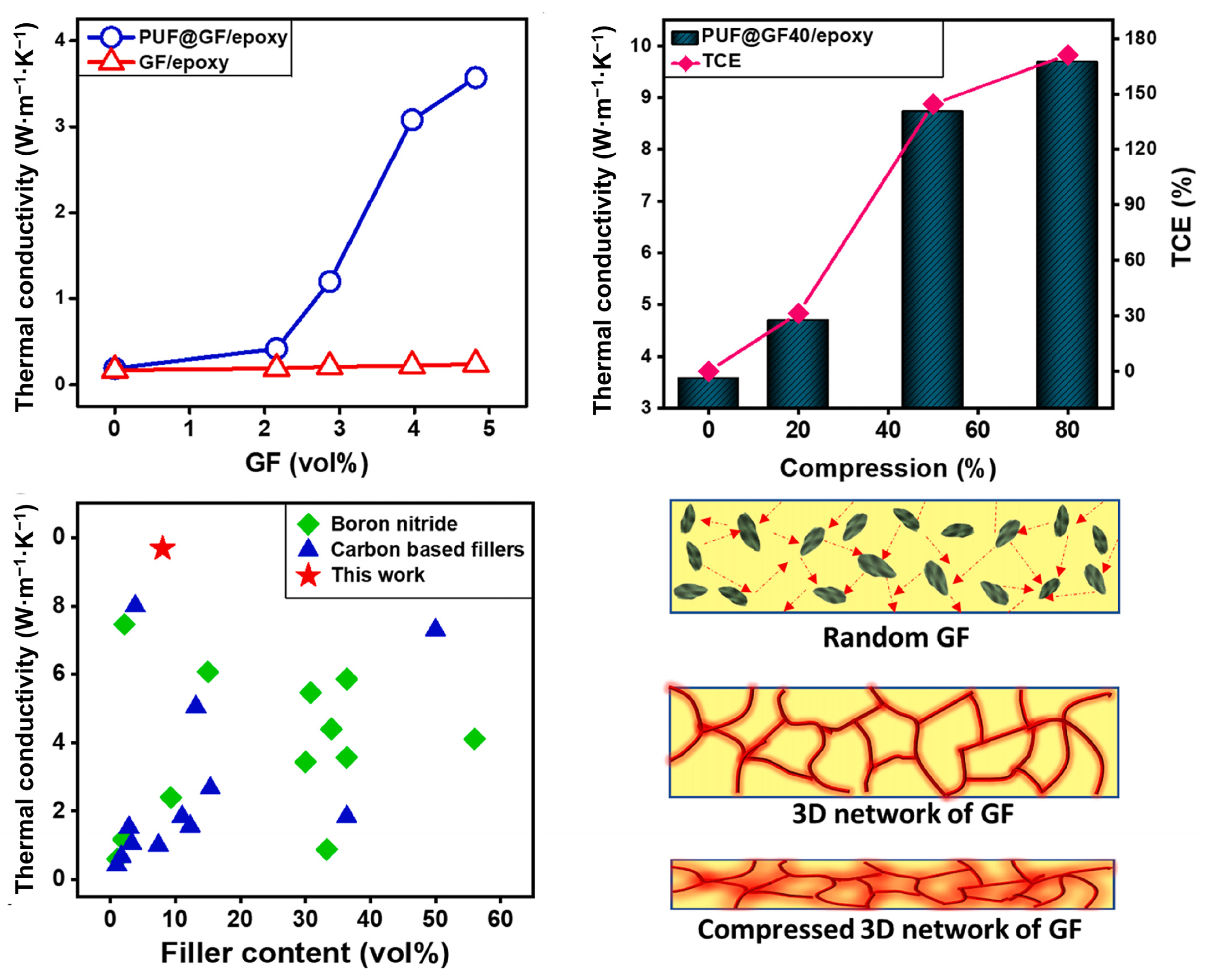
Melt blending struggles to form thermal networks due to poor GO dispersion, yielding less significant λ improvements than solution mixing or in situ polymerization. Filler dispersion and connectivity are critical; even high graphene loadings only marginally enhance λ without effective conduction paths. Obviously, constructing a three-dimensional thermal conduction network can significantly improve thermal conductivity [69,97], as shown in Figure 10.
In situ polymerization achieves higher λ via uniform GO dispersion and strong interfacial interactions, forming continuous thermal networks for efficient heat transfer between GO layers and the matrix. Phosphorus-functionalized boron-nitrogen/GO hybrids yield λ = 0.95 W·m−1·K−1 at 4.04 vol% filler, a 377% increase over pure EP [137]. Table 4 details GO effects on epoxy λ.
In summary, in situ polymerization excels in GO dispersion and interfacial interaction, effectively enhancing composite λ. Melt blending, though promising for industrial production, faces dispersion and interface challenges; solution mixing works well for lab-scale/small batches but suffers from solvent residues and environmental issues in large-scale use.

5. Applications of High-Thermal-Conductivity Graphene/Epoxy Composite Materials

GO, with outstanding thermal conductivity, excellent mechanical strength, and low density, shows significant application potential in diverse fields. This section focuses on high-thermal-conductivity GO/EP composites, systematically discussing progress in their applications to cutting-edge fields such as electronic packaging heat dissipation, high-performance energy storage, and electromagnetic interference shielding. It emphasizes their critical role in enhancing thermal management efficiency of related systems, aiming to support technological development with theoretical and practical guidance.

5.1. Electronic Packaging Field

As electronic devices evolve toward higher power, miniaturization, and integration, thermal management has grown increasingly critical. Heat accumulation during operation degrades component performance and lifespan, heightening requirements for high-performance electronic packaging materials [1,14,42]. However, traditional epoxy packaging materials are inherently constrained by their low thermal conductivity. Incorporating GO to construct 3D thermal networks significantly improves thermal conductivity [18,97]. Thermal interface materials (TIMs) establish efficient heat conduction pathways between heat sources (e.g., chips) and heat sinks, thereby reducing contact thermal resistance. Owing to the low thermal conductivity of conventional electronic packaging materials (e.g., ceramics, metals), they struggle to meet heat-dissipation requirements (Table 2). In contrast, GO/EP composites exhibit multiple advantages: high thermal conductivity, excellent processability, compatibility with electronic components, and a lightweight nature. Due to the in-plane thermal conductivity of its 2D sheet structure and the capability to readily construct 3D thermal networks, GO/EP composites have emerged as a key material for next-generation electronic packaging.
Compared with boron nitride (BN, highly anisotropic, with in-plane thermal conductivity ~400 W·m−1·K−1 but out-of-plane thermal conductivity only 2–3 W·m−1·K−1) and carbon nanotubes (CNTs, one-dimensional structures prone to entanglement with low network formation efficiency), graphene can simultaneously enhance both in-plane and out-of-plane thermal conductivity via “layer stacking.” TIMs are interposed between heat-generating components and heat sinks. Their core function is to fill microscopic irregularities on contact surfaces and displace air (a poor thermal conductor), thereby reducing thermal contact resistance (TCR) and establishing efficient heat conduction pathways. Table 5 demonstrates that GO/EP composites exhibit not only excellent processability but also high thermal conductivity.
To enhance EP’s corrosion resistance and thermal performance, researchers [147] added BaSO4 powder and RGO, achieving thermal diffusivity of 51.46 mm2·s−1 (2 wt% RGO, λ = 133.0 W·m−1·K−1) and 71.38 mm2·s−1 (5 wt% filler, λ = 160.0 W·m−1·K−1). Aluminum nitride (AlN), with high thermal conductivity and insulation, was combined with polythiophene/graphene complexes via ultrasonic exfoliation to reinforce epoxy films. Only a small complex addition significantly improved EP’s λ [148]. Fluorinated graphene (FG), with unique C–F covalent/ionic bonds, outperforms other derivatives [35]. Mani et al. [142] prepared FG via ball milling, then used electrostatic assembly and vacuum impregnation to create epoxy composites with λ = 9.68 W·m−1·K−1, demonstrating thermal management potential (Figure 11). EP’s 3D cross-linked structure makes traditional recycling difficult. Kang et al. [143] addressed this by using waste EP powder to induce 3D graphite nanosheet networks, producing ultrahigh-thermal-conductivity composites (λ = 10.1 W·m−1·K−1) with enhanced thermal management and electromagnetic shielding, offering a strategy for thermoset upcycling.
Traditional single-filler systems are susceptible to a “performance ceiling” effect due to their inherent physicochemical properties, characterized by mutually restrictive mechanical strength, thermal conductivity, and processability parameters, along with performance degradation beyond the percolation threshold. Therefore, the four core mechanisms of multi-scale hybrid filler design—percolation synergy, defect compensation, interface phonon matching, and functional integration optimization—were systematically summarized. These mechanisms’ capability to enable multifunctionalization of composite materials through the construction of synergistic enhancement networks was analyzed, and innovative solutions were proposed for applications including electronic packaging and thermal management. The limitations of single-filler systems are manifested in graphene’s tendency to agglomerate, boron nitride’s limited in-plane orientation, and ceramic fillers’ high interfacial thermal resistance. These issues result in a negative correlation among multiple key parameters (mechanical strength, thermal conductivity, and processing fluidity) of composite materials beyond the percolation threshold. Therefore, urgent development of novel design strategies is required to overcome this bottleneck.
By exploiting the spatial complementarity and functional synergy of heterogeneous fillers, the performance limitations of single-filler systems are addressed. Ju et al. [149] achieved a thermal conductivity of 0.87 W·m−1·K−1 in a 60 µm thick epoxy coating using a 30 wt% BN + 0.5 wt% GNP-PVP stereochemical barrier network. Notably, this system maintained an impedance of 6.5 × 10⁹ Ω·cm2 even after 7 days of immersion. Zhang et al. [150] constructed a graphene-coated BNNS three-dimensional framework using combustion-ice templating. At a filler loading of 11.2 vol%, the in-plane thermal conductivity reached 2.23 W·m−1·K−1 (room temperature) and 1.09 W·m−1·K−1 (77 K), respectively, representing a 1073% enhancement and enabling efficient heat dissipation for high-power LEDs and 3D integrated chips. Targeted modification of fillers’ inherent defects enables precise mitigation of performance shortcomings. Li et al. [151] encapsulated liquid metal with graphene oxide and stress-oriented the composite, achieving a 2.34-fold increase in KIC for 11.2 wt% LMGF/epoxy, an EMI SE of 48 dB, and a photothermal de-icing efficiency of 52%, thereby satisfying the multifunctional requirements of aviation applications. Enhancing phonon transport via molecular-level interface regulation improves thermal conduction efficiency. Sun et al. [152] utilized π-π coupling between PDA-G and CNF hydrogen-bonded interfaces, achieving a vertical thermal conductivity of 0.58 W·m−1·K−1 at 3.05 wt% filler loading and reducing the coefficient of thermal expansion (CTE). Wang et al. [153] fabricated vertically aligned graphene aerogel using a “fire-ice” non-freeze-drying process combined with a 2850 °C graphitization process. This achieved a vertical thermal conductivity of 11.6 W·m−1·K−1 at 1.84 vol% filler loading in epoxy (a 3640% efficiency enhancement), a 2.6-fold increase in compressive strength, and an EMI shielding effectiveness (EMI SE) of 40 dB, thereby realizing thermal-electromagnetic integration. Integrating external stimuli with filler characteristics enables high-performance output in specific application scenarios. Lv et al. [154] employed a CTAB-Al2O3@graphene insulating layer to achieve a thermal conductivity of 0.97 W·m−1·K−1 in 30 wt% epoxy composites, while maintaining a volume resistivity of ≥1011 Ω·cm. Yan and Wu [155,156] utilized the magnetic properties of GNPs under a bidirectional magnetic field or GR-Fe3O4 under planar orientation, achieving 276.6%/54.8% enhancements in internal thermal conductivity at 5/2 wt% loadings while maintaining insulation >1014 Ω·cm.
In summary, by integrating the intrinsic thermal conductivity of GO with the insulation and processability advantages of EP, a multi-scale hybrid design enables simultaneous addressing of mutually restrictive multi-objective parameters (thermal conductivity, insulation, mechanical properties, and processability), thereby offering a green, efficient, and scalable thermal management solution for next-generation electronic packaging. Future research should prioritize the development of dynamic-responsive intelligent filler networks and design for adaptability to extreme environments, driving the advancement of polymer composites toward higher performance and multifunctionality.

5.2. Energy Storage Field

In energy storage systems, thermal management efficiency directly influences battery cycle life and system safety. High-thermal-conductivity composite materials, via multi-scale heat flow path optimization and phase change heat-transfer augmentation, have emerged as core materials for overcoming traditional thermal management bottlenecks [19,97]. GO integrates two-dimensional high-thermal-conductivity channels with chemically tunable interfaces. On one hand, GO can be designed as a three-dimensional GO/EP framework within battery modules, constructing low-thermal-resistance pathways along the thickness direction and thereby reducing local hotspot temperature rise by 30–50%. On the other hand, when blended with paraffin- or fatty acid-based phase change materials (PCMs), GO forms a continuous thermal conduction network, enhancing effective thermal conductivity by an order of magnitude. Meanwhile, the layered barrier effect of GO significantly mitigates the leakage of the phase change medium. This offers a scalable material solution for integrated battery-energy storage systems that incorporate both high energy density and long lifespan.

5.2.1. Challenges and Applications of Battery Thermal Management Systems

As a key material in battery thermal management, GO/EP composite materials enhance thermal management efficiency and battery pack safety via multi-scale interface engineering and functional design. Lithium-ion batteries, serving as the core power source for electric vehicles and hybrid vehicles, are well documented to be highly sensitive to temperature variations in performance and lifespan [157]. Lithium-ion batteries generate substantial waste heat during rapid charge-discharge cycles. Localized overheating not only accelerates battery aging and shortens cycle life but may also trigger severe safety incidents (e.g., thermal runaway). Elevated temperatures or temperature gradients can readily induce performance degradation, diminished lifespan, and thermal runaway hazards. Thus, the development of efficient battery thermal management systems is critical for preserving battery performance and prolonging lifespan. GO/EP composite materials can be employed as potting compounds or thermal pads or incorporated into liquid/air cooling systems to enable precise temperature regulation of battery packs.
Polymer-based composite bipolar plates (CBPs) enhance conductivity, thermal conductivity, corrosion resistance, and mechanical properties via 3D conductive networks, overcoming traditional material conductivity limitations and enabling multi-performance optimization for stable equipment operation [144,146]. A graphite/epoxy CBP with a 3D conductive network, prepared by regulating graphite content to optimize the network, achieves 212.64 S·cm−1 in-plane electrical conductivity and 16.01 W·m−1·K−1 thermal conductivity [144]. Exhibiting 317.52% higher power density than traditional composites, it also shows excellent corrosion resistance and hydrophobicity, offering a new strategy for high-performance polymer-based CBPs. Chen et al. [158] optimized phenolic resin networks via copolymerization with epoxy resin flexible segments (−CHOH−CH2−O−), achieving 46.2 MPa bending strength with high conductivity (188 S·cm−1), low interfacial resistance (3.32 mΩ·cm2), and corrosion resistance, advancing PEMFC practical application. A three-stage optimized copper fiber/carbon black/graphite-epoxy CBP, incorporating 8 vol% copper fibers into a 40 vol% epoxy matrix, achieves 169 S·cm−1 conductivity, 43 MPa bending strength, and 17 W·m−1·K−1 thermal conductivity, meeting DOE-2025 corrosion and power density criteria [145].
However, lithium-ion battery systems encounter significant challenges related to temperature sensitivity during practical operation, as their electrochemical behavior and thermal properties exhibit strong temperature dependence: Electrode reaction kinetic parameters (e.g., lithium-ion diffusion coefficients and charge transfer rates) increase exponentially with temperature elevation, yet this also exacerbates the likelihood of side reactions. Battery internal resistance exhibits nonlinear fluctuations owing to variations in electrolyte viscosity and the temperature sensitivity of electrode/electrolyte interface impedance. The stability of the solid electrolyte interphase (SEI) is particularly temperature-sensitive. In elevated-temperature environments, the balance between dynamic repair and rupture of the SEI is disrupted, accelerating irreversible capacity degradation. More critically, battery systems carry an inherent risk of thermal runaway. Under rapid charge-discharge conditions, local hot spot formation induces heat accumulation, triggering a chain of exothermic reactions: at elevated temperatures, the cathode material undergoes oxidation and decomposition, releasing copious oxygen that reacts violently with the flammable organic electrolyte. This process further exacerbates temperature increases, forming a self-perpetuating vicious cycle that may ultimately result in catastrophic failures (e.g., battery swelling, fire, or explosion).

5.2.2. Multi-Scale Mechanisms and Synergistic Optimization of Phase Change Energy Storage Materials

PCMs are a class of functional materials utilizing latent heat storage mechanisms. However, their practical application has long been constrained by inherent thermophysical limitations. During solid–liquid phase change, liquid–phase fluidity readily induces encapsulation failure and PCM leakage. Moreover, inherently low thermal conductivity significantly limits the heat-transfer rate during energy storage/release, leading to energy conversion efficiency far below theoretical predictions. To address this bottleneck, researchers have focused on developing solid–liquid phase change systems with high enthalpy, leveraging their capacity to absorb or release substantial latent heat during phase change for efficient self-regulating thermal management. Concurrently, through designing composite reinforcement structures and adopting precision encapsulation techniques, they have effectively addressed volume expansion and leakage during phase change, significantly enhancing the material’s morphological stability and structural integrity. This design strategy, integrating high-enthalpy phase change properties with advanced encapsulation structures, not only enhances the thermophysical performance of PCMs but also offers robust technical support for their application in dynamic thermal management, intelligent temperature control, and related applications.
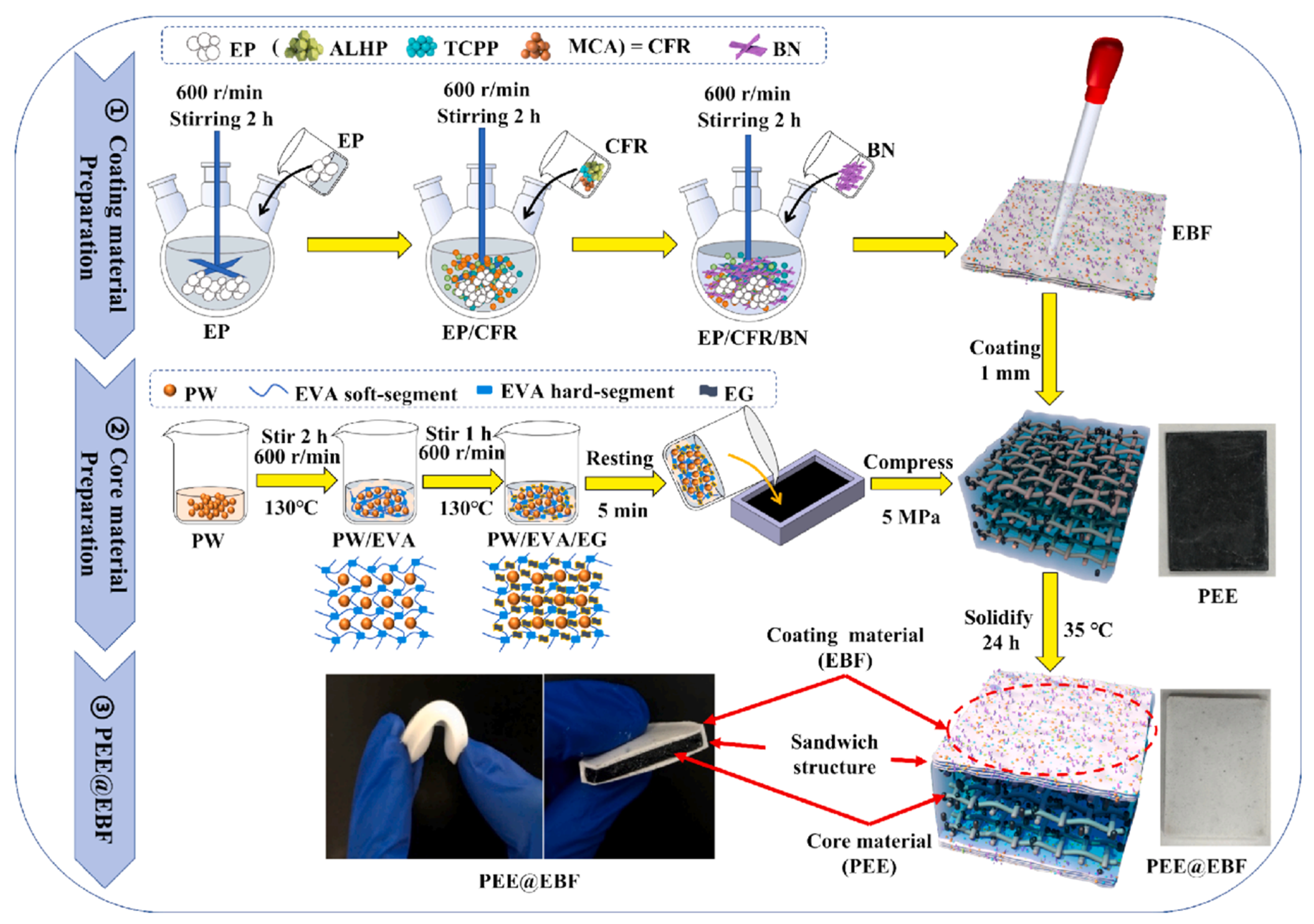
Shen et al. [159] developed a sandwich-type flame-retardant flexible PCM (PEE@EBF) with 166.6 J·g−1 latent heat, 0.8 W·m−1·K−1 thermal conductivity, and UL94V-0 flame retardancy, reducing battery module peak temperature by 11.8 °C and delaying thermal runaway by 633 s via a chemical-physical synergistic flame-retardant mechanism. Wood-based composites, prepared via delignification, graphene modification, and PCM impregnation, achieve 218.5 J·g−1 phase change enthalpy and synergistic electrothermal conversion (Figure 12). Wood pores drive Joule heat for dynamic energy storage, offering a sustainable thermal management solution for electronics [160]. A 3D composite PCM, using a gradient porous graphite foam skeleton loaded with stearic acid, synergistically enhances thermal conductivity and compressive strength, achieving 99.9% energy storage efficiency and 200-cycle thermal stability [161]. Huang et al. [162] fabricated a leak-proof, vibration-resistant flexible composite PCM by reinforcing a cross-linked ethylene-butadiene-styrene block copolymer framework with ternary ethylene-propylene rubber. It shows >99% mass retention after 60 °C/10 h testing, <50 °C temperature rise, and <2 °C temperature difference during 1C battery module discharge, enabling dual leak prevention and vibration resistance for passive thermal management.
PCMs in GO/EP composite systems exhibit notable advantages in thermal conductivity enhancement and leak prevention; however, their practical application still confronts multifaceted technical bottlenecks and scientific challenges [163,164,165]. First, thermal conductivity enhancement is limited by GO layer aggregation, which requires surface modification or solvent blending to improve dispersion. However, achieving uniform dispersion while controlling costs remains challenging under high filler loadings and excessive filler addition can induce brittleness. Secondly, leakage induced by solid–liquid phase transitions is dependent on encapsulation design yet requires balancing fluidity and long-term shape stability. Microencapsulation technology or dynamic covalent bonds (e.g., disulfide bonds) can be utilized to improve structural integrity. Thirdly, GO incorporation can reduce phase change enthalpy, which requires adjusting component ratios and interfacial interactions to synergistically enhance thermal energy storage performance. Fourthly, cyclic stability is affected by epoxy aging, interfacial delamination, and thermal fatigue, which demands cross-scale design to synergistically enhance thermal conductivity, thermal energy storage, and durability.

5.3. Electromagnetic Shielding Field

With the rapid advancement of 5G communications, the Internet of Things (IoT), and future smart technologies, electromagnetic radiation pollution has become an increasingly significant global challenge. It not only poses potential threats to human health but may also disrupt ecosystem balance and severely impact the operational reliability of critical electronic equipment [166]. Long-term exposure to electromagnetic radiation may induce multi-system dysfunction and have adverse effects on living organisms. In the domain of electronic devices, electromagnetic compatibility (EMC) has increasingly emerged as a core design criterion, particularly amid the trends of high frequency and high integration. Electromagnetic interference (EMI) has become a key factor limiting electronic devices’ performance and stability, and could even result in device failure. Therefore, the development of high-performance electromagnetic shielding materials (ESMs) has become an urgent requirement to mitigate this challenge.
The core function of electromagnetic shielding materials lies in their ability to effectively attenuate or block electromagnetic wave propagation via diverse mechanisms, thereby safeguarding sensitive equipment and lowering environmental radiation levels. These mechanisms primarily encompass reflection loss (SER), absorption loss (SEA), and internal multiple reflection loss (SEM). During the development of novel high-performance electromagnetic shielding materials, GO-based composites exhibit significant potential, particularly those with high thermal conductivity (e.g., GO/EP composites). GO is distinguished by its exceptional electrical conductivity, thermal conductivity, mechanical strength, and ultrahigh specific surface area, rendering it an ideal constituent for fabricating high-efficiency electromagnetic shielding materials. Through the incorporation of GO into an epoxy resin matrix, a conductive network is formed, enhancing dielectric loss capabilities and enabling multiple reflection effects at internal interfaces, thus effectively suppressing electromagnetic wave propagation. Furthermore, GO’s intrinsic high thermal conductivity empowers these composites to tackle both EMI concerns in electronic devices and thermal management needs—a feature particularly critical for high-power, miniaturized electronic devices.
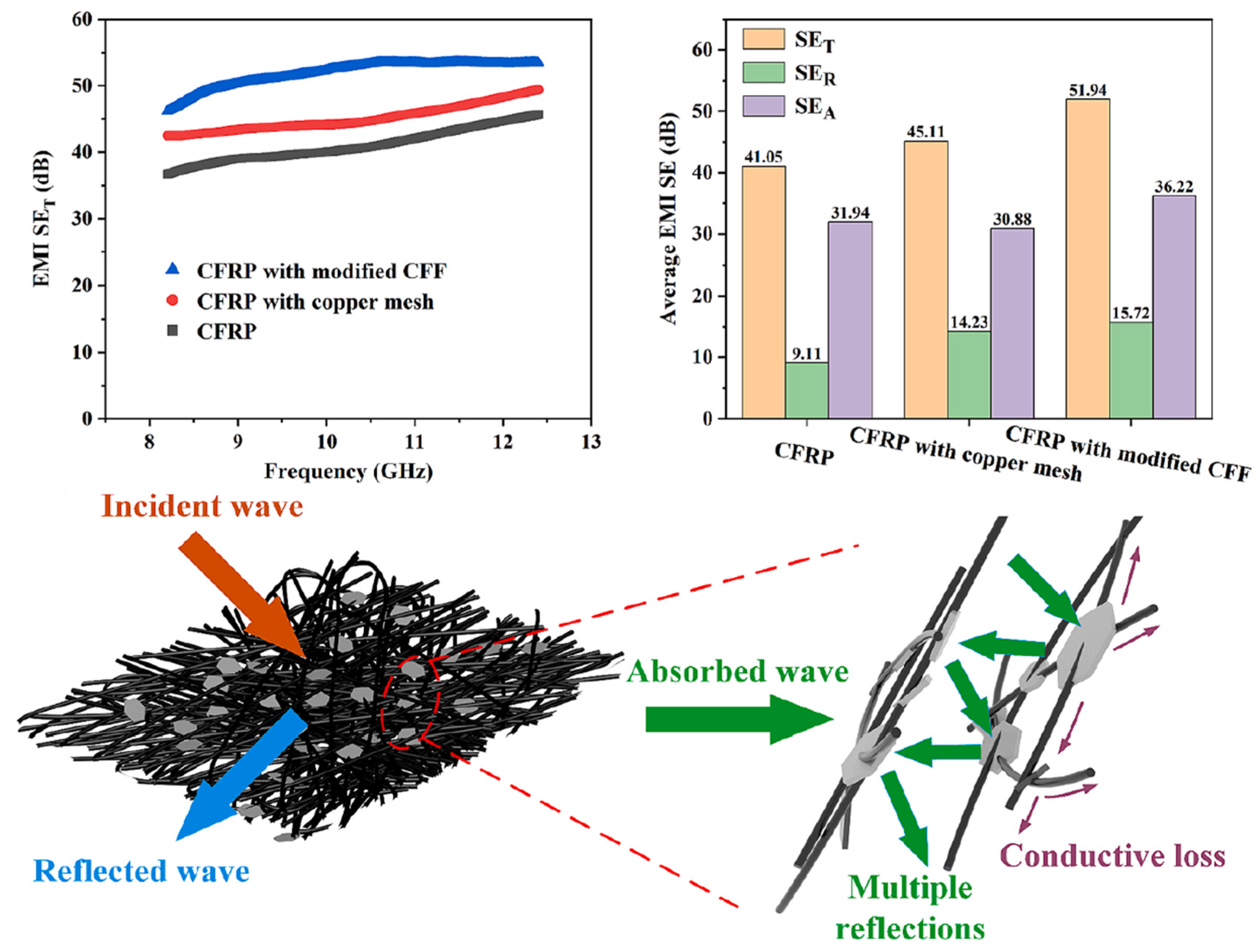
Currently, electromagnetic shielding materials are being developed in the direction of being lightweight, flexible, thin, multifunctional, and environmentally friendly. Polyacrylonitrile-based carbon fiber felt (CFF), widely used for high-temperature insulation post-annealing, has discontinuous conductive networks due to its chopped structure, limiting EMI application potential. Zhu et al. [138] prepared composites via Joule-heating-induced GO-CF co-crystallization and lamination, increasing thermal conductivity by 1.8 times and achieving 51.94 dB X-band EMI shielding effectiveness, surpassing commercial copper mesh and showing significant application potential (Figure 13). Jia et al. [139] synthesized NiCo-GNS hybrids via in situ growth, constructing 3D EP/PVDF/NiCo-GNS honeycomb skeletons via vacuum impregnation. With 15 wt% filler, epoxy composites showed 3.83 times higher λ and 34.62 dB X-band shielding, enabling synergistic thermal management and EMI shielding. Notably, 3D printing constructs functionalized polymer-based lightweight porous structures, with multi-scale regulation enabling efficient multifunctional-mechanical configurations for electronics. Du et al. [167] combined SLA-3D printing and vacuum impregnation to prepare polydimethylsiloxane (SGP)/epoxy acrylic resin composites integrating thermal conductivity, EMI shielding, and mechanical properties. The resin skeleton bears the load, while SGP provides thermal conductivity (2.13 W·m−1·K−1 at 12.4 GHz) and 45.93 dB EMI shielding. Applying an external magnetic field induces nanoparticle response, enabling oriented arrangement to attenuate electromagnetic waves via hysteresis loss, eddy current loss, and natural resonance. Jia et al. [168] prepared magnetically responsive cobalt@graphene nanosheets (Co@GNP)-reinforced epoxy via coprecipitation, constructing a magnetic field-oriented network for high-temperature thermal management. Validating heat-transfer models via four-parameter fitting and enthalpy change methods, synergistic optimization achieved 14.90 dB EMI shielding, a 419% improvement over pure EP.
As illustrated in Table 6, distinct nanomaterials demonstrate unique advantages in the domains of electromagnetic shielding and thermal conductivity enhancement. GO, characterized by low density, ultrahigh thermal conductivity, and a two-dimensional layered structure, exhibits 20–70 dB absorption-type shielding performance in high-frequency ranges (X-band and above). Its large specific surface area facilitates the formation of multiple scattering interfaces, rendering it suitable for flexible devices and transparent shielding applications. Carbon nanotubes exhibit 40–50 dB broadband absorption (1–18 GHz) via a three-dimensional conductive network; however, agglomeration issues require mitigation to optimize their application in aerospace. Metal fillers primarily depend on a 40–60 dB reflection mechanism in low-frequency ranges (below K-band); despite their high conductivity, their applicability in lightweight applications is constrained by high density and corrosiveness. Boron nitride, an insulator with shielding efficiency <20 dB, is exclusively utilized for thermal enhancement and necessitates conductive fillers to satisfy the insulation demands of 5G devices and LED packaging. In summary, performance discrepancies among these systems originate from their intrinsic conductivity, microstructure, and interfacial interactions, thereby offering multidimensional material choices for electronic packaging and thermal management.

5.4. Other Areas

Beyond prior applications, high-thermal-conductivity GO/EP composites exhibit potential in flame retardancy, anti-corrosion coatings, and aerospace, enhancing flame retardancy and corrosion resistance and enabling lightweight, high-thermal-conductivity aerospace components.
For flame retardancy, GO and flame retardants synergistically improve EP’s flame retardancy and thermal conductivity. A dense surface carbonized layer isolates oxygen/heat, delaying flame spread [172]. Chen et al. [173] prepared FeHP@GO hybrids via in situ self-assembly, using GO’s barrier effect, FeHP-catalyzed carbonization, and PO·/HPO· radical quenching to achieve triple optimization: LOI increased 42.5% (UL-94 V-0), PHRR decreased 46.2%, tensile strength rose 32.6%, and thermal conductivity improved 96.0%. Adding 3 wt% 1-butyl-3-methylimidazole tetrafluoroborate-functionalized Mo-MOF/GO hybrids enhanced flame retardancy (LOI = 27.6%, UL-94 V1; CO, PHRR, and smoke rates reduced by 55.88%, 52.10%, and 40.12%) with unchanged mechanical properties, via carbon-gas phase dilution-barrier effects [174].
For anti-corrosion coatings, GO provides physical barriers, chemical passivation, and thermal management, enhancing corrosion resistance. Yang et al. [140] blended RGO with BTA@HMS in epoxy, achieving 1.239 W·m−1·K−1 thermal conductivity (596% vs. pure epoxy) and a 4-order corrosion resistance improvement with 5 wt% filler. Yung et al. [147] prepared RGO/BaSO4 hybrid epoxy; 5 wt% BaSO4 yielded 165.0 W·m−1·K−1 in-plane thermal conductivity and 71.38 mm2·s−1 diffusivity for aluminum alloy protection. Liu et al. [175] optimized modified GO/PVB/epoxy coatings via the response surface method, achieving a 0.218 °C·s−1 heating rate and an 85.75° contact angle, confirming thermal/hydrophobic synergism.
In aerospace, GO/EP composites address lightweight, extreme-condition demands with high thermal conductivity, specific stiffness, and radiation resistance, enhancing thermal management and enabling high-power electronic packaging [21]. A GrF/Cu-CF/GrF sandwich composite, prepared by vertically weaving copper wires into carbon fiber fabric and laminating graphite fibers via vacuum-assisted resin transfer molding, achieved λ = 1.097 W·m−1·K−1 (104% vs. CFRP), attributed to copper/graphite conductivity and continuous heat pathways [115]. Graphene nanoplatelets/h-BN-modified epoxy nanocomposites, prepared via three-roll milling, synergistically enhanced conductivity, flexural strength, and thermal conductivity, meeting aerospace electrostatic dissipation and thermal management needs [176].
Additionally, high-thermal-conductivity GO/EP composites encounter performance degradation challenges attributed to the synergistic effects of hygrothermal aging and thermal cycling. Water penetration induces hydrolysis of ester bonds within the matrix, resulting in the breakdown of the cross-linked network and the weakening of mechanical properties. GO interface de-anchoring induces local failure of the three-dimensional thermal conduction network, while interfacial phonon scattering exacerbates thermal resistance increase. Furthermore, the thermal expansion coefficient mismatch between GO and EP induces shear stress during thermal cycling, further degrading interfacial bonding. In response, researchers have proposed multidimensional strategies: Du et al. [177] constructed a self-healing UV-shielding layer via in situ growth of FGO@CeO2 nanoparticles, significantly prolonging outdoor service life. Li et al. [178] revealed via molecular dynamics simulations that the GO/EP interface is more susceptible to water erosion, providing a foundation for atomic-level interfacial design. Xie et al. [179] demonstrated that multi-vacancy graphene strengthens interfacial bonding and optimizes thermal oxidation resistance. Mishra et al. [180] confirmed that hygrothermal environments can counteract the initial enhancement effect of graphene, emphasizing the significance of environmental durability design. These studies offer theoretical guidance and technical pathways for the development of long-lasting GO/EP composites.

6. Conclusions and Outlook

High-thermal-conductivity GO/EP composites are pivotal for addressing thermal management in electronics, with research establishing a framework for synergistic structure-performance-mechanism optimization. This review systematically summarizes their progress, elucidating core principles of thermal conductivity enhancement (percolation networks, interfacial phonon coupling), structural regulation strategies, and application challenges. GO’s thermal conductivity mechanisms depend on filler morphology, dispersion, and processing. Physical dispersion improves graphene distribution; chemical modification and in situ polymerization enhance interfacial bonding via surface functionalization, reducing thermal resistance. These composites advance electronic packaging, energy storage, and electromagnetic shielding, providing theoretical foundations and expanding practical applications.
Despite progress, challenges remain, requiring clarified future directions:
(1)
Cross-scale structure design and dynamic characterization: Advanced characterization/simulation tools are needed to explore microscale thermal conductivity factors, build accurate models, and guide material design.
(2)
Green/efficient preparation innovation: Key areas include innovative dispersion/chemical modification for optimal GO dispersion and interfacial interactions. Additive manufacturing (e.g., 4D printing) dynamically regulates thermal networks for flexible devices; machine learning optimizes processes to reduce energy/cost.
(3)
Multi-physics coupling performance: Integrating thermodynamics, soft matter physics, and computational materials science enables a “composition-process-structure-performance” multi-scale prediction platform. Developing multifunctional composites (high thermal conductivity, impact resistance, and self-sensing) for 5G, AI hardware, flexible electronics, and extreme environments expands applications.
Future research should focus on performance improvement, cost control, and application expansion via interdisciplinary collaboration. Shifting from trial-and-error to theory-driven approaches, multidisciplinary innovation, and engineering breakthroughs will accelerate the lab-to-industry transition.

Author Contributions

Conceptualization, Z.D. and M.S.; investigation, H.Y. and Z.D.; writing—original draft preparation, H.Y.; writing—review and editing, Z.H.; supervision, Z.H.; funding acquisition, M.S. and Z.H. All authors have read and agreed to the published version of the manuscript.

Funding

This study was supported by the Independent Innovation Projects of the Hubei Longzhong Laboratory (No. 2022ZZ-08), the Fundamental Research Funds for Central Universities (No. 104972025RSCbs0060), and the Hubei Provincial Natural Science Foundation of China (No. 2025AFB007).

Institutional Review Board Statement

Not applicable.

Data Availability Statement

No new data were created or analyzed in this study. Data sharing is not applicable to this article.

Conflicts of Interest

The authors declare no conflicts of interest.

References

  1. Leng, Y.; Sun, Y.; Sun, P.; Xu, M.; Zhang, H.; Li, X.; Li, B. Construction of self-lapping three-dimensional thermal conduction network in epoxy resin thermosets by incorporating “dendritic” zinc oxide derived from metal-organic framework. Surf. Interfaces 2024, 46, 103988. [Google Scholar] [CrossRef]
  2. Fu, L.; Kong, N.; Huang, M.; Tian, Y.; Yan, Y.; Wen, B.; Ye, C.; Huang, D.; Han, F. Compressible thermal interface materials with high through-plane thermal conductivity from vertically oriented carbon fibers. J. Alloys Compd. 2024, 987, 174200. [Google Scholar] [CrossRef]
  3. Wang, J.; Chen, W.; Ji, Y.; Yu, Y.; Wu, Y.; Shen, J.; Liang, H.; Zheng, G.; Zhou, H.; Long, F. Synthesis of novel Stachytarpheta jamaicensis flower liked hexagonal boron nitride nanoribbons (SJF-BNNBs) to efficiently improve the thermal/mechanical/electrical properties of flexible polyimide films. Compos. Part B Eng. 2024, 280, 111524. [Google Scholar] [CrossRef]
  4. Yu, H.; Guo, P.; Qin, M.; Han, G.; Chen, L.; Feng, Y.; Feng, W. Highly thermally conductive polymer composite enhanced by two-level adjustable boron nitride network with leaf venation structure. Compos. Sci. Technol. 2022, 222, 109406. [Google Scholar] [CrossRef]
  5. Bao, D.; Gao, Y.; Cui, Y.; Xu, F.; Shen, X.; Geng, H.; Zhang, X.; Lin, D.; Zhu, Y.; Wang, H. A novel modified expanded graphite/epoxy 3D composite with ultrahigh thermal conductivity. Chem. Eng. J. 2022, 433, 133519. [Google Scholar] [CrossRef]
  6. Gao, Y.; Bao, D.; Zhang, M.; Cui, Y.; Xu, F.; Shen, X.; Zhu, Y.; Wang, H. Millefeuille-Inspired Thermal Interface Materials based on Double Self-Assembly Technique for Efficient Microelectronic Cooling and Electromagnetic Interference Shielding. Small 2022, 18, 2105567. [Google Scholar] [CrossRef]
  7. Cui, Y.; Xu, F.; Bao, D.; Gao, Y.; Peng, J.; Lin, D.; Geng, H.; Shen, X.; Zhu, Y.; Wang, H. Construction of 3D interconnected boron nitride/carbon nanofiber hybrid network within polymer composite for thermal conductivity improvement. J. Mater. Sci. Technol. 2023, 147, 165–175. [Google Scholar] [CrossRef]
  8. Xie, J.; Zhou, G.; Sun, Y.; Zhang, F.; Kang, F.; Li, B.; Zhao, Y.; Zhang, Y.; Feng, W.; Zheng, Q. Multifunctional Liquid Metal-Bridged Graphite Nanoplatelets/Aramid Nanofiber Film for Thermal Management. Small 2024, 20, 2305163. [Google Scholar] [CrossRef]
  9. Lashkari, S.; Sheppard, D.J.K.; Chibante, L.P.F. Evaluation of Theoretical Models for Determining Effective Thermal Conductivity and Interfacial Thermal Resistance of Carbon Nanotube Polydimethylsiloxane Nanocomposites. J. Phys. Chem. C 2025, 129, 5571–5576. [Google Scholar] [CrossRef]
  10. Tang, X.; Lu, Y.; Li, S.; Zhu, M.; Wang, Z.; Li, Y.; Hu, Z.; Zheng, P.; Wang, Z.; Liu, T. Hierarchical Polyimide Nonwoven Fabric with Ultralow-Reflectivity Electromagnetic Interference Shielding and High-Temperature Resistant Infrared Stealth Performance. Nano-Micro Lett. 2024, 17, 82. [Google Scholar] [CrossRef]
  11. Tan, J.; Xu, Z.; Ding, F.; Yang, Z.; Yuan, F.; Ouyang, Y. Constructing bidirectional heat flow pathways by curved alumina for enhanced thermal conductivity of epoxy composites. Compos. Part A Appl. Sci. Manuf. 2024, 186, 108412. [Google Scholar] [CrossRef]
  12. Zhang, F.; Ren, D.; Zhang, Y.; Huang, L.; Sun, Y.; Wang, W.; Zhang, Q.; Feng, W.; Zheng, Q. Production of highly-oriented graphite monoliths with high thermal conductivity. Chem. Eng. J. 2022, 431, 134102. [Google Scholar] [CrossRef]
  13. Wang, Y.; Luo, J.; Lu, Z.; Di, J.; Wang, S.-w.; Jiang, W. A review of the high-concentration processing, densification, and applications of graphene oxide and graphene. New Carbon Mater. 2024, 39, 483–505. [Google Scholar] [CrossRef]
  14. Ma, Z.; Wang, J.; Hao, Z.; Dai, J.; Zhu, X.; Zheng, H.; Liu, X.; Zhang, H.; Lu, Z. Novel Graphene-Epoxy Composite with Aligned Architecture and Ultrahigh Thermal Conductivity. Adv. Funct. Mater. 2025, 35, 2412534. [Google Scholar] [CrossRef]
  15. Zha, J.; Wang, F.; Wan, B. Polymer composites with high thermal conductivity: Theory, simulation, structure and interfacial regulation. Prog. Mater. Sci. 2025, 148, 101362. [Google Scholar] [CrossRef]
  16. Zhou, M.; Yin, G.; Prolongo, S.G.; Wang, D. Recent Progress on Multifunctional Thermally Conductive Epoxy Composite. Polymers 2023, 15, 2818. [Google Scholar] [CrossRef]
  17. Yan, Y.; Tao, Y.; Liang, C.; Liu, Z.; Li, T.; An, G. Interfacial heat transport properties of graphene/natural rubber composites studied based on molecular dynamics approach. Phys. B Condens. Matter 2024, 694, 416467. [Google Scholar] [CrossRef]
  18. Yang, M.; Li, X.; Kang, G.; Chen, W. Understanding macroscopic thermal conduction in composites reinforced with 2D nanosheets. Compos. Sci. Technol. 2024, 248, 110450. [Google Scholar] [CrossRef]
  19. Liu, L.; Xu, C.; Yang, Y.; Fu, C.; Ma, F.; Zeng, Z.; Wang, G. Graphene-based polymer composites in thermal management: Materials, structures and applications. Mater. Horiz. 2025, 12, 64–91. [Google Scholar] [CrossRef]
  20. Zhou, X.; Ge, J.; Yang, X.; Yang, Q.; Feng, Y.; Feng, W. Phase-change gradient composites for variable thermal management. Compos. Commun. 2024, 48, 101948. [Google Scholar] [CrossRef]
  21. Dong, M.; Zhang, H.; Tzounis, L.; Santagiuliana, G.; Bilotti, E.; Papageorgiou, D.G. Multifunctional epoxy nanocomposites reinforced by two-dimensional materials: A review. Carbon 2021, 185, 57–81. [Google Scholar] [CrossRef]
  22. Trivedi, D.N.; Rachchh, N.V. Graphene and its application in thermoplastic polymers as nano-filler- A review. Polymer 2022, 240, 124486. [Google Scholar] [CrossRef]
  23. Castro Neto, A.H.; Guinea, F.; Peres, N.M.R.; Novoselov, K.S.; Geim, A.K. The electronic properties of graphene. Rev. Mod. Phys. 2009, 81, 109–162. [Google Scholar] [CrossRef]
  24. Lalire, T.; Longuet, C.; Taguet, A. Electrical properties of graphene/multiphase polymer nanocomposites: A review. Carbon 2024, 225, 119055. [Google Scholar] [CrossRef]
  25. Tang, H.; Menabde, S.G.; Anwar, T.; Kim, J.; Jang, M.S.; Tagliabue, G. Photo-modulated optical and electrical properties of graphene. Nanophotonics 2022, 11, 917–940. [Google Scholar] [CrossRef]
  26. Lv, C.; Zhao, J.; Xu, Y.; Song, Y.; Zhang, C.; Ozerov, M.; Dai, P.; Wang, N.-L.; Chen, Z.-G. Linear scaling relation between two-dimensional massless Dirac fermion Fermi velocity and Fe-As bond length in iron arsenide superconductor systems. Phys. Rev. B 2025, 111, 241110. [Google Scholar] [CrossRef]
  27. Novoselov, K.S.; Geim, A.K.; Morozov, S.V.; Jiang, D.; Katsnelson, M.I.; Grigorieva, I.V.; Dubonos, S.V.; Firsov, A.A. Two-dimensional gas of massless Dirac fermions in graphene. Nature 2005, 438, 197–200. [Google Scholar] [CrossRef]
  28. Bonaccorso, F.; Sun, Z.; Hasan, T.; Ferrari, A.C. Graphene photonics and optoelectronics. Nat. Photonics 2010, 4, 611–622. [Google Scholar] [CrossRef]
  29. Yu, Q.; Jauregui, L.A.; Wu, W.; Colby, R.; Tian, J.; Su, Z.; Cao, H.; Liu, Z.; Pandey, D.; Wei, D.; et al. Control and characterization of individual grains and grain boundaries in graphene grown by chemical vapour deposition. Nat. Mater. 2011, 10, 443–449. [Google Scholar] [CrossRef]
  30. Huang, P.Y.; Ruiz-Vargas, C.S.; van der Zande, A.M.; Whitney, W.S.; Levendorf, M.P.; Kevek, J.W.; Garg, S.; Alden, J.S.; Hustedt, C.J.; Zhu, Y.; et al. Grains and grain boundaries in single-layer graphene atomic patchwork quilts. Nature 2011, 469, 389–392. [Google Scholar] [CrossRef]
  31. Sobota, J.A.; He, Y.; Shen, Z.-X. Angle-resolved photoemission studies of quantum materials. Rev. Mod. Phys. 2021, 93, 25006. [Google Scholar] [CrossRef]
  32. Yue, S.; Zhou, H.; Feng, Y.; Wang, Y.; Sun, Z.; Geng, D.; Arita, M.; Kumar, S.; Shimada, K.; Cheng, P.; et al. Observation of One-Dimensional Dirac Fermions in Silicon Nanoribbons. Nano Lett. 2022, 22, 695–701. [Google Scholar] [CrossRef] [PubMed]
  33. Geim, A.K.; Novoselov, K.S. The rise of graphene. Nat. Mater. 2007, 6, 183–191. [Google Scholar] [CrossRef] [PubMed]
  34. Hao, Q.; Liu, S.; Wang, X.; Zhang, P.; Mao, Z.; Zhang, X. Progression from graphene and graphene oxide to high-performance epoxy resin-based composite. Polym. Degrad. Stab. 2024, 223, 110731. [Google Scholar] [CrossRef]
  35. Chen, X.; Fan, K.; Liu, Y.; Li, Y.; Liu, X.; Feng, W.; Wang, X. Recent Advances in Fluorinated Graphene from Synthesis to Applications: Critical Review on Functional Chemistry and Structure Engineering. Adv. Mater. 2022, 34, 2101665. [Google Scholar] [CrossRef]
  36. McCann, E.; Koshino, M. The electronic properties of bilayer graphene. Rep. Prog. Phys. 2013, 76, 56503. [Google Scholar] [CrossRef]
  37. Xie, Z.; Zhao, T.; Yu, X.; Wang, J. Nonlinear Optical Properties of 2D Materials and their Applications. Small 2024, 20, 2311621. [Google Scholar] [CrossRef]
  38. Semnani, B.; Majedi, A.H.; Safavi-Naeini, S. Nonlinear quantum optical properties of graphene. J. Opt. 2016, 18, 35402. [Google Scholar] [CrossRef]
  39. Koenig, S.P.; Boddeti, N.G.; Dunn, M.L.; Bunch, J.S. Ultrastrong adhesion of graphene membranes. Nat. Nanotechnol. 2011, 6, 543–546. [Google Scholar] [CrossRef]
  40. Li, Z.; Wang, Y.; Ma, M.; Ma, H.; Hu, W.; Zhang, X.; Zhuge, Z.; Zhang, S.; Luo, K.; Gao, Y.; et al. Ultrastrong conductive in situ composite composed of nanodiamond incoherently embedded in disordered multilayer graphene. Nat. Mater. 2023, 22, 42–49. [Google Scholar] [CrossRef]
  41. Li, Z.; Wang, Q.; Yang, Q.; Qin, B. Stochastic vibration behaviors of functionally graded graphene platelets reinforced composite joined conical-cylindrical-conical shell with variable taper under moving random loads. Compos. Struct. 2025, 358, 118970. [Google Scholar] [CrossRef]
  42. Wu, G.; Li, Y.; Zhu, J.; Hu, Y.; Gui, Z.; Wang, X. Sustainably sourced epoxy thermal management composites with simultaneously improved thermal conductivity, dielectric properties and fire safety. Chem. Eng. J. 2025, 508, 161023. [Google Scholar] [CrossRef]
  43. Badoni, A.; Thakur, S.; Vijayan, N.; Swart, H.C.; Bechelany, M.; Chen, Z.; Sun, S.; Cai, Q.; Chen, Y.; Prakash, J. Recent progress in understanding the role of graphene oxide, TiO2 and graphene oxide–TiO2 nanocomposites as multidisciplinary photocatalysts in energy and environmental applications. Catal. Sci. Technol. 2025, 15, 1702–1770. [Google Scholar] [CrossRef]
  44. Liang, L.; Li, Q.; Yan, X.; Feng, Y.; Wang, Y.; Zhang, H.-B.; Zhou, X.; Liu, C.; Shen, C.; Xie, X. Multifunctional Magnetic Ti3C2Tx MXene/Graphene Aerogel with Superior Electromagnetic Wave Absorption Performance. ACS Nano 2021, 15, 6622–6632. [Google Scholar] [CrossRef] [PubMed]
  45. Xu, L.; Si, R.; Ni, Q.; Chen, J.; Zhang, J.; Ni, Q.-Q. Synergistic magnetic/dielectric loss and layered structural design of Ni@carbon fiber/Ag@graphene fiber/polydimethylsiloxane composite for high-absorption EMI shielding. Carbon 2024, 225, 119155. [Google Scholar] [CrossRef]
  46. Chen, Y.; Guo, Y.; Xie, B.; Jin, F.; Ma, L.; Zhang, H.; Li, Y.; Chen, X.; Hou, M.; Gao, J.; et al. Lightweight and drift-free magnetically actuated millirobots via asymmetric laser-induced graphene. Nat. Commun. 2024, 15, 4334. [Google Scholar] [CrossRef]
  47. Viana, D.; Walston, S.T.; Masvidal-Codina, E.; Illa, X.; Rodríguez-Meana, B.; del Valle, J.; Hayward, A.; Dodd, A.; Loret, T.; Prats-Alfonso, E.; et al. Nanoporous graphene-based thin-film microelectrodes for in vivo high-resolution neural recording and stimulation. Nat. Nanotechnol. 2024, 19, 514–523. [Google Scholar] [CrossRef]
  48. Xu, Y.; Wang, B.; Fan, C. Research progress on two-dimensional carbon nanomaterials modified alkali-activated cementitious materials: A review. J. Build. Eng. 2024, 92, 109690. [Google Scholar] [CrossRef]
  49. Safian, M.T.; Umar, K.; Mohamad Ibrahim, M.N. Synthesis and scalability of graphene and its derivatives: A journey towards sustainable and commercial material. J. Clean. Prod. 2021, 318, 128603. [Google Scholar] [CrossRef]
  50. Novoselov, K.S.; Geim, A.K.; Morozov, S.V.; Jiang, D.; Zhang, Y.; Dubonos, S.V.; Grigorieva, I.V.; Firsov, A.A. Electric Field Effect in Atomically Thin Carbon Films. Science 2004, 306, 666–669. [Google Scholar] [CrossRef]
  51. Liu, C.; Chen, F.; Wu, Y.; Zheng, Z.; Yang, J.; Yang, B.; Yang, J.; Hui, D.; Luo, Y. Research progress on individual effect of graphene oxide in cement-based materials and its synergistic effect with other nanomaterials. Nanotechnol. Rev. 2021, 10, 1208–1235. [Google Scholar] [CrossRef]
  52. Ibrahim, A.; Klopocinska, A.; Horvat, K.; Abdel Hamid, Z. Graphene-Based Nanocomposites: Synthesis, Mechanical Properties, and Characterizations. Polymers 2021, 13, 2869. [Google Scholar] [CrossRef] [PubMed]
  53. Wei, D.; Peng, L.; Li, M.; Mao, H.; Niu, T.; Han, C.; Chen, W.; Wee, A.T.S. Low Temperature Critical Growth of High Quality Nitrogen Doped Graphene on Dielectrics by Plasma-Enhanced Chemical Vapor Deposition. ACS Nano 2015, 9, 164–171. [Google Scholar] [CrossRef]
  54. Zheng, S.; Zeng, M.; Cao, H.; Zhang, T.; Gao, X.; Xiao, Y.; Fu, L. Insight into the rapid growth of graphene single crystals on liquid metal via chemical vapor deposition. Sci. China Mater. 2019, 62, 1087–1095. [Google Scholar] [CrossRef]
  55. Rein, V.; Letellier, F.; Jankowski, M.; de Voogd, M.; Prabhu, M.; Yao, L.; van Baarle, G.; Renaud, G.; Saedi, M.; Groot, I.M.N.; et al. In situ characterisation of graphene growth on liquid copper-gallium alloys: Paving the path for cost-effective synthesis. Appl. Surf. Sci. 2024, 657, 159723. [Google Scholar] [CrossRef]
  56. Abuseada, M.; Fisher, T.S. Continuous solar-thermal methane pyrolysis for hydrogen and graphite production by roll-to-roll processing. Appl. Energy 2023, 352, 121872. [Google Scholar] [CrossRef]
  57. Liyanage, C.D.; Kumar, H.; Perera, I.; Abeykoon, P.G.; Chen, F.; Joya, J.S.; Suib, S.L.; Adamson, D.H. Synthesis of graphene oxide: Effect of sonication during oxidation. Carbon 2024, 223, 119047. [Google Scholar] [CrossRef]
  58. Sandhya, M.; Ramasamy, D.; Sudhakar, K.; Kadirgama, K.; Harun, W.S.W. Ultrasonication an intensifying tool for preparation of stable nanofluids and study the time influence on distinct properties of graphene nanofluids—A systematic overview. Ultrason. Sonochem. 2021, 73, 105479. [Google Scholar] [CrossRef]
  59. Baitimbetova, B.A.; Boukhvalov, D.W.; Mit’, K.A.; Turmagambetov, T.S.; Baitimbetova, P.; Serikkanov, A.S. An Approach to the Improvement of Graphene Production by Ultrasonic-Bath Treatment. Nanomaterials 2025, 15, 817. [Google Scholar] [CrossRef]
  60. Xu, F.; Zhang, M.; Cui, Y.; Bao, D.; Peng, J.; Gao, Y.; Lin, D.; Geng, H.; Zhu, Y.; Wang, H. A novel polymer composite coating with high thermal conductivity and unique anti-corrosion performance. Chem. Eng. J. 2022, 439, 135660. [Google Scholar] [CrossRef]
  61. Lu, X.; Liu, J.; Shu, C.; Zhang, S.; Zhao, H.; Zhang, Y.; Wang, Q.; Yu, Z.-Z.; Li, X. Densifying Conduction Networks of Vertically Aligned Carbon Fiber Arrays with Secondary Graphene Networks for Highly Thermally Conductive Polymer Composites. Adv. Funct. Mater. 2025, 35, 2417324. [Google Scholar] [CrossRef]
  62. Ma, Z.; Hao, Z.; Dai, J.; Zhang, H. Graphene-epoxy composite with dual-function of excellent microwave absorption and efficient heat dissipation. Chem. Eng. J. 2024, 502, 157807. [Google Scholar] [CrossRef]
  63. Tyurnina, A.V.; Morton, J.A.; Subroto, T.; Khavari, M.; Maciejewska, B.; Mi, J.; Grobert, N.; Porfyrakis, K.; Tzanakis, I.; Eskin, D.G. Environment friendly dual-frequency ultrasonic exfoliation of few-layer graphene. Carbon 2021, 185, 536–545. [Google Scholar] [CrossRef]
  64. Turner, P.; Hodnett, M.; Dorey, R.; Carey, J.D. Controlled Sonication as a Route to in-situ Graphene Flake Size Control. Sci. Rep. 2019, 9, 8710. [Google Scholar] [CrossRef]
  65. Yu, S.; Guo, B.; Zeng, T.; Qu, H.; Yang, J.; Bai, J. Graphene-based lithium-ion battery anode materials manufactured by mechanochemical ball milling process: A review and perspective. Compos. Part B Eng. 2022, 246, 110232. [Google Scholar] [CrossRef]
  66. Chen, Q.; Huo, S.; Lu, Y.; Ding, M.; Feng, J.; Huang, G.; Xu, H.; Sun, Z.; Wang, Z.; Song, P. Heterostructured Graphene@Silica@Iron Phenylphosphinate for Fire-Retardant, Strong, Thermally Conductive Yet Electrically Insulated Epoxy Nanocomposites. Small 2024, 20, 2310724. [Google Scholar] [CrossRef]
  67. Zhang, G.; Wu, W.; Yao, M.; Cui, Y.; Jiao, Y.; Qu, H.; Xu, J. A graphene@Cu-MOF hybrid synthesized by mechanical ball milling method and its flame retardancy and smoke suppression effect on EP. Chemosphere 2024, 346, 140521. [Google Scholar] [CrossRef]
  68. Meng, Q.; Feng, Y.; Han, S.; Yang, F.; Demiral, M.; Meng, F.; Araby, S. Developing functional epoxy/graphene composites using facile in-situ mechanochemical approach. J. Appl. Polym. Sci. 2023, 140, 53681. [Google Scholar] [CrossRef]
  69. Ba, K.; Zhang, M.; Wang, X.; Xu, P.; Song, W.; Wang, C.; Yang, W.; Liu, Y. Porous graphene composites fabricated by template method used for electromagnetic shielding and thermal conduction. Diam. Relat. Mater. 2023, 131, 109585. [Google Scholar] [CrossRef]
  70. Perumal, S.; Atchudan, R.; Cheong, I.W. Recent Studies on Dispersion of Graphene–Polymer Composites. Polymers 2021, 13, 2375. [Google Scholar] [CrossRef]
  71. Puckert, D.K.; Rist, U. Experiments on critical Reynolds number and global instability in roughness-induced laminar–turbulent transition. J. Fluid Mech. 2018, 844, 878–904. [Google Scholar] [CrossRef]
  72. Rahimzadeh, A.; Ein-Mozaffari, F.; Lohi, A. New Insights into the Gas Dispersion and Mass Transfer in Shear-Thinning Fluids Inside an Aerated Coaxial Mixer via Analysis of Flow Hydrodynamics and Shear Environment. Ind. Eng. Chem. Res. 2022, 61, 3713–3728. [Google Scholar] [CrossRef]
  73. Yuan, M.; Zhang, Y.; Xie, F.; Yang, H.; Bittencourt, C.; Snyders, R.; Li, W. Nano copper-modified GO and CNTs for enhanced the epoxy resin composite thermal properties. Appl. Surf. Sci. 2025, 690, 162616. [Google Scholar] [CrossRef]
  74. Bandeira de Souza, Z.S.; Araújo do Nascimento, P.L.; Samara, M.; David, É.; Macedo Fechine, G.J.; Alves da Motta Sobrinho, M.; Demarquette, N.R. Influence of graphene functionalization on the curing kinetics, dynamical mechanical properties and morphology of epoxy nanocomposites. Polymer 2025, 320, 128067. [Google Scholar] [CrossRef]
  75. Li, X.; Wang, J.; Tian, Y.; Jiang, X.; Zhang, X. Thermal enhancement by constructing ordered-orienting hybrid network with modified boron nitride, graphene and carbon nanotubes in epoxy composite coatings. Prog. Org. Coat. 2022, 172, 107078. [Google Scholar] [CrossRef]
  76. Siddiqui, V.U.; Sapuan, S.M.; Hassan, M.R. Innovative dispersion techniques of graphene nanoplatelets (GNPs) through mechanical stirring and ultrasonication: Impact on morphological, mechanical, and thermal properties of epoxy nanocomposites. Def. Technol. 2025, 43, 13–25. [Google Scholar] [CrossRef]
  77. Oliveira, T.C.; Simonetti, E.A.N.; Cividanes, L.S. Graphene derivatives as reinforcement in coatings based on epoxy and silane for enhancing its corrosion resistance—A latest advances review. Int. J. Adhes. Adhes. 2023, 126, 103484. [Google Scholar] [CrossRef]
  78. Qamar, S.; Ramzan, N.; Aleem, W. Graphene dispersion, functionalization techniques and applications: A review. Synth. Met. 2024, 307, 117697. [Google Scholar] [CrossRef]
  79. Gadtya, A.S.; Tripathy, D.; Rout, L.; Moharana, S. Graphene oxide, it’s surface functionalisation, preparation and properties of polymer-based composites: A review. Compos. Interfaces 2024, 31, 29–76. [Google Scholar] [CrossRef]
  80. Han, L.; Li, K.; Fu, Y.; Yin, X.; Jiao, Y.; Song, Q. Multifunctional electromagnetic interference shielding 3D reduced graphene oxide/vertical edge-rich graphene/epoxy nanocomposites with remarkable thermal management performance. Compos. Sci. Technol. 2022, 222, 109407. [Google Scholar] [CrossRef]
  81. Hong, Y.; Azcune, I.; Rekondo, A.; Jiang, T.; Zhou, S.; Lowe, T.; Saiz, E. Additive Manufacturing of Shape Memory Thermoset Composites with Directional Thermal Conductivity. Adv. Funct. Mater. 2024, 34, 2311193. [Google Scholar] [CrossRef]
  82. Xie, Z.; Xiao, D.; Yu, Q.; Wang, Y.; Liao, H.; Zhang, T.; Liu, P.; Xu, L. Fabrication of Multifunctional Silylated GO/FeSiAl Epoxy Composites: A Heat Conducting Microwave Absorber for 5G Base Station Packaging. Materials 2023, 16, 7511. [Google Scholar] [CrossRef] [PubMed]
  83. Cui, S.; Wu, W.; Liu, C.; Wang, Y.; Chen, Q.; Liu, X. Modification of the three-dimensional graphene aerogel self-assembled network using a titanate coupling agent and its thermal conductivity mechanism with epoxy composites. Nanoscale 2021, 13, 18247–18255. [Google Scholar] [CrossRef]
  84. Agarwal, V.; Zetterlund, P.B. Strategies for reduction of graphene oxide—A comprehensive review. Chem. Eng. J. 2021, 405, 127018. [Google Scholar] [CrossRef]
  85. Chakraborty, G.; Padmashree, R.; Prasad, A. Recent advancement of surface modification techniques of 2-D nanomaterials. Mater. Sci. Eng. B 2023, 297, 116817. [Google Scholar] [CrossRef]
  86. Han, L.; Li, K.; Xiao, C.; Yin, X.; Gui, X.; Song, Q.; Ye, F. Carbon nanotube-vertical edge rich graphene hybrid sponge as multifunctional reinforcements for high performance epoxy composites. Carbon 2023, 201, 871–880. [Google Scholar] [CrossRef]
  87. Yan, D.; Liu, J.; Zhang, Z.; Wang, Y.; Zhang, M.; Song, D.; Zhang, T.; Liu, J.; He, F.; Wang, J. Dual-functional graphene oxide-based nanomaterial for enhancing the passive and active corrosion protection of epoxy coating. Compos. Part B Eng. 2021, 222, 109075. [Google Scholar] [CrossRef]
  88. Wang, F.; Zhang, S.; Li, X.; Wang, W.; Shi, M.; Huang, Z.; Li, C. Construction of functionalized graphene nanoplatelets/SiC nanowires hybrid skeleton for epoxy composites with enhanced thermal conductivity and thermomechanical properties. Mater. Res. Bull. 2023, 162, 112189. [Google Scholar] [CrossRef]
  89. Xu, H.; Liu, Z.; Qiao, C.; Zhang, X.; Zhang, Q.; Zhang, Y.; Zheng, Y. High-performance epoxy composites improved by uniformly dispersed and partly thermal reduced graphene oxide sheets. J. Appl. Polym. Sci. 2023, 140, 53502. [Google Scholar] [CrossRef]
  90. Chen, L.; Chen, W.; Li, B.; Yang, Q. Investigation of shape memory and heat transfer properties of graphene oxide (GO) reinforced shape memory epoxy resin composites. Mater. Today Commun. 2023, 34, 105170. [Google Scholar] [CrossRef]
  91. Thieu, N.A.T.; Mani, D.; Won, J.C.; Yon, K.-Y.; Vu, M.C.; Kim, S.-R. Vertically interconnected network of graphene fluoride for highly thermoconductive and electrically insulating epoxy composites. Polym. Compos. 2022, 43, 8050–8059. [Google Scholar] [CrossRef]
  92. Bhuyan, M.S.A.; Uddin, M.N.; Islam, M.M.; Bipasha, F.A.; Hossain, S.S. Synthesis of graphene. Int. Nano Lett. 2016, 6, 65–83. [Google Scholar] [CrossRef]
  93. Zhang, X.; Sun, T.; Lei, Y.; Liang, M.; Zou, H. Synergistically optimizing interlaminar behavior of CFRP composites by simultaneously applying amino-rich graphene oxide to carbon fiber and epoxy matrix. Compos. Part A Appl. Sci. Manuf. 2021, 145, 106372. [Google Scholar] [CrossRef]
  94. Zhou, T.; Zhang, J.; Zhao, J.; Qu, W.; Li, X.; Li, S.; Xing, B.; Fu, Y. In-situ grafted graphene oxide-based waterborne epoxy curing agent for reinforcement corrosion protection of waterborne epoxy coating. Surf. Coat. Technol. 2021, 412, 127043. [Google Scholar] [CrossRef]
  95. Yang, R.; Zhang, Q.; Zheng, Y.; Shi, J.; Li, M. Enhanced ultra violet resistance of epoxy nanocomposites filled with liquid-like graphene oxide/silicon dioxide nanofluid. RSC Adv. 2023, 13, 3186–3192. [Google Scholar] [CrossRef]
  96. Burger, N.; Laachachi, A.; Ferriol, M.; Lutz, M.; Toniazzo, V.; Ruch, D. Review of thermal conductivity in composites: Mechanisms, parameters and theory. Prog. Polym. Sci. 2016, 61, 1–28. [Google Scholar] [CrossRef]
  97. Wang, Z.; Wu, Z.; Weng, L.; Ge, S.; Jiang, D.; Huang, M.; Mulvihill, D.M.; Chen, Q.; Guo, Z.; Jazzar, A.; et al. A Roadmap Review of Thermally Conductive Polymer Composites: Critical Factors, Progress, and Prospects. Adv. Funct. Mater. 2023, 33, 2301549. [Google Scholar] [CrossRef]
  98. Tromer, R.M.; Júnior, L.A.R.; Galvão, D.S.; Dias, A.C.; Moujaes, E.A. On the mechanical, thermoelectric, and excitonic properties of Tetragraphene monolayer. Mater. Today Commun. 2024, 39, 109310. [Google Scholar] [CrossRef]
  99. Huang, P.; Li, Y.; Yang, G.; Li, Z.-X.; Li, Y.-Q.; Hu, N.; Fu, S.-Y.; Novoselov, K.S. Graphene film for thermal management: A review. Nano Mater. Sci. 2021, 3, 1–16. [Google Scholar] [CrossRef]
  100. An, M.; Sun, X.; Chen, D.; Yang, N. Research progress of thermal transport in graphene-based thermal interfacial composite materials. Acta Phys. Sin. 2022, 71, 166501. [Google Scholar] [CrossRef]
  101. Wen, Y.; Chen, C.; Ye, Y.; Xue, Z.; Liu, H.; Zhou, X.; Zhang, Y.; Li, D.; Xie, X.; Mai, Y.-W. Advances on Thermally Conductive Epoxy-Based Composites as Electronic Packaging Underfill Materials—A Review. Adv. Mater. 2022, 34, 2201023. [Google Scholar] [CrossRef]
  102. Osman, A.; Elhakeem, A.; Kaytbay, S.; Ahmed, A. A comprehensive review on the thermal, electrical, and mechanical properties of graphene-based multi-functional epoxy composites. Adv. Compos. Hybrid Mater. 2022, 5, 547–605. [Google Scholar] [CrossRef]
  103. Ruan, K.; Zhong, X.; Shi, X.; Dang, J.; Gu, J. Liquid crystal epoxy resins with high intrinsic thermal conductivities and their composites: A mini-review. Mater. Today Phys. 2021, 20, 100456. [Google Scholar] [CrossRef]
  104. Mousavi, S.R.; Estaji, S.; Kiaei, H.; Mansourian-Tabaei, M.; Nouranian, S.; Jafari, S.H.; Ruckdäschel, H.; Arjmand, M.; Khonakdar, H.A. A review of electrical and thermal conductivities of epoxy resin systems reinforced with carbon nanotubes and graphene-based nanoparticles. Polym. Test. 2022, 112, 107645. [Google Scholar] [CrossRef]
  105. Yang, S.; He, Y.; Zhang, J. Fluorine-terminated functionalized liquid metal/silicon carbide binary nanoparticles for polyvinyl alcohol composite films with high in-plane thermal conductivity and ultra-low dielectric constant. Surf. Interfaces 2022, 35, 102408. [Google Scholar] [CrossRef]
  106. Çınar, M.N.; Antidormi, A.; Nguyen, V.-H.; Kovtun, A.; Lara-Avila, S.; Liscio, A.; Charlier, J.-C.; Roche, S.; Sevinçli, H. Toward Optimized Charge Transport in Multilayer Reduced Graphene Oxides. Nano Lett. 2022, 22, 2202–2208. [Google Scholar] [CrossRef]
  107. Wei, B.; Luo, W.; Du, J.; Ding, Y.; Guo, Y.; Zhu, G.; Zhu, Y.; Li, B. Thermal interface materials: From fundamental research to applications. SusMat 2024, 4, 239. [Google Scholar] [CrossRef]
  108. Lin, X.; Wen, B. Influence of interfacial effect on heat conduction behavior of functional composites. Acta Mater. Compos. Sin. 2022, 39, 1498–1510. [Google Scholar]
  109. Stamper, C.; Cortie, D.; Nazrul-Islam, S.M.K.; Rahman, M.R.; Yu, D.; Yang, G.; Al-Mamun, A.; Wang, X.; Yue, Z. Phonon engineering in thermal materials with nano-carbon dopants. Appl. Phys. Rev. 2024, 11, 21336. [Google Scholar] [CrossRef]
  110. Hashin, Z.; Shtrikman, S. A Variational Approach to the Theory of the Effective Magnetic Permeability of Multiphase Materials. J. Appl. Phys. 1962, 33, 3125–3131. [Google Scholar] [CrossRef]
  111. Lu, Y.; Cao, J.; Ren, S.; Gao, W.; Chen, H.; Chen, S.; Yan, X.; Xin, S.; Li, J.; Bai, Y. Boron nitride self-assembly cladding structure promoting thermal property and dimensional stability of polymer composites. Compos. Sci. Technol. 2021, 201, 108536. [Google Scholar] [CrossRef]
  112. Hamilton, R.L.; Crosser, O.K. Thermal Conductivity of Heterogeneous Two-Component Systems. Ind. Eng. Chem. Fundam. 1962, 1, 187–191. [Google Scholar] [CrossRef]
  113. Hasselman, D.P.H.; Johnson, L.F. Effective Thermal Conductivity of Composites with Interfacial Thermal Barrier Resistance. J. Compos. Mater. 1987, 21, 508–515. [Google Scholar] [CrossRef]
  114. Wang, H.; Kim, S.; Lee, J.; Shin, H. Design of thermal conductivity of mercapto group-activated graphene/epoxy nanocomposites using the molecular dynamics simulation and Gaussian process regression-based Bayesian optimization. Surf. Interfaces 2025, 56, 105571. [Google Scholar] [CrossRef]
  115. Lu, N.; Sun, X.; Wang, H.; Zhang, J.; Ma, C.; Liu, C.; Zeng, Y. Synergistic effect of woven copper wires with graphene foams for high thermal conductivity of carbon fiber/epoxy composites. Adv. Compos. Hybrid Mater. 2024, 7, 29. [Google Scholar] [CrossRef]
  116. Fan, J.; Yang, J.; Li, H.; Tian, J.; Wang, M.; Zhao, Y. Cryogenic mechanical properties of graphene oxide/epoxy nanocomposites: Influence of graphene oxide with different oxidation degrees. Polym. Test. 2021, 96, 107074. [Google Scholar] [CrossRef]
  117. Sharif, M.; Tavakoli, S. Biodegradable chitosan-graphene oxide as an affective green filler for improving of properties in epoxy nanocomposites. Int. J. Biol. Macromol. 2023, 233, 123550. [Google Scholar] [CrossRef]
  118. Tarhini, A.; Tehrani-Bagha, A.R. Advances in Preparation Methods and Conductivity Properties of Graphene-based Polymer Composites. Appl. Compos. Mater. 2023, 30, 1737–1762. [Google Scholar] [CrossRef]
  119. Mishra, S.; Saha, B. Graphene- polymer nanocomposite-based wearable strain sensors for physiological signal Monitoring: Recent progress and challenges. Curr. Opin. Solid State Mater. Sci. 2024, 31, 101174. [Google Scholar] [CrossRef]
  120. Luo, F.; Wu, K.; Wang, S.; Lu, M. Melamine resin/graphite nanoflakes hybrids and its vacuum-assisted prepared epoxy composites with anisotropic thermal conductivity and improved flame retardancy. Compos. Sci. Technol. 2017, 144, 100–106. [Google Scholar] [CrossRef]
  121. Qiu, K.; Li, S.; Liu, R.; Wang, Z.; Wan, Z.; Zhao, S. Enhancing comprehensive performance of epoxy-based sealing layer with a binary nanofiller for underground hydrogen energy storage. J. Energy Storage 2024, 80, 110261. [Google Scholar] [CrossRef]
  122. Liu, Y.; Hao, W.; Yao, H.; Li, S.; Wu, Y.; Zhu, J.; Jiang, L. Solution Adsorption Formation of a π-Conjugated Polymer/Graphene Composite for High-Performance Field-Effect Transistors. Adv. Mater. 2018, 30, 1705377. [Google Scholar] [CrossRef] [PubMed]
  123. Liu, Z.; Gao, H.; Wen, S.; Lin, H. Effect of quinacridone content on the performance of graphene/epoxy coatings. J. Appl. Polym. Sci. 2023, 140, 53780. [Google Scholar] [CrossRef]
  124. Dunlop, M.J.; Bissessur, R. Nanocomposites based on graphene analogous materials and conducting polymers: A review. J. Mater. Sci. 2020, 55, 6721–6753. [Google Scholar] [CrossRef]
  125. Raja, G.M.; Vasanthanathan, A.; Jeyasubramanian, K. Novel Ternary Epoxy Resin Composites Obtained by Blending Graphene Oxide and Polypropylene Fillers: An Avenue for the Enhancement of Mechanical Characteristics. J. Inorg. Organomet. Polym. Mater. 2023, 33, 383–397. [Google Scholar] [CrossRef]
  126. Yin, X.; Jie, X.; Wei, K.; He, G.; Feng, Y. In-situ exfoliation and thermal conductivity in phase-transition-assisted melt blending fabrication of low-density polyethylene/expanded graphite nanocomposite. Polym. Eng. Sci. 2022, 62, 3487–3497. [Google Scholar] [CrossRef]
  127. Ma, L.; Wang, Y.; Xu, X.; Wang, Y.; Wang, C. Structural evolution and thermal conductivity of flexible graphite films prepared by carboxylic graphene/polyimide. Ceram. Int. 2021, 47, 1076–1085. [Google Scholar] [CrossRef]
  128. Lee, S.J.; Yoon, S.J.; Jeon, I.-Y. Graphene/Polymer Nanocomposites: Preparation, Mechanical Properties, and Application. Polymers 2022, 14, 4733. [Google Scholar] [CrossRef]
  129. Shen, L.; Zhang, X.; Lei, Y.; Liang, M.; Chen, Y.; Chen, W.; Zou, H. Efficient reinforcement of epoxy resin with amine-rich rigid short-chain grafted graphene oxide. Polym. Compos. 2021, 42, 4775–4785. [Google Scholar] [CrossRef]
  130. Gholinezhad, F.; Golhosseini, R.; Moini Jazani, O. Synthesis, characterization, and properties of silicone grafted epoxy/acrylonitrile butadiene styrene/graphene oxide nanocomposite with high adhesion strength and thermal stability. Polym. Compos. 2022, 43, 1665–1684. [Google Scholar] [CrossRef]
  131. Li, Q.; Rao, R.; Hong, X.; Hu, H.; Li, Y.; Gong, Z.; Zheng, Y. Thermal conductive nylon 6 composites using hybrid fillers to construct a three-dimensional thermal conductive network. Polym. Compos. 2024, 45, 6169–6183. [Google Scholar] [CrossRef]
  132. Wei, B.; Zhang, L.; Yang, S. Polymer composites with expanded graphite network with superior thermal conductivity and electromagnetic interference shielding performance. Chem. Eng. J. 2021, 404, 126437. [Google Scholar] [CrossRef]
  133. Bao, D.; Yuan, S.; Xu, F.; Cui, Y.; Zhu, Y.; Shen, X.; Lin, D.; Lu, R.; Zhu, H.; Wang, H.; et al. A novel polymer composites with high thermal conductivity by Zn2+ interfacial intensification and 3D network construction. Compos. Commun. 2023, 44, 101764. [Google Scholar] [CrossRef]
  134. Zheng, W.; Chen, W.G.; Zhao, Q.; Ren, S.X.; Fu, Y.Q. Interfacial structures and mechanisms for strengthening and enhanced conductivity of graphene/epoxy nanocomposites. Polymer 2019, 163, 171–177. [Google Scholar] [CrossRef]
  135. Khan, N.I.; Halder, S.; Gautam, B.R. Self-healing of epoxy nanocomposites using Diels-Alder adduct grafted graphitic nanoplatelets. Results Surf. Interfaces 2024, 14, 100187. [Google Scholar] [CrossRef]
  136. Bustero, I.; Gaztelumendi, I.; Obieta, I.; Mendizabal, M.A.; Zurutuza, A.; Ortega, A.; Alonso, B. Free-standing graphene films embedded in epoxy resin with enhanced thermal properties. Adv. Compos. Hybrid Mater. 2020, 3, 31–40. [Google Scholar] [CrossRef]
  137. Yang, W.; Kim, J.; Kim, J. High thermal conductivity and flame-retardant epoxy-based composites with low filler content via hydrazine foaming of graphene oxide and boron nitride hybrid fillers. Compos. Part A Appl. Sci. Manuf. 2023, 175, 107797. [Google Scholar] [CrossRef]
  138. Zhu, Y.; Ming, Y.; Sun, J.; Li, S.; Li, S.; Xiao, H.; Wang, B.; Duan, Y. Joule heating synthesis of carbon fiber/graphene 3D crosslinked structure for lightning strike protection and electromagnetic interference in aerospace composites. Chem. Eng. J. 2023, 474, 145583. [Google Scholar] [CrossRef]
  139. Jia, N.; Yang, B.; Wang, X.; Zuo, Y.; Chen, P.; Xia, R.; Miao, J.; Zheng, Z.; Qian, J.; Ke, Y.; et al. Composites of an Epoxy Resin (EP)/PVDF/NiCo-Graphene Nanosheet (GNS) for Electromagnetic Shielding. ACS Appl. Nano Mater. 2023, 6, 7731–7744. [Google Scholar] [CrossRef]
  140. Yang, Z.; Che, J.; Zhang, Z.; Yu, L.; Hu, M.; Sun, W.; Gao, W.; Fan, J.; Wang, L.; Liu, G. High-efficiency graphene/epoxy composite coatings with outstanding thermal conductive and anti-corrosion performance. Compos. Part A Appl. Sci. Manuf. 2024, 181, 108152. [Google Scholar] [CrossRef]
  141. Lin, J.; Zhou, J.; Guo, M.; Chen, D.; Chen, G. Study on Thermal Conductivity of P-Phenylenediamine Modified Graphene/Epoxy Composites. Polymers 2022, 14, 3660. [Google Scholar] [CrossRef]
  142. Mani, D.; Vu, M.C.; Jeong, T.-H.; Kim, J.-B.; Lim, C.-S.; Lim, J.-H.; Kim, K.-M.; Kim, S.-R. 3D structured graphene fluoride-based epoxy composites with high thermal conductivity and electrical insulation. Compos. Part A Appl. Sci. Manuf. 2021, 149, 106585. [Google Scholar] [CrossRef]
  143. Kang, P.; Jin, Z.; Yang, S.; Wang, Q. The novel upgrade recycling of waste epoxy for thermal management and electromagnetic shielding application. Compos. Part A Appl. Sci. Manuf. 2022, 152, 106710. [Google Scholar] [CrossRef]
  144. Hu, B.; Chen, L.; Guo, C.; He, G.; Cao, X.; Yin, X. Constructing three-dimensional conductive network in composite bipolar plates by sacrificial materials for improvement of proton exchange membrane fuel cell performance. J. Power Sources 2022, 552, 232261. [Google Scholar] [CrossRef]
  145. Mathew, C.; Mohamed, S.N.; Singaravelu, D.L. Novel copper fiber-filled polymer composites for enhancing the properties of bipolar plates for polymer electrolyte membrane fuel cells. Int. J. Hydrogen Energy 2024, 52, 941–953. [Google Scholar] [CrossRef]
  146. Zambrzycki, M.; Sokolowski, K.; Gubernat, M.; Fraczek-Szczypta, A. Effect of Secondary Carbon Nanofillers on the Electrical, Thermal, and Mechanical Properties of Conductive Hybrid Composites Based on Epoxy Resin and Graphite. Materials 2021, 14, 4169. [Google Scholar] [CrossRef]
  147. Yung, T.; Lu, W.; Tsai, K.; Chen, J.-S.; Pang, K.-N.; Tzeng, Y.-C.; Cheng, H.-M.; Chen, P.-T. Corrosion Resistance and Thermal Conductivity Enhancement of Reduced Graphene Oxide–BaSO4–Epoxy Composites. Polymers 2022, 14, 3144. [Google Scholar] [CrossRef]
  148. Maruyama, T.; Tominaga, Y.; Kado, J.; Morita, K.; Moriwaki, T.; Kusamoto, Y.; Yoshitomi, T.; Mori, A.; Nishino, T. Thermal conductivity of epoxy resin films doped with a polythiophene/graphene complex or aluminum nitride. Polym. Compos. 2024, 45, 11104–11111. [Google Scholar] [CrossRef]
  149. Ju, J.; Zhao, Z.; Du, X.; Sun, X.; Liu, J.-D.; Li, W.-L. Thermally conductive and anti-corrosive epoxy composite coatings by synchronously incorporating boron nitride/graphene fillers and polyvinyl pyrrolidone. Ceram. Int. 2023, 49, 28854–28863. [Google Scholar] [CrossRef]
  150. Zhang, S.; Li, M.; Miao, Z.; Zhao, Y.; Song, Y.; Yu, J.; Wu, Z.; Li, J.; Wang, W.; Li, Y.; et al. Ice-templated graphene in-situ loaded boron nitride aerogels for polymer nanocomposites with high thermal management capability. Compos. Part A Appl. Sci. Manuf. 2022, 159, 107005. [Google Scholar] [CrossRef]
  151. Li, D.; Peng, E.; Lu, F.; Wang, B.; Shen, Y.; Liu, P.; Liu, L.; Huang, Y.; Hu, Z. Toughing epoxy nanocomposites with graphene-encapsulated liquid metal framework. Chem. Eng. J. 2023, 455, 140887. [Google Scholar] [CrossRef]
  152. Sun, Z.; Liu, Y.; Wong, R.; Yu, M.; Li, J.; Moran, M.; Zhang, M.; Dahariya, S.; Wong, C.-P. Polydopamine-modified graphene with cellulose nanofibers to act as fillers in epoxy nanocomposites for application in the next generation of green electronic packaging materials. Chem. Eng. J. 2022, 450, 138299. [Google Scholar] [CrossRef]
  153. Wang, S.; Xu, Y.; Ma, Y.; Sun, X.; Gong, Y.; Li, Y. Multifunctional nanocomposites reinforced by aligned graphene network via a low-cost lyophilization-free method. Compos. Sci. Technol. 2023, 243, 110250. [Google Scholar] [CrossRef]
  154. Lv, R.; Guo, H.; Kang, L.; Bashir, A.; Ren, L.; Niu, H.; Bai, S. Thermally Conductive and Electrically Insulating Epoxy Composites Filled with Network-like Alumina In Situ Coated Graphene. Nanomaterials 2023, 13, 2243. [Google Scholar] [CrossRef] [PubMed]
  155. Yan, Z.; Zhang, X.; Gao, Y.; Kong, Z.; Ma, X.; Gou, Q.; Liang, H.; Cai, X.; Tan, H.; Cai, J. Anisotropy induced in magnetic field in GNPs/epoxy composites used as an effective heat dissipation electronic packaging material. J. Appl. Polym. Sci. 2023, 140, 54541. [Google Scholar] [CrossRef]
  156. Wu, Z.; Chen, J.; Li, Q.; Xia, D.-H.; Deng, Y.; Zhang, Y.; Qin, Z. Preparation and Thermal Conductivity of Epoxy Resin/Graphene-Fe3O4 Composites. Materials 2021, 14, 2013. [Google Scholar] [CrossRef] [PubMed]
  157. Lin, X.; Li, Y.; Wu, W.; Zhou, Z.-F.; Chen, B. Advances on two-phase heat transfer for lithium-ion battery thermal management. Renew. Sustain. Energy Rev. 2024, 189, 114052. [Google Scholar] [CrossRef]
  158. Chen, J.; Fan, R.; Peng, Y.; Qin, N.; Jin, L.; Zheng, J.; Ming, P.; Zhang, C.; Zheng, J.P. Tuning the performance of composite bipolar plate for proton exchange membrane fuel cell by modulating resin network structure. J. Power Sources 2023, 582, 233566. [Google Scholar] [CrossRef]
  159. Shen, J.; Su, Y.; Xu, X.; Chen, X.; Wang, X.; Wang, J.; Zhou, F. Performance of sandwich type fire-resistant flexible composite phase change material PEE@EBF for battery thermal management and runaway protection. Appl. Therm. Eng. 2025, 258, 124813. [Google Scholar] [CrossRef]
  160. Huang, W.; Li, H.; Lai, X.; Chen, Z.; Zheng, L.; Zhong, Y.; Zeng, X. Graphene wrapped wood-based phase change composite for efficient electro-thermal energy conversion and storage. Cellulose 2022, 29, 223–232. [Google Scholar] [CrossRef]
  161. Wu, R.; Gao, W.; Zhou, Y.; Wang, Z.; Lin, Q. A novel three-dimensional network-based stearic acid/graphitized carbon foam composite as high-performance shape-stabilized phase change material for thermal energy storage. Compos. Part B Eng. 2021, 225, 109318. [Google Scholar] [CrossRef]
  162. Huang, Q.; Li, X.; Zhang, G.; Kan, Y.; Li, C.; Deng, J.; Wang, C. Flexible composite phase change material with anti-leakage and anti-vibration properties for battery thermal management. Appl. Energy 2022, 309, 118434. [Google Scholar] [CrossRef]
  163. Gu, M.; Huang, Y.; Bao, K.; Wang, L.; Huang, T.; Li, Y.; Cheng, X. Efficient preparation of GO-modified regular spherical SiO2@CaCl2·6H2O phase change microcapsules for enhanced thermal energy storage. J. Energy Storage 2024, 83, 110727. [Google Scholar] [CrossRef]
  164. Guo, J.; Cai, S.; Han, X.; Sun, Y.; Li, C.-L.; Zheng, K.; Xu, Y.-Z.; Li, R.-G.; Li, C.-J. Recyclable, Flexible and Highly Thermally Conductive Phase Change Composites with Dynamic Networks for Thermal Management. Chin. J. Polym. Sci. 2025, 43, 625–639. [Google Scholar] [CrossRef]
  165. Zhao, K.; Guo, Z.; Wang, J.; Xie, H. Construction of phase change n-Octadecane microencapsulated in carbon nanotubes-modified polymer for thermal management applications of finned heat sinks. Chem. Eng. J. 2023, 471, 144723. [Google Scholar] [CrossRef]
  166. Sun, J.; Zhou, D. Advances in Graphene–Polymer Nanocomposite Foams for Electromagnetic Interference Shielding. Polymers 2023, 15, 3235. [Google Scholar] [CrossRef]
  167. Du, Q.; Li, C.; Liu, C.; Cheng, L.; Chen, G.; Chen, N.; Wu, D.; Sun, J. Skeleton designable SGP/EA resin composites with integrated thermal conductivity, electromagnetic interference shielding, and mechanical performances. Compos. Sci. Technol. 2022, 229, 109686. [Google Scholar] [CrossRef]
  168. Jia, N.; Yang, B.; Wang, X.; Wang, H.; Liu, S.; Xia, R.; Kang, S.; Shen, J.; Qian, J.; Ke, Y.; et al. A Facile Way of Enhancing Thermal Conduction in Epoxy-Based Nanocomposites via Construction of Well-Defined Hybrid Filler Networks Using a Magnetic Field. Ind. Eng. Chem. Res. 2023, 62, 9703–9713. [Google Scholar] [CrossRef]
  169. Zhang, P.; Tian, R.; Zhang, X.; Ding, X.; Wang, Y.; Xiao, C.; Zheng, K.; Liu, X.; Chen, L.; Tian, X. Electromagnetic interference shielding epoxy composites with satisfactory thermal conductivity and electrical insulation performance enabled by low-melting-point alloy layered structure. Compos. Part B Eng. 2022, 232, 109611. [Google Scholar] [CrossRef]
  170. Guo, F.; Xue, K.; You, T.; Hua, Z.; Liu, L.; Li, J.; Huang, Y. Magnetically assisted construction of Al2O3 platelets dual network and its excellent thermal conductivity in epoxy resin composites. Compos. Part A Appl. Sci. Manuf. 2024, 179, 107988. [Google Scholar] [CrossRef]
  171. Da, Y.; Liu, Q.; Kong, L.; Du, Y.; Tian, X.; Liu, Y.; Wang, H. High-performance, thermal management and long-term preservation Epoxy/TPEDA -Fe3O4@ carboxylic carbon nanotube electromagnetic shielding composites. Compos. Commun. 2023, 39, 101556. [Google Scholar] [CrossRef]
  172. Liu, Q.; Zhao, Y.; Gao, S.; Yang, X.; Fan, R.; Zhi, M.; Fu, M. Recent advances in the flame retardancy role of graphene and its derivatives in epoxy resin materials. Compos. Part A Appl. Sci. Manuf. 2021, 149, 106539. [Google Scholar] [CrossRef]
  173. Chen, Q.; Liu, L.; Zhang, A.; Wang, W.; Wang, Z.; Zhang, J.; Feng, J.; Huo, S.; Zeng, X.; Song, P. An iron phenylphosphinate@graphene oxide nanohybrid enabled flame-retardant, mechanically reinforced, and thermally conductive epoxy nanocomposites. Chem. Eng. J. 2023, 454, 140424. [Google Scholar] [CrossRef]
  174. Li, J.; Wu, W.; Duan, R.; Bi, X.; Meng, W.; Xu, J.; Qu, H. Boron-containing ionic liquid functionalized Mo-MOF/graphene oxide hybrid for improving fire safety and maintaining mechanical properties for epoxy resin. Appl. Surf. Sci. 2023, 611, 155736. [Google Scholar] [CrossRef]
  175. Liu, X.; Chen, L.; Liu, Z.; Song, Q.; Liu, C. Optimization of thermal and hydrophobic properties of GO-doped epoxy nanocomposite coatings. Nanotechnol. Rev. 2021, 10, 1236–1252. [Google Scholar] [CrossRef]
  176. Öztürkmen, M.B.; Öz, Y.; Dilsiz, N. Physical and mechanical properties of graphene and h-Boron nitride reinforced hybrid aerospace grade epoxy nanocomposites. J. Appl. Polym. Sci. 2023, 140, 54639. [Google Scholar] [CrossRef]
  177. Du, B.; Chen, N.; Zhang, G.; Chen, Y.; Gao, B.; Liu, L.; Zhao, Y. Enhanced ultraviolet aging resistance of epoxy resins through surface enrichment achieved by fluorinated graphene oxide@CeO2. Compos. Sci. Technol. 2024, 253, 110655. [Google Scholar] [CrossRef]
  178. Li, W.; Chai, W.; Zhang, L.; Guo, Y.; Wang, W.; Chen, S. Atomic insight into the influences of moisture ingress on the structures and dynamics of graphene-epoxy interfaces. Compos. Sci. Technol. 2022, 219, 109222. [Google Scholar] [CrossRef]
  179. Xie, K.; Long, G.; Qin, Y.; Luo, X.; Huang, K. Atomic insights into the impact of thermal oxidation aging on graphene/epoxy resin interfaces. Appl. Surf. Sci. 2025, 700, 163168. [Google Scholar] [CrossRef]
  180. Mishra, K.; Singh, A. Effect of graphene nano-platelets coating on carbon fibers on the hygrothermal ageing driven degradation of carbon-fiber epoxy laminates. Compos. Part B Eng. 2024, 269, 111106. [Google Scholar] [CrossRef]
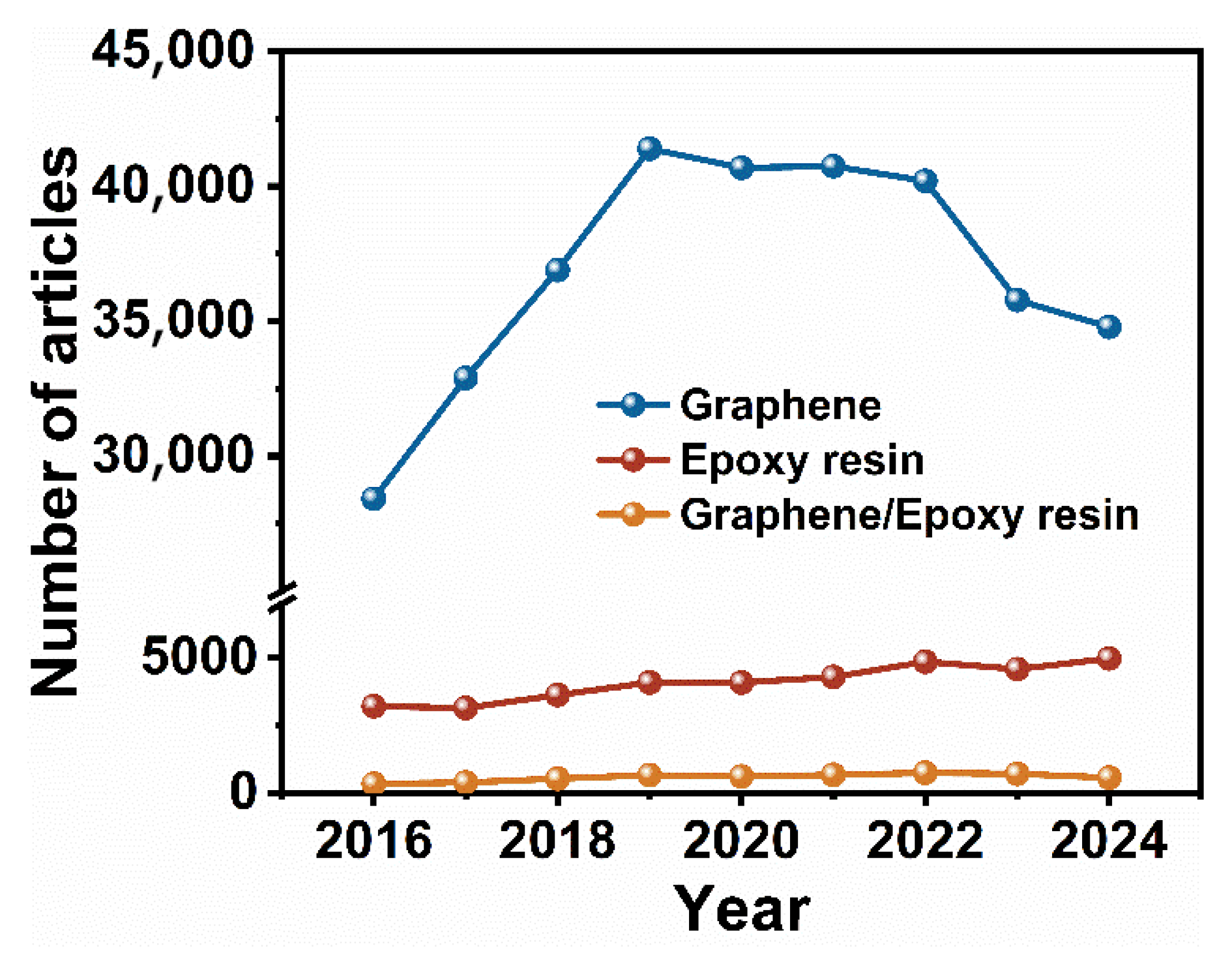
Figure 1. Based on the number of papers published annually in the Web of Science database.
Polymers 17 02342 g001
Figure 3. Methods for preparing graphene.
Polymers 17 02342 g003
Figure 5. (a) Schematic diagram of heat conduction and conduction mechanisms in amorphous and crystalline materials [96]. Copyright 2016, Elsevier. (b) Thermal conductivity mechanism of low/high filler composites [97]. Copyright 2023, John Wiley and Sons.
Polymers 17 02342 g005
Figure 6. Schematic diagram of the three processes: (a) Solution blending method, (b) Melt blending method, and (c) In-situ polymerization method [22]. Copyright 2022, Elsevier.
Polymers 17 02342 g006
Figure 7. Design scheme for constructing an efficient heat-transfer channel in graphene/epoxy composite materials [14]. Copyright 2024, John Wiley and Sons.
Polymers 17 02342 g007
Figure 8. Schematic diagram of the preparation of GO-MDI-AO/EP composite material [121]. Copyright 2024, Elsevier.
Polymers 17 02342 g008
Figure 9. Thermal Conductivity and Mechanisms of EG-Zn/EP Composites. TC values for different fillers (a) and filler loadings (b), Agari model fitting curves (c), (df2) Thermal conduction mechanism models for epoxy resin and different composites [133]. Copyright 2023, Elsevier.
Polymers 17 02342 g009
Figure 10. Schematic of a 3D heat conduction network for efficient heat transfer [97]. Copyright 2023, John Wiley and Sons.
Polymers 17 02342 g010
Figure 11. Thermal conductivity, compressive strength enhancement, thermal conductivity comparison, and 3D-network heat-transfer mechanism of PUF@GF/epoxy composites [142]. Copyright 2021, Elsevier.
Polymers 17 02342 g011
Figure 12. Preparation process of sandwich-type phase change material [159]. Copyright 2025, Elsevier.
Polymers 17 02342 g012
Figure 13. EMI SET, average EMI SE, and shielding enhancement mechanism of composites [138]. Copyright 2023, Elsevier.
Polymers 17 02342 g013
Table 2. Thermal conductivity of polymers and fillers (W·m−1·K−1) [15,19,97]. Copyright 2025, Elsevier. Copyright 2025, Royal Society of Chemistry. Copyright 2023, John Wiley and Sons.
PolymerλFillerλ
EP0.20Au345
PVDF0.19Ag450
PMMA0.21Cu483
PEEK0.25Al204
PDMS0.19ZnO60
PP0.21SiO232
PTFE0.27GO5000
PS0.19CNT3000
PVC0.21Diamond2000
Table 3. Comparison of theoretical models [15,111,112,114]. Copyright 2025, Elsevier. Copyright 2021, Elsevier. Copyright 1962, American Chemical Society. Copyright 2025, Elsevier.
Model TypePhysical MechanismApplicable Scenarios
AMM/DMMphonon volatilitylow-temperature single-crystal interface
H-S/Hequivalent medium approximationspherical/ellipsoidal packing
Foygeltranspiration network topologyhigh-aspect-ratio packing network
MD/FEAatomic motion/continuum equationscomplex interface microstructure
Table 4. Comparison of thermal conductivity properties of graphene-reinforced epoxy resin composites.
EP MatrixFiller Additivesλ/(W·m−1·K−1)Thermal Conductivity Enhancement/%Refs.
Epoxy resin19 wt%GO/EP0.49157 Zhu [138]
Epoxy resin (YDF-170)15 vol%VA-GF/EP0.96465Thieu [91]
Bisphenol-F-type EP (Epikote 862)15 wt% NiCo-GNS/PVDF/EP1.05453Jia [139]
Epoxy resin5 wt%rGO-BTA@HMS/EP1.239596Yang [140]
Bisphenol-A-type epoxy resinMGHN/EP1.5596766Luo [120]
Epoxy resin (E6002)9 wt% PPD-rGO/EP1.7750Lin [141]
Bisphenol-F epoxy (Epon 862)3.98 wt%rGO-ERG/EP1.96931Han [80]
Epoxy resin2.5 wt%F-3DGA/EP2.531388Cui [83]
DGEBA-based epoxy resin (ARALDITE LY1564)22 vol%S-BN/rGO/EP31479Hong [81]
Epoxy resin (E-51)46 vol%TA@BN-rGO-CNT/EP5.652873Li [75]
Epoxy resin (LY1564)5 wt%f-GnP/SiCnw/EP6.23000Wang [88]
Epoxy resin9.10 wt%GO/EP6.813683Ma [62]
Bisphenol-F-type liquid epoxy resin (YD-170)8.04 vol%PUF@GF/EP9.685132Mani [142]
Epoxy resin (waste)33.9 vol%GNP/WEP/EP10.14865Kang [143]
Liquid epoxy resin60 vol%3D-GO/EP16.018326Hu [144]
Epoxy resin (CY 230-1)8 vol%Cu/10vol%CB/42vol%NFG/EP178847Mathew [145]
Epoxy resin (LH288) 4wt%GN/EP40.621,268Zambrzycki [146]
Epoxy resin11.22 wt%GO69.7436,605Ma [14]
Epoxy resin (NPEL-128)5 wt%rGO/BaSO4/EP16586,742Yung [147]
Bisphenol-A epoxy resin23.3 vol% GO/CF/EP262137,794Lu [61]
Table 5. Comparison of electronic packaging material properties [13,19,34,102,146]. Copyright 2024, Elsevier. Copyright 2025, Royal Society of Chemistry. Copyright 2024, Elsevier. Copyright 2022, Springer Nature. Copyright 2021, MDPI.
Material Typeλ/(W·m−1·K−1)Density/(g·cm−3)Processing Compatibility
EP0.17–0.201.1–1.3Excellent
Al2O3/EP1.5–2.51.8–2.2Moderate (with filler settling)
GO/EP5–40.61.2–1.5Good
Ceramic matrix composites15–302.5–3.8Poor (high brittleness)
Table 6. Comparison of thermal conductivity and electromagnetic shielding effectiveness of graphene-reinforced epoxy resin composites.
EP MatrixFiller Additivesλ/(W·m−1·K−1)EMI SE/dBRefs.
Bisphenol-F epoxy (Epon 862)3.98 wt%rGO-ERG/EP1.9645.9Han [80]
Resin film19 wt%GO/CFF0.4951.94Zhu [138]
Bisphenol-F-type EP (Epikote 862)15 wt%NiCo-GNS/EP1.1134.62Jia [139]
Epoxy Acrylate Resin (Derakane-441)6 wt% GSP/EA2.1345.93Du [167]
Epoxy resin 60024.14 wt%GO/C/EP1.1935.23Ba [69]
Bisphenol-F epoxy (Epon 862)3.68 vol%VG-CNT/EP2.2346.9Han [86]
Waste epoxy33.9 vol%GNP/WEP/EP10.1106.3Kang [143]
Epoxy resin (E-44)10 wt%ZnO/EP0.553.3Leng [1]
Epoxy resin (JY-257)20 vol%LMPA/ER1.2320Zhang [169]
P-aminophenol epoxy resin34.64 vol%Al2O3/Al2O3@Fe3O4/EP1.8310.6Guo [170]
EP(JY-257)35 wt%T-Fe3O4@CNTs/EP1.5945.86Da [171]
Disclaimer/Publisher’s Note: The statements, opinions and data contained in all publications are solely those of the individual author(s) and contributor(s) and not of MDPI and/or the editor(s). MDPI and/or the editor(s) disclaim responsibility for any injury to people or property resulting from any ideas, methods, instructions or products referred to in the content.