Interfacial Dynamics in the Fabrication of Various Concave Hydrogel Discs for Enhanced Biosensing



Abstract
1. Introduction
2. Materials and Methods
2.1. Materials
2.2. Methods
2.2.1. Experimental Methods
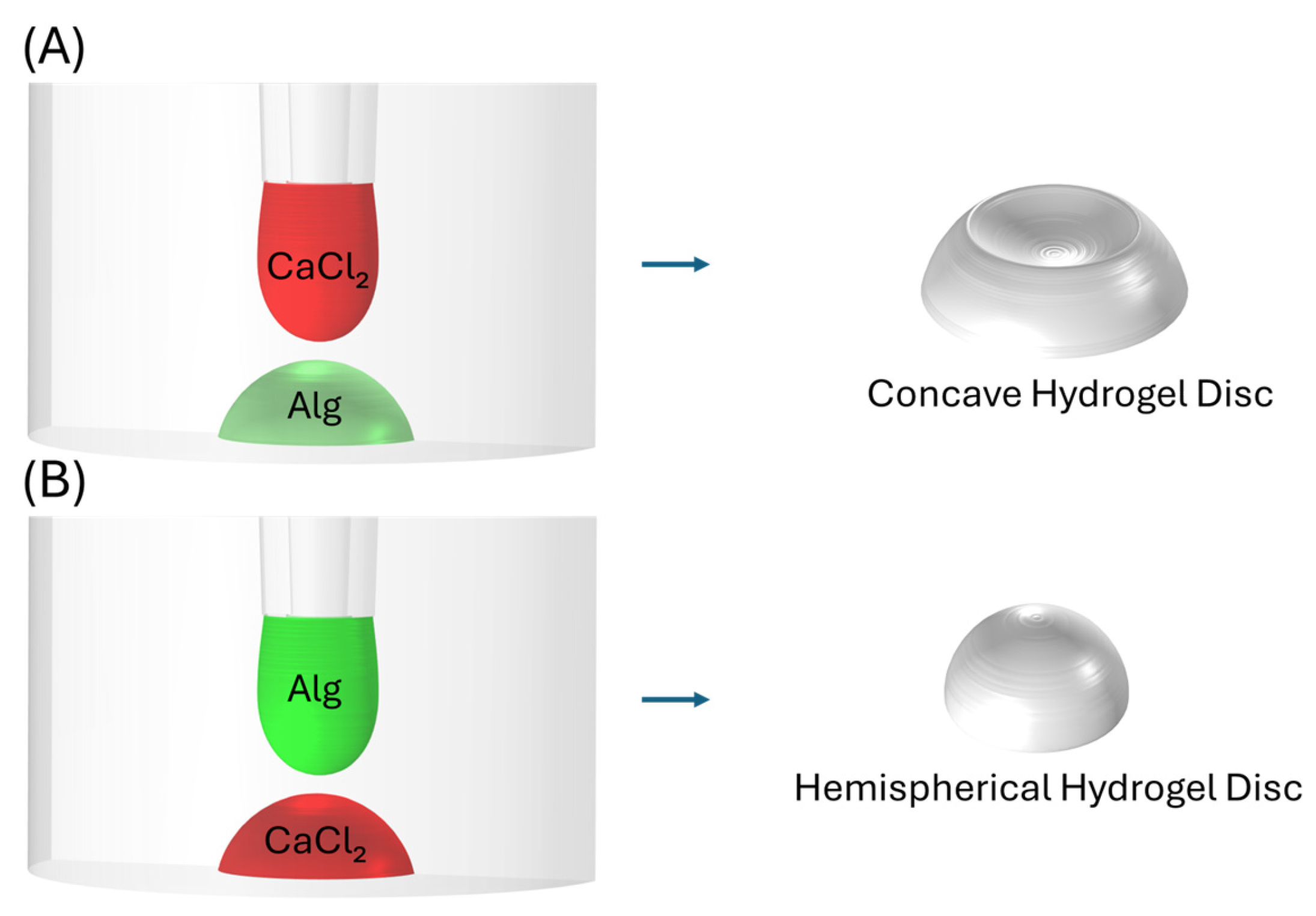
Solution Preparation and Hydrogel Fabrication
Microscopic Imaging
Hydrogel Dissolution Assay
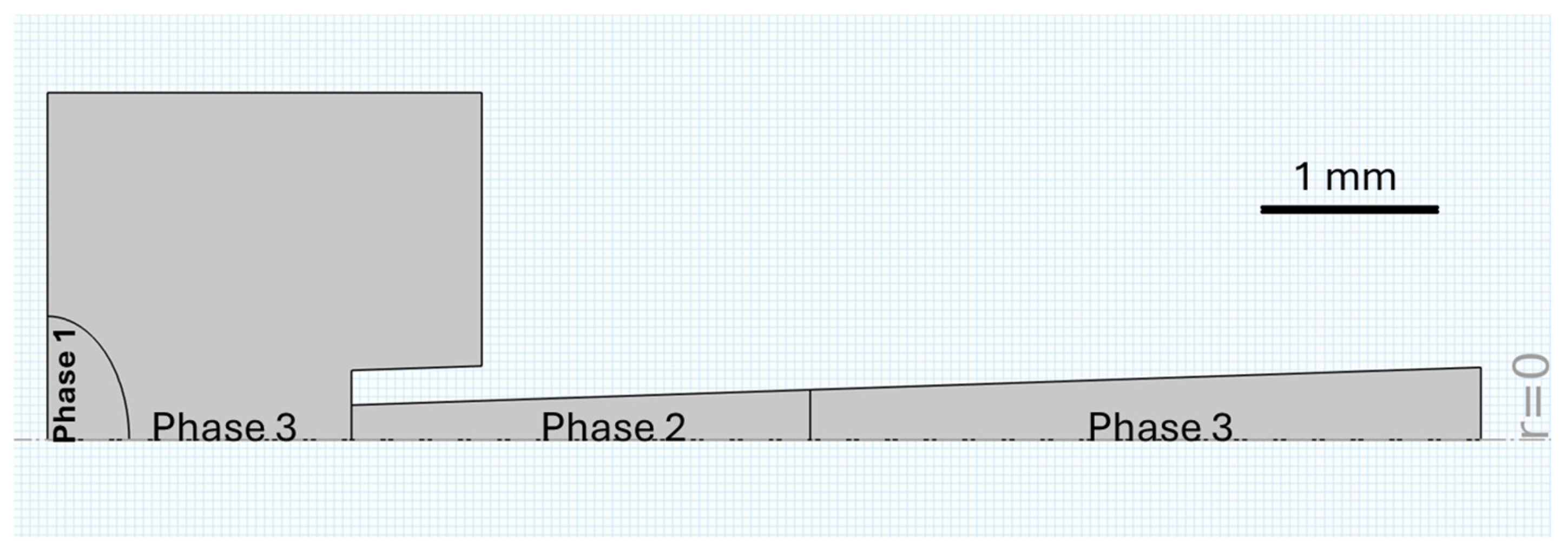
2.2.2. Numerical Methods
3. Results
3.1. Experimental Results
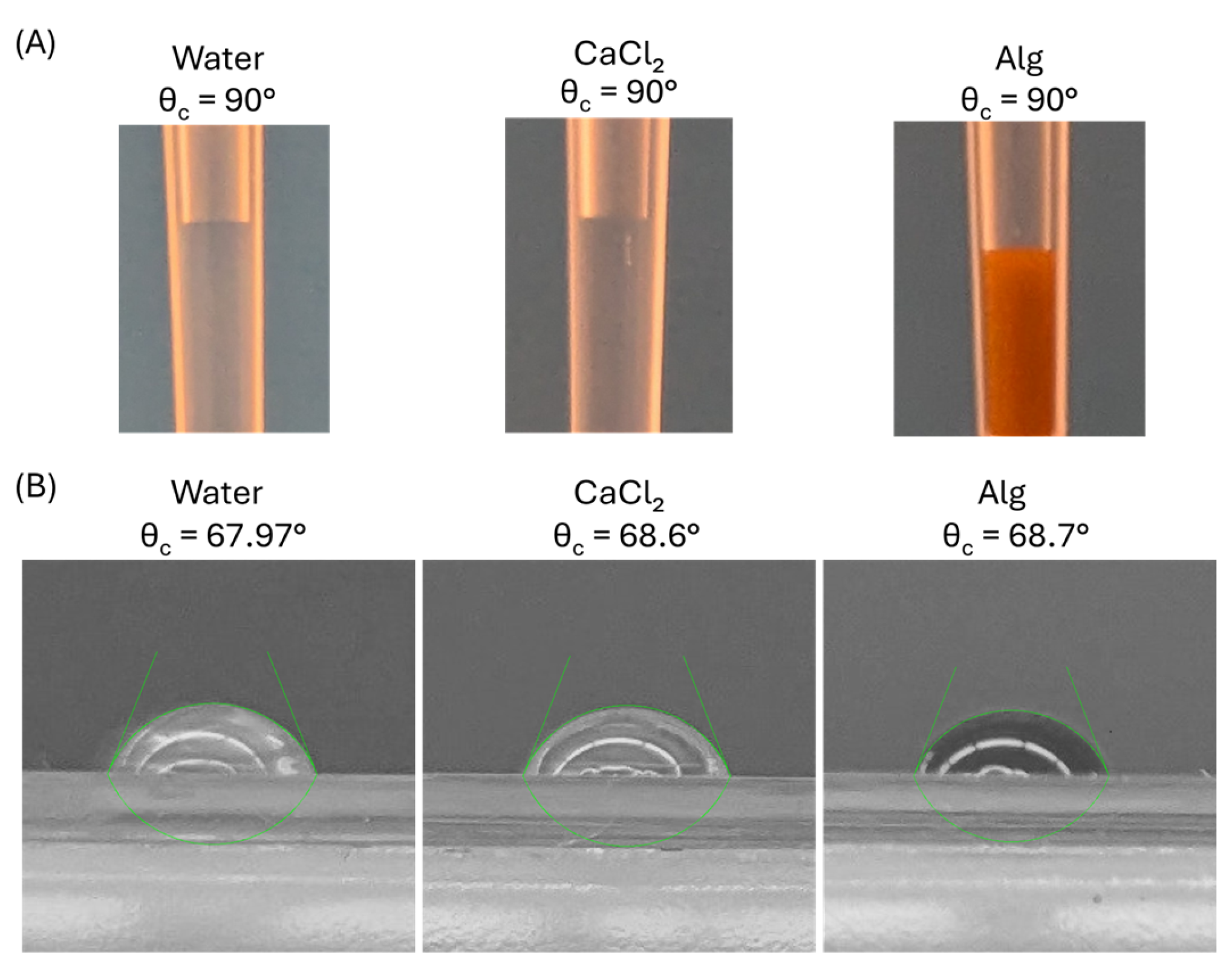
3.2. Validation
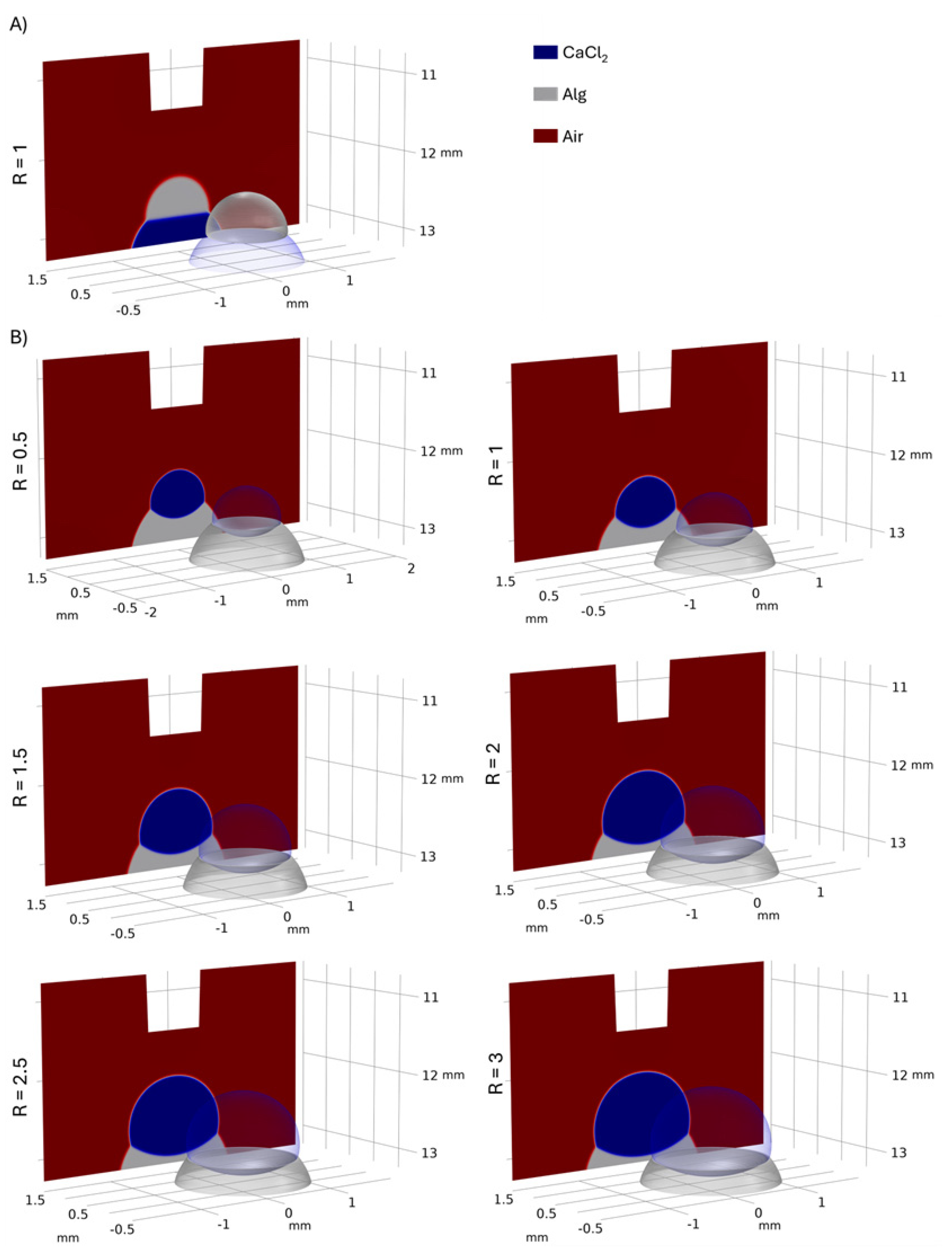
3.3. Numerical Results
4. Conclusions
Supplementary Materials
Author Contributions
Funding
Institutional Review Board Statement
Informed Consent Statement
Data Availability Statement
Conflicts of Interest
References
- Ciarleglio, G.; Toto, E.; Santonicola, M.G. Conductive and Thermo-Responsive Composite Hydrogels with Poly(N-isopropylacrylamide) and Carbon Nanotubes Fabricated by Two-Step Photopolymerization. Polymers 2023, 15, 1022. [Google Scholar] [CrossRef] [PubMed]
- Kieres, W.; Kudłacik-Kramarczyk, S.; Marczyk, J.; Ziejewska, C.; Drabczyk, A.; Socha, R.P.; Krzan, M. Hydrogel Microarray for Bioanalytical Applications: Preliminary Study on Material Properties. Materials 2025, 18, 3118. [Google Scholar] [CrossRef] [PubMed]
- Ren, Y.; Wang, Q.; Xu, W.; Yang, M.; Guo, W.; He, S.; Liu, W. Alginate-based hydrogels mediated biomedical applications: A review. Int. J. Biol. Macromol. 2024, 279, 135019. [Google Scholar] [CrossRef] [PubMed]
- Herrmann, A.; Haag, R.; Schedler, U. Hydrogels and Their Role in Biosensing Applications. Adv. Healthc. Mater. 2021, 10, 2100062. [Google Scholar] [CrossRef]
- Sebben, D.; Strohle, G.; Roy, P.S.; Li, H. Gold-nanoparticle-embedded hydrogel droplets with enhanced fluorescence for imaging and quantification of proteins in cells. Microchim. Acta 2023, 190, 144. [Google Scholar] [CrossRef]
- Arenkov, P.; Kukhtin, A.; Gemmell, A.; Voloshchuk, S.; Chupeeva, V.; Mirzabekov, A. Protein Microchips: Use for Immunoassay and Enzymatic Reactions. Anal. Biochem. 2000, 278, 123–131. [Google Scholar] [CrossRef]
- Henriksson, A.; Neubauer, P.; Birkholz, M. Dielectrophoresis: An Approach to Increase Sensitivity, Reduce Response Time and to Suppress Nonspecific Binding in Biosensors? Biosensors 2022, 12, 784. [Google Scholar] [CrossRef]
- Rahbarshahlan, S.; Ghaffarzadeh Bakhshayesh, A.; Rostamzadeh Khosroshahi, A.; Aligholami, M. Interface study of the fluids in passive micromixers by altering the geometry of inlets. Microsyst. Technol. 2021, 27, 2791–2802. [Google Scholar] [CrossRef]
- Völlmecke, K.; Afroz, R.; Bierbach, S.; Brenker, L.J.; Frücht, S.; Glass, A.; Giebelhaus, R.; Hoppe, A.; Kanemaru, K.; Lazarek, M.; et al. Hydrogel-Based Biosensors. Gels 2022, 8, 768. [Google Scholar] [CrossRef]
- Sun, S.; Chen, J. Recent Advances in Hydrogel-Based Biosensors for Cancer Detection. ACS Appl. Mater. Interfaces 2024, 16, 46988–47002. [Google Scholar] [CrossRef]
- Kinyua, C.K.; Owino, A.O.; Kaur, K.; Das, D.; Karuri, N.W.; Müller, M.; Schönherr, H. Impact of Surface Area on Sensitivity in Autonomously Reporting Sensing Hydrogel Nanomaterials for the Detection of Bacterial Enzymes. Chemosensors 2022, 10, 299. [Google Scholar] [CrossRef]
- Montero, L.; Gabriel, G.; Guimerà, A.; Villa, R.; Gleason, K.K.; Borrós, S. Increasing biosensor response through hydrogel thin film deposition: Influence of hydrogel thickness. Vacuum 2012, 86, 2102–2104. [Google Scholar] [CrossRef]
- Mandon, C.A.; Blum, L.J.; Marquette, C.A. Adding Biomolecular Recognition Capability to 3D Printed Objects. Anal. Chem. 2016, 88, 10767–10772. [Google Scholar] [CrossRef]
- An, D.; Warning, A.; Yancey, K.G.; Chang, C.-T.; Kern, V.R.; Datta, A.K.; Steen, P.H.; Luo, D.; Ma, M. Mass production of shaped particles through vortex ring freezing. Nat. Commun. 2016, 7, 12401. [Google Scholar] [CrossRef] [PubMed]
- Li, M.; Joung, D.; Kozinski, J.A.; Hwang, D.K. Fabrication of Highly Porous Nonspherical Particles Using Stop-Flow Lithography and the Study of Their Optical Properties. Langmuir 2017, 33, 184–190. [Google Scholar] [CrossRef] [PubMed]
- Ghaffarzadeh Bakhshayesh, A.; Li, H. Concave Magnetic-Responsive Hydrogel Discs for Enhanced Bioassays. Biosensors 2024, 14, 596. [Google Scholar] [CrossRef]
- Laia, A.G.S.d.; Costa, E.d.S., Jr.; Costa, H.d.S.; Associacao Brasileira de Ceramica (ABCERAM), Sao Paulo, SP (Brazil); Associacao Brasileira de Metalurgia, Materiais e Mineracao (ABM), Sao Paulo, SP (Brazil); Associacao Brasileira de Polimeros (ABPol), Sao Carlos, SP (Brazil). A study of sodium alginate and calcium chloride interaction through films for intervertebral disc regeneration uses. In Proceedings of the Brazilian Congress of Engineering and Materials Science (21. CBECIMAT), Cuiaba, Brazil, 9–13 November 2014. [Google Scholar]
- Bergeron, S.; Laforte, V.; Lo, P.-S.; Li, H.; Juncker, D. Evaluating mixtures of 14 hygroscopic additives to improve antibody microarray performance. Anal. Bioanal. Chem. 2015, 407, 8451–8462. [Google Scholar] [CrossRef]
- Shao, X.; Tian, M.; Yin, J.; Duan, H.; Tian, Y.; Wang, H.; Xia, C.; Wang, Z.; Zhu, Y.; Wang, Y.; et al. Biofunctionalized dissolvable hydrogel microbeads enable efficient characterization of native protein complexes. Nat. Commun. 2024, 15, 8633. [Google Scholar] [CrossRef]
- Zieliński, T.G.; Venegas, R.; Perrot, C.; Červenka, M.; Chevillotte, F.; Attenborough, K. Benchmarks for microstructure-based modelling of sound absorbing rigid-frame porous media. J. Sound. Vib. 2020, 483, 115441. [Google Scholar] [CrossRef]
- Abdulagatov, I.M.; Azizov, N.D. Viscosity of aqueous calcium chloride solutions at high temperatures and high pressures. Fluid. Phase Equilibria 2006, 240, 204–219. [Google Scholar] [CrossRef]
- Nie, H.; He, A.; Zheng, J.; Xu, S.; Li, J.; Han, C.C. Effects of Chain Conformation and Entanglement on the Electrospinning of Pure Alginate. Biomacromolecules 2008, 9, 1362–1365. [Google Scholar] [CrossRef]
- Sahir, A.H.; Emon, S.S. Observation of upstream particle movement without the involvement of the marangoni effect. PLoS ONE 2025, 20, e0317312. [Google Scholar] [CrossRef]
- Girifalco, L.A.; Good, R.J. A Theory for the Estimation of Surface and Interfacial Energies. I. Derivation and Application to Interfacial Tension. J. Phys. Chem. 1957, 61, 904–909. [Google Scholar]
- Sena, J.; Johannissen, L.O.; Blaker, J.J.; Hay, S. A Machine Learning Model for the Prediction of Water Contact Angles on Solid Polymers. J. Phys. Chem. B 2025, 129, 2739–2745. [Google Scholar] [CrossRef]
- Kim, K.-H.; Cho, J.-S.; Choi, D.-J.; Koh, S.-K. Hydrophilic group formation and cell culturing on polystyrene Petri-dish modified by ion-assisted reaction. Nucl. Instrum. Methods Phys. Res. Sect. B Beam Interact. Mater. At. 2001, 175–177, 542–547. [Google Scholar] [CrossRef]
- Stalder, A.F.; Kulik, G.; Sage, D.; Barbieri, L.; Hoffmann, P. A snake-based approach to accurate determination of both contact points and contact angles. Colloids Surf. A Physicochem. Eng. Asp. 2006, 286, 92–103. [Google Scholar] [CrossRef]
- Senturk Parreidt, T.; Müller, K.; Schmid, M. Alginate-Based Edible Films and Coatings for Food Packaging Applications. Foods 2018, 7, 170. [Google Scholar] [CrossRef]


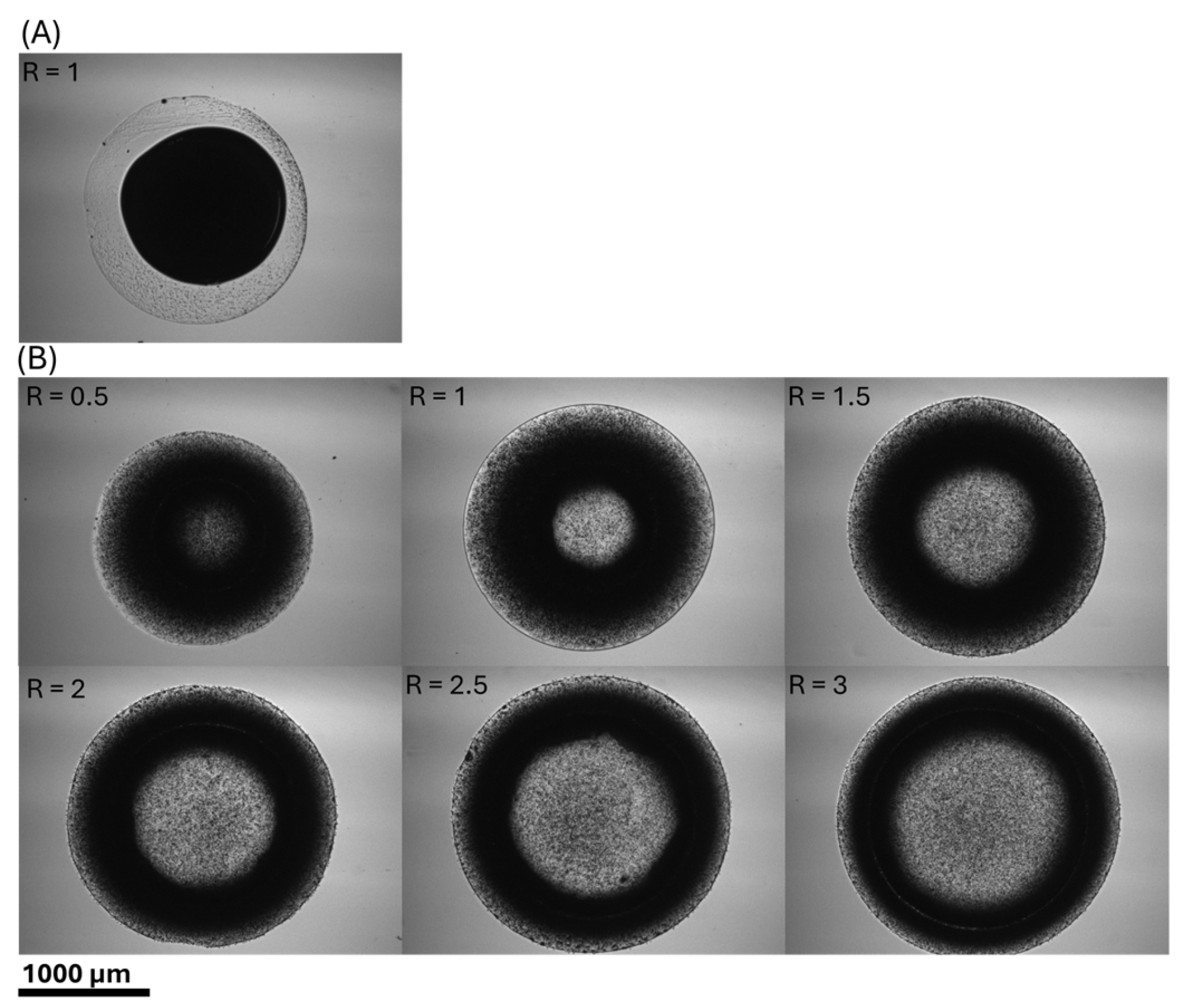
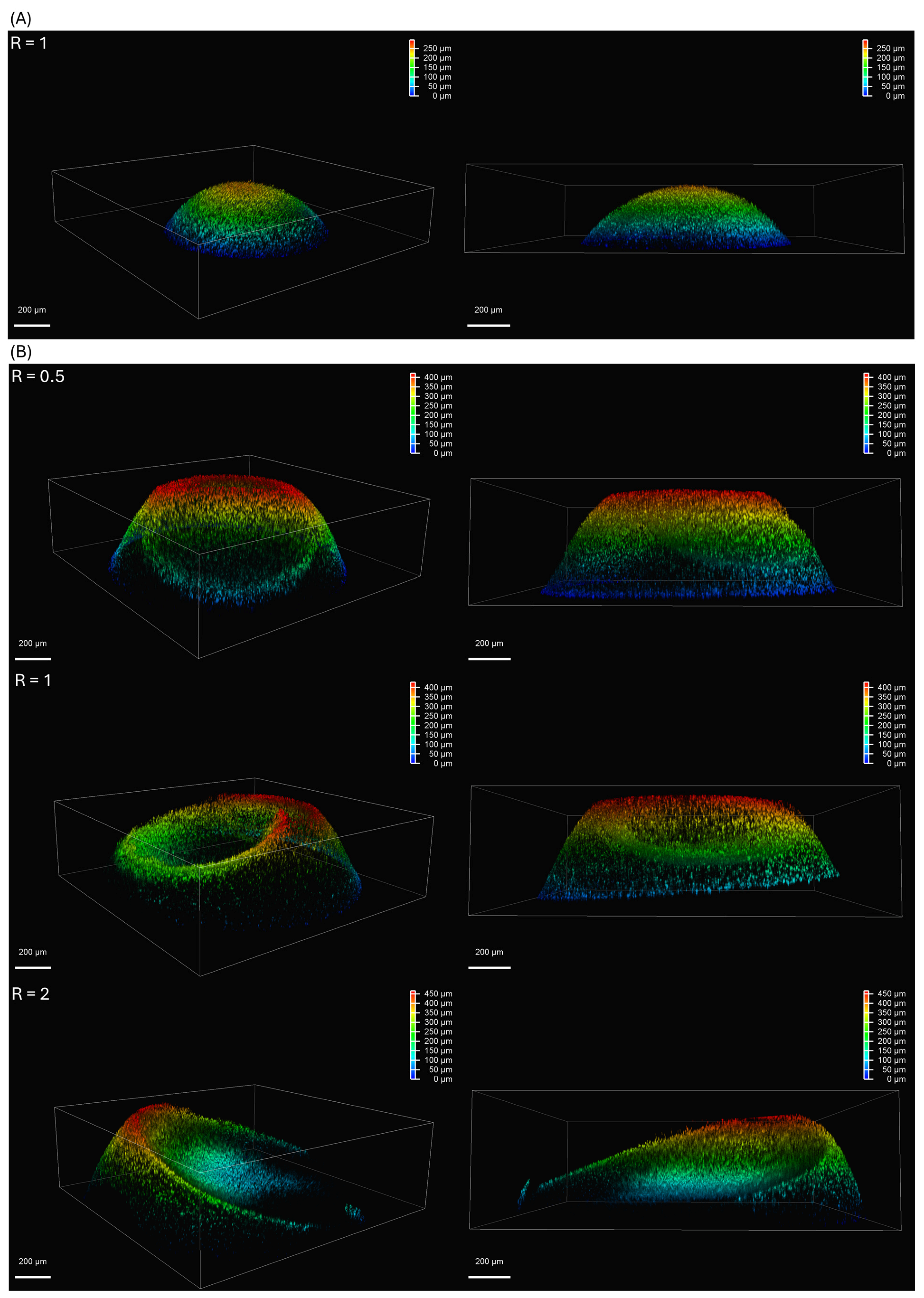
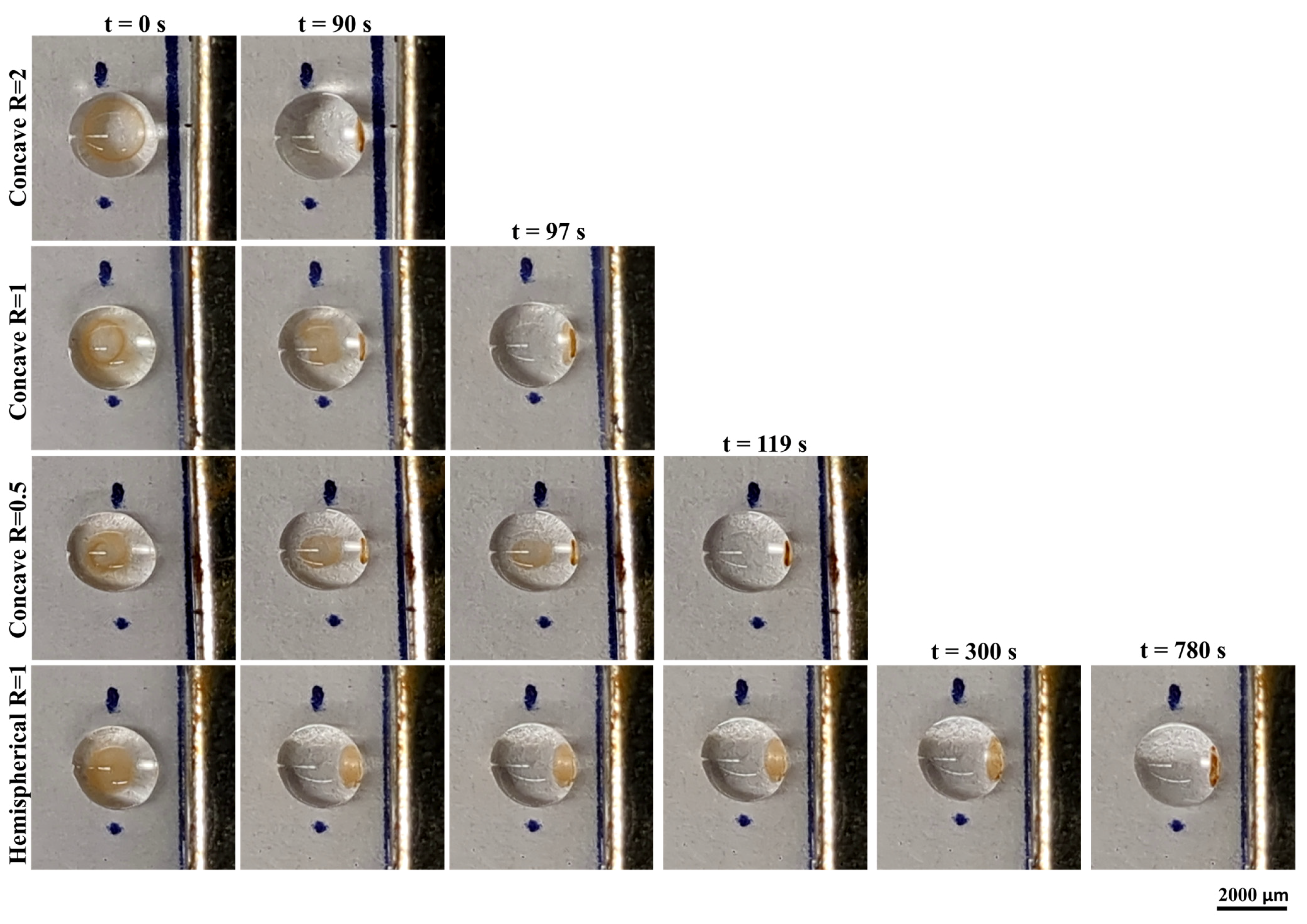

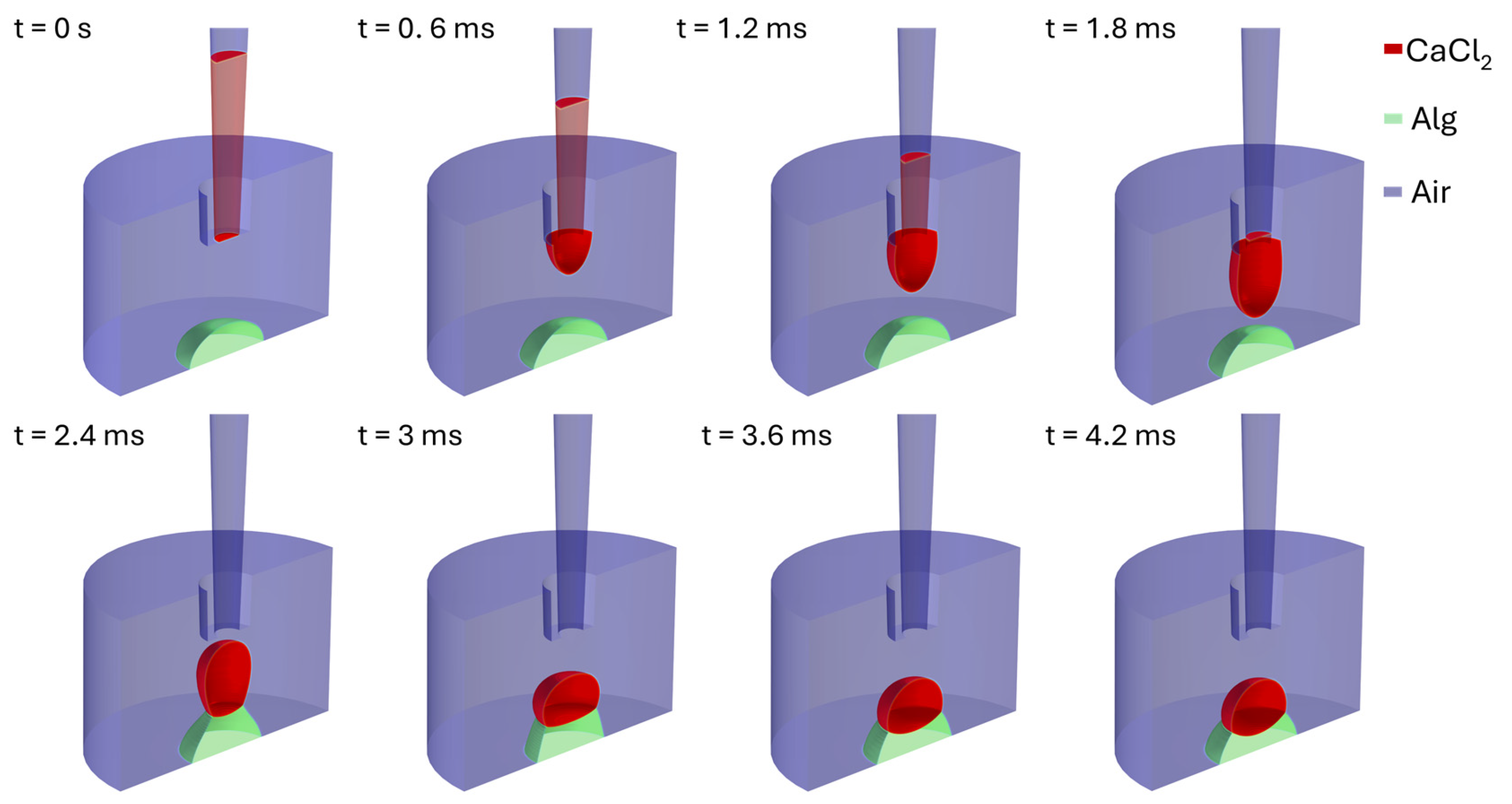

| Configuration | Volume Ratio | Minimum Thickness (µm) | Disc Diameter (µm) | Average Ring Thickness (µm) | Maximum Height (µm) | ||||||||
|---|---|---|---|---|---|---|---|---|---|---|---|---|---|
| E | N | % Error | E | N | % Error | E | N | % Error | E | N | % Error | ||
| CaCl2-first | 1 | _ | _ | _ | 959 | 900 | 6.15 | _ | _ | _ | 301 | 408 | 35.55 |
| Alginate-first | 0.5 | 238 | 240 | 0.84 | 1341 | 1370 | 2.16 | 330 | 412 | 24.85 | _ | _ | _ |
| Alginate-first | 1 | 168 | 165 | 1.79 | 1367 | 1380 | 0.95 | 322 | 342 | 6.21 | _ | _ | _ |
| Alginate-first | 2 | 93 | 80 | 13.98 | 1681 | 1564 | 6.96 | 286 | 270 | 5.59 | _ | _ | _ |
| Configuration | Volume Ratio | Surface Area (mm2) | Diameter (µm) |
|---|---|---|---|
| CaCl2-first | 1 | 1.58 | 900 |
| Alginate-first | 0.5 | 2.74 | 1370 |
| Alginate-first | 1 | 2.89 | 1380 |
| Alginate-first | 1.5 | 3.02 | 1462 |
| Alginate-first | 2 | 3.26 | 1564 |
| Alginate-first | 2.5 | 3.37 | 1624 |
| Alginate-first | 3 | 3.56 | 1706 |
Disclaimer/Publisher’s Note: The statements, opinions and data contained in all publications are solely those of the individual author(s) and contributor(s) and not of MDPI and/or the editor(s). MDPI and/or the editor(s) disclaim responsibility for any injury to people or property resulting from any ideas, methods, instructions or products referred to in the content. |
© 2025 by the authors. Licensee MDPI, Basel, Switzerland. This article is an open access article distributed under the terms and conditions of the Creative Commons Attribution (CC BY) license (https://creativecommons.org/licenses/by/4.0/).
Share and Cite
Bakhshayesh, A.G.; Cook, K.; Li, H. Interfacial Dynamics in the Fabrication of Various Concave Hydrogel Discs for Enhanced Biosensing. Polymers 2025, 17, 2341. https://doi.org/10.3390/polym17172341
Bakhshayesh AG, Cook K, Li H. Interfacial Dynamics in the Fabrication of Various Concave Hydrogel Discs for Enhanced Biosensing. Polymers. 2025; 17(17):2341. https://doi.org/10.3390/polym17172341
Chicago/Turabian StyleBakhshayesh, Amin Ghaffarzadeh, Kara Cook, and Huiyan Li. 2025. "Interfacial Dynamics in the Fabrication of Various Concave Hydrogel Discs for Enhanced Biosensing" Polymers 17, no. 17: 2341. https://doi.org/10.3390/polym17172341
APA StyleBakhshayesh, A. G., Cook, K., & Li, H. (2025). Interfacial Dynamics in the Fabrication of Various Concave Hydrogel Discs for Enhanced Biosensing. Polymers, 17(17), 2341. https://doi.org/10.3390/polym17172341