Review

Towards Enhanced Electrospinning of Alginate—Can Recent Strategies Overcome Limitations? A Review


Department of Engineering and Technology of Chemical Processes, Faculty of Chemistry, Wroclaw University of Science and Technology, Gdanska 7/9, 50-344 Wroclaw, Poland
*
Authors to whom correspondence should be addressed.
Polymers 2025, 17(16), 2255; https://doi.org/10.3390/polym17162255
Submission received: 23 July 2025 / Revised: 14 August 2025 / Accepted: 15 August 2025 / Published: 20 August 2025

Abstract

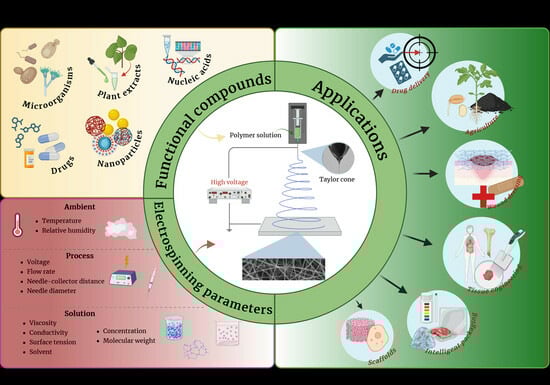
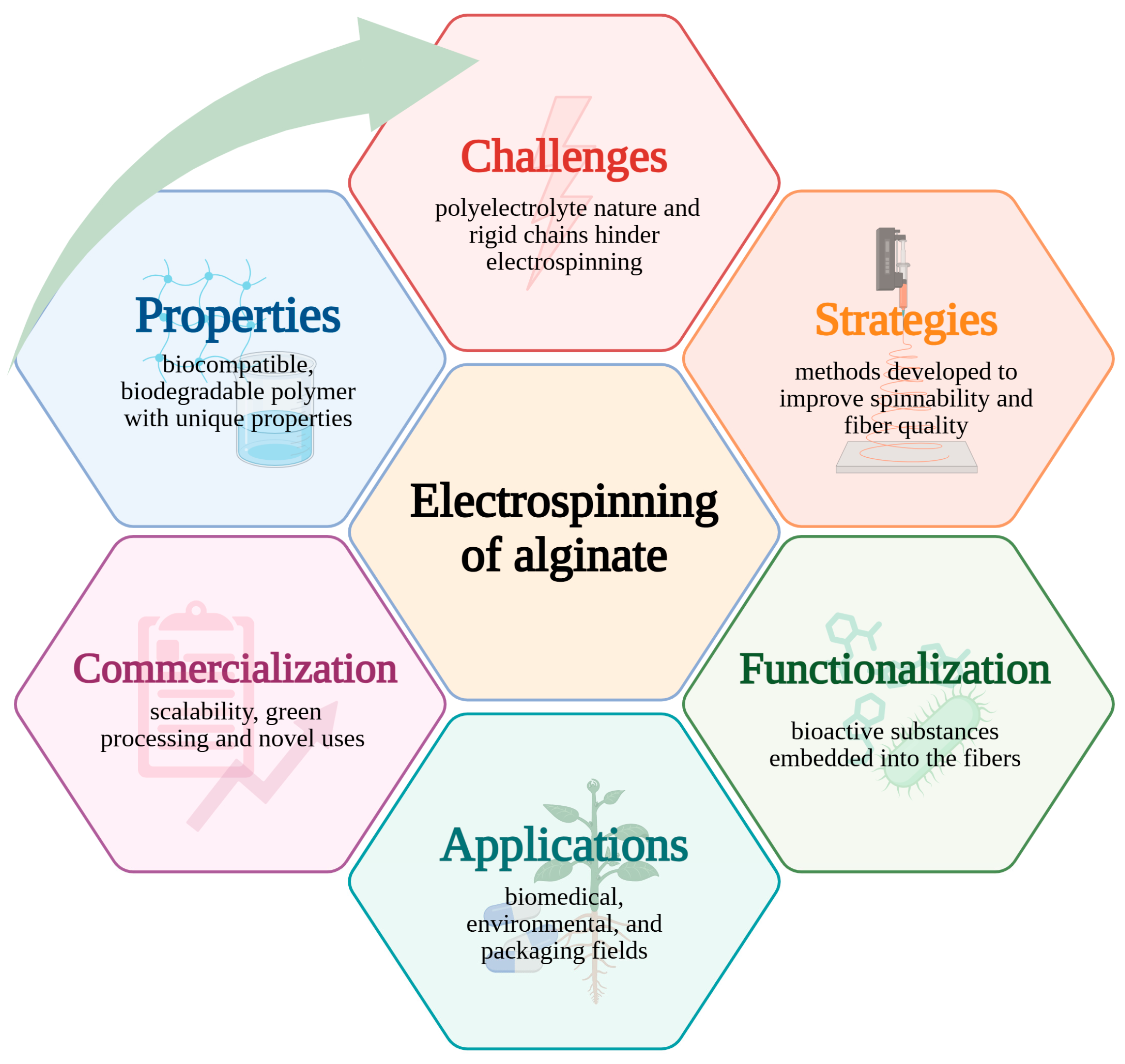
Electrospun alginate nanofibers are emerging as versatile materials for biomedical, environmental, and packaging applications due to their biocompatibility, biodegradability, and functional tunability. However, the direct electrospinning of alginate remains a significant challenge, mainly due to its polyelectrolytic nature, rigid chain structure, and limited chain entanglement. This review provides a comprehensive analysis of recent strategies developed to overcome these limitations, including polymer blending, chemical modification, the addition of surfactants, multi-fluid techniques, and process optimization. We systematically discuss the integration of nanofibers with functional agents such as microorganisms, bioactive compounds, plant extracts, and nanoparticles, highlighting their potential in wound healing, active packaging, bioremediation, and controlled release systems. This review also examines the scalability of alginate electrospinning, summarizing recent patents, industrial solutions, and challenges related to the standardization of the process. Key knowledge gaps are identified, including the need for long-term stability studies, structure–function correlations, green processing approaches, and expansion into novel application domains beyond healthcare. Addressing these research directions will be crucial to unlocking the full potential of alginate nanofibers as sustainable, high-performance materials for industrial use.
Keywords: electrospinning; alginate; nanofibers; biopolymers; functionalization electrospinning; alginate; nanofibers; biopolymers; functionalization
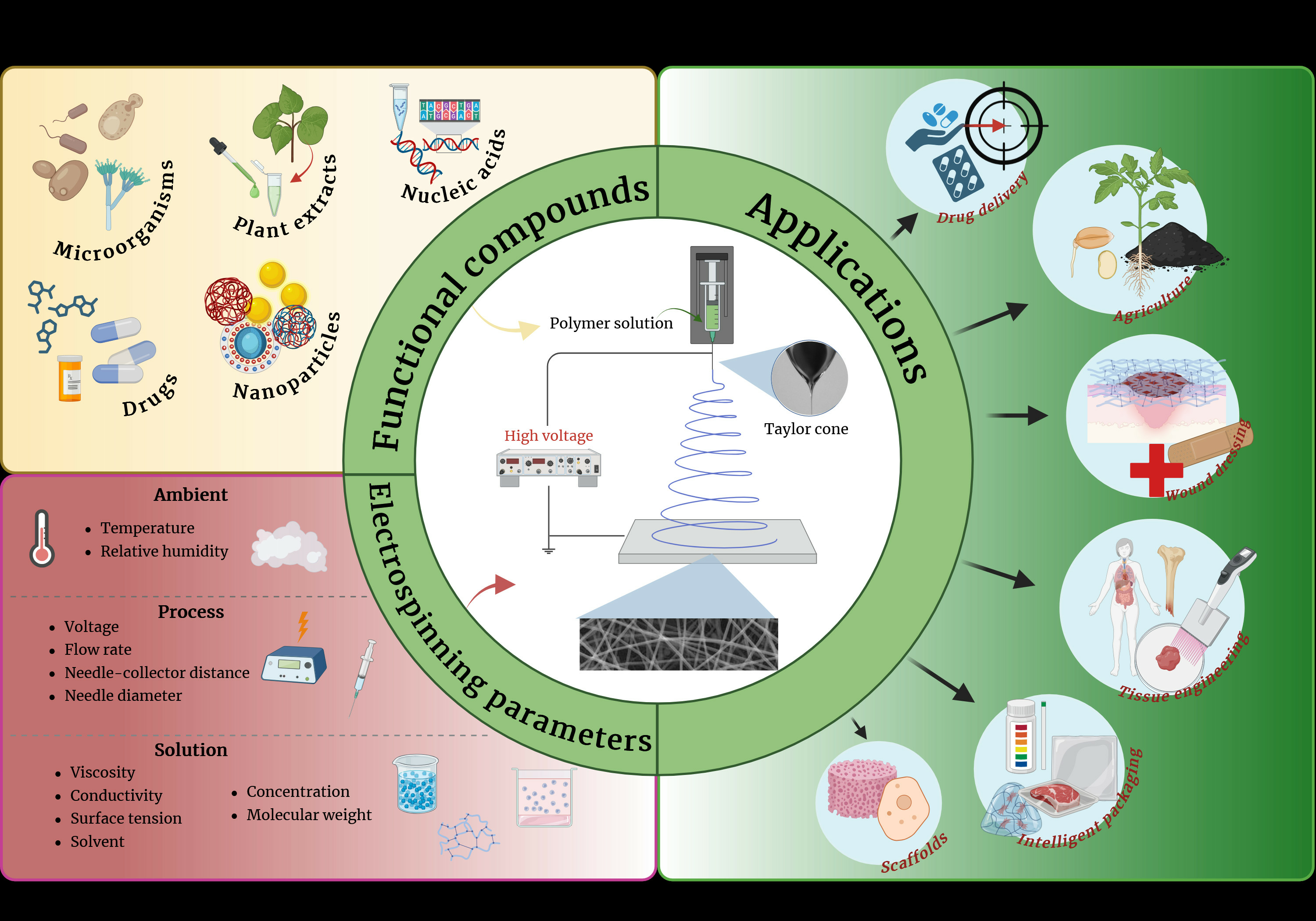
Graphical Abstract