Article

Kinetics Study of PVA Polymer by Model-Free and Model-Fitting Methods Using TGA

by
Zaid Abdulhamid Alhulaybi
* and
Ibrahim Dubdub
*
Chemical Engineering Department, King Faisal University, P.O. Box 380, Al-Ahsa 31982, Saudi Arabia
*
Authors to whom correspondence should be addressed.
Polymers 2024, 16(5), 629; https://doi.org/10.3390/polym16050629
Submission received: 23 January 2024 / Revised: 16 February 2024 / Accepted: 23 February 2024 / Published: 26 February 2024
(This article belongs to the Special Issue Molecular Simulation and Modeling of Polymers II)

Abstract

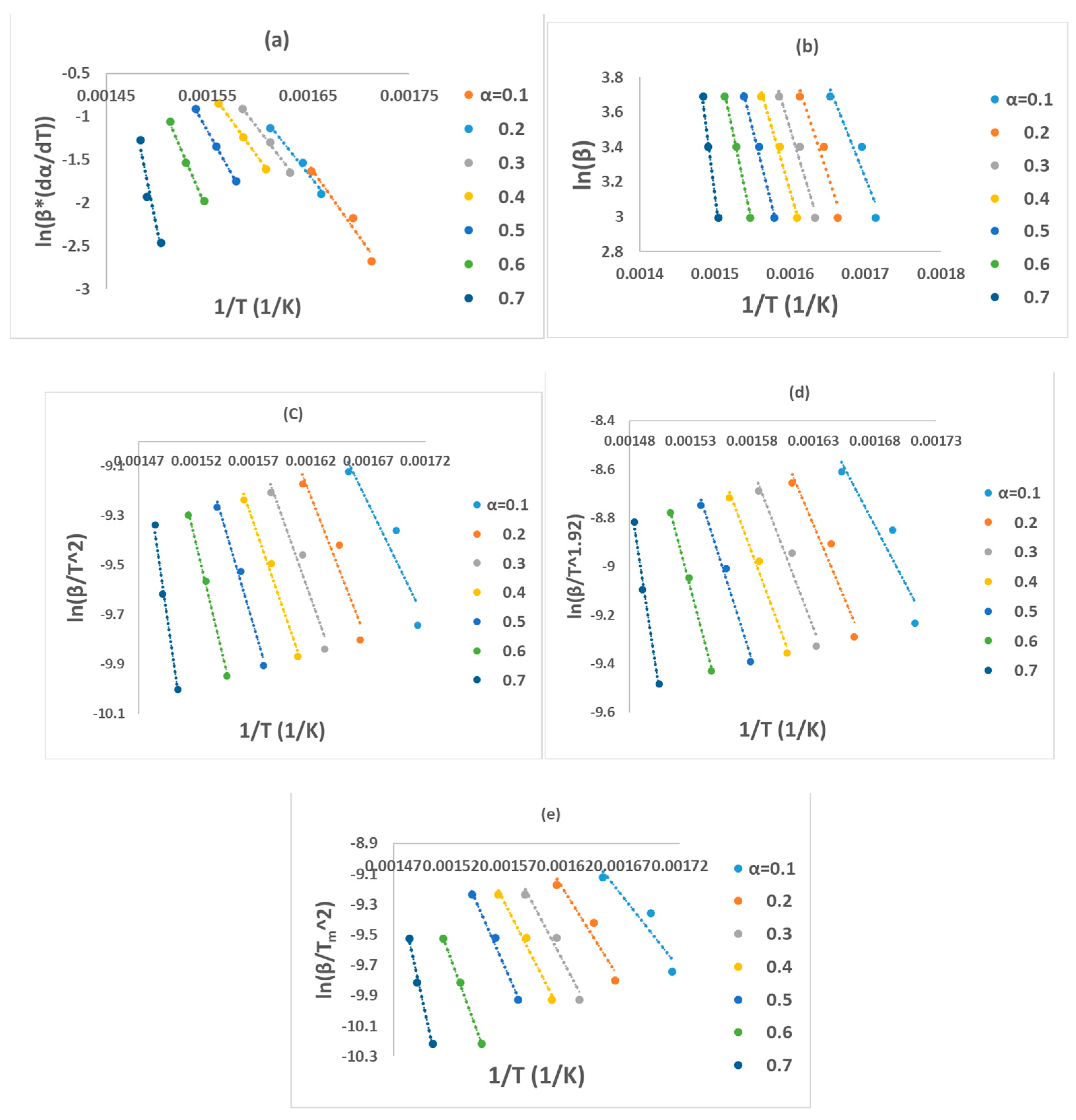
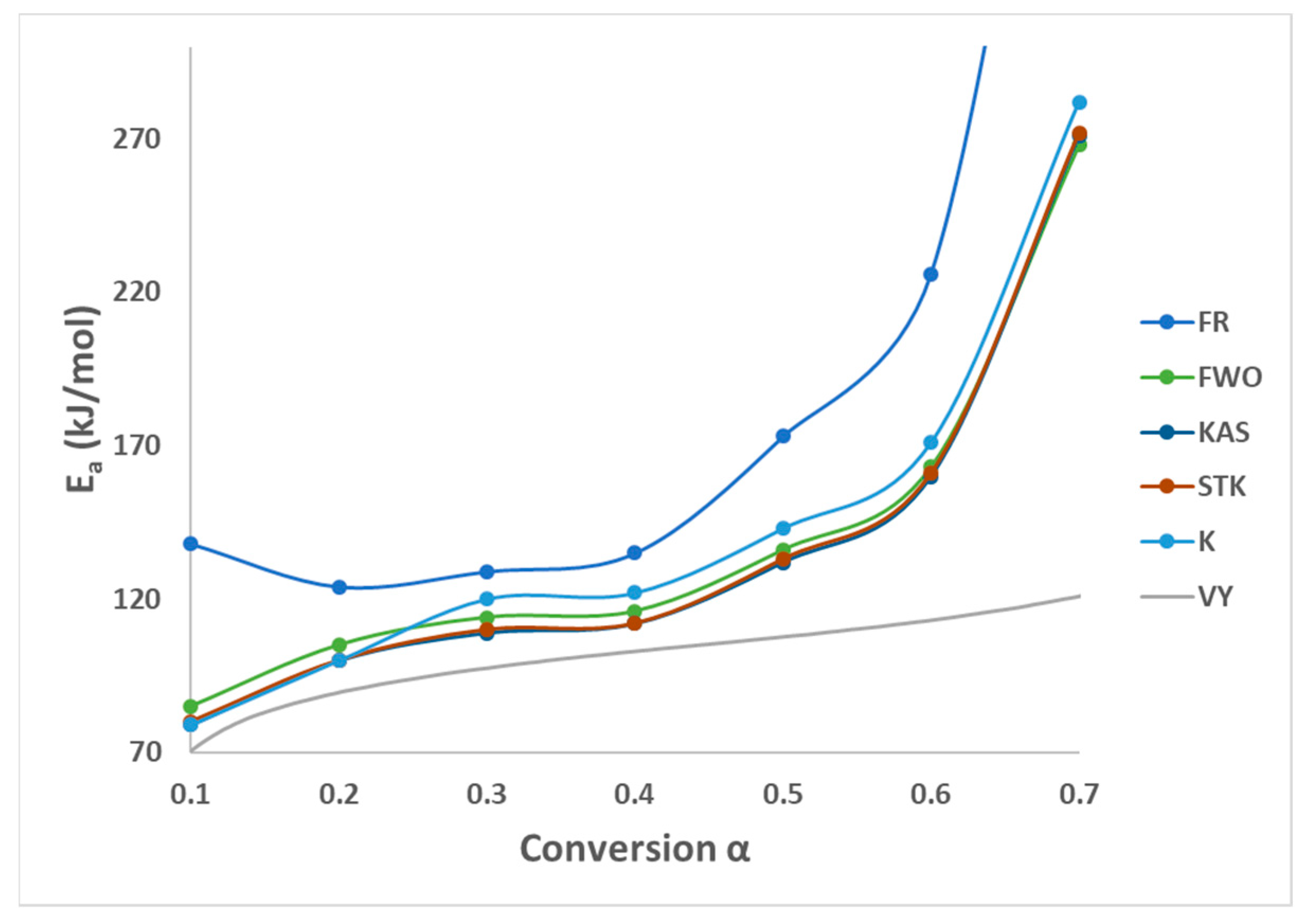
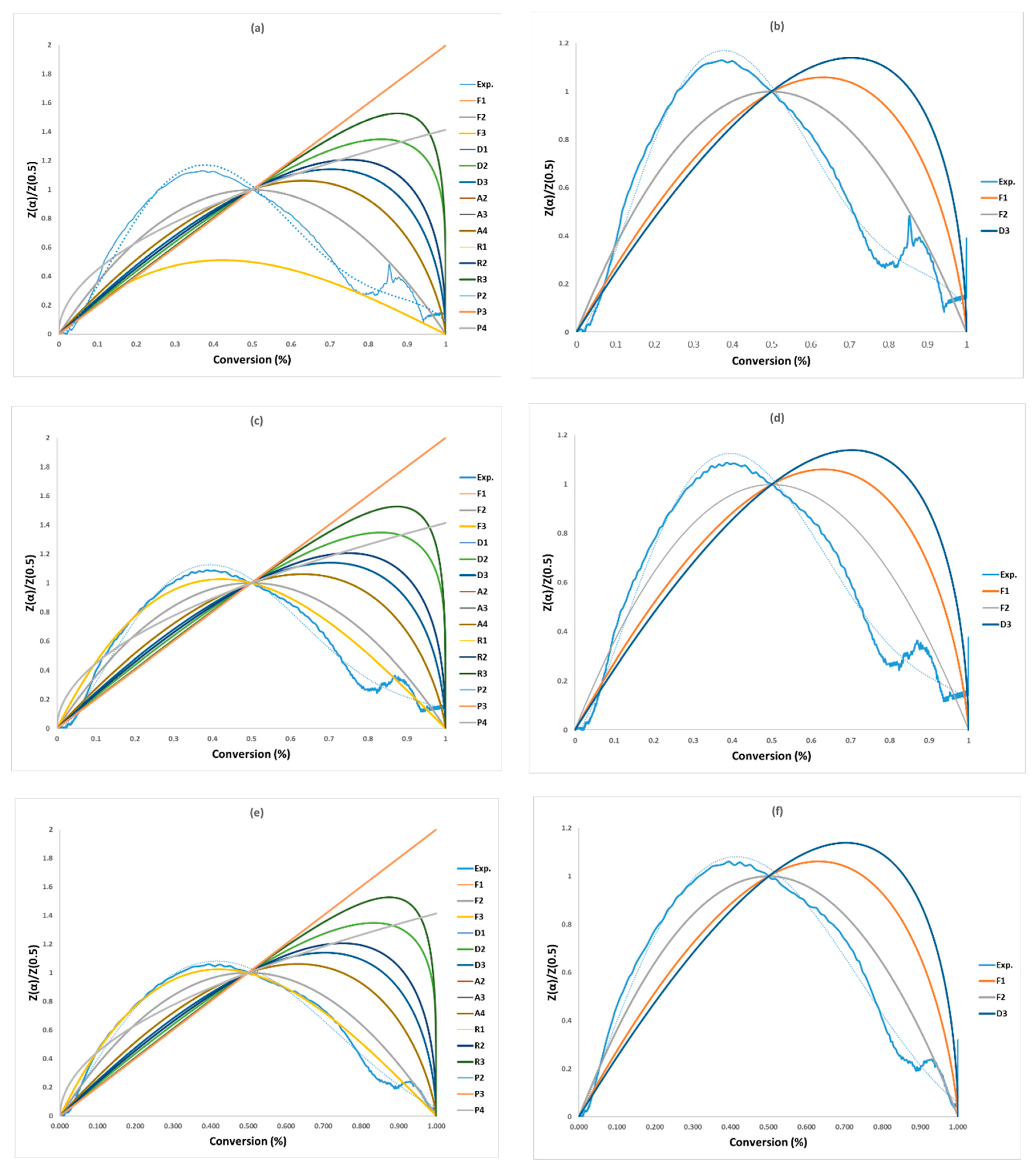
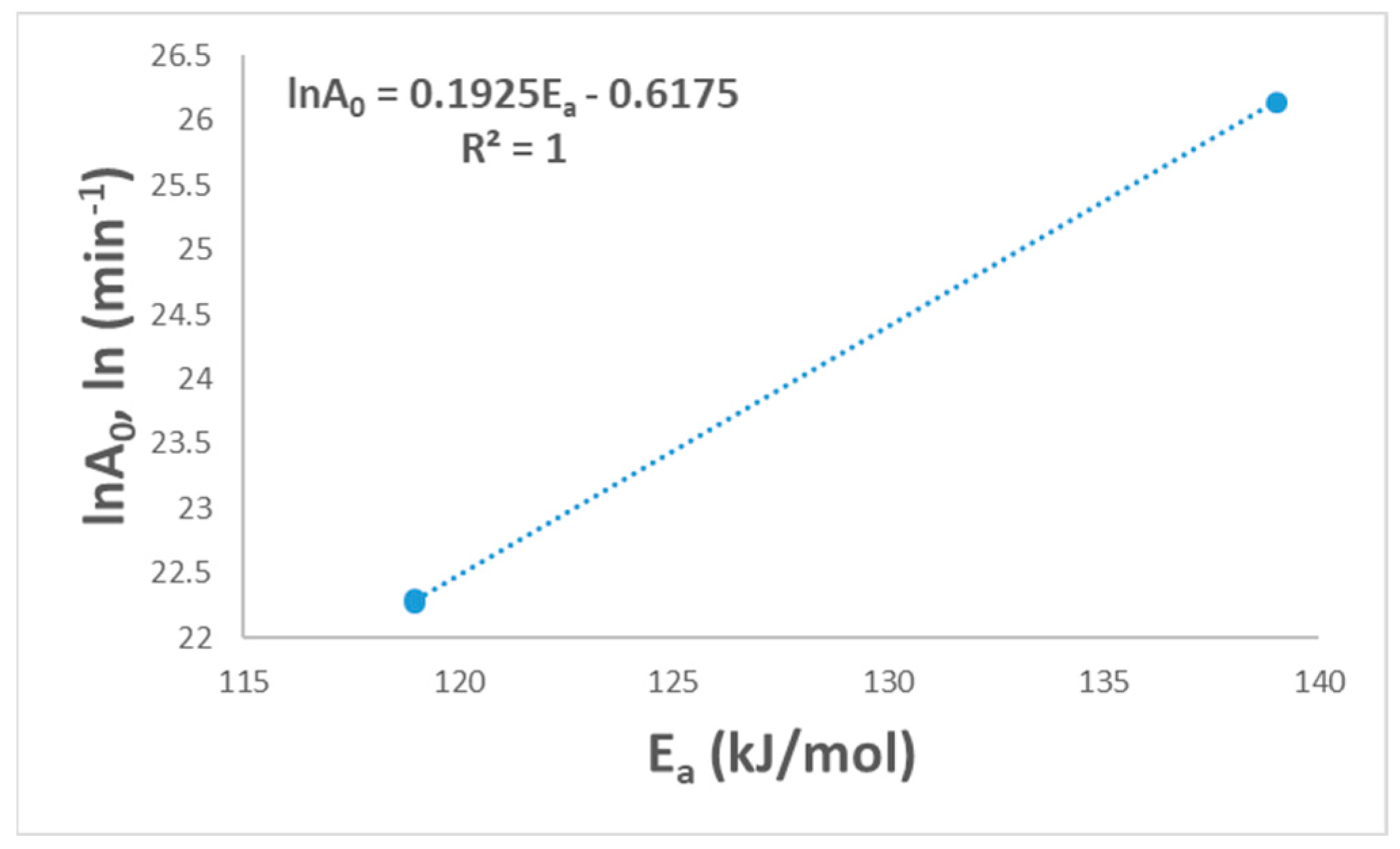
Thermogravimetric Analysis (TGA) serves a pivotal technique for evaluating the thermal behavior of Polyvinyl alcohol (PVA), a polymer extensively utilized in the production of fibers, films, and membranes. This paper targets the kinetics of PVA thermal degradation using high three heating rate range 20, 30, and 40 K min−1. The kinetic study was performed using six model-free methods: Freidman (FR), Flynn-Wall-Qzawa (FWO), Kissinger-Akahira-Sunose (KAS), Starink (STK), Kissinger (K), and Vyazovkin (VY) for the determination of the activation energy (Ea). TGA showed two reaction stages: the main one at 550–750 K and the second with 700–810 K. But only the first step has been considered in calculating Ea. The average activation energy values for the conversion range (0.1–0.7) are between minimum 104 kJ mol−1 by VY to maximum 199 kJ mol−1 by FR. Model-fitting has been applied by combing Coats–Redfern (CR) with the master plot (Criado’s) to identify the most convenient reaction mechanism. Ea values gained by the above six models were very similar with the average value of (126 kJ mol−1) by CR. The reaction order models-Second order (F2) was recommended as the best mechanism reaction for PVA pyrolysis. Mechanisms were confirmed by the compensation effect. Finally, (∆H, ∆G, and ∆S) parameters were presented and proved that the reaction is endothermic.
Keywords: polyvinyl alcohol (PVA); decomposition; TGA; kinetics; model-free; model-fitting polyvinyl alcohol (PVA); decomposition; TGA; kinetics; model-free; model-fitting