Article

HPMC Hydrogel Formation Mechanisms Unveiled by the Evaluation of the Activation Energy
Department of Engineering, University of Campania “Luigi Vanvitelli”, Real Casa dell’Annunziata, Via Roma 29, 81031 Aversa, Italy
*
Author to whom correspondence should be addressed.
Polymers 2022, 14(3), 635; https://doi.org/10.3390/polym14030635
Submission received: 23 December 2021 / Revised: 4 February 2022 / Accepted: 5 February 2022 / Published: 7 February 2022
(This article belongs to the Collection Hydrogels)

Abstract

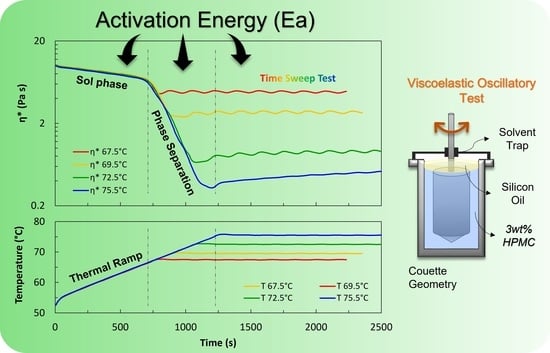
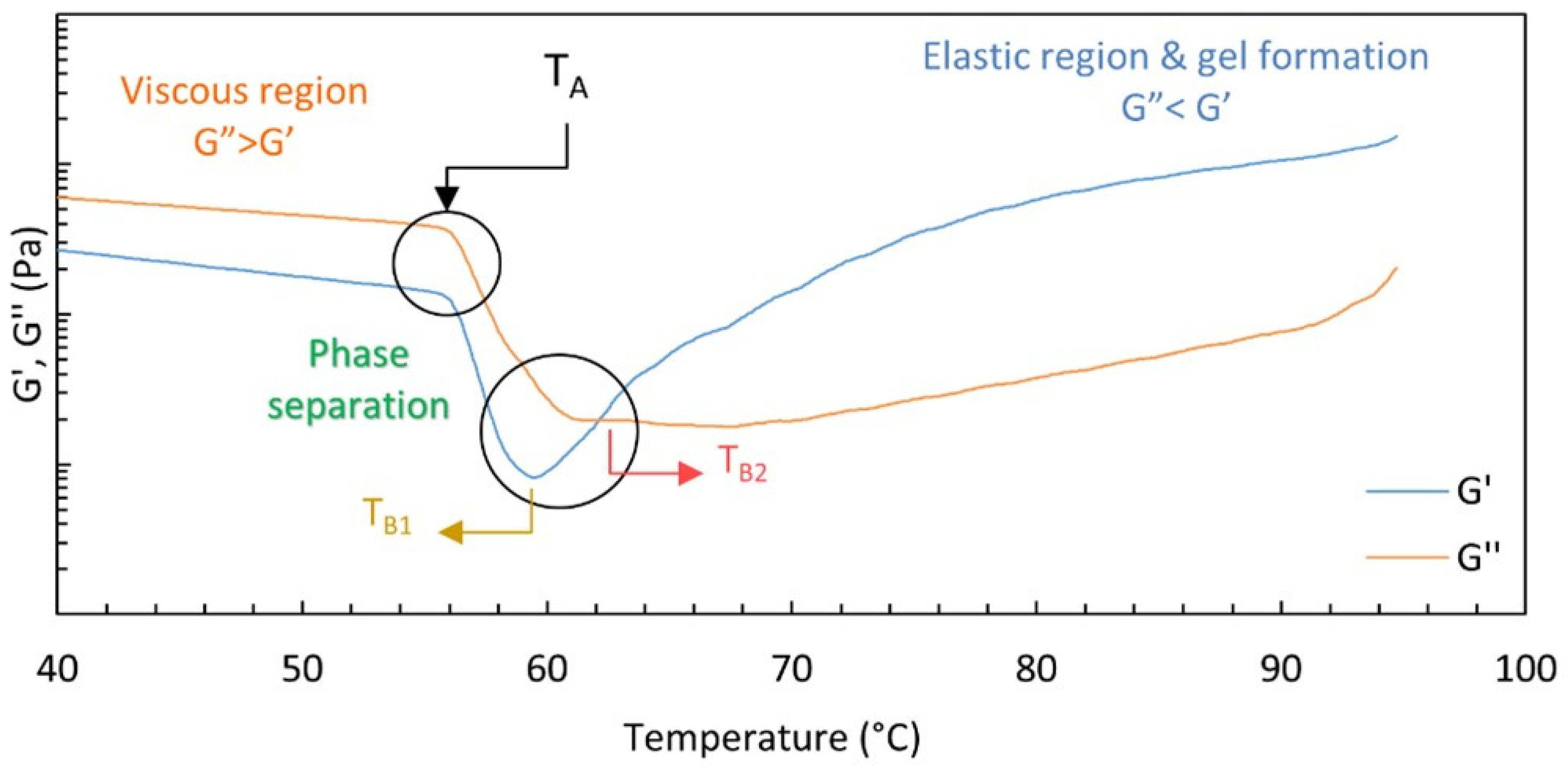
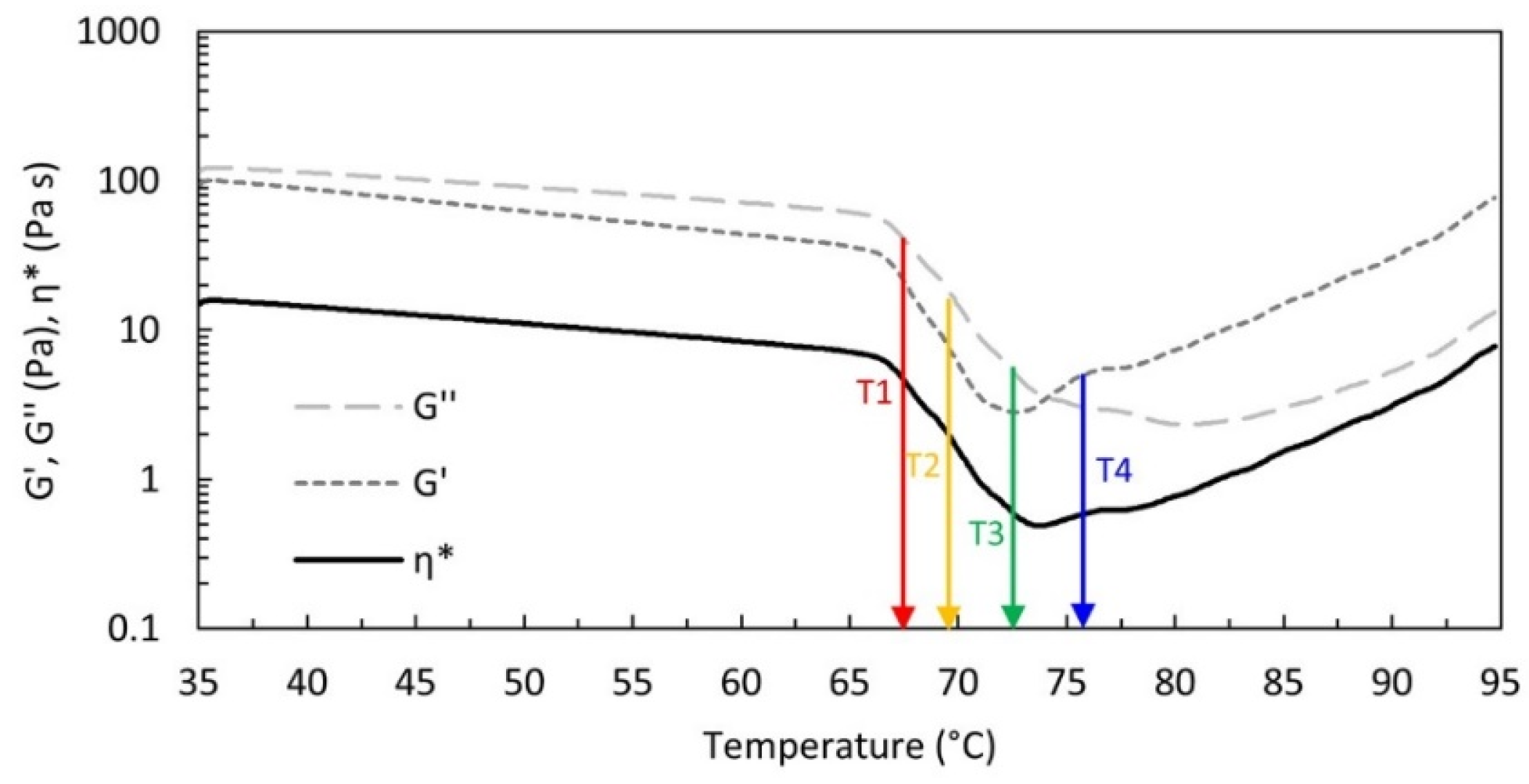
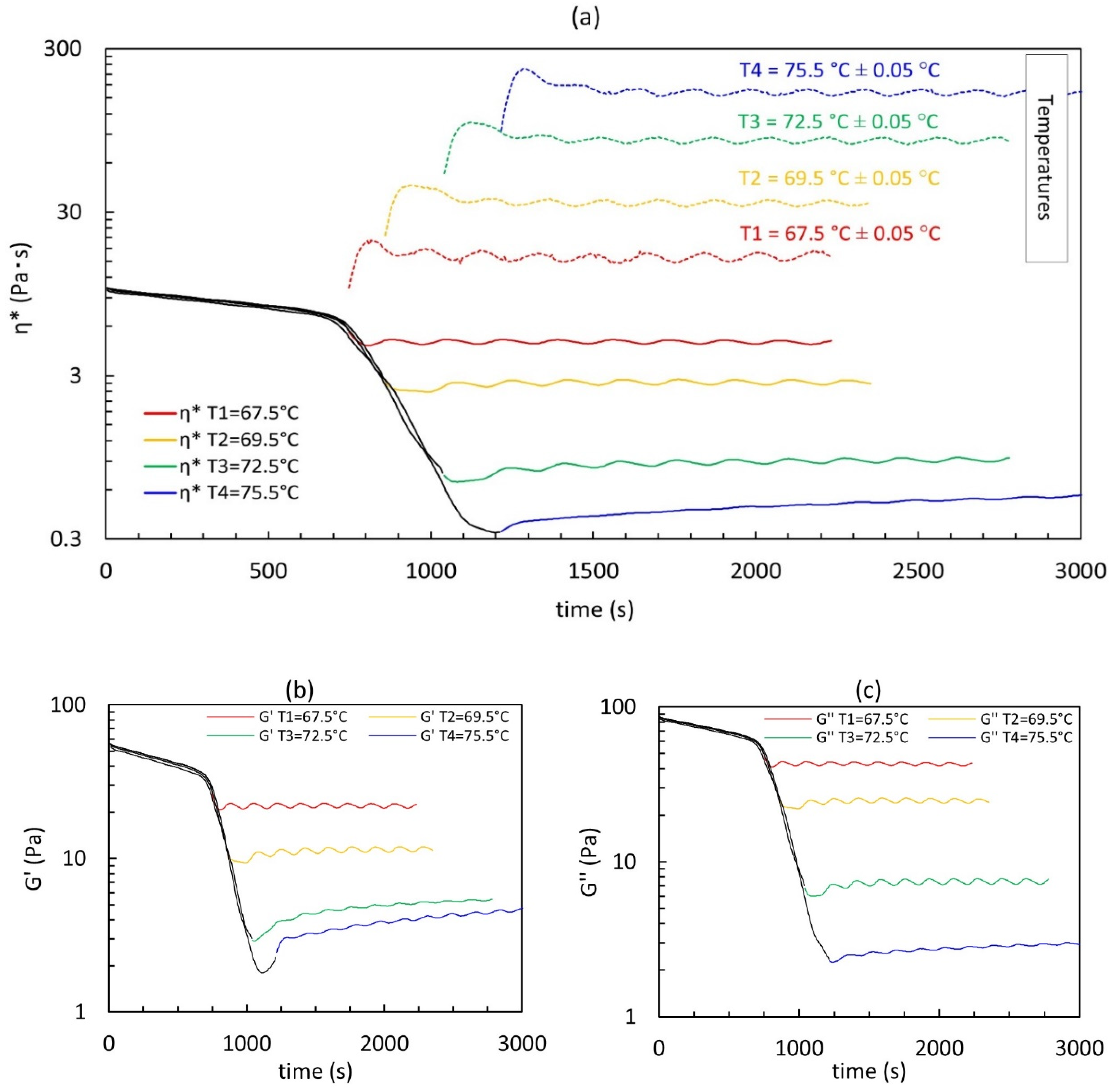
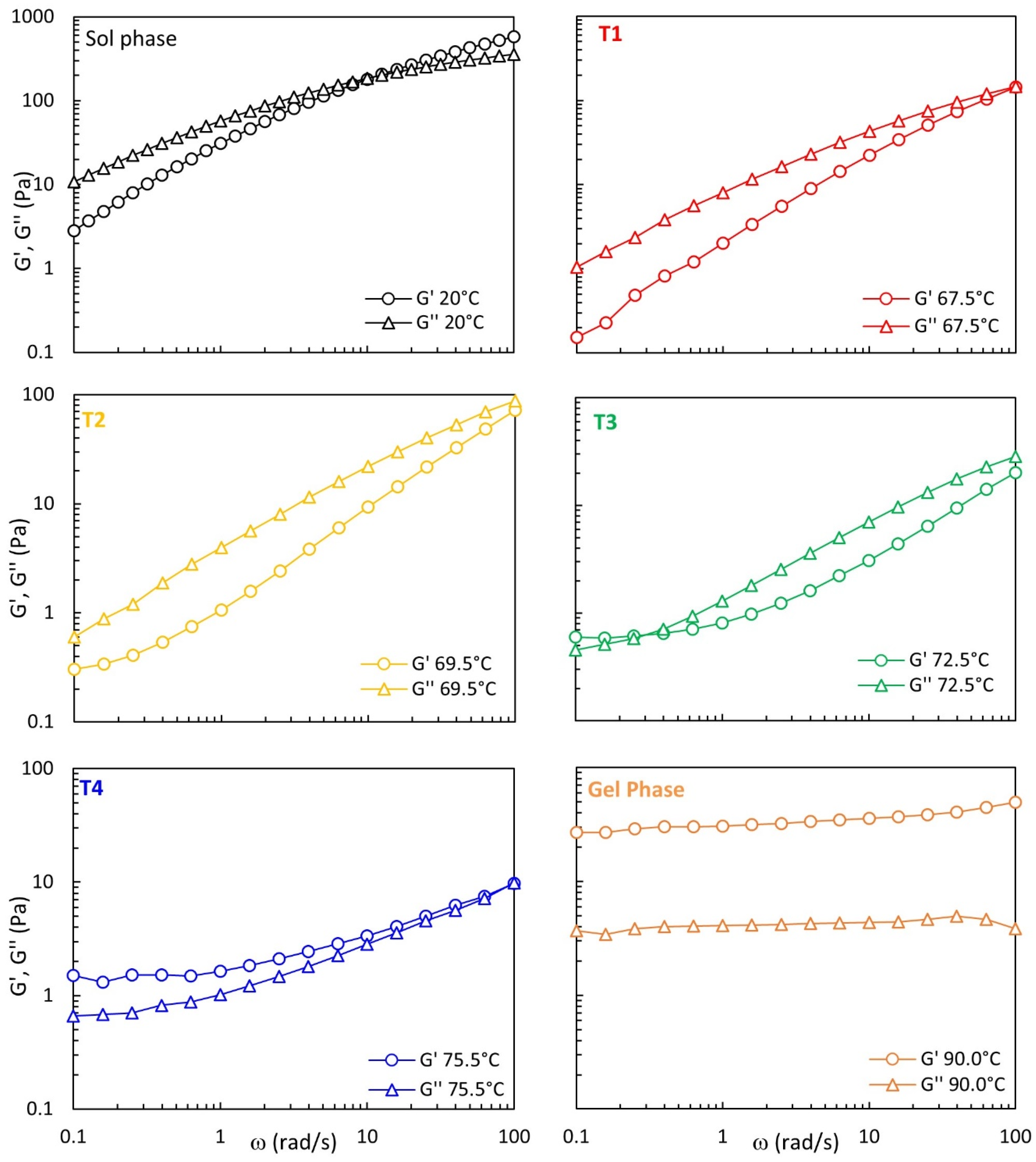
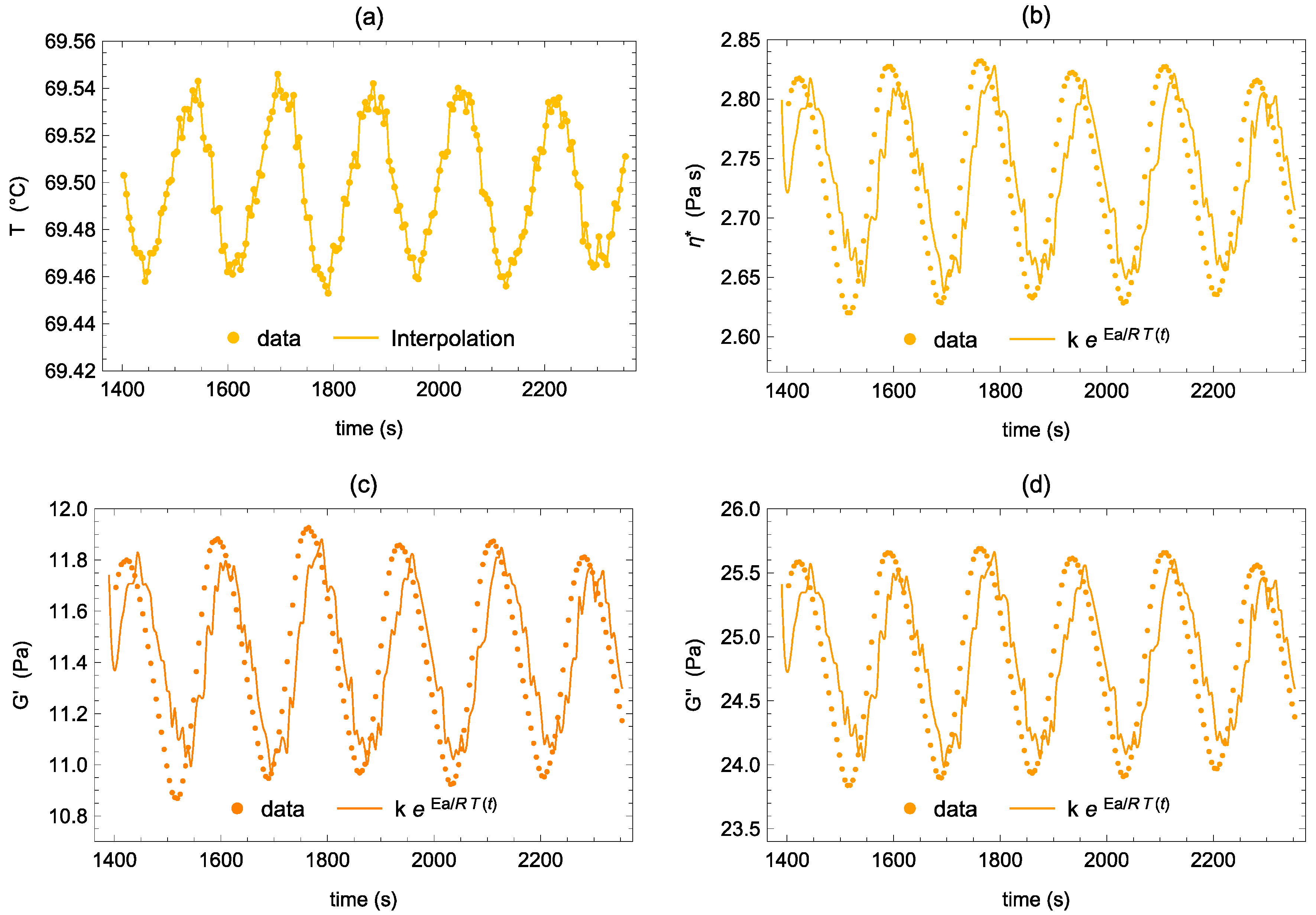
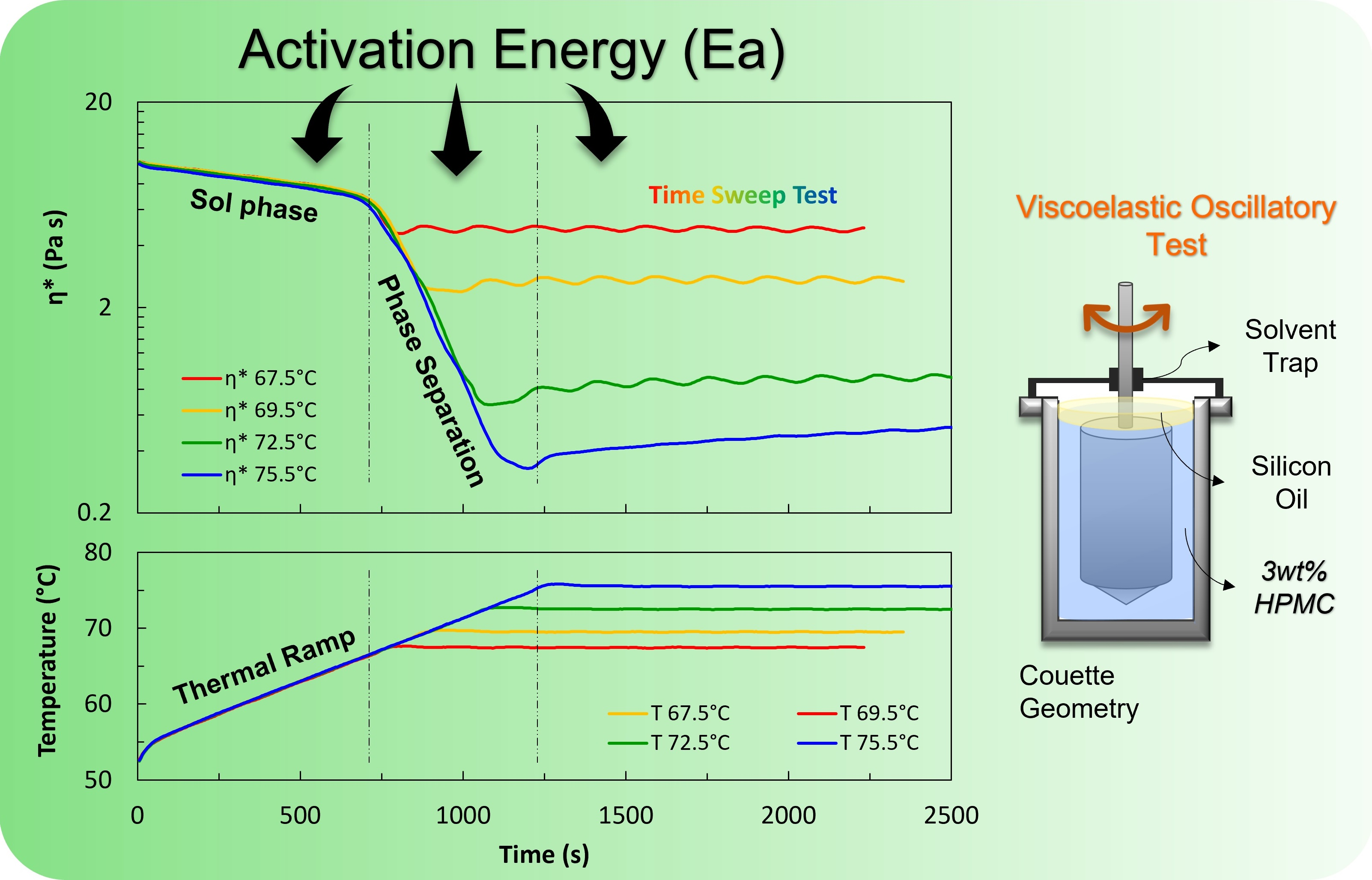
Aqueous solutions of hydroxypropyl methylcellulose (HPMC) show inverse thermoreversible gelation, i.e., they respond to small temperature variations exhibiting sol–gel transition during heating, and reversibly gel–sol transition during cooling. According to the pertinent literature on HPMC aqueous systems, at room temperature, the loss modulus (G”) is higher than the storage modulus (G’). During the heating ramp, the viscoelastic response follows a peculiar path: initially, G” and G’ smoothly decrease, then drop to a minimum and finally increase. Eventually, G’ overcomes G”, indicating the gel formation. A recent explanation of this behaviour considers a two-step mechanism: first, phase separation occurs, then fibrils form from a polymer-rich phase and entangle, leading to a three-dimensional network. Based on this, our research focuses on the rheological analysis of the different steps of the sol–gel transition of an HPMC aqueous solution. We perform different viscoelastic tests: thermal ramps, time sweeps, and frequency sweeps at selected characteristic temperatures. We couple classical analysis of the SAOS experiments with an innovative approach based on the evaluation of the activation energy (Ea), made possible by the instrument intrinsic temperature oscillations around the target value. Results show that Ea can be a valid tool that contributes to further clarifying the peculiar microstructural evolution occurring in this kind of thermoreversible gel.
Keywords: rheology; activation energy; hydroxypropyl methylcellulose; inverse thermogelation; phase separation; viscoelasticity rheology; activation energy; hydroxypropyl methylcellulose; inverse thermogelation; phase separation; viscoelasticity
Graphical Abstract