Article

Recycling and Utilization of Polymers for Road Construction Projects: An Application of the Circular Economy Concept

by
Muhammad Kashif Anwar
1,
Syyed Adnan Raheel Shah
1,* and
Hatem Alhazmi
2
1
Department of Civil Engineering, Pakistan Institute of Engineering and Technology, Multan 66000, Pakistan
2
National Center for Environmental Technology (NCET), Life Science and Environment Research Institute (LSERI), King Abdulaziz City for Science and Technology (KACST), Riyadh 11442, Saudi Arabia
*
Author to whom correspondence should be addressed.
Polymers 2021, 13(8), 1330; https://doi.org/10.3390/polym13081330
Submission received: 19 March 2021 / Revised: 13 April 2021 / Accepted: 15 April 2021 / Published: 19 April 2021
(This article belongs to the Special Issue Polymers and the Circular Economy Model)

Abstract

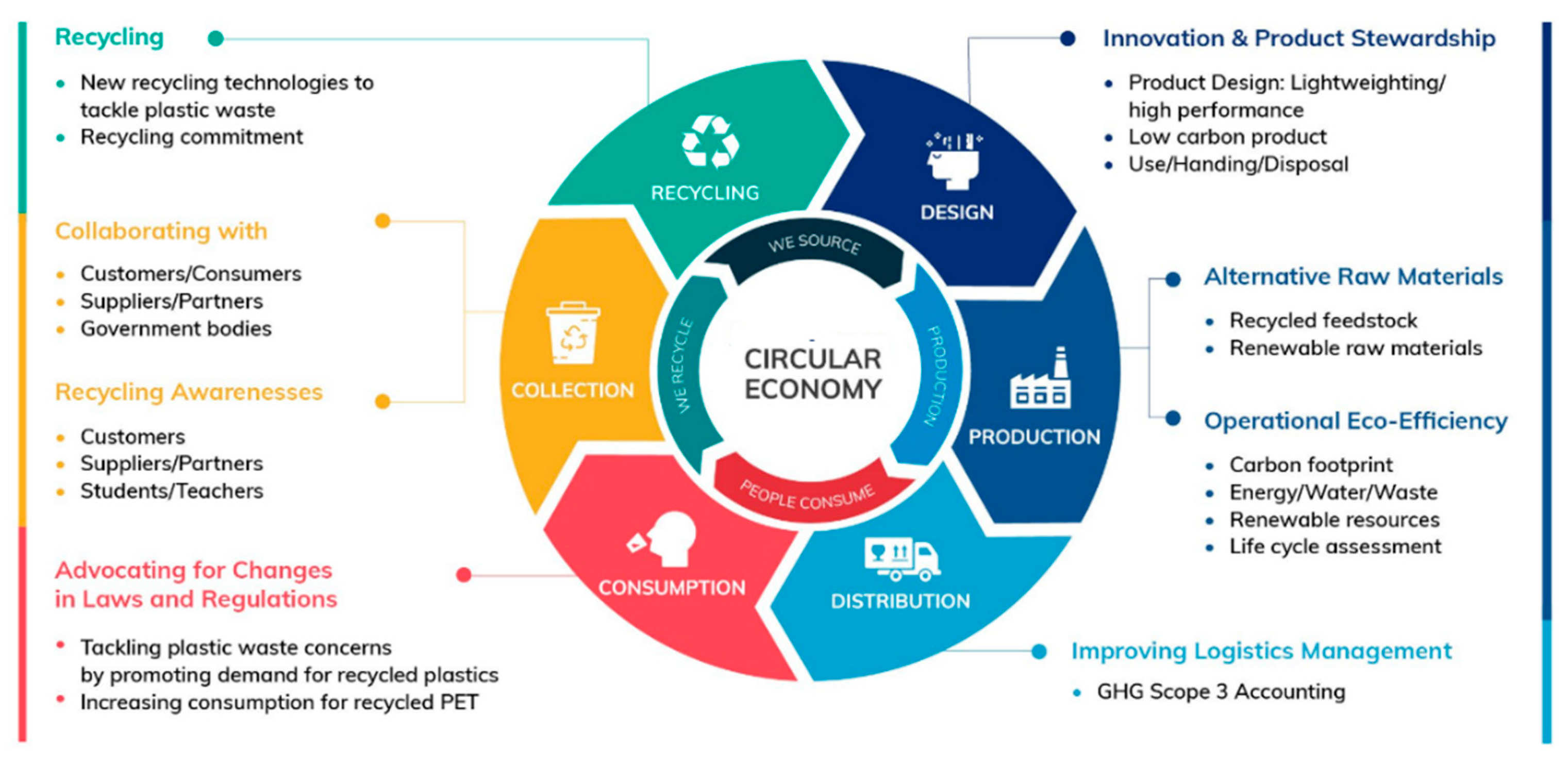
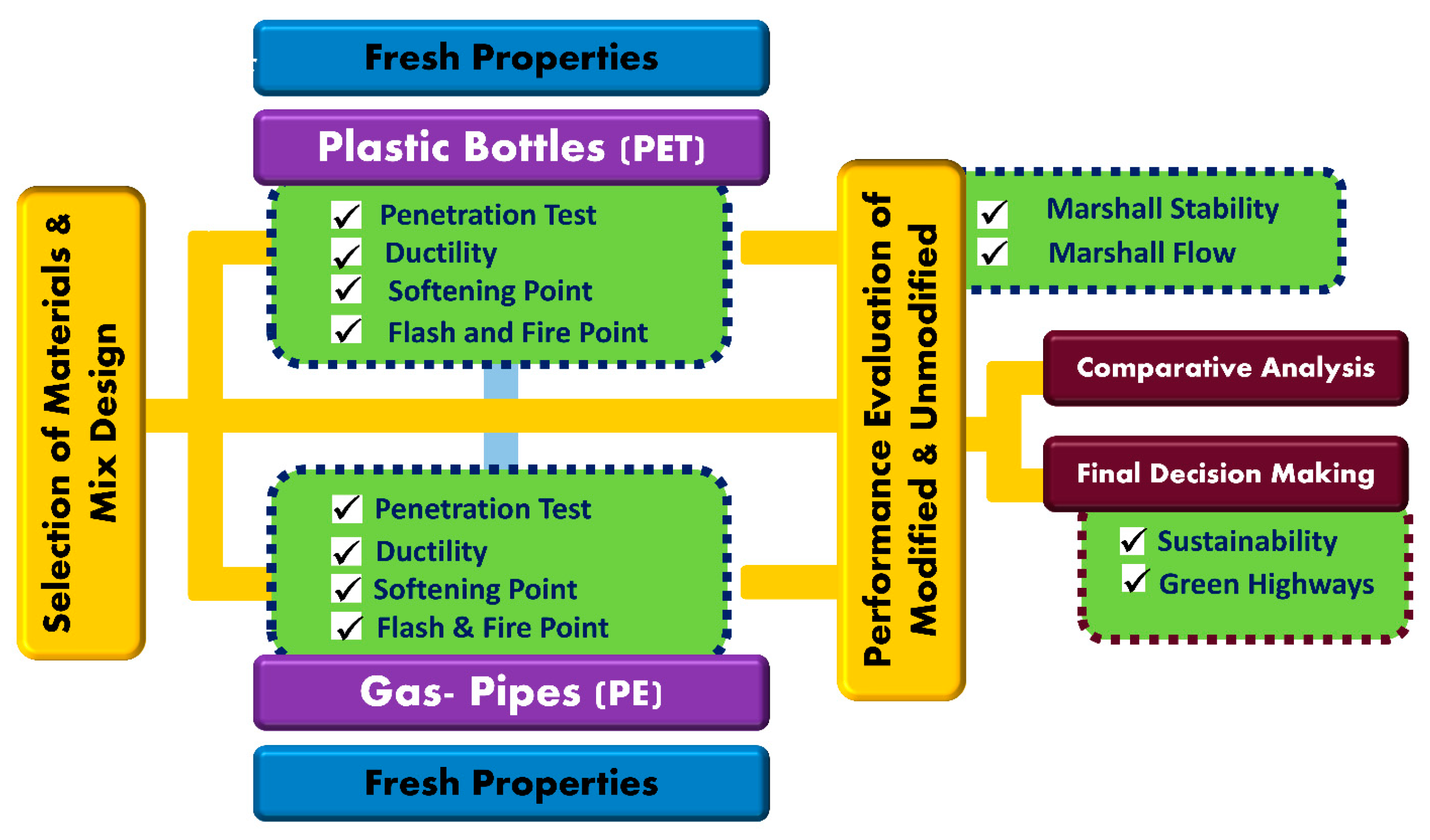
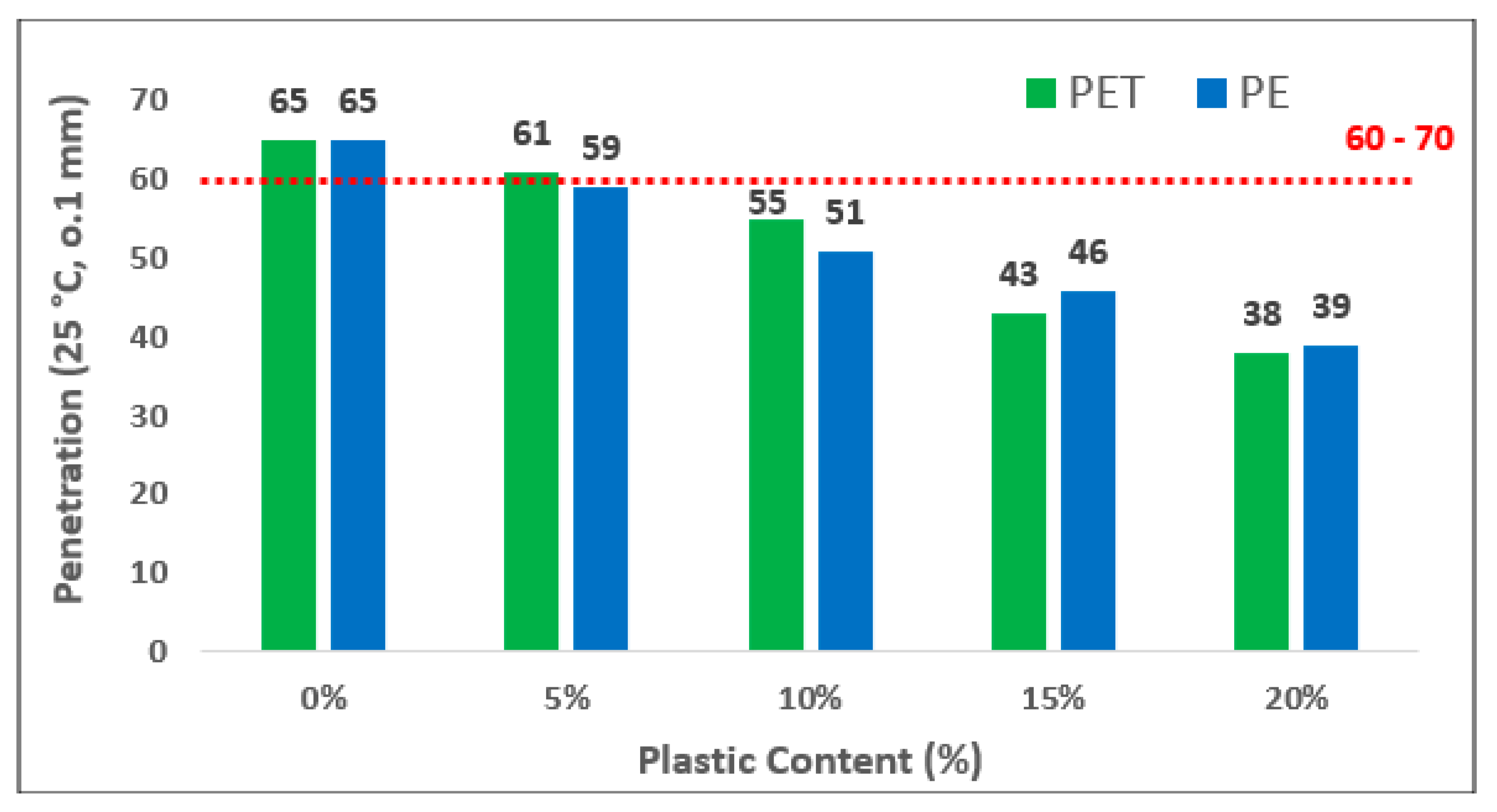
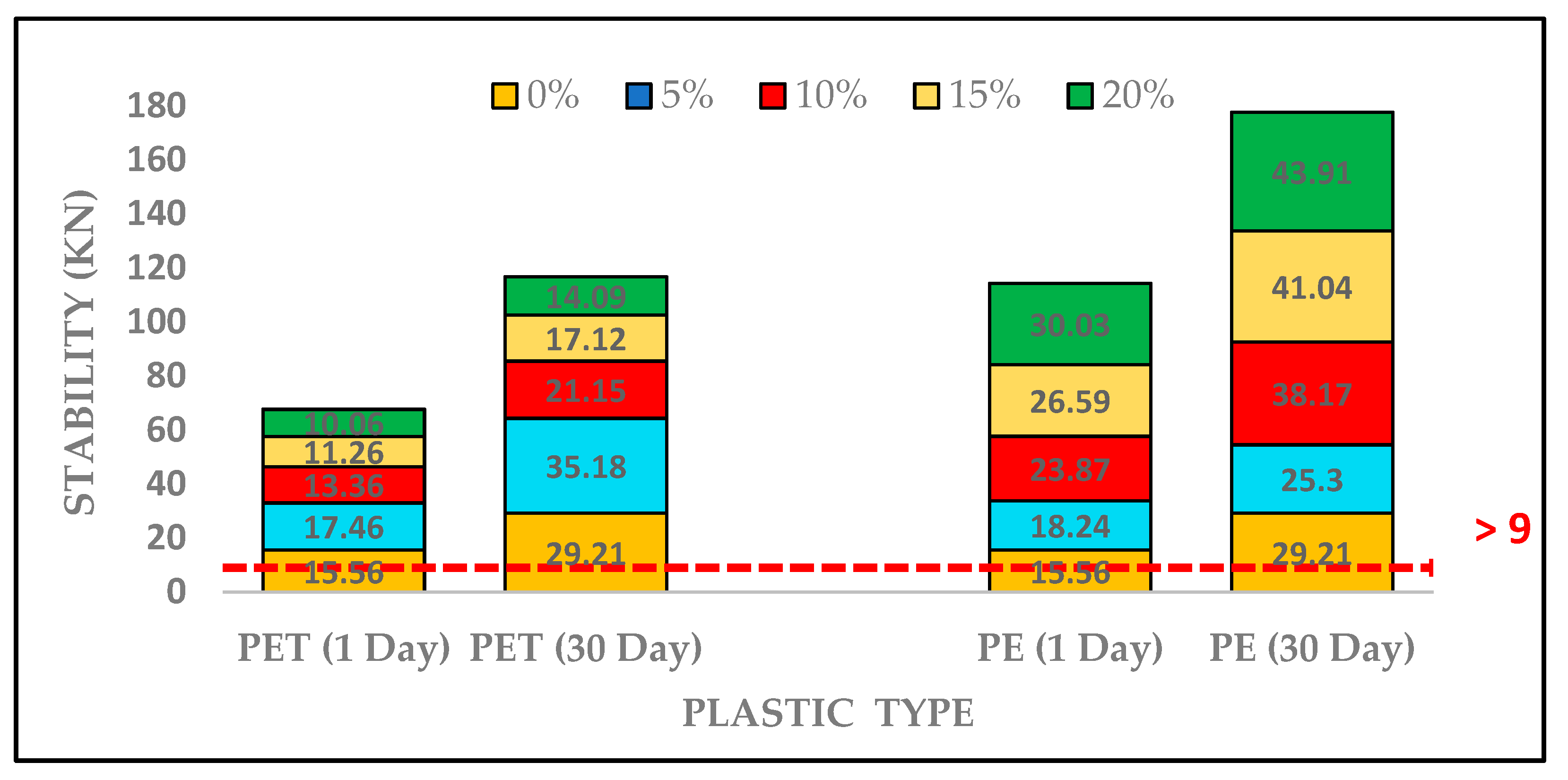
Numerous environmental issues arise as a result of a linear economy strategy: reserves become scarce and end up in landfills and as greenhouse gases. Utilizing waste as a resource or shifting towards a circular economy are among the effective strategies for addressing these issues. To track this shift, appropriate measures that concentrate on sustainable development while taking practical contexts into consideration are required. In this paper, we utilize plastic wastes as a replacement for bitumen for reuse aiming at a circular economy. The use of plastic waste materials, i.e., plastic bottles (PET) and gas pipes (PE) in asphalt materials as a bitumen modifier was studied through series of experimental lab test methods. Marshall samples were prepared using a conventional Marshall method containing five different percentages (0%, 5%, 10%, 15%, and 20%) of plastic content by total weight of bitumen. Samples were tested after 1 and 30 days and the result shows that the stability of plastic-modified asphalt concrete was increased after 30 days, while still meeting standard criteria with plastic contents up to 20%. Moreover, the addition of waste plastic in road construction is a very effective strategy for reusing plastic waste, which also provides economic and social benefits for a sustainable approach to road pavements.
Keywords: circular economy; recycling; waste plastics; polymers; performance; sustainability circular economy; recycling; waste plastics; polymers; performance; sustainability