Effect of Glycero-(9,10-trioxolane)-trialeate on the Physicochemical Properties of Non-Woven Polylactic Acid Fiber Materials

 ,
,  ,
, 

 and
and 
Abstract
1. Introduction
2. Materials and Methods
3. Results
3.1. Morphology
3.2. FTIR Spectroscopy
3.3. Differential Scanning Calorimetry
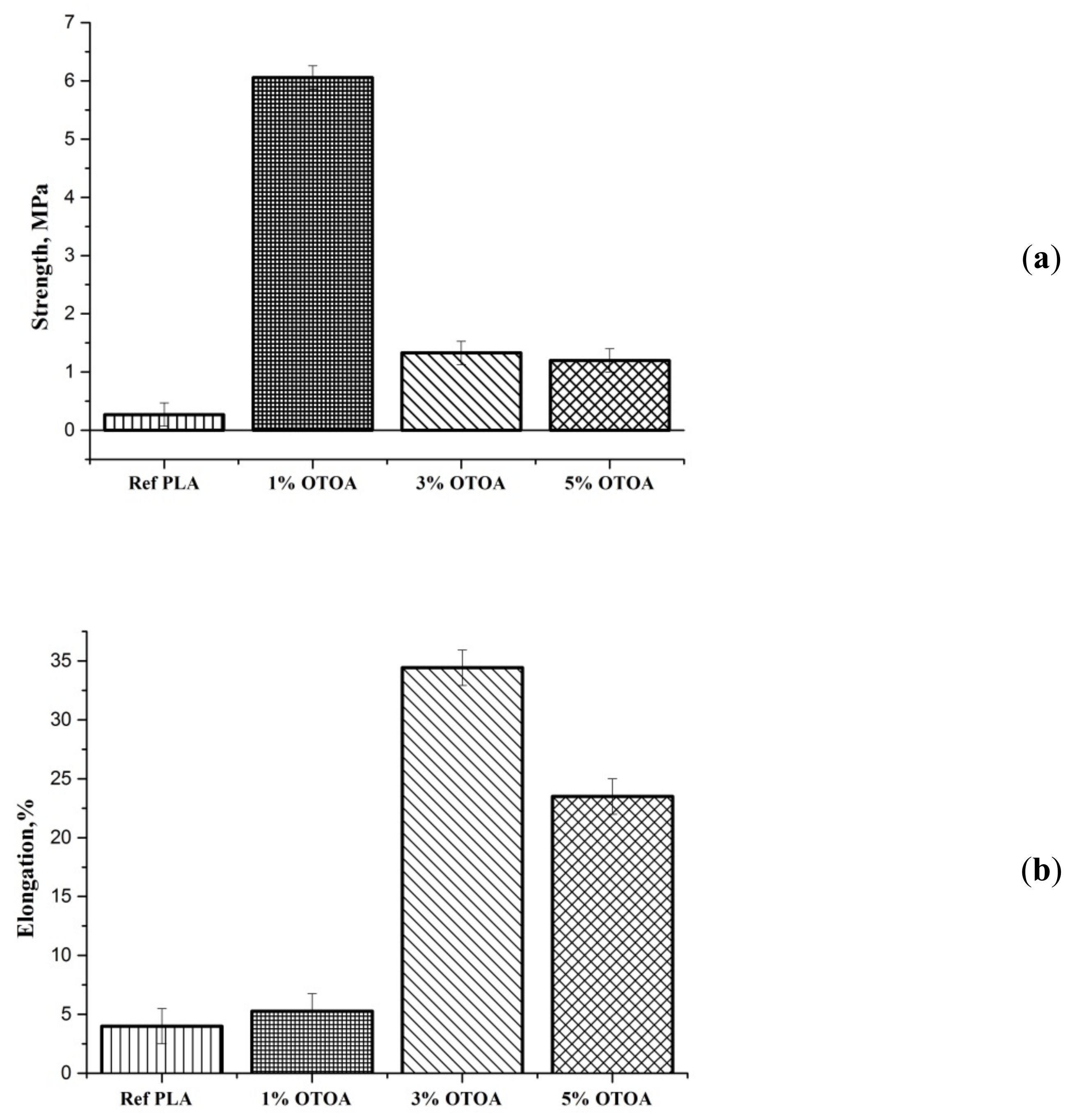
3.4. Mechanical Properties
4. Conclusions
Author Contributions
Funding
Acknowledgments
Conflicts of Interest
References
- Langer, R.; Vacanti, J.P. Tissue engineering. Science 1993, 260, 920–926. [Google Scholar] [CrossRef] [Scilit]
- Place, E.S.; George, J.H.; Williams, C.K.; Stevens, M.M. Synthetic polymer scaffolds for tissue engineering. Chem. Soc. Rev. 2009, 38, 1139–1151. [Google Scholar] [CrossRef] [Scilit]
- Wang, L.; Wang, D.; Zhou, Y.; Zhang, Y.; Li, Q.; Shen, C. Fabrication of open-porous PCL/PLA tissue engineering scaffolds and the relationship of foaming process, morphology, and mechanical behavior. Polym. Adv. Technol. 2019, 30, 2539–2548. [Google Scholar] [CrossRef] [Scilit]
- Mohammadi, M.S.; Bureau, M.N.; Nazhat, S.N. Polylactic Acid (PLA) Biomedical Foams for Tissue Engineering; Netti, P.A., Ed.; Woodhead Publishing: Sawston, UK, 2014; pp. 313–334. [Google Scholar] [CrossRef] [Scilit]
- Rameshkumar, R.; Shaiju, P.; O’Connor, K.E.; Babu, P.R. Bio-based and biodegradable polymers-State-of-the-art, challenges and emerging trends. Curr. Opin. Green Sustain. Chem. 2020, 21, 75–81. [Google Scholar] [CrossRef] [Scilit]
- Wróblewska-Krepsztul, J.; Rydzkowski, T.; Borowski, G.; Szczypinski, M.; Klepka, T.; Thakur, V.K. Recent progress in biodegradable polymers and nanocomposite-based packaging materials for sustainable environment. Int. J. Polym. Anal. Charact. 2018, 23, 383–395. [Google Scholar] [CrossRef] [Scilit]
- Angel, S.-A.; Llorens-Gámez, M. Dynamic mechanical analysis and water vapour sorption of highly porous poly(methyl methacrylate). Polymer 2017, 125, 58–65. [Google Scholar] [CrossRef] [Scilit]
- Liu, F.; Li, S.; Fang, Y.; Zheng, F.F.; He, J.H. Fabrication of highly oriented nanoporous fibers via airflow bubble-spinning. Appl. Surf. Sci. 2017, 421, 61–67. [Google Scholar] [CrossRef] [Scilit]
- Wang, Z.; Zhao, C.; Pan, Z. Porous bead-on-string poly(lactic acid) fibrous membranes for air filtration. J. Colloid Interface Sci. 2015, 441, 121–129. [Google Scholar] [CrossRef] [Scilit] [PubMed]
- Yang, G.; Li, X.; He, Y.; Ma, J.N.; Zhou, G.S. From nano to micro to macro: Electrospun hierarchically structured polymeric fibers for biomedical applications. Prog. Polym. Sci. 2018, 81, 80–113. [Google Scholar] [CrossRef] [Scilit]
- Dziemidowicz, K.; Brocchini, S.; Williams, G.R. A simple route to functionalising electrospun polymer scaffolds with surface biomolecules. Int. J. Pharm. 2021, 597, 120231. [Google Scholar] [CrossRef] [Scilit] [PubMed]
- Mamidi, N.; Delgadillo, R.M.V.; González-Ortiz, A. Engineering of carbon nano-onion bioconjugates for biomedical applications. Mater. Sci. Eng. C 2020, 120, 111698. [Google Scholar] [CrossRef] [Scilit]
- Mamidi, N.; Elías-Zuníga, A.; Villela-Castrejón, J. Engineering and evaluation of forcespun functionalized carbon nano-onions reinforced poly (ε-caprolactone) composite nanofibers for pH-responsive drug release. Mater. Sci. Eng. C 2020, 112, 110928. [Google Scholar] [CrossRef] [Scilit] [PubMed]
- Reneker, D.H.; Yarin, A.L. Electrospinning jets and polymer nanofibers. Polymer 2008, 49, 2387–2425. [Google Scholar] [CrossRef] [Scilit]
- Mokhena, T.C.; Jacobs, V.; Luyt, A.S. A review on electrospun bio-based polymers for water treatment. Express Polym. Lett. 2015, 9, 839–880. [Google Scholar] [CrossRef] [Scilit]
- Liu, C.; Wong, H.M.; Yeung, K.W.K.; Tjong, S.C. Novel Electrospun Polylactic Acid Nanocomposite Fiber Mats with Hybrid Graphene Oxide and Nanohydroxyapatite Reinforcements Having Enhanced Biocompatibility. Polymers 2016, 8, 287. [Google Scholar] [CrossRef] [Scilit] [PubMed]
- Olkhov, A.A.; Tyubaeva, P.M.; Vetcher, A.A.; Karpova, S.G.; Kurnosov, A.S.; Rogovina, S.Z.; Iordanskii, A.L.; Berlin, A.A. Aggressive Impacts Affecting the Biodegradable Ultrathin Fibers Based on Poly(3-Hydroxybutyrate), Polylactide and Their Blends: Water Sorption, Hydrolysis and Ozonolysis. Polymers 2021, 13, 941. [Google Scholar] [CrossRef] [Scilit]
- Tyler, B.; Gullotti, D.; Mangraviti, A.; Utsuki, T.; Brem, H. Polylactic acid (PLA) controlled delivery carriers for biomedical applications. Adv. Drug Deliv. Rev. 2016, 107, 163–175. [Google Scholar] [CrossRef] [Scilit]
- Arrieta, M.P.; Samper, M.D.; Aldas, M.; López, J. On the Use of PLA-PHB Blends for Sustainable Food Packaging Applications. Materials 2017, 10, 1008. [Google Scholar] [CrossRef] [Scilit]
- Park, J.; Lee, I. Controlled release of ketoprofen from electrospun porous polylactic acid (PLA) nanofibers. J. Polym. Res. 2011, 18, 1287–1291. [Google Scholar] [CrossRef] [Scilit]
- Li, Y.; Lim, C.T.; Kotaki, M. Study on structural and mechanical properties of porous PLA nanofibers electrospun by channel-based electrospinning system. Polymer 2015, 56, 572–580. [Google Scholar] [CrossRef] [Scilit]
- Krishnan, R.; Sundarrajan, S.; Ramakrishna, S. Green processing of nanofibers for regenerative medicine. Macromol. Mater. Eng. 2013, 298, 1034–1058. [Google Scholar] [CrossRef] [Scilit]
- Thomas, M.S.; Pillai, P.K.S.; Faria, M.; Cordeiro, N.; Barud, H.; Thomas, S.; Pothen, L.A. Electrospun polylactic acid-chitosan composite: A bio-based alternative for inorganic composites for advanced application. J. Mater. Sci. Mater. Med. 2018, 29, 137. [Google Scholar] [CrossRef] [Scilit]
- Siracusa, V.; Karpova, S.; Olkhov, A.; Zhulkina, A.; Kosenko, R.; Iordanskii, A. Gas Transport Phenomena and Polymer Dynamics in PHB/PLA Blend Films as Potential Packaging Materials. Polymers 2020, 12, 647. [Google Scholar] [CrossRef] [Scilit]
- Wagner, A.; Poursorkhabi, V.; Mohanty, A.K.; Misra, M. Analysis of Porous Electrospun Fibers from Poly(L-lactic acid)/Poly(3-hydroxybutyrate-co-3-hydroxyvalerate) Blends. ACS Sustain. Chem. Eng. 2014, 2, 1976–1982. [Google Scholar] [CrossRef] [Scilit]
- Arrieta, M.P.; López, J.; Hernández, A.; Rayón, E. Ternary PLA–PHB–Limonene blends intended for biodegradable food packaging applications. Eur. Polym. J. 2014, 50, 255–270. [Google Scholar] [CrossRef] [Scilit]
- Arrieta, M.P.; Samper, M.D.; Lopez, J.; Jimenez, A. Combined Effect of Poly(hydroxybutyrate) and Plasticizers on Polylactic acid Properties for Film Intended for Food Packaging. J. Polym. Environ. 2014, 22, 460–470. [Google Scholar] [CrossRef] [Scilit]
- Bétron, C.; Cassagnau, P.; Bounor-Legaré, V. Control of diffusion and exudation of vegetable oils in EPDM copolymers. Eur. Polym. J. 2016, 82, 102–113. [Google Scholar] [CrossRef] [Scilit]
- Lim, K.M.; Ching, Y.C.; Gan, S.N. Effect of Palm Oil Bio-Based Plasticizer on the Morphological, Thermal and Mechanical Properties of Poly(Vinyl Chloride). Polymers 2015, 7, 2031–2043. [Google Scholar] [CrossRef] [Scilit]
- Ugazio, E.; Tullio, V.; Binello, A.; Tagliapietra, S.; Dosio, F. Ozonated Oils as Antimicrobial Systems in Topical Applications. Their Characterization, Current Applications, and Advances in Improved Delivery Techniques. Molecules 2020, 25, 334. [Google Scholar] [CrossRef] [Scilit] [PubMed]
- Moureu, S.; Violleau, F.; Haimoud-Lekhal, D.A.; Calmon, A. Ozonation of sunflower oils: Impact of experimental conditions on the composition and the antibacterial activity of ozonized oils. Chem. Phys. Lipids 2015, 186, 79–85. [Google Scholar] [CrossRef] [Scilit]
- Criegee, R. Mechanism of Ozonolisis. Angew. Chem. Int. Ed. Engl. 1975, 14, 745–752. [Google Scholar] [CrossRef] [Scilit]
- Zhou, Z.; Zhou, S.; Abbatt, J.P.D. Kinetics and Condensed-Phase Products in Multiphase Ozonolysis of an Unsaturated Triglyceride. Environ. Sci. Technol. 2019, 53, 12467–12475. [Google Scholar] [CrossRef] [Scilit]
- De Almeida Kogawa, N.R.; de Arruda, E.J.; Micheletti, A.C.; de Fatima Cepa Matos, M.; de Oliveira, L.C.S.; de Lima, D.P.; Pereira Carvalho, N.C.; de Castro Cunha, M.; Ojeda, M.; Beatriz, A. Synthesis, characterization, thermal behavior and biological activity of ozonides from vegetable oils. RSC Adv. 2015, 5, 65427–65436. [Google Scholar] [CrossRef] [Scilit]
- Miura, T.; Suzuki, S.; Sakurai, S.; Matsumoto, A.; Shinriki, N. Structure Elucidation of Ozonated Olive Oil. In Proceedings of the 15th Ozone World Congress: Medical Therapy Conference, London, UK, 3–7 September 2001. [Google Scholar]
- Shchegolikhin, A.N.; Lazareva, O.L. The Application of a Drift Accessory for Routine Analysis of Liquids and Solids. Internet J. Vib. Spectrosc. 1997, 1, 95–103. Available online: https://www.researchgate.net/publication/254861429_The_Application_of_a_Drift_Accessory_for_Routine_Analysis_of_Liquids_and_Solids (accessed on 26 July 2021).
- Shchegolikhin, A.N.; Lazareva, O.L. Diffuse Reflectance for the routine analysis of Liquids and Solids. Internet J. Vib. Spectrosc. 1997, 1, 26–34. Available online: https://www.researchgate.net/publication/254861326_Diffuse_Reflectance_for_the_routine_analysis_of_Liquids_and_Solids (accessed on 26 July 2021).
- Debnath, S.; Madhusoothanan, M. Water Absorbency of Jute—Polypropylene Blended Needle-punched Nonwoven. J. Ind. Text. 2010, 39, 215–231. [Google Scholar] [CrossRef] [Scilit]
- Heib, F.; Schmitt, M. Statistical Contact Angle Analyses with the High-Precision Drop Shape Analysis (HPDSA) Approach: Basic Principles and Applications. Coatings 2016, 6, 57. [Google Scholar] [CrossRef] [Scilit]
- Świergiel, J.; Bouteiller, L.; Jadżyn, J. Compliance of the Stokes–Einstein model and breakdown of the Stokes–Einstein–Debye model for a urea-based supramolecular polymer of high viscosity. Soft Matter 2014, 10, 8457–8463. [Google Scholar] [CrossRef] [Scilit] [PubMed]
- Santangelo, P.G.; Ngai, K.L.; Roland, C.M. Distinctive manifestations of segmental motion in amorphous poly(tetrahydrofuran) and polyisobutylene. Macromolecules 1993, 26, 2682–2687. [Google Scholar] [CrossRef] [Scilit]
- Rogovina, S.; Zhorina, L.; Gatin, A.; Iordanskii, A.; Berlin, A. Biodegradable Polylactide–Poly (3-Hydroxybutyrate) Compositions Obtained via Blending under Shear Deformations and Electrospinning: Characterization and Environmental Application. Polymers 2020, 12, 1088. [Google Scholar] [CrossRef] [Scilit]
- Sarkar, K.; Gomez, C.; Zambrano, S.; Ramirez, M.; de Hoyos, E.; Vasquez, H.; Lozano, K. Electrospinning to Forcespinning™. Mater. Today 2010, 13, 12–14. [Google Scholar] [CrossRef] [Scilit]
- Obregon, N.; Agubra, V.; Pokhrel, M.; Campos, H.; Flores, D.; De la Garza, D.; Mao, Y.; Macossay, J.; Alcoutlabi, M. Effect of Polymer Concentration, Rotational Speed, and Solvent Mixture on Fiber Formation Using Forcespinning®. Fibers 2016, 4, 20. [Google Scholar] [CrossRef] [Scilit]
- Patlan, R.; Mejias, J.; McEachin, Z.; Salinas, A.; Lozano, K. Fabrication and Characterization of Poly(L-lactic Acid) Fiber Mats Using Centrifugal Spinning. Fibers Polym. 2018, 19, 1271–1277. [Google Scholar] [CrossRef] [Scilit]
- Xia, L.; Lu, L.; Liang, Y.; Cheng, B. Fabrication of centrifugally spun prepared poly(lactic acid)/gelatin/ciprofloxacin nanofibers for antimicrobial wound dressing. RSC Adv. 2019, 9, 35328. [Google Scholar] [CrossRef] [Scilit]
- Brünler, R.; Hild, M.; Aibibu, D.; Cherif, C. Fiber-based hybrid structures as scaffolds and implants for regenerative medicine. In Smart Textiles and Their Applications; Woodhead Publishing Series in Textiles; Koncar, V., Ed.; Woodhead Publihing: Sawston, UK, 2016; Chapter 12; pp. 241–256. [Google Scholar] [CrossRef] [Scilit]
- Ashammakhi, N.; Ndreu, A.; Yang, Y.; Ylikauppila, H.; Nikkola, L. Nanofiber-based scaffolds for tissue engineering. Eur. J. Plast. Surg. 2012, 35, 135–149. [Google Scholar] [CrossRef] [Scilit]
- Li, W.J.; Tuan, R.S. Fabrication and application of nanofibrous scaffolds in tissue engineering. Curr. Protoc. Cell Biol. 2009, 42, 25. [Google Scholar] [CrossRef] [Scilit]
- Min, L.L.; Pan, H.; Chen, S.Y.; Wang, C.Y.; Wang, N.; Zhang, J.; Cao, Y.; Chen, X.Y.; Hou, X. Recent progress in bio-inspired electrospun materials. Compos. Commun. 2019, 11, 12–20. [Google Scholar] [CrossRef] [Scilit]
- Hanumantharao, S.N.; Rao, S. Multi-Functional Electrospun Nanofibers from Polymer Blends for Scaffold Tissue Engineering. Fibers 2019, 7, 66. [Google Scholar] [CrossRef] [Scilit]
- Hendrick, E.; Frey, M. Increasing Surface Hydrophilicity in Poly(Lactic Acid) Electrospun Fibers by Addition of Pla-b-Peg Co-Polymers. J. Eng. Fibers Fabr. 2014, 9, 155892501400900219. [Google Scholar] [CrossRef] [Scilit]
- Kiss, E.; Bertóti, I.; Vargha-Butler, E.I. XPS and wettability characterization of modified poly(lactic acid) and poly(lactic/glycolic acid) films. J. Colloid Interface Sci. 2002, 245, 91–98. [Google Scholar] [CrossRef] [Scilit] [PubMed]
- Iordanskii, A.L.; Samoilov, N.A.; Olkhov, A.A.; Markin, V.S.; Rogovinaa, S.Z.; Kildeeva, N.R.; Berlin, A.A. New Fibrillar Composites Based on BiodegradablePoly(3-hydroxybutyrate) and Polylactide Polyesters with High Selective Absorption of Oil from Water Medium. Dokl. Phys. Chem. 2019, 487, 106–108. [Google Scholar] [CrossRef] [Scilit]
- Pankova, Y.N.; Shchegolikhin, A.N.; Iordanskii, A.L.; Zhulkina, A.L.; Ol’khov, A.A.; Zaikov, G.E. The characterization of novel biodegradable blends based on polyhydroxybutyrate: The role of water transport. J. Mol. Liq. 2010, 156, 65–69. [Google Scholar] [CrossRef] [Scilit]
- Arjmandi, R.; Hassan, A.; Eichhorn, S.J.; Haafiz, M.K.M.; Zakaria, Z.; Tanjung, F.A. Enhanced ductility and tensile properties of hybrid montmorillonite/cellulose nanowhiskers reinforced polylactic acid nanocomposites. J. Mater. Sci. 2015, 50, 3118–3130. [Google Scholar] [CrossRef] [Scilit]
- Qu, P.; Gao, Y.; Wu, G.; Zhang, L. Nanocomposite of poly(lactid acid) reinforced with cellulose nanofibrils. BioResources 2010, 5, 1811–1823. [Google Scholar]
- Mamidi, N.; Romo, I.L.; Barrera, E.V.; Elías-Zuníga, A. High throughput fabrication of curcumin embedded gelatin-polylactic acid forcespun fiber-aligned scaffolds for the controlled release of curcumin. MRS Commun. 2018, 8, 1395–1403. [Google Scholar] [CrossRef] [Scilit]
- Mamidi, N.; Romo, I.L.; Gutiérrez, H.M.L.; Barrera, E.V.; Elías-Zuníga, A. Development of forcespun fiber-aligned scaffolds from gelatin–zein composites for potential use in tissue engineering and drug release. MRS Commun. 2018, 8, 885–892. [Google Scholar] [CrossRef] [Scilit]
- Peijs, T. Electrospun Polymer Nanofibers and Their Composites. In Comprehensive Composite Materials II; Beaumont, P.W.R., Zweben, C.H., Eds.; Academic Press: Oxford, UK, 2018; Volume 6, pp. 162–200. [Google Scholar]
- Olkhov, A.A.; Karpova, S.G.; Tyubaeva, P.M.; Zhulkina, A.L.; Zernova, Y.N.; Iordanskii, A.L. Effect of Ozone and Ultraviolet Radiation on Structure of Fibrous Materials Based on Poly(3-hydroxybutyrate) and Polylactide. Inorg. Mater. Appl. Res. 2020, 11, 1130–1136. [Google Scholar] [CrossRef] [Scilit]


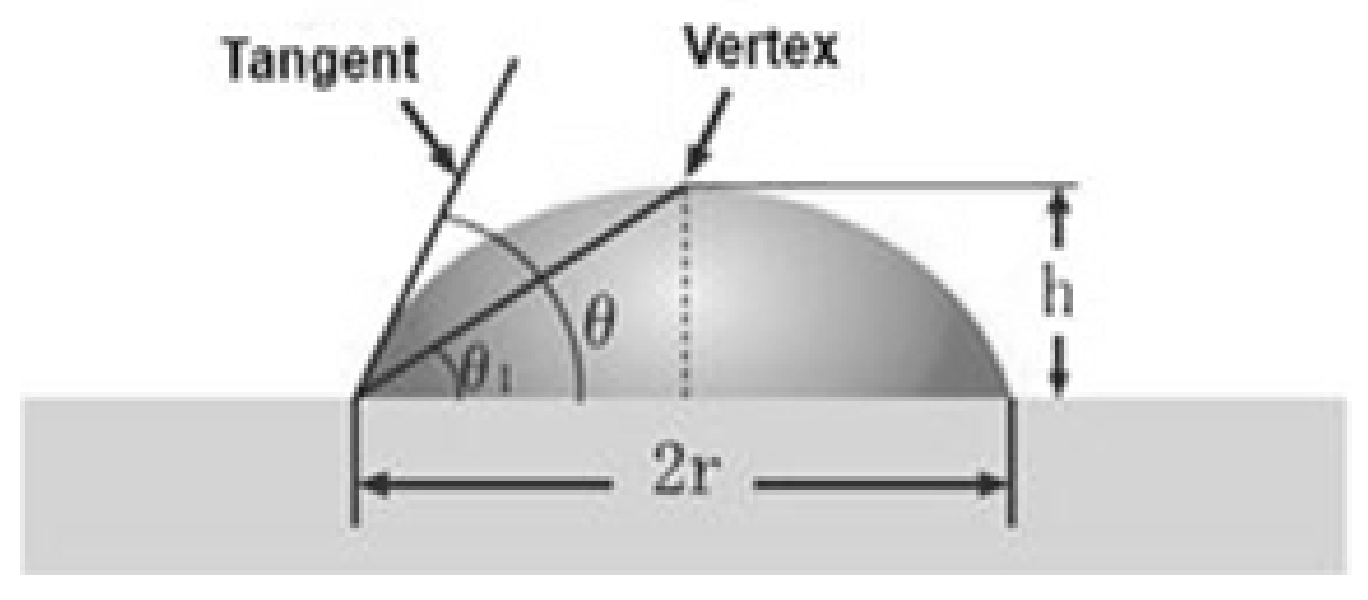


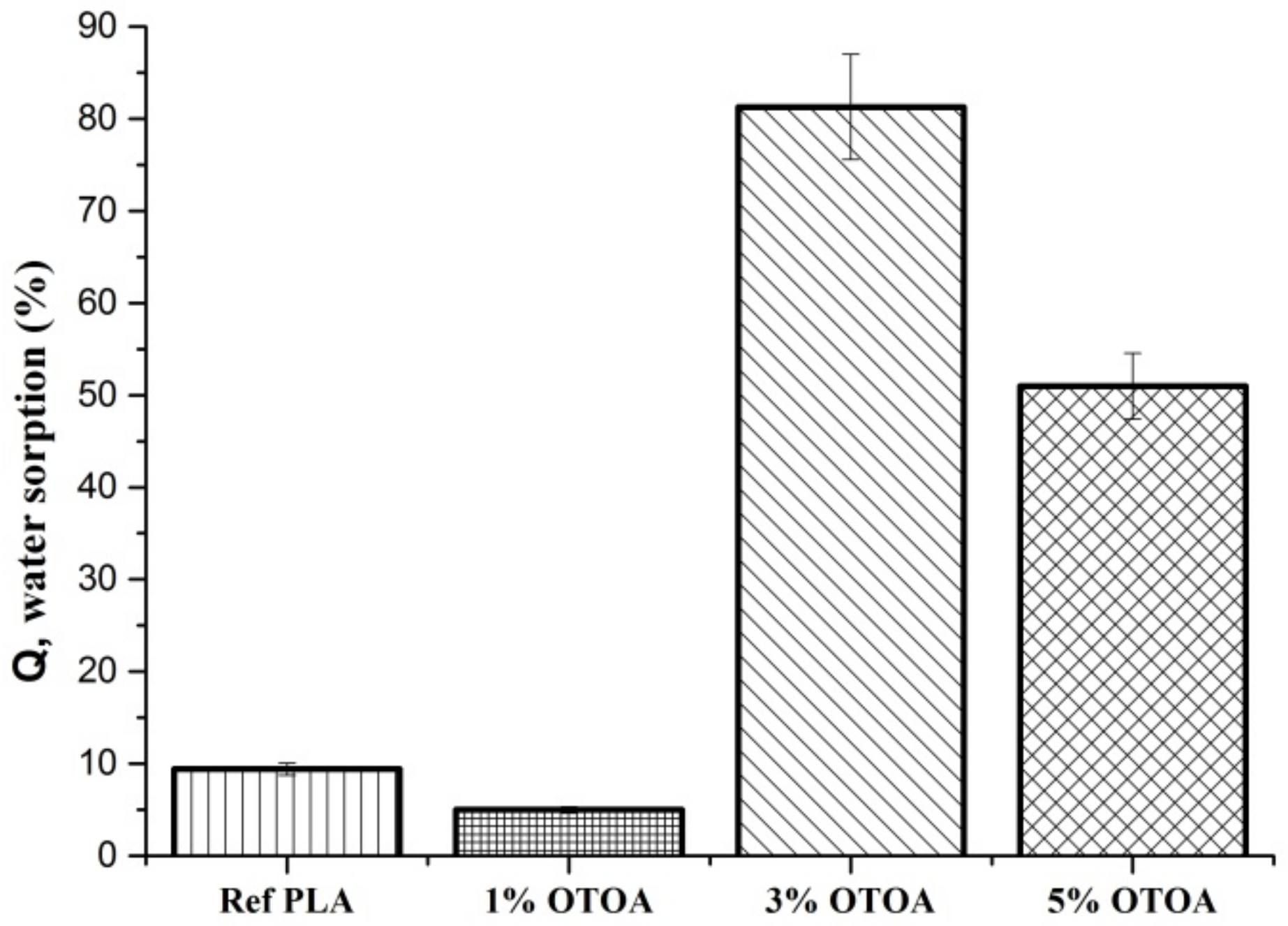
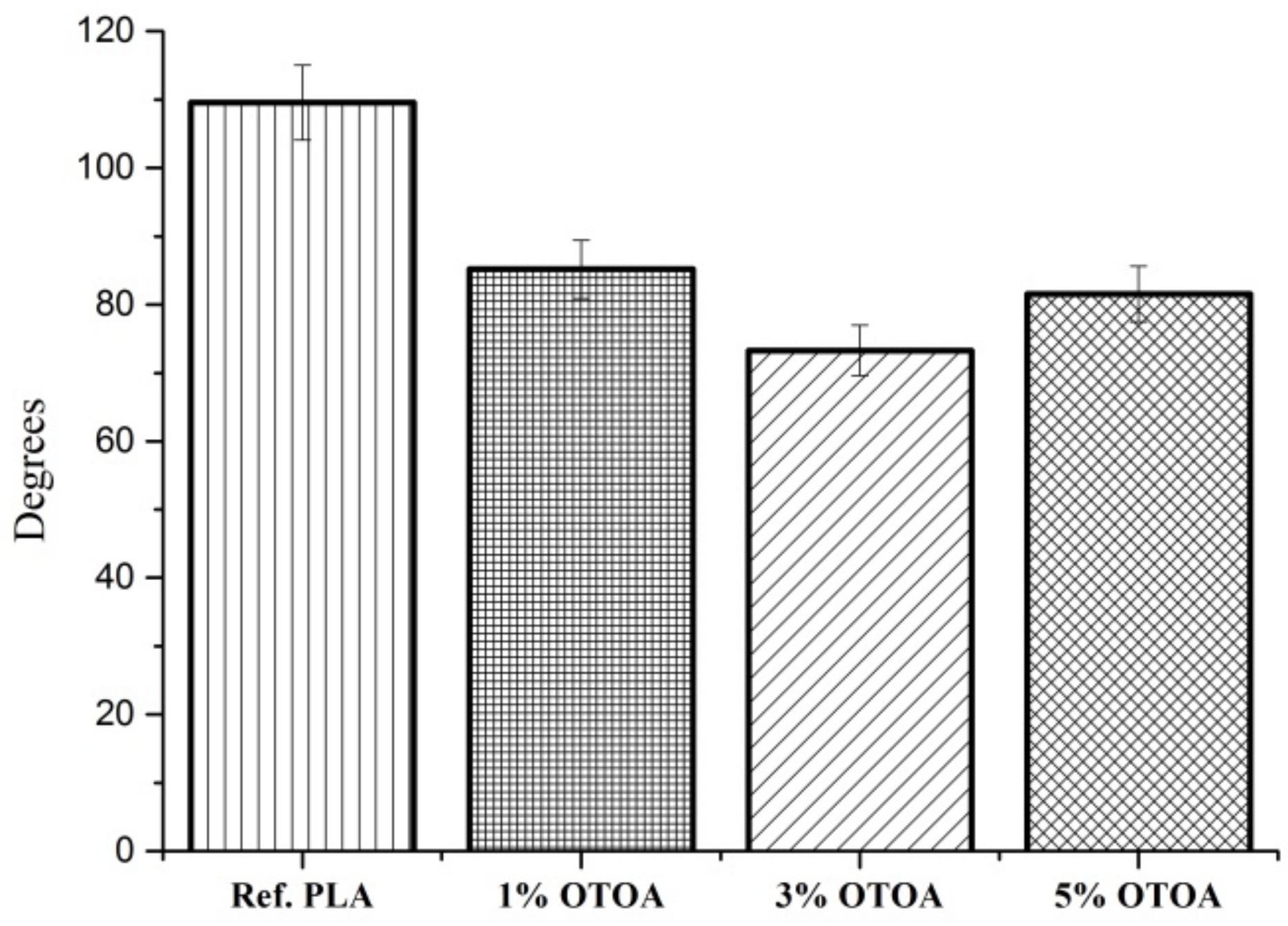



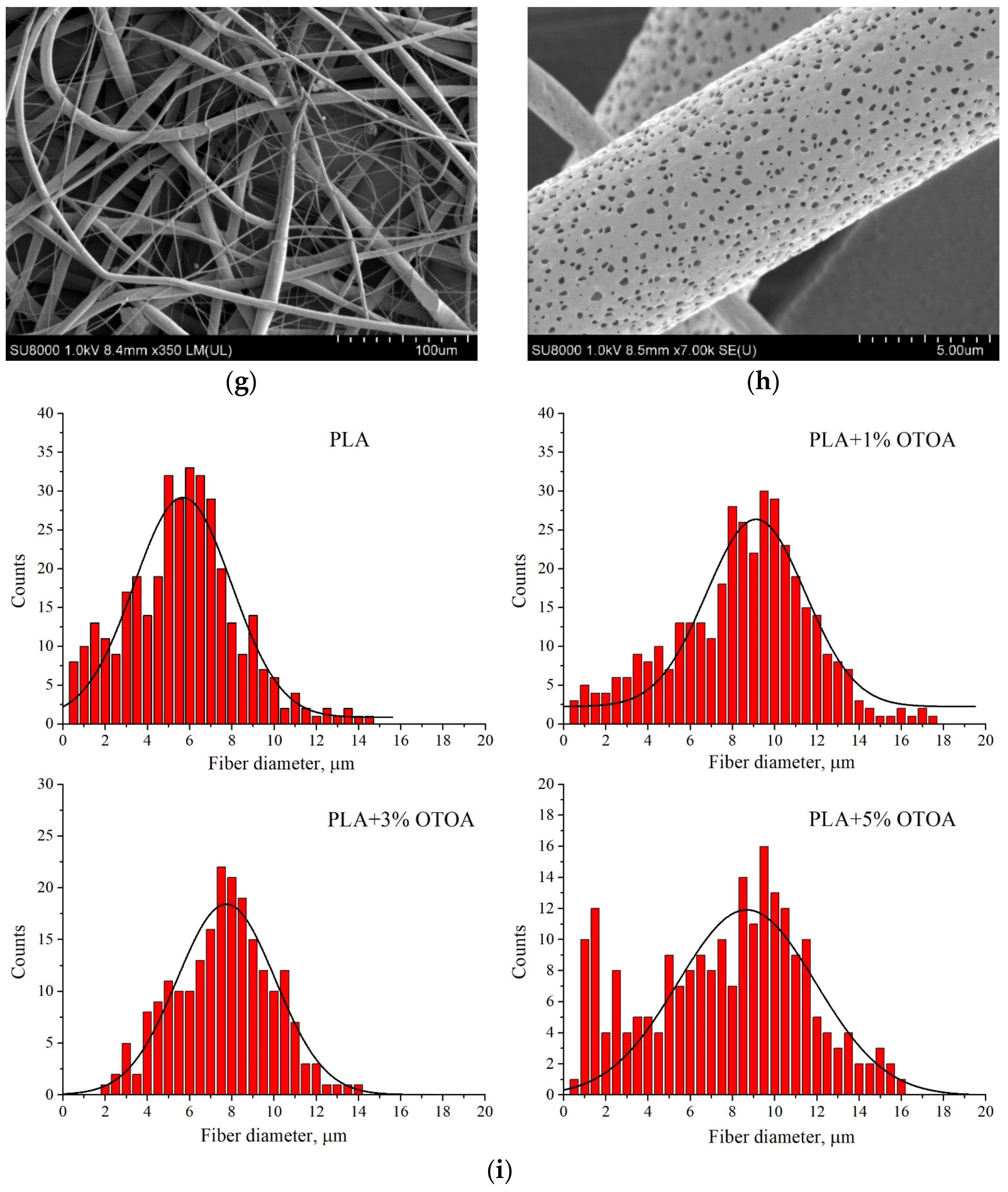
| Sample | Average Fiber Diameter, μm | Max. Fiber Diameter, μm | Min. Fiber Diameter, μm |
|---|---|---|---|
| PLA | 5.7 ± 2.3 | 15.0 | 0.6 |
| PLA + 1% OTOA | 9.2 ± 2.5 | 17.5 | 0.8 |
| PLA + 3% OTOA | 7.8 ± 2.0 | 14.0 | 1.6 |
| PLA + 5% OTOA | 8.6 ± 3.2 | 16.0 | 1.0 |
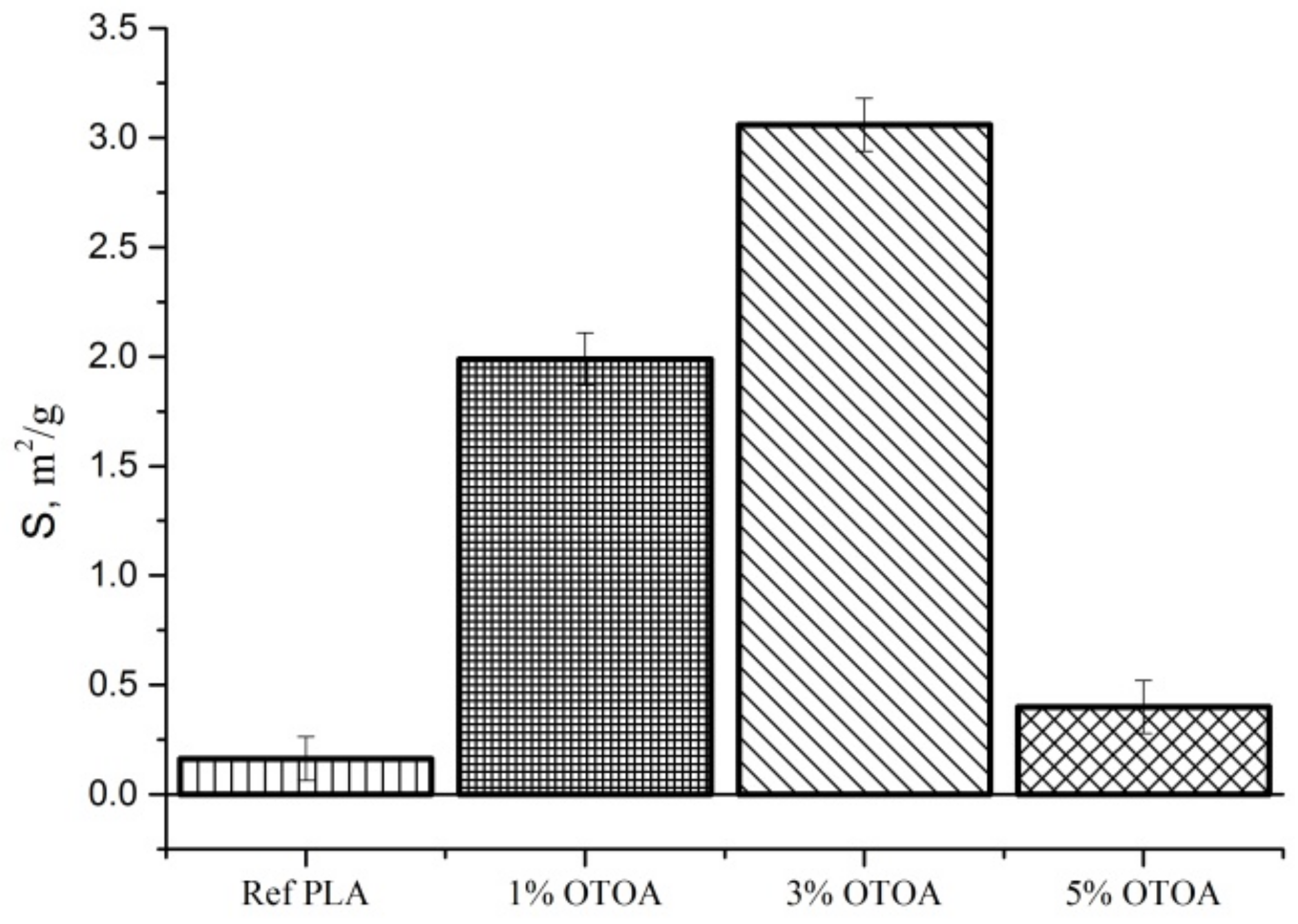
| Sample | ρs·103 g/cm2 | ρv g/cm3 | VC cm3 | WC % | S m2/g |
|---|---|---|---|---|---|
| PLA | 1.5·10−3 | 0.6 | 7·10−4 | 11.2 | 0.22 |
| PLA + 1% OTOA | 3.9·10−3 | 0.7 | 7·10−4 | 4.2 | 2.0 |
| PLA + 3% OTOA | 7.0·10−3 | 1.4 | 9.2·10−3 | 81.7 | 3.1 |
| PLA + 5% OTOA | 3.5·10−3 | 1.0 | 6.8·10−3 | 57 | 0.47 |
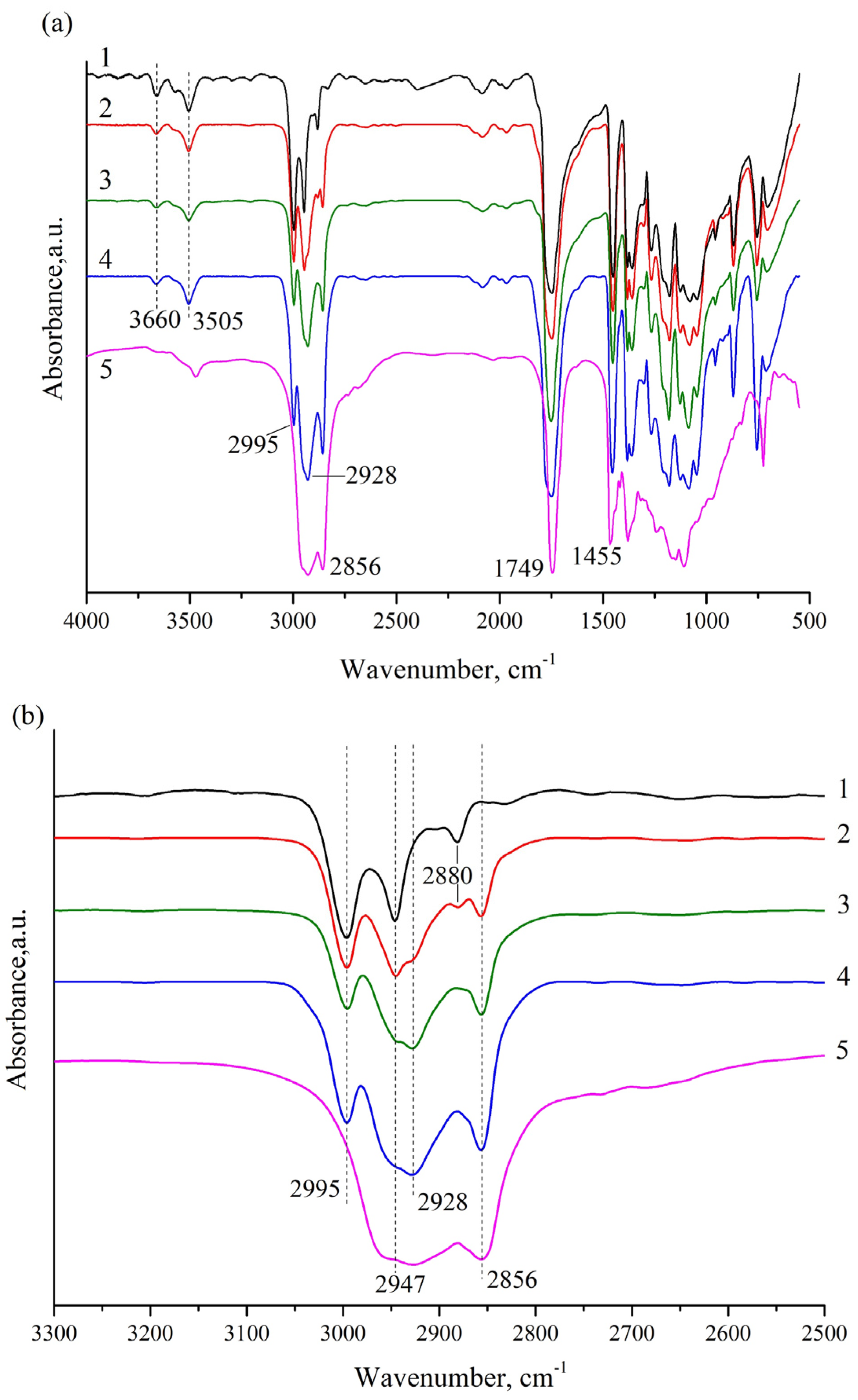
| PLA Characteristic Bands, cm−1 | PLA + OTOA Characteristic Bands, cm−1 | Characteristic Band Assignment |
|---|---|---|
| 2995 | 2995 | –CH (asim) |
| 2947 | 2947 | –CH (sim) |
| 2880 | 2880 | CH3 stretching |
| 1745 | 1751 | C=O stretching |
| 1455 | 1455 | –CH3 bending |
| 2928 | –CH2 (asim) | |
| 2856 | –CH2 (sim) |
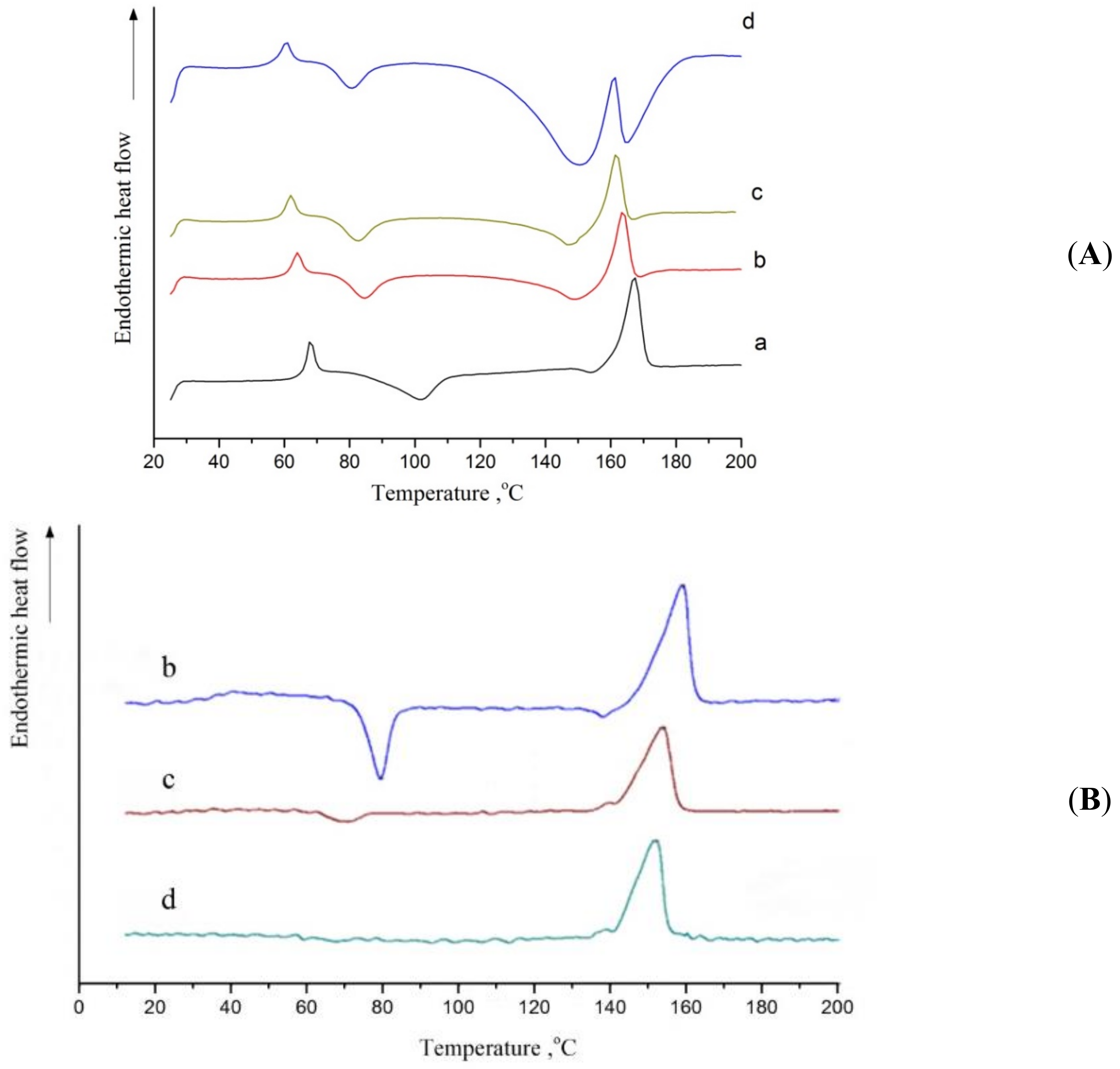
| Sample | Tg (°C) | Tcc (°C) | ΔHcc (J/g) | Tm (°C) | ΔHm (J/g) | Xc (%) |
|---|---|---|---|---|---|---|
| PLA | 67.3 | 101.7 | 21.7 | 167.2 | 37.2 | 16.7 |
| PLA + 1% OTOA | 65.2 | 89.1 | 14.6 | 165.5 | 25.3 | 11.6 |
| PLA + 3% OTOA | 63.4 | 85.3 | 15.3 | 163.3 | 24.7 | 10.4 |
| PLA + 5% OTOA | 61.3 | 81.4 | 15.7 | 162.7 | 22.3 | 7.4 |
Publisher’s Note: MDPI stays neutral with regard to jurisdictional claims in published maps and institutional affiliations. |
© 2021 by the authors. Licensee MDPI, Basel, Switzerland. This article is an open access article distributed under the terms and conditions of the Creative Commons Attribution (CC BY) license (https://creativecommons.org/licenses/by/4.0/).
Share and Cite
Olkhov, A.; Alexeeva, O.; Konstantinova, M.; Podmasterev, V.; Tyubaeva, P.; Borunova, A.; Siracusa, V.; Iordanskii, A.L. Effect of Glycero-(9,10-trioxolane)-trialeate on the Physicochemical Properties of Non-Woven Polylactic Acid Fiber Materials. Polymers 2021, 13, 2517. https://doi.org/10.3390/polym13152517
Olkhov A, Alexeeva O, Konstantinova M, Podmasterev V, Tyubaeva P, Borunova A, Siracusa V, Iordanskii AL. Effect of Glycero-(9,10-trioxolane)-trialeate on the Physicochemical Properties of Non-Woven Polylactic Acid Fiber Materials. Polymers. 2021; 13(15):2517. https://doi.org/10.3390/polym13152517
Chicago/Turabian StyleOlkhov, Anatoliy, Olga Alexeeva, Marina Konstantinova, Vyacheslav Podmasterev, Polina Tyubaeva, Anna Borunova, Valentina Siracusa, and Alex L. Iordanskii. 2021. "Effect of Glycero-(9,10-trioxolane)-trialeate on the Physicochemical Properties of Non-Woven Polylactic Acid Fiber Materials" Polymers 13, no. 15: 2517. https://doi.org/10.3390/polym13152517
APA StyleOlkhov, A., Alexeeva, O., Konstantinova, M., Podmasterev, V., Tyubaeva, P., Borunova, A., Siracusa, V., & Iordanskii, A. L. (2021). Effect of Glycero-(9,10-trioxolane)-trialeate on the Physicochemical Properties of Non-Woven Polylactic Acid Fiber Materials. Polymers, 13(15), 2517. https://doi.org/10.3390/polym13152517