
Mechanical Properties and Microstructure of Alkali-Activated Fiber-Reinforced Mortar Incorporating Red Mud and Fly Ash

Abstract
1. Introduction
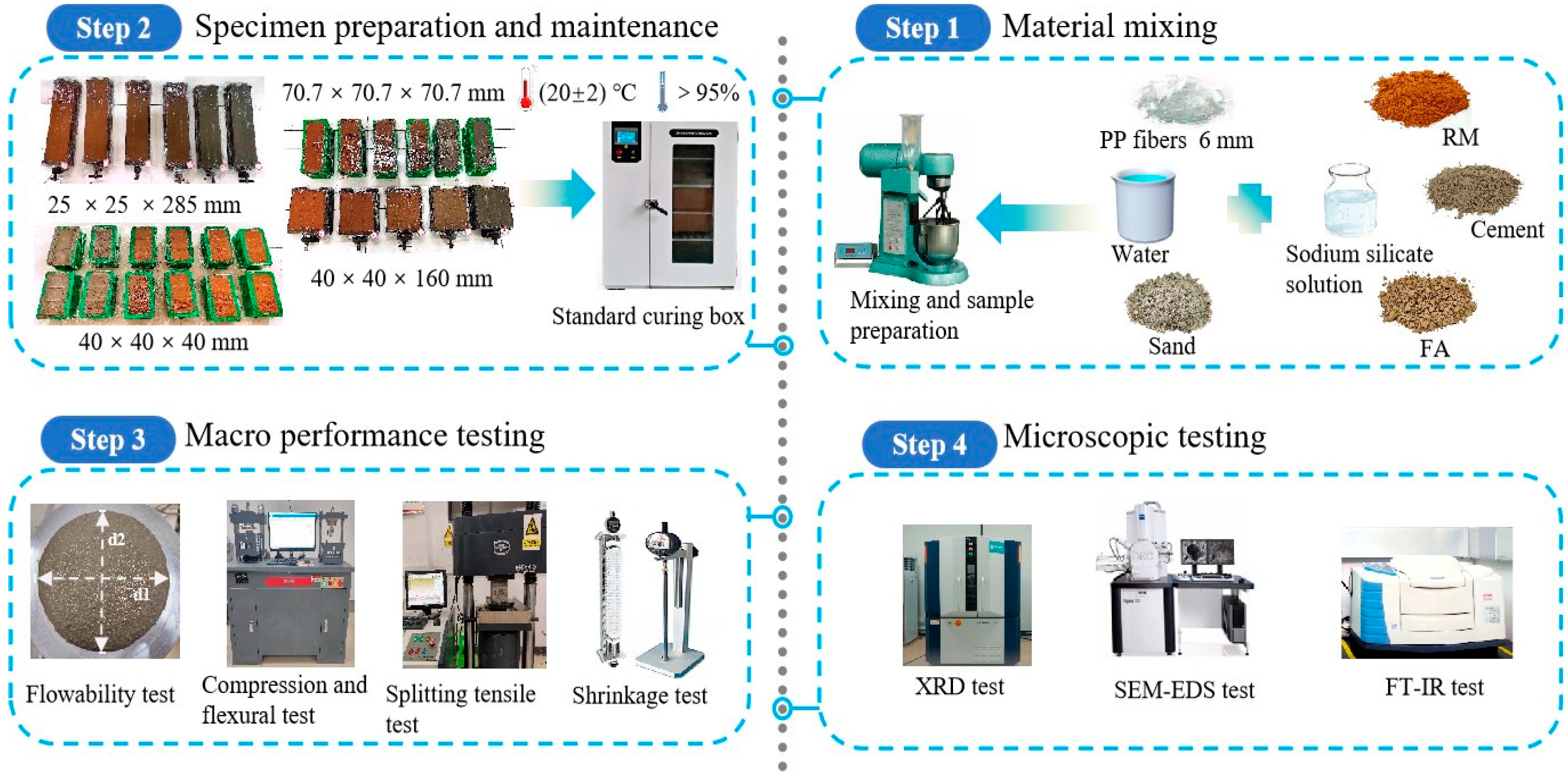
2. Materials and Methods
2.1. Materials
2.2. Mix Proportions
2.3. Sample Preparation
2.4. Testing Methods
2.4.1. Compressive, Splitting Tensile, and Flexural Strengths
2.4.2. Saturated Water Absorption
2.4.3. Drying Shrinkage and Autogenous Shrinkage
2.4.4. Microscopic Testing
3. Results and Discussion
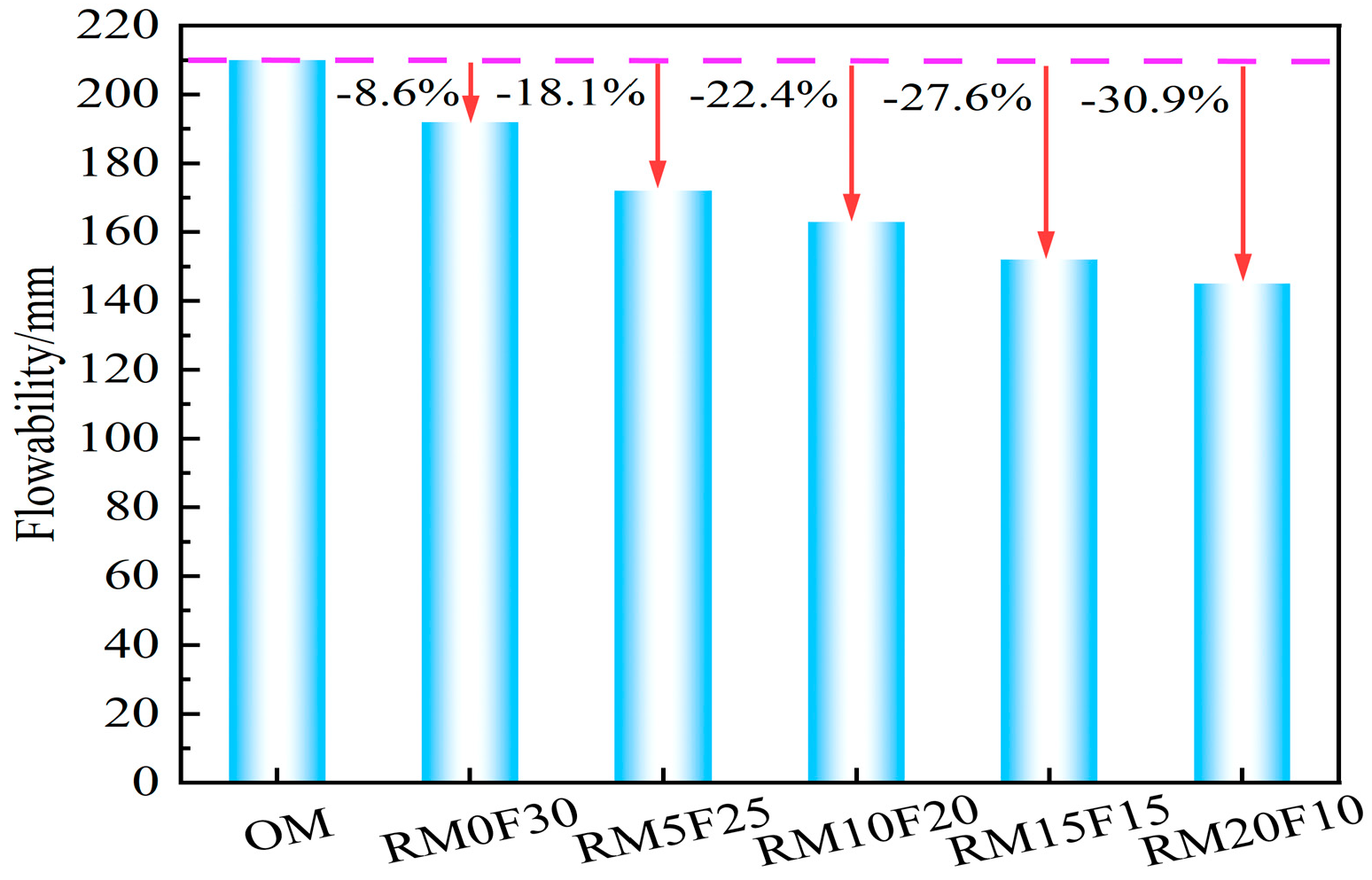
3.1. Flowability
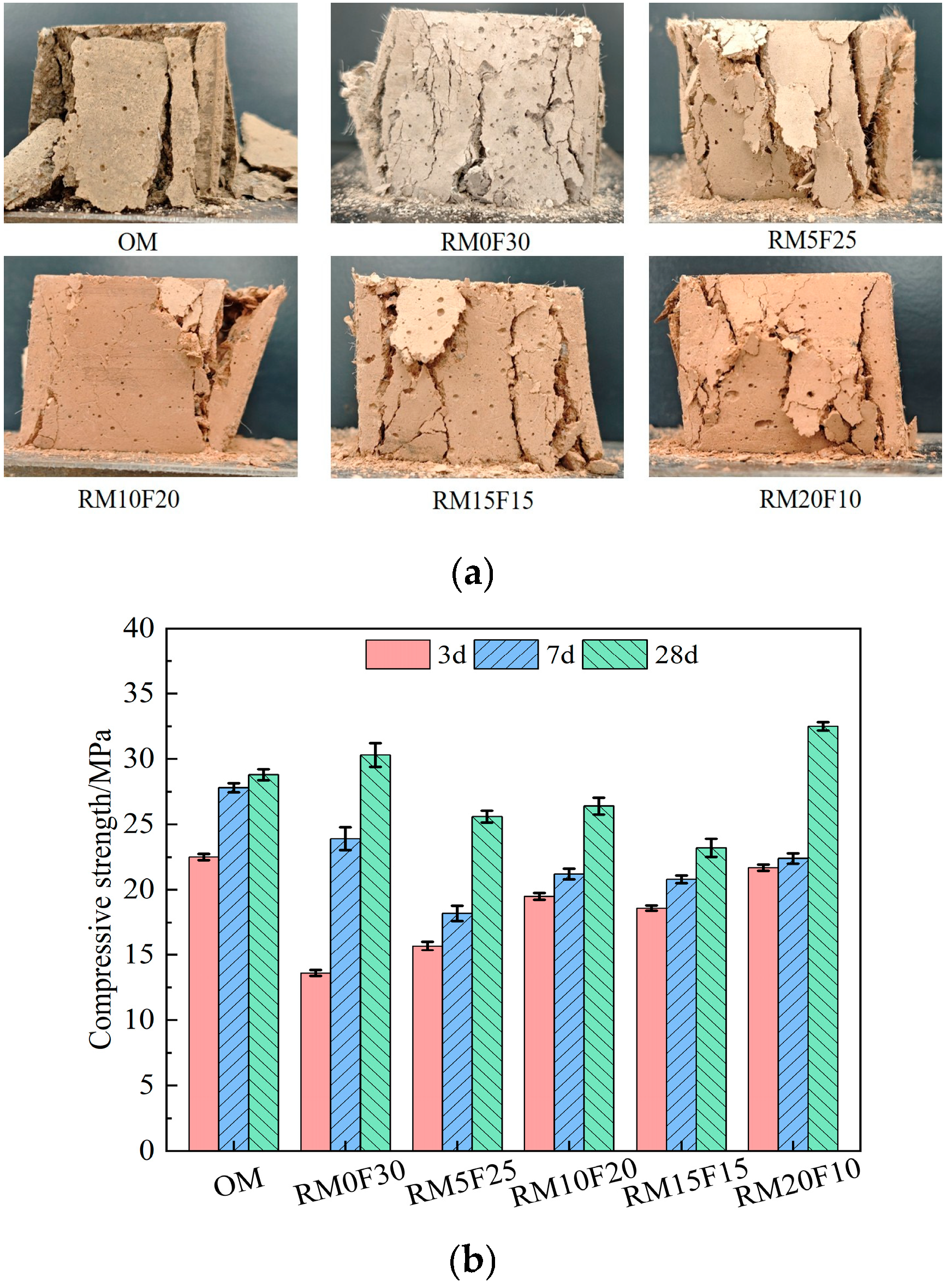
3.2. Compressive Strength
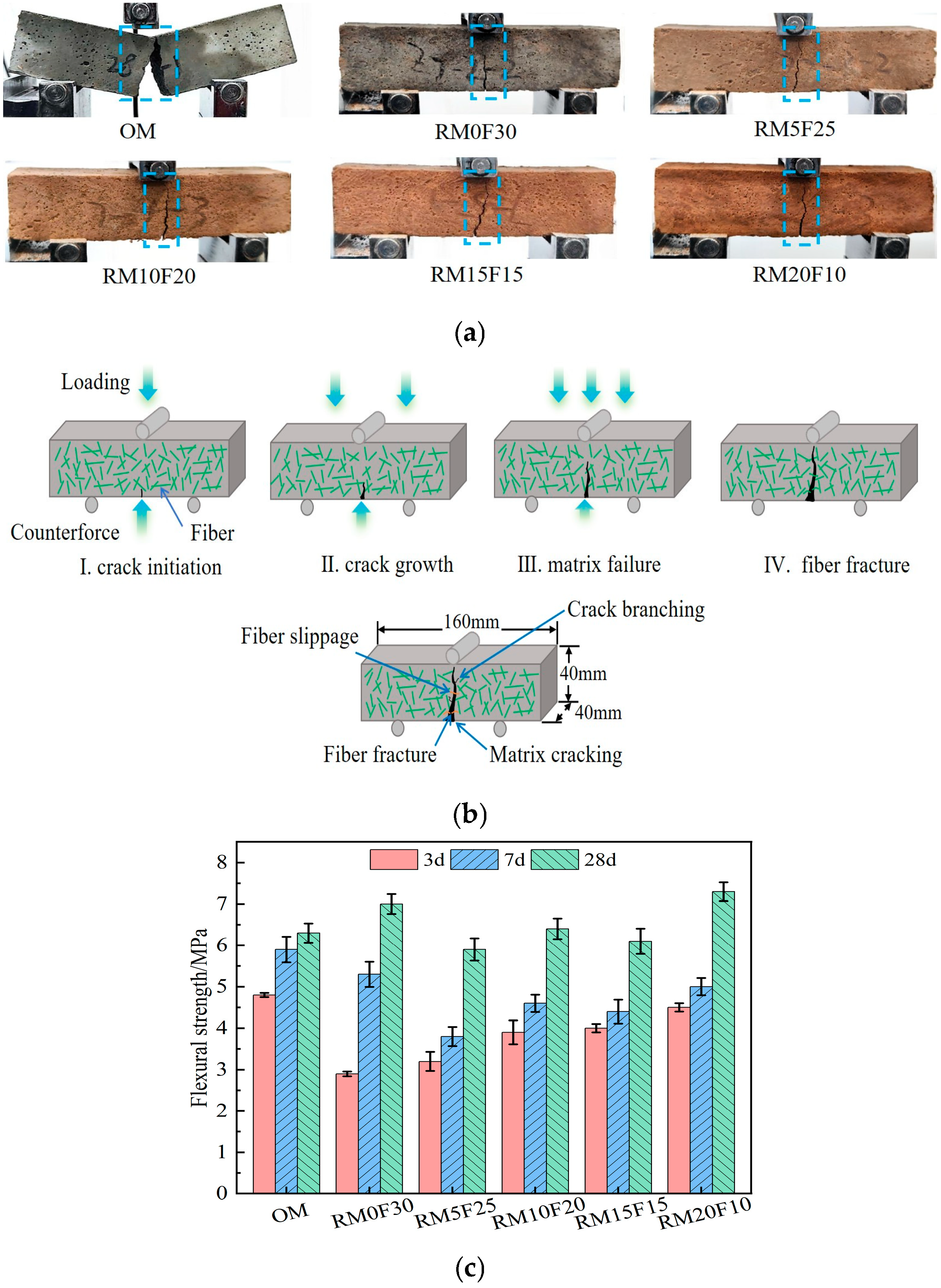
3.3. Flexural Strength
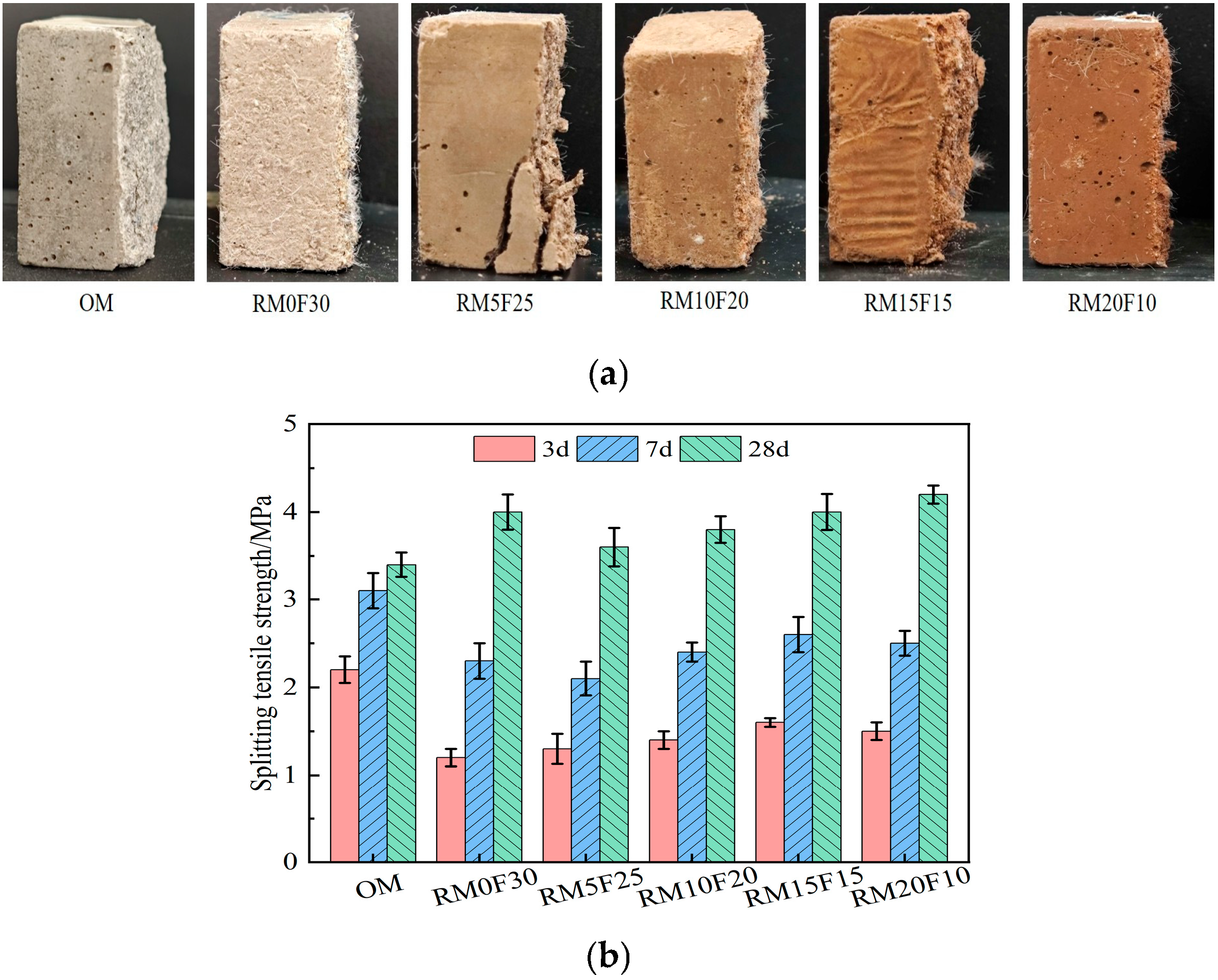
3.4. Splitting Tensile Strength
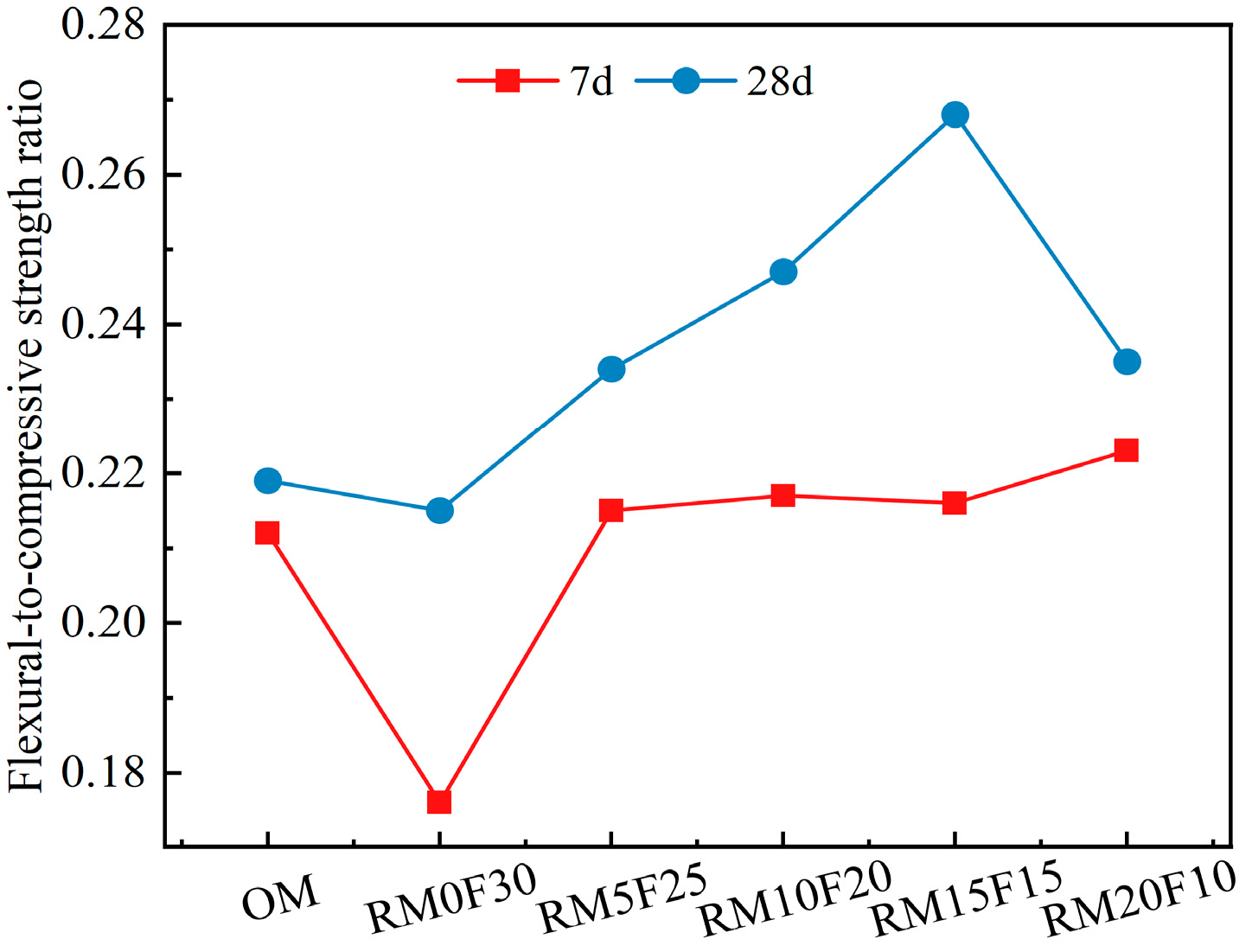
3.5. Flexural-to-Compression Ratio Analysis
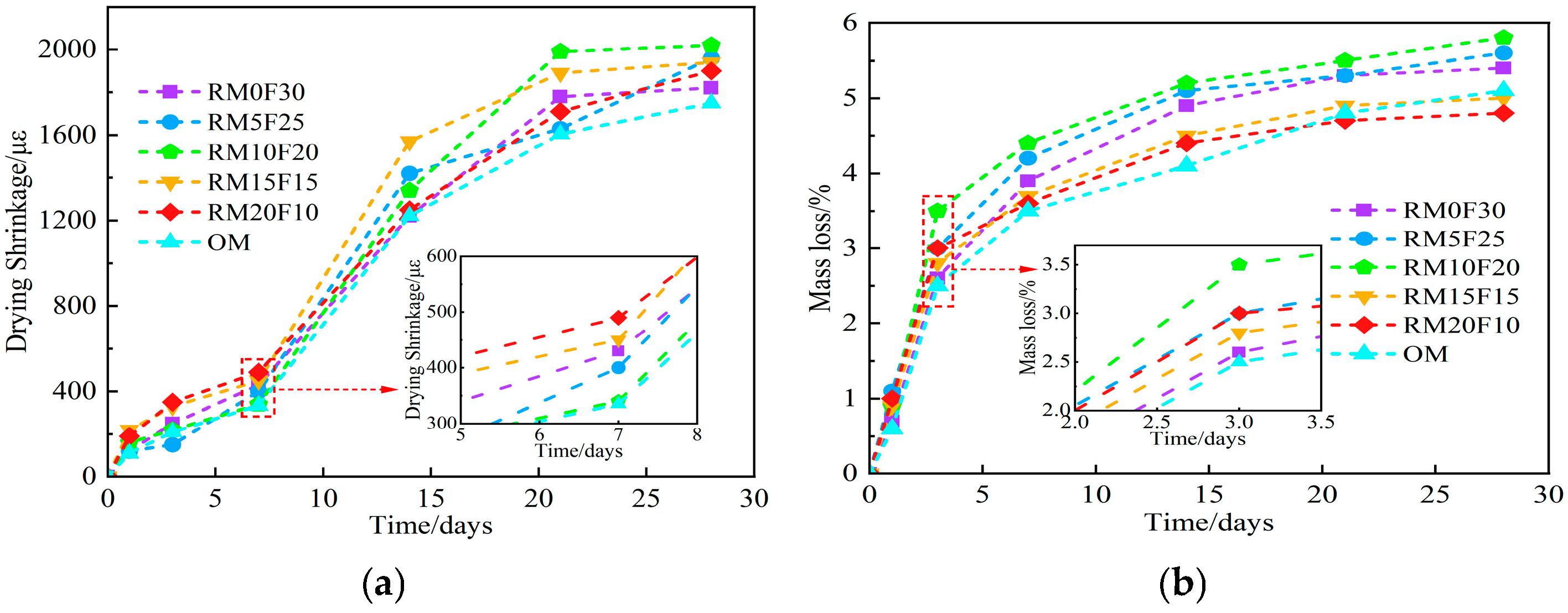
3.6. Drying Shrinkage and Mass Loss
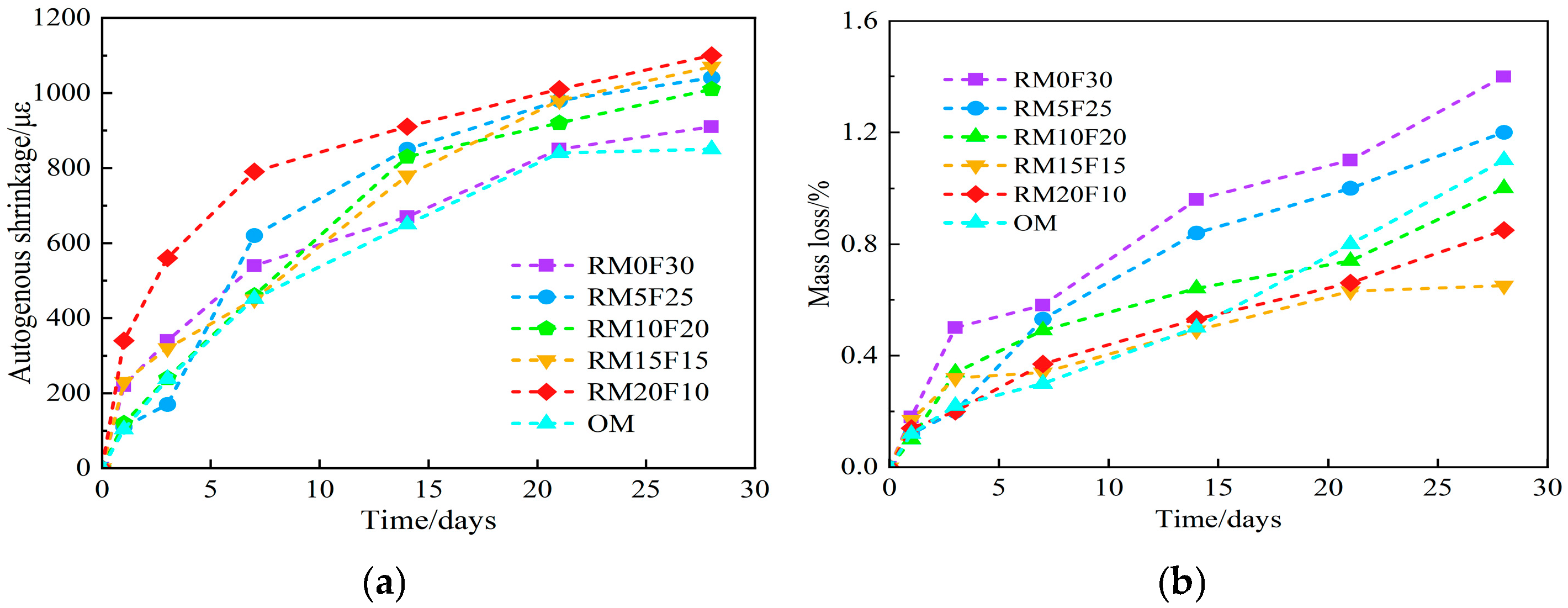
3.7. Autogenous Shrinkage and Mass Loss
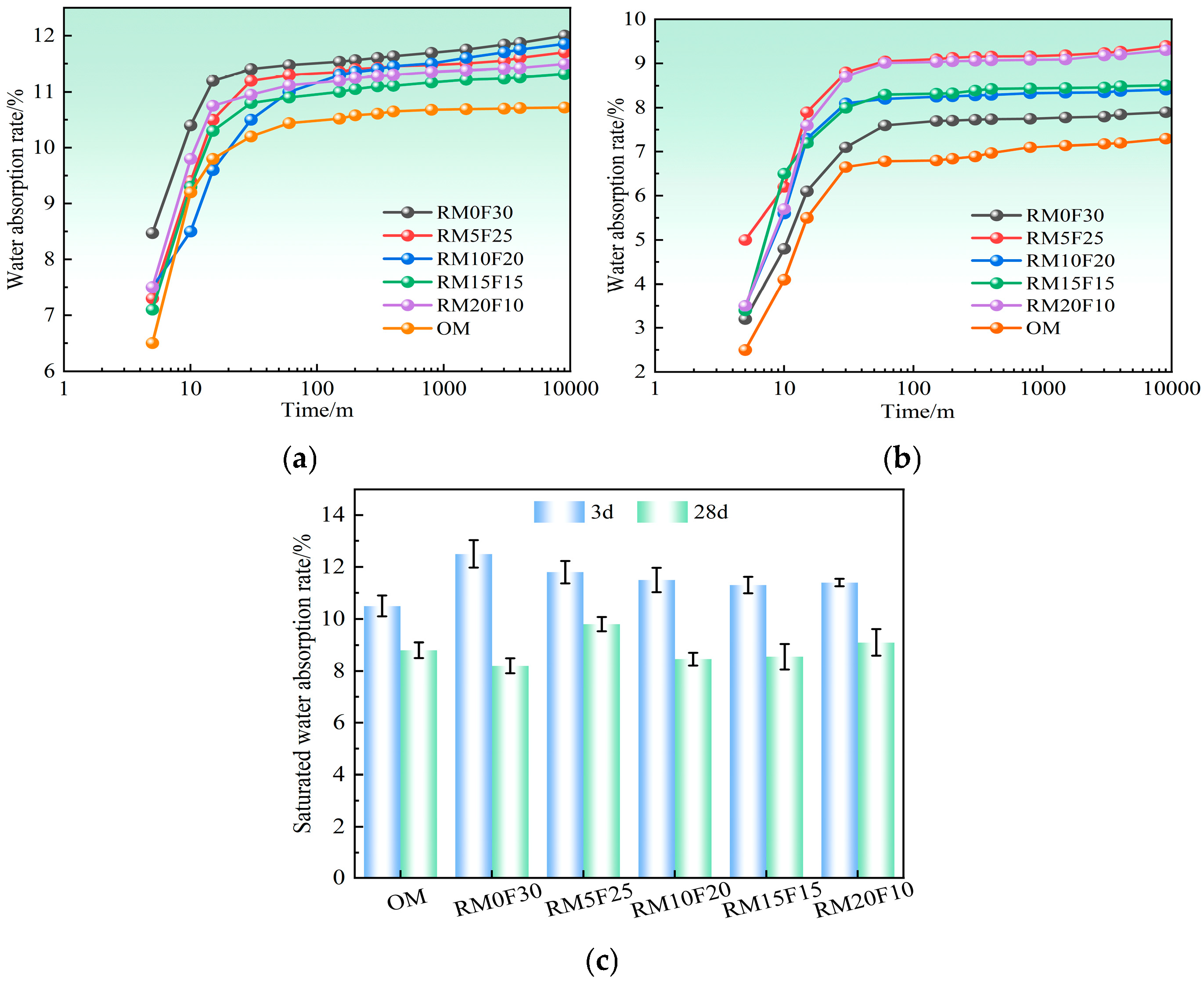
3.8. Water-Absorbing Properties
3.9. Microstructural Analysis
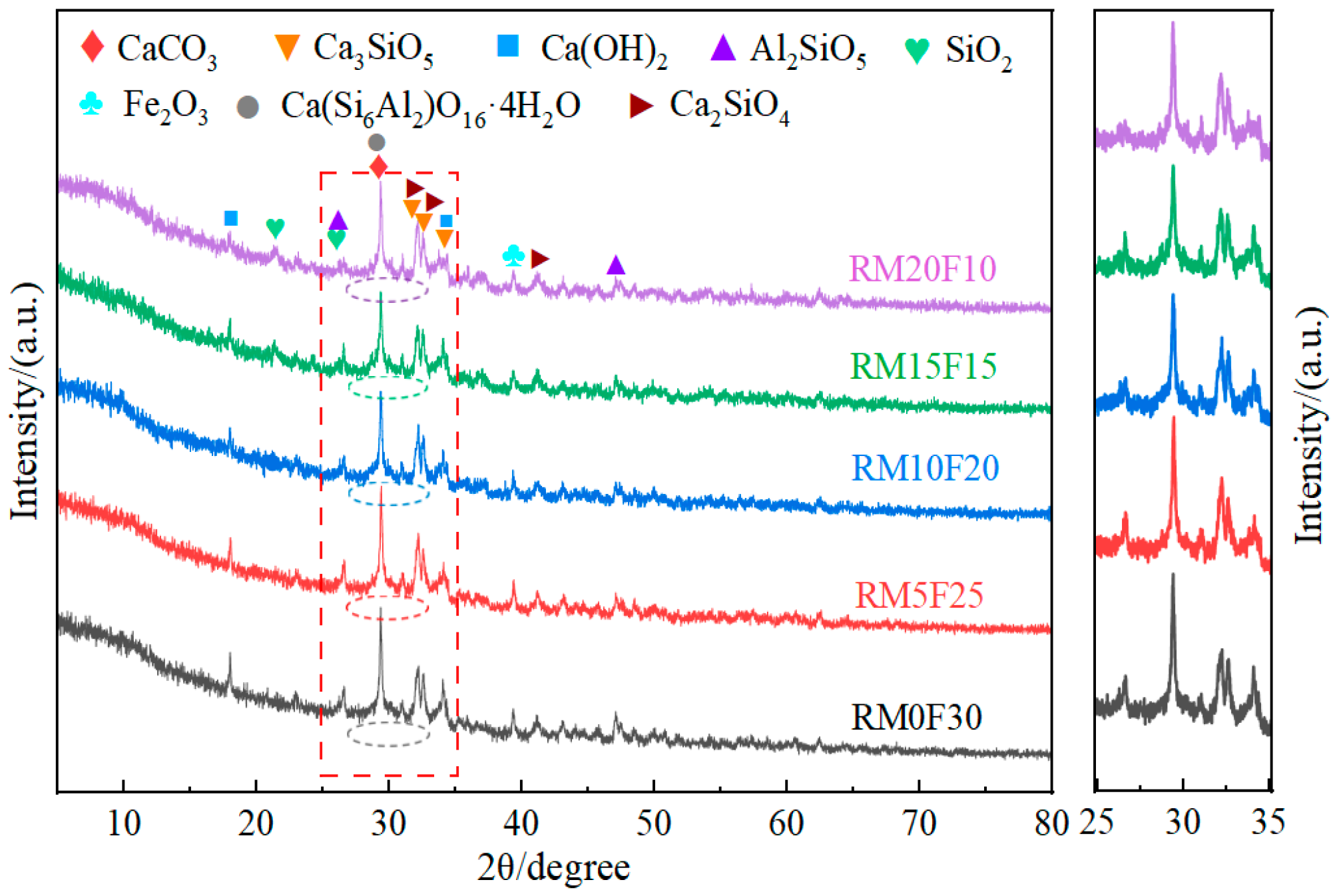
3.9.1. XRD
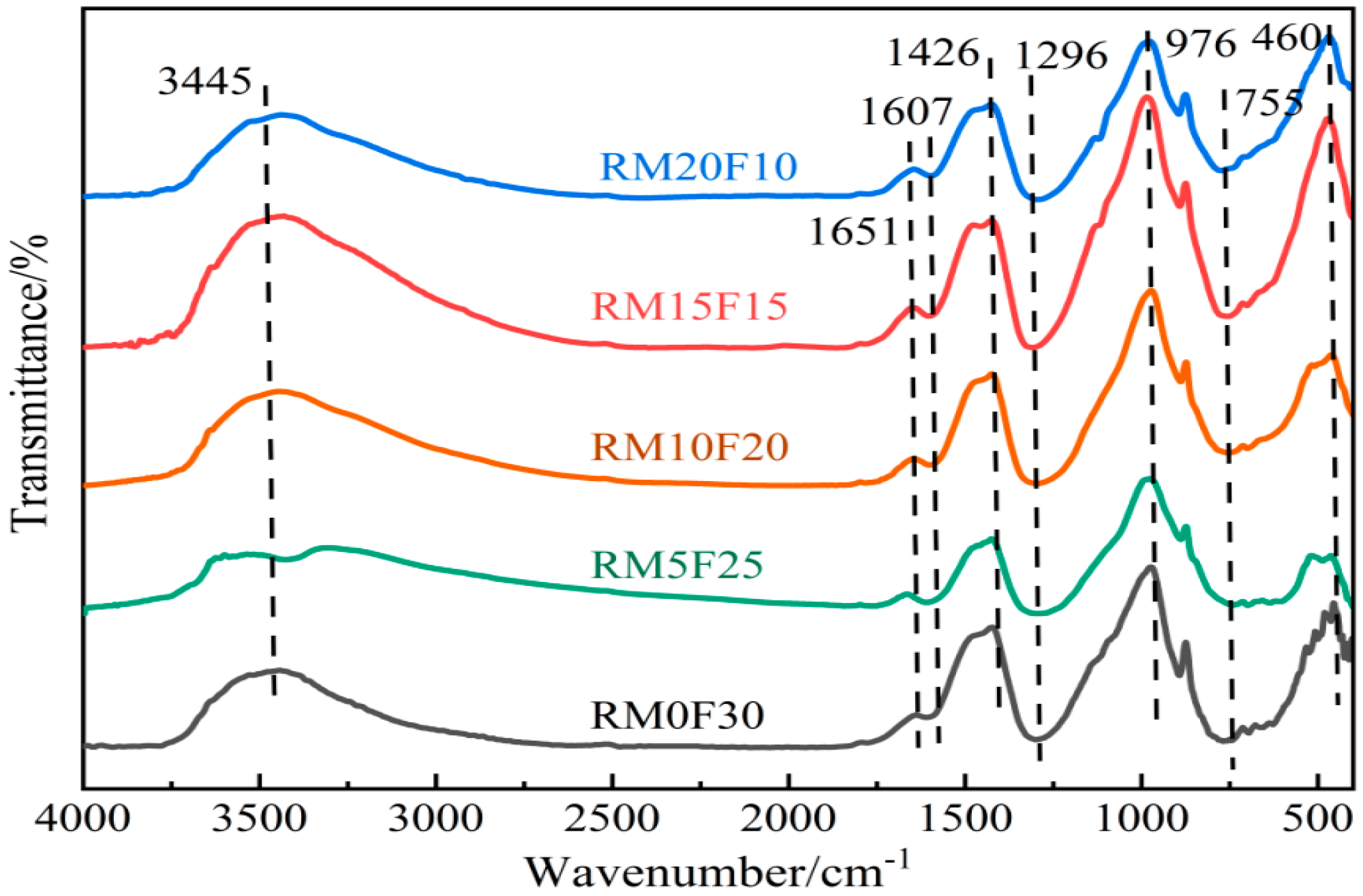
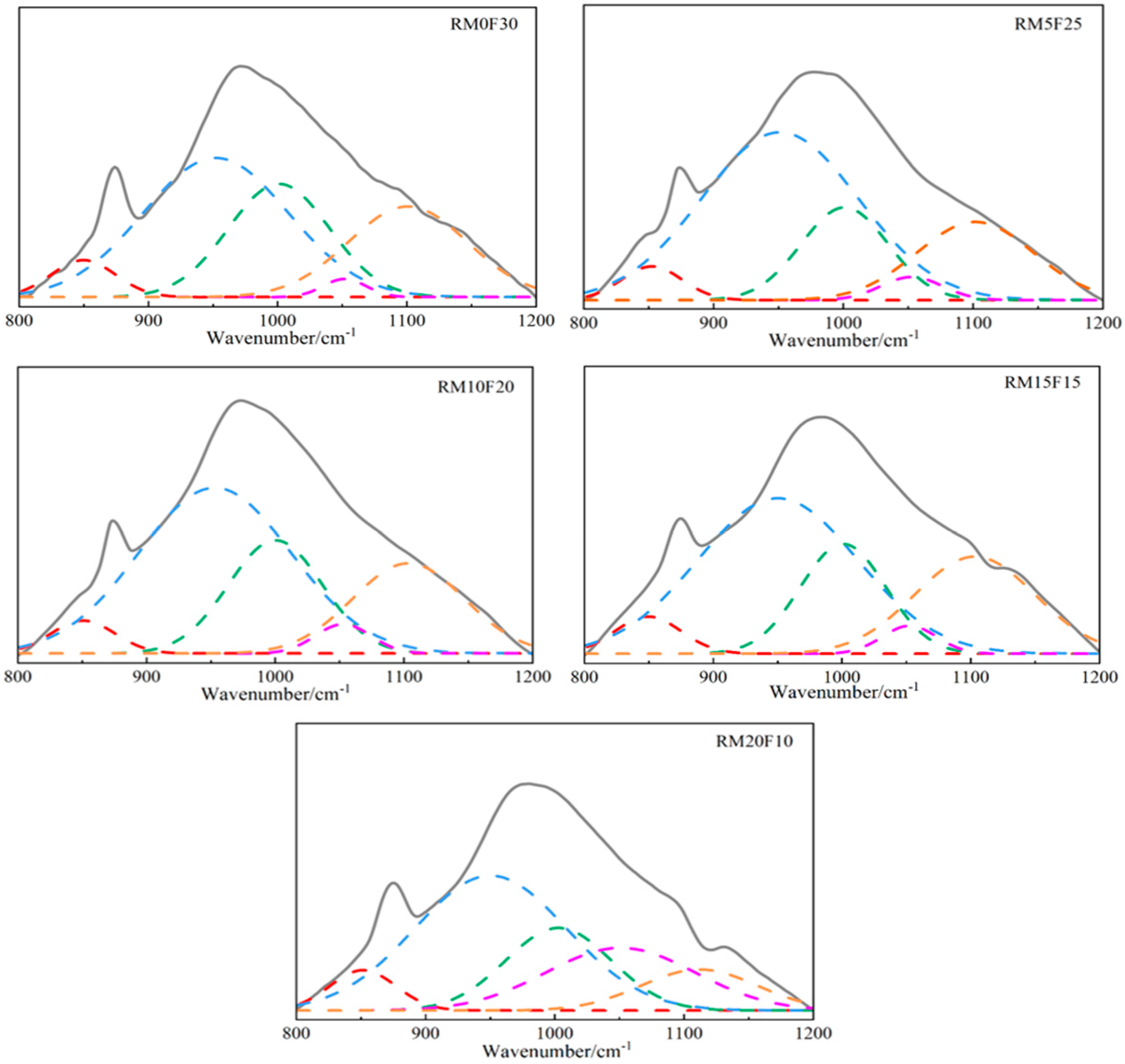
3.9.2. FTIR
3.9.3. SEM-EDS
3.10. Alkali Activation Mechanism
4. Conclusions
- (1)
- The incorporation of RM, FA, PPF, and sodium silicate reduced the flowability of fiber-reinforced mortar compared to OM. Flowability decreased with increasing RM/FA ratio.
- (2)
- Within the specific material system and curing conditions of this study, the fiber-reinforced mortar with an RM/FA ratio of 2:1 (RM20F10) demonstrated the best overall mechanical performance, achieving 28 d compressive, flexural, and splitting tensile strengths of 32.4 MPa, 7.3 MPa, and 4.2 MPa, respectively. These values represent improvements of 12.5%, 15.9%, and 23.5% over ordinary mortar.
- (3)
- The fiber-reinforced mortars generally exhibited higher drying and autogenous shrinkage than OM, with the maximum values observed for the RM10F20 and RM20F10 mixtures, respectively.
- (4)
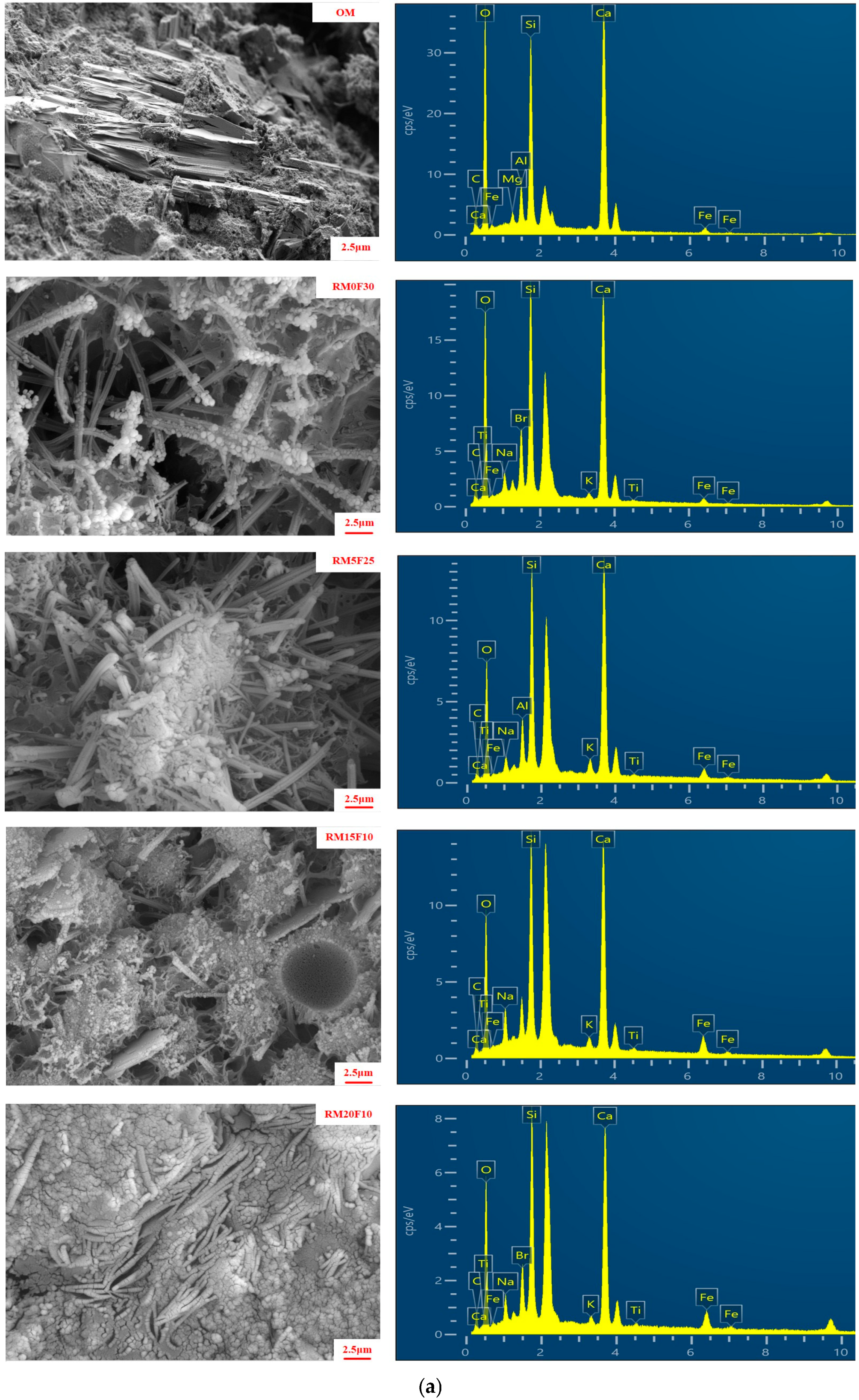
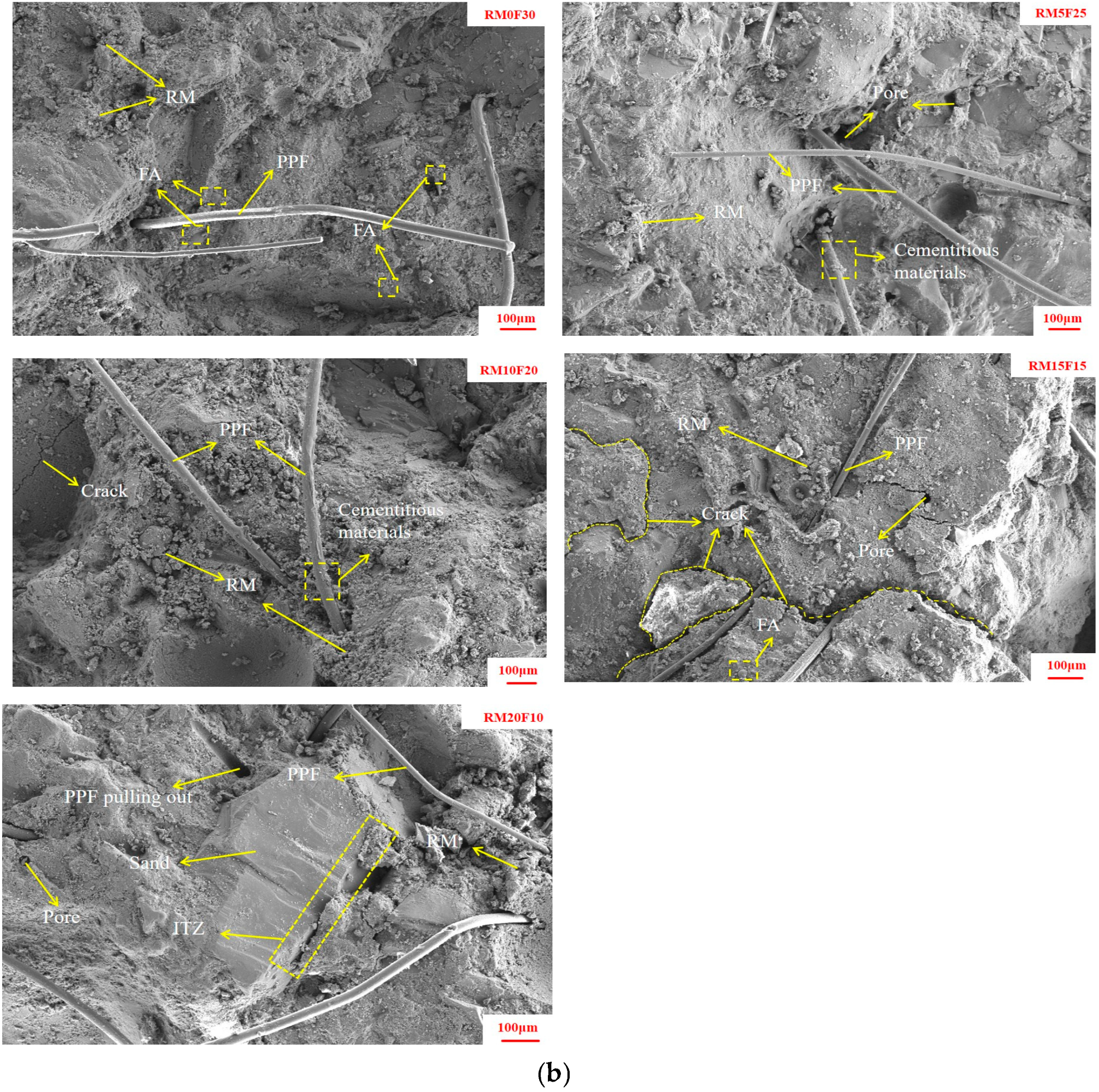
- Microstructural analyses confirmed that the optimal mix (RM20F10) exhibited the highest gel product content and a favorable Ca/Si ratio, leading to a denser matrix. This is considered a key factor contributing to its superior compressive strength. Furthermore, SEM analysis reveals that PPF effectively bridges microcracks and that pull-out is the dominant failure mechanism. This mechanism is the primary reason for the significantly enhanced toughness, flexural, and splitting tensile strengths.
Author Contributions
Funding
Data Availability Statement
Acknowledgments
Conflicts of Interest
References
- Zhang, J.; Shi, C.; Zhang, Z.; Ou, Z. Durability of alkali-activated materials in aggressive environments: A review on recent studies. Constr. Build. Mater. 2017, 152, 598–613. [Google Scholar] [CrossRef] [Scilit]
- Scrivener, K.; John, V.; Gartner, E. Eco-efficient cements: Potential economically viable solutions for a low-CO2 cement-based materials industry. Cem. Concr. Res. 2018, 114, 2–26. [Google Scholar] [CrossRef] [Scilit]
- Kan, L.; Wang, F. Mechanical properties of high ductile alkali-activated fiber reinforced composites incorporating red mud under different curing conditions. Ceram. Int. 2022, 48, 1999–2011. [Google Scholar] [CrossRef] [Scilit]
- Pokhrel, M.; Bandelt, M. Material properties and structural characteristics influencing deformation capacity and plasticity in reinforced ductile cement-based composite structural components. Compos. Struct. 2019, 224, 111013. [Google Scholar] [CrossRef] [Scilit]
- An, Q.; Pan, H.; Zhao, Q.; Wang, D. Strength development and microstructure of sustainable geopolymers made from alkali-activated ground granulated blast-furnace slag, calcium carbide residue, and red mud. Constr. Build. Mater. 2022, 356, 129279. [Google Scholar] [CrossRef] [Scilit]
- Kumar, A.; Saravanan, T.; Bisht, K.; Kabeer, K.; Syed, A. A review on the utilization of red mud for the production of geopolymer and alkali activated concrete. Constr. Build. Mater. 2021, 302, 124170. [Google Scholar] [CrossRef] [Scilit]
- Zeyad, A.M.; Amin, M.; Selim, S.; Aldahdooh, M.A.A.; Shaban, W.M.; Agwa, I.S. Sustainable high-performance geopolymer concrete incorporating nano clay and rice husk ash. Constr. Build. Mater. 2025, 495, 143472. [Google Scholar] [CrossRef] [Scilit]
- Kuldeep, K.; Manjeet, B.; Rishav, G. Mechanical strength analysis of fly-ash based concrete in presence of red mud. Mater. Today Proc. 2022, 52, 472–476. [Google Scholar] [CrossRef] [Scilit]
- Cheng, H.; Xu, W.H.; Chen, P. Influence of Bayer Red Mud on the Operational and Mechanical Characteristics of Composite Cement Mortar. J. Renew. Mater. 2023, 11, 3945–3956. [Google Scholar] [CrossRef] [Scilit]
- Maddi, A.; Sasi, K.R.; Chava, V. Characterization of red mud based cement mortar; mechanical and microstructure studies. Mater. Today Proc. 2020, 43, 1587–1591. [Google Scholar] [CrossRef] [Scilit]
- Xue, S.; Jiang, Y.; Zhu, F. Ecological disposal and large-scale utilization of bauxite residue: A long way to go. Bull. Environ. Contam. Toxicol. 2022, 109, 1–2. [Google Scholar] [CrossRef] [Scilit] [PubMed]
- Luo, Z.; Zhi, T.; Liu, L.; Jie, M.; Zhang, M. Solidification/stabilization of chromium slag in red mud-based geopolymer. Constr. Build. Mater. 2022, 316, 125813. [Google Scholar] [CrossRef] [Scilit]
- An, Q.; Pan, H.; Zhao, Q.; Shi, Y. Properties of alkali-activated red mud-fly ash-carbide slag composites. J. Build. Mater. 2023, 26, 14–20. [Google Scholar] [CrossRef]
- Boros, A.; Pintér, L.; Korim, T. Sustainable utilization of red mud and glass waste in alkali-activated cements: Design and performance of products. Period. Polytech. Civ. Eng. 2025, 69, 1393–1408. [Google Scholar] [CrossRef] [Scilit]
- Ke, G.; Li, Z.; Jiang, H. Study on long-term solidification of all-solid waste cementitious materials based on circulating fluidized bed fly ash, red mud, carbide slag, and fly ash. Constr. Build. Mater. 2024, 427, 136284. [Google Scholar] [CrossRef] [Scilit]
- Venkatesh, C.; Nerella, R.; Chand, R.S.M. Role of red mud as a cementing material in concrete: A comprehensive study on durability behavior. Innov. Infrastruct. Solut. 2020, 6, 281–289. [Google Scholar] [CrossRef] [Scilit]
- Min, Y.; Wu, J.; Li, B.; Zhang, J. Effects of fly ash content on the strength development of soft clay stabilized by one-part geopolymer under curing stress. J. Mater. Civ. Eng. 2021, 33, 04021274. [Google Scholar] [CrossRef] [Scilit]
- Chandra, K.; Krishnaiah, S.; Reddy, N.; Hossiney, N.; Peng, L. Strength development of geopolymer composites made from red mud–fly ash as a subgrade material in road construction. J. Hazard. Toxic. Radioact. Waste. 2021, 25, 04020068. [Google Scholar] [CrossRef] [Scilit]
- Akhtar, A.; Sarmah, A.K. Novel biochar-concrete composites: Manufacturing, characterization and evaluation of the mechanical properties. Sci. Total Environ. 2018, 616–617, 408–416. [Google Scholar] [CrossRef] [Scilit] [PubMed]
- GB/T 175-2023; Common Portland Cement. State Administration for Market Regulation. National Standardization Administration of China: Beijing, China, 2023.
- GB/T 17671-2021; Test Method of Cement Mortar Strength (ISO Method). Standardization Administration of China (SAC): Beijing, China, 2021.
- ASTM C642-13; Standard Test Method for Density, Absorption, and Voids in Hardened Concrete. ASTM International: West Conshohocken, PA, USA, 2013.
- ASTM C596-18; Standard Test Method for Drying Shrinkage of Mortar Containing Hydraulic Cement. ASTM International: West Conshohocken, PA, USA, 2018.
- ASTM C1698-19; Standard Test Method for Autogenous Strain of Cement Paste and Mortar. ASTM International: West Conshohocken, PA, USA, 2019.
- Elzeadani, M.; Bompa, D.V.; Elghazouli, A.Y. One part alkali activated materials: A state-of-the-art review. J. Build. Eng. 2022, 57, 104871. [Google Scholar] [CrossRef] [Scilit]
- Nguyen, H.C. Study on compressive strength and chloride ion permeability of high fly ash content self-compacting concrete. GEOMATE J. 2024, 26, 34–40. [Google Scholar] [CrossRef] [Scilit]
- Nie, Q.; Hu, W.; Ai, T.; Huang, B.; Shu, X.; He, Q. Strength properties of geopolymers derived from original and desulfurized red mud cured at ambient temperature. Constr. Build. Mater. 2016, 125, 905–911. [Google Scholar] [CrossRef] [Scilit]
- Hu, W.; Nie, Q.; Huang, B.; Shu, X.; He, Q. Mechanical and microstructural characterization of geopolymers derived from red mud and fly ashes. J. Clean. Prod. 2018, 186, 799–806. [Google Scholar] [CrossRef] [Scilit]
- Wang, Y.; Liu, X.; Zhang, W.; Li, Z.; Zhang, Y.; Li, Y.; Ren, Y. Effects of Si/Al ratio on the efflorescence and properties of fly ash based geopolymer. J. Clean. Prod. 2020, 244, 118852. [Google Scholar] [CrossRef] [Scilit]
- Wang, Y.; Han, F.; Mu, J. Solidification/stabilization mechanism of Pb (II), Cd (II), Mn (II) and Cr (III) in fly ash based geopolymers. Constr. Build. Mater. 2018, 160, 818–827. [Google Scholar] [CrossRef] [Scilit]
- Zhang, Y.; Liu, X.; Xu, Y.; Tang, B.; Wang, Y. Synergic effects of electrolytic manganese residue-red mud-carbide slag on the road base strength and durability properties. Constr. Build. Mater. 2019, 220, 364–374. [Google Scholar] [CrossRef] [Scilit]
- Geng, J.; Zhou, M.; Zhang, T.; Wang, W.; Wang, T. Preparation of blended geopolymer from red mud and coal gangue with mechanical co-grinding preactivation. Mater. Struct. 2017, 50, 109. [Google Scholar] [CrossRef] [Scilit]
- Li, Y.; Liu, X.; Li, Z.; Ren, Y.; Wang, Y.; Zhang, W. Preparation, characterization and application of red mud, fly ash and desulfurized gypsum based eco-friendly road base materials. J. Clean. Prod. 2020, 259, 124777. [Google Scholar] [CrossRef] [Scilit]
- Zhang, Y.; Liu, X.; Xu, Y.; Tang, B.; Wang, Y.; Mukiza, E. Preparation and characterization of cement treated road base material utilizing electrolytic manganese residue. J. Clean. Prod. 2019, 232, 980–992. [Google Scholar] [CrossRef] [Scilit]
- Mollah, M.; Kesmez, M.; Cocke, D. An X-ray diffraction (XRD) and Fourier transform infrared spectroscopic (FT-IR) investigation of the long-term effect on the solidification/stabilization (S/S) of arsenic (V) in Portland cement type-V. Sci. Total Environ. 2004, 325, 255–262. [Google Scholar] [CrossRef] [Scilit]
- Donatello, S.; Kuenzel, C.; Palomo, A.; Fernández-Jiménez, A. High temperature resistance of a very high volume fly ash cement paste. Cem. Concr. Compos. 2014, 45, 234–242. [Google Scholar] [CrossRef] [Scilit]
- Bai, C.; Shao, J.; Li, X.; Zhang, Z.; Qiao, Y.; Hao, J.; Li, H.; Zheng, T.; Colombo, P. Fabrication and properties of slag-based geopolymer syntactic foams containing hollow glass microspheres. Mater. Lett. 2022, 308, 131158. [Google Scholar] [CrossRef] [Scilit]
- Wang, Y.; Liu, X.; Zhu, X.; Zhu, W.; Yue, J. Synergistic effect of red mud, desulfurized gypsum and fly ash in cementitious materials: Mechanical performances and microstructure. Constr. Build. Mater. 2023, 404, 133234. [Google Scholar] [CrossRef] [Scilit]
- Nazir, K.; Canpolat, O.; Uysal, M.; Niş, A.; Kuranlı, Ö.F. Engineering properties of different fiber-reinforced metakaolin-red mud based geopolymer mortars. Constr. Build. Mater. 2023, 385, 131496. [Google Scholar] [CrossRef] [Scilit]
- Wang, Q.; Yi, Y.; Ma, G.; Luo, H. Hybrid effects of steel fibers, basalt fibers and calcium sulfate on mechanical performance of PVA-ECC containing high-volume fly ash. Cem. Concr. Compos. 2019, 97, 357–368. [Google Scholar] [CrossRef] [Scilit]
- Pang, S.; Li, J.; Li, M.; Zhao, C.; Fan, H.; Zhang, X. Effect of silane coupling agent on flexural properties of fiber-reinforced geopolymer-cemented aeolian sand. Case Stud. Constr. Mater. 2025, 22, e04439. [Google Scholar] [CrossRef] [Scilit]
- Zhang, P.; Shi, B.; Dai, X.; Chen, C.; Lai, C. A state-of-the-art review on the freeze-thaw resistance of sustainable geopolymer gel composites: Mechanisms, determinants, and models. Gels 2025, 11, 537. [Google Scholar] [CrossRef] [Scilit] [PubMed]
- Aldahdooh, M.A.A.; Amin, M.; Agwa, I.S.; Ibrahim, O.M.O.; Zeyad, A.M.; Abd-Elrahman, M.H. Utilization of novel agricultural waste ashes in self-compacting geopolymer concrete: Pumpkin shell and sugar beet ashes. Constr. Build. Mater. 2026, 506, 144926. [Google Scholar] [CrossRef] [Scilit]
- Zhou, X.; Shen, J. Micromorphology and microstructure of coal fly ash and furnace bottom slag based light-weight geopolymer. Constr. Build. Mater. 2020, 242, 118168. [Google Scholar] [CrossRef] [Scilit]
- Zhang, N.; Li, H.; Zhao, Y.; Liu, X. Hydration characteristics and environmental performance of a calcium silicate slag-based cementitious material. J. Hazard. Mater. 2016, 306, 67–76. [Google Scholar] [CrossRef] [Scilit]







| Materials | SiO2 | Al2O3 | Fe2O3 | CaO | Na2O | MgO | SO3 | MnO | Loss in Ignition |
|---|---|---|---|---|---|---|---|---|---|
| OPC | 19.1 | 3.5 | 5.0 | 65.5 | 0.1 | 1.4 | 3.9 | 0.28 | - |
| RM | 14.60 | 22.60 | 44.70 | 0.87 | 3.90 | 0.13 | 0.69 | 0.09 | - |
| FA | 43.00 | 25.50 | 10.50 | 9.60 | 1.06 | 3.15 | 1.50 | 0.15 | 3.10 |
| Diameter (μm) | Length (mm) | Tensile Strength (MPa) | Density (g/cm3) | Elastic Modulus (GPa) | Max. Elongation (%) |
|---|---|---|---|---|---|
| 31 | 6 | 560 | 0.9 | 4.8 | 16 |
| Sample | RM (g) | FA (g) | Sodium Silicate Solution (g) | PPF (g) | OPC (g) | Water (g) | Sand (g) | Water/Cement Ratio |
|---|---|---|---|---|---|---|---|---|
| OM | 0 | 0 | 0 | 0 | 660 | 330 | 1650 | 0.5 |
| RM0F30 | 0 | 198 | 66 | 0.66 | 462 | 330 | 1650 | 0.5 |
| RM5F25 | 33 | 165 | 66 | 0.66 | 462 | 330 | 1650 | 0.5 |
| RM10F20 | 66 | 132 | 66 | 0.66 | 462 | 330 | 1650 | 0.5 |
| RM15F15 | 99 | 99 | 66 | 0.66 | 462 | 330 | 1650 | 0.5 |
| RM20F10 | 132 | 66 | 66 | 0.66 | 462 | 330 | 1650 | 0.5 |
| Sample | Relative Content/% | RBO | R2 | ||||
|---|---|---|---|---|---|---|---|
| SiQ0 | SiQ1 | SiQ2 | SiQ3 | SiQ4 | |||
| RM0F30 | 5.14 | 44.26 | 25.32 | 1.73 | 21.55 | 47.52 | 0.97 |
| RM5F25 | 4.30 | 55.99 | 17.29 | 3.07 | 19.29 | 44.26 | 0.99 |
| RM10F20 | 4.17 | 50.82 | 21.54 | 3.29 | 20.18 | 46.12 | 0.98 |
| RM15F15 | 4.81 | 49.73 | 19.03 | 3.09 | 22.31 | 47.01 | 0.98 |
| RM20F10 | 5.70 | 44.65 | 19.08 | 20.35 | 14.20 | 48.23 | 0.97 |
| Sample | C | O | Si | Na | Fe | Ca | Ca/Si |
|---|---|---|---|---|---|---|---|
| OM | 7.93 | 48.20 | 11.48 | - | 2.23 | 24.12 | 2.10 |
| RM0F30 | 7.48 | 43.27 | 12.04 | 1.55 | 2.27 | 25.72 | 2.14 |
| RM5F25 | 7.55 | 35.92 | 13.08 | 1.49 | 5.08 | 31.43 | 2.40 |
| RM15F15 | 6.10 | 37.49 | 13.07 | 3.35 | 8.72 | 29.45 | 2.25 |
| RM20F10 | 7.84 | 36.30 | 12.30 | 2.22 | 8.11 | 25.57 | 2.08 |
Disclaimer/Publisher’s Note: The statements, opinions and data contained in all publications are solely those of the individual author(s) and contributor(s) and not of MDPI and/or the editor(s). MDPI and/or the editor(s) disclaim responsibility for any injury to people or property resulting from any ideas, methods, instructions or products referred to in the content. |
© 2026 by the authors. Licensee MDPI, Basel, Switzerland. This article is an open access article distributed under the terms and conditions of the Creative Commons Attribution (CC BY) license.
Share and Cite
Du, X.; Wu, T.; Liu, Z.; Xu, G.; Zhu, Y.; Wang, C.; Liu, X. Mechanical Properties and Microstructure of Alkali-Activated Fiber-Reinforced Mortar Incorporating Red Mud and Fly Ash. Crystals 2026, 16, 372. https://doi.org/10.3390/cryst16060372
Du X, Wu T, Liu Z, Xu G, Zhu Y, Wang C, Liu X. Mechanical Properties and Microstructure of Alkali-Activated Fiber-Reinforced Mortar Incorporating Red Mud and Fly Ash. Crystals. 2026; 16(6):372. https://doi.org/10.3390/cryst16060372
Chicago/Turabian StyleDu, Xiangqin, Tingjie Wu, Zhilong Liu, Guang Xu, Yuanshuai Zhu, Chunyi Wang, and Xingjie Liu. 2026. "Mechanical Properties and Microstructure of Alkali-Activated Fiber-Reinforced Mortar Incorporating Red Mud and Fly Ash" Crystals 16, no. 6: 372. https://doi.org/10.3390/cryst16060372
APA StyleDu, X., Wu, T., Liu, Z., Xu, G., Zhu, Y., Wang, C., & Liu, X. (2026). Mechanical Properties and Microstructure of Alkali-Activated Fiber-Reinforced Mortar Incorporating Red Mud and Fly Ash. Crystals, 16(6), 372. https://doi.org/10.3390/cryst16060372