Article

Mechanical Properties and Tribological Behavior of Cu2O Nanosheets Deposited on TiO2 Nanotubes for Anti-Corrosion and Anti-Wear Implant Applications


1
Laboratoire de Photovoltaïque, Centre de Recherches et des Technologies de l’Energie, Technopole de Borj Cédria, BP 95, Hammam-Lif 2050, Tunisia
2
School of Design Engineering, Departamento de Fisica Aplicada, Universitat Politecnica de Valencia, Cami de Vera, 46022 Valencia, Spain
3
College of Engineering, Imam Mohammad Ibn Saud Islamic University (IMSIU), Riyadh 11432, Saudi Arabia
4
Laboratoire de Mécanique, Matériaux et Procédés LR99ES05, Ecole Nationale Supérieure d’ingénieurs de Tunis, Université de Tunis, Tunis 1007, Tunisia
5
ICB, UMR 6303 CNRS-Universite de Bourgogne, 9 Avenue Alain Savary, 47870 Dijon, Cedex, France
6
Laboratoire de Nanomatériaux et Systèmes pour Énergies Renouvelables, Centre de Recherches et des Technologies de l’Energie, Technopole de Borj Cédria, BP 95, Hammam-Lif 2050, Tunisia
7
Chemistry Department, College of Science, Imam Mohammad Ibn Saud Islamic University (IMSIU), Riyadh 11623, Saudi Arabia
*
Author to whom correspondence should be addressed.
Crystals 2026, 16(4), 260; https://doi.org/10.3390/cryst16040260
Submission received: 19 January 2026 / Revised: 20 February 2026 / Accepted: 23 February 2026 / Published: 13 April 2026

Abstract

Successive ionic layer adsorption reaction (SILAR) was used to deposit Cu2O nanosheets on anodized TiO2 nanotubes at different deposition cycles (4, 8, 15, and 20). Compared to the bare TiO2 nanotubes, these coatings were investigated for their tribological behavior (friction, wear and energy loss), scanning and transmission electron microscopy (SEM, TEM), X-ray Diffraction (XRD) was used to characterize Cu2O/TiO2 coatings to study the effect of number of cycles on the morphological and structural properties of the samples; these characteristics engage in determining the wear mechanisms. The assessment of the coating’s adhesion was determined by the obtained critical loads from the scratch test; the 15 cycles Cu2O/TiO2 exhibited higher critical loads, which corresponds to improved adhesion. This sample also showed a low wear volume of 7.5 × 106 µm3 compared to other samples but higher energy loss due to the low shear strength of copper oxide. The friction coefficient, however, decreased from 0.7 for bare TiO2 nanotubes to 0.48 for 20 cycles Cu2O/TiO2 coatings at higher loads, which proves the wear resistance enhancement. Since these coatings will be manufactured for orthopedic and dental implant applications, the corrosion resistance was tested, and the 15 cycles Cu2O-NPs/TiO2-NTs where these coatings exhibited the most favorable combination of a low corrosion current density (1.9 × 10⁻⁴ A/cm2) and a noble corrosion potential (−0.3 V/SCE); furthermore, there was a polarization resistance of 2.4 × 10⁴ Ω·cm2 and a protection efficiency of 96.7%, indicating significantly enhanced corrosion resistance as opposed to the other samples.

1. Introduction

Implantable biomaterials applications have been arising for the past decade due to their biocompatibility, cellular response and tissue integration [1,2]. One of the propitious biomaterials are titanium and its alloys as they exhibit good abrasion resistance, corrosion resistance, antibacterial properties and excellent mechanical properties [3,4,5]. These materials have been used for bone implants such as for artificial joints, spinal fusion and fracture fixation devices or could also be used for dental implants [6,7]. A surface modification of titanium dioxide nanotubes, TNTs, can be an auspicious treatment for the limitation these materials faced in vivo, with the increase in specific surface area and porosity [8,9]. A study on animals proved that electrochemical anodized TNT screw implants in rabbit femurs exhibited osseointegration strength inflation and new bone formation; it also revealed frequent direct bone cell contact at the bone implant interface [10,11]. To even avoid other common problems derived from excessive wear of artificial joints such as bone absorption and loosening caused by the abrasion of the artificial joint, further surface modification is suggested with the use of conventional and non-conventional ways. Some of the many technologies of surface modification are plasma spraying, physical vapor deposition (PVD), chemical vapor deposition (CVD), laser cladding technology and high-velocity oxygen fuel spray [12]. Electrochemical anodization (EA) is recognized as a cost-effective and scalable method that allows for precise control over the properties of modified implants [13,14]. In essence, EA involves submerging a titanium-based dental implant as the anode along with a cathode (which can be either titanium or platinum) in a suitable electrolyte containing fluoride and water while applying a constant current or voltage from a DC power supply. Under optimal conditions and influenced by various EA parameters such as time, voltage, current, and the water/fluoride ratio, self-ordering of TiO2 nanotubes (TNTs) occurs on the implant surface. Additionally, these parameters enable the control of the nanostructures’ dimensions [15]. Numerous studies conducted in vitro, ex vivo, and in vivo environments that have demonstrated that dental implants modified with TNTs show significant promise in addressing issues related to the long-term success of implants in challenging conditions, such as inadequate osseointegration, soft tissue integration, and bacterial infections [16,17]. It is a necessity for biomedical application to improve tribological properties of titanium dioxide nanotubes, TNTs, by friction and (sliding and fretting) wear perception [18]. The heterojunction of TiO2 nanotubes with other metal oxides or noble metal proved a positive effect in many previous studies. M.A.Hajjaji et al. [19] carried out the simultaneous removal of Ethyl Acetate (EA), and bacteria (Escherichia coli) was investigated using pure TiO2 nanotubes and decorated with Pt; the best outcomes were obtained with 120 s of Pt electrodeposition and 3 h of Pt photodeposition under visible light, resulting in kinetic constants of around 0.245 and 0.195 mg·m−3·s−1, respectively. After 180 min, both efficient photocatalysts (Electro 120s and Photo 3h) achieved complete bacterial degradation, compared to only 60% degradation observed with pure TiO2 nanotubes [19]. Also, Hafedh et al. [20] studied the effect of Ag deposition on TiO2 nanotubes on the wear resistance properties. Scratch test results demonstrated that decorating the TiO2 coating with silver nanoparticles significantly enhanced interfacial adhesion. Additionally, the friction coefficient was reduced from 0.65 to 0.45 after the pure TiO2 coating was decorated with Ag nanoparticles for 10 min.
Currently, a popular area of research is the fabrication of titanium oxide films with antibacterial components on pure titanium biomedical materials to enhance the antibacterial and biological activity. Given that Cu2+ is crucial to the cardiovascular system and that copper (Cu) has broad-spectrum antibacterial properties, Cu has been added to bioactive implants on a large scale [21]. For instance, Abidi et al. [22] aimed to examine the photocatalytic and antibacterial performance of Cu2O-NPs/TiO2-NTs, and the optimized catalyst was tested for the simultaneous removal of Escherichia coli (E. coli) and butane-2,3-dione (BUT). The results showed a 98% bacterial inactivation rate and a 99.7% volatile organic compound (VOC) removal, achieved within 60 min and 25 min of visible light irradiation, respectively. In addition to improving antibacterial properties, a specific concentration of Cu2+ is helpful in encouraging the adhesion, proliferation, and migration of endothelial cells (EC), as well as preventing excessive proliferation of arterial smooth muscle and platelet adhesion and activation [23]. It should be noted that although copper is a necessary trace element for human health, cytotoxicity results when the concentration of Cu2+ rises above a particular point. The use of novel Ti-Cu antibacterial alloys for biomedical implants that have stable and gradual rates of Cu2+ release has previously gained international attention [24,25,26]. Ti-Cu antibacterial alloys have superior or equal osteogenic [27] and angiogenic [28] characteristics to pure titanium due to their superior antibacterial properties. The corrosion resistance [29], wear resistance [30], mechanical strength [31], hardness [32], and other properties can all be enhanced by alloying pure titanium with Cu. Improved antibacterial activity and osteogenic properties will result from the use of TiOx-CuOy coating technology. Julia S. Lehmann et al. investigated the tribological properties of copper and its oxides under mild tribological loading and for dry sliding; the results were implacable as the coefficient of friction COF reduced compared to high-purity copper, which could be due to increase in hardness [33]. Table 1 compares the corrosion properties of various copper-incorporated TiO2 coatings prepared by different synthesis methods. Data includes corrosion potential (Ecorr), current density (icorr), and protection efficiency, highlighting how the deposition technique affects coating performance in corrosive media.
In this study, we will investigate how the mechanical and tribological characteristics of TiO2 nanotubes for biomedical applications are affected by the deposition of Cu2O nanoparticles on the surface. Cu2O was selected over CuO or metallic Cu due to its favorable compromise between antibacterial efficacy by controlling Cu+ release, reported cytocompatibility at appropriate concentration, and its semiconductor properties, which can synergize with TiO2. Furthermore, Cu2O lower oxidative state compared to CuO may offer a more gradual and sustained release profile of copper ions, which is critical for long-term implant biocompatibility [34,35,36]. Previous works primarily focused on antibacterial activity or photocatalytic performance. In contrast, the present study introduces three key novelties: (i) morphological innovation; we report, for the first time, the in situ growth of vertically aligned Cu2O nanosheets directly on the walls of TiO2 nanotubes via a controlled SILAR process, as opposed to discrete nanoparticles; (ii) application focus; we provide the first systematic investigation of how this specific nanosheet morphology influences tribological (wear, friction, adhesion) and anti-corrosion performance for load-bearing implant applications; and (iii) cycle property correlation; we establish a quantitative relationship between SILAR deposition cycles and the evolution of phase composition, nanosheet geometry, and resulting mechanical/electrochemical properties.
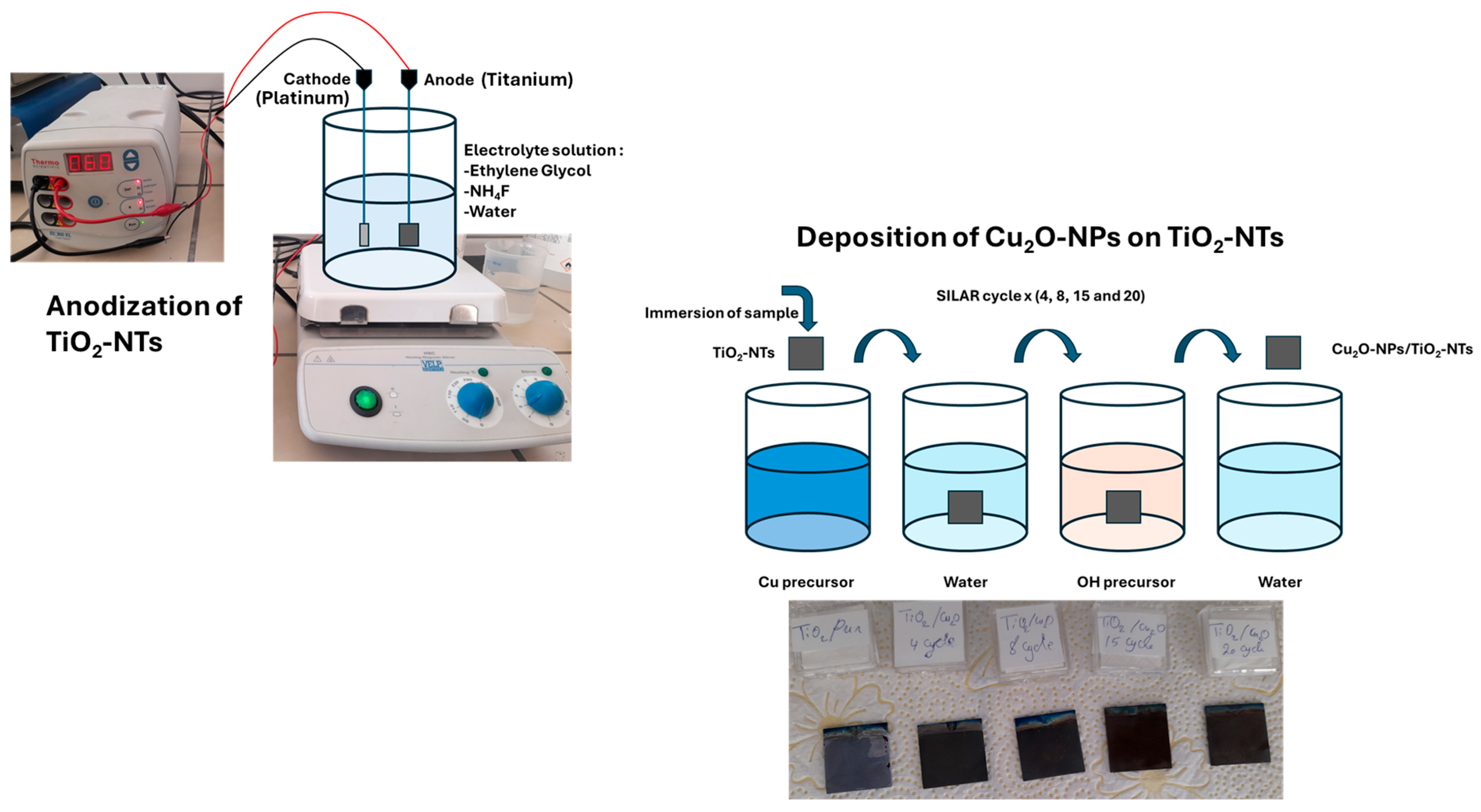
The successive ionic layer adsorption reaction, SILAR, method will be employed for the deposition; the SILAR is a versatile, low-cost, and scalable solution-based technique for depositing thin films and nanostructures. It enables precise control over film thickness and morphology through sequential immersion in cationic and anionic precursor solutions, with each cycle corresponding to the adsorption and reaction of a single ionic layer. Recent advances have extended SILAR to the synthesis of complex heterostructures, quantum dots, and metal oxide nanocomposites for applications in photovoltaics, photocatalysis, and protective coatings [37,38]. Figure 1 illustrates the samples’ preparation process, using different cycles to evaluate the influence of Cu2O nanoparticle size and quantity on the characteristics and tribological behavior of the nanotubes. To further investigate the coating’s impact on cohesion, adhesion and anti-corrosion properties, this investigation will additionally look at the coating’s adherence to the substrate. By offering important insights into the potential of Cu2O nanoparticles in augmenting the properties of TiO2 nanotubes, our research seeks to develop implant technology.
Table 1. Performance of copper-modified TiO2 coatings prepared by different synthesis methods.
SamplesSynthesization MethodCorrosion PropertiesRef.
TiO2/CuO (0.005 g) + illuminationSpin coating on (10 mm × 20 mm × 2 mm) 304SSEcorr = −255 mV
icorr = 0.460 × 10⁻⁶ mA cm−2
Protection efficiency of 80%
[39]
Ca-P-Cu-TiO2 (T2)PEO on 20 × 10 × 2 mm3 cp-TiEcorr = −107 mV
icorr = 0.095 µA cm−2
[40]
Cu-TiO2 (20 wt%)SHS in a stainless steel cylindrical vesselEcorr = −0.22 mV
Log I = −15.49 A cm−2
[41]
Cu2O/TiO2 (15 cycles)SILAR on 2.5 cm × 2 cm × 1 mm TiEcorr = −0.3 V/SCE
icorr = 1.9 × 10⁻⁴ A/cm2
Protection efficiency of 96.7%
Rp = 2.4 × 10⁴ Ω·cm2
This work

2. Materials and Methods

2.1. Sample Preparation

For the synthesization of TiO2 nanotubes, the electrochemical anodization method was used where a polished and intensively cleaned titanium plate with dimensions 2.5 cm × 2 cm × 1 mm is the anodic electrode and with a platinum wire as the cathodic electrode. These electrodes were immersed in an electrolytic solution containing ethylene glycol (EG), 10% vol. water and 2% vol. ammonium florid NH4F; the process usually takes about 120 min at 60 V voltage at room temperature. After the anodization and formation of TiO2-NTs, the air-dried samples were annealed at 400 °C for 3 h to obtain the anatase crystal phase. To deposit Cu2O nanoparticles on TiO2-NTs, a successive ionic layer adsorption reaction, SILAR, method was used. It consists of immersing the prepared samples in Cu+ and OH precursor for 25 s, a solution containing 0.1 M CuSO4·5 H2O and 0.1 M Na2S2O3·5 H2O and 0.2 M NaOH, respectively. To remove the deposited excess from the surface, the samples were rinsed twice with deionized water for 5 s. This cycle was repeated several times to alter the dispersion and size distribution of each sample with different deposition cycles of 4, 8, 15 and 20. The SILAR cycles were selected to systemically study the evolution of Cu2O deposition from initial nucleation and growth of discrete nanoparticles (lower cycles) through to the formation of a continuous nanosheet layer and potential over-saturation (higher cycles), based on primarily morphological observation.

2.2. Sample Characterization

The five samples were morphologically assessed with scanning electron microscopy SEM (FEI XL30 ESEM Company, Hillsboro, OR, USA), transmission electron microscopy TEM (FEI Tecnai G2) operating at 200 kV. To evaluate the effect of copper oxide deposition on the structural properties of TiO2 nanotubes, an X-ray diffraction XRD was conducted with Philips X’PERT-MPD diffractometer (Philips, Almelo, The Netherlands) fitted with CuKα radiation (λ = 1.5406 Å), producing diffraction patterns in the 20–80° range.

2.3. Scratch Test

Wear resistance and friction coefficient were evaluated through scratch and wear tests [42]. To perform the scratch test, an indenter was moved parallel to the sample surface at a constant speed, and its normal force (FN) was increased on a regular basis until damage was noticed. A conical diamond indenter of the Rockwell type was utilised, measuring 200 µm in radius and 120° at the tip. With obtained SEM images of the scratch damage phenomena was assessed, and the test calculated the tangential friction force (FT, measured in Newtons) that the sample surface exerted on the indenter as FN rose. Using an MST micro-scratch tester (Baden, Anton Paar, Switzerland), the evaluation was performed at room temperature on surfaces of TiO2 NTs adorned with Cu2O NPs. The loads were increased from 30 mN to 10 N, and the table speed was 3.01 mm/min over a 300 µm scratch distance. By conducting wear tests along a 3 mm stroke under constant load scratch conditions, the normal loads ranged from 1 to 3 N and using a sliding speed of 10 mm/min the tribological behavior was further evaluated. Critical loads (LC1, LC2, LC3) were determined exclusively from the progressive load scratch test (30 mN → 10 N). The coefficient of friction (COF), wear volume, and dissipated energy were evaluated under constant load conditions (1 N, 2 N, 3 N). All tests were performed in triplicate for each sample and each load condition.

2.4. Electrochemical Corrosion Test

The electrochemical properties of Cu2O-NPs/TiO2-NTs were examined through potentiodynamic polarization using a potentiostat PGZ301 Voltalab 40 (Radiometer Analytical, Lyon, France) with a three-electrode cell system where the sample is the working electrode, a platinum plate as a counter electrode and a reference electrode of a saturated calomel electrode (SCE); the samples were immersed in simulated body fluid (SBF) for 30 min prior to testing to achieve a stable open-circuit potential (OPC) at room temperature, with a potential scan rate of 1 mV/s. Under open-circuit conditions, to study the corrosion behavior the Tafel extrapolation was used with a potential sweep from −150 mV (SCE) to 200 mV (SCE).

3. Results

3.1. Morphological Characterization

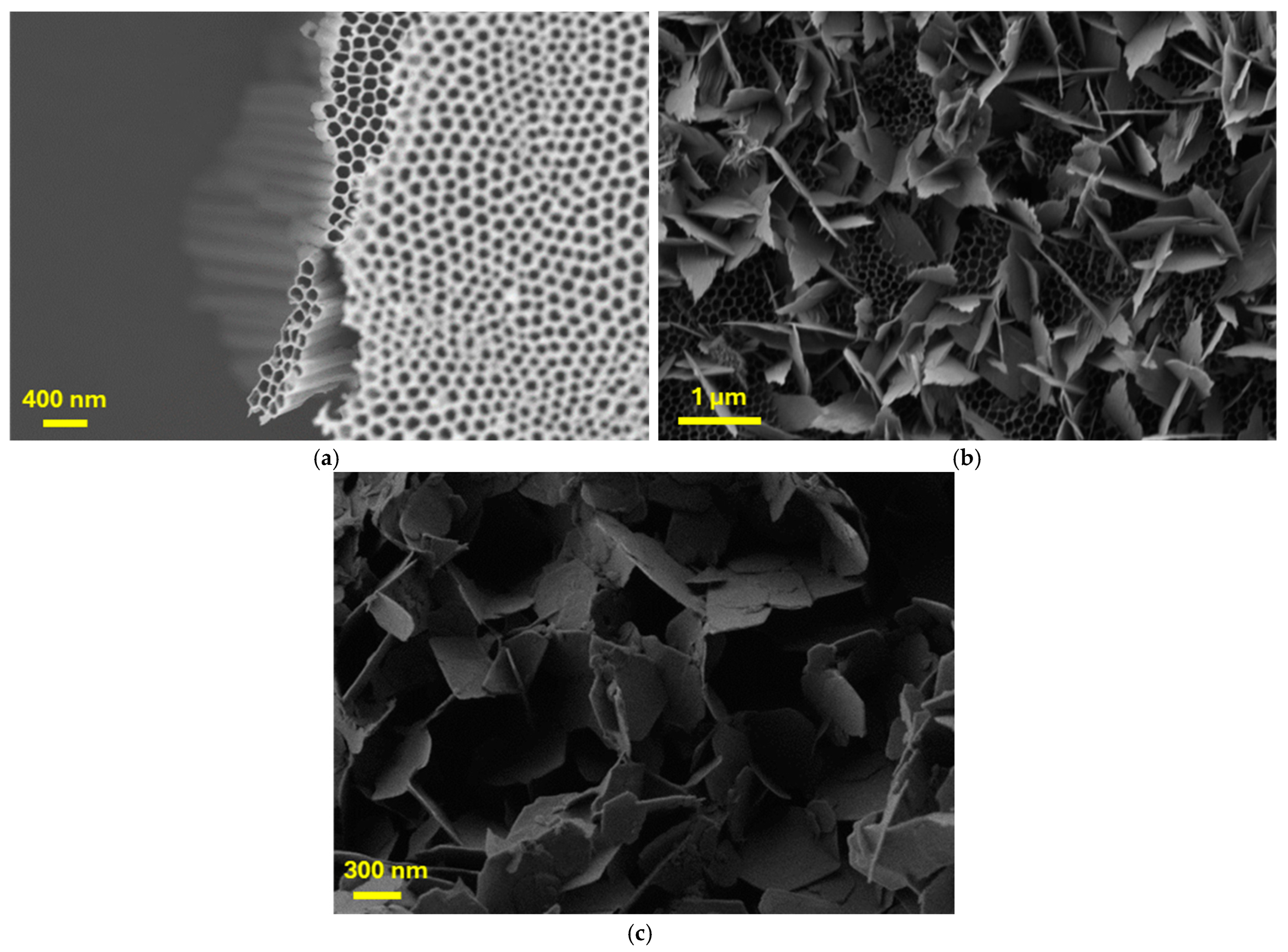
SEM images shown in Figure 2 of bare (Figure 3a) TiO2 NTs and Cu2O NPs deposited (Figure 2b,c) over 15 cycles. It is simple to demonstrate how the two examples differ from one another. With an average diameter of about 100 nm and an interior wall of about 25 nm, the TiO2 NTs are properly arranged and vertically aligned on top of the titanium substrate, as seen in Figure 2a.
Sheet-like nanoparticles, most likely Cu2O NPs, were discovered to be covering the 15 cycles of adorned TiO2 NTs. At this point, we can say that as more cycles are performed, the size and density of the Cu2O NPs increase along with the development of a thin layer of Cu2O that completely covers the TiO2 NTs. As it is clear in Figure 2b that the deposited Cu2O imposes the nanosheet shape, the tribological benefits of Cu2O nanosheets are attributed to several mechanisms, including the formation of protective tribofilms, reduced contact area, and improved surface compatibility with counterfaces. These features help mitigate adhesive and abrasive wear [43].
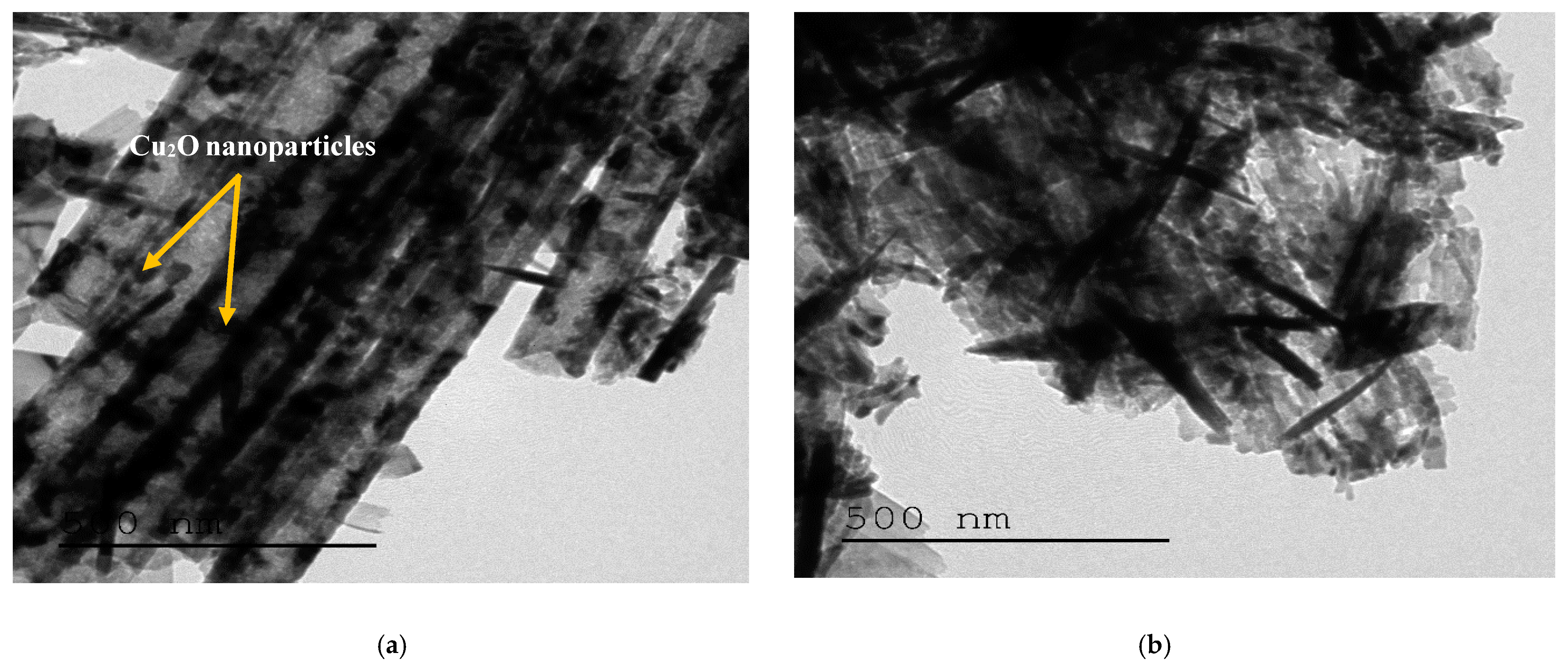
The creation of uniformly shaped TiO2 nanotubes embellished with Cu2O NPs is confirmed by TEM images in Figure 3. The placements of the NPs on the TiO2 NTs affect how they grow with each deposition cycle; NPs inside the NTs will essentially not obtain any matter, which means their growth will be restricted and they will appear smaller. Alternatively, the NPs outside the solution remain in contact with all the precursors in the solution, which promotes their growth to an average size of 20–70 nm (Figure 3a cycled in yellow) or even changes shape (Figure 3b) to form 200 nm nanosheets.

3.2. Structural Characterization

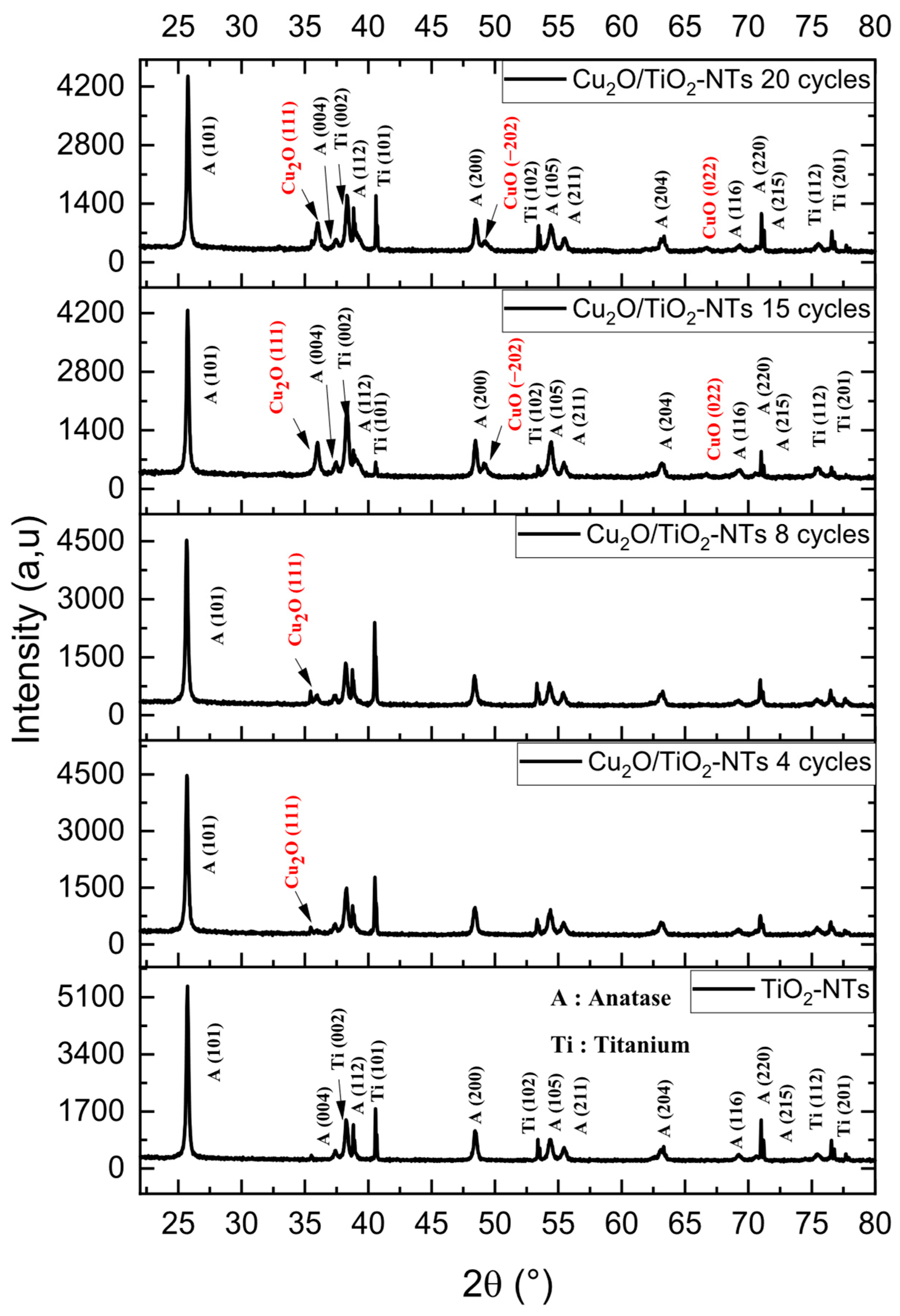
The production of a well-crystallized phase(s) is indicated by the well-defined and moderately sharp peaks in the XRD patterns shown in Figure 4, obtained in our previous work [15]. The TiO2 anatase phase (tetragonal structure) is recognized as the source of the peaks, which is consistent with JCPDS card No. 21–1272. According to JCPDS cards No. 44–1294, 78–2076, and 48–1548, respectively, the remaining low intensity peaks correspond to the α-phase Ti metal (hexagonal close-packed), the Cu2O cuprite oxide phase (cubic), and the CuO cupric oxide phase (monoclinic). As the SILAR cycles increase, the (111) Cu2O-associated peak that appears at 2θ = 36.03° rises in intensity, as shown in Figure 3. It takes 15 cycles for the CuO peaks associated with the (−202) and (022) crystallographic planes, which peak at 2θ = 49.24° and 66.67°, to become noticeable. The XRD results confirm the formation of the nanocomposite comprising both cuprous oxide (Cu2O) and cupric oxide (CuO) phases. The anatase TiO2 nanotubes are uniformly coated with nanosized Cu2O-CuO-NPs. To determine the Cu2O and CuO phase proportions at different SILAR cycles numbers we need to calculate the Cu2O/CuO ratio. To estimate the weight percentage of Cu2O in the samples from the XRD we used the following equation [44]:
X % = 100 ( 1 + 1.265 I C u O 202 I C u 2 O 111 )
where ICuO is the intensity of CuO peak at 2ϴ = 49.2° and ICu2O is the intensity of Cu2O peak at 2ϴ = 36°. In the 4 SILAR cycles and the 8 SILAR cycles samples, Cu2O appears as the sole existing phase in the composite, but as we increase the number of cycles to 15, the CuO phase begins to appear, with Cu2O/CuO ratio of 66.74% Cu2O and 33.26% CuO, and at 20 SILAR cycles the Cu2O/CuO ratio keeps variating 68.6% Cu2O and 31.4% CuO; it seems that Cu2O phase is still dominant while increasing the number of cycles.
The crystallite size and microstrain were calculated using the following formulas [45]:
D = K λ F W H M cos θ
ε = F W H M 4 t a n ( θ )
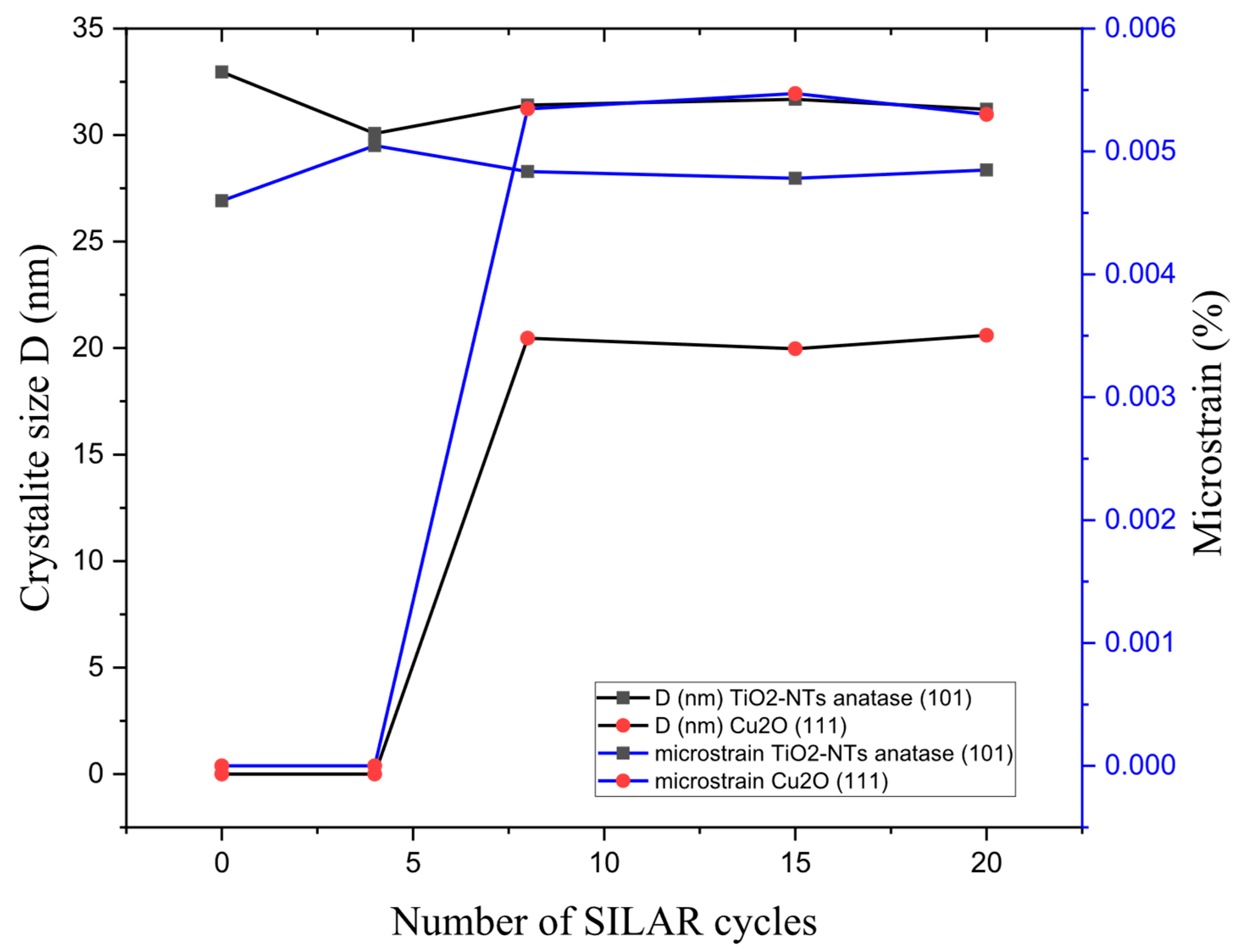
whereas FWHM (rad) is the line broadening at half the maximum intensity, λ (nm) is the X-ray wavelength, and σ (rad) is the Bragg angle. K = 0.9 is the real form of crystallite. Non-uniform lattice distortions, faulting, dislocations, antiphase domain borders, and grain surface relaxation are among the characteristics that affect the microstrain. Additionally, as can be expected given that the deposited nanoparticles are only adsorbed at the surface of TiO2-NTs, the obtained result in Figure 5 demonstrates that the crystallite size essentially remains constant. Similarly, applied stress is essentially insignificant in relation to the crystalline structure. The exposed facet of TiO2 (101), which is the most intense in the XRD pattern, is clearly visible, and the microstrain and crystallite size variation usually have no bearing on the actual size of the nanotubes. Regarding the Cu2O-NPs, the size of the crystallites does somewhat rise as the number of cycles increases.

3.3. Mechanical Characterization

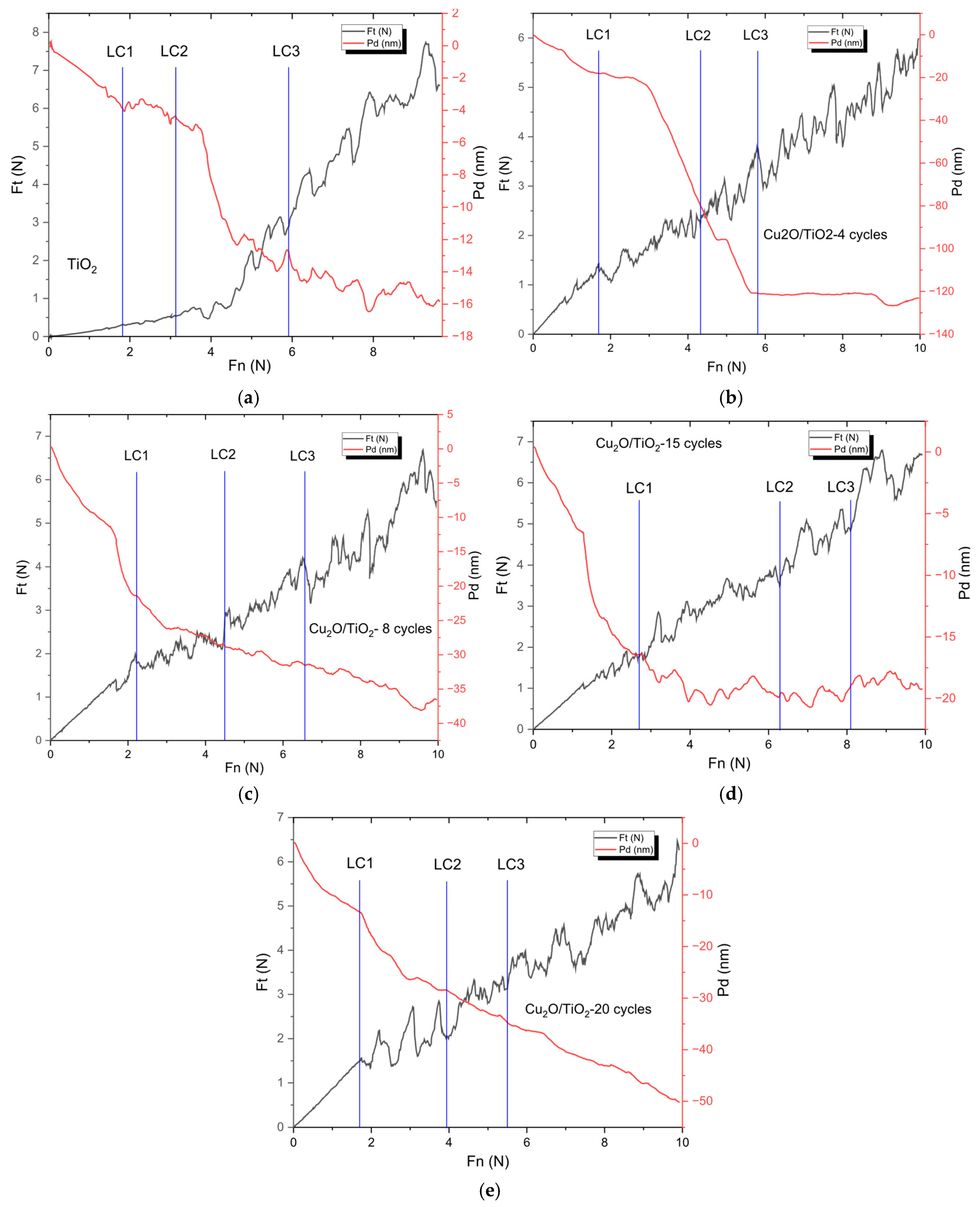
To investigate the adhesion properties of these coatings, a scratch test was conducted where a normal load was applied on the surface of bare and Cu2O-deposited TiO2 nanotubes with SILAR method at different cycles (4, 8, 15 and 20); the normal load was progressively increased 1N, 2N and 3N. Figure 6 shows the adaptation of the tangential force and the indenter penetration depth on the prepared samples to the applied normal load. It seems that with the augmentation of normal load, the slopes of the curves change where the critical loads were extracted, LC1, LC2 and LC3. Critical loads (LC1, LC2, LC3) were determined by correlating the simultaneous analysis of (i) a sharp change in the slope of the tangential force (Ft) vs. normal load (Fn) curve, (ii) a corresponding increase in penetration depth (Pd), and (iii) post-test SEM observation of the scratch track to identify the onset of cohesive cracking (LC1), adhesive failure at the edges (LC2), and complete coating delamination (LC3).
Table 2 lists the obtained critical loads by scratch test on the pure and Cu2O-deposited TiO2 nanotubes. Considering the number of cycles, it seems that the critical load increases to a maximum for 15 cycles then decreases for the 20 cycles sample; this evidences that the adhesion joining the nanotubes and the deposited Cu2O is refined. This improvement could be due to the increase in surface roughness, which bears a better mechanical anchoring for the Cu2O. T he maximum adhesion was detected for the 15 cycles sample proposing that 15 SILAR cycles is the ideal number of cycles for the deposition of Cu2O on TiO2 nanotubes, whereas the significant decrease after could be attributed to a saturated point of loading Cu2O nanoparticles where it no longer improves adhesion.
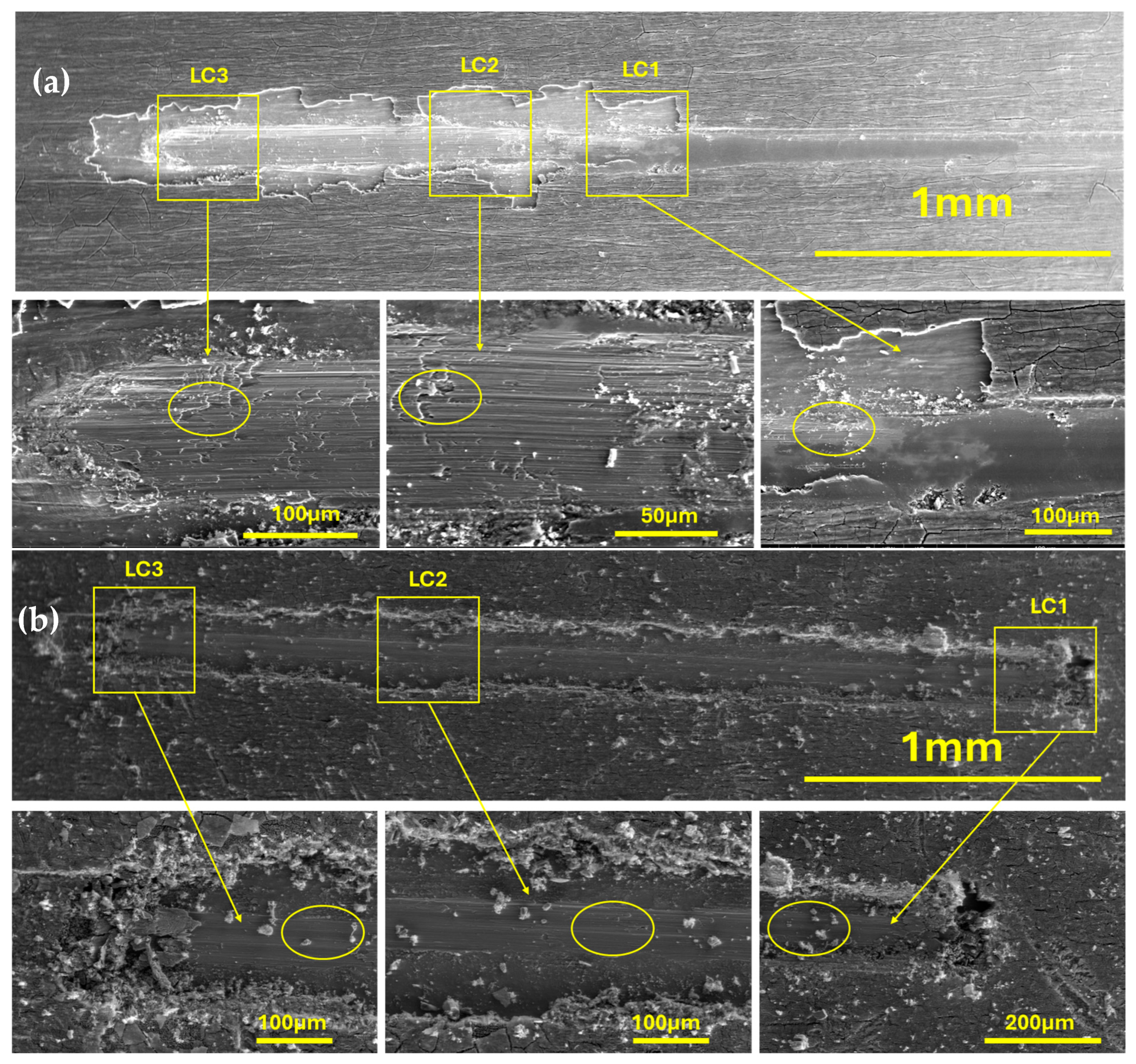
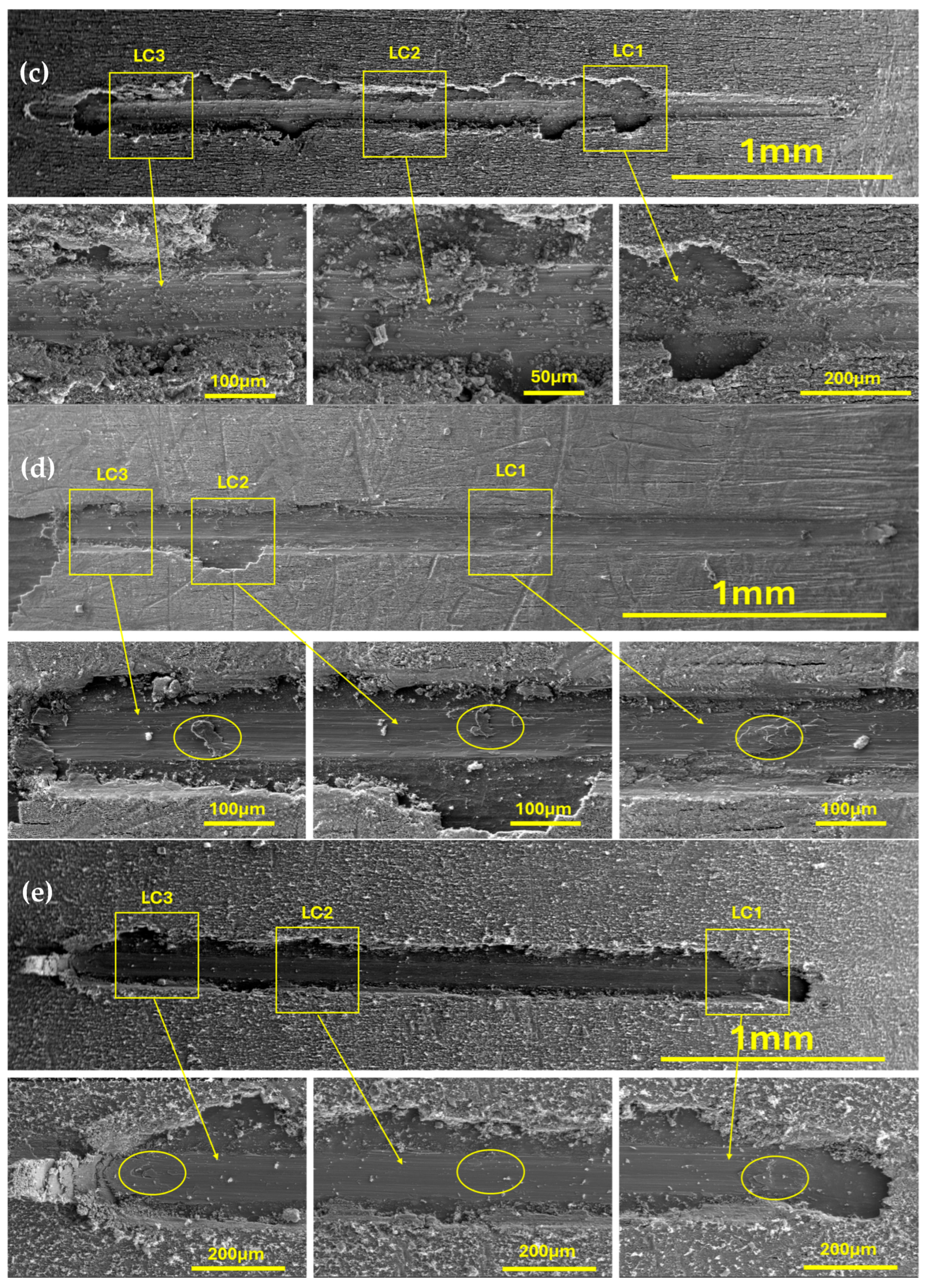
The scratch marks seen in the SEM images in Figure 7 are notably used for the assessment of the adhesion strength of Cu2O/TiO2 coatings. The cracks that appeared after the scratch test seem to be presented perpendicular to the scratch edges [46], which explains the enhancement of the adhesion with the increase in number of Cu2O SILAR deposition cycles as well as the effect of saturation at a higher number of cycles. After analyzing these SEM images, it seems that the worn surface of 15 cycles of Cu2O/TiO2 is smoother than pure TiO2 nanotubes and other Cu2O-deposited samples where wear debris, microcracks and peeling pits are visible, indicating that the abrasion wear of the 15 cycles coatings is mitigated.
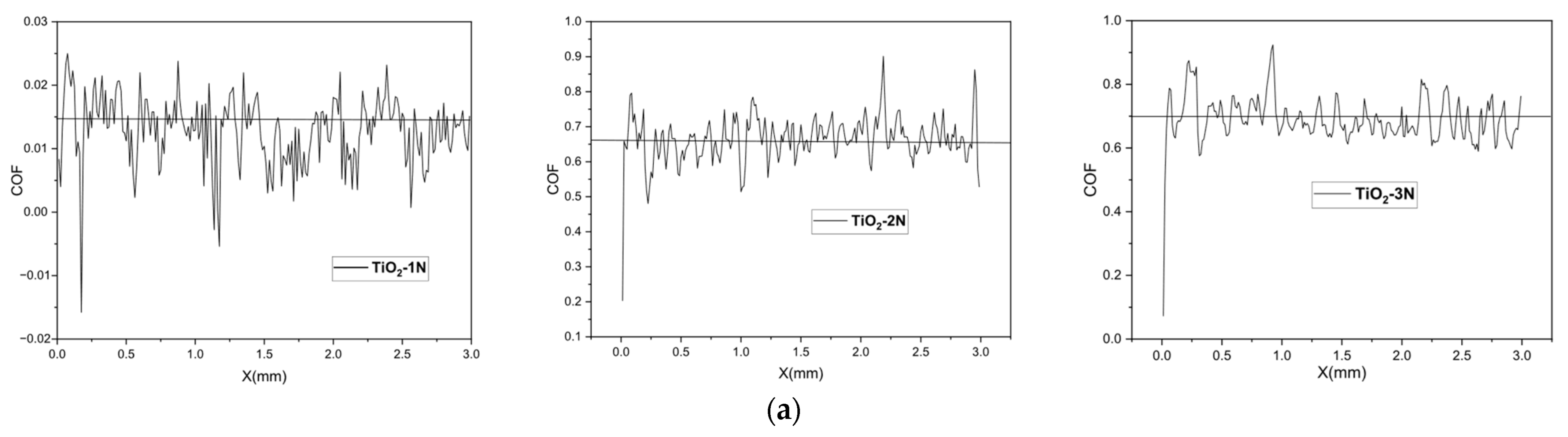
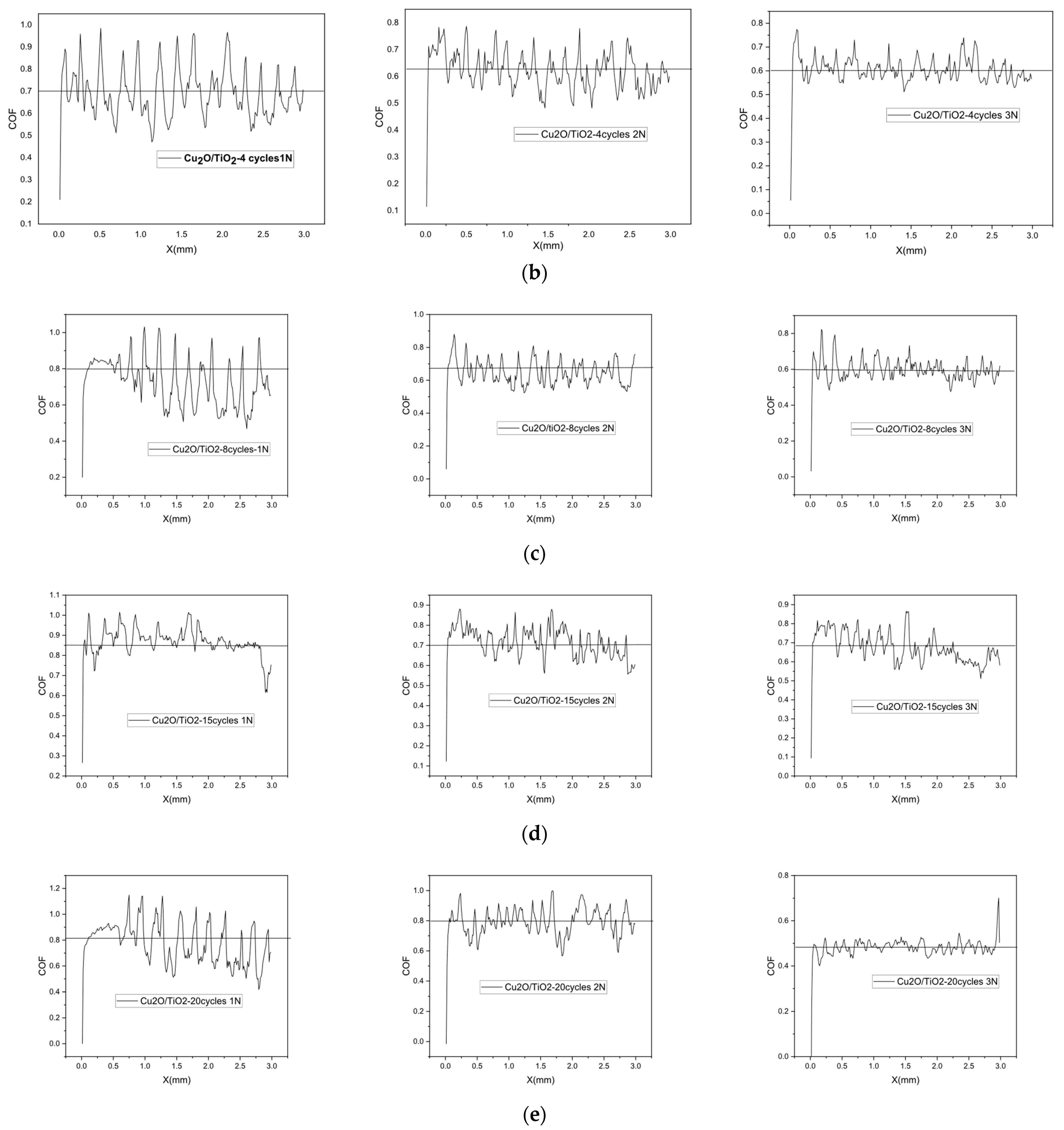
The assessment on tribological properties of the as-prepared coatings depends on the coefficient of friction COF, which was determined and presented in Figure 8; in comparison to the pure TiO2 nanotubes at 3 N, all the samples present a lower COF but higher at 1 N normal load. The coefficient of friction decreases as the load increases, initially; when low normal loads are applied, elastic contact occurs between the surface of the thin film and the indenter, leading to slippage that extends across the contact zone. At these lower loads, debris generated during the process becomes trapped in the contact zone, temporarily increasing the coefficient of friction. In contrast, higher normal loads lead to a mixed condition of elastic and plastic deformation on the surface, resulting in a decrease in the coefficient of friction [47], which is attributed to the initial increase in the coefficient of friction under low loads to improved adhesion between the contacting surfaces. Specifically, asperities on the opposing surfaces interlock or become entangled, causing the surfaces to adhere under lighter loads.
At 3 N load, the Cu2O-NP-deposited TiO2-NTs exhibit lower COF 0.48 held by the 20 deposition cycles, which is much lower than the bare nanotubes 0.7, regardless of the number of deposition cycles. For the lower loads, pure TiO2 possesses the lowest COF 0.015, whereas the 15 cycles coating holds the highest COF 0.85. The sudden increase in the coefficient of friction COF may be attributed to the CuO formation, according to the XRD results, where it shows that CuO phase started to show around 15 cycles. Two possible explanations for this are: (i) the reduced ductility of CuO compared to Cu2O [48], and (ii) a shift in the wear mechanism. As previously noted, in recent works [49], the presence of CuO induces an adhesive wear process. These results confirm that the addition of Cu2O nanosheets on the surface exert a pronounced effect on the friction coefficient evolution; this all could be attributed as well to the surface morphology of the coatings. Shear strength plays a crucial role in determining wear processes and friction, alongside hardness and roughness of the surface. The contact area and shear strength vary depending on the hardness of the materials: when two hard bodies come into contact, the contact area is small, but the shear strength is high. In contrast, when a hard body slides against a soft body, the contact area is larger, but the shear strength is lower [50]. Hence, oxides with higher shear strength are expected to show less or no plowing. Also plowing through smooth copper oxide requires more energy, resulting in a higher COF. The load-dependent COF behavior can be attributed to a transition in the dominant wear mechanism [51]. At lower loads (1 N), the contact is primarily elastic, and the initial high COF may result from interlocking of surface asperities and the presence of abrasive Cu2O/CuO debris trapped in the contact zone. As the load increases to 3 N, plastic deformation becomes significant, promoting the formation of a compacted, smoothed tribofilm from the copper oxide nanosheets. This tribofilm acts as a solid lubricant, reducing shear strength and thus lowering the COF. The phase transformation from Cu2O to the harder CuO (evident in XRD for higher cycles) may further influence this process by altering the shear properties of the tribofilm.
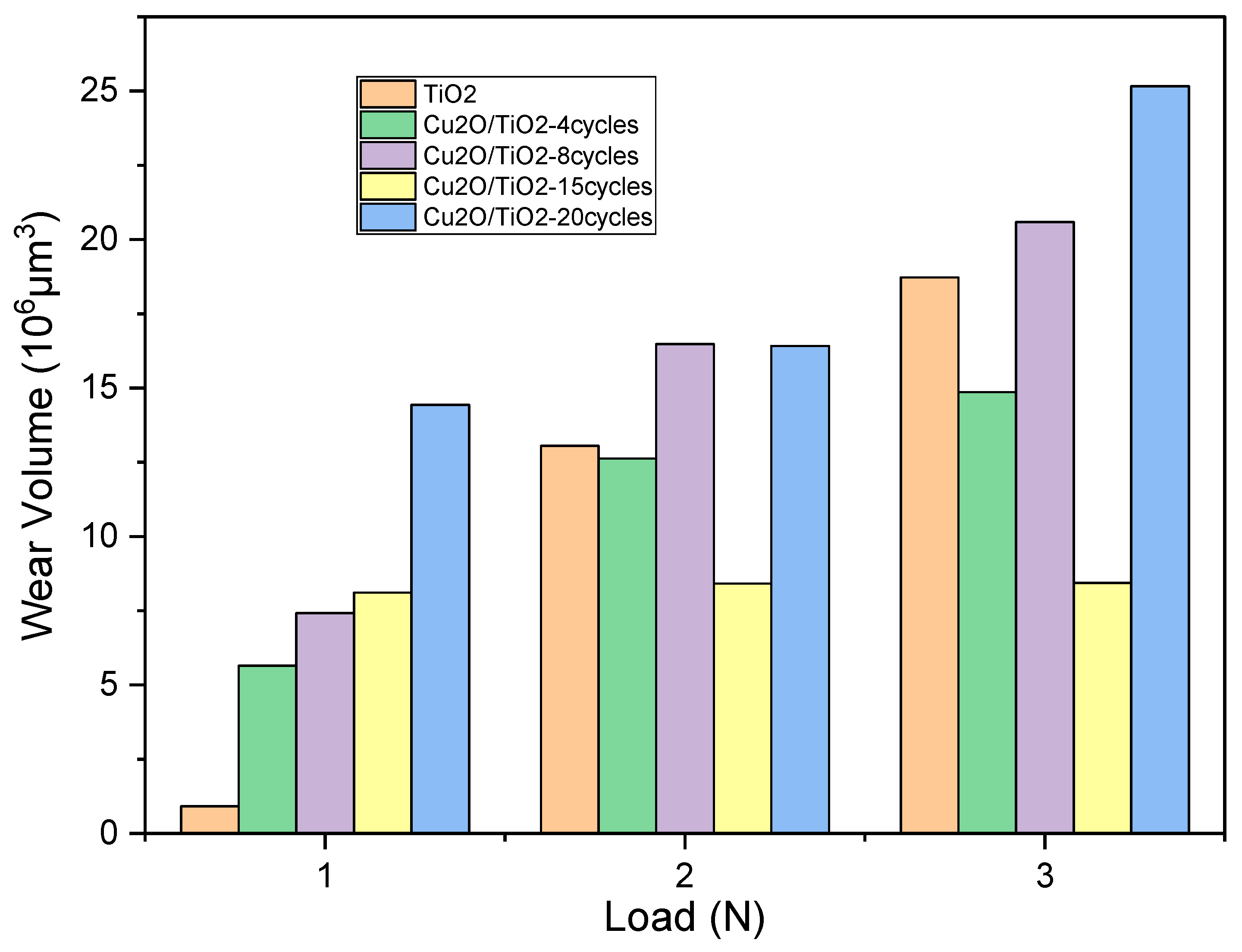
Figure 9 depicts the variation in wear volume with different normal loads. It is observed that Cu2O/TiO2 coatings at 15 deposition cycles possess the highest wear resistance at 2 N and 3 N loads compared to bare TiO2 nanotube coatings and other Cu2O-deposited samples; the improvement in wear resistance attributed to the incorporation of Cu2O nanoparticles may be linked to the toughening effect of these nanoparticles. However, strangely, at low load 1 N it seems that the Cu2O deposition presents a lower wear resistance compared to bare TiO2 nanotube coatings. Wear volume rises for all coatings as the typical load does. This behavior is probably caused by several things, such as the surface temperature rising under higher weights and the creation of debris that can further abrade the surface. Two kinds of debris are produced at the interface during the wear process as the indenter travels over the surface: acceptable debris stays at the interface while coarse debris is expelled from the friction track. Because fine debris removes more material from the surface, abrasive wear is accelerated. Moreover, the wear condition is made worse by this buildup of small debris [52]. Furthermore, an increase in load tends to hasten the coating’s breakdown in part because the greater loads cause the surface temperature to rise.
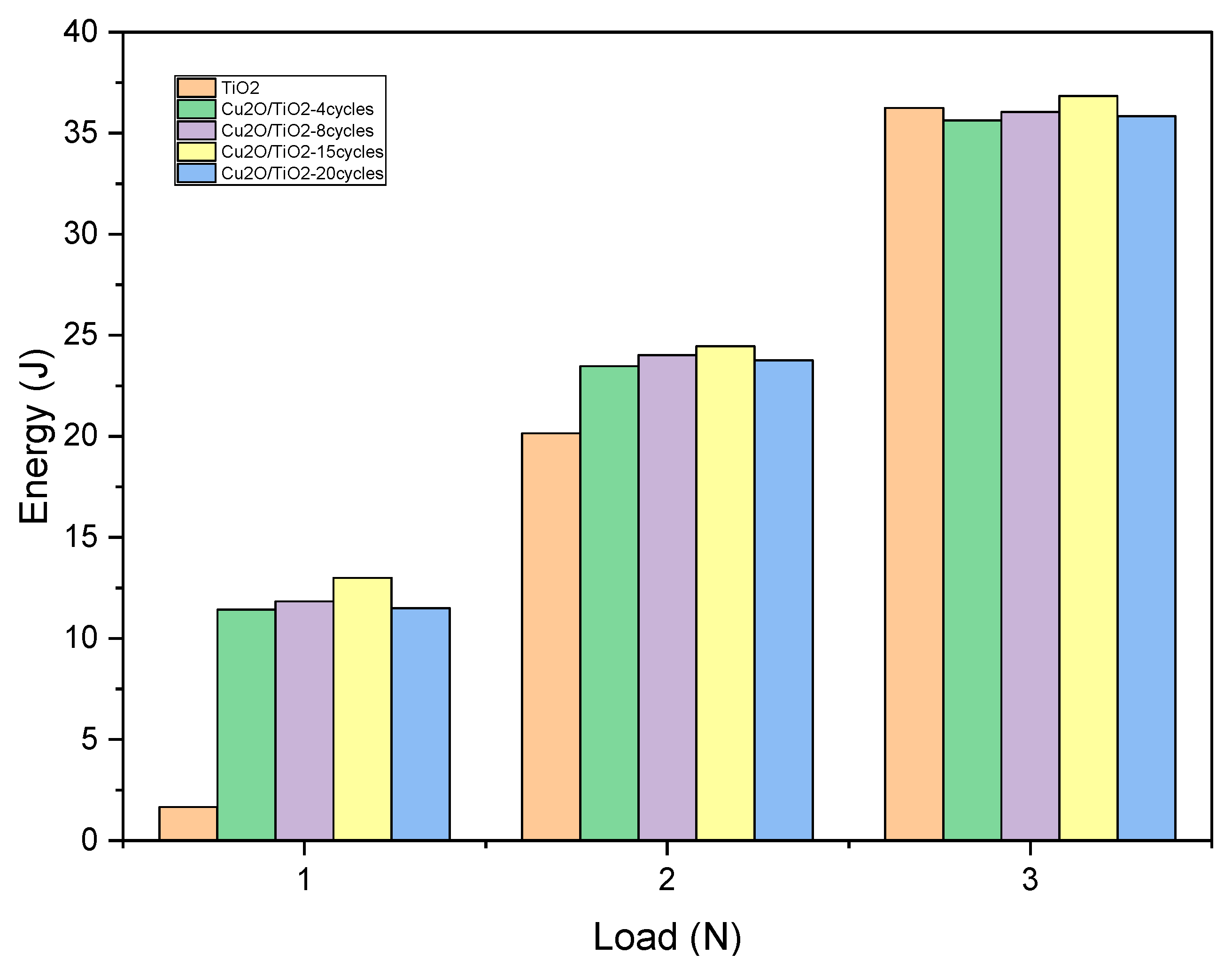
Figure 10 shows the variation in dissipated energy with different normal loads for pure and Cu2O-deposited TiO2 nanotubes at different SILAR cycles. As was predicted, the dissipated energy increases with the normal load because of the strong adhesion between the contacting surface. The dissipated energy, calculated as the integral of the friction force over the sliding distance, increases with normal load due to two primary factors: (i) increased plowing work: a higher load leads to greater plastic deformation and a larger real area of contact, increasing the energy required to plough through the material; (ii) enhanced fracture and debris generation work: higher contact stresses promote more severe microcracking, fragmentation, and ejection of material, all of which consume additional energy. While strong adhesion can influence the friction force, the primary load-dependence of energy dissipation in this system is attributed to these deformation and fracture processes [53]. From the illustrated diagram it is clear that the 15 deposition cycle sample exhibits the highest dissipated energy. As stated above, the low friction of copper oxides was attributed to an increase in hardness and a modification in interfacial shear strength. More specifically, copper oxide is a relatively soft oxide with lower shear strength at higher temperatures [54]. This leads to increased plowing and greater energy dissipation during sliding.

3.4. Electrochemical Characterization

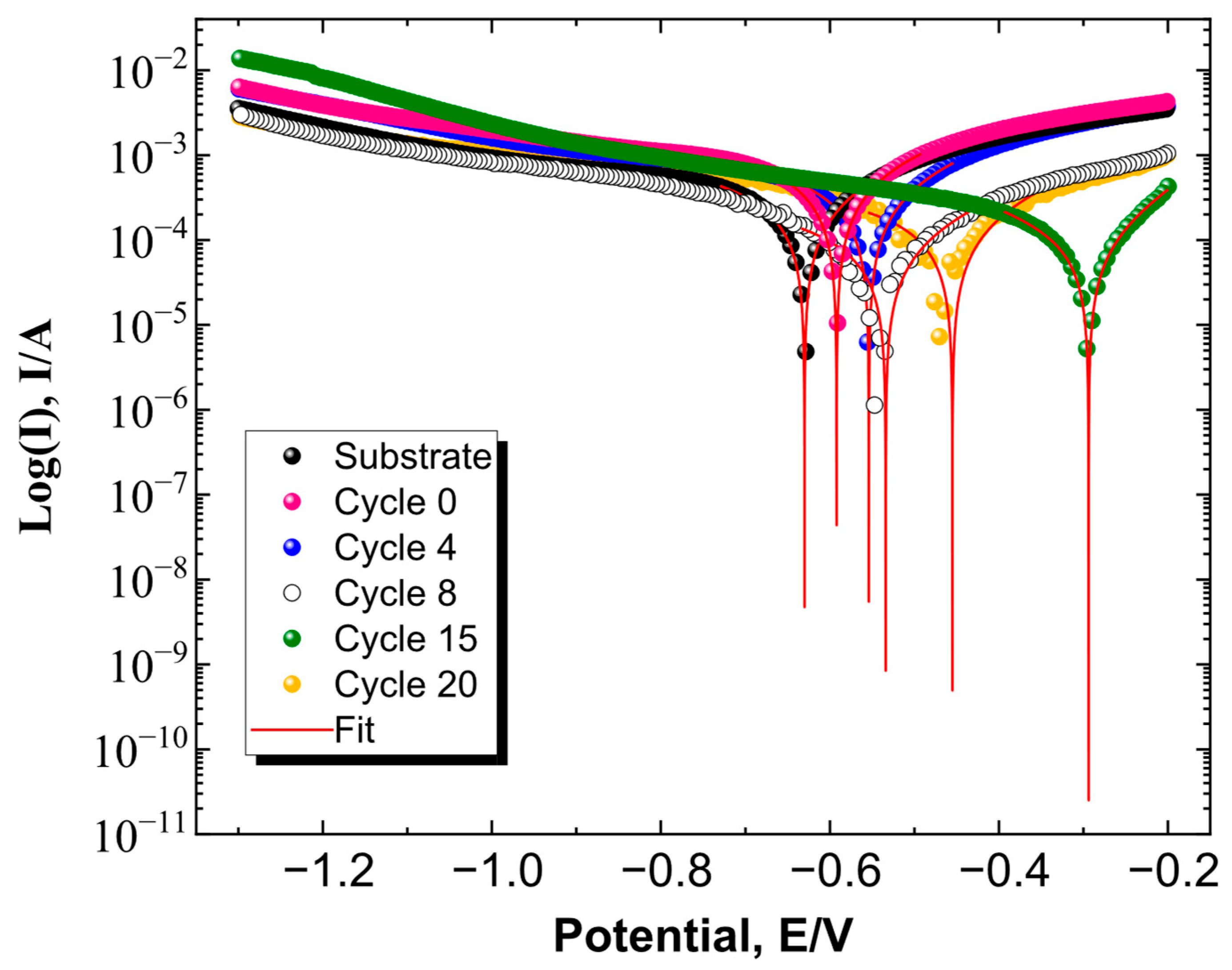
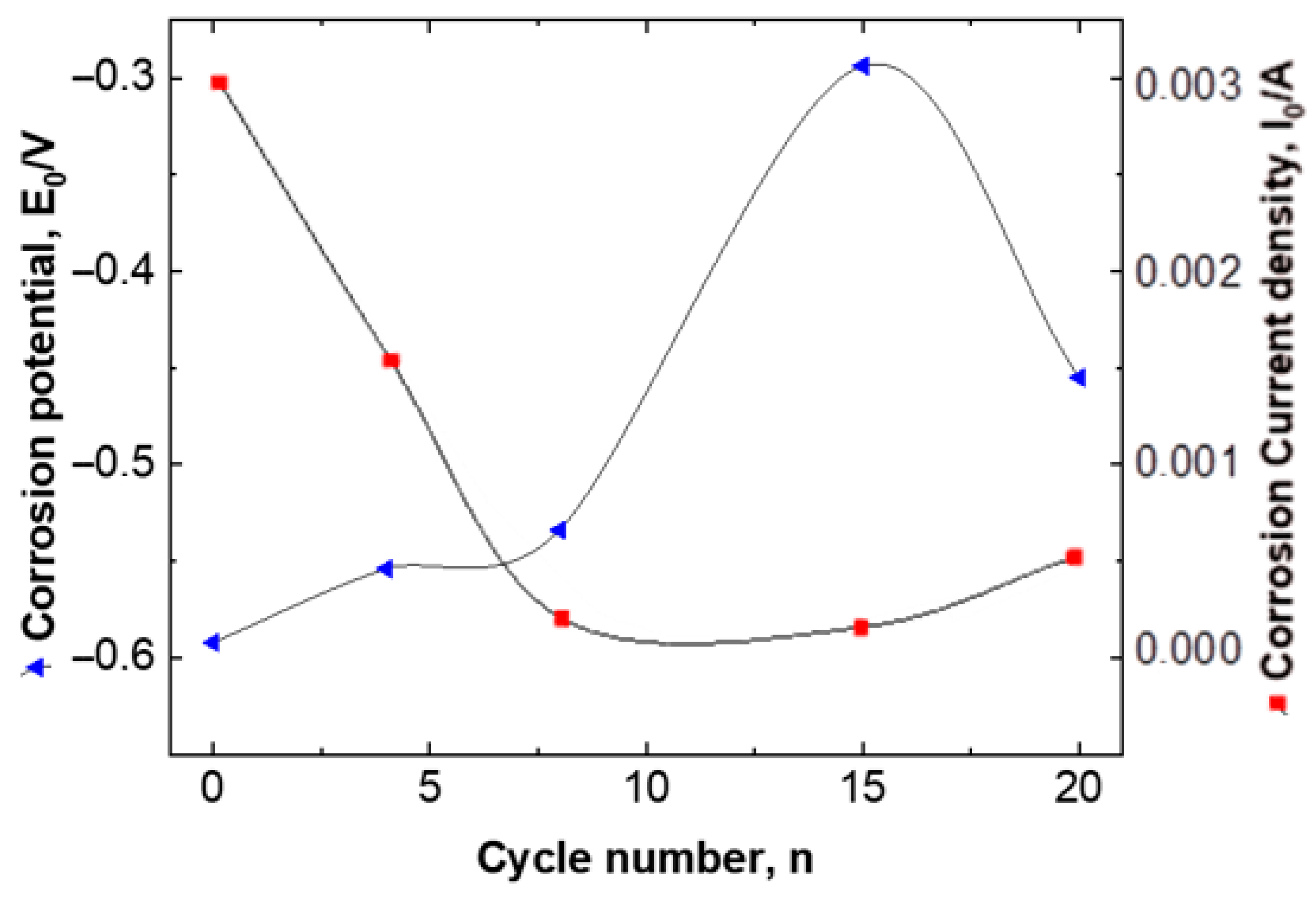
To assess the corrosion resistance of the as-prepared samples, a series of electrochemical experiments were conducted; with the Tafel extrapolation method, the corrosion parameters were deducted from the polarization curves in Figure 11. The corrosion resistance of the coatings is closely related to both corrosion potential (Ecorr) and corrosion current density (icorr). A more noble (positive) Ecorr indicates a lower thermodynamic tendency for corrosion, while a lower icorr signifies a slower kinetic rate of corrosion. Therefore, a coating exhibiting a simultaneous shift towards a more positive Ecorr and a lower icorr demonstrates superior corrosion protection, as discussed in similar coating systems [55]. Figure 12 depicts the variation in corrosion potential (Ecorr), corrosion current density (icorr) with the variation in number of cycles. The corrosion potential (Ecorr) seems to increase with the augmentation of the number of SILAR cycles to reach a maximum of −0.3 V/SCE for 15 cycles sample but decreases for the 20 cycles sample to −0.55 V/SCE. This remarkable increase indicates a higher level of anti-corrosion efficiency for Cu2O/TiO2 15 cycles, which is a significant property for enhanced biomedical applications. As for the corrosion current density (icorr), it seems that it decreases with the addition of Cu2O nanoparticles on the surface of the TiO2 nanotubes, where it reached a substantial value of 1.9 × 10⁻⁴ A/cm2 for 15 SILAR cycles then slightly surged for 20 cycles to 5 × 10⁻⁴ A/cm2. These variations imply that the deposition of Cu2O nanoparticles on the TiO2 nanotubes ameliorates the corrosion resistance of the coatings; the Cu2O nanoparticles seem to partially cover the tubes of TiO2, which reduces the porosity of the surface and thus blocks the diffusion of corrosive ions. The corrosion performance results showed that the deposition of Cu2O nanosheets enhanced the corrosion resistance while releasing Cu2+ compared with bare TiO2 nanotubes. The improvement of the corrosion resistance for the 15 cycles Cu2O-NPs/TiO2-NTs could be due to the possible incorporation of Cu2O into the coating structure that accelerated the formation of the Ti passive oxide layer [56]; it was also highlighted that enhanced corrosion resistance can be attained by diminishing defects and localizing corrosion areas [57]. Coating degradation can occur through one or a combination of the following mechanisms: (a) delamination, where the adhesive forces (either physical or chemical) between the coating and the substrate break down, causing the coating to peel away from the metal surface; (b) localized physical breakdown or dissolution of the coating, allowing the aqueous electrolyte to penetrate the coating. This eventually exposes sections of the underlying metal to the electrolyte, which forms a layer between the coating and the substrate, further weakening the adhesive bonds at the interface [58].
The enhancement in anti-corrosion performance is primarily due to the high chemical stability of the Cu2O nanoparticles deposited at 15 SILAR cycles. The 15 cycles of Cu2O-NPs/TiO2-NTs coatings exhibit the most challenging electron transfer during the corrosion process. This difficulty can be attributed to the formation of the S-scheme heterojunction mechanism, which effectively facilitates the separation and migration of electron-hole pairs [59], and the fully developed passivation layer resulting from the excellent dispersibility of the Cu2O nanoparticles. Additionally, the incorporation of the right amount (15 cycles) of copper improves the coating’s densification, preventing corrosive ions from penetrating and further protecting the underlying substrate from corrosion [60]. To determine the polarization resistance (Rp) and the protection efficiency for the as-prepared samples (Table 3), the following equations were used [61,62]:
Rp was computed using the typical stem–Geary equation, which is widely applied for evaluating the corrosion protection performance of thin film coatings in simulated biological environments [63]:
R p = β a × β c 2.303 β a + β c i c o r r
P E % = 1 I c o r r , n I c o r r , 0 × 100
where Icorr,0 (cycle 0) = 3 × 10⁻³ A/cm2.
The evolution of the polarization resistance (Rp) as a function of the number of cycles clearly highlights the protective effect of the Cu2O layer deposited on a TiO2 substrate. The progressive increase in Rp from cycle 0 to cycle 15 indicates a significant improvement in the corrosion resistance of the Cu2O/TiO2 system, which can be attributed to the formation of a more compact, homogeneous, and well-adhered Cu2O layer that effectively hinders charge transfer between the corrosive medium and the substrate. The high Rp value observed at cycle 15 reflects the establishment of an efficient protective barrier, suggesting a favorable synergistic interaction between Cu2O and TiO2, with the TiO2 substrate providing structural stability and additional protection. However, the decrease in Rp at cycle 20 suggests partial degradation of the Cu2O coating, possibly due to the development of defects, microcracks, or localized dissolution, which facilitates electrolyte penetration and reactivates electrochemical corrosion processes. These results demonstrate that the Cu2O/TiO2 system reaches optimal anti-corrosion performance at an intermediate number of cycles, beyond which the coating stability may be compromised. In the case of thin protective films, such as the Cu2O layer investigated in this study, the calculation of corrosion rates expressed in terms of material loss is not physically meaningful, as such approaches are primarily intended for bulk metallic materials undergoing uniform corrosion. Instead, the corrosion current density is more appropriately used to assess the protective performance of the coating through the calculation of protection efficiency, which emphasizes the effectiveness of the thin film in mitigating electrochemical reactions in a corrosive environment. The evolution of the protection efficiency with cycling clearly demonstrates the progressive establishment of a stable passivation behavior of the Cu2O thin film. An initial protection efficiency of about 50% is observed after the first cycles, indicating the onset of passive layer formation and partial blocking of electrochemically active sites. With further cycling, the protection efficiency increases sharply, reaching values above 90%, which reflects the densification, homogenization, and improved adherence of the Cu2O layer to the substrate. The maximum protection efficiency, close to 97%, suggests that the Cu2O thin film acts as an effective electrochemical barrier, significantly hindering charge transfer processes and limiting corrosive reactions at the interface. The slight decrease in protection efficiency observed at higher cycle numbers may be attributed to local microstructural defects, partial cracking, or localized dissolution of the passive layer under prolonged electrochemical stress. Nevertheless, the overall high protection efficiency over a wide cycling range confirms the robustness and protective capability of the Cu2O thin film in corrosive environments.

4. Conclusions

To summarize, the effect of varying the number of Cu2O deposition SILAR cycles on the morphological and structural properties of TiO2 nanotubes, as well as the tribological performance of these coatings, was investigated for medical implant applications. With SEM, TEM electron microscopy, X-ray diffraction XRD and a conical Rockwell-type diamond indenter for the scratch test were used. Also, an electrochemical corrosion resistance test was conducted for Cu2O/TiO2 coatings. The corroded and worn surfaces were thoroughly analyzed, leading to the following conclusions:
  • The adhesion enhancement assessed from the scratch test is attributed to the 15 cycles Cu2O/TiO2 coatings that exhibit higher critical loads LC1 2.86 ± 0.143 (N), LC2 6.28 ± 0.314 (N) and LC3 8.1 ± 0.405 (N), which confirms the cohesion and adhesion improvements.
  • In comparison to bare TiO2 nanotubes and at higher loads, Cu2O/TiO2 coatings exhibit much improved tribological performance, especially the 15 cycles Cu2O/TiO2 and 20 cycles Cu2O/TiO2; the oxidation of copper oxide from Cu2O to CuO during the deposition process played an important role in friction and wear reduction, which could be attributed to the increase in hardness and change in shear strength.
  • The corrosion resistance was at its highest for the 15 cycles Cu2O/TiO2 coatings, where it exhibited a low corrosion current density (icorr) 1.9 × 10⁻⁴ A/cm2 and a high corrosion potential (Ecorr) −0.3 V/SCE and a polarization resistance of 2.4 × 10⁴ Ω·cm2 and a protection efficiency of 96.7%.
These findings indicate that Cu2O/TiO2 nanotube coatings have potential as materials for medical implants. Nonetheless, additional research and development are necessary to improve the durability and functionality of these coatings, which could lead to a promising future in the biomedical sector. It is important to note that this study focused exclusively on the mechanical, tribological, and electrochemical performance of the coatings. Biological validation including Cu2+ ion release kinetics, cytotoxicity assays, and antibacterial testing is necessary to confirm clinical suitability and is the subject of ongoing work. Also, quantitative Cu loading analysis is necessary to fully correlate deposition cycles with copper release kinetics and biological performance, and this is planned for future work.

Author Contributions

All authors contributed to the study’s conception and design. Conceptualization, S.S., A.H. and M.B.R.; methodology, S.S., A.B.R. and H.D.; software, A.H.; validation, W.Z., A.B.R. and B.M.S.; formal analysis, A.H., A.B.C.L. and L.K.; investigation, M.A.A. and K.C.; resources, A.B.C.L., S.S., H.D. and M.B.R.; data curation, W.Z., A.B.R., M.A.A. and A.H.; writing—original draft preparation, S.S., W.Z. and L.K.; writing—review and editing, K.C., M.A.A., A.B.R. and B.M.S.; visualization, L.K., A.B.C.L. and A.H.; supervision, M.B.R., B.M.S. and A.H.; project administration, K.C.; funding acquisition, K.C. All authors have read and agreed to the published version of the manuscript.

Funding

This work was supported and funded by the Deanship of Scientific Research at Imam Mohammad Ibn Saud Islamic University (IMSIU) (grant number IMSIU-DDRSP2602).

Data Availability Statement

The original contributions presented in the study are included in the article, further inquiries can be directed to the corresponding author.

Conflicts of Interest

The authors declare no conflicts of interest.

References

  1. Chong, J.E.T.; Ng, J.W.; Lee, P.-C. Classification and Medical Applications of Biomaterials—A Mini Review. BIO Integr. 2023, 4, 54–61. [Google Scholar] [CrossRef] [Scilit]
  2. Pandey, A.; Sahoo, S. Progress on medical implant: A review and prospects. J. Bionic Eng. 2023, 20, 470–494. [Google Scholar] [CrossRef] [Scilit]
  3. Haochen, W.; Chen, X.; Kong, L.; Liu, P. Mechanical and Biological Properties of Titanium and Its Alloys for Oral Implant with Preparation Techniques: A Review. Materials 2023, 16, 6860. [Google Scholar] [CrossRef] [Scilit] [PubMed]
  4. Pingyun, Y.; Chen, M.; Lu, X.; Yang, H.; Wang, L.; Tian, B.; Zhou, W.; Liu, T.; Yu, S. Application of Advanced Surface Modification Techniques in Titanium-Based Implants: Latest Strategies for Enhanced Antibacterial Properties and Osseointegration. J. Mater. Chem. B 2024, 12, 10516–10549. [Google Scholar] [CrossRef] [Scilit]
  5. Sidambe, A.T. Biocompatibility of advanced manufactured titanium implants—A review. Materials 2014, 7, 8168–8188. [Google Scholar] [CrossRef] [Scilit] [PubMed]
  6. Walaa, A.-E.; Darwish, M.A.; Hamada, A.; Daoush, W.M. Titanium-Based alloys and composites for orthopedic implants Applications: A comprehensive review. Mater. Des. 2024, 241, 112850. [Google Scholar] [CrossRef] [Scilit]
  7. Apaza-Bedoya, K.; Tarce, M.; Benfatti, C.A.M.; Henriques, B.; Mathew, M.T.; Teughels, W.; Souza, J.C.M. Synergistic interactions between corrosion and wear at titanium-based dental implant connections: A scoping review. J. Periodontal Res. 2017, 52, 946–954. [Google Scholar] [CrossRef] [Scilit]
  8. Yan, C.; Yang, H.; Yang, Y.; Huang, J.; Wu, K.; Chen, Z.; Wang, X.; Lin, C.; Lai, Y. Progress in TiO2 nanotube coatings for biomedical applications: A review. J. Mater. Chem. B 2018, 6, 1862–1886. [Google Scholar]
  9. Yeoungchin, Y.; Park, J. The effects of nanostructures on the mechanical and tribological properties of TiO2 nanotubes. Nanotechnology 2018, 29, 165705. [Google Scholar]
  10. Laëtitia, S.; Hoornaert, A.; Louarn, G.; Layrolle, P. Enhanced osseointegration of titanium implants with nanostructured surfaces: An experimental study in rabbits. Acta Biomater. 2015, 11, 494–502. [Google Scholar] [CrossRef] [Scilit]
  11. Mosab, K.; Choe, H.-C. Acceleration of bone formation and adhesion ability on dental implant surface via plasma electrolytic oxidation in a solution containing bone ions. Metals 2021, 11, 106. [Google Scholar] [CrossRef] [Scilit]
  12. Sasikumar, Y.; Indira, K.; Rajendran, N. Surface modification methods for titanium and its alloys and their corrosion behavior in biological environment: A review. J. Bio-Tribo-Corros. 2019, 5, 36. [Google Scholar] [CrossRef] [Scilit]
  13. Mydin, R.B.S.M.N.; Hazan, R.; FaridWajidi, M.F.; Sreekantan, S. Titanium Dioxide Nanotube Arrays for Biomedical Implant Materials and Nanomedicine Applications; IntechOpen Ltd.: London, UK, 2018; Volume 23. [Google Scholar]
  14. Divya, C.; Gulati, K. Mechanical Stability of Anodized Nano-Engineered Titanium Dental Implants. In Surface Modification of Titanium Dental Implants; Springer: Berlin/Heidelberg, Germany, 2023; pp. 199–218. [Google Scholar]
  15. Sassi, S.; Trabelsi, K.; El Jery, A.; Abidi, M.; Hajjaji, A.; Khezami, L.; Karrech, A.; Gaidi, M.; Soucase, B.M.; Bessais, B. Synergistic effect of CuxOy-NPs/TiO2-NTs heterostructure on the photodegradation of amido black staining. Optik 2023, 272, 170234. [Google Scholar] [CrossRef] [Scilit]
  16. Tao, L.; Gulati, K.; Wang, N.; Zhang, Z.; Ivanovski, S. Understanding and augmenting the stability of therapeutic nanotubes on anodized titanium implants. Mater. Sci. Eng. C 2018, 88, 182–195. [Google Scholar] [CrossRef] [Scilit] [PubMed]
  17. Guo, T.; Gulati, K.; Arora, H.; Han, P.; Fournier, B.; Ivanovski, S. Orchestrating soft tissue integration at the transmucosal region of titanium implants. Acta Biomater. 2021, 124, 33–49. [Google Scholar] [CrossRef] [Scilit]
  18. Yuhua, L.; Zhang, Q.; He, Y.; Zhao, R.; Chu, J.; Niu, L.; Qu, J. Sliding and Fretting Wear Behavior of Biomedical Ultrafine-Grained TiNbZrTaFe/Si Alloys in Simulated Physiological Solution. Materials 2024, 17, 787. [Google Scholar]
  19. Hajjaji, M.A.; Missaoui, K.; Trabelsi, K.; Bouzaza, A.; Hajjaji, A.; Bessais, B.; Assadi, A.A. Platinum nanoparticles decorated TiO2 nanotubes for VOCs and bacteria removal in simulated real condition: Effect of the deposition method on the photocatalytic degradation process efficiency. J. Photochem. Photobiol. A Chem. 2025, 458, 115975. [Google Scholar] [CrossRef] [Scilit]
  20. Hafedh, D.; Hajjaji, M.A.; Hajjaji, A.; Khezami, L.; Karrech, A.; Bessais, B.; Larbi, A.B.C.; Amlouk, M. Enhanced Interfacial Adhesion of TiO2 Nanotubes Decorated with Ag Silver Nanoparticles Prepared by Photo-Reduction Process. J. Tribol. 2023, 145, 091106. [Google Scholar]
  21. Bin, H.; Jing, F.; Akhavan, B.; Ji, L.; Leng, Y.; Xie, D.; Bilek, M.; Huang, N. Multifunctional Ti-xCu coatings for cardiovascular interfaces: Control of microstructure and surface chemistry. Mater. Sci. Eng. C 2019, 104, 109969. [Google Scholar]
  22. Abidi, M.; Hajjaji, A.; Bouzaza, A.; Trablesi, K.; Makhlouf, H.; Rtimi, S.; Assadi, A.A.; Bessais, B. Simultaneous removal of bacteria and volatile organic compounds on Cu2O-NPs decorated TiO2 nanotubes: Competition effect and kinetic studies. J. Photochem. Photobiol. A Chem. 2020, 400, 112722. [Google Scholar] [CrossRef] [Scilit]
  23. Salih, D.; Tosun, S.; Yalcin, E.; Cavusoglu, K.; Altinkok, A.; Sagcan, H.; Yurtsever, İ.; Usta, M. Characterization and investigation of properties of copper nanoparticle coated TiO2 nanotube surfaces on Ti6Al4V alloy. Mater. Chem. Phys. 2022, 292, 126741. [Google Scholar]
  24. Yang, H.-L.; Zou, L.; Juaim, A.N.; Ma, C.-X.; Zhu, M.-Z.; Xu, F.; Chen, X.-N.; Wang, Y.-Z.; Zhou, X.-W. Copper release and ROS in antibacterial activity of Ti-Cu alloys against implant-associated infection. Rare Met. 2023, 42, 2007–2019. [Google Scholar] [CrossRef] [Scilit]
  25. Liu, R.; Ma, Z.; Kolawole, S.K.; Zeng, L.; Zhao, Y.; Ren, L.; Yang, K. In vitro study on cytocompatibility and osteogenesis ability of Ti–Cu alloy. J. Mater. Sci. Mater. Med. 2019, 30, 75. [Google Scholar] [CrossRef] [Scilit] [PubMed]
  26. Liu, J.; Li, F.; Liu, C.; Wang, H.; Ren, B.; Yang, K.; Zhang, E. Effect of Cu content on the antibacterial activity of titanium–copper sintered alloys. Mater. Sci. Eng. C 2014, 35, 392–400. [Google Scholar] [CrossRef] [Scilit]
  27. Liu, H.; Liu, R.; Ullah, I.; Zhang, S.; Sun, Z.; Ren, L.; Yang, K. Rough surface of copper-bearing titanium alloy with multifunctions of osteogenic ability and antibacterial activity. J. Mater. Sci. Technol. 2020, 48, 130–139. [Google Scholar] [CrossRef] [Scilit]
  28. Wu, Y.; Zhou, H.; Zeng, Y.; Xie, H.; Ma, D.; Wang, Z.; Liang, H. Recent advances in copper-doped titanium implants. Materials 2022, 15, 2342. [Google Scholar] [CrossRef] [Scilit]
  29. Li, G.; Li, H.; Xu, Y.; He, R.; Zhang, G.; Liu, Z. Dual-Function Hybrid Coatings Based on Polytetrafluoroethylene and Cu2O for Anti-Biocorrosion and Anti-Wear Applications. Coatings 2024, 14, 592. [Google Scholar] [CrossRef] [Scilit]
  30. Bao, M.; Wang, X.; Yang, L.; Qin, G.; Zhang, E. Tribocorrosion behavior of Ti–Cu alloy in hank’s solution for biomedical application. J. Bio-Tribo-Corros. 2018, 4, 29. [Google Scholar] [CrossRef] [Scilit]
  31. Xu, Y.; Zhou, P.; Chen, Q.; Liu, Z.; Wang, X.; Deng, M.; Zhou, H.; Han, Y.; Yao, P. The effect of copper particles coated with graphene oxide on tribological properties and tribo-layers of copper metal matrix composites. Tribol. Int. 2024, 199, 110041. [Google Scholar] [CrossRef] [Scilit]
  32. Wu, Q.; Li, J.; Zhang, W.; Qian, H.; She, W.; Pan, H.; Wen, J.; Zhang, X.; Liu, X.; Jiang, X. Antibacterial property, angiogenic and osteogenic activity of Cu-incorporated TiO2 coating. J. Mater. Chem. B 2014, 2, 6738–6748. [Google Scholar] [CrossRef] [Scilit]
  33. Lehmann, J.S.; Schwaiger, R.; Rinke, M.; Greiner, C. How Tribo-Oxidation Alters the Tribological Properties of Copper and Its Oxides. Adv. Mater. Interfaces 2021, 8, 2001673. [Google Scholar] [CrossRef] [Scilit]
  34. Liu, S.; Zhang, Z.; Zhang, J.; Qin, G.; Zhang, E. Construction of a TiO2/Cu2O multifunctional coating on Ti-Cu alloy and its influence on the cell compatibility and antibacterial properties. Surf. Coat. Technol. 2021, 421, 127438. [Google Scholar] [CrossRef] [Scilit]
  35. Jiang, T.; Zhou, J.; Wang, R.; Xiang, H.; Wang, J.; Hu, Z.; Yu, S.; Zhai, G.; Jia, C.; Zhu, M. Long-term and rapid antibacterial efficacy of Cu2O-GO nanocomposites for medical protective textiles. Compos. Part A Appl. Sci. Manuf. 2025, 190, 108673. [Google Scholar] [CrossRef] [Scilit]
  36. Park, J.Y.; Lee, S.; Kim, Y.; Ryu, Y.B. Antimicrobial Activity of Morphology-Controlled Cu2O Nanoparticles: Oxidation Stability under Humid and Thermal Conditions. Materials 2024, 17, 261. [Google Scholar] [CrossRef] [Scilit]
  37. Suchikova, Y.; Kovachov, S.; Bohdanov, I.; Popova, E.; Moskina, A.; Popov, A. Characterization of CdxTeyOz/CdS/ZnO heterostructures synthesized by the SILAR method. Coatings 2023, 13, 639. [Google Scholar] [CrossRef] [Scilit]
  38. Erdem, E.; Güllü, Ö.; Okumuş, M. Study of structural and electro-optical properties of Al/PbO/p-Si thin films produced by CBD and SILAR methods. Appl. Phys. A 2025, 131, 287. [Google Scholar] [CrossRef] [Scilit]
  39. Radhakrishnan, A.; Tharmaraj, M.; Ramani, A.; Srinivasan, N. Facile Fabrication of CuO Modified TiO2 Heterostructure for Enhanced Photocathodic Corrosion Protection of 304 Stainless Steel. Electrochem 2025, 6, 21. [Google Scholar] [CrossRef] [Scilit]
  40. Jamali, R.; Bordbar-Khiabani, A.; Yarmand, B.; Mozafari, M.; Kolahi, A. Effects of co-incorporated ternary elements on biocorrosion stability, antibacterial efficacy, and cytotoxicity of plasma electrolytic oxidized titanium for implant dentistry. Mater. Chem. Phys. 2022, 276, 125436. [Google Scholar] [CrossRef] [Scilit]
  41. Golnaz, N.A.; Arvin, T.T.; Aghajani, H. Investigation on corrosion behavior of Cu–TiO2 nanocomposite synthesized by the use of SHS method. J. Mater. Res. Technol. 2019, 8, 2216–2222. [Google Scholar] [CrossRef] [Scilit]
  42. Lu, P.; Xiao, X.; Lukitsch, M.; Chou, K. Micro-scratch testing and simulations for adhesion characterizations of diamond-coated tools. Key Eng. Mater. Proc. 2010, 443, 618–623. [Google Scholar]
  43. Jiang, D.; Zhang, Y.; Li, X. Folded-up thin carbon nanosheets grown on Cu2O cubes for improving photocatalytic activity. Nanoscale 2017, 9, 12348–12352. [Google Scholar] [CrossRef] [Scilit] [PubMed]
  44. Saadoun, M.; Chorfi, H.; Bousselmi, L.; Bessais, B. Polymer supported porous TiO2: Application to photocatalysis. Phys. Status Solidi C 2007, 4, 2029–2033. [Google Scholar] [CrossRef] [Scilit]
  45. Sassi, S.; Bouich, A.; Hajjaji, A.; Khezami, L.; Bessais, B.; Soucase, B.M. Cu-Doped TiO2 Thin Films by Spin Coating: Investigation of Structural and Optical Properties. Inorganics 2024, 12, 188. [Google Scholar] [CrossRef] [Scilit]
  46. Jaworski, R.; Pawlowski, L.; Roudet, F.; Kozerski, S.; Petit, F. Caractérisation des propriétés mécaniques des revêtements de TiO2 pulvérisés au plasma en suspension à l’aide d’un test de rayure. Surf. Manteau. Technol. 2008, 202, 2644. [Google Scholar]
  47. Martínez-González, C.J.; Flores-Jiménez, M.F.; Bravo-Barcenas, D.I.; Jiménez-Alemán, O.; Flores-Martínez, M. Mechanical and Tribological Properties of the CrAl/CrAlN and CrAl/CrAlN-(a-CNx) Multilayers Deposited by HIPIMS. Coatings 2023, 13, 1344. [Google Scholar] [CrossRef] [Scilit]
  48. Dies, K. Kupfer und Kupferlegierungen in der Technik; Springer: Berlin/Heidelberg, Germany, 1967. [Google Scholar]
  49. Bowden, F.P.; Tabor, D. The Friction and Lubrication of Solids; Oxford University Press: New York, NY, USA, 1950. [Google Scholar]
  50. Siddaiah, A.; Kasar, A.K.; Khosla, V.; Menezes, P.L. In-situ fretting wear analysis of electrical connectors for real system applications. J. Manuf. Mater. Process. 2019, 3, 47. [Google Scholar] [CrossRef] [Scilit]
  51. Zhang, H.; Que, B.; Dong, L.; Li, Z.; Cheng, Y.; Wang, X. Unraveling the Friction and Wear Mechanisms of a Medium-Carbon Steel with a Gradient-Structured Surface Layer. Lubricants 2025, 13, 448. [Google Scholar] [CrossRef] [Scilit]
  52. Zhu, X.; Tu, Y.; Zhang, L.; He, Y.; Luo, B.; Kang, X.; Liu, Y. Sliding friction-induced surface reinforcement in AgCuNi–WS2–MoS2 composites: Exploring friction performance enhancements. J. Mater. Res. Technol. 2025, 34, 136–151. [Google Scholar] [CrossRef] [Scilit]
  53. Erdemir, A. A crystal-chemical approach to lubrication by solid oxides. Tribol. Lett. 2000, 8, 97–102. [Google Scholar] [CrossRef] [Scilit]
  54. Werner, Ö.; Prietzel, C.; Kloß, H.; Dmitriev, A.I. On the role of copper in brake friction materials. Tribol. Int. 2010, 43, 2317–2326. [Google Scholar] [CrossRef] [Scilit]
  55. Qiao, L.; Gan, Y.; Wu, Y.; Zhai, M.; Wang, M.; Li, R.; Li, T.; Zhang, X.; Chang, T. Preparation and characterization of corrosion-resistant FeCrMoNiCuBSiC metallic glass coating by HVOF spraying. Surf. Coat. Technol. 2025, 513, 132507. [Google Scholar] [CrossRef] [Scilit]
  56. Zhao, X.; Cai, D.; Hu, J.; Nie, J.; Chen, D.; Qin, G.; Zhang, E. A high-hydrophilic Cu2O-TiO2/Ti2O3/TiO coating on Ti-5Cu alloy: Perfect antibacterial property and rapid endothelialization potential. Biomater. Adv. 2022, 140, 213044. [Google Scholar] [CrossRef] [Scilit]
  57. Dhiflaoui, H.; Zayani, W.; Chayoukhi, S.; Faure, J.; Khezami, L.; Karrech, A.; Larbi, A.B.C.; Benhayoune, H.; Hajjaji, A. Enhanced mechanical, corrosion, and tribological properties of hydroxyapatite coatings for orthopedic and dental applications. Ceram. Int. 2024, 50, 43383–43396. [Google Scholar] [CrossRef] [Scilit]
  58. Palit, A.; Pehkonen, S.O. Copper corrosion in distribution systems: Evaluation of a homogeneous Cu2O film and a natural corrosion scale as corrosion inhibitors. Corros. Sci. 2000, 42, 1801–1822. [Google Scholar] [CrossRef] [Scilit]
  59. Huang, K.; Liang, G.; Sun, S.; Hu, H.; Peng, X.; Shen, R.; Li, X. Interface-induced charge transfer pathway switching of a Cu2O-TiO2 photocatalyst from pn to S-scheme heterojunction for effective photocatalytic H2 evolution. J. Mater. Sci. Technol. 2024, 193, 98–106. [Google Scholar] [CrossRef] [Scilit]
  60. Ding, Z.; Wang, Y.; Zhou, Q.; Ding, Z.; Liu, J.; He, Q.; Zhang, H. Microstructure, wettability, corrosion resistance and antibacterial property of Cu-MTa2O5 multilayer composite coatings with different Cu incorporation contents. Biomolecules 2019, 10, 68. [Google Scholar] [CrossRef] [Scilit] [PubMed]
  61. Yang, P.A.; Deng, W.; Ruan, H.; Qu, Z.; Li, R.; Wang, L.; Luo, J.; Zhou, Z.; Shou, M.; Huang, X.; et al. Amorphous/Graphitic carbon phase engineering of Corrosion-Resistant Fe@ C Core-Shell nanowires for optimized dipole polarization and enhanced microwave absorption. Chem. Eng. J. 2024, 492, 152253. [Google Scholar] [CrossRef] [Scilit]
  62. Ghailane, A.; Oluwatosin, A.O.; Larhlimi, H.; Hejjaj, C.; Makha, M.; Busch, H.; Fischer, C.B.; Alami, J. Titanium nitride, TiXN(1−X), coatings deposited by HiPIMS for corrosion resistance and wear protection properties. Appl. Surf. Sci. 2022, 574, 151635. [Google Scholar] [CrossRef] [Scilit]
  63. Bordbar-Khiabani, A.; Gasik, M. Electrochemical behavior of additively manufactured patterned titanium alloys under simulated normal, inflammatory, and severe inflammatory conditions. J. Mater. Res. Technol. 2023, 26, 356–370. [Google Scholar] [CrossRef] [Scilit]
Figure 1. Illustration of synthesize and deposition method of the samples.
Crystals 16 00260 g001
Figure 2. SEM images of (a) bare TiO2 nanotubes and (b) Cu2O deposited on TiO2 nanotubes at 15 SILAR cycles; (c) a slight close-up image of Cu2O nanosheets.
Crystals 16 00260 g002
Figure 3. TEM images of Cu2O deposited on TiO2 nanotubes at 15 SILAR cycles (a,b).
Crystals 16 00260 g003
Figure 4. XRD patterns of bare TiO2 nanotubes and Cu2O deposited on TiO2 nanotubes at 4, 8, 15 and 20 SILAR cycles.
Crystals 16 00260 g004
Figure 5. Evolution of crystallite size and microstrain with different deposition cycles (this result of the XRD was obtained in our previous work) [15].
Crystals 16 00260 g005
Figure 6. Evolution of Ft and Pd vs. Fn for (a) pure TiO2 nanotubes and Cu2O-deposited TiO2 nanotubes at (b) 4 cycles, (c) 8 cycles, (d) 15 cycles and (e) 20 cycles.
Crystals 16 00260 g006
Figure 7. SEM images of (a) pure TiO2 nanotubes and Cu2O-deposited TiO2 nanotubes at (b) 4 cycles, (c) 8 cycles, (d) 15 cycles and (e) 20 cycles coatings after scratch test.
Crystals 16 00260 g007aCrystals 16 00260 g007b
Figure 8. Evolution of friction coefficient of (a) pure TiO2 nanotubes and Cu2O-deposited TiO2 nanotubes at (b) 4 cycles, (c) 8 cycles, (d) 15 cycles and (e) 20 cycles coatings at different normal loads of 1 N, 2 N and 3 N.
Crystals 16 00260 g008aCrystals 16 00260 g008b
Figure 9. The progression of wear volume in relation to various normal loads.
Crystals 16 00260 g009
Figure 10. The progression of dissipated energy in relation to various normal loads.
Crystals 16 00260 g010
Figure 11. Tafel polarization curves.
Crystals 16 00260 g011
Figure 12. Evolution of corrosion potential and corrosion current density with different numbers of SILAR cycles of Cu2O/TiO2 coatings.
Crystals 16 00260 g012
Table 2. Critical loads of the coatings after the scratch test.
SamplesLC1 (N)LC2 (N)LC3 (N)
TiO2 pure1.8 ± 0.093.61 ± 0.185.82 ± 0.29
4 cycles1.68 ± 0.084.32 ± 0.215.78 ± 0.28
8 cycles2.2 ± 0.114.43 ± 0.226.53 ± 0.32
15 cycles2.86 ± 0.146.28 ± 0.318.1 ± 0.40
20 cycles1.74 ± 0.083.94 ± 0.195.49 ± 0.27
Table 3. Tafel parameters.
CycleBaBcRp (Ω·cm2)% Protection Efficiency
Cycle 03.05 ± 0.6−1.73 ± 0.221.6 × 1020
Cycle 47.05 ± 0.06−3.68 ± 0.037 × 10250
Cycle 82.73 ± 0.10−2.48 ± 0.1012.8 × 10393.3
Cycle 1515.48 ± 0.26−8.34± 0.292.4 × 10496.7
Cycle 205.29 ± 0.06−2.69± 0.021.7× 10385
Disclaimer/Publisher’s Note: The statements, opinions and data contained in all publications are solely those of the individual author(s) and contributor(s) and not of MDPI and/or the editor(s). MDPI and/or the editor(s) disclaim responsibility for any injury to people or property resulting from any ideas, methods, instructions or products referred to in the content.