


Abstract
A novel Lithium triflate-incorporated Solid Polymer Electrolyte (SPE) has been developed by using the optimized blend of Ghatti Gum (GG) and Xanthan Gum (XG) with a biodegradable synthetic polymer, Polyvinyl alcohol (PVA), ethylene glycol as a plasticizer, and formaldehyde as a cross-linker for energy storage applications. They are examined by X-ray diffraction, Fourier transform infrared spectroscopy, and electrochemical impedance analysis. The frequency-dependent conductivity adheres to Joshner’s universal power law, with the TF10 composition achieving the higher ionic conductivity of 2.73 × 10⁻⁵ S cm−1. Temperature-dependent conductivity confirms Arrhenius-type behavior and shows a low activation energy of 0.15 eV that supports facile ion transport. The conduction process in TF10 follows the Correlated Barrier Hopping (CBH) model. Dielectric and modulus investigations indicate relaxation dynamics with the shorter relaxation time (6.45 × 10⁻⁶ s) from tangent loss spectra. From the SEM analysis, the uniform distribution and the porous nature of the electrode activated carbon are confirmed. A supercapacitor is assembled with TF10 displays electric double-layer capacitive features, delivering a specific capacitance of 7.1 Fg−1 at 15 mVs−1. Charge–discharge analysis reveals energy and power densities of 2.52 Wh kg−1 and 2500 W kg−1, respectively, for the supercapacitor.
1. Introduction
The rapid growth of portable electronics and the global demand for sustainable energy technologies have increased interest in advanced energy storage systems. Amongst the existing possibilities, supercapacitors are a good choice due to their high-power density, fast charge–discharge response, excellent cycle life, and intrinsic safety features [1]. Unlike batteries, the supercapacitors store energy through electrostatic charge accumulation or fast surface redox reactions. This enables them to deliver energy quickly with minimal degradation over thousands to millions of cycles. Therefore, supercapacitors are widely employed in portable electronics, electric vehicles, renewable energy systems, backup power supplies, and high-power electronic devices.
The efficiency of such devices relies on the electrolyte which directly influences ion transport and overall electrochemical behavior. Although liquid electrolytes have been widely utilized and they have drawbacks such as leakage, toxicity, and environmental risks. Solid polymer electrolytes derived from biopolymers are chosen because of their biodegradability, non-toxicity, renewability, and ability to form thin, flexible films [2,3]. These natural polymers are not only environmentally friendly but also cost-effective and align well with green energy storage goals. Among polysaccharide-based biopolymers, gum ghatti (GG), an exudate from Anogeissus latifolia, is especially attractive due to its solubility, gel-forming capability. It contains L-arabinose, D-galactose, D-mannose, D-xylose, and D-glucuronic acid in molar proportions of 48:29:10:5:10 along with calcium and magnesium salts of uronic acids [4,5]. However, it has the tendency to swell and limited film-forming capacity, which restricts its direct use in electrochemical devices.
To overcome such limitations, blending with complementary polymers is a common strategy. Xanthan gum (XG) produced by Xanthomonas campestris possesses a β-D-glucose backbone with side branches containing β-D-mannose, β-D-glucuronic acid, and α-D-mannose [6,7]. When GG and XG are combined, which introduces abundant hydroxyl and carboxyl groups and provides multiple interaction sites for hydrogen bonding and ionic coordination, thereby strengthening the polymer networks [8,9]. GG primarily contributes hydrophilic moieties, improving water retention, while XG enhances film integrity and stability. Polyvinyl alcohol (PVA), a synthetic but environmentally compatible polymer, complements these gums further due to its excellent solubility, biodegradability, and affordability. In blends with GG or XG, PVA improves mechanical strength, dimensional stability, and network density through hydrogen bonding and intermolecular associations [10]. This results in enhanced swelling, toughness, and structural integrity of the films. All three polymers (GG, XG, and PVA) are water-soluble and compatible with eco-friendly processing routes. The optimized composition (50 wt% GG + 10 wt% XG + 40 wt% PVA) yields a conductivity of 1.19 × 10⁻⁷ S cm−1. To further enhance conductivity, lithium triflate (LiCF3SO3) is incorporated into the blend. Compared with other lithium salts, lithium triflate offers superior chemical stability, a wide electrochemical window, and excellent compatibility with polymer hosts such as GG, XG, and PVA. Its easy dissociation in the polymer matrix releases lithium ions, significantly boosting ionic conductivity to levels suitable for practical supercapacitor operation.
Several studies have reported biopolymer-based solid polymer electrolytes for supercapacitor applications. Gum Arabic-based blend biopolymer electrolytes have demonstrated good performance for electric double-layer capacitor (EDLC) applications and exhibit an ionic conductivity of 1.17 × 10⁻⁵ S cm−1 at room temperature [11]. In comparison, guar gum-based polymer electrolytes generally show lower ionic conductivities, typically in the order of 10−6 S cm−1 [12]. Similarly, gellan gum electrolytes doped with sodium trifluoromethanesulfonate exhibit a conductivity of ~1.06 × 10⁻⁶ S cm−1 achieved for higher salt concentrations [13].
A rosin gum–cellulose acetate blend electrolyte doped with LiNO3 achieved a relatively higher maximum ionic conductivity of 6.21 × 10⁻⁵ S cm−1 [14]. Similarly, chitosan–methylcellulose and PVA–methylcellulose blend electrolytes incorporating ammonium iodide salts have been explored, showing moderate conductivity and stable cycling performance [15]. Recent studies have demonstrated significant progress in electrolyte and electrode material development for electrochemical energy storage devices. Polymer blend electrolytes based on PVA: PVP doped with NaSCN have shown ideal linear charge–discharge behavior with 100% coulombic efficiency, delivering specific capacitance values from cyclic voltammetry and impedance analyses that confirm stable and reversible energy storage performance [16]. Comprehensive review articles on supercapacitors have further summarized advances in device fundamentals, materials, techno-economic considerations, modeling approaches, performance evaluation, and diverse applications, while emphasizing current challenges related to material innovation, cost reduction, and large-scale commercialization [17]. In parallel, Manfo et al. reported quasi-flexible PVDF-HFP/PMMA-based solid polymer electrolytes combined with boron carbide–reinforced tea waste electrodes, achieving wide electrochemical stability windows, low equivalent series resistance, and enhanced capacitance with high energy and power densities [18]. Beyond supercapacitors, transition metal oxide-based anode materials such as carbon-modified MnCr2O4 composites synthesized via combustion routes have been explored for lithium-ion batteries, where porous nanosheet morphologies and carbon incorporation significantly improved cycling stability and ion transport, highlighting the importance of structural and compositional engineering across energy storage technologies [19]. Although these studies confirm the potential of biopolymer electrolytes, challenges remain in achieving a balanced combination of high ionic conductivity, mechanical stability, and long-term electrochemical performance. Although prior investigations highlight the capability of biopolymer electrolytes, limitations persist in optimizing ionic transport and long-term electrochemical behavior. To overcome the limitations, a new tripolymer blend with lithium salts is synthesized and characterized by different techniques.
2. Materials
For the present investigation, three different polymers were selected as host materials for electrolyte preparation, namely Ghatti Gum (GG), Xanthan Gum (XG), and Polyvinyl Alcohol (PVA). Ghatti gum (GG, molecular weight 362.38 g mol−1) and xanthan gum (XG, molecular weight 933.74 g mol−1) are naturally derived polysaccharides known for their excellent film-forming ability, high hydrophilicity, and abundance of polar functional groups such as hydroxyl (–OH) and carboxyl (–COO−) moieties. These functional groups facilitate salt dissociation and ion transport, making them suitable candidates for polymer electrolyte systems. Both GG and XG were procured from Otto Chemie (Mumbai, India). Polyvinyl alcohol (PVA, molecular weight 44.05 g mol−1), also obtained from Otto Chemie, was employed as a synthetic polymer component due to its good mechanical strength, flexibility, chemical stability, and strong affinity for water. Ethylene glycol (EG), with a molecular weight of 62.07 g mol−1 and a purity of 99%, was purchased from Merck Specialities Pvt. Ltd. (Mumbai, India) and used as a plasticizer. Formaldehyde, supplied by Thermo Fisher Scientific India Pvt. Ltd. (Mumbai, India), was used as a crosslinking agent to improve the structural integrity and dimensional stability of the polymer network. Controlled crosslinking helps in achieving mechanically robust electrolyte films while maintaining sufficient amorphous character for ion migration. Lithium trifluoromethanesulfonate (LiCF3SO3) was chosen as the ionic dopant and procured from Sigma-Aldrich (St. Louis, MO, USA) (molecular weight 156.01 g mol−1, purity 99%). LiCF3SO3 is widely used in polymer electrolytes due to its high dissociation capability, which enhances lithium-ion mobility within the polymer matrix. Throughout all stages of electrolyte preparation, deionized water was employed as the solvent to ensure uniform dissolution of polymers and salts. The complete list of materials used in this study, along with their specific roles in the electrolyte system, is summarized in Table 1.
Table 1.
Material and its role in Electrolytes.
3. Experimental Details
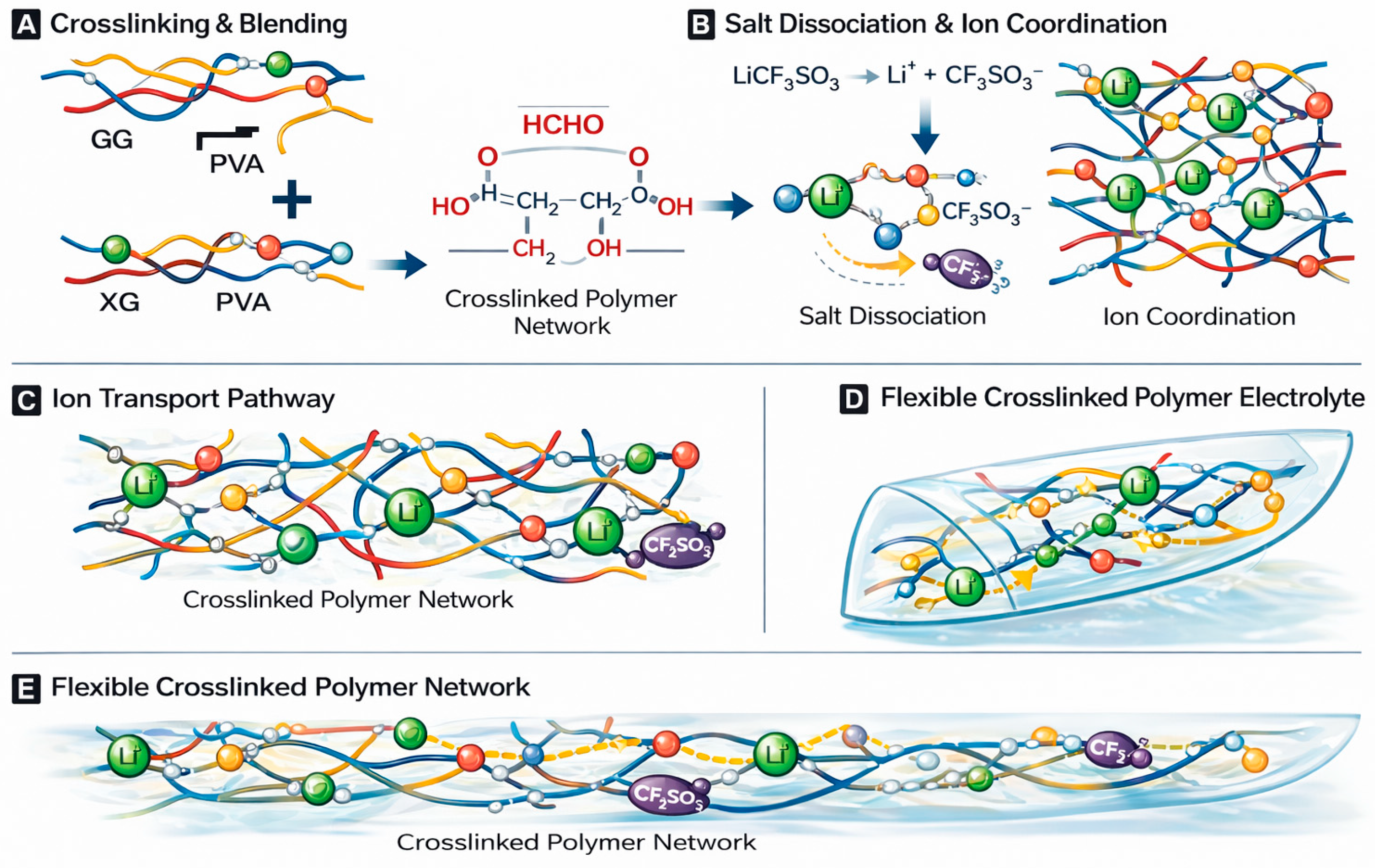
Solid polymer electrolytes (SPEs) based on Ghatti Gum (GG), Xanthan Gum (XG), Polyvinyl Alcohol (PVA), and lithium triflate were synthesized via the solution casting method. In the first stage, each polymer was dissolved separately: GG in 10 mL of double-distilled water with continuous stirring for 6 h, XG in 40 mL of water at 85 °C under vigorous stirring for 6 h, and PVA in 10 mL of water with constant stirring for the same duration. The three polymer solutions were then combined to form a homogeneous blend. To this mixture, 0.05 mL of ethylene glycol (plasticizer) and 0.95 mL of formaldehyde (crosslinker) were added, followed by continuous stirring for 24 h. In the second stage, lithium triflate (LiCF3SO3) was introduced into the optimized blend composition (GXP5) (50 wt% GG + 10 wt% XG + 40 wt% PVA + 0.05 mL ethylene glycol + 0.95 mL formaldehyde). The salt concentration varied between 2 and 10 wt%. After complete dissolution of the components, the mixture was stirred for an additional 3 h to ensure uniform distribution. The resulting solution was cast onto a clean, leveled glass plate and left to form thin films. The films were oven-dried at 80 °C for 24 h to remove residual moisture to produce films with thicknesses in the range of 0.15–0.30 mm. Finally, the dried films were carefully peeled off and cut into appropriate sizes for subsequent characterization. The prepared polymer electrolyte samples are designated using specific notation codes. The optimized polymer blend composed of Ghatti gum (GG), Xanthan gum (XG), and Polyvinyl alcohol (PVA) in the weight ratio of 50:10:40 is denoted as the optimized blend. The salt-doped samples are labeled as TF2, TF4, TF6, TF8, TF10, and TF12, which correspond to polymer electrolytes containing 2, 4, 6, 8, 10, and 12 wt% of lithium triflate, respectively. The notations assigned to each composition are provided in Table 2, and the overall preparation process is schematically illustrated in Figure 1.
Table 2.
Polymer Blend ratio and its sample codes.
Figure 1.
Schematic illustration of the experimental method.
3.1. Fabrication of Electrode
Electrode preparation represents the initial step in the fabrication of the supercapacitor. Activated carbon (procured from SANWA Components, Inc. (Poway, CA, USA)), Poly (vinylidene fluoride) (PVdF), and N-methyl-2-pyrrolidone (NMP) were mixed in an 8:1:1 weight ratio. The activated carbon and PVdF were dispersed in NMP using a mortar and pestle until a uniform slurry was obtained. This slurry was coated onto a nickel foil substrate and subsequently dried at 80 °C for 12 h. The resulting electrodes were preserved in a desiccator containing silica gel to eliminate residual moisture.
3.2. Fabrication of Symmetric Supercapacitor
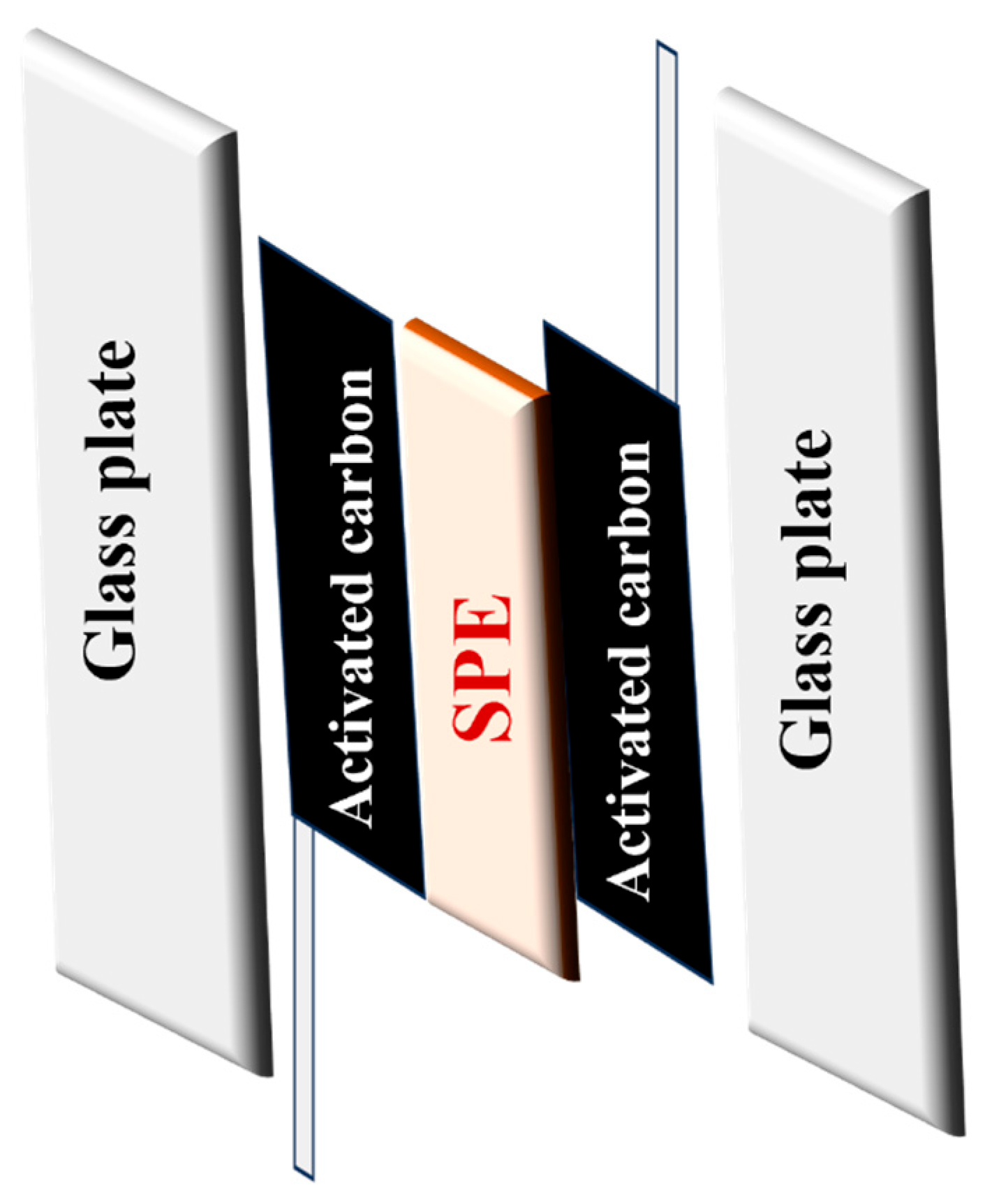
For the fabrication of Symmetric supercapacitors, the polymer electrolyte with the higher ionic conductivity (TF10) was employed as the electrolyte, while activated carbon was used as electrodes with the configuration of AC ║ (50 wt% GG + 10 wt% XG + 40 wt% PVA + 0.05 mL ethylene glycol + 0.95 mL formaldehyde) + 10 wt% LiCF3SO3 ║ AC. The structure of the supercapacitor is given in Figure 2.
Figure 2.
Structure of symmetrical supercapacitor.
4. Results and Discussion
4.1. X-Ray Diffraction (XRD) Analysis of Polymer Electrolytes
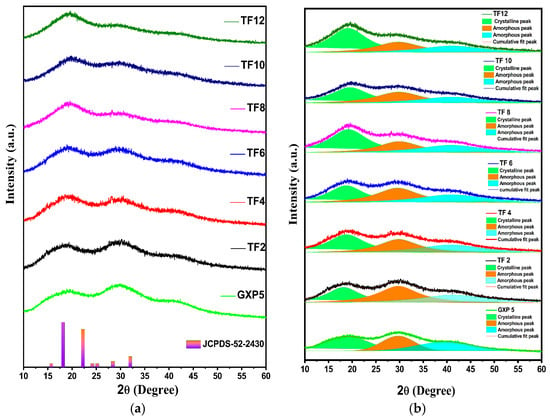
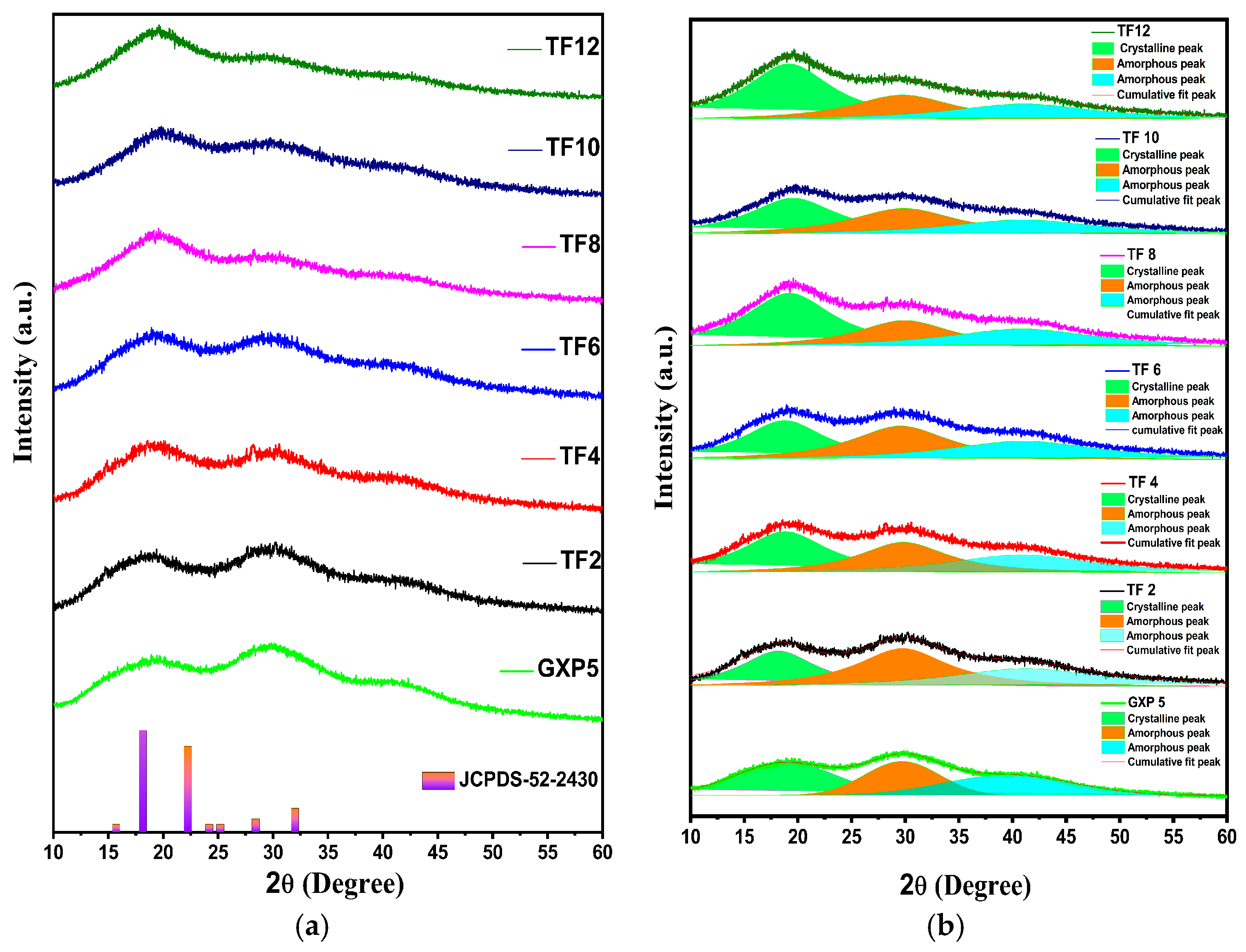
The structural properties of the prepared polymer electrolytes are examined using X-ray diffraction (XRD). Figure 3a presents the diffraction profiles of the optimized blend (IAGB) along with samples containing varying amounts of LiCF3SO3. The blend electrolyte exhibits diffraction peaks at 2θ ≈ 19°, 30°, and 42°, which correspond to the characteristic features of Ghatti Gum (GG), Xanthan Gum (XG), and Polyvinyl Alcohol (PVA).
Figure 3.
(a) XRD pattern of prepared polymer electrolyte. (b) Deconvoluted XRD spectra of salt added blend polymer electrolytes.
By adding lithium triflate at concentrations between 2 and 12 wt%, noticeable changes in the amorphous nature are observed. At salt levels (2–8 wt%), the hump around 19° and 30° became more bulging, indicating the decrease in amorphous nature. With further increase to 10 wt% (TF10), the hump intensity is gradually decreased. This suggests the structural rearrangement and increased ion–polymer interaction. However, when the salt concentration is raised to 12 wt% (TF12), the hump intensity at 19° is increased again, which indicates a partial increase in crystallinity and a reduction in overall amorphous character.
To calculate these variations, deconvolution of the diffraction patterns is carried out (Figure 3b). The percentage crystallinity (χc) is determined using:
where Ac represents the integrated area under the crystalline peaks, and AT denotes the total area of crystalline and amorphous contributions [20]. The calculated χc values are listed in Table 3. Among all compositions, TF10 exhibits the lowest crystallinity (~30%) due to peak suppression.
Table 3.
Degree of crystallinity (%) of the prepared samples.
4.2. Fourier Transform Infrared (FTIR) Analysis
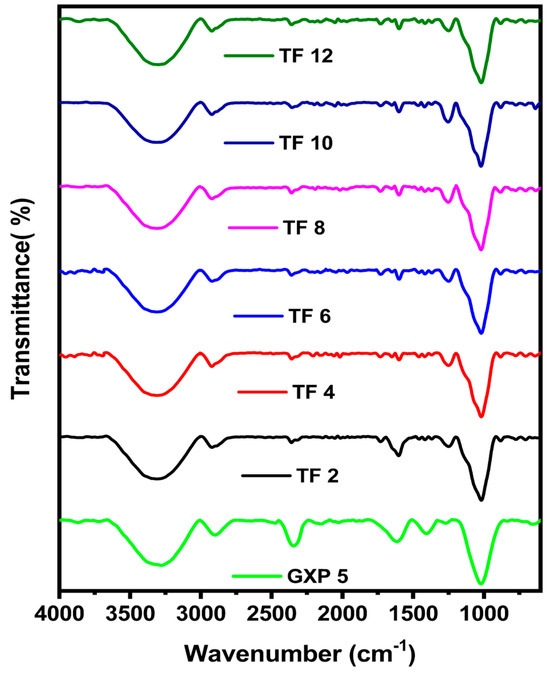
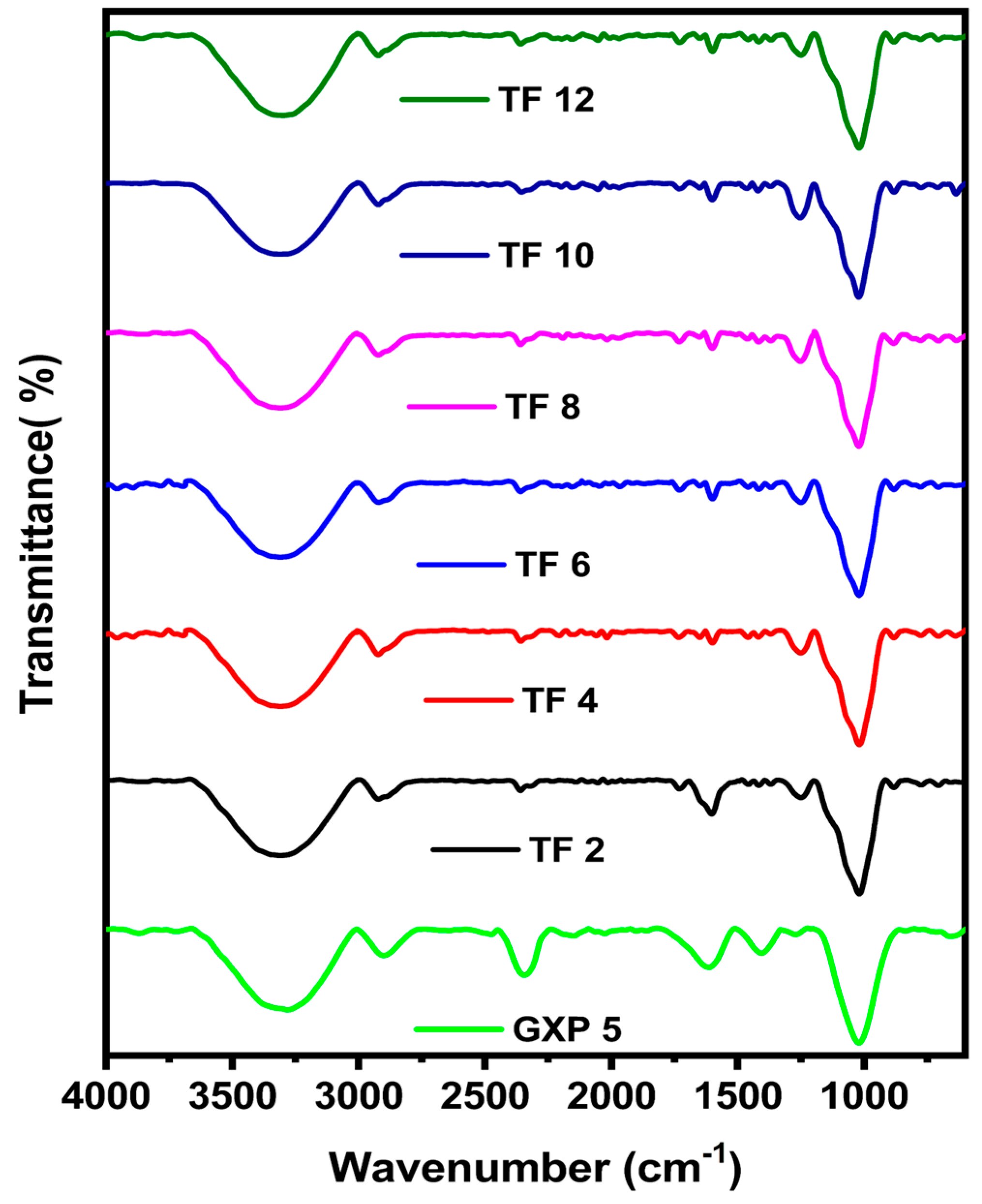
The FTIR spectra are employed to investigate the molecular interactions and structural modifications in the tripolymer system composed of Ghatti gum, Xanthan gum, and PVA (GXP5) with different concentrations of lithium triflate (LiCF3SO3) incorporated into the tripolymer electrolyte, as shown in Figure 4. Table 4 summarizes the major vibrational bands identified.
Figure 4.
FTIR analysis of the samples TF2, TF4, TF6, TF8, TF10, and TF12.
Table 4.
Functional group assignments for the prepared samples.
A broad band approximately at 3317 cm−1 appears in all spectra and is attributed to O–H stretching vibrations. With the addition of salt, this peak becomes wider and shifts slightly, which indicates the hydrogen bonding and ion–dipole interactions between Li+ ions and the hydroxyl functionalities of the polymers. This suggests effective coordination of lithium with oxygen atoms from hydroxyl and ether groups present in PVA and the polysaccharide gums.
The absorption at ~2910 cm−1 corresponds to C–H stretching of the PVA backbone. Although this peak remains nearly unchanged in position, minor variations in intensity reflect local structural reorganization produced by salt incorporation. A distinct band near 1621 cm−1 is assigned to C=O stretching vibrations and provides evidence of possible complexation between carboxylate groups of the gums and Li+ cations. In the blend (GXP5), a band at 2348 cm−1 corresponds to the nitrile (C≡N) stretching of Ghatti gum, which diminishes in intensity upon salt addition. This indicates the interaction of gum with lithium ions.
Significant modifications, particularly at 1019 cm−1, are assigned to C–O–C stretching vibrations of glycosidic linkages and ether groups. Peak shifts and intensity changes further confirm the complex formation between the polymer matrix and lithium. The appearance of bands around 1251 cm−1 is attributed to asymmetric SO3 stretching, validating the presence of lithium triflate within the polymer network. According to Starkey and Frech, the band at 758 cm−1 corresponds to δs (CF3) vibrations of the triflate anion, while the new feature near 637 cm−1 in the 10 wt% LiCF3SO3 sample is linked to the symmetric SO3 bending mode. The vibrational pattern of the triflate group is known to be highly sensitive to its coordination environment, resulting in multiple IR-active bands [21,22].
These changes collectively verify that lithium triflate actively interacts with the polymer chains. The coordination of Li+ with hydroxyl and ether groups modifies the vibrational modes, which enhance the amorphous content and facilitate ion transport within the blend. Thus, FTIR analysis confirms the successful integration of LiCF3SO3 and highlights the structural reorganization that supports improved electrochemical performance of the prepared polymer electrolyte system.
4.3. SEM/EDX Analysis
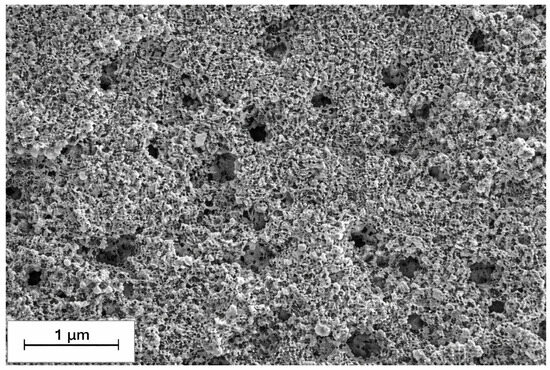
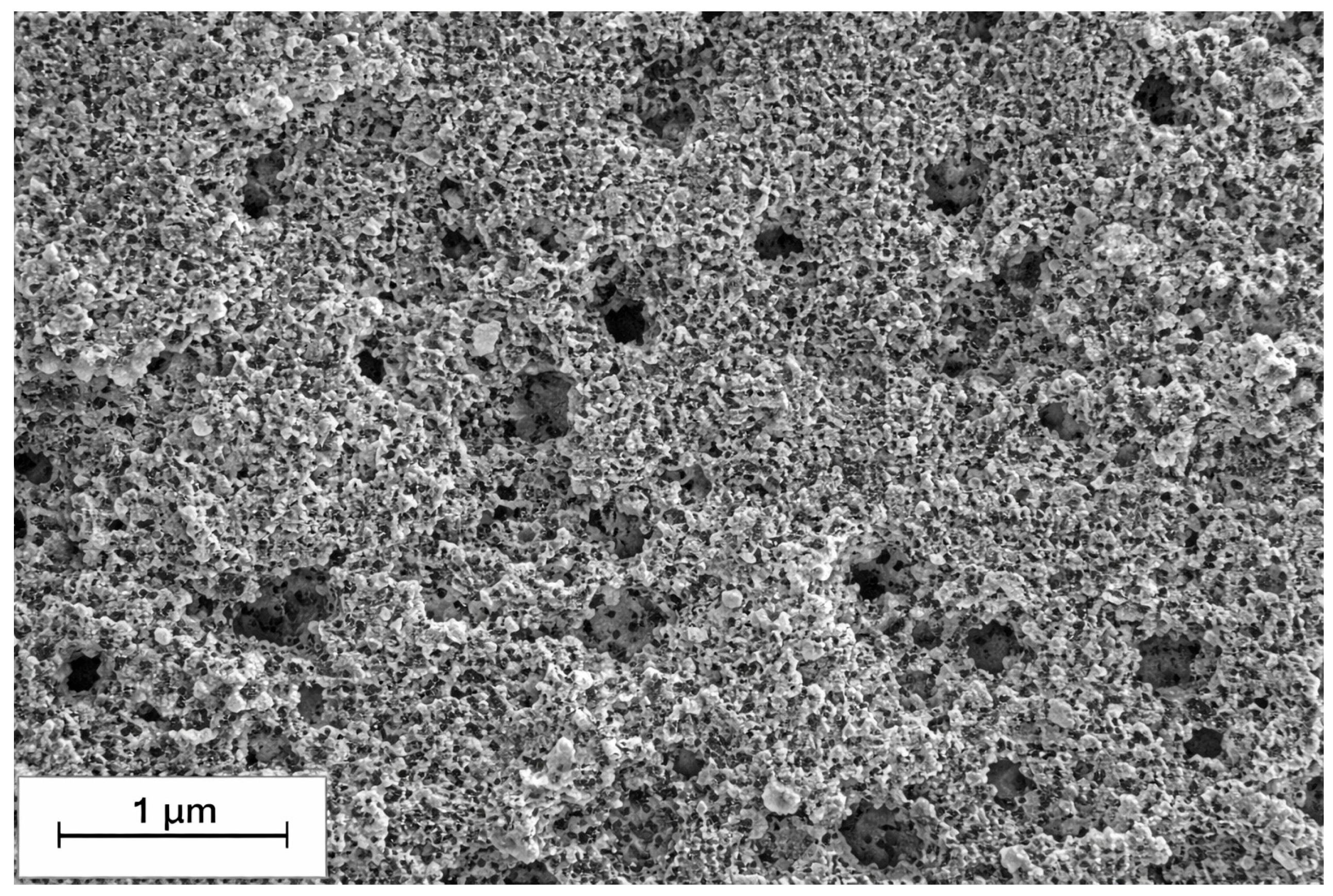
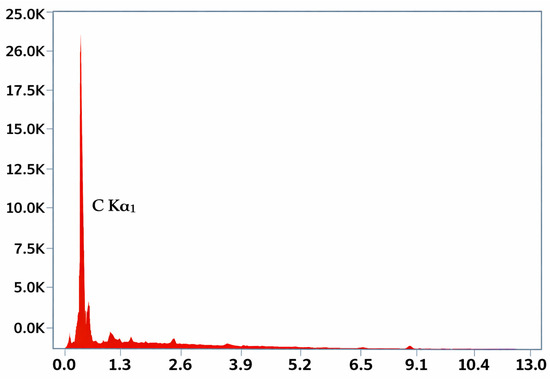
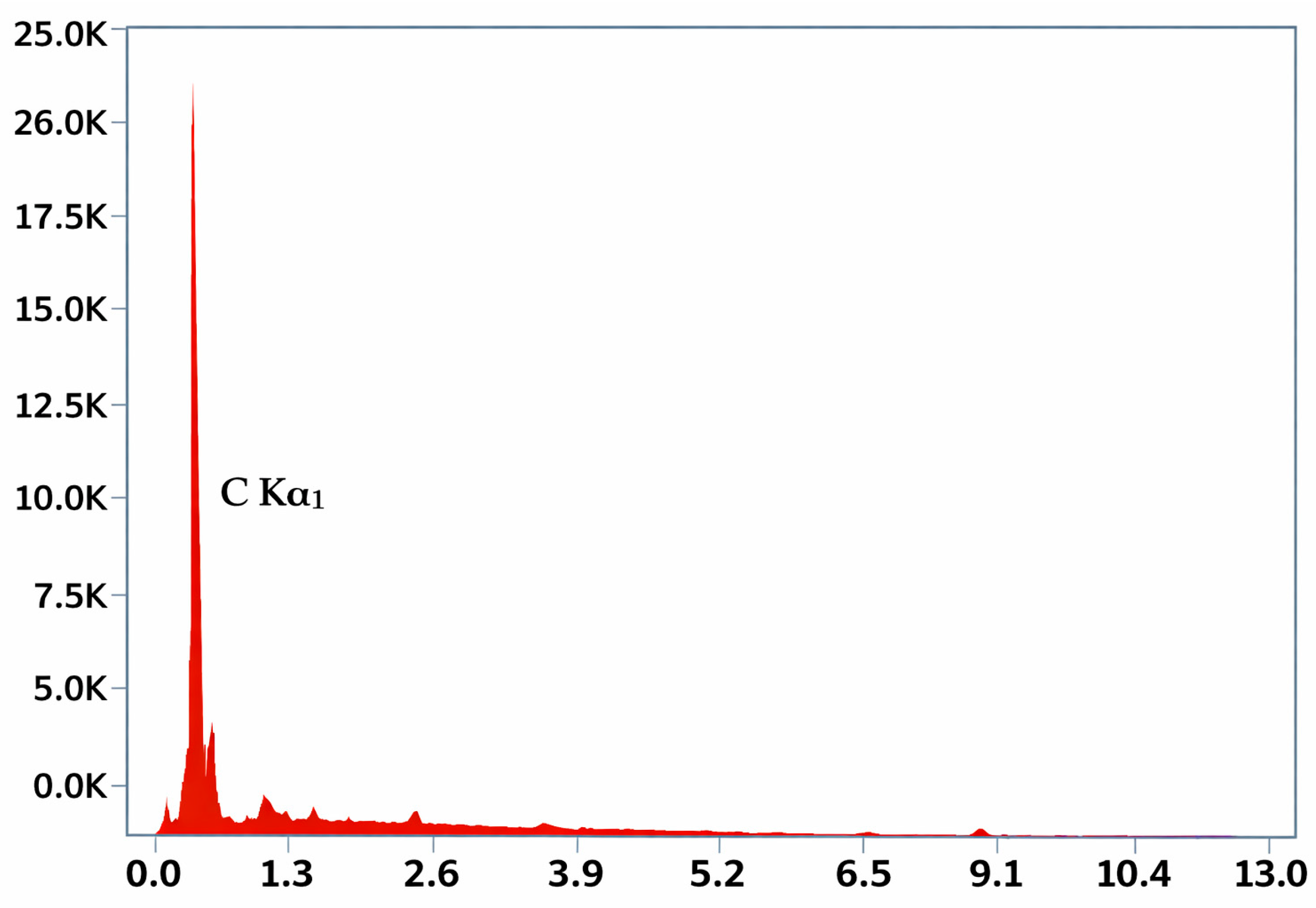
Figure 5 shows the SEM morphology of activated carbon with a magnification of 10,000 times, a 1 μm image size. SEM results show several small white particles, and they are uniformly distributed. The EDX spectrum shown in Figure 6 shows the presence of Carbon at 100%.
Figure 5.
SEM image of activated carbon electrode.
Figure 6.
EDX of activated carbon electrode.
4.4. AC Impedance Analysis
4.4.1. Nyquist Plot
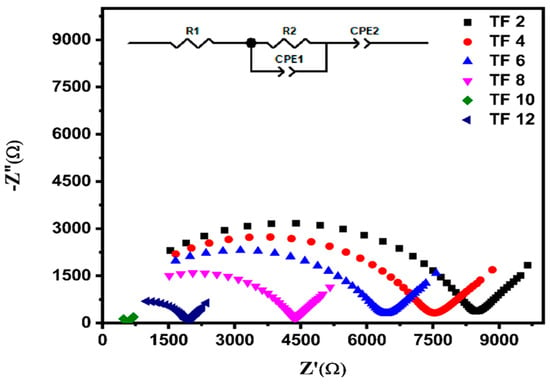
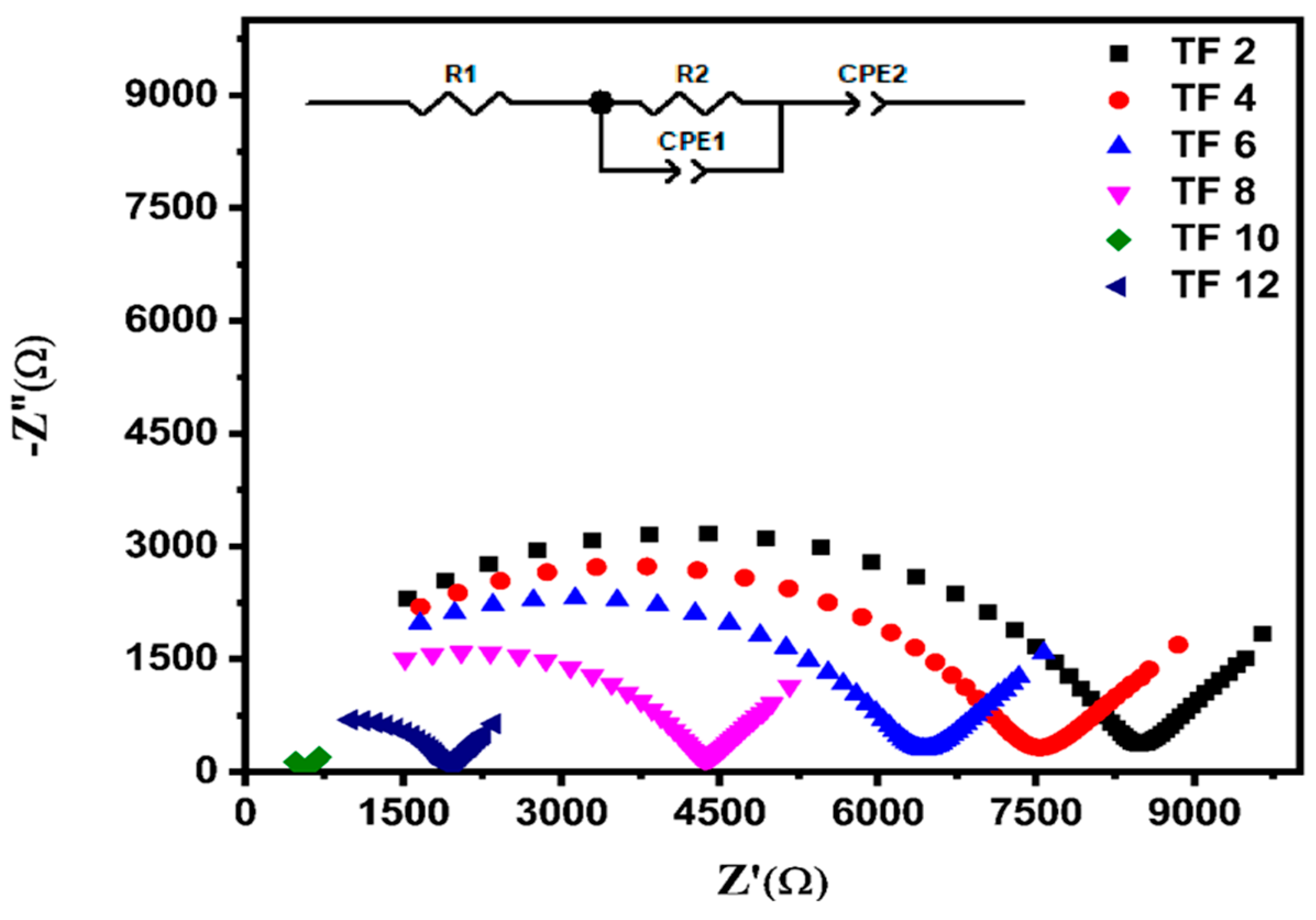
The Nyquist plot illustrates the complex impedance behavior of polymer electrolyte samples (TF2 to TF12). The Nyquist plot of GPX5 (50 wt%:10 wt%:40 wt% 0.05 mL ethylene glycol + 0.95 mL formaldehyde) and different wt% of lithium triflate salt added systems at ambient temperature are shown in Figure 7. Each curve consists of a semicircular arc followed by a low-frequency spike. The diameter of the semicircle represents the bulk resistance (Rb) of the electrolyte. The bulk resistance (Rb) value is determined using Z View fitting software.
Figure 7.
Nyquist plot for prepared electrolyte.
The semicircle at high frequency denotes the bulk effect, and the low-frequency spike is due to the presence of polarization effect between the electrode and the electrolyte interface.
The AC conductivity of the solid polymer electrolyte can be determined by the given formula:
where ‘t’ represents the sample thickness, ‘Rb’ denotes the bulk resistance, and ‘A’ signifies the contact area between the electrode and electrolyte [23].
At lower lithium triflate concentrations (TF2 and TF4), the plot exhibits large semicircles. This indicates the high bulk resistance and poor ion transport due to limited salt dissociation and weak polymer-salt interaction. As the salt concentration increases, notably in TF6 and TF8, the semicircle diameters decrease significantly, suggesting enhanced ion mobility and better ionic conduction. This is attributed to the effective coordination between Li+ ions and the polar functional groups (–OH and –C–O–C–) in the biopolymer matrix.
For the samples (TF10 and TF12), there exist smaller semicircles, and their transition quickly into nearly vertical low-frequency spikes. This implies minimal bulk resistance, dominance of capacitive behavior, and efficient ion accumulation, which is consistent with enhanced double-layer capacitance.
The measured conductivity values are given in Table 5. The Nyquist plot clearly shows 10 wt% of lithium triflate added system obtain higher conductivity (2.73 × 10⁻⁵ S cm−1) than other samples. Further, increasing the salt concentration (12 wt., the conductivity is decreased to 7.94 × 10⁻⁶ S cm−1 at 303 K. This is most likely due to the aggregation of the ions, leading to the formation of ion clusters which reduces the number of mobile charge carriers [24]. The impedance response therefore confirms a mixed resistive–capacitive nature of the polymer electrolytes, where the resistive component is associated with bulk ionic transport and the capacitive component arises from interfacial polarization. The reduced impedance and enhanced capacitive response observed for TF10 strongly support its suitability for supercapacitor applications.
Table 5.
Ionic conductivity of the prepared samples.
4.4.2. Conduction Spectra
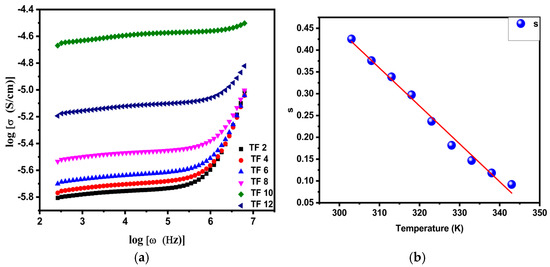
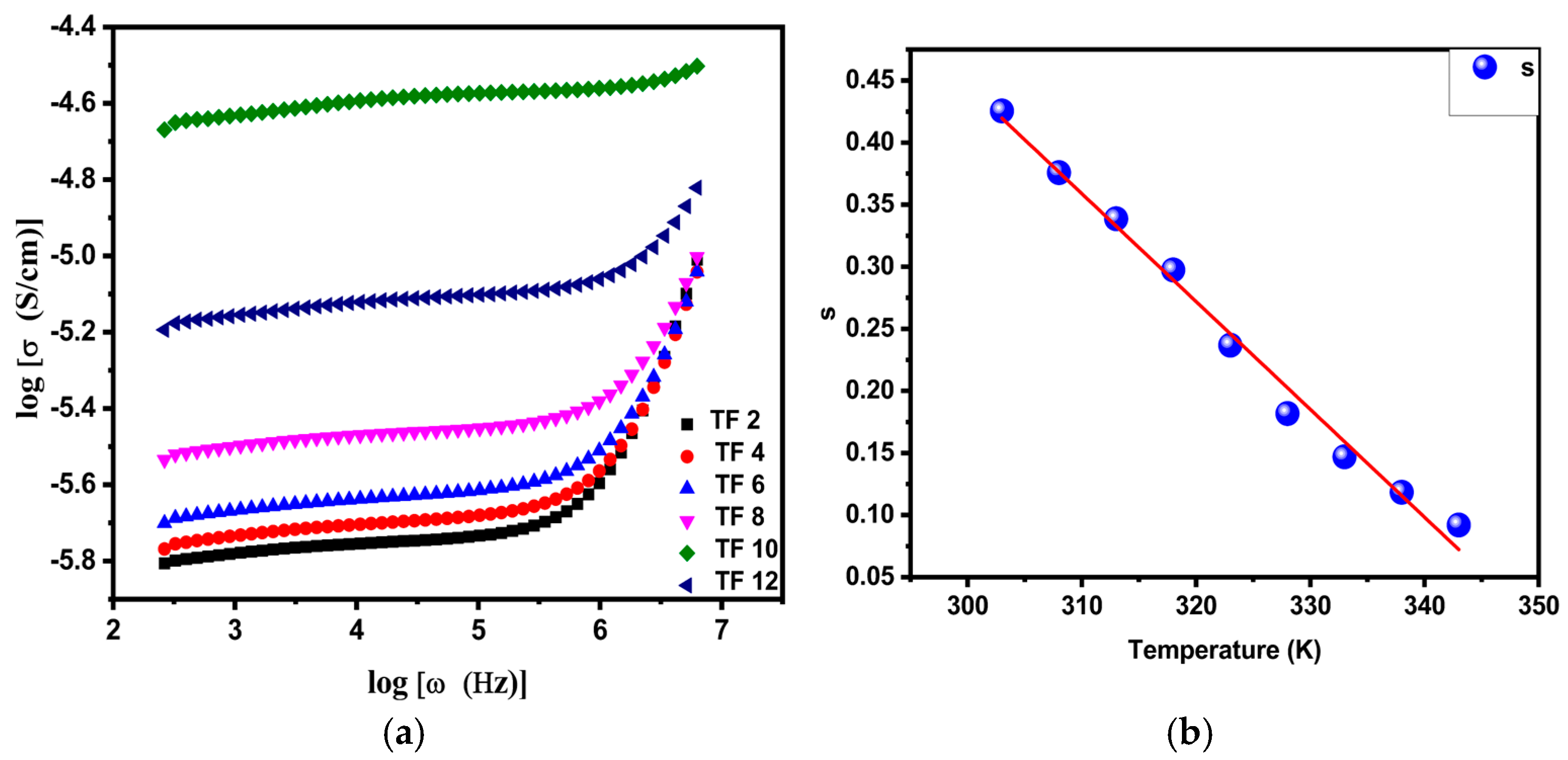
The conductance spectra of salt LiCF3SO3 added blend polymer electrolytes is shown in Figure 8a. The conductance spectra exhibit typical frequency-dependent behavior characterized by three distinct regions. At low frequencies, the conductivity remains almost constant which indicates the DC conductivity (σdc). This arises from long-range ion transport through the polymer matrix and the space-charge polarization at the electrode–electrolyte interface [25,26]. As the frequency increases, conductivity begins to rise gradually following Jonscher’s power law. At high frequencies, a sharp increase in conductivity is observed due to dielectric relaxation. Among all samples, TF10 exhibits the higher conductivity over the entire frequency range, indicating efficient conduction.
Figure 8.
(a) Conductance spectra for the prepared polymer electrolytes. (b) Conductance mechanism for the prepared polymer electrolytes.
4.4.3. Conduction Mechanism
The dependence of the frequency exponent (s) on temperature provides valuable insight into the ion transport process within the prepared electrolytes. As illustrated in Figure 8b, the value of s decreases steadily as the temperature increases from 300 K to 345 K. Conductivity follows Jonscher’s universal power law and is expressed as:
Here, σdc represents the DC conductivity, σac—AC conductivity, A is a temperature-dependent pre-exponential factor, ω is the angular frequency, and s (0 < s < 1) denotes the frequency exponent. The different models are Quantum Mechanical Tunneling (QMT), in which s is nearly unaffected by temperature, whereas in the Overlapping Large Polaron Tunneling (OLPT) model, s typically increases with temperature [27,28,29].
The observed decline in s with an increase in temperature indicates the Correlated Barrier Hopping (CBH) model. In this framework, lithium ions migrate between localized states by crossing the potential barriers. As the temperature rises, these barriers are reduced and enable easier ion motion.
The linear variation of s with temperature for the present system is expressed as:
s = −0.0086T + 3.05095
This linear relationship further validates the CBH mechanism as the governing conduction process in the polymer electrolyte films.
The Arrhenius-type temperature dependence of ionic conductivity further verifies this mechanism by yielding low activation energy values for optimized compositions.
4.4.4. Modulus Spectra
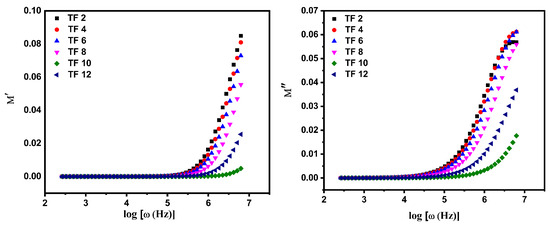
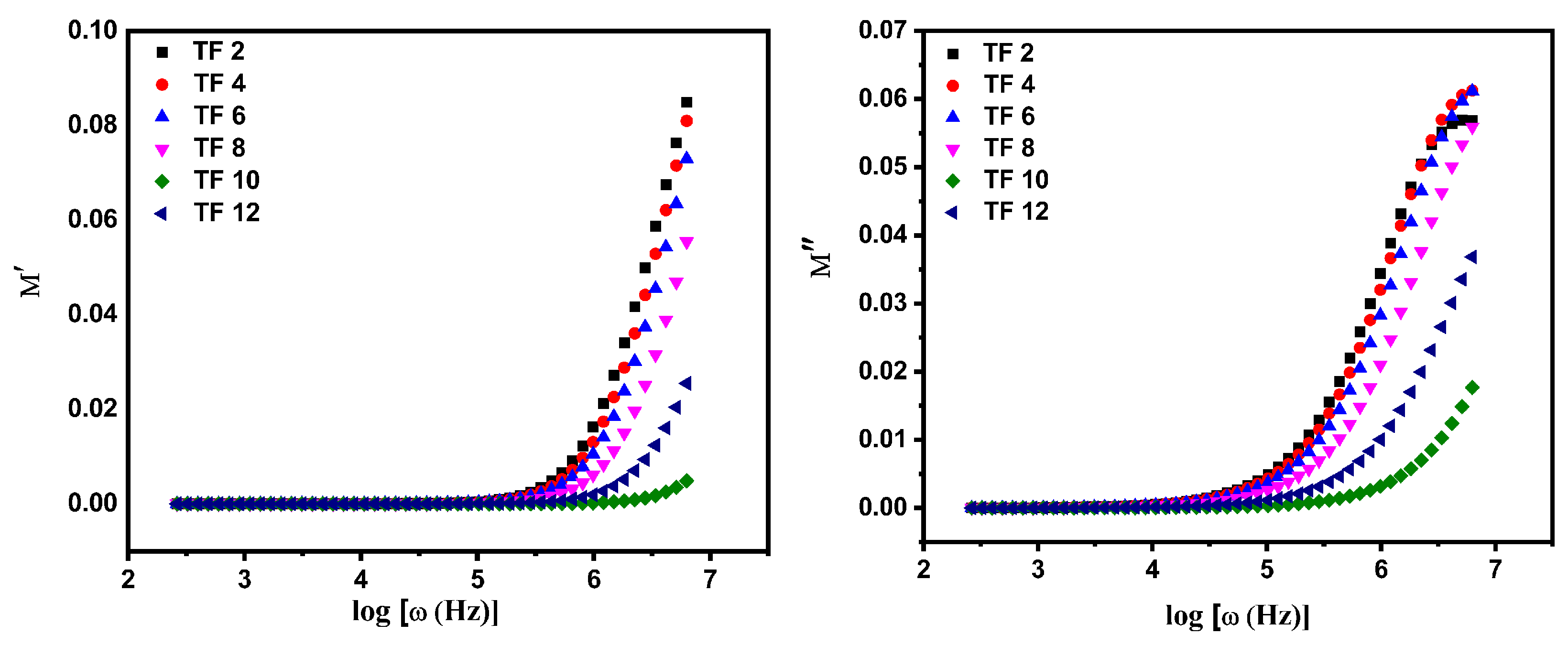
The electric modulus approach is used to suppress the influence of electrode polarization and to focus on bulk relaxation phenomena in polymer electrolyte systems. Unlike the dielectric permittivity representation, which is dominated by interfacial effects at low frequencies, the modulus formalism provides better insight into conductivity relaxation related to long-range ionic transport and bulk charge motion [30,31]. Figure 9 depicts the variation of the real () and imaginary () components of the dielectric modulus as a function of frequency for the investigated electrolytes.
Figure 9.
The relationship between real and imaginary moduli (M′ and M″).
In the low-frequency region, both and attain very small values, indicating the presence of highly mobile charge carriers in the bulk of the electrolyte. This response is associated with long-range ion migration rather than polarization effects at the electrode–electrolyte interface [32]. Such behavior confirms the effectiveness of the modulus representation in highlighting bulk ion dynamics. The complex modulus is expressed as:
The formulae for the real electrical modulus (M′) and imaginary modulus (M″) can be expressed as follows,
where M′ and M″ are the real and imaginary components of the modulus, and ε′ and ε″ are the real and imaginary parts of permittivity.
As the frequency increases, a gradual rise in M′ is observed, corresponding to a shift from long-range ionic conduction to localized ion motion within the polymer framework. At higher frequencies, the modulus response is predominantly governed by bulk relaxation processes arising from ion hopping and polymer segmental movements.
Among the various compositions studied, the TF10 electrolyte exhibits consistently lower values of both M′ and M″ across the entire frequency range. This behavior correlates well with its enhanced ionic conductivity and lower bulk resistance obtained from impedance measurements. The reduced modulus magnitude reflects faster conductivity relaxation and more efficient ion transport, confirming that bulk ionic conduction is dominant in the optimized TF10 system.
4.4.5. Tangent Spectra
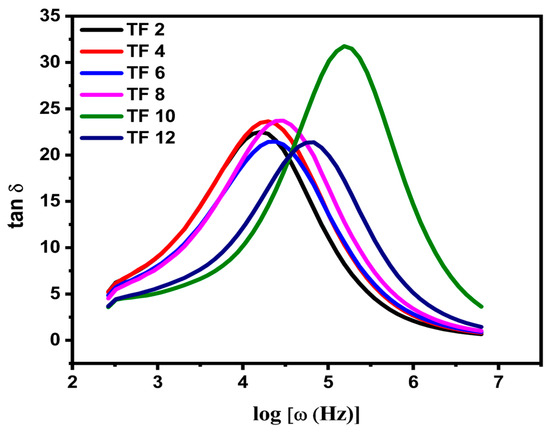
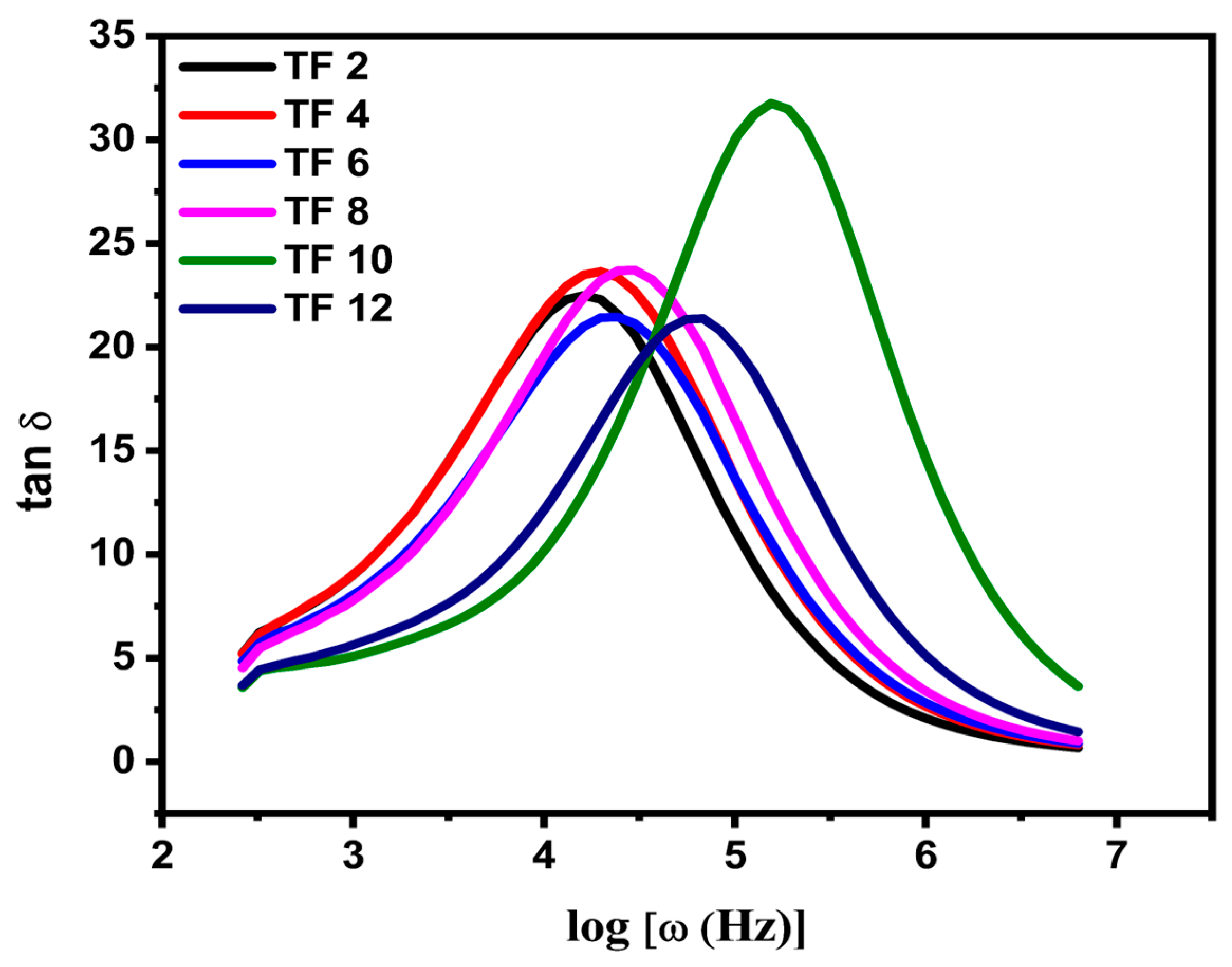
The tangent loss spectra of the synthesized electrolytes are presented in Figure 10. The dielectric loss tangent (tan δ) and the relaxation time (τ) are evaluated using the following relations:
Figure 10.
Tangent spectra for all prepared samples.
Here, ε′ and ε″ represent the dielectric constant and dielectric loss, respectively.
The Relaxation time (τ) is obtained from the relation
The tan δ spectra for all polymer electrolyte films exhibit distinct relaxation peaks, which are associated with frequency-dependent dielectric losses arising from ion migration [33,34]. A shift in the relaxation peak towards higher frequencies is observed from TF2 to TF10, which implies shorter relaxation time and improved charge transport. This improvement is ascribed to effective salt dissociation and flexibility of the polymer backbone, which together facilitate the faster ion dynamics.
Among the electrolytes, TF10 displays the intense peak along with the larger shift. This is a confirmation of superior ionic conductivity and dielectric response. In contrast, TF12 shows a slight decrease in peak height towards lower frequency, which is due to the occurrence of ion aggregation and thereby restricts ion mobility.
The relaxation times calculated for all compositions at 303 K are summarized in Table 6.
Table 6.
The calculated relaxation time for all prepared polymer electrolytes with lithium triflate.
4.5. Temperature-Dependent Plot
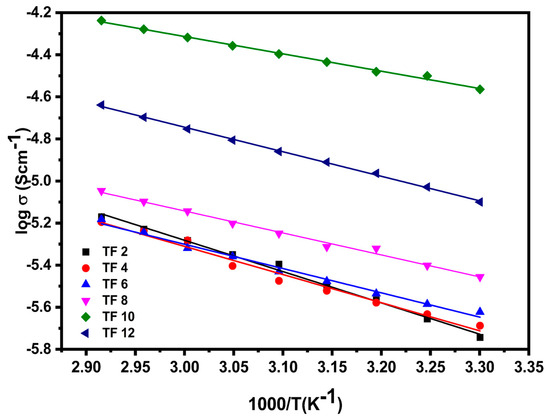
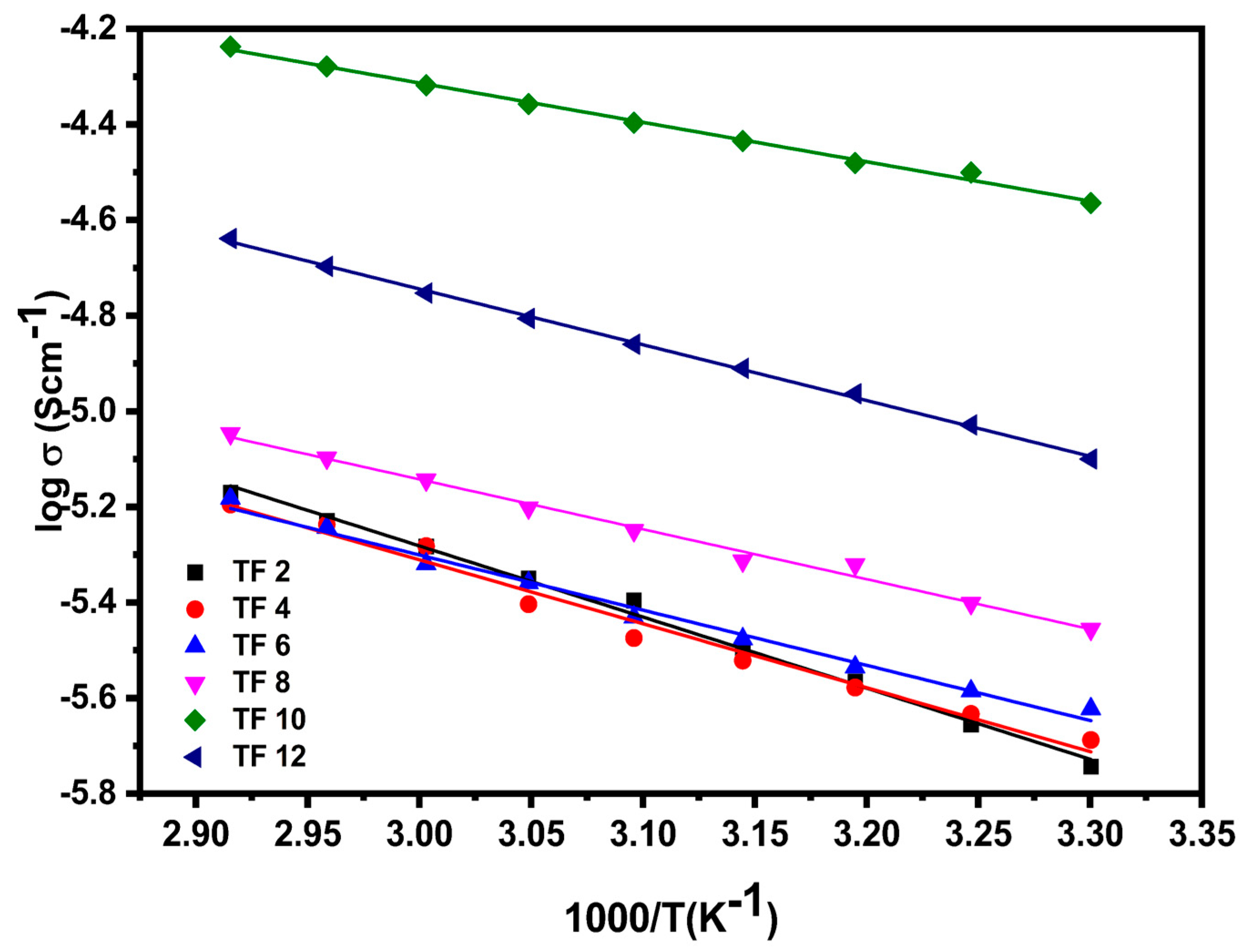
The influence of temperature on ionic conductivity is examined to know about the transport mechanism in the prepared polymer electrolytes. Figure 11 presents the Arrhenius plots in the range of 303–338 K. The conductivity variation with temperature shows the straight-line behavior and follows an Arrhenius-type thermally activated process.
Figure 11.
Arrhenius plot for all prepared polymer electrolytes with lithium triflate.
The temperature dependence of conductivity is described by the relation:
where σ is the ionic conductivity (Scm−1), σ0 is the pre-exponential factor, Ea represents the activation energy, k is the Boltzmann constant, and T is the absolute temperature.
The activation energies derived from the slope of the plots are summarized in Table 6. A gradual reduction in Ea is observed with increasing salt concentration, and the composition (TF10) exhibits the lower activation energy. This reflects the enhanced ion mobility and reduced energy barriers for hopping [35].
5. Transference Number Analysis
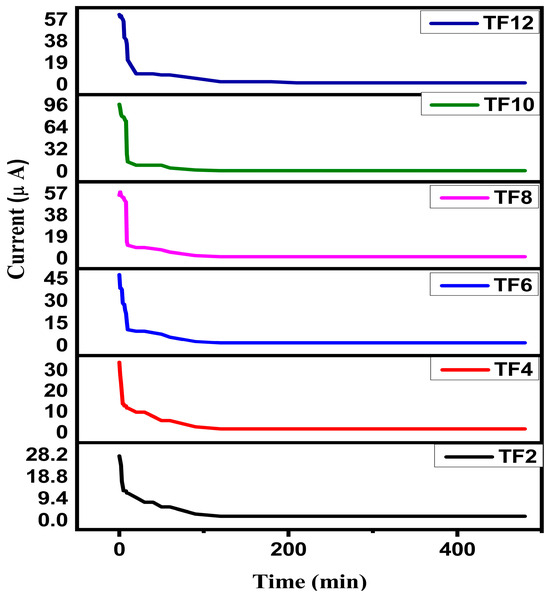
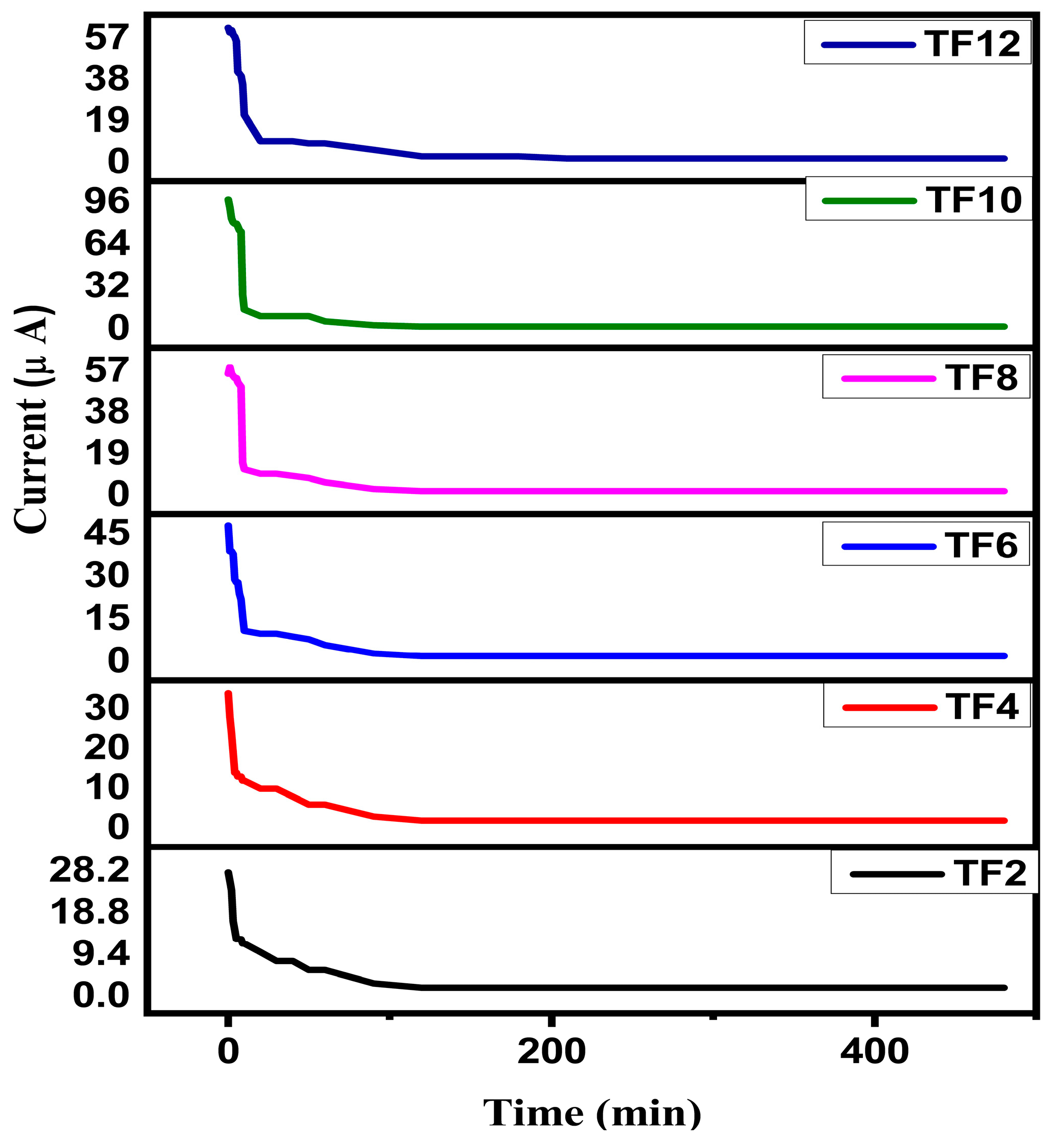
The relative contributions of ionic and electronic charge carriers to the overall conductivity of the polymer electrolytes are determined using Wagner’s polarization technique. In this method, a constant DC potential of 2 V is applied across the electrolyte sample sandwiched between two silver electrodes. In which one electrode is coated with graphite to block electron transport. The transient polarization current is monitored over time until it is stabilized, as illustrated in Figure 12.A sharp initial current is observed immediately after applying the bias, which arises mainly from ion migration. With increasing time, the current decays and eventually reaches a steady state [36].
Figure 12.
Transference number analysis for all samples prepared.
The ionic transference number (tion) and electronic transference number (tele) are calculated using the following relations:
where Ii and If represent the initial and final current values, respectively. For the present systems, ion transport dominates the conduction process. The higher tion (0.979) is obtained for the TF10 composition and confirms that the current is predominantly carried by ions. The values of tion and tele for all samples are summarized in Table 6.
The diffusion coefficients and mobilities of cations and anions are further derived from the transference number analysis using the following equations:
Here, D denotes the diffusion coefficient (cm2 s−1), μ is the mobility (cm2 V−1 s−1), σ is the ionic conductivity, k is Boltzmann’s constant, T is the absolute temperature, n is the number of charge carriers, and e is the electronic charge.
Among the systems, TF10 shows significantly enhanced ionic mobility and diffusion coefficients. The calculated values of tion, tele, μ+, μ−, D+, and D− for all electrolytes are listed in Table 7.
Table 7.
Transport parameters of polymer electrolytes.
6. Electrochemical Analysis
6.1. Cyclic Voltammetry
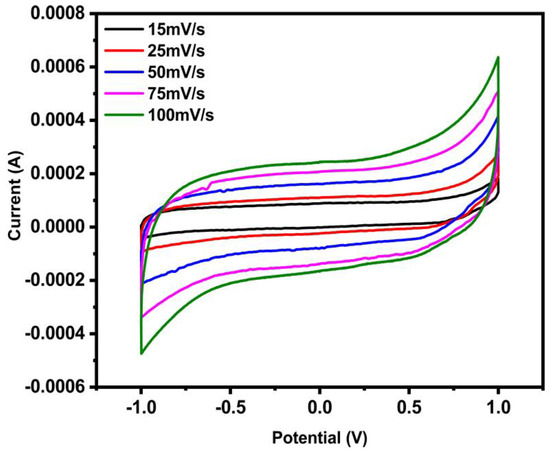
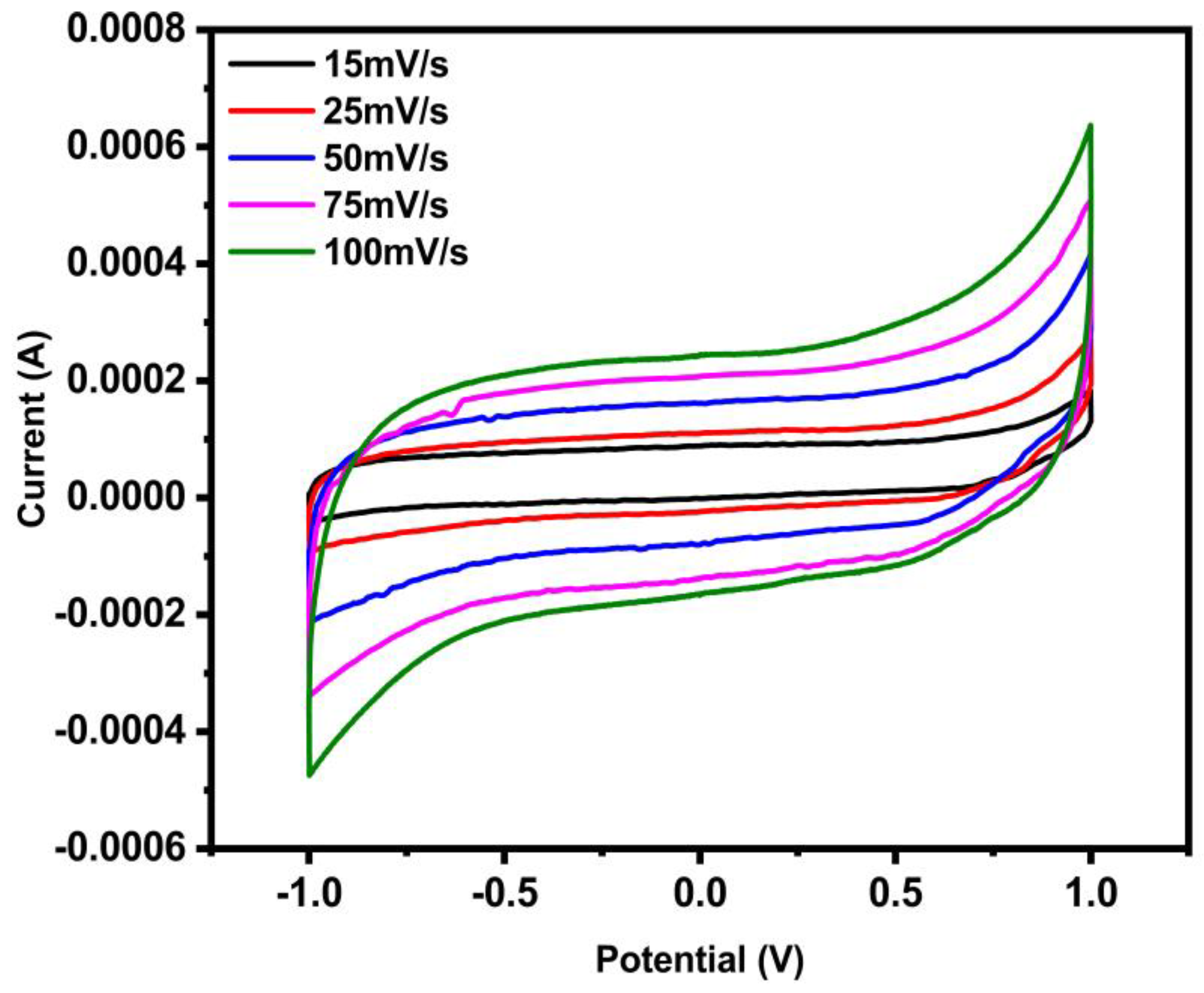
A symmetric supercapacitor device is assembled using the higher conducting polymer electrolyte (TF10). Cyclic voltammetry (CV) analysis is performed within the potential window of −1 to 1 V at scan rates ranging from 15 to 100 mVs−1, as illustrated in Figure 13. The CV curves exhibit quasi-rectangular profiles without noticeable redox peaks, which is characteristic of electric double-layer capacitive (EDLC) behavior.
Figure 13.
Cyclic voltammetry (CV) curves at different scan rates.
The specific capacitance (Csp) of the cell is determined using the relation:
where A is the integrated area under the CV curve, m is the active electrode mass, v is the applied scan rate, and ΔV is the potential window [37].
An increase in current response at higher scan rates reveals the ability of the system to withstand rapid ion transport and improved charge storage at the electrode–electrolyte interface. The nearly symmetric shape of the CV profiles across different scan rates confirms excellent electrochemical reversibility and structural stability of the device. At very high scan rates, minor deviations from the ideal rectangular shape are observed, which can be attributed to internal resistance effects or ion diffusion limitations.
Overall, the CV analysis emphasizes the EDLC nature of the material and its capability for efficient energy storage. The calculated specific capacitance values at different scan rates are summarized in Table 8.
Table 8.
The specific capacitance of the fabricated supercapacitor.
6.2. Galvanostatic Charge–Discharge (GCD) Analysis
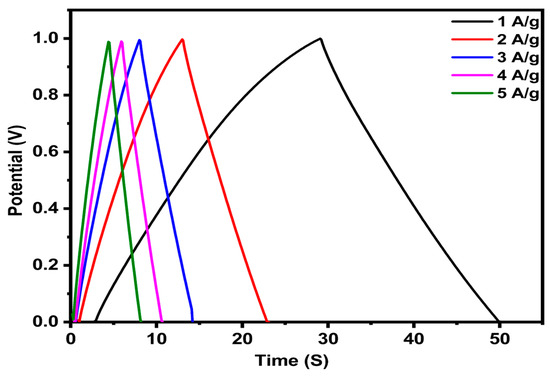
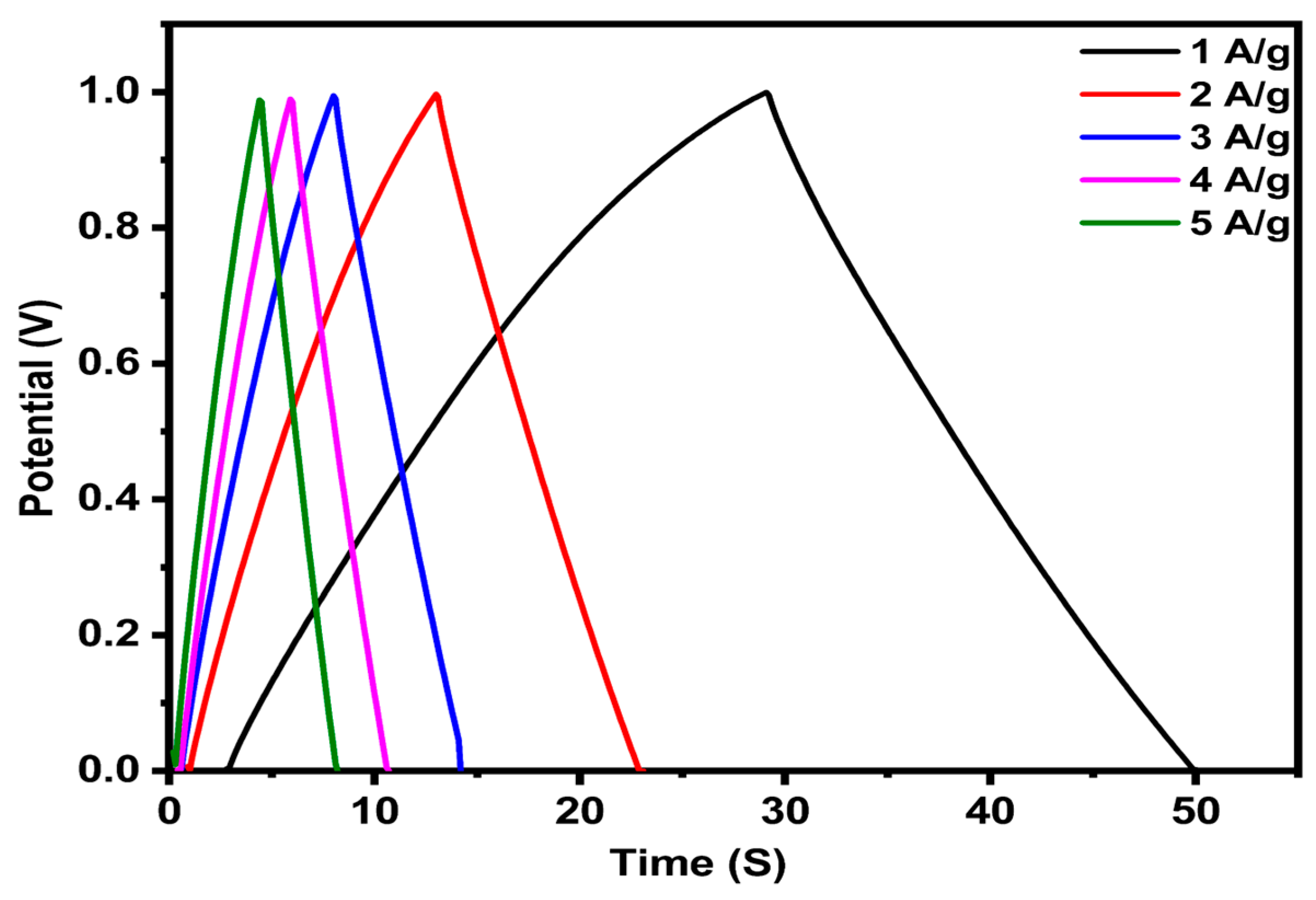
Galvanostatic charge–discharge measurements are performed to evaluate the energy and power characteristics of the fabricated supercapacitor. The tests are carried out at current densities ranging from 1 A g−1 to 5 A g−1 within the potential window of 0–1 V, as illustrated in Figure 14. The recorded GCD profiles exhibit nearly symmetrical triangular shapes at all current densities as a confirmation of the capacitive response of the system.
Figure 14.
Plots of a symmetrical capacitor’s galvanostatic charge/discharge (GCD) at different current densities.
At the lowest current density (1 Ag−1), the discharge period is longer, which corresponds to higher specific capacitance. This behavior arises because ions have sufficient time to migrate and access the electrode surface. As the current density increases to 5 Ag−1, the discharge time decreases, reflecting the restricted ion mobility and reduced electrode surface accessibility.
The specific capacitance (Csp), energy density (E), and power density (P) are determined from the GCD data using the following relations [38,39,40,41]:
where E is the energy density (Wh kg−1), P is the power density (W kg−1), V is the potential window (V), and Δt is the discharge time (s).
At 1 Ag−1, the maximum specific capacitance is found to be 10.8 Fg−1. The device also achieves a maximum power density of 2500 W kg−1 at 5 A g−1. A comparison with previously reported supercapacitors using gel polymer electrolytes (GPEs) from poly (vinyl alcohol-co-acrylonitrile)/PEO and doped with LiBF4 and 1-ethyl-3-methylimidazolium ionic liquid exhibits relatively high ionic conductivity in the dry state (2 × 10⁻⁴ Scm−1). Compatibly, the symmetric supercapacitor delivered a specific capacitance of 80 F g−1 at 1 A g−1, along with an energy density of 61 Wh kg−1 at a power density of 500 W kg−1, indicating efficient charge storage and favorable GCD characteristics at low current density [41]. The PGPE-based all-solid-state supercapacitor exhibits a wide electrochemical window of 1.2 V, delivering a high specific capacitance of 64.92 F g−1 at 1 A g−1, with a maximum energy density of 13.26 Wh kg−1 and a power density of 2.26 kW kg−1, along with excellent cycling stability of 94.63% capacitance retention after 10,000 cycles and stable performance under bending conditions [42]. Meanwhile, a dextran/hydroxyethyl cellulose electrolyte blended with NH4Br exhibited a comparatively lower specific capacitance of 31.7 F g−1 during GCD evaluation [43]. The calculated values of specific capacitance, energy density, and power density for different current densities are summarized in Table 9. In the present system, the solid electrolyte contributes to the observed electrochemical performance which is lower than the liquid and gel electrolytes. However, electrolyte provides advantages such as flexibility, leakage-free operation, improved safety, and enhanced environmental compatibility which makes it suitable for energy-storage applications. The comparison of electro-chemical performance with gel electrolytes is given in Table 10.
Table 9.
The calculated device’s power density and energy density.
Table 10.
Comparison of electrochemical performance of supercapacitors based on different polymer/gel electrolytes.
7. Findings and Results Analysis
The present study clearly demonstrates that the concentration of lithium triflate (LiCF3SO3) plays a decisive role in governing the structural, dielectric, and electrochemical characteristics of the Ghatti gum–Xanthan gum–PVA–based polymer electrolyte system. Systematic variation of salt content results in noticeable changes in polymer chain arrangement, ion coordination, and charge transport behavior. Structural investigations using X-ray diffraction (XRD) reveal a progressive reduction in crystalline features with increasing salt concentration up to 10 wt.%. Fourier transform infrared (FTIR) spectroscopy further confirms strong interactions between Li+ ions and the functional groups of the polymer host, particularly through coordination with oxygen-containing moieties. These interactions promote effective salt dissociation and stabilize mobile charge carriers within the electrolyte network. Impedance results show that the TF10 composition (10 wt.% LiCF3SO3) exhibits the higher ionic conductivity of 2.73 × 10⁻⁵ S cm−1 at room temperature. The frequency-dependent conductivity spectra obey Joshner’s universal power law which indicates the presence of long-range dc conduction. Temperature-dependent conductivity follows Arrhenius behaviour with a low activation energy of 0.15 eV. The observed transport behaviour is consistent with the Correlated Barrier Hopping (CBH) model which is commonly associated with disordered polymer electrolyte systems.
Electric modulus analyses provide additional insight into charge transport dynamics. The modulus representation effectively suppresses electrode polarization effects and highlights bulk relaxation processes. The TF10 electrolyte exhibits faster conductivity relaxation and lower modulus values, confirming efficient ion dynamics and rapid relaxation behaviour within the polymer matrix. The practical applicability of the optimized electrolyte is evaluated through the fabrication of a symmetric supercapacitor device using the TF10 membrane. Cyclic voltammetry and galvanostatic charge–discharge measurements confirm stable electric double-layer capacitor (EDLC) behaviour with minimal resistive losses. The device delivers a specific capacitance of 7.1 F g−1, along with an energy density of 2.52 Wh kg−1 and a high power density of 2500 W kg−1, demonstrating reliable electrochemical performance and good rate capability.
8. Conclusions
This work reports the development of a salt-incorporated tri-biopolymer blend electrolyte composed of Ghatti Gum, Xanthan Gum, Polyvinyl Alcohol, and Lithium Triflate (LiCF3SO3) for energy storage applications. The blend electrolytes are synthesized by the solution casting technique and systematically characterized using XRD, FTIR, and impedance spectroscopy. The frequency-dependent AC conductivity follows Jonscher’s universal power law, with the TF10 composition exhibiting the highest ionic conductivity of 2.73 × 10⁻⁵ Scm−1. Temperature-dependent studies confirm that the conduction mechanism of TF10 aligns with the Correlated Barrier Hopping (CBH) model and displays Arrhenius-type thermal activation. The TF10 sample shows the lower activation energy (0.15 eV) and supports efficient ion migration. Dielectric and modulus analyses further reveal the relaxation behavior with a minimum relaxation time of 6.45 × 10⁻⁶ s derived from tangent loss spectra. Transference number analysis verifies that the predominant contribution to conductivity arises from ions with negligible electronic transport in TF10. Electrochemical testing of a supercapacitor fabricated using TF10 demonstrates electric double-layer capacitive (EDLC) behavior. Cyclic voltammetry yields a specific capacitance of 7.1 F g−1 at 15 mV s−1, while galvanostatic charge–discharge measurements provide energy and power densities of 2.52 Wh kg−1 and 2500 W kg−1, respectively. Overall, the results establish TF10 as an efficient and eco-friendly biopolymer-based electrolyte with strong potential for energy storage devices.
Author Contributions
S.S.: Methodology, Data curation, Formal analysis; D.V.: Funding acquisition, Supervision, Conceptualization, Methodology, Data curation, Formal analysis, Validation, Visualization, Writing—original draft, Writing—review and editing. K.S.: Methodology, Data curation, Formal analysis. A.S.S.: Project administration, Data curation, Formal analysis, Validation. N.N.: Methodology, Formal analysis, Validation, Writing—original draft. A.M.: Methodology, Formal analysis, Writing—original draft, review, and editing. M.S.: Methodology, Formal analysis, Validation, Writing—original draft, review, and editing. All authors have read and agreed to the published version of the manuscript.
Funding
This research received no external funding.
Institutional Review Board Statement
Not applicable.
Data Availability Statement
The original contributions presented in this study are included in the article. Further inquiries can be directed to the corresponding authors.
Acknowledgments
We gratefully acknowledge the International Research Centre (IRC), Kalasalingam Academy of Research and Education, for providing facilities and equipment to carry out the research.
Conflicts of Interest
The authors declare no conflicts of interest.
References
- Yu, H.; Wu, J.; Fan, L.; Lin, Y.; Xu, K.; Tang, Z.; Cheng, C.; Tang, S.; Lin, J.; Huang, M.; et al. A Novel Redox-Mediated Gel Polymer Electrolyte for High-Performance Supercapacitor. J. Power Sources 2012, 198, 402–407. [Google Scholar] [CrossRef] [Scilit]
- Kato, Y.; Hori, S.; Saito, T.; Suzuki, K.; Hirayama, M.; Mitsui, A.; Yonemura, M.; Iba, H.; Kanno, R. High-Power All-Solid-State Batteries Using Sulfide Superionic Conductors. Nat. Energy 2016, 1, 16030. [Google Scholar] [CrossRef] [Scilit]
- Arya, A.; Sharma, A.L. Polymer Electrolytes for Lithium-Ion Batteries: A Critical Study. Ionics 2017, 23, 497–540. [Google Scholar] [CrossRef] [Scilit]
- Cheng, T.; Xu, J.; Li, Y.; Zhao, Y.; Bai, Y.; Fu, X.; Gao, X.; Mao, X. Effect of Gum Ghatti on Physicochemical and Microstructural Properties of Biodegradable Sodium Alginate Edible Films. J. Food Meas. Charact. 2021, 15, 107–118. [Google Scholar] [CrossRef] [Scilit]
- Tischer, C.A.; Iacomini, M.; Wagner, R.; Gorin, P.A.J. New Structural Features of the Polysaccharide from Gum Ghatti (Anogeissus latifola). Carbohydr. Res. 2002, 337, 2205–2210. [Google Scholar] [CrossRef] [Scilit]
- Kumar, A.; Rao, K.M.; Han, S.S. Application of Xanthan Gum as Polysaccharide in Tissue Engineering: A Review. Carbohydr. Polym. 2018, 180, 128–144. [Google Scholar] [CrossRef] [Scilit]
- Petri, D.F.S. Xanthan Gum: A Versatile Biopolymer for Biomedical and Technological Applications. J. Appl. Polym. Sci. 2015, 132, 42035. [Google Scholar] [CrossRef] [Scilit]
- Alva, M.S.; Nazareth, R.A.; Sudhakar, Y.N.; Desai, N. Carbon Quantum Dot Incorporated Xanthan Gum Based Gel Polymer Electrolytes for High Performance Supercapacitors. Sci. Rep. 2025, 15, 18227. [Google Scholar] [CrossRef] [Scilit]
- Elsaeed, S.; Zaki, E.; Diab, A.; Tarek, M.-A.; Omar, W.A.E. New Polyvinyl Alcohol/Gellan Gum-Based Bioplastics with Guava and Chickpea Extracts for Food Packaging. Sci. Rep. 2023, 13, 22384. [Google Scholar] [CrossRef] [Scilit] [PubMed]
- Zhou, Y.; Wang, X.; Lin, X.; Wang, Z.; Huang, Z.; Guo, L.; Xie, H.; Xu, X.; Dong, F. Strong and Tough Poly(vinyl alcohol)/Xanthan Gum-Based Ionic Conducting Hydrogel Enabled through the Synergistic Effect of Ion Cross-Linking and Salting Out. Int. J. Biol. Macromol. 2024, 263, 130511. [Google Scholar] [CrossRef] [Scilit]
- Hema, M.; Gopinath, G.; Sakunthala, A.; Krishnasamy, S.; Aravind, D.; Parameswaranpillai, J.; Venkateshan, N.; Natarajan, V. Gum Arabic-based blend biopolymer electrolyte for electric double layer capacitor applications. Int. J. Biol. Macromol. 2025, 307, 141956. [Google Scholar] [CrossRef] [Scilit] [PubMed]
- Rayung, M.; Aung, M.M.; Azhar, S.C.; Abdullah, L.C.; Su’ait, M.S.; Ahmad, A.; Jamil, S.N.A.M. Bio-Based Polymer Electrolytes for Electrochemical Devices: Insight into the Ionic Conductivity Performance. Materials 2020, 13, 838. [Google Scholar] [CrossRef] [Scilit]
- Shunmugavel, K.; Saminathan, M. Investigation of (guar gum-ammonium bromide-propylene carbonate) solid polymer electrolyte for energy storage application. Ionics 2025, 31, 477–488. [Google Scholar]
- Murugan, R.; Karthikeyan, S.; Kannan, S.; Jenova, I.; Venkatesh, K.; Madeswaran, S. Electrical, structural, and thermal studies on a new natural gum-based solid polymer electrolyte using rosin gum. Ionics 2024, 30, 5291–5301. [Google Scholar] [CrossRef] [Scilit]
- Pan, Q.; Smith, D.M.; Qi, H.; Wang, S.; Li, C.Y. Hybrid Electrolytes with Controlled Network Structures for Lithium Metal Batteries. Adv. Mater. 2015, 27, 5995–6001. [Google Scholar] [CrossRef] [Scilit]
- Badi, N.; Theodore, A.M.; Alghamdi, S.A.; Al-Aoh, H.A.; Lakhouit, A.; Roy, A.S.; Alatawi, A.S.; Ignatiev, A. Fabrication and characterization of flexible solid polymers electrolytes for supercapacitor application. Polymers 2022, 14, 3837. [Google Scholar] [CrossRef] [Scilit]
- Şahin, M.E.; Blaabjerg, F.; Sangwongwanich, A. A comprehensive review on supercapacitor applications and developments. Energies 2022, 15, 674. [Google Scholar] [CrossRef] [Scilit]
- Manfo, T.A.; Şahin, M.E.; Altuntaş, D.B. Development of quasi-flexible solid polymer blend electrolytes and boron carbide reinforced tea waste electrodes for supercapacitors. J. Energy Storage 2025, 111, 115442. [Google Scholar] [CrossRef] [Scilit]
- Şahan, H.; Türkmen, A.R.; Yıldız, S.; Barbas, K.Ç.; Durmuş, Z.; Tekel, K. Carbon-coated MnCr2O4 anode materials for high-performance Li-Ion batteries. Turk. J. Electromechanics Energy 2025, 10, 82–92. [Google Scholar]
- Cholant, C.M.; Rodrigues, M.P.; Peres, L.L.; Balboni, R.D.C.; Krüger, L.U.; Placido, D.N.; Flores, W.H.; Gündel, A.; Pawlicka, A.; Avellaneda, C.O. Study of the Conductivity of Solid Polymeric Electrolyte Based on PVA/GA Blend with Addition of Acetic Acid. J. Solid State Electrochem. 2020, 24, 1867–1875. [Google Scholar] [CrossRef] [Scilit]
- Seneviratne, V.; Furneaux, J.E.; Frech, R. Far-Infrared Spectroscopy of the Poly(ethylene oxide)x–LiCF3SO3 System. Macromolecules 2002, 35, 6392–6396. [Google Scholar] [CrossRef] [Scilit]
- Harhouri, W.; Mchiri, C.; Najmudin, S.; Bonifácio, C.; Nasri, H. Synthesis, FT-IR Characterization and Crystal Structure of Aqua(5,10,15,20-tetraphenylporphyrinato-κ4N)manganese(III) Trifluoromethanesulfonate. Acta Crystallogr. E 2016, 72, 720–723. [Google Scholar] [CrossRef] [Scilit] [PubMed]
- Manjuladevi, R.; Thamilselvan, M.; Selvasekarapandian, S.; Mangalam, R.; Premalatha, M.; Monisha, S. Mg-Ion Conducting -Blend Polymer Electrolyte Based on PVA–PAN with Magnesium Perchlorate. Solid State Ion. 2017, 308, 90–100. [Google Scholar] [CrossRef] [Scilit]
- Osman, Z.; Zainol, N.H.; Samin, S.M.; Chong, W.G.; Md Isa, K.B.; Othman, L.; Supa’At, I.; Sonsudin, F. Electrochemical Impedance Spectroscopy Studies of Magnesium-Based PMMA Gel Polymer Electrolytes. Electrochim. Acta 2014, 131, 148–153. [Google Scholar] [CrossRef] [Scilit]
- Tamilisai, R.; Palanisamy, P.N.; Selvasekarapandian, S.; Maheshwari, T. Sodium Alginate Incorporated with Magnesium Nitrate as a Novel Solid Biopolymer Electrolyte for Magnesium-Ion Batteries. J. Mater. Sci. Mater. Electron. 2021, 32, 22270–22285. [Google Scholar] [CrossRef] [Scilit]
- Moualhi, Y.; Nofal, M.M.; M’nAssri, R.; Rahmouni, H.; Selmi, A.; Gassoumi, M.; Khirouni, K.; Cheikrouhou, A. Double Jonscher Response and Contribution of Multiple Mechanisms in Electrical Conductivity Processes of Fe-PrCaMnO Ceramic. Ceram. Int. 2020, 46, 1601–1608. [Google Scholar] [CrossRef] [Scilit]
- Zaafouri, A.; Megdiche, M.; Gargouri, M. Studies of Electric, Dielectric, and Conduction Mechanism by OLPT Model of Li4P2O7. Ionics 2015, 21, 1867–1879. [Google Scholar] [CrossRef] [Scilit]
- Aziz, S.B.; Woo, T.J.; Kadir, M.; Ahmed, H.M. A Conceptual Review on Polymer Electrolytes and Ion Transport Models. J. Sci. Adv. Mater. Devices 2018, 3, 1–17. [Google Scholar] [CrossRef] [Scilit]
- Shukur, M.F.; Ithnin, R.; Kadir, M.F.Z. Electrical Properties of Proton Conducting Solid Biopolymer Electrolytes Based on Starch-Chitosan Blend. Ionics 2014, 20, 977–999. [Google Scholar] [CrossRef] [Scilit]
- Navaratnam, S.; Rahman, N.A.A.; Idris, N.A.; Abidin, S.Z.Z. Effect of Glycerol on Na+ Ion Conductivity and Dielectric Properties of Potato Starch–Chitosan Blend Biopolymer Electrolyte. Int. J. Electroact. Mater. 2020, 8, 10–18. [Google Scholar]
- Hallinan, D.T.; Balsara, N.P. Polymer Electrolytes. Annu. Rev. Mater. Res. 2013, 43, 503–525. [Google Scholar] [CrossRef] [Scilit]
- Prabu, M.; Selvasekarapandian, S. Dielectric and Modulus Studies of LiNiPO4. Mater. Chem. Phys. 2012, 134, 366–370. [Google Scholar] [CrossRef] [Scilit]
- Kulshrestha, N.; Gupta, P.N. Structural and Electrical Characterizations of 50:50 PVA:Starch Blend Complexed with Ammonium Thiocyanate. Ionics 2016, 22, 671–681. [Google Scholar] [CrossRef] [Scilit]
- Rajeswari, N.; Selvasekarapandian, S.; Sanjeeviraja, C.; Kawamura, J.; Bahadur, S.A. Polymer Blend Electrolyte Based on PVA/PVP with Proton Salt. Polym. Bull. 2014, 71, 1061–1080. [Google Scholar] [CrossRef] [Scilit]
- Poy, S.Y.; Bashir, S.; Omar, F.S.; Saidi, N.M.; Farhana, N.K.; Sundararajan, V.; Ramesh, K.; Ramesh, S. Poly(1-vinylpyrrolidone-co-vinyl acetate) Based Gel Polymer Electrolytes for EDLC. J. Polym. Res. 2020, 27, 50. [Google Scholar] [CrossRef] [Scilit]
- Hamsan, M.H.; Aziz, S.B.; Kadir, M.F.Z.; Brza, M.A.; Karim, W.O. EDLC Device Fabricated from Plasticized Mg-Ion Conducting Chitosan-Based Polymer Electrolyte. Polym. Test. 2020, 90, 106714. [Google Scholar] [CrossRef] [Scilit]
- Aziz, S.B.; Hamsan, M.H.; Kadir, M.F.Z.; Karim, W.O.; Abdullah, R.M. Polymer Blend Electrolyte Membranes Based on Chitosan–Dextran with High Ion Transport Properties for EDLC Application. Int. J. Mol. Sci. 2019, 20, 3369. [Google Scholar] [CrossRef] [Scilit] [PubMed]
- Aziz, S.B.; Dannoun, E.M.A.; Abdulwahid, R.T.; Kadir, M.F.Z.; Nofal, M.M.; Al-Saeedi, S.I.; Murad, A.R. The Study of Ion Transport Parameters in MC-Based Electrolyte Membranes Using EIS and Their Applications for EDLC Devices. Membranes 2022, 12, 139. [Google Scholar] [CrossRef] [Scilit]
- Aziz, S.B.; Nofal, M.M.; Kadir, M.F.Z.; Dannoun, E.M.A.; Brza, M.A.; Hadi, J.M.; Abdullah, R.M. Bio-Based Plasticized PVA Polymer Blend Electrolytes and Electrochemical Properties. Materials 2021, 14, 1994. [Google Scholar] [CrossRef] [Scilit]
- Wang, R.; Sui, Y.; Huang, S.; Pu, Y.; Cao, P. High-Performance Flexible All-Solid-State Asymmetric Supercapacitors from Nanostructured Electrodes Prepared by Oxidation-Assisted Dealloying. Chem. Eng. J. 2018, 331, 527–535. [Google Scholar] [CrossRef] [Scilit]
- Karaman, B.; Çevik, E.; Bozkurt, A. Novel Flexible Li-Doped PEO/Copolymer Electrolytes for Supercapacitor Application. Ionics 2019, 25, 1773–1781. [Google Scholar] [CrossRef] [Scilit]
- Yan, C.; Jin, M.; Pan, X.; Ma, L.; Ma, X. A flexible polyelectrolyte-based gel polymer electrolyte for high-performance all-solid-state supercapacitor application. RSC Adv. 2020, 10, 9299–9308. [Google Scholar] [CrossRef] [Scilit] [PubMed]
- Azha, M.A.S.; Dannoun, E.M.A.; Aziz, S.B.; Kadir, M.F.Z.; Zaki, Z.I.; El-Bahy, Z.M.; Sulaiman, M.; Nofal, M.M. High Cyclability Energy Storage Device with Optimized Hydroxyethyl Cellulose-Dextran-Based Polymer Electrolytes: Structural, Electrical and Electrochemical Investigations. Polymers 2021, 13, 3602. [Google Scholar] [CrossRef] [Scilit]

Disclaimer/Publisher’s Note: The statements, opinions and data contained in all publications are solely those of the individual author(s) and contributor(s) and not of MDPI and/or the editor(s). MDPI and/or the editor(s) disclaim responsibility for any injury to people or property resulting from any ideas, methods, instructions or products referred to in the content. |
© 2026 by the authors. Licensee MDPI, Basel, Switzerland. This article is an open access article distributed under the terms and conditions of the Creative Commons Attribution (CC BY) license.