Article

The Desulfurization Ability of a High Al2O3 Type CaO-SiO2-Al2O3-MgO-TiO2 Blast Furnace Slag System at 1823 K

1
School of Aeronautical Manufacture Engineering, Xi’an Aeronautical Polytechnic Institute, Xi’an 710089, China
2
School of Metallurgy, Northeastern University, Shenyang 110819, China
*
Author to whom correspondence should be addressed.
Crystals 2026, 16(2), 135; https://doi.org/10.3390/cryst16020135
Submission received: 9 January 2026 / Revised: 9 February 2026 / Accepted: 9 February 2026 / Published: 13 February 2026
(This article belongs to the Section Crystalline Metals and Alloys)

Abstract

In this study, CaO-SiO2-Al2O3-MgO-TiO2 slag was used as the research object to simulate the blast furnace ironmaking process. Based on the experimental data, the influences of basicity (R(w(CaO)/w(SiO2))) and the magnesia–alumina ratio (w(MgO)/w(Al2O3)) on desulfurization ability are discussed. Additionally, the influences of dissimilarity, basicity, and the magnesia–alumina ratio on slag structure were analyzed using Fourier transform infrared spectroscopy (FT-IR). The results show that when w(Al2O3) = 20% and w(MgO)/w(Al2O3) = 0.50, sulfide capacity (lgCs) accretion with the increment in R. Moreover, when w(Al2O3) = 20% and R = 1.30, sulfide capacity accretion with the increment in w(MgO)/w(Al2O3). Fourier transform infrared spectroscopy was used to confirm that, with increasing basicity and the magnesia–alumina ratio, the concentration of dissociated free oxygen ions (O2−) in slag increases, and these ions interact with the bridging oxygen (O0) of silicate to depolymerize the complex Si-O structure into simpler units.

1. Introduction

Steel is the most important engineering material in the global economy. Vanadium titanomagnetite has large global reserves and is a major raw material for ironmaking. The large-scale manufacture of steel is inevitably accompanied by a large amount of slag [1,2,3]. An increase in the use of high-Al2O3 iron ore resulted in a significant increase in Al2O3 content in blast furnace slag, which in turn increased its viscosity, poor fluidity, and a reduction in its desulfurization ability [4,5,6,7,8,9].
Much research, through experiments, has been conducted on the thermodynamic properties of slag systems. Tanaka T [10] attempted to use fusional CaO-Al2O3 and CaO-SiO2-MgO-Al2O3 slag systems to carry out desulfurization of molten iron and carbon-saturated molten iron. Liao J L [11] used a MgO-saturated CaO-SiO2-CaF2-Na2O quaternary slag system in a hot metal desulfurization experiment. Additionally, the sulfur content of CaO-SiO2-MnO slag across the entire composition range was determined by Park G H [12] using the gas–slag equilibrium approach, and the impacts of alkalinity and the sulfide activity coefficient on the sulfur capacity of molten slag were investigated. Taniguchi Y [13] studied the sulfidation capacity of CaO-Al2O3-SiO2-MgO-MnO slags in the temperature range of 1673~1773 K. Based on modified optical basicity, Hao X [14] established the sulfide capacity model of a CaO-Al2O3-SiO2-MgO slag system, with the average deviation of this model in an alkaline Al2O3 slag system being 3.23%, significantly inferior to that of other formers. Additionally, the application scope of the model used was given. Shankar A [15] studied the desulfurization ability of CaO-SiO2-MgO-Al2O3 slag and found that the desulfurization ability of slag increased with the increment in R and w(MgO). Similarly, Ma et al. [16,17] measured the desulfurization ability of molten slag at 1773~1823 K. In their study, the desulfurization ability of molten slag accretion with the increment in R or w(MgO). Condo A [18] studied the desulfurization ability of molten slag at 1713 K, 1743 K, and 1773 K, respectively, discovering that when w(MgO) > 14%, the effect of MgO content on the desulfurization ability of slag is reduced; that is, the w(MgO) of a blast furnace slag system should be less than 14%. Wang’s research shows that increasing the contents of both MnO and Mn was found to improve the removal efficiency of slag, primarily due to the reduction in the slag viscosity [19]. Song’s research shows that the reason for the decrease in sulfur distribution ratio and sulfur capacity of the slag is that the overall alkalinity of the slag is reduced, and more Ca2+ is occupied by the charge compensation of [AlO4] [20]. Liu’s research shows that the sulfur partition ratio was derived from sulfide capacity, and the values of the sulfur partition ratio at basicity of 0.4 and 0.6 were much smaller than those at basicity of 0.8, 1.0, and 1.2, indicating a weak desulfurization ability of the slag with a low basicity [21]. Xin H, Wang Y, Kang Y B [22,23,24], and other scholars have additionally studied the desulfurization performance of slag. However, in their research, the problem of saturated vapor pressure was not considered in the experimental process. At present, we have conducted extensive research on the high-aluminum-oxide slag system and put forward a reasonable smelting system. However, there are relatively few studies on the titanium-bearing blast furnace slag system, particularly regarding the role of TiO2 in protecting the furnace during the production process. Research on high-Al2O3-type slag systems is relatively scarce, and research explaining the desulfurization reaction mechanism of high-Al2O3-type blast furnace slag at the microstructure level of blast furnace slag is rare. Therefore, it is imperative to study the desulfurization theory at the microstructural level of blast furnace slag so as to provide scientific underpinnings and theoretical insights for the utilization of raw materials such as high-alumina iron ore in blast furnaces.
At a temperature condition of T = 1823 K, the desulfurization experiment was carried out. Based on experimental data, the effects of basicity and the magnesia–alumina ratio on the desulfurization ability are discussed in this thesis. Moreover, an investigation into the microstructure of molten slag was conducted, and the influence of different basicity and the magnesia–alumina ratio on the molten slag’s structure was examined via FT-IR. This tool can better reveal the implications of chemical content and the metallurgical properties of blast furnace slag, providing a theoretical foundation for determining an appropriate slagging system.

2. Experimentation

2.1. Principle of Desulfurization Experiment

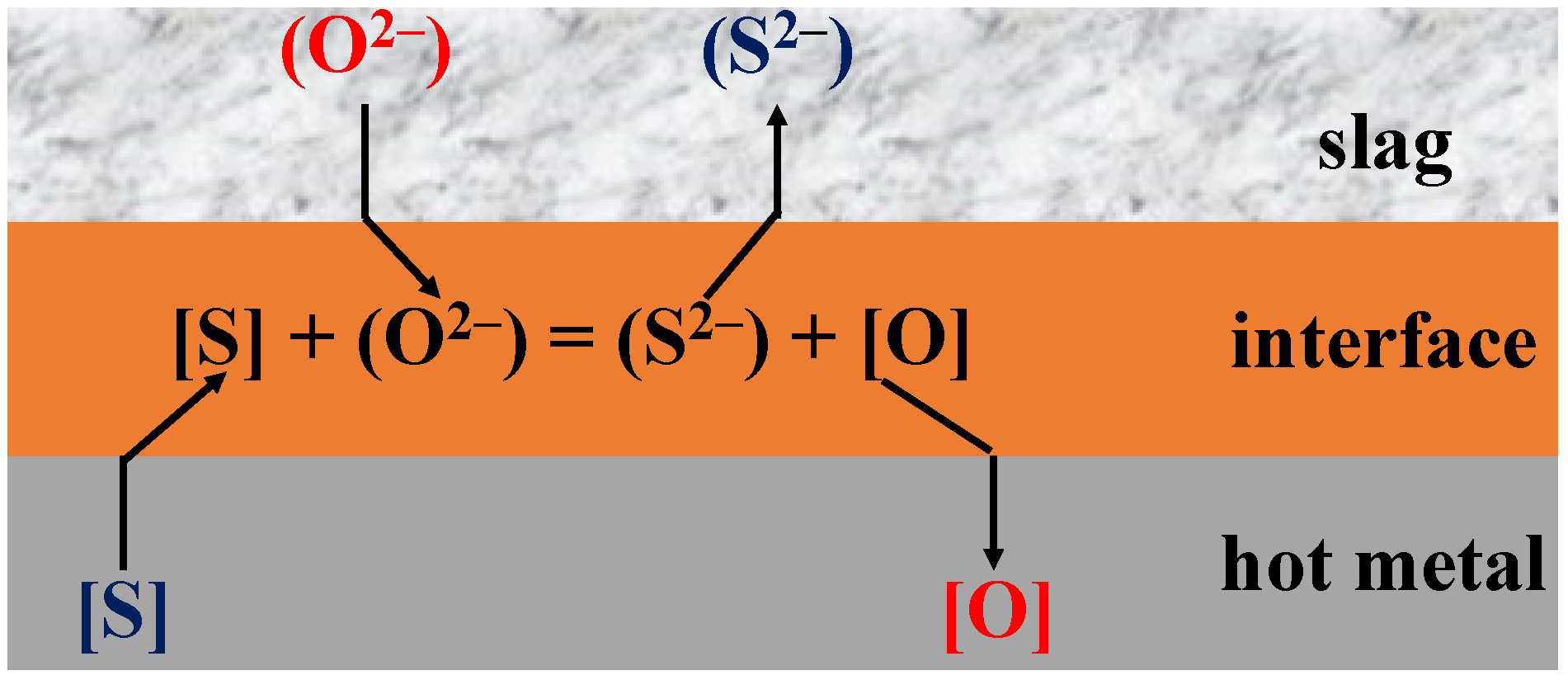
The desulfurization capability of molten slag primarily proceeds via the metastasis of sulfur from molten iron into the slag phase in the form of sulfide, through reactions between sulfur and alkaline oxides present in the slag. Figure 1 contains a schematic diagram of the experimental principle behind blast furnace slag desulfurization. According to the ion theory, the slag desulfurization reaction formula is as follows [25]:
(O2−) + [S] = (S2−) + [O]
ΔGθ = 124,455 − 50.26T/(J·mol−1)

2.2. Experimental Scheme

The definition of sulfide capacity is defined as follows:
C S   =   w ( S ) % · ( p O 2 p S 2 ) 1 2
where p O 2 and p S 2 are the partial pressures of oxygen and sulfur, respectively (atm).
The sulfur distribution ratio, LS, is defined as follows:
L S   =   w ( S ) % w [ S ] %
In the formula, w(S)% represents the sulfur content in slag, and w[S]% represents the sulfur content in molten iron.
1 2 S 2 = [ % S ]
lg K 5 θ = 7054 T 1.224  
The equilibrium constant K5 of Formula (5) can also be represented as follows:
K 5   =   f S · w [ S ] % p S 2 1 2
where fS is the Henrian activity coefficient of sulfur dissolved in the metal.
By using the equilibrium constant of Equation (7), Equation (8) can be deduced as follows:
p S 2 1 2 = w [ S ] % · f S K 5
According to Equations (3), (4) and (8), the expression for sulfide capacity can be derived, as shown in Equation (9) below:
C S   =   w ( S ) % · ( p O 2 p S 2 ) 1 2   =   w ( S ) % · p O 2 1 2 · K 5 f S · w [ S ] %   =   w ( S ) % w [ S ] % · p O 2 1 2 · K 5 f S   =   L S · p O 2 1 2 · K 5 f S
Sulfide capacity can also be written as Equation (10) below:
lg C S   =   lg L S + 1 2 lg p O 2   +   lg K 5     lg f S
The activity coefficient of sulfur in the metal phase may be determined using the following expression:
lg f s   =   e s i · [ % i ]
where e s i is the interaction parameter of species i on S in the molten iron, and [%i] is the concentration of elements in hot metal. The interaction coefficient of e s i is shown in Table 1.
The oxygen partial pressure in the furnace can be managed by the C/CO equilibrium, as expressed below:
C ( s )   +   1 2 O 2 ( g ) = CO ( g )
ΔGθ = −114,400 − 85.77T = −8.314T lnK12/(J·mol−1)
K 12 = p CO a C · p O 2 1 2
where a C , the activity of carbon, is 1 when a pure substance standard is taken as the standard state.
K 12 = p CO p O 2 1 2
p CO is the partial pressure of CO and is 1.0 atm in this examination ( p CO   =   1 ), and p O 2 1 2 can be accounted for using Formulation (15).
The equilibrium constant K 12 can also be expressed as follows:
K 12 = 1 p O 2 1 2
According to Equations (13) and (16), we can calculate the oxygen partial pressure.

2.3. Experimental Procedure

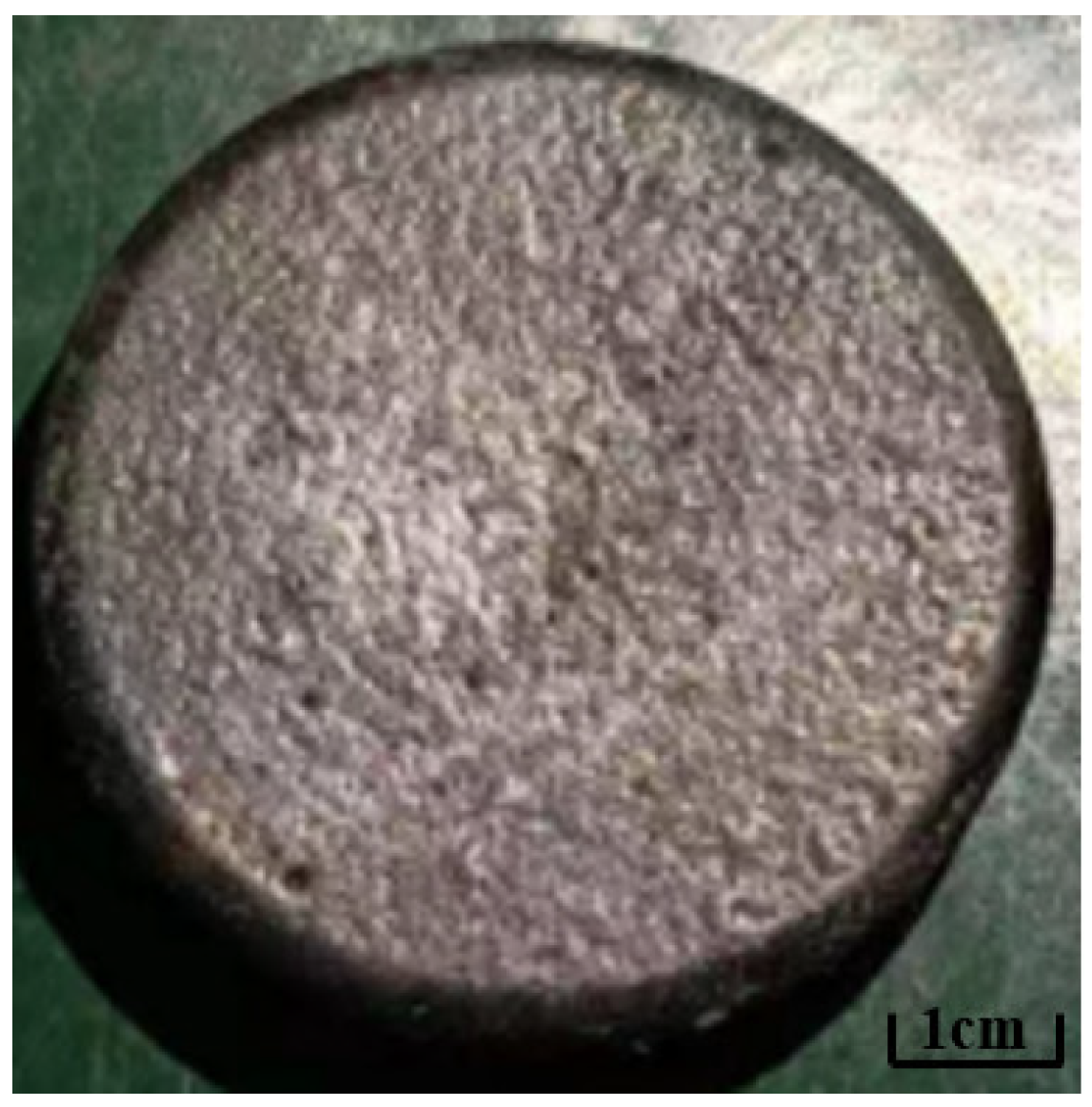
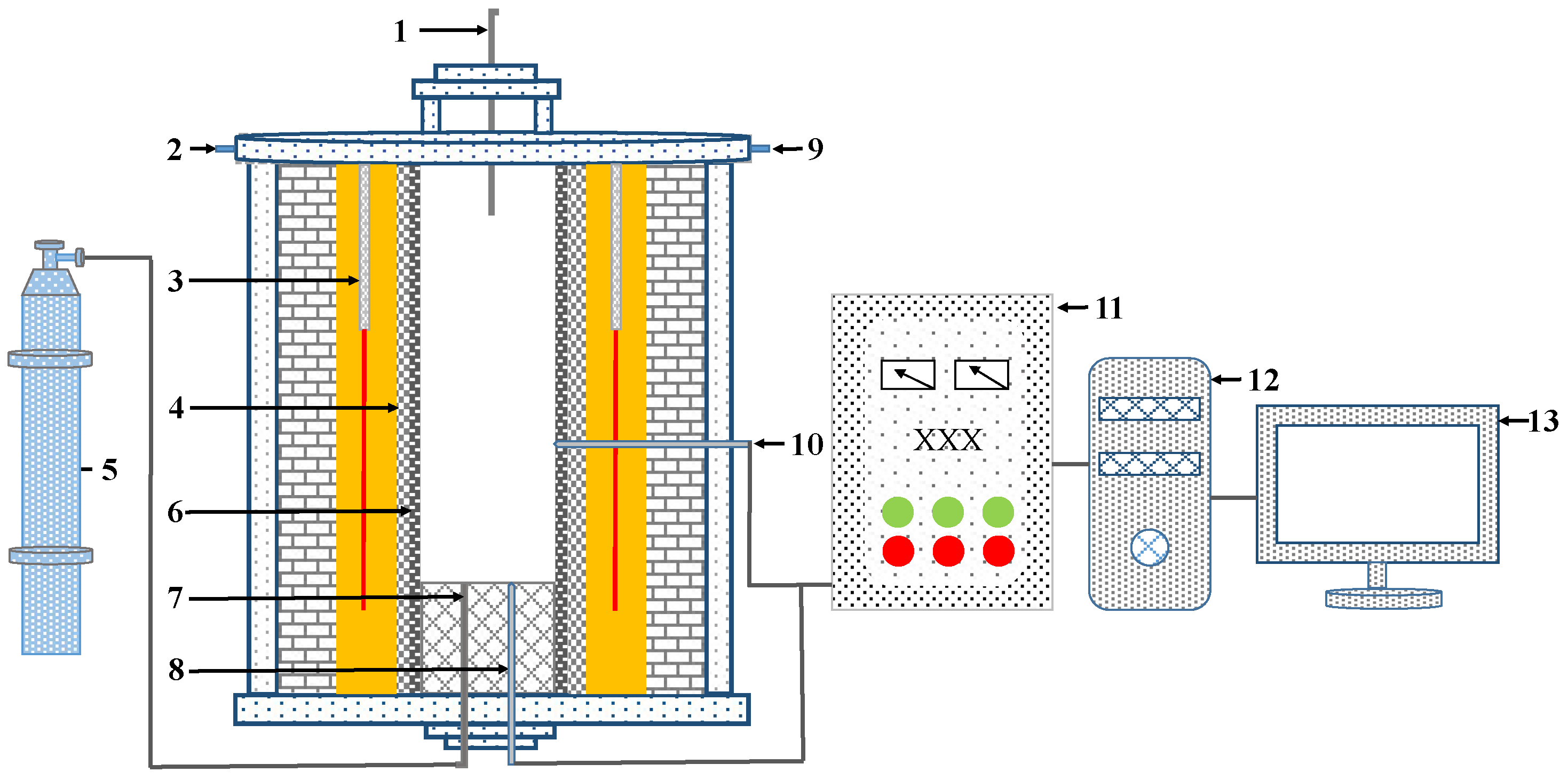
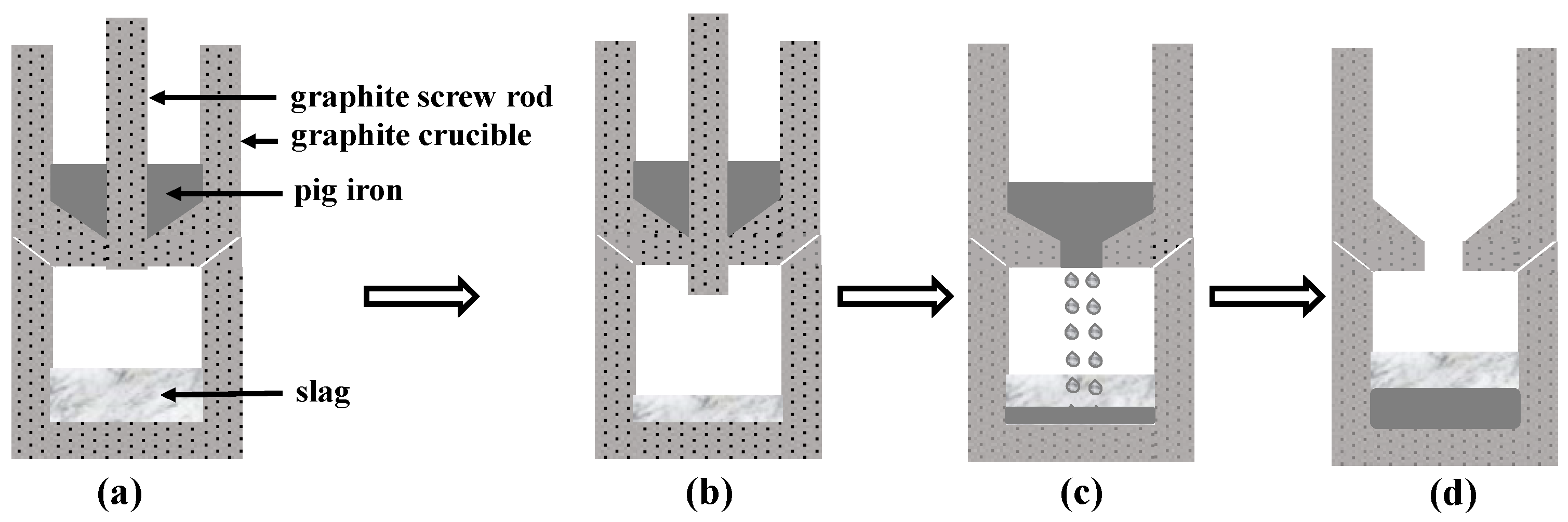
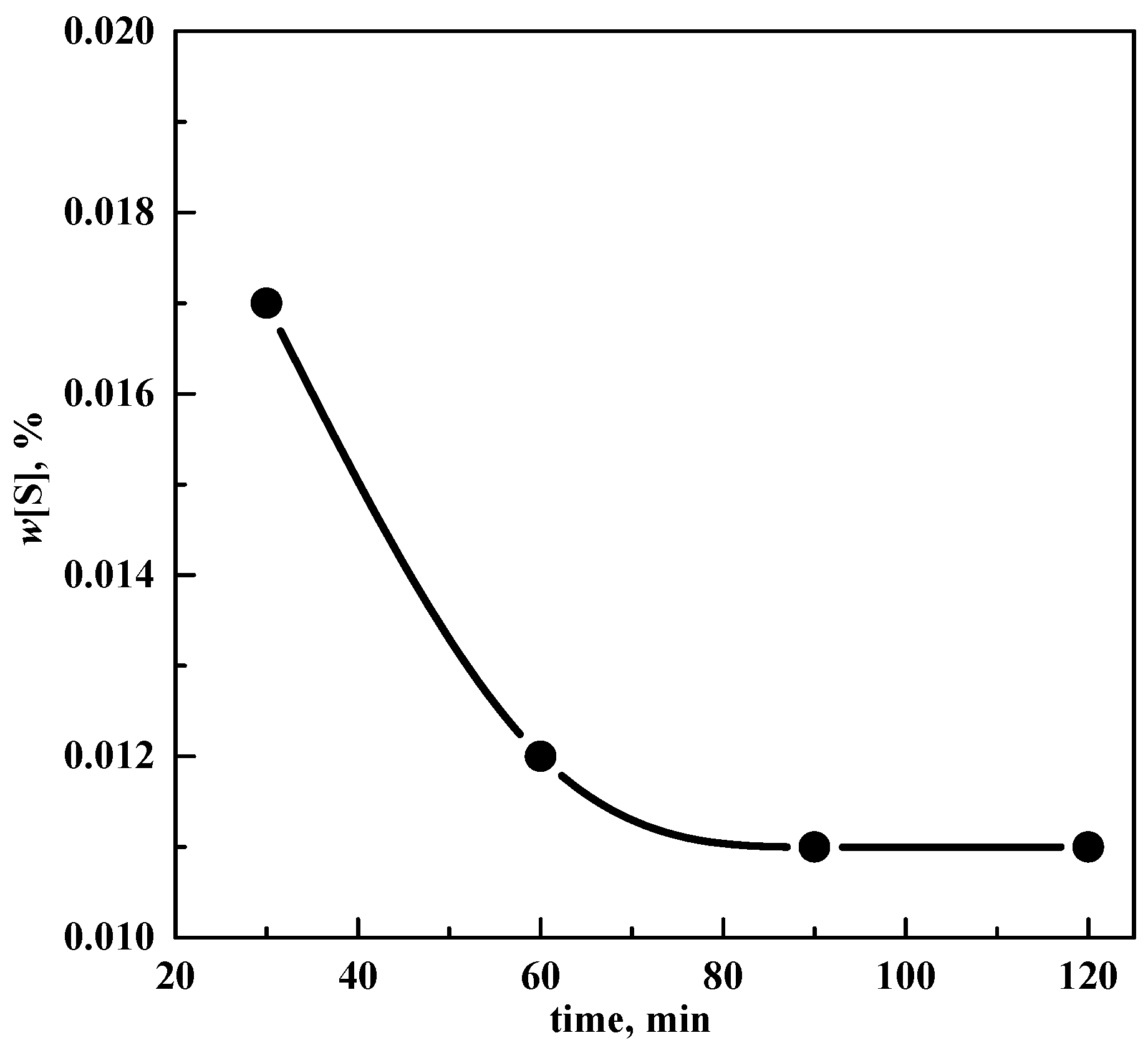
The entire process of desulfurization proof was conducted in a high-temperature tube furnace. The equipment is designed by Northeast University of China (Shenyang, China), and the equipment model is RTW-10. The high-temperature tube furnace used a proportional-integral-derivative controller to accurately control the temperature of the desulfurization experiment. The furnace is equipped with a resistance heating system, including an alumina reaction tube and a thermocouple for temperature measurement. The PID controller is used to control the temperature within ±2 K. The slag composition set up in the desulfurization proof is shown in Table 2, and the pig iron composition used in this experimental study is shown in Table 3. Prior to initiation of the experiment, iron and pre-melted slag were collected as samples with a quality rate of 3:1. The pre-melted slag is shown in Figure 2. The desulfurization process is displayed in Figure 3. After the slag and iron samples were separated, the graphite plug switch is opened so that the molten iron flowing in the gap between the graphite plug and the crucible can flow through the slag blanket to the bottom of the diminished graphite crucible and deposit, as shown in Figure 4. Timing was initiated once the sample temperature in the tubular furnace reached 1823 K. The time of the equilibrium experiment is shown in Figure 5. As shown in Figure 5, the desulfurization capacity of slag has basically reached equilibrium after 70 min. After the sample was held at 1823 K for 1.5 h, preliminary experiments confirmed that it was sufficient to reach equilibrium, and the sample was quenched. All experiments were performed at 1823 K. Table 4 summarizes the chemical compositions of the experimental samples, the analyzed sulfur content of the resulting slag, and the calculated parameters for sulfide capacity.
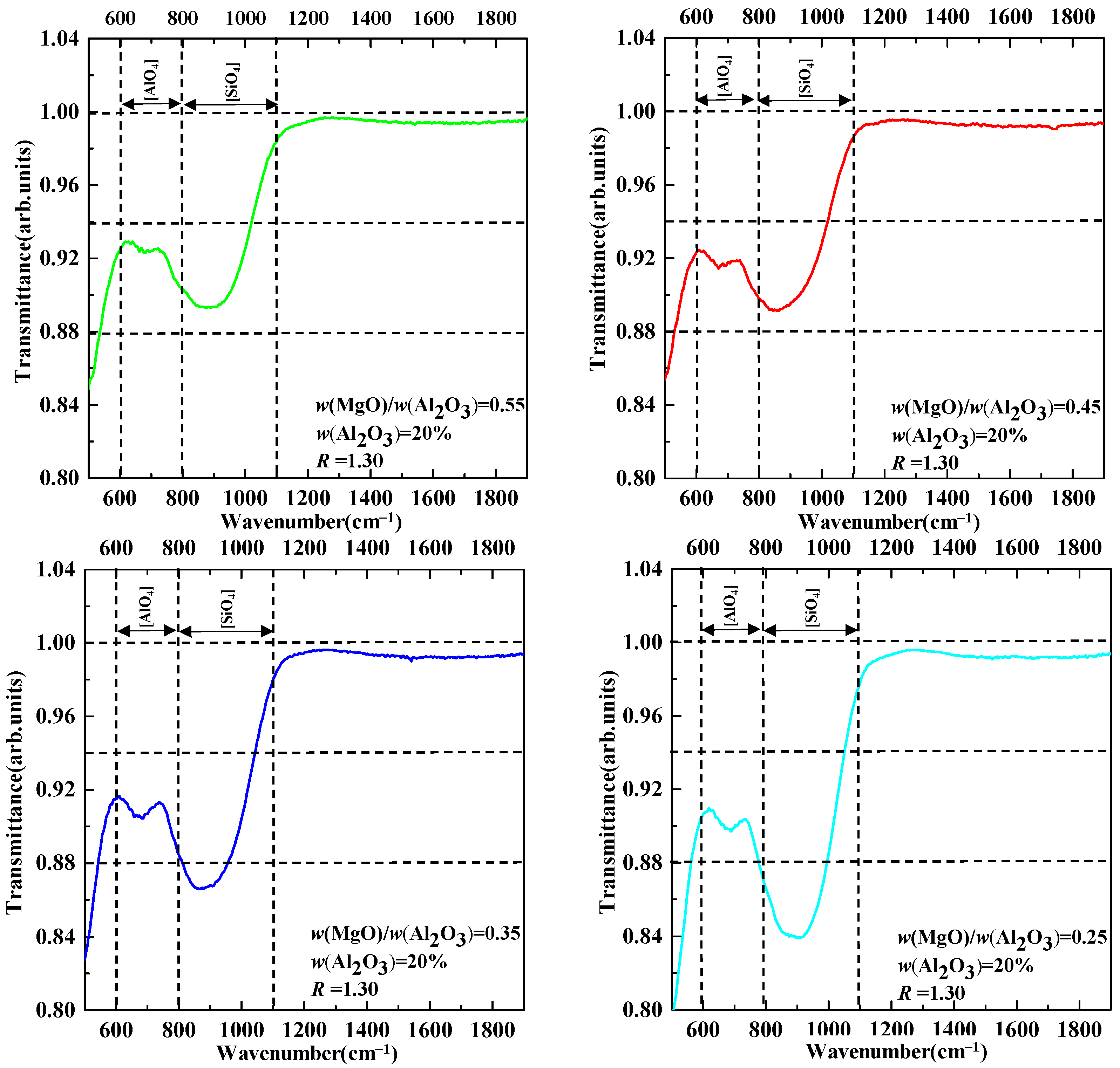
Fourier-transform infrared spectroscopy was performed via a TENSOR II infrared spectrometer obtained from Bruker Technology Co., Ltd., ZEISS, Oberkochen, Germany. The infrared spectrum is a result of both the transition of a molecule’s vibration energy level after the sample absorbs a certain frequency of infrared radiation and the weakened light of the corresponding frequency in the transmitted beam, which results in a corresponding radiation intensity difference, thereby resulting in the corresponding infrared spectrum. Among the observed wavenumbers, one at 400~600 cm−1 corresponds to the Si-O-Al structure, another at 600~800 cm−1 corresponds to the [AlO4] structure, and another at 800~1200 cm−1 corresponds to the [SiO4] structure [26,27,28]. The samples were placed in a 50 mL beaker and dried in a dryer at 80 °C for 1 h. A weighed amount of the sample (50 mg) and 2 g of KBr powder were used, employing a mixer for even mixing. After mixing, 205 mg of the mixture was accurately weighed and placed in a tableting mold. After the cooled sample is removed, the slag and ferroalloy samples are carefully separated and further sampled and analyzed. In addition, the S quantity in these samples was analyzed by ICP-AES (Shenyang, China).

3. Results and Discussion

In this thesis, the iron-making process of iron droplets passing through the slag layer at 1823 K was simulated by a double-layer graphite crucible. Table 4 shows the results of the desulfurization experiment.

3.1. Impact of Basicity on Desulphurization Ability of Molten Slag

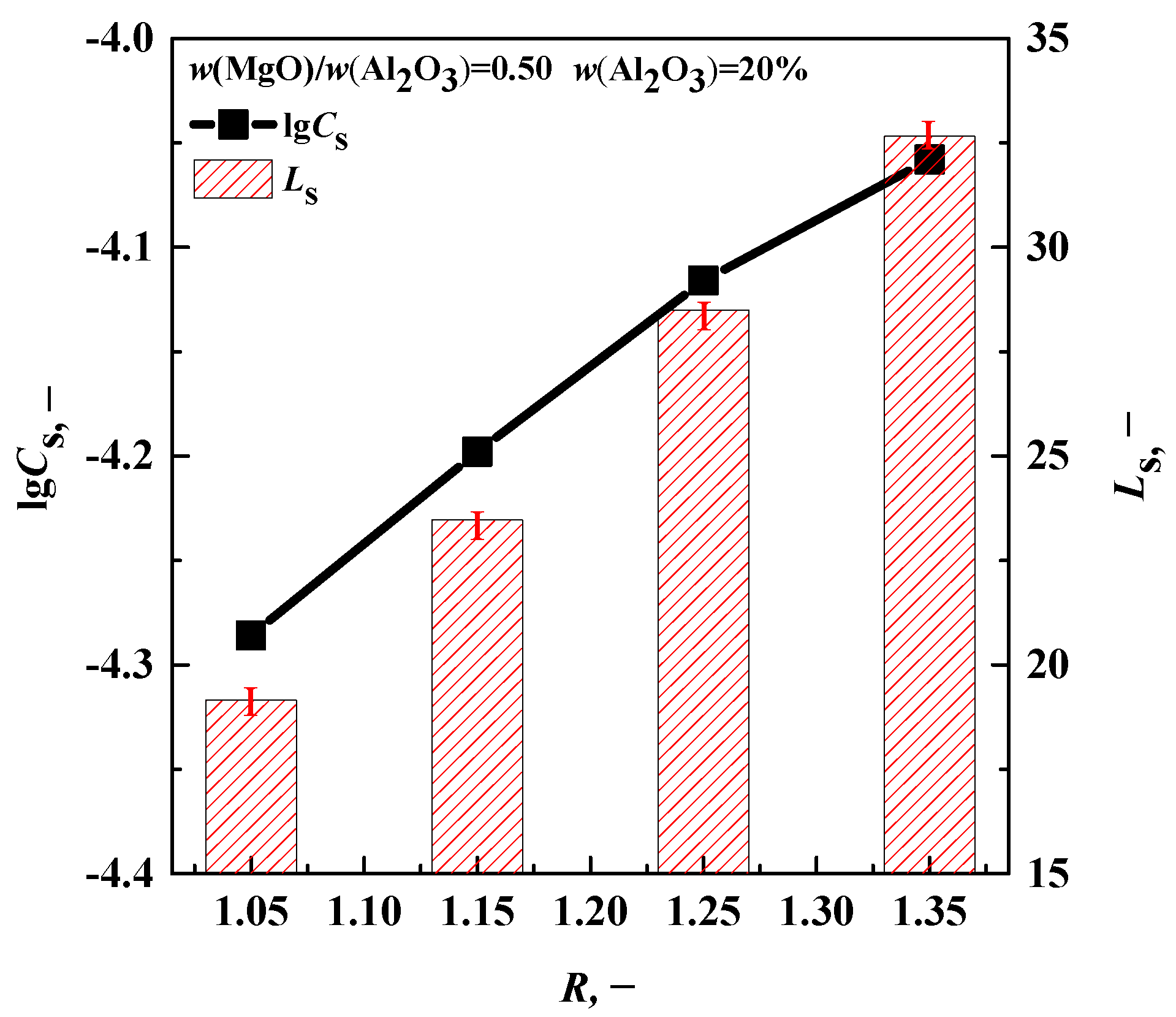
Figure 6 shows the impact of basicity on the sulfur capacity and sulfur distribution ratio in slag when the ratio of magnesium to aluminum is 0.50, and the content of Al2O3 is 20%. As illustrated in Figure 6, with increasing basicity, the sulfur capacity in the slag increases from −4.286 to −4.058, and the distribution ratio of sulfur increases from 19.152 to 32.66—an increase of 70%. Additionally, with the increase in basicity, the amount of MgO and Al2O3 in the slag remained basically unchanged, while the relative amount of SiO2 decreased and the relative amount of CaO increased. With the growth in CaO content, the free oxygen ion in the slag growth, which promotes the forward reaction (1); the sulfur capacity and sulfur distribution ratio in the molten slag gradually increase; and the desulfurization ability of the slag is enhanced.
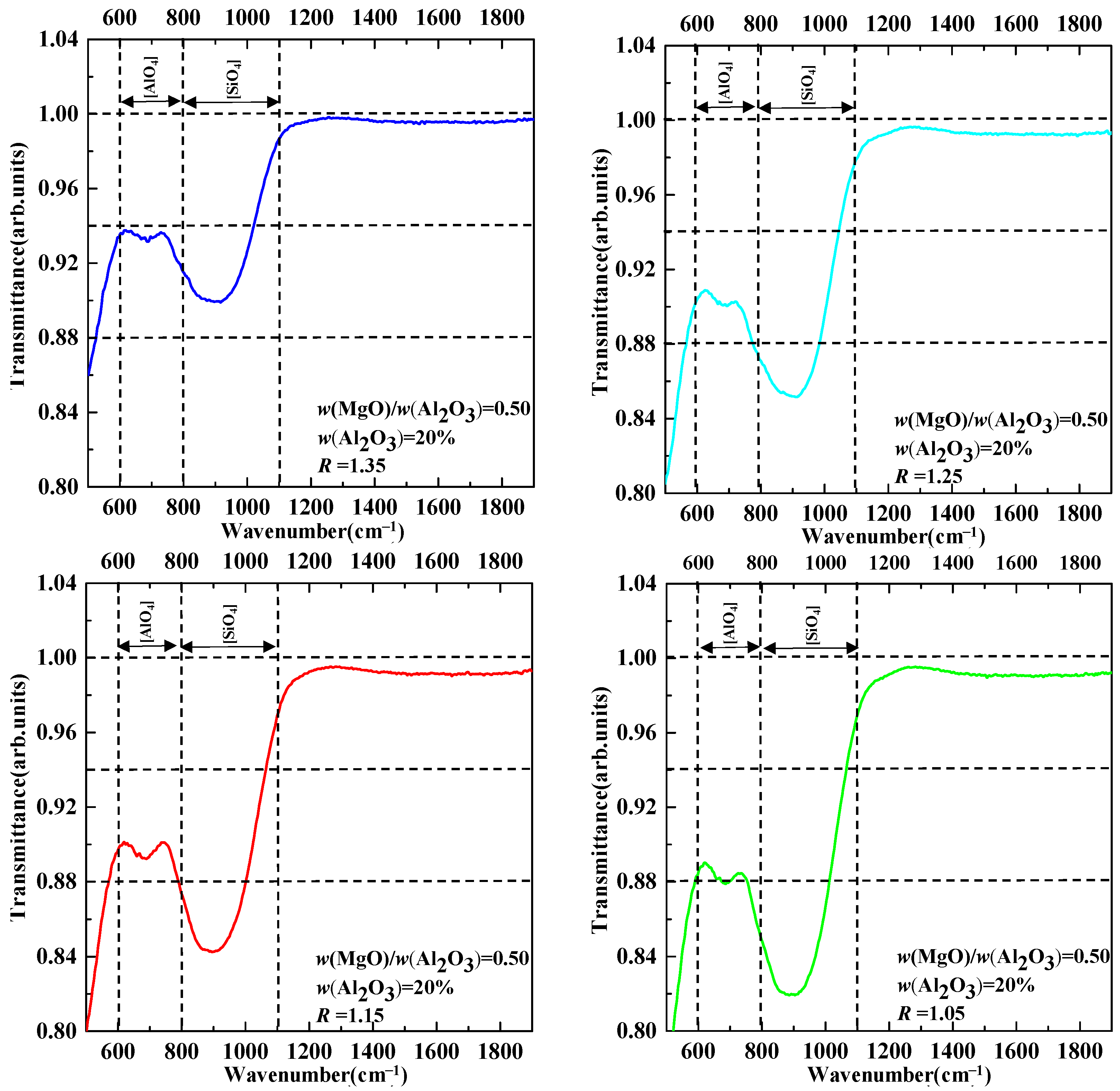
When the ratio of magnesium to aluminum is 0.50, and the content of Al2O3 is 20%, the oil-cooled Fourier transform infrared spectroscopy of slag samples with different basicity is shown in Figure 7. From these results, it is possible to demonstrate that when the ratio of magnesium to aluminum is 0.50 and the content of Al2O3 is 20% in the slag, the relative strength of the Si–O–Al structure and [AlO4] did not change significantly with the growth in basicity, but the relative strength of [SiO4] decreased gradually at the wavenumbers between 800 and 1200 cm−1, indicating that the polymerization of SiO2 into complex silicate structures decreased. When the ratio of magnesium to aluminum is 0.50, and the content of Al2O3 is 20%, the content of CaO increases with the increase in basicity, and the number of oxygen ions in the slag gradually increases as well. The increase in oxygen ions interacted with the bridging oxygen in the silicate, causing the complex Si–O–Si bond to break. The complex silicon–oxygen ions in the slag disintegrated into simple silicon–oxygen ions ( Si n + 1 O 3 n + 4 2 n + 2   +   O 2   =   SiO 4 4   +   Si n O 3 n + 1 2 n + 2 ). As a result, the complex [SiO4] became depolymerized, resulting in a growth in the fluidity of the molten slag and promoting the forward reaction (Ca2+ + O2−) + [S] = (Ca2+ + S2−) + [O], thereby increasing the desulfurization capacity of the molten slag. Therefore, the desulfurization capacity of the molten slag increased with the growth in R from 1.05 to 1.35.

3.2. Impact of Magnesia–Alumina Ratio on Desulphurization Ability of Molten Slag

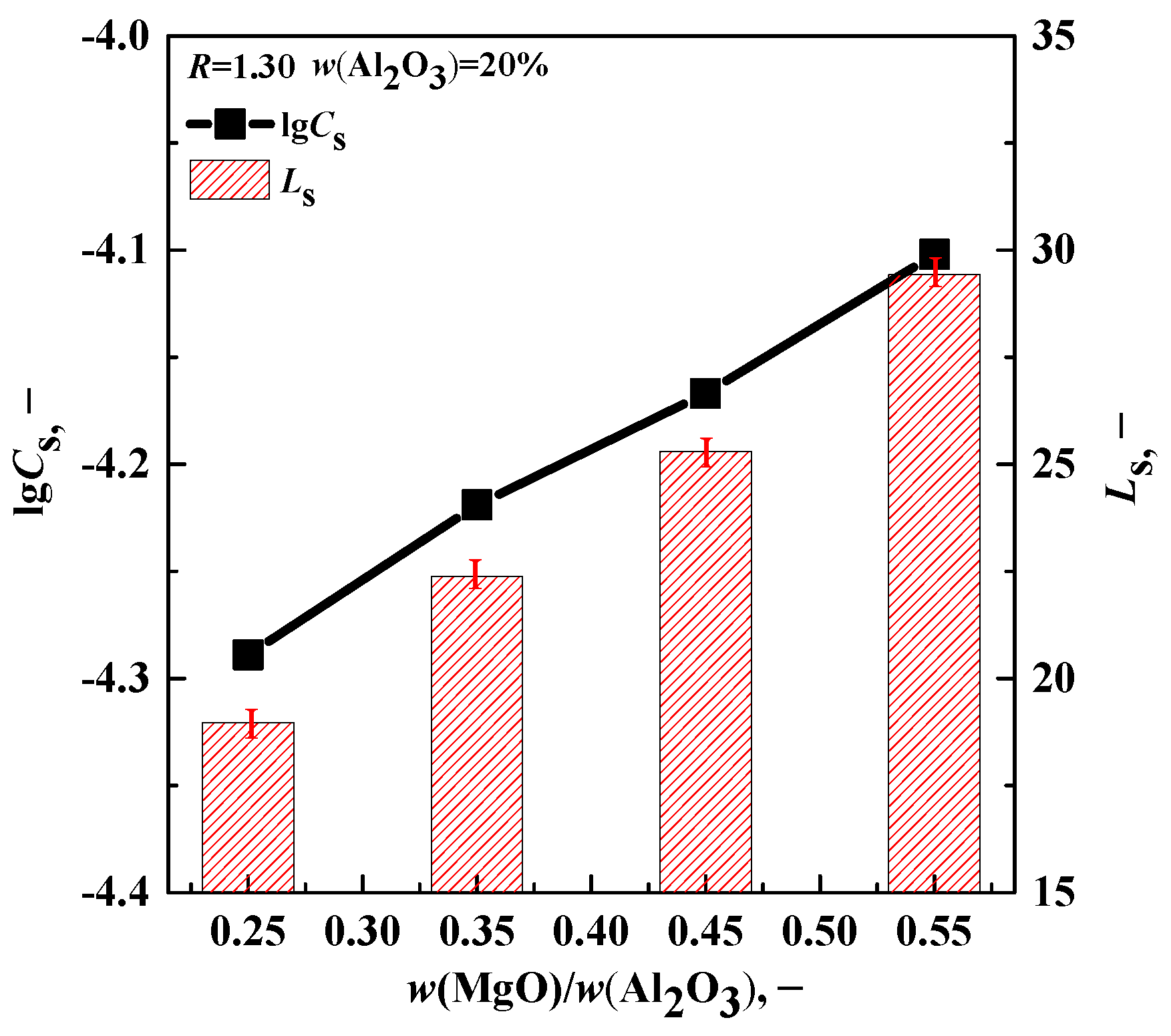
Figure 8 indicates the impact of the magnesia–alumina ratio on sulfur capacity and the sulfur distribution ratio in slag when the basicity is 1.30, and the content of Al2O3 is 20%. As illustrated in Figure 8, with the increase in magnesia–alumina ratio, the sulfur capacity in the slag increases from −4.286 to −4.102, and the distribution ratio of sulfur increases from 19.152 to 32.66—an increase of 55%.With the increment in magnesia–alumina ratio, the relative content of MgO in the molten slag increment, and the number of free oxygen ions dissociated from MgO in the molten slag increment, which elevated the progress of the onward reaction (1). Moreover, the sulfur capacity and sulfur distribution increase, and the desulfurization ability of the molten slag is promoted.
When the basicity is 1.30, and the content of Al2O3 is 20%, the oil-cooled Fourier transform infrared spectroscopy of slag samples with different magnesia–alumina ratios is displayed in Figure 9. As seen from the results of Fourier-transform infrared spectroscopy in Figure 9, with the elevate in magnesia–alumina ratio, the relative strength of the Si-O-Al structure and [AlO4] did not change significantly with the elevate in basicity, but the relative strength of [SiO4] decreased gradually at the wave number of 800–1200 cm−1, which indicated that the polymerization of SiO2 into complex silicate structures decreased. When the basicity is 1.30, and the content of Al2O3 is 20%, the content of MgO in the molten slag increased with an increase in the magnesia–alumina ratio. MgO is an alkaline oxide that can dissociate free oxygen ions, and the dissociated free oxygen ions interact with the bridging oxygen in the silicate, breaking the complex Si-O-Si bond in the molten slag and depolymerizing the complex [SiO4]. This simplifies the network structure of the molten slag, resulting in an increase in the fluidity of the molten slag and promoting the forward reaction (Mg2+ + O2−) + [S] = (Mg2+ + S2−) + [O], thus increasing the desulfurization capacity of the molten slag. Therefore, the desulfurization capacity of the slag increased, with an increase in the magnesia–alumina ratio from 0.25 to 0.55.

4. Conclusions

At a temperature condition of T = 1823 K, the desulfurization experiment was carried out. The conclusions are as follows: (1) When the ratio of magnesium to aluminum is 0.50, and the content of Al2O3 is 20%, the sulfur capacity in molten slag increases from −4.286 to −4.058 with the increase in basicity, and the distribution ratio of sulfur increases from 19.152 to 32.66—an increase of 70%. (2) When the basicity is 1.30, and the content of Al2O3 is 20%, the sulfur capacity in slag increases from −4.286 to −4.102 with the increase in the magnesia–alumina ratio, and the distribution ratio of sulfur increases from 19.152 to 32.66—an increase of 55%. (3) Fourier transform infrared spectroscopy analysis confirms that the proportion of dissociated free oxygen ions within the molten slag phase is augmented by an elevation in either basicity or the magnesia–alumina ratio. These dissociated ions subsequently interact with the bridging oxygen of the silicate structure, facilitating the depolymerization of the complex Si–O network into simpler structural units.

Author Contributions

Conceptualization, Y.G.; methodology, Y.G.; writing—original draft preparation, Y.G.; writing—review and editing, Y.G.; visualization, Z.D.; supervision, M.L. All authors replied to reviewers’ comments and revised the final version. All authors have read and agreed to the published version of the manuscript.

Funding

Natural Science Basic Research Program of Shaanxi Provincial Science and Technology Department (Program No. 2025JC-YBQN-774); Shaanxi Provincial Department of Education Research Project (Program No. 24JK0506); Xi’an Natural Science Foundation Project (Program No. 2025JH-ZRKX-0497). This research was financially supported by the Xi’an Aeronautical Polytechnic Institute (22XHZK-05 and 115020121/76/2023XHQDJ02).

Institutional Review Board Statement

Not applicable.

Informed Consent Statement

Not applicable.

Data Availability Statement

The original contributions presented in this study are included in the article. Further inquiries can be directed to the corresponding author.

Acknowledgments

The authors wish to acknowledge the contributions of associates and colleagues at the Xi’an Aeronautical Polytechnic Institute and Northeastern University of China.

Conflicts of Interest

Authors Yongchun Guo Mengyao Li and Zhimin Ding were employed by the Xi’an Aeronautical Polytechnic Institute and Northeastern University of China. The authors declare that the research was conducted in the absence of any commercial or financial relationships that could be construed as a potential conflict of interest.

References

  1. Hayakawa, H.; Hasegawa, M.; Oh-Nuki, K.; Sawai, T.; Iwase, M. Sulphide capacities of CaO-SiO2-Al2O3-MgO slags. Steel Res. Int. 2006, 77, 14–20. [Google Scholar] [CrossRef]
  2. Taniguchi, Y.; Wang, L.; Sano, N.; Seetharaman, S. Sulfide capacities of CaO-Al2O3-SiO2 slags in the temperature range 1673 K to 1773 K (1400 °C to 1500 °C). Metall. Mater. Trans. B 2012, 43, 477–484. [Google Scholar] [CrossRef]
  3. Ban-Ya, S.; Hobo, M.; Kaji, T.; Itoh, T.; Hino, M. Sulphide capacity and sulphur solubility in CaO-Al2O3 and CaO-Al2O3-CaF2 slags. ISIJ Int. 2004, 44, 1810–1816. [Google Scholar] [CrossRef]
  4. Gan, L.; Xin, J.J.; Zhou, Y.H. Accurate viscosity calculation for melts in SiO2-Al2O3-CaO-MgO systems. ISIJ Int. 2017, 57, 1303–1312. [Google Scholar] [CrossRef]
  5. Cho, M.K.; Cheng, J.; Park, J.H.; Min, D.J. Hot metal desulfurization by CaO-SiO2-CaF2-Na2O slag saturated with MgO. ISIJ Int. 2010, 50, 215–221. [Google Scholar] [CrossRef]
  6. Hou, D.; Jiang, Z.; Dong, Y.; Cao, Y.; Cao, H.; Gong, W. Thermodynamic design of electroslag remelting slag for high titanium and low aluminum stainless steel based on IMCT. Ironmak. Steelmak. 2016, 43, 517–525. [Google Scholar] [CrossRef]
  7. Xu, R.; Wang, Z. Influence of Al2O3 on viscous behavior and structure characteristic of TiO2-bearing molten slags. Ceram. Int. 2024, 50, 24016–24024. [Google Scholar] [CrossRef]
  8. Zhang, L.; Xie, X.; He, S.; Zhang, X.; Wang, Q. Influence of BaO/CaO ratios on viscosity, crystallization and structure of high-TiO2 mold slags for casting of high-Ti steel. Ceram. Int. 2024, 50, 27188–27201. [Google Scholar] [CrossRef]
  9. Zhang, S.; Wang, Z.; Zhang, J.; Guo, P.; Jiang, D.; Si, R. Effect of TiO2 and FeO on viscosity and structure of HI smelt titanium-containing slag. Ceram. Int. 2024, 50, 791–798. [Google Scholar] [CrossRef]
  10. Tanaka, T.; Ogiso, Y.; Ueda, M.; Lee, J. Trial on the application of capillary phenomenon of solid CaO to desulfurization of liquid Fe. ISIJ Int. 2010, 50, 1071–1077. [Google Scholar] [CrossRef][Green Version]
  11. Liao, J.L.; Zhang, Y.Y.; Sridhar, S.; Dong, J.M. Effect of Al2O3/SiO2 ratio on the viscosity and structure of slags. ISIJ Int. 2012, 52, 753–758. [Google Scholar] [CrossRef]
  12. Park, G.H.; Kang, Y.B.; Park, J.H. Sulfide capacity of the CaO-SiO2-MnO slag at 1873 K. ISIJ Int. 2011, 51, 1375–1382. [Google Scholar] [CrossRef]
  13. Taniguchi, Y.; Sano, N.; Seetharaman, S. Sulphide capacities of CaO-Al2O3-SiO2-MgO-MnO slags in the temperature range 1673–1773 K. ISIJ Int. 2009, 49, 156–163. [Google Scholar] [CrossRef]
  14. Hao, X.; Wang, X. A new sulfide capacity model for CaO-Al2O3-SiO2-MgO slags based on corrected optical basicity. Steel Res. Int. 2016, 87, 359–363. [Google Scholar] [CrossRef]
  15. Shankar, A. Sulphur partition between hot metal and high alumina blast furnace slag. Ironmak. Steelmak. 2006, 33, 413–418. [Google Scholar] [CrossRef]
  16. Ma, X.D.; Chen, M.; Xu, H.F. Sulphide capacity of CaO-SiO2-Al2O3-MgO system relevant to low MgO blast furnace slags. ISIJ Int. 2016, 56, 2126–2131. [Google Scholar] [CrossRef]
  17. Ma, X.D.; Chen, M.; Zhu, J. Properties of low-MgO ironmaking blast furnace slags. ISIJ Int. 2018, 58, 1402–1405. [Google Scholar] [CrossRef]
  18. Condo, A.; Allertz, C. Experimental determination of sulphide capacities of blast furnace slags with higher MgO contents. Ironmak. Steelmak. 2019, 46, 207–210. [Google Scholar] [CrossRef]
  19. Wang, H.; Ge, Y.; Huang, H.; Meng, Q.; Wang, P.; Long, H. Effect of MnO on metallurgical properties of high-alumina blast furnace slag containing TiO2: Viscosity, structure, and desulfurization capacity. Ceram. Int. 2026, 52, 2332–2345. [Google Scholar] [CrossRef]
  20. Song, Q.S.; Liu, W.G.; Zuo, H.B. Physicochemical properties of CaO-SiO2-MgO-Al2O3-Na2SiO3 slag: Dependence on Al2O3 content. J. Sustain. Metall. 2025, 11, 559–569. [Google Scholar] [CrossRef]
  21. Liu, W.-G.; Pang, Z.-G.; Zheng, J.-L.; Zuo, H.-B. Properties evaluation of DRI smelting slag for molten iron production: Viscosity and sulfide capacity dependence on binary basicity. J. Iron Stell Res. Int. 2025, 32, 4095–4107. [Google Scholar] [CrossRef]
  22. Xin, H.; Wang, X.; Wang, W. Study on desulfurization ability of CaO-Al2O3-SiO2 and CaO-CaF2 slags at 1600 °C. Steel Res. Int. 2015, 86, 1455–1460. [Google Scholar]
  23. Wang, Y.; Wang, X.; Zhou, H.; Guo, J.; Wang, W. Sulphide capacity calculation and desulphurization analysis of ultralow oxygen spring steel. J. Univ. Sci. Technol. Beijing 2008, 30, 986–992. [Google Scholar]
  24. Kang, Y.B.; Park, J.H. On the dissolution behavior of sulfur in ternary silicate slags. Metall. Mater. Trans. B 2011, 42, 1211–1217. [Google Scholar] [CrossRef]
  25. Yang, X.-M.; Jiao, J.-S.; Ding, R.-C.; Shi, C.-B.; Guo, H.-J. A thermodynamic model for calculating sulphur distribution ratio between CaO-SiO2-MgO-Al2O3 ironmaking slags and carbon saturated hot metal based on the ion and molecule coexistence theory. ISIJ Int. 2009, 49, 1828–1837. [Google Scholar] [CrossRef]
  26. Yan, Z.Z.; Zhang, S.H.; Zhang, S.Q.; Dong, X.X.; Qie, Y.N. Research status of the influence of the blast furnace slag microstructure on its metallurgical properties. Iron Steel Vanadium Titan. 2017, 38, 123–129. [Google Scholar]
  27. Gao, H.B.; Tang, J.; Chu, M.S.; Zhong, S.Y.; Liu, Z.G. Effects of MgO/Al2O3 and CaO/SiO2 ratios on viscosity of high titanium bearing blast furnace slag. J. Iron Steel Res. Int. 2023, 30, 456–464. [Google Scholar] [CrossRef]
  28. Kim, G.H.; Sohn, I. Effect of Al2O3 on the viscosity and structure of calcium silicate-based melts containing Na2O and CaF2. J. Non-Cryst. Solids 2012, 358, 1530–1537. [Google Scholar] [CrossRef]
Figure 1. Desulfurization experimental theory diagram.
Crystals 16 00135 g001
Figure 2. The pre-melted slag sample.
Crystals 16 00135 g002
Figure 3. Laboratory equipment: 1—gas export (carbon monoxide); 2—water import; 3—heating unit of MoSi2; 4—Al2O3 tube; 5—carbonic oxide (CO); 6—graphite crucible; 7—gas inlet (CO); 8—30%Rh/Pt-60%Rh; 9—water outlet; 10—30%Rh/Pt-60%Rh; 11—temperature control system; 12—computer; 13—computer.
Crystals 16 00135 g003
Figure 4. Experimental procedure: (a) assembly drawing; (b) slag; (c) pig iron melts and drips; (d) slag gold reaction.
Crystals 16 00135 g004
Figure 5. Discussion on desulfurization equilibrium time.
Crystals 16 00135 g005
Figure 6. Effect of basicity on sulfur capacity.
Crystals 16 00135 g006
Figure 7. The effect of basicity on the slag sample on FT-IR results.
Crystals 16 00135 g007
Figure 8. Effect of the magnesia–alumina ratio on sulfur capacity.
Crystals 16 00135 g008
Figure 9. The effect of the magnesia–alumina ratio on the FT-IR results.
Crystals 16 00135 g009
Table 1. Values of interaction parameters.
e s s e s c e s p e s Si e s Mn
0.0280.1130.0290.0630.026
Table 2. Chemical constitution table of molten slag (mass%).
No.Chemical ConstitutionR, - w(MgO)/w(Al2O3), -
CaOSiO2MgOAl2O3TiO2
1#34.7333.0710.0202.201.05 0.50
2#36.2731.5310.0202.201.15 0.50
3#37.6730.1310.0202.201.25 0.50
4#38.9528.8510.0202.201.35 0.50
5#41.1531.655.0202.201.30 0.25
6#40.0230.787.0202.201.30 0.35
7#38.8929.919.0202.201.30 0.45
8#37.7629.0411.0202.201.30 0.55
Table 3. The content of corresponding chemical elements in pig iron.
w(C)w(Si)w(P)w(S)w(Mn)w(Fe)
4.630.2600.1040.1050.22994.672
Table 4. Composition and experimental results of slag samples (mass %).
No.Slag Composition R, -w(MgO)/w(Al2O3), -w(S), -w[S], -Ls, - lg C S , -
CaOSiO2MgOAl2O3TiO2
1#34.7333.0710.0 202.201.05 0.50 0.316 0.016 19.152 −4.286
2#36.2731.5310.0 202.201.15 0.50 0.319 0.014 23.474 −4.198
3#37.6730.1310.0 202.201.25 0.50 0.332 0.012 28.492 −4.116
4#38.9528.8510.0 202.201.35 0.50 0.348 0.011 32.660 −4.058
5#41.1531.655.0 202.201.30 0.25 0.313 0.016 18.971 −4.289
6#40.0230.787.0 202.201.30 0.35 0.326 0.015 22.386 −4.219
7#38.8929.919.0 202.201.30 0.45 0.344 0.014 25.297 −4.167
8#37.7629.0411.0 202.201.30 0.55 0.343 0.012 29.428 −4.102
Disclaimer/Publisher’s Note: The statements, opinions and data contained in all publications are solely those of the individual author(s) and contributor(s) and not of MDPI and/or the editor(s). MDPI and/or the editor(s) disclaim responsibility for any injury to people or property resulting from any ideas, methods, instructions or products referred to in the content.