


Abstract
Coating a sword’s surface with clay before quenching in water not only produces distinctive patterns but also modifies its hardness and corrosion resistance. This study investigated two steel swords with differing carbon contents (L01 containing 0.69% C and L02 containing 0.98% C) subjected to the clay-coated quenching process to assess its impact on the blades’ microstructure, hardness, and corrosion characteristics. Samples from each sword underwent analysis through metallography, microhardness tests, electrochemical tests, and scanning electron microscopy. The investigation revealed that L02 comprising martensite, pearlite, retained austenite and carbides, exhibited a greater diversity of microconstituents than L01 containing martensite and pearlite. In addition, the hardness range of L02 (425~1050 HV) showed a broader hardness spectrum than that of L01 (HV 550~846), further illustrating that L02 possessed a higher degree of microstructural gradation and better balance of hardness and toughness. However, the electrochemical tests showed that each test area of L01 exhibited consistently lower corrosion rates than their counterparts on L02. The icorr values for L01 ranged from 5.12 to 8.29 μA·cm−2, while L02 had icorr values between 21.17 and 25.23 μA·cm−2. Importantly, the calculated Rp values across the different zones of L01 (ranging from 2338 to 4129 Ω·cm2) exceeded those of the corresponding zones of L02 (ranging from 502 to 816 Ω·cm2). The electrochemical impedance spectroscopy (EIS) data revealed that the Rct values for L01 (ranging from 2016 to 2837 Ω·cm2) were also greater than the corresponding values for L02 (range: 424~571 Ω·cm2). The data indicated that L02 exhibited inferior corrosion resistance compared to L01, attributable to its higher carbon content. This increased carbon content facilitated the development of a more heterogeneous and diversified microstructure during clay quenching, resulting in a greater electrochemical potential difference and subsequently accelerating corrosion. These insights delineate a distinct microstructure–corrosion relationship in gradient steel blades processed by clay-coated quenching and offer practical guidance for selecting carbon content to enhance both mechanical properties and corrosion resistance in traditionally crafted blades.
1. Introduction
Clay-coated quenching (clay tempering) is a heat treatment technique for swords and blades, in which clay is applied to specific areas of the surface prior to quenching. Different clay application techniques not only produce distinct patterns but also enhance the blade’s balanced properties of hardness and flexibility [1,2]. This technique is widely employed in the handcrafting of Japanese and Chinese swords. Japanese researchers have revealed the mechanisms underlying the balanced properties and the pattern formation through metallographic analysis and hardness testing [3,4]. The combination of hardness and toughness can be attributed to the differing cooling rates experienced by the uncovered edge of the sword and the clay-coated back during the heat treatment process. Consequently, the edge underwent a transformation into a harder martensite structure, whereas the back consisted of a mixture of lower hardness pearlite and ferrite [5,6]. Tawara further noted the presence of hard martensite alongside softer troostite in the boundary areas of the hardened sections, where intricate patterns were observed [7]. Additionally, Tatsuo conducted simulations of the clay-coated quenching process through finite element analysis, revealing that the clay thickness affected the microstructure and internal stresses. The proportion of martensite was found to be dependent on the thickness of the clay layer applied [8], with different thicknesses leading to varied phase transformations and internal stresses in specific regions [9].
In addition to influencing microstructure and hardness, microstructural changes resulting from heat treatment can reduce the corrosion of carbon steel by altering its crystal structure, which in turn affects its electrochemical properties [10]. Furthermore, we have conducted a comparative analysis of two clay-coating techniques to assess their effects on corrosion properties, identifying the optimal clay-coated quenching process for achieving superior corrosion resistance [11]. Corrosion resistance is a critical property affecting the long-term preservation and performance of artificial swords. However, the metallographic structure and particularly corrosion resistance of steel blades with varying carbon content under the optimal clay-coated quenching have not been comprehensively analyzed. This study extends our previous research by investigating the impact of the clay-coated quenching process on the microstructural evolution, microhardness, and electrochemical corrosion characteristics of steel blades containing varying carbon concentrations. By employing optical and scanning electron microscopy, microhardness tests, and electrochemical assessments, we compare the corrosion performance of two diverse steel types following clay-coated quenching. The findings provided crucial guidance for material selection as well as for the factors of quality and corrosion properties of steel swords produced through this quenching method. The findings offer new insights into the relationship between microstructure and corrosion in gradient-hardened blades, providing essential guidance for material selection and the quality and corrosion properties of steel swords produced using this quenching method. These insights have implications for the preservation of historically significant steel artifacts.
2. Experimental Methods
2.1. Processing
The experiment utilized two 2 kg steel bars (A01 and A02). The compositional analysis of the bars is detailed in Table 1.
Table 1.
Constituent elements of the steel bars (wt.%).
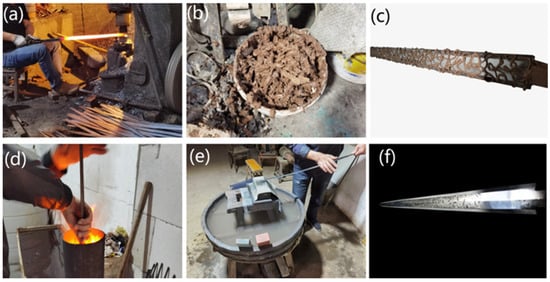
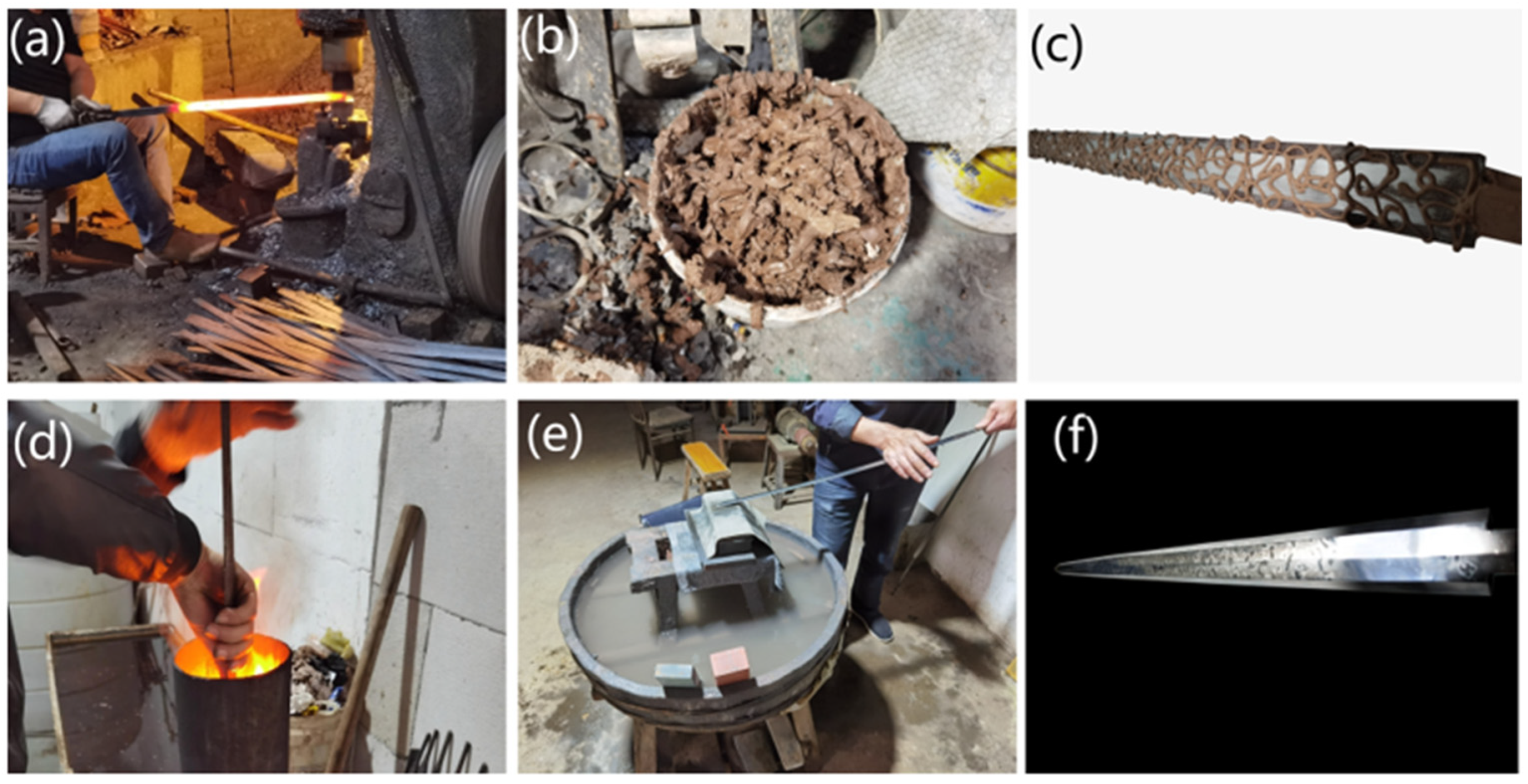
The same process was applied to both types of bars to create swords with identical dimensions and shapes. Firstly, the steel bar (A01) was forged into a sword-shaped piece (L01) 70 cm in length and ground smooth, as illustrated in Figure 1a. Secondly, the clay mixture was created by blending quartz sand, sodium tetraborate, iron powder, and carbon powder (supplied by Shenzhen Jinzewanchang Petrochemical Co., Ltd. Shenzhen, China, with a grain size of 0.08 mm) in equal amounts, as detailed in Table 2, Table 3, Table 4 and Table 5 and depicted in Figure 1b. Subsequently, the clay was mixed with water at 25 °C to attain a viscous and uniform consistency. Third, the clay was squeezed over the surface of the sword using a piping bag fitted with a medium nozzle to form flame-like or wave-like patterns, as shown in Figure 1c. The clay-treated sword was uniformly heated throughout until reaching a full red heat (approximately 800~820 °C). Subsequently, the sword was immersed horizontally into water with the edge facing downward to facilitate quenching, as shown in Figure 1d. The exact temperature of the heated sword is contingent upon the forging skill, material properties, and sword dimensions. Lastly, excess material was removed by grinding and polishing the sword’s surface to achieve a smooth finish and ensure dimensional precision. The patterns resembling flames or waves appeared at the interface between insulated and directly quenched areas after acid pickling and exposure to ultraviolet light, as shown in Figure 1e,f. The procedure for the steel bar (A02) mirrored that of the steel bar (A01), leading to the sword (L02) exhibiting similar patterns.
Figure 1.
Handmade sword crafting process: (a) forging; (b) clay formulation; (c) clay coating; (d) quenching; (e) polishing; and (f) patterns.
Table 2.
Chemical analysis of quartz sand (wt.%).
Table 3.
Chemical composition of the sodium tetraborate (wt.%).
Table 4.
Compositional data for the iron powder (wt.%).
Table 5.
Chemical analysis of the fine carbon (wt.%).
2.2. Sample Preparation
Two samples were cut from swords L01 and L02, respectively. Samples were obtained by sectioning rectangular prisms measuring 8 × 4 × 4 mm3 along the blade’s longitudinal axis. Subsequently, they underwent grinding and polishing with 320–3000 grit emery paper, succeeded by polishing using a 100 nm diamond suspension. Prior to analysis, the samples underwent thorough cleaning with ethanol.
2.3. Microstructural Characterization
To examine the impact of the clay-coated quenching on microstructural alterations in blades with varying chemical compositions, we utilized an optical microscope (NMM-800/REF, Nanjing Jiangnan Novel Optics Co., Ltd., Nanjing, China) to observe the metallographic features of both cross-sections and surfaces. Significant variations in these features were observed among the different blades.
2.4. Microhardness Measurements
Vickers micro-indentation tests were conducted using a microhardness testing machine (HVT-1000, Ningbo C.S. Instrument Co., Ltd., Ningbo, China) with a 100 g load for 15 s. The cross-section of each sample was divided into eight regions spaced 4 mm apart. Three readings were averaged for each region, taken at 200 μm intervals, and the average values from eight regions were graphed for comparison of hardness evolution and sample comparison.
2.5. Electrochemical Corrosion Behavior
Electrochemical tests were conducted on a Corrtest CS310H workstation (Wuhan Kester Instrument Co., Ltd., Wuhan, China) using a three-electrode system. The system included a platinum sheet as the auxiliary electrode, a saturated calomel electrode (SCE) as the reference electrode, and the sword samples as the working electrode. Insulating adhesive covered areas not under examination and was later removed. The corrosion tests were carried out in a 3.5 wt.% NaCl solution. Potentiodynamic polarization measurements were initiated at 250 mV below the open-circuit potential (OCP) and scanned towards the positive direction at a scan rate of 1 mV/s until the anodic current density reached 1 mA/cm2. Tafel extrapolation was used to analyze the polarization data, and an electrochemical impedance spectrum (EIS) test was carried out at the OCP under a 10 mV AC excitation voltage with a frequency range of 100 mHz to 100 kHz [12,13]. We observed the corrosion performance of the two samples using the Apollo 300 field emission scanning electron microscope (SEM).
3. Results
3.1. Characterization of the Microstructure
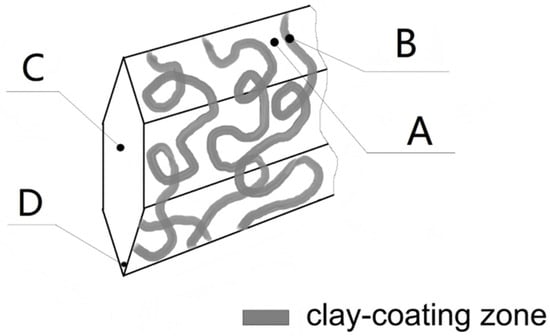
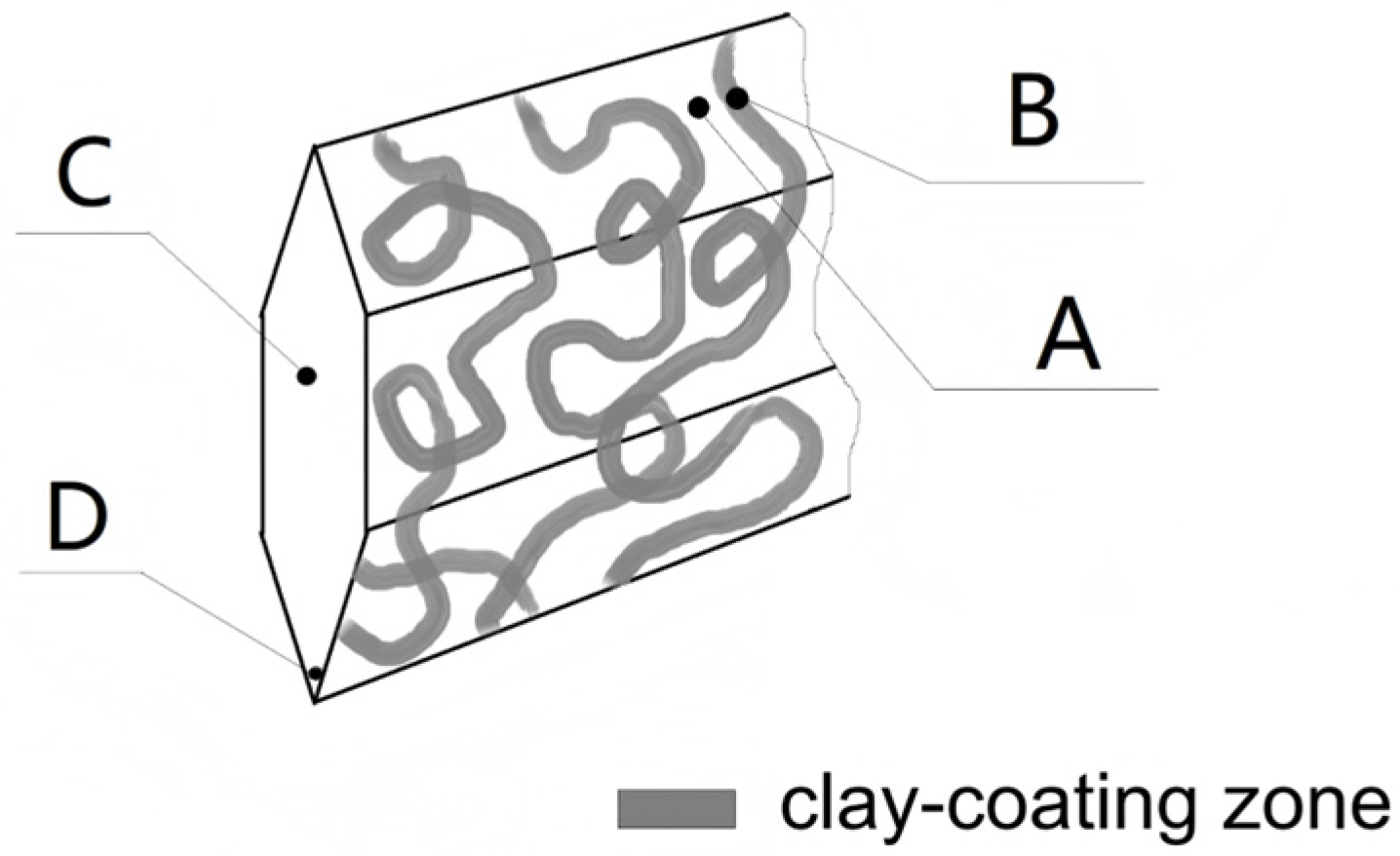
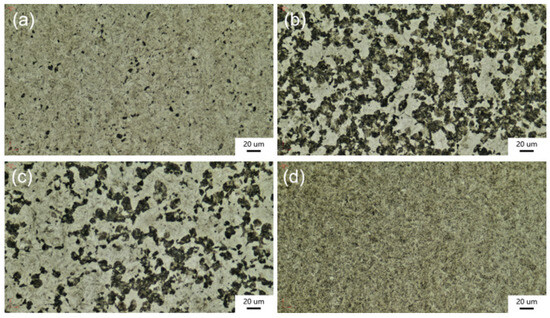
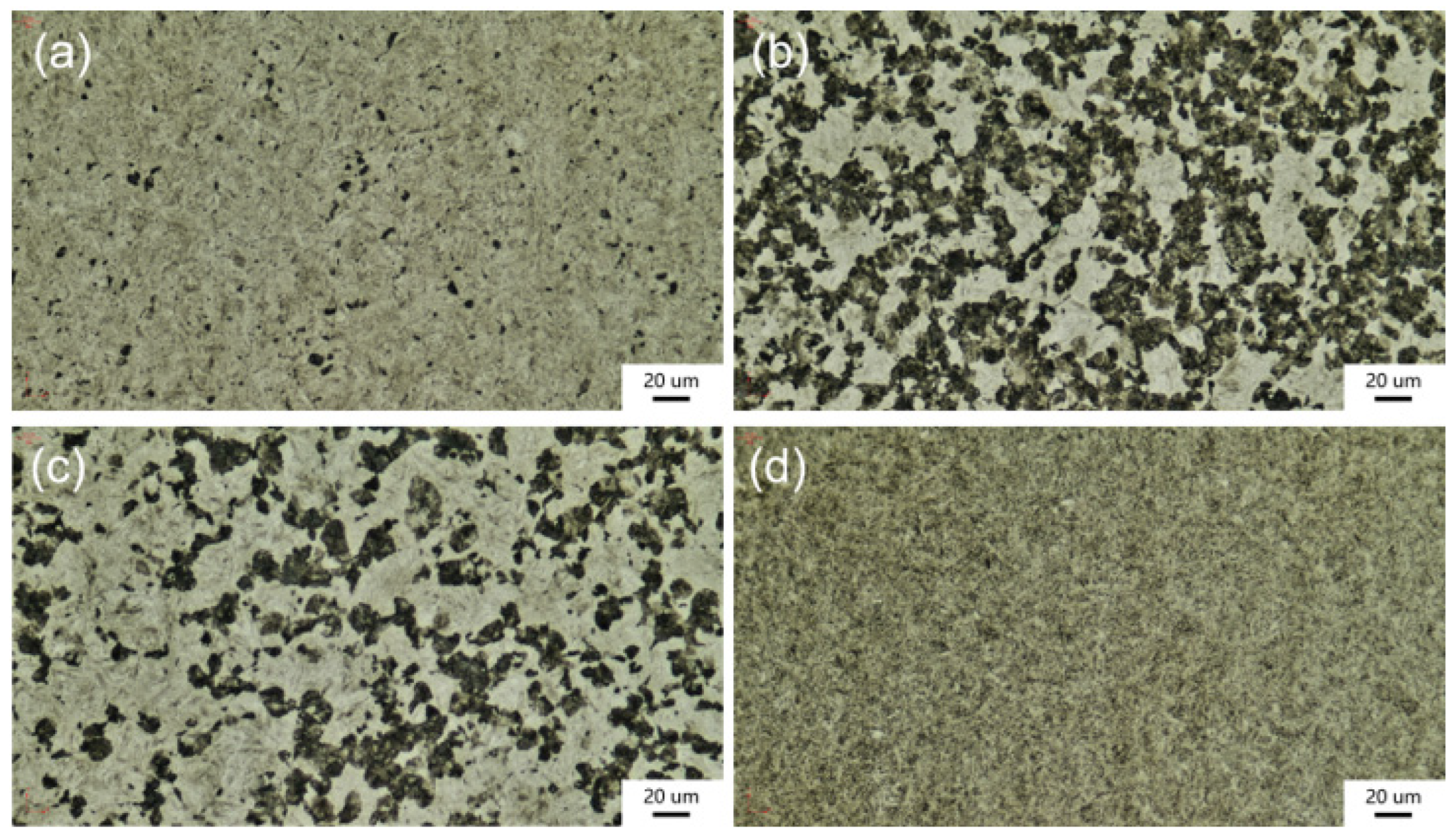
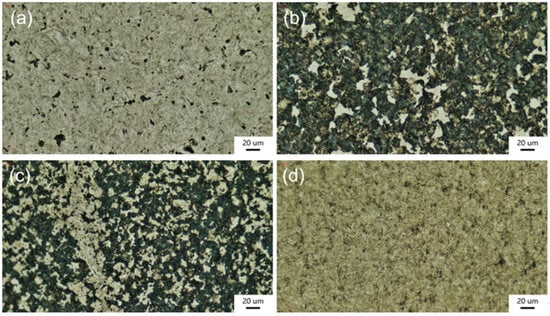
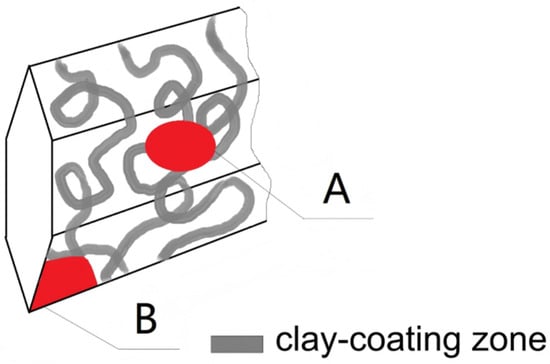
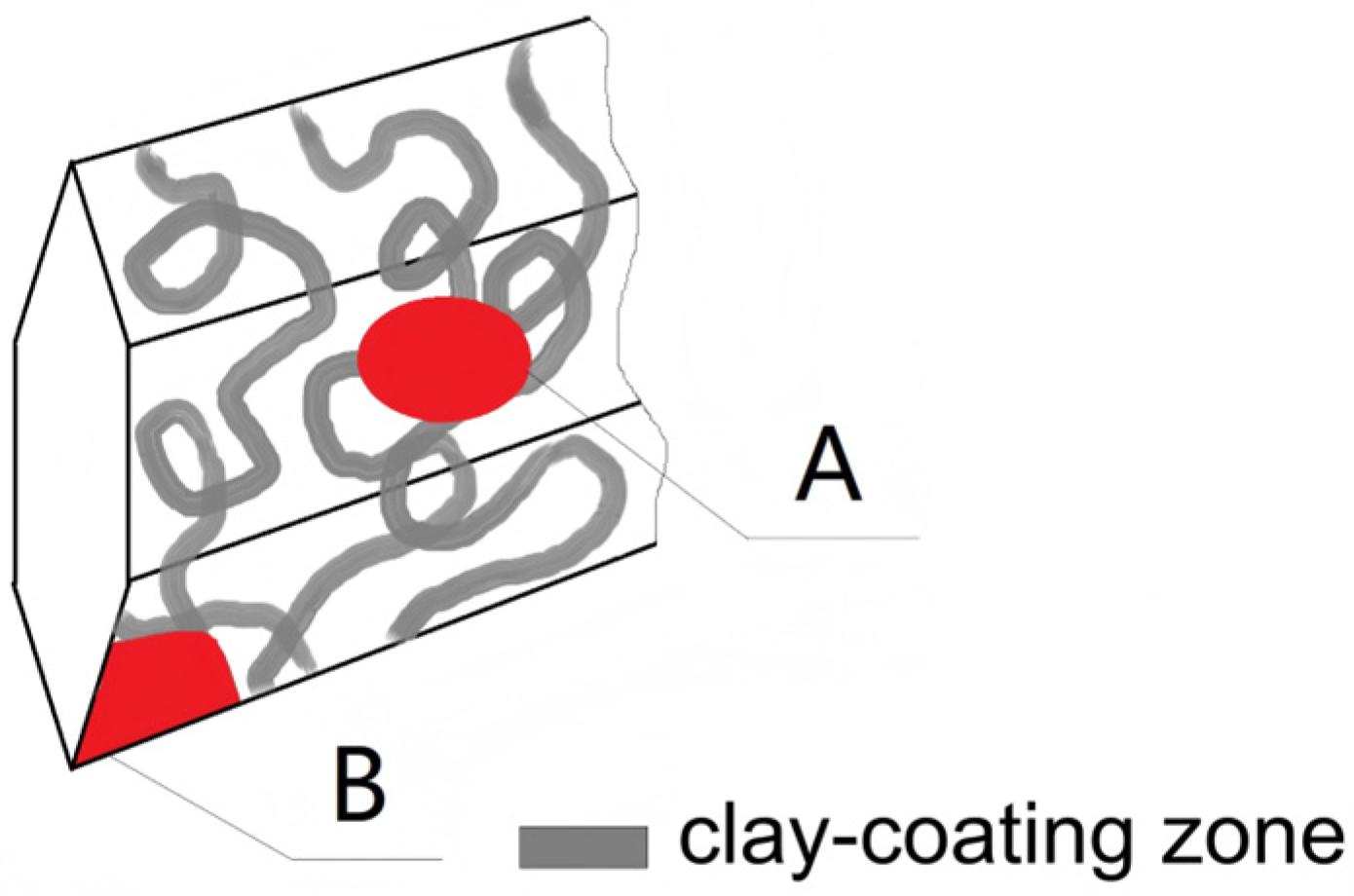
The metallographic observation areas of L01 and L02 were categorized into zones A, B, C, and D, respectively, based on the metallographic structure of each sword, as illustrated in Figure 2. The microstructure of these zones clearly reflects the impact of the clay-coated quenching process on blades with varying chemical compositions. The corresponding metallographic characteristics, as observed through an optical microscope, are presented in Figure 3 and Figure 4.
Figure 2.
Metallographic observation areas.
Figure 3.
Optical microscopy of L01: (a) zone A; (b) zone B; (c) zone C; and (d) zone D.
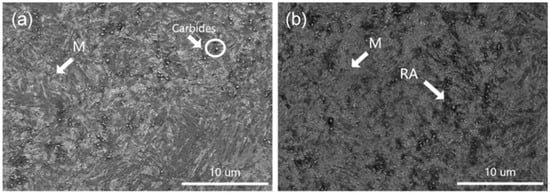
Figure 4.
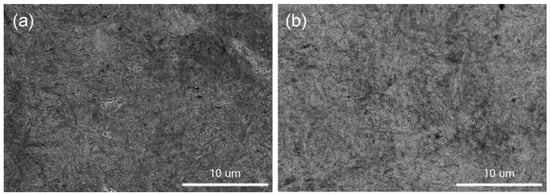
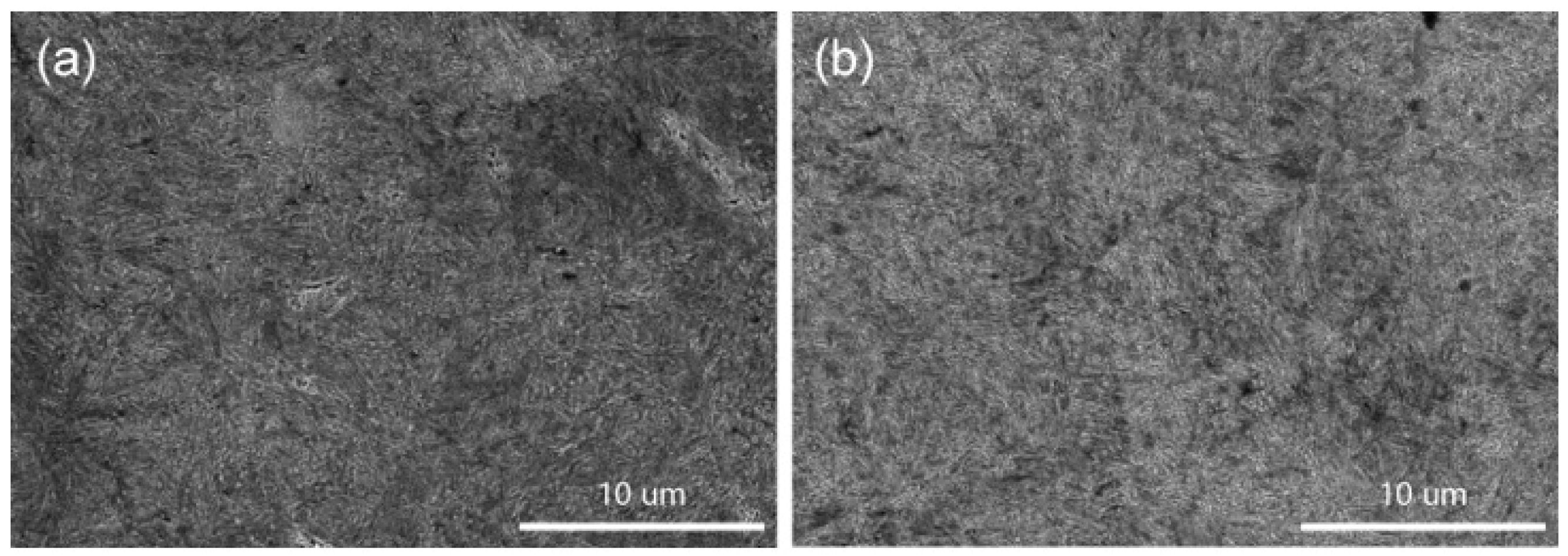
SEM microscopy of L01: (a) zone A; (b) zone D.
For sample L01, the surface of zone A comprised martensite, suggesting that the region free of clay experienced rapid cooling due to direct exposure to the water, which facilitated the transformation of austenite into martensite, as illustrated in Figure 3a and Figure 4a. However, zone B was characterized by the presence of pearlite and martensite, as shown in Figure 3b. Consequently, the thermal insulation offered by the clay reduced the cooling rate during quenching. This reduction enabled a portion of the austenite to undergo a diffusional transformation, resulting in its decomposition into pearlite, and potentially finer sorbite [14]. The remaining austenite subsequently transformed into martensite through a non-diffusive shear mechanism [15]. Additionally, zone C displayed a transition from pearlite to martensite, denoting the boundary separating the clay-covered and bare regions, as illustrated in Figure 3c. At this boundary, cooling proceeded at a rate ranging between that of zones A and B. This intermediate rate yielded a higher proportion of martensite than in zone B, yet lower than in zone A, as illustrated in Table 6. The microstructure of region D resembled that of A, despite the fact that zone D, located at the relatively thin blade tip, possesses a greater specific surface area than zone A and thus facilitates more rapid heat dissipation. Nevertheless, the minor difference in cooling rates between the two zones is inadequate to produce a significant variation in the martensite morphology of the steel blade with a carbon content of 0.69%, as shown in Figure 3d and Figure 4 and Table 7.
Table 6.
Area proportion analysis by Image-Pro Plus 6.0 software (%).
Table 7.
Martensite length analysis by Image-Pro Plus 6.0 software (µm).
In comparison to L01, L02 demonstrates an elevated carbon content that reaches the hypereutectoid range. This increase leads to two primary effects: first, a rise in the quantity of retained austenite and carbides following quenching; second, a decrease in the stability of the undercooled austenite [16]. Consequently, the C curve, which represents the pearlite transformation section, shifts to the left, thereby increasing the critical cooling rate [17]. As a result, L02 becomes more prone to pearlite transformation than L01 under the same clay-coated quenching conditions, leading to a higher proportion of pearlite in zones B and C of L02 compared to the corresponding regions in L01, as shown in Table 6. Specifically, zone A of L02 was predominantly martensite, retained austenite and carbides due to its uncoated condition and higher carbon content (0.98%), which exceeded the eutectoid point, as shown in Figure 5a and Figure 6a. Zone B exhibited both a significant quantity of pearlite and a minor proportion of martensite (area proportion 16%), as shown in Figure 5b and Table 6. Additionally, zone C exhibited a microstructure characterized by martensite and pearlite, shown in Figure 5c and Table 6. The microstructure in zone D was similar to that of zone A, consisting of martensite, retained austenite and carbides, although it displayed a finer grain structure (Figure 5d and Figure 6). For the 0.98% carbon steel blade, the difference in cooling rates between zones A and D during the low-temperature cooling phase resulted in a significant “supercooling differential”, which arose from the lower Ms point associated with the higher carbon content. This supercooling differential was adequate to create a macroscopic distinction between coarse and fine microstructures in the martensite [18], as illustrated in Table 7. Apparently, the microstructural variations observed after quenching were attributed to the use of the clay coating for controlled heat transfer. In summary, the higher carbon content in L02 accounted for its greater structural discrepancy compared to L01.
Figure 5.
Optical microscopy of L02: (a) zone A; (b) zone B; (c) zone C; and (d) zone D.
Figure 6.
SEM microscopy of L02: (a) zone A; (b) zone D (M: martensite; RA: retained austenite).
3.2. Microhardness Analysis
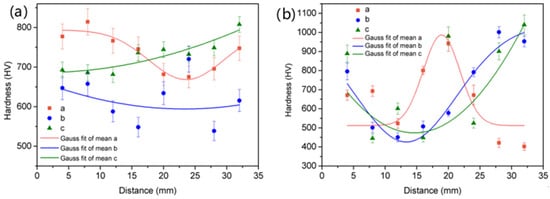
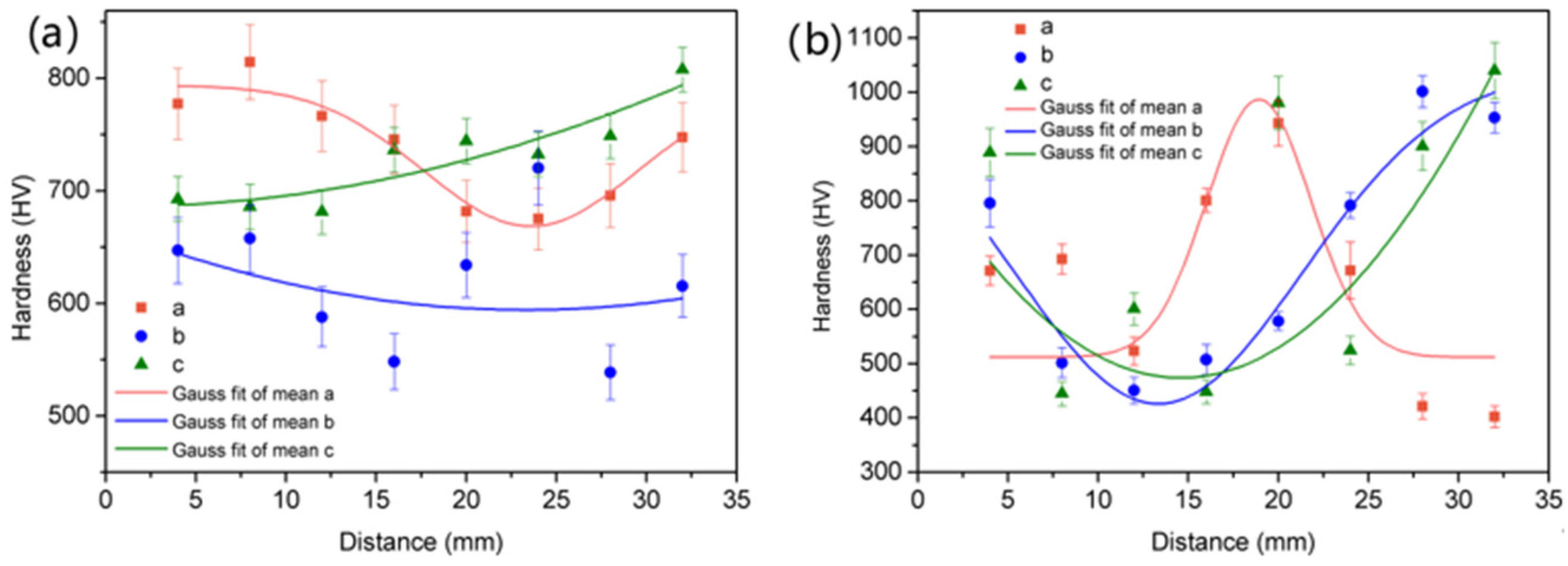
The cross-sectional micro-Vickers hardness of both swords was profiled along three lines (central axis and two symmetric edge sides) in the a-direction, b-direction and c-direction (Figure 7 and Figure 8). All resulting profiles revealed pronounced hardness gradients across the section, directly evidencing the gradient structure correlated with the inhomogeneous coating. Additionally, the elevated hardness values of both L01 and L02 mainly appeared on the a-direction, c-direction, and cutting edge, likely attributable to the uncoated areas and faster cooling rate. In L01, the minimum hardness of 550 HV is found in the core region C along the b-direction, which displays a microstructure consisting of pearlite and martensite. The maximum hardness of 846 HV is recorded at the cutting edge in region D along the a-direction, characterized by fine martensite. In L02, the minimum hardness of 425 HV is located in the core region C along section b, where martensite and pearlite are present. The maximum hardness of 1050 HV is observed at the cutting edge in region D along section b, comprising martensite and carbides.
Figure 7.
Schematic of microhardness indentation placement (a: a-direction; b: b-direction; c: c-direction).
Figure 8.
Microhardness curves. (a) L01; (b) L02.
Due to its higher carbon content compared to L01, L02 exhibited a greater formation of carbon-supersaturated martensite, which enhanced solid-solution strengthening and resulted in a higher maximum hardness (1050 HV vs. 846 HV). Furthermore, the L02 sample contains a considerable amount of retained austenite. From the perspective of mechanical properties, this retained austenite can improve toughness and damage tolerance by facilitating the plastic effects induced by phase transformations during deformation and through dislocation absorption [19]. In contrast to the narrower hardness distribution of L01 (550–846 HV), L02 displayed a broader hardness range (425~1050 HV), indicating a more significant microstructural gradient. The wider range of hardness variations in a sword is directly associated with a more effective hardness–toughness synergy [20]. Consequently, L02 demonstrated a more advantageous balance between hardness and toughness than L01.
3.3. Electrochemical Corrosion Performance
3.3.1. Potentiodynamic Polarization Analysis
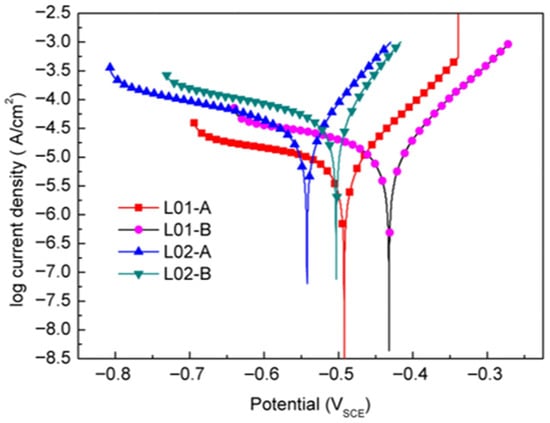
The electrochemical testing area, corresponding metallographic microstructures and the corresponding curves of polarization are depicted in Figure 9 and Figure 10 and Table 8. Both samples exhibited similar patterns in potentiodynamic polarization curves, suggesting consistent oxygen reduction corrosion reactions regardless of their chemical compositions. Beyond overpotentials of 50–100 mV (anode) and 55 mV (cathode), the logarithmic current density showed a nearly linear relationship with applied potential, indicative of Tafel-type behavior [21,22]. Tafel extrapolation was employed to fit the polarization curves and the summarized results are presented in Table 9.
Figure 10.
Potentiodynamic polarization profiles of the samples.
Table 8.
Microstructure in the tested zones of L01 and L02.
Table 9.
Quantitative corrosion data from Tafel extrapolation of polarization curves.
The Tafel slope for anodic reactions (ba) indicates the resistance to iron ionization, whereas the Tafel slope for cathodic reactions (bc) represents the resistance of oxygen reduction to hydroxide [23,24]. Disregarding corrosive potential implies that increased corrosion resistance aligns with a decreased corrosion rate. For each testing zone, L01 exhibited larger ba values than L02, indicating that L01 had greater resistance to anodic iron dissolution. The corrosion potential (Ecorr) ranged narrowly from −0.47 to −0.53 VSCE across all samples, showing no significant variation between the two samples. The corrosion rate observed significantly depends on the interaction between the samples’ resistance and the corrosive capability of the solution. This relationship means the corrosion current density (icorr), to directly indicate the corrosion rate [25,26,27]. According to Faraday’s law, the corrosion rate is defined as the corrosion depth (μm/a), as calculated by Equation (1):
In this expression, the symbols are defined as follows: icorr represents the corrosion current density, M denotes the molar mass of the metal, ρ is density, and F is Faraday’s constant. The corrosion rate is intrinsically linked to icorr, with larger values signifying accelerated reaction kinetics.
Thus, the corrosion rates at the edges (zone B) of both L01 and L02 were higher than those at the sides (zone A), as reflected in the order of icorr values (L01-B > L01-A, L02-B > L02-A). For sample L01, the continuous martensitic phase in test area B provided an extensive anodic area, which promoted uniform corrosion. In contrast, the existence of pearlite in zone A interrupted this continuity, leading to a decrease in both the anodic surface area and electrochemical activity, thereby decreasing the corrosion rate. For sample L02, the residual austenite and carbides within the martensite in test zone B create intense microgalvanic cells that accelerate the corrosion process. Conversely, the pearlite in zone A dispersed these galvanic cells, diminishing the corrosion driving force and consequently reducing the corrosion rate [28,29].
However, the corrosion rates at both the edge and the side of L01 were lower than those at the corresponding edge and side of L02 according to the icorr values (L01-A < L02-A, L01-B < L02-B), indicating that L01 had better corrosion resistance. Theoretically, a two-phase structure exhibits lower corrosion resistance compared to a single-phase structure [30]. In the uncoated region of L02, the microstructure comprised martensite with retained austenite and carbides, while the corresponding region of L01 mainly displayed martensite with no noticeable retained austenite. Retained austenite generally exhibits a higher Volta potential compared to the martensitic matrix. Consequently, interfaces between retained austenite and martensite serve as favored locations for corrosion initiation. This phenomenon can markedly elevate the corrosion rate and reduce the charge-transfer resistance [31,32]. Therefore, the higher carbon content of L02 promoted a more heterogeneous microstructure with greater potential differences during clay quenching, which led to its faster corrosion rate. The polarization resistance (Rp) was derived from the equation presented below.
where ba is the anodic Tafel slope, and bc is the cathodic Tafel slope. A low Rp value translates to a high corrosion rate, while a high Rp suggests a lower rate. Rp measurements showed that L01 consistently exceeded L02 at all measured locations. Given that the parameters icorr and Rp directly reflect the corrosion rate [33,34], this result indicates that L02, with higher carbon content, demonstrates increased surface reactivity and a higher corrosion rate compared to L01, with lower carbon content, under the clay-coated quenching.
While the Tafel extrapolation fit analysis may entail some subjectivity [35], the average values and deviations fell within acceptable ranges. Thus, the findings are suitable for comparing the corrosion resistance of the two specimens.
3.3.2. EIS Analysis
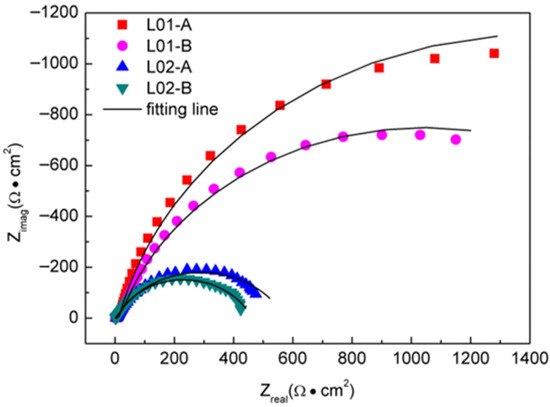
EIS measurements were employed to probe the evolving corrosion behavior and the fundamental rationale behind it for the two samples under the clay-coated quenching. Figure 11 displays the Nyquist plots from EIS tests on L01 and L02 in a 3.5 wt.% NaCl solution across a frequency range from 100 mHz to 100 kHz. All curves revealed a similar pattern of distinct capacitive arcs. The curves exhibited consistent capacitive arcs, indicating similar corrosion patterns. Therefore, the corrosion responses of L01 and L02 were found to be highly similar in the harsh corrosive setting.
Figure 11.
Comparative Nyquist plots obtained via EIS for samples L01 and L02.
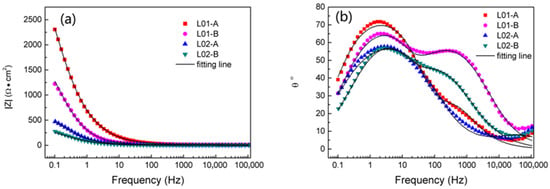
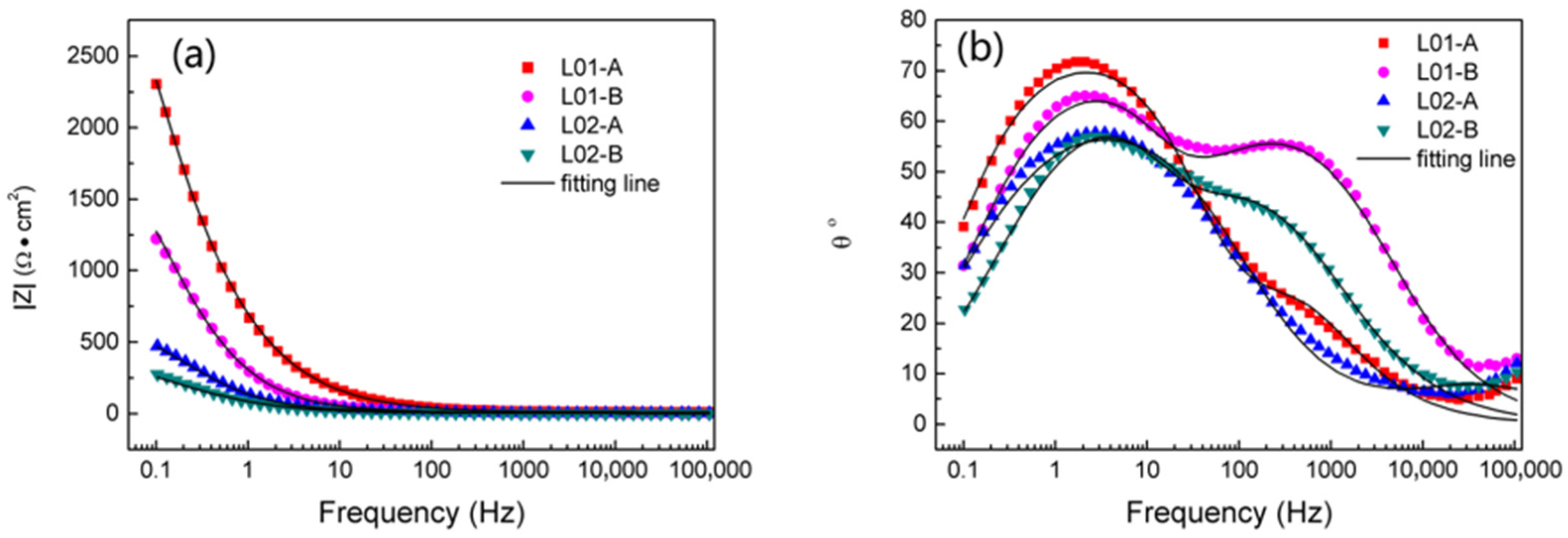
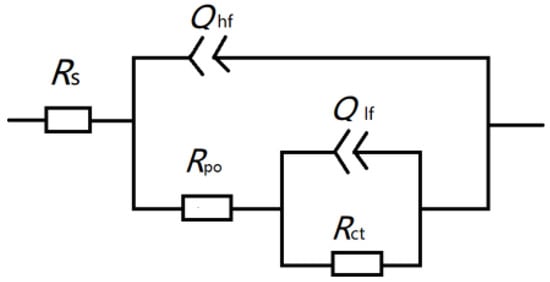
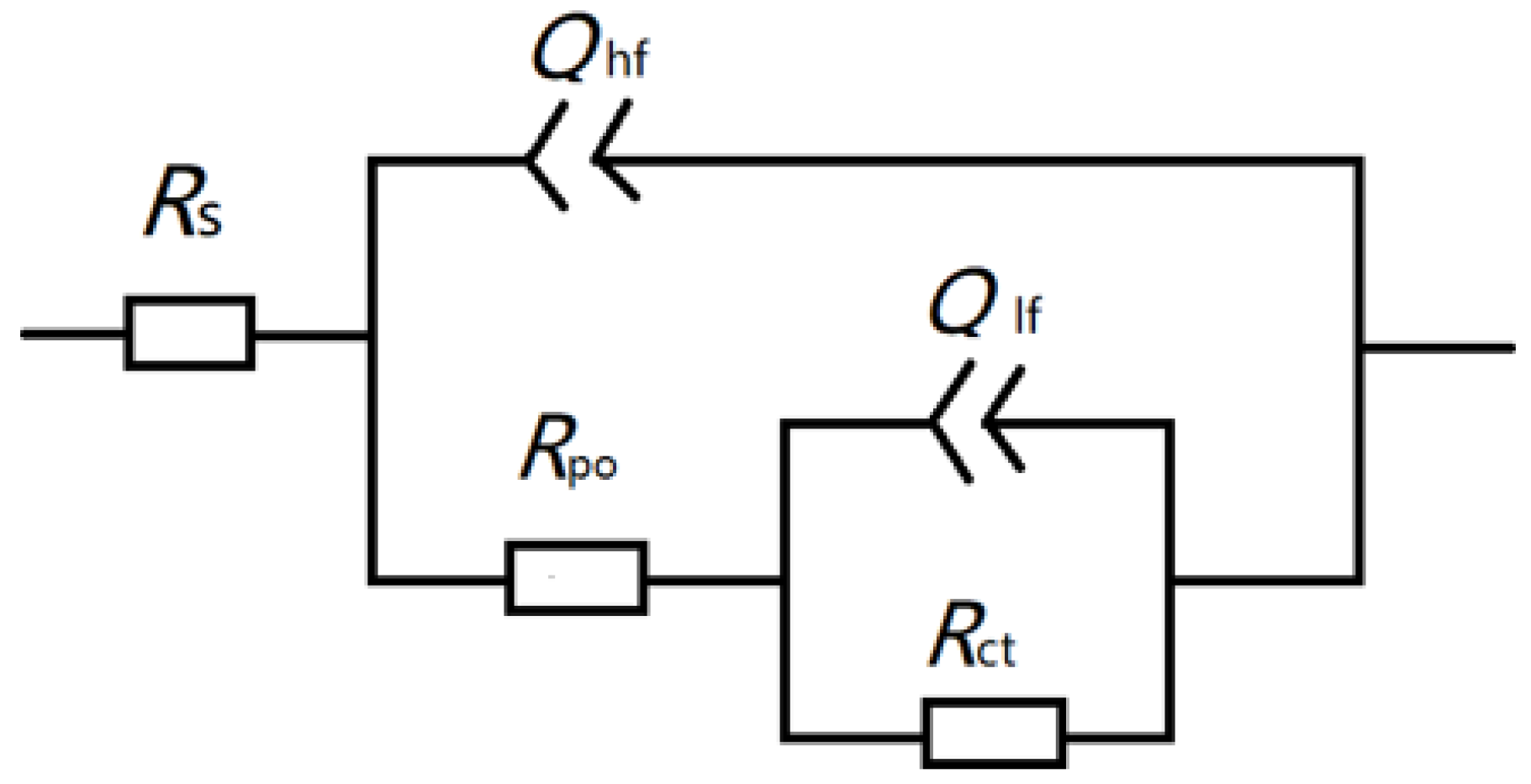
In electrochemical studies, the low-frequency impedance modulus (|Z|) is a dependable measure for assessing corrosion resistance [36,37,38]. As shown in Figure 11 and Figure 12a, L01-A was characterized by the maximum diameter of the capacitive loop in the Nyquist plot and the greatest |Z| modulus in the Bode plot, indicating that superior corrosion resistance. Conversely, L02-B exhibited the poorest corrosion resistance characterized by the most contracted capacitive loop and the lowest |Z| modulus. Additionally, Figure 12b reveals two well-defined time constants, which are associated with the surface oxide layer and the kinetics of the corrosion reaction. Accordingly, the impedance response was simulated with the equivalent circuit model illustrated in Figure 13, thereby enabling a quantitative comparison of corrosion reaction kinetics between the two samples during clay-coated quenching. The employed equivalent circuit comprises the following elements: Rs, the solution resistance; Qhf, the native surface capacitance at a high frequency; Rpo, the high-frequency resistance accounting for the resistance of the electrolyte and corrosion products; Rct, the charge-transfer resistance at the actively corroding surface (low frequency); and Qlf, the low-frequency interfacial capacitance at the corroding interface [39,40,41].
Figure 12.
Comparative Bode representations for both steel samples in 3 wt.% NaCl. (a) |Z| modulus. (b) Phase angle shift.
Figure 13.
Proposed equivalent electrical circuit for the EIS data.
Table 10 summarizes the fitting outcomes. The electrical behavior of a constant-phase element (CPE) is mathematically expressed as ZQ(ω) = [Y0(jω)n]−1. Key parameters include Y0 (the coefficient or pseudo-capacitance), ω (angular frequency), and n (an exponent whose value, constrained between 0 and 1, reflects the surface heterogeneity). In corrosion analysis, Rpo models the resistive contribution of a porous product layer, and Rct signifies the charge transfer resistance controlling the Faradaic corrosion kinetics. In most cases, Rct is the primary parameter for corrosion rate assessment, as it directly reflects the ease of electron transfer, and the essential charge carrier in the corrosion process. The Rct of the testing zones of L01 exceeded that of L02, confirming the better corrosion resistance of L01, as supported by the Tafel fit derived from the potentiodynamic polarization curves. Due to the lower carbon content in L01, which resulted in more gradual microstructure and hardness gradients compared to L02, L01-type steel swords exhibited enhanced corrosion resistance. In addition, the Rct was consistently higher on the side region of the blade than on the cutting edge for both L01 and L02 (L01-A > L01-B, L02-A > L02-B), indicating superior corrosion resistance at the side. This phenomenon is likely attributed to the exposed and slender edge experiencing the most rapid cooling rate, leading to the steel converting into martensite with minimal carbide content that is also finely distributed. Consequently, the corrosion resistance diminishes in this scenario [42]. These results show that the gradient microstructure and the heterogeneous phases caused by the clay-coated quenching of high-carbon steel swords had a significant impact on corrosion [43].
Table 10.
Comparative analysis of fitted EIS parameters for samples L01 and L02.
3.3.3. Morphological Analysis of Corroded Surfaces
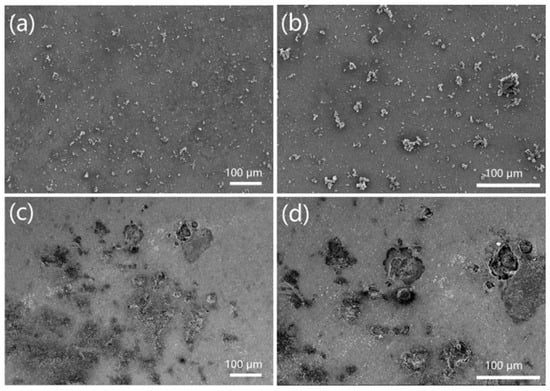
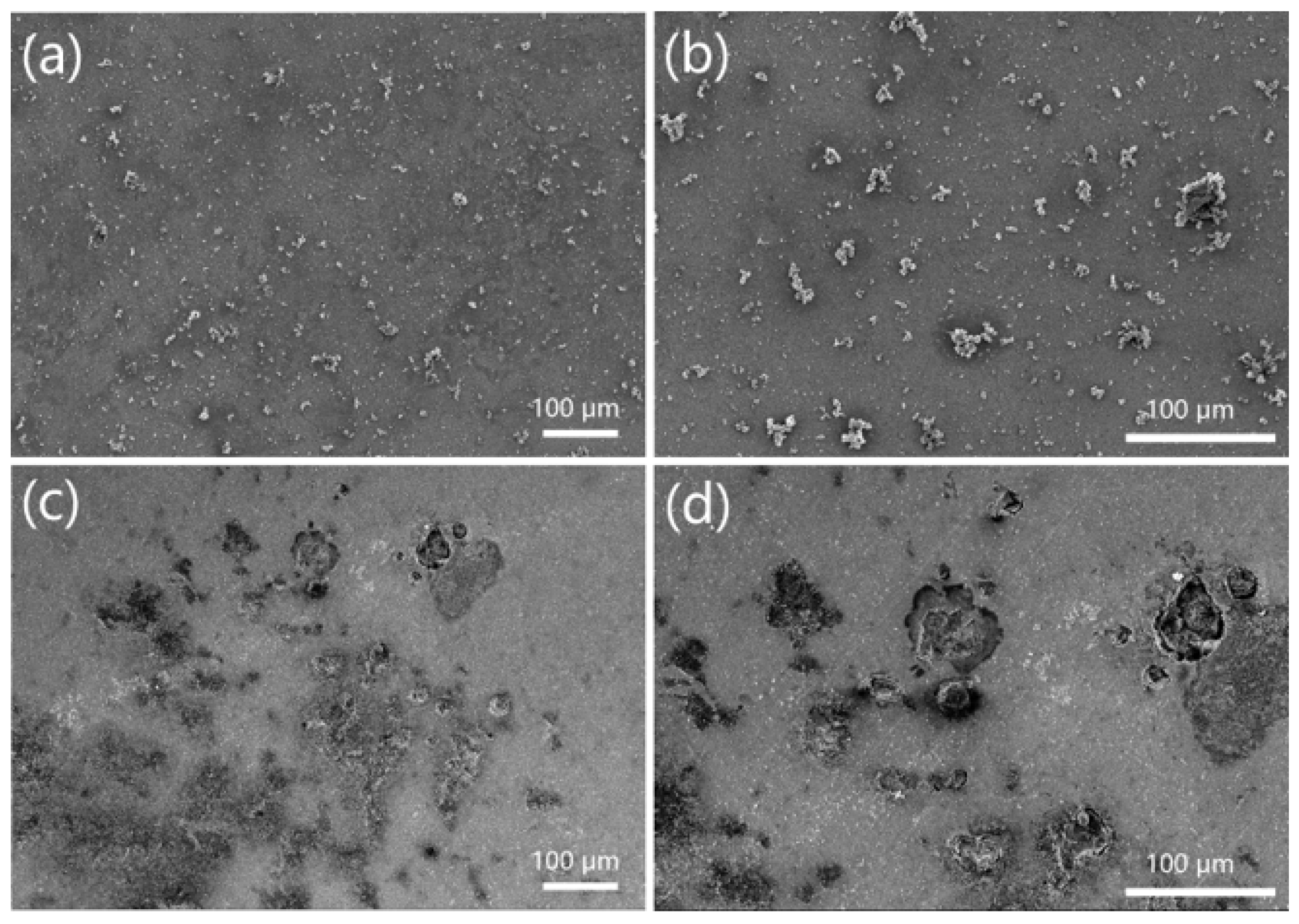
To visually confirm the electrochemical results, we analyzed the corroded surfaces of the samples through scanning electron microscopy (SEM), as shown in Figure 14. Both zone A (side) and zone B (edge) of sample L01 showed uniform corrosion, characterized by isolated pits without linearity and sparse corrosion products, as shown Figure 14a,b. Although L02 also exhibited uniform corrosion as seen in Figure 14c,d, it displayed a greater quantity of corrosion products and a larger area of corrosion compared to L01. As a result, L02 experienced more severe corrosion than L01. This is due to its more heterogeneous gradient microstructure, which resulted in a greater structural disparity between the cathodic and anodic areas. Consequently, this disparity created a larger discrepancy in electrochemical activity, leading to an increased tendency for corrosion. These SEM observations offer visual affirmation of the corrosion patterns deduced from the potentiodynamic polarization (PDP) and electrochemical impedance spectroscopy (EIS) analyses, thereby further validating the electrochemical results.
Figure 14.
SEM images of corroded surfaces. (a,b) L01; (c,d) L02.
4. Conclusions
- (1)
- The two swords, with carbon contents of 0.69% and 0.98%, underwent a quenching treatment utilizing the clay-coating method, resulting in unique flame or wave-like patterns on their surfaces. In the uncoated zones and cutting edge (zones A and D, respectively) L01 comprised martensite, while L02 exhibited martensite, retained austenite and carbides. In the coating zones and core region (zones B and C, respectively), both L01 and L02 contained pearlite and martensite, although the proportions of these phases varied. The sample L02 showed greater structural divergence compared to the sample L01.
- (2)
- Microhardness testing indicated that the L02 hardness range (425~1050 HV) exhibited a broader hardness distribution than that of L01 (550~846 HV), reflecting a more pronounced microstructural gradient in L02 and conferring superior balanced hardness and toughness. These results agreed with our microstructural analysis.
- (3)
- The potentiodynamic polarization results showed that the corrosion rates were higher in all test areas of L02 (icorr values ranging from 21.17 to 25.23 µA·cm−2) relative to the respective regions of L01 (icorr values ranging from 5.12 to 8.29 µA·cm−2). Additionally, the Rp values for each testing region of L02 (502~816 Ω·cm2) were inferior to those of the corresponding zones of L01 (2338~4129 Ω·cm2), suggesting that L01 demonstrated superior corrosion resistance.
- (4)
- The Nyquist and Bode plots indicated that region A of L01 exhibited the highest corrosion resistance, while region B of L02 displayed the lowest. Analysis of the EIS data demonstrated that the Rct values for L02 (424~571 Ω·cm2) were inferior to those of L01 (2016~2837 Ω·cm2), confirming the superior corrosion resistance of L01 over L02. Moreover, the sword surfaces outperformed the edges in terms of corrosion resistance. These findings suggested that the steel composition of L01 with 0.69% carbon content was more suitable for this clay-coated quenching process to produce swords with superior corrosion resistance.
- (5)
- The corrosion morphology also indicated that the corrosion type for both L01 and L02 samples was uniform corrosion. However, the L02 exhibited a greater quantity of corrosion products and a larger corrosion area, demonstrating more severe corrosion. This observation concurred with the conclusions of the electrochemical tests.
- (6)
- The research advances the comprehension of clay tempering in blade production and provides practical implications for conserving historical swords and designing modern functional gradient materials with customized corrosion resistance. Subsequent studies could investigate surface modifications or post-quench treatments to reduce corrosion in high-carbon steel blades while maintaining their mechanical strength.
Author Contributions
Methodology and manuscript review, W.W. and L.D.; investigation and experiment, W.W. and W.T.; data analysis, W.W. and W.T.; writing—original draft preparation, W.W. and H.M.; writing—review and editing, L.W. All authors have read and agreed to the published version of the manuscript.
Funding
This research was funded by the Science Research Project of Hebei Education Department (No. SQ2024286).
Data Availability Statement
The original contributions presented in this study are included in the article material. Further inquiries can be directed to the corresponding author.
Acknowledgments
The authors express sincere thanks to Qinglong Li for technical guidance on clay coating. The authors thank Xianguang Zhou for their guidance and cooperation. The authors thank Guorong Zheng and Ajin Chen for showing us their intricate and beautiful work. Their patience is greatly appreciated.
Conflicts of Interest
The authors declare no conflicts of interest. The funders had no role in the writing of the manuscript.
References
- Kapp, L.; Yoshishara, Y. The Craft of the Japanese Sword, 1st ed.; Kodansha International Ltd.: Tokyo, Japan, 1987; pp. 38–39. [Google Scholar]
- Yaso, M.; Takaiwa, T.; Minagi, Y.; Kanaizumi, T.; Kubota, K.; Hayashi, T.; Morito, S.; Ohba, T. Study of Japanese sword from a viewpoint of steel strength. J. Alloys Compd. 2013, 577S, S690–S694. [Google Scholar] [CrossRef] [Scilit]
- Notis, M. The history of the metallographic study of the Japanese sword. Mater. Charact. 2000, 45, 253–258. [Google Scholar] [CrossRef] [Scilit]
- Zowada, T.; Verhoeven, J. A hypothesis for the mechanism that produces the utsuri pattern on Japanese swords. Metallogr. Microstruc. 2024, 13, 62–67. [Google Scholar] [CrossRef] [Scilit]
- Harjo, S.; Kawasaki, T.; Grazzi, F.; Shinohara, T.; Tanaka, M. Neutron diffraction study on full-shape Japanese sword. Materialia 2019, 7, 100377. [Google Scholar] [CrossRef] [Scilit]
- Pham, A.; Ohba, T.; Morito, S.; Hayashi, T. Automatic reconstruction approach to characterization of prior-austenite microstructure in various Japanese swords. Mater. Trans. 2015, 56, 1639–1647. [Google Scholar] [CrossRef] [Scilit]
- Tanimura, H. Development of the Japanese sword. JOM 1980, 32, 63–73. [Google Scholar] [CrossRef] [Scilit]
- Inoue, T. Tatara and the Japanese sword: The science and technology. Acta Mech. 2010, 214, 17–30. [Google Scholar] [CrossRef] [Scilit]
- Inoue, T. The Japanese sword the material, manufacturing and computer simulation of quenching process. Mater. Sci. Res. Int. 1997, 4, 193–203. [Google Scholar]
- William, D. Materials Science and Engineering: An Introduction, 7th ed.; John Wiley & Sons. Inc.: New York, NY, USA, 2009; pp. 623–637. [Google Scholar]
- Wu, W.; Bu, C.; Li, S.; Du, S.; Chen, Q.; Li, X. The effects of quenching with clay on the microstructure and corrosion performance of steel blades. Coatings 2023, 13, 1904. [Google Scholar] [CrossRef] [Scilit]
- Liang, Z.; Jiang, K.; Feng, B.; Lin, S.; Chao, X.; Sui, Q.; Zhang, T. Corrosion evolution of Cu-Pb alloys from the Western Zhou dynasty in simulated archaeological soil environment. J. Electroanal. Chem. 2021, 899, 115688. [Google Scholar] [CrossRef] [Scilit]
- Wang, Q.; Cao, X.; Wu, T.; Liu, M.; Li, C.; Yin, F. Corrosion of X80 steel welded joint under disbonded coating in an acidic soil solution. Int. J. Pres. Ves. Pip. 2021, 194, 104508. [Google Scholar] [CrossRef] [Scilit]
- Yasuda, T.; Nakada, N. Effect of carbon concentration in austenite on cementite morphology in pearlite. ISIJ Int. 2021, 61, 372–379. [Google Scholar] [CrossRef] [Scilit]
- Li, B.; Shen, Y.; An, Q. Structural origin of reversible martensitic transformation and reversible twinning in NiTi shape memory alloy. Acta Mater. 2020, 199, 240–252. [Google Scholar] [CrossRef] [Scilit]
- Zhang, J.; Liu, Y.; Guo, H.; Jiang, J.; Bai, Y.; Zhang, D. Effect of carbon content on microstructural evolution of 8Cr steel in austenitizing process. Mater. Sci. Eng. A 2020, 796, 140026. [Google Scholar] [CrossRef] [Scilit]
- Lin, S.; Borgenstam, A.; Stark, A.; Hedström, P. Effect of Si on bainitic transformation kinetics in steels explained by carbon partitioning, carbide formation, dislocation densities, and thermodynamic conditions. Mater. Charact. 2022, 185, 111774. [Google Scholar] [CrossRef] [Scilit]
- Kohne, T.; Fahlkrans, J.; Stormvinter, A.; Maawad, E.; Winkelmann, A.; Hedström, P.; Borgenstam, A. Evolution of martensite tetragonality in high-carbon steels revealed by in situ high-energy X-Ray diffraction. Metall. Mater. Trans. A 2023, 54, 1083–1100. [Google Scholar] [CrossRef] [Scilit]
- Mishnev, R.; Borisova, Y.; Gaidar, S.; Kniaziuk, T.; Vagina, O.; Kaibyshev, R. Q&P response of a medium carbon low alloy steel. Metals 2023, 13, 689. [Google Scholar] [CrossRef] [Scilit]
- Nuam, V.; Zhang, H.; Wang, Y.; Xiong, Z. Role of retained austenite in advanced high-strength steel: Ductility and toughness. J. Iron Steel Res. Int. 2024, 31, 2079–2089. [Google Scholar] [CrossRef] [Scilit]
- Jafery, K.; Embong, Z.; Othman, N.; Yaakob, N.; Shah, M.; Hashim, N. Initial stage of corrosion formation for X70 pipeline external surface in acidic soil (peat) environment. Mater. Today Proc. 2022, 51, 1381–1387. [Google Scholar] [CrossRef] [Scilit]
- Qin, Q.; Wei, B.; Bai, Y.; Fu, Q.; Xu, J.; Sun, C.; Wang, C.; Wang, Z. Effect of alternating current frequency on corrosion behavior of X80 pipeline steel in coastal saline soil. Eng. Fail. Anal. 2021, 120, 105065. [Google Scholar] [CrossRef] [Scilit]
- Wei, B.; Xu, J.; Cheng, Y.; Sun, C.; Yu, C.; Wang, Z. Effect of uniaxial elastic stress on corrosion of X80 pipeline steel in an acidic soil solution containing sulfate-reducing bacteria trapped under disbonded coating. Corros. Sci. 2021, 193, 109893. [Google Scholar] [CrossRef] [Scilit]
- Zhu, M.; Zhao, B.; Yuan, Y.; Yin, S.; Guo, S. Effect of annealing temperature on microstructure and corrosion behavior of CoCrFeMnNi high-entropy alloy in alkaline soil simulation solution. Mater. Chem. Phys. 2022, 279, 125725. [Google Scholar] [CrossRef] [Scilit]
- Yang, L.; Zhang, H.; Zhang, S.; Shi, Z.; Wei, C.; Ma, M.; Liu, R. Effect of Cu content on the corrosion behavior of Ti-based bulk amorphous alloys in HCl solution. Mater. Lett. 2023, 337, 133742. [Google Scholar] [CrossRef] [Scilit]
- Liu, C.; Gao, Y.; Chong, K.; Guo, F.; Wu, D.; Zou, Y. Effect of Nb content on the microstructure and corrosion resistance of FeCoCrNiNbx high-entropy alloys in chloride ion environment. J. Alloys Compd. 2023, 935, 168013. [Google Scholar] [CrossRef] [Scilit]
- Shi, Z.; Wang, Z.; Wang, X.; Zhang, S.; Zheng, Y. Effect of thermally induced B2 phase on the corrosion behavior of an Al0.3CoCrFeNi high entropy alloy. J. Alloys Compd. 2022, 903, 163886. [Google Scholar] [CrossRef] [Scilit]
- Hao, X.; Zhao, X.; Chen, H.; Huang, B.; Ma, J.; Wang, C.; Yang, Y. Comparative study on corrosion behaviors of ferrite-pearlite steel with dual-phase steel in the simulated bottom plate environment of cargo oil tanks. J. Mater. Res. Technol. 2021, 12, 399–411. [Google Scholar] [CrossRef] [Scilit]
- Katiyar, P.; Behera, P.; Misra, S.; Mondal, K. Comparative corrosion behavior of five different microstructures of rebar steels in simulated concrete pore solution with and without chloride addition. J. Mater. Eng. Perform. 2019, 28, 6275–6286. [Google Scholar] [CrossRef] [Scilit]
- Jalali, M.; Jafarian, R.; Shanaghi, A.; Eivani, R. On the microstructure and corrosion behavior of Fe-28.5Ni steel subjected to severe plastic deformation. J. Mater. Res. Technol. 2025, 34, 90–99. [Google Scholar] [CrossRef] [Scilit]
- Hai, C.; Zhu, Y.; Du, C.; Li, X. Effect of retained austenite on the corrosion resistance of high-strength low-carbon steel in artificial seawater. Acta Metall. Sin.-Engl. 2025, 38, 657–671. [Google Scholar] [CrossRef] [Scilit]
- Yang, J.; Lu, Y.; Guo, Z.; Gu, J.; Gu, C. Corrosion behaviour of a quenched and partitioned medium carbon steel in 3.5 wt.% NaCl solution. Corros. Sci. 2018, 130, 64–75. [Google Scholar] [CrossRef] [Scilit]
- Kang, L.; Zeng, Q.; Wang, B.; Zeng, J.; Liao, B.; Wu, H.; Cheng, Z.; Guo, X. Facile fabrication of multi superlyophobic nano soil coated-mesh surface with excellent corrosion resistance for efficient immiscible liquids separation. Sep. Purif. Technol. 2022, 284, 120266. [Google Scholar] [CrossRef] [Scilit]
- Azoor, R.; Deo, R.; Birbilis, N.; Kodikara, J. On the optimum soil moisture for underground corrosion in different soil types. Corros. Sci. 2019, 159, 108116. [Google Scholar] [CrossRef] [Scilit]
- Rossi, S.; Pinamonti, M.; Calovi, M. Influence of soil chemical characteristics on corrosion behaviour of galvanized steel. Case Stud. Constr. Mat. 2022, 17, e01257. [Google Scholar] [CrossRef] [Scilit]
- Ye, Y.; Liu, Z.; Liu, W.; Zhang, D.; Zhao, H.; Wang, L.; Li, X. Superhydrophobic oligoaniline-containing electroactive silica coating as pre-process coating for corrosion protection of carbon steel. Chem. Eng. J. 2018, 348, 940–951. [Google Scholar] [CrossRef] [Scilit]
- Yin, X.; Mu, P.; Wang, Q.; Li, J. Superhydrophobic ZIF-8-based dual-layer coating for enhanced corrosion protection of Mg alloy. ACS Appl. Mater. Interfaces 2020, 12, 35453–35463. [Google Scholar] [CrossRef] [Scilit]
- Li, C.; Li, Y.; Wang, X.; Yuan, S.; Lin, D.; Zhu, Y.; Wang, H. Synthesis of hydrophobic fluoro-substituted polyaniline filler for the long-term anti-corrosion performance enhancement of epoxy coatings. Corros. Sci. 2021, 178, 109094–109104. [Google Scholar] [CrossRef] [Scilit]
- Liu, H.; Cheng, Y. Corrosion of initial pits on abandoned X52 pipeline steel in a simulated soil solution containing sulfate-reducing bacteria. J. Mater. Res. Technol. 2020, 9, 7180–7189. [Google Scholar] [CrossRef] [Scilit]
- Ma, H.; Zhao, B.; Liu, Z.; Du, C.; Shou, B. Local chemistry–electrochemistry and stress corrosion susceptibility of X80 steel below disbonded coating in acidic soil environment under cathodic protection. Constr. Build. Mater. 2020, 243, 118203. [Google Scholar] [CrossRef] [Scilit]
- Fan, Y.; Chen, C.; Zhang, Y.; Liu, H.; Liu, H.; Liu, H. Early corrosion behavior of X80 pipeline steel in a simulated soil solution containing Desulfovibrio desulfuricans. Bioelectrochemistry 2021, 141, 107880. [Google Scholar] [CrossRef] [Scilit]
- Khan, M.; Sarkar, A.; Mehtani, H.; Raut, P.; Prakash, A.; Prasad, M.; Samajdar, I.; Parida, S. Microstructure and aqueous corrosion in carbon steel: An emerging correlation. Mater. Chem. Phys. 2022, 290, 126623. [Google Scholar] [CrossRef] [Scilit]
- Osório, W.; Peixoto, L.; Garcia, L.; Garcia, A. Electrochemical corrosion response of a low carbon heat treated steel in a NaCl solution. Mater. Corros. 2009, 60, 804–812. [Google Scholar] [CrossRef] [Scilit]



Disclaimer/Publisher’s Note: The statements, opinions and data contained in all publications are solely those of the individual author(s) and contributor(s) and not of MDPI and/or the editor(s). MDPI and/or the editor(s) disclaim responsibility for any injury to people or property resulting from any ideas, methods, instructions or products referred to in the content. |
© 2026 by the authors. Licensee MDPI, Basel, Switzerland. This article is an open access article distributed under the terms and conditions of the Creative Commons Attribution (CC BY) license.