Article

Optimization of InxGa1−xN P-I-N Solar Cells: Achieving 21% Efficiency Through SCAPS-1D Modeling

1
Laboratory of Solid State Physics, Faculty of Sciences, Mohamed Ben Abdellah University, Fes 30000, Morocco
2
School of Electronic and Electrical Engineering, University of Leeds, Leeds LS2 9JT, UK
3
Laser Spectroscopy Group, Department of Physics, Faculty of Science, Selçuk University, 42075 Konya, Turkey
4
Interdisciplinary Institute for Technological Innovation, Sherbrooke University, 2500 Bd University, Sherbrooke, QC J1N 3C6, Canada
5
CCP Laboratory, ENSAM, Hassan 2 University, Casablanca 20670, Morocco
6
National Superior School, Sidi Mohamed Ben Abdellah University, Fes 30000, Morocco
*
Authors to whom correspondence should be addressed.
Crystals 2025, 15(7), 633; https://doi.org/10.3390/cryst15070633
Submission received: 17 June 2025 / Revised: 5 July 2025 / Accepted: 7 July 2025 / Published: 9 July 2025
(This article belongs to the Section Materials for Energy Applications)

Abstract

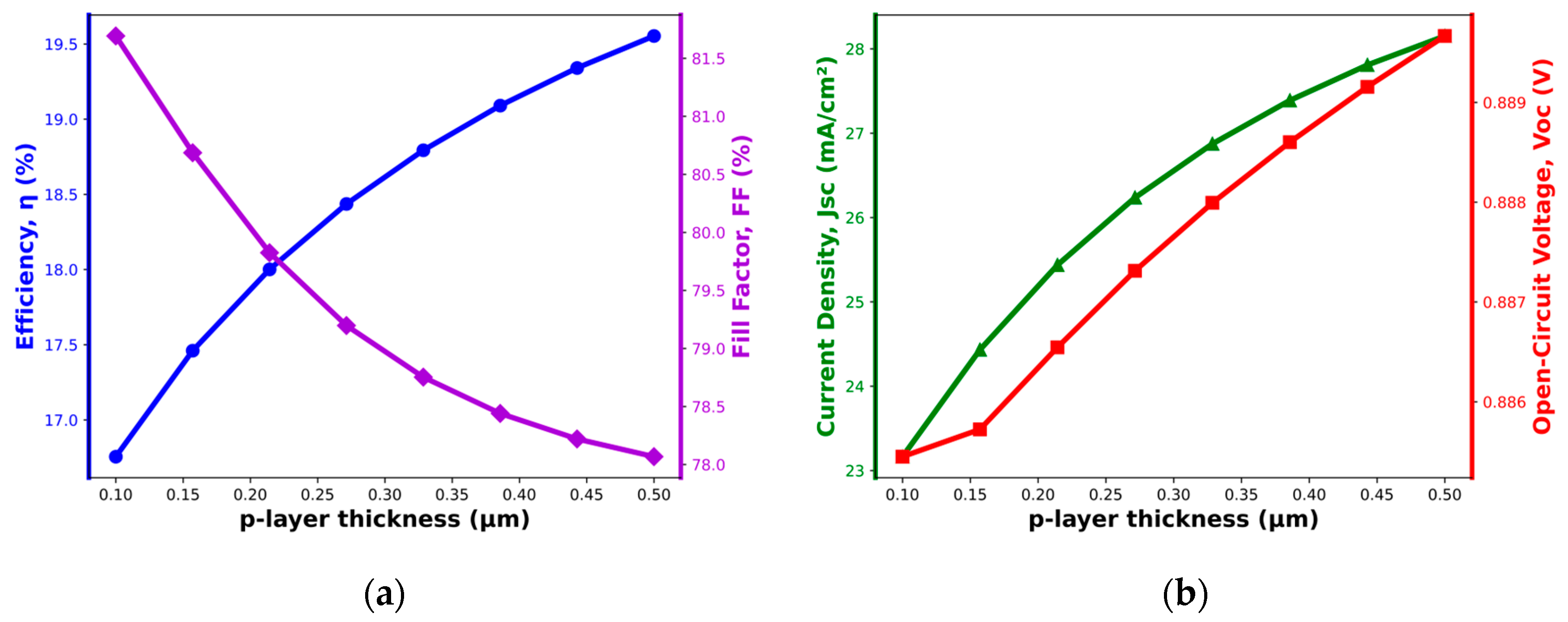
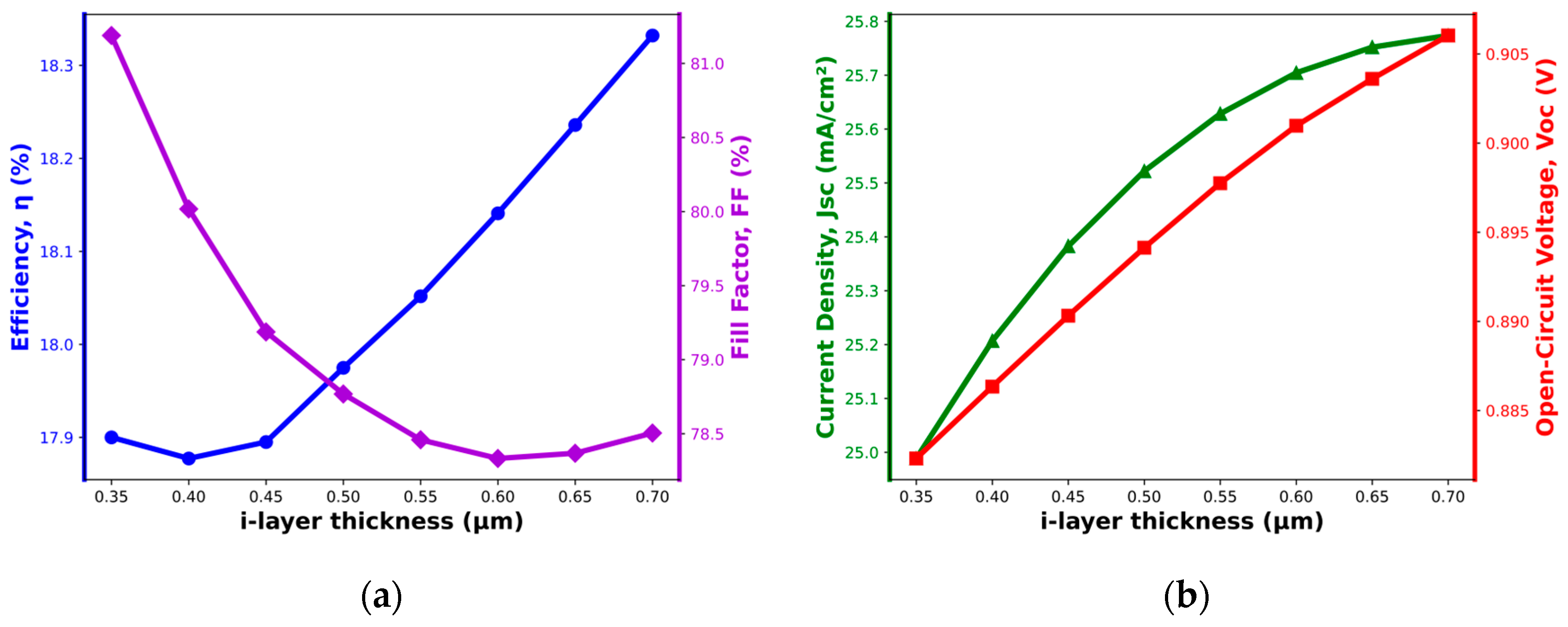
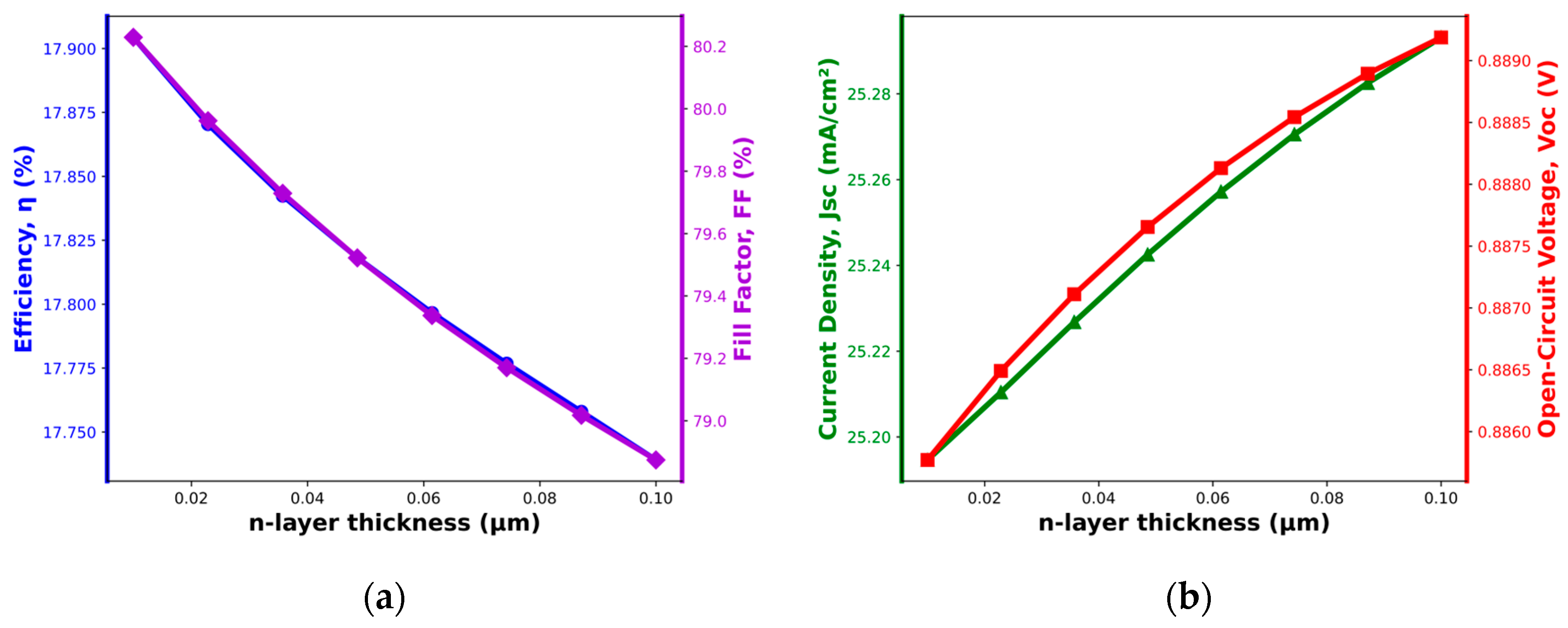
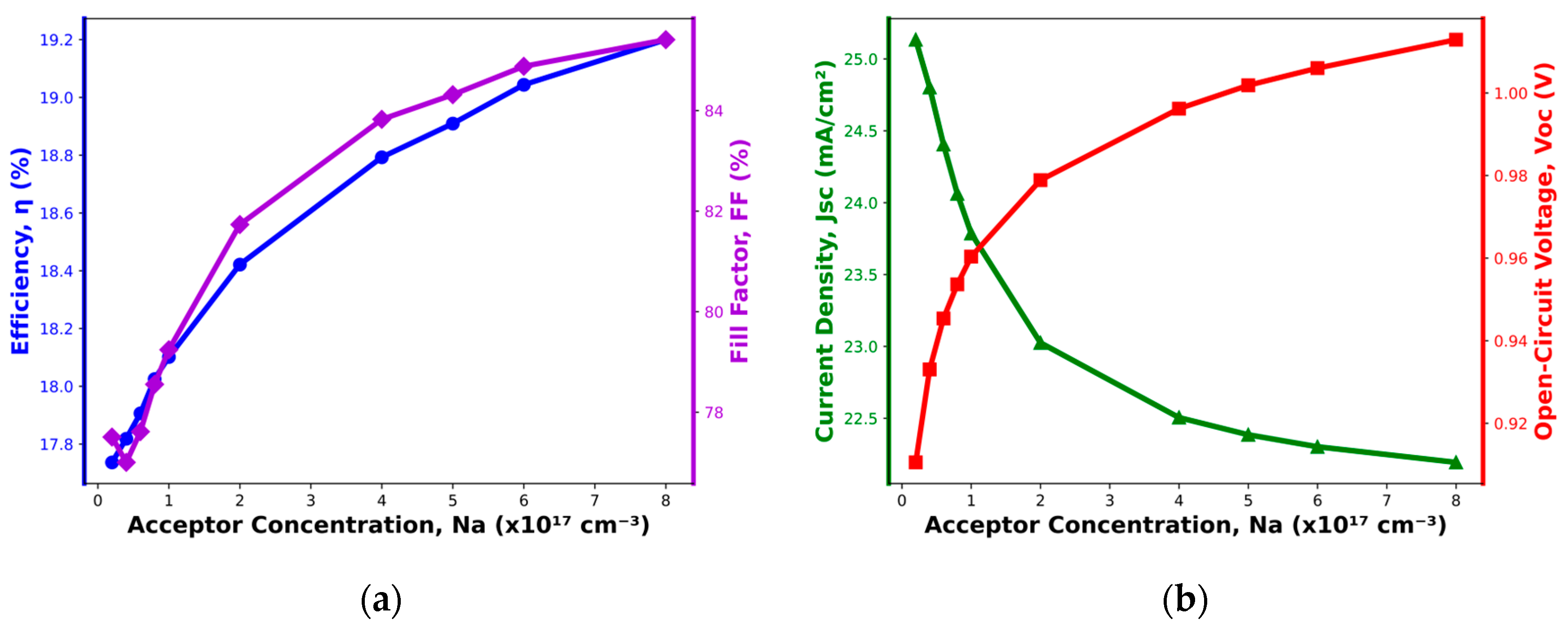
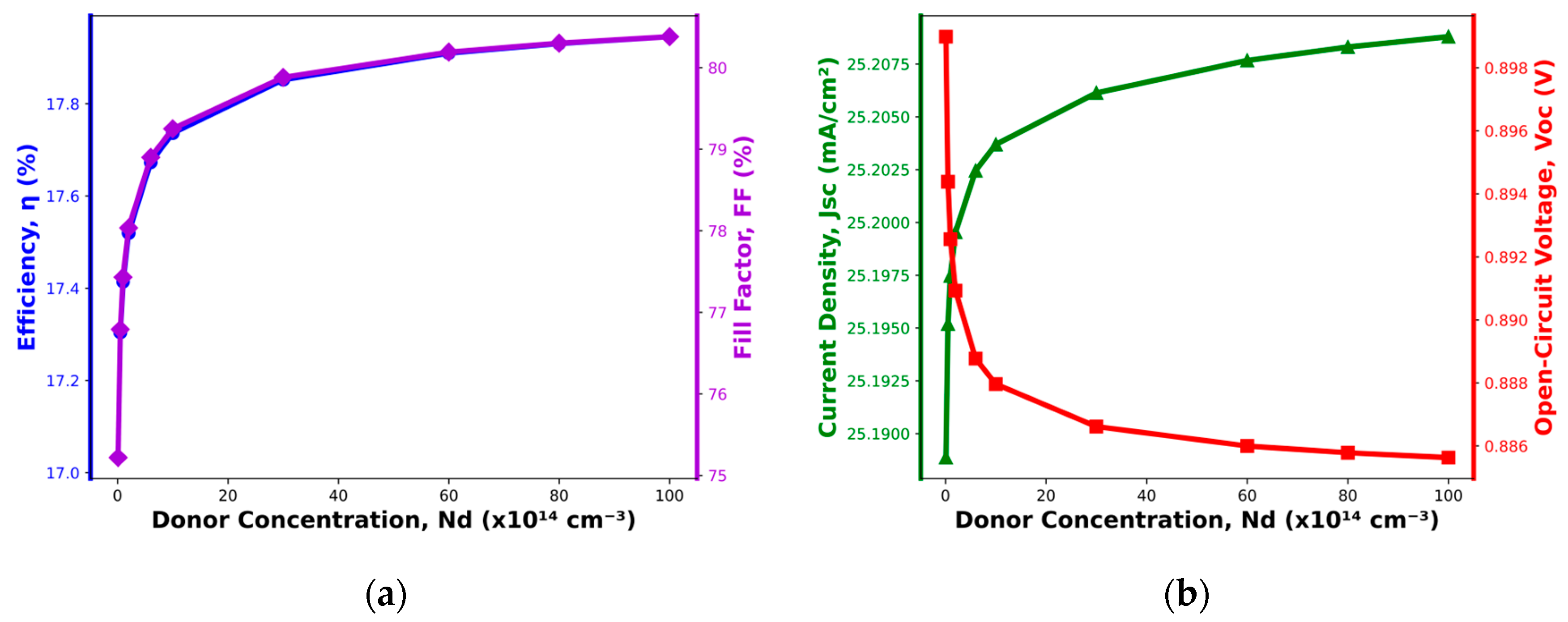
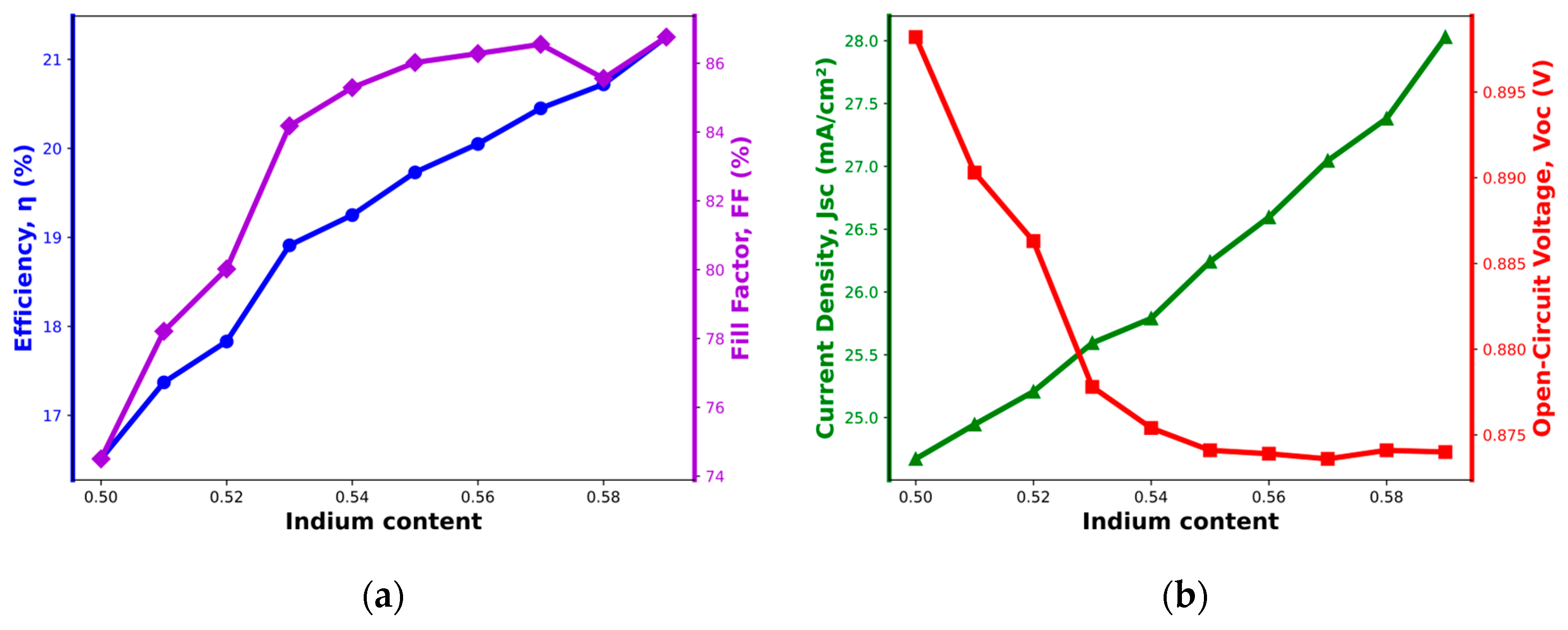
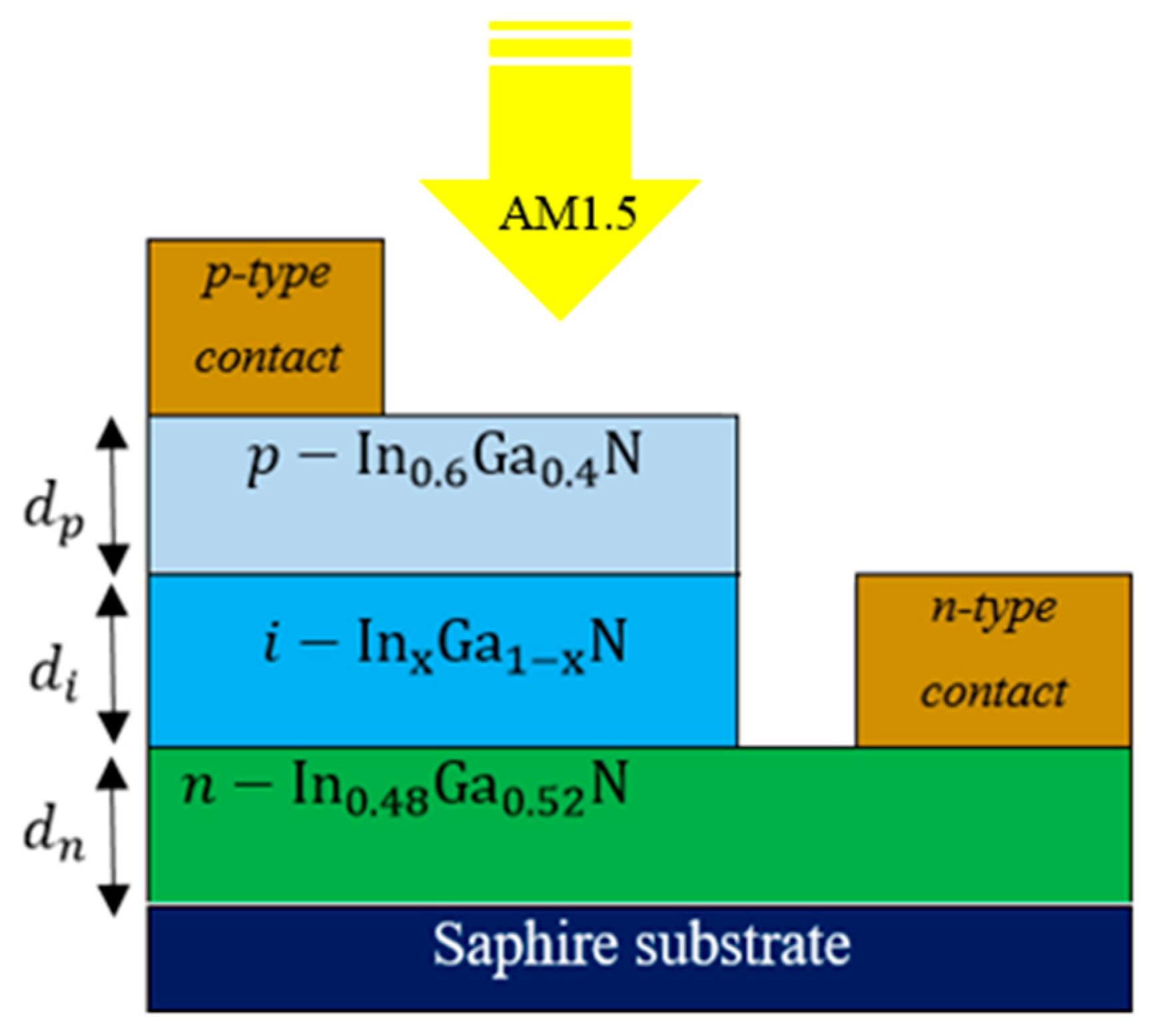
This study provides an in-depth numerical simulation to optimize the structure of InGaN-based p-i-n single homojunction solar cells using SCAPS-1D software. The cell comprised a p-type In0.6Ga0.4N layer, an intrinsic i-type In0.52Ga0.48N layer, and an n-type In0.48Ga0.52N layer. A systematic parametric optimization methodology was employed, involving a sequential investigation of doping concentrations, layer thicknesses, and indium composition to identify the optimal device configuration. Initial optimization of doping levels established optimal concentrations of Nd=1×1016 cm3 for the p-layer and Na=8×1017 cm3 for the n-layer. Subsequently, structural parameters were optimized through systematic variation of layer thicknesses while maintaining optimal doping concentrations. The comprehensive optimization culminated in the identification of an optimal device architecture featuring a p-type layer thickness of 0.2 μm, an intrinsic layer thickness of 0.4 μm, an n-type layer thickness of 0.06 μm, and an indium composition of x = 0.59 in the intrinsic layer. This fully optimized configuration achieved a maximum conversion efficiency (η) of 21.40%, a short-circuit current density (Jsc) of 28.2 mA/cm2, and an open-circuit voltage (Voc) of 0.874 V. The systematic optimization approach demonstrates the critical importance of simultaneous parameter optimization in achieving superior photovoltaic performance, with the final device configuration representing a 30.01% efficiency improvement compared to the baseline structure. These findings provide critical insights for improving the design and performance of InGaN-based solar cells, serving as a valuable reference for future experimental research.
Keywords: InGaN solar cells; p-i-n structure; SCAPS-1D simulation; bandgap engineering; doping optimization; layer-thickness design; III-nitride photovoltaics; numerical modeling InGaN solar cells; p-i-n structure; SCAPS-1D simulation; bandgap engineering; doping optimization; layer-thickness design; III-nitride photovoltaics; numerical modeling