
Review

Magnetic Nanocomposites Based on Iron Oxides as Catalysts of Oxidation Reactions

by
Svetlana I. Pomogailo
1,2,
Evgeny G. Chepaikin
1,
Olga N. Bubelo
2,
Rosa I. Jussupkaliyeva
3 and
Leonid M. Kustov
4,5,*
1
Merzhanov Institute of Structural Macrokinetics and Materials Science, Russian Academy of Science, Academician Osipyan Str. 8, 142432 Chernogolovka, Moscow Region, Russia
2
All-Russian Institute for Scientific and Technical Information, Usievicha Str. 20, 125190 Moscow, Russia
3
Industrial and Technological Institute, Zhangir Khan West Kazakhstan Agrarian Technical University, Zhangir Khan Str. 50, 090009 Uralsk, Kazakhstan
4
N.D. Zelinsky Institute of Organic Chemistry, Russian Academy of Science, Leninsky Prospect 47, 119991 Moscow, Russia
5
Chemistry Department, Moscow State University, Leninskie Gory 1, Bldg. 3, 119992 Moscow, Russia
*
Author to whom correspondence should be addressed.
Crystals 2024, 14(12), 1031; https://doi.org/10.3390/cryst14121031
Submission received: 14 October 2024 / Revised: 13 November 2024 / Accepted: 18 November 2024 / Published: 28 November 2024

Abstract

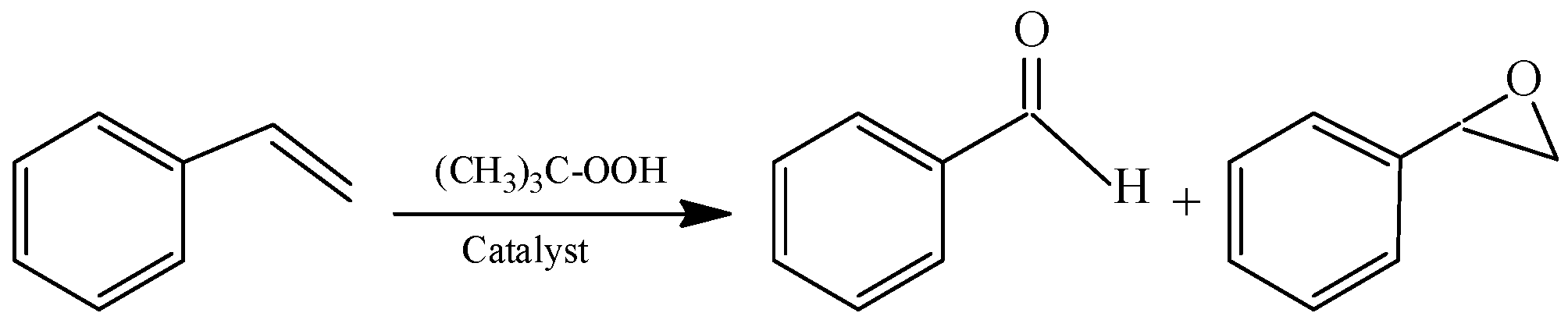
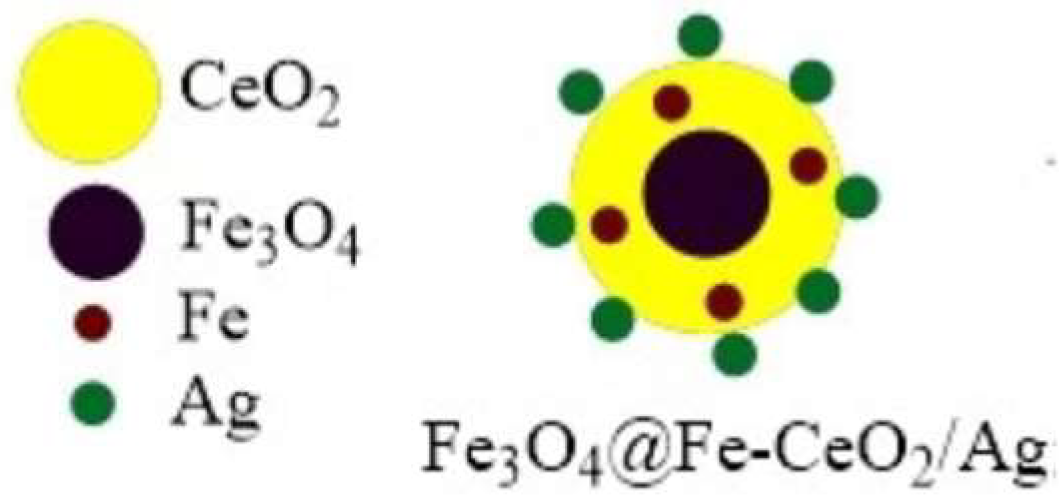
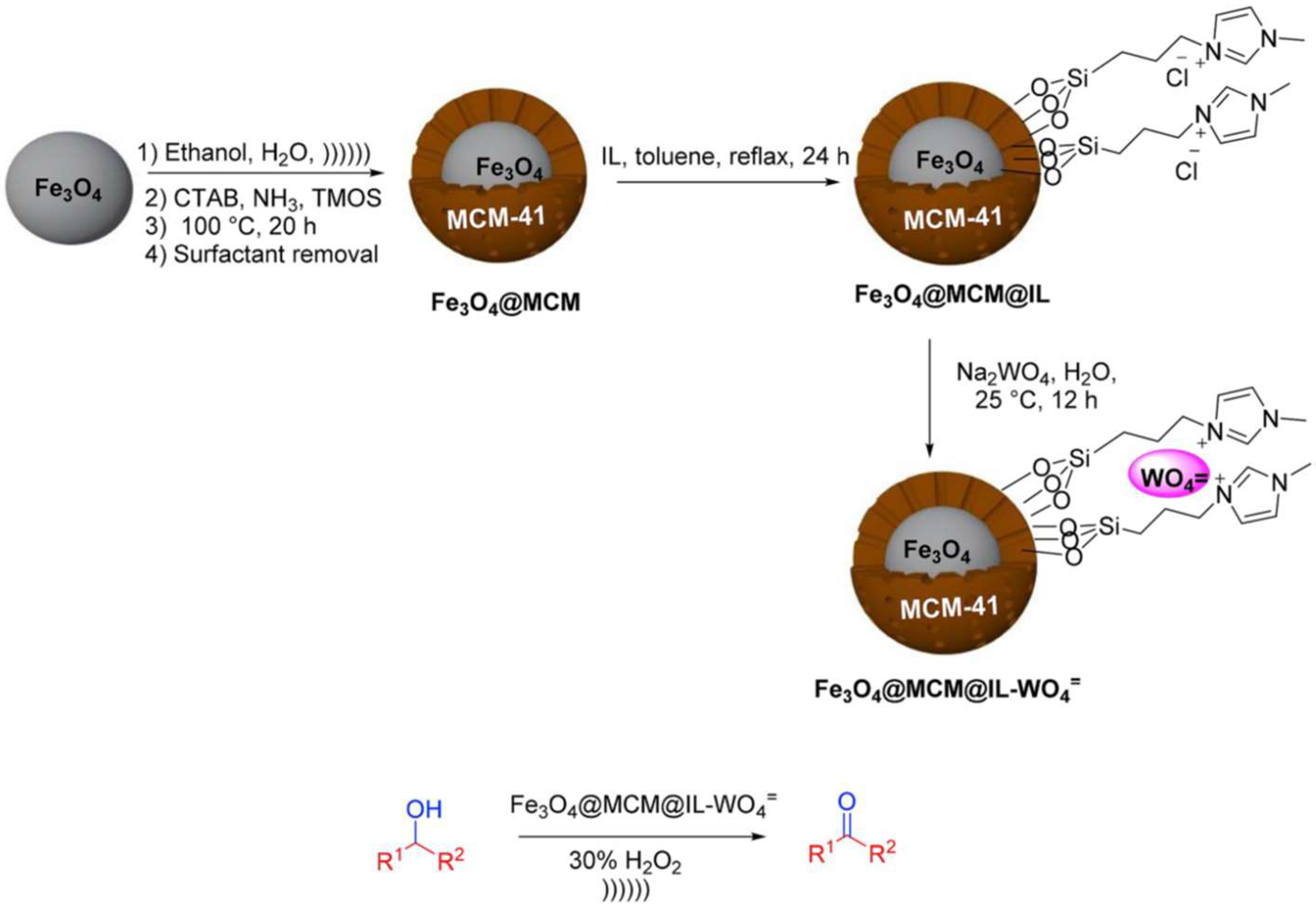
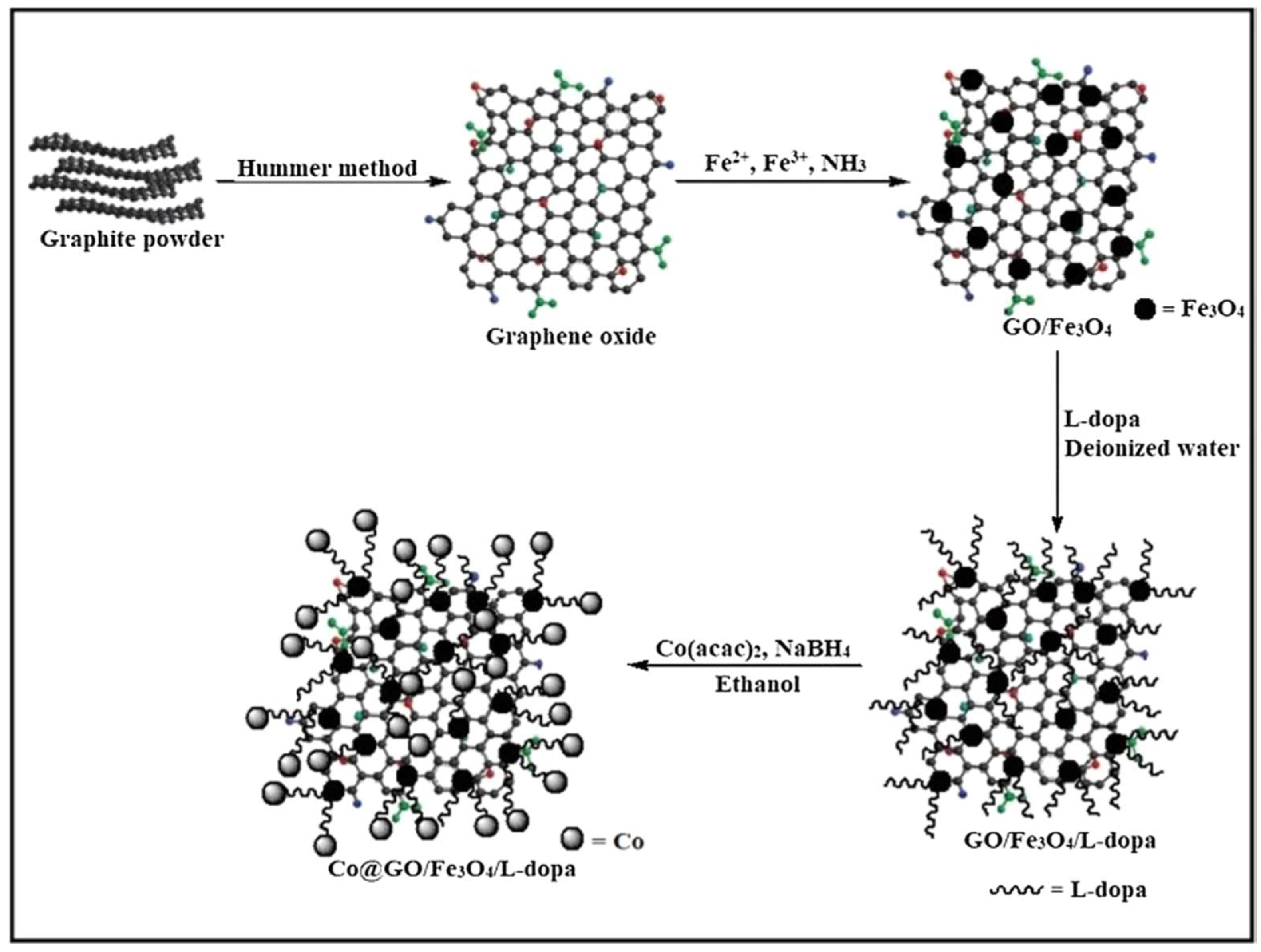
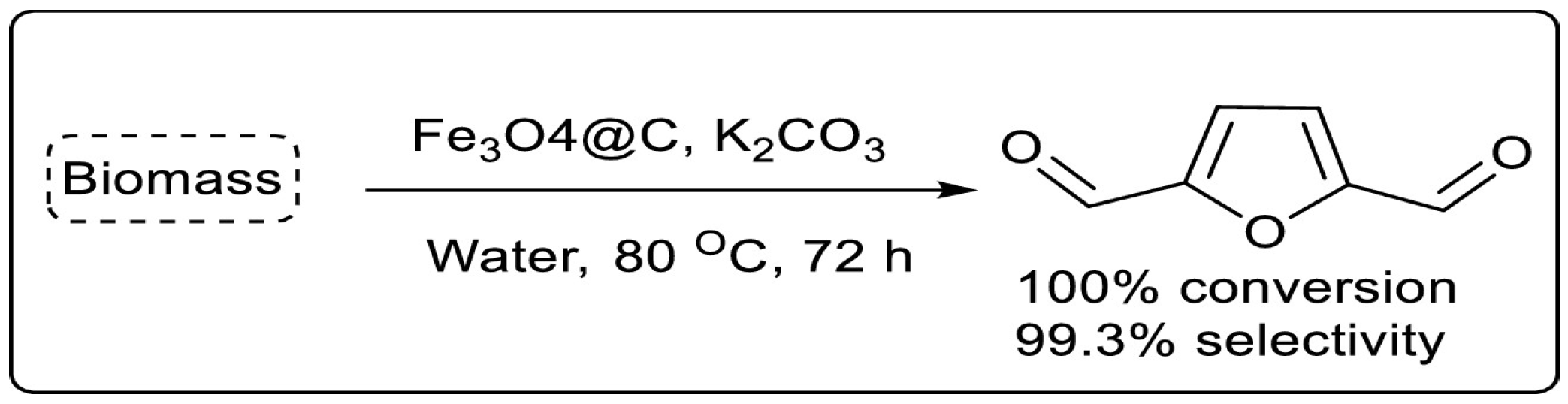
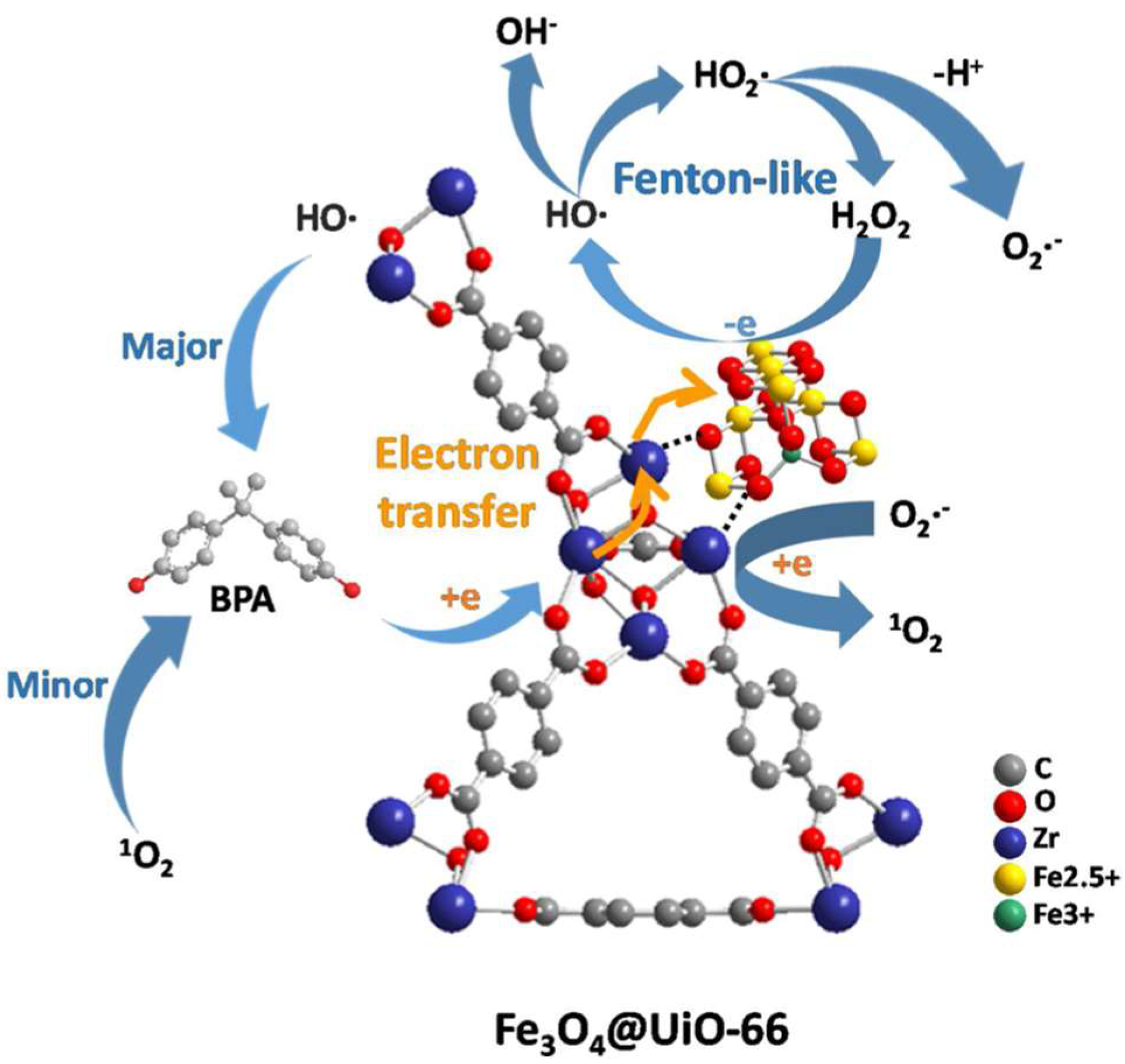
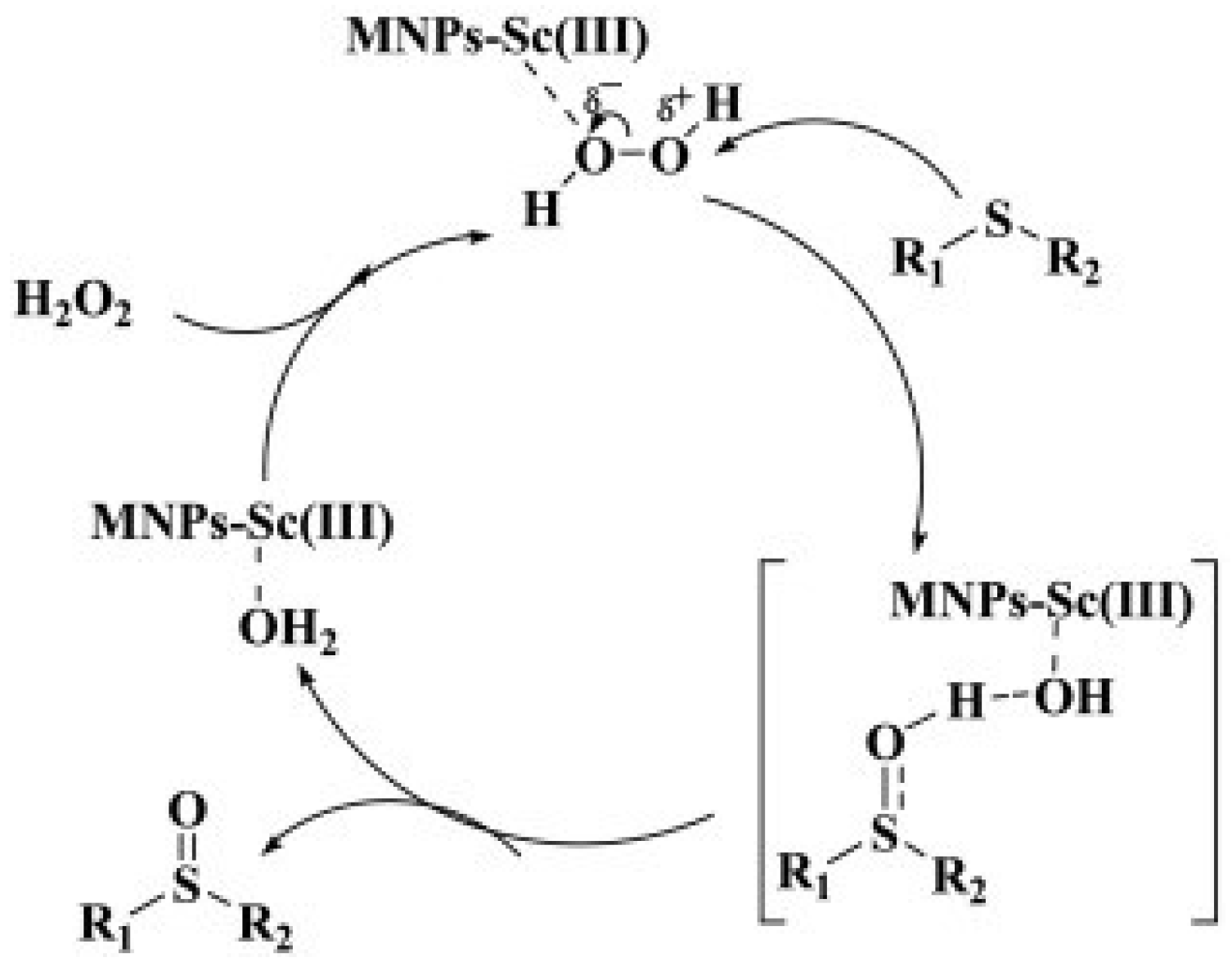
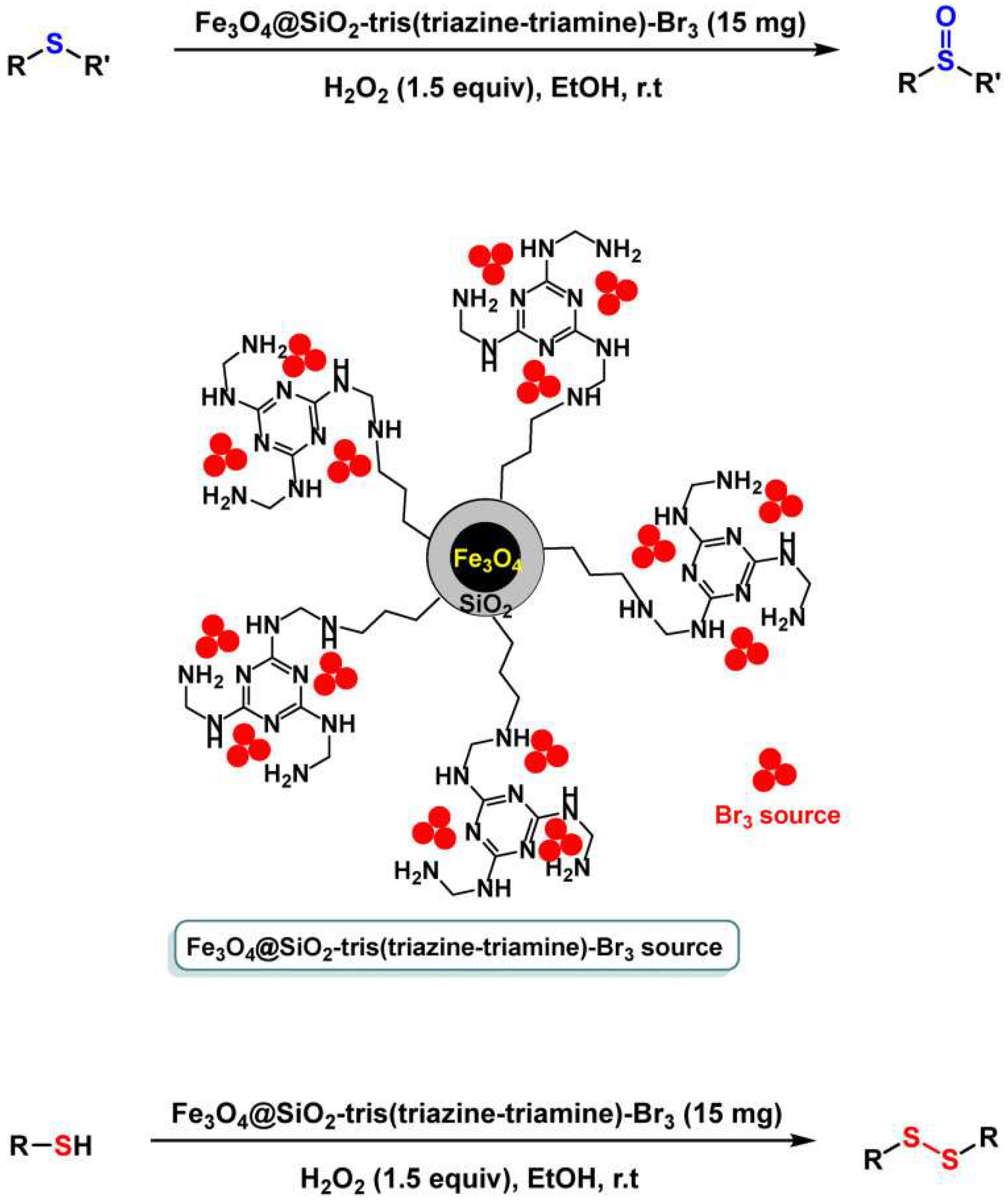
This review analyzes the use of magnetite-based catalysts in various oxidation reactions. It is shown that magnetite-based catalysts are the most promising candidates from the standpoint of easy separation from the reaction zone and reusability. Diverse examples of the use of magnetite-based composites are discussed, including the following reactions: partial oxidation of methane to formaldehyde; the oxidation of cycloalkanes into alcohols and ketones; the oxidation of alkenes and alcohols with the major focus made on benzylic alcohol oxidation; oxidative cracking of alkenes; Fenton-type reactions with H2O2 as a benign oxidant; the removal of dyestuff in water (including wastewater by oxidation); reactions of sulfides and thiols; the oxidation of 5-hydroxymethylfurfural as a platform chemical to 2,5-diformylfuran; the oxidation of D-glucose to D-gluconic acid; and the electrocatalytic oxidation of methanol and ethanol. The most important and best-studied applications of magnetic nanoparticles in the oxidation reactions are believed to be the oxidation of diverse benzylic alcohols and D-glucose, and Fenton-like reactions aiming at the removal of S- and N-compounds from ware and fuels. Magnetic nanocomposites are determined as the materials meeting a range of criteria: (1) they should be magnetic, (2) they contain nanoparticles, and (3) they consist of two (or more) nanocomponents. The core–shell materials with magnetic nanoparticles used as a core or as decorating nanoparticles are discussed in the review. Three main types of magnetic nanocomposites can be distinguished: (1) the systems where the magnetic phase is active in the considered reaction, for instance, Fenton-like oxidation; (2) the systems containing active metal nanoparticles supported onto the magnetic nanoparticles; and (3) materials with magnetic nanoparticles as a core coated with one or two shells (porous or non-porous), with the magnetic nanoparticles being active or not in the title reaction. Magnetic nanoparticles exhibit a number of advantages compared with supported non-magnetic catalysts of oxidation reactions. The advantages include the possibility of separation from the reaction medium (5–10 times) without a significant loss of the activity, their non-toxicity, low cost, and availability, and the easy preparation of these materials. The drawbacks may include the leaching of active components; a decrease in saturation magnetization in comparison with the bulk magnetite; a limited accessibility of active sites due to diffusion through the shells; the complicated composition and structure of the nanomaterials; a decrease in the activity and specific surface area; and a limited number of magnetic compounds with acceptable characteristics. Nevertheless, the advantages of magnetic nanocatalysts stimulate their wide use in liquid-phase oxidation reactions, which will be discussed in the review. Future perspectives on the use of magnetic composites are considered.
Keywords: catalytic oxidation reactions; magnetite; nanocomposites based on magnetite; recyclability; environmental friendliness catalytic oxidation reactions; magnetite; nanocomposites based on magnetite; recyclability; environmental friendliness