Article

Ferroelectric Smectic Liquid Crystals as Electrocaloric Materials
by
Peter John Tipping
and
Helen Frances Gleeson
*
School of Physics and Astronomy, University of Leeds, Leeds LS2 9JT, UK
*
Author to whom correspondence should be addressed.
Crystals 2022, 12(6), 809; https://doi.org/10.3390/cryst12060809
Submission received: 10 May 2022 / Revised: 2 June 2022 / Accepted: 4 June 2022 / Published: 8 June 2022
(This article belongs to the Special Issue State-of-the-Art Liquid Crystals Research in UK)

Abstract

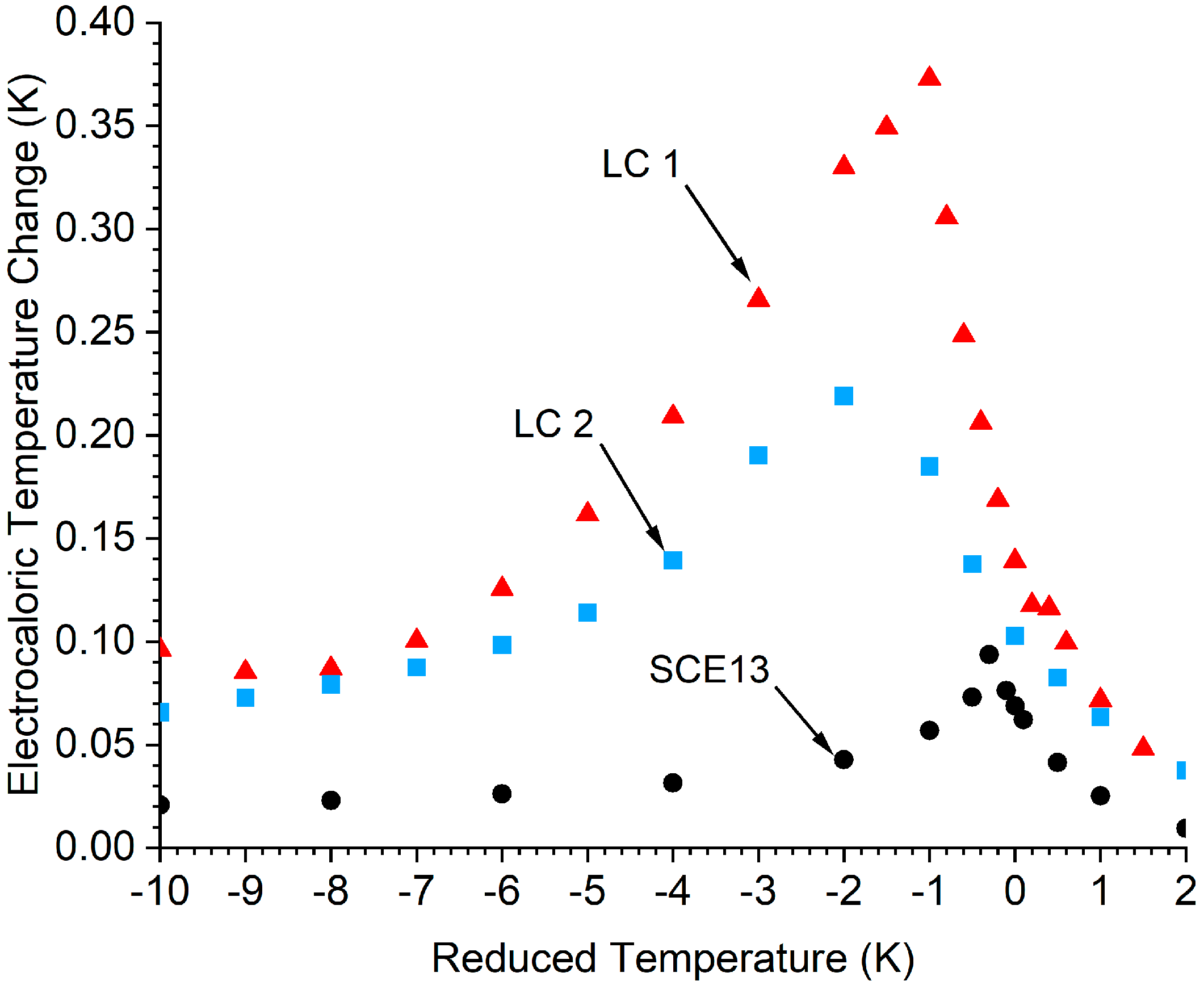
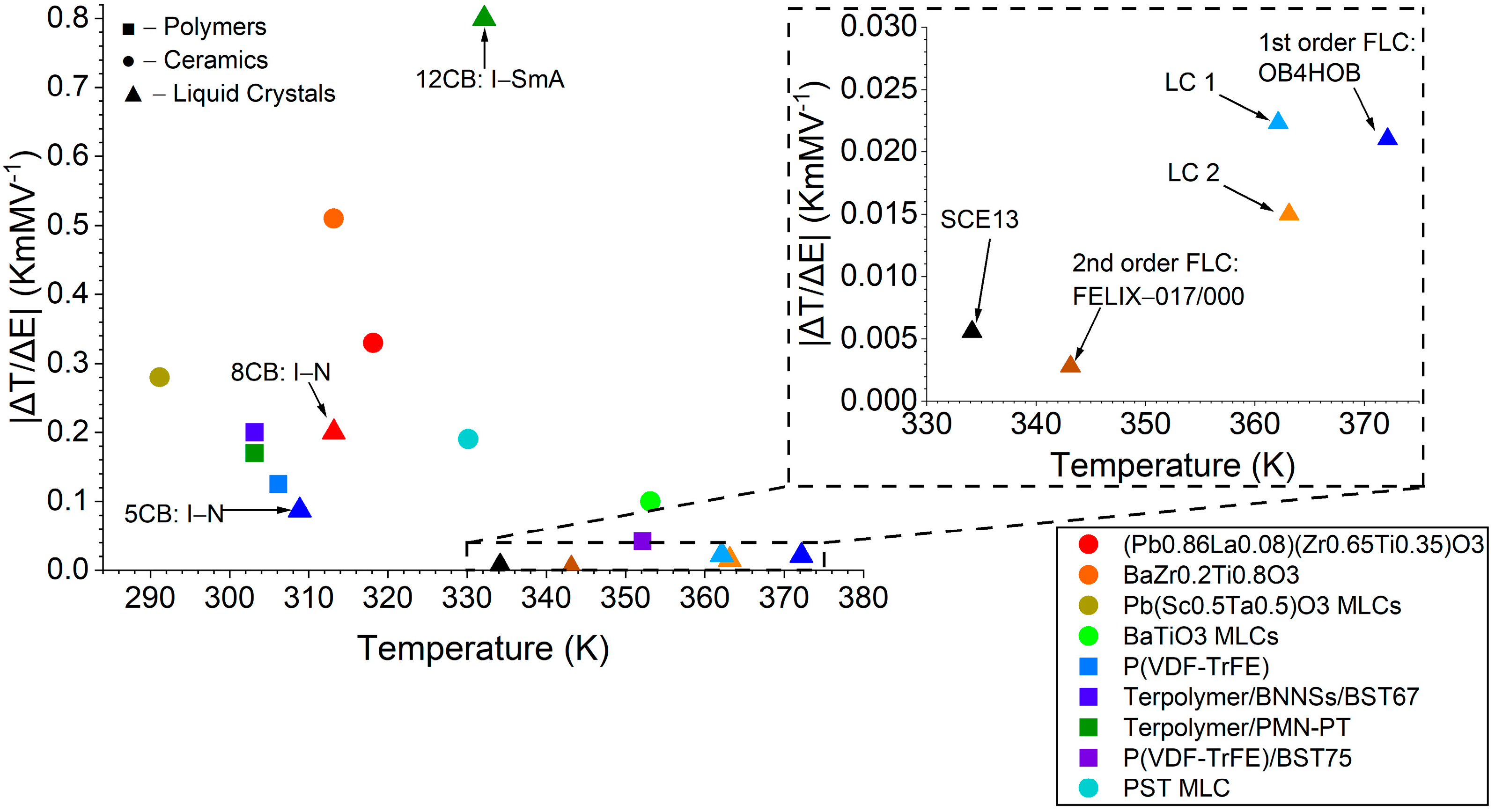
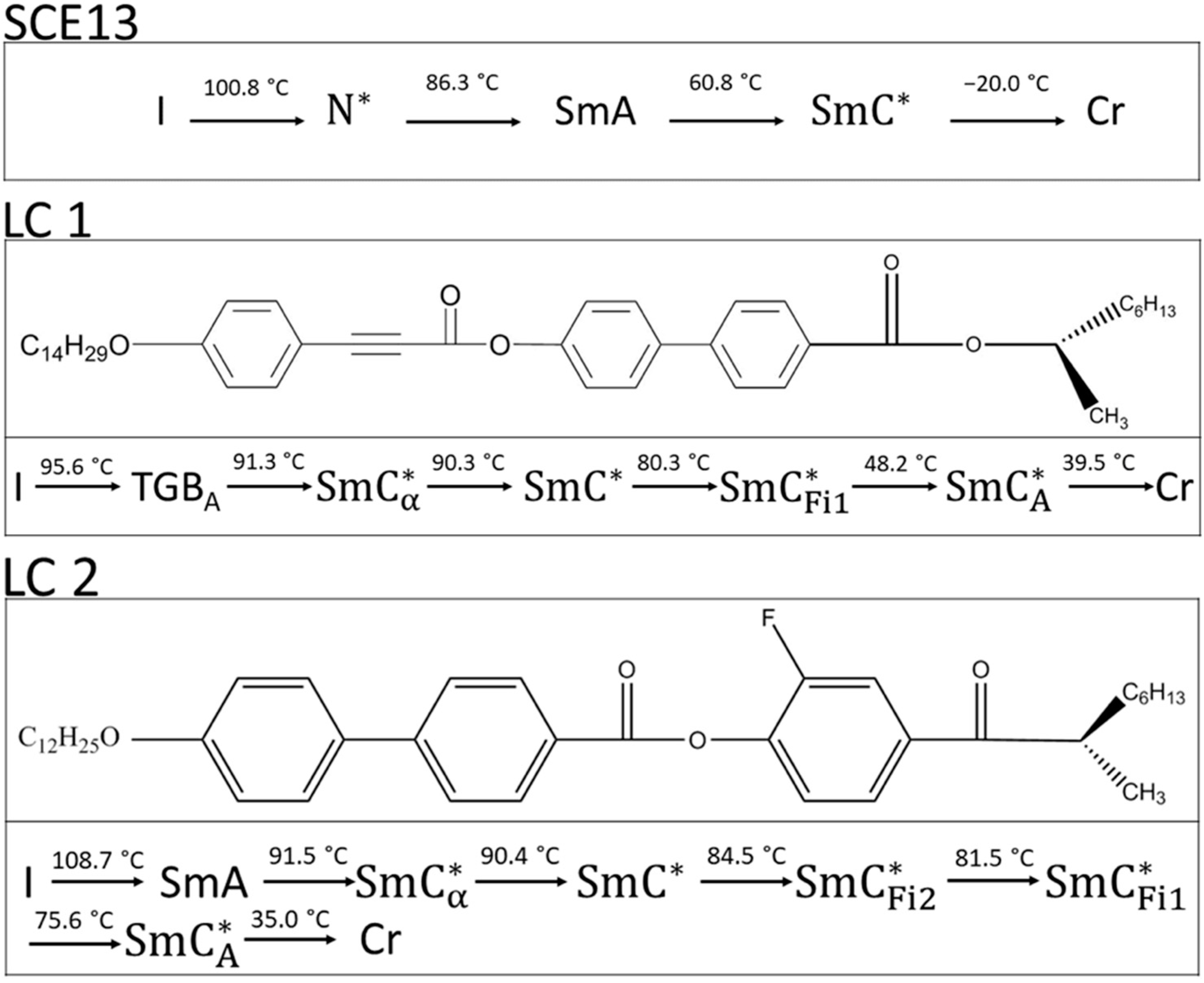
The 1980s saw the development of ferroelectric chiral smectic C (SmC*) liquid crystals (FLCs) with a clear focus on their application in fast electro-optic devices. However, as the only known fluid ferroelectric materials, they also have potential in other applications, one of which is in heat-exchange devices based on the electrocaloric effect. In particular, ferroelectric liquid crystals can be both the electrocaloric material and the heat exchanging fluid in an electrocaloric device, significantly simplifying some of the design constraints associated with solid dielectrics. In this paper, we consider the electrocaloric potential of three SmC* ferroelectric liquid crystal systems, two of which are pure materials that exhibit ferroelectric, antiferroelectric, and intermediate phases and one that was developed as a room-temperature SmC* material for electro-optic applications. We report the field-induced temperature changes of these selected materials, measured indirectly using the Maxwell method. The maximum induced temperature change determined, 0.37 K, is currently record-breaking for an FLC and is sufficiently large to make these materials interesting candidates for the development for electrocaloric applications. Using the electrocaloric temperature change normalised as a function of electric field strength, as a function of merit, the performances of FLCs are compared with ferroelectric ceramics and polymers.
Keywords: ferroelectric materials; smectic liquid crystals; electrocaloric effect ferroelectric materials; smectic liquid crystals; electrocaloric effect