
Article

Dynamic Simulation and Parameter Analysis of Contact Mechanics for Mimicking Geckos’ Foot Setae Array

1
Aerospace System Engineering Shanghai, Shanghai 201109, China
2
School of Mechanical Engineering, Nanjing University of Science and Technology, Nanjing 210094, China
3
Xi’an North Qinghua Electrical Co., Ltd., Xi’an 710025, China
*
Authors to whom correspondence should be addressed.
Crystals 2022, 12(2), 282; https://doi.org/10.3390/cryst12020282
Submission received: 23 January 2022 / Revised: 13 February 2022 / Accepted: 16 February 2022 / Published: 18 February 2022
(This article belongs to the Special Issue Dynamic Behavior of Materials)

Abstract

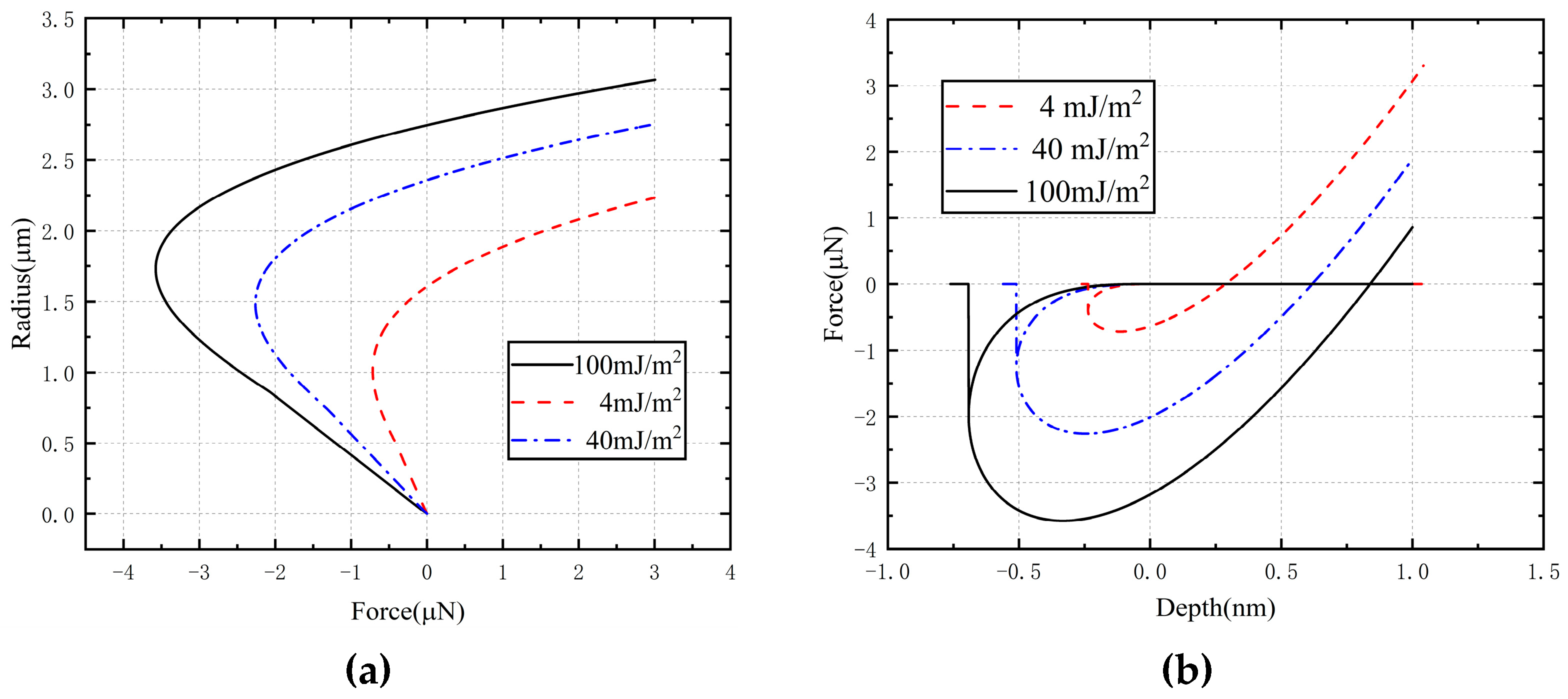
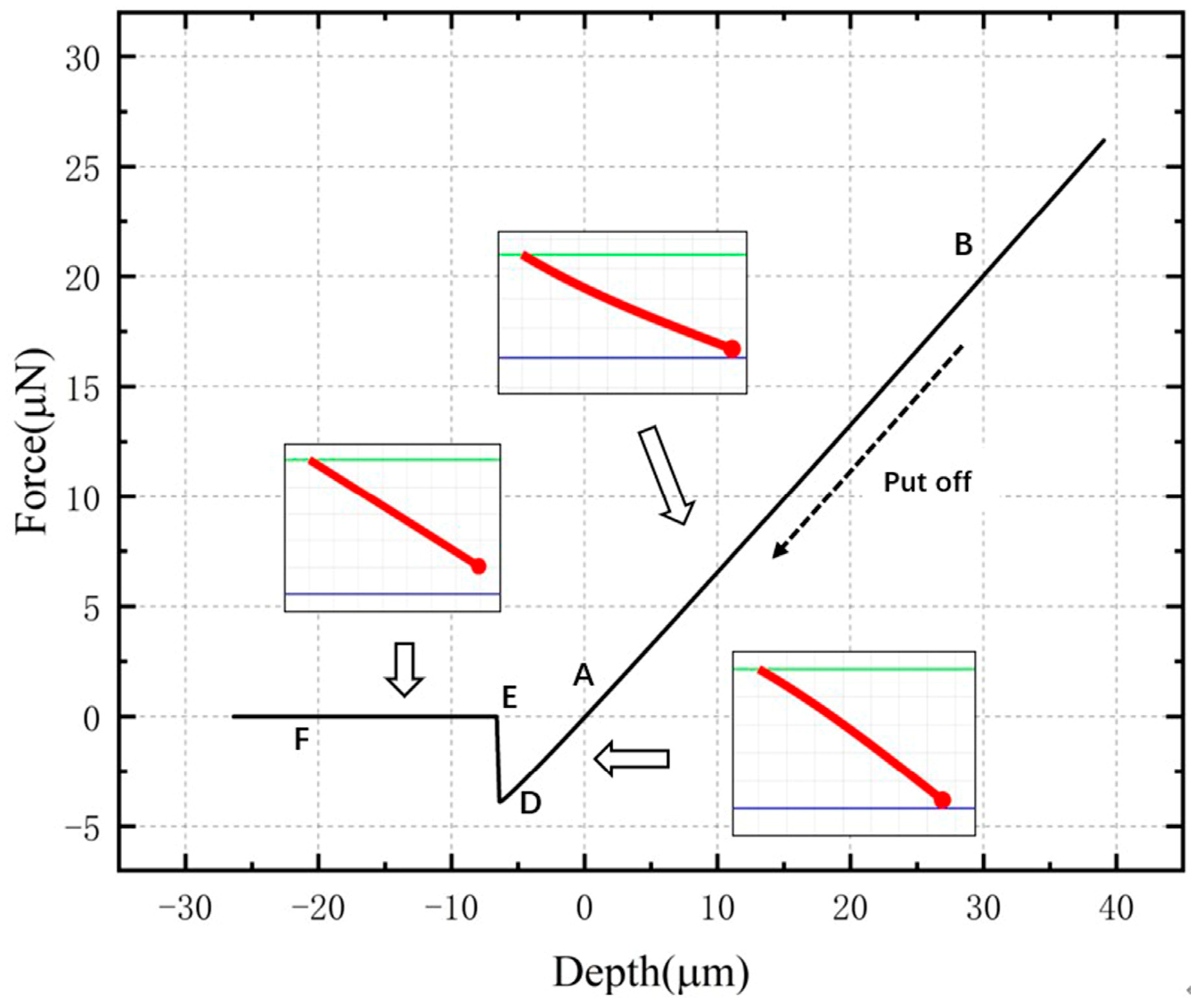
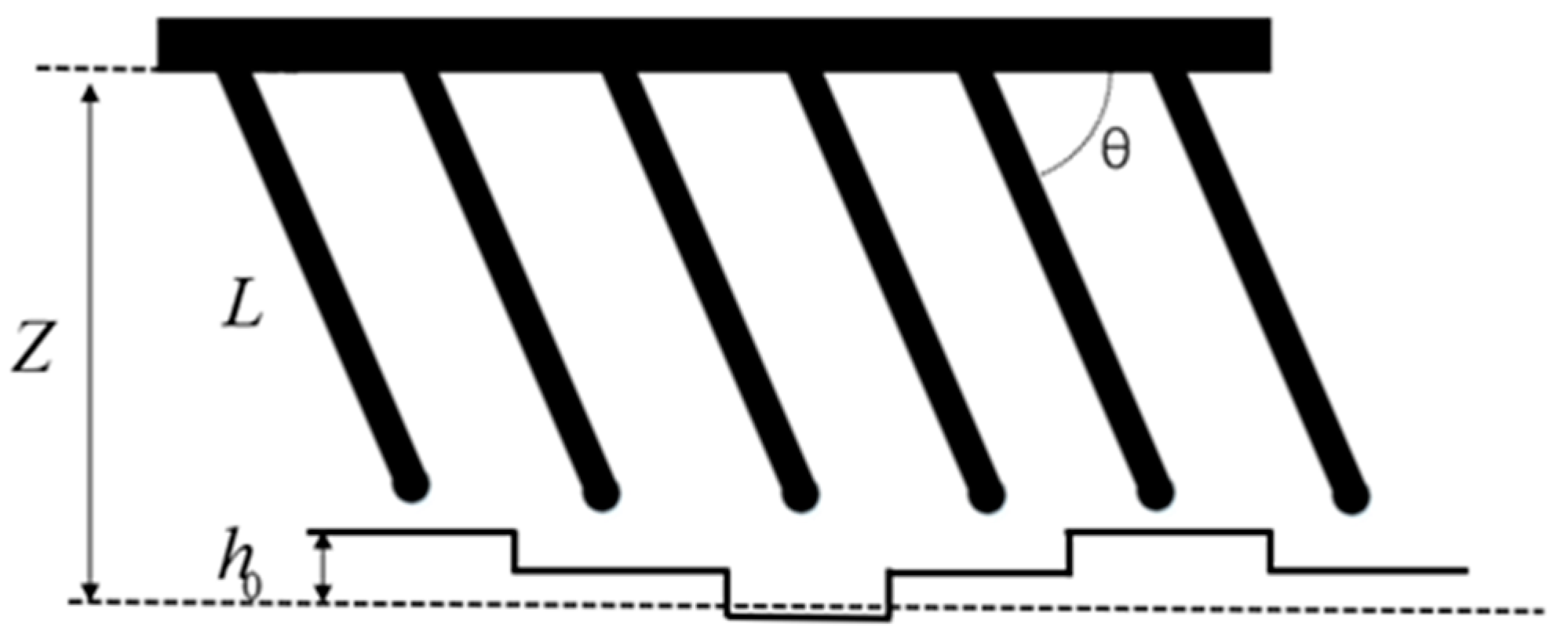
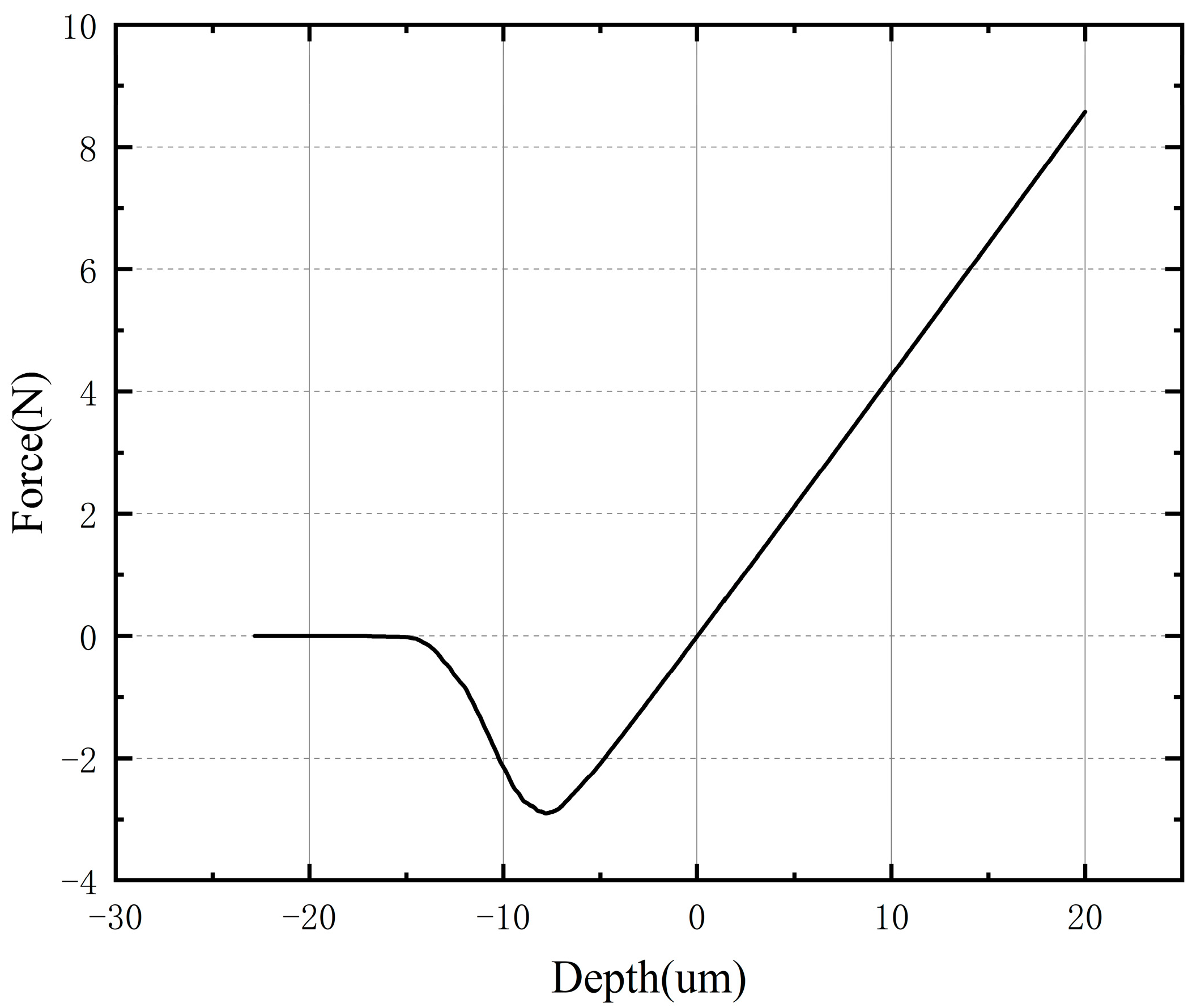
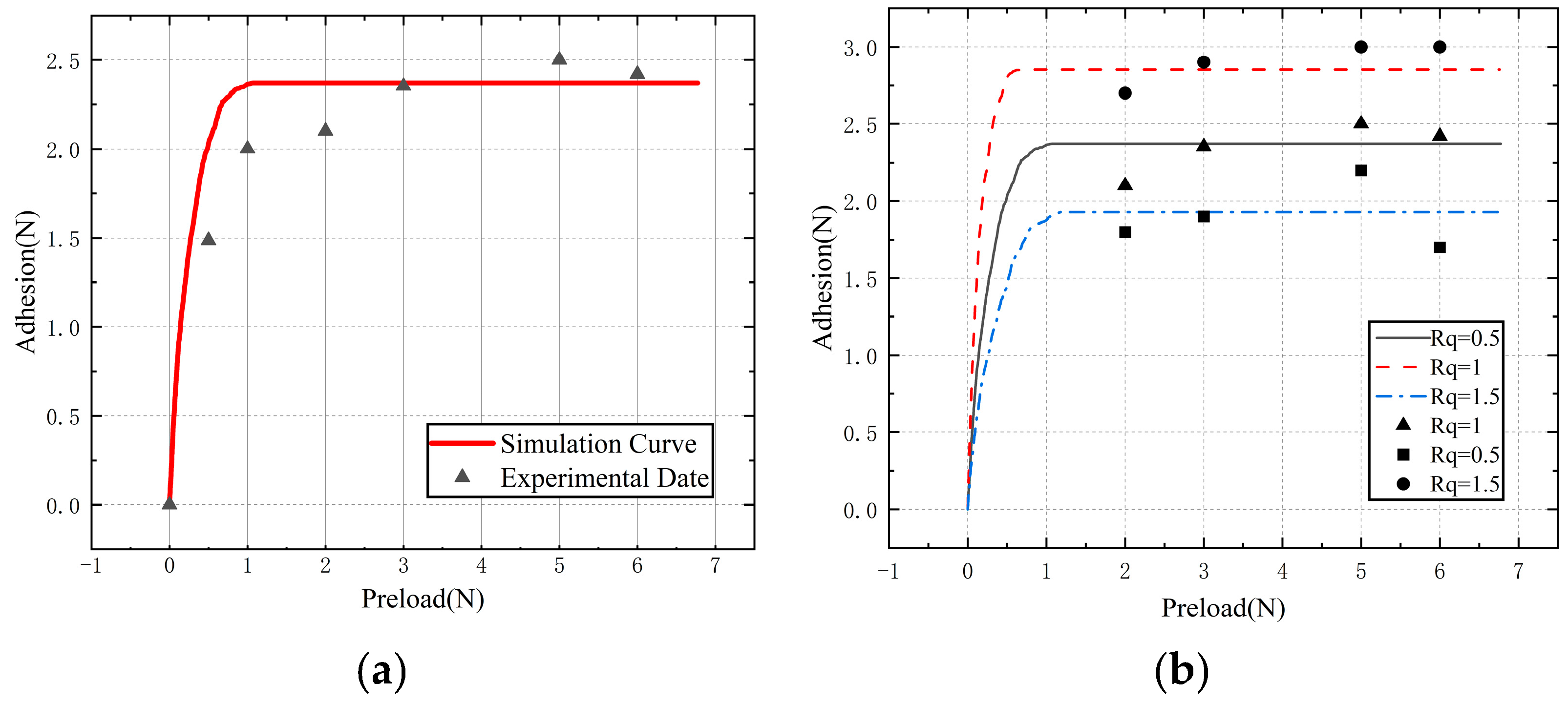
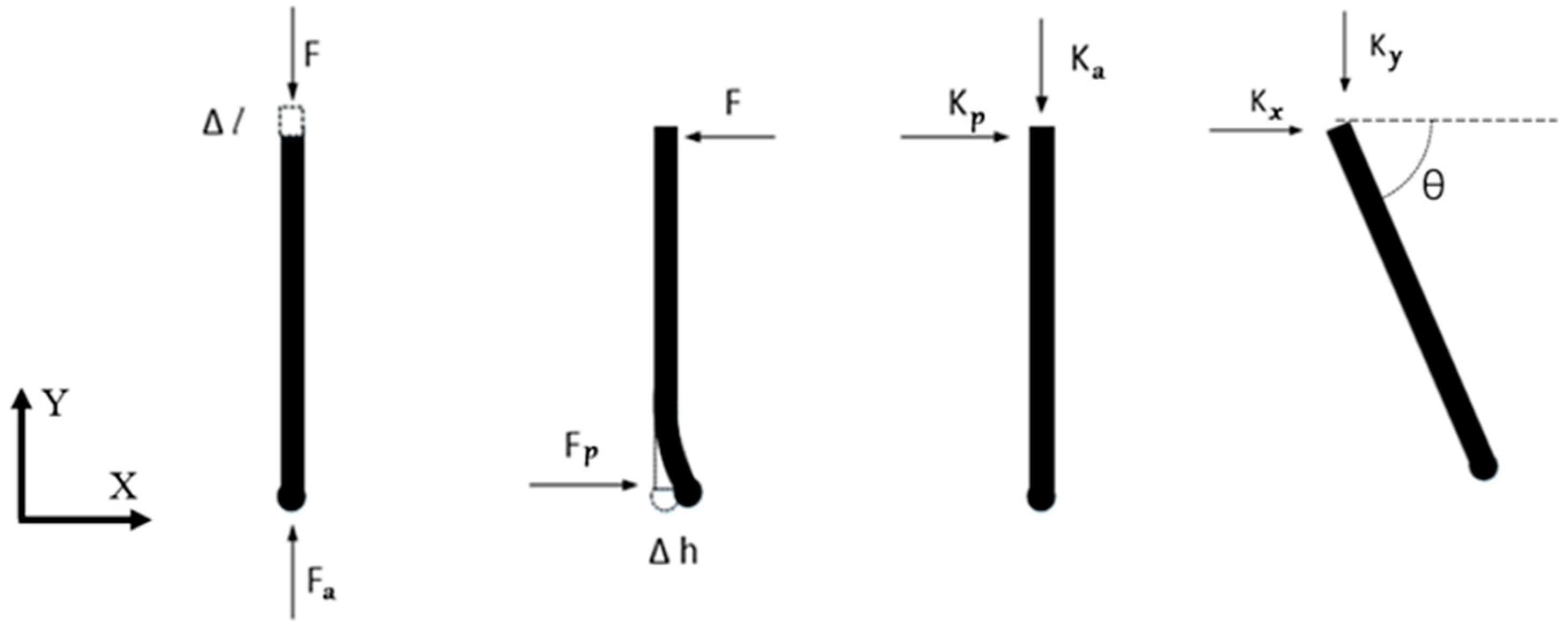
According to the dynamic characteristics of the adhesion desorption process between gecko-like polyurethane setae and the contact surface, the microcontact principle of an elastic sphere and plane is established based on the Johnson–Kendall–Robert model. On this basis, combined with the cantilever beam model, microscale adhesive contact models in the case of a single and an array of setae are obtained. The contact process is numerically simulated and verified by the adhesion desorption test. After that, the effects of external preload, the elastic modulus of setae material, the surface energy, and the surface roughness on the contact force and depth during the dynamic contact process of setae are studied. The results show that the error between the simulation and test is 15.9%, and the simulation model could reflect the real contact procedure. With the increase in preload, the push-off force of the setae array would grow and remain basically constant after reaching saturation. Increasing the elastic modulus of setae material would reduce the contact depth, but have little effect on the maximum push-off force; with the increase in the surface energy of the contact object, both the push-off force between the objects and the contact depth during desorption would increase. With the increase in wall roughness, the push-off force curve of the setae array becomes smoother, but the maximum push-off force would decrease. By exploring the dynamic mechanical characteristics of the micro angle of setae, the corresponding theoretical basis is provided for the numerical simulation of the adsorption force of macro materials.
Keywords: Johnson–Kendall–Robert model; polyurethane setae array; surface energy; modeling; simulation Johnson–Kendall–Robert model; polyurethane setae array; surface energy; modeling; simulation