Article

Theoretical Prediction of CHn Crystal Structures under High Pressures
1
Beijing Advanced Innovation Center for Materials Genome Engineering, Computer School, Beijing Information Science and Technology University, Beijing 100192, China
2
Beijing Advanced Innovation Center for Materials Genome Engineering, Industry-University Cooperation Base between Beijing Information S&T University and Synfuels China Technology Co. Ltd., Beijing 101400, China
*
Author to whom correspondence should be addressed.
Crystals 2021, 11(12), 1499; https://doi.org/10.3390/cryst11121499
Submission received: 26 October 2021 / Revised: 17 November 2021 / Accepted: 25 November 2021 / Published: 2 December 2021
(This article belongs to the Special Issue Graphene Mechanics (Volume II))

Abstract

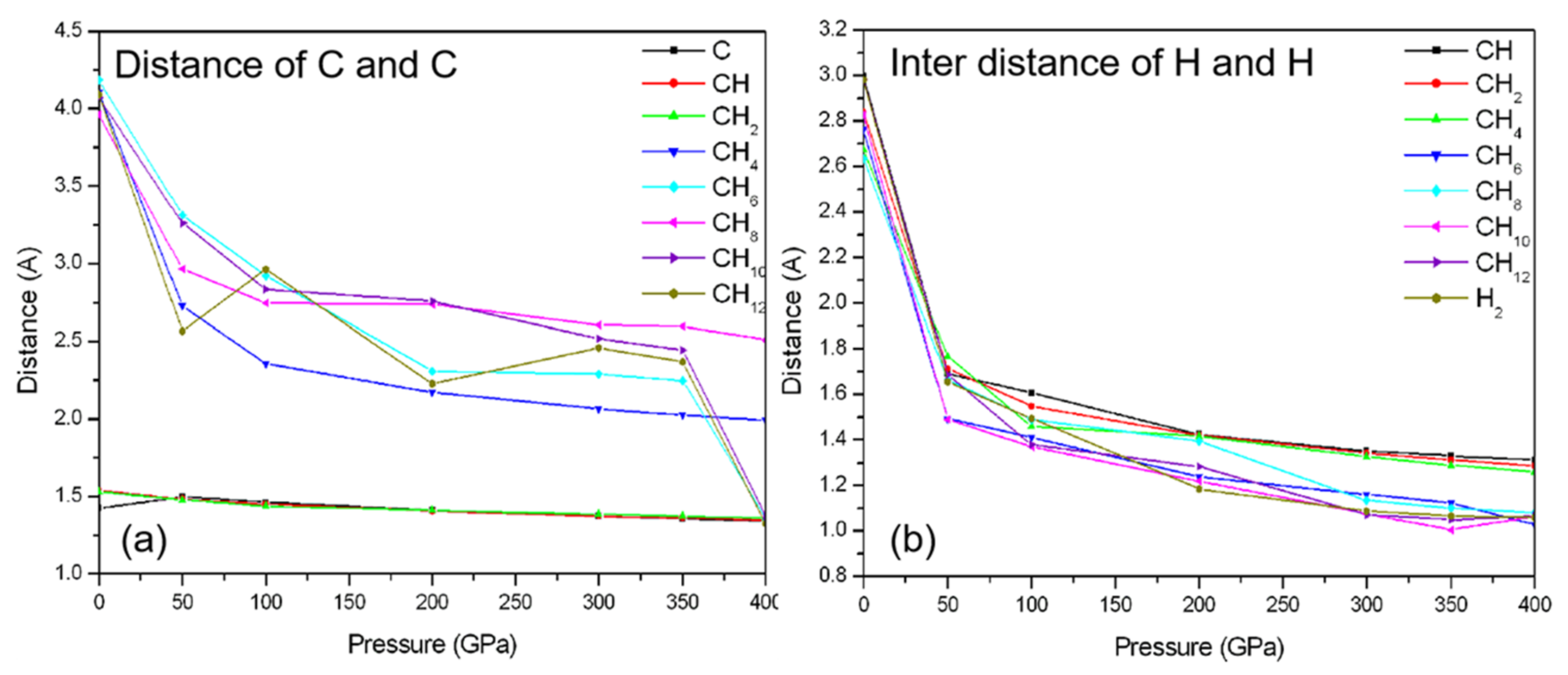
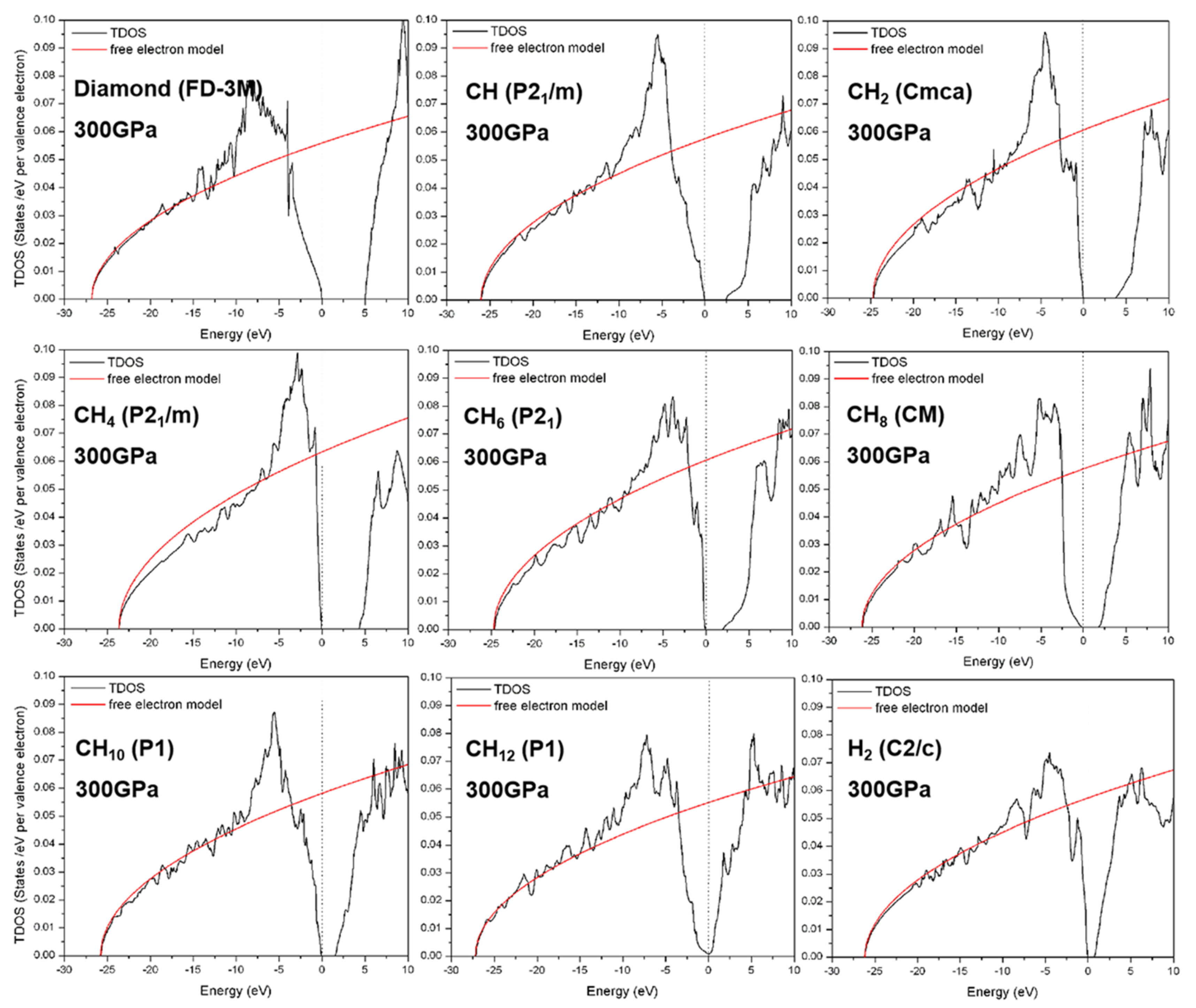
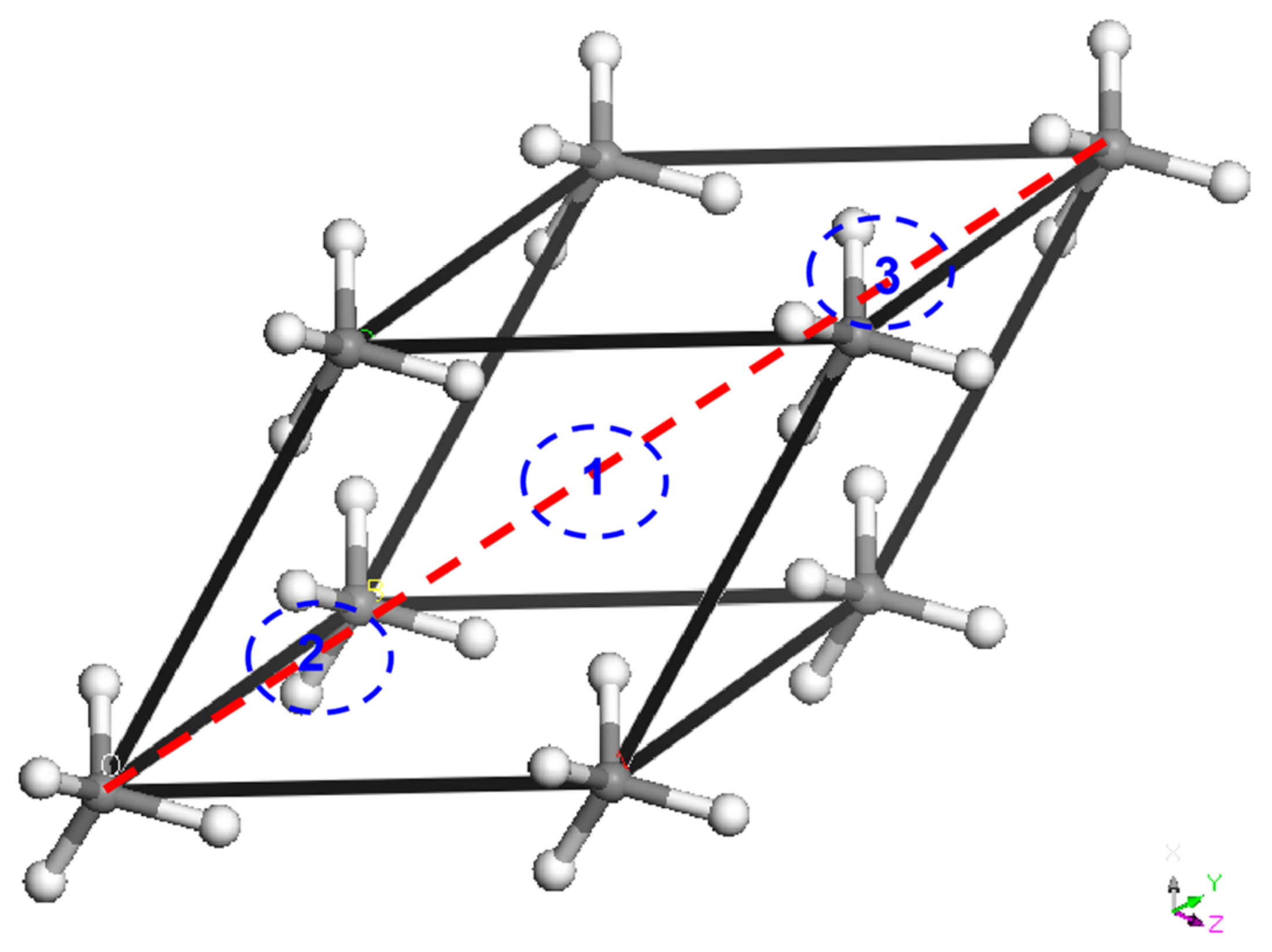
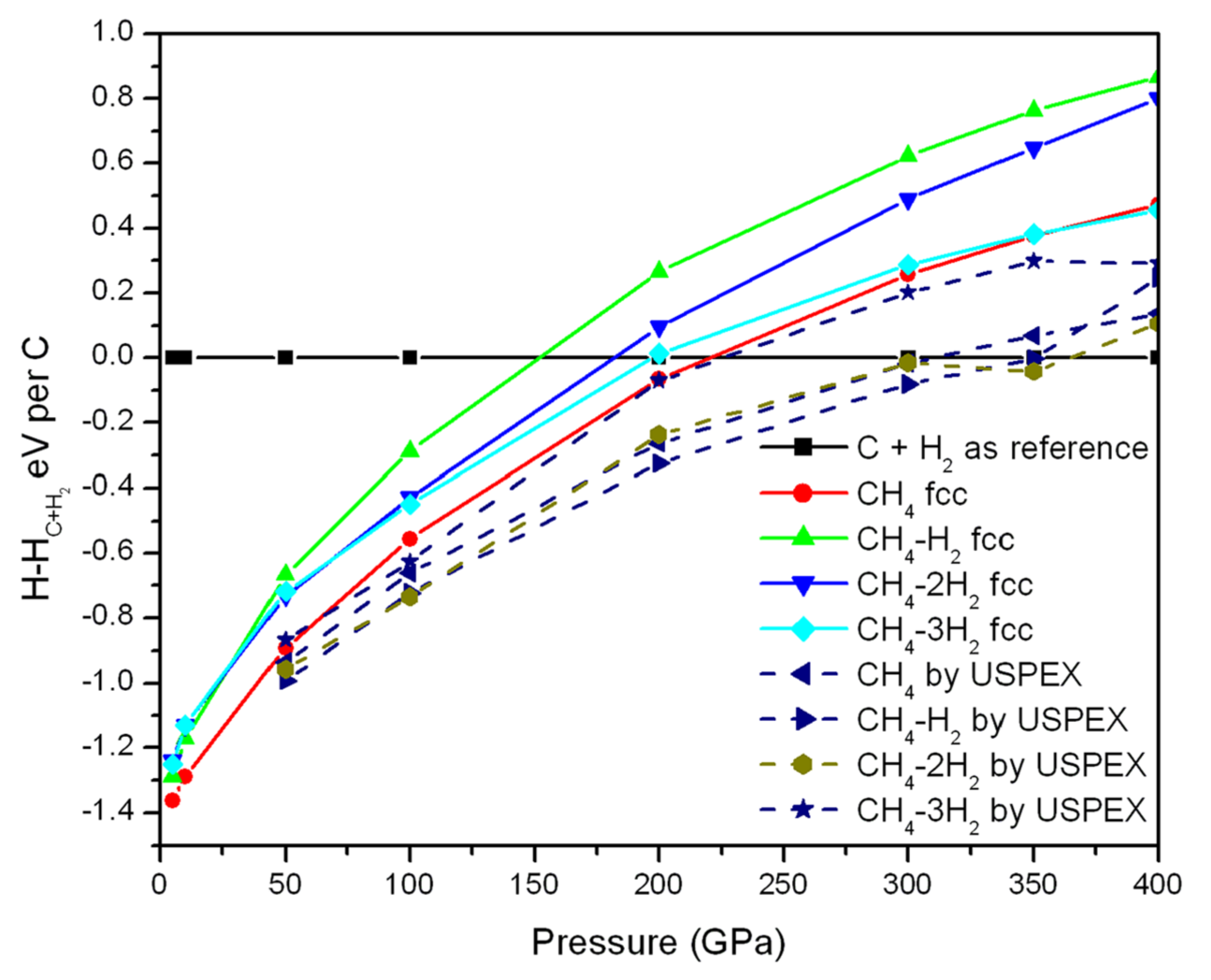
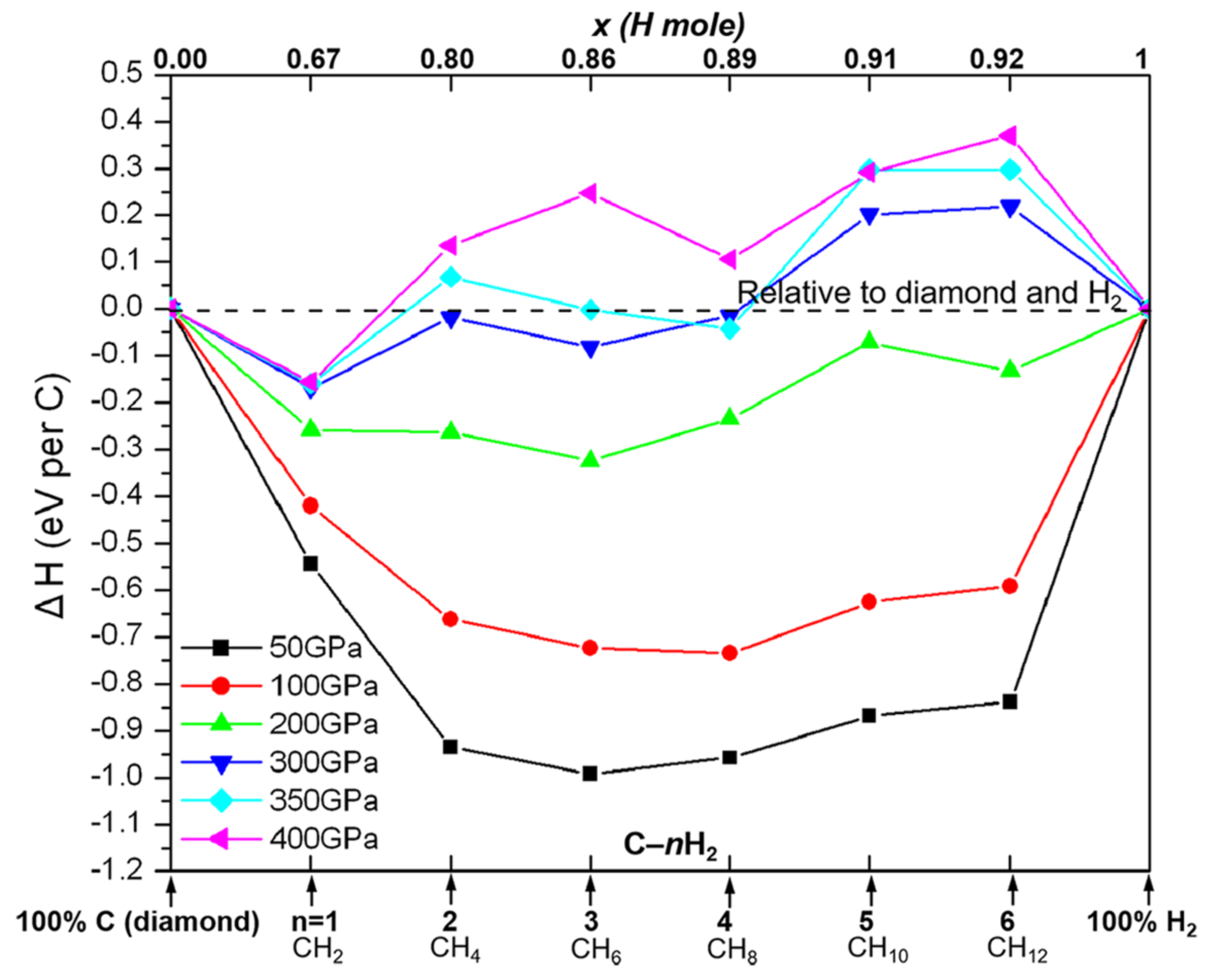
CHn is the precursor unit for graphene synthesis. We have theoretically predicated a series of CHn structures with n = 1, 2, 4, 6, 8, 10, and 12 at elevated pressures (ambient pressure, 50, 100, 200, 300, 350, and 400 GPa) using evolutionary algorithms. The predicted CH and CH2 structures are graphane-type and polyethylene over the whole considered pressure range, respectively. The molecular crystalline methane is predicted for the stoichiometry of CH4. The combination of methane and H2 for CH6, CH8, CH10, and CH12 up to 300 GPa are obtained. At 400 GPa, the mixture of polymer and H2 for CH6, CH10, and CH12 comes into play. From the computed enthalpy, higher pressure and more hydrogen concentration contributed to the decomposition (to carbon and H2) of CHn systems. The total density of states for these CHn structures show that only the CH12 phase is metallic above 300 GPa. The rotational properties are traced in H2 and the CHn structures. The CH4 rotation is more sensitive to the pressure. The H2 units are nearly freely rotational. Other structures of CHn, including fcc-type and experimentally known structures, are not competitive with the structures predicted by evolutionary algorithms under high pressure region. Our results suggest that the CHn (n > 4) system is a potential candidate for hydrogen storage where H2 could be released by controlling the pressure.
Keywords: CHn crystal; evolutionary algorithms; high pressure CHn crystal; evolutionary algorithms; high pressure