Article

The Role of Iodine Catalyst in the Synthesis of 22-Carbon Tricarboxylic Acid and Its Ester: A Case Study

1
Xinjiang Technical Institute of Physics and Chemistry, Chinese Academy of Sciences, Urumqi 830011, China
2
University of Chinese Academy of Sciences, Beijing 100049, China
3
Department of chemical and environmental engineering, Xinjiang Institute of Engineering, Urumqi 830026, China
4
School of Materials and Energy, University of Electronic Science and Technology of China, Chengdu 611731, China
*
Authors to whom correspondence should be addressed.
Catalysts 2019, 9(12), 972; https://doi.org/10.3390/catal9120972
Submission received: 1 November 2019 / Revised: 18 November 2019 / Accepted: 18 November 2019 / Published: 20 November 2019
(This article belongs to the Special Issue Advanced Strategies for Catalyst Design)

Abstract

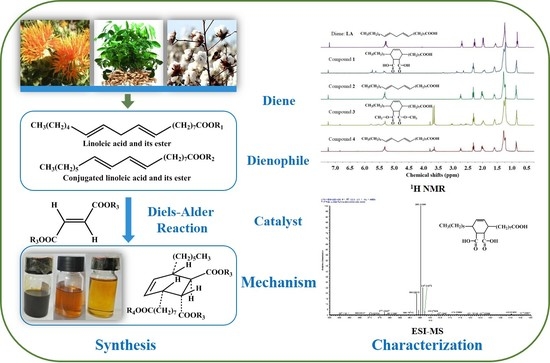
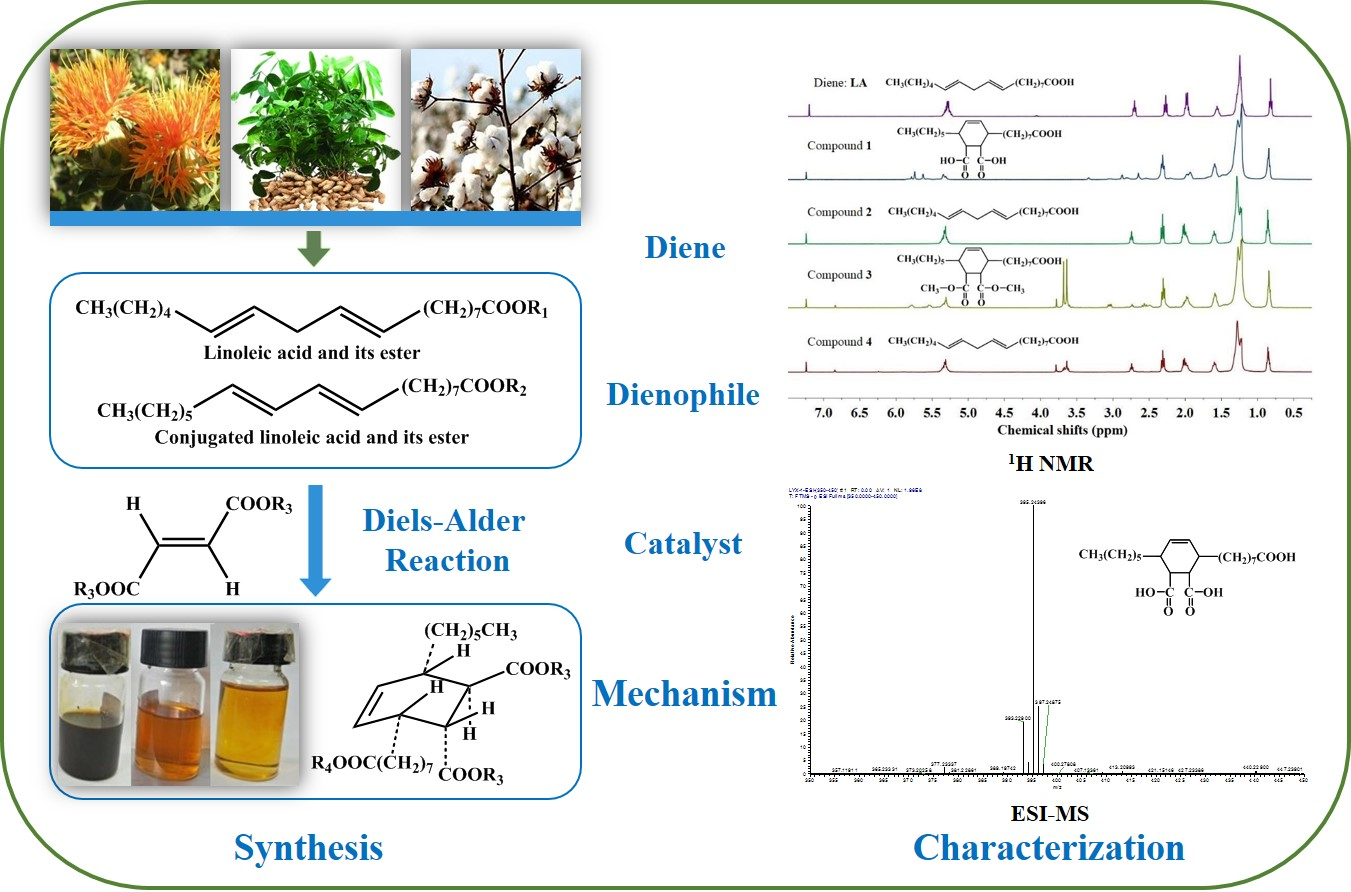
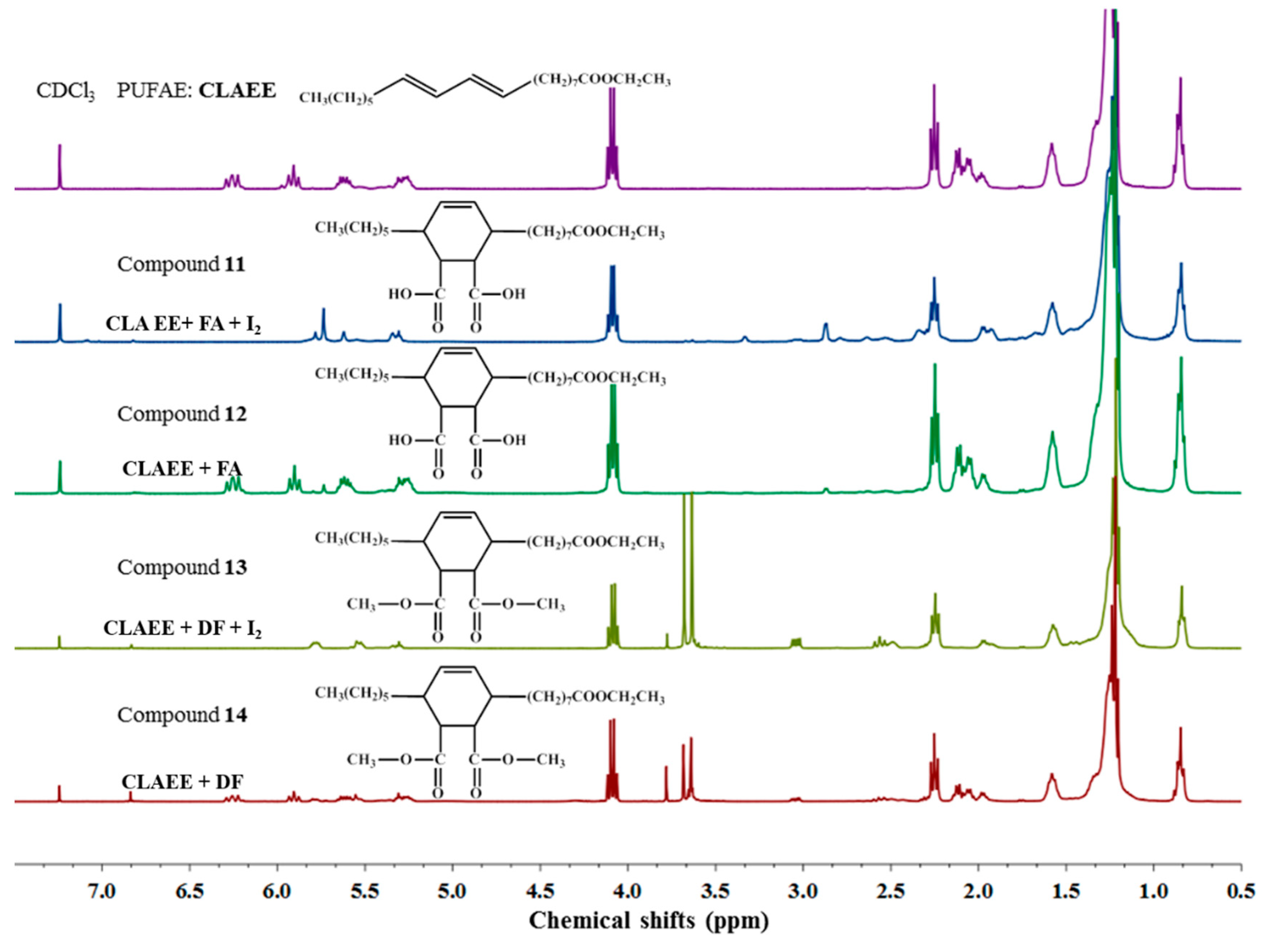
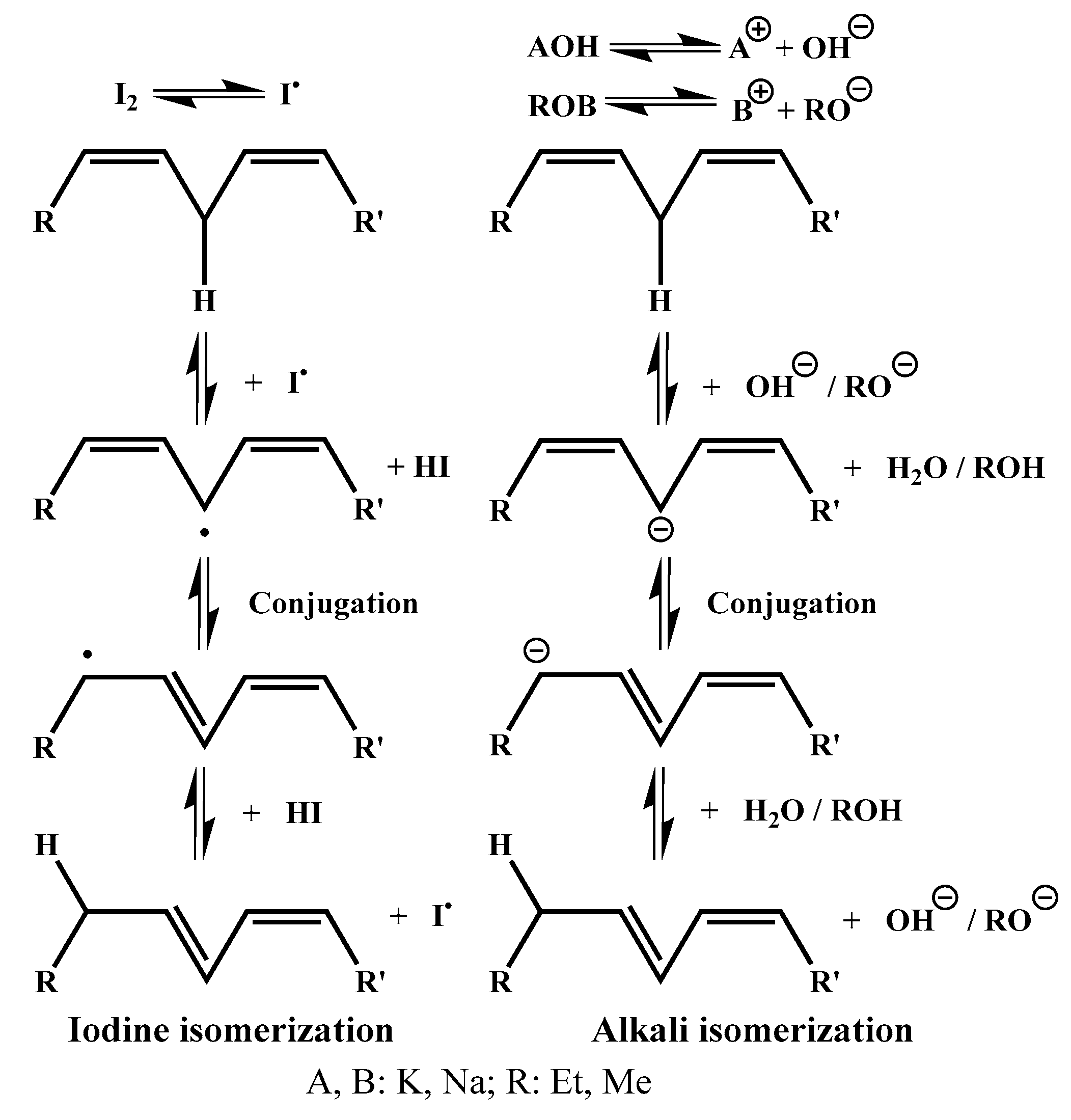
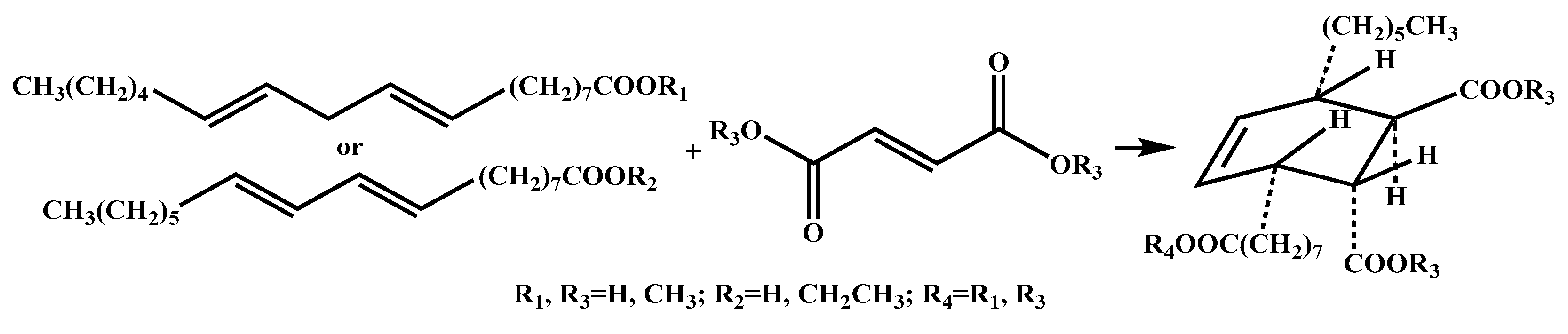
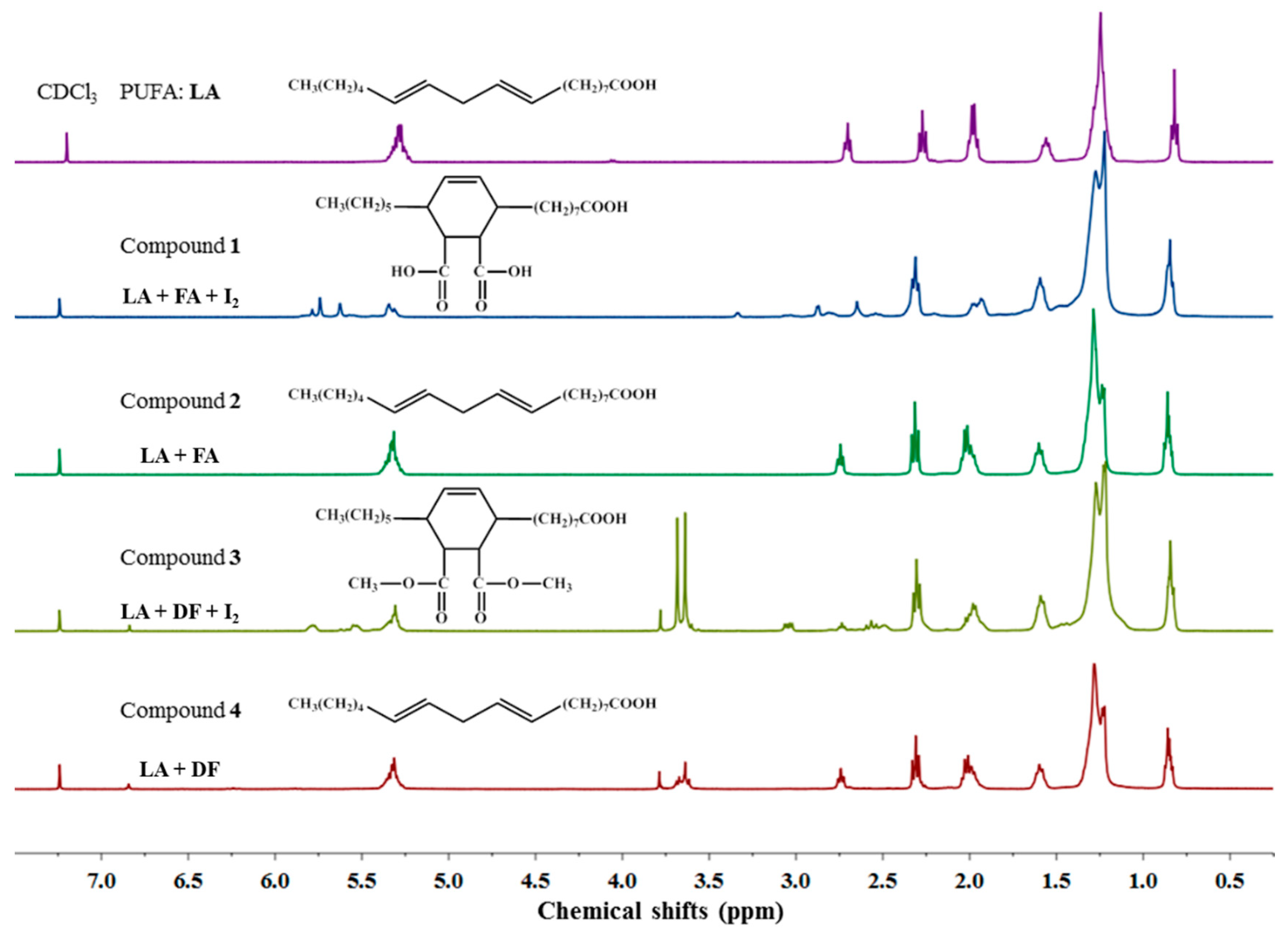
Here, 22-carbon tricarboxylic acid (C22TA) and its ester (C22TAE) were prepared via the Diels–Alder reaction of polyunsaturated fatty acids (PUFAs) and their esters (PUFAEs) as dienes with fumaric acid (FA) and dimethyl fumarate (DF) as dienophiles, respectively. The role of an iodine catalyst for the synthesis of C22TA and C22TAE in the Diels–Alder type reaction was investigated using a spectroscopic approach. The chemical structures of the products were characterized using proton nuclear magnetic resonance (1H-NMR) and electrospray ionization mass spectrometry (ESI-MS) analysis. Results showed that nonconjugated dienes can react with dienophiles through a Diels–Alder reaction with an iodine catalyst, and that iodine transformed the nonconjugated double bonds of dienes into conjugated double bonds via a radical process. DF was more favorable for the Diels–Alder reaction than FA. This was mainly because the dienophile DF contained an electron-withdrawing substituent, which reduced the highest and lowest occupied molecular orbital (HOMO–LUMO) energy gap and accelerated the Diels–Alder reaction. By transforming nonconjugated double bonds into conjugated double bonds, iodine as a Lewis acid increased the electron-withdrawing effect of the carbonyl group on the carbon–carbon double bond and reduced the energy difference between the HOMO of diene and the LUMO of dienophile, thus facilitating the Diels–Alder reaction.
Keywords: Diels–Alder reaction; 22-carbon tricarboxylic acid; iodine; 1H-NMR; ESI-MS Diels–Alder reaction; 22-carbon tricarboxylic acid; iodine; 1H-NMR; ESI-MS
Graphical Abstract