Review

Strategies of Coping with Deactivation of NH3-SCR Catalysts Due to Biomass Firing

Center for Catalysis and Sustainable Chemistry, Department of Chemistry, Building 207, Technical University of Denmark, DK-2800 Kongens Lyngby, Denmark
*
Author to whom correspondence should be addressed.
Catalysts 2018, 8(4), 135; https://doi.org/10.3390/catal8040135
Submission received: 28 February 2018 / Revised: 22 March 2018 / Accepted: 22 March 2018 / Published: 30 March 2018
(This article belongs to the Special Issue Selective Catalytic Reduction of NOx)

Abstract

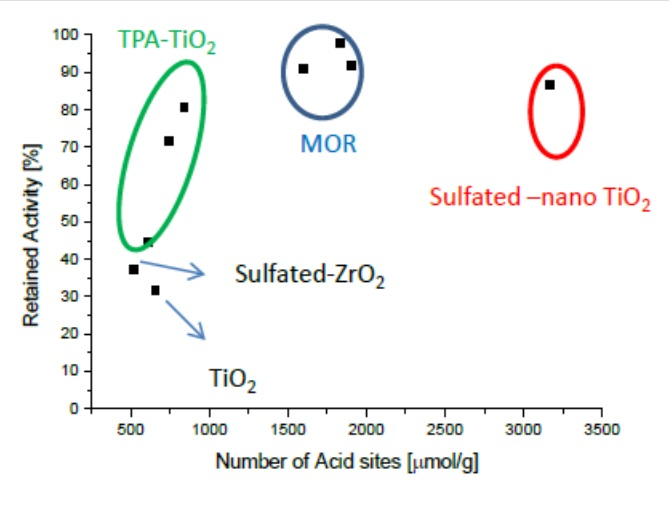
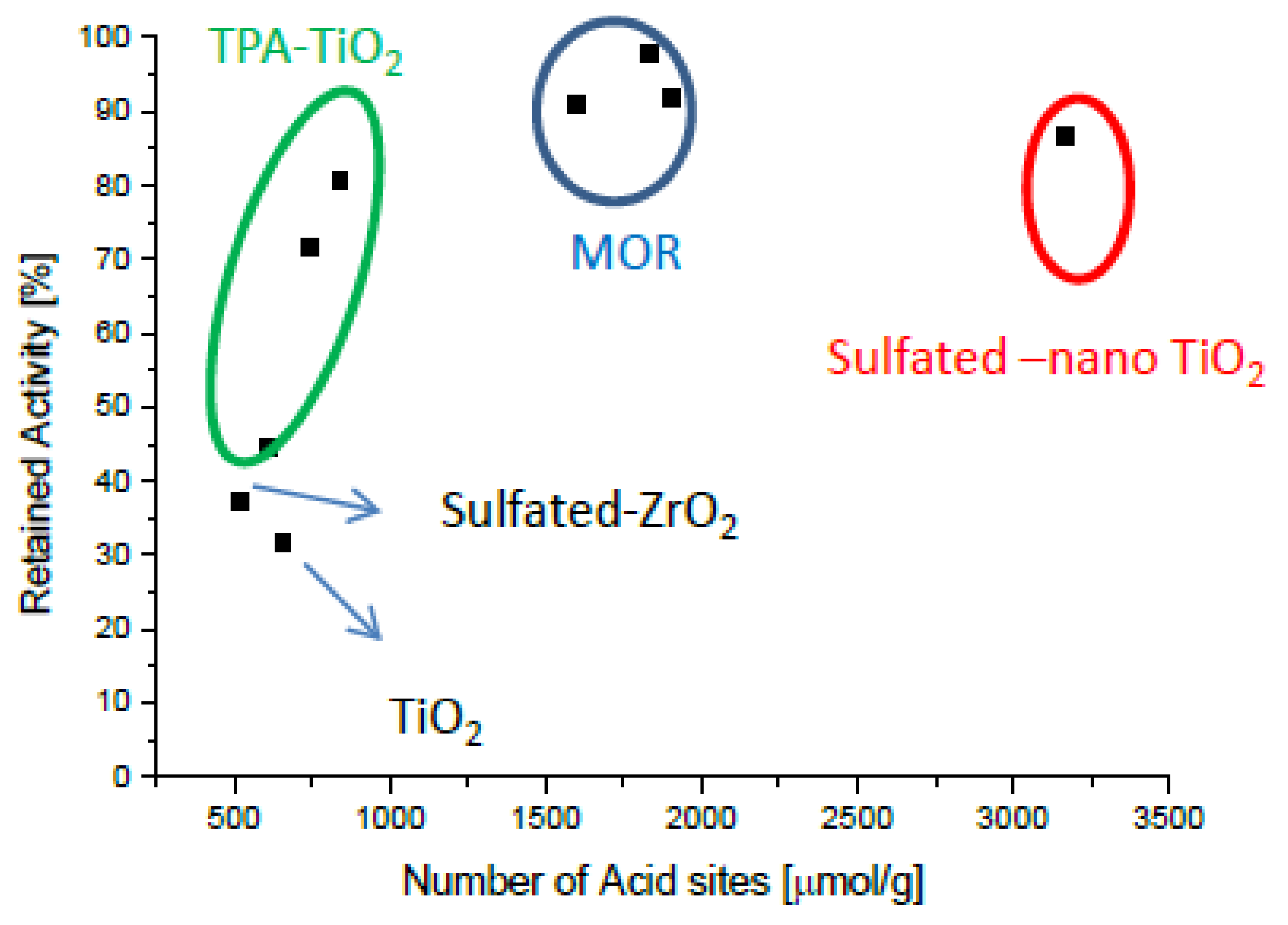
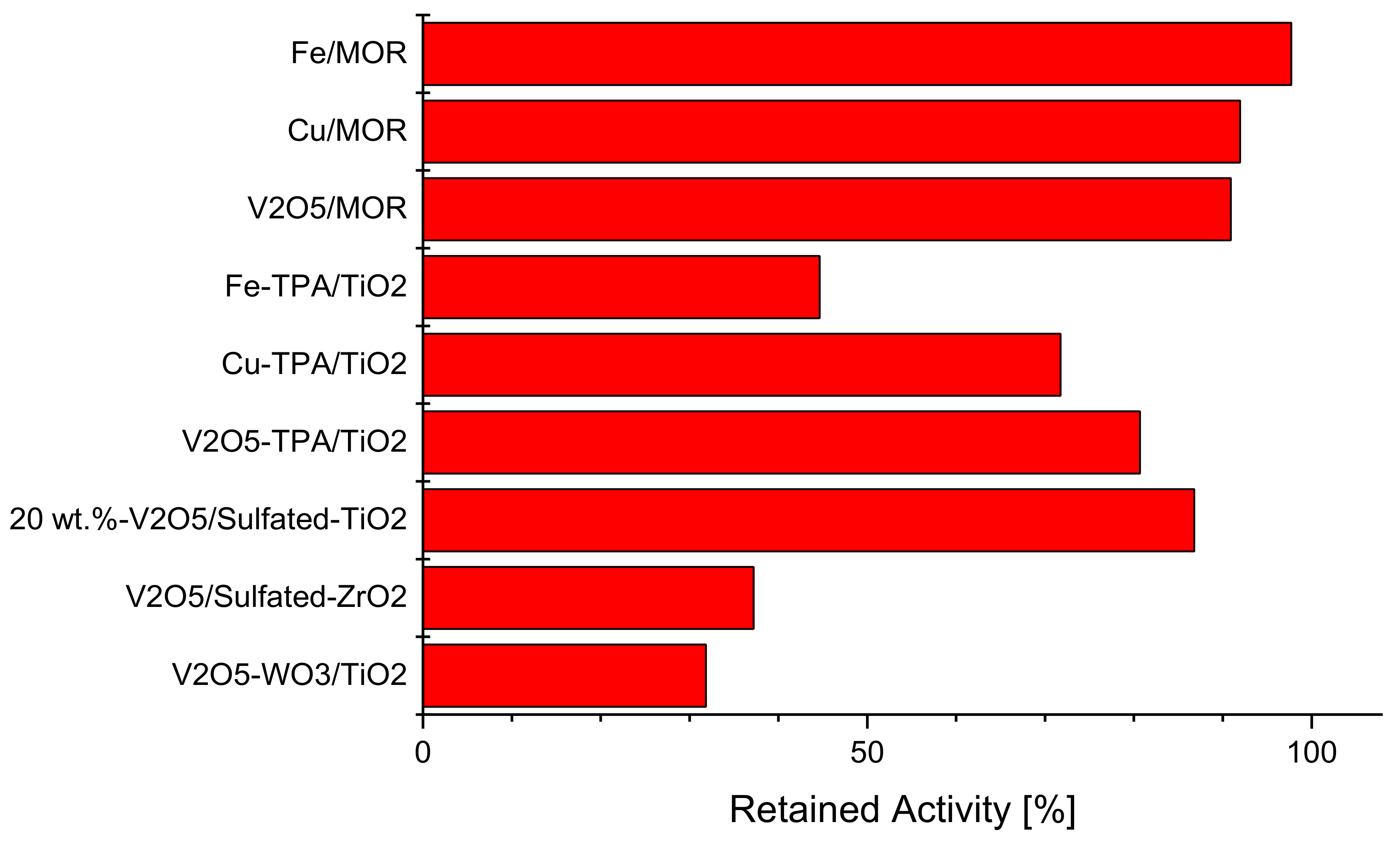
Firing of biomass can lead to rapid deactivation of the vanadia-based NH3-SCR catalyst, which reduces NOx to harmless N2. The deactivation is mostly due to the high potassium content in biomasses, which results in submicron aerosols containing mostly KCl and K2SO4. The main mode of deactivation is neutralization of the catalyst’s acid sites. Four ways of dealing with high potassium contents were identified: (1) potassium removal by adsorption, (2) tail-end placement of the SCR unit, (3) coating SCR monoliths with a protective layer, and (4) intrinsically potassium tolerant catalysts. Addition of alumino silicates, often in the form of coal fly ash, is an industrially proven method of removing K aerosols from flue gases. Tail-end placement of the SCR unit was also reported to result in acceptable catalyst stability; however, flue-gas reheating after the flue gas desulfurization is, at present, unavoidable due to the lack of sulfur and water tolerant low temperature catalysts. Coating the shaped catalysts with thin layers of, e.g., MgO or sepiolite reduces the K uptake by hindering the diffusion of K+ into the catalyst pore system. Intrinsically potassium tolerant catalysts typically contain a high number of acid sites. This can be achieved by, e.g., using zeolites as support, replacing WO3 with heteropoly acids, and by preparing highly loaded, high surface area, very active V2O5/TiO2 catalyst using a special sol-gel method.
Keywords: biomass firing; NH3 SCR; potassium resistant catalysts; alumino silicate addition; coal ash; tail end placement; basic coating; KCl; aerosol biomass firing; NH3 SCR; potassium resistant catalysts; alumino silicate addition; coal ash; tail end placement; basic coating; KCl; aerosol
Graphical Abstract