


Abstract
Graphitic carbon nitride (g-C3N4) is a promising material for photocatalytic applications such as solar fuels production through CO2 reduction and water splitting, and environmental remediation through the degradation of organic pollutants. This promise reflects the advantageous photophysical properties of g-C3N4 nanostructures, notably high surface area, quantum efficiency, interfacial charge separation and transport, and ease of modification through either composite formation or the incorporation of desirable surface functionalities. Here, we review recent progress in the synthesis and photocatalytic applications of diverse g-C3N4 nanostructured materials, and highlight the physical basis underpinning their performance for each application. Potential new architectures, such as hierarchical or composite g-C3N4 nanostructures, that may offer further performance enhancements in solar energy harvesting and conversion are also outlined.
1. Introduction
1.1. Background
Future energy production, storage and security, and combating anthropogenic environmental pollution, represent key global challenges for both developed and emerging nations [1,2]. Sunlight, an essentially limitless source of clean energy, has the potential to address both these challenges [3,4], and its utilization to this end entered mainstream science following breakthroughs in semiconductor light harvesting for photocatalysis by Honda and Fujishima in the 1970s [5,6,7]. This discovery led to extensive research into titania semiconductor photocatalysts, principally for water splitting and the degradation of aqueous or airborne organic pollutants under UV light irradiation [8,9,10,11,12,13]. However, efficient harnessing of visible light (the major component of solar radiation that reaches the Earth’s surface) by photocatalysts to drive chemical transformations remains problematic [14,15,16] due to identifying suitable materials that possess narrow band gaps, high quantum yields, efficient charge carrier transport, and low rates of charge carrier recombination, and good thermo-, photo-, and chemical stability. The development of such low cost photocatalysts from earth abundant, and ideally non-toxic elements for visible light harvesting would unlock opportunities for their large-scale application to supplement existing renewable energy networks and pollution control systems.
1.2. Semiconductor Photocatalysis
Semiconductor photocatalysis refers to the acceleration of chemical transformations (most commonly oxidations and reductions) brought about through the activation of a catalyst, comprising a semiconductor either alone or in combination with metal/organic/organometallic promoters, through light absorption, with subsequent charge and/or energy transfer to adsorbed species. Note that the direct activation of reactants and intermediates through light absorption is the realm of photochemistry; in establishing whether a transformation is truly photocatalytic it is therefore crucial to establish that photons are absorbed by the catalyst rather than adsorbates [17,18]. In the photocatalytic production of so-called ‘solar fuels’, photoexcited charge carriers drive the conversion of water and CO2 into H2, CO, CH4, CH3OH and related oxygenates and hydrocarbons [19,20,21]. Such processes parallel those in nature wherein sunlight absorbed by chlorophyll in plants promotes starch and oxygen production from carbon dioxide and water), and are hence termed artificial photosynthesis (Figure 1). Photoexcited charge carriers can also either induce the total oxidation (mineralization) of organic pollutants such as those encountered in aquatic environments, either directly, or through the creation of potent oxidants such as hydroxyl radicals [22].
Figure 1.
(a) Natural, and (b) artificial photosynthesis through water splitting and CO2 reduction, and (c) photodegradation of aqueous organic pollutants.
1.3. Photocatalytic Mechanisms
Semiconductor photocatalysis is initiated by exciton formation following photon absorption and the excitation of electrons from the valence band into the conduction band (Step I). The resulting electron–hole pairs may recombine in either the bulk of the semiconductor, or at the surface, with the associated energy released through either fluorescence or thermal excitation of the lattice (Step II); recombination is the primary process that limits photocatalyst efficiency after photon capture. Electrons (and holes) that migrate to the surface of the semiconductor and do not undergo rapid recombination may participate in various oxidation and reduction reactions with adsorbates such as water, oxygen, and other organic or inorganic species (Steps III and IV) [9,10,23,24]. These steps are summarized below and illustrated in Figure 2:
Figure 2.
Principal photophysical processes for a semiconductor (SC) under light irradiation.
- Step I
- Light absorption .
- Step II
- Recombination .
- Step III
- Reduction .
- Step IV
- Oxidation .
Oxidation and reduction reactions are fundamental to photocatalytic environmental remediation and solar fuel production, and are ultimately limited by the reduction potential of photoexcited electrons in the conduction band and oxidation potential of photogenerated holes in the valence band. The redox potential, band energies and gap of a semiconductor therefore largely determine the likelihood and rate of charge transfer, and hence are key design parameters for photocatalysts [12,25]. Although the underlying physics of space charge carriers and surface-electronic structure of photocatalysts varies between materials and applications, in essence, semiconductor photocatalysis represents interfacial reactions between electrons and holes generated through band gap excitation.
2. Photocatalytic Materials
The discovery of photocatalytic water splitting over titania electrodes under UV irradiation [5] has led to intensive research into explored H2 production through this approach. Similarly, the first report on the photocatalytic oxidation of cyanide ions over TiO2 powder [26] prompted a rapid expansion in environmental purification research and technologies, particularly for aqueous environments. In both cases, recent research has focused on identifying and developing alternative semiconductors to titania, offering superior performance under solar (rather than UV irradiation) [25]. Numerous semiconductors, including ZnO [27], Fe2O3 [28], WO3 [29], SrTiO3 [30], NaTaO3 [31], CdS [32], Ag3PO4 [29], BiPO4 [33], and g-C3N4 [34] are known photocatalysts, with their application dependent on their band gap (Figure 3). Despite a large body of literature, the practical utilization of such photocatalysts for solar fuels production or the degradation of organic pollutants remains a huge challenge due to poor visible light harvesting or efficient conversion of light energy to achieve chemical transformations [13,16,35].
Figure 3.
Band gap energy and band edge energies of different semiconductors.
3. Graphitic Carbon Nitride (g-C3N4)
Solar energy output reaching the Earth’s surface is dominated by three regions (Figure 4) of the electromagnetic spectrum, UV (~5%), visible (~45%), and IR (~50%) [36]; visible light photocatalysis therefore offers the best opportunity to obtain maximum solar energy. However, most photocatalysts possess relatively wide band gaps, such as TiO2 (3.0–3.2 eV) and are hence primarily active under UV irradiation (<385 nm) [8]. The quest for high performance visible light counterparts is reflected in the rapid growth of associated scientific papers and patents [8,10,15] for water splitting, CO2 reduction and pollutants degradation [35]. Graphitic carbon nitride (g-C3N4) is a promising metal-free, polymeric semiconductor (Figure 5a) with a narrow band gap suited to visible light absorption (Figure 5b) [34], and amenable to large-scale synthesis. g-C3N4 may also be readily doped or chemically functionalized, permitting tuning of its photophysical properties, and in contrast to many other organic semiconductors, graphitic carbon nitride also exhibits high thermal and chemical stability to oxidation, even at temperatures of 500 °C. There is an extensive literature describing the synthesis of g-C3N4 and its derivatives for various applications [37,38,39,40,41,42,43]. This Review focuses on applications in photocatalytic environmental remediation and solar fuel generation, with an emphasis on emerging synthetic strategies to improve the photoactivity of g-C3N4-based nanostructures through controlling size, morphology, light absorption, charge separation, and ultimately surface reactions. Future research directions are also highlighted.
Figure 4.
Spectral irradiance of solar light. Reproduced with permission from [36]. Copyright Royal Society of Chemistry, 2015.
Figure 5.
(a) Graphitic carbon nitride structure comprising melem units, and (b) UV-vis diffuse reflectance spectrum and image (inset) of g-C3N4. Reprinted with permission from [34]. Copyright Springer Nature, 2009.
4. g-C3N4 Nanostructures: Size and Shape
Engineering materials at the nanoscale is critical to the development of devices for the electronics [44], catalysis [45], biomedical [46], sensing [47], and smart materials [48] sectors, with nanoparticles now in widespread use across science and engineering [48,49,50,51]. A number of key aspects differentiate nanomaterials from their bulk analogues. Nanomaterials possess a high surface: bulk atom ratio, which heavily influences their thermodynamic properties resulting in, e.g., melting temperature depression, and elevated solid–solid phase transition temperature. Quantum confinement effects, which influence the electrical and optical properties of nanomaterials, arise from their evolving band structure and the emergence of atomistic like behaviour. Many heterogeneous catalysts exhibit strong size-dependencies due to quantum confinement [52], notably gold [53,54], high surface areas, and the exposure of low-coordination, high energy sites [45,55,56,57]. In concert, these aspects may enhance the rate of interfacial charge transfer from a photocatalyst surface to an adsorbate [58,59]. The use of nanostructured g-C3N4 is a fast growing area of photocatalysis research, with nanoparticles, nanorods, nanowires, nanotubes, nanospheres, and particularly nanosheets, demonstrating unique features as components of photocatalyst systems [39].
2-dimensional g-C3N4: 2D-based materials offer an exceptionally high specific surface area, good crystallinity, rich options for host-guest interactions, maximal light absorption, and improved charge-carrier separation over their 3D analogues [60]. Numerous 2D nanomaterials have been reported as heterogeneous catalysts in recent years, with g-C3N4 emerging as one of the most promising photocatalysts. Ping and co-workers developed a facile method to prepare g-C3N4 nanosheets by direct thermal oxidative ‘etching’ of bulk g-C3N4 under air (Figure 6) [61]. In this method, the hydrogen-bond strands of polymeric melon units which form the interlayers, are gradually removed by oxidation such that the thickness of bulk g-C3N4 can be reduced to the desired nanoscale by controlling the etch time, and hence represents a simple, low-cost, and scalable synthesis. The resultant nanosheets exhibit a blue shift of the intrinsic absorption edge in their UV-vis spectra relative to the bulk. The increase in band gap of nanosheets (2.97 eV; Figure 7A) relative to their bulk counterpart (2.77 eV) is further confirmed by a blue shift in the fluorescence emission spectrum of 20 nm (Figure 7B). This widening of the band gap reflects quantum confinement which raises and lowers the conduction and valence band edges respectively [62]. Electronic properties of the nanosheets were determined from the corresponding I−V curve, semiconducting characteristics observed for single g-C3N4 nanosheets, suggesting electron transport within the nanosheet plane. In contrast, no current was detected for bulk particle under an applied bias spanning −10–+10 V, evidencing extremely poor electronic conductivity for bulk g-C3N4. The lifetime of charge carriers in the nanosheets from time-resolved fluorescence decay spectra also exceeded that of bulk g-C3N4.
Figure 6.
Thermal exfoliation as a low-cost and green method to prepare ultrathin g-C3N4 nanosheets from bulk g-C3N4 in water. Reproduced with permission from [61]. Copyright John Wiley & Sons Inc., 2012.
Figure 7.
(A) Diffuse reflectance UV-Vis spectra (DRUVS), and (B) photoluminescence (PL) spectra of bulk (a) and exfoliated nanosheet (b) g-C3N4. Reproduced with permission from [61]. Copyright John Wiley & Sons Inc., 2012.
Xiaodong and co-workers developed a different liquid exfoliation strategy as a low-cost and green route to ultrathin g-C3N4 nanosheets from bulk g-C3N4 in water, illustrated in Figure 8 [63]. From a range of solvents, water effectively exfoliated the g-C3N4 into ultrathin nanosheets, possibly reflecting its high polarity. The morphology of the exfoliated g-C3N4 showed free-standing nanosheets 120 nm across that were almost transparent, and displayed a well-defined Tyndall effect in solution (Figure 8 inset) indicating the presence of monodisperses ultrathin nanosheets. These g-C3N4 nanosheets were very stable in acidic and alkaline environments, but exhibited pH-dependent photoluminescence. The g-C3N4 nanosheets show superior photoabsorption to the bulk counterpart, resulting in an extremely high PL quantum yield of up to 19.6%. Liquid exfoliation of g-C3N4 in isopropanol [64] and methanol [65] resulted in nanosheets with improved photocatalytic performance for the degradation of organic pollutants relative to bulk g-C3N4.
Figure 8.
Liquid exfoliation route as a low-cost and green method to prepare the ultrathin g-C3N4 nanosheets from bulk g-C3N4 in water. Reprinted with permission from [63]. Copyright American Chemical Society, 2013.
1-dimensional g-C3N4: In recent years, 1D nanostructures have attracted interest as photocatalysts due to their unique morphology and photophysical properties [66,67], and hence there is interest in preparing 1D g-C3N4. 1D g-C3N4 nanorods with different aspect ratios were prepared by the reflux of g-C3N4 nanoplates as a function of solvent and reflux time [68]. The transformation from g-C3N4 nanoplates to nanorods reflects an exfoliation and subsequent re-growth process, which results in ‘rolling-up’ of individual nanosheets into rods (Figure 9a). The photocatalytic activity of the as-prepared nanorods for methylene blue (MB) degradation in water was explored under visible light (λ > 420 nm) and simulated solar irradiation (λ > 290 nm). The resulting photocatalytic activity and photocurrent response of g-C3N4 nanorods under visible and solar light were about 50–100% greater than the g-C3N4 nanoplates.
Figure 9.
(a) Synthesis, and (b) Transmission electron microscopy (TEM) images of g-C3N4 nanorods. Reprinted with permission from [68]. Copyright American Chemical Society, 2013.
Zhihong and co-workers demonstrated a large-scale synthesis of well-aligned g-C3N4 nanorods via the reactive thermolysis of mechanically activated molecular precursors, C3N6H6 and C3N3Cl3, under heat treatment [69]. These nanorods exhibit peculiar optical properties, evidenced by PL emission and UV-vis absorption. Uniform g-C3N4 nanorods were also synthesized via a template of monodispersed, chiral, mesostructured silica nanorods, which were easily prepared via ammonia-catalyzed hydrolysis of tetraethyl orthosilicate with F127 and cetyltrimethylammonium bromide (CTAB) surfactants [70]. The one-dimensional, hexagonal mesostructure of the porous silica nanorods enabled carbon nitride condensation within the pores. The resulting g-C3N4 nanorods demonstrated a high photocatalytic activity in hydrogen evolution from water in the presence of triethanolamine and 1 wt % Pt as a co-catalyst compared to that obtained with a conventional g-C3N4 [71]. Porous g-C3N4 nanorods were also prepared by direct calcination of hydrous melamine nanofibers, precipitated from an aqueous solution of melamine [72]. Porosity provided an enhanced interfacial area for catalysis. Oxygen atoms doped into the g-C3N4 matrix altered the band structure, resulting in more effective separation of electron/hole pairs and a corresponding excellent visible light photocatalytic activity for hydrogen evolution in the presence of triethanolamine as a hole quencher. A simple wet-chemical route was also reported for the preparation of nanofiber-like g-C3N4 structures with an average diameter of several nm and 100 nm in length [73]. The g-C3N4 nanofibers exhibited a high surface area, and low density of crystalline defects, with a slight blue shift of 0.13 eV compared to bulk g-C3N4, possibly due to more perfect packing, electronic coupling, and quantum confinement effects. The catalytic activity of g-C3N4 nanofibers for Rhodamine B photodegradation was much higher than that of bulk g-C3N4, with the nanofibers also exhibiting superior stability. An alternative approach to the synthesis of g-C3N4 nanotubes adopted the direct heating of melamine, packed into a compact configuration to favour tubular structures (Figure 10a–d) [74]. This route was advantageous since it required no additional organic templates, facilitating commercial, low-cost and large-scale application. The resulting g-C3N4 showed intense fluorescence around 460 nm, and hence has potential application as a blue light fluorescence material. These g-C3N4 nanotubes exhibited better visible light photocatalytic activity for MB degradation than either bulk g-C3N4 or a p25 TiO2 reference (the latter is unsurprising since pure titania is a UV band gap material). Muhammad and co-workers also prepared tubular g-C3N4 by pre-treating melamine with HNO3 before thermal processing [75]. The g-C3N4 nanotubes were again active for MB and methylene orange (MO) degradation under visible light, and were more stable than bulk g-C3N4; the superior activity attributed to the higher surface area (182 m2·g−1) of the tubes and improved light absorption and charge separation/transfer of electron–hole pairs. g-C3N4 nanotubes can also be obtained through rolling-up nanosheets via a simple water-induced morphological transformation [76], avoiding the use of organic solvents and hence promoting green chemical principles.
Figure 10.
(a–c) Synthetic strategy, and corresponding (d) TEM image of g-C3N4 nanotubes. Reproduced with permission from [74]. Copyright Royal Society of Chemistry, 2014.
Ribbon-like g-C3N4 nanostructures have been prepared employing dicyandiamide (DCDA) and NaCl crystals as structure-directing agents [77], with a possible mechanism shown in Figure 11. These ribbon-like g-C3N4 nanostructures exhibit interesting optical and electronic properties, including a large blue shift in their absorption spectrum corresponding to an increased band gap from 2.7 eV to 3.0 eV. The latter may reflect the incorporation of some Na+ ions within the nitride pores, and functionalization by cyano groups. The ribbon-like g-C3N4 emits blue light at around 440 nm under 365 nm excitation, whereas bulk g-C3N4 exhibited a broad emission spanning 460–520 nm, i.e., yellow-green light. Unfortunately, these ribbon-like g-C3N4 nanostructures have not yet been tested for as photocatalysts.
Figure 11.
Synthesis strategy (A) Ribbon-like g-C3N4 nanostructures (B) TEM image. Reproduced from with permission from [77]. Copyright Royal Society of Chemistry, 2014.
0-dimensional g-C3N4: 0D materials such as quantum dots are of great interest in photocatalysis [78]. g-C3N4 quantum dots have been prepared from bulk g-C3N4 by thermochemical etching [74]. This tunable multi-step preparation involves thermal exfoliation of 3D bulk g-C3N4 into 2D nanosheets, followed by acid etching with concentrated H2SO4 and HNO3 to produce 1D nanoribbons. In this second step, some C–N bonds which connect the tri-s-triazine units are oxidized, resulting in the introduction of oxygenate functional groups, such as carboxylates, at edges and on the basal plane. Cleavage of the nanosheets along preferential orientations yields nanoribbons with diameters <10 nm and several tens of nm in length. In a final step, nanoribbons are converted to 0D quantum dots of 5–9 nm across by hydrothermal treatment (Figure 12) that are highly soluble in water, and stable in solution under ambient conditions for almost eight months. These quantum dots exhibited light ‘up-conversion’ when excited by long wavelength light, for example, irradiation with 705–862 nm light resulted in 350–600 nm emission, encompassing a large portion of the visible-light spectrum. This up-conversion was proposed to occur via a multiphoton process involving anti-Stokes photoluminescence. The ability of g-C3N4 quantum dots to convert NIR to visible light renders them a promising universal energy transfer component in a photocatalytic system, able to harness long wavelength solar energy. This was demonstrated for water splitting, in which quantum dots were added to promote photocatalytic H2 production by platinized bulk g-C3N4 and P25, with dramatic rate-enhancements (up to 52-fold) observed for the latter under visible light irradiation in the presence of a methanol sacrificial hole scavenger. Single layered g-C3N4 quantum dots were also prepared by Guoping and co-workers, although in this instance for two-photon fluorescence imaging of cellular nucleus [42]. They again adopted a multi-step synthesis involving acid treatment of bulk g-C3N4 to form a porous material and subsequently ultrathin nanosheets, with subsequent ammonia addition, hydrothermal treatment, and ultrasonication of the porous g-C3N4 nanosheets liberating aqueous suspensions of g-C3N4 quantum dots.
Figure 12.
(A) Synthesis, and (B) TEM images of g-C3N4 quantum dots. Reproduced from with permission from [74]. Copyright Royal Society of Chemistry, 2014.
3D-dimensional g-C3N4: 3D nanomaterials unlock a vast and complex design space for constructing novel and efficient photocatalytic systems [79], such as hierarchical 3D nanoporous g-C3N4 microspheres using a template-free solvothermal synthesis [80]. In this example, a two-step synthesis was adopted: (i) amorphous and nanoporous g-C3N4 microspheres were prepared from melamine and cyanuric chloride in acetonitrile; and (ii) subsequently subjected to thermal processing at 550 °C under argon to transform the amorphous microspheres into hierarchical g-C3N4 microspheres (Figure 13). Surprisingly, the hierarchical g-C3N4 microspheres exhibited a red-shift relative to the bulk counterpart, and uncalcined microspheres, attributed to the high degree of condensation and packing between the layers within the microspheres. The photoluminescence emission intensity of hierarchical g-C3N4 microspheres was low compared to bulk and uncalcined g-C3N4 microspheres indicating that calcination suppresses radiative charge recombination in the hierarchical structure. These porous g-C3N4 microspheres also exhibit a narrowed band gap (2.42 eV), lower electrical resistance and a higher photoresponse than the bulk material, facilitating visible-light harvesting and more efficient transport and separation of photo-induced charge carriers. Hierarchical g-C3N4 nanospheres, comprised of nanosheet assemblies, were also prepared by Jinshui and co-workers, but employing high area silica nanospheres as sacrificial templates [81]. The silica template offered efficient cyanamide adsorption, and a framework for the formation of interconnected 2D g-C3N4 nanosheets during self-polymerization on heating. The excellent thermal and mechanical stability of silica spheres enabled high temperature construction of the hierarchical g-C3N4 nanospheres, and could subsequently be removed through etching by NH4HF2 solution, with the hierarchical g-C3N4 retaining a spherical morphology. These hierarchal nanospheres are constructed of flat nanosheets emanating from the center (sphere surface) and then interconnecting to form a mesoporous shell (Figure 14), this structure may favour both charge separation and mass transport in photocatalysis. The nanospheres had a wider band gap than bulk g-C3N4, possibly due to quantum size effects, but superior light harvesting across the optical spectrum, especially between 430–590 nm. This may arise from multiple reflections (and hence opportunities for absorption) of incident light within the hierarchical architectures, and/or presence of a high density of defective sites associated with exposure of low-coordination sites at the ‘sharp’ edges of the constituent nanosheets.
Figure 13.
(a) Synthetic strategy, (b) TEM image, and (c) room-temperature photoluminescence spectra of porous g-C3N4 microspheres. Reprinted with permission from [80]. Copyright Elsevier, 2015.
Figure 14.
(a) Synthetic strategy, and (b,c) Scanning electron microscopy and TEM images of hierarchical g-C3N4 microspheres. Reproduced with permission from [81]. Copyright John Wiley & Sons Inc., 2014.
Hollow g-C3N4: Hollow nanostructures are another promising morphology for energy storage and conversion applications, with significant research efforts devoted to the design and synthesis of hollow nanostructures with high complexity through manipulating their geometry, chemical composition, building blocks, and interior architecture to, e.g., enhance their electrochemical performance [82,83]. Hollow g-C3N4 nanospheres have been synthesized using silica nanoparticles as templates [83,84]. Careful control over the shell thickness of such polymeric g-C3N4 hollow nanospheres prevents deformation of the core–shell arrangement (Figure 15), even after 400 °C processing. Although a blue shift in the band gap accompanying their synthesis is undesirable, and attributed to either quantum effects or enhanced H-type interlayer packing, further chemical methods, such as extending the pi system by anchoring aromatic motifs, exist to improve visible light absorption, for example, through co-polymerization; such chemical modification and extended p-conjugation can red-shift optical absorption, and improve charge separation in the shell, without damaging the hollow polymeric architectures [85]. This strategy has been adopted to tune the semiconductor properties of the shell in the hollow g-C3N4 nanospheres to enhance photocatalytic activity for hydrogen evolution under visible light. A simple, molecular cooperative assembly of low cost triazine molecules into hollow g-C3N4 is also reported by Young-Si et al. [86], with this precursor enabling simultaneous optimization of the textural and photophysical properties of g-C3N4.
Figure 15.
Synthetic strategy for fabricating hollow g-C3N4 nanospheres. Reprinted with permission from [84]. Copyright Springer Nature, 2012.
Mesoporous g-C3N4: Mesoporous photocatalysts have attracted attention for their (comparatively) high quantum efficiency associated with high surface areas, superior molecular mass transport in-pore [87], and opportunities for enhanced light harvesting through the internal scattering of incident light. An atomically thin mesoporous mesh of g-C3N4 nanosheets was recently prepared by solvothermal synthesis (Figure 16) which exhibits outstanding photocatalytic activity for H2 production [88].
Figure 16.
(a) SEM images, (b) cartoon of photocatalytic H2 from water splitting, and (c) TEM image of atomically thin, mesoporous g-C3N4 nanosheets. Reprinted with permission from [88]. Copyright American Chemical Society, 2016.
5. Photocatalytic Applications of g-C3N4 Nanostructures
g-C3N4 nanostructures have proven excellent catalysts in diverse applications [39,85,89,90] including hydrogen production from water splitting [88,91], CO2 reduction to fuels and chemicals [92], environmental remediation [39], fuel cells [93], and organic synthesis [89]. Here we focus on photocatalytic applications.
5.1. Solar Fuel Generation
Solar fuels production from CO2 and water via artificial photosynthesis is one of the promising strategies to deliver H2, syngas and hydrocarbons as sustainable energy and chemical feedstocks [19]. g-C3N4 offers the promise of metal-free and scalable photocatalysts for visible light use.
5.1.1. H2 Evolution
Hydrogen is one of the most promising alternative energy sources to fossil fuels; however, the large energy barrier to water splitting still presents a challenge to practical photocatalytic systems [35]:
2H2O (l) → 2H2 (g) + O2 (g), ΔG = +474 kJ/mol
Advanced materials are hence sought that are amenable to harnessing sunlight for either direct photochemical, or photoelectrochemical water splitting. For photocatalytic water splitting, the conduction band (CB) energy must be sufficiently negative (relative to normal hydrogen electrode (NHE)) such that photoexcited electrons are sufficiently energetic to reduce water [94,95]:
The redox potential for the overall reaction at pH = 7, EH = −1.23 V (NHE), with the corresponding half-reactions of −0.41 V (Equation (4)) and 0.82 V, giving an overall ΔG0 = +237 kJ·mol−1.
Most single component photocatalysts exhibit poor activity for visible light-driven H2 production. However, the combination of g-C3N4 with a metal co-catalyst and hole scavenger can afford high visible-light photoactivity. Shubin and co-workers [64] prepared g-C3N4 nanosheets by thermal exfoliation which demonstrated a superior hydrogen production from a water/triethanolamine solution relative to the bulk nitride; nanosheets with a thickness as low as 2 nm were optimal, achieving rate-enhancements of 5.5- and 3-fold under UV-vis and visible light irradiation respectively. Single atomic layer g-C3N4 nanosheets prepared by a chemical exfoliation [96] also display better photogenerated charge transport and separation than bulk g-C3N4, presumably due to the improved H2 evolution. Atomically thin, mesoporous g-C3N4 nanomesh prepared by solvothermal routes exhibits an exceptional photocatalytic activity for H2 evolution [88] of 8510 μmol·h−1·g−1 (with an apparent quantum efficiency of 5.1% at 420 nm), far higher than the 1560 μmol·h−1·g−1 achieved over non-porous 2D g-C3N4 nanostructures or 350 μmol·h−1·g−1 observed for bulk g-C3N4 (apparent quantum efficiency 3.75% at 420 nm); the porous g-C3N4 nanomesh possessed a high surface area and better alignment of conduction and valence band edges. g-C3N4 nanorods also show high photocatalytic activity for hydrogen production from water in the presence of triethanolamine (TEOA) and a 1 wt % Pt co-catalyst [68] wherein the platinum nanoparticles uniformly decorate the g-C3N4 nanorods. Such materials are also superior to mesoporous analogues [70]. TEOA is the most common hole scavenger for g-C3N4 photocatalysts wherein it confers superior activity to methanol (a 14-fold rate enhancement); although the origin of this difference remains poorly understood, Jones and co-workers speculated that the nitrogen lone pair is responsible for the enhanced activity [62]. P25 also exhibited superior activity for photocatalytic hydrogen production when TEOA was employed as a hole scavenger (versus methanol), albeit to a lesser extent than for carbon nitride. g-C3N4 nanotubes synthesized through a rolling-up mechanism by water-induced morphological transformation also display superior visible-light H2 production bulk g-C3N4 or g-C3N4 nanosheets [76]. g-C3N4 quantum dots [77] prepared from bulk g-C3N4 by thermochemical etching were three times more active than bulk g-C3N4 under visible irradiation when promoted by 1 wt % Pt and using 10% triethanolamine as a sacrificial agent, possibly due to up-conversion of NIR to visible light and concomitant increased light harvesting. Tuning of the electronic band structure of g-C3N4 quantum dots [97] to optimize their visible or NIR light response, further enhances photocatalytic H2 evolution. P-doped g-C3N4 nanosheets also exhibit promising visible-light photocatalytic H2 productivity of 1596 mmol·h−1·g−1 (apparent quantum efficiency of 3.56% at 420 nm) superior to other metal-free g-C3N4 nanosheet photocatalysts [98]. The excellent photocatalytic activity originates from P-doped macroporous analogues arises from empty mid-gap states (−0.16 V vs. NHE) which extend light harvesting up to 557 nm. Macropores also increased the surface area to 123 m2·g−1, and shortened the charge-to-surface migration length to only 5–8 nm.
Hierarchically 3D nanoporous g-C3N4 microspheres [80] have also been exploited for water splitting in aqueous solution with 15 triethanolamine and 3 wt % Pt as a co-catalyst under visible light. These g-C3N4 microspheres showed H2 productivity 2.5 times higher than that of bulk g-C3N4, and good stability over five consecutive recycles. Hierarchical g-C3N4 nanospheres [81] comprised of nanosheets with 3 wt % Pt co-catalyst showed significant improvements in H2 production, with an apparent quantum yield of 9.6% at 420 nm, far superior to that for individual g-C3N4 nanosheets of 3.75%. Monodispersed, hollow g-C3N4 nanospheres are also reported to exhibit high photoactivity for water splitting, and a high apparent quantum yield of 7.5% [84]. H2 evolution over these hollow g-C3N4 spheres was significantly enhanced by addition of a MoS2 co-catalyst, with the formation of the MoS2/g-C3N4 heterojunctions (Figure 17) improving light-harvesting, and fast charge separation [99].
Figure 17.
(a) Synthetic strategy and (b,c) TEM images and (d) Energy dispersive X-ray spectroscopy (EDX) elemental maps of MoS2@hollow g-C3N4. Reprinted with permission from [99], copyright Elsevier, 2016.
g-C3N4 has also been coupled with semiconductors and metal nanoparticles that exhibit visible light surface plasmon resonances to extend their spectral range. Such heterojunction materials offer enhanced separation of photoexcited charge carriers, and hence suppressed recombination and energy loss through fluorescence [39,91]. Noble metal-promoted g-C3N4 offers improved UV and visible light harvesting, fast molecular diffusion, and a high density of photoactive sites [100,101,102]. TiO2/g-C3N4 heterojunctions have been fabricated by a two-step hydrothermal-calcination route from melamine, followed by an in-situ solid-state reaction [103]. The resulting TiO2/g-C3N4 heterostructures possess a narrow band gap and good photoactivity (556 μmol−1·g−1) for H2 evolution under visible-light irradiation compared to pure g-C3N4 (108 μmol·h−1·g−1) or TiO2 (130 μmol·h−1·g−1. Core@shell heterojunction nanocomposites have additional advantages due to a high interfacial contact area between the shell and core components [104]. For example, CdS@g-C3N4 core/shell nanowires [104] with different g-C3N4 contents were prepared by a combined solvothermal and chemisorption method (Figure 18) in which g-C3N4 uniformly adsorbs over CdS nanowires resulting in enhanced improved photocatalytic H2 production of 4152 μmol·h–1·g–1 for 2 wt % g-C3N4. A one-step self-assembly route was recently developed to fabricate core–shell architecture comprising carbon spheres decorated by g-C3N4. These composites showed extended light absorption and high mechanical stability, with enhanced conductivity for charge transport [105], delivering hydrogen evolution rates of 129 mol·h−1, and 8-fold improvement over pristine g-C3N4 (16 mol·h−1). Other g-C3N4 nanocomposites were investigated with a range of materials and morphologies [39,82,91,106,107,108,109,110,111,112,113,114,115,116,117,118,119,120,121,122,123,124,125,126,127,128], to access different charge transfer mechanisms between g-C3N4 and the other components. These include a g-C3N4-based type II heterojunction [103], g-C3N4-based p-n heterojunction [91,129], g-C3N4-based Z-scheme heterojunction [113,130], g-C3N4/metal heterojunction [100,102], and a g-C3N4/carbon heterojunction [131]. The design of g-C3N4 heterojunction photocatalysts is an attractive strategy to tune the electronic structure and redox potentials for visible-light absorption photocatalytic H2 generation. Table 1 compares the performance of different g-C3N4 photocatalysts.
Figure 18.
(a,b) TEM and (c) HR TEM image of core–shell CdS@g-C3N4 heterojunction nanocomposite. Reprinted with permission from [104]. Copyright 2013 American Chemical Society.
Table 1.
Photocatalytic H2 production over g-C3N4 nanostructured catalysts.
5.1.2. CO2 Reduction
Rising atmospheric levels of carbon dioxide and the depletion of fossil fuel reserves raise serious concerns about the continued reliance on the use of fossil fuels for both energy and chemicals production [3,163], to which the photocatalytic reduction of CO2 to light oxygenates and hydrocarbons could provide a sustainable solution. CO2 reduction involves multi-electron transfer and hence the reaction kinetics for, e.g., formic acid, carbon monoxide, formaldehyde, methanol and methane production are intrinsically slower than for H2 production. CO2 photoreduction begins with molecular adsorption at the catalyst surface, wherein the anion radical is generated by the transfer of electrons photoexcited across the semiconductor band gap following light absorption. In the case of aqueous phase CO2 reduction, charge-compensation occurs through concomitant water splitting and the transfer of photoexcited holes in the valence band onto hydrogen atoms, with the resulting protons migrating to the CO2 anion. The reduction potentials for CO2 photoreduction with water to various products are described below (relative to NHE at pH = 7) [11,164]:
Key factors influencing CO2 photocatalytic reduction include band energy matching, efficient charge-carrier separation, kinetic of e- and hole transfer to CO2 and the reductant, and the basicity of the photocatalyst and hence strength and coverage of CO2 adsorption [164]. In recent years, the g-C3N4 nanostructured materials have been studied for CO2 photoreduction [92,165], due to their excellent stability, sufficiently negative CB energy and narrow band gap. Many strategies are reported to promote g-C3N4 with condensed matter and molecular sensitizers [166,167], such as doping with metals [168,169] and non-metal [170,171,172], heterojunction construction [173,174,175,176] and Z-scheme composites employing co-catalysts [165,166,167,173,175]. Pengfei et al. reported ultrathin C3N4 nanosheets for enhanced photocatalytic CO2 reduction [177] in which surface functionalization and textural modification by NH3-mediated thermal exfoliation enhanced light harvesting, charge-carrier redox potentials, and the surface area for CO2 adsorption (to 0.2 mmol·g−1), resulting in CH4 and CH3OH productivities of 1.39 and 1.87 μmol·h−1·g−1 respectively, a five-fold increase over bulk g-C3N4. Jiaguo and co-workers [168] demonstrated that Pt promotion significantly influenced both the activity and selectivity of g-C3N4 for CO2 photoreduction to CH4, CH3OH, and HCHO; Pt nanoparticles improved charge separation across the metal/semiconductor interface, and lowered the overpotential for CO2 reduction. Qingqing et al. reported Pd nanoicosahedrons with twin defects promoted CO2 reduction into CO and CH4 over C3N4 nanosheets [126]. CO2 conversion reached 61.4%, with an average CO productivity of 4.3 μmol·g−1·h−1 and average CH4 productivity of 0.45 μmol·g−1·h−1, indicating the presence of highly reactive sites for CO2 adsorption and activation.
Hierarchical, porous O-doped g-C3N4 nanotubes prepared via successive thermal oxidation exfoliation and condensation of bulk g-C3N4 also show promise for photocatalytic CO2 reduction under visible light [171]. As-prepared O-doped g-C3N4 nanotubes comprise interconnected, multi-walled nanotubes with uniform diameters of 20–30 nm, which evolve methanol at 0.88 µmol·g−1·h−1, five times faster than bulk g-C3N4 (0.17 µmol·g−1·h−1). Heterojunction composites of g-C3N4/ZnO synthesized by a one-step calcination route [165] are also superior to bulk g-C3N4 (2.5-fold enhancement), ascribed to a direct Z-scheme mechanism reflecting efficient ZnO → g-C3N4 electron transfer occurring the interface. Zhongxing et al. reported that CeO2-modified C3N4 photocatalysts produced by a simple hydrothermal route were effective for the selective photocatalytic reduction of CO2 to CH4 [178], with a CH4 productivity of 4.79 mmol·g−1·h−1, about 3.44 times that of g-C3N4. Wang et al. prepared a 2D-2D MnO2/g-C3N4 heterojunction photocatalyst by an in-situ redox reaction between KMnO4 and MnSO4 adsorbed at the surface of g-C3N4 [179] for photocatalytic CO2 reduction to CO (9.6 mmol·g−1), in which band matching facilitated efficient separation of photogenerated charge-carriers. Photocatalytic CO2 reduction reaction is also reported over a direct Z-scheme g-C3N4/SnS2 catalyst [180] which yielded both CH3OH (2.3 µmol·g−1) and CH4 (0.64 µmol·g−1), with electrons in SnS2 combining with holes in g-C3N4. Another Z-scheme mechanism is invoked for a MoO3/g-C3N4 composite [181]. Ryo and co-workers adopted a different approach, attaching Ru(bipy)complexes to g-C3N4 nanostructures; these displayed improved activity for CO2 photoreduction to formic acid, with a high apparent quantum yield of 5.7% at 400 nm under visible light (Figure 19). Anchoring of polyoxometalate clusters to C3N4 also creates active photocatalysts for CO2 reduction [179]. Here, noble-metal-free Co4 polyoxometallates were used to achieve a staggered band alignment, with the Co4@g-C3N4 hybrid photocatalysts achieving 107 μmol·g−1·h−1 and 94% selectivity for CO production under visible light (λ ≥ 420 nm); cumulative CO production reached 896·μmol·g−1 after 10 h irradiation, far exceeding that for unpromoted g-C3N4.
Figure 19.
CO2 reduction using a Ru complex/C3N4 hybrid photocatalyst, and structures of the Ru complexes. CB = conduction band, VB = valence band. Reproduced with permission from [166]. Copyright John Wiley & Sons Inc., 2015.
A multicomponent heterostructure, termed an intercorrelated superhybrid, comprising AgBr supported on g-C3N4 decorated in turn on N-doped graphene (prepared by wet-chemical synthesis) has also shown excellent activity for the photocatalytic reduction of CO2 to methanol and ethanol (Figure 20) [174]. Oluwatobi et al. reported g-C3N4/(Cu/TiO2) [182] nanocomposites prepared by pyrolysis and impregnation for enhanced photoreduction of CO2 to CH3OH and HCOOH under UV-vis irradiation wherein maximum productivities of CH3OH and HCOOH under visible light were 2574 and 5069 mmol·g−1 respectively. Enhanced photoactivity was attributed to the location of the metal within the composite and consequent distribution of photoexcited electrons. Hailong et al. also studied g-C3N4/Ag-TiO2 hybrid photocatalysts [183], wherein CO and CH4 were preferentially formed, with a maximum CO2 conversion of 47 µmol·g−1, and product yields of 28 µmol·g−1 CH4 formation and 19 µmol·g−1 CO. Enhanced activity was proposed to arise from the transfer of photoexcited electrons across the g-C3N4/TiO2 heterojunction, and subsequently from TiO2 → Ag nanoparticles due to the lower Fermi level; this spatial separation of charge greatly suppressed the electron–hole recombination, with electrons accumulating on the Ag nanoparticles on the TiO2 surface.
Figure 20.
(a) Synthetic strategy, and (b,c) photocatalytic performance for CO2 reduction of intercorrelated superhybrid g-C3N4 nanocomposites under visible light and corresponding apparent quantum efficiencies. Reproduced with permission from [174]. Copyright John Wiley & Sons Inc., 2015.
Table 2 compares the performance of different g-C3N4 photocatalysts for photocatalytic CO2 reduction.
Table 2.
Photocatalytic CO2 reduction over g-C3N4 nanostructured catalysts.
5.2. Environmental Remediation
Many large-scale processes operated by the petrochemical, textile and food industries discharge polluted water into the aquatic environment [215]. Organic dyes are often used in textile, printing, and photographic industries, and a sizable fraction of these are lost during the dying process into effluent wastewater streams. Even low concentrations of such dyes pose serious risks to human and animal health, and their bio- or chemical degradation is challenging [216,217], hence the development advanced oxidation processes (AOPs) to treat contaminated drinking ground and surface waters, and wastewaters containing toxic or non-biodegradable compounds are sought [218,219]. Semiconductor photocatalysis offer an effective and economic approach to the treatment of recalcitrant organic compounds at low concentrations in wastewater [220,221,222,223]. Photoexcited holes are the key active species in such photocatalytic environmental remediation, being powerful oxidants in their own right, or reacting with water to produce hydroxyl radicals (•OH) which are themselves powerful oxidants with an oxidation potential of 2.8 eV (NHE). Reactively-formed •OH can rapidly attack adsorbed pollutants at the surface of photocatalysts or in solution, to achieve their mineralization as CO2 and water. Mechanisms for the photocatalytic oxidation of organic pollutants in water are widely discussed in the literature [4,221,222]. Briefly:
A variety of active radicals, including O2•−, •OH, HO2•, in addition to H2O2 have been invoked as the oxidants responsible for mineralization, with •OH the most likely candidate Equation (23). Direct oxidation of carboxylic acids by photoexcited holes to generate CO2 Equation (24) has also been evidenced, termed the ‘photo-Kolbe reaction’. Reductive pathways involving photoexcited electrons Equation (25) are considered unimportant in dye degradation; however, thermodynamic requirements for semiconductor photocatalysts dictate that the VB and CB should be positioned such that the oxidation potential of hydroxyl radicals and reduction potential of superoxide radicals lie well within the band gap. In other words, the redox potential of photoexcited holes must be sufficiently positive to generate •OH radicals, and that of photoexcited electrons sufficiently negative to generate O2•−.
Considerable efforts have been devoted to developing photocatalysts for water purification under solar irradiation. g-C3N4 based nanostructures are potential photocatalysts for the degradation of various pollutants [39,42], with photophysical properties of the parent nitride modified through doping with heteroatoms, heterojunction formation with other materials, and textural improvements to enhance surface area and porosity. For example, ultrathin g-C3N4 nanosheets derived from bulk g-C3N4 by exfoliation in methanol exhibit enhanced photocatalytic performance for methylene blue (MB) degradation [65]. g-C3N4 nanotubes show superior photoactivity under visible light for MB degradation than bulk g-C3N4 or P25 [74]. Tahir and co-workers also employed tubular g-C3N4 for MB and methyl orange (MO) photocatalytic degradation under visible light, observing better stability and activity than bulk g-C3N4, attributed to the high surface area (182 m2·g−1) and improved light absorption and charge separation/transfer [75]. 1D g-C3N4 nanorods with different aspect ratios have been screened for MB degradation under visible light (λ > 420 nm) and simulated solar irradiation (λ > 290 nm) [68]. The resulting photocatalytic activity and photocurrent response of g-C3N4 nanorods under visible light were 1.5–2.0 times that of g-C3N4 nanoplates. A simple chemical route was reported for preparing nanofiber-like g-C3N4 structures which showed promising activity for Rhodamine B (RhB) photodegradation [73].
g-C3N4 doping is a common strategy to broaden spectral utilization and band alignment to drive separate photogenerated charge carriers. Doping by metals such as Cu and Fe [224,225,226], non-metals such as B, C, O, or S [224,227,228,229,230,231], and co-doping [232,233,234] have all been employed for environmental depollution applications. For example, S and O co-doped g-C3N4 prepared by melamine polymerization and subsequent H2O2 activation prior to trithiocyanuric acid functionalization (Figure 21a) enhanced the photocatalytic degradation of RhB (Figure 21b) 6-fold relative to the parent g-C3N4 nanosheet [235]. Doping resulted in a strongly delocalized HOMO and LUMO that increased the number of active sites and improved the separation of photogenerated electrons and holes.
Figure 21.
(a) Synthetic strategy, and (b) photocatalytic activity of S and O co-doped g-C3N4 for RhB degradation. Reproduced with permission from [235]. Copyright Royal Society of Chemistry, 2017.
Plasmonic photocatalysts have also been exploited for environmental remediation, for example, 7–15 nm Au and Pt nanoparticles photodeposited on g-C3N4 are promising for the photocatalytic degradation of tetracycline chloride as a representative antibiotic whose uncontrolled release is of concern [236]. The Au surface plasmon resonance broadens the optical adsorption range, while Pt acts as a sink for photoexcited electrons. The combination of noble metals and g-C3N4 enables tunable heterojunctions with improved charge transport than traditional nanocomposites [237,238,239,240,241,242,243], and such multicomponent heterostructures are a promising solution to environmental depollution [39,40,42], for example g-C3N4/Ag3PO4 systems for MO degradation [242,243]. Ag3PO4@g-C3N4 core–shell photocatalysts have also been applied to MB degradation under visible light, achieving 97% conversion in 30 min compared with only 79% for a physical mixture of the Ag3PO4 and g-C3N4 components, and 69% for pure Ag3PO4. The g-C3N4 shell may protect Ag3PO4 from dissolution in the composite, conferring superior stability. Core–shell g-C3N4@TiO2 photocatalysts synthesized by a sol–gel and in situ re-assembly route and subsequently applied to phenol removal under visible light were seven times more photoactive than bulk g-C3N4. Increasing the g-C3N4 shell thickness from 0 to 1 nm increased the photodegradation rate constant from 0.0018 to 0.0386 h−1; however, thicker shells slowed charge transport to the external photocatalyst surface, lowering activity. Z-scheme N-doped ZnO/g-C3N4 hybrid core–shell nanostructures (Figure 22Aa,b) were successfully prepared via a facile, low-cost, and eco-friendly ultrasonic dispersion method [244]. The g-C3N4 shell thickness was tuned by varying the g-C3N4 loading. Direct contact between the N-doped ZnO core and g-C3N4 shell introduced a new energy level into the N-doped ZnO band gap, effectively narrowing the band gap. Consequently, these hybrid core–shell nanostructures showed greatly enhanced visible light photocatalysis for RhB degradation compared to pure N-doped ZnO surface or g-C3N4 components (Figure 22Ac) [240]. A facile, reproducible, and template-free synthesis has also been demonstrated to prepare magnetically separable g-C3N4−Fe3O4 nanocomposites (Figure 22Ba) [37]. Monodispersed Fe3O4 nanoparticles with 8 nm diameter were uniformly deposited over g-C3N4 sheets (Figure 22Bb) and exhibited enhanced charge separation and photocatalytic activity for RhB degradation under visible light irradiation (Figure 22Bc). These g-C3N4−Fe3O4 nanocomposites showed good stability with negligible loss in photocatalytic activity even after six recycles, and facilitated magnetic catalyst recovery (Figure 22Bd). Xiao et al. demonstrated that the excellent stability of g-C3N4 towards photocatalytic oxidation in the presence of organic pollutants reflects strong competition of the latter for •OH radicals under practical working conditions, resulting in preferential decomposition of the pollutants rather than the carbon nitride [245].
Figure 22.
(A) (a,b) TEM images of N-ZnO-g-C3N4 core–shell nanoplates, and associated (c) Z-scheme mechanism. Reproduced from with permission from [244]. Copyright 2014 Royal Society of Chemistry. (B) (a) Synthetic strategy, (b) TEM image, and (c) photodegradation mechanism for g-C3N4−Fe3O4 nanocomposite, and (d) magnetic separation of photocatalyst post-reaction. Reprinted with permission from [37]. Copyright 2013 American Chemical Society.
Several multicomponent nanocomposites based on g-C3N4 nanosheets such as Au@g-C3N4–PANI [246], Au-NYF/g-C3N4 [105], g-C3N4/CNTs/Al2O3 [247], AgCl/Ag3PO4/g-C3N4 [248], and g-C3N4/Zn0.11Sn0.12Cd0.88S1.12 [249] are also reported; the performance of different g-C3N4 photocatalysts for the photodegradation of representative aqueous pollutants is summarized in Table 3.
Table 3.
Photocatalytic degradation of aqueous pollutants over g-C3N4 nanostructured catalysts.
6. Conclusions
g-C3N4 nanostructures offer tunable textural, electronic and optical properties that are amenable to tailoring for solar energy harvesting and subsequent photocatalytic transformations for energy and environmental applications. Diverse synthetic methods are available to prepare pure g-C3N4 nanostructures of different dimensionality and porosity, and to integrate these within multi-functional nanocomposites with enhanced solar spectral utilization, apparent quantum yields, charge separation and transport, and ultimately photocatalytic activity and stability. The sustainable production of H2 as an energy vector from water splitting is perhaps the most promising application, although issues remain regarding the use of sacrificial reagents and a lack of interdisciplinary efforts to improve photoreactor design. Photocatalytic reduction of CO2 is at a more preliminary stage, with improvements in both activity, and the ability to select specific products for either energy (e.g., CO, CH4, methanol, and formic acid) or chemicals (e.g., >C2 olefins or alkanes) pre-requisites to bench scale demonstrations. Wastewater treatment using g-C3N4-based photocatalysts appears promising; however, a lack of standardization in either reactor design or experimental protocols hampers quantitative comparisons due to issues such as decoupling adsorption versus reaction, and photocatalysis from direct photochemical activation of chromophores.
Acknowledgments
Sekar Karthikeyan acknowledges the Royal Society and Science and Engineering Research Board for the award of a Royal Society-SERB Newton International Fellowship.
Conflicts of Interest
The authors declare no conflict of interest.
References
- Lewis, N.S.; Nocera, D.G. Powering the planet: Chemical challenges in solar energy utilization. Proc. Natl. Acad. Sci. USA 2006, 103, 15729–15735. [Google Scholar] [CrossRef] [Scilit] [PubMed]
- Rhind, S.M. Anthropogenic pollutants: A threat to ecosystem sustainability? Philos. Trans. R. Soc. B Biol. Sci. 2009, 364, 3391–3401. [Google Scholar] [CrossRef] [Scilit] [PubMed]
- Faunce, T.; Styring, S.; Wasielewski, M.R.; Brudvig, G.W.; Rutherford, A.W.; Messinger, J.; Lee, A.F.; Hill, C.L.; deGroot, H.; Fontecave, M.; et al. Artificial photosynthesis as a frontier technology for energy sustainability. Energy Environ. Sci. 2013, 6, 1074–1076. [Google Scholar] [CrossRef] [Scilit]
- Mills, A.; Davies, R.H.; Worsley, D. Water purification by semiconductor photocatalysis. Chem. Soc. Rev. 1993, 22, 417–425. [Google Scholar] [CrossRef] [Scilit]
- Fujishima, A.; Honda, K. Electrochemical Photolysis of Water at a Semiconductor Electrode. Nature 1972, 238, 37–38. [Google Scholar] [CrossRef] [Scilit] [PubMed]
- Inoue, T.; Fujishima, A.; Konishi, S.; Honda, K. Photoelectrocatalytic reduction of carbon-dioxide in aqueous suspensions of semiconductor powders. Nature 1979, 277, 637–638. [Google Scholar] [CrossRef] [Scilit]
- Fujishima, A.; Zhang, X.T.; Tryk, D.A. TiO2 photocatalysis and related surface phenomena. Surf. Sci. Rep. 2008, 63, 515–582. [Google Scholar] [CrossRef] [Scilit]
- Ma, Y.; Wang, X.; Jia, Y.; Chen, X.; Han, H.; Li, C. Titanium Dioxide-Based Nanomaterials for Photocatalytic Fuel Generations. Chem. Rev. 2014, 114, 9987–10043. [Google Scholar] [CrossRef] [Scilit] [PubMed]
- Gaya, U.I.; Abdullah, A.H. Heterogeneous photocatalytic degradation of organic contaminants over titanium dioxide: A review of fundamentals, progress and problems. J. Photochem. Photobiol. C Photochem. Rev. 2008, 9, 1–12. [Google Scholar] [CrossRef] [Scilit]
- Schneider, J.; Matsuoka, M.; Takeuchi, M.; Zhang, J.; Horiuchi, Y.; Anpo, M.; Bahnemann, D.W. Understanding TiO2 Photocatalysis: Mechanisms and Materials. Chem. Rev. 2014, 114, 9919–9986. [Google Scholar] [CrossRef] [Scilit] [PubMed]
- Habisreutinger, S.N.; Schmidt-Mende, L.; Stolarczyk, J.K. Photocatalytic Reduction of CO2 on TiO2 and Other Semiconductors. Angew. Chem. Int. Ed. 2013, 52, 7372–7408. [Google Scholar] [CrossRef] [Scilit] [PubMed]
- Daghrir, R.; Drogui, P.; Robert, D. Modified TiO2 for Environmental Photocatalytic Applications: A Review. Ind. Eng. Chem. Res. 2013, 52, 3581–3599. [Google Scholar] [CrossRef] [Scilit]
- Nakata, K.; Fujishima, A. TiO2 photocatalysis: Design and applications. J. Photochem. Photobiol. C Photochem. Rev. 2012, 13, 169–189. [Google Scholar] [CrossRef] [Scilit]
- Asahi, R.; Morikawa, T.; Ohwaki, T.; Aoki, K.; Taga, Y. Visible-Light Photocatalysis in Nitrogen-Doped Titanium Oxides. Science 2001, 293, 269–271. [Google Scholar] [CrossRef] [Scilit] [PubMed]
- Kumar, S.G.; Devi, L.G. Review on Modified TiO2 Photocatalysis under UV/Visible Light: Selected Results and Related Mechanisms on Interfacial Charge Carrier Transfer Dynamics. J. Phys. Chem. A 2011, 115, 13211–13241. [Google Scholar] [CrossRef] [Scilit] [PubMed]
- Moniz, S.J.A.; Shevlin, S.A.; Martin, D.J.; Guo, Z.-X.; Tang, J. Visible-light driven heterojunction photocatalysts for water splitting—A critical review. Energy Environ. Sci. 2015, 8, 731–759. [Google Scholar] [CrossRef] [Scilit]
- Rochkind, M.; Pasternak, S.; Paz, Y. Using Dyes for Evaluating Photocatalytic Properties: A Critical Review. Molecules. Molecules 2015, 20, 88–110. [Google Scholar] [CrossRef] [Scilit] [PubMed]
- Barbero, N.; Vione, D. Why Dyes Should Not Be Used to Test the Photocatalytic Activity of Semiconductor Oxides. Environ. Sci. Technol. 2016, 50, 2130–2131. [Google Scholar] [CrossRef] [Scilit] [PubMed]
- Styring, S. Artificial photosynthesis for solar fuels. Faraday Discuss. 2012, 155, 357–376. [Google Scholar] [CrossRef] [Scilit] [PubMed]
- Listorti, A.; Durrant, J.; Barber, J. Solar to fuel. Nat. Mater. 2009, 8, 929–930. [Google Scholar] [CrossRef] [Scilit] [PubMed]
- Chen, D.; Zhang, X.; Lee, A.F. Synthetic strategies to nanostructured photocatalysts for CO2 reduction to solar fuels and chemicals. J. Mater. Chem. A 2015, 3, 14487–14516. [Google Scholar] [CrossRef] [Scilit]
- Nosaka, Y.; Nosaka, A.Y. Generation and Detection of Reactive Oxygen Species in Photocatalysis. Chem. Rev. 2017, 117, 11302–11336. [Google Scholar] [CrossRef] [Scilit] [PubMed]
- Karamian, E.; Sharifnia, S. On the general mechanism of photocatalytic reduction of CO2. J. CO2 Util. 2016, 16, 194–203. [Google Scholar] [CrossRef] [Scilit]
- White, J.L.; Baruch, M.F.; Pander, J.E.; Hu, Y.; Fortmeyer, I.C.; Park, J.E.; Zhang, T.; Liao, K.; Gu, J.; Yan, Y.; et al. Light-Driven Heterogeneous Reduction of Carbon Dioxide: Photocatalysts and Photoelectrodes. Chem. Rev. 2015, 115, 12888–12935. [Google Scholar] [CrossRef] [Scilit] [PubMed]
- Kubacka, A.; Fernández-García, M.; Colón, G. Advanced Nanoarchitectures for Solar Photocatalytic Applications. Chem. Rev. 2012, 112, 1555–1614. [Google Scholar] [CrossRef] [Scilit] [PubMed]
- Frank, S.N.; Bard, A.J. Heterogeneous photocatalytic oxidation of cyanide ion in aqueous solutions at titanium dioxide powder. J. Am. Chem. Soc. 1977, 99, 303–304. [Google Scholar] [CrossRef] [Scilit]
- Lee, K.M.; Lai, C.W.; Ngai, K.S.; Juan, J.C. Recent developments of zinc oxide based photocatalyst in water treatment technology: A review. Water Res. 2016, 88, 428–448. [Google Scholar] [CrossRef] [Scilit] [PubMed]
- Li, L.; Chu, Y.; Liu, Y.; Dong, L. Template-Free Synthesis and Photocatalytic Properties of Novel Fe2O3 Hollow Spheres. J. Phys. Chem. C 2007, 111, 2123–2127. [Google Scholar] [CrossRef] [Scilit]
- Wang, W.; Cheng, B.; Yu, J.; Liu, G.; Fan, W. Visible-Light Photocatalytic Activity and Deactivation Mechanism of Ag3PO4 Spherical Particles. Chem. Asian J. 2012, 7, 1902–1908. [Google Scholar] [CrossRef] [Scilit] [PubMed]
- Kato, H.; Kudo, A. Visible-Light-Response and Photocatalytic Activities of TiO2 and SrTiO3 Photocatalysts Codoped with Antimony and Chromium. J. Phys. Chem. B 2002, 106, 5029–5034. [Google Scholar] [CrossRef] [Scilit]
- Kato, H.; Kudo, A. Water Splitting into H2 and O2 on Alkali Tantalate Photocatalysts ATaO3 (A = Li, Na, and K). J. Phys. Chem. B 2001, 105, 4285–4292. [Google Scholar] [CrossRef] [Scilit]
- Jing, D.; Guo, L. A Novel Method for the Preparation of a Highly Stable and Active CdS Photocatalyst with a Special Surface Nanostructure. J. Phys. Chem. B 2006, 110, 11139–11145. [Google Scholar] [CrossRef] [Scilit] [PubMed]
- Pan, C.; Zhu, Y. New Type of BiPO4 Oxy-Acid Salt Photocatalyst with High Photocatalytic Activity on Degradation of Dye. Environ. Sci. Technol. 2010, 44, 5570–5574. [Google Scholar] [CrossRef] [Scilit] [PubMed]
- Wang, X.; Maeda, K.; Thomas, A.; Takanabe, K.; Xin, G.; Carlsson, J.M.; Domen, K.; Antonietti, M. A metal-free polymeric photocatalyst for hydrogen production from water under visible light. Nat. Mater. 2009, 8, 76–80. [Google Scholar] [CrossRef] [Scilit] [PubMed]
- Hernandez-Alonso, M.D.; Fresno, F.; Suarez, S.; Coronado, J.M. Development of alternative photocatalysts to TiO2: Challenges and opportunities. Energy Environ. Sci. 2009, 2, 1231–1257. [Google Scholar] [CrossRef] [Scilit]
- Herron, J.A.; Kim, J.; Upadhye, A.A.; Huber, G.W.; Maravelias, C.T. A general framework for the assessment of solar fuel technologies. Energy Environ. Sci. 2015, 8, 126–157. [Google Scholar] [CrossRef] [Scilit]
- Kumar, S.; Kumar, B.; Baruah, A.; Shanker, V. Synthesis of Magnetically Separable and Recyclable g-C3N4–Fe3O4 Hybrid Nanocomposites with Enhanced Photocatalytic Performance under Visible-Light Irradiation. J. Phys. Chem. C 2013, 117, 26135–26143. [Google Scholar] [CrossRef] [Scilit]
- Kumar, S.; Surendar, T.; Baruah, A.; Shanker, V. Synthesis of a novel and stable g-C3N4-Ag3PO4 hybrid nanocomposite photocatalyst and study of the photocatalytic activity under visible light irradiation. J. Mater. Chem. A 2013, 1, 5333–5340. [Google Scholar] [CrossRef] [Scilit]
- Ong, W.-J.; Tan, L.-L.; Ng, Y.H.; Yong, S.-T.; Chai, S.-P. Graphitic Carbon Nitride (g-C3N4)-Based Photocatalysts for Artificial Photosynthesis and Environmental Remediation: Are We a Step Closer to Achieving Sustainability? Chem. Rev. 2016, 116, 7159–7329. [Google Scholar] [CrossRef] [Scilit] [PubMed]
- Fu, J.; Yu, J.; Jiang, C.; Cheng, B. g-C3N4-Based Heterostructured Photocatalysts. Adv. Energy Mater. 2017. [Google Scholar] [CrossRef] [Scilit]
- Wang, X.; Blechert, S.; Antonietti, M. Polymeric Graphitic Carbon Nitride for Heterogeneous Photocatalysis. ACS Catal. 2012, 2, 1596–1606. [Google Scholar] [CrossRef] [Scilit]
- Dong, G.; Zhang, Y.; Pan, Q.; Qiu, J. A fantastic graphitic carbon nitride (g-C3N4) material: Electronic structure, photocatalytic and photoelectronic properties. J. Photochem. Photobiol. C Photochem. Rev. 2014, 20, 33–50. [Google Scholar] [CrossRef] [Scilit]
- Zhu, J.; Xiao, P.; Li, H.; Carabineiro, S.A.C. Graphitic Carbon Nitride: Synthesis, Properties, and Applications in Catalysis. ACS Appl. Mater. Interfaces 2014, 6, 16449–16465. [Google Scholar] [CrossRef] [Scilit] [PubMed]
- Jariwala, D.; Sangwan, V.K.; Lauhon, L.J.; Marks, T.J.; Hersam, M.C. Carbon nanomaterials for electronics, optoelectronics, photovoltaics, and sensing. Chem. Soc. Rev. 2013, 42, 2824–2860. [Google Scholar] [CrossRef] [Scilit] [PubMed]
- Hu, M.; Yao, Z.; Wang, X. Graphene-Based Nanomaterials for Catalysis. Ind. Eng. Chem. Res. 2017, 56, 3477–3502. [Google Scholar] [CrossRef] [Scilit]
- Chen, A.; Chatterjee, S. Nanomaterials based electrochemical sensors for biomedical applications. Chem. Soc. Rev. 2013, 42, 5425–5438. [Google Scholar] [CrossRef] [Scilit] [PubMed]
- Su, S.; Wu, W.; Gao, J.; Lu, J.; Fan, C. Nanomaterials-based sensors for applications in environmental monitoring. J. Mater. Chem. 2012, 22, 18101–18110. [Google Scholar] [CrossRef] [Scilit]
- Mandal, G.; Ganguly, T. Applications of nanomaterials in the different fields of photosciences. Indian J. Phys. 2011, 85, 1229. [Google Scholar] [CrossRef] [Scilit]
- Anpo, M.; Shima, T.; Kodama, S.; Kubokawa, Y. Photocatalytic hydrogenation of propyne with water on small-particle titania: Size quantization effects and reaction intermediates. J. Phys. Chem. 1987, 91, 4305–4310. [Google Scholar] [CrossRef] [Scilit]
- Chen, X.; Mao, S.S. Titanium Dioxide Nanomaterials: Synthesis, Properties, Modifications, and Applications. Chem. Rev. 2007, 107, 2891–2959. [Google Scholar] [CrossRef] [Scilit] [PubMed]
- Lu, X.; Wang, C.; Wei, Y. One-Dimensional Composite Nanomaterials: Synthesis by Electrospinning and Their Applications. Small 2009, 5, 2349–2370. [Google Scholar] [CrossRef] [Scilit] [PubMed]
- Daniel, M.-C.; Astruc, D. Gold Nanoparticles: Assembly, Supramolecular Chemistry, Quantum-Size-Related Properties, and Applications toward Biology, Catalysis, and Nanotechnology. Chem. Rev. 2004, 104, 293–346. [Google Scholar] [CrossRef] [Scilit] [PubMed]
- Yoshihide, W. Atomically precise cluster catalysis towards quantum controlled catalysts. Sci. Technol. Adv. Mater. 2014, 15, 063501. [Google Scholar] [CrossRef] [Scilit]
- Claus, P.; Brückner, A.; Mohr, C.; Hofmeister, H. Supported Gold Nanoparticles from Quantum Dot to Mesoscopic Size Scale: Effect of Electronic and Structural Properties on Catalytic Hydrogenation of Conjugated Functional Groups. J. Am. Chem. Soc. 2000, 122, 11430–11439. [Google Scholar] [CrossRef] [Scilit]
- Bell, A.T. The Impact of Nanoscience on Heterogeneous Catalysis. Science 2003, 299, 1688–1691. [Google Scholar] [CrossRef] [Scilit] [PubMed]
- Hu, L.; Peng, Q.; Li, Y. Selective Synthesis of Co3O4 Nanocrystal with Different Shape and Crystal Plane Effect on Catalytic Property for Methane Combustion. J. Am. Chem. Soc. 2008, 130, 16136–16137. [Google Scholar] [CrossRef] [Scilit] [PubMed]
- Kumar, S.; Parlett, C.M.A.; Isaacs, M.A.; Jowett, D.V.; Douthwaite, R.E.; Cockett, M.C.R.; Lee, A.F. Facile synthesis of hierarchical Cu2O nanocubes as visible light photocatalysts. Appl. Catal. B Environ. 2016, 189, 226–232. [Google Scholar] [CrossRef] [Scilit]
- McLaren, A.; Valdes-Solis, T.; Li, G.; Tsang, S.C. Shape and Size Effects of ZnO Nanocrystals on Photocatalytic Activity. J. Am. Chem. Soc. 2009, 131, 12540–12541. [Google Scholar] [CrossRef] [Scilit] [PubMed]
- Li, Y.-F.; Liu, Z.-P. Particle Size, Shape and Activity for Photocatalysis on Titania Anatase Nanoparticles in Aqueous Surroundings. J. Am. Chem. Soc. 2011, 133, 15743–15752. [Google Scholar] [CrossRef] [Scilit] [PubMed]
- Luo, B.; Liu, G.; Wang, L. Recent advances in 2D materials for photocatalysis. Nanoscale 2016, 8, 6904–6920. [Google Scholar] [CrossRef] [Scilit] [PubMed]
- Niu, P.; Zhang, L.; Liu, G.; Cheng, H.-M. Graphene-Like Carbon Nitride Nanosheets for Improved Photocatalytic Activities. Adv. Funct. Mater. 2012, 22, 4763–4770. [Google Scholar] [CrossRef] [Scilit]
- Alivisatos, A.P. Semiconductor Clusters, Nanocrystals, and Quantum Dots. Science 1996, 271, 933–937. [Google Scholar] [CrossRef] [Scilit]
- Zhang, X.; Xie, X.; Wang, H.; Zhang, J.; Pan, B.; Xie, Y. Enhanced Photoresponsive Ultrathin Graphitic-Phase C3N4 Nanosheets for Bioimaging. J. Am. Chem. Soc. 2013, 135, 18–21. [Google Scholar] [CrossRef] [Scilit] [PubMed]
- Yang, S.; Gong, Y.; Zhang, J.; Zhan, L.; Ma, L.; Fang, Z.; Vajtai, R.; Wang, X.; Ajayan, P.M. Exfoliated Graphitic Carbon Nitride Nanosheets as Efficient Catalysts for Hydrogen Evolution under Visible Light. Adv. Mater. 2013, 25, 2452–2456. [Google Scholar] [CrossRef] [Scilit] [PubMed]
- Pan, C.; Xu, J.; Wang, Y.; Li, D.; Zhu, Y. Dramatic Activity of C3N4/BiPO4 Photocatalyst with Core/Shell Structure Formed by Self-Assembly. Adv. Funct. Mater. 2012, 22, 1518–1524. [Google Scholar] [CrossRef] [Scilit]
- Tian, J.; Zhao, Z.; Kumar, A.; Boughton, R.I.; Liu, H. Recent progress in design, synthesis, and applications of one-dimensional TiO2 nanostructured surface heterostructures: A review. Chem. Soc. Rev. 2014, 43, 6920–6937. [Google Scholar] [CrossRef] [Scilit] [PubMed]
- Weng, B.; Liu, S.; Tang, Z.-R.; Xu, Y.-J. One-dimensional nanostructure based materials for versatile photocatalytic applications. RSC Adv. 2014, 4, 12685–12700. [Google Scholar] [CrossRef] [Scilit]
- Bai, X.; Wang, L.; Zong, R.; Zhu, Y. Photocatalytic Activity Enhanced via g-C3N4 Nanoplates to Nanorods. J. Phys. Chem. C 2013, 117, 9952–9961. [Google Scholar] [CrossRef] [Scilit]
- Zhang, Z.; Leinenweber, K.; Bauer, M.; Garvie, L.A.J.; McMillan, P.F.; Wolf, G.H. High-Pressure Bulk Synthesis of Crystalline C6N9H3·HCl: A Novel C3N4 Graphitic Derivative. J. Am. Chem. Soc. 2001, 123, 7788–7796. [Google Scholar] [CrossRef] [Scilit] [PubMed]
- Liu, J.; Huang, J.; Zhou, H.; Antonietti, M. Uniform Graphitic Carbon Nitride Nanorod for Efficient Photocatalytic Hydrogen Evolution and Sustained Photoenzymatic Catalysis. ACS Appl. Mater. Interfaces 2014, 6, 8434–8440. [Google Scholar] [CrossRef] [Scilit] [PubMed]
- Li, X.-H.; Wang, X.; Antonietti, M. Mesoporous g-C3N4 nanorods as multifunctional supports of ultrafine metal nanoparticles: Hydrogen generation from water and reduction of nitrophenol with tandem catalysis in one step. Chem. Sci. 2012, 3, 2170–2174. [Google Scholar] [CrossRef] [Scilit]
- Zeng, Y.; Liu, X.; Liu, C.; Wang, L.; Xia, Y.; Zhang, S.; Luo, S.; Pei, Y. Scalable one-step production of porous oxygen-doped g-C3N4 nanorods with effective electron separation for excellent visible-light photocatalytic activity. Appl. Catal. B Environ. 2018, 224, 1–9. [Google Scholar] [CrossRef] [Scilit]
- Tahir, M.; Cao, C.; Mahmood, N.; Butt, F.K.; Mahmood, A.; Idrees, F.; Hussain, S.; Tanveer, M.; Ali, Z.; Aslam, I. Multifunctional g-C3N4 Nanofibers: A Template-Free Fabrication and Enhanced Optical, Electrochemical, and Photocatalyst Properties. ACS Appl. Mater. Interfaces 2014, 6, 1258–1265. [Google Scholar] [CrossRef] [Scilit] [PubMed]
- Wang, S.; Li, C.; Wang, T.; Zhang, P.; Li, A.; Gong, J. Controllable synthesis of nanotube-type graphitic C3N4 and their visible-light photocatalytic and fluorescent properties. J. Mater. Chem. A 2014, 2, 2885–2890. [Google Scholar] [CrossRef] [Scilit]
- Tahir, M.; Cao, C.; Butt, F.K.; Idrees, F.; Mahmood, N.; Ali, Z.; Aslam, I.; Tanveer, M.; Rizwan, M.; Mahmood, T. Tubular graphitic-C3N4: A prospective material for energy storage and green photocatalysis. J. Mater. Chem. A 2013, 1, 13949–13955. [Google Scholar] [CrossRef] [Scilit]
- Zeng, Z.; Li, K.; Yan, L.; Dai, Y.; Guo, H.; Huo, M.; Guo, Y. Fabrication of carbon nitride nanotubes by a simple water-induced morphological transformation process and their efficient visible-light photocatalytic activity. RSC Adv. 2014, 4, 59513–59518. [Google Scholar] [CrossRef] [Scilit]
- Yuan, B.; Chu, Z.; Li, G.; Jiang, Z.; Hu, T.; Wang, Q.; Wang, C. Water-soluble ribbon-like graphitic carbon nitride (g-C3N4): Green synthesis, self-assembly and unique optical properties. J. Mater. Chem. C 2014, 2, 8212–8215. [Google Scholar] [CrossRef] [Scilit]
- Weiss, E.A. Designing the Surfaces of Semiconductor Quantum Dots for Colloidal Photocatalysis. ACS Energy Lett. 2017, 2, 1005–1013. [Google Scholar] [CrossRef] [Scilit]
- Fattakhova-Rohlfing, D.; Zaleska, A.; Bein, T. Three-Dimensional Titanium Dioxide Nanomaterials. Chem. Rev. 2014, 114, 9487–9558. [Google Scholar] [CrossRef] [Scilit] [PubMed]
- Gu, Q.; Liao, Y.; Yin, L.; Long, J.; Wang, X.; Xue, C. Template-free synthesis of porous graphitic carbon nitride microspheres for enhanced photocatalytic hydrogen generation with high stability. Appl. Catal. B Environ. 2015, 165, 503–510. [Google Scholar] [CrossRef] [Scilit]
- Zhang, J.; Zhang, M.; Yang, C.; Wang, X. Nanospherical Carbon Nitride Frameworks with Sharp Edges Accelerating Charge Collection and Separation at a Soft Photocatalytic Interface. Adv. Mater. 2014, 26, 4121–4126. [Google Scholar] [CrossRef] [Scilit] [PubMed]
- Cheng, C.; Jinwen, S.; Yuchao, H.; Liejin, G. WO3/g-C3N4 composites: One-pot preparation and enhanced photocatalytic H2 production under visible-light irradiation. Nanotechnology 2017, 28, 164002. [Google Scholar] [CrossRef] [Scilit] [PubMed]
- Nguyen, C.C.; Vu, N.N.; Do, T.-O. Recent advances in the development of sunlight-driven hollow structure photocatalysts and their applications. J. Mater. Chem. A 2015, 3, 18345–18359. [Google Scholar] [CrossRef] [Scilit]
- Sun, J.; Zhang, J.; Zhang, M.; Antonietti, M.; Fu, X.; Wang, X. Bioinspired hollow semiconductor nanospheres as photosynthetic nanoparticles. Nat. Commun. 2012, 3, 1139. [Google Scholar] [CrossRef] [Scilit]
- Zheng, D.; Pang, C.; Liu, Y.; Wang, X. Shell-engineering of hollow g-C3N4 nanospheres via copolymerization for photocatalytic hydrogen evolution. Chem. Commun. 2015, 51, 9706–9709. [Google Scholar] [CrossRef] [Scilit] [PubMed]
- Jun, Y.-S.; Lee, E.Z.; Wang, X.; Hong, W.H.; Stucky, G.D.; Thomas, A. From Melamine-Cyanuric Acid Supramolecular Aggregates to Carbon Nitride Hollow Spheres. Adv. Funct. Mater. 2013, 23, 3661–3667. [Google Scholar] [CrossRef] [Scilit]
- Hong, J.; Yin, S.; Pan, Y.; Han, J.; Zhou, T.; Xu, R. Porous carbon nitride nanosheets for enhanced photocatalytic activities. Nanoscale 2014, 6, 14984–14990. [Google Scholar] [CrossRef] [Scilit] [PubMed]
- Han, Q.; Wang, B.; Gao, J.; Cheng, Z.; Zhao, Y.; Zhang, Z.; Qu, L. Atomically Thin Mesoporous Nanomesh of Graphitic C3N4 for High-Efficiency Photocatalytic Hydrogen Evolution. ACS Nano 2016, 10, 2745–2751. [Google Scholar] [CrossRef] [Scilit] [PubMed]
- Lang, X.; Chen, X.; Zhao, J. Heterogeneous visible light photocatalysis for selective organic transformations. Chem. Soc. Rev. 2014, 43, 473–486. [Google Scholar] [CrossRef] [Scilit] [PubMed]
- Zhang, J.; Chen, Y.; Wang, X. Two-dimensional covalent carbon nitride nanosheets: Synthesis, functionalization, and applications. Energy Environ. Sci. 2015, 8, 3092–3108. [Google Scholar] [CrossRef] [Scilit]
- Cao, S.; Yu, J. g-C3N4-Based Photocatalysts for Hydrogen Generation. J. Phys. Chem. Lett. 2014, 5, 2101–2107. [Google Scholar] [CrossRef] [Scilit] [PubMed]
- Ye, S.; Wang, R.; Wu, M.-Z.; Yuan, Y.-P. A review on g-C3N4 for photocatalytic water splitting and CO2 reduction. Appl. Surf. Sci. 2015, 358, 15–27. [Google Scholar] [CrossRef] [Scilit]
- Zheng, Y.; Liu, J.; Liang, J.; Jaroniec, M.; Qiao, S.Z. Graphitic carbon nitride materials: Controllable synthesis and applications in fuel cells and photocatalysis. Energy Environ. Sci. 2012, 5, 6717–6731. [Google Scholar] [CrossRef] [Scilit]
- Maeda, K. Photocatalytic water splitting using semiconductor particles: History and recent developments. J. Photochem. Photobiol. C Photochem. Rev. 2011, 12, 237–268. [Google Scholar] [CrossRef] [Scilit]
- Ahmad, H.; Kamarudin, S.K.; Minggu, L.J.; Kassim, M. Hydrogen from photo-catalytic water splitting process: A review. Renew. Sustain. Energy Rev. 2015, 43, 599–610. [Google Scholar] [CrossRef] [Scilit]
- Xu, J.; Zhang, L.; Shi, R.; Zhu, Y. Chemical exfoliation of graphitic carbon nitride for efficient heterogeneous photocatalysis. J. Mater. Chem. A 2013, 1, 14766–14772. [Google Scholar] [CrossRef] [Scilit]
- Bandyopadhyay, A.; Ghosh, D.; Kaley, N.M.; Pati, S.K. Photocatalytic Activity of g-C3N4 Quantum Dots in Visible Light: Effect of Physicochemical Modifications. J. Phys. Chem. C 2017, 121, 1982–1989. [Google Scholar] [CrossRef] [Scilit]
- Ran, J.; Ma, T.Y.; Gao, G.; Du, X.-W.; Qiao, S.Z. Porous P-doped graphitic carbon nitride nanosheets for synergistically enhanced visible-light photocatalytic H2 production. Energy Environ. Sci. 2015, 8, 3708–3717. [Google Scholar] [CrossRef] [Scilit]
- Zheng, D.; Zhang, G.; Hou, Y.; Wang, X. Layering MoS2 on soft hollow g-C3N4 nanostructures for photocatalytic hydrogen evolution. Appl. Catal. A Gen. 2016, 521, 2–8. [Google Scholar] [CrossRef] [Scilit]
- Di, Y.; Wang, X.; Thomas, A.; Antonietti, M. Making Metal Carbon Nitride Heterojunctions for Improved Photocatalytic Hydrogen Evolution with Visible Light. ChemCatChem 2010, 2, 834–838. [Google Scholar] [CrossRef] [Scilit]
- Ou, M.; Wan, S.; Zhong, Q.; Zhang, S.; Wang, Y. Single Pt atoms deposition on g-C3N4 nanosheets for photocatalytic H2 evolution or NO oxidation under visible light. Int. J. Hydrog. Energy 2017, 42, 27043–27054. [Google Scholar] [CrossRef] [Scilit]
- Wang, J.; Cong, J.; Xu, H.; Wang, J.; Liu, H.; Liang, M.; Gao, J.; Ni, Q.; Yao, J. Facile Gel-Based Morphological Control of Ag/g-C3N4 Porous Nanofibers for Photocatalytic Hydrogen Generation. ACS Sustain. Chem. Eng. 2017, 5, 10633–10639. [Google Scholar] [CrossRef] [Scilit]
- Shen, L.; Xing, Z.; Zou, J.; Li, Z.; Wu, X.; Zhang, Y.; Zhu, Q.; Yang, S.; Zhou, W. Black TiO2 nanobelts/g-C3N4 nanosheets Laminated Heterojunctions with Efficient Visible-Light-Driven Photocatalytic Performance. Sci. Rep. 2017, 7, 41978. [Google Scholar] [CrossRef] [Scilit] [PubMed]
- Zhang, J.; Wang, Y.; Jin, J.; Zhang, J.; Lin, Z.; Huang, F.; Yu, J. Efficient Visible-Light Photocatalytic Hydrogen Evolution and Enhanced Photostability of Core/Shell CdS/g-C3N4 Nanowires. ACS Appl. Mater. Interfaces 2013, 5, 10317–10324. [Google Scholar] [CrossRef] [Scilit] [PubMed]
- Zhang, Q.; Deng, J.; Xu, Z.; Chaker, M.; Ma, D. High-Efficiency Broadband C3N4 Photocatalysts: Synergistic Effects from Upconversion and Plasmons. ACS Catal. 2017, 7, 6225–6234. [Google Scholar] [CrossRef] [Scilit]
- Ge, L.; Zuo, F.; Liu, J.; Ma, Q.; Wang, C.; Sun, D.; Bartels, L.; Feng, P. Synthesis and Efficient Visible Light Photocatalytic Hydrogen Evolution of Polymeric g-C3N4 Coupled with CdS Quantum Dots. J. Phys. Chem. C 2012, 116, 13708–13714. [Google Scholar] [CrossRef] [Scilit]
- Xiang, Q.; Yu, J.; Jaroniec, M. Preparation and Enhanced Visible-Light Photocatalytic H2-Production Activity of Graphene/C3N4 Composites. J. Phys. Chem. C 2011, 115, 7355–7363. [Google Scholar] [CrossRef] [Scilit]
- Sun, Z.; Zhu, M.; Fujitsuka, M.; Wang, A.; Shi, C.; Majima, T. Phase Effect of NixPy Hybridized with g-C3N4 for Photocatalytic Hydrogen Generation. ACS Appl. Mater. Interfaces 2017, 9, 30583–30590. [Google Scholar] [CrossRef] [Scilit] [PubMed]
- Fang, L.J.; Li, Y.H.; Liu, P.F.; Wang, D.P.; Zeng, H.D.; Wang, X.L.; Yang, H.G. Facile Fabrication of Large-Aspect-Ratio g-C3N4 Nanosheets for Enhanced Photocatalytic Hydrogen Evolution. ACS Sustain. Chem. Eng. 2017, 5, 2039–2043. [Google Scholar] [CrossRef] [Scilit]
- Naseri, A.; Samadi, M.; Pourjavadi, A.; Moshfegh, A.Z.; Ramakrishna, S. Graphitic carbon nitride (g-C3N4)-based photocatalysts for solar hydrogen generation: Recent advances and future development directions. J. Mater. Chem. A 2017, 5, 23406–23433. [Google Scholar] [CrossRef] [Scilit]
- Lu, D.; Wang, H.; Zhao, X.; Kondamareddy, K.K.; Ding, J.; Li, C.; Fang, P. Highly Efficient Visible-Light-Induced Photoactivity of Z-Scheme g-C3N4/Ag/MoS2 Ternary Photocatalysts for Organic Pollutant Degradation and Production of Hydrogen. ACS Sustain. Chem. Eng. 2017, 5, 1436–1445. [Google Scholar] [CrossRef] [Scilit]
- Xu, D.; Hai, Y.; Zhang, X.; Zhang, S.; He, R. Bi2O3 cocatalyst improving photocatalytic hydrogen evolution performance of TiO2. Appl. Surf. Sci. 2017, 400, 530–536. [Google Scholar] [CrossRef] [Scilit]
- Zeng, D.; Ong, W.-J.; Zheng, H.; Wu, M.; Chen, Y.; Peng, D.-L.; Han, M.-Y. Ni12P5 nanoparticles embedded into porous g-C3N4 nanosheets as a noble-metal-free hetero-structure photocatalyst for efficient H2 production under visible light. J. Mater. Chem. A 2017, 5, 16171–16178. [Google Scholar] [CrossRef] [Scilit]
- Mao, Z.; Chen, J.; Yang, Y.; Wang, D.; Bie, L.; Fahlman, B.D. Novel g-C3N4/CoO Nanocomposites with Significantly Enhanced Visible-Light Photocatalytic Activity for H2 Evolution. ACS Appl. Mater. Interfaces 2017, 9, 12427–12435. [Google Scholar] [CrossRef] [Scilit] [PubMed]
- Yu, W.; Chen, J.; Shang, T.; Chen, L.; Gu, L.; Peng, T. Direct Z-scheme g-C3N4/WO3 photocatalyst with atomically defined junction for H2 production. Appl. Catal. B Environ. 2017, 219, 693–704. [Google Scholar] [CrossRef] [Scilit]
- Wen, J.; Xie, J.; Zhang, H.; Zhang, A.; Liu, Y.; Chen, X.; Li, X. Constructing Multifunctional Metallic Ni Interface Layers in the g-C3N4 Nanosheets/Amorphous NiS Heterojunctions for Efficient Photocatalytic H2 Generation. ACS Appl. Mater. Interfaces 2017, 9, 14031–14042. [Google Scholar] [CrossRef] [Scilit] [PubMed]
- Zhao, H.; Wang, J.; Dong, Y.; Jiang, P. Noble-Metal-Free Iron Phosphide Cocatalyst Loaded Graphitic Carbon Nitride as an Efficient and Robust Photocatalyst for Hydrogen Evolution under Visible Light Irradiation. ACS Sustain. Chem. Eng. 2017, 5, 8053–8060. [Google Scholar] [CrossRef] [Scilit]
- Barrio, J.; Lin, L.; Wang, X.; Shalom, M. Design of a Unique Energy-Band Structure and Morphology in a Carbon Nitride Photocatalyst for Improved Charge Separation and Hydrogen Production. ACS Sustain. Chem. Eng. 2017. [Google Scholar] [CrossRef] [Scilit]
- Jin, A.; Jia, Y.; Chen, C.; Liu, X.; Jiang, J.; Chen, X.; Zhang, F. Efficient Photocatalytic Hydrogen Evolution on Band Structure Tuned Polytriazine/Heptazine Based Carbon Nitride Heterojunctions with Ordered Needle-like Morphology Achieved by an In Situ Molten Salt Method. J. Phys. Chem. C 2017, 121, 21497–21509. [Google Scholar] [CrossRef] [Scilit]
- Pramoda, K.; Gupta, U.; Chhetri, M.; Bandyopadhyay, A.; Pati, S.K.; Rao, C.N.R. Nanocomposites of C3N4 with Layers of MoS2 and Nitrogenated RGO, Obtained by Covalent Cross-Linking: Synthesis, Characterization, and HER Activity. ACS Appl. Mater. Interfaces 2017, 9, 10664–10672. [Google Scholar] [CrossRef] [Scilit] [PubMed]
- Masih, D.; Ma, Y.; Rohani, S. Graphitic C3N4 C3N4 based noble-metal-free photocatalyst systems: A review. Appl. Catal. B Environ. 2017, 206, 556–588. [Google Scholar] [CrossRef] [Scilit]
- Tonda, S.; Kumar, S.; Gawli, Y.; Bhardwaj, M.; Ogale, S. g-C3N4 (2D)/CdS (1D)/rGO (2D) dual-interface nano-composite for excellent and stable visible light photocatalytic hydrogen generation. Int. J. Hydrog. Energy 2017, 42, 5971–5984. [Google Scholar] [CrossRef] [Scilit]
- Yuan, Y.-P.; Cao, S.-W.; Liao, Y.-S.; Yin, L.-S.; Xue, C. Red phosphor/g-C3N4 heterojunction with enhanced photocatalytic activities for solar fuels production. Appl. Catal. B Environ. 2013, 140–141, 164–168. [Google Scholar] [CrossRef] [Scilit]
- He, F.; Chen, G.; Yu, Y.; Hao, S.; Zhou, Y.; Zheng, Y. Facile Approach to Synthesize g-PAN/g-C3N4 Composites with Enhanced Photocatalytic H2 Evolution Activity. ACS Appl. Mater. Interfaces 2014, 6, 7171–7179. [Google Scholar] [CrossRef] [Scilit] [PubMed]
- Zhang, Z.; Liu, K.; Feng, Z.; Bao, Y.; Dong, B. Hierarchical Sheet-on-Sheet ZnIn2S4/g-C3N4 Heterostructure with Highly Efficient Photocatalytic H2 production Based on Photoinduced Interfacial Charge Transfer. Sci. Rep. 2016, 6, 19221. [Google Scholar] [CrossRef] [Scilit] [PubMed]
- Lang, Q.; Hu, W.; Zhou, P.; Huang, T.; Zhong, S.; Yang, L.; Chen, J.; Bai, S. Twin defects engineered Pd cocatalyst on C3N4 nanosheets for enhanced photocatalytic performance in CO2 reduction reaction. Nanotechnology 2017, 28, 484003. [Google Scholar] [CrossRef] [Scilit]
- Gu, W.; Lu, F.; Wang, C.; Kuga, S.; Wu, L.; Huang, Y.; Wu, M. Face-to-Face Interfacial Assembly of Ultrathin g-C3N4 and Anatase TiO2 Nanosheets for Enhanced Solar Photocatalytic Activity. ACS Appl. Mater. Interfaces 2017, 9, 28674–28684. [Google Scholar] [CrossRef] [Scilit] [PubMed]
- Hafeez, H.Y.; Lakhera, S.K.; Bellamkonda, S.; Rao, G.R.; Shankar, M.V.; Bahnemann, D.W.; Neppolian, B. Construction of ternary hybrid layered reduced graphene oxide supported g-C3N4-TiO2 nanocomposite and its photocatalytic hydrogen production activity. Int. J. Hydrog. Energy 2017. [Google Scholar] [CrossRef] [Scilit]
- Guo, F.; Shi, W.; Wang, H.; Han, M.; Li, H.; Huang, H.; Liu, Y.; Kang, Z. Facile fabrication of a CoO/g-C3N4 p-n heterojunction with enhanced photocatalytic activity and stability for tetracycline degradation under visible light. Catal. Sci. Technol. 2017, 7, 3325–3331. [Google Scholar] [CrossRef] [Scilit]
- Ye, R.; Fang, H.; Zheng, Y.-Z.; Li, N.; Wang, Y.; Tao, X. Fabrication of CoTiO3/g-C3N4 Hybrid Photocatalysts with Enhanced H2 Evolution: Z-Scheme Photocatalytic Mechanism Insight. ACS Appl. Mater. Interfaces 2016, 8, 13879–13889. [Google Scholar] [CrossRef] [Scilit] [PubMed]
- Xu, L.; Huang, W.-Q.; Wang, L.-L.; Tian, Z.-A.; Hu, W.; Ma, Y.; Wang, X.; Pan, A.; Huang, G.-F. Insights into Enhanced Visible-Light Photocatalytic Hydrogen Evolution of g-C3N4 and Highly Reduced Graphene Oxide Composite: The Role of Oxygen. Chem. Mater. 2015, 27, 1612–1621. [Google Scholar] [CrossRef] [Scilit]
- Yuan, Y.-P.; Xu, W.-T.; Yin, L.-S.; Cao, S.-W.; Liao, Y.-S.; Tng, Y.-Q.; Xue, C. Large impact of heating time on physical properties and photocatalytic H2 production of g-C3N4 nanosheets synthesized through urea polymerization in Ar atmosphere. Int. J. Hydrog. Energy 2013, 38, 13159–13163. [Google Scholar] [CrossRef] [Scilit]
- Tong, J.; Zhang, L.; Li, F.; Li, M.; Cao, S. An efficient top-down approach for the fabrication of large-aspect-ratio g-C3N4 nanosheets with enhanced photocatalytic activities. Phys. Chem. Chem. Phys. 2015, 17, 23532–23537. [Google Scholar] [CrossRef] [Scilit] [PubMed]
- Martin, D.J.; Qiu, K.; Shevlin, S.A.; Handoko, A.D.; Chen, X.; Guo, Z.; Tang, J. Highly Efficient Photocatalytic H2 Evolution from Water using Visible Light and Structure-Controlled Graphitic Carbon Nitride. Angew. Chem. Int. Ed. 2014, 53, 9240–9245. [Google Scholar] [CrossRef] [Scilit] [PubMed]
- Gu, Q.; Gao, Z.; Zhao, H.; Lou, Z.; Liao, Y.; Xue, C. Temperature-controlled morphology evolution of graphitic carbon nitride nanostructures and their photocatalytic activities under visible light. RSC Adv. 2015, 5, 49317–49325. [Google Scholar] [CrossRef] [Scilit]
- Li, X.; Masters, A.F.; Maschmeyer, T. Photocatalytic Hydrogen Evolution from Silica-Templated Polymeric Graphitic Carbon Nitride—Is the Surface Area Important? ChemCatChem 2015, 7, 121–126. [Google Scholar] [CrossRef] [Scilit]
- Liang, Q.; Li, Z.; Yu, X.; Huang, Z.-H.; Kang, F.; Yang, Q.-H. Macroscopic 3D Porous Graphitic Carbon Nitride Monolith for Enhanced Photocatalytic Hydrogen Evolution. Adv. Mater. 2015, 27, 4634–4639. [Google Scholar] [CrossRef] [Scilit] [PubMed]
- Han, Q.; Hu, C.; Zhao, F.; Zhang, Z.; Chen, N.; Qu, L. One-step preparation of iodine-doped graphitic carbon nitride nanosheets as efficient photocatalysts for visible light water splitting. J. Mater. Chem. A 2015, 3, 4612–4619. [Google Scholar] [CrossRef] [Scilit]
- Zhu, Y.-P.; Ren, T.-Z.; Yuan, Z.-Y. Mesoporous Phosphorus-Doped g-C3N4 Nanostructured Flowers with Superior Photocatalytic Hydrogen Evolution Performance. ACS Appl. Mater. Interfaces 2015, 7, 16850–16856. [Google Scholar] [CrossRef] [Scilit] [PubMed]
- Huang, Z.-F.; Song, J.; Pan, L.; Wang, Z.; Zhang, X.; Zou, J.-J.; Mi, W.; Zhang, X.; Wang, L. Carbon nitride with simultaneous porous network and O-doping for efficient solar-energy-driven hydrogen evolution. Nano Energy 2015, 12, 646–656. [Google Scholar] [CrossRef] [Scilit]
- Wu, M.; Yan, J.-M.; Tang, X.-N.; Zhao, M.; Jiang, Q. Synthesis of Potassium-Modified Graphitic Carbon Nitride with High Photocatalytic Activity for Hydrogen Evolution. ChemSusChem 2014, 7, 2654–2658. [Google Scholar] [CrossRef] [Scilit] [PubMed]
- Han, C.; Wu, L.; Ge, L.; Li, Y.; Zhao, Z. AuPd bimetallic nanoparticles decorated graphitic carbon nitride for highly efficient reduction of water to H2 under visible light irradiation. Carbon 2015, 92, 31–40. [Google Scholar] [CrossRef] [Scilit]
- Li, X.; Hartley, G.; Ward, A.J.; Young, P.A.; Masters, A.F.; Maschmeyer, T. Hydrogenated Defects in Graphitic Carbon Nitride Nanosheets for Improved Photocatalytic Hydrogen Evolution. J. Phys. Chem. C 2015, 119, 14938–14946. [Google Scholar] [CrossRef] [Scilit]
- Wu, P.; Wang, J.; Zhao, J.; Guo, L.; Osterloh, F.E. High alkalinity boosts visible light driven H2 evolution activity of g-C3N4 in aqueous methanol. Chem. Commun. 2014, 50, 15521–15524. [Google Scholar] [CrossRef] [Scilit] [PubMed]
- Wang, Y.; Hong, J.; Zhang, W.; Xu, R. Carbon nitride nanosheets for photocatalytic hydrogen evolution: Remarkably enhanced activity by dye sensitization. Catal. Sci. Technol. 2013, 3, 1703–1711. [Google Scholar] [CrossRef] [Scilit]
- Zhang, J.; Zhang, G.; Chen, X.; Lin, S.; Möhlmann, L.; Dołęga, G.; Lipner, G.; Antonietti, M.; Blechert, S.; Wang, X. Co-Monomer Control of Carbon Nitride Semiconductors to Optimize Hydrogen Evolution with Visible Light. Angew. Chem. Int. Ed. 2012, 51, 3183–3187. [Google Scholar] [CrossRef] [Scilit] [PubMed]
- Sui, Y.; Liu, J.; Zhang, Y.; Tian, X.; Chen, W. Dispersed conductive polymer nanoparticles on graphitic carbon nitride for enhanced solar-driven hydrogen evolution from pure water. Nanoscale 2013, 5, 9150–9155. [Google Scholar] [CrossRef] [Scilit] [PubMed]
- Liu, L.; Qi, Y.; Hu, J.; An, W.; Lin, S.; Liang, Y.; Cui, W. Stable Cu2O@g-C3N4 core@shell nanostructures: Efficient visible-light photocatalytic hydrogen evolution. Mater. Lett. 2015, 158, 278–281. [Google Scholar] [CrossRef] [Scilit]
- Zhang, G.; Li, G.; Wang, X. Surface Modification of Carbon Nitride Polymers by Core–Shell Nickel/Nickel Oxide Cocatalysts for Hydrogen Evolution Photocatalysis. ChemCatChem 2015, 7, 2864–2870. [Google Scholar] [CrossRef] [Scilit]
- Zhao, H.; Dong, Y.; Jiang, P.; Miao, H.; Wang, G.; Zhang, J. In situ light-assisted preparation of MoS2 on graphitic C3N4 nanosheets for enhanced photocatalytic H2 production from water. J. Mater. Chem. A 2015, 3, 7375–7381. [Google Scholar] [CrossRef] [Scilit]
- Cao, S.-W.; Yuan, Y.-P.; Fang, J.; Shahjamali, M.M.; Boey, F.Y.C.; Barber, J.; Joachim Loo, S.C.; Xue, C. In-situ growth of CdS quantum dots on g-C3N4 nanosheets for highly efficient photocatalytic hydrogen generation under visible light irradiation. Int. J. Hydrog. Energy 2013, 38, 1258–1266. [Google Scholar] [CrossRef] [Scilit]
- Yuan, J.; Wen, J.; Zhong, Y.; Li, X.; Fang, Y.; Zhang, S.; Liu, W. Enhanced photocatalytic H2 evolution over noble-metal-free NiS cocatalyst modified CdS nanorods/g-C3N4 heterojunctions. J. Mater. Chem. A 2015, 3, 18244–18255. [Google Scholar] [CrossRef] [Scilit]
- Jiang, D.; Li, J.; Xing, C.; Zhang, Z.; Meng, S.; Chen, M. Two-Dimensional CaIn2S4/g-C3N4 Heterojunction Nanocomposite with Enhanced Visible-Light Photocatalytic Activities: Interfacial Engineering and Mechanism Insight. ACS Appl. Mater. Interfaces 2015, 7, 19234–19242. [Google Scholar] [CrossRef] [Scilit] [PubMed]
- Yuan, J.; Gao, Q.; Li, X.; Liu, Y.; Fang, Y.; Yang, S.; Peng, F.; Zhou, X. Novel 3-D nanoporous graphitic-C3N4 nanosheets with heterostructured modification for efficient visible-light photocatalytic hydrogen production. RSC Adv. 2014, 4, 52332–52337. [Google Scholar] [CrossRef] [Scilit]
- Sridharan, K.; Jang, E.; Park, J.H.; Kim, J.-H.; Lee, J.-H.; Park, T.J. Silver Quantum Cluster (Ag9)-Grafted Graphitic Carbon Nitride Nanosheets for Photocatalytic Hydrogen Generation and Dye Degradation. Chem. Eur. J. 2015, 21, 9126–9132. [Google Scholar] [CrossRef] [Scilit] [PubMed]
- Li, F.-T.; Liu, S.-J.; Xue, Y.-B.; Wang, X.-J.; Hao, Y.-J.; Zhao, J.; Liu, R.-H.; Zhao, D. Structure Modification Function of g-C3N4 for Al2O3 in the in situ Hydrothermal Process for Enhanced Photocatalytic Activity. Chem. Eur. J. 2015, 21, 10149–10159. [Google Scholar] [CrossRef] [Scilit] [PubMed]
- Hou, Y.; Laursen, A.B.; Zhang, J.; Zhang, G.; Zhu, Y.; Wang, X.; Dahl, S.; Chorkendorff, I. Layered Nanojunctions for Hydrogen-Evolution Catalysis. Angew. Chem. Int. Ed. 2013, 52, 3621–3625. [Google Scholar] [CrossRef] [Scilit] [PubMed]
- Wu, Z.; Gao, H.; Yan, S.; Zou, Z. Synthesis of carbon black/carbon nitride intercalation compound composite for efficient hydrogen production. Dalton Trans. 2014, 43, 12013–12017. [Google Scholar] [CrossRef] [Scilit] [PubMed]
- Wen, J.; Li, X.; Li, H.; Ma, S.; He, K.; Xu, Y.; Fang, Y.; Liu, W.; Gao, Q. Enhanced visible-light H2 evolution of g-C3N4 photocatalysts via the synergetic effect of amorphous NiS and cheap metal-free carbon black nanoparticles as co-catalysts. Appl. Surf. Sci. 2015, 358, 204–212. [Google Scholar] [CrossRef] [Scilit]
- Pany, S.; Parida, K.M. A facile in situ approach to fabricate N,S-TiO2/g-C3N4 nanocomposite with excellent activity for visible light induced water splitting for hydrogen evolution. Phys. Chem. Chem. Phys. 2015, 17, 8070–8077. [Google Scholar] [CrossRef] [Scilit] [PubMed]
- Chen, J.; Shen, S.; Wu, P.; Guo, L. Nitrogen-doped CeOx nanoparticles modified graphitic carbon nitride for enhanced photocatalytic hydrogen production. Green Chem. 2015, 17, 509–517. [Google Scholar] [CrossRef] [Scilit]
- Zhang, Y.; Mao, F.; Yan, H.; Liu, K.; Cao, H.; Wu, J.; Xiao, D. A polymer-metal-polymer-metal heterostructure for enhanced photocatalytic hydrogen production. J. Mater. Chem. A 2015, 3, 109–115. [Google Scholar] [CrossRef] [Scilit]
- Kamat, P.V. Meeting the Clean Energy Demand: Nanostructure Architectures for Solar Energy Conversion. J. Phys. Chem. C 2007, 111, 2834–2860. [Google Scholar] [CrossRef] [Scilit]
- Kumar, B.; Llorente, M.; Froehlich, J.; Dang, T.; Sathrum, A.; Kubiak, C.P. Photochemical and Photoelectrochemical Reduction of CO2. Annu. Rev. Phys. Chem. 2012, 63, 541–569. [Google Scholar] [CrossRef] [Scilit] [PubMed]
- Yu, W.; Xu, D.; Peng, T. Enhanced photocatalytic activity of g-C3N4 for selective CO2 reduction to CH3OH via facile coupling of ZnO: A direct Z-scheme mechanism. J. Mater. Chem. A 2015, 3, 19936–19947. [Google Scholar] [CrossRef] [Scilit]
- Kuriki, R.; Sekizawa, K.; Ishitani, O.; Maeda, K. Visible-Light-Driven CO2 Reduction with Carbon Nitride: Enhancing the Activity of Ruthenium Catalysts. Angew. Chem. Int. Ed. 2015, 54, 2406–2409. [Google Scholar] [CrossRef] [Scilit] [PubMed]
- Walsh, J.J.; Jiang, C.; Tang, J.; Cowan, A.J. Photochemical CO2 reduction using structurally controlled g-C3N4. Phys. Chem. Chem. Phys. 2016, 18, 24825–24829. [Google Scholar] [CrossRef] [Scilit] [PubMed]
- Yu, J.; Wang, K.; Xiao, W.; Cheng, B. Photocatalytic reduction of CO2 into hydrocarbon solar fuels over g-C3N4-Pt nanocomposite photocatalysts. Phys. Chem. Chem. Phys. 2014, 16, 11492–11501. [Google Scholar] [CrossRef] [Scilit] [PubMed]
- Gao, G.; Jiao, Y.; Waclawik, E.R.; Du, A. Single Atom (Pd/Pt) Supported on Graphitic Carbon Nitride as an Efficient Photocatalyst for Visible-Light Reduction of Carbon Dioxide. J. Am. Chem. Soc. 2016, 138, 6292–6297. [Google Scholar] [CrossRef] [Scilit] [PubMed]
- Wang, K.; Li, Q.; Liu, B.; Cheng, B.; Ho, W.; Yu, J. Sulfur-doped g-C3N4 with enhanced photocatalytic CO2-reduction performance. Appl. Catal. B Environ. 2015, 176–177, 44–52. [Google Scholar] [CrossRef] [Scilit]
- Fu, J.; Zhu, B.; Jiang, C.; Cheng, B.; You, W.; Yu, J. Hierarchical Porous O-Doped g-C3N4 with Enhanced Photocatalytic CO2 Reduction Activity. Small 2017, 13. [Google Scholar] [CrossRef] [Scilit] [PubMed]
- Mao, J.; Peng, T.; Zhang, X.; Li, K.; Ye, L.; Zan, L. Effect of graphitic carbon nitride microstructures on the activity and selectivity of photocatalytic CO2 reduction under visible light. Catal. Sci. Technol. 2013, 3, 1253–1260. [Google Scholar] [CrossRef] [Scilit]
- Shi, H.; Chen, G.; Zhang, C.; Zou, Z. Polymeric g-C3N4 Coupled with NaNbO3 Nanowires toward Enhanced Photocatalytic Reduction of CO2 into Renewable Fuel. ACS Catal. 2014, 4, 3637–3643. [Google Scholar] [CrossRef] [Scilit]
- Li, H.; Gan, S.; Wang, H.; Han, D.; Niu, L. Intercorrelated Superhybrid of AgBr Supported on Graphitic-C3N4-Decorated Nitrogen-Doped Graphene: High Engineering Photocatalytic Activities for Water Purification and CO2 Reduction. Adv. Mater. 2015, 27, 6906–6913. [Google Scholar] [CrossRef] [Scilit] [PubMed]
- He, Y.; Zhang, L.; Teng, B.; Fan, M. New Application of Z-Scheme Ag3PO4/g-C3N4 Composite in Converting CO2 to Fuel. Environ. Sci. Technol. 2015, 49, 649–656. [Google Scholar] [CrossRef] [Scilit] [PubMed]
- Lin, J.; Pan, Z.; Wang, X. Photochemical Reduction of CO2 by Graphitic Carbon Nitride Polymers. ACS Sustain. Chem. Eng. 2014, 2, 353–358. [Google Scholar] [CrossRef] [Scilit]
- Xia, P.; Zhu, B.; Yu, J.; Cao, S.; Jaroniec, M. Ultra-thin nanosheet assemblies of graphitic carbon nitride for enhanced photocatalytic CO2 reduction. J. Mater. Chem. A 2017, 5, 3230–3238. [Google Scholar] [CrossRef] [Scilit]
- Han, Z.; Yu, Y.; Zheng, W.; Cao, Y. The band structure and photocatalytic mechanism for a CeO2-modified C3N4 photocatalyst. New J. Chem. 2017, 41, 9724–9730. [Google Scholar] [CrossRef] [Scilit]
- Wang, M.; Shen, M.; Zhang, L.; Tian, J.; Jin, X.; Zhou, Y.; Shi, J. 2D-2D MnO2/g-C3N4 heterojunction photocatalyst: In-situ synthesis and enhanced CO2 reduction activity. Carbon 2017, 120, 23–31. [Google Scholar] [CrossRef] [Scilit]
- Di, T.; Zhu, B.; Cheng, B.; Yu, J.; Xu, J. A direct Z-scheme g-C3N4/SnS2 photocatalyst with superior visible-light CO2 reduction performance. J. Catal. 2017, 352, 532–541. [Google Scholar] [CrossRef] [Scilit]
- Feng, Z.; Zeng, L.; Chen, Y.; Ma, Y.; Zhao, C.; Jin, R.; Lu, Y.; Wu, Y.; He, Y. In situ preparation of Z-scheme MoO3/g-C3N4 composite with high performance in photocatalytic CO2 reduction and RhB degradation. J. Mater. Res. 2017, 32, 3660–3668. [Google Scholar] [CrossRef] [Scilit]
- Adekoya, D.O.; Tahir, M.; Amin, N.A.S. g-C3N4/(Cu/TiO2) nanocomposite for enhanced photoreduction of CO2 to CH3OH and HCOOH under UV/visible light. J. CO2 Util. 2017, 18, 261–274. [Google Scholar] [CrossRef] [Scilit]
- Li, H.; Gao, Y.; Wu, X.; Lee, P.-H.; Shih, K. Fabrication of Heterostructured g-C3N4/Ag-TiO2 Hybrid Photocatalyst with Enhanced Performance in Photocatalytic Conversion of CO2 Under Simulated Sunlight Irradiation. Appl. Surf. Sci. 2017, 402, 198–207. [Google Scholar] [CrossRef] [Scilit]
- Huang, Y.; Wang, Y.; Bi, Y.; Jin, J.; Ehsan, M.F.; Fu, M.; He, T. Preparation of 2D hydroxyl-rich carbon nitride nanosheets for photocatalytic reduction of CO2. RSC Adv. 2015, 5, 33254–33261. [Google Scholar] [CrossRef] [Scilit]
- Niu, P.; Yang, Y.; Yu, J.C.; Liu, G.; Cheng, H.-M. Switching the selectivity of the photoreduction reaction of carbon dioxide by controlling the band structure of a g-C3N4 photocatalyst. Chem. Commun. 2014, 50, 10837–10840. [Google Scholar] [CrossRef] [Scilit] [PubMed]
- Wang, H.; Sun, Z.; Li, Q.; Tang, Q.; Wu, Z. Surprisingly advanced CO2 photocatalytic conversion over thiourea derived g-C3N4 with water vapor while introducing 200–420 nm UV light. J. CO2 Util. 2016, 14, 143–151. [Google Scholar] [CrossRef] [Scilit]
- Ni, Z.; Dong, F.; Huang, H.; Zhang, Y. New insights into how Pd nanoparticles influence the photocatalytic oxidation and reduction ability of g-C3N4 nanosheets. Catal. Sci. Technol. 2016, 6, 6448–6458. [Google Scholar] [CrossRef] [Scilit]
- Ong, W.-J.; Tan, L.-L.; Chai, S.-P.; Yong, S.-T. Heterojunction engineering of graphitic carbon nitride (g-C3N4) via Pt loading with improved daylight-induced photocatalytic reduction of carbon dioxide to methane. Dalton Trans. 2015, 44, 1249–1257. [Google Scholar] [CrossRef] [Scilit] [PubMed]
- Huang, Q.; Yu, J.; Cao, S.; Cui, C.; Cheng, B. Efficient photocatalytic reduction of CO2 by amine-functionalized g-C3N4. Appl. Surf. Sci. 2015, 358, 350–355. [Google Scholar] [CrossRef] [Scilit]
- Raziq, F.; Qu, Y.; Humayun, M.; Zada, A.; Yu, H.; Jing, L. Synthesis of SnO2/B-P codoped g-C3N4 nanocomposites as efficient cocatalyst-free visible-light photocatalysts for CO2 conversion and pollutant degradation. Appl. Catal. B Environ. 2017, 201, 486–494. [Google Scholar] [CrossRef] [Scilit]
- Maeda, K.; Kuriki, R.; Zhang, M.; Wang, X.; Ishitani, O. The effect of the pore-wall structure of carbon nitride on photocatalytic CO2 reduction under visible light. J. Mater. Chem. A 2014, 2, 15146–15151. [Google Scholar] [CrossRef] [Scilit]
- Ong, W.-J.; Putri, L.K.; Tan, L.-L.; Chai, S.-P.; Yong, S.-T. Heterostructured AgX/g-C3N4 (X = Cl and Br) nanocomposites via a sonication-assisted deposition-precipitation approach: Emerging role of halide ions in the synergistic photocatalytic reduction of carbon dioxide. Appl. Catal. B Environ. 2016, 180, 530–543. [Google Scholar] [CrossRef] [Scilit]
- Zhang, X.; Wang, L.; Du, Q.; Wang, Z.; Ma, S.; Yu, M. Photocatalytic CO2 reduction over B4C/C3N4 with internal electric field under visible light irradiation. J. Colloid Interface Sci. 2016, 464, 89–95. [Google Scholar] [CrossRef] [Scilit] [PubMed]
- Wang, J.-C.; Yao, H.-C.; Fan, Z.-Y.; Zhang, L.; Wang, J.-S.; Zang, S.-Q.; Li, Z.-J. Indirect Z-Scheme BiOI/g-C3N4 Photocatalysts with Enhanced Photoreduction CO2 Activity under Visible Light Irradiation. ACS Appl. Mater. Interfaces 2016, 8, 3765–3775. [Google Scholar] [CrossRef] [Scilit] [PubMed]
- Wang, Y.; Bai, X.; Qin, H.; Wang, F.; Li, Y.; Li, X.; Kang, S.; Zuo, Y.; Cui, L. Facile One-Step Synthesis of Hybrid Graphitic Carbon Nitride and Carbon Composites as High-Performance Catalysts for CO2 Photocatalytic Conversion. ACS Appl. Mater. Interfaces 2016, 8, 17212–17219. [Google Scholar] [CrossRef] [Scilit] [PubMed]
- Li, M.; Zhang, L.; Wu, M.; Du, Y.; Fan, X.; Wang, M.; Zhang, L.; Kong, Q.; Shi, J. Mesostructured CeO2/g-C3N4 nanocomposites: Remarkably enhanced photocatalytic activity for CO2 reduction by mutual component activations. Nano Energy 2016, 19, 145–155. [Google Scholar] [CrossRef] [Scilit]
- Ong, W.-J.; Tan, L.-L.; Chai, S.-P.; Yong, S.-T. Graphene oxide as a structure-directing agent for the two-dimensional interface engineering of sandwich-like graphene-g-C3N4 hybrid nanostructures with enhanced visible-light photoreduction of CO2 to methane. Chem. Commun. 2015, 51, 858–861. [Google Scholar] [CrossRef] [Scilit] [PubMed]
- Zhou, S.; Liu, Y.; Li, J.; Wang, Y.; Jiang, G.; Zhao, Z.; Wang, D.; Duan, A.; Liu, J.; Wei, Y. Facile in situ synthesis of graphitic carbon nitride (g-C3N4)-N-TiO2 heterojunction as an efficient photocatalyst for the selective photoreduction of CO2 to CO. Appl. Catal. B Environ. 2014, 158–159, 20–29. [Google Scholar] [CrossRef] [Scilit]
- Ong, W.-J.; Tan, L.-L.; Chai, S.-P.; Yong, S.-T.; Mohamed, A.R. Surface charge modification via protonation of graphitic carbon nitride (g-C3N4) for electrostatic self-assembly construction of 2D/2D reduced graphene oxide (rGO)/g-C3N4 nanostructures toward enhanced photocatalytic reduction of carbon dioxide to methane. Nano Energy 2015, 13, 757–770. [Google Scholar] [CrossRef] [Scilit]
- Kuriki, R.; Ishitani, O.; Maeda, K. Unique Solvent Effects on Visible-Light CO2 Reduction over Ruthenium(II)-Complex/Carbon Nitride Hybrid Photocatalysts. ACS Appl. Mater. Interfaces 2016, 8, 6011–6018. [Google Scholar] [CrossRef] [Scilit] [PubMed]
- Maeda, K.; Sekizawa, K.; Ishitani, O. A polymeric-semiconductor-metal-complex hybrid photocatalyst for visible-light CO2 reduction. Chem. Commun. 2013, 49, 10127–10129. [Google Scholar] [CrossRef] [Scilit] [PubMed]
- He, Y.; Zhang, L.; Fan, M.; Wang, X.; Walbridge, M.L.; Nong, Q.; Wu, Y.; Zhao, L. Z-scheme SnO2−x/g-C3N4 composite as an efficient photocatalyst for dye degradation and photocatalytic CO2 reduction. Sol. Energy Mater. Sol. Cells 2015, 137, 175–184. [Google Scholar] [CrossRef] [Scilit]
- Li, K.; Peng, B.; Jin, J.; Zan, L.; Peng, T. Carbon nitride nanodots decorated brookite TiO2 quasi nanocubes for enhanced activity and selectivity of visible-light-driven CO2 reduction. Appl. Catal. B Environ. 2017, 203, 910–916. [Google Scholar] [CrossRef] [Scilit]
- Reli, M.; Huo, P.; Šihor, M.; Ambrožová, N.; Troppová, I.; Matějová, L.; Lang, J.; Svoboda, L.; Kuśtrowski, P.; Ritz, M.; et al. Novel TiO2/C3N4 Photocatalysts for Photocatalytic Reduction of CO2 and for Photocatalytic Decomposition of N2O. J. Phys. Chem. A 2016, 120, 8564–8573. [Google Scholar] [CrossRef] [Scilit] [PubMed]
- Ohno, T.; Murakami, N.; Koyanagi, T.; Yang, Y. Photocatalytic reduction of CO2 over a hybrid photocatalyst composed of WO3 and graphitic carbon nitride (g-C3N4) under visible light. J. CO2 Util. 2014, 6, 17–25. [Google Scholar] [CrossRef] [Scilit]
- He, Y.; Wang, Y.; Zhang, L.; Teng, B.; Fan, M. High-efficiency conversion of CO2 to fuel over ZnO/g-C3N4 photocatalyst. Appl. Catal. B Environ. 2015, 168–169, 1–8. [Google Scholar] [CrossRef] [Scilit]
- Zhao, G.; Pang, H.; Liu, G.; Li, P.; Liu, H.; Zhang, H.; Shi, L.; Ye, J. Co-porphyrin/carbon nitride hybrids for improved photocatalytic CO2 reduction under visible light. Appl. Catal. B Environ. 2017, 200, 141–149. [Google Scholar] [CrossRef] [Scilit]
- Li, M.; Zhang, L.; Fan, X.; Zhou, Y.; Wu, M.; Shi, J. Highly selective CO2 photoreduction to CO over g-C3N4/Bi2WO6 composites under visible light. J. Mater. Chem. A 2015, 3, 5189–5196. [Google Scholar] [CrossRef] [Scilit]
- Bai, Y.; Ye, L.; Wang, L.; Shi, X.; Wang, P.; Bai, W.; Wong, P.K. g-C3N4/Bi4O5I2 heterojunction with I3−/I− redox mediator for enhanced photocatalytic CO2 conversion. Appl. Catal. B Environ. 2016, 194, 98–104. [Google Scholar] [CrossRef] [Scilit]
- Li, M.; Zhang, L.; Fan, X.; Wu, M.; Wang, M.; Cheng, R.; Zhang, L.; Yao, H.; Shi, J. Core-shell LaPO4/g-C3N4 nanowires for highly active and selective CO2 reduction. Appl. Catal. B Environ. 2017, 201, 629–635. [Google Scholar] [CrossRef] [Scilit]
- Liu, H.; Zhang, Z.; Meng, J.; Zhang, J. Novel visible-light-driven CdIn2S4/mesoporous g-C3N4 hybrids for efficient photocatalytic reduction of CO2 to methanol. Mol. Catal. 2017, 430, 9–19. [Google Scholar] [CrossRef] [Scilit]
- Ye, L.; Wu, D.; Chu, K.H.; Wang, B.; Xie, H.; Yip, H.Y.; Wong, P.K. Phosphorylation of g-C3N4 for enhanced photocatalytic CO2 reduction. Chem. Eng. J. 2016, 304, 376–383. [Google Scholar] [CrossRef] [Scilit]
- Shi, H.; Zhang, C.; Zhou, C.; Chen, G. Conversion of CO2 into renewable fuel over Pt-g-C3N4/KNbO3 composite photocatalyst. RSC Adv. 2015, 5, 93615–93622. [Google Scholar] [CrossRef] [Scilit]
- Bai, Y.; Chen, T.; Wang, P.; Wang, L.; Ye, L.; Shi, X.; Bai, W. Size-dependent role of gold in g-C3N4/BiOBr/Au system for photocatalytic CO2 reduction and dye degradation. Sol. Energy Mater. Sol. Cells 2016, 157, 406–414. [Google Scholar] [CrossRef] [Scilit]
- Richardson, S.D.; Ternes, T.A. Water Analysis: Emerging Contaminants and Current Issues. Anal. Chem. 2014, 86, 2813–2848. [Google Scholar] [CrossRef] [Scilit] [PubMed]
- Bolong, N.; Ismail, A.F.; Salim, M.R.; Matsuura, T. A review of the effects of emerging contaminants in wastewater and options for their removal. Desalination 2009, 239, 229–246. [Google Scholar] [CrossRef] [Scilit]
- Lofrano, G.; Meriç, S.; Zengin, G.E.; Orhon, D. Chemical and biological treatment technologies for leather tannery chemicals and wastewaters: A review. Sci. Total Environ. 2013, 461–462, 265–281. [Google Scholar] [CrossRef] [Scilit] [PubMed]
- Karthikeyan, S.; Dionysiou, D.D.; Lee, A.F.; Suvitha, S.; Maharaja, P.; Wilson, K.; Sekaran, G. Hydroxyl radical generation by cactus-like copper oxide nanoporous carbon catalysts for microcystin-LR environmental remediation. Catal. Sci. Technol. 2016, 6, 530–544. [Google Scholar] [CrossRef] [Scilit]
- Karthikeyan, S.; Pachamuthu, M.P.; Isaacs, M.A.; Kumar, S.; Lee, A.F.; Sekaran, G. Cu and Fe oxides dispersed on SBA-15: A Fenton type bimetallic catalyst for N,N-diethyl-p-phenyl diamine degradation. Appl. Catal. B Environ. 2016, 199, 323–330. [Google Scholar] [CrossRef] [Scilit]
- Binas, V.; Venieri, D.; Kotzias, D.; Kiriakidis, G. Modified TiO2 based photocatalysts for improved air and health quality. J. Mater. 2017, 3, 3–16. [Google Scholar]
- Ollis, D.F.; Pelizzetti, E.; Serpone, N. Photocatalyzed destruction of water contaminants. Environ. Sci. Technol. 1991, 25, 1522–1529. [Google Scholar] [CrossRef] [Scilit]
- Hoffmann, M.R.; Martin, S.T.; Choi, W.; Bahnemann, D.W. Environmental Applications of Semiconductor Photocatalysis. Chem. Rev. 1995, 95, 69–96. [Google Scholar] [CrossRef] [Scilit]
- Jo, W.-K.; Kumar, S.; Isaacs, M.A.; Lee, A.F.; Karthikeyan, S. Cobalt promoted TiO2/GO for the photocatalytic degradation of oxytetracycline and Congo Red. Appl. Catal. B Environ. 2017, 201, 159–168. [Google Scholar] [CrossRef] [Scilit]
- Li, Z.; Kong, C.; Lu, G. Visible Photocatalytic Water Splitting and Photocatalytic Two-Electron Oxygen Formation over Cu- and Fe-Doped g-C3N4. J. Phys. Chem. C 2016, 120, 56–63. [Google Scholar] [CrossRef] [Scilit]
- Tonda, S.; Kumar, S.; Kandula, S.; Shanker, V. Fe-doped and -mediated graphitic carbon nitride nanosheets for enhanced photocatalytic performance under natural sunlight. J. Mater. Chem. A 2014, 2, 6772–6780. [Google Scholar] [CrossRef] [Scilit]
- Gao, J.; Wang, J.; Qian, X.; Dong, Y.; Xu, H.; Song, R.; Yan, C.; Zhu, H.; Zhong, Q.; Qian, G.; et al. One-pot synthesis of copper-doped graphitic carbon nitride nanosheet by heating Cu–melamine supramolecular network and its enhanced visible-light-driven photocatalysis. J. Solid State Chem. 2015, 228, 60–64. [Google Scholar] [CrossRef] [Scilit]
- Yan, S.C.; Li, Z.S.; Zou, Z.G. Photodegradation of Rhodamine B and Methyl Orange over Boron-Doped g-C3N4 under Visible Light Irradiation. Langmuir 2010, 26, 3894–3901. [Google Scholar] [CrossRef] [Scilit] [PubMed]
- Liu, G.; Niu, P.; Sun, C.; Smith, S.C.; Chen, Z.; Lu, G.Q.; Cheng, H.-M. Unique Electronic Structure Induced High Photoreactivity of Sulfur-Doped Graphitic C3N4. J. Am. Chem. Soc. 2010, 132, 11642–11648. [Google Scholar] [CrossRef] [Scilit] [PubMed]
- Li, J.; Shen, B.; Hong, Z.; Lin, B.; Gao, B.; Chen, Y. A facile approach to synthesize novel oxygen-doped g-C3N4 with superior visible-light photoreactivity. Chem. Commun. 2012, 48, 12017–12019. [Google Scholar] [CrossRef] [Scilit] [PubMed]
- Ma, X.; Lv, Y.; Xu, J.; Liu, Y.; Zhang, R.; Zhu, Y. A Strategy of Enhancing the Photoactivity of g-C3N4 via Doping of Nonmetal Elements: A First-Principles Study. J. Phys. Chem. C 2012, 116, 23485–23493. [Google Scholar] [CrossRef] [Scilit]
- Panneri, S.; Ganguly, P.; Mohan, M.; Nair, B.N.; Mohamed, A.A.P.; Warrier, K.G.; Hareesh, U.S. Photoregenerable, Bifunctional Granules of Carbon-Doped g-C3N4 as Adsorptive Photocatalyst for the Efficient Removal of Tetracycline Antibiotic. ACS Sustain. Chem. Eng. 2017, 5, 1610–1618. [Google Scholar] [CrossRef] [Scilit]
- Hu, S.; Ma, L.; You, J.; Li, F.; Fan, Z.; Lu, G.; Liu, D.; Gui, J. Enhanced visible light photocatalytic performance of g-C3N4 photocatalysts co-doped with iron and phosphorus. Appl. Surf. Sci. 2014, 311, 164–171. [Google Scholar] [CrossRef] [Scilit]
- Oh, W.-D.; Lok, L.-W.; Veksha, A.; Giannis, A.; Lim, T.-T. Enhanced photocatalytic degradation of bisphenol A with Ag-decorated S-doped g-C3N4 under solar irradiation: Performance and mechanistic studies. Chem. Eng. J. 2018, 333, 739–749. [Google Scholar] [CrossRef] [Scilit]
- Hu, S.; Ma, L.; Xie, Y.; Li, F.; Fan, Z.; Wang, F.; Wang, Q.; Wang, Y.; Kang, X.; Wu, G. Hydrothermal synthesis of oxygen functionalized S-P codoped g-C3N4 nanorods with outstanding visible light activity under anoxic conditions. Dalton Trans. 2015, 44, 20889–20897. [Google Scholar] [CrossRef] [Scilit] [PubMed]
- You, R.; Dou, H.; Chen, L.; Zheng, S.; Zhang, Y. Graphitic carbon nitride with S and O codoping for enhanced visible light photocatalytic performance. RSC Adv. 2017, 7, 15842–15850. [Google Scholar] [CrossRef] [Scilit]
- Xue, J.; Ma, S.; Zhou, Y.; Zhang, Z.; He, M. Facile Photochemical Synthesis of Au/Pt/g-C3N4 with Plasmon-Enhanced Photocatalytic Activity for Antibiotic Degradation. ACS Appl. Mater. Interfaces 2015, 7, 9630–9637. [Google Scholar] [CrossRef] [Scilit] [PubMed]
- Li, K.; Zeng, Z.; Yan, L.; Luo, S.; Luo, X.; Huo, M.; Guo, Y. Fabrication of platinum-deposited carbon nitride nanotubes by a one-step solvothermal treatment strategy and their efficient visible-light photocatalytic activity. Appl. Catal. B Environ. 2015, 165, 428–437. [Google Scholar] [CrossRef] [Scilit]
- Zhou, X.; Zhang, G.; Shao, C.; Li, X.; Jiang, X.; Liu, Y. Fabrication of g-C3N4/SiO2-Au composite nanofibers with enhanced visible photocatalytic activity. Ceram. Int. 2017, 43, 15699–15707. [Google Scholar] [CrossRef] [Scilit]
- Tonda, S.; Kumar, S.; Shanker, V. Surface plasmon resonance-induced photocatalysis by Au nanoparticles decorated mesoporous g-C3N4 nanosheets under direct sunlight irradiation. Mater. Res. Bull. 2016, 75, 51–58. [Google Scholar] [CrossRef] [Scilit]
- Patnaik, S.; Sahoo, D.P.; Parida, K. An overview on Ag modified g-C3N4 based nanostructured materials for energy and environmental applications. Renew. Sustain. Energy Rev. 2018, 82, 1297–1312. [Google Scholar] [CrossRef] [Scilit]
- Ling, Y.; Liao, G.; Feng, W.; Liu, Y.; Li, L. Excellent performance of ordered Ag-g-C3N4/SBA-15 for photocatalytic ozonation of oxalic acid under simulated solar light irradiation. J. Photochem. Photobiol. A Chem. 2017, 349, 108–114. [Google Scholar] [CrossRef] [Scilit]
- Fu, Y.; Liang, W.; Guo, J.; Tang, H.; Liu, S. MoS2 quantum dots decorated g-C3N4/Ag heterostructures for enhanced visible light photocatalytic activity. Appl. Surf. Sci. 2018, 430, 234–242. [Google Scholar] [CrossRef] [Scilit]
- Nagajyothi, P.C.; Pandurangan, M.; Vattikuti, S.V.P.; Tettey, C.O.; Sreekanth, T.V.M.; Shim, J. Enhanced photocatalytic activity of Ag/g-C3N4 composite. Sep. Purif. Technol. 2017, 188, 228–237. [Google Scholar] [CrossRef] [Scilit]
- Kumar, S.; Baruah, A.; Tonda, S.; Kumar, B.; Shanker, V.; Sreedhar, B. Cost-effective and eco-friendly synthesis of novel and stable N-doped ZnO/g-C3N4 core-shell nanoplates with excellent visible-light responsive photocatalysis. Nanoscale 2014, 6, 4830–4842. [Google Scholar] [CrossRef] [Scilit] [PubMed]
- Xiao, J.; Han, Q.; Xie, Y.; Yang, J.; Su, Q.; Chen, Y.; Cao, H. Is C3N4 Chemically Stable toward Reactive Oxygen Species in Sunlight-Driven Water Treatment? Environ. Sci. Technol. 2017, 51, 13380–13387. [Google Scholar] [CrossRef] [Scilit] [PubMed]
- Vellaichamy, B.; Periakaruppan, P. Catalytic hydrogenation performance of an in situ assembled Au@g-C3N4-PANI nanoblend: Synergistic inter-constituent interactions boost the catalysis. New J. Chem. 2017, 41, 7123–7132. [Google Scholar] [CrossRef] [Scilit]
- Wang, X.; Wang, G.; Chen, S.; Fan, X.; Quan, X.; Yu, H. Integration of membrane filtration and photoelectrocatalysis on g-C3N4/CNTs/Al2O3 membrane with visible-light response for enhanced water treatment. J. Membr. Sci. 2017, 541, 153–161. [Google Scholar] [CrossRef] [Scilit]
- Zhou, L.; Zhang, W.; Chen, L.; Deng, H.; Wan, J. A novel ternary visible-light-driven photocatalyst AgCl/Ag3PO4/g-C3N4: Synthesis, characterization, photocatalytic activity for antibiotic degradation and mechanism analysis. Catal. Commun. 2017, 100, 191–195. [Google Scholar] [CrossRef] [Scilit]
- Hu, S.; Li, Y.; Li, F.; Fan, Z.; Ma, H.; Li, W.; Kang, X. Construction of g-C3N4/Zn0.11Sn0.12Cd0.88S1.12 Hybrid Heterojunction Catalyst with Outstanding Nitrogen Photofixation Performance Induced by Sulfur Vacancies. ACS Sustain. Chem. Eng. 2016, 4, 2269–2278. [Google Scholar] [CrossRef] [Scilit]
- Wang, Y.; Yang, W.; Chen, X.; Wang, J.; Zhu, Y. Photocatalytic activity enhancement of core-shell structure g-C3N4@TiO2 via controlled ultrathin g-C3N4 layer. Appl. Catal. B Environ. 2018, 220, 337–347. [Google Scholar] [CrossRef] [Scilit]
- Yang, Y.; Geng, L.; Guo, Y.; Meng, J.; Guo, Y. Easy dispersion and excellent visible-light photocatalytic activity of the ultrathin urea-derived g-C3N4 nanosheets. Appl. Surf. Sci. 2017, 425, 535–546. [Google Scholar] [CrossRef] [Scilit]
- Wei, X.-N.; Wang, H.-L.; Wang, X.-K.; Jiang, W.-F. Facile fabrication of mesoporous g-C3N4/TiO2 photocatalyst for efficient degradation of DNBP under visible light irradiation. Appl. Surf. Sci. 2017, 426, 1271–1280. [Google Scholar] [CrossRef] [Scilit]
- Zhou, M.; Hou, Z.; Chen, X. Graphitic-C3N4 nanosheets: Synergistic effects of hydrogenation and n/n junctions for enhanced photocatalytic activities. Dalton Trans. 2017, 46, 10641–10649. [Google Scholar] [CrossRef] [Scilit] [PubMed]
- Lv, J.; Dai, K.; Zhang, J.; Geng, L.; Liang, C.; Liu, Q.; Zhu, G.; Chen, C. Facile synthesis of Z-scheme graphitic-C3N4/Bi2MoO6 nanocomposite for enhanced visible photocatalytic properties. Appl. Surf. Sci. 2015, 358, 377–384. [Google Scholar] [CrossRef] [Scilit]
- Jourshabani, M.; Shariatinia, Z.; Badiei, A. Synthesis and characterization of novel Sm2O3/S-doped g-C3N4 nanocomposites with enhanced photocatalytic activities under visible light irradiation. Appl. Surf. Sci. 2018, 427, 375–387. [Google Scholar] [CrossRef] [Scilit]
- Jourshabani, M.; Shariatinia, Z.; Badiei, A. Facile one-pot synthesis of cerium oxide/sulfur-doped graphitic carbon nitride (g-C3N4) as efficient nanophotocatalysts under visible light irradiation. J. Colloid Interface Sci. 2017, 507, 59–73. [Google Scholar] [CrossRef] [Scilit] [PubMed]
- Kim, W.J.; Jang, E.; Park, T.J. Enhanced visible-light photocatalytic activity of ZnS/g-C3N4 type-II heterojunction nanocomposites synthesized with atomic layer deposition. Appl. Surf. Sci. 2017, 419, 159–164. [Google Scholar] [CrossRef] [Scilit]
- Jourshabani, M.; Shariatinia, Z.; Badiei, A. Sulfur-Doped Mesoporous Carbon Nitride Decorated with Cu Particles for Efficient Photocatalytic Degradation under Visible-Light Irradiation. J. Phys. Chem. C 2017, 121, 19239–19253. [Google Scholar] [CrossRef] [Scilit]
- Li, Y.; Zhao, Y.; Fang, L.; Jin, R.; Yang, Y.; Xing, Y. Highly efficient composite visible light-driven Ag–AgBr/g-C3N4 plasmonic photocatalyst for degrading organic pollutants. Mater. Lett. 2014, 126, 5–8. [Google Scholar] [CrossRef] [Scilit]
- Zhang, S.; Li, J.; Zeng, M.; Zhao, G.; Xu, J.; Hu, W.; Wang, X. In Situ Synthesis of Water-Soluble Magnetic Graphitic Carbon Nitride Photocatalyst and Its Synergistic Catalytic Performance. ACS Appl. Mater. Interfaces 2013, 5, 12735–12743. [Google Scholar] [CrossRef] [Scilit] [PubMed]
- Ye, M.; Wang, R.; Shao, Y.; Tian, C.; Zheng, Z.; Gu, X.; Wei, W.; Wei, A. Silver nanoparticles/graphitic carbon nitride nanosheets for improved visible-light-driven photocatalytic performance. J. Photochem. Photobiol. A Chem. 2018, 351, 145–153. [Google Scholar] [CrossRef] [Scilit]
- Liu, W.; Qiao, L.; Zhu, A.; Liu, Y.; Pan, J. Constructing 2D BiOCl/C3N4 layered composite with large contact surface for visible-light-driven photocatalytic degradation. Appl. Surf. Sci. 2017, 426, 897–905. [Google Scholar] [CrossRef] [Scilit]
- Tang, L.; Jia, C.-T.; Xue, Y.-C.; Li, L.; Wang, A.-Q.; Xu, G.; Liu, N.; Wu, M.-H. Fabrication of compressible and recyclable macroscopic g-C3N4/GO aerogel hybrids for visible-light harvesting: A promising strategy for water remediation. Appl. Catal. B Environ. 2017, 219, 241–248. [Google Scholar] [CrossRef] [Scilit]
- Sun, M.; Zeng, Q.; Zhao, X.; Shao, Y.; Ji, P.; Wang, C.; Yan, T.; Du, B. Fabrication of novel g-C3N4 nanocrystals decorated Ag3PO4 hybrids: Enhanced charge separation and excellent visible-light driven photocatalytic activity. J. Hazard. Mater. 2017, 339, 9–21. [Google Scholar] [CrossRef] [Scilit] [PubMed]
- Akhundi, A.; Habibi-Yangjeh, A. Graphitic carbon nitride nanosheets decorated with CuCr2O4 nanoparticles: Novel photocatalysts with high performances in visible light degradation of water pollutants. J. Colloid Interface Sci. 2017, 504, 697–710. [Google Scholar] [CrossRef] [Scilit] [PubMed]
- Wang, J.-C.; Cui, C.-X.; Li, Y.; Liu, L.; Zhang, Y.-P.; Shi, W. Porous Mn doped g-C3N4 photocatalysts for enhanced synergetic degradation under visible-light illumination. J. Hazard. Mater. 2017, 339, 43–53. [Google Scholar] [CrossRef] [Scilit] [PubMed]
- Liang, Q.; Jin, J.; Zhang, M.; Liu, C.; Xu, S.; Yao, C.; Li, Z. Construction of mesoporous carbon nitride/binary metal sulfide heterojunction photocatalysts for enhanced degradation of pollution under visible light. Appl. Catal. B Environ. 2017, 218, 545–554. [Google Scholar] [CrossRef] [Scilit]
- Yang, H.; Zhang, S.; Cao, R.; Deng, X.; Li, Z.; Xu, X. Constructing the novel ultrafine amorphous iron oxyhydroxide/g-C3N4 nanosheets heterojunctions for highly improved photocatalytic performance. Sci. Rep. 2017, 7, 8686. [Google Scholar] [CrossRef] [Scilit] [PubMed]
- Chen, F.; Li, D.; Luo, B.; Chen, M.; Shi, W. Two-dimensional heterojunction photocatalysts constructed by graphite-like C3N4 and Bi2WO6 nanosheets: Enhanced photocatalytic activities for water purification. J. Alloy. Compd. 2017, 694, 193–200. [Google Scholar] [CrossRef] [Scilit]
- Yang, Y.; Chen, J.; Mao, Z.; An, N.; Wang, D.; Fahlman, B.D. Ultrathin g-C3N4 nanosheets with an extended visible-light-responsive range for significant enhancement of photocatalysis. RSC Adv. 2017, 7, 2333–2341. [Google Scholar] [CrossRef] [Scilit]
- Zhou, D.; Chen, Z.; Yang, Q.; Dong, X.; Zhang, J.; Qin, L. In-situ construction of all-solid-state Z-scheme g-C3N4/TiO2 nanotube arrays photocatalyst with enhanced visible-light-induced properties. Sol. Energy Mater. Sol. Cells 2016, 157, 399–405. [Google Scholar] [CrossRef] [Scilit]
- Wang, P.; Lu, N.; Su, Y.; Liu, N.; Yu, H.; Li, J.; Wu, Y. Fabrication of WO3@g-C3N4 with core@shell nanostructure for enhanced photocatalytic degradation activity under visible light. Appl. Surf. Sci. 2017, 423, 197–204. [Google Scholar] [CrossRef] [Scilit]
- Wang, B.; Di, J.; Liu, G.; Yin, S.; Xia, J.; Zhang, Q.; Li, H. Novel mesoporous graphitic carbon nitride modified PbBiO2Br porous microspheres with enhanced photocatalytic performance. J. Colloid Interface Sci. 2017, 507, 310–322. [Google Scholar] [CrossRef] [Scilit] [PubMed]
- Cai, Z.; Zhou, Y.; Ma, S.; Li, S.; Yang, H.; Zhao, S.; Zhong, X.; Wu, W. Enhanced visible light photocatalytic performance of g-C3N4/CuS p-n heterojunctions for degradation of organic dyes. J. Photochem. Photobiol. A Chem. 2017, 348, 168–178. [Google Scholar] [CrossRef] [Scilit]
- Sun, Z.; Li, C.; Du, X.; Zheng, S.; Wang, G. Facile synthesis of two clay minerals supported graphitic carbon nitride composites as highly efficient visible-light-driven photocatalysts. J. Colloid Interface Sci. 2018, 511, 268–276. [Google Scholar] [CrossRef] [Scilit] [PubMed]
- Jiang, L.; Yuan, X.; Zeng, G.; Wu, Z.; Liang, J.; Chen, X.; Leng, L.; Wang, H.; Wang, H. Metal-free efficient photocatalyst for stable visible-light photocatalytic degradation of refractory pollutant. Appl. Catal. B Environ. 2018, 221, 715–725. [Google Scholar] [CrossRef] [Scilit]
- Chen, Q.; Hou, H.; Zhang, D.; Hu, S.; Min, T.; Liu, B.; Yang, C.; Pu, W.; Hu, J.; Yang, J. Enhanced visible-light driven photocatalytic activity of hybrid ZnO/g-C3N4 by high performance ball milling. J. Photochem. Photobiol. A Chem. 2018, 350, 1–9. [Google Scholar] [CrossRef] [Scilit]
- Vidyasagar, D.; Ghugal, S.G.; Kulkarni, A.; Mishra, P.; Shende, A.G.; Jagannath; Umare, S.S.; Sasikala, R. Silver/Silver(II) oxide (Ag/AgO) loaded graphitic carbon nitride microspheres: An effective visible light active photocatalyst for degradation of acidic dyes and bacterial inactivation. Appl. Catal. B Environ. 2018, 221, 339–348. [Google Scholar] [CrossRef] [Scilit]
- Li, C.; Sun, Z.; Zhang, W.; Yu, C.; Zheng, S. Highly efficient g-C3N4/TiO2/kaolinite composite with novel three-dimensional structure and enhanced visible light responding ability towards ciprofloxacin and S. aureus. Appl. Catal. B Environ. 2018, 220, 272–282. [Google Scholar] [CrossRef] [Scilit]
- Zhu, Z.; Huo, P.; Lu, Z.; Yan, Y.; Liu, Z.; Shi, W.; Li, C.; Dong, H. Fabrication of magnetically recoverable photocatalysts using g-C3N4 for effective separation of charge carriers through like-Z-scheme mechanism with Fe3O4 mediator. Chem. Eng. J. 2018, 331, 615–625. [Google Scholar] [CrossRef] [Scilit]
- Deng, Y.; Tang, L.; Zeng, G.; Wang, J.; Zhou, Y.; Wang, J.; Tang, J.; Wang, L.; Feng, C. Facile fabrication of mediator-free Z-scheme photocatalyst of phosphorous-doped ultrathin graphitic carbon nitride nanosheets and bismuth vanadate composites with enhanced tetracycline degradation under visible light. J. Colloid Interface Sci. 2018, 509, 219–234. [Google Scholar] [CrossRef] [Scilit] [PubMed]
- Xiao, T.; Tang, Z.; Yang, Y.; Tang, L.; Zhou, Y.; Zou, Z. In situ construction of hierarchical WO3/g-C3N4 composite hollow microspheres as a Z-scheme photocatalyst for the degradation of antibiotics. Appl. Catal. B Environ. 2018, 220, 417–428. [Google Scholar] [CrossRef] [Scilit]
- Shao, H.; Zhao, X.; Wang, Y.; Mao, R.; Wang, Y.; Qiao, M.; Zhao, S.; Zhu, Y. Synergetic activation of peroxymonosulfate by Co3O4 modified g-C3N4 for enhanced degradation of diclofenac sodium under visible light irradiation. Appl. Catal. B Environ. 2017, 218, 810–818. [Google Scholar] [CrossRef] [Scilit]
- Wang, F.; Wang, Y.; Feng, Y.; Zeng, Y.; Xie, Z.; Zhang, Q.; Su, Y.; Chen, P.; Liu, Y.; Yao, K.; et al. Novel ternary photocatalyst of single atom-dispersed silver and carbon quantum dots co-loaded with ultrathin g-C3N4 for broad spectrum photocatalytic degradation of naproxen. Appl. Catal. B Environ. 2018, 221, 510–520. [Google Scholar] [CrossRef] [Scilit]
- Sun, C.; Chen, C.; Ma, W.; Zhao, J. Photocatalytic debromination of decabromodiphenyl ether by graphitic carbon nitride. Sci. China Chem. 2012, 55, 2532–2536. [Google Scholar] [CrossRef] [Scilit]
- Lu, C.; Zhang, P.; Jiang, S.; Wu, X.; Song, S.; Zhu, M.; Lou, Z.; Li, Z.; Liu, F.; Liu, Y.; et al. Photocatalytic reduction elimination of UO22+ pollutant under visible light with metal-free sulfur doped g-C3N4 photocatalyst. Appl. Catal. B Environ. 2017, 200, 378–385. [Google Scholar] [CrossRef] [Scilit]
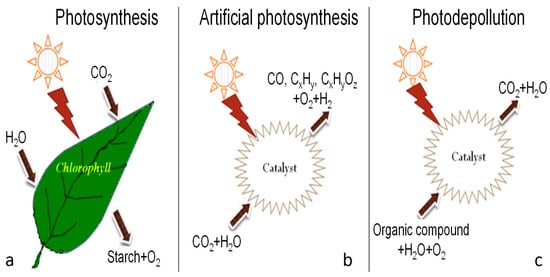
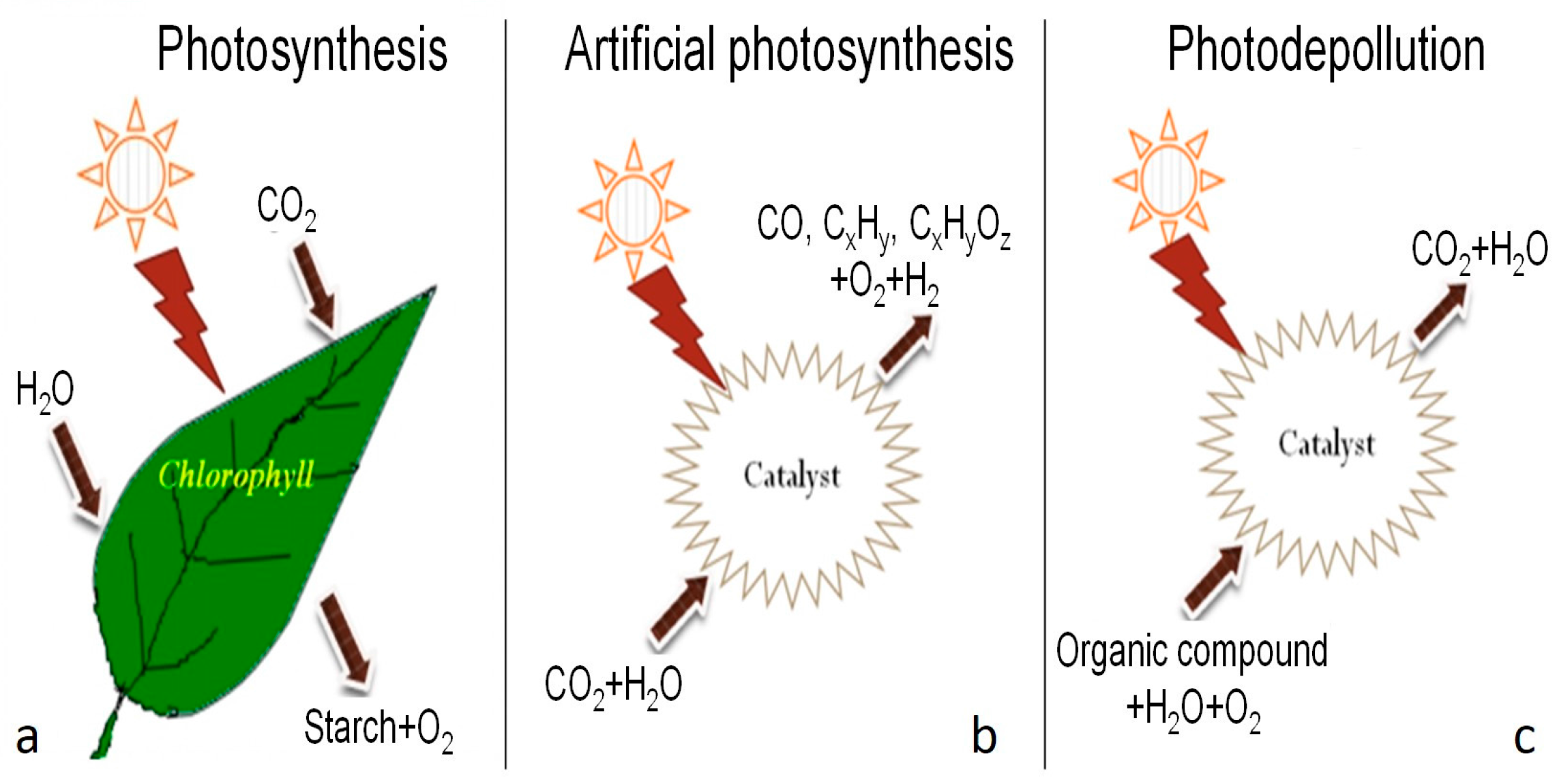
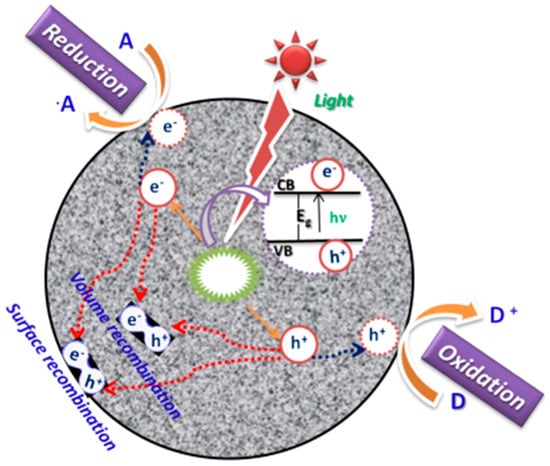
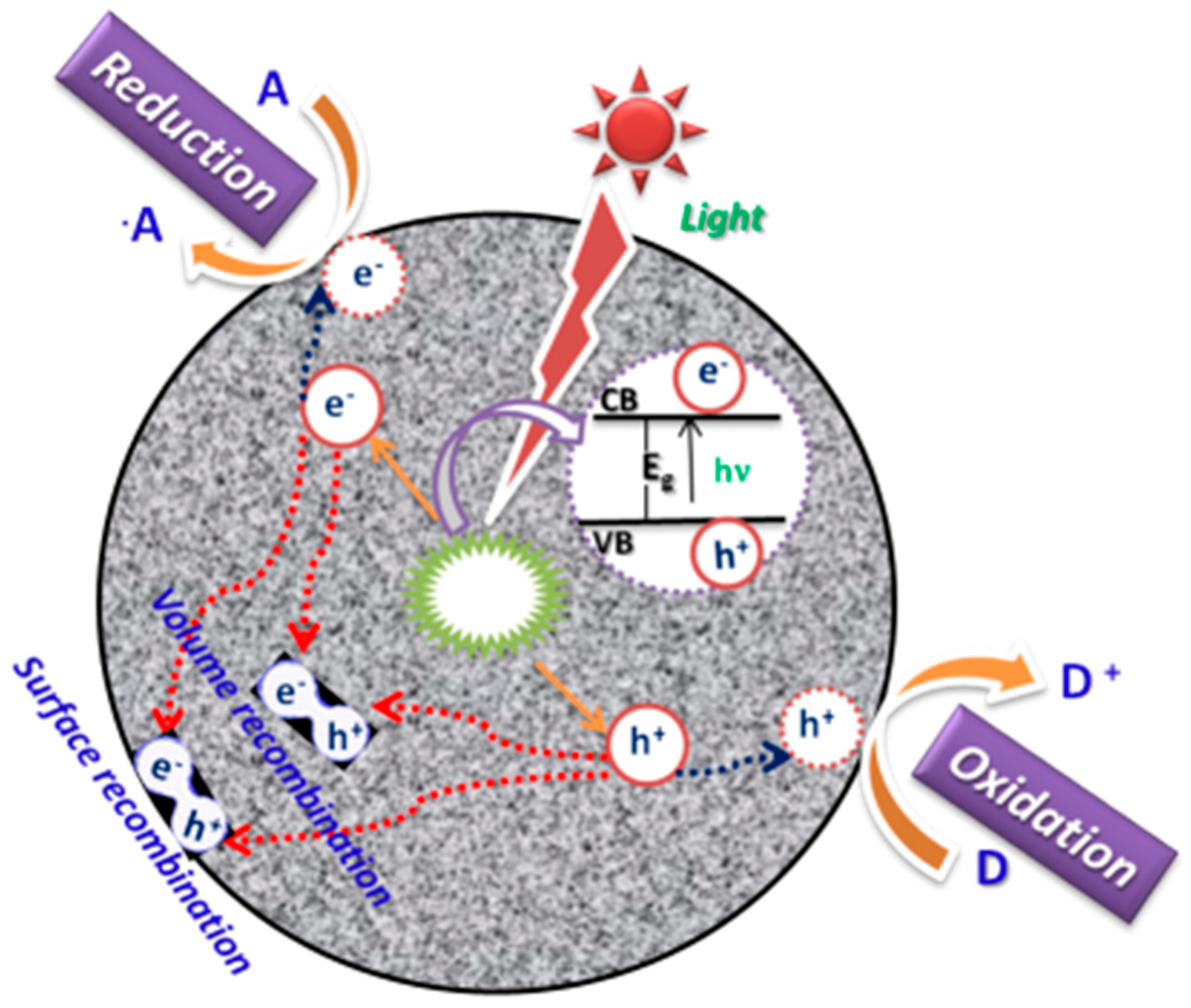
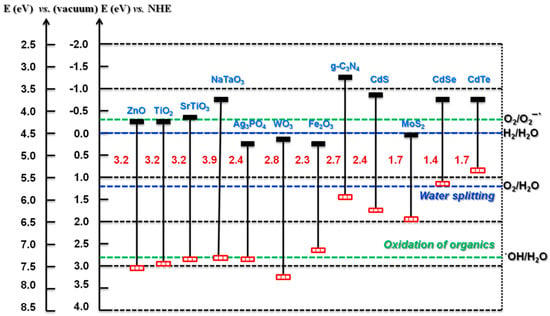
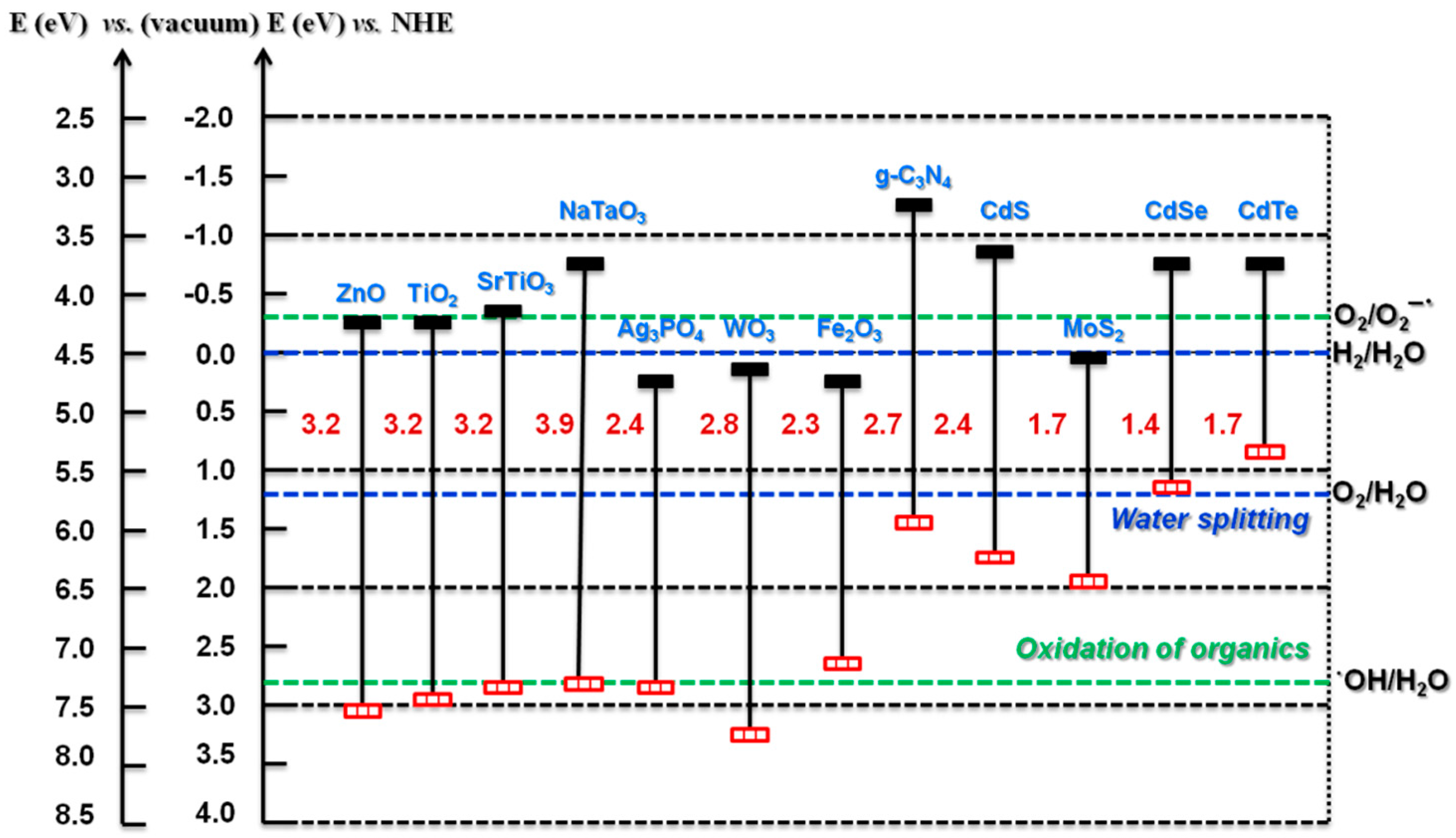
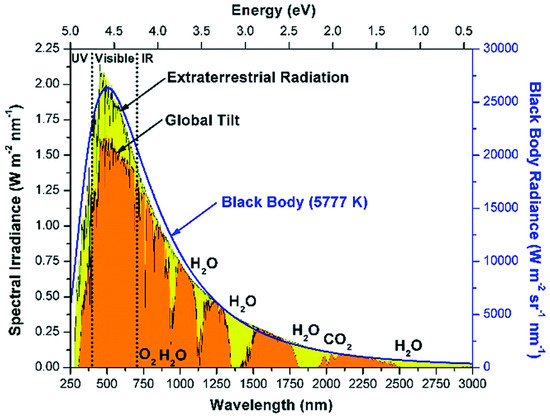
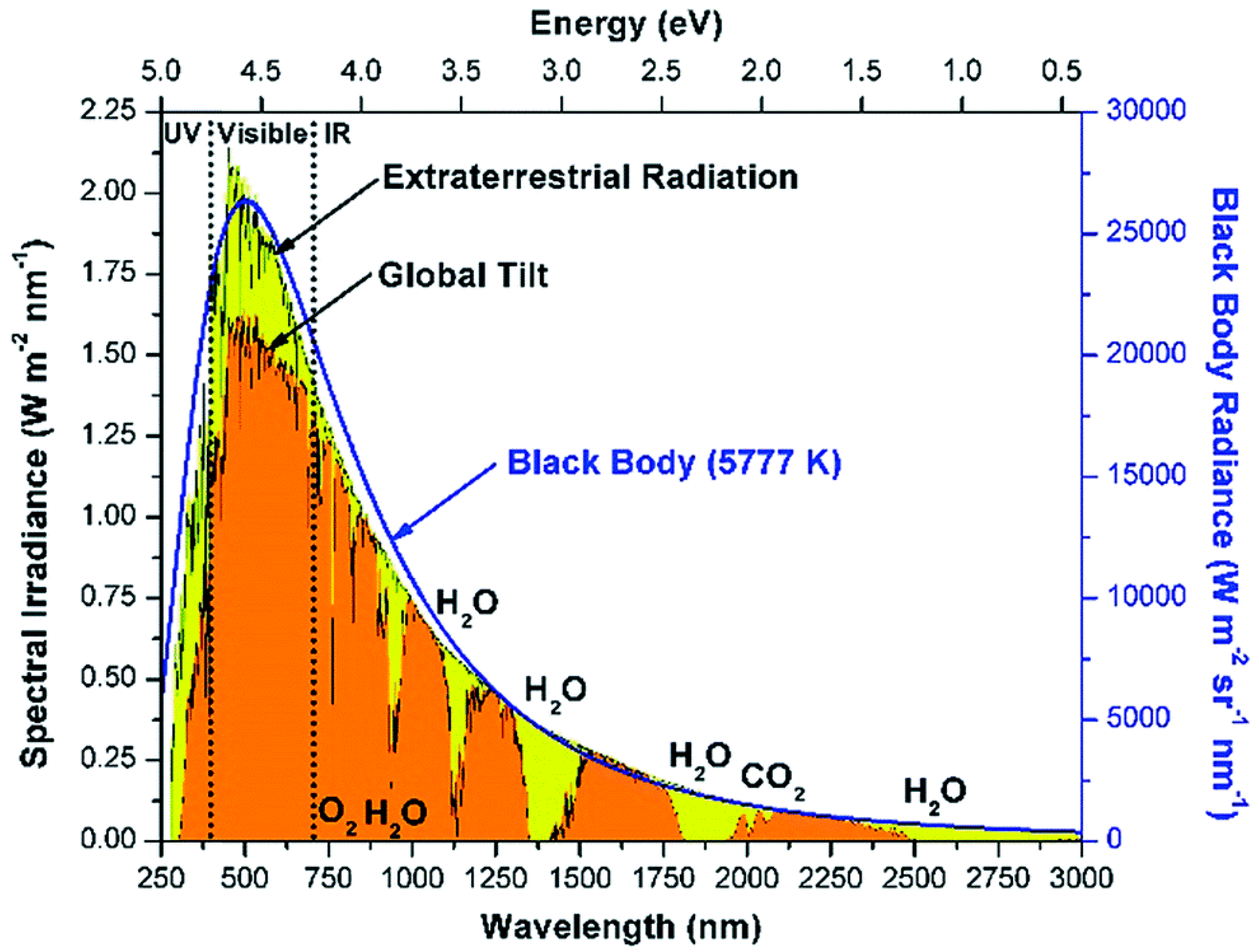
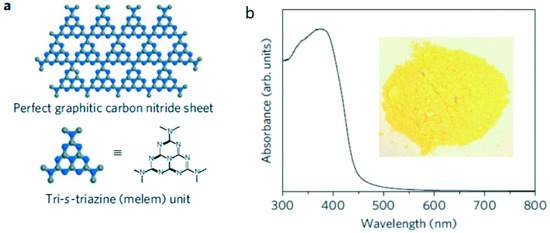
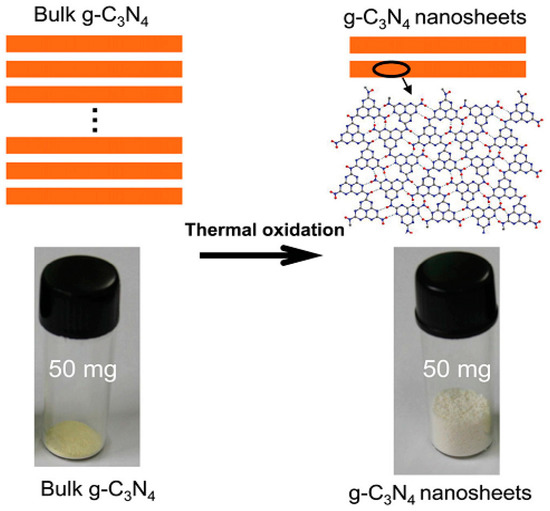
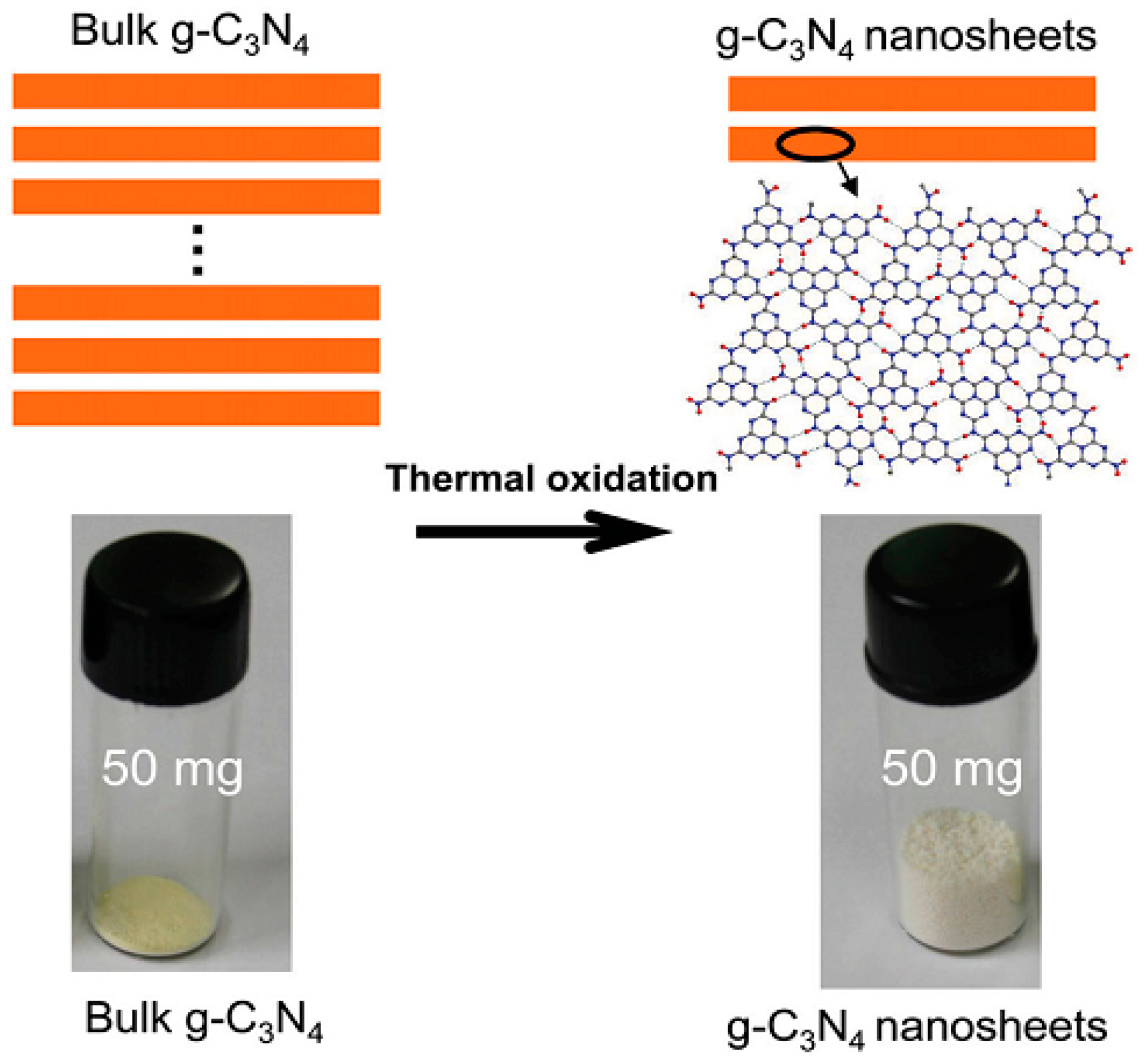
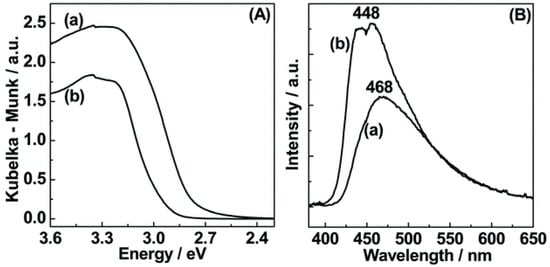
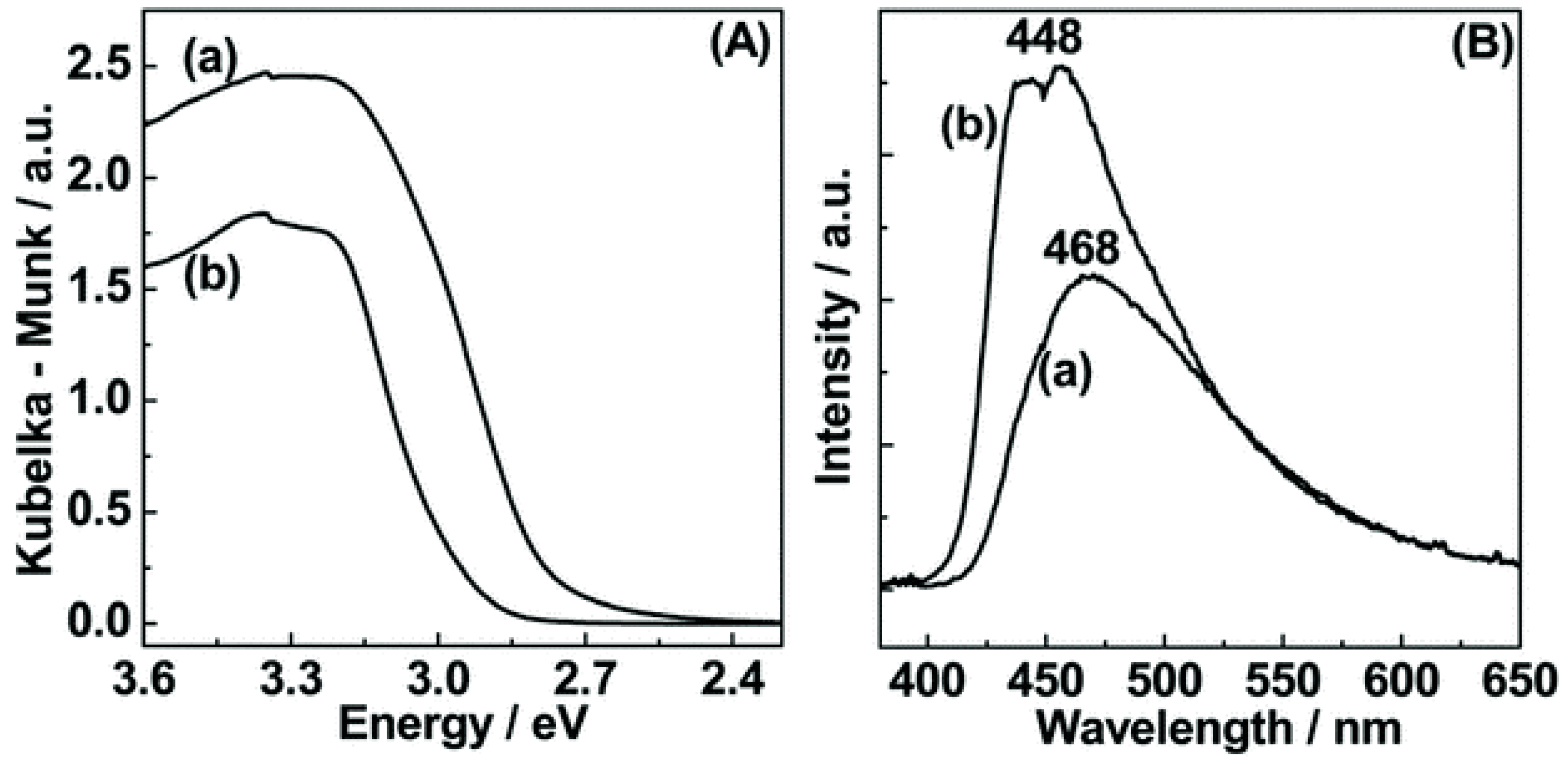
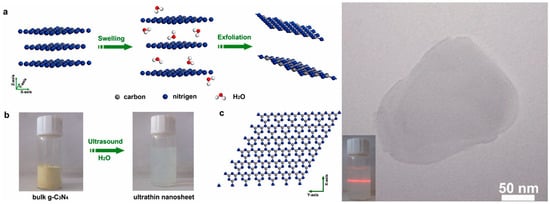
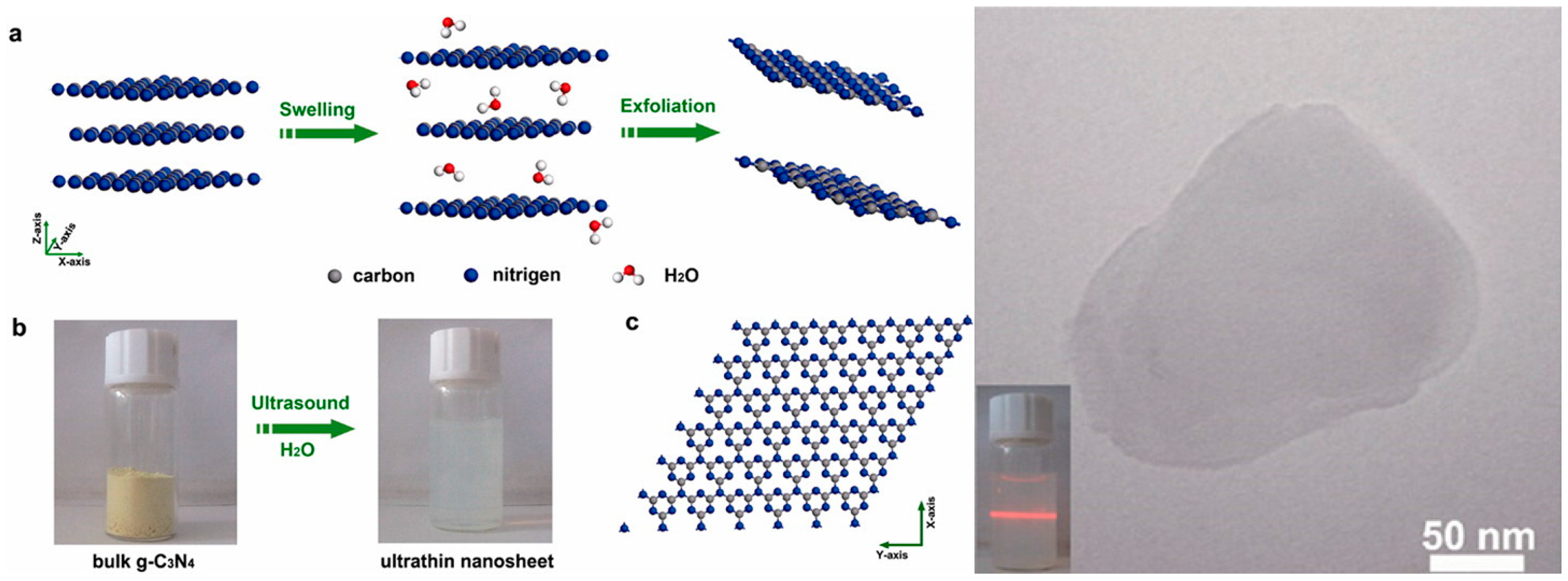
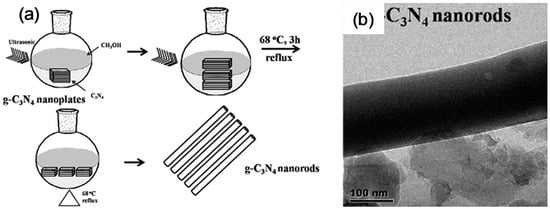
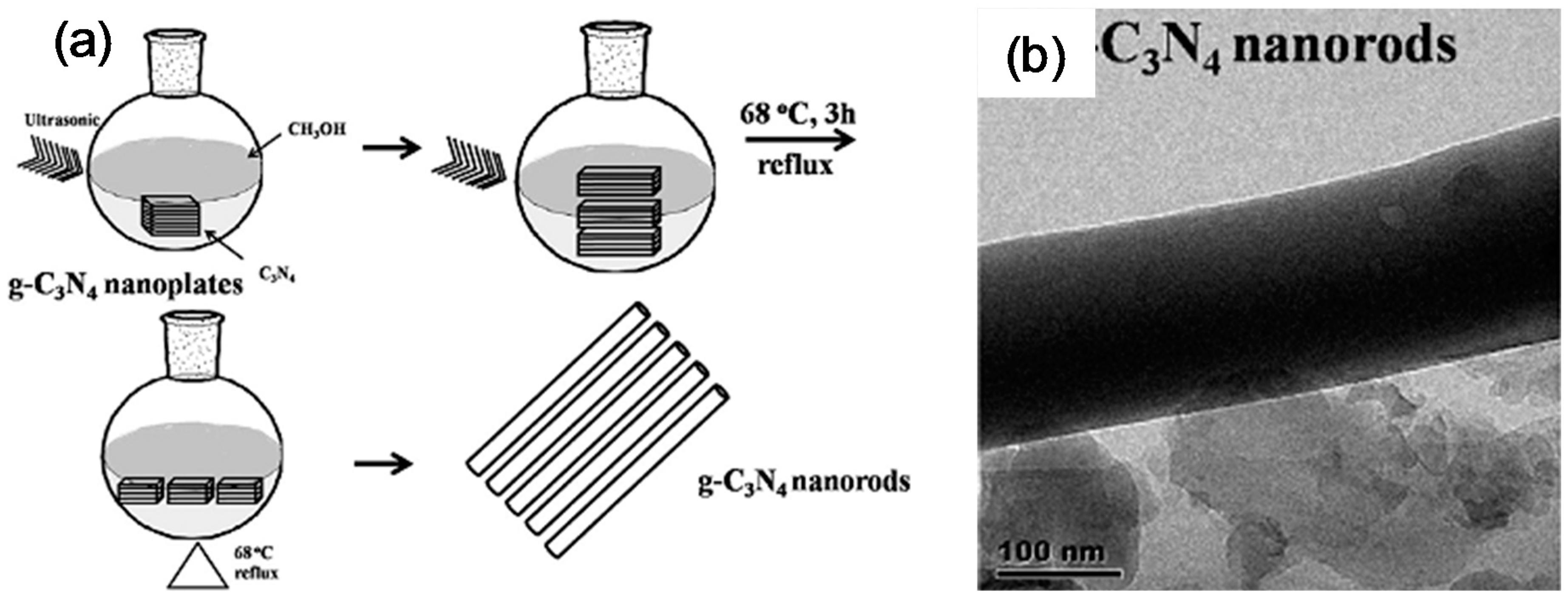
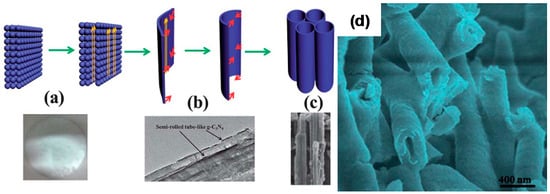
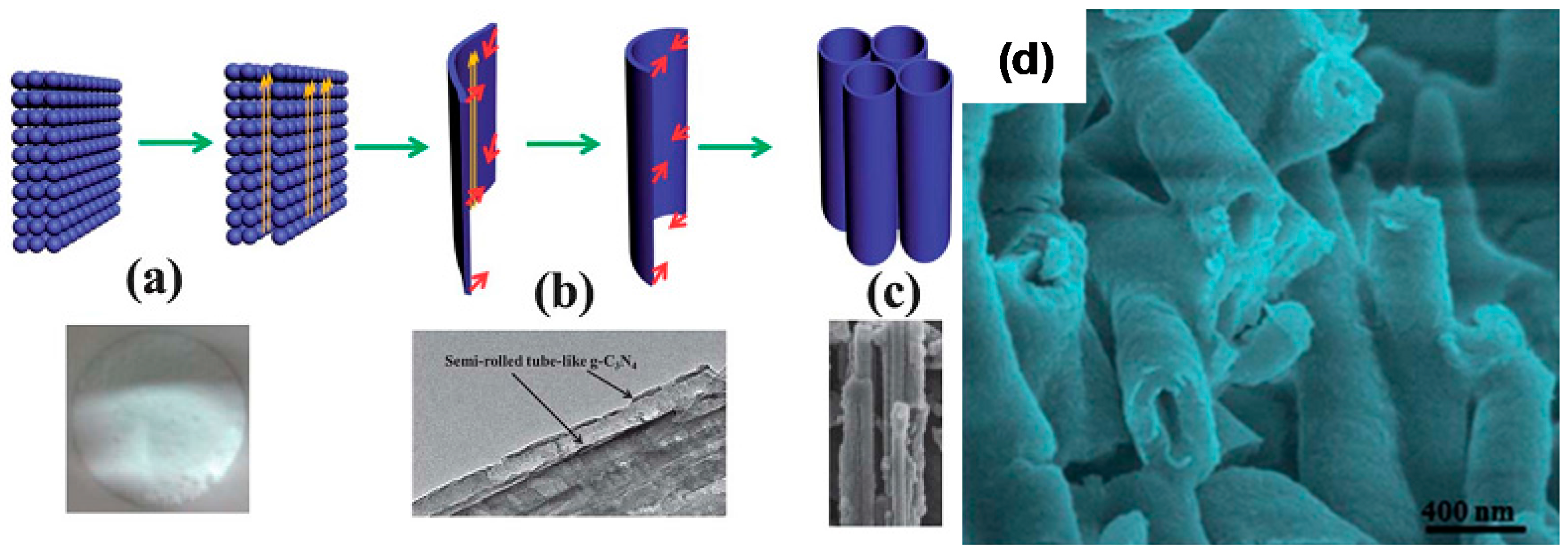
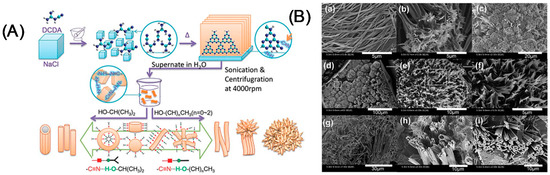
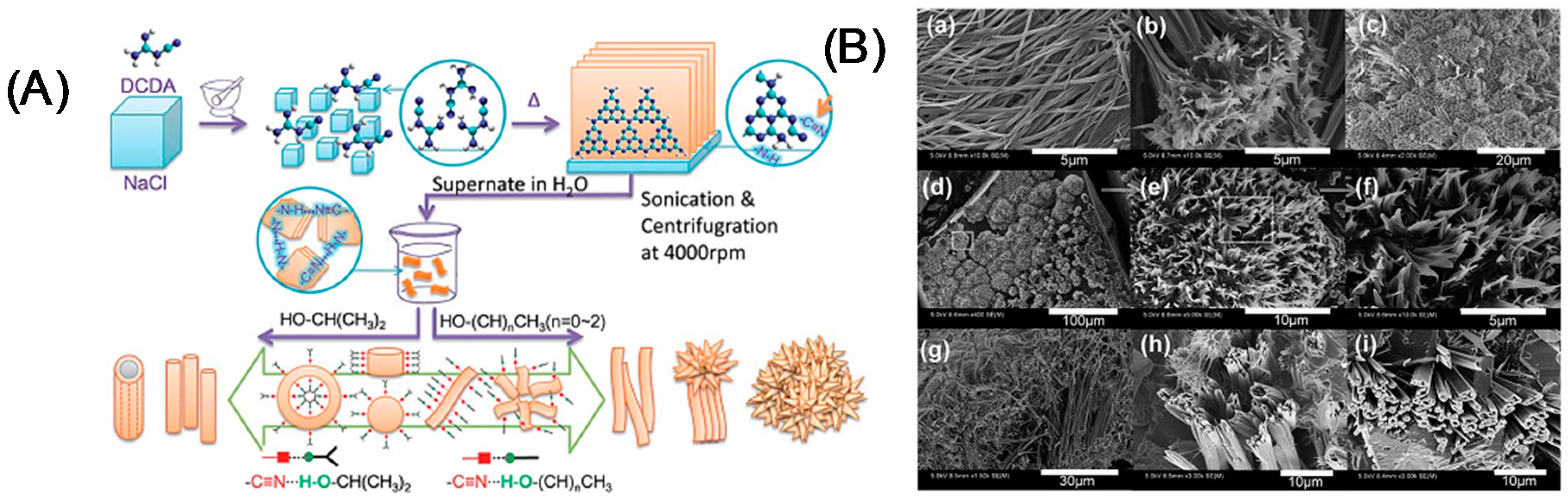
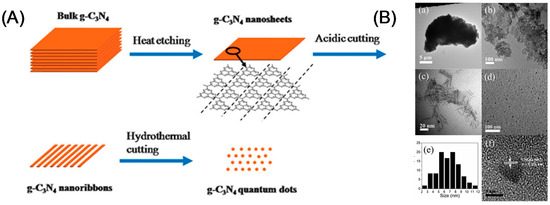
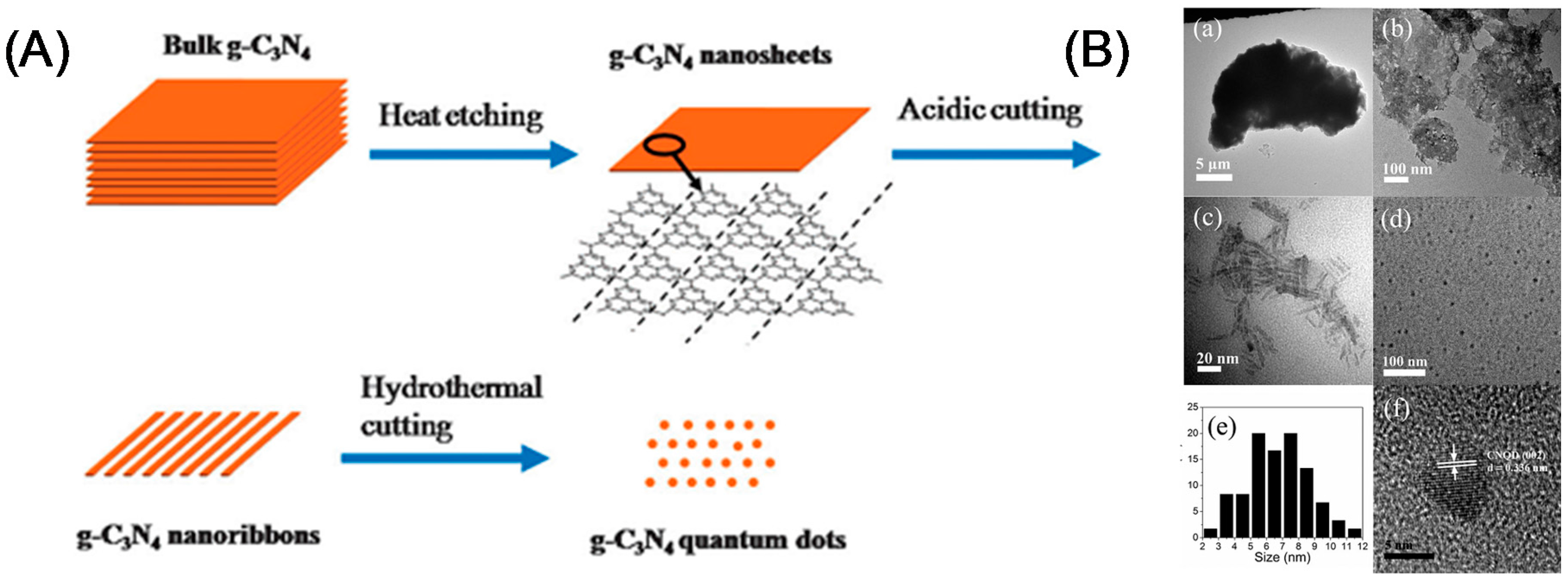
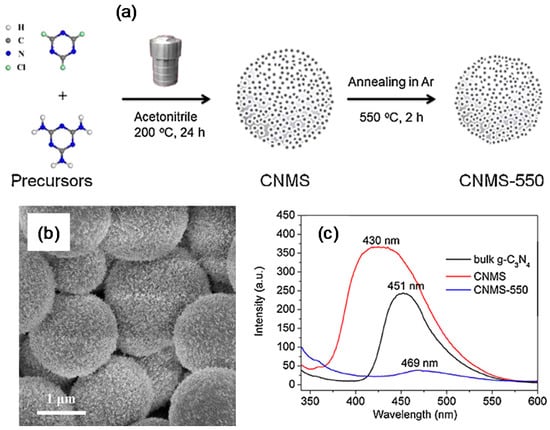
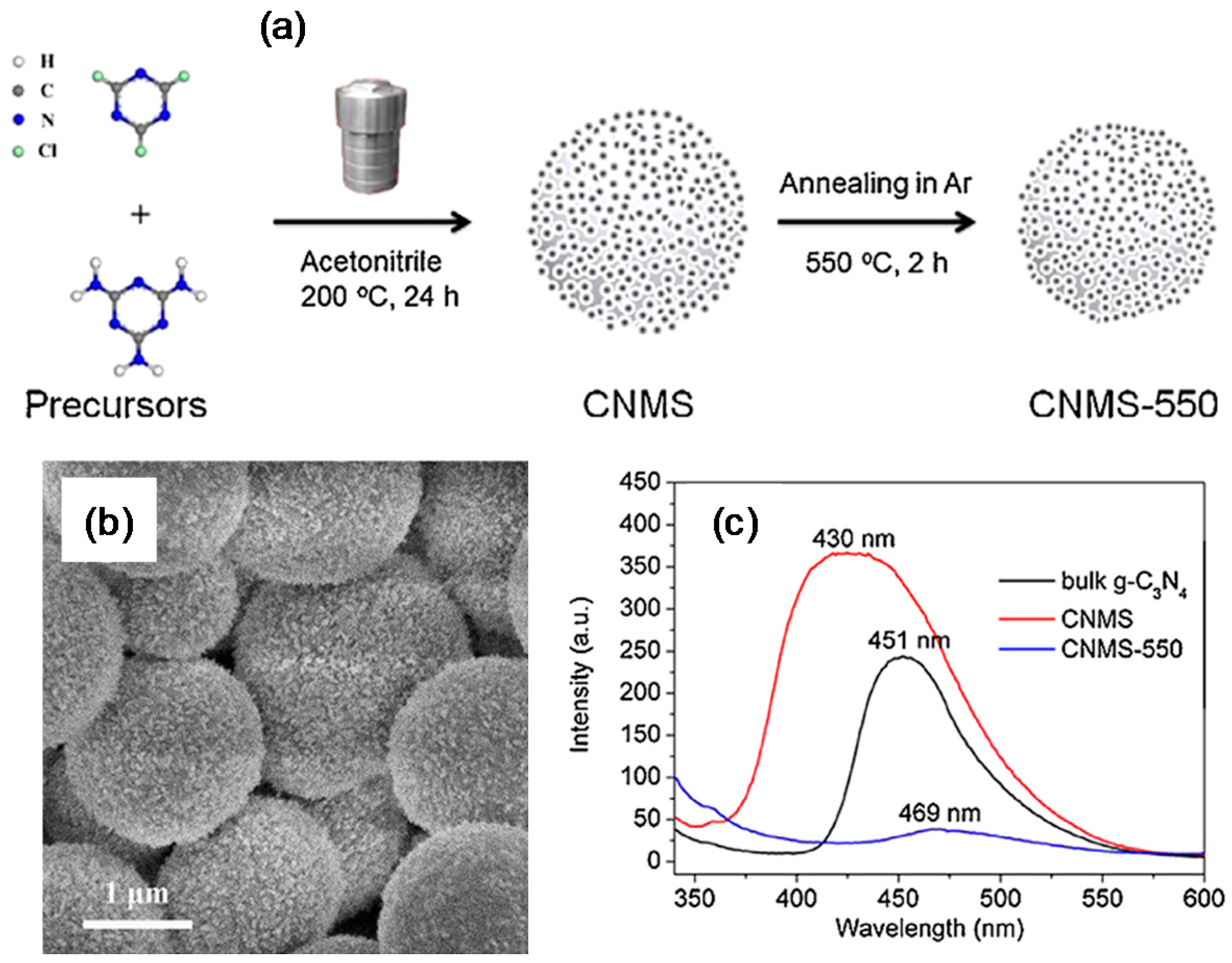
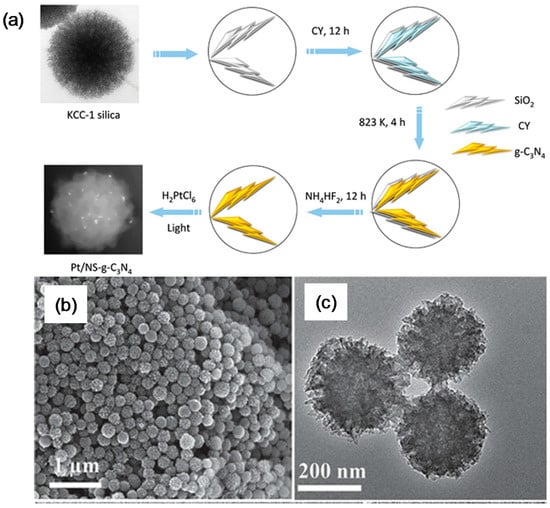
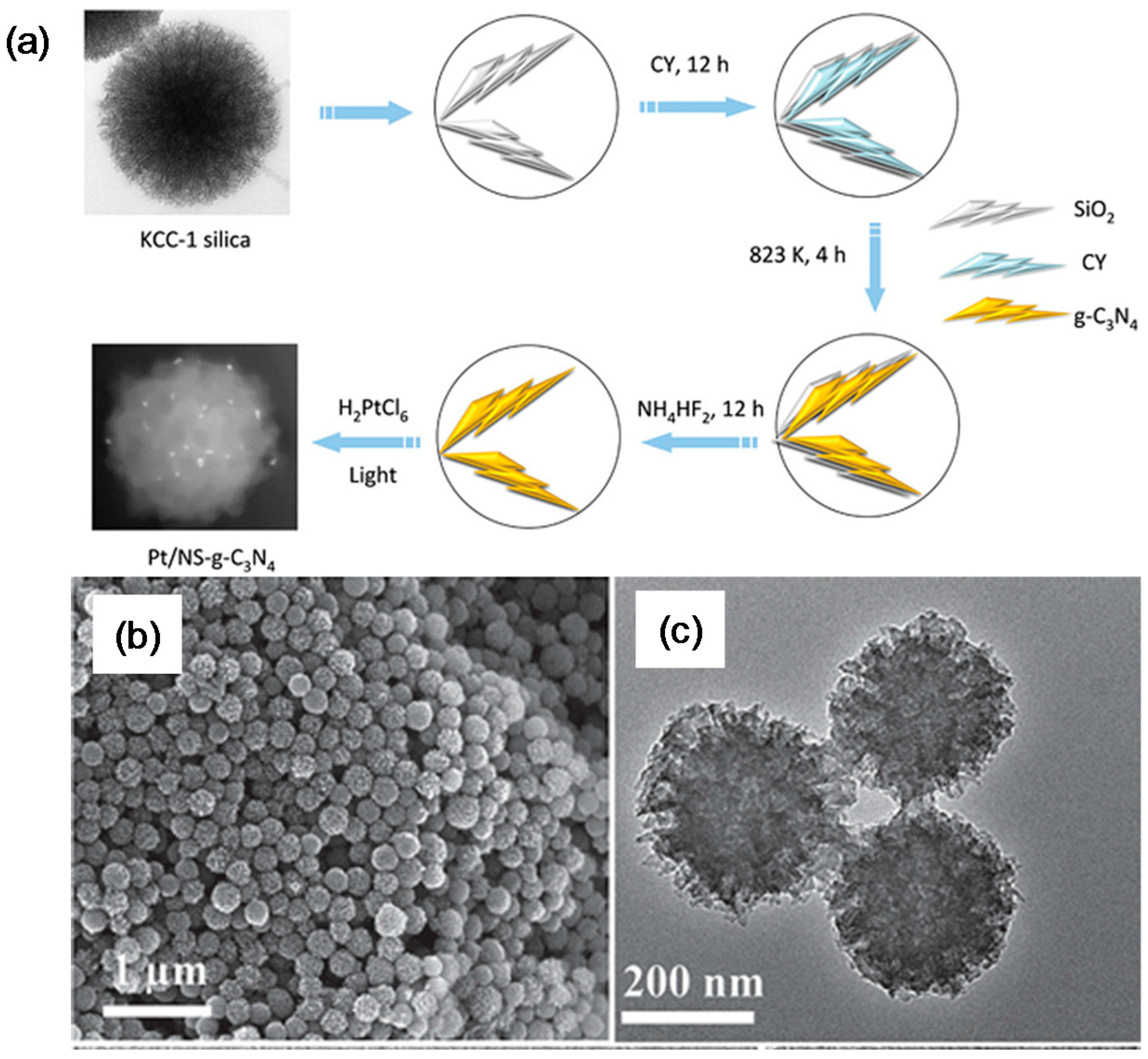
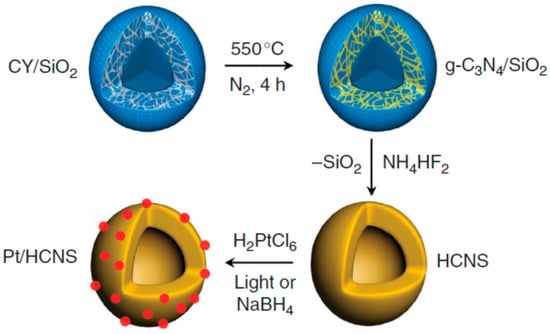
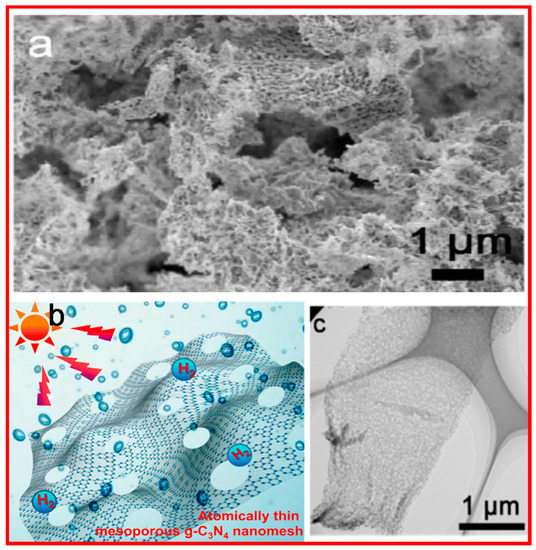
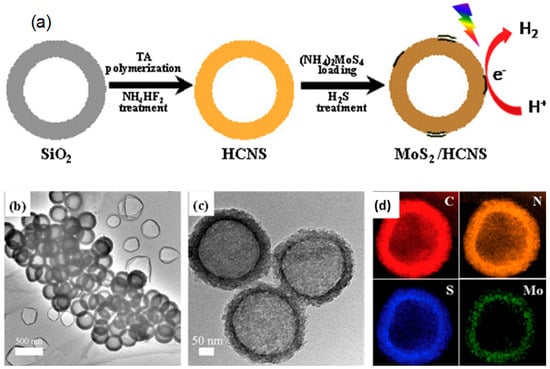
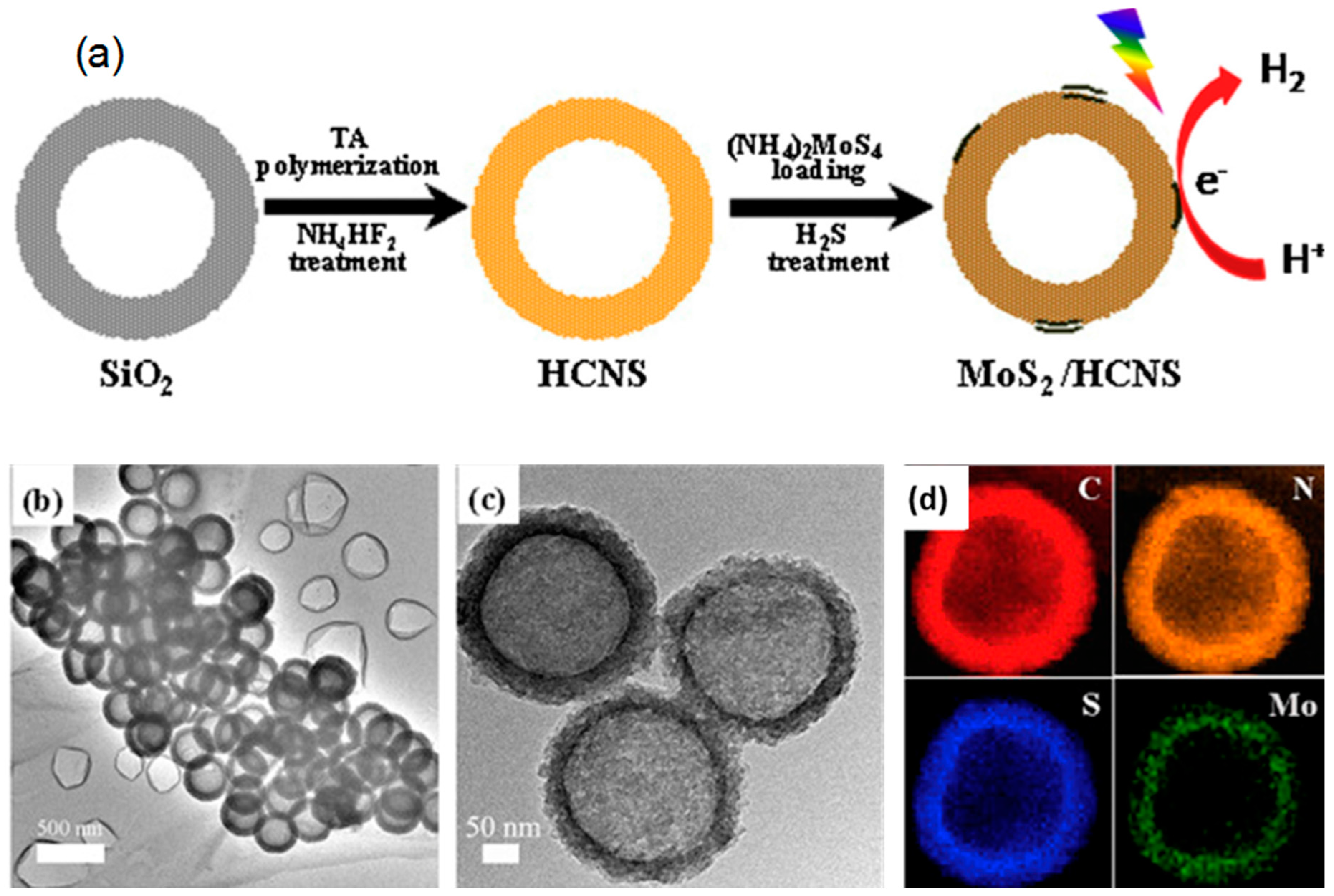
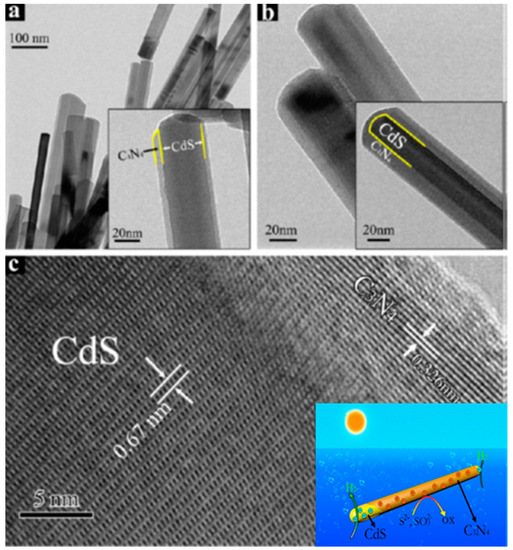
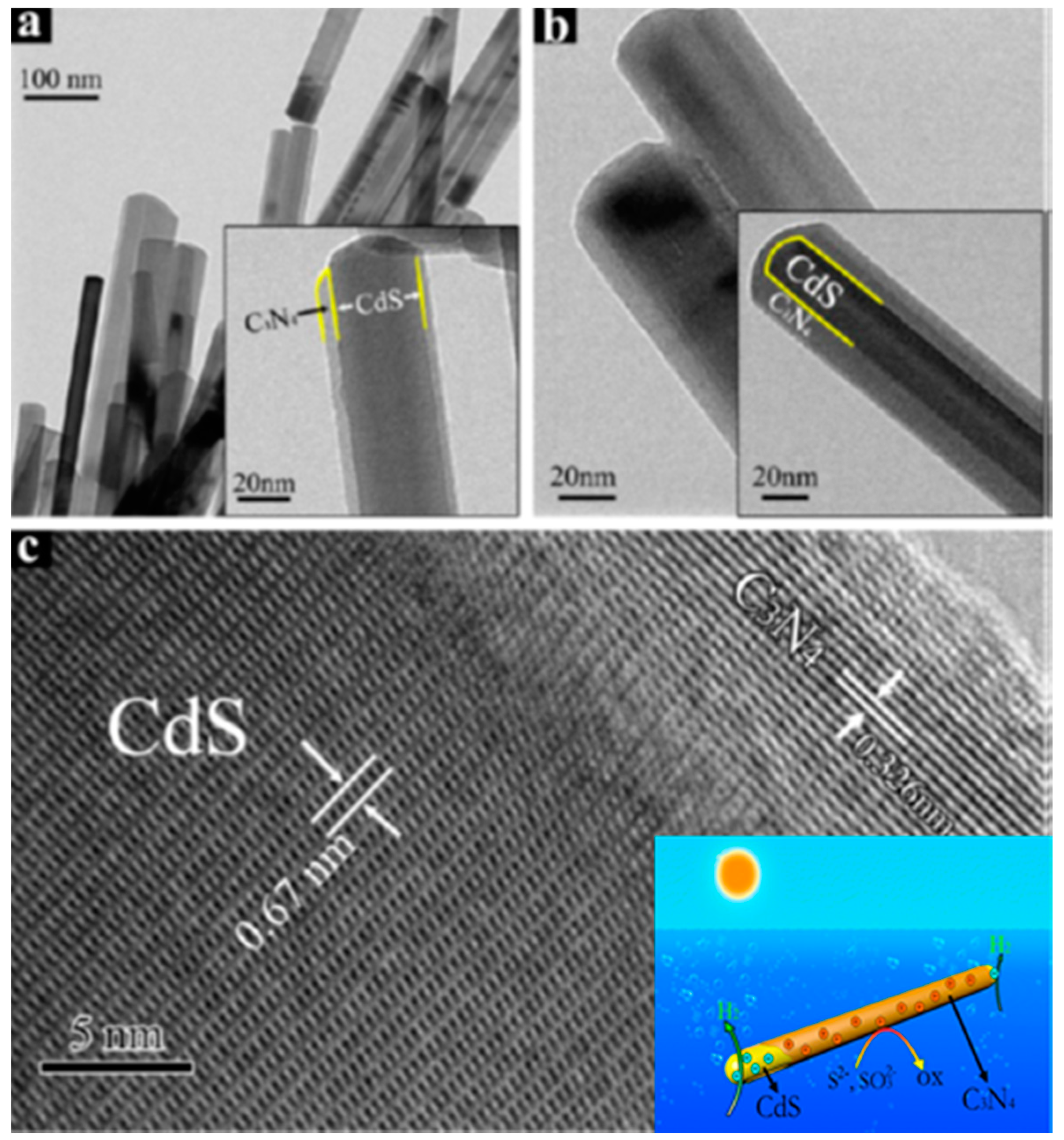
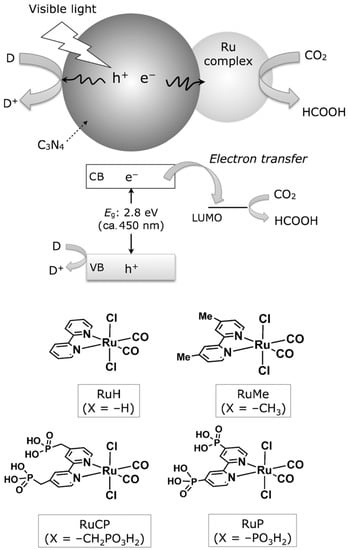
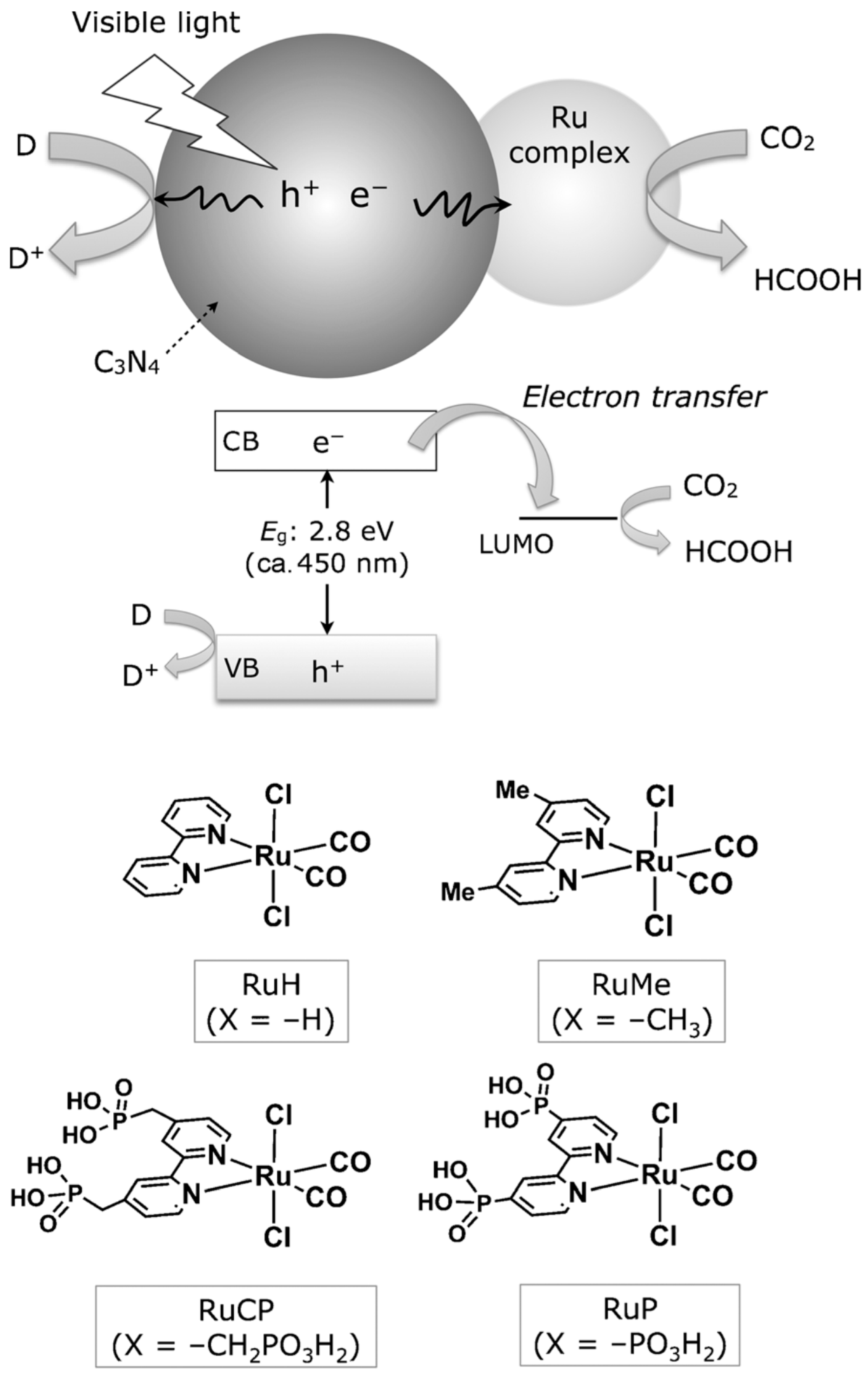
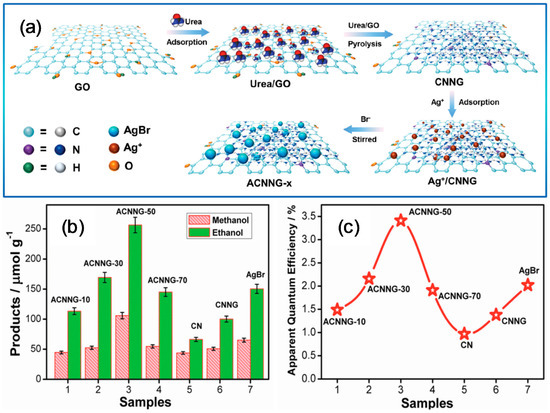
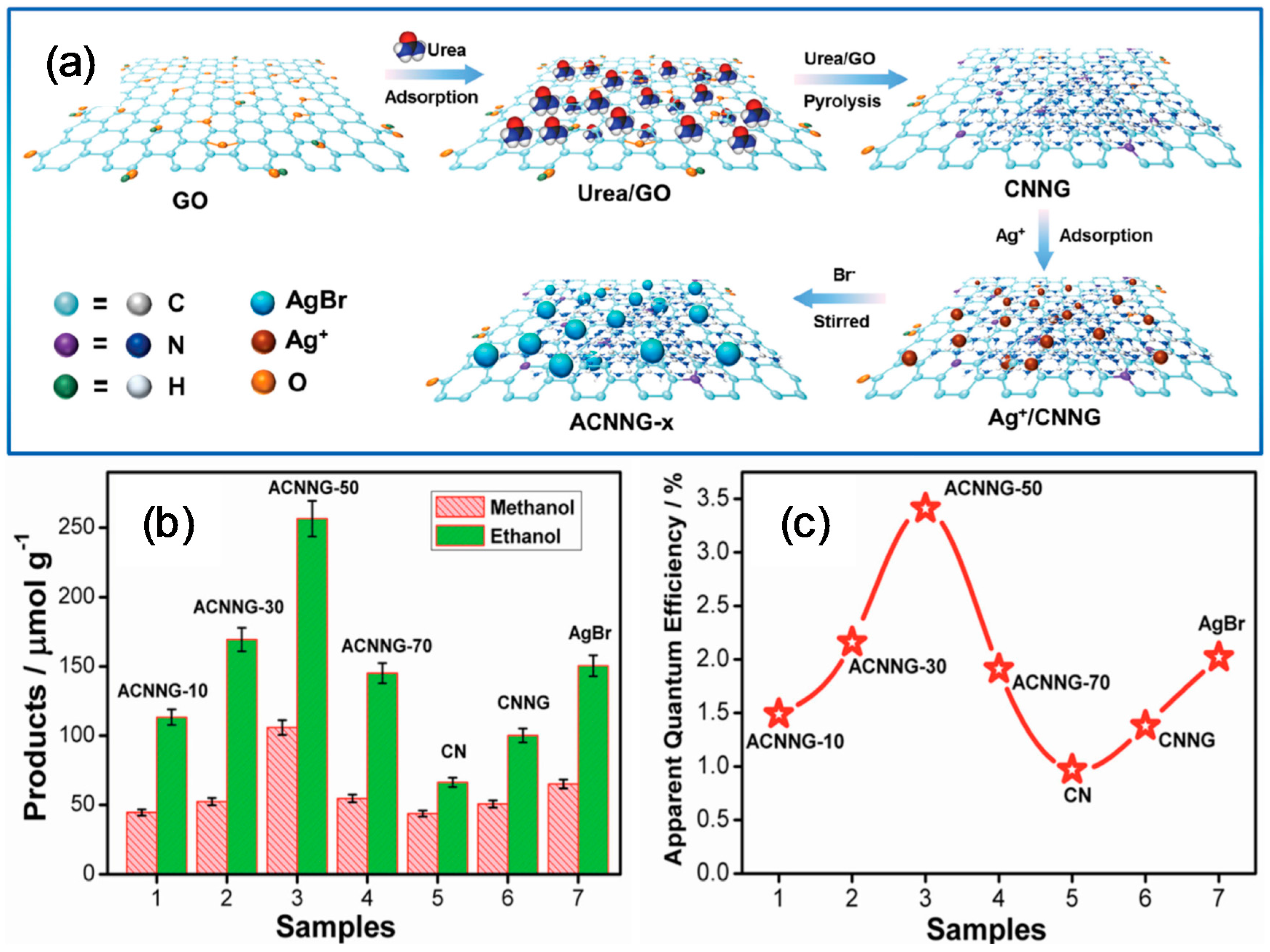
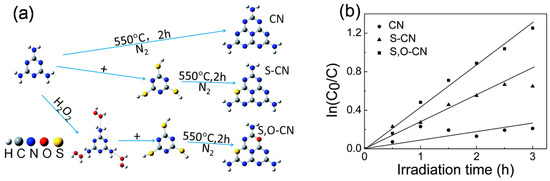
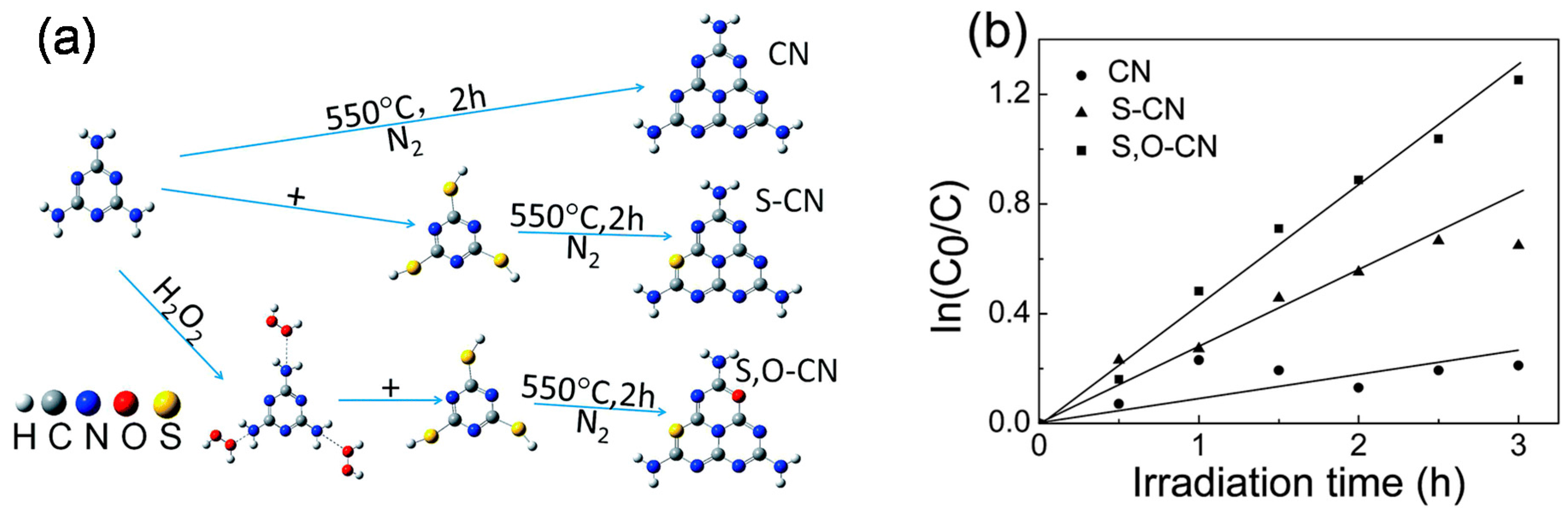
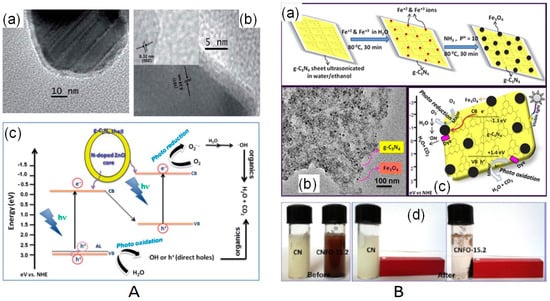
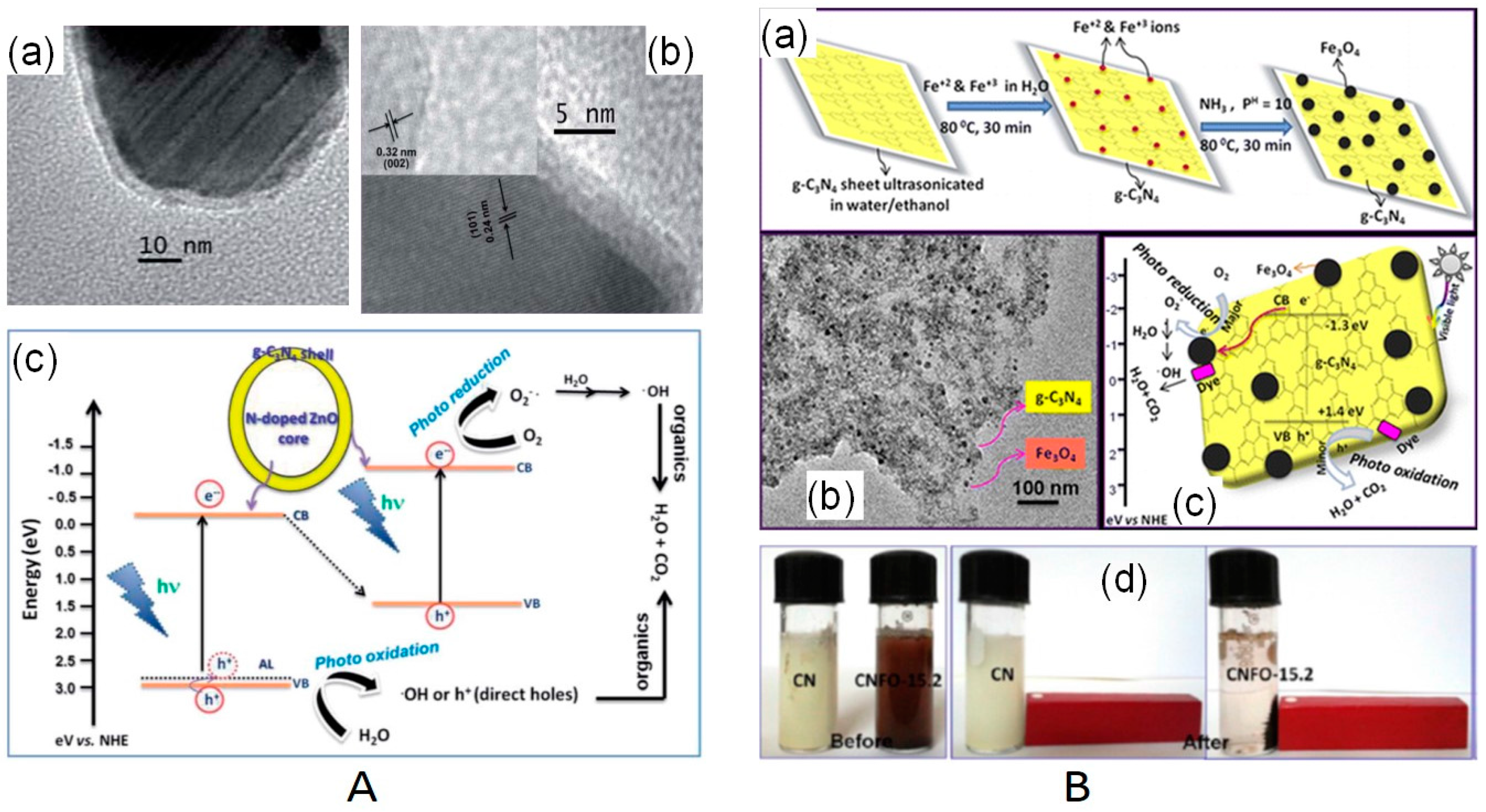

© 2018 by the authors. Licensee MDPI, Basel, Switzerland. This article is an open access article distributed under the terms and conditions of the Creative Commons Attribution (CC BY) license (http://creativecommons.org/licenses/by/4.0/).