1. Introduction
Water quality is considered a basic key factor influencing the integrity of ecosystems and human health [
1]. In this regard, the availability of fresh and pristine water is considered essential for the proper development of the global economy [
2]. Unfortunately, however, the increasing rate of global industrialization and economies of scale have posed an unprecedented threat to the availability of fresh waters [
3]. In this regard, industrial segments such as textiles [
4], agrochemicals [
5], pharmaceuticals [
6], petrochemicals, leather products [
7], and the food sector release staggering amounts of effluent each year. These effluents have traditionally been discharged into the environment without being properly treated [
8]. In this regard, industrial effluence is often ridden with dangerous pollutants such as heavy metals [
9], synthetic dyes [
10], pharmaceutical substances [
11], pesticides [
12], and organic/inorganic compounds [
7].
Although bio-approaches, Advanced Oxidation Processes (AOPs), and nanomaterials have made progress in the last four decades [
13], the currently available methods still suffer from the problems of high operating costs [
14], high maintenance efforts, the production of sludge, incomplete pollutant removal, possible secondary pollution, and tight pH requirements [
15]. Among these emerging solutions, biochar-assisted multifunctional nanocomposites have been increasingly investigated in relation to next-generation materials in wastewater remediation [
16]. Nanobiochar (NBC) is a carbon-rich material (60–80% by mass) created through the controlled pyrolysis of biomass; it is characterized by a high specific surface area, tunable porosity, and abundant oxygen-containing functional groups, making it an effective adsorbent [
17]. Notably, the selection of biomass precursor significantly influences the physicochemical properties of NBC. In this study,
Cannabis sativa leaves were chosen due to their abundant availability, rich lignocellulosic composition, and high carbon yield, which facilitate enhanced porosity and surface functionality compared to many conventional agro-wastes [
18].
To enhance catalytic performance further, di- and tri-metallic systems incorporating magnetic NBC were engineered into advanced materials displaying enhanced redox activity and improved pollutant degradation efficiency [
19]. Semiconductor-based photocatalysts such as ZnO [
20], TiO
2 [
12], and graphitic carbon nitride have also been widely explored for use in pollution remediation [
21]. Of all the semiconductor-based photocatalysts, TiO
2 remains one of the most promising photocatalysts due to its low cost, non-toxicity, resistance to corrosion, non-reactivity with the environment, and strong oxidation power [
12]. However, its practical application is limited by rapid electron–hole recombination and limited visible-light absorption. The integration of TiO
2 with NBC enhances charge separation through interfacial electron transfer, while NBC acts as an electron mediator and adsorption platform, increasing pollutant–catalyst interaction. When it is used together with the magnetic NBC [
22], the advantages of TiO
2 not only include increased charge separation with reduced electron–hole combination but also the possibility of preventing the agglomeration of nanoparticles [
23], with the support having a high surface area with increased adsorption capacity [
16].
Despite advances in biochar-assisted photocatalysts and peroxymonosulfate (PMS)-based systems, there remain some crucial gaps in knowledge [
24]. Most magnetic biochar composites focus on adsorption or single photocatalysis methods, with limited studies on their synergistic integration with PMS activation via engineered heterostructures [
25]. PMS is crucial as it acts as a powerful oxidant, generating reactive oxygen species that derive efficient pollutant degradation [
26]. However, the role of biochar in facilitating interfacial charge transfer and controlling ROS generation is still not well understood [
27]. Additionally, the use of waste-originated lignocellulose biomass for such advanced catalytic systems remains insufficiently explored [
28]. Crystal violet (CrV) was selected as the model pollutant due to its widespread industrial use, high toxicity, persistence, and resistance to biodegradation, making it a representative and challenging organic dye for evaluating advanced oxidation systems.
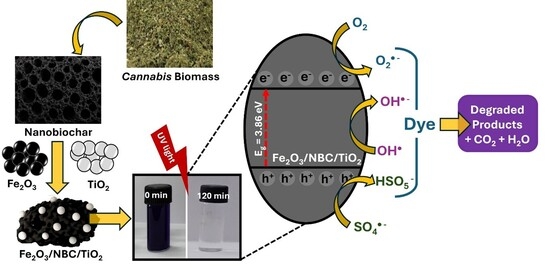
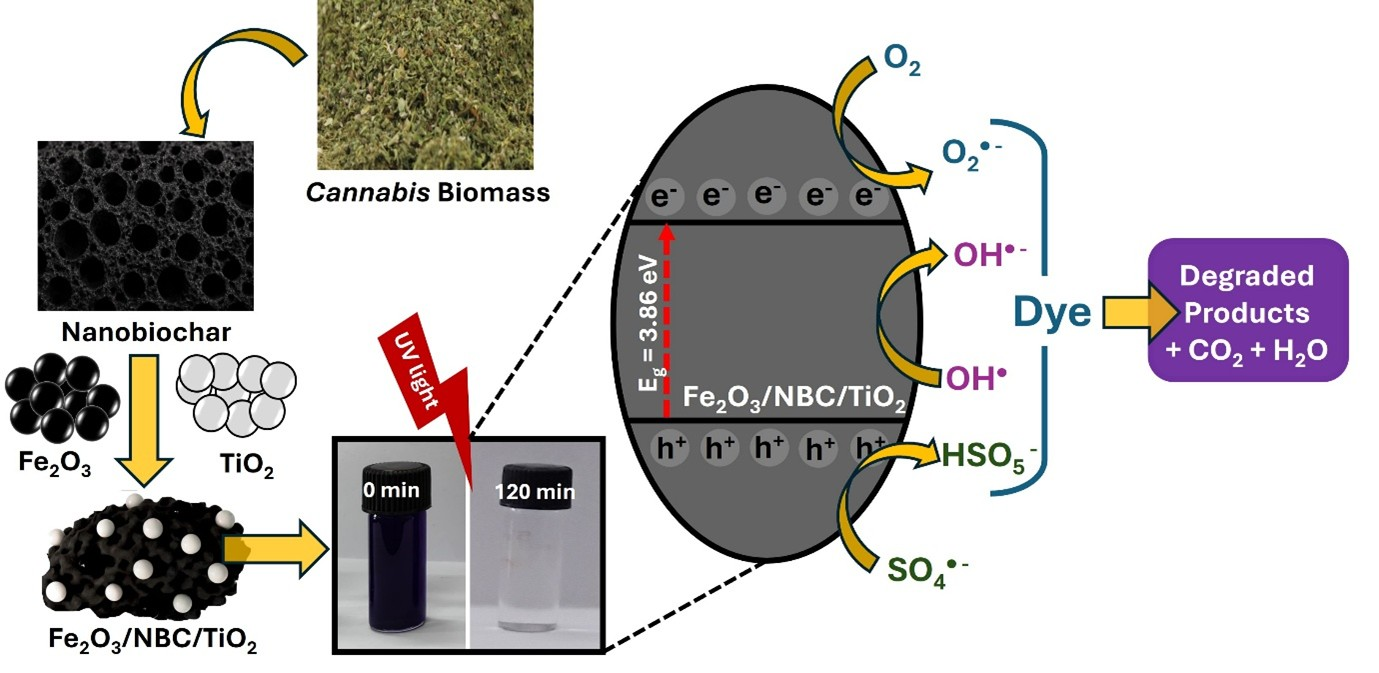
To fill the aforementioned research gaps, the current study will describe the rational design of a multi-functional Fe
2O
3/TiO
2/NBC (FNT) magnetic heterostructure, which is expected to be competent for simultaneous adsorption, photocatalysis, and PMS activation. The clear goals are to accomplish the following: (i) to explore the role of the interface-based charge transfer in light-assisted PMS activation events, (ii) to investigate the major ROS process involved in the degradation of the chemical dye CrV, (iii) to examine the catalytic efficacy and catalytic kinetics in the magneto-catalytic reactions, and (iv) to demonstrate the bioeconomic conversion of biomass using
Cannabis sativa [
29]. This application goes well beyond water purification and explores the use of green technology for preparing high-performance multi-functional nanomaterials from low-value biomass.
2. Results and Discussion
2.1. Characterization of Catalyst
2.1.1. Phase Composition and Structural Analysis
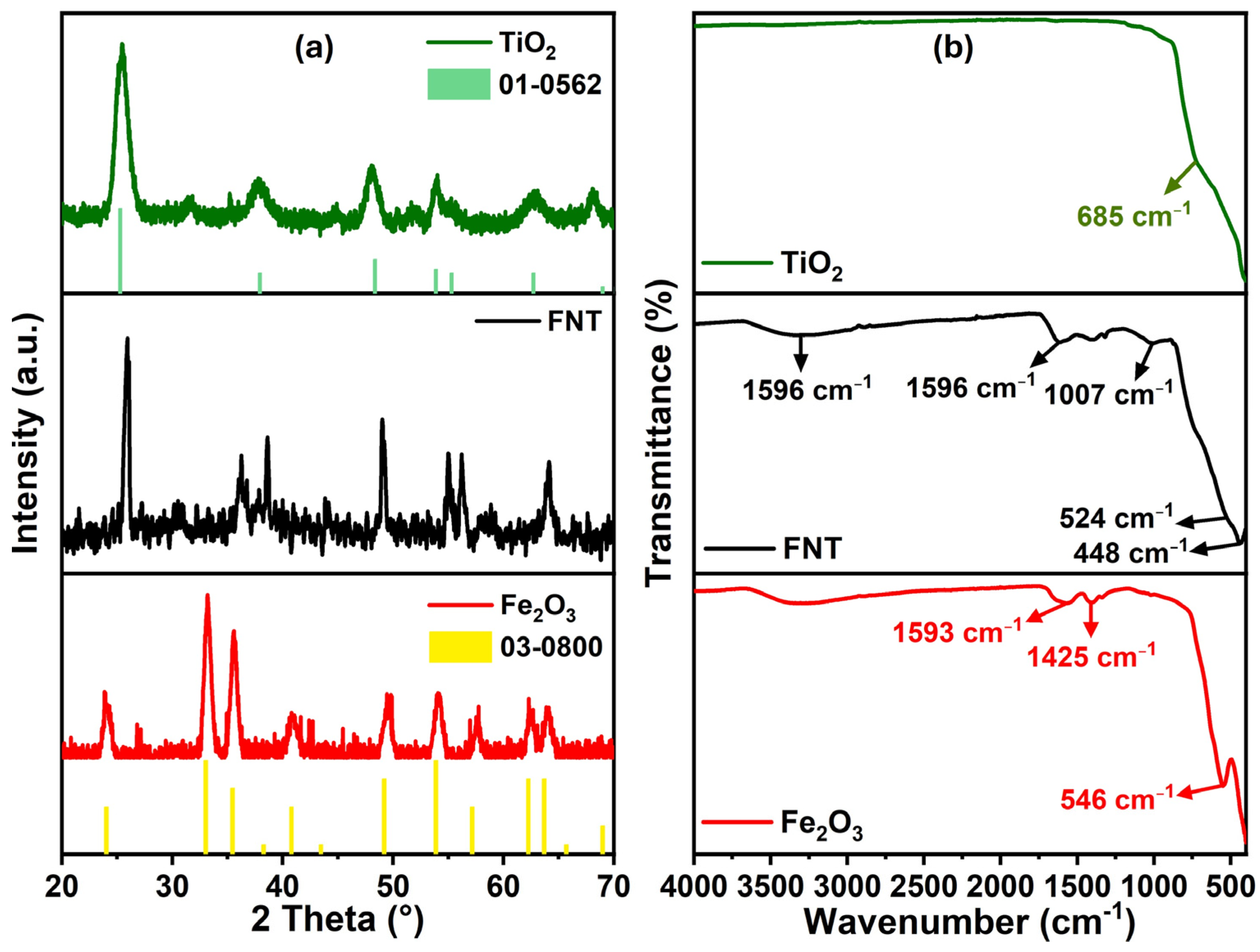
XRD and FTIR were used to analyze the crystalline structure and surface functional groups (
Figure 1a,b). The XRD pattern of Fe
2O
3 exhibited characteristic diffraction peaks at 24.2°, 33.3°, 35.7°, 38.6°, 41.4°, 49.1°, 55.1°, 56.3°, and 64.1°, corresponding to the hematite (
α-Fe
2O
3, JCPDS Card No. 03-0800), confirming its crystalline nature (
Figure 1a) [
30]. In addition, diffraction peaks observed at 25.3°, 37.8°, 48.0°, 53.9°, 55.1°, and 62.7° were assigned to anatase TiO
2 (JCPDS Card No. 01-0562). In FNT catalyst, the characteristic peaks of both Fe
2O
3 and TiO
2 were observed with slight shifts and reduced intensity, indicating the successful integration of the components without significant destruction of their crystal structures. Peak broadening in the catalyst occurred due to the reduced crystallite size, lattice strain, and strong interfacial interactions among Fe
2O
3, TiO
2, and the NBC matrix, confirming successful catalyst production [
31].
The functional groups of catalyst components were confirmed via FTIR analysis (
Figure 1b). Fe
2O
3 exhibited a characteristic Fe-O band at 546 cm
−1 [
20], while TiO
2 exhibited a Ti-O-Ti band at 685 cm
−1 [
12]. Additional peaks at 524 and 448 cm
−1 in the FNT catalyst verified that both metal oxides had been successfully incorporated into the NBC framework. O-H stretching from surface hydroxyl groups and adsorbed water molecules was represented by a large peak at 3304 cm
−1, which is advantageous for photocatalysis and PMS activation. The presence of NBC and its oxygenated functional groups was confirmed by the bands at 1596 cm
−1 (C=C), 1425 cm
−1 (C-H), and 1007 cm
−1 (C-O) [
22]. Overall, XRD and FTIR data showed that the FNT catalyst was successfully formed, with strong surface interactions, maintained crystallinity, and a large number of functional groups that improved electron transport and ROS production.
2.1.2. Optical Absorption and Band Gap Properties
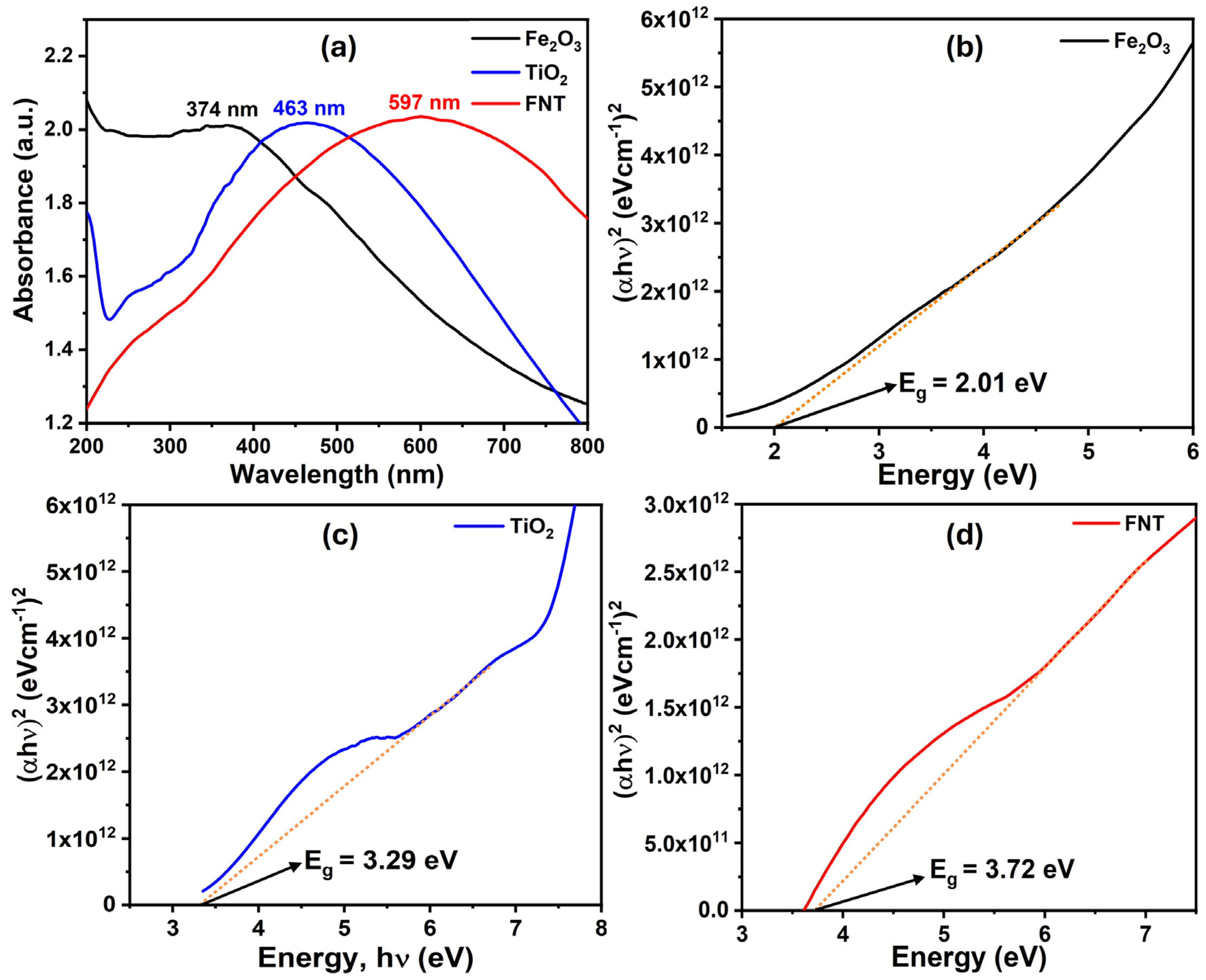
Tauc plots and UV–visible spectroscopy were used to analyze the optical characteristics of Fe
2O
3, TiO
2, and FNT catalysts (
Figure 2a–d). Fe
2O
3 displayed a band gap of 2.55 eV (
Figure 2b) and a broad absorption band at 374 nm (
Figure 2a). According to the published anatase TiO
2 value, TiO
2 showed an absorption peak at 463 nm (
Figure 2a) with a band gap value of 3.27eV (
Figure 2c) [
1]. With a red shift to 597 nm, the FNT catalyst showed a noticeably enlarged absorption band (
Figure 2a). However, strong interfacial interactions between Fe
2O
3, TiO
2, and NBC were found to be responsible for the greater band gap (3.72 eV), which resulted in enhanced surface defects and localized electronic disturbances (
Figure 2d) [
31].
2.1.3. Thermal and Surface Physicochemical Characterization
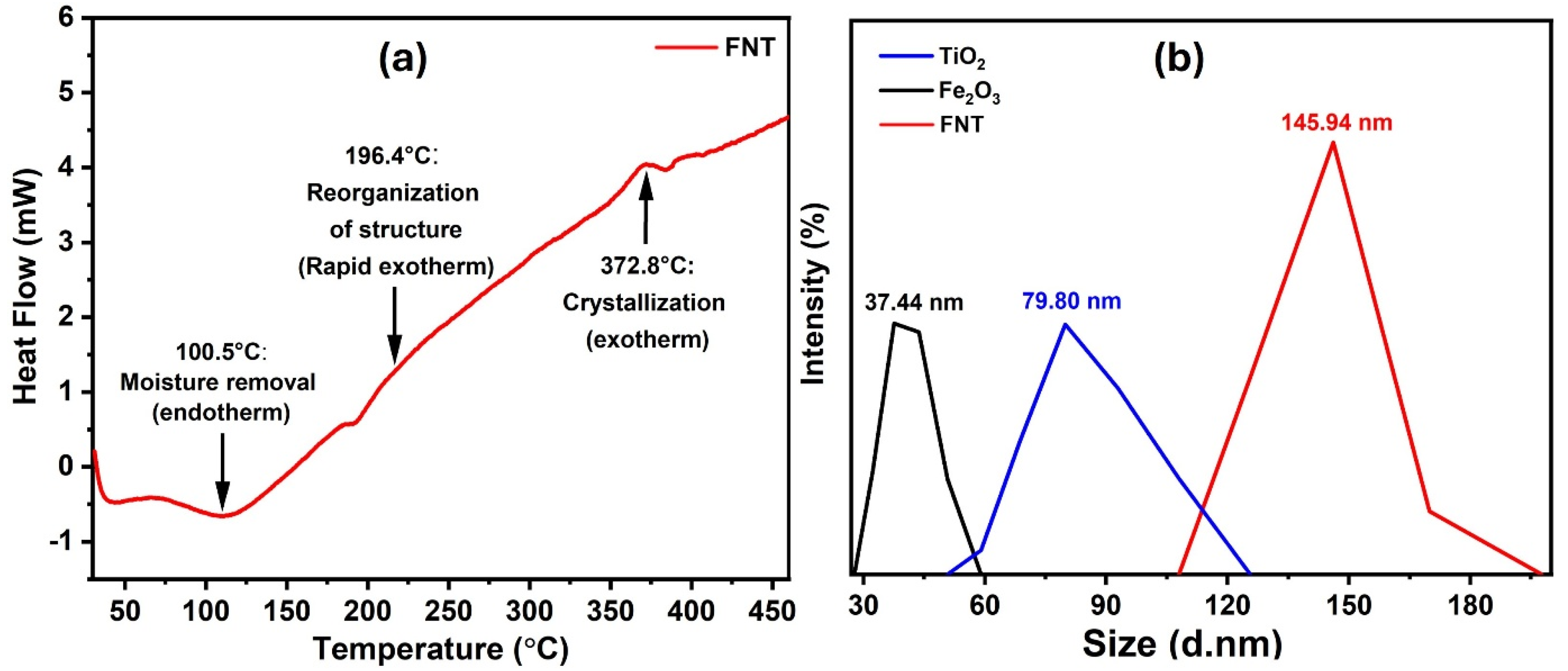
DSC was used to analyze the FNT catalyst’s structural alterations and thermal stability (
Figure 3a). Desorption of surface-bound water was identified as the cause of an endothermic peak at 100.5 °C, but functional group stabilization and the crystallization of Fe
2O
3/TiO
2 within the NBC matrix were associated with exothermic peaks at 196.4 °C and 372.8 °C, showing significant thermal stability without disintegration. Based on the XRD results, which already confirmed the presence of a well-defined crystalline phase of Fe
2O
3 and TiO
2, the exothermic peak at 372.8 °C was not attributed to initial crystallization but rather to enhanced crystallinity through crystallite growth, reduced lattice defects, and improved phase ordering within the catalyst. In addition, partial structural ordering of the NBC matrix also contributed to the exothermic behavior. This interpretation indicated that the catalyst underwent further structural refinement upon heating while maintaining its integrity, demonstrating good thermal stability without phase decomposition.
Catalyst production and nanoparticle aggregation inside the NBC matrix were confirmed by DLS analysis (
Figure 3a), which revealed typical particle sizes of 37.44 nm (Fe
2O
3), 79.80 nm (TiO
2), and 145.94 nm (FNT). Zeta potential readings (−5.91 mV for FNT, −5.48 mV for Fe
2O
3, and −4.53 mV for TiO
2) showed negatively charged surfaces that, via electrostatic repulsion, contributed to colloidal stability (
Figure 3b). Overall, the creation of a stable, well-integrated FNT catalyst was validated by the DSC and DLS data.
2.1.4. Surface Morphological Analysis
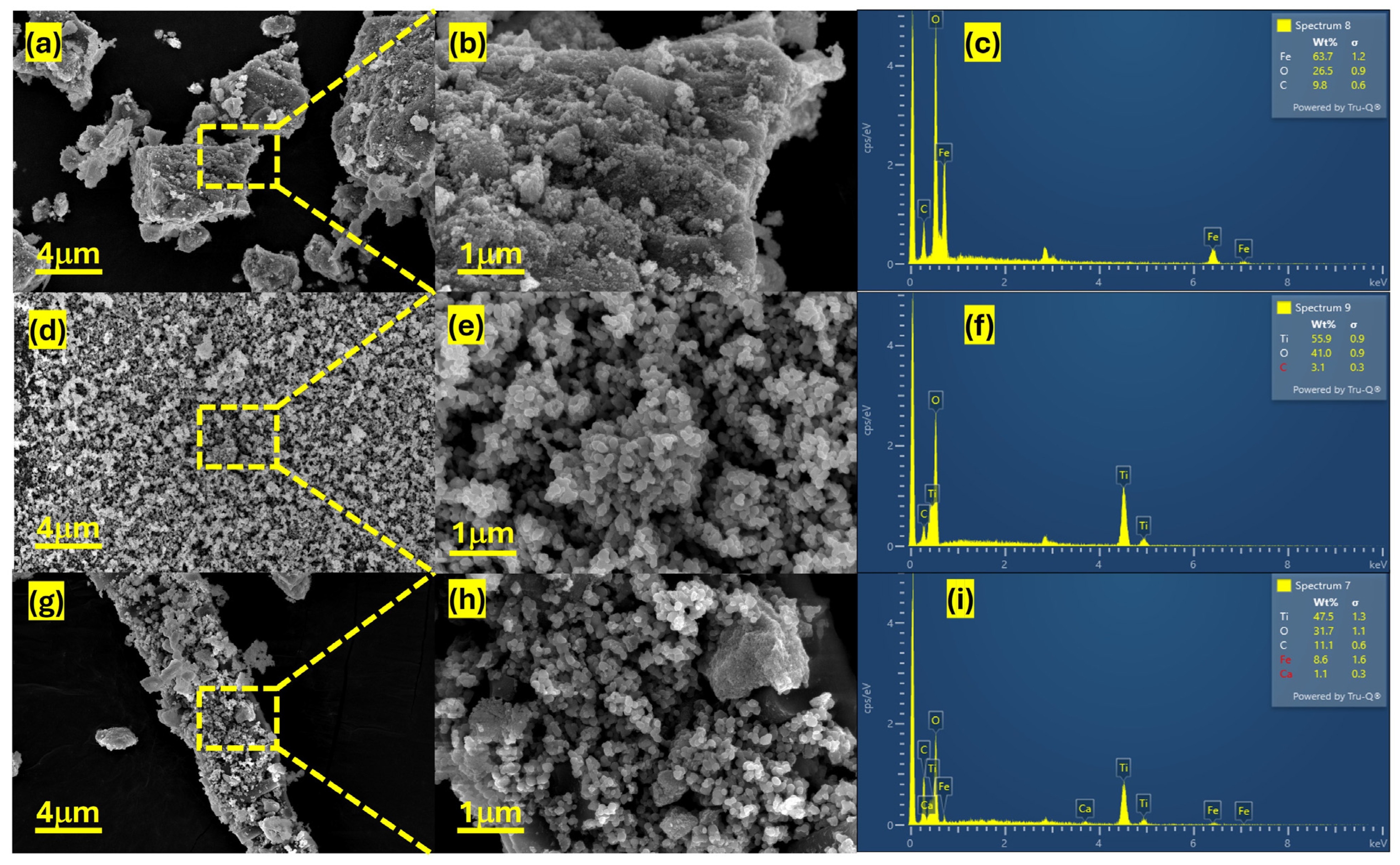
SEM and EDS were used to analyze the surface shape and composition of the synthetic materials (
Figure 4a–i). Fe
2O
3generated block-like agglomerations with rough surfaces, indicating substantial aggregation, according to SEM images (
Figure 4a,b), whereas TiO
2 showed more uniformly distributed, fine-grain-like nanostructures with less agglomeration (
Figure 4d,e). Fe
2O
3 and TiO
2 nanoparticles are uniformly anchored on the NBC matrix in the heterogeneous and porous structure of the FNT catalyst, which promotes robust interfacial contact and improved charge transfer [
32].
EDS analysis confirmed that the elemental composition, in the case of Fe
2O
3, contained Fe (63.7 wt%) and O (26.5 wt%), with only a minor contribution from C (9.8 wt%), which may arise from surface contamination or residual organic species (
Figure 4c), while TiO
2 showed Ti (55.9 wt%) and O (41.0 wt%), along with trace C (3.1 wt%) (
Figure 4f). On the other hand, FNT catalyst showed Ti (47.5 wt%), O (31.7 wt%), C (11.1 wt%), and Fe (8.6 wt%), together with minor Ca (1.1 wt%), confirmed the successful integration of TiO
2 and Fe
2O
3 within the NBC framework (
Figure 4i). The Ca detected is assigned to naturally occurring mineral constituents of the biomass precursor. SEM-EDS analysis confirmed the successful formation of the FNT catalyst with strong interfacial interaction, reduced agglomeration, and enhanced surface properties, enabling efficient charge separation and improved surface activity.
2.1.5. Magnetic Properties
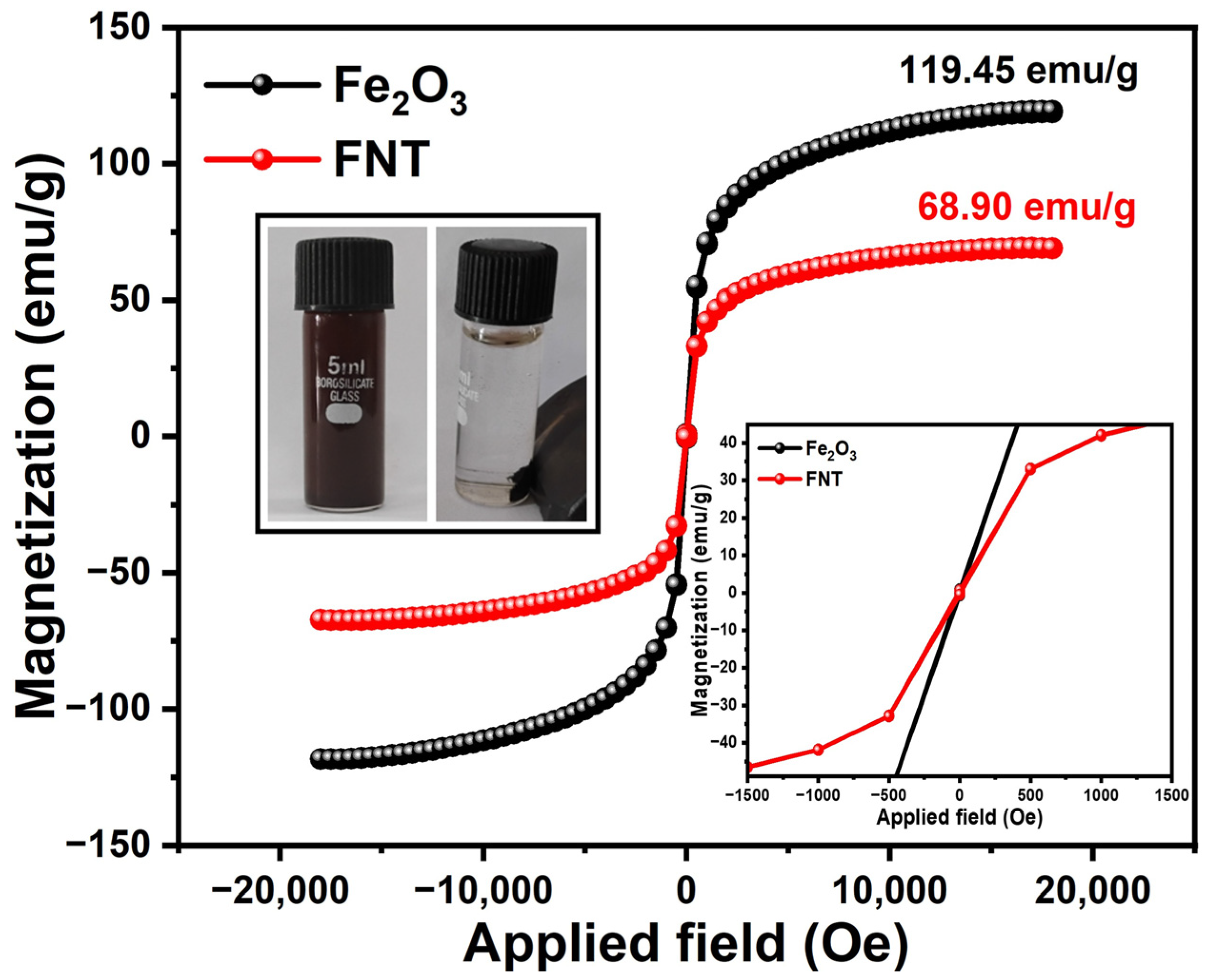
Vibrating sample magnetometry (VSM) was used to study the magnetic properties of the catalyst. It was confirmed that the magnetization curves were S-shaped because of the existence of S-shaped hysteresis loops (
Figure 5). Pure Fe
2O
3 has a saturation magnetization (M
s) of 119.45 emu/g, a remanent magnetization (M
r) of 0.002 emu/g, and negligible coercivity (H
c). FNT, on other hand, showed a much lower M
s value of 68.90 emu/g, with M
r reduced to 0.0007 emu/g and negligible H
c.
The reduction in magnetization with the addition of TiO
2 and NBC was due to a dilution of the magnetic Fe
2O
3 with non-magnetic materials, reducing the total magnetic moment per unit mass. Additionally, the close contact of Fe
2O
3 with the NBC/TiO
2 matrix caused surface spin disorder and inhibited magnetic domain alignment, which also contributes to the decreased M
s and M
r and negligible H
c. Despite this decrease, the FNT catalyst still retained a sufficient magnetic response, which was advantageous for easy separation and recovery from aqueous media after photocatalytic treatment. Thus, the incorporation of NBC and TiO
2 not only altered the magnetic behavior but also improved the multifunctional applicability of the catalyst [
33].
2.1.6. Surface Chemical States and Textural Properties
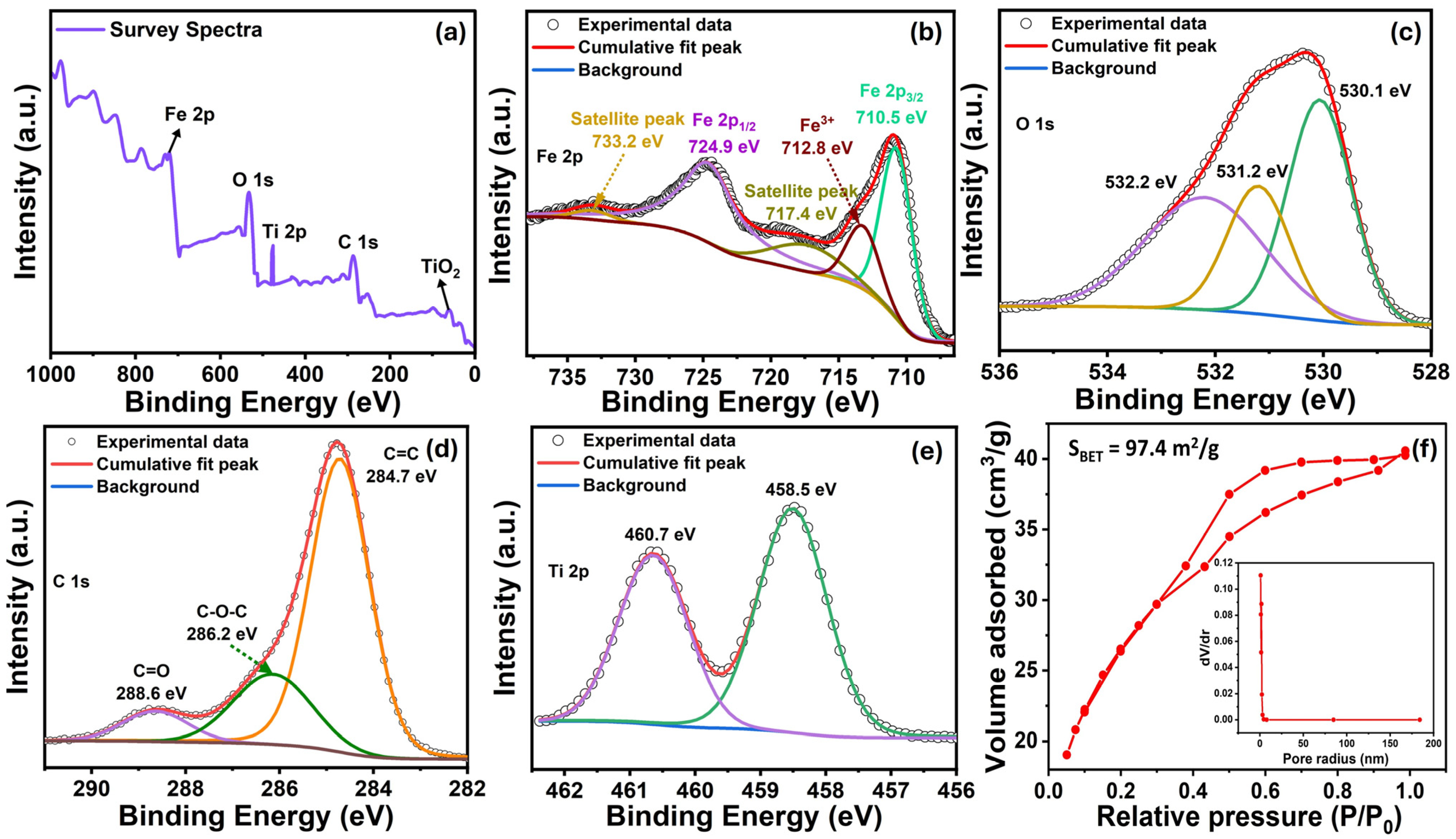
XPS and BET analysis were used to examine the surface composition and properties of the FNT catalyst (
Figure 6a–f). The XPS survey spectra (
Figure 6a) confirmed the presence of Fe, Ti, O, and C elements, indicating the successful integration of Fe
2O
3, TiO
2, and NBC without impurities. The Fe 2p spectrum (
Figure 6b) showed two peaks at 710.5 eV (Fe 2p
3/2) and 724.9 eV (Fe 2p
1/2) with a spin-orbit gap of 14.4 eV, along with a prominent Fe
3+ peak at 712.8 eV, and satellite peaks around 717.4 eV and 733.2 eV, which were consistent with the presence of Fe
3+ species, confirming the formation of Fe
2O
3 [
34].
The O 1s spectrum (
Figure 6c) was deconvoluted into three components centered at 530.1 eV, 531.2 eV, and 532.2 eV. The peak at 530.1 eV was attributed to lattice oxygen (O
2−) in metal oxides (Fe-O and Ti-O), while the peaks at higher binding energies were associated with surface hydroxyl groups and adsorbed oxygen species, which plays a crucial role in catalytic and adsorption processes. The C 1s spectrum (
Figure 6d) revealed a dominant peak at 284.7 eV, corresponding to C=C bonds of graphitic carbon. The peak at 286.2 eV was assigned to C-O-C groups, while the peak at 288.6 eV was attributed to C=O (carboxyl) functionalities rather than simple carbonyl groups. These oxygenated carbon groups indicated the presence of surface functional sites on the NBC matrix, which facilitated interfacial interaction and pollutant adsorption.
The existence of Ti
4+ in anatase TiO
2 was indicated by the Ti 2p spectra (
Figure 6e), which showed two distinctive peaks at 458.5 and 460.7 eV, corresponding to the Ti 2p
3/2 and Ti 2p
1/2, respectively [
31]. The successful formation of the Fe
2O
3/TiO
2 heterojunction is demonstrated by the coexistence of Fe
3+ and Ti
4+ species, which promotes interfacial charge separation and prevents electron–hole recombination.
The N
2 adsorption/desorption isotherm of FNT (
Figure 6f) showed a type IV curve with an H3 hysteresis cycle, which corresponded to mesopores structure. The BET surface area was 97.4 m
2/g with average pore size of 12.6 nm with a pore volume of 0.32 cm
3/g, attributed to TiO
2 dispersion and NBC porosity. Overall, XPS and BET results confirmed the FNT catalyst has chemically active surface states and highly accessible mesoporosity.
2.1.7. Electrochemical Studies
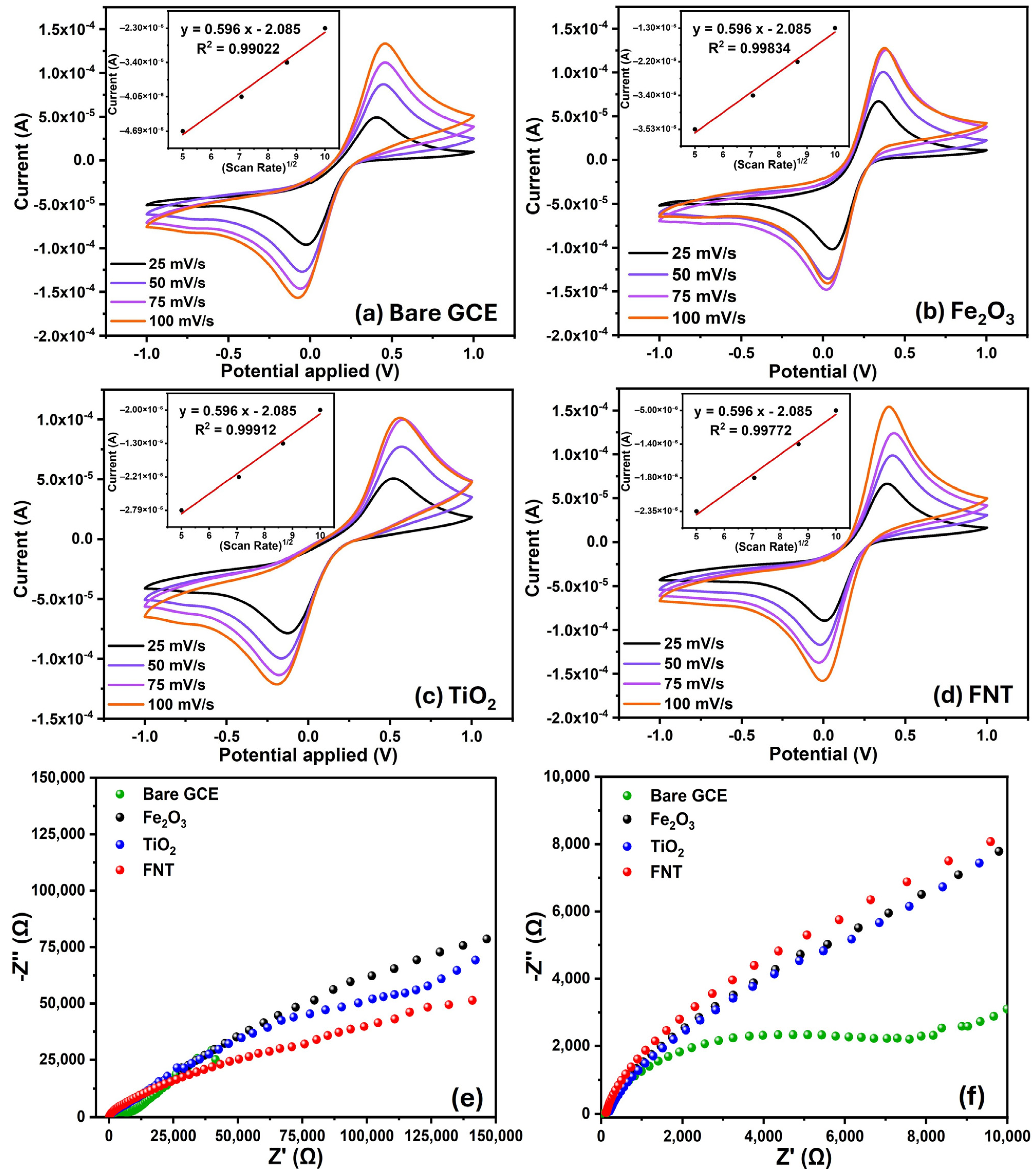
The electrochemical behavior of bare GCE, Fe
2O
3, TiO
2, and FNT electrodes explored by applying CV and EIS, as shown in
Figure 7a–f. The FNT electrode recorded the lowest redox current difference (ΔE
p) especially at the potential of 100 mV s
−1 (−5.0 × 10
−6 A) compared to bare GCE (−2.3 × 10
−6 A), Fe
2O
3 (−1.3 × 10
−5 A), and TiO
2 (−2.0 × 10
−5 A) (
Figure 7a–d). The reduction in ΔE
p indicated electron transfer kinetics and improved reversibility at the FNT interface. Although Fe
2O
3 showed comparable or even slightly higher absolute current values, the larger ΔE
p suggested slower interfacial charge transfer and higher polarization, whereas the FNT electrode facilitated faster electron exchange with lower barriers. The anodic and cathodic peak currents increased linearly with the square root of the scan rate, confirming that the electrochemical process was diffusion controlled. The high linearity (R
2 = 0.99022) further validated efficient mass transport and stable electrochemical behavior at the FNT-modified surface. Additionally, the relatively low variation in peak currents with increasing scan rate for FNT indicated improved electrochemical stability compared to individual components [
35].
The EASA values (
Table 1), calculated using the Randles–Sevcik equation, showed that the FNT electrode (0.0011–0.0013 cm
2) possessed only a marginal increase compared to Fe
2O
3 (0.0011–0.0012 cm
2) and TiO
2 (0.0009–0.0010 cm
2). However, this slight increase in EASA alone did not fully account for the observed enhancement in electrochemical performance. Instead, the superior activity of FNT arose from a synergistic interaction between Fe
2O
3, TiO
2, and NBC, which raised the electroactive surface density and electrocatalytic activity, was responsible for the improved EASA of the FNT electrode. The NBC component contributed high conductivity and porous architecture, facilitating rapid electron transport pathways, while Fe
2O
3 provided active redox sites and TiO
2 enhanced surface stability and charge separation. This heterojunction-like interaction between Fe
2O
3 and TiO
2 promoted efficient charge carrier separation and minimized recombination losses, which was not achievable in single-component systems.
These findings were confirmed by EIS results (
Figure 7e,f). High R
ct and slow electron transfer rates were indicated by the bare GCE’s strong semicircle. The Fe
2O
3, TiO
2, and FNT electrodes, on the other hand, showed more linear behavior and smaller semicircles, indicating diffusion-controlled processes and lower resistance. Because of the conductive NBC matrix and strong interfacial contact between Fe
2O
3 and TiO
2, the FNT electrode showed the lowest impedance and fastest electron transfer among them. Overall, the higher EASA and lower R
ct validated the FNT catalyst’s superior electrochemical performance, which correlated with its improved photocatalytic and PMS activation efficiency.
2.2. Degradation Performance and Kinetic Analysis
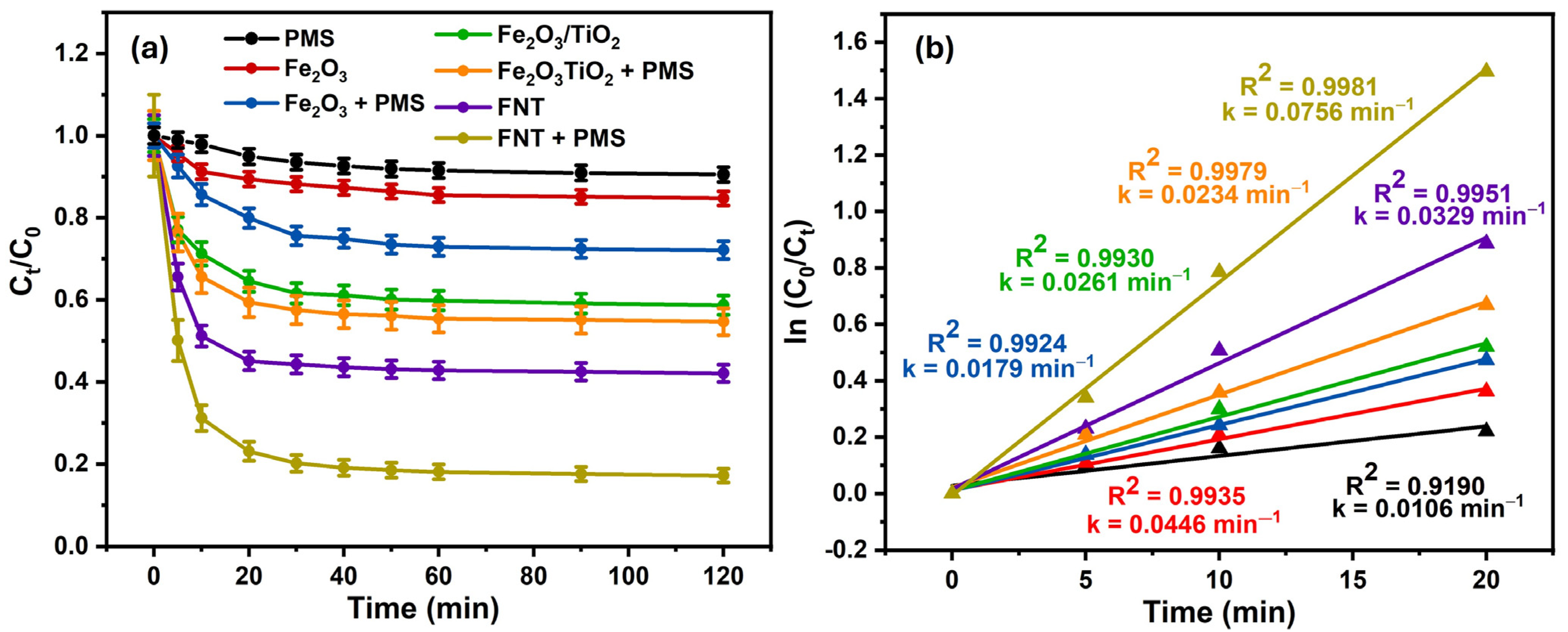
The catalysts produced for CrV were assessed for their photocatalytic and PMS-assisted degrading capabilities (
Figure 8a,b). Fe
2O
3, Fe
2O
3/TiO
2, and FNT showed low degradation efficiency in the absence of PMS, suggesting inadequate adsorption and photocatalytic activity. PMS’s weak capacity to produce ROS on its own was confirmed by its low degradation efficiency. However, there was a noticeable increase in degradation after PMS was added. With a strong synergistic impact of Fe
2O
3, TiO
2, and NBC, the FNT in the presence of the PMS system reached the maximum efficiency, eliminating 82.8% of CrV in 120 min [
12].
All processes followed pseudo-first-order kinetics with a higher correlation coefficient (R
2 > 0.99), according to a kinetical study. The FNT + PMS system exhibited the highest rate constant (k = 0.0756 min
−1), surpassing Fe
2O
3 + PMS (k = 0.0446 min
−1) and Fe
2O
3/TiO
2 + PMS (k = 0.0234 min
−1), confirming its superior catalytic efficiency. TiO
2 facilitated electron transfer and decreased recombination, NBC enhanced adsorption and dispersion while encouraging interfacial interactions, and Fe
2O
3 supplied Fe
3+/Fe
2+ redox sites for PMS activation and the formation of sulphate radicals, all of which contributed to the enhanced performance. The combined effect of efficient radical generation (hydroxyl and sulphate radicals), improved mass transfer, and electron transport resulted in accelerated and sustained CrV degradation, highlighting efficient effectiveness of the FNT-based catalytic system (
Figure S2).
2.3. Effect of Light Source and Catalyst Dose
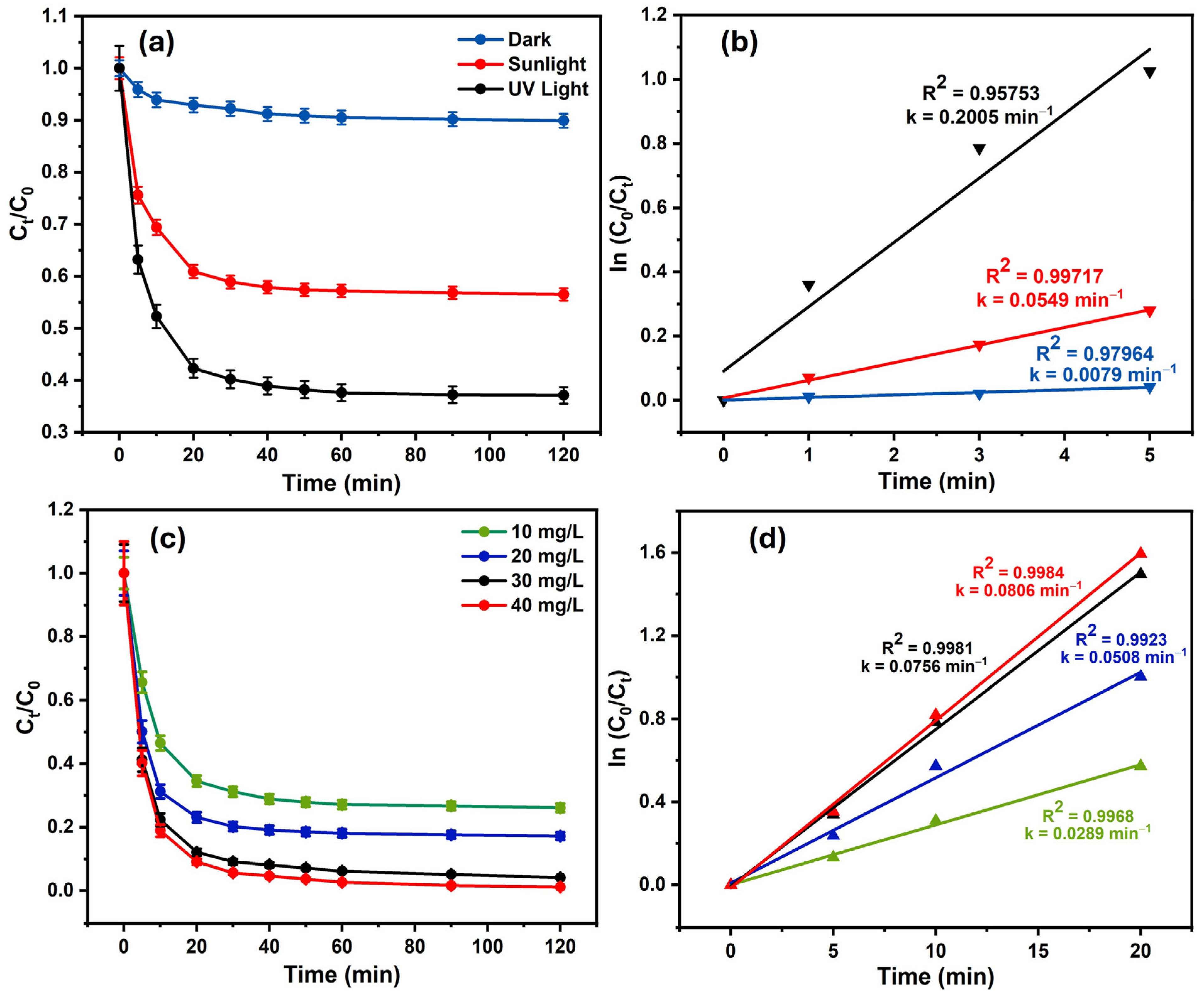
The impact of radiation conditions and FNT catalyst dosage on CrV degradation was evaluated (
Figure 9a–d). In the case of the light source effect and the reaction conditions where the PMS concentration was 50 mg/L, the FNT dosage was 20 mg/L at a 27 °C temperature under pH = 5.72 (unadjusted). Under dark conditions, degradation after 120 min remained low (10.1%) due to the absence of the photon energy, which prevented catalyst activation and limited ROS generation. Under sunlight, the efficiency increased to 43.5% because partial activation of the FNT catalyst occurred, although the lower light intensity and limited UV fraction restricted the excitation of TiO
2.
However, the degradation efficiency was the highest in the presence of UV irradiation (62.9%) with an apparent
k of 0.2005 min
−1, which was very different from that under sunlight irradiation (k = 0.0549 min
−1) and in the dark (k = 0.0079 min
−1) (
Figure 9b). The reasons for the better degradation efficiency under UV irradiation attributed to the more efficient excitation of the TiO
2, better electron–hole separation, and an accelerated Fe
3+/Fe
2+ redox cycling processes, which contributed to efficient PMS activation and the subsequent generation of hydroxyl and sulphate radicals. These findings clearly revealed that light sources, especially UV light, exerted a strong promoting effect on the photocatalytic PMS synergetic degradation process.
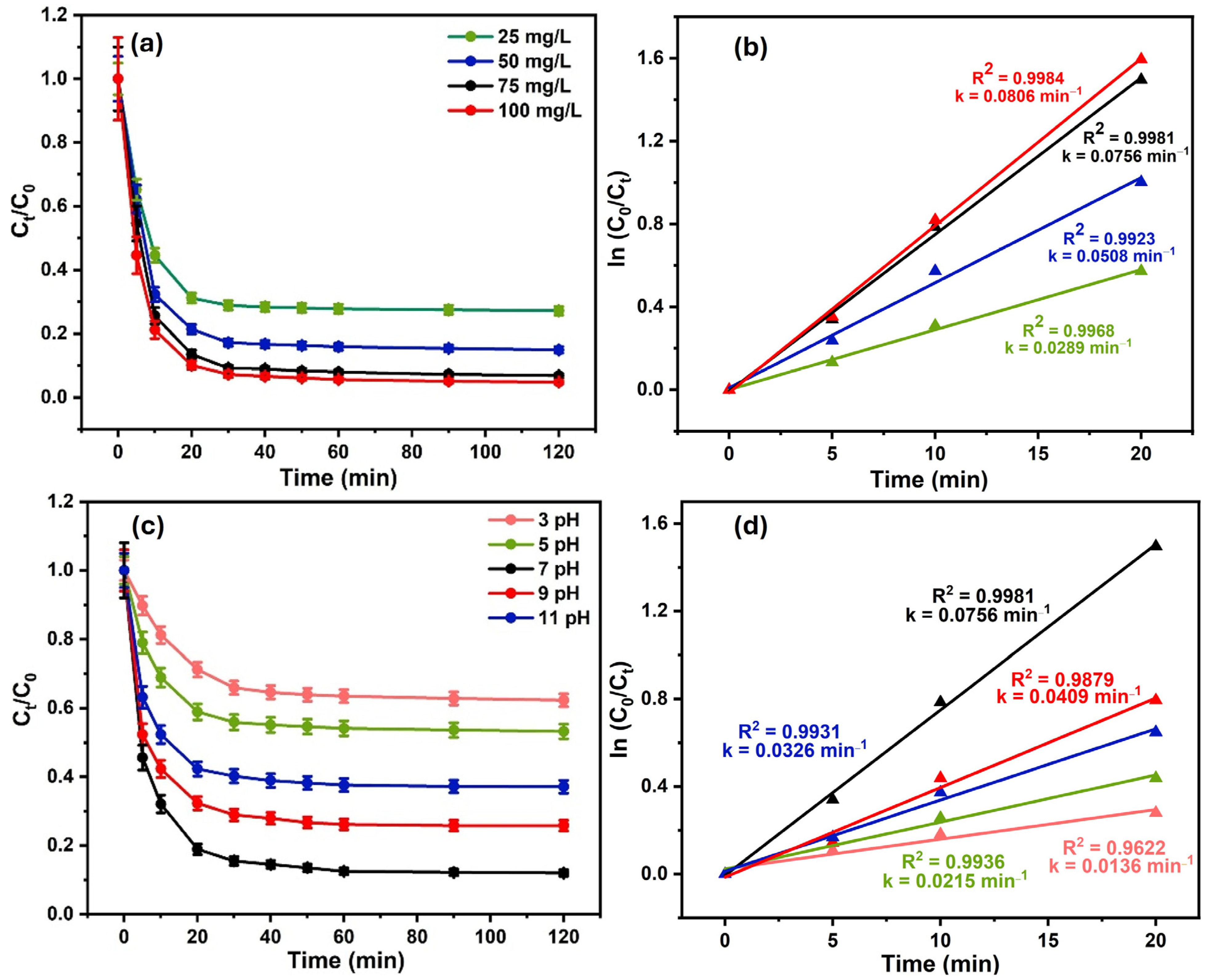
The impact of FNT dosage on CrV degradation was investigated by varying the concentration from 10 to 40 mg/L under fixed PMS and reaction conditions (
Figure 9c,d). The degradation efficiency increased from 73.9% (10 mg/L) to 82.8% (20 mg/L), 97.9% (30 mg/L), and reached 98.9% (40 mg/L) after 120 min. On the other hand, as the catalyst dosage increased, the pseudo-first-order rate constant rose from 0.0289 min
−1 to 0.0806 min
−1.
The increased availability of active sites, which encouraged PMS activation and produced more hydroxyl and sulphate radicals, was identified as the cause of this improvement. Additionally, the NBC matrix’s wide surface area and abundance of functional groups improved CrV adsorption and encouraged closer contact with the Fe
2O
3 and TiO
2 active sites. Overall, the results showed that increasing catalyst dosage and appropriate irradiation improved catalytic efficiency and caused superior CrV degradation by enhancing radical generation, mass transfer, and interfacial electron transfer [
36].
2.4. Influence of PMS Dosage and Solution pH
At room temperature with an initial pH of 5.72, the impact of PMS concentration (25–100 mg/L) on CrV degradation was assessed at a constant catalyst dosage (30 mg/L) (
Figure 10a,b). Even at 75 mg/L (98.77%), a better degradation efficiency was attained, at 100 mg/L, it only slightly increased to 98.96%. With increasing PMS concentration, the rate constant rose from 0.0289 min
−1 at 75 mg/L to 0.0806 min
−1 at 100 mg/L with good linearity (R
2 ≥ 0.99). This shows that, due to rapid electron transport within the Fe
2O
3-NBC-TiO
2 network and the efficient use of produced hydroxyl and sulphate radicals, the FNT catalyst efficiency activated PMS, even at low oxidant levels [
34].
The effects of pH (3–11) consistently shown strong degradation, reaching maximum efficiency at neutral pH (98.90% at pH 7). The structural characteristics of the catalyst and dye were closely linked to this behavior. The cationic CrV triphenylmethane dye is extremely sensitive to electrostatic interactions because it has aromatic rings with a delocalized positive charge. At neutral pH, the surface of Fe2O3/TiO2 and the functional groups (-OH, -COOH) of NBC afforded suitable adsorption sites through π–π interactions and electrostatic attraction, boosting dye accumulation around active sites. Concurrently, the conductive NBC matrix encouraged electron mobility and interfacial contact, and the heterostructure of Fe2O3-TiO2 enabled effective charge separation.
Protonation of surface functional groups decreased contact with the cationic dye and prevented PMS activation in acidic environments. Radical scavenging and decreased efficiency were caused by structural alterations in an alkaline media, such as increased surface negatively and PMS instability. Overall, improved adsorption, effective electron transfer, and increased radical-driven degradation were made possible by the CrV and FNT catalyst’s optimal structural compatibility at neutral pH [
37].
2.5. Effect of Inorganic Anions and Dissolved Organic Matter
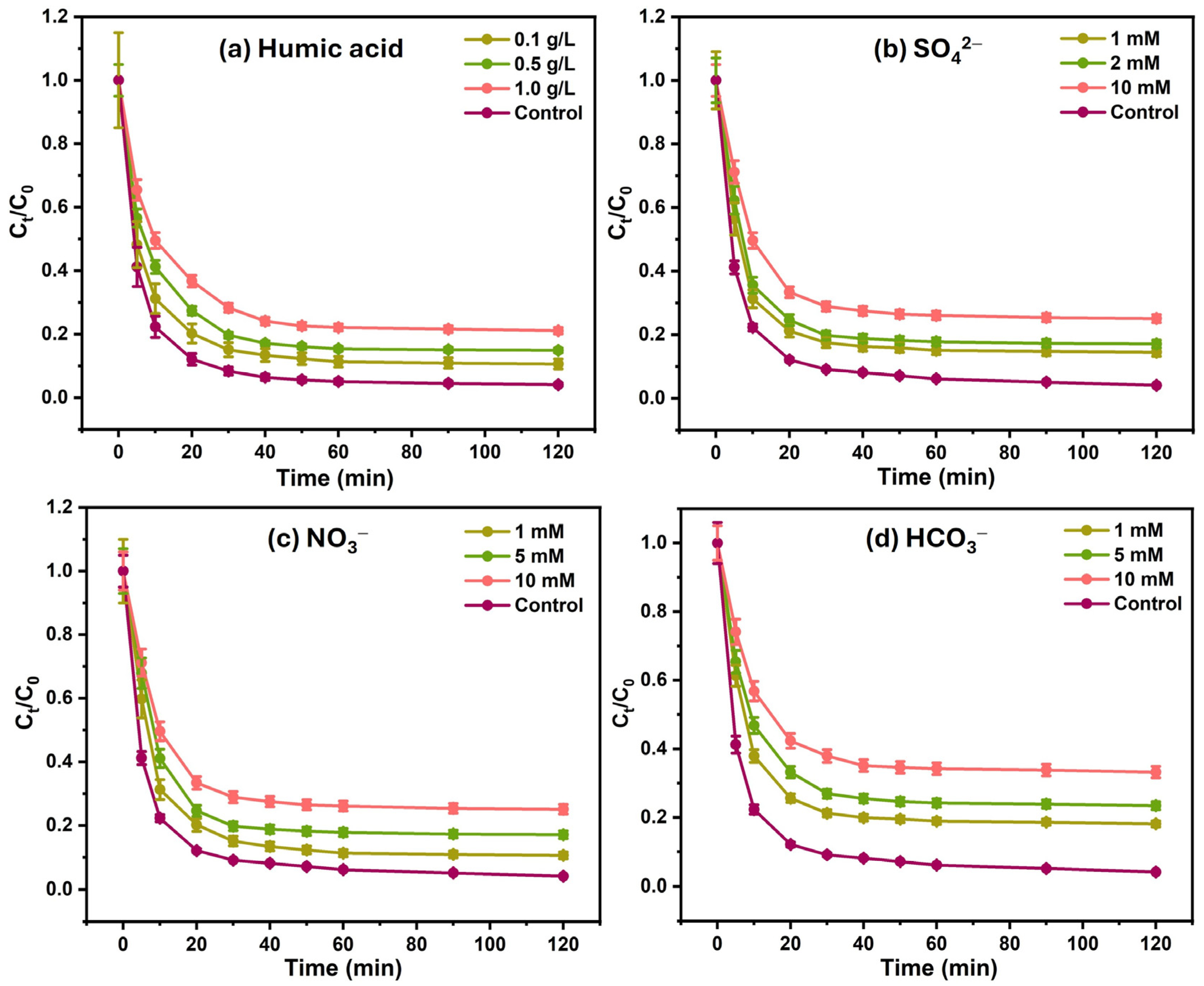
Under optimal conditions (PMS = 75 mg/L, catalyst = 30 mg/L, pH = 7, 27 °C), the impact of coexisting inorganic anions (NO
3−, HCO
3−, SO
42−) and dissolved organic matter (humic acid) on the PMS-assisted CrV degradation employing FNT catalyst was methodically examined, as shown in
Figure 11a–d. CrV degradation was considerably hindered by the presence of humic acid (HA), and this inhibition improved as the concentration of humic acid rose from 0.1 to 1.0 g/L. This behavior was caused by HA’s competitive adsorption on the active sites of Fe
2O
3 and TiO
2, which limited the access of the CrV molecule, as well as radical scavenging, in which HA consumes hydroxyl and sulphate radicals, decreasing their availability for dye oxidation. Furthermore, the catalyst’s surface was coated with the intricate aromatic structure of HA, which further impeded electron transport and light penetration.
To a lesser extent, inorganic anions also showed inhibitory effects. Because of radical quenching and the creation of less reactive species, which slowed oxidation kinetics, NO3− and HCO3− decreased degradation efficiency with increasing concentration. Because it easily interacted with hydroxyl radicals and changed the pH buffering of the solution, HCO3− in particular shown higher inhibition. SO42−, on the other hand, had little effect because of its poor scavenging capacity and restricted interaction with catalytic active sites.
The FNT/PMS system maintained a comparatively high degrading efficiency in spite of these interferences. The robust synergistic structure of Fe2O3-NBC-TiO2, which guaranteed constant radical production, effective electron transfer, and steady catalytic activity, was the cause of this robustness.
2.6. ROS Scavenging and Reusability Analysis
As shown in
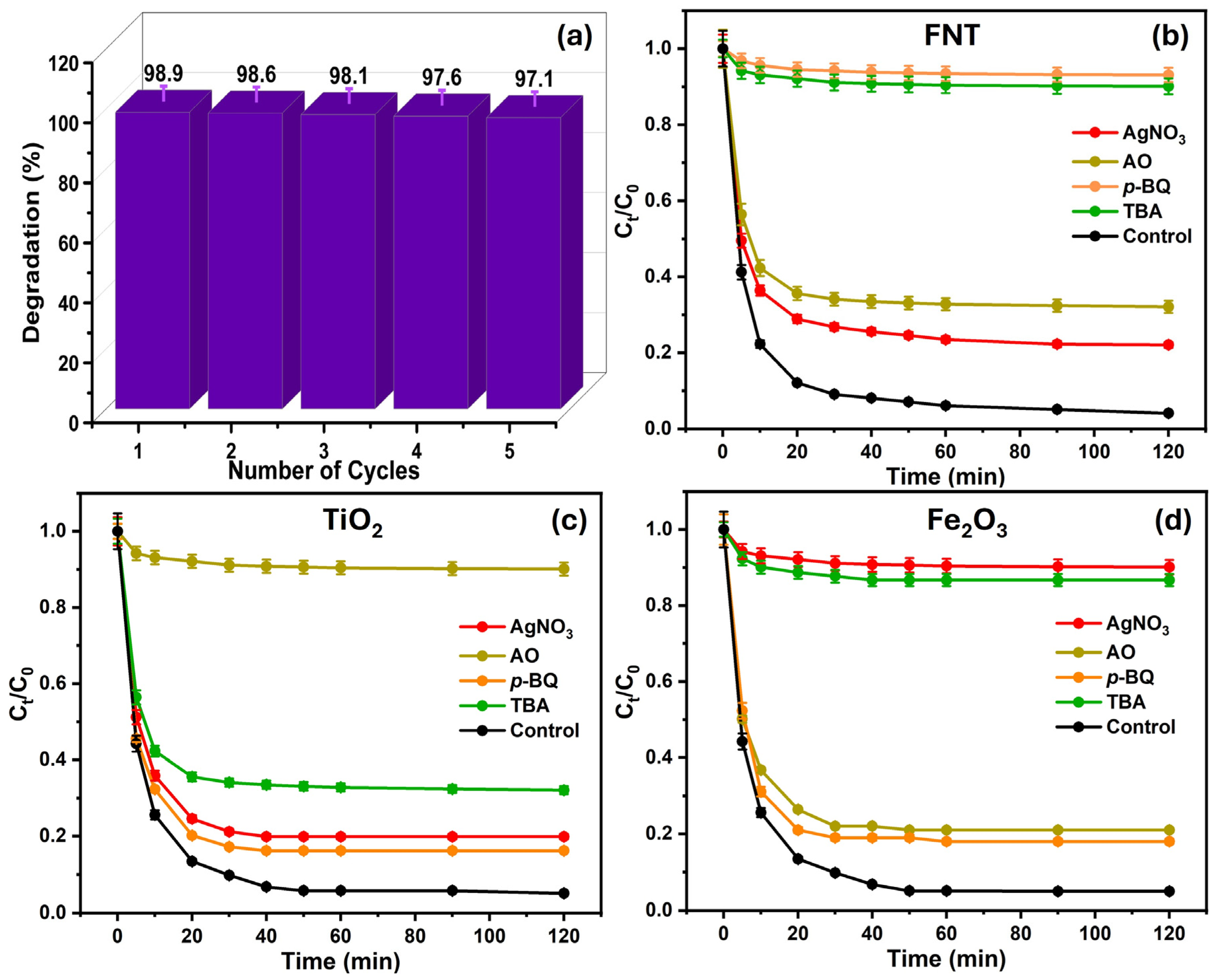
Figure 12a,b, the stability and reusability of the FNT catalyst were assessed throughout five consecutive degrading cycles using optimal parameters (PMS = 75 mg/L, FNT = 30 mg/L, pH 7, 27 °C). Catalyst loss during the recovery process and surface fouling were blamed for the CrV degradation efficiency’s minimal decline from 98.9% in cycle one to 97.1% in cycle five. Additionally, cycle five’s recovered catalyst mass was 28.5 mg/L, suggesting just 5–10% loss.
The radical scavenging experiments were conducted to elucidate the dominant reactive oxygen species involved in CrV degradation over FNT, Fe
2O
3, and TiO
2 systems. In the case of the FNT, the addition of
p-BQ and TBA resulted in a significant suppression of degradation efficiency, whereas AO showed a comparatively moderate effect. This indicated that superoxide and hydroxyl radicals played a major role, while photogenerated holes contributed to a lesser extent. The strong inhibition observed with
p-BQ suggested that superoxide radicals was the predominant species, which was due to efficient electron transfer across the heterojunction formed between Fe
2O
3 and TiO
2, facilitated by the conductive NBC matrix. The NBC enhanced charge separation and electron mobility, thereby promoting the reduction of dissolved oxygen to superoxide radicals [
38].
For TiO2, the scavenger study revealed that TBA significantly reduced the degradation efficiency, confirming hydroxyl radicals as the primary active species, while p-BQ and AO showed comparatively lower inhibition. This behavior was consistent with the well-known photocatalytic mechanism of TiO2, where photogenerated holes oxidize water or surface hydroxyl groups to produce hydroxyl radicals. In contrast, the Fe2O3 system exhibited a different trend, where AO (hole scavenger) caused noticeable suppression, indicating the dominant role of holes, while p-BQ and TBA showed moderate effects. This suggests that direct oxidation via holes and limited generation of superoxide and hydroxyl radicals governed the degradation process in Fe2O3. Overall, the FNT composite demonstrated superior performance due to a synergistic mechanism involving multiple reactive species, primarily superoxide and hydroxyl radicals, supported by improved charge separation and reduced electron–hole recombination. The heterostructure between Fe2O3 and TiO2, along with the electron-conducting NBC, enhanced interfacial charge transfer, leading to increased generation of reactive radicals and, consequently, higher degradation efficiency compared to the individual components.
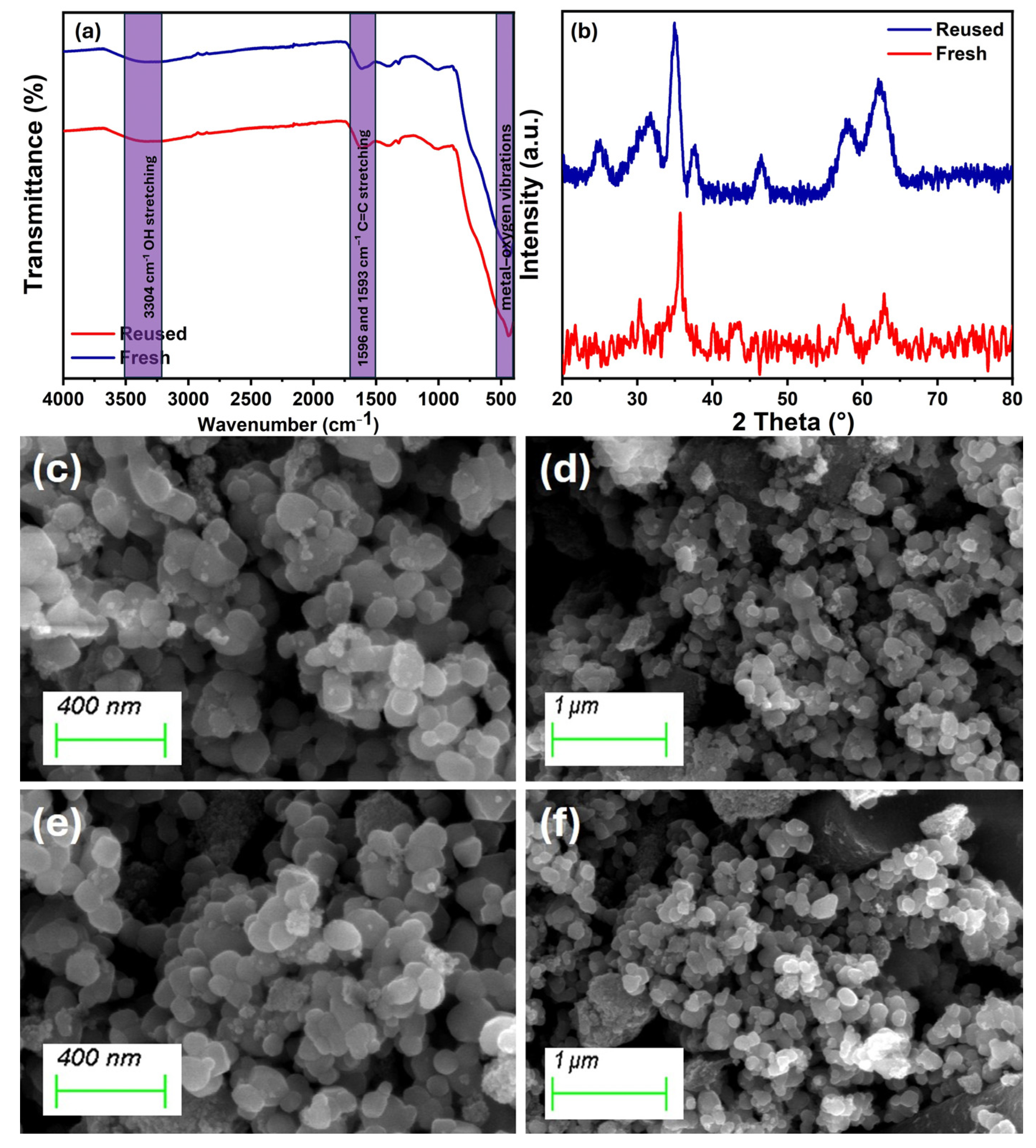
The structural integrity of the catalyst after the fifth cycle was further examined. FTIR and XRD analysis (
Figure 13a,b) confirmed that the functional groups and crystalline structure of FNT remained intact. In the FTIR spectra (
Figure 13a), the broad band at 3404 cm
−1 (O-H stretching) and peaks at 1596–1593 cm
−1 (C=C stretching) were present in both samples with minimal changes, confirming the preservation of functional groups and the carbon framework. Metal–oxygen vibrations in the lower region also remained intact, suggesting stability of the metal oxide components. Minor shifts and intensity variations were attributed to surface interactions during reuse.
In the XRD patterns (
Figure 13b), the fresh FNT exhibited well-defined diffraction peaks, indicating its crystalline nature. After the fifth cycle, the reused sample retained similar main peaks with only slight reductions in intensity and minor broadening, suggesting a marginal decrease in crystallinity but no significant phase transformation. The overall retention of peak positions confirmed that the material maintained its structural framework and crystalline phases even after repeated use, demonstrating the good stability and reusability of the FNT. SEM images (
Figure 13c–f) showed slight surface roughness and agglomeration compared to the fresh catalyst, while preserving a similar heterostructure. Overall, these results demonstrated that the FNT catalyst maintained high durability, recyclability, and stability, indicating its strong potential as a reliable material for the PMS-assisted degradation of organic dyes in water systems.
2.7. Proposed Reaction Mechanism
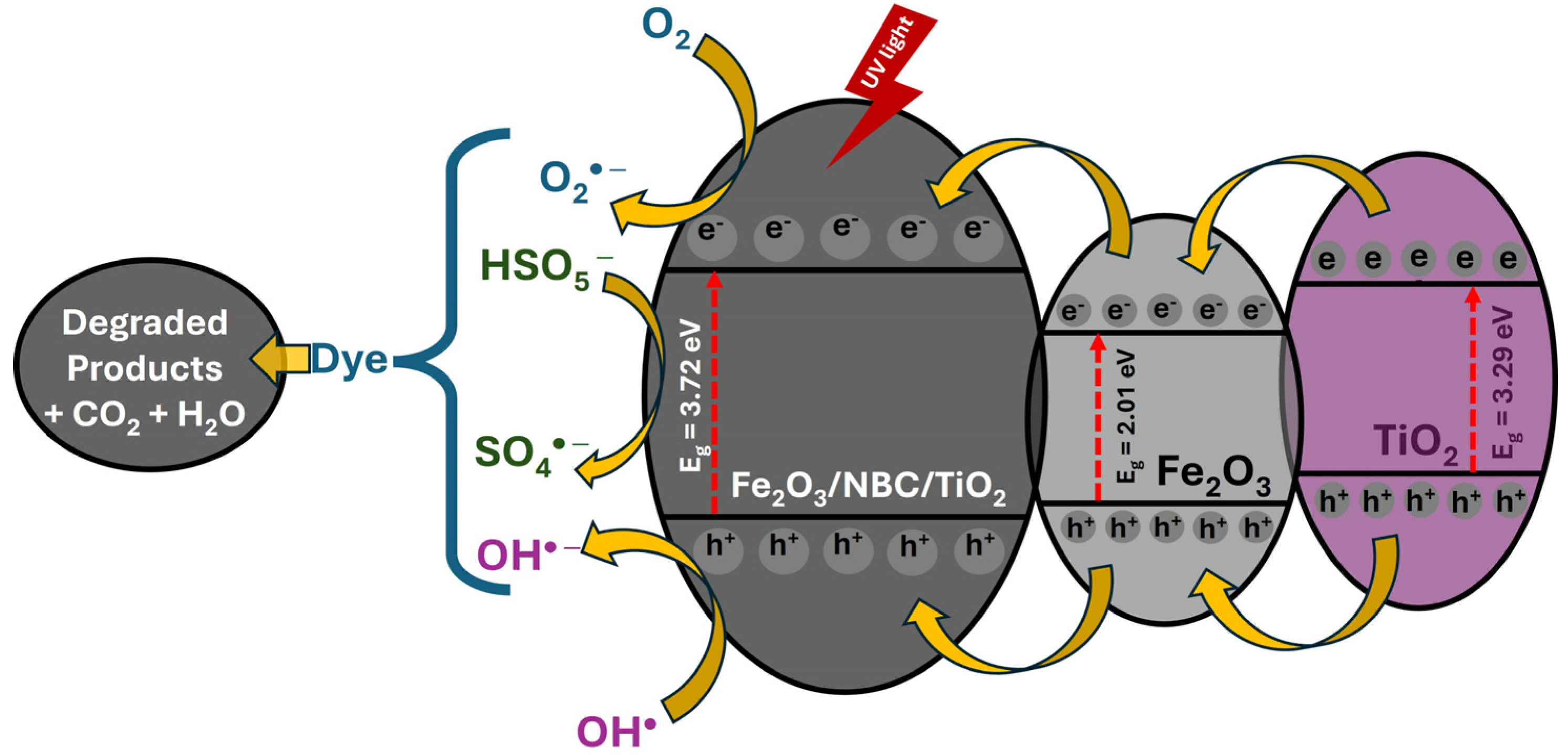
The proposed mechanism for the CrV degradation over the FNT catalyst under optimized conditions was evaluated under UV light. Upon irradiation, electrons were excited from the valence band (VB) to the conduction band (CB) of TiO
2 (E
g = 3.29 eV), Fe
2O
3 (E
g = 2.01 eV), and FNT (E
g = 3.72 eV), generating electron–hole pairs, as shown in
Figure 14. The photogenerated electrons migrated across the heterostructure, facilitated by the NBC acting as an electron mediator, which suppressed charge recombination [
39]. These electrons reduced dissolved oxygen to form superoxide radicals, which further participated in activating PMS to generate sulfate radicals [
31]. Hydroxyl radicals were simultaneously produced by the photogenerated holes in the VB oxidizing water or hydroxide ions. CrV was effectively broken down into intermediate compounds by the combined action of hydroxyl and sulphate radicals, which eventually mineralized into CO
2 and H
2O. Fe
2O
3, TiO
2, and NBC worked in concert to improve charge separation and the production of reactive species, which led to a high degradation efficiency [
40].
2.8. Comparison with Other Reported Catalysts
The efficacy of several catalytic and treatments previously reported for CrV removal under various circumstances was demonstrated by the comparative analysis shown in
Table 2. Natural adsorbents, such
Capparis spinosa powder, performed moderately, removing 92.02% of the material after 30 min in the presence of light. However, their effectiveness dropped in the absence of light, demonstrating light-dependent behavior [
41]. Adsorption-based systems, including palm kernel-shell-derived biochar [
22], sugarcane fiber [
37], and magnetic biochar [
34], showed removal efficiencies ranging from 86.40% to 92.99%, often requiring longer contact times and exhibiting limitations at higher CrV concentrations.
On the other hand, under neutral pH conditions, the FNT/PMS system investigated in this study performed better, degrading CrV by 98.9% in 120 min at a significantly higher initial concentration (100 mg/L). This proved the system’s robustness and practicality even while managing highly contaminated wastewater. Furthermore, PMS improved degrading efficiency without the need for external irradiation sources such as UV light by promoting the generation of ROS. Overall, the results showed that the developed FNT/PMS system offered a balanced benefit in terms of efficiency, operational conditions, and treatment capacity when compared to previously recorded systems, making it a feasible choice for real-world environmental remediation applications.
3. Materials and Methods
3.1. Materials
Ferrous sulphate heptahydrate (FeSO4·7H2O, ≥98%), ferric chloride hexahydrate (FeCl3·6H2O, ≥98%), sodium hydroxide (NaOH, ≥97%), titanium (IV) isopropoxide (C12H28O4Ti, ≥98%), and crystal violet (CrV; C24H28N3Cl), a triarylmethane cationic dye, were obtained from Sigma-Aldrich (Bangalore, India) and used as received without further purification. All organic solvents were received from Loba Chemie Pvt. Ltd. (Chandigarh, India) and were dried, when required, using standard laboratory procedures before use. The fresh leaves were collected from Cannabis sativa and Justicia gendarussa from Gharuan, Punjab, India (30.7688° N, 76.5754° E). All solutions were prepared using distilled water throughout the experiments.
3.2. Methodology
3.2.1. Preparation of Nanobiochar from Cannabis sativa
Fresh
Cannabis sativa leaves were collected, washed, dried, and ground into fine powder [
42]. The biomass was pyrolyzed at 300 °C for 3 h under limited oxygen in muffle furnace to obtain biochar, which was thoroughly washed with distilled water until reaching a neutral pH and dried at 60 °C. For NBC, the biochar was dispersed in distilled water and probe-sonicated for 6 h to reduce particle size and improving dispersion. The suspension was filtered, washed, dried at 60 °C, and stored in airtight container for further use.
3.2.2. Preparation of Magnetic Nanoparticles by Using Justicia gendarussa
For the green synthesis of magnetic nanoparticles, fresh leaves of
Justicia gendarussa were collected, washed, air-dried, and ground into powder [
43]. About 70 g of powder was refluxed in 250 mL distilled water for 3 h to prepare extract solution. On the other hand, 1.519 g (0.1 M) of ferrous sulphate and 3.244 g (0.2 M) of ferric chloride solutions were refluxed for 2 h in freshly prepared 100 mL plant extract. The pH of solution was maintained to 11 using 0.1 M NaOH solution, if needed. Formation of black precipitates confirmed the magnetic nanoparticles, which were collected using external magnet, washed, dried at 60 °C for 6 h.
3.2.3. Synthesis of TiO2 Nanoparticles
The TiO2 nanoparticles were synthesized using the sol–gel method by dissolving 4.832 g (0.34 M) of titanium isopropoxide in 50 mL isopropyl alcohol with constant stirring at room temperature. The 1 M HNO3 was added dropwise to adjust to pH 2, followed by 2 h stirring and 24 h aging for gel formation. The gel was centrifuged, washed and dried at 60 °C for 12 h, then calcinated at 450 °C (5 °C/min) for 2 h to obtained TiO2 nanoparticles.
3.2.4. Synthesis of TiO2-Modified Magnetic Nanobiochar Catalyst
The Fe2O3/TiO2/NBC (FNT) catalyst was prepared using the controlled assembly–calcination method. Equal amounts (1 g each) of Fe2O3, NBC, and TiO2 were dispersed in 20 mL of distilled water and probe sonicated for 30 min. The suspensions were mixed and refluxed at 80 °C for 6 h with continuous stirring to ensure uniform deposition and strong interfacial interaction. The mixture was cooled, filtered, and dried at 60 °C for 12 h. The dried material was calcined at 450 °C for 2 h (5 °C/min) to obtain the stable FNT catalyst, which was stored for further analysis.
3.3. Photochemical Degradation Experiments
Photocatalytic degradation experiments were conducted in a batch reactor using a 125 W mercury-vapor lamp (Crompton lumens 6200 lumens, λ = 365 nm), manufactured from Crompton Greaves Ltd., headquartered in Nashik, Maharashtra, India, at 27 ± 1 °C with constant magnetic stirring (
Figure S1). Light sources (dark, UV, and sunshine) were used to assess the degradation. Additionally, the important factors were methodically examined; these included the catalyst dosage, PMS concentration, and solution pH (adjusted using 1 M HCl/NaOH). Each run involved mixing 50 mL of a 200 mg/L crystal violet (CrV) solution with 20 mg/L of FNT catalyst and 50 mg/L of PMS. To reach adsorption–desorption equilibrium, the mixture was agitated for 30 min in the dark prior to light irradiation. Samples were taken on a regular basis, filtered through a 0.22 µm membrane filter, and examined with a UV-vis spectrophotometer. Silver nitrate, ammonium oxalate, methanol, and
t-butanol (10 mM each) scavengers were used in quenching tests to identify reactive oxygen species (ROS). Degradation efficiency was determined following each of the five cycles in which the catalyst was magnetically separated, cleaned, dried at 60 °C, and then reused. To ensure reproducibility, every experiment was carried out in triplicate.
3.4. Characterizations
X-ray diffraction (XRD) analysis was performed using a Bruker D8 Advance with Cu Kα radiation (λ = 1.5406 Å), operating over an appropriate 2θ range with a step size of 0.02° (Bruker, Germany). Surface morphology and elemental composition were examined by SEM-EDS (JEOL JSM IT500) at an accelerating voltage of 15–20 kV (JEOL Ltd., Tokyo, Japan). Zeta potential and zero-point charge (ZPC) were measured using a Malvern Zetasizer Nano-ZS90 at 25 °C (Malvern Panalytical Ltd., Malvern, UK). Functional groups were identified via FTIR (PerkinElmer) in the range of 4000-400 cm−1 (PerkinElmer Inc., Waltham, MA, USA). Electrochemical studies were conducted on a PGSTAT 102 Metrohm Autolab (Metrohm Autolab B.V., Utrecht, The Netherlands) at Chandigarh University, India. Magnetic properties were evaluated using a Lake Shore 7410 VSM at room temperature (Lake Shore Cryotronics Inc., Westerville, OH, USA). Surface chemical states were analyzed via XPS (PHI 5000 VersaProbe III, IIT Roorkee) using monochromatic Al Kα radiation (hν = 1486.6 eV) with a typical pass energy of 23.5 eV (Physical Electronics (PHI), Chanhassen, MN, USA). Thermal stability was assessed using DSC (Setaram SETSYS, Punjab University, Chandigarh, India) at a heating rate of 10 °C/min under an inert atmosphere (Setaram Instrumentation, Caluire-et-Cuire, France). Finally, pollutant degradation was monitored using a Shimadzu UV-1900 spectrophotometer at Chandigarh University, India (Shimadzu Corporation, Kyoto, Japan).





 and
and