1. Instruction
Owing to the synergistic effects of quantum size effects, surface effects, and interface effects at the nanoscale, metallic nanoparticles exhibit distinct physicochemical properties from their bulk counterparts. These unique attributes endow them with irreplaceable application value in cutting-edge fields including miniaturized electronic devices, heterogeneous catalysis, precision optical instruments, and high-performance magnetic devices, rendering them one of the research hotspots in nanomaterials science [
1,
2]. Nevertheless, monometallic nanoparticles (NPs) are constrained by the inherent electronic structure of a single element, such that their catalytic activity, stability, and functional diversity can hardly meet the application requirements under complex scenarios. In contrast, bimetallic nanocomposites/nanostructures enable synergistic performance enhancement and functional expansion via electronic coupling, lattice strain, and cooperative interactions between two distinct metals, which have attracted extensive academic attention in recent years [
3]. When the two metallic components form intimate interfacial contact and induce strong electronic coupling effects, the physical parameters of bimetallic nanoparticles—including specific surface area, morphology, particle size distribution, and electron density—can be significantly modulated, thereby endowing them with superior properties in catalysis, electron transport, optical response, and magnetic performance far exceeding those of single-metal components. Essentially, this synergistic effect originates from the electronic structure reconstruction triggered by intermetallic electron transfer [
4,
5].
Among numerous transition-metal systems, Ag, Au, Pt, Pd, and Cu serve as core building blocks for constructing bimetallic nanocomposites due to their excellent electrical conductivity, favorable catalytic activity, and relatively controllable preparation characteristics [
6,
7]. Among them, the Ag-Cu bimetallic system presents distinctive research value owing to its unique nanoscale miscibility, which is remarkably superior to the phase-separated behavior of its bulk counterpart [
8]. The high electrical conductivity of Ag complements the high catalytic activity and low-cost advantages of Cu, granting Ag-Cu nanocomposites broad application prospects in biosensing devices, heterogeneous catalysis, and environmental monitoring sensors [
9]. Recent studies have further validated the structure–property relationships of the AgCu bimetallic system: Rashidova et al. synthesized shape- and size-controlled bimetallic Cu/Ag nanoparticles via chemical reduction and demonstrated that their thermal stability exceeded that of monometallic Cu and Ag nanoparticles [
10]. Lee et al. fabricated stable Cu-Ag core–shell nanoparticles through thermal decomposition and galvanic displacement, which significantly enhanced the oxidation resistance of the material via interfacial electron transfer, providing structural stability for long-term applications [
11]. Abhijit et al. reported that alloying Ag and Cu nanoparticles effectively optimized the interfacial electronic structure and strengthened interfacial charge-transfer efficiency, thereby markedly improving the catalytic activity of the material [
12]. Maaike et al. prepared high-surface-area AgCu bimetallic samples with tunable Ag/Cu ratios and homogeneous mixing of Ag and Cu at tens of nanometers. When employed as catalysts for the electrochemical CO
2 reduction reaction, the selectivity toward CO
2 reduction products was found to be strongly dependent on the Cu content [
13].
The synthetic method of bimetallic nanoparticles directly determines their microstructure and performance. Reported synthetic strategies include the sol–gel method [
14], aerosol technology [
15], microemulsion technique [
7], and sonochemical method [
16]. Based on reduction pathways, they can be classified into two main categories: (a) simultaneous reduction of two metal precursors, yielding alloy-type bimetallic nanoparticles, and (b) successive reduction of two metal components, favoring the formation of core–shell or heterostructured bimetallic nanoparticles. However, current synthetic methods generally suffer from notable bottlenecks, and most rely on complex experimental setups, lengthy reaction durations, and costly noble-metal reagents, while some require toxic and hazardous reducing agents or dispersants. These issues not only elevate production costs but also pose environmental and safety risks, hindering large-scale green production [
17,
18]. Therefore, the development of simple, eco-friendly, low-cost, and controllable green synthetic methods represents a critical breakthrough in promoting the industrial application of bimetallic nanoparticles. In recent years, several biosynthetic studies of bimetallic nanoparticles based on biotemplates and green reducing agents have been reported, offering new insights for the advancement of green preparation technologies [
19]. In 2024, Patel et al. synthesized Ag-Fe bimetallic nanoparticles using fungal filtrate as a green reducing agent, further verifying the advantages of green synthetic strategies in cost reduction and biocompatibility improvement [
20].
Despite the outstanding physicochemical properties of bimetallic nanoparticles, their high surface energy at the nanoscale leads to severe agglomeration, resulting in reduced specific surface area and fewer active sites, which severely restricts their catalytic performance and practical application scope. Consequently, achieving high dispersion and long-term stability of bimetallic nanoparticles is a prerequisite for their practical implementation [
21]. Carbonaceous materials have been proven to be effective supports for mitigating nanoparticle agglomeration due to their high specific surface area, favorable electrical conductivity, and surface modifiability. Interactions between surface functional groups and metal nanoparticles can significantly enhance particle dispersion and stability while synergistically optimizing material performance [
22]. As a typical two-dimensional carbonaceous material, graphene possesses an ultrahigh specific surface area of up to 2600 m
2·g
−1, exceptional electrical conductivity of 10
5–10
6 S·m
−1, rapid heterogeneous electron transfer kinetics, and excellent mechanical properties under ideal conditions, demonstrating unique advantages in nanocomposite applications [
23]. Reduced graphene oxide (RGO), an important derivative of graphene, retains the core merits of graphene and is rich in surface functional groups (e.g., hydroxyl and carboxyl groups), which can form stable coordination interactions with metal nanoparticles. Accordingly, RGO-supported metal nanoparticle composites (NPs/RGO) have been widely applied in biodiagnosis and therapy, heterogeneous catalysis, electrochemical sensors, and biomimetic materials [
24,
25,
26]. In 2025, Dai et al. revealed that RGO as a support effectively regulated the size and dispersion of bimetallic nanoparticles and further enhanced the catalytic performance via interfacial electronic coupling [
27].
This study aims to develop a facile, eco-friendly, controllable, and low-cost strategy to fabricate Ag
1−xCu
xNPs/RGO nanocomposites using readily available, low-toxicity raw materials. By adjusting the precursor feed ratios, precise control over the particle size and loading density of Ag-Cu bimetallic nanoparticles anchored on the RGO surface is achieved, and the influence of component proportions on the material microstructure is systematically investigated. Comprehensive characterizations of the crystal structure, morphological features, elemental distribution, and electronic structure of the as-prepared bimetallic nanocomposites are performed using multiple analytical techniques, confirming the structural advantages of small particle size and favorable dispersion. H
2O
2 holds significant importance for detection in fields such as food, medicine, biology, and industry, and silver-based materials exhibit excellent electrocatalytic activity toward its reduction [
28]. Therefore, the electrochemical behavior of glassy carbon electrodes (GCEs) modified with Ag
1−xCu
xNPs/RGO nanocomposites of varying compositions is explored, with emphasis on their electrocatalytic performance toward the H
2O
2 reduction reaction. This work is expected to provide a novel material system and technical approach for the development of high-performance H
2O
2 electrochemical sensors.
2. Results and Discussion
Sodium borohydride (NaBH
4) is a commonly used reducing agent in inorganic and organic synthesis owing to its high reduction efficiency, mild reaction conditions, and environmentally benign oxidation products (mainly borate ions) that cause no secondary environmental pollution [
29]. Notably, NaBH
4 possesses the capability to simultaneously reduce metal ions and graphene oxide (GO). This synchronous reduction process effectively promotes the tight anchoring of metal nanoparticles onto the RGO surface and prevents particle agglomeration [
30].
2.1. Material Morphology
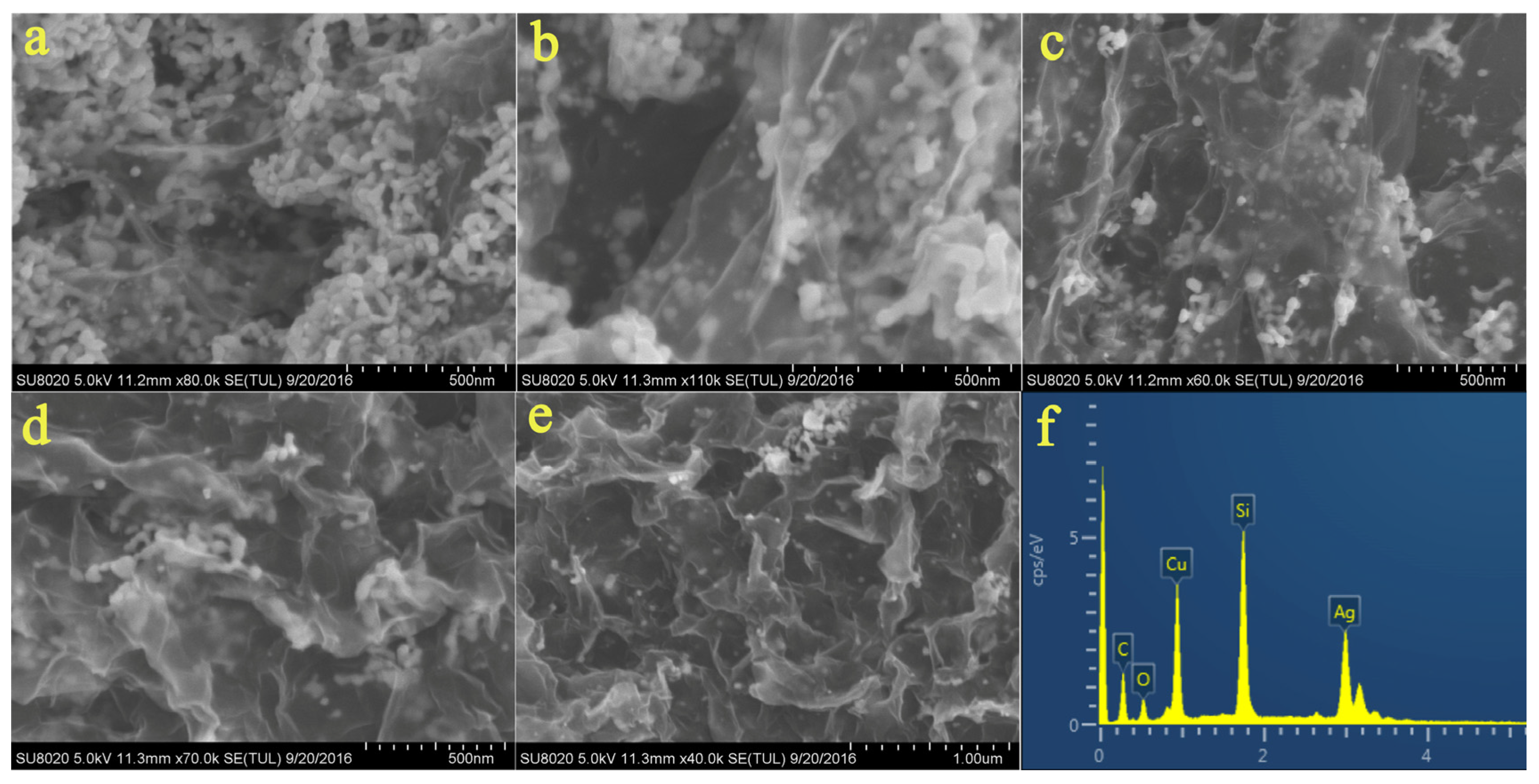
The morphological characteristics of Ag
1−xCu
x-NPs/RGO nanocomposites with five different Cu/Ag molar ratios were systematically characterized using scanning electron microscopy (SEM), as presented in
Figure 1.
Figure 1a–e correspond to Cu/Ag molar ratios of 2:8, 4:6, 5:5, 6:4, and 8:2, respectively. As clearly observed in
Figure 1a–e, abundant nanoparticles are uniformly dispersed on the wrinkled surface of RGO. The wrinkled lamellar structure of RGO is a typical morphological feature of reduced GO, which not only increases the specific surface area of the composite but also provides abundant active adsorption sites for the loading of Ag-Cu-NPs, thereby effectively suppressing the agglomeration of nanoparticles [
31].
It is worth noting that with the increase in the Ag/Cu molar ratio, the number of nanoparticles on the RGO surface gradually decreases, while the average particle size increases significantly. This phenomenon clearly indicates that the concentration of Ag
+ is a key factor directly regulating the morphology of bimetallic Ag-Cu-NPs. During the preparation process, the preformed Cu-NPs/RGO acts as a spacer to separate Ag-NPs, and the particle size of Ag-NPs is positively correlated with the dosage of AgNO
3 precursor. This growth mechanism is consistent with the seed-mediated growth model reported in the literature [
32], further confirming that the morphology of Ag-Cu-NPs can be controllably regulated by adjusting the concentrations of Cu
2+ and Ag
+.
To further verify the elemental composition, content, and coexistence state of the bimetallic nanocomposites, energy-dispersive X-ray spectroscopy (EDX) analysis was performed.
Figure 1f displays the EDX spectrum of Ag
0.5Cu
0.5-NPs/RGO. Characteristic peaks of C, Cu, and Ag are clearly observed in the spectrum (EDS of other composites can be found in
Figure S1). Quantitative EDX analysis reveals that the mass fractions of Ag and Cu are 48.96% and 28.46%, respectively, corresponding to a molar ratio of approximately 1:1, which is consistent with the theoretically designed ratio. In addition, EDX analysis was also conducted on nanocomposites with other Cu/Ag molar ratios, and the results show that the actual molar ratios of Cu to Ag are roughly in accordance with the theoretical values. This demonstrates that the controllable synthesis of Ag
1−xCu
x-NPs/RGO nanocomposites with tailored compositions can be achieved by adjusting the dosage of metal precursors.
2.2. Phase and Crystal Structure of the Materials
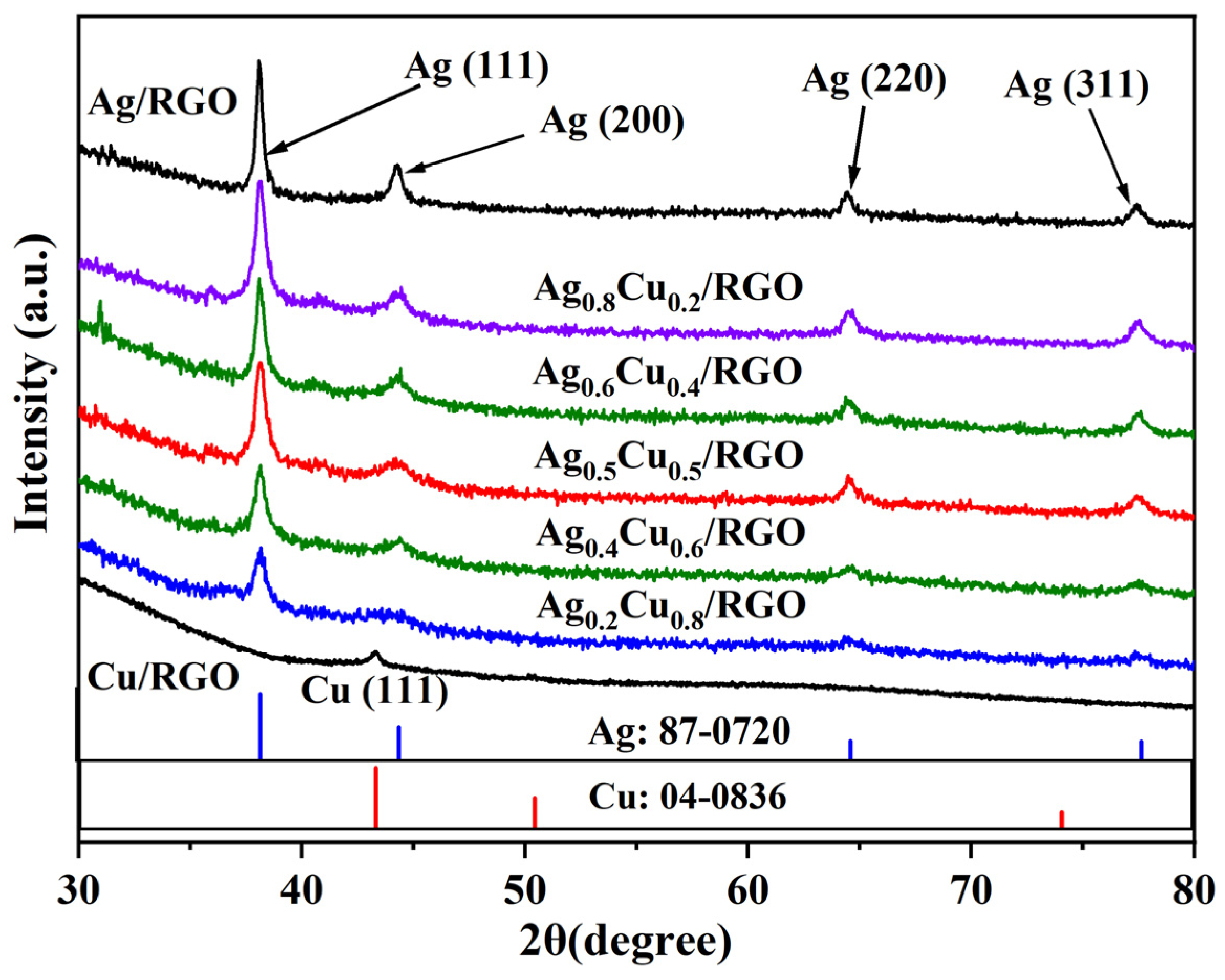
X-ray diffraction (XRD) is a fundamental technique for characterizing the phase composition, crystal structure, and crystallinity of crystalline materials. It was employed to systematically investigate the crystal structure characteristics of the nanocomposites with different compositions, and the results are shown in
Figure 2.
The XRD pattern of Cu-NPs/RGO exhibits a distinct characteristic diffraction peak at 2θ = 42.9°, which can be unambiguously indexed to the (111) plane of face-centered cubic (fcc) Cu (JCPDS No. 04-0836) [
33]. The relatively strong intensity and sharpness of this peak indicate that the as-prepared Cu nanoparticles are well-crystallized, and no obvious impurity peaks are observed, confirming the high purity of the Cu-NPs/RGO composite [
34].
The XRD pattern of Ag-NPs/RGO displays a series of characteristic diffraction peaks at 2θ = 38.2°, 44.2°, 64.6°, and 77.8°, corresponding to the (111), (200), (220), and (311) planes of fcc Ag, respectively (JCPDS No. 87-0720). Among these, the (111) plane exhibits the highest diffraction intensity, suggesting that the Ag nanoparticles preferentially grow along the (111) crystal plane during preparation, indicating good crystallographic orientation. Moreover, the symmetric peak shape and narrow full width at half maximum (FWHM) imply a uniform particle size distribution and high crystallinity of the Ag nanoparticles [
35].
Upon the introduction of Ag into the composite, the observed peaks are mainly characteristic of Ag. A diffraction peak appears at 2θ = 44.3° in the composite pattern, with a significantly broader FWHM compared to those of the pure Cu (111) peak and the pure Ag (200) peak. During the alloying process of Ag and Cu, the characteristic diffraction peaks of Cu gradually weaken or even disappear, while the Ag peaks exhibit broadening and shifting [
36]. Since the atomic radius of Cu (0.128 nm) is smaller than that of Ag (0.144 nm), the incorporation of Cu nanoparticles into the fcc lattice of Ag leads to lattice contraction and a decrease in interplanar spacing. According to Bragg’s law, 2dsinθ = nλ (where d is the interplanar spacing, θ is the diffraction angle, n is the diffraction order, and λ is the X-ray wavelength), a decrease in d results in an increase in θ, manifesting as a shift of the Ag characteristic diffraction peaks to higher angles.
Vegard’s law describes the linear relationship between the lattice parameter of a solid-solution alloy and its composition. Taking the (200) peak as an example, with 2θ values and the mole fractions of Cu and Ag being 43.58°, 43.72°, 44.21°, 44.41°, and 44.45°, the calculated lattice parameters show that as the Cu content increases from 0.2 to 0.8, the lattice parameter gradually decreases from 4.148 Å to 4.072 Å. This is consistent with the prediction of Vegard’s law (the atomic radius of Cu is smaller than that of Ag, leading to lattice contraction upon alloying), confirming that Ag-Cu forms a homogeneous alloy phase.
2.3. Elemental Composition of Materials
X-ray photoelectron spectroscopy (XPS) enables the analysis of elemental composition, chemical valence states, and types of functional groups on material surfaces [
37]. It was employed herein to systematically investigate the detailed surface composition and valence state distribution of metallic elements in the composites. Meanwhile, the reduction degree of graphene oxide (GO) was evaluated based on the evolution of surface oxygen-containing functional groups after reduction [
38].
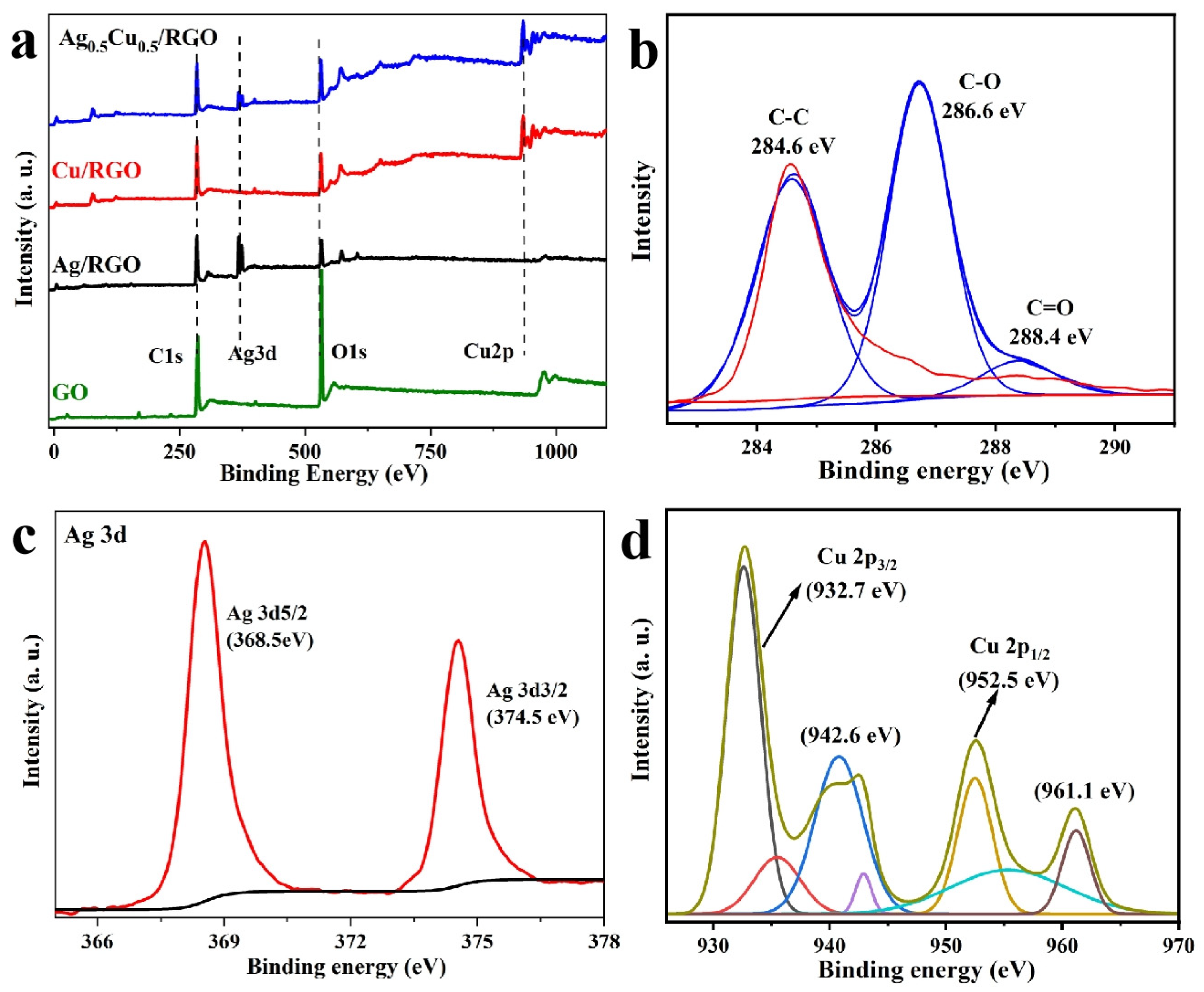
Characteristic photoelectron peaks of C 1s, O 1s, Ag 3d, and Cu 2p can be clearly identified in the wide-scan XPS spectrum of the Ag
1−xCu
x-NPs/RGO nanocomposite (
Figure 3a, x = 0.5), with no observable peaks from impurity elements. This indicates the high purity of the as-prepared composite, confirming the successful loading of bimetallic Ag-Cu nanoparticles on the RGO surface and the formation of a stable composite structure.
The C 1s spectrum of pristine GO (blue curve in
Figure 3b) presents three main characteristic peaks at binding energies of 285.4 eV, 286.8 eV, and 287.9 eV, corresponding to sp
2-hybridized C-C bonds, C-O bonds, and carbonyl groups (C=O) in GO, respectively [
39]. After reduction with NaBH
4, the C 1s spectrum of RGO in the composite changes remarkably: the intensities of the peaks corresponding to C-O and C=O decrease drastically and nearly vanish, whereas the peak associated with C-C bonds (285.4 eV) increases significantly and becomes dominant. This observation directly demonstrates that most oxygen-containing functional groups on the GO surface have been removed, and GO has been sufficiently deoxygenated and reduced to reduced graphene oxide (RGO) [
40].
The high-resolution Ag 3d XPS spectrum (
Figure 3c) exhibits two distinct doublet peaks at binding energies of 368.5 eV and 374.5 eV, assignable to Ag 3d
5/
2 and Ag 3d
3/
2, respectively. The symmetric peak shape and a spin–orbit splitting energy of approximately 6.0 eV are in good agreement with the characteristic binding energies and splitting value of metallic Ag
0, verifying the complete reduction of Ag
+ to metallic Ag
0 [
41].
Four characteristic binding energy peaks are observed in
Figure 3d, located at 932.7 eV, 942.6 eV, 952.5 eV, and 961.1 eV, respectively. Among them, the peaks at 932.7 eV and 952.5 eV are unambiguously attributed to Cu 2p
3/2 and Cu 2p
1/2 of metallic Cu
0 [
42]. Their significantly higher intensities suggest that copper nanoparticles supported on graphene mainly exist in the metallic Cu
0 state. The peaks at 942.6 eV and 961.1 eV correspond to the satellite peak of Cu 2p
3/2 and the Cu 3d orbital feature of oxidized Cu
2+ [
43], and their weak intensities imply the presence of only a small amount of Cu
2+ species.
2.4. Microstructural Dimensions of the Composites
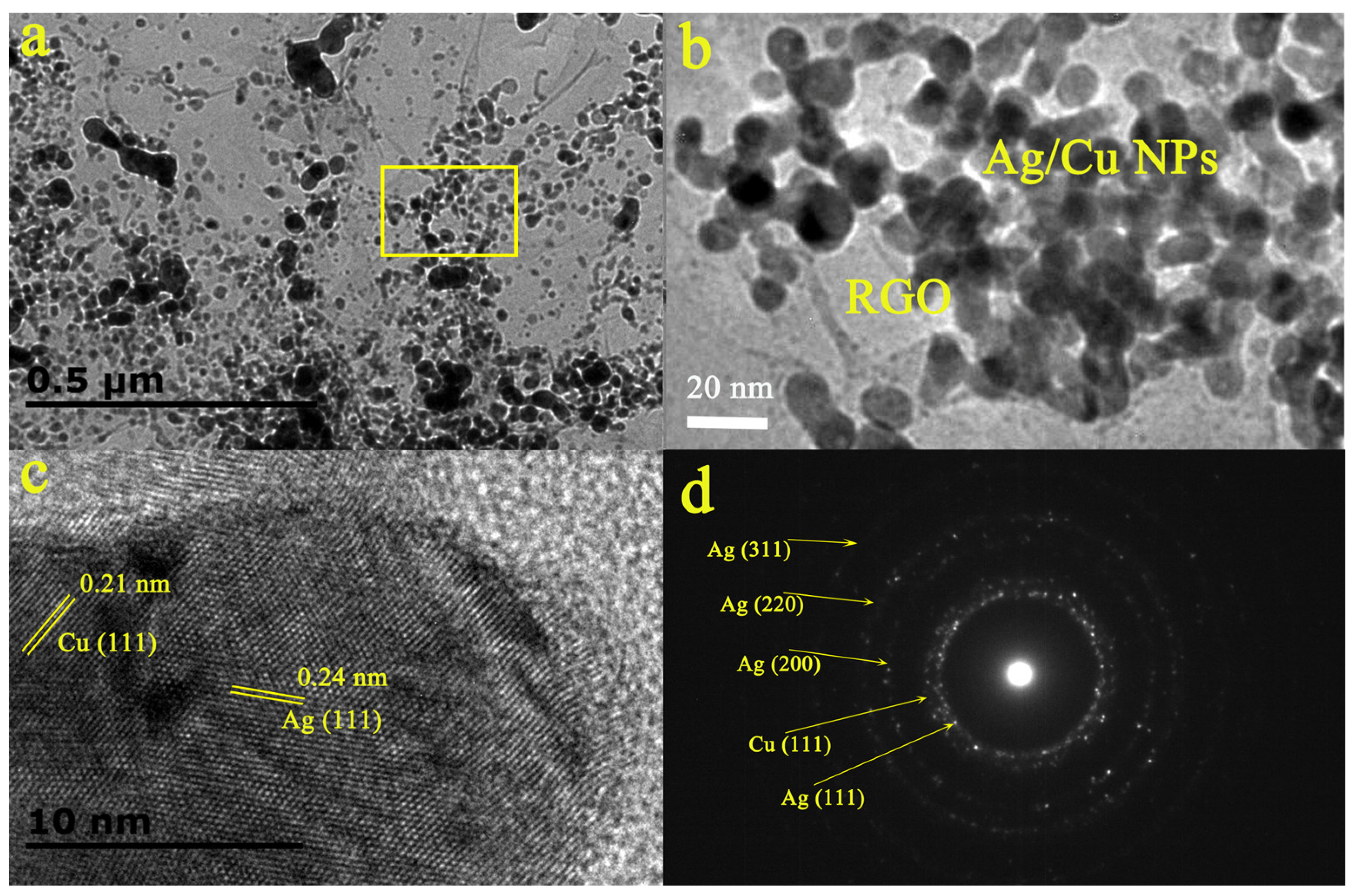
Figure 4a presents a TEM image of the Ag
0.
5Cu
0.
5-NPs/RGO bimetallic nanocomposite (TEM images of other composites can be found in
Figure S2). It can be clearly observed that spherical bimetallic Ag-Cu nanoparticles (Ag-Cu NPs) are uniformly loaded onto the surface of wrinkled RGO nanosheets without obvious agglomeration, which is consistent with the wrinkled RGO surface and nanoparticle dispersion features observed in SEM characterization. Statistical analysis of the nanoparticle size within the yellow box in
Figure 4a was performed using Image J 1.8.0 software, yielding an average particle size of 18.6 ± 1.2 nm with a narrow size distribution and good uniformity. This is attributed to the anchoring effect of oxygen-containing functional groups on the RGO surface toward metal ions and the synergistic regulation effect between the two bimetallic components.
The HRTEM image in
Figure 4b clearly shows that Ag and Cu atoms are interwoven and uniformly distributed, forming a typical alloy structure, which corroborates the diffraction peak shifts and alloying evidence observed in XRD characterization. In
Figure 4c, two sets of lattice fringes can be clearly resolved: one with an interplanar spacing of 0.21 nm, corresponding to the (111) plane of face-centered cubic (fcc) Cu, and the other with a spacing of 0.24 nm, corresponding to the (111) plane of fcc Ag. The coexistence and regular arrangement of these two sets of lattice fringes within the same nanoparticle further confirm the successful formation of the Ag-Cu alloy structure, with the two metal components uniformly mixed at the atomic scale.
The selected area electron diffraction (SAED) pattern (
Figure 4d) exhibits a series of well-defined diffraction rings, corresponding to the (111) plane of fcc-Cu, the (111), (200), and (220) planes of fcc-Ag, and characteristic diffraction rings of RGO. The clarity and completeness of the diffraction rings indicate that the as-prepared Ag
1−xCu
x-NPs/RGO nanocomposite possesses good crystallinity. Moreover, the coexistence of multiple diffraction rings confirms the polycrystalline nature of the composite, which is consistent with the bimetallic alloy phase and the crystalline features of RGO observed in XRD characterization.
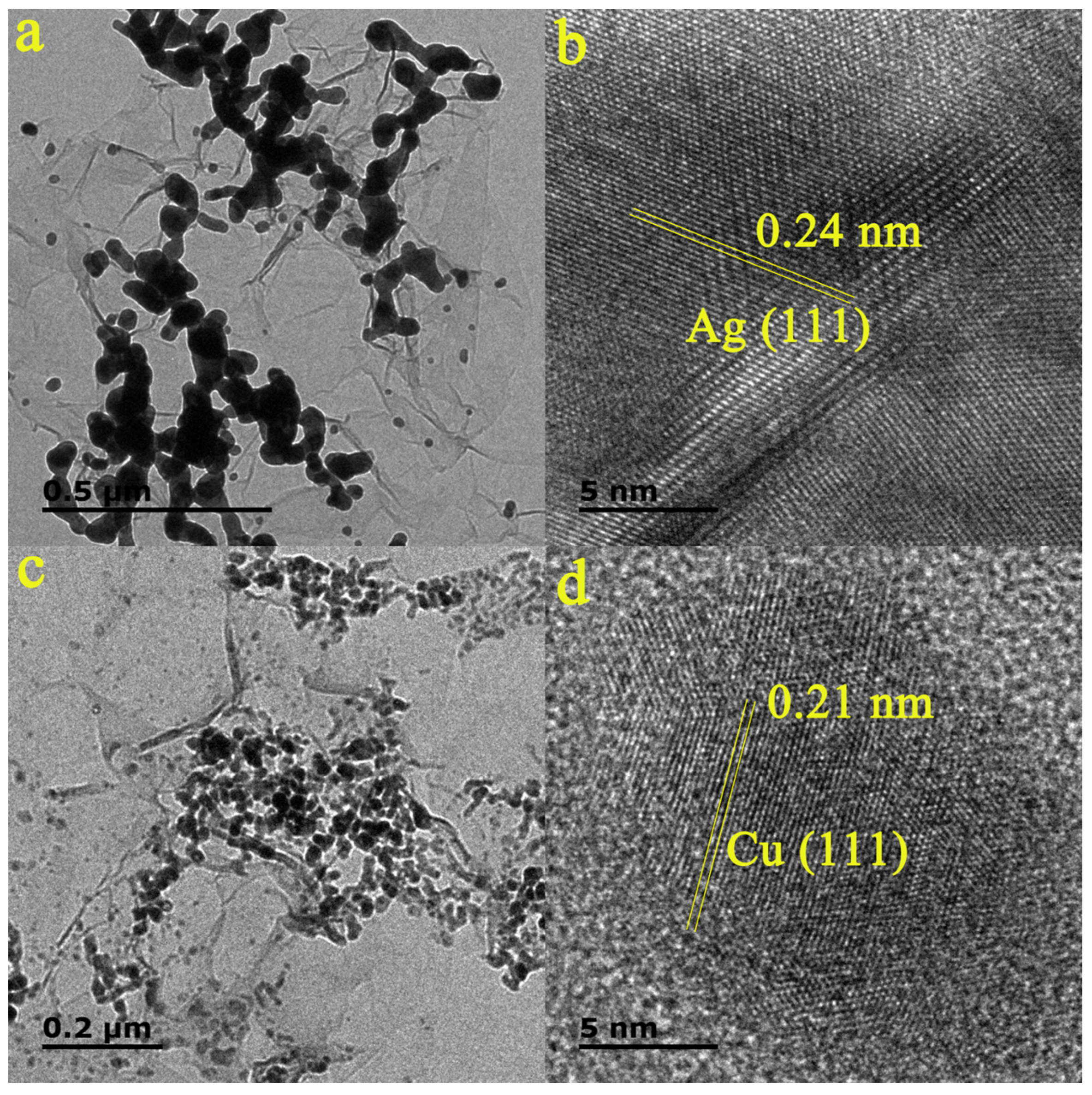
For comparative analysis of the size and morphological differences between bimetallic and monometallic nanoparticles, TEM and HRTEM characterizations were performed on the monometallic Ag-NPs/RGO and Cu-NPs/RGO composites.
Figure 5a shows a TEM image of the Ag-NPs/RGO composite, revealing that Ag nanoparticles are dispersed on the RGO surface but exhibit significant agglomeration, large particle sizes, and poor size uniformity. The HRTEM image in
Figure 5b shows that the lattice fringe spacing of the Ag nanoparticles is 0.24 nm, consistent with the (111) plane spacing of fcc-Ag.
Figure 5c presents a TEM image of the Cu-NPs/RGO composite, where the Cu nanoparticles appear relatively smaller in size, uniformly distributed, and without large-scale agglomeration, showing better dispersion than Ag-NPs/RGO, which is consistent with the SEM observations described previously. The HRTEM image in
Figure 5d clearly shows that the lattice fringe spacing of the Cu nanoparticles is approximately 0.21 nm, corresponding to the (111) plane spacing of fcc-Cu.
It is worth noting that the average particle size of the monometallic nanoparticles (Ag-NPs, Cu-NPs) is larger than that of the bimetallic Ag-Cu NPs, with the particle size calculated as shown in
Figure S3. This is attributed to the stronger compatibility between monometallic nanoparticles and the absence of steric hindrance effects from another metal component, which makes the nanoparticles prone to agglomeration during preparation [
44]. The low-melting-point characteristic of nanoparticles (compared to bulk materials) further exacerbates this agglomeration tendency, causing monometallic nanoparticles to grow into larger particles through aggregation. In contrast, in the bimetallic system, the interaction between Ag and Cu components creates steric hindrance that effectively suppresses nanoparticle agglomeration, resulting in smaller particle sizes and more uniform dispersion [
45]. These findings corroborate the SEM observation that “bimetallic nanoparticles exhibit better dispersion than monometallic ones,” confirming that the synergistic effect of bimetallic components enables the morphological regulation of the nanoparticles.
2.5. Synthesis Mechanism of Composite Materials
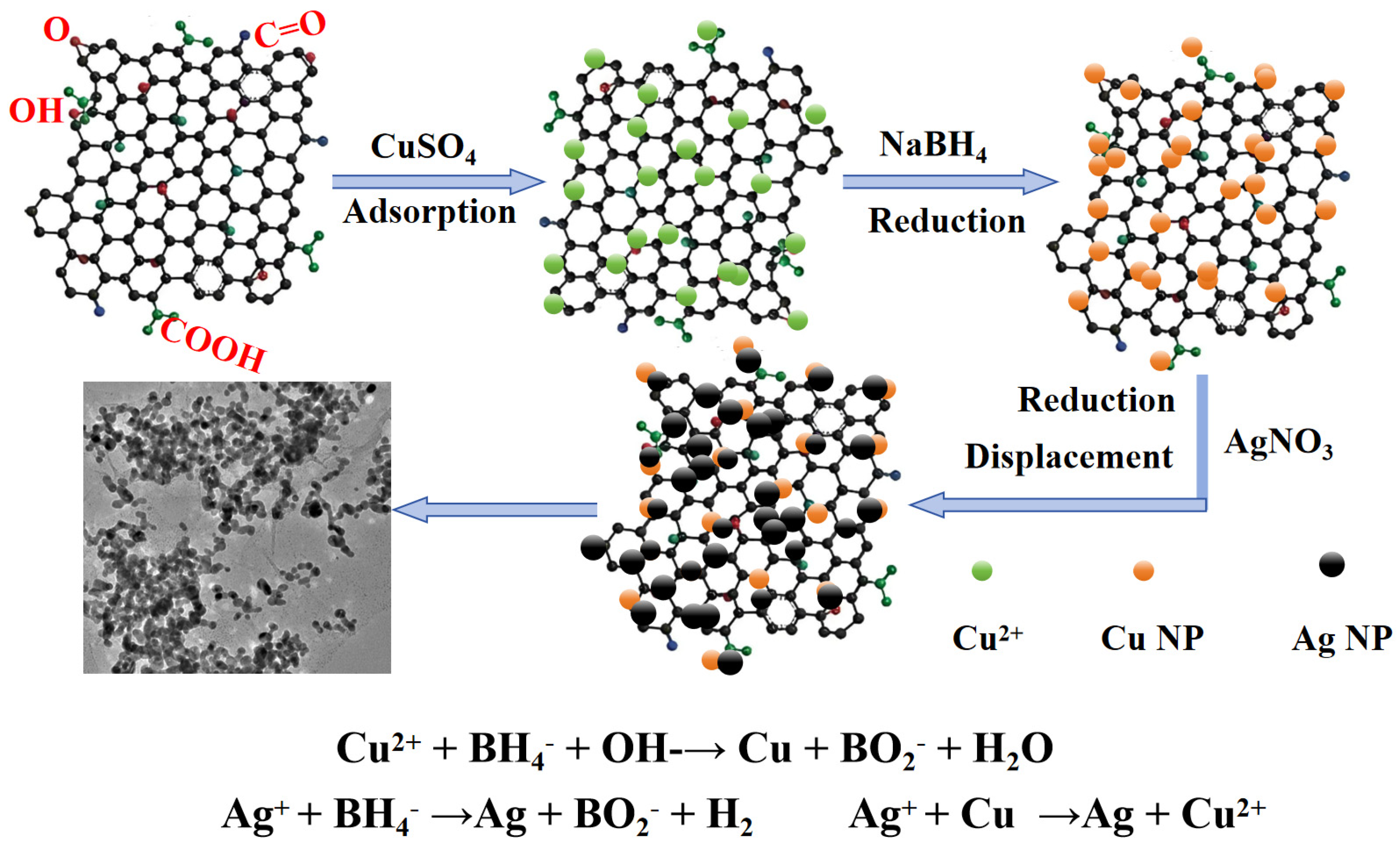
Based on the systematic experimental characterization results of this study (TEM, XRD, XPS, etc.), the complete synthesis mechanism of the Ag
1−xCu
x-NPs/RGO is illustrated in
Figure 6. Combined with existing literature reports, the reaction pathways, intermolecular interactions, and intrinsic regulation principles at each stage are elucidated, revealing the synergistic formation mechanism between bimetallic nanoparticles and RGO.
Upon ultrasonication in ultrapure water, GO forms a uniformly dispersed nanosheet suspension. Extensive studies have confirmed that the basal plane of GO is rich in hydroxyl (-OH) and epoxy (-C-O-C-) groups, while abundant carbonyl (C=O) and carboxyl (-COOH) groups are distributed at the sheet edges. The presence of these oxygen-containing functional groups imparts a negative surface charge to GO, inhibiting restacking between nanosheets via electrostatic repulsion. Meanwhile, hydrogen bonding interactions between hydroxyl/carboxyl groups and water molecules enable the stable dispersion of GO in aqueous solution, providing a favorable dispersed environment for the subsequent adsorption and reduction of metal ions. Negatively charged sites on the GO surface form stable electrostatic interactions with metal cations (Cu
2+, Ag
+), and the π-electron system of GO undergoes π-metal coordination with metal ions [
46]. These two synergistic interactions afford abundant adsorption sites for metal ions, laying a structural foundation for the subsequent efficient reduction of metal ions and uniform loading of nanoparticles.
Upon the addition of CuSO4 solution to the GO dispersion, Cu2+ rapidly adsorbs onto the GO surface within a short period, undergoing coordination reactions with carboxyl and hydroxyl groups on GO, while binding to negatively charged sites via electrostatic attraction to form a stable Cu2+@GO complex.
As a strong reducing agent, NaBH
4 releases hydride anions (H
−) in aqueous solution with extremely high reducing capability, which reduces Cu
2+ adsorbed on the GO surface to metallic Cu
0. Excess NaBH
4 extensively reduces and removes oxygen-containing functional groups (-OH, -C-O-C-, C=O, -COOH) on GO, restoring the sp
2 conjugated structure of GO to form RGO with excellent electrical conductivity and structural stability. This synchronous reduction process not only achieves the conversion of GO to RGO but also establishes strong interfacial interactions between the in-situ formed Cu nanoparticles and the RGO surface, further enhancing the dispersion and stability of metal nanoparticles and preventing their detachment or agglomeration [
47].
Upon the addition of AgNO
3 solution, Ag
+ undergoes rapid reduction with excess NaBH
4 in the system to form metallic Ag
0. More importantly, since the standard oxidation potential of Ag
+ (+0.799 V) is higher than that of Cu
0 (+0.340 V), a spontaneous galvanic replacement reaction occurs between Cu
0 and Ag
+ (Cu
0 + 2Ag
+ → Cu
2+ + 2Ag
0). This replacement reaction further promotes the formation of Ag
0, while depositing part of the Ag
0 nanoparticles uniformly on the surface of preformed Cu nanoparticles to form a core–shell structure [
48]. With the continuous progress of the reaction, atomic-scale interdiffusion occurs between Ag
0 and Cu
0 deposited on the Cu nanoparticle surface, ultimately forming a Ag-Cu bimetallic alloy structure. This is consistent with the results of the previous analysis of Vegard’s rule, this process is confirmed by the shift of Ag characteristic diffraction peaks toward higher angles in XRD patterns and the coexistence of Ag and Cu lattice fringes in HRTEM images.
Throughout the synthesis process, the concentrations of reactants (CuSO
4, AgNO
3) serve as key factors regulating the size, morphology, and composition of bimetallic Ag-Cu-NPs on the RGO surface, whose regulatory mechanism can be interpreted from the perspective of nucleation and growth kinetics [
49]. To clarify the concentration-dependent regulatory effect, a series of control experiments were designed in this study with fixed GO dosage (20 mg), NaBH
4 concentration (0.05 M), and reaction conditions (room temperature, stirring rate 500 r/min), while only varying the concentrations of CuSO
4 and AgNO
3 (maintaining a Cu/Ag molar ratio of 1:1). The detailed experimental data and regulatory effects are as follows: When the concentrations of CuSO
4 and AgNO
3 were both 0.02 M, statistical analysis via TEM characterization and Image J software showed that the average particle size of Ag-Cu-NPs was 12.3 ± 1.0 nm with uniform size distribution (polydispersity index PDI = 0.08). When the concentrations of CuSO
4 and AgNO
3 were increased to 0.05 M, the average particle size of Ag-Cu-NPs rose to 18.6 ± 1.2 nm with a PDI of 0.11. When the concentrations were further elevated to 0.10 M, the average particle size significantly increased to 35.8 ± 3.5 nm with a PDI of 0.23, accompanied by obvious agglomeration.
This trend is consistent with the research conclusion reported by Xia’s group that “reaction rate modulates nanocrystal structure”; i.e., reactant concentration precisely regulates nanoparticle size by controlling reduction kinetics and nucleus growth rate [
50]. Therefore, precise tuning of the concentration ratio of CuSO
4 to AgNO
3 enables the controllable synthesis of metal nanoparticles with tailored morphology, size, and Cu/Ag molar ratio in Ag
1−xCu
x-NPs/RGO nanocomposites, providing a feasible technical route for the directional regulation of subsequent material properties.
2.6. Electrocatalytic Reduction Application of the Composites
As a typical redox-active species, the electrocatalytic reduction performance of H
2O
2 is directly related to the application potential of materials in electrocatalysis-related fields such as biosensing, energy conversion, and environmental remediation [
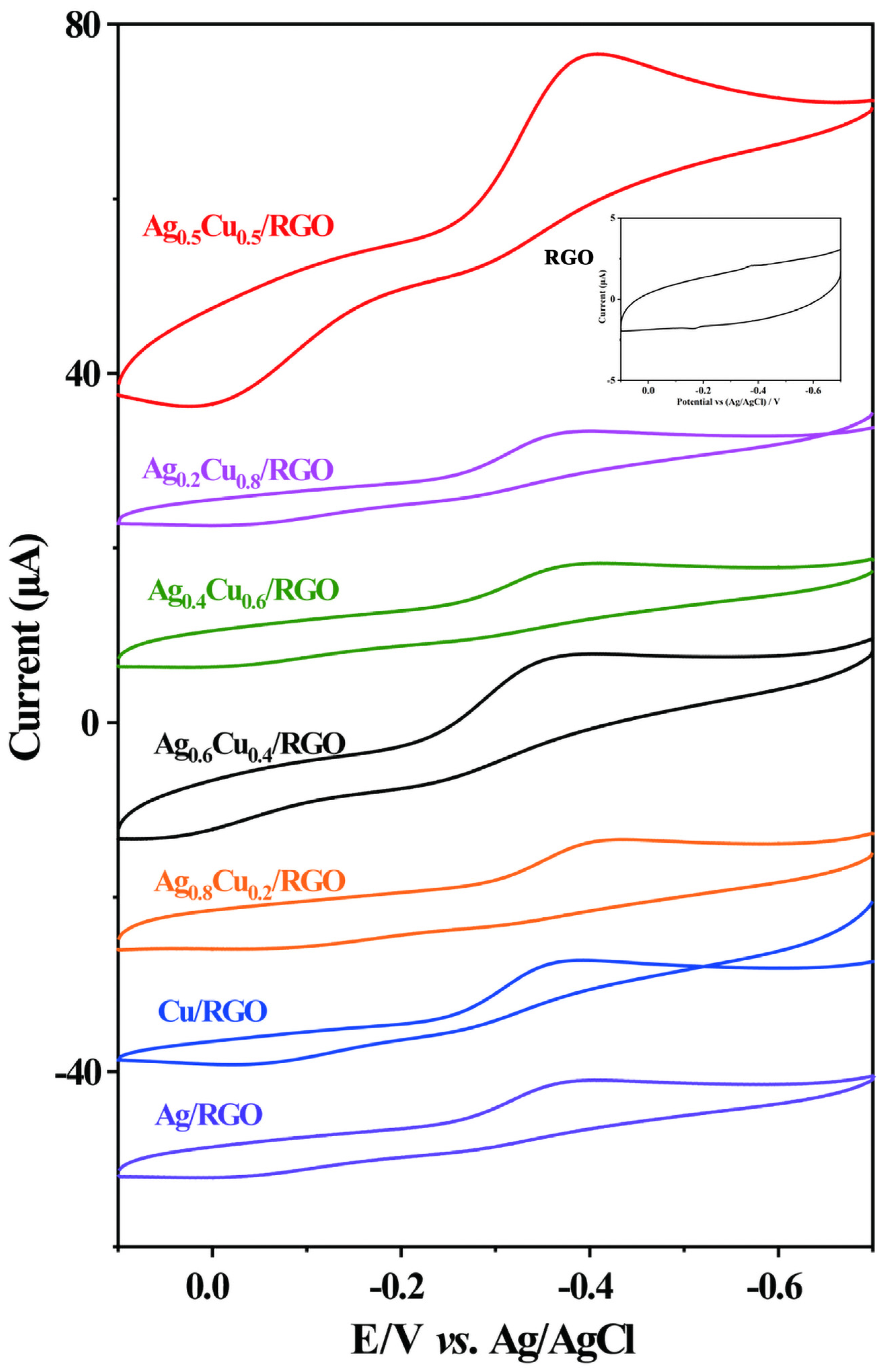
51]. In this study, cyclic voltammetry (CV) was employed to systematically investigate the electrochemical behavior of different modified electrodes toward the electrocatalytic reduction of H
2O
2. All measurements were conducted in 0.1 M phosphate-buffered saline (PBS, pH = 7.0) at a scan rate of 0.1 V/s with an H
2O
2 concentration of 10 μM, within a potential window of 0.1 to −0.7 V, at room temperature. The aim was to elucidate the electrocatalytic advantages and application potential of the Ag
1−xCu
x-NPs/RGO nanocomposite.
Figure 7 shows the CV curves of different modified electrodes under the above experimental conditions. Significant differences in electrocatalytic response were observed among the electrodes. For the reduced graphene oxide modified glassy carbon electrode (RGO/GCE) with residual contrast effect, no significant H
2O
2 reduction peak current was observed in the CV curve (inset of
Figure 7). This phenomenon indicates that although RGO modification alone improves electrode conductivity to some extent, the lack of specific active sites for H
2O
2 electrocatalytic reduction on the RGO surface prevents effective electron transfer and thus efficient electrocatalytic reduction of H
2O
2. This finding is consistent with previous reports that “pristine RGO exhibits negligible electrocatalytic activity toward H
2O
2, making it insufficient for practical applications” [
52].
In sharp contrast to RGO/GCE, all modified electrodes loaded with metal nanoparticles exhibited pronounced H2O2 reduction peaks within the potential window of 0.1 to −0.7 V, indicating that the introduction of metal nanoparticles provides abundant active sites for the electrocatalytic reduction of H2O2, effectively activating the electrocatalytic function of the electrode. Among them, the reduction peak current intensity of Ag0.5Cu0.5-NPs/RGO/GCE was substantially higher than that of any other modified electrode, showing 1.8-fold and 2.3-fold enhancements compared to Ag-NPs/RGO/GCE and Cu-NPs/RGO/GCE, respectively. This improvement is attributed to the fact that both Ag and Cu are transition metals with good electrical conductivity. The bimetallic alloy structure formed between them can modulate the electron orbital distribution and optimize the electron transport pathways. Compared with monometallic nanoparticles, the electron conduction efficiency of Ag-Cu NPs is significantly enhanced, accelerating the electron transfer rate in the electrocatalytic redox reaction. RGO, as a two-dimensional layered support, not only effectively disperses Ag-Cu NPs to prevent agglomeration and loss of active sites but also further accelerates electron transfer on the electrode surface and provides ample adsorption sites for H2O2 molecules due to its high electrical conductivity and large specific surface area. Furthermore, Ag0.5Cu0.5 NPs possess a large specific surface area and a reasonable particle size distribution, offering more electrocatalytic active sites and electron transport channels, significantly shortening the electron transfer distance between H2O2 molecules and the electrode surface, reducing the electron transfer resistance, and thereby efficiently promoting the electron transfer process between H2O2 and the electrode surface, ultimately enhancing the efficiency of the electrocatalytic redox reaction.
3. Experimental Methods
3.1. Reagents and Instruments
Graphite powder (diameter < 20 μm), CuSO4·5H2O, AgNO3, K3Fe(CN)6, K4Fe(CN)6, KCl, K2HPO4, KH2PO4, H3PO4, NaOH, H2O2 (30%), and NaBH4 were purchased from Shanghai Chemical Co., Ltd. (Shanghai, China). All solutions were prepared using ultrapure water (18.25 MΩ·cm−1). Other chemical reagents were of analytical grade and used without further purification.
Scanning electron microscopy (SEM) and energy-dispersive X-ray spectroscopy (EDX) images were obtained using an S-4800 SEM (Hitachi, Tokyo, Japan) operated at 5 kV. X-ray diffraction (XRD) patterns were recorded on a LabX XRD-6000 diffractometer with monochromatic Cu Kα radiation (λ = 1.54 Å) (Philips X’Pert, Tokyo, Japan). Transmission electron microscopy (TEM) and high-resolution TEM (HRTEM) micrographs were taken on a JEOL-2010 transmission electron microscope (JEOL, Akishima, Japan) at an accelerating voltage of 200 kV. X-ray photoelectron spectroscopy (XPS) measurements were performed using an ESCALAB-250 spectrometer (Thermo, Paisley, UK) to analyze the surface chemical states.
Electrochemical experiments were conducted on a CHI660D electrochemical workstation (Chenhua, Shanghai, China) using a conventional three-electrode cell. A bare glassy carbon electrode (GCE) or a modified GCE served as the working electrode. A platinum sheet and a Ag/AgCl (saturated KCl) electrode were used as the counter electrode and reference electrode, respectively. For electrochemical measurements, the solutions were deoxygenated with nitrogen unless otherwise stated, and all experiments were carried out at room temperature.
3.2. Synthesis of Ag1−xCux NPs/RGO Nanocomposites
Graphene oxide (GO) was prepared using a modified Hummers’ method [
53]. The preparation of reduced graphene oxide (RGO)-supported bimetallic Ag-Cu nanoparticles was carried out via a simple and environmentally friendly liquid-phase reduction method. The detailed procedure is as follows: At room temperature, 20 mg of as-prepared GO powder was dispersed in 40 mL of deionized water. The dispersion was ultrasonicated in an ultrasonic cleaner for 30 min until a uniform, semi-transparent GO suspension with no visible solid particles was formed, ensuring sufficient exfoliation of the GO layers. Subsequently, 100 μL of 0.10 M sodium citrate solution (to inhibit subsequent agglomeration of metal nanoparticles) and 100 μL of 0.10 M CuSO
4 solution were sequentially added to the GO suspension. The mixture was continuously stirred on a magnetic stirrer for 30 min, during which Cu
2+ ions coordinated with the oxygen-containing functional groups (e.g., hydroxyl -OH and carboxyl -COOH) on the GO surface to form a stable Cu
2+@GO complex.
Then, 3 mL of freshly prepared 0.05 M NaBH4 solution was continuously added dropwise to the above Cu2+@GO complex under magnetic stirring (600 rpm), and the reduction reaction was allowed to proceed for 15 min. After that, 100 μL of 0.10 M AgNO3 solution was added dropwise to the system, and stirring was continued for another 1 h, followed by static standing for 24 h. The resulting product was collected by centrifugation at 12,000 rpm, and the precipitate was washed repeatedly with deionized water and ethanol (3–5 times) to remove residual sodium citrate, unreacted metal ions, and NaBH4. Finally, the obtained precipitate was dried in a vacuum oven at 60 °C for later use.
To investigate the effect of the metal composition ratio on the material properties, nanocomposites with Cu-to-Ag molar ratios of 2:8, 4:6, 6:4, and 8:2 were prepared while keeping the total metal ion concentration constant. These samples are denoted as Ag1−xCuxNPs/RGO. For comparison, monometallic nanoparticle-loaded composites were prepared following the same procedure but using either 100 μL of 0.10 M CuSO4 or 100 μL of 0.10 M AgNO3.
3.3. Preparation of Modified Electrodes
Prior to each modification, the bare glassy carbon electrode (GCE) was polished with 0.05 mm alumina slurry to a mirror finish, followed by sequential ultrasonication in absolute ethanol and deionized water for 5 min each. To prepare the modified electrode, 10 mg of Ag1−xCuxNPs/RGO nanocomposite was first dispersed in 10 mL of water, and then 1 mL of Nafion alcohol solution (5 wt%) was added with the assistance of ultrasonic stirring for 30 min to obtain a stable suspension. Subsequently, 6 μL of the Ag1−xCuxNPs/RGO suspension was drop-cast onto the surface of the GCE and allowed to dry naturally. The as-prepared modified GCE was directly used for the reduction of H2O2. For comparison, Cu NPs/RGO/GCE and Ag NPs/RGO/GCE were also fabricated following the same procedure.
4. Conclusions
In this work, a facile, eco-friendly, and low-cost liquid-phase reduction strategy was established, enabling the one-step realization of GO reduction, simultaneous reduction of Ag+/Cu2+, and in-situ loading of bimetallic nanoparticles on RGO. A Ag1−xCuxNPs/RGO nanocomposite with uniform morphology and excellent dispersibility was successfully fabricated. By adjusting the Ag/Cu molar ratio, the particle size, loading density, and alloying degree of the bimetallic nanoparticles can be effectively controlled. The as-prepared bimetallic component exists in a face-centered cubic (FCC) alloy phase and forms a strong interfacial bond with RGO, which significantly suppresses nanoparticle agglomeration. Electrochemical measurements verified that Ag1−xCuxNPs/RGO exhibits outstanding electrocatalytic reduction performance toward H2O2, and the optimal catalytic activity is achieved at a Ag/Cu molar ratio of 1:1, which is far superior to the single-metal/RGO counterparts. This enhanced performance is attributed to the synergistic enhancement of bimetallic electronic coupling, the supporting effect of RGO, and the number of active sites. Benefiting from the merits of green and controllable preparation, structural stability, and high electrocatalytic activity, the composite shows promising application prospects in electrochemical sensing of hydrogen peroxide, environmental electrocatalysis, biosensing, and related fields. Meanwhile, this work also provides a referable strategy for the rational design and synthesis of other bimetallic/carbon-based nanoelectrocatalytic materials.




 ,
,