Article

Deciphering the Antioxidant Activity and Enzyme Inhibition of Luteolin and Its Glycosides: An Integrated In Vitro and In Silico Approach

1
Department of Chemistry, Faculty of Science, Ataturk University, Erzurum 25240, Türkiye
2
Agri İbrahim Çeçen University, Agri 04100, Türkiye
*
Author to whom correspondence should be addressed.
Catalysts 2026, 16(6), 550; https://doi.org/10.3390/catal16060550 (registering DOI)
Submission received: 9 April 2026 / Revised: 15 May 2026 / Accepted: 12 June 2026 / Published: 14 June 2026
(This article belongs to the Special Issue Enzyme Engineering—the Core of Biocatalysis)

Abstract

Luteolin and its derivative glycosides (cynaroside, orientin and isoorientin) are compounds with a flavonoid structure of plant origin. There are different studies in the literature on the antioxidant capacities of the structures and their inhibition effects on some enzymes. In this study, the antioxidant capacities of each structure were determined comparatively, and their inhibitory effects against enzymes associated with different diseases such as acetylcholinesterase, butyrylcholinesterase, α-glycosidase and α-amylase were evaluated by comparative investigation in vitro and in silico. Antioxidant capacities were determined for each structure by iron ions (Fe3+), cupric ions (Cu2+), Fe3+−Triphenyltetrazolium chloride (TPTZ) reduction methods and 2,2-diphenyl-1-picrylhydrazyl (DPPH), 2,2-azino-bis(3-ethylbenzothiazoline-6-sulfonic acid) (ABTS), N,N-dimethyl-p-phenylenediamine (DMPD) radical scavenging methods. According to the results obtained, it was determined that the antioxidant capacities of the structures were close to or better than butylated hydroxyanisole (BHA), butylated hydroxytoluene (BHT), trolox, α tocopherol and ascorbic acid, which are used as standard antioxidants. The results of the study, which was conducted to determine the inhibition effects of the structures on the determined enzymes, were found to coincide experimentally and theoretically. According to the inhibition results, the best inhibitors were found as orientin (IC50: 27.729 nM) for the human carbonic anhydrase I (hCA I), cynaroside (IC50: 18.24 nM) for the human carbonic anhydrase I (hCA II), isoorientin (IC50: 1.93 nM) for the acetylcholinesterase (AChE), and cynaroside (IC50: 6.41 and 7.15 nM) for the butyrylcholinesterase (BChE) and α-glycosidase enzymes. Additionally, absorption, distribution, metabolism, and excretion (ADME) profiles and toxicity assessments of the structures were determined in a virtual environment.

1. Introduction

Antioxidants are substances that play a vital role in both food systems and the human body by reducing the oxidative formation of reactive oxygen species (ROS) and mitigating their harmful effects [1]. In the human body, antioxidants protect against free radicals and ROS-induced damage, delay the formation and progression of chronic diseases through the inhibition of lipid peroxidation, and consequently enhance resistance against oxidative stress [2,3]. In addition, dietary phenolic antioxidants have been reported to be effective in preventing various chronic diseases, including diabetes (DM), cancer, cataracts, and cardiovascular disorders [4].
Antioxidant-rich molecules can be produced endogenously or obtained exogenously through dietary sources and food supplements. Although synthetic antioxidants are widely used and generally considered safe at prescribed doses, natural antioxidants are increasing in safety due to their favorable safety profiles and multifunctional biological activities [5]. Plant-derived antioxidants found in fruits and vegetables are known to effectively scavenge ROS and free radicals. Therefore, naturally occurring antioxidants of plant origin are considered valuable alternatives to synthetic antioxidants, which may exhibit adverse effects under certain conditions [6,7].
In summary, reactive oxygen species can cause various diseases, particularly cancer, by disrupting the structure of essential biological macromolecules such as lipids, carbohydrates, proteins, and DNA when antioxidant defenses are insufficient [8]. The use of natural antioxidants may contribute to disease prevention through their protective (prophylactic) effects, and interest in plant-based antioxidants has increased significantly in recent years due to the growing demand for natural and functional food-derived compounds [9,10].
In addition, several studies have reported that antioxidant compounds exhibit inhibitory effects on enzymes such as acetylcholinesterase (AChE), butyrylcholinesterase (BChE), carbonic anhydrase (CA), α-amylase, and α-glycosidase, which are associated with diseases such as type-2 diabetes mellitus (T2DM) and Alzheimer’s disease (AD) [11]. However, these inhibitory effects are generally attributed to direct interactions between the compounds and enzyme active sites rather than solely to their antioxidant properties. Therefore, such compounds may contribute to delaying or preventing the progression of major degenerative diseases, including T2DM and AD [12,13].
Diabetes mellitus is a common metabolic disorder characterized by impaired glucose metabolism, and it includes three main types: type-1 diabetes mellitus (T1DM), T2DM, and gestational DM [14,15]. Among these, T2DM is the most prevalent form. One of the therapeutic strategies for diabetes involves the use of α-glucosidase inhibitors (AGIs), which delay the absorption of monosaccharides from the small intestine and reduce postprandial blood glucose levels. Therefore, AGIs are widely used in the management of T2DM and obesity [16]. Moreover, increasing evidence suggests a close relationship between T2DM and AD. In this context, the loss of cholinergic transmission has been recognized as a key factor in the pathogenesis of AD [17].
Although the pathogenesis of AD is not yet fully understood, the cholinergic hypothesis suggests that the disease is associated with a decline in acetylcholine (ACh) levels due to impaired cholinergic neurotransmission [18,19]. For this reason, acetylcholinesterase inhibitors (AChEIs), which prevent the hydrolysis of ACh, are widely used in the treatment of AD to enhance cholinergic signaling. Drugs such as tacrine, rivastigmine, galantamine, and donepezil are commonly used for this purpose. However, these drugs may cause undesirable side effects, including gastrointestinal disturbances and neurological symptoms [20,21,22]. Therefore, there is considerable interest in developing new AChE inhibitors, particularly those derived from natural sources with additional antioxidant properties [23,24,25].
Carbonic anhydrase (CA) is a Zn2+-containing metalloenzyme that catalyzes the reversible hydration of carbon dioxide (CO2) to bicarbonate (HCO3) and protons (H+), playing an essential role in physiological processes such as pH regulation, respiration, and fluid balance [26,27,28]. CA inhibitors are clinically used in the treatment of diseases such as glaucoma, where they reduce intraocular pressure. However, currently used CA inhibitors may cause side effects due to limited selectivity, highlighting the need for the development of new and more selective inhibitors [29,30].
Phenolic compounds, including flavonoids, are among the most important bioactive constituents of plant-based foods and are responsible for many of their health-promoting properties [31,32]. These compounds can be broadly classified into simple phenols, phenolic acids, and flavonoids, including subclasses such as flavones, flavonols, and flavanols. Their biological activity is largely attributed to the presence of aromatic rings and hydroxyl groups, which enable radical scavenging and interaction with biological targets [33,34].
Luteolin is one of the most common flavones found in plants such as celery, parsley, and chamomile. It exhibits a wide range of biological activities, including antioxidant, anti-inflammatory, and enzyme inhibitory effects [35,36]. Structurally, luteolin contains four hydroxyl groups at positions C5, C7, C3′, and C4′, allowing the formation of various derivatives, including glycosides and methylated forms. Among these, luteolin glycosides such as cynaroside, orientin, and isoorientin are widely distributed in nature and have demonstrated significant biological activities cynaroside, orientin and isoorientin are glycoside derivatives of luteolin. Cynaroside is one of the flavonoids with clearly established antioxidant properties [37,38]. Cynaroside is luteolin-7-O-β-D-glucoside, which is naturally found in most medicinal plants. In vitro experiments have shown that cynaroside scavenges are oxygen-free radicals and are effective in reducing lipoprotein oxidation at low concentrations [39,40]. Again, according to a study conducted on isolated rat hearts, it was determined that cynaroside exhibited anti-ischemic effects that may be related to its antioxidative properties [41]. In this study, Quercetin (a previously studied flavonoid structure with a strong protective effect on cardiac myocyte apoptosis associated with oxidative stress) was used as a positive control [42]. Orientin (luteolin-8-C-glucoside) is a naturally occurring flavonoid widely distributed in various plant species, including Passiflora species, millet, and bamboo leaves [43]. Orientin is a flavonoid with anti-cancer and anti-inflammatory antioxidant properties [44]. Isoorientin, which can be extracted from various plants such as Phyllostachys and Patrinia and is also found in the human diet, is luteolin-6-C-glucoside. Isoorientin has various physiological properties such as antioxidant, anti-nociceptive and anti-inflammatory effects [45]. Although numerous studies have investigated the biological activities of luteolin and its glycosides, the specific impact of glycosylation on their activity profiles remains insufficiently understood.
Also, the literature contains extensive information regarding the in vivo transformation, metabolism, and toxicity profiles of luteolin and its glycoside derivatives. Flavonoid glycosides such as orientin, isoorientin, and cynaroside may undergo enzymatic hydrolysis by intestinal β-glycosidases during gastrointestinal absorption, leading to the release of the corresponding aglycone luteolin, which generally exhibits improved membrane permeability and absorption properties [46,47]. Furthermore, it was emphasized that luteolin is extensively subjected to phase II metabolism, particularly glucuronidation and sulfation reactions, which significantly influence its systemic bioavailability and pharmacokinetic behavior in vivo [48,49]. In addition, information is available regarding the current in vivo toxicity and safety profiles of luteolin and its derivatives. Previous studies have demonstrated that luteolin and related flavonoids generally exhibit relatively low toxicity and acceptable safety profiles at physiologically relevant concentrations, although excessive doses may lead to pro-oxidant or cytotoxic effects under certain experimental conditions [50,51]. To further support this aspect, in silico toxicity assessment using the ProTox 3.0 platform was included in the present study, where luteolin and cynaroside were predicted to belong to toxicity class 5, orientin to class 4, and isoorientin to class 3, suggesting low-to-moderate toxicity potential.
The novelty of the present study has also been clarified more explicitly. Although several studies have separately investigated luteolin or individual luteolin glycosides, comprehensive comparative studies simultaneously evaluating luteolin, cynaroside, orientin, and isoorientin using integrated antioxidant assays, multi-enzyme inhibition profiling (hCA I, hCA II, AChE, BChE, and α-glycosidase), molecular docking analyses, and ADME/toxicity prediction remain very limited in the current literature. Therefore, the present study provides a systematic structure–activity relationship-based comparative evaluation of luteolin and its glycoside derivatives using both in vitro and in silico approaches, thereby contributing to the understanding of their multifunctional biological properties and pharmacological potential.
In this study, the antioxidant activities of luteolin and its glycosides were evaluated using multiple assays, including 2,2-diphenyl-1-picrylhydrazyl (DPPH) free radical scavenging, 2,2′-azino-bis(3-ethylbenzothiazoline-6-sulfonic acid) (ABTS) radical scavenging, N,N-Dimethyl-p-phenylenediamine (DMPD) radical scavenging, ferric reducing antioxidant power (FRAP), iron ions (Fe3+) reducing capacity, and copper ions (Cu2+) reducing capacity.
In addition, their inhibitory effects on carbonic anhydrase isoenzymes (hCA I and hCA II), purified from human blood, as well as on key metabolic enzymes such as butyrylcholinesterase, acetylcholinesterase, and α-glycosidase, were investigated. Furthermore, molecular docking studies were performed to support the experimental findings.
However, the biological activity of these compounds is not solely governed by their intrinsic chemical properties, but is also strongly influenced by their pharmacokinetic behavior, particularly absorption and bioavailability. It has been reported that luteolin glycosides undergo enzymatic hydrolysis in the intestinal environment, primarily mediated by β-glycosidases, to yield the corresponding aglycone, which exhibits improved membrane permeability and absorption characteristics. Nevertheless, despite this conversion, luteolin aglycone is subject to extensive first-pass metabolism, mainly through phase II conjugation reactions such as glucuronidation and sulfation, which significantly reduce its systemic bioavailability [52,53]. In this context, ADME analysis was conducted to better understand the pharmacokinetic behavior of luteolin and its derivatives and to evaluate whether structural modifications could enhance their absorption and metabolic stability. In parallel, toxicity prediction was performed as an integral component of early-stage drug discovery, since many promising compounds fail due to unfavorable safety profiles.
In silico toxicity assessment enables the early identification of potential toxic effects and structural alerts, thereby reducing the risk of late-stage attrition and supporting the selection of safer and more effective candidates. Taken together, the combined evaluation of ADME properties and toxicity profiles provides a comprehensive framework for understanding both the pharmacokinetic and safety aspects of the compounds and is expected to contribute to the rational development of novel therapeutic agents with improved pharmacological potential.

2. Results

2.1. Antioxidant Results

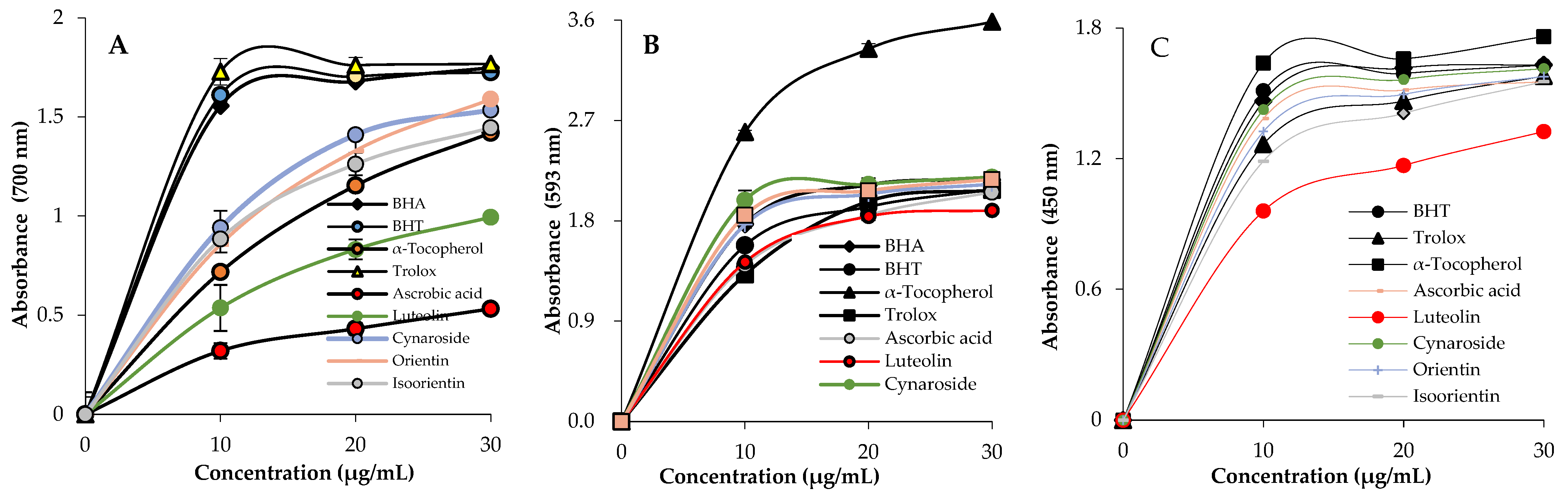
The reducing abilities of luteolin and luteolin glycosides were evaluated by measuring their abilities on Fe3+ and Cu2+. The ability of the structures and the antioxidants used as reference to reduce Fe3+ ions in different concentrations were determined by the absorbance values recorded at 700 nm using the Oyaizu method [54]. As a result, it was observed that the reducing capacity of luteolin and its derivatives increased with increasing concentration, as seen in Figure 1A. According to the results obtained from the % absorbance-concentration graph drawn according to the absorbance values recorded after photometric measurements, the Fe3+ reduction capacities of the samples and standard antioxidants were compared with the results corresponding to a concentration of 10 μg/mL. BHA (λ700: 1.556) > BHT (λ700: 1.610) > α-tocopherol (λ700: 1.728) > orientin (λ700: 1.768) > cynaroside (λ700: 1.431) > isoorientin (λ700: 1.446) > trolox (λ700: 1.420) > luteolin (λ700: 0.994). BHA, BHT and α-tocopherol have significantly higher Fe3+ reducing capacity than luteolin and its derivatives (orientin, cynaroside, isoorientin and luteolin) (p < 0.001). In addition, luteolin and its derivatives have significantly higher Fe3+ reducing capacity than ascorbic acid and trolox used as controls (Table 1).
According to the results of the reduction capacity of ferric ions (FRAP), which is based on the maximum absorbance of the colored Fe2+-Triphenyltetrazolium chloride (TPTZ) complex formed as a result of the reduction in Fe3+ at 593 nm, it was observed that the reduction capacity of the structures increased with increasing concentration [31] (Figure 1B). According to the study results, absorbance values corresponding to 10 μg/mL concentration were compared. α-tocopherol (λ593: 2.60) > luteolin (λ593: 1.99) > isoorientin (λ593: 1.85) > BHA (λ593: 1.77) > orientin (λ593: 1.77) > BHT (λ593: 1.58) > cynaroside (λ593: 1.43) > ascorbic acid (λ593: 1.41) > trolox (λ593: 1.32) were determined as follows. BHT, trolox and α-tocopherol had significantly higher FRAP reducing capacity than luteolin and isoorientin. Furthermore, luteolin and its derivatives had significantly higher FRAP reducing capacity than trolox, α-tocopherol and ascorbic acid was used as controls. (Table 1).
According to the results of the reduction capacity (CUPRAC) of Cu2+, the reduction capacities of the structures increased with the increase in concentration (Figure 1C). According to the absorbance/concentration graph drawn according to the absorbance values recorded as a result of the measurements, it was determined that the % absorbance values corresponding to the concentration of 10 μg/mL were as follows: trolox (λ450: 1.640) > BHT (λ450: 1.512) > BHA (λ450: 1.464) > luteolin (λ450: 1.426) > ascorbic acid (λ450: 1.385) > orientin (λ450: 1.325) α-tocopherol (λ450: 1.267) > isoorientin (λ450: 1.189) > cynaroside (λ450: 0.960). Cynaroside had significantly higher CUPRAC reducing capacity than orientin and isoorientin (Table 1).
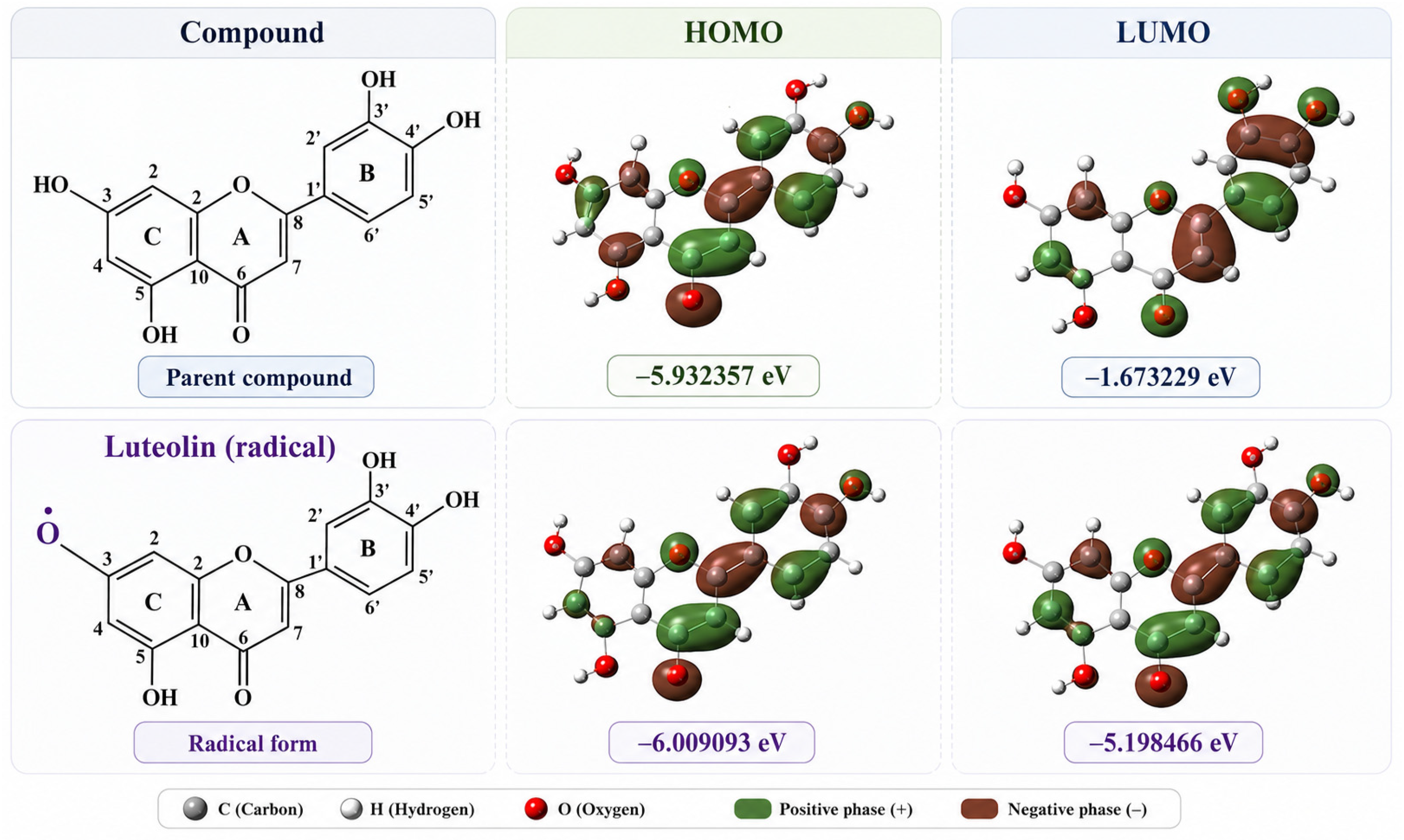
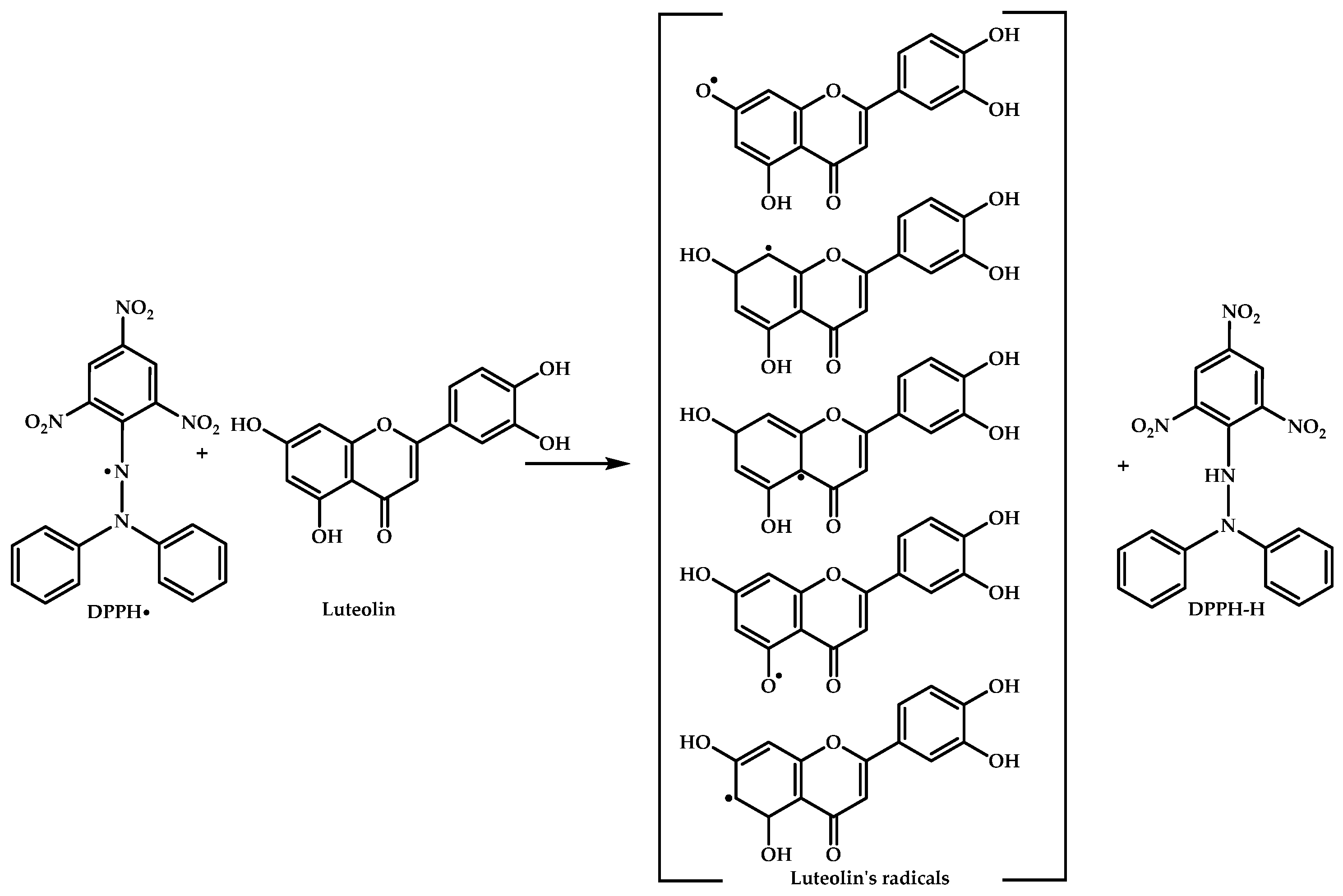
DPPH·, ABTS·+ and DMPD·+ scavenging methods, which are widely used to determine the antioxidant properties of luteolin and its derivatives, were also studied. Firstly, DPPH radical scavenging studies were carried out at 517 nm wavelength. In a study, the frontier molecular orbital energy range HOMO (highest occupied molecular orbital)–LUMO (lowest unoccupied molecular orbital) and electron volt values of the systems were calculated using density functional theory (DFT)-based quantum chemical descriptors, and the following mechanism was proposed for the radical interaction between DPPH and luteolin [55].
These energy maps suggest that the antioxidant activity of luteolin is provided by an increase in the number of OH groups on the skeleton and a weakening of the formation of phenoxy radicals derived from these groups. The most stable radicals that occur during the antioxidative effect are attributable to OH groups at position C3 on the C ring and hydroxyl groups at opposite ortho positions at C3′, C4′ or C4′ and C5′ on the B ring (Figure 2). The antioxidant activity of luteolin also depends on the stability of the formed phenoxy radical. The LUMO energy maps clearly show that there is a higher electron density between the B and C rings and between C-3 and C-4, which clearly confirms the stability of the radicals between the rings.
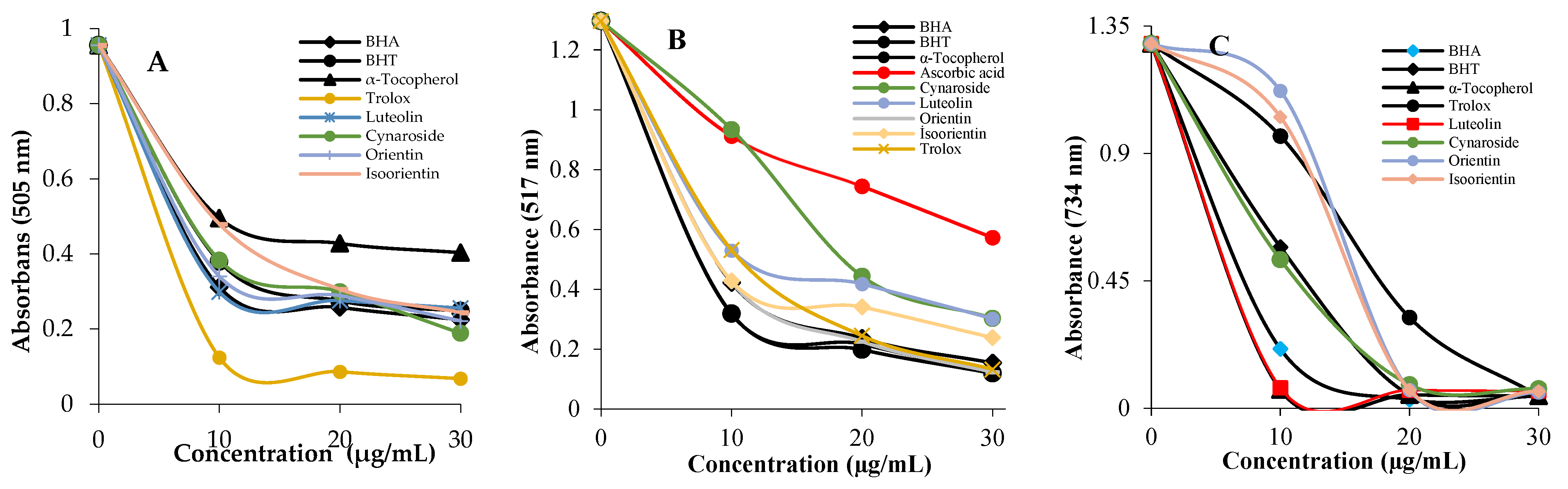
The possible reaction mechanism between orientin and DPPH radical is shown below (Figure 3). Also, IC50 values were calculated as a result of DPPH studies performed comparatively with standard substances, with the prediction that luteolin and its derivative glycosides would exhibit different antioxidant properties due to their hydroxyl groups. BHT (IC50: 7.88 nM) > α-tocopherol (IC50: 7.97 nM) > orientin (IC50: 8.35 nM) > trolox (IC50: 8.770 nM) > BHA (IC50: 8.89 nM) > isoorientin (IC50: 11.00 nM) > luteolin (IC50: 12.84 nM) > cynaroside (IC50: 14.15 nM, Figure 4A; Table 2). Looking at the IC50 values, it can be said that orientin has better radical scavenging activity than the standard antioxidants trolox and BHA and other derivatives.
As a result of the calculations made after the ABTS radical scavenging method absorbance measurement, it can be said that luteolin has better radical scavenging activity than other derivatives and exhibits activity at similar rates. α-tocopherol (IC50: 4.96 nM) > BHA (IC50: 4.99 nM) > luteolin (IC50: 5.37 nM) > BHT (IC50: 5.54 nM) > orientin (IC50: 6.24 nM) > isoorientin (IC50: 6.30 nM) > cynaroside (IC50: 6.42 nM) > trolox (IC50: 7.30 nM) (Figure 4B; Table 2).
According to the results of DMPD·+ scavenging method, it was determined that luteolin and its derivatives showed similar effects with standard antioxidant molecules. trolox (IC50: 6.60 nM) > cynaroside (IC50: 11.95 nM) ≈ BHA (IC50: 11.95 nM) > orientin (IC50: 12.3776 nM) > luteolin (IC50: 12.84 nM) > BHT (IC50: 13.08 nM) > isoorientin (IC50: 13.86 nM) > α-tocopherol (IC50: 19.80 nM, Figure 4C, Table 2).

2.2. Enzyme Inhibition Results

In inhibition studies, the inhibitory effects of luteolin and its derivatives on CA I, CA II, AChE, BChE, α-glycosidase enzymes were investigated at different concentrations. For each, separate activity (%)-inhibitor concentration and Ki graphs were drawn. IC50, r2 and Ki values were calculated and the types of inhibition were determined. The inhibition mechanisms were determined kinetically using enzyme activity measurements obtained at different substrate and inhibitor concentrations. The inhibition types were interpreted based on Lineweaver–Burk plots together with secondary Ki analyses. Competitive inhibition was assigned when the inhibitor affected the apparent Km value without significantly altering Vmax, whereas noncompetitive inhibition was determined when Vmax decreased while Km remained relatively unchanged [56]. As seen in inhibition studies, orientine (Ki: 33.59 ± 8.85 nM) exhibited the most powerful inhibition effect on hCA I isoenzyme. Also, this sequence continues in the following order: orientine (Ki: 33.59 ± 8.85 nM) > acetazolamide (Ki: 36.40 ± 9.01 nM) > cynaroside (Ki: 40.48 ± 9.32 nM) > luteolin (Ki: 53.14 ± 9.19 nM) > isoorientin (Ki: 94.56 ± 29.14 nM) (Table 3). In studies performed for hCA II isoform, the best inhibitor was observed as the following order: cynaroside (Ki: 16.1906 ± 1.0072 nM) > acetazolamide (Ki: 16.6020 ± 1.2900 nM) > orientin (Ki: 21.2315 ± 2.6920 nM) > luteolin (Ki: 26.9180 ± 1.0778 nM) > isoorientin (Ki: 55.2235 ± 12.3025 nM) (Table 3). Compared to acetazolamide, a well-known hCA inhibitor used clinically for the treatment of glaucoma, epilepsy, altitude sickness, and idiopathic intracranial hypertension, all synthesized molecules demonstrated good inhibitory activity against hCA I and II isoenzymes [57].
According to the results of inhibition studies performed on AChE and BChE enzymes, it was observed that the best inhibitor on AChE enzyme was isoorientin (Ki: 1.42 ± 0.13 nM) > tacrine (Ki: 2.59 ± 0.90 nM) > orientin (Ki: 4.01 ± 1.19 nM) > cynaroside (Ki: 8.50 ± 0.87 nM) > luteolin (Ki: 9.24 ± 2.82 nM). It was observed that the best inhibitor on BChE enzyme was cynaroside (Ki: 3.59 ± 0.56 nM) > luteolin (Ki: 4.76 ± 0.19 nM) > tacrine (Ki: 7.08 ± 0.90 nM) > orientin (Ki: 8.49 ± 1.82 nM) > isoorientin (Ki: 15.62 ± 10.54 nM) (Table 4). Tacrine (TAC), which is used as an inhibitor of AChE and BChE enzymes in individuals with AD, was used as a positive control and it was observed that the molecules were good inhibitors compared to TAC.
According to the results of the study to determine the inhibition effects of luteolin and its derivative glycosides on α-glycosidase enzyme, it was observed that the best inhibitor was cynaroside (Ki: 6.09 ± 1.22 nM) > i (Ki: 23.88 ± 4.13 nM) > orientin (Ki: 27.63 ± 27.49 nM) > luteolin (Ki: 32.02 ± 9.07 nM) (Table 5).

2.3. Molecular Docking Studies

The possible interactions and binding affinities of luteolin and its derivative glycosides with each enzyme were determined with the molecular docking program Schrödinger Molecular Modeling Suite (docking program of Maestro 12.9) [59]. It was observed that the results were generally consistent with the experimental study results (Table 6).
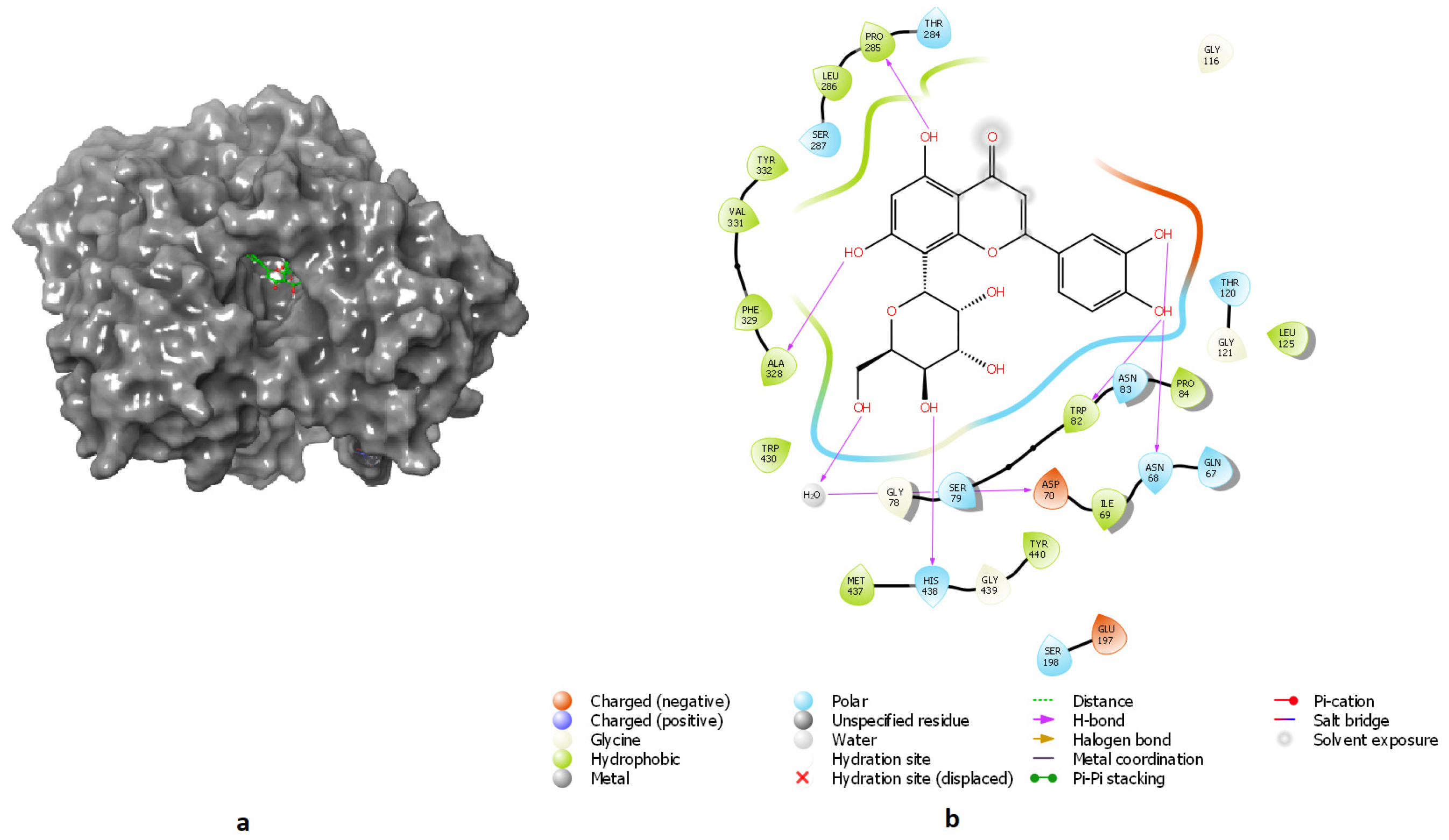
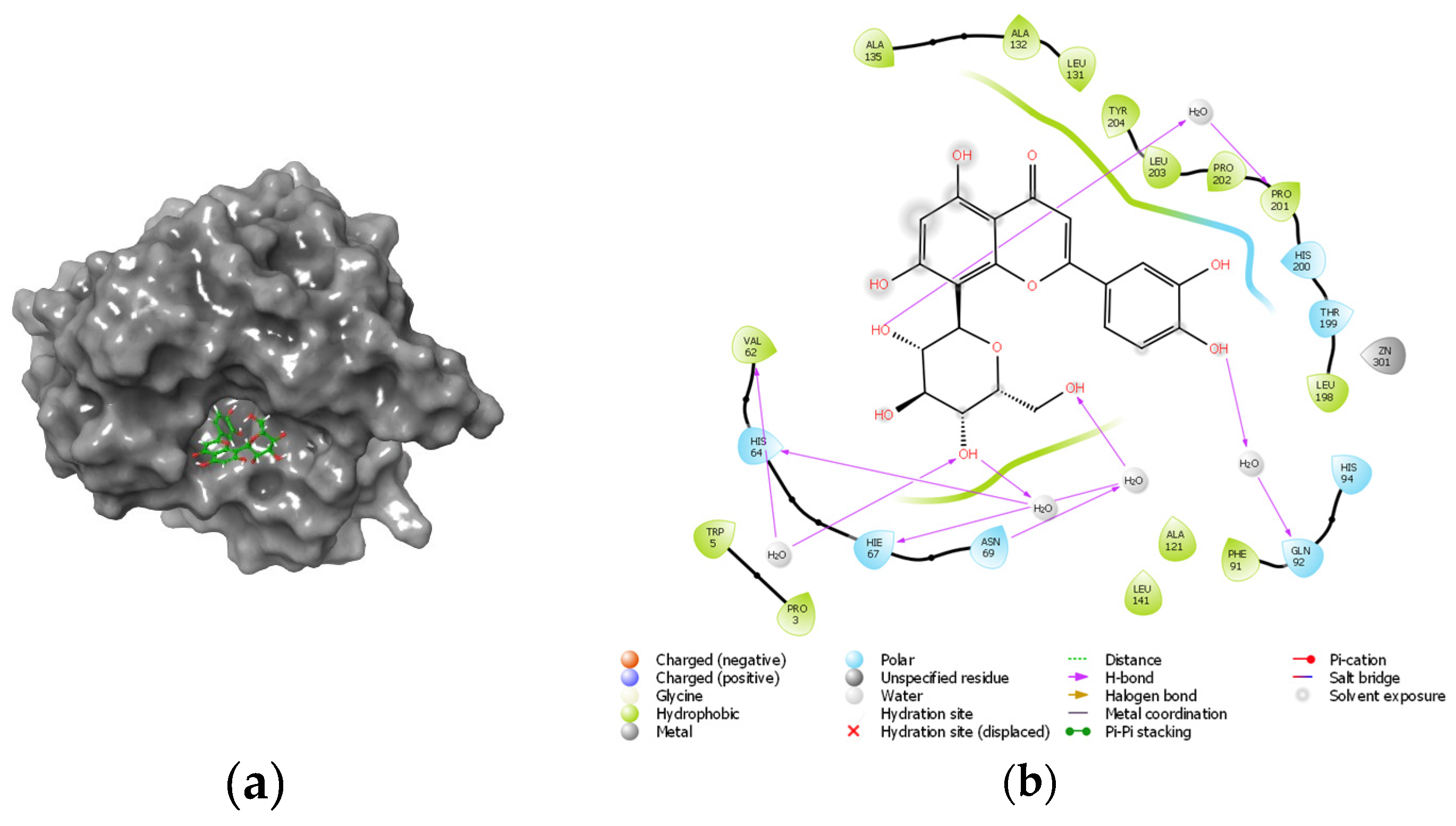
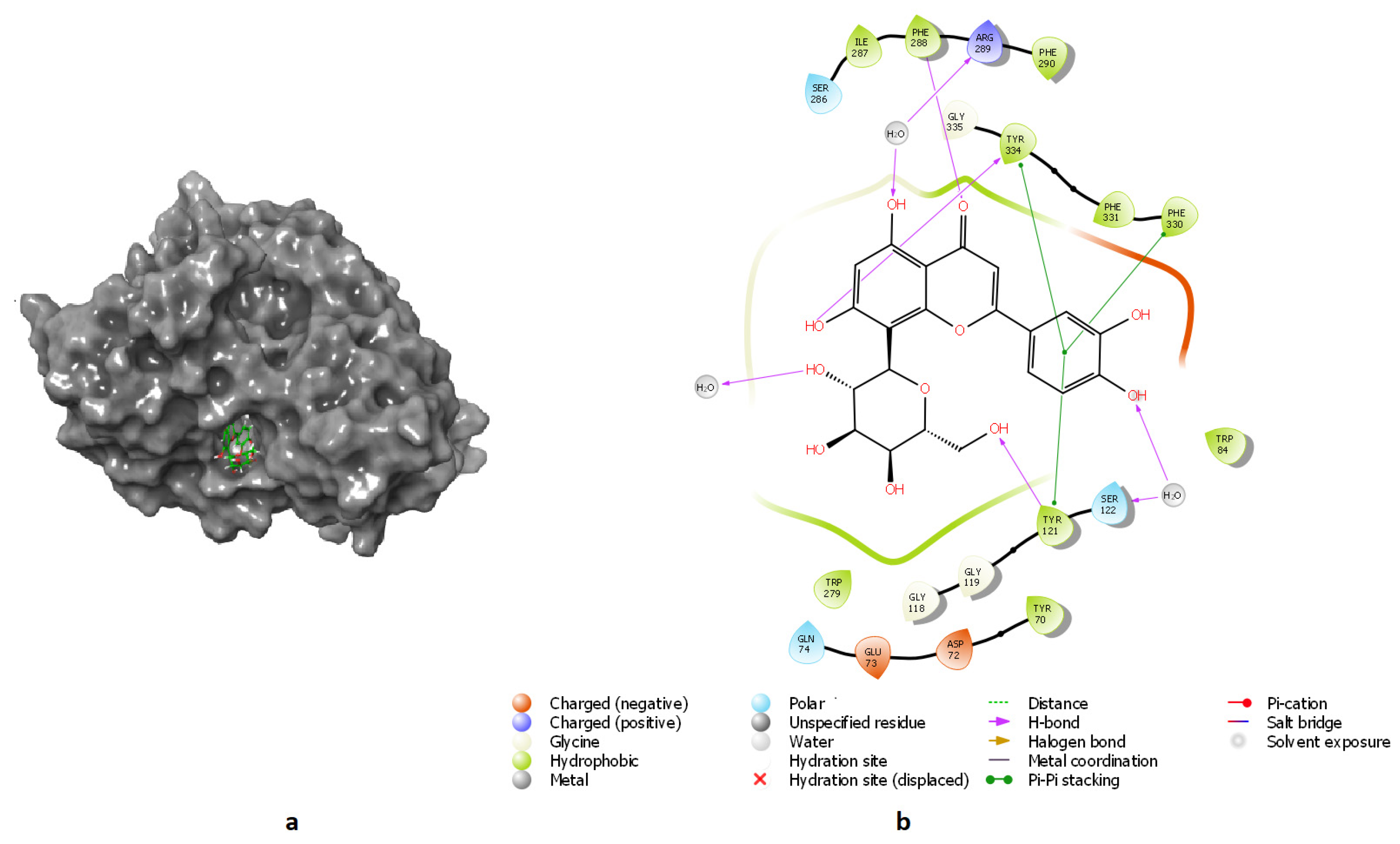
The inhibition effect of orientin against the CA I isoenzyme was found to be the most prominent both in the molecular docking analysis and in the experimental inhibition studies, as reflected by its higher docking score and lower binding free energy compared with the other tested compounds. The docking analysis demonstrated that orientin established multiple interactions within the active site of the enzyme. In particular, polar interactions were detected with several important amino acid residues, including Asn69, His64, His67, His94, His200, and Thr199. Moreover, hydrophobic interactions were observed with Ala121, Leu131, Leu141, Leu198, Pro91, Trp5, Tyr204, and Val62. These findings indicate that orientin adopts a stable binding conformation within the active site of CA I (Figure 5).
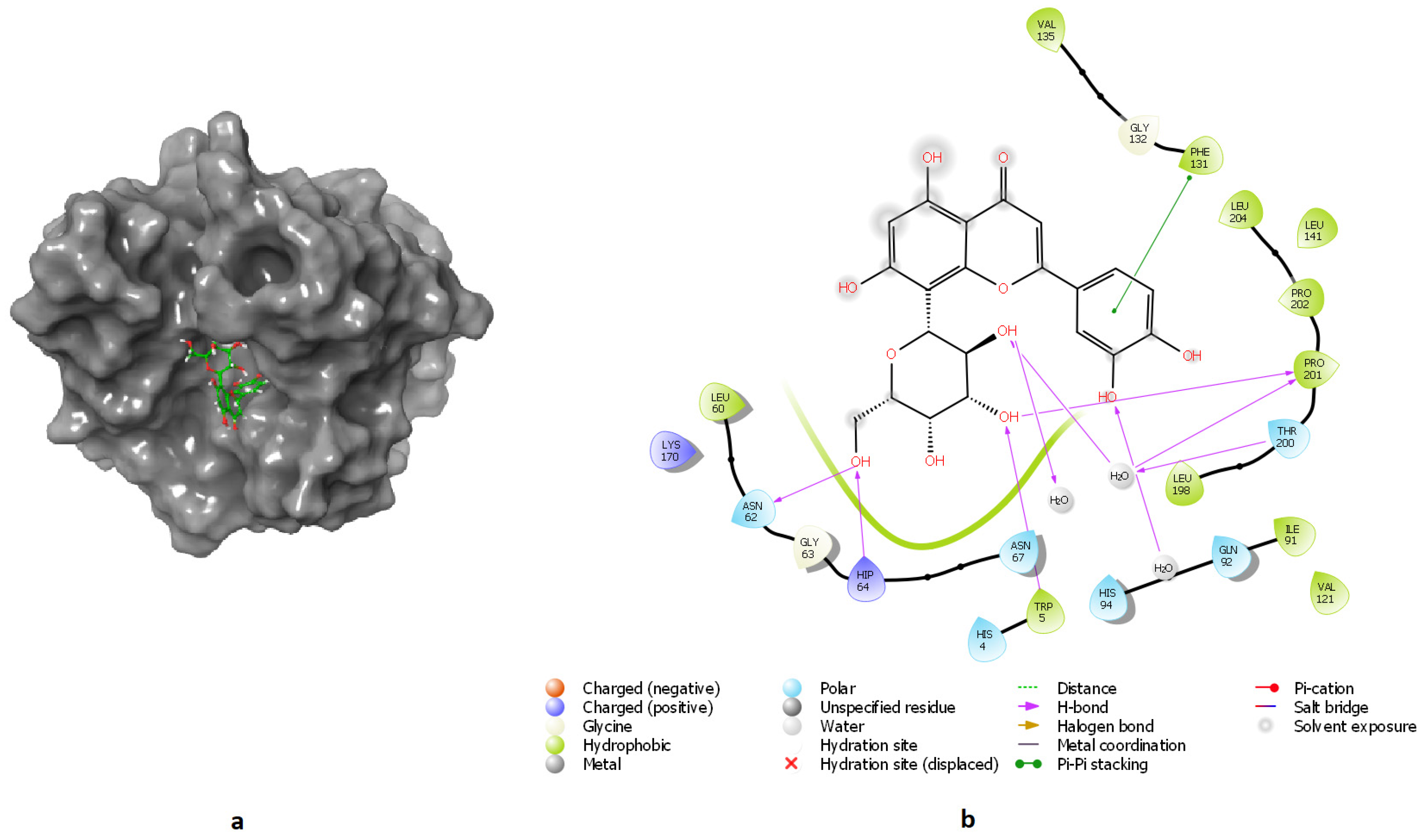
When the inhibitory effect of molecules on hCA II enzyme was examined, it was determined that orientin and cynaroside had higher docking scores (orientin: −8.873, cynaroside: −8.778) and lower free binding energy than other molecules. As a result, both theoretical and experimental study results showed that orientin and cynaroside were the molecules with the highest inhibitory effect on hCA II isoenzyme. When the molecular docking ligand interactions for orientin-hCA II were examined in detail, it was observed that orientin had polar interactions with six amino acids, Asn62, Asn67, Gun92, His4, His94, Thr200, and hydrophobic interactions with eleven amino acids, Ile198, Leu60, Leu141, Leu204, Leu198, Phe131, Pro201, Pro202, Trp5, Val121, Val135 (Figure 6).
When the results of molecular simulation placement performed to determine the inhibition effect of luteolin, its derivative glycosides and the positive reference molecule takrin on the AChE enzyme are compared with the experimental results, a largely parallel inhibition sequence is seen. The docking results showed that the molecules other than luteolin had a higher docking score and lower free binding energy compared to the positive control compound takrin (Table 6). Among the molecules, orientin was shown to have the highest inhibitory effect on the AChE enzyme according to the molecular simulation docking results. When the molecular docking ligand interactions for orientin were examined in detail, it was observed that orientin had polar interactions with three amino acids and hydrophobic interactions with ten amino acids (Figure 7).
The results of the molecular simulation docking performed to determine the inhibitory effect of luteolin, its derivative glycosides and the positive reference molecule tacrinin on the BChE enzyme are parallel to the inhibitory effects on the AChE enzyme (Table 6). According to the molecular simulation docking results, orientin was found to be the molecule with the highest inhibitory effect on the BChE enzyme. When the molecular docking ligand interactions for orientin were examined in detail, it was observed that orientin had polar interactions with eight amino acids and hydrophobic interactions with thirteen amino acids (Figure 8).
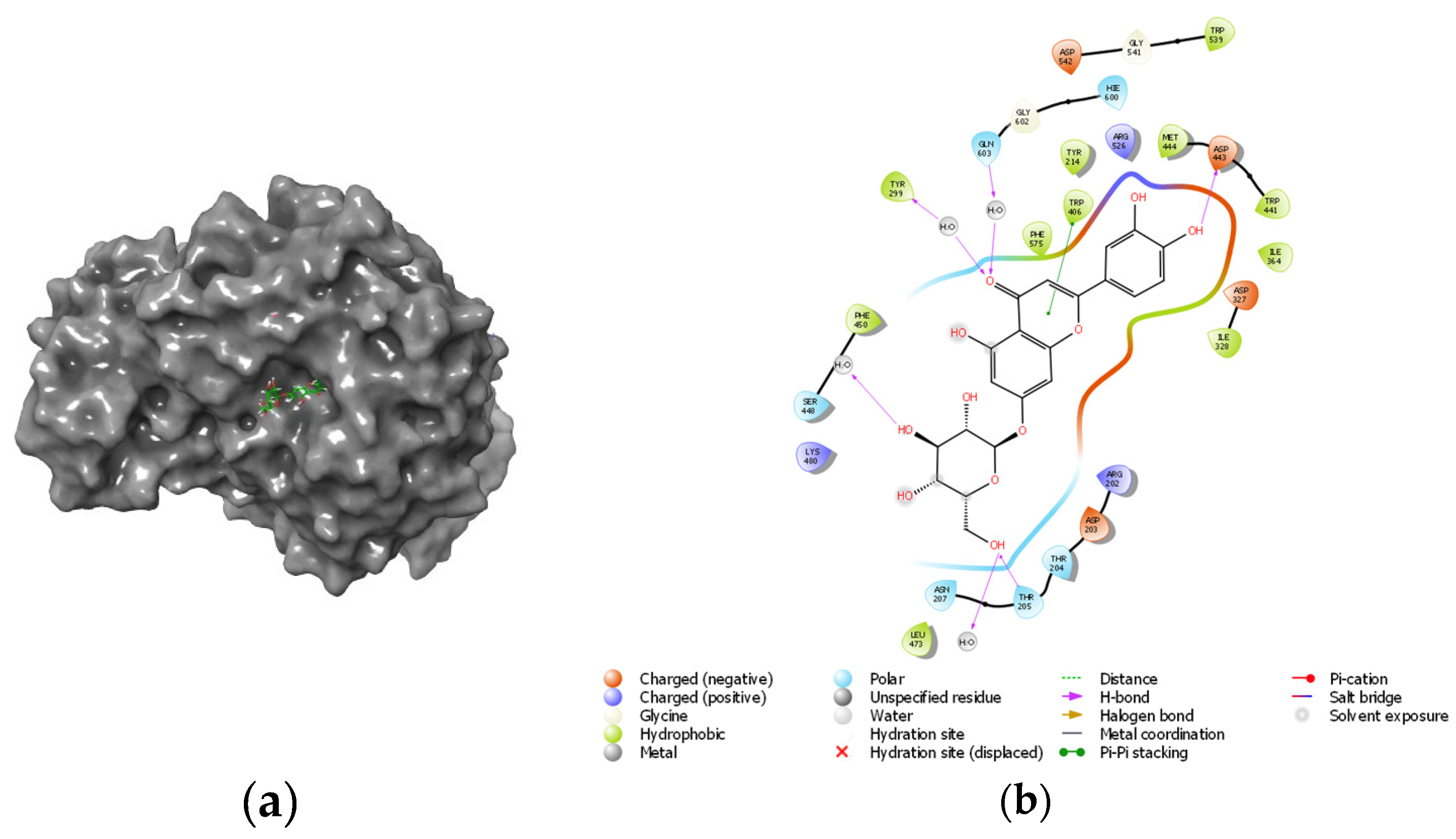
When the inhibitory effects of the molecules on the α-glycosidase enzyme were evaluated, it was determined that cynaroside exhibited a higher binding score (cynaroside: −12.807) and a lower free binding energy compared to the other compounds, in agreement with the experimental findings. Consequently, both theoretical and experimental results indicate that cynaroside possesses the strongest inhibitory effect on α-glycosidase. The ligand was observed to form multiple hydrogen bond interactions, particularly with Asp443 and Thr205, primarily through the hydroxyl groups of both the flavonoid core and the glycosidic moiety. In addition, a π–π stacking interaction was detected with Trp406. Furthermore, water-mediated hydrogen bond interactions involving Gln603 and Tyr299 were observed, which further stabilized the ligand within the binding pocket (Figure 9). However, it should be noted that the enzymes used in the molecular docking simulations and the in vitro experimental studies were not completely identical, as indicated in the Section 4. Therefore, although the docking findings are generally consistent with the experimental inhibition results, direct comparison between the in silico and experimental data should be interpreted with caution.

2.4. ADME Analyses and Toxicity Assessment

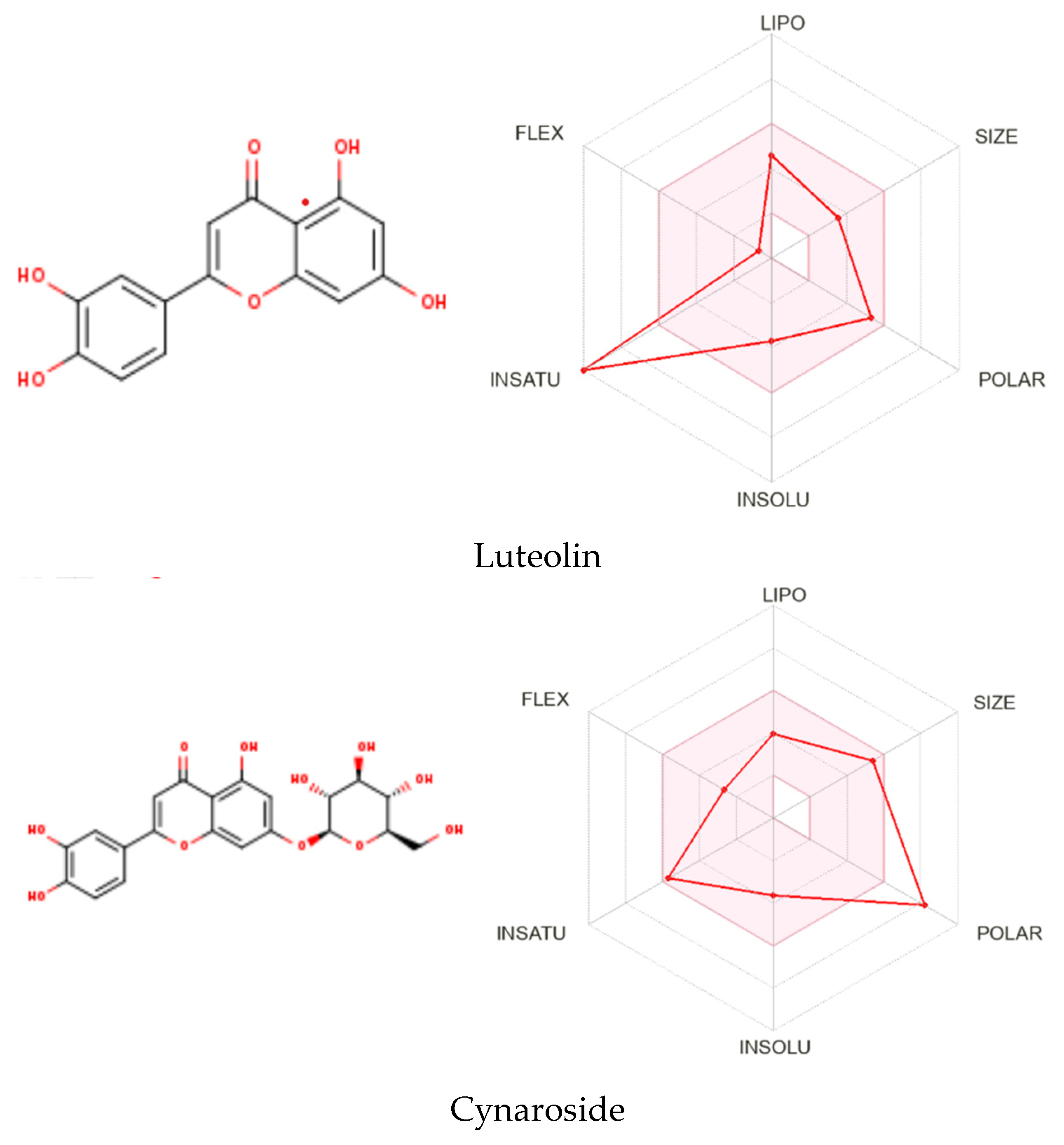
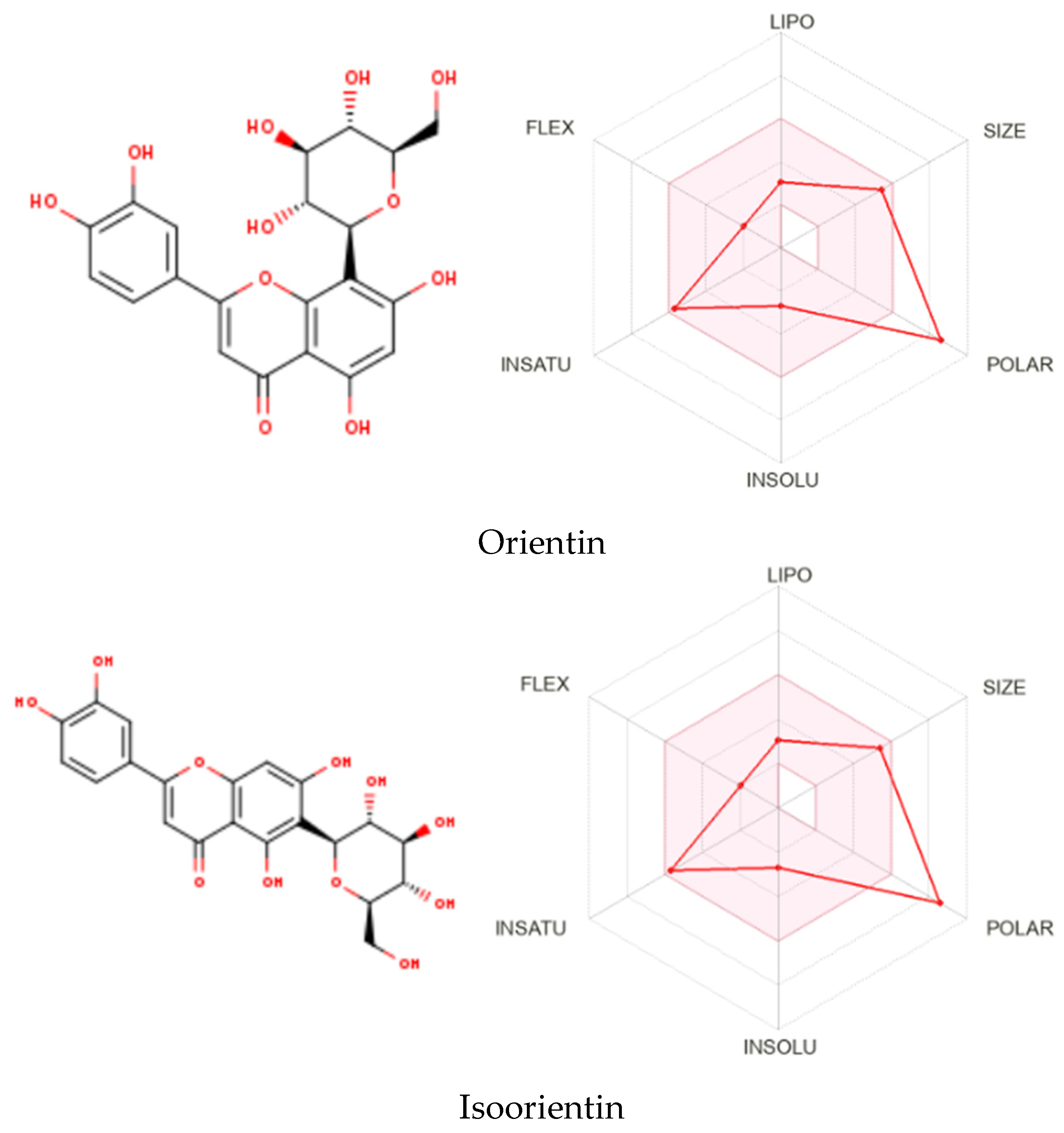
The bioavailability radar is a diagram used to quickly assess the drug-likeness of hit compounds and their correlation to an acceptable range for effective oral drug therapy [60]. As seen in Figure 10, six physicochemical parameters were evaluated in the bioavailability radar. For the molecule to be considered drug-like, it must lie entirely within the pink region of the radar plot. When looking at the bioavailability radar estimate, luteolin showed deviation in the insaturation (INSATU) parameter, while the other structures showed deviation in the polarity parameter.
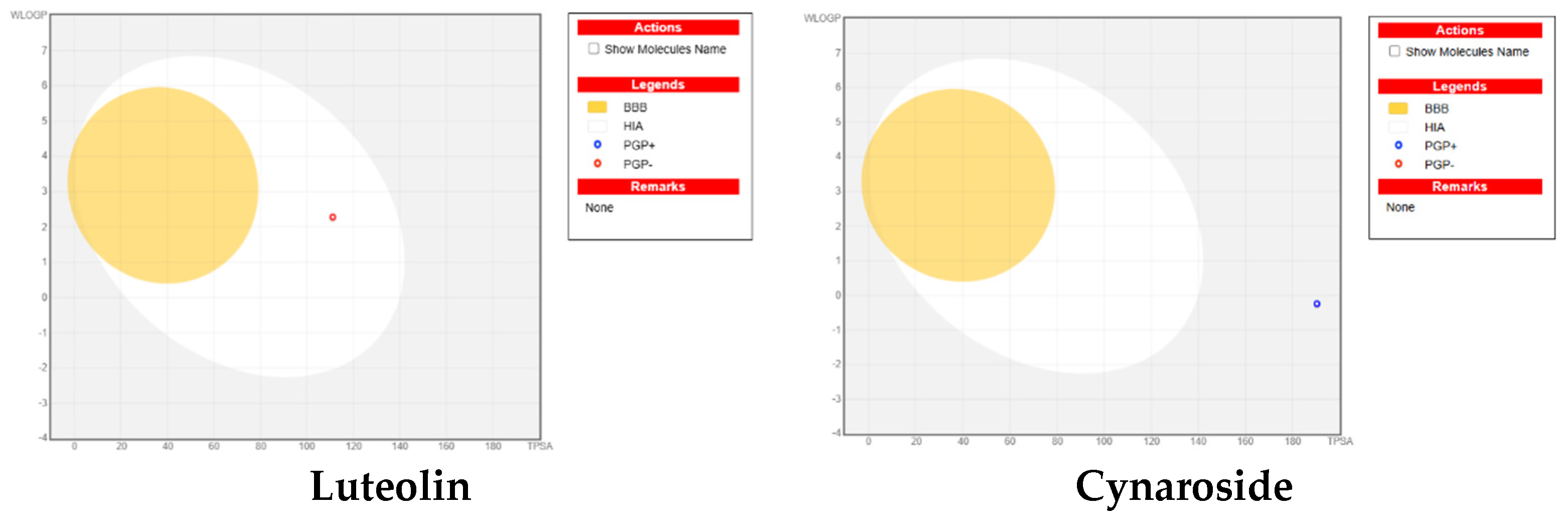
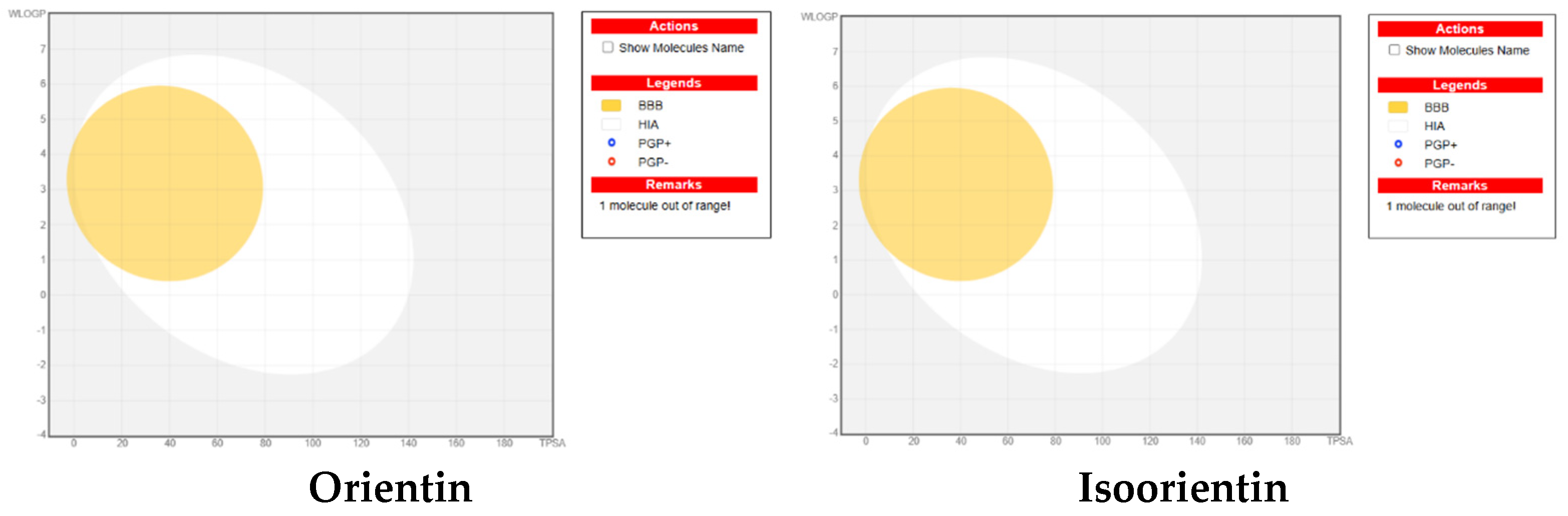
The Boiled Egg (BOILED-Egg) model is proposed (Figure 11), which gives simultaneous estimation of molecules’ blood–brain barrier (BBB) permeability and gastrointestinal absorption (HIA) by calculating only two simple physicochemical descriptors [61]. The white zone shows significant potential for passive absorption by the gastrointestinal tract, but the yellow zone (yolk) shows significant potential for brain penetration. The yolk and white components are not mutually exclusive, as noted by Ritchie et al. [60]. Additionally, the blue dots indicate that they are expected to be actively transported by the permeability glycoprotein P-gp (PGP+) and the red dots indicate that they are not substrates of P-gp (PGP). Among the structures, luteolin showed a red dot indicating that it is not a substrate of P-glycoprotein, while cynaroside showed a blue dot indicating that they are substrates of P-glycoprotein. Since the blue dot exhibited by cynaroside was outside the yellow and white region and since the other structures did not exhibit any sign, it was estimated that only the luteolin molecule showed a red dot in the white region, indicating gastrointestinal system absorption.
Lipinski et al. [62] proposed a framework known as Lipinski Rule 5 (RO5). This rule determines whether a compound has the potential to be an effective oral drug based on its fundamental physical and chemical properties. According to Lipinski’s rule, a potential oral drug should not exceed one of the following five generally established criteria:
  • The maximum number of hydrogen bond donors should not exceed 5.
  • The maximum number of hydrogen bond acceptors is 10.
  • The molecular weight should be less than 500 daltons (g/mol).
  • The occlusion p value, which represents an octanol–water partition coefficient, should be less than or equal to 5.
  • The molar fraction is expected to range from 40 to 130.
The lipophilicity profiles of the synthesized compounds are presented in Table 7. The calculated logP values indicate that all compounds fall within an acceptable range, suggesting favorable membrane permeability. Moderate lipophilicity is known to play a crucial role in drug absorption and bioavailability. In this study, the compounds exhibited balanced lipophilic characteristics, which may contribute to their observed biological activities. Furthermore, the results are consistent with Lipinski’s rule of five, indicating good drug-like properties. When the results given in Table 7 of luteolin and its derivatives are compared, it is seen that luteolin is the most suitable structure for this rule.
According to Lipinski’s rule, the topological polar surface area (TPSA) value, which is one of the most important chemical descriptors strongly associated with pharmacokinetic parameters, should be less than 140 Å2 for a good drug candidate. As can be seen in Table 8, the TPSA value of luteolin has a value of 111.13 Å2, well below 140 Å2. The better solubility a molecule has, the easier certain drug development processes become, especially with regard to processing and formulation. Furthermore, a drug intended for parenteral administration must have excellent water solubility to effectively deliver sufficient amounts of active ingredient within the limited volume of the pharmaceutical dosage form. As a result of ADME studies, the water solubility profiles for the molecules were determined using the ESOL model and are given in Table 8. The post-ingestive bioavailability score of the molecules was estimated in Table 8. A bioavailability score ratio between 0 and 1 is expected for current drug candidates. Luteolin from the molecules had a high bioavailability score of 0.55 compared to the value structures. For a compound to be considered a therapeutic candidate, it must have a minimum bioavailability score of 0.10 [63]. Looking at the bioavailability values of the molecules given in Table 5, it is thought that all compounds are expected to be effectively absorbed and used by the body upon oral administration. PAINS, or pan-assay interference chemicals, are substances that demonstrate significant action in assays irrespective of the specific protein target. According to the results given in Table 8, it was seen that the structures contained catechol-A, a complex molecule that can cause drug interference. A synthetic accessibility score close to 1 indicates easy synthesis, while a score close to 10 indicates extremely difficult synthesis. The results show that the structures can be easily synthesized.
Inhibition of the isoenzymes given in Table 9 is an important factor in drug–drug interactions affecting pharmacokinetics. This inhibition may lead to the accumulation of the medicine or its metabolites, resulting in adverse or undesirable side effects due to reduced clearance. Consequently, it is essential for drug development to accurately predict the likelihood of a chemical causing significant drug interactions through cytochrome P450 (CYP) inhibition and to identify the individual isoforms affected. The estimates in Table 9 obtained as a result of the study showed that the other molecules except luteolin had no inhibitory effect on any of the five isoenzymes (CYP1A2, CYP2C19, CYP2C9, CYP2D6, CYP3A4), while luteolin was observed to have an inhibitory effect on CYP1A2, CYP2C9 and CYP3A4 isoenzymes. There is an inverse correlation between log Kp (expressed in cm/s) and the permeability of the molecule through the skin. That is, a larger log Kp value indicates decreased molecular permeability [64]. Luteolin and its derivatives showed negative log Kp values indicating that they are unable to penetrate the skin (Table 9).
ProTox 3.0, a virtual laboratory for small molecule toxicity prediction, is a technique used to predict the toxicity of chemicals based on the median lethal dose value. Many studies have used this server for toxicity prediction [65,66]. As seen in Table 10, the estimations showed that luteolin and cynaroside were classified as class 5, orientin as class 4 and isoorientin as class 3.

3. Discussion

The formation and accumulation of excessive amounts of free radicals and ROS in the human body disrupts the structure of many biomolecules from a cellular perspective, and as a result, various degenerative diseases may occur [67]. As a result, oxidative stress and ROS may pose significant risks in the formation of many chronic diseases such as cancer, cardiovascular diseases, immune deficiency syndrome, age-related pathologies, arteriosclerosis, diabetes mellitus and obesity. Antioxidant structures are quite effective in eliminating the unwanted harmful effects of ROS and free radicals even at low concentrations [68].
There are many different methods to determine antioxidant activity. In this study, antioxidant capacities of luteolin and its derivative glycosides were investigated with different radical entry and reduction methods. Radical scavenging methods including DMPD·+, ABTS·+ and DPPH· and reduction methods included Fe3+, Fe2+-TPTZ complex and Cu2+ reduction methods. When the Fe3+ reduction potentials of luteolin and its derivatives were compared. It was observed that all structures increased with increasing concentration (Figure 1). According to the results obtained from the absorbance graph drawn according to the absorbance values recorded after photometric measurements, the Fe3+ reduction capacities of samples and standard antioxidants were compared with the results corresponding to a concentration of 10 μg/mL. Additionally, luteolin and its derivatives have significantly higher Fe3+ reducing capacity than ascorbic acid and trolox used as controls (Table 1). According to the reduction capacity of FRAP assay results, it was observed that the reduction capacity of the structures increased with increasing concentration (Figure 1B). According to the results, BHT, trolox and α-tocopherol had significantly higher FRAP reducing capacity than luteolin and isoorientin (p < 0.001). Furthermore, luteolin and its derivatives had significantly higher FRAP reducing capacity than trolox, α-tocopherol and ascorbic acid used as controls. The reducing capacity (CUPRAC) results of Cu2+ ions also showed that the reducing abilities increased with increasing concentration for all structures (Figure 1C).
The antioxidant properties of luteolin and its derivatives were investigated using the DPPH, ABTS and DMPD radical scavenging methods, which are widely used to determine the antioxidant properties of the structures. The antioxidant findings demonstrated that luteolin and its glycoside derivatives possess considerable electron-donating and reducing abilities, although their activities varied depending on the assay system and molecular structure. The higher Fe3+ and FRAP reducing capacities of orientin, isoorientin, and luteolin may be associated with the presence and position of hydroxyl groups that facilitate electron transfer and stabilization of radical intermediates. In contrast, glycosylation appeared to partially reduce CUPRAC activity, particularly in cynaroside, likely due to steric effects and decreased accessibility of active hydroxyl moieties. Differences between DPPH and ABTS radical scavenging, FRAP and CUPRAC reducing results also indicate that antioxidant behavior depends on both radical type and reaction mechanism. Overall, luteolin derivatives exhibited strong antioxidant potential comparable to standard antioxidants.
First, DPPH radical scavenging studies were conducted. With the prediction that luteolin and its derivative glycosides would exhibit different antioxidant properties depending on their hydroxyl groups, IC50 values were calculated because of comparative DPPH studies with standard substances. Looking at the IC50 values, it can be said that orientin has better radical scavenging activity than the standard antioxidants trolox and BHA and other derivatives. The radical scavenging assays demonstrated that luteolin and its glycoside derivatives possess strong antioxidant capacities comparable to standard antioxidants. Orientin showed the most effective DPPH· scavenging activity among the derivatives, suggesting that its hydroxyl arrangement and glycosylation pattern may enhance hydrogen atom donation and radical stabilization. In the ABTS·+ assay, luteolin exhibited higher activity than several standard compounds, indicating efficient electron transfer capability. The DMPD·+ results further confirmed that these flavonoids can effectively neutralize different radical species. Variations among assays likely arise from differences in radical chemistry, solubility, steric effects, and structure–activity relationships.
The inhibitory effects of luteolin and its derivatives on cytosolic hCA I associated with cerebral and retinal edema, hCA II associated with edema, glaucoma, epilepsy and mountain sickness, AChE and BChE associated with AD due to their inhibitory activities, and α-glycosidase enzymes associated with DM were investigated at different concentrations. All constructions showed in vitro inhibitory effects against the enzymes. Separate activity (%)-inhibitor concentration and Ki graphs were drawn for each inhibitor; IC50, r2 and Ki values were calculated and inhibition types were determined. The enzyme inhibition results demonstrated that luteolin and its glycoside derivatives possess strong inhibitory potential against therapeutically important targets related to glaucoma, neurological disorders, and diabetes. Orientin exhibited the most potent inhibition toward hCA I, while cynaroside showed superior activity against hCA II, with Ki values comparable to or even better than the reference inhibitor acetazolamide. These findings suggest that glycosylation patterns and hydroxyl group distribution significantly influence enzyme binding affinity. The observed nanomolar inhibition levels indicate that luteolin derivatives may serve as promising natural scaffolds for the development of multifunctional carbonic anhydrase inhibitors.
To determine the effects against AChE and BChE, Ellman procedure was used and compared with the standard inhibitor of tacrine (TAC), which is used as an inhibitor of AChE and BChE enzymes in individuals with AD, was used as a positive control and the molecules were found to be good inhibitors compared to tacrine. The cholinesterase inhibition studies revealed that luteolin and its glycoside derivatives possess remarkable inhibitory activities against both AChE and BChE, with several compounds exhibiting stronger effects than tacrine. Isoorientin showed the highest affinity toward AChE, whereas cynaroside was the most potent BChE inhibitor, indicating that structural differences in glycosylation strongly influence enzyme selectivity and binding interactions. These nanomolar Ki values suggest that luteolin derivatives may represent promising multifunctional natural compounds for managing cholinergic dysfunction associated with neurodegenerative disorders such as AD.
According to the results of the study to determine the inhibition effects of luteolin and its derivative glycosides on α-glycosidase enzyme. The α-glycosidase inhibition results demonstrated that luteolin and its glycoside derivatives possess considerable antidiabetic potential. Cynaroside exhibited the strongest inhibitory effect, suggesting that glycosylation may enhance enzyme binding affinity and inhibitory efficiency. The observed nanomolar Ki values indicate that these flavonoids may contribute to controlling postprandial hyperglycemia associated with T2DM. Flavonoid glycosides may undergo hydrolysis and metabolic transformation before reaching systemic circulation. Also, luteolin glycosides can be converted into their aglycone forms by intestinal β-glycosidases, which may alter their interaction profiles with target enzymes in vivo. Therefore, the present enzyme inhibition results should primarily be considered as comparative in vitro biochemical data reflecting intrinsic interaction potential rather than direct evidence of therapeutic efficacy.
Molecular docking is an important tool to explore the interactions between a target protein and a small molecule. Molecular docking studies were performed using Schrödinger Molecular Modeling Suite (docking program of Maestro 12.9) to support and interpret the experimental activity results of luteolin and its derivatives with theoretical results. When the results were evaluated, it was observed that the results of in vitro and in silico studies were largely in agreement with each other (Table 6). In addition, ADME profiles and toxicity assessments of the structures were determined in a virtual environment. ADME study results showed that luteolin (RO5) was the most suitable structure for the rule criteria. Toxicity assessment prediction results showed that luteolin and cynaroside were classified as class 5, orientin as class 4 and isoorientin as class 3.
This study has several important limitations. First, the study is entirely based on in vitro biochemical analyses and in silico molecular modeling approaches; therefore, the obtained results should not be interpreted directly as evidence of in vivo therapeutic efficacy. Since the biological activities of luteolin and its glycoside derivatives may be influenced by pharmacokinetic processes such as gastrointestinal hydrolysis, phase II metabolism (glucuronidation and sulfation), and limited bioavailability, their actual biological effects may differ at the organismal level. Another limitation is that the protein structures used in the molecular docking studies were not completely identical to the experimental enzyme sources. As also stated in the manuscript, although the docking results were largely consistent with the experimental findings, direct one-to-one comparison between the in silico and in vitro data should be interpreted with caution. In addition, the toxicity and ADME evaluations were based solely on computational predictions. Although the results obtained from platforms such as ProTox 3.0 and SwissADME provide useful preliminary insights, these findings should be further validated through experimental toxicological and pharmacokinetic studies. Furthermore, only selected luteolin derivatives (luteolin, cynaroside, orientin, and isoorientin) were evaluated in the present study, while a broader range of flavonoid derivatives or different structural modifications were not investigated. Therefore, the observed structure–activity relationships cannot be generalized to the entire flavonoid class. Finally, the enzyme inhibition mechanisms were evaluated using Lineweaver–Burk-based kinetic analyses, and additional advanced biophysical approaches such as isothermal titration calorimetry, surface plasmon resonance, or cell-based functional assays would be beneficial in future studies to further validate the interaction mechanisms.

4. Materials and Methods

4.1. Chemicals

All chemicals and reagents used throughout this study were of analytical grade and were used as received without further purification. Acetylcholinesterase (AChE) obtained from electric eel (Electrophorus electricus, Type VI-S, ≥100 U/mg protein), along with its substrate acetylthiocholine iodide, was purchased from Sigma-Aldrich (Steinheim, Germany). α-Glycosidase derived from Saccharomyces cerevisiae (≥10 U/mg protein) and its corresponding substrate, p-nitrophenyl-D-glucopyranoside, were also supplied by the same manufacturer. Human carbonic anhydrase isoforms (hCA I and hCA II) were isolated from human erythrocytes obtained via an authorized blood bank. The purification process was performed using Sepharose 4B–L-Tyrosine affinity chromatography according to previously described procedures [69]. Luteolin and its derivatives were obtained as pure analytical standards from Sigma-Aldrich. For the evaluation of antioxidant activity, commonly used radical-generating reagents including 1,1-diphenyl-2-picrylhydrazyl (DPPH), 2,2′-azino-bis (3-ethylbenzothiazoline-6-sulfonic acid) (ABTS•+), and N, N-dimethyl-p-phenylenediamine (DMPD•+) as well as the Cu2+ reducing reagent, 2,9-dimethyl-1,10-phenanthroline (neocuproine), were obtained from Sigma-Aldrich. Reference antioxidant compounds, namely butylated hydroxyanisole (BHA), butylated hydroxytoluene (BHT), trolox, and α-tocopherol, were employed as standard comparators in the assays.

4.2. Antioxidant Assays

4.2.1. Reducing Ability Assays

Fe3+ Reduction Capacity
The Fe3+ reducing ability of luteolin and its derivatives was investigated according to the previous method [70]. Luteolin and its derivatives for the stock solution were prepared in ethanol at 1000 μg/mL concentration This stock solution was taken into Falcon tubes at different concentrations (10, 30 and 30 μg/mL) and 2 mL sodium phosphate buffer (200 mM, pH 6.6) and 1 mL K3 Fe(CN)6 (1%) were added and incubated at 50 °C for 25 min. Afterwards, 0.5 mL of freshly prepared FeCl3 (0.1%) was added and absorbance values against deionized water at 700 nm were recorded.
FRAP Reduction Capacity
The FRAP reducing capacities of luteolin and its derivatives taken as reference were determined by the Benzie and Strainin method [71]. The FRAP method is based on the reduction in the formed Fe3+-TPTZ complex at low pH. First, luteolin and its derivatives solutions at different concentrations (10, 30 and 30 μg/mL) were transferred to test tubes and their volumes were completed to 0.5 mL with acetate buffer solution. A total of 2.25 mL of 20 mM FeCl3 solution and 2.25 mL of FRAP reagent were added to the test tubes to complete the total volume to 5 mL and mixed. After 10 min incubation, the increasing absorbance of the blue color of the ferrous form of the complex (Fe2+-TPTZ) was recorded at 593 nm.
Cu2+ Reduction Capacity (CUPRAC Method)
To determine the Cu2+ reducing antioxidant abilities of luteolin and its derivatives, the method proposed by Apak et al. [72] was used with minor modifications. Samples were prepared at various concentrations (10, 30 and 30 μg/mL) and added to the mixture containing 250 μL of CuCl2 (10 mM), 250 μL of neocuproine (7.5 mM) prepared in ethanol, and 250 μL of acetate buffer (1.0 M). After 20 min of incubation in the dark, absorbances at 450 nm were recorded. The increasing absorbance of the reaction mixture indicates the increasing reducing capacity.

4.2.2. Radical Scavenging Activities

DPPH· Scavenging Capacity
DPPH radical scavenging activity of luteolin and its derivatives was determined at 517 nm according to the Blois method [73], with additional methodological support from the recent literature [74]. Briefly, the method is as follows: First, a solution of the free radical DPPH· is prepared at a concentration of 10−3 M. Luteolin and its derivatives are prepared in test tubes with different ethyl alcohol concentrations (10, 20, 30 μg/mL) and 0.2 mL of DPPH solution (0.3 mM) and 0.6 mL of ethanol are added. After 30 min of incubation at 37 °C, absorbance values are spectrophotometrically recorded at 517 nm.
ABTS·+ Scavenging Ability
ABTS·+ scavenging activity determination for luteolin and its derivatives was carried out according to the modified form of the method of Re et al. [75,76]. Luteolin and its derivative solution were transferred to tubes at different concentrations (10, 20, 30 μg/mL). ABTS radical solution was prepared by mixing 2.45 mM K2S2O8 solution and 2 mM ABTS (0.15 g ABTS dissolved in 100 mL of pure water) solution and incubating for 30 min in the dark. The absorbance value of the ABTS·+ control sample at 734 nm was adjusted to 1.260 ± 0.030 nm by dilution with pure water or by adding K2O8S2. The adjusted ABTS·+ solution was then placed in tubes containing samples at different concentrations and vortexed. After 30 min of incubation in the dark, measurements were taken at 734 nm against ethanol as a blank.
DMPD·+ Scavenging Capacity
Studies to determine the DMPD·+ quenching abilities of luteolin and its derivatives were carried out using a modified version of the method of Fogliano et al. [77,78]. A total of 0.5 mL solutions of luteolin and its derivatives and reference materials were prepared using distilled water at different concentrations (10, 20, 30 μg/mL) in test tubes. Then, 2 mL of DMPD·+ radical cation solution (prepared by adding 0.2 mL of 0.05 M FeCl3 solution to 2 mL) was added to the tubes. It was incubated in the dark for 30 min. Absorbance values at 505 nm were measured.

4.3. Enzyme Inhibition Assays

4.3.1. Carbonic Anhydrase I and II Inhibition Assay

hCA I and II isoenzymes were purified from fresh human blood erythrocytes. Purification processes were started by hemolyzing human blood erythrocytes in ice water approximately 5 times their volume. Then, they were centrifuged at 2–8 °C at 10,000× g for 30 min [79]. The upper part of the centrifuged hemolysate was carefully taken, its pH was carefully adjusted to 8.7 with the help of Tris and loaded onto the column. Sepharose-4B-L-Tirozyne sulfanilamide affinity column chromatography was used for both CA isoenzyme purification [80]. CA enzyme inhibition studies were carried out based on esterase activity and p-nitrophenyl acetate (PNA) was used as the substrate. CA enzyme hydrolyzes PNA to p-nitrophenol and acetate, and the method is based on the absorbance of the formed p-Nitrophenol at 348 nm. The inhibition effects of luteolin and its derivatives on CA Isozymes were determined by measuring absorbance changes in kinetic mode at 348 nm and a temperature of 25 °C for three min, and acetazolamide (AZA) was used as the positive control.

4.3.2. Acetylcholinesterase Enzyme Inhibition Assay

The inhibitory effects of luteolin and its derivatives on acetylcholinesterase and butyrylcholinesterase enzymes were investigated according to the Ellman’s method [81]. As a result of the studies, IC50 and Ki values and types of inhibition were determined. The principle of method is based on the AChE and BChE catalyze the cleavage reactions of acetylthiocholine iodide, thiocholine iodide and acetate, and butyrylthiocholine iodide, to thiocholine and butyryl. The reaction of thiocholine with the second substrate DTNB results in the yellow 5-thio-2-nitrobenzoic acids giving absorbance at 412 nm [82].

4.3.3. α-Glycosidase Inhibition Assay

α-Glycosidase enzyme activity was investigated using p-nitrophenyl-D-glucopyranoside (p-NPG) substrate according to the method developed by Tao and co-workers [83]. Samples to be used in the study were prepared as in other enzyme studies. Briefly, 85 μL of phosphate buffer (pH 7.4) was mixed with 5 μL of luteolin and its derivatives sample and 10 μL of α-glycosidase enzyme solution in a phosphate buffer (0.15 U/mL, pH 7.4). After preincubation, 50 μL of p-NPG in a phosphate buffer (5 mM, pH 7.4) was transferred, and the solution was incubated at 37 °C. α-Glycosidase activity measurements were recorded at 405 nm for 3 min. IC50 and Kİ values and types of inhibition were determined according to previous studies [84,85].

4.4. Statistical Analysis

Experiments were performed three times for each assay. GraphPad Prism (version 8.0) program was used for statistical analysis. Studies were conducted using two-way ANOVA test and post hoc Tukey test. A value of p < 0.05 indicates significance, a value of p < 0.01 indicates high statistical significance, and a value of p < 0.001 indicates very high statistical significance [86]. Results are expressed as mean and standard deviation (SD); p values < 0.05 at 95% confidence interval were considered statistically significant [87].

4.5. Determination of Molecular Docking Studies

The in silico inhibitory potential of the synthesized compounds against human carbonic anhydrase isoforms hCA I and hCA II, AChE, and α-glycosidase was investigated using molecular docking approaches. All computational studies were carried out using the Schrödinger Molecular Modeling Suite Maestro platform [60]. Initially, the chemical structures of the compounds were constructed using the 2D Sketcher module of Maestro. The molecular structures of reference inhibitors—acetazolamide for hCA I and hCA II, tacrine for AChE and acarbose for α-glycosidase—were generated from their SMILES notations obtained from the PubChem database. Ligand preparation and geometry optimization were subsequently performed using the LigPrep module. The three-dimensional structures of the target enzymes were retrieved from the RCSB Protein Data Bank with the following PDB identifiers: hCA I (4WR7, Homo sapiens), CA II (5AML, Homo sapiens), AChE (4TVK, Tetronarce californica), BChE (4TPK, Homo sapiens), and α-glycosidase (3L4Y, Homo sapiens). Although the enzymes used in molecular docking studies were obtained from crystallographic data (PDB) and may differ in origin from those used in experimental assays, they belong to the same enzyme classes and possess highly conserved active sites. Therefore, the docking results provide a meaningful structural interpretation of the observed biological activities. Protein preparation was conducted using the Protein Preparation Wizard implemented in Schrödinger Suite (version 13.5.128), including the addition of missing hydrogen atoms, assignment of bond orders, and optimization of hydrogen-bonding networks. Subsequently, receptor grids were generated to define the active binding sites and to determine the spatial dimensions of the docking regions. Grid generation was performed using the receptor grid generation tool within the Schrödinger Suite (Maestro 13.5, release 2022-3). The binding affinities and interaction profiles of the ligands with each enzyme were evaluated using the Glide docking protocol. All docking calculations were carried out using the extra precision (Glide XP) mode to ensure high accuracy in predicting ligand–enzyme interactions.

4.6. ADME Analyses and Toxicity Assessment

ADME profiles were assessed using the Swiss ADME online server (www.swissadme.ch/index.php, 14 January 2025). Toxicity assessment was performed using the ProTox-3.0 server (https://tox.charite.de/protox3, 14 January 2025).

5. Conclusions

In conclusion, the present study demonstrated that luteolin and its glycoside derivatives, including cynaroside, orientin, and isoorientin, possess remarkable antioxidant and enzyme inhibitory activities supported by both in vitro and in silico findings. Antioxidant assays revealed that these flavonoids exhibited strong radical scavenging and reducing capacities in DPPH·, ABTS·+ and DMPD·+ scavenging FRAP, Fe3+, and CUPRAC reduction systems. In several assays, the activities of the tested compounds were comparable to or even superior to standard antioxidants such as BHA, BHT, trolox, α-tocopherol, and ascorbic acid. Structural differences, particularly hydroxyl group distribution and glycosylation patterns, were shown to significantly influence antioxidant efficiency and radical stabilization mechanisms.
The enzyme inhibition studies further demonstrated that luteolin derivatives are potent inhibitors of therapeutically important enzymes associated with neurodegenerative diseases, glaucoma, and diabetes mellitus. Orientin showed the strongest inhibitory effect against hCA I, whereas cynaroside exhibited the highest inhibition against hCA II and α-glycosidase. In cholinesterase inhibition assays, isoorientin displayed superior AChE inhibition while cynaroside was the most effective BChE inhibitor. Importantly, several compounds exhibited inhibition profiles comparable to or stronger than reference inhibitors such as acetazolamide and tacrine. Molecular docking analyses supported the experimental results and revealed stable binding interactions between the compounds and enzyme active sites through multiple polar and hydrophobic interactions.
In addition, ADME and toxicity prediction analyses suggested that luteolin possesses the most favorable drug-likeness and pharmacokinetic profile among the tested structures, while all compounds exhibited acceptable bioavailability characteristics. Although glycosylated derivatives showed some limitations regarding polarity and absorption, they still demonstrated promising biological activities. Overall, these findings indicate that luteolin and its derivatives may serve as valuable multifunctional natural scaffolds for the development of novel antioxidant and enzyme inhibitory agents. Nevertheless, further cellular, pharmacokinetic, and in vivo investigations are necessary to confirm their therapeutic potential and biological relevance.
The present study has several limitations. First, all antioxidant and enzyme inhibition experiments were performed exclusively under in vitro conditions; therefore, the obtained results may not directly reflect the biological efficacy of luteolin and its glycosides in vivo. Second, although molecular docking analyses provided supportive information regarding ligand–enzyme interactions, docking studies are predictive computational approaches and cannot fully represent the dynamic behavior of biological systems. Third, the ADME and toxicity evaluations were conducted only via in silico prediction platforms, and these findings require confirmation by experimental pharmacokinetic and toxicological studies. In addition, the study focused only on selected enzymes, namely hCA I, hCA II, AChE, BChE, and α-glycosidase, while other clinically relevant isoenzymes and molecular targets were not investigated. Furthermore, bioavailability, metabolic transformation, and long-term safety profiles of the compounds were not experimentally evaluated. Therefore, additional cellular, animal, and clinical studies are necessary to validate the pharmacological potential of these compounds.

Author Contributions

Methodology and investigation, I.G. and A.E.; writing—original draft preparation, review and editing, supervision, funding and acquisition, I.G. and A.E. All authors have read and agreed to the published version of the manuscript.

Funding

This study was supported by Atatürk University Scientific Research Projects Coordination Unit (Project Code: FDK-2021-8871).

Institutional Review Board Statement

Not applicable.

Informed Consent Statement

Not applicable.

Data Availability Statement

Data are provided in a publicly accessible repository.

Acknowledgments

Ilhami Gulcin is a member of the Turkish Academy of Sciences (TÜBA). He would like to extend his sincere appreciation to the TÜBA for their financial support.

Conflicts of Interest

The authors declare no conflicts of interest.

References

  1. Shahidi, F. Antioxidants in food and food antioxidants. Food 2000, 44, 158–163. [Google Scholar] [CrossRef] [PubMed]
  2. Halliwell, B.; Gutteridge, J.M. Free Radicals in Biology and Medicine; Oxford University Press: Oxford, UK, 2015. [Google Scholar]
  3. Sies, H. Oxidative stress: A concept in redox biology and medicine. Redox Biol. 2015, 4, 180–183. [Google Scholar] [CrossRef] [PubMed]
  4. Zujko, M.E.; Witkowska, A.M. Dietary antioxidants and chronic diseases. Antioxidants 2023, 12, 362. [Google Scholar] [CrossRef]
  5. Shahidi, F.; Zhong, Y. Novel antioxidants in food quality preservation and health promotion. Eur. J. Lipid Sci. Technol. 2010, 112, 930–940. [Google Scholar] [CrossRef]
  6. Yildiz, A.Y.; Öztekin, S.; Anaya, K. Effects of plant-derived antioxidants to the oxidative stability of edible oils under thermal and storage conditions: Benefits, challenges and sustainable solutions. Food Chem. 2025, 479, 143752. [Google Scholar] [CrossRef]
  7. Kandemir, F.M.; Kucukler, S.; Eldutar, E.; Caglayan, C.; Gulcin, I. Chrysin protects rat kidney from paracetamol-induced oxidative stress, inflammation, apoptosis, and autophagy: A multi-biomarker approach. Sci. Pharm. 2017, 85, 4. [Google Scholar] [CrossRef]
  8. Prieto, P.; Pineda, M.; Aguilar, M. Spectrophotometric quantitation of antioxidant capacity through the formation of a phosphomolybdenum complex: Specific application to the determination of vitamin E. Anal. Biochem. 1999, 269, 337–341. [Google Scholar] [CrossRef]
  9. Newman, D.J.; Cragg, G.M. Natural products as sources of new drugs over the nearly four decades from 01/1981 to 09/2019. J. Nat. Prod. 2020, 83, 770–803. [Google Scholar] [CrossRef]
  10. El-Saadony, M.T.; Saad, A.M.; Mohammed, D.M.; Alkafaas, S.S.; Abd El-Mageed, T.A.; Fahmy, M.A.; Ezzat Ahmed, A.; Algopishi, U.B.; Abu-Elsaoud, A.M.; Mosa, W.F.; et al. Plant bioactive compounds: Extraction, biological activities, immunological, nutritional aspects, food application, and human health benefits—A comprehensive review. Front. Nutr. 2025, 12, 1659743. [Google Scholar] [CrossRef]
  11. Huang, J.; Huang, N.; Mao, Q.; Shi, J.; Qiu, Y. Natural bioactive compounds in Alzheimer’s disease: From the perspective of type 3 diabetes mellitus. Front. Aging Neurosci. 2023, 15, 1130253. [Google Scholar] [CrossRef] [PubMed]
  12. Teixeira, J.P.; de Castro, A.A.; Soares, F.V.; da Cunha, E.F.F.; Ramalho, T.C. Future therapeutic perspectives into the Alzheimer’s disease targeting the oxidative stress hypothesis. Molecules 2019, 24, 4410. [Google Scholar] [CrossRef] [PubMed]
  13. Odenthal, K.; Nunes, E.; Nunes, N.; Fernandes, T.; Fernandes, I.A.; Pinheiro de Carvalho, M.A.A. Microalgae and cyanobacteria as natural sources of antioxidant enzymes and enzyme inhibitors for Alzheimer’s and diabetes. Algal Res. 2024, 82, 103610. [Google Scholar] [CrossRef]
  14. Zengin, M.; Genc, H.; Taslimi, P.; Kestane, A.; Guclu, E.; Ogutlu, A.; Karabay, O.; Gulçin, İ. Novel thymol bearing oxypropanolamine derivatives as potent some metabolic enzyme inhibitors–Their antidiabetic, anticholinergic and antibacterial potentials. Bioorg. Chem. 2018, 81, 119–126. [Google Scholar] [CrossRef] [PubMed]
  15. Iheagwam, F.N.; Iheagwam, O.T. Diabetes mellitus: The pathophysiology as a canvas for management elucidation and strategies. Med. Nov. Technol. Dev. 2025, 25, 100351. [Google Scholar] [CrossRef]
  16. Han, X.; Zhang, Y.; Li, W.; Chen, L. α-Glucosidase inhibition mechanism and anti-diabetic potential of natural flavonoids: Recent advances and perspectives. Pharmaceuticals 2025, 18, 744. [Google Scholar]
  17. Nguyen, T.T.; Ta, Q.T.H.; Nguyen, T.K.O.; Nguyen, T.T.D.; Giau, V.V. Type 3 diabetes and its role implications in Alzheimer’s disease. Int. J. Mol. Sci. 2020, 21, 3165. [Google Scholar] [CrossRef]
  18. Wilkinson, D.G.; Francis, P.T.; Schwam, E.; Payne-Parrish, J. Cholinesterase inhibitors used in the treatment of Alzheimer’s disease: The relationship between pharmacological effects and clinical efficacy. Drugs Aging 2004, 21, 453–478. [Google Scholar] [CrossRef]
  19. Francis, P.T.; Palmer, A.M.; Snape, M.; Wilcock, G.K. The cholinergic hypothesis of Alzheimer’s disease: A review of progress. J. Neurol. Neurosurg. Psych. 1999, 66, 137–147. [Google Scholar] [CrossRef]
  20. Singh, B.; Kumar, A.; Beg, S. Alzheimer’s disease current therapies, novel drug delivery systems and future directions. J. Control. Rel. 2024, 367, 402–424. [Google Scholar] [CrossRef]
  21. Akter, K.; Lanza, E.A.; Martin, S.A.; Myronyuk, N.; Rua, M.; Raffa, R.B. Diabetes mellitus and Alzheimer’s disease: Shared pathology and treatment? Brit. J. Clin. Pharmacol. 2011, 71, 365–376. [Google Scholar] [CrossRef]
  22. Tokalı, F.S.; Taslimi, P.; Tuzun, B.; Karakuş, A.; Sadeghian, N.; Gulcin, İ. Novel quinazolinone derivatives: Potential synthetic analogs for the treatment of glaucoma, Alzheimer’s disease and diabetes mellitus. Chem. Biodivers. 2023, 20, e202301134. [Google Scholar] [CrossRef]
  23. Fan, J.; Liu, F.; Ji, W.; Wang, X.; Li, L. Comprehensive investigation of ginsenosides in the steamed Panax quinquefolius with different processing conditions using LC-MS. Molecules 2024, 29, 623. [Google Scholar] [CrossRef]
  24. Gülçin, İ.; Tel, A.Z.; Gören, A.C.; Taslimi, P.; Alwasel, S.H. Sage (Salvia pilifera): Determination of its polyphenol contents, anticholinergic, antidiabetic and antioxidant activities. J. Food Meas. 2019, 13, 2062–2074. [Google Scholar] [CrossRef]
  25. Fatah, N.H.A.; Amen, Y.; Abdel Bar, F.; Halim, A.F.; Saad, H.E.A. Antioxidants and α-glucosidase inhibitors from Lactuca serriola L. Rec. Nat. Prod. 2020, 14, 410–415. [Google Scholar] [CrossRef]
  26. Supuran, C.T. Carbonic anhydrase inhibitors and activators for novel therapeutic applications. Future Med. Chem. 2011, 3, 1165–1180. [Google Scholar] [CrossRef] [PubMed]
  27. Burmaoglu, S.; Yilmaz, A.O.; Polat, M.F.; Kaya, R.; Gulcin, İ.; Algul, O. Synthesis of novel tris-chalcones and determination of their inhibition profiles against some metabolic enzymes. Arch. Physiol. Biochem. 2021, 127, 153–161. [Google Scholar] [CrossRef] [PubMed]
  28. D’Ambrosio, K.; Di Fiore, A.; Alterio, V.; Langella, E.; Monti, S.M.; Supuran, C.T.; De Simone, G. multiple binding modes of inhibitors to human carbonic anhydrases: An update on the design of isoform-specific modulators of activity. Chem. Rev. 2025, 125, 150–222. [Google Scholar] [CrossRef] [PubMed]
  29. Nocentini, A.; Supuran, C.T. Advances in the structural annotation of human carbonic anhydrases and impact on future drug discovery. Expert. Opin. Drug Discov. 2019, 14, 1175–1197. [Google Scholar] [CrossRef]
  30. Mutlu, M.; Bingol, Z.; Uc, E.M.; Köksal, E.; Goren, A.C.; Alwasel, S.H.; Gulcin, İ. Comprehensive metabolite profiling of cinnamon (Cinnamomum zeylanicum) leaf oil using LC-HR/MS, GC/MS, and GC-FID: Determination of antiglaucoma, antioxidant, anticholinergic, and antidiabetic profiles. Life 2023, 13, 136. [Google Scholar] [CrossRef]
  31. Cory, H.; Passarelli, S.; Szeto, J.; Tamez, M.; Mattei, J. The role of polyphenols in human health and food systems: A mini review. Front. Nutr. 2018, 5, 87. [Google Scholar] [CrossRef]
  32. Baxter, H.; Puri, B.; Harborne, J.B.; Hall, A.; Moss, G.P. Phytochemical Dictionary: A Handbook of Bioactive Compounds from Plants; CRC Press: Boca Raton, FL, USA, 1998. [Google Scholar]
  33. Eberhardt, M.V.; Lee, C.Y.; Liu, R.H. Antioxidant activity of fresh apples. Nature 2000, 405, 903–904. [Google Scholar] [CrossRef]
  34. Gulcin, İ. Antioxidants and antioxidant methods: An updated overview. Arch. Toxicol. 2020, 94, 651–715. [Google Scholar] [CrossRef]
  35. Shimoi, K.; Okada, H.; Furugori, M.; Goda, T.; Takase, S.; Suzuki, M.; Hara, Y.; Yamamoto, H.; Kinae, N. Intestinal absorption of luteolin and luteolin 7-O-β-glucoside in rats and humans. FEBS Lett. 1998, 438, 220–224. [Google Scholar] [CrossRef]
  36. Jang, S.; Kelley, K.W.; Johnson, R.W. Luteolin reduces IL-6 production in microglia by inhibiting JNK phosphorylation and activation of AP-1. Proc. Nat. Acad. Sci. USA 2008, 105, 7534–7539. [Google Scholar] [CrossRef] [PubMed]
  37. Narayana, K.R.; Reddy, M.S.; Chaluvadi, M.; Krishna, D. Bioflavonoids classification, pharmacological, biochemical effects and therapeutic potential. Ind. J. Pharmacol. 2001, 33, 2–16. [Google Scholar]
  38. Shahidi, F.; Ambigaipalan, P. Phenolics and polyphenolics in foods, beverages and spices: Antioxidant activity and health effects–A review. J. Funct. Foods 2015, 18, 820–897. [Google Scholar] [CrossRef]
  39. Brown, J.E.; Rice-Evans, C.A. Luteolin-rich artichoke extract protects low density lipoprotein from oxidation in vitro. Free Radic. Res. 1998, 29, 247–255. [Google Scholar] [CrossRef]
  40. Wu, M.J.; Huang, C.L.; Lian, T.W.; Kou, M.C.; Wang, L. Antioxidant activity of Glossogyne tenuifolia. J. Agric. Food Chem. 2005, 53, 6305–6312. [Google Scholar] [CrossRef] [PubMed]
  41. Rump, A.; Schüssler, M.; Acar, D.; Cordes, A.; Theisohn, M.; Rösen, R.; Klaus, W.; Fricke, U. Functional and antiischemic effects of luteolin-7-glucoside in isolated rabbit hearts. Vasc. Pharmacol. 1994, 25, 1137–1142. [Google Scholar] [CrossRef] [PubMed]
  42. Xiong, D.; Wang, X.; Wang, H.; Chen, X.; Li, H.; Zhong, M.; Gao, J.; Zhao, Z.; Ren, W. Quercetin inhibits cardiomyocyte apoptosis via Sirt3/SOD2/mitochondrial reactive oxygen species during myocardial ischemia–reperfusion injury. Heliyon 2024, 10, e39031. [Google Scholar] [CrossRef]
  43. Tian, T.; Zeng, J.; Zhao, G.; Zhao, W.; Gao, S.; Liu, L. Neuroprotective effects of orientin on oxygen-glucose deprivation/reperfusion-induced cell injury in primary culture of rat cortical neurons. Exper. Biol. Med. 2018, 243, 78–86. [Google Scholar] [CrossRef] [PubMed]
  44. Czemplik, M.; Mierziak, J.; Szopa, J.; Kulma, A. Flavonoid C-glucosides derived from flax straw extracts reduce human breast cancer cell growth in vitro and induce apoptosis. Front. Pharmacol. 2016, 7, 282. [Google Scholar] [CrossRef]
  45. Yuan, L.; Wang, J.; Xiao, H.; Wu, W.; Wang, Y.; Liu, X. MAPK signaling pathways regulate mitochondrial-mediated apoptosis induced by isoorientin in human hepatoblastoma cancer cells. Food Chem. Toxicon. 2013, 53, 62–68. [Google Scholar] [CrossRef] [PubMed]
  46. Manach, C.; Scalbert, A.; Morand, C.; Rémésy, C.; Jiménez, L. Polyphenols: Food Sources and Bioavailability. Am. J. Clin. Nutr. 2004, 79, 727–747. [Google Scholar] [CrossRef]
  47. Hostetler, G.L.; Ralston, R.A.; Schwartz, S.J. Flavones: Food Sources, Bioavailability, Metabolism, and Bioactivity. Adv. Nutr. 2017, 8, 423–435. [Google Scholar] [CrossRef]
  48. Lopez-Lazaro, M. Distribution and Biological Activities of the Flavonoid Luteolin. Mini Rev. Med. Chem. 2009, 9, 31–59. [Google Scholar] [CrossRef]
  49. Tang, S.M.; Deng, X.T.; Zhou, J.; Li, Q.P.; Ge, X.X.; Miao, L.L. Pharmacological Basis and New Insights of Quercetin Action in Respect to Its Anti-Cancer Effects. Biomed. Pharmacother. 2021, 121, 109604. [Google Scholar] [CrossRef]
  50. Seelinger, G.; Merfort, I.; Schempp, C.M. Anti-Oxidant, Anti-Inflammatory and Anti-Allergic Activities of Luteolin. Planta Med. 2008, 74, 1667–1677. [Google Scholar] [CrossRef]
  51. Imran, M.; Rauf, A.; Abu-Izneid, T.; Nadeem, M.; Shariati, M.A.; Khan, I.A.; Imran, A.; Orhan, I.E.; Rizwan, M.; Atif, M.; et al. Luteolin, a Flavonoid, as an Anticancer Agent: A Review. Biomed. Pharmacother. 2019, 112, 108612. [Google Scholar] [CrossRef] [PubMed]
  52. Claudine, M.; Williamson, G.; Morand, C.; Scalbert, A.; Rémésy, C. Bioavailability and bioefficacy of polyphenols in humans. I. Review of 97 bioavailability studies. Am. J. Clin. Nutr. 2005, 81, 230S–242S. [Google Scholar] [CrossRef]
  53. Rudrapal, M.; Rakshit, G.; Singh, R.P.; Garse, S.; Khan, J.; Chakraborty, S. Dietary polyphenols: Review on chemistry/sources, bioavailability/metabolism, antioxidant effects, and their role in disease management. Antioxidants 2024, 13, 429. [Google Scholar] [CrossRef]
  54. Prior, R.L.; Wu, X.; Schaich, K. Standardized methods for the determination of antioxidant capacity and phenolics in foods and dietary supplements. J. Agric. Food Chem. 2005, 53, 4290–4302. [Google Scholar] [CrossRef] [PubMed]
  55. Sulaiman, G.M. In vitro study of molecular structure and cytotoxicity effect of luteolin in the human colon carcinoma cells. Eur. Food Res. Technol. 2015, 241, 83–90. [Google Scholar] [CrossRef]
  56. Göçer, H.; Akıncıoğlu, A.; Göksu, S.; Gülçin, İ.; Supuran, C.T. Carbonic anhydrase and acetylcholine esterase inhibitory effects of carbamates and sulfamoylcarbamates. J. Enzym. Inhib. Med. Chem. 2015, 30, 316–320. [Google Scholar] [CrossRef]
  57. Supuran, C.T. Carbonic anhydrases: Novel therapeutic applications for inhibitors and activators. Nat. Rev. Drug Discov. 2008, 7, 168–181. [Google Scholar] [CrossRef]
  58. Saglamtas, R.; Gulcin, I. Investigation of the effect of gingerol on α-glycosidase cholinesterases and monoamine oxidase enzymes: Antioxidant activity and in silico study. ChemistrySelect 2025, 10, e202404467. [Google Scholar] [CrossRef]
  59. Schrödinger, L. Schrödinger Release 2022-3: LigPrep; Schrödinger Inc.: New York, NY, USA, 2021. [Google Scholar]
  60. Ritchie, T.J.; Ertl, P.; Lewis, R. The graphical representation of ADME-related molecule properties for medicinal chemists. Drug Discov. Today 2011, 16, 65–72. [Google Scholar] [CrossRef]
  61. Daina, A.; Zoete, V. A boiled-egg to predict gastrointestinal absorption and brain penetration of small molecules. ChemMedChem 2016, 11, 1117–1121. [Google Scholar] [CrossRef]
  62. Lipinski, C.A.; Lombardo, F.; Dominy, B.W.; Feeney, P.J. Experimental and computational approaches to estimate solubility and permeability in drug discovery and development settings. Adv. Drug Deliv. Rev. 2012, 64, 4–17. [Google Scholar] [CrossRef]
  63. Martin, Y.C. A bioavailability score. J. Med. Chem. 2005, 48, 3164–3170. [Google Scholar] [CrossRef] [PubMed]
  64. Potts, R.O.; Guy, R.H. Predicting skin permeability. Pharm. Res. 1992, 9, 663–669. [Google Scholar] [CrossRef] [PubMed]
  65. Banerjee, P.; Kemmler, E.; Dunkel, M.; Preissner, R. ProTox 3.0: A webserver for the prediction of toxicity of chemicals. Nucl. Acids Res. 2024, 52, W513–W520. [Google Scholar] [CrossRef]
  66. Banerjee, P.; Ulker, O.; Ozkan, I.; Ulker, O.C. The investigation of the toxicity of organophosphorus flame retardants (OPFRs) by using in silico toxicity prediction platform ProTox-3.0. Toxicol. Mech. Met. 2025, 35, 32–42. [Google Scholar] [CrossRef]
  67. Aytac, S.; Gundogdu, O.; Bingol, Z.; Gulcin, İ. Synthesis of Schiff bases containing phenol rings and investigation of their antioxidant capacity, anticholinesterase, butyrylcholinesterase, and carbonic anhydrase inhibition properties. Pharmaceutics 2023, 15, 779. [Google Scholar] [CrossRef] [PubMed]
  68. Topal, M. Secondary metabolites of ethanol extracts of Pinus sylvestris cones from Eastern Anatolia and their antioxidant, cholinesterase and α-glucosidase activities. Rec. Nat. Prod. 2020, 14, 129–138. [Google Scholar] [CrossRef]
  69. Akincioğlu, A.; Topal, M.; Gülçin, I.; Göksu, S. Novel sulphamides and sulphonamides incorporating the tetralin scaffold as carbonic anhydrase and acetylcholine esterase inhibitors. Arch. Pharm. 2014, 347, 68–76. [Google Scholar] [CrossRef]
  70. Gulcin, İ. Antioxidant activity of L-adrenaline: A structure–activity insight. Chem. Biol. Interact. 2009, 179, 71–80. [Google Scholar] [CrossRef]
  71. Benzie, I.F.F.; Strain, J.J. The ferric reducing ability of plasma (FRAP) as a measure of “Antioxidant Power”: The FRAP assay. Anal. Biochem. 1996, 239, 70–76. [Google Scholar] [CrossRef] [PubMed]
  72. Apak, R.; Güçlü, K.; Ozyürek, M.; Esin Karademir, S.; Erçağ, E. The cupric ion reducing antioxidant capacity and polyphenolic content of some herbal teas. Int. J. Food Sci. Nutr. 2006, 57, 292–304. [Google Scholar] [CrossRef] [PubMed]
  73. Blois, M.S. Antioxidant determinations by the use of a stable free radical. Nature 1958, 181, 1199–1200. [Google Scholar] [CrossRef]
  74. Ionita, P. The chemistry of DPPH· free radical and congeners. Int. J. Mol. Sci. 2021, 22, 1545. [Google Scholar] [CrossRef] [PubMed]
  75. Gulcin, İ.; Alwasel, S.H. DPPH radical scavenging assay. Processes 2023, 11, 2248. [Google Scholar] [CrossRef]
  76. Re, R.; Pellegrini, N.; Proteggente, A.; Pannala, A.; Yang, M.; Rice-Evans, C. Antioxidant activity applying an improved ABTS radical cation decolorization assay. Free Radic. Biol. Med. 1999, 26, 1231–1237. [Google Scholar] [CrossRef]
  77. Güven, L.; Ertürk, A.; Yilmaz, M.A.; Alwasel, S.; Gülcin, I. Alchemilla pseudocartalinica Juz: Phytochemical screening by UPLC-MS/MS, molecular docking, antioxidant, anti-diabetic, anti-glaucoma, and anti-Alzheimer effects. Rec. Nat. Prod. 2024, 18, 251–272. [Google Scholar] [CrossRef]
  78. Fogliano, V.; Verde, V.; Randazzo, G.; Ritieni, A. Method for measuring antioxidant activity and its application to monitoring the antioxidant capacity of wines. J. Agric. Food Chem. 1999, 47, 1035–1040. [Google Scholar] [CrossRef]
  79. Kuzu, B.; Tan, M.; Gülçin, İ.; Menges, N. A novel class for carbonic anhydrases inhibitors and evaluation of their non-zinc binding. Arch. Pharm. 2021, 354, 2100188. [Google Scholar] [CrossRef]
  80. Bayrak, Ç.; Taslimi, P.; Gülçin, İ.; Menzek, A. The first synthesis of 4-phenylbutenone derivative bromophenols including natural products and their inhibition profiles for carbonic anhydrase, acetylcholinesterase and butyrylcholinesterase enzymes. Bioorg. Chem. 2017, 72, 359–366. [Google Scholar] [CrossRef]
  81. Istrefi, Q.; Türkeş, C.; Arslan, M.; Demir, Y.; Nixha, A.R.; Beydemir, Ş.; Küfrevioğlu, Ö.İ. Sulfonamides incorporating ketene N, S-acetal bioisosteres as potent carbonic anhydrase and acetylcholinesterase inhibitors. Arch. Pharm. 2020, 353, 1900383. [Google Scholar] [CrossRef]
  82. Ellman, G.L.; Courtney, K.D.; Andres, V.; Featherstone, R.M. A new and rapid colorimetric determination of acetylcholinesterase activity. Arch. Pharm. 1961, 7, 88–95. [Google Scholar] [CrossRef] [PubMed]
  83. Su, J.; Liu, H.; Guo, K.; Chen, L.; Yang, M.; Chen, Q. Research advances and detection methodologies for microbe-derived acetylcholinesterase inhibitors: A systemic review. Molecules 2017, 22, 176. [Google Scholar] [CrossRef] [PubMed]
  84. Tao, Y.; Zhang, Y.; Cheng, Y.; Wang, Y. Rapid screening and identification of α-glucosidase inhibitors from mulberry leaves using enzyme-immobilized magnetic beads coupled with HPLC/MS and NMR. Biomed. Chromatog. 2013, 27, 148–155. [Google Scholar] [CrossRef] [PubMed]
  85. Dej-Adisai, S.; Rais, I.R.; Wattanapiromsakul, C.; Pitakbut, T. Alpha-glucosidase inhibitory assay-screened isolation and molecular docking model from Bauhinia pulla active compounds. Molecules 2021, 26, 5970. [Google Scholar] [CrossRef] [PubMed]
  86. Proença, C.; Freitas, M.; Ribeiro, D.; Oliveira, E.F.T.; Sousa, J.L.C.; Tomé, S.M.; Ramos, M.J.; Silva, A.M.S.; Fernandes, P.A.; Fernandes, E. α-Glucosidase inhibition by flavonoids: An in vitro and in silico structure-activity relationship study. J. Enzym. Inhib. Med. Chem. 2017, 32, 1216–1228. [Google Scholar] [CrossRef] [PubMed]
  87. Ganesh, S.; Cave, V. P-values, p-values everywhere! N. Z. Vet. J. 2018, 66, 55–56. [Google Scholar] [CrossRef]
Figure 1. Reducing potentials of luteolin and its derivative glycosides and positive controls. (A) Fe3+ reducing ability; (B) Fe3+-2,3,5-TPTZ complex reducing ability and (C) Cu2+ reducing ability.
Catalysts 16 00550 g001
Figure 2. The highest occupied molecular orbital (HOMO) distribution and the lowest unoccupied molecular orbital (LUMO) distribution of luteolin radical molecules.
Catalysts 16 00550 g002
Figure 3. Possible reaction scheme between DPPH free radicals and luteolin.
Catalysts 16 00550 g003
Figure 4. Radical scavenging effects of luteolin, its derivative glycosides, and positive controls (A) 1,1-diphenyl-2-picrylhydrazyl radical (DPPH·) scavenging ability; (B) 2,2′-azino-bis (3-ethylbenzothiazoline-6-sulfonic acid) (ABTS·+) scavenging ability; (C) N, N-dimethyl-p-phenylene diamine (DMPD·+) scavenging ability.
Catalysts 16 00550 g004
Figure 5. (a) 3D docking poses and (b) two-dimensional (2D) ligand interactions of orientin with hCA I isoenzyme.
Catalysts 16 00550 g005
Figure 6. (a) 3D docking poses and (b) two-dimensional (2D) ligand interactions of hCA II isoenzyme and orientin.
Catalysts 16 00550 g006
Figure 7. (a) 3D docking poses and (b) two-dimensional (2D) ligand interactions of orientin with AChE enzyme.
Catalysts 16 00550 g007
Figure 8. (a) 3D docking poses and (b) two-dimensional (2D) ligand interactions of orientin with BChE.
Catalysts 16 00550 g008
Figure 9. (a) 3D docking poses and (b) two-dimensional (2D) ligand interactions of cynaroside with α-glycosidase enzyme.
Catalysts 16 00550 g009
Figure 10. Bioavailability radar for luteolin and its derivatives.
Catalysts 16 00550 g010aCatalysts 16 00550 g010b
Figure 11. BOILED-Egg for luteolin and its derivatives.
Catalysts 16 00550 g011aCatalysts 16 00550 g011b
Table 1. Comparison of the % absorbance values corresponding to the 10 µg/mL concentration obtained as a result of the studies on the determination of antioxidant capacities of luteolin and its derivatives by Fe3+ reduction, FRAP reduction and CUPRAC reduction methods with each other and with standard antioxidants.
AntioxidantsFe3+ ReductionFRAP ReductionCu2+ Reduction
λ700r2λ593r2λ450r2
BHA1.556 ± 0.088 c,d,e,f,g,h,i0.9541.771 ± 0.009 b,c,d,e,f,g,i0.9881.464 ± 0.141 c,d,g,h,i0.983
BHT1.610 ± 0.112 c,d,e,f,g,h,i0.9541.581 ± 0.029 a,c,d,e,f,g,h,i0.9891.512 ± 0.021 c,d,e,f,g,h,i0.959
α-Tocopherol1.728 ± 0.002 c,d,e,f,g,h,i0.9372.597 ± 0.012 a,b,d,e,f,g,h,i0.9931.512 ± 0.010 a,b,d,e,f,g,h,I0.994
Trolox0.718 ± 0.031 a,b,c,e,f,g,h,i0.9991.319 ± 0.034 a,b,c,e,f,g,h,i0.9951.640 ± 0.109 b,c,d,e,f,g0.928
Ascorbic acid0.320 ± 0.038 a,b,c,d,e,h,i0.9991.407 ± 0.026 a,b,c,d,f,h,i0.9111.385 ± 0.031 b,c,d,g,i0.981
Luteolin0.941 ± 0.016 a,b,c,d,e,g0.9901.987 ± 0.017 a,b,c,d,e,g,h,i0.9561.426 ± 0.036 b,c,d,f,g,i0.980
Cynaroside0.537 ± 0.004 a,b,c,d,f,h0.9991.431 ± 0.005 a,b,c,d,f,h,i0.9980.960 ± 0.091 a,b,c,d,e,f,h,i0.997
Orientin0.857 ± 0.009 a,b,c,d,e,g0.9431.768 ± 0.047 a,b,c,d,e,f,g,h,i0.9801.325 ± 0.064 b,c,d,f,g,i0.990
Isoorientin0.885 ± 0.018 a,b,c,d,e0.9981.851 ± 0.057 a,b,c,d,e,f,g,h,i0.9701.189 ± 0.040 a,b,c,e,f,g,h0.951
Different letters in the same column show very high statistical significance (p < 0.001): a BHA-, b BHT, c α-tocopherol, d trolox, e ascorbic acid, f luteolin, g cynaroside, h orientin, i isoorientin.
Table 2. Comparison of IC50 values with each other with standard antioxidants in order to determine the antioxidant capacities of luteolin and its derivatives by DPPH, ABTS, DMPD radical removal methods.
AntioxidantsDPPH ScavengingDMPD·+ ScavengingABTS·+ Scavenging
IC50 *r2IC50 *r2IC50 *r2
BHA8.89 ± 0.005 a0.97811.95 ± 0.050 b0.9534.99 ± 0.012 a0.976
BHT7.88 ± 0.015 a0.96113.08 ± 0.039 b0.9765.54 ± 0.072 a0.995
α- Tocopherol7.97 ± 0.004 a0.95519.80 ± 0.021 c0.9694.92 ± 0.101 a0.935
Trolox8.77 ± 0.075 a0.9916.60 ± 0.033 a0.9957.30 ± 0.005 c0.976
Luteolin12.84 ± 0.008 b0.96212.84 ± 0.026 b0.9445.37 ± 0.052 a0.932
Cynaroside14.15 ± 0.026 c0.98111.95 ± 0.020 b0.9606.42 ± 0.003 b0.994
Orientin8.35 ± 0.003 a0.97812.38 ± 0.040 b0.9596.25 ± 0.017 b0.851
Isoorientin11.00 ± 0.043 b0.99313.86 ± 0.011 b0.8566.30 ± 0.008 b0.882
* Values are presented as mean ± SD of three independent experiments (n = 3). Statistical analyses were performed using two-way ANOVA followed by Tukey’s multiple comparison post hoc test. Differences were considered statistically significant at a p < 0.05, highly significant at b p < 0.01, and very highly significant at c p < 0.001. IC50 values were calculated by nonlinear regression analysis using GraphPad Prism software. The r2 values indicate the goodness of fit of the regression models.
Table 3. IC50, r2 and Ki values and types of inhibition showing the effect of inhibition by esterase activity of luteolin, luteolin derivatives and acetazolamide on hCA I and CA II isoenzymes.
IsoenzymesInhibitorsIC50 (nM) *r2Ki (nM) *Inhibition Type
CA ILuteolin49.510.993253.14 ± 9.19 cNoncompetitive
Cynaroside34.660.991240.48 ± 9.32 cNoncompetitive
Orientin27.730.989833.59 ± 8.85 bNoncompetitive
Isoorientin53.320.987194.51 ± 29.14 cNoncompetitive
Acetazolamide46.200.992236.40 ± 9.01Noncompetitive
CA IILuteolin34.660.992226.92 ± 1.08 bNoncompetitive
Cynaroside18.250.991816.19 ± 1.01 aNoncompetitive
Orientin23.900.990321.23 ± 2.69 aNoncompetitive
Isoorientin46.210.984655.22 ± 12.30 cNoncompetitive
Acetazolamide24.750.985016.60 ± 1.29 aNoncompetitive
* Values are presented as mean ± SD of three independent experiments (n = 3). Statistical analyses were performed using two-way ANOVA followed by Tukey’s multiple comparison post hoc test. Differences were considered statistically significant at a p < 0.05, highly significant at b p < 0.01, and very highly significant at c p < 0.001. IC50 values were calculated by nonlinear regression analysis using GraphPad Prism software. The r2 values indicate the goodness of fit of the regression models.
Table 4. Luteolin and its derivatives with inhibitory properties on AChE and BChE enzymes and IC50, Ki values and inhibition type of TAC.
EnzymeInhibitorsIC50 (nM) *r2Mean Ki (nM) *Type of Inhibition
AChELuteolin49.510.99329.24 ± 2.82 bCompetitive
Cynaroside34.650.99128.50 ± 0.87 bCompetitive
Orientin21.660.99054.01 ± 1.19 aCompetitive
Isoorientin1.930.98221.42 ± 0.13 aCompetitive
Tacrine15.060.99652.59 ± 0.90 aCompetitive
BChELuteolin7.450.99054.76 ± 0.20 aCompetitive
Cynaroside6.420.99403.59 ± 0.56 aCompetitive
Orientin14.440.94348.49 ± 1.82 bCompetitive
Isoorientin23.110.998915.62 ± 10.5 cCompetitive
Tacrine15.750.98907.08 ± 0.90 bCompetitive
* Values are presented as mean ± SD of three independent experiments (n = 3). Statistical analyses were performed using two-way ANOVA followed by Tukey’s multiple comparison post hoc test. Differences were considered statistically significant at a p < 0.05, highly significant at b p < 0.01, and very highly significant at c p < 0.001. IC50 values were calculated by nonlinear regression analysis using GraphPad Prism software. The r2 values indicate the goodness of fit of the regression models.
Table 5. IC50, r2, Ki values and types of inhibition showing the inhibitory effect of luteolin and its derivatives on α-Glycosidase enzyme.
InhibitorIC50 (nM) *r2Mean Ki (nM) *Type of Inhibition
Luteolin10.350.993732.02 ± 9.0665 bNoncompetitive
Cynaroside7.150.99256.09 ± 1.2239 aNoncompetitive
Orientin19.250.993027.63 ± 27.4886 bNoncompetitive
Isoorientin26.660.995423.88 ± 4.1329 bNoncompetitive
Acarbose22.80 12.60 ± 7.88
* Values are presented as mean ± SD of three independent experiments (n = 3). Statistical analyses were performed using two-way ANOVA followed by Tukey’s multiple comparison post hoc test. Differences were considered statistically significant at a p < 0.05, and highly significant at b p < 0.01,. IC50 values were calculated by nonlinear regression analysis using GraphPad Prism software. The r2 values indicate the goodness of fit of the regression models. (Reference acarbose data were taken from a previously published study as micromolar [58]).
Table 6. Molecular simulation docking results of luteolin, its derivative glycosides and reference molecules with hCA I, hCA II, AChE, BChE and α-glycosidase enzymes.
CompoundsDocking ScoreXP G ScoreGlide G ScoreGlide E Model
hCA I (PDB: 4WR7)
Luteolin−7.241−7.281−7.281−51.043
Orientin−9.903−9.938−9.938−50.823
Cynaroside−9.596−9.596−9.596−68.011
Isoorientin−9.257−9.301−9.301−63.728
Acetazolamide−6.581−7.504−7.504−48.265
hCA II (PDB: 5AML)
Luteolin−6.176−6.216−6.216−57.303
Orientin−8.873−8.909−8.909−38.306
Cynaroside−8.778−8.778−8.778−68.736
Isoorientin−8.499−8.543−8.543−77.747
Acetazolamide−6.313−7.235−7.235−57.775
AChE (PDB: 4TVK)
Luteolin−9.154−9.194−9.194−43.679
Orientin−14.354−14.389−14.389−16.410
Cynaroside−12.788−12.788−12.788−85.209
Isoorientin−13.954−13.998−13.998−84.038
Tacrine−12.126−12.126−12.126−54.165
BChE (PDB: 4TPK)
Luteolin−8.891−8.931−8.931−55.884
Orientin−13.418−13.454−13.454−79.438
Cynaroside−11.161−11.161−11.161−82.345
Isoorientin−10.751−10.796−10.796−78.467
Tacrine−7.606−7.607−7.607−39.466
α-Glycosidase (PDB: 3L4Y)
Luteolin−7.438−7.477−7.477−59.885
Orientin−10.460−10.496−10.496−53.980
Cynaroside−12.807−12.807−12.807−62.135
Isoorientin−12.354−12.398−12.398−86.368
Acarbose−16.526−16.854−16.854−98.119
Table 7. Drug-likeness prediction for luteolin and its derivatives.
CompoundsMolecular Weight (g/mol)Hydrogen Bond AcceptorHydrogen Bond DonorLipophilicity LogP (g/mol)Molar
Refraction
Luteolin286.24641.8676.01
Cynaroside448.381171.76108.30
Orientin448.381181.00108.63
Isoorientin448.381181.60108.63
Table 8. Some ADME parameters prediction for luteolin and its derivatives.
CompoundsTPSA
2)
Water Solubility Log S (ESOL)Bioavailability ScoreMed. Chem (PAIN)Synthetic
Accessibility
Luteolin111.13−3.710.55catechol A3.02
Cynaroside190.28−3.650.17catechol A5.17
Orientin201.28−2.700.17catechol A5.17
Isoorientin201.28−2.700.17catechol A5.04
Table 9. Interaction of luteolin and its derivatives with cytochromes P450 (CYP).
CompoundsCYP1A2CYP2C9CYP2D6CYP3A4Log Kp (Skin Permeation) (cm/s)
LuteolinYesNoYesYes−6.25
CynarosideNoNoNoNo−8.00
OrientinNoNoNoNo−9.14
IsoorientinNoNoNoNo−9.14
Table 10. Toxic information for luteolin and its derivatives.
CompoundsPredicted LD50
(mg/kg)
Predicted Toxicity ClassAverage
Similarity (%)
Prediction
Accuracy (%)
Luteolin3919580.5370.97
Cynaroside5000581.7470.97
Orientin1213458.6167.38
Isoorientin159364.8768.07
Disclaimer/Publisher’s Note: The statements, opinions and data contained in all publications are solely those of the individual author(s) and contributor(s) and not of MDPI and/or the editor(s). MDPI and/or the editor(s) disclaim responsibility for any injury to people or property resulting from any ideas, methods, instructions or products referred to in the content.