Deciphering the Antioxidant Activity and Enzyme Inhibition of Luteolin and Its Glycosides: An Integrated In Vitro and In Silico Approach



Abstract
1. Introduction
2. Results
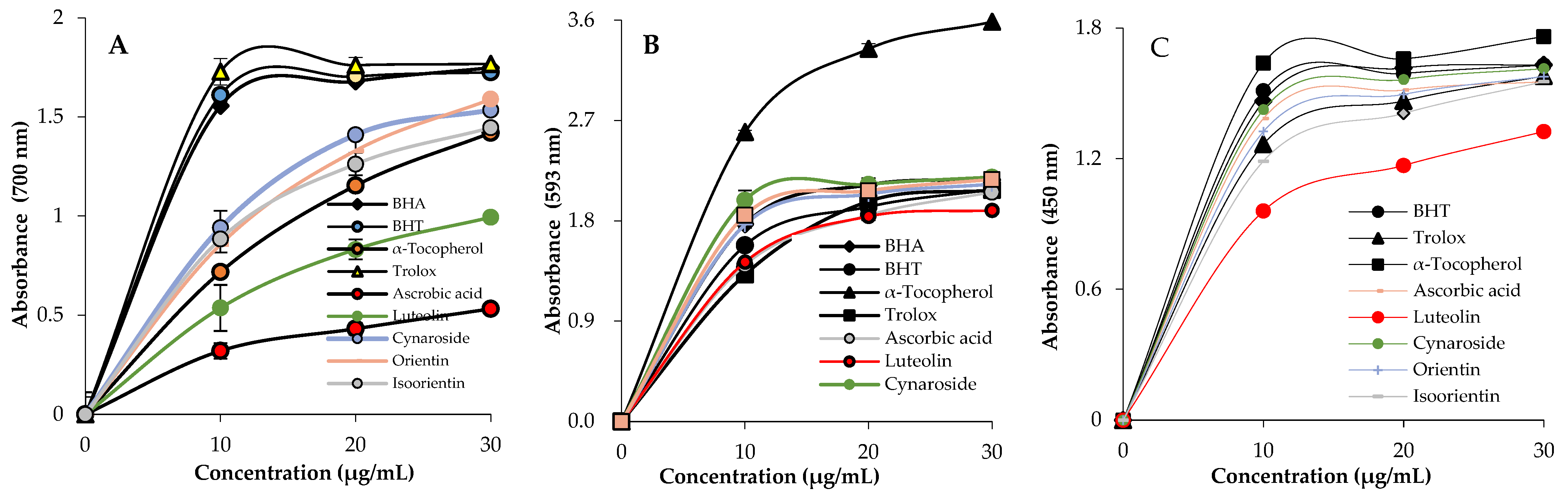
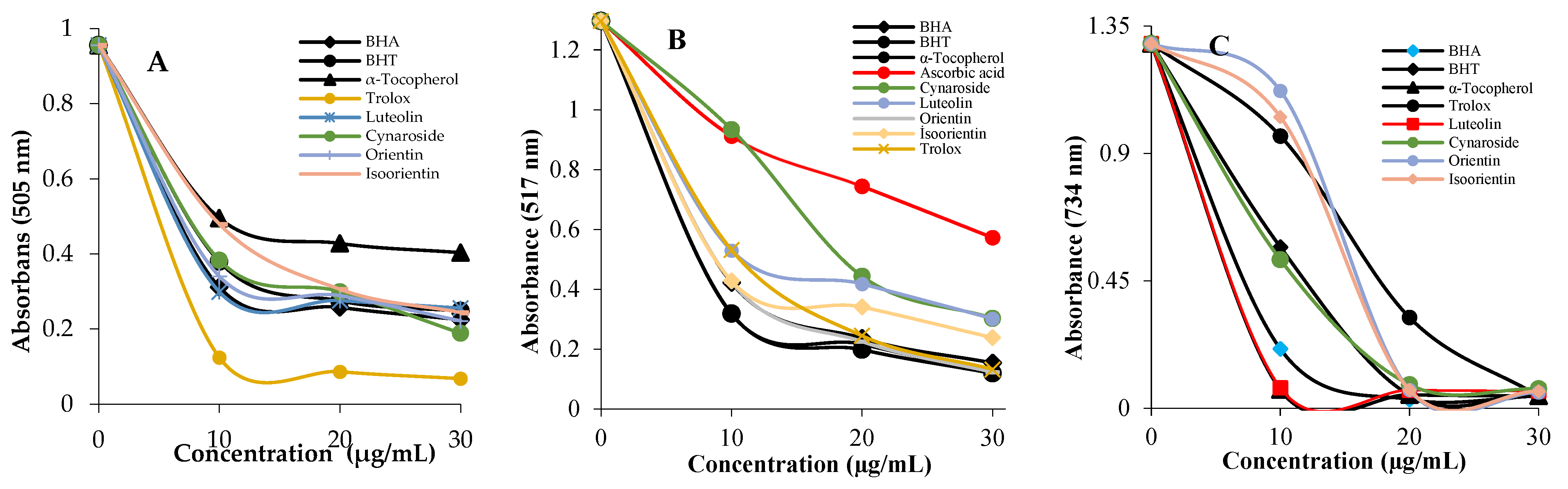
2.1. Antioxidant Results
2.2. Enzyme Inhibition Results
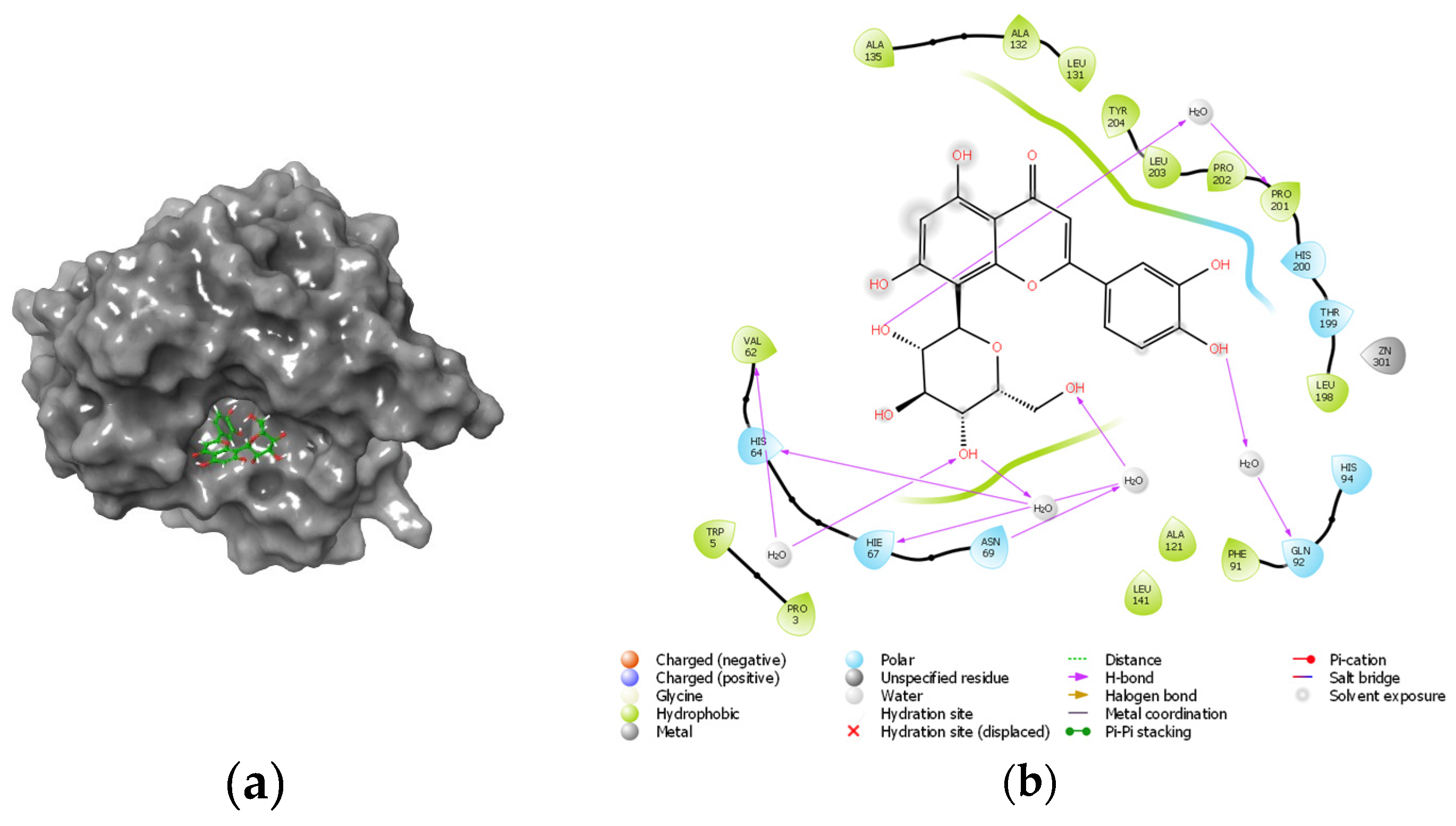
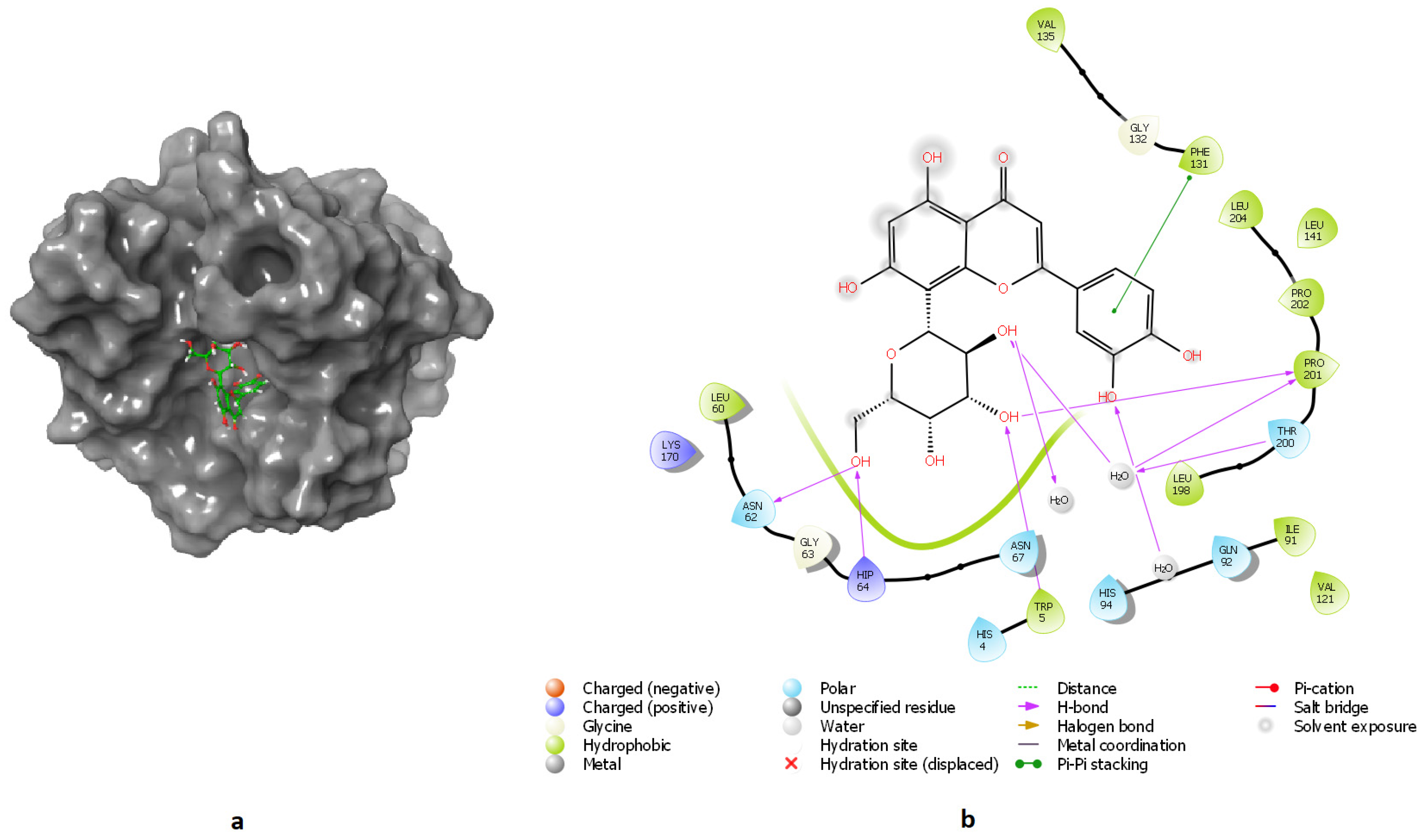
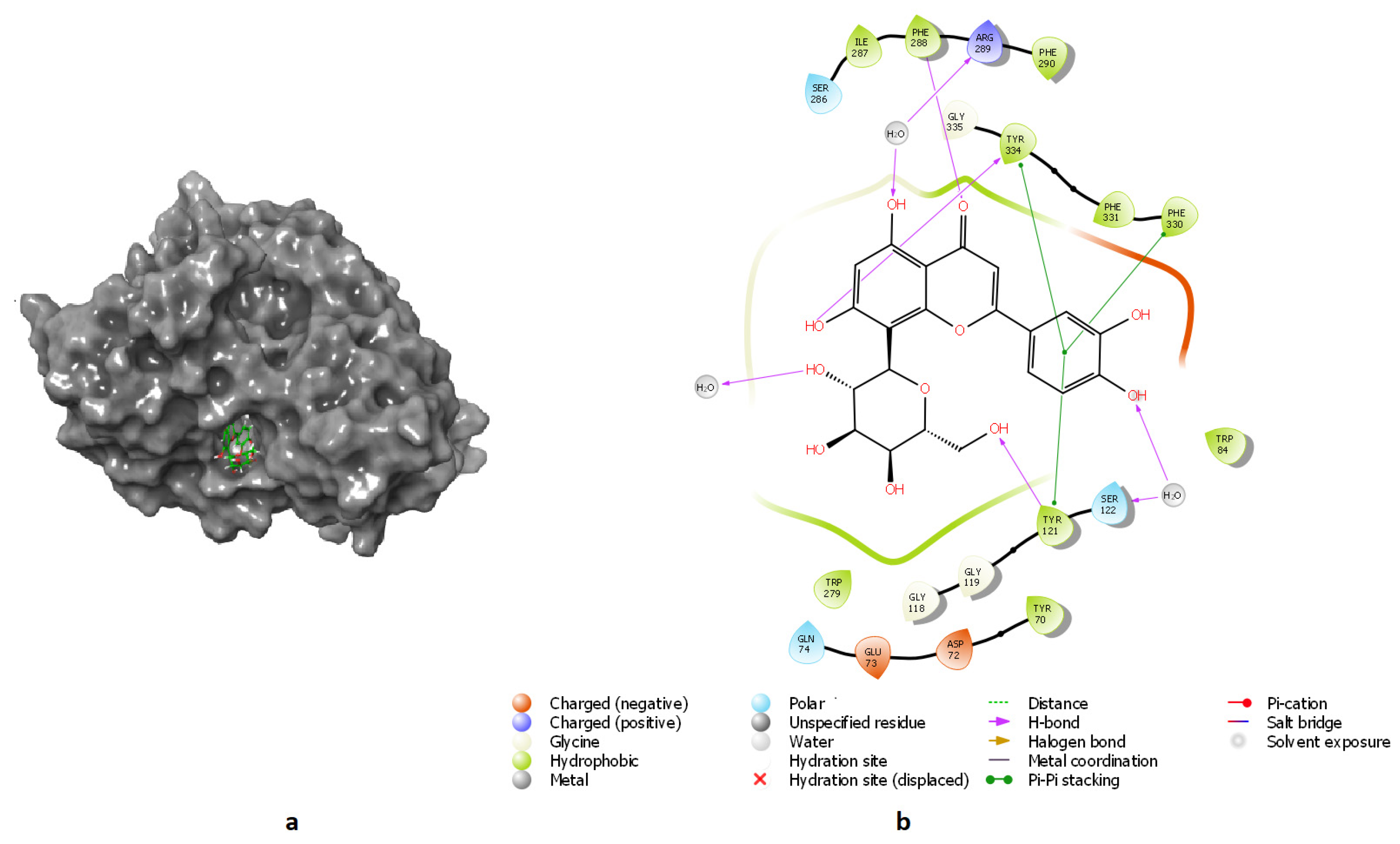
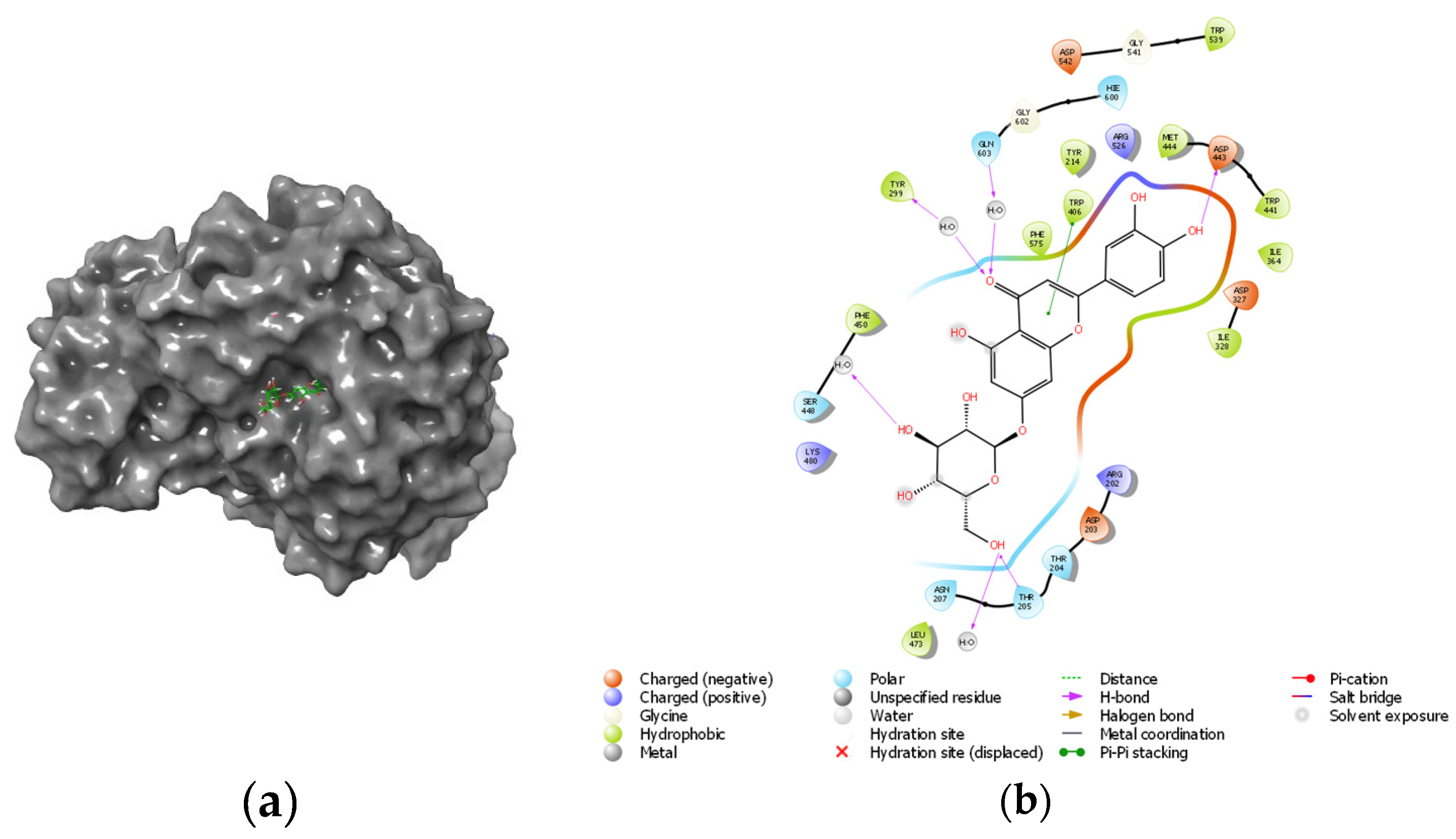
2.3. Molecular Docking Studies
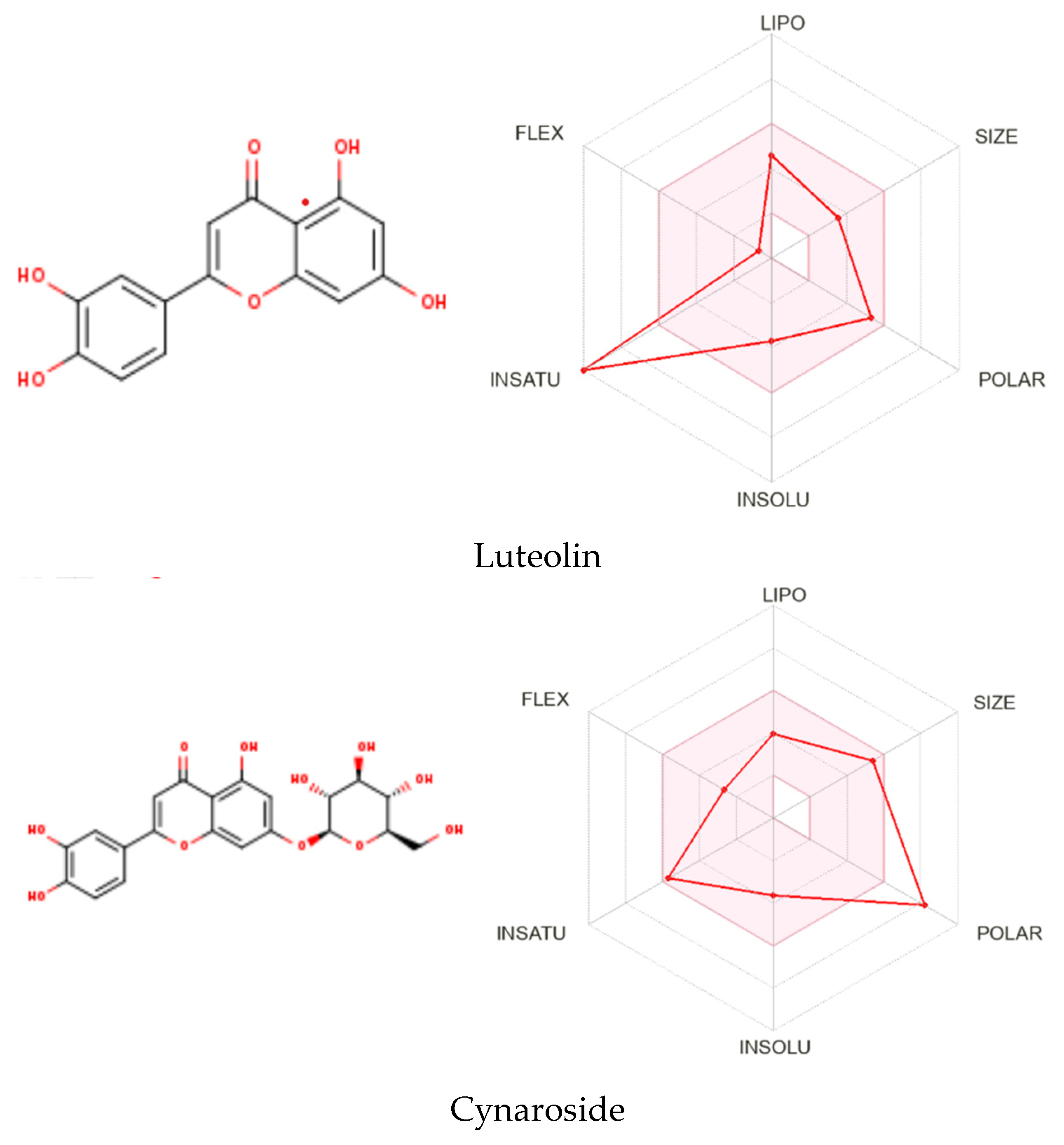
2.4. ADME Analyses and Toxicity Assessment
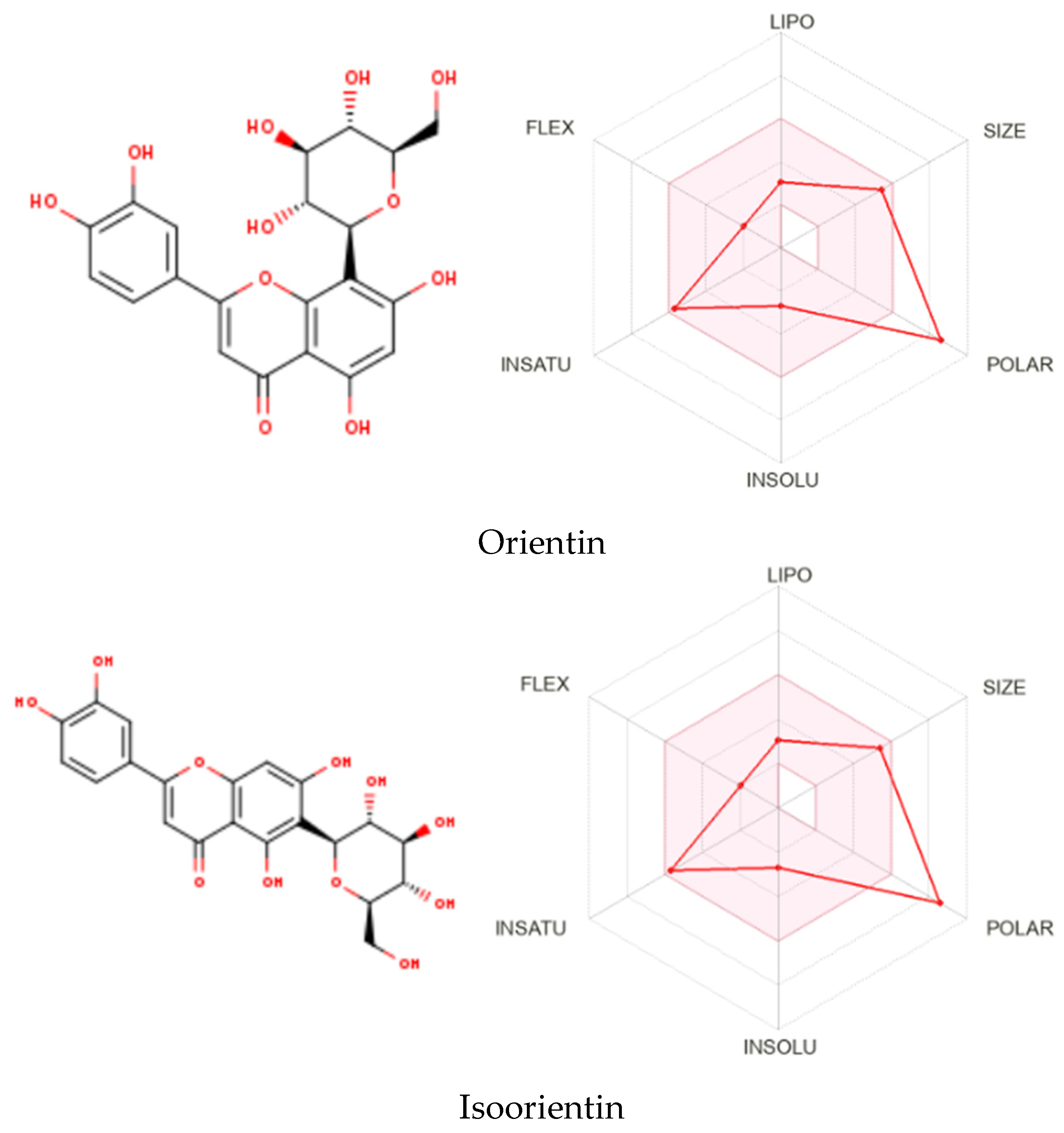
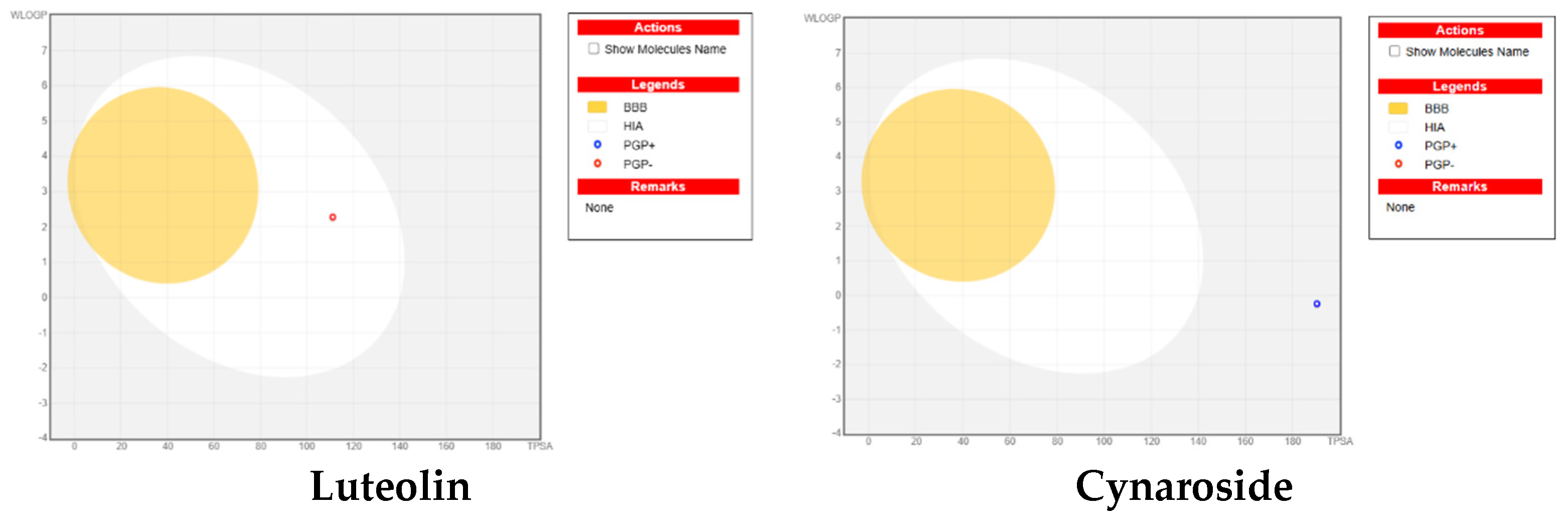
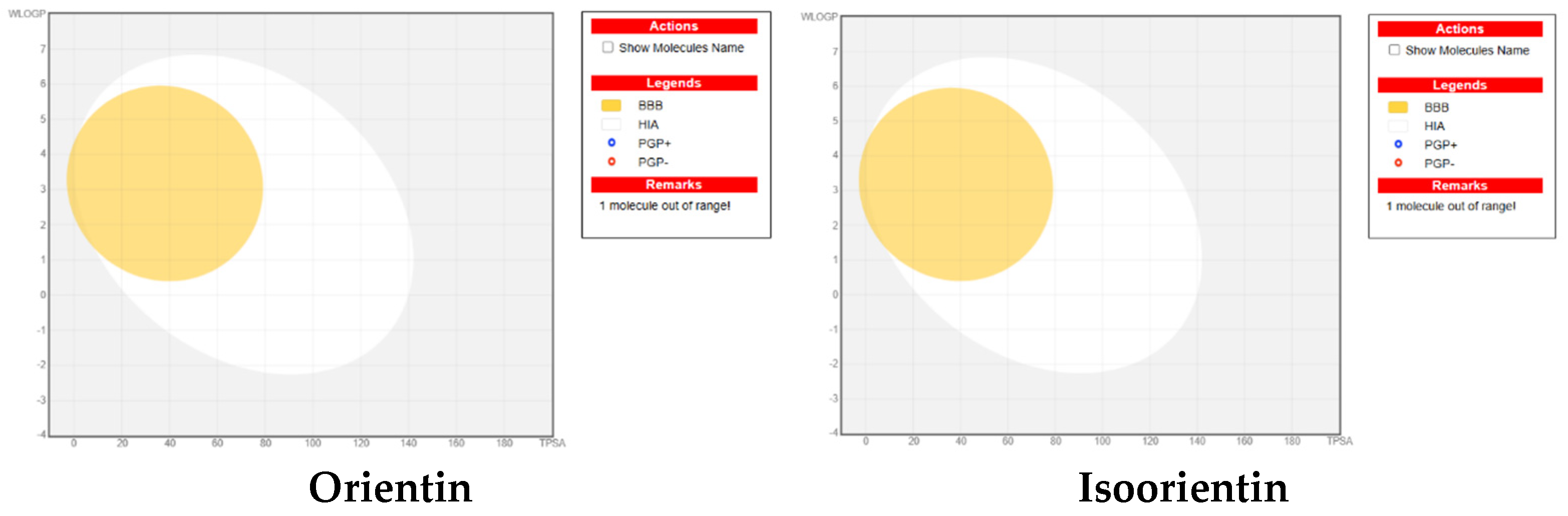
- The maximum number of hydrogen bond donors should not exceed 5.
- The maximum number of hydrogen bond acceptors is 10.
- The molecular weight should be less than 500 daltons (g/mol).
- The occlusion p value, which represents an octanol–water partition coefficient, should be less than or equal to 5.
- The molar fraction is expected to range from 40 to 130.
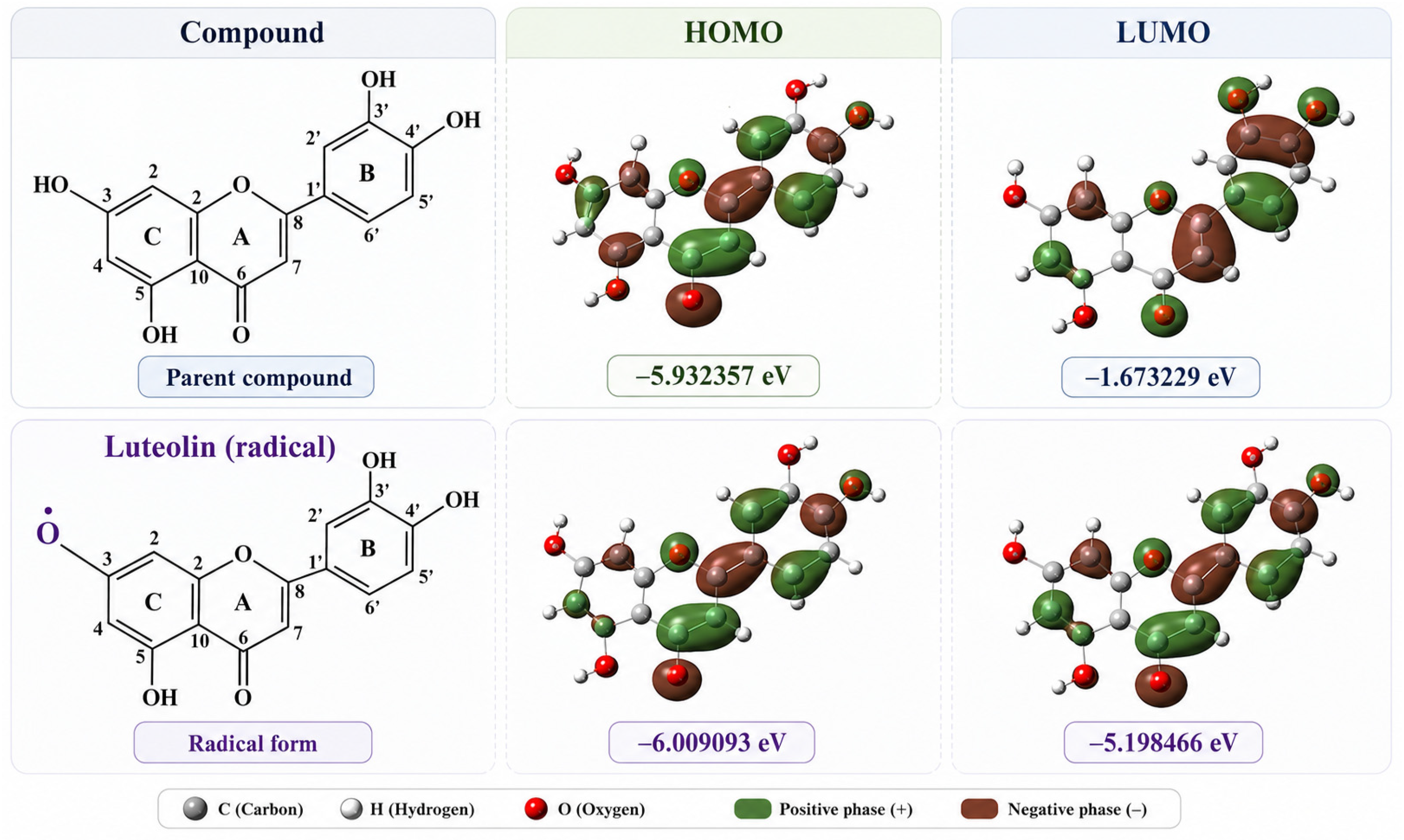
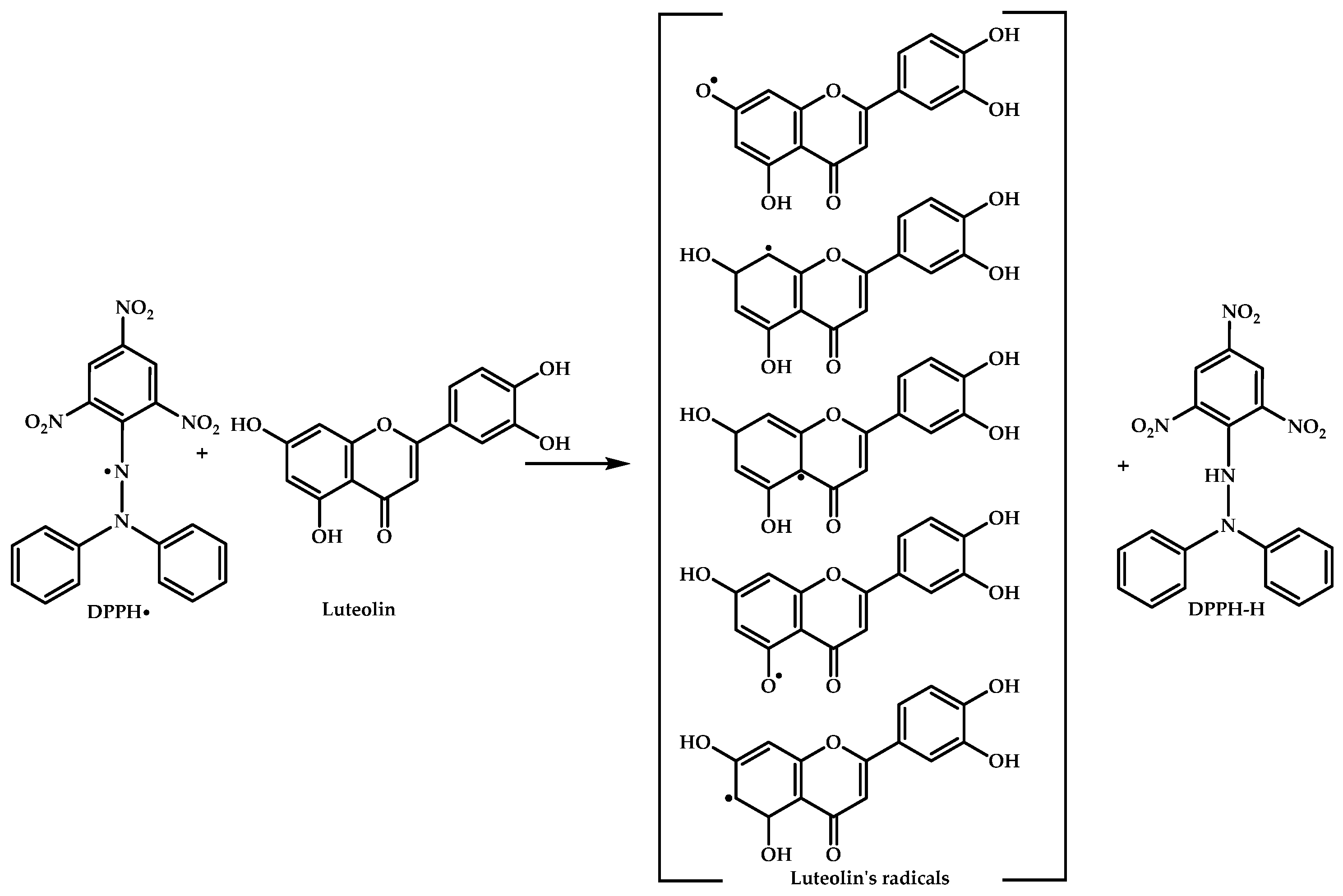
3. Discussion
4. Materials and Methods
4.1. Chemicals
4.2. Antioxidant Assays
4.2.1. Reducing Ability Assays
Fe3+ Reduction Capacity
FRAP Reduction Capacity
Cu2+ Reduction Capacity (CUPRAC Method)
4.2.2. Radical Scavenging Activities
DPPH· Scavenging Capacity
ABTS·+ Scavenging Ability
DMPD·+ Scavenging Capacity
4.3. Enzyme Inhibition Assays
4.3.1. Carbonic Anhydrase I and II Inhibition Assay
4.3.2. Acetylcholinesterase Enzyme Inhibition Assay
4.3.3. α-Glycosidase Inhibition Assay
4.4. Statistical Analysis
4.5. Determination of Molecular Docking Studies
4.6. ADME Analyses and Toxicity Assessment
5. Conclusions
Author Contributions
Funding
Institutional Review Board Statement
Informed Consent Statement
Data Availability Statement
Acknowledgments
Conflicts of Interest
References
- Shahidi, F. Antioxidants in food and food antioxidants. Food 2000, 44, 158–163. [Google Scholar] [CrossRef] [PubMed]
- Halliwell, B.; Gutteridge, J.M. Free Radicals in Biology and Medicine; Oxford University Press: Oxford, UK, 2015. [Google Scholar]
- Sies, H. Oxidative stress: A concept in redox biology and medicine. Redox Biol. 2015, 4, 180–183. [Google Scholar] [CrossRef] [PubMed]
- Zujko, M.E.; Witkowska, A.M. Dietary antioxidants and chronic diseases. Antioxidants 2023, 12, 362. [Google Scholar] [CrossRef]
- Shahidi, F.; Zhong, Y. Novel antioxidants in food quality preservation and health promotion. Eur. J. Lipid Sci. Technol. 2010, 112, 930–940. [Google Scholar] [CrossRef]
- Yildiz, A.Y.; Öztekin, S.; Anaya, K. Effects of plant-derived antioxidants to the oxidative stability of edible oils under thermal and storage conditions: Benefits, challenges and sustainable solutions. Food Chem. 2025, 479, 143752. [Google Scholar] [CrossRef]
- Kandemir, F.M.; Kucukler, S.; Eldutar, E.; Caglayan, C.; Gulcin, I. Chrysin protects rat kidney from paracetamol-induced oxidative stress, inflammation, apoptosis, and autophagy: A multi-biomarker approach. Sci. Pharm. 2017, 85, 4. [Google Scholar] [CrossRef]
- Prieto, P.; Pineda, M.; Aguilar, M. Spectrophotometric quantitation of antioxidant capacity through the formation of a phosphomolybdenum complex: Specific application to the determination of vitamin E. Anal. Biochem. 1999, 269, 337–341. [Google Scholar] [CrossRef]
- Newman, D.J.; Cragg, G.M. Natural products as sources of new drugs over the nearly four decades from 01/1981 to 09/2019. J. Nat. Prod. 2020, 83, 770–803. [Google Scholar] [CrossRef]
- El-Saadony, M.T.; Saad, A.M.; Mohammed, D.M.; Alkafaas, S.S.; Abd El-Mageed, T.A.; Fahmy, M.A.; Ezzat Ahmed, A.; Algopishi, U.B.; Abu-Elsaoud, A.M.; Mosa, W.F.; et al. Plant bioactive compounds: Extraction, biological activities, immunological, nutritional aspects, food application, and human health benefits—A comprehensive review. Front. Nutr. 2025, 12, 1659743. [Google Scholar] [CrossRef]
- Huang, J.; Huang, N.; Mao, Q.; Shi, J.; Qiu, Y. Natural bioactive compounds in Alzheimer’s disease: From the perspective of type 3 diabetes mellitus. Front. Aging Neurosci. 2023, 15, 1130253. [Google Scholar] [CrossRef] [PubMed]
- Teixeira, J.P.; de Castro, A.A.; Soares, F.V.; da Cunha, E.F.F.; Ramalho, T.C. Future therapeutic perspectives into the Alzheimer’s disease targeting the oxidative stress hypothesis. Molecules 2019, 24, 4410. [Google Scholar] [CrossRef] [PubMed]
- Odenthal, K.; Nunes, E.; Nunes, N.; Fernandes, T.; Fernandes, I.A.; Pinheiro de Carvalho, M.A.A. Microalgae and cyanobacteria as natural sources of antioxidant enzymes and enzyme inhibitors for Alzheimer’s and diabetes. Algal Res. 2024, 82, 103610. [Google Scholar] [CrossRef]
- Zengin, M.; Genc, H.; Taslimi, P.; Kestane, A.; Guclu, E.; Ogutlu, A.; Karabay, O.; Gulçin, İ. Novel thymol bearing oxypropanolamine derivatives as potent some metabolic enzyme inhibitors–Their antidiabetic, anticholinergic and antibacterial potentials. Bioorg. Chem. 2018, 81, 119–126. [Google Scholar] [CrossRef] [PubMed]
- Iheagwam, F.N.; Iheagwam, O.T. Diabetes mellitus: The pathophysiology as a canvas for management elucidation and strategies. Med. Nov. Technol. Dev. 2025, 25, 100351. [Google Scholar] [CrossRef]
- Han, X.; Zhang, Y.; Li, W.; Chen, L. α-Glucosidase inhibition mechanism and anti-diabetic potential of natural flavonoids: Recent advances and perspectives. Pharmaceuticals 2025, 18, 744. [Google Scholar]
- Nguyen, T.T.; Ta, Q.T.H.; Nguyen, T.K.O.; Nguyen, T.T.D.; Giau, V.V. Type 3 diabetes and its role implications in Alzheimer’s disease. Int. J. Mol. Sci. 2020, 21, 3165. [Google Scholar] [CrossRef]
- Wilkinson, D.G.; Francis, P.T.; Schwam, E.; Payne-Parrish, J. Cholinesterase inhibitors used in the treatment of Alzheimer’s disease: The relationship between pharmacological effects and clinical efficacy. Drugs Aging 2004, 21, 453–478. [Google Scholar] [CrossRef]
- Francis, P.T.; Palmer, A.M.; Snape, M.; Wilcock, G.K. The cholinergic hypothesis of Alzheimer’s disease: A review of progress. J. Neurol. Neurosurg. Psych. 1999, 66, 137–147. [Google Scholar] [CrossRef]
- Singh, B.; Kumar, A.; Beg, S. Alzheimer’s disease current therapies, novel drug delivery systems and future directions. J. Control. Rel. 2024, 367, 402–424. [Google Scholar] [CrossRef]
- Akter, K.; Lanza, E.A.; Martin, S.A.; Myronyuk, N.; Rua, M.; Raffa, R.B. Diabetes mellitus and Alzheimer’s disease: Shared pathology and treatment? Brit. J. Clin. Pharmacol. 2011, 71, 365–376. [Google Scholar] [CrossRef]
- Tokalı, F.S.; Taslimi, P.; Tuzun, B.; Karakuş, A.; Sadeghian, N.; Gulcin, İ. Novel quinazolinone derivatives: Potential synthetic analogs for the treatment of glaucoma, Alzheimer’s disease and diabetes mellitus. Chem. Biodivers. 2023, 20, e202301134. [Google Scholar] [CrossRef]
- Fan, J.; Liu, F.; Ji, W.; Wang, X.; Li, L. Comprehensive investigation of ginsenosides in the steamed Panax quinquefolius with different processing conditions using LC-MS. Molecules 2024, 29, 623. [Google Scholar] [CrossRef]
- Gülçin, İ.; Tel, A.Z.; Gören, A.C.; Taslimi, P.; Alwasel, S.H. Sage (Salvia pilifera): Determination of its polyphenol contents, anticholinergic, antidiabetic and antioxidant activities. J. Food Meas. 2019, 13, 2062–2074. [Google Scholar] [CrossRef]
- Fatah, N.H.A.; Amen, Y.; Abdel Bar, F.; Halim, A.F.; Saad, H.E.A. Antioxidants and α-glucosidase inhibitors from Lactuca serriola L. Rec. Nat. Prod. 2020, 14, 410–415. [Google Scholar] [CrossRef]
- Supuran, C.T. Carbonic anhydrase inhibitors and activators for novel therapeutic applications. Future Med. Chem. 2011, 3, 1165–1180. [Google Scholar] [CrossRef] [PubMed]
- Burmaoglu, S.; Yilmaz, A.O.; Polat, M.F.; Kaya, R.; Gulcin, İ.; Algul, O. Synthesis of novel tris-chalcones and determination of their inhibition profiles against some metabolic enzymes. Arch. Physiol. Biochem. 2021, 127, 153–161. [Google Scholar] [CrossRef] [PubMed]
- D’Ambrosio, K.; Di Fiore, A.; Alterio, V.; Langella, E.; Monti, S.M.; Supuran, C.T.; De Simone, G. multiple binding modes of inhibitors to human carbonic anhydrases: An update on the design of isoform-specific modulators of activity. Chem. Rev. 2025, 125, 150–222. [Google Scholar] [CrossRef] [PubMed]
- Nocentini, A.; Supuran, C.T. Advances in the structural annotation of human carbonic anhydrases and impact on future drug discovery. Expert. Opin. Drug Discov. 2019, 14, 1175–1197. [Google Scholar] [CrossRef]
- Mutlu, M.; Bingol, Z.; Uc, E.M.; Köksal, E.; Goren, A.C.; Alwasel, S.H.; Gulcin, İ. Comprehensive metabolite profiling of cinnamon (Cinnamomum zeylanicum) leaf oil using LC-HR/MS, GC/MS, and GC-FID: Determination of antiglaucoma, antioxidant, anticholinergic, and antidiabetic profiles. Life 2023, 13, 136. [Google Scholar] [CrossRef]
- Cory, H.; Passarelli, S.; Szeto, J.; Tamez, M.; Mattei, J. The role of polyphenols in human health and food systems: A mini review. Front. Nutr. 2018, 5, 87. [Google Scholar] [CrossRef]
- Baxter, H.; Puri, B.; Harborne, J.B.; Hall, A.; Moss, G.P. Phytochemical Dictionary: A Handbook of Bioactive Compounds from Plants; CRC Press: Boca Raton, FL, USA, 1998. [Google Scholar]
- Eberhardt, M.V.; Lee, C.Y.; Liu, R.H. Antioxidant activity of fresh apples. Nature 2000, 405, 903–904. [Google Scholar] [CrossRef]
- Gulcin, İ. Antioxidants and antioxidant methods: An updated overview. Arch. Toxicol. 2020, 94, 651–715. [Google Scholar] [CrossRef]
- Shimoi, K.; Okada, H.; Furugori, M.; Goda, T.; Takase, S.; Suzuki, M.; Hara, Y.; Yamamoto, H.; Kinae, N. Intestinal absorption of luteolin and luteolin 7-O-β-glucoside in rats and humans. FEBS Lett. 1998, 438, 220–224. [Google Scholar] [CrossRef]
- Jang, S.; Kelley, K.W.; Johnson, R.W. Luteolin reduces IL-6 production in microglia by inhibiting JNK phosphorylation and activation of AP-1. Proc. Nat. Acad. Sci. USA 2008, 105, 7534–7539. [Google Scholar] [CrossRef] [PubMed]
- Narayana, K.R.; Reddy, M.S.; Chaluvadi, M.; Krishna, D. Bioflavonoids classification, pharmacological, biochemical effects and therapeutic potential. Ind. J. Pharmacol. 2001, 33, 2–16. [Google Scholar]
- Shahidi, F.; Ambigaipalan, P. Phenolics and polyphenolics in foods, beverages and spices: Antioxidant activity and health effects–A review. J. Funct. Foods 2015, 18, 820–897. [Google Scholar] [CrossRef]
- Brown, J.E.; Rice-Evans, C.A. Luteolin-rich artichoke extract protects low density lipoprotein from oxidation in vitro. Free Radic. Res. 1998, 29, 247–255. [Google Scholar] [CrossRef]
- Wu, M.J.; Huang, C.L.; Lian, T.W.; Kou, M.C.; Wang, L. Antioxidant activity of Glossogyne tenuifolia. J. Agric. Food Chem. 2005, 53, 6305–6312. [Google Scholar] [CrossRef] [PubMed]
- Rump, A.; Schüssler, M.; Acar, D.; Cordes, A.; Theisohn, M.; Rösen, R.; Klaus, W.; Fricke, U. Functional and antiischemic effects of luteolin-7-glucoside in isolated rabbit hearts. Vasc. Pharmacol. 1994, 25, 1137–1142. [Google Scholar] [CrossRef] [PubMed]
- Xiong, D.; Wang, X.; Wang, H.; Chen, X.; Li, H.; Zhong, M.; Gao, J.; Zhao, Z.; Ren, W. Quercetin inhibits cardiomyocyte apoptosis via Sirt3/SOD2/mitochondrial reactive oxygen species during myocardial ischemia–reperfusion injury. Heliyon 2024, 10, e39031. [Google Scholar] [CrossRef]
- Tian, T.; Zeng, J.; Zhao, G.; Zhao, W.; Gao, S.; Liu, L. Neuroprotective effects of orientin on oxygen-glucose deprivation/reperfusion-induced cell injury in primary culture of rat cortical neurons. Exper. Biol. Med. 2018, 243, 78–86. [Google Scholar] [CrossRef] [PubMed]
- Czemplik, M.; Mierziak, J.; Szopa, J.; Kulma, A. Flavonoid C-glucosides derived from flax straw extracts reduce human breast cancer cell growth in vitro and induce apoptosis. Front. Pharmacol. 2016, 7, 282. [Google Scholar] [CrossRef]
- Yuan, L.; Wang, J.; Xiao, H.; Wu, W.; Wang, Y.; Liu, X. MAPK signaling pathways regulate mitochondrial-mediated apoptosis induced by isoorientin in human hepatoblastoma cancer cells. Food Chem. Toxicon. 2013, 53, 62–68. [Google Scholar] [CrossRef] [PubMed]
- Manach, C.; Scalbert, A.; Morand, C.; Rémésy, C.; Jiménez, L. Polyphenols: Food Sources and Bioavailability. Am. J. Clin. Nutr. 2004, 79, 727–747. [Google Scholar] [CrossRef]
- Hostetler, G.L.; Ralston, R.A.; Schwartz, S.J. Flavones: Food Sources, Bioavailability, Metabolism, and Bioactivity. Adv. Nutr. 2017, 8, 423–435. [Google Scholar] [CrossRef]
- Lopez-Lazaro, M. Distribution and Biological Activities of the Flavonoid Luteolin. Mini Rev. Med. Chem. 2009, 9, 31–59. [Google Scholar] [CrossRef]
- Tang, S.M.; Deng, X.T.; Zhou, J.; Li, Q.P.; Ge, X.X.; Miao, L.L. Pharmacological Basis and New Insights of Quercetin Action in Respect to Its Anti-Cancer Effects. Biomed. Pharmacother. 2021, 121, 109604. [Google Scholar] [CrossRef]
- Seelinger, G.; Merfort, I.; Schempp, C.M. Anti-Oxidant, Anti-Inflammatory and Anti-Allergic Activities of Luteolin. Planta Med. 2008, 74, 1667–1677. [Google Scholar] [CrossRef]
- Imran, M.; Rauf, A.; Abu-Izneid, T.; Nadeem, M.; Shariati, M.A.; Khan, I.A.; Imran, A.; Orhan, I.E.; Rizwan, M.; Atif, M.; et al. Luteolin, a Flavonoid, as an Anticancer Agent: A Review. Biomed. Pharmacother. 2019, 112, 108612. [Google Scholar] [CrossRef] [PubMed]
- Claudine, M.; Williamson, G.; Morand, C.; Scalbert, A.; Rémésy, C. Bioavailability and bioefficacy of polyphenols in humans. I. Review of 97 bioavailability studies. Am. J. Clin. Nutr. 2005, 81, 230S–242S. [Google Scholar] [CrossRef]
- Rudrapal, M.; Rakshit, G.; Singh, R.P.; Garse, S.; Khan, J.; Chakraborty, S. Dietary polyphenols: Review on chemistry/sources, bioavailability/metabolism, antioxidant effects, and their role in disease management. Antioxidants 2024, 13, 429. [Google Scholar] [CrossRef]
- Prior, R.L.; Wu, X.; Schaich, K. Standardized methods for the determination of antioxidant capacity and phenolics in foods and dietary supplements. J. Agric. Food Chem. 2005, 53, 4290–4302. [Google Scholar] [CrossRef] [PubMed]
- Sulaiman, G.M. In vitro study of molecular structure and cytotoxicity effect of luteolin in the human colon carcinoma cells. Eur. Food Res. Technol. 2015, 241, 83–90. [Google Scholar] [CrossRef]
- Göçer, H.; Akıncıoğlu, A.; Göksu, S.; Gülçin, İ.; Supuran, C.T. Carbonic anhydrase and acetylcholine esterase inhibitory effects of carbamates and sulfamoylcarbamates. J. Enzym. Inhib. Med. Chem. 2015, 30, 316–320. [Google Scholar] [CrossRef]
- Supuran, C.T. Carbonic anhydrases: Novel therapeutic applications for inhibitors and activators. Nat. Rev. Drug Discov. 2008, 7, 168–181. [Google Scholar] [CrossRef]
- Saglamtas, R.; Gulcin, I. Investigation of the effect of gingerol on α-glycosidase cholinesterases and monoamine oxidase enzymes: Antioxidant activity and in silico study. ChemistrySelect 2025, 10, e202404467. [Google Scholar] [CrossRef]
- Schrödinger, L. Schrödinger Release 2022-3: LigPrep; Schrödinger Inc.: New York, NY, USA, 2021. [Google Scholar]
- Ritchie, T.J.; Ertl, P.; Lewis, R. The graphical representation of ADME-related molecule properties for medicinal chemists. Drug Discov. Today 2011, 16, 65–72. [Google Scholar] [CrossRef]
- Daina, A.; Zoete, V. A boiled-egg to predict gastrointestinal absorption and brain penetration of small molecules. ChemMedChem 2016, 11, 1117–1121. [Google Scholar] [CrossRef]
- Lipinski, C.A.; Lombardo, F.; Dominy, B.W.; Feeney, P.J. Experimental and computational approaches to estimate solubility and permeability in drug discovery and development settings. Adv. Drug Deliv. Rev. 2012, 64, 4–17. [Google Scholar] [CrossRef]
- Martin, Y.C. A bioavailability score. J. Med. Chem. 2005, 48, 3164–3170. [Google Scholar] [CrossRef] [PubMed]
- Potts, R.O.; Guy, R.H. Predicting skin permeability. Pharm. Res. 1992, 9, 663–669. [Google Scholar] [CrossRef] [PubMed]
- Banerjee, P.; Kemmler, E.; Dunkel, M.; Preissner, R. ProTox 3.0: A webserver for the prediction of toxicity of chemicals. Nucl. Acids Res. 2024, 52, W513–W520. [Google Scholar] [CrossRef]
- Banerjee, P.; Ulker, O.; Ozkan, I.; Ulker, O.C. The investigation of the toxicity of organophosphorus flame retardants (OPFRs) by using in silico toxicity prediction platform ProTox-3.0. Toxicol. Mech. Met. 2025, 35, 32–42. [Google Scholar] [CrossRef]
- Aytac, S.; Gundogdu, O.; Bingol, Z.; Gulcin, İ. Synthesis of Schiff bases containing phenol rings and investigation of their antioxidant capacity, anticholinesterase, butyrylcholinesterase, and carbonic anhydrase inhibition properties. Pharmaceutics 2023, 15, 779. [Google Scholar] [CrossRef] [PubMed]
- Topal, M. Secondary metabolites of ethanol extracts of Pinus sylvestris cones from Eastern Anatolia and their antioxidant, cholinesterase and α-glucosidase activities. Rec. Nat. Prod. 2020, 14, 129–138. [Google Scholar] [CrossRef]
- Akincioğlu, A.; Topal, M.; Gülçin, I.; Göksu, S. Novel sulphamides and sulphonamides incorporating the tetralin scaffold as carbonic anhydrase and acetylcholine esterase inhibitors. Arch. Pharm. 2014, 347, 68–76. [Google Scholar] [CrossRef]
- Gulcin, İ. Antioxidant activity of L-adrenaline: A structure–activity insight. Chem. Biol. Interact. 2009, 179, 71–80. [Google Scholar] [CrossRef]
- Benzie, I.F.F.; Strain, J.J. The ferric reducing ability of plasma (FRAP) as a measure of “Antioxidant Power”: The FRAP assay. Anal. Biochem. 1996, 239, 70–76. [Google Scholar] [CrossRef] [PubMed]
- Apak, R.; Güçlü, K.; Ozyürek, M.; Esin Karademir, S.; Erçağ, E. The cupric ion reducing antioxidant capacity and polyphenolic content of some herbal teas. Int. J. Food Sci. Nutr. 2006, 57, 292–304. [Google Scholar] [CrossRef] [PubMed]
- Blois, M.S. Antioxidant determinations by the use of a stable free radical. Nature 1958, 181, 1199–1200. [Google Scholar] [CrossRef]
- Ionita, P. The chemistry of DPPH· free radical and congeners. Int. J. Mol. Sci. 2021, 22, 1545. [Google Scholar] [CrossRef] [PubMed]
- Gulcin, İ.; Alwasel, S.H. DPPH radical scavenging assay. Processes 2023, 11, 2248. [Google Scholar] [CrossRef]
- Re, R.; Pellegrini, N.; Proteggente, A.; Pannala, A.; Yang, M.; Rice-Evans, C. Antioxidant activity applying an improved ABTS radical cation decolorization assay. Free Radic. Biol. Med. 1999, 26, 1231–1237. [Google Scholar] [CrossRef]
- Güven, L.; Ertürk, A.; Yilmaz, M.A.; Alwasel, S.; Gülcin, I. Alchemilla pseudocartalinica Juz: Phytochemical screening by UPLC-MS/MS, molecular docking, antioxidant, anti-diabetic, anti-glaucoma, and anti-Alzheimer effects. Rec. Nat. Prod. 2024, 18, 251–272. [Google Scholar] [CrossRef]
- Fogliano, V.; Verde, V.; Randazzo, G.; Ritieni, A. Method for measuring antioxidant activity and its application to monitoring the antioxidant capacity of wines. J. Agric. Food Chem. 1999, 47, 1035–1040. [Google Scholar] [CrossRef]
- Kuzu, B.; Tan, M.; Gülçin, İ.; Menges, N. A novel class for carbonic anhydrases inhibitors and evaluation of their non-zinc binding. Arch. Pharm. 2021, 354, 2100188. [Google Scholar] [CrossRef]
- Bayrak, Ç.; Taslimi, P.; Gülçin, İ.; Menzek, A. The first synthesis of 4-phenylbutenone derivative bromophenols including natural products and their inhibition profiles for carbonic anhydrase, acetylcholinesterase and butyrylcholinesterase enzymes. Bioorg. Chem. 2017, 72, 359–366. [Google Scholar] [CrossRef]
- Istrefi, Q.; Türkeş, C.; Arslan, M.; Demir, Y.; Nixha, A.R.; Beydemir, Ş.; Küfrevioğlu, Ö.İ. Sulfonamides incorporating ketene N, S-acetal bioisosteres as potent carbonic anhydrase and acetylcholinesterase inhibitors. Arch. Pharm. 2020, 353, 1900383. [Google Scholar] [CrossRef]
- Ellman, G.L.; Courtney, K.D.; Andres, V.; Featherstone, R.M. A new and rapid colorimetric determination of acetylcholinesterase activity. Arch. Pharm. 1961, 7, 88–95. [Google Scholar] [CrossRef] [PubMed]
- Su, J.; Liu, H.; Guo, K.; Chen, L.; Yang, M.; Chen, Q. Research advances and detection methodologies for microbe-derived acetylcholinesterase inhibitors: A systemic review. Molecules 2017, 22, 176. [Google Scholar] [CrossRef] [PubMed]
- Tao, Y.; Zhang, Y.; Cheng, Y.; Wang, Y. Rapid screening and identification of α-glucosidase inhibitors from mulberry leaves using enzyme-immobilized magnetic beads coupled with HPLC/MS and NMR. Biomed. Chromatog. 2013, 27, 148–155. [Google Scholar] [CrossRef] [PubMed]
- Dej-Adisai, S.; Rais, I.R.; Wattanapiromsakul, C.; Pitakbut, T. Alpha-glucosidase inhibitory assay-screened isolation and molecular docking model from Bauhinia pulla active compounds. Molecules 2021, 26, 5970. [Google Scholar] [CrossRef] [PubMed]
- Proença, C.; Freitas, M.; Ribeiro, D.; Oliveira, E.F.T.; Sousa, J.L.C.; Tomé, S.M.; Ramos, M.J.; Silva, A.M.S.; Fernandes, P.A.; Fernandes, E. α-Glucosidase inhibition by flavonoids: An in vitro and in silico structure-activity relationship study. J. Enzym. Inhib. Med. Chem. 2017, 32, 1216–1228. [Google Scholar] [CrossRef] [PubMed]
- Ganesh, S.; Cave, V. P-values, p-values everywhere! N. Z. Vet. J. 2018, 66, 55–56. [Google Scholar] [CrossRef]






| Antioxidants | Fe3+ Reduction | FRAP Reduction | Cu2+ Reduction | |||
|---|---|---|---|---|---|---|
| λ700 | r2 | λ593 | r2 | λ450 | r2 | |
| BHA | 1.556 ± 0.088 c,d,e,f,g,h,i | 0.954 | 1.771 ± 0.009 b,c,d,e,f,g,i | 0.988 | 1.464 ± 0.141 c,d,g,h,i | 0.983 |
| BHT | 1.610 ± 0.112 c,d,e,f,g,h,i | 0.954 | 1.581 ± 0.029 a,c,d,e,f,g,h,i | 0.989 | 1.512 ± 0.021 c,d,e,f,g,h,i | 0.959 |
| α-Tocopherol | 1.728 ± 0.002 c,d,e,f,g,h,i | 0.937 | 2.597 ± 0.012 a,b,d,e,f,g,h,i | 0.993 | 1.512 ± 0.010 a,b,d,e,f,g,h,I | 0.994 |
| Trolox | 0.718 ± 0.031 a,b,c,e,f,g,h,i | 0.999 | 1.319 ± 0.034 a,b,c,e,f,g,h,i | 0.995 | 1.640 ± 0.109 b,c,d,e,f,g | 0.928 |
| Ascorbic acid | 0.320 ± 0.038 a,b,c,d,e,h,i | 0.999 | 1.407 ± 0.026 a,b,c,d,f,h,i | 0.911 | 1.385 ± 0.031 b,c,d,g,i | 0.981 |
| Luteolin | 0.941 ± 0.016 a,b,c,d,e,g | 0.990 | 1.987 ± 0.017 a,b,c,d,e,g,h,i | 0.956 | 1.426 ± 0.036 b,c,d,f,g,i | 0.980 |
| Cynaroside | 0.537 ± 0.004 a,b,c,d,f,h | 0.999 | 1.431 ± 0.005 a,b,c,d,f,h,i | 0.998 | 0.960 ± 0.091 a,b,c,d,e,f,h,i | 0.997 |
| Orientin | 0.857 ± 0.009 a,b,c,d,e,g | 0.943 | 1.768 ± 0.047 a,b,c,d,e,f,g,h,i | 0.980 | 1.325 ± 0.064 b,c,d,f,g,i | 0.990 |
| Isoorientin | 0.885 ± 0.018 a,b,c,d,e | 0.998 | 1.851 ± 0.057 a,b,c,d,e,f,g,h,i | 0.970 | 1.189 ± 0.040 a,b,c,e,f,g,h | 0.951 |
| Antioxidants | DPPH Scavenging | DMPD·+ Scavenging | ABTS·+ Scavenging | |||
|---|---|---|---|---|---|---|
| IC50 * | r2 | IC50 * | r2 | IC50 * | r2 | |
| BHA | 8.89 ± 0.005 a | 0.978 | 11.95 ± 0.050 b | 0.953 | 4.99 ± 0.012 a | 0.976 |
| BHT | 7.88 ± 0.015 a | 0.961 | 13.08 ± 0.039 b | 0.976 | 5.54 ± 0.072 a | 0.995 |
| α- Tocopherol | 7.97 ± 0.004 a | 0.955 | 19.80 ± 0.021 c | 0.969 | 4.92 ± 0.101 a | 0.935 |
| Trolox | 8.77 ± 0.075 a | 0.991 | 6.60 ± 0.033 a | 0.995 | 7.30 ± 0.005 c | 0.976 |
| Luteolin | 12.84 ± 0.008 b | 0.962 | 12.84 ± 0.026 b | 0.944 | 5.37 ± 0.052 a | 0.932 |
| Cynaroside | 14.15 ± 0.026 c | 0.981 | 11.95 ± 0.020 b | 0.960 | 6.42 ± 0.003 b | 0.994 |
| Orientin | 8.35 ± 0.003 a | 0.978 | 12.38 ± 0.040 b | 0.959 | 6.25 ± 0.017 b | 0.851 |
| Isoorientin | 11.00 ± 0.043 b | 0.993 | 13.86 ± 0.011 b | 0.856 | 6.30 ± 0.008 b | 0.882 |
| Isoenzymes | Inhibitors | IC50 (nM) * | r2 | Ki (nM) * | Inhibition Type |
|---|---|---|---|---|---|
| CA I | Luteolin | 49.51 | 0.9932 | 53.14 ± 9.19 c | Noncompetitive |
| Cynaroside | 34.66 | 0.9912 | 40.48 ± 9.32 c | Noncompetitive | |
| Orientin | 27.73 | 0.9898 | 33.59 ± 8.85 b | Noncompetitive | |
| Isoorientin | 53.32 | 0.9871 | 94.51 ± 29.14 c | Noncompetitive | |
| Acetazolamide | 46.20 | 0.9922 | 36.40 ± 9.01 | Noncompetitive | |
| CA II | Luteolin | 34.66 | 0.9922 | 26.92 ± 1.08 b | Noncompetitive |
| Cynaroside | 18.25 | 0.9918 | 16.19 ± 1.01 a | Noncompetitive | |
| Orientin | 23.90 | 0.9903 | 21.23 ± 2.69 a | Noncompetitive | |
| Isoorientin | 46.21 | 0.9846 | 55.22 ± 12.30 c | Noncompetitive | |
| Acetazolamide | 24.75 | 0.9850 | 16.60 ± 1.29 a | Noncompetitive |
| Enzyme | Inhibitors | IC50 (nM) * | r2 | Mean Ki (nM) * | Type of Inhibition |
|---|---|---|---|---|---|
| AChE | Luteolin | 49.51 | 0.9932 | 9.24 ± 2.82 b | Competitive |
| Cynaroside | 34.65 | 0.9912 | 8.50 ± 0.87 b | Competitive | |
| Orientin | 21.66 | 0.9905 | 4.01 ± 1.19 a | Competitive | |
| Isoorientin | 1.93 | 0.9822 | 1.42 ± 0.13 a | Competitive | |
| Tacrine | 15.06 | 0.9965 | 2.59 ± 0.90 a | Competitive | |
| BChE | Luteolin | 7.45 | 0.9905 | 4.76 ± 0.20 a | Competitive |
| Cynaroside | 6.42 | 0.9940 | 3.59 ± 0.56 a | Competitive | |
| Orientin | 14.44 | 0.9434 | 8.49 ± 1.82 b | Competitive | |
| Isoorientin | 23.11 | 0.9989 | 15.62 ± 10.5 c | Competitive | |
| Tacrine | 15.75 | 0.9890 | 7.08 ± 0.90 b | Competitive |
| Inhibitor | IC50 (nM) * | r2 | Mean Ki (nM) * | Type of Inhibition |
|---|---|---|---|---|
| Luteolin | 10.35 | 0.9937 | 32.02 ± 9.0665 b | Noncompetitive |
| Cynaroside | 7.15 | 0.9925 | 6.09 ± 1.2239 a | Noncompetitive |
| Orientin | 19.25 | 0.9930 | 27.63 ± 27.4886 b | Noncompetitive |
| Isoorientin | 26.66 | 0.9954 | 23.88 ± 4.1329 b | Noncompetitive |
| Acarbose | 22.80 | 12.60 ± 7.88 |
| Compounds | Docking Score | XP G Score | Glide G Score | Glide E Model |
|---|---|---|---|---|
| hCA I (PDB: 4WR7) | ||||
| Luteolin | −7.241 | −7.281 | −7.281 | −51.043 |
| Orientin | −9.903 | −9.938 | −9.938 | −50.823 |
| Cynaroside | −9.596 | −9.596 | −9.596 | −68.011 |
| Isoorientin | −9.257 | −9.301 | −9.301 | −63.728 |
| Acetazolamide | −6.581 | −7.504 | −7.504 | −48.265 |
| hCA II (PDB: 5AML) | ||||
| Luteolin | −6.176 | −6.216 | −6.216 | −57.303 |
| Orientin | −8.873 | −8.909 | −8.909 | −38.306 |
| Cynaroside | −8.778 | −8.778 | −8.778 | −68.736 |
| Isoorientin | −8.499 | −8.543 | −8.543 | −77.747 |
| Acetazolamide | −6.313 | −7.235 | −7.235 | −57.775 |
| AChE (PDB: 4TVK) | ||||
| Luteolin | −9.154 | −9.194 | −9.194 | −43.679 |
| Orientin | −14.354 | −14.389 | −14.389 | −16.410 |
| Cynaroside | −12.788 | −12.788 | −12.788 | −85.209 |
| Isoorientin | −13.954 | −13.998 | −13.998 | −84.038 |
| Tacrine | −12.126 | −12.126 | −12.126 | −54.165 |
| BChE (PDB: 4TPK) | ||||
| Luteolin | −8.891 | −8.931 | −8.931 | −55.884 |
| Orientin | −13.418 | −13.454 | −13.454 | −79.438 |
| Cynaroside | −11.161 | −11.161 | −11.161 | −82.345 |
| Isoorientin | −10.751 | −10.796 | −10.796 | −78.467 |
| Tacrine | −7.606 | −7.607 | −7.607 | −39.466 |
| α-Glycosidase (PDB: 3L4Y) | ||||
| Luteolin | −7.438 | −7.477 | −7.477 | −59.885 |
| Orientin | −10.460 | −10.496 | −10.496 | −53.980 |
| Cynaroside | −12.807 | −12.807 | −12.807 | −62.135 |
| Isoorientin | −12.354 | −12.398 | −12.398 | −86.368 |
| Acarbose | −16.526 | −16.854 | −16.854 | −98.119 |
| Compounds | Molecular Weight (g/mol) | Hydrogen Bond Acceptor | Hydrogen Bond Donor | Lipophilicity LogP (g/mol) | Molar Refraction |
|---|---|---|---|---|---|
| Luteolin | 286.24 | 6 | 4 | 1.86 | 76.01 |
| Cynaroside | 448.38 | 11 | 7 | 1.76 | 108.30 |
| Orientin | 448.38 | 11 | 8 | 1.00 | 108.63 |
| Isoorientin | 448.38 | 11 | 8 | 1.60 | 108.63 |
| Compounds | TPSA (Å2) | Water Solubility Log S (ESOL) | Bioavailability Score | Med. Chem (PAIN) | Synthetic Accessibility |
|---|---|---|---|---|---|
| Luteolin | 111.13 | −3.71 | 0.55 | catechol A | 3.02 |
| Cynaroside | 190.28 | −3.65 | 0.17 | catechol A | 5.17 |
| Orientin | 201.28 | −2.70 | 0.17 | catechol A | 5.17 |
| Isoorientin | 201.28 | −2.70 | 0.17 | catechol A | 5.04 |
| Compounds | CYP1A2 | CYP2C9 | CYP2D6 | CYP3A4 | Log Kp (Skin Permeation) (cm/s) |
|---|---|---|---|---|---|
| Luteolin | Yes | No | Yes | Yes | −6.25 |
| Cynaroside | No | No | No | No | −8.00 |
| Orientin | No | No | No | No | −9.14 |
| Isoorientin | No | No | No | No | −9.14 |
| Compounds | Predicted LD50 (mg/kg) | Predicted Toxicity Class | Average Similarity (%) | Prediction Accuracy (%) |
|---|---|---|---|---|
| Luteolin | 3919 | 5 | 80.53 | 70.97 |
| Cynaroside | 5000 | 5 | 81.74 | 70.97 |
| Orientin | 1213 | 4 | 58.61 | 67.38 |
| Isoorientin | 159 | 3 | 64.87 | 68.07 |
Disclaimer/Publisher’s Note: The statements, opinions and data contained in all publications are solely those of the individual author(s) and contributor(s) and not of MDPI and/or the editor(s). MDPI and/or the editor(s) disclaim responsibility for any injury to people or property resulting from any ideas, methods, instructions or products referred to in the content. |
© 2026 by the authors. Licensee MDPI, Basel, Switzerland. This article is an open access article distributed under the terms and conditions of the Creative Commons Attribution (CC BY) license.
Share and Cite
Ertürk, A.; Gulcin, I. Deciphering the Antioxidant Activity and Enzyme Inhibition of Luteolin and Its Glycosides: An Integrated In Vitro and In Silico Approach. Catalysts 2026, 16, 550. https://doi.org/10.3390/catal16060550
Ertürk A, Gulcin I. Deciphering the Antioxidant Activity and Enzyme Inhibition of Luteolin and Its Glycosides: An Integrated In Vitro and In Silico Approach. Catalysts. 2026; 16(6):550. https://doi.org/10.3390/catal16060550
Chicago/Turabian StyleErtürk, Adem, and Ilhami Gulcin. 2026. "Deciphering the Antioxidant Activity and Enzyme Inhibition of Luteolin and Its Glycosides: An Integrated In Vitro and In Silico Approach" Catalysts 16, no. 6: 550. https://doi.org/10.3390/catal16060550
APA StyleErtürk, A., & Gulcin, I. (2026). Deciphering the Antioxidant Activity and Enzyme Inhibition of Luteolin and Its Glycosides: An Integrated In Vitro and In Silico Approach. Catalysts, 16(6), 550. https://doi.org/10.3390/catal16060550