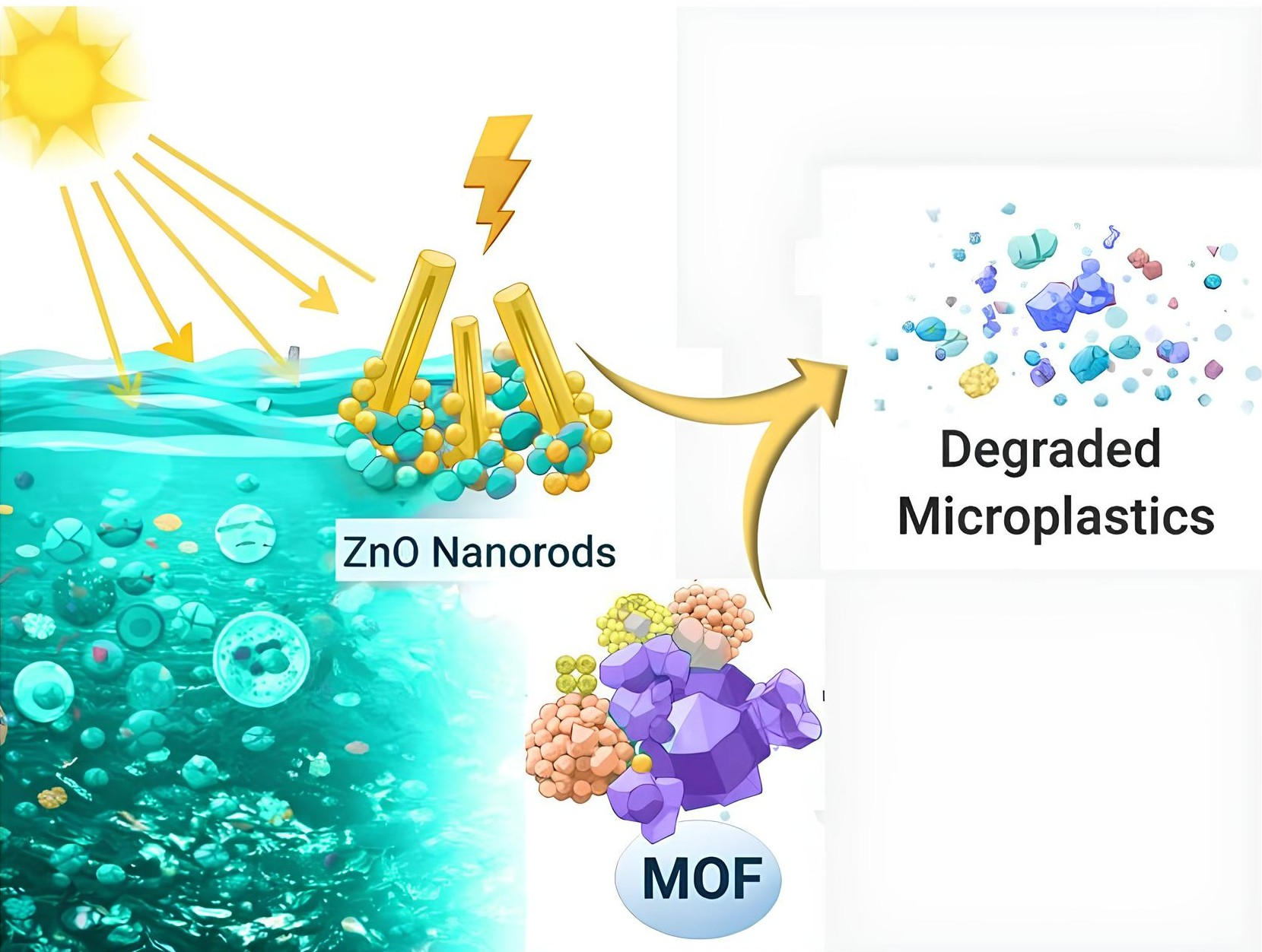


Advanced ZnO Nanorods and Metal–Organic Frameworks for Sustainable Photocatalytic Microplastic Degradation




Abstract
1. Introduction
1.1. Challenges in Microplastic Degradation and Existing Solutions
1.2. Emerging Solutions: Photocatalytic Degradation
2. Photocatalysis as a Promising Solution for Microplastic Degradation
2.1. Basics of Photocatalysis and Its Relevance in Environmental Remediation
2.2. Photocatalytic Mechanisms for Polymer Breakdown
2.2.1. Photon Absorption and Charge Generation
2.2.2. Generation of ROS
2.2.3. Oxidative Attack on Microplastics
2.2.4. Photoinduced Chain Scission
2.2.5. Complete Mineralization
2.3. Key Factors Influencing Photocatalytic Efficiency
2.4. Expanding Photocatalytic Materials
2.5. Determination and Analysis of Microplastics in Water
3. ZnO Nanorods in Photocatalysis
3.1. Properties and Synthesis Methods of ZnO Nanorods
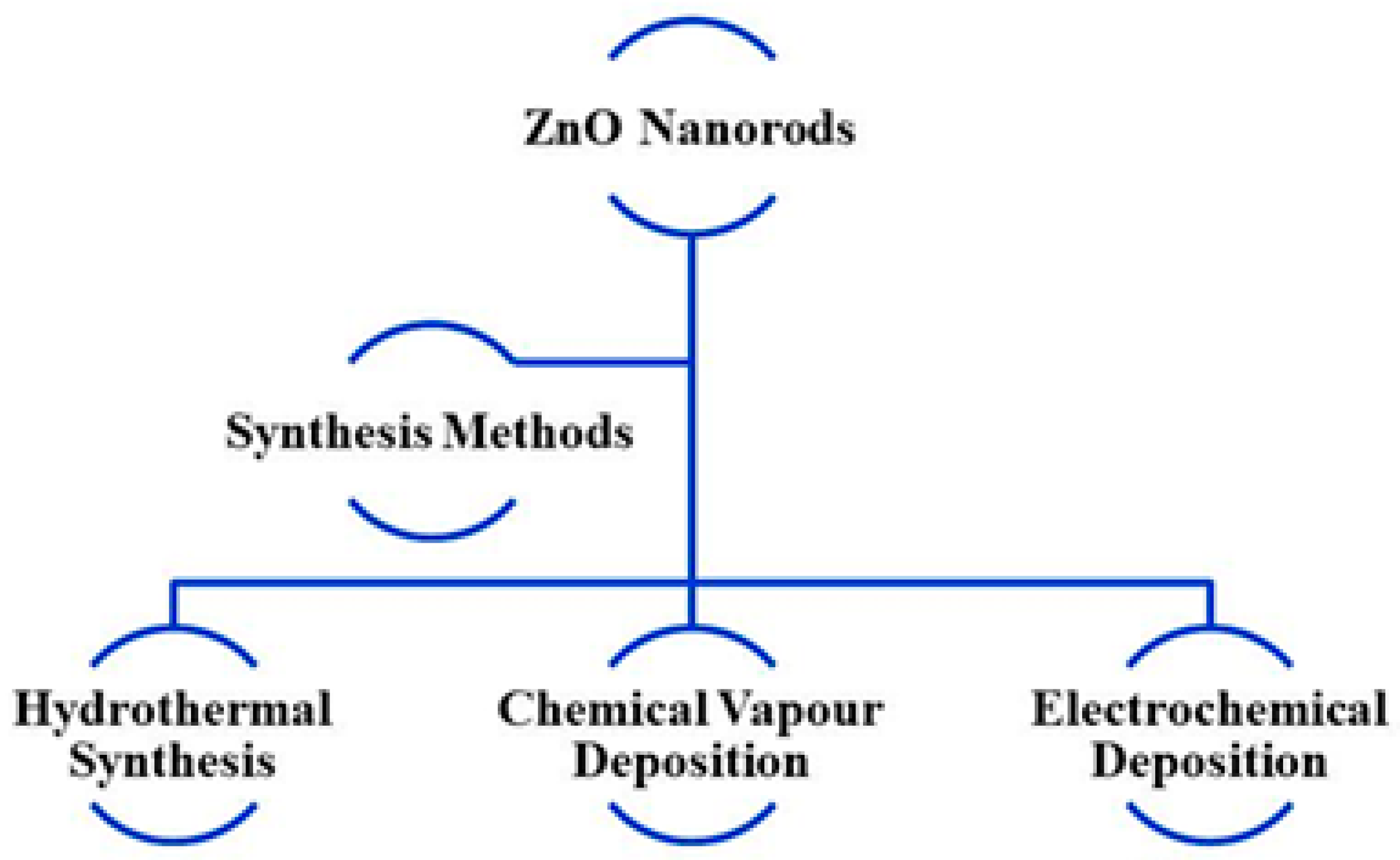
- Chemical Vapor Deposition (CVD): This very precise method makes ZnO nanorods with the same size and better crystallinity by depositing vapor-phase precursors at high temperatures. CVD is effective for producing high-quality nanorods with superior structural characteristics, even though it requires substantial resources [70,71,72,73].
3.2. Applications of ZnO Nanorods in Environmental Photocatalysis
- Air Purification: ZnO nanorods are used in photocatalytic systems to remove VOCs and other air pollutants, thereby improving air quality [79].
3.3. Photocatalytic Degradation of Organic Pollutants
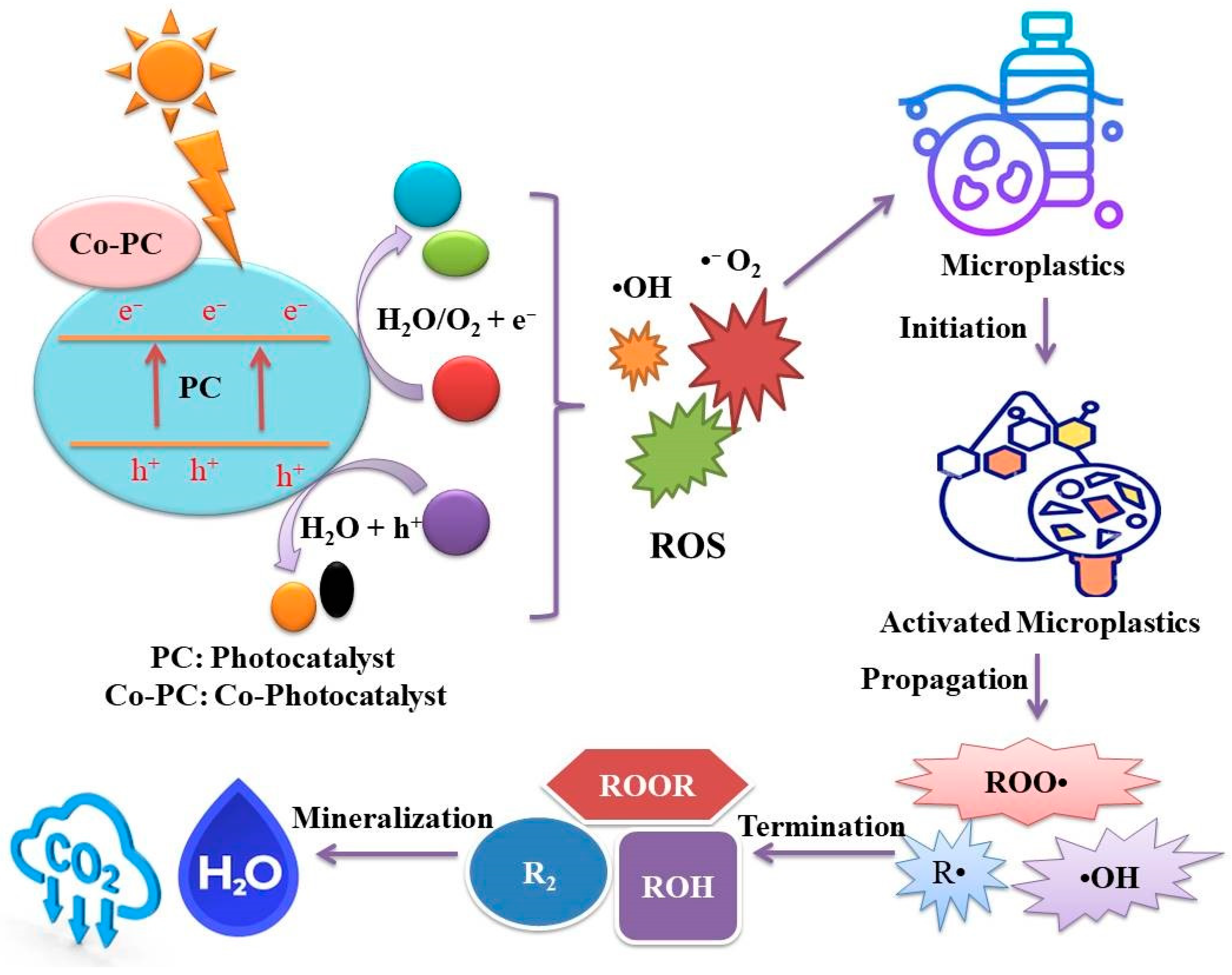
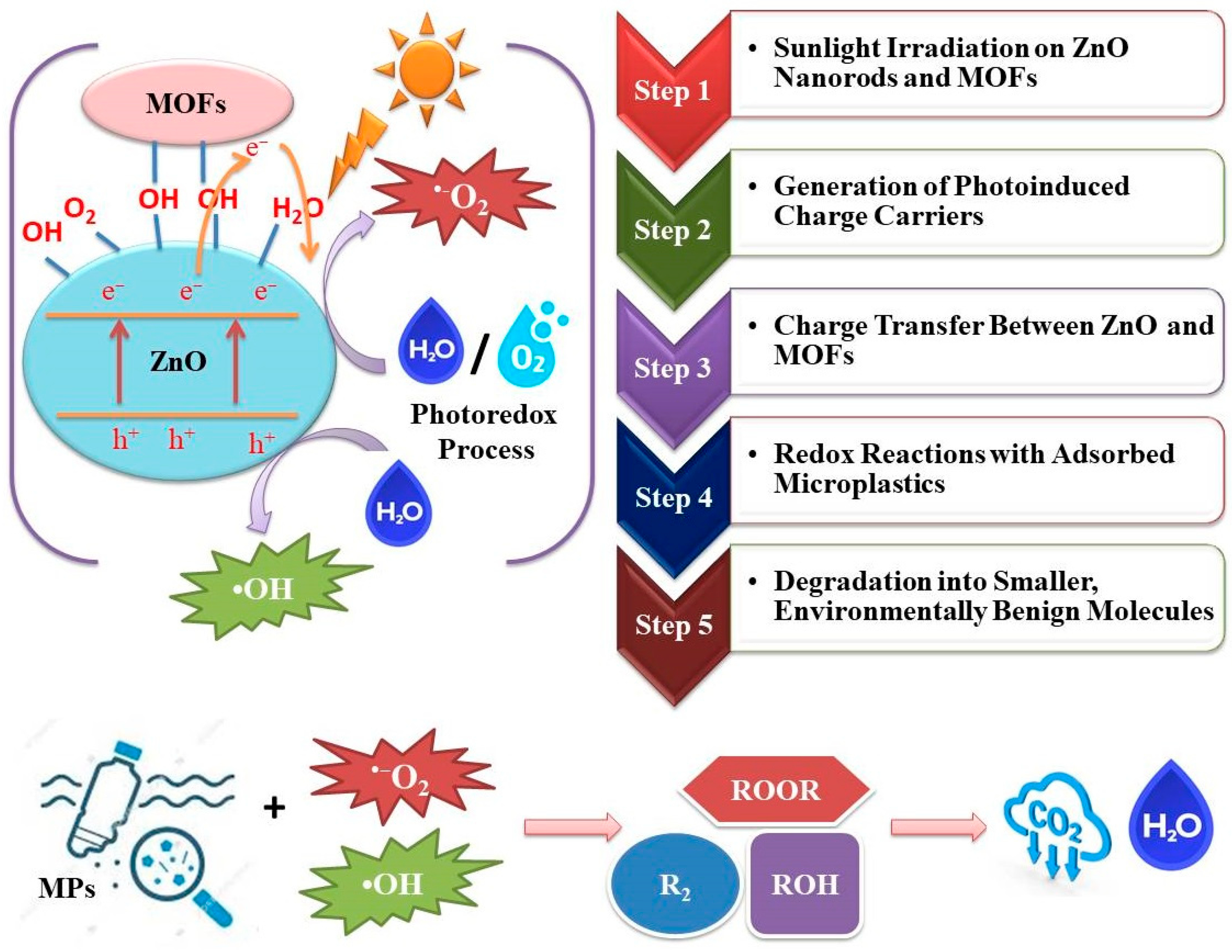
- Electrons (e−): These change molecular oxygen into superoxide anions (O2−•).
- Holes (h+): These oxidize water molecules or hydroxyl ions (OH−, negatively charged oxygen–hydrogen ions) to make hydroxyl radicals (•OH, highly reactive forms of oxygen), which are strong oxidants that start the destruction of pollutants. The photocatalytic process includes the following.
- Adsorption of Pollutants: Organic pollutants stick to the surfaces of ZnO nanorods. They interact with the ROS that are generated during photocatalysis.
- Oxidative Degradation: ROS break chemical bonds (such as C–C and C–H), turning contaminants into smaller, less harmful intermediates.
- Mineralization: When ROS are present for a long time, they turn pollutants into harmless end products. These include CO2 and H2O.
- Medicines: ZnO nanorods are proven to work in breaking down pollutants, including antibiotics and anti-inflammatory medications [91].
4. MOFs in Photocatalysis
4.1. Structure, Properties, and Tunability of MOFs
4.2. Applications of MOFs in Photocatalysis
4.3. MOFs for Microplastic Degradation: Current Research
5. Synergistic Effects of ZnO Nanorods and MOFs
Mechanistic Insights—How ZnO Nanorods and MOFs Improve Microplastic Degradation
6. Photocatalytic Mechanisms Under Sunlight
6.1. Sunlight-Driven Photocatalytic Degradation Pathways
6.2. Role of UV/Visible Light in Activating ZnO Nanorods and MOFs
6.3. Kinetics of Degradation and Intermediate Products
7. Comparative Analysis of ZnO Nanorods, MOFs, and Other Photocatalysts
- ZnO nanorods: ZnO nanorods are commonly utilized photocatalysts owing to their large surface area, efficient charge transfer, and high oxidative potential. ZnO, a wide bandgap semiconductor (~3.2–3.37 eV), reacts to UV radiation by creating electron–hole pairs, which contribute to the creation of ROS. The one-dimensional (1D) nanorod shape promotes directed charge transport while minimizing recombination losses. However, its large bandgap reduces visible light absorption, limiting its total solar-driven efficiency [137,138].
- MOFs: MOFs are porous materials made up of metal nodes and organic linkers, with a large surface area and adaptable topologies. Although not all MOFs are inherently photoactive, certain systems demonstrate photocatalytic activity via ligand-to-metal charge-transfer pathways. MOFs may also operate as effective adsorbents and charge-transfer mediators when combined with semiconductor materials, improving interfacial interactions and pollutant degradation efficiency. Their structural tunability enables the creation of materials that can absorb both UV and visible light. However, MOFs may have low structural stability when exposed to severe circumstances such as aqueous environments, high pH, or extended irradiation [139,140].
- Other semiconductor photocatalysts: Several semiconductor photocatalysts, including TiO2, CdS, and g-C3N4, have been intensively studied. TiO2 is a well-studied photocatalyst because to its chemical stability, cheap cost, and high oxidative activity. However, like ZnO, it is most active under UV light due to its broad bandgap [141]. CdS has improved visible light absorption but suffers from photocorrosion and low stability. Although g-C3N4 has received attention as a visible light-responsive photocatalyst, its high electron–hole recombination rate restricts its efficiency, requiring future modification techniques to increase performance [142,143,144,145,146,147,148,149,150,151].
Advantages and Limitations of ZnO Nanorods and MOFs in Microplastic Degradation
8. Environmental Implications and Safety Considerations
9. Environmental Safety and Ecotoxicity of ZnO Nanorods and MOFs for Photocatalytic Degradation
10. Challenges and Future Perspectives
11. Summary and Conclusions
Author Contributions
Funding
Data Availability Statement
Acknowledgments
Conflicts of Interest
Abbreviations
| BHET | Bis-(hydroxyethyl) terephthalate |
| CO2 | Carbon dioxide |
| CI | Carbonyl index |
| CVD | Chemical vapor deposition |
| Cu | Copper |
| CB | Conduction band |
| e− | Electron |
| FTIR | Fourier-transform infrared spectroscopy |
| g-C3N4 | Graphitic carbon nitride |
| GC-MS | Gas chromatography–mass spectrometry |
| HPLC | High-performance liquid chromatography |
| LCA | Life cycle analysis |
| LCAs | Life cycle assessments |
| IC-MS | Liquid chromatography–mass spectrometry |
| LDPE | Low-density polyethylene |
| h+ | Hole |
| H2O2 | Hydrogen peroxide |
| HO | Hydroxyl radicals |
| MOFs | Metal–organic frameworks |
| NOR | Norfloxacin |
| 1D | One-dimensional |
| PE | Polyethylene |
| PP | Polypropylene |
| PET | Polyethylene terephthalate |
| POPs | Persistent organic pollutants |
| PS | Polystyrene |
| PVC | Polyvinyl chloride |
| ROS | Reactive oxygen species |
| SEM | Scanning electron microscopy |
| TC | Tetracycline hydrochloride |
| TOC | Total organic carbon |
| TiO2 | Titanium dioxide |
| UV | Ultraviolet |
| VB | Valence band |
| Zn | Zinc |
| Zr | Zirconium |
| ZnO | Zinc oxide |
| H2O | Water |
References
- Akdogan, Z.; Guven, B. Microplastics in the environment: A critical review of current understanding and identification of future research needs. Environ. Pollut. 2019, 254, 113011. [Google Scholar] [CrossRef] [PubMed]
- Ziani, K.; Ioniță-Mîndrican, C.-B.; Mititelu, M.; Neacșu, S.M.; Negrei, C.; Moroșan, E.; Drăgănescu, D.; Preda, O.-T. Microplastics: A Real Global Threat for Environment and Food Safety: A State of the Art Review. Nutrients 2023, 15, 617. [Google Scholar] [CrossRef]
- Jahandari, A. Microplastics in the urban atmosphere: Sources, occurrences, distribution, and potential health implications. J. Hazard. Mater. Adv. 2023, 12, 100346. [Google Scholar] [CrossRef]
- Samal, K.; Samal, S.R.; Mishra, S.; Nayak, J.K. Sources, Transport, and Accumulation of Synthetic Microfiber Wastes in Aquatic and Terrestrial Environments. Water 2024, 16, 2238. [Google Scholar] [CrossRef]
- Bergmann, M.; Collard, F.; Fabres, J.; Gabrielsen, G.W.; Provencher, J.F.; Rochman, C.M.; van Sebille, E.; Tekman, M.B. Plastic pollution in the Arctic. Nat. Rev. Earth Environ. 2022, 3, 323–337. [Google Scholar] [CrossRef]
- Issac, M.N.; Kandasubramanian, B. Effect of microplastics in water and aquatic systems. Environ. Sci. Pollut. Res. 2021, 28, 19544–19562. [Google Scholar] [CrossRef]
- Yang, H.; Chen, G.; Wang, J. Microplastics in the Marine Environment: Sources, Fates, Impacts and Microbial Degradation. Toxics 2021, 9, 41. [Google Scholar] [CrossRef]
- Sarkar, S.; Diab, H.; Thompson, J. Microplastic Pollution: Chemical Characterization and Impact on Wildlife. Int. J. Environ. Res. Public Health 2023, 20, 1745. [Google Scholar] [CrossRef]
- Gardon, T.; Reisser, C.; Soyez, C.; Quillien, V.; Le Moullac, G. Microplastics Affect Energy Balance and Gametogenesis in the Pearl Oyster Pinctada margaritifera. Environ. Sci. Technol. 2018, 52, 5277–5286. [Google Scholar] [CrossRef] [PubMed]
- Yee, M.S.-L.; Hii, L.-W.; Looi, C.K.; Lim, W.-M.; Wong, S.-F.; Kok, Y.-Y.; Tan, B.-K.; Wong, C.-Y.; Leong, C.-O. Impact of Microplastics and Nanoplastics on Human Health. Nanomaterials 2021, 11, 496. [Google Scholar] [CrossRef] [PubMed]
- Li, Y.; Tao, L.; Wang, Q.; Wang, F.; Li, G.; Song, M. Potential Health Impact of Microplastics: A Review of Environmental Distribution, Human Exposure, and Toxic Effects. Environ. Health 2023, 1, 249–257. [Google Scholar] [CrossRef] [PubMed]
- Ghosh, S.; Sinha, J.K.; Ghosh, S.; Vashisth, K.; Han, S.; Bhaskar, R. Microplastics as an Emerging Threat to the Global Environment and Human Health. Sustainability 2023, 15, 10821. [Google Scholar] [CrossRef]
- Yu, R.-S.; Singh, S. Microplastic Pollution: Threats and Impacts on Global Marine Ecosystems. Sustainability 2023, 15, 13252. [Google Scholar] [CrossRef]
- James, B.D.; Ward, C.P.; Hahn, M.E.; Thorpe, S.J.; Reddy, C.M. Minimizing the Environmental Impacts of Plastic Pollution through Ecodesign of Products with Low Environmental Persistence. ACS Sustain. Chem. Eng. 2024, 12, 1185–1194. [Google Scholar] [CrossRef]
- Singh, N.; Walker, T.R. Plastic recycling: A panacea or environmental pollution problem. npj Mater. Sustain. 2024, 2, 17. [Google Scholar] [CrossRef]
- Parveen, K.; Parvaiz, A.; Subhan, M.; Khan, A. Photocatalytic Degradation of Microplastic in the Environment. In Microplastic Pollution; Shahnawaz, M., Adetunji, C.O., Dar, M.A., Zhu, D., Eds.; Springer Nature: Singapore, 2024; pp. 419–429. [Google Scholar]
- Jain, R.; Gaur, A.; Suravajhala, R.; Chauhan, U.; Pant, M.; Tripathi, V.; Pant, G. Microplastic pollution: Understanding microbial degradation and strategies for pollutant reduction. Sci. Total Environ. 2023, 905, 167098. [Google Scholar] [CrossRef]
- Sivakumar, M.; Sundaram, G.A.; Vaishali, C.; Thillaichidambaram, M. Innovative Applications of Biopolymeric Nanoparticles in Environmental Remediation. In Biopolymer Nanoparticles; CRC Press: Boca Raton, FL, USA, 2025; pp. 106–130. [Google Scholar]
- Ali, N.; Khan, M.H.; Ali, M.; Sidra; Ahmad, S.; Khan, A.; Nabi, G.; Ali, F.; Bououdina, M.; Kyzas, G.Z. Insight into microplastics in the aquatic ecosystem: Properties, sources, threats and mitigation strategies. Sci. Total Environ. 2024, 913, 169489. [Google Scholar] [CrossRef] [PubMed]
- Du, S.; Zhu, R.; Cai, Y.; Xu, N.; Yap, P.-S.; Zhang, Y.; He, Y.; Zhang, Y. Environmental fate and impacts of microplastics in aquatic ecosystems: A review. RSC Adv. 2021, 11, 15762–15784. [Google Scholar] [CrossRef]
- Chamas, A.; Moon, H.; Zheng, J.; Qiu, Y.; Tabassum, T.; Jang, J.H.; Abu-Omar, M.; Scott, S.L.; Suh, S. Degradation Rates of Plastics in the Environment. ACS Sustain. Chem. Eng. 2020, 8, 3494–3511. [Google Scholar] [CrossRef]
- Vuppaladadiyam, S.S.V.; Vuppaladadiyam, A.K.; Sahoo, A.; Urgunde, A.; Murugavelh, S.; Šrámek, V.; Pohořelý, M.; Trakal, L.; Bhattacharya, S.; Sarmah, A.K.; et al. Waste to energy: Trending key challenges and current technologies in waste plastic management. Sci. Total Environ. 2024, 913, 169436. [Google Scholar] [CrossRef]
- He, Y.; Deng, X.; Jiang, L.; Hao, L.; Shi, Y.; Lyu, M.; Zhang, L.; Wang, S. Current advances, challenges and strategies for enhancing the biodegradation of plastic waste. Sci. Total Environ. 2024, 906, 167850. [Google Scholar] [CrossRef]
- Ramírez-Escárcega, K.J.; Amaya-Galván, K.J.; García-Prieto, J.C.; Silerio-Vázquez, F.d.J.; Proal-Nájera, J.B. Advancing photocatalytic strategies for microplastic degradation in aquatic systems: Insights into key challenges and future pathways. J. Environ. Chem. Eng. 2025, 13, 115594. [Google Scholar] [CrossRef]
- Cai, Z.; Li, M.; Zhu, Z.; Wang, X.; Huang, Y.; Li, T.; Gong, H.; Yan, M. Biological Degradation of Plastics and Microplastics: A Recent Perspective on Associated Mechanisms and Influencing Factors. Microorganisms 2023, 11, 1661. [Google Scholar] [CrossRef] [PubMed]
- Silva, R.R.A.; Marques, C.S.; Arruda, T.R.; Teixeira, S.C.; de Oliveira, T.V. Biodegradation of Polymers: Stages, Measurement, Standards and Prospects. Macromol 2023, 3, 371–399. [Google Scholar] [CrossRef]
- Sundaram, G.A.; Kanniah, R.; Sivakumar, M.; Antonisamy, J.D.s. Sustainable innovative technologies for a circular economy: Artificial photosynthesis, photobiorefineries, bioplastics, waste-to-wealth, and thermoelectric generators. Biomass Bioenergy 2025, 202, 108219. [Google Scholar] [CrossRef]
- Aspoukeh, P.K.; Barzinjy, A.A.; Hamad, S.M. Synthesis, properties and uses of ZnO nanorods: A mini review. Int. Nano Lett. 2021, 12, 153–168. [Google Scholar] [CrossRef]
- Galdámez-Martinez, A.; Santana, G.; Güell, F.; Martínez-Alanis, P.R.; Dutt, A. Photoluminescence of ZnO Nanowires: A Review. Nanomaterials 2020, 10, 857. [Google Scholar] [CrossRef]
- Yeszhan, Y.; Bexeitova, K.; Yermekbayev, S.; Toktarbay, Z.; Lee, J.; Berndtsson, R.; Azat, S. Photocatalytic Degradation of Microplastics in Aquatic Environments: Materials, Mechanisms, Practical Challenges, and Future Perspectives. Water 2025, 17, 2139. [Google Scholar] [CrossRef]
- Udom, I.; Ram, M.K.; Stefanakos, E.K.; Hepp, A.F.; Goswami, D.Y. One dimensional-ZnO nanostructures: Synthesis, properties and environmental applications. Mater. Sci. Semicond. Process. 2013, 16, 2070–2083. [Google Scholar] [CrossRef]
- Bora, T.; Mohammed, W.S. Light Scattering by One-Dimensional ZnO Nanorods and Their Applications in Optical Sensing. In Nanoscale Matter and Principles for Sensing and Labeling Applications; Mohanta, D., Chakraborty, P., Eds.; Springer Nature: Singapore, 2024; pp. 117–142. [Google Scholar]
- Sun, Y.; Zhang, W.; Li, Q.; Liu, H.; Wang, X. Preparations and applications of zinc oxide based photocatalytic materials. Adv. Sens. Energy Mater. 2023, 2, 100069. [Google Scholar] [CrossRef]
- Taylor, C.M.; Ramirez-Canon, A.; Wenk, J.; Mattia, D. Enhancing the photo-corrosion resistance of ZnO nanowire photocatalysts. J. Hazard. Mater. 2019, 378, 120799. [Google Scholar] [CrossRef]
- Zhang, Y.; Zhou, J.; Chen, X.; Feng, Q.; Cai, W. MOF-derived C-doped ZnO composites for enhanced photocatalytic performance under visible light. J. Alloys Compd. 2019, 777, 109–118. [Google Scholar] [CrossRef]
- Koyale, P.A.; Dongale, T.D.; Sutar, S.S.; Mullani, N.B.; Dhodamani, A.G.; Takale, P.S.; Gunjakar, J.L.; Parale, V.G.; Park, H.-H.; Delekar, S.D. Boosting the photoelectrochemical performance of ZnO nanorods with Co-doped Zn-ZIFs metal-organic frameworks for water splitting studies. Int. J. Hydrogen Energy 2024, 61, 1294–1304. [Google Scholar] [CrossRef]
- Khan, M.M.; Rahman, A.; Matussin, S.N. Recent Progress of Metal-Organic Frameworks and Metal-Organic Frameworks-Based Heterostructures as Photocatalysts. Nanomaterials 2022, 12, 2820. [Google Scholar] [CrossRef]
- Nikhar, S.; Kumar, P.; Chakraborty, M. A review on microplastics degradation with MOF: Mechanism and action. Next Nanotechnol. 2024, 5, 100060. [Google Scholar] [CrossRef]
- He, Y.; Rehman, A.U.; Xu, M.; Not, C.A.; Ng, A.M.C.; Djurišić, A.B. Photocatalytic degradation of different types of microplastics by TiOx/ZnO tetrapod photocatalysts. Heliyon 2023, 9, e22562. [Google Scholar] [CrossRef] [PubMed]
- Islam, S.; Saniya, M.; Shaheen, S.; Sadiq, I.; Ali, S.A.; Fazil, M.; Ahmad, T. Photocatalytic Perception for Degradation of Macro- and Micro-plastics. In Plastic Degradation and Conversion by Photocatalysis (Volume 1): A Sustainable Approach; ACS Symposium Series; American Chemical Society: Washington, DC, USA, 2024; Volume 1489, pp. 45–64. [Google Scholar]
- Chakravorty, A.; Roy, S. A review of photocatalysis, basic principles, processes, and materials. Sustain. Chem. Environ. 2024, 8, 100155. [Google Scholar] [CrossRef]
- Ghamarpoor, R.; Fallah, A.; Jamshidi, M. A Review of Synthesis Methods, Modifications, and Mechanisms of ZnO/TiO2-Based Photocatalysts for Photodegradation of Contaminants. ACS Omega 2024, 9, 25457–25492. [Google Scholar] [CrossRef] [PubMed]
- Khan, H.; Shah, M.U.H. Modification strategies of TiO2 based photocatalysts for enhanced visible light activity and energy storage ability: A review. J. Environ. Chem. Eng. 2023, 11, 111532. [Google Scholar] [CrossRef]
- Zhao, X.; Feng, J.; Liu, J.; Lu, J.; Shi, W.; Yang, G.; Wang, G.; Feng, P.; Cheng, P. Metal–Organic Framework-Derived ZnO/ZnS Heteronanostructures for Efficient Visible-Light-Driven Photocatalytic Hydrogen Production. Adv. Sci. 2018, 5, 1700590. [Google Scholar] [CrossRef]
- Mubeen, K.; Safeen, K.; Irshad, A.; Safeen, A.; Ghani, T.; Shah, W.H.; Khan, R.; Ahmad, K.S.; Casin, R.; Rashwan, M.A.; et al. ZnO/CuSe composite-mediated bandgap modulation for enhanced photocatalytic performance against methyl blue dye. Sci. Rep. 2023, 13, 19580. [Google Scholar] [CrossRef] [PubMed]
- Teng, D.; Zhang, J.; Luo, X.; Jing, F.; Wang, H.; Chen, J.; Yang, C.; Zang, S.; Zhou, Y. Remarkably Enhanced Photodegradation of Organic Pollutants by NH. J. Renew. Mater. 2022, 10, 2378. [Google Scholar] [CrossRef]
- Cheng, Y.; Wang, X.; Mei, Y.; Wang, D.; Ji, C. ZnCDs/ZnO@ ZIF-8 zeolite composites for the photocatalytic degradation of tetracycline. Catalysts 2021, 11, 934. [Google Scholar] [CrossRef]
- Zhang, Z.; Bai, Z.; Yu, S.; Meng, X.; Xiao, S. Photo-Fenton efficient degradation of organic pollutants over S-scheme ZnO@NH2-MIL-88B heterojunction established for electron transfer channel. Chem. Eng. Sci. 2024, 288, 119789. [Google Scholar] [CrossRef]
- Li, S.; Yang, S.; Liang, G.; Yan, M.; Wei, C.; Lu, Y. Regulation and photocatalytic degradation mechanism of a hydroxyl modified UiO-66 type metal organic framework. RSC Adv. 2023, 13, 5273–5282. [Google Scholar] [CrossRef] [PubMed]
- Nguyen Thi, H.-T.; Tran Thi, K.-N.; Hoang, N.B.; Tran, B.T.; Do, T.S.; Phung, C.S.; Nguyen Thi, K.-O. Enhanced degradation of rhodamine B by metallic organic frameworks based on NH2-MIL-125 (Ti) under visible light. Materials 2021, 14, 7741. [Google Scholar] [CrossRef]
- Du, J.; Zhang, J.; Yang, T.; Liu, R.; Li, Z.; Wang, D.; Zhou, T.; Liu, Y.; Liu, C.; Che, G. The research on the construction and the photocatalytic performance of BiOI/NH2-MIL-125 (Ti) composite. Catalysts 2020, 11, 24. [Google Scholar] [CrossRef]
- Naghdi, S.; Shahrestani, M.M.; Zendehbad, M.; Djahaniani, H.; Kazemian, H.; Eder, D. Recent advances in application of metal-organic frameworks (MOFs) as adsorbent and catalyst in removal of persistent organic pollutants (POPs). J. Hazard. Mater. 2023, 442, 130127. [Google Scholar] [CrossRef]
- Bhapkar, A.R.; Bhame, S. A review on ZnO and its modifications for photocatalytic degradation of prominent textile effluents: Synthesis, mechanisms, and future directions. J. Environ. Chem. Eng. 2024, 12, 112553. [Google Scholar] [CrossRef]
- Li, C.; Sun, Z.; Xue, Y.; Yao, G.; Zheng, S. A facile synthesis of g-C3N4/TiO2 hybrid photocatalysts by sol–gel method and its enhanced photodegradation towards methylene blue under visible light. Adv. Powder Technol. 2016, 27, 330–337. [Google Scholar] [CrossRef]
- Nemiwal, M.; Zhang, T.C.; Kumar, D. Recent progress in g-C3N4, TiO2 and ZnO based photocatalysts for dye degradation: Strategies to improve photocatalytic activity. Sci. Total Environ. 2021, 767, 144896. [Google Scholar] [CrossRef] [PubMed]
- Ngullie, R.C.; Alaswad, S.O.; Bhuvaneswari, K.; Shanmugam, P.; Pazhanivel, T.; Arunachalam, P. Synthesis and Characterization of Efficient ZnO/g-C3N4 Nanocomposites Photocatalyst for Photocatalytic Degradation of Methylene Blue. Coatings 2020, 10, 500. [Google Scholar] [CrossRef]
- Pham, M.-T.; Luu, H.Q.; Nguyen, T.-M.T.; Tran, H.-H.; You, S.-J.; Wang, Y.-F. Rapid and Scalable Fabrication of TiO2@g-C3N4 Heterojunction for Highly Efficient Photocatalytic NO Removal under Visible Light. Aerosol Air Qual. Res. 2021, 21, 210276. [Google Scholar] [CrossRef]
- Panthi, G.; Park, M. Graphitic Carbon Nitride/Zinc Oxide-Based Z-Scheme and S-Scheme Heterojunction Photocatalysts for the Photodegradation of Organic Pollutants. Int. J. Mol. Sci. 2023, 24, 15021. [Google Scholar] [CrossRef]
- García-Salcido, V.; Mercado-Oliva, P.; Guzmán-Mar, J.L.; Kharisov, B.I.; Hinojosa-Reyes, L. MOF-based composites for visible-light-driven heterogeneous photocatalysis: Synthesis, characterization and environmental application studies. J. Solid State Chem. 2022, 307, 122801. [Google Scholar] [CrossRef]
- Shee, N.K.; Kim, H.-J. Surface Modification of ZnO with Sn(IV)-Porphyrin for Enhanced Visible Light Photocatalytic Degradation of Amaranth Dye. Molecules 2023, 28, 6481. [Google Scholar] [CrossRef]
- Hidalgo-Ruz, V.; Gutow, L.; Thompson, R.C.; Thiel, M. Microplastics in the Marine Environment: A Review of the Methods Used for Identification and Quantification. Environ. Sci. Technol. 2012, 46, 3060–3075. [Google Scholar] [CrossRef]
- Käppler, A.; Fischer, D.; Oberbeckmann, S.; Schernewski, G.; Labrenz, M.; Eichhorn, K.J.; Voit, B. Analysis of environmental microplastics by vibrational microspectroscopy: FTIR, Raman or both? Anal. Bioanal. Chem. 2016, 408, 8377–8391. [Google Scholar] [CrossRef] [PubMed]
- Primpke, S.; Wirth, M.; Lorenz, C.; Gerdts, G. Reference database design for the automated analysis of microplastic samples based on Fourier transform infrared (FTIR) spectroscopy. Anal. Bioanal. Chem. 2018, 410, 5131–5141. [Google Scholar] [CrossRef]
- Gewert, B.; Plassmann, M.M.; MacLeod, M. Pathways for degradation of plastic polymers floating in the marine environment. Environ. Sci. Process. Impacts 2015, 17, 1513–1521. [Google Scholar] [CrossRef]
- Mintenig, S.M.; Int-Veen, I.; Löder, M.G.J.; Primpke, S.; Gerdts, G. Identification of microplastic in effluents of waste water treatment plants using focal plane array-based micro-Fourier-transform infrared imaging. Water Res. 2017, 108, 365–372. [Google Scholar] [CrossRef]
- Zyoud, S.H.; Hegazi, O.E.; Alalalmeh, S.O.; Azurahanim Che Abdullah, C.; Ashames, A.; Hassan, N.; Yahia, I.S.; Zyoud, A.H.; Daher, M.G.; Shahwan, M.; et al. Enhancing antimicrobial and photocatalyst properties of Mg-doped ZnO nanotubes via novel laser-assisted chemical bath synthesis. J. Saudi Chem. Soc. 2023, 27, 101752. [Google Scholar] [CrossRef]
- Abubakar, S.; Tan, S.T.; Liew, J.Y.C.; Talib, Z.A.; Sivasubramanian, R.; Vaithilingam, C.A.; Indira, S.S.; Oh, W.-C.; Siburian, R.; Sagadevan, S.; et al. Controlled Growth of Semiconducting ZnO Nanorods for Piezoelectric Energy Harvesting-Based Nanogenerators. Nanomaterials 2023, 13, 1025. [Google Scholar] [CrossRef]
- Chee, C.Y.; Nadarajah, K.; Siddiqui, M.K.; Wong, Y. Optical and structural characterization of solution processed zinc oxide nanorods via hydrothermal method. Ceram. Int. 2014, 40, 9997–10004. [Google Scholar] [CrossRef]
- Ueno, N.; Maruo, T.; Nishiyama, N.; Egashira, Y.; Ueyama, K. Low-temperature synthesis of ZnO nanorods using a seed layer of zinc acetate/sodium dodecyle sulfate nanocomposite. Mater. Lett. 2010, 64, 513–515. [Google Scholar] [CrossRef]
- Zhang, Q.; Li, C. TiO2 Coated ZnO Nanorods by Mist Chemical Vapor Deposition for Application as Photoanodes for Dye-Sensitized Solar Cells. Nanomaterials 2019, 9, 1339. [Google Scholar] [CrossRef]
- Tian, T.; Xing, J.; Cheng, L.; Zheng, L.; Ruan, W.; Ruan, X.; Li, G. Synthesis of large size ZnO microrods by a simple way of thermal evaporation. Ceram. Int. 2015, 41, S774–S778. [Google Scholar] [CrossRef]
- Liu, X.; Wu, X.; Cao, H.; Chang, R.P.H. Growth mechanism and properties of ZnO nanorods synthesized by plasma-enhanced chemical vapor deposition. J. Appl. Phys. 2004, 95, 3141–3147. [Google Scholar] [CrossRef]
- Swathi, S.; Babu, E.S.; Yuvakkumar, R.; Ravi, G.; Chinnathambi, A.; Alharbi, S.A.; Velauthapillai, D. Branched and unbranched ZnO nanorods grown via chemical vapor deposition for photoelectrochemical water-splitting applications. Ceram. Int. 2021, 47, 9785–9790. [Google Scholar] [CrossRef]
- Skompska, M.; Zarębska, K. Electrodeposition of ZnO Nanorod Arrays on Transparent Conducting Substrates—A Review. Electrochim. Acta 2014, 127, 467–488. [Google Scholar] [CrossRef]
- Meng, Y.; Lin, Y.; Lin, Y. Electrodeposition for the synthesis of ZnO nanorods modified by surface attachment with ZnO nanoparticles and their dye-sensitized solar cell applications. Ceram. Int. 2014, 40, 1693–1698. [Google Scholar] [CrossRef]
- Hossain, E.; Kwon, K.-S. Fabrication and Characterization of Zinc Oxide Nanorods on Electrohydrodynamic Jet Printed Silver Micropillars. ACS Appl. Electron. Mater. 2024, 6, 6466–6476. [Google Scholar] [CrossRef]
- Patella, B.; Moukri, N.; Regalbuto, G.; Cipollina, C.; Pace, E.; Di Vincenzo, S.; Aiello, G.; O’Riordan, A.; Inguanta, R. Electrochemical Synthesis of Zinc Oxide Nanostructures on Flexible Substrate and Application as an Electrochemical Immunoglobulin-G Immunosensor. Materials 2022, 15, 713. [Google Scholar] [CrossRef]
- Roy, N.; Chakraborty, S. ZnO as photocatalyst: An approach to waste water treatment. Mater. Today Proc. 2021, 46, 6399–6403. [Google Scholar] [CrossRef]
- Le Pivert, M.; Kerivel, O.; Zerelli, B.; Leprince-Wang, Y. ZnO nanostructures based innovative photocatalytic road for air purification. J. Clean. Prod. 2021, 318, 128447. [Google Scholar] [CrossRef]
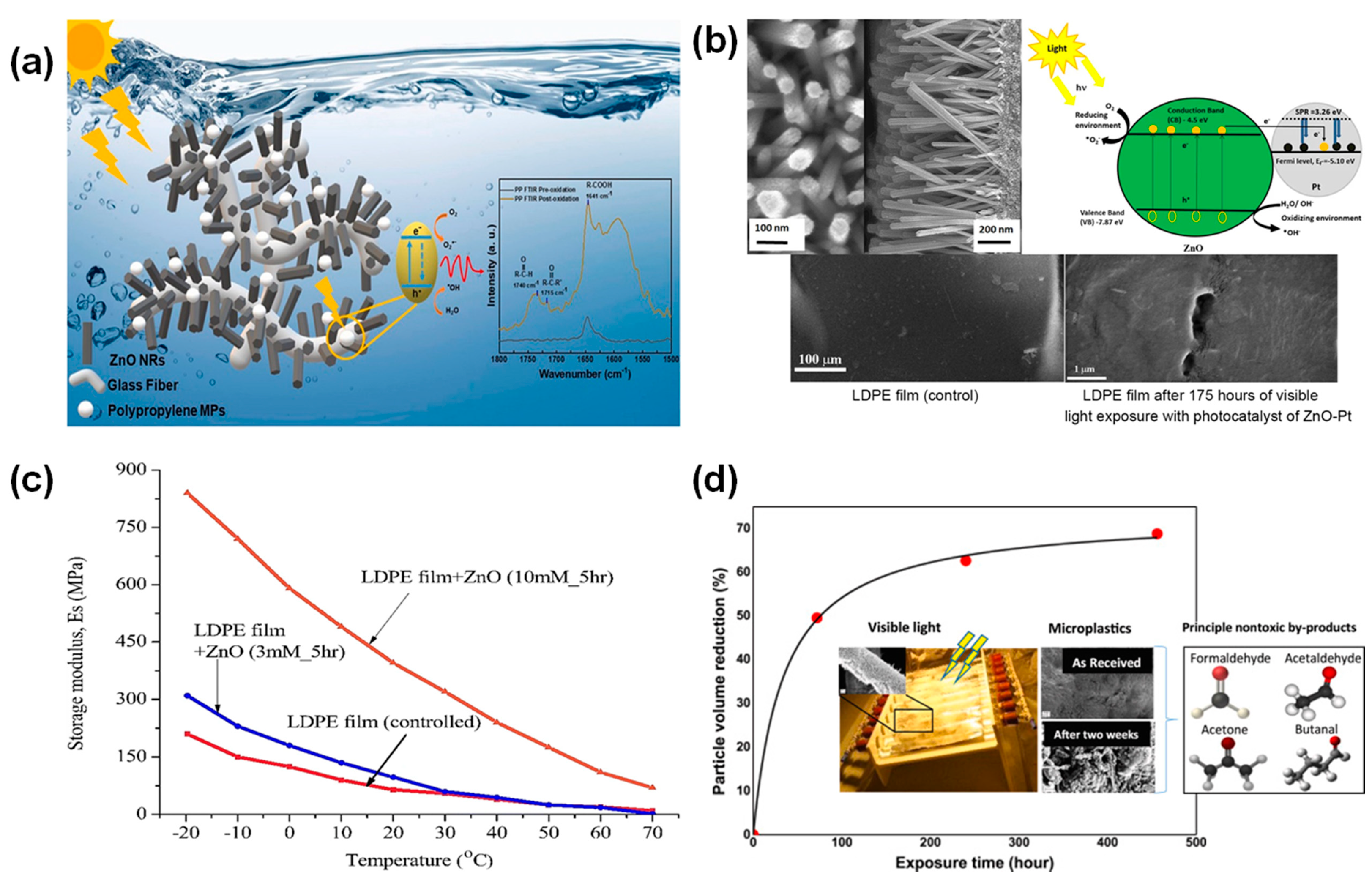
- Daher, E.A.; Hammoud, Y.; Robert, C.L.; Paz Lopez, C.V.; Riachi, B.; Hamd, W. Natural sunlight-driven photocatalytic degradation of polypropylene microplastics over ZnO nanorods. Environ. Res. 2025, 279, 121836. [Google Scholar] [CrossRef]
- Tofa, T.S.; Ye, F.; Kunjali, K.L.; Dutta, J. Enhanced Visible Light Photodegradation of Microplastic Fragments with Plasmonic Platinum/Zinc Oxide Nanorod Photocatalysts. Catalysts 2019, 9, 819. [Google Scholar] [CrossRef]
- Tofa, T.S.; Kunjali, K.L.; Paul, S.; Dutta, J. Visible light photocatalytic degradation of microplastic residues with zinc oxide nanorods. Environ. Chem. Lett. 2019, 17, 1341–1346. [Google Scholar] [CrossRef]
- Uheida, A.; Mejía, H.G.; Abdel-Rehim, M.; Hamd, W.; Dutta, J. Visible light photocatalytic degradation of polypropylene microplastics in a continuous water flow system. J. Hazard. Mater. 2021, 406, 124299. [Google Scholar] [CrossRef]
- Tofa, T.S. Degradation of Microplastic Residuals in Water by Visible Light Photocatalysis; Digitala Vetenskapliga Arkivet: Uppsala, Sweden, 2018. [Google Scholar]
- Vallarasu, K.; Dinesh, S.; Nantha kumar, M.; Mithun, D.; Anitha, R.; Vijayalakshmi, V. ZnO heterojunction photocatalysts prepared via facile green synthesis process attaining improved photocatalytic function for degradation of methylene blue dye. Desalination Water Treat. 2024, 318, 100391. [Google Scholar] [CrossRef]
- Raha, S.; Ahmaruzzaman, M. ZnO nanostructured materials and their potential applications: Progress, challenges and perspectives. Nanoscale Adv. 2022, 4, 1868–1925. [Google Scholar] [CrossRef] [PubMed]
- Mahadevi, P.; Sivasuriya, S.; Sumathi, S. Facile synthesis of ZnO nanoparticles by thermal decomposition of Schiff base complexes for the effective removal of organic pollutants in an aqueous medium. Environ. Nanotechnol. Monit. Manag. 2023, 20, 100902. [Google Scholar] [CrossRef]
- Stanley, R.; Jebasingh, J.A.; Vidyavathy, S.M.; Stanley, P.K.; Ponmani, P.; Shekinah, M.E.; Vasanthi, J. Excellent Photocatalytic degradation of Methylene Blue, Rhodamine B and Methyl Orange dyes by Ag-ZnO nanocomposite under natural sunlight irradiation. Optik 2021, 231, 166518. [Google Scholar] [CrossRef]
- Khan, S.H.; Pathak, B. Zinc oxide based photocatalytic degradation of persistent pesticides: A comprehensive review. Environ. Nanotechnol. Monit. Manag. 2020, 13, 100290. [Google Scholar] [CrossRef]
- Kundu, S.; Pal, A.; Dikshit, A.K. UV induced degradation of herbicide 2,4-D: Kinetics, mechanism and effect of various conditions on the degradation. Sep. Purif. Technol. 2005, 44, 121–129. [Google Scholar] [CrossRef]
- Mohamed, K.M.; Benitto, J.J.; Vijaya, J.J.; Bououdina, M. Recent Advances in ZnO-Based Nanostructures for the Photocatalytic Degradation of Hazardous, Non-Biodegradable Medicines. Crystals 2023, 13, 329. [Google Scholar] [CrossRef]
- Mazlan, N.A.; Lewis, A.; Chen, Z.; Butt, F.S.; Han, J.; Radacsi, N.; Yang, S.; Huang, Y. Photocatalytic self-cleaning graphene oxide/ZnO hybrid membrane for ultrafast cyclic small organic molecule separation. J. Membr. Sci. 2024, 697, 122539. [Google Scholar] [CrossRef]
- Annamalai, J.; Murugan, P.; Ganapathy, D.; Nallaswamy, D.; Atchudan, R.; Arya, S.; Khosla, A.; Barathi, S.; Sundramoorthy, A.K. Synthesis of various dimensional metal organic frameworks (MOFs) and their hybrid composites for emerging applications—A review. Chemosphere 2022, 298, 134184. [Google Scholar] [CrossRef]
- Yusuf, V.F.; Malek, N.I.; Kailasa, S.K. Review on Metal–Organic Framework Classification, Synthetic Approaches, and Influencing Factors: Applications in Energy, Drug Delivery, and Wastewater Treatment. ACS Omega 2022, 7, 44507–44531. [Google Scholar] [CrossRef] [PubMed]
- Yu, X.; Wang, L.; Cohen, S.M. Photocatalytic metal–organic frameworks for organic transformations. CrystEngComm 2017, 19, 4126–4136. [Google Scholar] [CrossRef]
- Kong, X.-J.; Li, J.-R. An Overview of Metal–Organic Frameworks for Green Chemical Engineering. Engineering 2021, 7, 1115–1139. [Google Scholar] [CrossRef]
- Kiteto, M.; Vidija, B.; Mecha, C.A.; Mrosso, R.; Chollom, M.N. Advances in metal–organic frameworks as adsorbents, photocatalysts and membranes: A new frontier in water purification. Discov. Water 2024, 4, 54. [Google Scholar] [CrossRef]
- Lopez, E.C.R. Metal-Organic Frameworks as Novel Photocatalysts: Opportunities for Catalyst Design. Mater. Proc. 2023, 14, 3. [Google Scholar]
- Liu, Y.; Huang, S.; Huang, X.; Ma, D. Enhanced photocatalysis of metal/covalent organic frameworks by plasmonic nanoparticles and homo/hetero-junctions. Mater. Horiz. 2024, 11, 1611–1637. [Google Scholar] [CrossRef]
- Albalawi, K.M. Enhanced solar Photocatalysis: Zinc oxide modified Yb2Zn-TiO6 doped g-C3N4 heterostructures for bromothymol blue mineralization and bacterial inhibition. J. Saudi Chem. Soc. 2024, 28, 101835. [Google Scholar] [CrossRef]
- Li, R.; Li, T.; Zhou, Q. Impact of Titanium Dioxide (TiO2) Modification on Its Application to Pollution Treatment—A Review. Catalysts 2020, 10, 804. [Google Scholar] [CrossRef]
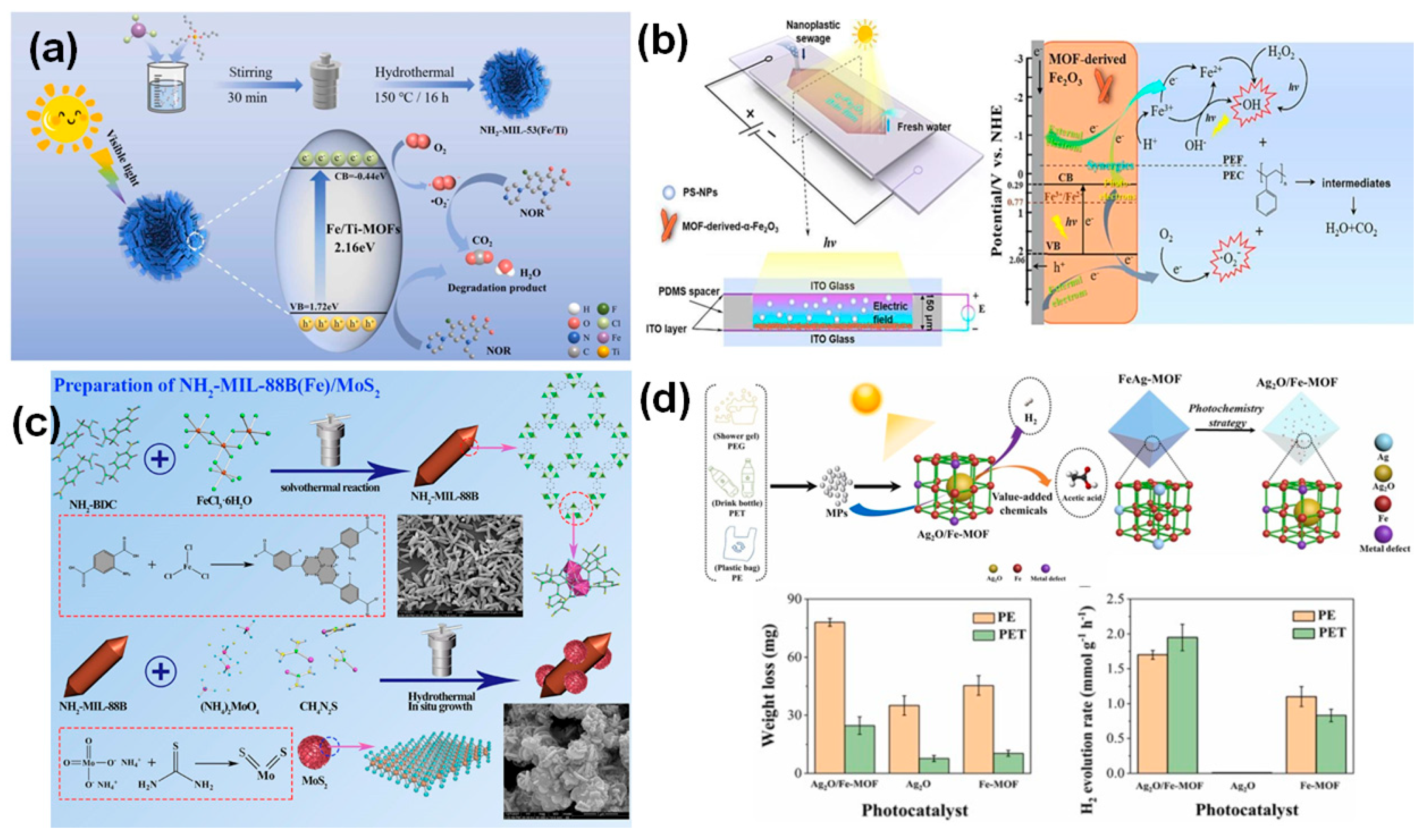
- Gao, W.; Wang, F.; Ou, M.; Wu, Q.; Wang, L.; Zhu, H.; Li, Y.; Kong, N.; Qiu, J.; Hu, S. Enhancing degradation of norfloxacin using chrysanthemum-shaped bimetallic NH2-MIL-53 (Fe/Ti) photocatalysts under visible light irradiation. J. Environ. Chem. Eng. 2023, 11, 111050. [Google Scholar] [CrossRef]
- Chen, Q.; Wan, L.; Zhou, H.; Luo, F.; Lei, L.; Wang, N. Photoelectro-Fenton microreactor integrated with MOF-derived porous α-Fe2O3 film for efficient nanoplastics degradation. J. Water Process Eng. 2023, 56, 104343. [Google Scholar] [CrossRef]
- Feng, X.; Long, R.; Liu, C.; Liu, X. Visible-light-driven removal of tetracycline hydrochloride and microplastics (HDPE) by nano flower hybrid heterojunction NH2-MIL-88B(Fe)/MoS2 via enhanced electron-transfer. Sep. Purif. Technol. 2022, 302, 122138. [Google Scholar] [CrossRef]
- Qin, J.; Dou, Y.; Wu, F.; Yao, Y.; Andersen, H.R.; Hélix-Nielsen, C.; Lim, S.Y.; Zhang, W. In-situ formation of Ag2O in metal-organic framework for light-driven upcycling of microplastics coupled with hydrogen production. Appl. Catal. B Environ. 2022, 319, 121940. [Google Scholar] [CrossRef]
- Jiang, R.; Lu, G.; Zhang, L.; Chen, Y.; Liu, J.; Yan, Z.; Xie, H. Insight into the effect of microplastics on photocatalytic degradation tetracycline by a dissolvable semiconductor-organic framework. J. Hazard. Mater. 2024, 463, 132887. [Google Scholar] [CrossRef]
- Rincon, I.; Hidalgo, T.; Armani, G.; Rojas, S.; Horcajada, P. Enzyme_Metal-Organic Framework Composites as Novel Approach for Microplastic Degradation. ChemSusChem 2024, 17, e202301350. [Google Scholar] [CrossRef]
- Haris, M.; Khan, M.W.; Zavabeti, A.; Mahmood, N.; Eshtiaghi, N. Self-assembly of C@ FeO nanopillars on 2D-MOF for simultaneous removal of microplastic and dissolved contaminants from water. Chem. Eng. J. 2023, 455, 140390. [Google Scholar] [CrossRef]
- Honarmandrad, Z.; Kaykhaii, M.; Gębicki, J. Microplastics removal from aqueous environment by metal organic frameworks. BMC Chem. 2023, 17, 122. [Google Scholar] [CrossRef]
- Mastropietro, T.F. Metal-organic frameworks and plastic: An emerging synergic partnership. Sci. Technol. Adv. Mater. 2023, 24, 2189890. [Google Scholar] [CrossRef]
- Ali, S.S.; Elsamahy, T.; Al-Tohamy, R.; Sun, J. A critical review of microplastics in aquatic ecosystems: Degradation mechanisms and removing strategies. Environ. Sci. Ecotechnology 2024, 21, 100427. [Google Scholar] [CrossRef]
- Chen, J.; Wu, J.; Sherrell, P.C.; Chen, J.; Wang, H.; Zhang, W.-x.; Yang, J. How to Build a Microplastics-Free Environment: Strategies for Microplastics Degradation and Plastics Recycling. Adv. Sci. 2022, 9, 2103764. [Google Scholar] [CrossRef] [PubMed]
- Wei, J.; Yuan, M.; Wang, S.; Wang, X.; An, N.; Lv, G.; Wu, L. Recent advances in metal organic frameworks for the catalytic degradation of organic pollutants. Collagen Leather 2023, 5, 33. [Google Scholar] [CrossRef]
- Alavi, S.E.; Alavi, S.F.; Koohi, M.; Raza, A.; Ebrahimi Shahmabadi, H. Nanoparticle-integrated metal–organic frameworks: A revolution in next-generation drug delivery systems. J. Pharm. Investig. 2024, 54, 751–783. [Google Scholar] [CrossRef]
- Jiang, D.; Xu, P.; Wang, H.; Zeng, G.; Huang, D.; Chen, M.; Lai, C.; Zhang, C.; Wan, J.; Xue, W. Strategies to improve metal organic frameworks photocatalyst’s performance for degradation of organic pollutants. Coord. Chem. Rev. 2018, 376, 449–466. [Google Scholar] [CrossRef]
- Xiao, J.-D.; Jiang, H.-L. Metal–Organic Frameworks for Photocatalysis and Photothermal Catalysis. Acc. Chem. Res. 2019, 52, 356–366. [Google Scholar] [CrossRef] [PubMed]
- Chen, D.; Zheng, Y.-T.; Huang, N.-Y.; Xu, Q. Metal-organic framework composites for photocatalysis. EnergyChem 2024, 6, 100115. [Google Scholar] [CrossRef]
- Hussain, M.Z.; Schneemann, A.; Fischer, R.A.; Zhu, Y.; Xia, Y. MOF Derived Porous ZnO/C Nanocomposites for Efficient Dye Photodegradation. ACS Appl. Energy Mater. 2018, 1, 4695–4707. [Google Scholar] [CrossRef]
- Zhan, W.-w.; Kuang, Q.; Zhou, J.-z.; Kong, X.-j.; Xie, Z.-x.; Zheng, L.-s. Semiconductor@Metal–Organic Framework Core–Shell Heterostructures: A Case of ZnO@ZIF-8 Nanorods with Selective Photoelectrochemical Response. J. Am. Chem. Soc. 2013, 135, 1926–1933. [Google Scholar] [CrossRef] [PubMed]
- Xiao, Y.; Tian, Y.; Xu, W.; Zhu, J. Photodegradation of Microplastics through Nanomaterials: Insights into Photocatalysts Modification and Detailed Mechanisms. Materials 2024, 17, 2755. [Google Scholar] [CrossRef]
- Kumar, A.; Nayak, D.; Sahoo, P.; Nandi, B.K.; Saxena, V.K.; Thangavel, R. Fabrication of porous and visible light active ZnO nanorods and ZnO@TiO2 core–shell photocatalysts for self-cleaning applications. Phys. Chem. Chem. Phys. 2023, 25, 16423–16437. [Google Scholar] [CrossRef]
- Le, A.T.; Le, T.D.H.; Cheong, K.-Y.; Pung, S.-Y. Immobilization of zinc oxide-based photocatalysts for organic pollutant degradation: A review. J. Environ. Chem. Eng. 2022, 10, 108505. [Google Scholar] [CrossRef]
- Khalid, N.R.; Hammad, A.; Tahir, M.B.; Rafique, M.; Iqbal, T.; Nabi, G.; Hussain, M.K. Enhanced photocatalytic activity of Al and Fe co-doped ZnO nanorods for methylene blue degradation. Ceram. Int. 2019, 45, 21430–21435. [Google Scholar] [CrossRef]
- Khan, M.; Akmal, Z.; Tayyab, M.; Mansoor, S.; Zeb, A.; Ye, Z.; Zhang, J.; Wu, S.; Wang, L. MOFs materials as photocatalysts for CO2 reduction: Progress, challenges and perspectives. Carbon Capture Sci. Technol. 2024, 11, 100191. [Google Scholar] [CrossRef]
- Galán-González, A.; Sivan, A.K.; Hernández-Ferrer, J.; Bowen, L.; Di Mario, L.; Martelli, F.; Benito, A.M.; Maser, W.K.; Chaudhry, M.U.; Gallant, A.; et al. Cobalt-Doped ZnO Nanorods Coated with Nanoscale Metal–Organic Framework Shells for Water-Splitting Photoanodes. ACS Appl. Nano Mater. 2020, 3, 7781–7788. [Google Scholar] [CrossRef]
- Aboubakr, A.E.A.; Hussien, M.K.; Sabbah, A.; Hassan, A.E.; Elsayed, M.H.; Wen, Z.; Chen, K.-H.; Hung, C.-H. Direct Z-Scheme Heterostructure of In Situ Planted ZnO Nanorods on g-C3N4 Thin Sheets Sprayed on TiO2 Layer: A Strategy for Ternary-Photoanode Engineering toward Enhanced Photoelectrochemical Water Splitting. ACS Appl. Energy Mater. 2024, 7, 906–918. [Google Scholar] [CrossRef]
- Verma, S.; Tirumala Rao, B.; Singh, R.; Kaul, R. Photocatalytic degradation kinetics of cationic and anionic dyes using Au–ZnO nanorods: Role of pH for selective and simultaneous degradation of binary dye mixtures. Ceram. Int. 2021, 47, 34751–34764. [Google Scholar] [CrossRef]
- Pavel, M.; Anastasescu, C.; State, R.-N.; Vasile, A.; Papa, F.; Balint, I. Photocatalytic Degradation of Organic and Inorganic Pollutants to Harmless End Products: Assessment of Practical Application Potential for Water and Air Cleaning. Catalysts 2023, 13, 380. [Google Scholar] [CrossRef]
- Jia, H.; He, W.; Wamer, W.G.; Han, X.; Zhang, B.; Zhang, S.; Zheng, Z.; Xiang, Y.; Yin, J.-J. Generation of Reactive Oxygen Species, Electrons/Holes, and Photocatalytic Degradation of Rhodamine B by Photoexcited CdS and Ag2S Micro-Nano Structures. J. Phys. Chem. C 2014, 118, 21447–21456. [Google Scholar] [CrossRef]
- Al-Nuaim, M.A.; Alwasiti, A.A.; Shnain, Z.Y. The photocatalytic process in the treatment of polluted water. Chem. Pap. 2023, 77, 677–701. [Google Scholar] [CrossRef]
- Minh, T.T.; Tu, N.T.T.; Van Thi, T.T.; Hoa, L.T.; Long, H.T.; Phong, N.H.; Pham, T.L.M.; Khieu, D.Q. Synthesis of Porous Octahedral ZnO/CuO Composites from Zn/Cu-Based MOF-199 and Their Applications in Visible-Light-Driven Photocatalytic Degradation of Dyes. J. Nanomater. 2019, 2019, 5198045. [Google Scholar] [CrossRef]
- Mahmoodi, A.; Dorranian, D.; Abbasi, H. Significant effects of negligible amount of H2O2 on photocatalytic efficiency of MIL-125 and NH2-MIL-125 nanostructures in degradation of methylene blue. RSC Adv. 2024, 14, 30140–30153. [Google Scholar] [CrossRef] [PubMed]
- Sridhar, S.; Murugesan, N.; Gopalakrishnan, M.; Janjoren, D.; Ganesan, S. Removal of microplastic for a sustainable strategy by microbial biodegradation. Sustain. Chem. Environ. 2024, 6, 100088. [Google Scholar] [CrossRef]
- Monira, S.; Roychand, R.; Hai, F.I.; Bhuiyan, M.; Dhar, B.R.; Pramanik, B.K. Nano and microplastics occurrence in wastewater treatment plants: A comprehensive understanding of microplastics fragmentation and their removal. Chemosphere 2023, 334, 139011. [Google Scholar] [CrossRef]
- Guan, G.; Ren, W.; Huo, S.; Zou, B.; Qian, J.; Wang, F.; Ma, A.; Zhuang, G.; Xu, L. Photocatalytic and Enzymatic Degradation of Microplastics: Current Status, Comparison, and Combination. Catalysts 2025, 15, 1015. [Google Scholar] [CrossRef]
- Sanakousar, F.M.; Vidyasagar, C.C.; Jiménez-Pérez, V.M.; Prakash, K. Recent progress on visible-light-driven metal and non-metal doped ZnO nanostructures for photocatalytic degradation of organic pollutants. Mater. Sci. Semicond. Process. 2022, 140, 106390. [Google Scholar] [CrossRef]
- AlMohamadi, H.; Awad, S.A.; Sharma, A.K.; Fayzullaev, N.; Távara-Aponte, A.; Chiguala-Contreras, L.; Amari, A.; Rodriguez-Benites, C.; Tahoon, M.A.; Esmaeili, H. Photocatalytic Activity of Metal- and Non-Metal-Anchored ZnO and TiO2 Nanocatalysts for Advanced Photocatalysis: Comparative Study. Catalysts 2024, 14, 420. [Google Scholar] [CrossRef]
- Xu, J.-J.; Lu, Y.-N.; Tao, F.-F.; Liang, P.-F.; Zhang, P.-A. ZnO Nanoparticles Modified by Carbon Quantum Dots for the Photocatalytic Removal of Synthetic Pigment Pollutants. ACS Omega 2023, 8, 7845–7857. [Google Scholar] [CrossRef]
- Qin, Y.; Hao, M.; Li, Z. Chapter 17—Metal–organic frameworks for photocatalysis. In Interface Science and Technology; Yu, J., Jaroniec, M., Jiang, C., Eds.; Elsevier: Amsterdam, The Netherlands, 2020; Volume 31, pp. 541–579. [Google Scholar]
- Anucha, C.B.; Altin, I.; Bacaksiz, E.; Stathopoulos, V.N. Titanium dioxide (TiO2)-based photocatalyst materials activity enhancement for contaminants of emerging concern (CECs) degradation: In the light of modification strategies. Chem. Eng. J. Adv. 2022, 10, 100262. [Google Scholar] [CrossRef]
- Arora, I.; Chawla, H.; Chandra, A.; Sagadevan, S.; Garg, S. Advances in the strategies for enhancing the photocatalytic activity of TiO2: Conversion from UV-light active to visible-light active photocatalyst. Inorg. Chem. Commun. 2022, 143, 109700. [Google Scholar] [CrossRef]
- Saad, M.; Bahadur, A.; Iqbal, S.; Mahmood, S.; Tayyab, M.; Alshalwi, M.; Shah, M. Development of stable S-scheme 2D–2D g-C3N4/CdS nanoheterojunction arrays for enhanced visible light photomineralisation of nitrophenol priority water pollutants. Sci. Rep. 2024, 14, 2897. [Google Scholar] [CrossRef]
- Fard, N.E.; Ali, N.S.; Saady, N.M.C.; Albayati, T.M.; Salih, I.K.; Zendehboudi, S.; Harharah, H.N.; Harharah, R.H. A review on development and modification strategies of MOFs Z-scheme heterojunction for photocatalytic wastewater treatment, water splitting, and DFT calculations. Heliyon 2024, 10, e32861. [Google Scholar] [CrossRef]
- Doustkhah, E.; Esmat, M.; Fukata, N.; Ide, Y.; Hanaor, D.A.H.; Assadi, M.H.N. MOF-derived nanocrystalline ZnO with controlled orientation and photocatalytic activity. Chemosphere 2022, 303, 134932. [Google Scholar] [CrossRef]
- Li, Y.; Ma, C.; Zhang, X. Localized conversion of ZnO nanorods for fabricating Metal-Organic framework MAF-5 membranes for hydrogen separation. Inorg. Chem. Commun. 2022, 136, 109126. [Google Scholar] [CrossRef]
- Rahimi, R.; Shariatinia, S.; Zargari, S.; Yaghoubi Berijani, M.; Ghaffarinejad, A.; Shojaie, Z.S. Synthesis, characterization, and photocurrent generation of a new nanocomposite based Cu–TCPP MOF and ZnO nanorod. RSC Adv. 2015, 5, 46624–46631. [Google Scholar] [CrossRef]
- Li, X.; Liu, S.; Fan, K.; Liu, Z.; Song, B.; Yu, J. MOF-Based Transparent Passivation Layer Modified ZnO Nanorod Arrays for Enhanced Photo-Electrochemical Water Splitting. Adv. Energy Mater. 2018, 8, 1800101. [Google Scholar] [CrossRef]
- Wang, Y.; Liu, L.; Shi, Y.; Li, S.; Sun, F.; Lu, Q.; Shen, Y.; Feng, S.; Qin, S. Fast and High-Performance Self-Powered Photodetector Based on the ZnO/Metal–Organic Framework Heterojunction. ACS Appl. Mater. Interfaces 2023, 15, 18236–18243. [Google Scholar] [CrossRef]
- Zheng, H.; Zhong, B.; Wang, Q.; Li, X.; Chen, J.; Liu, L.; Liu, T. ZnO-Doped Metal-Organic Frameworks Nanoparticles: Antibacterial Activity and Mechanisms. Int. J. Mol. Sci. 2023, 24, 12238. [Google Scholar] [CrossRef]
- Abas, K.M.; Al Kiey, S.A. Facile synthesis of MOF-derived N doped ZnO/C nanoparticles and its adsorption activity toward dye removal. BMC Chem. 2023, 17, 126. [Google Scholar] [CrossRef]
- Hajiashrafi, S.; Motakef Kazemi, N. Preparation and evaluation of ZnO nanoparticles by thermal decomposition of MOF-5. Heliyon 2019, 5, e02152. [Google Scholar] [CrossRef] [PubMed]
- Alsharyani, A.K.; Muruganandam, L. Fabrication of zinc oxide nanorods for photocatalytic degradation of docosane, a petroleum pollutant, under solar light simulator. RSC Adv. 2024, 14, 9038–9049. [Google Scholar] [CrossRef] [PubMed]
- Chen, Y.L.; Kuo, L.-C.; Tseng, M.L.; Chen, H.M.; Chen, C.-K.; Huang, H.J.; Liu, R.-S.; Tsai, D.P. ZnO nanorod optical disk photocatalytic reactor for photodegradation of methyl orange. Opt. Express 2013, 21, 7240–7249. [Google Scholar] [CrossRef] [PubMed][Green Version]
- Wang, C.-C.; Li, J.-R.; Lv, X.-L.; Zhang, Y.-Q.; Guo, G. Photocatalytic organic pollutants degradation in metal–organic frameworks. Energy Environ. Sci. 2014, 7, 2831–2867. [Google Scholar] [CrossRef]
- Xia, T.; Lin, Y.; Li, W.; Ju, M. Photocatalytic degradation of organic pollutants by MOFs based materials: A review. Chin. Chem. Lett. 2021, 32, 2975–2984. [Google Scholar] [CrossRef]
- Zeng, L.; Guo, X.; He, C.; Duan, C. Metal–Organic Frameworks: Versatile Materials for Heterogeneous Photocatalysis. ACS Catal. 2016, 6, 7935–7947. [Google Scholar] [CrossRef]
- Younis, S.A.; Kwon, E.E.; Qasim, M.; Kim, K.-H.; Kim, T.; Kukkar, D.; Dou, X.; Ali, I. Metal-organic framework as a photocatalyst: Progress in modulation strategies and environmental/energy applications. Prog. Energy Combust. Sci. 2020, 81, 100870. [Google Scholar] [CrossRef]
- Khan, M.S.; Li, Y.; Li, D.-S.; Qiu, J.; Xu, X.; Yang, H.Y. A review of metal–organic framework (MOF) materials as an effective photocatalyst for degradation of organic pollutants. Nanoscale Adv. 2023, 5, 6318–6348. [Google Scholar] [CrossRef]
- Solymos, K.; Babcsányi, I.; Ariya, B.; Gyulavári, T.; Ágoston, Á.; Szamosvölgyi, Á.; Kukovecz, Á.; Kónya, Z.; Farsang, A.; Pap, Z. Photocatalytic and surface properties of titanium dioxide nanoparticles in soil solutions. Environ. Sci. Nano 2024, 11, 1204–1216. [Google Scholar] [CrossRef]
- Mutsak Ahmed, R.; Hasan, I. A review on properties and applications of TiO2 and associated nanocomposite materials. Mater. Today Proc. 2023, 81, 1073–1078. [Google Scholar] [CrossRef]
- Salomatina, E.V.; Fukina, D.G.; Koryagin, A.V.; Titaev, D.N.; Suleimanov, E.V.; Smirnova, L.A. Preparation and photocatalytic properties of titanium dioxide modified with gold or silver nanoparticles. J. Environ. Chem. Eng. 2021, 9, 106078. [Google Scholar] [CrossRef]
- Wang, J.; Liu, C.; Wang, Y.; Shen, P.; Mu, Y.; Jia, F.; Zhou, T.; Xing, F.; Yin, G.; Sun, M. Enhanced visible-light photocatalytic performance of cadmium sulfide film via annealing treatment. SN Appl. Sci. 2020, 2, 2009. [Google Scholar] [CrossRef]
- Zhu, J.; He, J.; Da, L.; Hu, L. Synthesis and visible-light photocatalytic potential of nanocomposite based on the cadmium sulfide and titanoniobate. Mater. Chem. Phys. 2020, 253, 123408. [Google Scholar] [CrossRef]
- Zhang, L.; Jin, Z.; Lu, H.; Lin, T.; Ruan, S.; Zhao, X.S.; Zeng, Y.-J. Improving the Visible-Light Photocatalytic Activity of Graphitic Carbon Nitride by Carbon Black Doping. ACS Omega 2018, 3, 15009–15017. [Google Scholar] [CrossRef]
- Huang, M.; Xu, L.; Jiang, M.; Luo, X.; Cong, J.; Sun, W.; Wang, B. Boosting visible-light photocatalytic performance of graphitic carbon nitride by regulating its donor-acceptor structure via maleamide. J. Alloys Compd. 2024, 1005, 176067. [Google Scholar] [CrossRef]
- Zheng, Q.; Durkin, D.P.; Elenewski, J.E.; Sun, Y.; Banek, N.A.; Hua, L.; Chen, H.; Wagner, M.J.; Zhang, W.; Shuai, D. Visible-Light-Responsive Graphitic Carbon Nitride: Rational Design and Photocatalytic Applications for Water Treatment. Environ. Sci. Technol. 2016, 50, 12938–12948. [Google Scholar] [CrossRef] [PubMed]
- Bhanderi, D.; Lakhani, P.; Modi, C.K. Graphitic carbon nitride (g-C3N4) as an emerging photocatalyst for sustainable environmental applications: A comprehensive review. RSC Sustain. 2024, 2, 265–287. [Google Scholar] [CrossRef]
- Raji, R.; Sibi, K.S.; Gopchandran, K.G. ZnO:Ag nanorods as efficient photocatalysts: Sunlight driven photocatalytic degradation of sulforhodamine B. Appl. Surf. Sci. 2018, 427, 863–875. [Google Scholar] [CrossRef]
- Velásquez, J.; Valencia, S.; Rios, L.; Restrepo, G.; Marín, J. Characterization and photocatalytic evaluation of polypropylene and polyethylene pellets coated with P25 TiO2 using the controlled-temperature embedding method. Chem. Eng. J. 2012, 203, 398–405. [Google Scholar] [CrossRef]
- Gupta, J.; Mohapatra, J.; Bahadur, D. Visible light driven mesoporous Ag-embedded ZnO nanocomposites: Reactive oxygen species enhanced photocatalysis, bacterial inhibition and photodynamic therapy. Dalton Trans. 2017, 46, 685–696. [Google Scholar] [CrossRef]
- Jaast, S.; Grewal, A. Green synthesis of silver nanoparticles, characterization and evaluation of their photocatalytic dye degradation activity. Curr. Res. Green Sustain. Chem. 2021, 4, 100195. [Google Scholar] [CrossRef]
- Pham, T.H.; Myung, Y.; Van Le, Q.; Kim, T. Visible-light photocatalysis of Ag-doped graphitic carbon nitride for photodegradation of micropollutants in wastewater. Chemosphere 2022, 301, 134626. [Google Scholar] [CrossRef]
- Bessekhouad, Y.; Robert, D.; Weber, J.V. Bi2S3/TiO2 and CdS/TiO2 heterojunctions as an available configuration for photocatalytic degradation of organic pollutant. J. Photochem. Photobiol. A Chem. 2004, 163, 569–580. [Google Scholar] [CrossRef]
- Song, J.; Zeng, D.; Xie, Y.; Zhang, F.; Rao, S.; Wang, F.; Zhao, J.; Zhang, J.; Wang, L. Preparation of CdS Nanoparticles-TiO2 Nanorod Hererojunction and Their High-Performance Photocatalytic Activity. Catalysts 2020, 10, 441. [Google Scholar] [CrossRef]
- Bai, S.; Li, H.; Guan, Y.; Jiang, S. The enhanced photocatalytic activity of CdS/TiO2 nanocomposites by controlling CdS dispersion on TiO2 nanotubes. Appl. Surf. Sci. 2011, 257, 6406–6409. [Google Scholar] [CrossRef]
- Dai, K.; Lu, L.; Liang, C.; Dai, J.; Zhu, G.; Liu, Z.; Liu, Q.; Zhang, Y. Graphene oxide modified ZnO nanorods hybrid with high reusable photocatalytic activity under UV-LED irradiation. Mater. Chem. Phys. 2014, 143, 1410–1416. [Google Scholar] [CrossRef]
- Mirikaram, N.; Pérez-Molina, Á.; Morales-Torres, S.; Salemi, A.; Maldonado-Hódar, F.J.; Pastrana-Martínez, L.M. Photocatalytic Perfomance of ZnO-Graphene Oxide Composites towards the Degradation of Vanillic Acid under Solar Radiation and Visible-LED. Nanomaterials 2021, 11, 1576. [Google Scholar] [CrossRef] [PubMed]
- Cho, H.D.; Kim, D.Y.; Lee, J.-K. ZnO Nanorod/Graphene Hybrid-Structures Formed on Cu Sheet by Self-Catalyzed Vapor-Phase Transport Synthesis. Nanomaterials 2021, 11, 450. [Google Scholar] [CrossRef] [PubMed]
- Ebrahimi Naghani, M.; Neghabi, M.; Zadsar, M.; Abbastabar Ahangar, H. Synthesis and characterization of linear/nonlinear optical properties of graphene oxide and reduced graphene oxide-based zinc oxide nanocomposite. Sci. Rep. 2023, 13, 1496. [Google Scholar] [CrossRef]
- Navalón, S.; Dhakshinamoorthy, A.; Álvaro, M.; Ferrer, B.; García, H. Metal–Organic Frameworks as Photocatalysts for Solar-Driven Overall Water Splitting. Chem. Rev. 2023, 123, 445–490. [Google Scholar] [CrossRef]
- Juma, A.K.; Merican, Z.M.A.; Haruna, A. Recent progress of MOF-based photocatalysts for environmental application and sustainability considerations. Chem. Eng. Res. Des. 2024, 208, 391–435. [Google Scholar] [CrossRef]
- Saison, T.; Chemin, N.; Chanéac, C.; Durupthy, O.; Mariey, L.; Maugé, F.; Brezová, V.; Jolivet, J.-P. New Insights Into BiVO4 Properties as Visible Light Photocatalyst. J. Phys. Chem. C 2015, 119, 12967–12977. [Google Scholar] [CrossRef]
- Hunge, Y.M.; Uchida, A.; Tominaga, Y.; Fujii, Y.; Yadav, A.A.; Kang, S.-W.; Suzuki, N.; Shitanda, I.; Kondo, T.; Itagaki, M.; et al. Visible Light-Assisted Photocatalysis Using Spherical-Shaped BiVO4 Photocatalyst. Catalysts 2021, 11, 460. [Google Scholar] [CrossRef]
- Kamble, G.S.; Natarajan, T.S.; Patil, S.S.; Thomas, M.; Chougale, R.K.; Sanadi, P.D.; Siddharth, U.S.; Ling, Y.-C. BiVO4 As a Sustainable and Emerging Photocatalyst: Synthesis Methodologies, Engineering Properties, and Its Volatile Organic Compounds Degradation Efficiency. Nanomaterials 2023, 13, 1528. [Google Scholar] [CrossRef]
- Pérez del Pulgar, H.; Ortiz-Bustos, J.; Gómez-Ruiz, S.; del Hierro, I.; Pérez, Y. Efficient visible-light-driven photocatalysis: Simultaneous degradation of multiple pollutants with bismuth oxyhalide solid solutions. Environ. Sci. Water Res. Technol. 2024, 10, 2087–2102. [Google Scholar] [CrossRef]
- Xie, H.; Wang, M.; Sun, Z.; Lu, X.; Zhang, D.; Jin, S.; Chen, S. Efficient visible light photodegradation of BiVO4:Yb3+/Tm3+ with high content of tetragonal phase. Front. Chem. Sci. Eng. 2024, 18, 122. [Google Scholar] [CrossRef]
- Gupta, N.K.; Bae, J.; Kim, S.; Kim, K.S. Fabrication of Zn-MOF/ZnO nanocomposites for room temperature H2S removal: Adsorption, regeneration, and mechanism. Chemosphere 2021, 274, 129789. [Google Scholar] [CrossRef]
- Shi, C.; Wang, M.; Wang, Z.; Qu, G.; Jiang, W.; Pan, X.; Fang, M. Oligomers from the Synthetic Polymers: Another Potential Iceberg of New Pollutants. Environ. Health 2023, 1, 228–235. [Google Scholar] [CrossRef]
- Zhang, X.; Yin, Z.; Xiang, S.; Yan, H.; Tian, H. Degradation of Polymer Materials in the Environment and Its Impact on the Health of Experimental Animals: A Review. Polymers 2024, 16, 2807. [Google Scholar] [CrossRef]
- Ray, P.C.; Yu, H.; Fu, P.P. Toxicity and Environmental Risks of Nanomaterials: Challenges and Future Needs. J. Environ. Sci. Health Part C 2009, 27, 1–35. [Google Scholar] [CrossRef]
- Batley, G.E.; Kirby, J.K.; McLaughlin, M.J. Fate and Risks of Nanomaterials in Aquatic and Terrestrial Environments. Acc. Chem. Res. 2013, 46, 854–862. [Google Scholar] [CrossRef]
- Papadaki, D.; Foteinis, S.; Mhlongo, G.H.; Nkosi, S.S.; Motaung, D.E.; Ray, S.S.; Tsoutsos, T.; Kiriakidis, G. Life cycle assessment of facile microwave-assisted zinc oxide (ZnO) nanostructures. Sci. Total Environ. 2017, 586, 566–575. [Google Scholar] [CrossRef]
- Ma, Q.; Li, Y.; Tan, Y.; Xu, B.; Cai, J.; Zhang, Y.; Wang, Q.; Wu, Q.; Yang, B.; Huang, J. Recent Advances in Metal-Organic Framework (MOF)-Based Photocatalysts: Design Strategies and Applications in Heavy Metal Control. Molecules 2023, 28, 6681. [Google Scholar] [CrossRef] [PubMed]
- Dey, S.; Mohanty, D.l.; Divya, N.; Bakshi, V.; Mohanty, A.; Rath, D.; Das, S.; Mondal, A.; Roy, S.; Sabui, R. A critical review on zinc oxide nanoparticles: Synthesis, properties and biomedical applications. Intell. Pharm. 2025, 3, 53–70. [Google Scholar] [CrossRef]
- Kumar, P.; Anand, B.; Tsang, Y.F.; Kim, K.-H.; Khullar, S.; Wang, B. Regeneration, degradation, and toxicity effect of MOFs: Opportunities and challenges. Environ. Res. 2019, 176, 108488. [Google Scholar] [CrossRef]
- Kumar Dey, T.; Hou, J.; Sillanpää, M.; Kumar Pramanik, B. Metal-organic framework membrane for waterborne micro/nanoplastics treatment. Chem. Eng. J. 2023, 474, 145715. [Google Scholar] [CrossRef]
- Jin, M.; Li, N.; Sheng, W.; Ji, X.; Liang, X.; Kong, B.; Yin, P.; Li, Y.; Zhang, X.; Liu, K. Toxicity of different zinc oxide nanomaterials and dose-dependent onset and development of Parkinson’s disease-like symptoms induced by zinc oxide nanorods. Environ. Int. 2021, 146, 106179. [Google Scholar] [CrossRef] [PubMed]
- Topkaya, E.; Konyar, M.; Yatmaz, H.C.; Öztürk, K. Pure ZnO and composite ZnO/TiO2 catalyst plates: A comparative study for the degradation of azo dye, pesticide and antibiotic in aqueous solutions. J. Colloid Interface Sci. 2014, 430, 6–11. [Google Scholar] [CrossRef]
- Zhang, Q.; Yan, S.; Yan, X.; Lv, Y. Recent advances in metal-organic frameworks: Synthesis, application and toxicity. Sci. Total Environ. 2023, 902, 165944. [Google Scholar] [CrossRef]
- Taghizadeh, S.-M.; Lal, N.; Ebrahiminezhad, A.; Moeini, F.; Seifan, M.; Ghasemi, Y.; Berenjian, A. Green and Economic Fabrication of Zinc Oxide (ZnO) Nanorods as a Broadband UV Blocker and Antimicrobial Agent. Nanomaterials 2020, 10, 530. [Google Scholar] [CrossRef]
- Jha, S.; Rani, R.; Singh, S. Biogenic Zinc Oxide Nanoparticles and Their Biomedical Applications: A Review. J. Inorg. Organomet. Polym. Mater. 2023, 33, 1437–1452. [Google Scholar] [CrossRef]
- Irede, E.L.; Awoyemi, R.F.; Owolabi, B.; Aworinde, O.R.; Kajola, R.O.; Hazeez, A.; Raji, A.A.; Ganiyu, L.O.; Onukwuli, C.O.; Onivefu, A.P.; et al. Cutting-edge developments in zinc oxide nanoparticles: Synthesis and applications for enhanced antimicrobial and UV protection in healthcare solutions. RSC Adv. 2024, 14, 20992–21034. [Google Scholar] [CrossRef]
- Liao, C.; Jin, Y.; Li, Y.; Tjong, S.C. Interactions of Zinc Oxide Nanostructures with Mammalian Cells: Cytotoxicity and Photocatalytic Toxicity. Int. J. Mol. Sci. 2020, 21, 6305. [Google Scholar] [CrossRef]
- Barbosa, J.S.; Figueira, F.; Braga, S.S.; Almeida Paz, F.A. Chapter 4—Metal-organic frameworks for biomedical applications: The case of functional ligands. In Metal-Organic Frameworks for Biomedical Applications; Mozafari, M., Ed.; Woodhead Publishing: Cambridge, UK, 2020; pp. 69–92. [Google Scholar]
- Safdar Ali, R.; Meng, H.; Li, Z. Zinc-Based Metal-Organic Frameworks in Drug Delivery, Cell Imaging, and Sensing. Molecules 2022, 27, 100. [Google Scholar] [CrossRef] [PubMed]
- Wang, H.-S.; Wang, Y.-H.; Ding, Y. Development of biological metal–organic frameworks designed for biomedical applications: From bio-sensing/bio-imaging to disease treatment. Nanoscale Adv. 2020, 2, 3788–3797. [Google Scholar] [CrossRef] [PubMed]
- Li, W.; Wang, J.; Xiong, Z.; Li, D. Micro/nanorobots for efficient removal and degradation of micro/nanoplastics. Cell Rep. Phys. Sci. 2023, 4, 101639. [Google Scholar] [CrossRef]
- Kim, M.; Ahn, Y.-R.; Yoon, S.; Choi, J.; Kim, H.; Lim, K.S.; Ha, S.-J.; Park, J.-A.; Kim, H.-O. Application of metal-organic frameworks for photocatalytic degradation of microplastics: Design, challenges, and scope. Chemosphere 2024, 366, 143518. [Google Scholar] [CrossRef] [PubMed]
- Kaliyaperumal, V.; Rajasekaran, S.; Kanniah, R.; Gopal, D.; Ayyakannu Sundaram, G.; Kumar, A.S.K. Synthesis and Evaluation of Gelatin–Chitosan Biofilms Incorporating Zinc Oxide Nanoparticles and 5-Fluorouracil for Cancer Treatment. Materials 2024, 17, 3186. [Google Scholar] [CrossRef] [PubMed]
- Vipin, R.; Sundaram, G.A.; Ganapathy, D.; Balasubramaniyan, P. Nickel(II) complex anchoring on anatase nanoparticles: A multifunctional approach to anticancer, anti-inflammatory, and antioxidant activities. J. Mol. Struct. 2025, 1321, 140034. [Google Scholar] [CrossRef]
- Ayyakannu Sundaram, G.; Subramani, T.; Anbalagan, K.; Parvez, M.K.; Kumar, A.S.K. Photochemically enhanced photocatalytic and magnetic properties of TiO2via Co(ii) ion implantation from a Co(ii)–picoline complex. New J. Chem. 2024, 48, 16429–16445. [Google Scholar] [CrossRef]
- Shi, H.; Magaye, R.; Castranova, V.; Zhao, J. Titanium dioxide nanoparticles: A review of current toxicological data. Part. Fibre Toxicol. 2013, 10, 15. [Google Scholar] [CrossRef]
- Nagar, V.; Singh, T.; Tiwari, Y.; Aseri, V.; Pandit, P.P.; Chopade, R.L.; Pandey, K.; Lodha, P.; Awasthi, G. ZnO Nanoparticles: Exposure, toxicity mechanism and assessment. Mater. Today Proc. 2022, 69, 56–63. [Google Scholar] [CrossRef]
- Sayes, C.M.; Fortner, J.D.; Guo, W.; Lyon, D.; Boyd, A.M.; Ausman, K.D.; Tao, Y.J.; Sitharaman, B.; Wilson, L.J.; Hughes, J.B.; et al. The Differential Cytotoxicity of Water-Soluble Fullerenes. Nano Lett. 2004, 4, 1881–1887. [Google Scholar] [CrossRef]
- Sundar, V.; Balasubramanian, B.; Sivakumar, M.; Chinnaraj, S.; Palani, V.; Maluventhen, V.; Kamyab, H.; Chelliapan, S.; Arumugam, M.; Mediavilla, D.P.Z. An eco-friendly synthesis of titanium oxide nanoparticles mediated from Syringodium isoetifolium and evaluate its biological activity and photocatalytic dye degradation. Inorg. Chem. Commun. 2024, 161, 112125. [Google Scholar] [CrossRef]
- Wang, X.; Blechert, S.; Antonietti, M. Polymeric Graphitic Carbon Nitride for Heterogeneous Photocatalysis. ACS Catal. 2012, 2, 1596–1606. [Google Scholar] [CrossRef]
- Kong, X.; Liu, X.; Zheng, Y.; Chu, P.K.; Zhang, Y.; Wu, S. Graphitic carbon nitride-based materials for photocatalytic antibacterial application. Mater. Sci. Eng. R Rep. 2021, 145, 100610. [Google Scholar] [CrossRef]
- Ghasempour, A.; Dehghan, H.; Ataee, M.; Chen, B.; Zhao, Z.; Sedighi, M.; Guo, X.; Shahbazi, M.-A. Cadmium Sulfide Nanoparticles: Preparation, Characterization, and Biomedical Applications. Molecules 2023, 28, 3857. [Google Scholar] [CrossRef]
- Iqbal, M.; Ali, A.; Nahyoon, N.A.; Majeed, A.; Pothu, R.; Phulpoto, S.; Thebo, K.H. Photocatalytic degradation of organic pollutant with nanosized cadmium sulfide. Mater. Sci. Energy Technol. 2019, 2, 41–45. [Google Scholar] [CrossRef]
- Horcajada, P.; Gref, R.; Baati, T.; Allan, P.K.; Maurin, G.; Couvreur, P.; Férey, G.; Morris, R.E.; Serre, C. Metal–Organic Frameworks in Biomedicine. Chem. Rev. 2012, 112, 1232–1268. [Google Scholar] [CrossRef] [PubMed]
- Liu, X.; Liang, T.; Zhang, R.; Ding, Q.; Wu, S.; Li, C.; Lin, Y.; Ye, Y.; Zhong, Z.; Zhou, M. Iron-Based Metal–Organic Frameworks in Drug Delivery and Biomedicine. ACS Appl. Mater. Interfaces 2021, 13, 9643–9655. [Google Scholar] [CrossRef] [PubMed]
- Li, J.; Li, Z.; Sun, Q.; Wang, Y.; Li, Y.; Peng, Y.-K.; Li, Y.; Zhang, C.; Liu, B.; Zhao, Y. Recent Advances in the Large-Scale Production of Photo/Electrocatalysts for Energy Conversion and beyond. Adv. Energy Mater. 2024, 14, 2402441. [Google Scholar] [CrossRef]
- Zhang, X.; Jun, M.; Zu, W.; Kim, M.; Lee, K.; Lee, L.Y.S. Photoreforming of Microplastics: Challenges and Opportunities for Sustainable Environmental Remediation. Small 2024, 20, 2403347. [Google Scholar] [CrossRef]
- Gilzad Kohan, M.; You, S.; Camellini, A.; Concina, I.; Zavelani Rossi, M.; Vomiero, A. Optical field coupling in ZnO nanorods decorated with silver plasmonic nanoparticles. J. Mater. Chem. C 2021, 9, 15452–15462. [Google Scholar] [CrossRef]
- Zayed, M.; Nasser, N.; Shaban, M.; Alshaikh, H.; Hamdy, H.; Ahmed, A.M. Effect of Morphology and Plasmonic on Au/ZnO Films for Efficient Photoelectrochemical Water Splitting. Nanomaterials 2021, 11, 2338. [Google Scholar] [CrossRef]
- Ayyakannu Sundaram, G.; EL-Mahdy, A.F.M.; Pham, P.V.; Kunjiappan, S.; Kumar, A.S.K. Synergistic Innovations: Organometallic Frameworks on Graphene Oxide for Sustainable Eco-Energy Solutions. ChemEngineering 2024, 8, 61. [Google Scholar] [CrossRef]
- Sundaram, G.A.; Kumaravelu, S.; Tseng, W.-L.; Pham, P.V.; Kumar, A.S.K.; Parimelazhagan, V. Fine-Tuned Graphene Oxide Nanocomposite: Harnessing Copper(II)–Imidazole Complex for Enhanced Biological Responses and Balanced Photocatalytic Functionality. Materials 2024, 17, 892. [Google Scholar] [CrossRef]
- Ray, A.; Sultana, S.; Tripathy, S.P.; Parida, K. Aggrandizing the Photoactivity of ZnO Nanorods toward N2 Reduction and H2 Evolution through Facile In Situ Coupling with NixPy. ACS Sustain. Chem. Eng. 2021, 9, 6305–6317. [Google Scholar] [CrossRef]
- Bratovcic, A. Photocatalytic Degradation of Plastic Waste: Recent Progress and Future Perspectives. Adv. Nanopart. 2024, 13, 61–78. [Google Scholar] [CrossRef]



| Photocatalyst | Advantages | Limitations | Citations |
|---|---|---|---|
| ZnO Nanorods | High UV photocatalytic activity due to wide bandgap (~3.37 eV). 1D structure enhances charge carrier mobility and reduces recombination. Cost-effective synthesis, suitable for large-scale applications. | Limited absorption in the visible spectrum. Prone to photocorrosion under prolonged UV exposure. | [152,153] |
| MOFs | Tunable bandgap for absorption of both UV and visible light. High surface area and porosity for efficient pollutant adsorption. Flexibility in design, allowing integration with other catalysts. | Stability issues under moisture and high temperatures. Complex and time-consuming synthesis. | [154,155,156,157,158] |
| TiO2 | Excellent chemical stability. High UV activity. Low cost and readily available. | Limited visible light absorption due to large bandgap (~3.2 eV). | [159,160,161] |
| CdS | Visible light absorption. Higher photocatalytic activity under visible light compared to TiO2. | Photocorrosion issues. Toxicity concerns. | [162,163] |
| g-C3N4 | Visible light absorption. Metal-free, non-toxic. | High electron–hole recombination rate. Requires modifications for enhanced efficiency. | [164,165,166,167] |
| Photocatalyst | Target Organic Compounds/ Microplastics | Light Source | Photocatalytic Efficiency (High/Moderate/Low) | Main Findings | Citations |
|---|---|---|---|---|---|
| ZnO Nanorods | PE Microplastics | UV Light (365 nm) | Moderate | High degradation efficiency due to strong ROS generation but limited by UV absorption only. Photocorrosion after extended use. | [81,82,168] |
| TiO2 (P25) | PS Microplastics | UV Light (365 nm) | Moderate | Efficient under UV light with high stability, but suffers from a large bandgap, limiting visible light activity. | [169] |
| ZnO/Ag Nanocomposite | Dyes (Methylene Blue) | Visible Light (450 nm) | High | Enhanced photocatalytic activity due to silver nanoparticle plasmonic effects, improving visible light absorption and reducing electron recombination. | [170,171] |
| g-C3N4 | PP Microplastics | Sunlight (Natural) | Low | Visible light absorption with low recombination rates, but lower overall efficiency compared to UV-driven processes. Requires surface modification. | [172] |
| CdS/TiO2 Heterojunction | PET | Visible Light (450 nm) | Moderate | Improved charge separation due to heterojunction, enabling visible light activity, but suffers from photocorrosion and toxicity of CdS. | [173,174,175] |
| ZnO Nanorods/Graphene Oxide | PE Microplastics | Solar Light (Full Spectrum) | High | Synergistic effect of graphene oxide improves charge separation and expands light absorption into visible range, enhancing overall performance. | [92,176,177,178,179] |
| MOF (MIL-53) | PVC Microplastics | Visible Light (420 nm) | Low | Tunable light absorption due to metal–organic framework structure, with high surface area and adsorption properties. Stability is a concern. | [124,180,181] |
| BiVO4 | Pharmaceuticals (Antibiotics) | Visible Light (450 nm) | Moderate | Good visible light absorption and stability, with relatively low recombination rates. Efficiency improves with co-catalysts. | [182,183,184,185,186] |
| Photocatalyst | Environmental Safety | Toxicity Mechanisms | Potential Environmental Impact | Ref. |
|---|---|---|---|---|
| ZnO Nanorods | Moderate biocompatibility; widely used in biomedical applications, including sunscreen and antibacterial coatings. | Potential cytotoxicity due to ROS generation and Zn2+ ion release, inducing oxidative stress in cells and aquatic organisms. | Zn2+ ions and ROS may lead to cellular damage; potentially harmful to aquatic organisms and ecosystems. | [212,213] |
| TiO2 Nanoparticles | High biocompatibility; widely used in food, cosmetics, and biomedical devices. | Low cytotoxicity under visible light; potential phototoxicity under UV exposure. | Generally considered safe, but UV-induced ROS generation could affect aquatic life in high concentrations. | [214,215] |
| g-C3N4 | Generally biocompatible; lower toxicity compared to metal-based photocatalysts. | Low cytotoxicity, but potential accumulation in living tissues due to hydrophobic nature. | Minimal adverse effects; non-metallic structure leads to lower toxicity, making it suitable for environmental applications. | [216,217] |
| CdS Nanoparticles | Low biocompatibility; high toxicity due to Cd2+ ion release. | Cd2+ ions cause severe cytotoxicity and environmental toxicity, affecting aquatic organisms, inducing oxidative stress, and damaging biological systems. | Cadmium is a heavy metal with known toxicity; CdS photocatalysts pose significant environmental risks due to leaching of cadmium ions. | [218,219] |
| MOFs | Variable biocompatibility depending on metal centers and organic linkers; Fe-based and Zn-based MOFs show good biocompatibility. | Potential toxicity from metal ion leaching (depending on metal center); organic linker degradation could release harmful compounds. | Careful selection of biocompatible metals and green synthesis methods can reduce risks; Fe-MOFs are less toxic compared to MOFs using heavy metals like Cu or Cd. | [220,221] |
Disclaimer/Publisher’s Note: The statements, opinions and data contained in all publications are solely those of the individual author(s) and contributor(s) and not of MDPI and/or the editor(s). MDPI and/or the editor(s) disclaim responsibility for any injury to people or property resulting from any ideas, methods, instructions or products referred to in the content. |
© 2026 by the authors. Licensee MDPI, Basel, Switzerland. This article is an open access article distributed under the terms and conditions of the Creative Commons Attribution (CC BY) license.
Share and Cite
Sivakumar, M.; Ayyakannu Sundaram, G.; Wang, J. Advanced ZnO Nanorods and Metal–Organic Frameworks for Sustainable Photocatalytic Microplastic Degradation. Catalysts 2026, 16, 447. https://doi.org/10.3390/catal16050447
Sivakumar M, Ayyakannu Sundaram G, Wang J. Advanced ZnO Nanorods and Metal–Organic Frameworks for Sustainable Photocatalytic Microplastic Degradation. Catalysts. 2026; 16(5):447. https://doi.org/10.3390/catal16050447
Chicago/Turabian StyleSivakumar, Mani, Ganeshraja Ayyakannu Sundaram, and Junhu Wang. 2026. "Advanced ZnO Nanorods and Metal–Organic Frameworks for Sustainable Photocatalytic Microplastic Degradation" Catalysts 16, no. 5: 447. https://doi.org/10.3390/catal16050447
APA StyleSivakumar, M., Ayyakannu Sundaram, G., & Wang, J. (2026). Advanced ZnO Nanorods and Metal–Organic Frameworks for Sustainable Photocatalytic Microplastic Degradation. Catalysts, 16(5), 447. https://doi.org/10.3390/catal16050447