Article

Pathways of Geraniol Transformation over a Mironekuton Catalyst

by
Sylwia Gajewska
1,
Agnieszka Wróblewska
1,2,*,
Piotr Miądlicki
1,
Beata Michalkiewicz
1,
Luis A. Gallego-Villada
3,* and
Anna Fajdek-Bieda
4
1
Department of Catalytic and Sorbent Materials Engineering, Faculty of Chemical Technology and Engineering, West Pomeranian University of Technology in Szczecin, Piastów Ave. 42, 71-065 Szczecin, Poland
2
Center for Advanced Materials and Manufacturing Process Engineering MATPRO, Faculty of Chemical Technology and Engineering, West Pomeranian University of Technology in Szczecin, Al. Piastów 42, 71-065 Szczecin, Poland
3
Laboratory of Industrial Chemistry and Reaction Engineering, Johan Gadolin Process Chemistry Centre, Åbo Akademi University, Henriksgatan 2, 20500 Turku, Finland
4
Department of Medical Analytics, Faculty of Health Sciences, Jakub’s from Paradyż Academy in Gorzów Wielkopolski, Chopina 52, 66-400 Gorzów Wielkopolski, Poland
*
Authors to whom correspondence should be addressed.
Catalysts 2026, 16(5), 424; https://doi.org/10.3390/catal16050424
Submission received: 9 April 2026 / Revised: 28 April 2026 / Accepted: 29 April 2026 / Published: 4 May 2026
(This article belongs to the Special Issue Catalysis Accelerating Energy and Environmental Sustainability)

Abstract

The subject of the presented work was the study of the pathways of geraniol transformation during its oxidation with molecular oxygen in the presence of a natural Japanese volcanic clay mineral—mironekuton—used as a green heterogeneous catalyst. Prior to the catalytic tests, a comprehensive characterization of mironekuton was carried out using SEM, XRD, EDX, FTIR, and UV–Vis techniques. The catalytic experiments were aimed at establishing reaction conditions enabling effective geraniol conversion and controlling the distribution of valuable transformation products under solvent-free conditions. The influence of temperature (75–100 °C), catalyst content (0.5–5.0 wt%), and reaction time (15–360 min) was systematically investigated. The obtained results demonstrated that pristine mironekuton exhibits moderate activity and limited selectivity toward low-molecular-weight oxygenated derivatives of geraniol, such as 2,3-epoxygeraniol, 2,3-epoxycitral, and citral. Instead, dehydration, isomerization, and dimerization reactions play a significant role, leading to the formation of higher-molecular-weight products, particularly thunbergol and 6,11-dimethyldodeca-2,6,10-trien-1-ol. Sulfuric acid treatment of mironekuton results in a pronounced enhancement of catalytic activity and a substantial shift in product distribution. This effect is directly related to the increased surface acidity, which promotes dehydration–dimerization pathways over epoxidation, leading to thunbergol as the dominant product with high and reproducible selectivity, while epoxidation products are no longer detected. Kinetic modeling of the geraniol transformation process revealed that epoxidation steps are kinetically disfavored and that epoxide species act only as short-lived intermediates, whereas dehydration–dimerization pathways are kinetically preferred. Overall, the results indicate that acid-activated mironekuton functions as an efficient and environmentally benign heterogeneous catalyst, favoring selective thunbergol formation under mild, solvent-free conditions, using molecular oxygen as a green oxidant.

1. Introduction

Sustainable processes concerning the transformation of organic compounds, which are carried out both on a laboratory and industrial scale, should be, above all, efficient (the entire amount of raw materials used should be transformed into the desired product), and the heterogeneous catalysts used in them (e.g., natural zeolites—porous materials belonging to minerals) should be characterized by high activity and selectivity towards the main product, which will allow for the reduction in the amount of toxic or difficult to manage by-products of the conducted process. In addition, such processes should be safe for the natural environment—it is important here, above all, to limit the use of solvents and reagents that are hazardous to human health and the environment. It is also important that such processes can be carried out over a long period of time without harming future generations. Sustainable and “green” technologies should be carried out in mild conditions (e.g., low temperature, atmospheric pressure), which limits the energy consumption needed to obtain the desired product. It is important to use raw materials of plant origin, including waste biomass, instead of substances obtained from, for example, crude oil, in sustainable and “green” technologies [1,2,3,4,5,6].
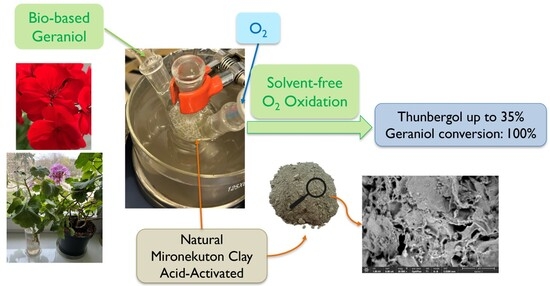
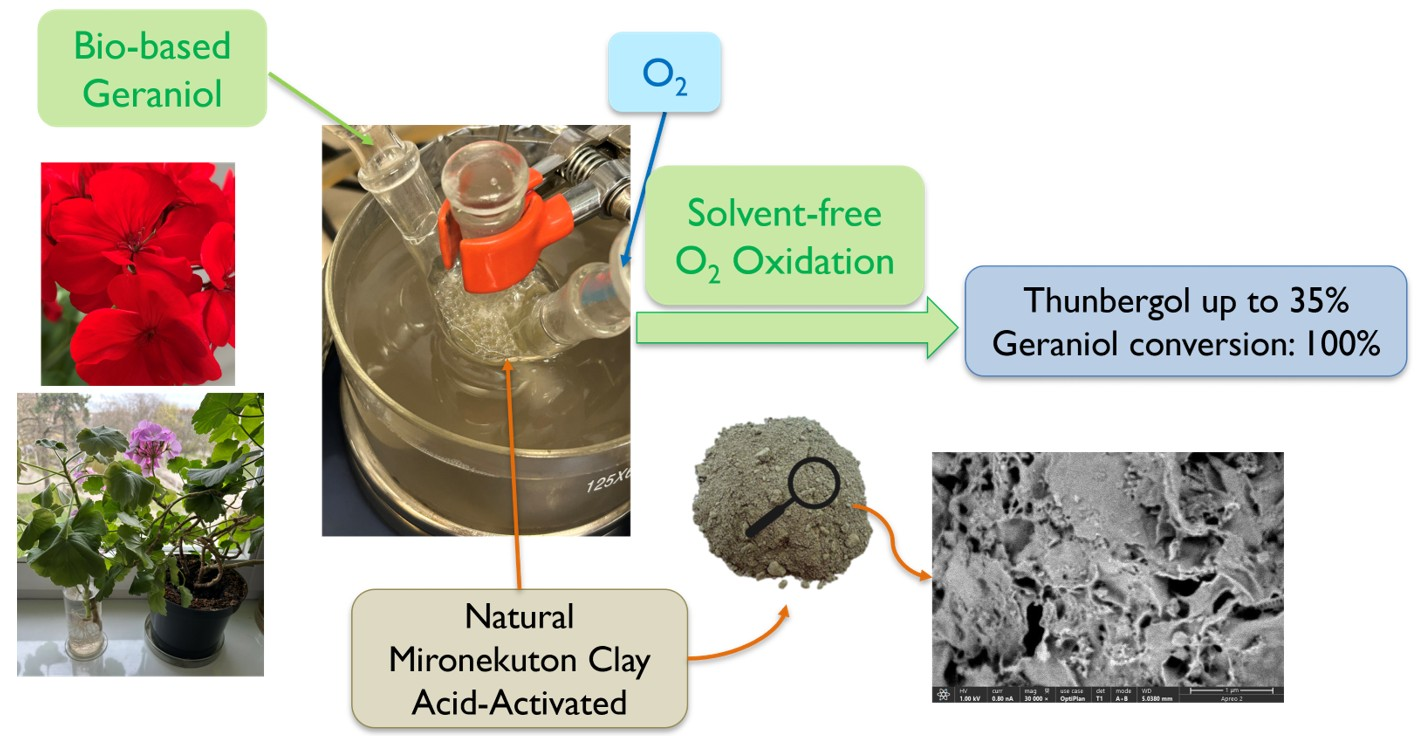
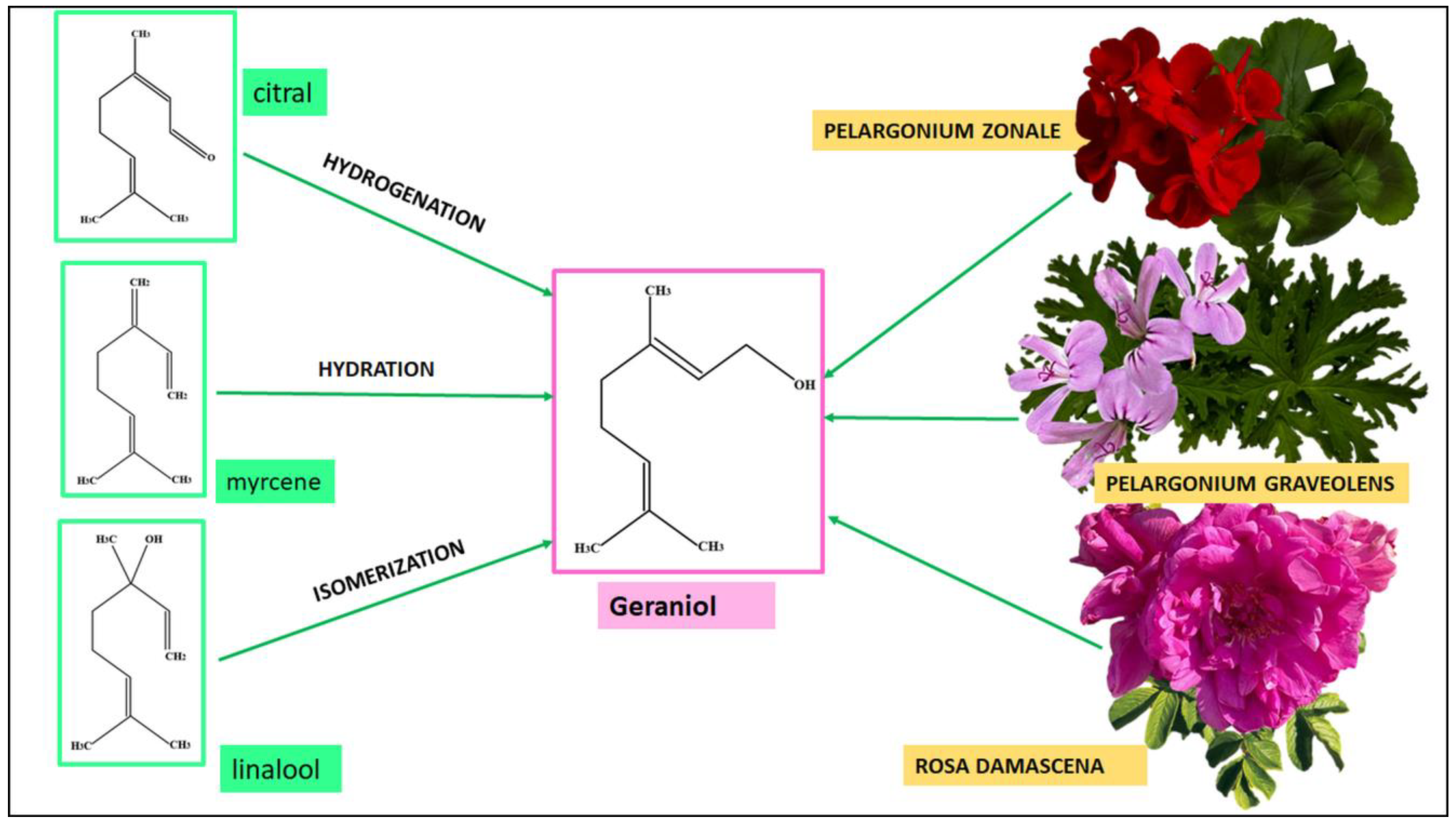
Terpene compounds are currently attracting increasing attention from scientists, not only as natural biologically active ingredients in medicinal and cosmetic preparations, but also as renewable raw materials in organic syntheses, the transformations of which lead to the production of highly valuable biologically active compounds [7]. Among the monoterpenes that are currently of great interest to researchers are limonene, obtained from waste orange peels [8], and α-pinene, derived from pine or juniper, as well as from rosemary and sage [9]. Geraniol, which can be obtained from natural sources such as Pelargonium graveolens, Pelargonium zonale or Rosa damascena, also enjoys great interest in medicine and cosmetics (Figure 1) [10]. Obtaining the above-mentioned terpene compounds does not require complicated equipment and can be carried out successfully both on a smaller scale in laboratory conditions and on a larger scale in large industrial plants—in the case of limonene, these are currently integrated installations that allow for the simultaneous production of orange juice from oranges, and after obtaining the juice, orange oil is obtained from orange peels, which were originally waste in the process of producing orange juice from oranges. Synthetic methods of obtaining geraniol are also known. Geraniol precursors can include citral, myrcene, and linalool (Figure 1) [11,12]. The possibility of obtaining geraniol both from plant raw materials (renewable sources of geraniol) and by chemical synthesis means that geraniol is currently a relatively easily accessible compound, but still expensive. In the future, methods for extracting this terpene compound from various plants might become so advanced and efficient that they could completely replace synthetic methods of producing this terpene compound.
As mentioned above, geraniol enjoys great interest in medicine and cosmetics. This is due to its very diverse effects on the human body. It has been found that geraniol shows neuroprotective [13], hepatoprotective [11], cardioprotective [11], anticancer (prostate and colon cancer) [14], antibacterial [15], antifungal [16], anti-inflammatory (muscle and joint pain) [7], and antioxidant activity [7]. Research shows that geraniol can be used as a compound with sedative and anti-anxiety effects [17]. Geraniol is also used in the treatment of dermatological diseases such as acne, eczema, and seborrheic dermatitis [18,19,20]. In the treatment of skin diseases, not only are its anti-inflammatory, antifungal, antibacterial, and soothing properties useful, but also its regenerative effects are used [19,21]. In the future, geraniol isolated from natural plant sources may become a promising alternative to synthetic drugs, showing potential in the treatment of cancer due to its antiproliferative and cytotoxic effects against cancer cells, as well as in the treatment of pain and diabetes [14,22]. Geraniol is characterized by a rose-like, sweet, citrus scent. Hence, it is also used as a fragrance compound in cosmetics and perfumery, as well as in personal hygiene products and household products [11]. A very interesting application of geraniol is the one presented in this paper, which consists of using this terpene compound as a substrate for the synthesis of other, very valuable derivatives. However, the oxidation of geraniol with oxygen is a very complicated process, because it also involves various side and subsequent reactions, including isomerization and cyclization reactions, as well as oligomerization, which complicates the description of this process and reduces the selectivity of the transformation into the oxygenated derivatives of geraniol with low-molecular-weight, such as 2,3-epoxygeraniol, 2,3-epoxycitral, and citral. These compounds are very valuable products with a high application potential in medicine, cosmetics, the food industry, and polymer production. Hence, catalysts are currently sought that would allow for the selective carrying out of this process and for obtaining smaller amounts of by-products (mainly oligomeric products). A group of catalysts that can be used in this process and which are currently attracting the attention of scientists are minerals, catalysts of natural origin. Among others, vermiculite has been tested so far in this process [23].
Mironekuton is a sedimentary rock that occurs exclusively in the northern Honshu region of Japan [24,25,26]. It is a natural mineral that was formed during the formation of the Japanese Archipelago, from mineral fossils of plants and animals [25,26]. This mineral is an odorless solid, gray-green in color, which does not dissolve in water. It has a powdery consistency, and the resulting lumps are easily crushed with a pestle in a mortar. Mironekuton is not a fairly widespread and popularly used mineral in both industry and households around the world. Mironekuton is mainly used in shrimp farming [24,25,26]. Nevertheless, it has some applications. Due to its adsorption and ion exchange properties mironekuton has been used in agriculture as a component of fertilizers [24,25,26]. Its use in fertilizers improves the quality of soil and crops, and also prevents plant diseases and pest interference [25,26]. Mironekuton is also used as an ingredient in animal feed. Its action as the ingredient in such feed is, among other things, to improve digestive processes [25,26]. Mironekuton is also used by Japanese shrimp breeders to improve the condition and color of these crustaceans [25,26]. It is also successfully used in aquariums [25,26].
It should be emphasized that in the available scientific literature, there are very few reports on the use of mironekuton as the heterogeneous catalyst (these are mainly articles that concern the process of geraniol isomerization, for example, results presented by A. Fajdek-Bieda et al. [26]). Because there is a gap in the scientific literature concerning the use of mironekuton as the catalyst in organic chemical processes such as oxidation, isomerization or cyclization it is very important to develop research in this direction, mainly due to the valuable products that are formed as a result of these transformations, but also because mironekuton may exhibit valuable catalytic properties, different from the catalysts used in this process so far. The need to expand scientific research in this field prompted the authors to investigate mironekuton in terms of its catalytic activity in the process of geraniol transformations during its oxidation with molecular oxygen.
Compared to previously investigated natural mineral catalysts, such as vermiculite or zeolitic materials [23,27], mironekuton represents a less explored and structurally more complex system. It is characterized by a multiphase silicate–aluminosilicate composition, significant structural heterogeneity, and the presence of additional cations such as Ca2+ and K+, which may influence acid–base properties and catalytic activity. In contrast to more uniform materials, the hierarchical pore structure of mironekuton, comprising micro-, meso-, and macropores, may provide enhanced accessibility for bulky intermediates and favor reaction pathways leading to higher-molecular-weight products. These features, together with the limited number of studies on its catalytic application in terpene transformations, motivated its selection as a promising alternative natural catalyst for the present study.
The aim of the present study was to investigate the transformation pathways of geraniol during its solvent-free oxidation with molecular oxygen over mironekuton, a natural Japanese volcanic clay mineral, and to evaluate the effect of sulfuric acid modification on its catalytic performance. Particular attention was paid to the role of surface acidity and textural properties in controlling geraniol conversion and product distribution. By comparing pristine and acid-modified mironekuton, the study sought to determine whether surface activation could selectively promote specific reaction pathways, especially dehydration and dimerization processes leading to higher-molecular-weight products. In addition, kinetic modeling was applied to correlate the experimentally observed product distribution with the dominant reaction routes and to provide mechanistic insight into the role of catalyst modification in shaping the overall reaction network.

2. Results and Discussion

2.1. Characterization of Mironekuton

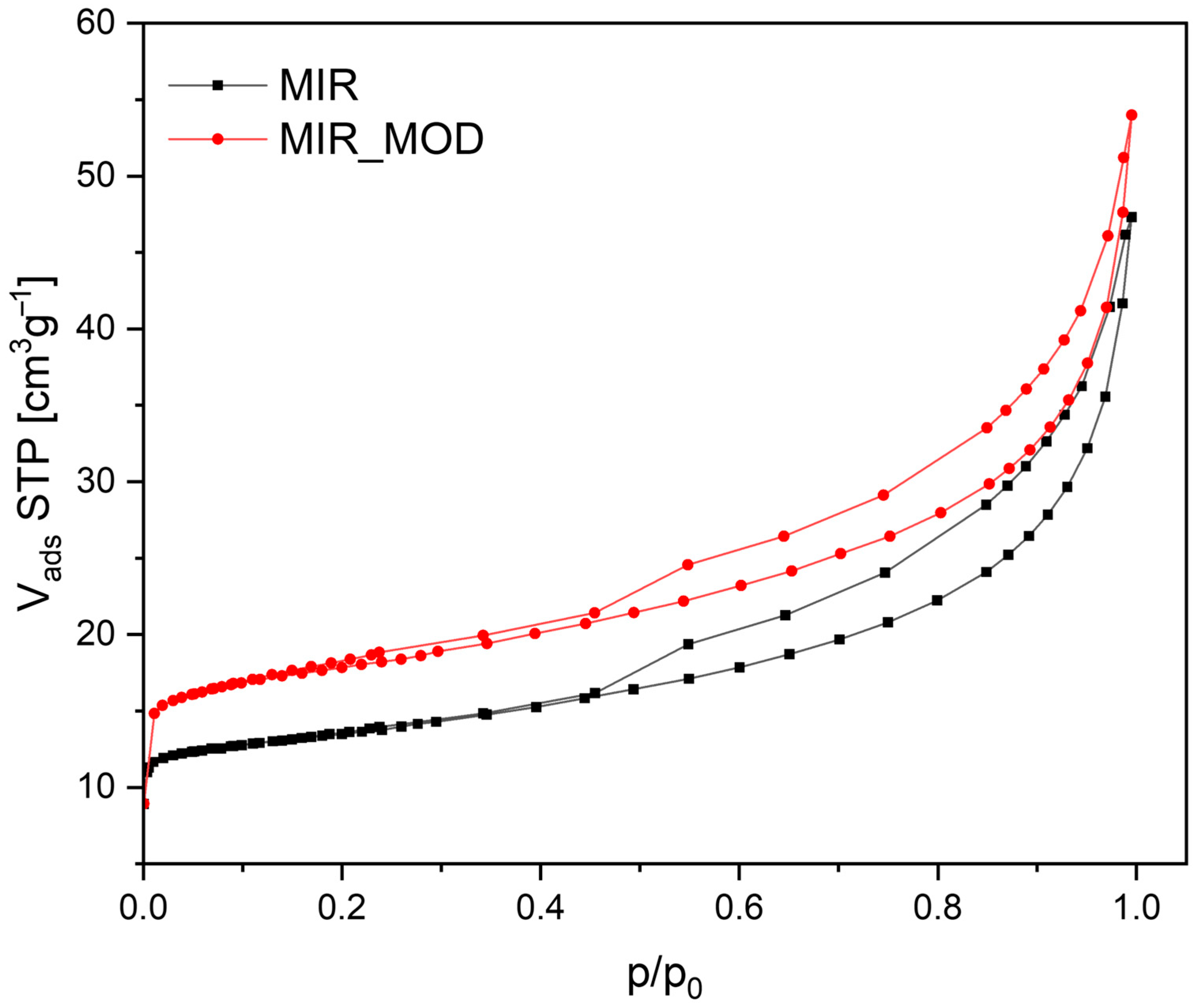
Figure 2 presents the nitrogen adsorption–desorption isotherms recorded at 77 K for the MIR (pristine mironekuton) and MIR_MOD (mironekuton modified with 0.1 M H2SO4) samples.
Figure 2 shows that both isotherms exhibit features characteristic of type IV behavior with a hysteresis loop typical of mesoporous materials; however, the absence of a plateau at high p/p0 values indicates a significant contribution of macropores and interparticle porosity. The presence of mesopores is evidenced by a pronounced hysteresis loop observed in the medium and high relative pressure range (p/p0), associated with capillary condensation of nitrogen within the pores. Hysteresis of type H3 indicates the presence of very irregular, flat pores, or the presence of a non-rigid aggregate of plates, which is characteristic, among others, of clays [28,29].
In the low p/p0 region (<0.1), a gradual increase in the amount of adsorbed nitrogen is observed, indicating the presence of micropores, although their contribution is relatively limited. At higher p/p0 values (>0.4), a marked increase in adsorption capacity occurs due to the filling of mesopores, while the steep uptake observed as p/p0 approaches 1.0 reflects the presence of macropores and interparticle voids.
Comparison of the isotherms for the MIR and MIR_MOD samples demonstrates that sulfuric acid treatment leads to a significant increase in nitrogen uptake over the entire p/p0 range. The MIR_MOD sample exhibits a clearly higher adsorption capacity at both low and high relative pressures, indicating an increase in the specific surface area and total pore volume after modification.
The enhanced adsorption in the low p/p0 region suggests increasing accessibility of micropores or the exposure of previously inaccessible pores as a result of the removal of amorphous and weakly bound surface components. At the same time, the intensification of capillary condensation effects in the mesopore range points to a restructuring of the mesoporous network.
Treatment of the MIR sample with a 0.1 M H2SO4 solution results in surface activation of the material, manifested by a reorganization of the pore system into a hierarchical micro–meso–macro structure, while the overall type of the adsorption isotherm remains unchanged. The results indicate that acid modification proceeds through selective surface etching, leading to increased accessibility of the surface area and pore volume without disturbing the primary crystalline framework of the material.
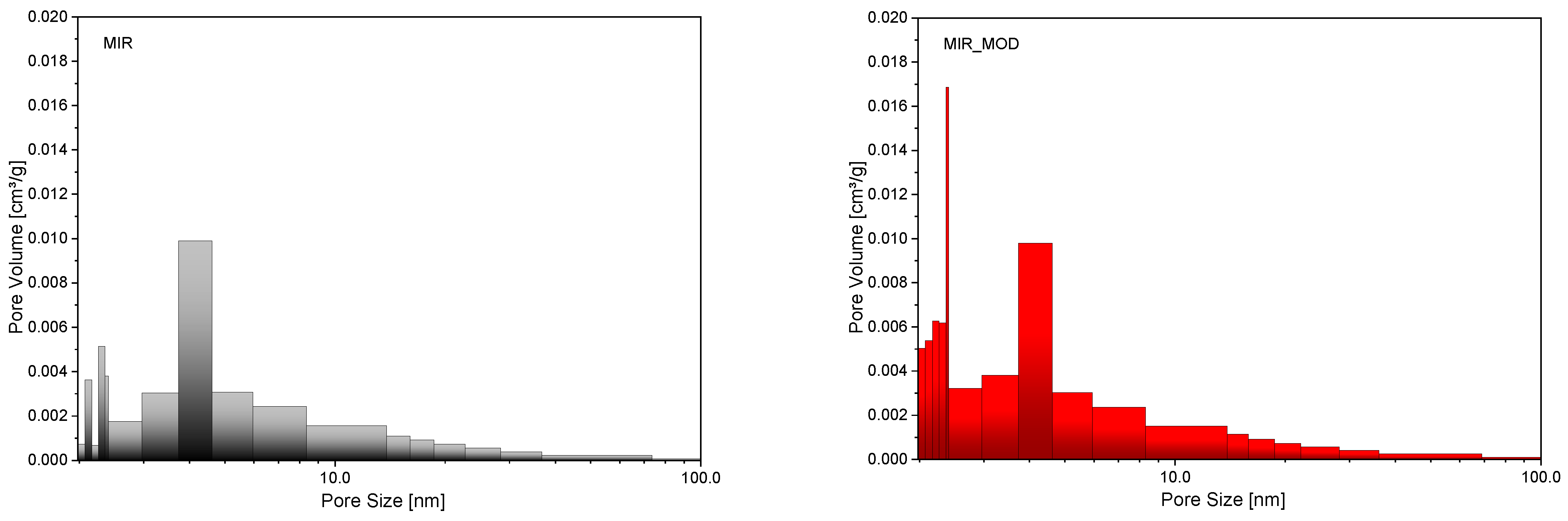
Figure 3 presents the pore volume distributions determined by the BJH method from the desorption branch of the N2 adsorption–desorption isotherms measured at 77 K for the MIR and MIR_MOD samples.
Figure 3 presents that the pristine MIR sample exhibits a broad and relatively flat pore size distribution, dominated by mesopores with diameters of a few nanometers and accompanied by a pronounced tail extending toward larger pore sizes. Such a distribution is characteristic of natural, multiphase silicate–aluminosilicate materials, in which porosity primarily originates from structural defects, grain boundaries, and intercrystalline or interparticle voids rather than from an ordered pore network.
Following sulfuric acid treatment (MIR_MOD), a noticeable modification of the pore volume distribution is observed. The distribution becomes more pronounced and shifts toward smaller pore diameters, with an increased contribution in the mesopore range of several nanometers. At the same time, the persistence of the tail toward larger pore sizes indicates that macropores and interparticle porosity remain an important component of the pore system. A relative comparison of the MIR and MIR_MOD distributions therefore points to a reorganization of the pore structure and increased heterogeneity induced by acid treatment, rather than to the formation of a uniform mesoporous network.
The observed changes can be attributed to selective surface etching during acid treatment, leading to the removal of acid-soluble secondary phases and weakly bound surface components. This process results in the exposure and opening of previously inaccessible pores and defects, giving rise to a hierarchical pore system comprising micro-, meso-, and macropores. Such a hierarchical pore structure may enhance the accessibility of active sites and facilitate diffusion of reactants and intermediates, particularly in the case of larger molecules formed during secondary transformation pathways.
The trends observed in the BJH pore volume distributions are consistent with the textural parameters summarized in Table 1.
Table 1 shows that the acid treatment leads to an increase in the total pore volume, in agreement with the enhanced nitrogen uptake observed in the adsorption isotherms. The higher adsorption capacity at low p/p0 values suggests improved accessibility of micropores or internal surfaces, whereas the steep uptake as p/p0 approaches 1.0 reflects a substantial contribution from macropores and interparticle voids.
Overall, the combined analysis of BJH pore size distributions and textural parameters confirms that treatment of the MIR sample with a 0.1 M H2SO4 solution results in surface activation of the material, manifested by an increase in accessible pore volume and a reorganization of the mesoporous domain, while preserving the macroporous component associated with interparticle porosity.
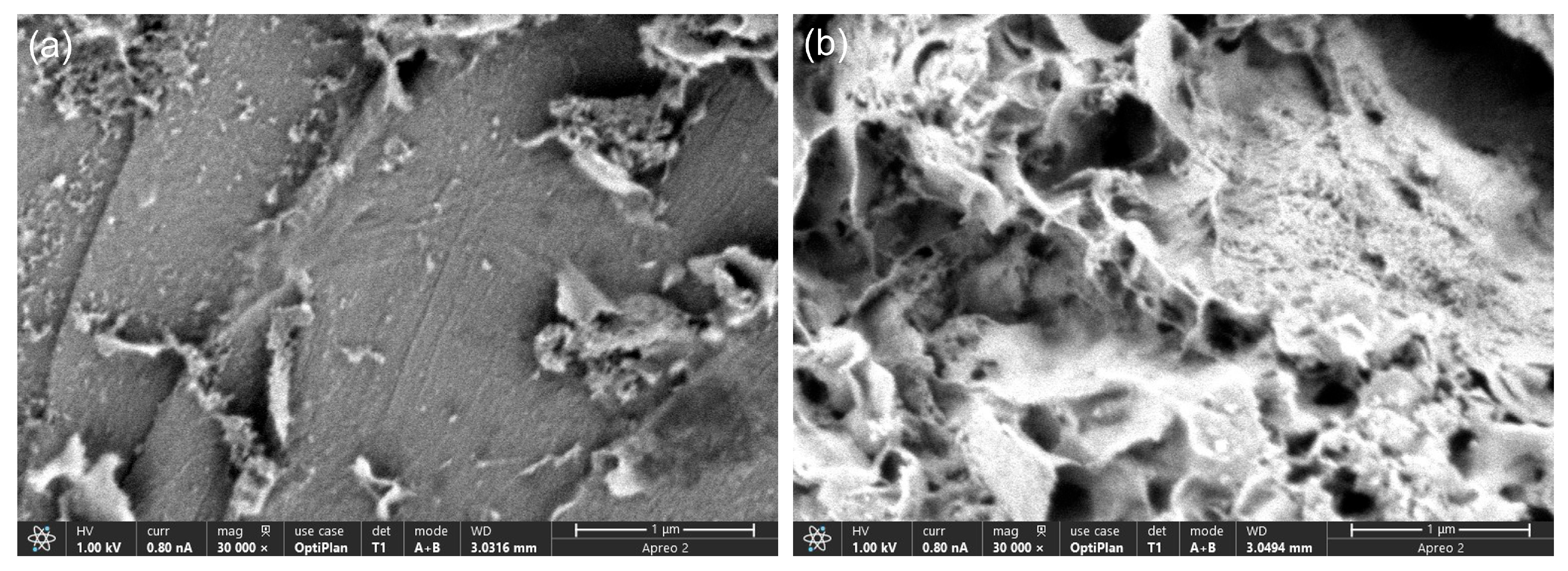
Figure 4 presents SEM images of mironekuton (MIR) and mironekuton after treatment with 0.1 M H2SO4 (MIR_MOD) recorded at a magnification of 30,000×.
It results from Figure 4a that the unmodified mineral is characterized by a compact and massive surface morphology, with large, flat domains and well-defined cleavage planes. Only a limited number of open pores are observed, and the surface is dominated by continuous, smooth regions. This morphology is typical of a natural, multiphase mixture of silicate and aluminosilicate minerals containing minor secondary phases. These results are fully consistent with the nitrogen adsorption–desorption isotherms, confirming that the acid treatment primarily affects the surface structure of the material.
After treatment with 0.1 M H2SO4, a pronounced modification of the surface morphology is observed (Figure 4b). Clearly developed macropores are visible, which in deeper regions may be associated with mesopores and even micropores. In some areas, a sponge-like structure and highly irregular, jagged grain edges can be distinguished. In addition, small relics or islands of phases resistant to acid etching appear, surrounded by strongly etched regions. This morphology is characteristic of selective surface etching induced by acid treatment.
Table 2 and Table 3 present the elemental composition of mironekuton (MIR) and mironekuton after treatment with H2SO4 (MIR_MOD). The measurements were performed at ten different points on each sample.
Table 2 shows that the pristine sample (MIR) exhibits a composition typical of a natural, multiphase mixture of silicate and aluminosilicate minerals, as evidenced by the high average contents of O (50.9 wt%), Si (31.9 wt%), and Al (7.0 wt%). The presence of Na, K, Ca, Mg, and Fe indicates the coexistence of feldspars (plagioclases and K-feldspars), Ca-rich components, and secondary surface phases. A characteristic feature of the MIR sample is the very high standard deviation values, particularly for Ca as well as for Na and Mg. This behavior arises from the intrinsic mineralogical heterogeneity of the material, the spot-based nature of SEM–EDS analysis, and the coexistence of Ca-poor grains (e.g., quartz) with locally Ca-rich domains (plagioclases and minor carbonates).
After treatment with 0.1 M H2SO4, significant quantitative changes in the surface composition are observed, although the overall character of the material remains silicate–aluminosilicate (Table 3). The most pronounced differences compared to MIR include an increase in Al content from 7.0 to 11.8 wt%, an increase in Ca from 1.9 to 5.0 wt%, and an increase in Na from 1.0 to 2.7 wt%, accompanied by a decrease in Si from 31.85 to 25.59 wt% and a slight decrease in Fe and K contents. At the same time, the SD values remain high (particularly for Ca), indicating that acid modification does not lead to compositional homogenization but instead enhances local heterogeneity.
Sulfuric acid treatment induces selective surface etching, exposure of acid-resistant aluminosilicate phases, and an increase in surface heterogeneity. Dilute sulfuric acid does not alter the bulk phase composition of the material, as confirmed by XRD results, but acts primarily on the grain surfaces. In particular, it removes or destabilizes amorphous silica, volcanic glass, and minor secondary surface deposits, and dissolves easily reactive Ca-rich components (e.g., carbonates), while simultaneously exposing structurally bound Ca associated with aluminosilicates. As a result, a relative decrease in the Si contribution and an increase in Al, Ca, and Na contents are observed in the EDS analysis. The increased exposure of Al-containing aluminosilicate phases may contribute to the formation of Brønsted and Lewis acid sites, while Ca species may modify the local environment of these sites and facilitate proton-related processes through interactions with water molecules, thereby influencing catalytic activity and reaction pathways.
Following acid treatment, more resistant phases (plagioclases and K-feldspars) become dominant at the surface, leading to increased Al and alkali contents, as well as the development of pronounced porosity and a “sponge-like” morphology observed in SEM images (Figure 4). The acid treatment proceeds locally and non-uniformly, resulting in the coexistence of strongly etched regions with “islands” of acid-resistant phases. Calcium and sodium become concentrated in specific domains, and the SD values for these elements remain high or even increase. Therefore, the large dispersion of results is not an analytical artifact but a direct consequence of the surface modification mechanism.
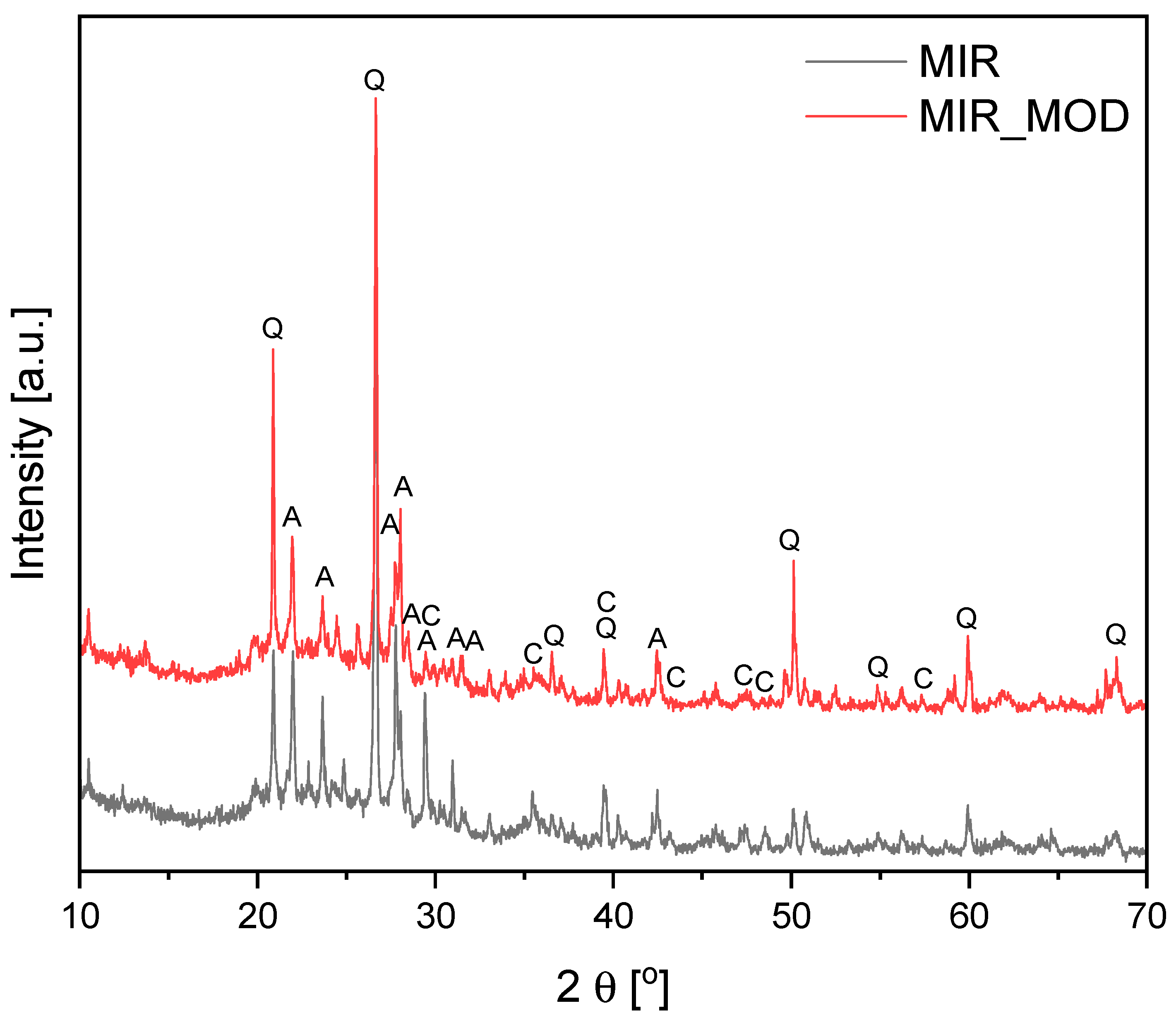
Figure 5 shows XRD pattern obtained for MIR and MIR_MOD samples of mironekuton.
Examination of the XRD pattern (Figure 5) showed that the main phase for pristine mironekuton sample (MIR), according to the diffraction pattern base, are quartz (PDF-01-070-3755) with 2θ reflections at 20.8°; 26.6°; 36.5°; 39.5°; 40.3°; 50.1°; 54.8°; 59.8°, anorthite (CaAl2Si2O8) (PDF-00-018-1202) with 2θ reflections at 21.9°; 23.6°; 27.8°; 28.0°; 28.4°; 29.4°; 30.5°; 31.5°; 42.4°; 43.2° and calcium carbonate (PDF-01-086-5303) with 2θ reflections at 29.4°; 36.0°; 39.5°; 43.2°; 47.4°; 48.5°; 57.5°. The identification and estimation of the relative content of crystalline phases were carried out using powder X-ray diffraction (XRD) data processed in the HighScore Plus software (Malvern PANalytical, Malvern, UK). It should be noted that the applied method does not account for key factors affecting the intensity of diffraction peaks, such as preferred crystallite orientation, peak broadening resulting from crystallite size or structural defects, or X-ray absorption effects. These limitations may lead to deviations from the actual phase composition of the sample. Nevertheless, the method enables a rapid and approximate estimation of phase content, which is particularly useful for preliminary assessments. It was found that the contribution of individual phases in the sample is as follows: quartz 34%, calcium carbonate 7%, anorthite 60%. It should be added that relative accuracy of this method is typically ±5–10% for major phases (those with a content above 10–15%), while for trace phases (<5%), the accuracy decreases significantly, and the results should be considered only as approximate.
Treatment of the MIR sample with dilute sulfuric acid (0.1 M H2SO4) leads to pronounced modifications of the surface composition and microstructure, while the overall crystalline phase assemblage remains largely unchanged. XRD analysis confirms that no new crystalline phases are formed as a result of acid treatment; instead, the observed changes are associated with selective removal and redistribution of specific components already present in the pristine material.
The most significant effect of acid treatment is the selective dissolution of calcium carbonate, which is evident from the substantial weakening of its characteristic reflections, particularly those located at ~29.4°, 36.0°, 39.5°, 43.2°, 47.4°, 48.5°, and 57.5°. This behavior is consistent with the high chemical reactivity of CaCO3 toward sulfuric acid and indicates that this phase represents a secondary or surface-associated component rather than a structurally integral constituent of the mineral matrix. The absence of newly formed CaSO4 reflections suggests that reaction products are either poorly crystalline, amorphous, or effectively removed during subsequent washing steps.
In contrast, the reflections assigned to quartz and anorthite become relatively more intense after acid treatment. Characteristic quartz reflections at ~20.8°, 26.6°, 50.1°, 59.8°, and ~68–69°, as well as anorthite reflections in the 21.9–31.5° and 42–43° regions, are clearly enhanced in the MIR_MOD sample. This effect does not indicate the formation or crystallization of new phases; rather, it reflects the chemical stability of these silicate and aluminosilicate phases under mild acidic conditions and their relative enrichment following the removal of more reactive components.
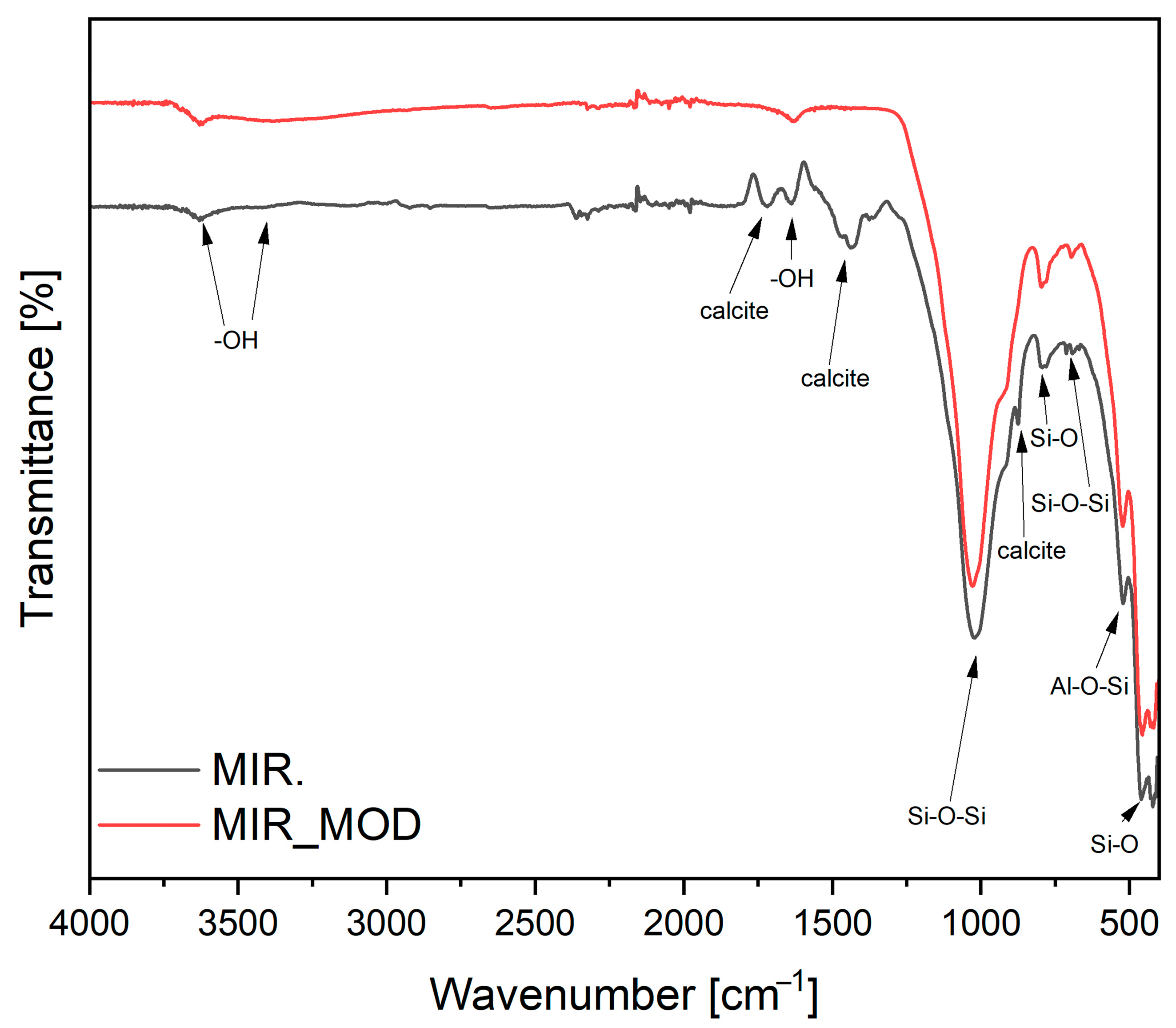
The FTIR spectrum for mironekuton is presented in Figure 6. Bands at about 3700 and 3400 cm−1 are characteristic for the stretching vibrations of the hydroxyl groups. The absorption band at 1656 cm−1 can be attributed to the presence of adsorbed water in the clay. The presence of a doublet at 795 and 778 cm−1 and a singlet at 694 cm−1 is attributed to quartz vibrations. The bands at 1010 and 465 cm−1 correspond to Si-O bonds. The absorption bands at 1430 and 885 cm−1 are associated with the calcite vibrations. The band at 515 cm−1 is due to the deformation vibrations of Al-O-Si groups [30,31,32,33]. After modification with sulphuric acid, the disappearance of the bands corresponding to calcite is clearly visible. This is due to the removal of this mineral during modification. Calcium carbonate reacts easily with sulphuric acid, which leads to a reduction in this compound in the resulting catalyst (MIR_MOD).
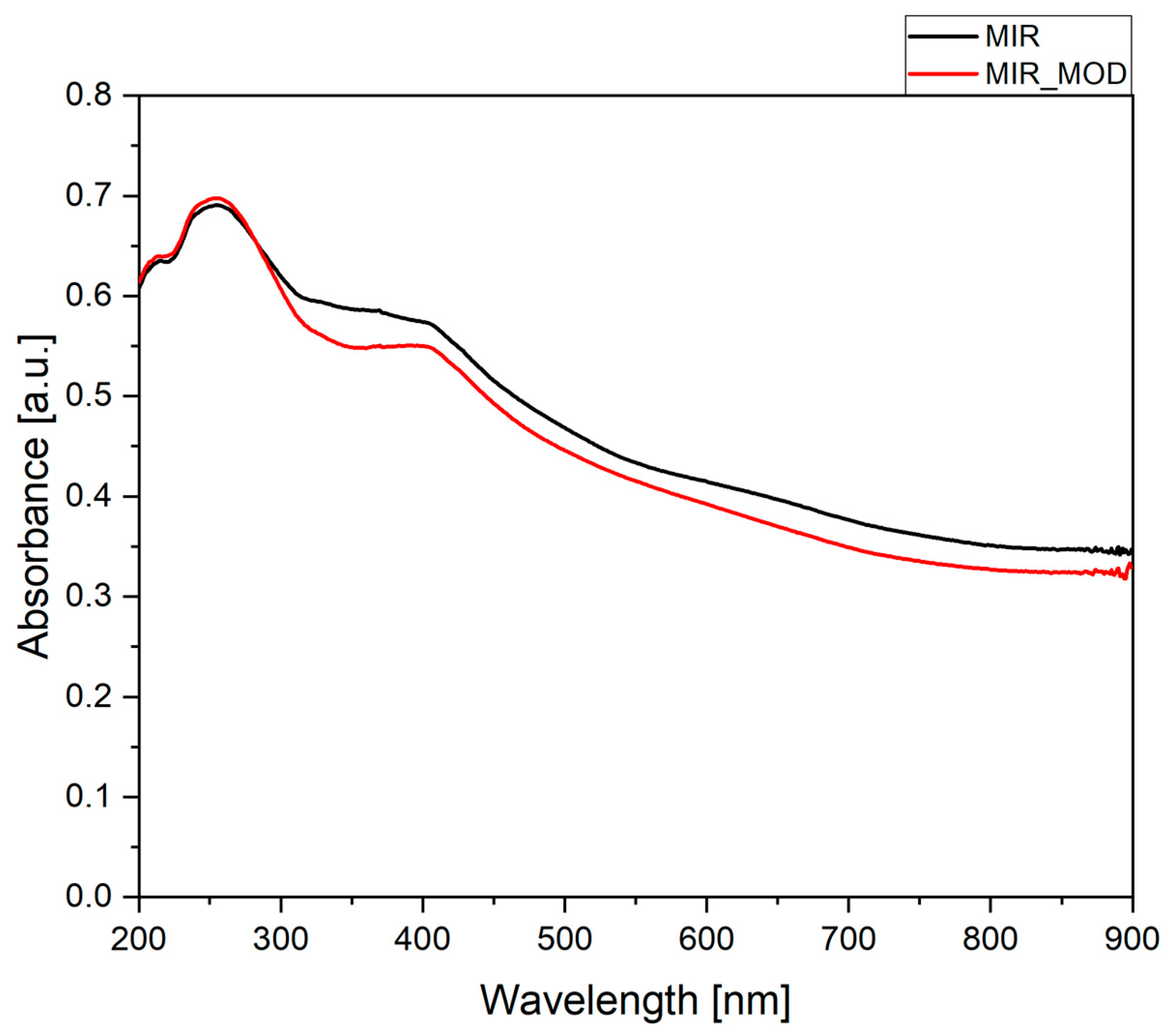
The UV–Vis spectrum of mironekuton is presented in Figure 7. It exhibits two broad absorption bands centered at approximately 250 and 375 nm, along with a low-intensity band at around 209 nm. Such spectral features are characteristic of iron-containing mineral systems and are associated with different iron species and oxidation states (Fe2+, Fe3+) incorporated in aluminosilicate matrices [34,35,36]. The presence of iron was also confirmed by SEM–EDS analysis (Table 2 and Table 3). After modification of mironekuton with sulfuric acid (VI), noticeable changes in the UV–Vis spectra were observed, manifested primarily as variations in the intensity and shape of absorption bands in the ultraviolet region. This behavior indicates a modification of the local coordination environment and surface distribution of iron species rather than the formation of new chromophoric phases. The absence of additional absorption bands further confirms that acid treatment is predominantly a surface process, leading to selective modification of existing iron centers without altering the bulk phase composition. These observations are consistent with SEM–EDS and XRD results and may be relevant to the catalytic properties of mironekuton, particularly in reactions involving proton-assisted transformations and redox-related steps. The relative increase in iron content detected after acid washing is fully consistent with the UV–Vis results, which indicate an enhanced contribution of optically active Fe3+ species. This effect is attributed to the removal of acid-soluble phases and surface components, resulting in relative enrichment and improved exposure of iron centers rather than the formation of new iron-containing phases.

2.2. Application of Mironekuton as the Catalyst in the Oxidation of Geraniol

The results of the catalytic tests of mironekuton are presented in Figure 8, Figure 9 and Figure 10, furthermore the main directions of transformations of this compound and the formulas of the main products will be discussed in the kinetic study presented later in our article.
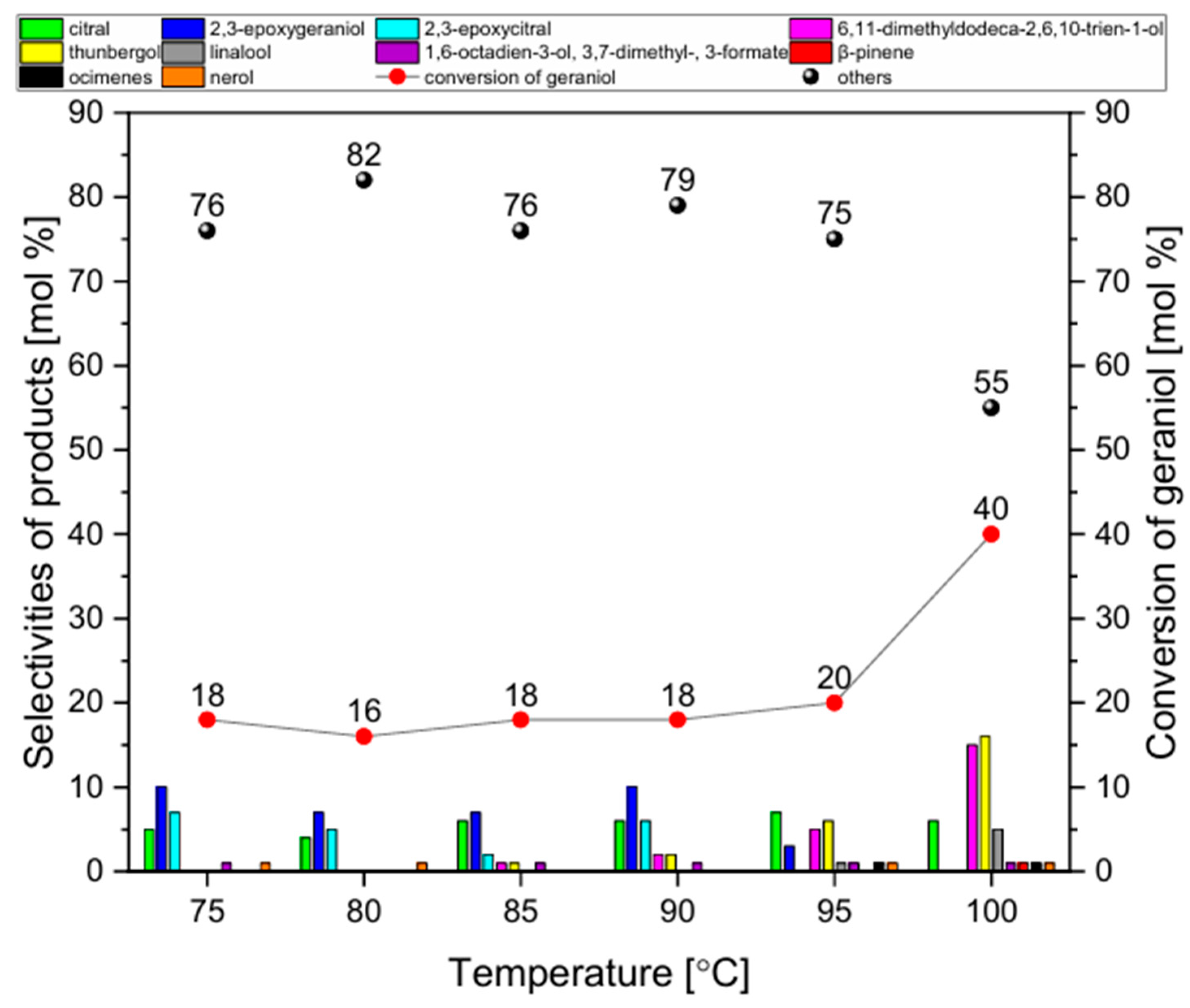
The studies of the catalytic activity of mironekuton in the process of geraniol transformations during its oxidation with molecular oxygen began with the study of the effect of temperature on the course of this process. This stage aimed to select the most favorable temperature at which it will be possible to achieve high conversions of geraniol while maintaining high selectivity of the transformation to 2,3-epoxygeraniol, 2,3-epoxycitral, and citral (products of epoxidation and oxidative dehydrogenation of geraniol molecule). The catalytic tests of mironekuton were conducted in such a way that the appropriate amount of geraniol and catalyst was placed in the reactor, then oxygen was introduced through a glass tube, and the reactor was placed in an oil bath heated to the appropriate temperature. A detailed description of the conducting of this process was presented in the Materials and Methods section in point 3.3. The studies on the effect of temperature were carried out in the range of temperature from 75 to 100 °C, for the catalyst content in the reaction mixtures equal to 1 wt%, and for the reaction time of 3 h. The obtained results are presented in Figure 8.
Figure 8 shows changes in the conversion of geraniol and selectivities of the oxygenated derivatives of geraniol: 2,3-epoxygeraniol, 2,3-epoxycitral, and citral. Moreover, Figure 8 presents selectivities of thunbergol, 6,11-dimethyldodeca-2,6,10-trien-1-ol, linalool, 1,6-octadien-3-ol,3,7-dimethyl-,3-formate (linalyl formate), β-pinene, ocimenes and nerol. The list of obtained products shows that the process of oxidation of geraniol with molecular oxygen is a very complicated process, and obtaining products such as 2,3-epoxygeraniol, 2,3-epoxycitral and citral with high selectivity is not easy to carry out.
It is visible that the conversion of geraniol during the increasing in the temperature increased from 18 mol% (75 °C) to 40 mol% (100 °C). The selectivity of 2,3-epoxygeraniol has a practically constant value of 7–9 mol%, in the range of tested temperatures from 75 to 90 °C. Later, the selectivity of this compound decreases to 0 mol% at the temperature of 100 °C. Probably at temperatures higher than 85–90 °C, oligomeric products with the participation of 2,3-epoxygeraniol molecules are formed. This is because this compound is very reactive due to the presence of an epoxy ring, which is easily opened.
The selectivity of the transformation to 2,3-epoxycitral is the highest (7 mol%) at the lowest temperature which was tested (75 °C). Further increase in the temperature causes a decrease in the selectivity of the transformation to this compound to 0 mol% (the temperature of 100 °C). A similar trend of changes was observed for the above-described 2,3-epoxygeraniol. However, in the case of 2,3-epoxycitral, a much greater decrease in the selectivity of the transformation to this compound was observed for individual temperatures (the difference reached even 5 mol% at the temperature of 90 °C). This decrease in the selectivity of the transformation to 2,3-epoxycitral is also most likely due to the formation of oligomeric compounds due to the high reactivity of the epoxy group. At the same time, considering the obtained results, it can be assumed that 2,3-epoxycitral is more reactive, and its higher reactivity results from the presence of the carbonyl group at the end of the carbon chain. This group pulls electrons, which leads to a weakening of the bonds in the epoxy ring and, consequently, its opening.
Overall, the observed shift in product distribution with increasing temperature can be attributed to the combined effect of catalyst acidity and reaction kinetics. Higher temperatures favor acid-catalyzed reactions such as dehydration and dimerization, leading to increased formation of higher-molecular-weight products. This explains the decrease in selectivity toward epoxidation products and the simultaneous increase in thunbergol formation observed in Figure 8.
The selectivity of the transformation to citral, in contrast to the two previously discussed compounds, increases slightly with increasing temperature (from 5 to 6–7 mol%). This indicates a much greater stability for this product under the conditions in which the syntheses were carried out.
A detailed analysis of Figure 8 also shows other very interesting directions of geraniol transformations in the studied process. First of all, during the process, isomerization of geraniol to linalool and nerol also occurs. However, a larger amount of geraniol is transformed into linalool than nerol. This is most visible at the highest temperature tested (100 °C), where linalool is formed with the selectivity of 5 mol%, and nerol with the selectivity of only 1 mol%. Another reaction that takes place in the tested process is the dehydration of geraniol to β-pinene, and then isomerization of this compound to ocimenes (this transformation is associated with the opening of the β-pinene ring). However, both the selectivity of the transformation to β-pinene and ocimenes is small, so it can be said that this direction of geraniol transformations is not dominant.
A significant direction of geraniol transformations is its dimerization combined with dehydration, leading to the formation of a cyclic compound called thunbergol. The highest selectivity of transformation to this compound was observed at the highest temperature tested, and it was 16 mol%. Thunbergol is a very interesting compound, which is currently of great interest to scientists. Studies indicate its potential applications in medicine, especially due to its anti-inflammatory properties (this compound shows antimicrobial and hydroxyl radical scavenger activity). This compound can be used to treat rheumatoid arthritis, Crohn’s disease, ulcerative colitis, or psoriasis and also to treat neuroinflammatory diseases such as Alzheimer’s disease or multiple sclerosis. Thanks to its mild anti-inflammatory effect, thunbergol can also be applied in acne creams or in preparations for atopic skin [37,38,39].
Another compound which was also formed with high selectivity during the oxidation of geraniol was 6,11-dimethyldodeca-2,6,10-trien-1-ol (C14H24O). The highest selectivity value of the transformation to this compound was obtained at the highest temperature tested and it was 15 mol%. Comparison of the selectivity of the transformation to this compound with the selectivity of the transformation to thunbergol shows very similar values of the selectivity of the transformation to both compounds. 6,11-Dimethyldodeca-2,6,10-trien-1-ol is also a very interesting compound in terms of applications in medicine, because its antibacterial and antifungal effects have been described in the scientific literature [40].
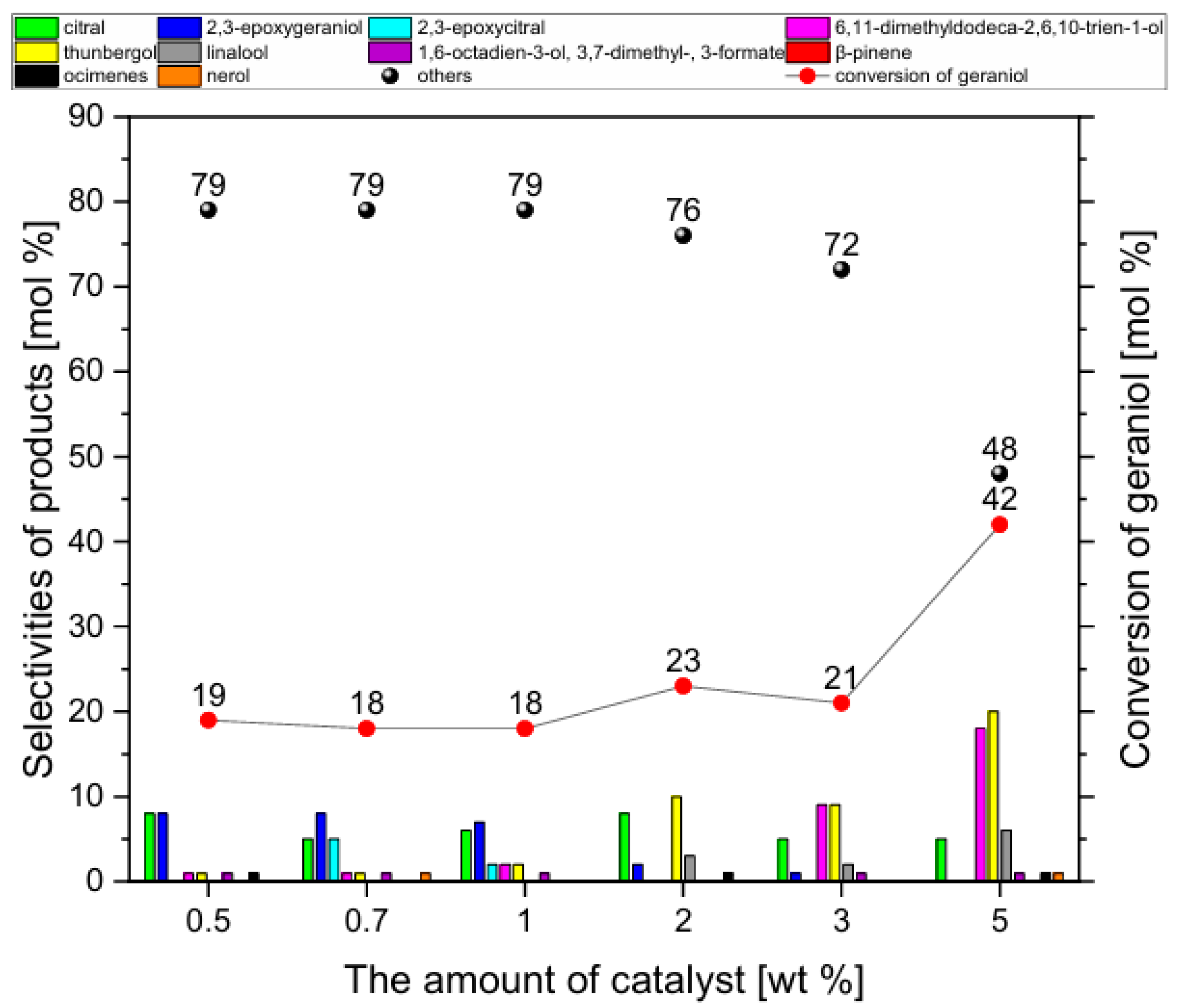
However, the studies of the effect of temperature were mainly focused on the selection of conditions in which a relatively high conversion of geraniol can be obtained, while maintaining high selectivity of the transformation to 2,3-epoxygeraniol, 2,3-epoxycitral, and citral. Taking this into account, the most favorable temperature at this stage of the research was 90 °C, and at this temperature, the studies of the effect of the amount of catalyst on the course of the oxidation process were conducted. The tests were carried out for the following catalyst contents: 0.5 wt%, 0.7 wt%, 1 wt%, 2 wt%, 3 wt%, and 5 wt% for the reaction time of 3 h. The results obtained at this stage of the tests are presented in Figure 9.
Figure 9 shows that the conversion of geraniol raised during the increase in the catalyst content from 19 mol% (catalyst amount 0.5 wt%) to 42 mol% (catalyst amount 5 wt%). The selectivity of 2,3-epoxygeraniol decreased in the same range of catalyst amounts from 8 mol% to 1 mol%. The highest selectivity of the transformation to 2,3-epoxycitral was obtained for the catalyst amount of 0.7 wt% (selectivity 5 mol%). Further increase in the amount of the mironekuton caused a decrease in the selectivity of this compound to value of 0 mol%. The selectivity of the transformation to citral varied slightly and had values of 5–8 mol%. Comparison of the results obtained for these three main compounds indicates, similarly to the studies on the effect of temperature, a greater stability of citral under the conditions of the oxidation process. Figure 9 also shows that for catalyst contents in the range of 2–5 wt%, isomerization of geraniol to linalool was observed (at the catalyst content of 5 wt%, the selectivity of transformation to this compound was the highest and amounted to 6 mol%). Simultaneously, no significant values of selectivity of transformation to nerol (the second product of geraniol isomerization) were observed, which indicates that this was not a privileged direction of geraniol transformations, similarly to the formation of β-pinene and its subsequent transformation to ocimenes. However, similarly to the studies of the effect of temperature, significant transformation of geraniol to thunbergol and 6,11-dimethyldodeca-2,6,10-trien-1-ol was observed. The selectivities of transformation to these compounds had similar values, and the highest values were achieved for the highest catalyst content (5 wt%) in the reaction mixture, 20 and 18 mol%, respectively.
A broader discussion of the product distribution will be discussed in the kinetic study presented later in our article.
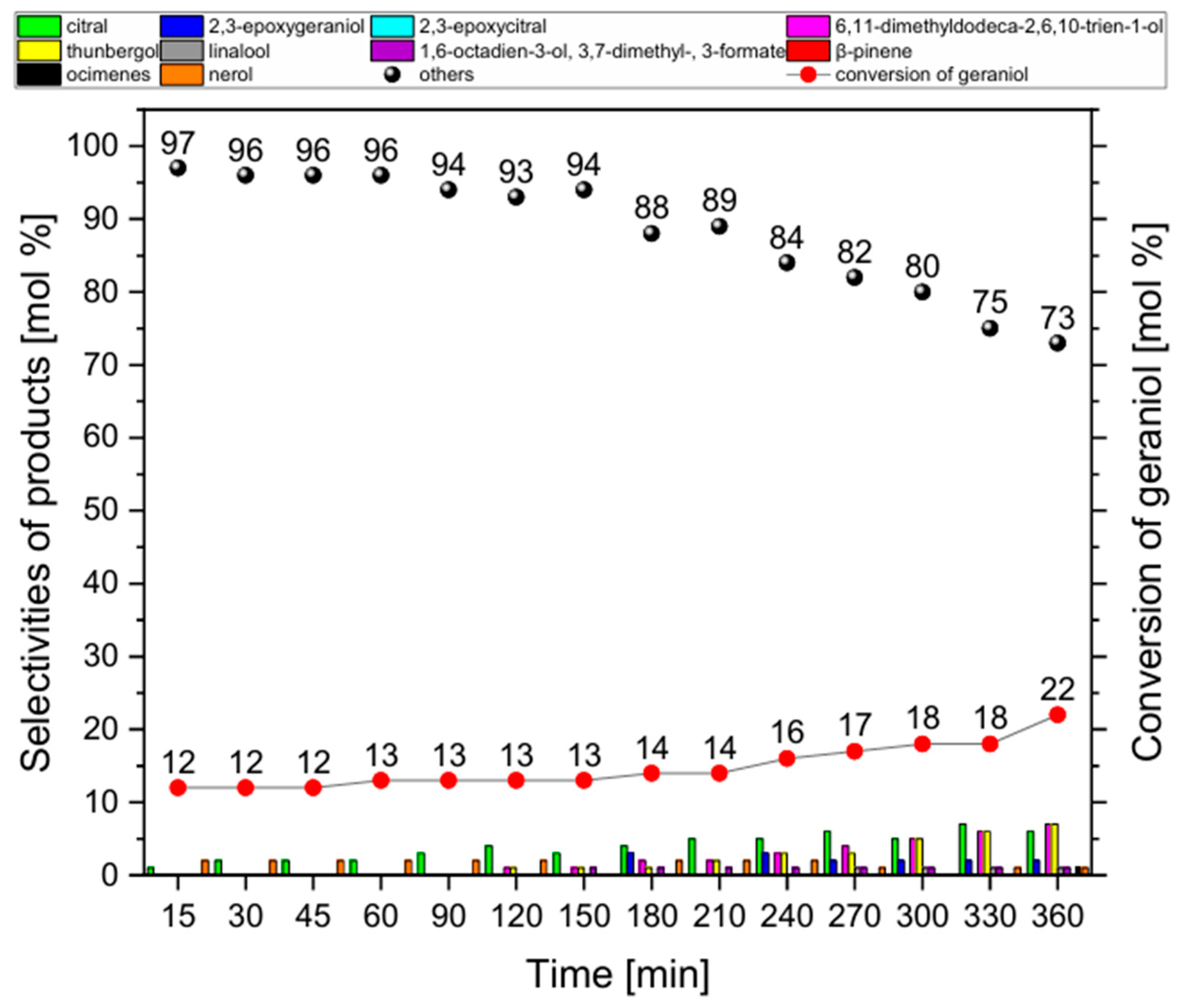
Considering the conversion of geraniol and selectivities of the transformation to 2,3-epoxygeraniol, 2,3-epoxycitral, and citral, the most favorable catalyst amount at this stage of the research was taken as 0.7 wt%. In the next step, the effect of the reaction time on the course of the oxidation process was studied. The tests were carried out in the range of the reaction time from 15 min to 360 min. During the studies on the effect of reaction time, the studies were carried out continuously, taking samples of the reaction mixture for analysis for the appropriate reaction times. The results obtained at this stage of the tests are presented in Figure 10.
The time-effect studies showed the increase in the conversion of geraniol with the prolongation of the reaction time. For the reaction time of 360 min, the conversion of geraniol reached the highest value of 22 mol%. This was not as significant the conversion value as observed during the studies of the effect of temperature and the amount of catalyst. This is probably related to the method of conducting the oxidation at this stage, consisting in taking samples from the reactor during the reaction for the appropriate reaction times, which could disturb the reactions taking place. During the oxidation, no 2,3-epoxycitral formation was observed. However, the highest selectivity of the transformation to 2,3-epoxygeraniol was observed for the reaction time of 180 min. At the same time, for this reaction time, the selectivity of citral was 4 mol%. As the reaction was extended to 360 min, the selectivity of the transformation to this compound increased slightly to 6 mol%. At this stage of the research, the most favorable reaction time seems to be 80 min. From Figure 10, it can also be seen that the selectivity of the transformation to thunbergol and 6,11-dimethyldodeca-2,6,10-trien-1-ol increases with the extension of the reaction time and reaches a value of 7 mol% for the reaction time of 360 min. Therefore, if higher selectivities of these two compounds are desired, the time of the geraniol oxidation should be extended, and both the temperature and catalyst content should be significantly increased (temperature at 100 °C and catalyst content of at least 5 wt%). The selectivities of the transformation to other products, such as linalool, nerol, or β-pinene, were very low, which indicates that these reactions occurred to a small extent.
The comparison of the results obtained during the oxidation of geraniol on mironekuton with our earlier results of studies on the oxidation of geraniol on vermiculite [23] indicates a slightly higher activity of mironekuton in this process. This is particularly visible in the changes in the conversion of geraniol, which in the case of studies on the effect of temperature on vermiculite changed from 20 to 23 mol%, while maintaining the values of the selectivity of the transformation to oxygenated derivatives of geraniol similar to mironekuton, with the exception of cital, the selectivity of which was lower on mironekuton (for example, at 100 °C the selectivity of citral was 2 times lower). During the studies of the effect of temperature, from the temperature of 95 °C on mironekuton, three-fold higher selectivity of transformation to thunbergol and 6,11-dimethyldodeca-2,6,10-trien-1-ol was observed. During the studies of the effect of the amount of catalyst on vermiculite, slightly higher values of selectivity of transformation to oxygenated derivatives of geraniol were observed (by 2–3% mol), with significantly higher selectivity of transformation to thunbergol and 6,11-dimethyldodeca-2,6,10-trien-1-ol on mironekuton (for the highest catalyst content in the reaction mixture of 5 wt%, these values were almost three-fold higher). Similar conclusions can be drawn during the studies of the effect of reaction time, where for the reaction time of 360 min on vermiculite higher values of the selectivity of the transformation to oxygenated derivatives of geraniol were obtained (by 3–4 mol%), with almost three-fold lower selectivity of the transformation to thunbergol and 6,11-dimethyldodeca-2,6,10-trien-1-ol. At the same time, during the studies of the effect of time for vermiculite slightly higher values of the conversion of geraniol were observed (by about 4–6 mol%), it was particularly visible for longer reaction times.
The observed catalytic behavior of mironekuton differs significantly from that reported for other natural mineral catalysts, such as vermiculite. While both materials exhibit comparable activity in terms of geraniol conversion, mironekuton shows a markedly higher tendency to promote dehydration–dimerization pathways, resulting in enhanced selectivity toward thunbergol and related higher-molecular-weight products. This difference can be attributed to the distinct physicochemical properties of mironekuton, including its multiphase composition, higher surface heterogeneity, and the presence of Ca2+ and K+ ions, which may contribute to proton generation and influence acid-catalyzed transformations. In addition, the hierarchical pore structure of mironekuton, combining micro-, meso-, and macropores, may facilitate the formation and diffusion of larger intermediates, favoring secondary reactions such as dimerization.
In contrast, previously studied materials, such as vermiculite, tend to show slightly higher selectivity toward low-molecular-weight oxygenated products, indicating a different balance between oxidation and acid-catalyzed pathways.
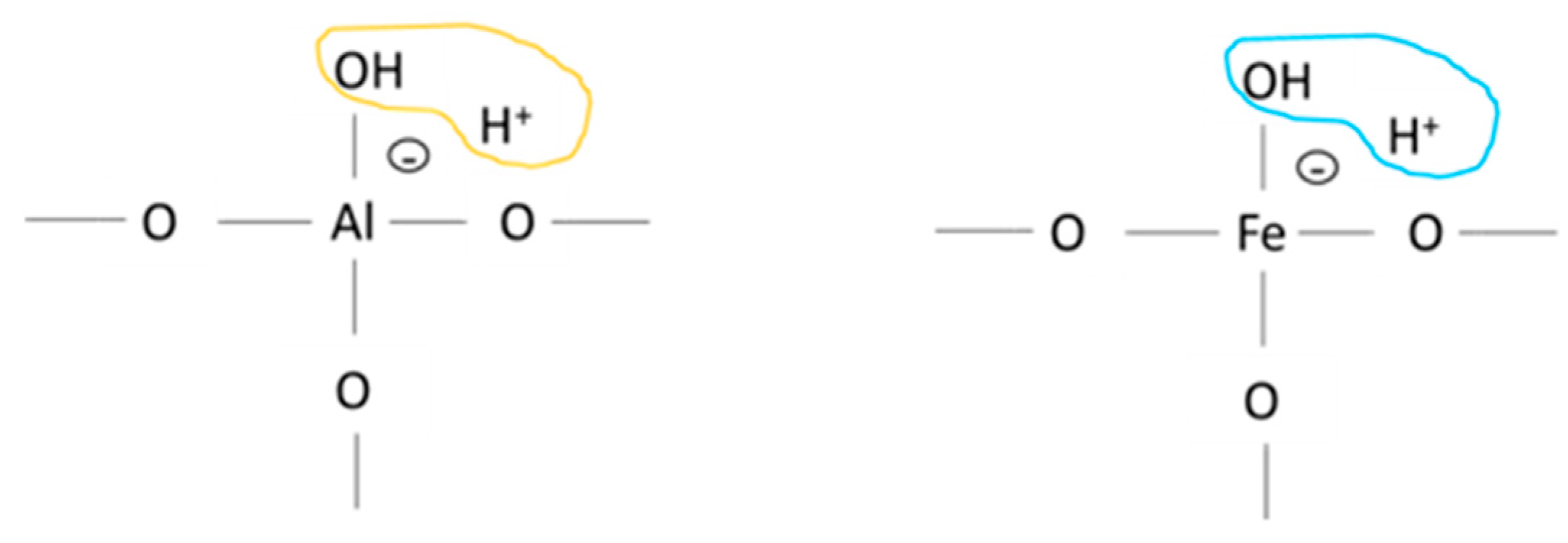
In our earlier work on geraniol oxidation over vermiculite [23], we proposed a mechanism for the formation of oxygenated derivatives such as 2,3-epoxygeraniol, 2,3-epoxycitral, and citral, in which Al and Fe species were suggested to play a role in proton generation through interactions with hydroxyl groups derived from water molecules. These protons were then assumed to participate in the oxidation process with molecular oxygen. In the case of mironekuton, a similar role of Al and Fe species may be considered; however, this interpretation requires careful discussion in the context of the present results. SEM–EDS analysis (Table 2 and Table 3) confirms the presence of both Al and Fe in the structure, while UV–Vis spectra (Figure 7) indicate the presence of Fe species in different coordination environments. At the same time, the catalytic results (Figure 8, Figure 9 and Figure 10) show that epoxidation pathways are not dominant, suggesting that the role of these species may differ from that previously proposed for vermiculite. Therefore, the participation of Al and Fe in proton generation and their involvement in geraniol transformation should be regarded as a plausible mechanistic hypothesis rather than a definitive conclusion. Based on this hypothesis, the possible transformation pathways are illustrated in Figure 11.
A detailed analysis of the composition of vermiculite and mironekuton shows that both minerals contain similar amounts of iron, while mironekuton contains about 3 wt% less aluminum, while calcium and potassium were also determined in its composition. In the case of other minerals (e.g., zeolites) it has been described in the scientific literature [41,42] that the Ca2+ ion can interact with water molecule, as a result of which a proton is produced, which can further participate in the processes of isomerization and oxidation. Potassium ions can also play a similar role. The way of protons formation upon interaction with calcium and potassium ions is illustrated by the following equations:
Ca2+ + H2O ⇌ [Ca(OH)]+ + H+
K+ + H2O ⇌ [KOH] + H+
Taking into account the action of calcium and potassium ions and the reduced content of aluminum ions in mironekuton, this may be an attempt to explain the differences in the catalytic activity of mironekuton and vermiculite, but this requires more extensive studies in the future. Future studies should also consider the different abilities of calcium and potassium ions to react with water molecules, which may influence proton generation and therefore the geraniol oxidation process.
The mechanism presenting the ways of fromation of 2,3-epoxygeraniol, 2,3-epoxycitral, and citral was decribed in our previous work on the oxidation of geraniol on vermiculite [23]. According with this mechanism water molecules play a key role in the formation of 2,3-epoxygeraniol, 2,3-epoxycitral, and citral. This raises the question of where the water molecules present in the pores of mironekuton come from. Water is always present in the pores of mironekuton, but it can also originate from the dehydration processes occurring in the process we studied. This leads to the conclusion that Al and Fe present in the mironekuton structure may play a key role in the formation of water molecules through the dehydration of compounds containing hydroxyl groups. This allows the generation of water molecules, necessary for isomerization processes. This interpretation also explains why so much thunbergol is formed in the reaction medium and why it is the preferred product. It appears that Al and Fe participate more in dehydration than isomerization processes. At the same time, the data presented in Figure 3 indicate that mironekuton is dominated by mesopores with characteristic diameters of a few nanometers. Such pore dimensions may favor the formation of larger, cyclic and branched molecules by providing sufficient spatial freedom for reactions leading to more complex products. In summary, it can be said that Al and Fe present in the mironekuton structure likely participate more in dehydration than isomerization processes. At the same time, the pore size of this mineral plays a significant role in the reaction, favoring the formation of larger, i.e., cyclic and branched molecules.

2.3. Kinetic Modeling the Process of Geraniol Oxidation on Mironekuton

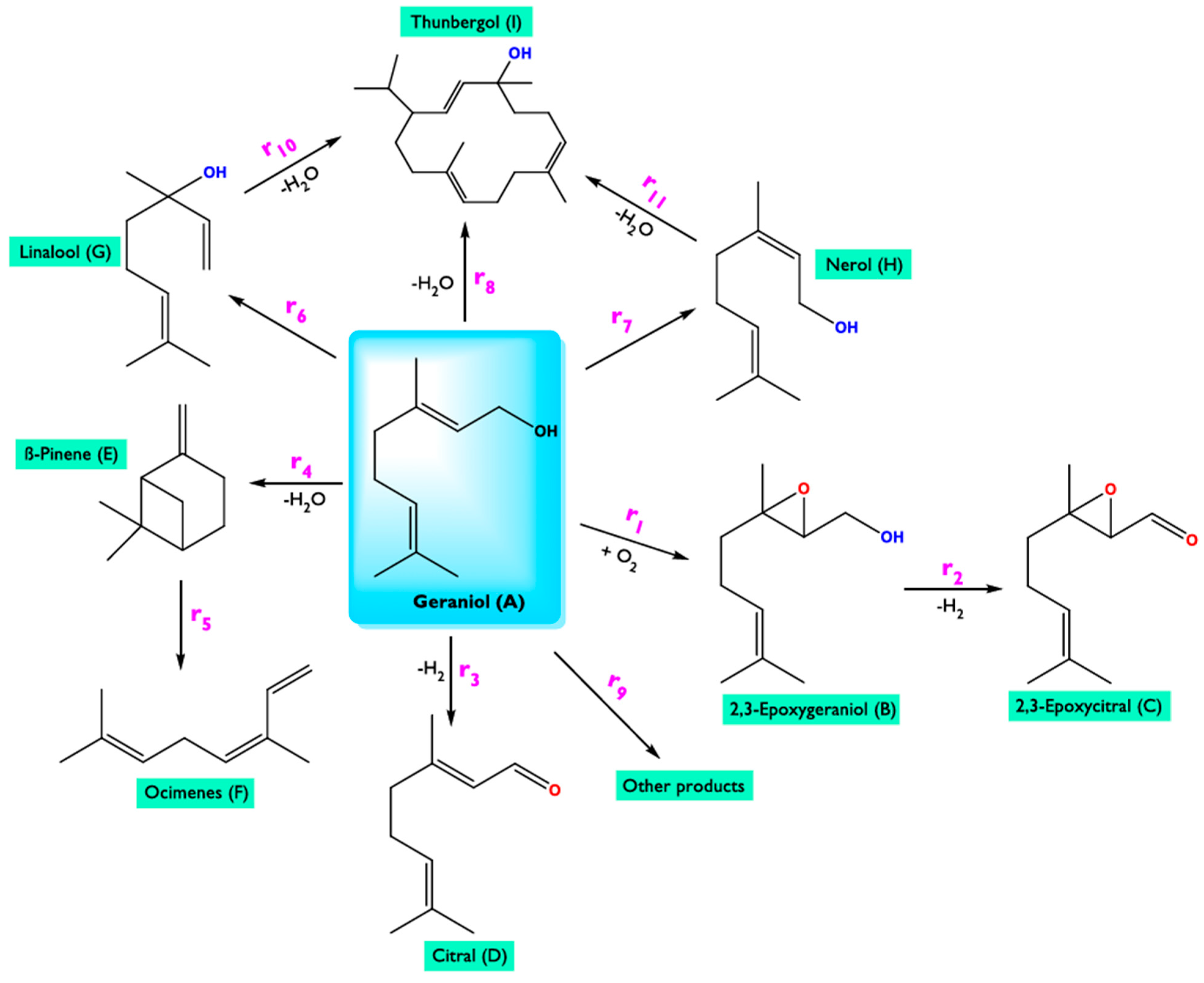
The reaction pathway for the process of geraniol oxidation over mironekuton as the catalyst was proposed based on catalytic tests results presented above on Figure 8, Figure 9 and Figure 10. Figure 12 presents the main directions of geraniol transformation during the studied process. Primarily, geraniol (A) undergoes epoxidation with pure oxygen, producing 2,3-epoxygeraniol (B) and 2,3-epoxycitral (C). Citral (D) is formed via the oxidative dehydrogenation of geraniol, while β-pinene (E) and ocimenes (F) are generated through the dehydration of geraniol followed by rearrangement. The isomerization of geraniol results in the formation of linalool (G) and nerol (H). Subsequently, these molecules (C10H18O: A, G, H) undergo dimerization to produce a higher-molecular-weight compound, such as thunbergol (I, C20H34O), along with the elimination of water. Finally, other products are labeled to account for the conversion of geraniol into various side products.
Table 4 presents the optimized kinetic parameters for the transformation of geraniol using pure oxygen as the oxidant under the tested reaction conditions. The kinetic analysis revealed that the adsorption sequence strongly follows the order: ocimenes (KF) > 2,3-epoxy geraniol (KB) > nerol (KH) > geraniol (KA) > 2,3-epoxy citral (KC) > β-pinene (KE). The high adsorption equilibrium constants for these compounds suggest a stronger binding to the catalyst, significantly influencing the final product distribution, as previously reported in the literature [27].
The adsorption of thunbergol (KI), citral (KD), and linalool (KG) was very weak, as reflected by the low values of their adsorption constants. The reaction rate constants estimated at 90 °C for reactions 4 and 7 exhibited the lowest values, which was expected due to the low selectivity of β-pinene and nerol under the tested reaction conditions. Conversely, the highest kinetic constants were associated with reactions 11 and 10, leading to the formation of thunbergol, the most selective identifiable product. Notably, the kinetic constant for the epoxidation of geraniol with oxygen was very low (k1 = 1.05 × 10⁻³ mL mg−1 min−1), indicating that this catalytic system, under the tested reaction conditions, is not highly selective for epoxidized products. However, it is more effective for forming a dimerization product like thunbergol. On the other hand, reactions 8 and 6 exhibited the highest energetic barriers to be overcome for the reaction to proceed, reflected in the high activation energy values of 181 and 133 kJ mol−1, respectively.
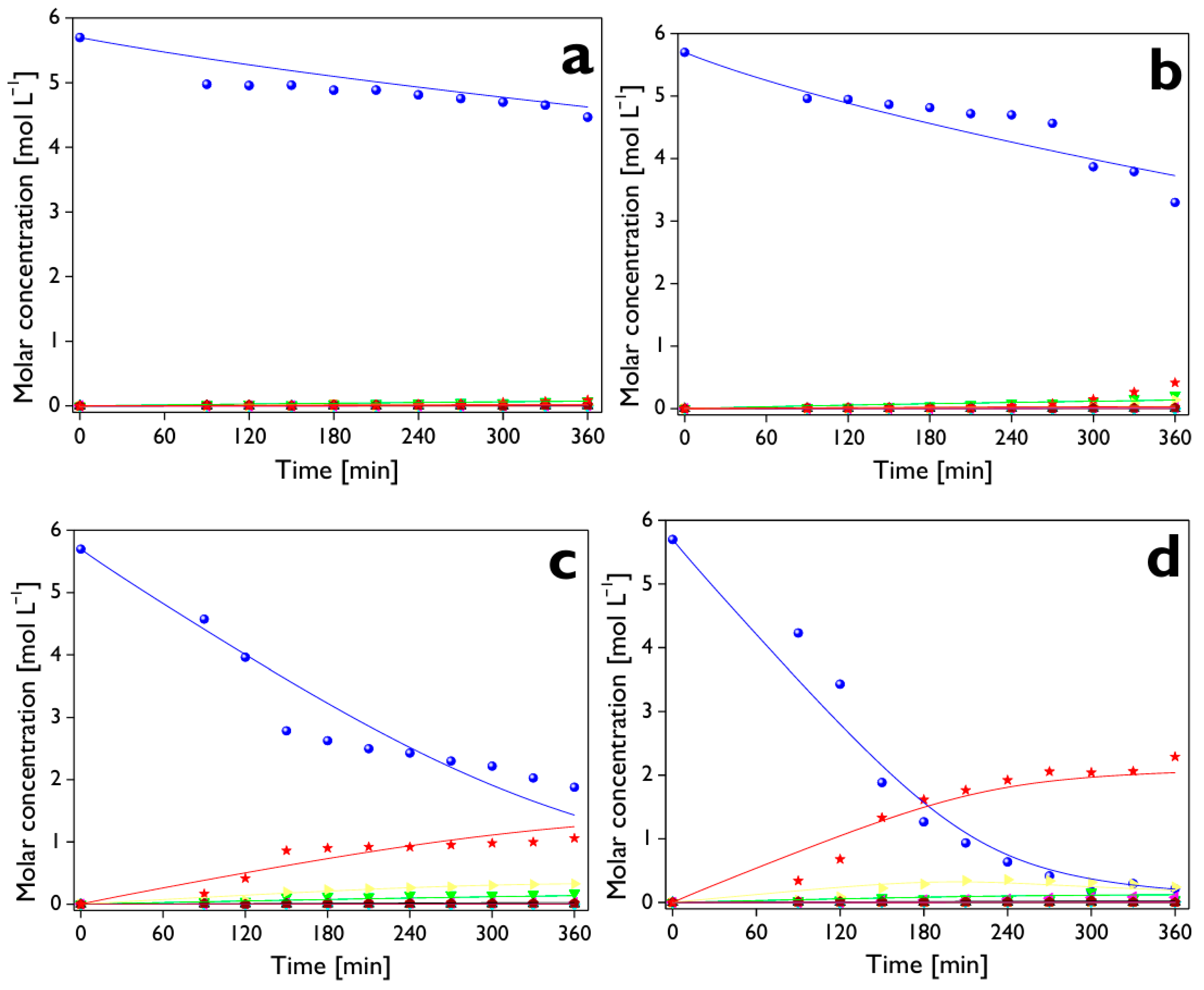
The comparison between the experimental concentration profiles and those calculated with the kinetic model is illustrated in Figure 13. These plots demonstrate that the proposed kinetics effectively capture the behavior of the experimental data, yielding a high R2 value of 98.97% and showing similar trends between the modeled and experimental curves. However, the statistical parameters from the numerical fitting of the model to the experimental data indicated large standard errors for most of the 31 parameters (Table 4). This suggests that the fitting is highly sensitive to changes in some parameters, as such changes can significantly affect other parameters.
Despite this, the model provides a very good approximation for modeling the transformation of geraniol, a molecule of significant interest, under the tested reaction conditions. This is fundamental for future studies aimed at scaling up processes for the synthesis of thunbergol, the most selective product, and for optimizing different reaction conditions. For future reference in continuing this kinetic study, reducing these errors will require additional experimental data, like expanding the range of temperature, catalyst mass, and initial conditions to refine the kinetic further.
To our knowledge, this contribution is the first to present detailed kinetic modeling of geraniol transformation with pure oxygen, providing a comprehensive product distribution, including isomers such as linalool and nerol, which were studied many years ago [43], as well as epoxidation, dehydrogenation, dehydration, and dimerization products.

2.4. Modification of Mironekuton by Washing with 0.1 M Sulfuric Acid (VI)

To improve the conversion of geraniol and the selectivities of its transformation to 2,3-epoxygeraniol, 2,3-epoxycitral, and citral, as well as thunbergol, we decided to modify mironekuton by washing it with 0.1 M sulfuric acid (VI). The total acidity of mironekuton was determined before and after the modification process and compared with the acidity measurements presented in our earlier article on the oxidation of geraniol on vermiculite [23].
The results of the studies on the acid-sites concentration in mironekuton (before and after modification) and TS-1, vermiculite and ZSM-5 catalysts using the titration method described by Vilcocq et al. [31] are presented in Table 5.
Comparison of the results shown in Table 5 shows that mironekuton, the same as previously tested vermiculite, is characterized by a lower content of acid sites than the TS-1 and ZSM-5 catalysts, which may affect its catalytic activity in geraniol transformations process.
The results of comparative catalytic studies for two selected conditions of the geraniol transformation process (temperature 90 °C, catalyst amount 0.7 wt%, reaction time 3 h, and temperature 90 °C, catalyst amount 5 wt%, and reaction time 3 h) on unmodified and modified mironekuton are presented below (Table 6). Additionally, studies were also performed on modified mironekuton under the following conditions (temperature 100 °C, catalyst amount 5 wt%, and time 3 h) to assess the effect of increasing temperature on the geraniol conversion and selectivity of the transformation to thunbergol.
The results summarized in Table 6 clearly demonstrate that sulfuric acid treatment has a profound impact on the catalytic performance of mironekuton in the oxidation of geraniol. For all investigated reaction conditions, the modified catalyst (MIR_MOD) exhibits a markedly higher activity compared to the pristine material (MIR), as evidenced by a substantial increase in geraniol conversion. At 90 °C and a catalyst loading of 0.7 wt%, the conversion increases from 18 mol% for MIR to 77 mol% for MIR_MOD, while at a catalyst loading of 5 wt% the conversion reaches 99 mol%. Complete conversion of geraniol is achieved over MIR_MOD at 100 °C and 5 wt% catalyst loading. In parallel with the enhanced activity, sulfuric acid modification significantly alters the product distribution. In contrast to the pristine mironekuton, the modified catalyst shows negligible selectivities toward epoxidation products, namely 2,3-epoxygeraniol and 2,3-epoxycitral, which are virtually absent under all tested conditions. This behavior indicates that increased surface acidity promotes rapid transformation of epoxide intermediates, preventing their accumulation in the reaction mixture. Consequently, epoxidation does not represent a dominant reaction pathway over MIR_MOD. The most pronounced effect of the acid treatment is the strong promotion of dimerization pathways. Thunbergol becomes the main identifiable product over MIR_MOD, with selectivities consistently reaching 34–35 mol%, largely independent of catalyst loading and temperature. At the same time, the formation of 6,11-dimethyldodeca-2,6,10-trien-1-ol is also favored. This behavior suggests that the increased concentration and accessibility of acid sites, combined with the relatively large pore size of mironekuton, create favorable conditions for dehydration–dimerization reactions leading to higher-molecular-weight products. Additionally, sulfuric acid modification results in a significant reduction in the fraction of unidentified products (“others”), particularly at lower catalyst loadings. This indicates improved control over the reaction network and more efficient channeling of the reacted geraniol toward specific, structurally defined products. Overall, the results demonstrate that acid-activated mironekuton acts as a selective heterogeneous catalyst favoring dehydration and dimerization pathways rather than epoxidation or oxidative dehydrogenation, enabling high and reproducible selectivity toward thunbergol under mild, solvent-free conditions.
The catalytic behavior of sulfuric acid–modified mironekuton is fully consistent with the kinetic model proposed for geraniol transformation. The absence of epoxidation products over MIR_MOD reflects the very low kinetic constant estimated for the epoxidation step, indicating that epoxides act only as short-lived intermediates. In contrast, the high and stable selectivity toward thunbergol directly corresponds to the highest kinetic constants assigned to the dimerization reactions, which are therefore kinetically favored. The low adsorption equilibrium constant of thunbergol further facilitates its rapid desorption, preventing surface inhibition at high conversion levels. Overall, acid treatment enhances the dominant reaction pathways predicted by the kinetic model without altering the underlying reaction network.


3. Materials and Methods

3.1. Mironekuton Used in Catalytic Studies

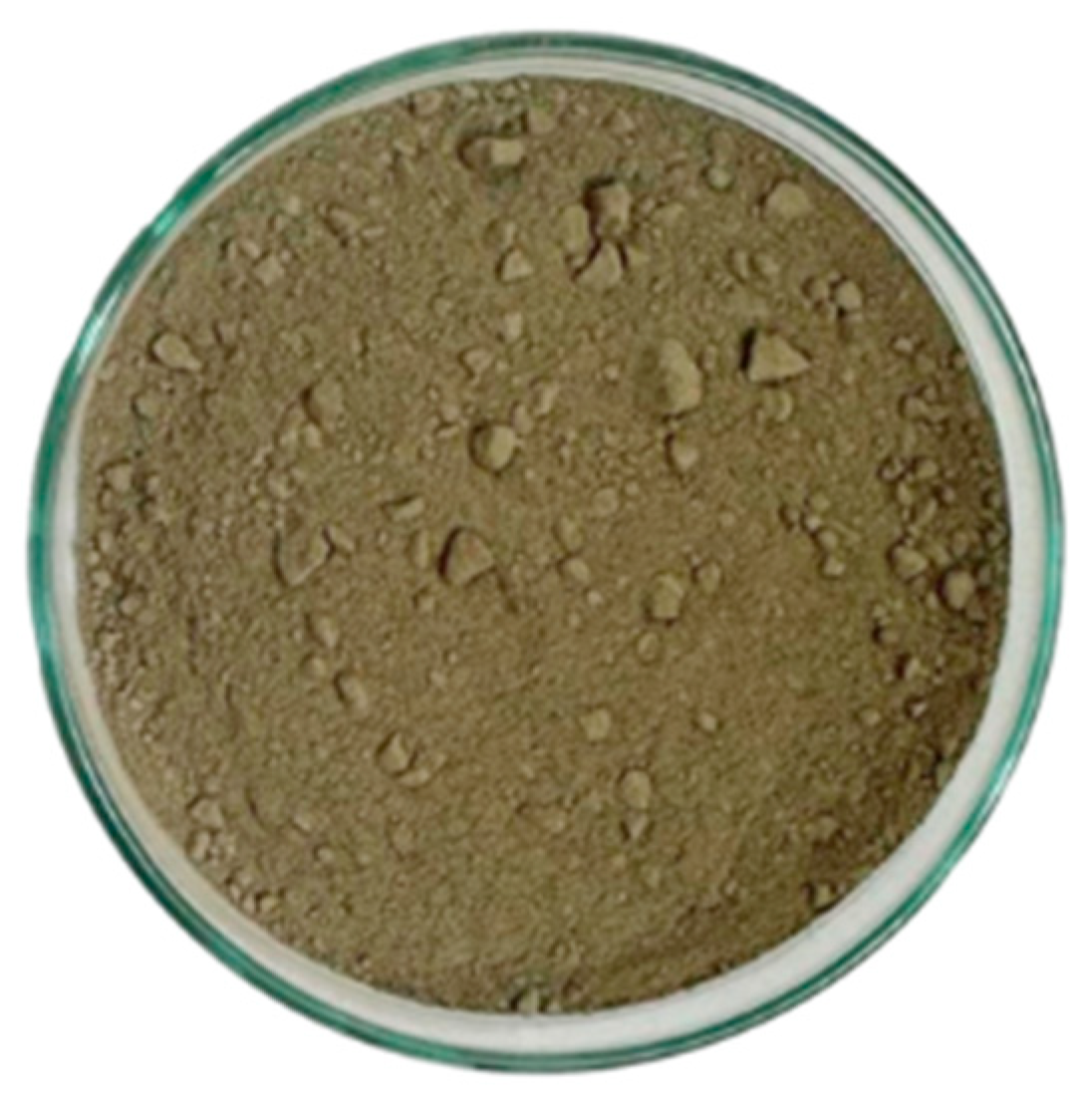
Mironekuton used in catalytic studies was from Qualdrop company (Gliwice, Poland)—Figure 14. The catalyst prior to use in catalytic studies was dried in an oven at 100 °C for 6 h and ground in a mortar.

3.2. Characteristics of Mironekuton with Instrumental Methods

Mironekuton, before application in catalytic studies on the oxidation of geraniol, was subjected to instrumental studies in order to obtain its characteristic. The XRD pattern of this mineral was obtained using an Empyrean PANalytical X-ray diffractometer (Malvern, UK) equipped with a Cu lamp as the radiation source, covering the 2θ range of 10–40° with a step size of 0.026°. The semi-quantitative analysis of crystalline phases was performed using the HighScore Plus software 1.0 (Malvern PANalytical), based on powder X-ray diffraction (XRD) data. The procedure involved automatic phase identification by matching the experimental diffractogram with reference patterns from the ICDD PDF-4+ database. Once the individual phases were identified, their relative weight fractions were estimated using the built-in semi-quantitative analysis module. This approach calculates phase abundance based on the Reference Intensity Ratio (RIR) method, assuming similar crystallinity, absorption coefficients, and particle statistics among the phases. To enhance reliability, the most intense peaks were selected for quantification, and overlapping reflections were minimized manually when possible. No internal standard was used; thus, the obtained results represent approximate phase ratios rather than absolute quantities. The pore volume was measured through N2 adsorption at −196 °C using a Sorption Surface Area and Pore Size Analyzer (ASAP 2460, Micromeritics, Norcross, GA, USA). To remove impurities, the sample was heated at 205 °C for 16 h. SEM were captured with a SU8020 Ultra-High Resolution Field Emission Scanning Electron Microscope from Hitachi Ltd., Japan. Elemental composition of the mironekuton was determined using Energy Dispersive X-ray Spectroscopy (EDX), also performed on the SU8020. Infrared spectrum within the wavenumber range of 400–4000 cm−1 was recorded using a Thermo Electron Nicolet 380 spectrometer (Malente, Germany). UV-Vis spectrum, covering wavelengths from 190 to 900 nm, was measured with a Jasco 650 spectrometer (Tokyo, Japan).

3.3. Oxidation of Geraniol on Mironekuton

In the process of geraniol oxidation on mironekuton were used: a 25 cm3 three-necked glass flask, a magnetic stirrer with a heating function, an oil bath, a cylinder with oxygen (purity 99.99%, Messer, Szczecin, Poland), a flowmeter supplying oxygen from the cylinder to the reactor at a constant flow rate of 40 mL/min throughout the experiment. Using an analytical balance, 10 g (in the case of time effect studies, it was 20 g) of geraniol (97% Sigma Aldrich, Poznań, Poland) was first weighed directly into the reactor. Then, the catalyst (mironekuton) was weighed in a plastic container in the appropriate amount and introduced into the reactor using a glass funnel. Then, the reactor was attached to a stand using a laboratory clamp and immersed in an oil bath. The reaction mixture was stirred at a speed of 500 rpm. The studies on the oxidation of geraniol were carried out with the following ranges of changes in three parameters influencing the course of the process: temperature 75–100 °C, catalyst amount 0.5–5 wt%, and reaction time 15–360 min. Samples of the reaction mixtures were collected in the amount of 1 mL in Eppendorf tubes and then placed in a laboratory centrifuge to separate the catalyst from the reaction liquid. Then the sample was diluted with acetone in a ratio of 1:4 and analyzed by the gas chromatography method on a FOCUS apparatus equipped with an FID detector. A ZB-1701 column filled with 14% phenyl cyanopropyl and 86% dimethylpolysiloxane with dimensions of 30 m × 0.53 mm × 1 µm was used for separation. The temperature program for the chromatographic analyses was as follows: isothermally at 50 °C for 5 min, then increasing the temperature by 10 °C/min to 250 °C and holding for 5 min. Other key parameters of chromatographic analyses included the detector temperature of 250 °C, the sample chamber temperature of 230 °C, and a carrier gas flow of 0.8 mL/min. The composition of all the syntheses performed was established (studies on the influence of temperature, catalyst amount, and reaction time), and next mass balances for these syntheses were calculated. On their basis, the conversion of geraniol and the selectivity of the transformation to the appropriate products of this process were calculated.
Conversion of geraniol was calculated using Equation (1):
Conversion (geraniol) = (number of moles of reacted geraniol/number of moles of geraniol introduced into the reactor) × 100 [mol%]
The selectivity of the transformation to the appropriate product was calculated using Equation (2):
Selectivity (product) = (number of moles of a given product/number of moles of reacted geraniol) × 100 [mol%].

3.4. Kinetic Modeling the Process of Geraniol Oxidation on Mironekuton

3.4.1. Reaction Pathway

The kinetic study aims to investigate the rate-determining steps and possible reaction pathways involved in the transformation of geraniol with pure oxygen over the heterogeneous catalyst. Table 7 shows the experimental runs used in the kinetic modeling.

3.4.2. Kinetic Equations

The reaction rate expressions are shown in Equations (3)–(6), with derivations provided in the supporting information (Figure S1 and Equations (S1)–(S52)). The surface reactions are assumed to be irreversible, where k and K denote the reaction rate and adsorption equilibrium constants, respectively. The reaction constants are determined using the modified Arrhenius equation, Equation (7), as described in the literature [27,44]. Here, kref represents the reaction rate constant at a reference temperature (Tref = 90 °C), Ea denotes the activation energy, and R is the gas constant. Additionally, the adsorption constants are assumed to remain constant within the temperature range of 90–120 °C [45,46]. Note that for Equation (5), X = B when i = 2, and X = E when i = 5. Similarly, for Equation (6), Y = A, G, and H correspond to I = 8, 10, and 11, respectively.
K j C j = K A C A + K B C B + K C C C + K D C D + K E C E + K F C F + K G C G + K H C H + K I C I
r i = k i C A 1 + K j C j i = 1 , 3 , 4 , 6 , 7 , 9
r i = k i C X 1 + K j C j i = 2 , 5
r i = k i C Y 2 1 + K j C j 2 i = 8 , 10 , 11
k = k r e f e E a R 1 T 1 T r e f
The mole balance for the species in the liquid phase in the batch reactor is represented by Equation (8), where Cj is the concentration of species j, W is the catalyst mass, V is the reaction volume, and Rj is the generation rate for species j, as shown in Table 8.
d C j d t = W V R j

3.4.3. Parameters of Estimation

The estimation of parameters was performed through nonlinear regression using the ModEst modeling and parameter estimation software (v1, 1994) [44,47]. This method minimizes the objective function by employing the Levenberg–Marquardt algorithm. The objective function (Equation (9)) is defined as the squared difference between the experimental concentrations (Cj,i,Exp) and the calculated concentrations (Cj,i,Calc) of the species [27,46]. The coefficient of determination (R2), a metric used for evaluating goodness of fit, was calculated based on the definition provided elsewhere [27].
O . F = j N c o m i = 1 N o b s C j , i , E x p C j , i , C a l c 2

3.4.4. Determination of the Acid-Sites Concentration in Mironekuton

The acid-sites concentration in mironekuton (before and after modification by washing with 0.1 M sulfuric acid (VI) solution) was determined using the titration method described by Vilcocq et al. [48]. Accordingly, 40 mg of catalytic porous material was added to 20 cm3 of 0.01 M solution of NaOH. The mixture was next shaken at room temperature for 2 h. The material was then filtered, and the pH of the filtrate was determined by the titration with 0.01 M solution of HCl in the presence of phenolphthalein as the indicator. The acid-sites concentration, Ns, was established according to Equation (10):
Ns = ([OH]o − [OH]2h)*V/m
where
[OH] = the hydroxide group molar concentration determined by the titration (mol/dm3),
V = the volume of NaOH solution added to porous material sample, and
m = the mass of porous material sample.

3.4.5. Modification of Mironekuton by Washing with 0.1 M Sulfuric Acid (VI) Solution

In order to modify the pristine mironekuton (catalyst named MIR), 10 g of this porous material were poured into 200 cm3 of 0.1 M sulfuric acid (VI) solution and the mixture was heated (in the glass flask equipped with the reflux condenser) at 80 °C for 6 h. Then, the obtained modified mironekuton (catalyst named MIR_MOD) was filtered and washed with deionized water until the filtrate had a pH of 7. After washing, the modified mironekuton was dried overnight at 100 °C.

4. Conclusions

This study demonstrates that mironekuton, a natural Japanese volcanic clay mineral, can be effectively applied as a heterogeneous catalyst in the solvent-free oxidation of geraniol with molecular oxygen, enabling the formation of a wide range of value-added transformation products. Comprehensive physicochemical characterization confirmed that pristine mironekuton is a multiphase silicate–aluminosilicate material exhibiting pronounced structural and chemical heterogeneity, while mild sulfuric acid treatment leads to surface activation without altering the primary crystalline framework.
Catalytic tests revealed that pristine mironekuton exhibits moderate activity and limited selectivity toward oxygenated derivatives of geraniol, such as 2,3-epoxygeraniol, 2,3-epoxycitral, and citral. Instead, dehydration, isomerization, and dimerization reactions play a major role in the transformation network, resulting in the formation of larger and more structurally complex molecules. Among these products, thunbergol and 6,11-dimethyldodeca-2,6,10-trien-1-ol were identified as the most selectively formed compounds under elevated temperature and catalyst loading.
Sulfuric acid modification of mironekuton significantly enhances its catalytic performance, leading to a substantial increase in geraniol conversion and a pronounced shift in product distribution. The modified catalyst exhibits strong preference toward dehydration–dimerization pathways, yielding thunbergol as the dominant product with high and reproducible selectivity, while epoxidation products are no longer detected. This behavior is attributed to the increased concentration and accessibility of acid sites, combined with the relatively large pore size of the material, which favors the formation of higher-molecular-weight products.
Kinetic modeling of the geraniol transformation process provides mechanistic insight into the observed catalytic behavior. The low kinetic constant estimated for epoxidation, together with the high rate constants associated with dimerization reactions, confirms that epoxide species act only as short-lived intermediates, whereas thunbergol formation is kinetically favored. High adsorption constants for ocimenes, 2,3-epoxygeraniol, and nerol highlight their strong interaction with the catalyst surface, significantly influencing product distribution.
Overall, the presented results indicate that acid-activated mironekuton is a promising, environmentally benign catalyst for the selective synthesis of thunbergol and related compounds from geraniol under mild and solvent-free conditions. The combination of renewable feedstock, molecular oxygen as a green oxidant, and a natural mineral catalyst aligns well with the principles of sustainable chemistry and offers a solid foundation for further optimization and potential scale-up of this process.
Future studies should include an evaluation of catalyst stability and reusability, as well as the effect of repeated reaction cycles on catalytic performance and product distribution.

Supplementary Materials

The following supporting information can be downloaded at: https://www.mdpi.com/article/10.3390/catal16050424/s1, Figure S1: Elemental steps proposed for the reaction network of the transformation of geraniol; Equations (S1)–(S52).

Author Contributions

Conceptualization, S.G. and A.W.; methodology, S.G., A.W., B.M. and L.A.G.-V.; validation, S.G., A.W., B.M. and L.A.G.-V.; formal analysis, A.W. and B.M.; investigation, S.G., A.W., B.M., L.A.G.-V. and P.M.; resources, S.G., A.W., B.M. and L.A.G.-V.; data curation, S.G., A.W., B.M., P.M. and L.A.G.-V.; writing—original draft preparation, S.G., A.W., B.M., P.M. and L.A.G.-V.; writing—review and editing, S.G., A.W., B.M., A.F.-B. and L.A.G.-V.; visualization, S.G., A.W., A.F.-B. and L.A.G.-V.; supervision, A.W.; project administration, A.W. All authors have read and agreed to the published version of the manuscript.

Funding

This research received no external funding.

Institutional Review Board Statement

Not applicable.

Informed Consent Statement

Not applicable.

Data Availability Statement

The data presented in this study are available upon request from the corresponding author.

Acknowledgments

Luis A. Gallego-Villada is grateful to the Universidad de Antioquia for the “Beca Doctoral Universidad de Antioquia” scholarship. The authors thank the Center for Advanced Materials and Manufacturing Process Engineering (MATPRO), West Pomeranian University of Technology in Szczecin, for technical support and providing research equipment at Microscopy Laboratory, in particular Apreo S LoVac scanning electron microscope with energy-dispersive and wavelength-dispersive X-ray detectors (Thermo Fisher Scientific Inc., Waltham, MA, USA).

Conflicts of Interest

The authors declare no conflicts of interest.

References

  1. He, T.; Li, G.; Ji, J.; Liu, W.; Zhang, H.; Xie, X.; Huang, S.; Huang, T.; Peng, H. Tailored engineering of intracrystalline mesopores for boosting multicomponent volatile organic compounds simultaneous deep oxidation. Appl. Catal. B Environ. 2025, 362, 124752. [Google Scholar] [CrossRef]
  2. Amarasena, L.; Weerasooriya, R.; Bandara, A.; Jayarathna, L. Exploring depletion of volatile organic compounds (VOCs) in the air using Faujasite zeolite catalysts from fundamental to advanced. Discov. Atmos. 2024, 2, 9. [Google Scholar] [CrossRef]
  3. Resul, M.F.M.G.; Rehman, A.; Saleem, F.; Usman, M.; Fernández, A.M.L.; Ezea, V.C.; Harveya, A.P. Recent advances in catalytic and non-catalytic epoxidation of terpenes: A pathway to bio-based polymers from waste biomass. RSC Adv. 2023, 13, 32940–32971. [Google Scholar] [CrossRef]
  4. Schaub, T. Efficient industrial organic synthesis and the principles of green chemistry. Chem. Eur. J. 2021, 27, 1865–1869. [Google Scholar] [CrossRef]
  5. Ganesh, K.N.; Zhang, D.; Miller, S.J.; Rossen, K.; Chirik, P.J.; Kozlowski, M.C.; Zimmerman, J.B.; Brooks, B.W.; Savage, P.E.; Allen, D.T.; et al. Green chemistry: A framework for a sustainable future. Org. Lett. 2021, 23, 4935−4939. [Google Scholar] [CrossRef] [PubMed]
  6. Jiang, J.; Xiao, F.; He, W.-M.; Wang, L. The application of clean production in organic synthesis. Chin. Chem. Lett. 2021, 32, 1637–1644. [Google Scholar] [CrossRef]
  7. Barras, B.J.; Ling, T.; Rivas, F. Recent advances in chemistry and antioxidant/anticancer biology of monoterpene and meroterpenoid natural product. Molecules 2024, 29, 279. [Google Scholar] [CrossRef] [PubMed]
  8. Erasto, P.; Viljoen, A.M. Limonene—A review: Biosynthetic, ecological and pharmacological relevance. Nat. Prod. Commun. 2008, 3, 1193–1202. [Google Scholar] [CrossRef]
  9. Salehi, B.; Upadhyay, S.; Orhan, I.E.; Jugran, A.K.; Jayaweera, S.L.D.; Dias, D.A.; Sharopov, F.; Taheri, Y.; Martins, N.; Baghalpour, N.; et al. Therapeutic potential of α- and β-Pinene: A miracle gift of nature. Biomolecules 2019, 9, 738. [Google Scholar] [CrossRef]
  10. Szutt, A.; Dołhańczuk-Śródka, A.; Sporek, M. Evaluation of chemical composition of essential oils derived from different pelargonium species leaves. Ecol. Chem. Eng. 2019, 26, 807–816. [Google Scholar] [CrossRef]
  11. Chen, W.; Viljoen, A.M. Geraniol—A review update. S. Afr. J. Bot. 2022, 150, 1205–1219. [Google Scholar] [CrossRef]
  12. Wang, X.; Wang, J.; Zhang, X.; Zhang, J.; Zhou, Y.; Wang, F.; Li, X. Efficient myrcene production using linalool dehydratase isomerase and rational biochemical process in Escherichia coli. J. Biotechnol. 2023, 371–372, 33–40. [Google Scholar] [CrossRef]
  13. Salakhutdinov, N.F.; Volcho, K.P.; Yarovaya, O.I. Monoterpenes as a renewable source of biologically active compounds. Pure Appl. Chem. 2017, 89, 1105–1117. [Google Scholar] [CrossRef]
  14. Lei, Y.; Fu, P.; Jun, X.; Cheng, P. Pharmacological properties of geraniol—A review. Planta Medica 2019, 85, 48–55. [Google Scholar] [CrossRef]
  15. Prasad, S.N.; Muralidhara. Mitigation of acrylamide-induced behavioral deficits, oxidative impairments and neurotoxicity by oral supplements of geraniol (a monoterpene) in a rat model. Chem.-Biol. Interact. 2014, 223, 27–37. [Google Scholar] [CrossRef]
  16. Chen, W.; Viljoen, A.M. Geraniol—A review of a commercially important fragrance material. S. Afr. J. Bot. 2010, 76, 643–651. [Google Scholar] [CrossRef]
  17. Nisar, R.; Inamullah, A.; Ghalib, A.U.F.; Nisar, H.; Sarkaki, A.; Afzal, A.; Tariq, M.; Batool, Z.; Haider, S. Geraniol mitigates anxiety-like behaviors in rats by reducing oxidative stress, repairing impaired hippocampal neurotransmission, and normalizing brain cortical-EEG wave patterns after a single electric foot-shock exposure. Biomed. Pharmacother. 2024, 176, 116771. [Google Scholar] [CrossRef] [PubMed]
  18. Lin, L.; Long, N.; Qiu, M.; Liu, Y.; Sun, F.; Dai, M. The inhibitory efficiencies of geraniol as an anti-inflammatory, antioxidant, and antibacterial, natural agent against methicillin-resistant Staphylococcus aureus infection in vivo. Infect. Drug Resist. 2021, 14, 2991–3000. [Google Scholar] [CrossRef] [PubMed]
  19. Fajdek-Bieda, A.; Pawlińska, J.; Wróblewska, A.; Łuś, A. Evaluation of the antimicrobial activity of geraniol and selected geraniol transformation products against gram-positive bacteria. Molecules 2024, 29, 950. [Google Scholar] [CrossRef]
  20. Dinu, M.; Tatu, A.L.; Cocos, D.I.; Nwabudike, L.C.; Chirilov, A.M.; Stefan, C.S.; Earar, K.; Buzia, O.D. Natural sources of therapeutic agents used in skin conditions. Life 2024, 14, 492. [Google Scholar] [CrossRef]
  21. Jayapal, J.; Siyabudeen, M.; Devika, R.S.; Dileep, A.; Subimol, S. Formulation and evaluation of facial serum containing marigold and rose petal extracts for skin regeneration and collagen production. Int. J. Pharm. Sci. 2025, 3, 2454–2464. [Google Scholar]
  22. Srivastava, G.; Mukherjee, E.; Mittal, R.; Ganjewala, D. Geraniol and citral: Recent developments in their anticancer credentials opening new vistas in complementary cancer therapy. Z. Naturforsch. 2024, 79, 163–177. [Google Scholar] [CrossRef] [PubMed]
  23. Gajewska, S.; Wróblewska, A.; Fajdek-Bieda, A.; Kamińska, A.; Sreńscek-Nazzal, J.; Miądlicki, P.; Michalkiewicz, B. Oxidation of geraniol on vermiculite—The influence of selected parameters on the oxidation process. Catalysts 2024, 14, 714. [Google Scholar] [CrossRef]
  24. Mironekuton®. Available online: http://www.newstone-intl.com/mironekutonreg.html (accessed on 30 May 2025).
  25. Zarzyka, I.; Krzykowska, B.; Frącz, W.; Szpiłyk, M.; Fajdek-Bieda, A.; Wróblewska, A.; Michalkiewicz, B. Effect of natural mineral additives on the sustainability and performance of polyurethane foams. Sustainability 2026, 18, 1497. [Google Scholar] [CrossRef]
  26. Fajdek-Bieda, A.; Wróblewska, A.; Perec, A.; Miądlicki, P. Green method of conversion of geraniol to value-added products in the presence of selected minerals. Pol. J. Chem. Technol. 2023, 25, 47–60. [Google Scholar] [CrossRef]
  27. Gallego-Villada, L.A.; Perez-Sena, W.Y.; Sánchez-Velandia, J.E.; Cueto, J.; del Mar Alonso-Doncel, K.; Wärmå, J.; Mäki-Arvela, P.; Alarcón, E.A.; Serrano, D.P.; Murzin, D.Y. Synthesis of dihydrocarvone over dendritic ZSM-5 Zeolite: A comprehensive study of experimental, kinetics, and computational insights. Chem. Eng. J. 2024, 498, 155377. [Google Scholar] [CrossRef]
  28. Mironekuton—Natural Deep Sea Mineral. Available online: https://www.qualdrop.pl/mironekuton/ (accessed on 30 May 2025).
  29. Thommes, M.; Kaneko, K.; Neimark, A.V.; Olivier, J.P.; Rodriguez-Reinoso, F.; Rouquerol, J.; Sing, K.S.W. Physisorption of gases, with special reference to the evaluation of surface area and pore size distribution (IUPAC Technical Report). Pure Appl. Chem. 2015, 87, 1051–1069. [Google Scholar] [CrossRef]
  30. Louati, S.; Baklouti, S.; Samet, B. Geopolymers based on phosphoric acid and illito-kaolinitic clay. Adv. Mater. Sci. Eng. 2016, 2016, 2359759. [Google Scholar] [CrossRef]
  31. Rezende, J.C.T.; Ramos, V.H.S.; Oliveira, H.A.; Oliveira, R.M.P.B.; Jesus, E. Removal of Cr(VI) from aqueous solutions using clay from Calumbi geological formation, N. Sra. Socorro, SE State, Brazil. Mater. Sci. Forum 2018, 912, 1–6. [Google Scholar] [CrossRef]
  32. Antosik, A.K.; Mozelewska, K.; Musik, M.; Miądlicki, P. Influence of diatomite and its base modifications on the self-adhesive properties of silicone pressure-sensitive adhesives. Sci. Rep. 2023, 13, 13691. [Google Scholar] [CrossRef]
  33. Cai, G.-B.; Chen, S.-F.; Liu, L.; Jiang, J.; Yao, H.-B.; Xu, A.-W.; Yu, S.-H. 1,3-Diamino-2-hydroxypropane-N,N,N0,N0-tetraacetic acid stabilized amorphous calcium carbonate: Nucleation, transformation and crystal growth. CrystEngComm 2010, 12, 234–241. [Google Scholar] [CrossRef]
  34. Stockstill-Cahill, K.R.; Cahill, J.T.S.; Hibbitts, C.A.; Waller, D.C.; Retherford, K.D. Ultraviolet characterization of plagioclase series samples as analogs for the lunar surface. In Proceedings of the 54th Lunar and Planetary Science Conference, Woodlands, TX, USA, 13–17 March 2023. [Google Scholar]
  35. Loures, C.C.A.; Alcântara, M.A.K.; Filho, H.J.I.; Teixeira, A.C.S.C.; Silva, F.T.; Paiva, T.C.B.; Samanamud, G.R.L. Advanced oxidative degradation processes: Fundamentals and applications. Int. J. Chem. Eng. 2013, 5, 102–120. [Google Scholar] [CrossRef]
  36. Ramzannezhad, A.; Gill, P.; Bahari, A. Fabrication of magnetic nanorods and their applications in medicine. BioNanoMaterials 2017, 18, 20170008. [Google Scholar] [CrossRef]
  37. Belahcene, S.; Kebsa, W.; Akingbade, T.V.; Umar, H.I.; Omoboyowa, D.A.; Alshihri, A.A.; Mansour, A.A.; Alhasaniah, A.H.; Oraig, M.A.; Bakkour, Y.; et al. Chemical composition antioxidant and anti-inflammatory activities of Myrtus communis L. leaf extract: Forecasting admet profiling and anti-inflammatory targets using molecular docking tools. Molecules 2024, 29, 849. [Google Scholar] [CrossRef]
  38. De Lima, E.J.S.P.; Alves, R.G.; D’Elia, G.M.A.; da Anunciação, T.A.; Silva, V.R.; Santos, L.d.S.; Soares, M.B.P.; Cardozo, N.M.D.; Costa, E.V.; da Silva, F.M.A.; et al. Antitumor effect of the essential oil from the leaves of Croton matourensis Aubl. (euphorbiaceae). Molecules 2018, 23, 2974. [Google Scholar] [CrossRef]
  39. Xu, C.; Zhao, S.; Li, M.; Dai, Y.; Tanc, L.; Liu, Y. Chemical composition, antimicrobial and antioxidant activities of essential oil from flue-cured tobacco flower bud. Biotechnol. Biotechnol. Equip. 2016, 30, 1026–1030. [Google Scholar] [CrossRef]
  40. Keke, C.O.; Nsofor, W.N.; Kumabia, F.K.R.; Iloabuchi, G.C.; Ejiofor, J.C.; Osuagwu, O.L. GCMS and FTIR analysis of ethanol and methanol leave extract of Urena lobata (Caesar weed) for bioactive phytochemical constituents. J. Drug Deliv. Ther. 2023, 13, 99–115. [Google Scholar] [CrossRef]
  41. Sarbak, Z. Adsorpcja i Adsorbenty. Teoria i Zastosowanie; Wydawnictwo Naukowe UAM: Poznań, Poland, 2000. [Google Scholar]
  42. Ziółek, M.; Nowak, I. Kataliza Heterogeniczna. Wybrane Zagadnienia; Wydawnictwo Naukowe UAM: Poznań, Poland, 1999. [Google Scholar]
  43. Semikolenov, V.A.; Ilyna, I.I.; Maksimovskaya, R.I. Linalool to geraniol/nerol isomerization catalyzed by (RO)3VO complexes: Studies of kinetics and mechanism. J. Mol. Catal. A Chem. 2023, 204–205, 201–210. [Google Scholar] [CrossRef]
  44. Murzin, D.Y.; Wärnå, J.; Haario, H.; Salmi, T. Parameter estimation in kinetic models of complex heterogeneous catalytic reactions using Bayesian statistics. React. Kinet. Mech. Catal. 2021, 133, 1–15. [Google Scholar] [CrossRef]
  45. Gallego-Villada, L.A.; Alarcón, E.A.; Villa, A.L. Versatile heterogeneous catalytic system for the selective synthesis of limonene epoxide and diepoxide. Ind. Eng. Chem. Res. 2023, 62, 20152–20169. [Google Scholar] [CrossRef]
  46. Gallego-Villada, L.A.; Alarcón, E.A.; Cerrutti, C.; Blustein, G.; Sathicq, Á.G.; Romanelli, G.P. Levulinic acid esterification with n-butanol over a preyssler catalyst in a microwave-assisted batch reactor: A kinetic study. Ind. Eng. Chem. Res. 2023, 62, 10915–10929. [Google Scholar] [CrossRef]
  47. Haario, H. ModEst User’s Guide; Profmath Oy: Helsinki, Finland, 1994. [Google Scholar]
  48. Vilcocq, L.; Spinola, V.; Moniz, P.; Duarte, L.C.; Carvalheiro, F.; Fernandes, C.; Castilho, P. Acid-modified clays as green catalysts for the hydrolysis of hemicellulosic oligosaccharides. Catal. Sci. Technol. 2015, 5, 4072–4080. [Google Scholar] [CrossRef]
Figure 1. Pathways for obtaining natural and synthetic geraniol.
Catalysts 16 00424 g001
Figure 2. Nitrogen adsorption–desorption isotherm of MIR and MIR_MOD.
Catalysts 16 00424 g002
Figure 3. Pore volume distribution of MIR and MIR_MOD.
Catalysts 16 00424 g003
Figure 4. SEM micrographs of (a) MIR and (b) MIR_MOD at a magnification of 30,000×.
Catalysts 16 00424 g004
Figure 5. XRD diffraction pattern of MIR and MIR_MOD, A—anorthite, C—calcium carbonate, Q—quartz.
Catalysts 16 00424 g005
Figure 6. FTIR spectrum for MIR and MIR_MOD.
Catalysts 16 00424 g006
Figure 7. UV-VIS spectrum for MIR and MIR_MOD.
Catalysts 16 00424 g007
Figure 8. The effect of the temperature on the conversion of geraniol and selectivities of the main products during the oxidation of geraniol on mironekuton (amount of catalyst 1 wt%, and reaction time 3 h)—term “others” refers to other oxidation products, isomerization products and oligomers that were not determined by the gas chromatography method.
Catalysts 16 00424 g008
Figure 9. The effect of the amount of catalyst on the conversion of geraniol and selectivities of the 378 main products during the oxidation of geraniol on mironekuton (temperature 90 °C, reaction time 3 h)—term “others” refers to other oxidation products, isomerization products and oligomers that were not determined by gas chromatography method.
Catalysts 16 00424 g009
Figure 10. The effect of reaction time on the conversion of geraniol and selectivities of the main products during the oxidation of geraniol on mironekuton (temperature 90 °C, amount of catalyst 0.7 wt%)—term “others” refers to other oxidation products, isomerization products and oligomers that were not determined by gas chromatography method.
Catalysts 16 00424 g010
Figure 11. Generation of protons with help of Al and Fe present in the structure of mironekuton (in the presented structures, fragments derived from water molecules are additionally marked in yellow and blue).
Catalysts 16 00424 g011
Figure 12. Reaction network for the geraniol transformation.
Catalysts 16 00424 g012
Figure 13. Concentration profiles of the species (CA (, ), CB (, ), CC (—, ▲), CD (, ), CE (, ), CF (, ), CG (, ), CH (, ), CI (, )) involved in the transformation of geraniol, with experimental values (symbols) and modeled values (solid lines). Reaction conditions: 20 g of geraniol, free solvent. (a) 90 °C and 140.6 mg of catalyst, (b) 90 °C and 301 mg of catalyst, (c) 115 °C and 141.8 mg of catalyst, (d) 120 °C and 140.3 mg of catalyst.
Catalysts 16 00424 g013
Figure 14. The image shows mironekuton used in catalytic examinations.
Catalysts 16 00424 g014
Table 1. Textural parameters of MIR and MIR_MOD.
BET [m2/g]Vtot [cm3/g]Vmic [cm3/g]
MIR470.0680.011
MIR_MOD620.0780.016
Table 2. Surface elemental composition of MIR obtained from SEM–EDS point analyses (P1–P10) with average values and standard deviations (wt%).
ElementP1
[wt%]
P2 [wt%]P3 [wt%]P4 [wt%]P5 [wt%]P6 [wt%]P7 [wt%]P8 [wt%]P9 [wt%]P10 [wt%]Average [wt%]SD
O47.943.851.55359.246.750.254.653.348.450.94.4
Na2.70.50.90.80.90.80.80.70.91.00.7
Mg0.60.20.20.70.20.60.40.2
Al15.66.86.76.53.46.26.36.06.56.47.03.2
Si22.737.529.933.531.736.934.527.432.332.131.94.4
K4.52.73.21.63.93.52.63.23.83.20.9
Ca9.22.91.00.51.20.60.71.70.51.11.92.7
Fe1.51.90.50.60.80.91.31.01.11.10.4
Table 3. Surface elemental composition of MIR_MOD obtained from SEM–EDS point analyses (P1–P10) with average values and standard deviations (wt%).
ElementP1
[wt%]
P2 [wt%]P3 [wt%]P4 [wt%]P5 [wt%]P6 [wt%]P7 [wt%]P8 [wt%]P9 [wt%]P10 [wt%]Average [wt%]SD
O51.655.350.452.753.350.441.744.953.054.350.84.3
Na1.22.92.64.04.53.80.91.94.31.32.71.4
Mg1.30.40.60.40.30.60.4
Al10.09.511.511.613.114.213.113.212.99.311.81.7
Si27.22526.124.722.323.231.227.222.027.025.62.8
K0.72.60.41.21.2
Ca1.61.63.73.24.86.79.78.85.14.45.02.8
Fe1.80.40.50.40.30.40.60.6
Table 4. Optimized kinetic parameters for the kinetic model.
ParameterValueUnitsParameterValueUnits
k11.05 × 10−3mL mg−1 min−1Ea6133.0kJ mol−1
k24.58 × 10−1mL mg−1 min−1Ea725.2kJ mol−1
k34.11 × 10−3mL mg−1 min−1Ea8181.0kJ mol−1
k41.39 × 10−4mL mg−1 min−1Ea910.0kJ mol−1
k52.57 × 10−1mL mg−1 min−1Ea1076.7kJ mol−1
k61.11 × 10−3mL mg−1 min−1Ea1121.3kJ mol−1
k71.12 × 10−10mL mg−1 min−1KA89.3L mol−1
k81.35 × 10−1mL2 mmol−1 mg−1 min−1KB2.70 × 104L mol−1
k95.08 × 10−2mL mg−1 min−1KC15.7L mol−1
k103.84mL2 mmol−1 mg−1 min−1KD2.02 × 10−4L mol−1
k115.32mL2 mmol−1 mg−1 min−1KE4.67L mol−1
Ea110.0kJ mol−1KF3.12 × 104L mol−1
Ea299.5kJ mol−1KG4.62 × 10−6L mol−1
Ea323.0kJ mol−1KH303.0L mol−1
Ea410.0kJ mol−1KI2.46 × 10−4L mol−1
Ea510.0kJ mol−1
ki values were estimated at 90 °C.
Table 5. The comparison the acid-sites concentration in pristine mironekuton (MIR), modified mironecuton by washing it with 0.1 M sulfuric acid (VI)—MIR_MOD, TS-1, vermiculite and ZSM-5 catalysts.
Catalyst TypeAcid-Sites Concentration
[mmol/g]
MIR0.45
MIR_MOD0.77
TS-11.490
Vermiculite1.049
ZSM-51.475
Table 6. Comparison of catalytic test results for MIR and MIR_MOD catalysts.
CGSelectivity of Appropriate Products [mol%]
PIOCLINECIEGECDITHODOT
90 °C; 0.7 wt%; 3 h; MIR_MOD7701901002434129
90 °C; 0.7 wt%; 3 h; MIR18000158511179
90 °C; 5 wt%; 3 h; MIR_MOD992540000935143
90 °C; 5 wt%; 3 h; MIR4201615001820148
100 °C; 5 wt%; 3 h; MIR_MOD1002910000435047
Explanation of abbreviations used in Table 6: conversion of geraniol (CG), β-pinene (PI), ocimenes (OC), linalool (LI), nerol (NE), citral (CI), 2,3-epoxygeraniol (EG), 2,3-epoxycitral (EC), 6,11-dimethylododeca-2,6,10-trien-1-ol (DI), thunbergol (TH), 1,6-octadien-3-ol, 3,7-dimethyl-,3-formate (OD) and others (OT).
Table 7. Experimental conditions for the kinetic modeling a.
EntryTemperature (°C)Catalyst (mg)
190140.6
290301.0
3115141.8
4120140.3
a 20 g of geraniol.
Table 8. Production rate for each species j.
SpecieProduction Rate (Rj)
Geraniol (A)−r1–r3–r4–r6–r7 − 2r8–r9
2,3-Epoxygeraniol (B)r1–r2
2,3-Epoxycitral (C)r2
Citral (D)r3
β-pinene (E)r4–r5
Ocimenes (F)r5
Linalool (G)r6 − 2r10
Nerol (H)r7 − 2r11
Thunbergol (I)r8 + r10 + r11
Other products (P)r9
Disclaimer/Publisher’s Note: The statements, opinions and data contained in all publications are solely those of the individual author(s) and contributor(s) and not of MDPI and/or the editor(s). MDPI and/or the editor(s) disclaim responsibility for any injury to people or property resulting from any ideas, methods, instructions or products referred to in the content.