


Abstract
The conversion of methane (CH4) to value-added fuels (e.g., alcohol) is a promising technology for clean energy. However, conventional thermal methods of converting CH4 to fuels require high temperatures (700–1100 °C) and have low conversion efficiency and selectivity. Therefore, it is highly desirable to develop novel cost-effective technologies that can convert CH4 to fuels and chemicals at low temperature and atmospheric pressure with improved conversion efficiency, selectivity, and durability of products. The low-temperature or non-thermal plasma-assisted catalytic conversion of CH4 is gaining increasing interest because the plasma species (e.g., electrons) have sufficient energies for producing higher hydrocarbons, alcohols, and oxygenates with higher yields and selectivity while reducing coke formation under mild conditions. The key challenges of this green technology are as follows: increasing conversion efficiency of CH4, design of hybrid plasma reactors with proper catalysts and optimized conditions, addition of efficient oxidants (e.g., O2 or CO2) and diluents, etc., at low temperature and atmospheric pressure. In this regard, the present review aims to provide a comprehensive account of the current development of plasma-assisted catalytic conversion of methane, with focus on conversion efficiency of CH4, selectivity and stability of products, and catalyst durability with the variation in plasmas, electrode design, and reactor configurations. Further, the review presents the current and future challenges.
1. Introduction
The conventional fossil fuels, e.g., oil, natural gas, and coal, currently supply the majority of our global energy demands [1] despite the fact that the renewable energy sources, including photovoltaic cells, hydroelectric power, wind mills, etc., have been extensively employed as cost-effective and clean energy sources. Among the fossil fuels, natural gas, comprising methane (CH4) as the main ingredient, has gained significant attention owing to its high energy density, high hydrogen-to-carbon ratio, low carbon emissions, and recent discovery of huge coalbed CH4 reserves, shale gas, and methane hydrate [2]. It is considered a promising alternative to crude oil and coal for the production of value-added fuels and chemicals, allowing lower carbon emissions and reduced environmental pollution. However, the transportation of CH4 from remote to market or application sites faces several difficulties owing to its high flammability, volatility, and low boiling point (−161.6 °C at atmospheric pressure) [3,4]. The compression of CH4 into liquid is one way to transport it easily; however, it requires high energy input and is not economically compatible [5]. In addition, CH4 is a potent greenhouse gas with a high greenhouse effect [6]. Therefore, its conversion to convenient value-added fuels or chemicals, e.g., alcohols, higher hydrocarbons (HCs), and solid carbons, is an essential strategy for clean energy and a safer atmosphere.
However, the conversion technologies of CH4 into valuable chemicals are still facing major challenges of high energy consumption and low conversion efficiency, which can be attributed to the structure and thermodynamic features of CH4. CH4 is highly symmetrical with zero dipole moment and low polarizability (2.8 × 10−40 C2 m2 J−1); its electron affinity (−1.2 eV) is low while the ionization energy (12.6 eV) is high. [7,8,9] Both the lowest unoccupied and highest occupied molecular orbitals have high energy barriers to accept electrons for reduction or donate electrons for oxidation. The dissociation of the first C–H bond requires ~439 kJ mol−1, [10] higher than that for breaking subsequent C-H bonds, which contributes to the low product selectivity in CH4 conversions. Despite these challenges, various methods for converting CH4 to value-added fuels or chemicals have been developed, which can be classified into two main categories (Figure 1) [11]. The indirect method involves the conversion of CH4 and H2O/CO2/O2 first to syngas (H2 and CO), followed by reactions to produce liquid fuels, e.g., methanol via the Fischer–Tropsch (FT) process [12,13,14,15,16]. This method has been commercialized for the synthesis of several useful materials; however, it requires multiple processes operated at high temperature (700–1100 °C) and high pressure [17,18,19,20]. Further, most of the oxygenated products can be easily over-oxidized into undesired CO2 or degraded at high temperature [21,22,23], resulting in low yield and poor selectivity. Therefore, an effective and advanced technique is desired that could provide a milder reaction path with improved conversion and selectivity.
Figure 1.
Schematic diagram describing different methods for conversions of methane to value-added fuels and chemicals.
In the second category, direct conversion of CH4 into liquid oxygenates or higher HCs [24,25,26,27,28,29] has been developed using a variety of methods, including thermocatalysis [30], electrochemical catalysis [31], photoelectrocatalysis [10,32], biocatalysis [33], and plasma catalysis [34] (Figure 1). As one of the emerging technologies, the plasma-assisted CH4 conversion has been used for selective production of value-added fuels and chemicals, including H2, CH3OH, higher HCs, carboxylic acids, and aromatics [14,35,36,37,38]. Importantly, such processes can be carried out at relatively low bulk temperature (150–450 °C) and ambient pressure, while the energy required for the activation and conversion of CH4 is provided by the high temperature electrons (104 to 105 K) in the plasma [39,40]. The Maxwell–Boltzmann velocity distribution of thermalized electrons can be very dissimilar to the velocity distribution of heavy species [41]. The low-temperature plasma techniques are considered efficient, green, environmentally friendly, and more economical than thermal processes that occur at significantly higher temperatures (>500 °C) [42,43].
The efficacy of plasma-assisted methods can be further improved by incorporating proper catalysts in the presence of plasma [44]. There have been many studies on the development of low-temperature plasma techniques for CH4 conversions [45,46,47]. The partial oxidation of CH4 to CH3OH is one common and promising direct conversion method using plasma catalysis at low temperature [48,49]. There have been a few reviews on the assessment of the plasma-assisted catalytic CH4 conversions [50,51,52,53] with a recent focus on dry reforming of methane [54,55,56,57]. In this regard, the present review intends to provide a comprehensive account of the current advancements of the low-temperature or non-thermal plasma-assisted catalytic conversions of CH4, and critically discuss the development of conversion efficiency, selectivity of products, and catalyst durability through optimizing the reactor configuration, electrode design, chemical feed and its flow rate, applied voltage, etc. Furthermore, the review presents the current and future challenges.
2. Thermodynamics of Methane Conversions
It is difficult to convert methane to convenient value-added fuels as CH4 is a very stable molecule (Figure 2a). Several reactions have been used to convert CH4, which can be classified into several types of routes (Table 1, Equations (1)–(14) with free energy changes). These include pyrolysis (Equation (1)), non-oxidative coupling (Equations (2) and (3)), partial oxidative coupling (Equations (4) and (5)), steam reforming of methane (SRM) (Equation (6)) followed by FT reaction for the conversion of syngas to higher HC (Equation (7)) or methanol (Equation (8)), dry reforming of methane (DRM) to syngas (Equation (9)) and acetic acid (Equation (10)), as well as conversion to oxygenates such as methanol (Equations (11)–(13)) and CH4 to amino acids (Equation (14)) [58,59].
Figure 2.
(a) Molecular structure of methane; (b) the standard Gibbs free energy change (ΔG0) and energy of activation (Ea) involved in the CH4 conversions with or without catalysts.
Table 1.
Methane conversions to different products.
The standard Gibbs free energy changes (ΔG0) involved in the CH4 conversions can be numerically positive or negative, indicating non-spontaneous or spontaneous reactions, respectively (Figure 2b) [59]. Most of the non-oxidative reactions, including SRM and DRM conversions and amino acid formations, have positive ΔG0 values and are thermodynamically unfavourable at standard conditions, which require energy input to drive the reaction. On the other hand, most of the methane conversions involving O2 are thermodynamically spontaneous; however, energy is still required to overcome the kinetic barrier. In most cases, suitable catalysts can be used to reduce the activation energy (Figure 2b). The lifetime of reactive species and collision probability are greatly affected by the properties of the catalyst employed.
3. Plasma Generation and Properties
Plasma consists of electrons, highly excited atoms, ions, radicals, photons, and neutral particles, and is electrically conductive [60]. The gas molecules are thermodynamically favoured for dissociation, excitation, and ionization at high temperatures. Accordingly, the plasma can be classified into a high-temperature or thermal or equilibrium plasma and a low-temperature or non-thermal or non-equilibrium plasma in terms of their temperature and electron density (Table 2). In the thermal plasma, the electrons are at the same high temperature as the heavy species; they are thermally at equilibrium with them. There are a number of high-temperature plasma processes, such as electric arc (Huels process) and Monolith’s methane pyrolysis, which provide large-scale production of H2 gas with a massive co-production of carbon black and represent the state of the art for different plasma technologies [61]. Due to the increased number of elastic collisions, thermal plasma has a high temperature (typically > 104 K) with higher electron density. On the other hand, in the non-thermal plasma generated at low temperature (150–450 °C) at atmospheric or low pressure, the electrons and some small ions quickly accelerate to higher velocities and energies than the heavier neutral molecules in the bulk, producing non-equilibrium plasma [50]. The high-energy electrons can collide with reactants in various ways of excitation, ionization, and fragmentation into atoms and metastable compounds [62]. Plasma technology has been widely used in multidisciplinary fields such as plasma physics and chemistry, physical chemistry, catalysis, biomedical science, nanoscience, and materials science. Applications include catalyst preparation, modification of catalyst surface, catalyst doping with foreign species, removal of volatile organic compounds or pollutants, electrochemical reactions, food engineering, polymerization, and water purification [63,64,65]. Low-temperature plasma is of particular interest because it is easier to generate in the laboratory and on industrial scales under low-pressure or atmospheric pressure [50].
Table 2.
Different parameters of different plasmas.
Plasma has been generated by a number of methods, such as conventional thermal excitation, flames, electrically heated furnaces, and electric discharges and shocks [66]. The generation of plasma via electric discharges can be performed by applying a high potential difference between two electrodes, which can be either narrow or wide in shape. Generally, the narrow electrodes produce a linear, spark-like plasma, while the wider ones form plasma in a conical shape [67]. Typical configurations are shown in Figure 3, including dielectric barrier discharge (DBD), corona discharge (CD), glow discharge (GD), spark discharge (SD), gliding arc discharge (GAD), and arc discharge (AD). DBD plasma reactors consist of two parallel electrodes, and at least one electrode is covered by a dielectric material, such as quartz, alumina, silica glass, ceramics, or polymer layers. The dielectric materials limit the transport of charges and distribute them uniformly in the discharge zone, avoiding spark formation. When the electricity is applied, the charge accumulation on the dielectric material can generate plasma as short-lived streamers [50]. The voltage in the range of 5 to 25 kV with a frequency of about 500 kHz is typically applied to create the DBD plasma, in which the plasma (e.g., electrons or ions) temperature rises above 104 °C, while the electron density is low and its bulk is relatively cold [50]. CD occurs when the conductor has a tip with a small radius of curvature [68]. GD refers to a self-sustained discharge created between two electrodes in low vacuum (0.1–10 torr). The other types of plasma, such as microwave (MW) and radio frequency (RF), require high-frequency inputs. MW plasma operates at very high frequencies in the microwave range (typically 2.45 GHz), and is far from local thermodynamic equilibrium [69]. It can be implemented at atmospheric pressure [70]. RF plasma can be operated at a low pressure but at high frequencies (several megahertz) to achieve non-equilibrium conditions [71,72]. DBD, CD, GD, MW, and RF are common examples of non-thermal plasmas.
Figure 3.
Schematic diagrams for generating different plasmas depending on configurations of plasma reactors and power sources.
For thermal plasma, the electrons, ions, and neutral molecules are highly agitated under increased pressure conditions, causing an increase in gas temperature. Thermal-arc, torch plasma, SD, GAD, and AD plasma are usual examples of thermal plasma, which can be used with high input flow rates in short reaction times. In an AD plasma, the arc is ignited at the shortest distance between electrodes. In a GAD plasma reactor, the electrodes are placed at an angle, in which the electrode distance can be varied in the flow direction of the gas. The rotating arc or vortex flow gliding arc is another type of similar arc plasma.
Finally, the parameters such as the applied voltage, current density, discharge frequency, discharge gap, chemical input or working gas, gas flow rate, reactor configuration, orientation of electrode, and addition of catalyst could affect the properties of plasma and its performance for CH4 conversion and selectivity (Figure 4) [50,63,73]. It is noted that the high energy input increases the number of electrons available in the reactor, the discharge of plasma, and the gas temperature. It can degrade the products and has a negative effect on the selectivity.
Figure 4.
Schematic diagram of the parameters that control the properties of plasma.
4. Plasma-Assisted Methane Conversions
A number of plasmas, including arc plasma [74], DBD [50], GD [75], CD [76], SD [77], RF [71], and MW plasmas [69] have been investigated for the conversion of CH4 to value-added chemicals or fuels. As shown in Figure 5, the high-energy free electrons in the plasma collide with gaseous CH4 molecules, breaking strong covalent bonds to form intermediates, even at mild conditions [63]. Ionization collisions also generate new electrons from the bombardment on the surface, from which electrons become accelerated towards the opposite electrode, known as secondary electron emission. The conversion processes of CH4 alone or with an oxidant like O2, H2O, or CO2 can be explained through different electron collision reactions as follows [50,63,78].
Figure 5.
Schematic diagrams for plasma-assisted methane excitations and product formations.
It is observed that the species mostly dissociate via the removal of one or more hydrogen atoms [63,78,79,80]. The electron energies of about 1 to 10 eV are sufficient to induce most of the dissociation reactions of CH4 [50]. The formation of coke carbon (Equation (18)), CH4 ionization (Equation (19)), and oxygen ionization (Equation (30)) require energies higher than 10 eV, which might not happen in non-thermal plasma [63,66,81]. It is also observed that CH4 mostly dissociates through the formation of the CH3 radical rather than CH2 or CH. However, CH2, which can also be easily formed by electron impact, is much more reactive than CH3 and thus more difficult to detect in the gas phase [82]. It is also observed that CH4 mostly dissociates through the formation of the CH3 radical rather than CH2 or CH. Some oxidants like CO2 and O2 dissociate at lower energy (5.5 eV for CO2 and 5.1 eV for O2) [81] than CH4, indicating oxidants can facilitate CH4 conversion. The kinetic study reveals that the plasma-assisted formation of CH3 and H from CH4 dominates at low temperature, which favors the formation of stable HCs via recombination processes (Equations (20)–(25)) (Figure 5) [83]. The content of hydrogen is lower than the content of CH3, as H atoms have a high probability to react with each other to form H2 [84].
The formation of carbon particles is taking place at high-energy plasma due to the high degree of fragmentation of activated CH4. The rate of carbon deposition can be suppressed with the increase in the discharge gap [85]. It is reported that C2H4 was the major product when the voltage was below 12 kV [86]. The voltage shortages might be overcome by reducing the discharge gap. An optimal discharge gap of 0.4 mm with the discharge power of 25 W showed about 25% efficiency of CH4 conversion with the combined selectivity of 80% for C2 and C3. The gap up to 5 mm prolonged the discharge zone effectively and decreased the plasma density as well [87]. The higher discharge power can increase the yield of higher HCs, while the content of liquid products like CH3OH or lower HCs tends to decrease with an increase in discharge power [63]. It is expected that lower HCs become activated and are converted into dehydrogenated ones at elevated discharge powers. The degree of dehydrogenation increases with the supply of energy as follows:
In addition to the activation mechanisms above, there are other excitations, such as vibrational excitation, that can cause chemical reactions in other non-thermal MW and RF plasmas [69]. The neutral molecules can be thermally activated, where CH4 can lose hydrogen atoms gradually. This requires relatively high temperatures, about >600 °C, for the reaction, [88] which can be reduced to >300 °C through the use of a catalyst [89]. In these high-temperature mechanisms, the transfer of charge/energy and the excitation by another molecule/species can play a crucial role in reaction pathways, rather than the electron collision process [75].
The use of inert gases like N2, He, Ne, Ar, etc., can affect the CH4 conversion efficiency and selectivity [50,78,84] by influencing the discharge power, electron temperature, electron density, and the overall electron energy distribution through the plasma media. It is noted that Ar and He are a better choice for higher plasma discharge and lower breakdown voltages, leading to enhanced ionization and dissociation process of CH4 and CO2 [66,90,91]. The excitation energy of the metastable noble gas (e.g., Ar) can be transferred to the collision partners of CH4 conversions through the following excitation and ionization pathways:
where the symbols (*) and (+) denote the excited and ionic states, respectively. The ionic transfer reactions have less chance to occur in low-temperature plasma due to the large ionization energy of Ar; however, He, with a lower ionization potential, may follow this reaction mechanism. It is also reported that the smaller noble gas, He, contributes to higher selectivity for the formation of alkane, alkene, and alkyne because of its lower ionization potential compared with Kr or Xe [78,84]. Similarly, the addition of 20% N2 with CH4 led to a maximum of 65% conversion efficiency because the vibrational excitation of N to its metastable states facilitated the activation of CH4 [63].
The energy efficiency (EE) is used to evaluate the plasma reactor performance in the CH4 conversion process. The following equations (Equations (41) and (42)) are related to the amount of CH4 converted and total input power to the system [50].
wherein the specific input energy (SIE) is related to the total discharge power (P) and total gas flow rate (GFR) of CH4 gas as .
Then, the selectivity of any product can be deduced with the following equation [78].
5. Plasma-Induced Surface Engineering Strategies
Surface engineering strategies are essential to improve CH4 conversion, product selectivity, and catalyst stability under plasma conditions. In plasma-assisted metal and metal oxides, the plasma-triggered restructuring of the metal oxide and metal–support interface (e.g., MO => M0, Mx+ => M(x−1)+) induces oxygen vacancies and highly active sites that promote CH4 adsorption, CHx stabilization, C–H dissociation, and C–C bond formation [92]. In plasma-induced catalysts, coordinatively unsaturated metal centres, edge sites, and oxygen vacancies enhance CH4 dissociation and intermediate coupling pathways, shifting the selectivity of products. Additionally, heteroatom doping (e.g., Na, K, La, N) modulates the electronic environment at active sites, aiding in intermediate stabilization, suppressing coke formation, and tuning reaction pathways.
The plasma-induced Ni/γ-Al2O3 catalysts with noble gases improve energy efficiency and reduce coke formation, which can be attributed to plasma–catalyst synergistic interface engineering [92]. One recent plasma-responsive catalyst architecture using shielded bifunctional nanoreactors with Na2WO4–Mn3O4/SiO2 displays up to 42% selectivity toward C2 hydrocarbons by preventing deep dehydrogenation [93]. In addition to the catalytic activity, the plasma-assisted catalyst helps to rebuild active sites, while the strong metal–support interactions (e.g., Ni–CeO2, Fe–ZrO2) and confined metal clusters within porous matrices suppress sintering and maintain long-term stability [55].
6. Catalytic Methane Conversion Assisted by Low-Temperature Plasma
In the present section, we focus on low-temperature plasma-assisted catalytic conversion of methane. The plasma-initiated chemical reactions may be continued effectively at the catalyst surface with higher conversion and selectivity [42,44,94]. The catalysts exert their effect by increasing the adsorption rate of the reactants and contact time, prolonging the lifetime of reactive species, and reducing activation barriers [43,95,96]. The catalyst can also change the discharge behaviour of the plasma and the reactor temperature [97]. For example, micro-discharges may form in the catalyst pores [50,97]. On the other hand, the reactive ions, electrons, and photons in the plasma can modify the catalyst properties such as morphology, surface area, active sites, and defects. The metal catalyst may be activated at low or near-room temperature using DBD plasma [98,99]. Here, we focus on the catalytic methane conversion assisted by DBD plasma since it has been extensively used at low temperatures [50,100,101] in combination with metal and metal oxide catalysts. In addition, the MW plasma technology is considered another promising and effective technique in catalytic reactions [82].
6.1. DBD Plasma-Assisted Conversions
6.1.1. Catalysts Composition
As in heterogeneous catalysis in general, the catalysts in plasma-assisted methane conversion are mostly metals and metal oxides supported on a solid support, typically a metal oxide or a composite of metal oxides. A second metal or metal oxide may be added to further promote the conversion and selectivity.
Ni is perhaps the most widely studied metal in this context. Ni, supported on SiO2 [102,103], Al2O3 [104,105], La2O3 [106], CeO2 [107], ZrO2 [108], MgO [109], ZSM-5 [110], and zeolites, are extensively studied in non-thermal DBD plasma for the conversion of methane, as described in Table 3. The Ni supported on γ-Al2O3 catalyst increased the selectivity of C2H6 by about two times compared to the plasma process without a catalyst [111]. Nagaraja et al. showed high conversion of CH4 of 80% for MgO-promoted Ni/ZrO2 compared to the single supports of Ni/MgO and Ni/ZrO2 catalysts [112]. Here, the addition of dual catalysts increases the basic nature in the reactor, promoting the chemisorption of CH4 for activation while inhibiting bulk coke formation [50]. Furthermore, alkaline earth metal oxides such as CaO and MgO show a better performance in DBD plasma for methane reforming reactions [113]. Alkaline earth metal oxides help to disperse metals and enhance metal-support interaction. Plasma-assisted dry reforming of methane (DRM) was studied using Ti-Ni composite oxide catalysts prepared by various methods [114]. Hydrothermally synthesized catalyst with Ti/Ni = 1 achieved high CH4 and CO2 conversions and a high H2 and CO selectivity with a H2/CO ratio of 1.05 at room temperature. Catalyst structure and plasma discharge analyses suggest that Ti-Ni composites enhance plasma performance by increasing equivalent capacitance, lowering electron energy, and protecting H2 from dissociation, enabling balanced syngas production.
In a series of metal oxides-based hybrid DBD plasma reactors, the oxidative coupling of CH4 with CO2 significantly enhanced the conversion, along with the inhibition of coke formation and catalyst deactivation [115]. In addition to syngas, a large number of higher HCs (C2H6, C2H4, C5H12, etc.) and organic oxygenates are also produced. It is assumed that dissociation of CO2 produces reactive oxygen species that accelerate the extraction of hydrogen from CH4 and generate CH3 radicals. The reduced CH4 conversion was recovered by optimizing the DBD plasma reactor by M. Shareei et al., using a catalyst of NiO-CaO/Al2O3 for the conversion of CH4 with an oxidant (Figure 6) [45]. They found CH4 conversion of 99.9% and energy efficiency of 3.2% when the Ar flow rate (50 mL/min) and the applied voltage (up to 10 kV) were optimized. A series of NiO/γ-Al2O3 catalysts synthesized by the solution combustion method was evaluated for DRM in a DBD plasma reactor [116]. Among them, manganese-promoted catalysts showed the best performance, achieving CH4 and CO2 conversions of 13.2% and 13.5%, respectively, along with superior energy efficiency (3.3 mmol kJ−1). Promotion by manganese significantly enhanced catalytic activity and carbon resistance compared to other promoters.
Figure 6.
Effect of applied voltage on (a) DBD plasma-assisted catalytic methane conversion, (b) DBD power and energy efficiency, and (c,d) selectivities of different products using DBD plasma in the presence of a catalyst; adapted from ref. [45].
Chawdhury et al. compared three catalysts, Ni/ γ-Al2O3, Cu/ γ-Al2O3, and Fe/ γ-Al2O3, for partial oxidation of methane (POM) in a DBD reactor at room temperature [117]. While plasma alone achieved 58.3% oxygenate selectivity, combining plasma with catalysts increased selectivity to up to 71.5%. Among the catalysts, Fe/ γ-Al2O3 delivered the highest methanol selectivity (36%) and yield (4.7%), whereas Cu/ γ-Al2O3 favoured C2 oxygenates (9.4%) due to its higher surface acidity. These results underline distinct roles of catalyst composition in steering product distribution under plasma conditions.
Precious metals such as Pt, Pd, Rh, and Ru exhibit high efficiency for methane conversion, high selectivity of HC, and strong resistance towards coke formation. The composite catalyst of Pt/TiO2 was found to be stable for more than 50 h for DRM [118]. X. Zhang introduced Pd-immobilized ionic liquid (IL) (l-hexyl-3-methylimidazolium tetrafluoroborate) in γ-Al2O3 as a catalyst and studied the effect of IL on CH4 conversion and selectivity using DBD plasma at low temperature [47]. They showed that the introduction of IL increased the CH4 conversion because the hydrogenation of the excited CH3 radical was reduced due to Pd, and the selectivity of C2 HCs was 94.6% with 64% for C2H4 using Pd-IL/γ-Al2O3 as a catalyst (Figure 7). Furthermore, Rh-promoted Ni/α-Al2O3 catalysts showed higher activity than pure Ni/α-Al2O3 or Rh-α-Al2O3 catalysts, showing excellent ability of coke resistance in DRM [119]. A range of transition and precious metals (Ni, Fe, Rh, Pt, Pd) supported on γ-Al2O3 were studied for non-oxidative coupling of methane with DBD plasma at atmospheric pressure and with no external heating [92]. The optimal combination of Pd catalyst and argon co-feeding gas afforded a substantially improved C2+ HCs yield of up to 45%, with high selectivity (79–86%), and low energy cost of 1.7 MJ/mol CH4 consumed.
Figure 7.
Conversion efficiency of methane and selectivity of C2 HCs over γ-Al2O3, IL/γ-Al2O3, and Pd-IL/γ-Al2O3 in a direct current discharge cold plasma at atmospheric pressure and 20.4 W power input; adapted from ref. [47].
Binary oxides such as NiAl2O4 and MgAl2O4 of the spinel structures have been studied for CH4 conversions owing to having variation in nanostructured morphologies, oxidation states of metals, high electroactive sites, high thermal and chemical stability [120,121,122]. The combination of noble or non-noble metals in thermally stable spinel oxides was found to reduce coke formation and increase product selectivity [123,124]. H. Khoja et al. studied DRM kinetically using the La2O3 co-supported Ni/MgAl2O4 hybrid catalyst in a low-temperature DBD plasma reactor and showed that specific input energy, feed flow rate, and discharge volume are factors that control conversion and selectivity of products [125]. The first two factors have a linear relationship with both conversion and selectivity, while a non-linear relation is observed for the latter parameters. Their model was useful to understand the mechanism of complex systems.
Co and Fe catalysts loaded on a SiO2 aerogel support, prepared via incipient wetness impregnation and ambient drying method after surface modification, have been tested in a vertical coaxial DBD reactor for methane conversion with CO2 at atmospheric conditions [34]. The total liquid (methanol and acetic acid) selectivity was approx. 40% after introducing the catalysts. By varying the CH4/CO2 ratio, a small number of long-chain hydrocarbons and alcohols were also detected with the catalysts. The synergy of plasma catalysis in this process demonstrates great potential for the direct synthesis of value-added liquid chemicals and fuels from CO2 and CH4.
The triple metal oxides of Fe2O3–CuO/γ-Al2O3 exhibited a partial oxidation of CH4 to CH3OH in a single-stage DBD plasma reactor under air, showing a yield of 68%, higher than that of pure Al2O3 at 200 °C [126]. However, the maximum CH3OH yield achieved with the mixed catalyst was only 21% higher at 150 ° in the case of a two-stage plasma reactor. H. Lee et al. reported DBD plasma-assisted Mn2O3-catalytic conversion of CH4 to CH3OH with the conversion of 12.3% at a lower temperature (<100 °C) and the stability up to 10 h without changing the selectivity [48]. Their study indicates that the plasma-induced OH radical, produced on the catalyst surface, extracted hydrogen from CH4 at lower energy and enhanced the CH3OH synthesis. The selectivity towards higher HCs or alcohols decreased at higher concentrations of CO2, while the selectivity was increased for CO. The doping of trace amounts of Pd on the La2O3/γ-Al2O3 increased the selectivity for C2H4 up to 65% in the plasma catalytic conversion of CH4 over CO2 [127]. The use of a catalyst in the low-temperature plasma showed the decreased selectivity of CH3OH in the following order: Fe2O3/CP (ceramic pellets) > Pt/CP > CeO2/CP > CP > plasma only [50]. Fe2O3 increased CH3OH selectivity by up to 50% compared to that of the plasma-only process.
6.1.2. Catalyst Structure and Morphology
The morphology and structure of a heterogeneous catalyst play an important role in the methane conversion [122]. Various synthetic techniques have been developed to achieve nanostructured catalysts with variations in morphology and surface-to-volume ratios. A range of nanostructures, e.g., nanoparticles, nanotubes, nanowires, nanopedals, etc., have been employed for enhanced catalytic conversions of CH4 and other energy-related applications [120,121,122,128,129,130,131,132]. The ordered mesoporous Al2O3 is preferred as a catalyst support for methane conversions because of its high surface area, large pore size, and high grafting or embedding space for incorporating different active nanostructured catalysts [122]. Different nanostructures of nanowires/nanorods, Al2O3-WO3 nano-lamella, CeO2, TiO2, and WO3 nanowires as catalysts, were studied for CH4 conversion [50].
Au-nanoparticle modified, highly ordered TiO2 nanotube arrays on a Ti mesh were employed as the DBD electrode and catalyst for the non-oxidative coupling of methane [133]. The introduction of gold significantly boosted plasma-assisted methane conversion by 64% compared to the bare support, while shifting selectivity toward alkanes and C3+ hydrocarbons. Importantly, light irradiation was shown for the first time to synergize with plasma, increasing the intrinsic rate of the surface process by 21.5%. This improvement was attributed to changes in plasma micro-discharges and the creation of specific vibrational states on the catalyst surface, highlighting a strong three-way synergy between plasma, catalyst, and light.
NiAlO3 and LaNiO3 are frequently used in the thermocatalytic DRM, which could be effective in catalytic DBD plasma for CH4 conversions. Zheng et al. studied DRM using silica-coated LaNiO3 as a catalyst in non-thermal DBD plasma at ambient conditions [134]. It was observed that the conversion of CH4 is better in the core–shell structure (LaNiO3@SiO2), and better product distribution is obtained when compared to individual components. The well dispersion of Ni metallic nanoparticles in the core–shell structures and lower activation energy (Ea) were responsible for higher conversion of CH4. The crystalline nanostructures helped to stabilize itself during DRM. Therefore, the perovskites may be an alternative for single-stage catalytic methane conversion. Another La- and Ni-based oxide, La2NiO4, composited with Al2O3 modifiers on SiC, helped to enhance DRM activity and suppress the aggregation of active metal crystals [122].
Khani et al. showed that the use of ZnLaAlO4-supported Ni, Pt, and Ru nanocatalysts could lead to high methane conversion (~78%) in a DBD plasma, which was attributed to the high surface area of the catalyst and better metal dispersion [135]. On the other hand, DBD plasma could modify the morphology, specific surface area, and number of active sites (defects) of the catalyst [120,121], which eventually improved the conversion [136]. Kameshima et al. performed DRM with DBD plasma in a Ni/Al2O3 catalyst hybrid reactor (Figure 8) and showed that the surface reactions, e.g., carbon deposition or oxidation cycle, initiated by the highly reactive plasma particles, occurred at the external surface of the catalyst only, not in the internal micropores, because of very limited diffusion towards the region [137]. They also indicated that vibrationally excited CH4 and CO2 at the catalyst surface contributed to CH4 conversion, as the low-temperature DBD plasma-assisted excited states are more stable, abundant, and long-lived than those in the high-temperature plasmas, where such states are unstable.
Figure 8.
Overall experimental setup of a DBD plasma-assisted Ni/Al2O3 catalytic hybrid reactor system; adapted from ref. [137].
Cu was added to Fe2O3 as a promoter to improve the conversion and selectivity towards alcohols from CH4 [138]. The addition of CuO in Fe2O3/CP further increased the CH4 conversion and the selectivity for CH3OH, which can be ascribed to an enhanced electron density around Fe3+ as well as an increase in the content of oxygen vacancy (Table 3) [94] The similar effects were also reported for the Mo doping of a CuO/Al2O3 catalyst on the selectivity towards CH3OH formation owing to the higher content of the oxygen vacancies in the metal oxides (Table 3) [139]. The presence of oxygen vacancies enhanced the number of active sites that play an important role in activating syngas for the conversion of methane to oxygenase with high selectivity (Equations (43) and (44)) [120,121]. The following mechanism could explain properly when the CH4 conversion is performed at the surface of metal oxides (M−O) with oxygen vacancies (V0) in the presence of oxygen in the plasma [139].
Table 3.
Conversion of CH4 in various low-temperature plasma-assisted systems with and without catalysts.
6.1.3. Plasma Reactor Configuration and Packing
The catalytic effect of Pd/Al2O3 on CH4 conversion has been studied by García-Moncada et al. with the variation in its amount and position in the DBD plasma reactor [149]. It was reported that the addition of an optimum amount of the catalyst on the wall of the reactor showed better selectivity for HCs formation with reduced coke (Figure 9), even if the Pd metal decreased CH4 conversion because of the hydrogenation of the excited CH3 radical on the metal surface.
Figure 9.
(a) Schematic diagram of different DBD plasma reactors, and (b) selectivities for different HCs and H2 obtained at 20 min of reaction with the increase in the Pd catalyst loading; adapted from ref. [149].
Plasma-assisted catalytic conversion of CH4 to HCs, olefins, and H2 was studied in a low-temperature DBD plasma reactor packed with Pd/γ-Al2O3 catalyst with different loadings of Pd [156]. The addition of Pd decreased the coke formation and led to a notable increase in production of alkanes and olefins, with an increase in energy efficiency. The low amount of Pd (≤1 wt%) was favourable to produce olefins (mainly C2H4 and C3H6) and a higher yield of H2, while a higher amount of Pd (~5 wt%) contributed to a higher production of alkanes (mainly C2H6 and C3H8). They also suggested a mechanism regarding the rate of hydrogenation reaction of CHx and C2Hy with H radicals on the Pd catalyst surface, which was found to be faster than the rate of their deposition.
Jiang et al. investigated plasma–catalyst interactions using Fe/γ-Al2O3 for methane conversion at room temperature [157]. The catalyst reactor was incorporated downstream of the plasma jet. Enhanced methanol formation was observed when the catalyst was placed close to the plasma jet, indicating a strong synergistic effect. Correlations between species lifetimes suggest that this synergy is primarily driven by long-lived radicals, particularly alkylperoxy CH3O2, rather than plasma-induced heating. While most plasma catalysis studies focus on Eley–Rideal reactions involving short-lived radicals (H, CH3), this work highlights the significant role of secondary radicals like alkylperoxy species in surface reactions, which may overcome transport limitations and deserve greater attention.
Jo et al. studied the effects of packing materials on CH4 conversion in low-temperature DBD plasma using γ- Al2O3 (sphere), α-Al2O3 (sphere), and γ-Al2O3 (16–20 mesh) with different surface properties and shapes in micro/macroscale [80]. The results indicated that the variations in a packing material could affect the DBD characteristics and the conversion of CH4, whereas the high efficiency of discharge power in the case of γ-Al2O3 (sphere) was more effective for CH4 conversion than the other packing materials. In a dielectric barrier discharge (DBD) plasma system that directly decomposes methane into ethane at room temperature and atmospheric pressure, packed-bed materials, such as glass beads and BaTiO3, improved discharge characteristics while catalytic supports boosted performance by increasing electric field strength and surface area [158]. The highest methane conversion (6%) and energy efficiency (0.8 mmol/kJ) were achieved with NiO/γ -Al2O3 as an active site, and NiO/SiO2 provided the best selectivity for H2 (37%) and C2H6 (50%) due to well-dispersed NiO sites.
Tu et al. investigated plasma-assisted catalytic DRM using low-temperature DBD plasma at atmospheric conditions combined with three different packing or degree of loading of Ni/γ-Al2O3 catalysts in the reactor (Figure 10a) [155]. It was observed that partial loading was better than full loading due to strong filamentary discharge and large void fraction in the discharge gap. The partial packing of 10 wt% Ni/γ-Al2O3 flakes showed enhancement in both CH4 conversion (56.4%) and H2 yield (17.5%). The synergistic effect of plasma and catalyst was exhibited by the doubling of energy conversion (Figure 10b). L. Chen et al. studied partial oxidation of CH4 with air to CH3OH using low-temperature DBD plasma impregnated with three catalysts of Pt, Fe2O3, and CeO2 on ceramic supports at 150 °C (Table 3), where Fe2O3 exhibited the best catalytic activity with 36% higher selectivity of CH3OH than that for the non-catalytic system [148].
Figure 10.
(a) Schematic diagrams of single-stage DBD plasma–catalyst based reactors with different catalyst packing methods and (b) energy efficiency for CH4 conversion using plasma with or without catalysis at 50 W (CH4/CO2 molar ratio = 1:1, feed flow rate 50 mL min−1); adapted from ref. [155].
Methane can be efficiently converted into aromatic compounds in a dual-bed plasma–catalytic system by integrating a DBD plasma reactor operating under ambient conditions with a thermocatalytic aromatization reactor packed with Ga/HZSM-5 at ≤550 °C [159]. In the plasma reactor, energetic electrons activate methane into radicals (CH3, CH2, C2H5, C3H7), which recombine to form C2–C6 hydrocarbons. These intermediates are subsequently transformed into BTX (benzene, toluene, xylene) over Ga/HZSM-5 catalyst, achieving up to 70% BTX selectivity. Ethane shows low aromatization activity, but residual byproducts can be recycled to the plasma reactor for further activation, ensuring BTX as the final product.
6.1.4. Products of Methane Conversion
As mentioned earlier, indirect methane conversion approaches target syngas by DRM and SRM, followed by further upgrading to desired chemicals. Given the features of plasma activation, it seems the direct conversion approach to value-added chemicals would be more favourable in plasma-assisted catalytic methane conversion. Light hydrocarbons such as ethane, ethylene, acetylene, and propane are some of the typical gaseous products with added value that can be further utilized in the downstream industry. However, they may face similar issues to methane in terms of storage and transportation. Liquid products such as methanol are therefore more desirable. Such processes usually employ water and oxygen as the readily available oxidants. Higher hydrocarbons, including benzene, can be selectively produced with appropriate catalysts.
The CuO/γ-Al2O3 (CA) catalysts, prepared by the wet impregnation method, were shown to promote partial oxidation of methane to methanol in a non-thermal plasma DBD reactor operating under ambient conditions [160]. The optimal methanol selectivity of 37% was achieved at 9% conversion of methane over 5% CA catalyst (vs. 27% with plasma only), highlighting the complementary effect of plasma and catalyst.
The feasibility of a non-oxidative methane dehydroaromatization has been examined with a hybrid plasma–catalyst system. The Mo/HZSM-5 catalyst was prepared by the impregnation method with the Mo loading at 2.3 wt% [161]. In a co-axial DBD plasma reactor packed with the catalyst particles (60–100 mesh), methane conversion was observed at lower temperature (~500 °C) than the conventional methane dehydroaromatization process, and benzene selectivity could be improved by enhancing the interaction between plasma and catalyst: 8.7% selectivity for benzene with in-plasma-catalysis (IPC) contact mode, and 5.6% with post-plasma-catalysis contact mode. However, conversion of methane at the IPC condition was low (4.9%), and the majority of the products included ethane (72.5%). Moreover, the catalyst deactivation was effectively prevented when H2 gas was mixed with the reaction feed. Rivera-Castro et al. [162] explored plasma-assisted methane dehydroaromatization using Mo/H-ZSM-5 and H-ZSM-5 catalysts under nonthermal plasma conditions. Plasma enables methane activation at low temperatures (573–773 K), achieving up to ~15% conversion without requiring Mo. However, Mo significantly enhances aromatics formation under plasma at 773 K, nearly doubling aromatic yield compared to unmodified H-ZSM-5. Plasma exposure also induces Mo-carbide phase formation, indicating complex interactions between plasma and catalyst.
In the context of methane conversion, solid carbon is another potential target. Solid carbon products include graphene, carbon nanotubes, graphitic nanotubes, and carbon black, all of which are of significant market value. It is a valuable byproduct in the production of H2 from methane, which is still the dominant industrial approach for H2 production. In a DBD catalytic plasma reactor using a porous nanocatalyst Ni/MgAl2O4, up to 80% of CH4 conversion was obtained with 75% H2 selectivity. The formation of carbon nanotubes was detected on the spent catalysts, though the amount was not quantified [88]. During Monolith’s methane pyrolysis, high-temperature plasma processes exhibited a co-production of carbon black with about 30% selectivity, which might have a negative impact on H2 selectivity over time [61]. In plasma-assisted catalytic methane conversion, cork formation is often undesirable because it blocks the active catalytic sites and deactivates the catalysts. Nevertheless, it is possible to obtain solid carbon products without sacrificing the reactivity by clever catalyst and reactor design.
6.2. MW Plasma-Assisted Catalytic Conversions
The major advantage of using the MW plasma technique is the easy incorporation of catalysts in the reactor because of its electrode-free design [163]. The MW plasma-assisted catalytic conversion of CH4 to C2H4 and C2H6 reached a maximum 52% conversion with the selectivities of 25% for C2H4, 25% for C2H2, and 50% for C2H6 [69]. The MW plasma on the surface of the Ni catalyst induced the abstraction of H atoms from CH4, forming CH, CH2, and CH3 radicals, which led to HC products (Figure 11) [69]. The methane conversion rose to ~54.9% at transition metal-doped zeolite (ZSM-5) catalyst under MW plasma to form C2H6, C2H4, and C2H2 [164]. In addition, the presence of O2 plasma improved the efficiency up to 20% with the increase in the selectivity of C2 HCs compared with the non-oxidative catalysis. Here, the excited state oxygen species formed in the plasma enhanced the activation of methane. Nagazoe et al. converted methane to C2H2 and H2 effectively as major products at Pt/Al2O3 as a catalyst at low-pressure system using MW plasma [165]. An effective conversion of methane to benzene with about 30% selectivity was reported using MW plasma with nickel-carbon fibre as a catalyst, which showed 5.25% energy efficiency, higher than using molybdenum zeolite as a conventional catalyst loaded in a fixed bed reactor [166].
Figure 11.
MW plasma-assisted Ni-catalyzed conversion of methane to higher HCs; adapted from ref. [69].
In an atmospheric pressure MW plasma-Ni/Al2O3 hybrid reactor, methane conversion to hydrogen-rich fuel was demonstrated [167]. Minor gaseous byproducts included C2H2. Notably, large amounts of nanocarbon black particles were produced. The particles were about 40–70 nm in size and mostly had a graphite-rhombohedral structure.
The conversion of methane and selectivity of the products in the MW plasma depend on plasma input power and distance from the plasma discharge along the reactor axis. Figure 12 shows the active species and the products formed in different regions in the plasma reactor, where region 1 is at the edge of plasma discharge with d = 0–2 cm, region 2 is the onset of the post-discharge region with d = 2–4 cm, and region 3 is the post-discharge region with d > 4 cm [69]. Region 1 exhibits the highest yield for C2H2, C2H4, and C2H6, while C2H2 and C2H4 are produced in small amounts in region 2. Region 3 shows the formation of only CO and H2. The free electrons (e−) dominate in region 1, which activate CH4, leading to the formation of activated CHx (x = 1, 2, 3) species. C2 products are a result of radical recombination of CHx species within regions 1 and 2. Atomic oxygen and activated nitrogen species (N2*) dominate in region 3, forming CO and H2 by subsequent dehydrogenation of CHxO species (x = 1, 2, 3) [168]. The MW plasma needs careful tuning of input power to control the selectivity of the products. The higher selectivity for C2H2 over C2H6 and C2H4 can be achieved by increasing MW power to 250 W, indicating favoured dehydrogenation of CHx radicals over their dimerization at increased input power [169].
Figure 12.
Spatial formation of activated species and products for methane conversion in an air MW plasma-assisted reactor; adapted from ref. [69].
Eggenschwiler et al. reported the microwave plasma pyrolysis of methane (CH4) into H2, C2H2, and HCN, achieving an H2 selectivity of 76% at 400 °C without a catalyst. A complete, 100% conversion of CH4 is possible but requires high energy input, while the lowest energy use (60 kWh/kg H2) occurs at ~50% CH4 conversion (Table 3) [152].
6.3. Catalytic Conversions Assisted by Other Plasmas
Based on the energy efficiency consideration, pulsed plasmas have attracted recent interest. Pulsed electrical discharge, with a voltage rise rate in the order of kV ns−1 and short duration of tens of ns, channels electrical energy predominantly into electrons, thereby preventing gas heating while promoting electron-induced chemical reactions. Wang et al. studied CH4 conversion with Ag-Pd/SiO2 catalyst after treatment of low-temperature pulsed spark discharges, where a stable single-pass yield of C2H4 (57%) was obtained with 74% conversion of methane [150]. Without a catalyst, methane was mostly converted to C2H2. In addition, the conversion and selectivity were optimized in terms of electrode distance (13 mm) and power of plasma discharges (11 W). In a related study, pulse corona plasma over La2O3/γ-Al2O3 catalyst was used for oxidative methane conversion to C2 by CO2. The conversion and product selectivity depend on the CO2 concentration [170]. When the CO2 content was increased by a factor of four, the selectivity for C2H2 decreased by about 35% (from 88% to 57%), while the formation of C2H6 and C2H4 increased significantly from 5 to 27% and from 7 to 16%, respectively. In a nanosecond pulsed discharge plasma reactor, methane is first converted to acetylene, which is subsequently hydrogenated to ethylene using a Pd-based catalyst placed in the post-plasma zone [171]. The major product ethylene is formed at a yield of 25.7% per pass. By carrying out the two-step process in a single reactor and utilizing the heat and hydrogen generated in the plasma zone, one of the lowest energy costs for plasma-assisted methane-to-ethylene conversion is achieved at 1642 kJ/mol C2H4.
Schmidt-Szałowski et al. studied methane conversion into C2 HCs at atmospheric-pressure using low-temperature DBD and GD plasmas, Cu/Zn/Al2O3 catalyst, and different mixtures of gases as diluent [154]. It was observed that C2H6 was the main product of the CH4 conversion in filamentary DBD, while the formation of C2H2 dominated in GD plasma. The GD plasma-treated Ni/Al2O3 catalyst showed an excellent anti-coke property for DRM because of improved Ni dispersion and enhanced Ni-alumina interaction, leading to high catalytic activity and excellent resistance to coke formation (Figure 13) [96]. S. Heijkers et al. compared low-temperature DBD and MW (reduced pressure) plasma with high-temperature GAD plasma using a chemical kinetics model and experimental results for the study of the conversion mechanisms of CH4 into HCs and H2 [82]. The DBD and reduced-pressure MW plasmas yielded more saturated compounds, i.e., C2H6 (mostly), due to increased electron-impact dissociation and three-body recombination processes, while more selective production of C2H2 and C2H4 was observed for GAD plasma.
Figure 13.
Schematic representation of DRM over Ni/Al2O3 catalysts (a) without plasma treatment, and (b) with GD plasma treated at low temperature; adapted from ref. [96].
The synergistic effects are also observed in reduced coke formation and high catalyst durability [50,97]. Bidgoli et al. investigated low-temperature (<150 °C) gliding spark discharging plasma, which is different from the conventional high-temperature DC or AC-based GAD [151]. The gas flow and the movement velocity of the plasma were comparable with the conventional ones. However, the energy efficiency for pulsed GAD plasma exceeded 75%, which was comparable with the records obtained by high-temperature arc-based technologies.
7. Reaction Mechanisms at Catalyst Surface
It is important to study the mechanism for the plasma–surface interactions that provide possible and effective paths for methane conversion and product selectivity. The plasma-catalytic effect influences the surface chemistry in the plasma reactor, which is related to the absorption, activation, formation of intermediates and products, and the removal of unwanted molecules from the surface. The overall plasma-assisted catalytic reactions can be generalized as molecular physisorption and chemisorption. The gas molecules with insufficient energies approach the catalyst surface via physisorption, while the others having the energy greater than the effective reaction barrier approach the surface through dissociative chemisorption. The physisorption process is exothermic, having a ΔH of 1 to 25 kJ mol−1, which provides weak binding of the molecule on the surface [63]. Nevertheless, it can increase the lifetime of incoming species in the proximity of the catalyst surface and the plasma-assisted conversions as well. On the other hand, the chemisorption is an electronic interaction with a much higher energy of 40 to 400 kJ mol−1, in which the incoming plasma species reach the vicinity of the surface. For transition metal catalysts, the chemisorption can be defined as the electronic or chemical interactions between the incoming species and the valence states of the transition metal [172]. The chemisorption of vibrationally excited molecular species on the catalyst also plays a role in the increased reaction kinetics in hybrid plasma systems, which could be experimentally confirmed via optical emission spectroscopic analysis [89,173].
Figure 14 shows the Pd-catalyzed reaction paths for the conversion of CH4, where plasma-assisted activation of CH4 generated CHx radicals, recombining with each other to form C2Hy species. Then, the generated CHx and C2Hy interacted with the Pd catalyst surface. The interactions led to the chemisorption of those species on the surface. The adsorbed radicals were further converted to new species through recombination and/or hydrogenation reactions, followed by the desorption of intermediates and the resulting C2 HCs into the gas phase. Furthermore, the adsorbed species can lead to the formation of deposits on the catalyst via oligomerization/polymerization reactions [156].
Figure 14.
The mechanism of methane coupling to form C2 products through different interactions of DBD plasma-excited species or radicals with the surface of Pd/-alumina (a–e); reproduced from ref. [156].
Due to the low mass, high mobility, and high energy of ions and electrons in plasma, they can accumulate on the electrode surface even after the plasma is turned off and can act as an electron reservoir to generate surface streamers for the improvement of the conversion rate in plasma catalysis. During inelastic collisions, the plasma receives potential energy via excitation, ionization, or dissociation, which can be released back into the system in the form of radiation by the successful recombination of various energetic species. For instance, the energy released during the recombination of two atomic oxygens to form a molecular oxygen is estimated to be around 5 eV [174]. The recombination process on the surface of a solid catalyst is influenced by the recombination coefficient of the catalyst, which depends on its chemical composition, impinging plasma species, and the surface temperature [175]. Generally, the Langmuir–Hinshelwood (LH) mechanism, Eley–Rideal (ER) mechanism, and Mars–van Krevelen (MvK) mechanism are used to explain such reactions on the plasma-assisted catalytic surface for methane conversion.
The non-thermal SRM can be described using the LH mechanism, in which CH4 and H2O are excited by plasma electrons and ions before chemisorption on the active sites of catalysts. The excited CH4 molecules chemisorbed on the catalyst surface and are prone to dehydrogenation. Water chemisorption must be promoted simultaneously along with CH4 dehydrogenation over a solid catalyst. The chemisorbed H2O contributes to enhancing the concentration of chemisorbed oxygen-related intermediates such as O and OH, which can oxidize chemisorbed solid carbon efficiently, thereby regenerating active sites that are available for use in successive CH4 dehydrogenation. Otherwise, the chemisorbed carbon could block active sites and decrease the methane conversion efficiency and selectivity of the product as well. The pretreatment of the catalyst with GD plasma could suppress the coke formation, as well as the deactivation of the catalyst (Figure 13). The SRM was not promoted by DBD without catalysts, implying that additional gas-phase methane oxidation by plasma-generated oxidative species, such as O and OH, is very unlikely to have occurred [51]. It is observed that the excited CH4 and H2O are adsorbed dissociatively onto the active site of catalysts, which can also be expected to convert to CO2 and H2 excessively on the catalyst surface. The adsorbed CO2 does not desorb at the chemical equilibrium, and it is additionally hydrogenated by adsorbed H2 to CH4 and H2O. If the active site in the catalyst is completely occupied by CO2 and H2, the excited CH4 and H2O no longer enhance overall SRM owing to the unavailability of sites.
8. Modelling for CH4 Conversion
Appropriate theoretical methodologies are needed to characterize surface phenomena with proper kinetic parameters, chemical productivity, conversion efficiency, and selectivity. In detail, theoretical models are essential to organize available observations, to identify appropriately matched reactions, to design new catalytic materials and plasma reactors, and to enable the development of practically viable systems. Generally, Eley–Rideal and Langmuir–Hinshelwood–Hougen–Watson models are used to emphasize the chemical and physical changes in conventional thermal conversions of methane with experimental data [176]. The separate models for catalyst-free plasma chemical reactors [113], heterogeneous catalytic reactions [177], and reactors [178] are well developed; however, the models that describe both plasma and catalysis are still underdeveloped. The enhancement of the electric field and the plasma propagation in a packed-bed DBD have been studied by fluid models and/or particle-in-cell–Monte Carlo collision (PIC–MCC) simulations. A theoretical attempt has been made to study the specific surface reactions, including surface charging and electric fields under plasma, by molecular-scale density functional theory (DFT) simulations; however, there was a gap between the results and real-world plasma–catalyst conditions [155]. It should be noted that electron energies of about 1 to 10 eV are sufficient to induce hydrogen abstraction from methane. However, it is not required that this occurs in one electron-impact reaction since CH4 forms excited intermediates in the plasma, and conversion can occur by multiple collisions with electrons, yielding the average energy per molecule provided in the plasma [179].
Pourali et al. [180] developed a surface microkinetic model involving twenty key plasma species in respective chemical reactions leading to the formation of C2 hydrocarbons to study non-oxidative methane coupling over Cu catalysts in a non-thermal plasma reactor. Among operating parameters, discharge power had the greatest impact, increasing methane conversion and C2 selectivity. Cu catalyst coating inside the plasma improved acetylene selectivity and slightly increased conversion. Qin et al. [181] utilized a combined experimental and kinetic modelling approach to study the synergistic effect of plasma and catalysis in DRM with a Ni/SiO2 catalyst. While electric fields improved catalytic activity at lower temperatures compared to thermal catalysis, plasma-assisted catalysis provided a stronger synergistic effect. Plasma catalysis achieved higher CH4 and CO2 conversions (30.9% and 23.2%) than electric field catalysis (20.5% and 16.2%) under similar conditions. Kinetic modelling revealed that plasma-generated radicals, ions, and excited species that drive gas-phase and Eley–Rideal reactions, shifting the dominant mechanism from surface reactions to gas-phase processes. A dynamic 0-D plasma–catalytic model [182] was developed to study nonoxidative methane coupling over Ni(111) in a DBD-based reactor, where detailed plasma and surface reaction networks were integrated to capture plasma–surface interactions. Simulations across 300–600 K revealed that significant plasma–catalyst synergy occurs only above 500 K, where rapid surface turnover is achieved. Ni(111) was highly selective for ethane, but hydrogen accumulation from plasma-phase reactions reduced performance by promoting CH3* hydrogenation. Energy efficiency was found to depend strongly on catalyst area-to-volume ratio, and plasma catalysis did not always outperform plasma alone, underscoring the need for optimization of operating conditions. These modelling studies offer a powerful framework for designing experiments to screen catalysts and for understanding plasma–catalyst interactions.
Some studies have been reported using different power-law kinetic models to analyze kinetic rate equations and conversion of CH4 in DBD plasma [183]. Zheng et al. studied the model using a semi-empirical power-law in silica-coated LaNiO3 nanoparticles in DBD plasma for the conversion of CH4, where they assessed kinetic parameters including activation energy, rate constant, and reaction orders [102]. Another model of global kinetics for the conversion of methane in DBD plasma indicated that the reactant conversion rates are an exponential function of discharge power [184]. The study of DRM with DBD plasma and La2O3 co-supported Ni/MgAl2O4 as a catalyst further indicated that conversions of CH4 are also functions of discharge volume, specific input energy, and feed flow [125]. According to some other simple kinetic models [83] and artificial neural network models [185], the discharge frequency has no effect on the conversion of CH4 and product distribution. These models experimentally fitted to the non-oxidative CH4 coupling, and played an extremely important role in it [186]. Zero-dimensional (0D) plasma–surface kinetic models may incorporate steady-state and dynamic coupling between plasma and surface reactions with their diverse timescales. Apart from the 0D model, higher-dimensional (2D or even 3D) models might be introduced to design the plasma catalytic reactors more precisely, which can provide maximum chemical conversion and energy efficiency for the plasma in catalyst pores.
Finally, the spectroscopic, electronic, and kinetic observations of the plasma–catalyst system and the resulting chemical products must be put into the theoretical models to optimize the performance for methane conversion. Figure 15 shows conversion mechanisms of CH4 into the most important HCs, including C2H2, C2H4, and C2H6, and H2 under low-temperature plasmas like DBD (at atmospheric pressure) and MW (at reduced pressure) plasmas using a chemical kinetics model [82]. They compared the calculated conversions, energy costs, and product selectivities with experimental results in a wide range of operating conditions. The low-temperature plasmas went through the three-body recombination processes with more electron impact dissociation and produced more saturated HCs, i.e., mainly C2H6. The calculation results are in satisfactory agreement with the experiments, which indicates that the theoretical model can provide a realistic picture of the underlying chemistry in CH4 plasmas.
Figure 15.
The net reaction pathways in a (a) low-temperature DBD plasma at atmospheric pressure and (b) MW plasma at reduced pressure at low temperature for methane conversions to higher HCs and H2. The blue, pink, yellow, green, and orange arrow lines represent electron impact reactions, three-body reactions, two-body reactions with H atoms, reactions with HC molecules or radicals, and two-body reactions with H2, respectively. The thickness of the arrow lines is proportional to the reaction rate, and the size of the boxes is proportional to the species density; reproduced from ref. [82].
9. Current Challenges and Future Perspectives
The low-temperature plasma-assisted catalytic conversion of CH4 into valuable fuels and chemicals is set as a very economical and efficient technique for next-generation energy sources. Among them, DBD plasma is considered a highly efficient and environmentally friendly technique for the conversion of methane at low temperature and atmospheric pressure. However, the plasma-assisted catalytic technique is still facing numerous challenges of low conversion efficiency, low selectivity of products, limited formation of micro-discharges in the catalyst pores, coke formation, limited plasma–catalyst interaction, and limited understanding of underlying mechanisms to obtain higher productivity for the process [43,63,187,188,189]. The MW plasma-enhanced catalytic conversion of methane seemed to be a straightforward and easy method at low temperature; however, the reduced pressure and high-power input induce lower energy efficiency.
The improved physicochemical properties of the catalysts and coupling with plasma may lead to synergistic effects for achieving higher energy efficiency. Nanostructured catalysts with optimized morphology, surface-to-volume ratios, active sites, porosity, oxygen vacancies, thermal and mechanical stability, and doping with proper metals are widely accepted strategies for higher conversion efficiency and selectivity of products. The incorporation of carefully selected catalysts in a plasma-assisted reactor can improve the selectivity of products significantly compared with no catalyst, even if the conversion efficiency of CH4 may not be increased much. The incorporation of co-catalyst (e.g., metal nanoparticles) and the use of proper oxidants and diluents could overcome the limitation in conversion efficiency. A suitable catalyst would enable sufficient micro-discharges in the catalyst pores and easy diffusion of the desired products. The formation of coke deactivates the chemical activities inside the reactor, which could be removed or minimized with the use of different types of plasmas (e.g., low-temperature GD plasma) with a proper catalyst in combination with pre-treatment. The design of plasma reactors with optimized source of power (e.g., pulsed power instead of AC source), electrode orientations or configurations, discharge gap, electrode voltage, feed ratio, flow rate, dielectric materials, substrate materials, catalyst orientation, and loading are also important to maximize the productivity of conversion of CH4 and selectivity of products [50]. Further, the use of a special design reactor, such as a microreactor or a flow-type DBD reactor, could enhance the conversion efficiency and selectivity by lowering the temperature inside the reactor. Theoretical modelling is another important strategy, which could contribute to a precise understanding of underlying mechanisms and to the development of advanced catalyst selection strategies and plasma reactor configurations. A deeper, comprehensive fundamental understanding of all the phenomena occurred inside the reactor is required to bring the plasma-assisted catalytic technique closer to industrial application.
The synthesis of solid products, e.g., carbon nanotube or graphene, from the conversion of methane/nitrogen gases under low-temperature plasma offers a promising route for cost-effective production of these valuable products. However, the morphology of the solid products is highly dependent on the pressure and temperature within the plasma reactor. To address this, improved strategies for selecting low-temperature plasma conditions and catalysts are essential. These strategies should integrate advanced-level simulation of low-temperature plasma behaviour, catalysis, and plasma–surface interactions, along with optimized reactor design.
Finally, to make plasma-assisted methods commercially viable for the production of fuels such as CH3OH from CH4, a comprehensive cost analysis, including expenses related to starting materials, manufacturing, marketing, and transportation, is needed. According to the literature survey, the energy consumption for the production of CH3OH from plasma oxidation of CH4 was 69, [89] 87.7, [190], 142.6, [142], and 201.9 kW h kg−1 [191], based solely on the electricity consumed. Assuming an electricity price of about 12 cents per kWh, the lowest production cost of CH3OH would be 6.5 USD/L, excluding feedstock, operational, transportation, and marketing costs. In contrast, the price of commercially available CH3OH is about 0.1–0.3 USD/L [192]. A direct comparison of plasma-derived methanol with industrially produced methanol might not be entirely fair, as current research is limited to laboratory-scale setups. Nevertheless, significant progress in the plasma-assisted catalytic methane conversion is required to compete in the commercial market.
In summary, plasma-assisted catalytic methane conversion offers a promising route for methane valorization under mild conditions, leveraging synergistic interactions between plasma-generated species and tailored catalysts. It is expected that research efforts would continue on multiple fronts, including optimization of plasma parameters, careful catalyst design and selection, optimization of reactor configuration, and establishment of realistic kinetic models, to achieve energy efficiency, high product selectivity, and ultimately commercial viability.
Author Contributions
Conceptualization, N.C.D.N., G.D.; writing—original draft preparation, N.C.D.N.; writing—review and editing, G.D.; visualization, N.C.D.N., G.D.; supervision, G.D.; funding acquisition, G.D. All authors have read and agreed to the published version of the manuscript.
Funding
This material is based upon work partially supported by a UND VPR Postdoc Pilot award and the National Science Foundation under Grant NSF EPSCoR Award IIA-1355466.
Data Availability Statement
No new data were created or analyzed in this study. Data sharing is not applicable to this article.
Acknowledgments
The authors would like to thank C. Wocken, X. Zhang, and G. Dunham of Energy and Environmental Research Center (EERC) for their support for this work. During the preparation of this manuscript, the authors used Gemini 3 to generate parts of the graphics for visual effect. The authors have reviewed and edited the output and take full responsibility for the content of this publication.
Conflicts of Interest
The authors declare no conflicts of interest.
References
- Saha, D.; Grappe, H.A.; Chakraborty, A.; Orkoulas, G. Postextraction Separation, On-Board Storage, and Catalytic Conversion of Methane in Natural Gas: A Review. Chem. Rev. 2016, 116, 11436–11499. [Google Scholar] [CrossRef] [Scilit]
- Schwach, P.; Pan, X.; Bao, X. Direct Conversion of Methane to Value-Added Chemicals over Heterogeneous Catalysts: Challenges and Prospects. Chem. Rev. 2017, 117, 8497–8520. [Google Scholar] [CrossRef] [Scilit]
- Webb, J.R.; Bolaño, T.; Gunnoe, T.B. Catalytic Oxy-Functionalization of Methane and Other Hydrocarbons: Fundamental Advancements and New Strategies. ChemSusChem 2011, 4, 37–49. [Google Scholar] [CrossRef] [Scilit]
- Ravi, M.; Ranocchiari, M.; van Bokhoven, J.A. The Direct Catalytic Oxidation of Methane to Methanol—A Critical Assessment. Angew. Chem. Int. Ed. 2017, 56, 16464–16483. [Google Scholar] [CrossRef] [Scilit]
- Labinger, J.A.; Bercaw, J.E. Understanding and exploiting C–H bond activation. Nature 2002, 417, 507–514. [Google Scholar] [CrossRef] [Scilit]
- Lashof, D.A.; Ahuja, D.R. Relative contributions of greenhouse gas emissions to global warming. Nature 1990, 344, 529–531. [Google Scholar] [CrossRef] [Scilit]
- Olivos-Suarez, A.I.; Szécsényi, À.; Hensen, E.J.M.; Ruiz-Martinez, J.; Pidko, E.A.; Gascon, J. Strategies for the Direct Catalytic Valorization of Methane Using Heterogeneous Catalysis: Challenges and Opportunities. ACS Catal. 2016, 6, 2965–2981. [Google Scholar] [CrossRef] [Scilit]
- Amos, R.D. An accurate ab initio study of the multipole moments and polarizabilities of methane. Mol. Phys. 1979, 38, 33–45. [Google Scholar] [CrossRef] [Scilit]
- Zhan, C.-G.; Nichols, J.A.; Dixon, D.A. Ionization Potential, Electron Affinity, Electronegativity, Hardness, and Electron Excitation Energy: Molecular Properties from Density Functional Theory Orbital Energies. J. Phys. Chem. A 2003, 107, 4184–4195. [Google Scholar] [CrossRef] [Scilit]
- Song, H.; Meng, X.; Wang, Z.-j.; Liu, H.; Ye, J. Solar-Energy-Mediated Methane Conversion. Joule 2019, 3, 1606–1636. [Google Scholar] [CrossRef] [Scilit]
- Tang, P.; Zhu, Q.; Wu, Z.; Ma, D. Methane activation: The past and future. Energy Environ. Sci. 2014, 7, 2580–2591. [Google Scholar] [CrossRef] [Scilit]
- Angeli, S.D.; Monteleone, G.; Giaconia, A.; Lemonidou, A.A. State-of-the-art catalysts for CH4 steam reforming at low temperature. Int. J. Hydrogen Energy 2014, 39, 1979–1997. [Google Scholar] [CrossRef] [Scilit]
- Behrens, M.; Studt, F.; Kasatkin, I.; Kühl, S.; Hävecker, M.; Abild-Pedersen, F.; Zander, S.; Girgsdies, F.; Kurr, P.; Kniep, B.-L.; et al. The Active Site of Methanol Synthesis over Cu/ZnO/Al2O3 Industrial Catalysts. Science 2012, 336, 893–897. [Google Scholar] [CrossRef] [Scilit]
- Alvarez-Galvan, M.C.; Mota, N.; Ojeda, M.; Rojas, S.; Navarro, R.M.; Fierro, J.L.G. Direct methane conversion routes to chemicals and fuels. Catal. Today 2011, 171, 15–23. [Google Scholar] [CrossRef] [Scilit]
- Schulz, H. Short history and present trends of Fischer–Tropsch synthesis. Appl. Catal. A 1999, 186, 3–12. [Google Scholar] [CrossRef] [Scilit]
- Khodakov, A.Y.; Chu, W.; Fongarland, P. Advances in the Development of Novel Cobalt Fischer−Tropsch Catalysts for Synthesis of Long-Chain Hydrocarbons and Clean Fuels. Chem. Rev. 2007, 107, 1692–1744. [Google Scholar] [CrossRef] [Scilit]
- Che, F.; Gray, J.T.; Ha, S.; McEwen, J.-S. Improving Ni Catalysts Using Electric Fields: A DFT and Experimental Study of the Methane Steam Reforming Reaction. ACS Catal. 2017, 7, 551–562. [Google Scholar] [CrossRef] [Scilit]
- Che, F.; Ha, S.; McEwen, J.-S. Elucidating the field influence on the energetics of the methane steam reforming reaction: A density functional theory study. Appl. Catal. B 2016, 195, 77–89. [Google Scholar] [CrossRef] [Scilit]
- Kechagiopoulos, P.N.; Angeli, S.D.; Lemonidou, A.A. Low temperature steam reforming of methane: A combined isotopic and microkinetic study. Appl. Catal. B 2017, 205, 238–253. [Google Scholar] [CrossRef] [Scilit]
- Ligthart, D.A.J.M.; van Santen, R.A.; Hensen, E.J.M. Influence of particle size on the activity and stability in steam methane reforming of supported Rh nanoparticles. J. Catal. 2011, 280, 206–220. [Google Scholar] [CrossRef] [Scilit]
- Cui, X.; Li, H.; Wang, Y.; Hu, Y.; Hua, L.; Li, H.; Han, X.; Liu, Q.; Yang, F.; He, L.; et al. Room-Temperature Methane Conversion by Graphene-Confined Single Iron Atoms. Chem 2018, 4, 1902–1910. [Google Scholar] [CrossRef] [Scilit]
- Ikuno, T.; Zheng, J.; Vjunov, A.; Sanchez-Sanchez, M.; Ortuño, M.A.; Pahls, D.R.; Fulton, J.L.; Camaioni, D.M.; Li, Z.; Ray, D.; et al. Methane Oxidation to Methanol Catalyzed by Cu-Oxo Clusters Stabilized in NU-1000 Metal–Organic Framework. J. Am. Chem. Soc. 2017, 139, 10294–10301. [Google Scholar] [CrossRef] [Scilit]
- Tang, Y.; Li, Y.; Fung, V.; Jiang, D.-e.; Huang, W.; Zhang, S.; Iwasawa, Y.; Sakata, T.; Nguyen, L.; Zhang, X.; et al. Single rhodium atoms anchored in micropores for efficient transformation of methane under mild conditions. Nat. Commun. 2018, 9, 1231. [Google Scholar] [CrossRef] [Scilit] [PubMed]
- Snyder, B.E.R.; Vanelderen, P.; Bols, M.L.; Hallaert, S.D.; Böttger, L.H.; Ungur, L.; Pierloot, K.; Schoonheydt, R.A.; Sels, B.F.; Solomon, E.I. The active site of low-temperature methane hydroxylation in iron-containing zeolites. Nature 2016, 536, 317–321. [Google Scholar] [CrossRef] [Scilit] [PubMed]
- Agarwal, N.; Freakley, S.J.; McVicker, R.U.; Althahban, S.M.; Dimitratos, N.; He, Q.; Morgan, D.J.; Jenkins, R.L.; Willock, D.J.; Taylor, S.H.; et al. Aqueous Au-Pd colloids catalyze selective CH4 oxidation to CH3OH with O2 under mild conditions. Science 2017, 358, 223–227. [Google Scholar] [CrossRef] [Scilit] [PubMed]
- Periana, R.A.; Taube, D.J.; Gamble, S.; Taube, H.; Satoh, T.; Fujii, H. Platinum Catalysts for the High-Yield Oxidation of Methane to a Methanol Derivative. Science 1998, 280, 560–564. [Google Scholar] [CrossRef] [Scilit]
- Sushkevich, V.L.; Palagin, D.; Ranocchiari, M.; van Bokhoven, J.A. Selective anaerobic oxidation of methane enables direct synthesis of methanol. Science 2017, 356, 523–527. [Google Scholar] [CrossRef] [Scilit]
- Hashiguchi, B.G.; Konnick, M.M.; Bischof, S.M.; Gustafson, S.J.; Devarajan, D.; Gunsalus, N.; Ess, D.H.; Periana, R.A. Main-Group Compounds Selectively Oxidize Mixtures of Methane, Ethane, and Propane to Alcohol Esters. Science 2014, 343, 1232–1237. [Google Scholar] [CrossRef] [Scilit]
- Guo, X.; Fang, G.; Li, G.; Ma, H.; Fan, H.; Yu, L.; Ma, C.; Wu, X.; Deng, D.; Wei, M.; et al. Direct, Nonoxidative Conversion of Methane to Ethylene, Aromatics, and Hydrogen. Science 2014, 344, 616–619. [Google Scholar] [CrossRef] [Scilit]
- Alvarez-Galvan, C.; Melian, M.; Ruiz-Matas, L.; Eslava, J.L.; Navarro, R.M.; Ahmadi, M.; Roldan Cuenya, B.; Fierro, J.L.G. Partial Oxidation of Methane to Syngas Over Nickel-Based Catalysts: Influence of Support Type, Addition of Rhodium, and Preparation Method. Front. Chem. 2019, 7, 104. [Google Scholar] [CrossRef] [Scilit]
- Bagherzadeh Mostaghimi, A.H.; Al-Attas, T.A.; Kibria, M.G.; Siahrostami, S. A review on electrocatalytic oxidation of methane to oxygenates. J. Mater. Chem. A 2020, 8, 15575–15590. [Google Scholar] [CrossRef] [Scilit]
- Hu, D.; Ordomsky, V.V.; Khodakov, A.Y. Major routes in the photocatalytic methane conversion into chemicals and fuels under mild conditions. Appl. Catal. B Environ. 2021, 286, 119913. [Google Scholar] [CrossRef] [Scilit]
- Hwang, I.Y.; Lee, S.H.; Choi, Y.S.; Park, S.J.; Na, J.G.; Chang, I.S.; Kim, C.; Kim, H.C.; Kim, Y.H.; Lee, J.W.; et al. Biocatalytic conversion of methane to methanol as a key step for development of methane-based biorefineries. J. Microbiol. Biotechnol. 2014, 24, 1597–1605. [Google Scholar] [CrossRef] [Scilit] [PubMed]
- Li, D.; Rohani, V.; Fabry, F.; Parakkulam Ramaswamy, A.; Sennour, M.; Fulcheri, L. Direct conversion of CO2 and CH4 into liquid chemicals by plasma-catalysis. Appl. Catal. B Environ. 2020, 261, 118228. [Google Scholar] [CrossRef] [Scilit]
- Marques, R.; Da Costa, S.; Da Costa, P. Plasma-assisted catalytic oxidation of methane: On the influence of plasma energy deposition and feed composition. Appl. Catal. B Environ. 2008, 82, 50–57. [Google Scholar] [CrossRef] [Scilit]
- Bogaerts, A.; Neyts, E.C. Plasma Technology: An Emerging Technology for Energy Storage. ACS Energy Lett. 2018, 3, 1013–1027. [Google Scholar] [CrossRef] [Scilit]
- Schwarz, H. Chemistry with Methane: Concepts Rather than Recipes. Angew. Chem. Int. Ed. 2011, 50, 10096–10115. [Google Scholar] [CrossRef] [Scilit]
- Dasireddy, V.D.B.C.; Likozar, B. Activation and Decomposition of Methane over Cobalt-, Copper-, and Iron-Based Heterogeneous Catalysts for COx-Free Hydrogen and Multiwalled Carbon Nanotube Production. Energy Technol. 2017, 5, 1344–1355. [Google Scholar] [CrossRef] [Scilit]
- Jo, S.; Lee, D.H.; Song, Y.-H. Effect of gas temperature on partial oxidation of methane in plasma reforming. Int. J. Hydrogen Energy 2013, 38, 13643–13648. [Google Scholar] [CrossRef] [Scilit]
- Rahimpour, M.R.; Jahanmiri, A.; Mohamadzadeh Shirazi, M.; Hooshmand, N.; Taghvaei, H. Combination of non-thermal plasma and heterogeneous catalysis for methane and hexadecane co-cracking: Effect of voltage and catalyst configuration. Chem. Eng. J. 2013, 219, 245–253. [Google Scholar] [CrossRef] [Scilit]
- Hwang, B.-B.; Yeo, Y.-K.; Na, B.-K. Conversion of CH4 and CO2 to syngas and higher hydrocarbons using dielectric barrier discharge. Korean J. Chem. Eng. 2003, 20, 631–634. [Google Scholar] [CrossRef] [Scilit]
- Indarto, A. A review of direct methane conversion to methanol by dielectric barrier discharge. IEEE Trans. Dielectr. Electr. Insul. 2008, 15, 1038–1043. [Google Scholar] [CrossRef] [Scilit]
- Snoeckx, R.; Bogaerts, A. Plasma technology—A novel solution for CO2 conversion? Chem. Soc. Rev. 2017, 46, 5805–5863. [Google Scholar] [CrossRef] [Scilit] [PubMed]
- Indarto, A.; Choi, J.-W.; Lee, H.; Song, H.K. Decomposition of greenhouse gases by plasma. Environ. Chem. Lett. 2008, 6, 215–222. [Google Scholar] [CrossRef] [Scilit]
- Shareei, M.; Taghvaei, H.; Azimi, A.; Shahbazi, A.; Mirzaei, M. Catalytic DBD plasma reactor for low temperature partial oxidation of methane: Maximization of synthesis gas and minimization of CO2. Int. J. Hydrogen Energy 2019, 44, 31873–31883. [Google Scholar] [CrossRef] [Scilit]
- Park, D.; Kim, J.; Kim, T. Nonthermal plasma-assisted direct conversion of methane over NiO and MgO catalysts supported on SBA-15. Catal. Today 2018, 299, 86–92. [Google Scholar] [CrossRef] [Scilit]
- Zhang, X.; Di, L.; Zhou, Q. Methane conversion under cold plasma over Pd-containing ionic liquids immobilized on γ-Al2O3. J. Energy Chem. 2013, 22, 446–450. [Google Scholar] [CrossRef] [Scilit]
- Lee, H.; Kim, D.H. Direct methanol synthesis from methane in a plasma-catalyst hybrid system at low temperature using metal oxide-coated glass beads. Sci. Rep. 2018, 8, 9956. [Google Scholar] [CrossRef] [Scilit]
- Nikoo, M.; Saidina Amin, N.A.; Noshadi, I. A Review of Methanol Production from Methane Oxidation via Non-Thermal Plasma Reactor. World Acad. Sci. Eng. Technol. 2010, 38, 354–358. [Google Scholar]
- Khoja, A.H.; Tahir, M.; Amin, N.A.S. Recent developments in non-thermal catalytic DBD plasma reactor for dry reforming of methane. Energy Convers. Manag. 2019, 183, 529–560. [Google Scholar] [CrossRef] [Scilit]
- Nozaki, T.; Okazaki, K. Non-thermal plasma catalysis of methane: Principles, energy efficiency, and applications. Catal. Today 2013, 211, 29–38. [Google Scholar] [CrossRef] [Scilit]
- Guan, Y.; Song, G.; Li, C.; Lim, K.H.; Das, S.; Sarkar, P.; Liu, L.; Song, H.; Ma, Y.; Lyu, Q.; et al. Recent progress in single-atom catalysts for thermal and plasma-assisted conversion of methane. Energy Convers. Manag. 2025, 325, 119390. [Google Scholar] [CrossRef] [Scilit]
- Baig, S.; Sajjadi, B. Non-thermal plasma enhanced catalytic conversion of methane into value added chemicals and fuels. J. Energy Chem. 2024, 97, 265–301. [Google Scholar] [CrossRef] [Scilit]
- Hu, H.; Nguyen, H.M.; Li, W.; Wang, A.; Li, Z.; Wang, J.; Shen, F.; Jing, L.; Chen, Z.; Gates, I.; et al. Non-thermal plasma-assisted dry reforming of methane: Catalyst design, in situ characterization and hybrid system development. Int. J. Hydrogen Energy 2025, 145, 891–914. [Google Scholar] [CrossRef] [Scilit]
- Zhu, T.; Li, C.; Zhang, X.; Yuan, B.; Wang, M.; Zhang, X.; Xu, X.; Sun, Q. Research Progress on Plasma-Assisted Catalytic Dry Reforming of Methane. Atmosphere 2025, 16, 376. [Google Scholar] [CrossRef] [Scilit]
- Mierczyński, P.; Mierczynska-Vasilev, A.; Szynkowska-Jóźwik, M.I.; Ostrikov, K.; Vasilev, K. Plasma-assisted catalysis for CH4 and CO2 conversion. Cataly. Commun. 2023, 180, 106709. [Google Scholar] [CrossRef] [Scilit]
- Mohandoss, S.; Mohan, H.; Balasubramaniyan, N.; Assadi, A.A.; Khezami, L.; Loganathan, S. A Review Paper on Non-Thermal Plasma Catalysis for CH4 and CO2 Reforming into Value Added Chemicals and Fuels. Catalysts 2025, 15, 287. [Google Scholar] [CrossRef] [Scilit]
- Yuliati, L.; Yoshida, H. Photocatalytic conversion of methane. Chem. Soc. Rev. 2008, 37, 1592–1602. [Google Scholar] [CrossRef] [Scilit]
- Cai, X.; Hu, Y.H. Advances in catalytic conversion of methane and carbon dioxide to highly valuable products. Energy Sci. Eng. 2019, 7, 4–29. [Google Scholar] [CrossRef] [Scilit]
- Tendero, C.; Tixier, C.; Tristant, P.; Desmaison, J.; Leprince, P. Atmospheric pressure plasmas: A review. Spectrochim. Acta Part B 2006, 61, 2–30. [Google Scholar] [CrossRef] [Scilit]
- Fulcheri, L.; Dames, E.; Rohani, V. Plasma-based conversion of methane into hydrogen and carbon black. Curr. Opin. Green Sustain. Chem. 2024, 50, 100973. [Google Scholar] [CrossRef] [Scilit]
- Kogelschatz, U. Dielectric-Barrier Discharges: Their History, Discharge Physics, and Industrial Applications. Plasma Chem. Plasma Process. 2003, 23, 1–46. [Google Scholar] [CrossRef] [Scilit]
- Puliyalil, H.; Lašič Jurković, D.; Dasireddy, V.D.B.C.; Likozar, B. A review of plasma-assisted catalytic conversion of gaseous carbon dioxide and methane into value-added platform chemicals and fuels. RSC Adv. 2018, 8, 27481–27508. [Google Scholar] [CrossRef] [Scilit] [PubMed]
- Naseh, M.V.; Khodadadi, A.A.; Mortazavi, Y.; Pourfayaz, F.; Alizadeh, O.; Maghrebi, M. Fast and clean functionalization of carbon nanotubes by dielectric barrier discharge plasma in air compared to acid treatment. Carbon 2010, 48, 1369–1379. [Google Scholar] [CrossRef] [Scilit]
- Liu, C.-J.; Zhao, Y.; Li, Y.; Zhang, D.-S.; Chang, Z.; Bu, X.-H. Perspectives on Electron-Assisted Reduction for Preparation of Highly Dispersed Noble Metal Catalysts. ACS Sustain. Chem. Eng. 2014, 2, 3–13. [Google Scholar] [CrossRef] [Scilit]
- Liu, C.-j.; Xu, G.-h.; Wang, T. Non-thermal plasma approaches in CO2 utilization. Fuel Process. Technol. 1999, 58, 119–134. [Google Scholar] [CrossRef] [Scilit]
- Shapoval, V.; Marotta, E.; Ceretta, C.; Konjević, N.; Ivković, M.; Schiorlin, M.; Paradisi, C. Development and Testing of a Self-Triggered Spark Reactor for Plasma Driven Dry Reforming of Methane. Plasma Processes. Polym. 2014, 11, 787–797. [Google Scholar] [CrossRef] [Scilit]
- Guo, L.; Ma, X.; Xia, Y.; Xiang, X.; Wu, X. A novel method of production of ethanol by carbon dioxide with steam. Fuel 2015, 158, 843–847. [Google Scholar] [CrossRef] [Scilit]
- Tiwari, S.; Caiola, A.; Bai, X.; Lalsare, A.; Hu, J. Microwave Plasma-Enhanced and Microwave Heated Chemical Reactions. Plasma Chem. Plasma Process. 2020, 40, 1–23. [Google Scholar] [CrossRef] [Scilit]
- Yang, Y. Direct Non-oxidative Methane Conversion by Non-thermal Plasma: Experimental Study. Plasma Chem. Plasma Process. 2003, 23, 283–296. [Google Scholar] [CrossRef] [Scilit]
- Savinov, S.Y.; Lee, H.; Song, H.K.; Na, B.-K. A kinetic study on the conversion of methane to higher hydrocarbons in a radio-frequency discharge. Korean J. Chem. Eng. 2004, 21, 601–610. [Google Scholar] [CrossRef] [Scilit]
- Nafarizal, N.; Albert, A.R.A.; Amirah, A.S.S.; Salwa, O.; Ahmad, M.A.R. Plasma properties of RF magnetron sputtering system using Zn target. AIP Conf. Proc. 2012, 1455, 225–228. [Google Scholar] [CrossRef] [Scilit]
- Bogaerts, A.; Neyts, E.; Gijbels, R.; van der Mullen, J. Gas discharge plasmas and their applications. Spectrochimi. Acta B 2002, 57, 609–658. [Google Scholar] [CrossRef] [Scilit]
- Coltrin, M.E.; Dandy, D.S. Analysis of diamond growth in subatmospheric dc plasma-gun reactors. J. Appl. Phys. 1993, 74, 5803–5820. [Google Scholar] [CrossRef] [Scilit]
- Legrand, J.C.; Diamy, A.M.; Hrach, R.; Hrachová, V. Mechanisms of methane decomposition in nitrogen afterglow plasma. Vacuum 1999, 52, 27–32. [Google Scholar] [CrossRef] [Scilit]
- Liu, C.; Marafee, A.; Mallinson, R.; Lobban, L. Methane conversion to higher hydrocarbons in a corona discharge over metal oxide catalysts with OH groups. Appl. Catal. A 1997, 164, 21–33. [Google Scholar] [CrossRef] [Scilit]
- Kado, S.; Sekine, Y.; Nozaki, T.; Okazaki, K. Diagnosis of atmospheric pressure low temperature plasma and application to high efficient methane conversion. Catal. Today 2004, 89, 47–55. [Google Scholar] [CrossRef] [Scilit]
- Jo, S.; Lee, D.H.; Song, Y.-H. Product analysis of methane activation using noble gases in a non-thermal plasma. Chem. Eng. Sci. 2015, 130, 101–108. [Google Scholar] [CrossRef] [Scilit]
- Xu, C.; Tu, X. Plasma-assisted methane conversion in an atmospheric pressure dielectric barrier discharge reactor. J. Energy Chem. 2013, 22, 420–425. [Google Scholar] [CrossRef] [Scilit]
- Jo, S.; Lee, D.H.; Kang, W.S.; Song, Y.-H. Effect of packing material on methane activation in a dielectric barrier discharge reactor. Phys. Plasmas 2013, 20, 123507. [Google Scholar] [CrossRef] [Scilit]
- Lee, D.H.; Song, Y.-H.; Kim, K.-T.; Lee, J.-O. Comparative Study of Methane Activation Process by Different Plasma Sources. Plasma Chem. Plasma Process. 2013, 33, 647–661. [Google Scholar] [CrossRef] [Scilit]
- Heijkers, S.; Aghaei, M.; Bogaerts, A. Plasma-Based CH4 Conversion into Higher Hydrocarbons and H2: Modeling to Reveal the Reaction Mechanisms of Different Plasma Sources. J. Phys. Chem. C 2020, 124, 7016–7030. [Google Scholar] [CrossRef] [Scilit]
- Indarto, A.; Coowanitwong, N.; Choi, J.-W.; Lee, H.; Song, H.K. Kinetic modeling of plasma methane conversion in a dielectric barrier discharge. Fuel Process. Technol. 2008, 89, 214–219. [Google Scholar] [CrossRef] [Scilit]
- Indarto, A.; Choi, J.-W.; Lee, H.; Song, H.K. Effect of additive gases on methane conversion using gliding arc discharge. Energy 2006, 31, 2986–2995. [Google Scholar] [CrossRef] [Scilit]
- Wang, B.; Yan, W.; Ge, W.; Duan, X. Methane conversion into higher hydrocarbons with dielectric barrier discharge micro-plasma reactor. J. Energy Chem. 2013, 22, 876–882. [Google Scholar] [CrossRef] [Scilit]
- Aghamir, F.M.; Matin, N.S.; Jalili, A.H.; Esfarayeni, M.H.; Khodagholi, M.A.; Ahmadi, R. Conversion of methane to methanol in an ac dielectric barrier discharge. Plasma Sources Sci. Technol. 2004, 13, 707–711. [Google Scholar] [CrossRef] [Scilit]
- Konno, K.; Onoe, K.; Takiguchi, Y.; Yamaguchi, T. Conversion of methane by an electric barrier-discharge plasma using an inner electrode with discharge disks set at 5mm intervals. Chem. Eng. Res. Des. 2015, 95, 144–149. [Google Scholar] [CrossRef] [Scilit]
- Yuliati, L.; Hattori, T.; Yoshida, H. Highly dispersed magnesium oxide species on silica as photoactive sites for photoinduced direct methane coupling and photoluminescence. Phys. Chem. Chem. Phys. 2005, 7, 195–201. [Google Scholar] [CrossRef] [Scilit]
- Nozaki, T.; Muto, N.; Kado, S.; Okazaki, K. Dissociation of vibrationally excited methane on Ni catalyst: Part 1. Application to methane steam reforming. Catal. Today 2004, 89, 57–65. [Google Scholar] [CrossRef] [Scilit]
- Pu, Y.-K.; Guo, Z.-G.; Aman-ur-Rehman; Yu, Z.-D.; Ma, J. Tuning effect of inert gas mixing on electron energy distribution function in inductively coupled discharges. Plasma Phys. Control. Fusion 2005, 48, 61–70. [Google Scholar] [CrossRef] [Scilit]
- Pinhão, N.R.; Janeco, A.; Branco, J.B. Influence of Helium on the Conversion of Methane and Carbon dioxide in a Dielectric Barrier Discharge. Plasma Chem. Plasma Process. 2011, 31, 427–439. [Google Scholar] [CrossRef] [Scilit]
- Kechagiopoulos, P.N.; Rogers, J.; Maitre, P.-A.; McCue, A.J.; Bannerman, M.N. Non-Oxidative Coupling of Methane via Plasma-Catalysis Over M/γ-Al2O3 Catalysts (M = Ni, Fe, Rh, Pt and Pd): Impact of Active Metal and Noble Gas Co-Feeding. Plasma Chem. Plasma Process. 2024, 44, 2057–2085. [Google Scholar] [CrossRef] [Scilit]
- Lu, C.; Wang, Y.; Tian, D.; Xu, R.; Wong, R.J.; Xi, S.; Liu, W.; Wang, H.; Tu, X.; Li, K. Shielded bifunctional nanoreactor enabled tandem catalysis for plasma methane coupling. Nat. Commun. 2025, 16, 4585. [Google Scholar] [CrossRef] [Scilit] [PubMed]
- Chen, L.; Zhang, X.; Huang, L.; Lei, L. Post-Plasma Catalysis for Methane Partial Oxidation to Methanol: Role of the Copper-Promoted Iron Oxide Catalyst. Chem. Eng. Technol. 2010, 33, 2073–2081. [Google Scholar] [CrossRef] [Scilit]
- Neyts, E.C. Plasma-Surface Interactions in Plasma Catalysis. Plasma Chem. Plasma Process. 2016, 36, 185–212. [Google Scholar] [CrossRef] [Scilit]
- Zhu, X.; Huo, P.; Zhang, Y.-P.; Cheng, D.-G.; Liu, C.-J. Structure and reactivity of plasma treated Ni/Al2O3 catalyst for CO2 reforming of methane. Appl. Catal. B Environ. 2008, 81, 132–140. [Google Scholar] [CrossRef] [Scilit]
- Neyts, E.C.; Ostrikov, K.; Sunkara, M.K.; Bogaerts, A. Plasma Catalysis: Synergistic Effects at the Nanoscale. Chem. Rev. 2015, 115, 13408–13446. [Google Scholar] [CrossRef] [Scilit]
- Kim, S.-S.; Lee, H.; Na, B.-K.; Song, H.K. Plasma-assisted reduction of supported metal catalyst using atmospheric dielectric-barrier discharge. Catal. Today 2004, 89, 193–200. [Google Scholar] [CrossRef] [Scilit]
- Song, H.K.; Choi, J.-W.; Yue, S.H.; Lee, H.; Na, B.-K. Synthesis gas production via dielectric barrier discharge over Ni/γ-Al2O3 catalyst. Catal. Today 2004, 89, 27–33. [Google Scholar] [CrossRef] [Scilit]
- Abiev, R.S.; Sladkovskiy, D.A.; Semikin, K.V.; Murzin, D.Y.; Rebrov, E.V. Non-Thermal Plasma for Process and Energy Intensification in Dry Reforming of Methane. Catalysts 2020, 10, 1358. [Google Scholar] [CrossRef] [Scilit]
- Khoja, A.H.; Azad, A.K.; Saleem, F.; Khan, B.A.; Naqvi, S.R.; Mehran, M.T.; Amin, N.A.S. Hydrogen Production from Methane Cracking in Dielectric Barrier Discharge Catalytic Plasma Reactor Using a Nanocatalyst. Energies 2020, 13, 5921. [Google Scholar] [CrossRef] [Scilit]
- Zhang, K.; Mukhriza, T.; Liu, X.; Greco, P.P.; Chiremba, E. A study on CO2 and CH4 conversion to synthesis gas and higher hydrocarbons by the combination of catalysts and dielectric-barrier discharges. Appl. Catal. A 2015, 502, 138–149. [Google Scholar] [CrossRef] [Scilit]
- Zheng, X.; Tan, S.; Dong, L.; Li, S.; Chen, H. LaNiO3@SiO2 core–shell nano-particles for the dry reforming of CH4 in the dielectric barrier discharge plasma. Int. J. Hydrogen Energy 2014, 39, 11360–11367. [Google Scholar] [CrossRef] [Scilit]
- Rahemi, N.; Haghighi, M.; Babaluo, A.A.; Allahyari, S.; Estifaee, P.; Jafari, M.F. Plasma-Assisted Dispersion of Bimetallic Ni–Co over Al2O3–ZrO2 for CO2 Reforming of Methane: Influence of Voltage on Catalytic Properties. Top. Catal. 2017, 60, 843–854. [Google Scholar] [CrossRef] [Scilit]
- Guo, F.; Xu, J.-Q.; Chu, W. CO2 reforming of methane over Mn promoted Ni/Al2O3 catalyst treated by N2 glow discharge plasma. Catal. Today 2015, 256, 124–129. [Google Scholar] [CrossRef] [Scilit]
- Li, X.; Li, D.; Tian, H.; Zeng, L.; Zhao, Z.-J.; Gong, J. Dry reforming of methane over Ni/La2O3 nanorod catalysts with stabilized Ni nanoparticles. Appl. Catal. B Environ. 2017, 202, 683–694. [Google Scholar] [CrossRef] [Scilit]
- Rahemi, N.; Haghighi, M.; Babaluo, A.A.; Jafari, M.F.; Estifaee, P. CO2 Reforming of CH4 Over CeO2-Doped Ni/Al2O3 Nanocatalyst Treated by Non-Thermal Plasma. J. Nanosci. Nanotechnol. 2013, 13, 4896–4908. [Google Scholar] [CrossRef] [Scilit]
- Rahemi, N.; Haghighi, M.; Babaluo, A.A.; Jafari, M.F.; Estifaee, P. Synthesis and physicochemical characterizations of Ni/Al2O3–ZrO2 nanocatalyst prepared via impregnation method and treated with non-thermal plasma for CO2 reforming of CH4. J. Ind. Eng. Chem. 2013, 19, 1566–1576. [Google Scholar] [CrossRef] [Scilit]
- Estifaee, P.; Haghighi, M.; Babaluo, A.A.; Rahemi, N.; Jafari, M.F. The beneficial use of non-thermal plasma in synthesis of Ni/Al2O3–MgO nanocatalyst used in hydrogen production from reforming of CH4/CO2 greenhouse gases. J. Power Sources 2014, 257, 364–373. [Google Scholar] [CrossRef] [Scilit]
- Izhab, I.; Amin, N.A.S.; Asmadi, M. Dry reforming of methane over oil palm shell activated carbon and ZSM-5 supported cobalt catalysts. Int. J. Green Energy 2017, 14, 831–838. [Google Scholar] [CrossRef] [Scilit]
- Wang, Q.; Cheng, Y.; Jin, Y. Dry reforming of methane in an atmospheric pressure plasma fluidized bed with Ni/γ-Al2O3 catalyst. Catal. Today 2009, 148, 275–282. [Google Scholar] [CrossRef] [Scilit]
- Nagaraja, B.M.; Bulushev, D.A.; Beloshapkin, S.; Ross, J.R.H. The effect of potassium on the activity and stability of Ni–MgO–ZrO2 catalysts for the dry reforming of methane to give synthesis gas. Catal. Today 2011, 178, 132–136. [Google Scholar] [CrossRef] [Scilit]
- Abdullah, B.; Abd Ghani, N.A.; Vo, D.-V.N. Recent advances in dry reforming of methane over Ni-based catalysts. J. Clean. Prod. 2017, 162, 170–185. [Google Scholar] [CrossRef] [Scilit]
- Wang, X.; Ning, N.; Tang, S.-Y.; Qian, C.; Zhou, S. Plasma-Assisted Dry Reforming of Methane over the Ti–Ni Catalysts. Ind. Eng. Chem. Res. 2025, 64, 2626–2635. [Google Scholar] [CrossRef] [Scilit]
- Istadi; Amin, N.A.S. Co-generation of synthesis gas and C2+ hydrocarbons from methane and carbon dioxide in a hybrid catalytic-plasma reactor: A review. Fuel 2006, 85, 577–592. [Google Scholar] [CrossRef] [Scilit]
- Sm, N.B.; Rao, M.U.; Madras, G.; Subrahmanyam, C. Solution Combustion Synthesized Ni-Based Catalysts for Dry Reforming of Methane Reaction Using Dielectric Barrier Discharge Reactor. ChemCatChem 2025, 17, e202500048. [Google Scholar] [CrossRef] [Scilit]
- Chawdhury, P.; Wang, Y.; Ray, D.; Mathieu, S.; Wang, N.; Harding, J.; Bin, F.; Tu, X.; Subrahmanyam, C. A promising plasma-catalytic approach towards single-step methane conversion to oxygenates at room temperature. Appl. Catal. B 2021, 284, 119735. [Google Scholar] [CrossRef] [Scilit]
- Indarto, A.; Choi, J.-W.; Lee, H.; Song, H.K. A Brief Catalyst Study on Direct Methane Conversion Using a Dielectric Barrier Discharge. J. Chin. Chem. Soc. 2007, 54, 823–828. [Google Scholar] [CrossRef] [Scilit]
- Hou, Z.; Yashima, T. Small Amounts of Rh-Promoted Ni Catalysts for Methane Reforming with CO2. Catal. Lett. 2003, 89, 193–197. [Google Scholar] [CrossRef] [Scilit]
- Nath, N.C.D.; Jeong, H.W.; Han, D.S.; Park, H.; Lee, J.-J. Facile Electrochemical Synthesis of Highly Efficient Copper–Cobalt Oxide Nanostructures for Oxygen Evolution Reactions. J. Electrochem. Soc. 2020, 167, 026510. [Google Scholar] [CrossRef] [Scilit]
- Nath, N.C.D.; Lee, J.-J. Intercalation-type electrodes of copper–cobalt oxides for high-energy-density supercapacitors. J. Electroanal. Chem. 2020, 861, 113947. [Google Scholar] [CrossRef] [Scilit]
- Muraleedharan Nair, M.; Kaliaguine, S. Structured catalysts for dry reforming of methane. New J. Chem. 2016, 40, 4049–4060. [Google Scholar] [CrossRef] [Scilit]
- Tao, X.; Bai, M.; Li, X.; Long, H.; Shang, S.; Yin, Y.; Dai, X. CH4–CO2 reforming by plasma—Challenges and opportunities. Prog. Energy Combust. Sci. 2011, 37, 113–124. [Google Scholar] [CrossRef] [Scilit]
- Zhang, J.; Wang, H.; Dalai, A.K. Development of stable bimetallic catalysts for carbon dioxide reforming of methane. J. Catal. 2007, 249, 300–310. [Google Scholar] [CrossRef] [Scilit]
- Khoja, A.H.; Tahir, M.; Amin, N.A.S.; Javed, A.; Mehran, M.T. Kinetic study of dry reforming of methane using hybrid DBD plasma reactor over La2O3 co-supported Ni/MgAl2O4 catalyst. Int. J. Hydrogen Energy 2020, 45, 12256–12271. [Google Scholar] [CrossRef] [Scilit]
- Chen, L.; Zhang, X.; Huang, L.; Lei, L. Application of in-plasma catalysis and post-plasma catalysis for methane partial oxidation to methanol over a Fe2O3-CuO/γ-Al2O3 catalyst. J. Nat. Gas Chem. 2010, 19, 628–637. [Google Scholar] [CrossRef] [Scilit]
- Pham, M.H.; Goujard, V.; Tatibouët, J.M.; Batiot-Dupeyrat, C. Activation of methane and carbon dioxide in a dielectric-barrier discharge-plasma reactor to produce hydrocarbons—Influence of La2O3/γ-Al2O3 catalyst. Catal. Today 2011, 171, 67–71. [Google Scholar] [CrossRef] [Scilit]
- Godinho, M.; Gonçalves, R.d.F.; Leite, E.R.; Raubach, C.W.; Carreño, N.L.V.; Probst, L.F.D.; Longo, E.; Fajardo, H.V. Gadolinium-doped cerium oxide nanorods: Novel active catalysts for ethanol reforming. J. Mater. Sci. 2010, 45, 593–598. [Google Scholar] [CrossRef] [Scilit]
- Tahir, M.; Tahir, B.; Amin, N.A.S. Gold-nanoparticle-modified TiO2 nanowires for plasmon-enhanced photocatalytic CO2 reduction with H2 under visible light irradiation. Appl. Surf. Sci. 2015, 356, 1289–1299. [Google Scholar] [CrossRef] [Scilit]
- Nath, N.C.D.; Choi, S.Y.; Jeong, H.W.; Lee, J.-J.; Park, H. Stand-alone photoconversion of carbon dioxide on copper oxide wire arrays powered by tungsten trioxide/dye-sensitized solar cell dual absorbers. Nano Energy 2016, 25, 51–59. [Google Scholar] [CrossRef] [Scilit]
- Yan, X.; Zhao, B.; Liu, Y.; Li, Y. Dielectric barrier discharge plasma for preparation of Ni-based catalysts with enhanced coke resistance: Current status and perspective. Catal. Today 2015, 256, 29–40. [Google Scholar] [CrossRef] [Scilit]
- He, Z.; Liang, Z.; Zhang, X.; Liu, C. Influence of copper nanowires grown in a dielectric layer on the performance of dielectric barrier discharge. J. Vac. Sci. Technol. B 2017, 35, 010603. [Google Scholar] [CrossRef] [Scilit]
- Longo, V.; De Pasquale, L.; Perathoner, S.; Centi, G.; Genovese, C. Synergistic effects of light and plasma catalysis on Au-modified TiO2 nanotube arrays for enhanced non-oxidative coupling of methane. Catal. Sci. Technol. 2025, 15, 3725–3735. [Google Scholar] [CrossRef] [Scilit] [PubMed]
- Zheng, X.; Tan, S.; Dong, L.; Li, S.; Chen, H. Silica-coated LaNiO3 nanoparticles for non-thermal plasma assisted dry reforming of methane: Experimental and kinetic studies. Chem. Eng. J. 2015, 265, 147–156. [Google Scholar] [CrossRef] [Scilit]
- Khani, Y.; Shariatinia, Z.; Bahadoran, F. High catalytic activity and stability of ZnLaAlO4 supported Ni, Pt and Ru nanocatalysts applied in the dry, steam and combined dry-steam reforming of methane. Chem. Eng. J. 2016, 299, 353–366. [Google Scholar] [CrossRef] [Scilit]
- Guo, Y.-F.; Ye, D.-Q.; Chen, K.-F.; He, J.-C.; Chen, W.-L. Toluene decomposition using a wire-plate dielectric barrier discharge reactor with manganese oxide catalyst in situ. J. Mol. Catal. A Chem. 2006, 245, 93–100. [Google Scholar] [CrossRef] [Scilit]
- Kameshima, S.; Mizukami, R.; Yamazaki, T.; Prananto, L.A.; Nozaki, T. Interfacial reactions between DBD and porous catalyst in dry methane reforming. J. Phys. D Appl. Phys. 2018, 51, 114006. [Google Scholar] [CrossRef] [Scilit]
- Sun, C.; Mao, D.; Han, L.; Yu, J. Effect of preparation method on performance of Cu–Fe/SiO2 catalysts for higher alcohols synthesis from syngas. RSC Adv. 2016, 6, 55233–55239. [Google Scholar] [CrossRef] [Scilit]
- Huang, L.; Zhang, X.-W.; Chen, L.; Lei, L.-C. Direct Oxidation of Methane to Methanol Over Cu-Based Catalyst in an AC Dielectric Barrier Discharge. Plasma Chem. Plasma Process. 2011, 31, 67–77. [Google Scholar] [CrossRef] [Scilit]
- Haji Tarverdi, M.S.; Mortazavi, Y.; Khodadadi, A.A.; Mohajerzadeh, S. Synergetic Effects of Plasma, Temperature and Diluant on Nonoxidative Conversion of Methane to C2+ Hydrocarbons in a Dielectric Barrier Discharge Reactor. Iran. J. Chem. Chem. Eng. 2005, 24, 63–71. [Google Scholar]
- Zhou, L.M.; Xue, B.; Kogelschatz, U.; Eliasson, B. Partial Oxidation of Methane to Methanol with Oxygen or Air in a Nonequilibrium Discharge Plasma. Plasma Chem. Plasma Process. 1998, 18, 375–393. [Google Scholar] [CrossRef] [Scilit]
- Matsumoto, H.; Tanabe, S.; Okitsu, K.; Hayashi, Y.; Suib, S.L. Selective Oxidation of Methane to Methanol and Formaldehyde with Nitrous Oxide in a Dielectric-Barrier Discharge−Plasma Reactor. J. Phys. Chem. A 2001, 105, 5304–5308. [Google Scholar] [CrossRef] [Scilit]
- Larkin, D.W.; Lobban, L.L.; Mallinson, R.G. The direct partial oxidation of methane to organic oxygenates using a dielectric barrier discharge reactor as a catalytic reactor analog. Catal. Today 2001, 71, 199–210. [Google Scholar] [CrossRef] [Scilit]
- Nozaki, T.; Hattori, A.; Okazaki, K. Partial oxidation of methane using a microscale non-equilibrium plasma reactor. Catal. Today 2004, 98, 607–616. [Google Scholar] [CrossRef] [Scilit]
- Nozaki, T.; Ağıral, A.; Yuzawa, S.; Han Gardeniers, J.G.E.; Okazaki, K. A single step methane conversion into synthetic fuels using microplasma reactor. Chem. Eng. J. 2011, 166, 288–293. [Google Scholar] [CrossRef] [Scilit]
- Li, Y.; Liu, C.-J.; Eliasson, B.; Wang, Y. Synthesis of Oxygenates and Higher Hydrocarbons Directly from Methane and Carbon Dioxide Using Dielectric-Barrier Discharges: Product Distribution. Energy Fuels 2002, 16, 864–870. [Google Scholar] [CrossRef] [Scilit]
- Zhang, Y.-P.; Li, Y.; Wang, Y.; Liu, C.-J.; Eliasson, B. Plasma methane conversion in the presence of carbon dioxide using dielectric-barrier discharges. Fuel Process. Technol. 2003, 83, 101–109. [Google Scholar] [CrossRef] [Scilit]
- Chen, L.; Zhang, X.-W.; Huang, L.; Lei, L.-C. Partial oxidation of methane with air for methanol production in a post-plasma catalytic system. Chem. Eng. Process. 2009, 48, 1333–1340. [Google Scholar] [CrossRef] [Scilit]
- García-Moncada, N.; van Rooij, G.; Cents, T.; Lefferts, L. Catalyst-assisted DBD plasma for coupling of methane: Minimizing carbon-deposits by structured reactors. Catal. Today 2021, 369, 210–220. [Google Scholar] [CrossRef] [Scilit]
- Wang, K.J.; Li, X.S.; Wang, H.; Shi, C.; Xu, Y.; Zhu, A.M. Oxygen-Free Conversion of Methane to Ethylene in a Plasma-Followed-by-Catalyst (PFC) Reactor. Plasma Sci. Technol. 2008, 10, 600–604. [Google Scholar]
- Bidgoli, A.M.; Ghorbanzadeh, A.; Lotfalipour, R.; Roustaei, E.; Zakavi, M. Gliding spark plasma: Physical principles and performance in direct pyrolysis of methane. Energy 2017, 125, 705–715. [Google Scholar] [CrossRef] [Scilit]
- Facas, G.G.; Calabrese, G.; Schüller, N.; Schreiber, D.; Zennegg, M.; Radoiu, M.; Eggenschwiler, P.D. Hydrogen production by microwave plasma CH4 pyrolysis: Characterization via optical emission spectroscopy and response surface methodology. Int. J. Hydrogen Energy 2025, 157, 150436. [Google Scholar] [CrossRef] [Scilit]
- Liu, C.-J.; Mallinson, R.; Lobban, L. Nonoxidative Methane Conversion to Acetylene over Zeolite in a Low Temperature Plasma. J. Catal. 1998, 179, 326–334. [Google Scholar] [CrossRef] [Scilit]
- Schmidt-Szałowski, K.; Górska, A.; Młotek, M. Plasma-catalytic Conversion of Methane by DBD and Gliding Discharges. J. Adv. Oxid. Technol. 2006, 9, 215–219. [Google Scholar] [CrossRef] [Scilit]
- Tu, X.; Whitehead, J.C. Plasma-catalytic dry reforming of methane in an atmospheric dielectric barrier discharge: Understanding the synergistic effect at low temperature. Appl. Catal. B Environ. 2012, 125, 439–448. [Google Scholar] [CrossRef] [Scilit]
- Taheraslani, M.; Gardeniers, H. Plasma Catalytic Conversion of CH4 to Alkanes, Olefins and H2 in a Packed Bed DBD Reactor. Processes 2020, 8, 774. [Google Scholar] [CrossRef] [Scilit]
- Jiang, J.; Bruggeman, P.J. Investigation of the Mechanisms Underpinning Plasma-Catalyst Interaction for the Conversion of Methane to Oxygenates. Plasma Chem. Plasma Process. 2022, 42, 689–707. [Google Scholar] [CrossRef] [Scilit]
- Chawdhury, P.; Rawool, S.B.; Rao, M.U.; Subrahmanyam, C. Methane decomposition by plasma-packed bed non-thermal plasma reactor. Chem. Eng. Sci. 2022, 258, 117779. [Google Scholar] [CrossRef] [Scilit]
- Van, J.; Chen, G.; Xiang, Y. Dual-Bed Plasma/Catalytic Synergy for Methane Transformation into Aromatics. Ind. Eng. Chem. Res. 2023, 62, 2516–2524. [Google Scholar] [CrossRef] [Scilit]
- Chawdhury, P.; Ray, D.; Vinodkumar, T.; Subrahmanyam, C. Catalytic DBD plasma approach for methane partial oxidation to methanol under ambient conditions. Catal. Today 2019, 337, 117–125. [Google Scholar] [CrossRef] [Scilit]
- Park, S.; Lee, M.; Bae, J.; Hong, D.-Y.; Park, Y.-K.; Hwang, Y.K.; Jeong, M.-G.; Kim, Y.D. Plasma-Assisted Non-Oxidative Conversion of Methane over Mo/HZSM-5 Catalyst in DBD Reactor. Top. Catal. 2017, 60, 735–742. [Google Scholar] [CrossRef] [Scilit]
- Rivera-Castro, G.J.; Scotto d’Apollonia, A.; Cho, Y.; Hicks, J.C. Plasma-Catalyst Synergy in the One-Pot Nonthermal Plasma-Assisted Synthesis of Aromatics from Methane. Ind. Eng. Chem. Res. 2023, 62, 18394–18402. [Google Scholar] [CrossRef] [Scilit]
- Laroussi, M.; Akan, T. Arc-Free Atmospheric Pressure Cold Plasma Jets: A Review. Plasma Process. Polym. 2007, 4, 777–788. [Google Scholar] [CrossRef] [Scilit]
- Cho, W.; Baek, Y.; Moon, S.-K.; Kim, Y.C. Oxidative coupling of methane with microwave and RF plasma catalytic reaction over transitional metals loaded on ZSM-5. Catal. Today 2002, 74, 207–223. [Google Scholar] [CrossRef] [Scilit]
- Nagazoe, H.; Kobayashi, M.; Yamaguchi, T.; Kimuro, H.; Onoe, K. Characteristics of Methane Conversion under Combined Reactions of Solid Catalyst with Microwave Plasma. J. Chem. Eng. Jpn. 2006, 39, 314–320. [Google Scholar] [CrossRef] [Scilit]
- Heintze, M.; Magureanu, M. Methane Conversion into Aromatics in a Direct Plasma-Catalytic Process. J. Catal. 2002, 206, 91–97. [Google Scholar] [CrossRef] [Scilit]
- Wang, Y.-F.; Tsai, C.-H.; Chang, W.-Y.; Kuo, Y.-M. Methane steam reforming for producing hydrogen in an atmospheric-pressure microwave plasma reactor. Int. J. Hydrogen Energy 2010, 35, 135–140. [Google Scholar] [CrossRef] [Scilit]
- Oumghar, A.; Legrand, J.C.; Diamy, A.M.; Turillon, N. Methane conversion by an air microwave plasma. Plasma Chem. Plasma Process. 1995, 15, 87–107. [Google Scholar] [CrossRef] [Scilit]
- Onoe, K.; Fujie, A.; Yamaguchi, T.; Hatano, Y. Selective synthesis of acetylene from methane by microwave plasma reactions. Fuel 1997, 76, 281–282. [Google Scholar] [CrossRef] [Scilit]
- Zhang, X.; Dai, B.; Zhu, A.; Gong, W.; Liu, C. The simultaneous activation of methane and carbon dioxide to C2 hydrocarbons under pulse corona plasma over La2O3/γ-Al2O3 catalyst. Catal. Today 2002, 72, 223–227. [Google Scholar] [CrossRef] [Scilit]
- Delikonstantis, E.; Scapinello, M.; Stefanidis, G.D. Low energy cost conversion of methane to ethylene in a hybrid plasma-catalytic reactor system. Fuel Process. Technol. 2018, 176, 33–42. [Google Scholar] [CrossRef] [Scilit]
- Alaba, P.A.; Abbas, A.; Daud, W.M.W. Insight into catalytic reduction of CO2: Catalysis and reactor design. J. Clean. Prod. 2017, 140, 1298–1312. [Google Scholar] [CrossRef] [Scilit]
- Specchia, S. Fuel processing activities at European level: A panoramic overview. Int. J. Hydrogen Energy 2014, 39, 17953–17968. [Google Scholar] [CrossRef] [Scilit]
- Puliyalil, H.; Filipic, G.; Cvelbar, U. Selective Plasma Etching of Polyphenolic Composite in O2/Ar Plasma for Improvement of Material Tracking Properties. Plasma Process. Polym. 2016, 13, 737–743. [Google Scholar] [CrossRef] [Scilit]
- Gomez, S.; Steen, P.G.; Graham, W.G. Atomic oxygen surface loss coefficient measurements in a capacitive/inductive radio-frequency plasma. Appl. Phys. Lett. 2002, 81, 19–21. [Google Scholar] [CrossRef] [Scilit]
- Fan, M.-S.; Abdullah, A.Z.; Bhatia, S. Utilization of Greenhouse Gases through Dry Reforming: Screening of Nickel-Based Bimetallic Catalysts and Kinetic Studies. ChemSusChem 2011, 4, 1643–1653. [Google Scholar] [CrossRef] [Scilit]
- Vandenbroucke, A.M.; Morent, R.; De Geyter, N.; Leys, C. Non-thermal plasmas for non-catalytic and catalytic VOC abatement. J. Hazard. Mater. 2011, 195, 30–54. [Google Scholar] [CrossRef] [Scilit]
- Zhang, Y.-R.; Neyts, E.C.; Bogaerts, A. Influence of the Material Dielectric Constant on Plasma Generation inside Catalyst Pores. J. Phys. Chem. C 2016, 120, 25923–25934. [Google Scholar] [CrossRef] [Scilit]
- Hegemann, D.; Navascués, P.; Snoeckx, R. Plasma gas conversion in non-equilibrium conditions. Int. J. Hydrogen Energy 2025, 100, 548–555. [Google Scholar] [CrossRef] [Scilit]
- Pourali, N.; Vasilev, M.; Abiev, R.; Rebrov, E.V. Development of a microkinetic model for non-oxidative coupling of methane over a Cu catalyst in a non-thermal plasma reactor. J. Phys. D Appl. Phys. 2022, 55, 395204. [Google Scholar] [CrossRef] [Scilit]
- Qin, W.; Wu, H.; Chen, Q.; Sun, J.; Liu, N.; Liu, B.; Zhang, M. From electric field catalysis to plasma catalysis: A combined experimental study and kinetic modeling to understand the synergistic effects in methane dry reforming. Chem. Eng. J. 2025, 508, 161015. [Google Scholar] [CrossRef] [Scilit]
- Maitre, P.-A.; Bieniek, M.S.; Kechagiopoulos, P.N. Plasma-Catalysis of Nonoxidative Methane Coupling: A Dynamic Investigation of Plasma and Surface Microkinetics over Ni(111). J. Phys. Chem. C 2022, 126, 19987–20003. [Google Scholar] [CrossRef] [Scilit] [PubMed]
- Zhu, B.; Li, X.-S.; Liu, J.-L.; Zhu, X.; Zhu, A.-M. Kinetics study on carbon dioxide reforming of methane in kilohertz spark-discharge plasma. Chem. Eng. J. 2015, 264, 445–452. [Google Scholar] [CrossRef] [Scilit]
- Zheng, X.-G.; Tan, S.-Y.; Dong, L.-C.; Li, S.-B.; Chen, H.-M.; Wei, S.-A. Experimental and kinetic investigation of the plasma catalytic dry reforming of methane over perovskite LaNiO3 nanoparticles. Fuel Process. Technol. 2015, 137, 250–258. [Google Scholar] [CrossRef] [Scilit]
- Liu, S.Y.; Mei, D.H.; Shen, Z.; Tu, X. Nonoxidative Conversion of Methane in a Dielectric Barrier Discharge Reactor: Prediction of Reaction Performance Based on Neural Network Model. J. Phys. Chem. C 2014, 118, 10686–10693. [Google Scholar] [CrossRef] [Scilit]
- Liu, C.; Marafee, A.; Hill, B.; Xu, G.; Mallinson, R.; Lobban, L. Oxidative Coupling of Methane with ac and dc Corona Discharges. Ind. Eng. Chem. Res. 1996, 35, 3295–3301. [Google Scholar] [CrossRef] [Scilit]
- Chung, W.-C.; Chang, M.-B. Review of catalysis and plasma performance on dry reforming of CH4 and possible synergistic effects. Renew. Sust. Energy Rev. 2016, 62, 13–31. [Google Scholar] [CrossRef] [Scilit]
- Delikonstantis, E.; Scapinello, M.; Stefanidis, G.D. Investigating the Plasma-Assisted and Thermal Catalytic Dry Methane Reforming for Syngas Production: Process Design, Simulation and Evaluation. Energies 2017, 10, 1429. [Google Scholar] [CrossRef] [Scilit]
- Whitehead, J.C. Plasma–catalysis: The known knowns, the known unknowns and the unknown unknowns. J. Phys. D Appl. Phys. 2016, 49, 243001. [Google Scholar] [CrossRef] [Scilit]
- Larkin, D.W.; Lobban, L.L.; Mallinson, R.G. Production of Organic Oxygenates in the Partial Oxidation of Methane in a Silent Electric Discharge Reactor. Ind. Eng. Chem. Res. 2001, 40, 1594–1601. [Google Scholar] [CrossRef] [Scilit]
- Zhou, L.M.; Xue, B.; Kogelschatz, U.; Eliasson, B. Nonequilibrium Plasma Reforming of Greenhouse Gases to Synthesis Gas. Energy Fuels 1998, 12, 1191–1199. [Google Scholar] [CrossRef] [Scilit]
- Boulamanti, A.; Moya, J.A. Production costs of the chemical industry in the EU and other countries: Ammonia, methanol and light olefins. Renew. Sust. Energy Rev. 2017, 68, 1205–1212. [Google Scholar] [CrossRef] [Scilit]
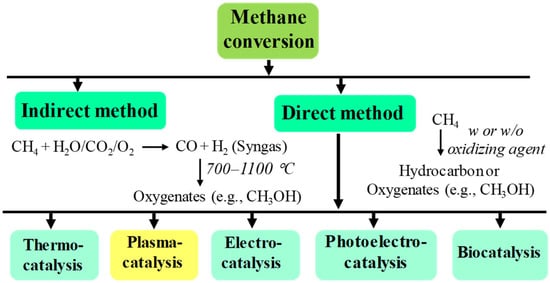
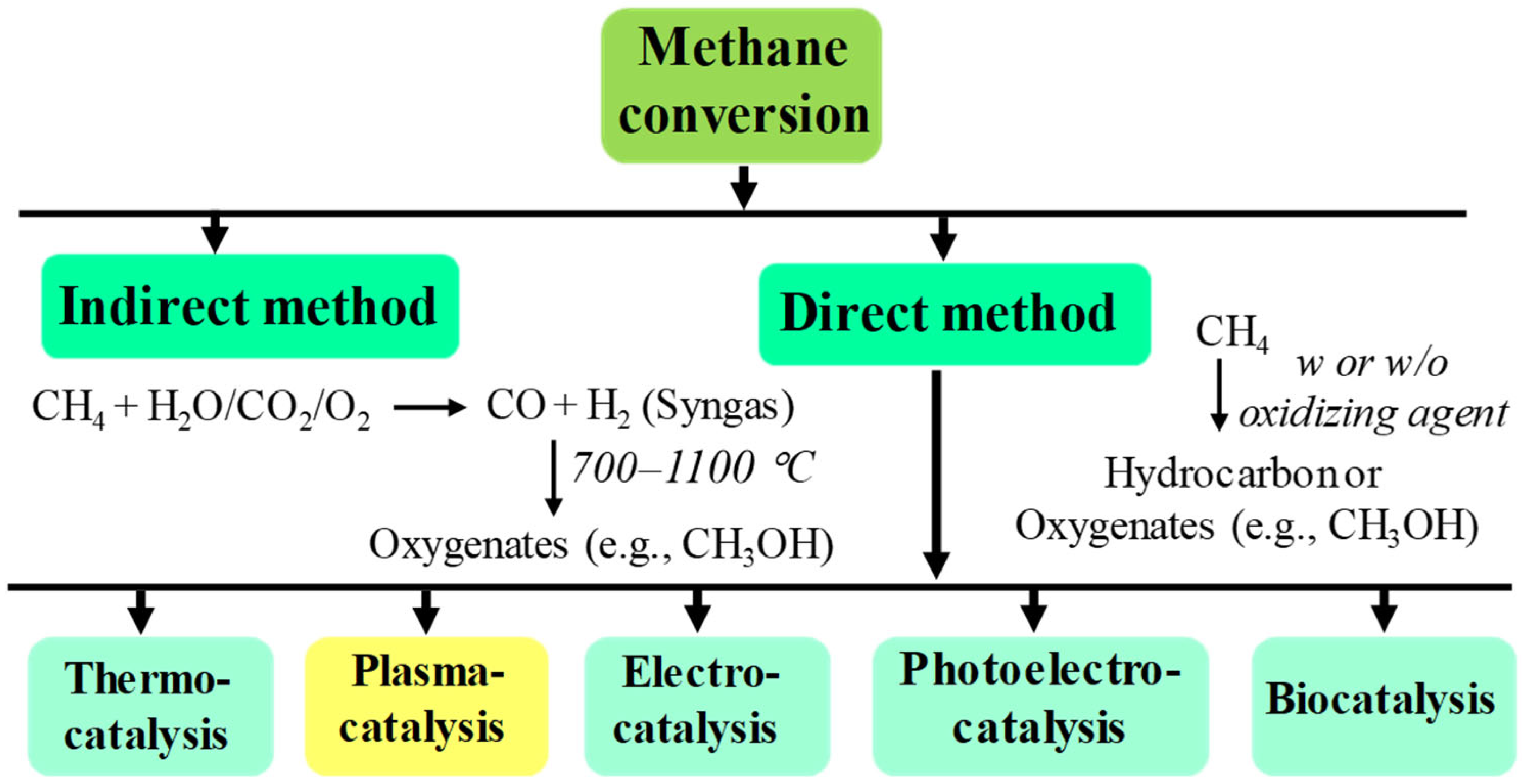
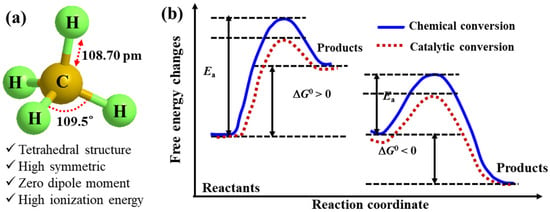
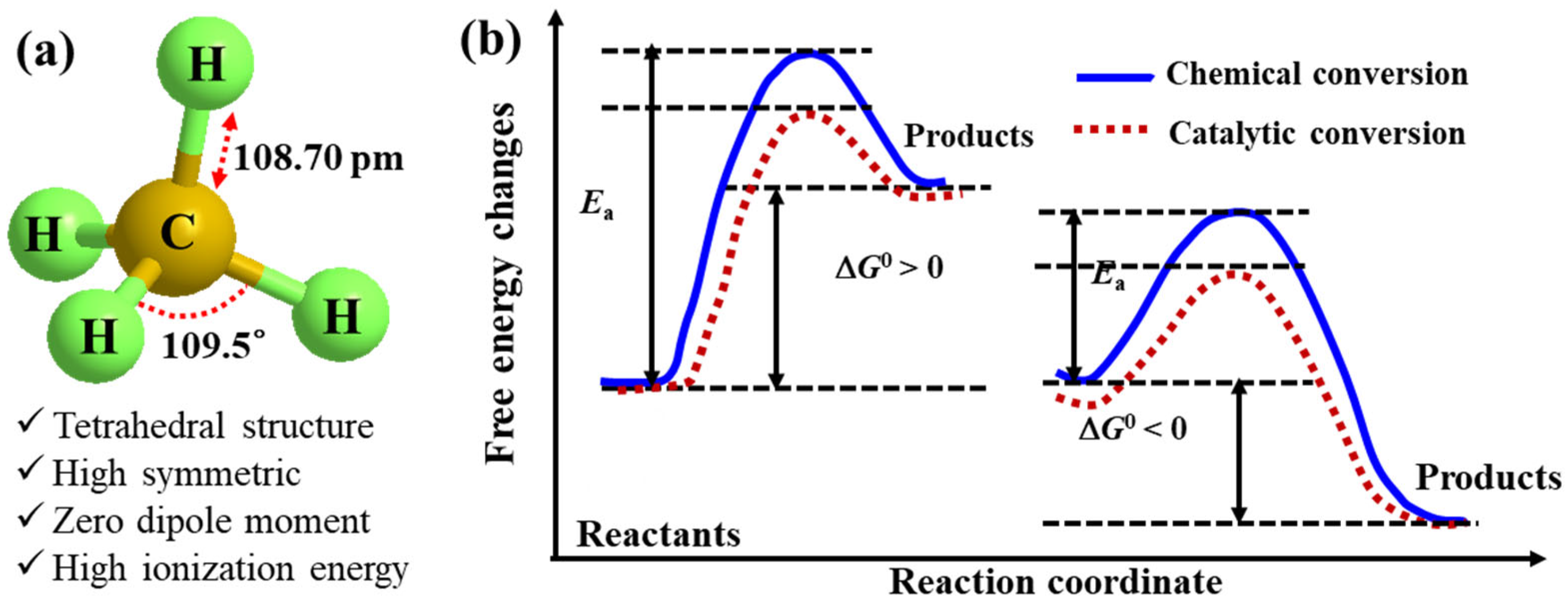
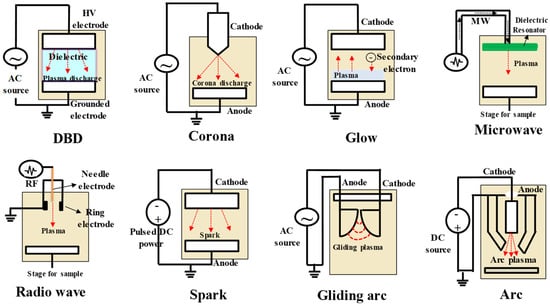
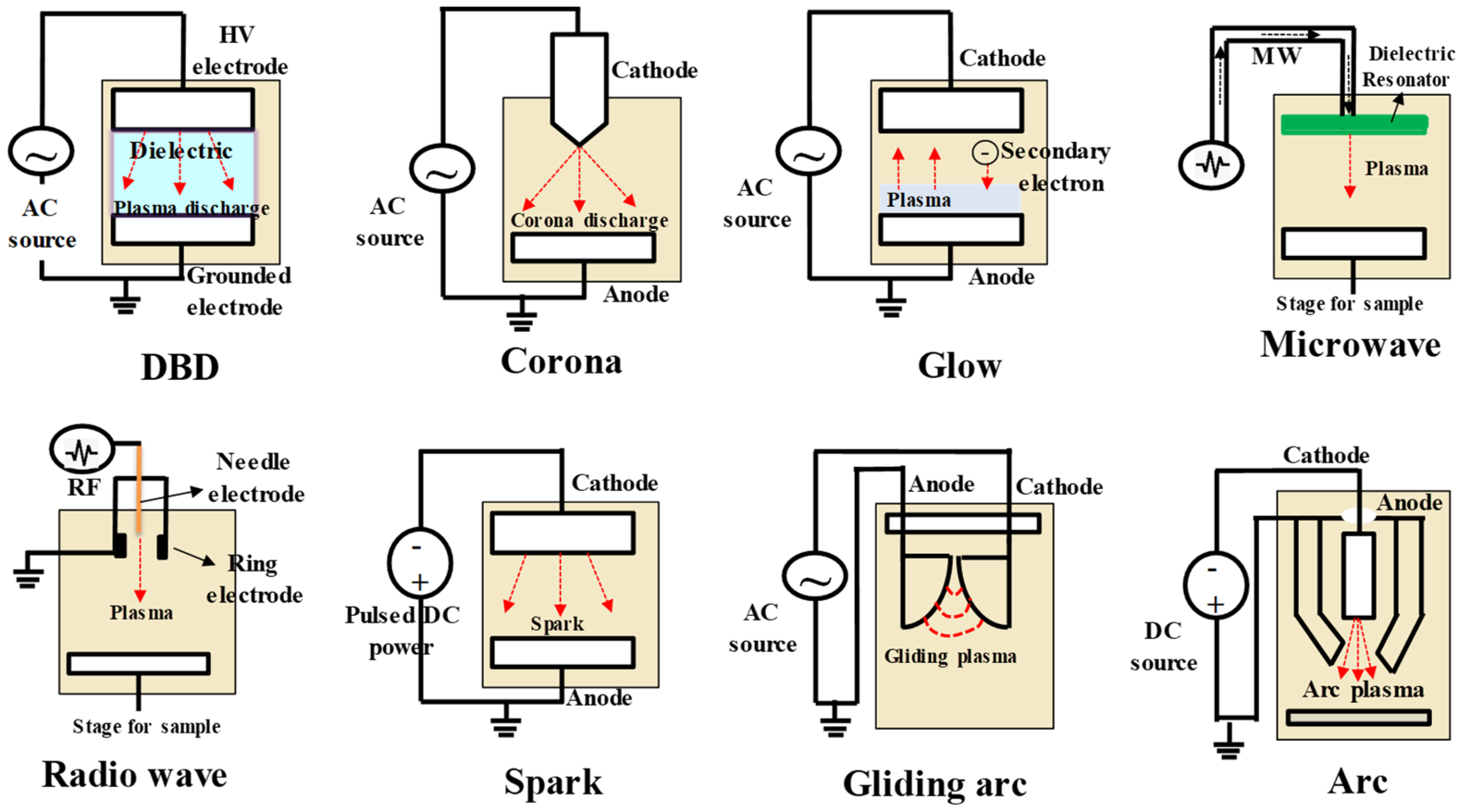
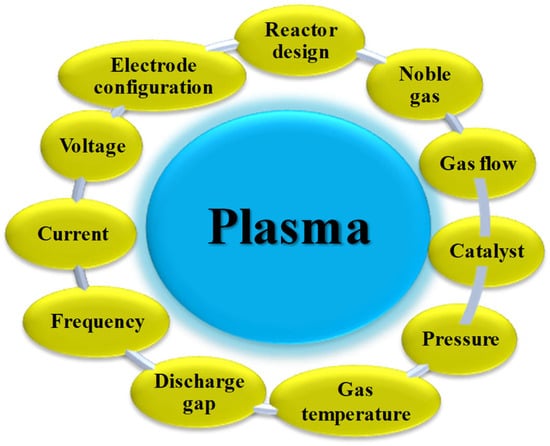
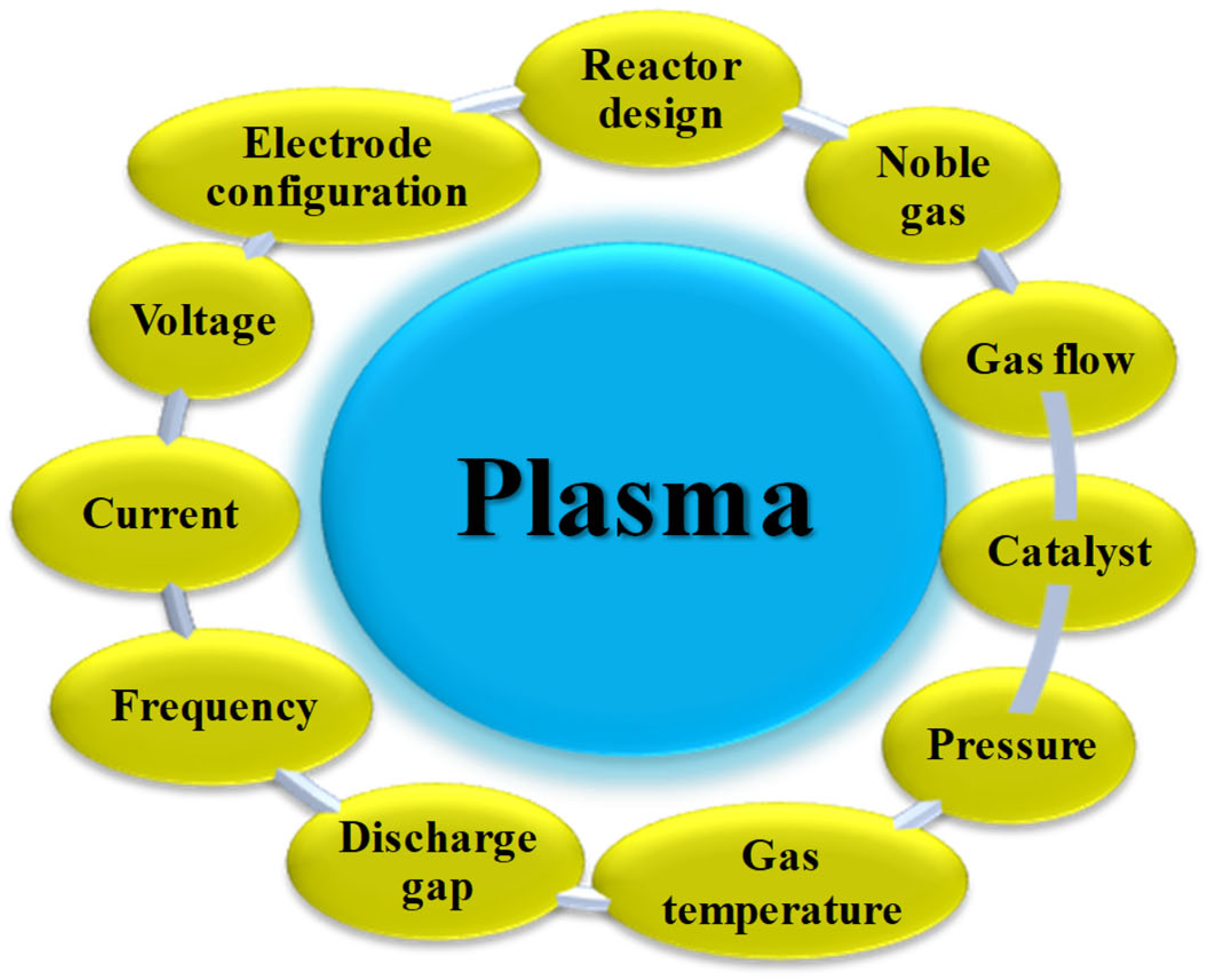
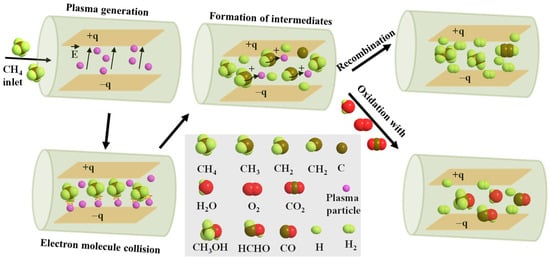
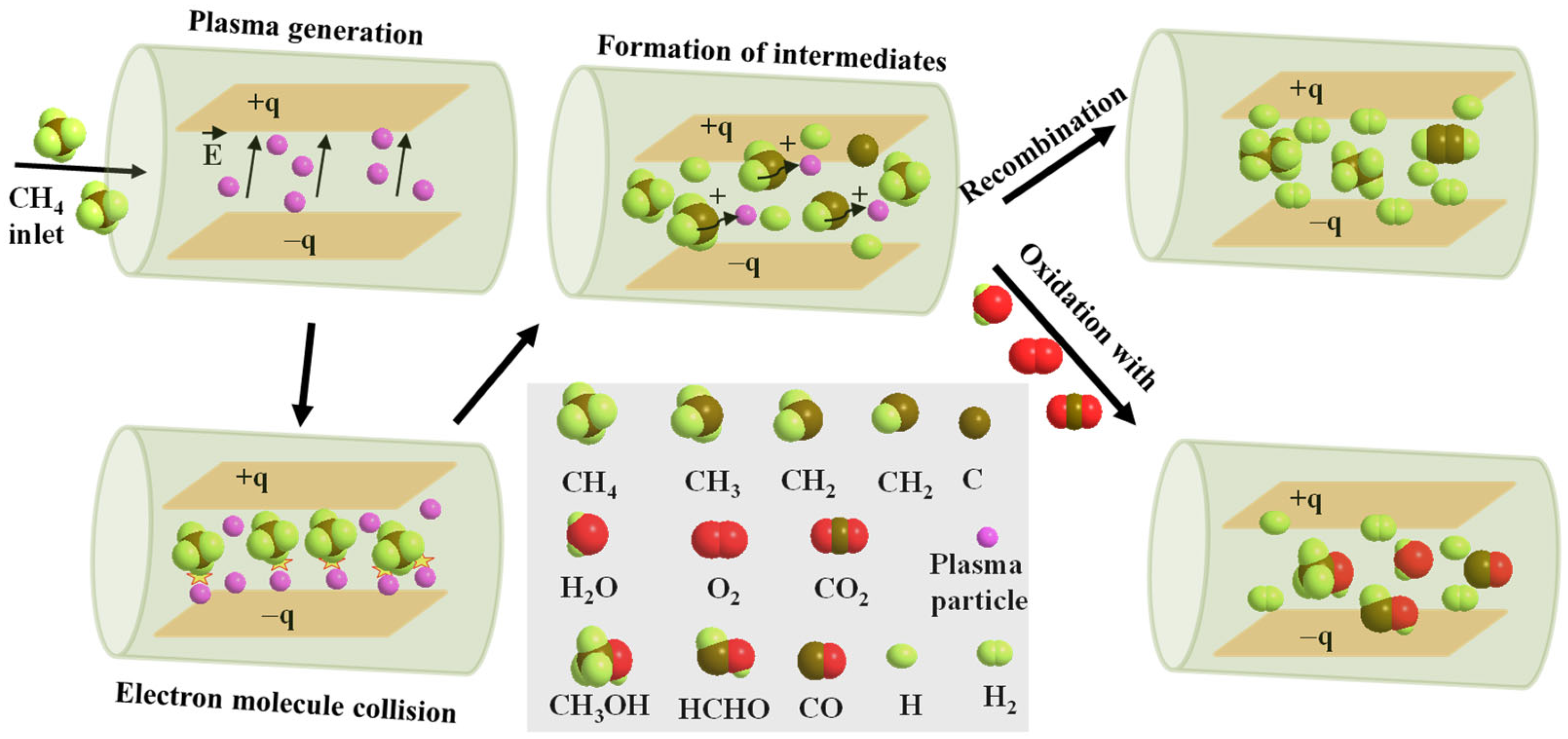
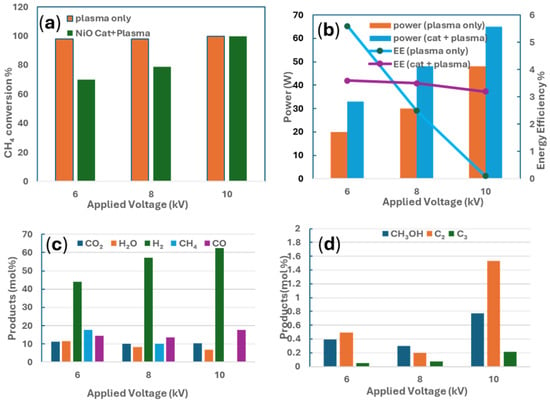
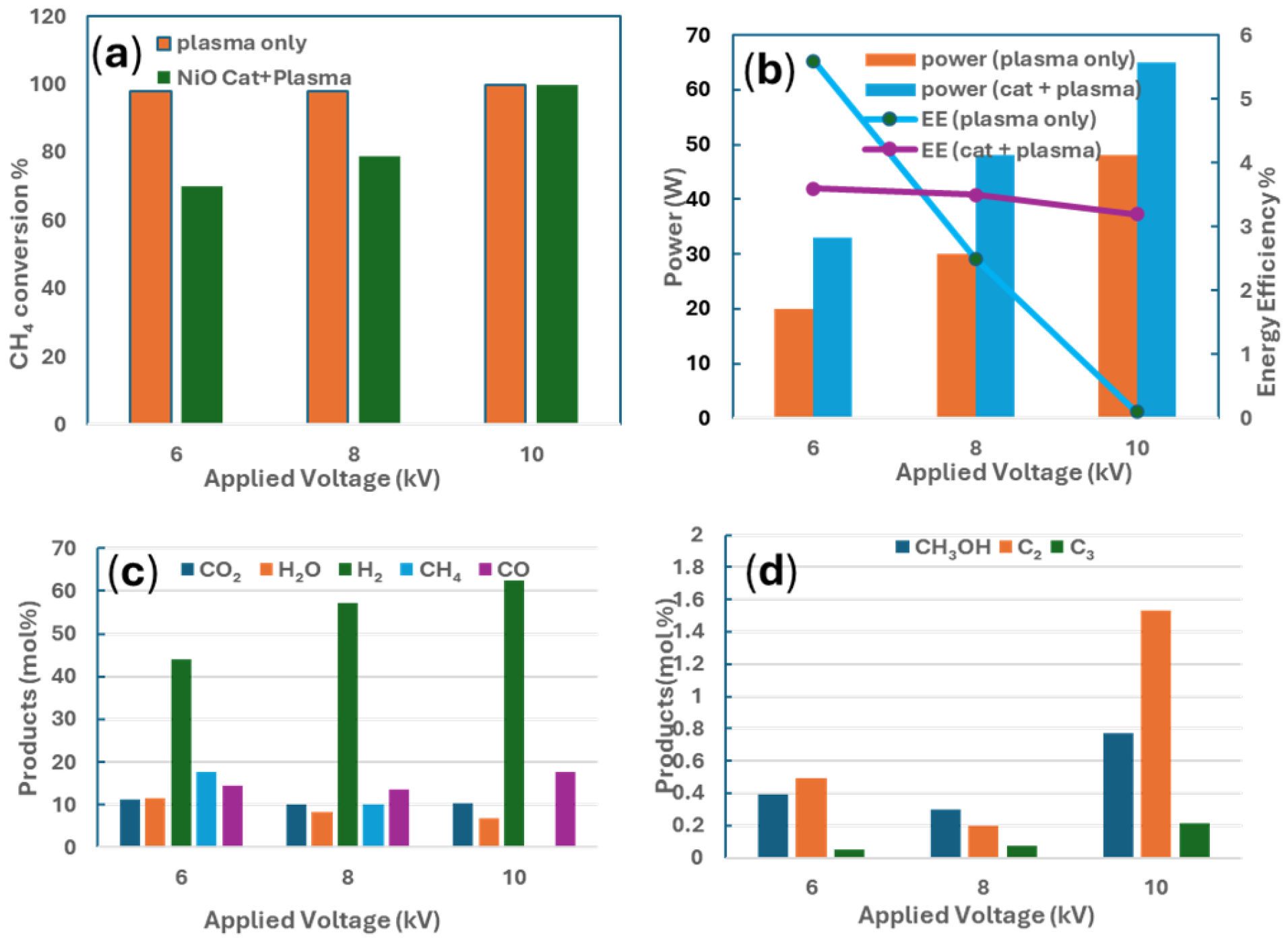
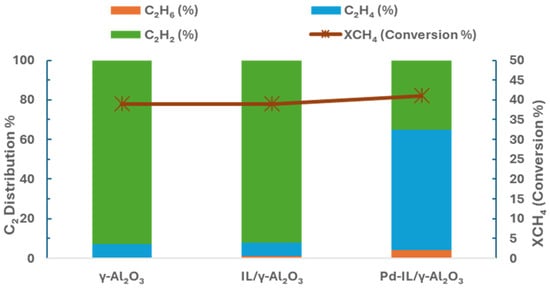
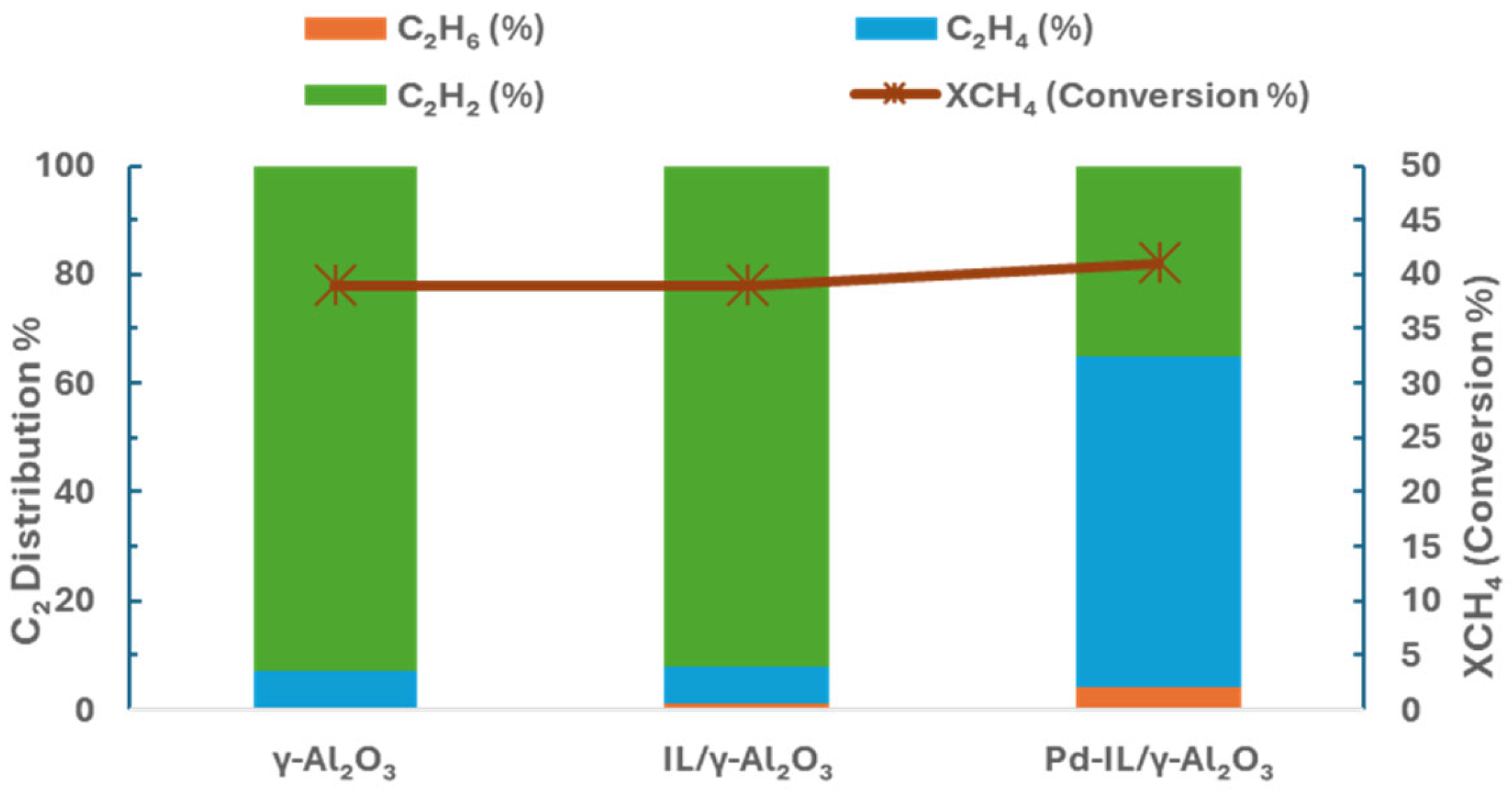
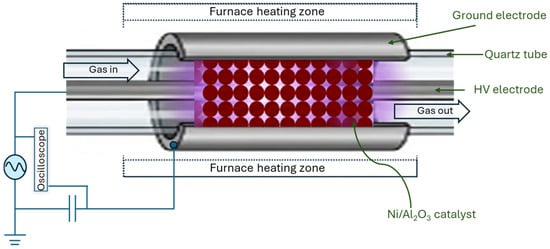
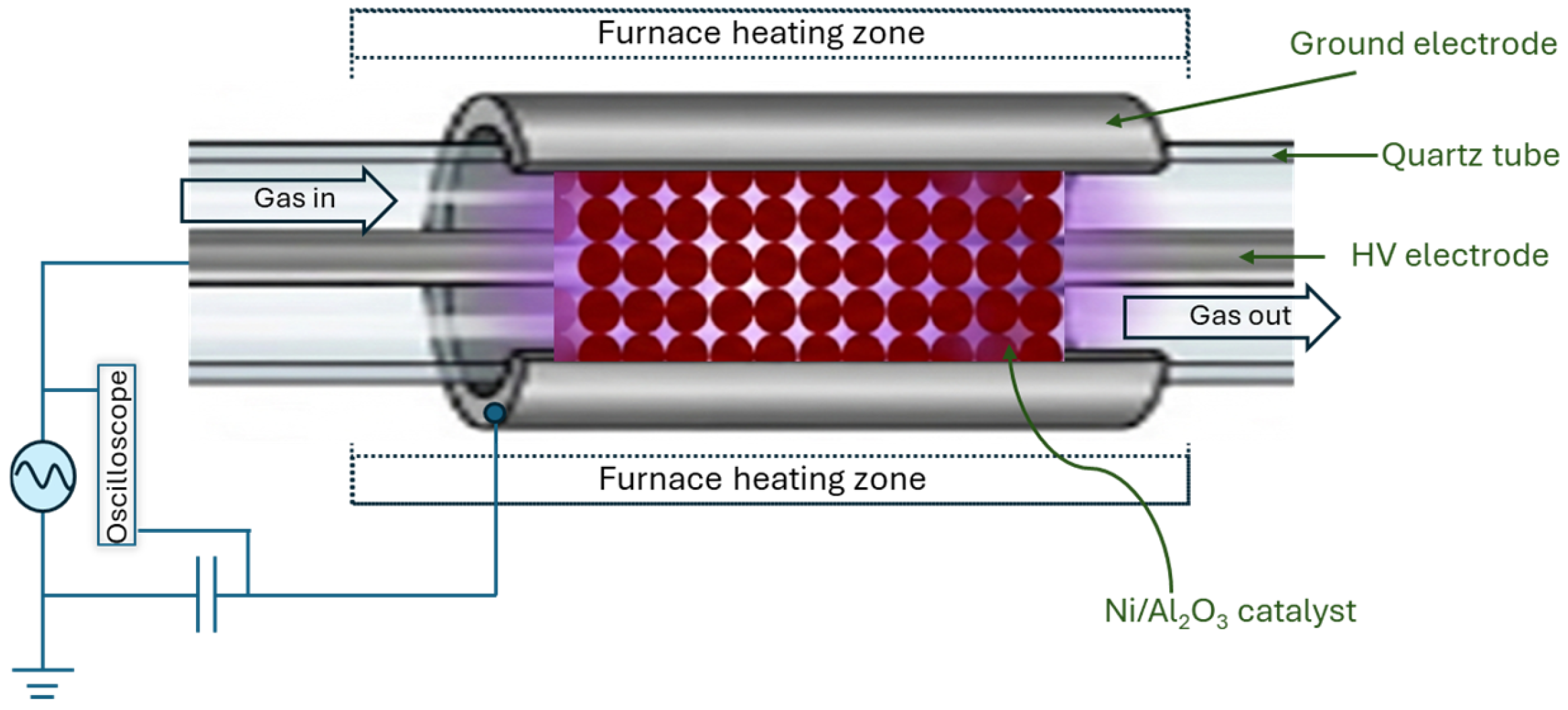
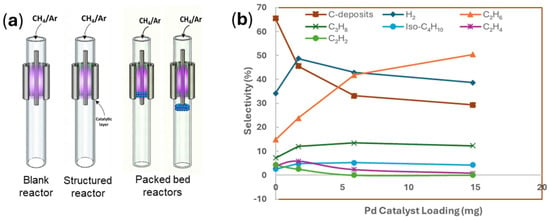
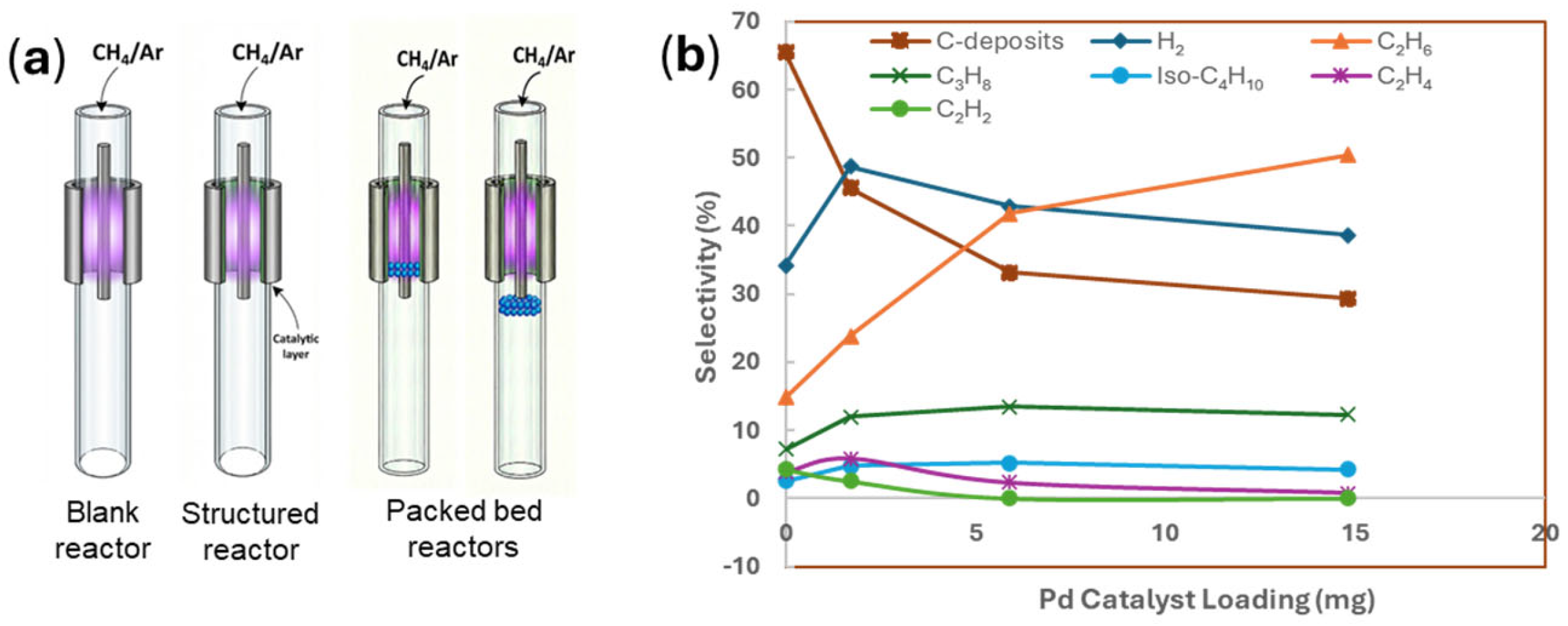
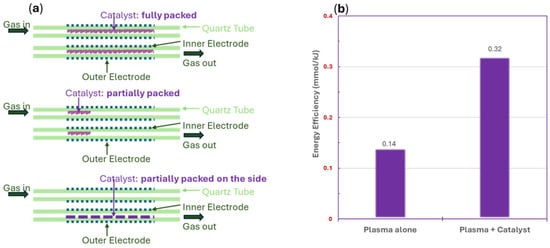
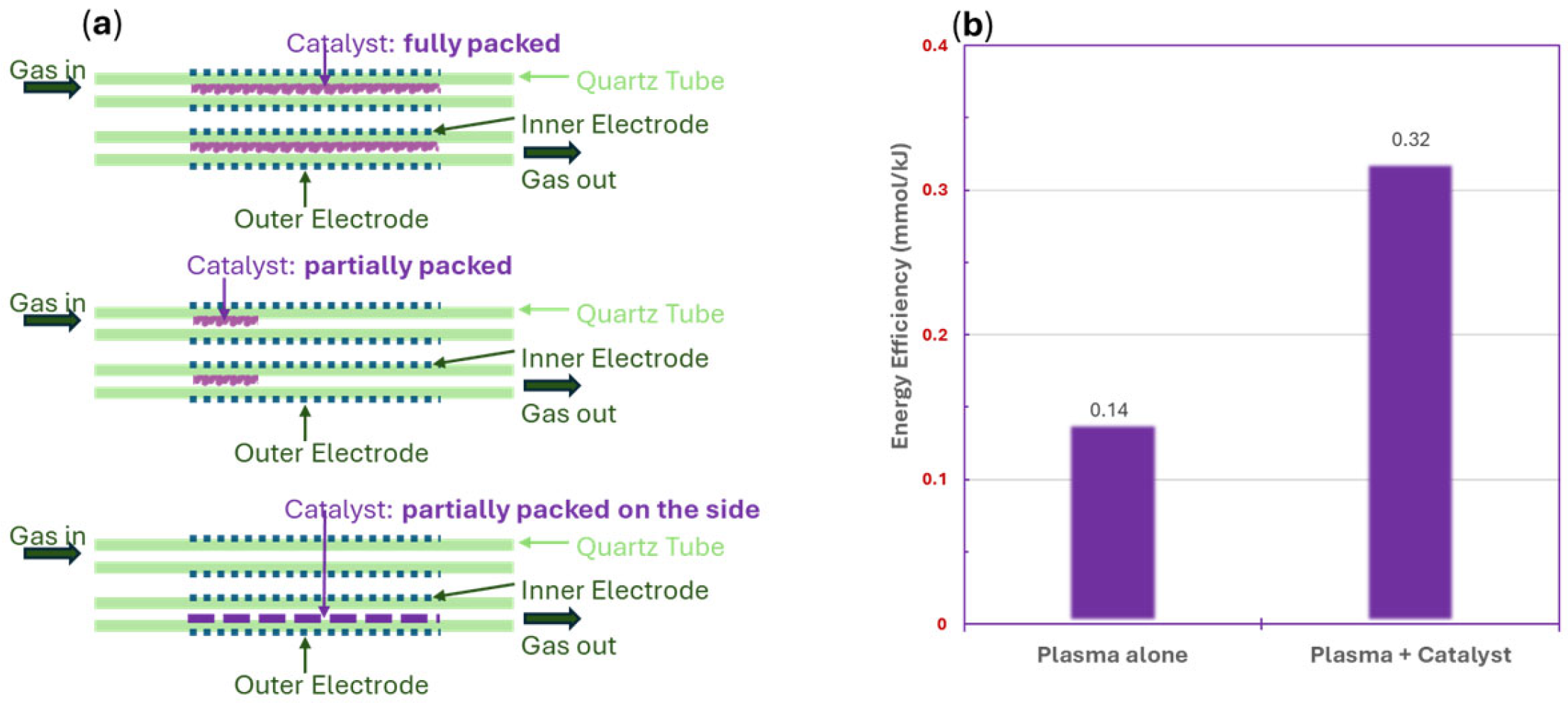
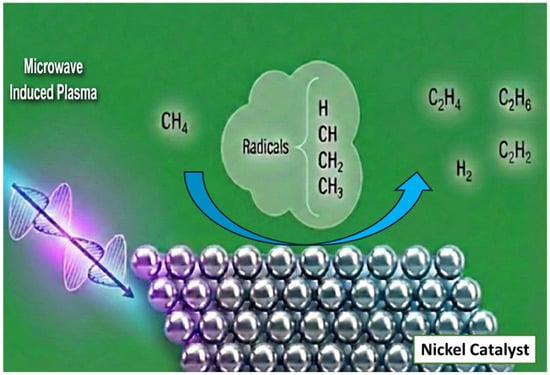
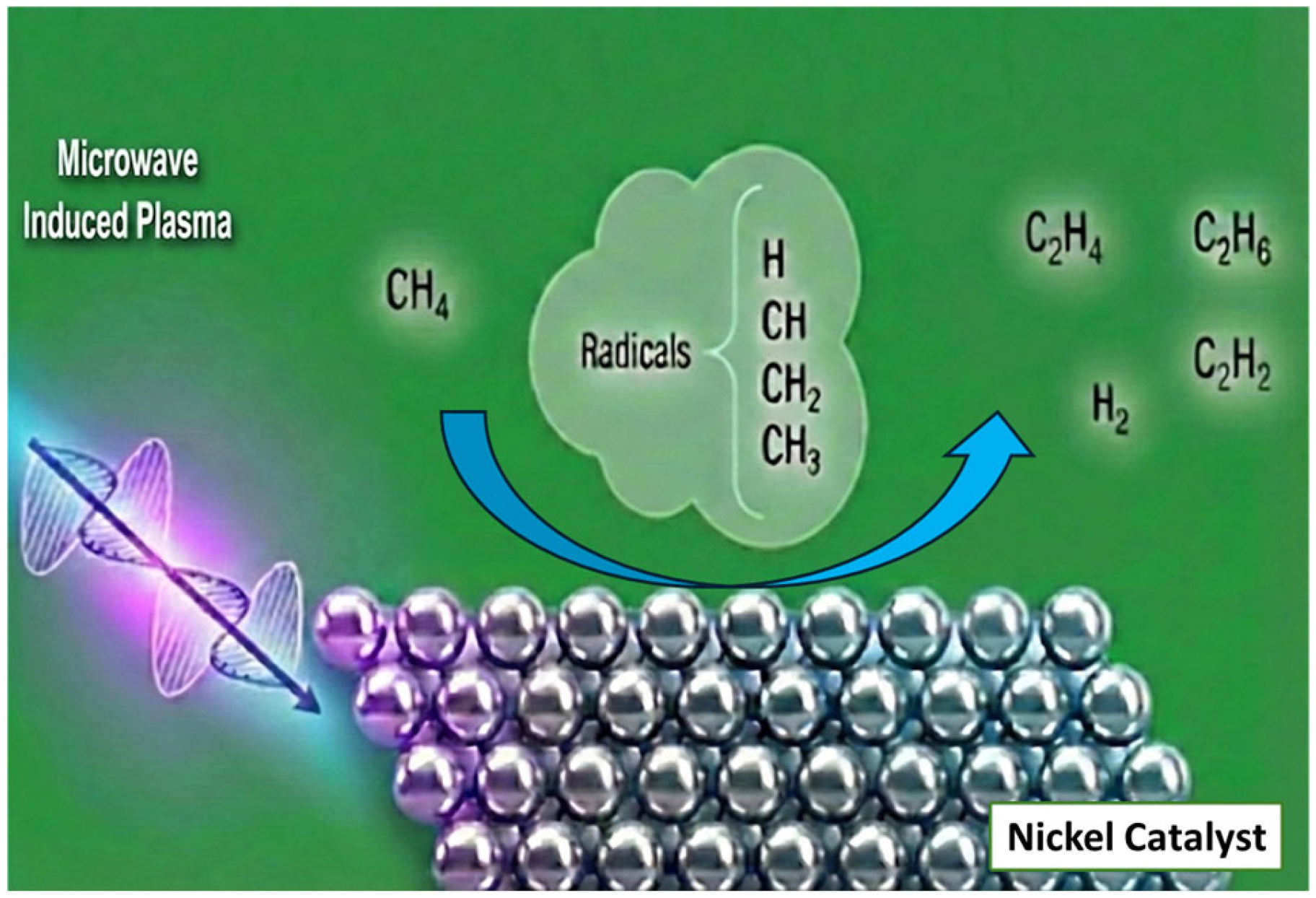
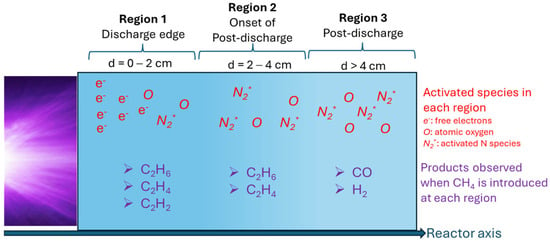
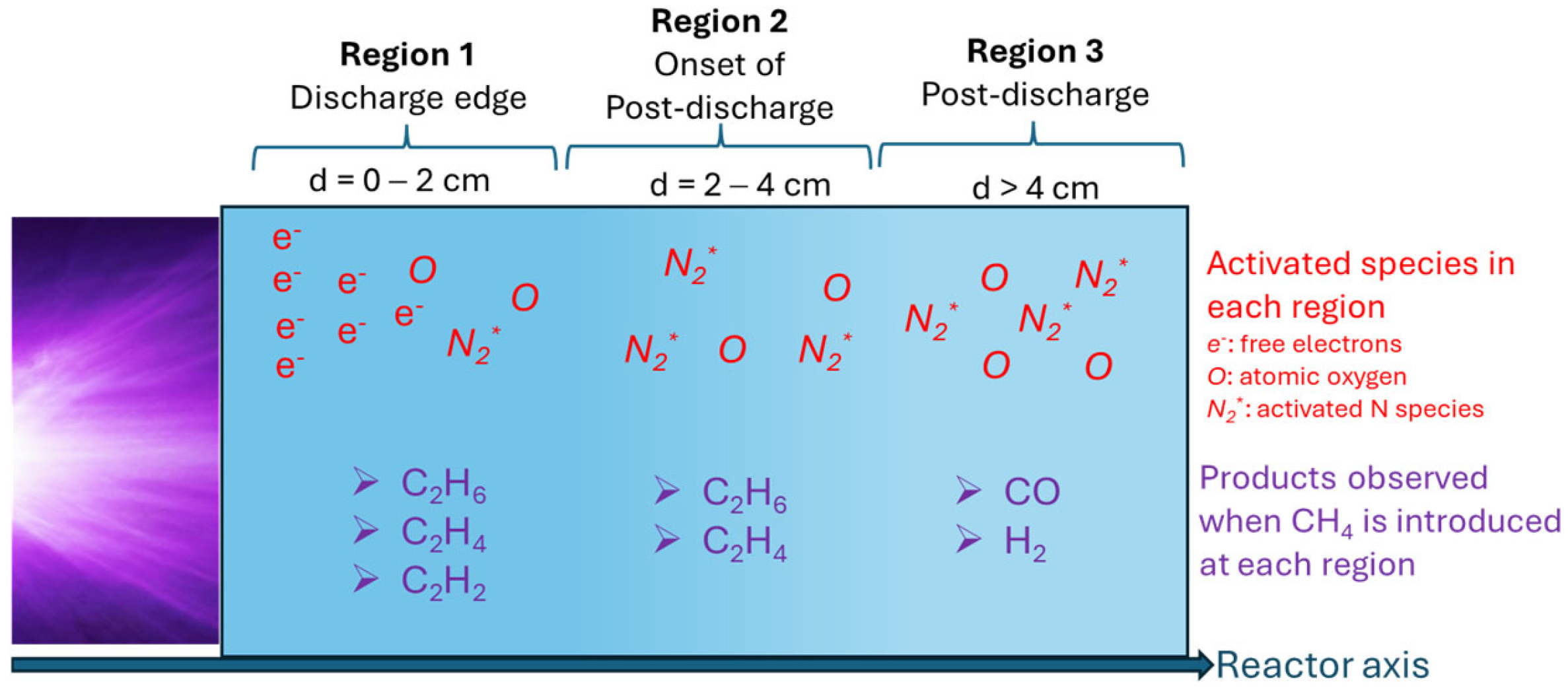
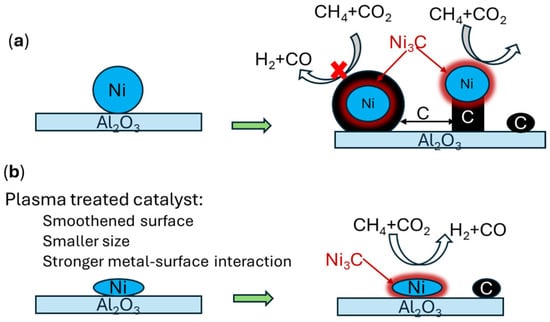
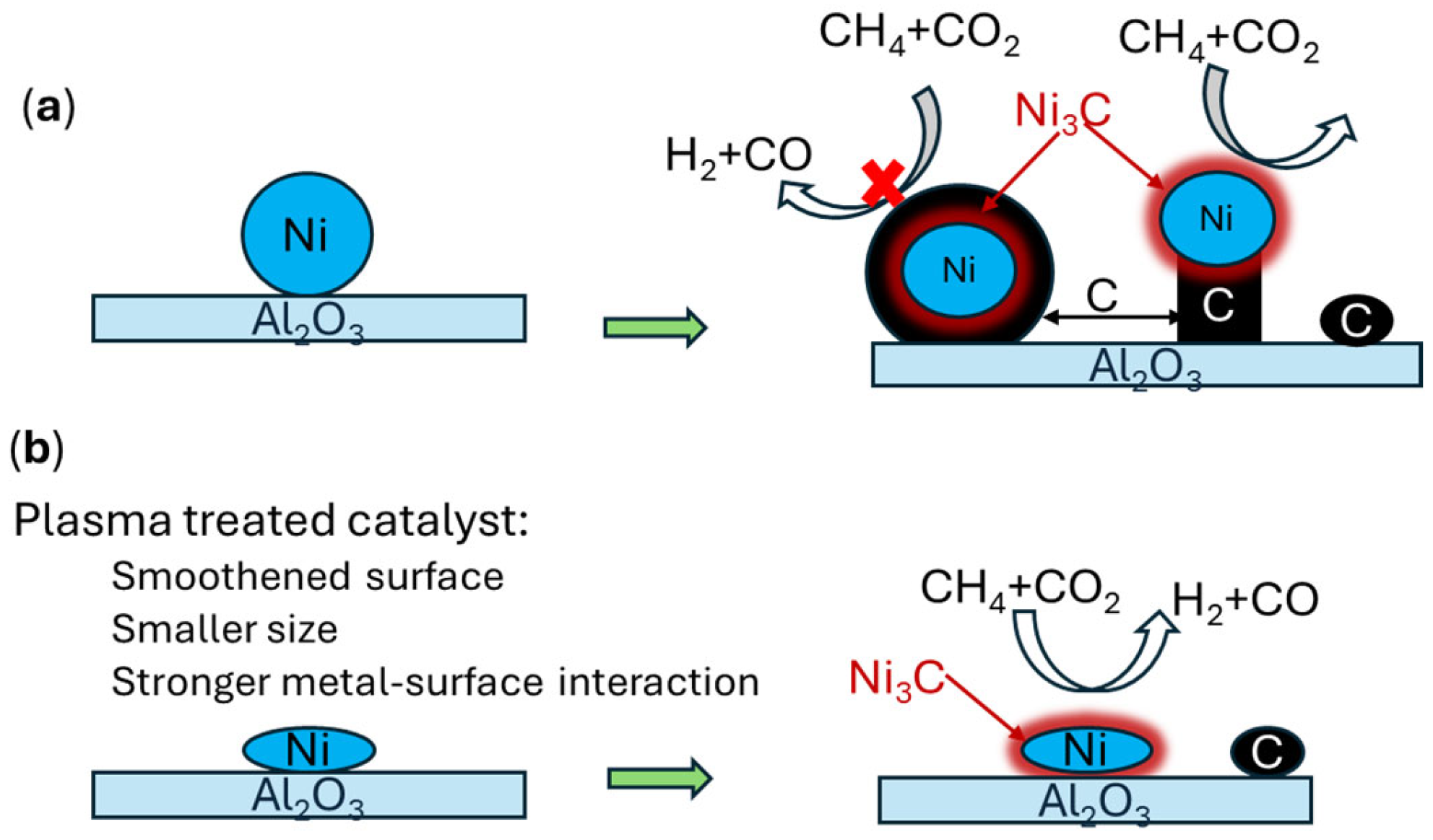
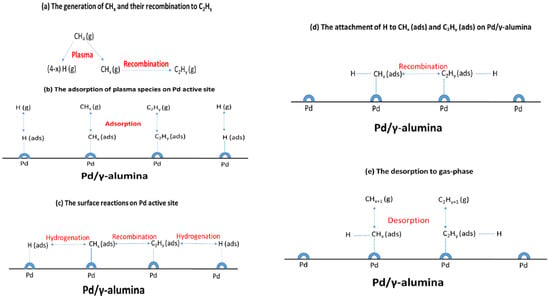
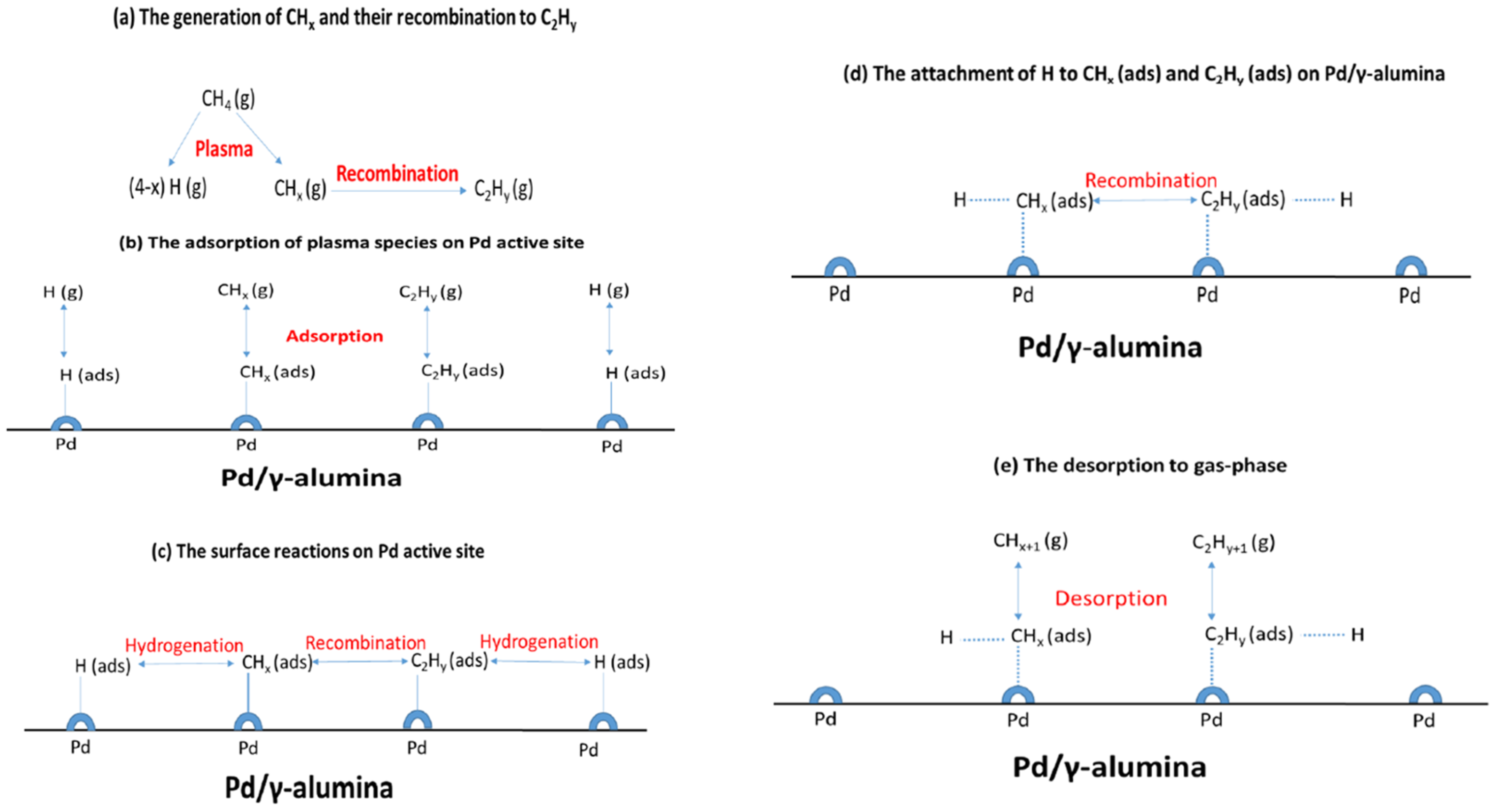
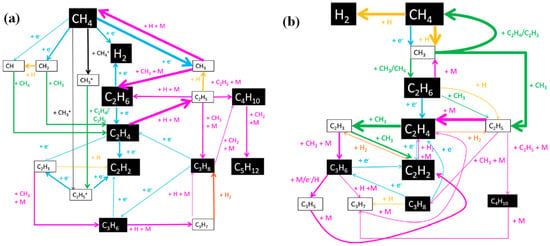
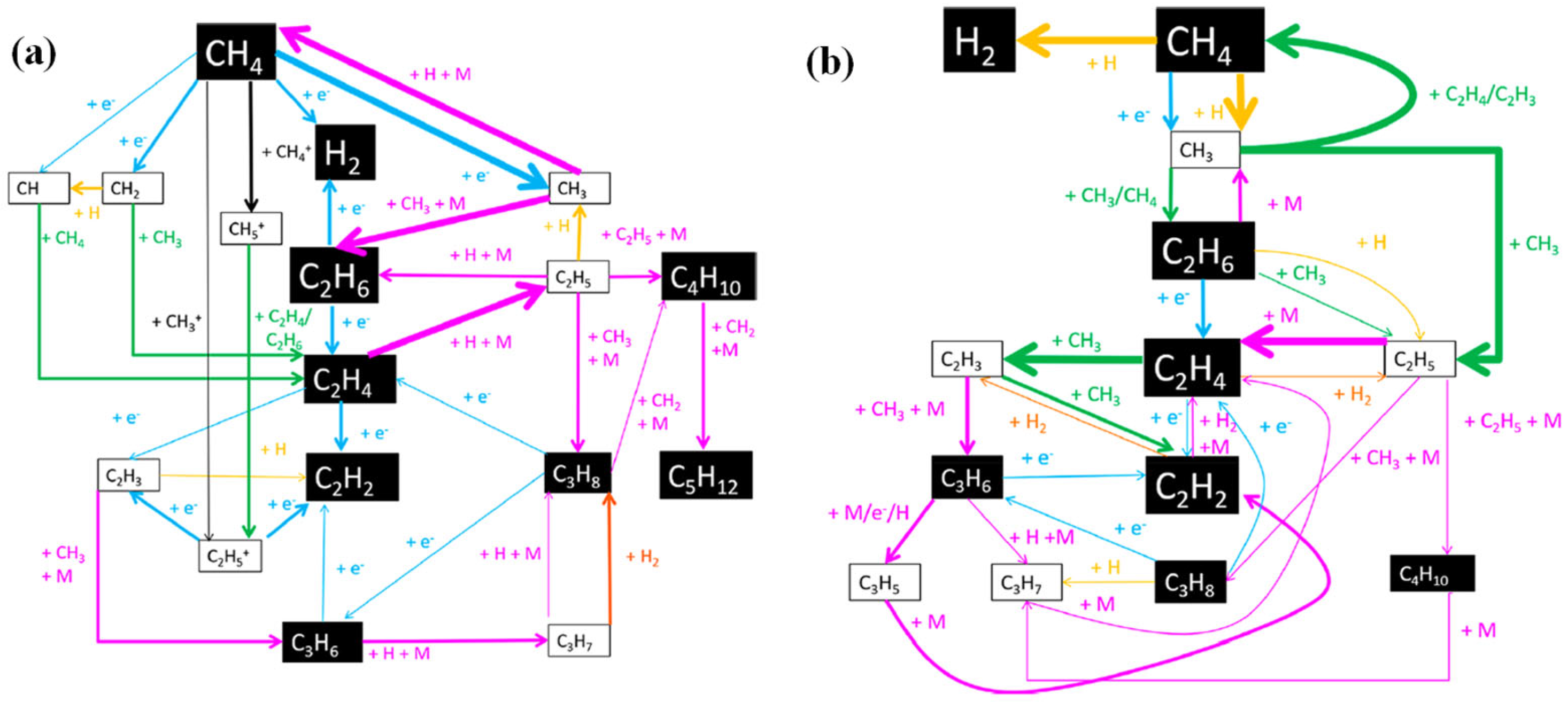

Disclaimer/Publisher’s Note: The statements, opinions and data contained in all publications are solely those of the individual author(s) and contributor(s) and not of MDPI and/or the editor(s). MDPI and/or the editor(s) disclaim responsibility for any injury to people or property resulting from any ideas, methods, instructions or products referred to in the content. |
© 2026 by the authors. Licensee MDPI, Basel, Switzerland. This article is an open access article distributed under the terms and conditions of the Creative Commons Attribution (CC BY) license.