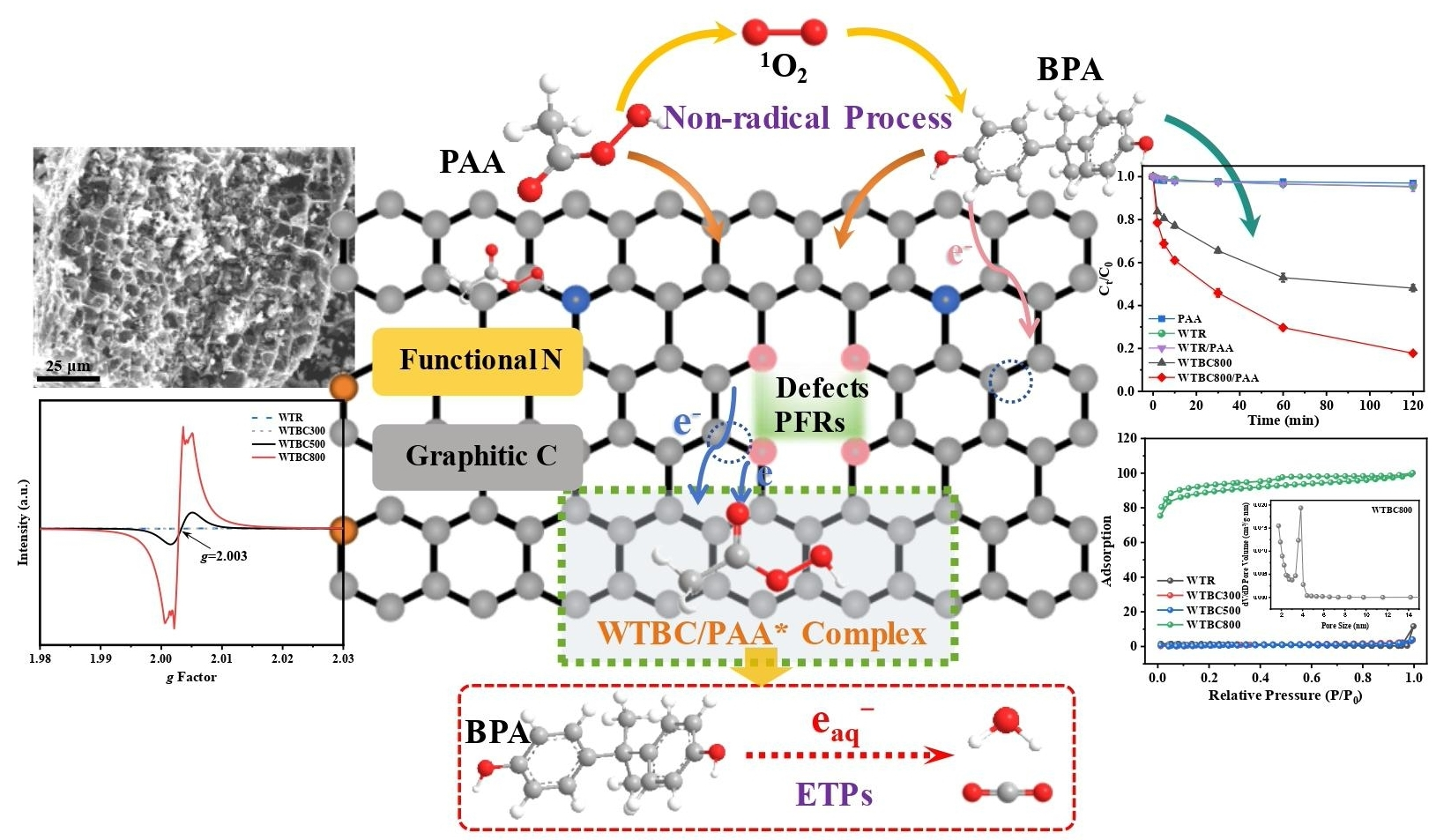
Activation of Peracetic Acid by Waste Tea Residue-Derived Biochar for Bisphenol A Elimination: Synergetic Adsorption and Non-Radical Oxidation



Abstract
1. Introduction
2. Results and Discussion
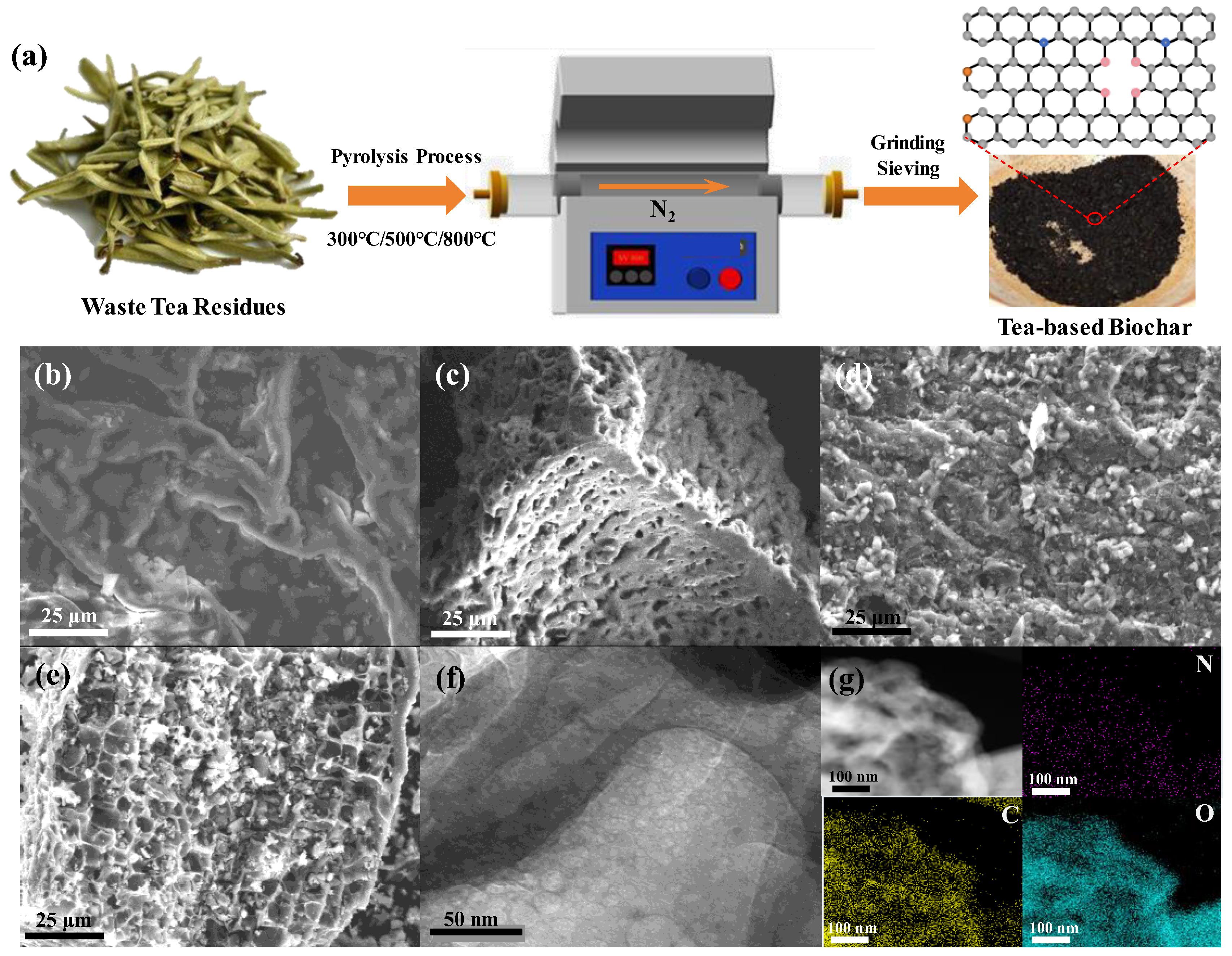
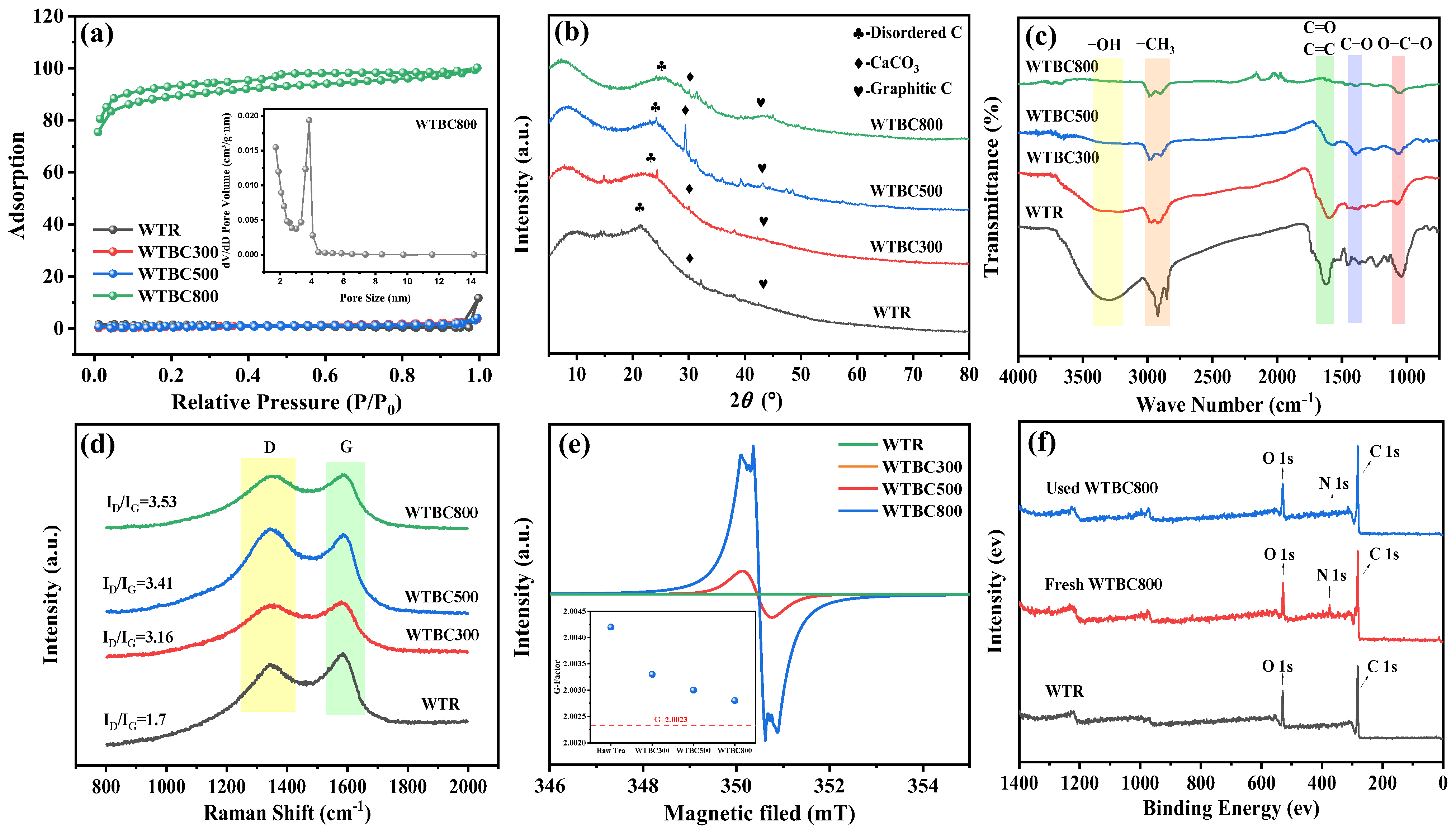
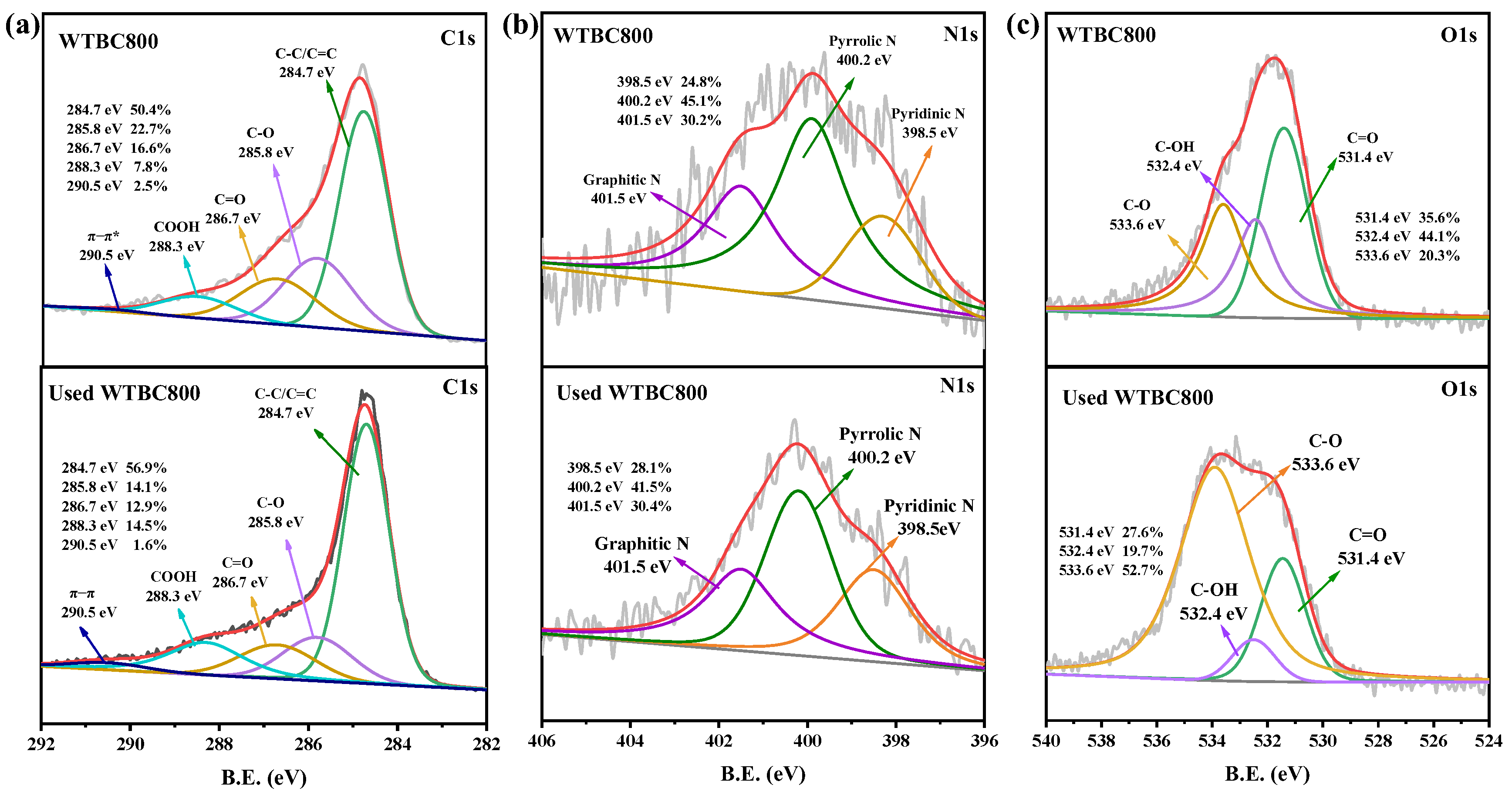
2.1. Characterization of WTBC
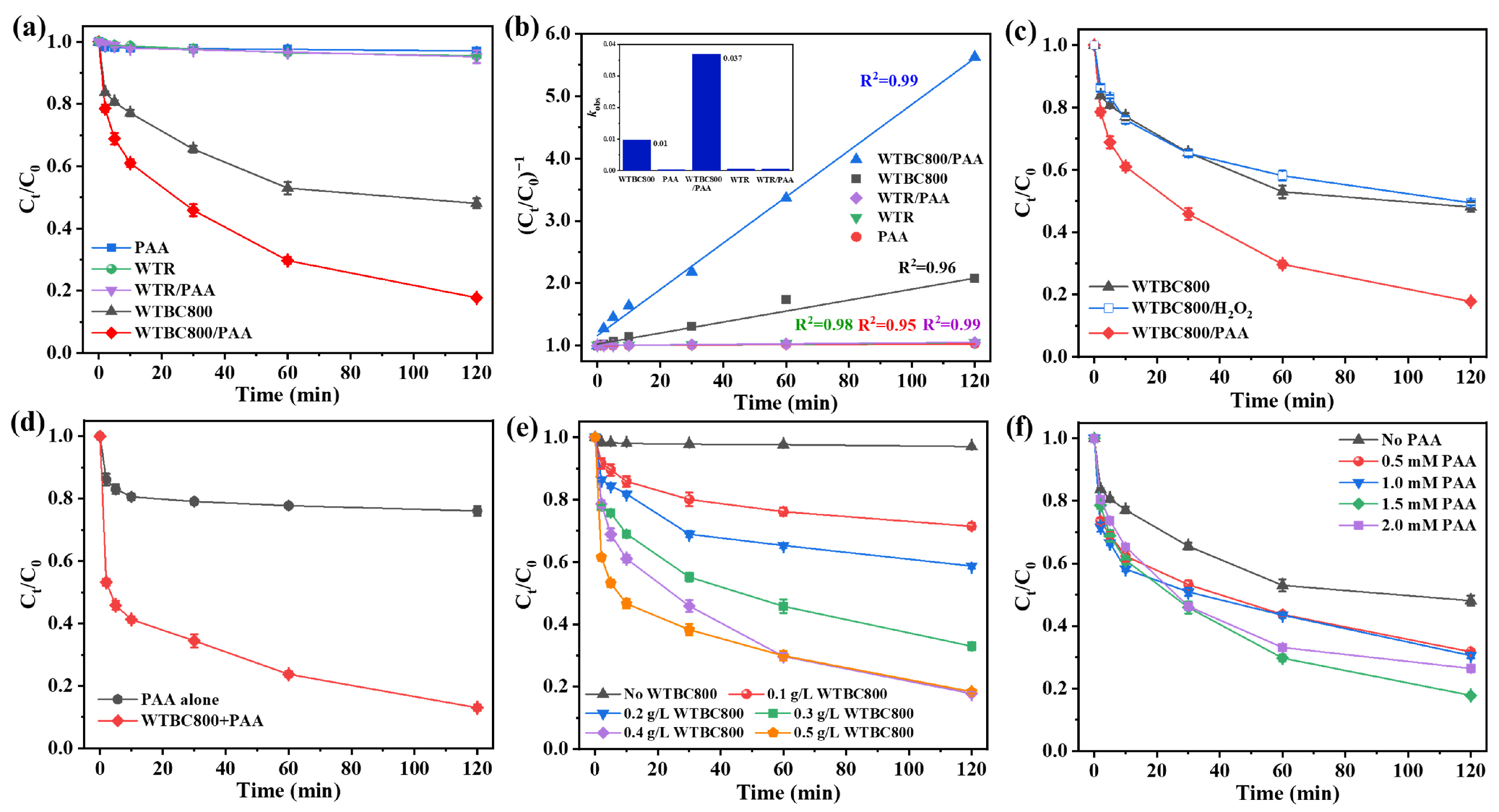
2.2. PAA Activation Performance and Catalytic Oxidation
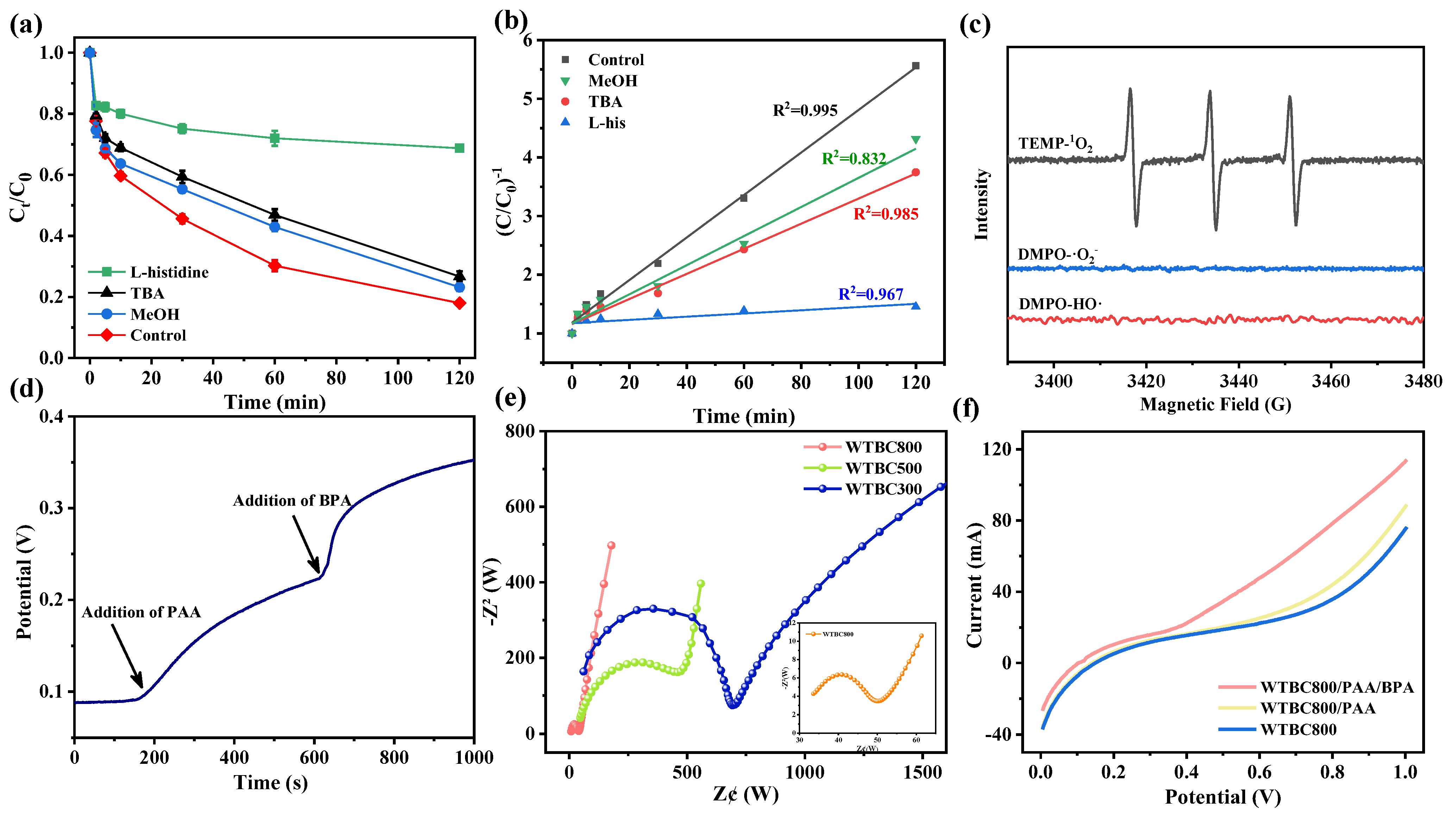
2.3. Contribution of Reactive Species to BPA Removal
2.4. Electron Transfer Process
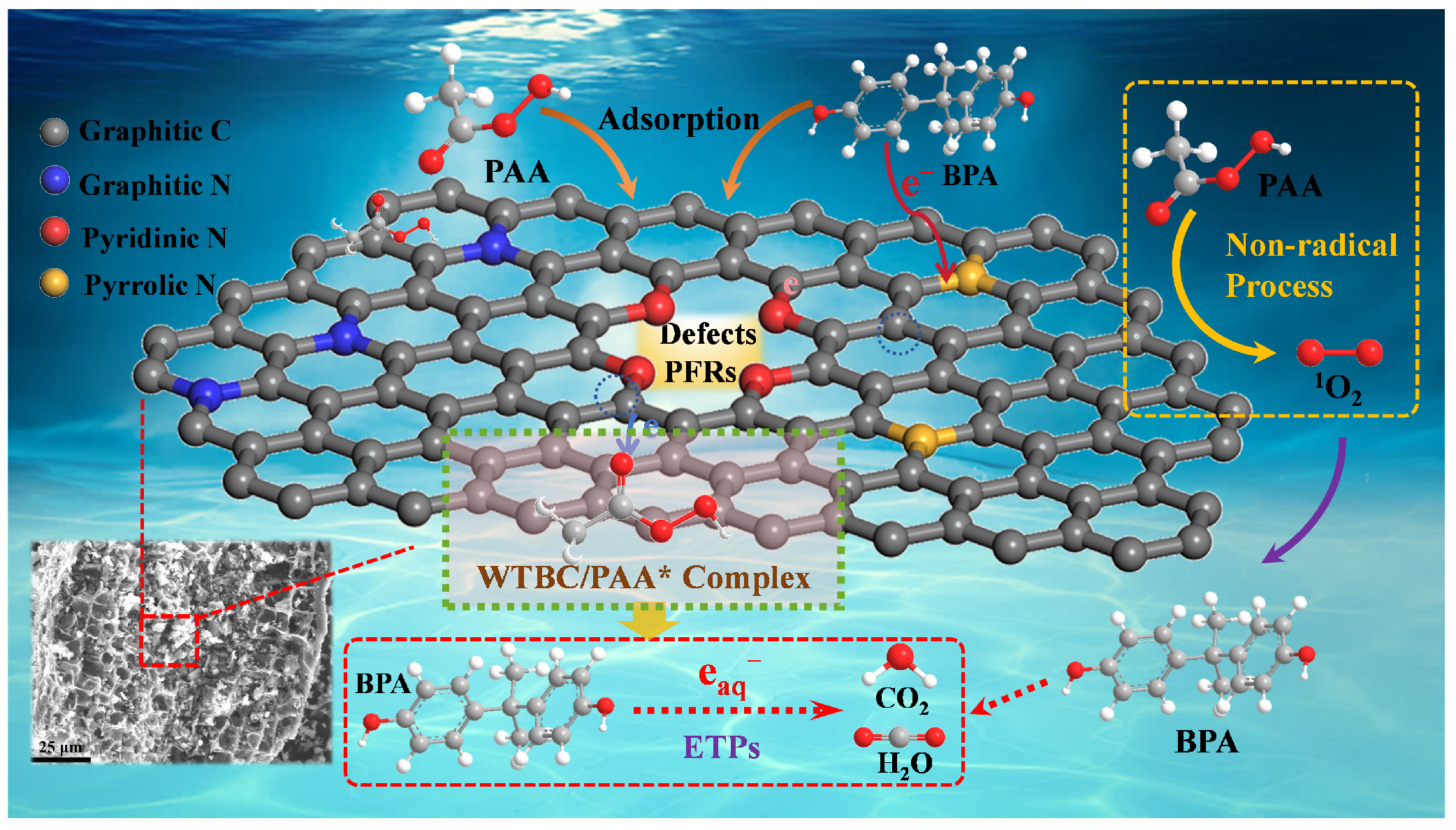
2.5. Removal Mechanism of BPA by WTBC/PAA System
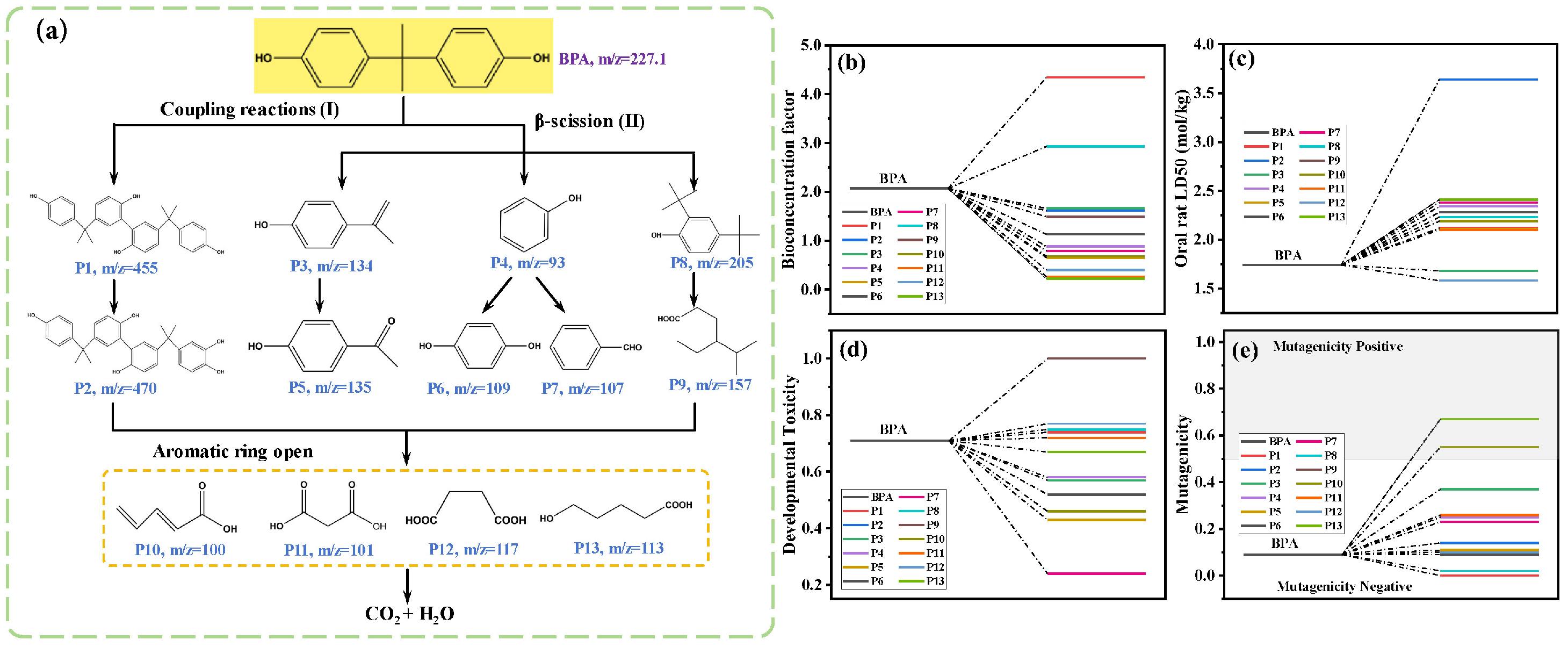
2.6. Degradation Pathways of BPA in WTBC/PAA System
3. Materials and Methods
3.1. Chemicals and Regents
3.2. Biochar Preparation and Characterization
3.3. Experimental Procedure
3.4. Characterization
3.5. Determination for BPA and Its Degradation Intermediates
4. Conclusions
Supplementary Materials
Author Contributions
Funding
Data Availability Statement
Acknowledgments
Conflicts of Interest
References
- Ao, X.W.; Eloranta, J.; Huang, C.H.; Santoro, D.; Sun, W.J.; Lu, Z.D.; Li, C. Peracetic acid-based advanced oxidation processes for decontamination and disinfection of water: A review. Water Res. 2021, 188, 116479. [Google Scholar] [CrossRef] [Scilit]
- Miao, F.; Ren, W.; Zhou, H.; Ma, T.; Zhang, H.; Wang, S.; Duan, X. Carbon-based peracetic acid activation towards advanced water purification. Appl. Catal. B Environ. Energy 2025, 363, 124807. [Google Scholar] [CrossRef] [Scilit]
- Wang, Z.; Wang, J.; Xiong, B.; Bai, F.; Wang, S.; Wan, Y.; Zhang, L.; Xie, P.; Wiesner, M.R. Application of Cobalt/Peracetic Acid to Degrade Sulfamethoxazole at Neutral Condition: Efficiency and Mechanisms. Environ. Sci. Technol. 2019, 54, 464–475. [Google Scholar] [CrossRef] [Scilit] [PubMed]
- Wang, J.; Wan, Y.; Ding, J.; Wang, Z.; Ma, J.; Xie, P.; Wiesner, M.R. Thermal Activation of Peracetic Acid in Aquatic Solution: The Mechanism and Application to Degrade Sulfamethoxazole. Environ. Sci. Technol. 2020, 54, 14635–14645. [Google Scholar] [CrossRef] [Scilit]
- Cai, M.; Sun, P.; Zhang, L.; Huang, C.-H. UV/Peracetic Acid for Degradation of Pharmaceuticals and Reactive Species Evaluation. Environ. Sci. Technol. 2017, 51, 14217–14224. [Google Scholar] [CrossRef] [Scilit]
- Rokhina, E.V.; Makarova, K.; Lahtinen, M.; Golovina, E.A.; Van As, H.; Virkutyte, J. Ultrasound-assisted MnO2 catalyzed homolysis of peracetic acid for phenol degradation: The assessment of process chemistry and kinetics. Chem. Eng. J. 2013, 221, 476–486. [Google Scholar] [CrossRef] [Scilit]
- Kim, J.; Du, P.; Liu, W.; Luo, C.; Zhao, H.; Huang, C.H. Cobalt/Peracetic Acid: Advanced Oxidation of Aromatic Organic Compounds by Acetylperoxyl Radicals. Environ. Sci. Technol. 2020, 54, 5268–5278. [Google Scholar] [CrossRef] [Scilit]
- Wang, J.; Xiong, B.; Miao, L.; Wang, S.; Xie, P.; Wang, Z.; Ma, J. Applying a novel advanced oxidation process of activated peracetic acid by CoFe2O4 to efficiently degrade sulfamethoxazole. Appl. Catal. B Environ. 2021, 280, 119422. [Google Scholar] [CrossRef] [Scilit]
- Wang, Z.; Chen, Z.; Li, Q.; Wang, J.; Cao, L.; Cheng, Y.; Yu, S.; Liu, Z.; Chen, Y.; Yue, S.; et al. Non-Radical Activation of Peracetic Acid by Powdered Activated Carbon for the Degradation of Sulfamethoxazole. Environ. Sci. Technol. 2023, 57, 10478–10488. [Google Scholar] [CrossRef] [Scilit] [PubMed]
- Dueñas-Moreno, J.; Mora, A.; Cervantes-Avilés, P.; Mahlknecht, J. Groundwater contamination pathways of phthalates and bisphenol A: Origin, characteristics, transport, and fate—A review. Environ. Int. 2022, 170, 17. [Google Scholar] [CrossRef] [Scilit]
- Gao, S.Y.; Tang, C.C.; Zhou, A.J.; Chen, Z.; Liu, W.; Ren, Y.X.; Li, Z.H.; He, Z.W. Biochar-activated peracetic acid for the degradation of emerging contaminants. J. Environ. Chem. Eng. 2025, 13, 117508. [Google Scholar] [CrossRef] [Scilit]
- Fan, S.; Tang, J.; Wang, Y.; Li, H.; Zhang, H.; Tang, J.; Wang, Z.; Li, X. Biochar prepared from co-pyrolysis of municipal sewage sludge and tea waste for the adsorption of methylene blue from aqueous solutions: Kinetics, isotherm, thermodynamic and mechanism. J. Mol. Liq. 2016, 220, 432–441. [Google Scholar] [CrossRef] [Scilit]
- Mu, Y.; He, W.; Ma, H. Enhanced adsorption of tetracycline by the modified tea-based biochar with the developed mesoporous and surface alkalinity. Bioresour. Technol. 2021, 342, 126001. [Google Scholar] [CrossRef] [Scilit]
- Ng, I.S.; Wu, X.; Yang, X.; Xie, Y.; Lu, Y.; Chen, C. Synergistic effect of Trichoderma reesei cellulases on agricultural tea waste for adsorption of heavy metal Cr(VI). Bioresour. Technol. 2013, 145, 297–301. [Google Scholar] [CrossRef] [Scilit] [PubMed]
- Qalyoubi, L.; Al-Othman, A.; Al-Asheh, S. Recent progress and challenges of adsorptive membranes for the removal of pollutants from wastewater. Part II: Environmental applications. Case Stud. Chem. Environ. Eng. 2021, 3, 100102. [Google Scholar] [CrossRef] [Scilit]
- Wan, Z.; Sun, Y.; Tsang, D.C.W.; Khan, E.; Yip, A.C.K.; Ng, Y.H.; Rinklebe, J.; Ok, Y.S. Customised fabrication of nitrogen-doped biochar for environmental and energy applications. Chem. Eng. J. 2020, 401, 126136. [Google Scholar] [CrossRef] [Scilit]
- Zhu, T.; Liu, B. Mechanism study on the effect of peracetic acid (PAA), UV/PAA and ultrasonic/PAA oxidation on ultrafiltration performance during algae-laden water treatment. Water Res. 2022, 220, 118705. [Google Scholar] [CrossRef] [Scilit]
- Xie, Y.; Wang, L.; Li, H.; Westholm, L.J.; Carvalho, L.; Thorin, E.; Yu, Z.; Yu, X.; Skreiberg, Ø. A critical review on production, modification and utilization of biochar. J. Anal. Appl. Pyrolysis 2022, 161, 105405. [Google Scholar] [CrossRef] [Scilit]
- Zhen, Y.; Zhu, S.; Sun, Z.; Tian, Y.; Li, Z.; Yang, C.; Ma, J. Identifying the Persistent Free Radicals (PFRs) Formed as Crucial Metastable Intermediates during Peroxymonosulfate (PMS) Activation by N-Doped Carbonaceous Materials. Environ. Sci. Technol. 2021, 55, 9293–9304. [Google Scholar] [CrossRef] [Scilit] [PubMed]
- Wu, L.; Li, Z.; Cheng, P.; She, Y.; Wang, W.; Tian, Y.; Ma, J.; Sun, Z. Efficient activation of peracetic acid by mixed sludge derived biochar: Critical role of persistent free radicals. Water Res. 2022, 223, 119013. [Google Scholar] [CrossRef] [Scilit]
- Liang, J.; Du, X.; Gibson, C.; Du, X.W.; Qiao, S.Z. N-Doped Graphene Natively Grown on Hierarchical Ordered Porous Carbon for Enhanced Oxygen Reduction. Adv. Mater. 2013, 25, 6226–6231. [Google Scholar] [CrossRef] [Scilit]
- Murali, G.; Harish, S.; Ponnusamy, S.; Ragupathi, J.; Therese, H.A.; Navaneethan, M.; Muthamizhchelvan, C. Hierarchically porous structured carbon derived from peanut shell as an enhanced high rate anode for lithium ion batteries. Appl. Surf. Sci. 2019, 492, 464–472. [Google Scholar] [CrossRef] [Scilit]
- Duan, R.; Ma, S.; Xu, S.; Wang, B.; He, M.; Li, G.; Fu, H.; Zhao, P. Soybean straw biochar activating peroxydisulfate to simultaneously eliminate tetracycline and tetracycline resistance bacteria: Insights on the mechanism. Water Res. 2022, 218, 118489. [Google Scholar] [CrossRef] [Scilit]
- Yu, J.; Tang, L.; Pang, Y.; Zeng, G.; Wang, J.; Deng, Y.; Liu, Y.; Feng, H.; Chen, S.; Ren, X. Magnetic nitrogen-doped sludge-derived biochar catalysts for persulfate activation: Internal electron transfer mechanism. Chem. Eng. J. 2019, 364, 146–159. [Google Scholar] [CrossRef] [Scilit]
- Su, X.; Han, J.; Huang, Y.; Wang, X.; Wang, S.; Ge, Z.; Yuan, H.; Liu, J.; Xiang, X.; Xia, F.; et al. Valorization of blueberry pomace and red mud to zero valent iron biochar for antibiotic degradation with diminishment of toxic reagents. Bioresour. Technol. 2025, 437, 133074. [Google Scholar] [CrossRef] [Scilit]
- Jia, C.; Li, S.; Zhao, Y.; Hocking, R.K.; Ren, W.; Chen, X.; Su, Z.; Yang, W.; Wang, Y.; Zheng, S.; et al. Nitrogen Vacancy Induced Coordinative Reconstruction of Single-Atom Ni Catalyst for Efficient Electrochemical CO2 Reduction. Adv. Funct. Mater. 2021, 31, 142532. [Google Scholar] [CrossRef] [Scilit]
- Kong, D.; He, L.; Shen, S.; Li, Y.; He, Y.; Chen, Z.; Zhang, D.; Chen, Z.; Chen, X.; Wu, L.; et al. Unveiling the mechanisms of peracetic acid activation by iron-rich sludge biochar for sulfamethoxazole degradation with wide adaptability. J. Environ. Manag. 2023, 347, 119119. [Google Scholar] [CrossRef] [Scilit] [PubMed]
- Dai, C.; Li, S.; Duan, Y.; Leong, K.H.; Liu, S.; Zhang, Y.; Zhou, L.; Tu, Y. Mechanisms and product toxicity of activated carbon/peracetic acid for degradation of sulfamethoxazole: Implications for groundwater remediation. Water Res. 2022, 216, 118347. [Google Scholar] [CrossRef] [Scilit] [PubMed]
- Mangla, D.; Annu; Sharma, A.; Ikram, S. Critical review on adsorptive removal of antibiotics: Present situation, challenges and future perspective. J. Hazard. Mater. 2022, 425, 127946. [Google Scholar] [CrossRef] [Scilit]
- Wu, L.; Wu, T.; Liu, Z.; Tang, W.; Xiao, S.; Shao, B.; Liang, Q.; He, Q.; Pan, Y.; Zhao, C.; et al. Carbon nanotube-based materials for persulfate activation to degrade organic contaminants: Properties, mechanisms and modification insights. J. Hazard. Mater. 2022, 431, 128536. [Google Scholar] [CrossRef] [Scilit]
- Zhang, L.; Chen, J.; Zhang, Y.; Yu, Z.; Ji, R.; Zhou, X. Activation of peracetic acid with cobalt anchored on 2D sandwich-like MXenes (Co@MXenes) for organic contaminant degradation: High efficiency and contribution of acetylperoxyl radicals. Appl. Catal. B-Environ. 2021, 297, 120475. [Google Scholar] [CrossRef] [Scilit]
- Zhang, P.; Zhang, X.; Zhao, X.; Jing, G.; Zhou, Z. Activation of peracetic acid with zero-valent iron for tetracycline abatement: The role of Fe(II) complexation with tetracycline. J. Hazard. Mater. 2022, 424, 127653. [Google Scholar] [CrossRef] [Scilit] [PubMed]
- Liu, B.; Guo, W.; Jia, W.; Wang, H.; Si, Q.; Zhao, Q.; Luo, H.; Jiang, J.; Ren, N. Novel Nonradical Oxidation of Sulfonamide Antibiotics with Co(II)-Doped g-C3N4-Activated Peracetic Acid: Role of High-Valent Cobalt–Oxo Species. Environ. Sci. Technol. 2021, 55, 12640–12651. [Google Scholar] [CrossRef] [Scilit]
- Xiong, Z.; Jiang, Y.; Wu, Z.; Yao, G.; Lai, B. Synthesis strategies and emerging mechanisms of metal-organic frameworks for sulfate radical-based advanced oxidation process: A review. Chem. Eng. J. 2021, 421, 127863. [Google Scholar] [CrossRef] [Scilit]
- Lee, T.D. Introduction to Modern Liquid Chromatography, Third Edition. J. Am. Soc. Mass. Spectrom. 2011, 22, 196. [Google Scholar] [CrossRef] [Scilit]
- Yin, R.; Guo, W.; Wang, H.; Du, J.; Wu, Q.; Chang, J.-S.; Ren, N. Singlet oxygen-dominated peroxydisulfate activation by sludge-derived biochar for sulfamethoxazole degradation through a nonradical oxidation pathway: Performance and mechanism. Chem. Eng. J. 2019, 357, 589–599. [Google Scholar] [CrossRef] [Scilit]
- Dai, Y.; Qi, C.; Cao, H.; Wen, Y.; Zhao, Y.; Xu, C.; Yang, S.; He, H. Enhanced degradation of sulfamethoxazole by microwave-activated peracetic acid under alkaline condition: Influencing factors and mechanism. Sep. Purif. Technol. 2022, 288, 120716. [Google Scholar] [CrossRef] [Scilit]
- Chen, X.; Oh, W.-D.; Lim, T.-T. Graphene- and CNTs-based carbocatalysts in persulfates activation: Material design and catalytic mechanisms. Chem. Eng. J. 2018, 354, 941–976. [Google Scholar] [CrossRef] [Scilit]
- Gao, L.; Guo, Y.; Zhan, J.; Yu, G.; Wang, Y. Assessment of the validity of the quenching method for evaluating the role of reactive species in pollutant abatement during the persulfate-based process. Water Res. 2022, 221, 118730. [Google Scholar] [CrossRef] [Scilit]
- Simetic, T.; Srebro, T.M.; Apostolovic, T.; Anojcic, J.; Dukanovic, N.; Mutic, S.; Jazic, J.M.; Beljin, J. Biochar as a Catalyst in Persulfate Activation: A Sustainable Approach to Remove Pesticides from Water. Processes 2025, 13, 1856. [Google Scholar] [CrossRef] [Scilit]
- Srebro, T.M.; Dukanovic, N.; Simetic, T.; Apostolovic, T.; Anojcic, J.; Mutic, S.; Beljin, J. Sustainable Activation of Persulfate Using Corn Cob Biochar for Pesticide Degradation in Wastewater Treatment. Molecules 2025, 30, 4764. [Google Scholar] [CrossRef] [Scilit]
- Ren, W.; Xiong, L.; Nie, G.; Zhang, H.; Duan, X.; Wang, S. Insights into the Electron-Transfer Regime of Peroxydisulfate Activation on Carbon Nanotubes: The Role of Oxygen Functional Groups. Environ. Sci. Technol. 2019, 54, 1267–1275. [Google Scholar] [CrossRef] [Scilit]
- Miao, F.; Yue, X.; Cheng, C.; Chen, X.; Ren, W.; Zhang, H. Insights into the mechanism of carbocatalysis for peracetic acid activation: Kinetic discernment and active site identification. Water Res. 2022, 227, 119346. [Google Scholar] [CrossRef] [Scilit]
- Ren, W.; Cheng, C.; Shao, P.; Luo, X.; Zhang, H.; Wang, S.; Duan, X. Origins of Electron-Transfer Regime in Persulfate-Based Nonradical Oxidation Processes. Environ. Sci. Technol. 2021, 56, 78–97. [Google Scholar] [CrossRef] [Scilit]
- Du, L.; Xu, W.; Liu, S.; Li, X.; Huang, D.; Tan, X.; Liu, Y. Activation of persulfate by graphitized biochar for sulfamethoxazole removal: The roles of graphitic carbon structure and carbonyl group. J. Colloid Interface Sci. 2020, 577, 419–430. [Google Scholar] [CrossRef] [Scilit] [PubMed]
- Wang, H.; Guo, W.; Liu, B.; Wu, Q.; Luo, H.; Zhao, Q.; Si, Q.; Sseguya, F.; Ren, N. Edge-nitrogenated biochar for efficient peroxydisulfate activation: An electron transfer mechanism. Water Res. 2019, 160, 405–414. [Google Scholar] [CrossRef] [Scilit] [PubMed]
- Hou, J.; Xu, J.; Tang, R.; Min, Y.; Eitssayeam, S.; Shi, P. Activation of peracetic acid by biochar for sulfamethoxazole degradation: Revealing roles of the active sites. J. Taiwan Inst. Chem. Eng. 2023, 152, 105184. [Google Scholar] [CrossRef] [Scilit]
- Dong, Z.Y.; Lin, Y.L.; Zhang, T.Y.; Hu, C.Y.; Pan, Y.; Zheng, Z.X.; Tang, Y.L.; Xu, B.; Gao, N.Y. Enhanced degradation of emerging contaminants by permanganate/quinone process: Case study with bisphenol A. Water Res. 2022, 219, 118528. [Google Scholar] [CrossRef] [Scilit] [PubMed]
- Guo, X.; Zhang, H.; Yao, Y.; Xiao, C.; Qi, J.; Zhou, Y.; Yang, Y.; Zhu, Z.; Li, J. Stabilizing atomic Co on 2D ordered mesoporous carbon sandwiched MXene for peroxymonosulfate activation: Enhanced performance and electron-transfer mechanism. Appl. Catal. B Environ. Energy 2024, 358, 124432. [Google Scholar] [CrossRef] [Scilit]
- Shao, B.; Ren, Y.; Cai, H.; Wang, J.; Zhou, Z.; Hu, J.; Zhao, H.; Deng, J.; Li, C. Autocatalytic decomplexation of Cu(II)-EDTA by unactivated peroxymonosulfate: The critical role of in situ complexes-assisted Cu(II) catalysis. J. Hazard. Mater. 2025, 498, 139978. [Google Scholar] [CrossRef] [Scilit]
- Xu, W.; Li, Z.; Peng, Y.; He, A.; Huang, M.; Han, Y.; Zheng, Z.; Wang, Q. Synergistic adsorption–catalysis by dual-site Co3O4-ZrO2 for PMS activation: Efficient phenylphosphonic acid degradation with concurrent phosphate recovery. Chem. Eng. J. 2026, 529, 172479. [Google Scholar] [CrossRef] [Scilit]


Disclaimer/Publisher’s Note: The statements, opinions and data contained in all publications are solely those of the individual author(s) and contributor(s) and not of MDPI and/or the editor(s). MDPI and/or the editor(s) disclaim responsibility for any injury to people or property resulting from any ideas, methods, instructions or products referred to in the content. |
© 2026 by the authors. Licensee MDPI, Basel, Switzerland. This article is an open access article distributed under the terms and conditions of the Creative Commons Attribution (CC BY) license.
Share and Cite
Zhu, S.; Zhang, X.; Shen, S.; Wang, Y.; Hu, Y.; Yang, H.; Liu, W.; Ma, X.; Deng, J. Activation of Peracetic Acid by Waste Tea Residue-Derived Biochar for Bisphenol A Elimination: Synergetic Adsorption and Non-Radical Oxidation. Catalysts 2026, 16, 420. https://doi.org/10.3390/catal16050420
Zhu S, Zhang X, Shen S, Wang Y, Hu Y, Yang H, Liu W, Ma X, Deng J. Activation of Peracetic Acid by Waste Tea Residue-Derived Biochar for Bisphenol A Elimination: Synergetic Adsorption and Non-Radical Oxidation. Catalysts. 2026; 16(5):420. https://doi.org/10.3390/catal16050420
Chicago/Turabian StyleZhu, Shijun, Xinchen Zhang, Shangming Shen, Yang Wang, Yongshu Hu, Hao Yang, Wenbin Liu, Xiaoyan Ma, and Jing Deng. 2026. "Activation of Peracetic Acid by Waste Tea Residue-Derived Biochar for Bisphenol A Elimination: Synergetic Adsorption and Non-Radical Oxidation" Catalysts 16, no. 5: 420. https://doi.org/10.3390/catal16050420
APA StyleZhu, S., Zhang, X., Shen, S., Wang, Y., Hu, Y., Yang, H., Liu, W., Ma, X., & Deng, J. (2026). Activation of Peracetic Acid by Waste Tea Residue-Derived Biochar for Bisphenol A Elimination: Synergetic Adsorption and Non-Radical Oxidation. Catalysts, 16(5), 420. https://doi.org/10.3390/catal16050420