Boosted Visible-Light Photocatalysis of MoS2/g-C3N4 Composites by Atmosphere-Controlled Mo Species Evolution
Abstract
1. Introduction
2. Experimental Section
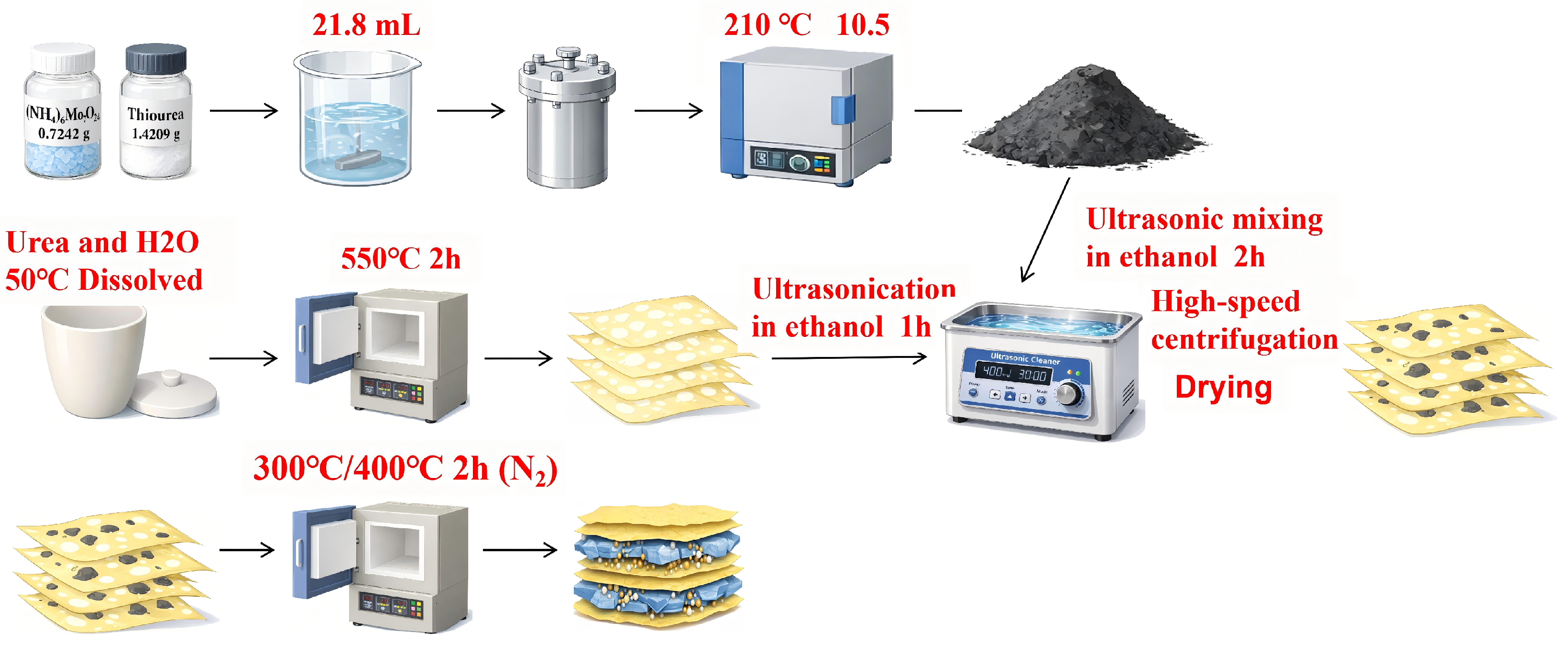
2.1. Preparation of Samples
2.1.1. Synthesis of MoS2
2.1.2. Synthesis of g-C3N4
2.1.3. Preparation of Composite Samples
2.2. Photocatalytic Activity Test
2.3. Radical Trapping Experiment
2.4. Photoelectrochemical Measurements
2.5. Characterization Methods
3. Results and Discussion
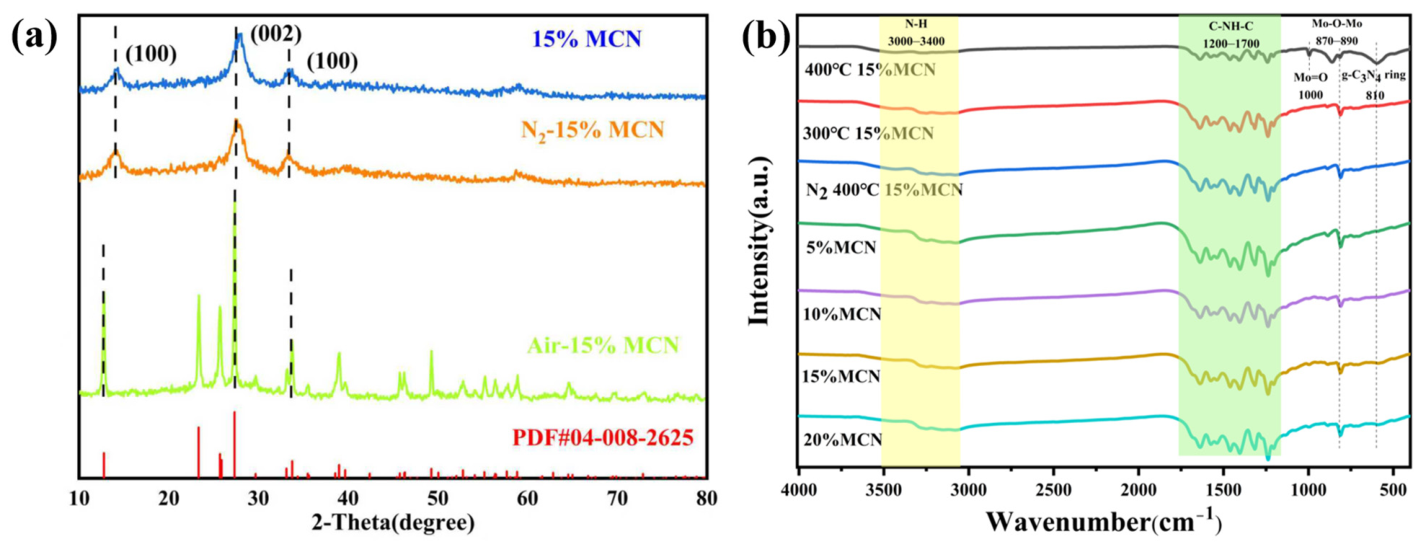
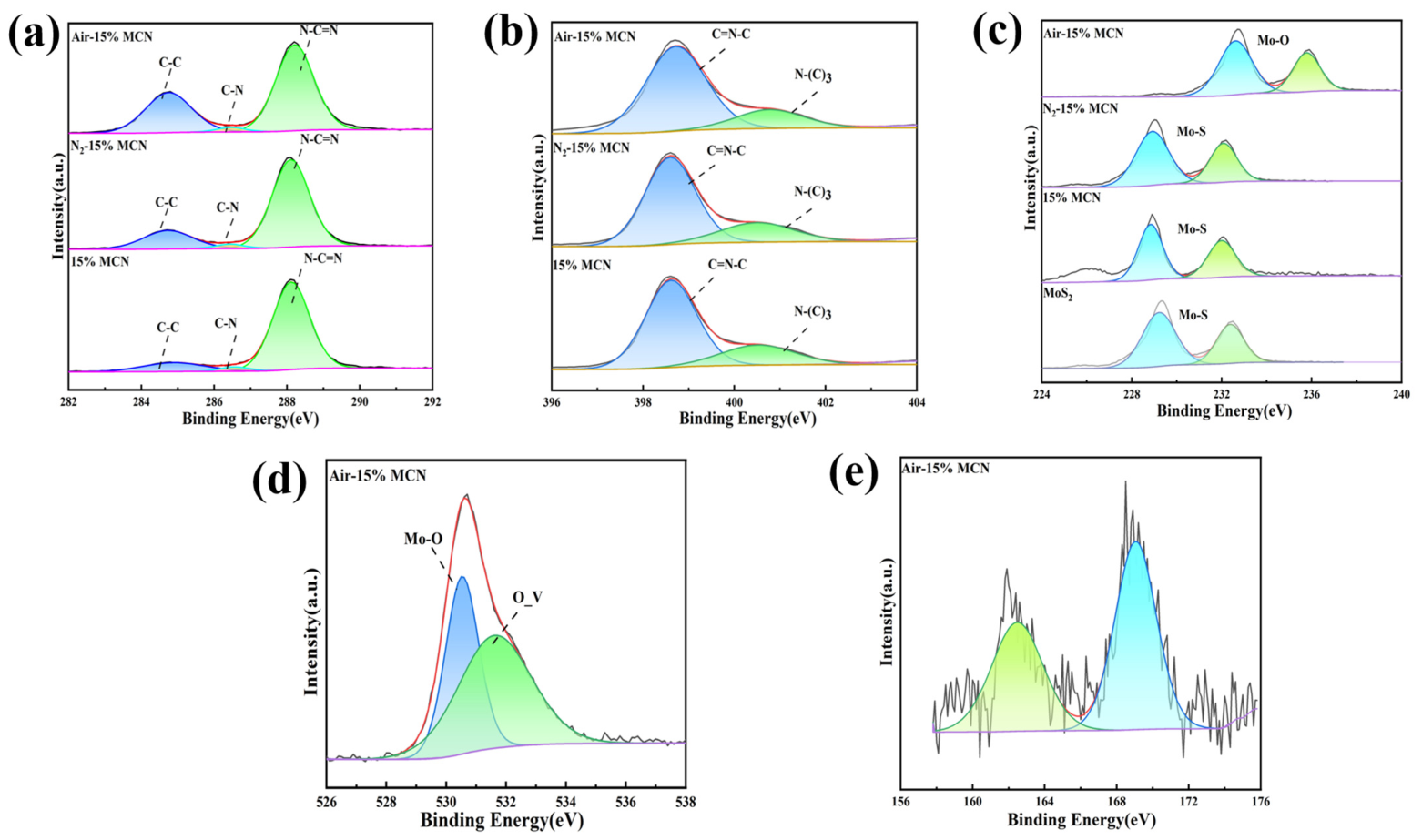
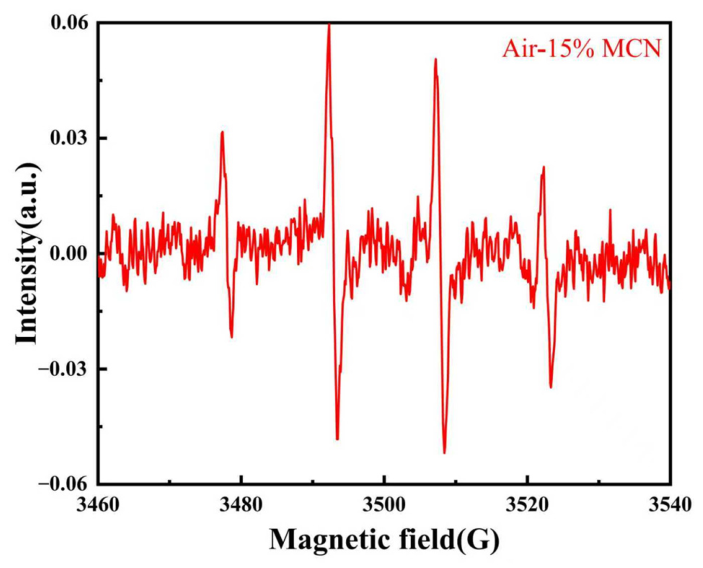
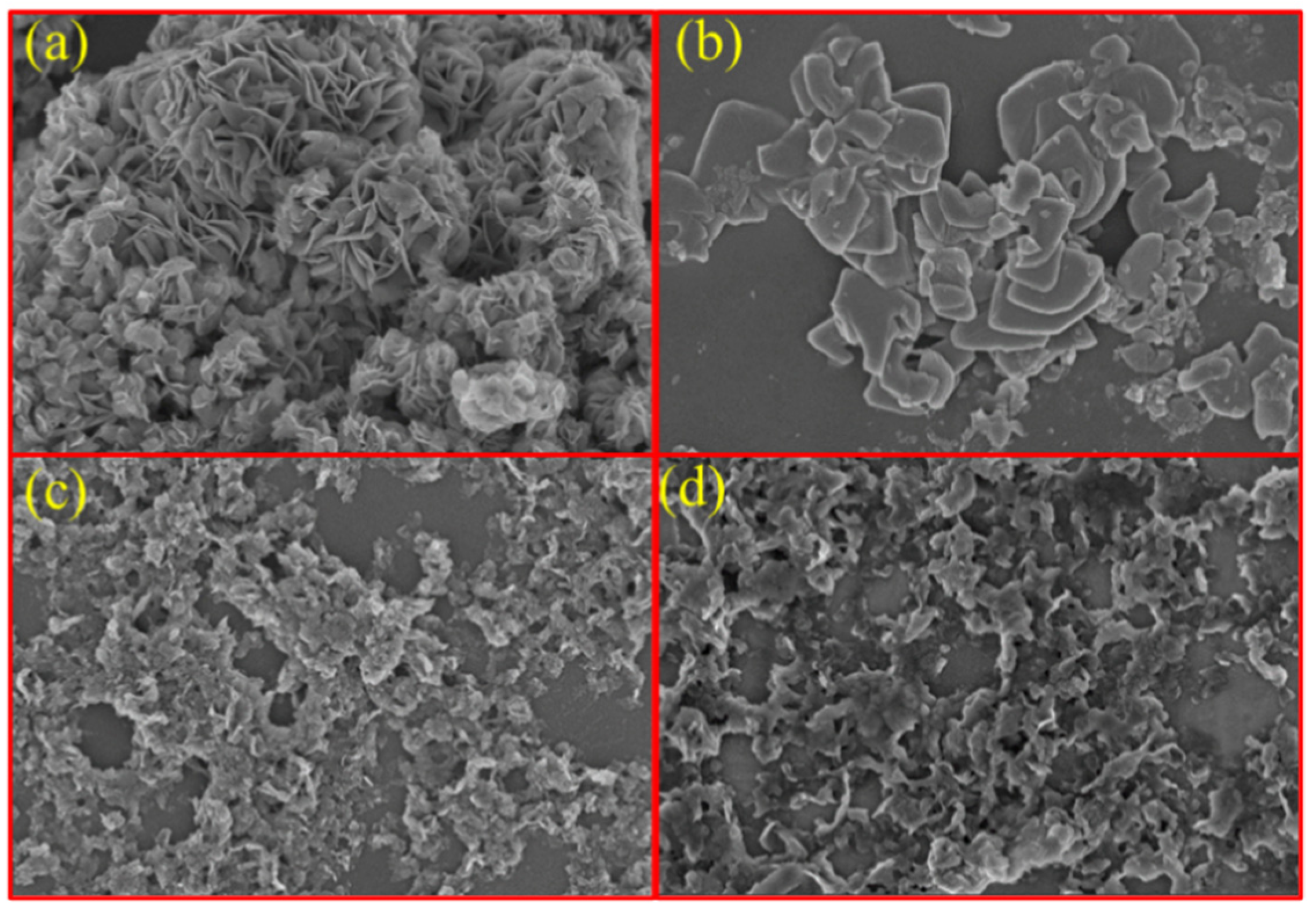
3.1. Characterization
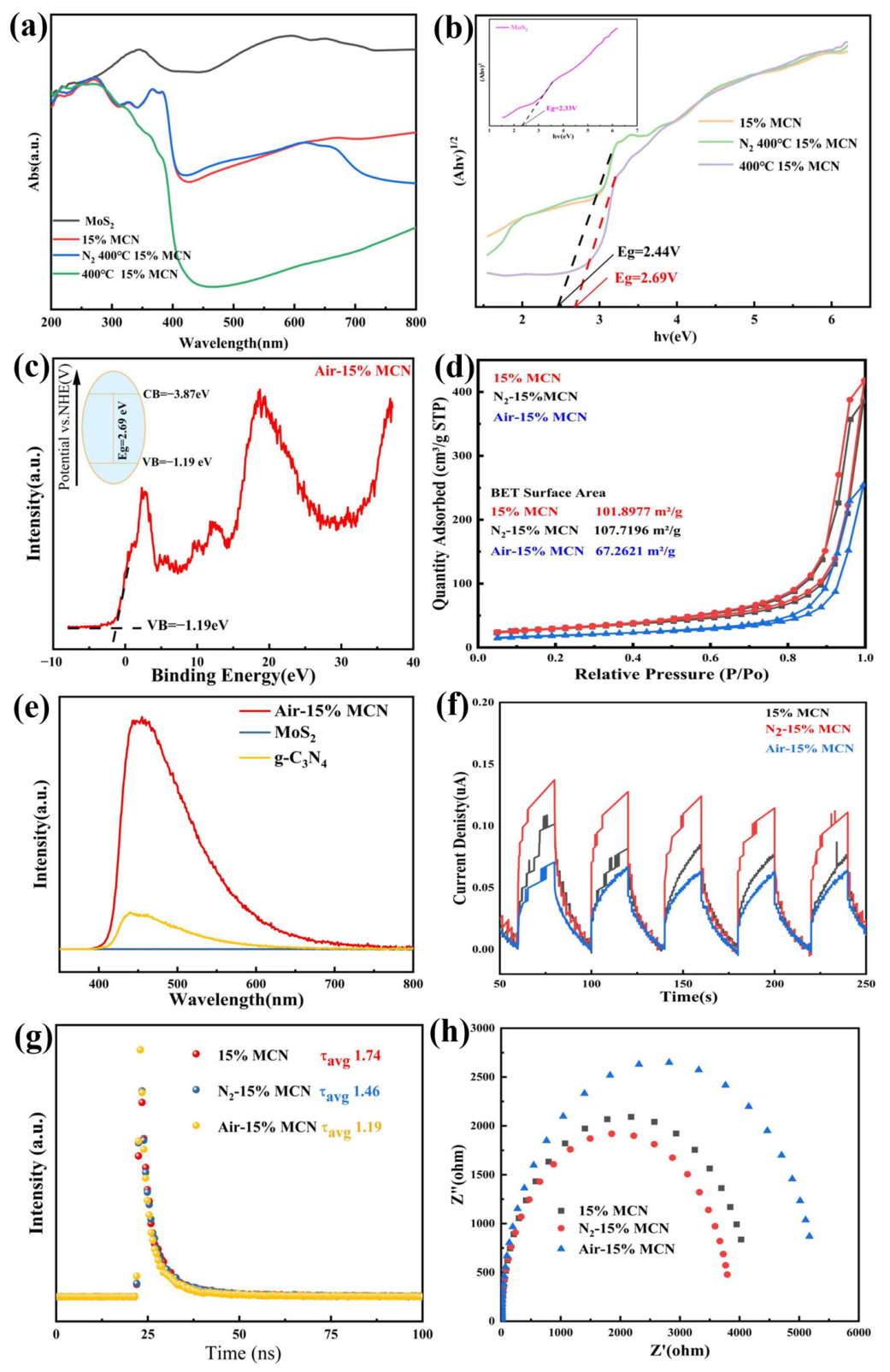
3.2. Optical and Photoelectrochemical Properties
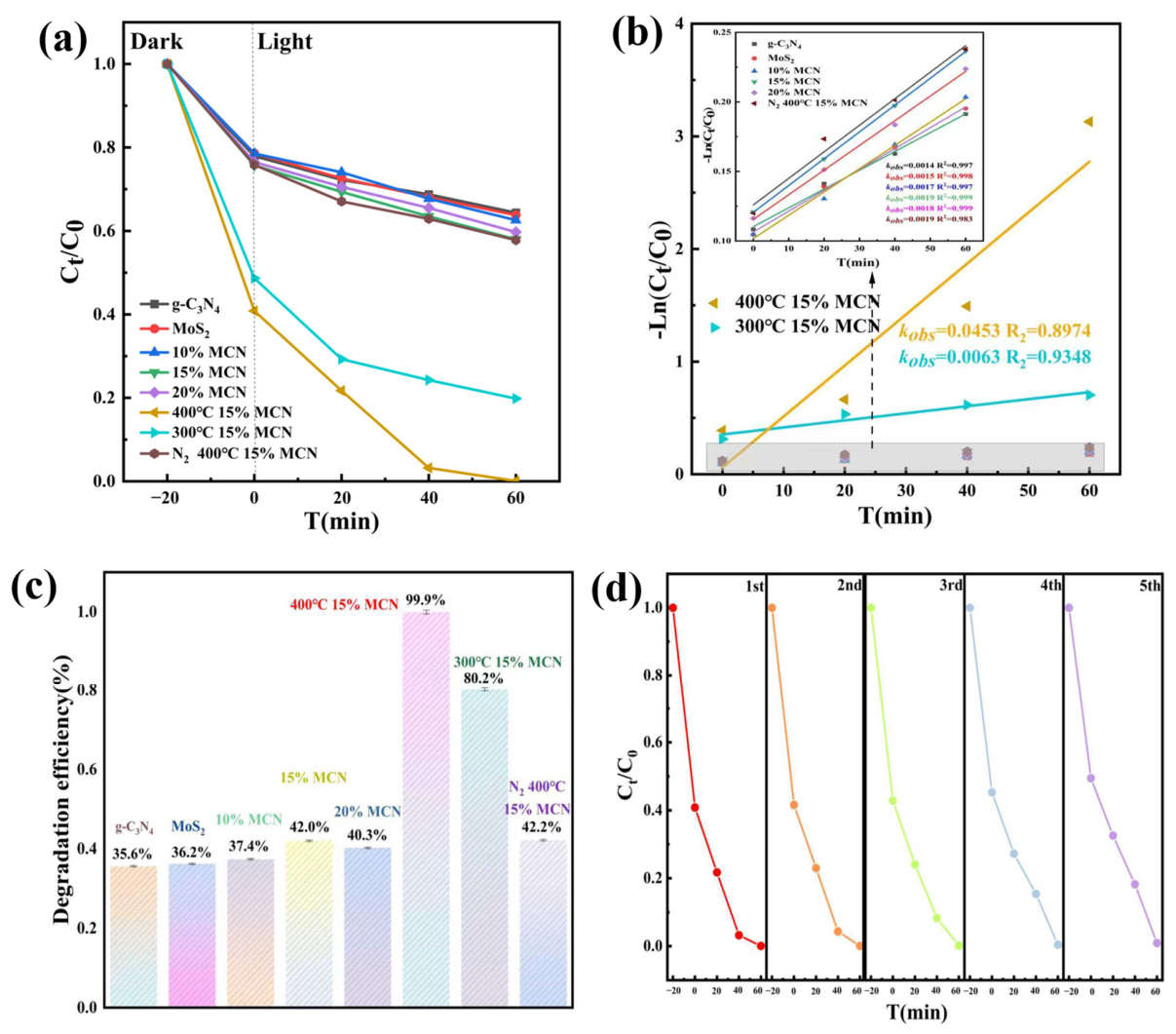
3.3. Photocatalytic Degradation of MB
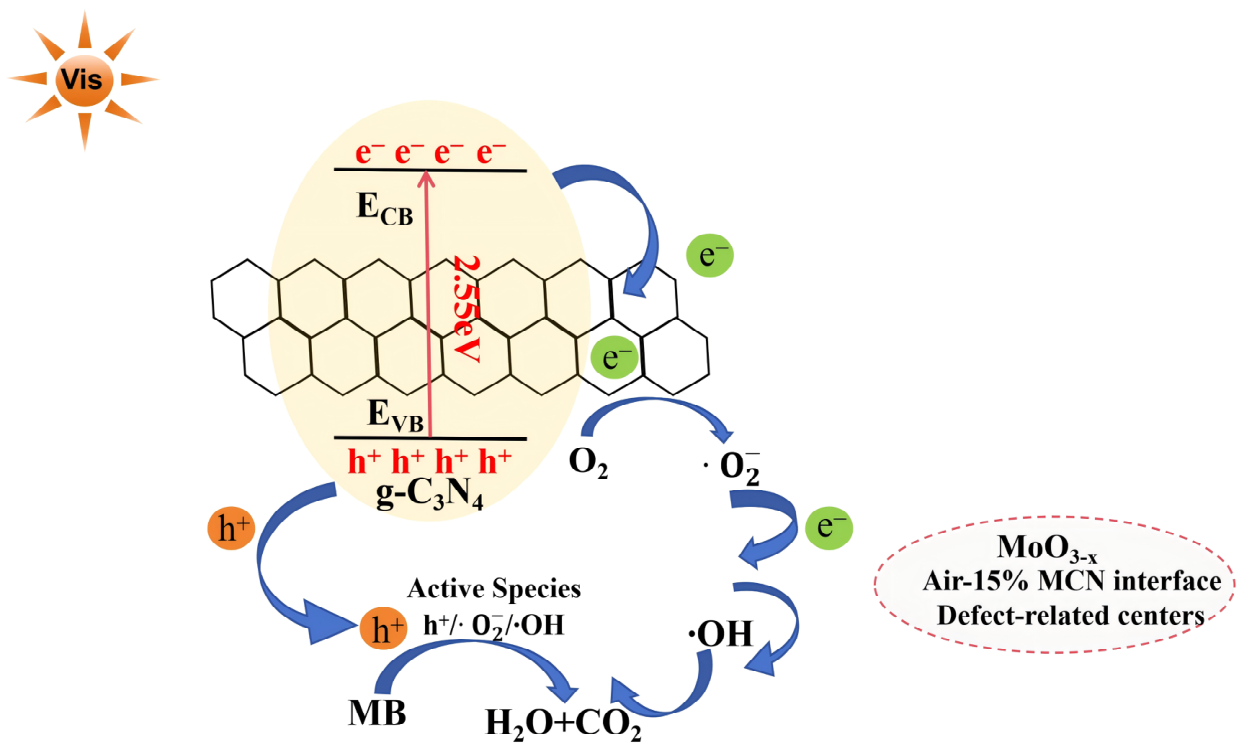
3.4. Mechanism Discussion
4. Conclusions
Supplementary Materials
Author Contributions
Funding
Data Availability Statement
Acknowledgments
Conflicts of Interest
References
- Ganesan, S.; Kokulnathan, T.; Sumathi, S.; Palaniappan, A. Efficient photocatalytic degradation of textile dye pollutants using thermally exfoliated graphitic carbon nitride (TE-g-C3N4). Sci. Rep. 2024, 14, 2284. [Google Scholar] [CrossRef]
- Salehi, G.; Bagherzadeh, M.; Abazari, R.; Hajilo, M.; Taherinia, D. Visible Light-Driven Photocatalytic Degradation of Methylene Blue Dye Using a Highly Efficient Mg-Al LDH@g-C3N4@Ag3PO4 Nanocomposite. ACS Omega 2024, 9, 4581–4593. [Google Scholar] [CrossRef]
- Aljuaid, A.; Almehmadi, M.; Alsaiari, A.A.; Allahyani, M.; Abdulaziz, O.; Alsharif, A.; Alsaiari, J.A.; Saih, M.; Alotaibi, R.T.; Khan, I. g-C3N4 Based Photocatalyst for the Efficient Photodegradation of Toxic Methyl Orange Dye: Recent Modifications and Future Perspectives. Molecules 2023, 28, 3199. [Google Scholar] [CrossRef]
- Guo, R.T.; Wang, J.; Bi, Z.X.; Chen, X.; Hu, X.; Pan, W.G. Recent advances and perspectives of g-C3N4-based materials for photocatalytic dyes degradation. Chemosphere 2022, 295, 133834. [Google Scholar] [CrossRef]
- Wang, X.; Maeda, K.; Thomas, A.; Takanabe, K.; Xin, G.; Carlsson, J.M.; Domen, K.; Antonietti, M. A metal-free polymeric photocatalyst for hydrogen production from water under visible light. Nat. Mater. 2009, 8, 76–80. [Google Scholar] [CrossRef]
- Wang, X.; Blechert, S.; Antonietti, M. Polymeric Graphitic Carbon Nitride for Heterogeneous Photocatalysis. ACS Catal. 2012, 2, 1596–1606. [Google Scholar] [CrossRef]
- Masih, D.; Ma, Y.; Rohani, S. Graphitic C3N4 based noble-metal-free photocatalyst systems: A review. Appl. Catal. B Environ. 2017, 206, 556–588. [Google Scholar] [CrossRef]
- Cao, S.; Low, J.; Yu, J.; Jaroniec, M. Polymeric photocatalysts based on graphitic carbon nitride. Adv. Mater. 2015, 27, 2150–2176. [Google Scholar] [CrossRef] [PubMed]
- Kumar, N.; Kumari, M.; Ismael, M.; Tahir, M.; Sharma, R.K.; Kumari, K.; Koduru, J.R.; Singh, P. Graphitic carbon nitride (g-C3N4)-assisted materials for the detection and remediation of hazardous gases and VOCs. Environ. Res. 2023, 231, 116149. [Google Scholar] [CrossRef] [PubMed]
- Alaghmandfard, A.; Ghandi, K. A Comprehensive Review of Graphitic Carbon Nitride (g-C3N4)-Metal Oxide-Based Nanocomposites: Potential for Photocatalysis and Sensing. Nanomaterials 2022, 12, 294. [Google Scholar] [CrossRef]
- Ruan, Y.; Hu, Y.; Cheng, H. Recent Progress in g-C3N4-Based Photocatalysts for Organic Pollutant Degradation: Strategies to Improve Photocatalytic Activity. Catalysts 2025, 15, 148. [Google Scholar] [CrossRef]
- Xu, D.; Cai, H.; Li, D.; Chen, F.; Han, S.; Chen, X.; Li, Z.; He, Z.; Chen, Z.; He, J.; et al. Recent Advances in Graphitic Carbon Nitride-Based Materials in the Photocatalytic Degradation of Emerging Contaminants. Inorganics 2025, 13, 319. [Google Scholar] [CrossRef]
- Xu, Q.; Zhang, L.; Cheng, B.; Fan, J.; Yu, J. S-Scheme Heterojunction Photocatalyst. Chem 2020, 6, 1543–1559. [Google Scholar] [CrossRef]
- Li, F.; Zhu, G.; Jiang, J.; Yang, L.; Deng, F.; Arramel; Li, X. A review of updated S-scheme heterojunction photocatalysts. J. Mater. Sci. Technol. 2024, 177, 142–180. [Google Scholar] [CrossRef]
- Ng, B.J.; Putri, L.K.; Kong, X.Y.; Teh, Y.W.; Pasbakhsh, P.; Chai, S.P. Z-Scheme Photocatalytic Systems for Solar Water Splitting. Adv. Sci. 2020, 7, 1903171. [Google Scholar] [CrossRef]
- Liao, G.; Li, C.; Liu, S.-Y.; Fang, B.; Yang, H. Z-scheme systems: From fundamental principles to characterization, synthesis, and photocatalytic fuel-conversion applications. Phys. Rep. 2022, 983, 1–41. [Google Scholar] [CrossRef]
- Liu, D.; Chen, S.; Li, R.; Peng, T. Review of Z-Scheme Heterojunctions for Photocatalytic Energy Conversion. Acta Phys.-Chim. Sin. 2020, 37, 2010017. [Google Scholar] [CrossRef]
- Imgharn, A.; Sun, T.; Nicolle, J.; Naciri, Y.; Hsini, A.; Albourine, A.; Ania, C. A Simple Approach to Prepare a C3N4/MoO3 Heterojunction with Improved Photocatalytic Performance for the Degradation of Methylparaben. Catalysts 2024, 14, 170. [Google Scholar] [CrossRef]
- Huang, L.; Xu, H.; Zhang, R.; Cheng, X.; Xia, J.; Xu, Y.; Li, H. Synthesis and characterization of g-C3N4/MoO3 photocatalyst with improved visible-light photoactivity. Appl. Surf. Sci. 2013, 283, 25–32. [Google Scholar] [CrossRef]
- Ye, J.; Beagan, M.A.; Guo, S.R.; Hayat, A.; Orooji, Y. Synergistic Effects in Copolymerized Carbon Nitride/MoO3 Heterojunction Composites for Efficient Visible-Light-Driven Photocatalysis. EcoMat 2025, 7, e70015. [Google Scholar] [CrossRef]
- Liu, L.; Huang, J.; Yu, H.; Wan, J.; Liu, L.; Yi, K.; Zhang, W.; Zhang, C. Construction of MoO3 nanopaticles/g-C3N4 nanosheets 0D/2D heterojuntion photocatalysts for enhanced photocatalytic degradation of antibiotic pollutant. Chemosphere 2021, 282, 131049. [Google Scholar] [CrossRef]
- Sivakumar, S.; Daniel Thangadurai, T.; Manjubaashini, N.; Nataraj, D. Two-dimensional z-type MoS2/g-C3N4 semiconductor heterojunction nanocomposites for industrial methylene blue dye degradation under daylight. Colloids Surf. A Physicochem. Eng. Asp. 2022, 654, 130090. [Google Scholar] [CrossRef]
- Lian, X.; Pelicano, C.M.; Huang, Z.; Yi, X.; Savateev, A.; Antonietti, M. Rational Design of TaON/Potassium Poly(Heptazine Imide) Heterostructure for Multifunctional Environmental Remediation. Adv. Funct. Mater. 2024, 34, 2403653. [Google Scholar] [CrossRef]
- Lei, Y.; Bao, Q.; Lin, F.; Zhang, J.; Zhang, Y.; Wu, Y.; Lv, L.; Ding, L. Synergistic construction of g-C3N4/MoS2/rGO ternary nanocomposite for enhanced photocatalytic degradation under visible light. BMC Chem. 2025, 19, 282. [Google Scholar] [CrossRef] [PubMed]
- Frankcombe, T.J.; Liu, Y. Interpretation of Oxygen 1s X-ray Photoelectron Spectroscopy of ZnO. Chem. Mater. 2023, 35, 5468–5474. [Google Scholar] [CrossRef]
- Bouddouch, A.; Amaterz, E.; Bakiz, B.; Taoufyq, A.; Guinneton, F.; Villain, S.; Gavarri, J.-R.; Valmalette, J.-C.; Benlhachemi, A. Phase Transformation, Photocatalytic and Photoluminescent Properties of BiPO4 Catalysts Prepared by Solid-State Reaction: Degradation of Rhodamine B. Minerals 2021, 11, 1007. [Google Scholar] [CrossRef]
- Ismael, M. Environmental remediation and sustainable energy generation via photocatalytic technology using rare earth metals modified g-C3N4: A review. J. Alloys Compd. 2023, 931, 167469. [Google Scholar] [CrossRef]
- de Castro, I.A.; Datta, R.S.; Ou, J.Z.; Castellanos-Gomez, A.; Sriram, S.; Daeneke, T.; Kalantar-Zadeh, K. Molybdenum Oxides—From Fundamentals to Functionality. Adv. Mater. 2017, 29, 1701619. [Google Scholar] [CrossRef]
- Li, Z.; Zhang, Z.; Dong, Z.; Wu, Y.; Liu, J.; Cheng, Z.; Liu, Y.; Wang, Y.; Zheng, Z.; Cao, X.; et al. Synthesis of MoS2/P-g-C3N4 nanocomposites with enhanced visible-light photocatalytic activity for the removal of uranium (VI). J. Solid State Chem. 2021, 302, 122305. [Google Scholar] [CrossRef]
- Zhang, L.; Jin, Z.; Tsubaki, N. Activating and optimizing the MoS2@MoO3 S-scheme heterojunction catalyst through interface engineering to form a sulfur-rich surface for photocatalyst hydrogen evolution. Chem. Eng. J. 2022, 438, 135238. [Google Scholar] [CrossRef]
- Reidy, K.; Mortelmans, W.; Jo, S.S.; Penn, A.N.; Foucher, A.C.; Liu, Z.; Cai, T.; Wang, B.; Ross, F.M.; Jaramillo, R. Atomic-Scale Mechanisms of MoS2 Oxidation for Kinetic Control of MoS2/MoO3 Interfaces. Nano Lett. 2023, 23, 5894–5901. [Google Scholar] [CrossRef]
- Bortoti, A.A.; Gavanski, A.d.F.; Velazquez, Y.R.; Galli, A.; de Castro, E.G. Facile and low cost oxidative conversion of MoS2 in α-MoO3: Synthesis, characterization and application. J. Solid State Chem. 2017, 252, 111–118. [Google Scholar] [CrossRef]
- Benedoue, S.A.; Ndi, J.N.; Ge, M.; Tian, Z.; Dantio Nguela, C.B.; Tong, H.; Lo Presti, A.; Antonietti, M.; Ngomo, H.M.; Pelicano, C.M. Controllable Acid Activation of Sulfur-Doped Carbon Nitride Enables Enhancement in Photocatalytic Indigo Carmine Degradation Performance. ACS Sustain. Chem. Eng. 2024, 12, 16809–16816. [Google Scholar] [CrossRef]
- Wang, L.; Wu, J.; Wang, X.; Fu, S. Defect engineering of MoS2-based materials as supercapacitors electrode: A mini review. J. Alloys Compd. 2023, 959, 170548. [Google Scholar] [CrossRef]
- Li, J.; Liu, E.; Ma, Y.; Hu, X.; Wan, J.; Sun, L.; Fan, J. Synthesis of MoS2/g-C3N4 nanosheets as 2D heterojunction photocatalysts with enhanced visible light activity. Appl. Surf. Sci. 2016, 364, 694–702. [Google Scholar] [CrossRef]
- Szoszkiewicz, R. Local Interactions of Atmospheric Oxygen with MoS2 Crystals. Materials 2021, 14, 5979. [Google Scholar] [CrossRef] [PubMed]
- Sharma, P.; Kumar, A.; Sharma, G.; Wang, T.; Dhiman, P.; Stadler, F.J. Recent advances in oxygen vacancies rich Z-scheme and S-scheme heterojunctions for water treatment and hydrogen production. Inorg. Chem. Commun. 2024, 161, 112112. [Google Scholar] [CrossRef]
- Wang, J.; Mueller, D.N.; Crumlin, E.J. Recommended strategies for quantifying oxygen vacancies with X-ray photoelectron spectroscopy. J. Eur. Ceram. Soc. 2024, 44, 116709. [Google Scholar] [CrossRef]
- Xue, S.; Wu, C.; Pu, S.; Hou, Y.; Tong, T.; Yang, G.; Qin, Z.; Wang, Z.; Bao, J. Direct Z-Scheme charge transfer in heterostructured MoO3/g-C3N4 photocatalysts and the generation of active radicals in photocatalytic dye degradations. Environ. Pollut. 2019, 250, 338–345. [Google Scholar] [CrossRef]
- Zhu, W.; Kamali, A.R. Thermal oxidation of MoS2 into defective crystalline MoO3 with enhanced Li-ion storage kinetics. J. Alloys Compd. 2023, 968, 171823. [Google Scholar] [CrossRef]
- Adhikari, S.; Kim, D.-H. Heterojunction C3N4/MoO3 microcomposite for highly efficient photocatalytic oxidation of Rhodamine B. Appl. Surf. Sci. 2020, 511, 145595. [Google Scholar] [CrossRef]




Disclaimer/Publisher’s Note: The statements, opinions and data contained in all publications are solely those of the individual author(s) and contributor(s) and not of MDPI and/or the editor(s). MDPI and/or the editor(s) disclaim responsibility for any injury to people or property resulting from any ideas, methods, instructions or products referred to in the content. |
© 2026 by the authors. Licensee MDPI, Basel, Switzerland. This article is an open access article distributed under the terms and conditions of the Creative Commons Attribution (CC BY) license.
Share and Cite
Jin, Y.; Liu, X.; Jiang, G. Boosted Visible-Light Photocatalysis of MoS2/g-C3N4 Composites by Atmosphere-Controlled Mo Species Evolution. Catalysts 2026, 16, 395. https://doi.org/10.3390/catal16050395
Jin Y, Liu X, Jiang G. Boosted Visible-Light Photocatalysis of MoS2/g-C3N4 Composites by Atmosphere-Controlled Mo Species Evolution. Catalysts. 2026; 16(5):395. https://doi.org/10.3390/catal16050395
Chicago/Turabian StyleJin, Yunze, Xiangrui Liu, and Guojian Jiang. 2026. "Boosted Visible-Light Photocatalysis of MoS2/g-C3N4 Composites by Atmosphere-Controlled Mo Species Evolution" Catalysts 16, no. 5: 395. https://doi.org/10.3390/catal16050395
APA StyleJin, Y., Liu, X., & Jiang, G. (2026). Boosted Visible-Light Photocatalysis of MoS2/g-C3N4 Composites by Atmosphere-Controlled Mo Species Evolution. Catalysts, 16(5), 395. https://doi.org/10.3390/catal16050395