Article

Enhanced Performance of Photocatalytic Water Splitting on B-Doped g-C3N4

Anhui Province International Research Center on Advanced Building Materials, Anhui Jianzhu University, Hefei 230601, China
*
Author to whom correspondence should be addressed.
Catalysts 2026, 16(5), 396; https://doi.org/10.3390/catal16050396
Submission received: 20 March 2026 / Revised: 18 April 2026 / Accepted: 27 April 2026 / Published: 29 April 2026

Abstract

Graphitic carbon nitride (CN) is a promising photocatalytic material, but its practical application is limited by small specific surface area, narrow light absorption range, and high photogenerated carrier recombination rate. To address these issues, this study synthesized boron-doped carbon nitride (BCN) and sulfuric acid-exfoliated boron-doped carbon nitride (BCND). X-ray diffraction (XRD) and X-ray photoelectron spectroscopy (XPS) results confirmed that boron was successfully doped into the CN skeleton via B-N bonds. Scanning electron microscopy (SEM) and N2 adsorption–desorption (BET) characterizations showed that acid exfoliation significantly increased the specific surface area of BCND to 68.80 m2·g−1, much higher than that of CN (9.54 m2·g−1) and BCN (15.98 m2·g−1). UV–visible diffuse reflectance spectroscopy (UV-Vis DRS) analysis revealed that BCND had the narrowest bandgap (2.59 eV) among the three materials, which enhanced its visible-light absorption efficiency. Photoelectrochemical tests demonstrated that BCND exhibited the smallest charge transfer resistance and the highest transient photocurrent density (eight times that of CN), indicating efficient separation of photogenerated electron–hole pairs. Photocatalytic water splitting experiments showed that BCND achieved the highest Hydrogen production rate of 792.34 μmol·g−1·h−1, which was about 4 times that of CN (158.41 μmol·g−1·h−1) and 1.36 times that of 2.5% BCN (584.30 μmol·g−1·h−1). Free-radical trapping experiments indicated that hydroxyl radicals (·OH) played a crucial promotional role in Hydrogen production, while superoxide anions (·O2) exerted an inhibitory effect. The enhanced performance of BCND was attributed to the synergistic effects of boron doping (narrowing bandgap) and acid exfoliation (increasing specific surface area). A possible photocatalytic Hydrogen production mechanism was proposed based on the experimental results. This study provides a feasible strategy for the structural modification and performance optimization of g-C3N4-based photocatalysts for water splitting.

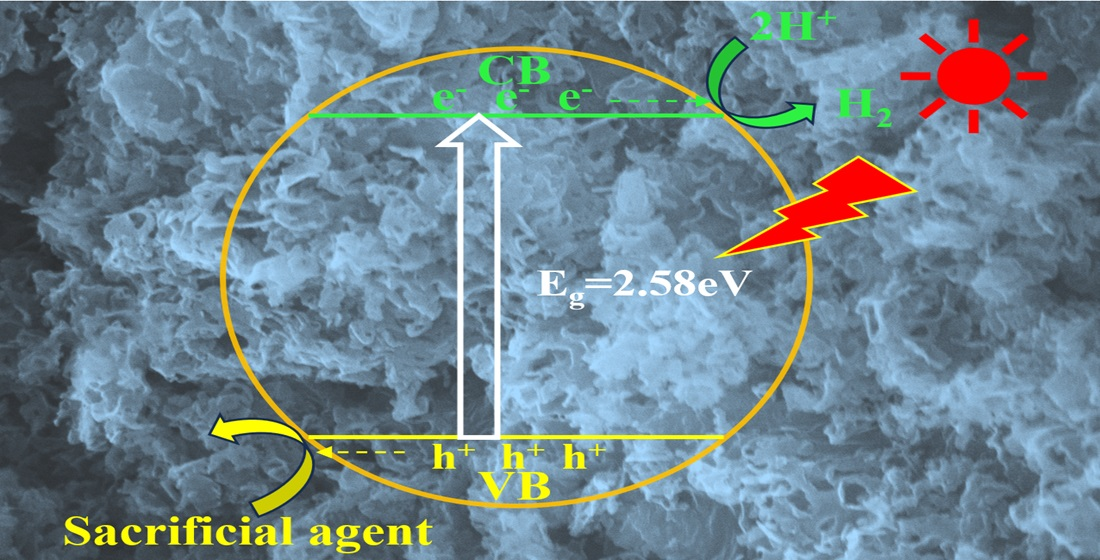
Graphical Abstract

1. Introduction

Hydrogen is regarded as an ideal clean energy carrier with high energy density, zero carbon emission, and wide applications in fuel cells, transportation, and industrial manufacturing. It plays a critical role in alleviating the global energy crisis and environmental issues [1,2]. As an efficient and sustainable energy vector, Hydrogen has become one of the most promising alternatives to traditional fossil fuels.
Current Hydrogen production technologies are dominated by water electrolysis, including alkaline, proton exchange membrane, anion exchange membrane, and solid oxide electrolysis, each with distinct advantages and limitations. However, they all face issues such as material degradation, insufficient stability, and relatively high costs. Moreover, freshwater shortages further restrict the large-scale production of green Hydrogen; therefore, seawater electrolysis has become an important development direction. Its challenges, including cathode scaling, anode corrosion, and side reactions, can be effectively addressed through electrode optimization, surface modification, and novel electrolyzer structures [3,4,5]. Meanwhile, formic acid has become a high-quality Hydrogen storage material for in situ Hydrogen supply in fuel cells due to its excellent Hydrogen storage capacity and safe, convenient liquid storage and transportation. Catalysts such as CuO–CeO2/γ-Al2O3 and AuNPs-PPO enable efficient Hydrogen production with high selectivity and low CO emissions, providing a feasible solution for portable Hydrogen supply [6,7].
As a carbon-free Hydrogen carrier with high Hydrogen content, easy liquefaction, and mature storage and transportation infrastructure, ammonia can produce carbon-free Hydrogen via catalytic decomposition, representing an important supplementary route for Hydrogen storage, transportation, and supply. Current ammonia decomposition technologies mainly include thermocatalysis, non-thermal plasma catalysis, electrocatalysis, and photocatalysis. Among them, thermocatalysis is mature but requires high temperatures, while photocatalysis shows unique advantages due to its mild conditions and low energy consumption. The catalyst system is dominated by highly active ruthenium-based catalysts, while low-cost non-noble metal catalysts (nickel-, cobalt-, iron-based), bimetallic/high-entropy alloys, and metal nitrides have become research focuses. Its catalytic process follows the mechanism of stepwise deHydrogenation and nitrogen recombination desorption, and catalytic activity and stability can be significantly improved through support regulation, doping modification, and strong metal–support interactions, providing important support for efficient, low-cost, large-scale carbon-free Hydrogen production [8,9].
Photocatalytic technology is one of the important means to solve the current environmental pollution and energy crisis in the world [10]. Graphitic carbon nitride (g-C3N4), due to its unique two-dimensional layered structure, visible-light responsiveness, and good chemical stability, has become an important photocatalytic material [11,12,13]. However, unmodified g-C3N4 has inherent defects such as a small specific surface area, a limited visible-light absorption range, and a high recombination rate of photogenerated carriers [12,14], which severely limit its practical application efficiency [15,16,17]. Specifically, the wide bandgap of pristine g-C3N4 (~2.7 eV) restricts its solar energy utilization to wavelengths below 460 nm [16,18], while the bulk structure’s low surface area (typically <10 m2/g) reduces active site accessibility [13,14]. These issues are further compounded by rapid electron–hole recombination, which diminishes the efficiency of charge carrier migration to the catalyst surface for Hydrogen evolution [16].
The core of the current problems in photocatalytic technology lies in the development of efficient photocatalysts. In recent years, non-metallic element doping has been proven to be an effective strategy for optimizing the performance of g-C3N4 [19]. Among them, boron (B) element, due to its small atomic radius and moderate electronegativity, can replace some carbon or nitrogen atoms to reconstruct the electronic structure of the material, thus significantly reducing the bandgap and enhancing the light absorption ability [19,20]. For example, B doping can change the conjugated system of g-C3N4 by forming C-B bonds, promoting the separation of carriers, and simultaneously expanding the visible-light response to the long-wavelength region. Studies have shown that B-doped g-C3N4 exhibits an activity improvement several times that of the undoped material in photocatalytic degradation reactions, demonstrating its great potential in the field of photocatalysis [21]. Recent studies have highlighted that structural modifications, such as exfoliating g-C3N4 into ultrathin nanosheets, can enhance its specific surface area 10-fold and narrow the bandgap through edge-state engineering [13], thereby improving visible-light absorption and charge separation efficiency.
As a benchmark photocatalyst, titanium dioxide (TiO2) has been widely investigated owing to its good stability, non-toxicity, and low cost [22]. Nevertheless, traditional TiO2, TiO2-based heterojunctions, and MOF-derived TiO2 still face inherent limitations [22,23,24]. Pristine TiO2 possesses a wide bandgap of 3.0–3.2 eV and can only utilize ultraviolet light, which accounts for only 4% of solar energy [22]. Even optimized TiO2 samples, including TiO2/In2O3/Cu2O heterostructures and MOF-derived TiO2, can only reduce the bandgap to 2.94 eV at most [22,24]. Most TiO2-involved systems require high-temperature calcination, complex heterojunction construction, or additional oxide components, and some suffer from photocorrosion [22,24]. The optimal H2 production rate of recently reported MOF-derived TiO2 is merely 1.05–1.45 μmol·g−1·h−1, which is far below efficient practical demand [24].
Recently, various strategies including 2D/2D heterostructures, metal oxide composites, and elemental doping have been widely developed to improve the photocatalytic performance of g-C3N4-based materials [25,26,27,28].
In this paper, carbon nitride (CN), boron-doped carbon nitride (BCN) and BCN delaminated by sulfuric acid (BCND) were synthesized and characterized. According to the characterization and photocatalytic performance, the synthesis process parameters, including the ratio of boron to melamine, were optimized. The possible photocatalytic water splitting mechanism is elaborated on at the end of the paper. The research results showed the promise of g-C3N4-based photocatalysts in the field of water splitting.

2. Results and Discussion

2.1. Structure and Morphology of Photocatalysts

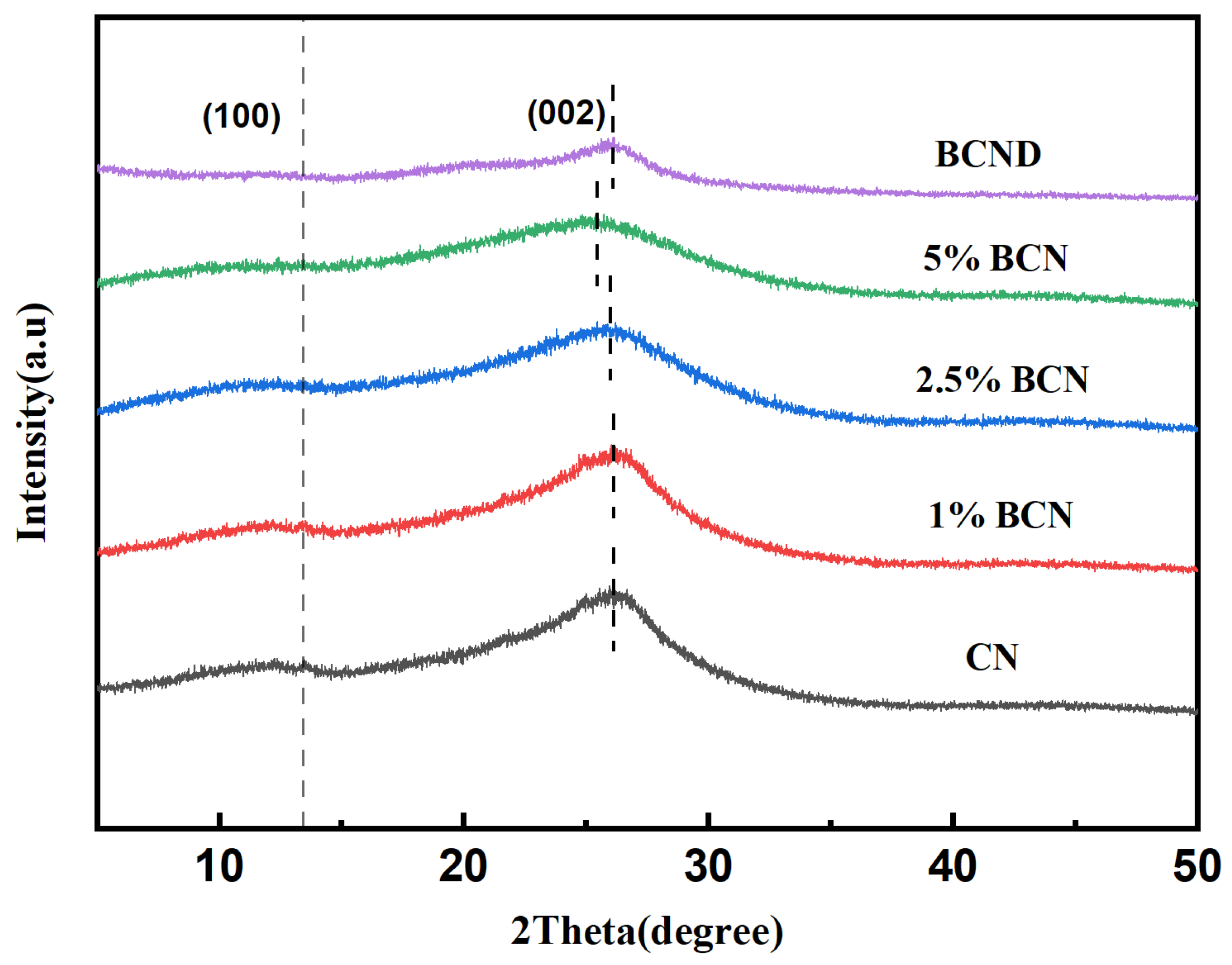
The XRD patterns of CN, BCN, and BCND are shown in Figure 1. Two prominent diffraction peaks of g-C3N4 were observed at approximately 26° and 14° for the CN sample. According to the PDF card JCPDS 87-1526, these peaks correspond to the (002) and (100) crystal planes, respectively [29]. The peak at 26° results from the stacking of the conjugated aromatic hydrocarbon system, while the peak at 14° is related to the in-plane arrangement of heptazine units [30]. The XRD patterns of BCN and BCND are similar to that of CN, indicating that the crystal structure of g-C3N4 is not significantly altered by boron doping when the B content is less than 5%. However, when the B content increases to 5%, the intensity of the peak at 14° decreases. In addition, a slight shift can be observed for the (002) peak; it shifts left from 26° to 25.46° for the 5% B-doped sample. This implies an increase in the (002) interplanar spacing from 0.342 to 0.349 nm, which is caused by the larger atomic radius of B compared with C and N [30]. The decrease in the diffraction intensity of boron-doped g-C3N4 indicates a decline in the crystallinity or structural size of the materials after heteroatom doping [31].
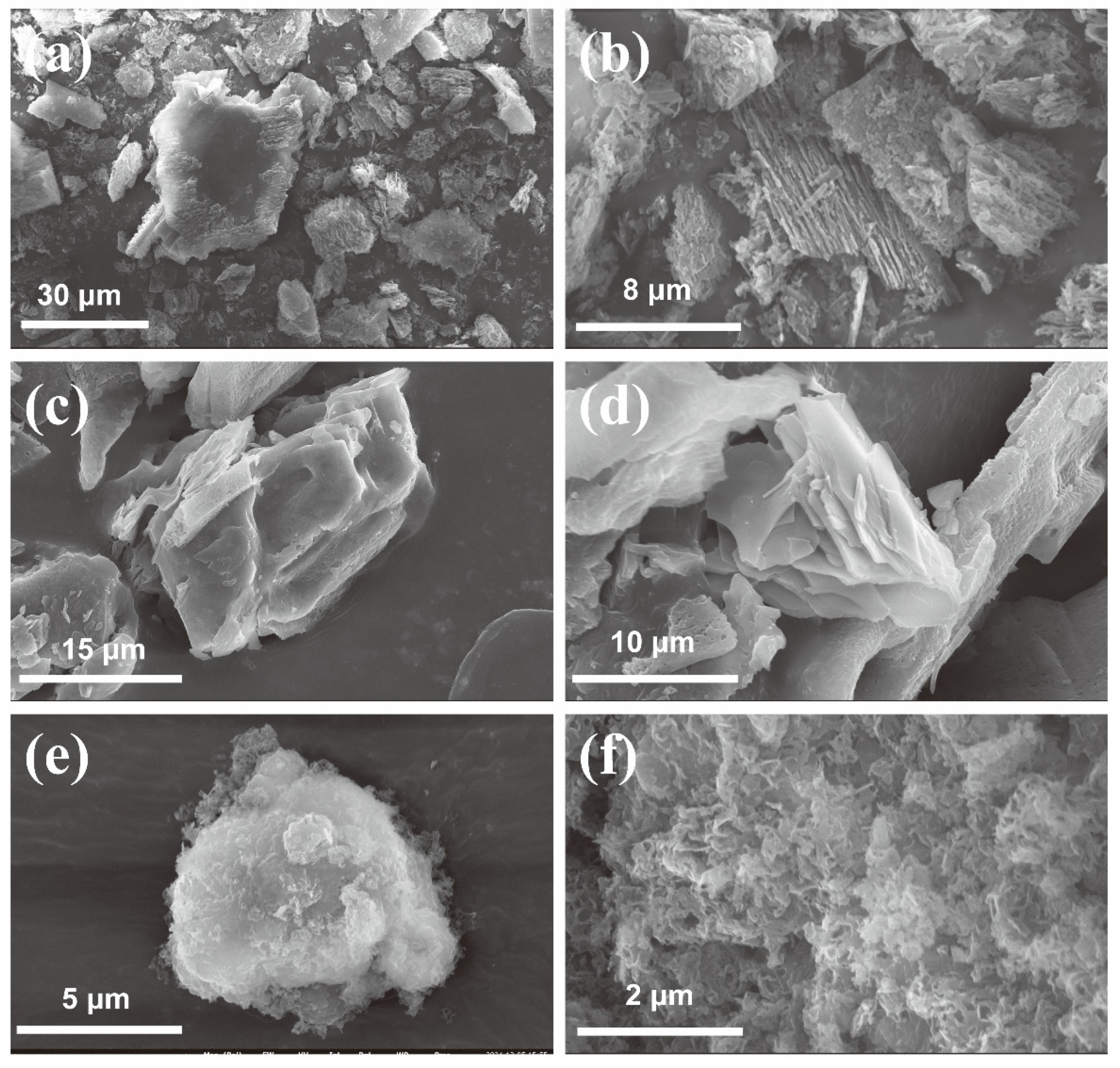
The surface morphologies of CN, 2.5% BCN, and BCND were characterized by scanning electron microscopy (SEM), as shown in Figure 2. CN presents a dense layered structure with a lateral size > 15 μm and layer thickness of 80–120 nm. BCND displays a porous hierarchical structure with pore sizes of 25–50 nm. All size parameters were directly measured from SEM images using the built-in scale bar. Figure 2a,b show the morphology of CN which exhibits a dense and closed layered structure (with a lateral size > 15 μm and a layer thickness of 80–120 nm); Figure 2c,d show an obvious molten sintering interface on the surface of the bulk BCN. It is found that the porous hierarchical structure on the surface of BCND in Figure 2e,f (with pore sizes of 25–50 nm) increases the specific surface area and light absorption efficiency of BCND.
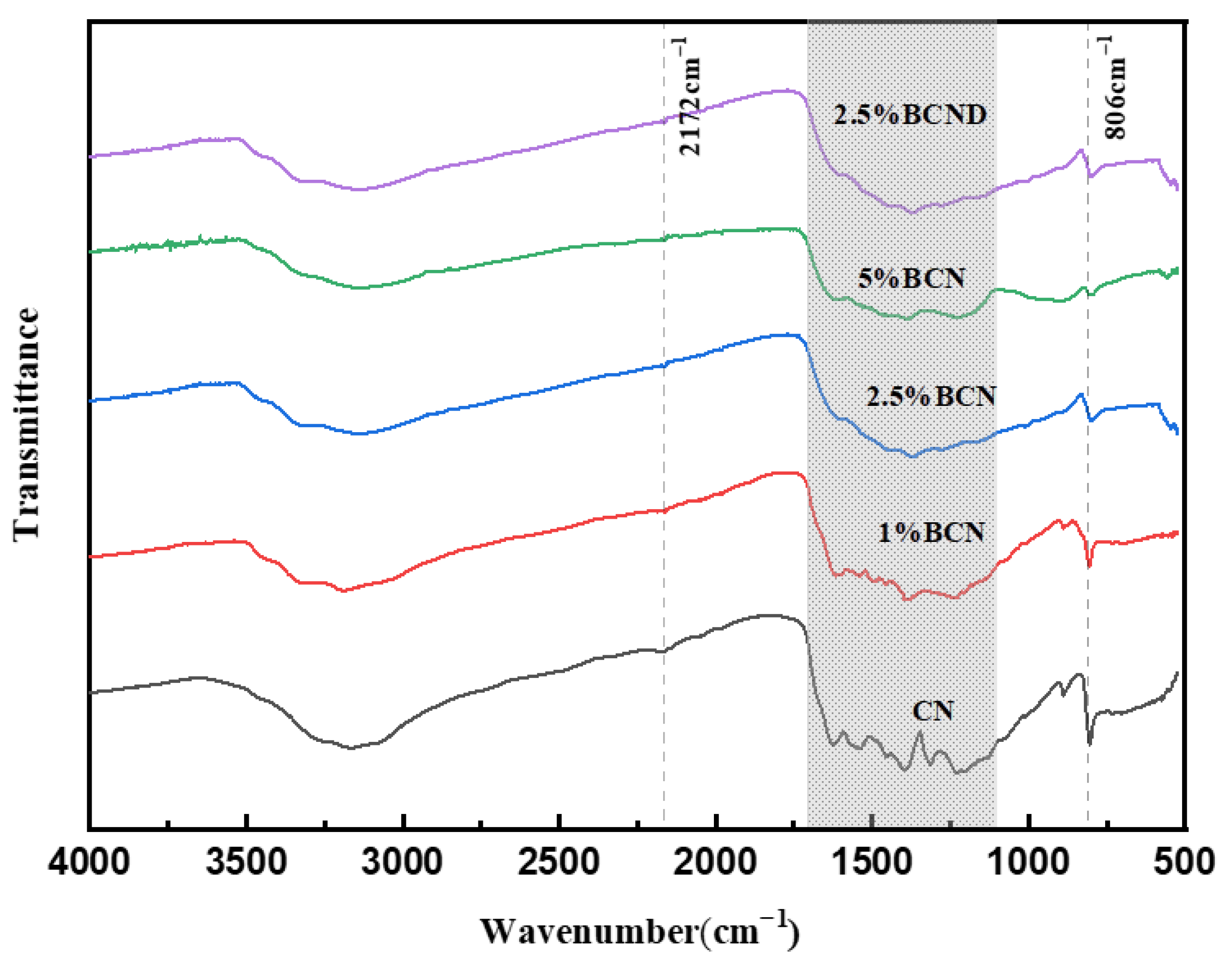
The FT-IR spectrum of CN, BCN and BCND is shown in Figure 3. The intensity of the triazine [32,33] and heptazine [34] breathing vibration peak at about 806 cm−1 was strong in CN, and decreased with the increase in the boron content from 1 to 5% in BCN and BCND. The presence of the 806 cm−1 vibration in BCN indicated that BCN maintained the triazine and heptazine structure. The intensity of the absorption peak at 2172 cm−1, which could be assigned to the vibration of the N=C=N (carbodiimide) bridge [35], was also gradually weakened with the increase in the B content; the most likely explanation for this is that boron atoms replaced N or C atoms in the carbodiimide bridge during the B doping process. In the dark region between 1100 cm−1 and 1700 cm−1, it can be observed that the characteristic stretching peaks of aromatic C and N heterocycles [33,36] gradually became less obvious with the increase in the B content; the best explanation for this is that the boron atoms were successfully inserted into the aromatic heterocycles in the BCN and BCND materials.
With the increase in B content, the peak intensities gradually decrease and slight peak shifts are observed, indicating that B atoms are successfully incorporated into the g-C3N4 skeleton.
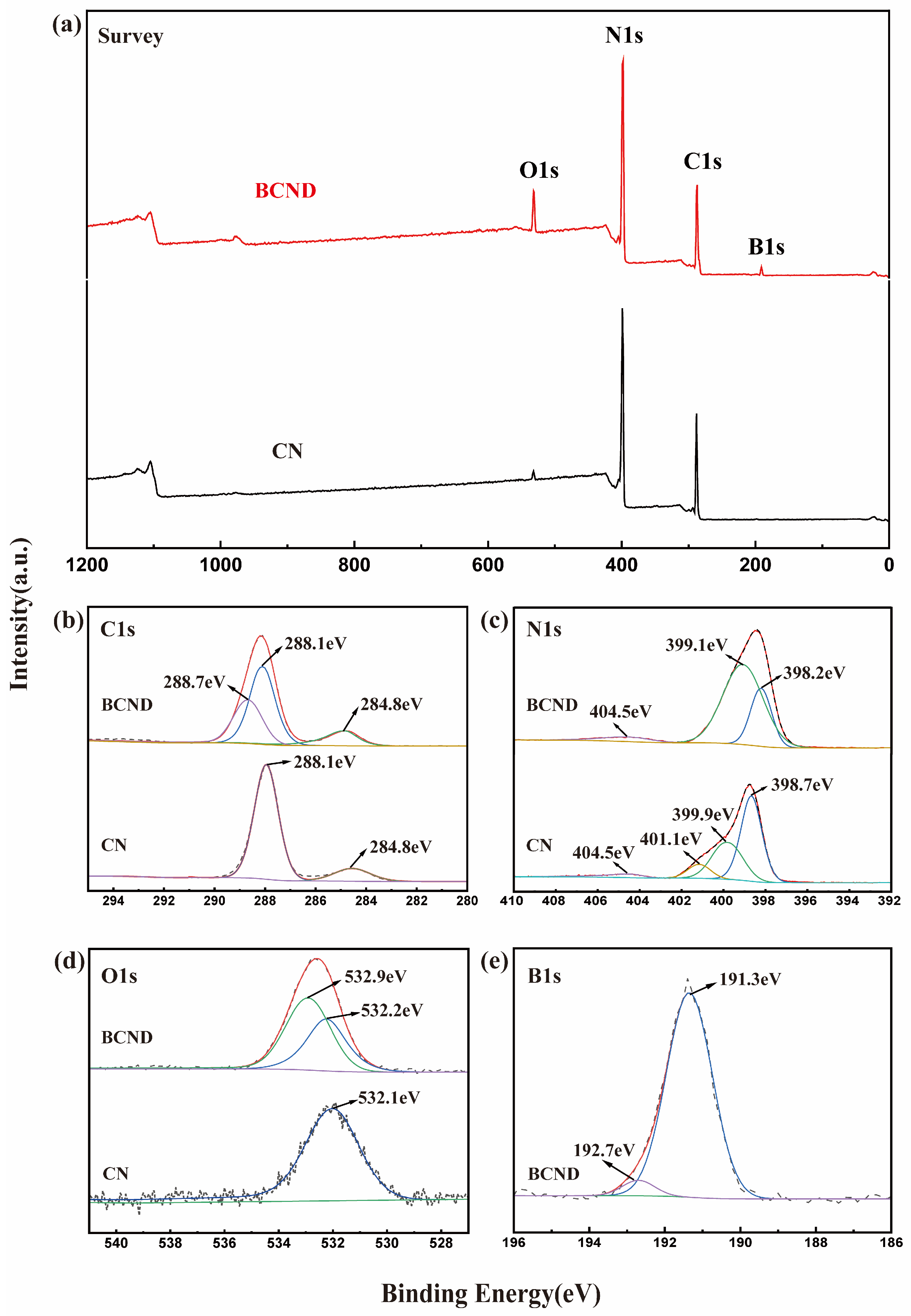
XPS technology was used to study the elemental composition of the materials and the chemical states of each element. From the XPS full spectrum in Figure 4a, it can be concluded that the BCND material contained four elements, namely C, N, O, and B, indicating that the B element had been successfully doped into CN. It is worth noting that the oxygen content significantly increased in BCND, and the oxygen should be from H3BO3 which was the boron source.
Figure 4b shows the high-resolution C 1s spectra of CN and BCND. The C 1s spectrum of pure CN was fitted with two signal sub-peaks at 288.1 eV and 284.8 eV, corresponding to C=N and C-C bonds respectively. Compared with CN, a new C 1s peak appeared at 288.7 eV in BCND, which was attributed to the C-B bond [37], confirming that the boron doping reaction occurred via chemical bonding.
The high-resolution N 1s spectra are showed in Figure 4c. The N 1s peak of CN could be decomposed into three sub-peaks at 401.1 eV, 399.9 eV, and 398.7 eV, corresponding to N-H, N-(C)3, and C-N=C bonds respectively [38,39]. The N-(C)3 and C-N=C peaks of BCND at 399.1 and 398.2 eV were slightly lower than 399.9 and 398.7 eV in CN; this phenomenon might be due to the expansion of the conjugated system: boron doping enhanced the electron delocalization effect by expanding the π-conjugated system, so that N atoms exhibited lower binding energy due to the decrease in electron cloud density [40]. While CN displayed a distinct peak at 401.1 eV, this feature was absent in BCND, and the discrepancy may be attributed to the consumption of N-H species via their reaction with concentrated sulfuric acid during the exfoliation treatment. The peaks at 404.5 eV in BCND and CN could be indexed to N in the g-C3N4 heterocycle [41]. In the survey XPS spectrum of the BCND material, the intensity of the B 1s peak was much lower than that of the N1s peak. Consequently, the devotion of the N-B2 sub-peak [42] in the high-resolution N 1s spectrum of BCND was inevitably very weak; therefore, this N-B2 sub-peak was not considered during the deconvolution of the N 1s spectrum.
The high-resolution O 1s spectra are shown in Figure 4d. For the O 1s spectrum of CN, a Gaussian peak at 532.1 eV could be observed, which was attributed to the surface-adsorbed H2O and -OH [43]. After modification by boron doping, a new peak at 532.9 eV appeared in BCND, corresponding to the lattice oxygen B-O [39].
The high-resolution B 1 s spectrum is shown in Figure 4e. The peaks of 191.3 and 192.7 eV correspond to B-N and B-O, respectively [39,44]. The B-N peak further confirmed that the B doping process was successful.
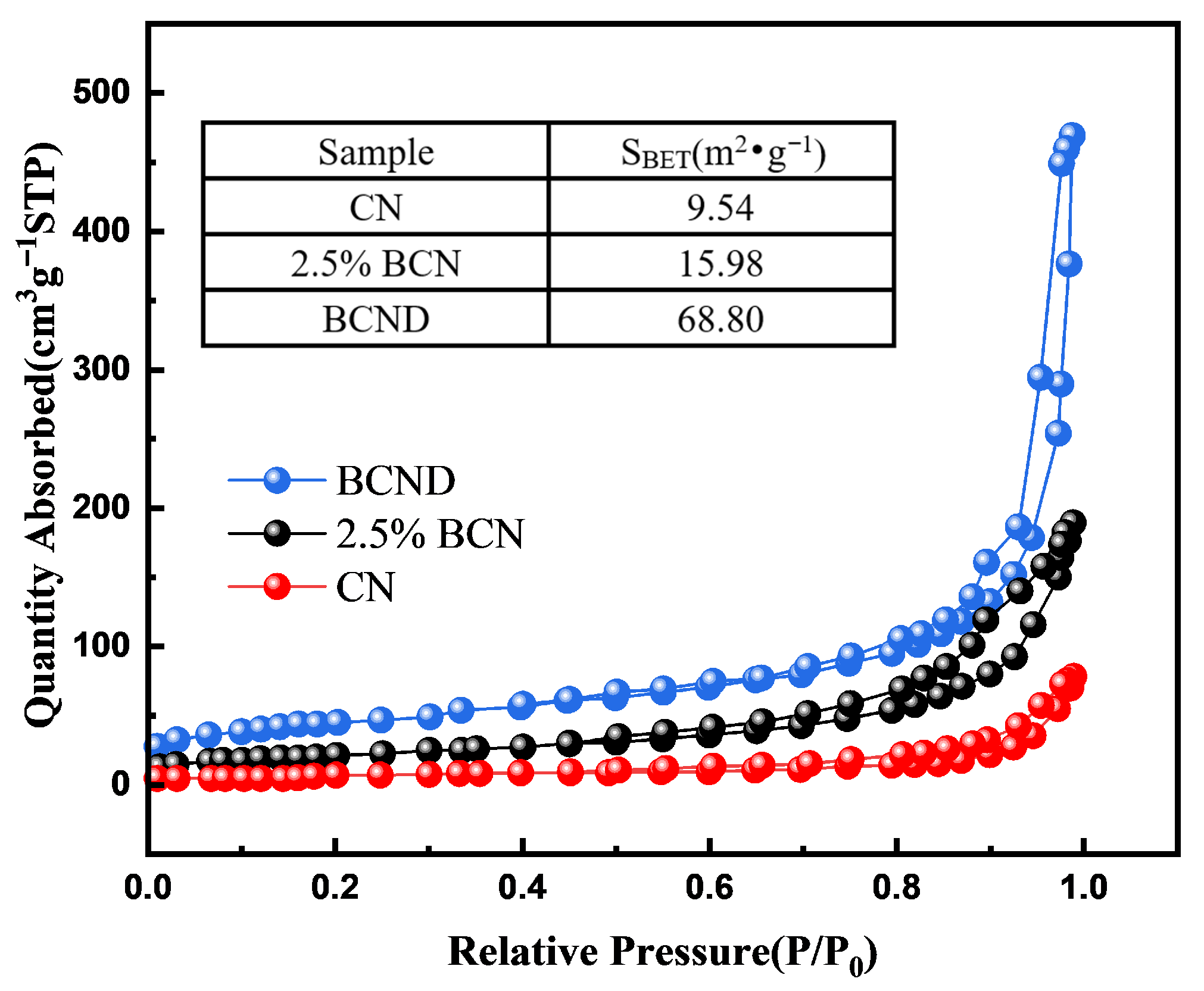
In order to confirm that the specific surface area of BCND after exfoliation with sulfuric acid had significantly increased, N2 adsorption–desorption isotherms of CN, 2.5% BCN and BCND at 77 K were tested. As shown in Figure 5, the adsorption–desorption isotherms of three samples could be all classified as type III [45] of which the hysteresis loop were not very obvious. As shown in the attached table in Figure 5, the specific surface areas of CN, 2.5% BCN and BCND were 9.54, 15.98 and 68.80 m2·g−1, respectively. The specific surface area data of the three samples in Figure 5 indicate that the B doping process resulted in a larger specific surface area for BCN compared to CN, while the acid exfoliation process further increased the specific surface area of BCND relative to CN. A higher specific surface area would provide more active sites for reactant adsorption and photocatalytic reactions, thereby facilitating mass transfer and improving the catalytic efficiency of photocatalytic materials.

2.2. Photoelectrochemical and Optical Properties of Photocatalysts

Photoelectrochemical characterization revealed the synergistic regulation mechanism of boron doping and acid exfoliation processes on the charge separation behavior of BCND.
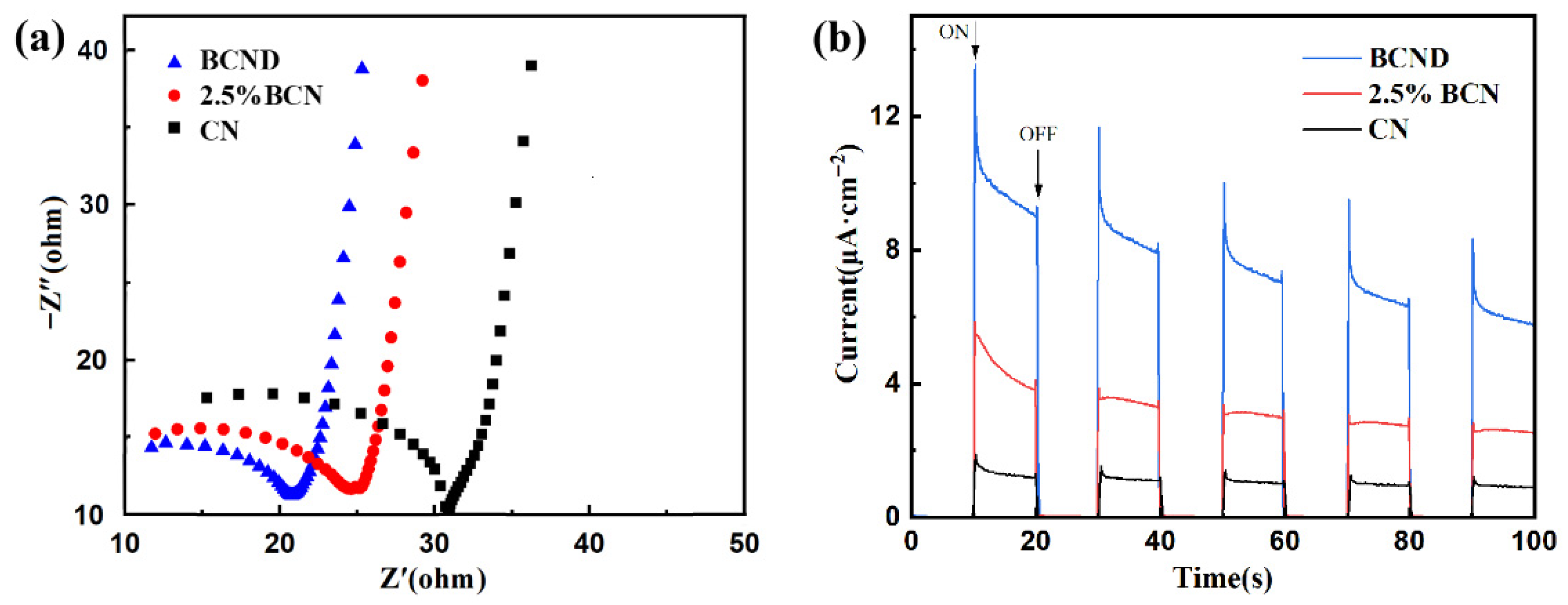
As shown in Figure 6a, the order of three samples’ EIS Nyquist arc radius was CN > 2.5% BCN > BCND, indicating BCND had the lowest charge transfer resistance [46]. According to the specific surface area and SEM morphology, BCND had the most porous structure among the three photocatalysts; there were more active sites exposed on the surface of BCND which reduced the solid–liquid interfacial charge transfer barrier [47].
The transient photocurrent tests (Figure 6b) showed that the photocurrent density of BCND under visible light was about 8 and 1.5 times higher than that of CN and 2.5% BCN. This confirmed that the electron delocalization effect formed by the embedding of boron atoms into the g-C3N4 skeleton through B-N bonds effectively suppressed the recombination of carriers. Moreover, after five on–off cycles, the photocurrent density still remained at a relatively high value without an obvious downward trend, indicating that the BCND material had very good photo-stability.
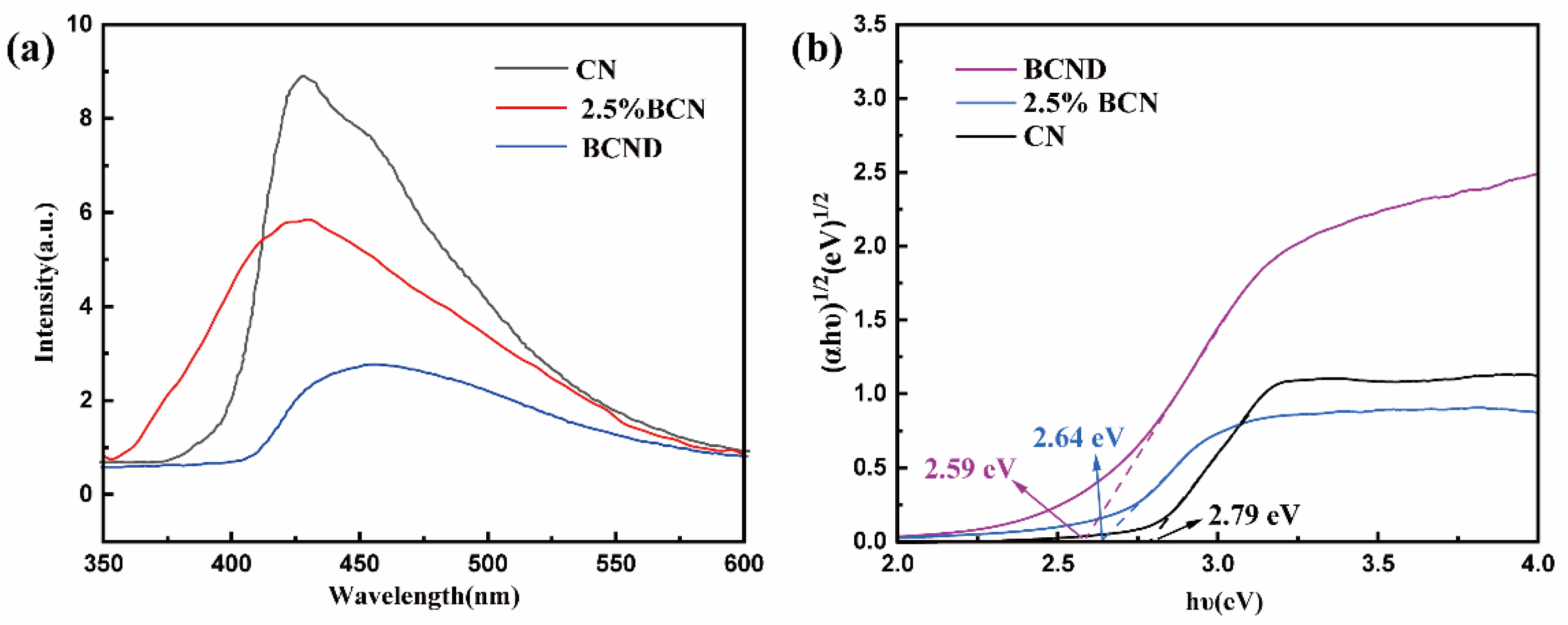
Figure 7a shows the PL spectra of three photocatalysts, CN, 2.5% BCN and BCND. The spectral intensity reflected the recombination rate of photogenerated electrons and holes, and the higher PL intensity, the more recombination of photogenerated electron–hole pairs of the photocatalyst [48]. As shown in Figure 7a, compared with CN, the PL intensities of BCN and BCND were significantly reduced, indicating that boron doping decreases the recombination rate of photogenerated electron–hole pairs in BCN and BCND. The PL intensity of BCND was significantly lower than the sample of 2.5% BCN, suggesting that more porous structure of the BCND shortened the migration path of photogenerated carriers to the sub-nanometer scale, thus reducing the probability of recombination of electrons and holes in BCND bulk phase [49]. This indicated that the regulation of the electronic structure caused by boron doping and the hierarchical pores formed by acid exfoliation jointly optimize the photogenerated charge dynamics behavior of BCND.
To further determine the light absorption properties of the catalysts, UV-Vis DRS tests were carried out on the prepared CN, 2.5% BCN and BCND catalysts, and the bandgap (Eg) values of three catalysts were calculated by the Kubelka–Munk equation [50], and the results are shown in Figure 7b. The bandgap value of CN was approximately 2.79 eV, while the lowest value, that of BCND, was about 2.59 eV, and that of 2.5% BCN fell between the two, about 2.64 eV.
Compared with CN, the reason behind the decrease in the bandgap values of BCN and BCND was the doping of boron which introduced new energy levels. In addition, boron atoms replaced the positions of carbon or nitrogen, or entered the interstitial sites, causing lattice distortion. Such structural changes enhanced the interlayer π-π conjugation effect and promoted electron delocalization, which narrowed the bandgap [51].
The formation of pores exposed a large number of edge atoms, which usually had unsaturated valence bonds (such as C=N and C=O). Their unhybridized p orbitals could form an extended conjugated system with the π orbitals of the main conjugated skeleton, further expanding the range of electron delocalization [52]. Compared with 2.5% BCN, the porous structure of BCND weakened quantum confinement and provided space for electron delocalization of triazine rings in the π-conjugated system which narrowed the bandgap width of BCND [53].
A smaller bandgap width would improve the light capture efficiency, expand the range of available solar energy, and thus enhance the ability of photocatalytic water splitting [54].

2.3. Study on the Photocatalytic Activity of BCND

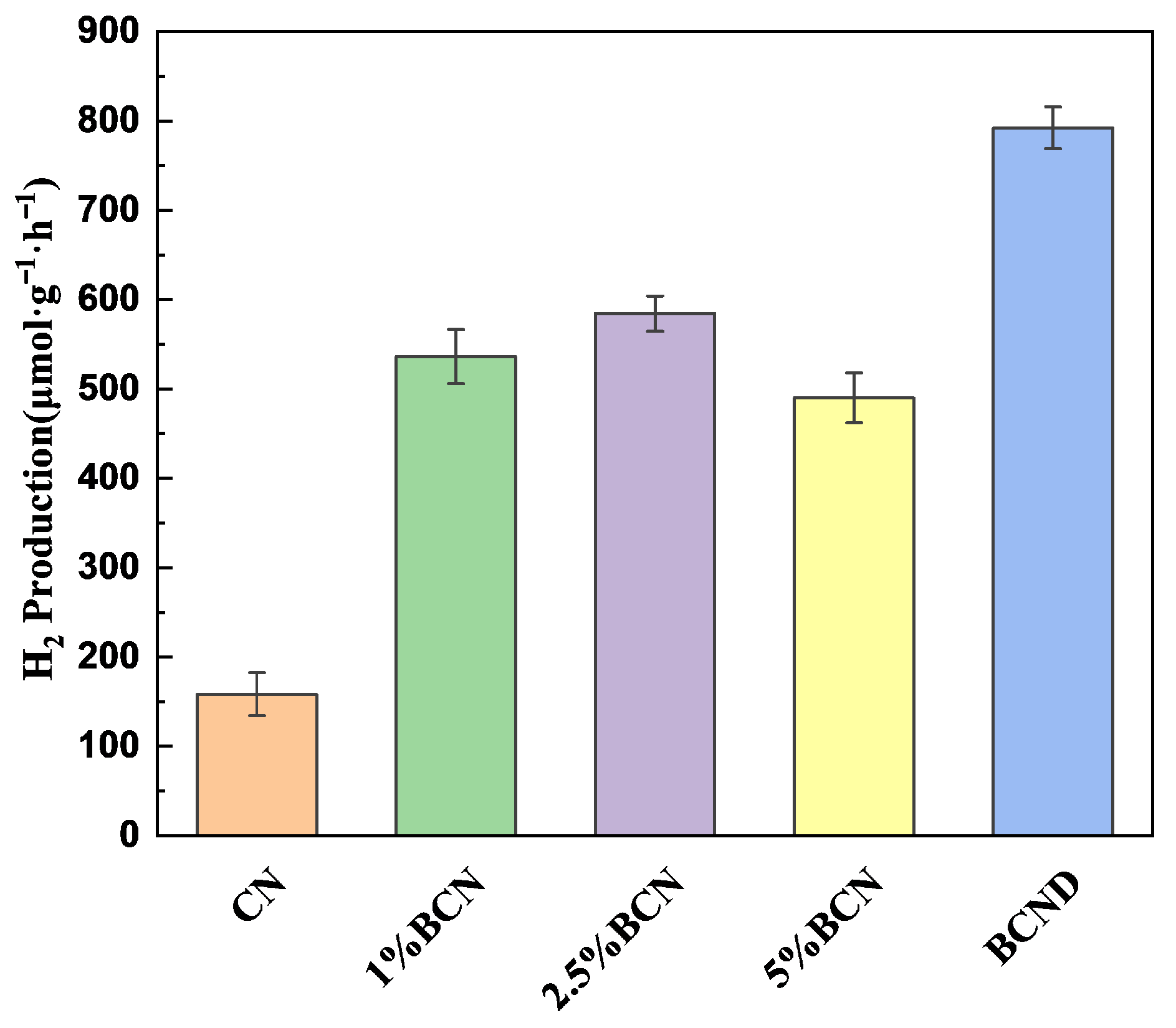
The visible-light-driven Hydrogen production performance of photocatalysts is shown in Figure 8. In Table 1, the average Hydrogen production rates of CN, 1%, 2.5%, 5% BCN and BCND were 158.41, 536.24, 584.30, 490.11 and 792.34 μmol·g−1·h−1, respectively. The Hydrogen production rate of 2.5% BCN was about 4 times that of pure phase carbon nitride (CN). The Hydrogen production performance of the boron-doped carbon nitride was significantly improved. The structurally optimized BCND further increases the Hydrogen production rate to 792.34 μmol·g−1·h−1, about 1.36 times higher than 2.5% BCN. The higher performance of BCND than BCN should be mainly attributed to the fluffy flocculent structure of BCND, and its specific surface area was significantly increased.
This high performance is achieved without any noble metals (such as Pt), showing low-cost potential for large-scale application.

2.4. Photocatalytic Hydrogen Production Free-Radical Trapping Experiment of BCND

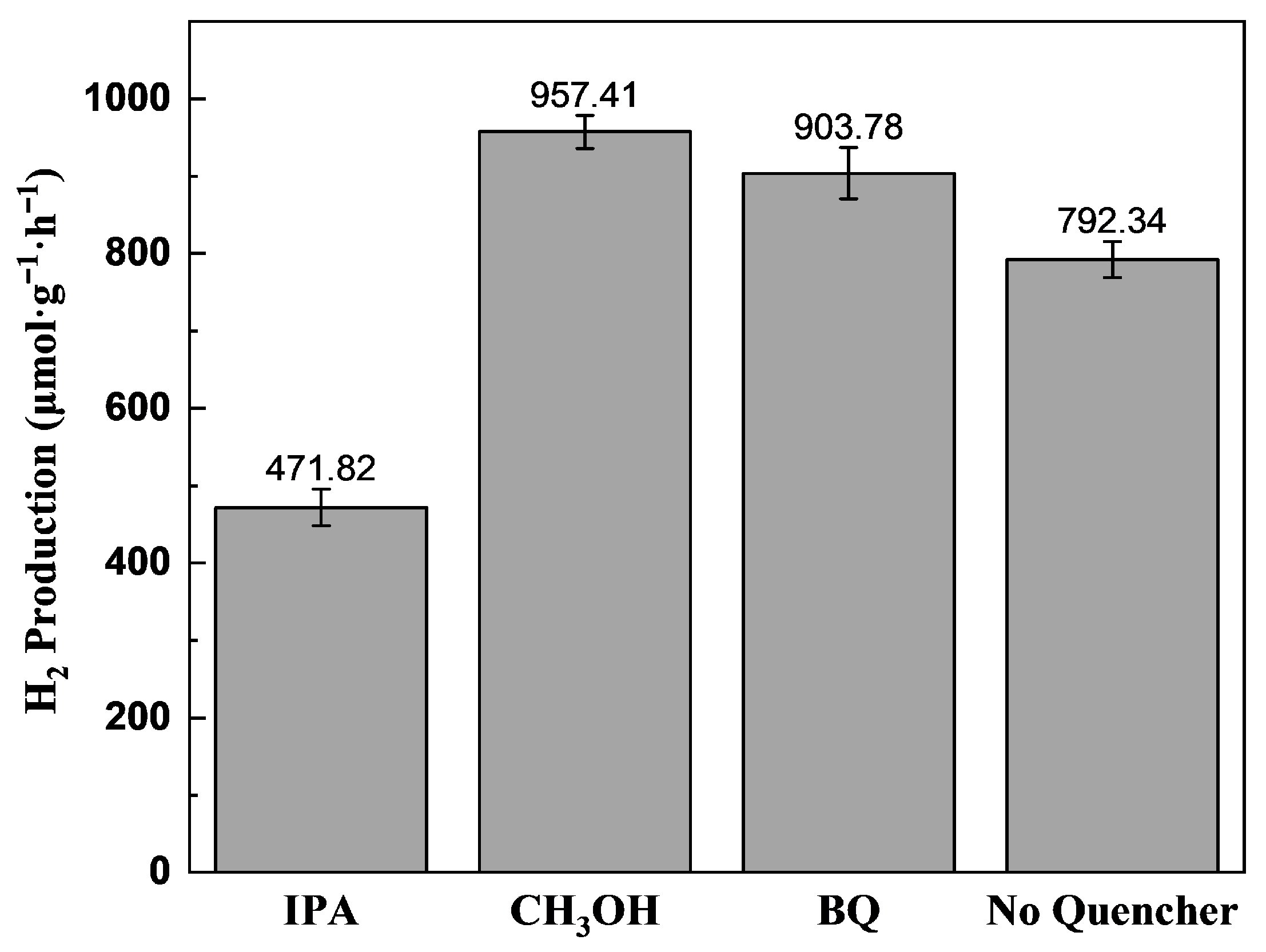
To clarify the contribution mechanism of active substances in the photocatalytic reaction, this study constructed a multi-dimensional free-radical trapping system. BQ, CH3OH and IPA were used as trapping agents for superoxide anions (·O2), holes (h+) and hydroxyl radicals (·OH) [55,56,57,58], respectively.
As shown in Figure 9, without trapping agents, the H2 production rate of BCND was 792.34 μmol·g−1·h−1; after adding the trapping agent BQ to the reaction system, the H2 production rate slightly increased to 903.78 μmol·g−1·h−1, indicating that ·O2 may play a negative role in the photocatalytic Hydrogen production system. ·O2 may preferentially consume photogenerated electrons by competing with H+ in the photocatalytic Hydrogen production system, and ·O2 may further generate H2O2, aggravating the recombination of electron–hole pairs. Due to the anaerobic environment and anaerobic water used in the experiment, the content of ·O2 in the reaction was very low. Therefore, after adding the ·O2 trapping agent BQ, the increase in Hydrogen production efficiency was not obvious.
As a hole sacrificial agent, CH3OH is also a hole trapping agent, and CH3OH can effectively inhibit the recombination of electron–hole pairs during the Hydrogen production process. After adding the hole trapping agent CH3OH to the reaction system, the Hydrogen production increased to 957.41 μmol·g−1·h−1, indicating that the recombination of electron–hole pairs played an inhibitory role in the BCND photocatalytic Hydrogen production system.
After adding IPA, a ·OH trapping agent, the generation of H2 was significantly inhibited, and the Hydrogen production decreased to 471.82 μmol·g−1·h−1, indicating that ·OH played a crucial role in the BCND photocatalytic Hydrogen production system. Due to the action of the photocatalyst, ·OH binds to holes instead. After adding IPA to the reaction system, the concentration of ·OH decreased, resulting in a decrease in the binding rate of holes and ·OH, thus increasing the recombination of electron–hole pairs and leading to a decrease in the H2 production rate.
Although ·OH is a strong oxidizing species, it consumes photogenerated holes and reduces electron–hole recombination, thereby indirectly promoting photocatalytic Hydrogen evolution.

2.5. Reaction Mechanism of Photocatalytic Hydrogen Production of BCND

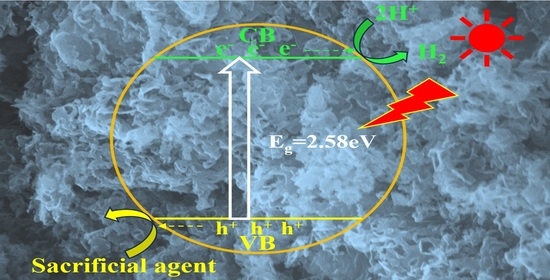
Based on the results of the free-radical trapping experiment, the photocatalytic Hydrogen production mechanism of BCND could be summarized as followings. When BCND absorbed photon energy, the electrons in the valence band (VB) were excited to the conduction band (CB), forming photogenerated electron–hole pairs, as shown in Equation (1) [59].
Because a large amount of water was present in the reactor, a small amount of oxygen was generated, even with the addition of a sacrificial agent, as shown in Equation (2) [59].
·O2 was generated from Equation (3) [60], and superoxide radicals (·O2) exhibited an inhibitory effect on H2 production due to competing with H+ for electrons, as shown in Equation (4) [61].
BCND + hν → BCND (e(CB) + h+(VB))
2H2O + 4h+(VB) → O2 + 4H+
O2 + e(CB) → ·O2
·O2 + H+ → HO2·
h+(VB) + H2O → ·OH + H+
2H+ + 2e(CB) → H2
In BQ trapping experiments, ·O2 was consumed by BQ, and the competition with H+ was weaker; therefore, the H2 production rate was higher than that without BQ trapping (Figure 9). The photogenerated holes could also oxidize water molecules to form hydroxyl radicals (·OH), as in Equation (5) [56].
S2− + H2O + h+(VB) → HS + OH
HS + h+(VB) → S (s) + H+
HS + 2·OH + H+ → S (s) + 2H2O
The oxidation of the sacrificial agent by holes proceeded in steps. Taking sodium sulfide (Na2S) as an example, S2− and HS could be oxidated by the hole (h+(VB)), shown in Equations (7) and (8). HS formed in Equation (7) could also be oxidized and consumed by ·OH, shown as Equation (9), which prompted the equilibrium of the first reaction step between holes and the sacrificial agent to shift toward the forward direction [62,63]. This indirectly promoted the first step, reduced electron–hole recombination, facilitated the migration of conduction band electrons to the surface, and enabled these electrons to participate efficiently in the Hydrogen evolution half-reaction, as shown in Equation (6) [62]. Meanwhile, the oxidizing effect of ·OH facilitated the regeneration of active sites on the BCND surface and maintained the long-term stability of the photocatalyst.

2.6. Cycling Stability

Cycling tests were carried out for five consecutive cycles (total 20 h). The Hydrogen evolution rate of BCND remained stable without obvious attenuation. Post-reaction XRD patterns confirmed that the crystal structure of BCND remained unchanged, indicating excellent stability and reusability.

3. Experiments

3.1. Materials

Melamine (C3H6N6), boric acid (H3BO3), glycerol (C3H8O3), benzoquinone (BQ), tetrachloromethane (CCl4), methanol (CH3OH), isopropyl alcohol (IPA), barium sulfate (BaSO4), sodium sulfide nonahydrate (Na2S·9H2O) and sodium sulfite (Na2SO3) were purchased from Sinopharm Chemical Reagent Co., Ltd., Shanghai, China, all of which were AR grade and had not been further purified. Ultrapure water (18 MΩ) was prepared using an Aquapro machine (AWL-10001-M, Aquapro International Company LLC, Hsinchu, Taiwan).

3.2. Preparation of Catalysts

3.2.1. Preparation of Carbon Nitride (CN)

CN was synthesized by the thermal polycondensation method [30]. First, 0.1588 mol of melamine was dried at 100 °C for 4 h in a drying oven, and then the melamine was sealed by aluminum foil in a crucible and heated from room temperature to 550 °C at a heating speed of 5 °C·min−1 in a muffle furnace; the furnace temperature was maintained at 550 °C for 3 h and then the final product was cooled to room temperature naturally along with the furnace. The final product CN showed a typical light-yellow appearance.

3.2.2. Preparation of Boron-Doped Carbon Nitride (BCN)

BCN was synthesized using a one-pot thermally induced copolymerization strategy. Boric acid (1.588 mmol, 3.97 mmol, and 7.94 mmol) was dissolved thoroughly in 50 mL ultrapure water. Then, 0.1588 mol of melamine was mixed thoroughly with the boric acid solution by an electromagnetic stirrer at 1000 rpm for 10 min and a suspension liquid was obtained. The suspension was heated at 80 °C along with electromagnetic agitation to evaporate the water, and a white milky solid–liquid mixture was obtained. The mixture was dried at 60 °C in an oven for 12 h to obtain the powder of BCN precursor. The powder was calcinated according to the procedure mentioned above in Section 3.2.1, and then BCNs were prepared. The obtained BCNs were abbreviated as 1% BCN, 2.5% BCN, and 5% BCN according to the molar ratios of boric acid to melamine, respectively.

3.2.3. Preparation of BCN Delaminated by Sulfuric Acid (BCND)

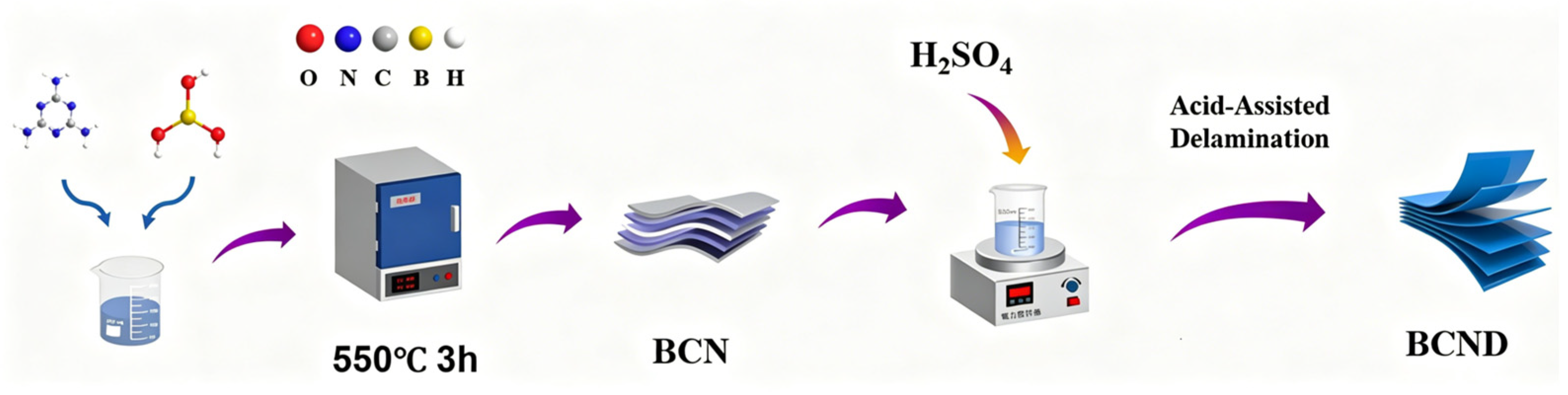
It was found that the photocatalytic performance of 2.5% BCN was the best among the three BCNs. Therefore, 2.5% BCN was selected as the precursor for synthesizing BCND. First, 2.5% BCN powder was added in concentrated sulfuric acid, and stirred at 100 rpm for 24 h for acid exfoliation. Then the product was cleaned with ultrapure water by a multi-stage centrifugal cleaning method (8000 rpm, 5 min) until the pH of the centrifugal supernatant liquid was measured to be 7 using a pH test strip. The precipitate was dried by a vacuum oven (60 °C, 10 kPa) for 12 h. Finally, yellow BCND powder was obtained. A simple scheme of BCND synthesis pathways [64] is presented in Scheme 1.
Among the three BCN samples, 2.5% BCN was selected as the precursor because it exhibited the highest Hydrogen evolution rate.

3.3. Characterization

The crystal structure of the samples was analyzed by a high-resolution X-ray diffraction system (SmartLab 9 kW, Rigaku Corporation, Tokyo, Japan) with a Cu-Kα radiation source (λ = 1.5406 Å). A high-sensitivity Fourier transform infrared (FT-IR) spectrometer (SolidSpec-3700, Shimadzu Corporation, Kyoto, Japan) was used to analyze the vibration modes of the chemical bonds of the samples. The morphology of the samples subjected to gold sputtering treatment was observed using a field emission scanning electron microscope (SEM, Hitachi Regulus 8100, Hitachi High-Tech Corporation, Tokyo, Japan). A high-resolution X-ray photoelectron spectroscopy (XPS) system (K-Alpha, Thermo Fisher Scientific, Waltham, MA, USA) was used to perform the analysis of elements on the surface of the samples. N2 gas adsorption isotherms of the samples were tested on an automatic specific surface area analyzer (Autosorb-iQ, Quantachrome Instruments, Boynton Beach, FL, USA) at 77 K. The surface energy characteristics of the materials were evaluated by a pendant drop contact angle measurement system (DSA100, Krüss Scientific Instruments, Hamburg, Germany).
The photoelectrochemical properties of the samples, including transient photocurrent response and electrochemical impedance spectroscopy (EIS) Nyquist plots, were determined using an electrochemical workstation equipped with a CHI 660E electrochemical analyzer (CH instrument, Inc., Shanghai, China). A 300 W Xe lamp (Perfectlight, Beijing, China) with a 420 nm cut-off filter was used as the light source. The photocatalyst coated on ITO glass, a Pt plate, a Ag/AgCl electrode, and a Na2SO4 solution (0.5 M) were used as the working electrode, counter electrode, reference electrode, and electrolyte, respectively.
The fluorescence emission intensity of the samples was tested using a fluorescence spectrophotometer (Photoluminescence, PL, Hitachi F-7000, Hitachi High-Tech Corporation, Tokyo, Japan) to analyze the separation of photogenerated electron–hole pairs in the photocatalyst.
The light absorption properties of solid photocatalysts were measured by a UV-Visible Diffuse Reflectance Spectroscopy (UV-Vis DRS, Shimadzu UV-2550, Shimadzu Corporation, Kyoto, Japan) spectrophotometer. The measurement range is 200–800 nm, with white BaSO4 as the reference sample, which was set as the baseline.

3.4. Photocatalytic Hydrogen Production Experiments

The experimental conditions for the Hydrogen production experiment were as follows: First, 25 mg of photocatalytic catalyst, 2.341 g of sodium sulfide nonahydrate, 3.781 g of anhydrous sodium sulfite and 100 mL of deoxygenated water were agitated by an electromagnetic agitator at 500 rpm in a photocatalytic reactor which was maintained at room temperature by a cooler. A 300 W xenon lamp equipped with a 420 nm cut-off filter was used for visible-light-driven water splitting. The Hydrogen production amount was monitored online by a gas chromatograph (GC-2014C, Shimadzu Corporation, Kyoto, Japan) equipped with a thermal conductivity detector (TCD). The photocatalytic Hydrogen production rate (μmol·g−1·h−1) was quantitatively calculated using the standard curve method (the linear range of H2 concentration is 0.05–5 vol%), and the intrinsic activity of the catalyst (without the participation of a co-catalyst) was systematically evaluated. The argon atmosphere (O2 < 0.1 ppm) was maintained throughout the experiment, and samples were taken for analysis every 30 min. The experimental data of Hydrogen production were the averages of triplicate determinations.

3.5. Free-Radical Trapping Experiments

The instruments and process of the free-radical trapping experiments were the same as above, except for the deoxygenated water, which was replaced by a solution of trapping agent with a concentration of 1.0 mol/L.

4. Conclusions

In this paper, photocatalysts, CN, boron-doped BCN and concentrated sulfuric acid exfoliated BCND, were synthesized. A series of characterizations were conducted to analyze the materials’ structure and properties. X-ray diffraction (XRD) and X-ray photoelectron spectroscopy (XPS) confirmed that boron was successfully doped into the CN skeleton via B-N bonds, expanding the interlayer spacing and extending the π-conjugated system without destroying the basic triazine/heptazine structure. Scanning electron microscopy (SEM) showed that BCND formed a porous hierarchical structure (pore size 25–50 nm) after acid exfoliation, while BET tests revealed its specific surface area (68.80 m2·g−1) was significantly higher than that of CN (9.54 m2·g−1) and 2.5% BCN (15.98 m2·g−1). Optical and photoelectrochemical analyses further verified performance improvements. UV–visible diffuse reflectance spectroscopy (UV-Vis DRS) indicated BCND had the narrowest bandgap (2.59 eV), which was lower than CN (2.79 eV) and 2.5% BCN (2.64 eV), and enhanced visible-light absorption. Photoluminescence (PL) spectra showed BCND had the lowest emission intensity, confirming reduced electron–hole recombination. Electrochemical impedance spectroscopy (EIS) and transient photocurrent tests demonstrated BCND had the smallest charge transfer resistance and highest photocurrent density (eight times that of CN), reflecting efficient carrier separation. Visible-light-driven photocatalytic water splitting experiments (λ > 420 nm) showed BCND achieved the highest Hydrogen production rate (792.34 μmol·g−1·h−1), ~4 times that of CN (158.41 μmol·g−1·h−1) and 1.36 times that of 2.5% BCN (584.30 μmol·g−1·h−1). Free-radical trapping experiments identified hydroxyl radicals (·OH) as key promoters of Hydrogen production, while superoxide anions (·O2) had an inhibitory effect.
The study concluded that BCND’s superior performance stemmed from the synergistic effect of boron doping (optimizing electronic structure, narrowing bandgap) and sulfuric acid exfoliation (increasing specific surface area, exposing active sites). A photocatalytic mechanism was also proposed, providing a feasible strategy for modifying g-C3N4-based photocatalysts for efficient water splitting.

Author Contributions

Conceptualization, S.W.; methodology, Q.C.; software, Q.C.; validation, P.S.; formal analysis, Q.C.; investigation, L.P.; resources, S.W., P.S. and J.Z.; data curation, L.P.; writing—original draft preparation, L.P.; writing—review and editing, J.Z.; visualization, Q.C.; supervision, S.W.; project administration, S.W.; funding acquisition, S.W., P.S. and J.Z. All authors have read and agreed to the published version of the manuscript.

Funding

This work was funded by the Director Fund of Anhui Province Advanced Building Materials International Joint Research Center (JZCL2411ZR), the National Natural Science Foundation of China (Grant No. 22408002), the Natural Science Foundation of Anhui Higher Education Institutions (No. 2023AH050168), the Director Foundation of Anhui Province Engineering Laboratory of Advanced Building Materials (No. JZCL2305ZR), the Yihai Scholar Foundation of Anhui Jianzhu University (No. 2023QDZ34), the Anhui Provincial Natural Science Foundation (2308085QB66), the PhD Start-up Fund of Anhui Jianzhu University (2020QDZ33, 2023QDZ10) and the Natural Science Research Key Project from the Education Department of Anhui Province (KJ2021A0626).

Data Availability Statement

The original contributions presented in this study are included in the article. Further inquiries regarding the raw data can be directed to the corresponding author upon reasonable request.

Acknowledgments

This work was supported by the Director Fund of Anhui Province Advanced Building Materials International Joint Research Center (JZCL2411ZR), the National Natural Science Foundation of China (Grant No. 22408002), the Natural Science Foundation of Anhui Higher Education Institutions (No. 2023AH050168), the Director Foundation of Anhui Province Engineering Laboratory of Advanced Building Materials (No. JZCL2305ZR), the Yihai Scholar Foundation of Anhui Jianzhu University (No. 2023QDZ34), the Anhui Provincial Natural Science Foundation (2308085QB66), the PhD Start-up Fund of Anhui Jianzhu University (2020QDZ33, 2023QDZ10) and the Natural Science Research Key Project from the Education Department of Anhui Province (KJ2021A0626).

Conflicts of Interest

The authors declare no conflict of interest.

References

  1. Abe, J.O.; Popoola, A.P.I.; Ajenifuja, E.; Popoola, O.M. Hydrogen energy, economy and storage: Review and recommendation. Int. J. Hydrogen Energy 2019, 44, 15072–15086. [Google Scholar] [CrossRef]
  2. Riera, J.A.; Lima, R.M.; Knio, O.M. A review of Hydrogen production and supply chain modeling and optimization. Int. J. Hydrogen Energy 2023, 48, 13731–13755. [Google Scholar] [CrossRef]
  3. Louli, R.; Giurgea, S.; Salhi, I.; Laghrouche, S.; Djerdir, A. A critical review of green Hydrogen production by electrolysis: From technology and modeling to performance and cost. Energies 2026, 19, 59. [Google Scholar] [CrossRef]
  4. Medina Collana, J.T.; Carrasco-Venegas, L.; Ancieta-Dextre, C.; Rodriguez-Taranco, O.; Gabriel-Hurtado, D.; Montaño-Pisfil, J.; Rodriguez-Aburto, C.; Chávez-Sánchez, W.; Santos-Mejía, C.; Morcillo-Valdivia, P.; et al. Analysis of the main Hydrogen production technologies. Sustainability 2025, 17, 8367. [Google Scholar] [CrossRef]
  5. Zhang, Y.; Zhang, Y.; Li, Z.; Yu, E.; Ye, H.; Li, Z.; Guo, X.; Zhou, D.; Wang, C.; Sha, Q.; et al. A review of Hydrogen production via seawater electrolysis: Current status and challenges. Catalysts 2024, 14, 691. [Google Scholar] [CrossRef]
  6. Diglio, M.; Contento, I.; Impemba, S.; Berretti, E.; Della Sala, P.; Oliva, G.; Naddeo, V.; Caporali, S.; Primo, A.; Talotta, C.; et al. Hydrogen production from formic acid decomposition promoted by gold nanoparticles supported on a porous polymer matrix. Energy Fuels 2025, 39, 14320–14329. [Google Scholar] [CrossRef] [PubMed]
  7. Pechenkin, A.; Badmaev, S.; Belyaev, V.; Sobyanin, V. Production of Hydrogen-rich gas by formic acid decomposition over CuO–CeO2/γ-Al2O3 catalyst. Energies 2019, 12, 3577. [Google Scholar] [CrossRef]
  8. Huang, X.; Lei, K.; Mi, Y.; Fang, W.; Li, X. Recent progress on Hydrogen production from ammonia decomposition: Technical roadmap and catalytic mechanism. Molecules 2023, 28, 5245. [Google Scholar] [CrossRef]
  9. Pei, Q.; Wang, Y.; Tan, K.C.; Guo, J.; He, T.; Chen, P. Hydrogen production via photocatalytic ammonia decomposition. Chem. Sci. 2025, 16, 9076–9091. [Google Scholar] [CrossRef]
  10. Fujishima, A.; Honda, K. Electrochemical photolysis of water at a semiconductor electrode. Nature 1972, 238, 37–38. [Google Scholar] [CrossRef]
  11. Rajput, Y.; Kumar, P.; Zhang, T.; Kumar, D.; Nemiwal, M. Recent advances in g-C3N4-based photocatalysts for Hydrogen evolution reactions. Int. J. Hydrogen Energy 2022, 47, 38533–38555. [Google Scholar] [CrossRef]
  12. Li, L.; Zhang, J.; Zhang, Q.; Wang, X.; Dai, W.L. Superior sponge-like carbon self-doping graphitic carbon nitride nanosheets derived from supramolecular pre-assembly of a melamine–cyanuric acid complex for photocatalytic H2 evolution. Nanotechnology 2021, 32, 11. [Google Scholar] [CrossRef]
  13. Miseki, Y.; Sayama, K. Photocatalytic water splitting for solar Hydrogen production using the carbonate effect and the z-scheme reaction. Adv. Energy Mater. 2019, 9, 1801294. [Google Scholar] [CrossRef]
  14. Xu, C.; He, H.; Xu, Z.; Qi, C.; Yang, S. Modification of graphitic carbon nitride by elemental boron cocatalyst with high-efficient charge transfer and photothermal conversion. Chem. Eng. J. 2021, 417, 129203. [Google Scholar] [CrossRef]
  15. Wang, X.; Maeda, K.; Thomas, A. A metal-free polymeric photocatalyst for Hydrogen production from water under visible light. Nat. Mater. 2009, 8, 76–80. [Google Scholar] [CrossRef]
  16. Zhu, J.; Xiao, P.; Li, H.; Carabineiro, S.A.C. Graphitic carbon nitride: Synthesis, properties, and applications in catalysis. ACS Appl. Mater. Interfaces 2014, 6, 16449–16465. [Google Scholar] [CrossRef]
  17. Zhang, X.; Xie, X.; Wang, H.; Zhang, J.; Pan, B.; Xie, Y. Enhanced photoresponsive ultrathin graphitic-phase C3N4 nanosheets for bioimaging. J. Am. Chem. Soc. 2013, 135, 18–21. [Google Scholar] [CrossRef]
  18. Wang, S.; Li, C.; Wang, T. Controllable synthesis of nanotube-type graphitic C3N4 and their visible-light photocatalytic and fluorescent properties. J. Mater. Chem. A 2014, 2, 2885–2890. [Google Scholar] [CrossRef]
  19. Huang, T.; Pan, S.; Shi, L.; Yu, A.; Wang, X.; Fu, Y. Hollow porous prismatic graphitic carbon nitride with nitrogen vacancies and oxygen doping: A high-performance visible light-driven catalyst for nitrogen fixation. Nanoscale 2020, 12, 1833–1841. [Google Scholar] [CrossRef]
  20. Liu, Y.; Tayyab, M.; Pei, W.; Zhou, L.; Lei, J.; Wang, L.; Liu, Y.; Zhang, J. The precision defect engineering with nonmetallic element refilling strategy in g-C3N4 for enhanced photocatalytic Hydrogen production. Small 2023, 19, e2208117. [Google Scholar] [CrossRef] [PubMed]
  21. Nagashima, Y. Development of organic photoreactions utilizing the characteristics of elements with low electronegativity. Bull. Chem. Soc. Jpn. 2024, 97, uoae080. [Google Scholar] [CrossRef]
  22. Nisar, M.; Khan, N.; Qadir, M.I.; Shah, Z. Recent advances in TiO2-based photocatalysts for efficient water splitting to Hydrogen. Nanomaterials 2025, 15, 984. [Google Scholar] [CrossRef] [PubMed]
  23. Impemba, S.; Provinciali, G.; Filippi, J.; Salvatici, C.; Berretti, E.; Caporali, S.; Banchelli, M.; Caporali, M. Engineering the heterojunction between TiO2 and In2O3 for improving the solar-driven Hydrogen production. Int. J. Hydrogen Energy 2024, 63, 896–904. [Google Scholar] [CrossRef]
  24. Faustino, E.; Cavalheri, P.S.; Miguel, E.d.S.C.; da Silva, T.F.; Manicoba, G.H.D.; Ezequiel, A.B.S.d.S.; Gomes, L.E.; Wender, H.; Caires, A.R.L.; Cavalcante, R.P.; et al. Mof-derived TiO2 photocatalysts for Hydrogen production coupled to selective glycerol oxidation at near-neutral ph. Nanomanufacturing 2026, 6, 7. [Google Scholar] [CrossRef]
  25. Khalifa, A.; Faramawy, A.M.; Attia, Y.A.; Swillam, M.A. Synthesis and photocatalytic improvement for methylene blue degradation of MgO/g-C3N4 and ZnO/g-C3N4 composites. Discov. Mater. 2025, 5, 258. [Google Scholar] [CrossRef]
  26. Lee, S.; Park, J.-W. Hematite/graphitic carbon nitride nanofilm for fenton and photocatalytic oxidation of methylene blue. Sustainability 2020, 12, 2866. [Google Scholar] [CrossRef]
  27. Mehmood, R.; Ahmad, Z.; Hussain, M.B.; Athar, M.; Akbar, G.; Ajmal, Z.; Iqbal, S.; Razaq, R.; Ali, M.A.; Qayum, A.; et al. 2D–2D heterostructure g-C3N4-based materials for photocatalytic H2 evolution: Progress and perspectives. Front. Chem. 2022, 10, 1063288. [Google Scholar] [CrossRef]
  28. Modwi, A.; Albadri, A.; Taha, K.K. High malachite green dye removal by ZrO2-g-C3N4 (ZOCN) meso-sorbent: Characteristics and adsorption mechanism. Diam. Relat. Mater. 2023, 132, 109698. [Google Scholar] [CrossRef]
  29. Baktash, A.; Fang, Y.; Xiao, M.; Hunter, M.; Yuan, Q.; Wang, L. Enhanced Hydrogen evolution performance of carbon nitride using transition metal and boron co-dopants. Small Struct. 2022, 4, 2200264. [Google Scholar] [CrossRef]
  30. Sampathkumar, P.; Monica, M.S.; Suresh, C. A methodical optimization of melamine and ammonium sulphate ratio for the formation of graphitic carbon nitride nanosheets. Mater. Lett. 2024, 356, 135560. [Google Scholar]
  31. Thaweesak, S.; Wang, S.; Lyu, M.; Xiao, M.; Peerakiatkhajohn, P.; Wang, L. Boron-doped graphitic carbon nitride nanosheets for enhanced visible light photocatalytic water splitting. Dalton Trans. 2017, 46, 10714–10720. [Google Scholar] [CrossRef]
  32. Holst, J.R.; Gillan, E.G. From triazines to heptazines: Deciphering the local structure of amorphous nitrogen-rich carbon nitride materials. J. Am. Chem. Soc. 2008, 130, 7373–7379. [Google Scholar] [CrossRef]
  33. Aneta, S.; Kryštof, F.; Daniel, C.; Maciej, G.K.; Petr, P. The role of guanidine hydrochloride in graphitic carbon nitride synthesis. Sci. Rep. 2021, 11, 21600. [Google Scholar] [CrossRef]
  34. Nasit, M.; Vij, A.; Kumar, R.; Brajpuriya, R.K.; Dalela, S.; Alvi, P.A.; Kumar, S. Investigation of the structural and optical properties of g-C3N4/ZrO2 nanocomposites. J. Electron. Mater. 2024, 53, 5904–5915. [Google Scholar] [CrossRef]
  35. Amira, S.; Darine, B.C.; Markus, S.; David, E.; Thomas, J.; Jürgen, M.H. Carbodiimide bridged network structure of [Re6O(NCN)6] clusters in the structure of Re8O(CN2)10Br2, Re = La, Ce, Pr, Nd. J. Clust. Sci. 2022, 34, 1001–1008. [Google Scholar]
  36. Dong, F.; Li, Y.; Wang, Z.; Ho, W.-K. Enhanced visible light photocatalytic activity and oxidation ability of porous graphene-like g-C3N4 nanosheets via thermal exfoliation. Appl. Surf. Sci. 2015, 358, 393–403. [Google Scholar] [CrossRef]
  37. Greczynski, G.; Hultman, L. Reliable determination of chemical state in x-ray photoelectron spectroscopy based on sample-work-function referencing to adventitious carbon: Resolving the myth of apparent constant binding energy of the C 1s peak. Appl. Surf. Sci. 2018, 451, 99–103. [Google Scholar] [CrossRef]
  38. Peng, C.; Lu, R.; Yu, A. Unravelling the doping effect of potassium ions on structural modulation and photocatalytic activity of graphitic carbon nitride. RSC Adv. 2023, 13, 9168–9179. [Google Scholar] [CrossRef] [PubMed]
  39. Wierzyńska, E.; Korytkowska, K.; Kazimierczuk, K.; Cki, T.; Zarbska, K.; Korona, K.P.; Pisarek, M.; Furtak, B.; Skompska, M. The role of boron dopant in the improvement of electron transfer in g-C3N4 photocatalyst. J. Phys. Chem. C 2024, 128, 894–907. [Google Scholar] [CrossRef]
  40. Wei, B.; Wang, W.; Sun, J.; Mei, Q.; An, Z.; Cao, H.; Han, D.; Xie, J.; Zhan, J.; He, M. Insight into the effect of boron doping on electronic structure, photocatalytic and adsorption performance of g-C3N4 by first-principles study. Appl. Surf. Sci. 2020, 511, 145549. [Google Scholar] [CrossRef]
  41. Zhao, J.; Liu, Y.; Wang, Y.; Li, H.; Wang, J.; Li, Z. Boron doped graphitic carbon nitride dots dispersed on graphitic carbon nitride/graphene hybrid nanosheets as high performance photocatalysts for Hydrogen evolution reaction. Appl. Surf. Sci. 2018, 470, 923–932. [Google Scholar] [CrossRef]
  42. Lei, L.; Wang, W.; Wang, C.; Zhang, M.; Zhong, Q.; Fan, H. In situ growth of boron doped g-C3N4 on carbon fiber cloth as a recycled flexible film-photocatalyst. Ceram. Int. 2020, 47, 1258–1267. [Google Scholar] [CrossRef]
  43. Harikrishnan, L.; Rajaram, M.; Natarajan, A.; Rajaram, A. Boron-doped exfoliated g-C3N4 nanosheet-based phosphors for white light-emission and photocatalytic degradation. ACS Appl. Nano Mater. 2023, 6, 16947–16959. [Google Scholar] [CrossRef]
  44. Qu, J.; Li, Q.; Luo, C.; Cheng, J.; Hou, X. Characterization of flake boron nitride prepared from the low temperature combustion synthesized precursor and its application for dye adsorption. Coatings 2018, 8, 214. [Google Scholar] [CrossRef]
  45. Muhammad, B.; Wakil, S.M.; Choon, N.K. Energy distribution function based universal adsorption isotherm model for all types of isotherm. Int. J. Low-Carbon Technol. 2018, 13, 292–297. [Google Scholar]
  46. Acharya, R.; Naik, B.; Parida, K. Cr(vi) remediation from aqueous environment through modified-TiO2-mediated photocatalytic reduction. Beilstein J. Nanotechnol. 2018, 9, 1448–1470. [Google Scholar] [CrossRef]
  47. Yuan, T.; Wu, Z.; Zhai, S.; Wang, R.; Wu, S.; Cheng, J.; Zheng, M.; Wang, X. Photosynthetic fixation of CO2 in alkenes by heterogeneous photoredox catalysis with visible light. Angew. Chem.-Int. Ed. 2023, 62, e202304861. [Google Scholar] [CrossRef]
  48. Rasoulnezhad, H.; Rahimipour, M.R.; Ahmadi, K.; Kavei, G. Preparation of Cr-doped TiO2 thin film by sonochemical/CVD method and its visible light photocatalytic activity for degradation of paraoxon pesticide. Adv. Appl. Ceram. 2017, 3, 45–52. [Google Scholar]
  49. Li, S.; Ma, W.; Zhou, Y.; Chen, X.; Xiao, Y.; Ma, M.; Zhu, W.; Wei, F. Fabrication of porous silicon nanowires by mace method in HF/H2O2/AgNO3 system at room temperature. Nanoscale Res. Lett. 2014, 9, 196. [Google Scholar] [CrossRef]
  50. Salmon, L.; Rocha, S.I.; Elisabete, F.; Mikhail, V.; Joaquim, C.; José, T.C. Use and misuse of the kubelka-munk function to obtain the band gap energy from diffuse reflectance measurements. Solid State Commun. 2022, 341, 114573. [Google Scholar] [CrossRef]
  51. Kumar, A.; Ahluwalia, P.K. Semiconductor to metal transition in bilayer transition metals dichalcogenides MX2 (M = Mo, W; X = S, Se, Te). Model. Simul. Mater. Sci. Eng. 2013, 21, 065015. [Google Scholar] [CrossRef]
  52. Teng, Z.; Yang, N.; Lv, H.; Wang, S.; Hu, M.; Wang, C.; Wang, D.; Wang, G. Edge-functionalized g-C3N4 nanosheets as a highly efficient metal-free photocatalyst for safe drinking water. Chem 2019, 5, 664–680. [Google Scholar] [CrossRef]
  53. Wang, C.; Du, T.; Liang, Z.; Zhu, J.; Ren, J.; Deng, Y. Synthesis of low-bandgap small molecules by extending the pi-conjugation of the termini in quinoidal compounds. J. Mater. Chem. C 2021, 9, 2054–2062. [Google Scholar] [CrossRef]
  54. Kishore, M.R.A.; Varunaa, R.; Bayani, A.; Larsson, K. Theoretical investigation on BeN2 monolayer for an efficient bifunctional water splitting catalyst. Sci. Rep. 2020, 10, 21411. [Google Scholar] [CrossRef]
  55. Aizat, A.; Aziz, F.; Sokri, M.N.M.; Sahimi, M.S.; Yahya, N.; Jaafar, J.; Salleh, W.N.W.; Yusof, N.; Ismail, A.F. Photocatalytic degradation of phenol by LaFeO3 nanocrystalline synthesized by gel combustion method via citric acid route. SN Appl. Sci. 2019, 1, 91. [Google Scholar] [CrossRef]
  56. Fang, X.; Wu, S.; Wu, Y.; Yang, W.; Li, Y.; He, J.; Hong, P.; Nie, M.; Xie, C.; Wu, Z.; et al. High-efficiency adsorption of norfloxacin using octahedral UiO-66-NH2 nanomaterials: Dynamics, thermodynamics, and mechanisms. Appl. Surf. Sci. 2020, 518, 146226. [Google Scholar] [CrossRef]
  57. Sun, Y.; Guo, S.Q.; Fan, L.; Cai, J.; Han, W.; Zhang, F. Molecular oxygen activation in photocatalysis: Generation, detection and application. Surf. Interfaces 2024, 46, 104033. [Google Scholar] [CrossRef]
  58. Aditi, S.; Upasana, B.; Devendra, J.; Singh, K.H. NaNbO3 nanorods: Photopiezocatalysts for elevated bacterial disinfection and wastewater treatment. ACS Omega 2022, 7, 7595–7605. [Google Scholar]
  59. Cui, X.; Ding, Y.; Zhang, F.; Cao, X.; Guo, Y.; Sun, L.; Zhang, B. Reserved charges in a long-lived niooh phase drive catalytic water oxidation. Nat. Chem. 2025, 18, 120–127. [Google Scholar] [CrossRef] [PubMed]
  60. Dai, Z.; Chen, L.; Zhang, W.; Liang, B.; Gao, Y.; Li, L. K doped defective g-C3N4 decorated with cyano group for boosting visible-light driven photocatalytic removal of uranium. Sep. Purif. Technol. 2024, 338, 126537. [Google Scholar] [CrossRef]
  61. Wen, N.; Huang, Y.; Yang, Y.; Wang, H.; Wang, D.; Chen, H.; Peng, Q.; Kong, X.Y.; Ye, L. Dynamic bromine vacancy-mediated photocatalytic three-step three-electron oxygen reduction to hydroxyl radicals. ACS Catal. 2024, 14, 11153–11163. [Google Scholar] [CrossRef]
  62. Khan, K.; Rehman, Z.U.; Yao, S.; Nawaz, M.; Orlandi, M.; Miotello, A.; Ullah, M.; Ullah, K.; Alanazi, A.A.; Zaki, M.E.A. Boosting visible-light-driven photocatalytic H2 production by optimizing surface Hydrogen desorption of NiS/CdS–P photocatalyst. Int. J. Hydrogen Energy 2024, 80, 427–434. [Google Scholar] [CrossRef]
  63. Paramasivan, G.; Katsumasa, H.; Hideyuki, K.; Tohru, S.; Kunihiro, F.; Satoshi, K. Photocatalytic Hydrogen production from aqueous Na2S + Na2SO3 solution with B-doped ZnO. ACS Sustain. Chem. Eng. 2013, 1, 982–988. [Google Scholar]
  64. Giusto, P.; Arazoe, H.; Cruz, D.; Lova, P.; Heil, T.; Aida, T.; Antonietti, M. Boron carbon nitride thin films: From disordered to ordered conjugated ternary materials. J. Am. Chem. Soc. 2020, 142, 20883–20891. [Google Scholar] [CrossRef] [PubMed]
Figure 1. XRD pattern of CN, BCN and BCND.
Catalysts 16 00396 g001
Figure 2. SEM of CN (a,b), 2.5% BCN (c,d) and BCND (e,f).
Catalysts 16 00396 g002
Figure 3. FT-IR spectrum of CN, BCN and BCND.
Catalysts 16 00396 g003
Figure 4. (a) Survey, (b) C 1s, (c) N 1s, (d) O 1s, (e) B 1s XPS spectrum of CN and BCND. In (be), dotted line: original XPS data; non-red solid lines: fitted sub-peaks; red solid line: synthetic fitting result.
Catalysts 16 00396 g004
Figure 5. N2 adsorption–desorption isotherms of CN, 2.5% BCN and BCND at 77 K.
Catalysts 16 00396 g005
Figure 6. (a) Electrochemical impedance spectroscopy; (b) transient photocurrent response of CN, 2.5% BCN and BCND.
Catalysts 16 00396 g006
Figure 7. (a) Steady-state PL spectra and (b) bandgap plots of CN, 2.5% BCN and BCND.
Catalysts 16 00396 g007
Figure 8. Photocatalytic Hydrogen production performance of CN, BCN, and BCND.
Catalysts 16 00396 g008
Figure 9. Effect of free-radical quenchers on the photocatalytic water splitting performance of BCND.
Catalysts 16 00396 g009
Scheme 1. Synthesis of BCN and BCND.
Catalysts 16 00396 sch001
Table 1. Photocatalytic Hydrogen evolution rates.
SampleH2 Evolution Rate (μmol·g−1·h−1)
CN158.41
1% BCN536.24
2.5% BCN584.30
5% BCN490.11
BCND792.34
Disclaimer/Publisher’s Note: The statements, opinions and data contained in all publications are solely those of the individual author(s) and contributor(s) and not of MDPI and/or the editor(s). MDPI and/or the editor(s) disclaim responsibility for any injury to people or property resulting from any ideas, methods, instructions or products referred to in the content.