Review

Heterogeneous Solid Acid Catalysts for the Hock Cleavage of Cumene Hydroperoxide: Mechanism, Catalyst Design, and Industrial Perspectives

1
Zhejiang Ruizhi Holdings Group Co., Ltd., Hangzhou 311200, China
2
Tianjin Jiuyuan Chemical Engineering Co., Ltd., Tianjin 300084, China
3
Key Laboratory for Green Chemical Technology of MOE, Tianjin University, Tianjin 300072, China
*
Authors to whom correspondence should be addressed.
Catalysts 2026, 16(4), 329; https://doi.org/10.3390/catal16040329
Submission received: 6 March 2026 / Revised: 27 March 2026 / Accepted: 30 March 2026 / Published: 2 April 2026
(This article belongs to the Special Issue Feature Papers in "Industrial Catalysis" Section, 3rd Edition)

Abstract

The cleavage of cumene hydroperoxide (CHP) via the Hock rearrangement is a cornerstone process in the chemical industry, responsible for over 90% of global phenol and acetone production. Despite its industrial significance, the conventional use of homogeneous sulfuric acid catalysis presents critical drawbacks, including severe equipment corrosion, generation of hazardous waste, and the need for complex neutralization steps. This review explores the transition toward heterogeneous solid acid catalysts as a sustainable alternative, emphasizing the relationship between catalyst structure, surface acidity, and reaction performance. Key catalyst families—such as ion-exchange resins, zeolites, and heteropolyacids—are systematically evaluated, with a focus on how Brønsted acid site density and porous architecture influence catalytic activity and selectivity. Particular attention is given to deactivation mechanisms, including coking, leaching of active species, and poisoning by inorganic cations, alongside mitigation strategies enabled by rational catalyst design and regeneration protocols. Additionally, we highlight recent progress in reactor engineering, particularly the integration of solid acid catalysts in reactive distillation and microchannel configurations. These insights offer a strategic perspective for developing more efficient and environmentally benign industrial processes for the Hock cleavage of cumene hydroperoxide.

1. Introduction

Phenol and acetone serve as fundamental precursors in the global chemical industry, holding central positions in the synthesis of pharmaceuticals, dyes, plastics, and synthetic rubbers. Phenol is essential for the production of bisphenol A, phenolic resins, and caprolactam, while acetone is widely utilized as an industrial solvent and a critical feedstock for methyl methacrylate (MMA) and epoxy resins [1,2,3,4,5]. As of 2024, the global production capacity for phenol reached approximately 17.07 million tons per annum.
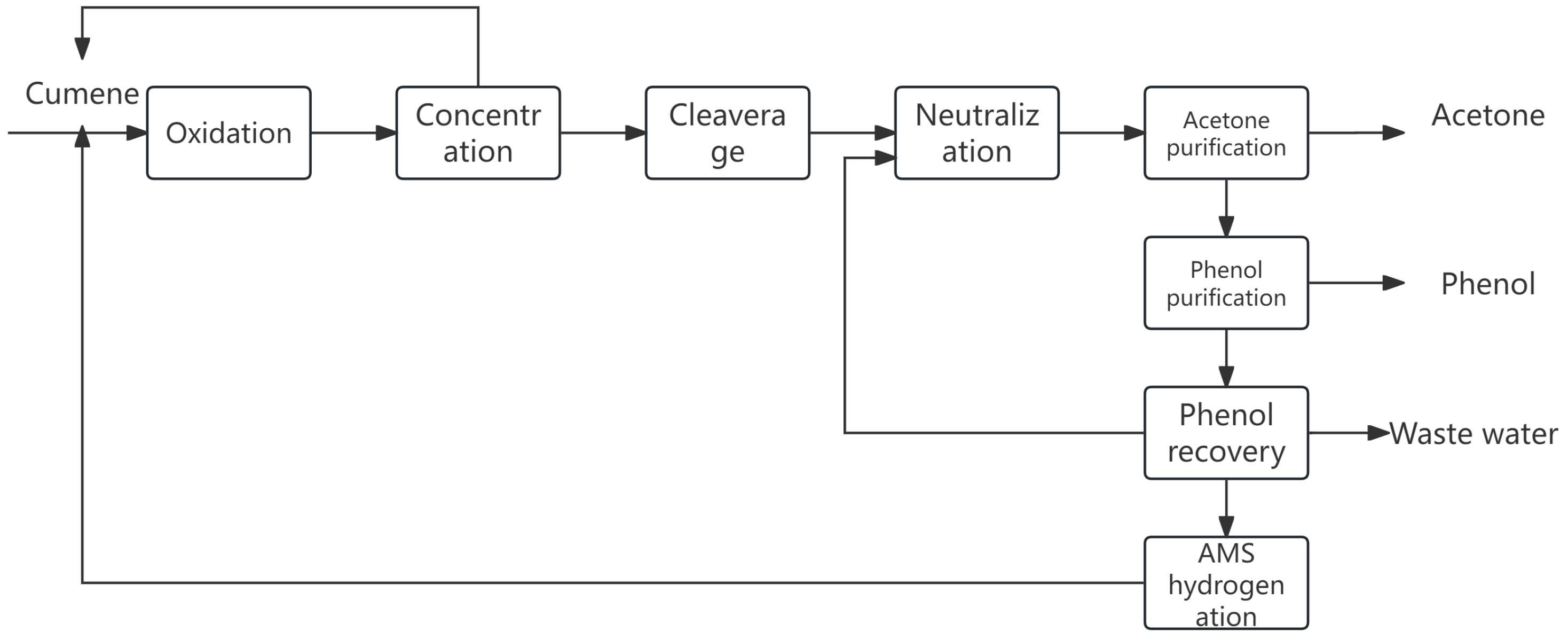
The cumene process remains the predominant industrial route, accounting for approximately 92% of global phenol production. This multi-stage process (shown in Figure 1) involves the alkylation of benzene with propylene to produce cumene, followed by the liquid-phase oxidation of cumene to cumene hydroperoxide (CHP). The final and decisive stage is the acid-catalyzed cleavage of CHP, which yields phenol and acetone in a 1:1 molar ratio [2,3,4,5,6,7]. This cleavage step, known as the Hock rearrangement, is the primary determinant of overall process efficiency and product purity [8].
Currently, industrial CHP cleavage relies almost exclusively on homogeneous sulfuric acid ( H 2 SO 4 ) catalysis [8]. Despite its high activity, this homogeneous system entails substantial drawbacks, including severe equipment corrosion, the generation of significant hazardous waste streams, and the requirement for complex neutralization steps. In processes utilizing sodium phenate for neutralization, the precipitation of sodium sulfate frequently leads to column fouling and operational instability. Although long-chain alkylamines have been introduced as alternative neutralizing agents to mitigate fouling, they increase operational costs and introduce foreign species into the process chemistry. Consequently, the transition toward robust heterogeneous solid acid catalysts is imperative to develop more sustainable and cost-effective industrial phenol production technologies.

2. CHP Cleavage and Its Catalysts

2.1. Reaction Mechanism and Pathways

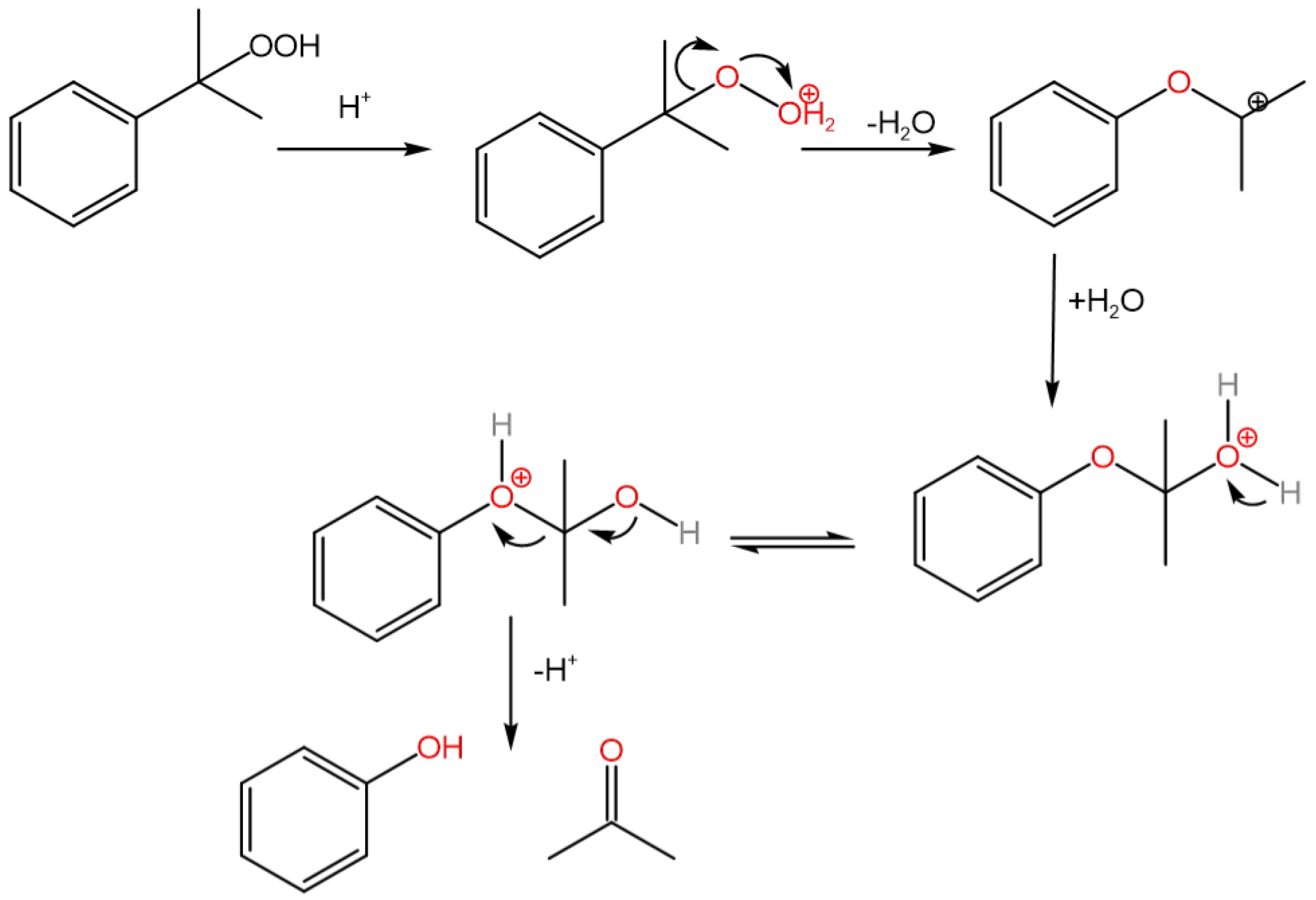
The cleavage of cumene hydroperoxide (CHP) is a classic acid-catalyzed reaction, specifically a Brønsted acid-catalyzed reaction, first discovered by Hock et al. in 1944 and known in organic chemistry as the Hock rearrangement [8,9]. The generally accepted reaction mechanism is illustrated in Figure 2 and proceeds as follows [2,5]: protonation of the distal oxygen of CHP is followed by migration of the phenyl group from the benzylic carbon atom to the peroxide oxygen atom, accompanied by the simultaneous elimination of a water molecule, thereby forming a carbocation intermediate. This carbocation is subsequently attacked by a water molecule, and a proton transfer to the oxygen atom bonded to the phenyl group occurs, ultimately leading to cleavage and yielding phenol and acetone.
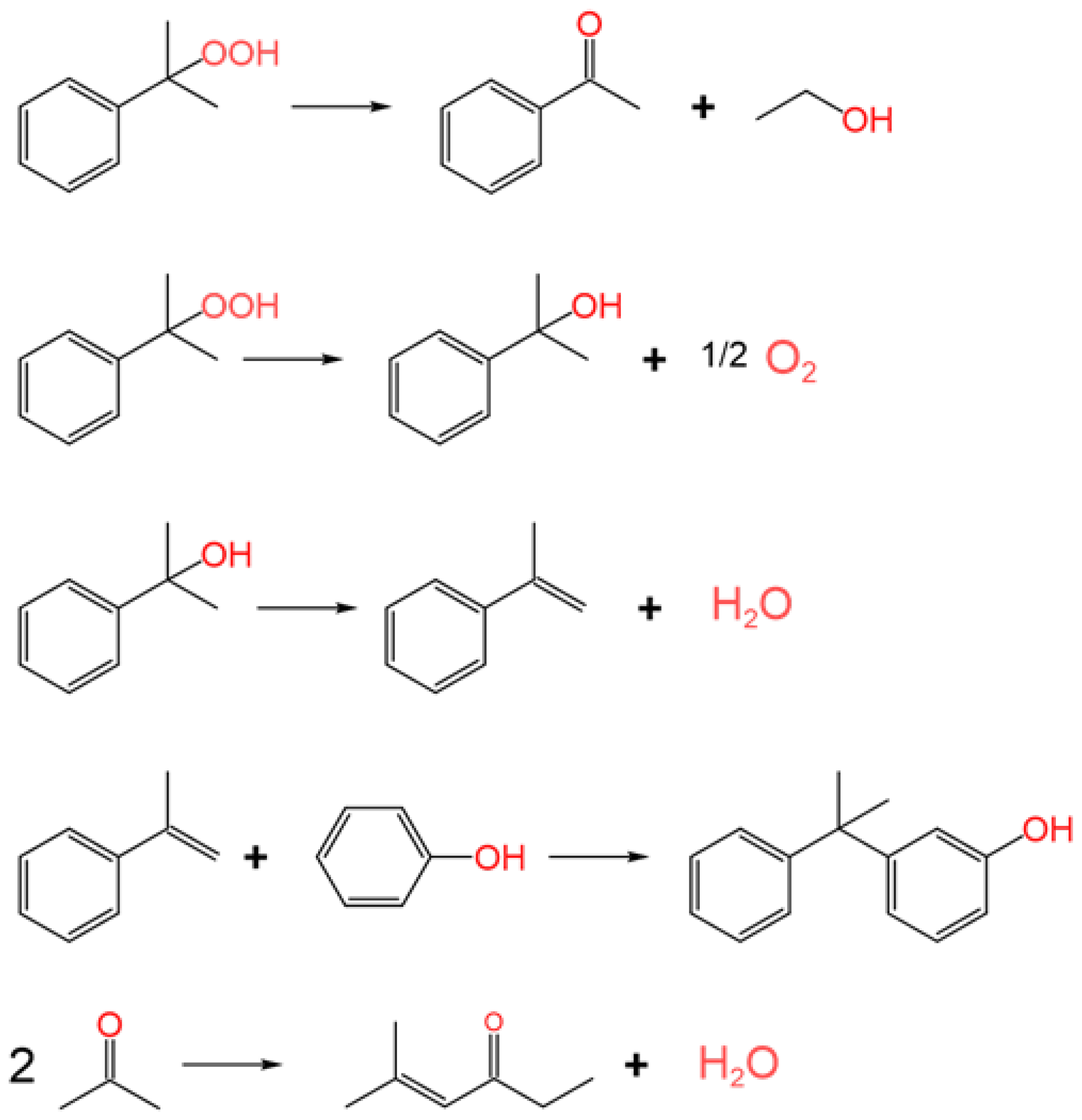
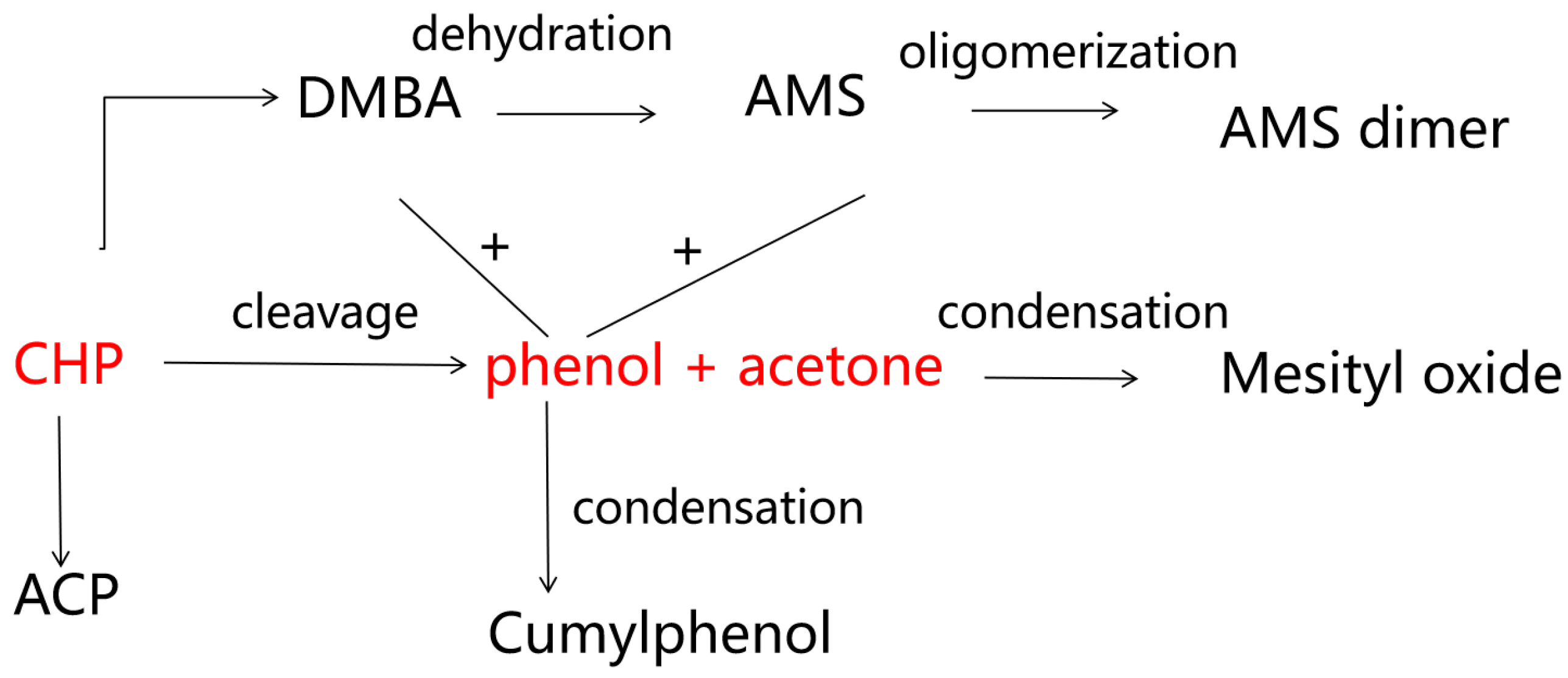
Side reactions also exist in this process, such as the decomposition of CHP to acetophenone, among others. Since these side reactions generally follow a free-radical mechanism, they proceed at considerably higher rates, and the resulting chain reactions cause the accumulation of by-products to increase exponentially. Therefore, such side reactions should be suppressed to the greatest extent possible. In addition, impurities such as dimethylbenzyl alcohol (DMBA) introduced from the upstream oxidation stage may give rise to further side reactions, generating by-products including cumylphenol, dicumyl peroxide (DCP), and mesityl oxide [2,3,10], as illustrated in Figure 3. Of particular concern is the fact that α -methylstyrene (AMS), produced from the dehydration of DMBA, is highly susceptible to oligomerization under the reaction conditions, leading to tar formation and a consequent decrease in yield [11,12]. Therefore, its impact should be minimized as far as practicable.
In summary, the overall reaction network is presented in Figure 4.

2.2. Kinetic Aspects

As an organic peroxide, CHP is highly thermally sensitive and can undergo autocatalytic chain reactions leading to thermal decomposition and explosion at temperatures exceeding 135 °C under atmospheric pressure [10]. Consequently, the selection of reaction temperature and CHP concentration is of critical importance in the development of the CHP cleavage process. In light of this, the present review also provides a comprehensive survey of the existing kinetic studies pertaining to this reaction.
Levin et al. [13] investigated the comparative kinetic behavior of CHP catalytic cleavage under acidic and alkaline conditions. Their findings revealed that sulfuric acid substantially lowers the onset temperature of CHP cleavage, with higher acid concentrations corresponding to progressively lower onset temperatures. At sulfuric acid concentrations of ≥5000 ppmw, a pronounced exothermic peak was observed at approximately 5 °C. The thermal decomposition reaction was determined to be first-order with respect to CHP and first-order with respect to cumene (for the formation of DMBA). In contrast, the acid-catalyzed reaction exhibited second-order kinetics with respect to CHP, with a combined linear and exponential dependence on acid concentration. Weber et al. [14] reviewed the safety considerations in process design for CHP cleavage and proposed that, under industrial reactor conditions, the kinetics are first-order with respect to CHP concentration. Selvin et al. [15] conducted a comparative evaluation of four catalysts—namely, DTBP, supported metal chlorides, and acid-activated K-10, among others—and derived kinetic expressions that were likewise first-order with respect to CHP concentration. Yadav et al. [16] employed supported heteropolyacid catalysts and reported consistent findings, corroborating the first-order dependence on CHP concentration.

2.3. Catalysts for CHP Cleavage

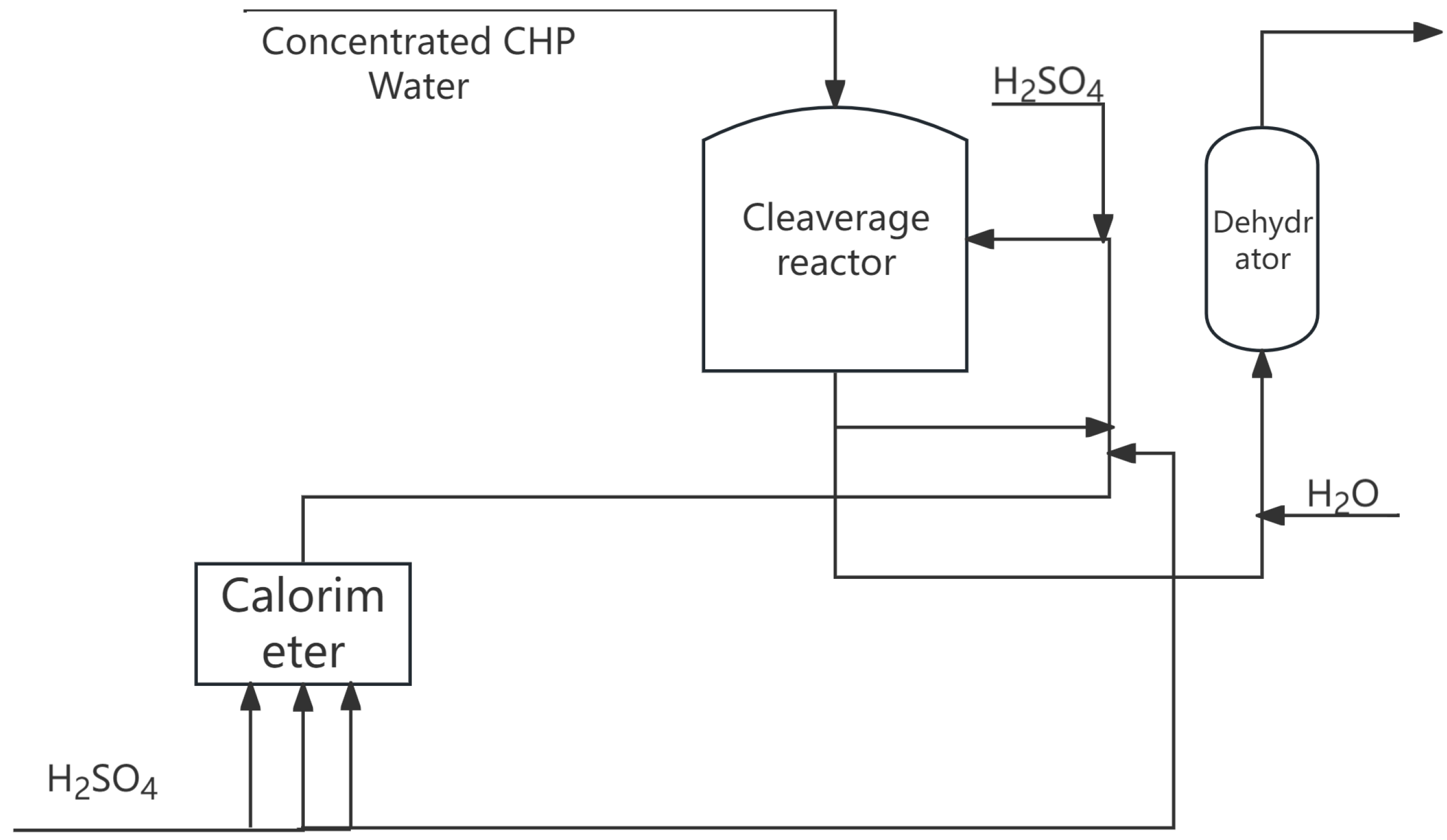
Currently, the catalyst employed industrially is sulfuric acid. Taking the UOP process as an example [5], the concentration of sulfuric acid is approximately 500 ppm. Considering the trace amount of α , α -dimethylbenzyl alcohol (DMBA) introduced from the oxidation section, a two-stage series reaction configuration is adopted to maximize the yield of phenol and acetone while minimizing tar production [17], as illustrated in Figure 5. In this configuration, the effluent from the first reactor contains a small residual amount of CHP (<1%). This is intentionally maintained to ensure the complete conversion of DMBA (originating from the oxidation section) into dicumyl peroxide (DCP). DMBA readily dehydrates under reaction conditions to form α , α -methylstyrene (AMS), which is prone to oligomerization, leading to tar formation. By converting DMBA to DCP, tar formation is minimized. The second reactor operates at a relatively higher temperature with an extremely short residence time to ensure the rapid cleavage of the remaining traces of CHP and the formed DCP. However, these considerations appear to be primarily kinetically driven and do not fundamentally address the reaction mechanism or the overall process design.
The use of sulfuric acid as a catalyst introduces several challenges [8]. Beyond the well-recognized issue of equipment corrosion, other problems arise depending on the specific licensor’s process design. For instance, in the KBR process, sodium phenolate from other sections of the plant is required to neutralize the sulfuric acid present in the reactor effluent before it is sent to the purification section. While this neutralization step with sodium phenolate allows for some recovery of phenol, it also produces sodium sulfate. As the temperature increases at the bottom of the purification column, the solubility of sodium sulfate decreases, leading to its precipitation and consequent fouling of the column trays, which negatively impacts operational stability. In contrast, the UOP [5] process utilizes long-chain alkylamines for sulfuric acid neutralization. Although this approach mitigates the issue of tray fouling, it introduces additional costs associated with the amines and incorporates a new chemical species into the process system. In summary, while the use of sulfuric acid as a catalyst is a mature technology, it continues to pose significant engineering challenges in industrial applications. Therefore, there is an urgent need to develop heterogeneous catalysts and corresponding processes for the cleavage of CHP. Given that the reaction is catalyzed by protic acids, heterogeneous catalysts reported in the literature for CHP cleavage are predominantly solid acids. These include sulfonic acid cation exchange resins, zeolites, acid-activated clays (acidic clays), heteropoly acid, and super solid acids.
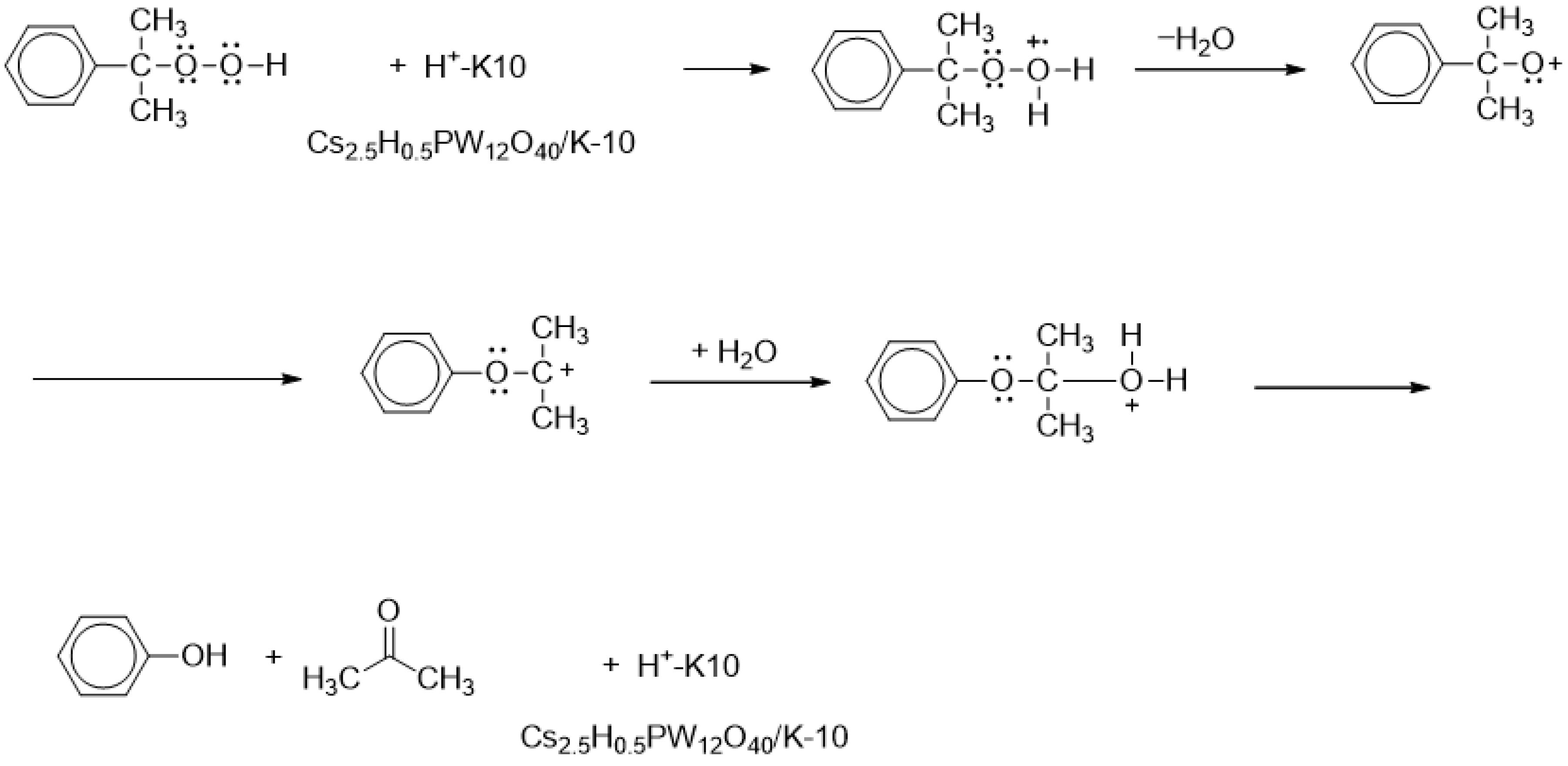
One point worth noting is the mechanistic similarity between heterogeneous and homogeneous catalysts. Since the Hock cleavage is a typical acid-catalyzed process, the reaction mechanism is largely consistent between homogeneous and heterogeneous systems, as has been reported in numerous studies [2,16]. For example, Figure 6 illustrates the reaction mechanism over the heteropolyacid supported on K-10 clay catalyst [16]. In the case of solid acids, the process additionally involves the adsorption and activation of substrates, which constitutes the rate-controlling step for this fast reaction. Beyond acidity modulation, research on solid catalysts has also focused on improving their diffusion properties.

3. Ion Exchange Resins

Ion exchange resins are polymers functionalized with cationic or anionic exchange groups. Among these, cation exchange resins capable of donating hydrogen protons exhibit Brønsted acidity [18,19,20]. Their operational temperature limit, typically around 100 °C, aligns suitably with the temperature requirements for CHP cleavage reactions [21]. The reported activities of various resins for this reaction are summarized in Table 1.
The earliest reports of resin-catalyzed CHP cleavage date back to the 1950s. Leszynski and colleagues first demonstrated the activity of phenolic acidic resins. However, these resins suffered from poor mechanical strength, undergoing continuous swelling in organic solvent media that ultimately led to complete fragmentation. Consequently, subsequent research efforts shifted towards polystyrene-based resins, which offered superior mechanical properties. In 1962, Rohm and Haas [24] disclosed a patent utilizing polystyrene-based resins. Their preferred formulation featured a macroporous structure with a degree of crosslinking between 10% and 25%, achieving 100% CHP conversion and a 93% yield at 50 °C. Subsequently, companies including Texaco, DuPont, and Shiyou Chemical published patents employing resin catalysts, each claiming distinct resin types. For instance, DuPont [25] and Shiyou Chemical [23] specified the use of perfluorinated resins, likely to enhance resin stability in the presence of peroxides. The Italian company Eurotecnica [26] and Texaco utilized Amberlyst series resins, such as Amberlyst-15, Amberlyst-18, and XN-1010. Macroporous resins have garnered significantly more attention compared to their gel-type counterparts.
Eurotecnica [26] proposed a two-step process: initially, CHP is pretreated with an acidic resin below 20 °C to remove inorganic cations. Subsequently, the cleavage reaction is conducted in the presence of the same resin at 35–90 °C, achieving complete CHP conversion. Preferred resins include ion exchangers with sulfonic acid functionalities, such as Amberlyst-15, Amberlyst-18, or Nafion, used at concentrations of 2–25% by weight relative to the hourly CHP flow rate. This pretreatment step effectively protects the resin’s acid sites from deactivation caused by cation contamination, thereby enabling sustained high conversion in continuous operation without frequent regeneration. The process offers stable catalytic activity under mild conditions.
A DuPont patent [25] highlights that a critical characteristic of the resin catalyst is its particle size distribution: at least 20% of the particles must be smaller than 300 μ m, preferably less than 100 μ m. Suitable catalysts include pure highly fluorinated polymer particles or their microcomposites with metal oxides like silica. Experimental data demonstrate that small-particle catalysts significantly enhance reaction rates. For example, a perfluorinated sulfonic acid polymer catalyst prepared by spray drying exhibited a reaction rate exceeding 10,000 mM· g cat 1 · h 1 at 50 °C, substantially higher than traditional large-particle resin catalysts (≈110 mM· g cat 1 · h 1 ) and sulfuric acid catalysts (780 mM· g cat 1 · h 1 ), indicating excellent catalytic activity and selectivity.
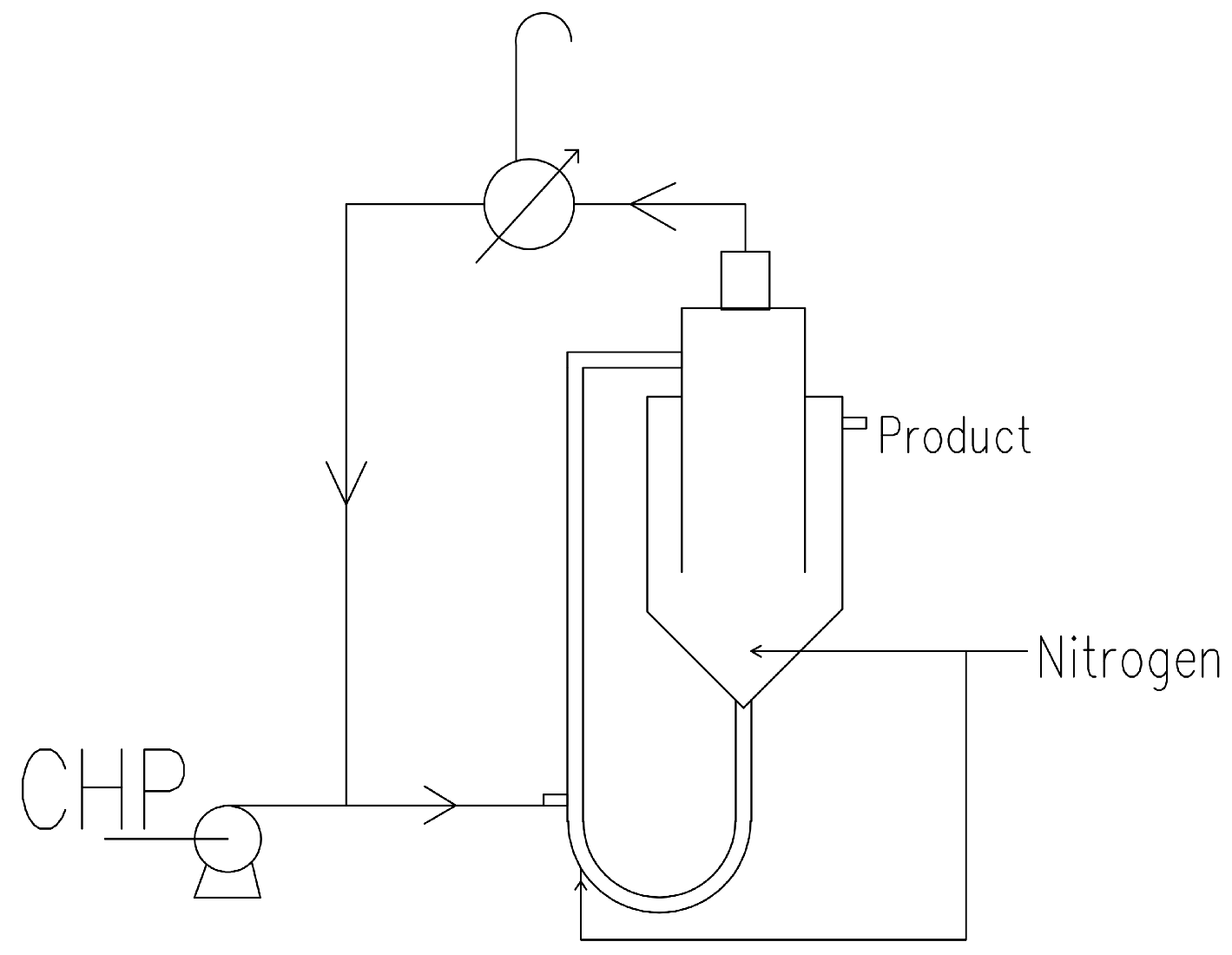
Han et al. [29,30] optimized the reactor configuration, proposing a gas–liquid–solid three-phase circulating fluidized bed reactor (see in Figure 7). They selected Purolite CT-175, a macroporous cation exchange resin, as the catalyst. A small nitrogen flow was introduced to promote liquid–solid circulation and enhance mass transfer. The reaction kinetics within the fluidized bed were determined, revealing that the reaction is internal diffusion-controlled with an internal diffusion effectiveness factor reported. Process optimization for this novel reactor system indicated optimal conditions of 70–80 °C and a CHP-to-acetone volume ratio of approximately 1:3 in the feed, achieving product selectivity comparable to the sulfuric acid-catalyzed process. At a CHP feed space velocity of 30 h 1 , the residual CHP mass fraction in the product was <0.1%. Furthermore, they discovered that ppm levels of Na + in the CHP feed, originating from the cumene oxidation feed pretreatment (caustic wash), could deactivate the resin via ion exchange. The Shaanxi Chemical Engineering Design and Research Institute investigated the activity of macroporous cation exchange resins and similarly observed deactivation caused by Na + . They proposed incorporating a water wash unit after the concentration section to reduce the Na + content. They also compared the product distribution between sulfuric acid and resin catalysis. Resin catalysis resulted in a mesityl oxide selectivity that was only 1/18 of that observed with sulfuric acid catalysis, and the selectivity for four major by-products decreased by 40% compared to the sulfuric acid process, highlighting the promising potential of resin catalysts. Kinetic studies on three types of resins confirmed first-order dependence on CHP. The presence of cumene in the reaction liquid was found to reduce the reaction rate, providing valuable insights for designing the concentration section.
Shi et al. [32] compared the activity of three strong-acid sulfonic acid resins for CHP cleavage and investigated the influence of reaction conditions. They discovered that water in the CHP feed caused temporary catalyst deactivation, hypothesizing that water induces resin swelling, thereby occupying pore channels and hindering reactant access to active sites.
Chen et al. [33] prepared a gel-type resin with a particle size of 120 μ m and developed a three-stage series catalytic process. This configuration aimed to distribute the reaction heat across three reactors, facilitating better temperature control. Their results showed a gradual decline in the activity of the resin in the first stage, while the activity in the third-stage reactor remained essentially unchanged. Post-reaction resin morphology was unchanged, suggesting deactivation was unrelated to diminished mechanical strength. However, ion exchange capacity measurements indicated a decrease for the deactivated catalyst. Regeneration experiments ruled out the influence of metal ions. The authors speculated that deactivation might be caused by the cleavage of sulfonic acid groups induced by high concentrations of CHP.
A significant drawback reported for this process is catalyst fragmentation and plugging due to insufficient mechanical strength. This can result from vigorous stirring or, potentially, the inherent instability of the organic resin polymer in the organic hydroperoxide medium (e.g., via swelling). Kairui Environmental Technology [22] disclosed a preparation method for fluorinated cation exchange resins. The polymerization incorporates fluoroalkyl (meth)acrylate monomers along with phenol. The resulting resin was reported to exhibit enhanced oxidation resistance and a longer operational lifespan.
Resin catalysts demonstrate acidity comparable to that of homogeneous acid catalysts, with macroporous resins being preferred to mitigate diffusion limitations. Nevertheless, their insufficient mechanical strength compromises stability, and they are susceptible to deactivation by Na + entrained in the CHP feed.

4. Zeolites

The application of zeolites, which are among the most common Brønsted acid catalysts in industry, has also been explored for CHP cleavage. Mobil [34] and Enichem [35] were the first to file patents on the use of zeolites for this reaction, primarily involving zeolites such as ZSM-5 and Beta. Subsequently, research institutions including Novosibirsk State University and the National Chemical Laboratory in India have also reported on the use of microporous zeolites for CHP cleavage, with the investigated zeolites mainly comprising MCM-22, Y, and ZSM-5. Their catalytic activities are summarized in Table 2.
Vladimir I. Sobolev et al. [37] investigated the activity and mechanism of CHP cleavage over high-silica (Si/Al = 30) USY zeolite. Their results indicated that the high catalytic activity of HUSY is attributable to its strong Brønsted acidity, suitable pore structure, and low hydrophilicity, which collectively favor the adsorption of CHP molecules and suppress competitive adsorption by water. H/D exchange experiments confirmed the strong protonation capability of USY, with the reaction mechanism being analogous to that of traditional protonic acid catalysts. It was postulated that a “synergistic mechanism” inherently implies multi-point, cooperative interactions between the reactant, transition state, and zeolite framework within the confined pore environment. This renders the proton transfer process kinetically more favorable, thereby exhibiting catalytic efficiency (a kinetic manifestation) surpassing what might be expected from its intrinsic acid strength (a thermodynamic measure).
Rajiv Kumar et al. [38] were the first to report the use of large-pore, high-silica zeolites, particularly Beta zeolites with framework substitution by B, Fe, or Ga atoms, for CHP cleavage. Under room temperature and fixed-bed reaction conditions, they achieved phenol selectivities of approximately 92 ± 3% with nearly complete conversion. This performance was attributed to the synergistic effect between Brønsted acid sites and the three-dimensional intersecting pore channel system, which effectively suppressed by-product formation. To further enhance catalytic activity, they synthesized nano-sized ZSM-5 zeolites with a particle size of 18 nm using a two-step crystallization strategy [39]. This nanocatalyst achieved complete CHP conversion under mild conditions, yielding only phenol and acetone. The catalyst exhibited good reusability, ascribed to the larger external surface area and increased number of accessible acid sites provided by the nanoscale crystallites.
Similar to the work of Kumar et al., Enichem [35] disclosed a method for preparing heteroatom-substituted zeolites for CHP cleavage. The catalysts were shaped via spray-drying using a silica-based binder, achieving near-complete CHP conversion and phenol selectivity as high as 96% under mild conditions (40–60 °C), with a significant reduction in by-products such as acetophenone.
Mobil [34] proposed the use of medium-pore zeolites with ten-membered rings. The key performance parameters identified were the pore size (Constraint Index of 1–12) and the high silica-to-alumina ratio (at least 12:1). These characteristics were deemed to impart superior shape-selective catalysis and resistance to coking, thereby maintaining high activity and selectivity in continuous operation. The acidity of the catalyst could be finely tuned through alkali metal exchange, steam treatment, or adjusting the silica–alumina ratio, with an optimal alpha value range of 10–500. They also disclosed methods for CHP cleavage using large-pore Beta zeolites, with a preferred silica–alumina ratio greater than 30. Even at relatively high liquid hourly space velocities (LHSV), the Beta zeolite significantly outperformed conventional HY zeolite, demonstrating higher conversion and greater resistance to deactivation.
Millini et al. [7] provided a comprehensive review of zeolite applications in CHP cleavage. They noted that the relatively low acid strength of zeolites might still result in insufficient activity for CHP cleavage, and their pore architectures are susceptible to blocking, which can readily lead to catalyst deactivation. This deactivation phenomenon was also reported by Kumar et al. [39], who observed a decrease in phenol selectivity from nearly 100% to 90% within 10 h on stream. Zhou et al. compared the activity and stability of Beta, HY, and HZSM-5 zeolites, identifying Beta as having the optimal activity. However, they also observed catalyst deactivation, which they attributed to pore-mouth blockage caused by carbonaceous deposits (coke). The deactivated catalyst could be regenerated by calcination in air. GC-MS analysis revealed that the primary coke species were oligomeric products derived from AMS and phenol, such as cumylphenol.
Beyond microporous zeolites, Changzhou University disclosed a patent employing sulfonated mesoporous silica for CHP cleavage [36]. They argued that existing microporous zeolite catalysts (e.g., H-Beta, H-USY) suffer from dual limitations: firstly, their microporous structure hinders the efficient dissipation of heat from the exothermic reaction, and given the thermal sensitivity of both reactants and products, this can lead to reduced selectivity; secondly, their inherently hydrophilic surfaces impede the effective diffusion of weakly polar reactants and the timely desorption of strongly polar products. Furthermore, this hydrophilicity promotes competitive adsorption of water generated during the reaction, suppressing the formation of the desired phenol product and initiating undesired consecutive reactions. To overcome these issues, they utilized mesoporous silica with a three-dimensional pore structure as a support. The surface was modified via benzene alkylation to enhance hydrophobicity, followed by benzene sulfonation to yield a highly effective CHP cleavage catalyst. The advantages claimed for this type of catalyst include enhanced stability of the sulfonic acid groups due to π - π conjugation between the surface phenyl rings and the phenyl ring of benzenesulfonic acid; unobstructed three-dimensional pore channels facilitating reactant diffusion; and increased hydrophobicity after surface modification, promoting the diffusion of polar products. At 60 °C, they achieved a CHP conversion of 98.9% and a phenol selectivity of 94.8%.
In summary, the characteristics of zeolite catalysts for this reaction can be outlined as follows: pore confinement enhances reaction kinetics, whereas the acidity of zeolites is generally weaker than that of sulfonic acid resins. Given the relatively large molecular diameter of CHP, careful selection and tailoring of the porosity are required. Although deactivation occurs due to coke deposition, the catalysts can be regenerated via calcination.

5. Clays

Clays, characterized by their well-ordered layered structure as mixed oxides, are abundantly available and cost-effective, rendering them ideal candidates as catalysts or catalyst supports [40,41,42,43]. The most common clay types include montmorillonite and talc. Taking montmorillonite as an illustrative example, its fundamental structural unit consists of two tetrahedral silica sheets sandwiching an octahedral alumina or magnesia sheet. Isomorphous substitution, such as the replacement of Al 3 + by Mg 2 + within the alumina sheet, generates a net negative charge on the layers, which is balanced by interlayer cations. Consequently, acid treatment of the clay, which facilitates the exchange of these interlayer cations with H + , generates Brønsted acid sites [42,43]. The activities of clay-based catalysts reported in the literature are summarized in Table 3.
Texaco explicitly demonstrated that unmodified (or inorganically modified) acidic montmorillonite itself can serve as an effective catalyst for CHP cleavage [47]. Using a commercial montmorillonite (e.g., Engelhard Clay-24) as a benchmark catalyst in batch reactions at 57 °C, they achieved approximately 24% CHP conversion and a phenol yield of about 23 mol% within 1 h. The patent emphasizes the low cost of such natural or acid-activated montmorillonite clays and their ability to be regenerated for renewed activity. For instance, spent Clay-24 catalyst, after regeneration by extraction with concentrated nitric acid, exhibited significantly enhanced activity, achieving 50% CHP conversion in 1 h. This demonstrated the inherent stability and regenerability required for industrial application of bulk montmorillonite catalysts. Furthermore, they [46] disclosed a method for decomposing CHP into phenol and acetone using acidic montmorillonite clay as the catalyst. Compared to traditional strong acid catalysis, this method achieved high conversion (phenol yield ≥98 mol%) under mild conditions (20–150 °C, atmospheric to 1000 psig), with minimal by-products, eliminating the need for acid-base neutralization, and being environmentally benign. The clay catalyst is low-cost, reusable, and supports high liquid hourly space velocities (LHSV up to >60), demonstrating significant potential for industrial application.
CNPC disclosed a patent utilizing a montmorillonite catalyst [45]. The catalyst was prepared by treating montmorillonite with ammonium nitrate or ammonium chloride, followed by ion exchange and calcination steps. The reaction conditions were mild (35–80 °C, 0.1–5 atm), yielding few by-products, exhibiting no corrosivity, and allowing for catalyst recycling. Examples showed that CHP conversion could reach 99.4% within 60 min at 40 °C, with high selectivity towards phenol and acetone, and impurity contents below 0.2%.
Hung et al. [50] investigated the use of hydrochloric acid-modified bentonite as a solid acid catalyst. Acid activation enhanced the surface acidity and specific surface area of the bentonite. The study systematically examined the effects of acid concentration, catalyst dosage, CHP concentration, temperature, and catalyst reusability on the reaction. The results indicated that bentonite activated with 0.1 M HCl achieved complete CHP conversion with 100% product selectivity at 40 °C, and the catalyst’s activity remained essentially unchanged upon reuse. This work suggests that acid-modified bentonite is an efficient, environmentally friendly, and reusable solid acid catalyst with potential for industrial application.
John F. Knifton et al. [48] initially screened clay catalysts for CHP cleavage activity and identified montmorillonite Grade F24 as exhibiting optimal catalytic performance, achieving phenol yields up to 99 mol%. In a continuous plug-flow reactor, the catalyst operated stably for over 1000 h. Deactivated catalyst could be regenerated by nitric acid treatment or high-temperature methanol washing.
Zhang et al. [49,51] prepared an acidic montmorillonite/cordierite monolithic catalyst. Montmorillonite activated with sulfuric acid showed a significantly increased specific surface area and was firmly coated onto the surface of a cordierite honeycomb support using a silica sol binder. The coating was robust, achieving an acidic montmorillonite loading of up to 40%, which substantially enhanced the catalyst’s specific surface area. Under optimized reaction conditions (acidic montmorillonite loading of 32.5%, reaction temperature of 80 °C, CHP:acetone mass ratio of 1:3, and weight hourly space velocity of 90 h 1 ), 100% CHP conversion and a phenol selectivity as high as 99.8% were attained.
Clay catalysts offer acidity comparable to that of homogeneous acid catalysts, which can be further modulated during preparation. As clays are derived from natural sources, reproducibility is a critical consideration in their synthesis. The use of integral catalysts can enhance both activity and stability.

6. Other Catalyasts

6.1. Heteropoly Acids

Polyoxometalate anions, formed by the condensation of two or more different oxoanions, are termed heteropoly anions [52,53,54]. Common heteropoly acid structures include the Keggin (most prevalent), Dawson, Anderson, and Preyssler types. The central atom (heteroatom) can be P, As, Si, or Ge, while the polyatom (addenda atom) is typically Mo or W. Heteropoly acids are readily soluble in water, undergoing complete dissociation, and can also be employed in their solid form as bulk solid acids [52,55,56,57]. The activities of heterogeneous heteropoly acid catalysts reported in the literature are summarized in Table 4.
Allied Chemical [60] first proposed the use of bulk heteropoly acids as catalysts. However, the results indicated that heteropoly acids are highly soluble in organic solvents, with solubilities reaching up to 50%, leading to substantial catalyst leaching. Du et al. [61] investigated a homogeneous reaction process utilizing heteropoly acid solutions for CHP cleavage and optimized the choice of solvent. Water exhibited relatively poor activity, attributed to the reaction occurring inefficiently at the aqueous–organic interface. Acetone and ethanol were identified as the most preferable solvents, enabling complete CHP conversion and phenol yields exceeding 99% across a temperature range of 20–90 °C. These homogeneous catalysis studies laid the groundwork for the heterogenization of heteropoly acid catalysts.
To overcome the leaching issue, SINOPEC [58] disclosed a method employing heteropoly acid salts as solid heterogeneous catalysts. These salts were prepared using precipitants such as ammonia solution or cesium carbonate. At 60 °C, the catalysts achieved 100% CHP conversion and >99% phenol yield, demonstrating good stability.
Supporting heteropoly acids onto suitable carriers represents another strategy to enhance their resistance to leaching. Texaco [47] disclosed the use of heteropoly acid catalysts supported on clay. Specifically, 12-tungstophosphoric acid supported on montmorillonite achieved approximately 96% CHP conversion and a 95% phenol yield. Compared to the montmorillonite support alone, the incorporation of the heteropoly acid resulted in at least a sixfold increase in reaction rate. Furthermore, other heteropoly acids such as 12-molybdophosphoric acid and 12-tungstosilicic acid exhibited similar significant promotional effects.
Zhang et al. [59] supported tungstophosphoric acid onto Beta zeolite and optimized the preparation conditions, with an optimal loading of 25%. The addition of a Ti promoter created a synergistic effect with the primary tungstophosphoric acid catalyst, modifying the type or strength of the catalyst’s acid sites, which substantially enhanced phenol selectivity. At a reaction temperature of 60 °C, a CHP conversion of 99.5% and a phenol selectivity of 92.6% were achieved.
Navinchandra S. Asthana et al. [16] supported a cesium heteropoly acid salt, CsHPWO, onto K-10 clay. This approach significantly increased the specific surface area, thermal stability, and insolubility in the reaction medium, while preserving the Keggin structure of the heteropoly anion. Leveraging the high surface area and mesoporous characteristics of the clay, they achieved a high dispersion of the active component. The catalyst exhibited high conversion, 100% selectivity, and stable reusability. Selvin et al. [15] conducted a comparative study on the performance of different catalysts, including predominantly Brønsted acidic DTP/K-10, predominantly Lewis acidic ZnCl 2 /K-10, and S-ZrO2. Their work conclusively demonstrated that CHP cleavage is primarily catalyzed by Brønsted acid sites. They proposed a detailed stepwise reaction mechanism based on activation by surface Brønsted protons, as illustrated in the corresponding figure. Intrinsic kinetic experiments revealed that the catalytic reaction followed first-order kinetics with respect to CHP.
Heteropolyacids exhibit acidity comparable to that of homogeneous acid catalysts. However, their inherent solubility in the reaction medium renders them susceptible to leaching, making stability a critical concern. Mitigation of this issue typically relies on the modification of counter cations.

6.2. Solid Superacids

Solid superacids are defined as solid acids with acidity strengths exceeding that of 100% sulfuric acid [62,63,64]. They offer advantages such as ease of separation, non-corrosiveness to equipment, and recyclability. A typical class of solid superacids is sulfate-promoted metal oxides. Research institutions actively investigating solid superacids for this application include Mobil, Texaco, and SINOPEC. The activities of solid superacid catalysts reported in the literature are summarized in Table 5.
Mobil [67] disclosed a patent utilizing solid superacid catalysts prepared by calcining a Group IVB metal oxide with a Group VIB metal oxyanion at temperatures of at least 400 °C, forming a stable structure with strong acid sites. Compared to heteropoly acids, these materials not only maintain structural integrity at higher temperatures (e.g., 700–850 °C) but also sustain high activity and selectivity across a broad range of reaction conditions, while minimizing by-product formation. At 57 °C, CHP conversion exceeding 99% was achieved within 2 min. Huntsmann [66] employed acidified metal oxides as catalysts, primarily using fluorophosphoric acid ( FPO 3 H 2 ), difluorophosphoric acid ( F 2 PO 2 H), or hydrogen fluoride (HF) supported on an inert carrier, preferably titanium dioxide ( TiO 2 ). The support required a high specific surface area (>10 m 2 /g), and the fluorine content in the catalyst was typically 0.1–20 wt%. Under mild conditions (40–120 °C, 100–400 psig), cumene hydroperoxide conversion was nearly complete (>98%), with yields of phenol and acetone both exceeding 99 mol%. The catalyst exhibited stable performance in continuous fixed-bed reactions, producing minimal by-products (e.g., mesityl oxide, cumylphenol) and operating for extended periods without significant deactivation.
Mobil [65,67] also disclosed patents specifically concerning sulfated ZrO 2 catalysts. These catalysts were prepared by treating zirconia with a sulfate salt, such as ammonium sulfate, followed by high-temperature calcination (≥400 °C, preferably ≥500 °C), resulting in a sulfate content typically ranging from 0.5 to 20 wt%. Effective CHP cleavage was achieved under mild conditions (40–120 °C, atmospheric pressure to 400 psig). For instance, a sulfated iron–zirconium composite catalyst achieved 81.0% conversion within 3 h, with high phenol selectivity and minimal by-products such as mesityl oxide.
Navinchandra S. Asthana et al. [16] conducted a comparative study on the activity of solid superacids and supported heteropoly acids. At a reaction temperature of 40 °C, sulfated zirconia (S-ZrO2) exhibited virtually no activity (0% conversion). Activity remained low even at elevated temperatures: only when the temperature was increased to 60 °C did S-ZrO2 display some catalytic activity, albeit with a conversion of merely 24%. This was attributed to the relatively small average pore size (28 Å) and low pore volume (0.115 cm3/g) of S-ZrO2, which likely hindered the diffusion of the reactant (CHP molecules) and products within the pore channels, thereby reducing the effective reaction rate.
Solid superacids exhibit acidity comparable to that of homogeneous acid catalysts; however, their acidity is highly dependent on the preparation method. Moreover, their limited porosity restricts their practical application.

7. New Reaction Processes

For CHP cleavage reactions employing heterogeneous catalysts, the corresponding development of regarding heterogeneous reactors and catalytic processes is essential.
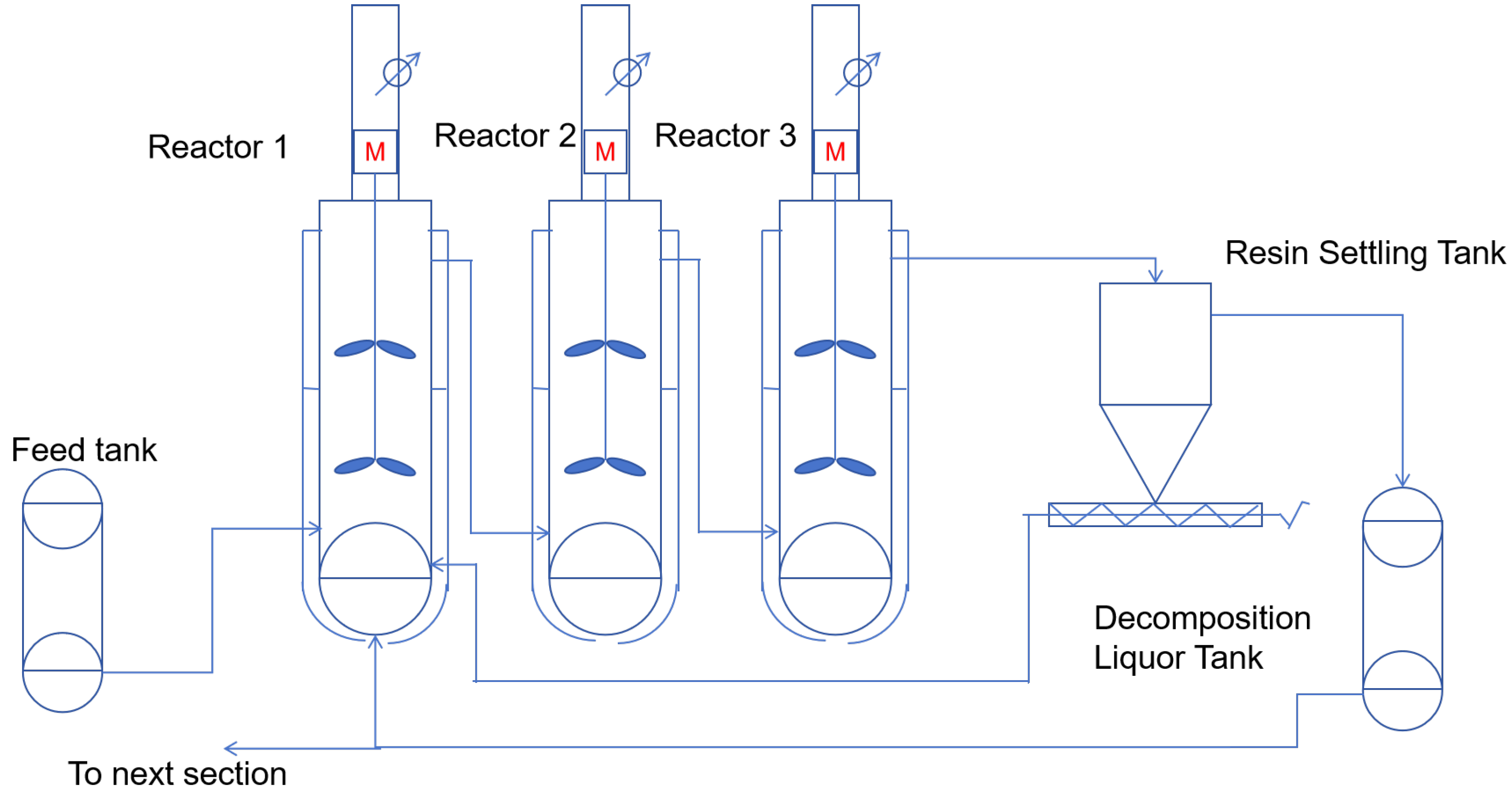
Heterogeneous catalytic processes for CHP cleavage were briefly industrialized in Eastern Europe and China during the last century, utilizing resin catalysts. Figure 8 illustrates the resin-based cleavage process flow adopted in China during the mid-20th century. The reactor system consisted of three autoclaves connected in series, each comprising six sections, equipped with agitators and cooling coils. The effluent was separated from the resin in a settler, and the resin was returned to the first reactor via a screw propeller for recycling. Evidently, this process flow was more complex in terms of equipment compared to the sulfuric acid cleavage process. However, one reported advantage of this process was its ability to utilize non-concentrated CHP (∼25%) as feedstock. Vigorous agitation was deemed necessary to achieve thorough back-mixing for uniform temperature distribution within the reactor, thereby preventing localized overheating that could lead to explosive decomposition of CHP. Research by Zhu et al. [68] on industrial stirred-tank reactors using resin catalysts revealed the existence of localized hot spots due to uneven resin suspension. By adopting a “propeller + draft tube” agitation configuration, resin suspension was significantly improved, establishing a flow pattern characterized as “complete mixing flow in the lower section and plug flow in the upper section”. This resulted in uniform temperature throughout the tank and ensured CHP conversion exceeding 99%.
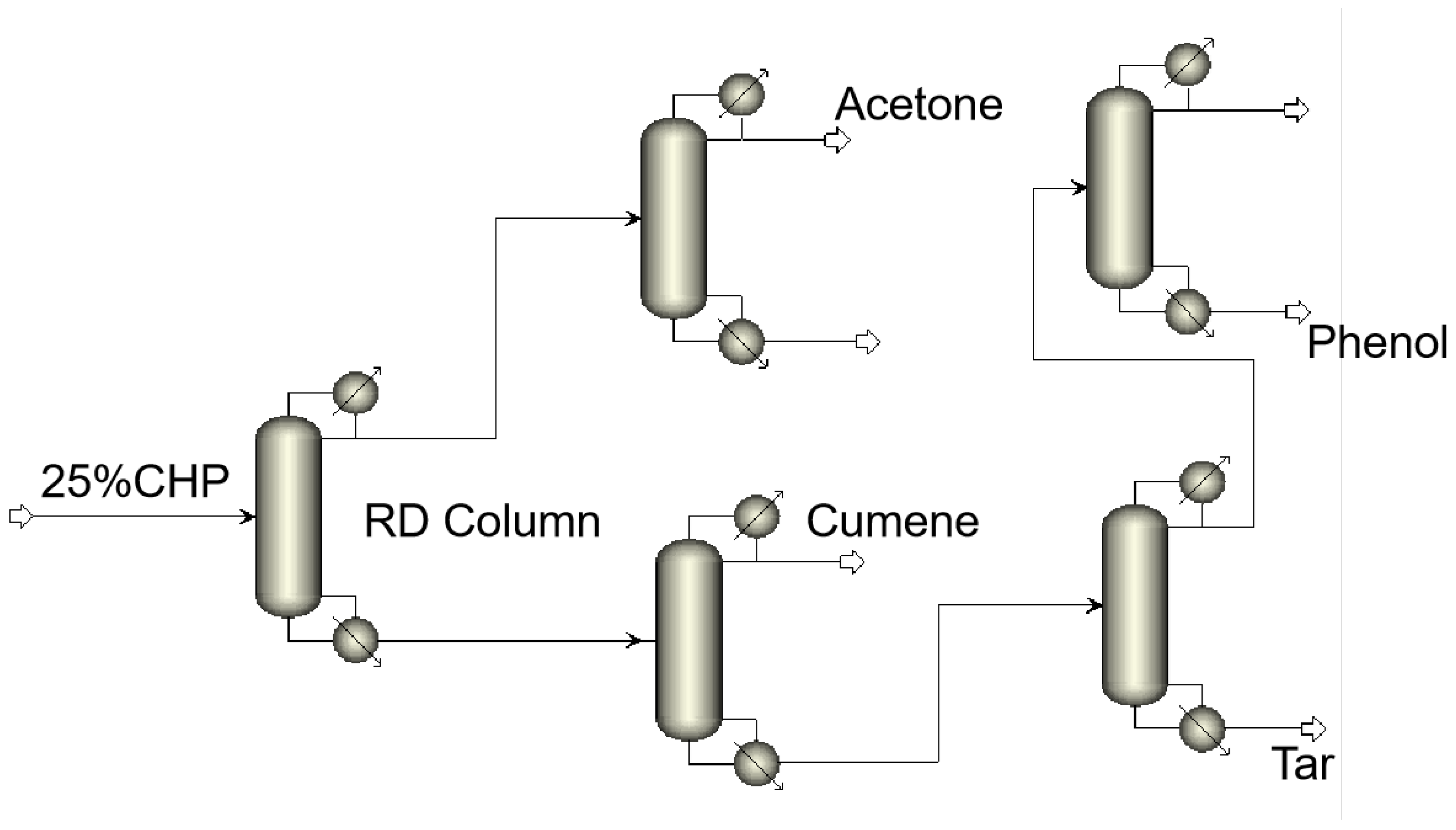
Other researchers have explored reactive distillation technology to simultaneously achieve reaction and separation. For instance, Yong et al. [69] developed a process using Amberlyst-35 Dry resin, integrating the CHP concentration and cleavage steps into a single reactive distillation column. An advantage of this approach is the utilization of the heat released from the exothermic CHP cleavage reaction to drive the distillation process. Kinetic studies confirmed that diffusion was the rate-controlling step for CHP cleavage, consistent with the findings of Han et al. Experiments were conducted in a laboratory-scale distillation column using resin catalysts encapsulated in a “tea-bag” style combined with theta ring packing. Optimal operating parameters were determined, achieving complete CHP conversion, with 8.6% acetone obtained at the top and 15% phenol at the bottom. However, this configuration still necessitated further separation process development. Yi et al. [70] also determined the kinetics of CHP cleavage using Amberlyst-35 Dry resin. Based on this kinetic data, they developed a coupled reactive distillation–separation process using Aspen Plus simulations. The results indicated that the reactive distillation-based process could achieve approximately 10% energy savings compared to conventional processes, and could utilize non-concentrated 25% CHP as the reactive distillation feed (see in Figure 9). SINOPEC [71] also disclosed a patent on a reactive distillation process, employing a fluorine-modified styrene-divinylbenzene resin catalyst. The process achieved 99.5% selectivity for acetone and 99.35% selectivity for phenol. Furthermore, the reaction section was designed with a connection channel between the catalyst bed and a regeneration system, enabling online catalyst regeneration or replacement and enhancing operational continuity.
It is noteworthy that advancements have also been made in homogeneous catalytic processes. Chen et al. [72] proposed a novel process for sulfuric acid-catalyzed CHP cleavage to phenol using a microchannel reactor. Compared to traditional stirred-tank reactors, the microchannel reactor, with its exceptionally high specific surface area and superior heat and mass transfer efficiency, successfully addressed the challenge of heat removal for this strongly exothermic reaction. The results demonstrated that under optimized conditions (e.g., 80 °C, 204 s residence time, sulfuric acid/CHP molar ratio of 2.6 × 10 3 ), the process achieved complete CHP conversion and near-quantitative phenol selectivity (>99%). Notably, the process allowed operation at higher reaction temperatures (110–130 °C), substantially reducing the required residence time (to 51 s), as well as the amounts of sulfuric acid catalyst and diluting acetone needed. This significantly enhanced process safety, selectivity, and economics. These findings also provide inspiration for the development of heterogeneous catalytic processes.

8. Conclusions

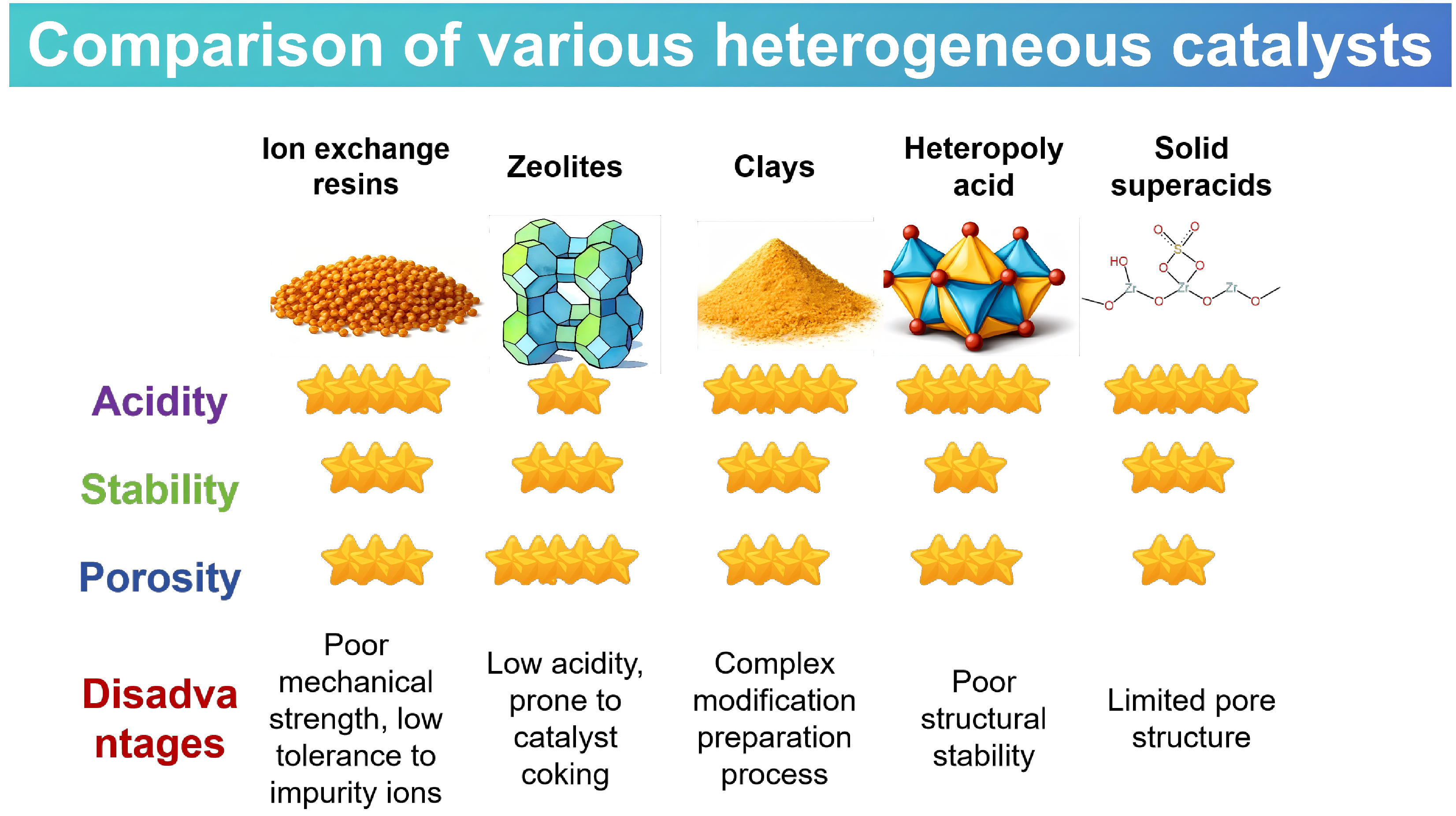
In the pursuit of advancing and optimizing CHP cleavage processes, transitioning from traditional homogeneous sulfuric acid catalysis to heterogeneous solid acid catalysts has emerged as a significant trend, as summarized in Table 6. Current research on solid acid catalysts primarily encompasses resins, zeolites, clays, and heteropoly acids, among others. These solid acids have demonstrated considerable potential in terms of activity and selectivity, all capable of achieving excellent CHP conversion and phenol yield. The comparison of these catalysts is shown in Figure 10.
The primary challenge confronting solid acid catalysts is stability. Resin-based catalysts, for instance, possess strong acidity and high activity; however, their stability is constrained by trace amounts of Na+ in the reaction stream, as well as the inherent mechanical strength and peroxide resistance of the material itself. The latter limitations can potentially be mitigated through material modification, such as fluorination. Zeolite catalysts, while exhibiting favorable activity, suffer from restricted mass transfer due to their narrow pore architectures. Although regenerable via calcination, this issue hampers their long-term industrial applicability. Heteropoly acid catalysts are primarily limited in practical use by their high solubility and consequent leaching in the reaction medium.
Concurrently, the integrated development of catalytic reaction engineering is of paramount importance. The continuously stirred tank reactors (CSTRs) commonly employed in current processes can lead to undesired consecutive side reactions due to prolonged residence times. Furthermore, the intense agitation required can exacerbate the attrition and destabilization of catalysts with lower mechanical strength, such as resins. Consequently, the development of novel reactor configurations, such as fixed-bed reactors, appears particularly crucial, with the effective removal of reaction heat being a key design consideration. Additionally, process intensification techniques like reactive distillation, which can utilize the heat of reaction to enhance energy efficiency, hold significant application prospects. In summary, the design of innovative reaction processes must be closely integrated with the systematic optimization of the overall process flow to achieve synergistic improvements in catalyst performance, reaction efficiency, and engineering feasibility for CHP cleavage.
Looking ahead, the following expectations can be proposed for the development of solid heterogeneous catalysts and processes for CHP cleavage:
1.
Current research has primarily focused on tuning the acidity of solid acids, achieving catalytic performance comparable to that of homogeneous catalysts. Future efforts should aim to enhance catalyst stability while preserving the acidity of existing solid acid catalysts; for example, by improving mechanical strength or enriching the pore structure. Several approaches have already been reported in the literature, such as introducing crosslinking with fluorine-containing species in resins, employing mesoporous zeotypes, or replacing soluble heteropoly acids with their insoluble heteropolyacid salts. Further novel strategies remain to be explored.
2.
Progress in the development of novel reaction processes remains limited. For heterogeneous catalysts, it is essential to consider factors such as mechanical strength and diffusion control, while also accounting for the strongly exothermic nature of the reaction [8] and the safety risks associated with CHP feedstocks. Such considerations should guide the design of reactor configurations and overall reaction processes. To date, process configurations such as reactive distillation and multistage CSTRs in series have been reported. Notably, microchannel reactor technology, with its advantages of high throughput and high heat transfer efficiency, offers valuable insights for the development of novel reaction processes.

Author Contributions

Conceptualization, K.Y., G.Y. and F.S.; methodology, K.Y., G.Y. and F.S.; software, K.Y., G.Y. and F.S.; validation, K.Y., G.Y. and F.S.; formal analysis, K.Y., G.Y. and F.S.; investigation, K.Y., G.Y. and F.S.; resources, K.Y., G.Y. and F.S.; data curation, K.Y., G.Y. and F.S.; writing—original draft preparation, K.Y., G.Y. and F.S.; writing—review and editing, K.Y., G.Y. and F.S.; visualization, K.Y., G.Y. and F.S.; supervision, K.Y., G.Y. and F.S.; project administration, K.Y., G.Y. and F.S. All authors have read and agreed to the published version of the manuscript.

Funding

This research received no external funding.

Data Availability Statement

No new data were created or analyzed in this study. Data sharing is not applicable to this article.

Conflicts of Interest

Author Kai Yang is an employee of Zhejiang Ruizhi Holdings Group Co., Ltd. Author Feng Shi is an employee of Tianjin Jiuyuan Chemical Engineering Co., Ltd. The remaining author, Guochao Yang, declares no conflicts of interest. Zhejiang Ruizhi Holdings Group Co., Ltd. and Tianjin Jiuyuan Chemical Engineering Co., Ltd. had no role in the design of the study; in the collection, analyses, or interpretation of data; in the writing of the manuscript; or in the decision to publish the results.

References

  1. Wang, Y. Cleaner Production Technology for Phenol and Acetone via the Cumene Process; China Petrochemical Press: Beijing, China, 2009. [Google Scholar]
  2. Cao, G. Production of Phenol and Acetone via the Cumene Process; Chemical Industry Press: Beijing, China, 1983. [Google Scholar]
  3. Weber, M.; Weber, M.; Weber, V. Phenol. In Ullmann’s Encyclopedia of Industrial Chemistry; Wiley Online Library: Hoboken, NJ, USA, 2020. [Google Scholar] [CrossRef]
  4. Schmidt, R.J. Industrial catalytic processes—Phenol production. Appl. Catal. A Gen. 2005, 280, 89–103. [Google Scholar] [CrossRef]
  5. Meyers, R.A. Handbook of Petrochemicals Production Processes; McGraw-Hill Education: Columbus, OH, USA, 2019. [Google Scholar]
  6. Ying, Z. Discussion on the Technical Route for a 200,000 t/a Phenol and Acetone Project. Chem. Enterp. Manag. 2019, 21, 78–81. [Google Scholar]
  7. Perego, C.; de Angelis, A.; Pollesel, P.; Millini, R. Zeolite-Based Catalysis for Phenol Production. Ind. Eng. Chem. Res. 2021, 60, 6379–6402. [Google Scholar] [CrossRef]
  8. Drönner, J.; Hausoul, P.; Palkovits, R.; Eisenacher, M. Solid Acid Catalysts for the Hock Cleavage of Hydroperoxides. Catalysts 2022, 12, 91. [Google Scholar] [CrossRef]
  9. Yaremenko, I.A.; Vil’, V.A.; Demchuk, D.V.; Terent’ev, A.O. Rearrangements of organic peroxides and related processes. Beilstein J. Org. Chem. 2016, 12, 1647–1748. [Google Scholar] [CrossRef]
  10. Di Somma, I.; Andreozzi, R.; Canterino, M.; Caprio, V.; Sanchirico, R. Thermal decomposition of cumene hydroperoxide: Chemical and kinetic characterization. AIChE J. 2008, 54, 1579–1584. [Google Scholar] [CrossRef]
  11. Fetters, L.J.; Morton, M. Synthesis and Properties of Block Polymers. I. Poly-α-methylstyrene-Polyisoprene-Poly-α-methylstyrene. Macromolecules 1969, 2, 453–458. [Google Scholar] [CrossRef]
  12. Worsfold, D.J.; Bywater, S. Anionic polymerization of α-methylstyrene. J. Polym. Sci. 1957, 26, 299–304. [Google Scholar] [CrossRef]
  13. Levin, M.; Gonzales, N.; Zimmerman, L.; Yang, J. Kinetics of acid-catalyzed cleavage of cumene hydroperoxide. J. Hazard. Mater. 2006, 130, 88–106. [Google Scholar] [CrossRef]
  14. Weber, M.; Hoffmann, R.; Weber, M. Some safety aspects on the cleavage of cumene hydroperoxide in the phenol process. Process Saf. Prog. 2019, 38, e12034. [Google Scholar] [CrossRef]
  15. Selvin, R.; Rajarajeswari, G.; Selva Roselin, L.; Sadasivam, V.; Sivasankar, B.; Rengaraj, K. Catalytic decomposition of cumene hydroperoxide into phenol and acetone. Appl. Catal. A Gen. 2001, 219, 125–129. [Google Scholar] [CrossRef]
  16. Yadav, G.D.; Asthana, N.S. Selective decomposition of cumene hydroperoxide into phenol and acetone by a novel cesium substituted heteropolyacid on clay. Appl. Catal. A Gen. 2003, 244, 341–357. [Google Scholar] [CrossRef]
  17. Sifniades, S.; Tunick, A.A.; Koff, F.W. Decomposition of Cumene Oxidation Product. U.S. Patent US4358618A, 9 November 1982. [Google Scholar]
  18. Harmer, M.A.; Sun, Q. Solid acid catalysis using ion-exchange resins. Appl. Catal. A Gen. 2001, 221, 45–62. [Google Scholar] [CrossRef]
  19. Gelbard, G. Organic Synthesis by Catalysis with Ion-Exchange Resins. Ind. Eng. Chem. Res. 2005, 44, 8468–8498. [Google Scholar] [CrossRef]
  20. Barbaro, P.; Liguori, F. Ion Exchange Resins: Catalyst Recovery and Recycle. Chem. Rev. 2008, 109, 515–529. [Google Scholar] [CrossRef]
  21. Sharma, M. Some novel aspects of cationic ion-exchange resins as catalysts. React. Funct. Polym. 1995, 26, 3–23. [Google Scholar] [CrossRef]
  22. Liu, W.; Wang, J. A Resin Catalyst for the Decomposition of Cumene Hydroperoxide to Produce Phenol and Its Preparation Method. CN Patent CN102698801B, 3 October 2012. [Google Scholar]
  23. Zheng, Y. A Method for Producing Phenol and Acetone. CN Patent CN109776274A, 21 May 2019. [Google Scholar]
  24. Bortnick, N.M. Catalyzing Reactions with Cation Exchange Resin. U.S. Patent US3037052A, 29 May 1962. [Google Scholar]
  25. Lloy, R.B.; Sun, Q.; Harmer, M.A.; Edward George Howard, J. Decomposition of Organic Hydroperoxides in the Presence of a Particulate Catalyst Containing Highly Fluorinated Polymer Having Sulfonic Acid Groups and Process for the Manufacture of Bisphenol A. U.S. Patent US6586640B2, 20 June 2002. [Google Scholar]
  26. Codignola, F. Process for the Synthesis of Phenol and Acetone. U.S. Patent US7084309B2, 1 August 2006. [Google Scholar]
  27. Chen, Q.; He, M.; Sun, F.; Zhou, W. Method for Preparing Phenol/Acetone by Decomposing Cumene Hydroperoxide. CN Patent CN104151144A, 19 November 2014. [Google Scholar]
  28. Knifton, J.F.; Sanderson, J.R. Method for Production of Phenol/Acetone from Cumene Hydroperoxide. U.S. Patent US4898995A, 6 February 1990. [Google Scholar]
  29. Han, M.; Huang, D.; Wang, J.; Jin, Y. Decomposition of Cumene Hydroperoxide Catalyzed by Resins in a Three-Phase Circulating Fluidized Bed Reactor II. Kinetics and Mass Transfer. Petrochem. Technol. 2001, 30, 531–533. [Google Scholar]
  30. Han, M.; Huang, D.; Lu, Y.; Cao, G. Decomposition of Cumene Hydroperoxide Catalyzed by Resins in a Three-Phase Circulating Fluidized Bed Reactor I. Reaction Process. Petrochem. Technol. 2001, 30, 433–436. [Google Scholar]
  31. Huang, D.; Han, M.; Wang, J.; Jin, Y. Catalytic decomposition process of cumene hydroperoxide using sulfonic resins as catalyst. Chem. Eng. J. 2002, 88, 215–223. [Google Scholar] [CrossRef]
  32. Shi, K. Production of Phenol and Acetone via Catalytic Decomposition of Cumene Hydroperoxide over Ion Exchange Resin. Petrochem. Technol. 1980, 8, 449–453. [Google Scholar]
  33. Zhang, Y.; Wu, Z.; Sun, F.; Zhou, W.; He, M.; Chen, Q. Continuous process for the cleavage of cumenehydroperoxide under the catalysis of cationexchange resin. Ion Exch. Adsorpt. 2018, 34, 481. [Google Scholar]
  34. Chang, C.D.; Pelrine, B.P. Production of Phenol. U.S. Patent US4490566A, 25 December 1984. [Google Scholar]
  35. Romano, U.; Clerici, M.G.; Bellussi, G.; Buonomo, F. Catalyst for the Selective Decomposition of Cumene Hydroperoxide. U.S. Patent US4743573A, 10 May 1988. [Google Scholar]
  36. Shan, Y.; Hu, C.; Wang, W.; Li, F.; Liu, R.; Zheng, M.; Gao, Y.; Cai, Z.; Huang, C. A Method for the Catalytic Decomposition of Hydroperoxide. CN Patent CN111068775B, 2019. [Google Scholar]
  37. Koltunov, K.Y.; Sobolev, V.I. Efficient cleavage of cumene hydroperoxide over HUSY zeolites: The role of Brønsted acidity. Appl. Catal. A Gen. 2008, 336, 29–34. [Google Scholar] [CrossRef]
  38. Sasidharan, M.; Kumar, R. Zeolite-catalysed Selective Decomposition of Cumene Hydroperoxide into Phenol and Acetone. J. Chem. Res. 1997, 52–53. [Google Scholar] [CrossRef]
  39. Kumar, K.P.; Selvin, R.; Kumari, P.; Roselin, L.S.; Arul, N.S.; Bououdina, M. Selective decomposition of cumene hydroperoxide into phenol and acetone over nanocrystalline ZSM-5. Int. J. Mater. Eng. Innov. 2010, 1, 417. [Google Scholar] [CrossRef]
  40. Kumar Dutta, D.; Jyoti Borah, B.; Pollov Sarmah, P. Recent Advances in Metal Nanoparticles Stabilization into Nanopores of Montmorillonite and Their Catalytic Applications for Fine Chemicals Synthesis. Catal. Rev. 2015, 57, 257–305. [Google Scholar] [CrossRef]
  41. Huang, W.J.; Liu, J.H.; She, Q.M.; Zhong, J.Q.; Christidis, G.E.; Zhou, C.H. Recent advances in engineering montmorillonite into catalysts and related catalysis. Catal. Rev. 2021, 65, 929–985. [Google Scholar] [CrossRef]
  42. Nagendrappa, G.; Chowreddy, R.R. Organic Reactions Using Clay and Clay-Supported Catalysts: A Survey of Recent Literature. Catal. Surv. Asia 2021, 25, 231–278. [Google Scholar] [CrossRef]
  43. Kumar, B.S.; Dhakshinamoorthy, A.; Pitchumani, K. K10 montmorillonite clays as environmentally benign catalysts for organic reactions. Catal. Sci. Technol. 2014, 4, 2378–2396. [Google Scholar] [CrossRef]
  44. Kumbhar, P.S.; Thampi, J.; Singh, B.; Fulmer, J.W.; Tatake, P.A. Integrated Process for the Production of Bisphenol A from Cumene Hydroperoxide. U.S. Patent US7491855B2, 4 June 2003. [Google Scholar]
  45. Jiang, H.; Xiao, B.; Zhao, Y.; Li, Z.; Zhang, F. A Kind of Method That Cumene Hydroperoxide Decomposes and Prepares Phenol and Acetone. CN Patent CN101343212B, 13 July 2007. [Google Scholar]
  46. Knifton, J.F. Method for Production of Phenol/Acetone from Cumene Hydroperoxide. U.S. Patent 1989. [Google Scholar]
  47. Knifton, J.F. Method for Production of Phenol/Acetone from Cumene Hydroperoxide. U.S. Patent US4898987A, 17 March 1989. [Google Scholar]
  48. Knifton, J.F.; Sanderson, J.R. Phenol/acetone cogeneration via solid acid catalysis. Appl. Catal. A Gen. 1997, 161, 199–211. [Google Scholar] [CrossRef]
  49. Han, L.; Wang, Y.; Zhang, J.; Lei, Z.; Huang, C.; Chen, B. Acidic Montmorillonite/Cordierite Monolithic Catalysts for Cleavage of Cumene Hydroperoxide. Chin. J. Chem. Eng. 2014, 22, 854–860. [Google Scholar] [CrossRef]
  50. Selvin, R.; Hsu, H.L.; Aneesh, P.; Sha-Hua, C.; Hung, L.L. Preparation of acid-modified bentonite for selective decomposition of cumene hydroperoxide into phenol and acetone. React. Kinet. Mech. Catal. 2010, 100, 197–204. [Google Scholar] [CrossRef]
  51. Zhi, R.; Han, L.; Zhang, J. Simulation study of decomposition reaction of cumene hydroperoxide over monolithic catalysts. Ind. Catal. 2014, 22, 885–889. [Google Scholar]
  52. Kozhevnikov, I.V. Heteropoly Acids and Related Compounds as Catalysts for Fine Chemical Synthesis. Catal. Rev. 1995, 37, 311–352. [Google Scholar] [CrossRef]
  53. Kamiya, Y.; Okuhara, T.; Misono, M.; Miyaji, A.; Tsuji, K.; Nakajo, T. Catalytic Chemistry of Supported Heteropolyacids and Their Applications as Solid Acids to Industrial Processes. Catal. Surv. Asia 2008, 12, 101–113. [Google Scholar] [CrossRef]
  54. Okuhara, T.; Mizuno, N.; Misono, M. Catalysis by heteropoly compounds—Recent developments. Appl. Catal. A Gen. 2001, 222, 63–77. [Google Scholar] [CrossRef]
  55. Kozhevnikov, I. Sustainable Heterogeneous Acid Catalysis by Heteropoly Acids. In HandbookofGreenChemistry; Wiley Online Library: Hoboken, NJ, USA, 2010. [Google Scholar] [CrossRef]
  56. Kozhevnikov, I.V. Catalysis by Heteropoly Acids and Multicomponent Polyoxometalates in Liquid-Phase Reactions. Chem. Rev. 1998, 98, 171–198. [Google Scholar] [CrossRef]
  57. Timofeeva, M. Acid catalysis by heteropoly acids. Appl. Catal. A Gen. 2003, 256, 19–35. [Google Scholar] [CrossRef]
  58. Du, Z.; He, Y.; Min, E. A Method for the Catalytic Decomposition of Aryl α-Hydroperoxide to Produce Phenol and Ketones or Aldehydes. CN Patent CN1067368C, 28 July 1997. [Google Scholar]
  59. Zhang, L.-Z.; Sun, X.-Y.; Wang, Q.-L.; Ding, Y.-S.; Yu, Y.-J. Preparation of Phenol and Acetone with Solid Acid Catalyst. Chem. World 2011, 52, 487–490. [Google Scholar]
  60. Nelson, D.C.; Mueller, M.B. Process for Preparing Phenols and Carbonyl Alkanes. U.S. Patent 3187052A, 1 June 1965. [Google Scholar]
  61. Du, Z.; He, Y.; Min, E. Decomposition of Cumene Hydroperoxide Catalyzed by Heteropolyacid Solution. In Proceedings of the 9th National Conference on Catalysis, Research Institute of Petrolleum Processing, Beijing, China, 19–23 October 1998; pp. 453–454. [Google Scholar]
  62. Hattori, H.; Takahashi, O.; Takagi, M.; Tanabe, K. Solid super acids: Preparation and their catalytic activities for reaction of alkanes. J. Catal. 1981, 68, 132–143. [Google Scholar] [CrossRef]
  63. Arata, K. Solid Superacids. In Advances in Catalysis; Elsevier: Amsterdam, The Netherlands, 1990; pp. 165–211. [Google Scholar] [CrossRef]
  64. Yamaguchi, T. Recent progress in solid superacid. Appl. Catal. 1990, 61, 1–25. [Google Scholar] [CrossRef]
  65. Levin, D.; Santiesteban, J.G.; Vartuli, J.C. Production of Phenol. U.S. Patent US6169216B1, 22 April 1999. [Google Scholar]
  66. Knifton, J.F.; Grice, N.J. Method for Production of Phenol/Acetone from Cumene Hydroperoxide. U.S. Patent US4876397A, 24 October 1988. [Google Scholar]
  67. Levin, D.; Santiesteban, J.G.; Vartuli, J.C. Production of Phenol. U.S. Patent US6169215B1, 25 March 1999. [Google Scholar]
  68. Yuan, M.; Long, Z.; Zhao, L.; Shen, Y.; Zhu, Z. Improve on Cumene Hydroperoxide Decomposition Reactor. Chem. React. Eng. Technol. 2004, 20, 80–84. [Google Scholar]
  69. Ye, J.; Li, J.; Sha, Y.; Xu, Y.; Zhou, D. Novel Reactive Distillation Process for Phenol Production with a Dry Cation Exchange Resin as the Catalyst. Ind. Eng. Chem. Res. 2014, 53, 12614–12621. [Google Scholar] [CrossRef]
  70. Liu, Q.N.; Yi, Z.M.; Yan, D.W.; AI, Q.H. Process design and economic optimization for the decomposition of isopropylbenzene peroxide by reactive distillation. J. Liaoning Petrochem. Univ. 2023, 43, 1–6. [Google Scholar]
  71. Huang, C.; Yang, J.; Qi, B.; Shi, J.; Gu, J.; Wang, D.; Zhang, B.; Li, Z.; He, K. A Method for Producing Phenol and Acetone via Reactive Distillation for Decomposition of CHP. CN Patent CN106866379B, 23 March 2017. [Google Scholar]
  72. Dai, X.; Zhou, W.; Yang, S.; Sun, F.; Qian, J.; He, M.; Chen, Q. Microchannel process for phenol production via the cleavage of cumene hydroperoxide. Chem. Eng. Sci. 2019, 199, 398–404. [Google Scholar] [CrossRef]
Figure 1. Process block diagram of the cumene process for phenol and acetone production.
Catalysts 16 00329 g001
Figure 2. Reaction mechanism of CHP cleavage.
Catalysts 16 00329 g002
Figure 3. Possible side reactions during the cleavage of CHP.
Catalysts 16 00329 g003
Figure 4. Reaction network of the CHP cleavage.
Catalysts 16 00329 g004
Figure 5. Schematic Diagram of the CHP cleavage Reaction Section by UOP.
Catalysts 16 00329 g005
Figure 6. Mechanism of CHP cleavage on heteropolyacid supported on K-10 clay catalyst.
Catalysts 16 00329 g006
Figure 7. Schematic diagram of the circulating fluidized bed reactor developed by Han et al.
Catalysts 16 00329 g007
Figure 8. Process flow diagram of the resin-catalyzed CHP cleavage.
Catalysts 16 00329 g008
Figure 9. Process flow diagram of the reactive distillation–separation process for CHP cleavage developed by Yi et al.
Catalysts 16 00329 g009
Figure 10. Comparison of various heterogeneous catalysts.
Catalysts 16 00329 g010
Table 1. Summary of catalytic performance for CHP cleavage over various resin catalysts.
Ref.CatalystReactor TypeReaction ConditionsCHP Conversion (%)Phenol Selectivity (%)Phenol Yield (%)
[22]KRB series resinfixed bed60–100 °C, atmospheric pressure, WHSV not specified
[23]Fluoroether resinmoving bed75–85 °C, atmospheric pressure99.46
[24]Perfluoro sulfonic acid resinbatch reactor50 °C, acetone solvent10093
[25]Perfluoro sulfonic acid polymer powderbatch reactor50 °C, acetone solvent>99
[26]Amberlyst 18fixed bed42 °C, atmospheric pressure, LHSV = 10 h 1 100
[27]Cation exchange resinthree-stage series batch reactor40–90 °C
[28]Amberlyst XN-1010fixed bed60 °C, 300 psi, LHSV = 1 h 1 1009898
[29,30]CT-175batch reactor67.6 °C>95
[31]TH-02circulating fluidized bed80 °C, WHSV = 30–40 h 1 >99.8>98.0>98.0
Table 2. Summary of catalytic performance for CHP cleavage over various zeolite catalysts.
Ref.CatalystReactor TypeReaction ConditionsCHP Conversion (%)Phenol Selectivity (%)Phenol Yield (%)
[34]Beta (H-form, Si/Al = 30)fixed bedtemperature 100 °C, LHSV = 16 h 1 97.889.487.4
[34]HZSM-5 (Si/Al = 70)fixed bedtemperature 100 °C, LHSV = 4 h 1 92.794.988
[35]B-ZSM-5 (Si/Al = 300, Si/B = 60)batch reactortemperature 40 °C, reaction time 15 min, catalyst/CHP mass ratio = 0.181009696
[36]3D-SiO2-Ph-SO3Hbatch reactortemperature 60 °C, reaction time 1.25 h, catalyst/CHP mass ratio = 1:1098.994.893.8
[36]3D-SiO2-Ph-SO3Hbatch reactortemperature 40 °C, reaction time 0.75 h, catalyst/CHP mass ratio = 1:695.696.692.3
[36]3D-SiO2-Ph-SO3Hfixed bedtemperature 50 °C, WHSV = 4 h 1 98.294.893.1
[36]3D-SiO2-Ph-SO3Hfixed bedtemperature 50 °C, WHSV = 4 h 1 99.894.193.9
[37]HUSY, Si/Al = 2.5batch reactortemperature 60 °C, reaction time 0.17 h, catalyst/CHP mass ratio = 0.0173210032
[37]HUSY, Si/Al = 15batch reactortemperature 60 °C, reaction time 0.33 h, catalyst/CHP mass ratio = 0.017100100100
[37]HUSY, Si/Al = 40batch reactortemperature 20 °C, reaction time 20 h, catalyst/CHP mass ratio = 0.17100100100
[37]HUSY, Si/Al = 40batch reactortemperature 60 °C, reaction time 0.33 h, catalyst/CHP mass ratio = 0.017100100100
[37]HY, Si/Al = 2.5batch reactortemperature 60 °C, reaction time 0.33 h, catalyst/CHP mass ratio = 0.017<10100<10
[37]HZSM5, Si/Al = 30batch reactortemperature 20 °C, reaction time 30 h, catalyst/CHP mass ratio = 0.1751005
[37] β , Si/Al = 14batch reactortemperature 20 °C, reaction time 10 h, catalyst/CHP mass ratio = 0.178910089
[38]Al-ZSM-5batch reactortemperature 25 °C, reaction time 0.08 h, catalyst/CHP mass ratio = 0.11008686.0
[38]Ga-ZSM-5batch reactortemperature 25 °C, reaction time 0.08 h, catalyst/CHP mass ratio = 0.110088.588.5
[38]Fe-ZSM-5batch reactortemperature 25 °C, reaction time 0.08 h, catalyst/CHP mass ratio = 0.11008888.0
[38]Al-ZSM-22batch reactortemperature 40 °C, reaction time 0.25 h, catalyst/CHP mass ratio = 0.16587.556.9
[38]Al-MCM-22batch reactortemperature 40 °C, reaction time 0.25 h, catalyst/CHP mass ratio = 0.1908778.3
[38]Al-ZSM-48batch reactortemperature 60 °C, reaction time 1 h, catalyst/CHP mass ratio = 0.1458036.0
[38]Al-EU-1batch reactortemperature 60 °C, reaction time 0.5 h, catalyst/CHP mass ratio = 0.18088.771.0
[38]Al-Betabatch reactortemperature 25 °C, reaction time 0.08 h, catalyst/CHP mass ratio = 0.11008888.0
[38]Al-Betafixed bedtemperature 60 °C, space velocity = 2 mL g cat 1 h 1 999594.1
[38]Ga-Betabatch reactortemperature 25 °C, reaction time 0.08 h, catalyst/CHP mass ratio = 0.11009292.0
[38]Fe-Betabatch reactortemperature 25 °C, reaction time 0.08 h, catalyst/CHP mass ratio = 0.11009191.0
[38]B-Betabatch reactortemperature 25 °C, reaction time 0.08 h, catalyst/CHP mass ratio = 0.11009292.0
[38]Al-ZSM-12batch reactortemperature 40 °C, reaction time 0.5 h, catalyst/CHP mass ratio = 0.1958277.9
[38]H-Mordenitebatch reactortemperature 25 °C, reaction time 0.08 h, catalyst/CHP mass ratio = 0.110086.586.5
[38]H-Ybatch reactortemperature 40 °C, reaction time 0.17 h, catalyst/CHP mass ratio = 0.1968581.6
[38]SAPO-5batch reactortemperature 60 °C, reaction time 1 h, catalyst/CHP mass ratio = 0.110888.8
[38]AlPO-5batch reactortemperature 60 °C, reaction time 1 h, catalyst/CHP mass ratio = 0.1258621.5
Table 3. Summary of catalytic performance for CHP cleavage over various clay-based catalysts.
Ref.CatalystReactor TypeReaction ConditionsCHP Conversion (%)Phenol Selectivity (%)Phenol Yield (%)
[44]Filtrol-24 (acid-treated montmorillonite)batch reactortemperature 55–65 °C, reaction time 1 h∼10095
[45]1# (NH4NO3-modified bentonite)batch reactortemperature 57 °C, reaction time 0.5 h100≥95≥95
[45]3# (NH4NO3 secondary modified bentonite)batch reactortemperature 57 °C, reaction time 0.5 h100≥95≥95
[45]6# (NH4NO3-modified bentonite)batch reactortemperature 40 °C, reaction time 1 h100≥95≥95
[45]10# ((NH4NO3-modified bentonite)batch reactortemperature 40 °C, reaction time 1 h100≥95≥95
[45]11# (NH4NO3-modified bentonite)fixed bedtemperature 48 °C, LHSV = 0.04 h 1 99.5≥95≥94.5
[46]12-Tungsto phosphoric acid/Clay-24batch reactortemperature 57 °C, reaction time 0.5 h969995
[47]ZrCl4-modified Clay-24batch reactortemperature 57 °C, reaction time 0.5 h>989493
[47]TiCl4-modified Clay-24batch reactortemperature 57 °C, reaction time 0.33 h>999796
[28]12-Tungstophosphoric acid/TiO2 (17 wt% W)batch reactortemperature 57 °C, reaction time 2 h>99>99>99
[48]Acid-treated montmorillonite (Grade F24)fixed bedtemperature 60 °C, pressure 20 bar, LHSV = 1 h 1 100>9999
[48]Acid-treated montmorillonite (Grade F24)fixed bedtemperature 80 °C, pressure 20 bar, LHSV = 10 h 1 100∼9494
[47]12-Tungstophosphoric acid-modified montmorillonitefixed bedtemperature 60 °C, pressure 20 bar, LHSV = 10 h 1 >99>95>95
[49]Acidic montmorillonite/ cordierite monolithic catalystfixed bedtemperature 80 °C, WHSV = 90 h 1 100>99.899.8
Table 4. Summary of catalytic performance for CHP cleavage over various heteropoly acid catalysts.
Ref.CatalystReaction ConditionsCHP Conversion (%)Phenol Selectivity (%)Phenol Yield (%)
[58]Heteropoly acid salttemperature 40–100 °C, catalyst/CHP = 0.001–0.051009898
[16]20% Cs2.5H0.5PW12O40/K-10temperature 60 °C, catalyst/CHP = 1100100100
[59]TiO2 and phosphotungstic acid modified Beta zeolitetemperature 60 °C, reaction time 4 h, catalyst/CHP = 0.199.592.692.1
Table 5. Summary of catalytic performance for CHP cleavage over various modified metal oxide catalysts.
Ref.CatalystReactor TypeReaction ConditionsCHP Conversion (%)Phenol Selectivity (%)Phenol Yield (%)
[65]Sulfated zirconiabatch reactortemperature 57 °C, reaction time 3 h, catalyst/CHP = 0.02523.896.122.9
[65]Sulfated iron–zirconium oxidebatch reactortemperature 57 °C, reaction time 3 h, catalyst/CHP = 0.02597.697.294.8
[65]Sulfated titaniabatch reactortemperature 57 °C, reaction time 3 h, catalyst/CHP = 0.02574.794.370.5
[65]Sulfated manganese-iron- zirconium oxidebatch reactortemperature 57 °C, reaction time 3 h, catalyst/CHP = 0.02574.696.572.0
[65]Sulfated iron-zirconium oxidebatch reactortemperature 57 °C, reaction time 3 h, catalyst/CHP = 0.02571.594.867.8
[66]Difluoro phosphoric acid/TiO2batch reactortemperature 57–80 °C, reaction time 2 h, catalyst/CHP = 0.16>9897>95.1
[66]Fluoro phosphoric acid/TiO2fixed bedtemperature 60 °C, pressure 300 psi, LHSV = 1 h 1 >99.7>99>98.7
[66]Hydrogen fluoride/TiO2fixed bedtemperature 60 °C, pressure 300 psi, LHSV = 1 h 1 1009797
[67]Fe–W–ZrO2fixed bedtemperature 80 °C, 50 psig, LHSV = 0.91–4.55 h 1 100>99>99
[16]Sulfated zirconiabatch reactortemperature 60 °C, reaction time 0.5 h, catalyst/CHP = 0.0524100100
Table 6. Comparison of homogeneous and heterogeneous catalysts.
AspectHomogeneous CatalystsHeterogeneous Catalysts
ActivityHighRelatively high
CostLowerHigher
RecyclabilityNot applicable; continuously consumedApplicable
Catalyst LifetimeN/A (continuously consumed)Limited
Impact on Process FlowRequires an additional neutralization section to handle residual liquid acid, resulting in a more complex processNo neutralization section needed; simpler process flow
Reactor Material RequirementsHigh; susceptible to acid corrosionLow
Disclaimer/Publisher’s Note: The statements, opinions and data contained in all publications are solely those of the individual author(s) and contributor(s) and not of MDPI and/or the editor(s). MDPI and/or the editor(s) disclaim responsibility for any injury to people or property resulting from any ideas, methods, instructions or products referred to in the content.