Article

Catalytic Pyrolysis of Polypropylene (PP) as a Way to Gasify Waste Plastic into the Fuel for SOFC


1
Advanced Materials Centre, Faculty of Applied Physics and Mathematics, Gdansk University of Technology, ul. Narutowicza 11/12, 80-233 Gdańsk, Poland
2
Department of Materials and Mineral Resources Engineering, National Taipei University of Technology, Taipei 106, Taiwan
3
Advanced Materials Centre, Faculty of Electronics, Telecommunications and Informatics, Gdansk University of Technology, ul. Narutowicza 11/12, 80-233 Gdańsk, Poland
*
Authors to whom correspondence should be addressed.
Catalysts 2026, 16(3), 275; https://doi.org/10.3390/catal16030275
Submission received: 3 February 2026 / Revised: 7 March 2026 / Accepted: 11 March 2026 / Published: 19 March 2026

Abstract

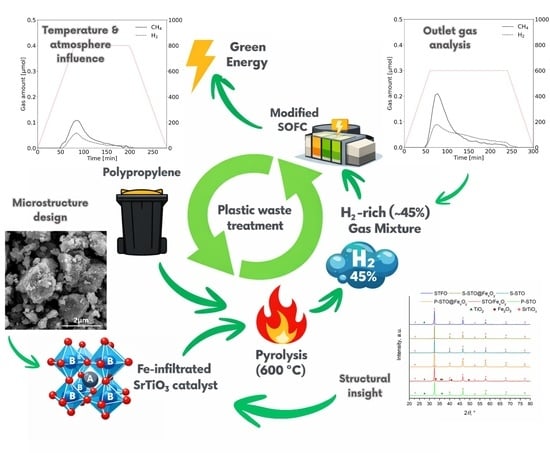
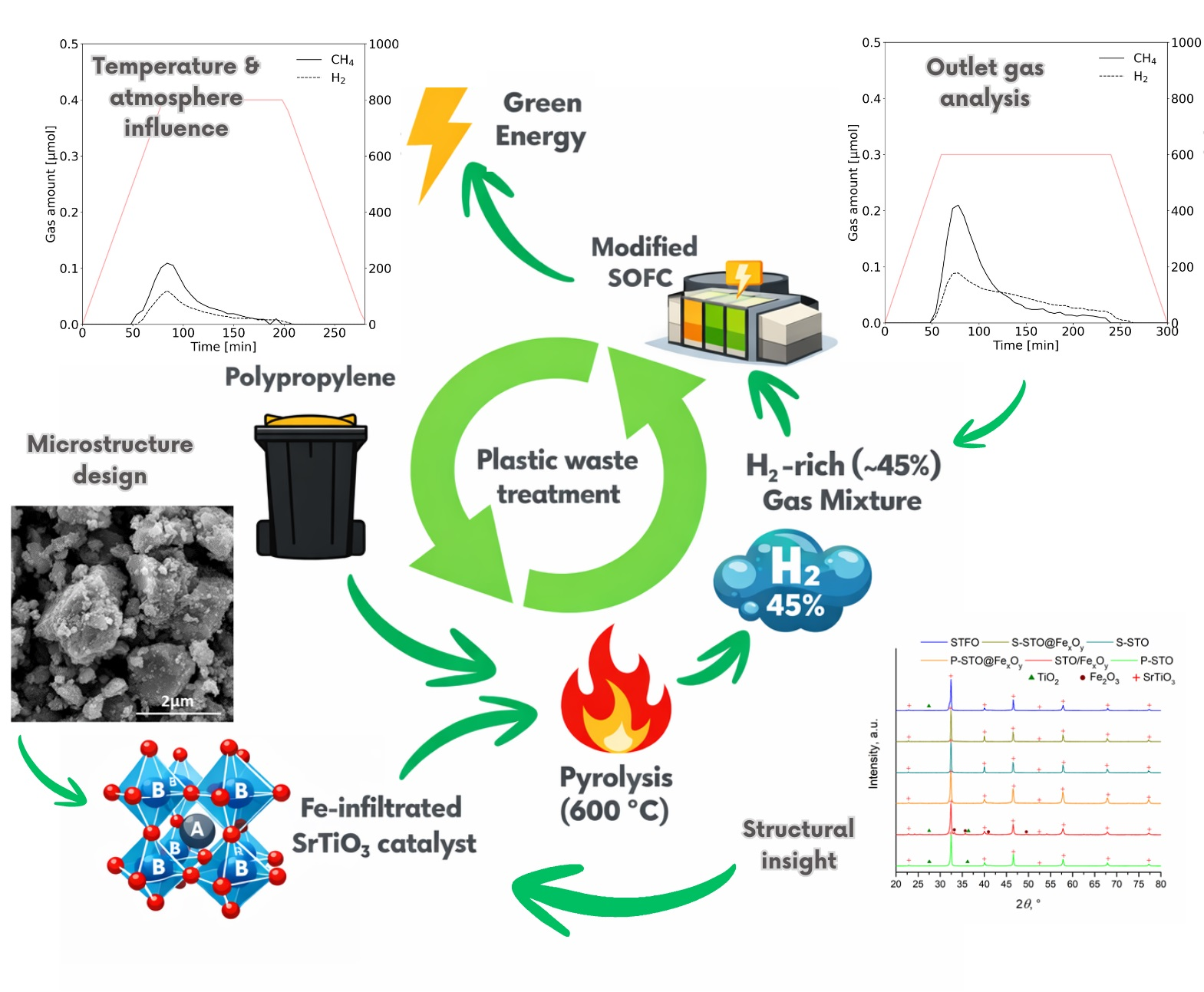
The thermal decomposition (pyrolysis) of polypropylene has been investigated as a viable method for polymer waste recycling and the production of hydrogen-rich fuel. This study examined the effects of atmosphere, temperature, and catalytic systems based on iron oxide and strontium titanate, with a focus on gas-phase composition and reaction dynamics. A reactor geometry conducive to in-bed reforming was utilized, leading to a purer gas output compared to commonly reported results, making it suitable for solid oxide fuel cell (SOFC) applications. The hydrogen concentration was enhanced with increasing temperature, primarily due to the intensified reforming of methane and higher hydrocarbons. However, only marginal improvements were observed between 700 °C and 800 °C, which limits the benefits of higher energy input. The introduction of small amounts of water vapor (approximately 3% relative humidity) resulted in a reduction in solid residue formation by approximately 50% and a slight increase in hydrogen yield. Conversely, CO2 atmospheres suppressed hydrogen production and increased residual solids but allowed for better control over reaction dynamics. The combined strontium titanate iron oxide catalyst (S-STO@FexOγ) demonstrated high efficacy, reducing solid residues to nearly zero and producing gas mixtures containing up to 45% hydrogen. This indicates significant potential for application and further development. These findings underscore the feasibility of in-bed reforming in polypropylene pyrolysis as a waste-to-energy strategy for hydrogen-rich fuel production, warranting further optimization and investigation for SOFC integration.

Graphical Abstract

1. Introduction

Plastics are among the major pollutants of the environment. Plastic waste degrades very slowly, releasing microplastics that contaminate water, soil, and living organisms at an alarming rate and can pose hazards to human health due to their toxicity [1]. The weathering of plastic waste in landfills represents a significant pathway for microplastic generation [1,2,3]. In 2022, approximately 40% of the plastics collected globally were deposited in landfills [4], highlighting the urgent need for the development of more effective polymer waste management and treatment strategies. The three most important routes for processing plastic waste are incineration, mechanical recycling, and chemical recycling. Incineration is widely used because of its cost-effectiveness (34% of plastics collected worldwide were incinerated [4]); however, the emission of toxic compounds and greenhouse gases remains problematic [5]. Mechanical recycling processes are limited by costs and inconsistent product quality [6]. Municipal plastic waste is particularly challenging because it typically contains other organic compounds, moisture, and mixtures of different polymers.
Chemical recycling methods involve depolymerization, which leads either to reorganization of the polymer structure or formation of smaller organic molecules. Among polymer chemical-recycling techniques, pyrolysis is considered one of the most promising in the current scientific discourse [7,8,9]. Pyrolysis is an endothermic process in which polymer chains thermally decompose in an inert atmosphere (e.g., argon or nitrogen). Plastic pyrolysis is an efficient technology for obtaining various value-added products [10]. A key advantage is its flexibility: almost any mixture of organic and polymer waste can be pyrolyzed, reducing the need for feedstock preparation or segregation. Polymer pyrolysis yields solid, liquid, and gaseous products. Solid products include coke, ash, and other carbonaceous materials. Liquid products consist of various C6–C20 molecules, including alkanes, olefins, and aromatic hydrocarbons, while gaseous products are mainly C1–C5 hydrocarbons and hydrogen [11]. The composition of pyrolysis products is determined by factors such as the composition of the plastic waste, reactor type and geometry, process temperature, heating rate, atmosphere, catalyst-to-plastic ratio, and catalyst type [12]. These parameters form a complex network of interdependencies, requiring meticulous study to isolate the true impact of each process variable.
Solid oxide fuel cells (SOFCs) can operate not only on hydrogen but also on hydrocarbons, alcohols, solid carbon, and ammonia. Their high operating temperatures and potential for anode modification offer unparalleled fuel flexibility. The gaseous fraction produced during plastic pyrolysis can serve as a fuel for SOFCs. Nevertheless, hydrogen remains the ideal emission-free fuel for SOFCs due to its high heating value and favorable cell stability, making it advantageous to maximize hydrogen yield from the pyrolysis process [13].
Catalyst use in plastic pyrolysis reduces energy requirements by lowering activation barriers, thereby decreasing the overall reaction temperature and installation cost. Selecting an appropriate catalyst allows certain reactions to be favored over others, enabling optimization of the product distribution and selectivity. Metal–support catalysts are widely used. They consist of catalytically active metal particles stabilized on the surface of supports such as clays, zeolites, activated carbon, or Al2O3. The most common non-noble metal catalysts for plastic pyrolysis contain nickel, cobalt, or iron. Iron-based catalysts are the most cost-effective for hydrogen generation from plastics [14,15], and comparative studies on catalysts using identical supports show that iron promotes hydrogen formation most efficiently [16]. Compared to iron, other metal oxides (most commonly Ni, Co and Zn) have also been tested but have shown limited effectiveness, especially in total gas yields and carbon species formation [15,16]. Iron-based catalysts are thus among most promising, combining high gas yields, low price and favorable carbon deposition mechanisms.
Among various methods of iron anchoring to the support, exsolution-derived nanoparticles on perovskite supports, which are resistant to sintering and carbon deposition, represent promising candidates for such applications. Their stability arises from strong metal–support interactions, as the nanoparticles are partially embedded in the oxide lattice. Exsolved particles are created during reductive treatments (usually temperature-driven) with multiple alternatives proposed [17]. During such treatments, surface-dopant space charge interactions and Gibbs energy changes drive metallic dopants to the surface, where a self-assembly process builds the desired nanoparticles [18]. Exsolution has gained attention as a robust catalyst synthesis route, enabling long-term catalytic activity and successful application in various high-temperature electrochemical and thermocatalytic reactions [1]. For example, exsolved nickel nanoparticles from doped SrTiO3 (STO) have been used as catalysts for methane pyrolysis, achieving a conversion rate of ~40% while simultaneously producing carbon nanotubes [19]. It is also increasingly common to incorporate other metals into the A- and B-sites of perovskite systems, such as Co, Cu, noble metals and mixtures of different elements [20].
In this work, the efficiency of various SrTiO3- and FexOy-based catalysts (summarized below in Table 1) in polypropylene pyrolysis is examined. Polypropylene is selected as a simple model compound representative of hard-to-recycle yet widely used polymers (e.g., polypropylene, expanded polystyrene, low-density polyethylene). STO was chosen as a well-known support, with good stability, redox capabilities, and multiple modification routes. Iron oxide was chosen as an entry point for more detailed study, for reasons described above. Detailed studies at this level can facilitate the development of pyrolytic treatments for more complex waste compositions, including biomass, lignin, cellulose, and other organic residues, while providing more effective fuel mixtures for SOFCs.

2. Results and Discussion

Results for pre-experiment catalysts investigations and polymer pyrolysis studies are presented below.

2.1. Catalyst Investigations

2.1.1. X-Ray Diffraction (XRD) Studies

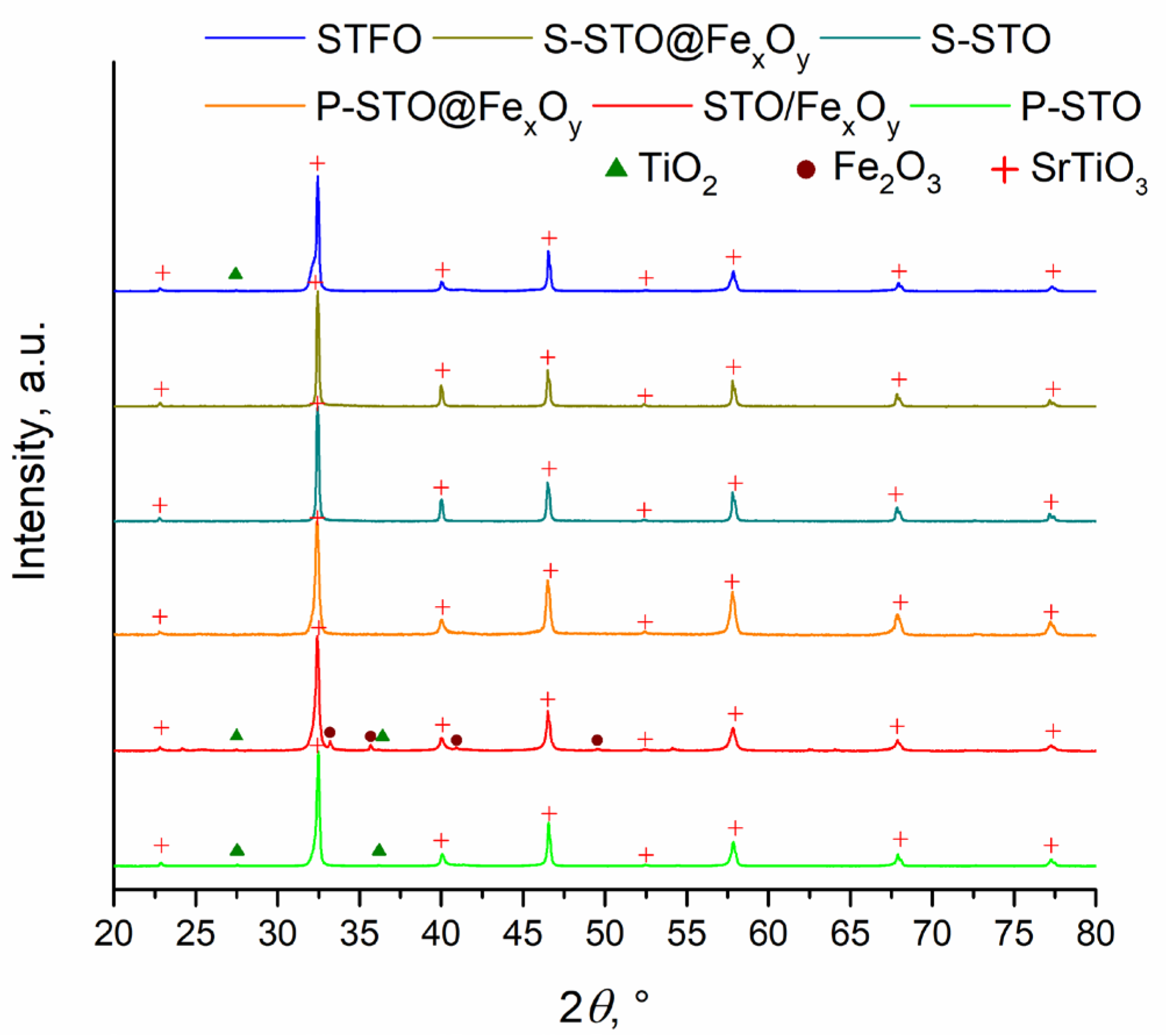
X-ray diffraction patterns (Figure 1) confirm successful synthesis of the desired strontium titanate phases in S-STO, P-STO, and STFO [20].
However, it is important to note that both P-STO and STFO, synthesized via the modified Pechini method, exhibit trace amounts of a secondary phase, rutile (TiO2). This is evidenced by the barely visible XRD peaks at 27.56° and 36.17° [21]. The detection of rutile suggests incomplete phase purity; however, this should not influence the catalytic performance. In addition, the diffractogram of the STO/FexOy composite reveals characteristic peaks for the hexagonal hematite structure at 24.19°, 33.19°, 35.69°, and 40.92° [22]. These peaks indicate the presence of iron oxides, which are pivotal for catalytic activity. Notably, in the diffractograms of S-STO@FexOy and P-STO@FexOy, no distinct iron phase is observed. This absence may be attributed to the nanometric size of the infiltrated iron additive, which can significantly affect the material’s catalytic properties by enhancing the metal–support interactions. The absence of iron phases in STFO further suggests that all iron has been successfully incorporated into the structure, potentially enhancing the material’s stability and catalytic properties.
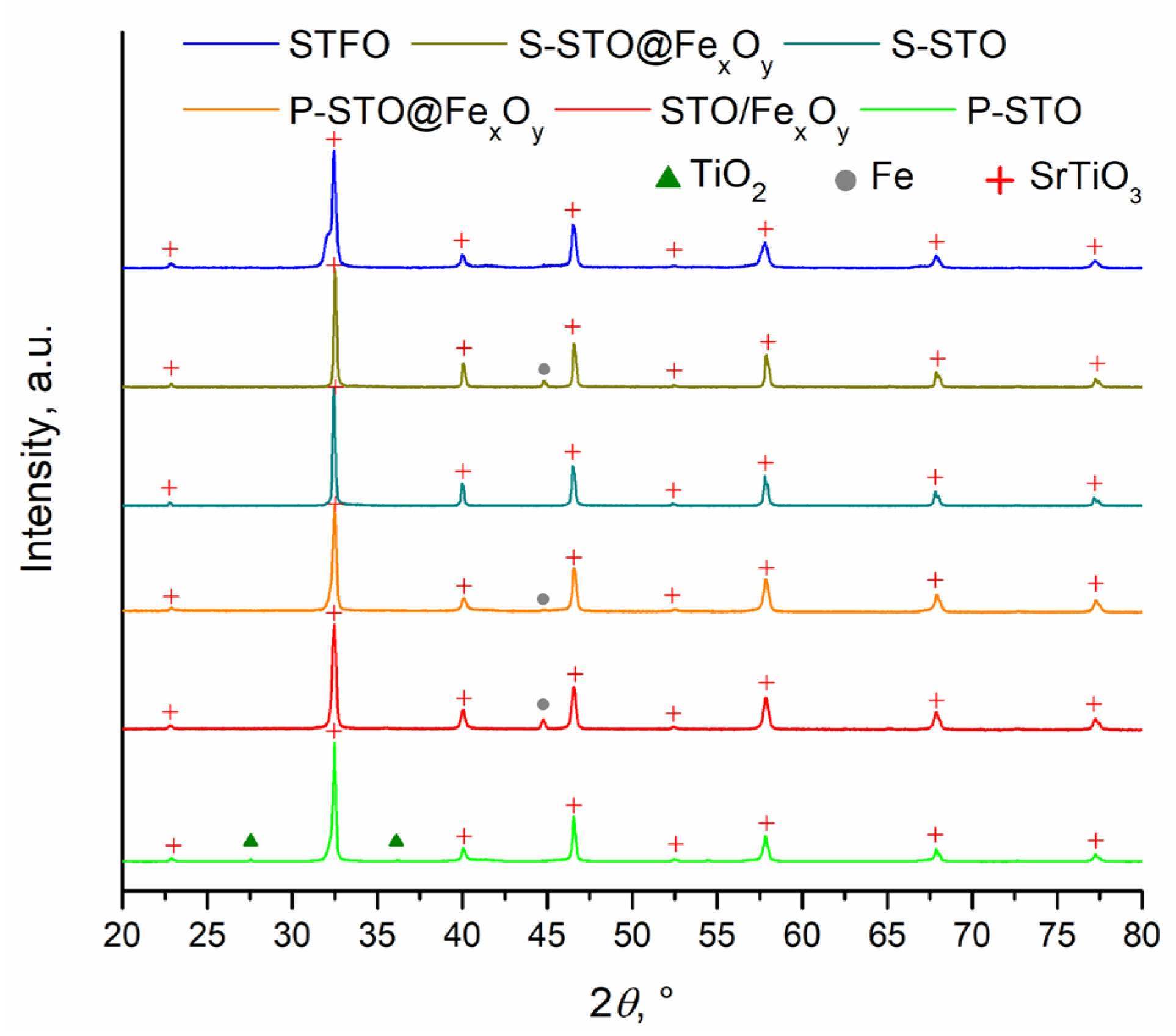
The X-ray diffraction patterns of the reduced materials (Figure 2) confirm the stability of strontium titanate under reducing conditions. In the reduced STO/FexOy, P-STO@FexOy, and S-STO@FexOy samples, the appearance of a metallic phase is evidenced by the presence of an XRD peak at 44.80° [20]. The significantly lower intensity of this reflection in P-STO@FexOy compared to S-STO@FexOy indicates a reduced content of metallic iron, which could influence the catalytic efficacy during the pyrolysis process. The diffractogram of STO/FexOy shows no visible hematite phase, indicating complete reduction of iron, a critical factor for maximizing hydrogen yield in the pyrolysis of polypropylene. The absence of residual iron oxides in the reduced samples suggests that the reduction conditions were optimized, ensuring that the active catalytic sites are available without interference from unreacted metal oxides.

2.1.2. Scanning Electron Microscopy (SEM) Studies and Energy Dispersive Spectroscopy (EDS)

SEM analysis was performed to investigate the morphology and surface properties of the catalysts.
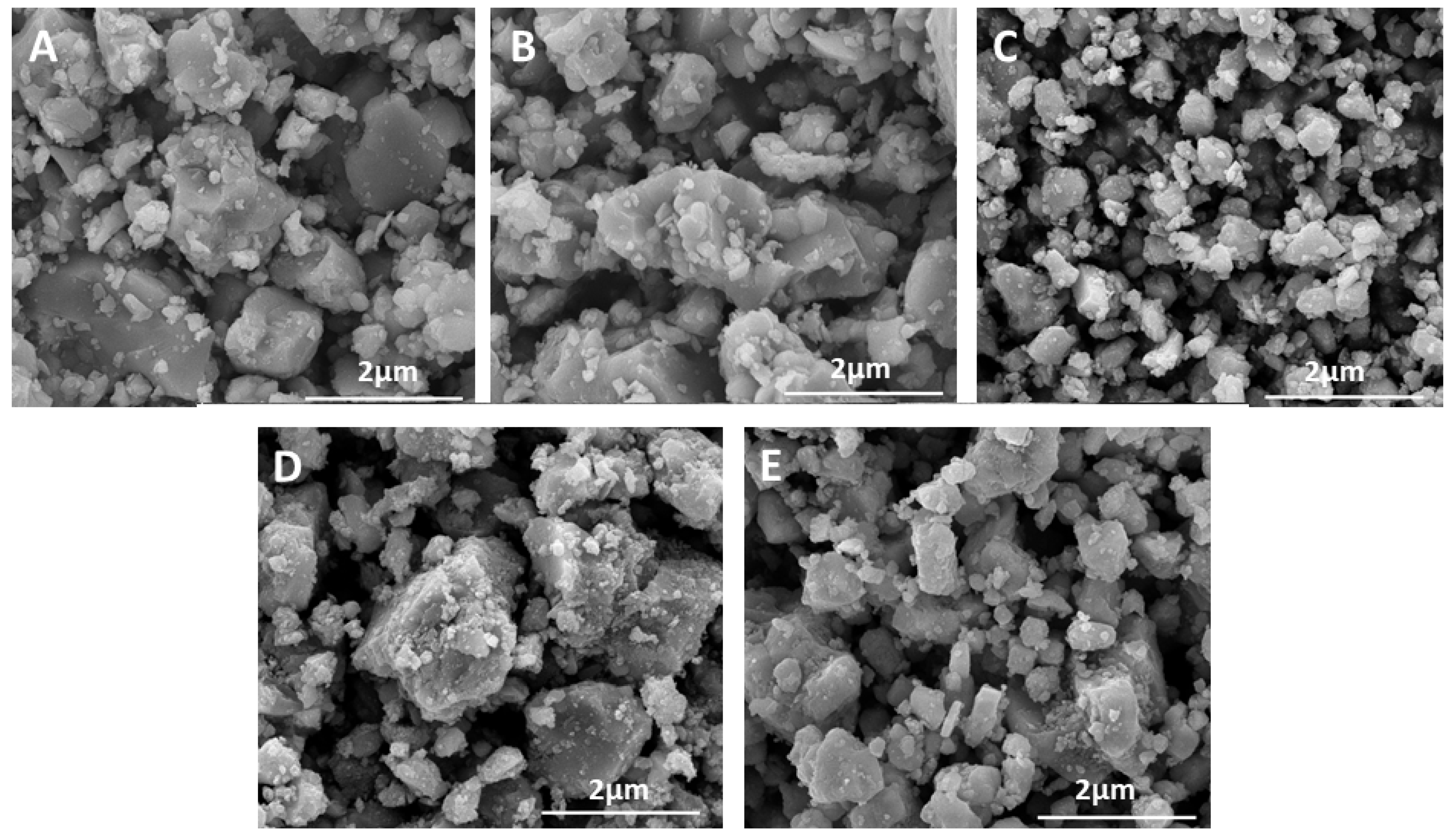
The SEM images depicted in Figure 3 illustrate the morphology of the as-prepared samples (Figure 3A: STO, Figure 3B: STFO, Figure 3C: STO/FexOy, Figure 3D: P-STO@FexOy, Figure 3E: S-STO@FexOy). All samples exhibit a similar morphology characterized by grains ranging from several micrometers in size, alongside smaller fragments generated through mechanical milling in a ball mill. Notably, the impregnated samples, P-STO@FexOy and S-STO@FexOy, do not demonstrate any distinct additional structures; the impregnated layer is virtually imperceptible at this magnification.
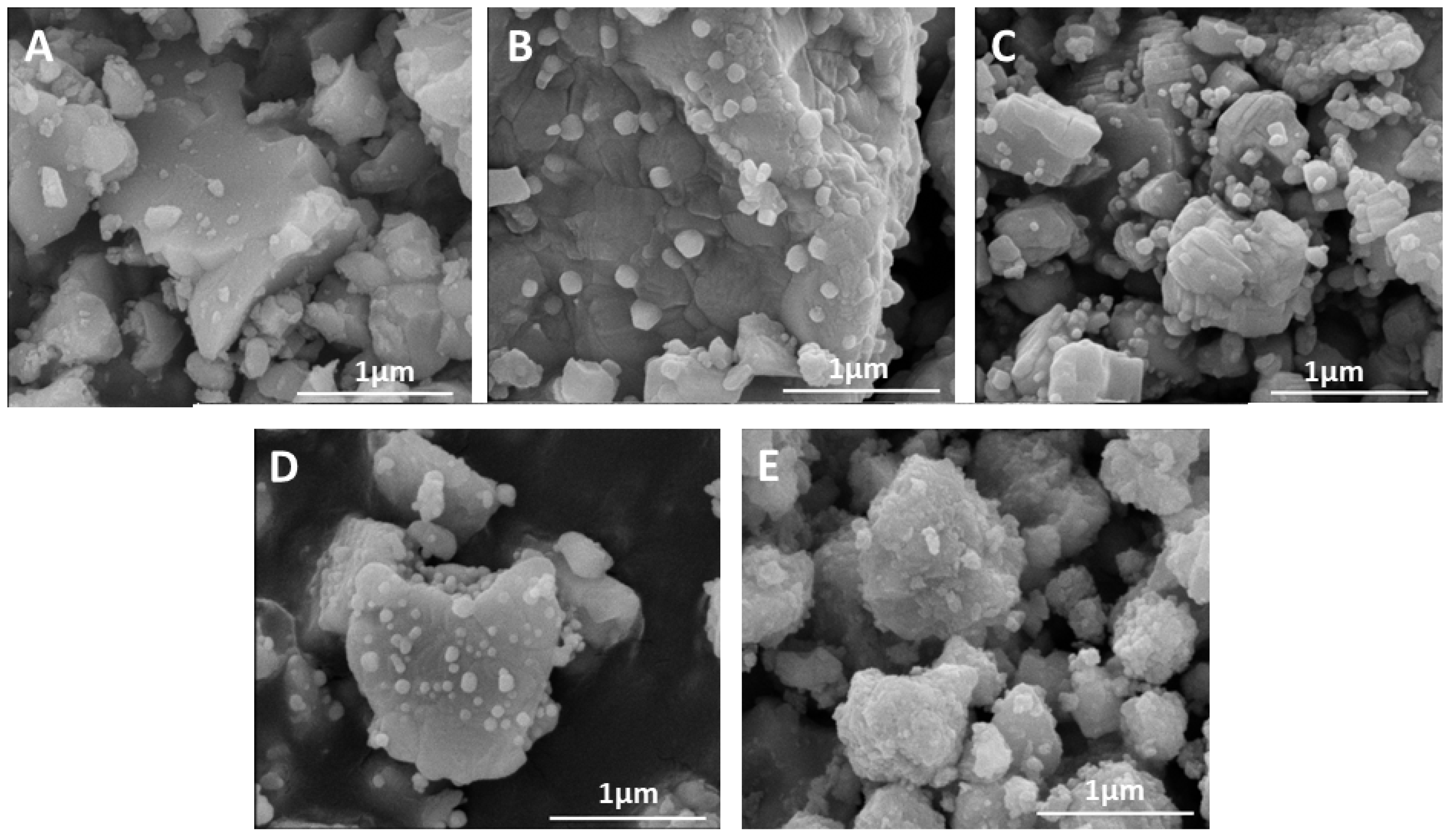
In contrast, the morphology of the samples after reduction in hydrogen at 900 °C for 10 h, as shown in Figure 4, reveals significant changes. The samples STFO (Figure 4B), STO/FexOy (Figure 4C), and P-STO@FexOy exhibit structures of reduced iron on the order of several hundred nanometers that are not observed in the STO sample. Furthermore, the surface morphology of S-STO@FexOy (Figure 4E) diverges markedly from the others, being covered with significantly smaller structures. This indicates a distinct alteration in the material properties as a result of the reduction process.
Energy dispersive spectroscopy (EDS) measurements were performed on reduced STFO, STO/FexOy and S-STO@FexOy to determine the uniformity of iron distribution and quantity in variously prepared samples. Results show satisfactory dispersion; quantitative analysis of Sr, Ti and Fe ratios is presented in Table 2.
Atomic composition was investigated by measuring three different 5 μm2 areas each time (oxygen was omitted for clarity). EDS results show a fairly uniform Fe content in each sample (regardless of the iron incorporation method). In these results, a slight deviation from stoichiometry can also be observed, leading to a disturbance in the strontium to titanium ratio. This observation is consistent across all examined samples and warrants further investigation. However, given its reproducibility among the studied materials, it is unlikely to affect the overall findings.
The specific surface areas of all samples, quantitatively determined using the Brunauer–Emmett–Teller (BET) method, were approximately 1 m2/g. This relatively low surface area indicates that, despite the presence of nanostructures in some post-reduction samples, the overall surface interaction capability remains limited. Therefore, while the reduction process resulted in the formation of smaller iron structures, further optimization of the synthesis parameters may be necessary to enhance both the surface area and the reactivity of these materials in practical applications. This enhancement is particularly crucial for catalytic applications, where increased surface area is often associated with improved catalytic performance. It is important to note that, despite these findings, active metal dispersion and metal–support interactions predominantly govern the phenomena under investigation. Additionally, from the perspective of this study, the comparable specific surface area values across all tested compositions provide a clearer insight into the influence of the catalytic material itself, independent of its total surface area.
The comparison of synthesis routes sheds light on the underlying mechanisms of metal–support interactions, which are critical for optimizing catalytic performance. The solid-state reaction (SSR) method typically results in a more robust and homogenous distribution of the metal particles on the support due to the higher temperatures and longer processing times involved. This can enhance the metal–support bonding, leading to improved stability and anchoring of the active metal species. Conversely, the Pechini method, while advantageous for achieving fine particle sizes and uniform distributions, may not provide the same level of thermal stability and structural integrity during the synthesis process. The lower temperatures involved in the Pechini synthesis may result in less effective metal anchoring due to insufficient interaction between the metal and support phases. This was corroborated by scanning electron microscopy (SEM) observations, which indicated variations in the morphology and distribution of the synthesized materials. As a result, the unexpected finding that SSR-synthesized STO demonstrated superior anchoring capabilities compared to Pechini-synthesized STO highlights the importance of synthesis conditions in determining the final properties of catalytic materials. This insight underscores the necessity for careful selection of synthesis methods in the development of effective catalysts.

2.2. Pyrolysis Experiments

To establish a reference baseline for evaluating the effect of the investigated catalysts on the pyrolytic decomposition of plastics, preliminary experiments were performed in the absence of any catalyst. These baseline trials were carried out across a range of process conditions, including varied temperatures and atmospheres, to capture the inherent behavior of the feedstock during thermal degradation.
Preliminary experiments were conducted with gas chromatography (GC) coupled with mass spectrometry (GC-MS) on pure polypropylene in an argon atmosphere. GC-MS tests showed that in temperatures equal or over to 600 °C, in-bed thermal reforming and decomposition leads to almost pure CH4/H2 mixtures (with little to no higher hydrocarbons in the gas phase). Therefore, GC with a TCD detector and a Carboxen column was used in all subsequent investigations. Considering gas flow through a liquid N2-cooled acetone cold trap (−50 °C at the start of the experiment) and silica gel dryer, the liquid phase was accurately separated. It is known, however, that pyrolytic gas can contain H2S, but no signal of this gas was detected (this is true for both the laboratory-grade PP and waste PP from food packaging). However, in some cases, silica gel from the drying unit showed some indication of H2S presence.

2.2.1. Temperature Influence

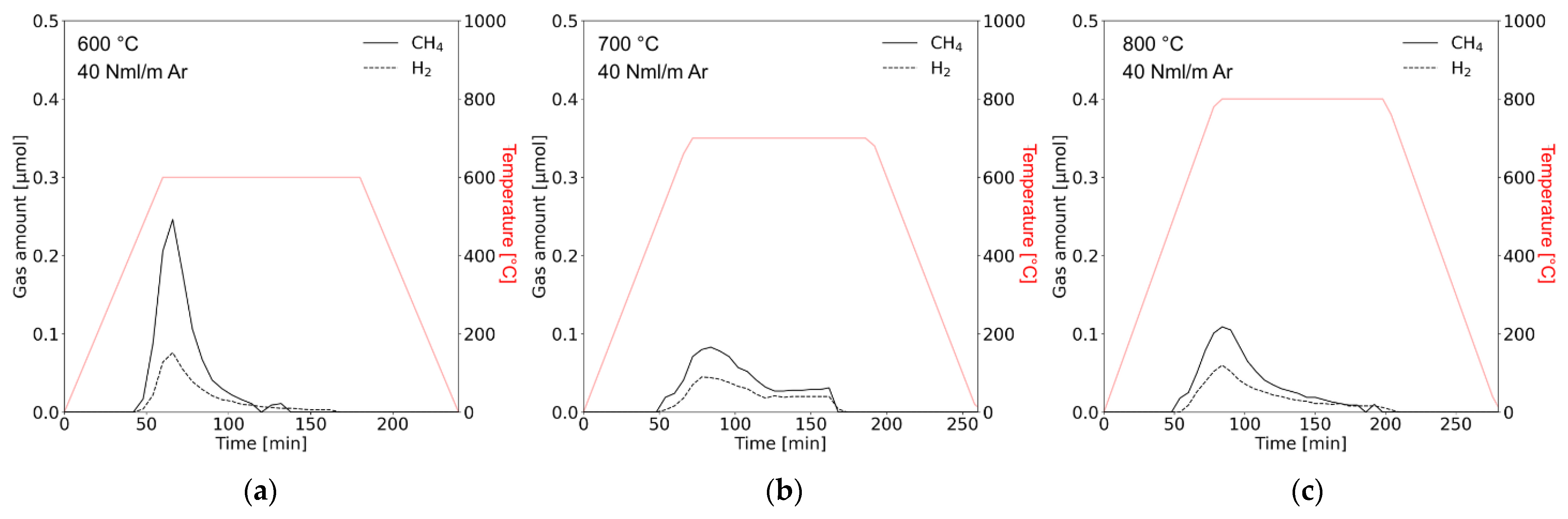
The results obtained for pure polypropylene (PP) in an Ar atmosphere (40 Nml/min, without catalyst) at different temperatures are presented in Figure 5. For each plot, the maximum temperature reached in the red-shaded zone is indicated, along with the residual solid-phase content and total gas composition.
Decomposition of the polymer is a rapid process, beginning around 500 °C and reaching its maximum as the bed approaches the target temperature. The bed gradually degrades, producing only 20% of the maximum gas flow 30 min after reaching the final temperature. The hydrogen content increases between 600 °C and 700 °C, indicating an enhanced contribution of in-bed reforming (conversion of CH4 to H2 and carbon). The absence of a similar increase between 700 °C and 800 °C is unexpected and suggests that the reforming process does not benefit from further heating in this temperature range (the CH4/H2 equilibrium does not change rapidly). At 800 °C, a noticeable contribution of CO appears in the gas mixture (omitted in the figure for clarity, ~1% of total gas), reflecting intensifying cracking and secondary reactions. The residual solid-phase content increases sharply, consistent with enhanced thermal cracking of methane to H2 and carbon, as well as decomposition of hydrocarbons that exist in the liquid phase at lower temperatures. Despite the CO contribution, the CH4/H2 proportion remains identical to that at 700 °C. A clear shift in the process dynamics is also observed, with prolonged total gas production times that are likely related to more intensive in-bed reforming of vaporized liquid-phase products. Results integrated over time are summarized in Table 3.

2.2.2. Atmosphere Influence

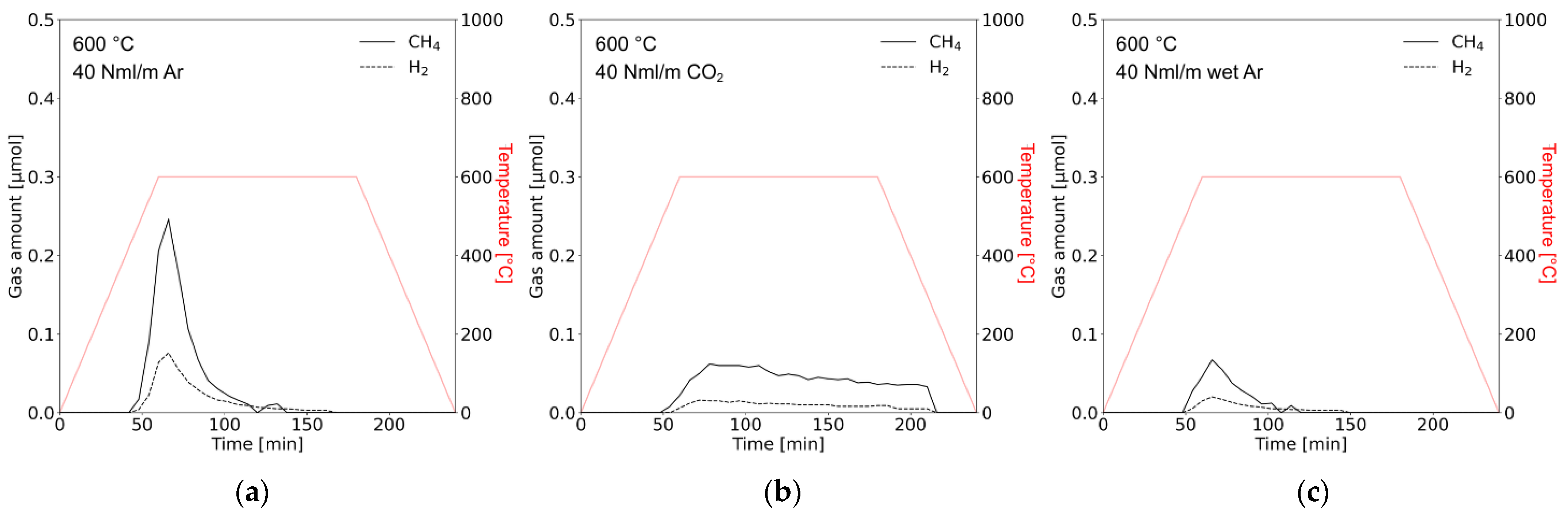
Similar experiments were conducted at a constant temperature to investigate the influence of the surrounding atmosphere on the composition of the pyrolysis gases. The results are shown in Figure 6.
It is evident that the atmosphere significantly affects the rate, time distribution, and the overall composition of produced gases. Under a CO2 atmosphere, the reaction proceeds much slower—the total amount of pyrolysis gas produced is similar, but it is released over a substantially longer time period. Pure CO2 results in a longer residence time and reduces the H2 content by approximately 33%. Nevertheless, at higher temperatures, the gas composition remains relatively stable throughout the experiment. The observed decrease in hydrogen suggests that 600 °C is too low for dry reforming to occur, while the slightly oxidizing character of CO2 suppresses polymer-chain scission. The high residual solid-phase content may indicate incomplete pyrolysis, implying that a bed of the same size as in Ar can operate for a much longer duration while maintaining stable gas production. Additional testing with a higher residence time (4 h instead of 2) was performed to confirm suspicions, achieving an almost nonexistent (<1%) solid residue percentage (marked with a star in Table 4), while gas composition and production dynamics stayed the same.
The introduction of water vapor (generated from room-temperature water), in contrast, alters the gas composition only slightly. The overall dynamics and composition remain similar to those observed in dry argon. However, the reduced solid-phase content is noteworthy, indicating that water vapor effectively removes carbon from the surface through oxidation and subsequent gasification. As with dry reforming in CO2, no noticeable contribution from steam reforming is observed under the investigated conditions. Integrated results over time are compared in Table 4.

2.2.3. Catalyst Influence

The catalysts described above were investigated to determine the interconnected relationships between the SrTiO3 (STO) matrix, iron oxides and pyrolyzed polypropylene. The following experimental conditions were chosen as a suitable reference point: 600 °C (5 °C/minute, 3 h in highest temperature) in pure argon flow (20–40 Nml/min). This being the lowest temperature without higher hydrocarbons observed in gas phase (gas flow parameters values were determined experimentally to obtain best resolution and system stability, simultaneously ensuring gas and liquid phase flow through the system).
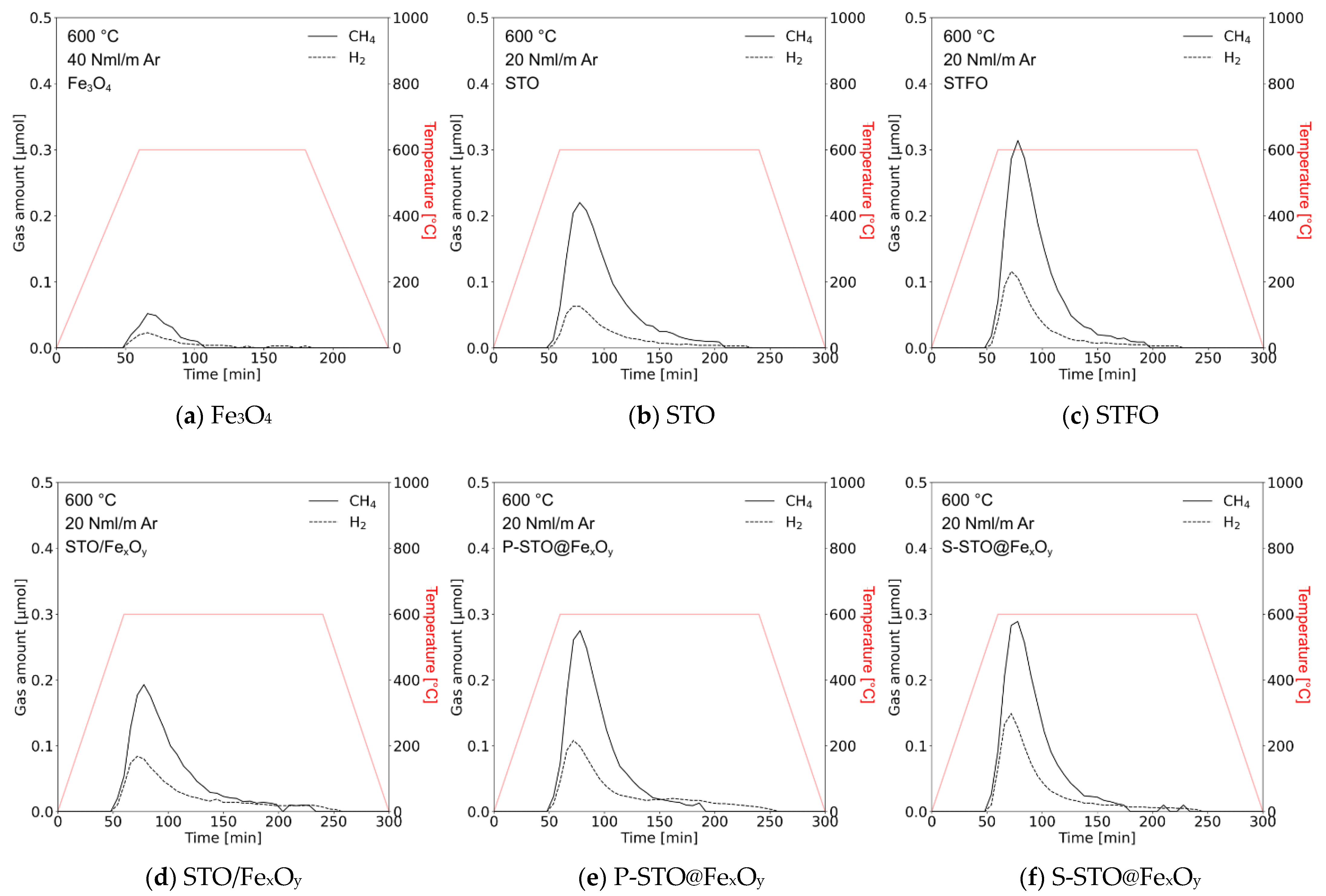
Catalysts were selected with an aim to investigate the STO influence as an oxide support for iron/iron oxide systems. Efforts were also undertaken to investigate the influence of the iron incorporation route on experiment results (compared below in methodology section). Results are compared in Figure 7.
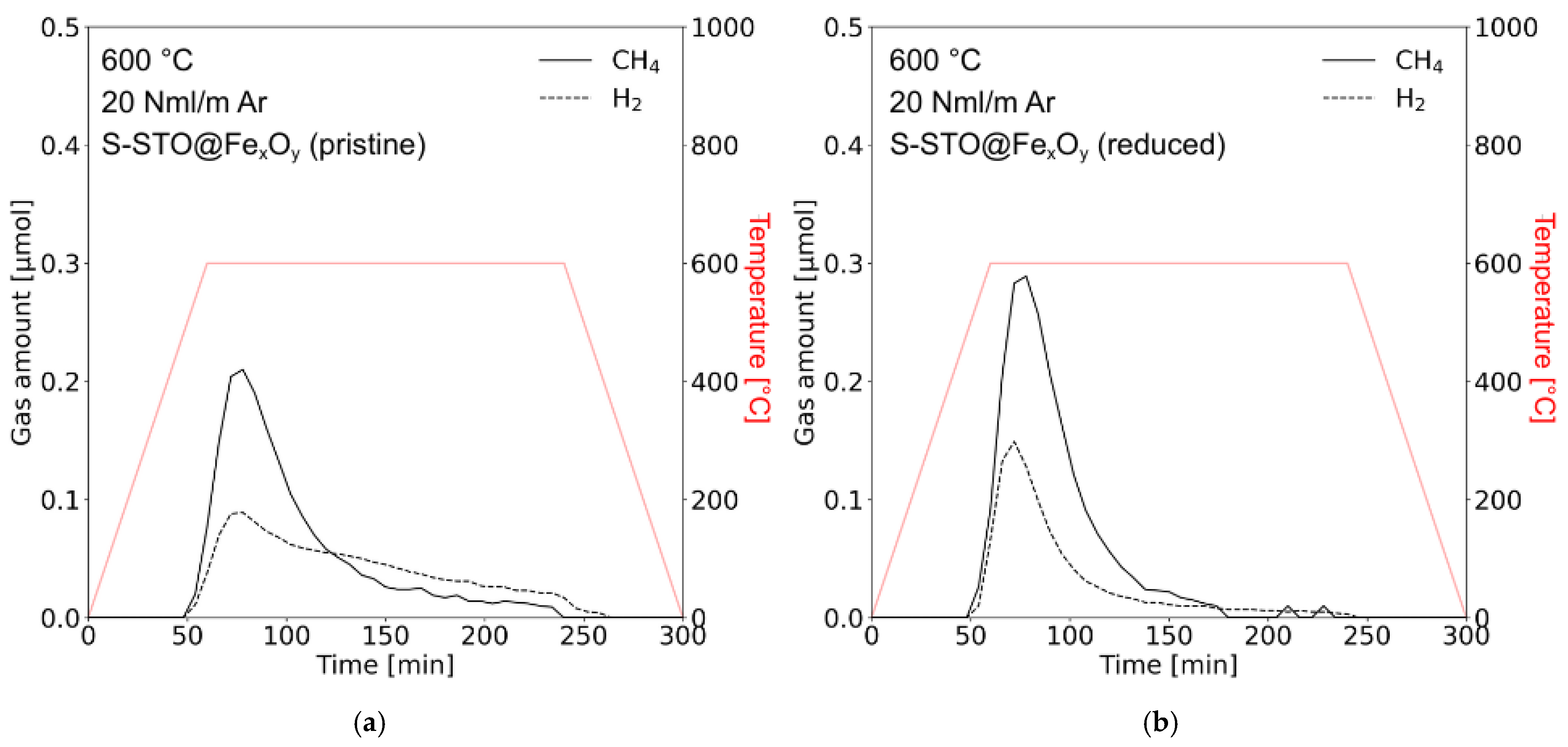
Prepared catalysts were tested in reduced form (900 °C, 5 °C/min, pure H2, 10 h) to see if there was a difference between pristine (as-prepared) and reduced catalysts. However, the differences between both approaches were minor and negligible (due to the reducing characteristics of the used gases and harsh conditions) for most samples (STO, STO/FexOy). Representative results for impregnated S-STO@FexOy samples in both pristine and reduced forms are shown in Figure 8.
As can be observed, differences between pristine and reduced samples impact the H2 production time distribution. In the case of S-STO@FexOy, the hydrogen production ratio slows less rapidly, leading to prolonged gas production and surpassing the reduced sample in terms of H2 production. This phenomenon is a directly visible consequence of metal–support interactions (as in the case of referential samples, the reduced forms of STO and iron oxide performed better in terms of hydrogen content).
As already known from the literature, iron oxide works as a polymer pyrolysis catalyst due to “cutting off”-promoting behavior, fueled by redox reactions in the oxide. Polymer chains are more likely to be broken near the edges, producing lower hydrocarbons. As was confirmed via our investigations, it may have a comparable effect on increasing hydrogen content to the increase of temperature. Therefore, its application in PP pyrolysis is less energetically demanding and, importantly, decreases the solid phase residual amount. The overall influence of the investigated catalysts is summarized in Table 5.
Introduction of the STO matrix, both impregnated and mixed with iron oxide, however, gives astonishingly good results. STO mixed with iron oxide leads to a twofold higher content of hydrogen, while simultaneously reducing the solid carbon content to almost zero (marked as 1.0%), which seems to be the overall property for any STO-based sample. This influence can be explained by available oxygen species on the surface; created carbon species can react with available oxygen in the structure, further reducing the catalyst matrix. As there were no observed carbon oxides (besides in the experiment at 800 °C), produced species must react further and become a part of the liquid phase or break down to H2 and CH4, affecting the overall gas composition.
The impregnation method-leveraging catalyst behaves in comparable way, promoting hydrogen production slightly more. Pristine S-STO@FexOy shows the best result, achieving 45% overall H2 content—due to elongated production of H2 and better kinetics—signifying highly active iron species content thanks to the impregnation procedure and good metal–support interaction. Reducing conditions, chosen empirically (based on previously researched materials and the available theoretical knowledge), were successfully adjusted for obtaining small Fe-containing particles.

3. Materials and Methods

3.1. Materials

Following substrates and chemicals were used, with purity and manufacturer data: strontium nitrate Sr(NO3)2 (99%, Chempur, Piekary Śląskie, Poland), titanium butoxide Ti(C4H9O)4 (99+%, Alfa Aesar, Ward Hill, MA, USA), strontium carbonate SrCO3 (99%, Chempur, Piekary Śląskie, Poland), titanium(IV) oxide TiO2 (anatase 99.5%, Chemat, Gdańsk, Poland), iron(III) oxide Fe2O3 (96%, Sigma Aldrich/Merck, Saint Louis, MO, USA), iron(III) nonahydrate Fe(NO3)3 · 9H2O (98%, Chempur, Piekary Śląskie, Poland), β-cyclodextrin (C6H10O5)7 (99.9%, Ambeed, Buffalo Grove, IL, USA), citric acid monohydrate C6H8O7 · H2O (99.5%, Carlo Erba Reagents, Cornaredo, Italy), ethylene glycol C2H6O2 (99%, POCH/Avantor Performance Materials Poland S.A., Gliwice, Poland).

3.2. Catalyst Preparation

All synthesized materials were reduced in dry hydrogen at 900 °C for 10 h. The catalyst preparation routes were selected to investigate different types of interactions between iron/iron oxide particles and the perovskite support, as well as to assess the exsolution potential relevant to the intended application. The used catalysts, with abbreviations, are summarized in Table 1 (in the Section 1, see above). Pristine catalysts were taken as synthesized (after all of the steps described below). Reduced catalysts were used after the aforementioned pre-reduction process, outside the pyrolytic system.

3.2.1. SrTiO3−δ Synthesized by the Modified Pechini Method (P-STO)

The Pechini method is an established method to synthesize a wide range of multicomponent metal oxides. In this process, metal ions are dissolved in a solution of polycarboxylic acid, such as citric acid, and polyol, such as ethylene glycol. Polycarboxylic acid forms a stable complex with metal ions. Increasing the temperature initiates the polymerization of metal complexes and the polyol solution. This process immobilizes dispersed metal ions in a three-dimensional polymer network. The obtained gel is then sintered to achieve the final product. Immobilization of metal cations in the polymer gel reduces particle growth during sintering and allows the formation of smaller grains than in solid-state synthesis. Final particle size can be tuned via the cation-to-gel ratio and sintering process. The high degree of metal ion dispersion in the Pechini method provides precise stoichiometry control [23,24].
Strontium nitrate and titanium butoxide were used as metal–ion precursors in a 1:1 molar ratio. The molar ratio of metal ions to citric acid and ethylene glycol was 1:2:8. Citric acid, ethylene glycol, and titanium butoxide were mixed on a magnetic stirrer at room temperature. Strontium nitrate was dissolved in deionized water and added to the mixture. The mixture was heated to 80 °C and stirred at 250 rpm. After obtaining a homogeneous solution, the temperature was increased to 120 °C and stirring continued until gelation occurred. The gel was sintered at 400 °C for 1 h, 600 °C for 1 h, and finally at 1200 °C for 12 h. Heating and cooling rates were 3 °C/min. The resulting material was ground using an agate mortar.

3.2.2. SrTiO3 Synthesized by the Solid-State Method (S-STO)

Strontium carbonate and titanium (IV) oxide were used as precursors. The powders were mixed and ground in an agate mortar, then milled in a ball mill with isopropanol. Ball milling was performed in six cycles, each consisting of 50 min of milling at 500 rpm followed by a 10 min break. The isopropanol was subsequently evaporated in a dryer at 70 °C. The dried powder was pressed into pellets and heat-treated in two stages: first at 1200 °C for 10 h and then at 1400 °C for 10 h. Both stages were conducted in air, with heating and cooling rates of 5 °C/min. Between the two heat-treatment steps, the pellet was ground for 30 min and re-pressed. After the second sintering, the pellet was ground again.

3.2.3. SrTiO3−δ/Fe2O3 Powder Mixture (STO/FexOy)

Pechini-synthesized STO and Fe2O3 powders were mixed at a 10:1 mass ratio and ground in an agate mortar. The powder mixture was suspended in isopropanol and milled in a rotary ball mill for six cycles (50 min milling at 250 rpm followed by 10 min cooling). The isopropanol was evaporated at 70 °C, then the material was ground again.

3.2.4. Pechini-Synthesized SrTiO3−δ/Fe2O3 by Impregnation I (P-STO@FexOy)

STO powder synthesized via the Pechini method was mixed with iron (III) nitrate (Fe(NO3)3) dissolved in ethanol, using a Sr:Fe molar ratio of 10:1, with an additional 0.05 mol of β-cyclodextrin per mole of cations. The sample was calcined at 500 °C for 5 h. The obtained material was ground in an agate mortar. β-Cyclodextrin has previously been used successfully as a structure-directing agent for small metal and metal oxide particles [25,26]. Here, it was used to prevent excessive growth of iron nitrate particles during the process and to enhance their dispersion on the substrate. As was revealed during experiments, iron nitrate growth was negligible, so in later experiments β-cyclodextrin addition was omitted.

3.2.5. Solid-State-Synthesized SrTiO3−δ/Fe2O3 by Impregnation II (S-STO@FexOy)

STO powder from the solid-state route was mixed with iron(III) nitrate (Fe(NO3)3) dissolved in isopropanol to obtain 10 wt% Fe2O3 after calcination. The suspension was heated to 50 °C on a hot plate and stirred until complete solvent evaporation. The sample was then calcined at 500 °C for 5 h. The resulting material was ground using an agate mortar.

3.2.6. Sr0.95Ti0.8Fe0.2O3−δ Synthesized by the Modified Pechini Method (STFO)

STFO was synthesized via the modified Pechini method from strontium nitrate, titanium butoxide, and iron nitrate in a molar ratio of 0.95:0.8:0.2. The synthesis procedure followed that used for STO. The final material was ground using an agate mortar.

3.3. Microstructure Characterization

Powders were examined using a Scanning Electron Microscope (SEM, FEI Quanta FEG 250, Eindhoven, The Netherlands) with an energy-dispersive X-ray spectroscope (EDS, EDAX Genesis APEX 2i, Mahwah, NJ, USA) to investigate microstructural evolution, morphology and nanoparticle presence. The analysis was performed by the Secondary Electron (SE) detector in the high vacuum mode. The phase composition was investigated via the X-ray diffraction method using D2 PHASER XE-T equipment (Bruker, Billerica, MA, USA) with a Cu-Kα radiation source. The Rietveld analysis was performed via HighScore 5.2 software. Surface porosity was roughly characterized via Brunauer–Emmett–Teller (BET) equipment Autosorb IQ, Quantachrome (Quantarchrome Instruments/Anton Paar QuantaTec, Boynton Beach, FL, USA).

3.4. Pyrolysis Experiments

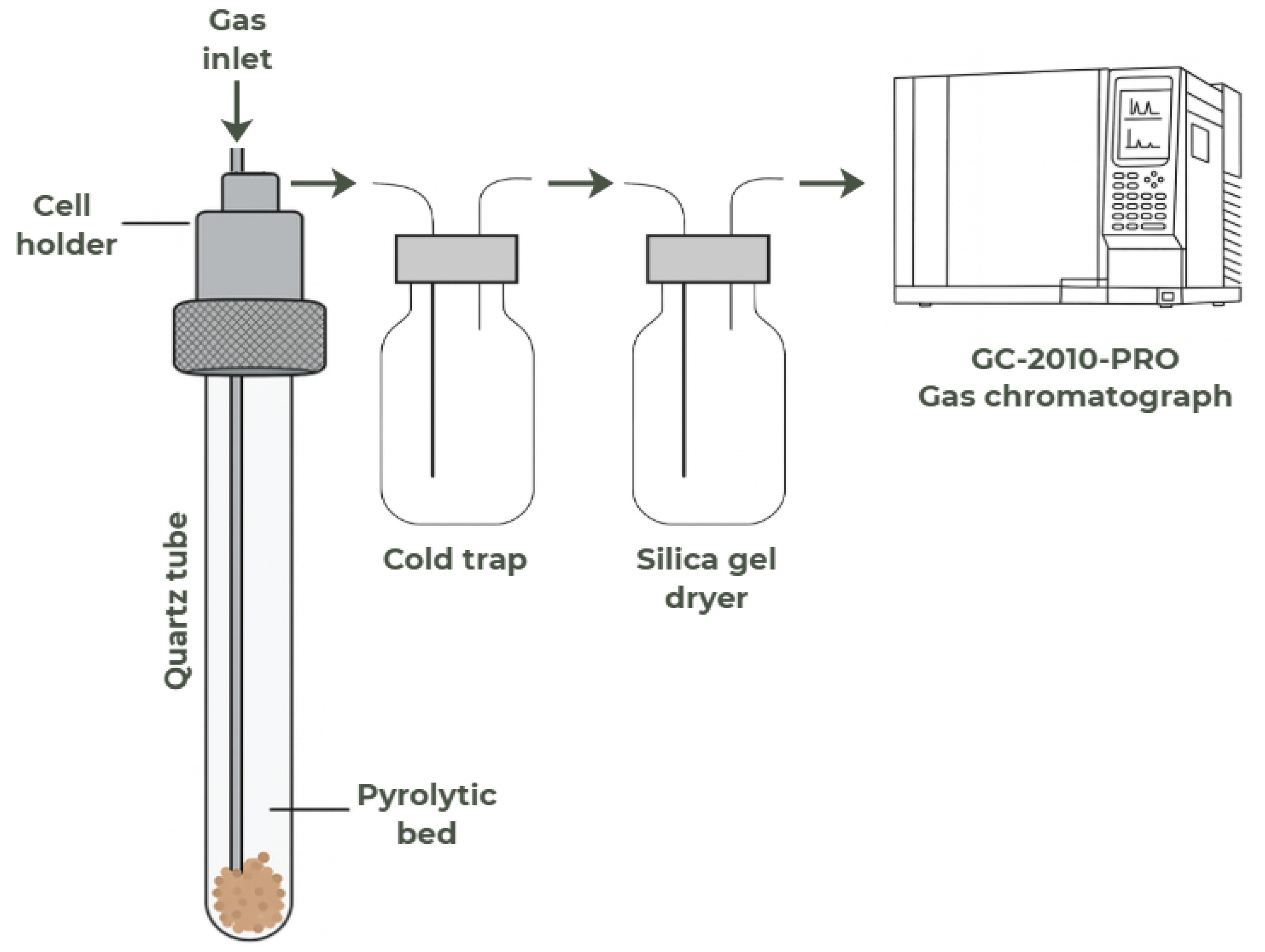
Polymer samples were first cryogenically ground to obtain fine, homogeneous flakes. A mixture of 0.50 g of polymer and 0.05 g of catalyst (10:1 mass ratio, applicable for promoting higher gas-phase content [27,28] and later application) was prepared and homogenized in a laboratory miller to ensure uniform catalyst dispersion within the polymer matrix. The resulting mixture was placed in the pyrolysis setup shown schematically in the Figure 9.
The reaction was performed in quartz-glass tube, with the bed precisely mounted into the heating zone with thermocouple control. A cell holder was made from stainless steel (outside the heating zone), and gas flow was provided to the reaction site by an alumina pipe, to ensure no interactions with the system.
Before measurement, the system was flushed to remove residual gases and establish an inert atmosphere. After flushing, the inert-gas flow rate was set to 20–40 NmL/min, depending on the sample gas production dynamics and oil flow capabilities. Electric furnace heating and cooling rates were both 10 °C/min. The pyrolysis bed was maintained at the final temperature until gas production ceased, typically within 2 h to 4 h. Gas samples were collected every six minutes and analyzed using a gas chromatograph equipped with a calibrated thermal conductivity detector (TCD) and a Carboxen column (enabling separation of CH4, H2, CO and CO2). After completion of the experiment, the remaining ash was weighed and the solid residue fraction was calculated using the formula provided below.
C % = M e n d M c a t M i n i t
where Mend stands for mass of the solid phase after experiment, Minit = 0.55 g or 0.5 g (total polymer and catalyst mass), and Mcat = 0.05 g (mass of the catalyst, if eligible; for non-catalytic experiments Mcat = 0).
The parameters investigated in the experiments included temperature (600, 700, 800 °C), atmosphere (100% Ar, 100% CO2, wet Ar), and the addition of STO/FexOy catalysts. A wet argon atmosphere was obtained via gas flow through room-temperature water, leading to ~3% relative humidity. The addition of water vapor can be estimated as 0.1–0.5 volume percent. Experiments were performed with gas flow control (with ambient pressure). Experiments were performed twice or more, depending on the uncertainty of already-performed measurements.

4. Conclusions

Thermal decomposition (pyrolysis) of polypropylene samples was investigated as a method for recycling polymer waste and producing hydrogen-rich gas mixtures. The effects of atmosphere, temperature, and catalysts (iron oxide and strontium titanate based) were examined. The experiments focused on the gas production dynamics, gas-phase composition, and tunability of the gaseous products. The proposed reactor geometry naturally promotes in-bed reforming, resulting in a purer gas output than reported in previous studies, which is advantageous for the intended application as a fuel source for SOFCs.
As expected, increasing temperature leads to higher hydrogen content in the output gas mixture, accompanied by an increase in the residual solid phase. However, from a practical standpoint, the marginal increase in hydrogen content between 700 °C and 800 °C may not justify the higher energy demand. Modification of the pyrolysis atmosphere was also investigated. Experiments show promising results for small amounts of water vapor and CO2 addition. Notably, CO2 also alters the reaction dynamics, enabling control over the bed residence time through adjustment of CO2 content—an effect that may be beneficial when steady gas output is required, such as during SOFC operation. This aspect will be explored further in future studies.
FexOy systems are well studied for polymer pyrolysis, and the addition of strontium titanate offers a promising support for iron-based catalysts. STO addition reduces the solid phase content to almost 0%; simultaneously, the addition of iron oxide to the system leads to obtaining a hydrogen content as high as 45%, creating valuable SOFC fuel using an easy-to-obtain STO/iron oxide system (S-STO@FexOy). Dynamics varied in most systems (depending on the pristine/reduced catalyst formed); the influence of the precise iron and STO oxidation states in the system will be examined in the future.
Overall, the results suggest that an in-bed-reforming pyrolysis reactor fueled by polypropylene can serve as an effective hydrogen-rich fuel production unit for SOFCs. With appropriate optimization of catalyst composition, operating temperature, and atmosphere, polymer waste can be converted into a usable gaseous fuel, providing both a waste-management pathway and an energy-generation opportunity. Additionally, the char residue and pyrolytic oil by-products may find use in various chemical industry applications. Nevertheless, further research is required to adapt SOFCs to methane-rich fuels produced by this process—potential pathways include modified catalytic layers and engineered surface structures. The best mixtures obtained contained up to 45% H2 and 55% CH4, which can serve as excellent SOFC fuels provided suitable cell modifications are implemented. For 0.5 g of the catalytic bed, the estimated volumetric gas production is around ~0.5 Nml/min (leading to an estimated hydrogen yield for the best samples of YH2 = 150 mL/gPP). Future work will focus on assessing the compatibility of the obtained fuels with SOFC catalytic layers and on optimizing materials for such operation.

Author Contributions

Conceptualization, M.D., J.K., B.B. and P.J.; methodology, M.D., J.K., B.B. and P.J.; validation, M.D.; formal analysis, M.D.; investigation, M.D., J.Z. and K.K.; resources, Y.-F.H., S.-F.W., Y.-L.L., P.J., J.K. and B.B.; data curation, M.D.; writing—original draft preparation, M.D. and J.Z.; writing—review and editing, S.-F.W., P.J., J.K. and B.B.; supervision, S.-F.W., P.J., J.K. and B.B.; funding acquisition, S.-F.W., P.J., J.K. and B.B. All authors have read and agreed to the published version of the manuscript.

Funding

This research was funded by Polish National Centre of Research and Development (NCBiR) via Polish-Taiwanese/Taiwanese-Polish Joint Research DWM/POLTAJ10/24/2023.

Data Availability Statement

Dataset available upon request from the authors.

Acknowledgments

The authors declare no usage of Gen-AI aside from visual, grammar and language editing of the text and schematics.

Conflicts of Interest

The authors declare no conflicts of interest.

Abbreviations

The following abbreviations are used in this manuscript:
STOStrontium titanate (SrTiO3)
SSRSolid state reaction (synthesis method)
SOFCSolid oxide fuel cell
XRDX-ray diffraction
SEMScanning electron microscopy
EDSEnergy dispersive X-ray spectroscopy
PPPolypropylene
GCGas chromatograph/y
GC-MSGas chromatography coupled with mass spectrometry
TCDThermal conductivity detector
BETBrunauer–Emmett–Teller (method)

References

  1. Rist, S.; Almroth, B.C.; Hartmann, N.B.; Karlsson, T.M. A critical perspective on early communications concerning human health aspects of microplastics. Sci. Total Environ. 2018, 626, 720–726. [Google Scholar] [CrossRef] [PubMed]
  2. Calero, M.; Godoy, V.; Quesada, L.; Martín-Lara, M.Á. Green strategies for microplastics reduction. Curr. Opin. Green Sustain. Chem. 2021, 28, 100442. [Google Scholar] [CrossRef]
  3. Kabir, M.S.; Wang, H.; Luster-Teasley, S.; Zhang, L.; Zhao, R. Microplastics in landfill leachate: Sources, detection, occurrence, and removal. Environ. Sci. Ecotechnology 2023, 16, 100256. [Google Scholar] [CrossRef] [PubMed]
  4. Houssini, K.; Li, J.; Tan, Q. Complexities of the global plastics supply chain revealed in a trade-linked material flow analysis. Commun. Earth Environ. 2025, 6, 257. [Google Scholar] [CrossRef]
  5. Atik, F.M. Current practices of plastic waste management, environmental impacts, and potential alternatives for reducing pollution and improving management. Heliyon 2024, 10, e40838. [Google Scholar] [CrossRef]
  6. Schyns, Z.O.G.; Shaver, M.P. Mechanical recycling of packaging plastics: A review. Macromol. Rapid Commun. 2021, 42, 2000415. [Google Scholar] [CrossRef]
  7. Pohl, V.M.; Fonzeu Monguen, C.K.; Heitlinger, D.J.; Lott, P.; Deutschmann, O. Mechanistic Insights into the Thermal Pyrolysis of High-Density Polyethylene and Polypropylene: Towards Sustainable Hydrogen Production and Carbon Valorization. React. Chem. Eng. 2026. [Google Scholar] [CrossRef]
  8. Hergesell, A.H.; Seitzinger, C.L.; Pasternak, H.; Seidling, L.; Ospina Guarin, V.M.; Karpensky, N.; Puch, F.; Welzel, T.; Vollmer, I. Mechano-Catalytic Conversion of Polypropylene over Zeolite-Based Materials. Catal. Sci. Technol. 2025, 15, 7525–7538. [Google Scholar] [CrossRef]
  9. Nechipurenko, S.; Dossumova, B.; Efremov, S.; Zabara, N.; Kaiaidarova, A.; Ibragimova, O.; Omarova, A.; Pogorov, F.; Tokmurzin, D. Polyethylene and Polypropylene Pyrolysis Using Fe3+-Modified Kaolin Catalyst for Enhanced Gas and Pyrolysis Oil Production. Polymers 2025, 17, 2963. [Google Scholar] [CrossRef]
  10. Xue, Y.; Johnston, P.; Bai, X. Effect of catalyst contact mode and gas atmosphere during catalytic pyrolysis of waste plastics. Energy Convers. Manag. 2017, 142, 441–451. [Google Scholar] [CrossRef]
  11. Biessey, P.; Vogel, J.; Seitz, M.; Quicker, P. Plastic waste utilization via chemical recycling: Approaches, limitations, and the challenges ahead. Chem. Ing. Tech. 2023, 95, 1199–1214. [Google Scholar] [CrossRef]
  12. Murthy, K.; Shetty, R.J.; Shiva, K. Plastic waste conversion to fuel: A review on pyrolysis process and influence of operating parameters. Energy Sources Part A Recovery Util. Environ. Eff. 2020, 45, 11904–11924. [Google Scholar] [CrossRef]
  13. Xu, Q.; Guo, Z.; Xia, L.; He, Q.; Li, Z.; Bello, I.T.; Zheng, K.; Ni, M. A comprehensive review of solid oxide fuel cells operating on various promising alternative fuels. Energy Convers. Manag. 2022, 253, 115175. [Google Scholar] [CrossRef]
  14. Li, S.; Xue, Y.; Lin, Y.; Wang, B.; Gao, X. Synergistic activity of the Fe2O3/Al2O3 catalyst for hydrogen production through pyrolysis–catalytic decomposition of plastics. ACS Sustain. Chem. Eng. 2023, 11, 10108–10118. [Google Scholar] [CrossRef]
  15. Martínez-Narro, G.; Phan, H.H.; Hassan, S.; Beaumont, S.K.; Phan, A.N. Catalytic pyrolysis of plastic waste using metal-incorporated activated carbons for monomer recovery and carbon nanotube synthesis. J. Environ. Chem. Eng. 2024, 12, 112226. [Google Scholar] [CrossRef]
  16. Accomb, J.; Wu, C.; Williams, P.T. The use of different metal catalysts for the simultaneous production of carbon nanotubes and hydrogen from pyrolysis of plastic feedstocks. Appl. Catal. B Environ. 2016, 180, 497–510. [Google Scholar]
  17. Carrillo, A.J.; López-García, A.; Delgado-Galicia, B.; Serra, J.M. New trends in nanoparticle exsolution. Chem. Commun. 2024, 60, 7987–8007. [Google Scholar] [CrossRef]
  18. Weber, M.L.; Šmíd, B.; Breuer, U.; Rose, M.-A.; Menzler, N.H.; Dittmann, R.; Waser, R.; Guillon, O.; Gunkel, F.; Lenser, C. Space charge governs the kinetics of metal exsolution. Nat. Mater. 2024, 23, 406–413. [Google Scholar] [CrossRef]
  19. Deibel, A.; Balyan, S.; Zhu, X.; Jiang, C.; Li, W.; Hu, J.; Liu, X. Surface exsolving perovskite ceramics as catalyst for microwave methane pyrolysis to co-generate hydrogen and carbon nanotube. Int. J. Hydrog. Energy 2024, 69, 874–882. [Google Scholar] [CrossRef]
  20. Mitchell, R.H.; Chakhmouradian, A.R.; Woodward, P.M. Crystal chemistry of perovskite-type (Sr1–2xNaxLax)Ti3. Phys. Chem. Miner. 2000, 27, 583–589. [Google Scholar] [CrossRef]
  21. Swope, R.J.; Smyth, J.R.; Larson, A.C. In rutile-type compounds: I. Single-crystal neutron and X-ray diffraction study of H in rutile. Am. Mineral. 1995, 80, 448–453. [Google Scholar] [CrossRef]
  22. Blake, R.L.; Hessevick, R.E.; Zoltai, T.; Finger, L.W. Refinement of the hematite structure. Am. Mineral. J. Earth Planet. Mater. 1966, 51, 123–129. [Google Scholar]
  23. Lin, Y.-J.; Chang, Y.-H.; Yang, W.-D.; Tsai, B.-S. Synthesis and characterization of ilmenite NiTiO3 and CoTiO3 prepared by a modified Pechini method. J. Non-Cryst. Solids 2006, 352, 789–794. [Google Scholar] [CrossRef]
  24. Yao, Z.; Sasaki, U.; Zhang, X.; Liu, L. Pechini method revisited: From synthesis innovation to multifunctional materials. Chem. Mater. 2025, 37, 8475–8485. [Google Scholar] [CrossRef]
  25. Liu, H.; Li, Y.; Wu, H.; Takayama, H.; Miyake, T.; He, D. Effects of beta-cyclodextrin modification on properties of Ni/SBA-15 and its catalytic performance in carbon dioxide reforming of methane. Catal. Commun. 2012, 28, 168–173. [Google Scholar] [CrossRef]
  26. Ibrahim, M.; Labaki, M.; Ponchel, A.; Giraudon, J.-M.; Gardoll, O.; Lamonier, J.-F. Beneficial effect of beta-cyclodextrin assisted synthesis of CuO/hydroxyapatite catalyst in toluene oxidation. ChemCatChem 2023, 15, e202200943. [Google Scholar] [CrossRef]
  27. Aisien, E.T.; Otuya, I.C.A.; Aisien, F.A. Thermal and catalytic pyrolysis of waste polypropylene plastic using spent FCC catalyst. Environ. Technol. Innov. 2021, 22, 101455. [Google Scholar] [CrossRef]
  28. Biakhmetov, B.; Dostiyarov, A.; Ok, Y.S.; You, S. A review on catalytic pyrolysis of municipal plastic waste. WIREs Energy Environ. 2023, 12, e495. [Google Scholar] [CrossRef]
Figure 1. Powder X-ray diffraction patterns (XRD) of investigated samples (as-prepared).
Catalysts 16 00275 g001
Figure 2. X-ray powder diffraction patterns for reduced samples.
Catalysts 16 00275 g002
Figure 3. SEM images of as-prepared samples: (A) STO, (B) STFO (C) STO/FexOy, (D) S-STO@FexOy, (E) P-STO@FexOy.
Catalysts 16 00275 g003
Figure 4. SEM images of samples: (A) STO, (B) STFO (C) STO/FexOy, (D) P-STO@FexOy, (E) S-STO@FexOy after reduction in hydrogen at 900 °C for 10 h.
Catalysts 16 00275 g004
Figure 5. Pyrolytic gas composition and production dynamics (obtained via GC): (a) pure PP, 600 °C, 40 Nml/min Ar, (b) pure PP, 700 °C, 40 Nml/min Ar, (c) pure PP, 800 °C, 40 Nml/min Ar.
Catalysts 16 00275 g005
Figure 6. Pyrolytic gas composition and production dynamics (obtained via GC): (a) pure PP, 600 °C, 40 Nml/min Ar, (b) pure PP, 600 °C, 40 Nml/min CO2, (c) pure PP, 600 °C, 40 Nml/min wet (~3% rel. hum.) Ar.
Catalysts 16 00275 g006
Figure 7. Pyrolytic gas composition and production dynamics (obtained via GC) for experiments with reduced catalysts: (a) PP + Fe3O4, 600 °C, 20 Nml/min Ar, (b) PP + STO, 600 °C, 40 Nml/min Ar, (c) PP + STFO, 600 °C, 20 Nml/min Ar, (d) PP + STO/FexOy, 600 °C, 20 Nml/min Ar, (e) PP + P-STO@FexOy, 600 °C, 20 Nml/min Ar, (f) PP + S-STO@FexOy, 600 °C, 20 Nml/min Ar.
Catalysts 16 00275 g007
Figure 8. Pyrolytic gas composition and production dynamics (obtained via GC) for experiments with pristine/reduced catalyst: (a) pristine S-STO@FexOy, (b) reduced S-STO@FexOy.
Catalysts 16 00275 g008
Figure 9. Measurement system built for pyrolytic experiments.
Catalysts 16 00275 g009
Table 1. Summary of investigated catalysts.
Sample No.Preparation MethodAbbreviationPretreatment
1.Reference—pure FexOyFe2O3, Fe3O4Pristine, reduced
2.Reference—pure SrTiO3STOPristine, reduced
3.Mixing (powders, ball mill)STO/FexOyPristine, reduced
4.Doping—Sr0.95Ti0.8Fe0.2O3−δSTFOPristine, reduced
5.Impregnation of Pechini synthesized STO by FexOyP-STO@FexOyPristine, reduced
6.Impregnation of SSR synthesized STO by FexOyS-STO@FexOyPristine, reduced
Table 2. Sr/Ti/Fe ratios obtained from EDS for main samples of interest (reduced form).
SampleSr [at%]Ti [at%]Fe [at%]
STFO33 ± 252 ± 215 ± 2
STO/FexOy33 ± 253 ± 214 ± 1
S-STO@FexOy30 ± 257 ± 212 ± 2
Table 3. Temperature influence on PP pyrolysis.
Temperature [°C]CH4 [mol%]
± 0.5%
H2 [mol%]
± 0.5%
CO [mol%]
± 0.5%
Residual Char [Weight%]
± 3%
600 °C72.627.40.06.0
700 °C63.836.20.020.0
800 °C63.135.91.026.0
Table 4. Atmosphere influence on PP pyrolysis.
AtmosphereCH4 [mol%]
± 0.5%
H2 [mol%]
± 0.5%
Residual Char [Weight%]
± 3%
100% Ar72.627.46.0
100% CO281.518.540.0 *
Wet Ar (3% rel. hum.)71.528.53.0
Table 5. Catalysts’ influence on PP pyrolysis.
SampleCH4 [mol%]
± 0.5%
H2 [mol%]
± 0.5%
Residual Char [Weight%]
± 3%
Fe2O372.627.415.0
Fe3O463.936.114.0
STFO74.825.21.0
STO/FexOy66.233.81.0
P-STO@FexOyPristine14.185.91.0
Reduced67.232.81.0
S-STO@FexOyPristine54.945.11.0
Reduced67.532.51.0
STOPristine74.525.51.0
Reduced77.222.81.0
Disclaimer/Publisher’s Note: The statements, opinions and data contained in all publications are solely those of the individual author(s) and contributor(s) and not of MDPI and/or the editor(s). MDPI and/or the editor(s) disclaim responsibility for any injury to people or property resulting from any ideas, methods, instructions or products referred to in the content.