Article

Efficient Oxygen Evolution Reaction Performance of In Situ Hydrothermally Grown Cobalt–Nickel Layered Double Hydroxide on Nickel Foam


1
Department of Chemistry, College of Science, Princess Nourah Bint Abdulrahman University, Riyadh 11671, Saudi Arabia
2
Laboratoire de Chimie Appliquée des Matériaux, Faculté des Sciences, Mohammed V University, Rabat 10000, Morocco
*
Author to whom correspondence should be addressed.
Catalysts 2026, 16(3), 254; https://doi.org/10.3390/catal16030254
Submission received: 20 January 2026 / Revised: 27 February 2026 / Accepted: 4 March 2026 / Published: 9 March 2026
(This article belongs to the Special Issue Catalytic Materials in Electrochemical and Fuel Cells)

Abstract

CoNi layered double hydroxides (CoNiLDHs) were successfully synthesized on nickel foam (NF) using a hydrothermal method. X-ray diffraction (XRD) analysis confirmed the formation of a well-defined hydrotalcite-like phase, including a strong (003) peak, indicating layered stacking. Scanning electron microscopy (SEM) revealed a 3D hierarchical nanosheet structure resembling flower-like arrays, which was further supported by EDS mapping showing a uniform distribution of Co, Ni, and O. Electrochemical studies demonstrated excellent OER activity, with a low overpotential of 188 mV at 10 mA/cm2 and a Tafel slope of 97.48 mV/dec, inferring rapid reaction kinetics. Furthermore, the material exhibited a significant electrochemical surface area (ECSA) compared to bare NF. Chronoamperometry over 24 h confirmed the operational durability catalyst, stabilizing around 7–8 mA/cm2, validating its potential as a cost-effective and efficient OER electrocatalyst in alkaline media.

1. Introduction

The need to efficiently and sustainably convert energy has placed electrochemical water splitting front and center for hydrogen production. Regarding both half-reactions, the oxygen evolution reaction (OER) continues to pose a major challenge due to slow multi-electron kinetics and high overpotentials. To address these issues, much work has been conducted on non-precious, transition metal catalysts that meet the activity, durability, and cost-effectiveness requirements. Within this scope, CoNiLDHs are some of the most advanced OER electrocatalysts because of their tailored structural features, variable oxidation states, and synergistic metal center interactions [1,2]. The OER electrocatalytic performance of CoNiLDHs is enhanced by their increased surface area and greater number of active sites due to increased electron environments and structure adjustment. Recent work has shown that adding secondary components or changing defect density within the CoNiLDHs lattice can significantly boost intrinsic OER activity.
The integration of CoNiSe2 domains into NiFe oxyhydroxide matrices through in situ transformation has resulted in strong interfacial electronic coupling occurring with increased conductivity at the active interface and achieving ultralow overpotentials [3]. In a similar manner, photoactive nanostructures such as TiO2-CoNiLDH hybrids gained capabilities as dual-function electrocatalysts through PEC water oxidation driven by photogenerated charge carrier separation [4]. Defect engineering includes doping with iron, altering the local bond angles in the cobalt–nickel layered double hydroxide resulting in improved electrochemical properties and efficiency. Surface cation substitution synthesis methods have revealed an increase in charge transfer efficiency with changes in d-band structure and surface adsorption energetics leading to enhanced overall CO2 reduction reaction (CO2RR) performance [5]. Further developments of CoNiLDH nanoflakes involving Mo heteroatom doping alongside engineered oxygen vacancies formed under the revision of bifunctional sites stabilizing OER intermediates possessing remarkable stability paired with low overpotentials [6]. Electrooxidation techniques have been used to promote amorphization at the edges of CoNiLDH nanosheets. This method helps in the in situ formation of CoOOH species, which acts as an electroactive transient species enabling greatly enhanced electrocatalytic activity and stability in alkaline media [7]. Additionally, the controlled reduction in the thickness to atomic scale has created defect-rich 2D nanosheets with edge plane exposure and lattice distortion, as seen in ultrathin CoNiLDH single-unit-cell nanostructures [8].
Morphology-controlled growth on conductive surfaces brings additional benefits concerning catalytic integration. Direct solvothermal synthesis of flower-like CoNiLDHs onto nickel foam substrates results in superior hierarchical microflower structures that enhance electron mobility and mass transport, thus providing self-supporting and binder-free structures [9]. Finally, MOF-mediated synthesis has led to ultrathin CoNi-based LTHs with layer architecture exhibiting synergistic metal interactions, outranking commercial RuO2 on catalytic benchmarks [10].
Collectively, these advances underscore the structural and electronic versatility of CoNiLDHs as an adaptable platform for OER electrocatalysis. By employing defect modulation, heterostructure construction, and substrate engineering, recent research has paved the way toward the rational design of high-performance CoNiLDH-based material for sustainable water oxidation.
In this study, the CoNiLDHs from Co(NO3)2·6H2O and Ni(NO3)2·6H2O and CTAB using methanol and DI as solvent was synthesized under hydrothermal process for 24 h at 180 °C. The product was characterized using various techniques such as X-ray diffraction (XRD) and scanning electron microscopy (SEM). The product used to cover nickel foam has been tested for oxygen evolution reaction. Unlike conventional powder-based LDH catalysts, this work demonstrates a direct in situ hydrothermal growth of CoNiLDHs on nickel foam, enabling binder-free electrode fabrication with improved electrical contact and structural stability. The synergistic interaction between cobalt and nickel centers combined with the hierarchical nanosheet architecture significantly enhances electrolyte accessibility and charge transfer kinetics. Importantly, the obtained overpotential of 188 mV at 10 mA cm−2 positions this catalyst among highly competitive CoNi-LDH systems synthesized through simple and scalable routes. Therefore, this study provides an effective and low-cost strategy for designing self-supported OER electrocatalysts.

2. Results and Discussion

2.1. Structural and Chemical Characterization

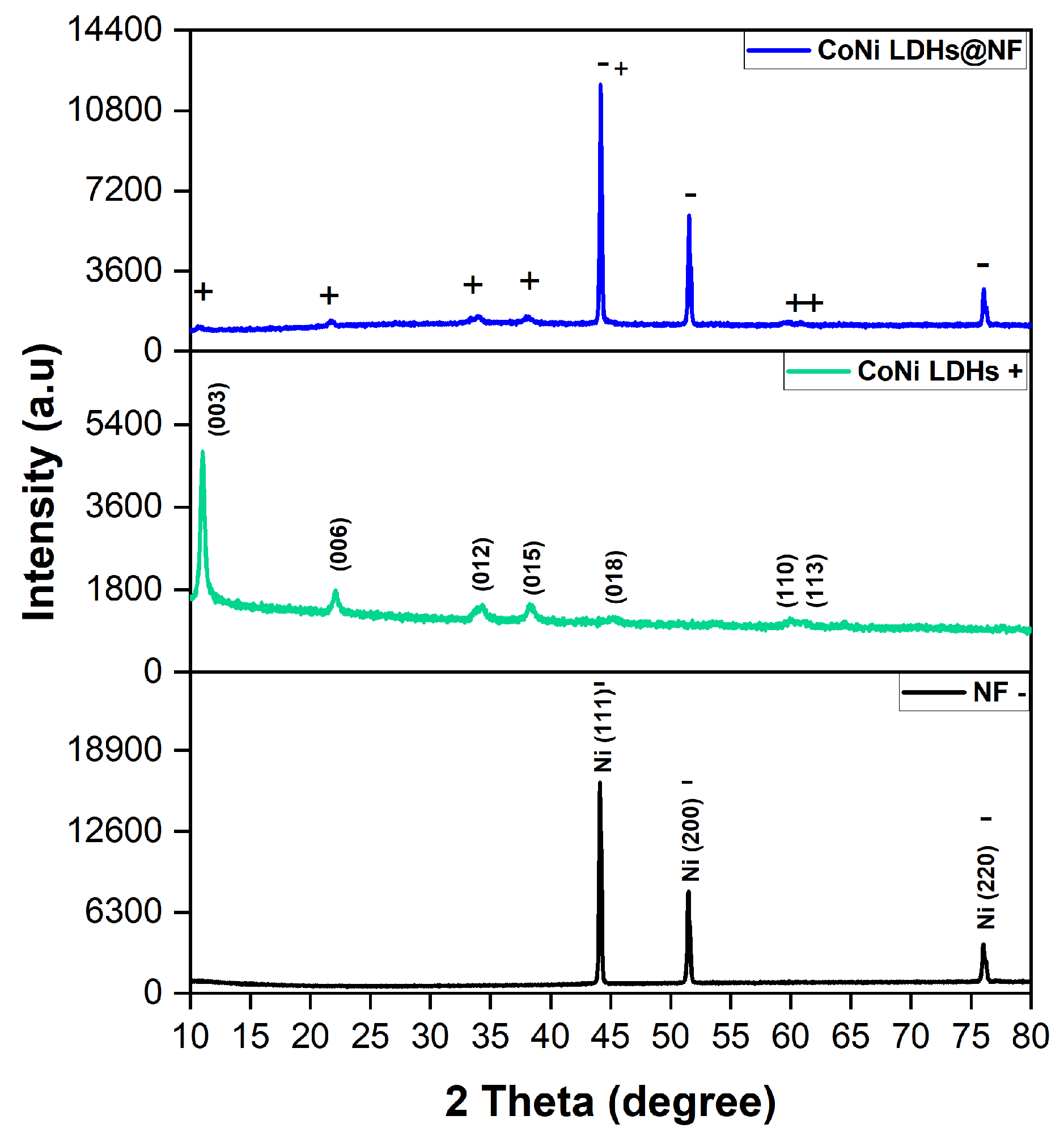
The XRD patterns show well-defined peaks at 2θ positions of about 11.3°, 22.7°, 33.4°, 38.8°, 45.1°, 60.1°, and 62.7°, corresponding to the (003), (006), (012), (015), (018), (110), and (113) planes, which are typical for a hydrotalcite-like phase with a brucite-like layered arrangement, as shown in Figure 1. The strong intensity of the (003) reflection at a low angle indicates that the LDH layers are stacked in an ordered fashion, which confirms high crystallinity [11].
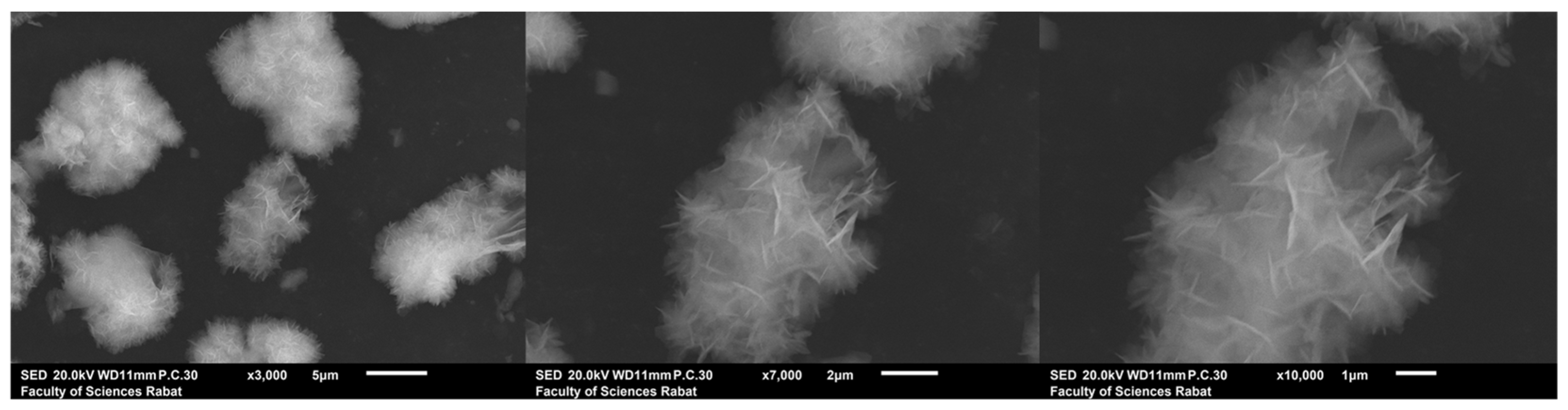
The SEM images show a flower-like hierarchical structure composed of interconnected nanosheets, as shown in Figure 2. The architecture provides a large active surface area and facilitates efficient electrolyte penetration and charge transport, which is advantageous for electrocatalytic processes. The nanosheet network is continuous and well-distributed, indicating a uniform growth process during synthesis.
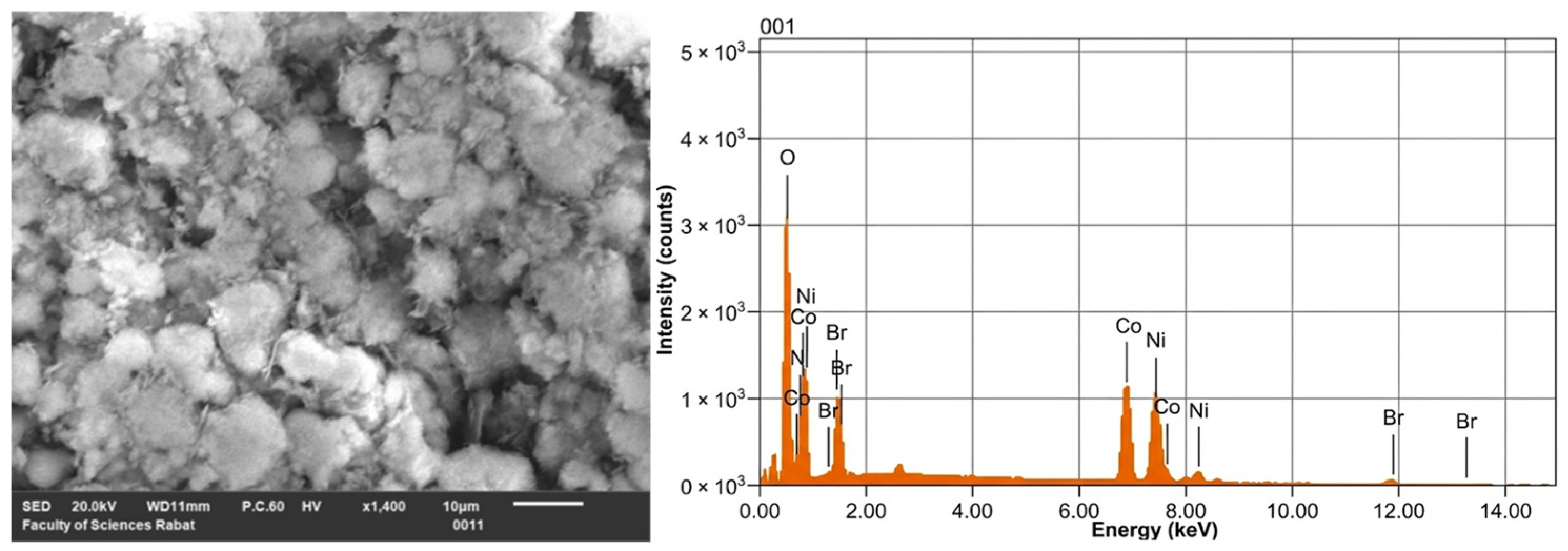
The elemental composition was confirmed via EDS, as shown in Figure 3, which shows nickel (29.41 wt%), cobalt (28.57 wt%), and oxygen (27.15 wt%) as the main constituents. The atomic ratios of Co and Ni are closely matched, which indicates a homogeneous bimetallic distribution in the LDH lattice. A significant bromine signal (14.87 wt%) is also detected, which is attributed to the use of CTAB during synthesis, while no other metallic impurities are observed.
Overall, the combination of crystallographic structure, hierarchical nanosheet morphology, and balanced elemental distribution highlights the successful synthesis of CoNiLDHs, resulting in a stable and high-surface-area platform appropriate for advanced electrocatalytic applications.
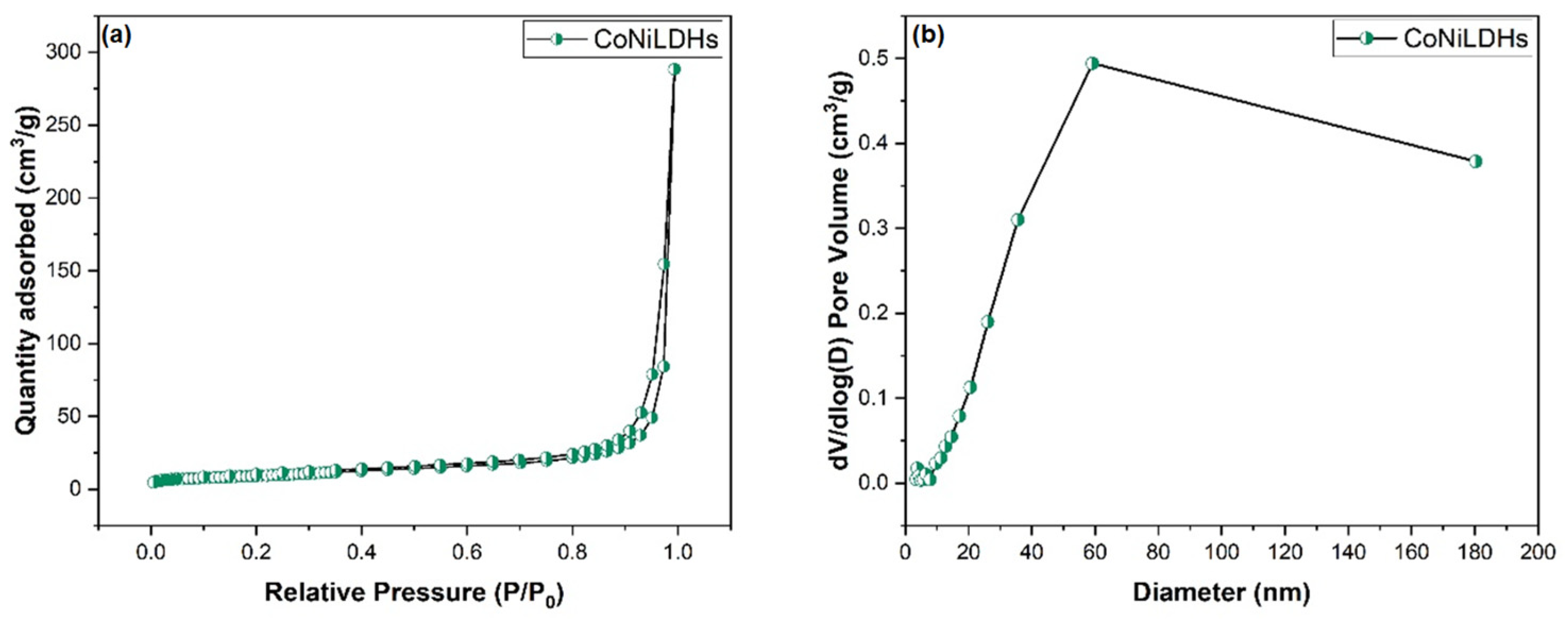
As shown in Figure 4a, the N2-sorption data indicate that the CoNiLDHs is a mesoporous material. Its adsorption isotherm is of IUPAC type IV with a pronounced H3 hysteresis loop, a signature of aggregated plate-like particles with slit-shaped pores [12]. Such wide mesopores afford a large accessible surface area and rapid mass transport of reactants. Indeed, the measured BET area of 33.2 m2/g is very close to the BJH-derived area of 31.1 m2/g (Figure 4b), indicating a consistent pore structure with little inaccessible microporosity. In practical terms, this mesoporous architecture should expose abundant active sites and enable fast diffusion, both of which tend to enhance catalytic or electrochemical performance.
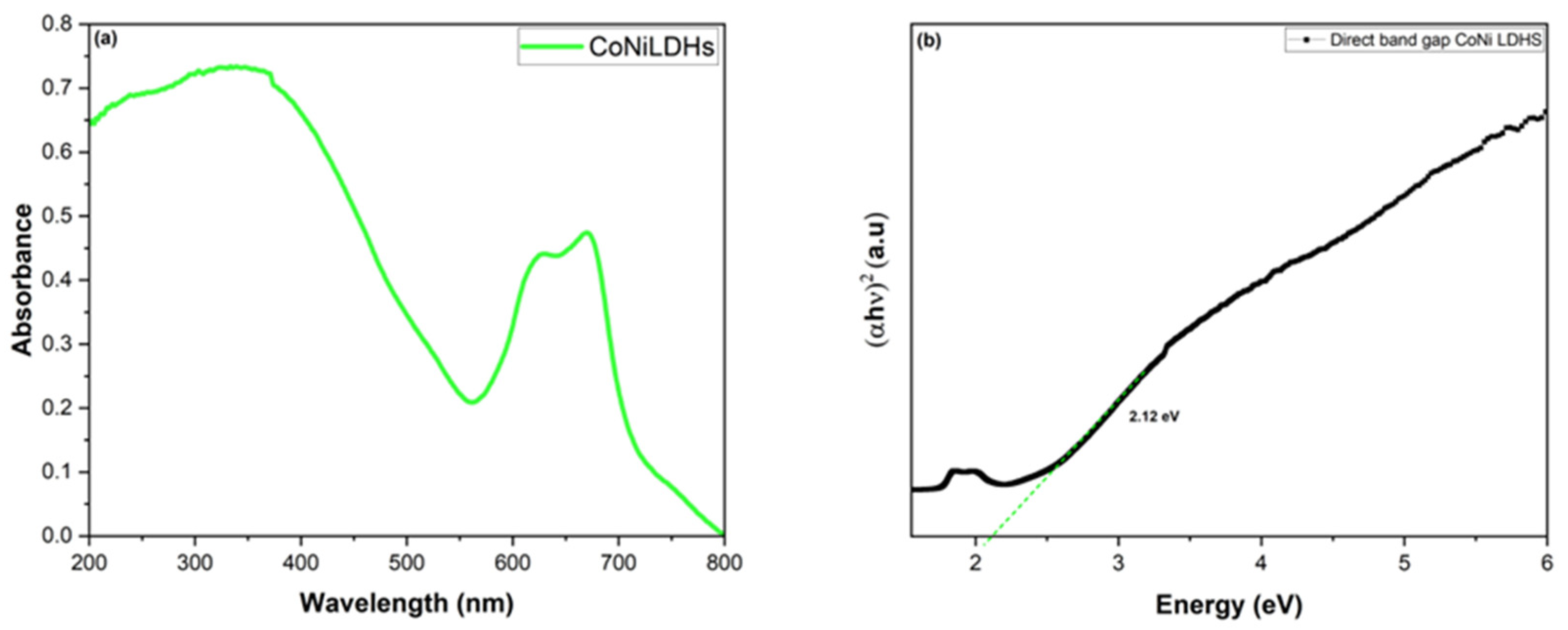
The UV–Vis diffuse reflectance spectrum (UV–Vis DRS) of the material is presented, as shown in Figure 5a, revealing an absorption onset for CoNi-LDHs at approximately 590 nm, which corresponds to an optical band gap of 2.12 eV, as estimated from the Tauc plot (Figure 5b). This moderate band gap implies semiconductor-like electronic behavior, enabling improved charge transport under electrochemical polarization. Combined with the mesoporous textural characteristics evidenced by the Type IV isotherm with H3 hysteresis, these features indicate a structurally and electronically optimized material, facilitating electrolyte penetration, exposure of active sites, and efficient electron transfer. Collectively, the mesoporosity and favorable electronic structure synergistically render the CoNi-LDHs highly suitable for electrochemical reactions, particularly the oxygen evolution reaction.

2.2. Mott–Schottky (M–S) Measurements

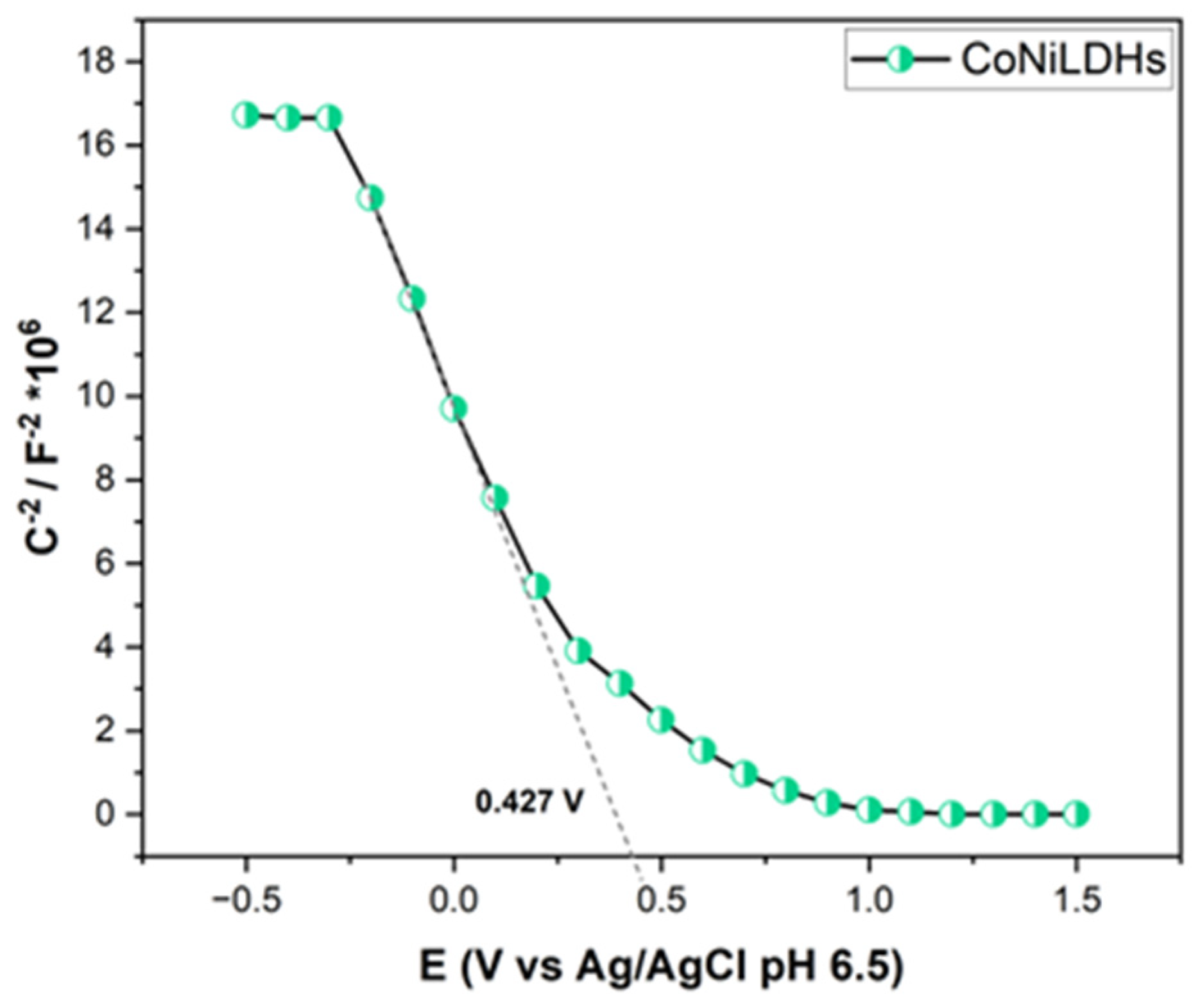
The semiconductor behavior of CoNiLDHs was further evaluated via Mott–Schottky (M–S) analysis. The M–S plots of CoNiLDHs@NF clearly display a negative slope, confirming their p-type nature, as shown in Figure 6 [13,14].
The flat-band potential was determined from the intercept of the linear fit with the potential axis. The measured value of 0.427 V vs. Ag/AgCl at pH 6.5 using Na2SO4 (0.1 M) corresponds to approximately 1.0 V vs. RHE according to:
ERHE = EAg/AgCl + 0.197 + 0.059 ∗ pH
For p−type semiconductors, the valence band edge (EVB) is typically located slightly more positive than the flat-band potential [15], often approximated as:
EVB = Efb + 0.2 V
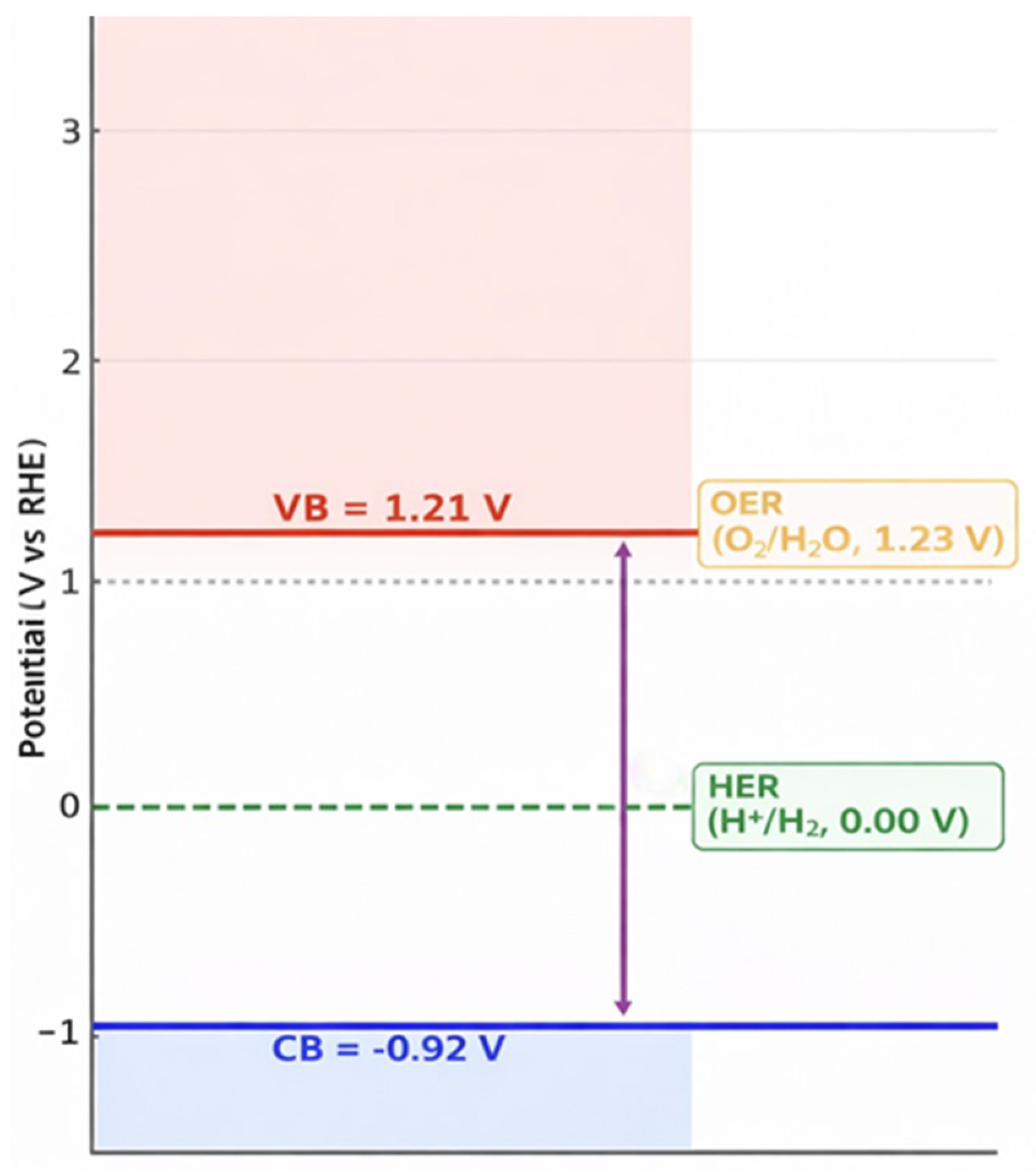
Substituting the values gives EVB = 1.2 vs. RHE. The conduction band edge (ECB) was then calculated from the optical band gap (2.12 eV) determined via UV–Vis DRS:
ECB = EVB − Eg = −0.92 V vs. RHE
This band alignment shows that CoNiLDHs have sufficiently negative conduction band levels to allow proton reduction and sufficiently positive valence band levels to drive water oxidation, which explains their remarkable bifunctional electrocatalytic performance (Figure 7).
This work focuses exclusively on the electrochemical oxygen evolution reaction (OER) performance of CoNi-LDHs@NF under alkaline conditions. The electronic band structure was analyzed to provide insight into the charge transfer characteristics relevant to electrocatalysis rather than light-driven processes. At pH 6.5, the conduction band (CB) edge is located at approximately −0.92 V vs. RHE, while the valence band (VB) is positioned at around 1.21 V vs. RHE. Notably, the VB potential is very close to the thermodynamic OER potential (O2/H2O, 1.23 V vs. RHE), suggesting that hole accumulation at high anodic bias is energetically favorable for oxygen evolution. Although these band positions are often discussed in the context of photocatalysis, here, they are used to qualitatively describe the electronic structure and its possible influence on charge transport and surface oxidation processes during electrochemical OER [16].

2.3. Electrochemical Performance

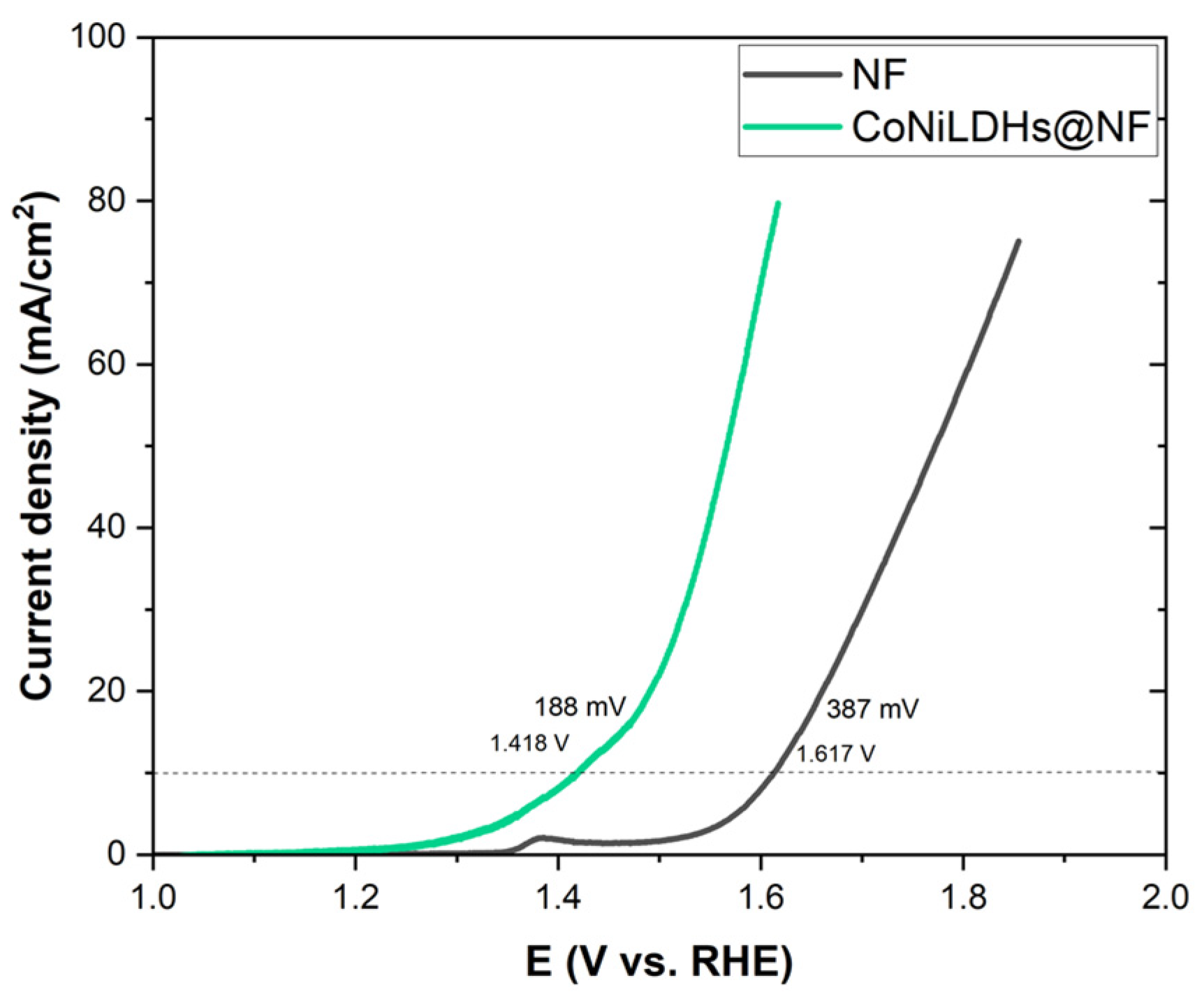
Using linear sweep voltammetry, cyclic voltammetry, and chronoamperometry, the electrochemical performance of the CoNiLDHs@NF catalyst has been thoroughly assessed to show its great affinity for the oxygen evolution reaction (OER). Compared to a much larger overpotential of 387 mV for bare nickel foam (NF), the linear sweep voltammetry (LSV) curves in Figure 8 show an astoundingly low overpotential of 188 mV at a current density of 10 mA/cm2 for CoNiLDHs@NF, proving the effective catalytic activity of the material. This lower overpotential implies the catalyst needs substantially less energy to power the OER process, an essential characteristic for practical energy uses including water splitting.
A redox feature associated with the Ni2+/Ni3+ transition is clearly observed for bare nickel foam. After the in situ growth of CoNiLDHs, this feature becomes less pronounced while remaining detectable. This behavior is attributed to the partial coverage of the nickel foam surface with CoNiLDHs, which suppresses the Ni-based redox contribution, as well as to the increased capacitive current arising from the three-dimensional porous architecture and the partially pre-oxidized surface formed during synthesis and electrochemical activation. Importantly, the attenuation of the Ni redox signal indicates a transition from substrate-dominated electrochemistry to catalyst-controlled oxygen evolution, which is beneficial for OER performance.
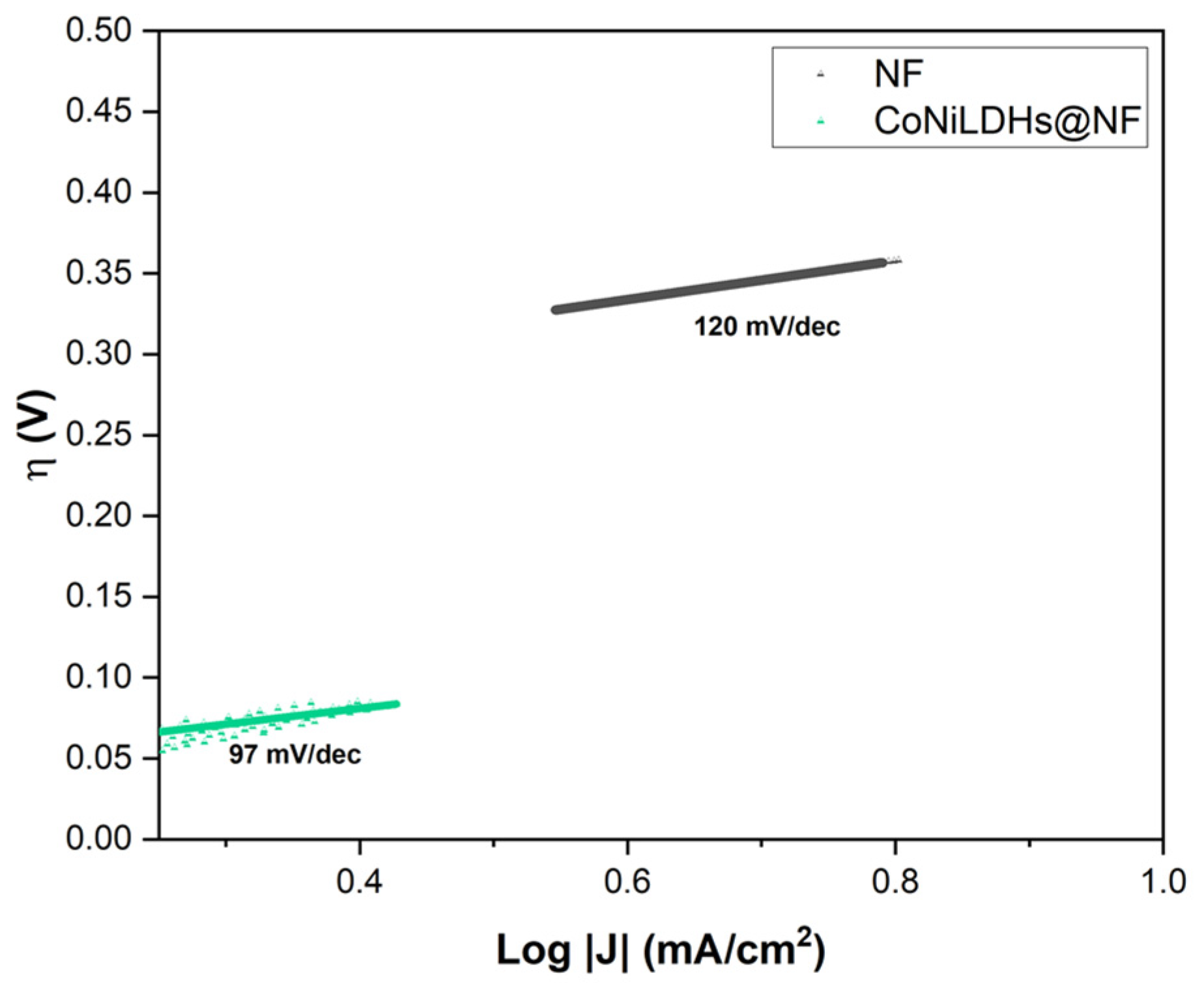
Moreover, the Tafel slope analysis (Figure 9) indicated that CoNiLDHs@NF had a value of 97.48 mV/dec as opposed to 119.94 mV/dec for NF, therefore suggesting that the composite shows quicker reaction kinetics and improved electron transfer, perhaps aided by the synergistic interaction between cobalt and nickel active centers [17]. This suggests that the electrocatalyst exhibits moderately efficient kinetics, with a likely rate-determining step involving a one-electron transfer process. While not as low as benchmark values (<60 mV/dec), this value is typical for CoNi-based layered double hydroxides and indicates a balance between adsorption and electron transfer steps during OER in alkaline media [18]. These results highlight how well the CoNiLDHs/NF architecture improves the intrinsic activity of transition metal-based OER catalysts.
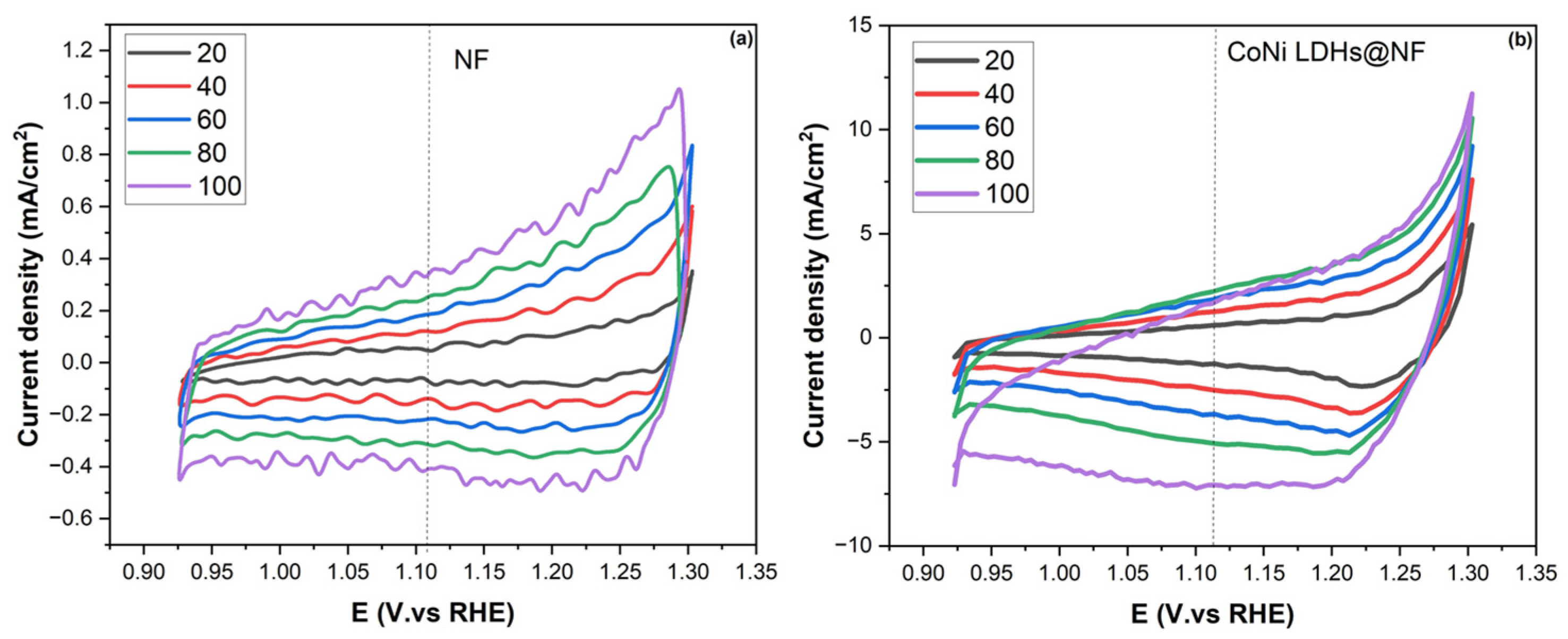
To further investigate the surface properties of the materials, cyclic voltammetry (CV) (Figure 10) in the non-faradaic region was used to determine the electrochemical double-layer capacitance (Cdl).
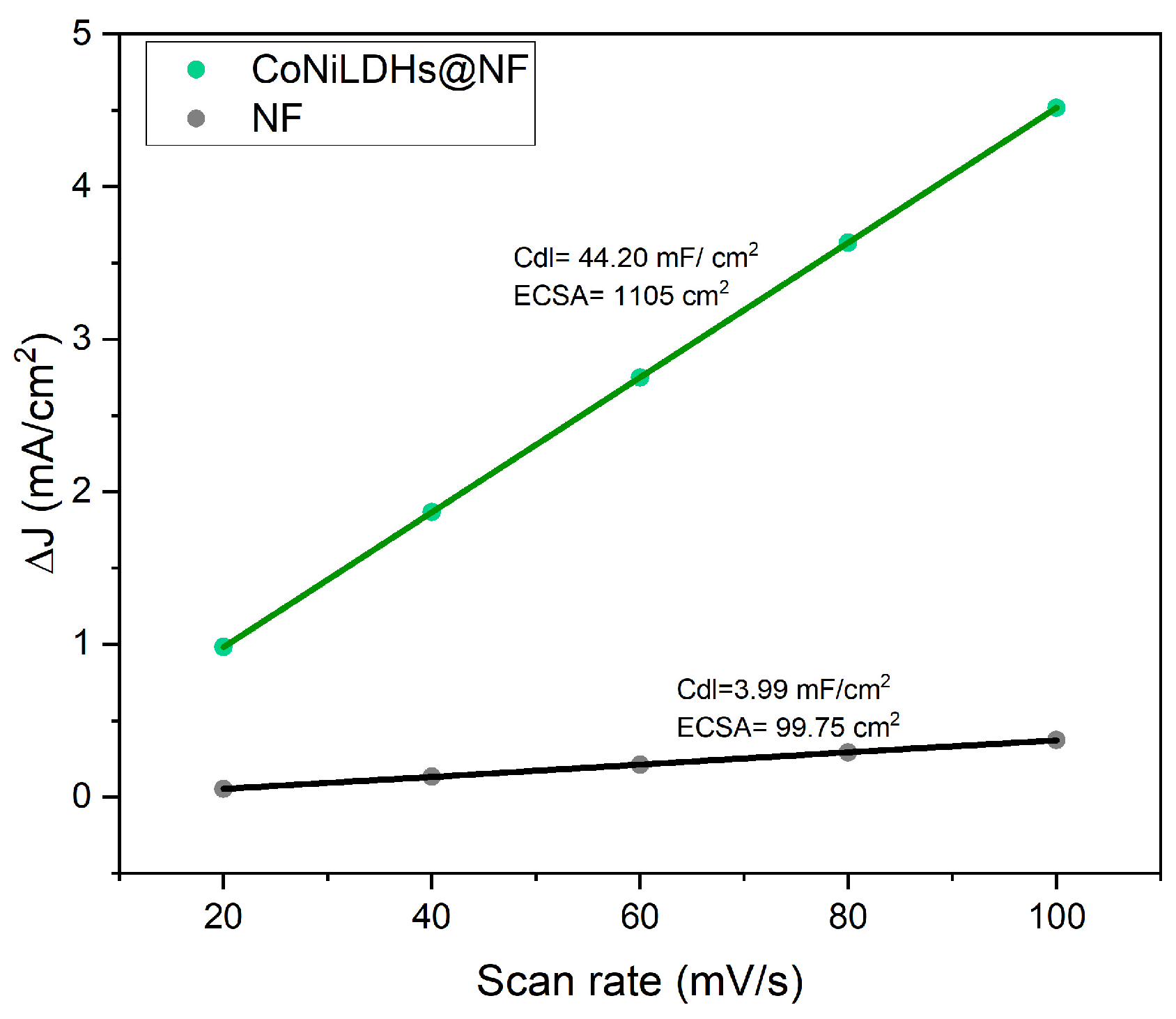
CoNiLDHs@NF had a Cdl of 44.2 mF cm−2 (Figure 11) using a Cs value of 40 mF cm−2, which translates to an estimated electrochemical surface area of 1105 cm2. This value can also be normalized to the geometric electrode area used (1105 cm2/1 cm2) for comparison. In contrast, bare nickel foam exhibited a considerably smaller Cdl of 3.99 mF cm−2 and an ECSA of only 99.75 cm2/1 cm2 (Figure 10a). This approximate 11-fold rise in ECSA emphasized the profusion of electroactive sites in the CoNiLDHs@NF system, which is a crucial component in improving more effective catalytic behavior. The great increase in surface area is explained by the unique 3D flower-like configuration of nanosheets, which provides higher porosity, better ion access, and quicker electron transport paths. Cyclic voltammetry curves obtained at various scan rates in the potential window from 0.921 to 1.301 V versus RHE confirm that CoNiLDHs@NF provides considerably higher current responses across all scan rates than bare NF, especially at the midpoint potential of 1.111 V.
The excellent surface reactivity of CoNiLDHs@NF and increased double-layer-forming capacity are further supported by this improved capacitive response. The performance benefits are intimately connected to the nanostructured morphology of the layered double hydroxides, wherein the great surface-to-volume ratio guarantees that a higher percentage of the metal centers are exposed to the electrolyte and engage in the electrochemical reaction.
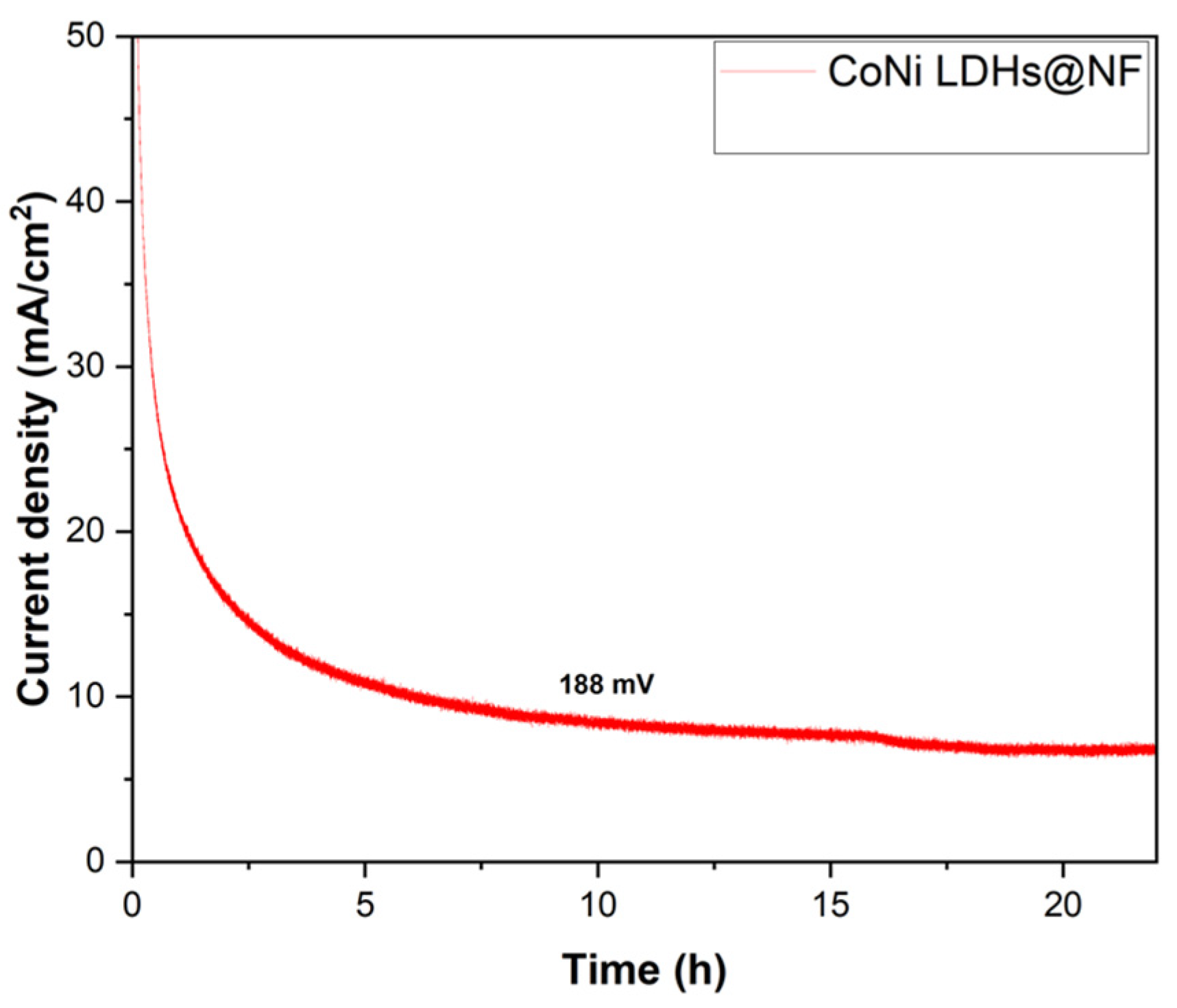
Chronoamperometric measurements were carried out at a constant applied potential of 188 mV vs. RHE for 24 h, as shown in Figure 12, to evaluate long-term durability; CoNiLDHs@NF started with a current density of roughly 50 mA cm−2 and steadily settled at about 7–8 mA cm2. The structural durability and operational stability of the catalyst in alkaline medium are highlighted by this comparatively high and consistent current retention under ongoing activity. Notably seen following OER testing was a visible color change from green-yellow to black, suggesting possible surface oxidation or activation commonly reported for LDH-based OER catalysts [19]. These phase changes are known to produce more active sites and boost the conductivity of the catalyst, which in turn boosts the electrochemical performance. In addition, such modifications might include surface reconstruction, amorphization, or mixed metal oxide/hydroxide layer development, which usually correlates with better long-term catalytic activity.
The observed structural changes correspond with previously reported activation processes in transition metal-based LDH systems and support the theory that electrocatalysis benefits from dynamic surface restructuring.
Furthermore, the commercial appeal of this synthesis method stems from its environmental friendliness, relatively low cost, and scalability. Although noble metal catalysts such as IrO2 and RuO2 have shown great catalytic performance [20], their high cost and limited supply limit their employment in broad industrial electrolysis. Conversely, the CoNiLDHs@NF substance provides competitive performance indicators at much reduced material costs. Its long-term stability under alkaline conditions, as shown by repeated cycling experiments and continuous chronoamperometry also guarantees dependability during extended electrolysis procedures. The progressive development of conductive amorphous layers and improved metal oxygen coordination during the activation process help support this stability.
CoNiLDHs@NF is ultimately an outstanding electrocatalyst platform not only for water oxidation but also possibly for integrated full water splitting cells when combined with appropriate HER materials, owing to the strategic combination of structural engineering, transition metal synergy, and strong fabrication techniques. Future investigations may concentrate on creating bifunctional electrodes by hybridizing this material with perovskites, phosphides, or spinel oxides. Eventually, the CoNiLDHs@NF composite shows excellent potential as a sustainable, effective, and financially viable electrocatalyst for the oxygen evolution reaction.
Table 1 compares the OER performance with that of the synthesized CoNiLDHs and other materials. It should be noted that the literature comparison is qualitative, as testing conditions such as current density, electrolyte, catalyst loading, and stability protocols vary across reports.
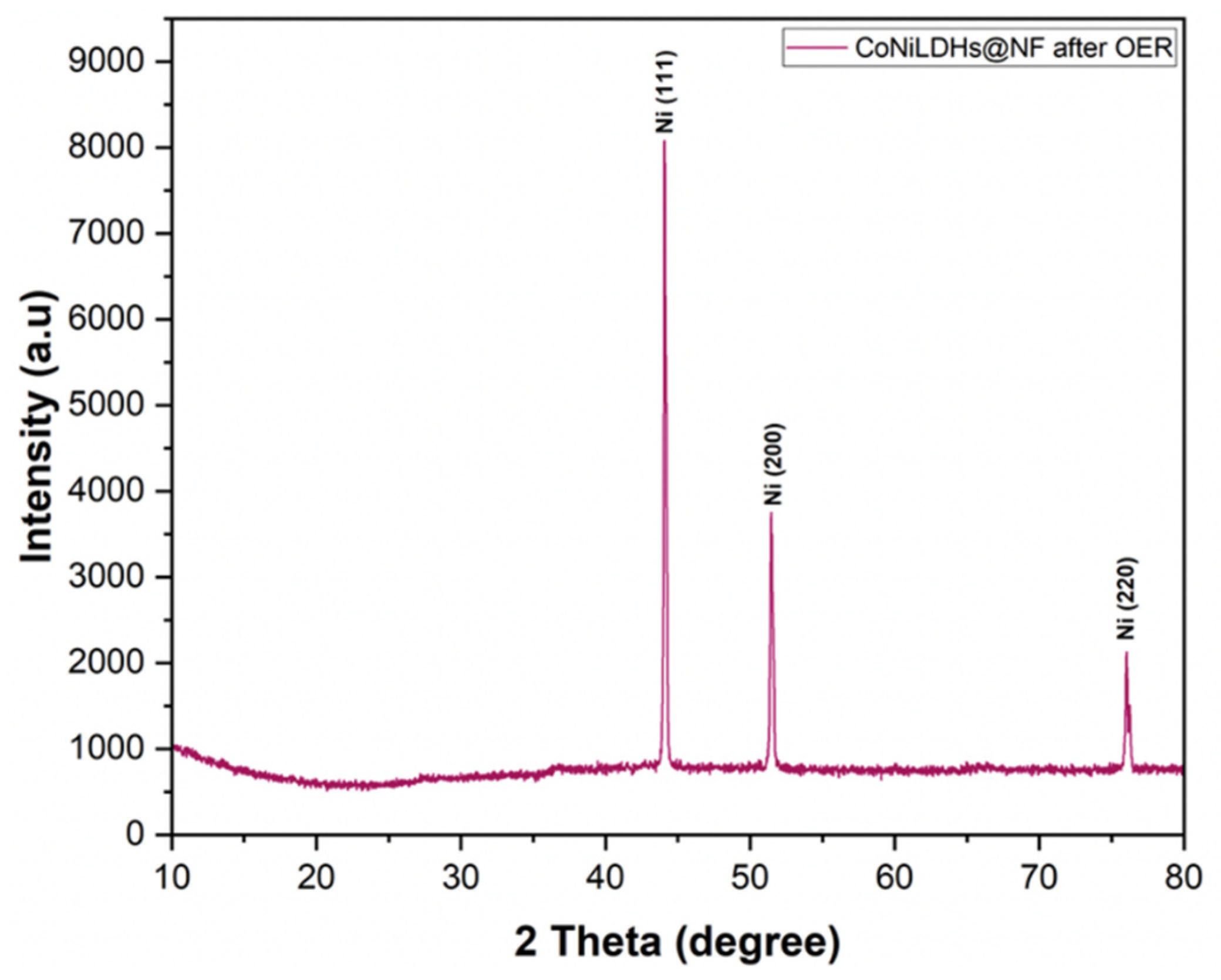
Notably, following OER testing, a visible color change from green yellowish to blackish was seen, which can be attributed to the partial oxidation of Ni2+ and Co2+ into Ni3+ and Co3+, therefore producing catalytically active oxyhydroxides like NiOOH and CoOOH [29]. This is in agreement with our post-XRD analysis, which shows the structural changes in NiCoLDHs@NF and the literature [30] (Figure 13).

3. Materials and Methods

3.1. Materials

Ni(NO3)2·6H2O (99.99%), Co(NO3)2·6H2O (99.99%), KOH (99.99%), Hexadecyltrimethylammonium bromide (CTAB) (99.99%), and methanol and nickel foam (1.5 mm thickness) were purchased from Sigma-Aldrich (Schnelldorf, Germany).

3.2. Characterization

Scanning electronic microscopy (SEM) was conducted on a JEOL JEM 2100F (Akishima, Japan). Energy dispersive spectroscopy (EDS) was conducted on a JEOL JEM 2100F. X-ray diffraction (XRD) patterns were collected on a Rigaku diffractometer, using Cu Ka radiation (λ = 1.54056 Å) (Akishima, Japan). In addition, N2 adsorption/desorption isothermal measurements were recorded at 77 K on a Quatachroms instrument (AutosorbiQ, Boynton Beach, FL, USA) to determine textural properties. The optical absorption range and band gap energy was determined by recording the absorption spectra within 200–800 nm using a Shimadzu UV-1800 UV Visible spectrophotometer (Kyoto, Japan). To further elucidate the photocatalytic behavior, the conduction band (CB) and valence band (VB) edge positions of CoNiLDHs@NF were estimated through Mott–Schottky analysis (OrigaLys electrochemical workstation (Lyon, France)) at 500 Hz, where ECB is the conduction band edge, and EVB is the valence band, as described in Section 1.

3.3. Electrochemical Measurements

An electrochemical workstation potentiostat (Origalys) was used for electrochemical measurements. The experiment was carried out with a three-electrode system in 1 M KOH electrolyte. In total, 1 cm2 of prepared CoNiLDHs@NF (2 cm × 2 cm) was used as the working electrode with a Hg/HgO reference electrode (0.098 V vs. RHE, at 25 °C) as the reference electrode and platinum as the counter electrode. Linear sweep voltammetry (LSV) was tested from 0 V to 1.1 V (vs. Hg/HgO) with a scan rate of 10 mV s−1. The electrochemical active surface area (ECSA) was estimated using an electric double layer capacitor (Cdl), and the electrical double layer capacitor employed double-layer charging curves using cyclic voltammetry (CV) at scan rates from 20 to 100 mV s−1 in a non-faradaic potential range of 0 to 0.380 V (vs. Hg/HgO). To test stability of the material, chronoamperometric measurements were carried out at a constant applied potential for 24 h. The Tafel slope was calculated using the following formula: η = b × logj + a, where η represents the overpotential, b refers to the Tafel slope, and j is the current density. The potential of Hg/HgO converted to RHE follows the Nernst equation: ERHE = EHg/HgO + 0.059 pH + 0.098. The overpotential (η) is calculated using the following simple formula: η = ERHE − 1.23 (V).

3.4. Synthesis of NiCoLDHs

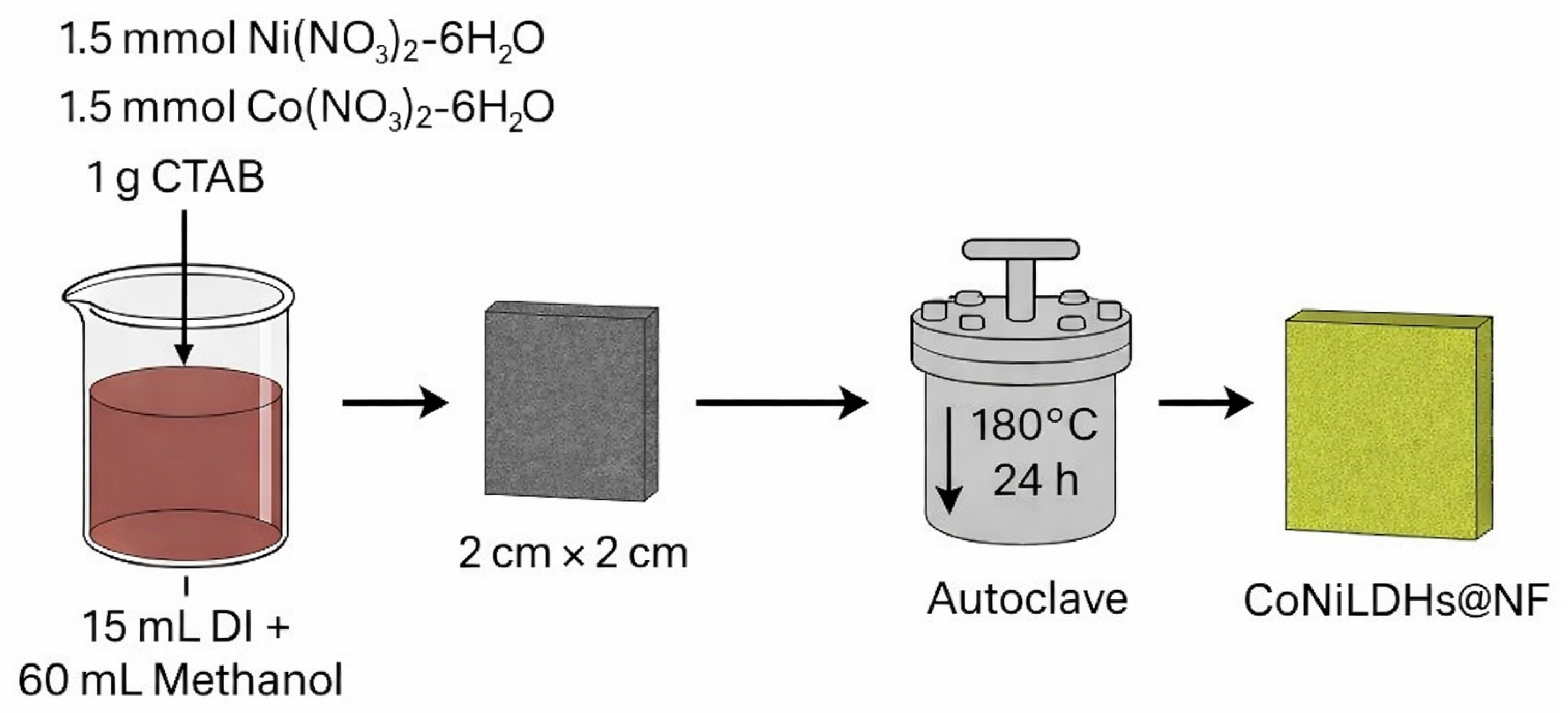
NiCo-LDHs on nickel foam was synthesized using a simple hydrothermal method. The typical procedure involved dissolving 1.5 mmol of Ni(NO3)2·6H2O, 1.5 mmol of Co(NO3)3·6H2O, and 1 g of CTAB in 15 mL of ultrapure water and 60 mL of methanol. The mixture was then stirred to form a claret solution. The nickel foam (2 cm × 2 cm) was thoroughly cleaned with concentrated HCl solution to remove the surface oxides layer. Next, the treated NF and mixture solution were transferred to a 100 mL autoclave, sealed, and heated at 180 °C for 24 h. Afterward, they were cooled to room temperature naturally. The NF was rinsed with ultrapure water and dried at 60 °C for 12 h, resulting in a yellowish green NiCo-LDHs@NF (Figure 14).

4. Conclusions

In summary, the in situ hydrothermal method for synthesizing CoNiLDHs directly on nickel foam has proven to be highly effective compared to several of the reported approaches in the literature. CoNiLDHs@NF showed outstanding electrochemical performance toward the oxygen evolution reaction (OER) with a low overpotential of 188 mV vs. RHE at 10 mA/cm2 and a Tafel slope of 97.48 mV/dec, as well as an enhanced electrochemical surface area. These results confirm that our synthesis strategy not only ensures structural integrity and homogeneity but also translates into superior catalytic activity. However, to gain deeper insight into the catalyst structural evolution under operating conditions, in situ or operando characterizations during electrolysis are essential to elucidate the active sites.

Author Contributions

A.B. and S.E.: methodology, resources, writing—draft preparation, writing—review, and data analysis. H.A.A.: writing—review, data analysis, and supervision. All authors have read and agreed to the published version of the manuscript.

Funding

Amal BaQais extends her appreciation to the Deputyship for Research & Innovation, Ministry of Education, in Saudi Arabia for funding this research work through project RI-44-0861.

Data Availability Statement

All data generated or analyzed during this study are included in this published article.

Acknowledgments

Authors thanks all their respective laboratories for providing facilities for analysis.

Conflicts of Interest

The authors declare no conflicts of interest.

References

  1. Zhan, Y.; Wang, L.; Yang, T.; Liu, S.; Yang, L.; Wang, E.; Yu, X.; Wang, H.; Chou, K.-C.; Hou, X. Multimetallic Layered Double Hydroxides as OER Catalysts for High-Performance Water Electrolysis. J. Compos. Sci. 2025, 9, 540. [Google Scholar] [CrossRef]
  2. Cao, Q.; Shen, Y.; Bai, J.; Liu, Q.; Zhao, Z.; Lei, T.; Dhmees, A.S.; Zhang, H. Mild Formation of Ni(OH)2 Dense Nanosheets Array for Ultra-Efficient Electrocatalytic Hydrogen Evolution. Int. J. Hydrogen Energy 2024, 77, 15–22. [Google Scholar] [CrossRef]
  3. Zhang, J.; Wu, D.; Wei, A.; Zhao, Y.; Liu, J.; He, Y.; Liu, Z. Engineering Bimetallic Cactus-like NiFeOOH/CoNiSe2 Heterostructure Nanosheets for Efficient Oxygen Evolution and Overall Water Splitting. Int. J. Hydrogen Energy 2023, 48, 28769–28779. [Google Scholar] [CrossRef]
  4. Chen, W.; Wang, T.; Xue, J.; Li, S.; Wang, Z.; Sun, S. Cobalt–Nickel Layered Double Hydroxides Modified on TiO2 Nanotube Arrays for Highly Efficient and Stable PEC Water Splitting. Small 2017, 13, 1602420. [Google Scholar] [CrossRef] [PubMed]
  5. Shi, Y.; Li, J.; Zhang, B.; Lv, S.; Wang, T.; Liu, X. Tuning Electronic Structure of CoNi LDHs via Surface Fe Doping for Achieving Effective Oxygen Evolution Reaction. Appl. Surf. Sci. 2021, 565, 150506. [Google Scholar] [CrossRef]
  6. Chen, K.; Cao, Y.-H.; Yadav, S.; Kim, G.-C.; Han, Z.; Wang, W.; Zhang, W.-J.; Dao, V.; Lee, I.-H. Electronic Structure Reconfiguration of Nickel–Cobalt Layered Double Hydroxide Nanoflakes via Engineered Heteroatom and Oxygen-Vacancies Defect for Efficient Electrochemical Water Splitting. Chem. Eng. J. 2023, 463, 142396. [Google Scholar] [CrossRef]
  7. Hu, W.; Liu, Q.; Lv, T.; Zhou, F.; Zhong, Y. Impact of Interfacial CoOOH on OER Catalytic Activities and Electrochemical Behaviors of Bimetallic CoxNi-LDH Nanosheet Catalysts. Electrochim. Acta 2021, 381, 138276. [Google Scholar] [CrossRef]
  8. Gao, R.; Yan, D. Fast Formation of Single-Unit-Cell-Thick and Defect-Rich Layered Double Hydroxide Nanosheets with Highly Enhanced Oxygen Evolution Reaction for Water Splitting. Nano Res. 2018, 11, 1883–1894. [Google Scholar] [CrossRef]
  9. Ni, L.; Zhou, J.; Chen, N.; Li, X.; Xu, S.; Zhang, L.; Lu, C.; Chen, J.; Xu, L.; Hou, W. In Situ Direct Growth of Flower-like Hierarchical Architecture of CoNi-Layered Double Hydroxide on Ni Foam as an Efficient Self-Supported Oxygen Evolution Electrocatalyst. Int. J. Hydrogen Energy 2020, 45, 22788–22796. [Google Scholar] [CrossRef]
  10. Yu, R.; Liu, D.; Yuan, M.; Wang, Y.; Ye, C.; Li, J.; Du, Y. Universal MOF-Mediated Synthesis of 2D CoNi-Based Layered Triple Hydroxides Electrocatalyst for Efficient Oxygen Evolution Reaction. J. Colloid Interface Sci. 2021, 602, 612–618. [Google Scholar] [CrossRef]
  11. Valdez, R.; Grotjahn, D.B.; Smith, D.K.; Quintana, J.M.; Olivas, A. Nanosheets of Co-(Ni and Fe) Layered Double Hydroxides for Electrocatalytic Water Oxidation Reaction. Int. J. Electrochem. Sci. 2015, 10, 909–918. [Google Scholar] [CrossRef]
  12. Li, R.; Hu, X.; Huang, L.; Musyoka, N.M.; Xue, T.; Wang, Q. Dynamic Intermediate-Temperature CO2 Adsorption Performance of K2CO3-Promoted Layered Double Hydroxide-Derived Adsorbents. Molecules 2024, 29, 1192. [Google Scholar] [CrossRef]
  13. Chen, W.; Jin, G.; Liu, Y.; Wei, Q.; Tang, J. Ternary Photoanodes with AgAu Nanoclusters and CoNi-LDH for Enhanced Photoelectrochemical Water Oxidation. ACS Appl. Mater. Interfaces 2024, 16, 23296–23304. [Google Scholar] [CrossRef]
  14. Lu, X.; Ma, Z.; Chang, Y.; Wang, S.; Li, X.; Xu, D.; Bao, J.; Liu, Y. Mott–Schottky Construction Boosted Plasmon Thermal and Electronic Effects on the Ag/CoV-LDH Nanohybrids for Highly-Efficient Water Oxidation. Adv. Mater. 2024, 36, 2313057. [Google Scholar] [CrossRef] [PubMed]
  15. Zhang, X.; Wang, Y.; Zhang, D.; Tao, Z. A Comparative Study of CoNi-LDH/ZnO Film for Photocathodic Protection Applications in the Marine Environment. Front. Mater. 2022, 9, 904555. [Google Scholar] [CrossRef]
  16. Neta, P.; Huie, R.E.; Ross, A.B. Rate Constants for Reactions of Inorganic Radicals in Aqueous Solution. J. Phys. Chem. Ref. Data 1988, 17, 1027–1284. [Google Scholar] [CrossRef]
  17. Zhang, K.; Zou, R. Advanced Transition Metal-Based OER Electrocatalysts: Current Status, Opportunities, and Challenges. Small 2021, 17, 2100129. [Google Scholar] [CrossRef]
  18. Xiao, N.; Zhang, A.; Li, T.; Hu, B.; Yang, Y.; Dong, Y.; Chen, Z.; Wang, W.; Liu, M. Modulated Fenton-like Activity via Peroxymonosulfate Activation by CoxNiy-LDH: Mechanism of Co/Ni Bimetallic Synergy and Application of Catalytic Membrane. Sep. Purif. Technol. 2025, 362, 131807. [Google Scholar] [CrossRef]
  19. Kahnamouei, M.H.; Shahrokhian, S. Ultrafast Two-Step Synthesis of S-Doped Fe/Ni (Oxy)Hydroxide/Ni Nanocone Arrays on Carbon Cloth and Stainless-Steel Substrates for Water-Splitting Applications. ACS Appl. Energy Mater. 2021, 4, 10627–10638. [Google Scholar] [CrossRef]
  20. Ma, Z.; Zhang, Y.; Liu, S.; Xu, W.; Wu, L.; Hsieh, Y.-C.; Liu, P.; Zhu, Y.; Sasaki, K.; Renner, J.N.; et al. Reaction Mechanism for Oxygen Evolution on RuO2, IrO2, and RuO2@IrO2 Core-Shell Nanocatalysts. J. Electroanal. Chem. 2018, 819, 296–305. [Google Scholar] [CrossRef]
  21. Sunny, A.; Rithanya, K.; Goel, M.; Pandikumar, A. Electrodeposition of NiCo Layered Double Hydroxide on Diverse Substrates: Structural, Morphological, and Electrochemical Insights into OER Performance in Alkaline Medium. Energy Fuels 2025, 39, 11865–11874. [Google Scholar] [CrossRef]
  22. Cheng, Y.; Guo, X.; Ma, Z.; Dong, K.; Miao, L.; Du, S. Highly Efficient and Stable Mn-Co1.29Ni1.71O4 Electrocatalysts for Alkaline Water Electrolysis: Atomic Doping Strategy for Enhanced OER and HER Performance. Molecules 2025, 30, 1162. [Google Scholar] [CrossRef]
  23. Zhao, P.; Fu, S.; Luo, Y.; Peng, C.; Cheng, L.; Jiao, Z. Deciphering the Space Charge Effect of the CoNiLDH/FeOOH n–n Heterojunction for Efficient Electrocatalytic Oxygen Evolution. Small 2023, 19, 2305241. [Google Scholar] [CrossRef]
  24. Han, X.; Lin, Z.; He, X.; Cui, L.; Lu, D. The Construction of Defective FeCo-LDHs by in-Situ Polyaniline Curved Strategy as a Desirable Bifunctional Electrocatalyst for OER and HER. Int. J. Hydrogen Energy 2020, 45, 26989–26999. [Google Scholar] [CrossRef]
  25. Deng, X.; Chen, J.; Chen, Q.; Zhou, Y.; Liu, X.; Zhang, J.; Wang, G.; Wang, R. The Synergistic Effect of Ir and Oxygen Vacancies on Enhancing the OER Performance of Surface-Reconstructed FeCo LDH. Appl. Surf. Sci. 2024, 665, 160310. [Google Scholar] [CrossRef]
  26. Huang, C.; Nie, J.; Xu, Z.; Zhang, X.; Tang, J.; Wang, B.; Huang, J.; Du, C.; Chen, J. One-Step Hydrothermal Synthesized 3D P–MoO3/FeCo LDH Heterostructure Electrocatalysts on Ni Foam for High-Efficiency Oxygen Evolution Electrocatalysis. Int. J. Hydrogen Energy 2021, 46, 12992–13000. [Google Scholar] [CrossRef]
  27. Yang, L.; Chen, L.; Yang, D.; Yu, X.; Xue, H.; Feng, L. NiMn Layered Double Hydroxide Nanosheets/NiCo2O4 Nanowires with Surface Rich High Valence State Metal Oxide as an Efficient Electrocatalyst for Oxygen Evolution Reaction. J. Power Sources 2018, 392, 23–32. [Google Scholar] [CrossRef]
  28. Liu, J.; Zheng, Y.; Jiao, Y.; Wang, Z.; Lu, Z.; Vasileff, A.; Qiao, S.-Z. NiO as a Bifunctional Promoter for RuO2 toward Superior Overall Water Splitting. Small 2018, 14, 1704073. [Google Scholar] [CrossRef]
  29. Wu, J.; Yuan, Y.; Wang, L.; Wang, H.; Zheng, J.; Jia, B. Self-Reconstruction-Induced Highly Active Amorphous Interface in a-NiOOH/CoOOH for Enhanced Oxygen Evolution Reaction. Chem. Eng. J. 2025, 517, 164529. [Google Scholar] [CrossRef]
  30. Ye, Y.; Shan, Y.; Zhu, H.; Chen, K.; Yu, X. Controllable Formation of Amorphous Structure to Improve the Oxygen Evolution Reaction Performance of a CoNi LDH. RSC Adv. 2023, 13, 2467–2475. [Google Scholar] [CrossRef]
Figure 1. XRD patterns of CoNiLDHs, NF, and CoNiLDHs@NF before and after OER.
Catalysts 16 00254 g001
Figure 2. Scanning electron microscope analysis for prepared CoNiLDHs.
Catalysts 16 00254 g002
Figure 3. EDS mapping of CoNiLDH powder.
Catalysts 16 00254 g003
Figure 4. (a) BET surface area. (b) Pore size distribution of as-prepared sample.
Catalysts 16 00254 g004
Figure 5. (a) UV-vis spectra and (b) band gap energy curve.
Catalysts 16 00254 g005
Figure 6. The Mott–Schottky characteristics plotted for Na2SO4 (0.1 M, pH 6.5) at 500 Hz.
Catalysts 16 00254 g006
Figure 7. Band diagram of CoNiLDHs@NF with HER/OER thresholds.
Catalysts 16 00254 g007
Figure 8. Linear sweep voltammetry (LSV) of prepared CoNiLDHs compared to NF.
Catalysts 16 00254 g008
Figure 9. Tafel curves of CoNiLDH layered double hydroxide and NF.
Catalysts 16 00254 g009
Figure 10. Cyclic voltammetry in non-faradaic region of (a) NF and (b) CoNiLDHs@NF.
Catalysts 16 00254 g010
Figure 11. Electrochemical active surface area (ECSA) of synthesized CoNiLDHs@NF.
Catalysts 16 00254 g011
Figure 12. Chronoamperometry test of prepared CoNiLDHs@NF.
Catalysts 16 00254 g012
Figure 13. CoNiLDHs@NF XRD profile after 24 h of electrolysis.
Catalysts 16 00254 g013
Figure 14. Synthesis of CoNiLDHs@NF composite.
Catalysts 16 00254 g014
Table 1. Comparative OER performance.
Catalystη10 (mV)Tafel Slope (mV/dec)Cdl (mF/cm2)ElectrolyteStabilityReference
CoNiLDHs@NF18897.544.201 M KOH24 hThis work
NiCo-LDH/NF260 (50 mA/cm2)572.861 M KOH100 cycles[21]
Mn–Co1.29Ni1.71O4 LDH334.376.7-1 M KOH>20 h[22]
CoNiLDH/FeOOH25060-1 M KOH210 h[23]
FeCo-LDH/PANI28572-1 M KOH24 h[24]
Ir and Vo Co-modified FeCo LDH203--1 M KOH310 h (250 mA/cm2)[25]
P–MoO3/FeCo LDH/NF22587.4-1 M KOH80 h[26]
NiMn-LDH/NCO31099-1 M KOH8 h[27]
IrO2/NF33355.6-1 M KOH-[28]
NiCo2O4@NF31153.4-1 M KOH-[28]
Disclaimer/Publisher’s Note: The statements, opinions and data contained in all publications are solely those of the individual author(s) and contributor(s) and not of MDPI and/or the editor(s). MDPI and/or the editor(s) disclaim responsibility for any injury to people or property resulting from any ideas, methods, instructions or products referred to in the content.