Article

TiO2 Photocatalyst Inactivates Highly Pathogenic Avian Influenza Virus and H1N1 Seasonal Influenza Virus via Multi-Antiviral Effects


1
Laboratory of Global Infectious Diseases Control Science, Graduate School of Agricultural and Life Sciences, The University of Tokyo, 1-1-1 Yayoi, Bunkyo-ku 113-8657, Tokyo, Japan
2
Department of Veterinary Science, Faculty of Agriculture, University of Miyazaki, 1-1 Gakuen Kibanadai-Nishi, Miyazaki 889-2192, Miyazaki, Japan
3
Graduate School of Medicine and Veterinary Medicine, University of Miyazaki, 5200 Kiyotakecho Kihara, Miyazaki 889-1692, Miyazaki, Japan
4
Center for Animal Disease Control, University of Miyazaki, 1-1 Gakuen Kibanadai-Nishi, Miyazaki 889-2192, Miyazaki, Japan
5
Laboratory of Global Animal Resource Science, Graduate School of Agricultural and Life Sciences, The University of Tokyo, 1-1-1 Yayoi, Bunkyo-ku 113-8657, Tokyo, Japan
6
Kaltech Corporation, Hirotake Bldg. 3-3-7 Bakuromachi, Chuo-ku, Osaka 541-0059, Osaka, Japan
*
Author to whom correspondence should be addressed.
Catalysts 2026, 16(2), 168; https://doi.org/10.3390/catal16020168
Submission received: 9 January 2026 / Revised: 29 January 2026 / Accepted: 2 February 2026 / Published: 4 February 2026
(This article belongs to the Special Issue Catalysis for Sustainable Environmental Solutions)

Abstract

The highly pathogenic avian influenza virus (HPAIV) is widely distributed worldwide and causes significant economic losses. Transmission of HPAIV occurs through direct contact between infected and susceptible birds or indirectly via contaminated materials. In recent years, airborne transmission of HPAIV has also been reported, underscoring the need for novel approaches to effectively inactivate airborne HPAIV. Photocatalysts have attracted significant attention as potential antiviral agents. In this study, we demonstrated that a TiO2-mediated photocatalytic reaction inactivated HPAIV and H1N1 seasonal influenza viruses in liquid, reducing their infectivity by 90.7% and 94.4%, respectively, after 60 min. Mechanistic analyses revealed decreased virion size and surface structure disruption, as determined by transmission electron microscopy. Additional evidence of viral protein and genome damage was obtained using Western blotting and RT-qPCR, respectively. Given the broad antiviral activity of photocatalysts, these findings suggest that they can inactivate influenza viruses regardless of strain or subtype. Notably, photocatalysts inactivated 80% of aerosolized H1N1 seasonal influenza viruses within 5 min. These results provide strong evidence that photocatalysts are capable of inactivating airborne influenza viruses. This study represents the first demonstration that photocatalysts can inactivate HPAIV and aerosolized influenza viruses. These findings provide strong evidence that photocatalysts represent a promising countermeasure against HPAIV, with potential applicability across different strains and subtypes.

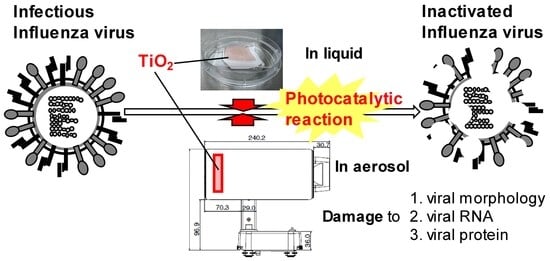
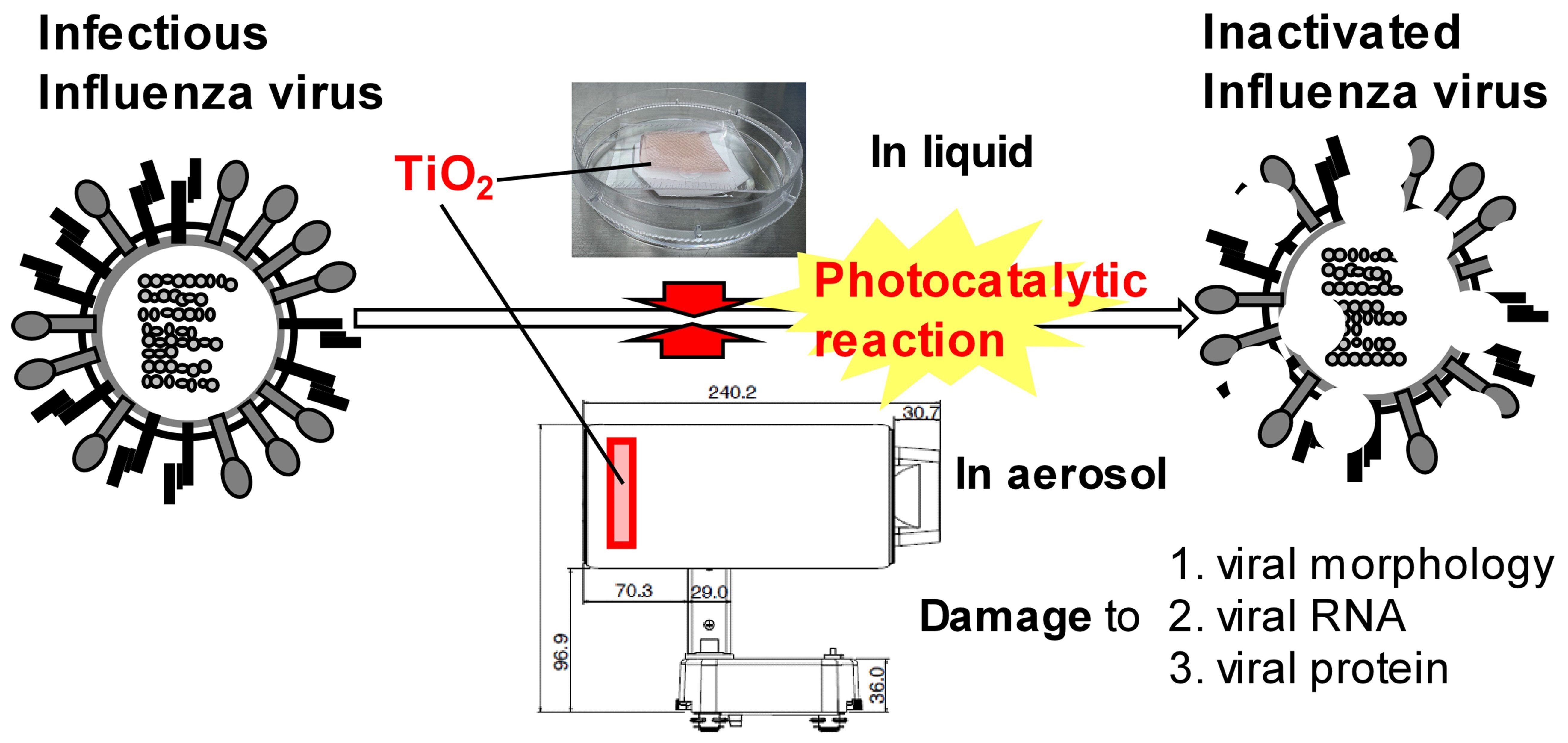
Graphical Abstract

1. Introduction

The highly pathogenic avian influenza virus (HPAIV), originating from the H5N1 strain isolated in southern China in 1996 [1], has had a significant economic impact on the global poultry industry. Between 2005 and 2019, 18,620 poultry outbreaks were reported across 76 countries, according to the World Organization for Animal Health [2]. In 2020 and 2021, more than 3000 additional outbreaks occurred, resulting in the death or culling of approximately 15 million birds worldwide [3]. Recently, the H5N1 subtype has caused outbreaks with cases documented not only in poultry but also in humans and cattle, thereby constituting a major public health issue [4].
Transmission of HPAIV occurs through direct contact between infected and susceptible birds or indirectly via exposure to feces and feathers shed by infected hosts, leading to oral infection [5,6]. To protect poultry, the most important preventive measure is the implementation of biosecurity strategies designed to block the introduction of HPAIV into facilities. These include strict disinfection protocols, use of dedicated clothing and footwear to prevent human-mediated introduction of the virus, and the installation of insect- and bird-proof nets to deter wild animals. In contrast, evidence concerning the airborne transmission of HPAIV has historically been limited and inconclusive. However, several recent reports have suggested the possibility of airborne transmission and have detected HPAIV in airborne particles [7,8,9,10,11]. In addition, the half-life of influenza A virus in aerosols varies depending on environmental conditions [12]. Under certain conditions, the half-life can be as short as approximately 7 min, whereas under other conditions it can reach >1 h [12]. These findings indicate that influenza viruses present in aerosols can retain infectivity and pose a potential risk of airborne transmission. Therefore, a novel approach is required to effectively inactivate airborne HPAIV.
Photocatalysts that are harmless to humans have recently attracted considerable attention as antiviral agents. Titanium dioxide (TiO2), a well-studied photocatalyst, is excited photons of sufficient energy, generating reactive oxygen species such as O2· and ·OH [13,14]. These radicals react with organic compounds, leading to mineralization [13,14]. Photocatalysis has been shown to be useful for the inactivation of viruses on surfaces, in air, and in water [15,16]. Indeed, photocatalysts have been reported to inactivate a wide range of viruses, including influenza [17,18], hepatitis C [18], vesicular stomatitis [18], enterovirus [18], herpes [18], Zika [18], murine norovirus [19], human coronavirus [20], bovine coronavirus [21], SARS coronavirus [22], SARS-CoV-2 [18,23,24,25], and bacteriophage [26,27]. The broad antiviral activity of photocatalysts is attributed to their ability to damage viral particles, proteins, and genomes [14]. A few studies have also reported the inactivation of viruses in airborne aerosols, mimicking natural infection routes, such as those of SARS-CoV-2 [22,25]. These findings suggest that photocatalysis may also prevent the airborne spread of HPAIV. Although the inactivation of influenza viruses by photocatalysts has been reported [17,18], evidence for the inactivation of HPAIV remains unavailable. Furthermore, it remains unclear whether airborne influenza viruses can be inactivated.
In this study, to propose a novel countermeasure against the global spread of HPAIV, we first demonstrated the inactivation of HPAIV in liquid by a TiO2 photocatalyst. We then clarified the mechanism of inactivation by observing virion morphology using transmission electron microscopy (TEM), viral protein degradation using immunoblotting, and viral RNA damage using reverse transcription quantitative polymerase chain reaction (RT-qPCR). Finally, using H1N1 seasonal influenza virus as a model, we evaluated the efficacy of photocatalysts in preventing airborne viral infections, which represent an important transmission route for both HPAIV and H1N1. Our study is the first to demonstrate that photocatalysts are capable of inactivating both HPAIV and aerosolized influenza viruses.

2. Results

2.1. Inactivation of HPAIV by TiO2 Photocatalyst in Liquid

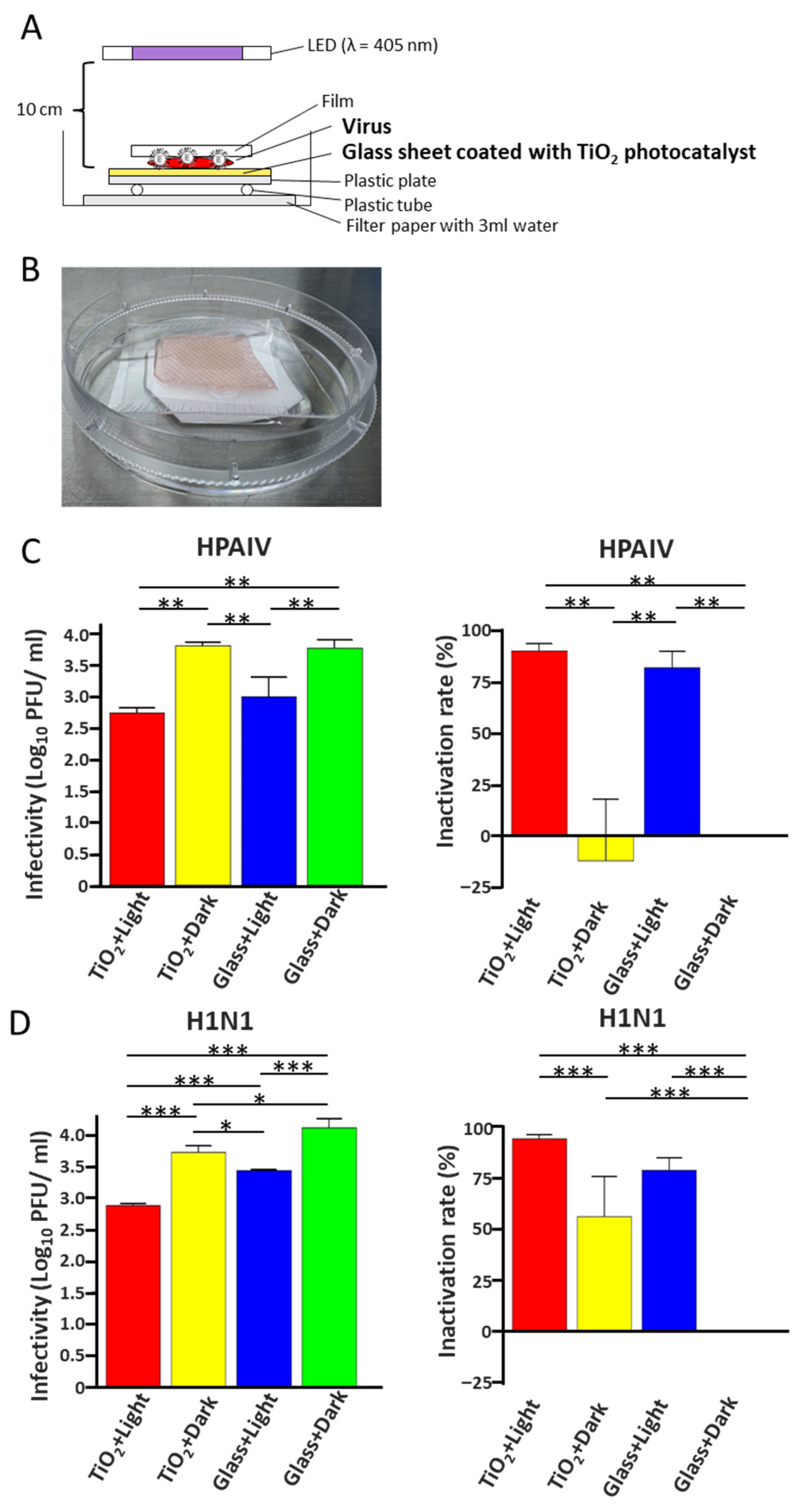
To determine whether the TiO2 photocatalyst can inactivate HPAIV, a 1.0 × 10⁶ PFU/mL suspension of HPAIV was placed on a TiO2-coated glass sheet and exposed to LED light for 1 h (Figure 1A,B). As shown in Figure 1C (left panel), the viral titer in the “TiO2 + Light” group was 5.46 × 10² PFU/mL, which was significantly lower (p < 0.01) than that of the “Glass + Dark” group (5.86 × 10³ PFU/mL). The corresponding inactivation rate was 90.7% (p < 0.01) (Figure 1C, right panel). In the “Glass + Light” group, the viral titer was 1.17 × 10³ PFU/mL, significantly lower than in the “Glass + Dark” group (p < 0.01), with an inactivation rate of 80.1% (p < 0.01) (Figure 1C). However, this decrease was not to the extent observed in the “TiO2 + Light” group. By contrast, no decrease in titer was observed in “TiO2 + Dark” group (6.26 × 10³ PFU/mL). These results showed that TiO2 itself had no antiviral effect; the reduction in titer was specifically attributable to the TiO2 photocatalytic reaction under light.

2.2. Mechanisms of TiO2 Photocatalyst-Induced HPAIV Inactivation

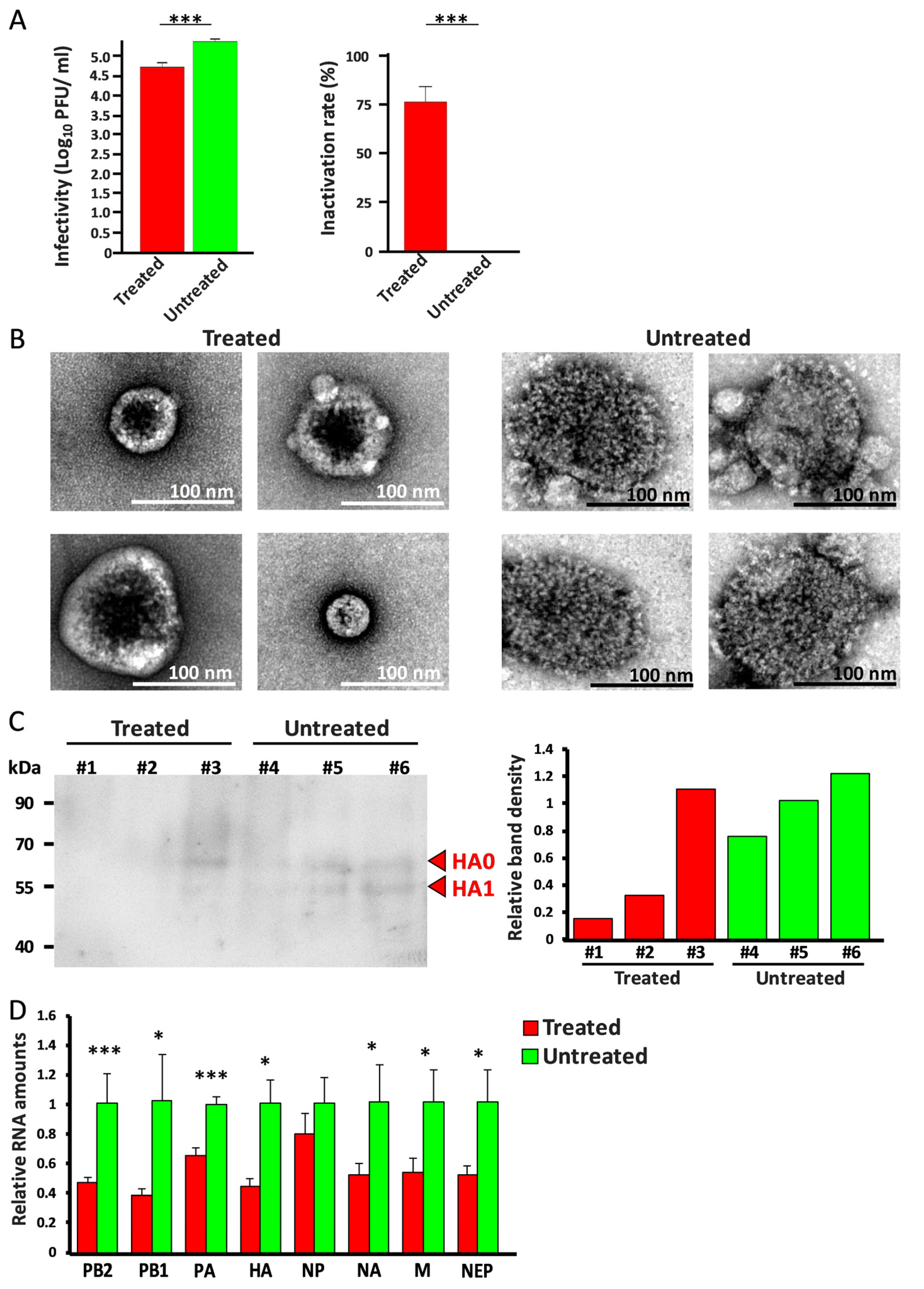
Viral particles, proteins, and RNA have been reported to be susceptible to photocatalyst-induced damage, including in our previous research [15,23]. The photocatalytic degradation of viral proteins and RNA has also been described in seasonal influenza viruses [17,18]. To investigate the inactivation mechanisms for HPAIV, a high titer suspension (7.0 × 10⁷ PFU/mL) was treated with the photocatalyst for 2 h. Viral titers decreased from 2.60 × 10⁵ PFU/mL (“Untreated”) to 5.86 × 10⁴ PFU/mL (“Treated”), representing a 77% reduction in infectivity (p < 0.001) (Figure 2A, left and right panels). TEM, Western blotting, and RT-qPCR were performed on the treated samples to characterize the underlying mechanism.
Firstly, TEM imaging revealed clear morphological changes. Untreated virions displayed HA and NA proteins on their surface, whereas virions exposed to photocatalysis for 2 h had lost most of these proteins on the virion surface (Figure 2B). This is suggested that the photocatalyst degraded the viral proteins such as HA and NA protein on the virion. Treated virions also appeared smaller than untreated ones, suggesting disruption of the lipid bilayer, potentially leading to osmotic imbalance.
TEM analysis showed that the surface proteins were degraded by the photocatalytic reaction. Second, to confirm protein degradation, Western blotting was performed using an anti-HA monoclonal antibody (A32/2). Two bands corresponding to the HA precursor (HA0, 75 kDa) and HA1 subunit (55 kDa) were detected in untreated samples (Figure 2C, left panel). Among the three samples treated with the photocatalyst for 2 h, two exhibited a complete disappearance of both HA0 and HA1 bands (Figure 2C, left panel), with densitometric analysis showing band intensity reductions of 15% and 33% relative to untreated controls (Figure 2C, right panel). These results confirm that HA proteins of HPAIV were degraded by TiO2 photocatalysis, corroborating the TEM observations.
Third, to investigate whether the TiO2 photocatalytic reaction induces damage to the RNA of HPAIV, RT-qPCR was performed using specific primers (Table 1) to assess viral RNA integrity. As shown in Figure 2D, photocatalyst treatment significantly reduced RNA levels in most segments, with reductions ranging from 39% to 65% (p < 0.05 or p < 0.001) compared to untreated controls. RNA levels were reduced by approximately 80%, although this reduction did not reach statistical significance. These findings suggest that the TiO2 photocatalyst also damages viral RNA. Collectively, these data indicate that the photocatalyst inactivates HPAIV through combined damage to viral particles, proteins, and RNA.

2.3. Inactivation of H1N1 Seasonal Influenza by TiO2 Photocatalyst in Liquid

We next investigated the inactivation of H1N1 seasonal influenza virus by the TiO2-photocatalyst. As shown Figure 1D, the viral titer in the “TiO2 + Light” group was 7.52 × 10² PFU/mL, which was significantly lower (p < 0.001) than that of the “Glass + Dark” group (1.33 × 10⁴ PFU/mL) (Figure 1D, left panel). The corresponding inactivation rate was 94.4% (p < 0.001) (Figure 1D, right panel). In the “Glass + Light” group, the viral titer was 2.60 × 10³ PFU/mL, significantly lower than that in the “Glass + Dark” group (p < 0.001), with an inactivation rate of 80.0% (p < 0.001). Interestingly, for H1N1 seasonal influenza virus, the “TiO2 + Light” group showed significantly stronger antiviral activity compared with the “Glass + Light” group (p < 0.001). These results indicate that TiO2 photocatalysis efficiently inactivates H1N1 seasonal influenza virus. In addition, since the TiO2 photocatalyst inactivates both H5N1 HPAIV and H1N1 seasonal influenza viruses, these findings suggest that TiO2 photocatalysts can inactivate influenza viruses regardless of the strain.

2.4. Inactivation of H1N1 Seasonal Influenza by TiO2 Photocatalyst in Aersol

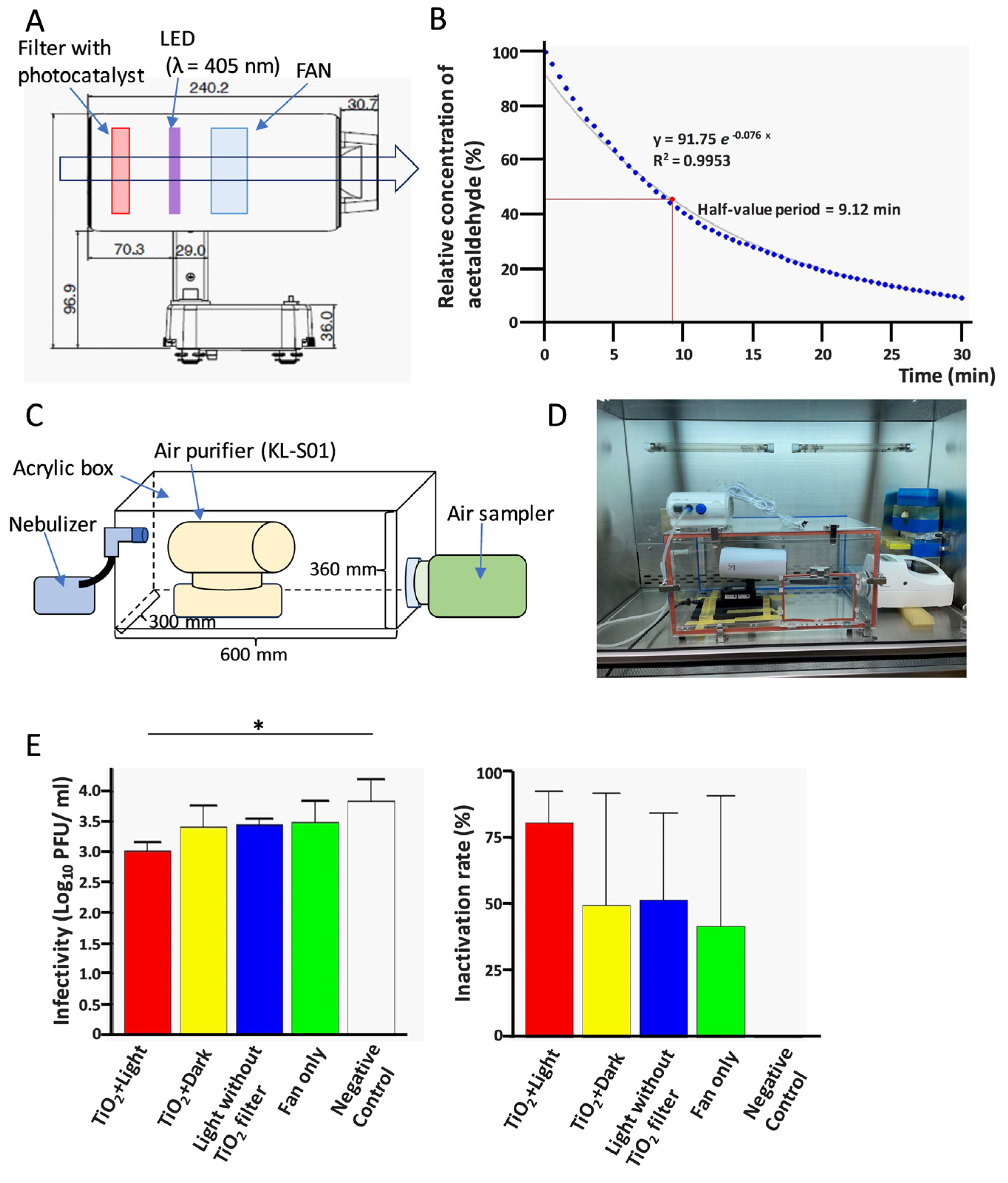
The transmission route of influenza viruses is critical for evaluating the potential of photocatalysts against airborne infections. To investigate this, an air purifier equipped with a TiO2 photocatalyst (KL-S01) was used (Figure 3A). As a preliminary control for KL-S01, the degradation efficiency of acetaldehyde, a representative organic compound, was assessed. Acetaldehyde was degraded in a time-dependent manner, with a calculated half-life of 9.12 min (R2 = 0.9953) (Figure 3B), demonstrating the capacity of the photocatalyst to decompose organic matter in air. For biosafety reasons, H1N1 seasonal influenza virus was used as a surrogate for HPAIV. H1N1 seasonal influenza virus suspension was aerosolized into a 60 L acrylic chamber using a nebulizer and circulated for 5 min with the TiO2-equipped air purifier (KL-S01) (Figure 3C,D). Aerosolized virus particles were collected on gelatin membrane filter using an air sampler, dissolved in BSA/MEM, and titrated by plaque assay. As shown in Figure 3E, the viral titer of H1N1 seasonal influenza virus in the “TiO2 + Light” group was 1.10 × 10³ PFU/mL, representing an inactivation rate of 80.1% and a statistically significant reduction compared with the “Negative Control” group (8.50 × 10³ PFU/mL, p < 0.05). In other control groups, reductions in viral titer were observed with KL-S01 lacking LED irradiation (“TiO2 + Dark” group, 3.20 × 10³ PFU/mL), with LED irradiation but no photocatalyst filter (“Light without TiO2 filter” group, 2.90 × 10³ PFU/mL), and with fan operation only (“Fan only” group, 3.80 × 10³ PFU/mL). However, these reductions were not statistically significant relative to the “Negative Control” group. These results demonstrate that TiO2 photocatalysis is specifically responsible for the inactivation of influenza virus in aerosols.

3. Discussion

Here, we confirmed that a TiO2 photocatalytic reaction effectively inactivated both HPAIV and H1N1 seasonal influenza viruses. This study is the first to report that a 1 h TiO2 photocatalytic reaction inactivated 90.7% of HPAIV in solution, rate comparable to the 94.4% inactivation observed for H1N1 seasonal influenza virus under the same conditions. These results are consistent with previous reports demonstrating similar levels of photocatalyst-mediated inactivation across a range of viruses [15]. Furthermore, our results show that TiO2 photocatalysis inactivates HPAIV through multiple mechanisms, including viral protein degradation, virion membrane disruption, and RNA damage. This multi-targeted inactivation mechanism is consistent with findings from photocatalyst-mediated inactivation of seasonal influenza virus, SARS-CoV-2, and other viruses [15,17,18,23]. We also demonstrated that TiO2 photocatalysts rapidly inactivated 84% of influenza viruses in aerosols within 5 min. This inactivation of the influenza virus in aerosols was also firstly reported in this study. Such rapid inactivation of aerosolized viruses by photocatalysts has also been documented for SARS-CoV-2 [23].
Previous studies have reported that the HA protein of H1 subtype influenza virus can be degraded by photocatalysts [17]. In this study, we also demonstrated the degradation of HA protein in the H5 subtype, suggesting that photocatalysts can degrade HA proteins irrespective of subtype. HPAIV have been reported in both the H5 and H7 subtypes [5]. Our findings therefore suggest that photocatalysts may inactivate influenza viruses regardless of HA subtype and may also remain effective against frequent mutations. However, in this study, only HA protein degradation was confirmed. Further studies are needed to assess whether other viral proteins, such as NA, are similarly degraded.
Previous studies have reported that photocatalytic treatment of cancer cells induces damage to the lipid bilayer, resulting in altered membrane permeability and subsequent changes in cell size owing to osmotic effects [28,29,30]. In addition, our previous study revealed that the particle size of SARS-CoV-2 was altered following photocatalytic treatment [23]. In the present study, HPAIV particles with diameters of approximately 80–120 nm, exhibiting typical HA and NA structures as previously reported [31], were observed in the untreated group. In contrast, TiO2 photocatalytic treatment was associated with a reduction in HPAIV particle size. These findings indicate that TiO2 photocatalysts may induce damage to the lipid bilayer of HPAIV, resulting in structural alterations of viral particles.
The antiviral effectiveness of photocatalysts against a broad spectrum of viruses has been widely demonstrated, and their mechanisms typically involve damage to viral particles, proteins, and RNA [15]. Our findings reinforce this evidence and confirm that similar mechanisms are at play in influenza virus inactivation. Collectively, these findings indicate that TiO2 photocatalysts have the potential to inactivate a wide range of viruses, including HPAIV strains.
In addition, H1N1 seasonal influenza virus in aerosols was inactivated using an air purifier equipped with a photocatalyst. As mentioned above, our results demonstrate that photocatalysts can inactivate influenza viruses regardless of strain or subtype. Therefore, it is suggested that photocatalysts may be capable of inactivating not only seasonal influenza viruses but also HPAIV in aerosols. Although questions remain regarding the potential for HPAIV transmission via airborne particles, photocatalysts may still be effective tools for preventing its spread. However, it is generally believed that the entry of HPAIV into poultry houses occurs primarily through dust particles carrying the virus from outside. Thus, further studies are required to determine whether photocatalysts can inactivate influenza viruses attached to dust in air.
Aerosols are recognized as one of the main routes of transmission for seasonal influenza infections [32,33]. To the best of our knowledge, this is the first study demonstrating that an air purifier equipped with a photocatalyst can inactivate seasonal influenza viruses in aerosols. This represents a significant achievement because it suggests that photocatalysts may play an important role not only in the veterinary field but also in public health. Moreover, concerns have been raised regarding the potential aerosol-mediated transmission of HPAIV from poultry to humans in slaughterhouses [34]. Collectively, these findings imply that photocatalysts may contribute to protecting human health.
Furthermore, photocatalysts have been reported to inactivate not only viruses but also bacteria, including Legionella pneumophila, the causative agent of legionellosis, as well as allergens in dogs and cats [15,35,36]. In addition, the use of air purifiers equipped with photocatalysts in hospitals has been reported to reduce the incidence of febrile neutropenia in patients [37]. In the present study, we demonstrated the inactivation of influenza viruses in aerosols using an air purifier (KL-S01), which differed from the model (KL-W01, Kaltech Corporation) previously used to demonstrate the aerosol inactivation of SARS-CoV-2 [23]. These observations suggest that photocatalysts have versatile applications across diverse contexts, including hospitals, households, and poultry houses, irrespective of scale or environmental conditions, with appropriate adaptation of their modes of use. Therefore, the introduction of air purifiers equipped with photocatalysts into poultry houses may prove effective not only against viral infections, including HPAIV, but also against bacterial infections, thereby improving productivity.
However, it has been reported that a UV-LED with a wavelength of 280 nm can reduce the titer of HPAIV by 90–99% with an energy dose of 5 mJ [38]. In the present study, 90.7% of HPAIV was inactivated with an energy dose of approximately 50 J. Thus, in terms of viral inactivation efficiency alone, UV irradiation appears to be more effective. However, when considering overall performance as an air purification system, the removal of harmful substances such as formaldehyde and allergens represents a distinct advantage of photocatalytic systems that cannot be achieved using only UV irradiation. Based on this perspective, photocatalytic systems may be more suitable for application in air purifiers.
In addition, in this study, we used HPAIV propagated in embryonated chicken eggs and seasonal influenza viruses propagated in MDCK cells. These virus solutions are presumed to contain organic substances in addition to viral particles; however, the quantities of these organic materials are unknown. Because the antiviral efficacy of photocatalysts is likely to be affected by organic contamination, the levels of organic substances present in virus solutions as well as those encountered under real-world environmental conditions should be considered in future studies. Such investigations are essential for accurately evaluating the effectiveness of photocatalytic systems in practical settings.
Finally, the prevention of zoonotic infections between humans and animals is becoming increasingly important under the One Health concept, and photocatalysts may serve as valuable tools for improving the safety of living environments.

4. Materials and Methods

4.1. Preparation of the TiO2-Coated Glass Sheet and Filter with a Photoctalyst in the Air Purifier (KL-S01)

TiO2 was coated to the glass fiber sheet for the inactivation of influenza virus in solution or ceramic for inactivation of influenza virus in aerosol using the following method. Commercial powder of fine (approximately 20 nm) rutile-type TiO2 containing approximately 1% platinum dioxide to improve the photocatalytic reaction (MPT-623, Ishihara Sangyou Kaisha, Ltd., Osaka, Japan) [39,40] was dispersed in ion-exchanged water, after which a frosted glass plate or a glass fiber sheet was immersed. To fuse the TiO2, the glass fiber sheet or ceramic was dried in air at room temperature before being calcined in air at 400 °C for 90 min. The loading capacity was 0.56 mg/cm2 for the glass sheet and approximately 2.4 mg/cm2 for the ceramic substrate. These photocatalysts were excited by 405 nm LED (CUN0LF1B; Seoul Viosys, Ansan, Republic of Korea). The full width at half maximum (FWHM) of the intensity peak was 13 nm. Therefore the wavelength range of this LED was 392–418 nm, which is considered unlikely to have a direct effect on viruses [38].

4.2. Cells and Viruses

Madin-Darby canine kidney (MDCK) cells were cultured in Dulbecco’s modified Eagle’s medium (DMEM; Thermo Fisher Scientific, Waltham, MA, USA) supplemented with Pen-Sterp Glutamine (PSG, Thermo Fisher Scientific) and 10% fetal bovine serum (FBS, Thermo Fisher Scientific) at 37 °C in a humidified atmosphere with 5% CO2. The HPAIV strain A/white-tailed eagle/Hokkaido/22-RU-WTE-2/2022 (H5N1 clade 2.3.4.4b) [41], kindly provided by Dr. Norikazu Isoda and Dr. Yoshihiro Sakoda (Hokkaido University, Sapporo, Japan), was propagated in embryonated chicken eggs. The seasonal influenza virus strain A/Wilson-Smith Neurotropic/1933 (H1N1, A/WSN/33) was propagated in MDCK cells.

4.3. Plaque Assay

HPAIV and H1N1 seasonal influenza viruses were titrated using a standard plaque assay. MDCK cells ware cultured in a 12-well plates (5 × 10⁵ cells per well) or 6-well plates (1 × 10⁶ cells per well) and infected with 500 μL or 1 mL of 10-fold serially diluted virus-containing minimum essential medium (MEM) supplemented with 0.3% bovine serum albumin (BSA) (BSA/MEM). The cells were incubated at 37 °C for 1 h, washed three times with BSA/MEM, and overlaid with BSA/MEM containing 1% agarose gel. Plates were incubated at 37 °C for 2 days. Following incubation, the cells were stained with 0.1% crystal violet solution (Wako, Osaka, Japan), and plaques were counted to determine viral titers.

4.4. Inactivation of HPAIV and H1N1 Seasonal Influenza Virus in Liquid by the LED-TiO2 Photocatalytic Reaction

Virus inactivation experiments using photocatalysts were conducted according to JIS R1752:2020 [42], with minor modifications. Briefly, a filter paper was placed at the bottom of a 10 cm dish and moistened with 4 mL of distilled water to maintain humidity. To prevent direct contact between the virus solution and filter paper, a plastic plate and tube were positioned on the paper, and a TiO2-coated glass sheet (3 cm × 3 cm) was placed on top of the plastic plate. In the “TiO2 + Light” group, 1 mL of 1.0 × 10⁶ plaque forming unit (PFU)/mL virus solution was placed on the TiO2-coated glass sheet, covered with a film, and exposed to 405 nm LED source for 1 h at room temperature. Control groups included: a TiO2-coated glass sheet without LED irradiation (“TiO2 + Dark” group), a glass sheet without TiO2 but with LED irradiation (“Glass + Light” group), and a glass sheet without TiO2 or LED irradiation (“Glass + Dark” group). Following treatment, the virus solution was collected by adding 9 mL of BSA/MEM and viral titers were determined using a plaque assay.

4.5. TEM

One milliliter of a 7.0 × 10⁷ PFU/mL HPAIV solution was treated with the photocatalyst for 2 h at room temperature. The virus sample was then mixed with an equal volume of 2.5% glutaraldehyde for fixation. For TEM sample preparation, a droplet of the viral suspension was loaded onto a carbon-film grid and incubated for 10 s. The grid was partially dried, and a droplet of 2% uranyl acetate staining solution was added for 10 s. Excess liquid was removed with filter paper, and the grid was dried at room temperature. Images were obtained using a HITACHI H-7600 electron microscope (Hitachi Global Life Solutions, Inc., Tokyo, Japan) operating at 100 kV.

4.6. Western Blotting

One milliliter of a 7.0 × 10⁷ PFU/mL HPAIV solution was treated with the photocatalyst for 2 h at room temperature as the “Treated” group. For the negative control, 1 mL of the same HPAIV solution was incubated on a glass sheet without TiO2 in dark conditions as the “Untreated” group. The virus sample was mixed with sample buffer [0.15 M Tris-HCl, 10% sodium dodecyl sulfate (SDS), 30% glycerol, 20% 2-mercaptoethanol, and 0.5% bromophenol blue] and heated at 100 °C for 5 min. Twenty microliters of the denatured virus solution was loaded onto a 10% SDS-polyacrylamide gel and electrophoresed in running buffer containing 0.3% Tris, 0.1% SDS, and 1.44% glycine. Proteins were transferred onto polyvinylidene difluoride membranes (Millipore, Billerica, MA, USA) using a Trans-Blot Turbo apparatus (Bio-Rad, Hercules, CA, USA). The membrane was blocked with 5% non-fat skim milk and incubated with an anti-HA monoclonal antibody (A32/2) [43] (1:1000), kindly provided by Dr. Norikazu Isoda and Dr. Yoshihiro Sakoda (Hokkaido University), at room temperature for 1 h. After washing with PBS containing 1% TWEEN 20, membranes were incubated with horseradish peroxidase-conjugated AffiniPure goat anti-mouse immunoglobulin G (1:2000; Jackson ImmunoResearch, West Grove, PA, USA) at room temperature for 30 min. Signals were visualized with SuperSignal West Femto reagent (Thermo Fisher Scientific). Images were acquired using a WSE-6100 LuminoGraph I (ATTO Corporation, Tokyo, Japan) and band densities were analyzed using CSAnlyzer4 software (version 2.4.5; ATTO Corporation).

4.7. RT-qPCR

One milliliter of a 7.0 × 10⁷ PFU/mL HPAIV solution was treated with the photocatalyst for 2 h at room temperature as the “Treated” group. For the negative control, 1 mL of the same HPAIV solution was incubated on a glass sheet without TiO2 in dark conditions as the “Untreated” group. Viral RNA was extracted using a QIAamp Viral RNA Mini Kit (Qiagen, Hilden, Germany) following the manufacturer’s instructions. For RT-qPCR, 5 μL RNA was first reverse transcribed using gene-specific primers for each viral segment (Table 1) with the SuperScript™ III First-Strand Synthesis System (Invitrogen, Foster, CA, USA) according to the manufacturer’s instructions. One microliter of cDNA was used for qPCR analysis with SYBR green reagent (Takara Bio, Kusatsu, Japan) and gene-specific primers for each segment (Table 1). Samples were run in triplicate, and data analysis was performed using the comparative CT method (2−∆∆CT).

4.8. Degradation of Acetaldehyde in Air by the LED-TiO2 Photocatalytic Reaction

To investigate the effect of the TiO2 photocatalyst on organic compounds in air, acetaldehyde (2.5 ppm) was introduced into a 200 L acrylic chamber and treated for 30 min using an air purifier equipped with a photocatalyst (KL-S01; Kaltech Corporation, Osaka, Japan). The acetaldehyde concentration was measured with a VOC monitoring system (GASTEC Corporation, Ayase, Japan).

4.9. Inactivation of H1N1 Seasonal Influenza Virus in Aerosol by the LED-TiO2 Photocatalytic Reaction

A nebulizer (Omron Co., Ltd., Kyoto, Japan) was used to aerosolize 2 mL of 2 × 10⁸ PFU/mL H1N1 seasonal influenza virus into a 60 L acrylic box (60 cm × 36 cm × 30 cm) for 10 min at room temperature. The virus-containing air was then circulated in the box for 5 min using the KL-S01 device in the “TiO2 + Light” group. Control groups included KL-S01 without LED irradiation (“TiO2 + Dark” group), photocatalyst filter (“Light without TiO2 filter” group), or both (“Fan only” group), and a group without KL-S01 (“Negative Control” group). Aerosolized H1N1 was captured on gelatin membrane filters (Sartorius, Gottingen, Germany) using an MD8 microbiological air sampler (Sartorius) at 120 L of air. The filters were subsequently dissolved in BSA/MEM, and viral titers were determined using a plaque assay.

4.10. Statistical Analysis

Data were analyzed using one-way ANOVA followed by Tukey’s test for multiple comparisons. A p-value < 0.05 was considered statistically significant. All calculations were performed using R software (version 4.3.0; R Foundation for Statistical Computing, Vienna, Austria).

5. Conclusions

To the best of our knowledge, this is the first report to show that TiO2 photocatalysts can inactivate HPAIV as well as H1N1 seasonal influenza virus. In addition, we demonstrated that the inactivation mechanisms involve damage to viral particles as revealed by TEM analysis, and degradation of viral proteins and viral RNA as determined by Western bloting and RT-qPCR, respectively. Notably, this study demonstrated that TiO2 photocatalysts can inactivate seasonal influenza viruses in aerosols. These findings suggest that TiO2 photocatalysts may have the potential to inactivate influenza viruses, including highly pathogenic influenza viruses, in the environment. These findings provide strong evidence that photocatalysts represent a promising countermeasure against HPAIV, with potential applicability across different strains and subtypes.

Author Contributions

Conceptualization: R.M. and Y.A.; Data curation: R.M., A.S., F.N. and Y.A.; Formal analysis: R.M. and Y.A.; Funding acquisition: M.K., J.S. and Y.A.; Investigation: R.M., A.S., F.N., N.F., Y.M., T.F., K.F., M.K., J.S. and Y.A.; Resources: A.S., T.F., K.F., M.K., J.S. and Y.A.; Writing—original draft: R.M. and Y.A. Writing—review and editing: all authors. All authors have read and agreed to the published version of the manuscript.

Funding

This research was supported by a grant-in-aid from Kaltech Corporation (Joint Research) and R&D Support Program for Growth-oriented Technology SMEs from Ministry of Economy, Trade and Industry.

Data Availability Statement

Data will be made available on request.

Acknowledgments

The authors thank Norikazu Isoda and Yoshihiro Sakoda (Hokkaido University) for kindly providing HPAIV strains A/white-tailed eagle/Hokkaido/22-RU-WTE-2/2022 and anti-HA monoclonal antibody (A32/2). We also are grateful to thank all members of Laboratory of Global Infectious Diseases Control Science, Graduate School of Agricultural and Life Sciences, The University of Tokyo, and Hirohisa Mekata, University of Miyazaki, for their technical assistance, help, and suggestions.

Conflicts of Interest

Takashi Fukushima, Kazuhiro Fujimoto, Masato Kozaki, and Junichi Somei belong to Kaltech Corporation. The remaining authors declare that the research was conducted in the absence of any commercial or financial relationships that could be construed as a potential conflict of interest. The authors declare that this study received funding from Kaltech Corporation. The funder was not involved in the study design, collection, analysis, interpretation of data, the writing of this article or the decision to submit it for publication.

Abbreviations

The following abbreviations are used in this manuscript:
HPAIVhighly pathogenic avian influenza virus
RT-qPCRreverse transcription quantitative polymerase chain reaction
TEMtransmission electron microscopy
TiO2Titanium dioxide

References

  1. Xu, X.; Subbarao, K.; Cox, N.J.; Guo, Y. Genetic characterization of the pathogenic influenza A/Goose/Guangdong/1/96 (H5N1) virus: Similarity of its hemagglutinin gene to those of H5N1 viruses from the 1997 outbreaks in Hong Kong. Virology 1999, 261, 15–19. [Google Scholar] [CrossRef]
  2. Wille, M.; Barr, I.G. Resurgence of avian influenza virus. Science 2022, 376, 459–460. [Google Scholar] [CrossRef]
  3. Animal Production and Health Division (NSA). Available online: https://www.fao.org/agriculture/animal-production-and-health/en/ (accessed on 10 September 2025).
  4. Nguyen, T.Q.; Hutter, C.R.; Markin, A.; Thomas, M.; Lantz, K.; Killian, M.L.; Janzen, G.M.; Vijendran, S.; Wagle, S.; Inderski, B.; et al. Emergence and interstate spread of highly pathogenic avian influenza a(H5N1) in dairy cattle in the United States. Science 2025, 388, eadq0900. [Google Scholar] [CrossRef] [PubMed]
  5. Hiono, T.; Ohkawara, A.; Ogasawara, K.; Okamatsu, M.; Tamura, T.; Chu, D.H.; Suzuki, M.; Kuribayashi, S.; Shichinohe, S.; Takada, A.; et al. Genetic and antigenic characterization of H5 and H7 influenza viruses isolated from migratory water birds in Hokkaido, Japan and Mongolia from 2010 to 2014. Virus Genes 2015, 51, 57–68. [Google Scholar] [CrossRef] [PubMed]
  6. Gaide, N.; Foret-Lucas, C.; Figueroa, T.; Vergne, T.; Lucas, M.N.; Robertet, L.; Souvestre, M.; Croville, G.; Le Loc’h, G.; Delverdier, M.; et al. Viral tropism and detection of clade 2.3.4.4b H5N8 highly pathogenic avian influenza viruses in feathers of ducks and geese. Sci. Rep. 2021, 11, 5928. [Google Scholar] [CrossRef] [PubMed]
  7. Torremorell, M.; Alonso, C.; Davies, P.R.; Raynor, P.C.; Patnayak, D.; Torchetti, M.; McCluskey, B. Investigation into the Airborne Dissemination of H5N2 Highly Pathogenic Avian Influenza Virus During the 2015 Spring Outbreaks in the Midwestern United States. Avian Dis. 2016, 60, 637–643. [Google Scholar] [CrossRef]
  8. Zhao, Y.; Richardson, B.; Takle, E.; Chai, L.; Schmitt, D.; Xin, H. Airborne transmission may have played a role in the spread of 2015 highly pathogenic avian influenza outbreaks in the United States. Sci Rep. 2019, 9, 11755. [Google Scholar] [CrossRef]
  9. Grant, M.; Bröjer, C.; Zohari, S.; Nöremark, M.; Uhlhorn, H.; Jansson, D.S. Highly Pathogenic Avian Influenza (HPAI H5Nx, Clade 2.3.4.4.b) in Poultry and Wild Birds in Sweden: Synopsis of the 2020–2021 Season. Vet Sci. 2022, 9, 344. [Google Scholar] [CrossRef]
  10. Nguyen, X.D.; Zhao, Y.; Lin, J.; Purswell, J.L.; Tabler, T.; Voy, B.; Hawkins, S.; Evans, J.D. Modeling long-distance airborne transmission of highly pathogenic avian influenza carried by dust particles. Sci. Rep. 2023, 13, 16255. [Google Scholar] [CrossRef]
  11. Bossers, A.; de Rooij, M.M.; van Schothorst, I.; Velkers, F.C.; Smit, L.A. Detection of airborne wild waterbird-derived DNA demonstrates potential for transmission of avian influenza virus via air inlets into poultry houses, The Netherlands, 2021 to 2022. Euro Surveill. 2024, 29, 2400350. [Google Scholar] [CrossRef]
  12. Schaffer, F.L.; Soergel, M.E.; Straube, D.C. Survival of airborne influenza virus: Effects of propagating host, relative humidity, and composition of spray fluids. Arch. Virol. 1976, 51, 263–273. [Google Scholar] [CrossRef] [PubMed]
  13. Fujishima, A.; Honda, K. Electrochemical photolysis of water at a semiconductor electrode. Nature 1972, 238, 37–38. [Google Scholar] [CrossRef] [PubMed]
  14. Hassaan, M.A.; El-Nemr, M.A.; Elkatory, M.R.; Ragab, S.; Niculescu, V.C.; El Nemr, A. Principles of photocatalysts and their different applications: A review. Top. Curr. Chem. 2023, 381, 31. [Google Scholar] [CrossRef]
  15. Matsuura, R.; Aida, Y. Purification of living environments using photocatalysts: Inactivation of microorganisms and decomposition of allergens. J. Vet. Med. Sci. 2024, 86, 689–699. [Google Scholar] [CrossRef] [PubMed]
  16. Foster, H.A.; Ditta, I.B.; Varghese, S.; Steele, A. Photocatalytic disinfection using titanium dioxide: Spectrum and mechanism of antimicrobial activity. Appl. Microbiol. Biotechnol. 2011, 90, 1847–1868. [Google Scholar] [CrossRef]
  17. Nakano, R.; Ishiguro, H.; Yao, Y.; Kajioka, J.; Fujishima, A.; Sunada, K.; Minoshima, M.; Hashimoto, K.; Kubota, Y. Photocatalytic inactivation of influenza virus by titanium dioxide thin film. Photochem. Photobiol. Sci. 2012, 11, 1293–1298. [Google Scholar] [CrossRef]
  18. Tong, Y.; Shi, G.; Hu, G.; Hu, X.; Han, L.; Xie, X.; Xu, Y.; Zhang, R.; Sun, J.; Zhong, J. Photo-catalyzed TiO2 inactivates pathogenic viruses by attacking viral genome. Chem. Eng. J. 2021, 414, 128788. [Google Scholar] [CrossRef]
  19. Park, D.; Shahbaz, H.M.; Kim, S.H.; Lee, M.; Lee, W.; Oh, J.W.; Lee, D.-U.; Park, J. Inactivation efficiency and mechanism of UV-TiO2 photocatalysis against murine norovirus using a solidified agar matrix. Int. J. Food Microbiol. 2016, 238, 256–264. [Google Scholar] [CrossRef]
  20. Khaiboullina, S.; Uppal, T.; Dhabarde, N.; Subramanian, V.R.; Verma, S.C. Inactivation of Human Coronavirus by Titania Nanoparticle Coatings and UVC Radiation: Throwing Light on SARS-CoV-2. Viruses 2020, 13, 19. [Google Scholar] [CrossRef]
  21. Yoshizawa, N.; Ishihara, R.; Omiya, D.; Ishitsuka, M.; Hirano, S.; Suzuki, T. Application of a photocatalyst as an inactivator of bovine coronavirus. Viruses 2020, 12, 1372. [Google Scholar] [CrossRef]
  22. Han, W.; Zhang, B.; Cao, W.; Yang, D.; Taira, I.; Okamoto, Y.; Arai, J.I.; Yan, X. The inactivation effect of photocatalytic titanium apatite filter on SARS virus. Prog. Biochem. Biophys. 2004, 31, 982–985. [Google Scholar]
  23. Matsuura, R.; Lo, C.W.; Wada, S.; Somei, J.; Ochiai, H.; Murakami, T.; Saito, N.; Ogawa, T.; Shinjo, A.; Benno, Y. SARS-CoV-2 disinfection of air and surface contamination by TiO2 photocatalyst-mediated damage to viral morphology, RNA, and Protein. Viruses 2021, 13, 942. [Google Scholar] [CrossRef] [PubMed]
  24. Matsuura, R.; Maeda, K.; Hagiwara, K.; Mori, Y.; Kitamura, T.; Matsumoto, Y.; Aida, Y. WO3 photocatalyst containing copper inactivates SARS-CoV-2 pango lineage A and omicron BA.2 variant in visible light and in darkness. Pathogens 2022, 11, 922. [Google Scholar] [CrossRef] [PubMed]
  25. Uema, M.; Yonemitsu, K.; Momose, Y.; Ishii, Y.; Tateda, K.; Inoue, T.; Asakura, H. Effect of the photocatalyst under visible light irradiation in SARS-CoV-2 stability on an abiotic surface. Biocontrol Sci. 2021, 26, 119–125. [Google Scholar] [CrossRef]
  26. Briggiler Marcó, M.; Negro, A.C.; Alfano, O.M.; Quiberoni, A.D.L. New semi-pilot-scale reactor to study the photocatalytic inactivation of phages contained in aerosol. Environ. Sci. Pollut. Res. Int. 2018, 25, 21385–21392. [Google Scholar] [CrossRef]
  27. Syngouna, V.I.; Chrysikopoulos, C.V. Inactivation of MS2 bacteriophage by titanium dioxide nanoparticles in the presence of quartz sand with and without ambient light. J. Colloid. Interface Sci. 2017, 497, 117–125. [Google Scholar] [CrossRef]
  28. Sakai, H.; Ito, E.; Cai, R.X.; Yoshioka, T.; Kubota, Y.; Hashimoto, K.; Fujishima, A. Intracellular Ca2+ concentration change of T24 cell under irradiation in the presence of TiO2 ultrafine particles. Biochim. Biophys. Acta 1994, 1201, 259–265. [Google Scholar] [CrossRef]
  29. Lis, M.; Wizert, A.; Przybylo, M.; Langner, M.; Swiatek, J.; Jungwirth, P.; Cwhiklik, L. The effect of lipidoxidation on the water permeability of phospholipids bilayers. Phys. Chem. Chem. Phys. 2011, 13, 17555–17563. [Google Scholar] [CrossRef]
  30. Runas, K.A.; Malmstadt, N. Low levels of lipid oxidation radically increase the passive permeability of lipid bilayers. Soft Matter 2015, 11, 499–505. [Google Scholar] [CrossRef]
  31. Noda, T. Native morphology of influenza virions. Front. Microbiol. 2012, 2, 269. [Google Scholar] [CrossRef]
  32. Alford, R.H.; Kasel, J.A.; Gerone, P.J.; Knight, V. Human influenza resulting from aerosol inhalation. Proc. Soc. Exp. Biol. Med. 1966, 122, 800–804. [Google Scholar] [CrossRef]
  33. Nikitin, N.; Petrova, E.; Trifonova, E.; Karpova, O. Influenza virus aerosols in the air and their infectiousness. Adv. Virol. 2014, 2014, 859090. [Google Scholar] [CrossRef] [PubMed]
  34. Clark, A.A.; Eid, S.; Hassan, M.K.; Carter, K.; Swayne, D.E. Reducing zoonotic avian influenza transmission at household poultry slaughter using a behaviour change tool for limited literacy audiences. Zoonoses Public Health 2022, 69, 956–965. [Google Scholar] [CrossRef] [PubMed]
  35. Matsuura, R.; Kawamura, A.; Matsumoto, Y.; Fukushima, T.; Fujimoto, K.; Ochiai, H.; Somei, J.; Aida, Y. Rutile-TiO2/PtO2 glass coatings disinfects aquatic legionella pneumophila via morphology change and endotoxin degradation under LED irradiation. Catalysts 2022, 12, 856. [Google Scholar] [CrossRef]
  36. Matsuura, R.; Kawamura, A.; Ota, R.; Fukushima, T.; Fujimoto, K.; Kozaki, M.; Yamashiro, M.; Somei, J.; Matsumoto, Y.; Aida, Y. TiO2-photocatalyst-induced degradation of dog and cat allergens under wet and dry conditions causes a loss in their allergenicity. Toxics 2023, 11, 718. [Google Scholar] [CrossRef]
  37. Iizuka, K.; Ochiai, H.; Iizuka, Y.; Tsuchida, S.; Umemura, H.; Somei, J.; Tanimichi, Y.; Miura, K.; Nakamura, H.; Nakayama, T.; et al. Space disinfection using TiO2 photocatalyst reduces the incidence of febrile neutropenia in cancer patients. Sci. Rep. 2025, 15, 8874. [Google Scholar] [CrossRef]
  38. Mawatari, K.; Kadomura-Ishikawa, Y.; Emoto, T.; Onoda, Y.; Ishida, K.; Toda, S.; Uebanso, T.; Aizawa, T.; Yamauchi, S.; Fujikawa, Y.; et al. Viral Inactivation by Light-Emitting Diodes: Action Spectra Reveal Genomic Damage as the Primary Mechanism. Viruses 2025, 17, 1065. [Google Scholar] [CrossRef]
  39. Ishihara Sangyou Kaisha, Ltd. Safety Data Sheet of MPT-427, Version: 2.0. Ishihara Sangyou Kaisha, Ltd.: Osaka, Japan, 2021.
  40. Photopaque (R) Visible Light Activation Type MPT-623 (Powder) STS-427 (Water Dispesion). Available online: https://www.iskweb.co.jp/eng/products/pdf/MPT-623.pdf (accessed on 29 July 2022).
  41. Isoda, N.; Onuma, M.; Hiono, T.; Sobolev, I.; Lim, H.Y.; Nabeshima, K.; Honjyo, H.; Yokoyama, M.; Shestopalov, A.; Sakoda, Y. Detection of New H5N1 High Pathogenicity Avian Influenza Viruses in Winter 2021–2022 in the Far East, Which Are Genetically Close to Those in Europe. Viruses 2022, 14, 2168. [Google Scholar] [CrossRef]
  42. JIS R 1752:2020; Fine Ceramics (Advanced Ceramics, Advanced Technical Ceramics)—Test Method for Antibacterial Activity of Photocatalytic Materials and Efficacy under Indoor Lighting Environment. Japanese Standards Association: Tokyo, Japan, 2020.
  43. Ohkawara, A.; Okamatsu, M.; Ozawa, M.; Chu, D.H.; Nguyen, L.T.; Hiono, T.; Matsuno, K.; Kida, H.; Sakoda, Y. Antigenic diversity of H5 highly pathogenic avian influenza viruses of clade 2.3.4.4 isolated in Asia. Microbiol. Immunol. 2017, 61, 149–158. [Google Scholar] [CrossRef]
Figure 1. Inactivation of HPAIV and H1N1 seasonal influenza virus (H1N1) in liquid by TiO2 photocatalytic reaction. Schematic diagram (A) and images (B) of TiO2-coated sheet (3 cm × 3 cm) placed in a 10 cm dish and exposed to light emitting diode (LED) light with a wavelength of 405 nm placed 10 cm above the dish. In the “TiO2 + Light” group, 1 mL of HPAIV and H1N1 seasonal influenza virus (1.0 × 10⁶ TCID50/mL) was placed on the TiO2-coated glass sheet (“TiO2 + Light” group). The controls incubated with either a TiO2-coated glass sheet without LED light (“TiO2 + dark” group) or both a glass sheet without TiO2 and LED light (“Glass + Light” group), or a glass sheet without TiO2 and LED light (“Glass + Dark” group). Viruses were exposed to LED light for 60 min. Then, viruses were collected by adding 9 mL PBS. After the photocatalytic reaction, viral titers of HPAIV (C) and H1N1 (D) were confirmed by plaque assay. Each column and error bar represent the mean ± SD of the infectivity (left panel) and inactivation rate compared with “Glass + Dark” group (right panel) for three independent experiments. All values in each group were analyzed by one-way ANOVA followed by Tukey’s test. Asterisks indicate a statistically significant difference (* p < 0.05; ** p < 0.01; *** p < 0.001).
Catalysts 16 00168 g001
Figure 2. Mechanisms of HPAIV inactivation by TiO2 photocatalyst. One milliliter of 7.0 × 10⁷ PFU/mL HPAIV solution was treated by photocatalyst for 2 h as “Treated” group. For the negative control, 1 mL of 7.0 × 10⁷ PFU/mL HPAIV solution was incubated on the glass sheet without TiO2 in dark condition as “Untreated” group. (A) Viral titer (left panel) of each sample was examined by plaque assay and inactivation rate compared with “Untreated” group (right panel) was calculated. (B) Changes in virion morphology of HPAIV due to TiO2 photocatalytic reaction were observed using TEM images. Bar = 100 nm. (C, left panel) Western blotting using an anti-HA monoclonal antibody (A32/2). Positions of HA0 and H1 proteins are indicated. (C, right panel) Intensities of bands were analyzed using CSAnlyzer4 software and the quantitative results are presented. (D) Amounts of all viral RNA segments were measured by RT-qPCR using specific primers (Table 1). Each column and error bar represent the mean ± SD of the results for three independent experiments. Asterisks indicate a statistically significant difference (* p < 0.05; *** p < 0.001).
Catalysts 16 00168 g002
Figure 3. Inactivation of H1N1 seasonal influenza virus in aerosols by TiO2 photocatalytic reaction. (A) Schematic diagram of air purifier equipped with a TiO2 photocatalyst (KL-S01). (B) The effect of the TiO2 photocatalyst on organic compounds in air was measured using acetaldehyde at a concentration of 2.5 ppm in a 200 L box. Concentration of acetaldehyde was measured using VOC monitor. Exponential regression analysis between concentration of acetaldehyde and irradiation time from 0 to 30 min was performed. R2 indicates the coefficient of determination. (C) Schematic diagram, (D) image of the inactivation of H1N1 seasonal influenza virus in the aerosol test system. H1N1 seasonal influenza virus (2 mL) titer of 2.0 × 10⁸ TCID50/mL was sprayed as aerosol into a 60 L acrylic box using nebulizer for 10 min. Then, KL-S01 was used to circulate H1N1 seasonal influenza virus in aerosols (“TiO2 + Light” group). As controls, KL-S01 removing LED (“TiO2 + Dark” group), photocatalyst filter (“Light without TiO2 filter” group), or both (“Fan only” group) were used and KL-S01 was not used in “Negative Control” group. H1N1 seasonal influenza virus in aerosols were captured in gelatin filter using air sampler with 120 L and the gelatin membrane filter was molten in PBS. (E) Viral titer of H1N1 seasonal influenza virus collected from the gelatin membrane filter was assessed by plaque assay. Each column and error bar represent the mean ± SD of results of infectivity (left panel) and inactivation rate compared with “Negative Control” group (right panel) for three independent experiments. All values in each group were analyzed by one-way ANOVA followed by Tukey’s test. Asterisks indicate a statistically significant difference (* p < 0.05).
Catalysts 16 00168 g003
Table 1. Primer for reverse transcription quantitative polymerase chain reaction.
GeneReverse TranscribedForwardReverse
PB2GGCTGTGACGTGGTGGAATAAGGAGTGGAGTCTGCGGTATCGCTGTCTGGCTGTCAGTAA
PB1AAAAGTGCCAGCGCAAGATGCATGAGCATTGGCGTCACAGTTGAACGGGTCTGTTCCCAC
PATCTGCAACACCACAGGAGTCAATAGGCCAAGTGTCGAGGCTCGGCCTCAATCATGCTCTC
HAGACAGAGCAGGTTGACACGAGGGACGTATGACTACCCCCAAACGACCCATTGGAGCACAT
NPAGAATCTGGCGTCAAGCGAACATTATGGCGGCGTTCACAGGGTTCGTTGCCTTTTCGTCC
NATACCAGCCTGAACCATGCAAGGATCCGAATGGGTGGACTGCAGTTCTGGGTGCTGGACAA
MGCAGGGAAGAACACCGATCTGAGTGCAACTGCAGCGATTCAGGCCCTCTTTTCAAACCGT
NEPTGCTTTCTTTGGCATGTCCGTGCAATTGGGGTCCTCATCGAGTGGAGGTCTCCCATCCTC
Disclaimer/Publisher’s Note: The statements, opinions and data contained in all publications are solely those of the individual author(s) and contributor(s) and not of MDPI and/or the editor(s). MDPI and/or the editor(s) disclaim responsibility for any injury to people or property resulting from any ideas, methods, instructions or products referred to in the content.