Article

Synergistic and Magnetically Recoverable NiFe2O4–MWCNT–CA Nanocomposites for Efficient UV-Driven Photodegradation of Organic Pollutants

by
Assem Basurrah
1,*,
Ibrahim O. Althobaiti
2 and
Yaaser Q. Almulaiky
3,*
1
Department of Chemistry, College of Science, University of Jeddah, Jeddah 21959, Saudi Arabia
2
Department of Chemistry, Faculty of Science, Islamic University of Madinah, Madinah 42351, Saudi Arabia
3
The Applied College, University of Jeddah, Jeddah 21959, Saudi Arabia
*
Authors to whom correspondence should be addressed.
Catalysts 2026, 16(3), 262; https://doi.org/10.3390/catal16030262
Submission received: 23 February 2026 / Revised: 6 March 2026 / Accepted: 11 March 2026 / Published: 14 March 2026
(This article belongs to the Special Issue Catalysis for Sustainable Environmental Solutions)

Abstract

A synergistic and magnetically recoverable NiFe2O4–MWCNT–CA nanocomposite was developed for efficient UV-driven photodegradation of hazardous organic pollutants. Biogenic NiFe2O4 nanoparticles synthesized using Costus speciosus extract exhibited a crystallite size of 32.5 nm, which increased to 83.6 nm upon incorporation into the MWCNT–cellulose acetate matrix. XRD confirmed the preservation of the cubic spinel structure, while VSM analysis showed maintained ferrimagnetic behavior with a saturation magnetization of 9.64 emu/g, enabling rapid magnetic separation. Although BET analysis revealed a reduction in surface area from 112.46 to 30.99 m2/g due to hybridization, the conductive MWCNT network significantly enhanced charge separation and interfacial electron transport. The composite displayed a widened optical bandgap of 5.3 eV, necessitating UV excitation for photocatalytic activity. Under UV irradiation, it achieved rapid degradation of methylene blue (97%) and Congo red (91%) at 20 mg/L, with corresponding rate constants of 0.119 and 0.076 min−1. Scavenger experiments confirmed hydroxyl radicals (•OH) as the dominant reactive species, followed by photogenerated holes (h+). These results demonstrate a robust and synergistically engineered photocatalyst with high efficiency in removing organic pollutants under UV illumination.

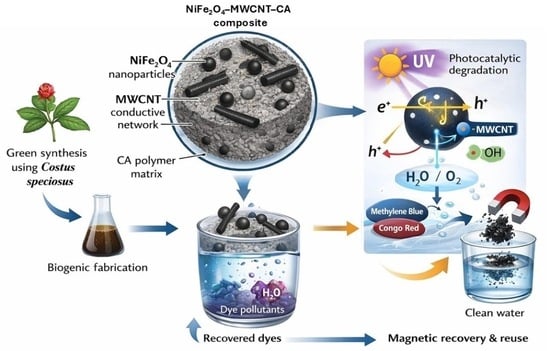
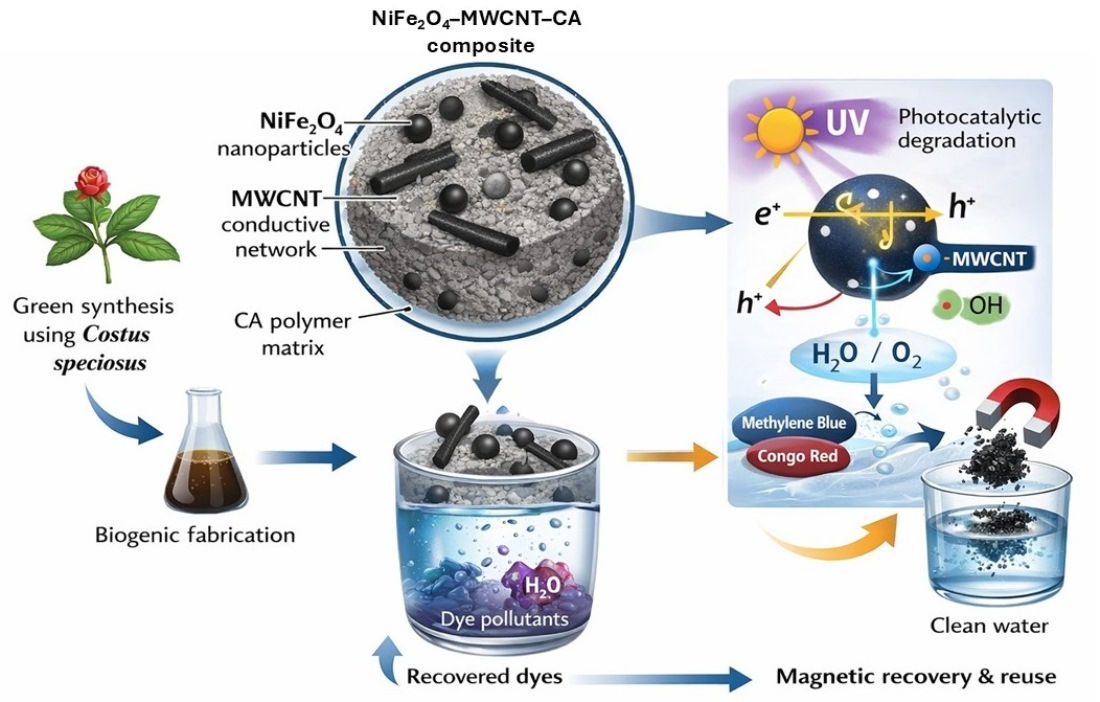
Graphical Abstract

1. Introduction

The release of synthetic dyes and hazardous organic pollutants into aquatic environments represents a major global concern. The textile industry, a cornerstone of the global economy, is a primary contributor, estimated to be responsible for up to 20% of global industrial water pollution, primarily due to dyeing and finishing processes [1]. Annually, approximately 700,000 tons of complex dyes are manufactured, with a substantial portion being released into water systems, notably, regions such as China, India, and Bangladesh collectively releasing around 3.5 billion tons of textile wastewater each year [2]. Owing to their high toxicity, chemical stability, and complex aromatic structures, many of these contaminants persist in natural ecosystems, thereby posing severe risks to human health and disrupting biological processes even at low concentrations [3].
Among the most common and problematic of these pollutants are methylene blue (MB) and Congo red (CR), which are extensively used in this study as model contaminants. Methylene blue, a cationic thiazine dye, is widely used in textiles and paper industry, as well as a biological stain. Despite its utility, it is recognized for its toxicity, persistence, and potential carcinogenicity, causing harmful effects on human health and aquatic life [4,5]. Congo red, an anionic diazo dye, is also heavily used in the textile and printing industries. It is particularly insidious due to its proven carcinogenicity, which arises from its metabolic conversion to benzidine, a recognized human carcinogen [6,7]. The presence of these dyes in water bodies not only reduces light penetration, thereby inhibiting photosynthesis, but also introduces substantial genotoxic and mutagenic risks into the food chain [8]. Consequently, the development of effective and sustainable remediation technologies is a critical environmental priority.
Various treatment techniques have been employed for the removal of dye pollutants from contaminated water, including adsorption, coagulation–flocculation, membrane filtration, and advanced oxidation processes (AOPs). Although these methods can achieve significant pollutant removal, they often suffer from limitations such as secondary waste generation, membrane fouling, high operational costs, and complex reaction conditions. Consequently, there is an increasing demand for more sustainable and efficient technologies capable of achieving complete degradation of dye contaminants while maintaining operational simplicity and catalyst reusability [9]. Among emerging treatment strategies, semiconductor photocatalysis has gained considerable attention as a sustainable and energy-efficient approach for wastewater remediation. Photocatalytic processes can mineralize recalcitrant organic pollutants into environmentally benign products such as CO2 and H2O under relatively mild conditions [10]. However, the practical application of many photocatalytic materials remains limited by several inherent drawbacks, including insufficient visible-light absorption, rapid recombination of photogenerated electron–hole pairs, and poor long-term stability.
Nickel ferrite (NiFe2O4), a spinel ferrite semiconductor, has emerged as a promising photocatalyst owing to its narrow bandgap (~1.6–1.9 eV), strong visible light response to chemical robustness, and intrinsic magnetic properties that enable effortless recovery and reuse [11,12]. Despite these advantages, pristine NiFe2O4 suffers from fast charge carrier recombination, which severely suppresses its photocatalytic efficiency. Therefore, strategies that enhance charge separation and improve surface interaction with organic pollutants are crucial to fully realize its catalytic efficiency.
Carbon-based nanostructures, particularly multi-walled carbon nanotubes (MWCNTs), present a compelling route to overcome these limitations. Their exceptional electrical conductivity, high surface area, and strong adsorption affinity facilitate efficient electron transport. These structures function as conductive pathways, effectively channeling photogenerated electrons away from the ferrite surface, thereby reducing recombination losses [13,14]. While various ferrite–carbon composites have been investigated, integrating these materials within a polymeric support matrix can further improve their mechanical stability and practical applicability.
This work presents the novel integration of a NiFe2O4–MWCNT heterostructure within a biodegradable cellulose acetate (CA) matrix. This integration results in a magnetically recoverable, mechanically robust, and highly efficient photocatalytic platform. The incorporation of the hybrid structure within CA matrix introduces mechanical stability, improved dispersion, and enhanced processability, thereby creating a composite platform that is not only active but also practical for real-world deployment [15,16]. In this study, we develop NiFe2O4–MWCNT–CA hybrid nanocomposites engineered for the visible-light-driven degradation of hazardous organic pollutants. NiFe2O4 nanoparticles are synthesized through a green, eco-friendly method using Costus speciosus extract and subsequently integrated with MWCNTs to construct a conductive, magnetically recoverable heterostructure supported on a CA matrix. Photocatalytic performance was assessed using methylene blue and Congo red under visible light, with degradation kinetics fitted to the Langmuir–Hinshelwood model. Reusability and magnetic recovery tests were conducted to evaluate operational stability, and scavenger assays were employed to identify the key reactive species driving the degradation mechanism. This work demonstrates a cost-effective, durable, and magnetically retrievable NiFe2O4–MWCNT–CA nanocomposite with significantly enhanced photocatalytic efficiency compared to pristine NiFe2O4. Beyond providing insights into the synergistic interactions between ferrite nanoparticles, carbon nanotubes, and polymeric supports, the developed platform offers a scalable solution for wastewater treatment technologies. These findings contribute to the advancement of ferrite–carbon hybrid photocatalysts and support broader environmental sustainability goals.

2. Results and Discussion

The development of highly efficient and stable photocatalysts is essential for advancing environmental remediation technologies. In our previous work, biogenic nickel ferrite (NiFe2O4) synthesized using Costus speciosus extract demonstrated promising photocatalytic performance, achieving a degradation efficiency of 94% for bromothymol blue under visible-light irradiation. However, the catalytic performance of the pristine NiFe2O4 material remained limited by rapid electron–hole recombination and a relatively narrow band gap (1.68 eV). Plant extracts such as Costus speciosus contain diverse phytochemical constituents including polyphenols, flavonoids, alkaloids, terpenoids, and reducing sugars, which play a crucial role in the green synthesis of nanomaterials. These bioactive molecules can function as natural reducing, chelating, and stabilizing agents, facilitating the conversion of metal ions into metal oxide nanostructures while simultaneously controlling nucleation and growth processes. Functional groups such as hydroxyl and carbonyl groups present in these phytochemicals can coordinate with metal ions (Ni2+ and Fe3+), promoting the formation of stable ferrite nanoparticles and preventing particle agglomeration through surface capping effects. Similar mechanisms have been widely reported in plant-mediated synthesis of photocatalytic nanomaterials, where biomolecules regulate nanoparticle formation and enhance structural stability and catalytic performance [17,18]. To overcome the intrinsic limitations of pristine NiFe2O4 and further enhance its photocatalytic efficiency, the present study introduces a novel multi-component nanocomposite, NiFe2O4/MWCNT/CA. The strategic incorporation of multi-walled carbon nanotubes (MWCNTs) provides conductive pathways that facilitate rapid electron transport and suppress charge recombination, while embedding the heterostructure within a cellulose acetate (CA) matrix improves mechanical stability, dispersibility in aqueous media, and catalyst recoverability. This integrated composite architecture therefore generates a synergistic system with improved charge separation efficiency and enhanced photocatalytic performance. The catalytic activity of the developed nanocomposite was evaluated using both cationic (methylene blue) and anionic (Congo red) dyes to demonstrate its broader applicability in wastewater treatment.

2.1. X-Ray Diffraction Analysis

X-ray diffraction analysis was employed to confirm the crystalline structure and phase purity of the synthesized NiFe2O4 and NiFe2O4/MWCNT/CA composite (Figure 1). The XRD patterns revealed characteristic diffraction peaks corresponding to the cubic spinel structure of NiFe2O4, with all peaks indexed to the Fd-3m space group (227), thereby confirming the inverse spinel arrangement. The prominent diffraction peaks observed at 2θ values corresponding to the (220), (311), (400), (511), and (440) planes are in excellent agreement with the standard cubic spinel structure of NiFe2O4 (PDF 01-082-8442) [10]. The lattice parameters were determined using the cubic structure equation:
1 d 2   = ( h 2 + k 2 + l 2 ) 1 a 2
where d is the interplanar spacing, h, k, l are the Miller indices, and a is the lattice constant. The lattice constant for pristine NiFe2O4 was determined to be a = 8.308 Å, which aligns well with established literature values for the cubic spinel structure [19]. The NiFe2O4/MWCNT/CA composite exhibited a slightly larger lattice constant of a = 8.315 Å (Table 1), indicating a marginal lattice expansion. This minor increase may be attributed to the interaction between the ferrite nanoparticles and the carbon nanotubes, as well as the incorporation of the cellulose acetate matrix, which can induce slight structural modifications at the interface. The unit cell volumes were calculated using the cubic structure relation V = a3. The pristine NiFe2O4 exhibited a unit cell volume of V = 573.4 Å3, while the composite showed V = 574.93 Å3. The increase in unit cell volume of the composite is consistent with the observed lattice parameter expansion and reflects the structural accommodation of the carbon nanotubes and polymer matrix within the ferrite lattice. The crystallite sizes were calculated using the Scherrer formula:
D =   0.9   λ β c o s θ
where λ is the X-ray wavelength (1.5406 Å), β is the corrected full width at half maximum (FWHM) of the diffraction peak, and θ is the Bragg’s angle. The pristine NiFe2O4 exhibited a crystallite size of D = 32.5 nm, while the NiFe2O4/MWCNT/CA composite showed a larger apparent crystallite size of D = 83.6 nm. The increase in apparent crystallite size in the composite may be attributed to the reduced peak broadening resulting from the amorphous nature of the cellulose acetate matrix and the carbon nanotubes, which can influence the peak profile and apparent crystallinity. Alternatively, the larger apparent size may reflect particle agglomeration or the formation of larger crystalline domains during the composite fabrication process, though the preservation of lattice parameters suggests that the fundamental crystal structure remains intact. The theoretical density (Dx) was calculated using the following formula:
Dx   =   Z M N A V
where Z is the number of formula units per unit cell (Z = 8 for the spinel structure), M is the molecular weight (NiFe2O4: M = 235.4 g/mol), NA is Avogadro’s number (6.022 × 10²³ mol−1), and V is the unit cell volume. The theoretical density of pristine NiFe2O4 was calculated to be ρ = 5.43 g/cm3, which matches well with established literature values for bulk NiFe2O4 [20]. The composite exhibited a lower theoretical density of ρ = 5.14 g/cm3, attributable to the incorporation of lower-density components (MWCNTs: ρ ≈ 2.1 g/cm3; cellulose acetate: ρ ≈ 1.3 g/cm3) into the composite structure. This decrease in density contributes to improved dispersibility and may potentially enhance the accessibility of active sites on the ferrite surface [21,22].

2.2. Vibrating Sample Magnetometry Characterization

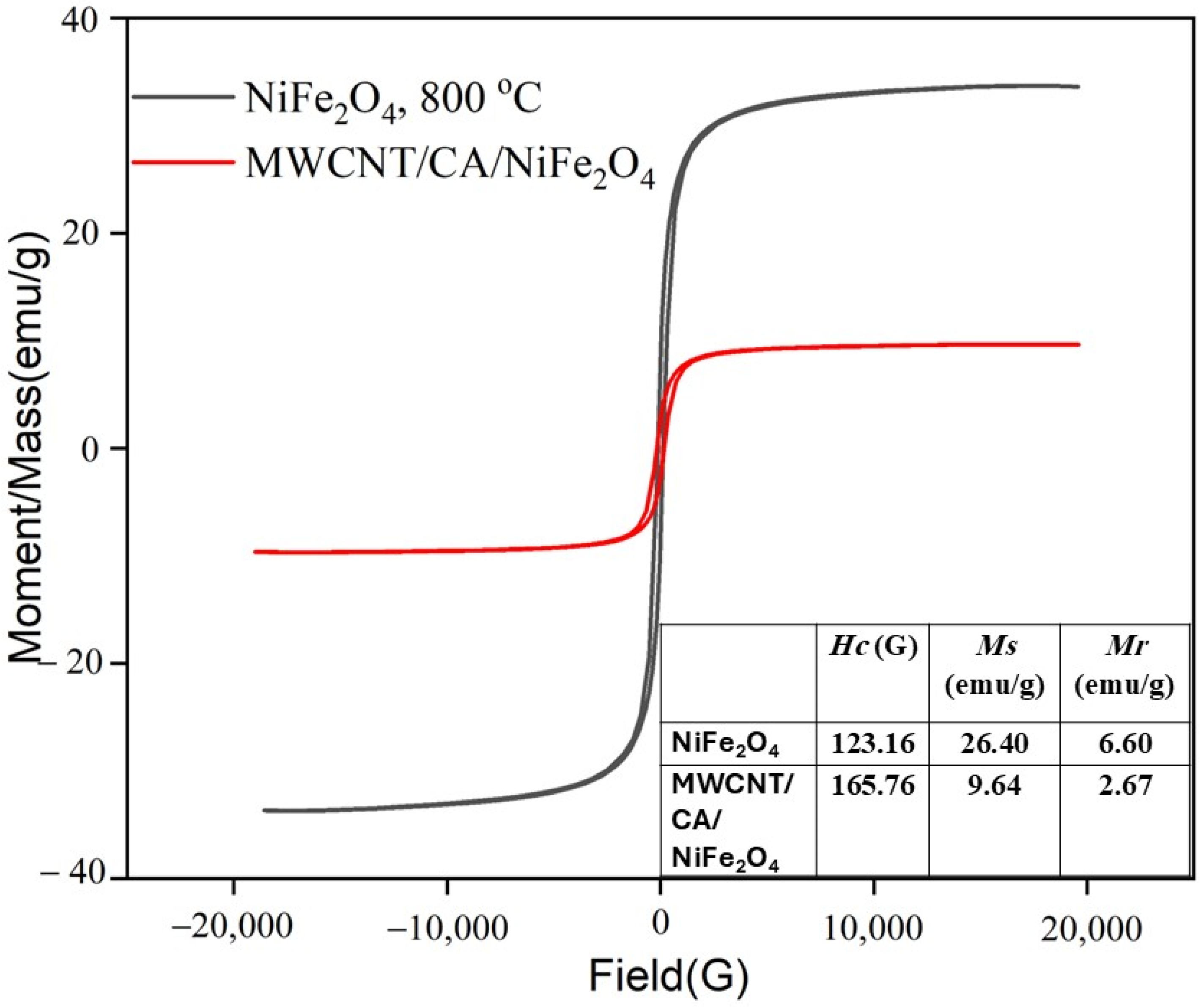
The magnetic behavior of NiFe2O4 and the NiFe2O4/MWCNT/CA composite was evaluated at room temperature using a VSM. The hysteresis loops and extracted magnetic parameters are shown in Figure 2. Pristine NiFe2O4 displayed a saturation magnetization (Ms) of 26.40 emu/g and a coercive field (Hc) of 123.16 G, values typical of ferrimagnetic spinel ferrites and consistent with literature reports [23,24]. This ferrimagnetism is attributed to arises from the antiparallel alignment of magnetic moments between tetrahedral and octahedral cation sites within the inverse spinel structure in the inverse spinel framework. In contrast, the NiFe2O4/MWCNT/CA composite exhibited a significantly reduced, markedly lower Ms of 9.64 emu/g and a slightly elevated Hc of 165.76 G. The decrease in Ms (≈63.5%) is attributed to the dilution of the magnetic phase by non-magnetic MWCNTs and cellulose acetate [25]. The increase in coercivity suggests enhanced magnetic anisotropy arising from interfacial interactions between NiFe2O4 nanoparticles and carbon nanotubes, as well as possible surface-related effects [26]. Remanent magnetization (Mr) decreased from 6.60 emu/g in pristine NiFe2O4 to 2.67 emu/g in the composite, reflecting the same dilution effect observed in Ms. The remanence ratios (Mr/Ms) were 0.25 for NiFe2O4 and 0.28 for the composite, indicating low magnetic retention and suggesting the presence of weakly interacting ferrimagnetic domains or partial superparamagnetic contributions [27]. Although the composite exhibited reduced magnetization, its magnetic response remained adequate for catalyst recovery using an external magnet. The preserved ferrimagnetic character ensures efficient magnetic separation, which is an essential requirement for reusable photocatalysts in wastewater treatment systems. This enables simple catalyst recycling without centrifugation or filtration, thereby supporting integration into continuous-flow reactors. Both samples exhibited S-shaped hysteresis loops characteristic of ferrimagnetic materials, confirming the absence of paramagnetic or antiferromagnetic behavior. The retention of ferrimagnetic properties in the composite demonstrates that the NiFe2O4 phase remained structurally intact within the polymer–carbon matrix. The slight increase in coercivity may indicate improved magnetic ordering at the ferrite–carbon interface, which could positively influence photocatalytic activity through enhanced charge separation.

2.3. Textural Properties and Surface Analysis

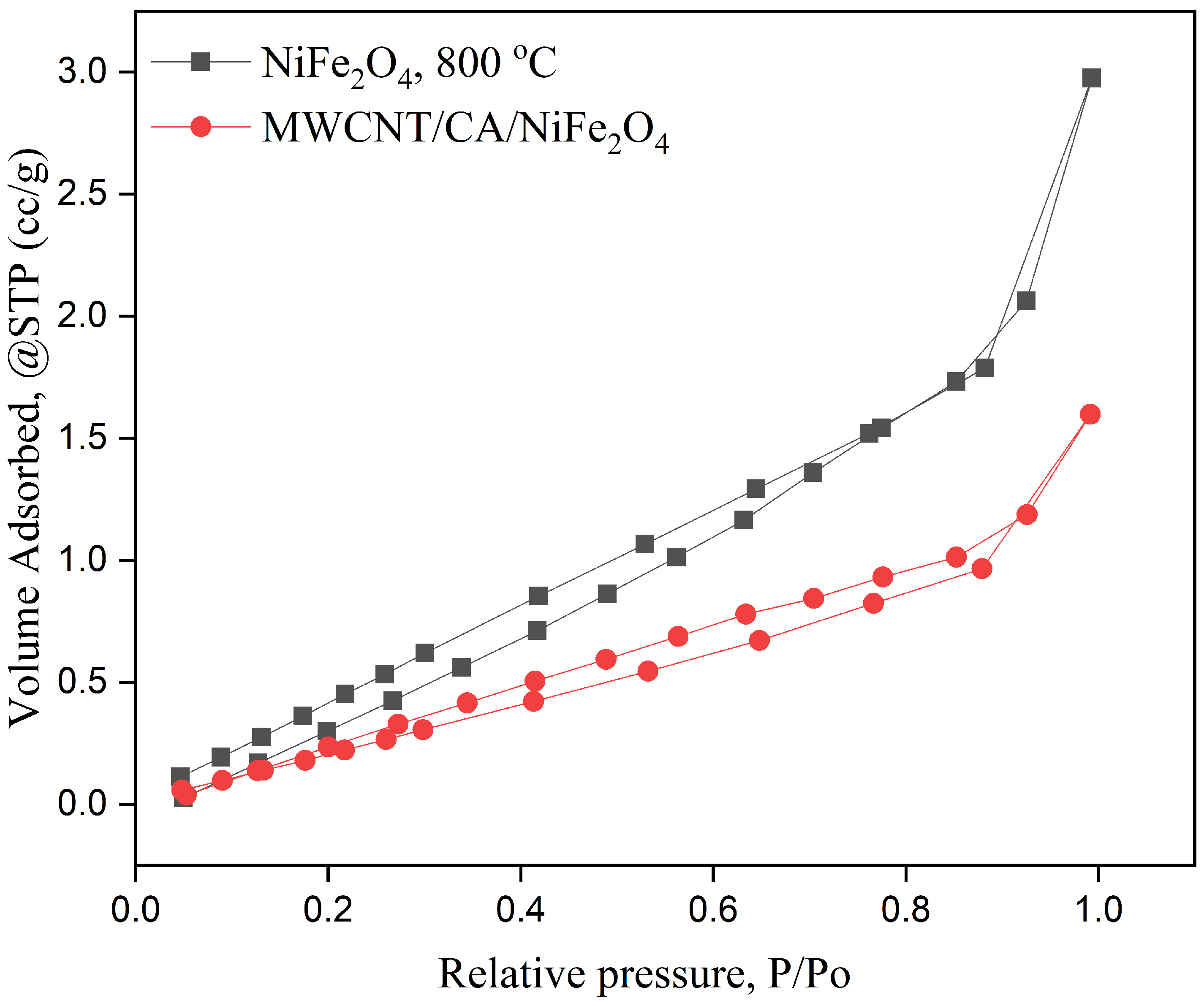
The textural and surface properties of NiFe2O4 and NiFe2O4/MWCNT/CA composite (Table 2) demonstrated significant structural alterations resulting from hybridization. The nitrogen adsorption–desorption isotherms displayed in Figure 3 show that both materials exhibit Type IV isotherms with distinct H3/H4 hysteresis loops, confirming the presence of mesoporous structures characteristic of slit-shaped pores produced by nanoparticle aggregation [28,29]. Pristine NiFe2O4 presents markedly higher N2 uptake across the entire relative pressure range, consistent with its significantly larger BET surface area (112.46 m2/g), BJH pore volume (0.144 cm3/g), DFT pore volume (0.155 cm3/g), and higher cumulative surface area. These features align with the abundant mesopore populations observed in Supplementary Figures S1–S4, where NiFe2O4 exhibits broad and intense pore size and surface area distributions centered at 2–3 nm and extending toward larger mesopores.
In contrast, the NiFe2O4/MWCNT/CA composite displayed a drastic reduction in SBET (30.99 m2/g), BJH pore volume (0.045 cm3/g), DFT total pore volume (0.047 cm3/g), and cumulative surface area. These reductions are attributed to (i) pore blockage caused by the deposition of cellulose acetate and MWCNTs on the NiFe2O4 surface, (ii) surface masking effects, and (iii) partial structural densification within the hybrid material [30,31]. The identical average pore diameter (5.82 nm) in both samples confirms that hybridization reduces pore volume and surface area without fundamentally altering the intrinsic mesopore size. Supplementary Figures S2–S4 further substantiate this observation: the composite retains only a narrow distribution of small mesopores, whereas large pore families disappear because of polymer-induced constriction and CNT network coverage.
Despite the substantial loss in geometric surface area, the hybrid material demonstrated superior photocatalytic efficiency, highlighting a key principle in modern catalyst engineering: performance is governed not only by textural factors but also by electronic and interfacial synergies. MWCNTs play a central role as electron highways, efficiently scavenging and transporting photogenerated electrons away from NiFe2O4, thereby suppressing electron–hole recombination and prolonging charge carrier lifetimes [32,33,34]. Moreover, their π-conjugated graphitic walls promote π–π interactions with aromatic dye molecules, increasing local dye concentration near active sites and accelerating degradation reactions. This dual role—electronic and interfacial—creates a cooperative charge-transfer network that enhances the photocatalytic performance of the composite well beyond that predicted from its reduced surface area alone [35]. Cellulose acetate (CA), although non-conductive, contributes significantly to the hybrid’s performance by enhancing structural stability, preventing nanoparticle agglomeration, and improving dispersibility in aqueous media [36,37,38]. The CA matrix also provides mild hydrophilicity, enabling better pollutant–catalyst contact, while simultaneously protecting NiFe2O4 from photocorrosion and operational fatigue. These stabilizing effects ensure a reliable long-term catalytic function.
Zeta potential measurements provide additional insight into surface behavior (Table 2). Pristine NiFe2O4 exhibits a strongly negative surface charge (–44.97 mV), indicating excellent colloidal stability and strong electrostatic interaction with cationic dyes [10,39]. In contrast, the hybrid composite showed a less negative charge (–14.42 mV), consistent with partial surface coverage by CA and MWCNTs. This moderated surface charge modifies interfacial interactions with pollutants, influencing adsorption equilibria and facilitating electron transfer across the hybrid interface [40,41]. Surface charge tuning is a hallmark of effective photocatalyst design, particularly when targeting molecules with varied ionic characteristics. Overall, the integrated structural, textural, electronic, and interfacial analyses demonstrate that NiFe2O4/MWCNT/CA was not merely a diluted or surface-restricted version of NiFe2O4 but a synergistically engineered photocatalytic system combining:
(i)
The active ferrite phase of NiFe2O4 for light absorption and ROS generation;
(ii)
MWCNTs as electron highways and π–π interaction enhancers;
(iii)
CA as a structural stabilizer and dispersant. The combined evidence from Figure 3, Supplementary Figures S1–S4, and Table 2 confirms that the hybrid exhibits optimized charge separation, interfacial activity, and structural robustness—features that collectively explain its superior photocatalytic performance.

2.4. FTIR Spectrum Analysis

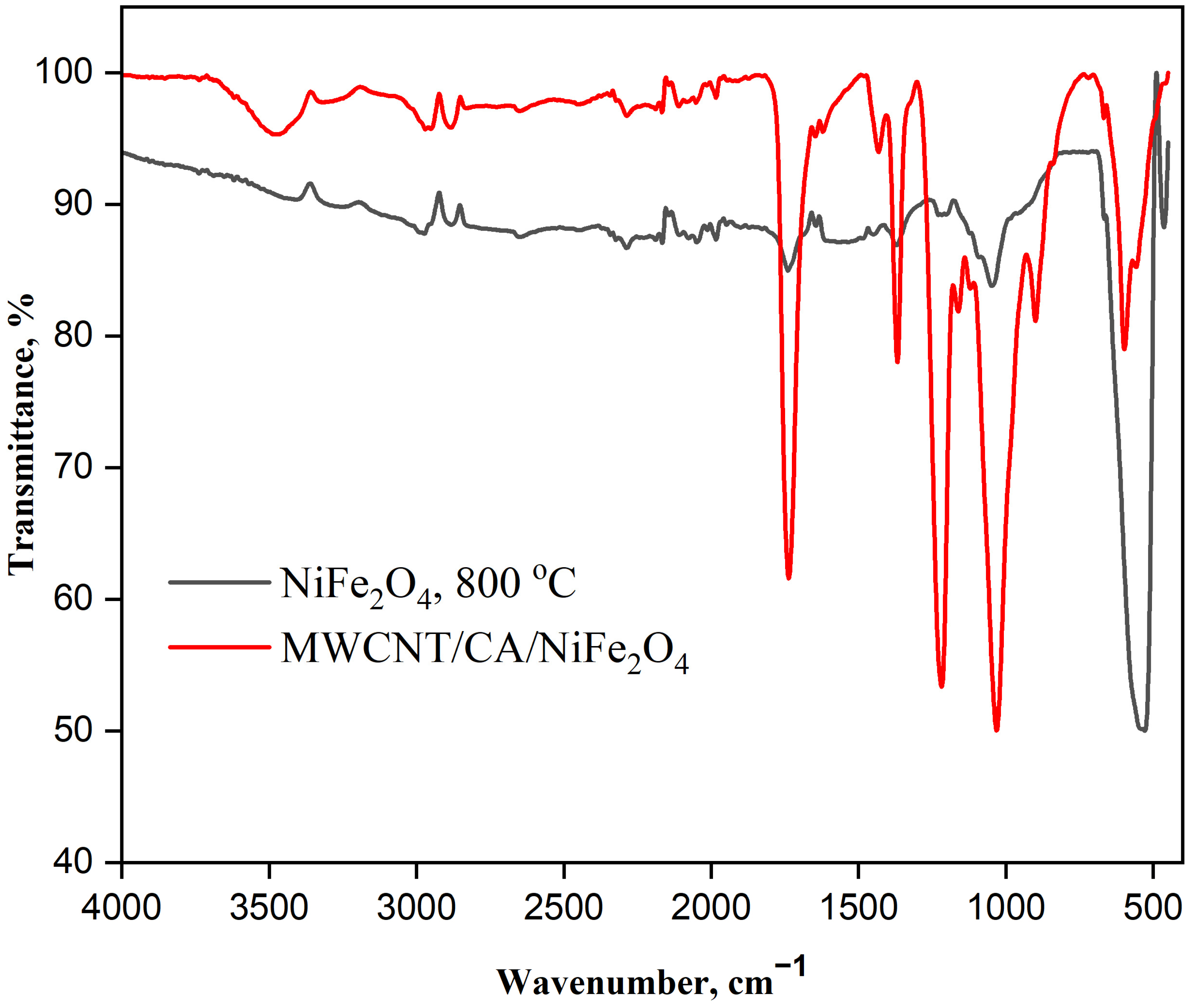
The FTIR spectrum of pristine NiFe2O4 is dominated by intense bands at 547, 489, and 463–470 cm−1, which are assigned to Fe–O and Ni–O stretching vibrations in the tetrahedral and octahedral sites of the spinel lattice [42], confirming the formation of NiFe2O4 (Figure 4). A band at 707 cm−1 is also associated with octahedral Fe–O vibrations. Weak absorptions at 1737, 1259, and 1047 cm−1 arise from residual carbonyl and C–O groups of precursor-derived species (e.g., surface carbonates/acetates) together with contributions from surface hydroxyls and Fe–O–OH moieties. These features indicate a slightly hydroxylated surface but do not affect the spinel framework. In contrast, the MWCNT/CA/NiFe2O4 composite showed a much richer organic fingerprint in the 1800–900 cm−1 region. New bands at 1491, 1369, and 1302 cm−1 correspond to aromatic C=C vibrations of MWCNTs and CH3/CH2– and C–O–C vibrations of cellulose acetate [43,44], unambiguously confirming the presence of both the carbon nanotube and polymer components. Additional strong C–O/C–O–C bands at 1220 and 1140 cm−1, along with bands at 1033 and 931 cm−1, indicate abundant CA functional groups and enhanced surface hydroxylation. The characteristic spinel Fe–O/Ni–O band persists at 597 and 736 cm−1, albeit slightly shifted and broadened compared with pristine NiFe2O4, demonstrating that the ferrite lattice is preserved but its local environment is modified by interaction with the MWCNT/CA matrix.

2.5. Morphological Analysis

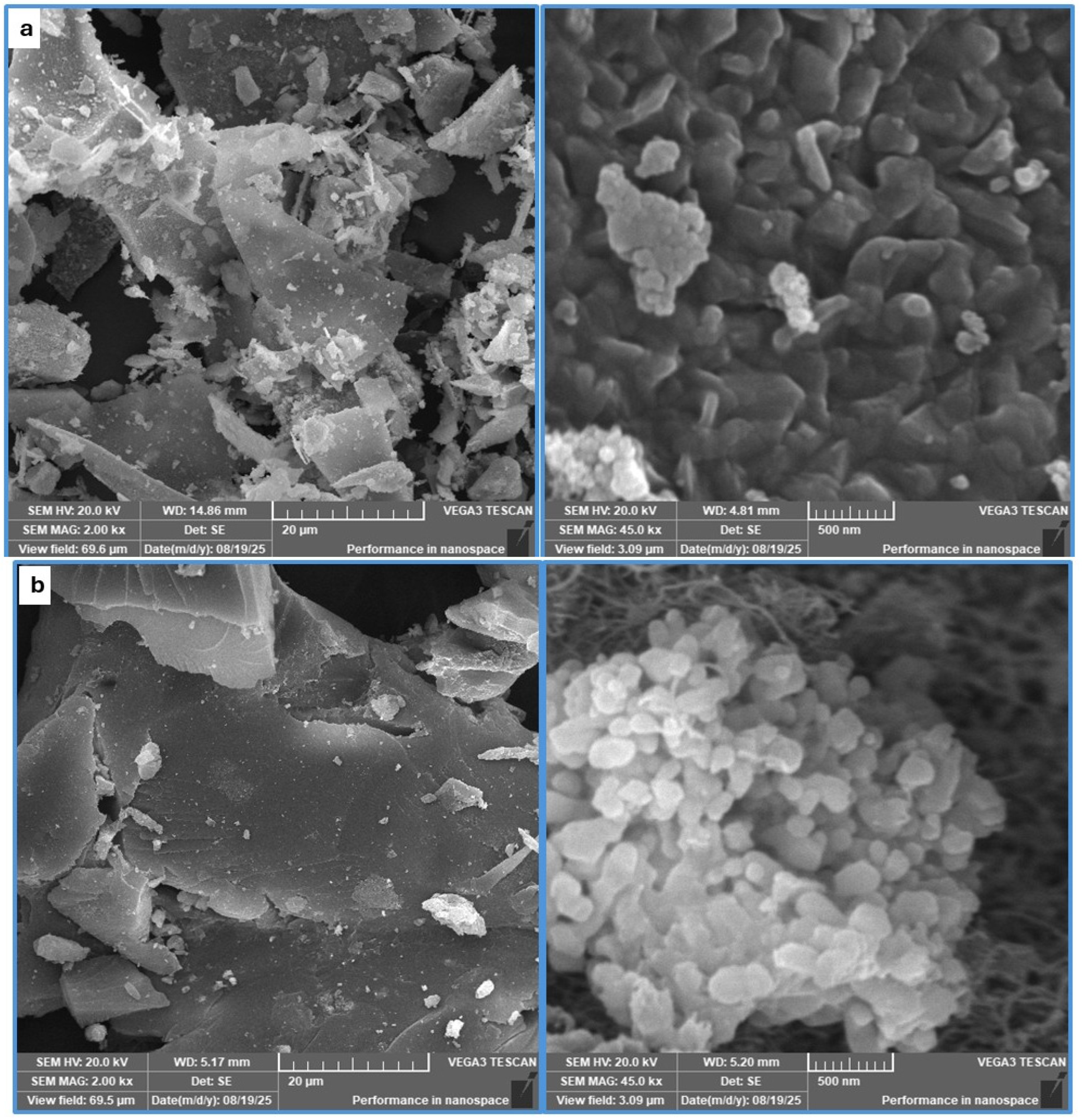
The SEM analysis clearly highlights the profound morphological transformation that occurs when pristine NiFe2O4 is incorporated into the MWCNT/CA hybrid matrix. The pristine ferrite exhibited a heavily agglomerated morphology, where the nanoparticles cluster into dense, irregular aggregates due to strong magnetic interactions and high surface energy (Figure 5a). This extensive aggregation limits the availability of active catalytic sites, restricts mass transfer of dye molecules toward the surface, and shields a significant fraction of the material from incident light, ultimately lowering photocatalytic efficiency. In contrast, the MWCNT/CA/NiFe2O4 composite showed a highly dispersed and structurally organized architecture in which the ferrite nanoparticles were uniformly distributed across the intertwined carbon nanotube network and embedded within the cellulose acetate phase (Figure 5b). The MWCNT scaffold provides a conductive, high-surface-area framework that anchors the nanoparticles and prevents their re-agglomeration, while the cellulose acetate acts as a stabilizing medium that separates the particles and maintains structural integrity. This engineered morphology ensures greater exposure of the ferrite surface to the surrounding solution and incident photons, improves charge separation by facilitating rapid electron transfer from NiFe2O4 to the conductive nanotubes, and enhances the overall accessibility of reactive sites. The interconnected porous network in the composite further promoted the efficient diffusion of dye molecules and the rapid removal of degradation intermediates. Collectively, the morphological evolution from a compact, aggregated structure in pristine NiFe2O4 to a well-dispersed, synergistic hybrid framework in the MWCNT/CA/NiFe2O4 composite provides a clear mechanistic explanation for the superior photocatalytic performance of the hybrid material.

2.6. Optical Properties and Bandgap Analysis

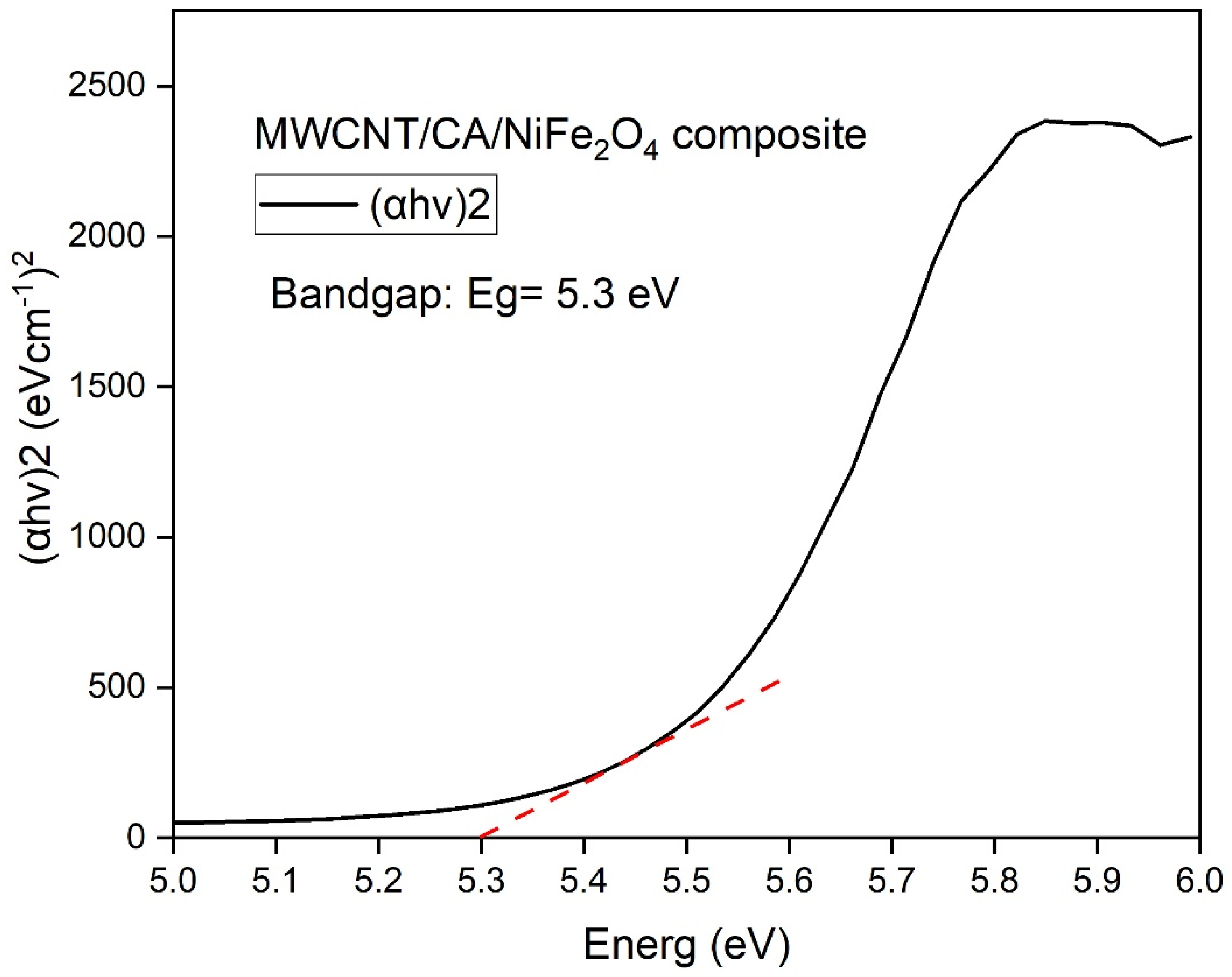
Figure 6 presented the Tauc plot ( α h ν ) 2 versus photon energy ( h ν ) used to estimate the optical bandgap of the MWCNT/CA/NiFe2O4 composite. The linear extrapolation of the absorption edge to the energy axis yields a bandgap value of 5.3 eV, indicating a significant widening of the optical band structure relative to pristine NiFe2O4, which typically exhibits a bandgap in the range of 1.6–1.9 eV [10,45]. This pronounced shift can be attributed to the strong interfacial interactions between NiFe2O4 nanoparticles and the surrounding cellulose acetate matrix, as well as possible surface modification effects arising from the composite fabrication process. Encapsulation of the ferrite within the CA matrix and its close association with MWCNTs may restrict electronic delocalization and induce quantum confinement–like effects, leading to a broader bandgap. The widened bandgap implies that the composite is optically inactive under visible light and requires higher-energy UV photons to promote electron excitation. This observation is consistent with the photoreactor conditions employed in this study, where UV-B irradiation (254 nm) was used to ensure efficient excitation above the 5.3 eV threshold value. Similar effects have been reported in carbon-supported semiconductor photocatalysts, where the incorporation of carbon nanostructures modifies the optical absorption characteristics and enhances charge transport within the composite system [46,47]. Furthermore, nanoscale structural effects and surface states in ferrite-based nanomaterials may also contribute to shifts in the optical band edge observed in hybrid photocatalysts. Despite the apparent increase in band gap, the presence of MWCNTs significantly improves charge separation by acting as efficient electron acceptors and conductive pathways, which suppress electron–hole recombination and enhance photocatalytic activity [48]. Consequently, although the composite requires higher-energy photons for excitation, the improved interfacial charge-transfer processes within the NiFe2O4/MWCNT/CA system enable efficient generation of reactive oxygen species under UV irradiation, supporting its strong photocatalytic performance. Although a larger bandgap typically reduces visible-light harvesting capability, the hybrid composite compensates through its enhanced charge-transfer characteristics: MWCNTs serve as rapid electron acceptors, suppressing recombination [49], while CA improves particle dispersion and facilitates pollutant–catalyst contact. The steep absorption edge and strong increase in ( α h ν ) 2 values demonstrate efficient UV absorption and a high density of electronic states near the conduction band edge. These features favor the generation of reactive oxygen species (ROS) once the composite is activated by UV light, supporting its strong photocatalytic performance despite limited visible-light absorption. Therefore, the bandgap analysis provides crucial insight into the excitation requirements of the NiFe2O4/MWCNT/CA system and helps rationalize its dye degradation efficiency under UV illumination.

2.7. Photocatalytic Degradation

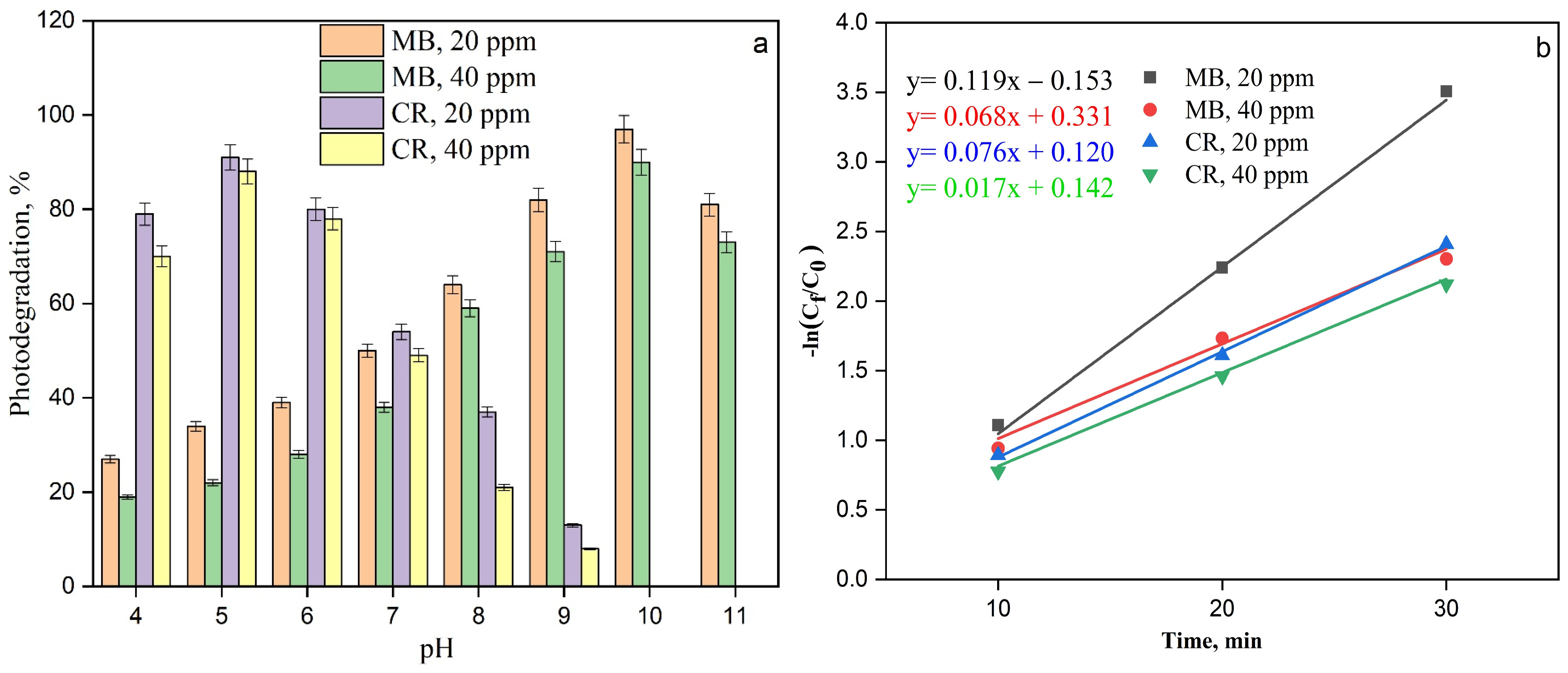
The photocatalytic efficiency of the synthesized NiFe2O4/MWCNT/CA composite was systematically evaluated by investigating the effects of pH, dye concentration, and the roles of different reactive species. The pH of the aqueous solution is a critical parameter that significantly influences the efficiency of the photocatalytic process by affecting the surface charge of the catalyst and the ionization state of the dye molecules. As shown in Figure 7a, the degradation of MB was found to be optimal at a high pH of 10, achieving 97% degradation for a 20 ppm solution. At this alkaline pH, the composite electrostatic attraction surface becomes negatively charged, leading to a strong electrostatic attraction with the positively charged MB molecules, which enhances adsorption and subsequent degradation [50]. Conversely, the degradation of CR was most effective at an acidic pH of 5, reaching 91% degradation for a 20 ppm solution. Under these acidic conditions, the catalyst surface is protonated and positively charged, promoting strong electrostatic attraction with the anionic CR molecules. This differential pH-dependent behavior is a well-documented phenomenon in photocatalysis [50]. The initial dye concentration also plays a significant role in the degradation process. For both MB and CR, the degradation efficiency decreased as the initial concentration was increased from 20 ppm to 40 ppm. This is attributed to the saturation of active sites on the catalyst surface and an “inner filter” effect, where the higher dye concentration reduces UV light penetration, thereby lowering the rate of electron-hole pair generation [51]. The photocatalytic degradation of both dyes was found to follow pseudo-first-order kinetics, as illustrated in Figure 7b. The apparent rate constants (k) were determined from the slopes of the kinetic plots. For MB, the rate constant decreased from 0.119 min−1 at 20 ppm to 0.068 min−1 at 40 ppm. A similar, more pronounced trend was observed for CR, where the rate constant dropped from 0.076 min−1 at 20 ppm to 0.017 min−1 at 40 ppm, confirming that higher concentrations inhibited the reaction rate. To further contextualize the photocatalytic performance of the developed NiFe2O4/MWCNT/CA composite, its degradation efficiency and kinetic behavior were compared with those of recently reported ferrite-based photocatalysts (Table 3). Previous studies have shown that NiFe2O4-based nanocomposites exhibit promising activity for dye and pollutant degradation. For instance, NiFe2O4–CA nanocomposites have demonstrated nearly 99% removal of methylene blue within 180 min following pseudo-first-order kinetics, highlighting their potential for wastewater treatment applications [52]. In another study, CNT-supported NiFe2O4 photocatalysts achieved approximately 90% degradation of methylene blue under visible-light irradiation, which was attributed to enhanced surface area and improved charge carrier separation provided by carbon nanotubes [53]. Furthermore, recent investigations on NiFe2O4/MWCNT composites reported degradation efficiencies exceeding 95% for organic pollutants, confirming the beneficial role of carbon-based conductive networks in suppressing electron–hole recombination and improving photocatalytic kinetics [13]. Compared with these systems, the NiFe2O4/MWCNT/CA composite developed in the present study demonstrates comparable or improved photocatalytic efficiency, which can be attributed to the synergistic effects of the conductive MWCNT framework and the cellulose acetate matrix that enhances catalyst dispersion, stability, and charge transfer processes.

2.8. Photocatalytic Degradation Mechanism and Role of Reactive Species

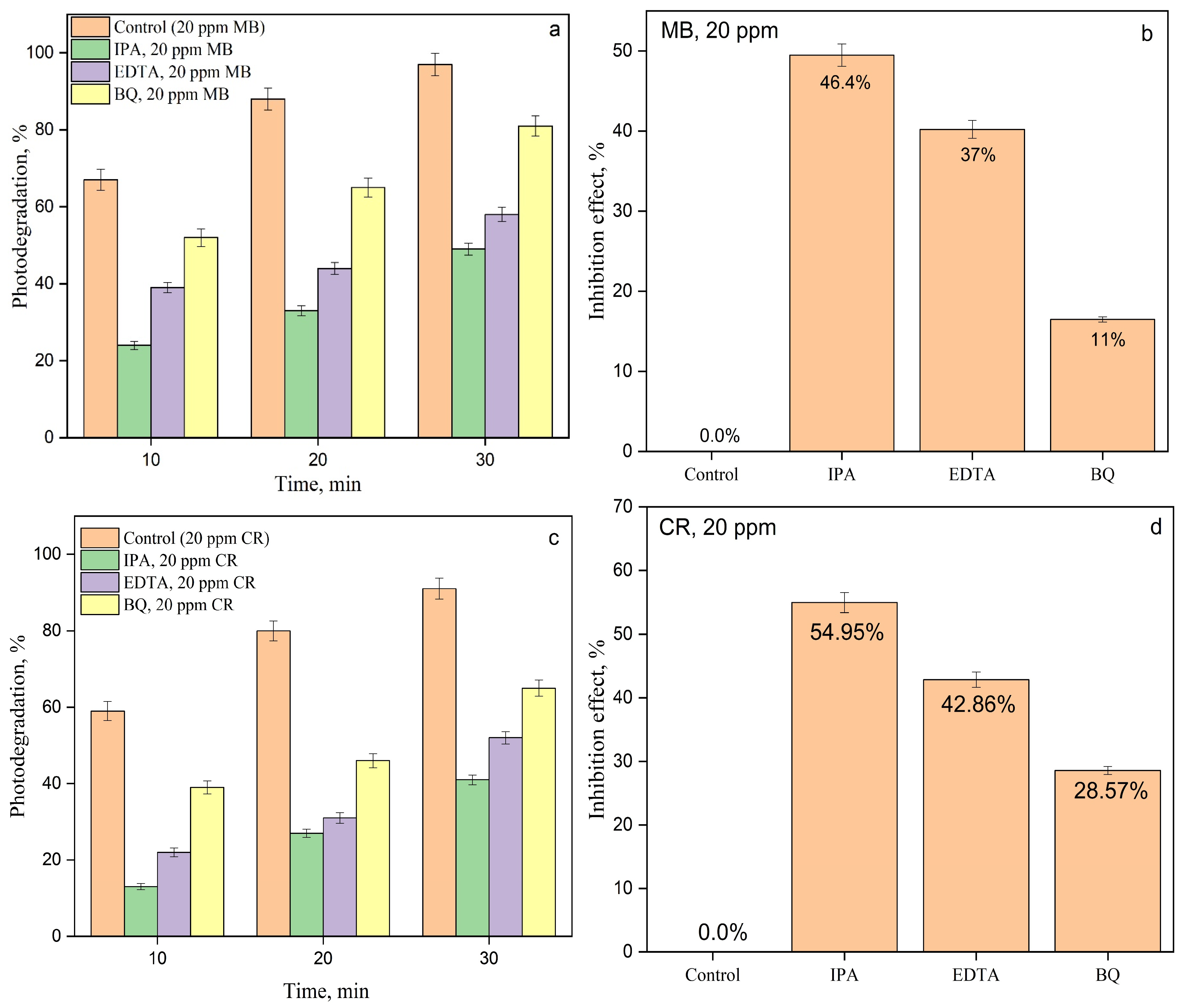
To elucidate the underlying degradation mechanism, it is essential to identify the primary reactive species involved. The process begins when the NiFe2O4 semiconductor absorbs UV photons, generating electron-hole pairs (e/h+). The highly conductive MWCNTs act as an electron sink, effectively separating the charge carriers and suppressing their recombination, which is a key factor in the composite’s enhanced efficiency [13,54]. These separate charges then react with water and oxygen to produce reactive oxygen species (ROS). The incorporation of MWCNTs significantly enhances the photocatalytic performance of the NiFe2O4/MWCNT/CA composite by facilitating efficient interfacial charge transfer and promoting reactive oxygen species (ROS) generation. Due to their high electrical conductivity and electron mobility, MWCNTs act as electron acceptors and transport pathways that accelerate the migration of photogenerated electrons and suppress electron–hole recombination. The transferred electrons react with dissolved oxygen to produce superoxide radicals (•O2), while photogenerated holes contribute to the formation of hydroxyl radicals (•OH). These ROS play a key role in the oxidative degradation of organic pollutants, thereby improving the overall photocatalytic efficiency of the composite system [53,55]. To determine the roles of these ROS—hydroxyl radicals (•OH), photogenerated holes (h+), and superoxide radicals (•O2)—a series of scavenger experiments were performed. For the degradation of 20 ppm MB, the results are shown in Figure 8a. In the control experiment without any scavenger, the degradation reached 97% after 30 min of reaction. When isopropanol (IPA), a scavenger for •OH, was introduced, the degradation was significantly reduced to 49%. The addition of EDTA-2Na, a quencher for h+, resulted in a degradation of 58%, while p-benzoquinone (BQ), a scavenger for •O2, led to a degradation of 81%. These results correspond to inhibition effects of 49.5% for •OH, 40.2% for h+, and 16.5% for •O2, as depicted in Figure 8b. This clearly indicates that hydroxyl radicals (•OH) are the dominant reactive species in the degradation of MB, with photogenerated holes (h+) also playing a substantial role. Similar scavenger experiments were conducted for the degradation of 20 ppm CR, with the results presented in Figure 8c. The control experiment showed 91% degradation after 30 min. The addition of IPA, EDTA-2Na, and BQ resulted in final degradations of 41%, 52%, and 65%, respectively.
In the case of MB, the degradation process typically begins with the cleavage of the heterocyclic aromatic structure and demethylation of the dimethylamine groups, producing intermediate compounds such as demethylated MB derivatives and smaller aromatic fragments. These intermediates undergo further oxidative degradation through ring-opening reactions, ultimately forming low-molecular-weight organic acids and finally mineralizing into CO2 and H2O [56].
For Congo red, the degradation pathway generally involves the cleavage of the azo (–N=N–) bonds that connect the aromatic rings, leading to the formation of aromatic amine intermediates such as benzidine derivatives. Subsequent oxidation by hydroxyl radicals results in the opening of the aromatic rings and the formation of smaller organic compounds, which are further oxidized into simple inorganic molecules such as CO2, H2O, and nitrate or sulfate ions [57].
NiFe2O4 + NiFe2O4 (e + h+)
eCB + MWCNTMWCNT(e)
O2 + eO2
O2 + H+HO2
2HO2H2O2 + O2
H2O2 + e → •OH + OH
h+ + H2O → •OH + H+
h+ + OH → •OH
OH + Dye (MB/CR) → CO2 + H2O + Mineralized products
O2 + Dye (MB/CR) → Degradation intermediatesCO2 + H2O
As shown in Figure 8d, these values correspond to inhibition effects of 55.0% for •OH, 42.9% for h+, and 28.6% for •O2. Consistent with the findings for MB, hydroxyl radicals (•OH) were confirmed to be the primary species driving the degradation of CR, followed again by photogenerated holes (h+). The contribution of superoxide radicals (•O2) was minor but more pronounced in the degradation of CR compared to MB. The proposed photocatalytic mechanism fully aligns with and explains the pH-dependent degradation profiles observed for both MB and CR. Although MB exhibits optimal degradation at pH 10 while CR performs best at pH 5, despite both relying mainly on •OH-mediated oxidation, this behavior is not contradictory. Instead, it reflects the surface-dependent nature of photocatalysis, which is governed by two coupled factors: (i) the adsorption efficiency of the pollutant on the catalyst surface and (ii) the local generation of reactive oxygen species (ROS) at the catalyst–solution interface. For methylene blue, the enhanced degradation at pH 10 resulted from a synergistic contribution of both factors. Under alkaline conditions, the catalyst surface acquires a negative charge, strongly attracting the cationic MB molecules and ensuring high surface coverage and close contact with the active sites. Furthermore, the abundance of hydroxide ions (OH) in the alkaline medium facilitates efficient •OH formation through the reaction h+ + OH → •OH, thereby maximizing the availability of the primary oxidizing species. The combined effects of strong adsorption and increased ROS generation yield superior degradation efficiency. In contrast, Congo red exhibited optimal degradation at pH 5, where adsorption dominated as the controlling factor. At this acidic pH, the catalyst surface becomes positively charged, which strongly attracts the anionic CR molecules and promotes dense surface adsorption despite the lower OH concentration. Although •OH formation through the pathway h+ + H2O → •OH may occur at a slightly reduced rate compared to alkaline conditions, the proximity of the adsorbed CR molecules to the sites of ROS generation compensates for this difference. Thus, adsorption-driven enrichment at the catalyst surface becomes the decisive factor dictating degradation efficiency. This mechanistic interpretation demonstrates that the pH-dependent trends arise from a shift in the rate-determining step—from ROS generation (MB system) to pollutant adsorption (CR system)—while maintaining •OH radicals as the predominant oxidizing species in both cases. The interplay between pH-dependent surface charge, electrostatic interactions, and ROS generation kinetics thus explains why different dyes exhibit different optimal pH conditions, despite sharing the same fundamental degradation pathway. Overall, the photocatalytic degradation of both dyes by the NiFe2O4/MWCNT/CA composite proceeded through a multi-pathway mechanism. The dominant pathway involves oxidation by •OH radicals generated via the reaction of photogenerated holes with water or hydroxide ions. A secondary pathway entails direct oxidation by h+, while superoxide radicals (•O2) contribute to a supportive but less significant role. The synergistic operation of these pathways, enabled by efficient charge separation within the composite, accounts for the high photocatalytic activity observed. The NiFe2O4/MWCNT/CA composite demonstrates strong potential for practical wastewater treatment due to its magnetic recoverability, high stability, and efficient photocatalytic activity. Its magnetic properties allow easy separation and reuse using an external magnetic field, reducing operational costs and facilitating large-scale applications. Additionally, the presence of MWCNTs enhances charge transfer and structural stability, improving catalyst durability during repeated use. These advantages make the composite a promising candidate for scalable photocatalytic removal of dyes and other organic pollutants from wastewater.

2.9. Reusability

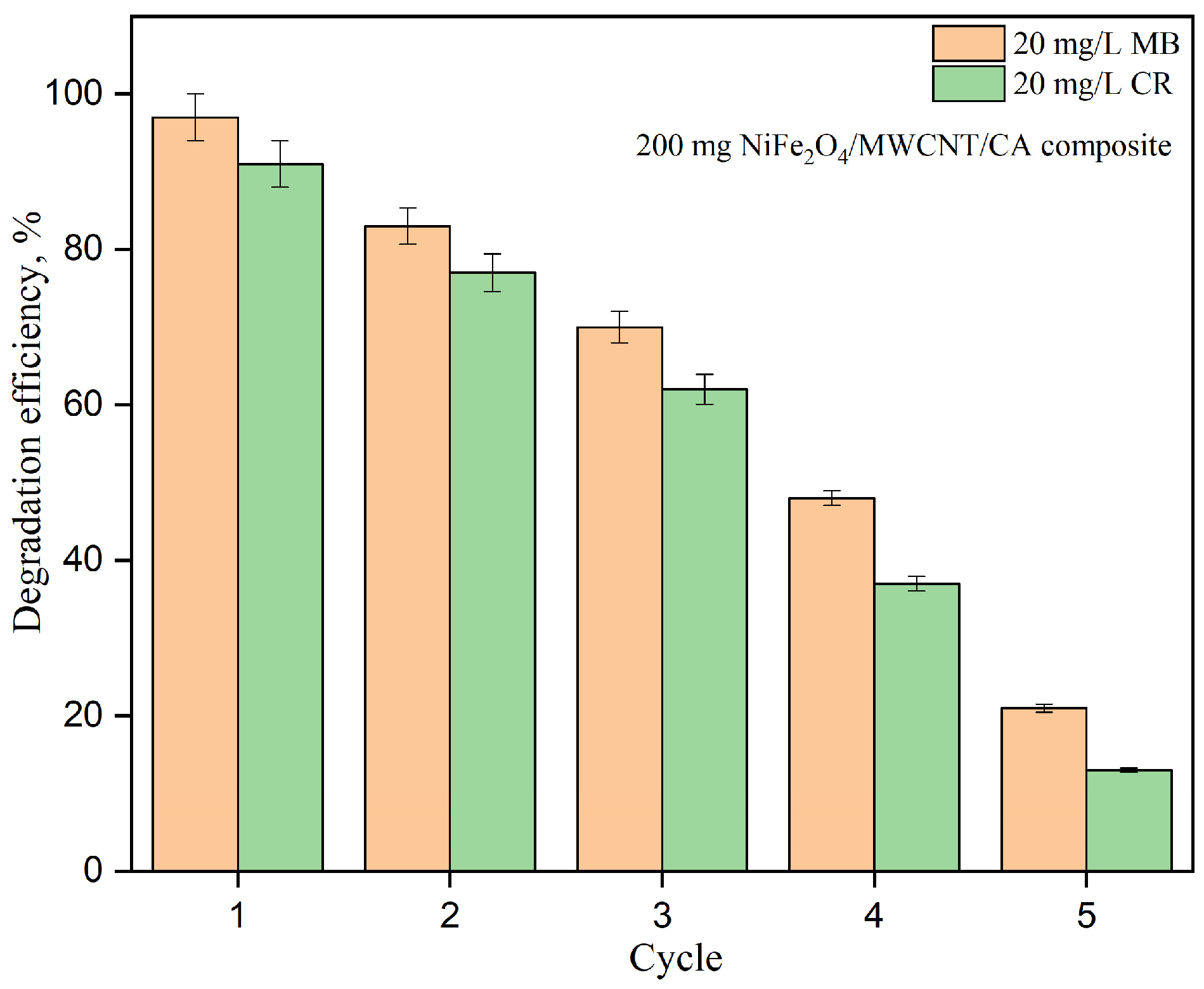
The reusability and operational stability of the NiFe2O4–MWCNT–CA composite were investigated through five successive photocatalytic degradation cycles using MB and CR as model pollutants. As illustrated in Figure 9, the composite exhibited high photocatalytic efficiency during the first cycle, achieving 97% degradation of MB and about 91% degradation of CR. However, the degradation efficiency gradually decreased with increasing reuse cycles. In the second and third cycles, the catalyst retained relatively good activity, with MB removal efficiencies of 83% and 70%, respectively, while CR degradation decreased to about 77% and 62%. A more noticeable reduction was observed in the fourth and fifth cycles, where MB degradation dropped to 48% and 21%, and CR degradation decreased to about 37% and 13%, respectively. The progressive decline in photocatalytic activity can be attributed to several factors. First, partial loss of catalyst during repeated recovery and washing steps may reduce the effective catalyst dosage. Second, adsorption of degradation intermediates or dye molecules on the catalyst surface may block active sites and limit light absorption and surface reactions. Additionally, slight structural changes or surface deactivation of the composite during repeated photocatalytic reactions may contribute to the observed activity reduction. Despite this decrease, the magnetic NiFe2O4 component allows rapid and efficient separation of the catalyst using an external magnetic field, which is a significant advantage for practical wastewater treatment applications. These results demonstrate that the NiFe2O4–MWCNT–CA composite possesses magnetic recoverability and acceptable operational stability, highlighting its potential as a reusable photocatalyst for dye-contaminated wastewater treatment.

3. Materials and Methods

Iron(III) nitrate nonahydrate [Fe(NO3)3·9H2O], Nickel(II) nitrate hexahydrate [Ni(NO3)2·6H2O], disodium hydrogen phosphate, sodium dihydrogen phosphate, acetic acid, sodium acetate, isopropanol, EDTA disodium salt, p-Benzoquinone, methylene blue (MB), and Congo red (CR) were purchased from Sigma-Aldrich (St. Louis, MO, USA).

3.1. Preparation of Costus speciosus Extract

Initially, Costus speciosus was washed with distilled water to remove surface impurities and subsequently air-dried. Following the drying process, the material was finely ground into a powder. A quantity of 0.1 g/mL of this powder was then mixed with distilled water. The resulting mixture was then subjected to heating at 60 °C for a duration of 20 min. After heating, the mixture was centrifuged at 6000 rpm for 10 min, and the resulting supernatant was collected and stored for subsequent use.

3.2. Biogenic Fabrication of Nickel Ferrite (NiFe2O4)

The synthesis of NiFe2O4 nanoparticles conducted following the procedure outlined in our previous study [10]. Initially, 0.2 M iron (III) nitrate nonahydrate was dissolved in 50 mL of distilled water. This solution was then mixed with 30 mL of a 0.2 M nickel (II) nitrate hexahydrate solution. The resulting mixture was heated at 70 °C for 20 min. Subsequently, 20 mL of Costus speciosus extract was added, and the heating continued for an additional 3 h at the same temperature. Upon completion of the reaction, the nickel ferrite nanoparticles were separated, thoroughly washed with distilled water, and dried at 90 °C. Finally, the dried product was subjected to calcination at 800 °C for 2 h.

3.3. Fabrication of NiFe2O4/MWCNT/CA Composite

A total of 0.5 g of NiFe2O4 nanoparticles was dispersed in 50 mL of acetone, while 0.05 g of multi-walled carbon nanotubes (MWCNTs) was separately suspended in another 50 mL of acetone. Both suspensions underwent ultrasonication for 24 h using a probe-type ultrasonic processor operating at 20 kHz and 100 W to ensure homogeneous dispersion and to prevent agglomeration. Intermittent cooling was applied during sonication to maintain thermal stability.
Following sonication, the two suspensions were combined and thoroughly mixed with a solution of 0.5 g of cellulose acetate (CA) dissolved in 50 mL of acetone. The resulting homogeneous mixture was then poured into a Petri dish and allowed to stand undisturbed for 24 h at room temperature to facilitate solvent evaporation. The semi-dried film underwent a two-step thermal treatment: initially dried at 80 °C to remove residual solvent, followed by calcination at 250 °C for 2 h. The final product obtained was a composite material denoted as NiFe2O4/MWCNT/CA.

3.4. Characterization of NiFe2O4 and NiFe2O4/MWCNT/CA Composite

The structural, magnetic, morphological, and surface characteristics of the synthesized biogenic NiFe2O4 and its composite with MWCNT and cellulose acetate (NiFe2O4/MWCNT/CA) were thoroughly investigated using a suite of advanced analytical techniques. X-ray diffraction (XRD) was performed using a Bruker D8 Advance diffractometer (Billerica, MA, USA) with CuKα radiation (λ = 1.5418 Å) to confirm the crystalline structure and phase purity of both NiFe2O4 nanoparticles and the composite. Magnetic properties were evaluated using a Lakeshore Cryotronics Vibrating Sample Magnetometer (VSM, Westerville, OH, USA) integrated with IDEAS software, enabling accurate determination of coercivity, saturation magnetization, and remanent magnetization. Fourier-transform infrared spectroscopy (FT-IR), conducted with a PerkinElmer Spectrum 100 (Waltham, MA, USA), was utilized to identify functional groups and characteristic metal–oxygen bond vibrations present in the samples. Surface morphology and elemental composition were analyzed using field-emission scanning electron microscopy (FESEM) coupled with energy-dispersive X-ray spectroscopy (EDX) via a Bruker Nano XFlash 5010 detector (Bruker Nano GmbH, Berlin, Germany). Specific surface area and porosity features were assessed using the Brunauer–Emmett–Teller (BET) method based on nitrogen adsorption–desorption isotherms at 77 K, performed on a Quantachrome NOVA touch 4LX analyzer (Anton Paar GmbH, Graz, Austria) operating with TouchWin™ v1.21 software. Pore size distribution was derived using the Barrett–Joyner–Halenda (BJH) method, and total pore volume was estimated using the Density Functional Theory (DFT) model via ASiQwin software (version 3.01, Quantachrome Instruments, Boynton Beach, FL, USA). Zeta potential measurements were performed using a Malvern Zetasizer (version 7.12, Malvern, UK) to evaluate surface charge properties, providing insights into the colloidal stability and dispersion behavior of the nanomaterials in aqueous environments.

3.5. Optical Properties and Bandgap Analysis

A total of 10 mg of each sample was dispersed in 10 mL of deionized water and sonicated for 3 h using an ultrasonic cleaner to ensure uniform dispersion. The UV–visible absorption spectra were recorded over a wavelength range of 200–800 nm using a UV-2600i Plus spectrophotometer (Shimadzu Corporation, Kyoto, Japan).

3.6. Photocatalytic Degradation of Dyes Under UV Illumination

Given the wide bandgap of the NiFe2O4/MWCNT/CA composite, photocatalytic experiments were conducted under UV illumination to ensure efficient excitation of the semiconductor. The degradation performance was evaluated using two representative pollutants—methylene blue (MB, cationic) and Congo red (CR, anionic)—to assess dye-specific photocatalytic behavior. Photocatalytic reactions were conducted using a UV illumination system equipped with interchangeable UV-B (254 nm LED modules) to provide controlled excitation above the material’s energy threshold. The LEDs were positioned at a fixed distance of 20 cm from the reaction vessel to maintain a uniform irradiation intensity. The reactor temperature is stabilized by circulating water through a double-jacketed glass chamber. All experiments were carried out inside a photochemical reactor (10 D, Lelesil Innovative Systems, Mumbai, India), following the setup described by Alotaibi et al. [58]. For each dye, 500 mL of aqueous MB or CR solution (20 and 40 mg/L) was prepared and mixed with 200 mg of the NiFe2O4/MWCNT/CA composite material. Prior to UV exposure, the suspensions were magnetically stirred in the dark for 30 min to reach adsorption–desorption equilibrium and ensure uniform catalyst dispersion. Photocatalytic degradation was initiated by UV irradiation for 120 min. At 15 min intervals, 5 mL samples were withdrawn using sterile syringes and immediately centrifuged at 6000 rpm (4830× g) to remove the suspended catalyst. Residual dye concentrations were measured using a UV–visible spectrophotometer at 664 nm (MB) and 498 nm (CR).
Photocatalytic experiments were conducted across a pH range of 3 to 11 to examine the degradation behavior dependent on pH. This approach facilitated the identification of the optimal pH conditions for achieving maximal dye degradation.
The degradation kinetics were modeled using the pseudo-first-order kinetic equation:
l n ( C f C 0 ) = k t
where k represents the apparent rate constant. Rate constants for all dyes and conditions were compared to quantify catalytic activity.
The recyclability of the NiFe2O4/MWCNT/CA composite was assessed over five consecutive photocatalytic cycles. After each cycle, the catalyst was recovered by filtration, washed with deionized water, dried at 60 °C, and reused under same conditions. The degradation efficiency was calculated as follows:
Photodegradation   ( % ) = [ C i C f C i ] × 100
where Ci and Cf correspond to the initial and remaining dye concentrations at each sampling interval.
To identify the predominant reactive species involved in the UV-driven photocatalytic degradation of MB and CR, a series of scavenger experiments was performed. Three quenching agents were introduced into the reaction mixture before irradiation: isopropanol (IPA) as a hydroxyl radical (•OH) scavenger, p-benzoquinone (BQ) as a superoxide radical (•O2) scavenger, and EDTA-2Na as a photogenerated hole (h+) quencher. Specifically, IPA (10 mM) was used to quench the •OH radicals. BQ (1 mM) was added to scavenge •O2 radicals. EDTA-2Na (3 mM) was used to quench photogenerated holes (h+) [20,59]. By comparing dye degradation efficiencies in the presence and absence of each scavenger, the dominant reactive oxygen species contributing to photocatalysis by the NiFe2O4/MWCNT/CA composite were systematically determined.
Inhibition % = Degradation control Degradation scavenger Degradation control × 100

3.7. Reusability of the Photocatalyst

The reusability of the NiFe2O4–MWCNT–CA composite was evaluated through consecutive photocatalytic degradation cycles using MB and CR as model pollutants. After each photocatalytic reaction, the catalyst was separated from the reaction mixture using an external magnetic field. The recovered catalyst was washed thoroughly with dimethylformamide (DMF) three times, followed by washing with acetone three times to remove residual dye molecules and reaction intermediates. The cleaned catalyst was then dried at 50 °C for 30 min before being reused in the subsequent photocatalytic cycle under identical experimental conditions. This procedure was repeated for five consecutive cycles to evaluate the stability and recyclability of the photocatalyst.

4. Conclusions

In this study, a synergistic and magnetically recoverable NiFe2O4–MWCNT–CA nanocomposite was successfully developed for efficient UV-driven photocatalytic degradation of hazardous organic dyes. NiFe2O4 nanoparticles were synthesized via a green route using Costus speciosus extract and subsequently integrated with multi-walled carbon nanotubes within a cellulose acetate matrix to form a stable hybrid structure. Although incorporation into the composite slightly reduced the BET surface area, the conductive MWCNT network significantly enhanced electron transport and suppressed charge recombination, while the CA matrix improved nanoparticle dispersion and structural stability. Optical analysis revealed a widened bandgap of 5.3 eV, requiring UV activation, under which the composite exhibited high photocatalytic performance, achieving degradation efficiencies of 97% for methylene blue and 91% for Congo red (20 mg L−1). Kinetic analysis followed a pseudo-first-order model, and scavenger experiments confirmed hydroxyl radicals (•OH) as the dominant reactive species, with photogenerated holes also contributing to the degradation process. In addition, the magnetic nature of the NiFe2O4 component enabled easy catalyst recovery and reuse. Overall, the results demonstrate that the NiFe2O4–MWCNT–CA composite is a stable and efficient photocatalyst with enhanced charge-transfer capability and strong oxidative activity, highlighting its potential for scalable applications in wastewater purification and environmental remediation.

Supplementary Materials

The following supporting information can be downloaded at: https://www.mdpi.com/article/10.3390/catal16030262/s1, Figure S1: Surface area distribution. NiFe2O4 exhibits a sharp mesopore peak, while the hybrid shows a smoother distribution corresponding to MWCNT/CA coverage of pores; Figure S2: Pore volume distribution showing the multimodal mesoporosity of NiFe2O4 compared to the reduced but more uniform pore structure of the hybrid composite; Figure S3: Cumulative pore volume, highlighting higher porosity in NiFe2O4 and partially filled pores in the hybrid structure; Figure S4: Cumulative surface area illustrating the surface masking by MWCNT and CA, consistent with composite formation.

Author Contributions

A.B.: conceptualization, methodology, software, funding acquisition. I.O.A.: formal analysis, data curation, validation, writing—original draft. Y.Q.A.: supervision, methodology, visualization, investigation, writing—reviewing and editing. All authors have read and agreed to the published version of the manuscript.

Funding

This work was funded by the University of Jeddah, Jeddah, Saudi Arabia, under grant No. (UJ-25-DR-505).

Data Availability Statement

Data will be made available upon request.

Acknowledgments

The authors thank the University of Jeddah for its technical and financial support.

Conflicts of Interest

The authors declare no conflicts of interest.

References

  1. Dutta, S.; Adhikary, S.; Bhattacharya, S.; Roy, D.; Chatterjee, S.; Chakraborty, A.; Banerjee, D.; Ganguly, A.; Nanda, S.; Rajak, P. Contamination of textile dyes in aquatic environment: Adverse impacts on aquatic ecosystem and human health, and its management using bioremediation. J. Environ. Manag. 2024, 353, 120103. [Google Scholar] [CrossRef] [PubMed]
  2. Adesanmi, B.M.; Hung, Y.T.; Paul, H.; Huhnke, C. Comparison of dye wastewater treatment methods: A review. GSC Adv. Res. Rev. 2022, 10, 126. [Google Scholar] [CrossRef]
  3. Yaseen, D.A.; Scholz, M. Textile dye wastewater characteristics and constituents of synthetic effluents: A critical review. Int. J. Environ. Sci. Technol. 2019, 16, 1193–1226. [Google Scholar] [CrossRef]
  4. Oladoye, P.O.; Ajiboye, T.O.; Omotola, E.O.; Oyewola, O.J. Methylene blue dye: Toxicity and potential elimination technology from wastewater. Results Eng. 2022, 16, 100678. [Google Scholar] [CrossRef]
  5. Khan, I.; Saeed, K.; Zekker, I.; Zhang, B.; Hendi, A.H.; Ahmad, A.; Ahmad, S.; Zada, N.; Ahmad, H.; Shah, L.A.; et al. Review on methylene blue: Its properties, uses, toxicity and photodegradation. Water 2022, 14, 242. [Google Scholar] [CrossRef]
  6. Lade, H.; Govindwar, S.; Paul, D. Mineralization and detoxification of the carcinogenic azo dye Congo red and real textile effluent by a polyurethane foam immobilized microbial consortium in an upflow column bioreactor. Int. J. Environ. Res. Public Health 2015, 12, 6894–6918. [Google Scholar] [CrossRef]
  7. Oladoye, P.O.; Bamigboye, M.O.; Ogunbiyi, O.D.; Akano, M.T. Toxicity and decontamination strategies of Congo red dye. Groundw. Sustain. Dev. 2022, 19, 100844. [Google Scholar] [CrossRef]
  8. Khandelwal, D.; Rana, I.; Mishra, V.; Ranjan, K.R.; Singh, P. Unveiling the impact of dyes on aquatic ecosystems through zebrafish–A comprehensive review. Environ. Res. 2024, 261, 119684. [Google Scholar] [CrossRef] [PubMed]
  9. Qian, W.; Huang, H.; Diao, Z.; Li, H.; Liu, H.; Ye, M.; Deng, Y.; Xu, Z. Advanced treatment of dye wastewater using a novel integrative Fenton-like/MnO2-filled upward flow biological filter bed system equipped with modified ceramsite. Environ. Res. 2021, 194, 110641. [Google Scholar] [CrossRef] [PubMed]
  10. Alotaibi, A.N.; Al-Dakhil, A.; O Althobaiti, I.; El-Shishtawy, R.M.; Almulaiky, Y.Q. One-Pot biogenic synthesis of mesoporous Nickel Ferrite for sustainable degradation of bromothymol blue Dye. Phys. Scr. 2025, 100, 075025. [Google Scholar] [CrossRef]
  11. Thomas, S.; Apriandanu, D.O.B.; Umar, A.; Bakri, R.; Khalil, M. NiFe2O4/Multi-walled carbon nanotubes composite for catalytic reduction of p-Nitrophenol. Surf. Interfaces 2025, 64, 106459. [Google Scholar] [CrossRef]
  12. Arumugham, N.; Mariappan, A.; Eswaran, J.; Daniel, S.; Kanthapazham, R.; Kathirvel, P. Nickel ferrite-based composites and its photocatalytic application—A review. J. Hazard. Mater. Adv. 2022, 8, 100156. [Google Scholar] [CrossRef]
  13. Varghese, D.; Ruban, M.J.R.; Jennifer, P.J.S.; AnnieCanisius, D.; Chakko, S.; Muthupandi, S.; Madhavan, J.; Raj, M.V.A. Comprehensive analysis of NiFe2O4/MWCNTs nanocomposite to degrade a healthcare waste–tetracycline. RSC Adv. 2023, 13, 28339–28361. [Google Scholar] [CrossRef]
  14. Rigo, C.; Severo, E.d.C.; Mazutti, M.A.; Dotto, G.L.; Jahn, S.L.; Gündel, A.; Lucchese, M.M.; Chiavone-Filho, O.; Foletto, E.L. Preparation of nickel ferrite/carbon nanotubes composite by microwave irradiation technique for use as catalyst in photo-fenton reaction. Mater. Res. 2017, 20, 311–316. [Google Scholar] [CrossRef]
  15. Yifira, M.T.; Mersha, A.K.; Gebreslassie, G.; Mekonnen, K.N. Cellulose-based photocatalytic membranes for dye degradation: A review. Carbohydr. Polym. Technol. Appl. 2024, 8, 100589. [Google Scholar] [CrossRef]
  16. Karthik, V.; Dhivya Dharshini, G.; Senthil Kumar, P.; Kiruthika, S.; Rangasamy, G.; Periyasamy, S.; Senthil Rathi, B. Ferrite-supported nanocomposite polymers for emerging organic and inorganic pollutants removal from wastewater: A review. Ind. Eng. Chem. Res. 2023, 62, 13711–13733. [Google Scholar] [CrossRef]
  17. Tebbi, S.O.; Amrane, A.; Boudraa, R.; Bollinger, J.-C.; Salvestrini, S.; Kanjal, M.I.; Tiri, A.; Belkhiri, L.; Alharthi, M.N.; Mouni, L. Green synthesis of sustainable and cost-effective TiO2-SiO2-Fe2O3 heterojunction nanocomposites for rhodamine B dye degradation under sunlight. Water 2025, 17, 168. [Google Scholar] [CrossRef]
  18. Almalki, N.A.R.; Aldhahri, M.M.; Al-Maaqar, S.M.; Almulaiky, Y.Q. Gelatin assisted green synthesis of silver ferrite nanoparticles using capparis cartilaginea extract for enhanced antimicrobial activity. ChemistrySelect 2025, 10, e202405149. [Google Scholar] [CrossRef]
  19. Fahem, M.Q.; Jawad, M.H.; Abdulsada, R.O.; Turki, Z.T. The structure and electrical properties of NiFe2O4 and NiMgFe2O4 prepared via sol–gel method. Ionics 2025, 31, 6475–6481. [Google Scholar] [CrossRef]
  20. Schneider, J.T.; Firak, D.S.; Ribeiro, R.R.; Peralta-Zamora, P. Use of scavenger agents in heterogeneous photocatalysis: Truths, half-truths, and misinterpretations. Phys. Chem. Chem. Phys. 2020, 22, 15723–15733. [Google Scholar] [CrossRef]
  21. Yetgin, S.H. Effect of multi walled carbon nanotube on mechanical, thermal and rheological properties of polypropylene. J. Mater. Res. Technol. 2019, 8, 4725–4735. [Google Scholar] [CrossRef]
  22. Gao, F.; Tian, W.; Wang, Z.; Wang, F. Effect of diameter of multi-walled carbon nanotubes on mechanical properties and microstructure of the cement-based materials. Constr. Build. Mater. 2020, 260, 120452. [Google Scholar] [CrossRef]
  23. Sing, K.S. Reporting physisorption data for gas/solid systems with special reference to the determination of surface area and porosity (Recommendations 1984). Pure Appl. Chem. 1985, 57, 603–619. [Google Scholar] [CrossRef]
  24. Thommes, M.; Kaneko, K.; Neimark, A.V.; Olivier, J.P.; Rodriguez-Reinoso, F.; Rouquerol, J.; Sing, K.S. Physisorption of gases, with special reference to the evaluation of surface area and pore size distribution (IUPAC Technical Report). Pure Appl. Chem. 2015, 87, 1051–1069. [Google Scholar] [CrossRef]
  25. Rouquerol, J.; Rouquerol, F.; Llewellyn, P.; Maurin, G.; Sing, K. Adsorption by Powders and Porous Solids: Principles, Methodology and Applications; Academic press: Cambridge, MA, USA, 2013. [Google Scholar]
  26. Lowell, S.; Shields, J.E.; Thomas, M.A. Characterization of Porous Solids and Powders: Surface Area, Pore Size and Density; Springer Science & Business Media: Berlin/Heidelberg, Germany, 2012; Volume 16. [Google Scholar]
  27. Zhang, S.; Nguyen, N.; Leonhardt, B.; Jolowsky, C.; Hao, A.; Park, J.G.; Liang, R. Carbon-nanotube-based electrical conductors: Fabrication, optimization, and applications. Adv. Electron. Mater. 2019, 5, 1800811. [Google Scholar] [CrossRef]
  28. Umadevi, D.; Panigrahi, S.; Sastry, G.N. Noncovalent interaction of carbon nanostructures. Acc. Chem. Res. 2014, 47, 2574–2581. [Google Scholar] [CrossRef]
  29. Dorraji, M.S.; Amani-Ghadim, A.R.; Rasoulifard, M.H.; Taherkhani, S.; Daneshvar, H. The role of carbon nanotube in zinc stannate photocatalytic performance improvement: Experimental and kinetic evidences. Appl. Catal. B Environ. 2017, 205, 559–568. [Google Scholar] [CrossRef]
  30. Zhu, H.Y.; Jiang, R.; Huang, S.H.; Yao, J.; Fu, F.Q.; Li, J.B. Novel magnetic NiFe2O4/multi-walled carbon nanotubes hybrids: Facile synthesis, characterization, and application to the treatment of dyeing wastewater. Ceram. Int. 2015, 41, 11625–11631. [Google Scholar] [CrossRef]
  31. Melinte, V.; Culica, M.E.; Chibac-Scutaru, A.L. Cellulose acetate/polyurethane blend as support matrix with high optical transparency and improved mechanical properties for photocatalyst CeO2 nanoparticles immobilization. Int. J. Biol. Macromol. 2023, 251, 126210. [Google Scholar] [CrossRef] [PubMed]
  32. Wang, S.; Li, F.; Dai, X.; Wang, C.; Lv, X.; Waterhouse, G.I.; Fan, H.; Ai, S. Highly flexible and stable carbon nitride/cellulose acetate porous films with enhanced photocatalytic activity for contaminants removal from wastewater. J. Hazard. Mater. 2020, 384, 121417. [Google Scholar] [CrossRef]
  33. Shi, X.; Zhang, X.; Ma, L.; Xiang, C.; Li, L. TiO2-doped chitosan microspheres supported on cellulose acetate fibers for adsorption and photocatalytic degradation of methyl orange. Polymers 2019, 11, 1293. [Google Scholar] [CrossRef]
  34. Clogston, J.D.; Patri, A.K. Zeta potential measurement. In Characterization of Nanoparticles Intended for Drug Delivery; Humana press: Totowa, NJ, USA, 2010; pp. 63–70. [Google Scholar]
  35. Delgado, Á.V.; González-Caballero, F.; Hunter, R.J.; Koopal, L.K.; Lyklema, J. Measurement and interpretation of electrokinetic phenomena. J. Colloid Interface Sci. 2007, 309, 194–224. [Google Scholar] [CrossRef]
  36. Bhattacharjee, S. DLS and zeta potential–what they are and what they are not? J. Control. Release 2016, 235, 337–351. [Google Scholar] [CrossRef] [PubMed]
  37. Hasan, M.; Khan, M.; Kanwal, S.; Irfan, M.; Al-Muhimeed, T.I.; Mumtaz, S. Structural, optical and electrical impacts of Ni2+ on Mg1-xFe1.9Sm0.1O4 (x = 0.0, 0.2, 0.4, and 0.6) spinel ferrites. Dig. J. Nanomater. Biostruct. 2022, 17, 1527–1533. [Google Scholar] [CrossRef]
  38. Sabir, A.; Shafiq, M.; Islam, A.; Sarwar, A.; Dilshad, M.R.; Shafeeq, A.; Butt, M.T.Z.; Jamil, T. Fabrication of tethered carbon nanotubes in cellulose acetate/polyethylene glycol-400 composite membranes for reverse osmosis. Carbohydr. Polym. 2015, 132, 589–597. [Google Scholar] [CrossRef]
  39. Jin, H.; Huang, Y.; Wang, X.; Yu, P.; Luo, Y. Preparation of modified cellulose acetate membranes using functionalized multi-walled carbon nanotubes for forward osmosis. Desalination Water Treat. 2016, 57, 7166–7174. [Google Scholar] [CrossRef]
  40. Makuła, P.; Pacia, M.; Macyk, W. How to correctly determine the band gap energy of modified semiconductor photocatalysts based on UV–Vis spectra. J. Phys. Chem. Lett. 2018, 9, 6814–6817. [Google Scholar] [CrossRef]
  41. Nugent, J.M.; Santhanam, K.S.V.; Rubio, A.A.; Ajayan, P.M. Fast electron transfer kinetics on multiwalled carbon nanotube microbundle electrodes. Nano Lett. 2001, 1, 87–91. [Google Scholar] [CrossRef]
  42. Sivakumar, P.; Ramesh, R.; Ramanand, A.; Ponnusamy, S.; Muthamizhchelvan, C. Synthesis and characterization of NiFe2O4 nanoparticles and nanorods. J. Alloys Compd. 2013, 563, 6–11. [Google Scholar] [CrossRef]
  43. Granados-Martínez, F.G.; Contreras-Navarrete, J.J.; Ambriz-Torres, J.M.; Gutiérrez-García, C.J.; García-Ruiz, D.L.; Guzmán-Fuentes, J.A.; Flores-Ramírez, N.; Cisneros-Magaña, M.R.; García-González, L.; Zamora-Peredo, L.; et al. MWCNTs-polymer composites characterization through spectroscopies: FTIR and Raman. MRS Adv. 2018, 3, 3757–3762. [Google Scholar] [CrossRef]
  44. Stefan, M.; Leostean, C.; Popa, A.; Toloman, D.; Perhaita, I.; Cadis, A.; Macavei, S.; Pana, O. Highly stable MWCNT-CoFe2O4 photocatalyst. EGA-FTIR coupling as efficient tool to illustrate the formation mechanism. J. Alloys Compd. 2022, 928, 167188. [Google Scholar] [CrossRef]
  45. Holinsworth, B.S.; Mazumdar, D.; Sims, H.; Sun, Q.C.; Yurtisigi; Sarker, S.K.; Gupta, A.; Butler, W.H.; Musfeldt, J.L. Chemical tuning of the optical band gap in spinel ferrites: CoFe2O4 vs NiFe2O4. Appl. Phys. Lett. 2013, 103, 082406. [Google Scholar] [CrossRef]
  46. Yu, J.; Yu, H.; Cheng, B.; Zhou, M.; Zhao, X. Enhanced photocatalytic activity of TiO2 powder (P25) by hydrothermal treatment. J. Mol. Catal. A Chem. 2006, 253, 112–118. [Google Scholar] [CrossRef]
  47. Kumar, S.; Kumar, A.; Bahuguna, A.; Sharma, V.; Krishnan, V. Two-dimensional carbon-based nanocomposites for photocatalytic energy generation and environmental remediation applications. Beilstein J. Nanotechnol. 2017, 8, 1571–1600. [Google Scholar] [CrossRef]
  48. Dagar, M.; Kumar, S.; Jain, A.; Vohra, A.; Singh, M.; Dalal, J.; Kumar, S.; Kaushal, S. Synergistic Ce/Ag/N-doped ZnO–MWCNT nanocomposites for efficient photocatalytic wastewater remediation with visible light. Mater. Adv. 2025, 6, 4522–4537. [Google Scholar] [CrossRef]
  49. Wang, J.; Li, J.; Xu, X.; Bi, Z.; Xu, G.; Shen, H. Promising photovoltaic application of multi-walled carbon nanotubes in perovskites solar cells for retarding recombination. RSC Adv. 2016, 6, 42413–42420. [Google Scholar] [CrossRef]
  50. Lachheb, H.; Puzenat, E.; Houas, A.; Ksibi, M.; Elaloui, E.; Guillard, C.; Herrmann, J.M. Photocatalytic degradation of various types of dyes (Alizarin S, Crocein Orange G, Methyl Red, Congo Red, Methylene Blue) in water by UV-irradiated titania. Appl. Catal. B Environ. 2002, 39, 75–90. [Google Scholar] [CrossRef]
  51. Alkaim, A.F.; Aljeboree, A.M.; Alrazaq, N.A.; Baqir, S.J.; Hussein, F.H.; Lilo, A.J. Effect of pH on adsorption and photocatalytic degradation efficiency of different catalysts on removal of methylene blue. Asian J. Chem. 2014, 26, 8445. [Google Scholar] [CrossRef]
  52. Ding, C.; Zhao, H.; Zhu, X.; Liu, X. Preparation of cotton linters’ aerogel-based C/NiFe2O4 photocatalyst for efficient degradation of methylene blue. Nanomaterials 2022, 12, 2021. [Google Scholar] [CrossRef]
  53. Alzahrani, F.M.A.; Irshad, A.; Zulfiqar, S.; Alrowaili, Z.; Ain, N.U.; Anwar, A.; Warsi, M.F.; Al-Buriahi, M. Nd-doped NiFe2O4 and its composite with CNTs to tune photocatalytic activity. J. Rare Earths 2023, 41, 1919–1928. [Google Scholar] [CrossRef]
  54. Nosaka, Y.; Nosaka, A.Y. Generation and Detection of Reactive Oxygen Species in Photocatalysis. Chem. Rev. 2017, 117, 11302–11336. [Google Scholar] [CrossRef] [PubMed]
  55. Rasool, M.A.; Sattar, R.; Anum, A.; Al-Hussain, S.A.; Ahmad, S.; Irfan, A.; Zaki, M.E. An insight into carbon nanomaterial-based photocatalytic water splitting for green hydrogen production. Catalysts 2022, 13, 66. [Google Scholar] [CrossRef]
  56. Le, S.T.T.; Khanitchaidecha, W.; Nakaruk, A. Photocatalytic reactor for organic compound removal using photocatalytic mechanism. Bull. Mater. Sci. 2016, 39, 569–572. [Google Scholar] [CrossRef]
  57. Li, B.; Zhao, X.; Huang, Y.; Lu, X.; Jia, H.; Li, M. Dual Z-scheme BiOI/Bi2S3/MgIn2S4 composite photocatalyst for effective photocatalytic degradation of Congo red. Environ. Sci. Pollut. Res. 2023, 30, 122537–122549. [Google Scholar] [CrossRef]
  58. Alotaibi, A.N.; Almulaiky, Y.Q.; Al-Dakhil, A.; Althobaiti, I.O.; Ahmed, N.S.; El-Shishtawy, R.M. Biogenic Cobalt Ferrite Nanoparticles Synthesized with Brachychiton populneus Extract for Visible-Light-Driven Dye Degradation. J. Inorg. Organomet. Polym. Mater. 2025, 35, 7777–7793. [Google Scholar] [CrossRef]
  59. Kim, G.; Choi, W. Charge-transfer surface complex of EDTA-TiO2 and its effect on photocatalysis under visible light. Appl. Catal. B Environ. 2010, 100, 77–83. [Google Scholar] [CrossRef]
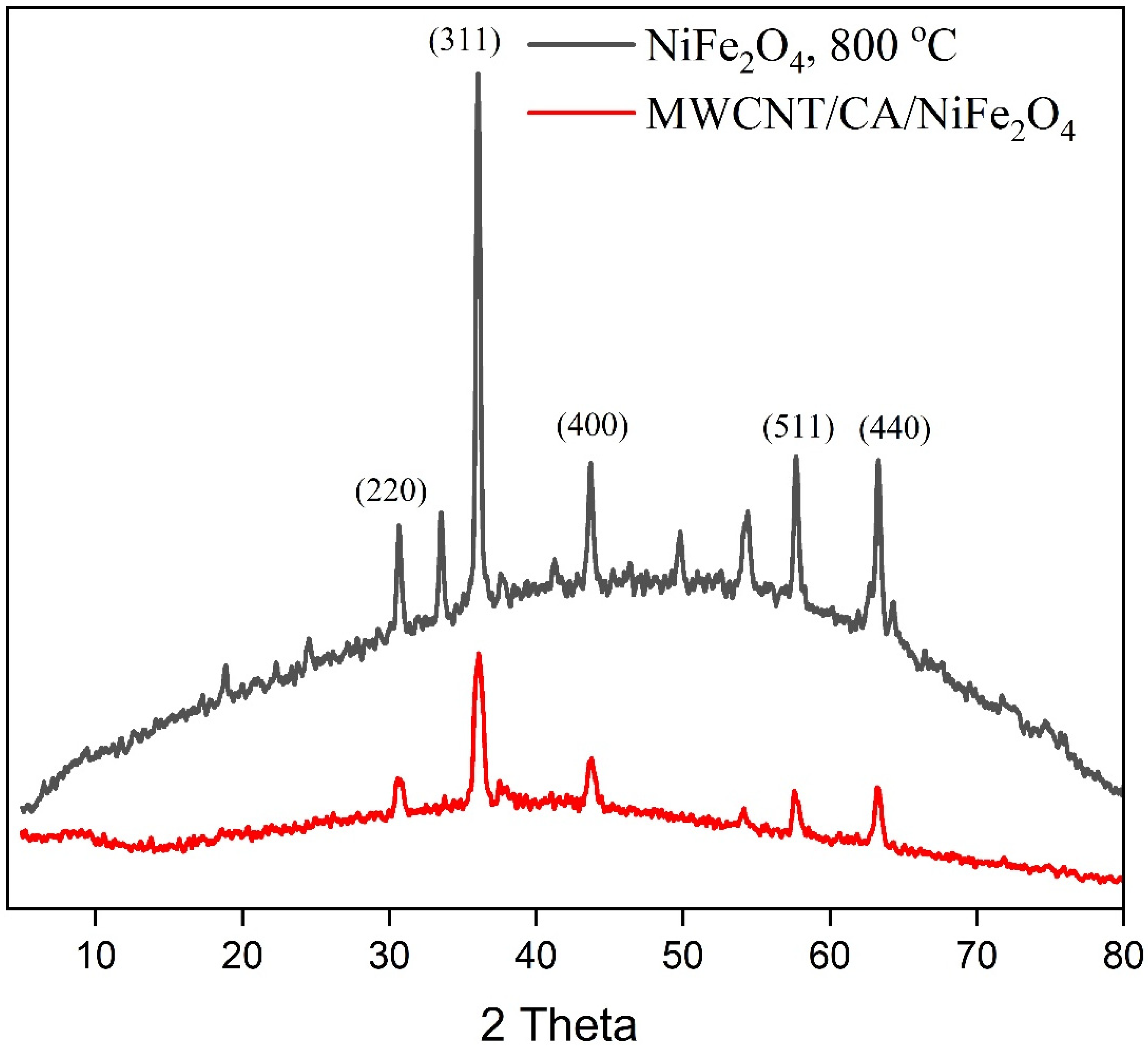
Figure 1. XRD pattern of NiFe2O4 and NiFe2O4/MWCNT/CA.
Catalysts 16 00262 g001
Figure 2. VSM magnetic hysteresis loops of NiFe2O4 (800 °C) and MWCNT/CA/NiFe2O4 composite.
Catalysts 16 00262 g002
Figure 3. Nitrogen adsorption–desorption isotherms showing mesoporous Type IV behavior in both materials.
Catalysts 16 00262 g003
Figure 4. FTIR spectra of NiFe2O4 (800 °C) and MWCNT/CA/NiFe2O4 composite.
Catalysts 16 00262 g004
Figure 5. SEM images of (a) NiFe2O4 (800 °C) and (b) and MWCNT/CA/NiFe2O4 composite.
Catalysts 16 00262 g005
Figure 6. Tauc plot α h ν ) 2 versus photon energy for the MWCNT/CA/NiFe2O4 composite. The red dashed line indicates the linear fitting of the absorption edge used to extrapolate the optical band gap, giving an estimated Eg value of approximately 5.3 eV.
Catalysts 16 00262 g006
Figure 7. Photodegradation performance of MB and CR: (a) pH effect and (b) pseudo-first-order kinetic analysis at 20 and 40 ppm.
Catalysts 16 00262 g007
Figure 8. Radical trapping experiments for photodegradation mechanism: (a) MB photodegradation efficiency at 20 ppm in the presence of scavengers (IPA, EDTA, and BQ), (b) corresponding inhibition effect for MB, (c) CR photodegradation efficiency at 20 ppm under the same conditions, and (d) inhibition effect for CR.
Catalysts 16 00262 g008
Figure 9. Reusability performance of the NiFe2O4–MWCNT–CA composite during the photocatalytic degradation of MB and CR under UV irradiation.
Catalysts 16 00262 g009
Table 1. XRD-derived crystallographic parameters of NiFe2O4 and NiFe2O4/MWCNT/CA.
SamplesCrystallite Size (nm)Lattice Constant (a) (Å)Volume of Unit Cell (v) (Å)3Theoretical Density (ρ) (g/cm3)
NiFe2O432.58.308573.4 5.43
NiFe2O4/MWCNT/CA83.68.315574.935.14
Table 2. Surface area (SBET), pore properties, and zeta potential of material support.
SBET m2/gPore Volume cm3/gPore Diameter (BJH) (nm)Total Pore Volume (DFT) (cm3/g)Average Pore Diameter
nm
Zeta Potential
(mV)
NiFe2O4112.460.1443.850.1555.82−44.97
NiFe2O4/MWCNT/CA30.990.0453.850.0475.82−14.42
Table 3. Comparison of photocatalytic degradation efficiency of NiFe2O4/MWCNT/CA with previously reported photocatalysts for dye removal.
PhotocatalystDyeLight SourceDegradation (%)Time (min)Ref.
NiFe2O4–CA nanocompositesMethylene blueVisible99%180[52]
CNT-supported NiFe2O4Methylene blueVisible90%100[53]
NiFe2O4/MWCNT compositesTetracyclineVisible95%120[54]
NiFe2O4–MWCNT–CAMethylene blueUV97%120This work
NiFe2O4–MWCNT–CACongo redUV91%120This work
Disclaimer/Publisher’s Note: The statements, opinions and data contained in all publications are solely those of the individual author(s) and contributor(s) and not of MDPI and/or the editor(s). MDPI and/or the editor(s) disclaim responsibility for any injury to people or property resulting from any ideas, methods, instructions or products referred to in the content.