Article

N-Heterocyclic Carbene-Catalyzed Generation of Homoenolates: Efficient Asymmetric Synthesis of Dispirocyclopentanones by Direct Annulation of Enals and Isoindigos

Institut de Chimie Moléculaire et des Matériaux d’Orsay, CNRS UMR 8182, Université Paris-Saclay, 91405 Orsay, Cedex, France
*
Authors to whom correspondence should be addressed.
Catalysts 2026, 16(2), 138; https://doi.org/10.3390/catal16020138
Submission received: 19 December 2025 / Revised: 30 December 2025 / Accepted: 29 January 2026 / Published: 2 February 2026
(This article belongs to the Special Issue Recent Developments in Asymmetric Organocatalysis)

Abstract

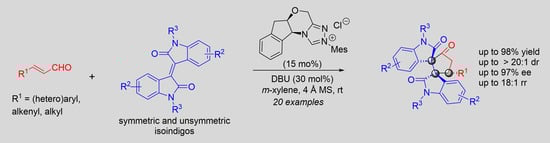
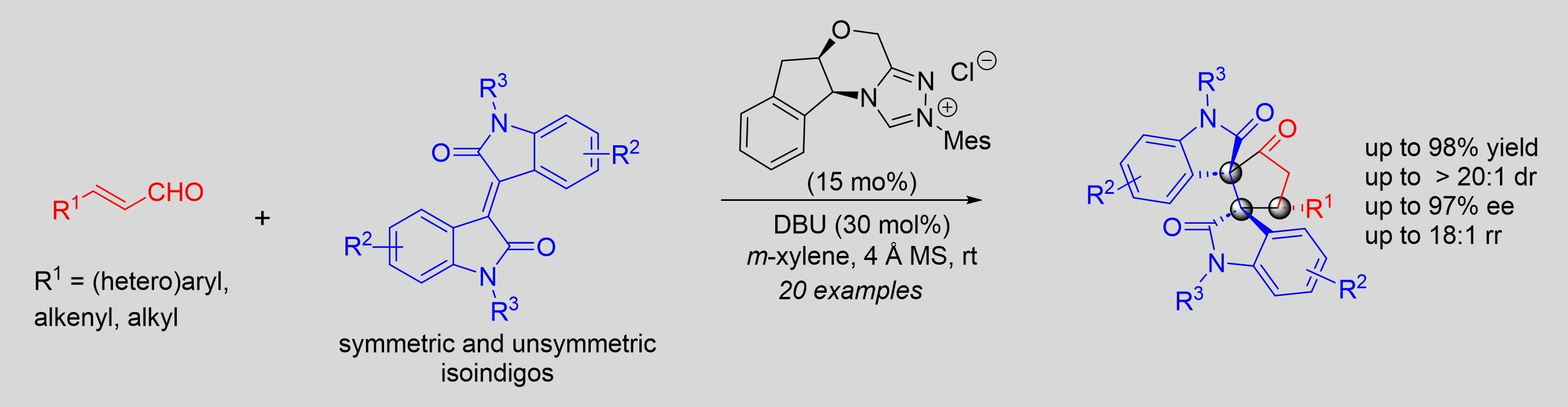
A highly efficient asymmetric (3+2) annulation between enals and isoindigos was achieved via the N-heterocyclic carbene-catalyzed addition of homoenolates to activated tetrasubstituted C=C double bonds. The protocol provided straightforward access to enantiomerically enriched dispirocyclopentanone bisoxindoles (up to 97% ee) with three contiguous stereocenters, two of which are highly congested vicinal all-carbon quaternary centers.

Graphical Abstract

1. Introduction

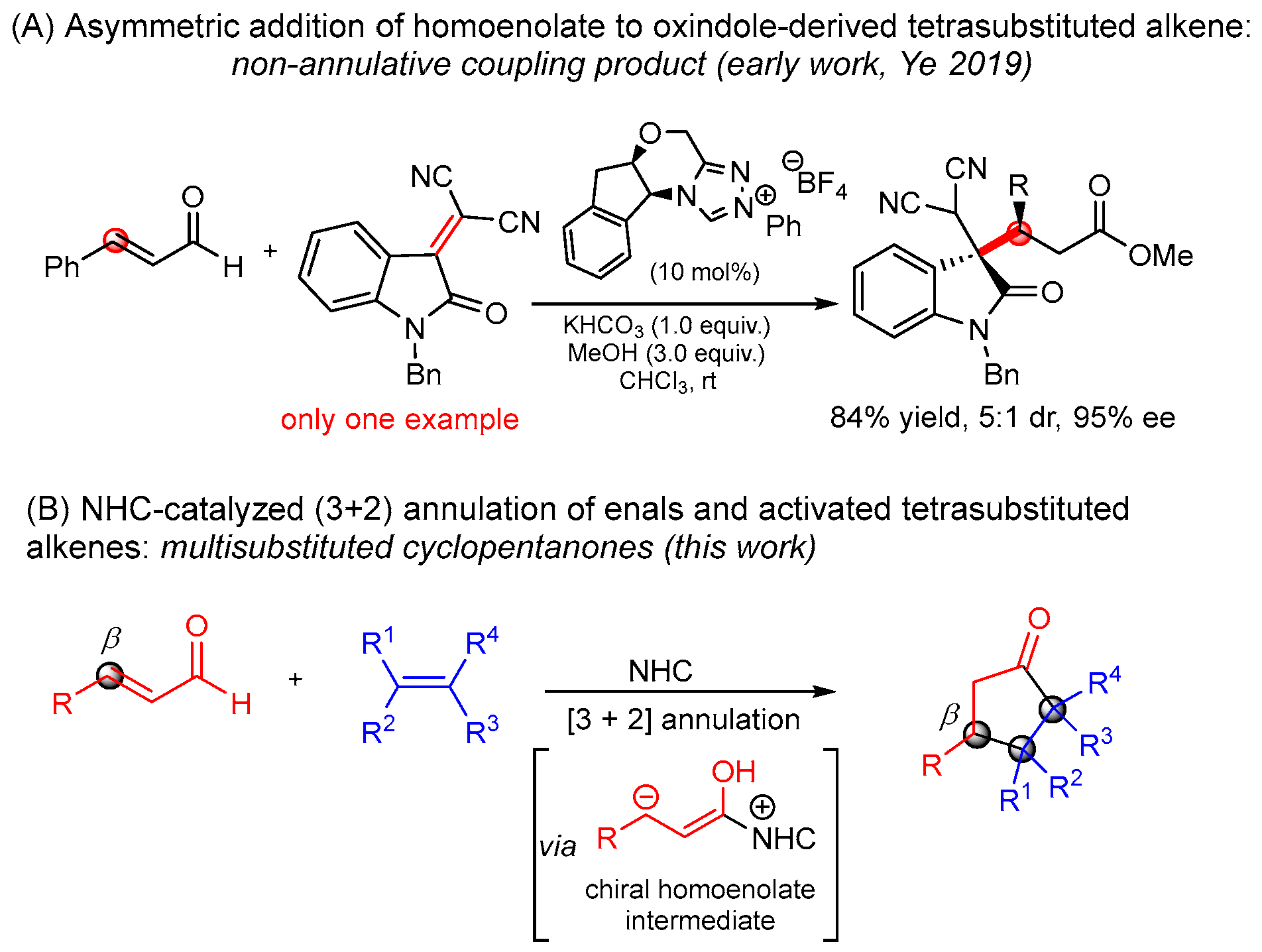
The discovery of new enantioselective catalytic methods for carbon–carbon bond formation remains a formidable challenge for chemists seeking to develop efficient and sustainable chemical processes for the synthesis of natural products or molecules with therapeutic interests. Among these methods, the direct formation of enolates and their synthetic equivalents under mild reaction conditions is still of high interest. Catalytically generated homoenolate intermediates, resulting from the addition of chiral N-heterocyclic carbenes (NHCs) to α,β-unsaturated aldehydes, enabled asymmetric (3+2) annulation with electrophilic disubstituted (Scheme 1A) and trisubstituted (Scheme 1B) C=C double bonds. This yielded functionalized cyclopentanones bearing two contiguous stereogenic carbon centers with good yields and high enantioselectivities, as reported in the literature (Scheme 1) [1,2,3,4,5,6,7,8,9].
Apart from the asymmetric synthesis of cyclopentanones containing a quaternary carbon stereocenter from activated di- and trisubstituted alkenes, the preparation of multi-substituted cyclopentanones with two vicinal quaternary carbon stereocenters from the direct annulation of activated tetrasubstituted alkenes and enals, catalyzed by NHC-generated homoenolates, has never been disclosed. To the best of our knowledge, there has been only one report of an NHC-catalyzed asymmetric reaction between enals and malononitrile-derived oxindole used as an activated tetrasubstituted alkene. This reaction led to the formation of 3,3-disubstituted oxindole bearing vicinal tertiary–quaternary stereocenters as a non-annulative coupling product instead of the expected cyclopentanone adduct (Scheme 2A) [10]. In this project, we propose using activated tetrasubstituted alkenes, such as isoindigo derivatives, as novel reaction partners with enals in chiral NHC-catalyzed homoenolate reactions. This is achieved through a conjugate addition–cyclization sequence to afford enantiomerically enriched multi-substituted cyclopentanones with three contiguous stereocenters, two of which are highly congested adjacent all-carbon quaternary stereogenic centers (Scheme 2B).
Isoindigo, which bears two oxindole moieties, is an isomer of the well-known dye indigo and acts as an electron-deficient tetrasubstituted alkene. This compound is a potential building block for the synthesis of chiral dispiro-oxindoles, which have emerged as a fascinating framework that defines the typical structural core of many pharmaceuticals and bioactive natural products [11,12,13,14,15,16,17,18,19,20,21], such as antifungal agents [22], antimicrobial agents [23], anticancer agents [24], and antitumor agents [25]. Few organocatalytic asymmetric reactions involving isoindigos have been reported. Using chiral phosphines [26], or amines [27], efficient (3+2) annulation reactions of isoindigos were subsequently carried out with allenoates or 1,4-dithiane-2,5-ol. These protocols provided a straightforward way for the highly efficient asymmetric construction of oxindole-based dispirocyclic motifs featuring two vicinal all-carbon quaternary centers. More recently, Wang and co-workers employed amino acid-derived bifunctional phosphonium salts as phase-transfer catalysts to conduct highly regio- and stereoselective (4+2) annulation reactions between electron-deficient allenes and isoindigos. This approach led to the construction of oxindole-based spiro-4H-pyran core frameworks bearing a quaternary carbon stereocenter [28]. Unfortunately, during the course of this work, a very similar approach to ours was reported [29]. To our knowledge, no NHC-catalyzed reaction using isoindigo as a reagent has been reported to date, apart from this work.

2. Results and Discussions

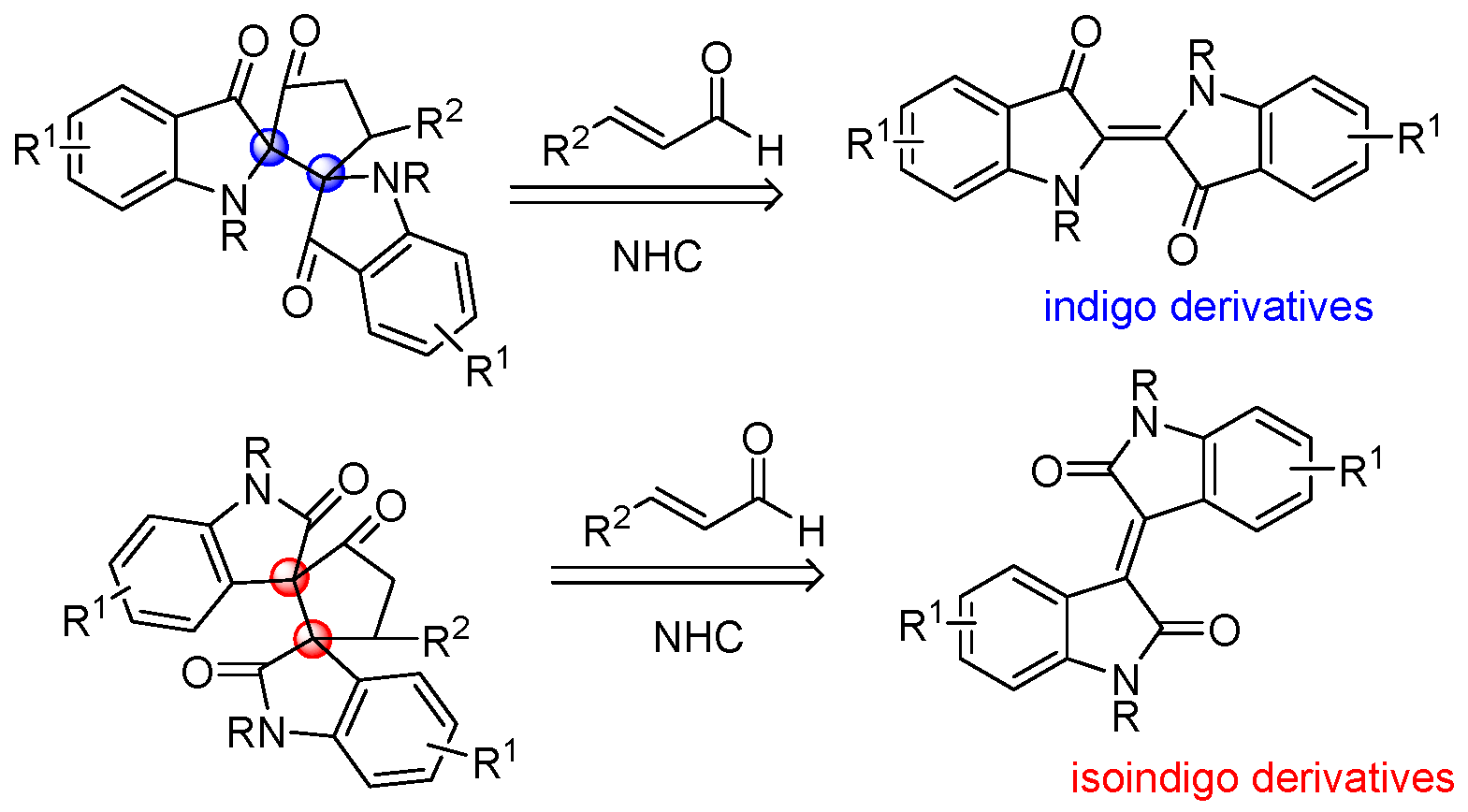
In continuation of our interest in asymmetric organocatalysis [30,31,32,33,34], and NHC-catalyzed generation of homoenolates [35], we envisioned that the one-step assembly of cyclopentanone-fused dispiro-oxindoles with two adjacent spiro-quaternary centers could be achieved by direct coupling of enals with indigoid compounds, such as indigo or isoindigo derivatives (Scheme 3) [36,37]. Conversely, the presence of two indolinone moieties connected by a C=C double bond implies a high electronic deficit in the tetrasubstituted alkene core. This electronic characteristic may provide sufficient activation for the C=C double bond, which is typically considered internally buried. Moreover, the planar indolinone structures may be less sterically demanding than other complex substrates, making the otherwise extremely difficult nucleophilic addition process feasible. We therefore decided to examine the reaction of these tetrasubstituted alkenes with enals, catalyzed by chiral NHC, hoping that a variety of valuable enantioenriched substituted dispirocyclopentanones might be accessible from this homoenolate annulation reaction.
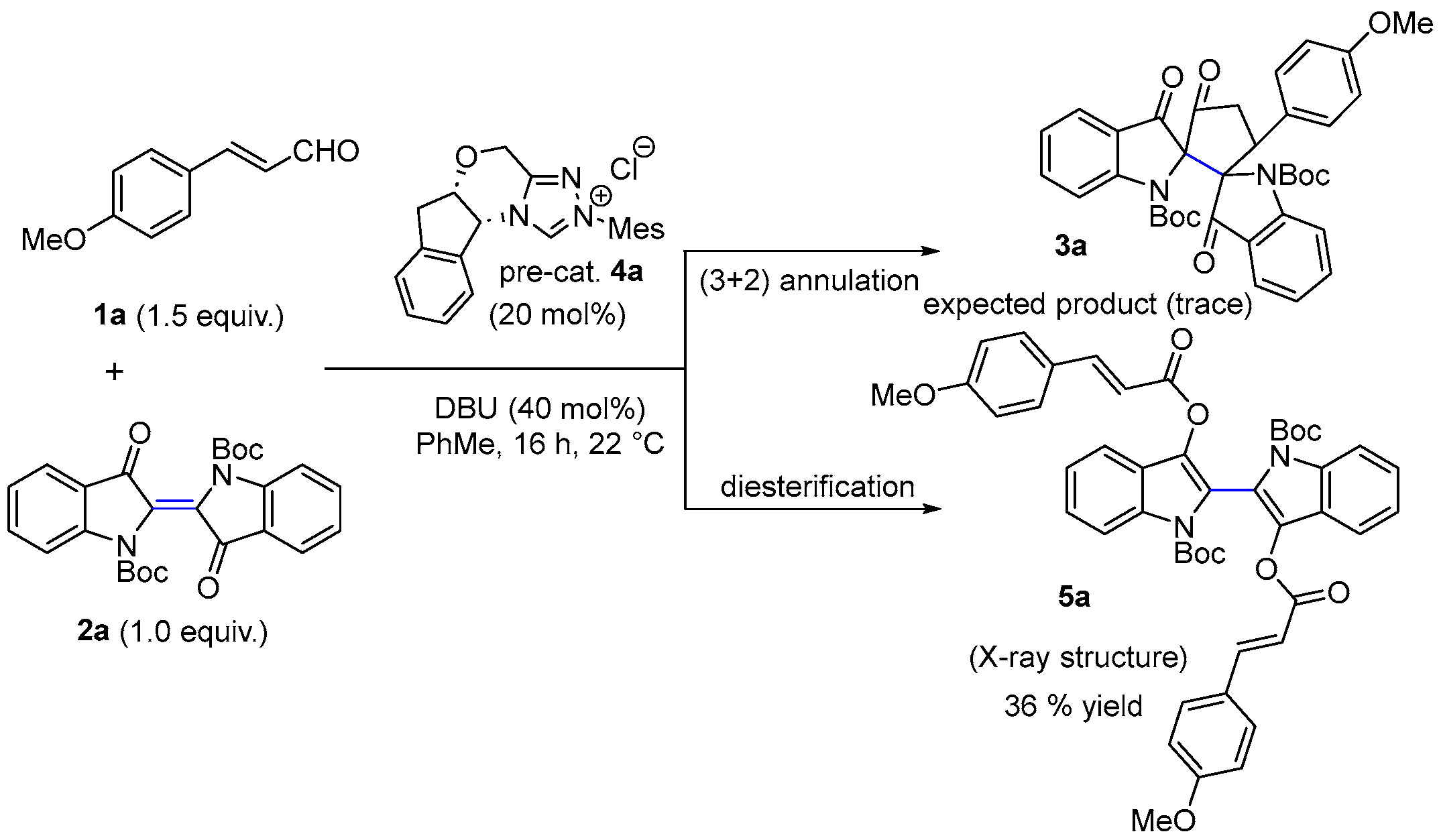
In that vein, we started our study by examining the potential homoenolate annulation of enal 1a and indigo derivative 2a using triazolium NHC pre-catalyst 4a in the presence of DBU in toluene. However, when the reaction was performed under these conditions, only a trace of the expected homoenolate-derived cycloadduct 3a was detected. Instead, a large amount of diester 5a was obtained (36% yield, Scheme 4), and its structure was confirmed by X-ray diffraction analysis. A control experiment was conducted under the same conditions but in the absence of NHC pre-catalyst 4a, and no reaction was observed. This observation confirms that the NHC pre-catalyst 4a is essential for activating the substrate and facilitating the formation of diester 5a, though the desired homoenolate or acyl azolium intermediate leading to 3a appears to be undergoing an alternative reaction pathway (see Supporting Information for full details).
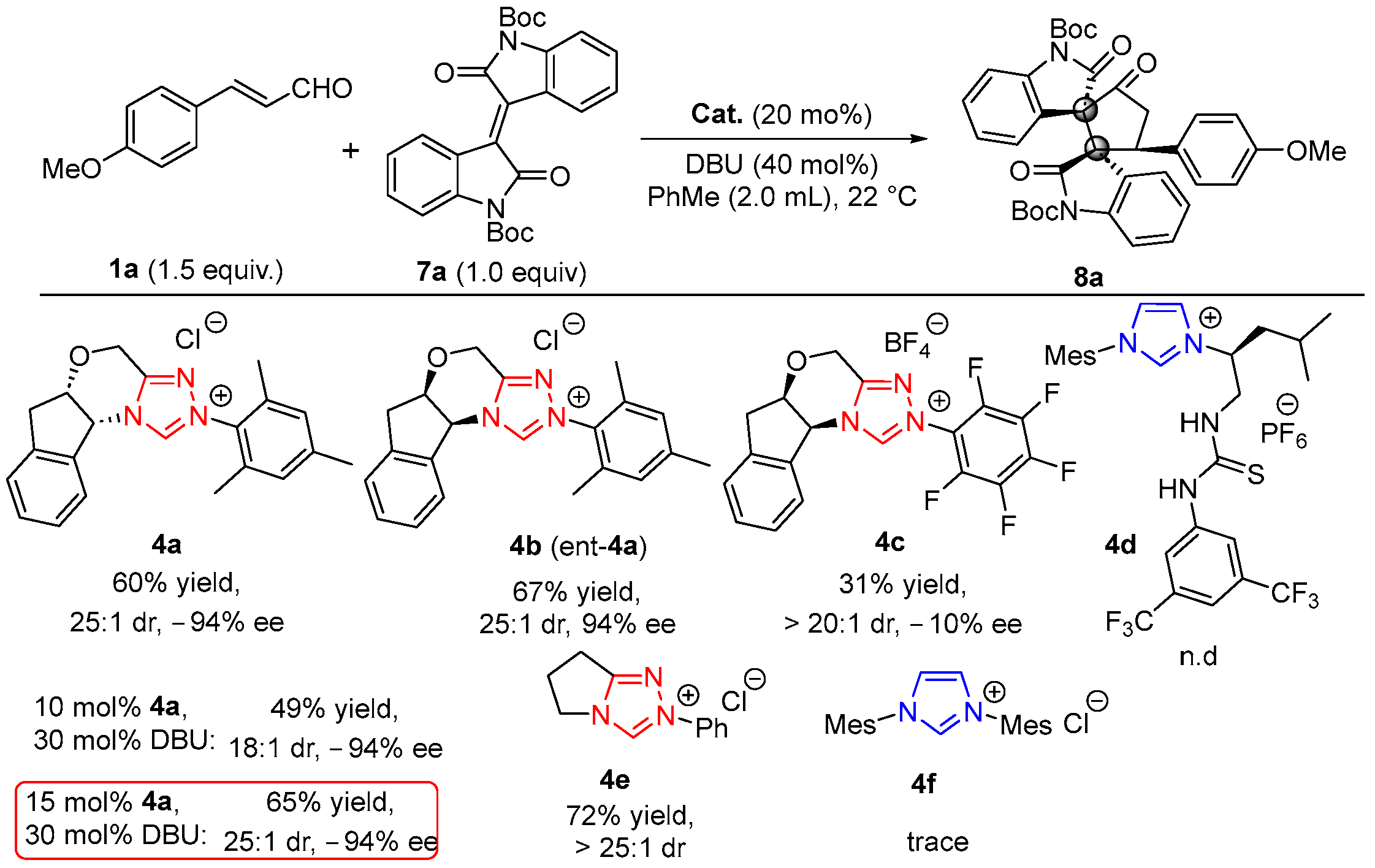
Subsequently, we turned our attention to isoindigo derivatives for the first investigation. Under the same reaction conditions, the chiral NHC-catalyzed reaction of enal 1a and Boc-isoindigo 7a was evaluated (Scheme 5). We were very pleased to find that using 20 mol% of the chiral aminoindanol-based N-mesityl NHC pre-catalyst 4a in the presence of DBU in toluene at room temperature, the reaction led straightforwardly to the formation of the expected dispirocyclopentanone bisoxindole 8a in 60% yield with an excellent diastereomeric ratio (25:1 dr) and an excellent enantiomeric excess (94% ee). It is noteworthy that this reaction proceeded in a highly chemoselective manner. The catalyst selectively generated the homoenolate equivalent from enal 1a, facilitating its subsequent addition to the tetrasubstituted C=C double bond of 7a to furnish the desired (3+2) annulation product 8a.
In contrast, no trace of annulation product was detected when using isoindigo 6a (the unprotected form) in place of Boc-indigo 7a under the same reaction conditions (see Supplementary Materials for full details). Therefore, the Boc-protected isoindigo 7a was chosen as a substrate for the model reaction with enal 1a under chiral NHC catalysis for further optimization.
Some NHC-catalyst precursors were first assessed for the transformation of Boc-isoindigo 7a to dispirocyclopentanone bisoxindole 8a (Scheme 5). Screening of the NHC-catalyst precursors showed that the triazolium-based NHCs (4a, 4c, 4e) led to a more selective formation of the homoenolate product 8a than the imidazolium-based NHC pre-catalysts (4d, 4f). An attempt of this reaction with bifunctional imidazolium-based NHC pre-catalyst 4d [35] gave rise to a complex mixture. Not surprisingly, the aminoindanol-derived triazolium pre-catalyst 4c with a more electron-deficient and less bulky N-pentafluorophenyl substituent showed low reactivity and stereoselectivity for this homenolate reaction (31% yield, >20:1 dr, 10% ee). As a result, catalyst screening identified the NHC N-mesityl pre-catalyst 4a as the best choice in terms of chemo-, diastereo-, and enantioselectivity. The reaction proceeded smoothly when the loading of the NHC 4a pre-catalyst was reduced to 15 mol% (65% yield, 25:1 dr, ee 94%). However, a 10 mol% catalyst loading resulted in a decrease in yield (49% yield, 18:1 dr, ee 94%). Encouraged by the reaction results with the commercially available NHC pre-catalyst 4a, we decided to prepare its enantiomer 4b (ent-4a) according to the general procedure reported by Bode and co-workers with slight modifications (See Supplementary Materials for details of the synthesis of 4b) [38,39]. Under the same reaction conditions, pre-catalyst 4b provided the expected results. We therefore decided to use it for further investigations (Scheme 5).
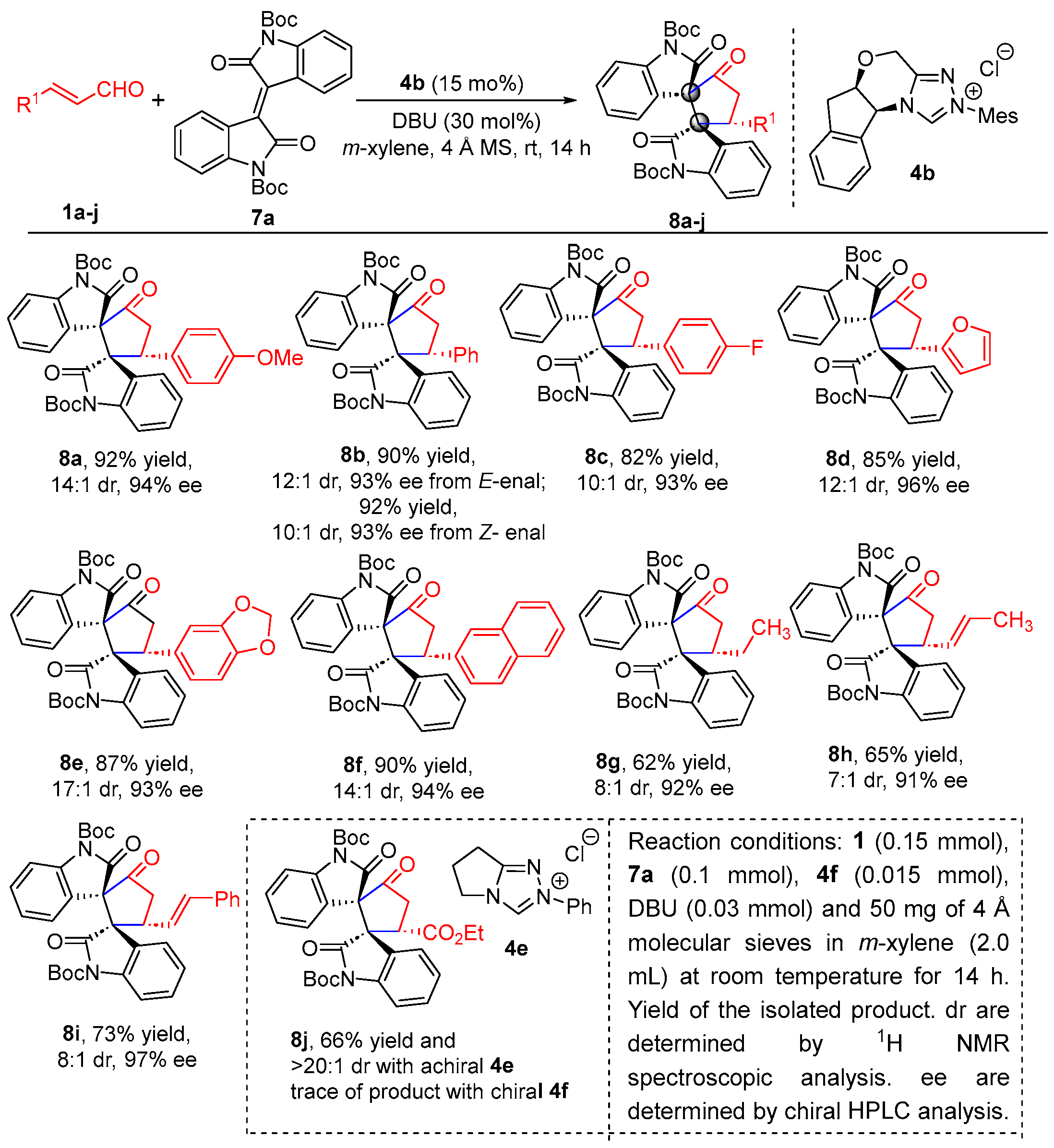
Interestingly, when the reaction was carried out in the presence of additional 4 Å molecular sieves (MS), the desired product 8a was formed in an improved yield of 79% while maintaining the 94% ee, albeit with a slightly decreased diastereoselectivity (12:1 dr). Subsequently, under the standard conditions with 4 Å MS, various other parameters such as solvents, bases, and additives were screened (See Supplementary Materials for full details). The best results were ultimately obtained when the reaction was performed in m-xylene with a combination of DBU (30 mol%), chiral NHC pre-catalyst 4b (15 mol%), and 4 Å MS at room temperature for 14 h. Under these optimized conditions, the optically active dispirocyclopentanone bisoxindole 8a was isolated in 92% yield, with excellent diastereoselectivity and enantioselectivity (14:1 dr and 94% ee, respectively).
With these optimized conditions in hands, the scope of the reaction with respect to enals was investigated (Scheme 6). In all cases, the reactions proceeded with excellent stereoselectivities, and the products 8ai were isolated in good yields with over 90% optical purities. Specifically, the β-aryl enals bearing either electron-donating (e.g., 4-MeOC6H4) or electron-withdrawing (e.g., 4-FC6H4) substituents reacted smoothly with Boc-isoindigo 7a. Products 8ac were thus obtained in 82–92% yields, showing good diastereoselectivities (10:1–14:1 dr) and excellent enantioselectivities (93–94% ee). Additionally, both the (Z) and (E) isomers of cinnamaldehyde afforded the same product 8b with a comparable yield and stereoselectivity. This outcome is possibly due to isomerization occurring during the formation of the homoenolate intermediate. The reaction with β-2-furylenal proceeded smoothly, giving 8d in 85% yield with 12:1 dr and 96% ee. Furthermore, even with sterically hindered naphthyl or piperonyl groups, the reactions proceeded efficiently, leading to the corresponding products 8ef in 87–90% yields with 14:1–17:1 dr and 93–94% ee values. Notably, the extension of this asymmetric transformation to a β-alkyl-substituted enal was also successful and afforded cycloadduct 8g in 62% yield with 8:1 dr and 92% ee. Furthermore, 2,4-dienals (R1 = propenyl, styryl) also worked well for the reaction, providing the corresponding annulation products 8hi in 65–73% yields with 7:1–8:1 dr and 91–97% ee values, respectively. Finally, enal 1j bearing an ester moiety (R1 = CO2Et) was tested, but only a trace of optically active product was detected. However, this reaction proceeded effectively in the presence of the achiral triazolium 4e, leading to the racemic cycloadduct 8j in 66% yield with excellent diastereoselectivity (>20:1 dr).
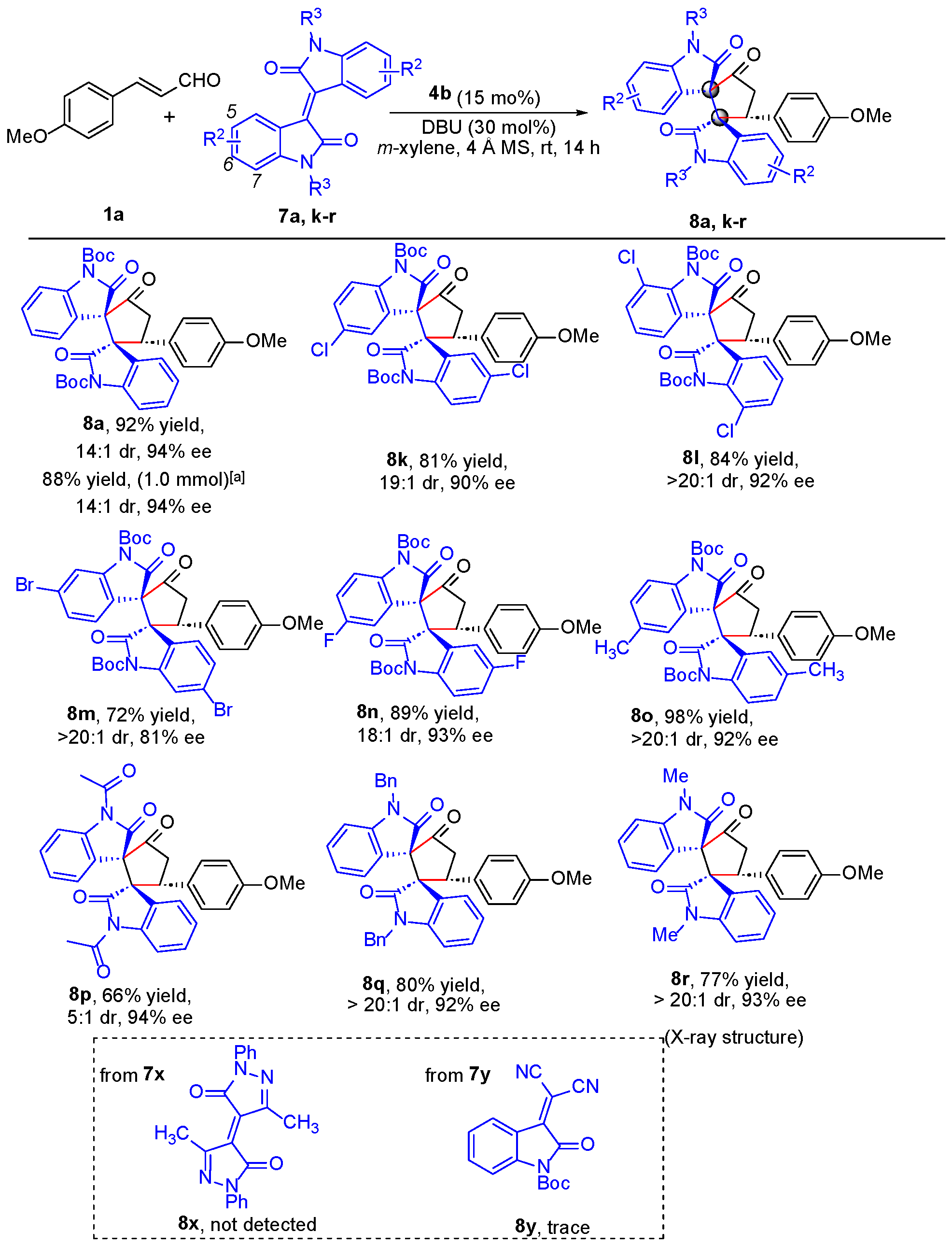
Next, we studied the generality of this asymmetric reaction by investigating various oxindole-derived isoindigos. As shown in Scheme 7, symmetric Boc-isoindigos bearing substituents at different positions of the oxindole aryl rings (R2 = 5-Cl, 6-Br, 7-Cl) were well tolerated, affording products 8km in good yields (72–84%) with excellent diastereoselectivities (19:1 to >20:1 dr), and good to excellent enantioselectivies (81–92% ee). Moreover, symmetric Boc-isoindigos with both electron-donating (R2 = 5-CH3) and electron-withdrawing (R2 = 5-F) substituents at the C5-position of the oxindole aryl rings worked well. These provided products 8n-o in high yields (89–98%) with excellent diastereo- and enantioselectivities (18:1 to >20:1 dr, 92–93% ee). Evaluation of the N-protective groups (R3) showed that all N-Boc-, N-Ac-, N-Bn-, and N-Me-substituted isoindigos were tolerated without apparent change in the enantioselectivities for this asymmetric transformation of 8a, 8pr. Unfortunately, the use of bipyrazolone 7x as an electrophilic tetrasubstituted alkene resulted in a complex mixture where no starting material or desired product could be detected. Similarly, malononitrile-derived oxindole 7y failed to react with enal 1a. To our delight, the reaction between p-methoxycinnamaldehyde 1a and N-Boc isoindigo 7a was successfully carried out at a 1 mmol scale, affording the dispirocyclopentanone bisoxindole 8a in 88% yield without erosion of the stereoselectivity (14:1 dr, 94% ee).
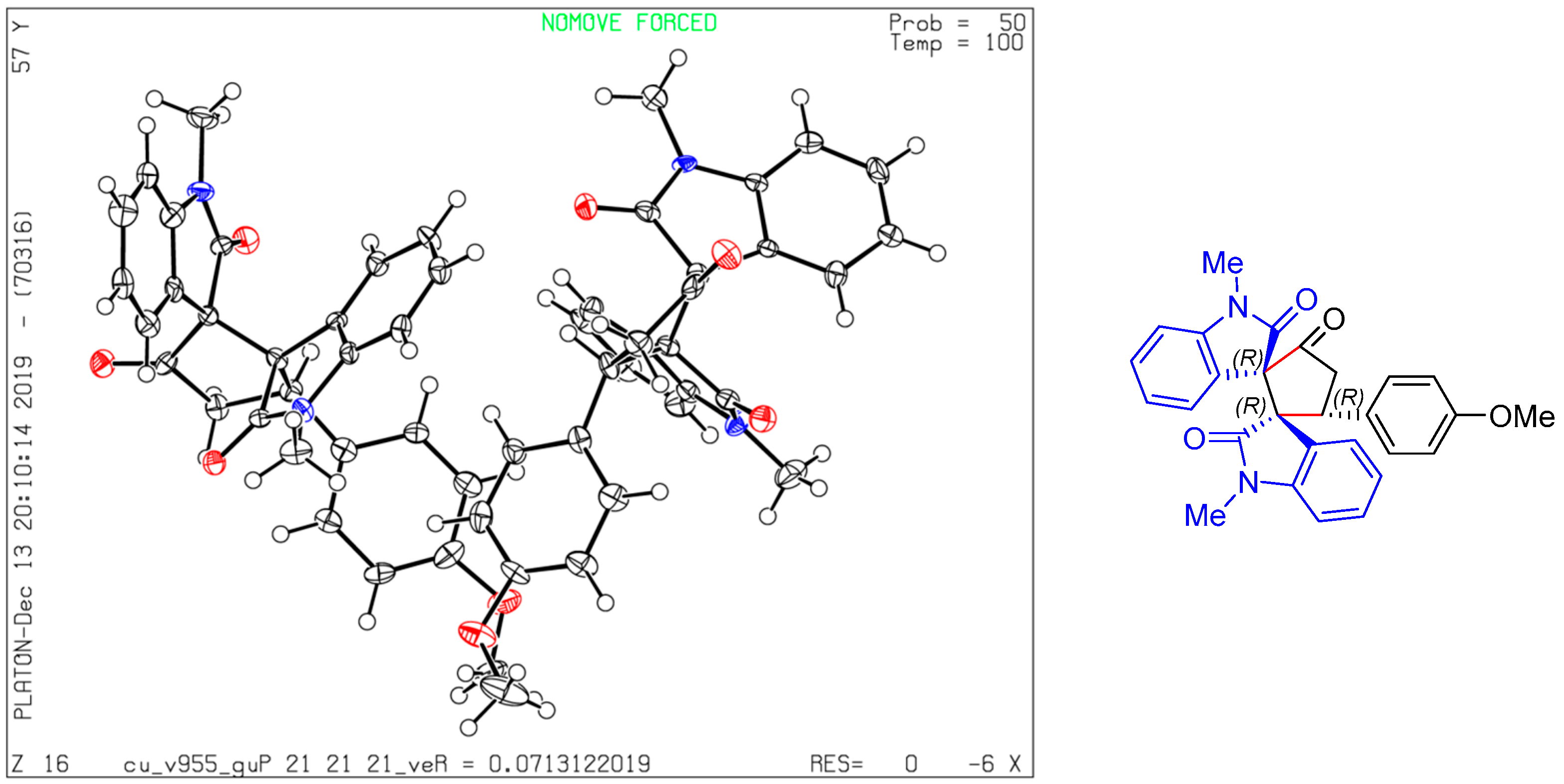
The absolute configuration of 8r was assigned as (R,R,R) by X-ray crystallographic analysis (Figure 1).
Given the excellent results obtained with isoindigos containing two identical oxindole moieties, we wondered whether unsymmetric isoindigos, which are constructed from different oxindole subunits, could potentially be used in the annulation reaction. This prospect is truly exciting. Indeed, we have envisioned that the use of unsymmetric isoindigos could create intriguing regioisomers of the annulation products bearing two structurally similar oxindole units. However, the reaction of unsymmetric isoindigos faces more challenges. Besides reactivity, diastereoselectivity, and enantioselectivity, the regioselective addition of enal-derived homoenolates to activated C=C double bonds has to be carefully considered.
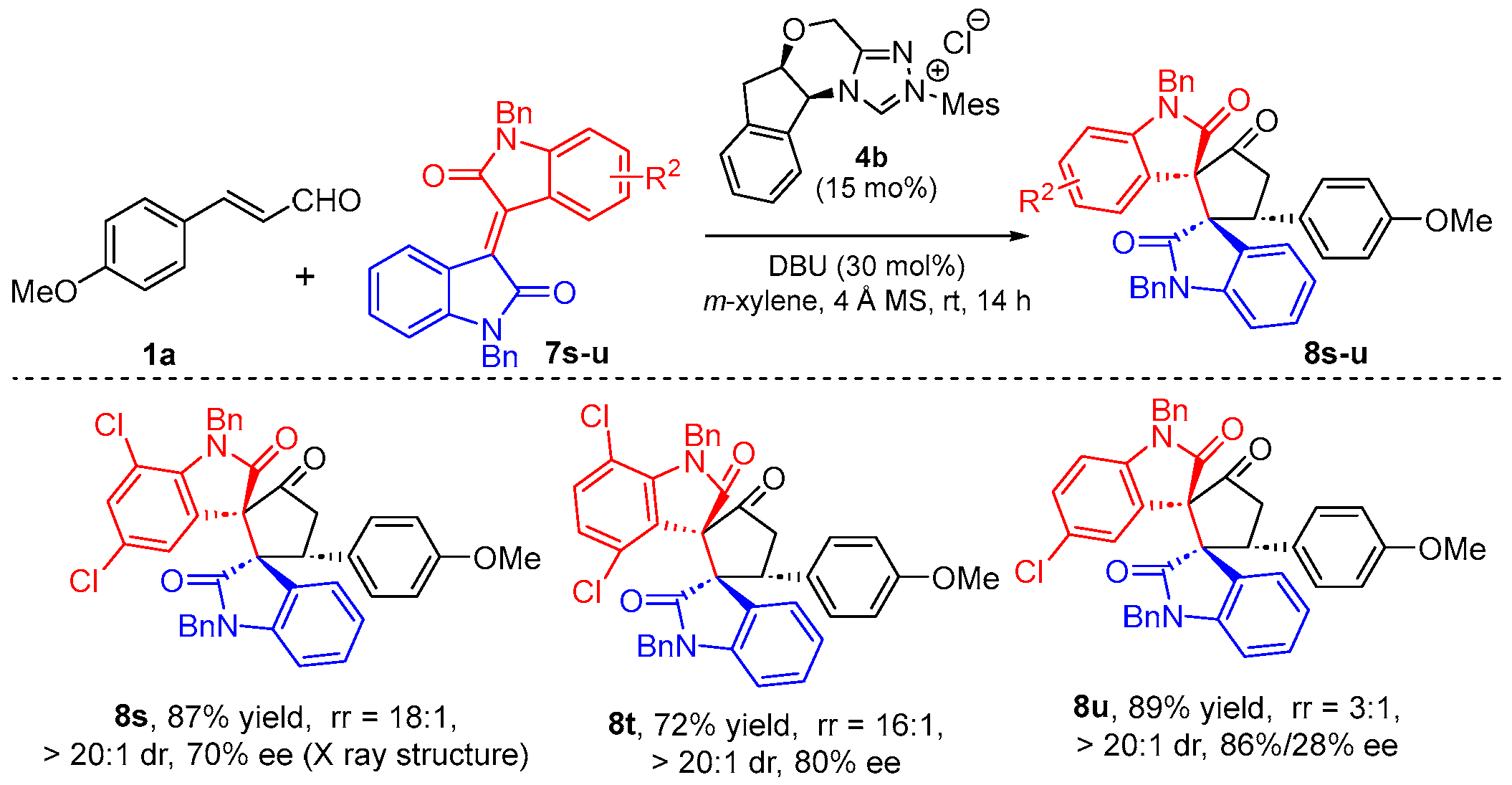
Initially, N-Boc-protected unsymmetric isoindigo 7z, featuring a 5-Cl substituent on one of the oxindole aryl rings, was tested for the asymmetric reaction of enal 1a. Three complex products were isolated from this reaction: one was a single isomer, while the other two were mixtures of multiple isomers. It was therefore very difficult to identify the structure of these products (See Supplementary Materials for full details). We consequently decided to study the annulation of enals and unsymmetric N-benzyl isoindigos in the hope that this change would lead to solid N-benzyl oxindoles that are more easily characterized by X-ray analysis.
Therefore, N-Bn-protected unsymmetric isoindigo 7s was synthesized and subjected to an NHC 4b-promoted asymmetric (3+2) annulation reaction with enal 1a under standard reaction conditions (Scheme 8). Three products were isolated from this reaction: one major product along with two minor products. Importantly, all of these isolated compounds were identified by X-ray crystal structure analysis (See Supplementary Materials for full details). The expected (3+2) annulation product 8s was formed in good yield (87%) with very high regioselectivity (18:1 regioisomeric ratio) and excellent diastereoselectivity (>20:1 dr), albeit with slightly decreased enantioselectivity (70% ee for the major regioisomer). The regioselective formation of 8s could be explained by the presence of both 5-Cl and 7-Cl groups on one of the oxindole aryl rings of 7s. This substitution makes the C3-carbon more electron-deficient than the C3′-carbon, thus favoring the nucleophilic attack of the enal-derived homoenolate at the C3-position.
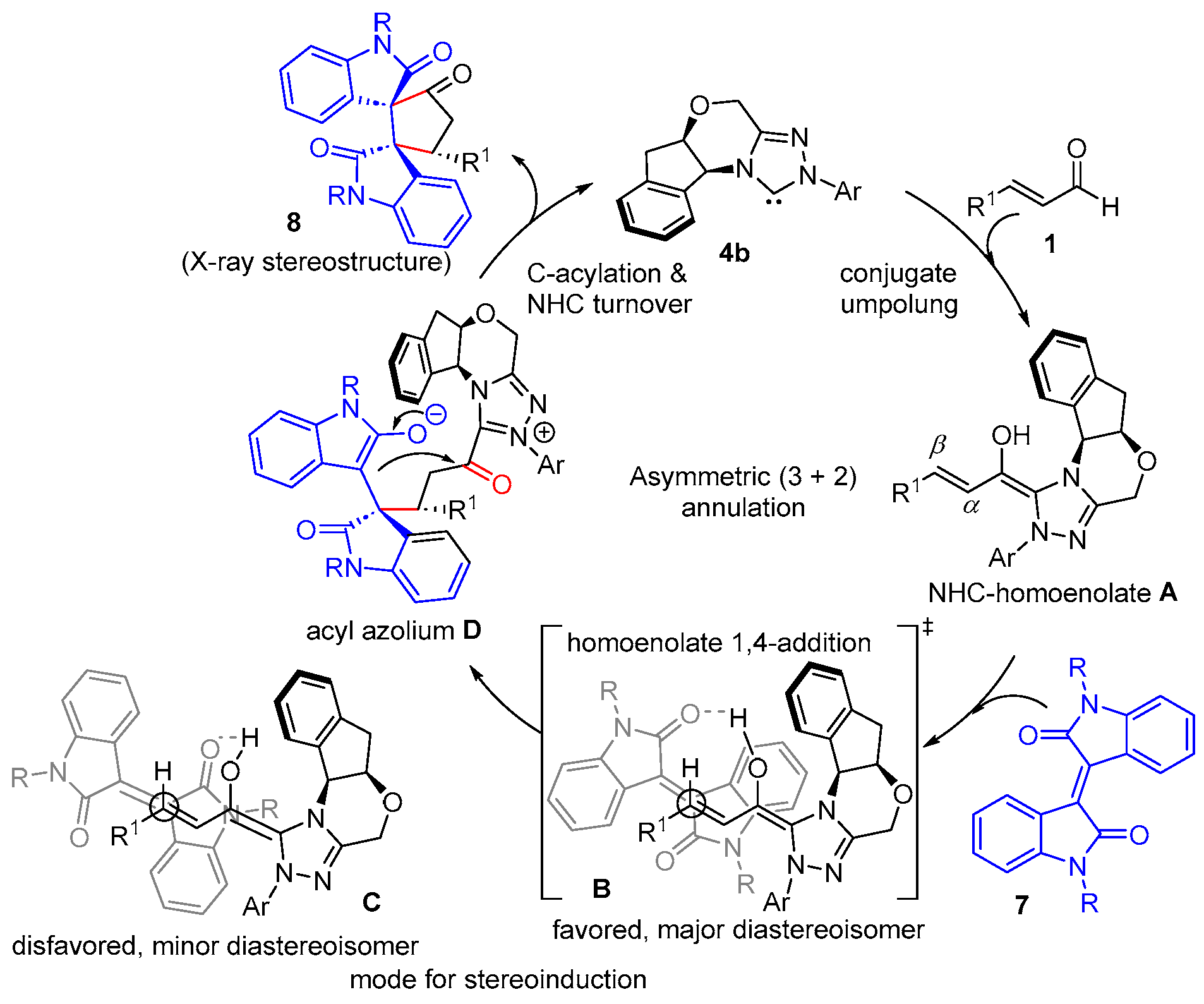
Based on the configuration of products 8 determined by X-ray analysis, a plausible mechanism for the NHC-catalyzed asymmetric (3+2) annulation of enals with isoindigos is suggested in Scheme 9. First, addition of the in situ-generated chiral NHC 4b to enal 1 gives the corresponding conjugated Breslow intermediate A. The subsequent addition to the structurally congested activated C=C double bond in isoindigo 7 apparently favors the less hindered β-attack. Michael addition of the NHC-bound homoenolate A from the back face of the bulky chiral aminoindanol moiety to the isoindigo 7 may be driven by an intermolecular hydrogen-bonding interaction between the homoenolate and the Michael acceptor. This interaction is presented in the favored pre-transition state assembly B. This proposed reaction model for stereoinduction may contribute to the observed stereochemistry of the major product 8. Conversely, the reaction would lead to the formation of a minor diastereoisomer via the transition state C. Following carbon–carbon bond formation, a tautomerization process occurs, giving rise to acyl azolium D. This intermediate then presumably undergoes C-acylation to furnish the dispirocyclopentanone 8 and regenerate the NHC organocatalyst 4b for the next catalytic cycle.

3. Conclusions

In conclusion, we have shown that the chemoselective generation of homoenolates from simple enals leads to highly efficient asymmetric (3+2) annulation reactions with isoindigos. This methodology produces enantiomerically enriched dispirocyclopentanone bisoxindoles featuring three contiguous stereocenters, two of which are highly congested vicinal all-carbon quaternary centers. β-(hetero)aryl, β-alkenyl, and β-alkyl enals all performed well in these rarely explored annulation reactions. Furthermore, by using isoindigos bearing two identical oxindole moieties as electrophilic tetrasubstituted alkenes, various challenging dispirocyclic bisoxindole skeletons were efficiently constructed in good yields and excellent stereoselectivities. Moreover, the protocol also provides a regioselective-controlled approach to access structurally distinct dispirocyclic molecules with two different oxindole moieties, which are derived from the corresponding unsymmetric isoindigo precursors. We hope that this direct functionalization can provide an alternative and concise strategy for the synthesis of dispirooxindole-based alkaloids and pharmaceutical molecules.

Supplementary Materials

The following supporting information can be downloaded at: https://www.mdpi.com/article/10.3390/catal16020138/s1. References [27,39,40,41,42,43,44,45,46,47,48,49,50,51,52,53] are cited in the Supplementary Materials.

Author Contributions

Conceptualization, G.V.-T.; Methodology, Z.J. and M.T.; Formal analysis, Z.J., M.T. and R.G.; Investigation, M.T. and C.B.; Writing – original draft, G.V.-T.; Writing – review & editing, G.V.-T.; Supervision, C.B. and G.V.-T.; Project administration, G.V.-T. All authors have read and agreed to the published version of the manuscript.

Funding

This research received no external funding.

Data Availability Statement

The original contributions presented in this study are included in the article/Supplementary Materials. Further inquiries can be directed to the corresponding author(s).

Acknowledgments

We are grateful to the ‘Chinese Government’ (China Scholarship Council, CSC) for a fellowship to Z. Jiang, and to the CNRS (UMR 8182) and University Paris-Saclay for financial support.

Conflicts of Interest

The authors declare no conflicts of interest.

References

  1. Chen, X.; Fang, X.; Chi, Y.R. cis-Enals in N-heterocyclic carbene-catalyzed reactions: Distinct stereoselectivity and reactivity. Chem. Sci. 2013, 4, 2613–2618. [Google Scholar] [CrossRef]
  2. Chen, X.Y.; Li, S.; Sheng, H.; Liu, Q.; Jafari, E.; von Essen, C.; Rissanen, K.; Enders, D. N-Heterocyclic Carbene Catalyzed [3+2] Cycloaddition of Enals with Masked Cinnamates for the Asymmetric One-Pot Synthesis of Adipic Acid Derivatives. Chem. Eur. J. 2017, 23, 13042–13045. [Google Scholar] [CrossRef]
  3. Shi, X.Q.; Dong, M.D.; Duan, X.Y.; Cao, T.L.; Qi, J. N-Heterocyclic Carbene Catalyzed [3+2] Cycloaddition of Enals with β,γ-Unsaturated α-Ketimino Esters for the Synthesis of Multisubstituted Cyclopentanone. Adv. Synth. Catal. 2020, 362, 807–811. [Google Scholar] [CrossRef]
  4. Struble, J.R.; Kaeobamrung, J.; Bode, J.W. Synthesis of an N-Mesityl Substituted Chiral Imidazolium Salt for NHC-Catalyzed Reactions. Org. Lett. 2008, 10, 957–960. [Google Scholar] [CrossRef] [PubMed]
  5. Guo, C.; Schedler, M.; Daniliuc, C.G.; Glorius, F. N-Heterocyclic Carbene Catalyzed Formal [3+2] Annulation Reactionof Enals: An Efficient Enantioselective Access to Spiro-Heterocycles. Angew. Chem. Int. Ed. 2014, 53, 10232–10236. [Google Scholar] [CrossRef] [PubMed]
  6. Wang, M.; Rong, Z.-Q.; Zhao, Y. Stereoselective synthesis of ε-lactones or spiro-heterocycles through NHC-catalyzed annulation: Divergent reactivity by catalyst control. Chem. Commun. 2014, 50, 15309–15312. [Google Scholar] [CrossRef]
  7. Wang, L.; Li, S.; Chauhan, P.; Hack, D.; Philipps, A.R.; Puttreddy, R.; Rissanen, K.; Raabe, G.; Enders, D. Asymmetric, Three-Component, One-Pot Synthesis of Spiropyrazolones and 2,5-Chromenediones from Aldol Condensation/NHC-Catalyzed Annulation Reactions. Chem. Eur. J. 2016, 22, 5123–5127. [Google Scholar] [CrossRef]
  8. Li, S.; Wang, L.; Chauhan, P.; Peuronen, A.; Rissanen, K.; Enders, D. Asymmetric Synthesis of Five-Membered Spiropyrazolones via N-Heterocyclic Carbene (NHC)-Catalyzed [3+2] Annulations. Synthesis 2017, 49, 1808–1815. [Google Scholar] [CrossRef][Green Version]
  9. Patra, A.; Bhunia, A.; Yetra, S.R.; Gonnade, R.G.; Biju, A.T. Diastereoselective synthesis of cyclopentanone-fused spirooxindoles by N-heterocyclic carbene-catalyzed homoenolate annulation with isatilidenes. Org. Chem. Front. 2015, 2, 1584–1588. [Google Scholar] [CrossRef]
  10. Zhang, C.-L.; Han, Y.-F.; Ye, S. N-Heterocyclic carbene-catalyzed β-addition of enals to 3-alkylenyloxindoles: Synthesis of oxindoles with all-carbon quaternary stereocenters. Chem. Commun. 2019, 55, 7966–7969. [Google Scholar] [CrossRef]
  11. Galliford, C.V.; Scheidt, K.A. Pyrrolidinyl-Spirooxindole Natural Products as Inspirations for the Development of Potential Therapeutic Agents. Angew. Chem. Int. Ed. 2007, 46, 8748–8758. [Google Scholar] [CrossRef]
  12. Karthikeyan, S.V.; Bala, B.D.; Raja, V.P.A.; Perumal, S.; Yogeeswari, P.; Sriram, D. A highly atom economic, chemo-, regio- and stereoselective synthesis and evaluation of spiro-pyrrolothiazoles as antitubercular agents. Bioorg. Med. Chem. Lett. 2010, 20, 350–353. [Google Scholar] [CrossRef]
  13. Kumar, R.S.; Rajesh, S.M.; Perumal, S.; Banerjee, D.; Yogeeswari, P.; Sriram, D. Novel three-component domino reactions of ketones, isatin and amino acids: Synthesis and discovery of antimycobacterial activity of highly functionalised novel dispiropyrrolidines. Eur. J. Med. Chem. 2010, 45, 411–422. [Google Scholar] [CrossRef]
  14. Singh, G.S.; Desta, Z.Y. Isatins As Privileged Molecules in Design and Synthesis of SpiroFused Cyclic Frameworks. Chem. Rev. 2012, 112, 6104–6155. [Google Scholar] [CrossRef]
  15. Kia, Y.; Osman, H.; Kumar, R.S.; Murugaiyah, V.; Basiri, A.; Perumal, S.; Wahab, H.A.; Bing, C.S. Synthesis and discovery of novel piperidone-grafted mono- and bis-spirooxindole-hexahydropyrrolizines as potent cholinesterase inhibitors. Biorg. Med. Chem. 2013, 21, 1696–1707. [Google Scholar] [CrossRef]
  16. Qu, J.; Fang, L.; Ren, X.-D.; Liu, Y.; Yu, S.-S.; Li, L.; Bao, X.-Q.; Zhang, D.; Li, Y.; Ma, S.-G. Bisindole Alkaloids with Neural Anti-inflammatory Activity from Gelsemium elegans. J. Nat. Prod. 2013, 76, 2203–2209. [Google Scholar] [CrossRef]
  17. Cheng, D.; Ishihara, Y.; Tan, B.; Barbas, C.-F., III. Organocatalytic Asymmetric Assembly Reactions: Synthesis of Spirooxindoles via Organocascade Strategies. ACS Catal. 2014, 4, 743–762. [Google Scholar] [CrossRef]
  18. Popov, K.; Hoang, A.; Somfai, P. Concise Total Synthesis of Dehaloperophoramidine. Angew. Chem. Int. Ed. 2016, 55, 1801–1804. [Google Scholar] [CrossRef]
  19. Cao, Z.-Y.; Zhou, F.; Zhou, J. Development of Synthetic Methodologies via Catalytic Enantioselective Synthesis of 3,3-Disubstituted Oxindoles. Acc. Chem. Res. 2018, 51, 1443–1454. [Google Scholar] [CrossRef]
  20. Mei, G.-J.; Shi, F. Catalytic asymmetric synthesis of spirooxindoles: Recent developments. Chem. Commun. 2018, 54, 6607–6621. [Google Scholar] [CrossRef]
  21. Gui, H.Z.; Wei, Y.; Shi, M. Recent Advances in the Construction of Trifluoromethyl-Containing Spirooxindoles through Cycloaddition Reactions. Chem. Asian J. 2020, 15, 1225–1233. [Google Scholar] [CrossRef] [PubMed]
  22. Velikorodov, A.; Ionova, V.; Degtyarev, O.; Sukhenko, L. Synthesis and Antimicrobial and Antifungal Activity of Carbamate-Functionized Spiro Compounds. Pharm. Chem. J. 2013, 46, 715–719. [Google Scholar] [CrossRef]
  23. Babu, A.R.; Raghunathan, R.; Mathivanan, N.; Omprabhac, G.; Velmurugan, D.; Raghu, R. Synthesis, Characterisation, Anti-Microbial Activity and Docking Studies of Novel Dispiro-Oxindolopyrrolidines. Curr. Chem. Biol. 2008, 2, 312–320. [Google Scholar] [CrossRef]
  24. Arun, Y.; Bhaskar, G.; Balachandran, C.; Ignacimuthu, S.; Perumal, P. Facile one-pot synthesis of novel dispirooxindole-pyrrolidine derivatives and their antimicrobial and anticancer activity against A549 human lung adenocarcinoma cancer cell line. Bioorg. Med. Chem. Lett. 2013, 23, 1839–1845. [Google Scholar] [CrossRef]
  25. Girgis, A.S. Regioselective synthesis of dispiro [1H-indene-2,30-pyrrolidine-20,300-[3H]indole]-1,200(100H)-diones of potential anti-tumor properties. Eur. J. Med. Chem. 2009, 44, 91–100. [Google Scholar] [CrossRef] [PubMed]
  26. Chan, W.L.; Tang, X.; Zhang, F.; Quek, G.; Mei, G.J.; Lu, Y. Phosphine-Catalyzed (3+2) Annulation of Isoindigos with Allenes:Enantioselective Formation of Two Vicinal Quaternary StereogenicCenters. Angew. Chem. 2019, 131, 6326–6330. [Google Scholar] [CrossRef]
  27. Gui, Y.-Y.; Yang, J.; Qi, L.-W.; Wang, X.; Tian, F.; Li, X.-N.; Peng, L.; Wang, L.-X. A cinchona alkaloid catalyzed enantioselective sulfa-Michael/aldol cascade reaction of isoindigos: Construction of chiral bispirooxindole tetrahydrothiophenes with vicinal quaternary spirocenters. Org. Biomol. Chem. 2015, 13, 6371–6379. [Google Scholar] [CrossRef]
  28. Du, J.; Wu, J.H.; Zhu, L.; Ren, X.; Jiang, C.; Wang, T. Bifunctional Phosphonium Salt-catalyzed Enantioselective [4+2] Annulation of Isoindigos with Allenes: Access to Complex Heterocycles with Centerpiece of 4H-Pyrans. Adv. Synth. Catal. 2020, 362, 2510–2516. [Google Scholar] [CrossRef]
  29. Liu, B.; Duan, X.-Y.; Li, J.; Wu, Y.; Li, Y.; Qi, J. N-Heterocyclic Carbene-Catalyzed [3+2] Annulation of 3,3′-Bisoxindoles with α-Bromoenals: Enantioselective Construction of Contiguous Quaternary Stereocenters. Org. Lett. 2022, 24, 5929–5934. [Google Scholar] [CrossRef]
  30. Ngo, T.-T.-D.; Nguyen, T.-H.; Bournaud, C.; Guillot, R.; Toffano, M.; Vo-Thanh, G. Phosphine–Thiourea-Organocatalyzed Asymmetric C-N and C-S Bond Formation Reactions. Asian J. Org. Chem. 2016, 5, 895–899. [Google Scholar] [CrossRef]
  31. Wittmann, S.; Martzel, T.; Pham Truong, C.-T.; Toffano, M.; Oudeyer, S.; Guillot, R.; Bournaud, C.; Gandon, V.; Brière, J.-F.; Vo-Thanh, G. Alkylidene Meldrums Acids as Platforms for the Vinylogous Synthesis of Dihydropyranones. Angew. Chem. Int. Ed. 2021, 60, 11110–11114. [Google Scholar] [CrossRef]
  32. Toffano, M.; Guillot, R.; Bournaud, C.; Brière, J.-F.; Vo-Thanh, G. Auto Tandem Catalysis: Asymmetric Vinylogous Cycloaddition/Kinetic Resolution Sequence for the Enantioselective Synthesis of Spiro-Dihydropyranone from Benzylidene Meldrum’s Acid. Adv. Synth. Catal. 2021, 363, 4452–4458. [Google Scholar] [CrossRef]
  33. Chassillan, L.; Yamashita, Y.; Yoo, W.-Y.; Toffano, M.; Guillot, R.; Kobayashi, S.; Vo-Thanh, G. Enantioselective hydrophosphonylation of N-Boc imines using chiral guanidine–thiourea catalysts. Org. Biomol. Chem. 2021, 19, 10560–10564. [Google Scholar] [CrossRef]
  34. Kong, J.; Lacroix, C.; Bournaud, C.; Yamashita, Y.; Kobayashi, S.; Vo-Thanh, G. Enantioselective Acyl-Transfer/Protonation Reactions with Designed Chiral Thiourea-Iminophosphorane Catalysts. Adv. Synth. Catal. 2024, 366, 1101–1106. [Google Scholar] [CrossRef]
  35. Jiang, Z.; Toffano, M.; Vo-Thanh, G.; Bournaud, C. Bifunctional N-Heterocylic Carbene-Catalyzed Highly Enantioselective Trans-Cyclopentannulation of Enals and Enones via Homoenolate. ChemCatChem 2021, 13, 712–717. [Google Scholar] [CrossRef]
  36. Bogdanov, A.V.; Musin, L.I.; Mironov, V.F. Advances in the synthesis and application of isoindigo derivatives. Arkivoc 2015, 2015, 362–392. [Google Scholar] [CrossRef]
  37. Benkhaya, S.; Mrabet, S.; El Harfi, A. A Review On Classifications, Recent Synthesis And Applications Of Textile Dyes. Inorg. Chem. Commun. 2020, 115, 107891. [Google Scholar] [CrossRef]
  38. He, M.; Struble, J.R.; Bode, J.W. Highly Enantioselective Azadiene Diels−Alder Reactions Catalyzed by Chiral N-Heterocyclic Carbenes. J. Am. Chem. Soc. 2006, 128, 8418–8420. [Google Scholar] [CrossRef]
  39. Struble, J.R.; Bode, J.W. Synthesis of a N-mesityl substituted aminoindanol-derived triazolium salt. Org. Synth. 2010, 87, 362–376. [Google Scholar] [CrossRef]
  40. Pachali, S.; Hofmann, C.; Rapp, G.; Schobert, R.; Baro, A.; Frey, W.; Laschat, S. Stereoselective Synthesis of (2E,4Z)-Dienamides Employing (Triphenylphosphoranylidene)ketene. Eur. J. Org. Chem. 2009, 2009, 2828. [Google Scholar] [CrossRef]
  41. Davies, S.G.; Fletcher, A.M.; Roberts, P.M.; Thomson, J.E.; Zammit, C.M. Asymmetric Syntheses of Enantiopure C (5)-Substituted Transpentacins via Diastereoselective Ireland-Claisen Rearrangements. Chem. Commun. 2013, 49, 7037. [Google Scholar] [CrossRef]
  42. Battistuzzi, G.; Cacchi, S.; Fabrizi, G. An Efficient Palladium-Catalyzed Synthesis of Cinnamaldehydes from Acrolein Diethyl Acetal and Aryl Iodides and Bromides. Org. Lett. 2003, 5, 777. [Google Scholar] [CrossRef]
  43. Anuradha, V.; Srinivas, P.V.; Madhusudana Rao, J. Isolation and Synthesis of Isodihydropiperlonguminine. Nat. Prod. Res. 2004, 18, 247. [Google Scholar] [CrossRef] [PubMed]
  44. Li, P.-F.; Wang, H.-L.; Qu, J. 1,n-Rearrangement of Allylic Alcohols Promoted by Hot Water: Application to the Synthesis of Navenone B, a Polyene Natural Product. J. Org. Chem. 2014, 79, 3955. [Google Scholar] [CrossRef] [PubMed]
  45. West, T.H.; Daniels, D.S.; Slawin, A.M.; Smith, A.D. An Isothiourea-Catalyzed Asymmetric [2,3]-Rearrangement of Allylic Ammonium Ylides. J. Am. Chem. Soc. 2014, 136, 4476. [Google Scholar] [CrossRef]
  46. Yang, C.; Trinh, Q.T.; Wang, X.; Tang, Y.; Wang, K.; Huang, S.; Chen, X.; Mushrif, S.H.; Wang, M. Crystallization-Induced Red Emission of a Facilely Synthesized Biodegradable Indigo Derivative. Chem. Commun. 2015, 51, 3375. [Google Scholar] [CrossRef]
  47. Trost, B.M.; Osipov, M. Palladium-Catalyzed Asymmetric Construction of Vicinal All-Carbon Quaternary Stereocenters and its Application to the Synthesis of Cyclotryptamine Alkaloids. Angew. Chem. Int. Ed. 2013, 52, 9176. [Google Scholar] [CrossRef] [PubMed]
  48. Yao, X.; Wang, T.; Zhang, Z. Gold (I)-Catalyzed Dimerization of 3-Diazooxindoles Towards Isoindigos. Eur. J. Org. Chem. 2018, 2018, 4475. [Google Scholar] [CrossRef]
  49. Chen, S.-K.; Ma, W.-Q.; Yan, Z.-B.; Zhang, F.-M.; Wang, S.-H.; Tu, Y.-Q.; Zhang, X.-M.; Tian, J.-M. Organo-Cation Catalyzed Asymmetric Homo/Heterodialkylation of Bisoxindoles: Construction of Vicinal All-Carbon Quaternary Stereocenters and Total Synthesis of (-)-Chimonanthidine. J. Am. Chem. Soc. 2018, 140, 10099. [Google Scholar] [CrossRef]
  50. Zhao, P.; Li, Y.; Gao, G.; Wang, S.; Yan, Y.; Zhan, X.; Liu, Z.; Mao, Z.; Chen, S.; Wang, L. Design, Synthesis and Biological Evaluation of N-Alkyl or Aryl Substituted Isoindigo Derivatives as Potential Dual Cyclin-Dependent Kinase 2 (CDK2)/Glycogen Synthase Kinase 3β (GSK-3β) Phosphorylation Inhibitors. Eur. J. Med. Chem. 2014, 86, 165. [Google Scholar] [CrossRef]
  51. Liu, M.; Qiu, S.; Ye, Y.; Yin, G. Mild and Efficient Synthesis of Isoindigo Derivatives Catalyzed by Lewis Acid. Tetrahedron Lett. 2016, 57, 5856. [Google Scholar] [CrossRef]
  52. Wee, X.K.; Yeo, W.K.; Zhang, B.; Tan, V.B.; Lim, K.M.; Tay, T.E.; Go, M.-L. Synthesis and Evaluation of Functionalized Isoindigos as Antiproliferative Agents. Biorg. Med. Chem. 2009, 17, 7562. [Google Scholar] [CrossRef] [PubMed]
  53. Struble, J.R.; Bode, J.W. Synthesis of a N-Mesityl Substituted Aminoindanol-Derived Triazolium Salt: [(5aS, 10bR)-5a,10b-Dihydro-2-(2,4,6-trimethylphenyl)-4H,6H-indeno[2,1-b]-1,2,4-triazolo[4,3-d]-1,4-oxazinium chloride]. Org. Synth. 2003, 87, 362. [Google Scholar]
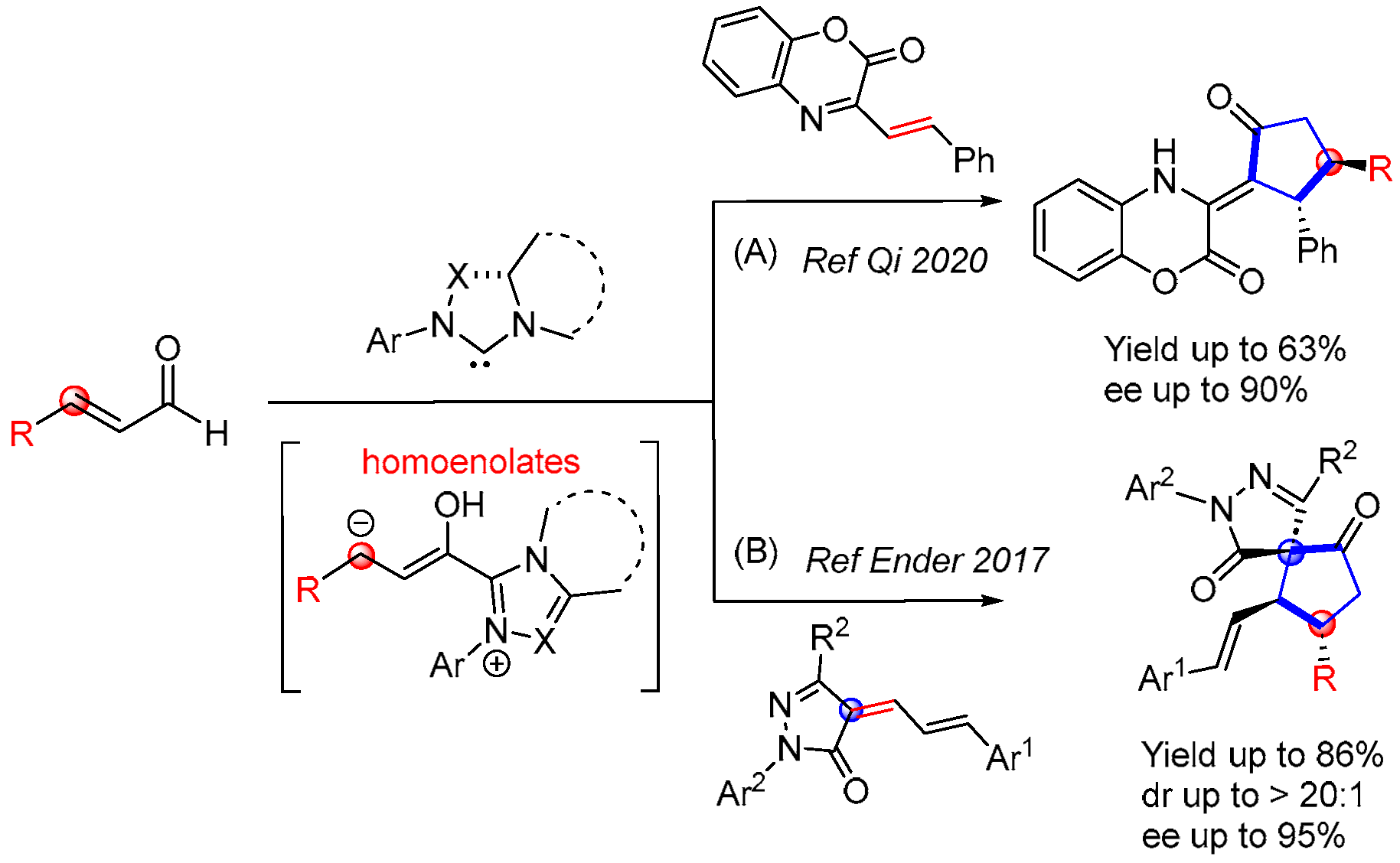
Scheme 1. Asymmetric synthesis of cyclopentanones with vicinal carbon stereocenters [3,8].
Catalysts 16 00138 sch001
Scheme 2. Asymmetric addition of homoenolate to activated tetrasubstituted alkenes [10].
Catalysts 16 00138 sch002
Scheme 3. Design plan of asymmetric (3+2) annulations via NHC-catalyzed addition of homoenolate intermediates to indigo or isoindigo derivatives.
Catalysts 16 00138 sch003
Scheme 4. Reaction between enal 1a and indigo derivative 2a under chiral NHC pre-catalyst 4a.
Catalysts 16 00138 sch004
Scheme 5. Reaction between enal 1a and Boc-isoindigo 7a under chiral NHC catalyst. Reaction conditions: 1a (0.15 mmol), 7a (0.1 mmol), cat. (0.02 mmol), and DBU (0.04 mmol) in toluene (2.0 mL) at 22 °C for 14 h. Yield of the isolated product after column chromatography. The dr value was determined by 1H NMR spectroscopic analysis. The ee value was determined by HPLC analysis on a chiral stationary phase.
Catalysts 16 00138 sch005
Scheme 6. Reaction between enals 1aj and Boc-isoindigo 7a under chiral NHC pre-catalyst 4b.
Catalysts 16 00138 sch006
Scheme 7. Reaction between enal 1a and isoindigo 7a,k-r under chiral NHC pre-catalyst 4b. Reaction conditions: 1a (0.15 mmol), 7 (0.1 mmol), 4b (0.015 mmol), DBU (0.03 mmol), and 50 mg of 4 Å molecular sieves in m-xylene (2.0 mL) at room temperature for 14 h. Yield of the isolated product. dr are determined by 1H NMR spectroscopic analysis. ee are determined by chiral HPLC analysis. [a] Reaction was carried out on 1.0 mmol, 20 mol% 4b was used, 24 h.
Catalysts 16 00138 sch007
Figure 1. X-ray crystallography of 8r.
Catalysts 16 00138 g001
Scheme 8. Reaction between enal 1a and N-Bn-unsymmetric isoindigo 7su under chiral NHC pre-catalyst 4b. Reaction conditions: 1a (0.15 mmol), 7su (0.1 mmol), 4b (0.015 mmol), DBU (0.03 mmol), and 50 mg of 4 Å molecular sieves in m-xylene (2.0 mL) at room temperature for 14 h. Yield of the isolated product. dr are determined by 1H NMR spectroscopic analysis. ee are determined by chiral HPLC analysis. Regioisomer ratios (rr) are determined by 1H NMR spectroscopic analysis.
Catalysts 16 00138 sch008
Scheme 9. Proposed mechanism for the NHC-catalyzed asymmetric reaction of enals with isoindigos. ‡: transition State.
Catalysts 16 00138 sch009
Disclaimer/Publisher’s Note: The statements, opinions and data contained in all publications are solely those of the individual author(s) and contributor(s) and not of MDPI and/or the editor(s). MDPI and/or the editor(s) disclaim responsibility for any injury to people or property resulting from any ideas, methods, instructions or products referred to in the content.