Article

The Role of Plasma-Emitted Photons in Plasma-Catalytic CO2 Splitting over TiO2 Nanotube-Based Electrodes


by
Palmarita Demoro
1,2,
Nima Pourali
3,
Francesco Pio Abramo
1,2,
Christine Vantomme
4,5,6,7,8,
Evgeny Rebrov
3,9,
Gabriele Centi
1,2,
Siglinda Perathoner
1,2,
Sammy Verbruggen
5,6,
Annemie Bogaerts
4,7,8 and
Salvatore Abate
1,2,*
1
Department of Chemical, Biological, Pharmaceutical and Environmental Sciences (ChiBioFarAm), University of Messina, 98166 Messina, Italy
2
ERIC Aisbl & INSTM CASPE (Laboratory of Catalysis for Sustainable Production & Energy), University of Messina, 98166 Messina, Italy
3
School of Engineering, University of Warwick, Coventry CV4 7AL, UK
4
Research Group PLASMANT, Department of Chemistry, University of Antwerp, Groenenborgerlaan 171, 2020 Antwerp, Belgium
5
Research Group A-PECS, Department of Bio-Science Engineering, University of Antwerp, Groenenborgerlaan 171, 2020 Antwerp, Belgium
6
NANOlight Center of Excellence, University of Antwerp, Groenenborgerlaan 171, 2020 Antwerp, Belgium
7
PLASMA Center of Excellence, University of Antwerp, Groenenborgerlaan 171, 2020 Antwerp, Belgium
8
Electrification Institute, University of Antwerp, Olieweg 97, 2020 Antwerp, Belgium
9
School of Chemical Engineering and Chemistry, Eindhoven University of Technology, 5600 MB Eindhoven, The Netherlands
*
Author to whom correspondence should be addressed.
Catalysts 2026, 16(2), 137; https://doi.org/10.3390/catal16020137
Submission received: 30 October 2025 / Revised: 22 December 2025 / Accepted: 5 January 2026 / Published: 2 February 2026

Abstract

The plasma-catalytic conversion of CO2 is a promising route toward sustainable fuel and chemical production under mild operating conditions. However, many aspects still need to be better understood to improve performance and better understand the catalyst-plasma synergies. Among them, one aspect concerns understanding whether photons emitted by plasma discharges could induce changes in the catalyst, thereby promoting interaction between plasma species and the catalyst. This question was addressed by investigating the CO2 splitting reaction in a planar dielectric barrier discharge (pDBD) reactor using titania-based catalysts that simultaneously act as discharge electrodes. Four systems were examined feeding pure CO2 at different flow rates and applied voltage: bare titanium gauze, anodically formed TiO2 nanotubes (TiNT), TiNT decorated with Ag–Au nanoparticles (TiNTAgAu), and TiNT supporting Ag–Au nanoparticles coated with polyaniline (TiNTAgAu/PANI). The TiNTAgAu exhibited the highest CO2 conversion (35% at 10 mL min−1 and 5.45 kV) and the most intense optical emission, even in the absence of external light irradiation, suggesting that the improvement is primarily attributed to plasma–nanoparticle interactions and self-induced localized surface plasmon resonance (si-LSPR) rather than conventional photocatalytic pathways. SEM analyses indicated severe plasma-induced degradation of TiNT and TiNTAgAu surfaces, leading to performance decay over time. In contrast, the TiNTAgAu/PANI catalyst retained structural integrity, with the polymeric coating mitigating plasma etching while maintaining competitive efficiency. There is thus a complex behavior with catalytic performance governed by nanostructure stability, plasmonic enhancement, and the interfacial protection. The results demonstrate how integrating plasmonic nanoparticles and conductive polymers can enable the rational design of durable and efficient plasma-photocatalysts for CO2 valorization and other plasma-assisted catalytic processes.

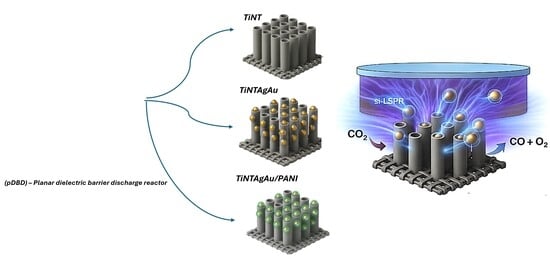
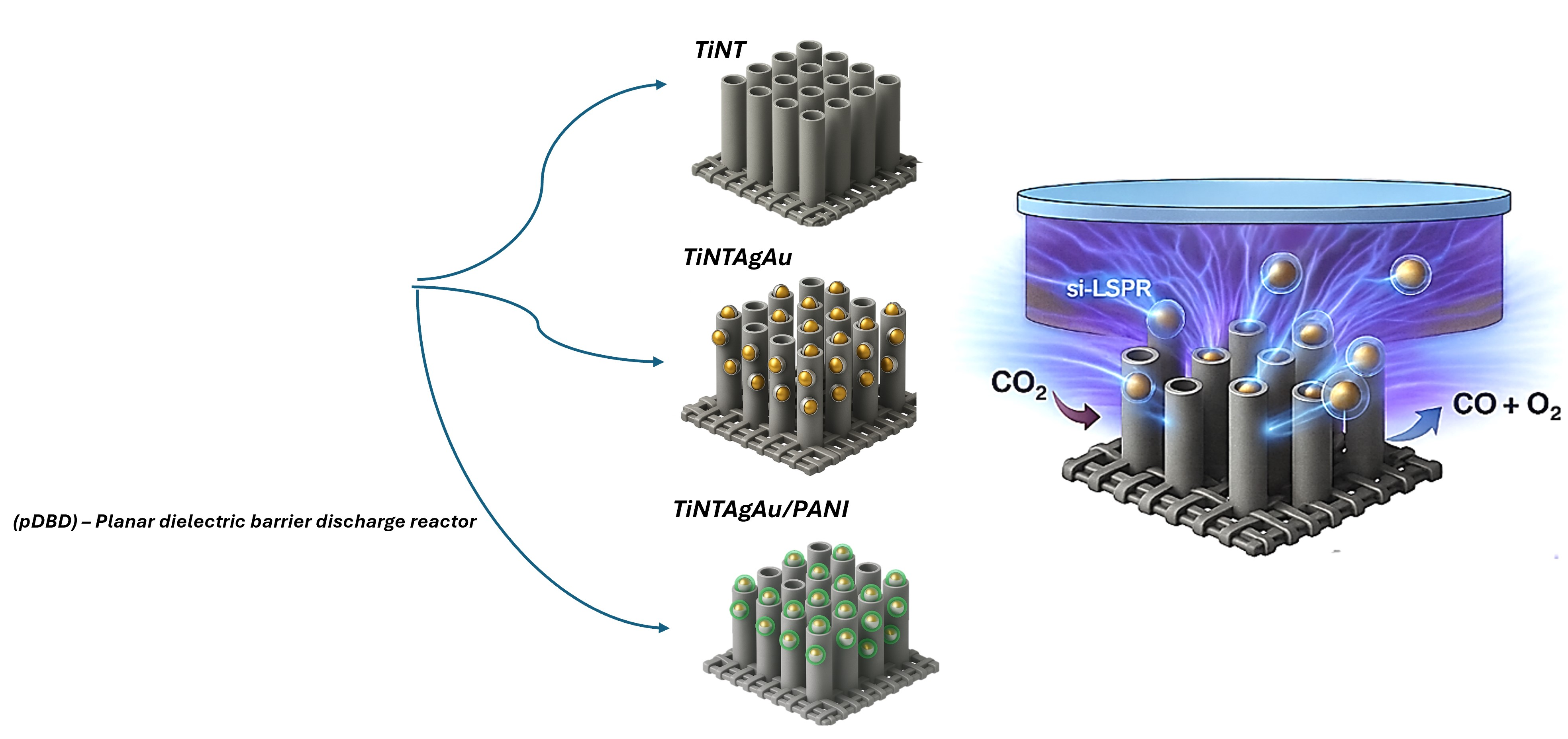
Graphical Abstract

1. Introduction

The transformation of carbon dioxide into valuable chemicals and fuels is of paramount importance in propelling our economy towards greater sustainability and achieving the objective of net zero emissions by the year 2050 [1]. Indeed, conventional thermal catalysis frequently necessitates elevated energy requirements (i.e., high temperatures and pressures) to disrupt stable molecules and enhance conversion and selectivity. Furthermore, elevated operating temperatures can result in the deactivation of the catalyst, increased energy expenditures, and a reduction in the longevity of the reactor material. Conversely, electro-, photo-, and plasma-catalysis have emerged as promising approaches for CO2 conversion under conditions that demand reduced energy, offering the potential for enhanced energy efficiency and process intensification [2,3,4]. Among these, cold plasma has been shown to exhibit several advantages, particularly when coupled with catalysts to enhance selectivity, compared to electro- and photocatalytic methods [3,4,5,6,7]. Snoeckx and Bogaerts [8] conducted a comparative analysis of various plasma-based methodologies for the conversion of carbon dioxide (CO2), illustrating their potential and limitations, as well as a comparison with other technologies. Furthermore, Osorio-Tejeda et al. [9] performed a techno-economic analysis on plasma-based CO2 splitting, in comparison with electrolysis. Their research suggests that the estimated production cost of carbon monoxide (CO) via this method is approximately $671 per tone, compared to $962 per tone for electrolysis-based production. Gas activation via electron–molecule collisions, in contrast to conventional thermally driven processes, establishes a non-equilibrium regime in which the activation energy is decoupled from the bulk gas temperature. This, in turn, enables reactions to transpire at reduced temperatures. In addition, the capacity for instantaneous activation and deactivation of the plasma provides process flexibility and facilitates the integration of variable renewable energy sources, such as solar and wind power [10]. This makes plasma technology ideally suited for the electrification of chemical reactions [11]. However, many gaps still exist, making scale-up and industrialization a significant challenge. Among them, crucial gaps are (i) the enormous dependence on the performances of the type of reactors used and (ii) the different dissociation mechanisms in different plasma types [12]. For instance, the dielectric barrier discharge (DBD) reactors, while achieving CO2 conversion up to 75%, typically exhibit low energy efficiencies in the range of 10–20%. Microwave (MW) reactors, conversely, demonstrate higher energy efficiencies of approximately 50%, but necessitate vacuum conditions, thereby increasing system complexity. Gliding arc (GA) reactors achieve moderate energy efficiencies of around 40% but are limited by lower CO2 conversion rates of approximately 15% [9].
In this study, a planar DBD reactor (pDBD) is proposed for the cold-plasma-assisted CO2 splitting. pDBD offers several advantages compared to a classical cylindrical DBD reactor: (i) plasma is confined on the dielectric surface, enhancing the homogeneity and efficiency of plasma energy distribution and favoring a more diffusive plasma than a filamentary one. In fact, in packed DBD reactors, particle movement and turbulent flows can lead to non-uniform plasma formation through the creation of filaments. These filaments can increase plasma density and conversion, but they may also generate local hot spots that could degrade sensitive materials, such as the catalyst [13,14]. (ii) pDBD could enhance the interaction between the plasma and the catalyst surface. This is particularly beneficial for applications such as surface activation, where the effectiveness of the process is mainly dependent on the interaction between the plasma species and the catalyst surface [15,16,17]. (iii) In pDBDs, the discharge confined to the surface can yield a high areal density of microdischarges and a strong local electric field; reactive species are formed during propagation. Since the electron density (nₑ) governs collision rates, conditions that increase nₑ in pDBDs can enhance the production of reactive species [18,19]. (iv) pDBDs exhibit lower breakdown voltages than volume DBDs due to geometric/electrical factors (thin barriers and surface-confined discharges). This allows ignition and operation at reduced voltages, thereby lowering the energy per cycle and the electrical/thermal stress on reactor components; these device-level advantages are transferable to pDBD deployment for CO2 splitting. However, the conversion efficiency remains a function of the specific energy input (SEI) and the electron energy distribution function, which must be optimized for the particular gas mixture and operating regime [20,21,22]. (v) Therefore, pDBD is characterized by simpler maintenance and operational procedures. The accessibility of the electrodes and the less complex setup make routine maintenance easier and potentially reduce downtime [23,24,25].
A further significant benefit is the capacity to utilize a single electrode as a catalyst. In a conventional DBD reactor, the catalyst is typically incorporated within the space between the internal electrode and the dielectric, which significantly diminishes the contact time between the reactants and the catalyst (or the gas residence time in the reactor) and occasionally impedes the catalytic effect. In contrast, the presence of a catalyst on one electrode has been shown not to reduce the residence time. In the study by Abramo et al. [26], the deposition of a boehmite coating on the internal porous electrode of a classical DBD was shown to consistently result in higher CO2 conversion and energy efficiency compared to the packed reactor. This enhancement can be attributed to the unaltered residence time. Moreover, this electrode-catalyst configuration inaugurates novel prospects for the amalgamation of cold plasma with photocatalysis. Indeed, in the event of the electrode comprising a photoactive material, chiefly TiO2, it is feasible to capitalise on the synergistic effect to enhance the conversion process, consequently improving the energy efficiency [12,27]. Anodically produced titanium dioxide nanotubes (NTs) are highly suitable for this purpose, as they exhibit a well-ordered and aligned nanostructure that can be readily modified by altering the anodization procedure or by subjecting the nanotubes to a pre-treatment [28,29,30,31,32,33].
Noble metal surface plasmon resonance is of broad interest in photochemical applications, enhancing visible light absorption and charge separation. Specifically, when the irradiating wavelength suits the oscillation frequency of superficial free electrons of the noble metal, an electromagnetic field several orders stronger than the incident light is generated around the metal particles, and a high-energy electron can be promoted in the conduction band of the adjacent semiconductor [34,35,36,37,38]. Semiconductors decorated with Au, Ag bimetallic alloy nanoparticles (NPs) are the most suited for enhancing LSPR, creating a strong electromagnetic field when irradiated with visible light. However, the plasmonic effect is highly influenced by the dimension, shape, and morphology of NPs [39,40]. For example, Kim et al. [41] elucidated the correlation between the size of Au spherical NPs and the plasmon-induced yield for the decarboxylation of 4-mercaptobenzoic acid to benzenethiol, observing an increase in reaction yield as Au NPs size increases, with a maximum at 94 nm. Shore et al. [42] have systematically fabricated plasmonic AuAg alloy nanoparticles and Au@Ag core–shell nanostructures, precisely controlling precursor ratios to generate materials with variable gold-to-silver atomic compositions and precisely defined shell thicknesses. Subsequently, UV-Vis measurements elucidated the key finding that the broad, tunable spectral response of the AuAg alloy, spanning the 420–520 nm range, makes it an exceptionally suitable candidate for maximizing the photo-absorption efficiency of TiO2. Similarly, Verbruggen et al. [43] utilized the Turkevich methodology to anchor the AuAg alloy onto a TiO2 support, demonstrating that optimal solar light harvesting can be achieved by judiciously manipulating the compositional or structural parameters of the coupled AuAg material. Longo et al. [44] reported an increase of 21.5% in the intrinsic rate of non-oxidative methane coupling under irradiation of the DBD reactor using TiO2 nanostructure array modified with Au nanoparticles. The physical alteration of the plasma micro-discharges and the formation of surface vibrational states in the catalyst have been cited as the possible explanations for the synergistic effect of plasma and photocatalysis. At the same time, plasma could be considered a photon source that may enhance catalytic surface reactions through self-induced local surface plasmon resonance (si-LSPR). This could be particularly relevant for photosensitive molecules, as VOC degradation shows high efficiency using TiO2 in a tubular DBD reactor [45]. Another possible approach is described by Li et al. [46], which reports a two-stage synergistic system: first, CO2 is activated by non-thermal plasma, and then a post-plasma Cd0.8Zn0.2S/In2O3 photocatalyst is used to couple with C2, achieving a C2 product yield of 0.382 μmol h−1.
In this work, we systematically investigate the effect of si-LSPR on different plasma–photocatalysts for CO2 splitting, using TiO2 nanotubes (TiNTs) decorated with Ag and Au bimetallic NPs as model systems. To isolate the self-induced LSPR effects, all experiments were carried out without external light irradiation, ensuring that only plasma-emitted photons contributed to the process and thereby avoiding the confounding influence of plasma–light synergistic effects.

2. Results

2.1. Role of the Flow Rate and Applied Voltage

Figure 1 reports the CO2 conversion for all catalysts as a function of flow rate at a fixed applied voltage of 5.45 kV (Vpp), and Table S1 reports all the experimental results. Gas chromatography confirmed that the outlet stream consisted solely of CO, O2, and unconverted CO2, in agreement with previous reports on plasma-assisted CO2 splitting under dielectric barrier discharge conditions [8].
As expected, conversion increases with decreasing flow rate, owing to the longer residence time of the reactants in the plasma region. At a flow rate of 10 mL min−1, significant differences among the catalysts are observed: TiNTAgAu achieves the highest conversion (35%), while TiNT exhibits the lowest (21%). With increasing flow rate, these differences become less pronounced. At 90 mL min−1, conversion drops sharply for all samples and converges to approximately 7%, reflecting the strong influence of residence time on plasma-driven CO2 activation. Nevertheless, the relative ranking among catalysts remains consistent across all flow rates, with TiNTAgAu always outperforming the others, TiNT consistently showing the lowest activity, and Ti and TiNTAgAu/PANI displaying intermediate and comparable values.
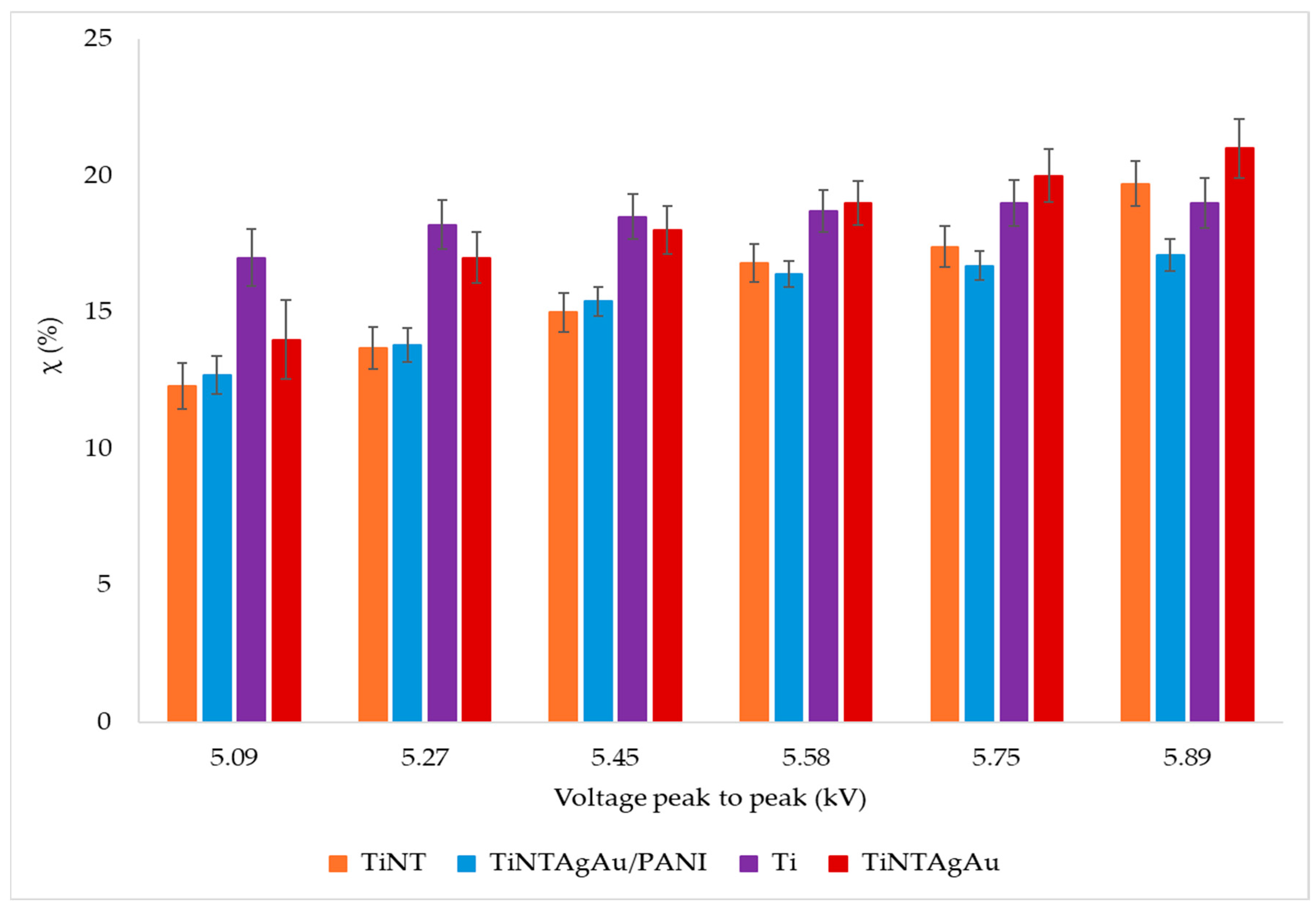
Figure 2 illustrates the effect of applied voltage on CO2 conversion at a constant flow rate of 30 mL min−1 and Table S2 reports all the experimental results. As expected, lowering the discharge voltage leads to a decrease in CO2 conversion; however, the catalysts exhibit distinct trends under these conditions. TiNTAgAu shows the highest conversion across the entire voltage range, reaching 22% at 5.89 kV, but also undergoes the largest voltage-dependent drop, declining to 14% at 5.09 kV. A comparable decrease is observed for TiNT, which falls from 18% to 12.7% over the same voltage range. In contrast, the Ti sample maintains a relatively high and stable performance, with only a modest decline from 18% to 15%, demonstrating the smallest voltage-induced loss. TiNTAgAu/PANI exhibits lower conversions overall but a more stable profile, approaching values similar to TiNT at low applied voltages (≈13%). These results highlight that while noble-metal modification enhances CO2 conversion efficiency, the intrinsic stability of the Ti surface under varying plasma conditions is superior.

2.2. Specific Energy Input (SEI) and Energy Efficiency (η)

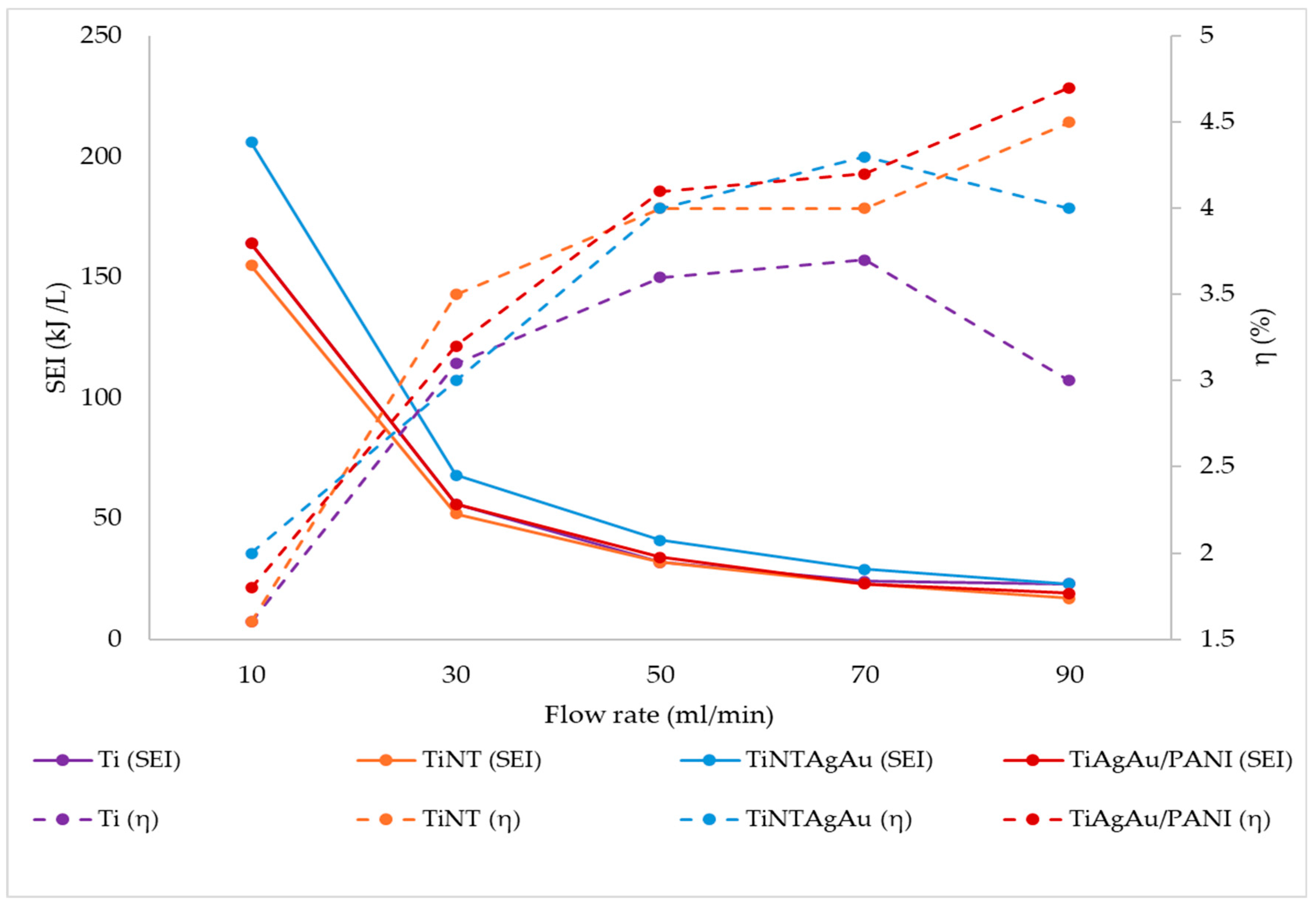
The specific energy input (SEI) and the energy efficiency depend on the flow rate, as reported in Equations (3) and (4). Consequently, with increasing flow rate, a decrease in SEI is expected, as well as a corresponding increase in η (if the drop in conversion is less than the drop in SEI) as reported in Figure 3.
SEI values increase moderately with decreasing flow rate, but a pronounced rise is observed at 10 mL min−1, particularly for Ti and TiNTAgAu, which reach 205 and 210 kJ L−1, respectively.
At the highest flow rate (90 mL min−1), TiNT and TiNTAgAu/PANI exhibit the best energy efficiencies, achieving 4.7% and 4.5%, respectively. Under the same conditions, TiNTAgAu and Ti show lower values of 4% and 3%, although both display a slight improvement at 70 mL min−1, reaching 4.4% and 3.6%, respectively. Conversely, at the lowest flow rate (10 mL min−1), the energy efficiency drops significantly for all catalysts, converging to approximately 1.6%. This trend indicates that, although higher CO2 conversion is achieved at reduced flow rates, the corresponding energy consumption increases substantially, leading to diminished overall efficiency.
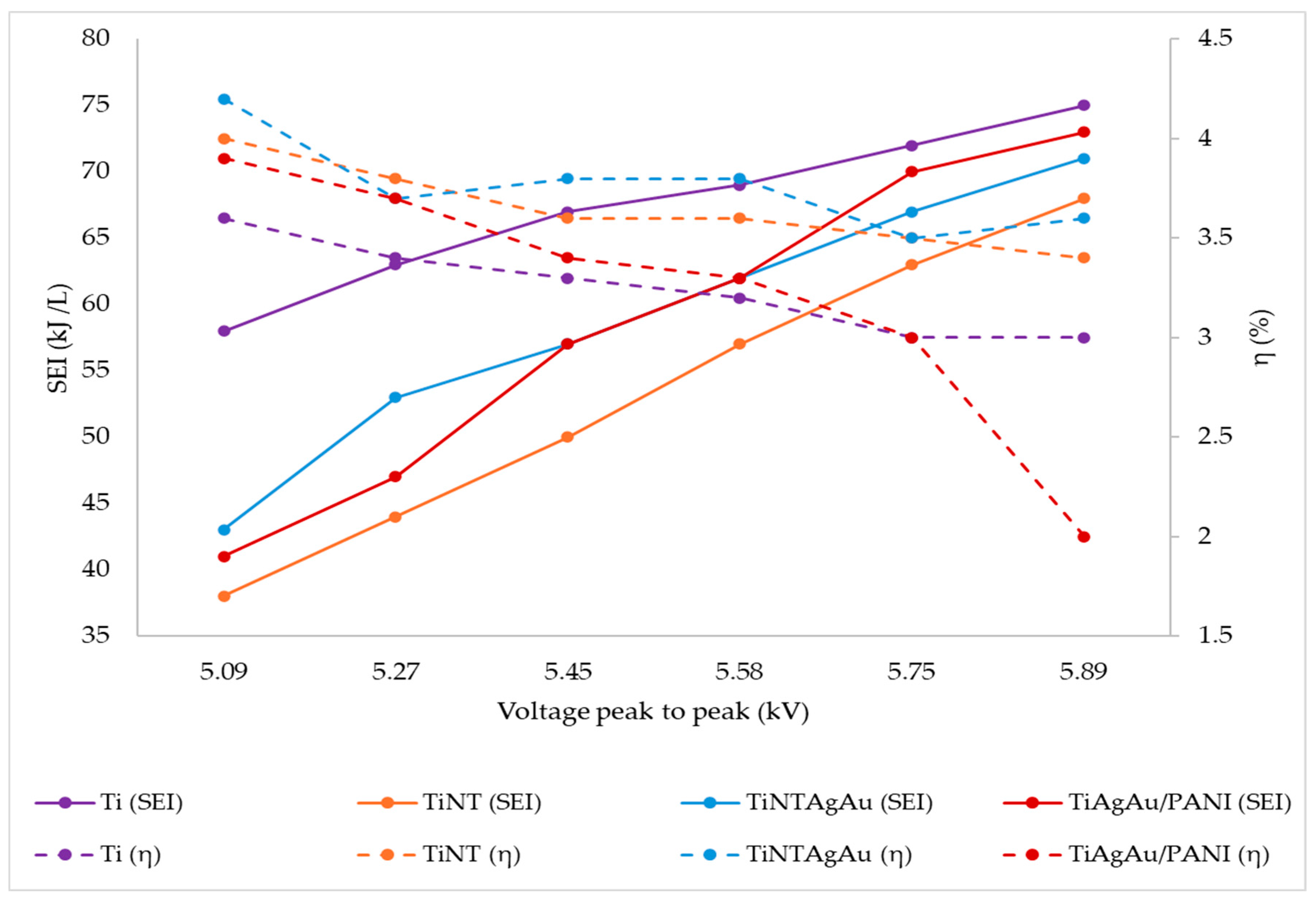
Figure 4 illustrates the variation of SEI and energy efficiency as a function of Vpp at a constant CO2 flow rate of 30 mL min−1. At the highest applied voltage (5.89 kV), all catalysts exhibited comparable SEI values, in the range of 68–75 kJ L−1. As the voltage decreased, a reduction in SEI was observed for all the samples investigated, with Ti showing the smallest decrease (down to 58 kJ L−1). In contrast, the other samples exhibited comparable reductions.
Although TiNT and Ti consumed less energy overall, their CO2 conversion efficiencies were generally lower compared to the AgAu-based catalysts (TiNTAgAu and TiNTAgAu/PANI). Conversely, the energy efficiency increased for all catalysts as the Vpp decreased. At 5.09 kV TiNTAgAu exhibits the highest efficiency at 4.2%, followed closely by TiNTAgAu/PANI and TiNT with an efficiency (≈4%), while Ti showed the lowest value (3.6%). Notably, upon increasing the voltage to 5.89 kV, TiNTAgAu/PANI exhibited the largest relative decrease in energy efficiency (almost 2%). In contrast, the other catalysts showed only a modest decrease of about 0.6% compared to their values at 5.09 kV.

2.3. OES Spectra

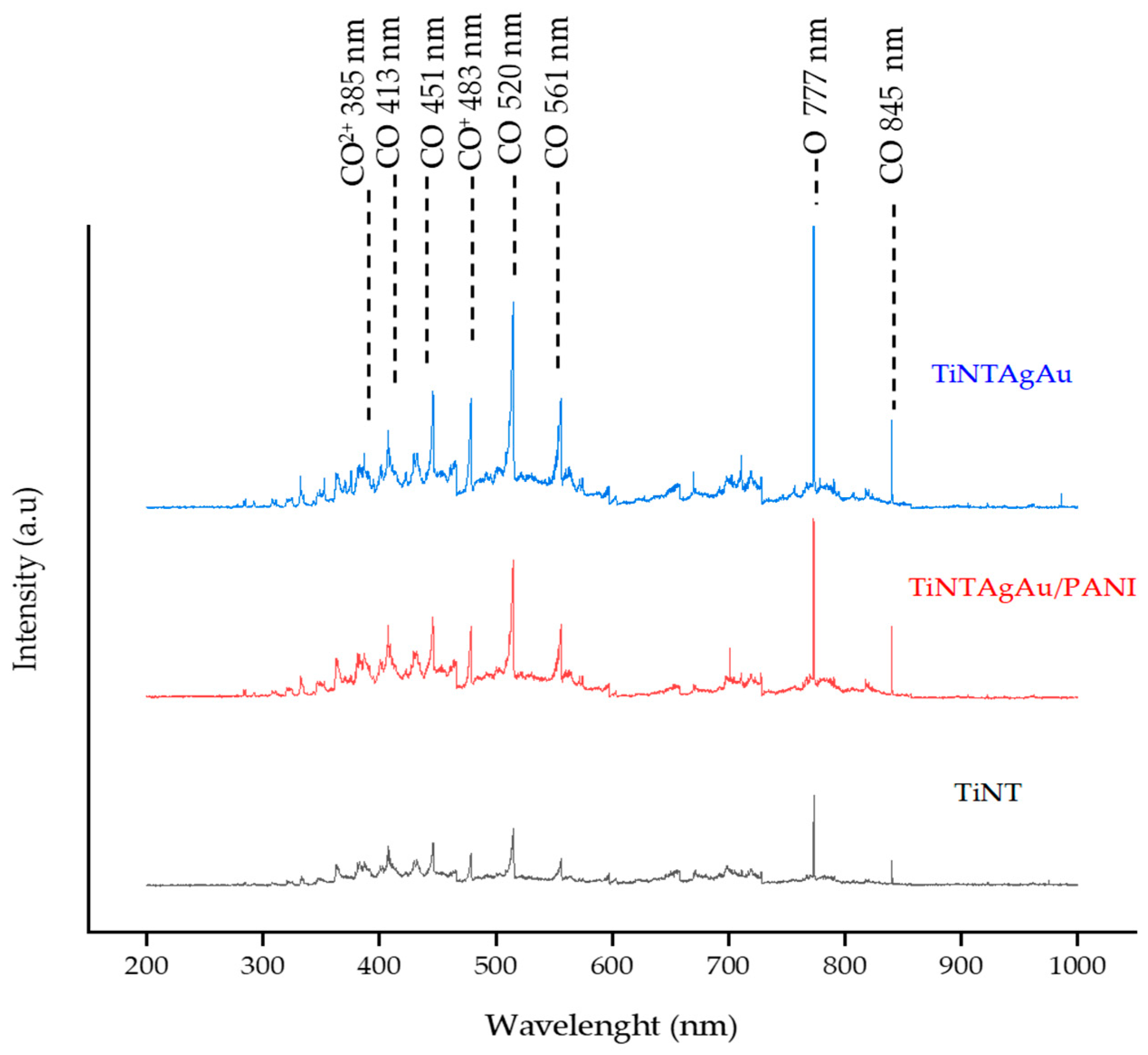
The active species of a dielectric barrier plasma (DBD) during the CO2 splitting process were revealed by Optical Emission Spectroscopy (OES) and reported in Figure 5. The data highlight the presence of various species, including CO2+, CO, and atomic oxygen (O), within the plasma during CO2 splitting. These species, identified by their characteristic emission wavelengths, play crucial roles as intermediates and products in the CO2 dissociation process. The observed transitions provide valuable insights into the energy distribution within the plasma and the efficiency of CO2 conversion into CO and O2. The presence of CO2+ ions indicates successful CO2 ionization within the plasma.
The intensity of CO emission lines, particularly in the Angström system, directly correlates with the efficiency of CO2 conversion to CO at specific wavelengths of 451 nm, 471.7 nm, 483 nm, 520 nm, 561 nm, 579 nm, and 610 nm. These transitions involve the movement from an upper electronic state (B1Σ+) to lower vibrational levels (v″ = 0–4) of the A1Π state [47,48,49]. Additionally, the presence of atomic oxygen is evidenced by strong emission lines at 777 nm and 845 nm [50]. The integration of Au and Ag nanoparticles into the TiNT catalyst (TiNTAgAu) exhibits superior emission intensities compared to TiNT. At the same time, the addition of the conductive PANI layer (TiNT_AgAu/PANI) reduces the peak intensities in the OES spectra. Metallic Ti, used solely as a conductive reference, does not exhibit photoactive properties beyond those associated with the TiO2 nanotubes. Therefore, its contribution was assessed exclusively in terms of electrical conductivity and operational stability.

2.4. SEM

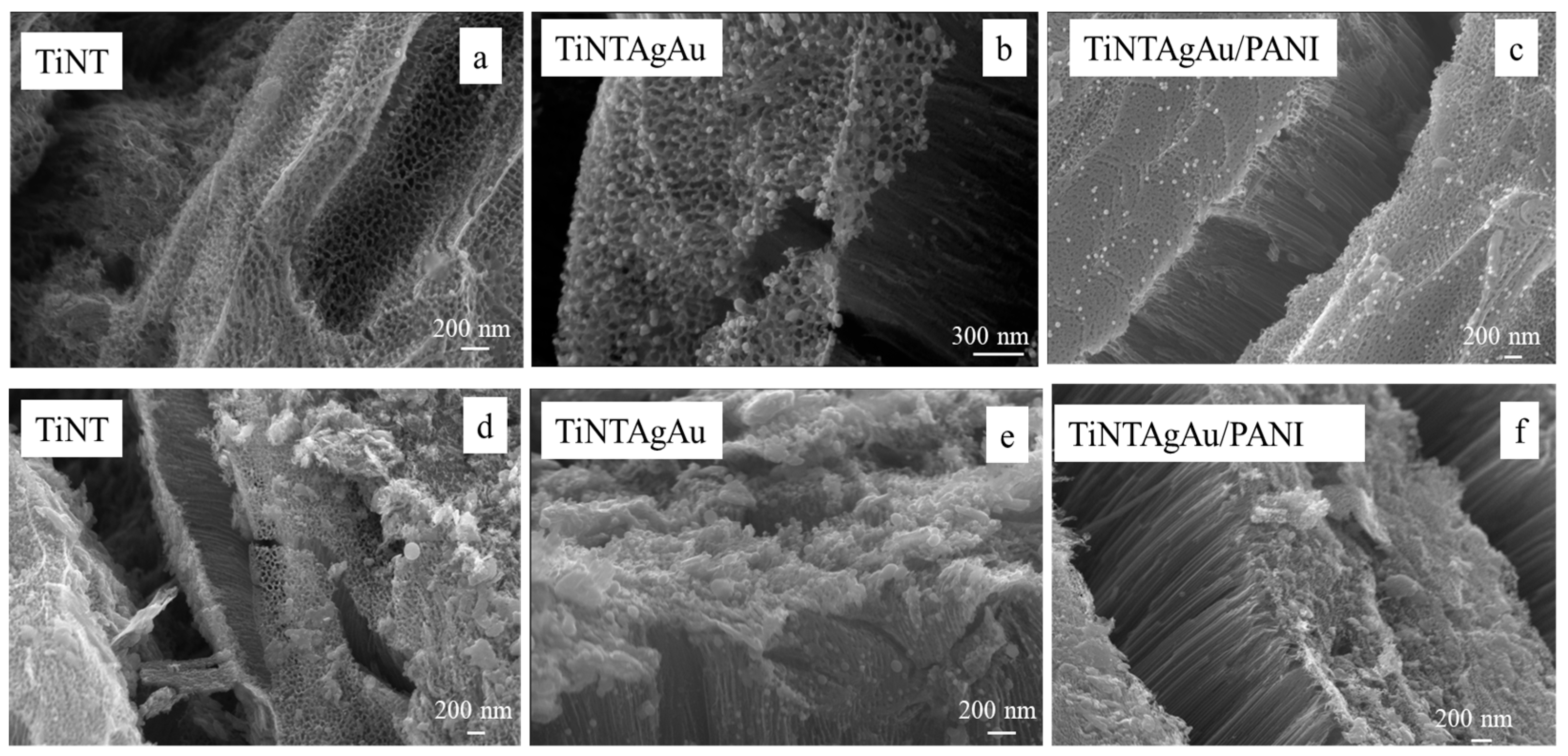
SEM images reveal significant changes in the nanostructure of the catalysts before and after the plasma treatment, with the exception of Ti sample, observing a similar structure even after plasma exposure (Figure S1). As shown in Figure 6a and Figure S1, the as-synthesized TiNT exhibits many cracks clearly visible on the surface, which can be attributed to the geometrical features of the titanium mesh threads. In fact, the curvature of the threads does not allow a uniform oxide array growth, and the stress induced during the anodization and tube growth creates the cracks.
However, the nanotubes have a well-defined nanostructure with an average pore diameter of 90 nm, but some debris can be detected. On the surface of TiNTAgAu, small oxide particles appear (Figure 6b). Still, the nanotubes have uniform and smooth walls with a pore diameter similar to the previous sample and a length of 2 µm.
No Ag and Au NP appear as bright spots on the nanotube surface, indicating the successful synthesis and uniform dispersion of nanoparticles (NPs). At higher magnification (Figure 6c), only a few debris particles are observed in TiNTAgAu/PANI, and the surface appears extremely clean. Even if the nanotubes have similar lengths to the two previous samples, the pore mouths are smaller (40 nm) and less defined.
After plasma exposure, therefore after a testing time of about 1000 min, a layer of irregular oxide particles and debris covers the surface of all samples, likely from plasma etching, but nanotubes remain visible beneath this layer. In TiNT and TiNTAgAu (Figure 6d,e), the nanotubes are remarkably damaged, especially in the upper part, which is most exposed to plasma. Nevertheless, in TiNTAgAu/PANI, the underlying nanotubes remain less damaged and vertically aligned even in the zone more in contact with the plasma environment (Figure S1), suggesting that the carbon layer may act as a protective film against plasma etching of both the NPs and the underlying NTs array.

3. Discussion

An experimental study was carried out to evaluate a series of Ti-based catalysts, employed simultaneously as high-voltage electrodes, for their effectiveness in CO2 splitting within a planar dielectric barrier discharge (pDBD) reactor. The results shown in Figure 1 clearly demonstrate an inverse proportionality between conversion and flow rate, in line with literature data [51,52]. Reduced flow rates result in extended CO2 residence times within the discharge zone, leading to a higher collision probability between high-energy electrons and CO2 molecules, which subsequently causes a considerable increase in CO2 conversion. A consistent trend is observed when both the flow rate and the applied voltage are decreased (Figure 1 and Figure 2), with TiNTAgAu always exhibiting the highest CO2 conversion and bare TiNT the lowest. This behavior highlights the beneficial role of noble metal nanoparticles in enhancing the performance of TiO2 nanotubes under plasma conditions. The presence of Ag–Au nanoparticles introduce localized surface plasmon resonance (LSPR) effects, which can intensify the local electric field and promote the activation of CO2 molecules, thereby facilitating their dissociation. Importantly, these enhancements are evident even in the absence of external light irradiation, suggesting that the improvement is primarily attributed to plasma–nanoparticle interactions and self-induced localized surface plasmon resonance (si-LSPR) rather than conventional photocatalytic pathways. The incorporation of noble metal nanoparticles provides a significant advantage in cold plasma-assisted CO2 splitting by simultaneously boosting catalytic activity and enabling more efficient use of the plasma-generated reactive species. These results are consistent with the OES spectra reported in Figure 6, with TiNTAgAu demonstrating the highest intensity among the various samples investigated. The spectral features at 451, 471.7, 483, 520, 561, 579, and 610 nm are particularly relevant, as they correspond to characteristic CO emission bands, confirming the formation of CO as a major product of CO2 splitting. The relative intensity of these emission lines provides an indication of the efficiency of CO2 conversion to CO [48,53], reflecting more effective plasma–catalyst interactions and enhanced reaction pathways. One plausible explanation for this phenomenon is the presence of a well-organized tubular nanostructure, which is hypothesized to enhance plasma-catalyst interactions by promoting the formation of localized micro-discharges within the nanotube channels or along their periphery. These micro-discharges may increase the density of reactive species in proximity to the catalyst surface, thereby intensifying plasma–surface interactions and ultimately improving CO2 activation and conversion [26,54,55]. However, the effectiveness of the catalyst strongly depends on both the pore diameter (as plasma streamers can only penetrate into pores when their diameter is larger than the Debye length) and its intrinsic electrical properties. In the TiNT and TiNTAgAu samples, the nanotube average diameter is about 90 nm, which is large enough to allow partial penetration of the plasma streamers, promoting the formation of micro-discharges even inside the pores [16,56]. In TiNTAgAu/PANI, the polymer coating narrows the tube openings (~40 nm), limiting plasma penetration and thus internal micro-discharges, but improving structural stability: less damage is observed in SEM (Figure 6). This trade-off explains why TiNTAgAu/PANI maintains good efficiency despite lower conversion, thanks to the protective PANI layer that preserves catalyst integrity over time.
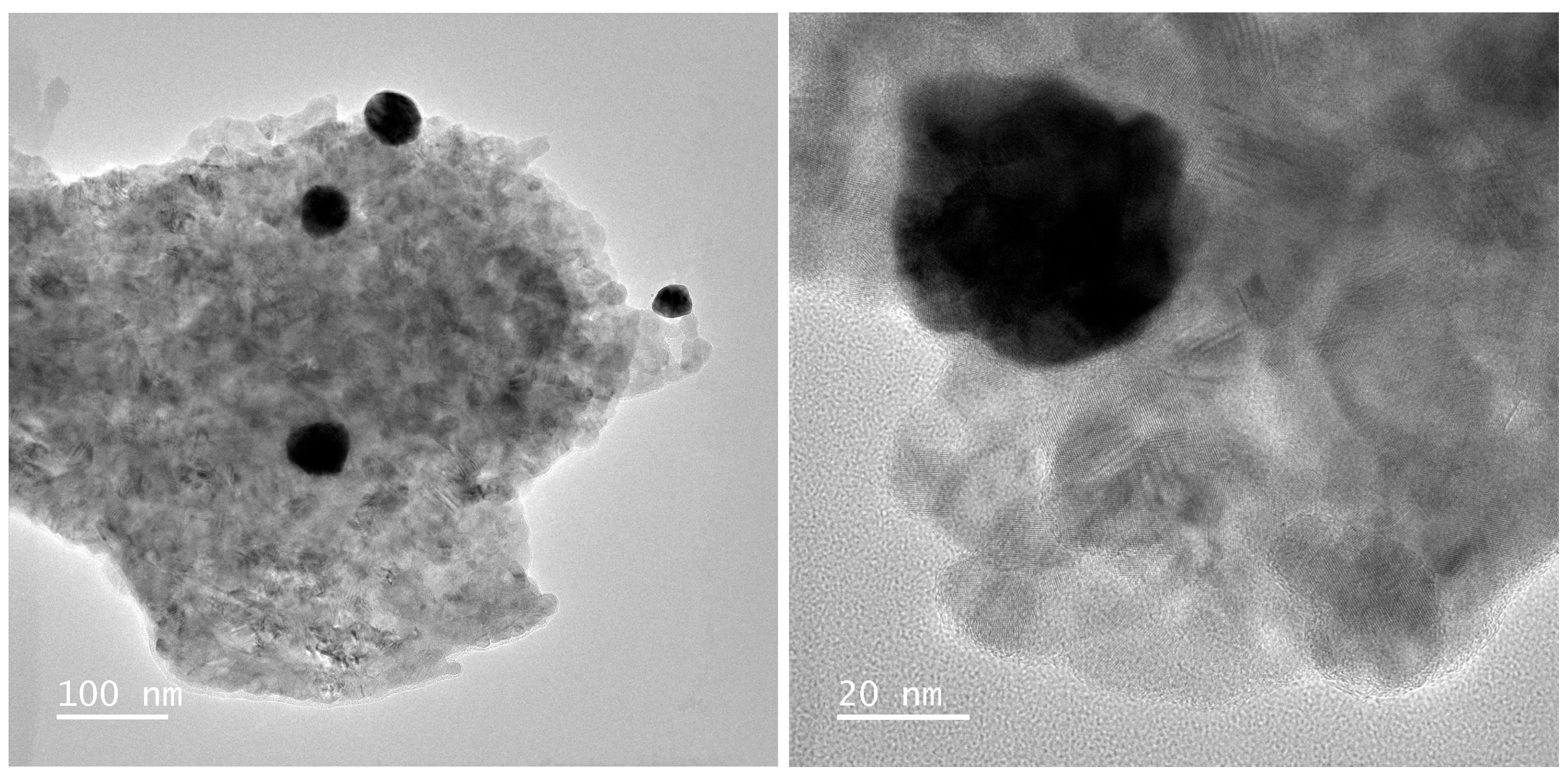
The integration of Au and Ag NPs into the TiNT catalyst could introduce self-induced localized surface plasmon resonance (si-LSPR) effects [57,58]. These NPs act as electron reservoirs, enhancing the local electric fields, reducing charge recombination, and extending charge carrier lifetimes, which are critical for sustaining efficient CO2 conversion. TEM images (Figure 7) reveal quasi-spherical metallic nanoparticles distributed on the TiNT support with diameters ranging from 20 to 50 nm.
Several AuAg nanoparticles exhibit internal fringes indicative of multi-twinned fcc structures, highly favorable for sustaining LSPR [59,60]. This is corroborated by UV–Vis absorbance spectra (Figure S2), which show a plasmon band centered at ~424 nm for AgAuNP. While pure Au nanoparticles synthesized by the Turkevich method display a resonance at ~480 nm [61] and pure Ag nanoparticles typically absorb around 390–430 nm [59], the observed intermediate position supports the presence of bimetallic Au–Ag NPs rather than either metal alone: the Au tend to nucleate first, while the Ag deposit later on it, so the formation mechanism is of core–shell type NPs with Au-rich cores and Ag-rich shells [62]. In AgAu@PANI (nanoparticles), the plasmon band undergoes a red-shift and broadening toward 472 nm (Figure S2). This spectral evolution can be attributed to the modification of the local dielectric environment by the PANI coating.
Likewise, the intrinsic light emission of the plasma can further contribute to the conversion process through self-induced plasmonic excitation [63]. In fact, the absorbance peak in UV–Vis spectrum (Figure S2) falls within the range of plasma-emitted light, as indicated in the OES spectra reported in Figure 5. The latter may explain the higher conversion observed for TiNTAgAu/PANI compared to bare TiNT. However, despite its lower absorbance intensity, TiNTAgAu achieves higher conversion and efficiency than TiNTAgAu/PANI. This behavior suggests that the conductive PANI overlayer in the catalyst TiNTAgAu/PANI partially mitigates the si-LSPR effects, as also indicated by the reduced emission peak intensities observed in the OES spectra. Localized plasmon resonance (LSPR) of Au-Ag nanoparticles is known to concentrate the electromagnetic field in the immediate vicinity of the metal surface, creating regions of high energy density. In catalytic contexts, this effect may facilitate the activation of energetically stable chemical bonds, such as the C-O bond in the CO2 molecule, reducing local kinetic barriers and increasing the probability of dissociation.
Numerous studies on Au/TiO2 plasmonic systems have shown that the LSPR response strongly depends on both the size and composition of the nanoparticles and the nature of the support. In particular, the metal-oxide interface plays a crucial role in determining charge transfer dynamics and plasmon stability, with significant effects on catalytic efficiency. The choice of bimetallic Au-Ag nanoparticles supported on TiO2 nanotubes allows for a broader and more modulable plasmonic response compared to pure metals; in addition, the ordered geometry of the TiO2 nanotubes favors the interaction between the plasma electric field, the oxide surfaces and the metal nanoparticles. This architecture is particularly suited to support local field amplification and interfacial coupling phenomena under non-thermal conditions.
The interesting Ti sample exhibits stable conversion across the applied voltage range (Figure 2), with the smallest conversion drop among all samples. This stability suggests that his higher electrical conductivity enables efficient charge conduction and better interaction with the plasma, resulting in a more uniform energy distribution across the catalyst surface. The higher electrical conductivity of Ti compared to TiO2 nanotubes (TiNT sample) probably facilitates micro-discharge formation and energy transfer without significant charge build-up and the creation of hot spots that reduce energy efficiency. In fact, Ti shows a similar energy efficiency to TiNTAgAu (Figure 3 and Figure 4). Conversely, the lowest conversions and efficiency for TiNT can be attributed to its limited electrical conductivity, which requires a higher potential to maintain effective charge separation and catalytic activity. This leads to reduced energy efficiency, despite the possible generation of micro-discharge inside nanotubes, as stated above. Another reason is related to plasma etching during the reaction. In fact, as highlighted in SEM images in Figure 6, the nanotubes are partially damaged after reaction, and a layer of irregular particles is deposited on them. This leads to worse conductivity and charge transfer, explaining the decrease in performance for TiNT and TiNTAgAu. This nanostructure alteration likely contributed to the increase in SEI, as damaged surfaces may require higher energy input to maintain catalytic activity. Furthermore, the formation of debris may have partially blocked the active sites of the embedded silver and gold NPs, hindering their catalytic function and explaining the greatest voltage-induced drop in Figure 2. Conversely, in the Ti sample, the catalyst structure is preserved, so no significant change in performance can be observed. This is also in line with the results of TiNTAgAu/PANI, showing stable conversion over voltage, because the nanotubes maintain their nanostructure (Figure 6f) probably thanks to the carbon layer acting as a protective film against plasma etching of both the NPs and the underlying NTs array. PANI can prevent nanoparticle agglomeration by establishing strong interfacial interactions through its amine and imine functional groups, thereby inhibiting the coalescence of neighboring particles [64,65]. In addition, the conjugated backbone of PANI affords a protective barrier against oxidative and erosive species generated during plasma exposure, preserving the catalytic activity [66]. PANI amine (-NH-) and imine (=N-) functional groups can coordinate with noble metals (Au, Ag) through donor-acceptor interactions. This coordination stabilizes the metal nanoparticles by (i) reducing surface oxidation through electron donation to the metal, (ii) limiting surface diffusion and agglomeration by anchoring the nanoparticles within the polymer matrix, and (iii) acting as a physical barrier against oxidative and erosive environments [39,67,68,69].
Waqas et al. showed that PANI-Ag exhibit strong N-Ag coordination, with XPS N 1s displacements confirming electron donation from amine/imine groups to Ag nanoparticles, thus preventing oxidation [70]. Similarly, Verma and Kumar reported that N-metal coordination reduces the mobility and nanoparticles aggregation, preserving their metallic state and plasmonic activity [71]. These results are consistent with previous work by Clavero and Verbruggen et al. [39,43], who showed that Au/Ag nanoparticles are highly susceptible to oxidation and diffusion, but that conductive polymer matrices of PANI can mitigate these processes through electronic stabilization. Furthermore, PANI can interact with TiO2 surfaces through hydrogen bonding or coordination with surface Ti-OH groups, improving adhesion and interfacial stability [72]. This dual interaction (Au/Ag-PANI and PANI-TiO2) creates a stabilizing interfacial network that reduces nanoparticle diffusion and oxidation under harsh plasma conditions. The quantitative XPS results (wt%) support this stabilization mechanism (Figure S3).
The as-synthesized TiNTAgAu shows relatively high surface contents of Ag (16.05% w.) and Au (7.05% w.). After plasma exposure (TiNTAgAu_Used), both drop sharply to 3.96 and 2.07% w., respectively, consistent with substantial noble-metal loss by oxidation and/or diffusion. By contrast, TiNTAgAu/PANI starts with much lower surface Ag (1.64% w.) and Au (1.57% w.), reflecting partial shielding by the polymer; after plasma operation (TiNTAgAu/PANI_Used) these values decrease only slightly to 0.75 and 0.73% w. This clearly indicates that PANI acts as a protective barrier, reducing nanoparticle oxidation and diffusion during plasma operation. Nevertheless, the increase in the amount O1s and Ti2p species after plasma treatment across all samples (TiNTAgAu: O 1s 30.19 → 40.09% w., Ti 2p 33.15 → 39.70% w.; TiNTAgAu/PANI: O 1s 26.12 → 37.67% w., Ti 2p 26.24 → 38.31% w.) suggests the formation of oxidized species (TiO2, Ag2O, AuOx), further confirming the strong oxidative environment of the Discharge. AgAuNPs enhance catalytic performance through plasmonic effects; however, they exhibit limited stability and undergo degradation under plasma conditions. Conversely, the introduction of PANI promotes nanoparticle retention and stabilizes the catalyst surface, thereby improving catalyst durability during CO2 splitting. Moreover, PANI modify the local dielectric environment, causing a redshift and broadening of the Au-Ag plasmonic band (from 424 to 472 nm—Figure S2) and increasing plasmonic damping through interfacial charge-transfer interactions. These effects, widely documented for metal-polymer systems [39,40,57], explain why the intensity and conversion of OES are lower compared to uncoated TiNTAgAu. However, despite this damping, the nanoparticles continue to be optically active and the broadened plasmonic band still overlaps the plasma emission (400–600 nm), allowing residual contributions from si-LSPR. Furthermore, PANI enhances electrical connectivity and stabilises the catalyst by reducing sputtering, oxidation and agglomeration, as demonstrated in related [73,74] and explain why the TiNTAgAu/PANI outperform pure TiNT. Therefore, it can be concluded that PANI protects the nanostructure but partially attenuates the LSPR, creating a trade-off between protection and performance.

4. Materials and Methods

4.1. Reactor Configuration

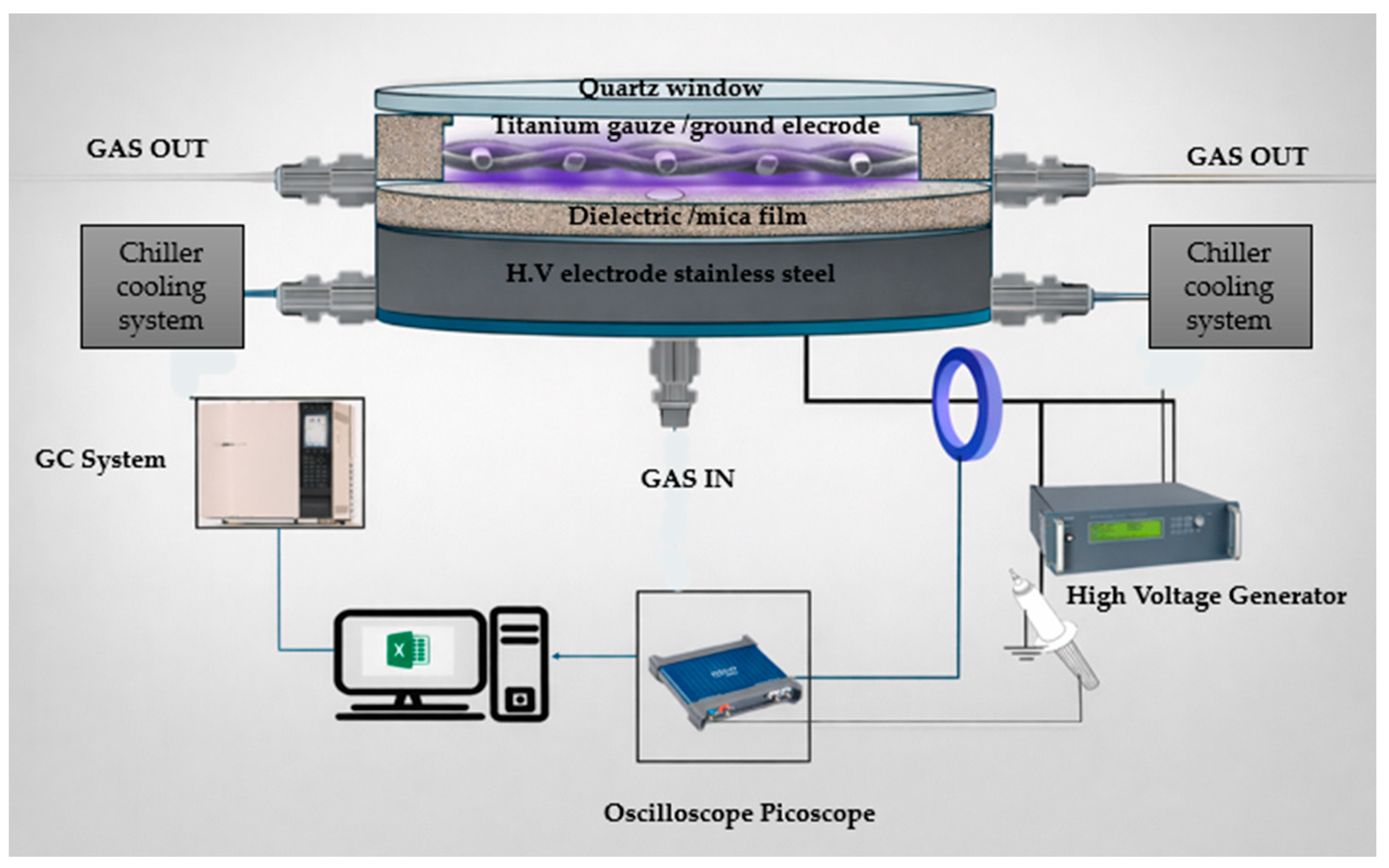
A planar DBD reactor (pDBD) is employed for cold plasma-assisted CO2 splitting into CO and O2 at atmospheric pressure. Figure 8 shows a schematic diagram of the experimental setup.
The reactor consists of a stainless-steel high-voltage electrode and a titanium gauze acting as a ground electrode, separated by a mica dielectric barrier. This configuration confines the discharge to the surrounding area of the dielectric surface, enhancing the generation of reactive species. A chiller system maintains a stable electrode temperature of 21.5 °C, preventing overheating and ensuring optimal discharge conditions. A pure CO2 flow (from 10 to 90 mL min−1) is introduced through a central inlet in the reactor, and after being deflected by the top quartz window, it exits through the side outlets. The outlet gas is continuously monitored using a Shimadzu 2010 Pro gas chromatograph (Shimadzu Corporation, Kyoto, Japan) equipped with a thermal conductivity detector to identify CO, O2, and any unreacted CO2. Electrical characterization is performed using a G2000 High Voltage Plasma Generator (Redline Technologies, Elektronik GmbH, Baesweiler, Germany) operating at 63 kHz. Voltage is measured with a Tektronix P6015A High Voltage Probe and the signal is amplified by a factor of 1000.
The current is measured using a Pearson 6600 Rogowski coil while the charge transferred is monitored using an external capacitor with a total capacitance of 100 nF connected to ground line. A PicoScope 3000 Series Oscilloscope (Picotech, Pico Technology Ltd., Cambridgeshire, UK) is used to acquire electrical signals (current, voltage, and power) in real-time acquisition.
The average power over one cycle of the high-voltage period (T) is then determined by [75]:
P = 1 T × 0 T V t ×   i t   dt

4.2. Synthesis of Catalysts Used as Ground Electrode

To investigate the influence of surface modifications on catalytic performance, four distinct catalysts are synthesized: untreated titanium gauze (Ti), titanium gauze with anodically grown titania nanotubes (TiNT), titania nanotubes photo-decorated with silver and gold nanoparticles (TiNT_AgAu), and TiNT_AgAu/PANI, in which the nanoparticles are further coated with a thin layer of PANI. The addition of PANI is intended to improve both the conductivity and durability of the hybrid system in reactive plasma environments. Herein, we describe the detailed synthesis steps—covering anodization to form the nanotubular TiO2 arrays, photo-deposition of the noble metals, and PANI-coated noble metals. Followed by physicochemical characterization of the resulting catalysts. Table 1 summarizes the synthesis conditions for all the samples studied.

4.2.1. TiO2 Nanotube Array Synthesis

A titanium woven mesh (80 mesh, wire diameter 0.13 mm, mesh opening 0.05 in) is cleaned with distilled water, acetone, and isopropyl alcohol for 10 min each. After, the samples undergo a thermal pre-treatment at 450 °C for 30 min in air to obtain a thin and uniform oxide layer, which is beneficial for TINTs’ morphological features.
The anodic oxidation is carried out at 50 V for 1 h in a two-electrode cell equipped with pre-oxidized titanium gauze as anode and a graphite bar as cathode, using an electrolyte solution containing 2 wt% ultrapure water, 0.3 wt% ammonium fluoride (NH4F, Sigma-Aldrich Inc., St. Louis, MO, USA, ≥98%), and ethylene glycol (Sigma-Aldrich Inc., St. Louis, MO, USA, 99.8%) as a solvent. A detailed description of the nanotube growth is presented in Figure S4. The as-synthesized electrodes are cleaned with deionized water, dried overnight, and then annealed at 450 °C for 3 h (2 °C/min).

4.2.2. AuAg Nanoparticles

The following chemicals are purchased and used as received: sodium citrate; silver nitrate (Sigma-Aldrich, >99.0%); chloroauric acid (Sigma-Aldrich, >99.9%). The synthesis of Au0.2Ag0.8 bimetallic particles is based on the Turkevich synthesis [63]. Briefly, it starts by adding an AgNO3 solution (800 μL, 0.01 m) in deionized water (98 mL) under vigorous stirring. Then the solution is heated until just before boiling. At this point, HAuCl4 (200 μL, 0.01 m) is added. In this way, the possible complexation of Ag+ ions with Cl ions is strongly reduced. When the solution starts to boil, an aqueous sodium citrate solution (1 mL, 1 wt%) is added as a reducing and stabilizing agent, and the solution is left boiling for 30 min until a clear orange solution is obtained. The formation of the nanoparticles is verified and the plasmon absorption band identified using UV-vis spectrometry. The sample was named AuAgNP.

4.2.3. Polyaniline Coating

A volume of 12 mL of a 0.05 mM Au0.2Ag0.8 nanoparticle (NP) colloid is concentrated to 200 µL by centrifugation at 8000 rpm. Separately, 4.5 mL of 2 mM aniline is mixed with 900 µL of 40 mM sodium dodecyl sulfate (SDS). The concentrated NP colloid (200 µL) is then added dropwise to this mixture. The resulting solution is vortexed for 5 s. Subsequently, 4.5 mL of 2 mM ammonium persulfate ((NH4)2S2O8) is added, followed by vortexing for 5 min. To ensure the pH is below 2, 10% of the total volume of 10 mM hydrochloric acid (HCl) is added. The reaction mixture is stored in a dark cabinet overnight or until the solution turned black, indicating the formation of excess polyaniline (PANI). The coated nanoparticles are purified by centrifugation of the supernatant at sequential speeds of 5000, 7000, and 10,000 rpm. The final particles are stored in a 4 mM SDS solution [67]. The estimated thickness of the resulting PANI-layer is ~14 nm. The sample is named AuAgNP@PANI.
Silver and gold nanoparticles are deposited on the titanium nanotube (TiNT) supports using photo-deposition, following a method adapted from the Turkevich process for metallic nanoparticle synthesis [62]. The loading is 5 wt% based on the AgAu concentration of the nanoparticle colloid. Two titanium nanotube (TiNT) supports are used. One TiNT substrate is coated with AuAg nanoparticles alone and named (TiNTAgAu), while the other is coated with AuAgNP@PANI nanoparticles and named (TiNTAgAu/PANI).

4.3. Plasma Performance for CO2 Splitting

Key metrics for evaluating CO2 splitting in plasma reactors are conversion (χ), energy efficiency (η), and specific energy input (SEI). CO2 conversion is evaluated as follows:
χ   % =   CO 2 in   CO 2 out   CO 2 in × 100 %
where ṅ indicates the CO2 molar flow rates (mol/min) entering or exiting the system.
The specific energy input (SEI) measures the energy consumed by a plasma process for a given inlet gas flow rate. It can be defined as:
SEI   kJ L =   Power   kW   Flow   rate   L s
Energy efficiency (η) measures how efficiently a process uses the energy supplied to it. It is calculated by comparing the amount of energy used with the minimum theoretical energy required to break the C=O bond at 298 K (ΔH° = +283 kJ/mol) as stated in Equation (3).
η   % = Δ H ° kJ mol χ   % SEI   kJ L   22.4   L mol
The experiments are carried with pure CO2 as feed gas, at different flow rates (from 10 to 90 mL min−1) and applied voltage (as Voltage peak to peaks, Vpp, from 6 kV to 5 kV). Each experiment is repeated three times to report the error as the standard deviation.

4.4. SEM and OES

SEM micrographs of samples have been taken using a Zeiss SUPRA 55VP FEGSEM (Carl Zeiss AG, Oberkochen, Baden-Württemberg, Germany) apparatus, which can provide information about the composition and topography of a sample surface.
The Princeton Instruments FERGIE Fiber Optic Spectrometer (FERSCI-1024BX-UR) (Teledyne Princeton Instruments, Trenton, NJ, USA). is used to record the plasma light emission profile via an optical fiber positioned perpendicularly, 5 mm from the reactor window. The optical emission spectrometer (OES) is equipped with a 1200 lines/mm grating and a 25 mm slit, providing spectral coverage from 200 to 1100 nm with a resolution of ≈0.26 nm. A back-illuminated, deep-cooled (−55 °C) 1024 × 256 charge-coupled device (CCD) array is employed to achieve extremely low noise.

4.5. UV-Vis and XPS

The Uv-vis spectra of the AgAuNPs have been evaluated in the spectral range of 300–900 nm using Shimadzu UV–VIS 2501 PC double beam spectrophotometer (Shimadzu Corporation, Kyoto, Japan). The registered spectra are shown in Figure S2.
PHI Versa Probe II (Physical Electronics, Inc., Chanhassen, MN, USA), equipped with an Al Kα (1486.6 eV) X-ray source, measured the XPS spectra. The survey spectra are recorded with an analyzer energy path of 117 eV, while the C1s, O1s, Ag3d, Au4f and Ti2p, core levels are measured at 23.5 eV passing energy. The X-ray beam size is 100 microns at 25 W. A charge neutralization procedure is performed by simultaneous irradiation of samples using a low-energy electron beam and an ion beam before measuring the spectra. The position of the XPS peaks is referenced to graphitic carbon (284.8 eV). XPS peaks are deconvoluted by using the Multipack Data Reduction Softwarv9.617 (ULVAC-PHI, Inc.), employing a Shirley background curve.

5. Conclusions

The study explored the plasma-catalytic conversion of CO2 using a planar dielectric barrier discharge (pDBD) reactor at different flow rates and applied voltage and four titanium-based catalysts: unmodified Ti gauze (Ti), anodically formed TiO2 nanotubes (TiNT), TiNT decorated with Ag–Au nanoparticles (TiNTAgAu), and TiNT decorated with AgAu nanoparticles coated with a conductive polyaniline film (TiNTAgAu/PANI).
The results highlight that electrical conductivity is not the only parameter influencing plasma generation and performance. Instead, catalyst nanostructures, surface stability and the light emitted by the plasma itself through self-induced localized surface plasmon resonance (si-LSPR) play a critical role in determining conversion and energy efficiency.
The addition of noble-metal nanoparticles on TiNT can substantially enhance CO2 conversion and efficiency, with TiNTAgAu showing the highest performance and TiNT the lowest, as supported by optical emission spectroscopy (OES). While the TiNT nanostructure could enhance plasma formation inside the nanotubes, its lower conductivity compared to metallic Titanium (Ti) requires higher discharge potential, favoring the formation of localized hot spots, which also reduces energy efficiency. Moreover, metallic Ti maintains higher energy efficiency due to its superior conductivity and structural robustness under plasma, which ensures uniform field distribution and minimizes plasma-induced damage but lacks intrinsic photoactivity. In contrast, TiNTs, although prone to microdischarges, suffer from chemical attack and debris formation, which reduce their long-term efficiency. However, it should be noted that TiO2 nanotubes, due to their dielectric properties and confined geometry, favor localized field enhancement and microdischarge initiation more than metallic Ti, and can couple with photons emitted from the plasma to generate electron-hole pairs and oxygen holes, thus improving surface reactivity.
Conversely, the inclusion of Ag-Au nanoparticles amplified the OES emission intensities, likely due to the si-LSPR effect, enabling more efficient absorption of plasma-emitted light by the nanoparticles and enhancing electron-molecule interactions. It is noteworthy that these enhancements can be discerned in the absence of external light irradiation, suggesting that the observed improvement is predominantly attributable to plasma–nanoparticle interactions and self-induced localized surface plasmon resonance (si-LSPR), as opposed to conventional photocatalytic processes. This interpretation is corroborated by the UV-vis spectra (Figure S2), which shows a plasmonic absorption band centered around ~424 nm for AgAuNPs, within the range of plasma-emitted light, as indicated in the OES spectra reported in Figure 5. In fact, a comparison of the wavelengths with those typically observed for monometallic silver and gold reveals a single, well-defined absorption band suggesting that the two metals interact at the electronic level with an Au-rich core and Ag-enriched shell structure, leading to a collective electronic oscillation that differs from that of the individual metals. After applying the PANI coating, the plasmonic band exhibits a red shift and broadening, a phenomenon associated with the change in the local dielectric environment around the nanoparticles.
The qualitative overlap between plasma emission lines (420–520 nm) and the Au–Ag LSPR band provides evidence that plasma photons can trigger plasmonic excitation, thereby enhancing CO2 conversion even without external light sources [76,77].
However, TiNTAgAu and TiNT experienced morphological degradation after prolonged plasma exposure, as evidenced by SEM images, correlating with an increased SEI and reduced catalytic performance over time. In contrast, TiNTAgAu/PANI preserved its structural integrity and catalytic stability, suggesting that the conductive polymer layer may act as a protective and buffering interface against plasma-induced etching. This result suggests that depositing a layer of PANI over the entire NTs array could be a beneficial strategy in particularly aggressive environments, not only for cold plasma applications.
Overall, these findings provide valuable insights into the interplay between plasma and nanostructured catalytic surfaces. The demonstrated role of si-LSPR in enhancing plasma–surface coupling and CO2 activation efficiency highlights new design principles for plasma-catalytic systems. In particular, the combination of conductive polymers and plasmonic nanoparticles offers a promising strategy to engineer catalysts capable of sustaining long-term stability under harsh plasma environments. Such approaches could be extended to other plasma-driven processes, including ammonia synthesis, VOC abatement, and methane reforming, where synergistic plasma–catalyst interactions are crucial for energy-efficient operation. In the future, a quantitative description of self-induced localized surface plasmon resonance (si-LSPR) through plasma diagnostics, ultrafast spectroscopy, and advanced modelling, including density functional theory (DFT) and electromagnetic simulations, could be useful to further support these conclusions.

Supplementary Materials

The following supporting information can be downloaded at: https://www.mdpi.com/article/10.3390/catal16020137/s1, Figure S1: SEM images of Ti, TiNT and TiNTAgAu/PANI before (upper) and after (down) plasma treatment; Figure S2: Absorbance spectra of AgAuNP and AgAuNP@PANI; Figure S3: Weight percentage (% w.) of the species presents on the top-surface obtained by XPS analysis for TiNTAgAu and TiNTAgAu/PANI samples, in the fresh and used catalyst.; Figure S4: Anodization curve of TiNT catalyst at applied potential of 50 V; Table S1: CO2 conversion as a function of flow rate at constant Vpp of 5.45 kV; Table S2: CO2 conversion as a function of Voltage (Vpp) at constant flow rate of 30 mL min−1.

Author Contributions

P.D.: writing, original draft preparation, methodology, investigation, formal analysis. N.P.: Conceptualization and plasma reactor design, experimental methodology, data verification, review and editing F.P.A.: writing methodology, investigation, formal analysis, review and editing, data curation. C.V.: Investigation, methodology, resources, visualization. E.R.: review and editing, supervision, funding acquisition G.C.: Conceptualization, supervision, funding acquisition, validation. S.P.: Conceptualization, supervision, funding acquisition. S.V.: supervision. A.B.: writing, review and editing, supervision, funding acquisition. S.A.: formal analysis, review and editing, Conceptualization, supervision, methodology. All authors have read and agreed to the published version of the manuscript.

Funding

This work is supported by the ERC Synergy Grant “Surface-COnfned fast modulated Plasma for Process and Energy intensifcation” (SCOPE), Grant No. 810182.

Data Availability Statement

The raw data supporting the conclusions of this article will be made available by the authors on request.

Conflicts of Interest

The authors declare no conflicts of interest.

Abbreviations

The following abbreviations are used in this manuscript:
pDBDPlanar Dielectric Barrier Discharge
SEISpecific Energy Input
NTsNanotubes
NPsNanoparticles
LSPRLocalized Surface Plasmon Resonance
si-LSPRself-induced Localized Surface Plasmon Resonance
PANIPolyaniline
VppVoltage peak to peaks
OESOptical Emission Spectroscopy

References

  1. Appolloni, A.; Centi, G.; Yang, N. Promoting carbon circularity for a sustainable and resilience fashion industry. Curr. Opin. Green Sustain. Chem. 2023, 39, 100719. [Google Scholar] [CrossRef]
  2. Centi, G.; Perathoner, S. The chemical engineering aspects of CO2 capture, combined with its utilisation. Curr. Opin. Chem. Eng. 2023, 39, 100879. [Google Scholar] [CrossRef]
  3. Centi, G.; Perathoner, S. Catalysis for an electrified chemical production. Catal. Today 2023, 423, 113935. [Google Scholar] [CrossRef]
  4. Papanikolaou, G.; Centi, G.; Perathoner, S.; Lanzafame, P. Green synthesis and sustainable processing routes. Curr. Opin. Green Sustain. Chem. 2024, 47, 100918. [Google Scholar] [CrossRef]
  5. Bogaerts, A.; Centi, G.; Hessel, V.; Rebrov, E. Challenges in unconventional catalysis. Catal. Today 2023, 420, 114180. [Google Scholar] [CrossRef]
  6. Bogaerts, A.; Centi, G. Plasma Technology for CO2 Conversion: A Personal Perspective on Prospects and Gaps. Front. Energy Res. 2020, 8, 111. [Google Scholar] [CrossRef]
  7. Bogaerts, A.; Centi, G.; Hessel, V.; Rebrov, E. Perspectives and Emerging Trends in Plasma Catalysis: Facing the Challenge of Chemical Production Electrification. ChemCatChem 2025, 17, e202401938. [Google Scholar] [CrossRef]
  8. Snoeckx, R.; Bogaerts, A. Plasma technology. A novel solution for CO2 conversion? Chem. Soc. Rev. 2017, 46, 5805–5863. [Google Scholar] [CrossRef]
  9. Osorio-Tejada, J.; Escriba-Gelonch, M.; Vertongen, R.; Bogaerts, A.; Hessel, V. CO2 conversion to CO via plasma and electrolysis: A techno-economic and energy cost analysis. Energy Environ. Sci. 2024, 17, 5833–5853. [Google Scholar] [CrossRef]
  10. Bogaerts, A.; Neyts, E.C. Plasma Technology: An Emerging Technology for Energy Storage. ACS Energy Lett. 2018, 3, 1013–1027. [Google Scholar] [CrossRef]
  11. Bogaerts, A. Plasma technology for the electrification of chemical reactions. Nat. Chem. Eng. 2025, 2, 336–340. [Google Scholar] [CrossRef]
  12. Longo, V.; Centi, G.; Perathoner, S.; Genovese, C. CO2 utilisation with plasma technologies. Curr. Opin. Green Sustain. Chem. 2024, 46, 100893. [Google Scholar] [CrossRef]
  13. Zhang, Y.; Li, J.; Lu, N.; Shang, K.; Mizuno, A.; Wu, Y. Evaluation of discharge uniformity and area in surface dielectric barrier discharge at atmospheric pressure. Vacuum 2016, 123, 49–53. [Google Scholar] [CrossRef]
  14. Ollegott, K.; Wirth, P.; Oberste-Beulmann, C.; Awakowicz, P.; Muhler, M. Fundamental Properties and Applications of Dielectric Barrier Discharges in Plasma-Catalytic Processes at Atmospheric Pressure. Chem. Ing. Tech. 2020, 92, 1542–1558. [Google Scholar] [CrossRef]
  15. Van’T Veer, K.; Van Alphen, S.; Remy, A.; Gorbanev, Y.; De Geyter, N.; Snyders, R.; Reniers, F.; Bogaerts, A. Spatially and temporally non-uniform plasmas: Microdischarges from the perspective of molecules in a packed bed plasma reactor. J. Phys. D Appl. Phys. 2021, 54, 174002. [Google Scholar] [CrossRef]
  16. Bogaerts, A.; Zhang, Q.Z.; Zhang, Y.R.; Van Laer, K.; Wang, W. Burning questions of plasma catalysis: Answers by modeling. Catal. Today 2019, 337, 3–14. [Google Scholar] [CrossRef]
  17. Van Turnhout, J.; Rouwenhorst, K.; Lefferts, L.; Bogaerts, A. Plasma catalysis: What is needed to create synergy? EES Catal. 2025, 3, 669–693. [Google Scholar] [CrossRef] [PubMed]
  18. Zhang, Z. Numerical Simulation of Surface Dielectric Barrier Discharge With Functionally Graded Material. Front. Phys. 2022, 10, 874887. [Google Scholar] [CrossRef]
  19. Kogelheide, F.; Offerhaus, B.; Bibinov, N.; Krajinski, P.; Schücke, L.; Schulze, J.; Stapelmann, K.; Awakowicz, P. Characterisation of volume and surface dielectric barrier discharges in N2–O2 mixtures using optical emission spectroscopy. Plasma Process. Polym. 2020, 17, 1900126. [Google Scholar] [CrossRef]
  20. Soloviev, V.R.; Selivonin, I.V.; Moralev, I.A. Breakdown voltage for surface dielectric barrier discharge ignition in atmospheric air. Phys. Plasmas 2017, 24, 103528. [Google Scholar] [CrossRef]
  21. Kim, J.; Kim, S.J.; Lee, Y.N.; Kim, I.T.; Cho, G. Discharge characteristics and plasma erosion of various dielectric materials in the dielectric barrier discharges. Appl. Sci. 2018, 8, 1294. [Google Scholar] [CrossRef]
  22. Korzec, D.; Freund, F.; Bäuml, C.; Penzkofer, P.; Nettesheim, S. Hybrid Dielectric Barrier Discharge Reactor: Characterization for Ozone Production. Plasma 2024, 7, 585–615. [Google Scholar] [CrossRef]
  23. Allabakshi, S.M.; Srikar, P.S.N.S.R.; Gangwar, R.K.; Maliyekkal, S.M. Feasibility of surface dielectric barrier discharge in wastewater treatment: Spectroscopic modeling, diagnostic, and dye mineralization. Sep. Purif. Technol. 2022, 296, 121344. [Google Scholar] [CrossRef]
  24. Bian, D.; Wu, Y. Enduring and stable surface dielectric barrier discharge (SDBD) plasma using fluorinated multi-layered polyimide. Polymers 2018, 10, 606. [Google Scholar] [CrossRef] [PubMed]
  25. Portugal, S.; Choudhury, B.; Cardenas, D. Advances on aerodynamic actuation induced by surface dielectric barrier discharges. Front. Phys. 2022, 10, 923103. [Google Scholar] [CrossRef]
  26. Abramo, F.P.; Giorgianni, G.; Perathoner, S.; Centi, G.; Gallucci, F.; Abate, S. Unlocking the impact of electrode porosity on CO2 splitting efficiency in porous DBD plasma reactors. Chem. Eng. J. 2025, 512, 162608. [Google Scholar] [CrossRef]
  27. De Pasquale, L.; Tavella, F.; Longo, V.; Favaro, M.; Perathoner, S.; Centi, G.; Ampelli, C.; Genovese, C. The Role of Substrate Surface Geometry in the Photo-Electrochemical Behaviour of Supported TiO2 Nanotube Arrays: A Study Using Electrochemical Impedance Spectroscopy (EIS). Molecules 2023, 28, 3378. [Google Scholar] [CrossRef] [PubMed]
  28. Passalacqua, R.; Perathoner, S.; Centi, G. Use of modified anodization procedures to prepare advanced TiO2 nanostructured catalytic electrodes and thin film materials. Catal. Today 2015, 251, 121–131. [Google Scholar] [CrossRef]
  29. Kulkarni, M.; Mazare, A.; Schmuki, P.; Iglic, A. Influence of anodization parameters on morphology of TiO2 nanostructured surfaces. Adv. Mater. Lett. 2016, 7, 23–28. [Google Scholar] [CrossRef]
  30. Abramo, F.P.; De Luca, F.; Passalacqua, R.; Centi, G.; Giorgianni, G.; Perathoner, S.; Abate, S. Electrocatalytic production of glycolic acid via oxalic acid reduction on titania debris supported on a TiO2 nanotube array. J. Energy Chem. 2022, 68, 669–678. [Google Scholar] [CrossRef]
  31. Abramo, F.P.; De Luca, F.; Chiodoni, A.; Centi, G.; Giorgianni, G.; Italiano, C.; Perathoner, S.; Abate, S. Nanostructure-performance relationships in titania-only electrodes for the selective electrocatalytic hydrogenation of oxalic acid. J. Catal. 2024, 429, 115277. [Google Scholar] [CrossRef]
  32. De Luca, F.; Passalacqua, R.; Abramo, F.P.; Perathoner, S.; Centi, G.; Abate, S. g-C3N4 decorated TiO2 nanotube ordered thin films as cathodic electrodes for the selective reduction of oxalic acid. Chem. Eng. Trans. 2021, 84, 37–42. [Google Scholar] [CrossRef]
  33. Rodrigues, G.L.C.; de Oliveira, T.G.; Gusmão, S.B.S.; Ferreira, O.P.; Vasconcelos, T.L.; Guerra, Y.; Milani, R.; Peña-Garcia, R.; Viana, B.C. Study of Structural and Optical Properties of Titanate Nanotubes with Erbium under Heat Treatment in Different Atmospheres. Materials 2023, 16, 1842. [Google Scholar] [CrossRef]
  34. Zhang, Z.; Zhang, L.; Hedhili, M.N.; Zhang, H.; Wang, P. Plasmonic gold nanocrystals coupled with photonic crystal seamlessly on TiO2 nanotube photoelectrodes for efficient visible light photoelectrochemical water splitting. Nano Lett. 2013, 13, 14–20. [Google Scholar] [CrossRef]
  35. Low, J.; Qiu, S.; Xu, D.; Jiang, C.; Cheng, B. Direct evidence and enhancement of surface plasmon resonance effect on Ag-loaded TiO2 nanotube arrays for photocatalytic CO2 reduction. Appl. Surf. Sci. 2018, 434, 423–432. [Google Scholar] [CrossRef]
  36. Sun, Z.; Cao, J.; Wang, S.; Zhang, Z.; Li, J.; Xu, X.; Wang, Y.; Ye, Z.; Zhang, H. LSPR effect enabled Ag-TiO2 nanotube arrays for high sensitivity and selectivity detection of acetone under visible light. J. Alloys Compd. 2024, 1003, 175533. [Google Scholar] [CrossRef]
  37. Lincho, J.; Mazierski, P.; Klimczuk, T.; Martins, R.C.; Gomes, J.; Zaleska-Medynska, A. TiO2 nanotubes modification by photodeposition with noble metals: Characterization, optimization, photocatalytic activity, and by-products analysis. J. Environ. Chem. Eng. 2024, 12, 112990. [Google Scholar] [CrossRef]
  38. Wang, T.; Wang, H.-J.; Lin, J.-S.; Yang, J.-L.; Zhang, F.-L.; Lin, X.-M.; Zhang, Y.-J.; Jin, S.; Li, J.-F. Plasmonic photocatalysis: Mechanism, applications and perspectives. Chin. J. Struct. Chem. 2023, 42, 100066. [Google Scholar] [CrossRef]
  39. Clavero, C. Plasmon-induced hot-electron generation at nanoparticle/metal-oxide interfaces for photovoltaic and photocatalytic devices. Nat. Photonics 2014, 8, 95–103. [Google Scholar] [CrossRef]
  40. Qiu, J.; Wei, W.D. Surface plasmon-mediated photothermal chemistry. J. Phys. Chem. C 2014, 118, 20735–20749. [Google Scholar] [CrossRef]
  41. Kim, S.; Lee, S.; Yoon, S. Effect of Nanoparticle Size on Plasmon-Driven Reaction Efficiency. ACS Appl. Mater. Interfaces 2022, 14, 4163–4169. [Google Scholar] [CrossRef] [PubMed]
  42. Shore, M.S.; Wang, J.; Johnston-Peck, A.C.; Oldenburg, A.L.; Tracy, J.B. Synthesis of Au(core)/Ag(shell) nanoparticles and their conversion to AuAg alloy nanoparticles. Small 2011, 7, 230–234. [Google Scholar] [CrossRef] [PubMed]
  43. Verbruggen, S.W.; Keulemans, M.; Filippousi, M.; Flahaut, D.; Van Tendeloo, G.; Lacombe, S.; Martens, J.A.; Lenaerts, S. Plasmonic gold-silver alloy on TiO2 photocatalysts with tunable visible light activity. Appl. Catal. B 2014, 156–157, 116–121. [Google Scholar] [CrossRef]
  44. Longo, V.; De Pasquale, L.; Perathoner, S.; Centi, G.; Genovese, C. Synergistic effects of light and plasma catalysis on Au-modified TiO2 nanotube arrays for enhanced non-oxidative coupling of methane. Catal. Sci. Technol. 2025, 15, 3725–3735. [Google Scholar] [CrossRef]
  45. Neyts, E.C.; Ostrikov, K.; Sunkara, M.K.; Bogaerts, A. Plasma Catalysis: Synergistic Effects at the Nanoscale. Chem. Rev. 2015, 115, 13408–13446. [Google Scholar] [CrossRef]
  46. Li, H.; Xia, M.; Wang, X.; Chong, B.; Ou, H.; Lin, B.; Yang, G. Efficient reduction of CO2 to C2 hydrocarbons by tandem nonthermal plasma and photocatalysis. Appl. Catal. B 2024, 342, 123423. [Google Scholar] [CrossRef]
  47. Hoder, T.; Prokop, D.; Bajon, C.; Dap, S.; Loffhagen, D.; Becker, M.M.; Navrátil, Z.; Naudé, N. Barrier discharges in CO2—Optical emission spectra analysis and E/N determination from intensity ratio. Plasma Sources Sci. Technol. 2025, 34, 055008. [Google Scholar] [CrossRef]
  48. Persson, A. Microplasma emission spectroscopy of stable isotope ratios in carbon dioxide. Plasma Sources Sci. Technol. 2022, 31, 055009. [Google Scholar] [CrossRef]
  49. Khunda, D.; Li, S.; Cherkasov, N.; Rishard, M.Z.M.; Chaffee, A.L.; Rebrov, E.V. Effect of temperature on the CO2 splitting rate in a DBD microreactor. React. Chem. Eng. 2023, 8, 2223–2233. [Google Scholar] [CrossRef]
  50. Zhang, D.; Huang, Q.; Devid, E.J.; Schuler, E.; Shiju, N.R.; Rothenberg, G.; van Rooij, G.; Yang, R.; Liu, K.; Kleyn, A.W. Tuning of conversion and optical emission by electron temperature in an inductively coupled CO2 plasma. J. Phys. Chem. C 2018, 122, 19338–19347. [Google Scholar] [CrossRef]
  51. Hatami, H.; Khani, M.; Rad, S.A.R.; Shokri, B. CO2 conversion in a dielectric barrier discharge plasma by argon dilution over MgO/HKUST-1 catalyst using response surface methodology. Heliyon 2024, 10, e26280. [Google Scholar] [CrossRef]
  52. Lindon, M.A.; Scime, E.E. CO2 dissociation using the Versatile atmospheric dielectric barrier discharge experiment (VADER). Front. Phys. 2014, 2, 55. [Google Scholar] [CrossRef]
  53. Persson, A.; Berglund, M. Microplasma emission spectroscopy of carbon dioxide using the carbon monoxide Ångström system. J. Appl. Phys. 2020, 127, 063301. [Google Scholar] [CrossRef]
  54. Zhang, Y.R.; Van Laer, K.; Neyts, E.C.; Bogaerts, A. Can plasma be formed in catalyst pores? A modeling investigation. Appl. Catal. B 2016, 185, 56–67. [Google Scholar] [CrossRef]
  55. Zhang, Y.R.; Neyts, E.C.; Bogaerts, A. Enhancement of plasma generation in catalyst pores with different shapes. Plasma Sources Sci. Technol. 2018, 27, 055008. [Google Scholar] [CrossRef]
  56. Zhang, Y.; Wang, H.Y.; Zhang, Y.R.; Bogaerts, A. Formation of microdischarges inside a mesoporous catalyst in dielectric barrier discharge plasmas. Plasma Sources Sci. Technol. 2017, 26, 045011. [Google Scholar] [CrossRef]
  57. Moon, S.Y.; Song, H.C.; Gwag, E.H.; Nedrygailov, I.I.; Lee, C.; Kim, J.J.; Doh, W.H.; Park, J.Y. Plasmonic hot carrier-driven oxygen evolution reaction on Au nanoparticles/TiO2 nanotube arrays. Nanoscale 2018, 10, 22180–22188. [Google Scholar] [CrossRef]
  58. Zhu, L.; Ma, H.; Han, H.; Fu, Y.; Ma, C.; Yu, Z.; Dong, X. Black TiO2 nanotube arrays fabricated by electrochemical self-doping and their photoelectrochemical performance. RSC Adv. 2018, 8, 18992–19000. [Google Scholar] [CrossRef] [PubMed]
  59. Jain, P.K.; Huang, W.; El-Sayed, M.A. On the universal scaling behavior of the distance decay of plasmon coupling in metal nanoparticle pairs: A plasmon ruler equation. Nano Lett. 2007, 7, 2080–2088. [Google Scholar] [CrossRef]
  60. Rahman, M.T.; Rebrov, E.V. Microreactors for gold nanoparticles synthesis: From faraday to flow. Processes 2014, 2, 466–493. [Google Scholar] [CrossRef]
  61. Wuithschick, M.; Birnbaum, A.; Witte, S.; Sztucki, M.; Vainio, U.; Pinna, N.; Rademann, K.; Emmerling, F.; Kraehnert, R.; Polte, J. Turkevich in New Robes: Key Questions Answered for the Most Common Gold Nanoparticle Synthesis. ACS Nano 2015, 9, 7052–7071. [Google Scholar] [CrossRef]
  62. Blommaerts, N.; Vanrompay, H.; Nuti, S.; Lenaerts, S.; Bals, S.; Verbruggen, S.W. Unraveling Structural Information of Turkevich Synthesized Plasmonic Gold–Silver Bimetallic Nanoparticles. Small 2019, 15, 1902791. [Google Scholar] [CrossRef]
  63. Kanakaraju, D.; Kutiang, F.D.A.; Lim, Y.C.; Goh, P.S. Recent progress of Ag/TiO2 photocatalyst for wastewater treatment: Doping, co-doping, and green materials functionalization. Appl. Mater. Today 2022, 27, 101500. [Google Scholar] [CrossRef]
  64. Snoeckx, R.; Zeng, Y.X.; Tu, X.; Bogaerts, A. Plasma-based dry reforming: Improving the conversion and energy efficiency in a dielectric barrier discharge. RSC Adv. 2015, 5, 29799–29808. [Google Scholar] [CrossRef]
  65. Tu, X.; Gallon, H.J.; Twigg, M.V.; Gorry, P.A.; Whitehead, J.C. Dry reforming of methane over a Ni/Al2O3 catalyst in a coaxial dielectric barrier discharge reactor. J. Phys. D Appl. Phys. 2011, 44, 274007. [Google Scholar] [CrossRef]
  66. Ozkan, A.; Dufour, T.; Arnoult, G.; De Keyzer, P.; Bogaerts, A.; Reniers, F. CO2-CH4 conversion and syngas formation at atmospheric pressure using a multi-electrode dielectric barrier discharge. J. CO2 Util. 2015, 9, 74–81. [Google Scholar] [CrossRef]
  67. Xing, S.; Tan, L.H.; Yang, M.; Pan, M.; Lv, Y.; Tang, Q.; Yang, Y.; Chen, H. Highly controlled core/shell structures: Tunable conductive polymer shells on gold nanoparticles and nanochains. J. Mater. Chem. 2009, 19, 3286–3291. [Google Scholar] [CrossRef]
  68. Begum, R.; Ahmad, G.; Najeeb, J.; Wu, W.; Irfan, A.; Azam, M.; Nisar, J.; Farooqi, Z.H. Stabilization of silver nanoparticles in crosslinked polymer colloids through chelation for catalytic degradation of p-nitroaniline in aqueous medium. Chem. Phys. Lett. 2021, 763, 138263. [Google Scholar] [CrossRef]
  69. Tundwal, A.; Kumar, H.; Binoj, B.J.; Sharma, R.; Kumar, G.; Kumari, R.; Dhayal, A.; Yadav, A.; Singh, D.; Kumar, P. Developments in conducting polymer-, metal oxide-, and carbon nanotube-based composite electrode materials for supercapacitors: A review. RSC Adv. 2024, 14, 9406–9439. [Google Scholar] [CrossRef]
  70. Waqas, M.; Campbell, L.; Te, P. Polyaniline-Coated Surface-Modified Ag/PANI Nanostructures for Antibacterial and Colorimetric Melamine Sensing in Milk Samples. ACS Omega 2023, 8, 24010–24015. [Google Scholar] [CrossRef]
  71. Verma, A.; Kumar, T. Ag/Cu doped polyaniline hybrid nanocomposite-based novel gas sensor for enhanced ammonia gas sensing performance at room temperature. RSC Adv. 2024, 14, 25093–25107. [Google Scholar] [CrossRef]
  72. Papadopoulou-Fermeli, N.; Lagopati, N.; Gatou, M.A.; Pavlatou, E.A. Biocompatible PANI-Encapsulated Chemically Modified Nano-TiO2 Particles for Visible-Light Photocatalytic Applications. Nanomaterials 2024, 14, 642. [Google Scholar] [CrossRef]
  73. Ranka, P.; Sethi, V.; Contractor, A.Q. Characterizing the oxidation level of polyaniline (PANI) at the interface of PANI/TiO2 nanoparticles under white light illumination. Thin Solid Films 2016, 615, 44–55. [Google Scholar] [CrossRef]
  74. Zhang, L.; Wan, M. Polyaniline/TiO2 composite nanotubes. J. Phys. Chem. B 2003, 107, 6748–6753. [Google Scholar] [CrossRef]
  75. Pourali, N.; Lai, K.; Gregory, J.; Gong, Y.; Hessel, V.; Rebrov, E.V. Study of plasma parameters and gas heating in the voltage range of nondischarge to full-discharge in a methane-fed dielectric barrier discharge. Plasma Process. Polym. 2023, 20, 2200086. [Google Scholar] [CrossRef]
  76. Jiang, P.; Wang, K.; Liu, W.; Song, Y.; Zheng, R.; Chen, L.; Su, B. Hot Electrons Induced by Localized Surface Plasmon Resonance in Ag/g-C3N4 Schottky Junction for Photothermal Catalytic CO2 Reduction. Polymers 2024, 16, 2317. [Google Scholar] [CrossRef] [PubMed]
  77. Wang, X.; Mao, Y.; Wang, Z. Plasmonic-assisted Electrocatalysis for CO2 Reduction Reaction. ChemElectroChem 2024, 11, e202300805. [Google Scholar] [CrossRef]
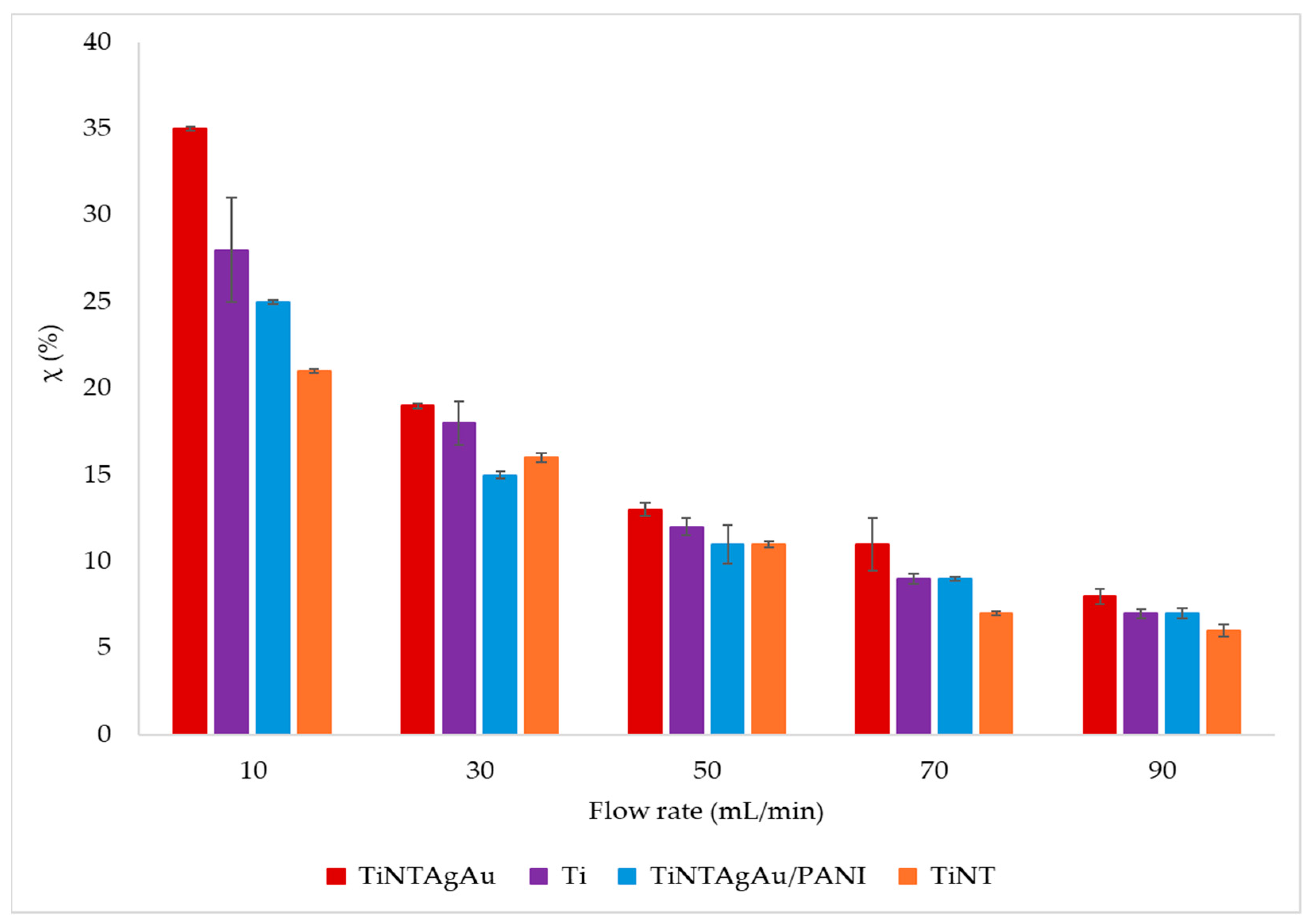
Figure 1. CO2 conversion as a function of flow rate at constant Vpp of 5.45 kV.
Catalysts 16 00137 g001
Figure 2. CO2 conversion as a function of Voltage (Vpp) at a constant flow rate of 30 mL/min.
Catalysts 16 00137 g002
Figure 3. CO2 conversion as a function of flow rate at constant applied voltage of 5.45 kV.
Catalysts 16 00137 g003
Figure 4. SEI and energy efficiency for all investigated samples at different voltage peak-to-peak kV and a constant flow rate of 30 mL min−1.
Catalysts 16 00137 g004
Figure 5. OES spectra TiNTAgAu, TiNTAgAu/PANI and TiNT at 10 mL/min and 5.89 kV Vpp.
Catalysts 16 00137 g005
Figure 6. SEM images of samples investigated before (ac) and after plasma treatment (df).
Catalysts 16 00137 g006
Figure 7. TEM images of TiNTAgAu catalyst.
Catalysts 16 00137 g007
Figure 8. DBD planar Reactor setup (pDBD).
Catalysts 16 00137 g008
Table 1. Synthesis procedure for all the catalysts investigated.
CatalystAnodization &
Calcination
PANI CoatingAu–Ag Deposition
Ti
TiNT50 V, 1 h

Calcination
450 °C, 3 h
TiNTAgAu50 V, 1 h

Calcination
450 °C, 3 h
Photodeposition (Turkevich-adapted method)
TiNTAgAu/PANI50 V, 1 h

Calcination
450 °C, 3 h
In situ polymerization (~14 nm over Au–Ag NPs)Photodeposition (Turkevich-adapted method)
Disclaimer/Publisher’s Note: The statements, opinions and data contained in all publications are solely those of the individual author(s) and contributor(s) and not of MDPI and/or the editor(s). MDPI and/or the editor(s) disclaim responsibility for any injury to people or property resulting from any ideas, methods, instructions or products referred to in the content.