You are currently viewing a new version of our website. To view the old version click .
Catalysts
  • Feature Paper
  • Review
  • Open Access

3 December 2025

Smart Materials for Carbon Neutrality: Redox-Active MOFs for Atmospheric CO2 Capture by Electrochemical Methods


,
,
and
1
Department of Chemical Engineering, Biotechnology and Materials, FCFM, Universidad de Chile, Avenida Beauchef 851, Santiago 8320000, Chile
2
Center of Plant, Soil Interaction and Natural Resources Biotechnology, Scientific and Biotechnological Bioresource Nucleus (BIOREN-UFRO), Universidad de La Frontera, Avenida Francisco Salazar, Temuco 01145, Chile
3
Facultad de Medicina Veterinaria y Agronomía, Universidad de Las Américas, Sede Concepción, Concepción 4030000, Chile
4
Instituto Universitario de Materiales y Nanotecnología, Departamento de Química, Universidad de La Laguna, P.O. Box 456 Santa Cruz de Tenerife, Spain
Catalysts2025, 15(12), 1134;https://doi.org/10.3390/catal15121134 
(registering DOI)
This article belongs to the Special Issue Feature Review Papers in Electrocatalysis

Abstract

The electrochemical capture and transformation of carbon dioxide (CO2) (ECC) has recently emerged as a transformative alternative to conventional sorbent-based processes, enabling fully reversible operation under mild conditions and direct compatibility with renewable energy sources. This review focuses on redox-active metal–organic frameworks (MOFs) as electrosorbent materials for the electrochemical capture of CO2. Rather than encompassing all electrochemical CO2 capture technologies, we use molecular, polymeric, and COF-based systems as a framework to define what makes a MOF truly “redox-active” for CO2 electrosorption and how its performance can be assessed. This includes capacitive versus faradic electrosorption mechanisms and design strategies based on the redox chemistry associated with metal nodes, π-conjugated ligands, and strongly redox-active units such as tetrathiafulvalene, viologen, and ferrocene. The way in which defects affect hybrid MOF composites was highlighted, and in situ and operando spectroscopic techniques have improved the understanding of the reaction mechanism in carbon dioxide capture and release under controlled potential. Research comparing carbonaceous materials, redox polymers, and hybrid structures has highlighted both the opportunities and limitations of MOFs, particularly in terms of energy efficiency, scalability, structural robustness, and reproducibility. From a broader perspective, redox-active MOFs occupy a unique position at the intersection of coordination chemistry, electrochemistry, and materials engineering for large-scale applications. In this review, we analyze how redox activity in MOFs—at the metal nodes, ligands, and extended structures—can be harnessed to design energy-efficient, cyclic electrochemical CO2 capture systems. Furthermore, we propose cross-cutting metrics and design rules that enable meaningful comparisons between materials and device architecture.

1. Introduction

The greatest scientific and technological challenges of this century have been the reduction in climate change. One of the key strategies proposed to systematically reduce carbon dioxide (CO2) emissions is carbon capture and storage (CCS), and carbon capture, utilization, and storage (CCUS) have become necessary instruments in global environmental decarbonization policies [1,2]. CO2 capture processes are based on chemical absorption using solvents, physical adsorption in microporous materials, or selective separation using membranes. However, these approaches have several disadvantages, such as high energy requirements for sorbent regeneration, solvent degradation, limited molecular selectivity, and low scalability under industrial conditions [3]. Under these circumstances, a new paradigm has emerged: electrochemical CO2 capture (ECC), an option that can be carried out under ambient conditions, with high reversibility and compatibility with current challenges, such as renewable energy sources. Unlike thermal processes, electrochemical methods regulate the electrochemical potential of CO2, allowing capture and electrochemical conversion to be combined in a single device [4,5]. This approach represents a promising step toward closed-loop carbon technologies, where electrochemical CO2 capture and transformation are integrated into energy-efficient and potentially scalable systems [6,7,8].
The success of ECC depends exclusively on the electrosorbent material in which the reaction is generated. Early studies focused mainly on heteroatom-doped carbons, redox-active polymers, and hybrid compounds [9,10,11]. These studied materials promise rapid kinetics and excellent reversibility, but they present limited molecular selectivity and insufficient control of host-guest interactions. In contrast, metal–organic frameworks (MOFs) have emerged as a highly efficient, adsorptive, and versatile class of materials thanks to their large active surface area, modularity and structural defects, in addition to their ability to incorporate specific active sites by designing metal nodes and organic bonds [12]. Despite their success in CO2 capture, conventional MOFs show low intrinsic electrical conductivity, which limits their direct use and development in conventional electrochemical systems [13]. Due to these limitations, the development of a subclass of conducting or redox-active MOFs has been encouraged. This subclass has developed electron transport facilitated by metal nodes, π-conjugated ligands, or structural defect engineering [14,15,16].
Two-dimensional (2D) MOFs such as Cu3(HHTP) 2 and Ni3(HITP)2 have been shown in several studies to have reversible CO2 adsorption modulated by the applied electrochemical potential, while maintaining structural stability over multiple voltammetric cycles [17,18]. This is attributed to the charge redistribution of the electron density, induced by oxidation/reduction processes that change to a higher affinity of the active sites towards CO2 molecules (Scheme 1) [19]. However, the scientific community remains divided regarding the true potential of these MOF scaffold systems. Several researchers highlighted the tunable selectivity and molecular-level control offered by porous MOFs compared to widely studied traditional materials [20,21], while others emphasize practical limitations such as instability under humid conditions, scalability in synthetic processes, and energy efficiency [22,23]. In this sense, emerging approaches such as surface defect engineering and post-synthetic functionalization of the material seek to simultaneously improve electrical conductivity, selectivity and increase the density of active sites [24,25,26].
Scheme 1. Schematic overview of this review on redox-active MOFs for electrochemical CO2 capture. The figure first classifies the main families of electrosorbent materials (carbons, polymers, COFs, MOFs and redox-active MOFs), then highlights different categories of redox-active MOFs (metal-node, ligand-redox, conductive 2D frameworks and defect-engineered/hybrid systems) and their capacitive vs. faradaic electrosorption behavior, and finally links these materials to typical electrochemical cell configurations (H-cell, flow cell and membrane cell), key performance metrics (regeneration energy, kinetics, capacity, stability) and current challenges and opportunities (conductivity, CO2 selectivity and scalability).
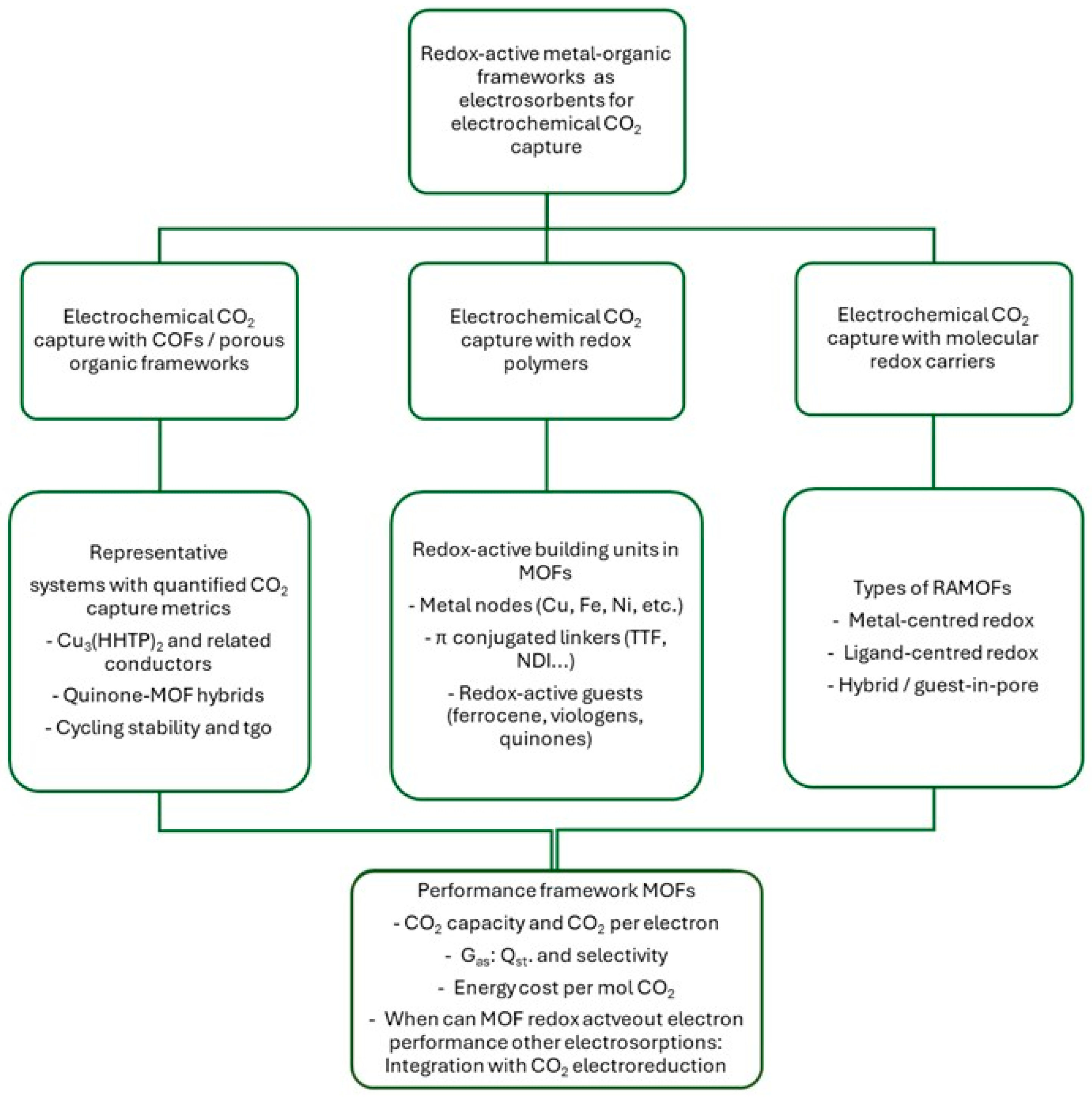
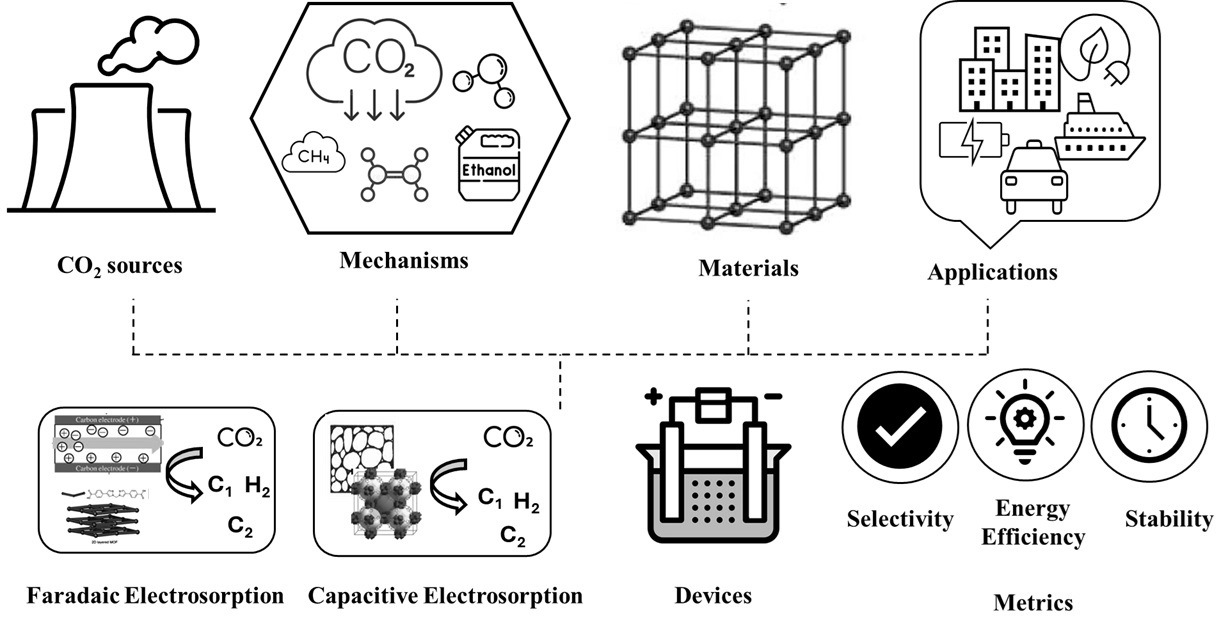
The convergence of coordination chemistry, electrochemistry, materials engineering, and sustainability research positions redox-active MOFs as a promising and prominent platform in the field of smart carbon management. However, a comprehensive review critically analyzing their role in electrochemical CO2 capture, unifying mechanistic, molecular, and industrial scale applied perspectives, is still lacking. This review aims to address this deficiency by providing a systematic overview encompassing the fundamentals of capacitive and faradaic electrosorption; recent advances in redox-active MOF design, material conductivity, and metal-ligand behavior; and technological challenges, such as the prospects for large-scale implementation and integration with electrochemical conversion processes, over the past 10 years of research in this field. Furthermore, this review aims to demonstrate how redox activity in MOFs, whether in metal nodes, ligands, or extended structures, can be rationally harnessed to design electrochemical CO2 capture systems that contribute to carbon neutrality, and to propose cross-cutting metrics and rules for the design of these materials that allow for meaningful comparison between materials and devices. Figure 1 summarizes the conceptual framework adopted in this work, which structures the following sections into five interconnected dimensions: molecular design, redox control, CO2 capture kinetics, benchmarking and limitations, and device integration for carbon-neutral processes.
Figure 1. Conceptual framework of this review, highlighting redox-active metal–organic frameworks as electrosorbents for electrochemical CO2 capture.
The scope of this review is specific. We do not intend to provide a comprehensive analysis of all electrochemical approaches to CO2 capture with redox-active MOFs. Instead, we first describe the general principles and representative examples of electrochemically mediated CO2 capture using molecular, polymeric, and COF-based redox carriers, as a point of reference. Next, we focus on redox-active metal–organic frameworks (MOFs) and hybrid systems based on MOFs, analyzing how redox activity at the metal nodes and/or ligands controls the thermodynamics, kinetics, and selectivity of CO2 binding. To conclude this review, we propose cross-cutting performance metrics and design rules that can be used to compare MOFs with other electrosorbents and to guide the development of next-generation redox-active MOFs for integrated CO2 capture and conversion technologies.

2. Fundamental and General Principles of CO2 Electrosorption in MOFs

In this direction, the electrochemical capture and transformation of CO2 was presented as a promising alternative, unlike conventional methods (thermal absorption or adsorption), since it allowed modulating the gas/solid interaction by applying a controlled electrochemical potential, this was classified as electrosorption, which allowed the reversible adjustment of the electron density and surface charge of the material used, thus determining the affinity of the adsorbent for the CO2 molecules studied [27,28].
Electrosorption formed the conceptual core of electrochemical CO2 capture and transformation, introducing a level of dynamic and reversible control that is very difficult to achieve in other, more conventional chemical systems. Depending on the charge storage process, two main mechanisms can be distinguished: capacitive electrosorption and Faradaic or redox-active electrosorption. While both mechanisms can occur simultaneously, they vary according to their physical and chemical nature [29,30].
Storage in the electrical double layer: this capacitive mechanism prevailed in porous materials such as graphene aerogels, activated carbons, and heteroatom-doped carbons. In these cases, adsorption was generated by physical interactions, driven by an electric field, formed at the electrode/electrolyte interface when a voltage was applied. The formation of an electrical double layer caused a redistribution of ions that modified the attraction of polar molecules, temporarily retaining them within the pores of the MOF material [31,32]. This process was characterized by rapid kinetics and high reversibility, as the potential change was sufficient to release the adsorbed gas. The absence of chemical transformations supported excellent stability. However, its molecular selectivity was low, and the capture capacity directly depended on the surface area and porosity of the particles [33,34,35].
However, due to its conceptual simplicity, capacitive electrosorption proved insufficient for achieving more selective CO2 capture. Its future development lies in hybrid configurations, where it could serve as a stable and conductive junction for redox-active compounds.
Faradaic electrosorption: Redox processes and molecular control involve oxidation-reduction processes at functional sites of the studied material, modifying the electron density and directly modulating the interaction with the analyzed gas [35,36] This mechanism has been studied in redox-active materials such as electroactive polymers; for example: quinones or viologens; metal oxides and redox-active MOFs.
During the reduction study, the redox sites gained electrons, generating transient anionic species that stabilized the CO2 molecule through dipolar interactions. During oxidation, the process was reversed, promoting desorption. This electronic switch provided more precise molecular control than capacitive electrosorption, resulting in higher selectivity and lower energy consumption of the system [37,38].
However, this mechanism introduced new challenges: redox stability often degraded after multiple cycles, especially in the presence of impurities; and balancing conductivity, active site density, and porosity remained a structural challenge [37].
Faradaic electrosorption promised a selective and efficient route, but its success depended on material design. Without electronic design, the redox advantage was lost due to structural degradation resulting from the material’s low durability and resistive losses.
Critical comparison of both electrosorption methods: Capacitive electrosorption stood out for its simplicity and robustness, but lacked molecular discrimination, which required structural modifications; Faradaic electrosorption introduced chemical control and high selectivity, although it required materials with advanced electronic conductivity, modularity, and stability, which necessitated changes in the design architecture. Consequently, molecular hybrid systems combining porous conductive components with redox-active sites lead us to a more promising system, integrating molecular redox modulation with capacitive stability [39,40].
Redox-active MOFs emerged as promising and unique candidates to integrate both mechanisms into a single material, combining high porosity, large surface area, programmable electronic (switch) functionality, and a well-ordered, crystalline architecture.

2.1. Redox-Active MOFs as a Platform for Faradaic Electrosorption

MOFs, unlike doped carbons or electroactive polymers, their lattice structure allows for parallel tuning of conductivity, active site density, and CO2 selectivity through compositional modification, doping, and structural defects. MOFs provide a molecular and defect engineering platform that enables redox binding to both metal nodes and organic ligands [15,28].
At redox-active metal nodes, multivalent metal centers such as Cu, Fe, Ni, and Co alternated their oxidation states, acting as switchable CO2 capture sites. In systems derived from HKUST-1 or Fe carboxylates, node reduction increased the local electron density, favoring transient coordinative and electrostatic interactions with CO2 [8,10,41,42].
These materials demonstrated the concept of switched trapping, their poor and limited electronic conductivity prevented a homogeneous response of the material, highlighting the need to improve the coupling between the redox-active metal nodes and the conductive network.
On the other hand, π-conjugated ligands and intrinsic conductivity, the use of π-conjugated electroactive ligands, such as HHTP and HITP, introduced continuous electronic channels that exhibit distributed redox processes and direct charge modulation within the pores and defects of the material.
MOFs such as Cu3(HHTP)2 and Ni3(HITP)2 [10,15,43] showed high structural stability and electron mobility, demonstrating the possibility of tuning their affinity toward CO2 by applying an electric potential [17,44,45,46].
Consequently, these MOF-type materials represent the current frontier between adsorbents and functional semiconductors. While their synthesis remained complex, delicate, and expensive, a full understanding of the relationship between selectivity and molecular durability, as well as their electronic structure, which required further study, was still needed.
Ni-bis(diimine)-based MOFs have also been studied. The most recent study by Liu et al. [43] marked a milestone by demonstrating solid-state CO2 capture and release, confirming the cycling stability and redox durability of Ni-bis(diimine)-based MOFs. These studies validated the feasibility of solid-state devices with applied potential-controlled response.
The study of defect engineering and postsynthetic functionalization has been fundamental. The insertion of structural defects, whether metal vacancies, heteroatomic substitution, and absence or presence of ligands, altered the density of electronic states and created high-energy adsorption centers, improving the redox response of the MOF [28,47]. Similarly, postsynthetic functionalization with viologenic groups increased the density of active sites, which improved and enhanced the reversible electrochemical capture of CO2 [28].
Clearly, defect engineering offered an effective approach to fine-tuning electronic properties; long-term stability for industrial application and synthetic reproducibility remained problematic to date; standardized protocols for peer validation were required.
In a comparative evaluation of MOFs, between redox polymers or capacitive carbons, redox-active MOFs stood out for their tunable selectivity through structural design, high reversibility (crystalline rigidity), and functional integration capability in electrochemical CO2 capture and conversion processes. Limitations of these MOFs included high synthesis costs and low scalability, as well as their fragility to contaminants and moisture [43,44].
In general, redox-active MOFs represent a highly versatile platform for the electrochemical capture and transformation of CO2. However, their transition from laboratory to industrial applications depends on advances in intrinsic conductivity, environmental stability, and macroscale scalable synthesis methodologies.

2.2. Electrochemical Techniques: Characterization of Redox Activity and Adsorption Dynamics for MOFs in CO2 Capture

Electrosorption mechanisms in redox-active MOFs are fundamental to study and understand, requiring the correlation of redox processes with gas adsorption and structural changes induced by the applied electrochemical potential. In this regard, cyclic voltammetry (CV) and electrochemical impedance spectroscopy (EIS) were fundamental tools to evaluate the electronic response of the material and the interaction mechanism with CO2 molecules [46].
Cyclic voltammetry (CV) and square wave voltammetry (SWV) techniques have allowed to know the redox couples associated with metallic nodes or π-conjugated ligands, for example, Cu2+ → Cu+ or Fe3+ → Fe2+, and the correlation of these events with variations in the amount of adsorbed CO2. In systems such as Cu3(HHTP)2 or Ni-bis(diimine) units in MOFs, the processes associated with anodic and cathodic currents were directly linked to the capture and release of CO2, which corroborates the faradaic and reversible nature of the process [10,43].
EIS provided information on charge transfer, interfacial capacitance, and internal resistances of the material. This technique showed a decrease in charge transfer resistance during CO2 adsorption. Nyquist diagrams indicated an increase in local electron density, resulting in higher conductivity within the porous and defective channels of the two-dimensional MOFs studied [48,49].
The combination of CV and EIS techniques allowed us to differentiate between capacitive and faradaic behaviors, revealing the efficient coupling between electrochemical processes and gas adsorption. However, comparative analyses remained scarce and lacked standardized protocols that would allow for an adequate interpretation of what happened at the surface with CO2 in a quantitative and reproducible manner across different laboratories.

2.3. Spectroscopic Techniques: Structural Correlation and Mechanistic Evidence of CO2 in MOFs

On the other hand, electrochemical techniques were aided by in situ and operational spectroscopic techniques, providing direct evidence of the structural and chemical changes that occur during CO2 electrosorption. Techniques such as infrared spectroscopy (FTIR), X-ray absorption spectroscopy (XAS), and in situ Raman spectroscopy allowed the identification of intermediate species, changes in the oxidation of metal nodes, and modifications in the vibrations of π-conjugated ligands, respectively [38]. These studies confirmed the formation of surface carbonates and bidentate species, which disappeared when the potential applied to the CO2 electrodesorption was reversed, thus corroborating the reversibility of the process.
Electrochemical and spectroscopic characterization was essential to understanding the synergy of conducting MOFs between redox processes and molecular adsorption. However, this field still required reproducible protocols and universal parameters to verify capture efficiency in different materials and compare them across systems. Establishing experimental standards analogous to those used in electrochemical energy storage was considered a crucial step to consolidate the industrial application of redox-active MOFs in CO2 capture.

3. Redox-Active MOFs as Electrosorbents for CO2: Archetypes and Mechanisms

In the context established above for the electrochemical capture of CO2 from redox-active MOFs, this section focuses on how these electrosorbent materials, highlight structural systems in which metal-centered and/or ligand-centered redox processes directly control the adsorption and desorption of CO2 under an applied potential.

3.1. Classic Redox MOFs: HKUST-1 and Fe Carboxylates

Classical systems already studied, such as HKUST-1 (Cu-BTC) and Fe carboxylates describe the first attempts to employ redox-active metal centers for CO2 capture and absorption [50].
In one of the most classic and studied MOFs, Cu-BTC, the Cu2+/Cu+ reduction increased the electron density at the metal nodes, which improved the adsorption, although its instability in the presence of moisture restricted its applicability [5,38,51]. Another widely investigated MOF is Fe-based MOFs, which demonstrated that Fe3+/Fe2+ states could actively participate in the adsorption processes, naturally linking CO2 capture and electrochemical conversion within the same material, which marked the next steps to follow [49,52].
Understanding these types of MOFs was conceptually fundamental to future advances, but they had a major limitation: low conductivity and a tendency toward degradation, making them historical models, although they retained their value for structural comparison and mechanistic analysis. Table 1 shows representative electrochemical CO2 capture systems based on redox carriers.
Table 1. Representative electrochemical CO2 capture systems based on redox carriers.

3.2. Electrosorption in a Two-Dimensional MOF: Cu3(HHTP)2

Another important MOF has been Cu3(HHTP)2, a two-dimensional molecule that marked the first clear experimental evidence of reversible CO2 capture and release upon applying electrochemical potential (a fixed potential was used for capture and the reverse potential for release). Vetik et al. and Zhao et al. [10,60] demonstrated that redox modulation of HHTP ligands transformed the material’s affinity for CO2, which was validated by CV, differential electrochemical mass spectrometry (DEMS) and density functional theory (DFT). Applying reduction potentials increased the electron density and reached a capacity of approximately 2 mmol g−1, while changing the potential completely released the gas, confirming its Faradaic reversibility in the CO2 reaction study.
This MOF represented a functional model that combined conductivity, structural stability, and π-delocalization. However, its response was highly dependent on the pressure and temperature conditions used, as well as the electrolyte composition, limiting its scalability beyond controlled laboratory environments [61].
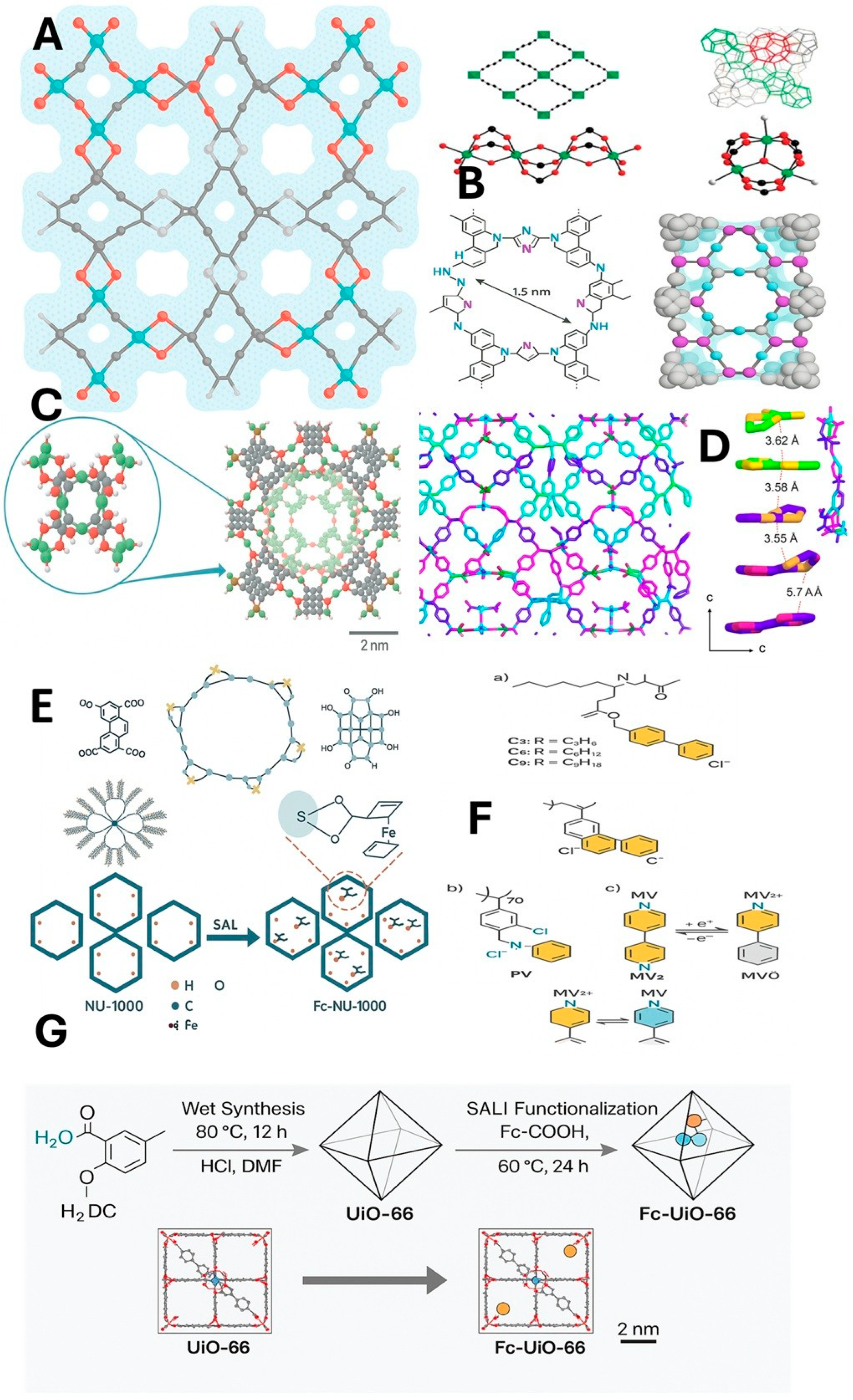
Figure 2 shows the structural diversity of redox-active MOFs investigated to date. MOFs based on redox-active metal centers, either Cu, Fe, or Ni, offered nodes with multiple electrochemical oxidation states, while ligand-centered systems, such as TTF, viologens, and ferrocene, provided charge transport and electronic flexibility. Together, these architectures explained that electronic modulation could be implemented from both metal nodes and organic ligands, opening new avenues to control selectivity, charge density, and adsorption kinetics.
Figure 2. Representative MOFs redox-active for electrochemical CO2 capture, highlighting archetypal examples such as (A) HKUST-1 (Cu(BTC)) [62], (B) Fe-carboxylate MOFs [63,64], (C) 2D conductive MOFs (Ni3(HHTP)2) [15], and (D) ligand-centered systems incorporating TTF [65,66], (E) ferrocene [67] (F) Viologen-based redox-active ligands [68]. (a) Schematic structures of viologen-containing polypeptides, in which the viologen units are connected to the backbone through alkyl spacers of three (C3), six (C6), or nine (C9) methylene groups. (b) Chemical structure of the reference viologen polymer (PV), where the viologen moieties are attached to a non-peptidic backbone. (c) Simplified redox scheme of methyl viologen, illustrating the interconversion between the dication (MV2+), the radical cation (MV +), and the neutral species (MV0). And (G) ferrocene functionalities [69]. All subfigures are reproduced or adapted from the cited references with permission from the respective publishers.

3.3. Metallic Conductivity in Two-Dimensional Structures: Ni3(HITP)2

A 2D MOF such as Ni3(HITP)2, initially conceived as a supercapacitor material [15,70,71], stood out for its metallic conductivity and the presence of electrochemically accessible Ni redox states. To date, no systematic studies on its electrochemical interaction with CO2 have been performed; its highly ordered two-dimensional structure and broad electron mobility have positioned it as a structural reference for the design of next-generation redox-active MOFs.
This Ni3(HITP)2 MOF illustrated how conducting MOFs could act as electronic platforms before being functionalized for CO2 capture. The key was to combine its excellent conductivity with coordinating groups that facilitated chemical interaction with the CO2 molecule.

3.4. MOF with Ni-bis(Diimine) Units

As mentioned above, Liu et al. [43] achieved a fundamental breakthrough by demonstrating reversible solid-state CO2 capture and release using a Ni-bis(diimine) MOF. This study validated that the metal nodes acted as stable redox switches under laboratory conditions. However, the structural robustness and high faradaic efficiency of this system laid the groundwork for solid-state capture devices with controlled response by the application of an electrochemical potential.
These studies validated redox shifting as a mechanism of operation but also highlighted the need to investigate the degradation of nickel sites under extended cycles of more than 104, an aspect that has not yet been adequately documented in recent publications, and which would pave the way for the implementation of these materials at an industrial level.

3.5. Emerging Strategies: Defect Engineering and Doped ZIFs

Research on these redox-active materials has led to the discovery of new strategies focused on the introduction of defects and metallic dopants to improve electrochemical stability, increase the density of redox sites, and optimize the molecular matrix of these systems. Studies by Zhang et al. [47] demonstrated that defect engineering facilitated electronic transport and altered the charge distribution over the MOF structural ligands, transforming conventional ZIFs and MOFs into partially conducting platforms.
Defect engineering was considered one of the most promising approaches, although risky, since an excess of vacancies could collapse the crystal lattice and alter selectivity. The challenge lay in controlling defects without compromising the integrity of the structure.

3.6. Other Redox-Active Families: TTF MOFs, Viologens and Ferrocenes

MOFs based on organic ligands with high redox activity expanded the spectrum of functional design:
Tetrathiafulvalene (TTF): has demonstrated reversible redox states and high conductivity. Its MOFs have been explored in molecular electronics and could be tuned for electrosorption due to their electronic tunability [65,66,72,73]
Viologens: These ligands were known for their reversible radical dication behavior and provided potentials for electroswitchable matrices, where adsorption and release directly depended on the potential applied to the system [74,75,76].
Ferrocene MOFs: Iron (Fe2+/Fe3+) redox pathways provided chemical stability and accessible redox behavior, with a long history in energy storage applications [77,78,79,80]. However, their direct application in electrosorption was not yet tested, they represented a promising frontier based on established coordination chemistry.
These MOF systems based on redox-active organic ligands offered the greatest design flexibility, but their main challenge lay in maintaining an effective electronic conduction path along their entire crystal lattice.

3.7. Thin Films and Hybrids Are Integrated with MOFs

The current use of redox-active MOFs depends on their methodology and integration into functional architectures. The most relevant strategies were:
(1)
Electrosynthesized thin films: this type of system on surfaces allows MOFs to be anchored directly on conductive substrates, for example, ITO, graphene, among others, optimizing electrical contact and reducing interfacial resistance [81,82,83].
(2)
MOF-COF type molecular hybrids: they combined the crystalline porosity of MOFs with the extended π conductivity of COFs, improving mechanical stability and charge mobility [84].
(3)
MOF-carbon based composites: dispersion of MOF particles in carbon nanotube or graphene matrices increased conductivity and increased accessibility to active sites [85].
These strategies shifted the focus from chemistry to engineering. It was not enough to design a redox-active MOF; it was essential to process it into functional configurations that would allow its integration into industrial and real-world electrochemical systems.
Table 2 summarizes the fundamental differences between carbons, redox polymers, and redox-active MOFs. While the former differs in stability and low cost, and the latter in chemical modularity, MOFs offer a unique property that combines molecular selectivity, electronic control, and structural design.
Table 2. Comparison of families of materials for electrochemical CO2 capture.
Based on this background, redox-active MOFs were considered the most versatile platform for the development of electrochemical CO2 capture technologies. Their advancement depends on overcoming obstacles related to conductivity, stability, and scalability, as well as establishing comparable metrics that similarly assess capture efficiency across different families of MOF-type materials.
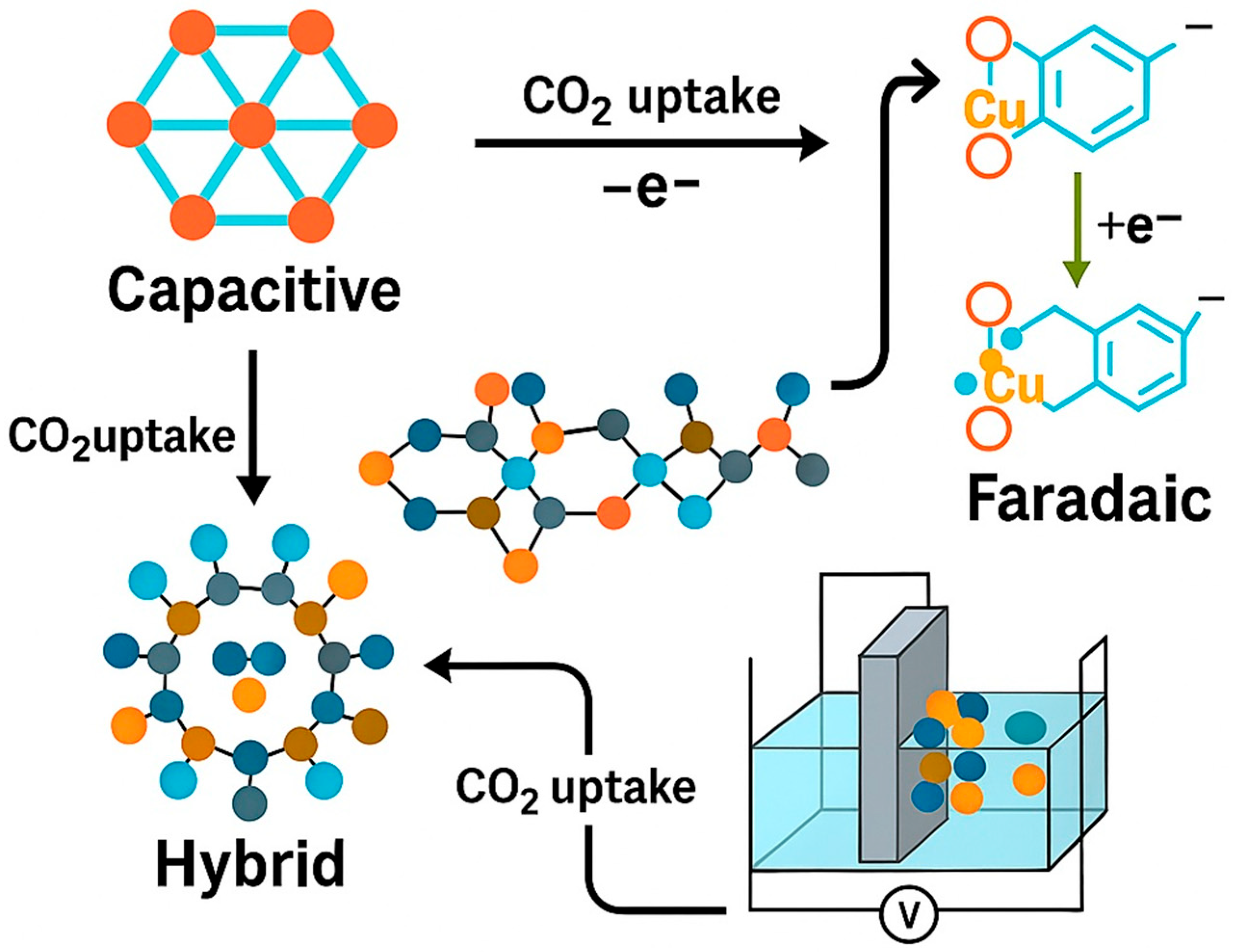
Following the mechanistic framework proposed by Vetik et al. [10], Figure 3 shows an adapted scheme that summarizes the main electrochemical CO2 capture mechanisms in redox-active MOFs, namely capacitive, faradaic, and hybrid pathways.
Figure 3. Schematic representation of the main electrochemical CO2 capture mechanisms in redox-active MOFs, including capacitive, faradaic, and hybrid pathways. Adapted with modifications from I. Vetik et al., “Advancing Electrochemical CO2 Capture with Redox-Active Metal-Organic Frameworks,” arXiv:2411.16444 (2025) [10].

4. Redox-Active MOFs: Proposed Mechanisms of Electrochemical Trapping

The electrochemical trapping of CO2 in redox-active MOFs resulted from the synergistic combination of physical interactions and localized redox processes that altered the electron density at the metal nodes and organic ligands [88].
Unlike purely porous adsorbents, conductive MOFs allowed the energetics of the gas–solid interaction to be modulated in real time by applying an electrochemical potential, enabling dynamic control of the adsorption and desorption of CO2 molecules (Figure 4).
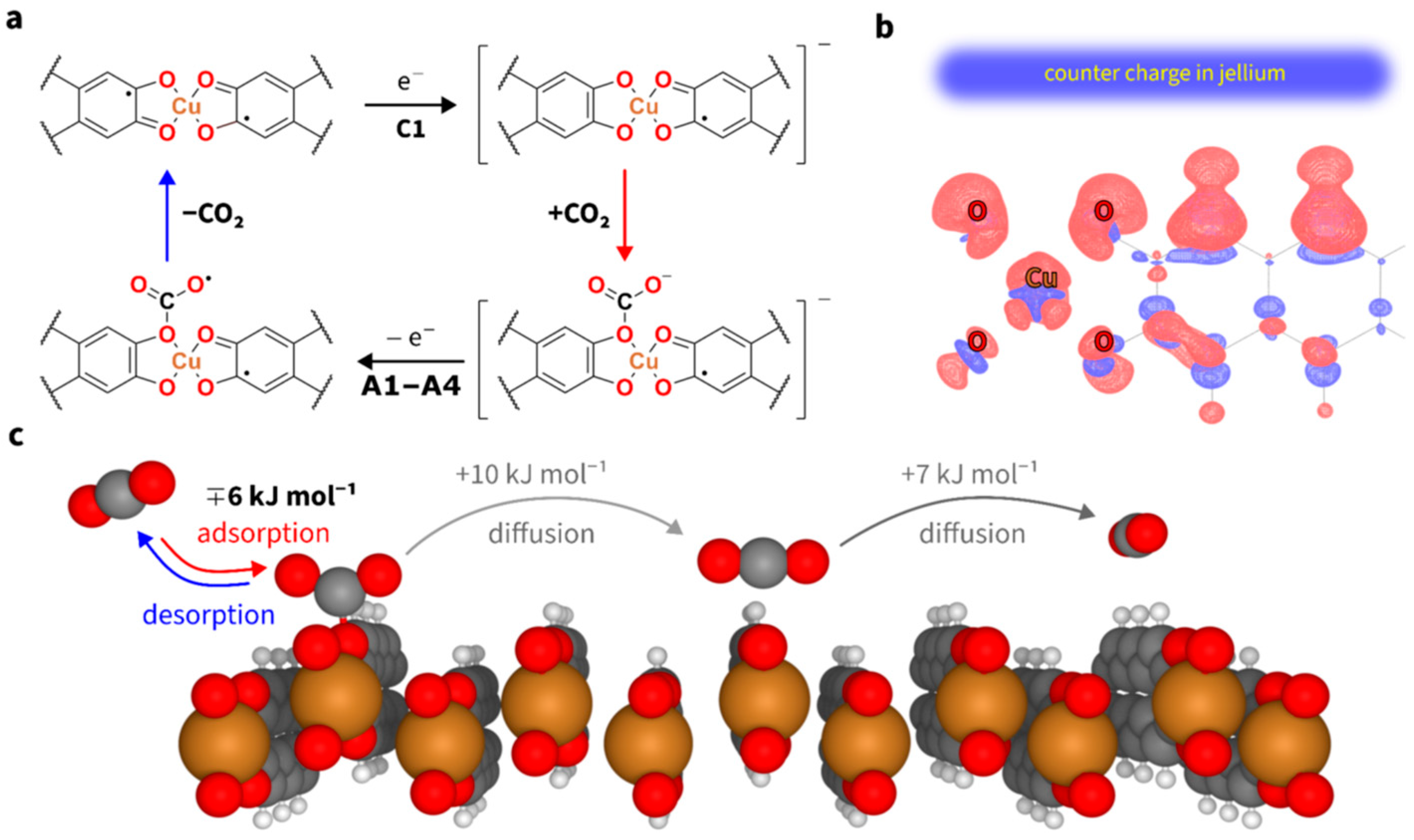
Figure 4. Schematic representation of electron redistribution in redox-active ligands under applied potential. In 2D conducting MOFs such as Cu3(HHTP)2, the conjugated HHTP ligands act as electron reservoirs, delocalizing charge along the molecule; (a) mechanism; (b) absorption energy; (c) counter exchange in jellium [10]. In TTF-MOFs, reversible oxidation of tetrathiafulvalene regulates the electron density for CO2 binding. Viologen-based ligands undergo redox dication/radical transitions, generating localized charge and enhanced polarization. Ferrocene-functionalized structures, e.g., NU-1000-Fc, provide stable Fe2+/Fe3+ pairs, which act as redox markers and tunable binding sites. Simultaneously, these systems illustrate how ligand-centric redox processes can be harnessed to reversibly and controllably modulate CO2 affinity.

4.1. Modulation of Metallic Nodes in MOFs

Redox-active metal nodes constitute the main interaction sites in classical MOFs. Reversible transitions such as Cu2+/Cu+ in HKUST-1 or Fe3+/Fe2+ in carboxylate MOFs regulated the local electron distribution and generated the intensity of Lewis-type interactions between the reduced metal center and the CO2 carbon atom.
With the application of reducing potential, the nodes increased their electron density, generating a transient coordinative stabilization in the adsorbed CO2 [89]. This redox modulation showed us the changes in the in situ IR and XPS spectra, where the carbonyl band (C=O) shifted to a lower energy during the reduction, indicating a reinforced metal and CO2 (M-CO2) interaction.
In this sense, modulation of metallic nodes provided direct control over the molecule’s affinity for the gas but often carried the risk of structural degradation and partial dissolution of the metal under intense polarization, resulting in an unstable material. The main challenge was to design metallic nodes with operating redox processes that balanced the material’s activity and stability.

4.2. Electron Redistribution in π-Conjugated Ligands in MOF-Type Systems

Two-dimensional MOFs containing HHTP ligands, such as Cu3(HHTP)2 act as electron reservoirs, generating electron movement and charge redistribution toward the ligand pores upon application of a reducing potential. This phenomenon, occurring in 2D MOFs, generated locally charged environments that brought CO* molecules closer together through electrostatic interaction and polarization induced by an external potential, explaining the Faradaic reversibility observed experimentally in these materials [10,15,90]. In extended π-conjugated systems, electron delocalization reduced the charge transfer resistance, which benefited the coupling between gas trapping and the redox reaction.
The π-conjugated ligands not only transferred electrons but also functioned as electronic switches, allowing precise molecular control of CO2 adsorption and desorption. Their role in selectivity toward other molecules such as H2O, N2, and CH4 had not yet been thoroughly studied.

4.3. Strongly Redox Ligands: TTF and Viologen

On the other hand, MOFs with redox-active organic ligands represented a new avenue for electronic modulation, as charge transfer in the ligands used was deciphered. In MOFs with TTF ligand, the reversible oxidation of tetrathiafulvalene alternated between low- and high-electron-density states, modulating the polarity of the material’s pores or defects and, consequently, its specific affinity for CO2 [65,66,91,92].
Furthermore, MOFs with Viologen ligands utilize the cation-dication radical transition in their mechanism, producing localized charges that induce electrostatic attraction toward the molecules. These processes are used as molecular switches controlled by the applied potential, facilitating the design of programmable materials that respond to partial pressure and gas composition [93].
These Viologen TTF ligands have represented a major advance in molecular electronics and gas adsorption. However, a quantitative correlation between redox potentials and adsorption free energy (ΔGads), a key parameter for assessing the feasibility of their technological application, was still needed.
Taken together, these examples illustrate different design strategies for making MOFs redox-active for electrochemical CO2 capture:
(i)
Housing a molecular carrier within a porous structure.
(ii)
Incorporating redox-active bonds or nodes so that the structure itself acts as a sorbent.
(iii)
Leveraging MOF environments that pre-concentrate and activate CO2 at electrochemically polarized interfaces.
While the underlying chemical reactions are diverse, they share the common characteristic that CO2 binding can be modulated by an applied potential. To provide a concise comparison of these systems, Table 3 summarizes representative redox-active MOFs and MOF-based materials, highlighting their electrochemical configurations and reported CO2 capture metrics (including Qst, the isosteric heat of CO2 adsorption), as well as the specific role the MOF plays in each case.
Table 3. Redox-active MOFs and MOF-based materials for electrochemical CO2 capture electrochemical configurations, CO2 capture metrics and role of the MOF.

4.4. Ferrocene-Functionalized MOFs as a Redox Tracer for CO2 Capture

On the other hand, ferrocene in MOFs provided a stable, reproducible, and easily tunable Fe2+/Fe3+ redox signal. A MOF that gave good results in this matter is NU-1000-Fc [69,99]: it was shown that the variation of the applied potential transforms the electron density of the Fc ligand structure, thus modifying the selectivity towards CO2 and other molecules with similar dipoles [93].
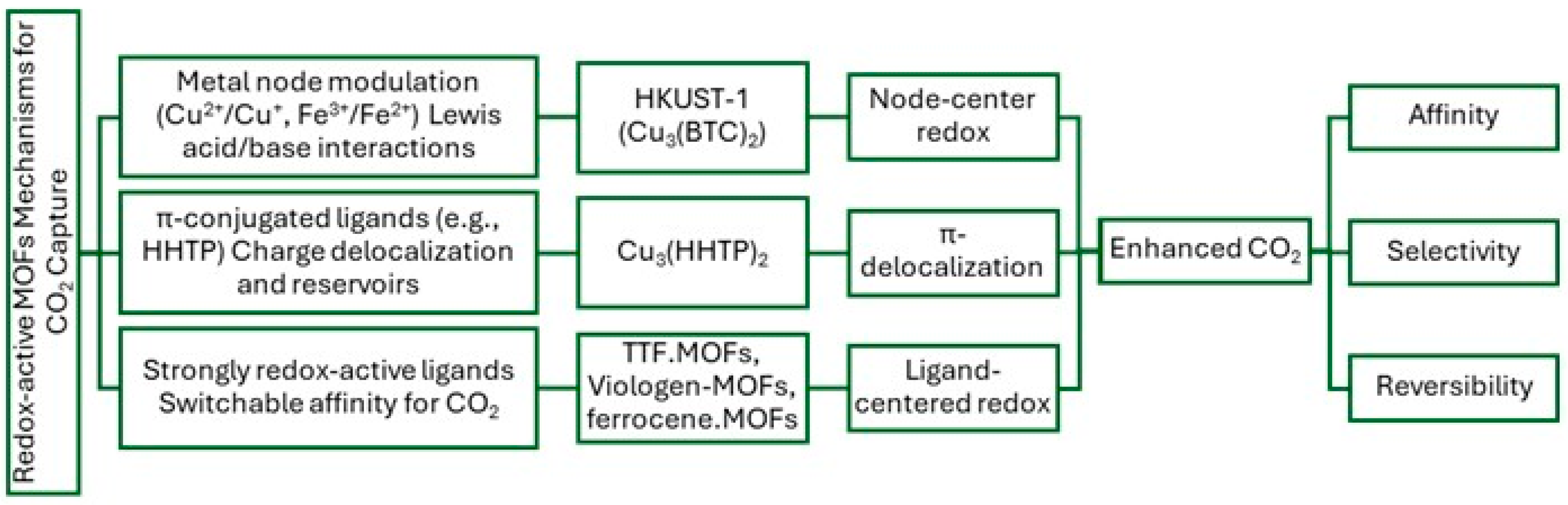
When ferrocene is functionalized in MOFs, they behave as chemically robust redox tracers, enabling precise monitoring of charge transfer processes and high redox activity, making them a suitable platform for experimental validation of CO2 mechanisms. Ferrocene-containing MOFs represent a suitable platform for correlating in situ spectroscopy with quantifiable redox behavior, but their efficiency in direct electrosorption remains to be demonstrated (Figure 5). Their properties under operating conditions will be essential to confirm their role in electrochemical processes scalable to the real world.
Figure 5. Schematic classification of redox-active mechanisms in MOFs for electrochemical CO2 capture. Metal-centric processes, such as HKUST-1, π-conjugated ligand systems Cu3(HHTP)2, and MOFs with highly redox-active ligands such as TTF, viologen, and ferrocene, provide complementary routes to tune affinity, reversibility, and selectivity in electrosorptive CO2 capture.
The current challenge lies not only in the synthesis of new MOFs, but also in understanding how electrons interact with the thermodynamics of adsorption during charge transfer. The development of quantitative models linking electron density, applied potential, and ΔGads is expected to transform electrochemical CO2 adsorption from an experimental approach to a predictive and industrially scalable technology.

4.5. Formation of Intermediate Species in MOFs: Spectroscopic Evidence

Understanding the electrochemical trapping mechanisms in redox-active MOFs comes from the use of in situ and operando spectroscopic techniques, especially IR, Raman and XAS, which allowed monitoring changes in the structures during adsorption/desorption cycles.
These studies showed the transient formation of surface carbonate or bicarbonate species, as well as coordinative adducts between the metal and CO2 (M-CO2), whose appearance was closely related to the oxidation/reduction state of the material [38,43]. By reducing potentials, the high electron density at metal nodes or π-conjugated ligands facilitated the formation of semi-coordinated species and/or bidentate carbonates, while upon reversal of the potential, these bands rapidly disappeared from the IR and Raman spectra, indicating the reversibility of the process. In XAS studies, it was shown that the absorption changes confirmed periodic oscillations between the metal oxidation states of the MOF, which were synchronized with the CO2 adsorption and desorption processes [38].
Intermediate species analysis provided one of the strongest evidences of the coupling between electronic dynamics and transient chemical interactions between redox-active MOFs and CO2. However, spectroscopic studies performed under operating conditions, such as pressure, complex electrolytes, or the presence of H2O, were limited, limiting representative validation of mechanistic models for CO2 and MOFs.

4.6. The Role of Defect Engineering and Hybrid Materials in MOFs

Controlling local electronic environments through defect engineering and structural hybridization has emerged as a strategy to optimize the redox response and energy efficiency of MOFs. The deliberate inclusion of metal or ligand vacancies, as well as heteroatomic doping (N, S, or P), has made it possible to modify the electron density of states (DOS) and create high-energy sites capable of interacting more intensely with the CO2 molecule [47,99].
Hybrid materials, such as MOF-COFs or MOF-carbon composites, described a new generation of functional systems in which extended electronic connectivity improved charge transport, reducing resistive losses and increasing faradaic efficiency. On the other hand, hybrid MOF-COFs combined the crystallinity and modularity of MOF ligands with the intrinsic conductivity of COFs. These studies contributed to describing the electron transfer between two materials toward the same goal: CO2 capture. While carbon-based MOFs facilitated the dispersion of the active site and improved structural stability during long-term oxidation-reduction cycles [84].
Overall, structural hybridization and structural defect engineering represented the bridge to understanding molecular design. However, quantitative control of defect density remained a challenge: excessive vacancies could induce structural collapse of the MOF, while low defect densities limited the material’s activity. The balance between connectivity, stability, and redox site density was crucial for the development of scalable, durable, and stable MOFs.
Commonly, the proposed mechanisms for electrochemical trapping in redox-active MOFs could be classified according to the origin of the electronic modulation: (1) Metal-centered (nodal): direct control of the charge density, but limited stability. (2) π-conjugated ligands: higher reversibility and extended electron mobility. (3) Strongly redox ligands (TTF, viologen, ferrocene): design flexibility and fine-tuning of polarity. (4) Defects and hybridization: higher accessibility to the active sites and enhanced electron transport.
The key to progress in this field lies in integrating an understanding of the reaction mechanism with multiscale structural engineering. After that, it will be possible to transform laboratory-derived redox-active MOFs into predictive and energy-efficient systems for the electrochemical capture and conversion of CO2.

4.7. Coordination, Electric Field and Trap Dynamics

The metallic nodes, whether Cu2+, Ni2+, Fe3+ or Co2+ and their coordination geometries (octahedral, square-planar, or tetrahedral), determined the density of electronic states (DOS) and, consequently, the MOFs ability to stabilize reduced species during CO2 capture. Some examples are: (1) In HKUST-1 type MOFs, the Cu2+ → Cu+ reduction generated partially vacant d orbitals that facilitated the formation of coordination adducts with CO2 [12,100]. (2) In Fe-carboxylate type MOFs, the Fe3+ → Fe2+ transition leads to reversible Lewis-type interactions with the carbon atom of CO2 gas [100].
The metal-ligand field also played a decisive role. Carboxylate ligands generated moderate ligand fields that promoted redox accessibility, although they sacrificed structural stability [49,96]. However, the use of phosphonates and π-conjugated ligands offered delocalization channels that stabilized the transferred electrons in the reduction reaction [38,73,101].
Elucidating the mechanism depends not only on the metal used, but also on how its structure and electronic boundary modulate the coordination environment of CO2 and the MOF. Designing hybrid systems that facilitate electron transfer between the metal and the ligand, balancing stability and selectivity, was considered one of the most promising avenues for next-generation MOFs.

4.7.1. Connection with Other MOF Redox Materials

In comparative studies, it was shown that redox polymers exhibited structural heterogeneity that made it difficult to control the active molecular sites present in the MOF structures, while the metal oxides in these molecules showed irreversible phase transformations after multiple cycles in CO2 capture.
On the other hand, this family of MOFs offered precise and periodic redox modulation within a more stable molecular architecture, although their structural rigidity could become a limitation under extreme CO2 capture conditions [15,43,102]. The advantage and capability of MOFs lies in their reproducible coordination symmetry, which allowed the analysis of electron transfer phenomena and the adsorption of intermediates with quantum resolution, a feature impossible to achieve in amorphous matrices.
MOFs described a balance between the electronic plasticity of polymers and the structural robustness of oxides. Therefore, their technological maturity depends on the scope of their properties, such as the crystalline scale of the material.

4.7.2. Theoretical Approach and Energy Metrics in MOFs

Theoretical DFT calculations began to reveal how the application of potential transformed the adsorption free energy (ΔGads) and the local electron density (DOS/PDOS). In Cu3(HHTP)2 MOFs, studied by Vetik et al. [10], it was shown that electron redistribution under polarization directly controlled the trapping reversibility, while Coudert and Poloni et al. [103,104] described MOFs as dynamic materials, highly sensitive to pressure, charge, and the presence of adsorbates in the reaction.
Unfortunately, a systematic framework correlating applied potential (E), DOS/PDOS, and ΔGads was still lacking. This correlation would have enabled the transition from qualitative studies to predictive materials design. At the same time, the scientific community needed to agree on universal metrics, such as electrical energy per mole of CO2 captured on an electroactive and adsorbent surface, Coulombic efficiency, and characteristic time t90, to provide electrosorption technologies with a common and comparable thermodynamic basis [38,49].
Without the development of a common metric language, the field risks fragmentation and unprecedented results. The future of these capture systems depends on the integration of theoretical modeling, spectroscopic validation, and experimental standardization to translate molecular thermodynamics into technological and performance terms.

4.7.3. Mechanistic Gaps and Exploration Opportunities in MOF

Despite significant progress, structural and methodological gaps persisted. There is a lack of in situ and operando spectroscopies that correlate coordination structure and redox response in real time [15,43,45]. The current need is to generate standardized electrochemical protocols and parameters, including electrolyte composition, working electrochemical windows, DEMS, and reference systems [49]. A limited search for alternative families of redox-active ligands could have offered new avenues to optimize selectivity, reversibility, and reproducibility [67,68,75,105].
The greatest challenge was not the synthesis and generation of new MOFs, but rather the quantitative understanding of how they electrochemically captured and released CO2. The integration of electrochemical, spectroscopic, and theoretical data into unified mechanistic models was expected to transform this field into a predictive discipline comparable to electrocatalysis.
Table 4 summarizes how different metal nodes and ligands of redox-active MOFs modulate CO2 interaction and capture through characteristic electron transfer mechanisms and intermediates. However, the main challenge was not to identify additional systems, but rather to elucidate the mechanistic diversity using numerical performance criteria that would allow an objective assessment of the stability of these systems against this reduction reaction.
Table 4. Several representative examples of redox-active MOFs applicable to electrochemical CO2 capture are discussed.
The subsequent Section 5 focuses on linking coordination chemistry with the kinetic metrics and tunable parameters of redox-active MOFs. Only through this convergence will be possible to assess which MOFs are truly competitive for industrially scalable electrochemical CO2 capture.

5. Prospects and Challenges of Redox-Active MOFs in CO2 Capture

This section discusses the prospects and challenges of redox-active MOFs as platforms for electrochemical CO2 capture. Building on the archetypes and mechanisms described in Section 3 and Section 4, we now explore under what conditions redox-active MOFs can realistically outperform other electrosorbents and conventional thermal technologies, and what design principles are essential for achieving competitive performance.
Recent results, as reviewed in previous sections, have demonstrated the capacity of these structures for reversible and selective toward CO2 adsorption onto diverse materials in electrochemical applications. However, the transition from model systems to functional systems requires addressing challenges in structural, energetic, and scalable technologies.

5.1. Stability and Scalability in MOF for CO2 Capture

The stability of MOFs under real-world conditions, such as pressure and temperature challenges, as well as humidity, corrosive electrolytes, and operation over long analysis times (stability), remained the main obstacle to the implementation of these systems [103,109,110].
Future developments required stable, hydrotolerant MOFs, such as Zr, Ti, and Al carboxylates, capable of maintaining their structural integrity after thousands of redox cycles. Hybrid compounds such as carbon MOFs, COF-MOFs, and others, reduce dissolution and improve electronic connectivity. Long-term durability testing (≥104 cycles) was a standard requirement to validate the industrial potential of these adsorbent composites [49,111].
Chemical stability should not have been evaluated as a static and immutable parameter, but as a functional property under continuous electrochemical operation, where electron transport and hydration control the actual lifetime of the material for CO2 capture.

5.2. Synergy Between Capture and Electrochemical Conversion in MOFs for CO2

The most promising frontier was the direct integration of electrochemical capture and catalytic CO2RR. Redox-active MOFs, particularly those based on Cu3(HHTP)2, could function as bifunctional electrodes, where the applied potential would determine whether CO2 was stored or converted to CO or hydrocarbons, either gaseous (CH4, C2H6, C2H4, among others) or aqueous (CH3OH, C2H5OH, among others) [112,113,114].
Furthermore, electroactive ligands such as TTF, ferrocene, or viologen could simultaneously modulate CO2 adsorption and desorption, as well as charge transfer, making the concept of reactive capture and entrapment of substances of interest a reality.
Beyond this background, the true advantage of redox-active MOFs lies in their ability to combine selectivity and reactivity, uniting capture, separation, and conversion in a single electrochemical interface.

5.3. Standardization, Advanced Design, and Predictive Modeling of MOFs in CO2 Capture

Overall, these MOF-like molecular systems advanced the field of electrochemical CO2 capture. This field was based on a common concept of characterization and evaluation that allowed for the comparison of different materials and structural architectures in CO2 electrosorption. Unlike electrocatalysis, where established metrics existed, in CO2 electrosorption, the methodology limited the selectivity and reproducibility of these systems. It was necessary to systematically incorporate different parameters such as free energy of adsorption (ΔGads), energy efficiency (kJ mol−1 of captured CO2) as a comparative metric with the thermal processes of the reaction, and adsorption/desorption kinetics and efficiency as indicators of reversibility [115]. In addition, in situ and operational techniques, such as IR, Raman, XAS, and DEMS, among others, were employed to link the active redox response with CO2 capture.
Simultaneously, the expansion toward new electroactive ligands has been studied, as was previously depicted. This has allowed for the expansion of electrochemical potential windows and the tuning of electron affinity without compromising the material’s porosity or structural defects, facilitating charge transfer and the formation of reaction intermediates of interest [74]. The integration of these units through electrosynthesis or electrodeposition, in a simple and environmentally friendly manner, has achieved subsequent synthetic functionalization or further defect engineering, showing us a realistic path toward more stable, tunable, and sensitizable materials [24,42,60,90].
On the other hand, computational modeling was crucial in advancing the design of these molecules in a more precise and scalable way for the experimental phase. The combination of DFT calculations and molecular dynamics allowed us to predict the structural and electronic properties of the MOFs, connecting microscopic parameters (DOS, PDOS, ΔGads) with macroscopic metrics such as capacitance, energy, and reaction kinetics [116].
The major qualitative leap in this field was expected to come not from experiments, but from predictions. It involved a transition from experimental observations to practical designs based on electronic principles and coordination chemistry. In this sense, the bottleneck was no longer experimental, but purely conceptual. Integrated theories and models that would translate the electronic language into the operational performance of these systems were still lacking.

5.4. Cross-Sectional Comparison and Sustainability of MOFs for CO2 Capture

On the other hand, doped carbons, redox polymers, metal oxides, and redox-active MOFs were compared. The latter stood out for their molecular selectivity toward the CO2 molecule and their redox control, although they had not yet demonstrated quantitative advantages in industrial parameters such as the target cost (<50 USD per ton of captured CO2), apparent density (>2 mmol cm−3), and operational stability (>104 cycles) in humid environments [91,92,93].
The path to scalability of these materials involved hybridization with engineered platforms, such as hierarchical electrodes, polymer-MOF membranes, and optimized electrochemical flow cells [68,94,95,96,97].
Furthermore, sustainability required prioritizing the most abundant transition metals, such as Fe, Cu, Ni, and Co, and developing green and recyclable synthesis pathways, such as electrosynthesis, aligned with carbon neutrality goals.
The field of MOFs did not need more new materials, but rather more demanding criteria. Progress was expected to be measured by reproducibility and industrial scalability, not by the novelty of the MOF.
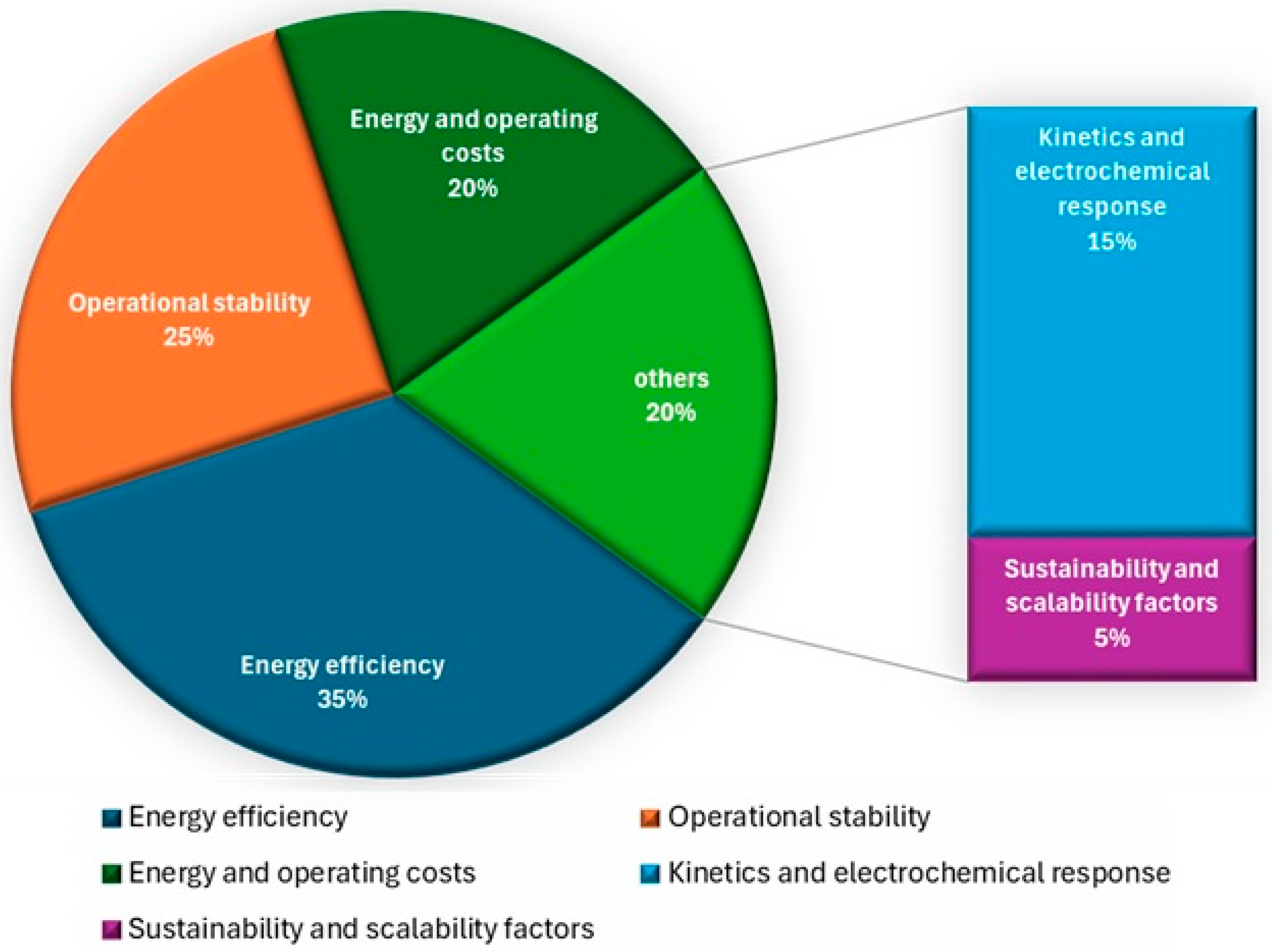
Figure 6 presents a conceptual summary of the main performance factors governing electrochemical CO2 capture systems. The pie chart illustrates the relative contribution of each element to the overall process performance: energy efficiency (35%), operational stability (25%), energy and operating costs (20%), electrochemical kinetics and response (15%), and sustainability and scalability factors (5%).
Figure 6. This section presents a conceptual summary of the main performance factors governing electrochemical CO2 capture systems. These proportions reflect the balance between the thermodynamic, kinetic, and technoeconomic parameters reported in state-of-the-art electrochemical CO2 capture systems. The chart integrates information from experimental trends (adsorption capacity and cyclic stability), energy analyses (EMAR vs. thermal routes), and device-level testing, providing a holistic perspective on performance parameters and design priorities for redox-active materials and hybrid systems for reversible CO2 electrosorption.
Together, these summarize the evolution from material-level durability to process energetics and operational robustness in next-generation electrochemical CO2 capture systems.
Beyond individual cases, progress in this field depends on defining a common evaluation framework and structure. Table 5 proposes a set of critical metrics, including adsorption of free energy, energy efficiency, capture kinetics, cycling stability, specific cost, and volumetric density. These were expected to become standard parameters for the objective comparison of redox-active MOF materials for electrochemical CO2 capture.
Table 5. Critical parameters for evaluating redox-active MOFs in electrochemical CO2 capture.
The synthesis and analysis presented in Table 5 demonstrate that the field of redox-active MOFs for electrochemical CO2 capture is at a scientific and technological turning point. There are clear guidelines on critical metrics and parameters that need to be standardized, from adsorption free energy to volumetric capture density, as well as promising device integration strategies. However, there remains a significant limitation between the performance achieved under laboratory experimental conditions, such as stability, manufacturing cost, and the energy efficiency required for large-scale industrial implementation.
The advances achieved to date in this field position redox-active MOFs as a strategic and scalable platform for the development of smart electrochemical CO2 capture and conversion technologies. The immediate step is to transform molecular knowledge into device engineering for immediate application, establishing a quantitative and reproducible evaluation framework that links the structural architecture, energy transfer, and operational performance of these systems.
Ultimately, the future of redox-active MOFs depends not only on the synthesis of new materials, which is clearly no longer relevant, but also on the coherent integration of fundamental science and engineering to create predictive and technologically scalable models.
Only through this convergence and integration of these materials into technological systems will be possible to evolve from an academic commitment to effective industrial tools, concretely contributing to the global goals of decarbonization, sustainability, and renewable energy.
In summary, the main message of this review is that redox-active MOFs should be considered not just as another class of porous adsorbents, but as a distinct platform for the electrochemical capture and transformation of CO2, where coordination chemistry, electronic structure, and device-level metrics can be rationally linked.
By placing redox-active MOFs within the broader context of electrochemical CO2 capture, alongside molecular redox carriers, whether polymeric or COF-based, the conditions under which MOFs can offer real advantages in terms of selectivity, reversibility, and energy efficiency can be identified. Looking to the near future, we maintain that the most pressing needs are:
-
Standardized electrochemical and spectroscopic protocols that quantify CO2 capture in a manner comparable to electrocatalysis and thermal CCS.
-
Design strategies that integrate nodes (monometallic or multimetallic) and redox-active ligands with stable and hydrotolerant structures.
-
Predictive models that decipher the electronic descriptors in CO2 capture performance.

6. Conclusions

In this review, we have presented redox-active metal–organic frameworks (MOFs) as a distinct platform for electrochemical CO2 capture, rather than as isolated case studies. By comparing electrochemically mediated CO2 capture with molecular, polymeric, and COF-based redox carriers, and then analyzing archetypal redox-active MOFs, their redox-active structural units, and representative systems with quantified CO2 capture metrics, we offer a performance-oriented perspective on how coordination chemistry, electronic structure, and device architecture are related. The cross-cutting metrics proposed in this work aim to provide a common language for comparing redox-active MOFs with other electrosorbents and with conventional thermal capture routes.
The advancement of redox-active MOFs for the electrochemical capture and transformation of CO2 has transcended the scope of laboratory-based academic studies and has emerged as a new approach for applied coordination chemistry. These redox-active MOF materials have demonstrated extraordinary electrosorption capabilities, while integrating structural modularity, molecular selectivity for value-added compounds for CO2 reduction, and reversible electronic control of adsorption and desorption in a single system.
However, this promising system has not yet passed the validation phase. Most advances are limited to controlled laboratory conditions, with little evidence of long-term stability and results difficult to compare using common metrics. This field presents several critical shortcomings. The lack of standardized protocols impedes objective assessment of energy efficiency and reversibility; low structural stability, especially under corrosive conditions; and a poor connection between theory and experimental practice, as computational modeling rarely predicts the most common design and synthesis problems.
Current advances in this field do not require further synthesis and studies of new materials, but rather more demanding and competitive criteria when introducing ligands and advancing the molecular electronics of these systems.
The evolution of these systems requires the integration of in situ and operational characterization, multiscale modeling, and process and materials engineering, moving from qualitative to quantitative descriptions with common metrics.
Redox-active MOFs could become true bridges between electrocatalysis and structural and molecular architecture: an intelligent design capable of capturing, storing, and transforming CO2 into a single operational product.
Finally, the success of redox-active MOFs will not be measured by their structural novelty, but by their functional and applied impact. When these materials demonstrate stability, selectivity, reproducibility, and high energy efficiency under scalable industrial conditions, they will have surpassed their academic promise of becoming true catalysts comparable to noble metals. This is one of the most urgent challenges for mitigating climate change and global warming.

Author Contributions

Conceptualization, validation and research C.C.-C. and J.S.-H.; resources, G.G. and R.E.-G.; writing (original draft), C.C.-C. and G.G.; revision and editing, C.C.-C. and G.G.; supervision, G.G. and R.E.-G. All authors have read and agreed to the published version of the manuscript.

Funding

This research received no external funding.

Data Availability Statement

No new data were created or analyzed in this study. Data sharing is not applicable to this article.

Acknowledgments

The authors wish to express their gratitude to: C.C.-C. for Fondecyt Postdoctoral Grant No. 3240375, and R.E.-G. for FONDECYT No. 1231474. J.S.-H Fondecyt Postdoctoral Grant No 3230179. GG thanks to NANOtec, INTech, the Tenerife Island Council, and the University of La Laguna (ULL) for providing laboratory facilities.

Conflicts of Interest

The authors declare no conflicts of interest.

References

  1. Becker, H.; Dickinson, E.J.F.; Lu, X.; Bexell, U.; Proch, S.; Moffatt, C.; Stenström, M.; Smith, G.; Hinds, G. Assessing potential profiles in water electrolysers to minimise titanium use. Energy Environ. Sci. 2022, 15, 2508–2518. [Google Scholar] [CrossRef]
  2. Alsaç, E.P.; Zhou, K.; Rong, W.; Salamon, S.; Landers, J.; Wende, H.; Smith, R.D.L. Identification of non-traditional coordination environments for iron ions in nickel hydroxide lattices. Energy Environ. Sci. 2022, 15, 2638–2652. [Google Scholar] [CrossRef]
  3. Sanz-Pérez, E.S.; Murdock, C.R.; Didas, S.A.; Jones, C.W. Direct Capture of CO2 from Ambient Air. Chem. Rev. 2016, 116, 11840–11876. [Google Scholar] [CrossRef]
  4. Sharifian, R.; Wagterveld, R.M.; Digdaya, I.A.; Xiang, C.; Vermaas, D.A. Electrochemical carbon dioxide capture to close the carbon cycle. Energy Environ. Sci. 2021, 14, 781–814. [Google Scholar] [CrossRef]
  5. Renfrew, S.E.; Starr, D.E.; Strasser, P. Electrochemical Approaches toward CO2 Capture and Concentration. ACS Catal. 2020, 10, 13058–13074. [Google Scholar] [CrossRef]
  6. Wang, Y.; Hou, P.; Wang, Z.; Kang, P. Zinc Imidazolate Metal–Organic Frameworks (ZIF-8) for Electrochemical Reduction of CO2 to CO. Chemphyschem 2017, 18, 3142–3147. [Google Scholar] [CrossRef]
  7. Albo, J.; Vallejo, D.; Beobide, G.; Castillo, O.; Castaño, P.; Irabien, A. Copper-Based Metal–Organic Porous Materials for CO2 Electrocatalytic Reduction to Alcohols. ChemSusChem 2017, 10, 1100–1109. [Google Scholar] [CrossRef]
  8. Dong, B.-X.; Qian, S.-L.; Bu, F.-Y.; Wu, Y.-C.; Feng, L.-G.; Teng, Y.-L.; Liu, W.-L.; Li, Z.-W. Electrochemical Reduction of CO2 to CO by a Heterogeneous Catalyst of Fe–Porphyrin-Based Metal–Organic Framework. ACS Appl. Energy Mater. 2018, 1, 4662–4669. [Google Scholar] [CrossRef]
  9. Rohland, P.; Schröter, E.; Nolte, O.; Newkome, G.R.; Hager, M.D.; Schubert, U.S. Redox-active polymers: The magic key towards energy storage—A polymer design guideline progress in polymer science. Prog. Polym. Sci. 2022, 125, 101474. [Google Scholar] [CrossRef]
  10. Vetik, I.; Žoglo, N.; Kosimov, A.; Cepitis, R.; Krasnenko, V.; Qing, H.; Chandra, P.; Mirica, K.; Rizo, R.; Herrero, E.; et al. Advancing Electrochemical CO2 Capture with Redox-Active Metal-Organic Frameworks. arXiv 2025, arXiv:2411.16444. [Google Scholar] [CrossRef]
  11. Schubert, U.S.; Winter, A.; Newkome, G.R. An Introduction to Redox Polymers for Energy-Storage Applications; John Wiley & Sons: Hoboken, NJ, USA, 2023; Available online: https://www.wiley.com/en-us/An+Introduction+to+Redox+Polymers+for+Energy-Storage+Applications-p-9783527350902 (accessed on 25 November 2025).
  12. Furukawa, H.; Cordova, K.E.; O’Keeffe, M.; Yaghi, O.M. The chemistry and applications of metal-organic frameworks. Science 2013, 341, 1230444. [Google Scholar] [CrossRef]
  13. Talin, A.A.; Centrone, A.; Ford, A.C.; Foster, M.E.; Stavila, V.; Haney, P.; Kinney, R.A.; Szalai, V.; El Gabaly, F.; Yoon, H.P.; et al. Tunable Electrical Conductivity in Metal-Organic Framework Thin-Film Devices. Science 2014, 343, 66–69. [Google Scholar] [CrossRef] [PubMed]
  14. Latimer, A.A.; Kulkarni, A.R.; Aljama, H.; Montoya, J.H.; Yoo, J.S.; Tsai, C.; Abild-Pedersen, F.; Studt, F.; Nørskov, J.K. Understanding trends in C–H bond activation in heterogeneous catalysis. Nat. Mater. 2017, 16, 225–229. [Google Scholar] [CrossRef] [PubMed]
  15. Sheberla, D.; Bachman, J.C.; Elias, J.S.; Sun, C.-J.; Shao-Horn, Y.; Dincă, M. Conductive MOF electrodes for stable supercapacitors with high areal capacitance. Nat. Mater. 2016, 16, 220–224. [Google Scholar] [CrossRef]
  16. Lu, Z.; Godfrey, H.G.W.; da Silva, I.; Cheng, Y.; Savage, M.; Tuna, F.; McInnes, E.J.L.; Teat, S.J.; Gagnon, K.J.; Frogley, M.D.; et al. Modulating supramolecular binding of carbon dioxide in a redox-active porous metal-organic framework. Nat. Commun. 2017, 8, 14212. [Google Scholar] [CrossRef] [PubMed]
  17. Nwosu, U.; Siahrostami, S. Copper-based metal–organic frameworks for CO2reduction: Selectivity trends, design paradigms, and perspectives. Catal. Sci. Technol. 2023, 13, 3740–3761. [Google Scholar] [CrossRef]
  18. Doheny, P.W.; Babarao, R.; Kepert, C.J.; D’aLessandro, D.M. Tuneable CO2 binding enthalpies by redox modulation of an electroactive MOF-74 framework. Mater. Adv. 2021, 2, 2112–2119. [Google Scholar] [CrossRef]
  19. Kim, J.; Ling, J.; Lai, Y.; Milner, P.J. Redox-Active Organic Materials: From Energy Storage to Redox Catalysis. ACS Mater. Au 2024, 4, 258–273. [Google Scholar] [CrossRef]
  20. Kang, D.-Y.; Lee, J.S. Challenges in Developing MOF-Based Membranes for Gas Separation. Langmuir 2023, 39, 2871–2880. [Google Scholar] [CrossRef]
  21. Razavi, S.A.A.; Chen, W.; Zhou, H.-C.; Morsali, A. Tuning redox activity in metal–organic frameworks: From structure to application. Coord. Chem. Rev. 2024, 517, 216004. [Google Scholar] [CrossRef]
  22. Deffo, G.; Tamo, A.K.; Fotsop, C.G.; Tchoumi, H.H.B.; Talla, D.E.N.; Wabo, C.G.; Deussi, M.C.N.; Temgoua, R.C.T.; Doungmo, G.; Njanja, E.; et al. Metal-organic framework-based materials: From synthesis and characterization routes to electrochemical sensing applications. Coord. Chem. Rev. 2025, 536, 216680. [Google Scholar] [CrossRef]
  23. Fu, Y.; Qiu, W.; Zhou, S.-H.; Huang, H.; Luo, Y.; Lin, X.; Zhu, Q.-L. First-principles calculation studies of metal-organic frameworks and their derivatives for electrochemical energy conversion and storage. Coord. Chem. Rev. 2025, 544, 216982. [Google Scholar] [CrossRef]
  24. Patil, P.D.; Gargate, N.; Tiwari, M.S.; Nadar, S.S. Defect metal-organic frameworks (D-MOFs): An engineered nanomaterial for enzyme immobilization. Coord. Chem. Rev. 2025, 531, 216519. [Google Scholar] [CrossRef]
  25. An, D.; Chen, L.; Liang, Y.; Hou, J.; Chen, J. Defect-containing metal–organic framework materials for sensor applications. J. Mater. Chem. A 2023, 12, 38–58. [Google Scholar] [CrossRef]
  26. Muthukumaran, M.K.; Govindaraj, M.; Kogularasu, S.; Sriram, B.; Raja, B.K.; Wang, S.-F.; Chang-Chien, G.-P.; J, A.S. Recent advances in metal-organic frameworks for electrochemical sensing applications. Talanta Open 2025, 11, 100396. [Google Scholar] [CrossRef]
  27. Sullivan, I.; Goryachev, A.; Digdaya, I.A.; Li, X.; Atwater, H.A.; Vermaas, D.A.; Xiang, C. Coupling electrochemical CO2 conversion with CO2 capture. Nat. Catal. 2021, 4, 952–958. [Google Scholar] [CrossRef]
  28. Xia, Q.; Zhang, K.; Zheng, T.; An, L.; Xia, C.; Zhang, X. Integration of CO2 Capture and Electrochemical Conversion. ACS Energy Lett. 2023, 8, 2840–2857. [Google Scholar] [CrossRef]
  29. Wang, C.; Jiang, K.; Yu, H.; Li, S.; Zhao, Y.; Zheng, Z.; Liu, H.; Xia, X.; Zhao, P.; Li, Y.; et al. Review of electrochemical carbon dioxide capture towards practical application. Next Mater. 2025, 8, 100660. [Google Scholar] [CrossRef]
  30. Xu, Z.; Mapstone, G.; Coady, Z.; Wang, M.; Spreng, T.L.; Liu, X.; Molino, D.; Forse, A.C. Enhancing electrochemical carbon dioxide capture with supercapacitors. Nat. Commun. 2024, 15, 7851. [Google Scholar] [CrossRef] [PubMed]
  31. Dissanayake, K.; Kularatna-Abeywardana, D. A review of supercapacitors: Materials, technology, challenges, and renewable energy applications. J. Energy Storage 2024, 96, 112563. [Google Scholar] [CrossRef]
  32. Holze, R.F.; Béguin, E. Frąckowiak (eds): Supercapacitors—Materials, Systems, and Applications. J. Solid State Electrochem. 2015, 19, 1253. [Google Scholar] [CrossRef]
  33. Zito, A.M.; Clarke, L.E.; Barlow, J.M.; Bím, D.; Zhang, Z.; Ripley, K.M.; Li, C.J.; Kummeth, A.; Leonard, M.E.; Alexandrova, A.N.; et al. Electrochemical Carbon Dioxide Capture and Concentration. Chem. Rev. 2023, 123, 8069–8098. [Google Scholar] [CrossRef]
  34. Rheinhardt, J.H.; Singh, P.; Tarakeshwar, P.; Buttry, D.A. Electrochemical capture and release of carbon dioxide. ACS Energy Lett. 2017, 2, 454–461. [Google Scholar] [CrossRef]
  35. Seo, H.; Rahimi, M.; Hatton, T.A. Electrochemical Carbon Dioxide Capture and Release with a Redox-Active Amine. J. Am. Chem. Soc. 2022, 144, 2164–2170. [Google Scholar] [CrossRef] [PubMed]
  36. Zhang, J.; Cao, Y.; Ou, P.; Lee, G.; Zhao, Y.; Liu, S.; Shirzadi, E.; Dorakhan, R.; Xie, K.; Tian, C.; et al. A redox-active polymeric network facilitates electrified reactive-capture electrosynthesis to multi-carbon products from dilute CO2-containing streams. Nat. Commun. 2025, 16, 3553. [Google Scholar] [CrossRef]
  37. Iijima, G.; Naruse, J.; Shingai, H.; Usami, K.; Kajino, T.; Yoto, H.; Morimoto, Y.; Nakajima, R.; Inomata, T.; Masuda, H. Mechanism of CO2 Capture and Release on Redox-Active Organic Electrodes. Energy Fuels 2023, 37, 2164–2177. [Google Scholar] [CrossRef]
  38. Diederichsen, K.M.; Sharifian, R.; Kang, J.S.; Liu, Y.; Kim, S.; Gallant, B.M.; Vermaas, D.; Hatton, T.A. Electrochemical methods for carbon dioxide separations. Nat. Rev. Methods Prim. 2022, 2, 68. [Google Scholar] [CrossRef]
  39. Li, J.; Ott, S. The Molecular Nature of Redox-Conductive Metal–Organic Frameworks. Accounts Chem. Res. 2024, 57, 2836–2846. [Google Scholar] [CrossRef]
  40. Sahayaraj, A.F.; Prabu, H.J.; Maniraj, J.; Kannan, M.; Bharathi, M.; Diwahar, P.; Salamon, J. Metal–Organic Frameworks (MOFs): The Next Generation of Materials for Catalysis, Gas Storage, and Separation. J. Inorg. Organomet. Polym. Mater. 2023, 33, 1757–1781. [Google Scholar] [CrossRef]
  41. Rozaini, M.T.; Grekov, D.I.; Bustam, M.A.; Pré, P. Shaping of HKUST-1 via Extrusion for the Separation of CO2/CH4 in Biogas. Separations 2023, 10, 487. [Google Scholar] [CrossRef]
  42. Yañez-Aulestia, A.; Trejos, V.M.; Esparza-Schulz, J.M.; Ibarra, I.A.; Sánchez-González, E. Chemically Modified HKUST-1(Cu) for Gas Adsorption and Separation: Mixed-Metal and Hierarchical Porosity. ACS Appl. Mater. Interfaces 2024, 16, 65581–65591. [Google Scholar] [CrossRef]
  43. Liu, J.; Yang, M.; Zhou, X.; Meng, Z. Solid-State Electrochemical Carbon Dioxide Capture by Conductive Metal–Organic Framework Incorporating Nickel Bis(diimine) Units. J. Am. Chem. Soc. 2024, 146, 33093–33103. [Google Scholar] [CrossRef]
  44. Huang, J.-M.; Zhang, X.-D.; Huang, J.-Y.; Zheng, D.-S.; Xu, M.; Gu, Z.-Y. MOF-based materials for electrochemical reduction of carbon dioxide. Coord. Chem. Rev. 2023, 494, 215333. [Google Scholar] [CrossRef]
  45. Zhou, S.; Liu, T.; Strømme, M.; Xu, C. Electrochemical Doping and Structural Modulation of Conductive Metal-Organic Frameworks. Angew. Chem. Int. Ed. Engl. 2024, 63, e202318387. [Google Scholar] [CrossRef]
  46. Liu, K.-K.; Meng, Z.; Fang, Y.; Jiang, H.-L. Conductive MOFs for electrocatalysis and electrochemical sensor. eScience 2023, 3, 100133. [Google Scholar] [CrossRef]
  47. Zhang, Y.; Li, Q.; Zhang, G.; Lv, T.; Geng, P.; Chen, Y.; Pang, H. Recent advances in the type, synthesis and electrochemical application of defective metal-organic frameworks. Energy Mater. 2023, 3, 300022. [Google Scholar] [CrossRef]
  48. Mukherjee, D.; Saha, A.; Moni, S.; Volkmer, D.; Das, M.C. Anhydrous Solid-State Proton Conduction in Crystalline MOFs, COFs, HOFs, and POMs. J. Am. Chem. Soc. 2025, 147, 5515–5553. [Google Scholar] [CrossRef]
  49. Rahimi, M.; Khurram, A.; Hatton, T.A.; Gallant, B. Electrochemical carbon capture processes for mitigation of CO2 emissions. Chem. Soc. Rev. 2022, 51, 8676–8695. [Google Scholar] [CrossRef] [PubMed]
  50. Kumar, R.S.; Kumar, S.S.; Kulandainathan, M.A. Highly selective electrochemical reduction of carbon dioxide using Cu based metal organic framework as an electrocatalyst. Electrochem. Commun. 2012, 25, 70–73. [Google Scholar] [CrossRef]
  51. Gurkan, B.; Su, X.; Klemm, A.; Kim, Y.; Sharada, S.M.; Rodriguez-Katakura, A.; Kron, K.J. Perspective and challenges in electrochemical approaches for reactive CO2 separations. iScience 2021, 24, 103422. [Google Scholar] [CrossRef] [PubMed]
  52. Hinogami, R.; Yotsuhashi, S.; Deguchi, M.; Zenitani, Y.; Hashiba, H.; Yamada, Y. Electrochemical reduction of carbon dioxide using a copper rubeanate metal organic framework. ECS Electrochem. Lett. 2012, 1, H17–H19. [Google Scholar] [CrossRef]
  53. Voskian, S.; Hatton, T.A. Faradaic electro-swing reactive adsorption for CO2 capture. Energy Environ. Sci. 2019, 12, 3530–3547. [Google Scholar] [CrossRef]
  54. Hemmatifar, A.; Kang, J.S.; Ozbek, N.; Tan, K.-J.; Hatton, T.A. Electrochemically Mediated Direct CO2 Capture by a Stackable Bipolar Cell. ChemSusChem 2022, 15, e202102533. [Google Scholar] [CrossRef] [PubMed]
  55. Pang, S.; Jin, S.; Yang, F.; Alberts, M.; Li, L.; Xi, D.; Gordon, R.G.; Wang, P.; Aziz, M.J.; Ji, Y. A phenazine-based high-capacity and high-stability electrochemical CO2 capture cell with coupled electricity storage. Nat. Energy 2023, 8, 1126–1136. [Google Scholar] [CrossRef]
  56. Abdinejad, M.; Massen-Hane, M.; Seo, H.; Hatton, T.A. Oxygen-Stable Electrochemical CO2 Capture using Redox--Active Heterocyclic Benzodithiophene Quinone. Angew. Chem. Int. Ed. Engl. 2024, 63, e202412229. [Google Scholar] [CrossRef] [PubMed]
  57. Hartley, N.A.; Pugh, S.M.; Xu, Z.; Leong, D.C.Y.; Jaffe, A.; Forse, A.C. Quinone-functionalised carbons as new materials for electrochemical carbon dioxide capture. J. Mater. Chem. A 2023, 11, 16221–16232. [Google Scholar] [CrossRef]
  58. Hartley, N.A.; Xu, Z.; Kress, T.; Forse, A.C. Correlating the structure of quinone-functionalized carbons with electrochemical CO2 capture performance. Mater. Today Energy 2024, 45, 101689. [Google Scholar] [CrossRef]
  59. Khan, M.A.; Xu, Z.; Muzammil, M.; Bird, S.; Munawar, M.; Salam, F.; Hartley, N.A.; Taylor, J.; Amin, K.; Ling, J.; et al. Electrochemical CO2 Capture by a Quinone-based Covalent Organic Framework. ChemRxiv 2025. [Google Scholar] [CrossRef]
  60. Zhao, W.; Chen, T.; Wang, W.; Bi, S.; Jiang, M.; Zhang, K.Y.; Liu, S.; Huang, W.; Zhao, Q. Layer-by-Layer 2D Ultrathin Conductive Cu3(HHTP)2 Film for High-Performance Flexible Transparent Supercapacitors. Adv. Mater. Interfaces 2021, 8, 2100308. [Google Scholar] [CrossRef]
  61. Choi, I.; Jung, Y.E.; Yoo, S.J.; Kim, J.Y.; Kim, H.-J.; Lee, C.Y.; Jang, J.H. Facile synthesis of M-MOF-74 (M=Co, Ni, Zn) and its application as an electrocatalyst for electrochemical CO2 conversion and H2 production. J. Electrochem. Sci. Technol. 2017, 8, 61–68. [Google Scholar] [CrossRef]
  62. Chui, S.S.-Y.; Lo, S.M.-F.; Charmant, J.P.H.; Orpen, A.G.; Williams, I.D. A Chemically Functionalizable Nanoporous Material [Cu3(TMA)2(H2O)3]n. Science 1999, 283, 1148–1150. [Google Scholar] [CrossRef]
  63. DeCoste, J.B.; Peterson, G.W. Metal–organic frameworks for air purification of toxic chemicals. Chem. Rev. 2014, 114, 5695–5727. [Google Scholar] [CrossRef]
  64. Hamon, L.; Serre, C.; Devic, T.; Loiseau, T.; Millange, F.; Férey, G.; De Weireld, G. Comparative study of hydrogen sulfide adsorption in the MIL-53(Al, Cr, Fe), MIL-47(V), MIL-100(Cr), and MIL-101(Cr) metal−organic frameworks at room temperature. J. Am. Chem. Soc. 2009, 131, 8775–8777. [Google Scholar] [CrossRef]
  65. Manna, F.; Oggianu, M.; Auban-Senzier, P.; Novitchi, G.; Canadell, E.; Mercuri, M.L.; Avarvari, N. A highly conducting tetrathiafulvalene-tetracarboxylate based dysprosium(iii) 2D metal–organic framework with single molecule magnet behaviour. Chem. Sci. 2024, 15, 19247–19263. [Google Scholar] [CrossRef]
  66. Ribeiro, C.; Tan, B.; Figueira, F.; Mendes, R.F.; Calbo, J.; Valente, G.; Escamilla, P.; Paz, F.A.A.; Rocha, J.; Dincă, M.; et al. Mixed Ionic and Electronic Conductivity in a Tetrathiafulvalene-Phosphonate Metal–Organic Framework. J. Am. Chem. Soc. 2025, 147, 63–68. [Google Scholar] [CrossRef]
  67. Leong, Z.Y.; Yao, J.; Boon, N.; Eral, H.B.; Li, D.-S.; Hartkamp, R.; Yang, H.Y. Electrochemical Selective Removal of Oxyanions in a Ferrocene-Doped Metal–Organic Framework. ACS Nano 2024, 18, 29067–29077. [Google Scholar] [CrossRef]
  68. Easley, A.D.; Li, C.-H.; Li, S.-G.; Nguyen, T.P.; Kuo, K.-H.M.; Wooley, K.L.; Tabor, D.P.; Lutkenhaus, J.L. Electron transport kinetics for viologen-containing polypeptides with varying side group linker spacing. J. Mater. Chem. A 2024, 12, 31871–31882. [Google Scholar] [CrossRef]
  69. Hod, I.; Bury, W.; Gardner, D.M.; Deria, P.; Roznyatovskiy, V.; Wasielewski, M.R.; Farha, O.K.; Hupp, J.T. Bias-switchable permselectivity and redox catalytic activity of a ferrocene-functionalized, thin-film metal–organic framework compound. J. Phys. Chem. Lett. 2015, 6, 586–591. [Google Scholar] [CrossRef]
  70. Sheberla, D.; Sun, L.; Blood-Forsythe, M.A.; Er, S.; Wade, C.R.; Brozek, C.K.; Aspuru-Guzik, A.; Dincă, M. High electrical conductivity in Ni3(2,3,6,7,10,11-hexaiminotriphenylene)2, a semiconducting metal–organic graphene analogue. J. Am. Chem. Soc. 2014, 136, 8859–8862. [Google Scholar] [CrossRef] [PubMed]
  71. Siu, T.C.; Su, T.A. Conductivity in Porous 2D Materials Made Crystal Clear. ACS Central Sci. 2020, 6, 11–13. [Google Scholar] [CrossRef]
  72. Kirlikovali, K.O.; Goswami, S.; Mian, M.R.; Krzyaniak, M.D.; Wasielewski, M.R.; Hupp, J.T.; Li, P.; Farha, O.K. An Electrically Conductive Tetrathiafulvalene-Based Hydrogen-Bonded Organic Framework. ACS Mater. Lett. 2022, 4, 128–135. [Google Scholar] [CrossRef]
  73. Shen, L.-J.; Luo, X.-F.; Xiao, X. Promoting the spatial arrangement of TTF to optimize the photocurrent response of MOFs. J. Solid. State Chem. 2024, 339, 124933. [Google Scholar] [CrossRef]
  74. Karmakar, S.; Barman, S.; Rahimi, F.A.; Rambabu, D.; Nath, S.; Maji, T.K. Confining charge-transfer complex in a metal-organic framework for photocatalytic CO2 reduction in water. Nat. Commun. 2023, 14, 4508. [Google Scholar] [CrossRef]
  75. Wang, T.; Zhang, L.; Liu, J.; Li, X.-X.; Yuan, L.; Li, S.-L.; Lan, Y.-Q. A viologen-functionalized metal–organic framework for efficient CO2 photoreduction reaction. Chem. Commun. 2022, 58, 7507–7510. [Google Scholar] [CrossRef]
  76. Yang, X.; Yan, C.; Li, Z.; Li, X.; Yu, Q.; Sang, T.; Gai, Y.; Zhang, Q.; Xiong, K. Viologen-Based Cationic Metal–Organic Framework for Efficient Cr2O72– Adsorption and Dye Separation. Inorg. Chem. 2021, 60, 5988–5995. [Google Scholar] [CrossRef]
  77. Han, J.; Zhang, M.; Chen, G.; Zhang, Y.; Wei, Q.; Zhuo, Y.; Xie, G.; Yuan, R.; Chen, S. Ferrocene covalently confined in porous MOF as signal tag for highly sensitive electrochemical immunoassay of amyloid-β. J. Mater. Chem. B 2017, 5, 8330–8336. [Google Scholar] [CrossRef] [PubMed]
  78. Doughty, T.; Zingl, A.; Wünschek, M.; Pichler, C.M.; Watkins, M.B.; Roy, S. Structural Reconstruction of a Cobalt- and Ferrocene-Based Metal–Organic Framework during the Electrochemical Oxygen Evolution Reaction. ACS Appl. Mater. Interfaces 2024, 16, 40814–40824. [Google Scholar] [CrossRef]
  79. Straube, A.; Useini, L.; Hey-Hawkins, E. Multi-Ferrocene-Based Ligands: From Design to Applications. Chem. Rev. 2025, 125, 3007–3058. [Google Scholar] [CrossRef]
  80. Fang, Z.; Deng, Z.; Wan, X.; Li, Z.; Ma, X.; Hussain, S.; Ye, Z.; Peng, X. Keggin-type polyoxometalates molecularly loaded in Zr-ferrocene metal organic framework nanosheets for solar-driven CO2 cycloaddition. Appl. Catal. B Environ. 2021, 296, 120329. [Google Scholar] [CrossRef]
  81. Castro-Castillo, C.; Espinoza-González, R.; Jofré-Ulloa, P.P.; Luis-Sunga, M.; Silva, N.; Suazo-Hernández, J.; Soler, M.; Isaacs, M.; García, G. Enhanced hydrogen generation through electrodeposited non-precious metal Zn/Cu-BTC metal-organic frameworks on indium tin oxide. J. Power Sources 2025, 650, 237480. [Google Scholar] [CrossRef]
  82. Jayaramulu, K.; Mukherjee, S.; Morales, D.M.; Dubal, D.P.; Nanjundan, A.K.; Schneemann, A.; Masa, J.; Kment, S.; Schuhmann, W.; Otyepka, M.; et al. Graphene-Based Metal–Organic Framework Hybrids for Applications in Catalysis, Environmental, and Energy Technologies. Chem. Rev. 2022, 122, 17241–17338. [Google Scholar] [CrossRef]
  83. Hwang, S.-M.; Choi, S.Y.; Youn, M.H.; Lee, W.; Park, K.T.; Gothandapani, K.; Grace, A.N.; Jeong, S.K. Investigation on electroreduction of CO2 to formic acid using Cu3(BTC)2 metal–organic framework (Cu-MOF) and graphene oxide. ACS Omega 2020, 5, 23919–23930. [Google Scholar] [CrossRef]
  84. Altintas, C.; Erucar, I.; Keskin, S. MOF/COF hybrids as next generation materials for energy and biomedical applications. CrystEngComm 2022, 24, 7360–7371. [Google Scholar] [CrossRef]
  85. Demir, H.; Aksu, G.O.; Gulbalkan, H.C.; Keskin, S. MOF Membranes for CO2 Capture: Past, Present and Future. Carbon. Capture Sci. Technol. 2022, 2, 100026. [Google Scholar] [CrossRef]
  86. Seo, H. Molecular redox-active organic materials for electrochemical carbon capture. MRS Commun. 2023, 13, 994–1008. [Google Scholar] [CrossRef]
  87. Lee, G.; Rasouli, A.S.; Lee, B.-H.; Zhang, J.; Won, D.H.; Xiao, Y.C.; Edwards, J.P.; Jung, E.D.; Sargent, E. CO2 Electroreduction to Multicarbon Products from Carbonate Capture Liquid. Joule 2023, 7, 1277–1288. [Google Scholar] [CrossRef]
  88. Wang, Y.-R.; Huang, Q.; He, C.-T.; Chen, Y.; Liu, J.; Shen, F.-C.; Lan, Y.-Q. Oriented electron transmission in polyoxometalate-metalloporphyrin organic framework for highly selective electroreduction of CO2. Nat. Commun. 2018, 9, 4466. [Google Scholar] [CrossRef]
  89. Jiao, L.; Seow, J.Y.R.; Skinner, W.S.; Wang, Z.; Jiang, H.-L. Metal-organic frameworks: Structures and functional applications. Mater. Today 2019, 27, 43–68. [Google Scholar] [CrossRef]
  90. Souto, M.; Santiago-Portillo, A.; Palomino, M.; Vitórica-Yrezábal, I.J.; Vieira, B.J.C.; Waerenborgh, J.C.; Valencia, S.; Navalón, S.; Rey, F.; García, H.; et al. A highly stable and hierarchical tetrathiafulvalene-based metal–organic framework with improved performance as a solid catalyst. Chem. Sci. 2018, 9, 2413–2418. [Google Scholar] [CrossRef] [PubMed]
  91. Wang, Z.; Zhou, Y.; Xia, C.; Guo, W.; You, B.; Xia, B.Y. Efficient Electroconversion of Carbon Dioxide to Formate by a Reconstructed Amino--Functionalized Indium–Organic Framework Electrocatalyst. Angew. Chem. Int. Ed. Engl. 2021, 60, 19107–19112. [Google Scholar] [CrossRef]
  92. Huang, Z.; Yu, H.; Wang, L.; Liu, X.; Lin, T.; Haq, F.; Vatsadze, S.Z.; Lemenovskiy, D.A. Ferrocene-contained metal organic frameworks: From synthesis to applications. Coord. Chem. Rev. 2021, 430, 213737. [Google Scholar] [CrossRef]
  93. Wenger, S.R.; Hall, L.A.; D’aLessandro, D.M. Mechanochemical Impregnation of a Redox-Active Guest into a Metal–Organic Framework for Electrochemical Capture of CO2. ACS Sustain. Chem. Eng. 2023, 11, 8442–8449. [Google Scholar] [CrossRef]
  94. Leong, C.F.; Faust, T.B.; Turner, P.; Usov, P.M.; Kepert, C.J.; Babarao, R.; Thornton, A.W.; D’ALessandro, D.M. Enhancing selective CO2 adsorption via chemical reduction of a redox-active metal–organic framework. Dalton Trans. 2013, 42, 9831–9839. [Google Scholar] [CrossRef]
  95. McDonald, T.M.; Mason, J.A.; Kong, X.; Bloch, E.D.; Gygi, D.; Dani, A.; Crocellà, V.; Giordanino, F.; Odoh, S.O.; Drisdell, W.S.; et al. Cooperative insertion of CO2 in diamine-appended metal-organic frameworks. Nature 2015, 519, 303–308. [Google Scholar] [CrossRef]
  96. Xie, L.S.; Skorupskii, G.; Dincă, M. Electrically Conductive Metal–Organic Frameworks. Chem. Rev. 2020, 120, 8536–8580. [Google Scholar] [CrossRef]
  97. Micero, A.; Hashem, T.; Gliemann, H.; Léon, A. Hydrogen Separation Performance of UiO-66-NH2 Membranes Grown via Liquid-Phase Epitaxy Layer-by-Layer Deposition and One-Pot Synthesis. Membranes 2021, 11, 735. [Google Scholar] [CrossRef]
  98. Friebe, S.; Geppert, B.; Steinbach, F.; Caro, J. Metal–Organic Framework UiO-66 Layer: A Highly Oriented Membrane with Good Selectivity and Hydrogen Permeance. ACS Appl. Mater. Interfaces 2017, 9, 12878–12885. [Google Scholar] [CrossRef]
  99. Tranchemontagne, D.J.; Mendoza-Cortes, J.; O’Keeffe, M.; Yaghi, O. Secondary building units, nets and bonding in the chemistry of metal–organic frameworks. Chem. Soc. Rev. 2009, 38, 1257–1283. [Google Scholar] [CrossRef] [PubMed]
  100. Leonzio, G.; Hankin, A.; Shah, N. CO2 electrochemical reduction: A state-of-the-art review with economic and environmental analyses. Chem. Eng. Res. Des. 2024, 208, 934–955. [Google Scholar] [CrossRef]
  101. Yang, T.; Xiao, R.; Lu, F.; Ke, X.; Wang, M.; Wang, K. Conductivity enhancement mechanism and application of NiCo-MOF hollow sphere electrode materials in lithium-ion batteries. New J. Chem. 2025, 49, 6674–6683. [Google Scholar] [CrossRef]
  102. Coudert, F.-X. Responsive metal–organic frameworks and framework materials: Under pressure, taking the heat, in the spotlight, with friends. Chem. Mater. 2015, 27, 1905–1916. [Google Scholar] [CrossRef]
  103. Poloni, R.; Lee, K.; Berger, R.F.; Smit, B.; Neaton, J.B. Understanding trends in CO2 adsorption in metal–organic frameworks with open-metal sites. J. Phys. Chem. Lett. 2014, 5, 861–865. [Google Scholar] [CrossRef]
  104. Ma, X.; Liu, X.; Shi, S.; Gao, Z.; Yu, J.; Shan, B.; Mao, Y.; Zhu, B.; Shao, C.; Zuo, M.; et al. Two novel MOFs based on viologen ligand: Ammonia vapor sensing and photomagnetic properties. J. Mol. Struct. 2025, 1340, 142502. [Google Scholar] [CrossRef]
  105. Li, L.; Shan, L.; Sheveleva, A.M.; He, M.; Ma, Y.; Zhou, Y.; Nikiel, M.; Lopez-Odriozola, L.; Natrajan, L.S.; McInnes, E.J.L.; et al. Control of evolution of porous copper-based metal–organic materials for electroreduction of CO2 to multi-carbon products. Mater. Adv. 2023, 4, 1941–1948. [Google Scholar] [CrossRef]
  106. Su, J.; Yuan, S.; Wang, H.-Y.; Huang, L.; Ge, J.-Y.; Joseph, E.; Qin, J.; Cagin, T.; Zuo, J.-L.; Zhou, H.-C. Redox-switchable breathing behavior in tetrathiafulvalene-based metal–organic frameworks. Nat. Commun. 2017, 8, 2008. [Google Scholar] [CrossRef] [PubMed]
  107. Fu, T.; Wei, Y.-L.; Zhang, C.; Li, L.-K.; Liu, X.-F.; Li, H.-Y.; Zang, S.-Q. A viologen-based multifunctional Eu-MOF: Photo/electro-modulated chromism and luminescence. Chem. Commun. 2020, 56, 13093–13096. [Google Scholar] [CrossRef]
  108. Wang, W.; Chen, D.; Li, F.; Xiao, X.; Xu, Q. Metal-organic-framework-based materials as platforms for energy applications. Chem 2024, 10, 86–133. [Google Scholar] [CrossRef]
  109. Liu, L.; Zhang, J.; Cheng, X.; Xu, M.; Kang, X.; Wan, Q.; Han, B.; Wu, N.; Zheng, L.; Ma, C. Amorphous NH2-MIL-68 as an efficient electro- and photo-catalyst for CO2 conversion reactions. Nano Res. 2023, 16, 181–188. [Google Scholar] [CrossRef]
  110. Liu, K.-G.; Bigdeli, F.; Panjehpour, A.; Larimi, A.; Morsali, A.; Dhakshinamoorthy, A.; Garcia, H. Metal organic framework composites for reduction of CO2. Coord. Chem. Rev. 2023, 493, 215257. [Google Scholar] [CrossRef]
  111. Mamaghani, A.H.; Liu, J.; Zhang, Z.; Gao, R.; Wu, Y.; Li, H.; Feng, M.; Chen, Z. Promises of MOF-Based and MOF-Derived Materials for Electrocatalytic CO2 Reduction. Adv. Energy Mater. 2024, 14, 2402278. [Google Scholar] [CrossRef]
  112. Kornienko, N.; Zhao, Y.; Kley, C.S.; Zhu, C.; Kim, D.; Lin, S.; Chang, C.J.; Yaghi, O.M.; Yang, P. Metal–Organic Frameworks for Electrocatalytic Reduction of Carbon Dioxide. J. Am. Chem. Soc. 2015, 137, 14129–14135. [Google Scholar] [CrossRef] [PubMed]
  113. Zheng, Y.-L.; Dai, M.-D.; Yang, X.-F.; Yin, H.-J.; Zhang, Y.-W. Copper(II)-Doped Two-Dimensional Titanium-Based Metal–Organic Frameworks toward Light-Driven CO2Reduction to Value-Added Products. Inorg. Chem. 2022, 61, 13981–13991. [Google Scholar] [CrossRef] [PubMed]
  114. Åhlén, M.; Cheung, O.; Xu, C. Low-concentration CO2 capture using metal–organic frameworks—Current status and future perspectives. Dalton Trans. 2023, 52, 1841–1856. [Google Scholar] [CrossRef]
  115. Fang, Z.-B.; Wang, L.; Li, Y.-H.; Zhu, Z.; Chen, W.; Jiang, H.-L. Boosting Interfacial Charge-Transfer Kinetics for Efficient Overall CO2 Photoreduction via Rational Design of Coordination Spheres on Metal–Organic Frameworks. J. Am. Chem. Soc. 2020, 142, 12515–12523. [Google Scholar] [CrossRef]
  116. Ingham, M.; Aziz, A.; Di Tommaso, D.; Crespo-Otero, R. Simulating excited states in metal organic frameworks: From light-absorption to photochemical CO2 reduction. Mater. Adv. 2023, 4, 5388–5419. [Google Scholar] [CrossRef]
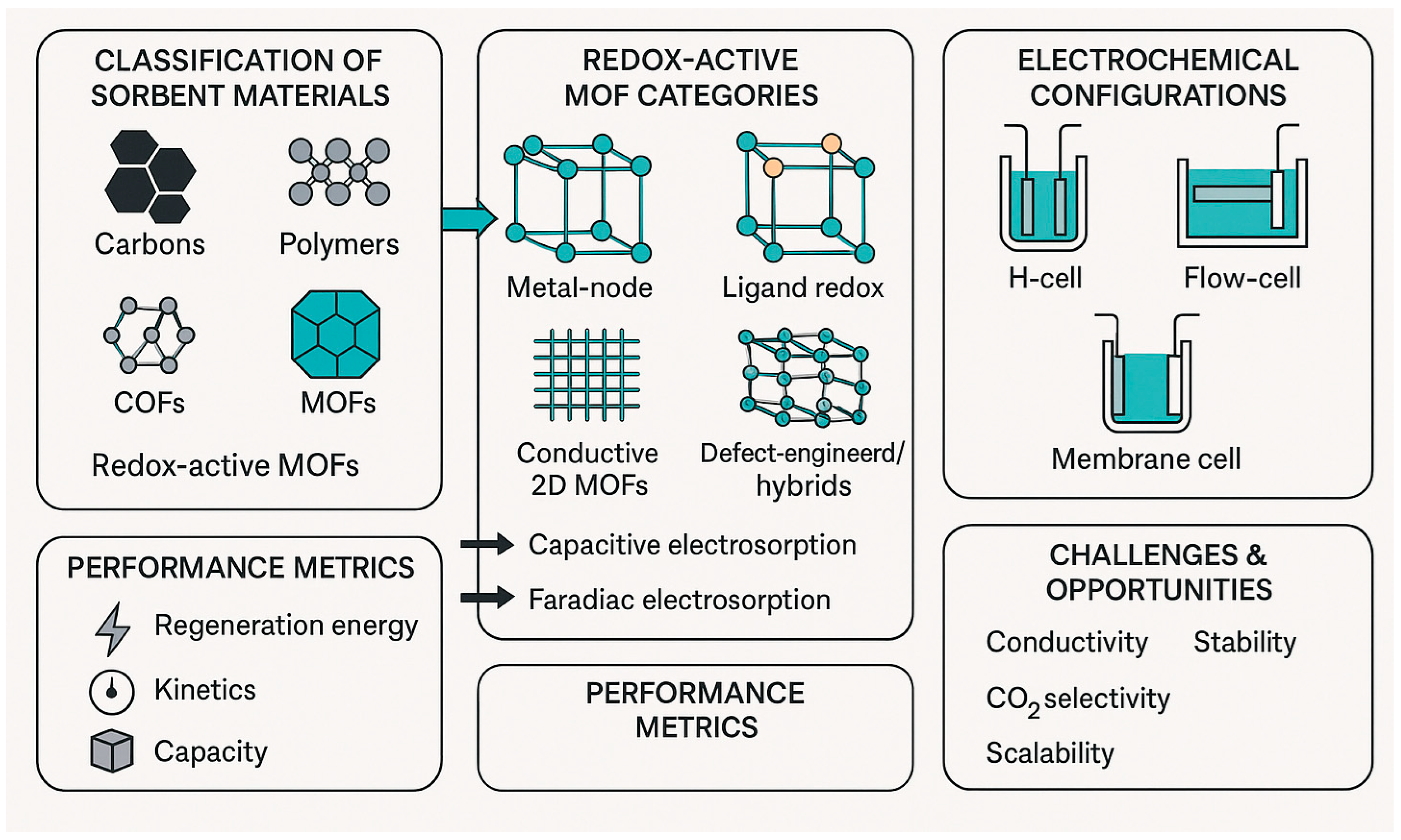
Disclaimer/Publisher’s Note: The statements, opinions and data contained in all publications are solely those of the individual author(s) and contributor(s) and not of MDPI and/or the editor(s). MDPI and/or the editor(s) disclaim responsibility for any injury to people or property resulting from any ideas, methods, instructions or products referred to in the content.

Article Metrics

Citations

Article Access Statistics

Article metric data becomes available approximately 24 hours after publication online.