Article

Selective Dehydration of 1,3-Cyclopentanediol to Cyclopentadiene over Lanthanum Phosphate Catalysts

1
College of Transportation Engineering, Dalian Maritime University, 1 Linghai Road, Dalian 116026, China
2
CAS Key Laboratory of Science and Technology on Applied Catalysis, Dalian Institute of Chemical Physics, Chinese Academy of Sciences, Dalian 116023, China
3
School of Light Industry and Chemical Engineering, Dalian Polytechnic University, Dalian 116034, China
*
Authors to whom correspondence should be addressed.
Catalysts 2025, 15(12), 1125; https://doi.org/10.3390/catal15121125
Submission received: 9 October 2025 / Revised: 1 November 2025 / Accepted: 20 November 2025 / Published: 2 December 2025

Abstract

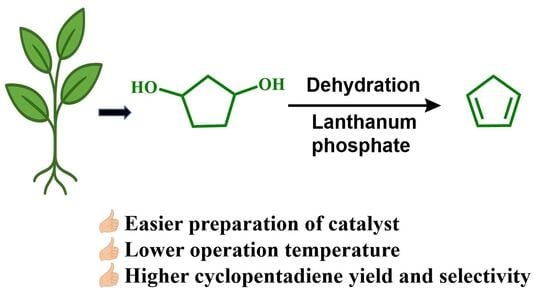
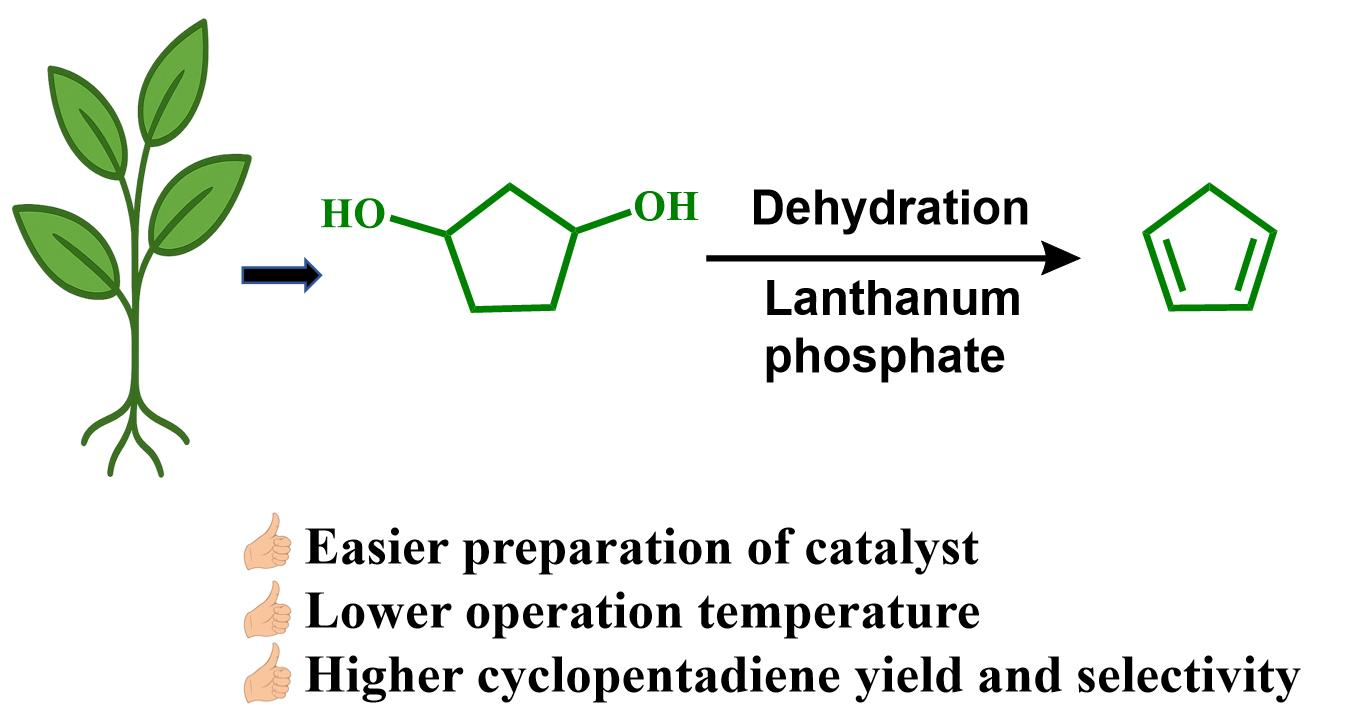
Cyclopentadiene is an important intermediate that is widely used in the production of useful chemicals, high-density aviation fuels and polymers. Conventional technologies for the production of cyclopentadiene from fossil energies suffer from low yield and selectivity. Therefore, the selective production of cyclopentadiene from renewable biomass is highly expected. In this work, a series of metal phosphates were found to be effective solid acid catalysts for the selective synthesis of cyclopentadiene from the dehydration of 1,3-cyclopentanediol, a platform compound that can be obtained from the aqueous phase rearrangement of furfuryl alcohol followed by hydrogenation. Among the investigated catalysts, lanthanum phosphate (LaP) exhibited the best performance. Over it, 100% 1,3-cyclopentanediol conversion and higher than 90% carbon yield of cyclopentadiene were achieved at 473 K under atmospheric pressure. Based on the results of characterization, the excellent performance of LaP catalyst can be rationalized by its higher amount of acid sites and average pore size.

Graphical Abstract

1. Introduction

Due to the increase in social concerns about the environment, the substitute of fossil energies with renewable, cheap, and abundant lignocellulose as the feedstock in the manufacture of fuels [1,2,3,4,5,6,7,8] and chemicals [9,10,11,12,13,14,15] has drawn tremendous attention. Cyclopentadiene is a widely used intermediate in the production of numerous chemicals, pharmaceuticals, polymers, and catalysts [16]. At the same time, it is also used as the feedstock in the manufacture of high-density aviation fuels (Such as JP-10, RJ-5, RJ-7, etc.) [17] and fuel additives (e.g., methylcyclopentadienyl manganese tricarbonyl to improve combustion efficiency and reduce engine knock in gasoline). Currently, cyclopentadiene is obtained from coal or petroleum in very low yields (10–20 g ton−1 from coal tar or ~14 kg ton−1 by the steam cracking of naphtha [18], which may limit its application in large scales. As a solution to this problem, the exploration of new technologies for the selective synthesis of cyclopentadiene with lignocellulose is highly expected [19,20,21]. Furfuryl alcohol is a chemical that has been manufactured in industrial scale from the hydrolysis/dehydration and hydrogenation of hemicellulose, one of the three important components of lignocellulose. In the recent work of our group [19,22,23], cyclopentadiene was selectively synthesized by the zeolite-catalyzed dehydration of 1,3-cyclopentanediol obtained by the aqueous phase rearrangement and hydrogenation of furfuryl alcohol. Among the investigated zeolite catalysts, H-form ultra-stable Y zeolite (H-USY) exhibited the best performance. Over it, ~80% cyclopentadiene yield was achieved when the reaction was carried out at 563–573 K using ethyl acetate as the solvent [23]. As we know, the preparation of H-USY is complicated. To fulfill the need of real application, it is still imperative to explore more efficient new solid acid catalysts that can be easily prepared. In the recent literature [24,25,26,27,28,29], metal phosphates were found to be effective solid acids for many dehydration reactions. To the best of our knowledge, there is no report about the dehydration of 1,3-cyclopentanediol over the metal phosphates.
In this work, zirconium phosphate (ZrP), cerium phosphate (CeP), aluminum phosphate (AlP), and lanthanum phosphate (LaP) were first reported as efficient catalysts for the dehydration of 1,3-cyclopentanediol to cyclopentadiene. Among them, the LaP catalyst prepared via a simple precipitation method demonstrated the best performance. Over it, 100% 1,3-cyclopentanediol conversion and higher than 90% carbon yield of cyclopentadiene were achieved at 473 K under atmospheric pressure. To gain deep insight of the excellent performance of LaP, we characterized the investigated catalysts by X-ray diffraction (XRD), N2-physisorption, NH3-chemisorption, and NH3-temperature-programmed desorption (NH3-TPD). Furthermore, we also checked the stability of LaP catalyst in the dehydration of 1,3-cyclopentanediol to cyclopentadiene.

2. Results

First of all, we compared the catalytic performances of ZrP, CeP, AlP, and LaP for the dehydration of 1,3-cyclopentanediol to cyclopentadiene at 473 K, a reaction temperature that is lower than what we used for the zeolite catalyst (563–573 K) [23]. Based on Figure 1 and Figures S1–S6 in Supporting Information, all of these catalysts are effective for the dehydration of 1,3-cyclopentanediol to cyclopentadiene. Among them, the LaP catalyst exhibited the best performance. Over it, evidently higher 1,3-cyclopentanediol conversion (100%) and cyclopentadiene yield (91.2%) were achieved under the same reaction conditions.
It is worth mentioning that cyclopentenol was also identified in the product from the dehydration of 1,3-cyclopentanediol over the ZrP catalyst (see Figures S1, S7 and S8 in Supporting Information). Based on the reaction pathway proposed in Scheme 1, the cyclopentenol was generated from the partial dehydration of 1,3-cyclopentanediol.
Compared with the H-USY catalyst reported in our previous work [23], the LaP catalyst has many advantages: (1) Easier preparation. As we know, the preparation of H-USY contains many steps (such as the crystallization of Y zeolite, ion-exchanging with ammonium salt solution, calcination, and dealumination). The preparation of LaP only contains two steps (precipitation and calcination). (2) Lower operation temperature. In our previous work, the H-USY was used at 563–573 K [23], while the LaP catalyst was operated at 473 K. In real application, the lower reaction temperature means lower energy consumption. To confirm the activity advantage of the LaP catalyst, we also studied the activity of H-USY under the same reaction conditions. As we can see from Figure S9 in the Supporting Information, the 1,3-cyclopentanediol conversion and cyclopentadiene yield over the H-USY catalyst are evidently lower than those over the LaP catalyst. (3) Higher cyclopentadiene yield. In this work, the cyclopentadiene yield over the LaP catalyst (91.2%) is higher than those over the H-USY (~80%) under the optimized reaction conditions (obtained at higher reaction temperature). All of these characters make LaP a promising catalyst in future application.
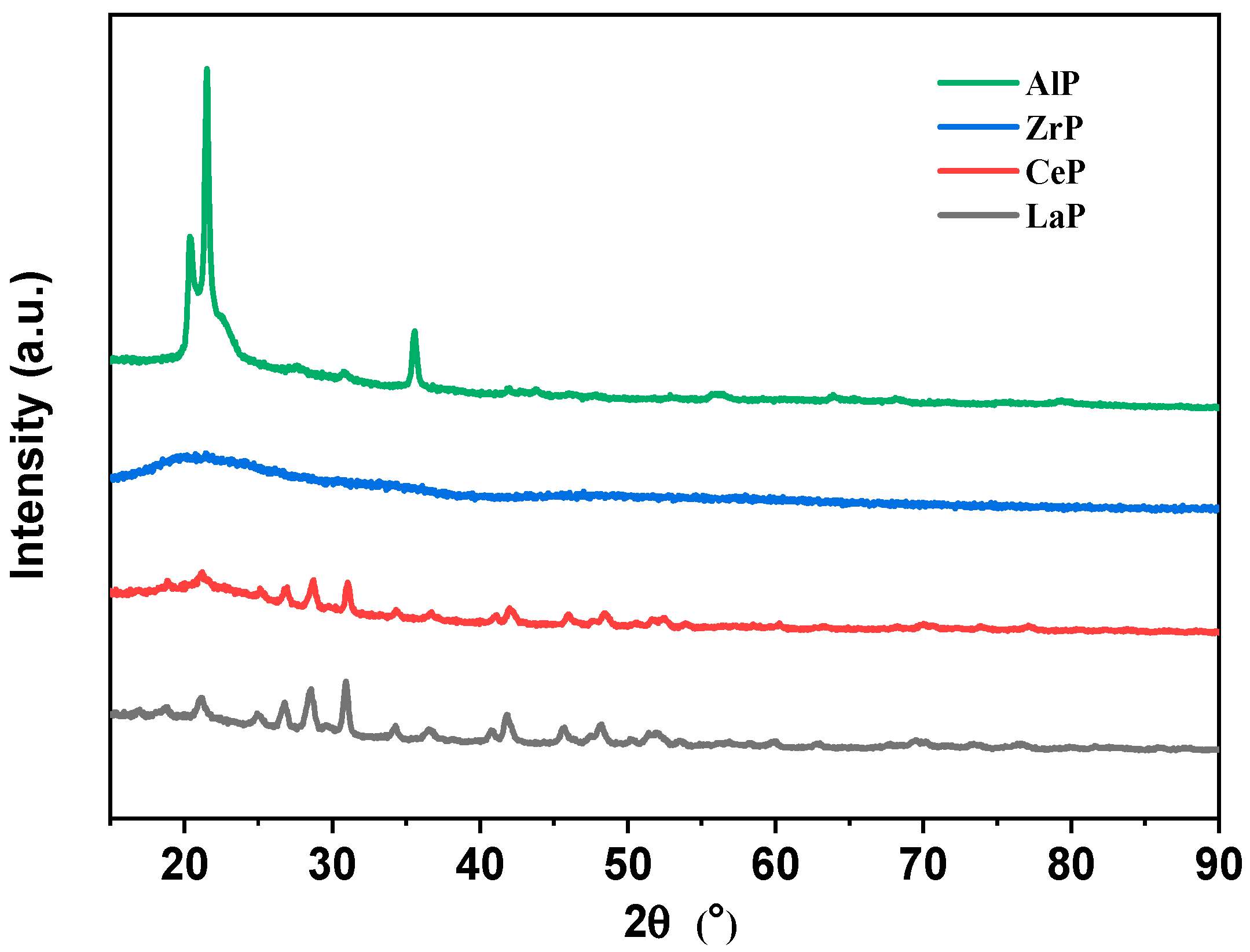
To figure out the reason for the excellent performance of LaP, we characterized the investigated catalysts by a series of technologies. From the results presented in Figure 2, evident diffraction peaks were observed in the XRD pattern of LaP catalysts. According to the standard JCPDS card (No. 032-0493), these peaks can be attributed to the crystal planes of lanthanum phosphate with monoclinic structure. The XRD pattern of the CeP catalyst is almost the same as that of the LaP catalyst, which can be comprehended by the similar electronic structure and atomic radius of Ce and La. In the XRD pattern of the AlP catalyst, three peaks were observed at 28.5°, 28.5°, and 30.9°. Based on the standard JCPDS card (No. 50-0054), these peaks can be attributed to the (020), (211), and (107) crystal planes of aluminum phosphate. In contrast, no evident peak was observed in the XRD pattern of ZrP, indicating this catalyst is amorphous.
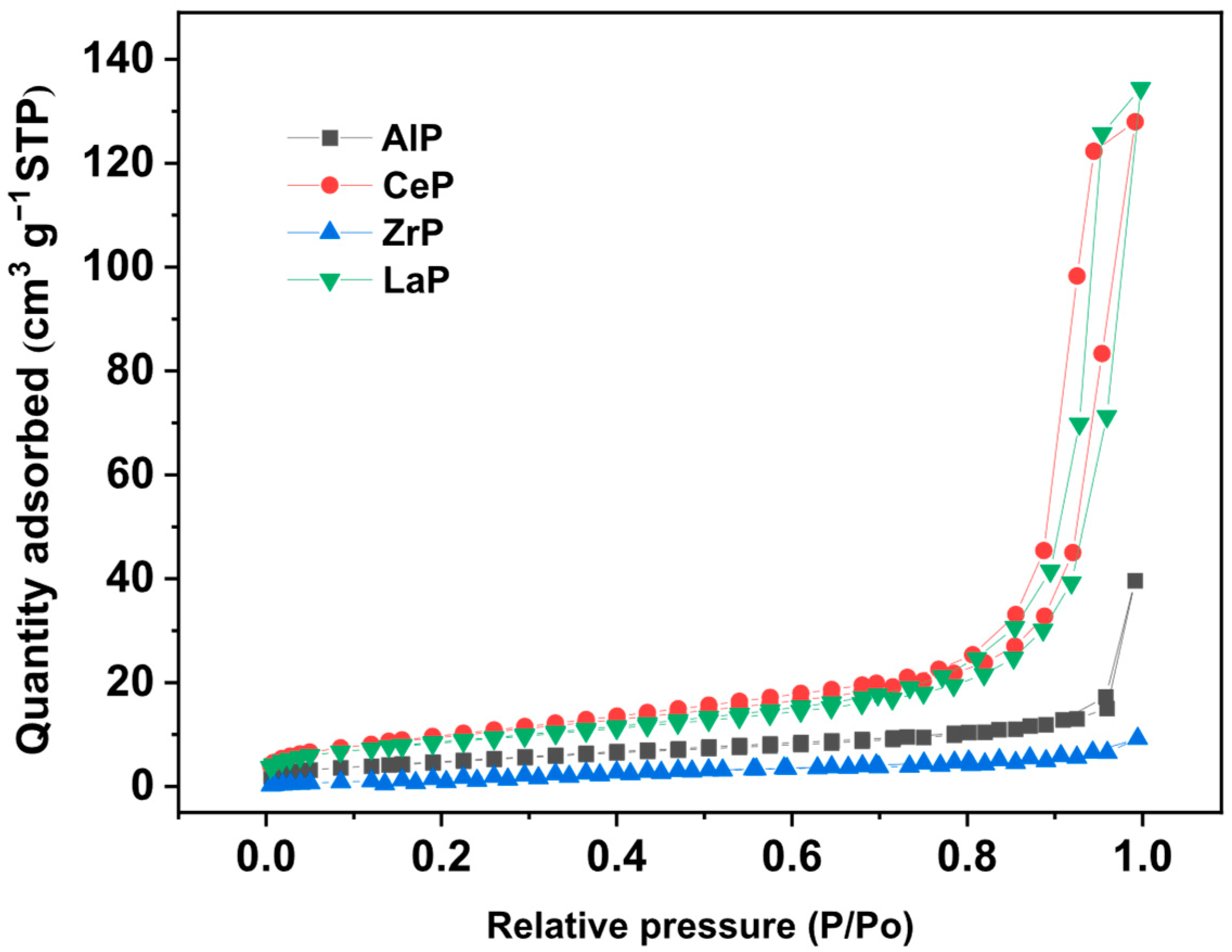
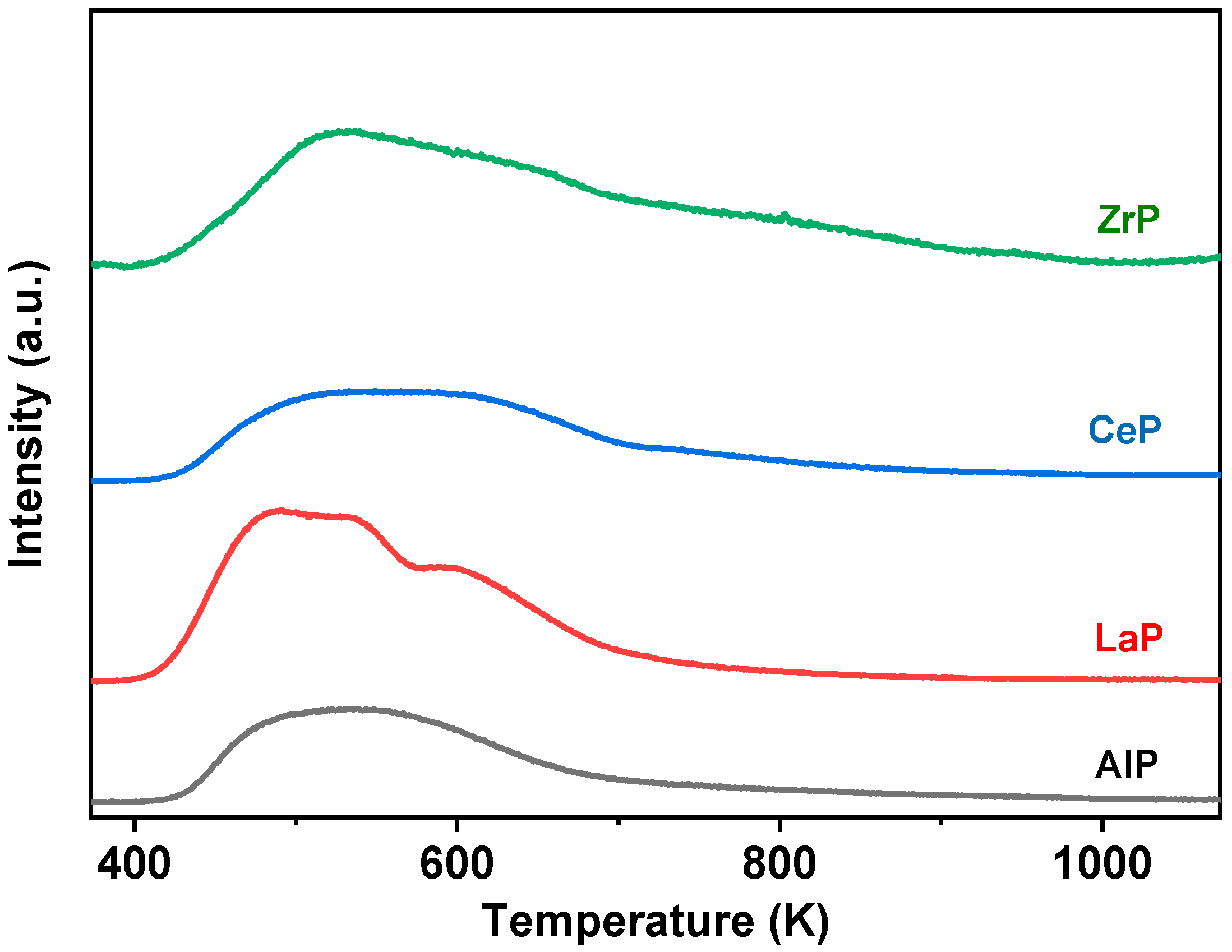
The N2-physisorption and NH3-chemisorption results were illustrated in Figure 3 and Table 1. According to IUPAC nomenclature, these catalysts exhibited H3-type sorption isotherm. Notably, they also possessed relatively low specific surface areas and small pore sizes, indicating that the dehydration reaction predominantly occurs on the external surface of the catalyst particles. As we can see from Table 1, the average pore sizes of the investigated catalysts decreased in the order of LaP (22.0 nm) > CeP (18.8 nm) > AlP (12.7 nm) > ZrP (6.4 nm). Meanwhile, it was also noticed that the amount of acid sites of these catalysts decreased in the order of LaP (0.159 mmol g−1) > AlP (0.105 mmol g−1) > CeP (0.060 mmol g−1) > ZrP (0.051 mmol g−1). This sequence is consistent with the activity order of these catalysts in the dehydration of 1,3-cyclopentanediol to cyclopentadiene (LaP > AlP > CeP > ZrP). The acid strengths of the investigated catalysts were characterized by NH3-TPD. In line with conventional interpretation [30], desorption peaks observed in the temperature ranges 373–523 K, 523–673 K, and >673 K are typically assigned to weak, medium-strength, and strong acid sites, respectively. As shown in Figure 4, the NH3-TPD profiles revealed that the acid sites on the surfaces of ZrP, CeP, LaP, and AlP catalysts mainly composed weak and medium-strength acid sites. No evident relationship was noticed between the acid strengths of catalysts and their activity in the dehydration of 1,3-cyclopentanediol to cyclopentadiene. Based on the above information, we believed that the higher amount of acid sites and pore size of the LaP catalyst may be the reasons for its better performance in the dehydration of 1,3-cyclopentanediol to cyclopentadiene.
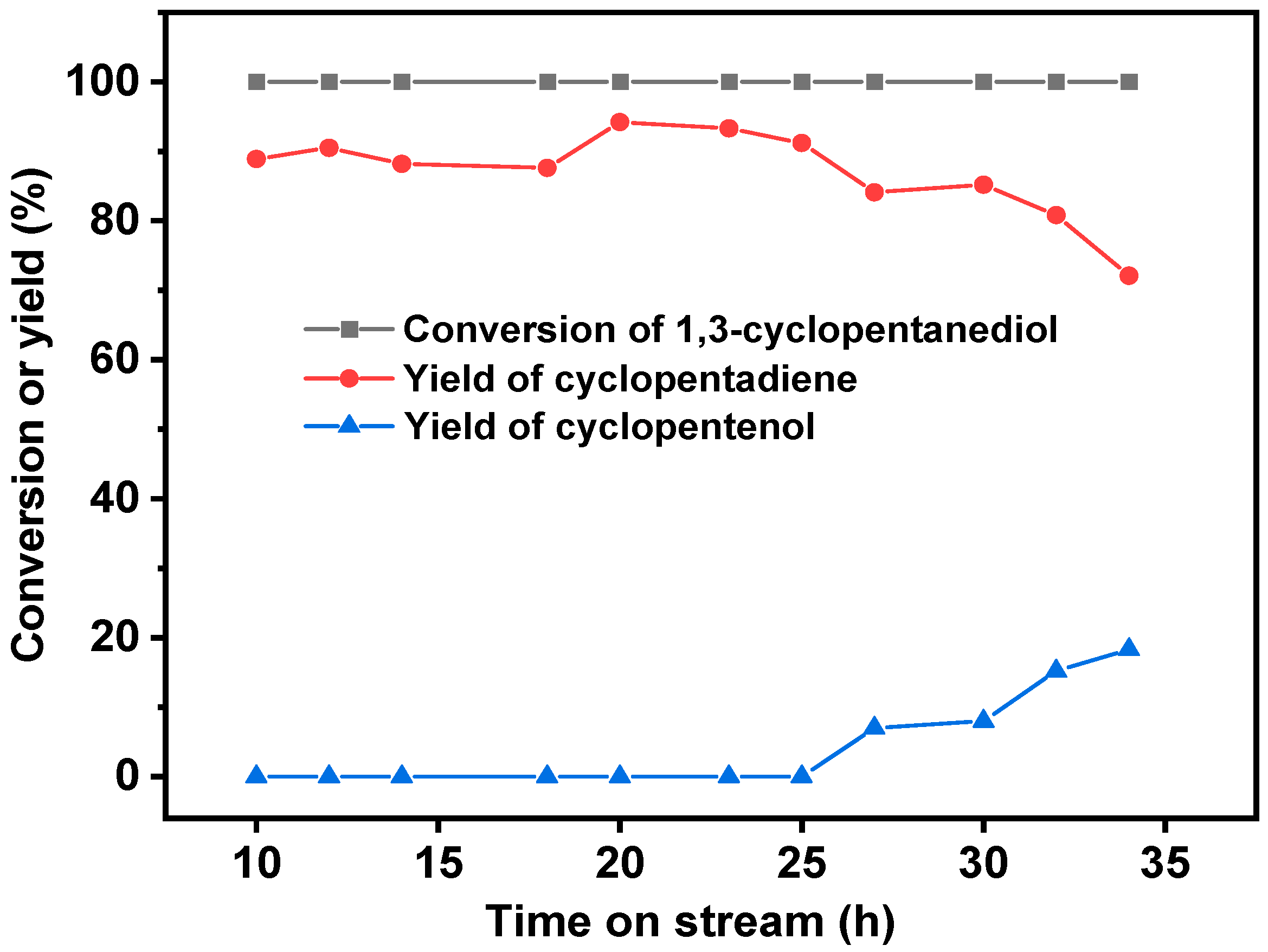
To fulfill the need of real application, we also checked the stability of the LaP catalyst for the dehydration of 1,3-cyclopentanediol to cyclopentadiene. From Figure 5, it was noticed that the yield of cyclopentadiene over the LaP catalyst slightly decreased after it was used for about 25 h. At the same time, cyclopentenol (from the partial dehydration of 1,3-cyclopentanediol) was identified in the product, indicating the activity of LaP catalyst decreased with the increase in time-on-stream.
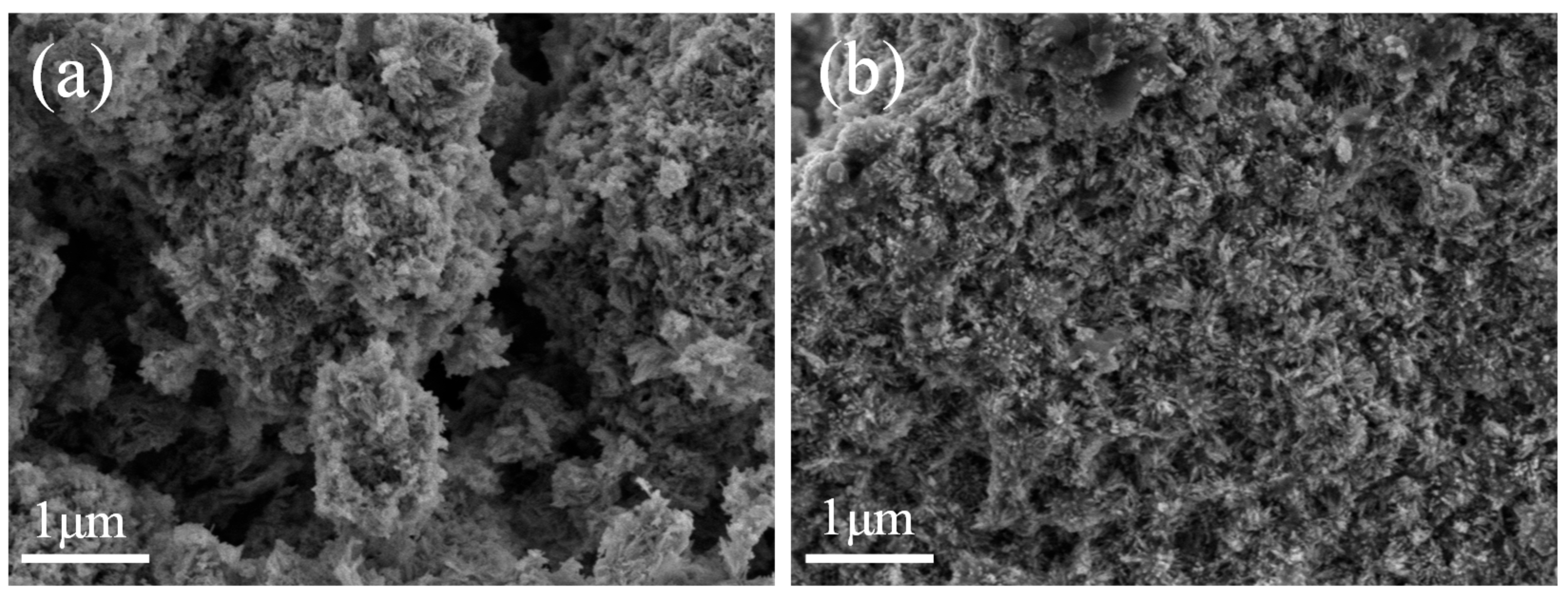
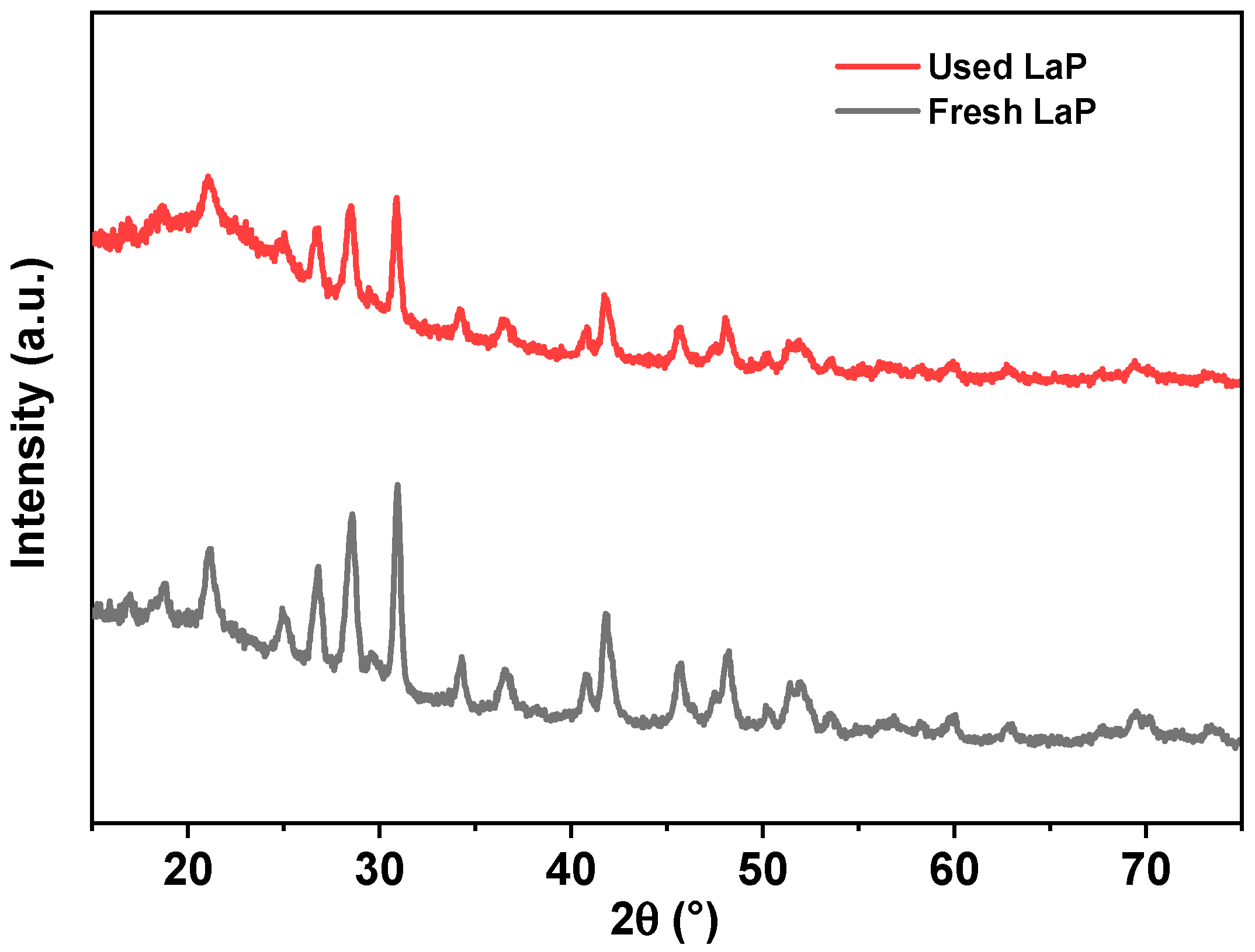
To figure out the reason for this phenomenon, we characterized the fresh and used LaP catalyst by a series of technologies. Based on the XRD results illustrated in Figure 6, the LaP catalyst preserved its original structure even after being used for the dehydration of 1,3-cyclopentanediol. Likewise, no evident difference in morphology was observed from the SEM images of the fresh and used LaP catalysts (see Figure 7). Therefore, we cannot attribute the deactivation to the crystal structure or morphology change in the LaP catalyst.
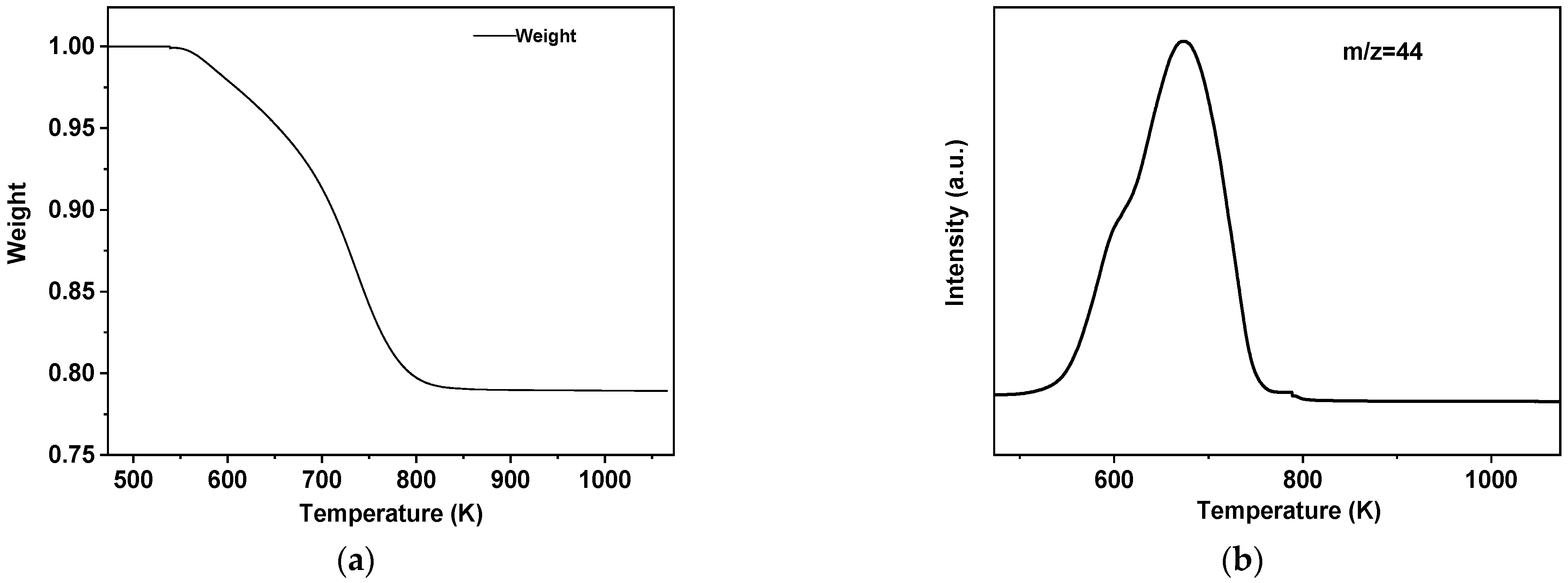
Based on the N2-physisorption and NH3-chemisorption results illustrated in Table 2, an evident decrease in SBET and the amount of acid sites were observed after the LaP catalyst was used for the dehydration of 1,3-cyclopentanediol, which may be the reason for the deactivation of the LaP catalyst. According to the thermogravimetric analysis coupled with mass spectrometry (TG-MS) result of the used LaP catalyst (see Figure 8), the decrease of SBET and the amount of acid sites can be rationalized by the carbon deposition generation during the reaction. From the EDX spectra of the fresh and used LaP catalysts illustrated in Figures S10 and S11 in the Supporting Information, we can see that the carbon content of LaP significantly increased after it was used for the dehydration of 1,3-cyclopentanediol. This result further confirms the formation of coke during the reaction.
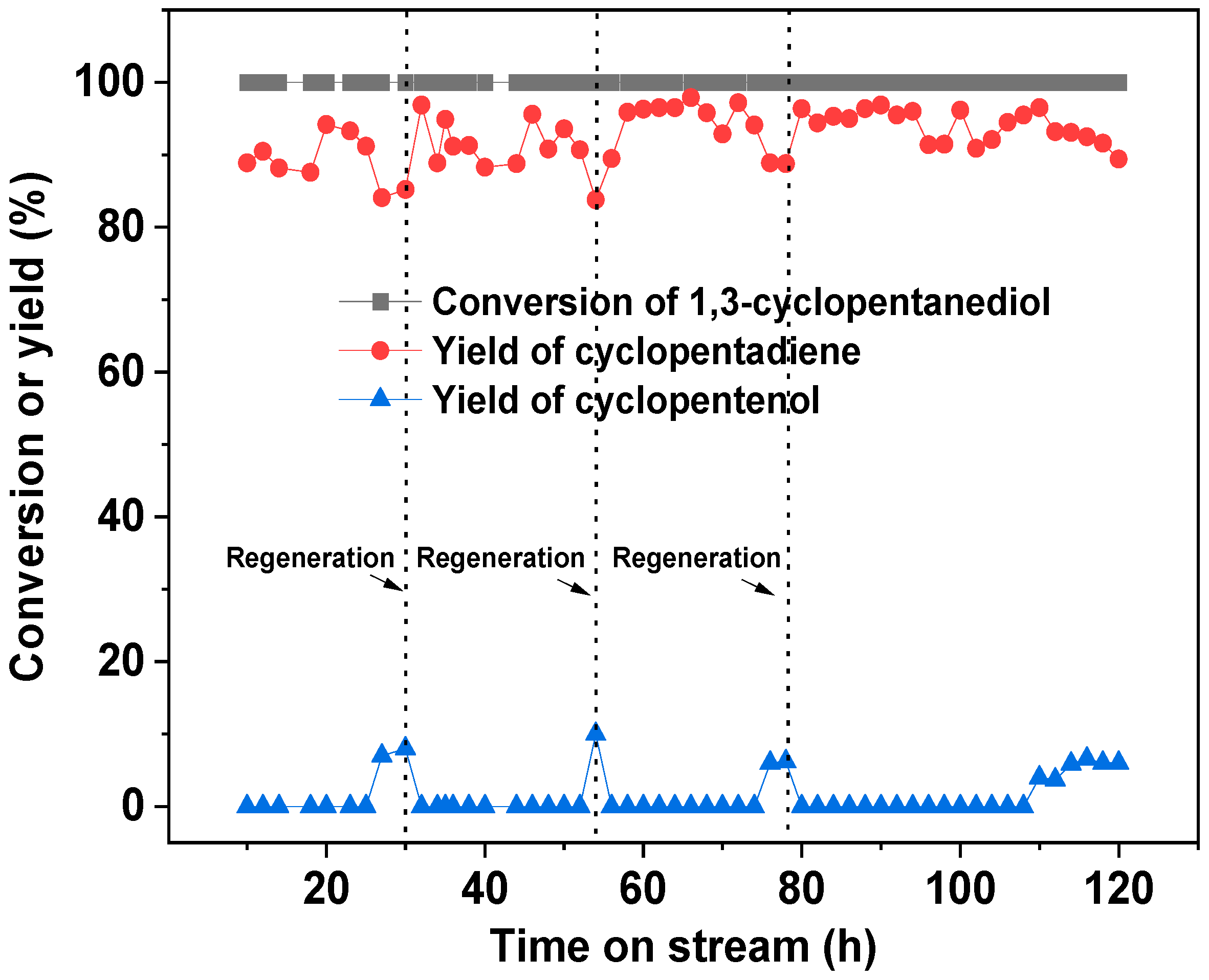
As a solution to this problem, we regenerated the used LaP catalyst via in situ calcination in air flow at 973 K for 4 h. It was found that the activity of LaP catalyst can be returned to its initial value. This is advantageous in real application (see Figure 9).

3. Materials and Methods

3.1. Materials

All materials were commercially available and used as received, unless otherwise indicated. Dicyclopentadiene (96%), ethyl acetate (98%), La(NO3)3·6H2O, Ce(NO3)3·6H2O, Al(NO3)3·9H2O, and Zr(NO3)4·5H2O were purchased from Aladdin Reagent Co., Ltd. Shanghai, China. H3PO4 (85%) was supplied by Beijing Chemical Works, Beijing, China. The 1,3-cyclopentanediol used in the dehydration step was homemade using the method described in our previous works [19,22]. According to its NMR spectra illustrated in Figure S12 in the Supporting Information, the 1,3-cyclopentanediol used in this work has high purity. The cyclopentadiene used in the calibration was prepared by the retro-Diels–Alder reaction of dicyclopentadiene at 433 K. Based on the GC chromatograms illustrated in Figure S13 in the Supporting Information, the cyclopentadiene has high purity. H-USY zeolite (SiO2/Al2O3 molar ratio = 25) was purchased from Nankai University Catalyst Co., Ltd, Tianjing, China.

3.2. Preparation of Catalysts

Metal phosphates were obtained by a simple precipitation method. First, 4 mmol of metal nitrate was dissolved in 150 mL of distilled water. Subsequently, 50 mL of 0.4 mol L−1 H3PO4 solution was slowly added into the above solution dropwise. The mixture was stirred at 313 K for 5 h and then aged overnight. The solids formed were filtered, washed with distilled water to pH = 7, and dried in an oven at 393 K for 4 h. Finally, the solid was calcined at 973 K for 4 h and referred as LaP, CeP, AlP, and ZrP catalyst.

3.3. Catalyst Characterization

The XRD patterns of the investigated catalysts were collected by an X′pert Pro, PANalytical (Malvern Panalytical, Almelo, The Netherlands) using Cu Kα = 1.5406 Å. The specific surface area, average pore size, and pore volume of the catalyst were determined using a Micromeritics ASAP 2460 physical adsorption analyzer (Micromeritics Instrument Corporation, Norcross, GA, USA). Prior to the analysis, the sample was pretreated at 383 K under vacuum for 1 h, followed by a 6 h degassing at 623 K to remove various gases and impurities adsorbed on the catalyst surface. The N2 adsorption–desorption measurement was conducted at 77 K liquid nitrogen temperature under a vacuum pressure of 10−6 torr. The specific surface area was calculated using the BET equation after completion of the analysis. The method adopted for calculating the aperture distribution was the Barrett-Joyner Halenda method. The thermogravimetric analysis (TGA) of used catalyst was acquired by a Discovery SDT 600 thermogravimetric analyzer (TA Instruments, New Castle, DE, USA). The acidities of the catalysts were characterized by NH3 chemisorption and NH3 temperature-programmed desorption (NH3-TPD) using a Micromeritics AutoChem II 2920 analyzer (Micromeritics Instrument Corporation, Norcross, GA, USA). For each measurement, 0.1 g catalyst sample was employed. The sample was pretreated under He flow (973 K) to desorb the moisture and impurities before measurement. After the stabilization of baseline, NH3 pulses were introduced until the sample reached saturation adsorption. The adsorption signals were detected by a thermal conductivity detector (TCD), and the amounts of acid sites were calculated from the consumption of NH3. Subsequently, TPD experiments were carried out in the temperature range of 373–1073 K at a heating rate of 10 K min−1 under He flow, and the desorption profiles were monitored by mass spectrometry (at a m/z ratio of 15) (Agilent Technologies, Wilmington, DE, USA). The TEM images of catalysts were acquired by a JEM-2100F field emission electronic microscope (Japan Electron Optics Laboratory (JEOL) Ltd., Tokyo, Japan). The elemental distribution of the catalysts was analyzed by a scanning transmission electron microscopy (STEM) equipped with an energy dispersive X-ray spectroscopy (EDX) system.

3.4. Dehydration of 1,3-Cyclopentanediol

The dehydration of 1,3-cyclopentanediol to cyclopentadiene was conducted at 473 K (as we can see from Figure S14 in the Supporting Information, this is the optimum reaction temperature for the dehydration of 1,3-cyclopentanediol to cyclopentadiene over the LaP catalyst) under atmospheric pressure in a fixed-bed reactor described in our previous work [23]. For each test, 1.25 g metal phosphate catalyst was used, 7 wt% solution of 1,3-cyclopentanediol in ethyl acetate was fed into the reactor via an HPLC pump (Dalian Elite Analytical Instruments Co., Ltd., Dalian, China) at a flow rate of 0.04 mL min−1. The liquid products were collected, drained periodically and analyzed by an Agilent 7890B gas chromatograph (Agilent Technologies, Wilmington, DE, USA) equipped with an FFAP capillary column (30 m, 0.32 mm ID, 0.5 mm film) and a flame ionization detector (FID).

4. Conclusions

LaP was found to be a highly effective catalyst for the selective dehydration of 1,3-cyclopentanediol to cyclopentadiene. Over it, 100% 1,3-cyclopentanediol conversion and higher than 90% carbon yield of cyclopentadiene were achieved at 473 K under atmospheric pressure. Based on the characterization results, the excellent performance of LaP catalyst can be rationalized by its higher amount of acid sites and average pore size. During the activity test, carbon deposition may take place on the surface of LaP catalyst. This problem can be solved by in situ calcination in air flow at its preparation temperature. Taking into the many advantages of LaP (such as easier preparation, lower operation temperature, and higher cyclopentadiene yield), we believe it is a promising catalyst in future application.

Supplementary Materials

The following supporting information can be downloaded at https://www.mdpi.com/article/10.3390/catal15121125/s1. Figure S1: GC chromatogram of the product from the dehydration of 1,3-cyclopentanediol over the ZrP catalyst; Figure S2: GC chromatogram of the product from the dehydration of 1,3-cyclopentanediol over the CeP catalyst; Figure S3: GC chromatogram of the product from the dehydration of 1,3-cyclopentanediol over the AlP catalyst; Figure S4: GC chromatogram of the product from the dehydration of 1,3-cyclopentanediol over the LaP catalyst; Figure S5: Mass spectrogram of the cyclopentadiene from the dehydration of 1,3-cyclopentanediol; Figure S6: 1H and 13C NMR spectra of the cyclopentenol from the dehydration of 1,3-cyclopentanediol over the ZrP catalyst; Figure S7: 1H and 13C NMR spectra of the cyclopentenol from the dehydration of 1,3-cyclopentanediol over the ZrP catalyst; Figure S8: Mass spectrogram of the cyclopentenol from the dehydration of 1,3-cyclopentanediol over the ZrP catalyst; Figure S9: Conversions of 1,3-cyclopentanediol and the yields of different products over the LaP and H-USY catalysts; Figure S10: EDX spectra of the fresh LaP catalyst; Figure S11: EDX spectra of the used LaP catalyst; Figure S12: 1H and 13C NMR spectra of the 1,3-cyclopentanediol used in this work; Figure S13: Gas chromatograms of the cyclopentadiene and dicyclopentadiene used in the calibration; Figure S14: Conversions of 1,3-cyclopentanediol and the yields of different products over the LaP catalyst as the function of reaction temperature.

Author Contributions

Investigation and data curation, H.L. and X.Z.; visualization and writing—original draft preparation, X.S.; writing—review and editing, Y.C.; supervision, project administration, and funding acquisition, N.L. All authors have read and agreed to the published version of the manuscript.

Funding

This research was funded by the National Key R&D Program of China (no. 2022YFB4201802) and the National Natural Science Foundation of China (no. 22178335), DICP (Grant: DICP I202448).

Data Availability Statement

The original contributions presented in this study are included in the article/Supplementary Material. Further inquiries can be directed to the corresponding authors.

Conflicts of Interest

The authors declare no conflicts of interest.

References

  1. Huber, G.W.; Iborra, S.; Corma, A. Synthesis of transportation fuels from biomass: Chemistry, catalysts, and engineering. Chem. Rev. 2006, 106, 4044–4098. [Google Scholar] [CrossRef]
  2. Li, C.; Zhao, X.; Wang, A.; Huber, G.W.; Zhang, T. Catalytic Transformation of Lignin for the Production of Chemicals and Fuels. Chem. Rev. 2015, 115, 11559–11624. [Google Scholar] [CrossRef]
  3. Li, G.; Wang, R.; Pang, J.; Wang, A.; Li, N.; Zhang, T. Production of Renewable Hydrocarbon Biofuels with Lignocellulose and Its Derivatives over Heterogeneous Catalysts. Chem. Rev. 2024, 124, 2889–2954. [Google Scholar] [CrossRef]
  4. Bond, J.Q.; Upadhye, A.A.; Olcay, H.; Tompsett, G.A.; Jae, J.; Xing, R.; Alonso, D.M.; Wang, D.; Zhang, T.; Kumar, R.; et al. Production of renewable jet fuel range alkanes and commodity chemicals from integrated catalytic processing of biomass. Energy Environ. Sci. 2014, 7, 1500–1523. [Google Scholar] [CrossRef]
  5. Corma, A.; de la Torre, O.; Renz, M. Production of high quality diesel from cellulose and hemicellulose by the sylvan process: Catalysts and process variables. Energy Environ. Sci. 2012, 5, 6328–6344. [Google Scholar] [CrossRef]
  6. Harvey, B.G.; Quintana, R.L. Synthesis of renewable jet and diesel fuels from 2-ethyl-1-hexene. Energy Environ. Sci. 2010, 3, 352–357. [Google Scholar] [CrossRef]
  7. Xie, J.; Pan, L.; Nie, G.; Xie, J.; Liu, Y.; Ma, C.; Zhang, X.; Zou, J.-J. Photoinduced cycloaddition of biomass derivatives to obtain high-performance spiro-fuel. Green Chem. 2019, 21, 5886–5895. [Google Scholar] [CrossRef]
  8. Muldoon, J.A.; Harvey, B.G. Bio-Based Cycloalkanes: The Missing Link to High-Performance Sustainable Jet Fuels. ChemSusChem 2020, 13, 5777–5807. [Google Scholar] [CrossRef] [PubMed]
  9. Besson, M.; Gallezot, P.; Pinel, C. Conversion of biomass into chemicals over metal catalysts. Chem. Rev. 2014, 114, 1827–1870. [Google Scholar] [CrossRef]
  10. Mika, L.T.; Cséfalvay, E.; Németh, Á. Catalytic Conversion of Carbohydrates to Initial Platform Chemicals: Chemistry and Sustainability. Chem. Rev. 2018, 118, 505–613. [Google Scholar] [CrossRef]
  11. Jing, Y.; Guo, Y.; Xia, Q.; Liu, X.; Wang, Y. Catalytic Production of Value-Added Chemicals and Liquid Fuels from Lignocellulosic Biomass. Chem 2019, 5, 2520–2546. [Google Scholar] [CrossRef]
  12. Shao, Y.; Xia, Q.; Dong, L.; Liu, X.; Han, X.; Parker, S.F.; Cheng, Y.; Daemen, L.L.; Ramirez-Cuesta, A.J.; Yang, S.; et al. Selective production of arenes via direct lignin upgrading over a niobium-based catalyst. Nat. Commun. 2017, 8, 16104. [Google Scholar] [CrossRef]
  13. Wang, Y.L.; Deng, W.P.; Wang, B.J.; Zhang, Q.H.; Wan, X.Y.; Tang, Z.C.; Wang, Y.; Zhu, C.; Cao, Z.X.; Wang, G.C.; et al. Chemical synthesis of lactic acid from cellulose catalysed by lead(II) ions in water. Nat. Commun. 2013, 4, 2141. [Google Scholar] [CrossRef]
  14. Meng, Q.; Yan, J.; Wu, R.; Liu, H.; Sun, Y.; Wu, N.; Xiang, J.; Zheng, L.; Zhang, J.; Han, B. Sustainable production of benzene from lignin. Nat. Commun. 2021, 12, 4534. [Google Scholar] [CrossRef]
  15. Deng, W.; Wang, Y.; Zhang, S.; Gupta, K.M.; Hülsey, M.J.; Asakura, H.; Liu, L.; Han, Y.; Karp, E.M.; Beckham, G.T.; et al. Catalytic amino acid production from biomass-derived intermediates. Proc. Natl. Acad. Sci. USA 2018, 115, 5093–5098. [Google Scholar] [CrossRef]
  16. Levandowski, B.J.; Raines, R.T. Click Chemistry with Cyclopentadiene. Chem. Rev. 2021, 121, 6777–6801. [Google Scholar] [CrossRef]
  17. Zhang, X.; Pan, L.; Wang, L.; Zou, J.-J. Review on synthesis and properties of high-energy-density liquid fuels: Hydrocarbons, nanofluids and energetic ionic liquids. Chem. Eng. Sci. 2018, 180, 95–125. [Google Scholar] [CrossRef]
  18. Claus, M.; Claus, E.; Claus, P.; Honicke, D.; Fodish, R.; Olson, M. ULLMANN’S Encyclopedia of Industrial Chemistry; Wiley-VCH Verlag GmbH & Co. KGaA: Weinheim, Germany, 2016. [Google Scholar]
  19. Li, G.; Hou, B.; Wang, A.; Xin, X.; Cong, Y.; Wang, X.; Li, N.; Zhang, T. Making JP-10 Superfuel Affordable with a Lignocellulosic Platform Compound. Angew. Chem. Int. Ed. 2019, 58, 12154–12158. [Google Scholar] [CrossRef] [PubMed]
  20. Woodroffe, J.-D.; Harvey, B.G. Synthesis of Bio-Based Methylcyclopentadiene from 2,5-Hexanedione: A Sustainable Route to High Energy Density Jet Fuels. ChemSusChem 2021, 14, 339–343. [Google Scholar] [CrossRef]
  21. Nie, G.; Shi, C.; Dai, Y.; Liu, Y.; Liu, Y.; Ma, C.; Liu, Q.; Pan, L.; Zhang, X.; Zou, J.-J. Producing methylcyclopentadiene dimer and trimer based high-performance jet fuels using 5-methyl furfural. Green Chem. 2020, 22, 7765–7768. [Google Scholar] [CrossRef]
  22. Li, G.; Li, N.; Zheng, M.; Li, S.; Wang, A.; Cong, Y.; Wang, X.; Zhang, T. Industrially scalable and cost-effective synthesis of 1,3-cyclopentanediol with furfuryl alcohol from lignocellulose. Green Chem. 2016, 18, 3607–3613. [Google Scholar] [CrossRef]
  23. Zhang, X.; Li, G.; Yu, H.; Xing, L.; Wang, A.; Wang, W.; Zhao, Z.; Li, N. Integration of bio-JP-10 synthetic route from furfuryl alcohol. Catal. Today 2025, 443, 114987. [Google Scholar] [CrossRef]
  24. Armaroli, T.; Busca, G.; Carlini, C.; Giuttari, M.; Raspolli Galletti, A.M.; Sbrana, G. Acid sites characterization of niobium phosphate catalysts and their activity in fructose dehydration to 5-hydroxymethyl-2-furaldehyde. J. Mol. Catal. A Chem. 2000, 151, 233–243. [Google Scholar] [CrossRef]
  25. Weingarten, R.; Tompsett, G.A.; Conner, W.C.; Huber, G.W. Design of solid acid catalysts for aqueous-phase dehydration of carbohydrates: The role of Lewis and Brønsted acid sites. J. Catal. 2011, 279, 174–182. [Google Scholar] [CrossRef]
  26. Pholjaroen, B.; Li, N.; Wang, Z.; Wang, A.; Zhang, T. Dehydration of xylose to furfural over niobium phosphate catalyst in biphasic solvent system. J. Energy Chem. 2013, 22, 826–832. [Google Scholar] [CrossRef]
  27. Guo, Z.; Theng, D.S.; Tang, K.Y.; Zhang, L.L.; Huang, L.; Borgna, A.; Wang, C. Dehydration of lactic acid to acrylic acid over lanthanum phosphate catalysts: The role of Lewis acid sites. Phys. Chem. Chem. Phys. 2016, 18, 23746–23754. [Google Scholar] [CrossRef]
  28. Shivhare, A.; Kumar, A.; Srivastava, R. Metal phosphate catalysts to upgrade lignocellulose biomass into value-added chemicals and biofuels. Green Chem. 2021, 23, 3818–3841. [Google Scholar] [CrossRef]
  29. Feng, R.; Qi, Y.; Liu, S.; Cui, L.; Dai, Q.; Bai, C. Production of renewable 1,3-pentadiene over LaPO4 via dehydration of 2,3-pentanediol derived from 2,3-pentanedione. Appl. Catal. A 2022, 633, 118514. [Google Scholar] [CrossRef]
  30. Corma, A. Inorganic Solid Acids and Their Use in Acid-Catalyzed Hydrocarbon Reactions. Chem. Rev. 1995, 95, 559–614. [Google Scholar] [CrossRef]
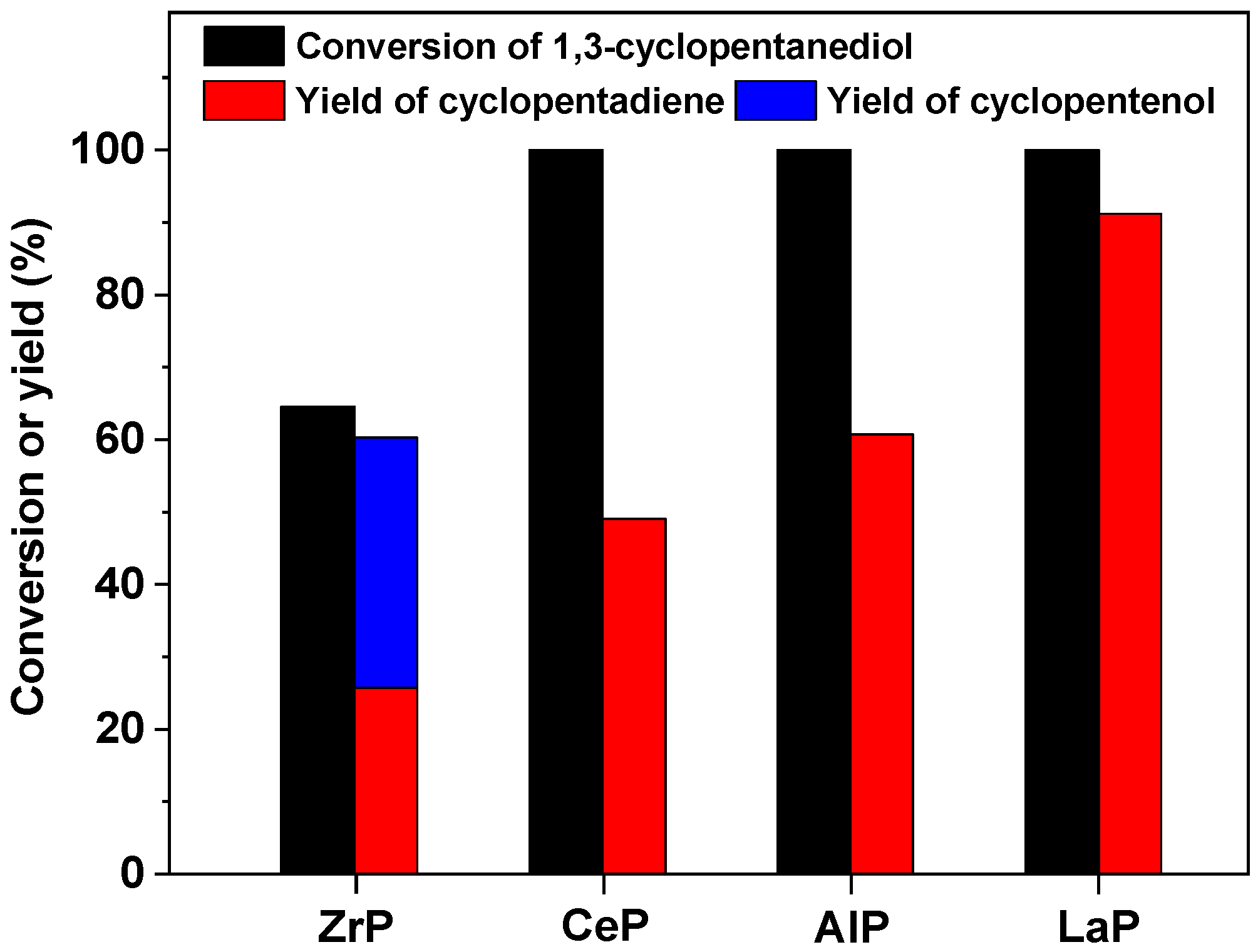
Figure 1. Conversions of 1,3-cyclopentanediol and the yields of different products over the investigated catalysts. Reaction conditions: 473 K, 1.25 g catalyst, flow rate of 7 wt% of 1,3-cyclopentanediol in ethyl acetate = 0.04 mL min−1.
Catalysts 15 01125 g001
Scheme 1. Reaction pathway for the generation of cyclopentenol and cyclopentadiene from the dehydration of 1,3-cyclopentanediol.
Catalysts 15 01125 sch001
Figure 2. XRD patterns of the metal phosphate catalysts.
Catalysts 15 01125 g002
Figure 3. N2 adsorption–desorption isotherm of metal phosphate catalysts.
Catalysts 15 01125 g003
Figure 4. NH3-TPD profiles of the investigated catalysts.
Catalysts 15 01125 g004
Figure 5. Conversion of 1,3-cyclopentanediol and the yields of different products over the LaP catalyst as the function of time-on-stream. Reaction condition: 473 K, 1.25 g LaP, flow rate of 7 wt% of 1,3-cyclopentanediol in ethyl acetate = 0.04 mL min−1.
Catalysts 15 01125 g005
Figure 6. XRD patterns of the fresh and used LaP catalysts.
Catalysts 15 01125 g006
Figure 7. SEM images of the (a) fresh and (b) used LaP catalysts.
Catalysts 15 01125 g007
Figure 8. TG-MS result (a,b) of the used LaP catalyst.
Catalysts 15 01125 g008
Figure 9. Conversion of 1,3-cyclopentanediol and the yields of different products over the LaP catalyst as the function of time-on-stream. Reaction condition: 473 K, 1.25 g LaP, flow rate of 7 wt% of 1,3-cyclopentanediol in ethyl acetate = 0.04 mL min−1.
Catalysts 15 01125 g009
Table 1. Specific BET surface areas (SBET), the average pore sizes, and the amounts of acid sites of the investigated catalysts.
CatalystSBET (m2 g−1) 1Average Pore Size (nm) 1Amount of Acid Sites (mmol g−1) 2
ZrP8.56.40.051
CeP35.918.80.060
AlP17.912.70.105
LaP30.822.00.159
1 Measured by N2-physisorption. 2 Measured by NH3-chemisorption.
Table 2. Specific BET surface areas (SBET), average pore sizes, and the amounts of acid sites of the fresh and used LaP catalysts.
CatalystSBET (m2 g−1) 1Average Pore Size (nm) 1Amount of Acid Sites (mmol g−1) 2
Fresh LaP30.822.00.159
Used LaP19.014.60.113
1 Measured by N2-physisorption. 2 Measured by NH3-chemisorption.
Disclaimer/Publisher’s Note: The statements, opinions and data contained in all publications are solely those of the individual author(s) and contributor(s) and not of MDPI and/or the editor(s). MDPI and/or the editor(s) disclaim responsibility for any injury to people or property resulting from any ideas, methods, instructions or products referred to in the content.