
Article

Modified Metal-Doped Fe-Al Catalysts for H2-Rich Syngas Production from Microwave-Assisted Gasification of HDPE Plastic
by
Jingmo Zhou
,
Chaoyue Liu
,
Wenke Zhao
*,
Faizan Ahmad
and
Yaning Zhang
*
School of Energy Science and Engineering, Harbin Institute of Technology, Harbin 150001, China
*
Authors to whom correspondence should be addressed.
Catalysts 2025, 15(11), 1032; https://doi.org/10.3390/catal15111032
Submission received: 12 October 2025 / Revised: 23 October 2025 / Accepted: 25 October 2025 / Published: 1 November 2025

Abstract

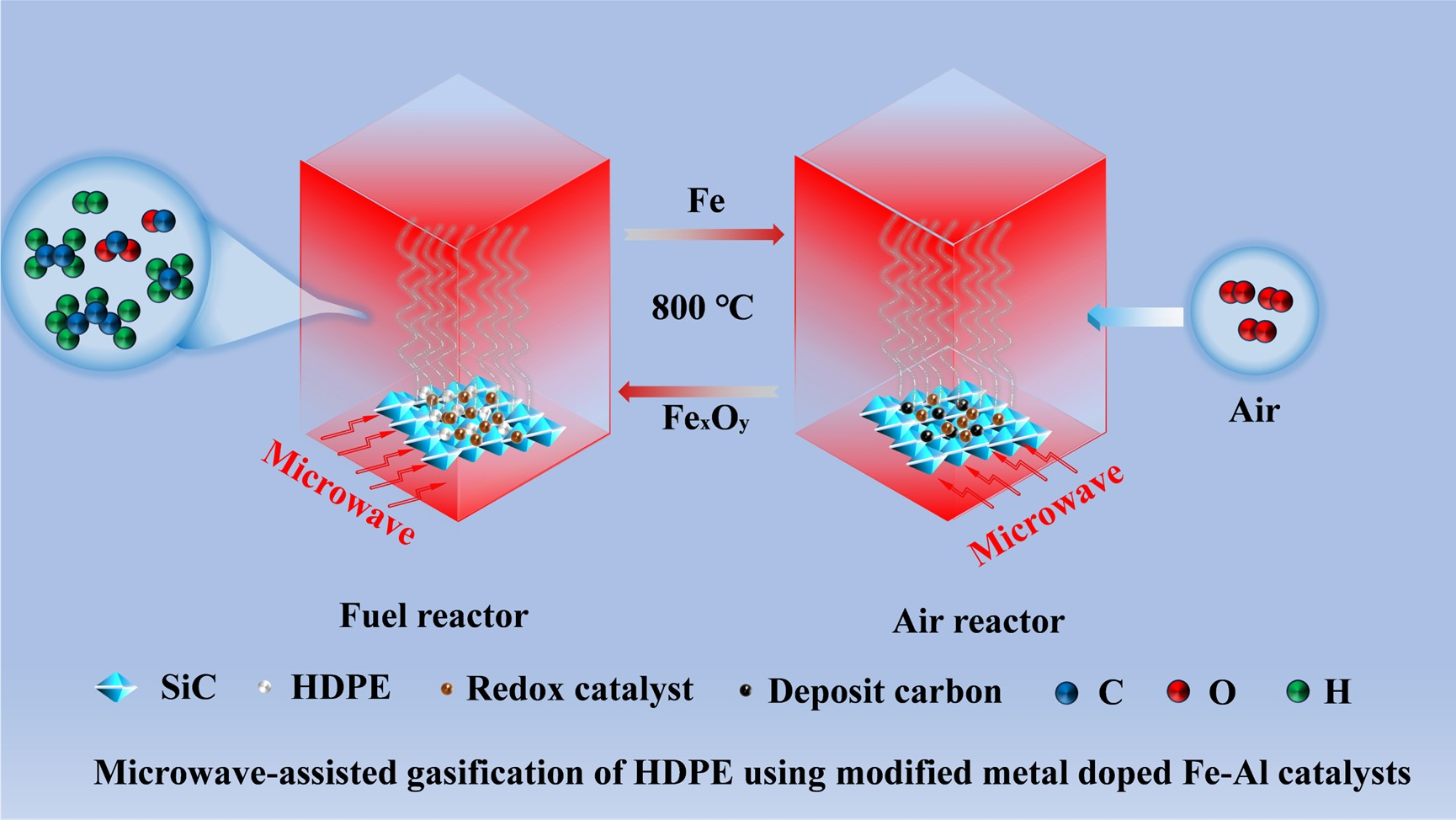
This study pioneers the application of metal-doped Fe-Al as multifunctional redox catalysts for tunable syngas production from plastics via a microwave-assisted process (CLG). We rationally designed a series of redox catalysts (Ni, Ca, Ce, Sr, Co) to unlock efficient H2-rich syngas production from (high-density polyethylene) HDPE. A class of metal-doping (Ni, Ca, Ce, Sr, and Co) Fe-Al redox catalysts was engineered, with Ni-doped Fe-Al (Ni-Fe-Al) exhibiting the excellent H2-rich syngas production (75.32 mmol/gHDPE syngas, 47.09 mmol/gHDPE H2). This is attributed to the improved redox activity, which facilitates efficient lattice oxygen transfer and catalytic reforming reactions, alongside improved microwave absorption and a porous structure that promotes reactant access. This strategic material design, coupled with process parameter optimization (800 W, redox catalyst/plastic = 2.0), developed a highly efficient HDPE-to-syngas conversion system. The process produced a high-quality syngas (90.03% H2 + CO, H2/CO ratio = 2.27) with a rapid heating rate (233.0 °C/min) and minimal energy input (3.52 kWh/molgas). This work provides not just an effective upcycling route for plastics, but a fundamental blueprint for designing advanced redox catalysts to unlock the full potential of microwave-CLG.

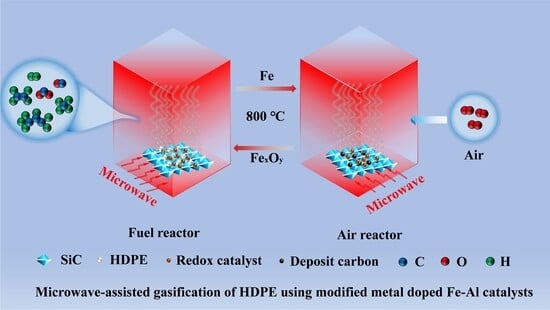
Graphical Abstract

1. Introduction

Current plastic waste management predominantly depends on landfill and incineration, with only a small portion of plastics undergoing effective recycling progress [1,2]. Recently, gasification has emerged as a promising alternative technology for sustainable plastic valorization, enabling plastic waste effectively converted into syngas, primarily H2, CO, and CH4 mixture, via high-temperature thermochemical conversion [3,4]. Distinct from traditional treatment method, gasification is carried out in an oxygen-controlled environment ranging from 700 to 1400 °C while significantly suppressing the generation of dioxins and other toxic substances [5]. As an advanced iteration of conventional gasification, chemical loop gasification (CLG) utilizes metal oxides to achieve efficient gasification and energy conversion of carbon-based feedstocks (e.g., plastics, biomass and coal) [6,7,8,9]. Unlike conventional gasification technology, CLG divides the gasification process into two separate reaction stages (fuel reactor and air reactor). In the fuel reactor, the plastic is converted through (1) chain scission of polymer backbones and (2) partial oxidation of hydrocarbon fragments by the oxygen carrier, producing syngas. Simultaneously, the redox catalyst is reduced. The reduced oxygen carrier is then circulated to the air reactor, where it is regenerated through (3) re-oxidation (reforming) by air [10]. Ultimately, syngas is produced, accompanied by a small amount of tar and solid residue. Specifically, the CLG process prevents direct contact between the feedstock and air by transferring oxygen through the circulation of oxygen carriers, thus significantly reducing the nitrogen dilution effect in the syngas and the pollution emission. These oxygen carriers do not merely transfer oxygen but actively govern the reaction pathway and product distribution. Therefore, these advanced materials can also be regarded as redox catalysts. To fully exploit their potential, an efficient and controllable energy supply is essential. Overall, the plastic CLG demonstrates distinct advantages, including high efficiency, pollution mitigation, and resource circularity [11,12,13], and is regarded as a promising method for future clean energy and plastic waste resource utilization.
In the CLG process, selecting suitable redox catalysts for high-quality syngas production is pivotal. Fe-based, Ni-based, and Cu-based redox catalysts are prevalent candidates for hydrogen production in chemical chains due to their several advantages, such as excellent redox properties and high oxygen-carrying capacity (e.g., ~10% for the Fe2O3/FeO), which is a key parameter determining the maximum amount of oxygen that can be transferred per redox cycle and, thus, the efficiency of the process [14,15,16]. Among them, Fe-based redox catalysts stand out due to superiority of high melting point, high mechanical strength, low cost, and environmental compatibility. Their performance in the CLG process has been extensively investigated by a lot of researchers. For instance, Ahmad et al. [17] used Fe3O4 for microwave-assisted CLG of sugarcane bagasse, achieving an optimum syngas yield of 88.23 wt.% with the highest concentration of H2 + CO of 64.96 vol%. Al-Qadri et al. [18] investigated the CLG of a mixture of alfalfa and polyethylene in a fixed-bed reactor using Fe2O3. They achieved the optimum product distribution with H2/CO ratio of 2.5. However, the pure Fe-based material suffers from insufficient reactivity and sintering at high temperature (800–1200 °C) [19], which negatively impacts the syngas yield and quality. Therefore, in order to improve activity and sintering resistance of Fe-based material, mixing with other metals and adding inert supports during the preparation process are proposed. For instance, Guan et al. [20] prepared CeO2/Fe2O3, Fe2O3, and CeO2 through the sol-gel method and examined their performance in the CLG process. The results of thermogravimetric analysis (TGA) and density functional theory (DFT) calculations indicated that their efficiencies are in the order of CeO2/Fe2O3 > CeO2 > Fe2O3. Quan et al. [21] prepared Fe-based redox catalysts with various Ni-to-Fe ratios. They found that the enhancement in CH4 conversion (95.04%), H2 selectivity (598.82%), and CO selectivity (68.19%) was achieved with the increase of Ni/Fe ratio from 0.5:2.5 to 2.5:0.5. Ma et al. [22] evaluated the cyclic redox reactivity of Sr-modified redox catalyst (Fe2O3/Al2O3) in CLG of coal. The research revealed that the Sr dopant could effectively promote the redox performance and anti-sintering ability in the CLG process. Zhang et al. [23] explored the potential of Ca-modified Fe-based redox catalysts in the CLG process through a combined theoretical and experimental approach. First, they employed zone division of the Ellingham diagram to thermodynamically screen for conditions that favor partial oxidation over complete combustion. This theoretical guidance was then validated through thermogravimetric analysis combined with mass spectrometry (TGA-MS) experiments and X-ray diffraction (XRD) characterization. Among several insert supports, Al2O3 has been extensively used to promote lifetime and stability, since it possesses a lot of advantages, including low cost, high strength, and high melting points. The comparison of activity and specific surface area between fresh and reacted Fe2O3/Al2O3 in a 10 kWth interconnected fluidized bed reactor was conducted by Sozen et al. [24] using scanning electron microscopy (SEM), XRD, and BET-surface area tests. They found that there was no significant difference between the two fresh and reacted Fe2O3/Al2O3. Hu et al. [25] carried out an experiment to investigate chemical looping process (CLP) of HDPE in a two-zone reactor using Fe2AlOX. They achieved a high H2 yield of 85.82 mmol/gHDPE and a high H2-to-CO ratio of 2.03, which lasted for five cycles. All of these proved that Al2O3 is a promising insert support.
Microwave-assisted pyrolysis (MAP) technology is a non-contact heating technology that utilizes electromagnetic waves (usually 2.45 GHz frequency) to induce dipole rotation and ionic conduction within materials to rapidly generate heat [26]. This non-contact energy transfer is different from the conventional heating method, which relies on conductive, convective, or radiant heat transfer, offering advantages of uniform energy distribution, high reaction rate, high conversion efficiency, and cost savings [27,28]. Meanwhile, silicon carbide (SiC) demonstrates excellent microwave absorption capabilities, which are widely used as an exceptional microwave absorber to promote the pyrolysis efficiency of substances [29]. The integration of microwave heating technology with CLG creates an advanced system characterized by high efficiency and low energy consumption, establishing a novel energy supply for plastic valorization. Significant achievements have been made in the field of microwave-assisted CLG application using PP, lignin, coal, or biomass as feedstock, verifying the superior heating performance and energy efficiency of microwave irradiation [30]. However, the development of high-performance redox catalysts tailored for microwave-assisted CLG and their redox reaction HDPE valorization still remains unexplored for pathway and product distribution. Therefore, this study synthesized a series of Fe-Al redox catalysts modified with different metals (including Ce, Co, Ca, Ni, and Sr) and systematically evaluated their performance in syngas production. Furthermore, the optimal redox catalyst was screened for investigating the effects of microwave power and redox catalyst loading on syngas yield, compositional characteristics, and HHV.

2. Results and Discussion

2.1. Effect of Metal Doping

The reactivity of redox catalysts in the CLG process has been demonstrated to be critically influenced by the type of doping metals, resulting in the various outcomes of CLG experiments. Therefore, in order to select an effective redox catalyst for HDPE gasification, six different Fe-based redox catalysts were prepared through the wet impregnation method to thoroughly study their effects on the yield, composition, and HHV of syngas obtained from microwave-assisted CLG of HDPE. In this study, as well as in the referenced literature concerning redox catalysts used in CLG [31,32,33], the term “doping” is used to describe the introduction of secondary metal cations into the material system. We acknowledge that this usage is chemically imprecise, as it does not strictly refer to bulk incorporation without structural change, but we employ it to maintain consistency with the established literature. All experiments were conducted under the identified microwave power (800 W), SiC amount (12.0 g), treatment temperature (800 °C), and the redox catalyst-to-HDPE mass ratio (2:1). This fixed ratio was established from initial exploratory experiments using the Ni-Fe-Al catalyst and was maintained for all subsequent tests to ensure a consistent basis for comparing the performance of the different doped catalysts.

2.1.1. Characterization of Fresh Redox Catalysts

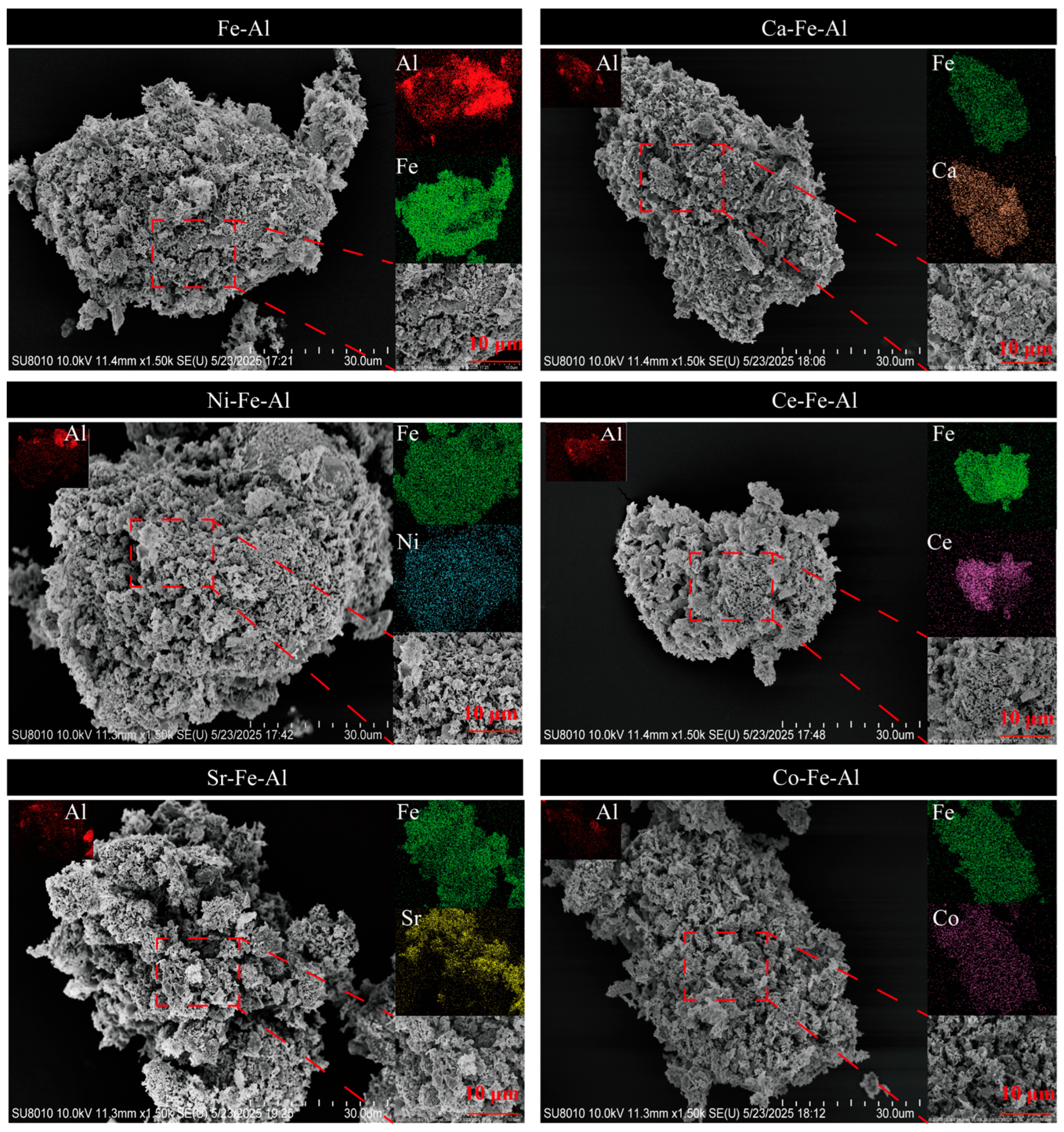
The crystallographic structure of Fe-Al, Ca-Fe-Al, Ni-Fe-Al, Ce-Fe-Al, Sr-Fe-Al, and Co-Fe-Al was analyzed through XRD analysis, and the relevant results were summarized in Figure 1. All redox catalysts exhibited characteristic peaks corresponding to Al2O3 (PDF#88-0826) and Fe2O3 (PDF#79-1741). Notably, the Ca-Fe-Al developed calcium–iron composites, including CaFe3O5 (PDF#31-0274), Ca2Fe2O5 (PDF#38-0408), and Ca4Al8Fe10O19 (PDF#49-1586). Similarly, the CoFe2O4 (PDF#22-1086), Sr7Fe10O22 (PDF#22-1427), and NiFe2O4 (PDF#10-0325) phases emerged in Ni-Fe-Al, Sr-Fe-Al, and Co-Fe-Al XRD results, respectively. Meanwhile, the intensity of peak for Al2O3 or Fe2O3 declined in these four redox catalysts, indicating the successful and structural interactions between doping metals and base oxide. These new phases are particularly significant, as they facilitate both oxygen ion mobility and electron transfer between multivalent cations [34,35,36,37]. In contrast, there was only CeO (PDF#34-0394) detected in Ce-Fe-Al with no additional mixed oxide phase observed, which may be due to the exceptional stability of CeO under the experimental conditions [38].
The SEM results, summarized in Figure 2, reveal the distinct morphological structure of six Fe-based redox catalysts. Notably, the obvious changes happened to the morphological structure of redox catalyst after metal doping. The structure of unmodified Fe-Al redox catalyst was dense, which may negatively impact the gas diffusion, adsorption, and decomposition during the CLG process. In contrast, the pore structure emerged after modification. This change is not only beneficial for the diffusion of volatiles into the redox catalyst but also provides additional active sites for the reduction reaction between volatiles and redox catalyst during the CLG process, enhancing the generation of syngas [39]. This enhanced porosity is evidenced by the increased surface area and pore volume. The Brunner-Emmet-Teller (BET)-specific surface areas (Table S1), while generally low (ranging from 7.76 to 13.03 m2/g), show a clear increase for the modified catalysts (e.g., Sr-, Co-, Ni-Fe-Al) compared to the unmodified Fe-Al benchmark (7.76 m2/g). Furthermore, the elemental mapping results reveal a homogenous distribution of metal elements throughout the redox catalysts, which effectively preserves the redox reactivity of redox catalysts during the CLG process of HDPE.

2.1.2. Product Distribution

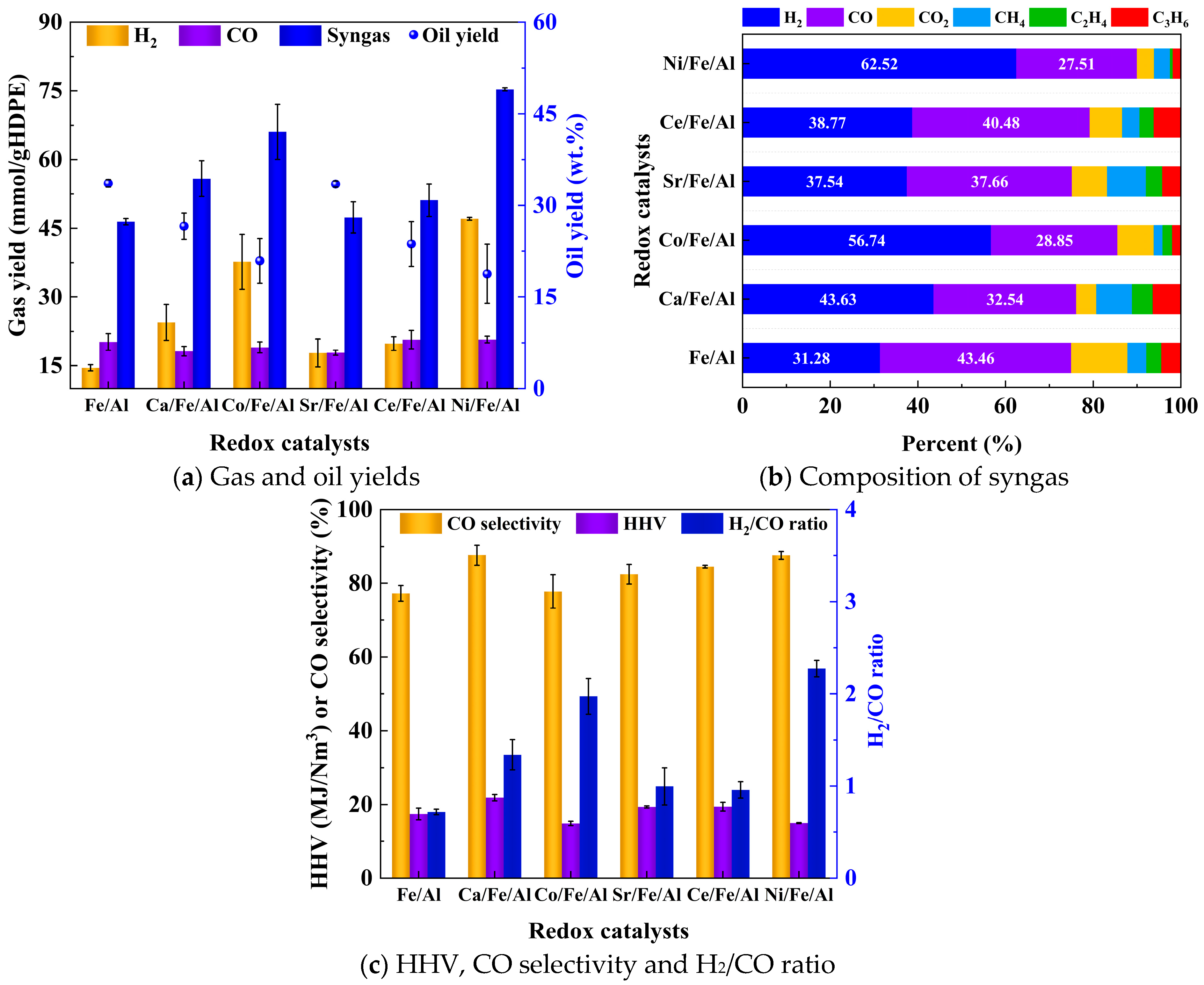
Figure 3a illustrates the yields of the H2, CO, syngas, and oil during the CLG of HDPE using different redox catalysts. The Fe-Al exhibited the lowest syngas yield (about 46.46 mmol/gHDPE) and the highest oil yield (33.61 wt.%), while the metal-doping Fe-based redox catalysts significantly enhanced syngas production and deterred oil production. The observed enhancement can be attributed to three main reasons. First, the active phases, such as Ca2Fe2O5, CoFe2O4, Sr7Fe10O22, NiFe2O4, and CeO, in the modified redox catalysts offer higher react activity and oxygen transfer capacity than unmodified Fe-Al [40,41], facilitating C-C bonds and C-H bonds cleavage and, thus, syngas production. Second, unlike the dense Fe-Al redox catalyst, the modified redox catalysts possessed a highly porous morphological structure (Section 2.1.1) that enhanced porosity and facilitated the accessibility of intermediates to active sites, enhancing gas–solid interactions and syngas generation. Third, the heating efficiency was improved via enhanced microwave plasma generation from metal-doped Fe and oxygen vacancy formation by transition metal under high-temperature conditions [42,43]. The heating performance was evidenced by the heating rate improvement as presented in Table 1. Among the five modified redox catalysts, Ni-Fe-Al exhibited the highest syngas yield and H2 yield, with figures reaching 75.32 mmol/gHDPE (1.62-fold over Fe-Al) and 47.09 mmol/gHDPE (3.23-fold over Fe-Al), respectively, followed by Co-Fe-Al (66.06 mmol/gHDPE and 37.71 mmol/gHDPE). This activity trend (Ni > Co) aligns with the literature [44], underscoring Ni-Fe-Al’s superiority in H2-rich syngas generation. Similarly, the enhancement of H2 yield also occurred using Sr-Fe-Al (17.79 mmol/gHDPE) and Ce-Fe-Al (19.83 mmol/gHDPE), although there was minimal improvement in syngas yield, indicating selective promotion of dehydrogenation reactions. Conversely, a different pattern was seen in oil yield. It was noticeably lower in experiments using modified redox catalysts, and the lowest oil yield was achieved at about 18.79 wt.% using Ni-Fe-Al. This oil suppression correlated with the H2 production, suggesting preferential conversion of heavy hydrocarbons into free carbons and H2 rather than condensed oil [30]. Meanwhile, the CO yield stayed relatively stable (17.84 mmol/gHDPE to 20.72 mmol/gHDPE), indicating the metal doping primarily accelerates the hydrogen formation rather than the complete oxidation pathway.

2.1.3. Gas Composition

Figure 3b shows the composition of syngas obtained during CLG of HDPE using various redox catalysts. Six gas components, including H2, CO, CO2, CH4, C2H4, and C3H6, were investigated. In addition, three important indices of syngas, including HHV, CO selectivity, and H2/CO ratio, were calculated and summarized in Figure 3c. As shown in Figure 3b, modified Fe-Al redox catalysts significantly enhanced H2 concentration, ranging from 37.54% to 62.52%, compared to the baseline Fe-Al redox catalyst (approximately 31.28%). Notably, the Ni-Fe-Al displayed the most pronounced improvement, with the figure for H2 concentration nearly doubling to 62.52%. Metal doping promoted the thermal cracking of volatiles into small molecules rather than heavy hydrocarbons (evidenced by reduced oil yield), increasing the H2 concentration. Specifically, it is worth noting that the different metal doping caused various effects on syngas characteristics. For example, a dramatic drop was seen in CO2 concentration of syngas when adding Ca metal, reaching approximately 4.59%. This is attributed to the inherent CO2 absorption capacity of Ca-based redox catalysts, which has been previously reported in a chemical looping study [45]. Meanwhile, as shown in Figure 3c, the syngas produced by Ca-Fe-Al possessed the highest level of HHV (about 21.86 MJ/Nm3), which is due to the low concentration of CO2 and the richness of C2H4 (4.73) and C3H6 (6.35%). In contrast, Co-Fe-Al and Ni-Fe-Al were prone to produce syngas with low concentrations of CH4, C2H4, and C3H6. Their outstanding performance in volatiles cracking and conversion is the primary reason for this result. Additionally, Co-Fe-Al achieved an optimal H2/CO ratio of 1.97, ideal for Fischer-Tropsch liquid, which fuels synthesis [35]. As for CO selectivity, Ca-Fe-Al and Ni-Fe-Al demonstrated exceptional CO selectivity, achieving approximately 87.63% and 87.56%, respectively. The high CO selectivity means the carbon in the HPDE was selectively converted into valuable CO rather than CO2, which was beneficial for syngas utility for downstream applications [46]. The Sr-Fe-Al yielded syngas exhibiting a high concentration of C+H gas components (about 16.78% compared to the unmodified redox catalyst (12.08%). This phenomenon may be attributed to the enhanced HDPE depolymerization (Equation (1)) driven by the evaluated heating rate, which dominated over volatile cracking during CLG progress.

2.2. Effect of Microwave Power

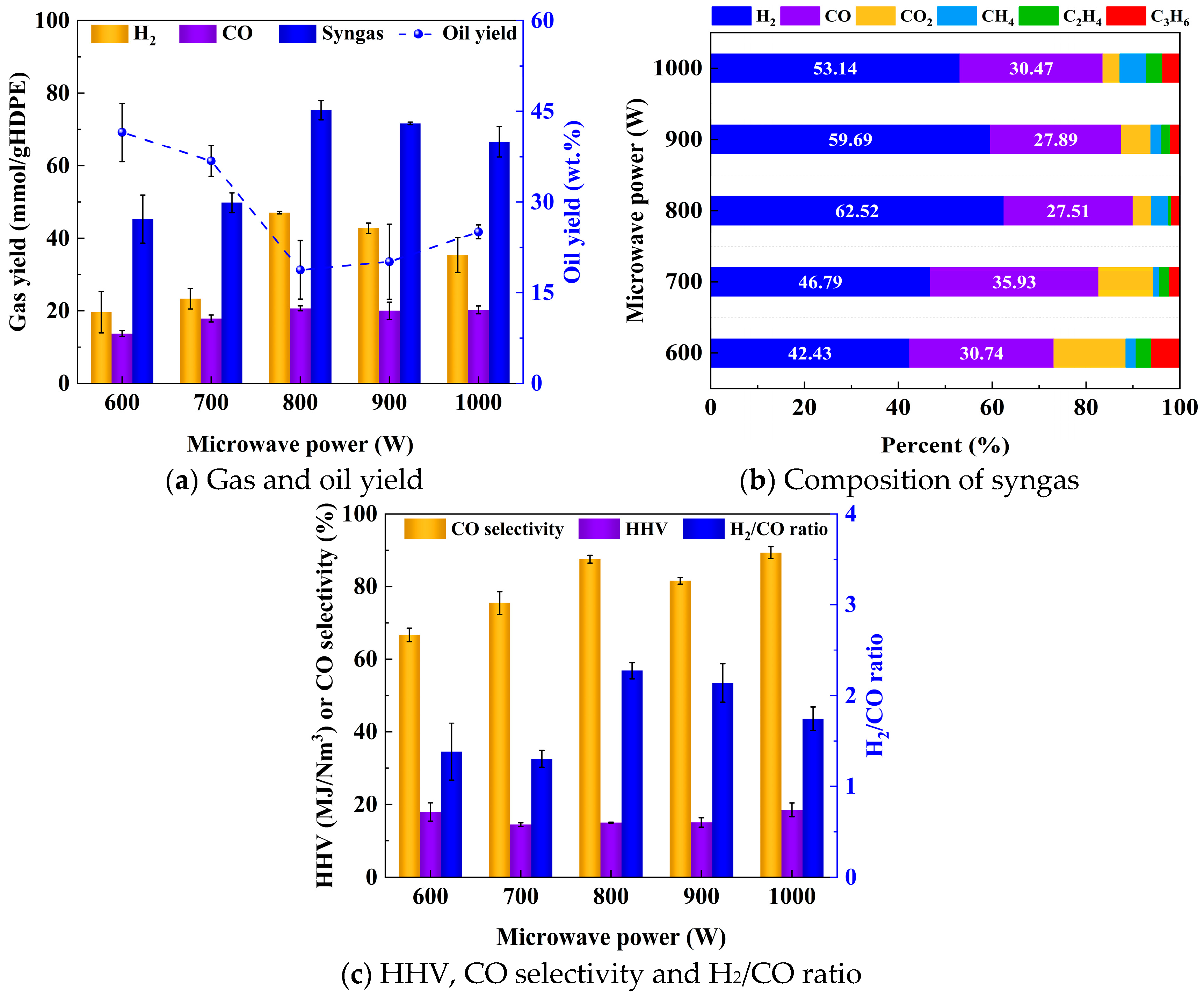
Microwave power serves as a critical parameter in microwave-assisted gasification, directly governing heating rates and microwave irradiation density, which in turn profoundly affects both the efficiency of CLG process and the compositional characteristics of resultant syngas. To systematically evaluate the impact of microwave power on syngas generation and identify the optimal experiment parameter, experiments were conducted at different microwave power levels (600, 700, 800, 900, and 1000 W) while keeping other experimental parameters constant: SiC (12.0 g), treatment temperature (800 °C), and the Ni-Fe-Al-to-HDPE mass ratio (2:1). Ni-Fe-Al was selected as the redox catalyst to investigate the effectiveness of microwave power due to its excellent performance in H2-enriched syngas production. The relevant results are presented in Figure 4.

2.2.1. Microwave Heating Performance and Energy Consumption

There is an intimate correlation between microwave power and heating rate of feedstock; thus, the heating rate variations under different microwave power settings were investigated, and the relevant results were summarized in Table 2. Notably, the corresponding heating rates increased significantly with power intensity, ranging from 103.5 °C/min at 600 W to 776.0 °C/min at 1000 W. The time required for the feedstock to reach target temperature of 800 °C exhibited an inverse relationship with microwave power intensity, decreasing from 7.5 min at the lowest power setting to 1.0 min at the highest power. Interestingly, the operation at the lower power setting of 600 W resulted in the highest energy consumption (9.20 kWh/molgas); the higher power conditions demonstrated energy efficiency due to rapid thermal activation.

2.2.2. Product Distribution

Figure 4a presents the yields of H2, CO, syngas, and oil from CLG of HDPE using Ni-Fe-Al under various microwave powers. The syngas yield and oil yield fall in the range from 45.31 mmol/gHDPE to 75.32 mmol/gHDPE and 41.53 wt.% to 18.79 wt.%, respectively. The syngas yield presented an initial increasing trend with the enhancement of microwave power, peaking at 75.32 mmol/gHDPE at 800 W, before declining as the power was further raised to 1000 W. In contrast, the oil yield initially decreased from 41.53 wt.% (600 W) to 18.79 wt.% (800 W), then increased to 25.08 wt.% (1000 W). This nonlinear behavior can be attributed to the dual effects regulated by microwave power through adjusting the heating rate during the experiment. During the CLG procedure, HDPE underwent rapid chemical bond breaking to generate volatiles (Equation (1)), where the heating rate of feedstock plays a critical role due to its significant linkage with heat and mass transfer within the plastics, as well as the reaction time for volatiles with redox catalysts [47]. With the enhancement of microwave power, the heating rate dramatically increased, which was beneficial for facilitating heat and mass transfer and complete cracking of HDPE to produce smaller hydrocarbons, increasing the gas yield (Equation (1)) [48]. However, as the heating rate further increased to 517.3 °C/min or 776.0 °C/min, the syngas yield decreased to 71.73 mmol/gHDPE and 66.66 mmol/gHDPE, respectively. This phenomenon was primarily caused by excessively rapid heating rates, which induced the overfast escape of volatiles out of reactor before complete cracking and then condensed into the oil phase [49]. The H2 yield followed a trend similar to the total syngas yield, reaching a maximum of 47.09 mmol/gHDPE at 800 W and a minimum of 19.65 mmol/gHDPE at 600 W. The residence time of volatiles and recombination of small volatiles during the CLG procedure are the two most important factors affecting H2 production. Under the low heating rate condition at 600 W, the extended residence time of volatiles within the reactor created a thermal environment conducive to molecular recombination, thereby suppressing the H2 formation. In addition, some heavy hydrocarbons had difficulties reacting with the redox catalyst at lower temperatures before escaping the reactor [50]. As the microwave power increased to 1000 W, the accelerated heating rate (800 °C/min) was expected to reduce the residence time of syngas in the reactor. Therefore, there was limited time for C-H bond scission in volatile intermediates, ultimately decreasing the H2 production [51]. In contrast, the CO remained at a relatively steady level with the increase of microwave power, fluctuating up and down at the level of 20 mmol/gHDPE.

2.2.3. Gas Composition

Figure 4b,c provides the information relating to the composition, HHV, CO selectivity, and H2/CO of syngas under different microwave powers using Ni-Fe-Al. As shown in Figure 4b, the relative volume concentration of six components varied significantly with microwave power, ranging from 42.43% to 62.52%, 27.51% to 35.93%, 3.62% to 15.34%, 1.27% to 5.64%, 0.60% to 3.46%, and 1.81% to 6.03% for H2, CO, CO2, CH4, C2H4, and C3H6, respectively. Notably, the combined concentration of H2 and CO exceeded 50% at all conditions, reaching a maximum of 90.03% at 800 W, which confirms their dominance as the primary syngas components. Specifically, the H2 concentration initially increased from 42.43% to 62.52%, as the microwave power increased from 600 W to 800 W. Then, it dramatically decreased to 53.14% when the microwave power further increased to 1000 W. This trend aligns with the mechanisms of complete volatile cracking and heavy hydrocarbon formation under different heating rates, as discussed in Section 2.2.2. In contrast, a different pattern was seen in CO concentration. It remained relatively stable and reached a minimum value (27.51%) at 800 W, where the H2 production was maximized. This inverse relationship manifest value in H2/CO ratio changes as shown in Figure 4c, which peaked at approximately 2.27 under 800 W before decreasing to 1.74 at 1000 W. Regarding CO2 concentration, it showed a significant decline from 15.34% to 3.91% as microwave power increased from 600 W to 800 W. This reduction originated from intensified reaction between oxygen and volatiles facilitated by the relatively higher microwave power, thereby creating constraints to the oxygen availability for CO2 formation [49]. CO selectivity, a key index for syngas quality, reached approximately 87.56% at 800 W, indicating the high value of syngas obtained at this parameter. Regarding the HHV of syngas, it ranged from 14.43 MJ/Nm3 to 18.49 MJ/Nm3, with the maximum value observed at 1000 W. The high concentration of C3H6 (3.66%) and the relatively low concentration of CO2 (3.62%) were the primary causes for the high HHV.

2.3. Effect of Different Redox Catalysts on Plastic Mass Ratio

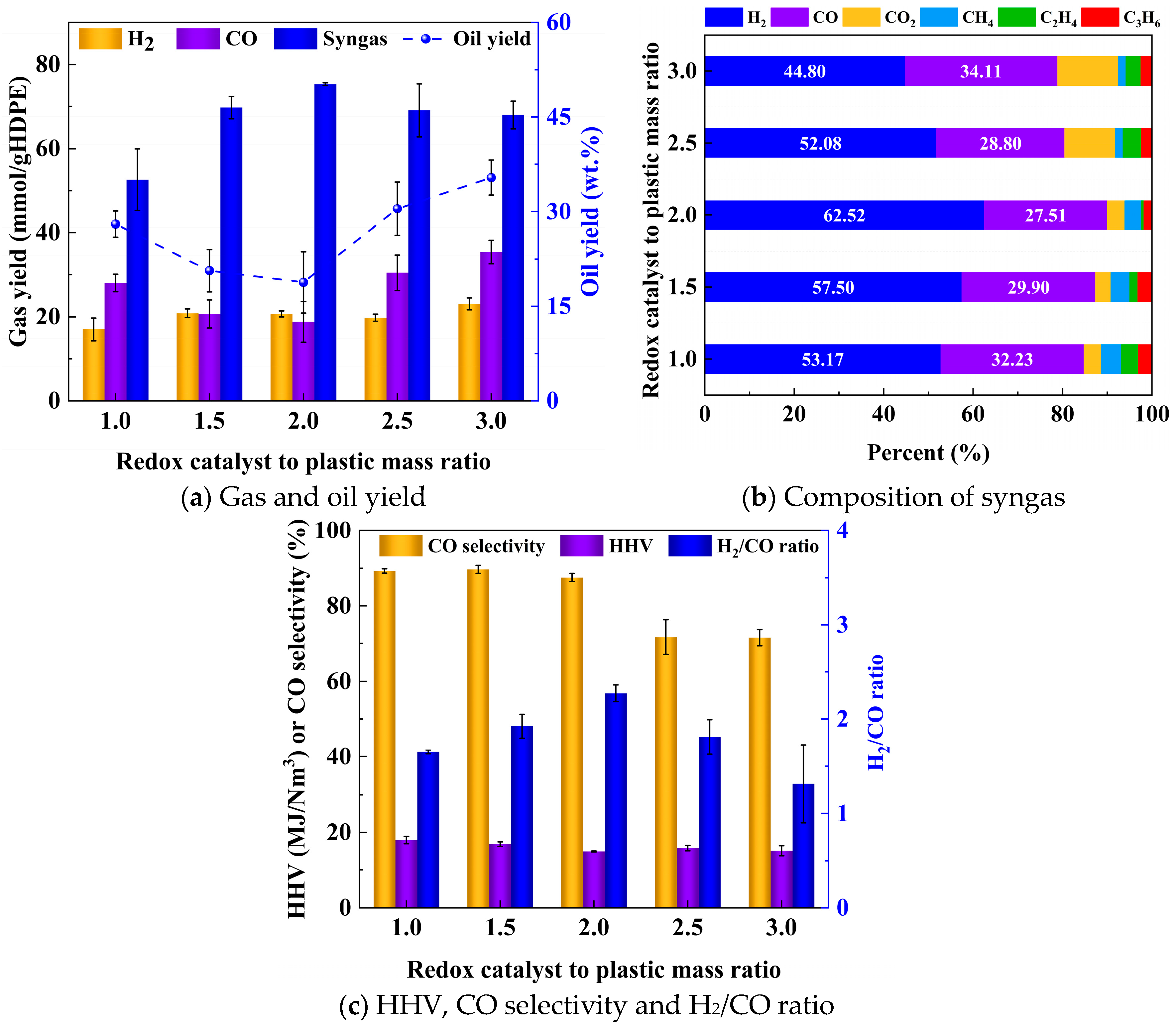
The redox catalyst-to-plastic ratio plays a significant role in the CLG process, affecting syngas yield and syngas composition. An appropriate increase in oxygen supply is beneficial for volatile cracking (Equation (2)), increasing gasification efficiency. Conversely, an excessive amount of redox catalyst can lead to overoxidation of target syngas, diminishing the yield and quality of the syngas produced. To optimize the loading of redox catalyst in the CLG process of HDPE, we investigated syngas production with various redox catalyst-to-plastic mass ratios (1:1, 1.5:1, 2:1, 2.5:1, and 3:1). All experiments were conducted at a fixed HDPE mass of 1.0 g, Ni-Fe-Al mass of 2 g, microwave power of 800 W, and SiC amount of 12.0 g. The results are presented in Figure 5.

2.3.1. Product Distribution

Figure 5a presents the yields of H2, CO, syngas, and oil from CLG of HDPE using Ni-Fe-Al under various redox catalysts to plastic mass ratios. The syngas yield ranged from 52.60 mmol/gHDPE to 75.32 mmol/gHDPE, while the oil yield varied from 35.40 wt.% to 18.79 wt.%, respectively. As the mass ratio increased from 1.0 to 2.0, the gas yield rose and peaked at mass ratio of 2.0. This enhancement is attributed to the sufficient lattice oxygen provided by the higher redox catalyst to plastics ratio, which facilitated the cracking of volatiles into small molecules (Equation (2)) [52]. In addition, the Ni-Fe-Al also played a role as a catalyst in the CLG process, reducing the activation energy and promoting the chemical reaction rate (Equation (1)) [14]. The improved heating rate and mass transfer, also with the increase of redox catalyst loading (as shown in Table 3), further promoted the cracking of HDPE (Equation (1)). However, as the redox catalyst loading further increased to 3.0, the oil yield increased to around 35.4 wt.%. There were two reasons for this trend: (1) Evaluated redox catalyst loadings promoted secondary polymerization between light hydrocarbons, as evidenced by the rising C2H4 and C3H6 from 0.60% and 1.81% to 3.34% and 2.47%, respectively. (2) The sustained evaluation of heating rate may also produce a negative effect on syngas production through shortening residence time for volatiles in the reactor, which impeded the complete cracking reaction.

2.3.2. Gas Composition

Figure 5b,c illustrates the composition, H2/CO ratio, CO selectivity, and HHV of syngas produced under a different redox catalyst-to-plastic mass ratio. The relative volume concentration of H2, CO, CO2, CH4, C2H4, and C3H6 varied in the range of 44.80% to 62.52%, 27.51% to 34.11%, 3.43% to 13.54%, 1.72% to 4.57%, 0.60% to 4.09%, and 1.81% to 3.15% respectively. H2 was the dominant component. Its concentration modestly increased from 53.17% to approximately 62.52% as the redox catalyst-to-plastic mass ratio increased from 1.0 to 2.0, although it did decrease to about 44.80% when the mass ratio further increased to 3.0. The sufficient lattice oxygen availability under the optimal redox catalyst loading facilitated effective cleavage of volatile hydrocarbons into H2 through dehydrogenation pathways (Equation (2)). The increased redox catalyst loading enhanced the heating rate (as shown in Table 3), which also provided a positive effect on C-H bonds of volatiles at high temperature. However, the decrease of H2 occurred due to the overoxidation of H2 by excessive amount of redox catalyst [53]. In contrast, the CO concentration reduced from 32.23% to 27.51% as the mass ratio increased from 1.0 to 2.0. This trend can be attributed to the differential production patterns between H2 and CO: the H2 yield increased markedly from 28.06 mmol/gHDPE to 47.09 mmol/g, while the CO yield remained relatively stable with only marginal fluctuation (17.00 mmol/gHDPE to 20.86 mmol/g). The substantial increase in total gas production volume, primarily driven by H2 generation, effectively diluted the proportion of CO. Regarding CO2 volume concentration, there was a steady growth from 3.91% to 13.54%, as the usage of redox catalyst increased from 2.0 g to 3.0 g. There are two reasons that contributed to this phenomenon: (1) the excessive lattice oxygen promoted CO2 production (Equation (4)), and (2) CH4 was oxidized by surplus redox catalyst to produce CO2, leading to a decrease in CH4 concentration (from 3.65% to 1.72%) and a corresponding increase in CO2 concentration (as part of the oxidation route encompassed by Equation (2)). The CO selectivity was determined by the concentration of CO and CO2, which is an important index for evaluation of syngas quality. It ranged between 71.58% and 89.70% under a different redox catalyst-to-plastic ratio, demonstrating an excellent selectivity for CO creation using Ni-Fe-Al for HDPE CLG gasification. The HHV of produced syngas varies due to different syngas compositions, with the figure ranging from 14.97 to 17.95 MJ/Nm3. The highest HHV value was achieved at mass ratio of 1.0 due to the high combined concentration of CH4 (4.57%), C2H4 (3.79%), and C3H6 (3.08%) while maintaining a low CO2 concentration (3.86%).

2.3.3. XRD and SEM Analysis of Reduced and Regenerated Ni-Fe-Al

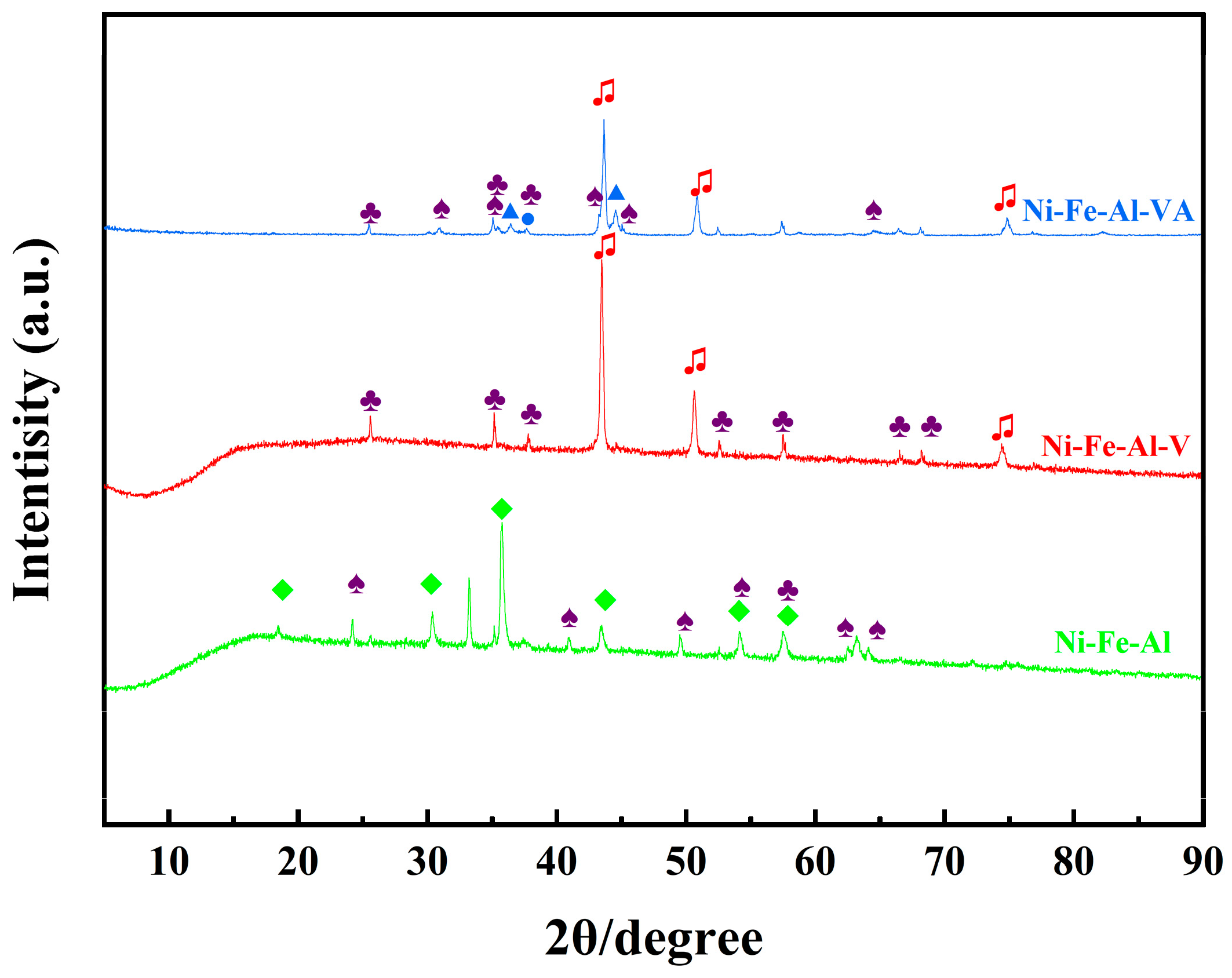
XRD and SEM analysis were performed to track the phase and morphological evolution of the Ni-Fe-Al catalyst throughout a complete chemical looping cycle, comprising the reduction stage (under vacuum, labeled as Ni-Fe-Al-V) and the subsequent regeneration stage (upon air introduction, labeled as Ni-Fe-Al-VA). According to Figure 6, there was an obvious difference in the crystallographic structure between fresh and spent Ni-Fe-Al. Specifically, the post-reaction XRD patterns, characterized by a dramatic decrease in the NiFe2O4 peak intensity and the emergence of new Fe-Ni alloy peaks, provide direct evidence for two critical processes: (1) the reduction of NiFe2O4 to metallic species, and (2) the alloying of these metallic species into the observed Fe-Ni alloy. In contrast, the air introduction stage induced a notable decrease in peak intensity of the Fe-Ni alloy (PDF#47-1417), corresponding to the oxide reaction between the Fe-Ni alloy and the oxygen in the air. Furthermore, the peaks of Fe-Ni alloy shifted to higher diffraction angles, which was attributed to the enrichment of Ni and dealloying of Fe [54].
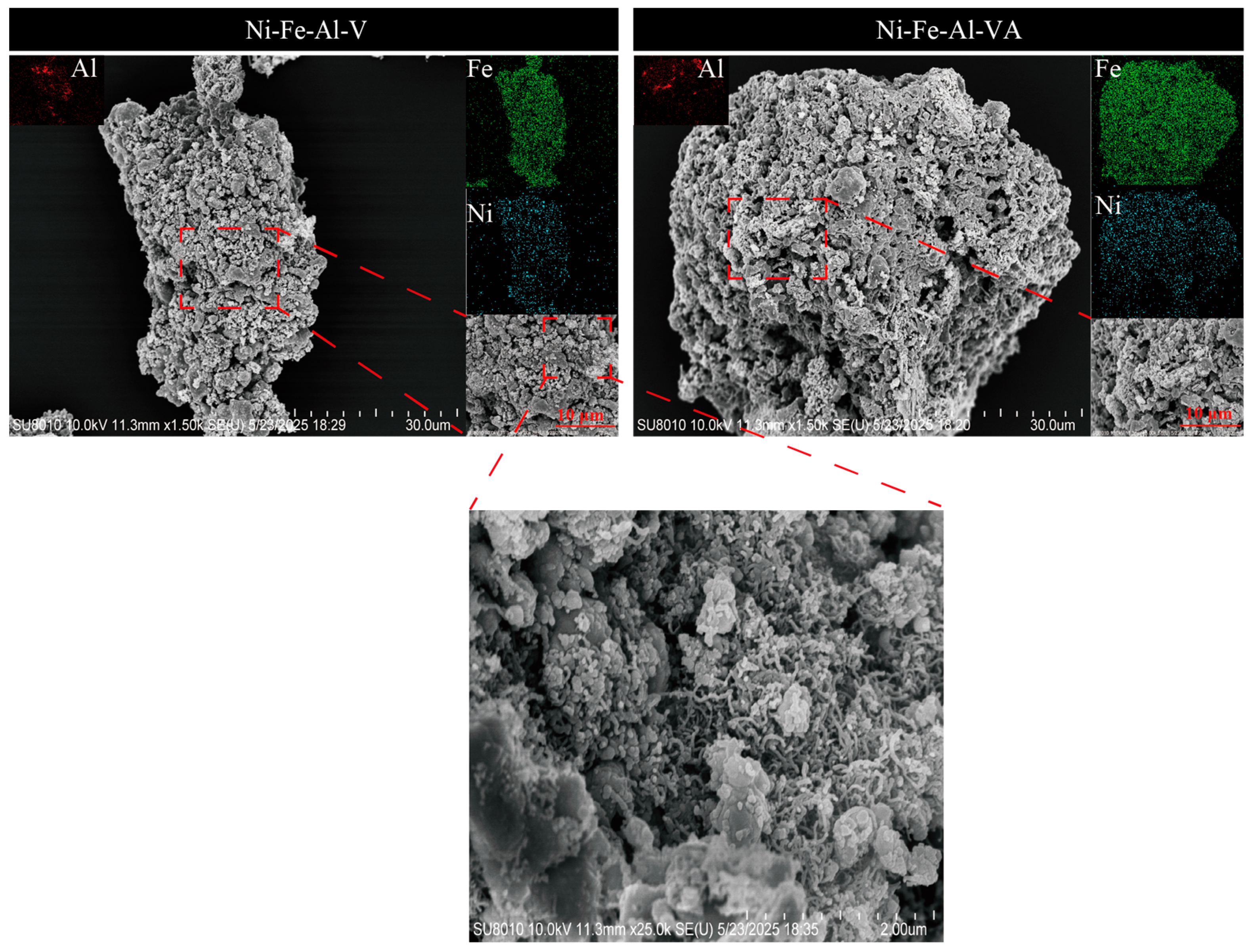
Figure 7 provides information about the morphological structure evolution of Ni-Fe-Al across the whole stage of CLG process. Compared to the fresh Ni-Fe-Al, the particle size of redox catalyst obtained after the vacuum reaction phase and air introduction phase increased. The increase of particle size indicated that agglomeration happened during the CLG process. Notably, vacuum-stage OC exhibited surface-grown carbon morphology [55].
It is important to note that the present study focused on a single reduction–regeneration cycle to elucidate the fundamental phase evolution and structure–activity relationships of the screened catalysts. Consequently, the structural stability of the materials over multiple cycles was not evaluated. The observed incomplete re-oxidation and phase changes in this single cycle suggest that catalytic performance (conversion and selectivity) might vary in subsequent cycles, which warrants a dedicated investigation into the long-term cycling stability in future work.

2.4. Mechanism for the CLG Process

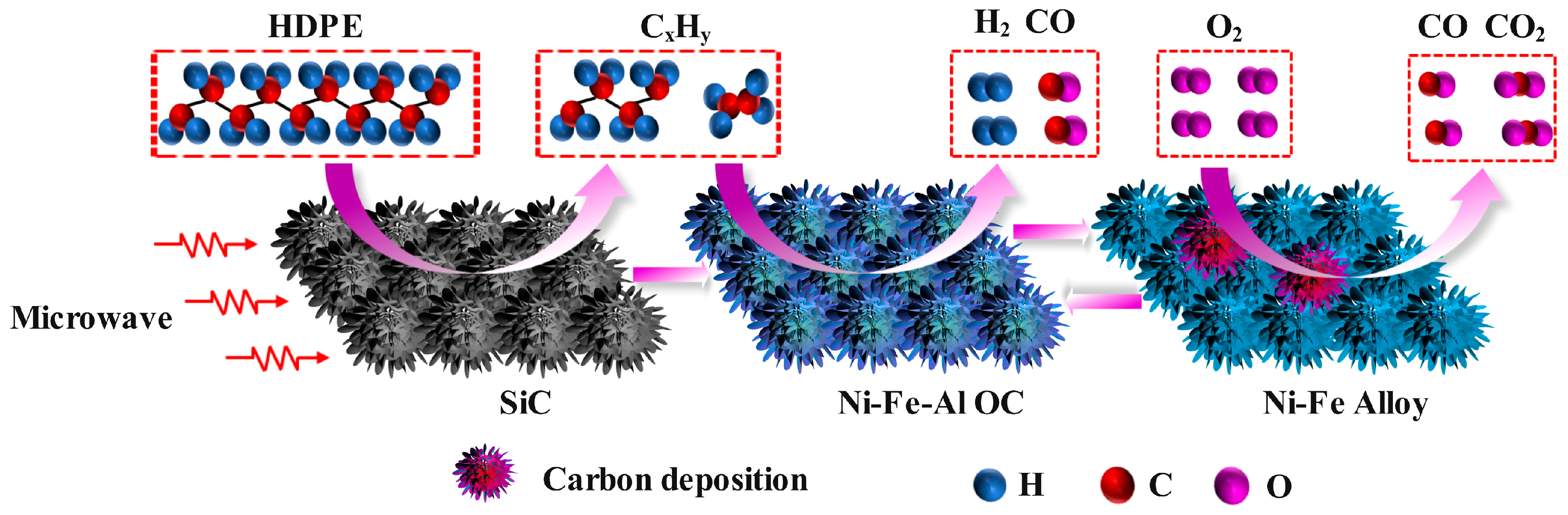
The proposed reaction mechanism for CLG of HDPE is illustrated in Figure 8. During the vacuum reaction stage, microwave irradiation induces rapid heating of reaction system, triggering pyrolysis of HDPE into volatile compounds. These pyrolysis products then react with the active sites on Ni-Fe-Al, predominantly generating H2, CO, and carbon deposits. Meanwhile, as confirmed by the XRD results, the Ni-Fe-Al is reduced to Ni-Fe alloy. Notably, the carbon deposition occurs on the Ni-Fe-Al surface via volatiles cracking, serving as a carbon source for the subsequent oxidation reaction. In the air reaction stage, oxygen molecules primarily react with carbon deposition to form CO and CO2 while also re-oxidizing the Ni-Fe alloy to Fe2O3, thereby completing the CLG process for HDPE. Throughout the entire process, microwave heating enhanced reaction efficiency through improving mass and heating transfer, while the Ni-Fe-Al synergistically achieved dual functions of catalytic gasification and carbon deposition control via gas–metal interaction.

3. Materials and Methods

3.1. Materials

The HDPE particles were provided by China Shenhua Coal to Liquid and Chemical Co., Ltd. (Beijing, China). The ultimate and proximate analysis results of HDPE are presented in Table 4. SiC, employed to maintain efficient heating, was gained from Qinghe Andi Metal Materials Co., Ltd. (Xingtai, China), with a particle size range of 0.25–0.85 mm. Chemical reagents, including nickelous nitrate, iron nitrate, calcium nitrate tetrahydrate, cobalt nitrate, cerium nitrate, strontium nitrate, and aluminum oxide (Al2O3), were obtained from Shanghai Aladdin Biochemical Technology Co., Ltd. (Shanghai, China).

3.2. Synthesis Method of Redox Catalysts

The six redox catalysts investigated in this study were synthesized through a standardized wet impregnation protocol. Using Ni doping redox catalyst (Ni-Fe-Al) as a representative example, the synthesis procedure comprised the following steps: 4.95 g of nickelous nitrate and 14.47 g of iron nitrate were dissolved in 80 mL of deionized water under continuous magnetic stirring. Subsequently, 2 g of Al2O3 insert support were introduced to homogeneous solution, and the mixture was treated at 90 °C with vigorous agitation for 5 h to achieve a slurry formation. After drying at 105 °C for at least 24 h to remove residual moisture, the samples were subjected to calcination in a muffle furnace at 850 °C for 4 h under air atmosphere. Post-calcination, the product was allowed to cool naturally and then mechanically sieved through a standard sieve mesh (100–250 mesh) to obtain uniformly sized particles, which were stored in a sealed container. Notably, the remaining four redox catalysts (Ce-Fe-Al, Co-Fe-Al, Ca-Fe-Al, Sr-Fe-Al, Fe-Al) were prepared using identical synthetic parameters. All formulations maintained a consistent mass ratio of X:Fe: Al2O3 = 0.5:1.5:1 (where X denotes Ce, Co, Ca, Sr, and Ni).

3.3. Experimental Procedures

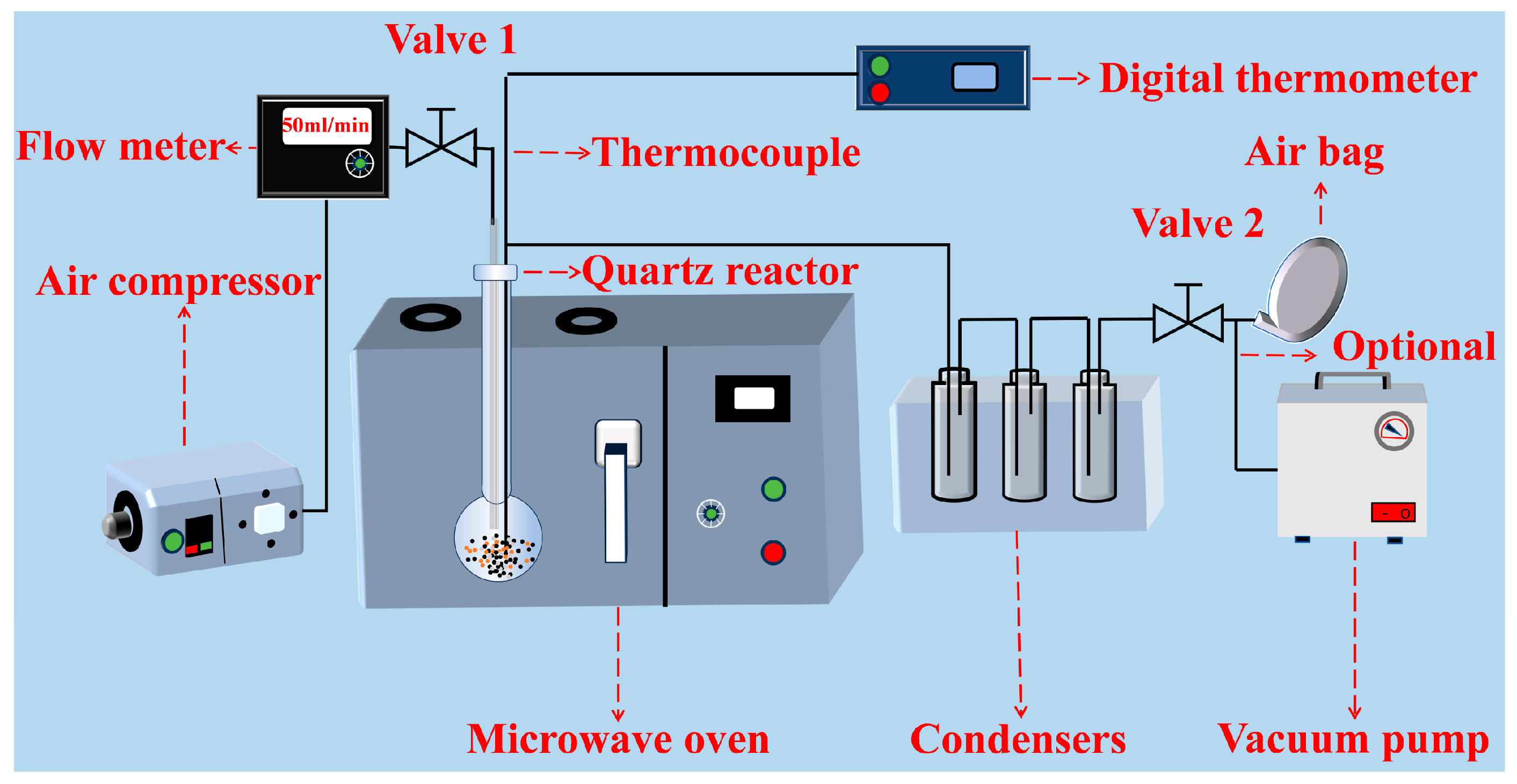
The experimental apparatus for microwave-assisted CLG is schematically illustrated in Figure 9. The CLG process consisted of two main stages: the fuel stage and the air stage. In this work, the fuel stage was initiated by creating a vacuum environment (referred to as the “vacuum stage”) to purge the system of air. This system mainly consists of four integrated subsystems, including a microwave oven reactor, a gas delivery module, a thermal monitoring system, and a condensation unit. In a typical experiment, the HDPE feedstock was physically mixed with the redox catalyst and SiC at a specified mass ratio and then directly loaded into the reactor. Another detailed procedure was described in our published study [30].
HDPE → H2 + CO + CO2 + CxHy
CxHy + Fe2O3 → H2 + CO + CO2 + Fe
CxHy → H2 + C
C + O2 → 2CO
C + O2 → CO2
4Fe + 3O2 → 2Fe2O3

3.4. Analysis and Characterization Methods

The oil yield was calculated by comparing the mass variance of thermocouple, connecting tubes, and condensation units before and after vacuum stage. The gas yield was obtained by subtracting oil yield from weight reduction of substance in the reactor after experiment. The calculations are detailed in the following Equations (7) and (8).
O Y = m 1 + m 2 m HDPE × 100 %
G Y = m 3 m HDPE O Y × 100 %
where OY denotes oil yield, wt.%; GY denotes gas yield, wt.%; m1 denotes the mass increasement of thermocouple, determined by weighing before and after vacuum stage, g; m2 denotes the mass increasement of condenser units, determined by weighing before and after vacuum stage, g; m3 denotes the mass reduction of reactor, SiC, HDPE, and redox catalyst, determined by weighing before and after vacuum stage, g; mHDPE denotes the mass of HPDE used in the experiment, g.
The total molar gas yield and the molar gas yield of specific components in the vacuum stages were calculated through Equations (9) and (10):
M G Y v = 1000 × G Y i v i M i
M G Y i = M G Y v × v i
where MGYv denotes the molar yield of syngas generated during the vacuum stage, and vi denotes the volume fraction of gas constituent i during vacuum phase, %; Mi denotes relative mass of gas constituent i; MGYi denotes the molar yield of gas constituent i in the vacuum phase, mmol/gHDPE.
The higher heating value of syngas, CO selectivity, and H2/CO ratio are calculated by Equations (14) and (15).
H H V = i v i H H V i
μ CO = V CO V CO + V CO 2
φ H 2 / CO = V H 2 V CO
η C = i M G Y i C i + j M G Y j C j C feedstock
η H = i M G Y i H i + j M G Y j H j H feedstock
where HHV denotes the higher heating value of syngas, MJ/Nm3; HHVi denotes the higher heating value of gas component i; μCO denotes CO selectivity; φH2/CO denotes H2/CO ratio; VCO denotes the volumetric concentration of CO in syngas; VCO2 denotes the volumetric concentration of CO2 in syngas; and VH2 denotes the volumetric concentration of H2 in syngas. ηC denotes carbon conversion efficiency; ηH denotes hydrogen conversion efficiency, %; Ci and Cj denote the mass of carbon in the gas component i and j, respectively; Hi and Hj denote the mass of hydrogen in the component i and j, respectively; Cfeedstock and Hfeedstock denote the mass of carbon and hydrogen in the feed HDPE, respectively. The results of ηC and ηH are provided in Support Information (Figures S1–S3).
The thermogravimetric analysis (TG) experiments of HDPE were carried out under two different atmospheres (N2 and air) using a Mettler TGA/DSC3+ instrument (Zurich, Switzerland), and the results were used to calculate ash, fixed carbon, and volatile contents (Figure S4). The major element composition of HDPE, including C, H, S, and N, was detected by an Elementar Vario EL III instrument (Hanau, Germany). Crystalline composition of the redox catalysts was investigated by a Bruker D8 Advance instrument (Billerica, MA, USA) through XRD, with the scanning speed of 5 °/min and the scanning angle of 5–90°. Scanning Electron Microscope (SEM) (Hitachi, Tokyo, Japan), combined with energy dispersive spectrometer (EDS), was employed to investigate the morphology of redox catalysts. BET surface area, pore volume, and pore size were tested using Micromeritics ASAP 2460 (Norcross, GA, USA).

4. Conclusions

This study proposes an innovative strategy for effective plastic upcycling with metal-doped redox catalysts in microwave-assisted CLG at 800 °C. Through systematic screening of Fe-Al redox catalysts doped with Ni, Ca, Co, Ce, and Sr, Ni-Fe-Al was identified as the optimal redox catalyst due to its improved microwave absorption capacity, redox activity, and porous structure. It achieved the highest syngas yield (75.32 mmol/gHDPE) and hydrogen yield (47.09 mmol/gHDPE), along with an H2+CO concentration of 90.03% and an H2/CO ratio of 2.27. Importantly, the doping strategy enabled tunable syngas composition: Ca-Fe-Al generated syngas with high HHV (21.86 MJ/Nm3) and low CO2 concentration (4.59%), attributed to its CO2 absorption ability, while Co-Fe-Al yielded syngas with an H2/CO ratio of 1.97, suitable for Fischer-Tropsch liquid fuels synthesis. The study further revealed the effects of microwave power and redox catalyst loading, identifying 800 W and a mass ratio of 2.0 as the optimal conditions, effectively suppressing oil formation and reducing energy consumption to 3.52 kWh/molgas. These findings provide a generalizable material–design framework that enables the rational development of redox catalysts for energy-efficient and effective conversion of plastic waste into desired products via microwave-assisted CLG. Subsequent research will focus on long-term cyclic stability assessment, detailed characterization of byproduct formation, and comprehensive techno-economic analysis to facilitate practical implementation of this promising technology.

Supplementary Materials

The following supporting information can be downloaded at: https://www.mdpi.com/article/10.3390/catal15111032/s1, Table S1. The surface area and pore structure of redox catalysts. Figure S1. Carbon and hydrogen conversion using different redox catalysts. Figure S2. Carbon and hydrogen conversion under different microwave power using Ni-Fe-Al. Figure S3. Carbon and hydrogen conversion under different Ni-Fe-Al to HDPE mass ratio. Figure S4. TG results of HDPE under different atmosphere (N2 and air).

Author Contributions

Methodology, writing—original draft preparation and resources, J.Z.; formal analysis, C.L.; validation and supervision, W.Z.; data curation, F.A.; review and editing, Y.Z. All authors have read and agreed to the published version of the manuscript.

Funding

This research was funded by the National Natural Science Foundation of China (52476005).

Data Availability Statement

Data available upon request.

Conflicts of Interest

The authors declare no conflicts of interest.

Abbreviations

The following abbreviations are used in this manuscript:
HDPEhigh-density polyethylene
CLGchemical loop gasification
TGAthermogravimetric analysis
DFTdensity functional theory
XRDX-ray diffraction
TGA-MSthermogravimetric analysis combined with mass spectrometry
CLPchemical looping process
MAPmicrowave-assisted pyrolysis
SiCsilicon carbide
Vlvolatiles
FCfixed carbon
TRthe time required for reaching target temperature in vacuum stage
Hrheating rate
Mpmicrowave power
Vvacuum stage
Aair stage
Ec (V + A)the energy input of the entire experiment, which was calculated by dividing the energy consumption by the molar yield of synthesis gas.
HHVthe higher heating value of syngas
SEMscanning electron microscope
EDSdispersive spectrometer
TGthermogravimetric analysis
φH2/COH2/CO ratio
VCOthe volumetric concentration of CO in syngas
VCO2the volumetric concentration of CO2
VH2the volumetric concentration of H2 in syngas
ηCcarbon conversion efficiency
ηHhydrogen conversation efficiency
Hithe mass of hydrogen in the component i
Hjthe mass of hydrogen in the component j
Cfeedstockthe mass of carbon in the feed HDPE
Hfeedstockthe mass of hydrogen in the feed HDPE
MGYvthe molar yield of syngas generated during the vacuum stage
vithe volume fraction of gas constituent i during vacuum phase
Mirelative mass of gas constituent i
MGYithe molar yield of gas constituent i in the vacuum phase
OYoil yield
GYgas yield
m1the mass increasement of thermocouple, determined by weighing before and after vacuum stage, g
m2the mass increasement of condenser units, determined by weighing before and after vacuum stage, g
m3the mass reduction of reactor, SiC, HDPE and redox catalyst, determined by weighing before and after vacuum stage, g
Al2O3aluminum oxide
Ni-Fe-Al-Vspent Ni-Fe-Al from vacuum stage
Ni-Fe-Al-VANi-Fe-Al obtained after air introduction stage

References

  1. Bahlouli, H.A.; Alghamdi, R.; Manos, G. Coke Characterization and Re-Activation Energy Dynamics of Spent FCC Catalyst in the Catalytic Pyrolysis of Polyolefins. Catalysts 2025, 15, 862. [Google Scholar] [CrossRef]
  2. Lu, B.; Bai, B.; Zhang, R.; Ma, J.; Mao, L.; Shi, J.; Jin, H. Study on gasification characteristics and kinetics of polyformaldehyde plastics in supercritical water. J. Clean. Prod. 2023, 383, 135459. [Google Scholar] [CrossRef]
  3. Busto, M.; Dosso, L.A.; Nardi, F.; Badano, J.M.; Vera, C.R. Catalytic and Non-Catalytic Co-Gasification of Biomass and Plastic Wastes for Energy Production. Catalysts 2025, 15, 844. [Google Scholar] [CrossRef]
  4. Jin, Y.; Yang, H.; Guo, S.; Shi, Z.; Han, T.; Gond, R.; Jönsson, P.G.; Yang, W. Carbon and H2 recoveries from plastic waste by using a metal-free porous biocarbon catalyst. J. Clean. Prod. 2023, 404, 136926. [Google Scholar] [CrossRef]
  5. Guo, S.; Gu, M.; Luo, Y.; Chen, J.; Yao, H. Enhanced gasification of waste plastics for hydrogen production: Experiment and simulation. J. Energy Inst. 2025, 120, 102114. [Google Scholar] [CrossRef]
  6. Bracciale, M.P.; Damizia, M.; De Filippis, P.; de Caprariis, B. Clean Syngas and Hydrogen Co-Production by Gasification and Chemical Looping Hydrogen Process Using MgO-Doped Fe2O3 as Redox Material. Catalysts 2022, 12, 1273. [Google Scholar] [CrossRef]
  7. Gai, D.; Shao, D.; An, F.; Zhong, Z.; Wang, X.; Chen, L. Targeted migration mechanisms of nitrogen-containing pollutants during chemical looping co-gasification of coal and microalgae. J. Hazard. Mater. 2025, 487, 137237. [Google Scholar] [CrossRef]
  8. Goel, A.; Panitz, F.; Moghaddam, E.M.; Ströhle, J.; Epple, B.; He, C.; Konttinen, J. Performance evaluation of biomass chemical looping gasification in a fluidized bed reactor using industrial waste as oxygen carrier. Bioresour. Technol. 2025, 427, 132447. [Google Scholar] [CrossRef]
  9. Li, G.; Fu, W.; Zhao, W.; Zhang, Y. Microwave-assisted chemical looping gasification of lignite coal for CO-rich syngas production. J. Energy Inst. 2025, 120, 102108. [Google Scholar] [CrossRef]
  10. Guan, M.; Wang, J.; Jin, H.; Wei, W. Thermochemical conversion and gasification of high-density polyethylene (HDPE) in supercritical CO2: A sustainable approach to plastic waste management. Chem. Eng. J. 2025, 512, 162343. [Google Scholar] [CrossRef]
  11. Mendiara, T.; Izquierdo, M.T.; Condori, Ó.; García-Quiles, L.; Abad, A. Identification of oxygen carriers for chemical recycling of plastic waste using chemical looping technologies. Fuel 2025, 394, 135284. [Google Scholar] [CrossRef]
  12. Ren, Z.; Gao, Z.; Guo, Z.; Liu, P.; Yao, D. Sustainable hydrogen production from waste plastics via staged chemical looping gasification with iron-based oxygen carrier. Appl. Energy Combust. Sci. 2025, 23, 100362. [Google Scholar] [CrossRef]
  13. Liu, B.; You, C.; Wang, H. Chemical looping gasification of waste plastics for syngas production using NiO/Al2O3 as dual functional material. Chem. Eng. J. 2024, 501, 157728. [Google Scholar] [CrossRef]
  14. Dawa, T.; Martinez, M.P.S.; Sajjadi, B. Enhanced Production of Hydrogen through Modified Brownmillerite Ca2Fe2-xMxO5 (M: Co, Cu, Ni) for Chemical Looping Gasification. Fuel 2025, 390, 134490. [Google Scholar] [CrossRef]
  15. Huang, Z.; Wang, Y.; Fang, S.; Lin, Y.; Song, D.; Zhao, K.; Zhang, Y.; Xia, H.; Zhao, Z.; Huang, H. Chemical looping gasification of benzene as a biomass tar model compound using hematite modified by Ni as an oxygen carrier. Appl. Energy Combust. Sci. 2023, 15, 100172. [Google Scholar] [CrossRef]
  16. Goel, A.; Ismailov, A.; Moghaddam, E.M.; He, C.; Konttinen, J. Evaluation of low-cost oxygen carriers for biomass chemical looping gasification. Chem. Eng. J. 2023, 469, 143948. [Google Scholar] [CrossRef]
  17. Ahmad, F.; Zhang, Y.; Fu, W.; Zhao, W.; Xiong, Q.; Li, B. Microwave-assisted chemical looping gasification of sugarcane bagasse biomass using Fe3O4 as oxygen carrier for H2/CO-rich syngas production. Chem. Eng. J. 2024, 501, 157675. [Google Scholar] [CrossRef]
  18. Al-Qadri, B.; Wang, X.; Chen, D. Experimental Study on Chemical Looping Co-gasification of Alfalfa and Polyethylene with Iron Ore as the Oxygen Carrier for High H2/CO Production. Energy Fuels 2022, 36, 6939–6948. [Google Scholar] [CrossRef]
  19. Ma, Z.; Zhang, S.; Xiao, R. Insights into the relationship between microstructural evolution and deactivation of Al2O3 supported Fe2O3 oxygen carrier in chemical looping combustion. Energy Convers. Manag. 2019, 188, 429–437. [Google Scholar] [CrossRef]
  20. Guan, Y.; Zhang, G.; Wang, R.; Wang, Y.; Liu, Y. Study on the synergistic effect and oxygen vacancy of CeO2/Fe2O3 oxygen carrier for improving reactivity in carbon monoxide chemical looping combustion. Fuel 2024, 357, 129832. [Google Scholar] [CrossRef]
  21. Quan, J.; Chen, Y.; Mai, H.; Zeng, Q.; Lv, J.; Jiang, E.; Hu, Z. Uniformly dispersed NiFeAlO4 as oxygen carrier for chemical looping steam methane reforming to produce syngas. Int. J. Hydrogen Energy 2024, 61, 901–913. [Google Scholar] [CrossRef]
  22. Ma, Z.; Lu, Y.; Liu, G.; Zhang, H. Enhanced cyclic redox reactivity of hematite via Sr doping in chemical looping combustion. J. Energy Inst. 2022, 100, 206–212. [Google Scholar] [CrossRef]
  23. Zhang, J.; He, T.; Wang, Z.; Zhu, M.; Zhang, K.; Li, B.; Wu, J. The search of proper oxygen carriers for chemical looping partial oxidation of carbon. Appl. Energy 2017, 190, 1119–1125. [Google Scholar] [CrossRef]
  24. Sozen, H.; Guo-qiang, W.; Hai-bin, L.; Fang, H.; Zhen, H. Chemical-looping gasification of biomass in a 10 kWth interconnected fluidized bed reactor using Fe2O3/Al2O3 oxygen carrier. J. Fuel Chem. Technol. 2014, 42, 922–931. [Google Scholar] [CrossRef]
  25. Hu, Q.; Ok, Y.S.; Wang, C. Sustainable and highly efficient recycling of plastic waste into syngas via a chemical looping scheme. Environ. Sci. Technol. 2022, 56, 8953–8963. [Google Scholar] [CrossRef]
  26. He, M.; Wang, T.; Weng, T.; Dong, Y.; Zhao, J.; Zhao, S.; Ma, W. Microwave-assisted pyrolysis of biomass and electrode materials from spent lithium-ion batteries: Characteristics and product compositions. Ind. Crops Prod. 2024, 222 Pt 4, 119899. [Google Scholar] [CrossRef]
  27. Duan, Y.; Deng, J.; Wang, L.; Yang, Z.; Zhao, H.; Xie, Q.; Nie, Y. Improvement of essential oil yield in the pyrolysis oil of Cinnamomum camphora leaves using a microwave-assisted segment heating method: Product analysis, mechanism and kinetic model. J. Anal. Appl. Pyrolysis 2025, 189, 107065. [Google Scholar] [CrossRef]
  28. Potnuri, R.; Rao, C.S.; Surya, D.V.; Kumar, A. Hospital plastic waste valorization through microwave-assisted Pyrolysis: Experimental and modeling studies via machine learning. J. Clean. Prod. 2025, 514, 145772. [Google Scholar] [CrossRef]
  29. Parvej; Sharma, A.K. Effect of insulation materials and power on microwave heating characteristics of SiC susceptor under material–specific parametric conditions. Int. J. Therm. Sci. 2024, 204, 109229. [Google Scholar] [CrossRef]
  30. Fu, W.; Zhang, Y.; Cao, W.; Zhao, W.; Li, B. Microwave-assisted chemical looping gasification of plastics for H2-rich gas production. Chem. Eng. J. 2024, 499, 156225. [Google Scholar] [CrossRef]
  31. Zhang, H.X.; Yu, X.Y.; Su, X.; Gao, X.; Huang, Z.Q.; Yang, B.; Chang, C.R. Dopant-Enhanced harmonization of α-Fe2O3 oxygen migration and surface catalytic reactions during chemical looping reforming of methane. Chem. Eng. J. 2024, 481, 148446. [Google Scholar] [CrossRef]
  32. Liu, C.; Chen, D.; Tang, Q.; Abuelgasim, S.; Xu, C.; Wang, W.; Luo, J.; Zhao, Z.; Abdalazeez, A.; Zhang, R. Chemical looping gasification of biomass char for hydrogen-rich syngas production via Mn-doped Fe2O3 oxygen carrier. Int. J. Hydrogen Energy 2023, 48, 12636–12645. [Google Scholar] [CrossRef]
  33. Li, X.; Dong, R.; Zhang, R.; Zhang, Y.; Lu, P.; Meng, X.; Li, P. Performance improvement and the mechanisms of red mud oxygen carrier in chemical looping gasification using strontium doping strategy. Chem. Eng. J. 2025, 508, 160772. [Google Scholar] [CrossRef]
  34. Adnan, M.A.; Mohammed, A.A.A.; Binous, H.; Razzak, S.A.; Hossain, M.M. Ni-Fe bimetallic oxides on La modified Al2O3 as an oxygen carrier for liquid fuel based chemical looping combustion. Fuel 2020, 263, 116670. [Google Scholar] [CrossRef]
  35. Khademi, M.H.; Lotfi-Varnoosfaderani, M.; Moghadasin, M.H. Catalytic conversion of bio-renewable glycerol to pure hydrogen and syngas: Energy management and mitigation of environmental pollution. Energy Convers. Manag. 2021, 247, 114719. [Google Scholar] [CrossRef]
  36. Sun, Z.; Chen, S.; Hu, J.; Chen, A.; Rony, A.H.; Russell, C.K.; Xiang, W.; Fan, M.; Dyar, M.D.; Dklute, E.C. Ca2Fe2O5: A promising oxygen carrier for CO/CH4 conversion and almost-pure H2 production with inherent CO2 capture over a two-step chemical looping hydrogen generation process. Appl. Energy 2018, 211, 431–442. [Google Scholar] [CrossRef]
  37. Song, X.; Fan, C.; Tang, Y.; Ren, Y.; Zang, Z.; Li, L.; Yu, X.; Lu, Z.; Yang, X.; Zhang, X. The effects of Co doping for Fe metal on boosting hydrogen and oxygen evolution reactions. Fuel 2025, 381, 133558. [Google Scholar] [CrossRef]
  38. Wei, G.; Yang, M.; Huang, Z.; Bai, H.; Chang, G.; He, F.; Yi, Q.; Huang, Y.; Zheng, A.; Zhao, K.; et al. Syngas production from lignite via chemical looping gasification with hematite oxygen carrier enhanced by exogenous metals. Fuel 2022, 321, 124119. [Google Scholar] [CrossRef]
  39. Yang, H.; Liao, Y.; Liang, S.; Zhang, T.; Ma, X. Enhanced syngas production via plastic rubber chemical looping gasification: Role of iron–nickel oxide oxygen carriers. Int. J. Hydrogen Energy 2024, 95, 362–376. [Google Scholar] [CrossRef]
  40. Wang, Y.; Xing, Y.; Hong, C. Ca sorption/enhanced Fe-based oxygen carriers for chemical looping gasification of microalgae. J. Environ. Chem. Eng. 2025, 13, 116274. [Google Scholar] [CrossRef]
  41. Zhu, X.; Zhang, M.; Li, K.; Wei, Y.; Zheng, Y.; Hu, J.; Wang, H. Chemical-looping water splitting over ceria-modified iron oxide: Performance evolution and element migration during redox cycling. Chem. Eng. Sci. 2018, 179, 92–103. [Google Scholar] [CrossRef]
  42. Hossain, F.; Turner, J.V.; Wilson, R.; Chen, L.; de Looze, G.; Kingman, S.W.; Dodds, C.; Dimitrakis, G. State-of-the-art in microwave processing of metals, metal powders and alloys. Renew. Sustain. Energy Rev. 2024, 202, 114650. [Google Scholar] [CrossRef]
  43. Luo, J.; Gong, G.; Ma, R.; Sun, S.; Cui, C.; Cui, H.; Sun, J.; Ma, N. Study on high-value products of waste plastics from microwave catalytic pyrolysis: Construction and performance evaluation of advanced microwave absorption-catalytic bifunctional catalysts. Fuel 2023, 346, 128296. [Google Scholar] [CrossRef]
  44. Zhang, S.; Guo, X. Co, Ni and Cu-doped Ca2Fe2O5-based oxygen carriers for enhanced chemical looping hydrogen production. J. Energy Inst. 2024, 114, 101659. [Google Scholar] [CrossRef]
  45. Detchusananard, T.; Im-orb, K.; Maréchal, F.; Arpornwichanop, A. Analysis of the sorption-enhanced chemical looping biomass gasification process: Performance assessment and optimization through design of experiment approach. Energy 2020, 207, 118190. [Google Scholar] [CrossRef]
  46. Wu, S.; Ren, Z.; Hu, Q.; Yao, D.; Yang, H. Upcycling plastic waste into syngas by staged chemical looping gasification with modified Fe-based oxygen carriers. Appl. Energy 2024, 353, 122105. [Google Scholar] [CrossRef]
  47. Zhang, M.; Qi, Y.; Zhang, W.; Wang, M.; Li, J.; Lu, Y.; Zhang, S.; He, J.; Cao, H.; Tao, X.; et al. A review on waste tires pyrolysis for energy and material recovery from the optimization perspective. Renew. Sustain. Energy Rev. 2024, 199, 114531. [Google Scholar] [CrossRef]
  48. Chiu, P.; Ku, Y.; Wu, H.; Kuo, Y.; Tseng, Y. Chemical looping combustion of polyurethane and polypropylene in an annular dual-tube moving bed reactor with iron-based oxygen carrier. Fuel 2014, 135, 146–152. [Google Scholar] [CrossRef]
  49. Singh, R.K.; Ruj, B.; Sadhukhan, A.K.; Gupta, P. Impact of fast and slow pyrolysis on the degradation of mixed plastic waste: Product yield analysis and their characterization. J. Energy Inst. 2019, 92, 1647–1657. [Google Scholar] [CrossRef]
  50. Cui, Z.; Sun, Y.; Zhang, J.; Liu, B.; Tian, W. Multi-level optimization of biomass chemical looping gasification process based on composite oxygen carrier. Chem. Eng. Sci. 2024, 287, 119727. [Google Scholar] [CrossRef]
  51. Singh, R.K.; Ruj, B. Time and temperature depended fuel gas generation from pyrolysis of real world municipal plastic waste. Fuel 2016, 174, 164–171. [Google Scholar] [CrossRef]
  52. Abdalazeez, A.; Wang, W.; Abuelgasim, S.; Liu, C.; Xu, T.; Liu, D. Chemical looping co-gasification of cotton stalk and rice husk-derived biochar for syngas production with BaFe2O4/MgAl2O4 oxygen carrier. Biomass Bioenergy 2024, 190, 107397. [Google Scholar] [CrossRef]
  53. Samprón, I.; de Diego, L.F.; García-Labiano, F.; Izquierdo, M.T.; Abad, A.; Adánez, J. Biomass Chemical Looping Gasification of pine wood using a synthetic Fe2O3/Al2O3 oxygen carrier in a continuous unit. Bioresour. Technol. 2020, 316, 123908. [Google Scholar] [CrossRef] [PubMed]
  54. Huang, J.; Veksha, A.; Foo Jin Jun, T.F.; Lisak, G. Upgrading waste plastic derived pyrolysis gas via chemical looping cracking–gasification using Ni–Fe–Al redox catalysts. Chem. Eng. J. 2022, 438, 135580. [Google Scholar] [CrossRef]
  55. Jie, X.; Li, W.; Slocombe, D.; Gao, Y.; Banerjee, I.; Gonzalez-Cortes, S.; Yao, B.; AlMegren, H.; Alshihri, S.; Dilworth, J.; et al. Microwave-initiated catalytic deconstruction of plastic waste into hydrogen and high-value carbons. Nat. Catal. 2020, 3, 902–912. [Google Scholar] [CrossRef]
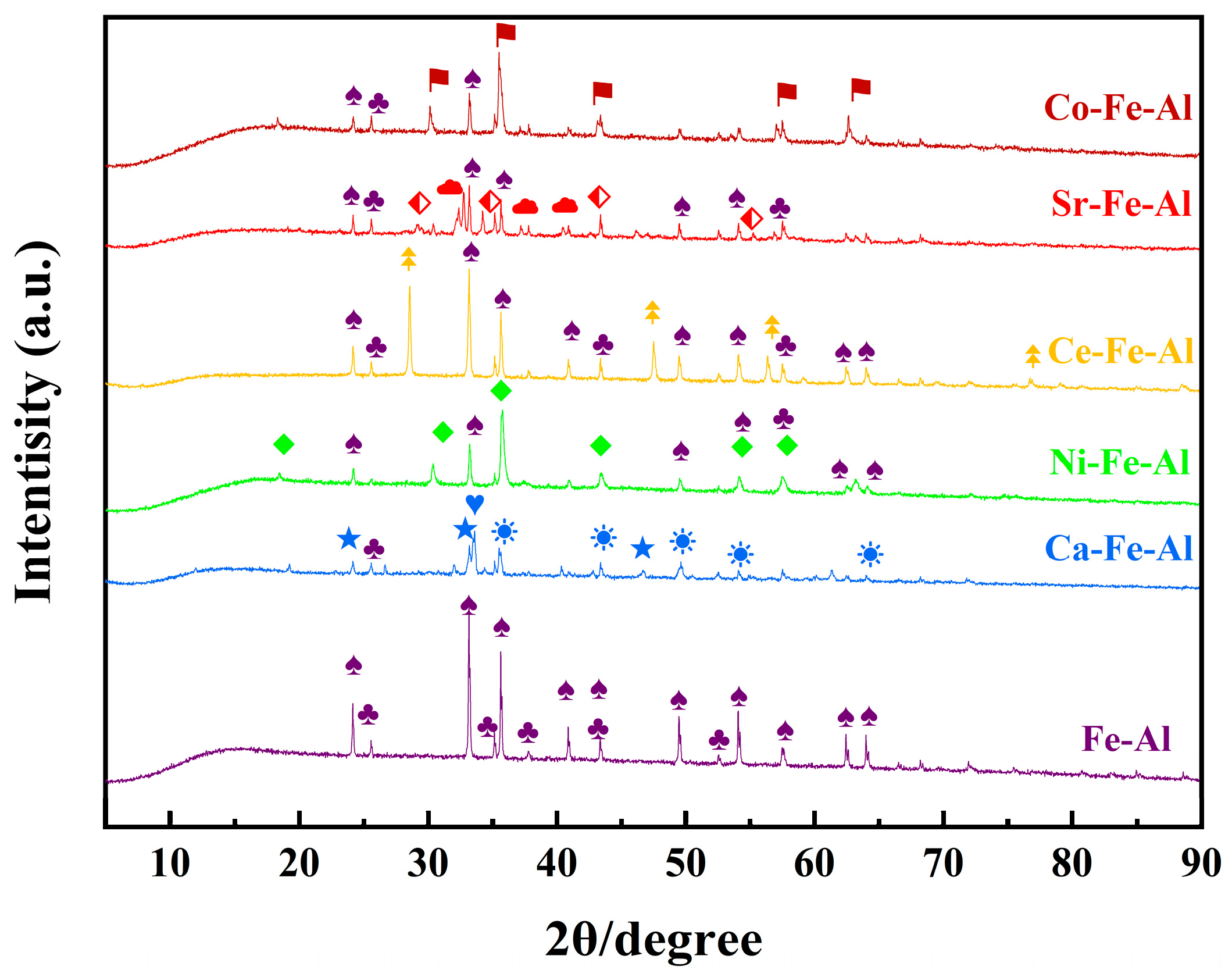
Figure 1. XRD results of fresh redox catalysts (: Fe2O3; : Al2O3; : Ca2Fe2O5; : CaFe3O5; : CaAl4FeO14; : NiFe2O4; : CeO; : SrAl4O7; : SrFe10O22; : CoFe2O4).
Catalysts 15 01032 g001
Figure 2. Morphological structures of freshly synthesized redox catalysts.
Catalysts 15 01032 g002
Figure 3. Experimental results obtained from CLG of HDPE using various redox catalysts.
Catalysts 15 01032 g003
Figure 4. Experimental results obtained under different microwave power settings using Ni-Fe-Al.
Catalysts 15 01032 g004
Figure 5. Experimental results obtained from CLG of HDPE under different redox catalysts to plastic mass ratio using Ni-Fe-Al.
Catalysts 15 01032 g005
Figure 6. XRD results of fresh and spent Ni-Fe-Al (: Fe2O3; : Al2O3. : NiFe2O4; : Fe-Ni alloy; : Fe0.98O; : FeAl2O4).
Catalysts 15 01032 g006
Figure 7. Morphological structure of spent Ni-Fe-Al.
Catalysts 15 01032 g007
Figure 8. Proposed reaction mechanism.
Catalysts 15 01032 g008
Figure 9. Schematic diagram of microwave-assisted CLG progress of HDPE.
Catalysts 15 01032 g009
Table 1. The heating rate and time for feedstocks to achieve required temperature from room temperature (24 °C) using different redox catalysts.
Redox CatalystsTR (min)Hr (°C/min)
Fe-Al5.00155.2
Ca-Fe-Al4.25182.6
Ce-Fe-Al3.41227.5
Sr-Fe-Al3.21241.7
Co-Fe-Al2.35330.2
Ni-Fe-Al3.33233.0
TR: The time required for reaching target temperature in vacuum stage; Hr: Heating rate.
Table 2. The heating rate, energy consumption, and the time for material to achieve required temperature from room temperature (24 °C) under different microwave power settings.
Mp (W)TR (min)Hr (°C/min)Ec (V+A) (kWh/Molgas)
6007.5103.59.20
7004.0194.06.52
8003.33233.03.52
9001.5517.33.18
10001.0776.03.24
Mp: Microwave power; V: Vacuum stage; A: Air stage; Ec (V+A): the energy input of the entire experiment, which was calculated by dividing the energy consumption by the molar yield of synthesis gas.
Table 3. The heating rate and the time for material to achieve required temperature from room temperature (24 °C) under different redox catalyst to plastic mass ratio.
Redox Catalyst to Plastic Mass RatioTR (min)Hr (°C/min)
1.04.31180.0
1.54.00194.0
2.03.33233.0
2.53.00258.7
3.02.55304.3
Table 4. Ultimate and proximate analysis results of HDPE.
Ultimate Analysis (wt.%)Proximate Analysis (wt.%)
CHSNVlFCAsh
85.8813.3400.01599.400.320.28
Vl: Volatiles; FC: Fixed carbon.
Disclaimer/Publisher’s Note: The statements, opinions and data contained in all publications are solely those of the individual author(s) and contributor(s) and not of MDPI and/or the editor(s). MDPI and/or the editor(s) disclaim responsibility for any injury to people or property resulting from any ideas, methods, instructions or products referred to in the content.