Article

Highly Tuning of Sunlight-Photocatalytic Properties of SnO2 Nanocatalysts: Function of Gd/Fe Dopants


by
Ghayah M. Alsulaim
1,* and
Shada A. Alsharif
2
1
Department of Chemistry, Faculty of Science, King Faisal University, Al Ahsa 31982, Saudi Arabia
2
University College of Umluj, Tabuk University, Tabuk 71491, Saudi Arabia
*
Author to whom correspondence should be addressed.
Catalysts 2024, 14(6), 347; https://doi.org/10.3390/catal14060347
Submission received: 8 May 2024 / Revised: 23 May 2024 / Accepted: 25 May 2024 / Published: 28 May 2024
(This article belongs to the Section Nanostructured Catalysts)

Abstract

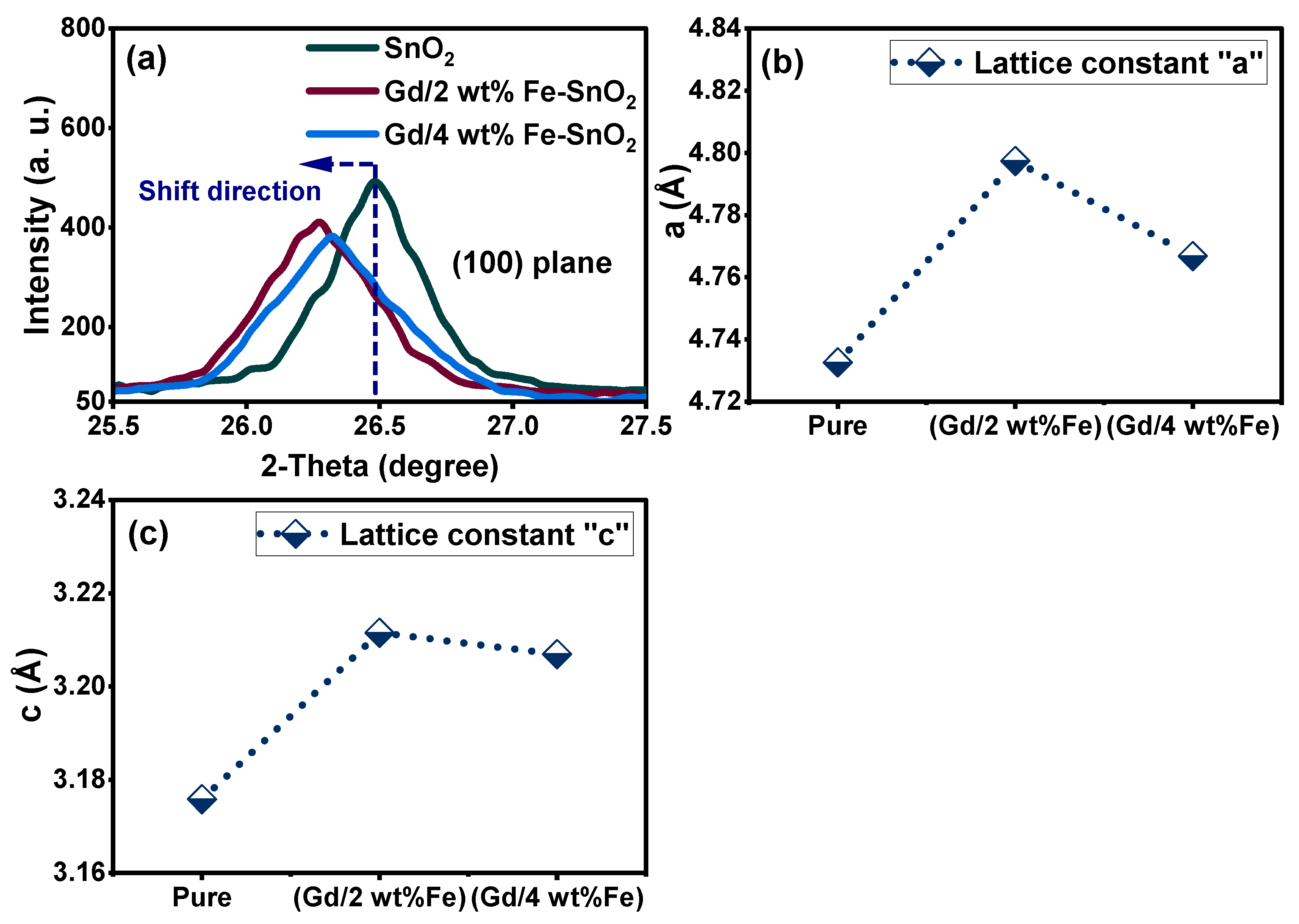
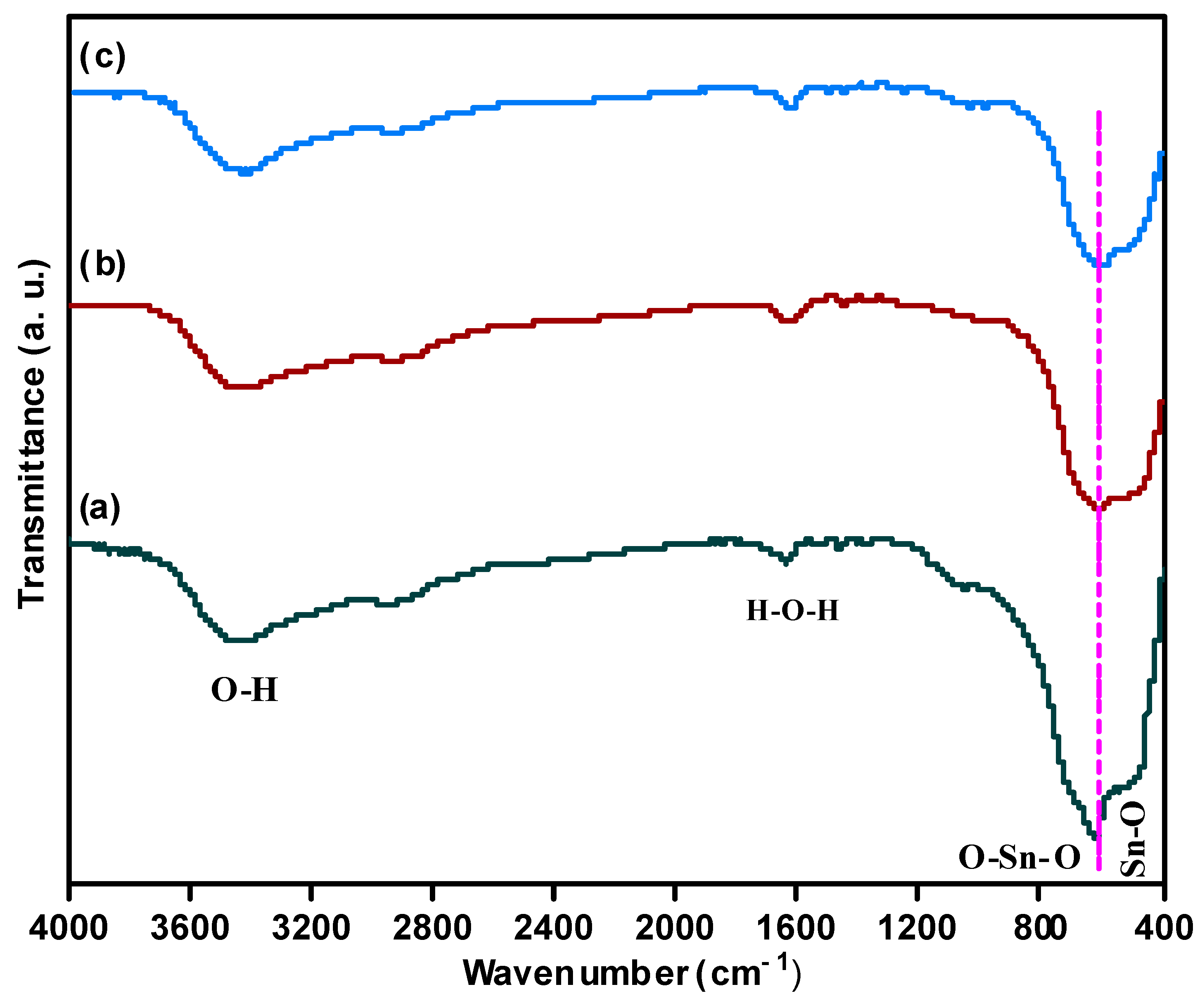
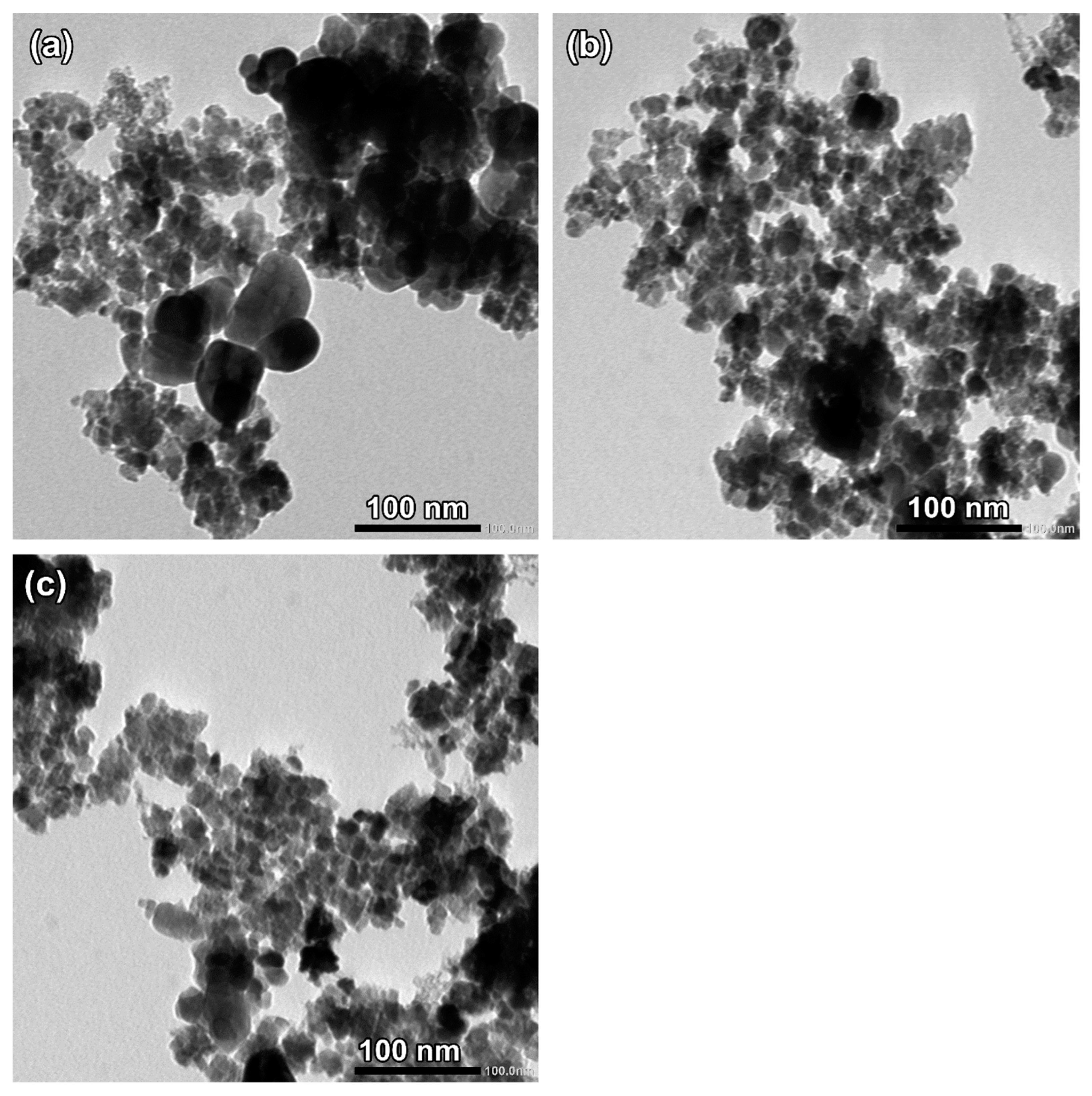
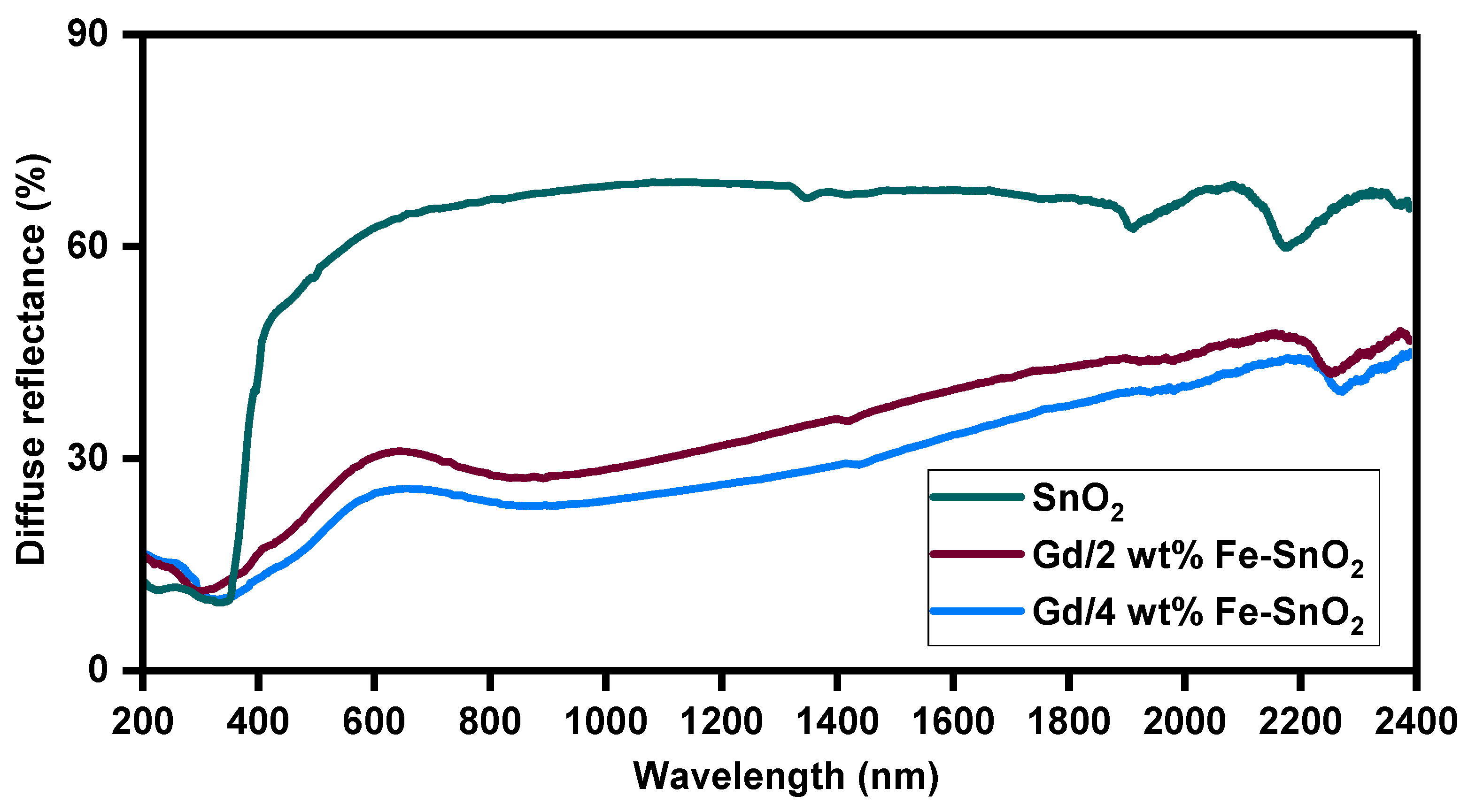
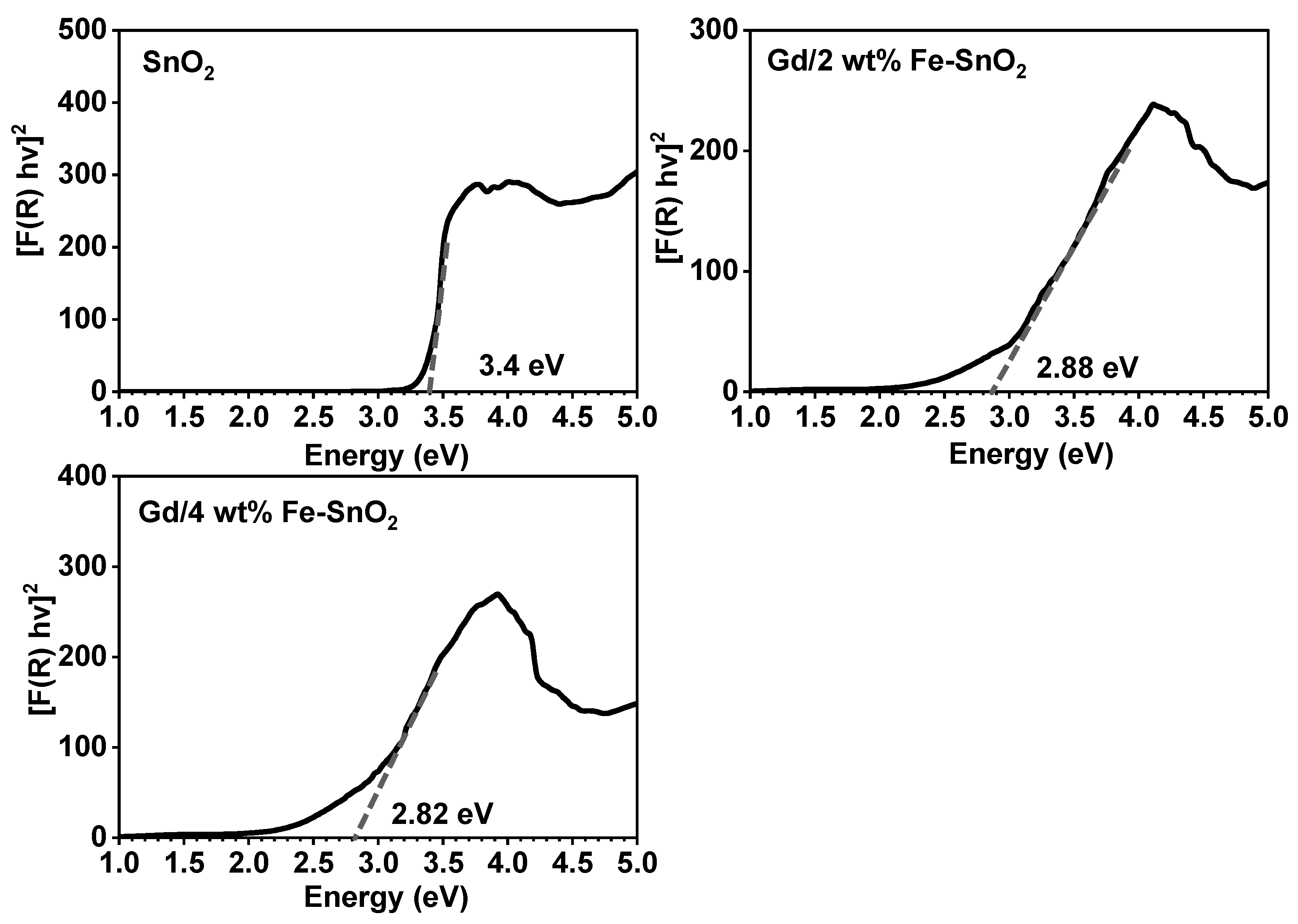
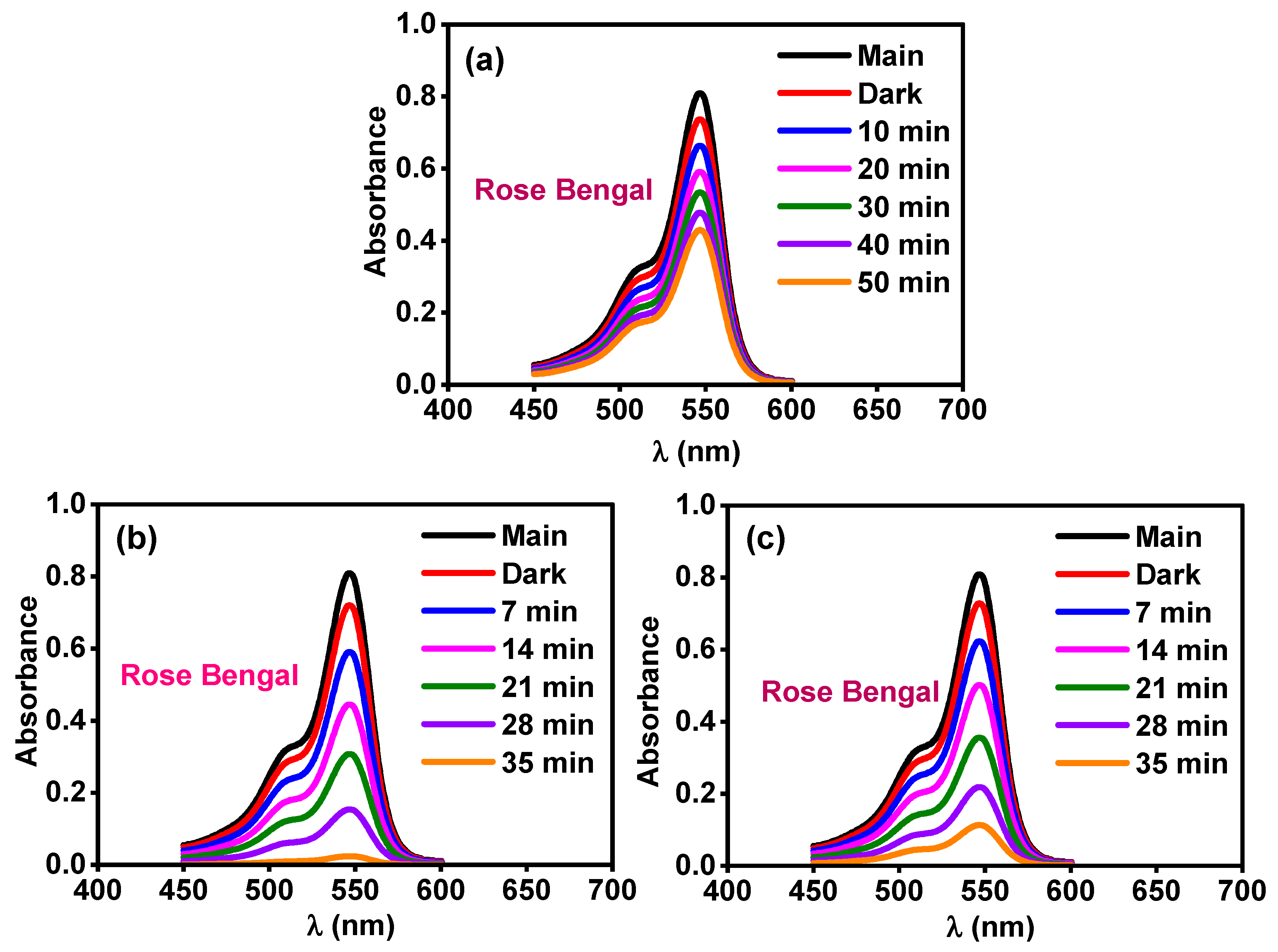
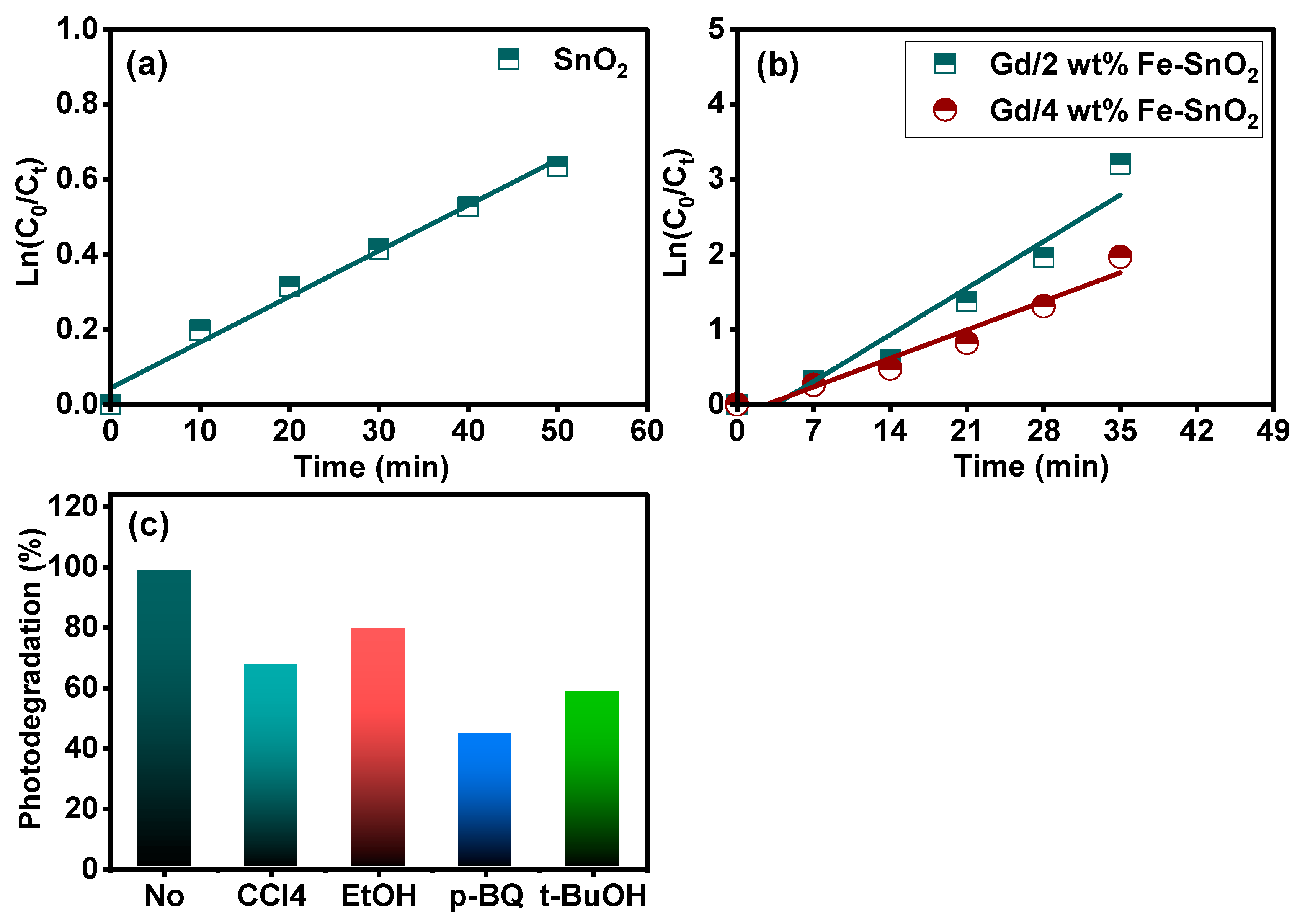
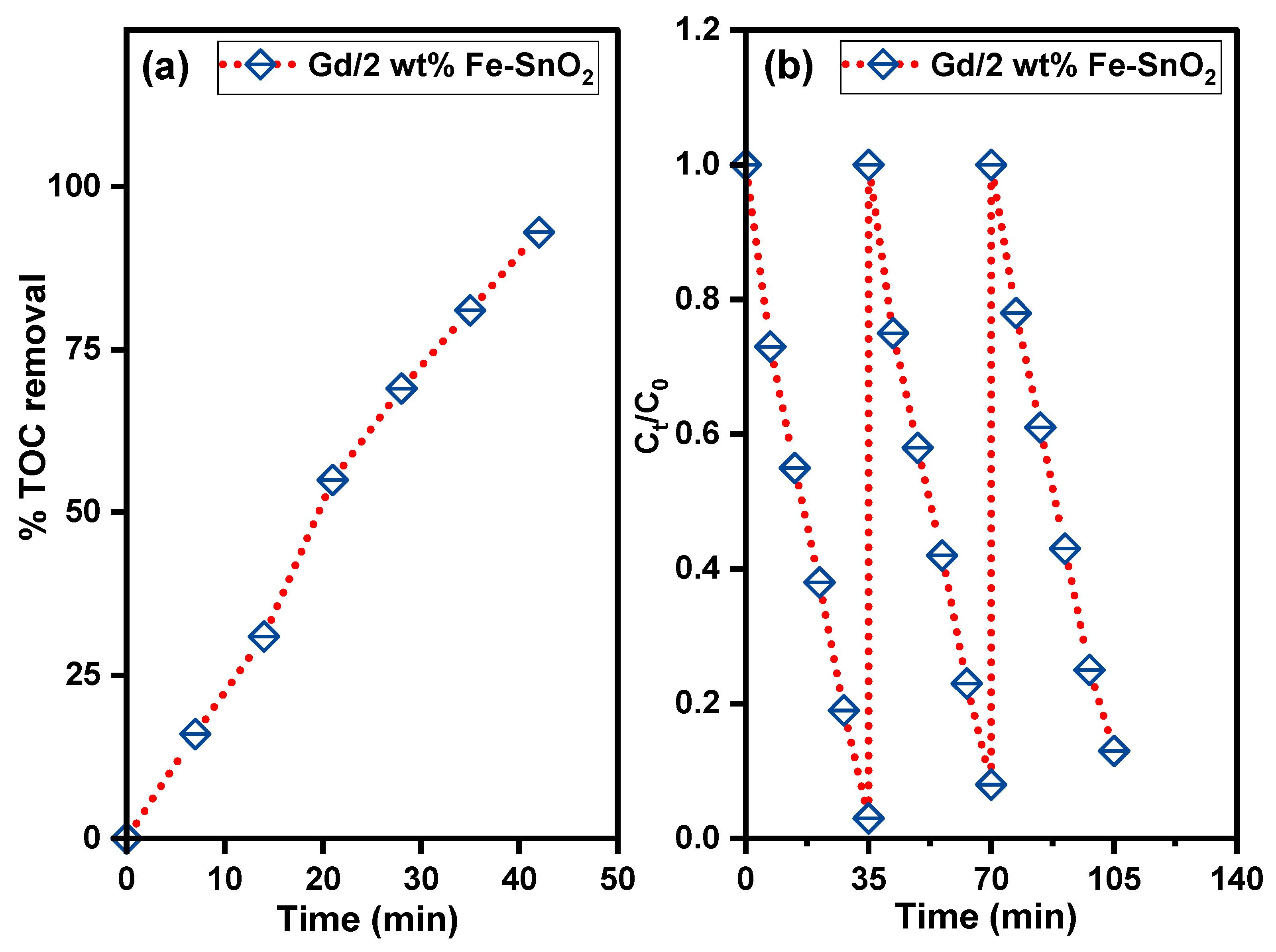
Gd/Fe-SnO2 nanopowders as novel photocatalysts for the active removal of Rose Bengal dye and methyl parathion pesticide were synthesized with a low-cost coprecipitation route. The X-ray diffraction analysis of SnO2, Sn0.96Gd0.02Fe0.02O2 and Sn0.94Gd0.02Fe0.04O2 nanopowders proved the formation of a tetragonal phase of tin oxide with average crystallite sizes in the range of 13–18 nm. The Fourier transform infrared (FTIR) spectra of all samples displayed the characteristic absorption bands of SnO2. The nanopowder of the pure SnO2 sample, as seen in its transmission electron microscope (TEM) image, contains spherical-like particles of variable sizes. The TEM images of the Sn0.96Gd0.02Fe0.02O2 and Sn0.94Gd0.02Fe0.04O2 powders revealed the synthesis of fine spherical nanoparticles. Based on the TEM images, the average particle size of the pure, (Gd, 2 wt% Fe) and (Gd, 4 wt% Fe) codoped SnO2 nanopowders was estimated to be 14, 10 and 12 nm, respectively. After the addition of (Gd, 2 wt% Fe) and (Gd, 4 wt% Fe) to the SnO2 structure, the band gap energy of SnO2 was reduced from 3.4 eV to 2.88 and 2.82 eV, respectively. Significantly, the Sn0.96Gd0.02Fe0.02O2 nanocatalyst exhibited a high removal efficiency of 98 and 96% for Rose Bengal dye and methyl parathion pesticide after activation by sunlight for 35 and 48 min, respectively. Furthermore, this catalyst has shown perfect mineralization as well as high stability properties for the treatment of Rose Bengal dye and methyl parathion pesticide. These results suggest the suitability of the Sn0.96Gd0.02Fe0.02O2 nanocatalyst for the treatment of agriculture and industrial effluent under sunlight light energy.
Keywords: agriculture and industrial wastewater; SnO2 semiconductor; codoping; solar energy; photocatalysis agriculture and industrial wastewater; SnO2 semiconductor; codoping; solar energy; photocatalysis