
Article

Evaluation of Fe2+/Peracetic Acid to Degrade Three Typical Refractory Pollutants of Textile Wastewater
1
College of Environmental Science and Engineering, Donghua University, Shanghai 201620, China
2
College of Chemistry and Chemical Engineering, Shanghai University of Engineering Science, Shanghai 201600, China
3
State Key Laboratory of Pollution Control Reuse, Tongji University, Shanghai 200092, China
*
Author to whom correspondence should be addressed.
These authors contributed equally to this work.
Catalysts 2022, 12(7), 684; https://doi.org/10.3390/catal12070684
Submission received: 28 May 2022 / Revised: 13 June 2022 / Accepted: 14 June 2022 / Published: 22 June 2022

Abstract

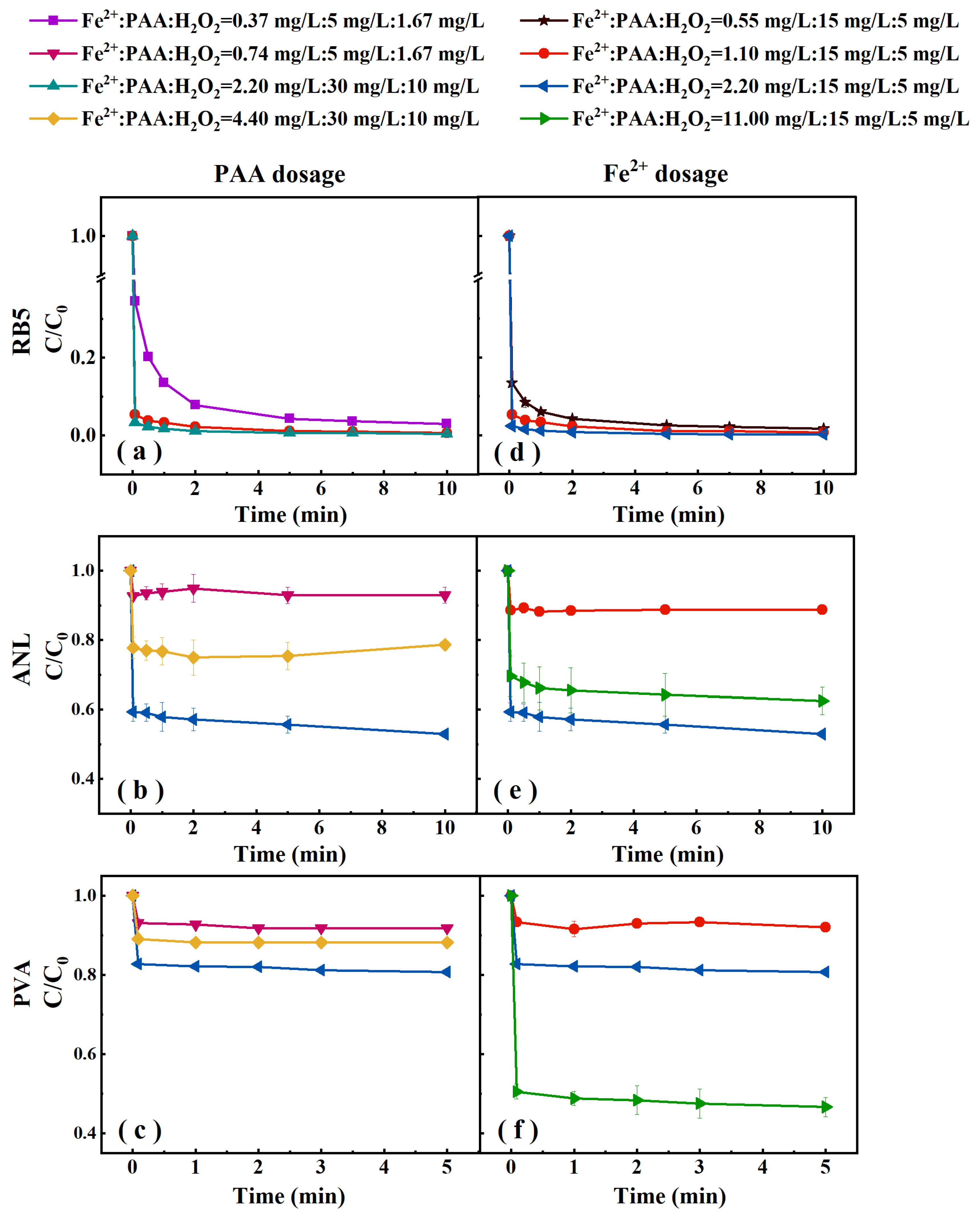
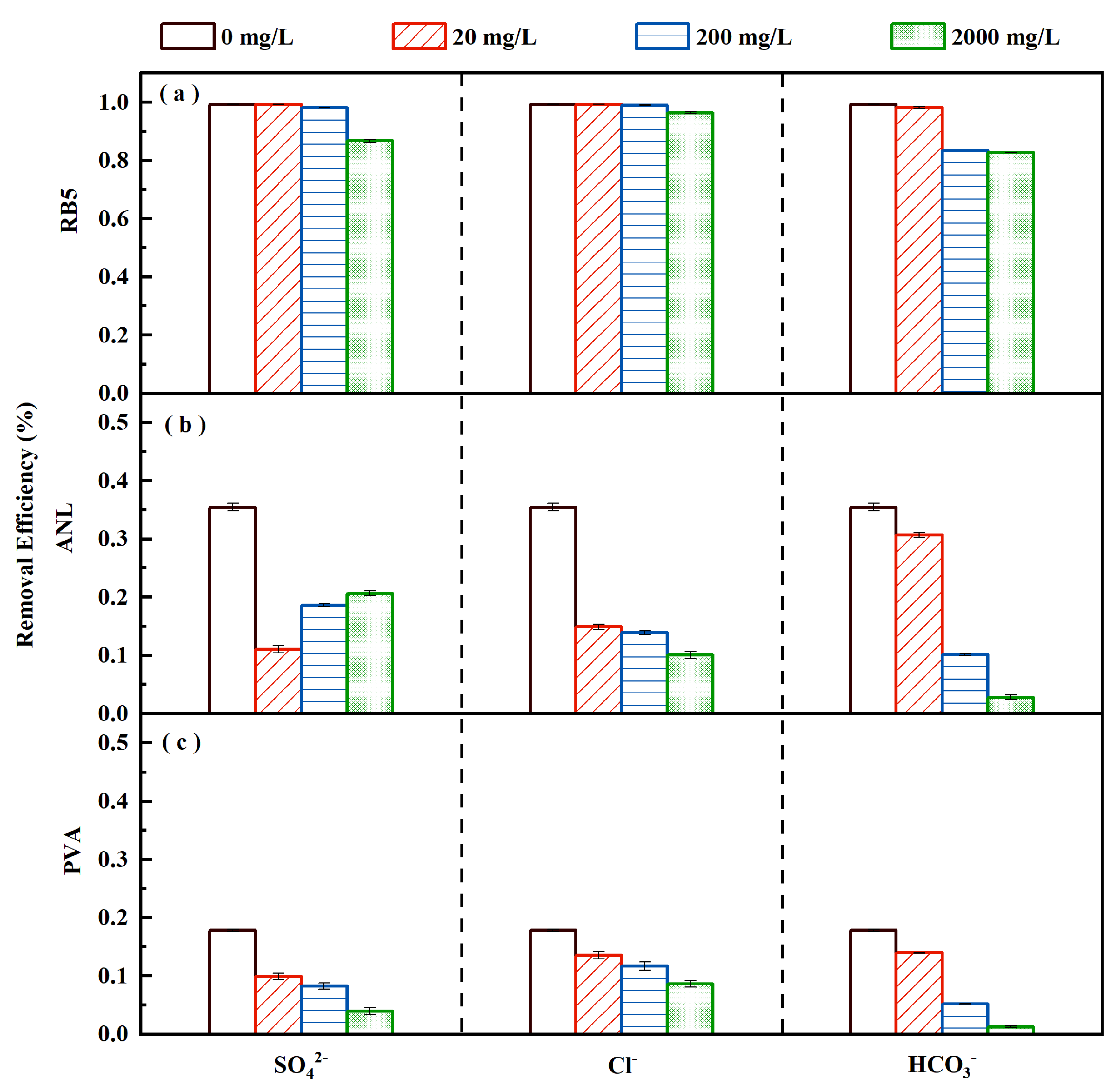
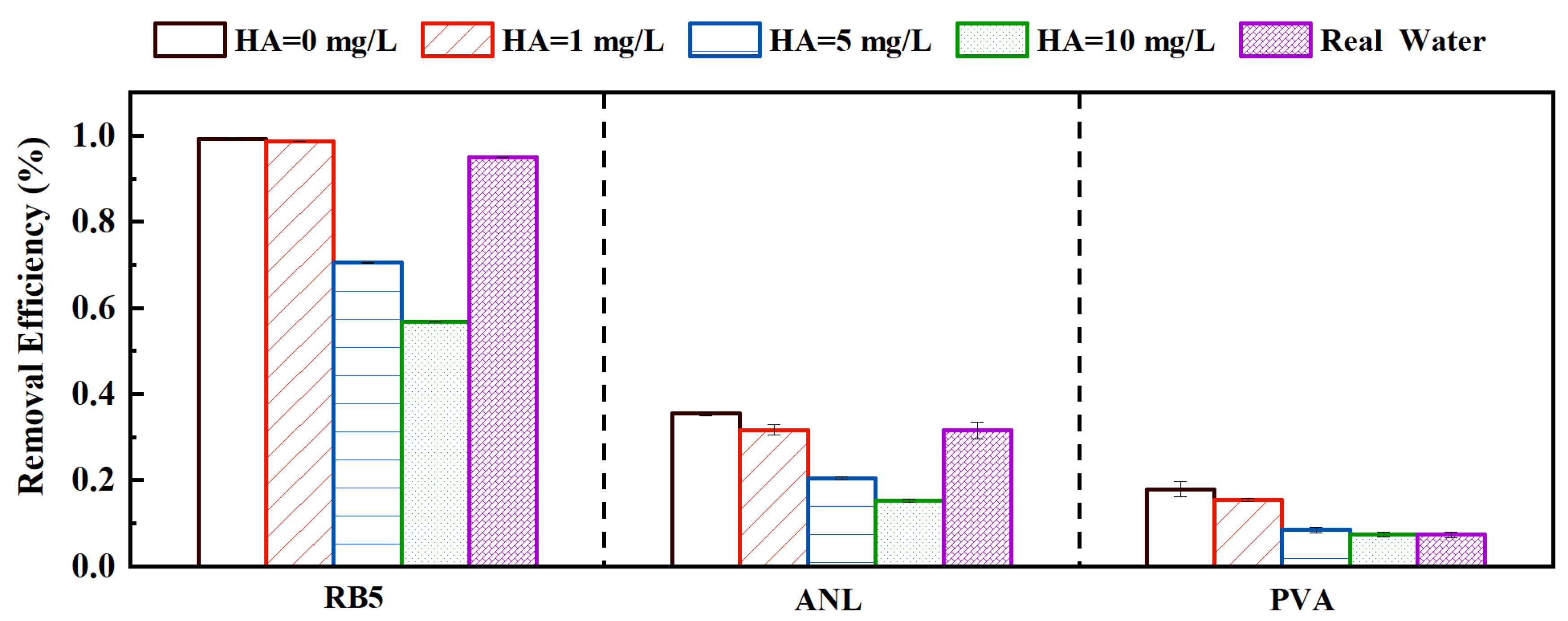
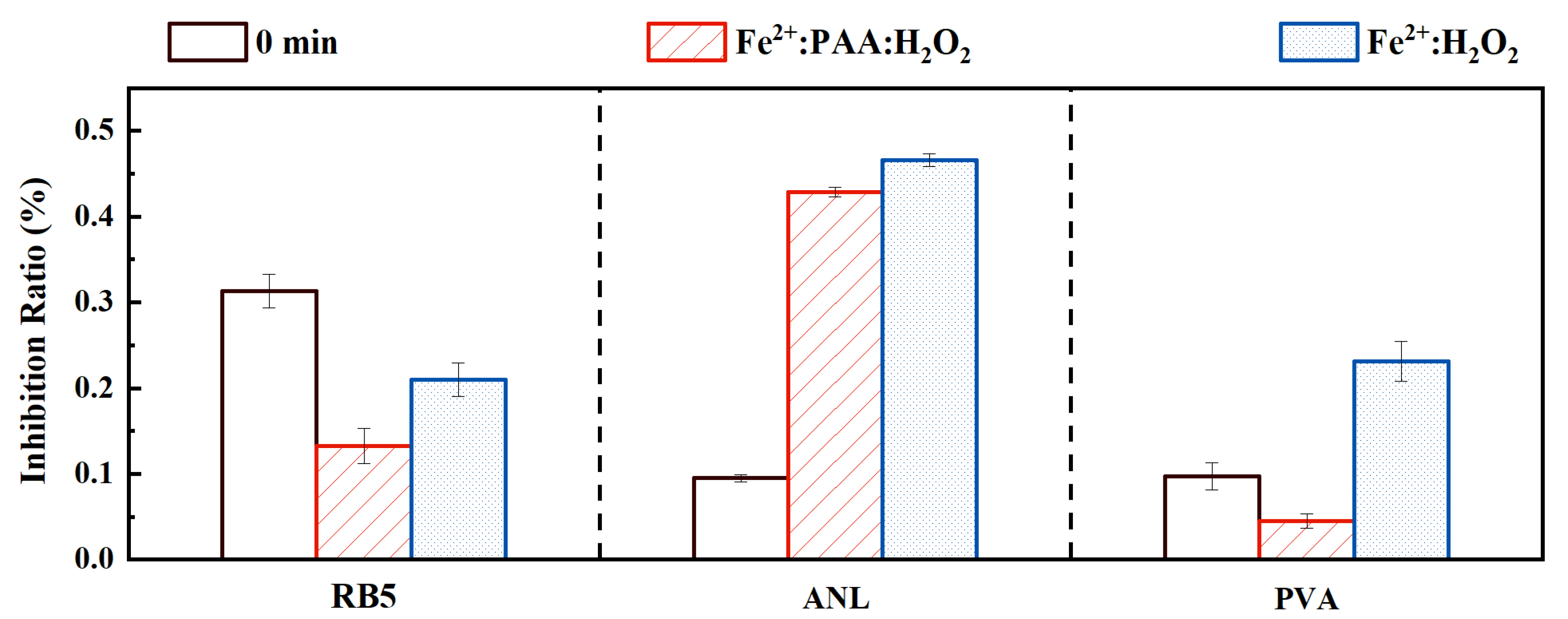
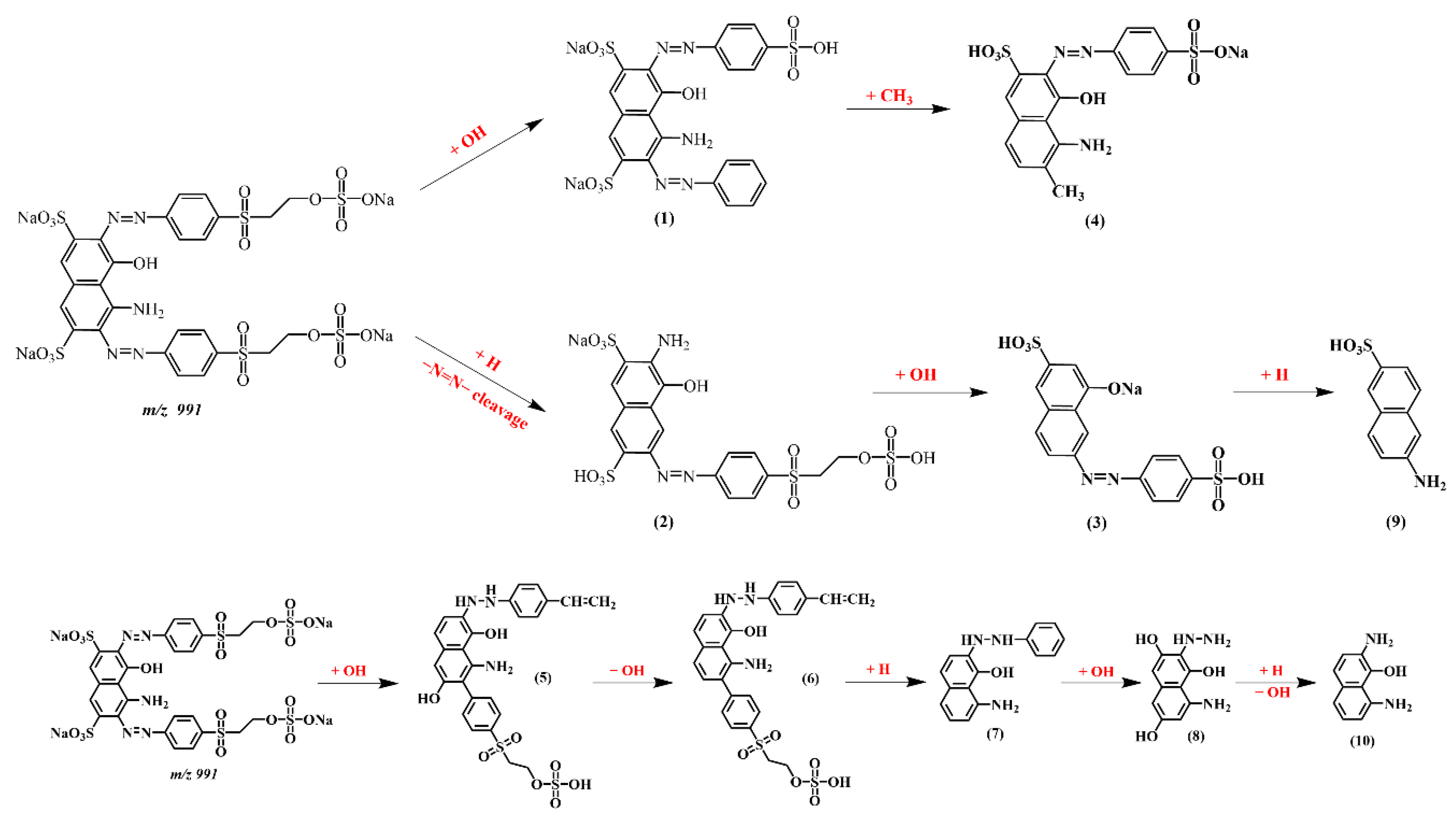
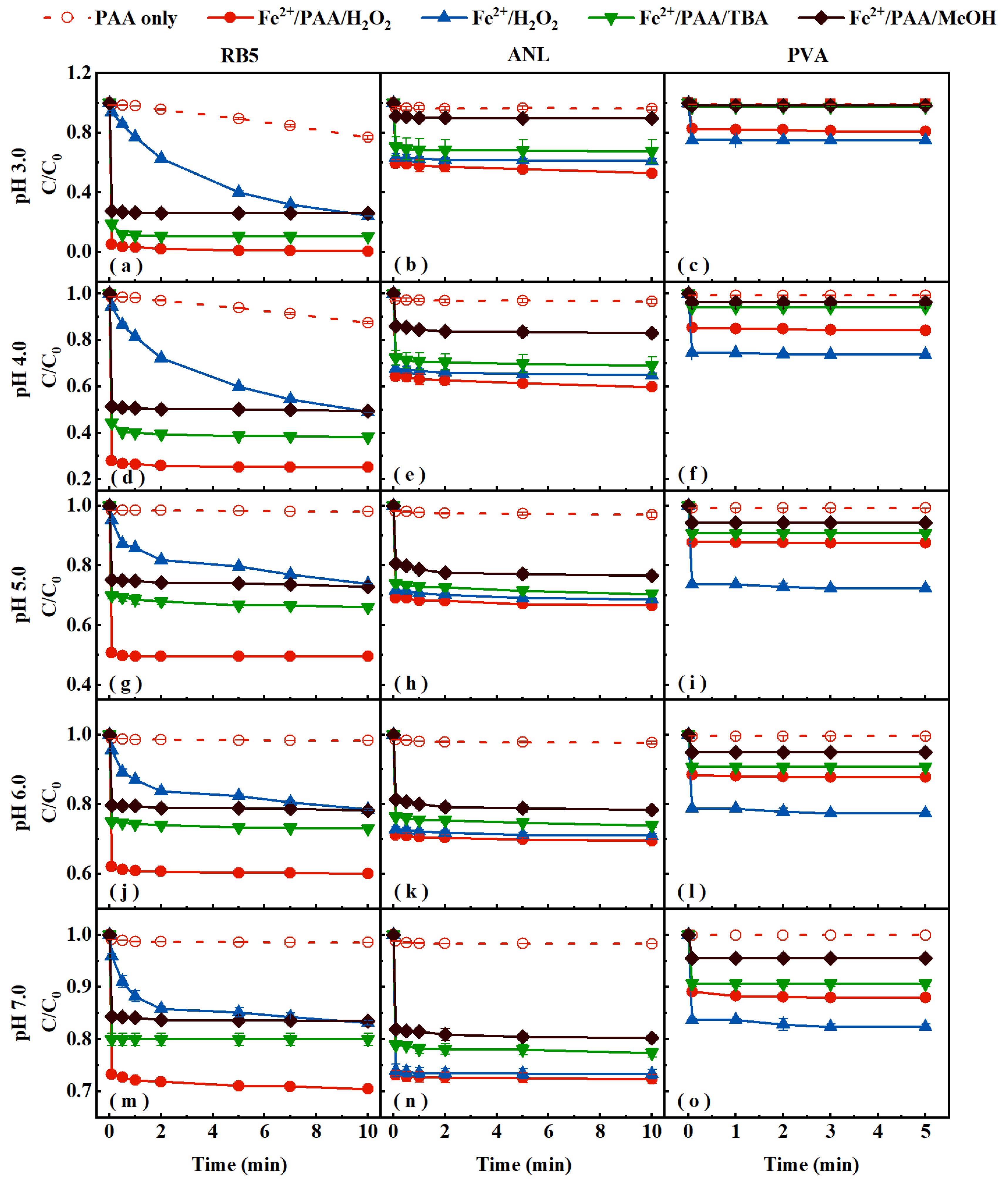
In this work, the degradation performance of Fe2+/PAA/H2O2 on three typical pollutants (reactive black 5, ANL, and PVA) in textile wastewater was investigated in comparison with Fe2+/H2O2. Therein, Fe2+/PAA/H2O2 had a high removal on RB5 (99%) mainly owing to the contribution of peroxyl radicals and/or Fe(IV). Fe2+/H2O2 showed a relatively high removal on PVA (28%) mainly resulting from ·OH. Fe2+/PAA/H2O2 and Fe2+/H2O2 showed comparative removals on ANL. Additionally, Fe2+/PAA/H2O2 was more sensitive to pH than Fe2+/H2O2. The coexisting anions (20–2000 mg/L) showed inhibition on their removals and followed an order of HCO3 > SO42− > Cl. Humic acid (5 and 10 mg C/L) posed notable inhibition on their removals following an order of reactive black 5 (RB5) > ANL > PVA. In practical wastewater effluent, PVA removal was dramatically inhibited by 88%. Bioluminescent bacteria test results suggested that the toxicity of Fe2+/PAA/H2O2 treated systems was lower than that of Fe2+/H2O2. RB5 degradation had three possible pathways with the proposed mechanisms of hydroxylation, dehydrogenation, and demethylation. The results may favor the performance evaluation of Fe2+/PAA/H2O2 in the advanced treatment of textile wastewater.
Keywords: peracetic acid; advanced oxidation; reactive dyes; aniline; polyvinyl alcohol peracetic acid; advanced oxidation; reactive dyes; aniline; polyvinyl alcohol