Article

CoMn Catalysts Derived from Hydrotalcite-Like Precursors for Direct Conversion of Syngas to Fuel Range Hydrocarbons


Unipetrol Centre of Research and Education, a.s, Areál Chempark 2838, Záluží 1, 436 70 Litvínov, Czech Republic
*
Author to whom correspondence should be addressed.
Catalysts 2020, 10(8), 813; https://doi.org/10.3390/catal10080813
Submission received: 8 July 2020 / Revised: 17 July 2020 / Accepted: 19 July 2020 / Published: 22 July 2020
(This article belongs to the Special Issue Greener Catalysis for Environmental Applications)

Abstract

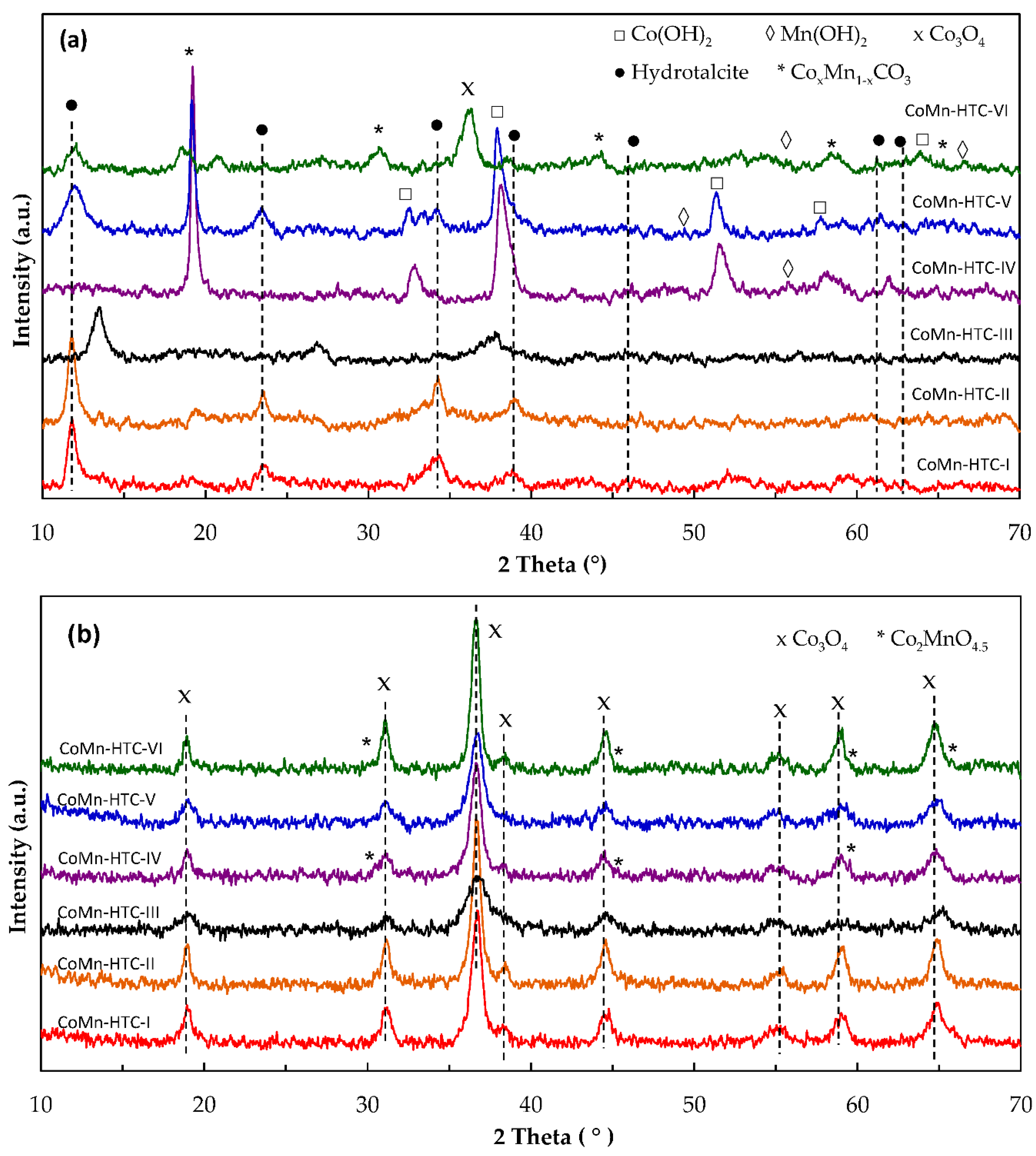
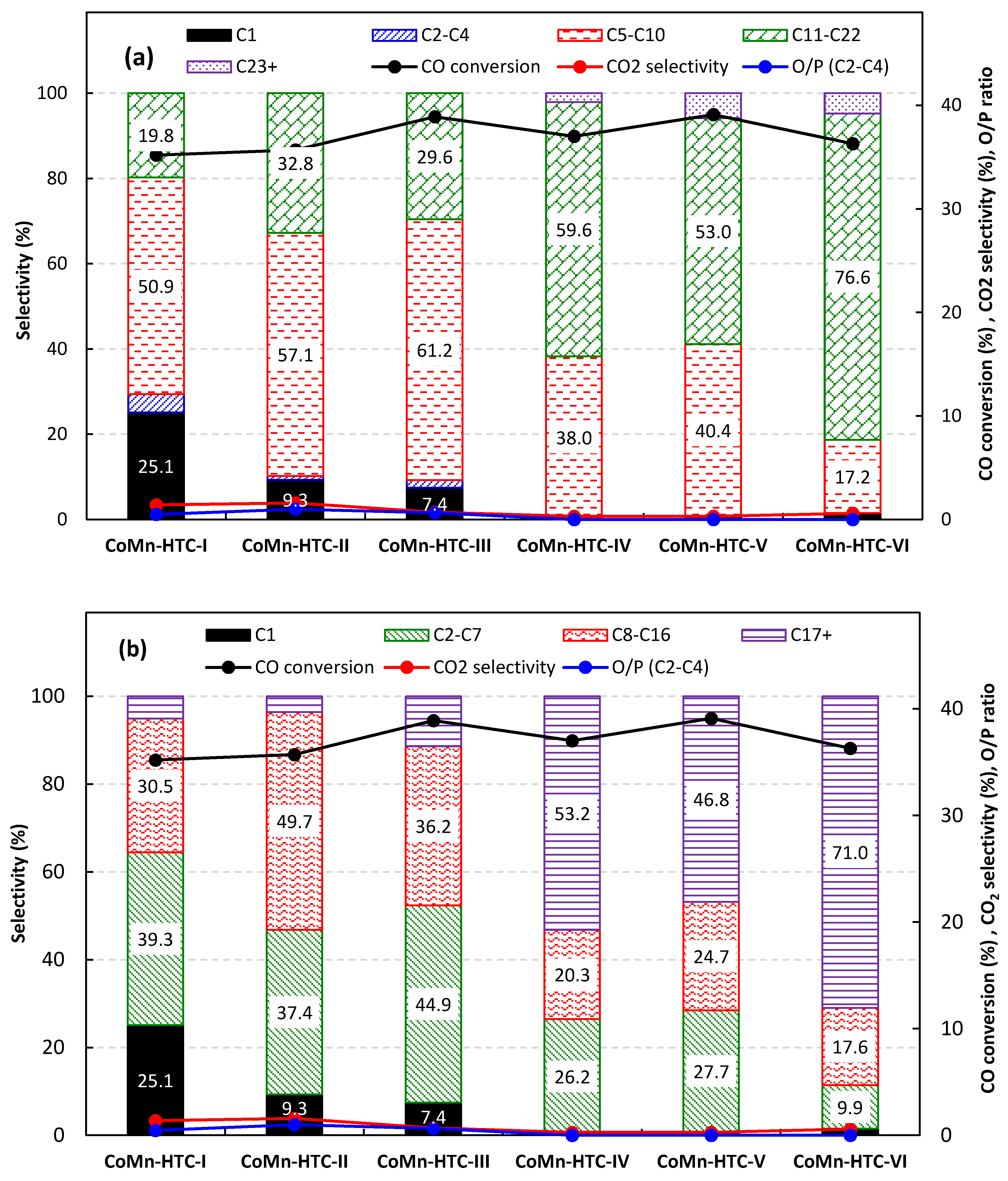
Two different groups of CoMn catalysts derived from hydrotalcite-like precursors were prepared through the co-precipitation method, and their performance in the direct production of gasoline and jet fuel range hydrocarbons through Fischer–Tropsch (FT) synthesis was evaluated in a batch autoclave reactor at 240 °C and 7 MPa and H2/CO of 2. The physicochemical properties of the prepared catalysts were investigated and characterized using different characterization techniques. Catalyst performance was significantly affected by the catalyst preparation method. The crystalline phase of the catalyst prepared using KOH contained Co3O4 and some Co2MnO4.5 spinels, with a lower reducibility and catalytic activity than cobalt oxide. The available cobalt active sites are responsible for the chain growth, and the accessible acid sites are responsible for the cracking and isomerization. The catalysts prepared using KOH + K2CO3 mixture as a precipitant agent exhibited a high selectivity of 51–61% for gasoline (C5–C10) and 30–50% for jet fuel (C8–C16) range hydrocarbons compared with catalysts precipitated by KOH. The CoMn-HTC-III catalyst with the highest number of available acid sites showed the highest selectivity to C5–C10 hydrocarbons, which demonstrates that a high Brønsted acidity leads to the high degree of cracking of FT products. The CO conversion did not significantly change, and it was around 35–39% for all catalysts. Owing to the poor activity in the water-gas shift reaction, CO2 formation was less than 2% in all the catalysts.
Keywords: Fischer-Tropsch; jet fuel; gasoline; CoMn; hydrotalcite-like precursors Fischer-Tropsch; jet fuel; gasoline; CoMn; hydrotalcite-like precursors