
Article

Design of a Cattle-Health-Monitoring System Using Microservices and IoT Devices

1
Faculty of Electrical and Computer Engineering, University of Prishtina, 10000 Prishtina, Kosovo
2
Software Development Department, DataProgNet SH.P.K., 70000 Ferizaj, Kosovo
3
Department of Computer Engineering, Epoka University, 1032 Tirana, Albania
*
Author to whom correspondence should be addressed.
Computers 2022, 11(5), 79; https://doi.org/10.3390/computers11050079

Submission received: 25 April 2022 / Revised: 6 May 2022 / Accepted: 10 May 2022 / Published: 12 May 2022
(This article belongs to the Special Issue Edge Computing for the IoT)

Abstract

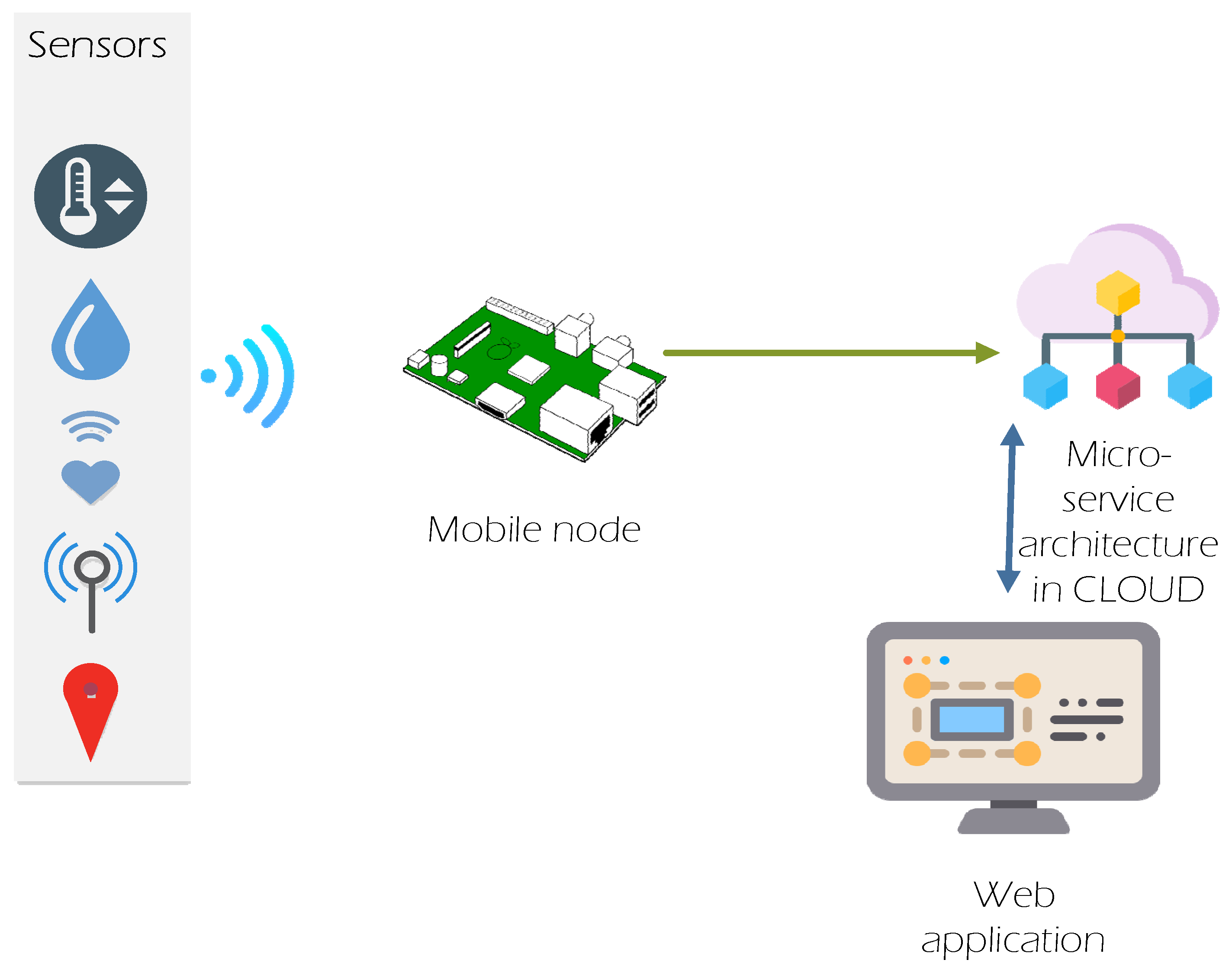
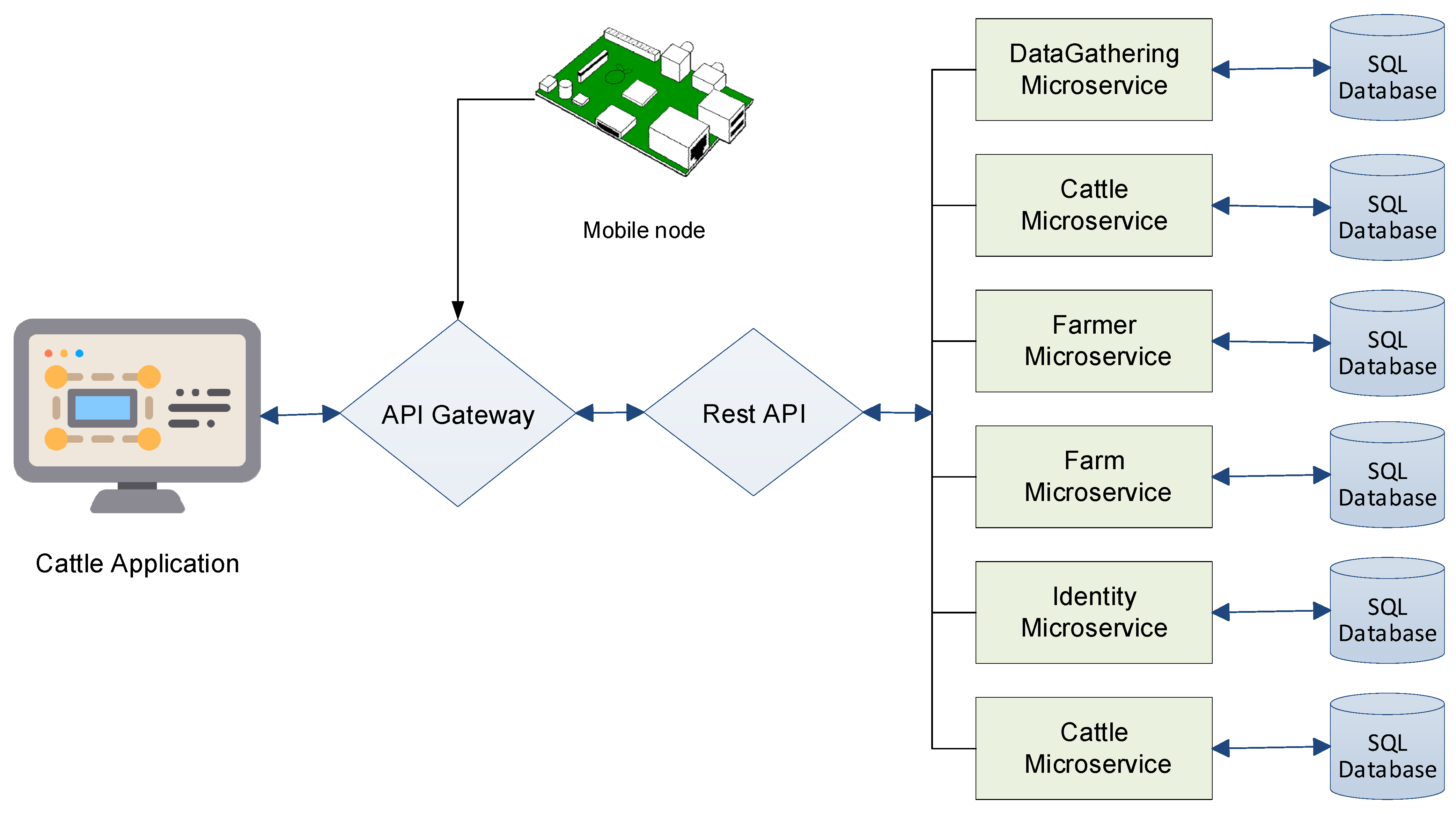
This article proposes a new concept of microservice-based architecture for the future of distributed systems. This architecture is a bridge between Internet-of-Things (IoT) devices and applications that are used to monitor cattle health in real time for the physical and health parameters of cattle, where microservice architecture is introduced that enables this form of monitoring. Within this architecture, machine-learning algorithms were used to predict cattle health and inform farmers about the health of each cattle in real time. Within this architecture, six microservices were proposed that had the tasks of receiving, processing, and sending data upon request. In addition, within the six microservices, a microservice was developed for the prediction of cattle health using algorithms from machine learning using the LightGBM algorithm. Through this algorithm, it is possible to determine the percentage value of the health of each head of cattle in the moment, based on the parameters that are sent from the mobile node. If health problems are identified in the cattle, the architecture notifies the farmer in real time about the problems that the cattle have. Based on the proposed solution, farmers will have 24 h online access to monitor the following parameters for each head of cattle: body temperature, heart rate, humidity, and position.
Keywords: agriculture; cattle; cloud; deep learning; docker; IoT; microservices; monolithic; sensor agriculture; cattle; cloud; deep learning; docker; IoT; microservices; monolithic; sensor