1. Introduction
The area of adaptive learning is increasingly important in the context of rapid AI development. Romania has been one of the countries where K-12 education, universities, and training companies must adapt to a new paradigm of technology-enabled instruction. At the same time, the relatively limited funding available in Romanian educational institutions compared to similar countries [
1] increases the importance of efficiency-oriented solutions. Artificial intelligence has the potential to improve learning outcomes without proportionally increasing educational budgets by enhancing instructional efficiency and personalization [
2].
A relevant empirical context for this transformation is a nationwide educational robotics initiative implemented across Romanian schools. The program is structured as a free competition, supported by the local Ministry of Education and deployed at scale in both urban and rural environments. It provides access to free robotics kits, learning resources, and coordinated instructional support without requiring financial contributions from participants. Consequently, the financial component is not a barrier to entry, allowing participation patterns to be interpreted independently of cost-related constraints. This feature is particularly important for analyzing adoption in rural and small urban environments and ensures that observed dynamics reflect structural and behavioral factors rather than economic exclusion [
3,
4].
In the present article, we analyze a case study on the integration of AI in the Romanian school system, a process that started in 2018. The objective of the article is to identify the factors relevant for analyzing spread of innovation capable of accelerating the dissemination of educational robotics in schools. The competition was based on the idea that students could get kits for free and study using a virtual learning assistant even in schools where local teachers could not provide proper support.
The empirical data presented in this paper clearly demonstrates a consistent decline in adaptive learning platform engagement following an initial period of high adoption. To explore rather than merely describe this trend, the paper employs a System Dynamics model that maps plausible mechanisms driving this trajectory. The model is a first-generation analytical framework whose value lies in making structural assumptions explicit and testable, not in generating validated quantitative predictions. Its outputs should be interpreted as hypotheses about system behavior rather than empirical conclusions.
The integration of robotics and Artificial Intelligence into the educational sector represents more than a technological advancement—it constitutes a systemic transformation in how knowledge is transmitted and received. What distinguishes the present contribution from existing work is its application of System Dynamics and innovation diffusion theory to model this transformation within a resource-constrained Eastern European context, where adoption dynamics are shaped by structural constraints absent from most Western-oriented adaptive learning studies. By grounding the analysis in empirical platform data and explicitly modelling system-level interactions, the paper provides a structured basis for understanding adoption patterns and identifying leverage points for intervention [
3,
5].
The contributions of this paper are twofold. First, it proposes a System Dynamics framework grounded in innovation diffusion theory as a first-generation calibration model for understanding AI-enabled educational robotics adoption in a resource-constrained national context. The model is not presented as a validated predictive engine but as a structured analytical tool that makes the system’s assumptions explicit and falsifiable, designed to be progressively tested and refined as anonymized aggregate data continues to accumulate. Due to GDPR constraints, the study relies exclusively on anonymized aggregated public data, and this boundary applies equally to all future iterations of the model. Second, it advances and provides preliminary support for the hypothesis that an AI-based educational platform, even one from which all financial barriers have been removed, will experience sustained enrollment decline over time in the absence of adequate human teacher involvement.
These contributions are organized around two explicit research questions that guide the study. The first is: what should a System Dynamics model of AI-enabled educational robotics adoption look like in a resource-constrained national context, and how can it be structured so that it can be progressively tested and refined as empirical data accumulates over time? The second is: does the empirical and modelled evidence support the hypothesis that an AI-based educational platform, even one from which all financial barriers have been removed, will experience sustained enrollment decline over time in the absence of adequate human teacher involvement? Each section of the paper is structured to address one or both of these questions, and the conclusions are explicitly mapped back to them.
It should be noted that the literature on AI in education contains a significant body of mixed and cautionary findings alongside its broadly positive conclusions. Adaptive learning systems show limited or conditional effects where implementation lacks adequate teacher support [
6,
7], and teacher attitudes and competencies are consistently identified as the primary adoption constraint rather than the technology itself [
8,
9]. Concerns about evidence quality and lack of longitudinal follow-up are also well established [
10,
11]. The present paper engages with this cautionary strand directly, treating the observed enrollment decline as an outcome consistent with what the evidence on implementation in under-resourced contexts would predict.
The structure of the article is as follows.
Section 2 reviews literature on adaptive learning, educational robotics, and AI in education.
Section 3 presents the theoretical and conceptual framework based on System Dynamics.
Section 4 details the methodology, including the modelling approach and data analytics pipeline.
Section 5 describes the empirical data used in the study.
Section 6 introduces the proposed model.
Section 7 discusses the results and their implications.
Section 8 and
Section 9 address limitations, broader implications, and conclusions.
2. Literature Review
The literature review synthesizes research across multiple interconnected areas that collectively motivate and ground the proposed framework. Understanding the medium to long-term adoption dynamics of AI-based educational robotics platforms requires drawing on adaptive learning systems research, System Dynamics methodology, educational robotics, and learning analytics. No single strand of literature is sufficient to explain the pattern of initial enthusiasm followed by sustained decline that this paper documents empirically. While each dimension has been studied in relative isolation, no existing framework systematically integrates them to explain why AI-based educational robotics platforms struggle to maintain engagement over time, particularly in resource-constrained national systems such as Romania.
AI’s most significant contribution to education stems from its ability to deliver personalized learning experiences, fundamentally reshaping students’ educational trajectories through tailored instructional pathways using data analytics and machine learning [
4]. Robotics and AI can adjust curriculum content in real time to align with individual learning styles and needs, thereby improving student engagement and academic performance [
12,
13]. While personalization is widely recognized as a defining trend in contemporary education [
5], existing models rarely account for the structural variables that determine whether personalization technologies diffuse equitably across a national system. This paper addresses that gap directly by modelling urban-rural disparity and age-of-entry effects as explicit structural variables within the System Dynamics framework—rather than treating them as confounds or contextual footnotes—thereby generating leverage point analysis that is both theoretically grounded and directly actionable for Romanian educational policy [
3,
5].
Adaptive learning is an individual-focused teaching method that customizes each learner’s experience through artificial intelligence and computer algorithms [
14] and is recognized as a necessity for the improvement of education [
15]. This need stems from the drawbacks of the classic instructional paradigm, where uniform knowledge transfer cannot account for variance in students’ prior knowledge, interest levels, and individual factors affecting learning rate. Most teachers match their pacing to a median student, yet most students deviate from this theoretical median—a problem exacerbated in large online environments, leading to what is known as the “teacher bandwidth problem” [
16]. Adaptive learning systems can alleviate this to a degree [
17], partially offloading blocking tasks to automated platforms while allowing teachers to focus on social interaction and higher-order instruction. Variance between students can negatively impact the effectiveness of any single teaching strategy [
18], while AI integration brings increased accuracy of academic predictions and improved relevance of educational recommendations [
19]. Adaptive platforms support users’ cognitive and motivational processes [
20], with behavioral and engagement indicators—attention, gestures, and expressions—proving most effective for building accurate learner models and proposing adaptive interventions in STEM contexts [
21].
AI-powered systems analyze learner data to adapt content and instructional strategies in real time, leading to greater engagement, improved outcomes, and more equitable learning environments [
12]. AI applications enable more precise intervention through predictive analytics, automated feedback, and individualized tutoring [
22], particularly in large-scale online education where human instructors face scalability limitations. Adaptive platforms utilize AI to assess cognitive levels, enhance metacognitive development, and provide timely scaffolding, with demonstrated improvements in learner retention when combined with human-facilitated instruction [
23].
The maker movement provides an important structural complement to these technological approaches, promoting hands-on project-based learning through tools such as robotics kits, 3D printers, and microcontrollers [
24]. Makerspaces cultivate exploration and innovation by bridging formal and informal education [
25], and when integrated with AI technologies, become more adaptive: intelligent environments can monitor progress, identify skill gaps, and provide targeted feedback [
26]. Maker-centered learning in collaborative spaces such as hackathons and STEM camps becomes more effective when AI supports equitable participation and formative assessment [
27], making the convergence of AI and maker education a critical frontier for inclusive, future-ready learning.
AI-enabled educational robotics—from programmable STEM kits to socially interactive tutor robots—offers embodied interaction that supports cognitive and affective learning processes when integrated with sound pedagogy [
28]. Meta-analytic evidence reports moderate positive impacts on learning outcomes, with results depending heavily on task design, learner age, and curricular embedding [
29,
30]. In the context of personalized education, System Dynamics provides an analytical lens for modelling complex interactions among learners, technologies, institutions, and socio-economic constraints [
31]. Combined with educational data mining, learning analytics, and AI techniques, it enables adaptive models that personalize learning pathways and optimize engagement [
32]. Closed-loop learning analytics—where data collection, analysis, and intervention are connected through iterative feedback cycles [
33]—aligns well with this framework, with educational robots functioning both as learning interventions and measurement channels.
Conversational AI systems acting as student assistants provide responsive scaffolding and support, though practical and ethical deployment questions must be addressed [
12]. Together, robotics, mobile platforms, and chatbot assistance form complementary channels within an integrated adaptive ecosystem. At the policy level, this aligns with European priorities including the Digital Education Action Plan (2021–2027) and the Coordinated Plan on Artificial Intelligence [
34,
35], which stress capability-building, investment coordination, and governance of AI systems that process learner data. International guidance further emphasizes human-centred design, privacy protection, and institutional oversight [
36,
37]. Mobile learning extends education beyond the classroom, supporting flexible access and collaboration that reinforces adaptive AI-driven environments [
38]. Finally, in Central and Eastern Europe, the relationship between public education spending and economic growth is mixed across countries and time horizons [
1], underscoring the importance of evidence-informed allocation—particularly for resource-constrained contexts like Romania where system dynamics and learning analytics can support scenario simulation, policy evaluation, and targeted deployment of AI where it adds measurable value.
The European Union has been planning and implementing a broad set of measures to advance AI and robotics education at all education levels. High-level strategies like the Digital Education Action Plan (2021–2027) [
34] and the Coordinated Plan on Artificial Intelligence [
35] of the European Commission’s call for formal AI education in schools and supporting teachers to integrate AI tools responsibly, while maintaining ethical standards. The European Digital Competence Framework (DigComp 3.0) includes AI- and data-related skills, and supports development of AI learning resources for education and training [
39]. Such measures are being implemented through numerous EU-funded programs and projects; for example, secondary education curriculum planning and training materials for AI and robotics were created via Erasmus+ projects like AI+ [
40] and RoboQuests [
41].
The evolving relationship between AI, robotics, and education can be theoretically situated within sociotechnical systems theory, which frames technological change as a co-evolutionary dynamic between technical capabilities and social structures [
42]. Through the dual lens of System Dynamics and innovation diffusion theory, this process can be modelled as interacting stocks and flows—where AI capabilities, institutional readiness, and pedagogical practice accumulate and adjust through reinforcing and balancing feedback loops. Six theoretically significant trends emerge from this reconfiguration: the convergence of machine learning, deep learning, and advanced robotics as mutually reinforcing drivers; the expansion of multimodal sensing capabilities as data collection mechanisms enriching AI-driven contextual understanding [
43,
44]; the growing capacity of AI to manage cognitive complexity at scale; the emergence of human–machine interaction as a new pedagogical paradigm; the structural transformation of training models toward competency development; and governance challenges encompassing algorithmic transparency and responsible AI deployment. Innovation diffusion theory further illuminates how these trends propagate unevenly across educational systems, with adoption rates shaped by institutional capacity constraints and perceived program value—dynamics that System Dynamics modelling is well positioned to simulate.
These sociotechnical shifts carry direct implications for human capital theory, which holds that the economic value of education derives from its capacity to develop labor market-relevant skills. Through the lens of innovation diffusion theory, the rapid spread of AI and robotics across professional domains—including medicine, law, accounting, and the creative industries—can be understood as a diffusion wave expanding technical literacy beyond its traditional association with engineering and computer science. System Dynamics modelling reveals the non-linear nature of this process: initial adoption among technical professionals generates visibility and legitimacy effects that create reinforcing feedback loops driving AI competency requirements into previously non-technical fields. This aligns with endogenous growth theory’s emphasis on knowledge as a primary driver of economic productivity, underscoring the systemic importance of embedding AI and robotics education broadly across the curriculum rather than confining it to technical tracks.
Personalized education has become a central priority in contemporary pedagogy, driven by rapid advances in artificial intelligence and the growing demand for adaptive learning systems that tailor educational experiences to individual learner needs. AI-driven adaptive systems have demonstrated substantial positive effects on cognitive learning outcomes compared to non-adaptive approaches [
45], and the integration of robotics has further expanded possibilities for interactive, responsive learning environments [
6]. These systems leverage data analytics and machine learning to continuously assess learner states—including knowledge levels, engagement, and emotional indicators—and dynamically adjust instructional content, pacing, and difficulty [
7]. Behavioral and engagement indicators, such as attention patterns, gesture recognition, and interaction logs, have emerged as particularly effective inputs for constructing accurate learner models and enabling timely adaptive interventions.
Romania’s educational landscape presents a distinct context for these developments. Funding for educational institutions has historically lagged behind comparable EU member states [
46], making efficient, technology-enabled solutions particularly valuable. The introduction of AI into Romanian schools began in 2018, yet significant gaps remain. The country lacks integrated, system-level analytics frameworks designed for personalized learning. Current approaches remain fragmented, failing to account for the complex interplay of factors influencing learner trajectories, teacher readiness, and digital infrastructure—particularly the disparity between urban and rural settings. Teacher preparedness for integrating advanced educational technologies shows considerable variability across the country, and inconsistent adoption of intelligent educational tools means that instructional decisions continue to rely on generalized rather than data-informed approaches [
6].
This paper addresses that gap by designing a system dynamics and data analytics framework that integrates AI-robotics to support adaptive learning within Romania’s educational system. Technically, the framework employs stock-and-flow modelling to represent key system variables—including teacher technological proficiency, school adoption rates, and student knowledge accumulation—governed by reinforcing and balancing feedback loops. A data analytics pipeline processes multi-modal learner data, including activity logs, robotics interaction data, and assessment results, applying supervised and unsupervised machine learning algorithms to construct dynamic learner models and generate real-time adaptive recommendations [
7]. The framework pursues four specific objectives: developing system dynamics models to represent adaptive learning processes; constructing a data analytics pipeline for learner modelling and predictive insights; integrating AI-robotics mechanisms for dynamic instructional adaptation; and evaluating the framework under simulated Romanian classroom conditions.
Current adaptive learning systems represent an evolution from traditional educational models, leveraging AI to personalize learning paths, adapt content, and provide targeted feedback [
6]. However, these implementations frequently face a critical limitation: they focus on individual-level adaptation without adequately considering the broader system-level dynamics of educational institutions or national contexts, lacking the capacity to model complex feedback loops or resource constraints that influence the overall effectiveness of personalized interventions [
10]. This systemic gap directly motivates the adoption of System Dynamics as the theoretical lens of the present work.
System Dynamics, originating at MIT with Jay Forrester, provides a rigorous methodology for understanding complex systems through feedback processes, time delays, and non-linear relationships [
47,
48]. Its application in education offers a unique analytical lens for examining the interdependent structures of learning environments, revealing hidden dynamics and providing insights into policy impacts and future scenarios [
47]. SD has demonstrated particular utility in educational policy analysis, allowing examination of how changes propagate through systems over time [
47,
49]. Despite these strengths, the integration of SD with adaptive learning research to create real-time personalized interventions remains underdeveloped—a gap this paper explicitly addresses by embedding learning analytics and AI-robotics within a stock-and-flow model calibrated to the Romanian context.
Educational robotics provides the primary intervention mechanism within the proposed framework. Robotic platforms support learning across age groups, functioning as teaching assistants, STEM facilitators, and interactive tools for developing cognitive and social-emotional skills [
8,
9,
50]. Research indicates that educational robotics and STEM integration positively influences students’ knowledge, skills, and attitudes [
9], though concerns regarding social-emotional development and data privacy necessitate responsible implementation guidelines [
50,
51]. In Romania, the robo.nextlab.tech platform, established in 2018, represents the first significant adaptive learning initiative in educational robotics. While the platform achieved national reach, systemic adoption of educational robotics remains limited beyond robotics clubs, with teacher perceptions and competencies constituting the primary adoption constraint [
8]—a dynamic explicitly modelled as a stock-and-flow structure in this paper.
Learning analytics provides the data infrastructure underpinning the adaptive learning cycle of the framework. LA involves the measurement, collection, analysis, and reporting of learner data to optimize learning and the environments in which it occurs [
52], with predictive modelling using algorithms to forecast student performance, engagement, and academic risk [
53]. Adaptive learning analytics models are increasingly favored for their ability to personalize learning paths [
52], with behavioral indicators—activity logs, interaction data, and assessment scores—proving most effective for constructing accurate learner models. However, integration challenges persist, including data security concerns, accuracy of AI-generated insights, and potential discriminatory uses of collected data [
54], while combining system-controlled with user-controlled adaptation remains an important research direction [
11].
A critical gap exists in the literature concerning integrated frameworks that systematically combine system dynamics, learning analytics, and educational robotics, particularly within the Romanian educational context [
10]. While components of these technologies are explored individually, their synergistic application for personalized adaptive education remains largely unaddressed. The unique challenges of Romania—uneven digital infrastructure, varying teacher preparedness, and funding constraints—necessitate a framework specifically tailored to these conditions. This research bridges that gap by proposing a unified framework that connects system-level modelling with granular learning analytics and robotic intervention, moving beyond piecemeal implementations toward systemic transformation.
3. Theoretical and Conceptual Framework
The framework contains a set of stocks and flows based on similar research in the context of rapid AI development. Such models are useful to understand how governments can increase the speed of innovation diffusion in educational systems.
The theoretical framework of this paper rests on two complementary pillars: System Dynamics methodology and innovation diffusion theory. While each has been applied independently in educational research, their integration in the present framework is deliberate and systematic. Innovation diffusion theory, as developed by Rogers, provides the conceptual vocabulary for understanding how and why educational technologies spread through school systems, identifying the mechanisms that drive initial adoption and the conditions that sustain or undermine it over time. System Dynamics provides the formal modelling language for representing these mechanisms as interacting stocks, flows, and feedback loops that evolve dynamically. Together they allow the peak-and-plateau pattern documented in the empirical data to be not merely described but structurally explained through a set of explicit, falsifiable assumptions about system behavior.
System Dynamics provides a rigorous methodology for understanding and managing complex systems through the identification and analysis of feedback loops, stocks, flows, and time delays. Stocks represent accumulations within a system, such as “learner knowledge” or “teacher readiness,” while flows represent the rates of change in these stocks, such as “learning rate” or “teacher training enrollment.” The interconnectedness of these elements forms causal loops, which can be either reinforcing (positive feedback) or balancing (negative feedback). Reinforcing loops amplify changes, leading to exponential growth or decline, while balancing loops seek to stabilize the system around a goal. Delays in information flow or physical processes significantly influence system behavior, often leading to oscillations or unintended consequences. This approach enables the modelling of non-linear relationships and the exploration of policy interventions within a dynamic environment [
48]. Applying these principles allows for a deeper understanding of how various components of an educational system interact over time and how interventions might ripple through the system [
47].
The table below,
Table 1, makes explicit how the theoretical constructs of Rogers’ innovation diffusion framework are operationalized as specific variables within the System Dynamics model, ensuring that the theoretical integration is transparent and traceable rather than merely asserted.
The adaptive learning cycle forms the operational core of AI-based education, comprising a continuous sequence of data collection, learner modelling, adaptation, and feedback. Data about learners’ interactions, performance, preferences, and cognitive states are collected through various digital platforms and sensors. This includes activity logs, assessment results, and robotics interaction data. Subsequently, this raw data is processed to construct a detailed learner model, which encapsulates individual strengths, weaknesses, learning styles, and emotional states. Predictive modelling techniques frequently inform this stage, forecasting future performance or identifying at-risk students [
53]. Based on the learner model, the system adapts instructional content, pacing, and pedagogical strategies in real-time. This adaptation might involve providing tailored exercises, recommending specific resources, or deploying robotic interventions.
The learner’s responses to these adaptations generate new data, closing the feedback loop and initiating a new cycle of refinement. This iterative process ensures that the learning experience remains continuously optimized for the individual [
7,
11]. In the present study, however, the adaptive learning cycle is examined at the system level rather than the individual learner level. Due to GDPR constraints, the study relies exclusively on anonymized aggregated public data, and no individual-level behavioral or learning outcome data was accessed or analyzed. The framework’s adaptive learning components therefore describe the platform’s operational design and the model’s structural intentions rather than processes directly observed in the data.
The proposed conceptual framework integrates system dynamics, advanced data analytics, and AI-robotics to create a comprehensive adaptive learning ecosystem tailored for Romania. At its foundation, system dynamics provides the overarching structural and behavioral context, modelling the long-term impacts of policies, resource allocation, and feedback loops across the educational system. This includes stocks such as “student knowledge acquisition” and “teacher technological proficiency,” influenced by flows like “instructional delivery” and “professional development programs.” Data analytics, including learning analytics and predictive modelling, operates within this system dynamics framework. It continuously collects granular learner data, processes it to construct dynamic learner models, and uses machine learning algorithms to identify individual learning patterns and predict outcomes. These insights then inform real-time adaptive interventions. It is important to note that the framework presented here is a first-generation calibration model rather than a validated predictive instrument. Its value at this stage lies in making the structural assumptions of the system explicit and falsifiable, providing a foundation that can be progressively tested and refined as anonymized aggregate data accumulates from the platform and, potentially, from comparable initiatives in other national contexts [
31,
47].
AI-robotics serve as the primary agents for delivering personalized adaptations. Educational robots, functioning as social companions or instructional aids, engage learners directly, provide interactive content, and collect rich interaction data. This data feeds back into the learning analytics pipeline, refining learner models and enabling more precise adaptations. Critical Romanian contextual variables are explicitly incorporated into the framework. Infrastructure constraints, such as internet access and device availability, are modelled as limiting factors influencing the effectiveness of digital interventions. Teacher readiness and acceptance of new technologies are represented as stocks that can be augmented through training programs and policy support. The framework accounts for the interplay between these variables, for example, how investment in teacher training can enhance the adoption rate of educational robotics, which in turn impacts student engagement and knowledge acquisition. The system dynamics component allows for the simulation of various scenarios, helping policymakers understand the long-term implications of different investment strategies and policy adjustments for personalized education in Romania [
47,
48].
The framework makes no claim to predictive accuracy at this stage. Its outputs are hypotheses about system behavior generated from a set of explicit structural assumptions, and they should be interpreted accordingly. The model is designed to be calibrated and refined as further anonymized aggregate data becomes available, both from the robo.nextlab.tech platform as the initiative continues and from comparable initiatives in other countries whose researchers are invited to engage with the framework collaboratively. This positions the present work as the beginning of a cumulative research program rather than a self-contained empirical study [
31,
47,
48].
4. Methodology
This investigation adopts a simulation-based research design grounded in System Dynamics methodology, following the structured modelling approach established by Sterman [
31] and Essaffani and Benaissa [
48]. The model is not presented as a validated predictive instrument but as a first-generation calibration framework whose value lies in making the system’s structural assumptions explicit and falsifiable. It is designed to be progressively tested and refined as anonymized aggregate data accumulates, both from the robo.nextlab.tech platform as the initiative continues and from comparable initiatives in other national contexts.
Key system variables are identified from the theoretical framework and empirical context, translated into a stock-and-flow structure. The complete formal specification of the model is defined in the Python 3.12.10 implementation, publicly available at
https://github.com/razvanbologa/SD-Model-for-Romania (accessed on 6 January 2026), which serves as the primary technical reference for the model structure. The calibration stage parameterizes the model using empirical data from robo.nextlab.tech, covering 2020–2025 registration data, supplemented by expert judgment and sensitivity analysis for parameters without direct empirical grounding. Scenario testing then explores the effects of targeted policy interventions on long-term adoption trajectories and skill accumulation outcomes.
The quantitative data analytics component provides empirical grounding for learner modelling, ensuring that adaptive mechanisms are data-informed and that the framework addresses the personalized learning challenge identified in the introduction [
47,
48].
4.1. Data Sources
The framework relies on diverse data sources to construct robust learner models and inform system-level simulations on the robo.nextlab.tech platform. The article only uses public aggregated data.
The initial design of the model draws on anonymized aggregated public data from the robo.nextlab.tech platform, covering the period 2020 to 2025, including student and teacher enrollment figures disaggregated by geography and year, supplemented by national demographic and school infrastructure data. This reflects both the origin of the research question and a legal constraint: GDPR compliance limits the study to aggregated public statistics, and this boundary applies to all future iterations conducted under the same compliance framework. The robo.nextlab.tech dataset is therefore a starting point rather than a permanent data boundary. Researchers running similar initiatives in other national contexts, who may have access to richer or private operational datasets, are warmly invited to apply the framework in their own settings, which would allow its structural assumptions to be tested across diverse institutional contexts in ways that a single national case study cannot achieve.
This multi-modal data collection facilitates a comprehensive understanding of the learning ecosystem, from individual learner behaviors to systemic factors [
54].
4.2. System Dynamics Modelling Process
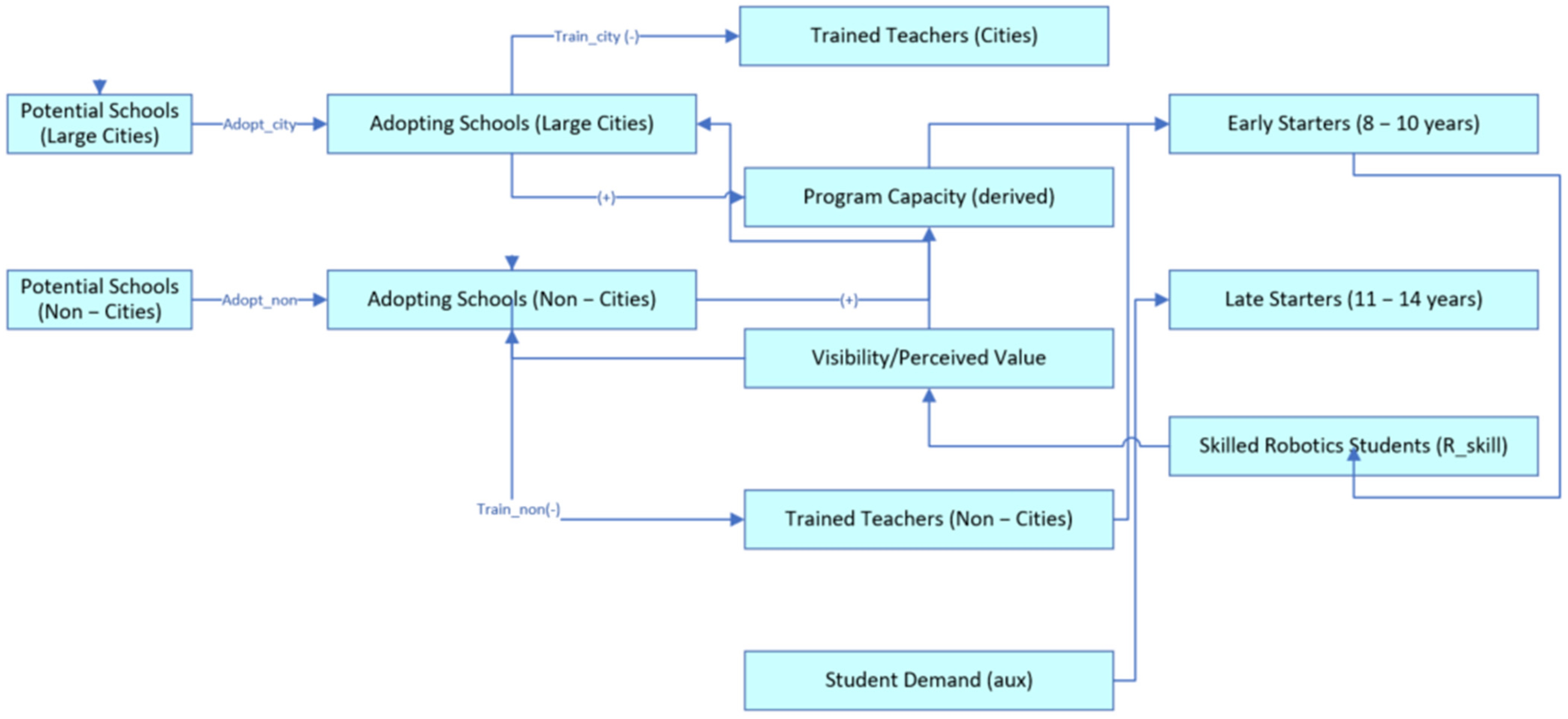
The system dynamics modelling process involves several iterative stages grounded in established SD methodology [
47,
48]. Stock-and-flow diagrams are constructed, translating causal relationships into quantifiable representations. The core stocks in the model include: Potential Schools (City/Non-City), Adopting Schools (City/Non-City), Trained Teachers (City/Non-City), Early Starters (8–10 years), Late Starters (11–14 years), and Skilled Robotics Students. Key flows governing these stocks include adoption rates, teacher training rates, enrollment flows, and skill acquisition rates. The adoption rate for city schools, for example, is formally expressed as a function of contact rate, current adopters, potential adopters, teacher availability, and infrastructure readiness—reflecting the innovation diffusion mechanism at the core of the model.
The model’s structure and initial parameter values are informed by two sources. The first is the empirical data from the robo.nextlab.tech platform described in
Section 5, which provides the basis for initializing stocks such as teacher counts, school enrollment figures, and urban-rural distribution ratios. The second is expert judgment by the authors, who have direct operational experience of the platform, cross-checked against plausible ranges from comparable System Dynamics models in the educational diffusion literature [
47,
48]. Parameters in the second category, including contact rates, attrition coefficients, and visibility weights, have no direct empirical grounding and should be understood as informed structural assumptions rather than measured values. This distinction is maintained explicitly throughout the manuscript and summarized in the parameter table in
Section 6.
Model design involves parameterizing these relationships using empirical data from robo.nextlab.tech where available, and expert judgment combined with sensitivity analysis in its absence.
Section 6 lists all initial parameter values and their empirical basis, distinguishing between data-grounded parameters—such as initial teacher counts and enrollment figures derived from platform registration data—and assumption-based parameters subject to sensitivity testing. Key assumptions include: a higher contact rate in urban areas reflecting denser innovation networks; a lower attrition rate among early starters reflecting empirical observations on STEM engagement; and a visibility multiplier that increases adoption probability as skilled student numbers grow. Finally, scenario testing is conducted by altering key policy levers such as “funding for AI-robotics” or “teacher training intensity,” with simulations run to identify leverage points, unintended consequences, and long-term impacts on personalized learning outcomes in Romania. This iterative process of conceptualization, formalization, calibration, and testing enables a deep understanding of complex educational system dynamics [
47,
48].
4.3. Model Design
The model has the following parameters: adopting schools, trained teachers, enrolled early starters (E), enrolled late starters (L), and skilled robotics students (R_skill), all disaggregated by geography where applicable.
Initial data was extracted from the robo.nextlab.tech platform. The data is high quality in the sense that this initial set of parameters represents actual user registrations, including user type and geographical location. For the subset of users for which the registration process did not provide sufficiently accurate geographical information, their respective records were included in total registrations, but not in the rural/urban data. However, since this is a relatively large number of users, the distribution of rural/urban users can be considered to apply to the complete data set.
The additional parameters in the model were produced via the application of the model to the input data.
School adoption is defined as S_adopt_g(t + dt) = S_adopt_g(t) + dt × (adopt_g − drop_g). Student enrollment is limited from capacity perspective by both school infrastructure and teacher load, with skills accumulating as R_skill(t + dt) = R_skill(t) + dt × (eff_E × E + eff_L × L − skill_decay × R_skill). The model runs over a six-year horizon using Euler integration (Δt = 0.25 years).
4.4. Ethical Considerations
The data utilized in this study originates from the robo.nextlab.tech platform, a nationally supported educational robotics competition. It is important to note that the data used for model calibration consists exclusively of public aggregated registration and participation statistics—including school counts, teacher enrollment figures, and student participation numbers disaggregated by geography and year. No individual-level data, personal identifiers, or sensitive learner information was collected or processed as part of this study. All data used is public and made available in accordance with strict child safeguarding policy.
The data used in this study consists exclusively of aggregated statistical indicators (e.g., enrollment counts of students and teachers segmented by rural and urban environments) generated within the platform. No individual-level data was accessed or processed for the purposes of this research, nor has any individual-level data left the platform. As such, the dataset does not contain personal data within the meaning of the General Data Protection Regulation, as it does not relate to an identified or identifiable natural person. The study therefore does not involve anonymization of personal data, but rather relies on inherently non-personal, aggregate outputs. In accordance with Recital 26 of the GDPR, such data falls outside the scope of personal data processing. All underlying operational data remains within the platform and is subject to appropriate technical and organizational safeguards, with strict separation from the analytical dataset used in this work.
Beyond privacy, responsible AI use is a core ethical principle. This encompasses addressing potential algorithmic biases that could disadvantage certain student groups or perpetuate educational inequalities. Transparency in AI decision-making, where feasible, helps build trust among educators and learners. The framework also considers the social-emotional impact of educational robotics, ensuring that robot interactions foster positive development without leading to over-attachment or reduced human interaction [
50]. The design prioritizes the long-term well-being and equitable educational opportunities for all learners [
51].
5. Statistical Data About Romania
Romania’s educational context presents a specific set of structural conditions that directly shape the model’s design. Historically below-EU-average public investment in education [
46] has produced uneven digital infrastructure, pronounced urban-rural disparities in device availability and internet access, and significant variability in teacher preparedness for integrating advanced educational technologies [
8]. These are not peripheral contextual factors but core structural variables that the model incorporates explicitly. They inform the differentiation between city and non-city parameters and the central role assigned to teacher capacity as a limiting stock within the model’s feedback structure.
These contextual realities inform the initial parameter choices of the model rather than being treated as fixed background conditions. They are the reason the model assigns structurally different contact rates, funding indices, and teacher readiness values to urban and non-urban contexts, and they ground the policy implications discussed in
Section 7 in the specific institutional reality of Romanian education rather than in generic adaptive learning theory.
Data Available at robo.nextlab.tech
The data available on robo.nextlab.tech reflects student and teacher interest in robotics and artificial intelligence. Participation in the robotics competition hosted by the platform serves as the primary indicator of interest in robotics and AI education among both students and teachers. Indirectly, participation also reflects a basic level of effectiveness of AI in supporting teachers to introduce robotics in schools, a particularly relevant consideration given that many schools lack teachers with foundational robotics skills. The study observations suggest that access to a platform offering structured tutorials and integration with major large language models can lower the barrier to entry for both teachers and students embarking on robotics education.
Within the platform, AI was used to develop a virtual learning assistant designed to guide students through tutorials, answer questions, and generate structured progress reports for teachers. The assistant was designed to interact with students at each step of the learning process, posing targeted questions to assess comprehension and gathering their responses to build a progressive picture of individual learning trajectories. This interaction data was then aggregated and made available to teachers through the reporting interface. Three distinct patterns of use emerged from this design.
The video tutorial content proved highly attractive to students, who viewed it consistently and at significantly higher rates than with other platform features, suggesting that structured visual instruction represents the most effective modality for this age group in the context of self-directed robotics learning.
The reporting functionality, which provided teachers with aggregated data on student progress, proved popular and was frequently used.
Third, the student-facing question-answering functionality saw more limited uptake despite the platform’s integration with major large language models, with observation suggesting that students preferred to interact directly with external tools such as ChatGPT (OpenAI, San Francisco, CA, USA) and other large language models outside the platform environment rather than through the competition interface.
This behavioral pattern is noteworthy as it suggests that the value of AI integration for students may lie less in platform-embedded assistants and more in the broader ecosystem of freely available AI tools and structured video content, while for teachers the value lies primarily in data aggregation and reporting capabilities that reduce administrative burden and support instructional decision-making.
This is real data collected by the authors of the platform as part of a national competition of educational robotics supported by the Ministry of Education and by a number of sponsors. The data is particularly relevant because the competition was free, there was no participation fee and the kits were offered by the sponsors at no price. Because of this feature of the initiative, the data regarding the rural and small urban environments is relevant.
A particularly instructive pattern emerges when enrollment figures are examined in relation to the level of direct human engagement provided by the competition organizers in each year. In the first and third years of the observation window, the organizers engaged directly and systematically with teachers through structured online training sessions, live support, and guided onboarding activities. In the remaining years, direct human engagement was reduced and the initiative relied primarily on social media communication and the AI-enabled platform itself to maintain teacher and student involvement. The difference in enrollment figures across these two types of years is visible in
Table 2 and is difficult to attribute to chance. The years characterized by direct human engagement correspond to higher enrollment figures, while the years relying predominantly on the platform and social media correspond to the steeper phases of decline. This pattern provides preliminary empirical support for the paper’s central hypothesis: that an AI-enabled platform, however well designed and financially accessible, cannot substitute for direct human engagement in sustaining participation over time. It also suggests that the peak-and-plateau dynamic documented in this study is not simply a novelty effect fading over time but is at least partly a function of the presence or absence of active human support networks. This observation is noted as an important empirical signal rather than a confirmed causal finding, as the years differed along multiple dimensions simultaneously and no controlled comparison is possible on the basis of the available data. It nonetheless constitutes one of the most practically actionable findings to emerge from the study, and it is reflected in the model’s structural emphasis on teacher capacity as the highest-leverage variable in the system.
This is the empirical foundation from which the model’s initial design is derived. The data does not calibrate the model in a statistical sense but informs the type of model chosen, the stocks and flows included, and the relative magnitudes of key parameters. It is a starting point for a framework that is explicitly designed to be tested and refined as further data accumulates from this and comparable initiatives elsewhere.
The following results in the present article are presented in two different layers. The empirical data in
Table 2 and
Table 3 documents the enrollment trajectory that motivates the study. The simulated trajectories presented in
Section 6.2 represent the model’s structural hypotheses about the mechanisms underlying that trajectory. These two layers of evidence should be read together but distinguished carefully: the tables show what happened, while the figures show one possible structural explanation for why it happened, under the model’s stated assumptions.
The data in the table below,
Table 2, reflects new student and teacher enrollment by year as well as the period of time they have been active on the platform.
The analytics data has been gathered starting from the year 2020 (although the competition is older). As a consequence, the year 2020 reflects all the already registered students and teachers (starting from 2018).
The current users of the platform come from both the rural and urban environments and the split can be seen in the table below (in an aggregate form). Since the data is self-reported,
Table 3, for some users it cannot be determined what environment they come from. The data shows a clear number of decreasing users over the years which is the starting point of the current research.
We shall use this data to run our model. However, before we actually run the model, we will describe it in detail. It will actually be used to estimate the initial parameters of the model.
6. The Proposed Model
The model proposed in this section is a first-generation design whose primary purpose is to make explicit the structural assumptions that plausibly explain the peak-and-decline enrollment pattern documented in
Section 5. It is not a validated predictive instrument and its quantitative outputs should be interpreted as structural hypotheses about system behavior rather than empirical conclusions. The model addresses several aspects of AI robotics program adoption across schools, including potential geographic disparities between large urban centers and non-urban areas, and possible differences in learning trajectories between students who begin robotics education at an early age and those who begin later. These patterns are explored through simulation rather than direct measurement, and all findings should be interpreted as indicative trends rather than empirical conclusions.
The model’s central objective is to clarify how institutional capacity, teacher availability, student enrollment figures, and the feedback generated from educational outcomes collectively shape the long-term adoption trajectories and performance metrics in AI robotics education. This analysis acknowledges the critical role of teachers in leading such innovation.
The educational system is conceptualized as an array of interacting stocks and flows. These operate within a national boundary but are disaggregated geographically into major cities and non-city areas, encompassing small towns and rural regions. Large cities in this context signify Romanian urban centers characterized by robust infrastructure, greater funding accessibility, and denser innovation networks [
55].
The system boundary encompasses primary and lower-secondary schools that either offer or could potentially offer AI robotics programs. It further includes teachers qualified in robotics and AI instruction, students enrolled in robotics education, and learning outcomes quantified through accumulated robotics skills. Exogenous parameters, such as national education policy and macroeconomic conditions, influence funding, demand, and training capacity [
1], as digital tools are increasingly utilized in Romanian institutions.
It is important to note that the city versus non-city dichotomization adopted in this model reflects the granularity of the available data rather than a theoretical claim that Romanian urban contexts are homogeneous. This binary categorization necessarily masks heterogeneity within each group, particularly the distinction between large metropolitan centers and smaller county towns within the city category. More granular geographic disaggregation is identified as a priority for future iterations of the model as richer anonymized aggregate data becomes available.
The model’s dynamics are governed by various stocks and flows representing key components of the educational system. These elements illustrate the progression and accumulation of resources, participants, and competencies over time.
School-level adoption is represented by two parallel stock structures to differentiate between regions. One structure monitors potential and adopting schools in large cities, while the other tracks these categories in non-city areas. Adoption flows transfer schools from the potential to the adopting category. Conversely, attrition flows signify the discontinuation of robotics programs, often attributable to resource limitations or staff turnover. The growth of STEM education, including robotics, depends on such adoption [
50,
56].
Teacher capacity is operationalized through stocks of trained robotics teachers, separated by urban and non-urban areas. These stocks expand through training flows and diminish through attrition. Teacher availability directly constrains both school adoption rates and student enrollment numbers, underscoring the critical importance of human capital for sustaining AI robotics education [
57]. AI can support teachers in various ways, though training is paramount [
58].
Student participation is categorized into two distinct stocks: early starters, aged 8–10, and late starters, aged 11 and above. Enrollment flows are restricted by program capacity and are influenced by perceived program value, parental demand, and geographic accessibility. Dropout flows capture disengagement or program discontinuation, with a higher attrition rate hypothesized among late starters. Robotics programs contribute positively to student skills [
9].
The model incorporates a stock of skilled robotics students, representing learners who attain advanced proficiency levels, such as readiness for competitions or project-based competence. This stock accumulates through a skill acquisition flow. It may decrease through skill decay if sustained learning is not maintained. Educational robotics provides active learning environments for acquiring 21st-century skills [
59].
Geographic heterogeneity is explicitly integrated by assigning elevated parameter values to large cities across several dimensions. These include school-to-school contact rates, funding availability, teacher training capacity, and infrastructure readiness. Consequently, adoption and growth dynamics are structurally accelerated in urban regions. Furthermore, the model accounts for spillover effects, where successful implementation in large cities enhances visibility and legitimacy, gradually influencing adoption decisions in non-city areas [
55]. Teacher digital literacy also impacts student outcomes [
60].
A core assumption of the model posits that children initiating AI robotics education between ages 8 and 10 achieve substantially higher performance levels than those beginning later. This effect is operationalized through increased learning efficiency for early starters, reduced dropout rates among early cohorts, and a greater contribution of early starters to system-wide visibility and perceived success. This structure reflects empirical observations in STEM education, which indicate that early exposure fosters cognitive adaptability, algorithmic thinking, and long-term skill retention [
9,
56]. For example, LEGO-based applications show positive impacts on problem-solving skills for younger students [
61].
The model’s behavior is driven by several interacting feedback loops. Reinforcing feedback loops encompass a visibility loop, where successful student outcomes elevate program attractiveness, thereby accelerating school adoption and enrollment. A teacher pipeline loop ensures that expanding programs incentivize further teacher training.
An urban advantage loop further reinforces faster growth in large cities. Conversely, balancing feedback loops arise from capacity constraints, such as limited teachers and facilities, and saturation effects as the pool of potential adopting schools diminishes. Attrition of teachers and programs over time also functions as a balancing mechanism. The interplay of these reinforcing and balancing processes generates non-linear dynamics, exemplified by S-shaped adoption curves and divergent urban-rural outcomes in
Figure 1. Large cities benefit from a geographic advantage, as higher contact rates, greater funding, and stronger teacher training capacity enable faster adoption and earlier success.
The mathematical representation of the model is available below. The model follows standard System Dynamics methodology [
31]. School adoption is based on the Bass diffusion model [
62], extended with visibility, funding, and teacher readiness multipliers. The compartmental structure of potential-to-adopting school transitions mirrors epidemic models [
63].
= contact rate (city > non-city)
= potential schools stock
= visibility (auxiliary)
= visibility and funding weights
= funding index
= teacher readiness
= disadoption rate/yr
= max training capacity/yr
= funding boost coefficient
= attrition rate/yr
= dropout rates (early, late)
= seats/yr per adopting school
= seats/yr per trained teacher
= skill efficiency, early starters (higher)
= skill efficiency, late starters (lower)
= decay/yr
= base visibility at
= skill-to-visibility coefficient
prevents division by zero
yr (quarterly)
yr (2020–2025 observation window)
All parameters in the model fall into one of two categories. The first category comprises empirically informed parameters, specifically initial stock values for teacher counts, school numbers, and student enrollment figures, which are derived directly from the robo.nextlab.tech platform registration data presented in
Section 5. The second category comprises assumption-based parameters, including contact rates, attrition coefficients, visibility weights, and funding indices, for which no direct empirical measurement exists. These were established through the judgment of the authors based on their direct operational experience of the platform and cross-checked against plausible ranges from comparable System Dynamics models in the literature [
47,
48]. This distinction is important: the empirically informed parameters anchor the model to the observed reality of the Romanian initiative, while the assumption-based parameters represent the structural hypotheses that future data collection and collaborative research with other national initiatives can progressively test and refine.
6.1. Implications of the Model
The model suggests that, without specific interventions, AI robotics education in Romania may expand unevenly. Large cities are likely to consolidate early advantages, while non-city areas will experience a lag even if the participation is free and there are no financial barriers for participants. Furthermore, policies prioritizing early-age entry into robotics education are anticipated to yield disproportionately higher long-term skill accumulation and broader system-wide benefits [
56]. To mitigate regional disparities, targeted strategies addressing teacher training, infrastructure, and program promotion in non-urban settings will be necessary. This approach aligns with understanding AI knowledge disparities across regions [
55].
Table 4 indicates the potential impact on systems dynamics of various factors.
The implications summarized in
Table 4 are model-generated hypotheses derived from the structural assumptions described above and from the sensitivity analysis reported alongside them. They should not be read as empirically demonstrated findings but as leverage points suggested by the model’s behavior that future empirical research can prioritize for investigation. With that caveat, the model suggests that funding alone, without concurrent teacher training and early age program access, has a more limited impact on long-term adoption than interventions that address the human capital dimension of the system directly.
6.2. The Python Code for GOOGLE COLAB
The model is implemented in Python and executed via Google Colab, with the full code publicly available at
https://github.com/razvanbologa/SD-Model-for-Romania (accessed on 6 January 2026). The implementation developed by the authors follows standard System Dynamics numerical integration practices [
47,
48], using Euler’s method with a time step of 0.1 years over a simulation horizon of six years, consistent with the empirical observation window of the robo.nextlab.tech platform. The NumPy package was used for numeric computation.
The core equations governing the model’s stocks and flows are structured as follows. School adoption is driven by an innovation diffusion equation where the adoption rate is a function of the contact rate between adopting and potential schools, modulated by teacher availability and infrastructure readiness—separately parameterized for city and non-city contexts. Teacher capacity grows through a training flow proportional to the number of adopting schools and diminishes through an attrition rate calibrated from platform data. Student enrollment flows are constrained by program capacity, itself a derived variable combining trained teacher stocks and school adoption levels. Skill acquisition is modelled as a function of enrollment duration and learning efficiency, with early starters (8–10 years) assigned a higher efficiency coefficient consistent with empirical STEM education research [
47].
All initial parameter values are derived from the statistical data presented in
Section 5, including registration figures from robo.nextlab.tech covering the period 2020–2025. Parameters without direct empirical grounding—such as contact rates and attrition coefficients—are established through expert judgment and validated through sensitivity analysis, following standard SD modelling practice [
48]. The data provides a complete listing of all parameter values, their sources, and their sensitivity ranges.
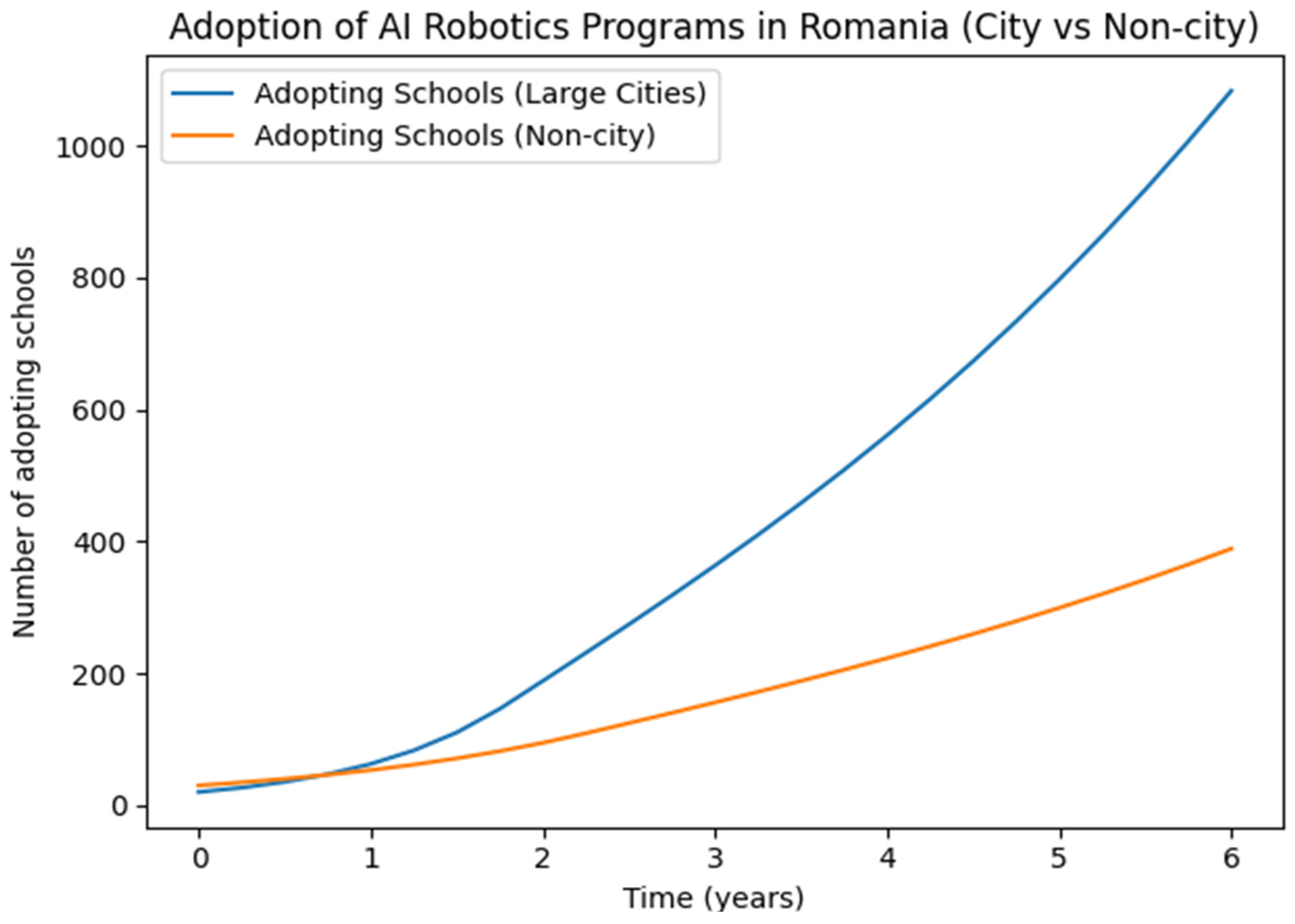
The adoption of robotics in schools in Romania was relatively successful, both in the urban and non-urban areas,
Figure 2. While well-funded urban areas performed better, as expected, the non-city schools had a good evolution as well. This simulated trajectory is consistent with the empirical enrollment data in
Table 2 in its broad shape, but the quantitative values are model outputs rather than empirical measurements and should be interpreted accordingly.
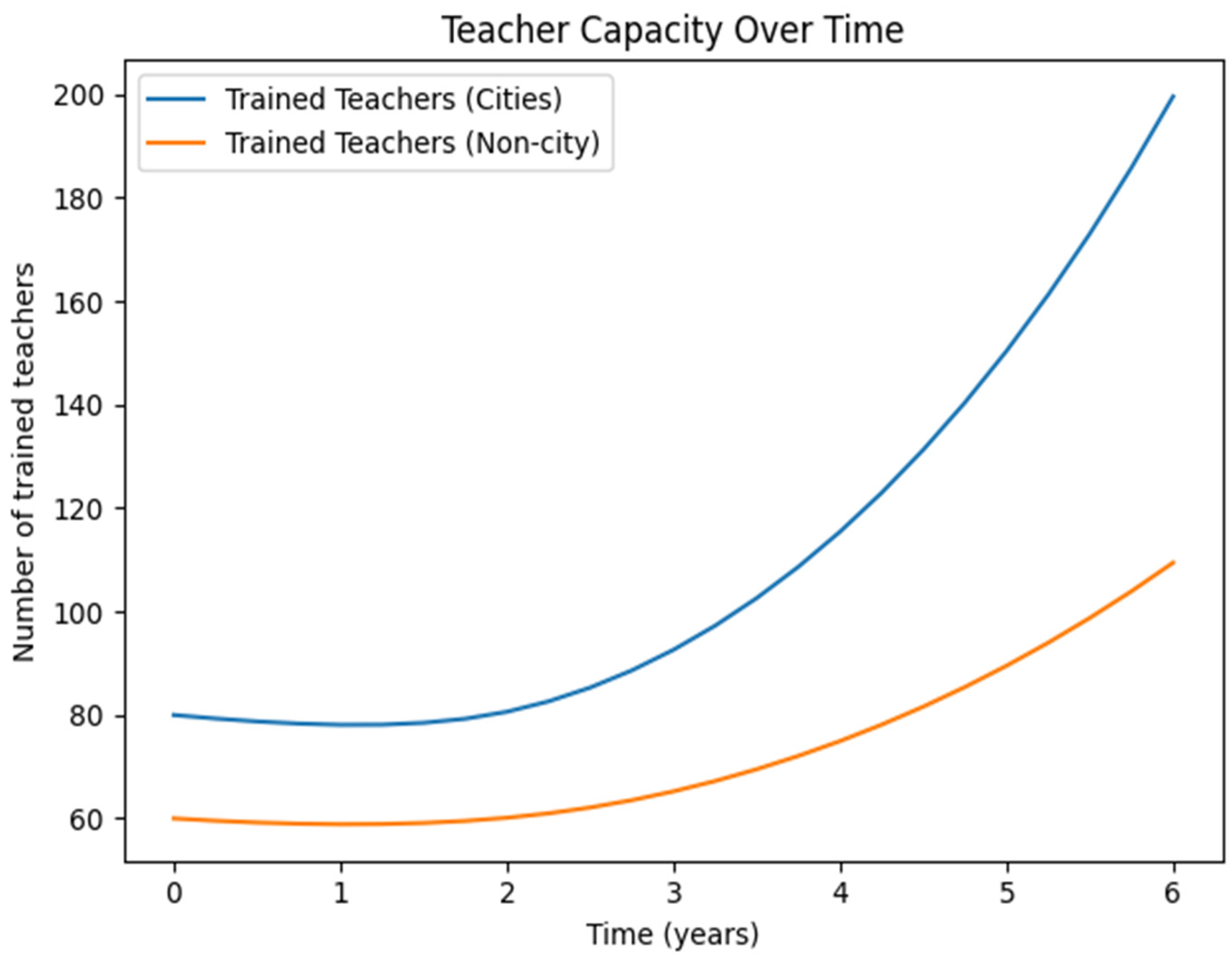
Teacher capacity is fundamental to the success of the project. The evolution of this parameter is relatively flat in the first years and it increases over time,
Figure 3. The relatively flat initial trajectory followed by accelerating growth is consistent with the hypothesis that teacher network effects play a role in driving adoption, whereby early adopters gradually influence peers through professional interaction. This is one possible structural explanation generated by the model rather than an empirically confirmed finding, and it represents a testable hypothesis for future research.
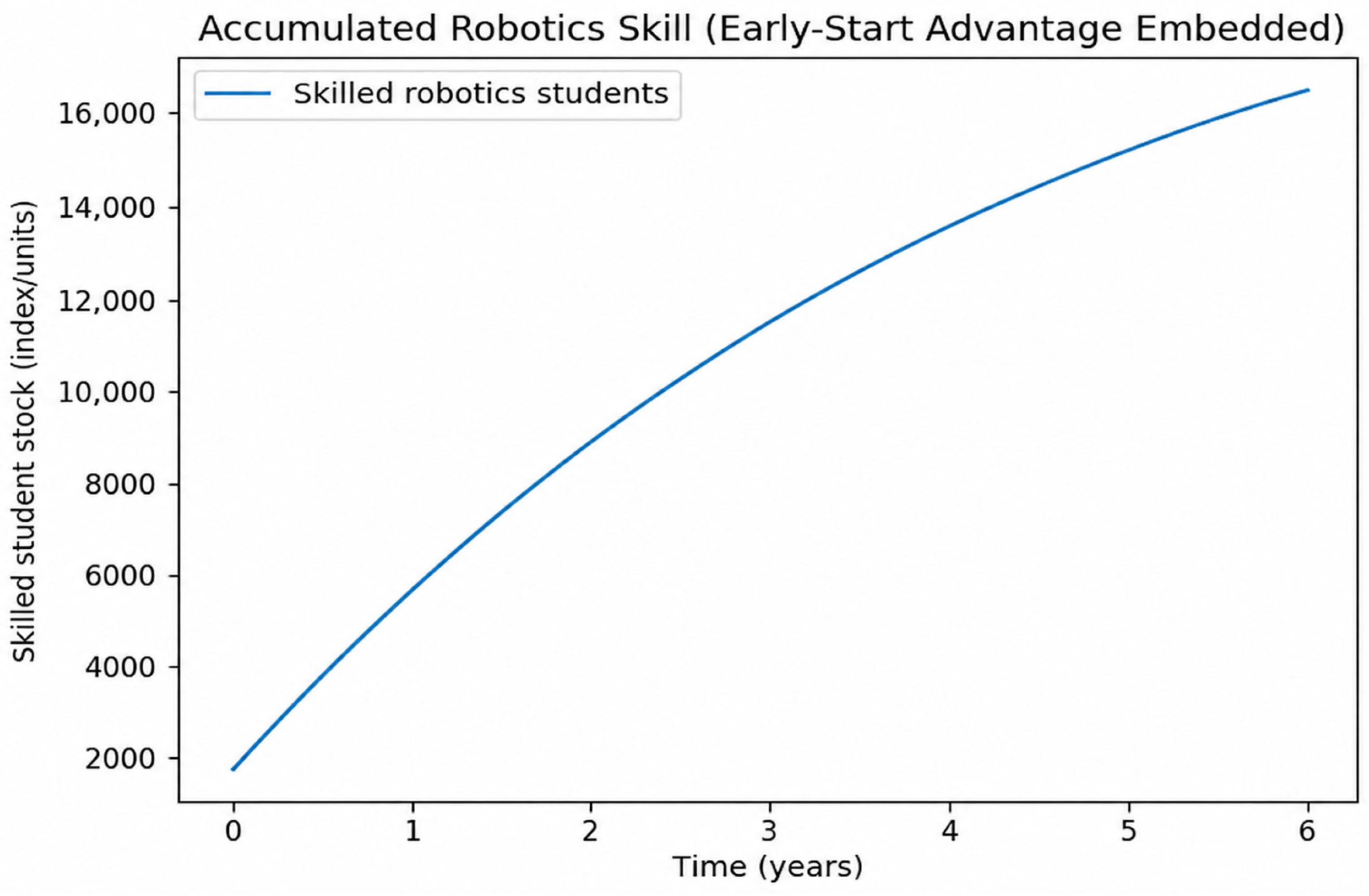
The quantity of accumulated robotics skills has been constantly increasing at national level in accordance with the model parameters,
Figure 4. It should be noted that skills accumulation is a derived model variable representing a theoretical construct rather than a directly measured competency. No individual-level skills assessment data was collected or analyzed in this study, and this output should be understood as a structural hypothesis about the system’s long-term trajectory under the model’s assumptions.
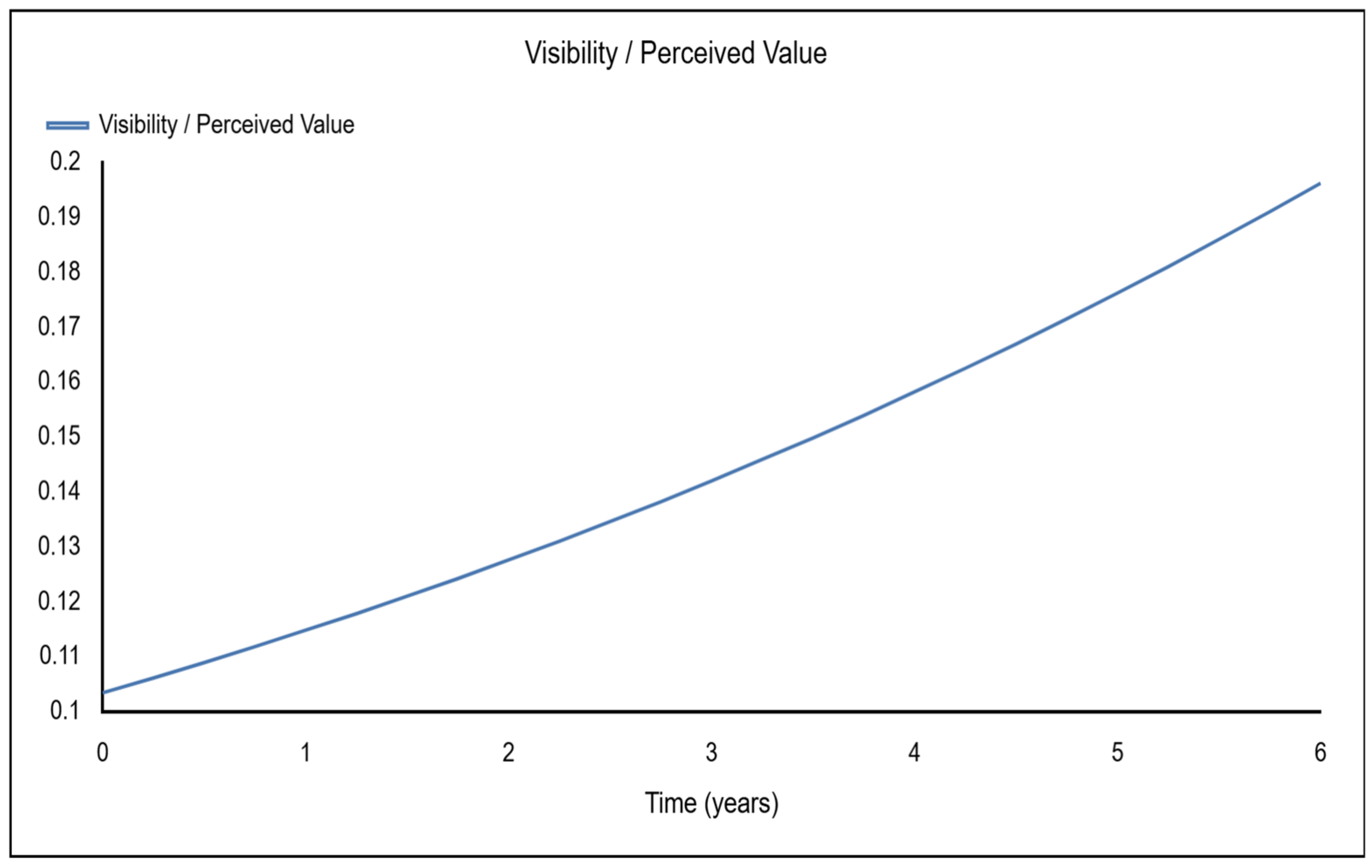
This trend is consistent with the initial hypotheses regarding the benefits of skills acquired over time. Furthermore, the shape of the visibility loop should be interpreted from an exploratory perspective rather than as a confirmed empirical finding.
Figure 5 shows the gradual increase in the program’s visibility over a six-year period, which depends on the accumulation of students’ skills.
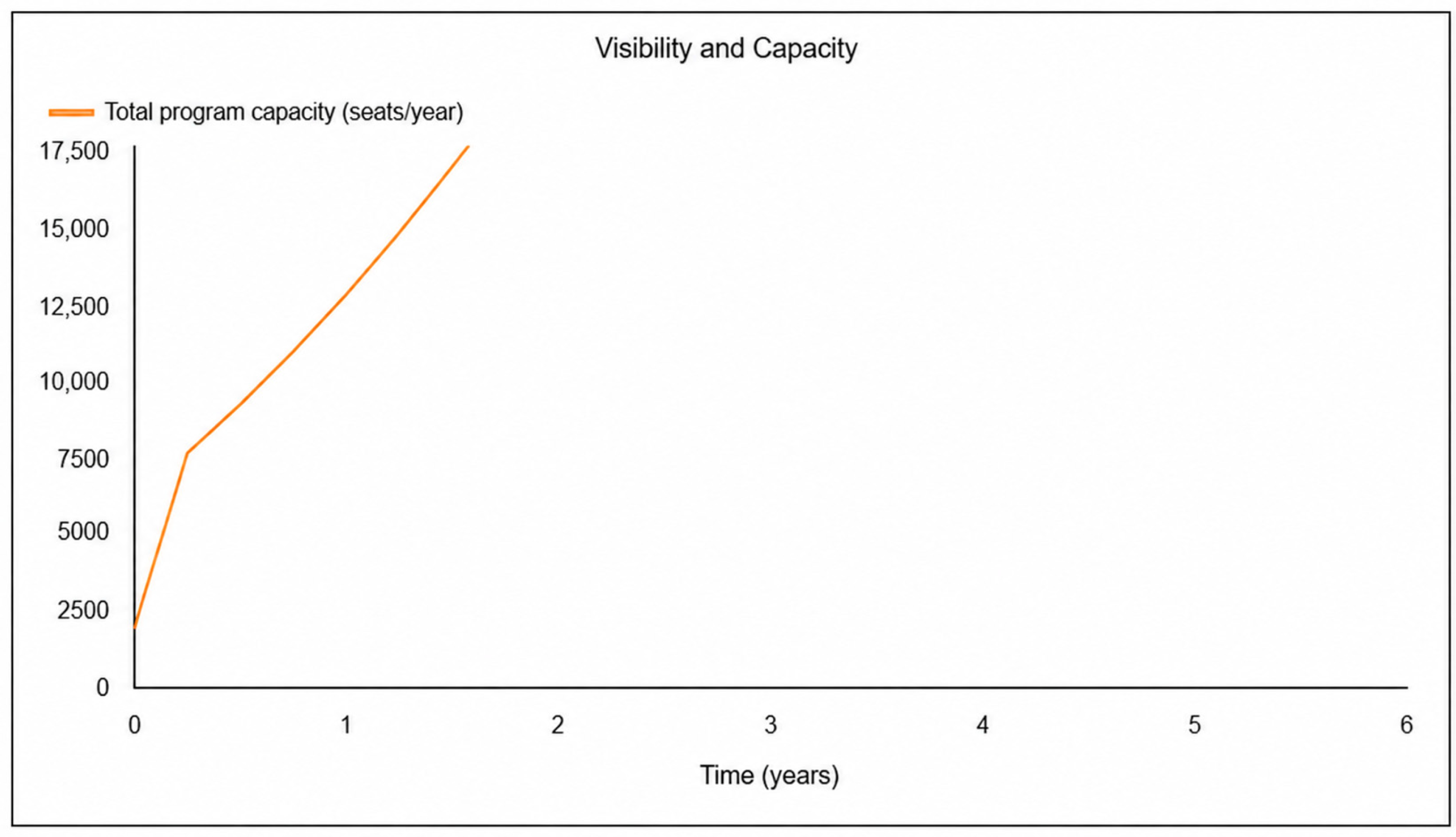
Figure 6 illustrates the increase in the program’s total capacity. This reflects the cumulative effect of schools adopting the program.
The visibility of the project is growing both due to internal factors (teachers and students talking to each other) and also due to a favorable general context where the media was overwhelmed with content related to robotics and AI in the years 3 to 6.
The numerical parameters of the model are listed below:
Numerical parameters:
Final adoption (city): 1083.1509809271531
Final adoption (non-city): 388.92016172193337
Final enrolled early: 40,848.116883215494
Final enrolled late: 59,614.70828057449
Final skilled stock: 16,656.937253140946
Final avg skill per student (index): 0.16580199915724123
These numerical outputs are the product of the model’s structural assumptions and initial parameter values as described above. They should not be interpreted as forecasts or empirical measurements. Their value lies in illustrating the relative magnitudes and directions of the system’s simulated trajectories under the stated assumptions, and in providing a baseline against which the effects of the policy interventions explored in the scenario testing can be compared. As the framework is applied to data from other national initiatives and as further anonymized aggregate data accumulates from the robo.nextlab.tech platform, these values will be subject to revision.
The proposed model does offer a certain indication of what needs to be done in order to improve the access to educational robotics in Romania and Eastern Europe. A well-funded infrastructure does offer a good impact. However, the use of advanced AI technology to alleviate the lack of teachers in rural areas is a way to improve impact. The perceived value of the program seems to be high, which is in line with the current trends in the world of investment.
8. Limitations
Several limitations of this study must be acknowledged explicitly. First, the quantitative outputs of the model depend entirely on the structural assumptions and initial parameter values described in
Section 6, and should not be interpreted as empirical findings or forecasts. This raises the question of what kind of validity the model can claim at this stage. We distinguish between two forms.
Structural validity refers to the model’s ability to represent the causal mechanisms of the system in a theoretically coherent and internally consistent way, which we argue the framework achieves through its grounding in innovation diffusion theory and System Dynamics methodology.
Predictive validity, by contrast, requires empirical testing of the model’s quantitative outputs against out-of-sample data from this or comparable initiatives, which has not been possible within the scope of this study. The absence of external validation therefore bounds the confidence that can be placed in the model’s specific numerical projections, while leaving its structural contribution intact. External validation using comparable datasets from other national contexts is identified as the most important priority for future research, and researchers with access to such data are invited to engage with the framework directly.
A second limitation concerns the data used to inform the model’s initial design. The study relies exclusively on registration and participation counts as the primary empirical input, which are an imperfect proxy for engagement. A student or teacher who registers on the platform is not necessarily one who engages with it meaningfully or consistently, and the decline in registrations documented in
Table 2 may overstate or understate the decline in actual learning activity.
Richer behavioral data, such as session frequency, tutorial completion rates, or competition participation depth, would allow a more granular and direct test of the proposed mechanisms. However, this is not solely a methodological limitation but a legal one. The platform operates under strict GDPR compliance, and individual-level behavioral data constitutes personal data that cannot be extracted or used for research purposes. The study is therefore necessarily bounded by anonymized aggregated public data, and this constraint applies equally to all future iterations of the model.
A third limitation concerns the reliability of the registration data itself. Location information on the platform is self-reported by users, introducing the possibility of misclassification between urban and rural categories. Users who did not provide sufficiently precise location data were included in total registration counts but excluded from the urban-rural disaggregation, meaning that the geographic distribution reported may not perfectly represent the true distribution of participants. While the authors consider this bias unlikely to alter the study’s broad conclusions, it should be acknowledged as a source of uncertainty in the geographic analysis.
A fourth limitation is that the model’s binary categorization of geographic contexts into city and non-city necessarily masks heterogeneity within each group. The city category encompasses both large metropolitan centers such as Bucharest and smaller county towns with substantially different infrastructure, funding, and teacher availability profiles. Similarly, the non-city category conflicts with small towns and deeply rural areas whose structural conditions differ considerably. This simplification was necessitated by the granularity of the available data, but it means that the model’s urban-rural findings should be interpreted as broad directional hypotheses rather than precise characterizations of specific geographic subgroups. More granular geographic disaggregation is identified as a priority for future model iterations as richer anonymized aggregate data becomes available.
This model should not be understood as a predictive tool in the engineering sense. It does not forecast specific outcomes with quantifiable confidence, and it was not designed to do so. Its value lies elsewhere, in structuring thinking about a complex system, making implicit assumptions explicit, and generating hypotheses that can be tested through future empirical work. In this respect, the framework is best understood as a foundation for future research rather than a source of actionable predictions.





 ,
,